
In 1965, a young Navy sailor named Jack Lillywhite arrived in New York City. During his off-duty hours, he did what many people his age did not — he picked up a camera and started shooting the city around him. Not landmarks for postcards, but real street life: chess players hunched over boards in the open air, guitarists strumming in parks, artists hanging work along the sidewalk. What he left behind is a rare, ground-level record of New York City in 1966 and 1967.
Jack’s slides and negatives from those years are now in the hands of family members, who have spent years scanning and preserving them. Jack himself went on to become a dentist and eventually retired to Tennessee with his second wife, Dee. His first wife, Jan Lillywhite, passed away in 2013. The photographs stand as both a personal record and a wider portrait of a city in the middle of one of its most charged and energetic decades.
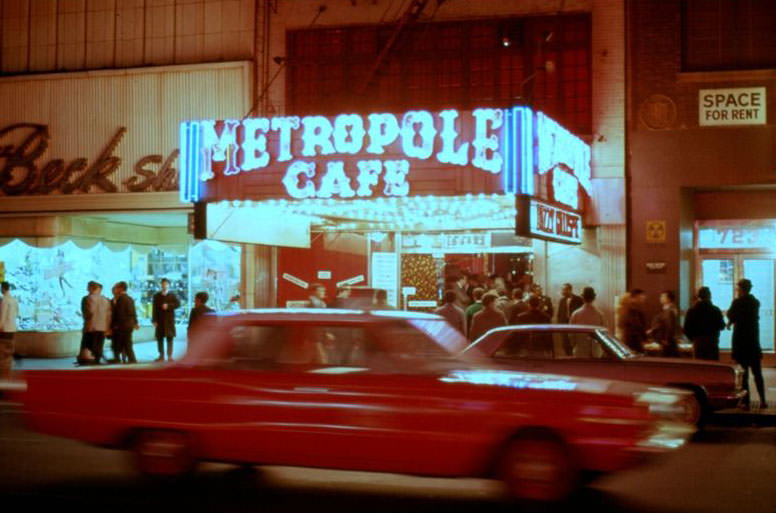
The Metropole Café on Seventh Avenue was a New York institution by 1966. It had shifted from a jazz venue to a go-go bar by the mid-1960s, reflecting the fast-changing tastes of the city’s nightlife scene. Neon signs, foot traffic, and the constant hum of the street outside — Jack’s photo captures the café as part of a living, breathing block, not just a building.
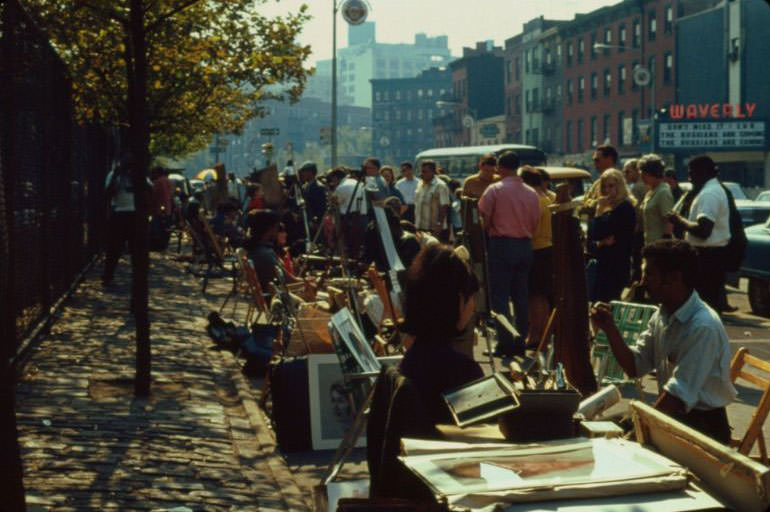
Greenwich Village in the mid-1960s was the creative heart of the city. Artists, writers, musicians, and activists all passed through its streets. Along Sixth Avenue, painters displayed their work directly on the sidewalk or propped against fences — an informal gallery open to anyone who walked by. No admission, no velvet ropes. Just art in the open air.
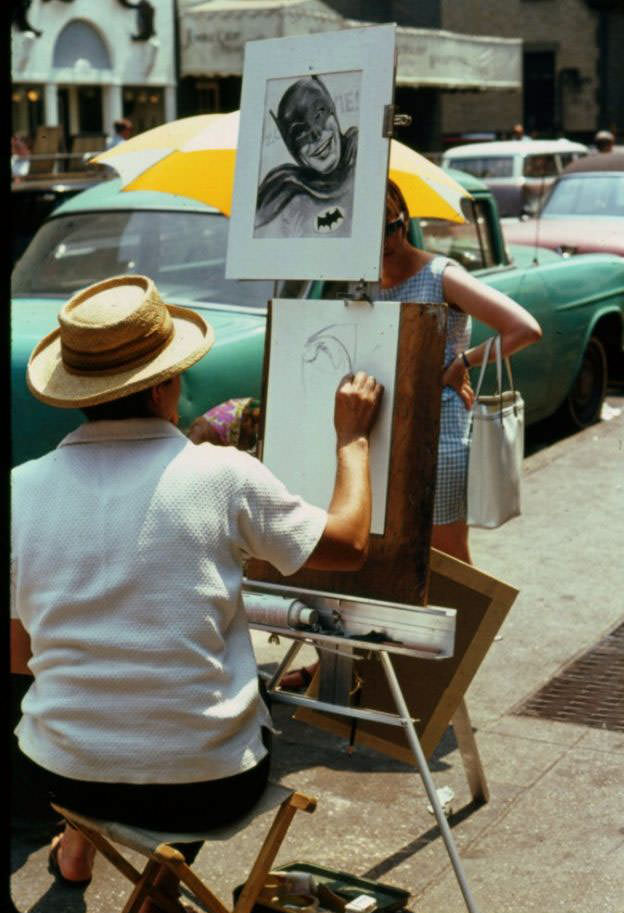
Batman arrived on ABC television in January 1966 and became an instant national craze. By June of that year, the show’s campy style and colorful characters had taken over popular culture. Someone in full Batman costume on a New York City street in June 1966 was not a rare sight — it was a direct reflection of how deep the bat-mania had sunk into everyday life.
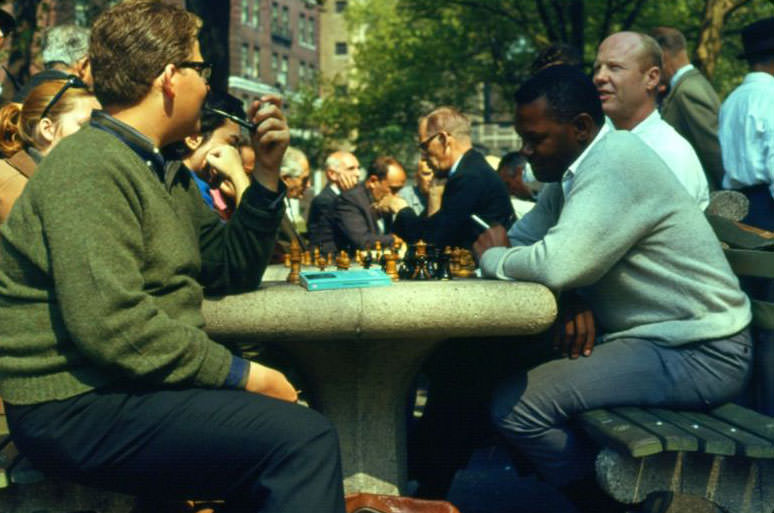
Outdoor chess has been part of New York City’s parks for generations. In the 1960s, places like the Chess and Checkers House in Central Park drew serious players and casual onlookers alike. These games could last hours, drawing small crowds who watched in silence or offered unsolicited opinions. Jack photographed this scene in November, when the colder weather had thinned the crowds but not stopped the players.
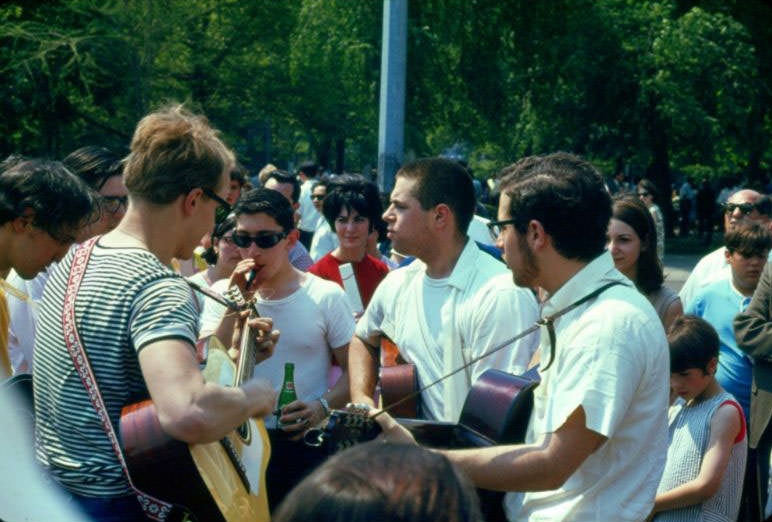
Washington Square Park was the unofficial home of New York’s folk music scene. Bob Dylan had busked there in his early days, and by 1966 the tradition of musicians gathering around the fountain on weekends was firmly established. Jack photographed guitarists performing in the open air in June 1966, a scene that played out every weekend throughout the spring and summer.
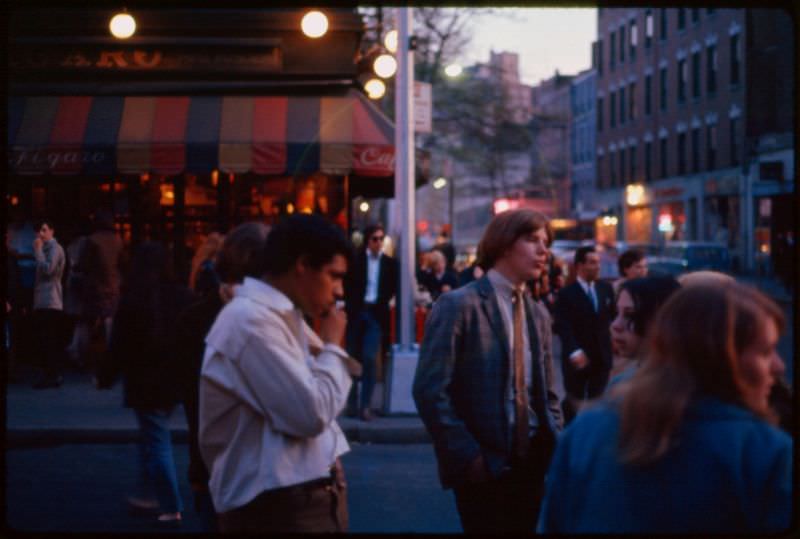
Le Figaro Café sat on the corner of Bleecker and MacDougal Streets in Greenwich Village, and it was one of the neighborhood’s most recognized gathering spots. Named after the French newspaper, it drew a mix of intellectuals, artists, and tourists throughout the 1960s. The café operated continuously from 1957 until it finally closed in 2008.
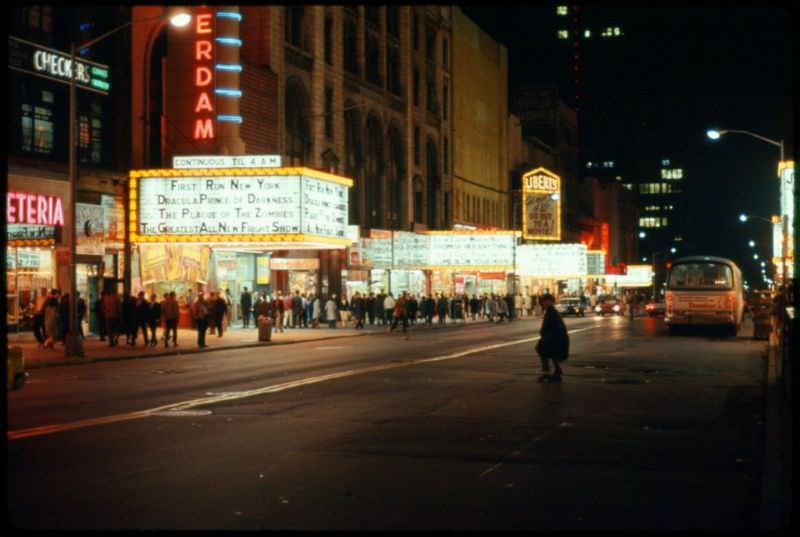
The New Amsterdam Theatre on 42nd Street had once been one of the grandest venues in the city. Built in 1903, it served as the home of the Ziegfeld Follies for years. By the mid-1960s, 42nd Street had changed dramatically — the theaters along the block were shifting toward grindhouse films and adult entertainment. Jack’s photo catches the building during this transition period, still standing but far removed from its earlier glory.
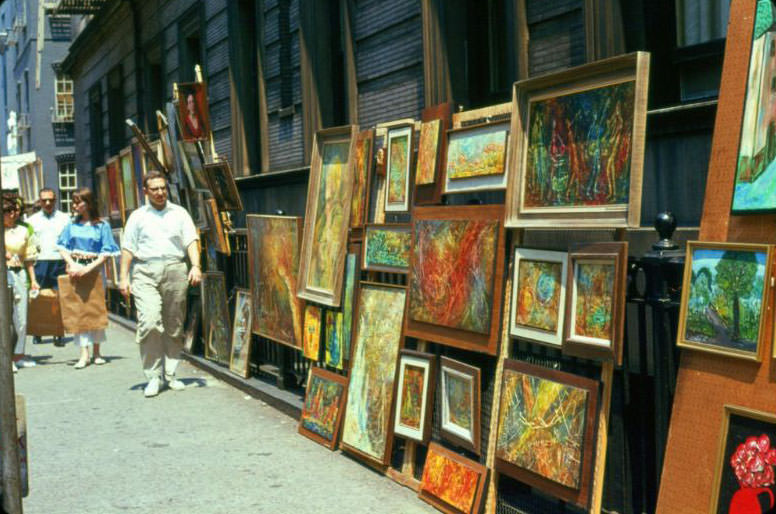
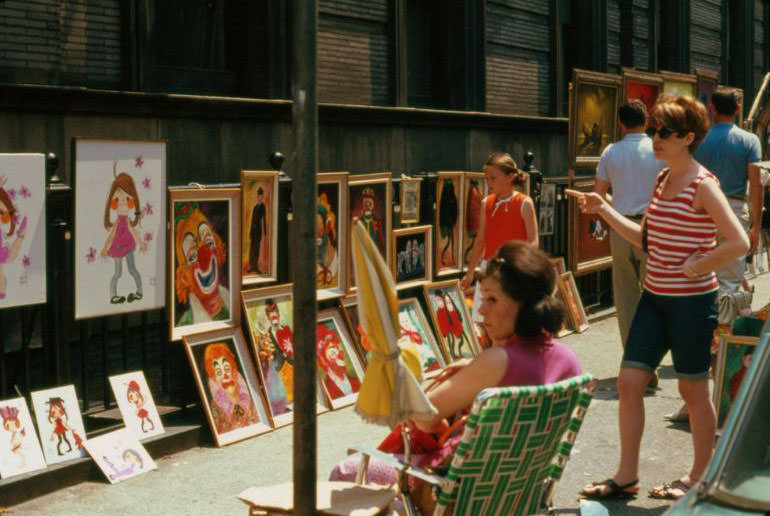
Outdoor art walks were a recurring feature of New York City’s summer calendar in the 1960s. Artists used sidewalks, park railings, and chain-link fences as display space, turning city blocks into open-air galleries. These events gave working artists a way to sell directly to the public without needing a gallery deal or a storefront.
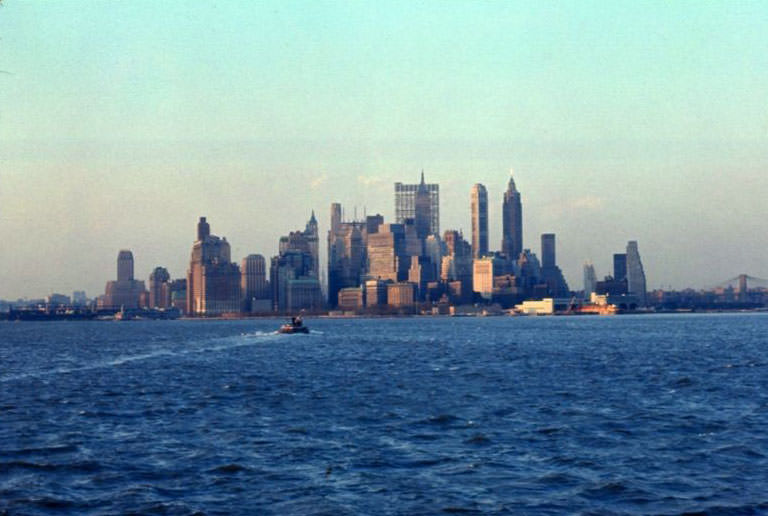
The Staten Island Ferry has offered one of the best views of lower Manhattan for well over a century. In 1966, the fare was five cents, making it one of the cheapest and most spectacular rides in the city. From the deck of the ferry, passengers could watch the skyline shift as the boat crossed New York Harbor — the Twin Towers did not yet exist, and the World Trade Center was still under construction. The skyline Jack photographed was dominated by the Empire State Building and the older generation of skyscrapers.
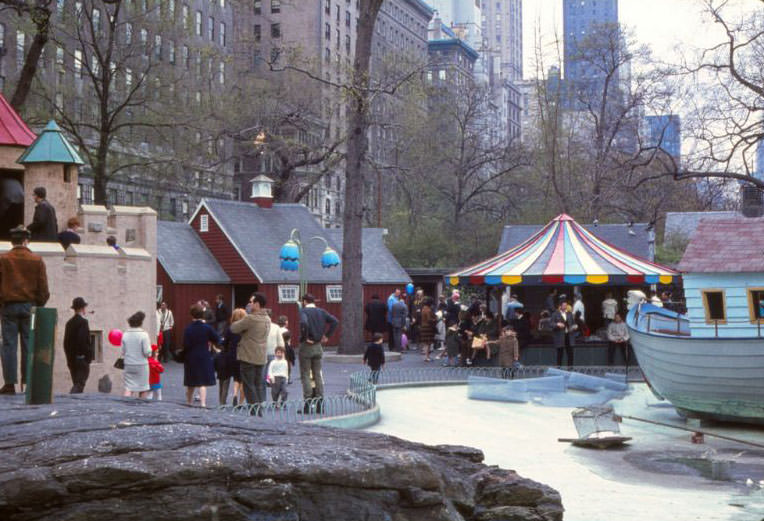
City playgrounds in the 1960s were notoriously basic by later standards — metal swings, concrete surfaces, and chain-link fences. Under Parks Commissioner Robert Moses, hundreds of playgrounds had been built across the five boroughs in the preceding decades, but many were worn and outdated by the mid-1960s. The playgrounds were still busy, especially in densely packed neighborhoods where outdoor space was hard to come by.
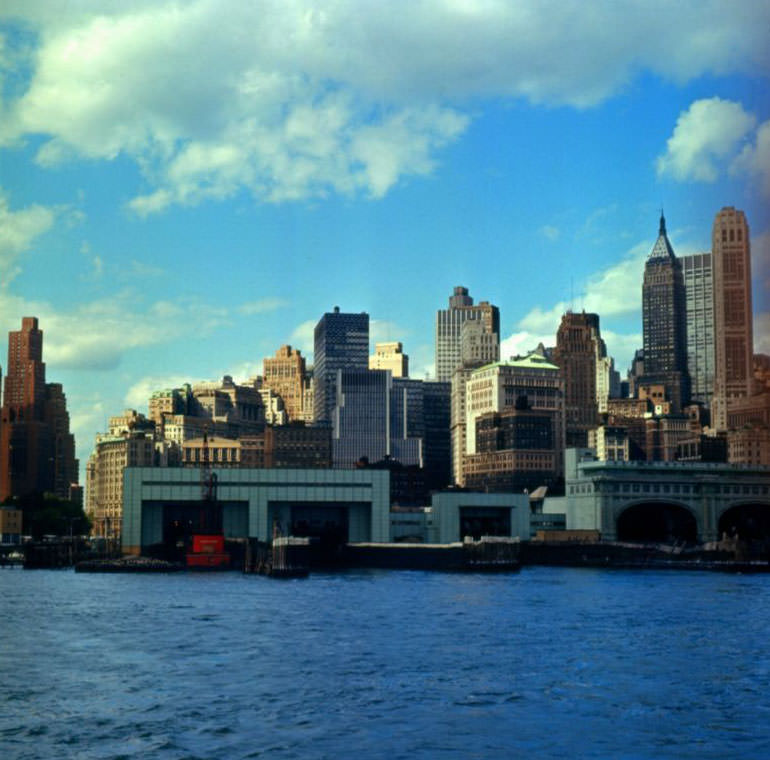
The approach to the Staten Island Ferry Terminal in lower Manhattan offered a sweeping view of the harbor and the Financial District skyline. In 1966, construction cranes were already visible on the site of the World Trade Center nearby, which broke ground in 1966. The skyline was literally changing as Jack walked through the city with his camera.
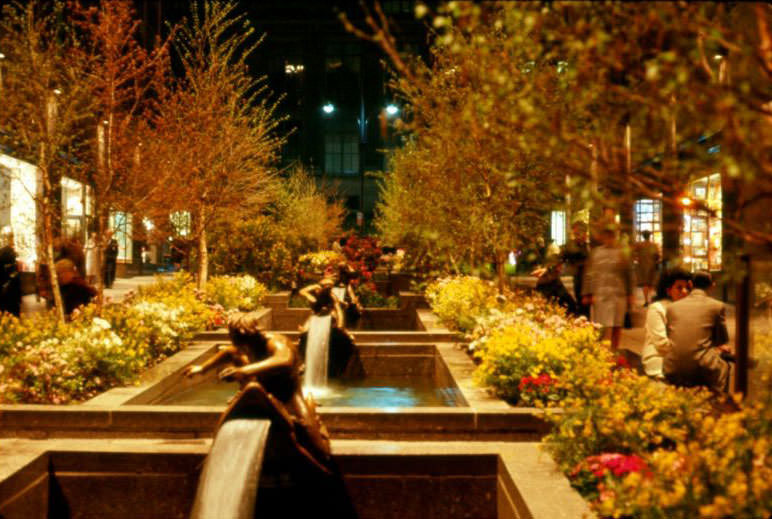
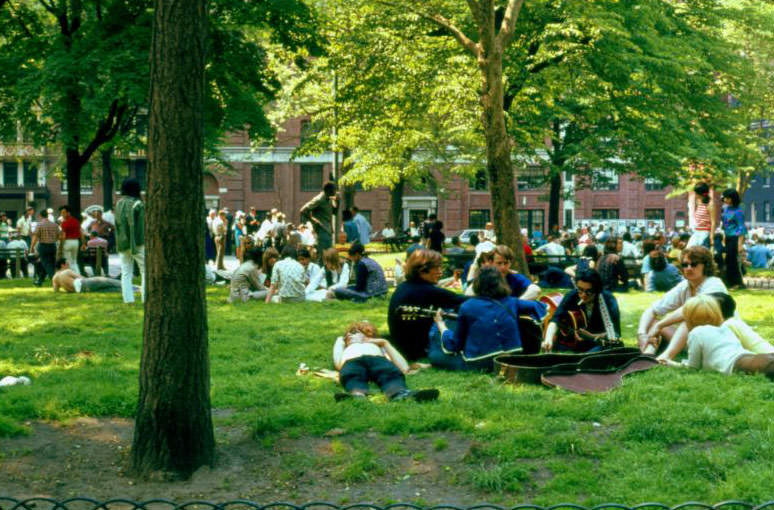
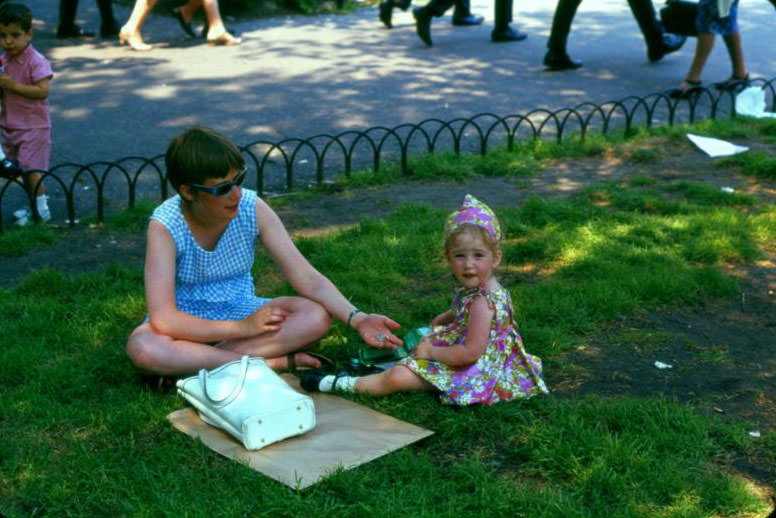
New York’s parks were essential social spaces in the summer months. Families spread out on the grass, children ran through fountain spray, and older residents sat on benches in the shade. These were the free entertainments of a city where many people had little disposable income, and they drew everyone regardless of neighborhood or background.
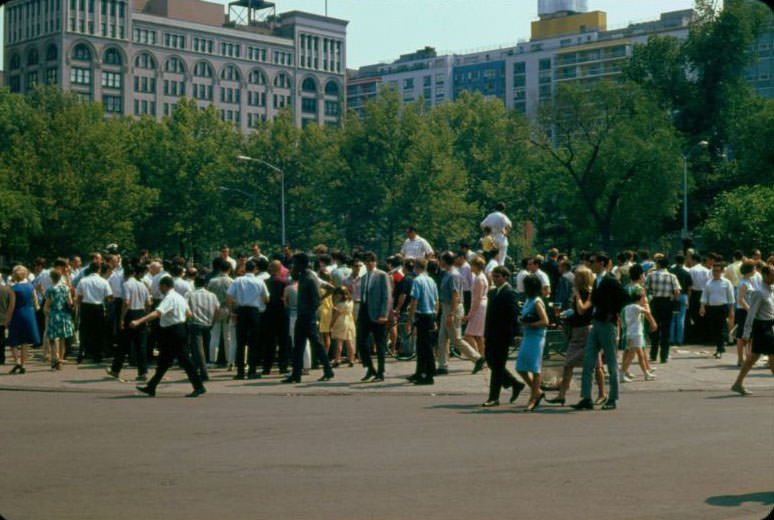
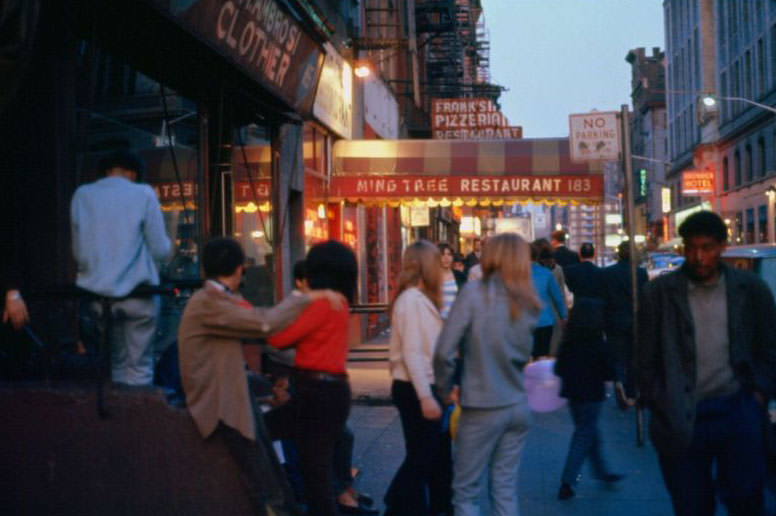
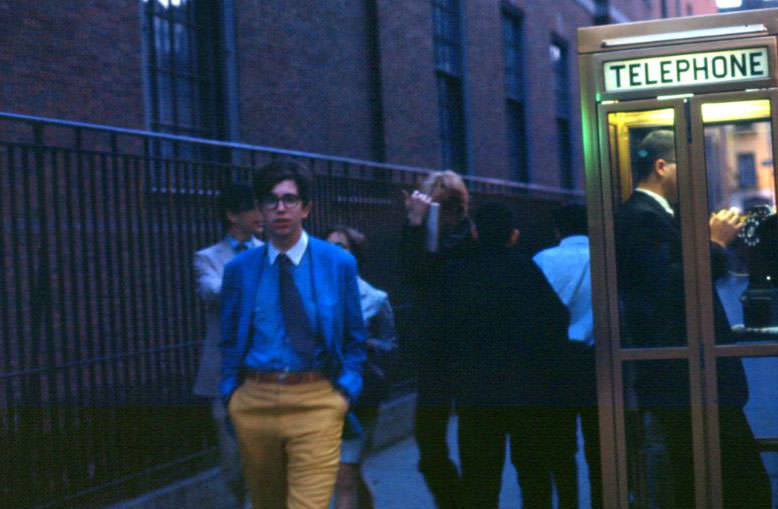
The street scenes Jack captured in June 1966 show a city that was dense, loud, and fully alive. Storefronts competed for attention with hand-painted signs and window displays. Pedestrians crowded the sidewalks. Taxis, buses, and delivery trucks moved through the streets in a steady flow. This was New York before the fiscal crisis of the 1970s, when the city was still running at full commercial steam.
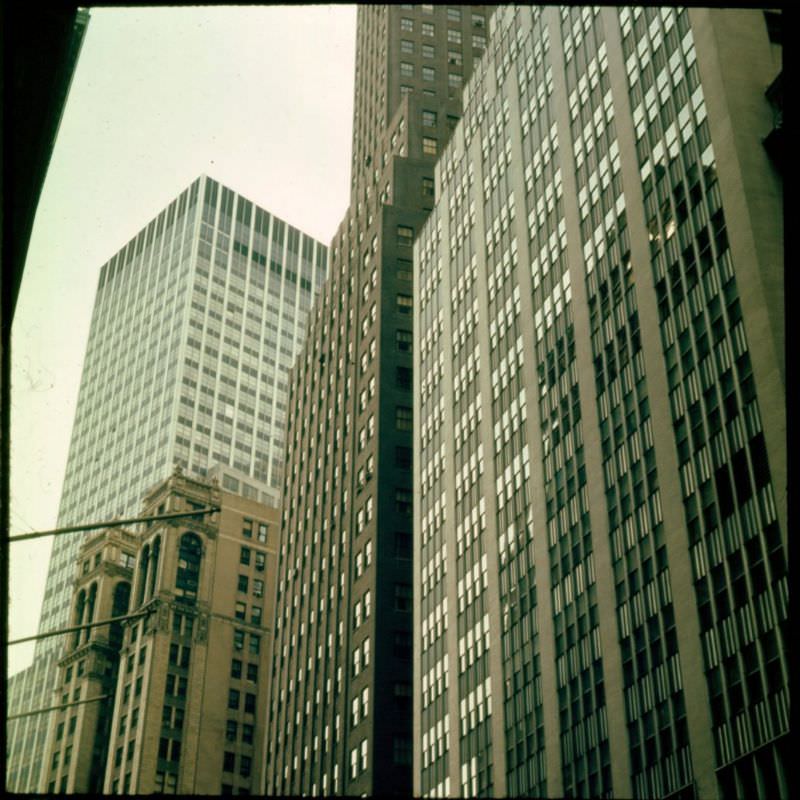
By March 1966, New York’s skyline was already dense with towers built across several decades. The mix of architectural styles — Art Deco spires, mid-century glass towers, and older masonry buildings — told the story of a city that had been building upward for over a century. Jack photographed the skyline from multiple vantage points throughout his time in the city, tracking it in different seasons and light conditions.
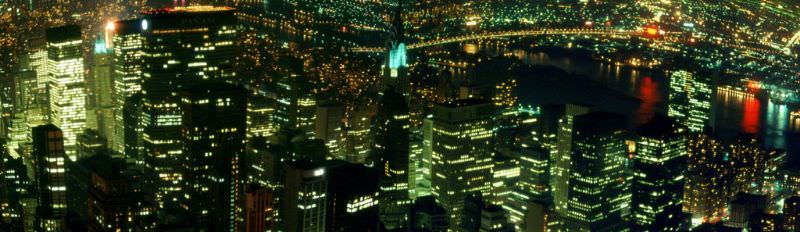
The Empire State Building observation deck was — and remains — one of the most visited spots in New York. From the top, the grid of Manhattan stretched out in every direction. In 1966, the view to the south showed the Lower Manhattan waterfront without the Twin Towers, which were still two years away from their steel framework rising above street level. The panorama Jack shot captures the city at a precise moment in its physical history.
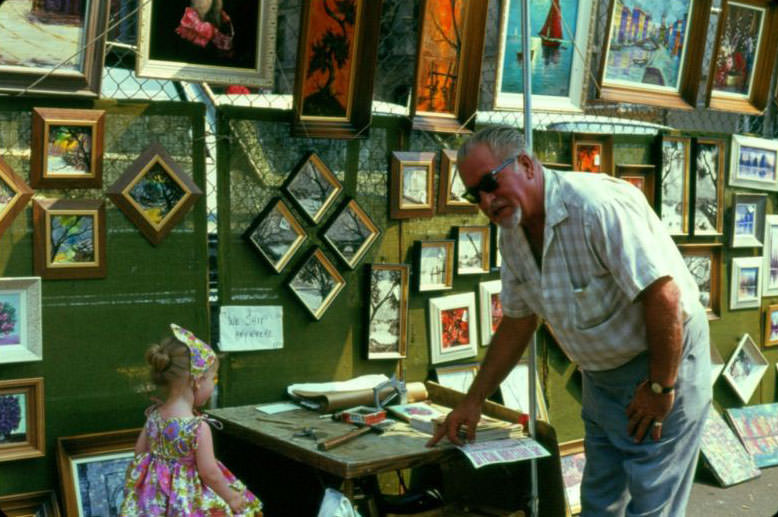
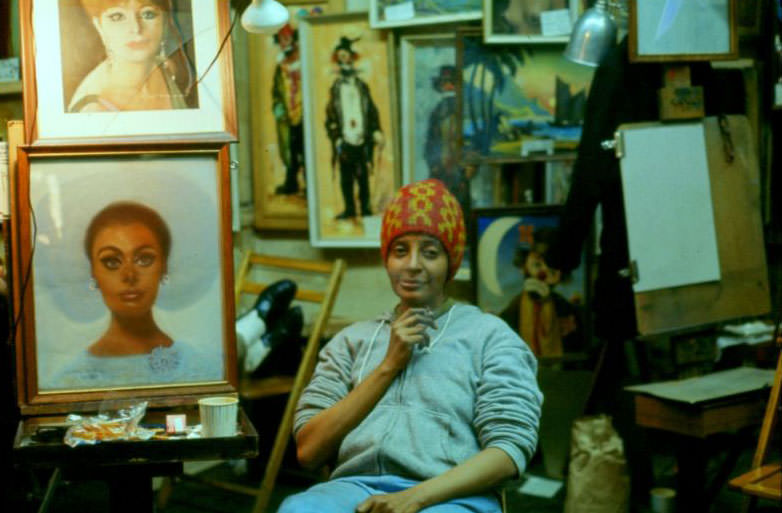
Street art dealers set up along the city’s parks and avenues throughout the warmer months, selling paintings, drawings, and prints directly off the pavement. This informal market gave buyers a way to find affordable original work and gave artists an income outside the formal gallery system. In the mid-1960s, the street art scene was thriving across Greenwich Village and along Central Park.
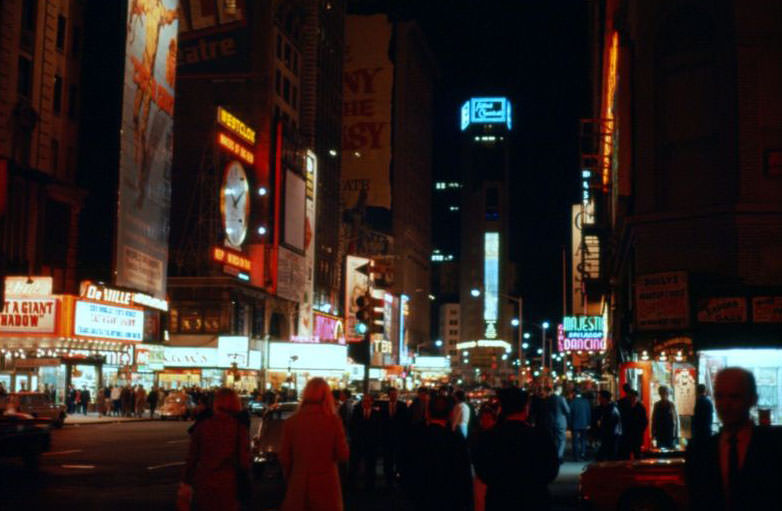
The stretch of Broadway that Jack photographed in June 1966 still carried the names of entertainment venues from earlier eras — the DeVille, the Palace, the Majestic Ballroom. The Palace Theatre had been a flagship vaudeville house and later a major concert and film venue. By the mid-1960s, these blocks were showing signs of decline, with some venues changing formats or closing altogether.
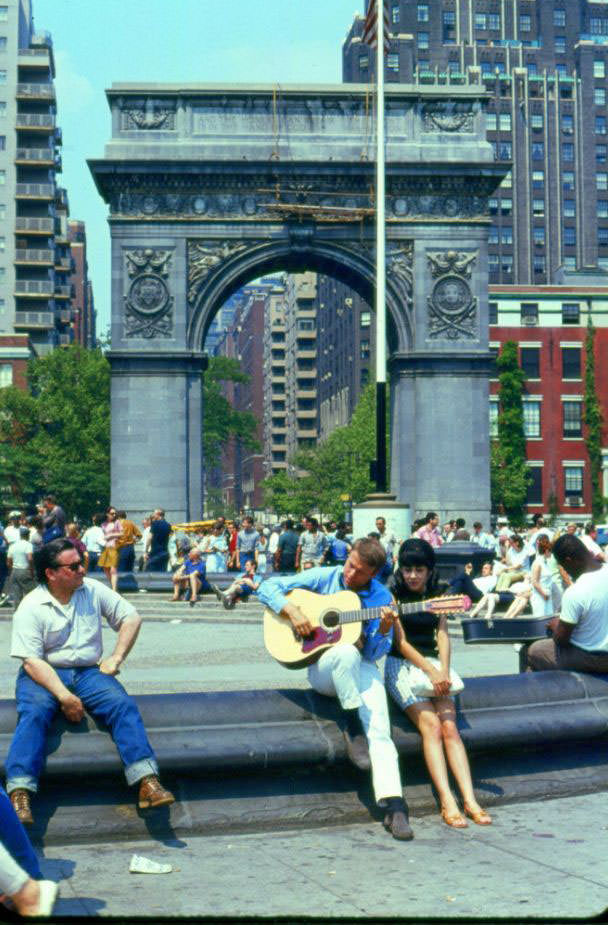
The Washington Square Arch, built in 1892 to commemorate the centennial of George Washington’s inauguration, stands at the northern entrance to Washington Square Park. In the 1960s, the arch served as a gathering point for the park’s constant flow of musicians, activists, students from nearby NYU, and everyday New Yorkers. Jack photographed it in June 1966, when the park was at its most active.
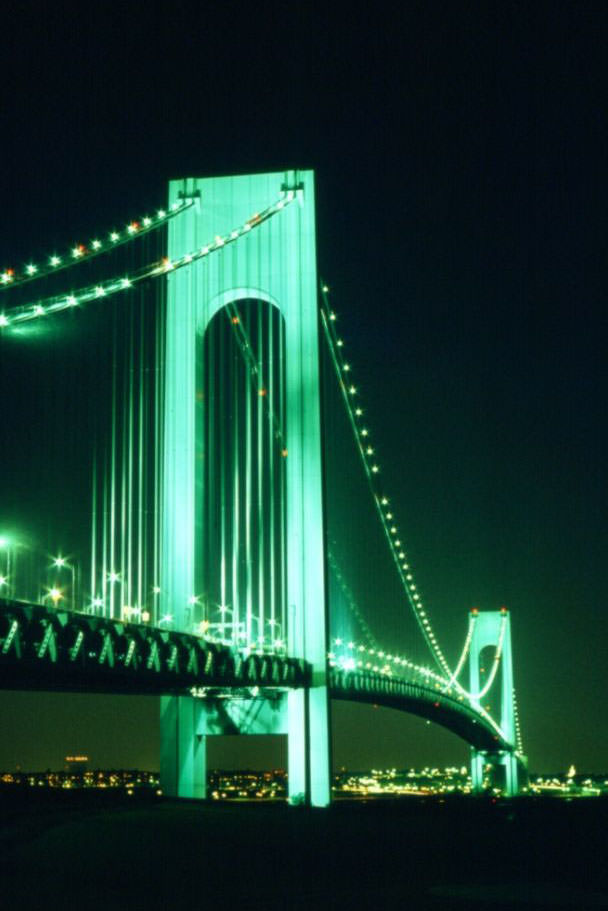
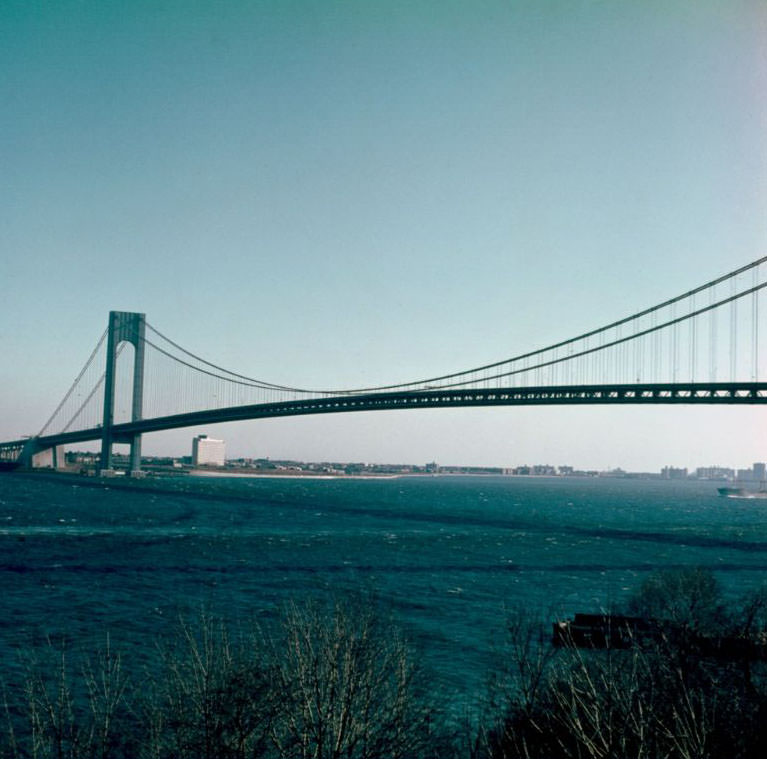
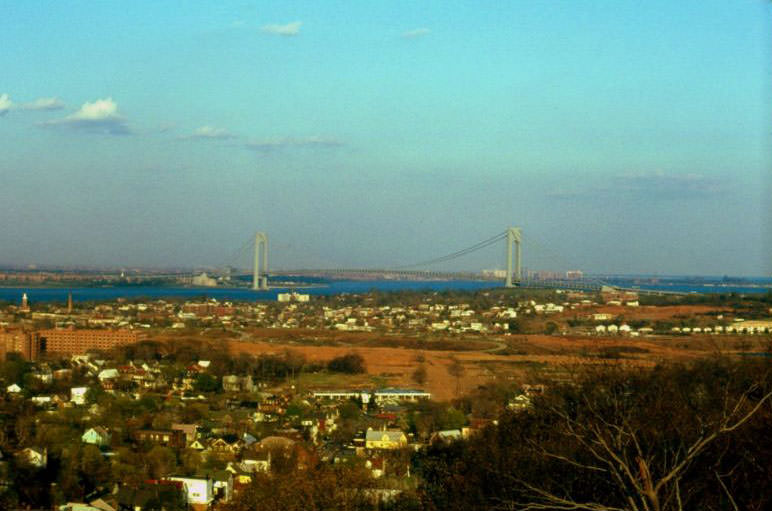
The Verrazano-Narrows Bridge had only opened in November 1964, making it barely a year and a half old when Jack photographed it in May 1966. At the time of its completion, it was the longest suspension bridge in the world, surpassing the Golden Gate Bridge in San Francisco. The bridge connected Brooklyn to Staten Island and was a source of genuine civic pride. Jack returned to photograph it from multiple angles, clearly drawn to its scale and clean engineering.
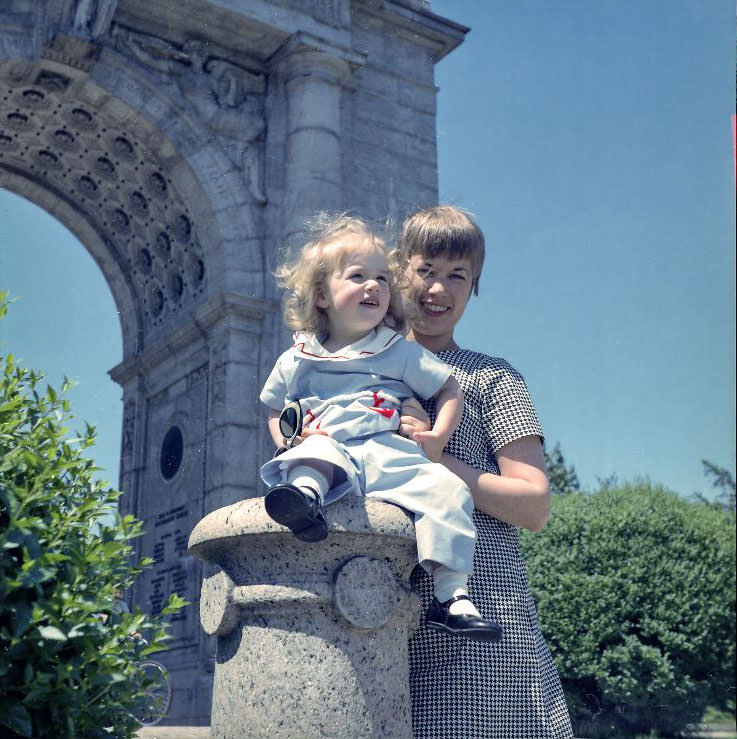
Washington Square Park in the summer of 1966 was one of the most active public spaces in the city. Folk singers, protesters, students, chess players, and families all shared the same few acres in Greenwich Village. The park had been a flashpoint for community activism earlier in the decade, when residents successfully fought off a Robert Moses plan to extend Fifth Avenue through it. By 1966, it belonged entirely to the people who used it daily.
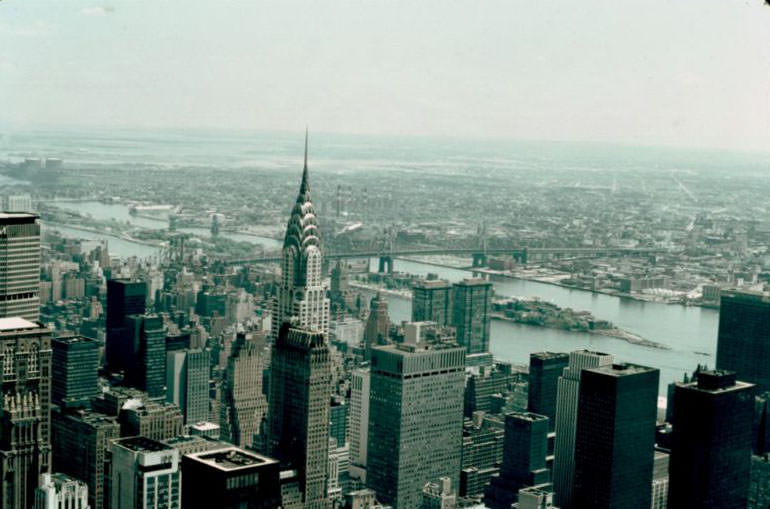
Jack continued photographing the city into 1967. The Chrysler Building, completed in 1930, remained one of the most recognizable structures in Midtown. Its stainless steel eagle gargoyles and tiered Art Deco crown made it unlike anything else on the skyline. By 1967, the building had already been surpassed in height several times over, but its design kept it among the most photographed buildings in the city.
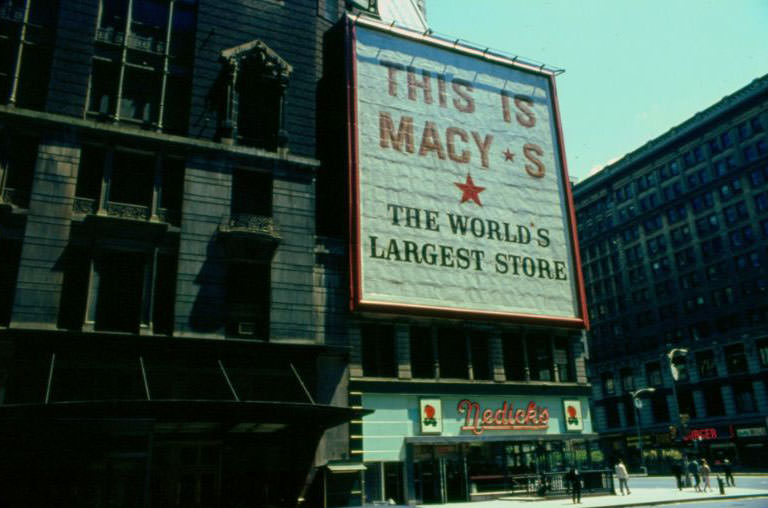
The Macy’s flagship store at Herald Square on 34th Street was already one of the largest department stores in the world in 1967. Its block-long presence on Broadway was a fixed landmark of Midtown Manhattan, drawing shoppers from across the city and beyond. The exterior signage and window displays visible in Jack’s photo are a direct record of how the store presented itself to the street at that specific moment.
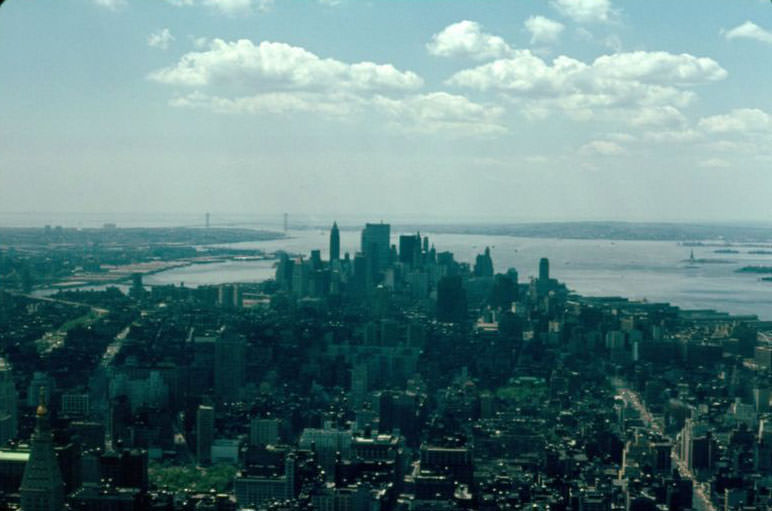
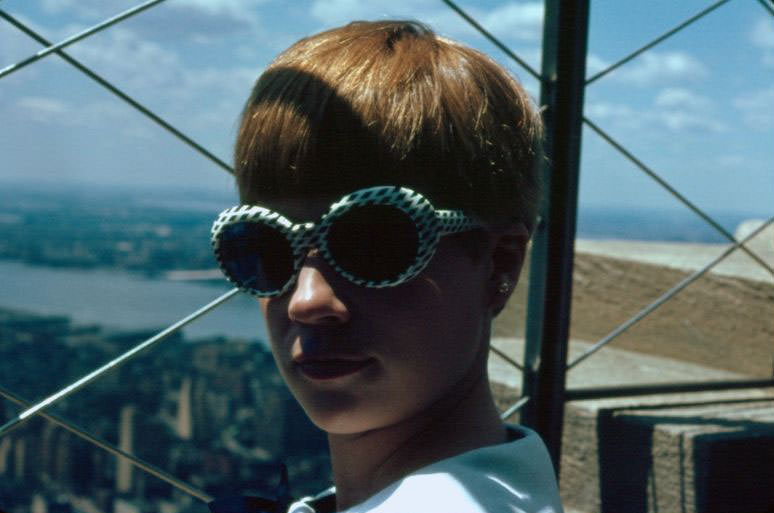
Jack brought family members to some of these familiar spots. A photo from the Empire State Building observation deck in June 1967 shows his mother-in-law posing with the skyline spread out behind her — a personal moment layered over a public landmark. These personal snapshots mixed in with his street photography give the collection a human dimension beyond pure documentation.
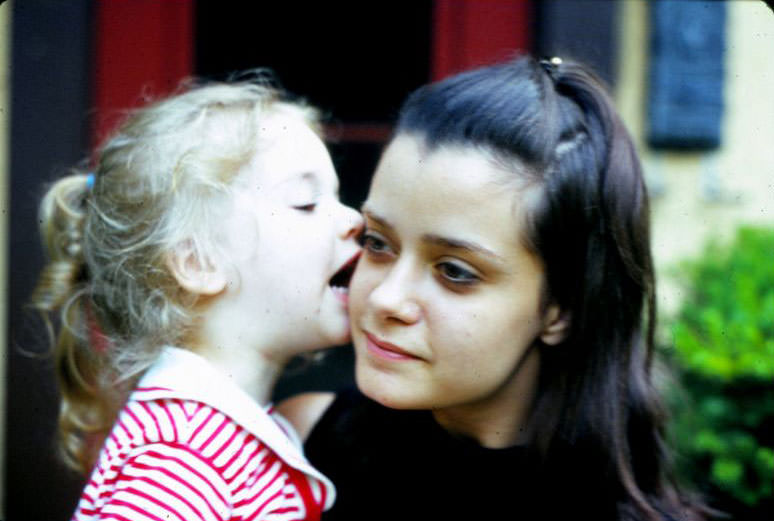
In 1967, Staten Island was the least densely populated of New York’s five boroughs and, in many ways, the most suburban in character. The Verrazano-Narrows Bridge had only recently connected it to Brooklyn by road, and its residential streets and shoreline looked markedly different from Manhattan or Brooklyn. Jack’s photograph captures a quieter side of New York that rarely appeared in guidebooks.
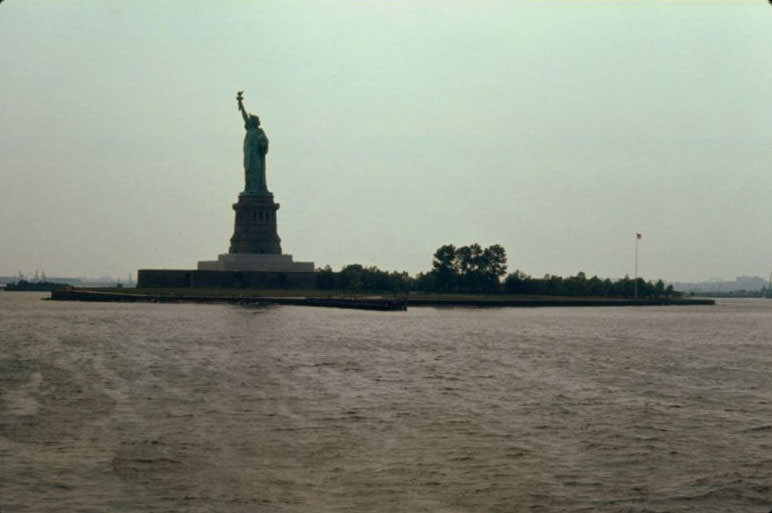
The Statue of Liberty stood on Liberty Island in New York Harbor, accessible by ferry from Battery Park. In 1967, the statue had been a New York fixture for 81 years. Jack photographed it in June 1967, likely from the Staten Island Ferry or a harbor boat. For a sailor stationed in New York, the harbor view — with the statue visible across the water — was part of the daily geography of the city.
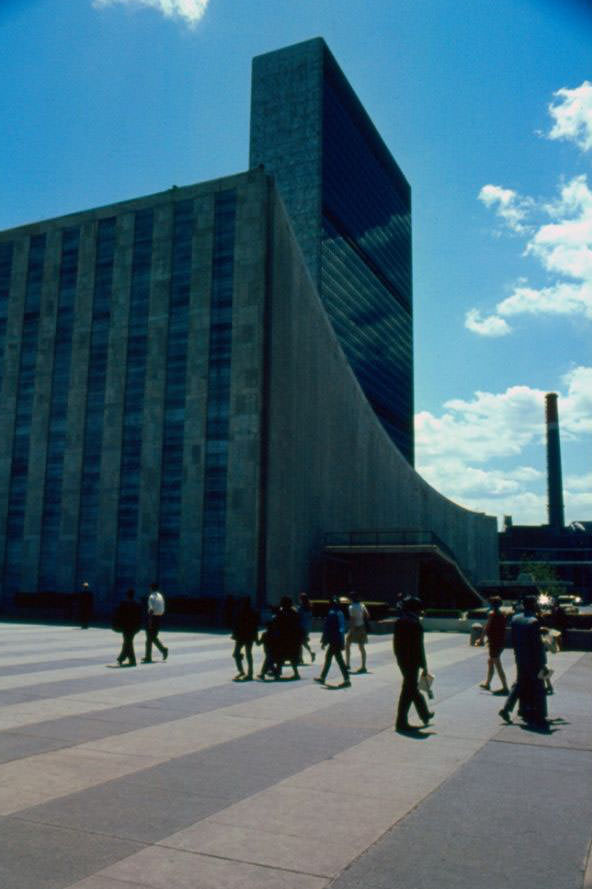
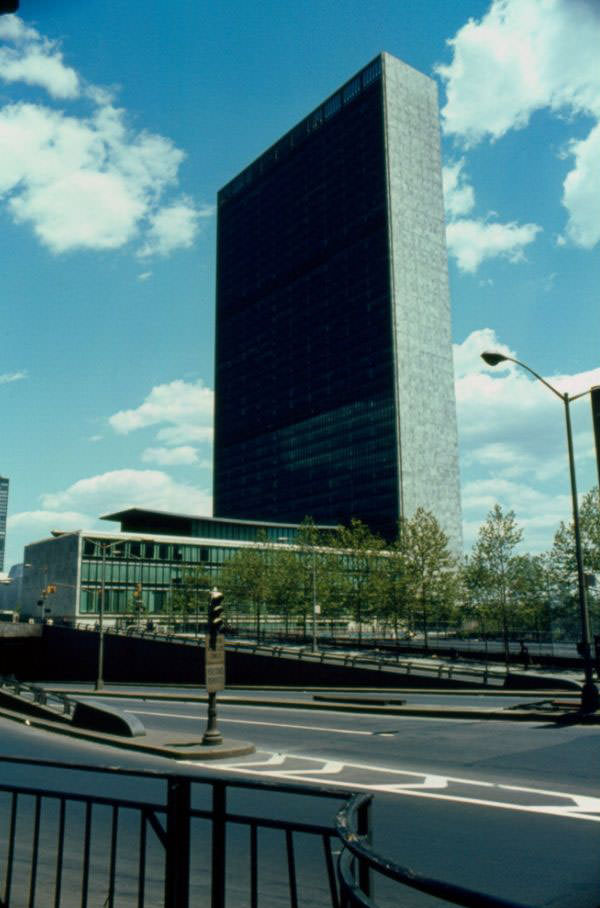
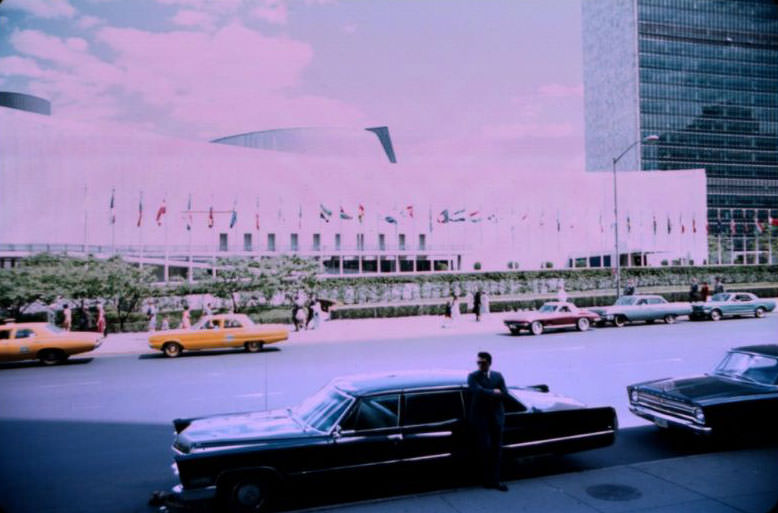
The United Nations complex on the East River, completed in 1952, was a prominent stop for visitors to New York throughout the 1960s. The Secretariat’s glass curtain wall and the domed General Assembly building were striking examples of mid-century modern architecture. In June 1967, just weeks after the Six-Day War in the Middle East, the UN was at the center of intense international diplomatic activity. Jack photographed the building from multiple angles, documenting its architecture and the row of member-nation flags along First Avenue.
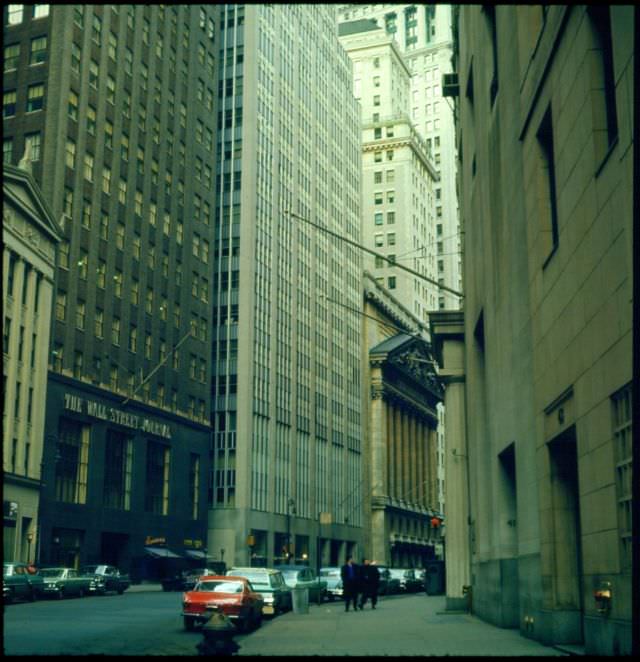
The Wall Street Journal’s headquarters in Lower Manhattan placed one of the country’s most influential financial newspapers at the heart of the Financial District. The building sat near Broad Street and the New York Stock Exchange, in the dense cluster of offices and trading floors that drove the American economy. Jack photographed it in March 1967, rounding out his documentation of the city’s major institutions alongside its street life and public spaces.




