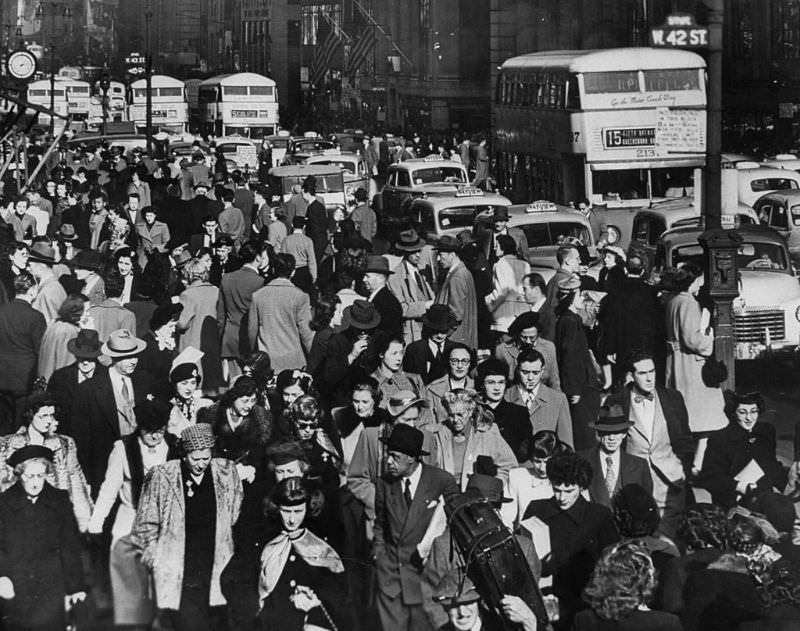
By 1908, New York City was already one of the most densely populated places on Earth. Immigrants poured in from Europe and beyond, filling the streets of the Lower East Side, Harlem, and Midtown with new languages, new cultures, and new ambitions. The city was loud, crowded, and constantly in motion. Public life played out on the sidewalks — not behind closed doors. That year, women fighting for the right to vote took their cause directly to City Hall.
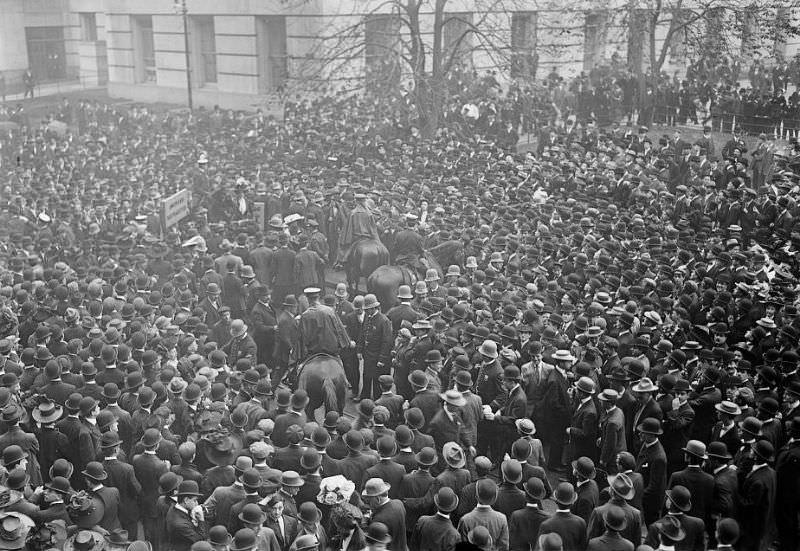
Suffragettes weren’t only gathering at City Hall. They marched through city neighborhoods, making their presence known block by block.
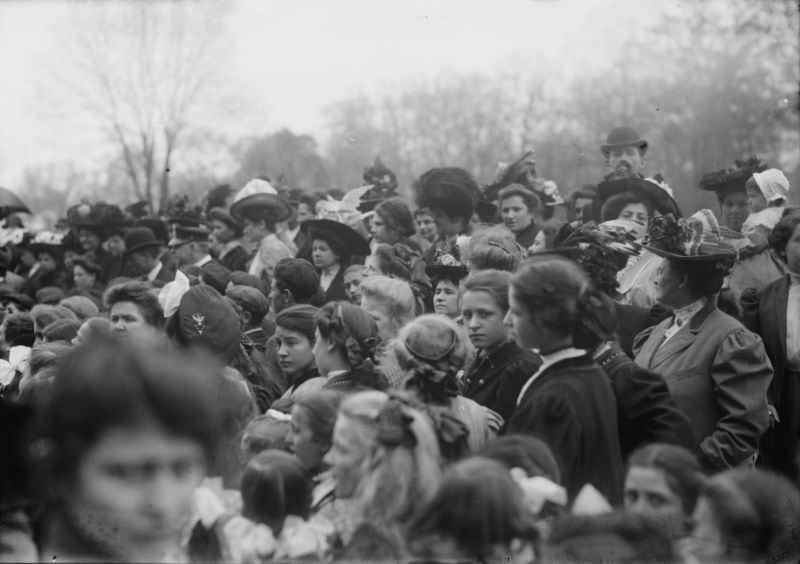
Public gatherings in 1908 weren’t limited to political causes. New York’s public schools marked Arbor Day with organized outdoor celebrations, bringing students and communities together across the city.
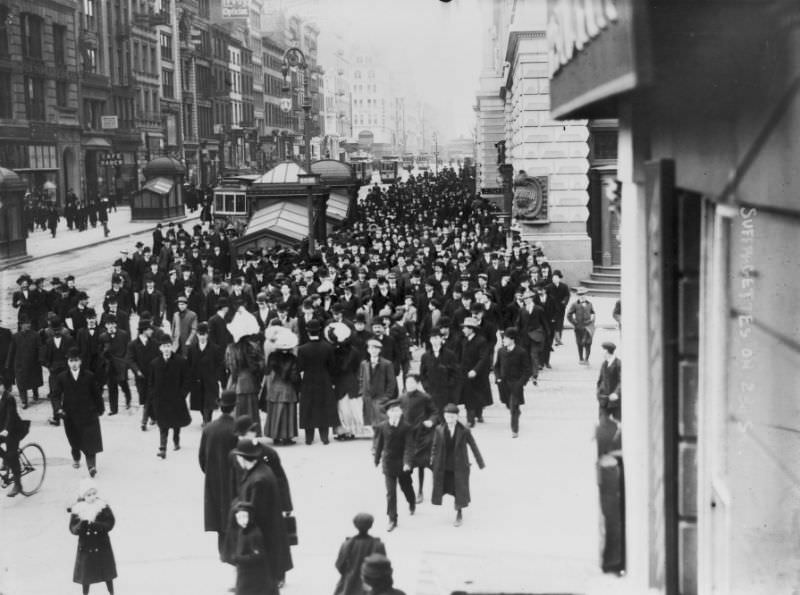
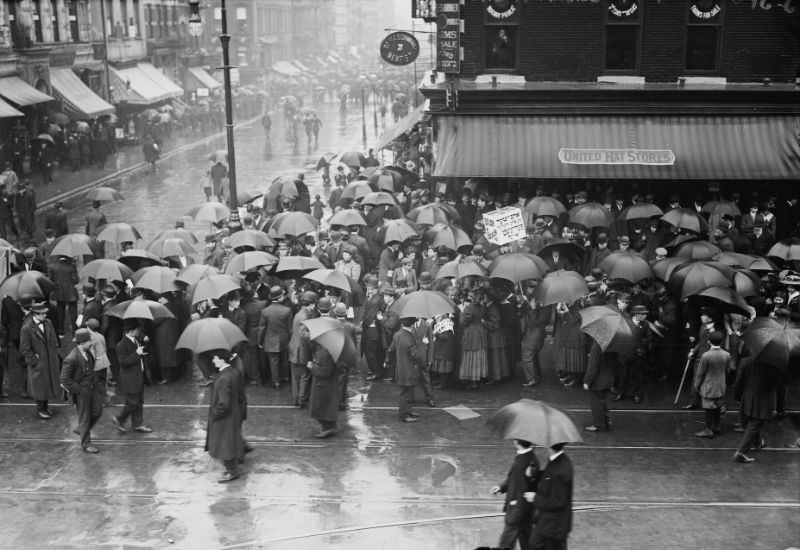
Labor organizing was a defining force in early 20th-century New York. Workers took to the streets even in bad weather to demand fair wages and better conditions.
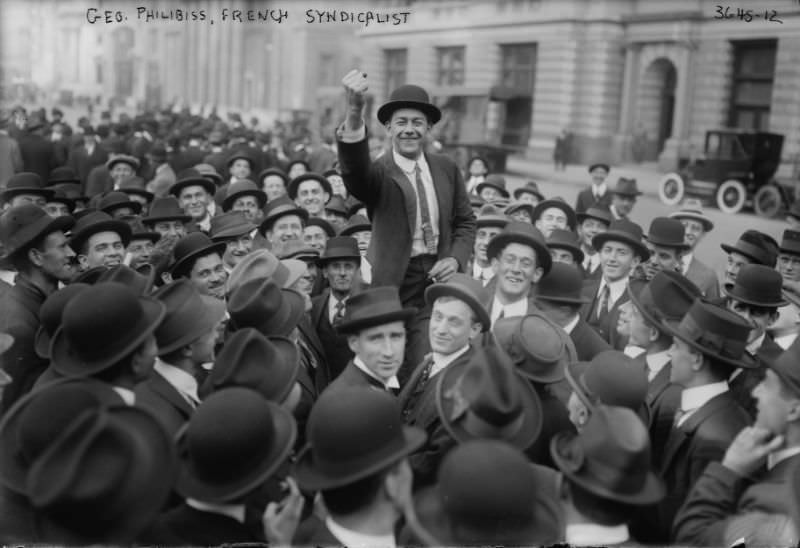
Political movements from across the Atlantic also found a foothold in New York. Figures like French syndicalist George Philibiss drew attention in the 1910s, reflecting the city’s deep ties to international labor and radical politics.
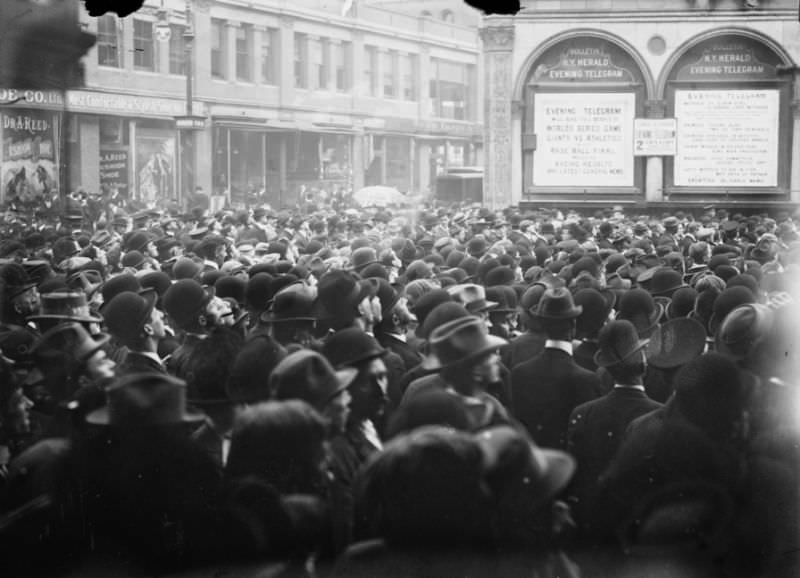
New Yorkers didn’t need to be at the ballpark to follow the World Series. In 1911, crowds packed the streets to watch live scoreboards and mechanical play-by-play displays called “playographs” — an early form of public sports broadcasting.
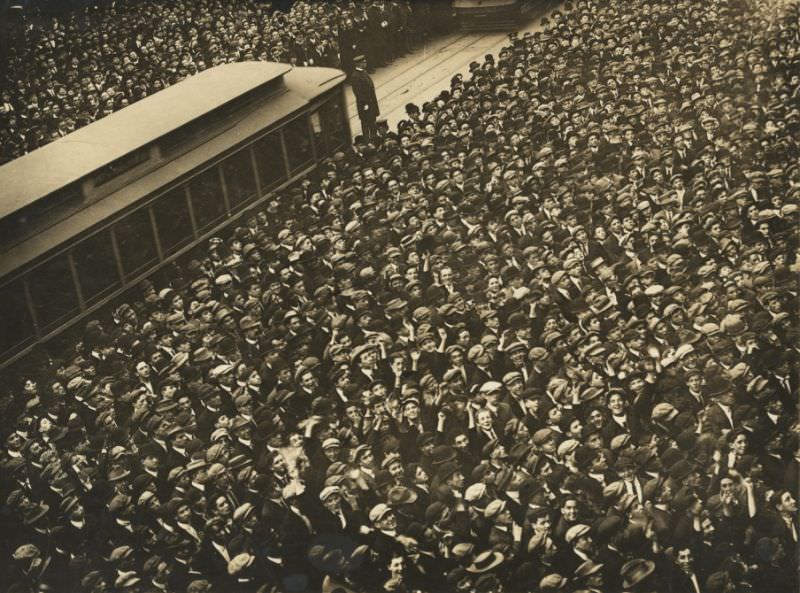
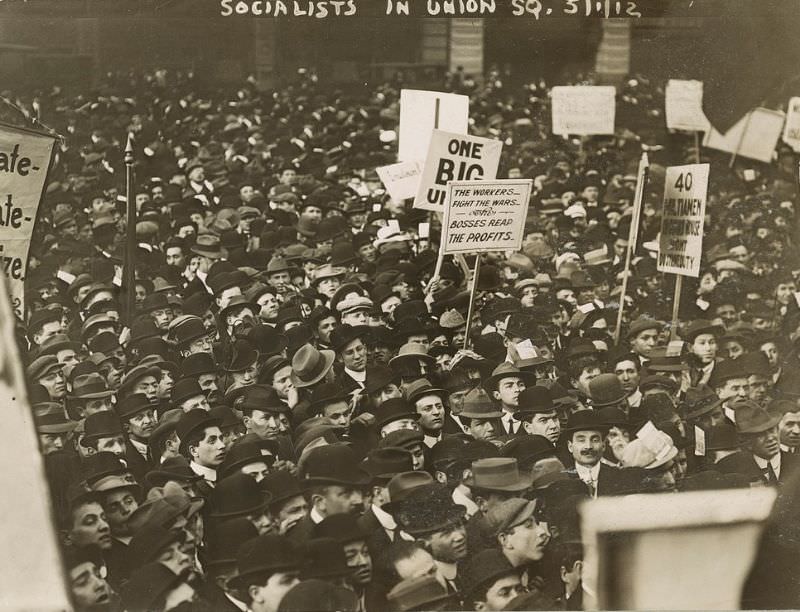
Socialist organizing was a major part of New York street life in the early 1910s. May Day rallies drew large, sign-carrying crowds who pushed for workers’ rights and economic reform.
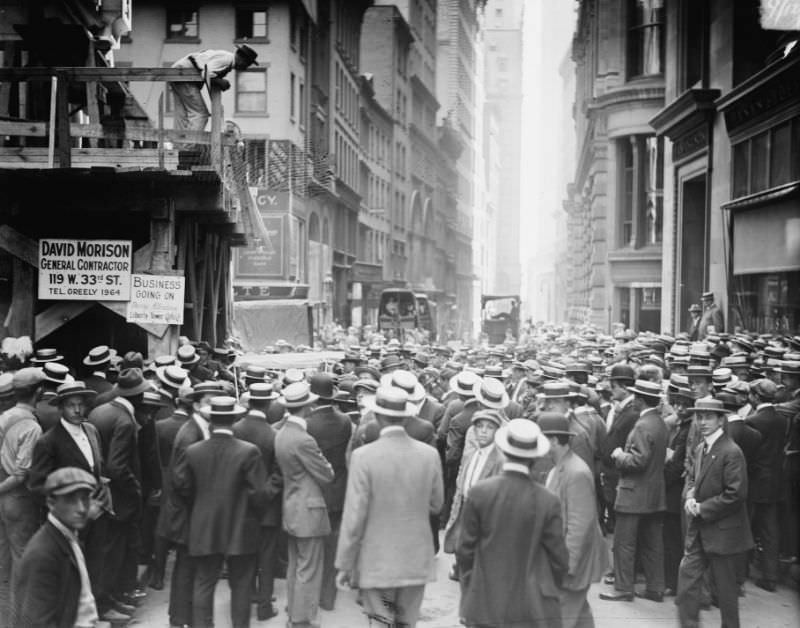
Public figures also drew massive crowds simply by showing up. In 1912, New Yorkers gathered in the streets just to catch a glimpse of a well-known personality passing through.
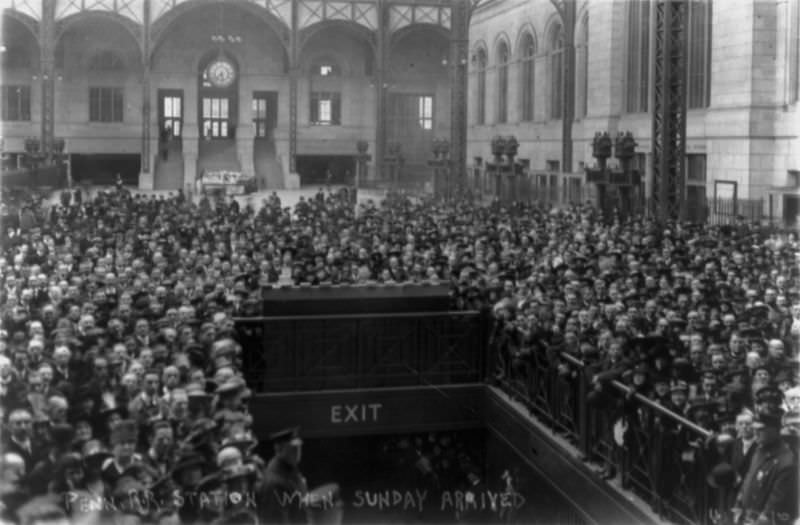
Religious figures could command just as much attention. In 1917, hundreds crowded the exit of Pennsylvania Station waiting for the arrival of Billy Sunday, one of the most famous evangelical preachers in American history.
After World War I, workers in the entertainment industry also organized. In 1919, actors walked off Broadway stages and onto 45th Street in a strike that shut down theaters across the city.
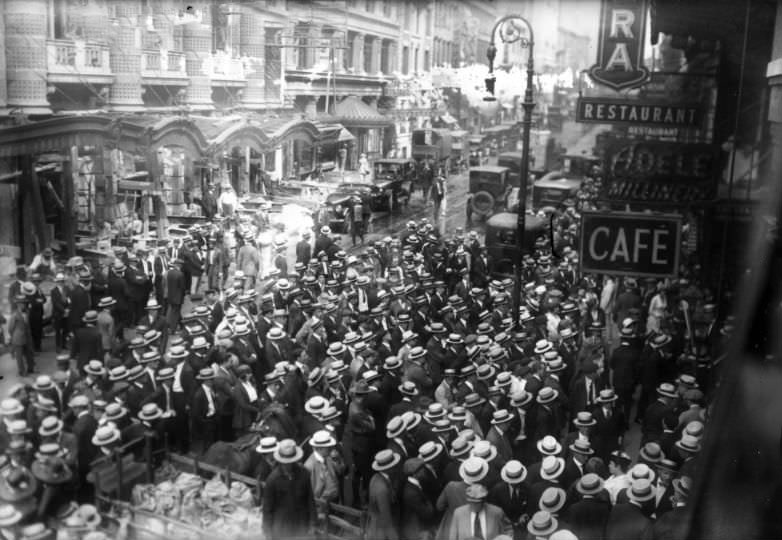
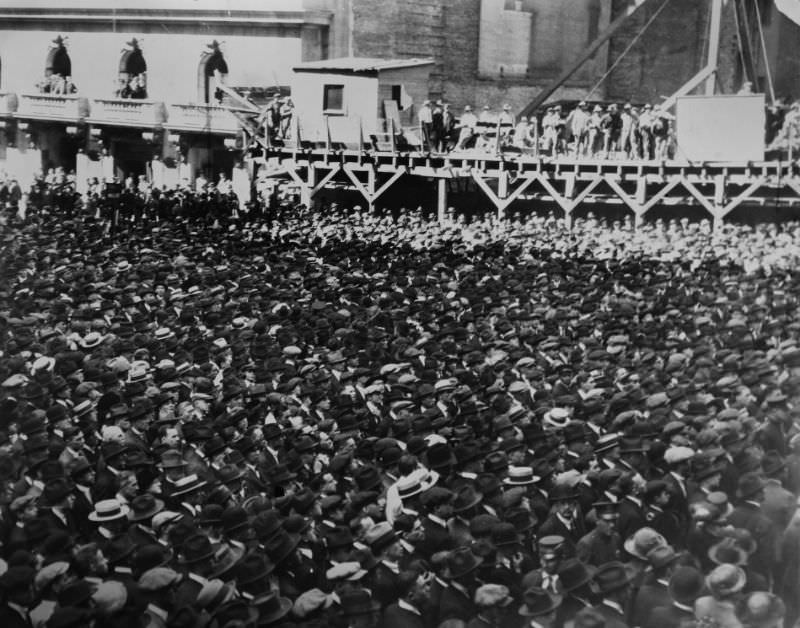
On September 16, 1920, a bomb hidden in a horse-drawn wagon exploded on Wall Street, killing 38 people and injuring hundreds. The blast sent crowds of workers fleeing in every direction — captured in one of the most striking street photos of the era.
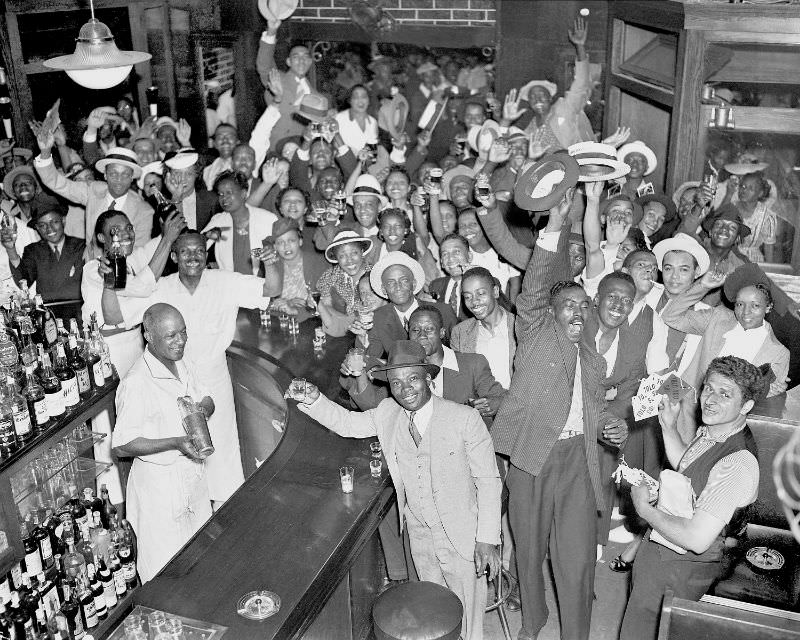
Harlem in the 1930s was a community with a fierce sense of pride. When heavyweight boxer Joe Louis knocked out Primo Carnera in June 1935, residents poured into the streets to celebrate.
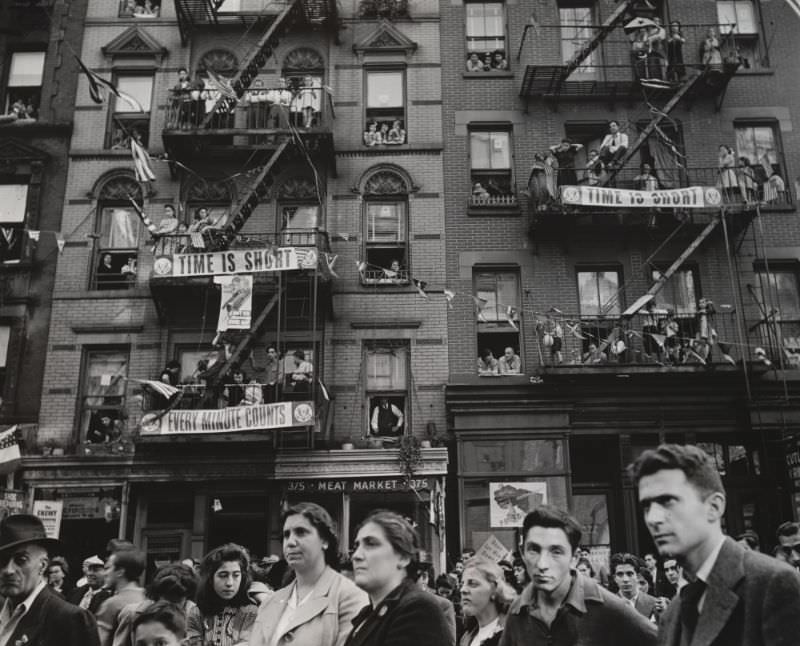
World War II transformed the pace of city life. The Lower East Side in 1942 showed neighborhoods still dense with residents navigating daily life under wartime rationing and uncertainty.
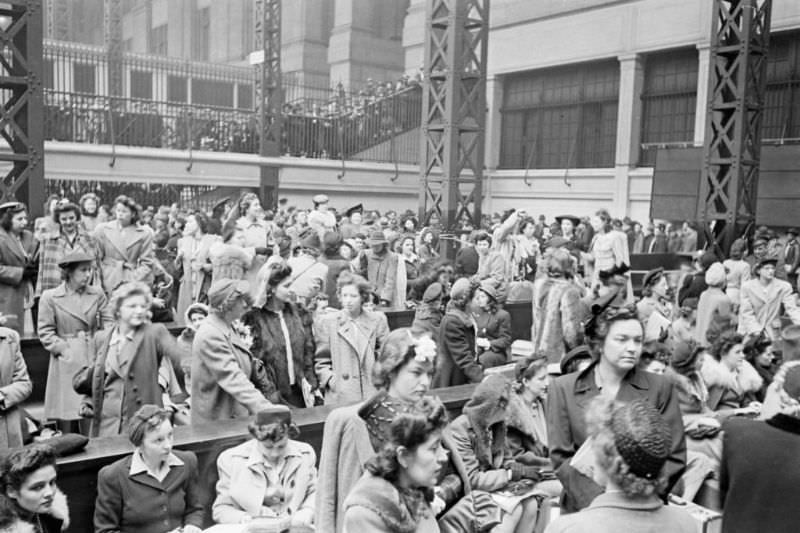
Pennsylvania Station became a symbol of the war’s reach. In 1943, the massive terminal was flooded with soldiers, families, and civilians — a city within a city operating under wartime pressure.
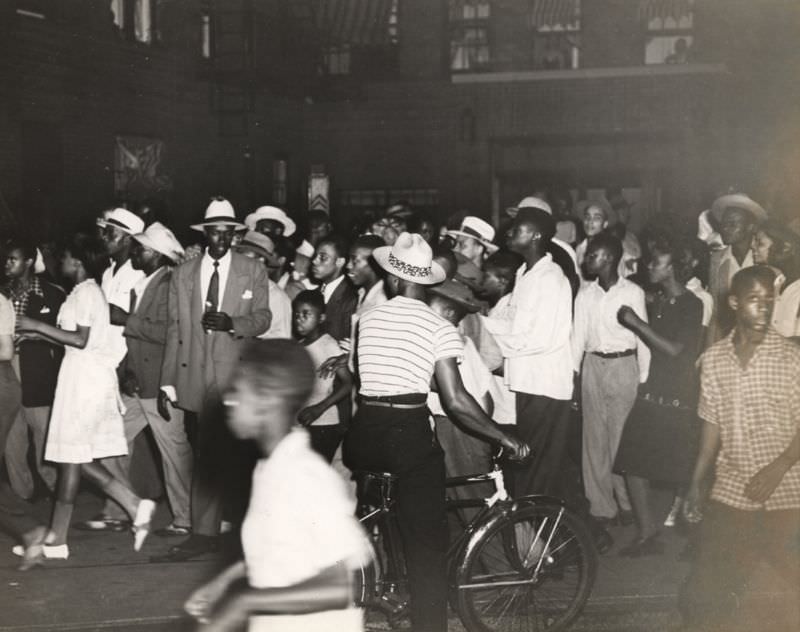
Harlem’s streets remained packed through the war years. The neighborhood was home to one of the largest Black urban communities in the country, and its sidewalks reflected that energy every day.
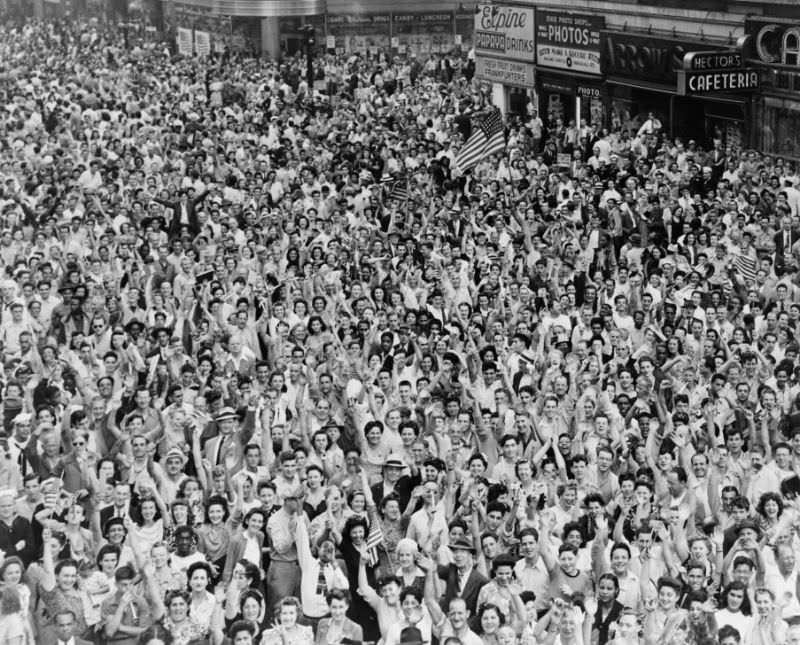
When Japan surrendered in August 1945, Times Square erupted. Thousands flooded the intersection, waving, cheering, and celebrating the end of the deadliest conflict in human history.
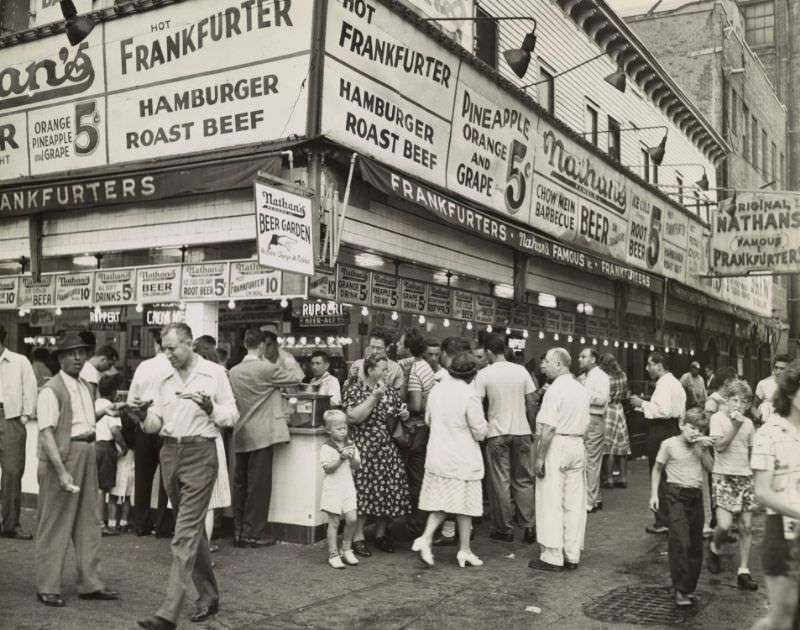
Postwar New York was hungry — literally and otherwise. Nathan’s Famous in Coney Island drew corner-to-corner crowds in 1947, a snapshot of the city returning to everyday pleasures after years of sacrifice.
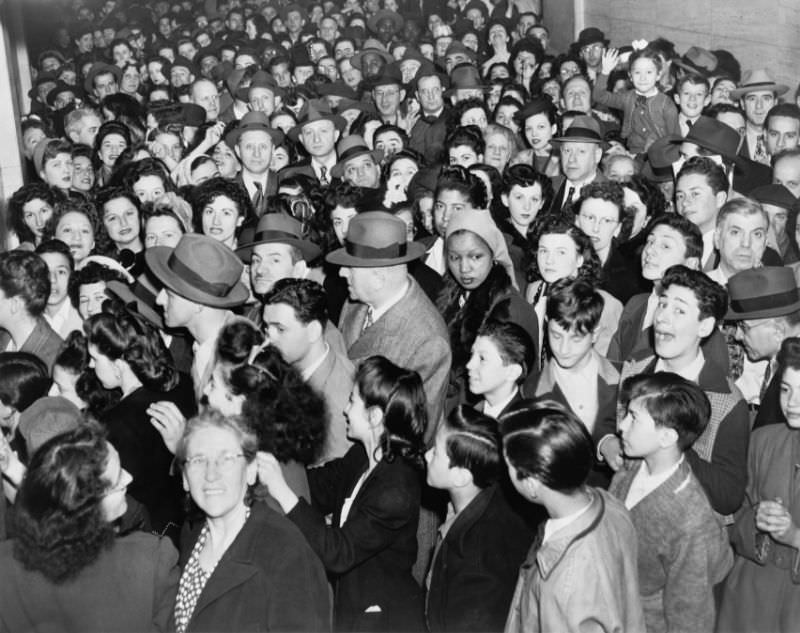
That same year, a smallpox outbreak hit the city. Health officials moved fast, and New Yorkers lined up by the thousands outside the Department of Health building to receive vaccinations — a city mobilizing with characteristic urgency.
By 1948, Midtown Manhattan was a roaring engine of pedestrian traffic. Looking north up 5th Avenue from 31st Street, the sidewalks were wall-to-wall with people — a fitting image of a city that had survived depression and war and never once stopped moving.