Berenice Abbott was an American photographer who trained her camera on New York City at one of its most turbulent moments. In the 1930s, while the Great Depression pushed millions out of work, Abbott set out to document every corner of a city that was rapidly changing shape. The result was “Changing New York,” a sweeping black-and-white record of streets, people, and buildings caught between two eras.
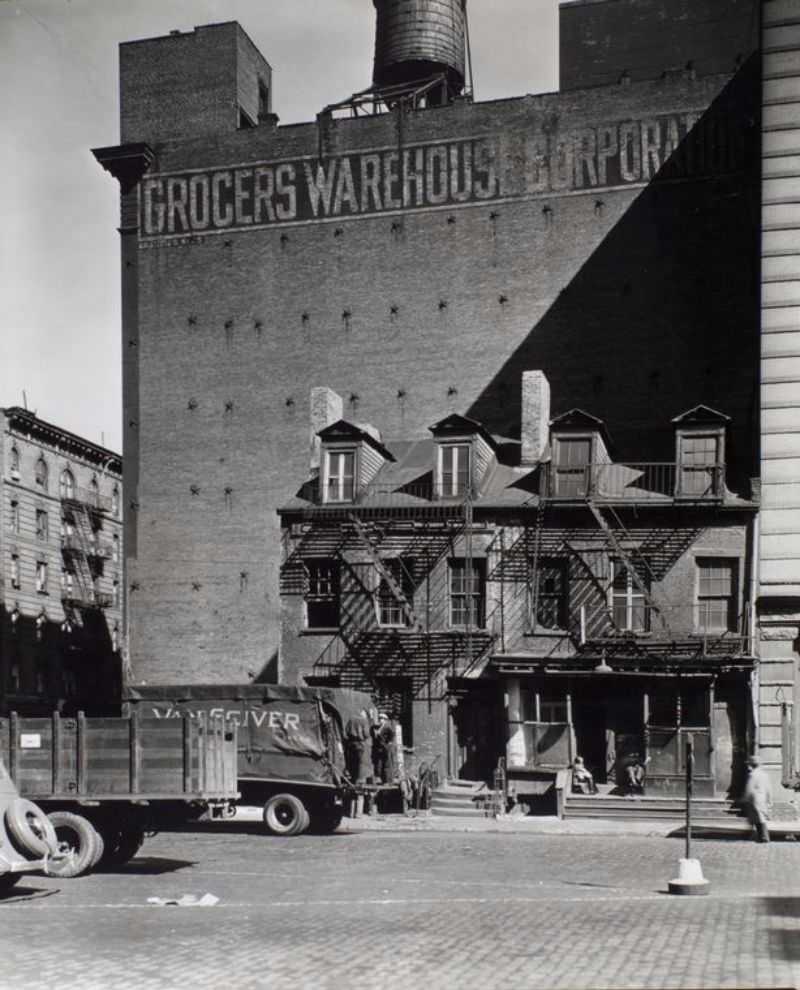
Broome Street no. 512-514, Manhattan. Two row houses are dwarfed by the Grocers Warehouse Corporation building behind it, trucks in the foreground.
Abbott proposed the project to the Federal Art Project (FAP) in 1935. The FAP was a federal relief program under President Franklin D. Roosevelt’s New Deal, created specifically to employ artists, writers, and photographers during the economic crisis. The FAP accepted her proposal and gave her the funding and resources she needed to begin work across the five boroughs.
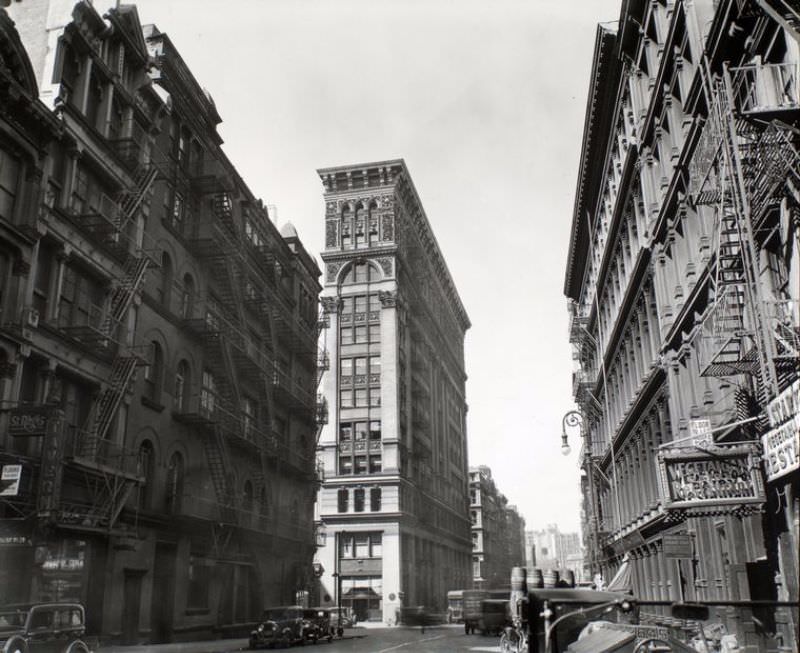
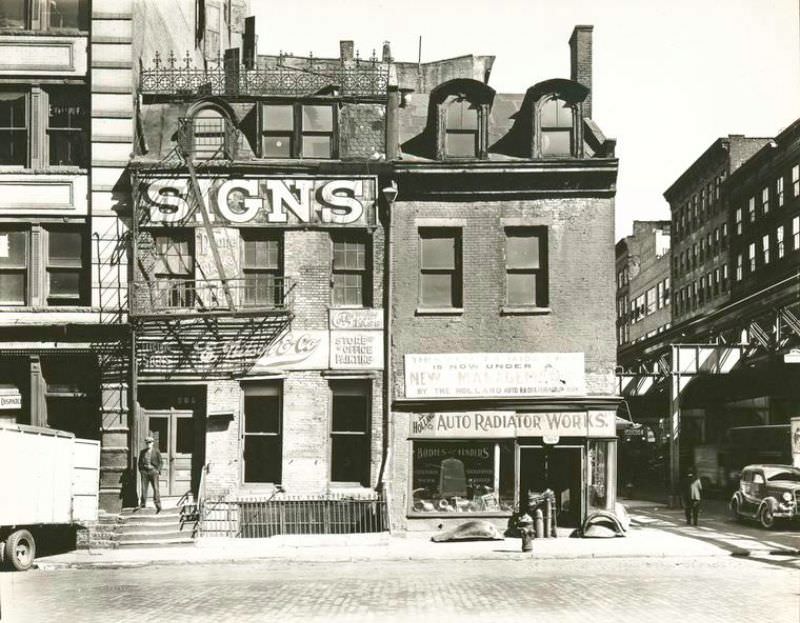
Broadway near Broome Street, Manhattan. Looking down Broadway, ornate Bank of Sicily Trust near center of image, sign for vegetarian restaurant, right, cars and trucks.Broome Street, Nos. 504-506, Manhattan. Sign company with decorative ironwork along roof, auto radiator shop, in three-story buildings, the elevated railroad just visible at right.
Lower Manhattan was the core of her project. The financial district’s mix of towering skyscrapers and century-old buildings made it a perfect subject. Abbott photographed both — the steel and glass rising overhead and the older structures being torn down to make room for them. That tension between old and new ran through nearly every frame she shot downtown.
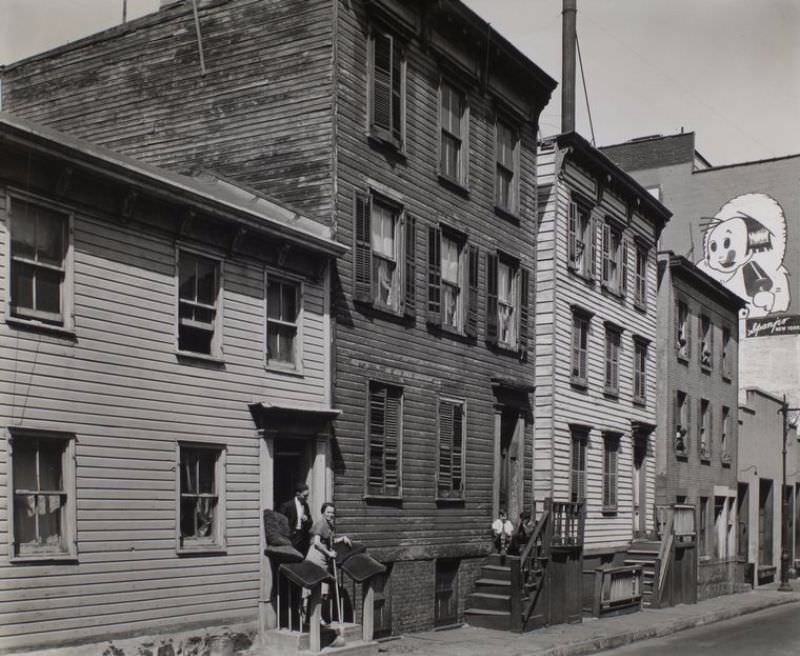
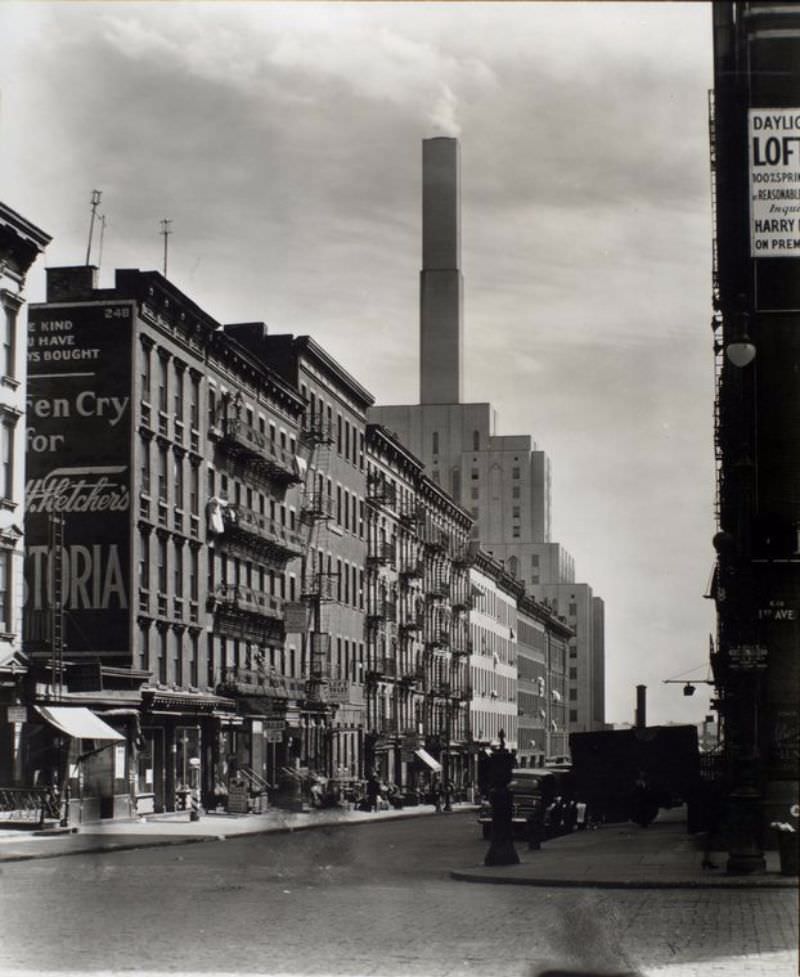
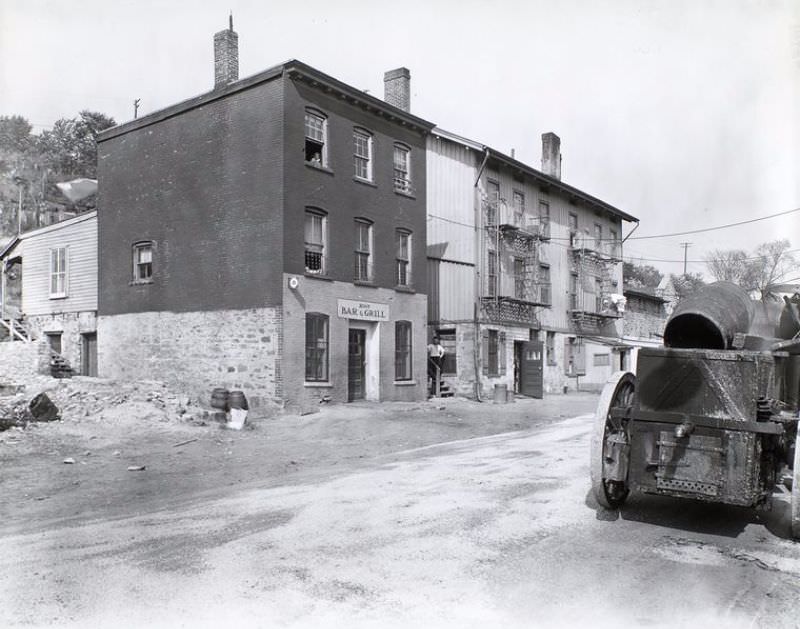
First Avenue and East 70th Street, Manhattan. Looking east (?) toward New York Hospital (?), apartments, lofts, businesses on 70th in the foreground.Ewen Avenue No. 2565 (Bar and grill), Spuyten Duyvil, Bronx. Bar and grill and other buildings built into hillside along street, man looks on from steps, girl from window above, vehicle with barrels, right.
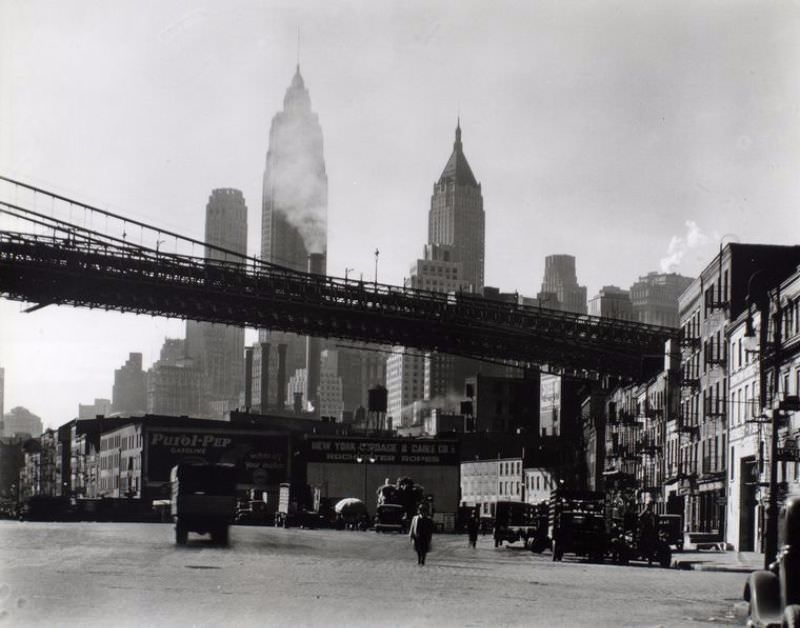
The waterfront was another major focus. South Street’s docks, ferries, and freight terminals kept the city fed and stocked, and Abbott photographed the workers and vessels that made it run. She also turned her lens on everyday street life — pushcart vendors, shopkeepers, pedestrians moving through crowded blocks.
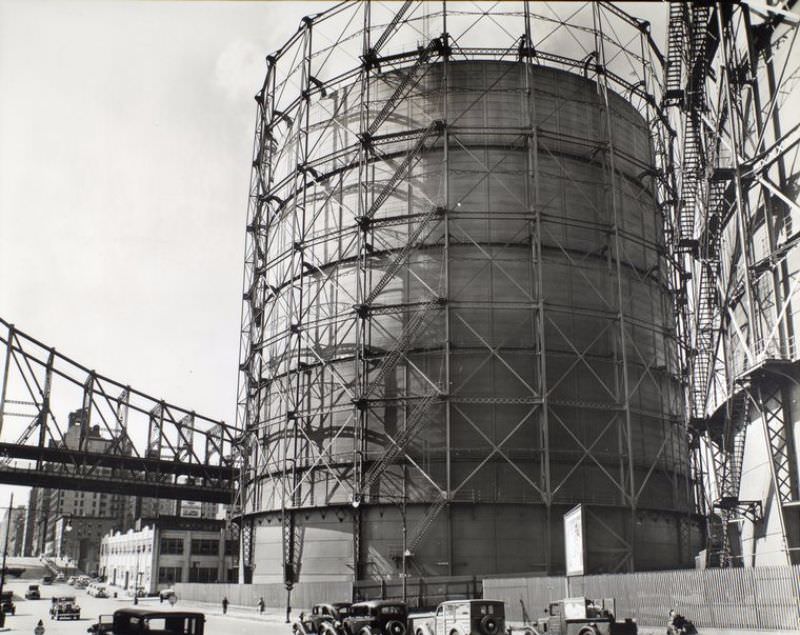
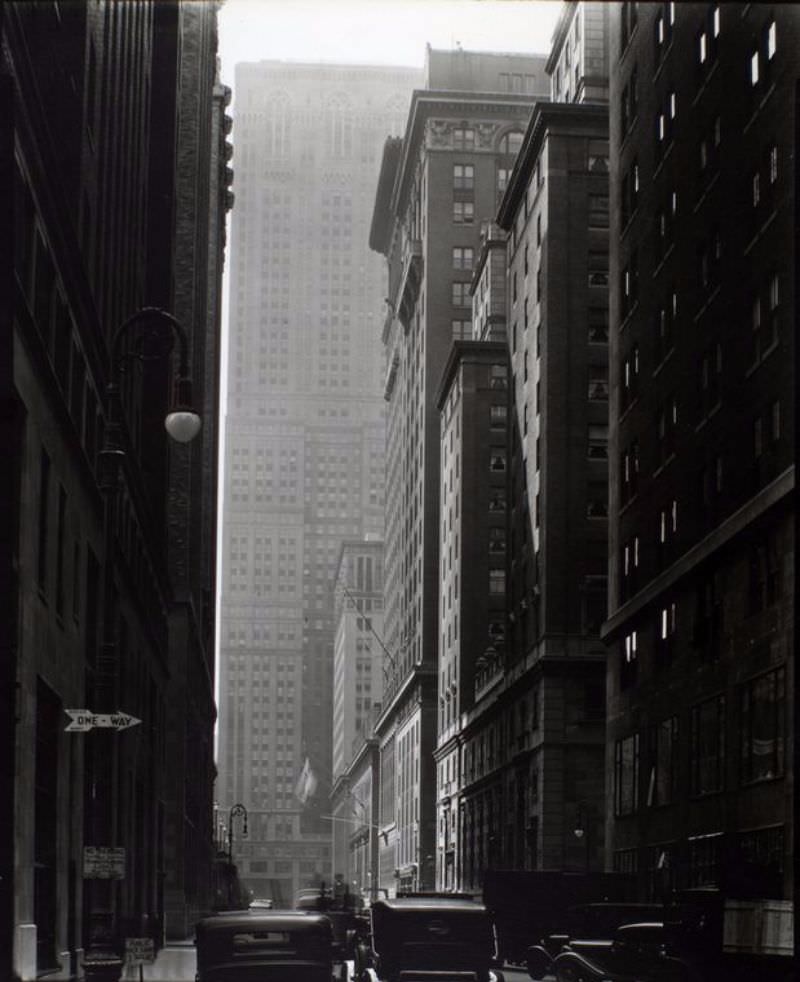
Gas tank and Queensboro Bridge, East 62nd Street & York Avenue, Manhattan. Huge gas tanks dwarf Queensboro Bridge (left) and cars on street below.Vanderbilt, From E. 46th Street, Manhattan. Canyon of buildings looking down Vanderbilt toward 42nd Street, hack stand sign, traffic.
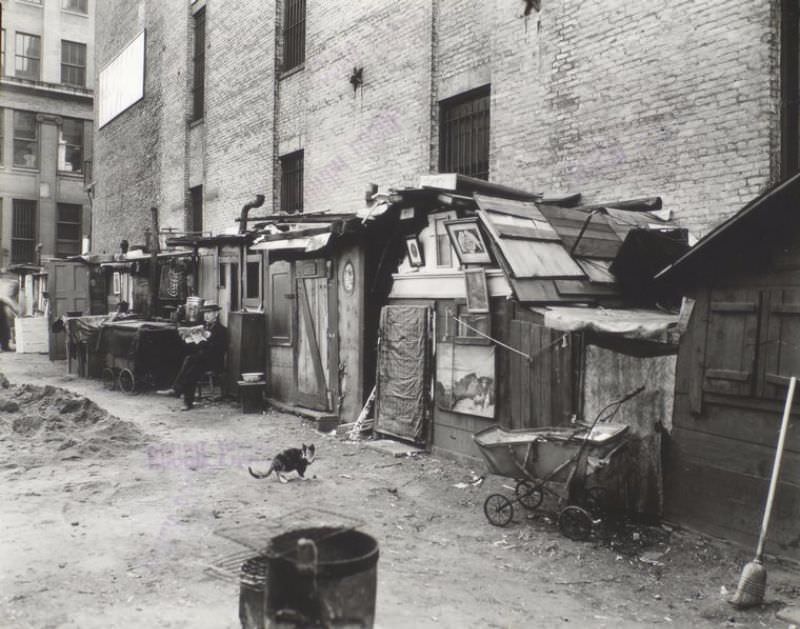
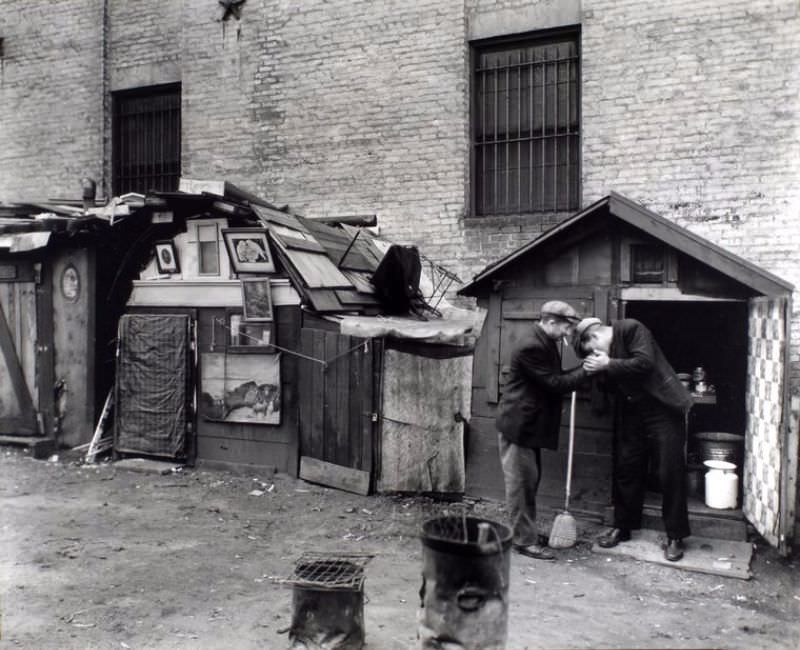
Some of her most striking images captured the human cost of the Depression directly. On West Houston Street near Mercer, men lived in makeshift huts built from salvaged materials, decorating the outsides with framed pictures. Abbott photographed them without sensationalism — just clear, factual frames of how people survived.
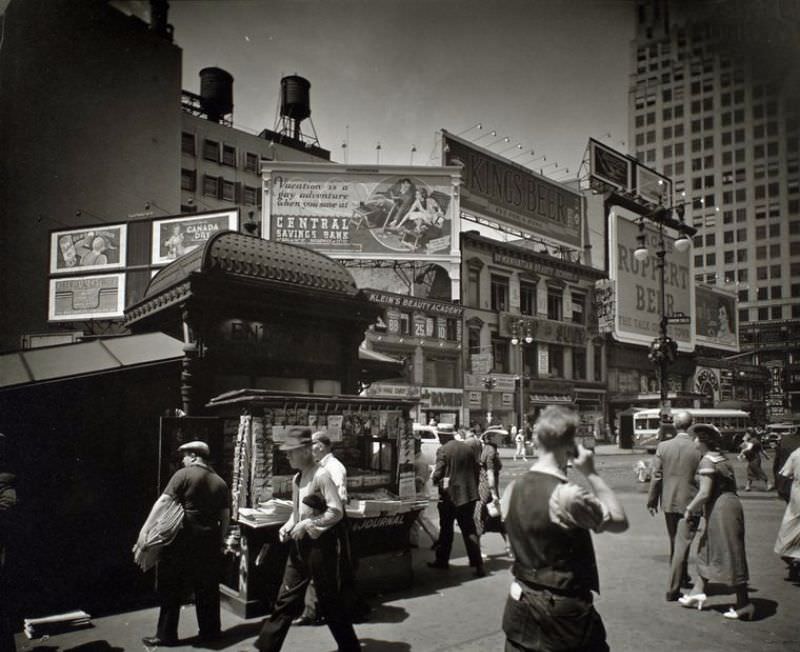
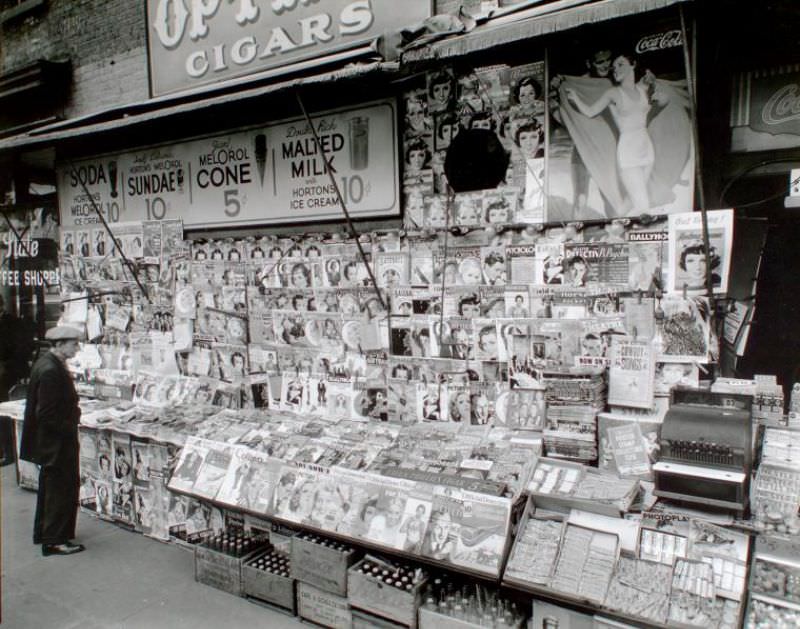
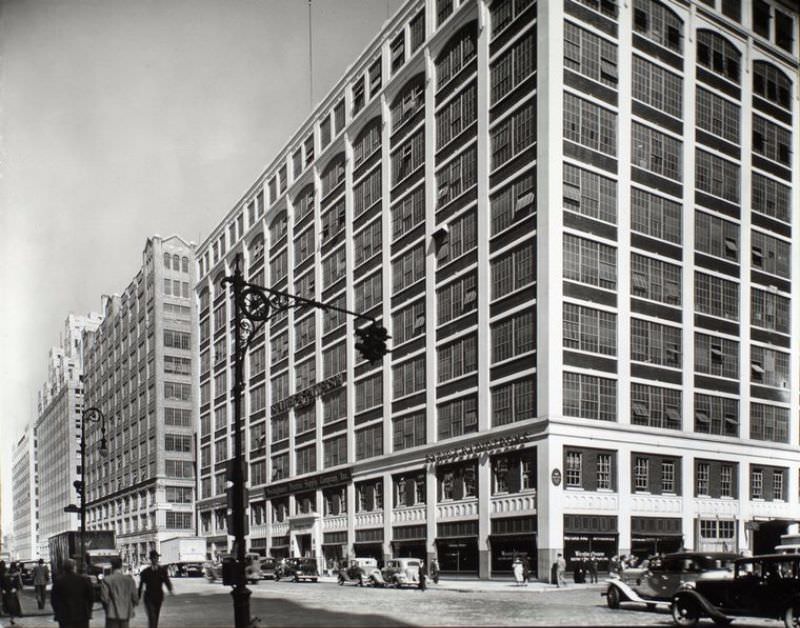
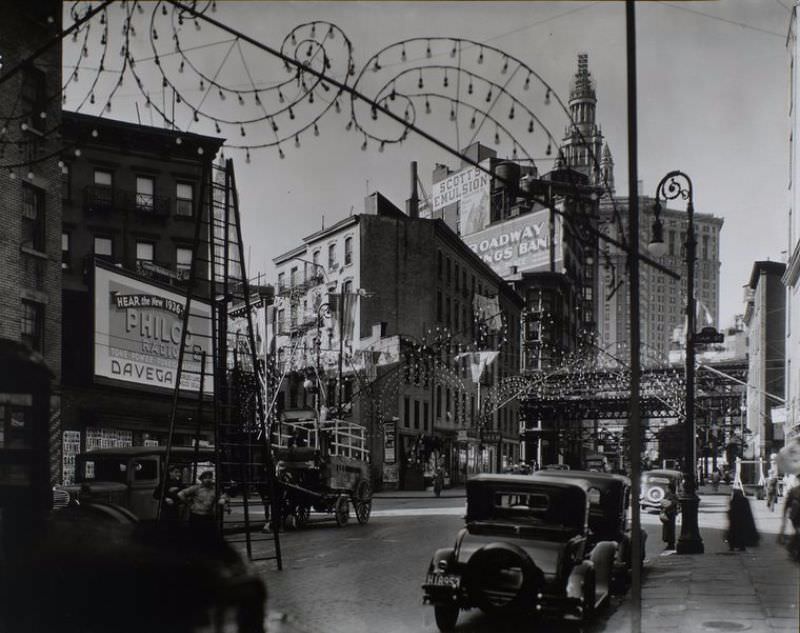
Newsstand, 32nd Street and Third Avenue, Manhattan.Spring and Varick Streets, Manhattan. stinghouse Electric Supply Co. and other loft buildings along Varick street, showrooms on lower floors.Oak and New Chambers Streets, Manhattan. Festive lights in curlicue designs arch over street, men with tall ladder, wagons, cars, billboards; ‘el’ and Municipal Bldg. just visible.
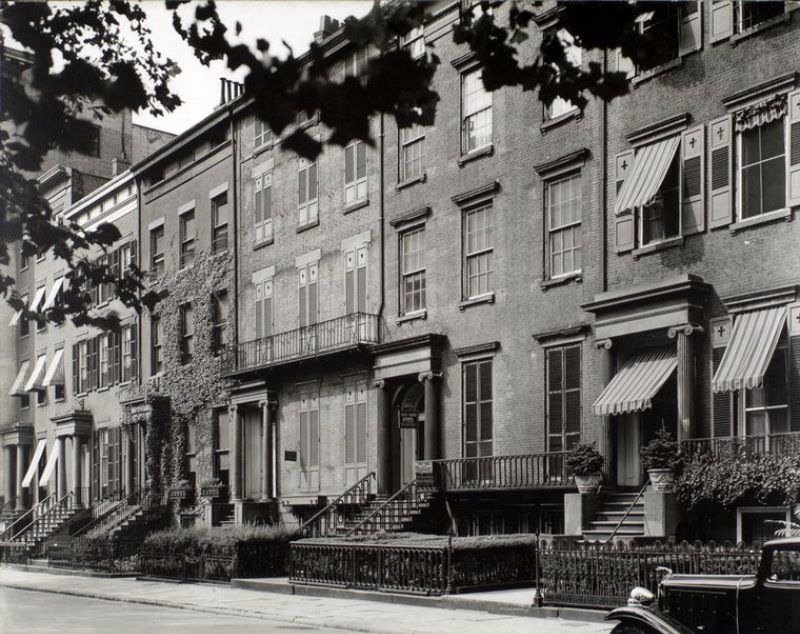
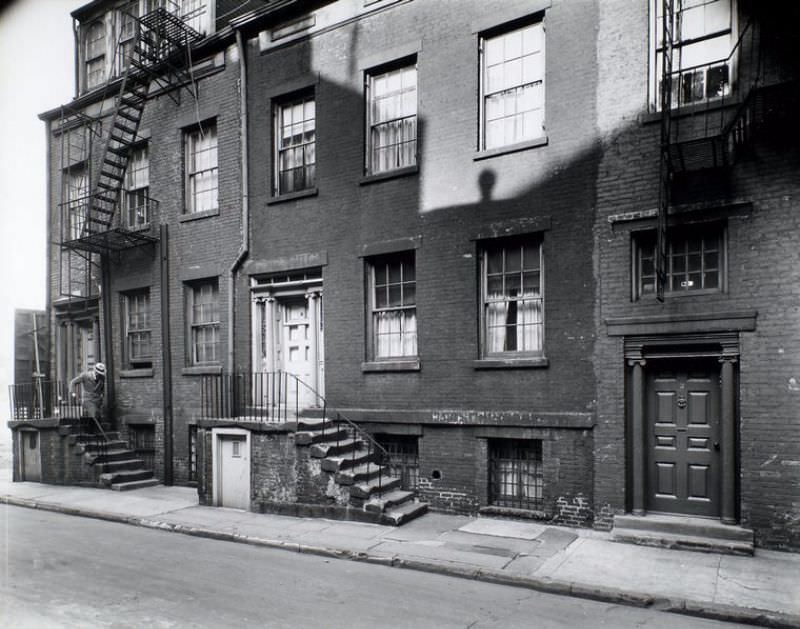
Abbott ranged across Manhattan’s neighborhoods — the Lower East Side, Greenwich Village, the Bowery, Union Square, and Madison Square. Each area had its own character, and she captured it precisely: the Greek Revival stoops of Washington Square North, the elevated rail lines cutting through Hanover Square, the theater marquees of Midtown.
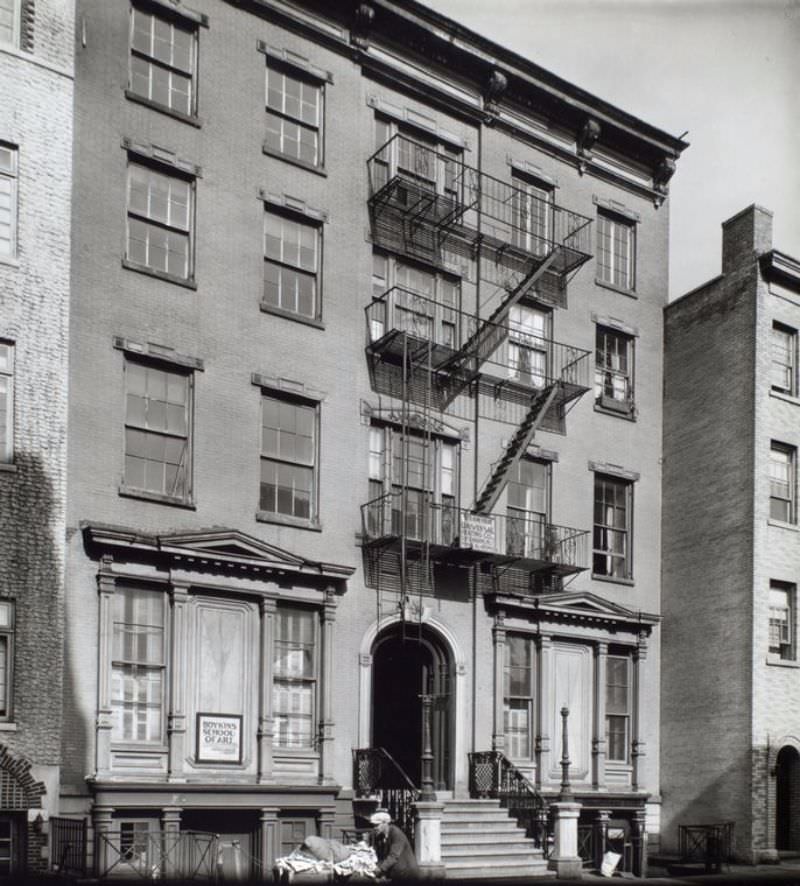
Grove Street, No. 45, Manhattan. Man pushing cart past building with sign for Boykin School of Art.
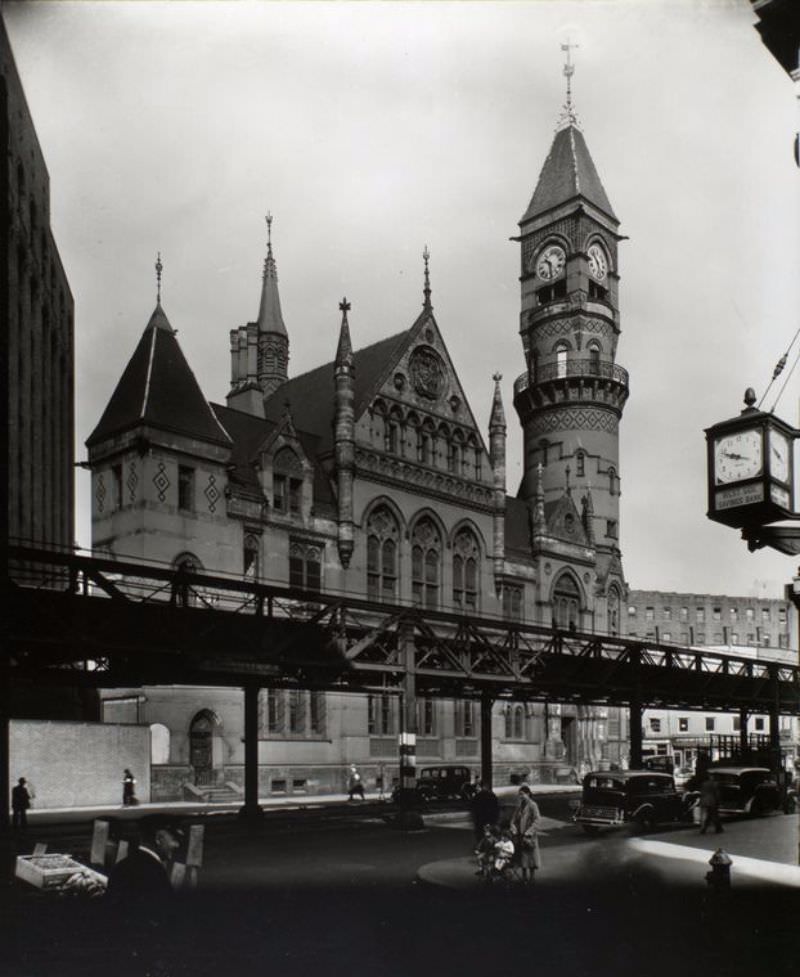
efferson Market Court, southwest corner of Sixth Avenue and West 10th Street, looking north from southwest corner of Sixth Avenue and West 9th Street, Manhattan.
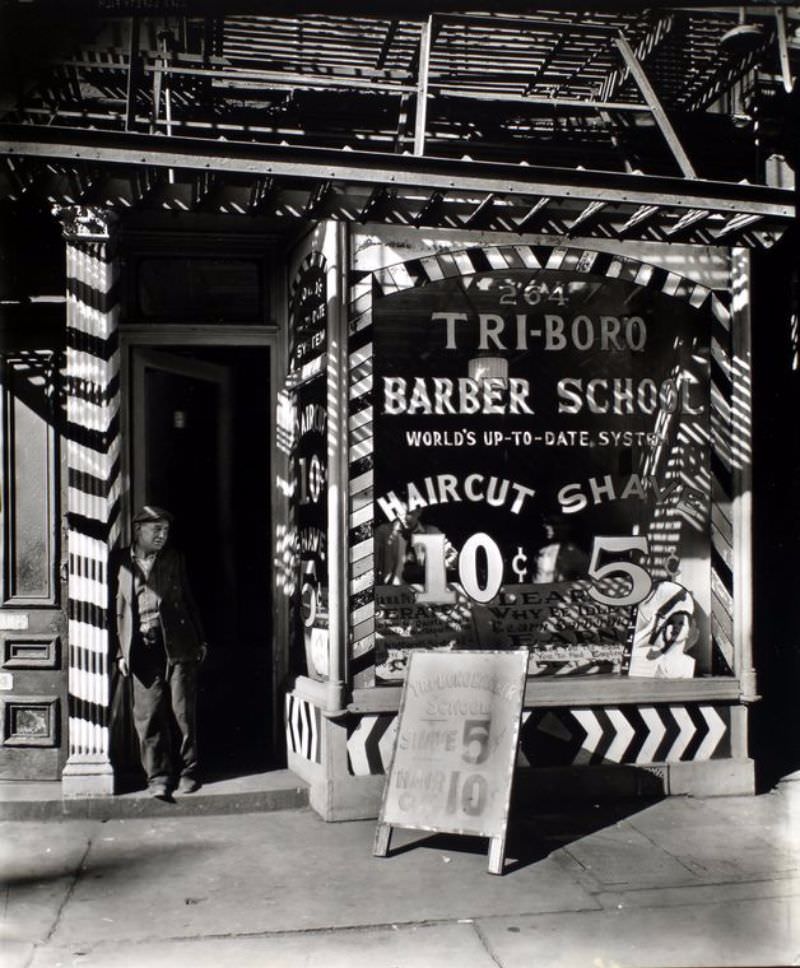
Tri-boro Barber School, 264 Bowery, Manhattan. Man leans on striped pilaster in doorway of barber school, men look out from behind advertisements painted on window, fire escape above.
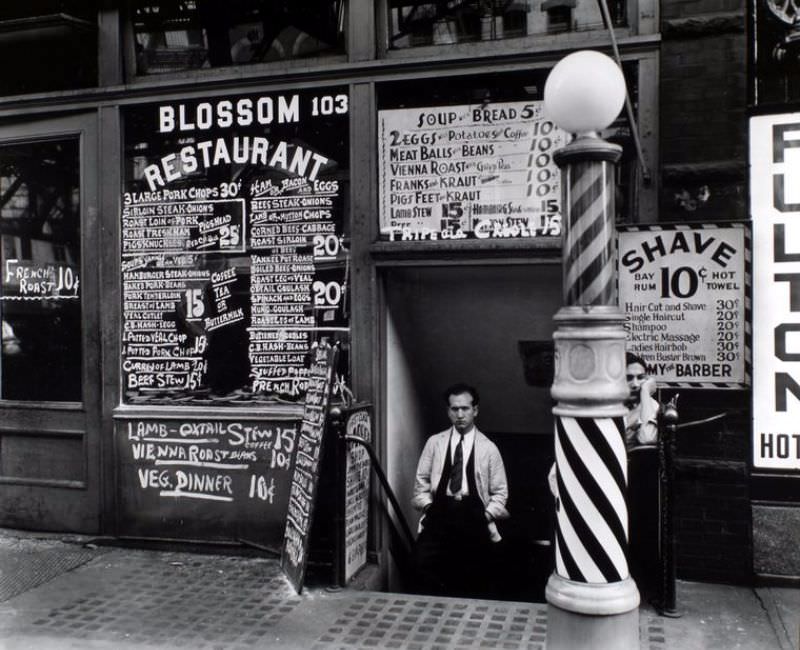
Blossom Restaurant, 103 Bowery, Manhattan. Men stand at entrance to barbershop, pole in front, under the Blossom Restaurant, which has menu painted on windows and board out front.
She crossed into Brooklyn and the Bronx as well. In Brooklyn Heights, she photographed brick row houses on Willow Place and clapboard homes on Talman Street. Residents — children playing on stoops, neighbors talking — appeared naturally in her frames. Abbott wasn’t staging scenes. She was recording them.
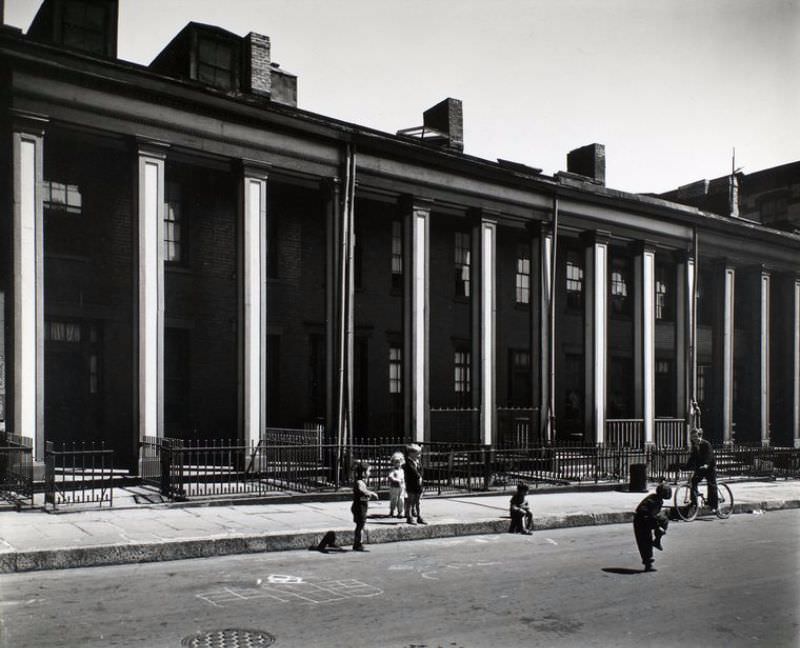
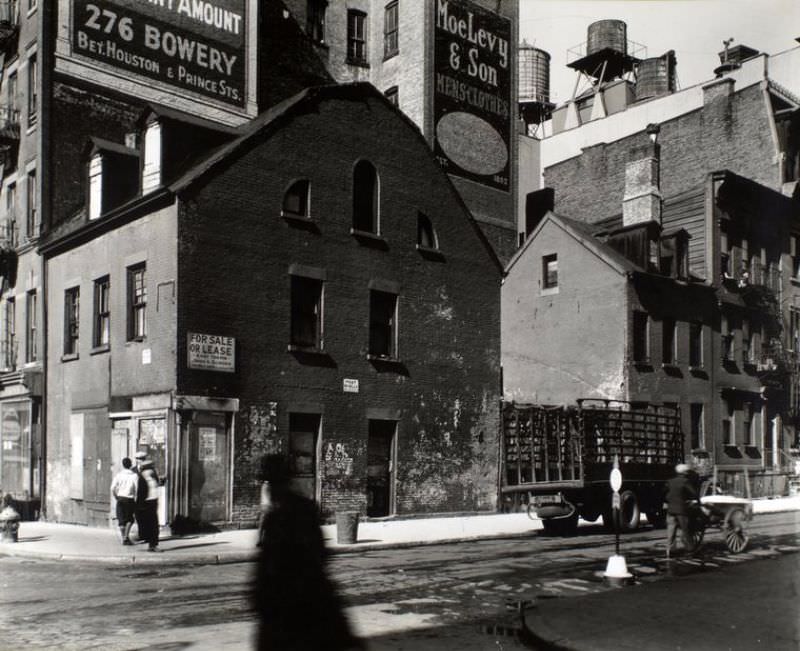
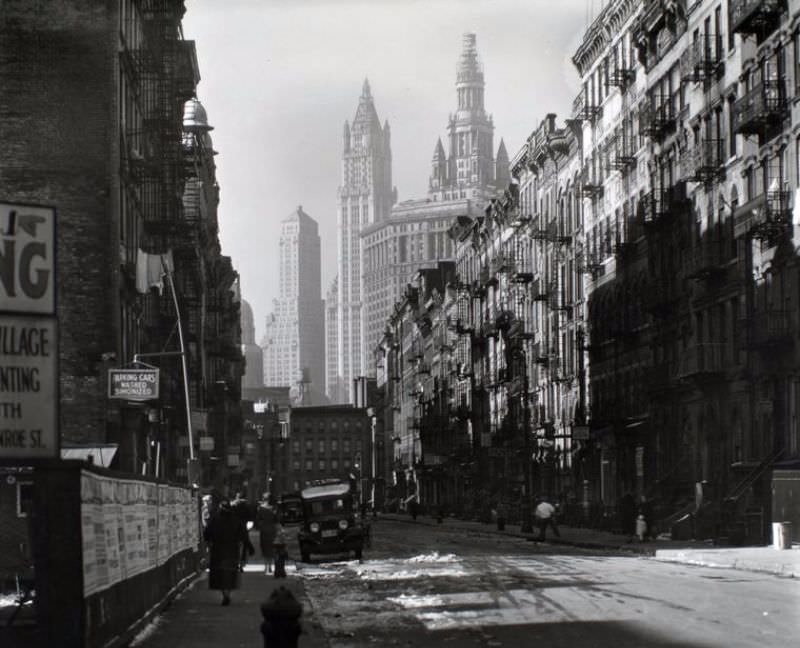
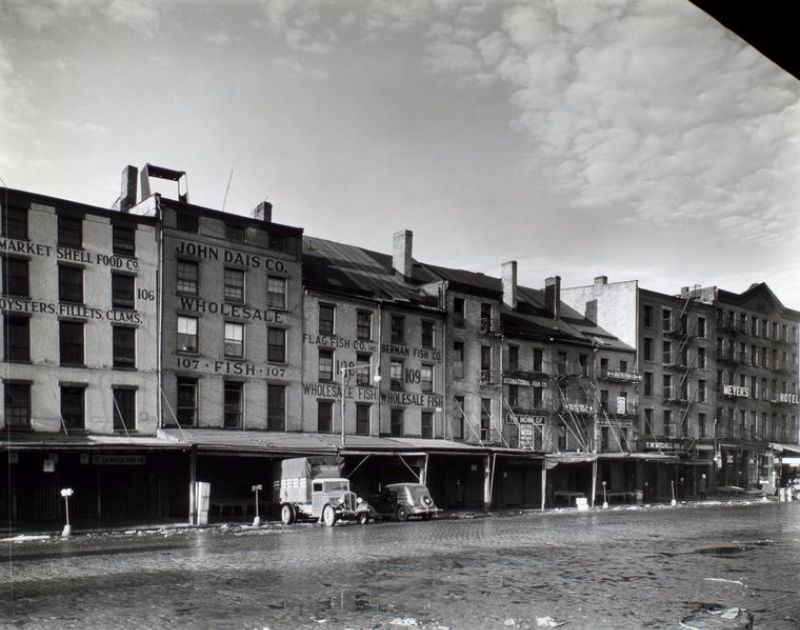
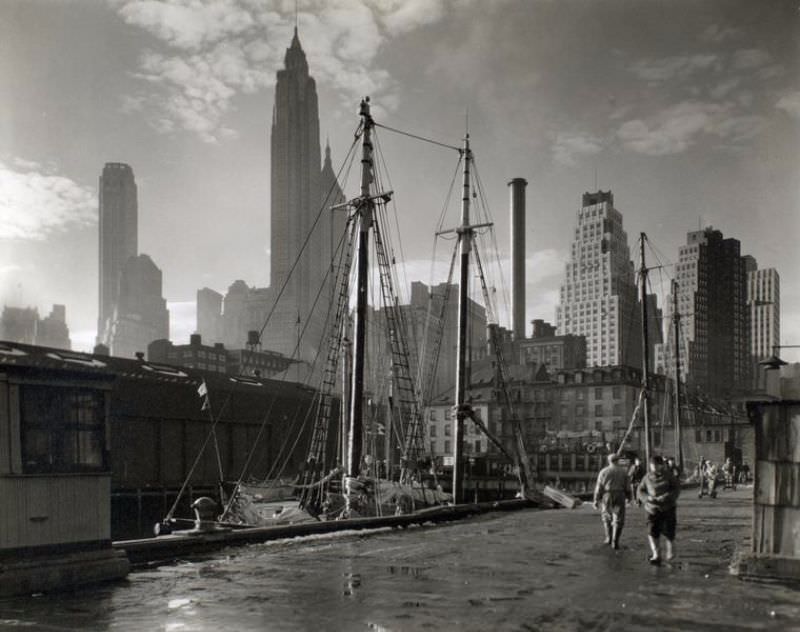
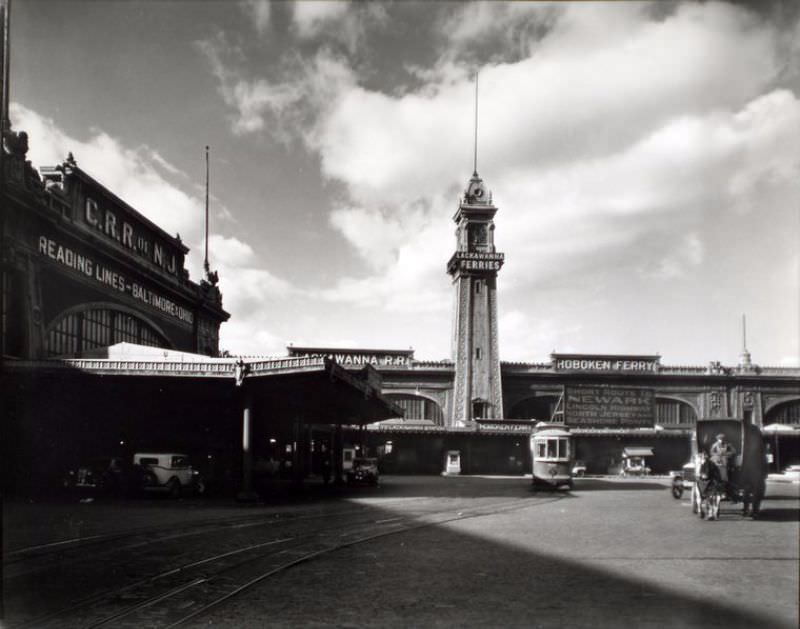
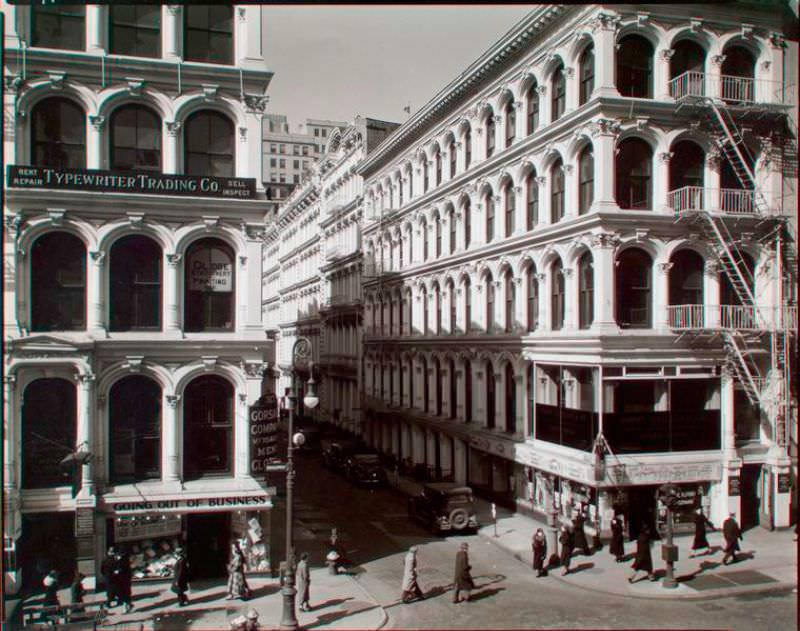
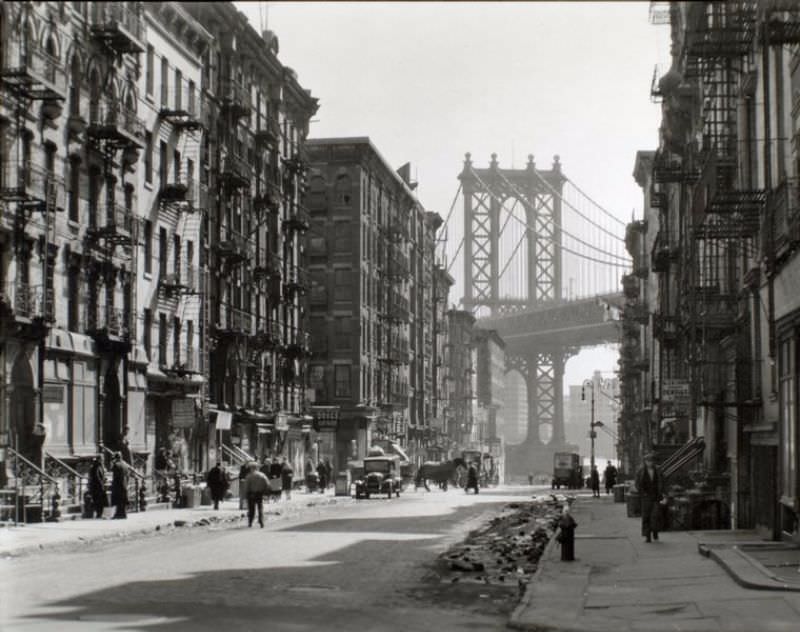
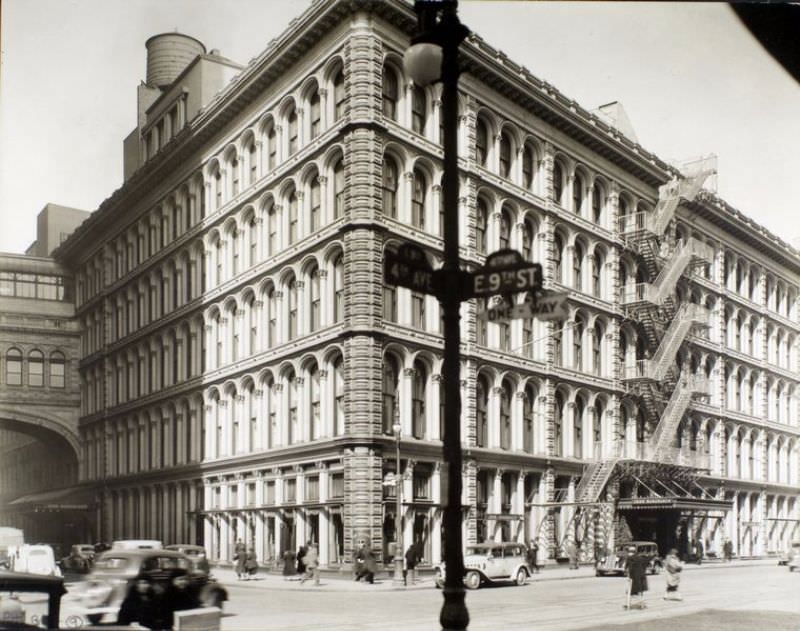
Mulberry and Prince Streets, Manhattan. Building with gambrel roof, dormers on corner, small houses along street where man pushes cart, large buildings topped with water towers beyond.Waterfront, South Street, Manhattan. rooklyn Bridge span as it reaches land above South Street near James, tall buildings rise beyond.Unemployed and huts, West Houston — Mercer St., Manhattan. Man sits reading in front of huts built of salvaged materials some decorated with pictures, cat in center, baby carriage, broom, right.Men share a light in front of hut with open door, milk can and washtub inside, hut to left has pictures in frames adorning the outside of it.Minetta Street, Nos. 2, 4, 6, Manhattan. Man descends steps of #2 Minetta street, doorways of each house are adorned with ionic columns.Snow remains in the shady parts of Henry Street which is lined with 6-7-story buildings, the Municipal and other buildings rise above end of st.Fish dealers and the Meyers Hotel in row of buildings along South Street.Fulton Street Dock, Manhattan skyline, Manhattan. Men walk on pier where sailing vessels are moored, skyline beyond.Lackawanna and Hoboken ferries, with clock tower above, C.R.R. of N.J. ferry, left, 14th St. trolley and cars and wagons.Looking into Thomas Street from a building across Broadway, white arched facades on both sides of Thomas, signs for men’s clothing store, etc.Looking down Pike Street toward the Manhattan Bridge, street half in shadow, rubble in gutters, some traffic.John Wanamakers’s, Fourth Avenue and 9th Street, Manhattan. Looking at iron-front store originally built by A.T. Stewart from across 4th Ave.; bridge connecting with annex at left, traffic, pedestrians.
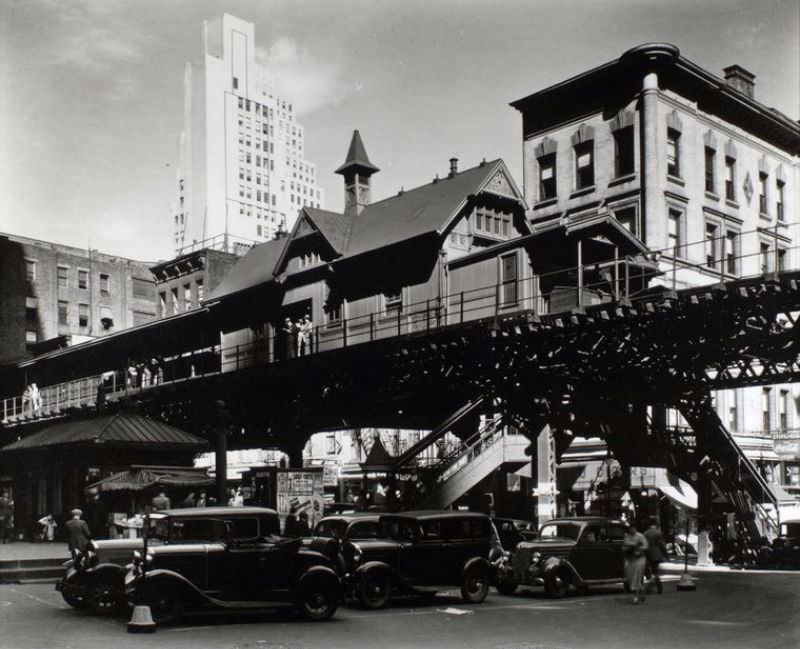
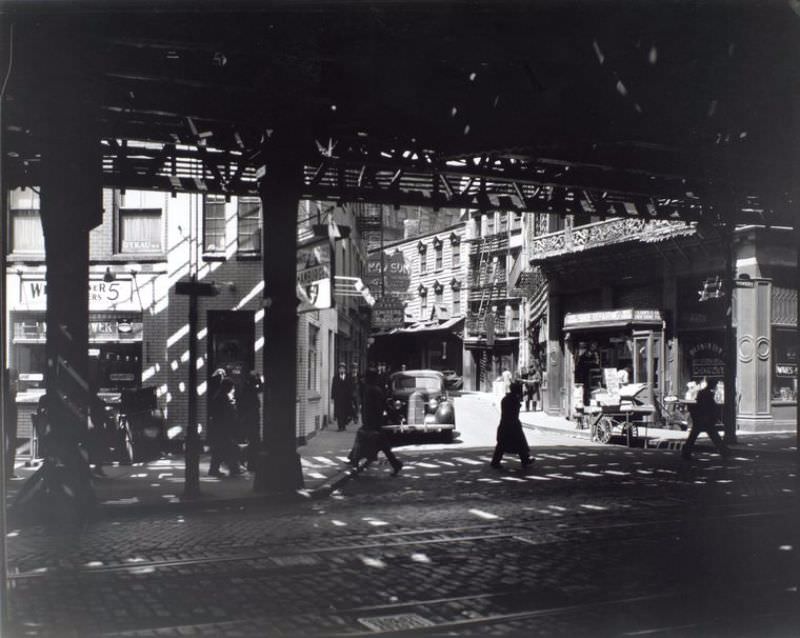
‘El’ Second and Third Avenue Lines, Hanover Square and Pearl Street, Manhattan.
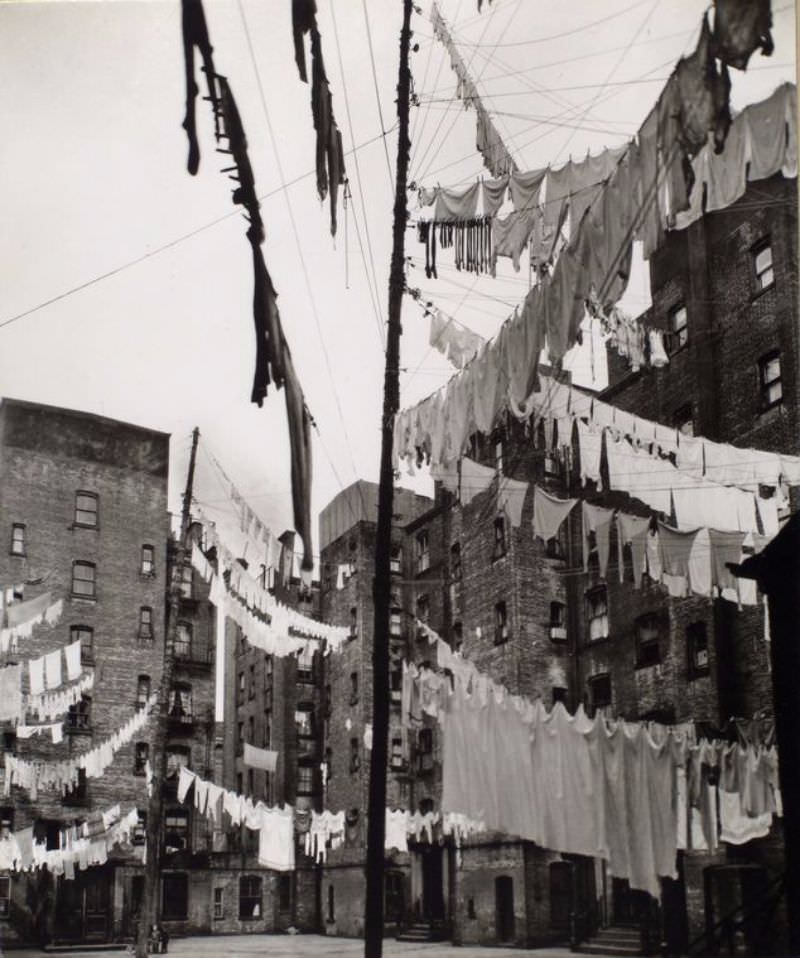
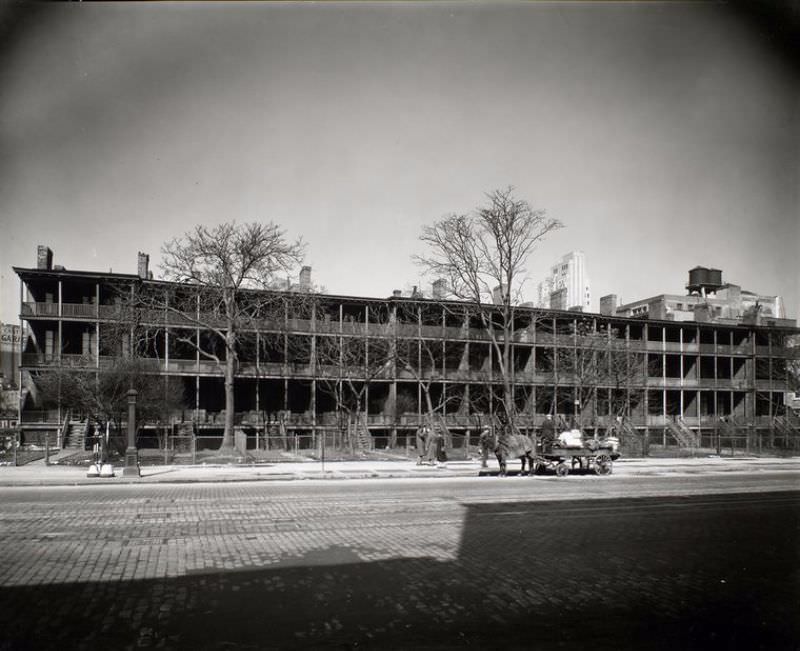
Court of first model tenement house in New York, 72nd Street and First Avenue, Manhattan. Poles in courtyard support lines loaded with laundry, apartment houses beyond.
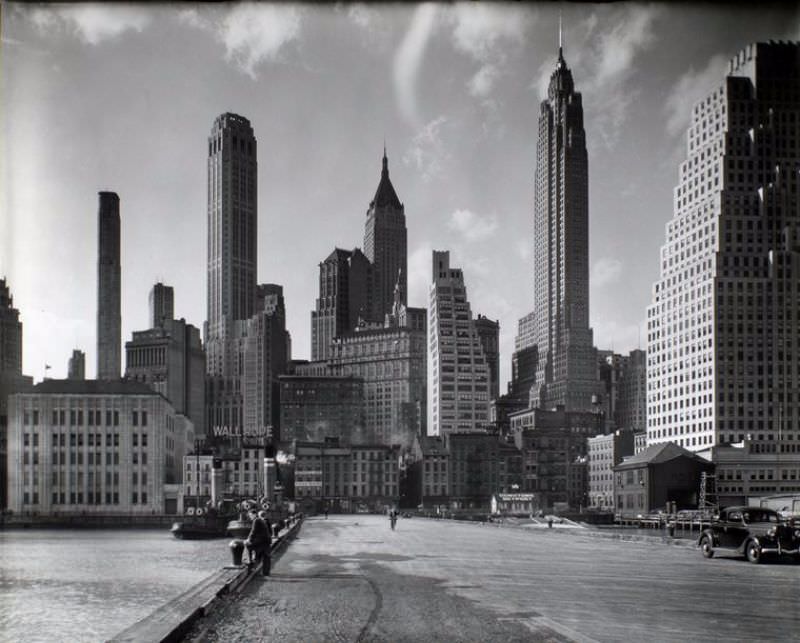
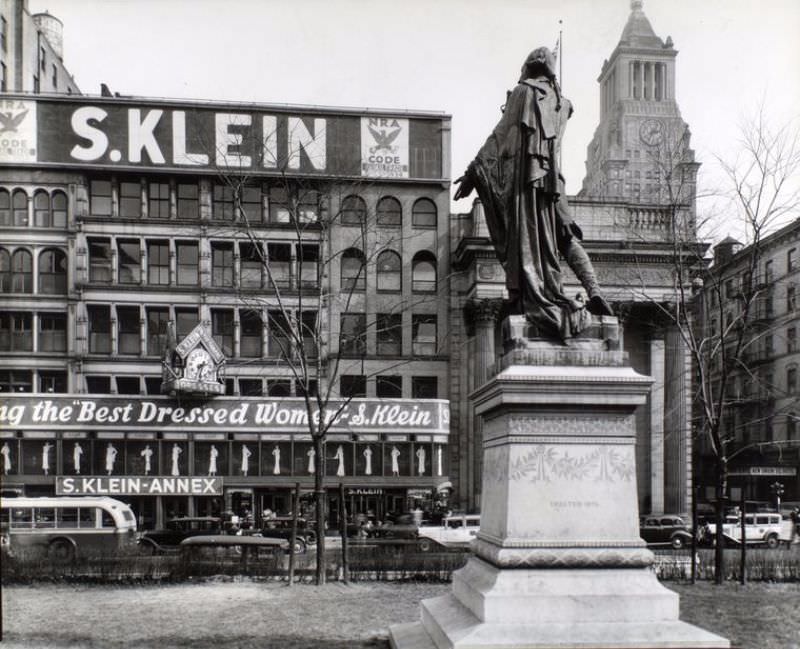
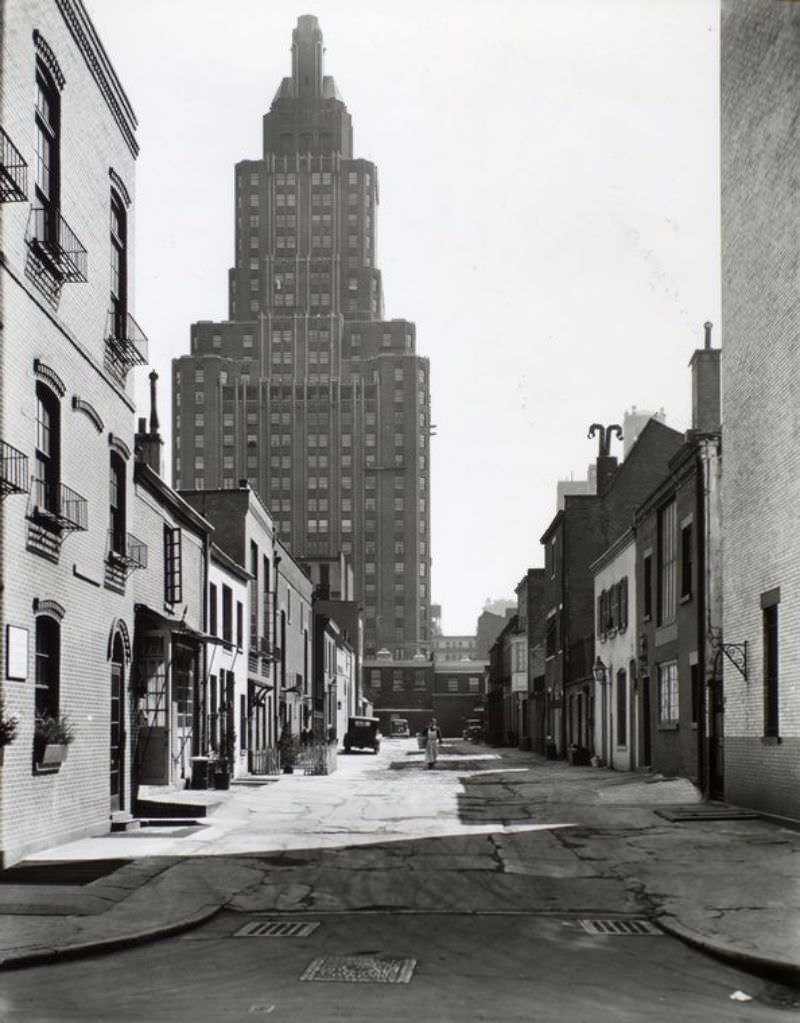
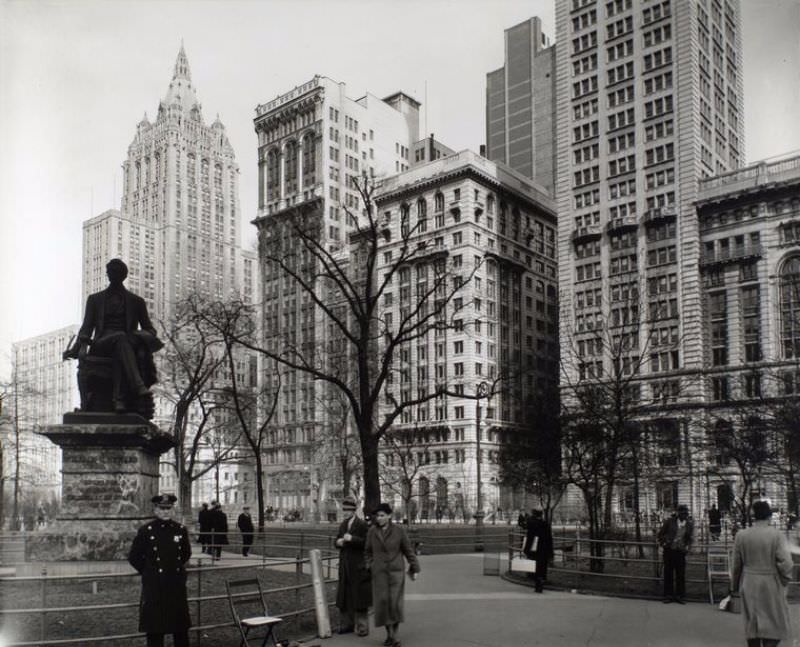
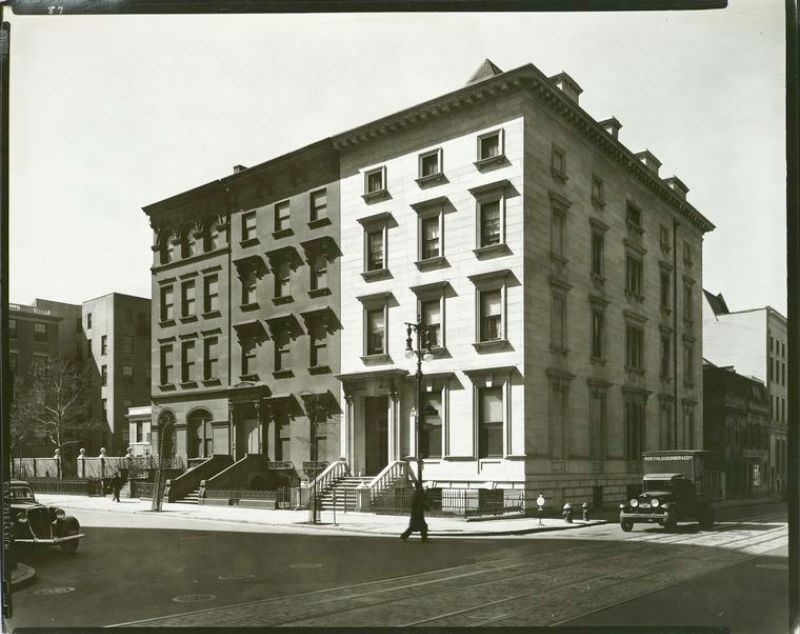
Looking from pier toward Manhattan, tugboats moored left, Downtown Skyport, right, skyscrapers in the background.Union Square, Manhattan. Looking up at statue of Lafayette from behind and left, S. Klein’s store, a bank, a hotel and the Consolidated Edison Building, beyond.MacDougal Alley, between West 8th Street and Washington Square North, Manhattan. Man in apron with basket walks through alley with homes along it, 1 Fifth Avenue rises above.Madison Square, looking northeast, Manhattan. Policeman stands in front of Seward statue, shoe-shine man lounges on railing, right, Metropolitan Life building rises above park.Rhinelander Row: I. Seventh Avenue between 12th and 13th Streets, Manhattan. Row of houses lined with wooden porches, wagon in front, cobblestone street with trolley tracks.Three large row houses, including one of marble (#8) and traffic on Fifth Ave. and 8th St., and trolley tracks in 8th St.
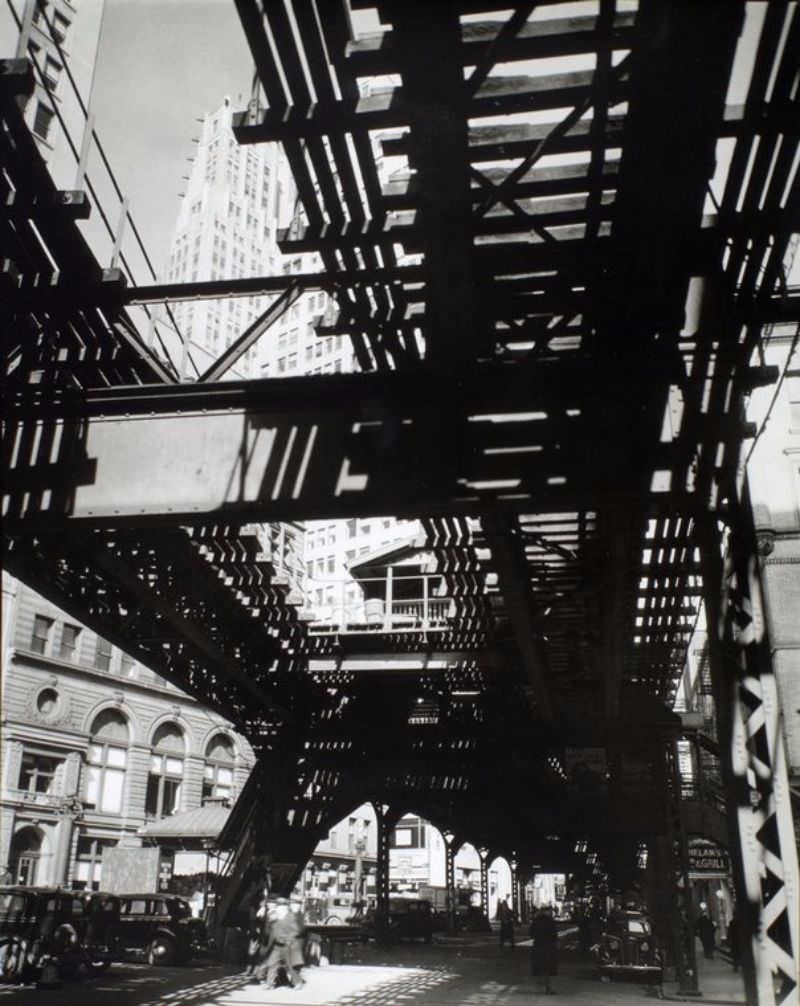
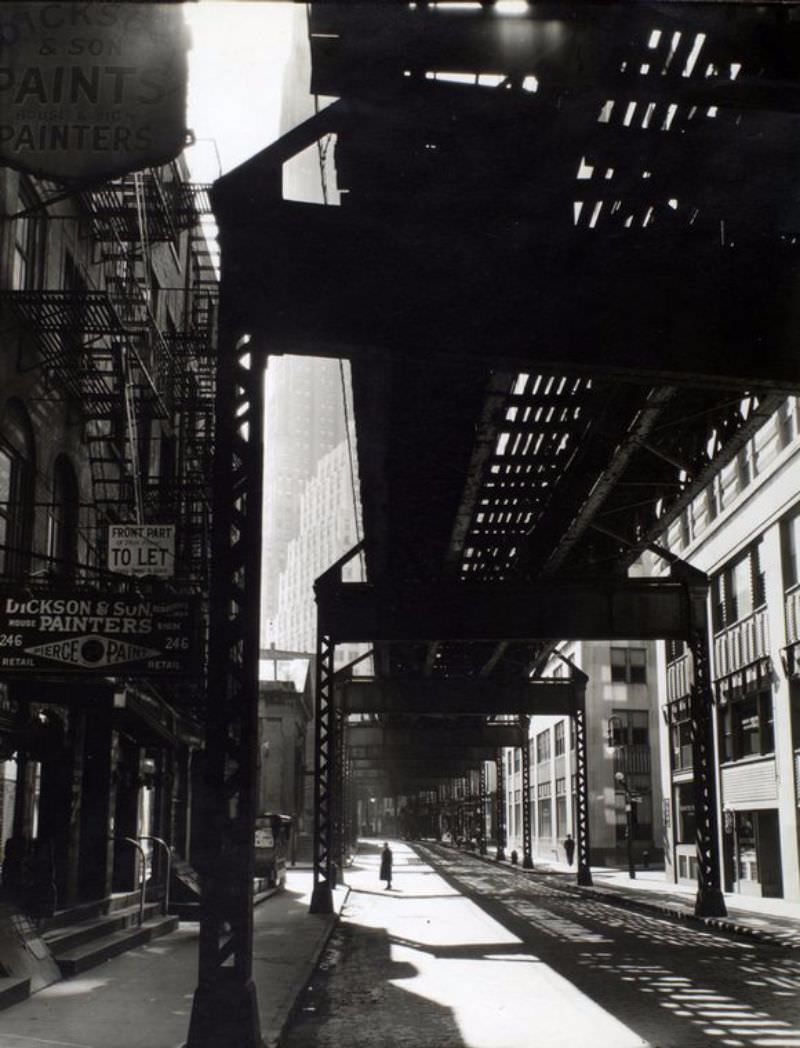
‘El’: 2nd & 3rd Avenue lines, looking W. from Second & Pearl St., Manhattan. Woman pauses below el tracks filling upper right, office buildings visible at left of tracks, painters shop in older building at left.
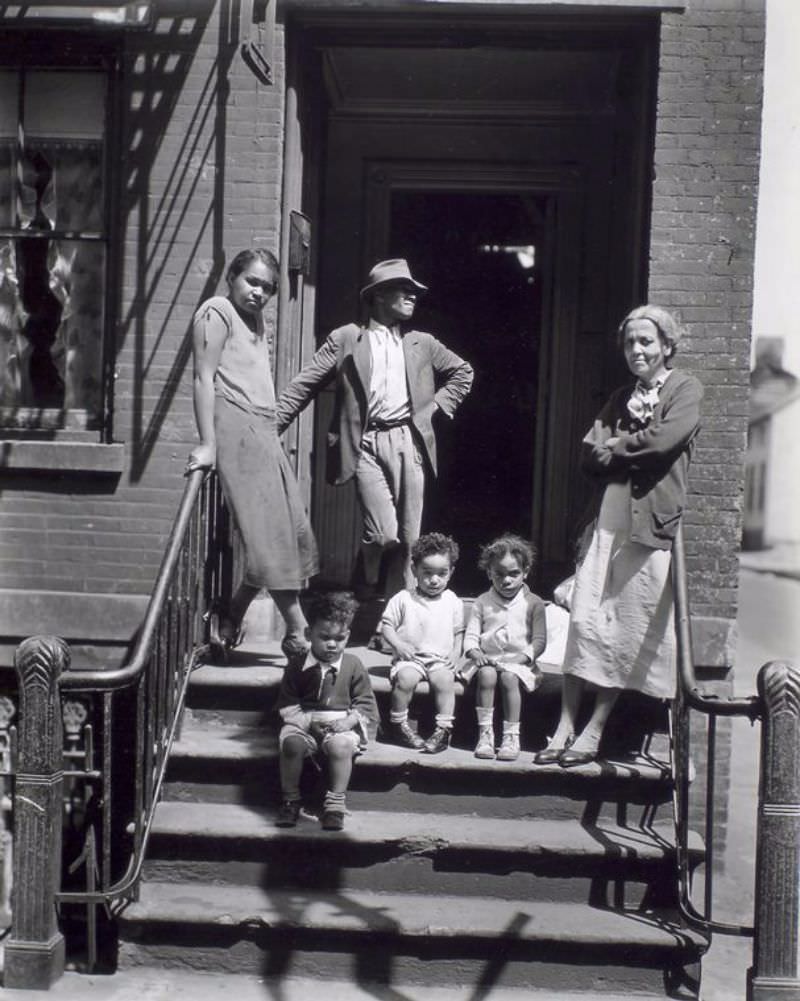
Jay Street, No. 115, Brooklyn. Three generations of African Americans on stoop of brick home with iron rails on steps.
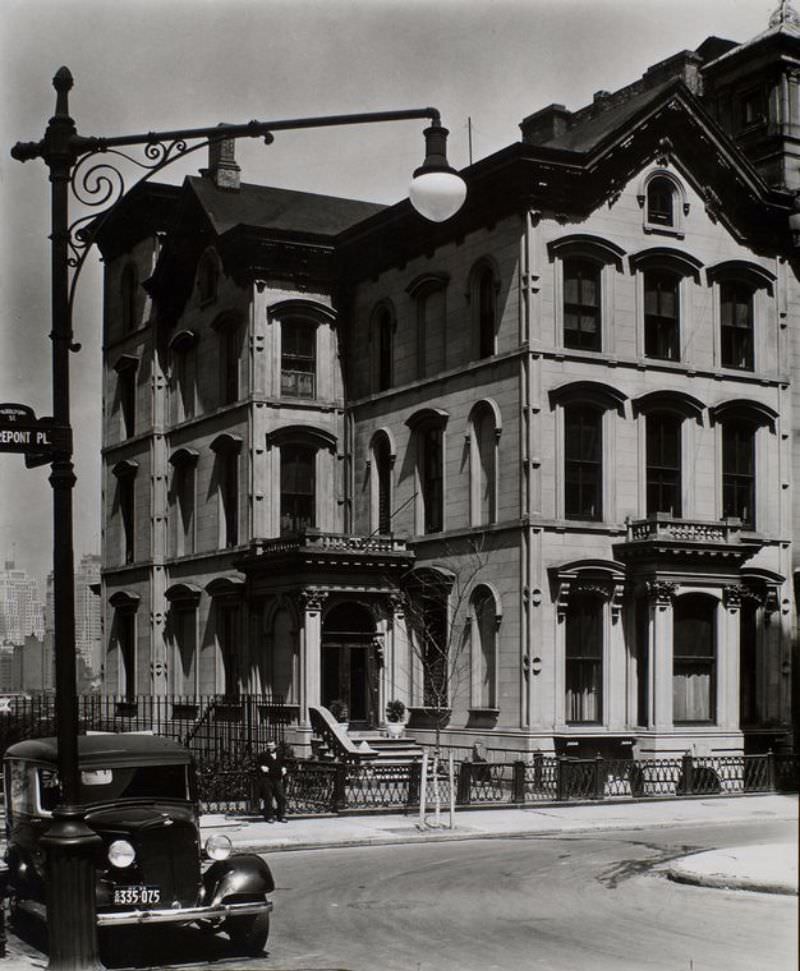
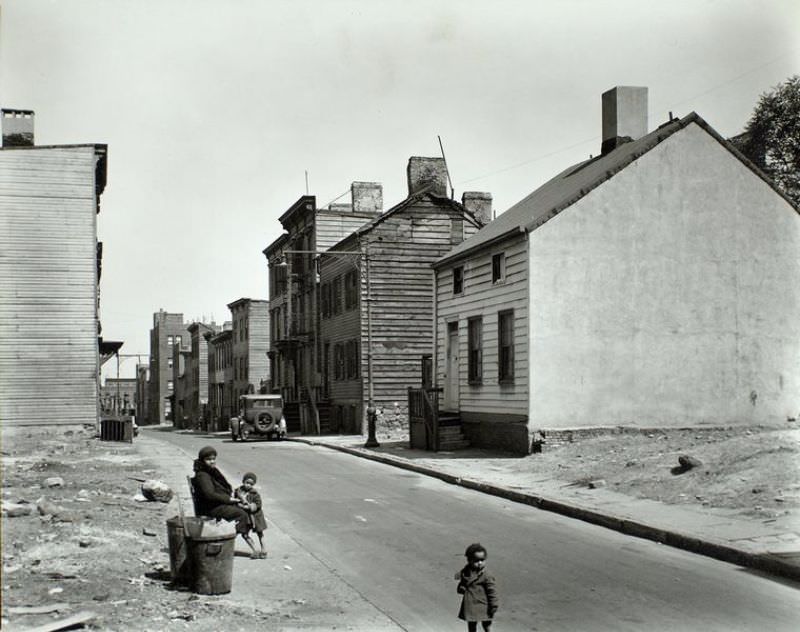
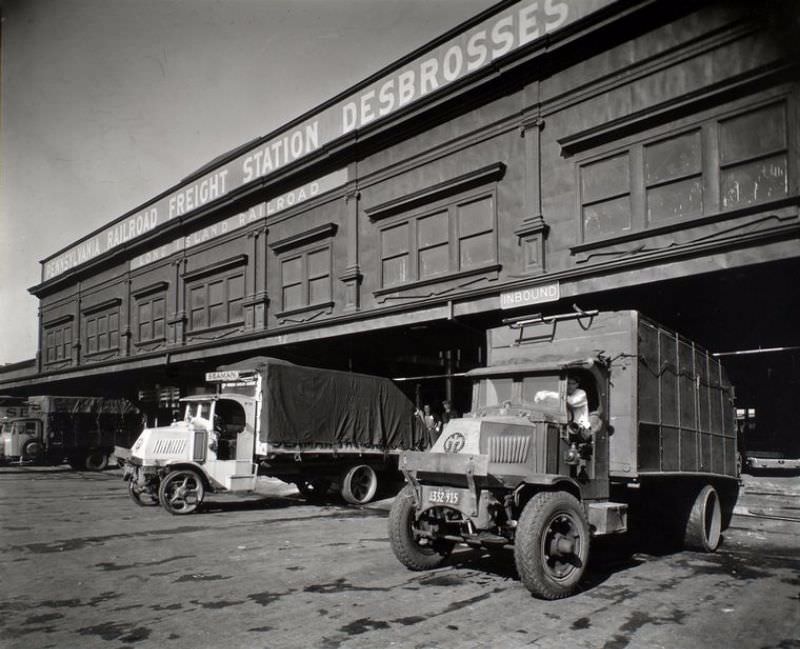
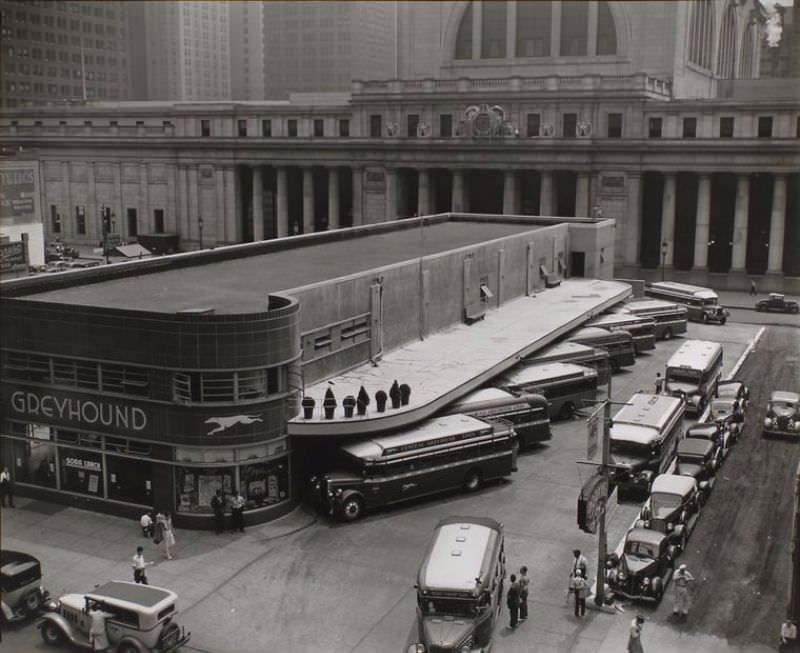
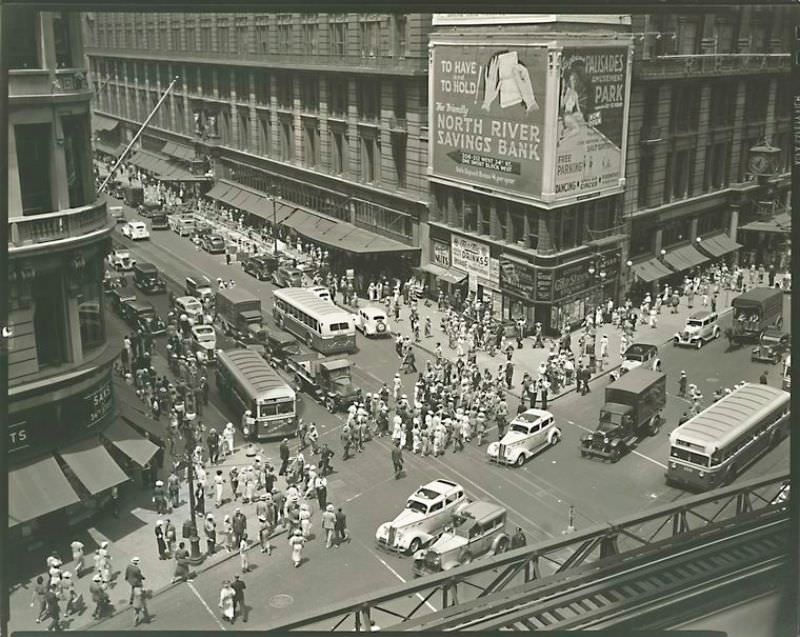
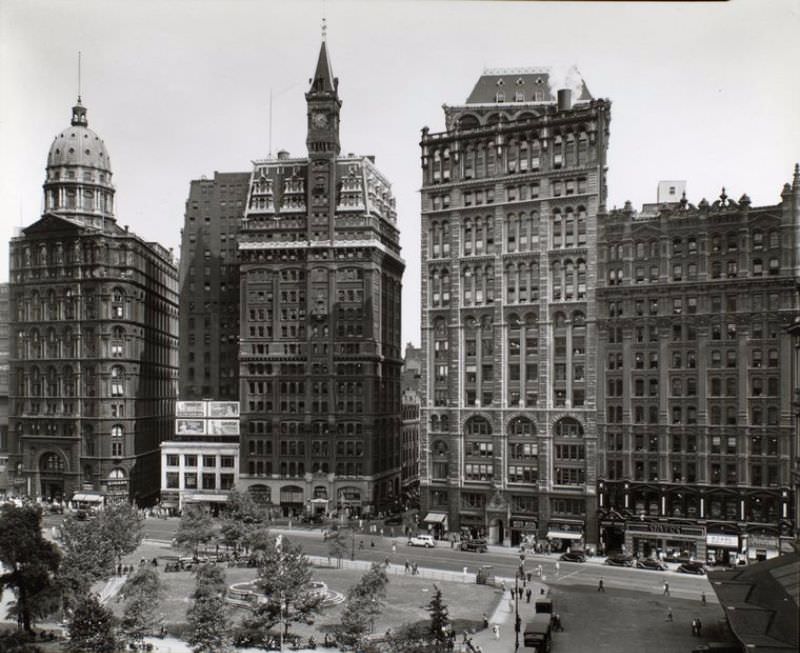
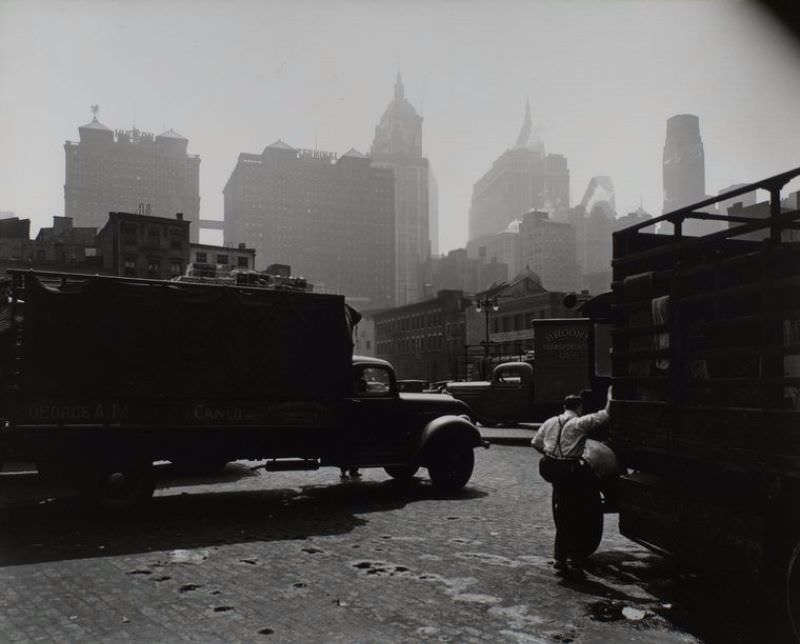
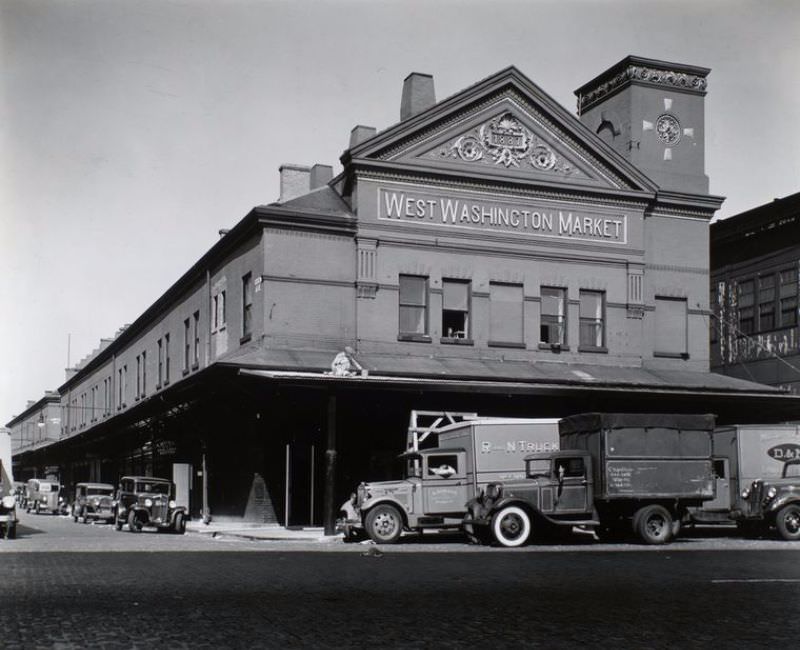
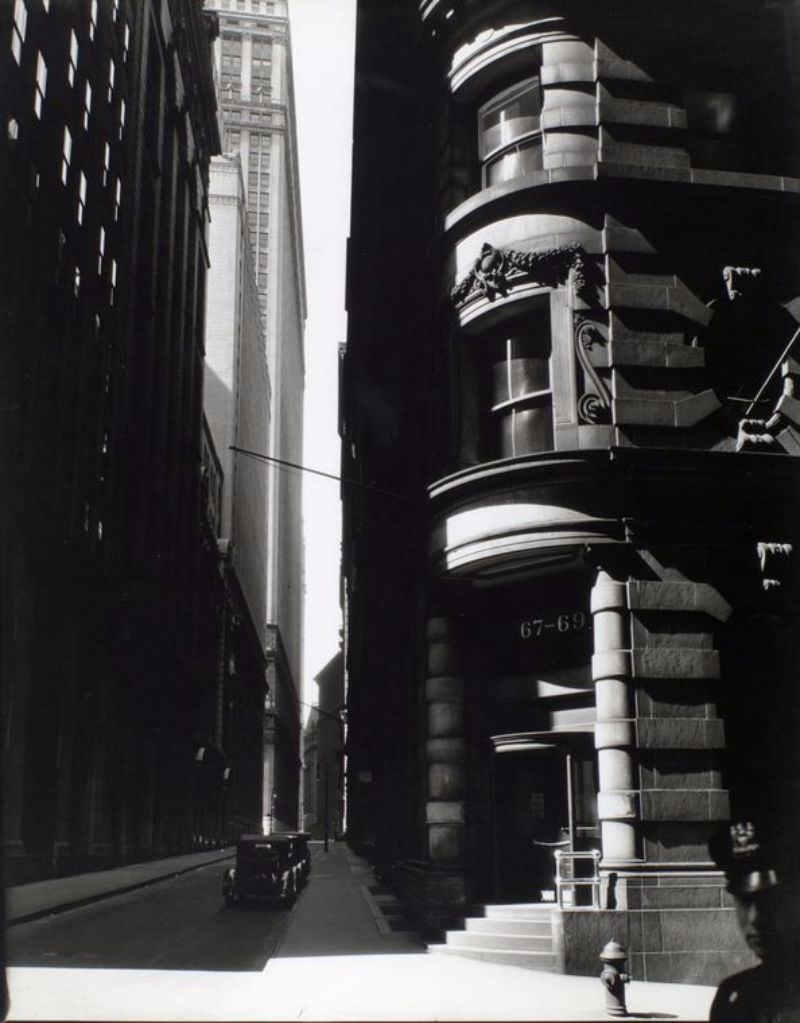
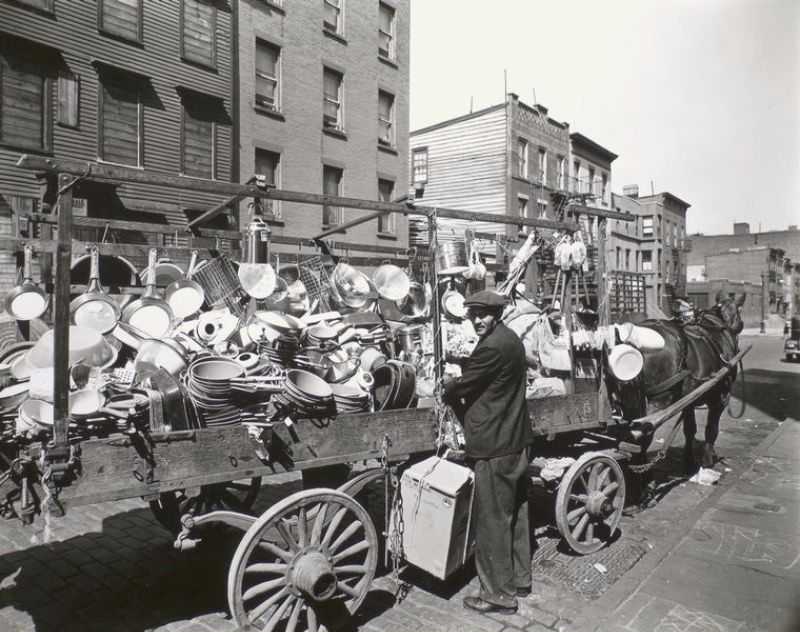
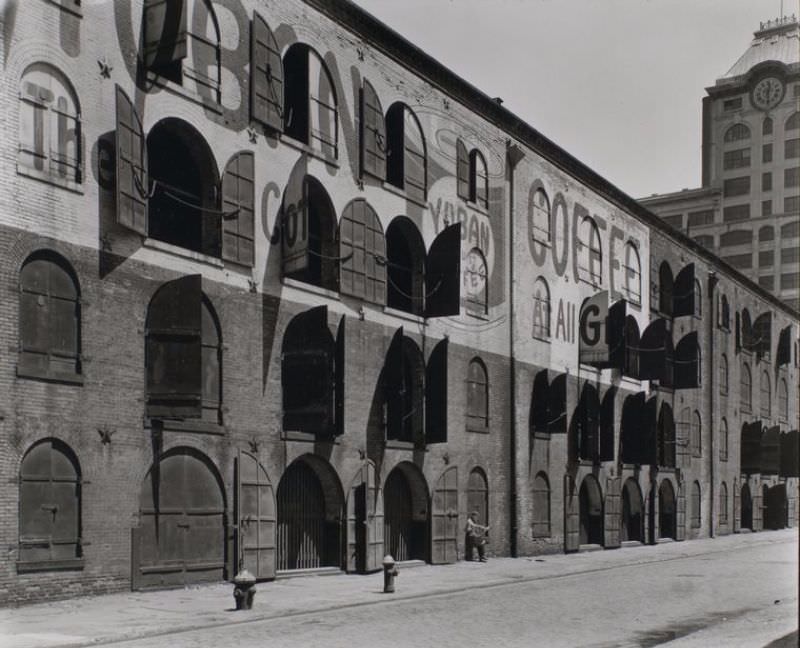
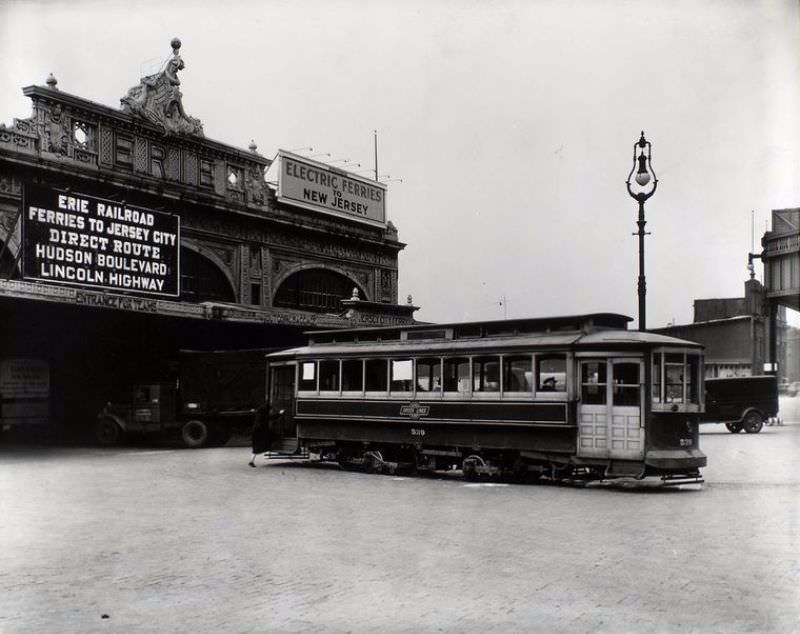
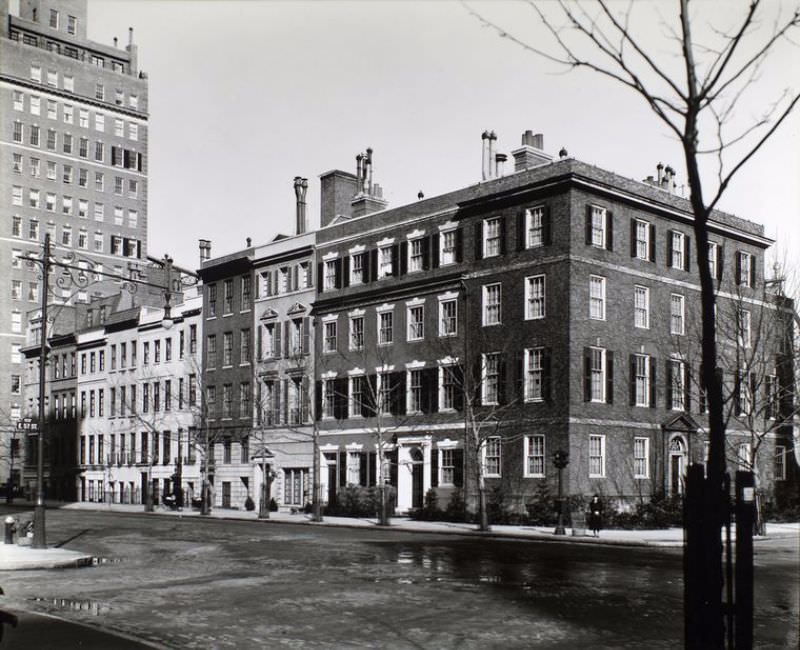
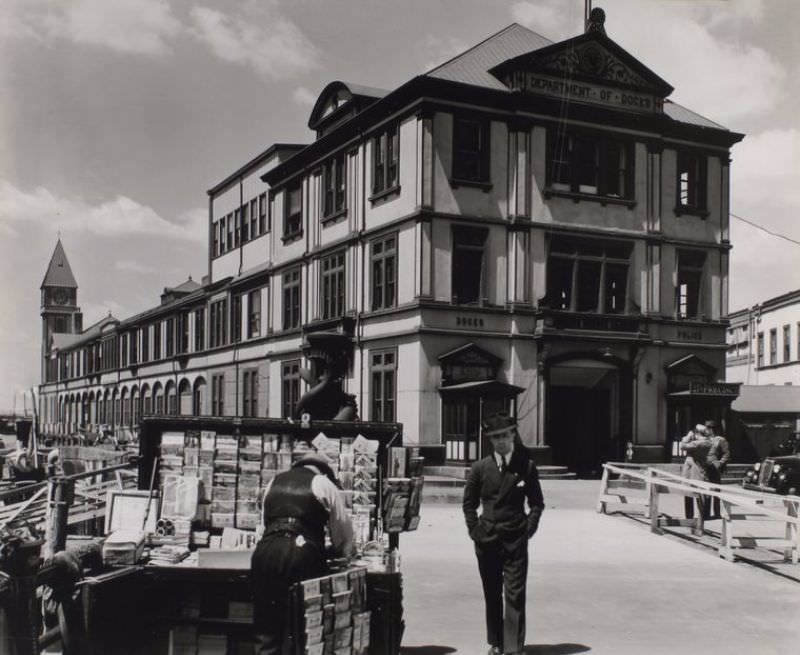
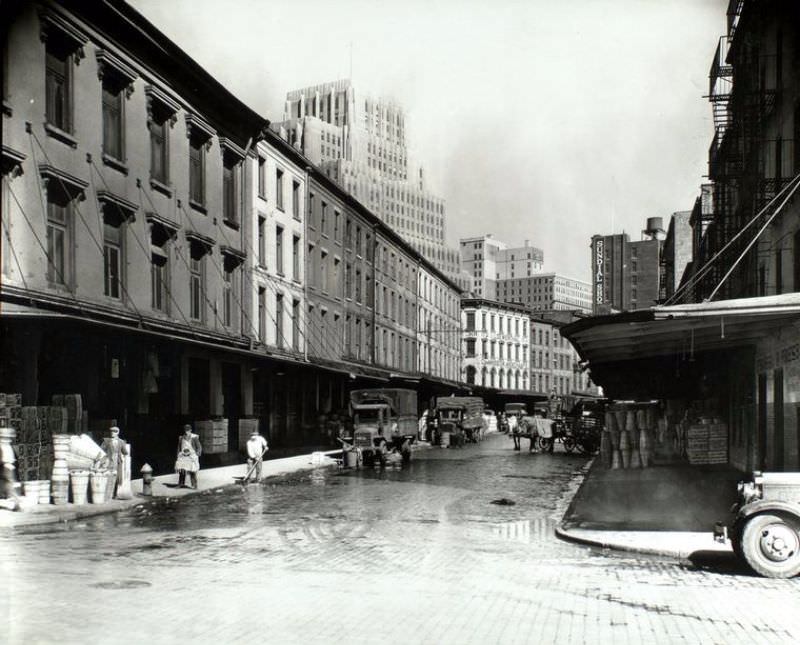
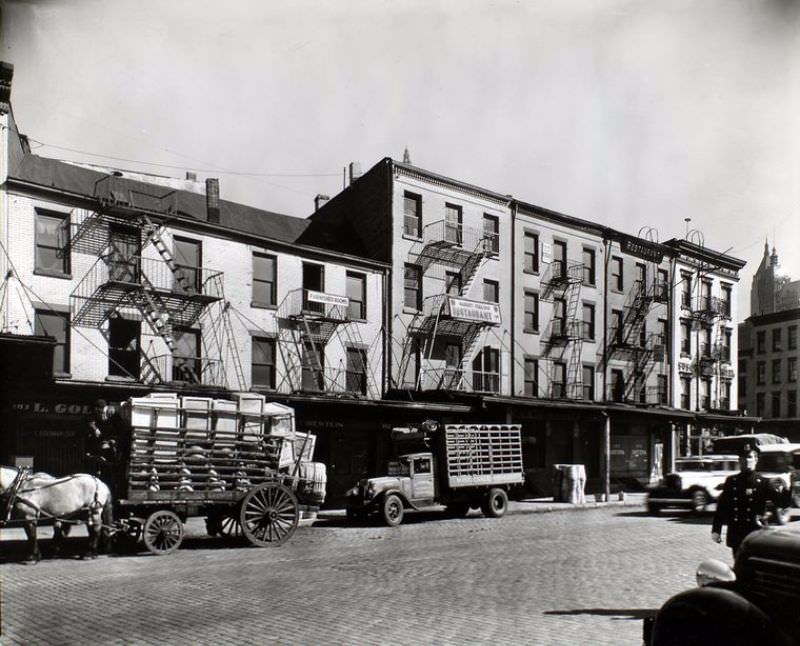
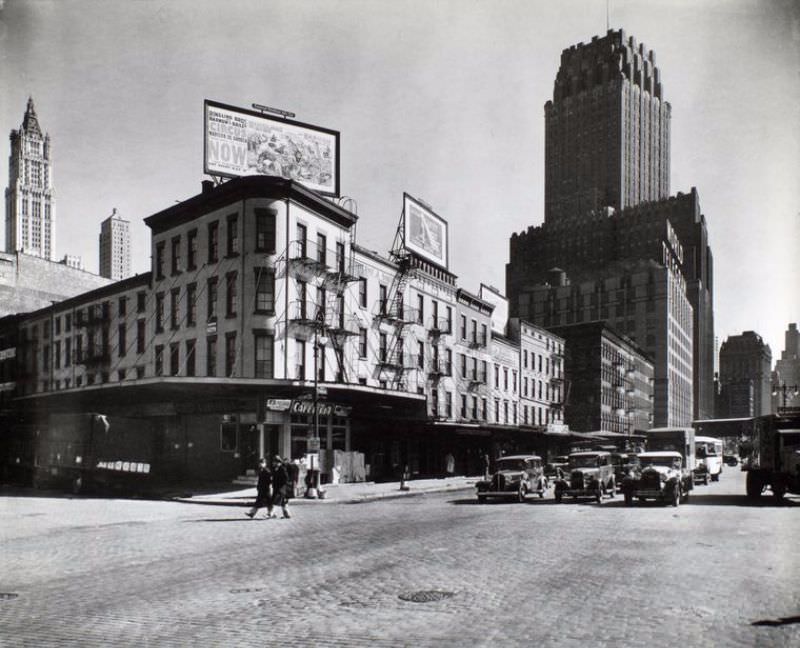
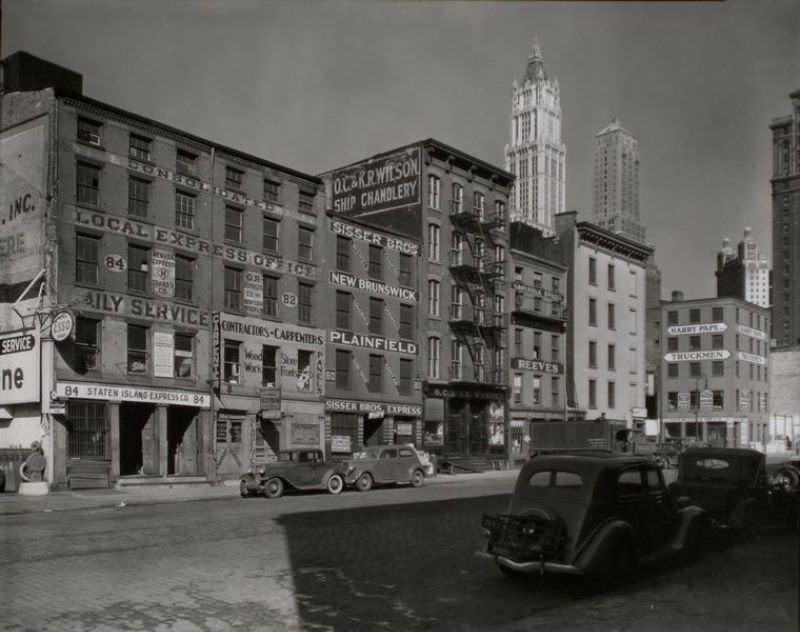
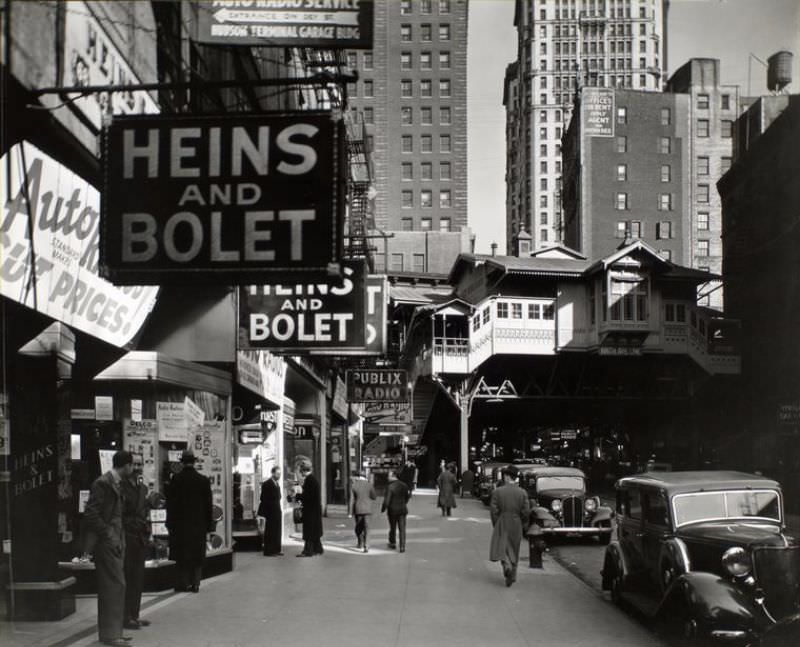
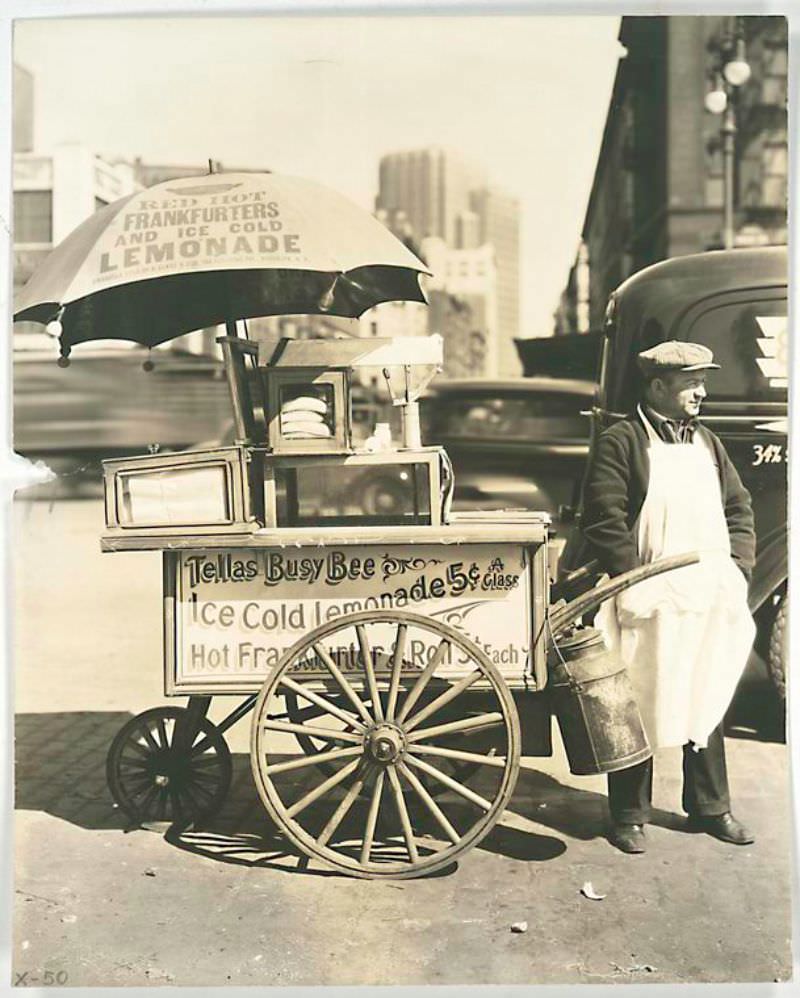
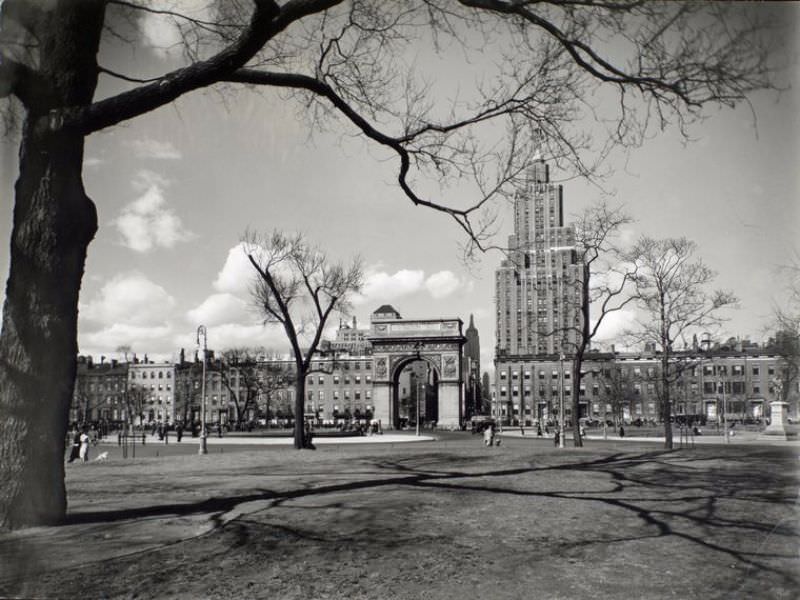
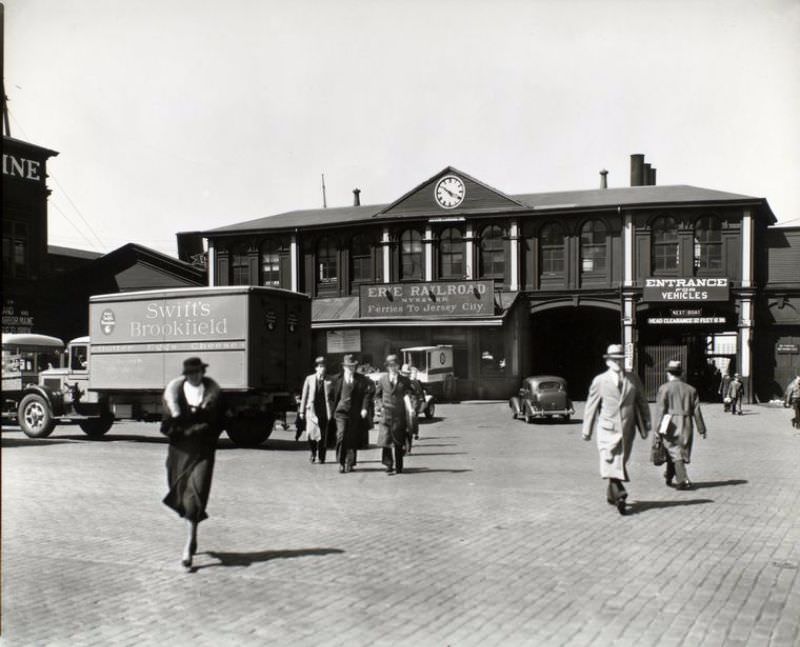
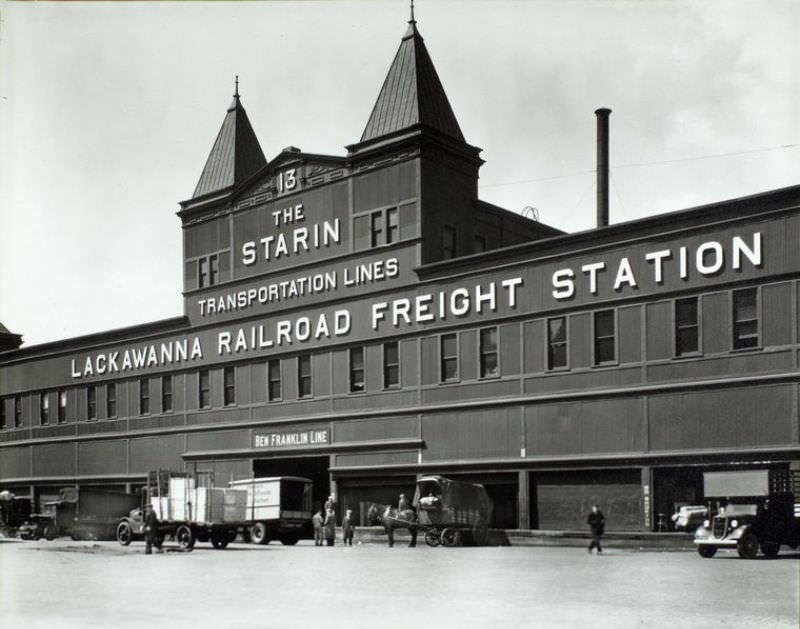
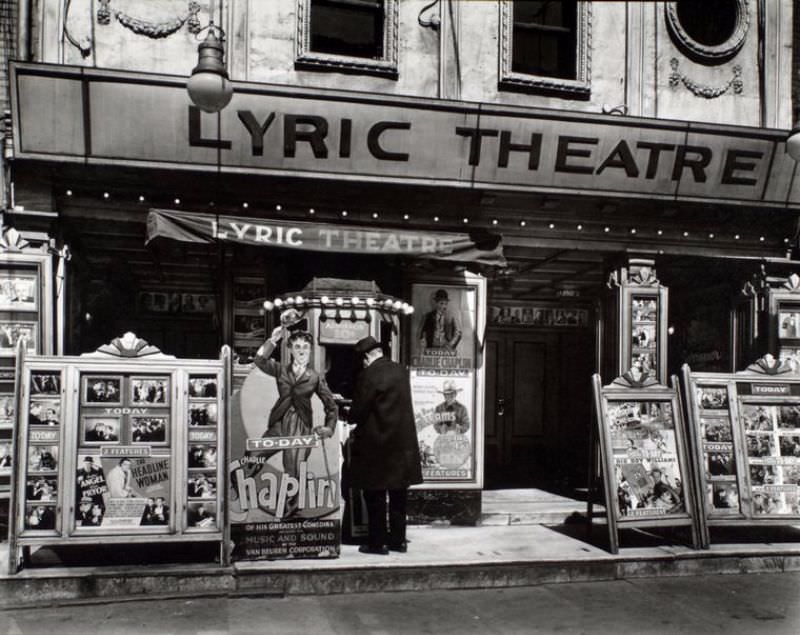
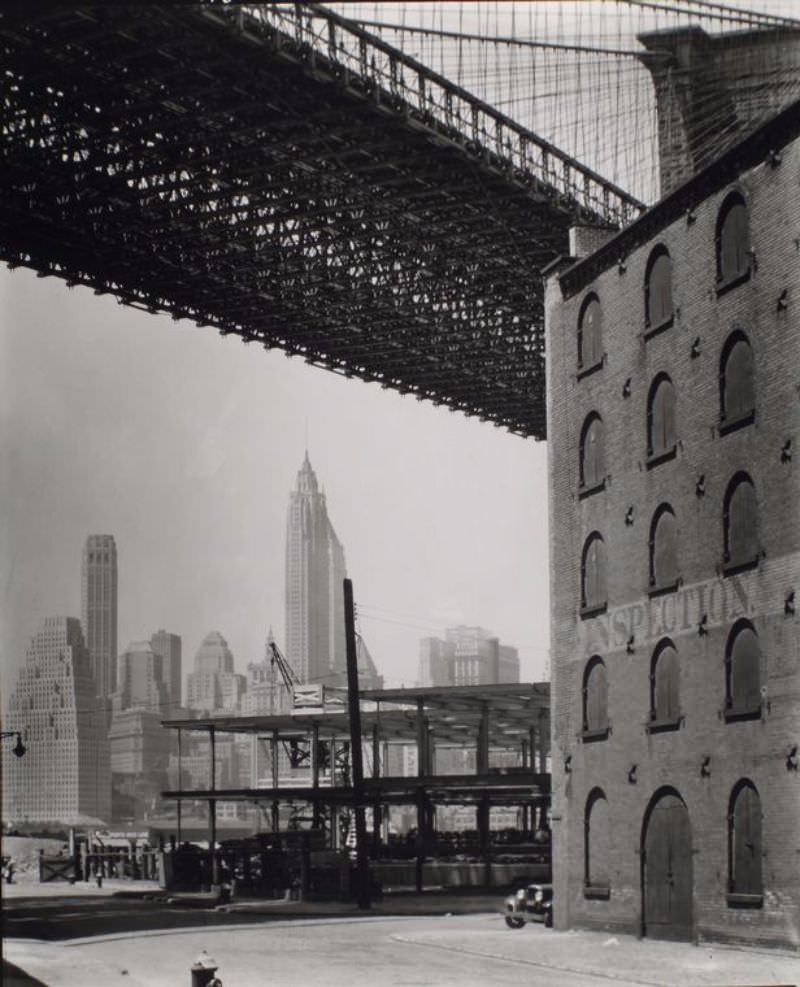
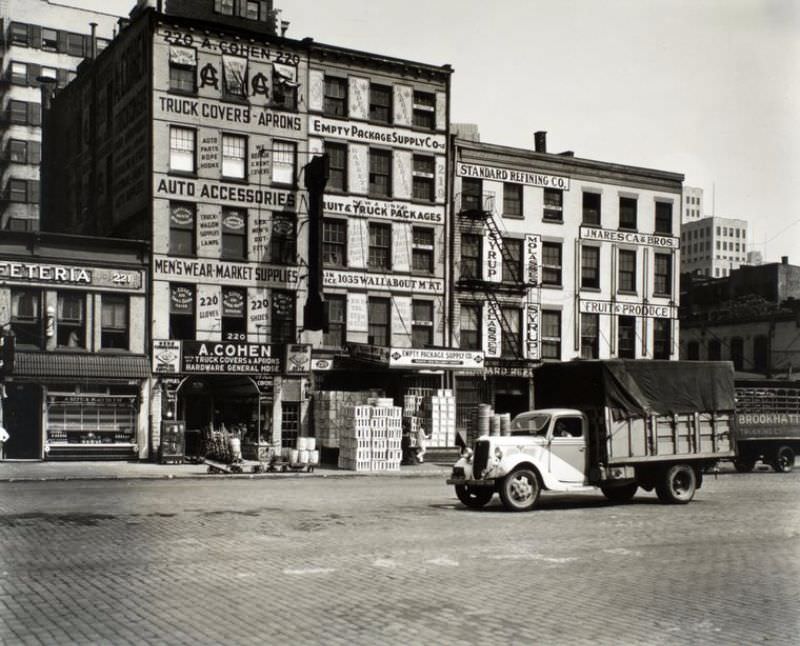
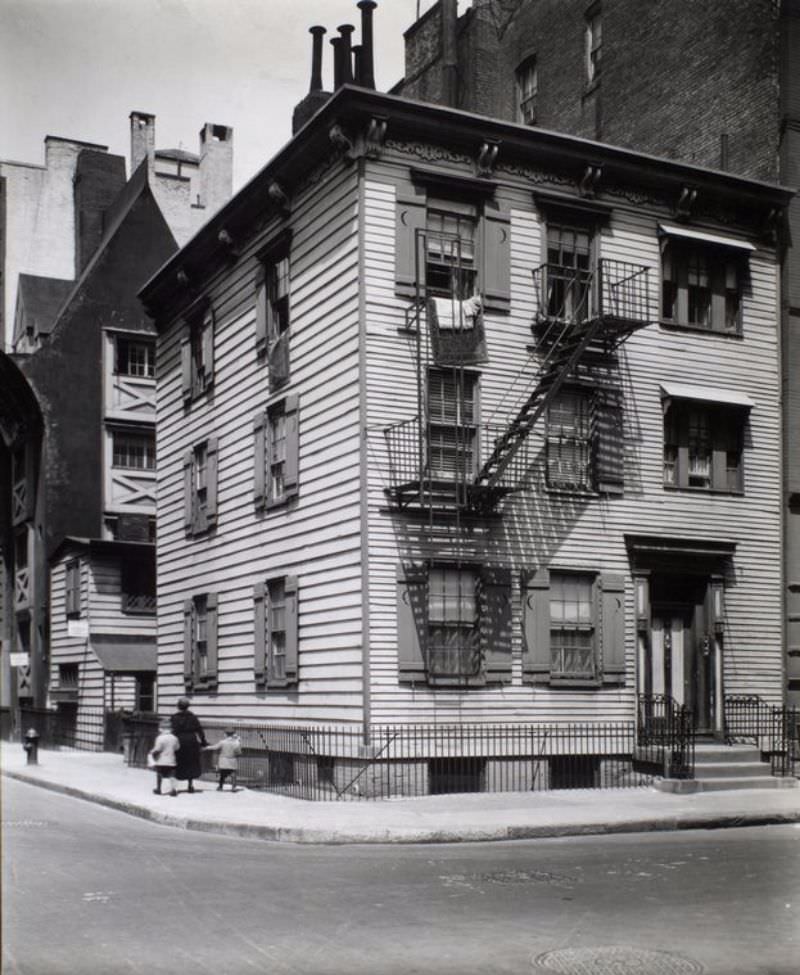
Looking down Cedar Street, in shadow, rounded corner and entrance of #67-69 at right, police officer just visible, lower right corner.Tinker looks over his shoulder at camera while he ties box to wagon already loaded with pans, brushes, basins, etc.Warehouse, Water and Dock Streets, Brooklyn. Four-story brick warehouse with arched windows and doors, some of which are open, partially hiding the Yuban Coffee advertisement painted on it.Woman boards 23rd St. trolley outside Erie Railroad Ferry terminal, West 23rd St., trucks, lamppost visible.Ann Morgan’s Town House on Corner, northeast corner of East 57th Street, Manhattan.Long building wtih clock tower at far end housing Dept. of Docks and a Police station; man walks toward camera near newsstand in foreground.Reade Street, between West and Washington Streets, Manhattan.178-183 West Street, Manhattan. Wagon, truck in front of 3 and 4-story buildings with advertisements for furnished rooms, restaurants, hotel, policeman at right.Billboards top buildings at the corner of Warren and West Sts., cars stopped in street, Telephone and World Telegram building beyond.Dey Street between West and Washington Streets, Manhattan. Express companies, ships’ outfitters and a contractor fill 4 and 5 story buildings along Dey St., tall towers beyond in upper right.Radio Row, Cortlandt Street, Manhattan. Men window shop in store selling radios, elevated railroad station, Ninth Avenue line, right center, subway entrance visible.West St. and North Moore, Manhattan. Vendor stands next to his Tellas Busy Bee cart, advertising ‘Red Hot Frankfurters and Ice Cold Lemonade’ traffic a blur in the background.Looking north in Washington Square, fountain, arch, 1 Fifth Avenue and in the distance, the Empire State building.‘El’ Second and Third Avenue Lines, looking toward Doyers Street, Manhattan.Ferry, Chambers Street, Manhattan. Trucks, wagon, car and pedestrians in front of Erie Railroad ferry terminal.Lackawanna Railroad Freight station, pier 13, trucks and a wagon in front.Box office and marquee of Lyric theater, man purchusing ten cent ticket, posters, including life-size cutout of Charlie Chaplin on display.Steel frame building going up under the Brooklyn Bridge next to brick warehouse, Manhattan skyline in the distance.217-221 West Street, Manhattan. 2, 3, and 4-story buildings with a cafeteria, produce market, hardware store, package supply store and other businesses.Frame House, Bedford and Grove Streets, Manhattan. Women and two children walk past corner house made with wood siding, shutters with crescent moons, top floor has rugs hanging out windows.Willow and Poplar Street, looking east [sic, view is actually looking toward Manhattan], Brooklyn. Laundry wagon, cars, along sloping street lined with rowhouses, skyline of Manhattan visible above buildings at end of the street.Willow Place, nos. 43-49, Brooklyn. Children play in front of brick row houses with Greek Revival colonnades.Columbia Heights no. 222, Brooklyn. Large three story house with small windows in fourth story gables, inverted U crowns on windows, asymetrical shape, Manhattan skyline beyond.Talman Street, no. 57, Brooklyn. Man talks to woman with broom in hand on stoop of clapboard house, boys next door sit on stoop, Eskimo pie sign on building at right.Talman Street, between Jay and Bridge street, Brooklyn. African American woman sits at street edge with two children, empty lots on either side of street, old 2 and 3 story clapboard houses further up.Elevated railroad station in Hanover Square in Lower Manhattan, cars below, buildings of various eras beyond.Trucks, West and Desbrosses Sts., Manhattan.Washington Square North, nos. 121-125, Manhattan. Row of brick houses, all with pairs of columns at door, ones at ends have awnings; house for rent is shuttered; Jaguar car partially visible.Greyhound Bus Terminal, 33rd and 34th Streets between Seventh and Eighth Avenues, Manhattan. View of the terminal from above, showing buses, two story station with curved corners; cabs in foreground, Penn station beyond.Herald Square. Looking down from ‘el’ station at intersection of 34th and Broadway; pedestrians, traffice, Macy’s and billboards, Saks at 34th St.Union Square, 14th Street and Broadway, Manhattan. Men and women hurry past newstand outside uptown subway entrance, street beyond is lined with businesses topped with large billboards.Looking across City Hall Park at buildings lining Park Row, including the Tribune and Pulitzer buildings and the statue of Franklin.City Vista, West Street, looking east, Manhattan. Men and trucks in foreground, Hudson Terminal and other buildings in the haze beyond.West Washington Market, Washington Street and Loew Avenue, Manhattan.Man works on roof of market’s porch, trucks out front, cars along side street, signs for butchers.
Kevin Clark is a historian and writer who is passionate about sharing the stories and significance behind historical photos. He loves to explore hidden histories and cultural contexts behind the images, providing a unique insight into the past.

![Willow and Poplar Street, looking east [sic, view is actually looking toward Manhattan], Brooklyn. Laundry wagon, cars, along sloping street lined with rowhouses, skyline of Manhattan visible above buildings at end of the street.](https://www.bygonely.com/wp-content/uploads/2024/12/New_York_City_1930s_Bernice_Abbott_57.jpg)