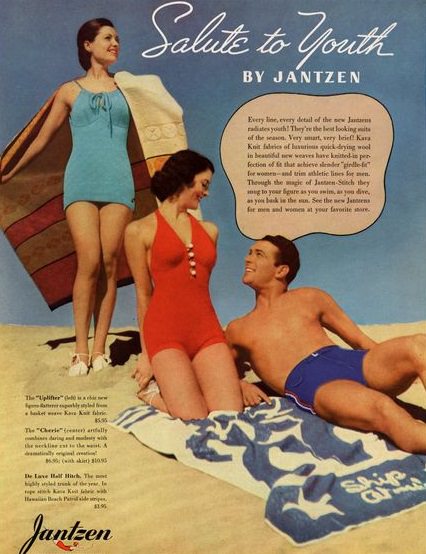
World War II shaped nearly every corner of daily life in the early 1940s, and swimwear was no exception. Fabric was rationed, which pushed designers toward practical, widely available materials like cotton and rayon. These fabrics held up well but turned heavy when wet — not ideal for actual swimming, but serviceable for the times.
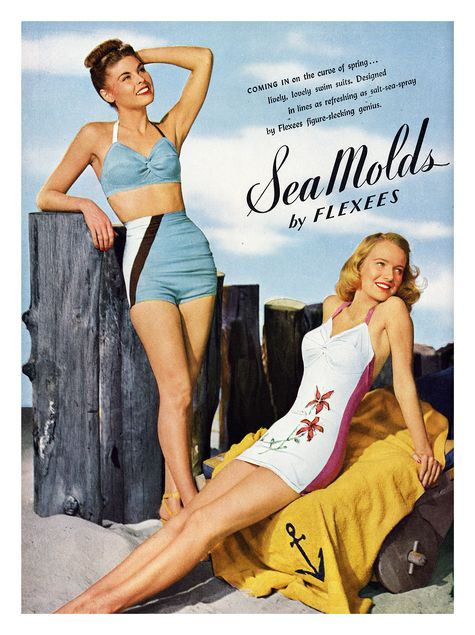
The one-piece suit dominated this era. It typically featured a skirted bottom that covered the hips and upper thighs, along with a halter neckline or wide shoulder straps. Colors leaned toward dark blues, greens, and browns. Simple stripes and polka dots were common patterns. Everything about these suits reflected wartime restraint — functional first, fashionable second.
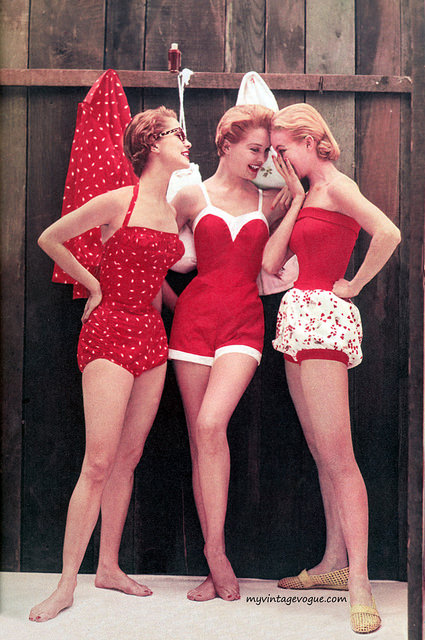
Even before the war ended, a new silhouette was making an appearance: the two-piece. Early versions were far from daring by today’s standards. A bra-style top paired with high-waisted shorts — often with a small skirted panel — left the midriff mostly covered. Still, the style raised eyebrows. Many considered it too revealing, and acceptance came slowly.

Younger women were the earliest adopters of the two-piece. For them, it represented a small but real shift away from the conservative fashions that had defined the wartime years. The style wasn’t mainstream yet, but it was gaining ground.
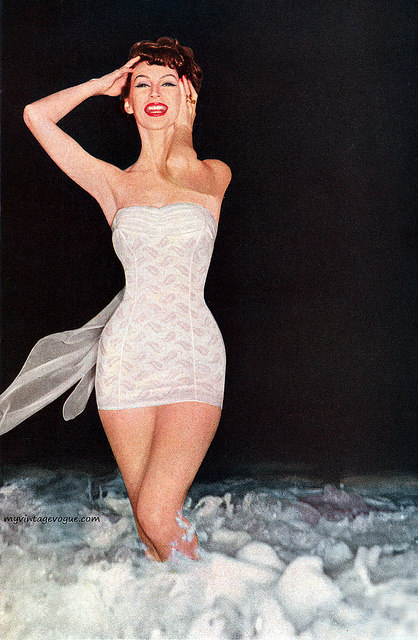
When the war ended in 1945, fashion pivoted sharply toward glamour. Designer Christian Dior launched his “New Look” in the late 1940s, built around cinched waists, a full bust, and rounded hips. The hourglass figure was the ideal, and swimwear design followed suit.
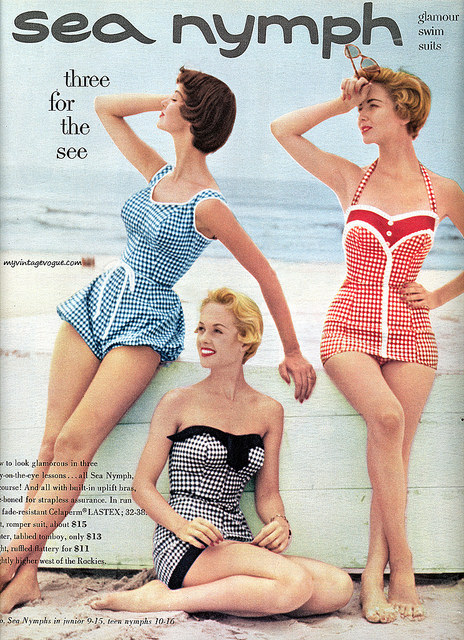
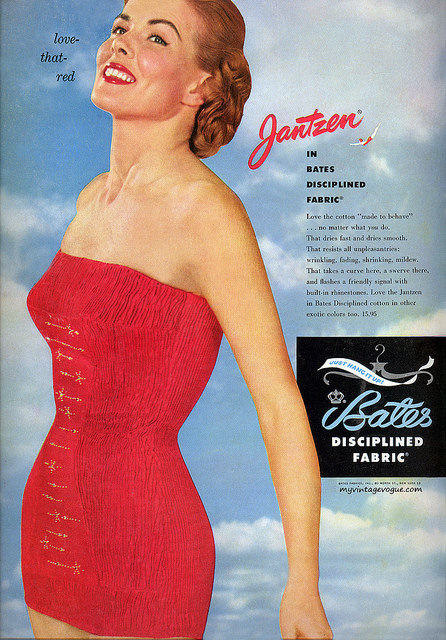
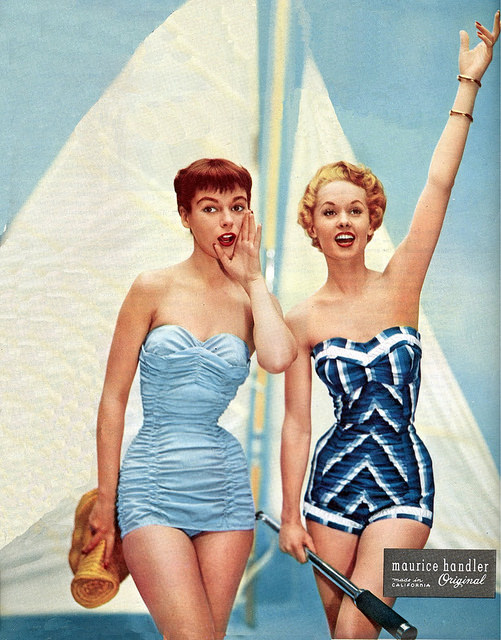
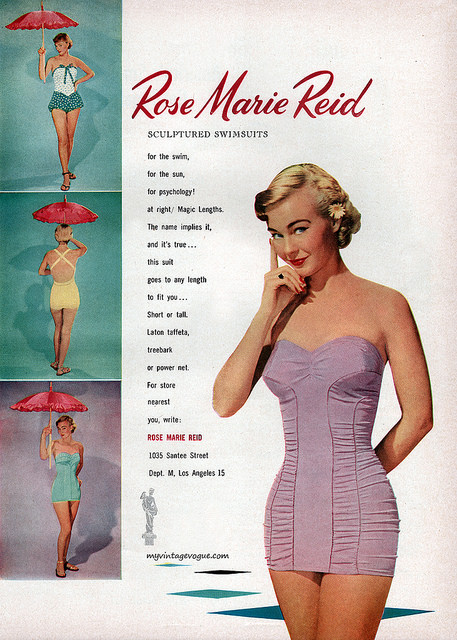
Swimsuit construction grew more sophisticated to achieve this look. Designers used boning, padding, and elasticized fabrics to shape and support the body beneath the suit. The skirted bottom stayed popular but became more streamlined. The overall effect was polished and feminine — a deliberate contrast to the utility-focused styles of just a few years earlier.
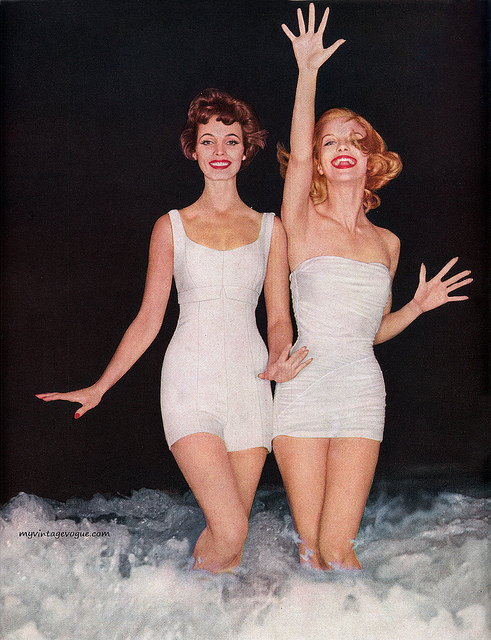
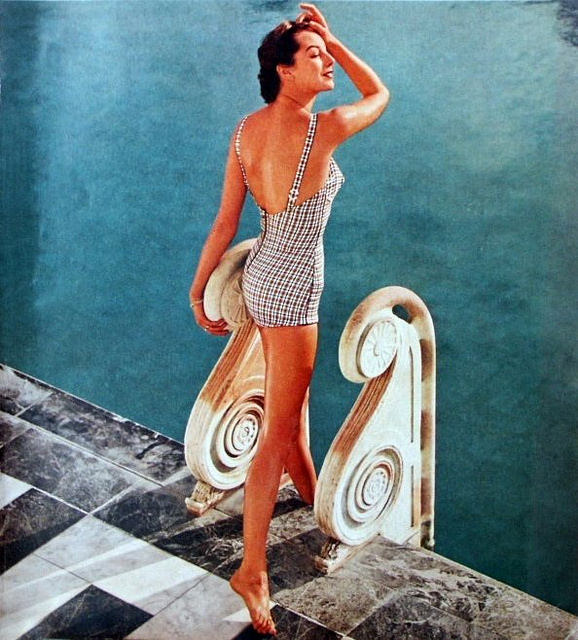
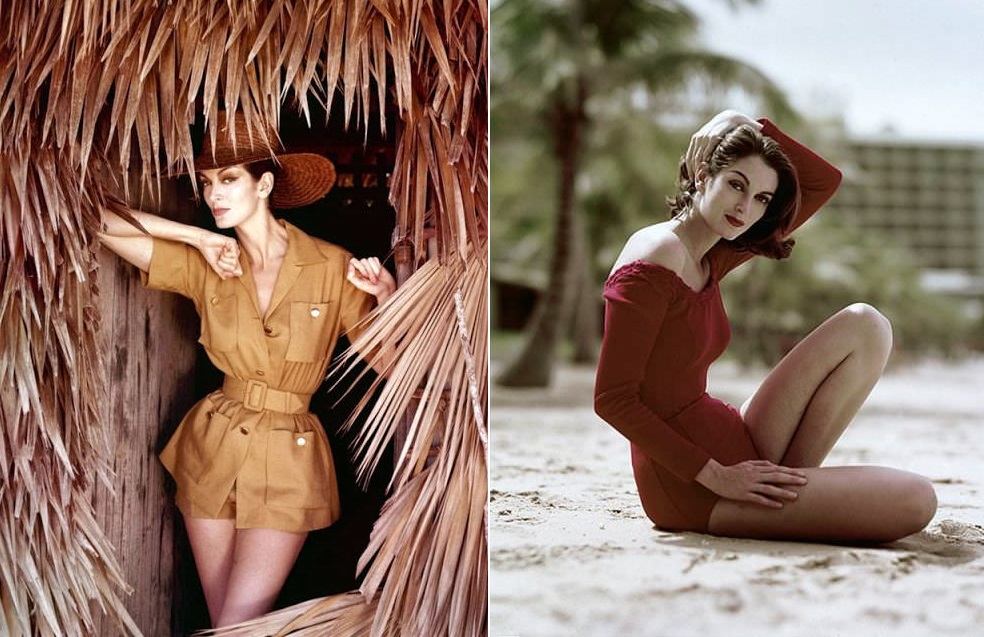
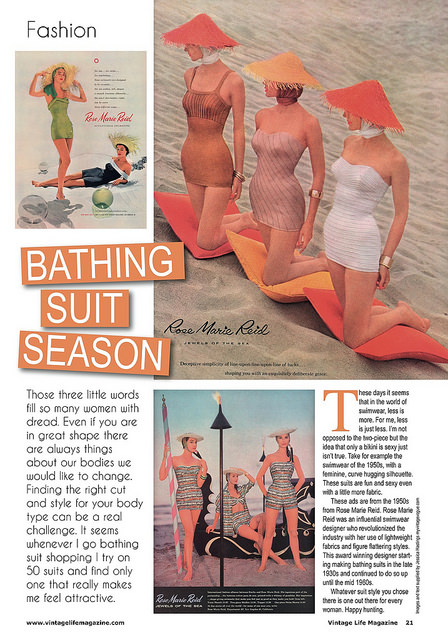
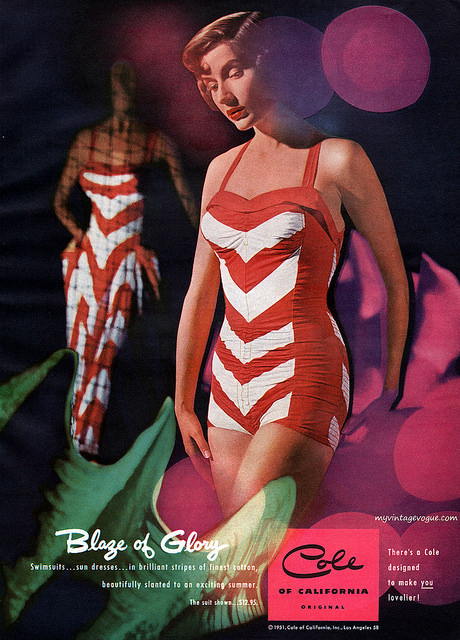
Into the 1950s, Hollywood became one of the biggest forces in swimwear trends. Stars appeared in movies and magazines wearing one-piece suits loaded with design details: ruching, draped fabric, and embellishments that turned a swimsuit into something closer to a fashion statement. Bright colors and bold prints — florals, geometric shapes, abstract designs — replaced the muted tones of the 1940s.
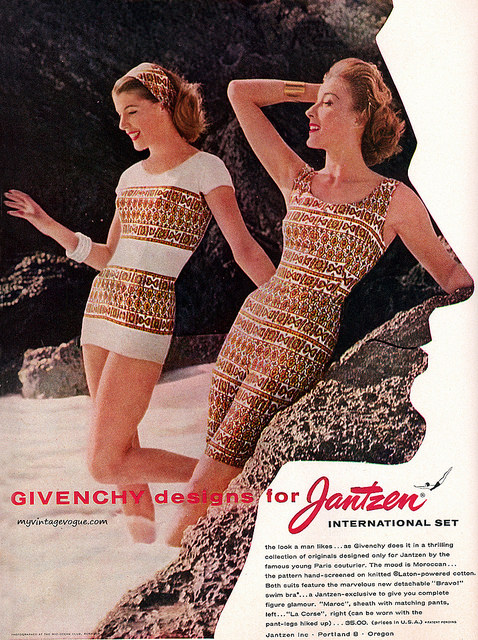
The decade’s most controversial swimwear story began not on a beach, but in a French engineering office. In 1946, Louis Réard invented the bikini — a two-piece suit that exposed the midriff and much of the legs. He named it after Bikini Atoll, the Pacific island site of American atomic bomb tests that year. The name suggested the suit would have an equally explosive effect.
The bikini was banned outright in several countries and refused by many mainstream retailers. It took years for the style to gain real acceptance. Brigitte Bardot, the French actress, helped normalize it when she wore one publicly in the early 1950s. Her visibility gave the bikini a stamp of glamour that helped overcome the initial backlash.
While the culture debated the bikini, technology was quietly transforming all swimwear. Nylon, a synthetic fabric developed before the war, became widely available to clothing manufacturers in the 1950s. It was strong, lightweight, and dried quickly — a major leap from cotton and rayon.

Nylon’s stretch and recovery properties made it especially well-suited to swimwear. A nylon suit held its shape after repeated wear and washing, and it moved with the body rather than against it. Designers could cut and construct suits in ways that simply weren’t possible with older materials.
Other synthetic fabrics joined nylon on the market as the decade progressed, giving designers an expanding toolkit. Suits became more comfortable, more durable, and more flattering at the same time. The gap between what a woman wore to swim and what she wore to be seen widened — or in many cases, closed entirely.


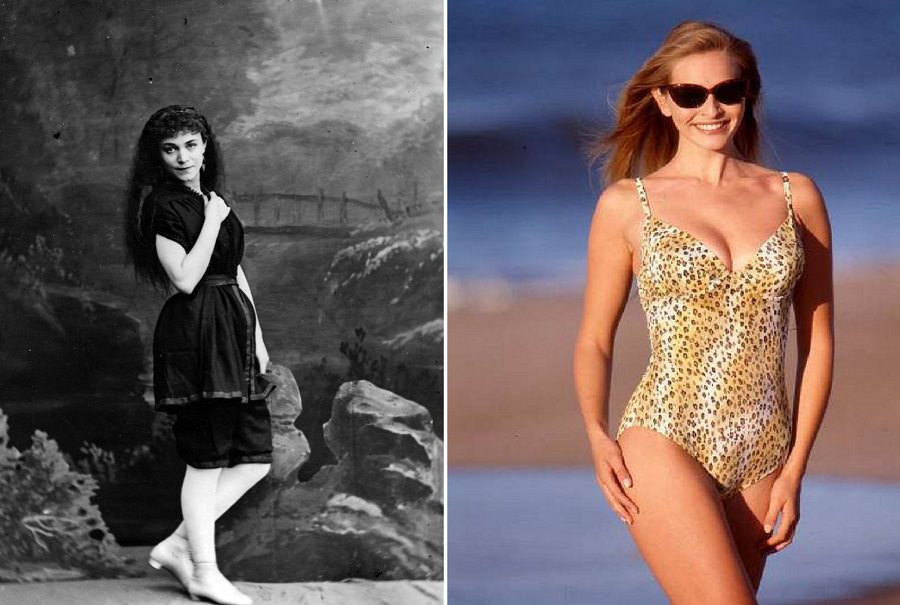
By the late 1950s, swimwear had traveled a long distance from the wartime cotton suits of 1942. Structured one-pieces, bold prints, and the slow but steady rise of the bikini all reflected a culture that was gradually becoming more comfortable with the female body in public spaces.