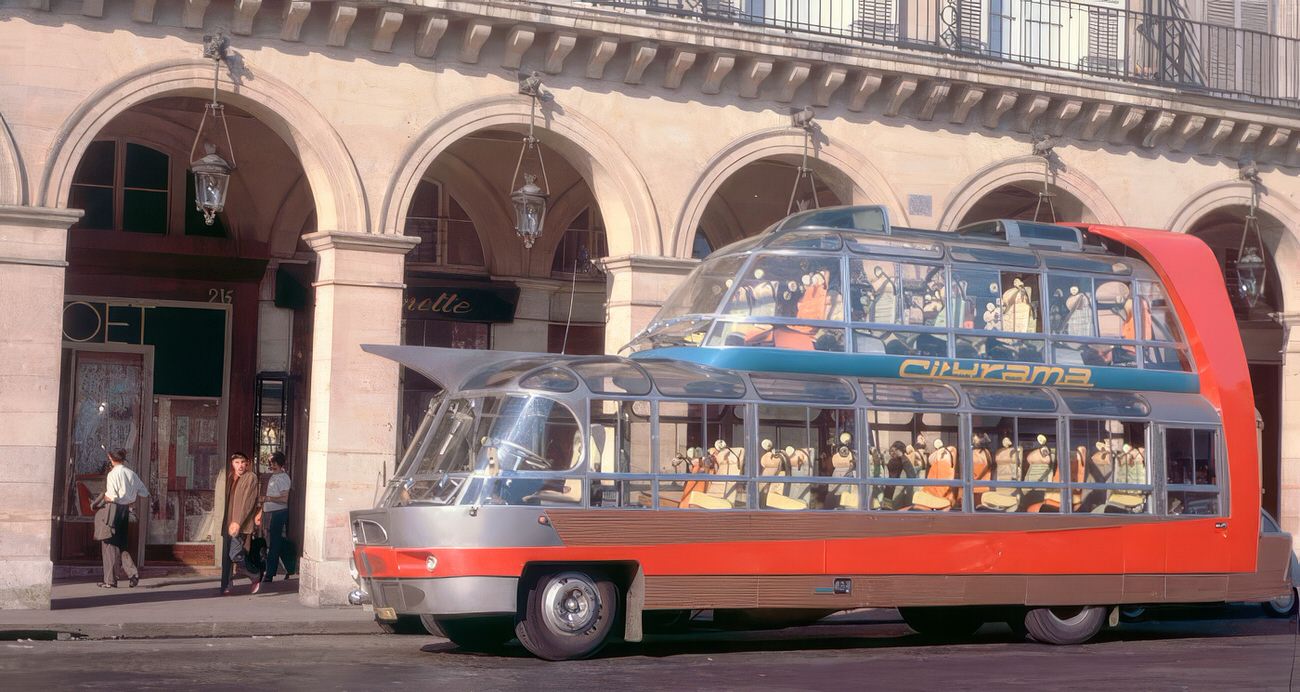
Paris in the 1950s was a city in motion — rebuilding from the war and pushing toward the future. Among its grand boulevards and stone facades rolled something that looked like it had driven straight off a movie set. The Citroën U55 Cityrama Currus was a double-decker sightseeing bus so strange and sleek that Parisians nicknamed it “Flash Gordon’s bus.”
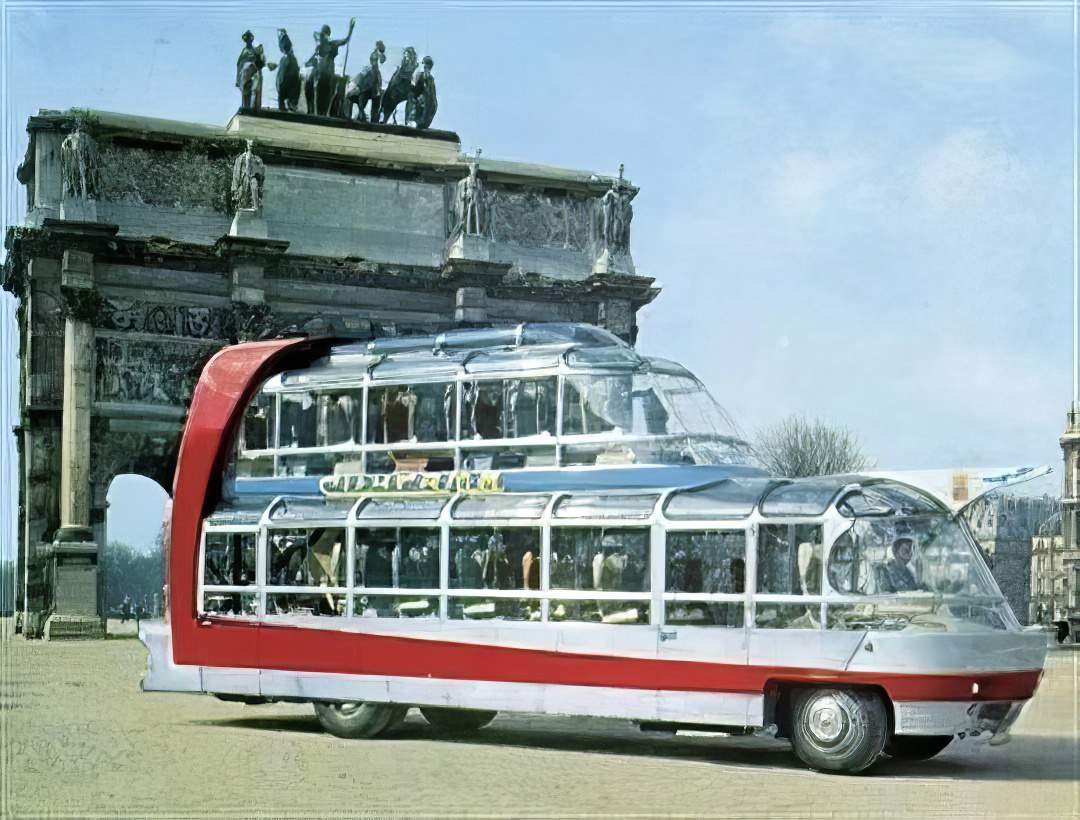
The story starts with Groupe Cityrama, a tour operator founded in the post-war years with one goal: give visitors an unforgettable way to see Paris. A standard bus wouldn’t do. Cityrama wanted something that offered panoramic views, turned heads on the street, and made the tour itself feel like an attraction. To build it, they partnered with Currus, a respected French coachbuilder known for custom vehicle bodies and bold engineering.
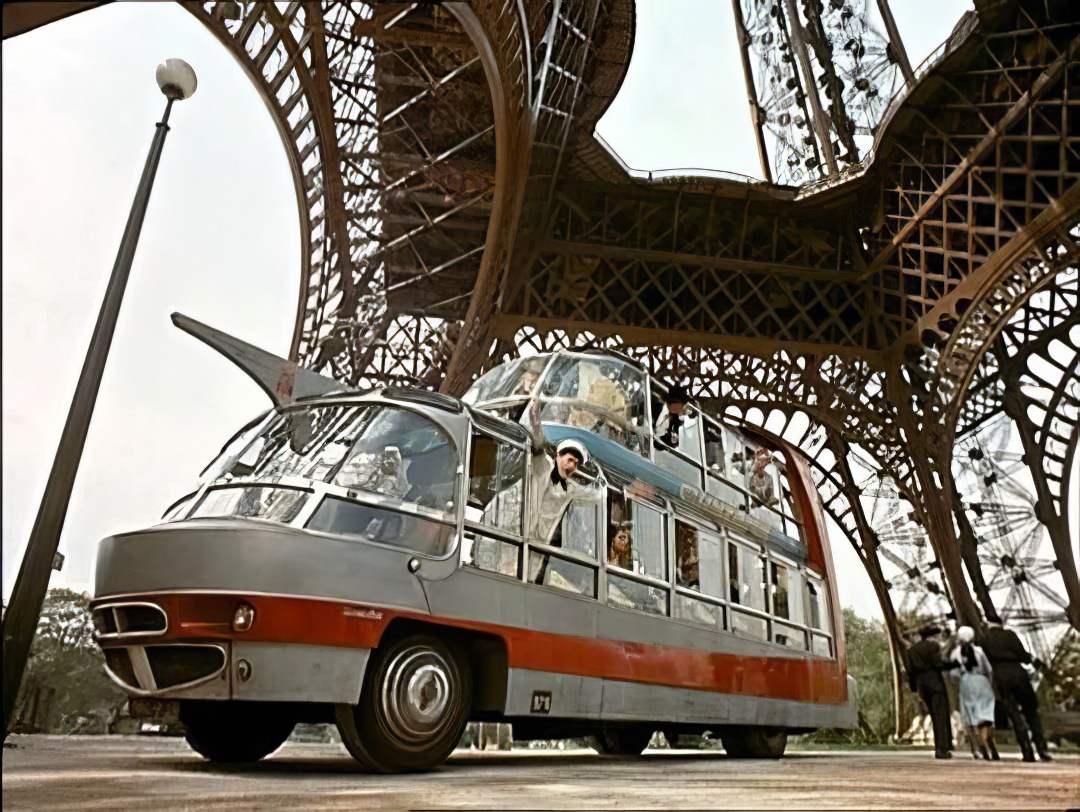
The foundation was a Citroën U55 truck chassis — a heavy-duty, reliable platform built to handle serious loads. Citroën was already well known for pushing automotive boundaries, and the U55’s robust engine made it capable of supporting a full double-decker structure. But the chassis was built for hauling cargo, not carrying tourists through the City of Lights. That’s where Currus came in.
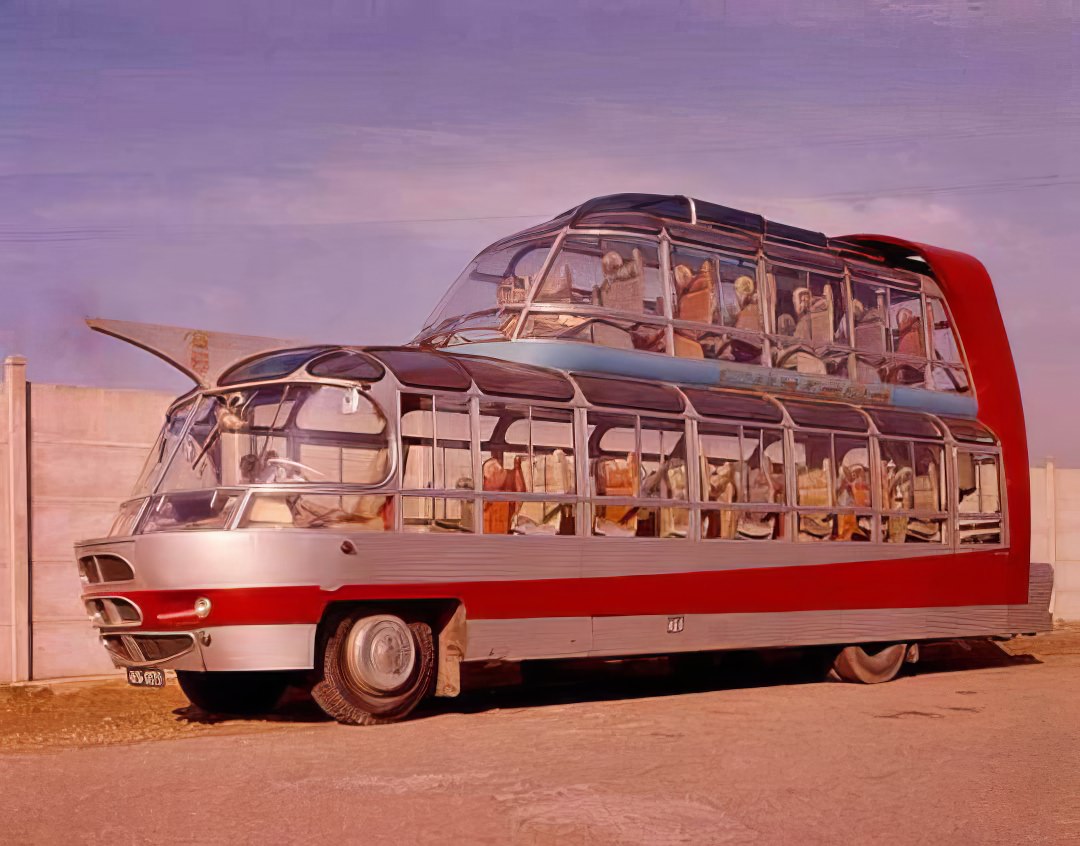
Currus completely rebuilt the U55 from the frame up, designing a body that was unlike anything else on European roads at the time. The most dramatic feature was glass — an enormous amount of it. Large curved windows wrapped around the sides of both decks, hugging the corners to give passengers nearly unobstructed views in every direction. Riding inside felt less like sitting on a bus and more like floating through the city in a glass box.
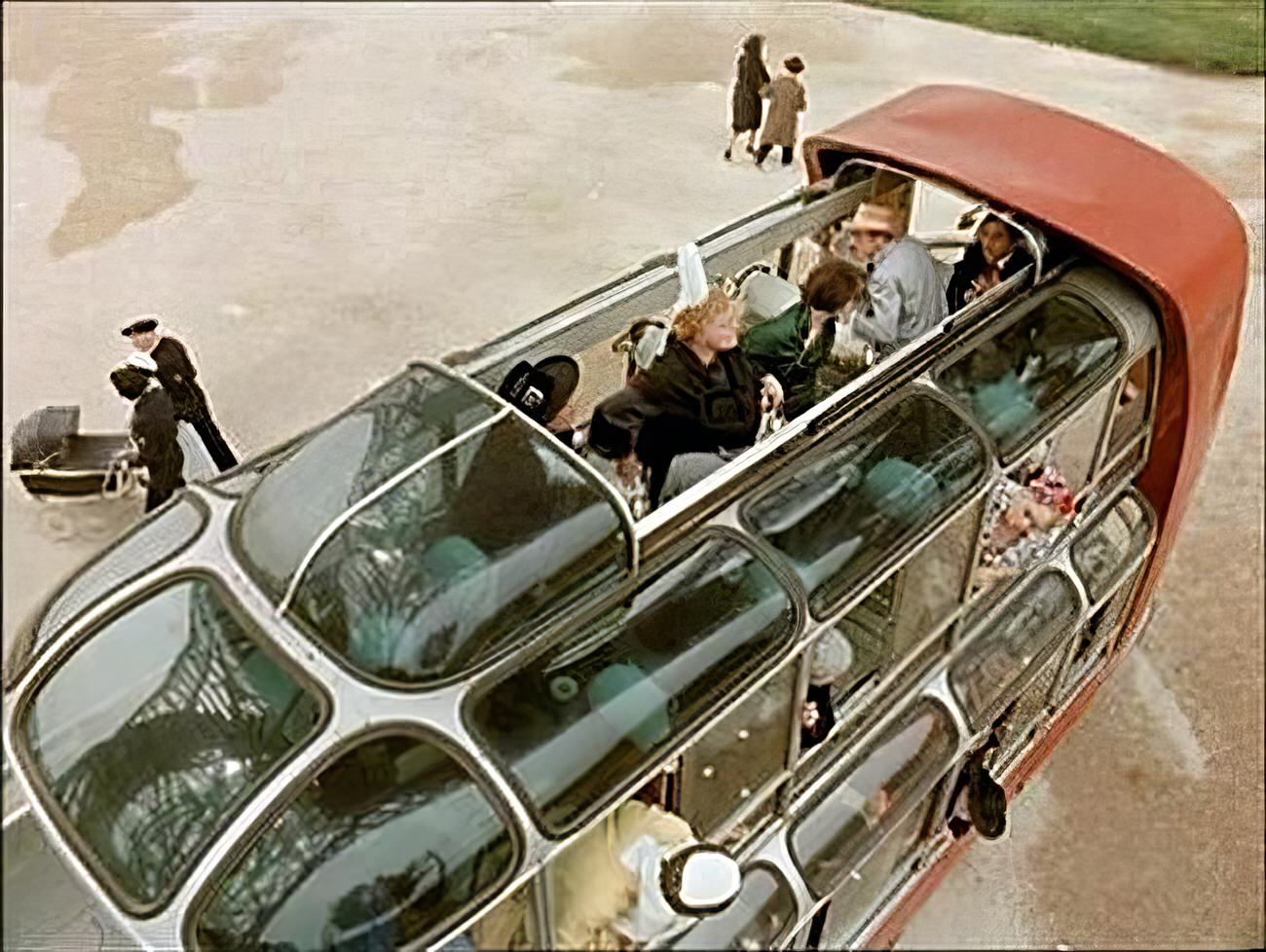
The upper deck took things further. It featured a glass roof that could be fully removed during the warmer months, turning the top level into an open-air platform. Passengers felt the wind, heard the city, and looked out over rooftops and monuments without a frame in the way. Some compared the overall design to an American Vista Cruiser station wagon — known for its raised glass roof panels — except the Cityrama bus applied that idea on a massive, two-story scale.
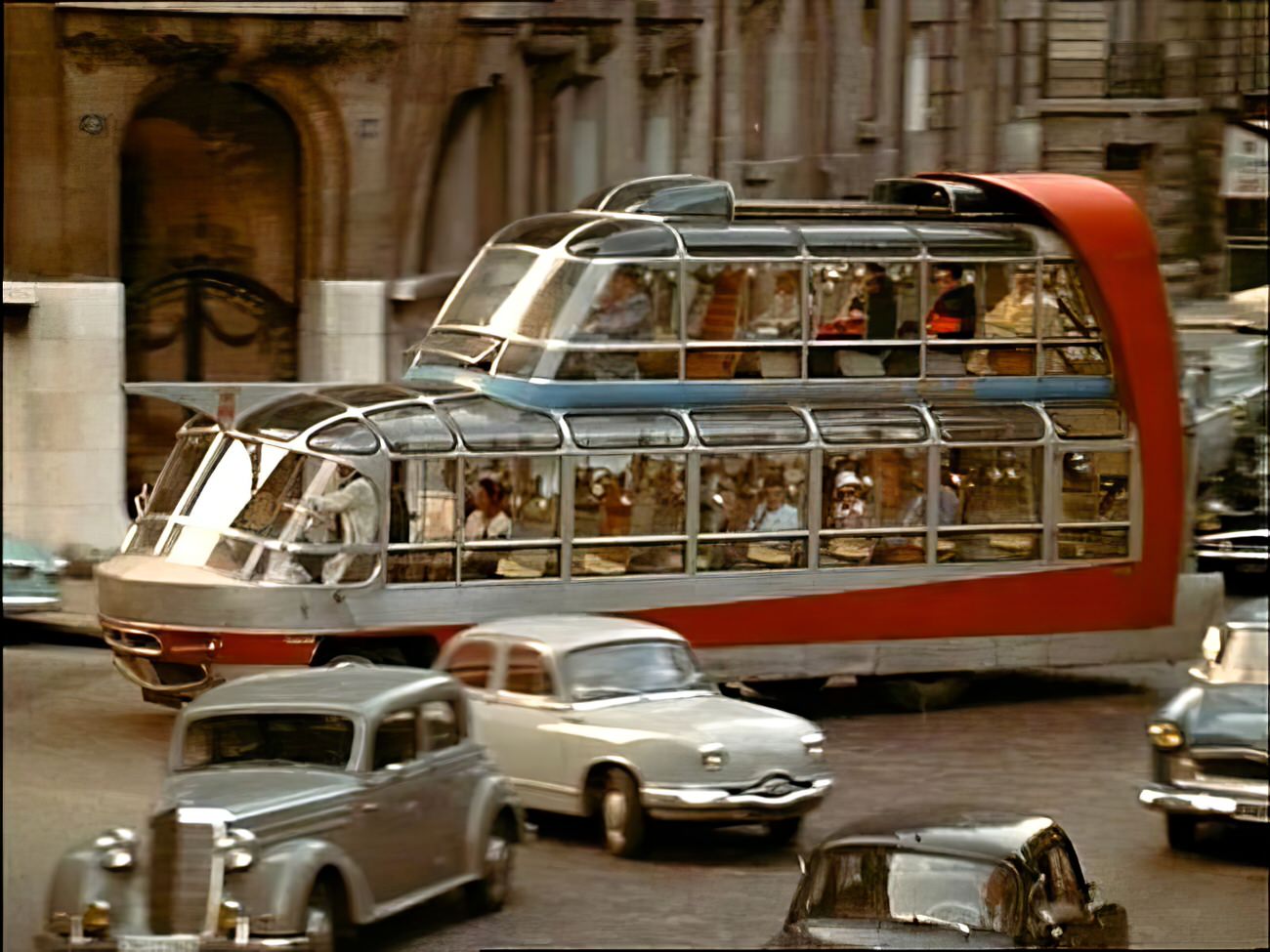
The “Flash Gordon” nickname stuck because the bus genuinely looked like something from a science fiction comic strip. Flash Gordon was one of the era’s most popular sci-fi heroes, associated with sleek spacecraft and futuristic technology. The U55’s curved lines, wraparound glass, and overall shape matched that aesthetic closely enough that the comparison was immediate and obvious to anyone who saw it roll past.
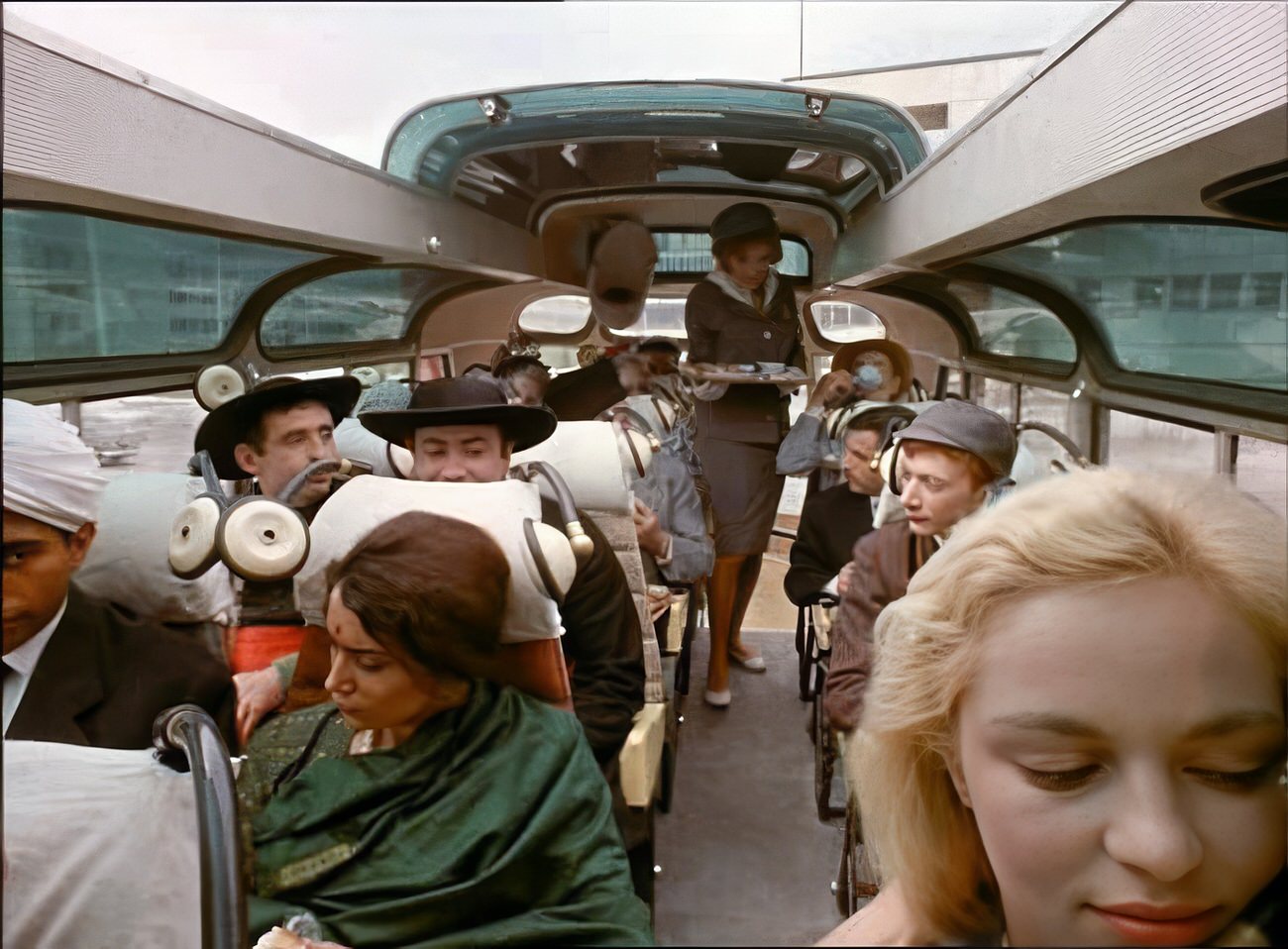
The bus followed a fixed route designed to hit Paris’s most iconic landmarks. Passengers glided past the Eiffel Tower, the Arc de Triomphe, the Louvre, and Notre Dame Cathedral — all framed through those sweeping curved windows. The views from the upper deck, especially with the roof removed, gave tourists a vantage point that no standard tour bus could match.
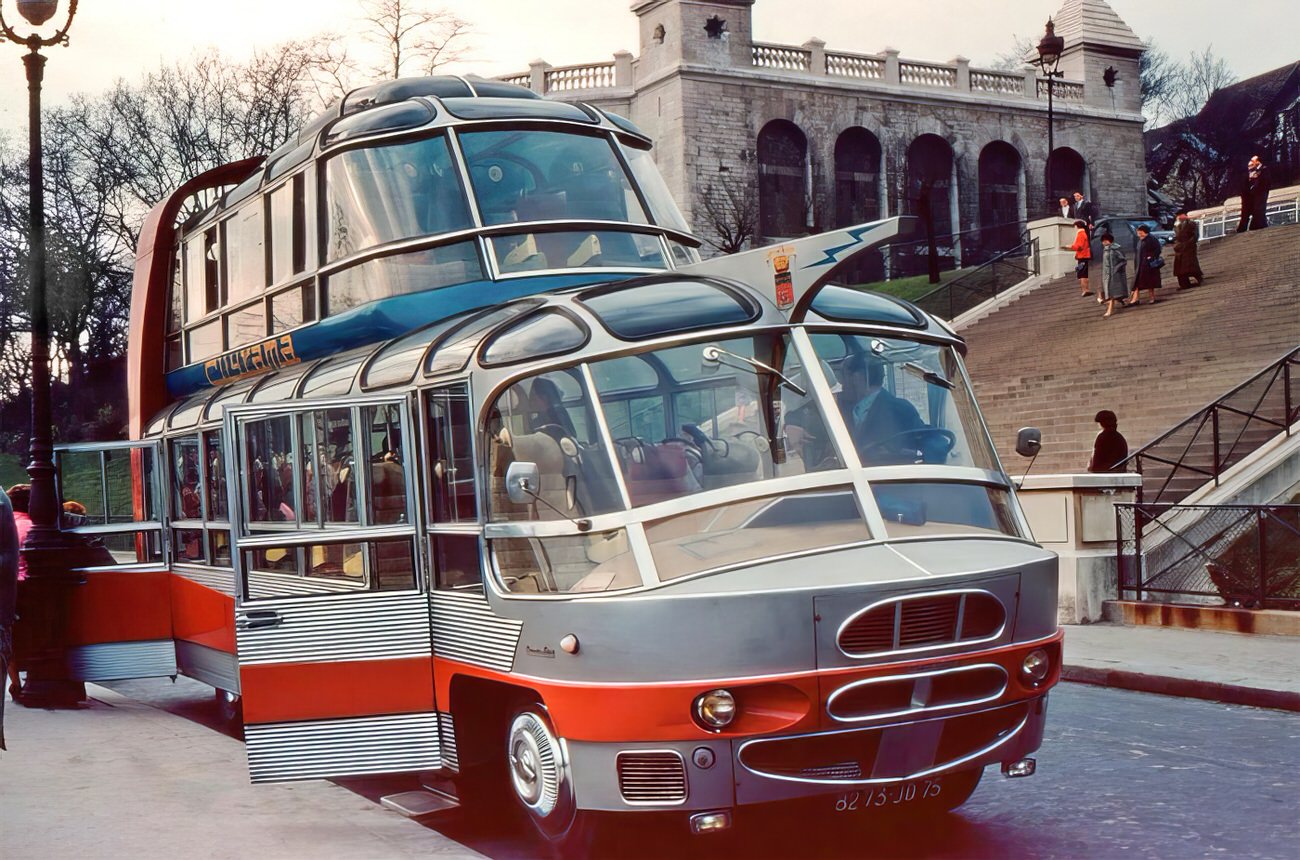
Beyond the monuments, the route wound through Paris’s living neighborhoods — areas like Montmartre and the Latin Quarter, where the city’s everyday rhythm was on full display. The bus didn’t just show tourists postcard landmarks. It carried them through the streets where Parisians actually lived, worked, and gathered, all while seated inside one of the most visually unusual vehicles ever to navigate a city.