
New York City at the turn of the 20th century was a place in constant motion. Streets were packed with horse-drawn carts, early automobiles, and crowds of people from every corner of the world. The city was growing at a pace unlike anything it had seen before, and the photographs from this era capture a metropolis in the middle of one of the most dramatic transformations in American history.

By 1900, Manhattan’s streets were a mix of the old and the new. Neighborhoods like Mulberry Street and the Bowery were dense with tenement buildings, pushcart vendors, and immigrant families who had recently arrived from Europe. Lower Manhattan served as the commercial backbone of the city, where trade, finance, and publishing all competed for space along the same blocks.


The city’s press was centered along Newspaper Row, near City Hall, where major publications competed for readers. City Hall itself stood as one of the oldest government buildings in use in the country, a quiet contrast to the iron and steel towers beginning to rise just blocks away.


Fifth Avenue was already one of the most recognizable streets in the world. At 51st Street, grand churches and private mansions lined the avenue. At 25th Street, commerce and fashion mixed together, and shoppers moved along sidewalks beneath gas lamps and early electric lights.


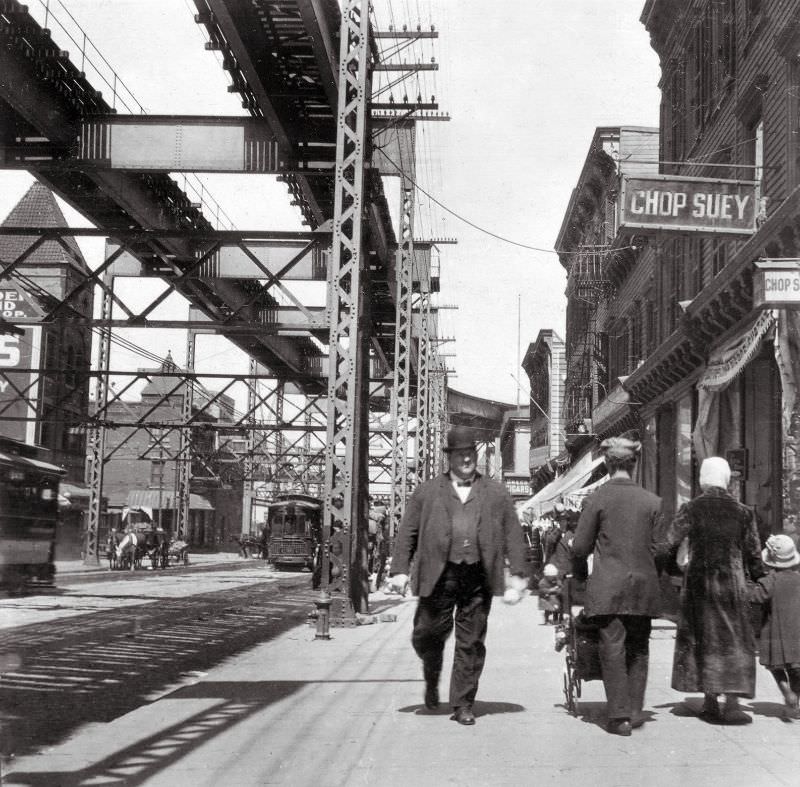
Public transit was expanding rapidly. The elevated railways, known as the “els,” snaked through neighborhoods above street level. The sharp curve of the Ninth Avenue Elevated at 110th Street was one of the most photographed train structures of the era. Below ground, the city was digging its future — subway construction began in earnest at Bleecker and Greene Streets in 1900.


In October 1904, New York City opened its first subway line. Mayor George B. McClellan personally operated the controls on the inaugural trip, traveling from City Hall to 145th Street. The City Hall station, built in a graceful Romanesque arch style, was one of the most elegant stations on the entire line.


Above ground, architecture was setting records. The Flatiron Building — officially the Fuller Building — was completed in 1902. Its triangular shape at the intersection of Broadway and Fifth Avenue made it one of the most talked-about structures on earth. Grand Central Terminal followed in 1903, becoming a hub for rail travel into the city. The Plaza Hotel opened in 1907, designed by Henry Janeway Hardenbergh and modeled after French chateau architecture.


Pennsylvania Station, which opened in 1910, was another engineering achievement of the period. Its massive concourse, supported by steel and glass, filled passengers with a sense of awe the moment they stepped inside. The station was modeled after the ancient Baths of Caracalla in Rome, and its interior was among the grandest public spaces in the United States.


The Metropolitan Life Insurance Tower, completed in 1909, rose 700 feet above Madison Avenue and became the tallest building in the world at the time. At night, its clock tower was lit up and visible for miles. The City Investing Building on Broadway was another skyscraper that changed the Lower Manhattan skyline during this same period.


The Queensborough Bridge, completed in 1909, connected Manhattan to Queens across the East River. Its massive cantilever steel structure was a feat of engineering, and New Yorkers walked its pedestrian paths and marveled at the views below.


Brooklyn was a city in its own right before the 1898 consolidation merged it into New York City. Even after that merger, it retained its distinct identity. Flatbush Avenue was one of its main commercial arteries, and the Atlantic Avenue subway station was one of the earliest underground stations in the borough. The Brooklyn Navy Yard’s dry dock was a center of American shipbuilding during this period.


Times Square was still finding its identity. In 1904, The New York Times moved into its new tower at the intersection of Broadway and Seventh Avenue, and the area around it began to transform into the entertainment district the world would eventually recognize. Broadway at night was already a glittering spectacle of electric signs and theater marquees.


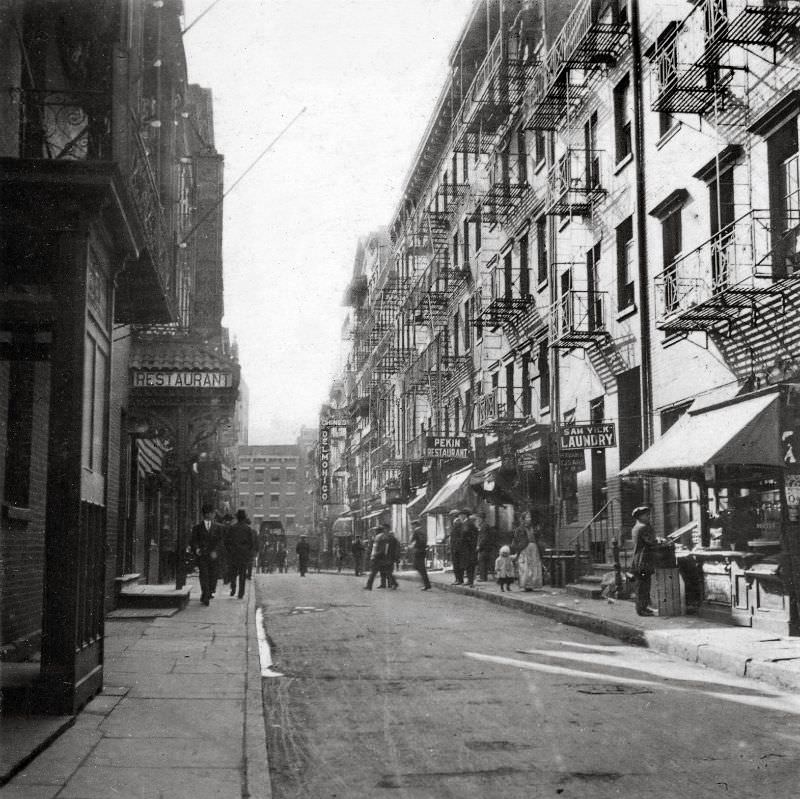
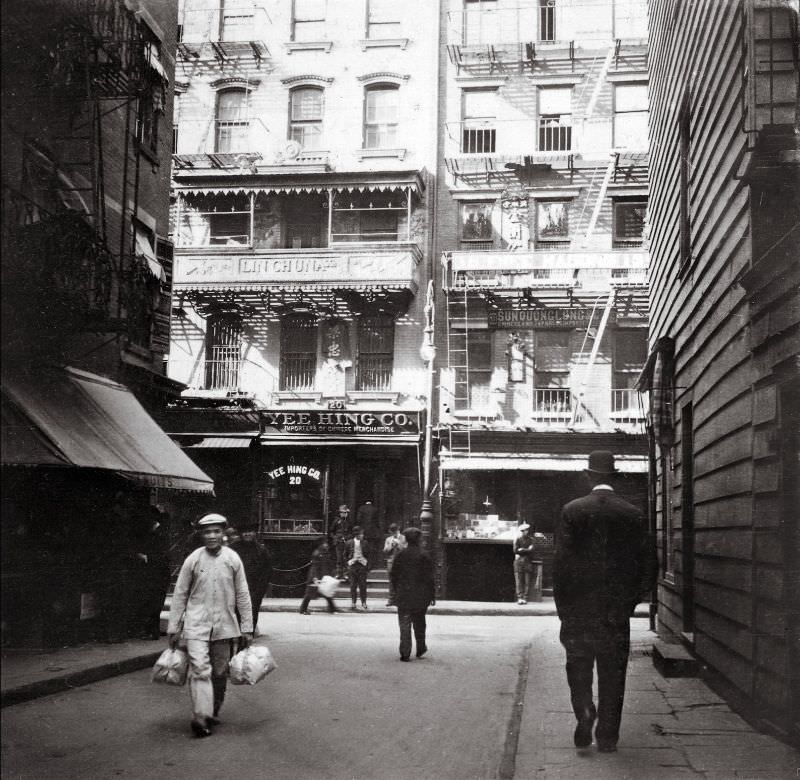
Chinatown in lower Manhattan was one of the most densely populated neighborhoods in the city. Mott Street and Pell Street were the heart of the community, filled with restaurants, shops, and social clubs. The Chinese Delmonico restaurant on Pell Street was a well-known dining destination, drawing both Chinese residents and curious visitors from around the city.


Public spaces and parks gave the city room to breathe. Union Square hosted a flower market that drew vendors and shoppers throughout the week. Prospect Park in Brooklyn offered open fields and tree-lined paths to families who needed a break from crowded streets. Washington Square Park’s marble arch, completed in 1892, had already become one of the most recognized landmarks in the city.


The Bronx Zoo opened in 1899 and quickly became one of the largest metropolitan zoos in the world. Its entrance gates stood as an impressive architectural statement, and by 1910, the zoo was drawing hundreds of thousands of visitors each year. Baseball, meanwhile, was the city’s most popular sport. The Polo Grounds served as home to both the Yankees and the Giants before the Yankees built their own stadium across the river.


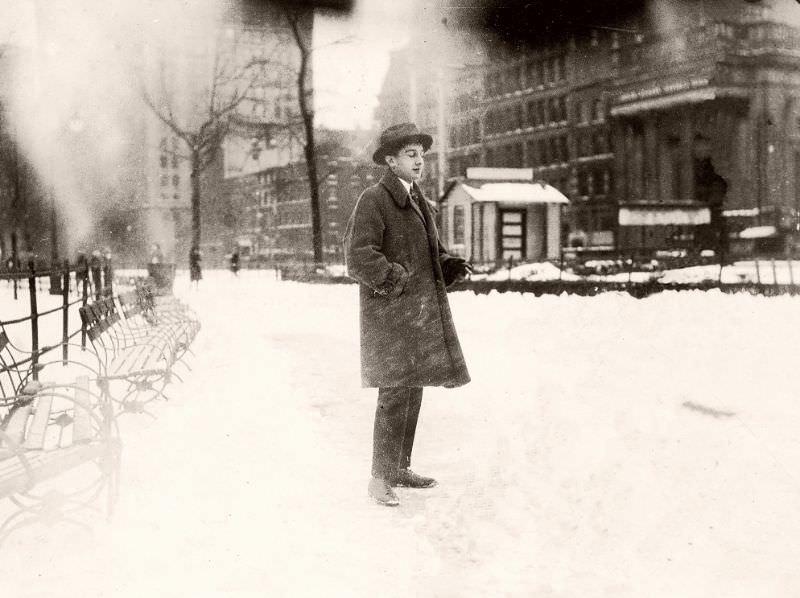
Winter in New York during this era was a serious challenge. The city had no practical system for clearing snow from streets quickly. Snowplows pulled by horses worked through major blizzards, pushing drifts aside on main avenues while side streets often remained buried for days. The sight of a snow-covered Fifth Avenue or a frozen East River was not unusual in January or February.


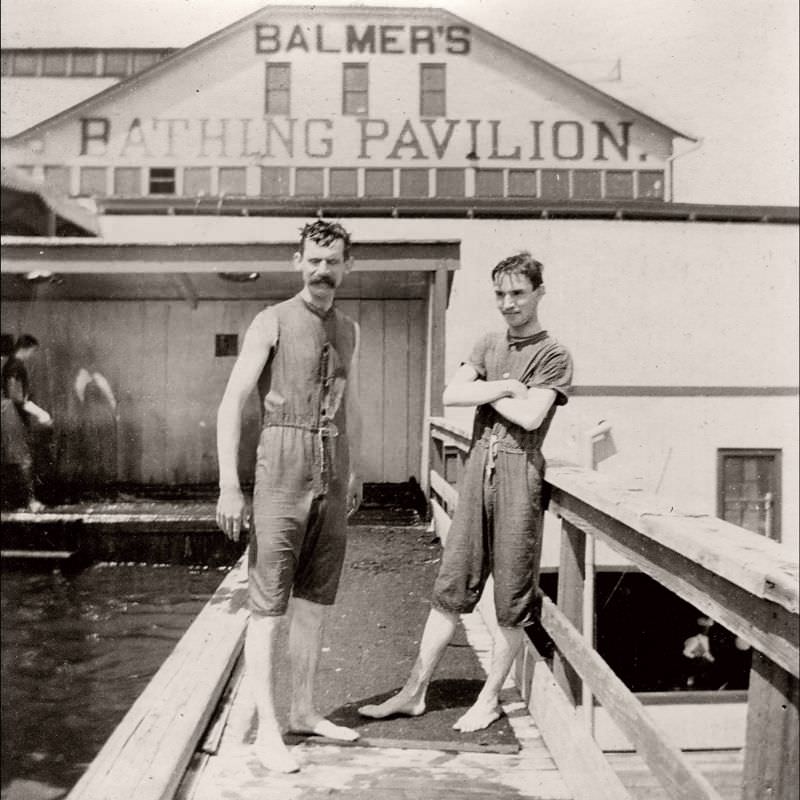
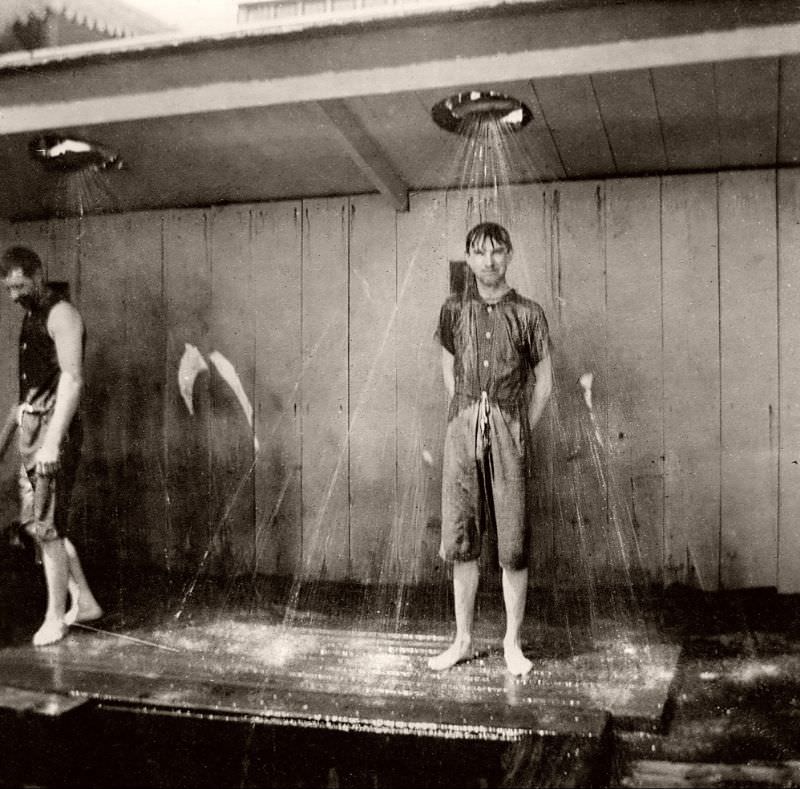
In summer, New York baked. Working-class residents headed to Coney Island in Brooklyn, where Balmer’s Bathing Pavilion offered beach access and a rare escape from the city heat. Vendors sold straw hats on street corners, and the demand for them during hot stretches was high enough to fill entire storefronts.

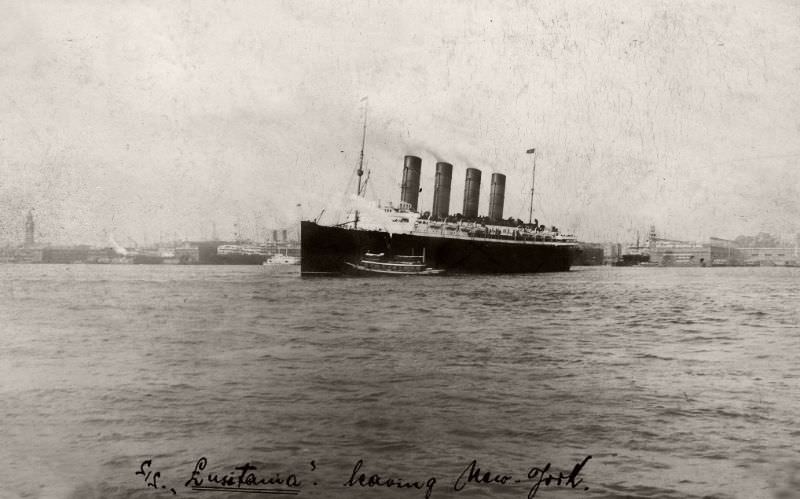
The waterfront was central to New York’s economy. South Street along the East River was lined with tall-masted ships and cargo vessels. The steamship Lusitania departed New York in 1910, a reminder that the port connected the city to every major harbor in the world. The Brooklyn Bridge, completed in 1883, was still a defining feature of the skyline and the harbor view.


Columbus Circle sat at the southwest corner of Central Park, a busy roundabout where carriages and early motorcars navigated around the central monument to Christopher Columbus. Herald Square, just to the south at 34th Street, was a major shopping and transit hub, and the intersection at 34th and Fifth Avenue was already one of the busiest corners in the country.


At the street level, the city’s markets and small businesses defined daily life for working-class New Yorkers. Fruit sellers set up at corners like 28th Street and Broadway. Saloons and restaurants, like the four-story establishment between Hamilton and Lorraine Streets, served as social gathering spots for working men. Madison Square Park provided a central green space where people from different neighborhoods came together.


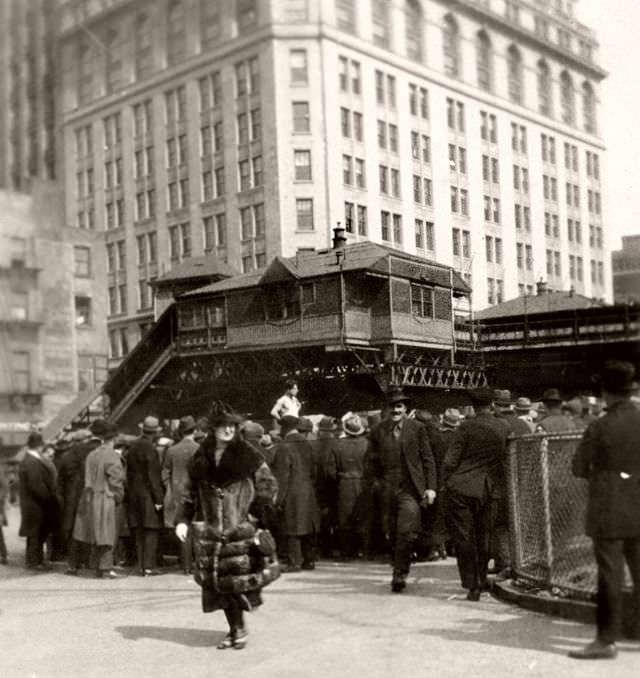
New York’s elevated rail lines carried millions of passengers each year by 1910. Along 11th Avenue, rail lines ran at ground level, mixing with street traffic in ways that frequently caused accidents and traffic jams. The New York Central Railroad’s lines along Hudson Street and Vestry Street were part of the same sprawling network that moved goods and people across the city and beyond.


The High Line in 1914 was not a park — it was a working freight railroad running above the streets of the West Side. Trains loaded with meat, dairy, and produce rolled directly into warehouses and factories along the route. The structure that would one day become one of New York’s most visited attractions was, at this point, purely industrial.
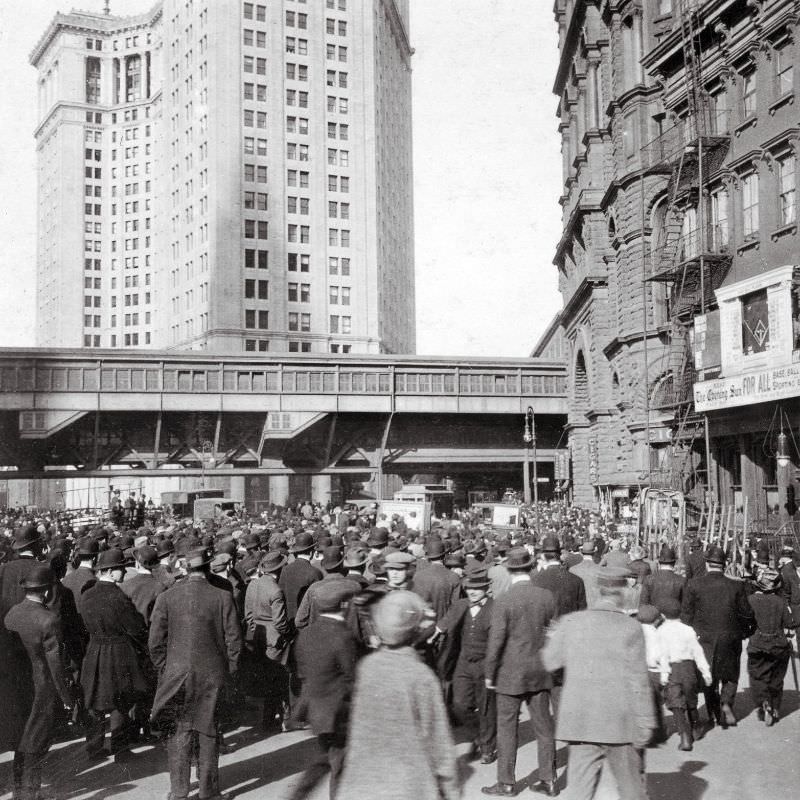
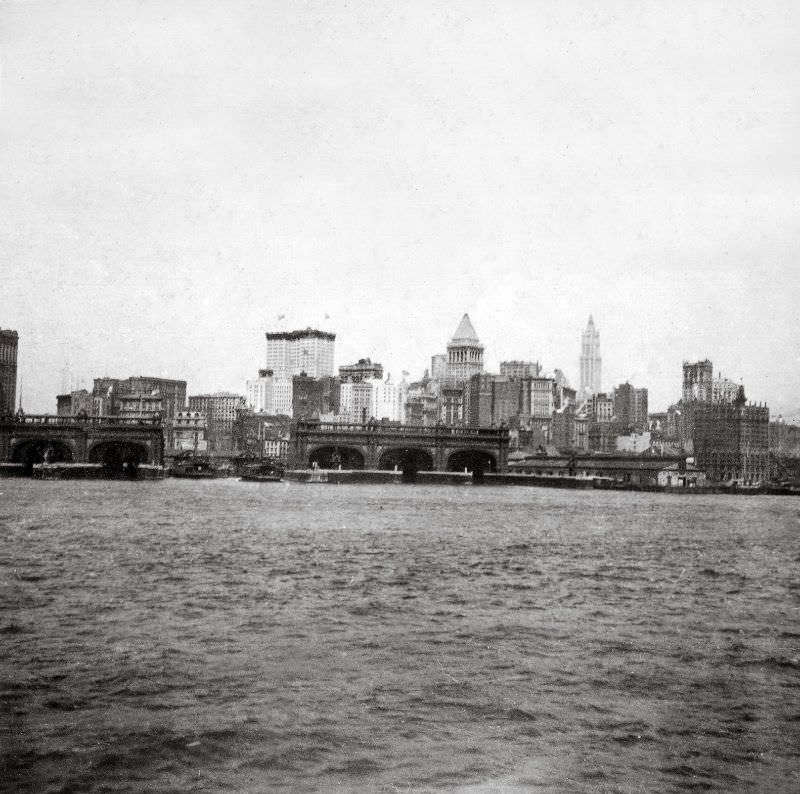
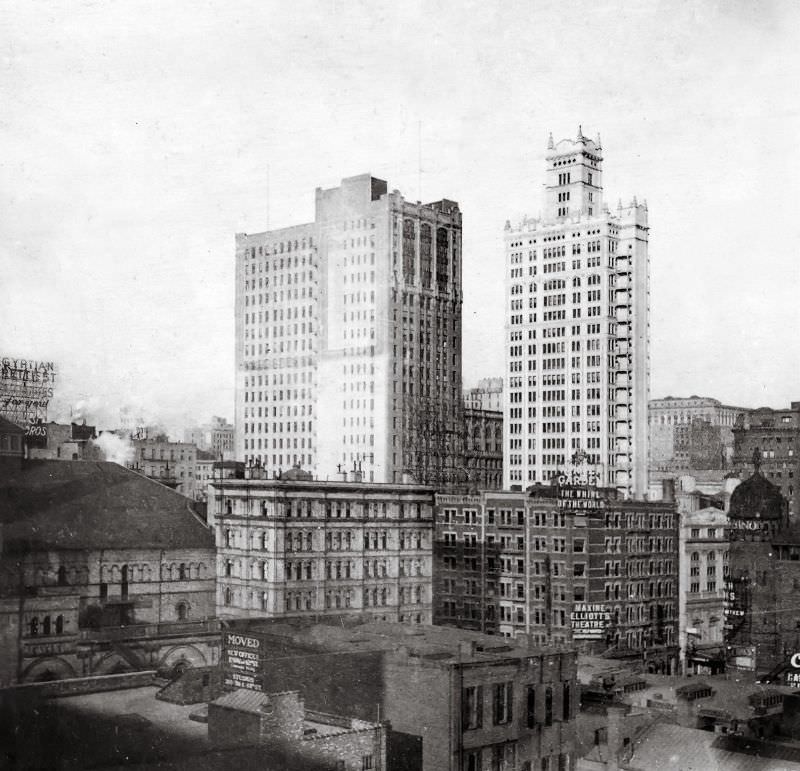
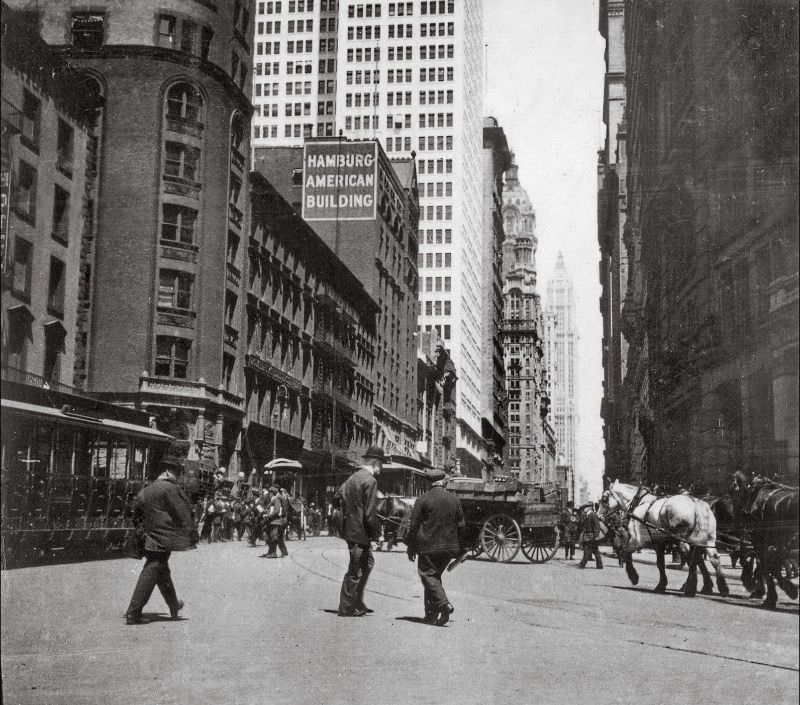
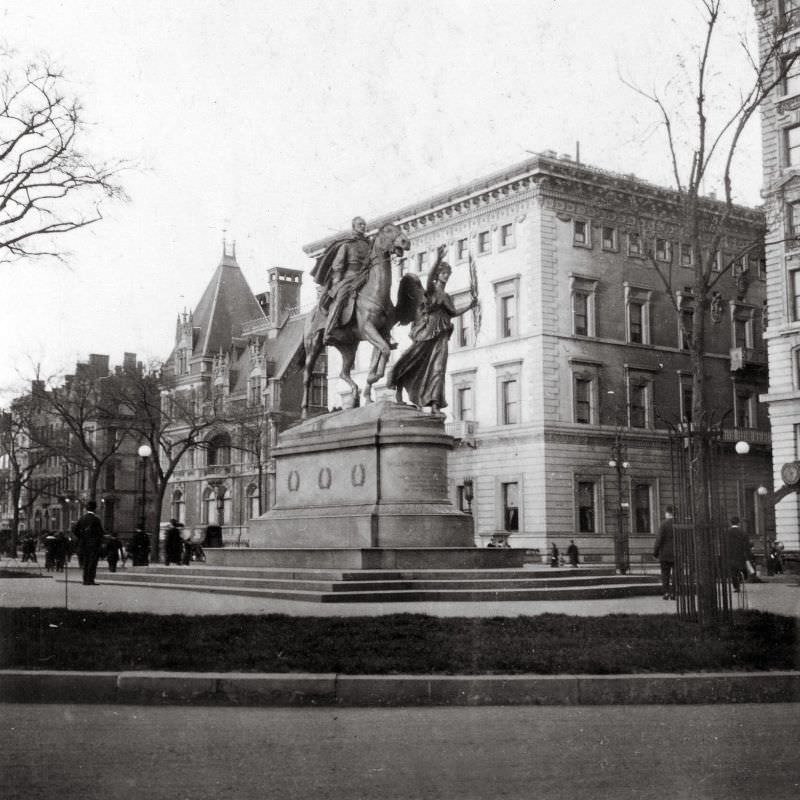
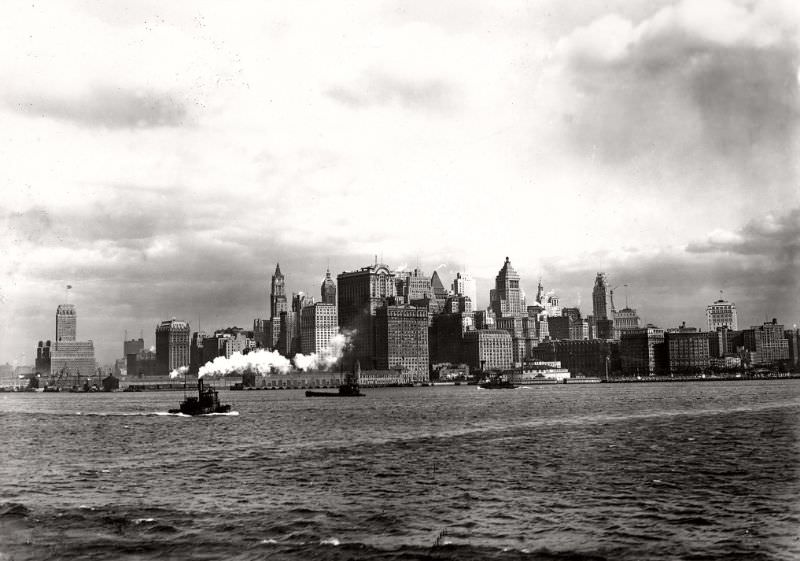
By 1914, New York’s skyline had taken on a genuinely vertical character. Skyscrapers defined the Lower Manhattan profile as seen from the harbor, and buildings like the Hamburg American Building added to the dense cluster of towers rising above the financial district. The General Sherman Monument in Grand Army Plaza at the corner of Fifth Avenue and 59th Street stood as a prominent landmark at the park’s entrance.
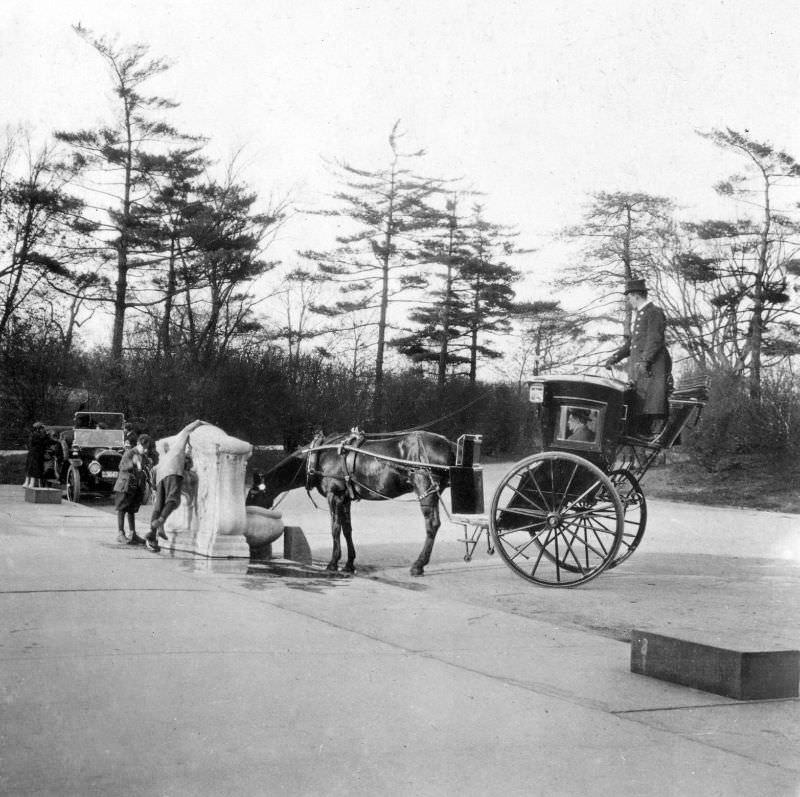
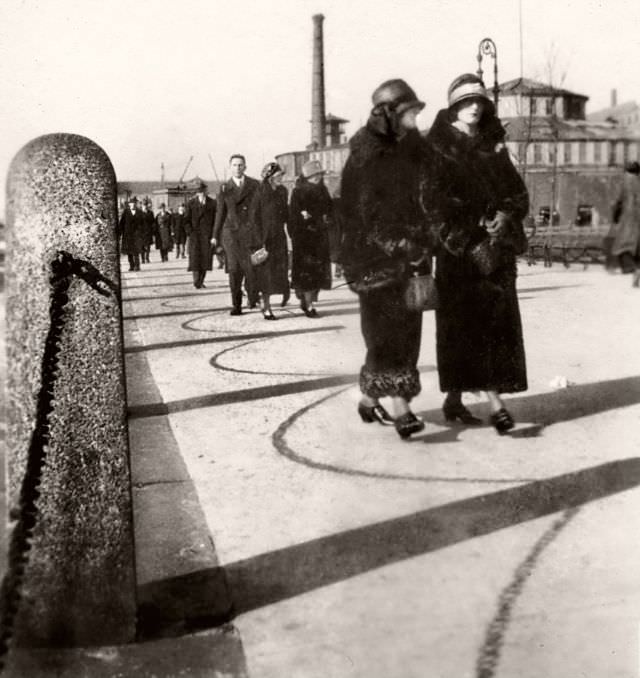
Daily life in the city played out in thousands of small scenes captured by photographers of the era. A drinking trough in Central Park served horses working in the city’s streets. Children crowded around street vendors. Women walked along Fifth Avenue in furs during the winter months, while working women filled factory floors and office buildings in growing numbers as the decade wore on.
Landmarks like Federal Hall and the College of the City of New York anchored neighborhoods with civic purpose. Federal Hall, where George Washington had taken his first presidential oath, stood quietly on Wall Street while the financial district bustled around it. The College of the City of New York served working-class students who couldn’t afford private universities, making higher education accessible to thousands of immigrant families.


Entertainment options ranged from formal theaters to storefront attractions. The Acorn Musee at 14th Street and Union Square West offered curiosities and variety acts to passersby. Tiffany & Co. on Fifth Avenue catered to the city’s wealthy elite. Broadway at night, with its electric signage and packed sidewalks, showed just how much the city had changed since the gas-lit streets of just a generation before.


Syracuse in 1905 and other upstate cities were connected to New York through railroad networks that made the metropolis the center of regional commerce. Closer to the city, the Washington Bridge over the Harlem River carried traffic between Manhattan and the Bronx, and High Bridge — the oldest remaining bridge in New York City — still carried water from the Croton Aqueduct system into the city.


The East River, lined with piers and warehouses, carried constant boat traffic. Welfare Island — now Roosevelt Island — sat in the middle of the river and housed a hospital, a penitentiary, and a workhouse. The west side of Manhattan along West Street and Liberty Street was dense with shipping offices and cargo operations feeding the port.


Grand Army Plaza in Brooklyn, with its massive triumphal arch commemorating Union soldiers from the Civil War, marked the entrance to Prospect Park at its northern end. The plaza was a gathering point for the borough, surrounded by some of Brooklyn’s finest residential architecture. The Tribune Building near City Hall in Manhattan was another architectural showpiece of the era, its clock tower rising above the printing presses below.


Into the 1920s, the city continued to grow upward and outward. The Battery Place elevated station near One Broadway served commuters traveling along the lower tip of Manhattan. Near Bowling Green, the old Standard Oil Building rose beside streets that had been the center of New York’s financial power for more than a century. By 1927, the skyline had grown so tall that photographs taken from the harbor showed a wall of towers that would have been unimaginable just thirty years earlier.







Penn Station looked 100x better 100 years ago.