Between 1939 and 1945, Munsingwear ran one of the most distinctive men’s underwear ad campaigns in American advertising history. The brand was already well established, but this era of its marketing took a bold and playful turn that set it apart from the competition.
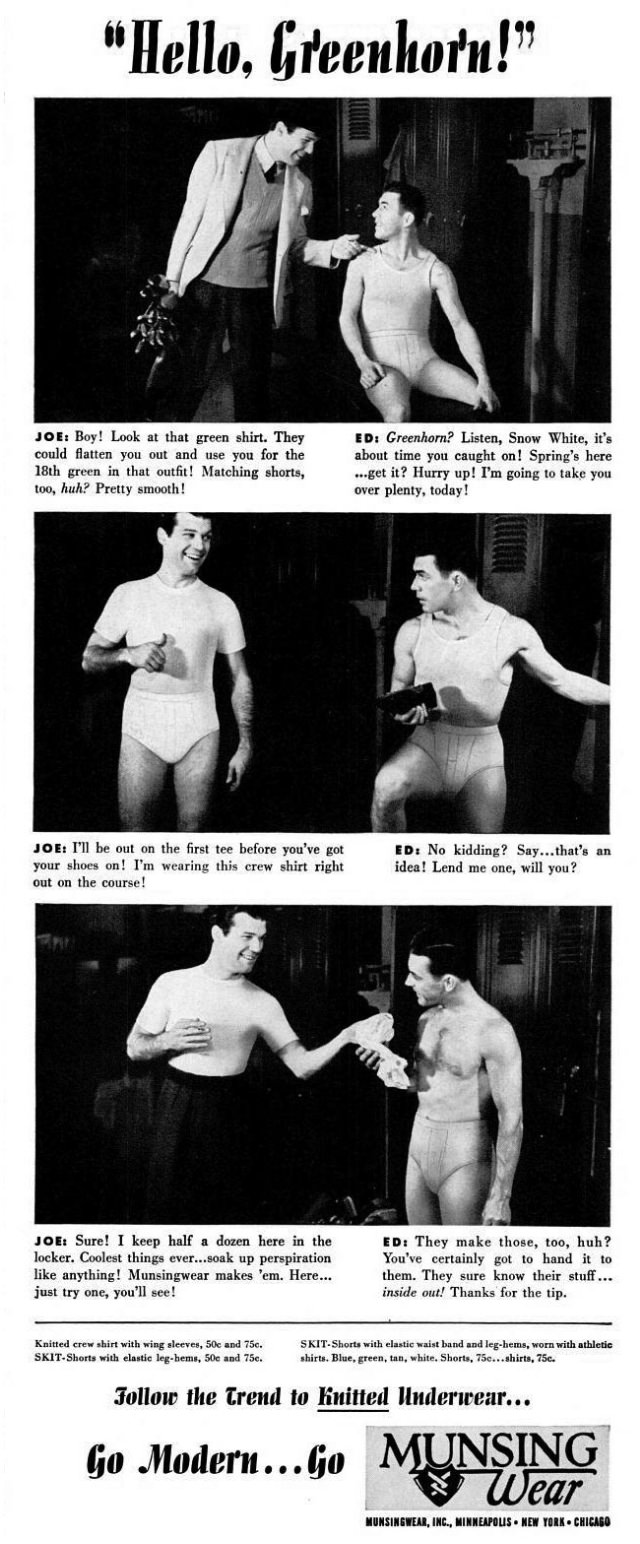
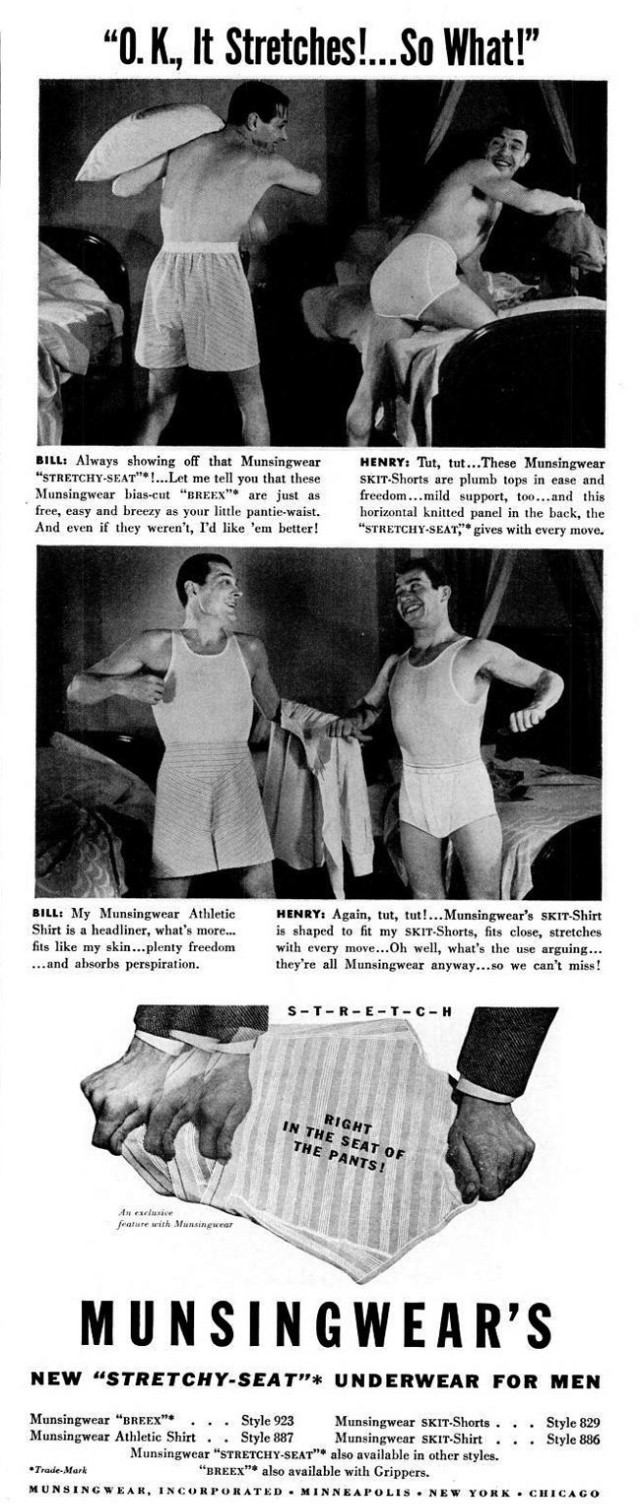
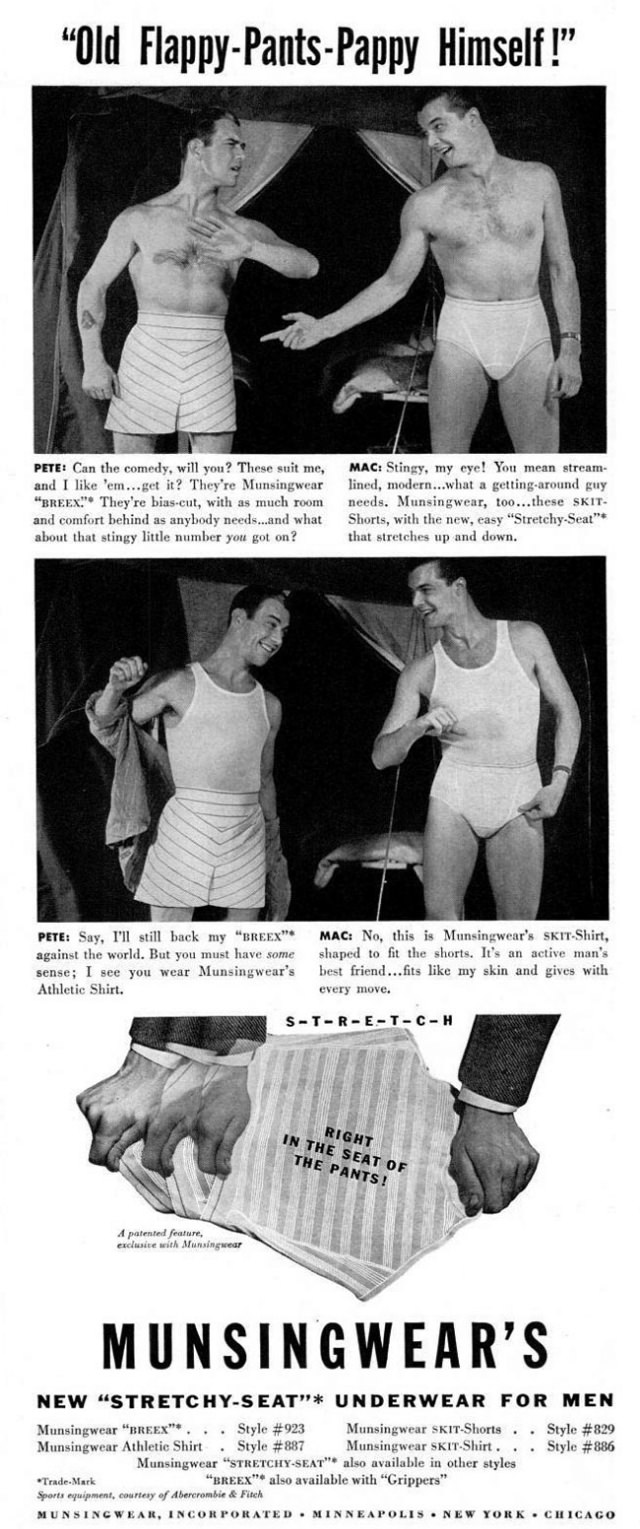
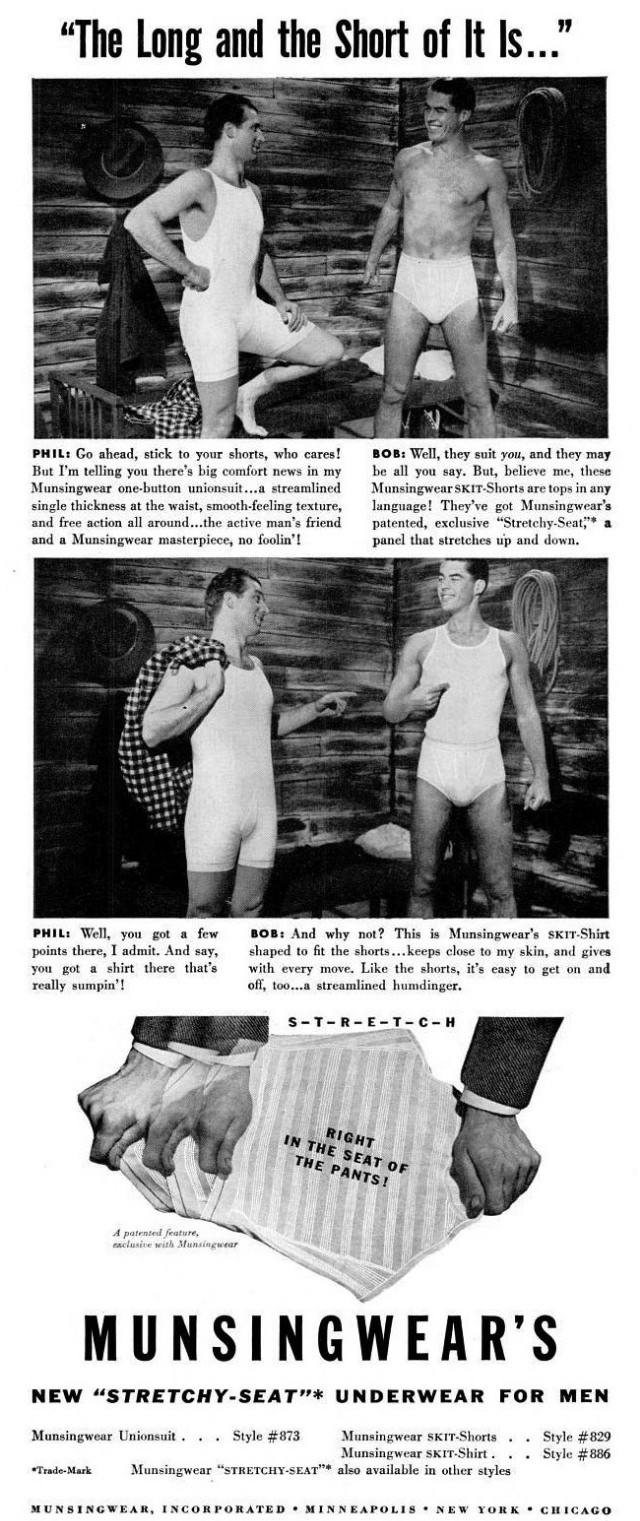
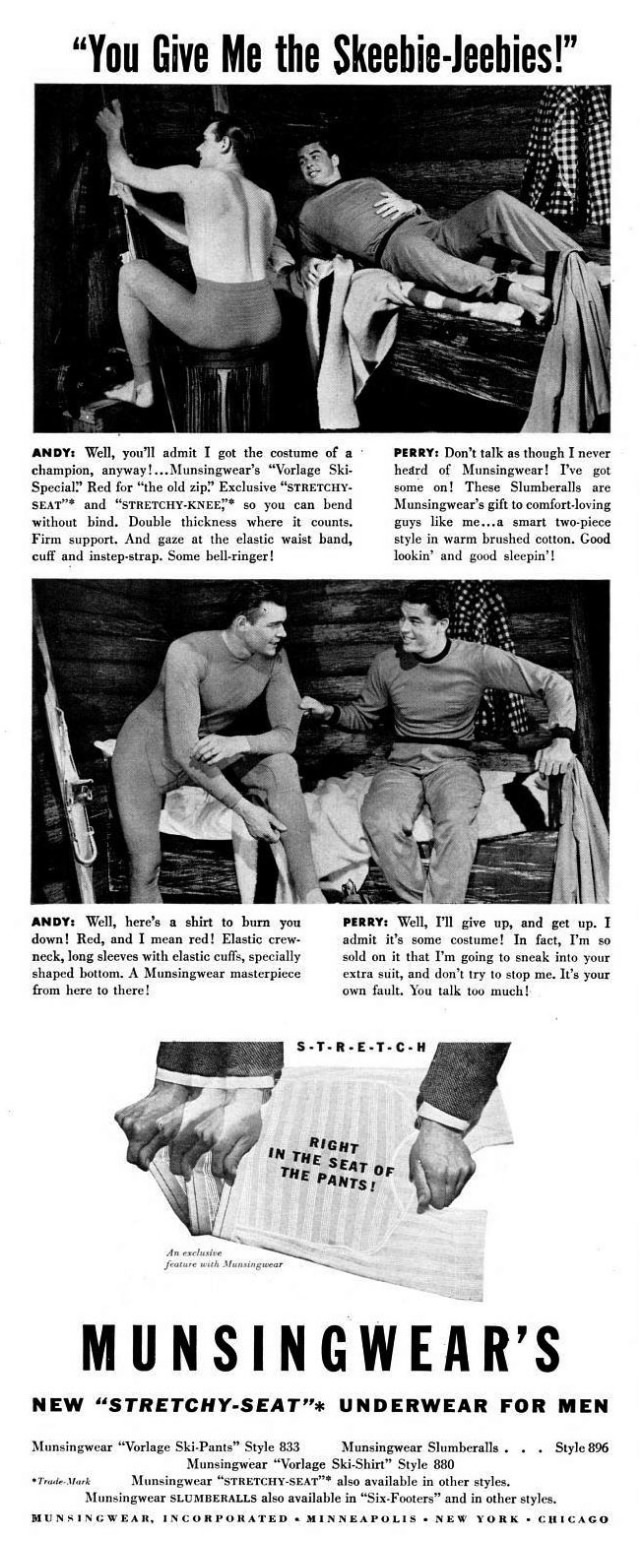
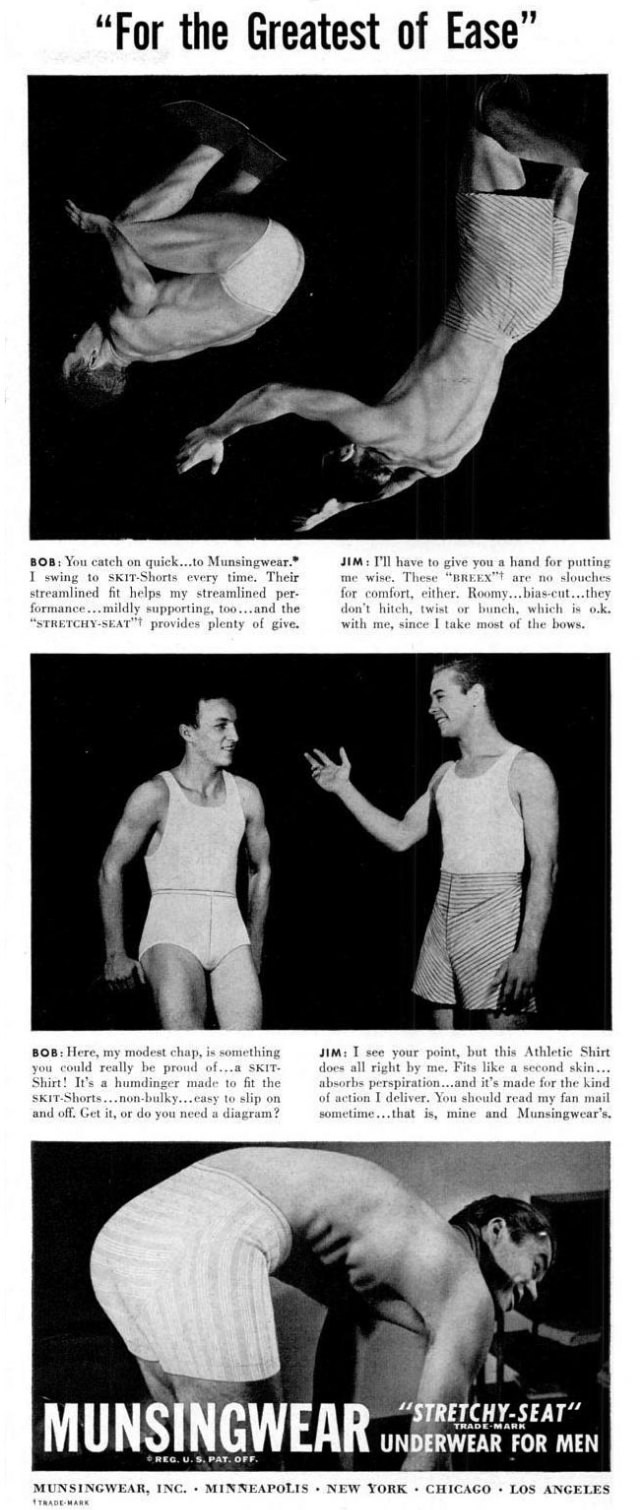
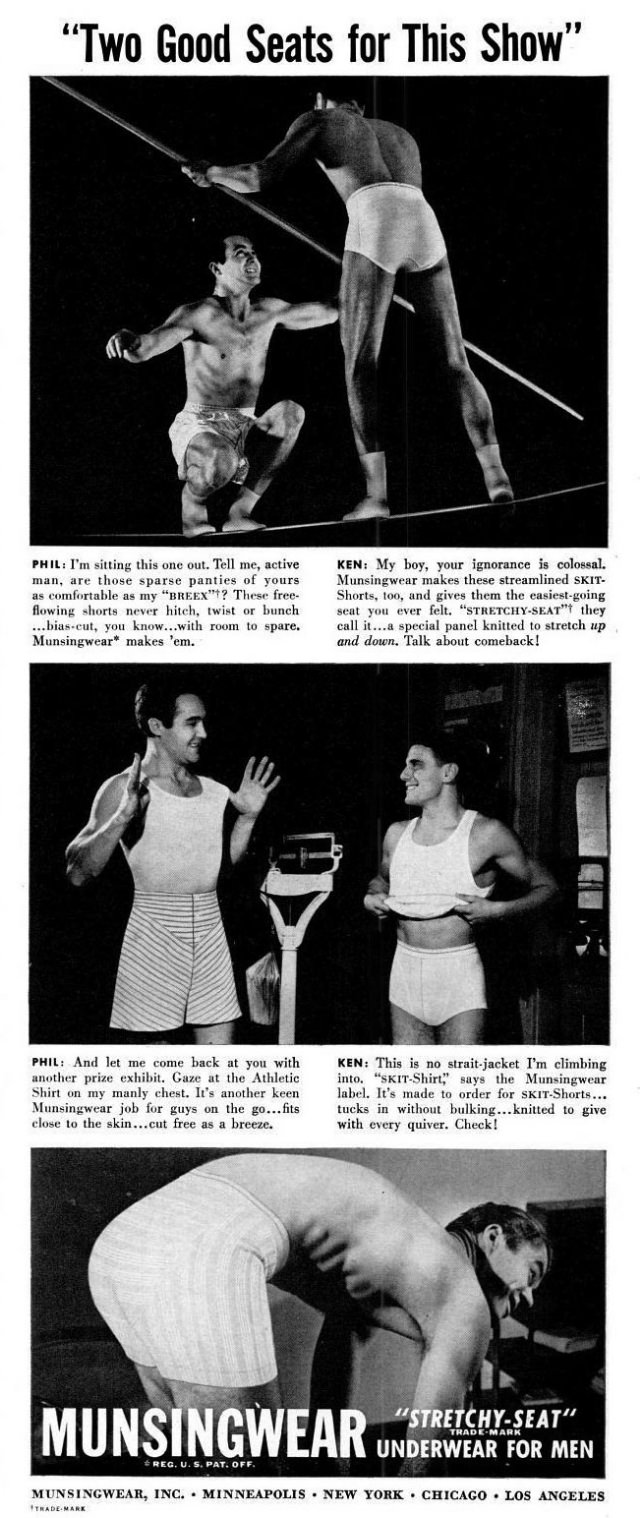
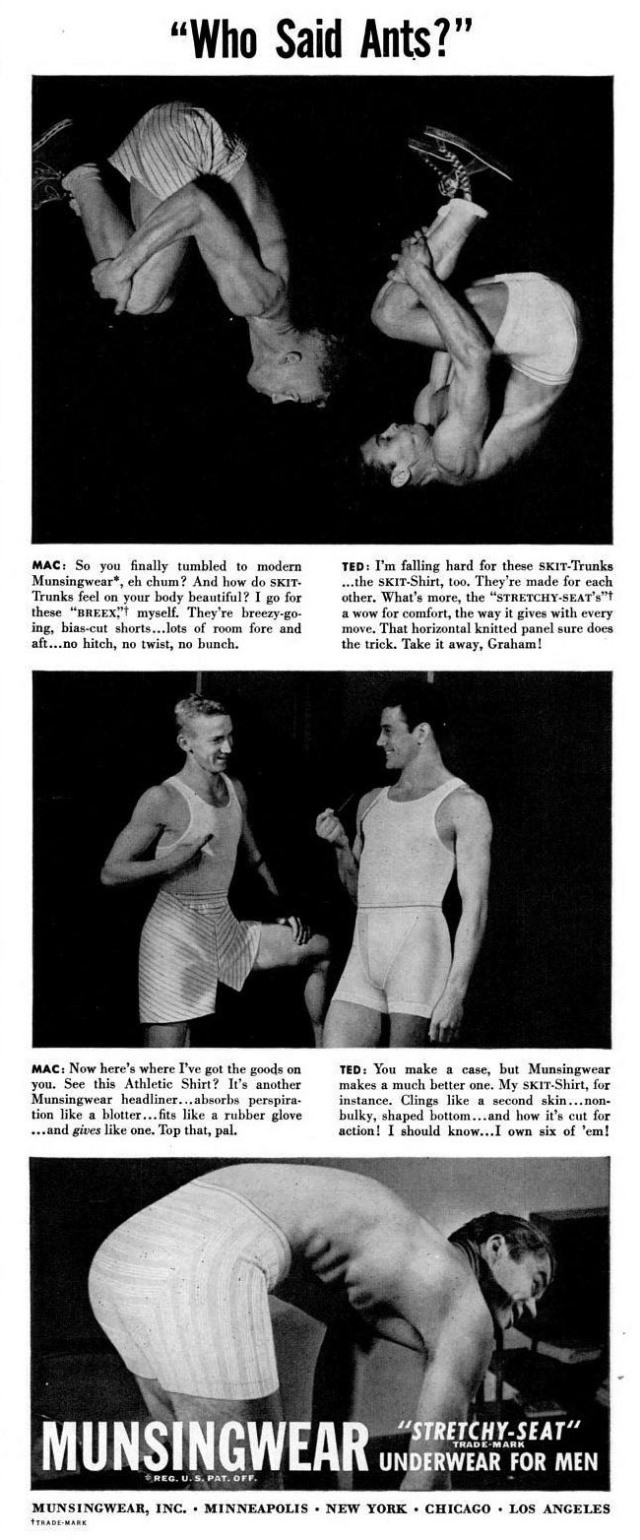
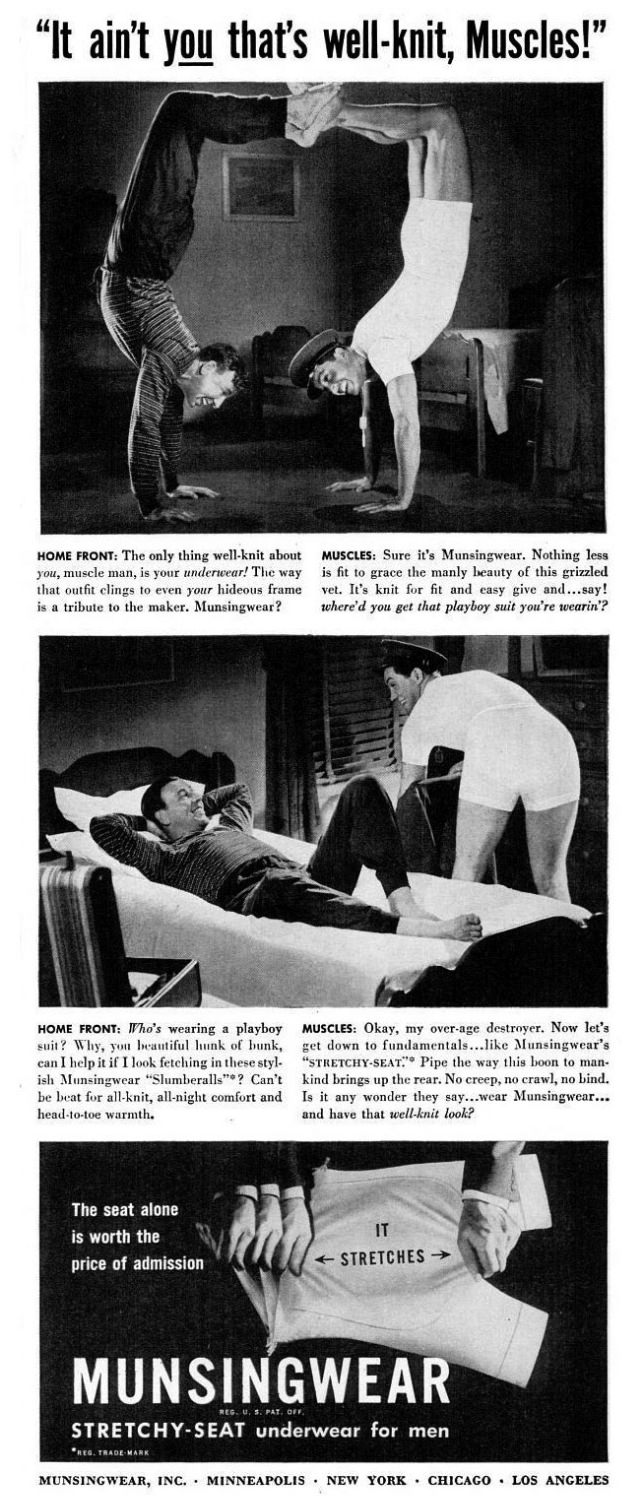
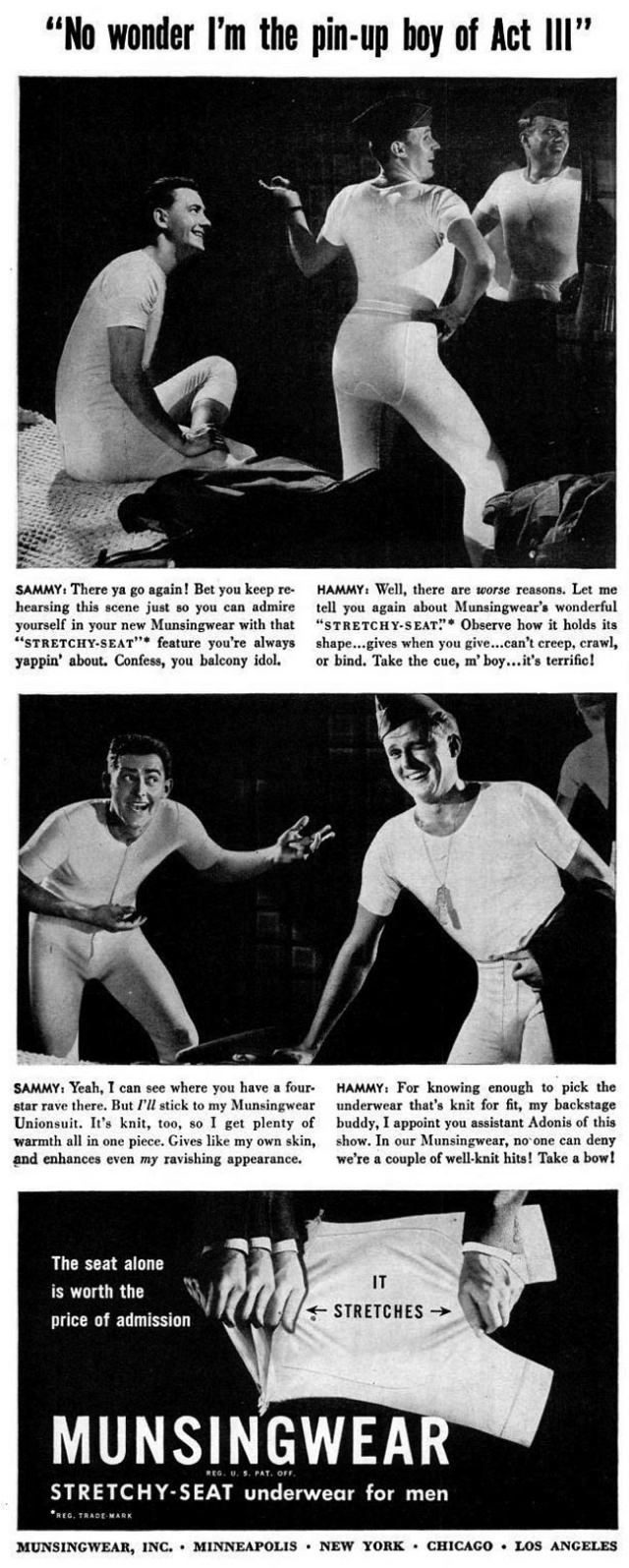
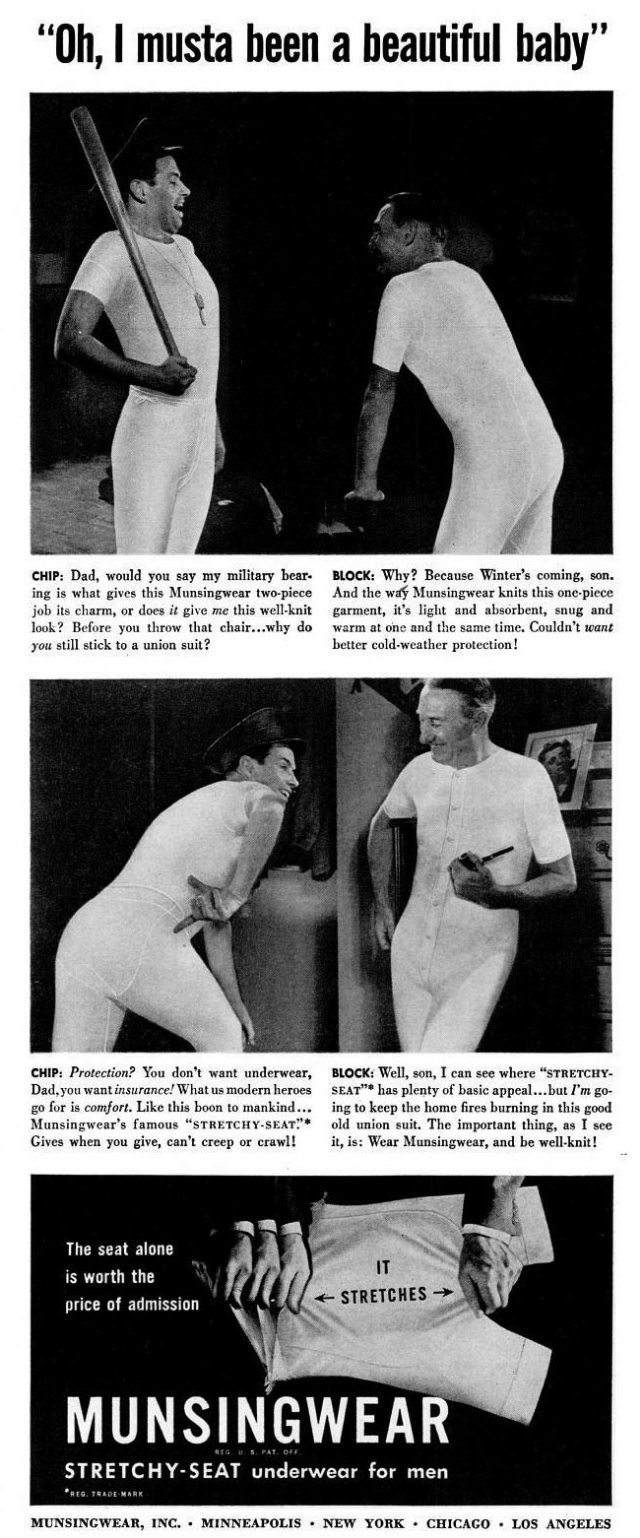
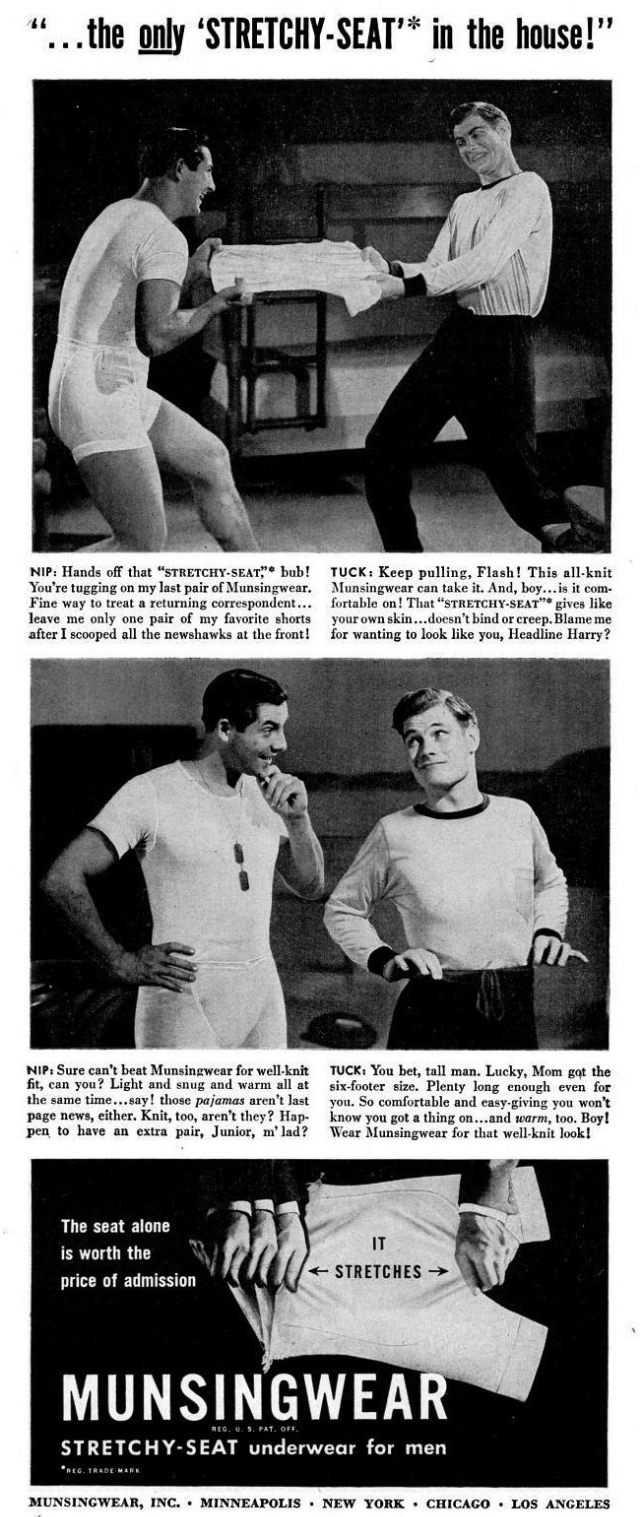
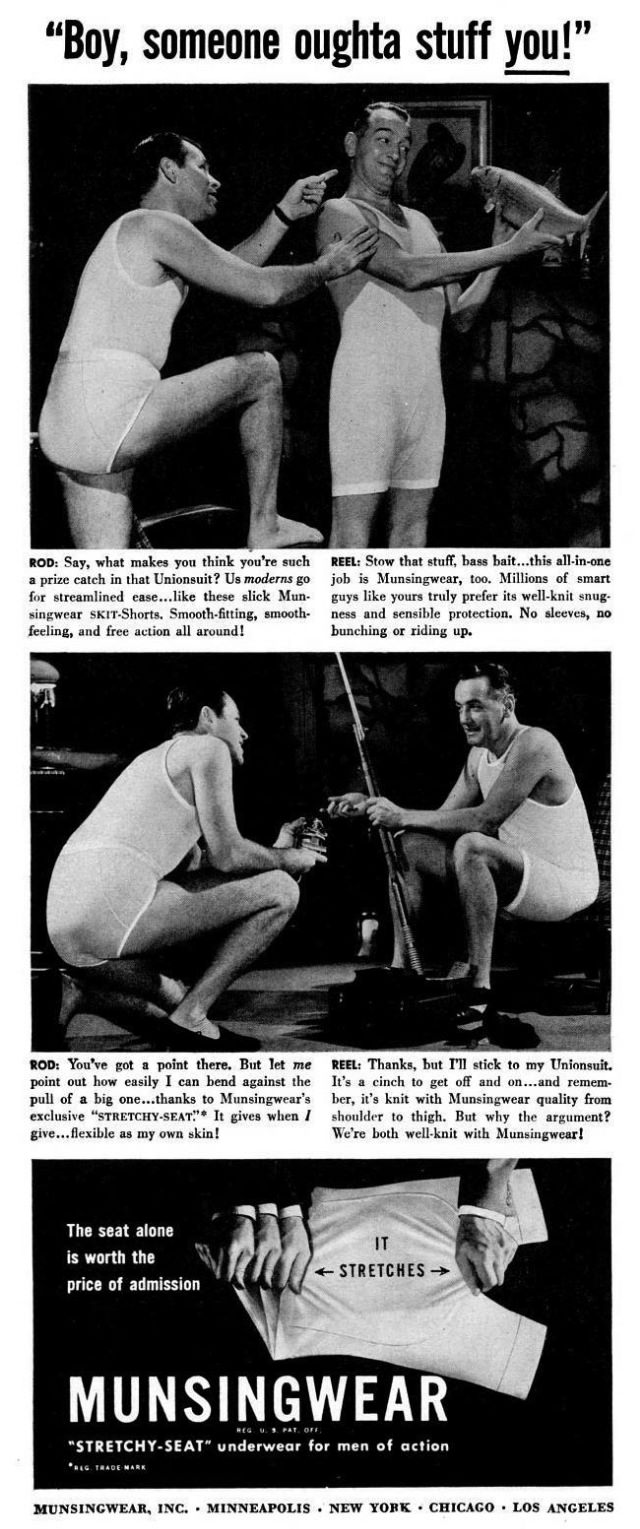
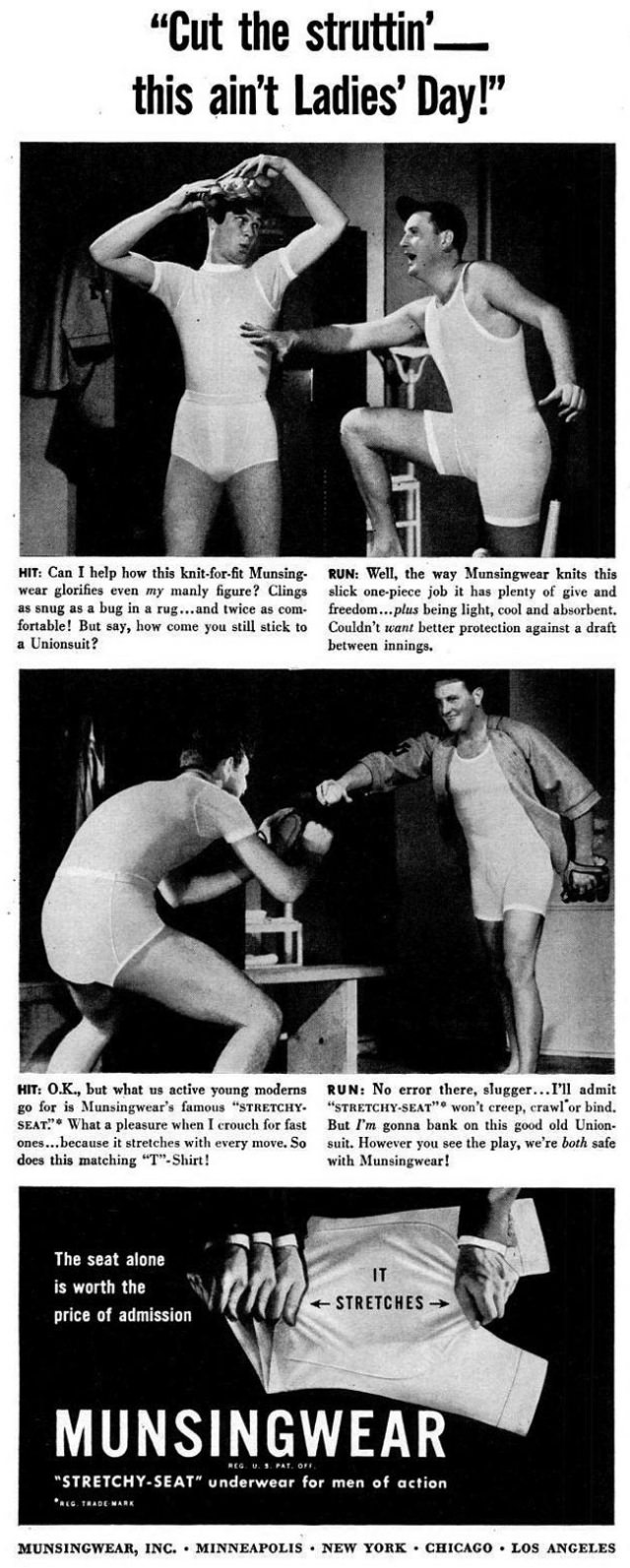
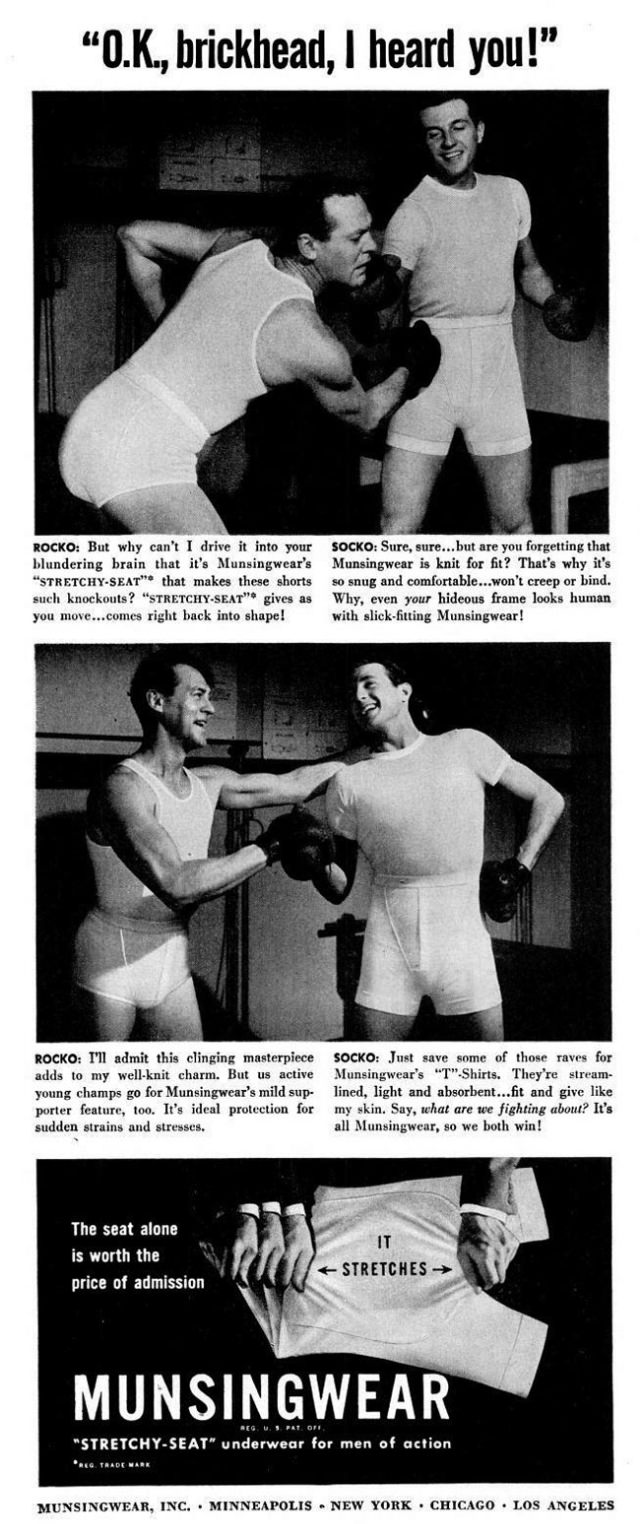
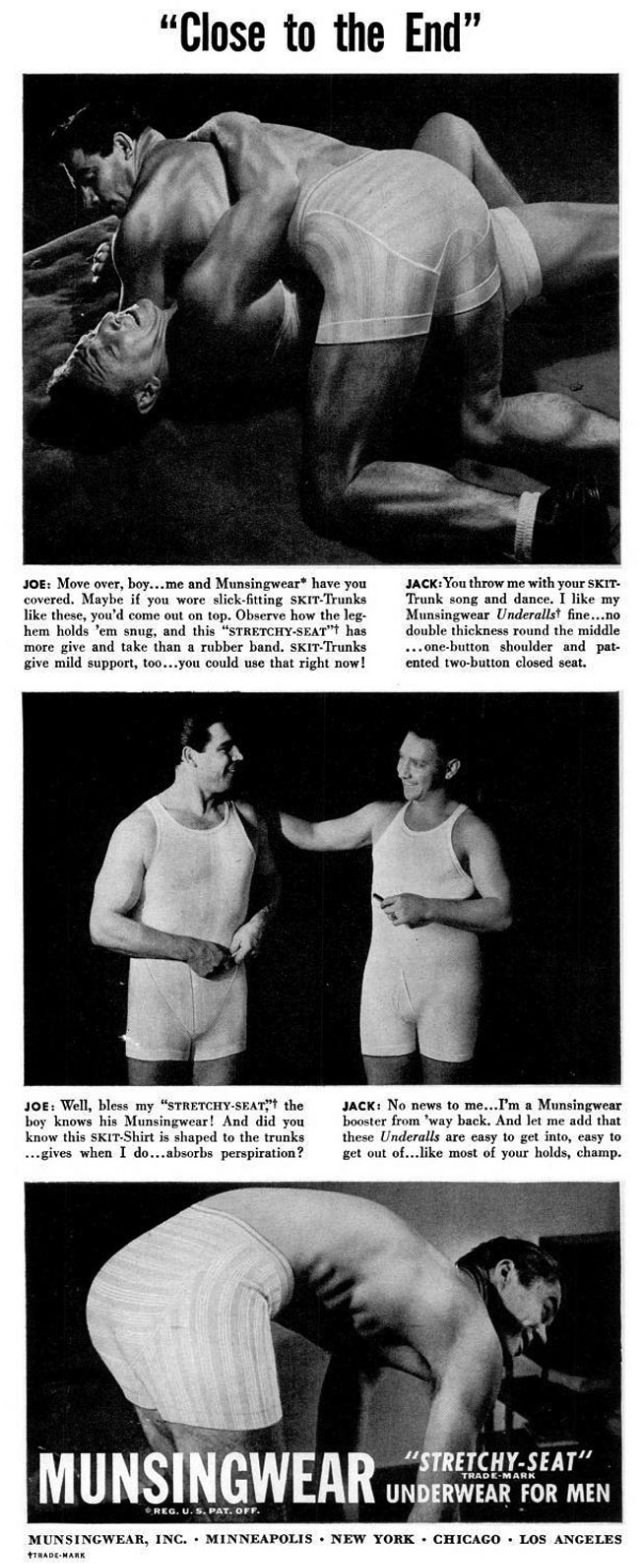
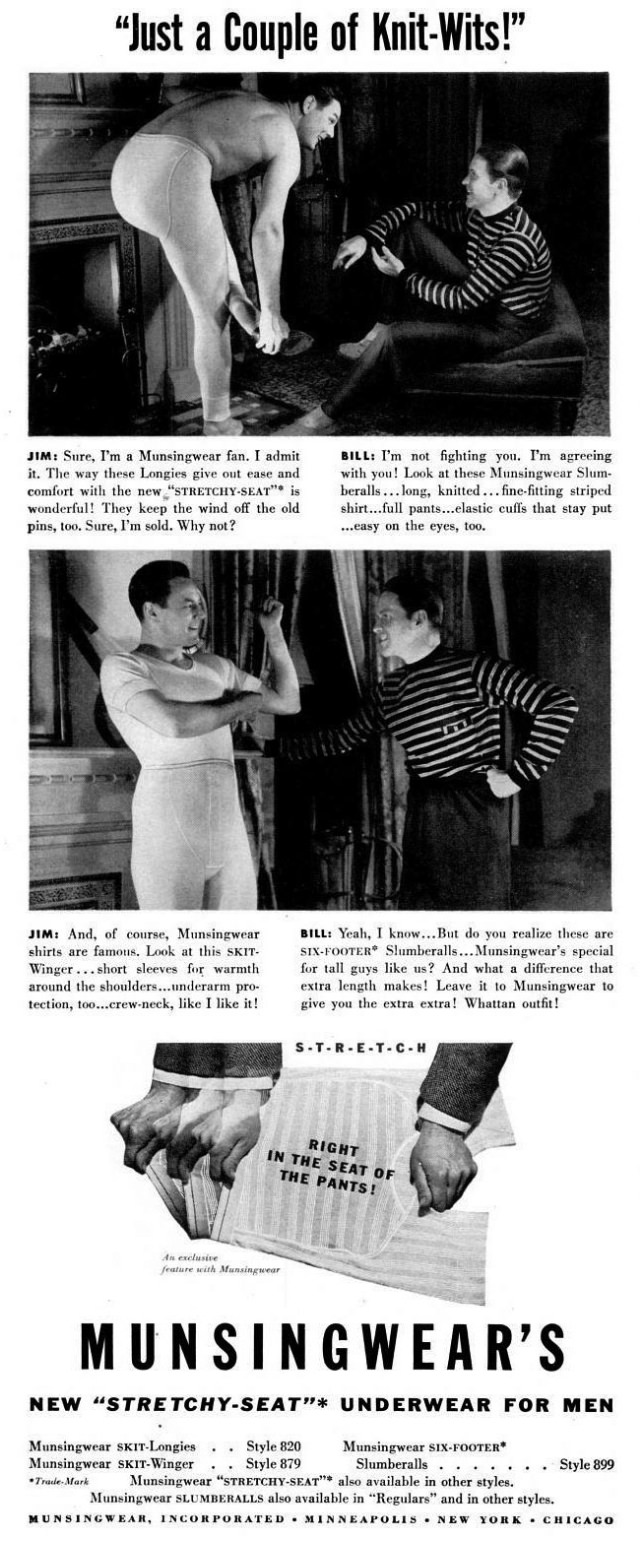
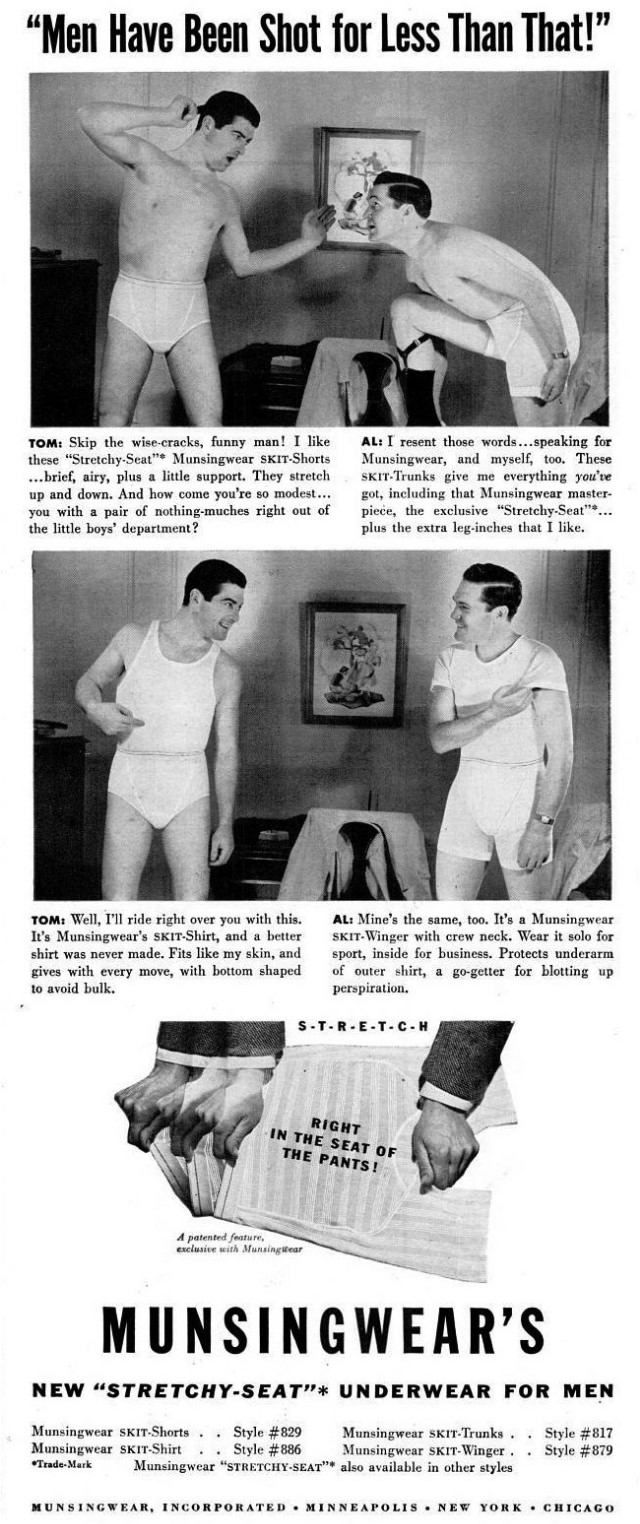
The ads were built around photo stories — a format that was still fairly new at the time. Instead of a simple product shot, each ad told a short visual story featuring two or more men in their underwear. The scenes were staged to look like ordinary moments: locker rooms, bedrooms, or casual get-togethers.
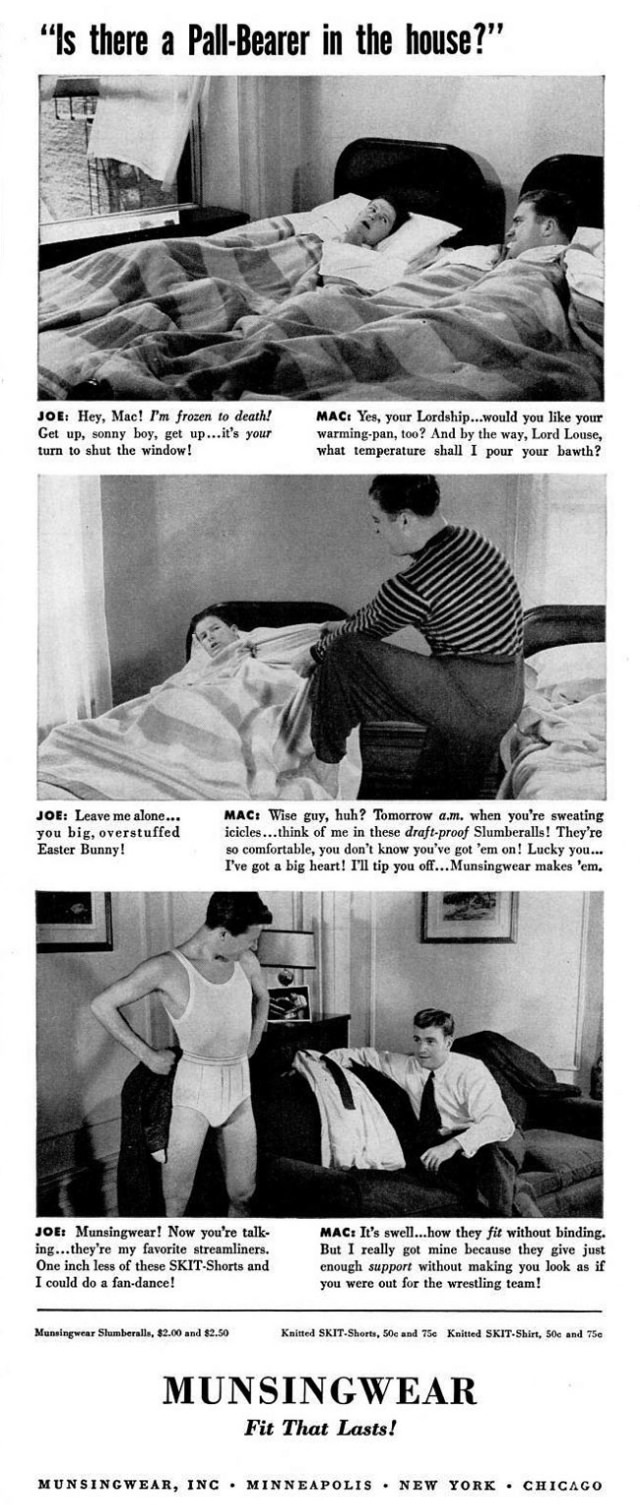
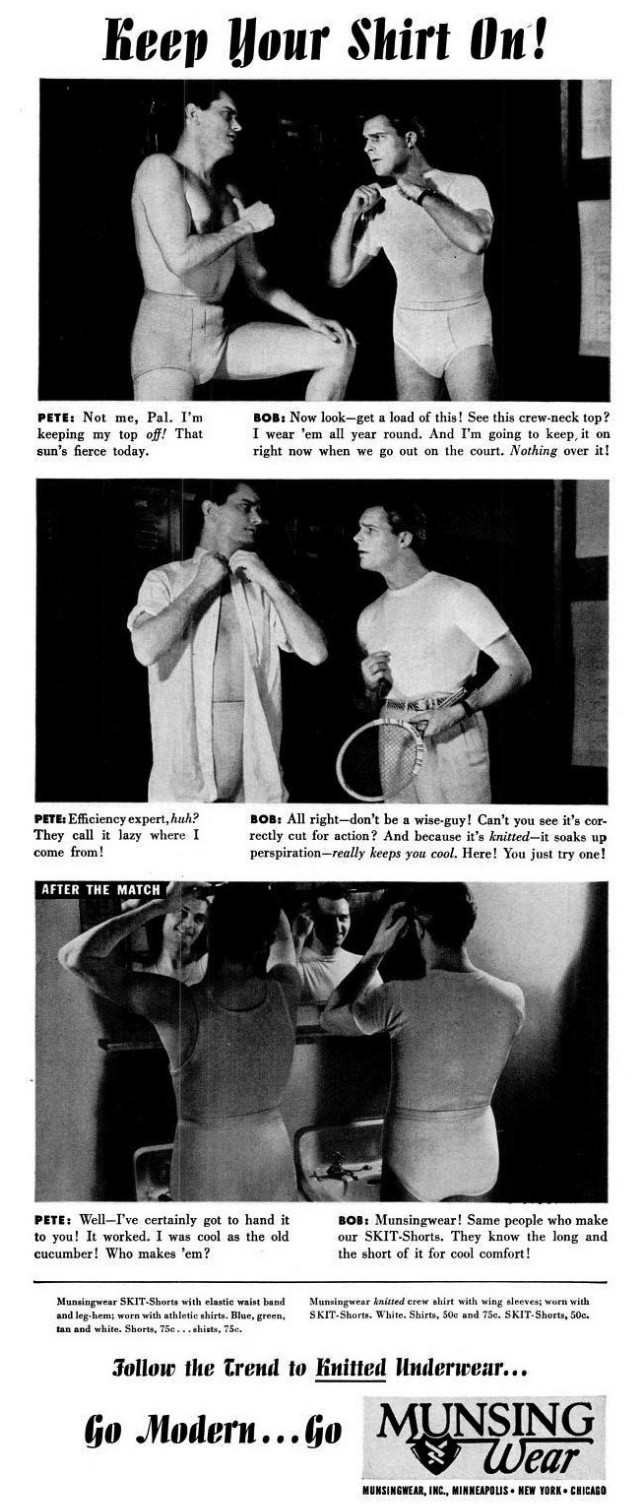
What made them amusing was the exaggerated drama. One man would point at another’s undershirt with mock horror. Another would bend over, stretch, or flex while his companion reacted with theatrical surprise. The message was always the same: Munsingwear fit better, felt better, and lasted longer than whatever the other guy was wearing.
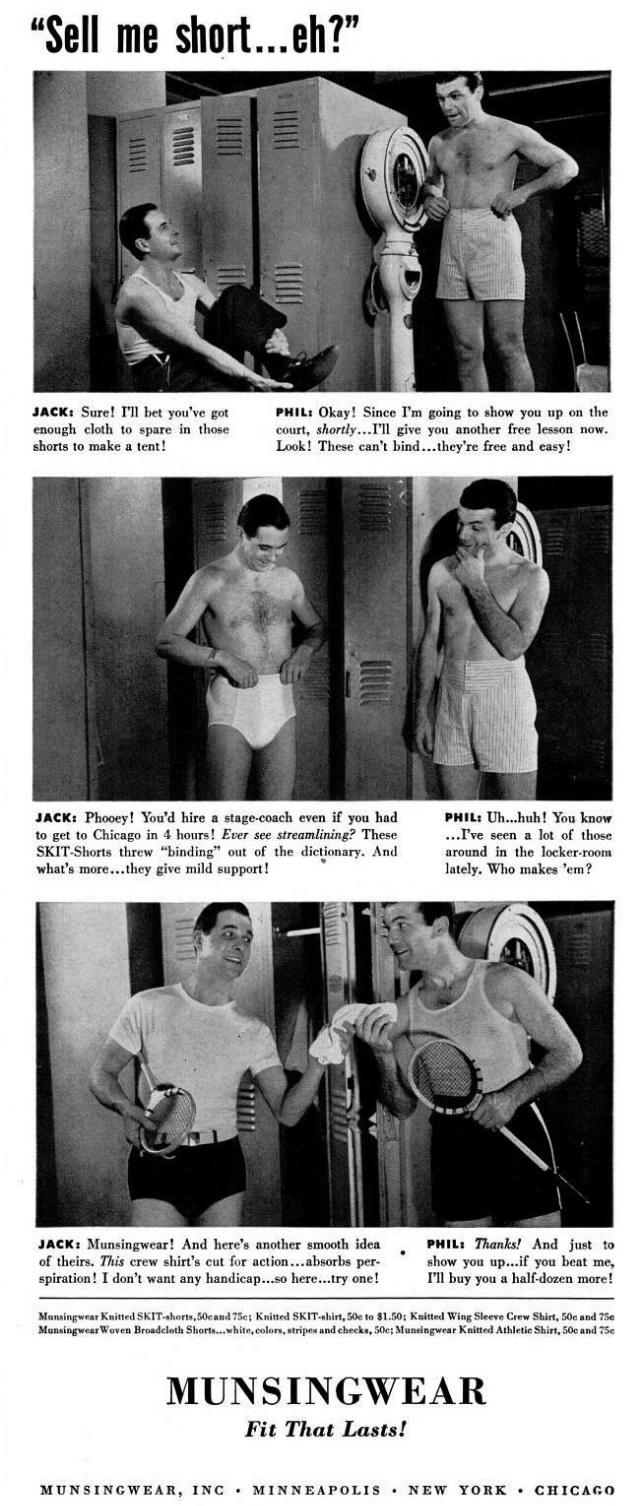
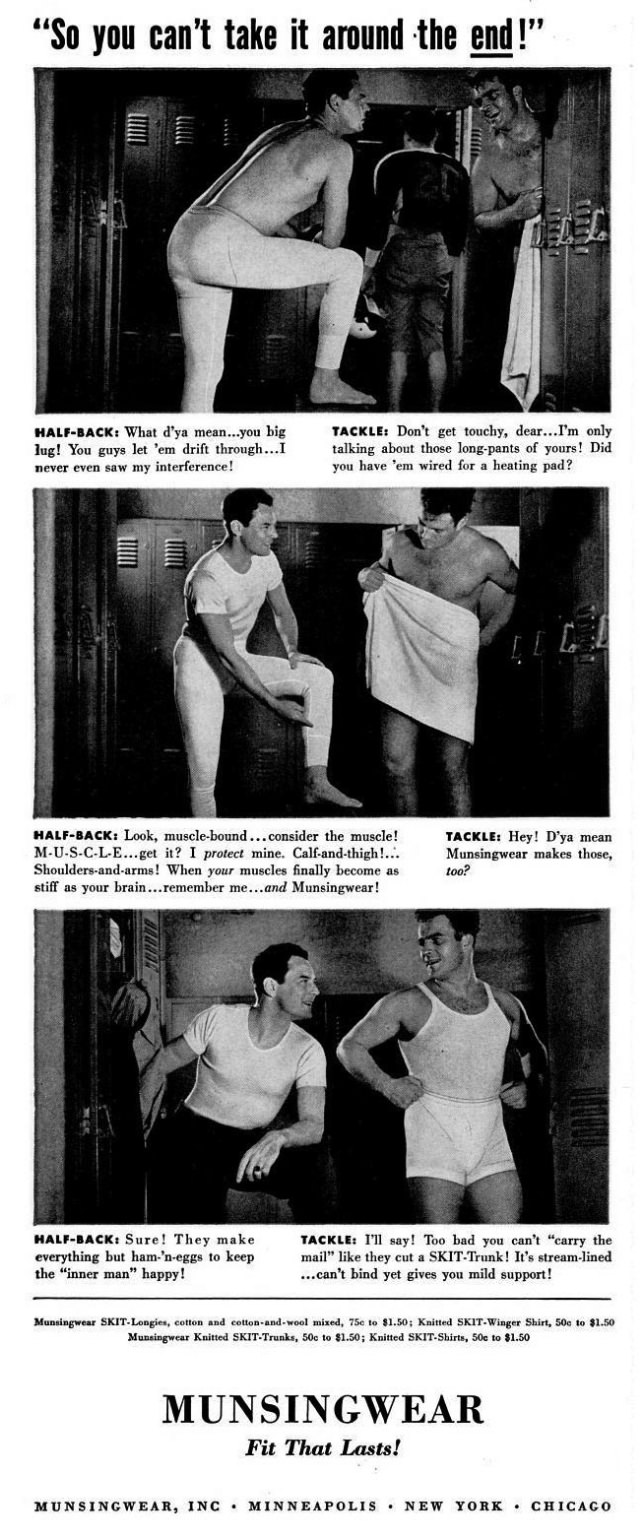
The underwear itself featured a stretchy seat, which the ads highlighted repeatedly. Models would demonstrate the fit by moving around in ways that showed off the garment’s flexibility. Pointing at the seat of a friend’s underwear was, somehow, a recurring motif.
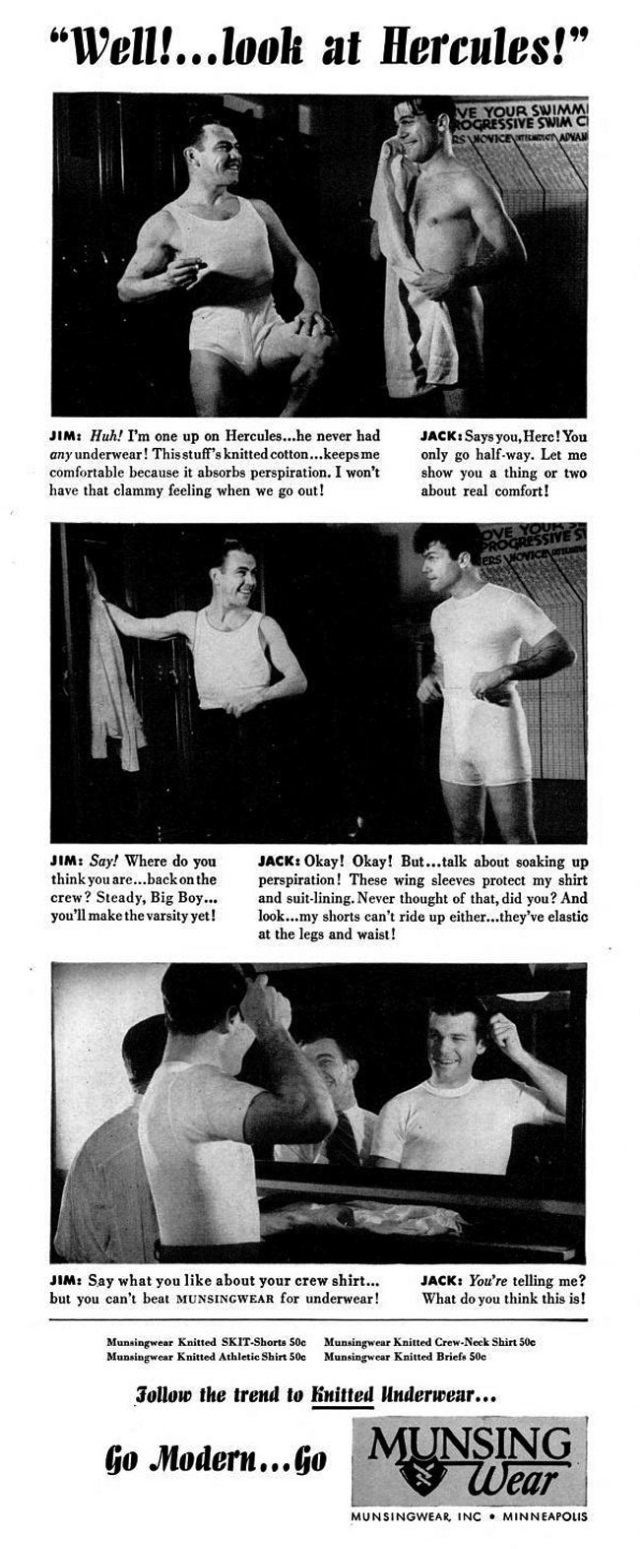
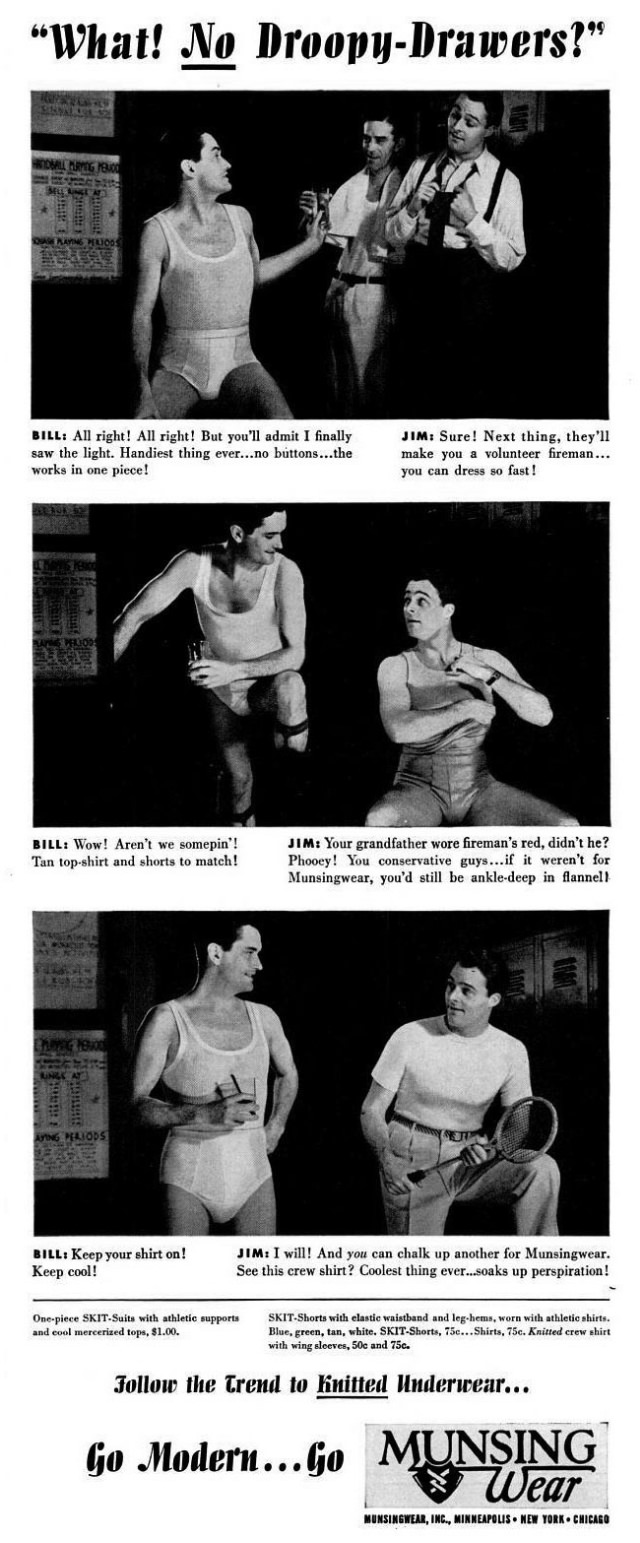
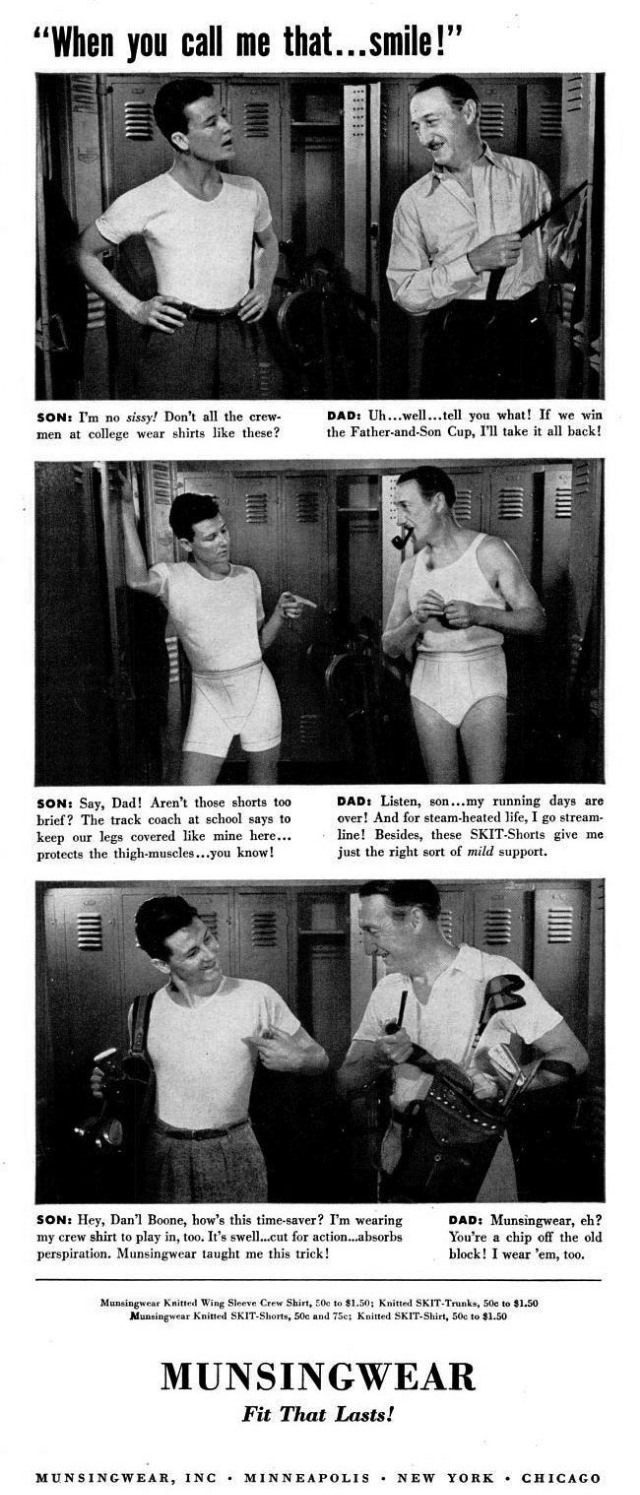
The tone throughout was light and buddy-driven. These weren’t aspirational images of lone, serious men. They were scenes of friends ribbing each other — the kind of casual male camaraderie that was common in ads of the era.
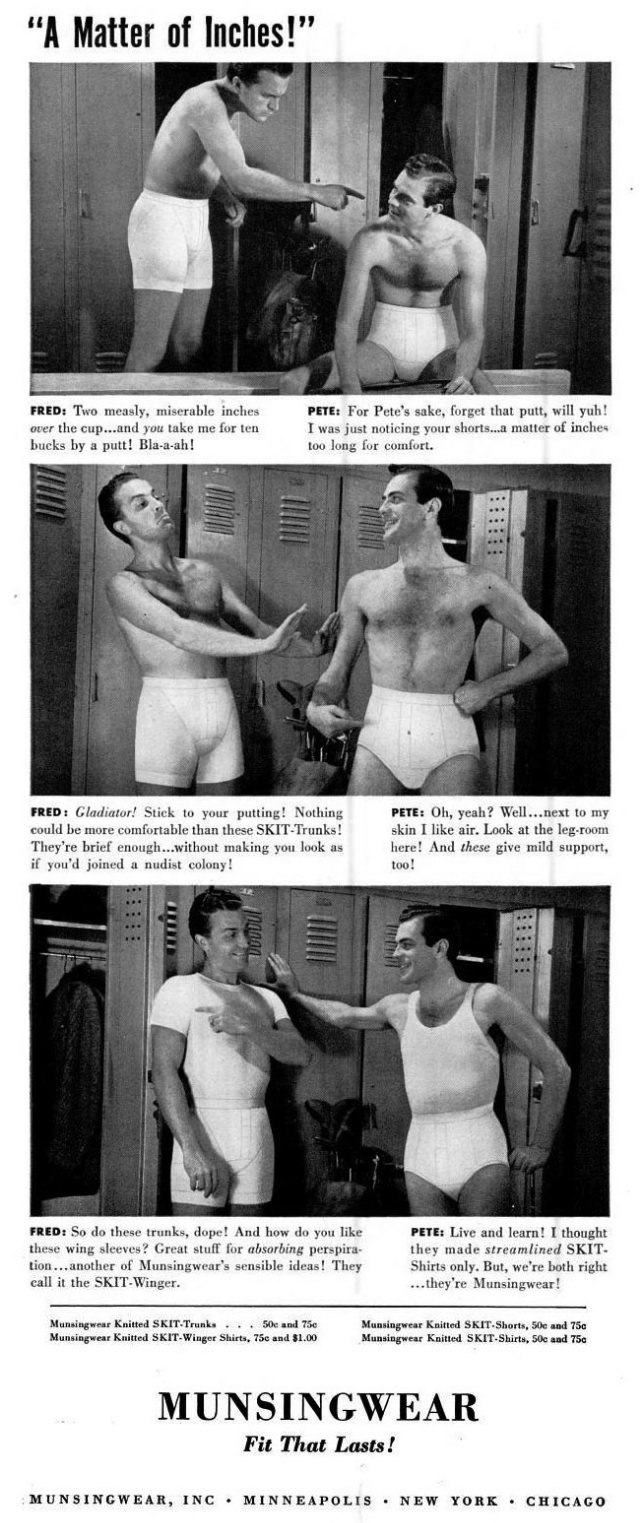
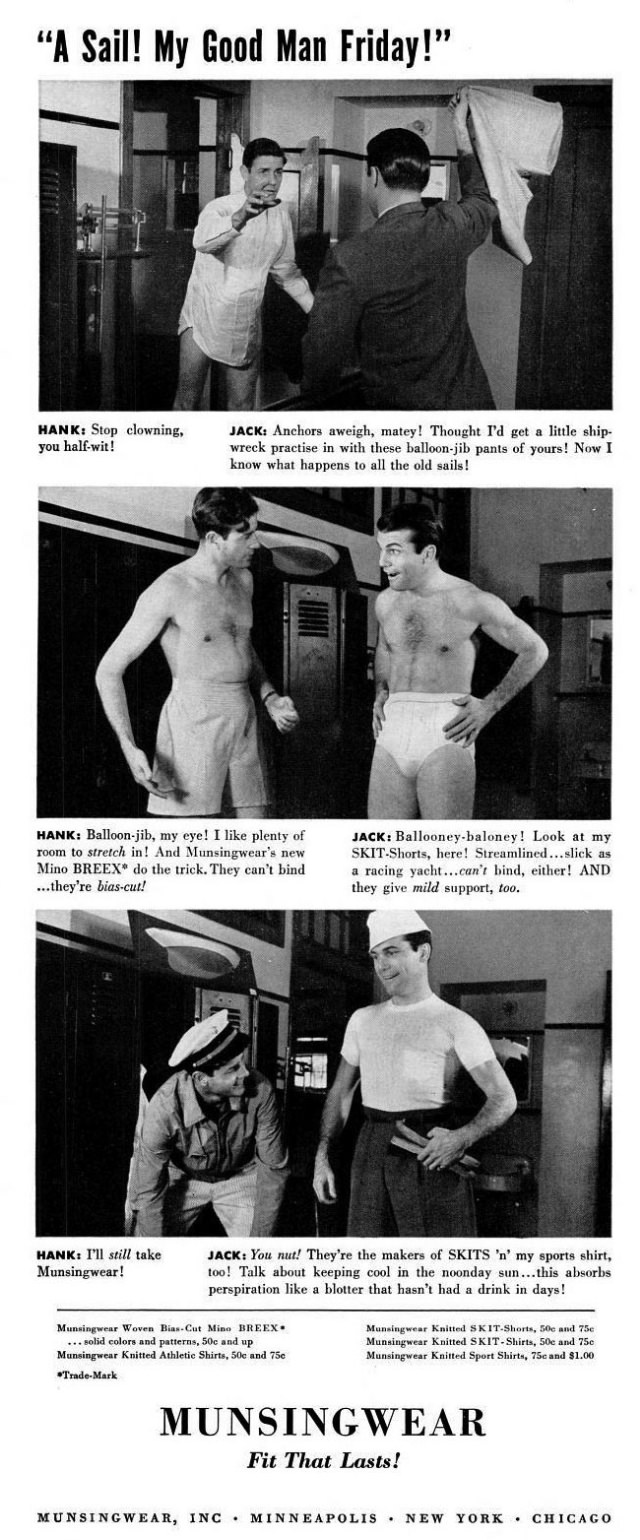
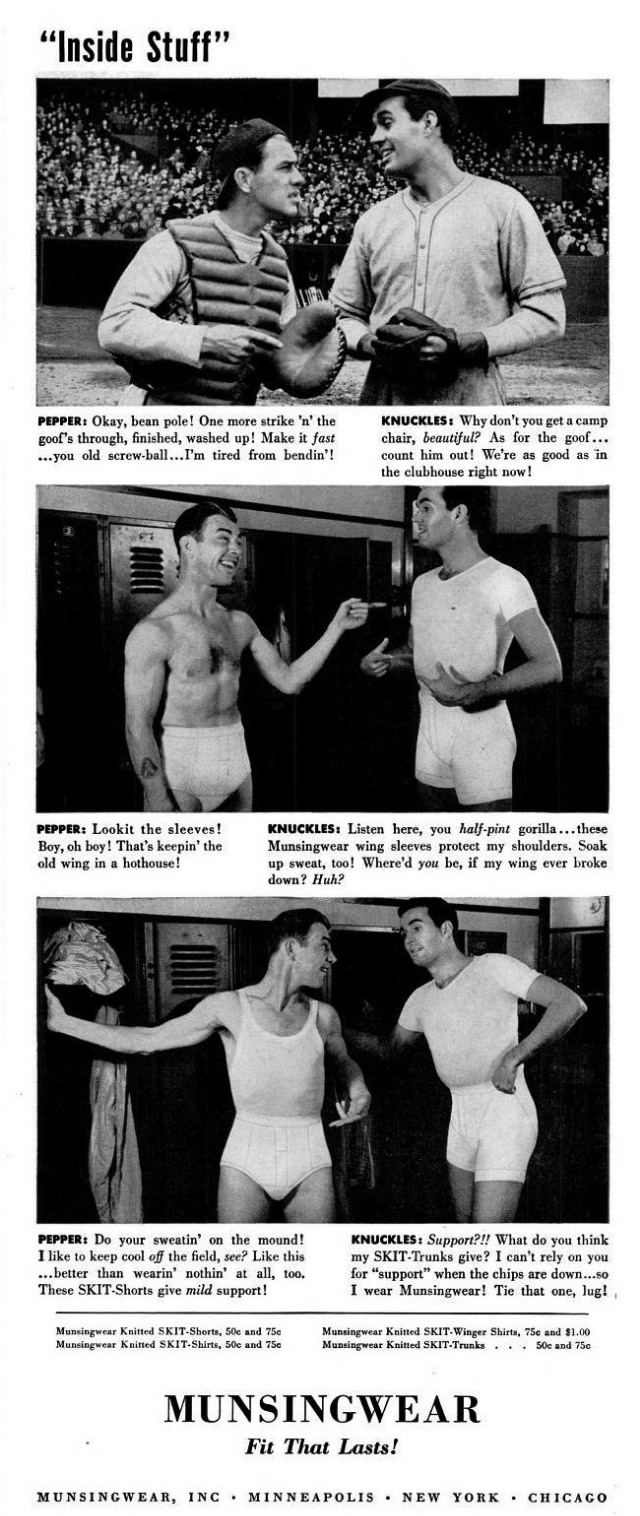
Munsingwear leaned hard into humor as a selling tool. At a time when most clothing ads were stiff and formal, these stood out on the magazine page. A man laughing at his friend’s saggy undershirt was far more memorable than a block of product copy.
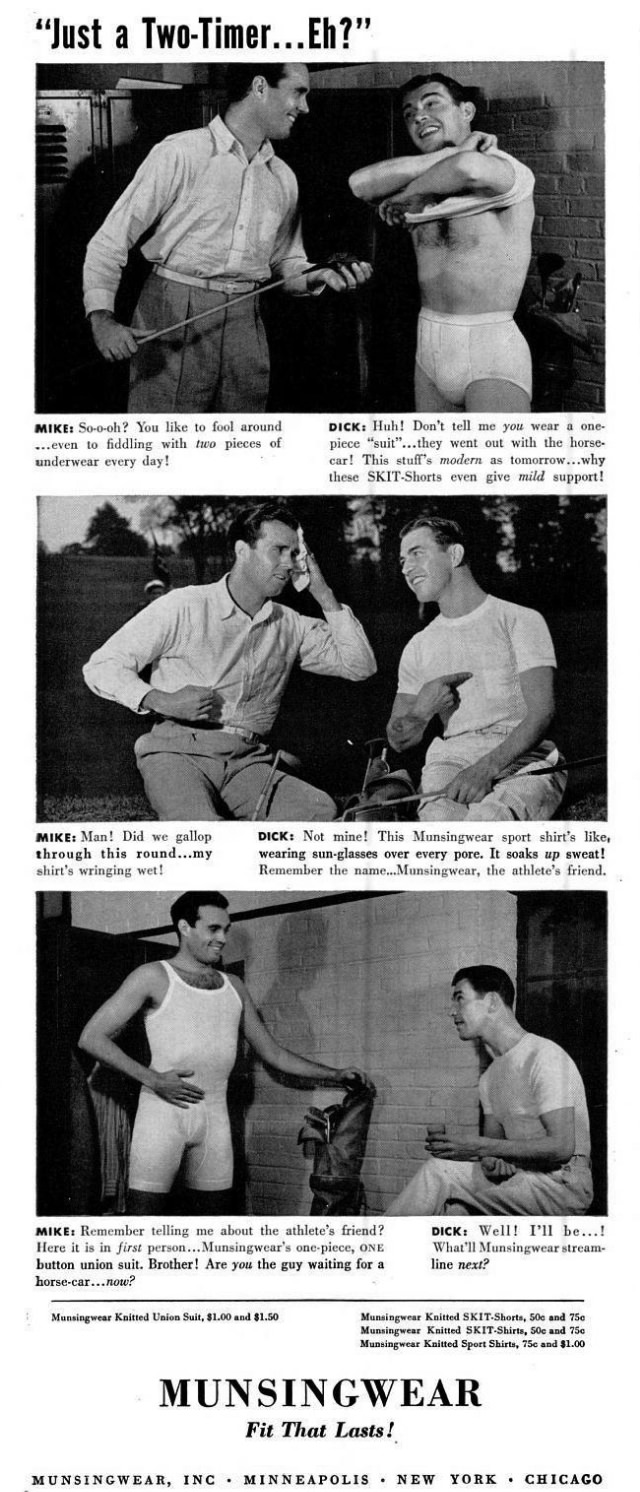
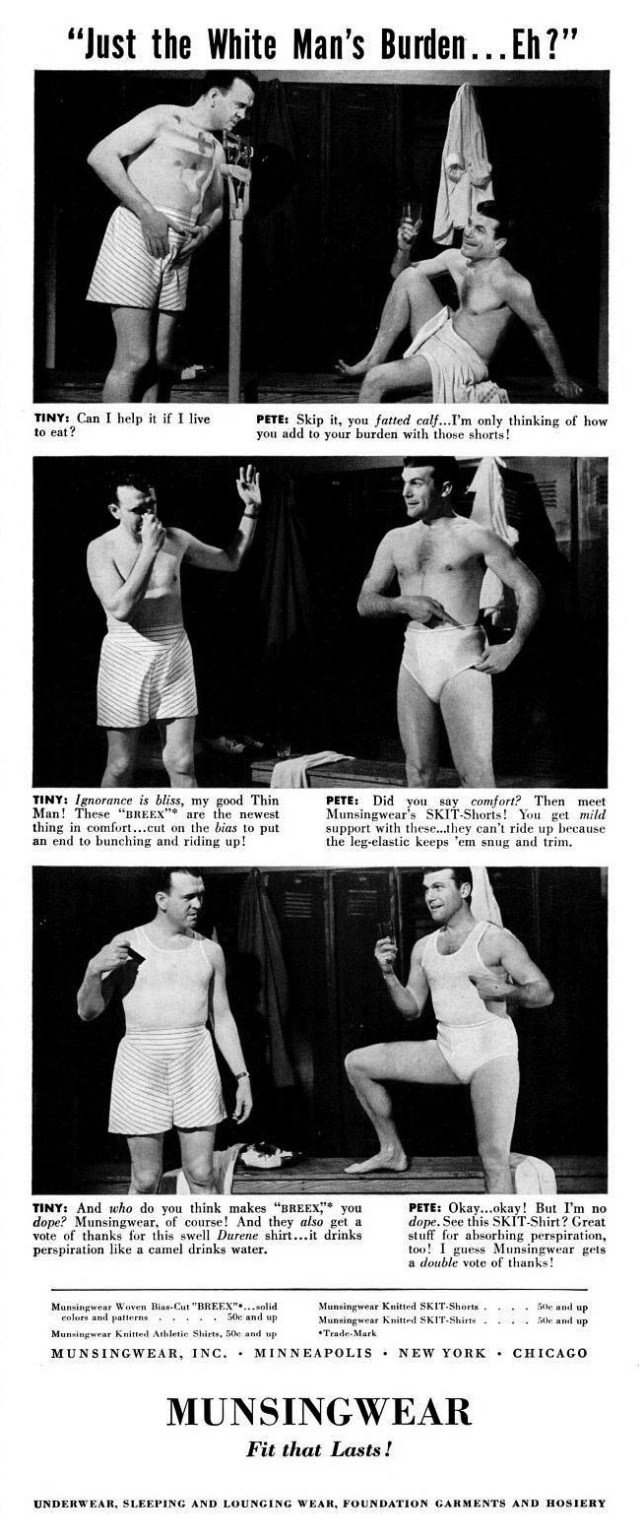
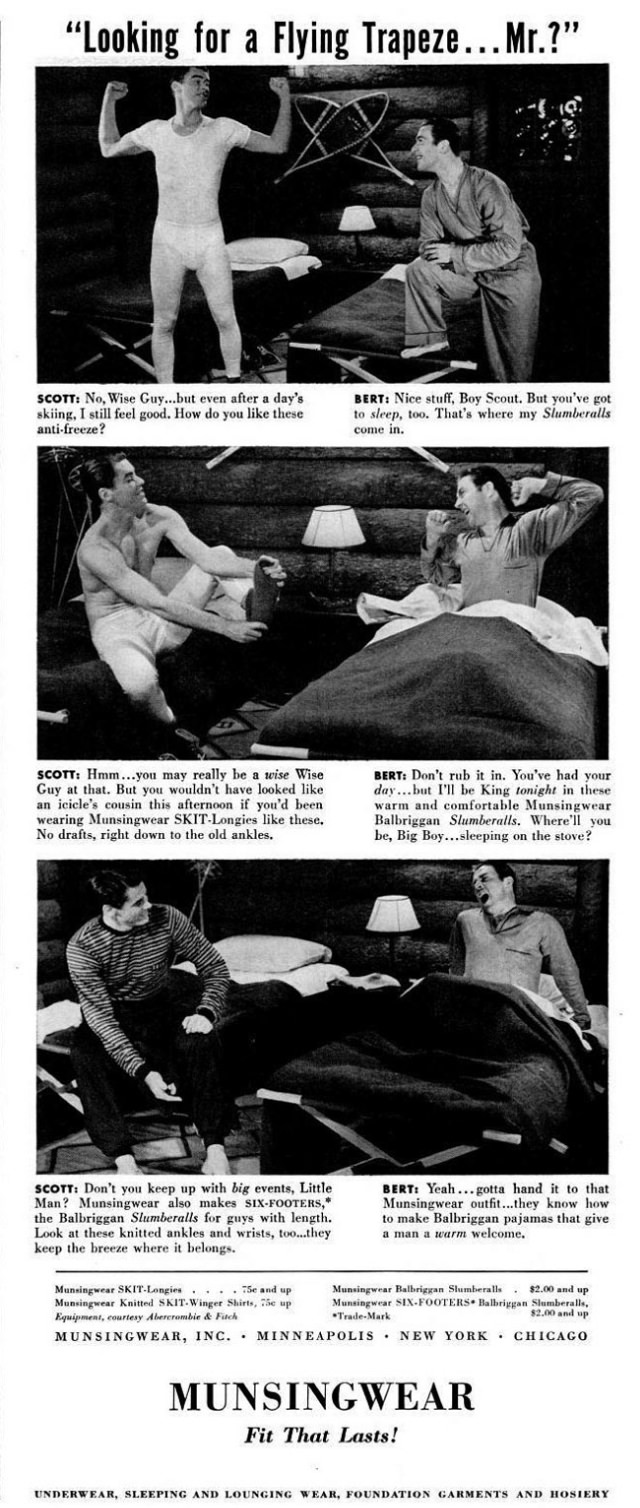
The photography style was clean and well-lit, typical of print advertising of the period. The models were ordinary-looking men rather than idealized figures, which made the scenes feel more relatable to the average reader flipping through a magazine in 1942.
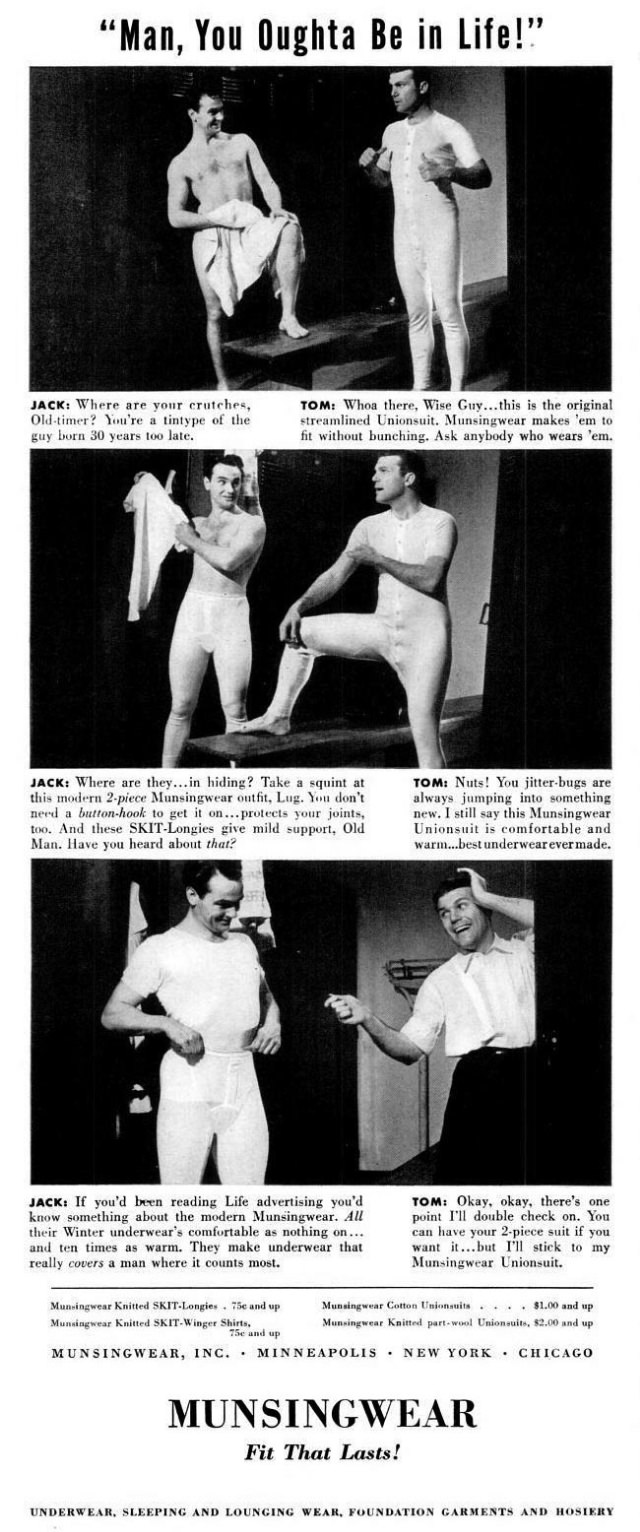
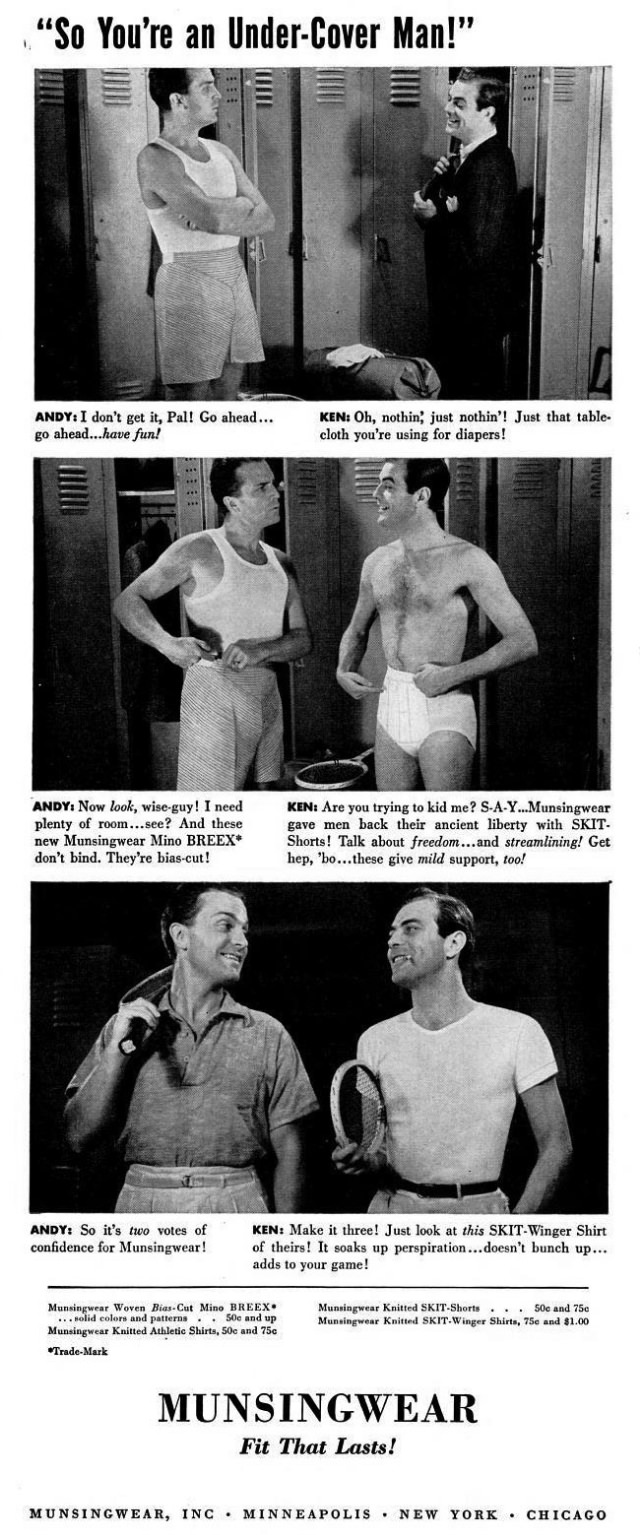
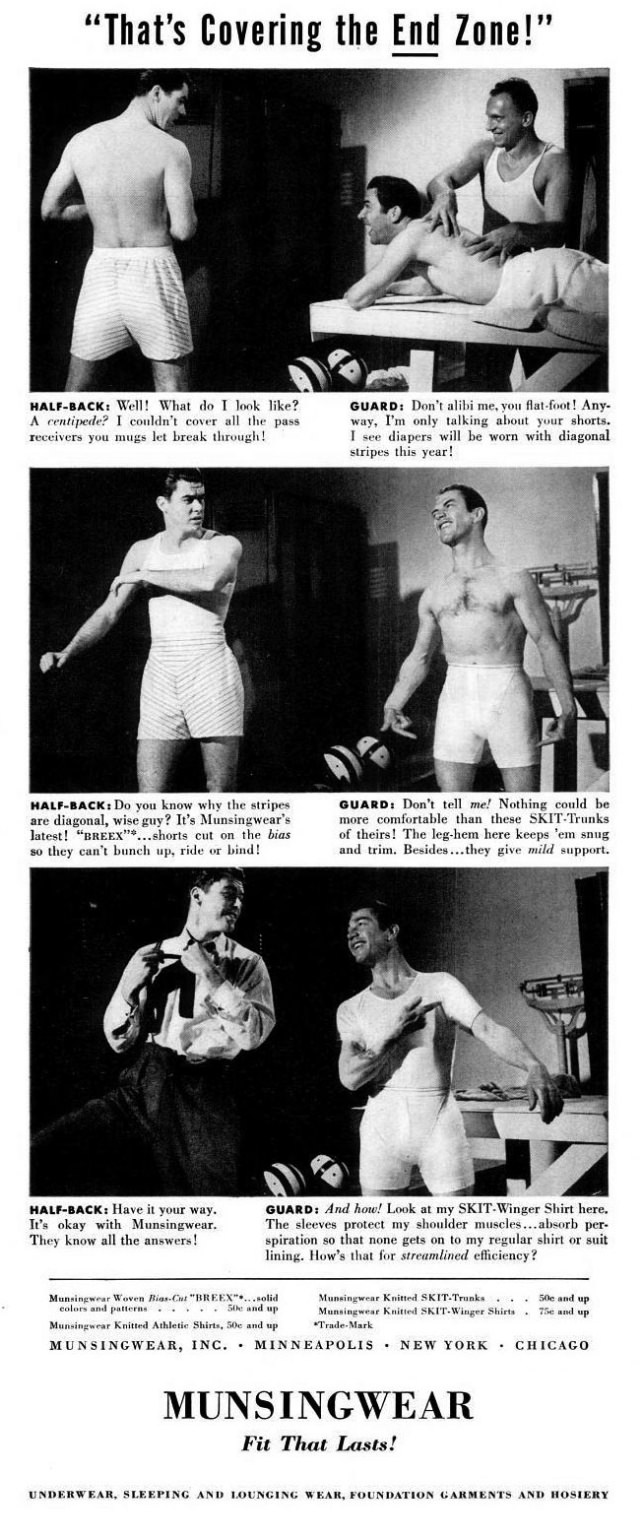
Each ad included short, punchy copy lines that reinforced the joke. The text rarely went into deep product detail. Instead, it echoed whatever the image was showing — one man’s knowing grin, another’s look of embarrassment at his inferior underwear.
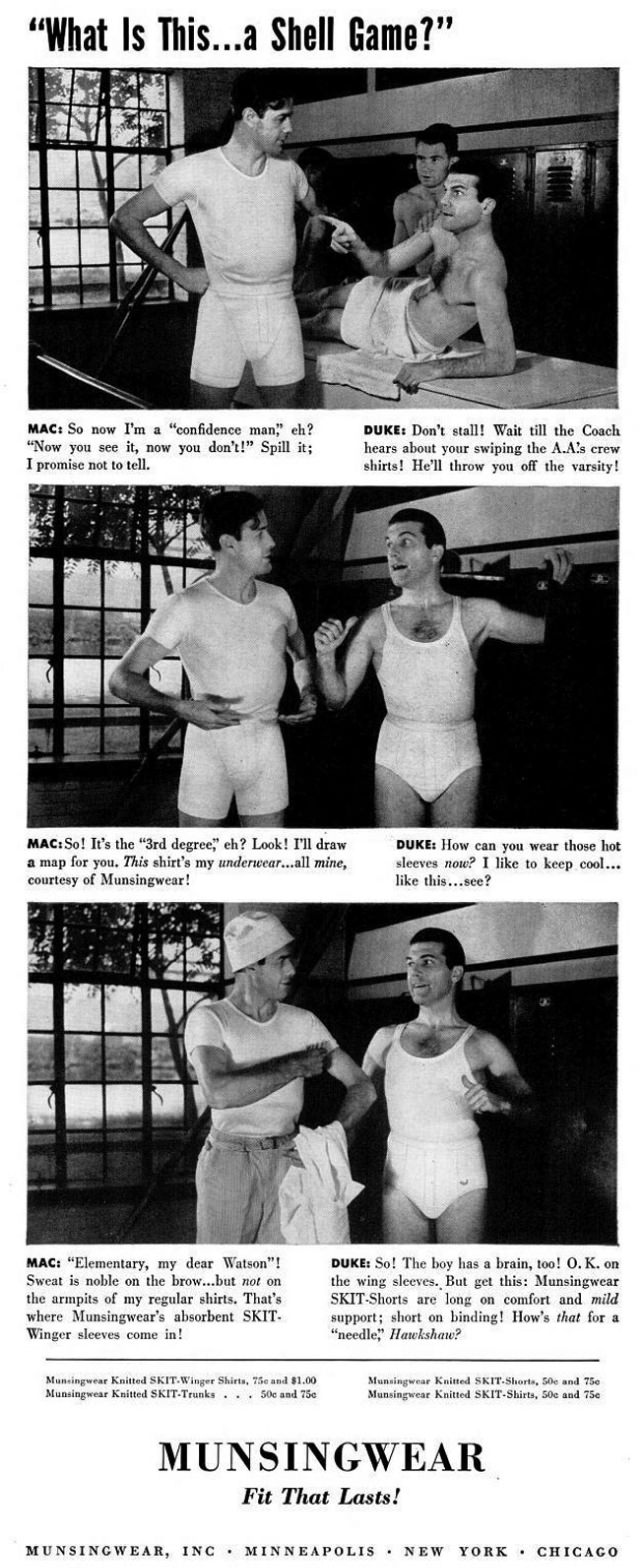
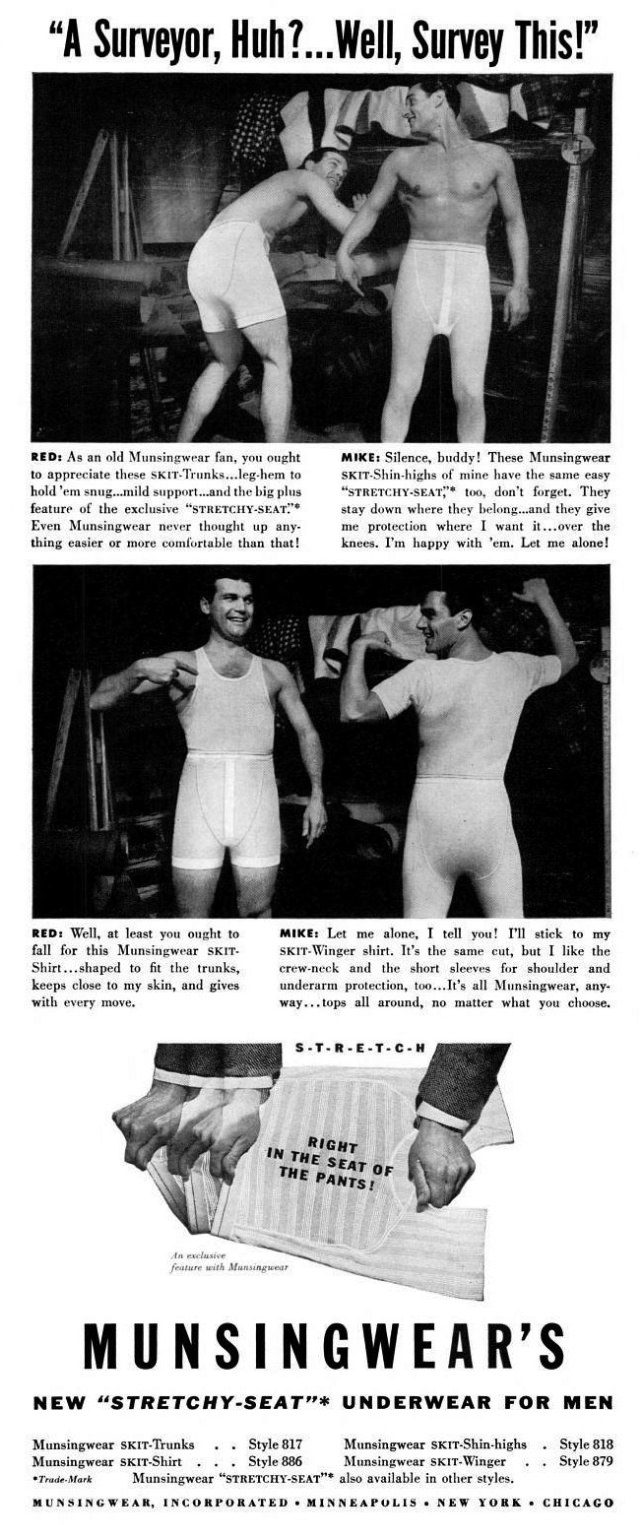
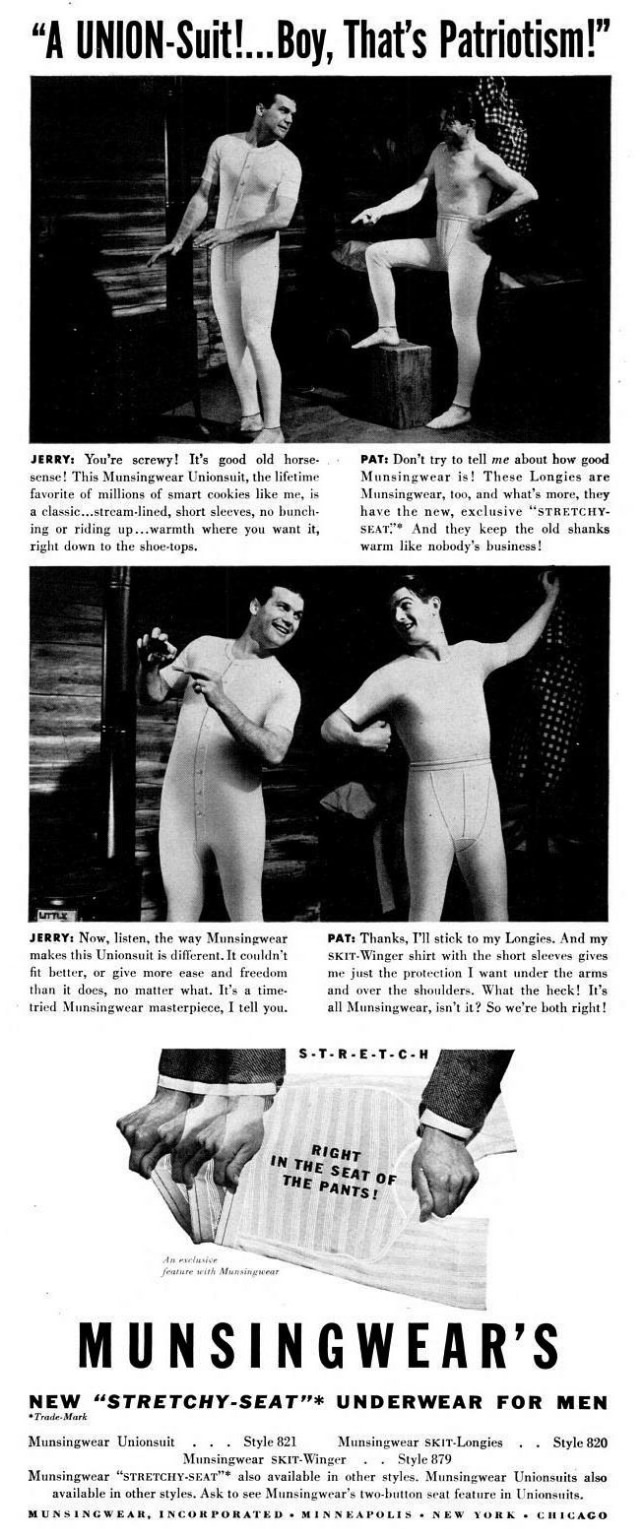
The stretchy seat was a genuine product feature — Munsingwear used an elastic waistband and seat design that was ahead of most competitors at the time. The ads made sure readers knew exactly what made the product different, even while delivering the message with a wink.
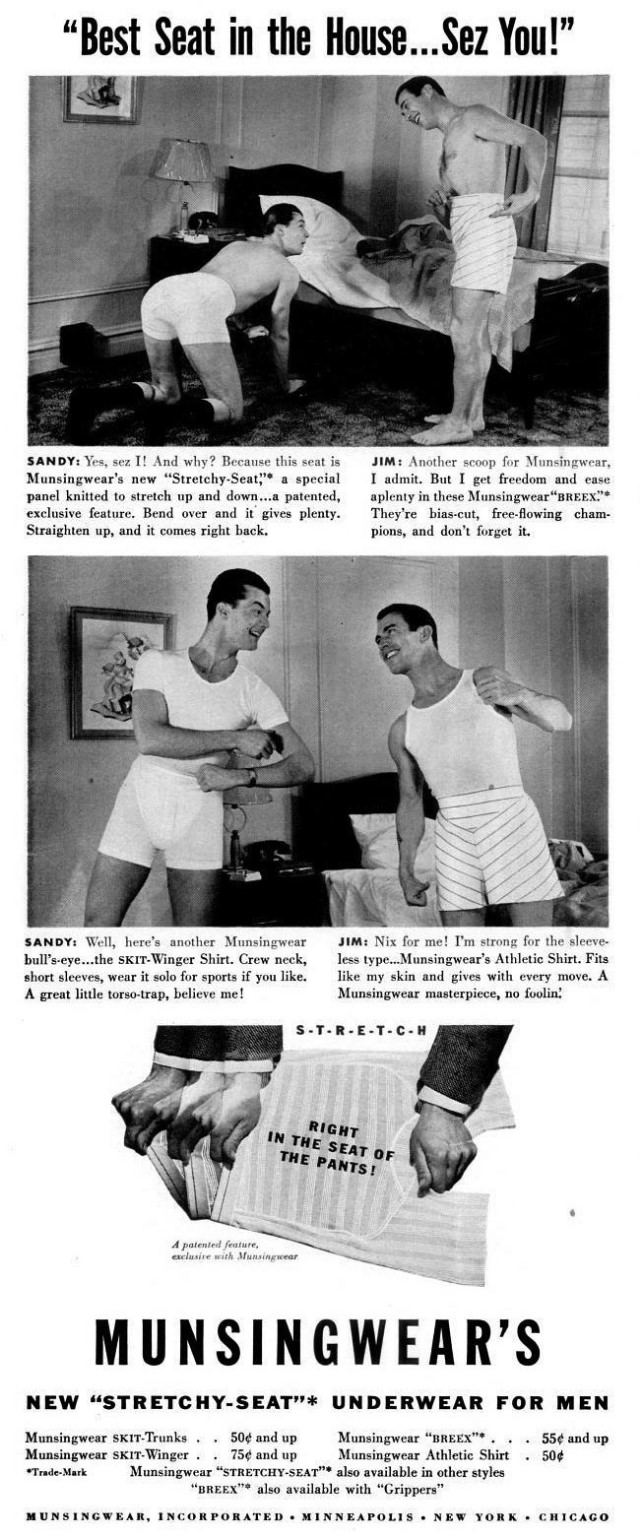
Looking at these ads today, the humor lands differently — but the craft behind them is still visible. Someone made deliberate choices about posing, expression, and story structure to sell men’s underwear, and they did it with more personality than most ads of the decade.