In postwar Germany, resources were scarce and roads were filled with people who needed cheap, reliable transportation. The country had little room for large, expensive cars. Out of that need came one of the most distinctive vehicles ever built — the Messerschmitt KR175.
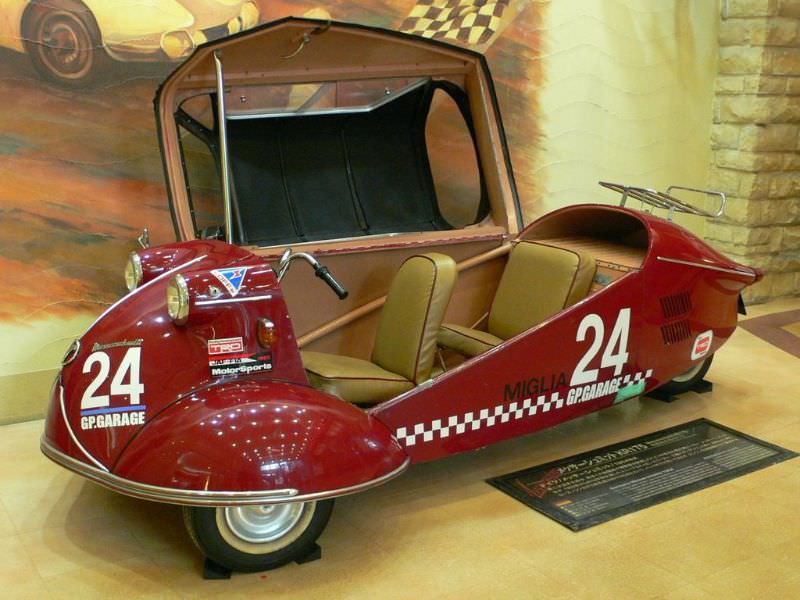
The KR175 was produced from 1953 to 1955 by Messerschmitt AG, a company known not for cars, but for building aircraft. After World War II, strict Allied restrictions prevented German firms from manufacturing planes. Messerschmitt needed a new product, and the microcar market gave them an opening.
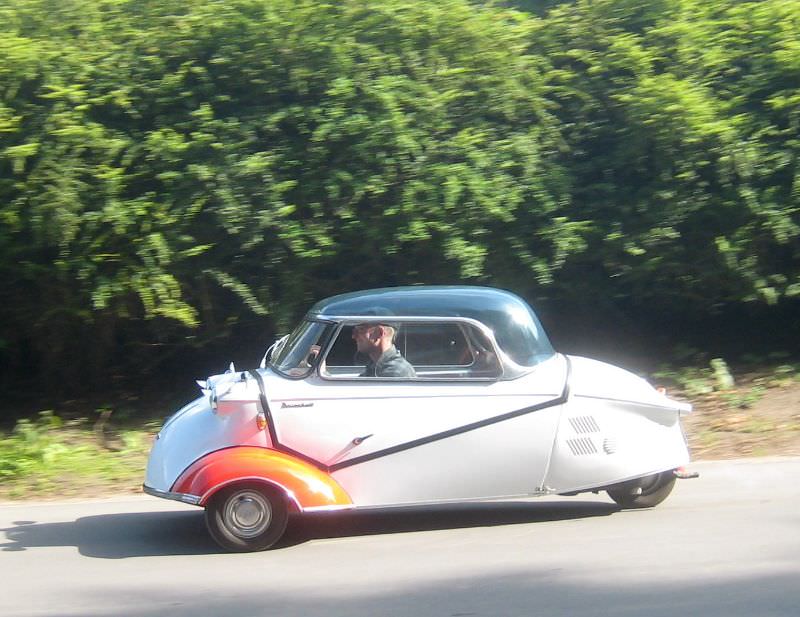
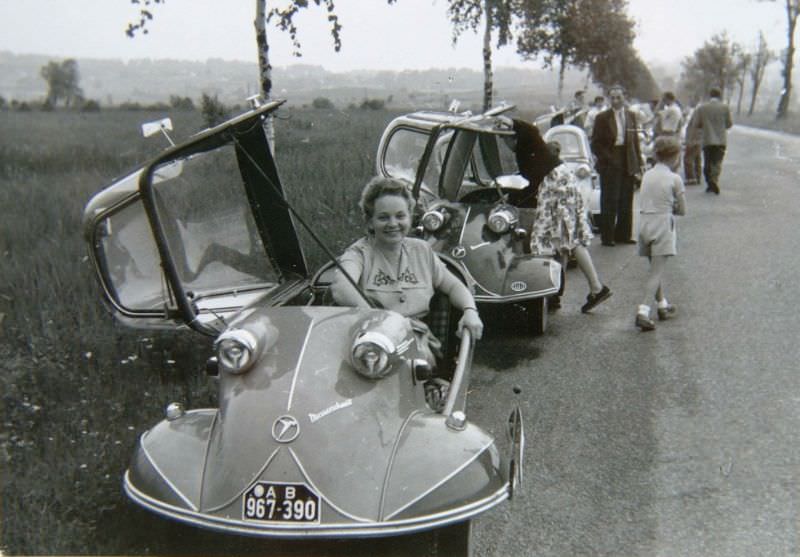
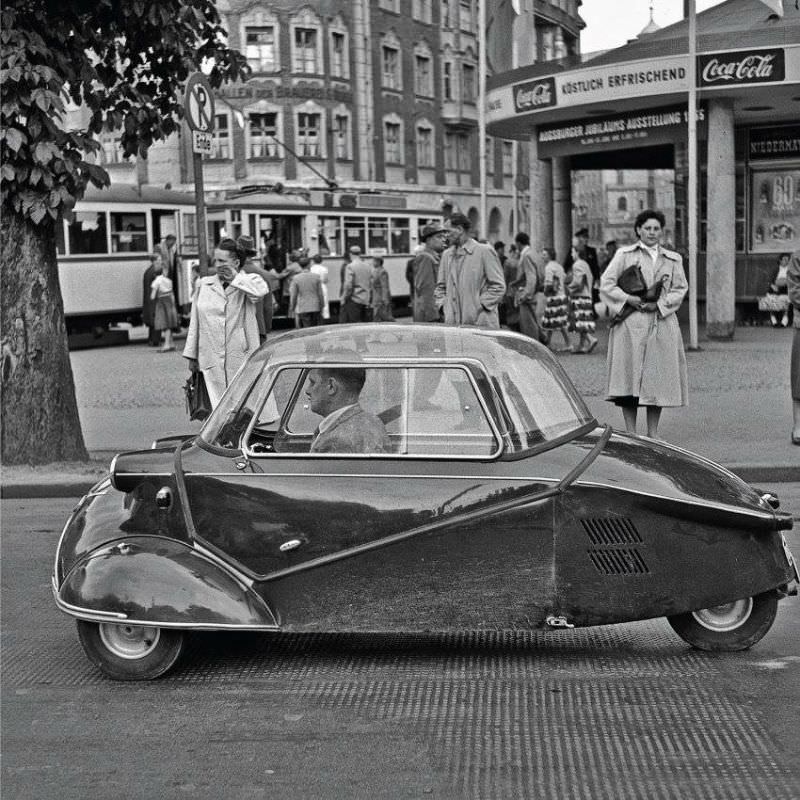
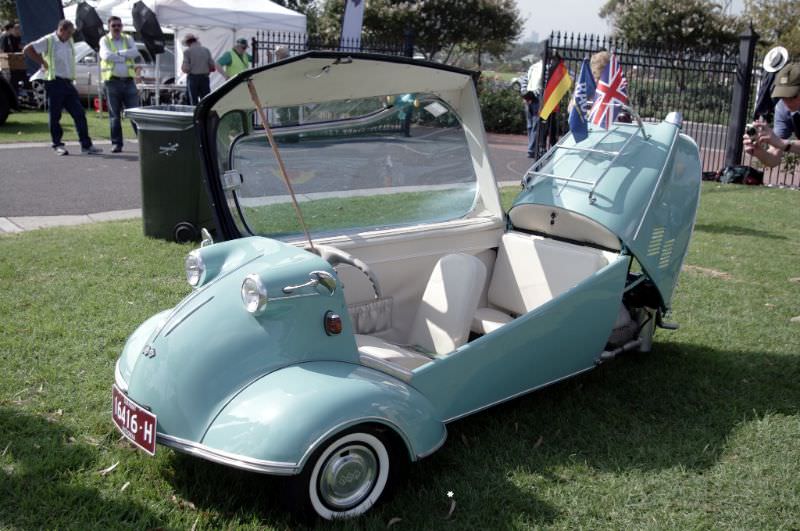
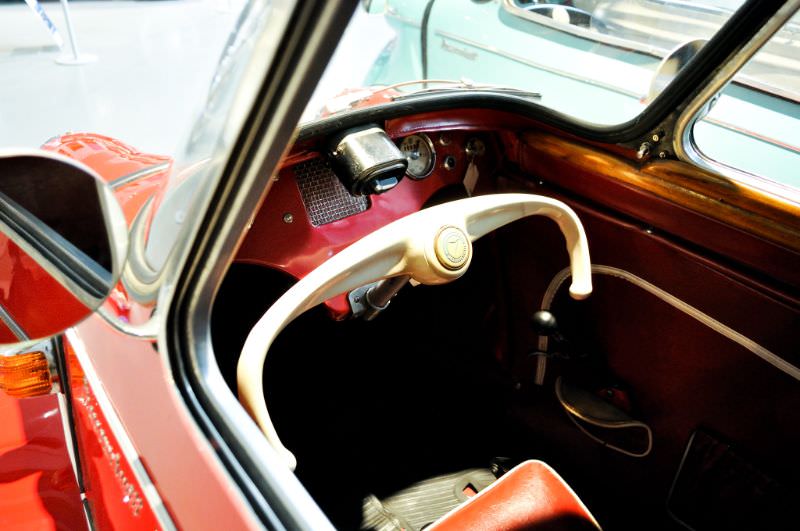
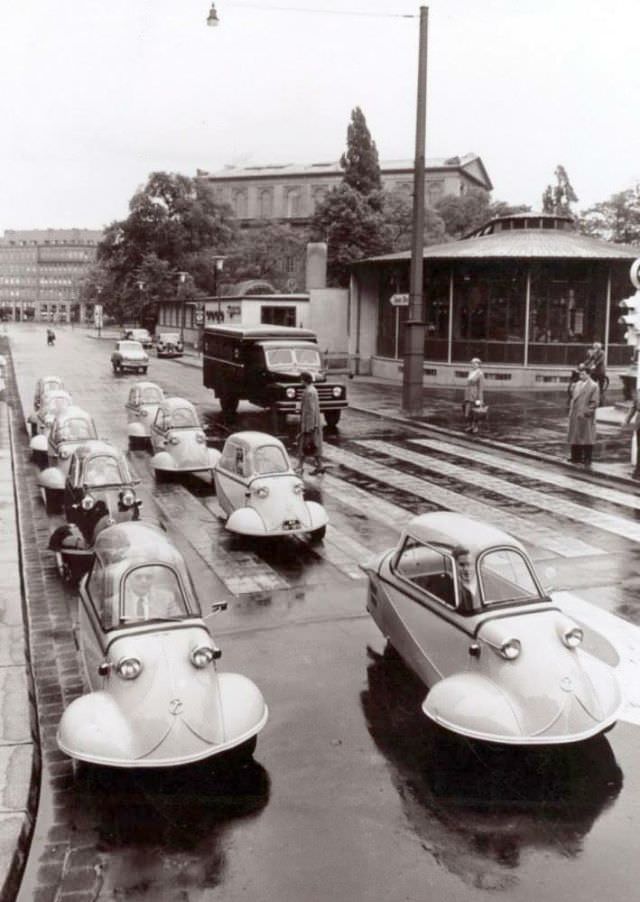
The man behind the design was Fritz Fend, an aircraft engineer. His background shaped everything about the KR175. The car sat low to the ground, had a streamlined, teardrop-shaped body, and was covered by a clear plastic canopy that flipped open to the side — just like a cockpit. The controls inside also reflected aviation thinking, with a handlebar-style steering mechanism instead of a traditional wheel.
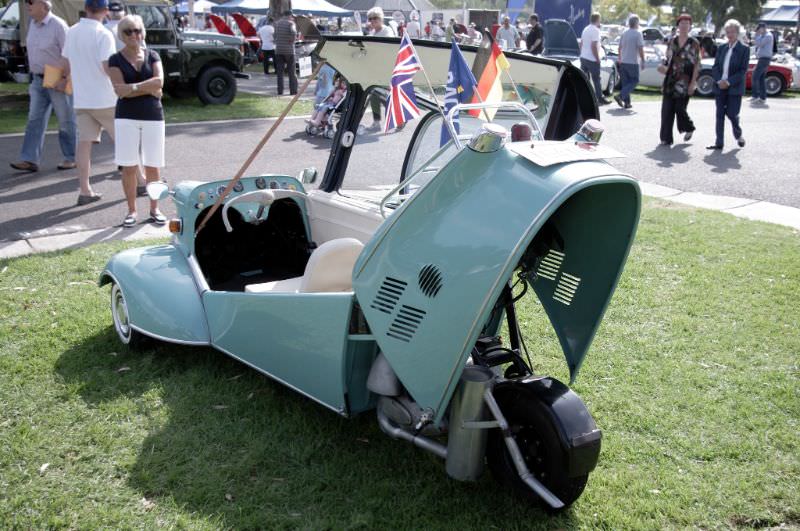
Under the body sat a single-cylinder engine producing just 10 horsepower. That modest power was enough to push the KR175 to a top speed of 60 km/h (about 37 mph). For city streets and short commutes, that was plenty. The car’s lightweight frame and small engine meant fuel costs stayed very low — a major selling point for working Germans in the early 1950s.
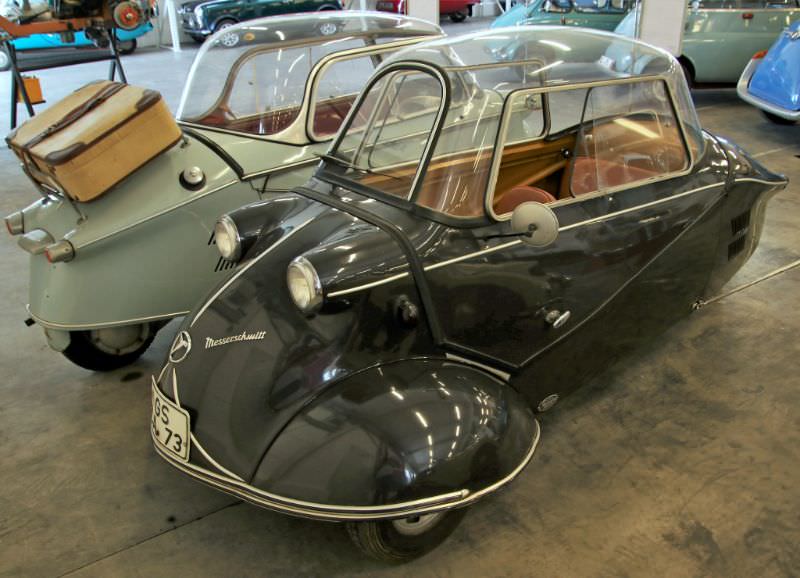

The seating arrangement was just as unconventional as the rest of the car. The driver sat in front, with a passenger seated directly behind in a narrow tandem layout. The two occupants fit inside a cabin that was barely wider than a motorcycle. This kept the vehicle’s weight and width to an absolute minimum.
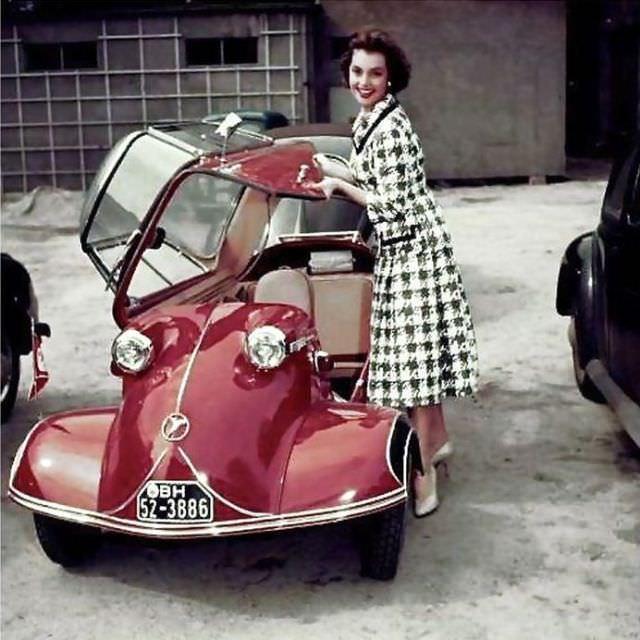
On three wheels — two at the front, one at the rear — the KR175 was technically classified as a motorcycle in some countries. That classification gave buyers a financial advantage, since motorcycle taxes and licensing fees were lower than those for full automobiles.
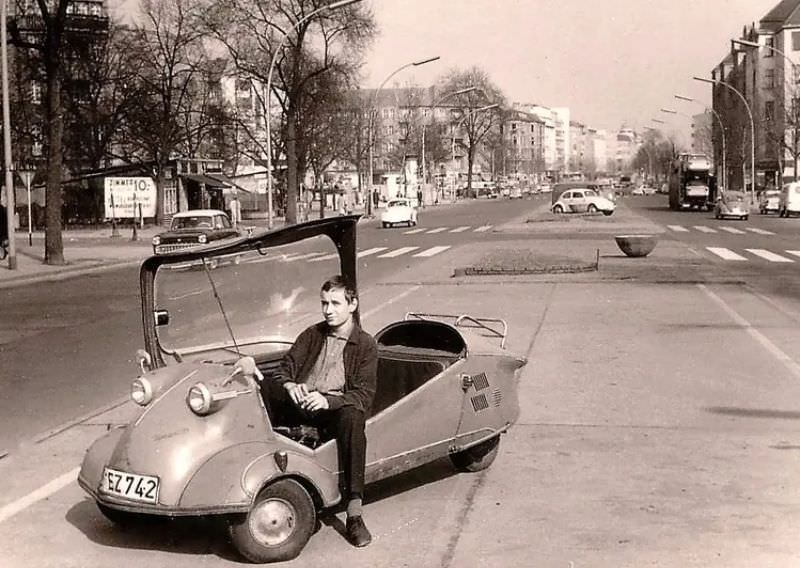
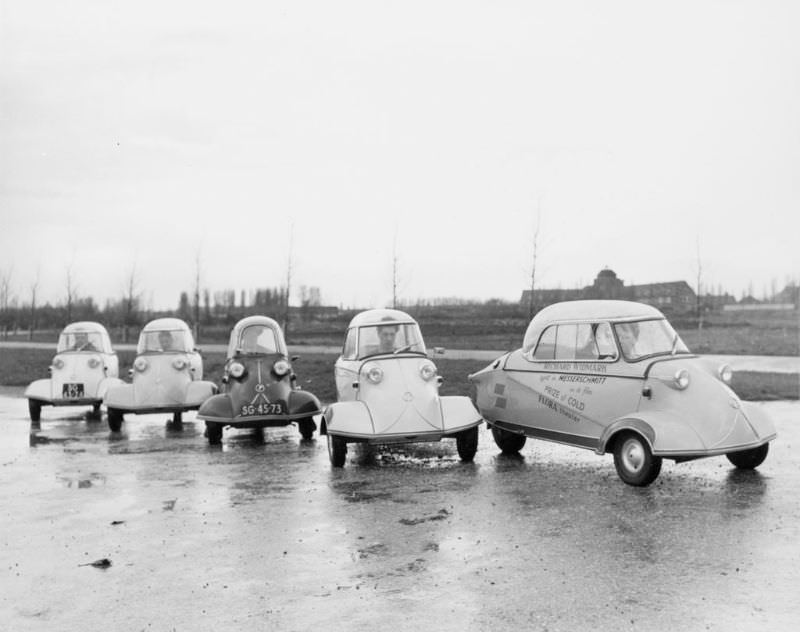
Messerschmitt produced just over 10,000 units of the KR175 before discontinuing it in 1955. The model was replaced by the improved KR200, which offered more power and refinements. But the KR175 had already made its mark as the car that launched the bubble car era in Germany.
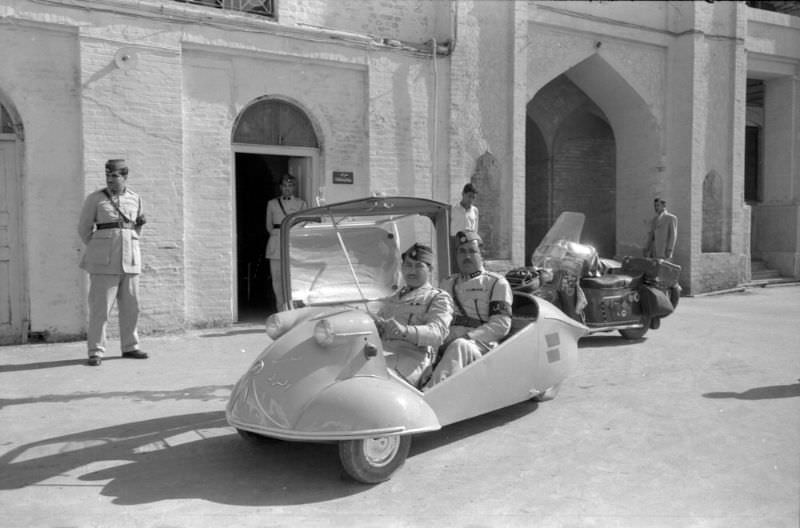
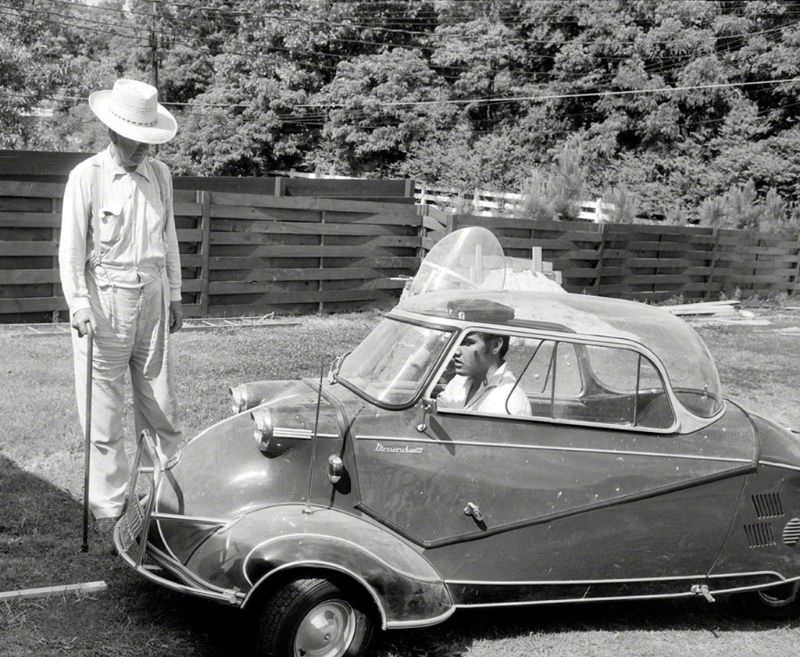
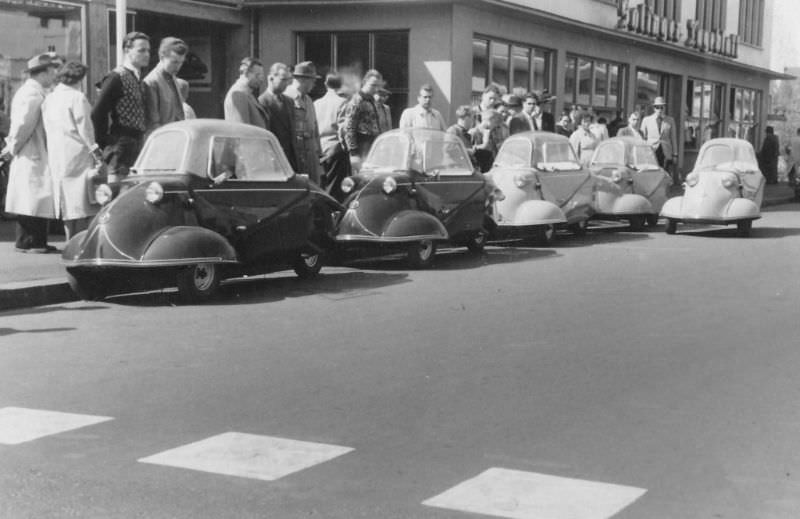
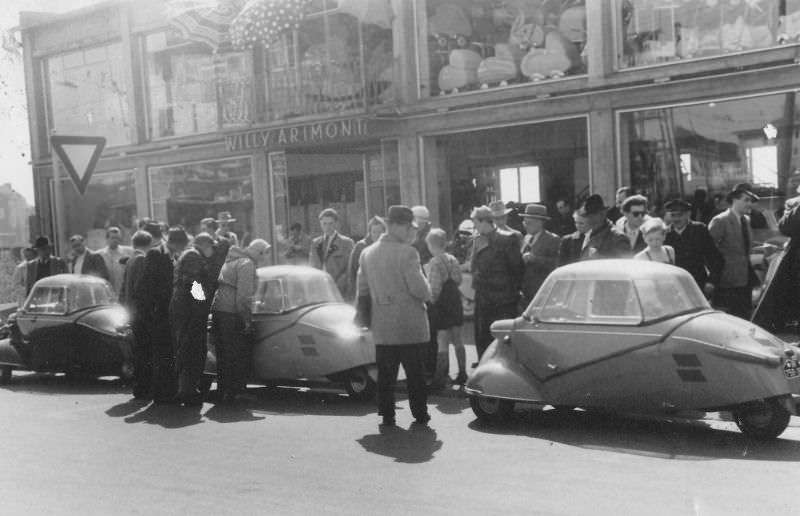
The design stood out immediately in 1950s streets. While most cars of the era were boxy and heavy, the KR175 looked like something from a science fiction magazine. Its futuristic shape drew attention wherever it went, and it became a recognized symbol of the decade’s optimism about modern technology.
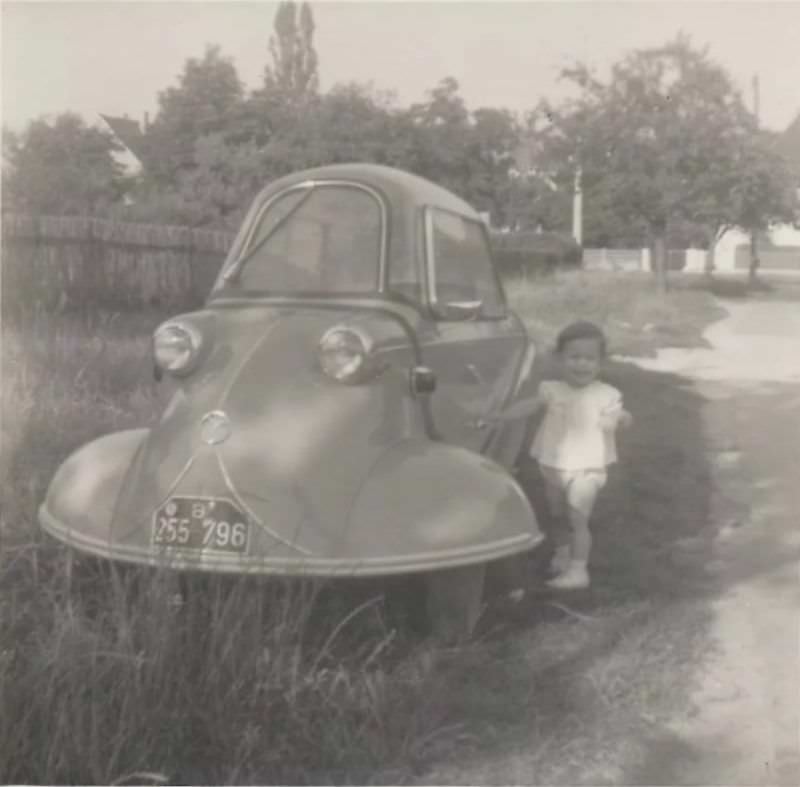
Today, surviving examples of the KR175 are rare and highly sought after by collectors. With only a little over 10,000 ever made and a production run of just two years, finding one in good condition is no easy task. Restored models regularly appear at classic car shows, where they continue to draw crowds curious about this tiny, bubble-topped piece of automotive history.