
Melbourne in the 1970s was a city caught between its past and its future. Immigration slowed, the economy tightened, and population growth stalled — yet the decade delivered some of the most sweeping changes the city had ever seen. Old sandstone buildings came down. Multistory office towers and hotels rose in their place. The skyline shifted almost block by block, and the streets below felt the pressure of a city trying to modernize while holding on to what made it recognizable.
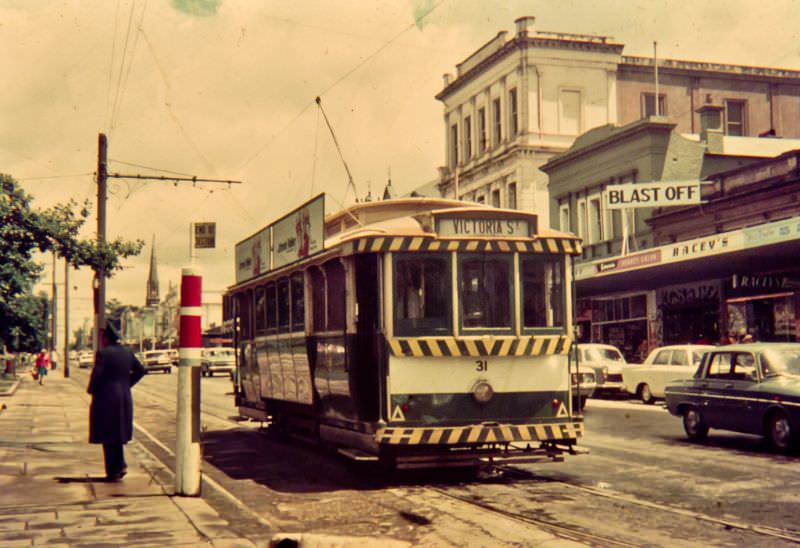
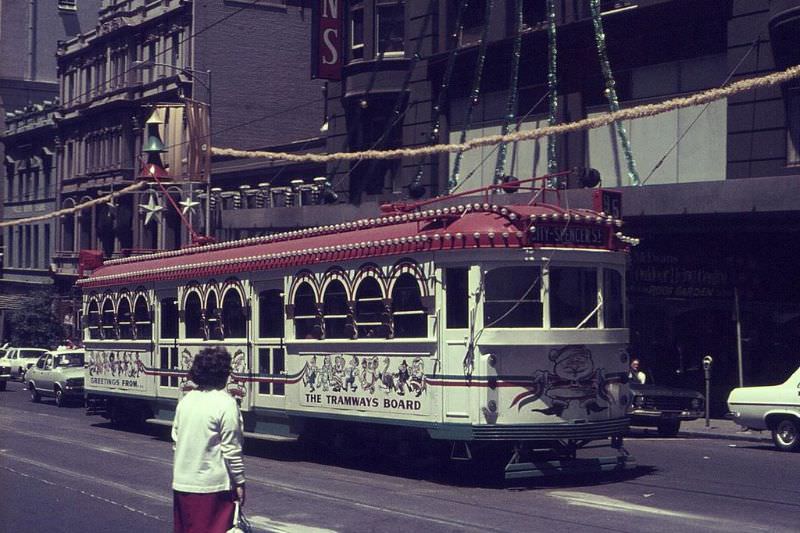
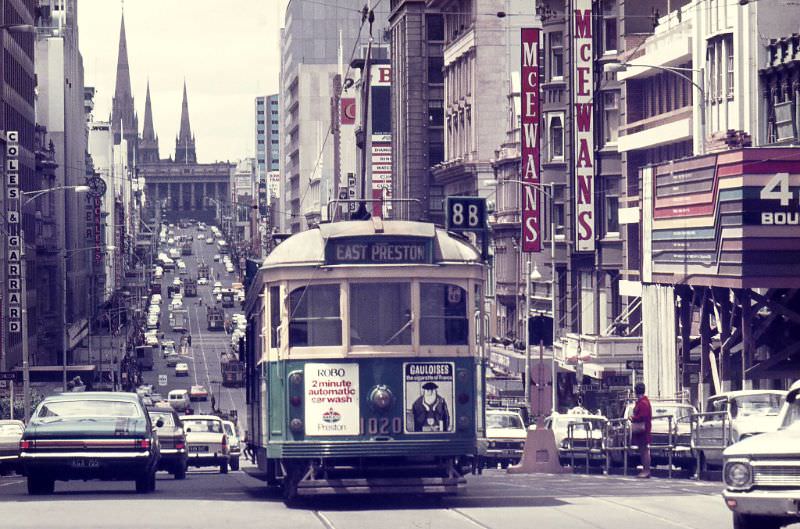
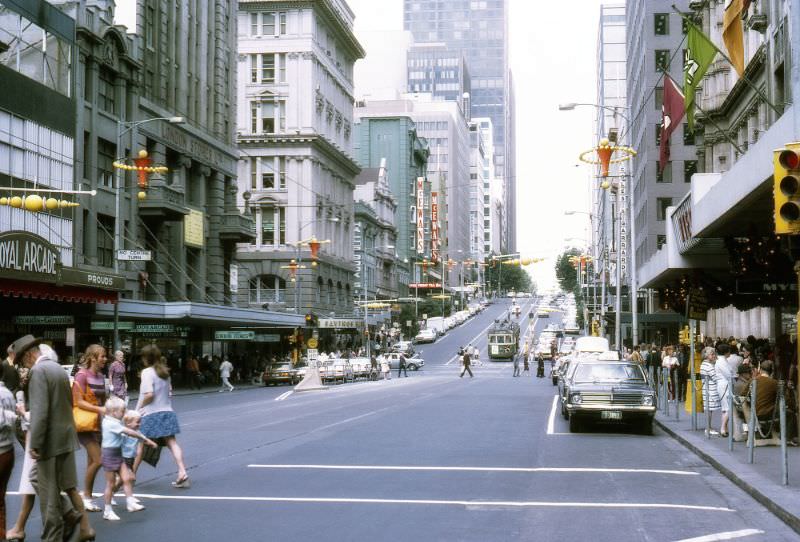
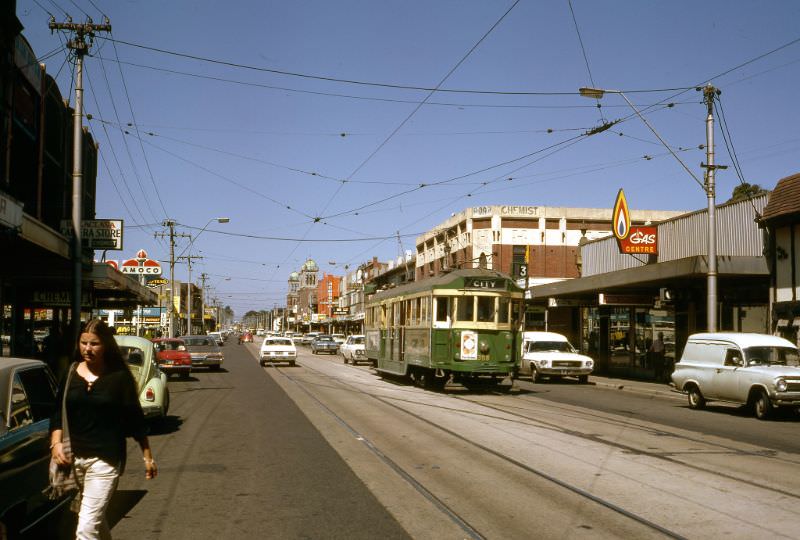
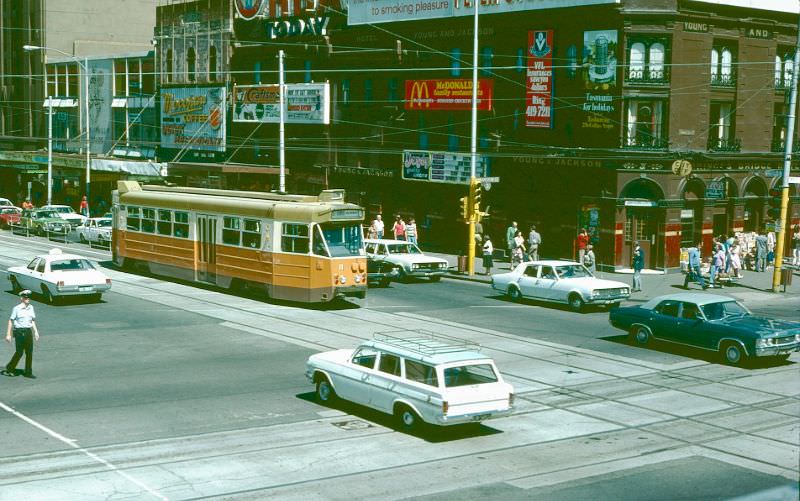
The tram network remained one of Melbourne’s most defining features throughout the decade. Rattling through the city’s wide boulevards, the trams connected neighborhoods that cars and buses often bypassed. Bourke Street in particular served as a central artery of daily life — busy with shoppers, workers, and the constant hum of passing traffic.
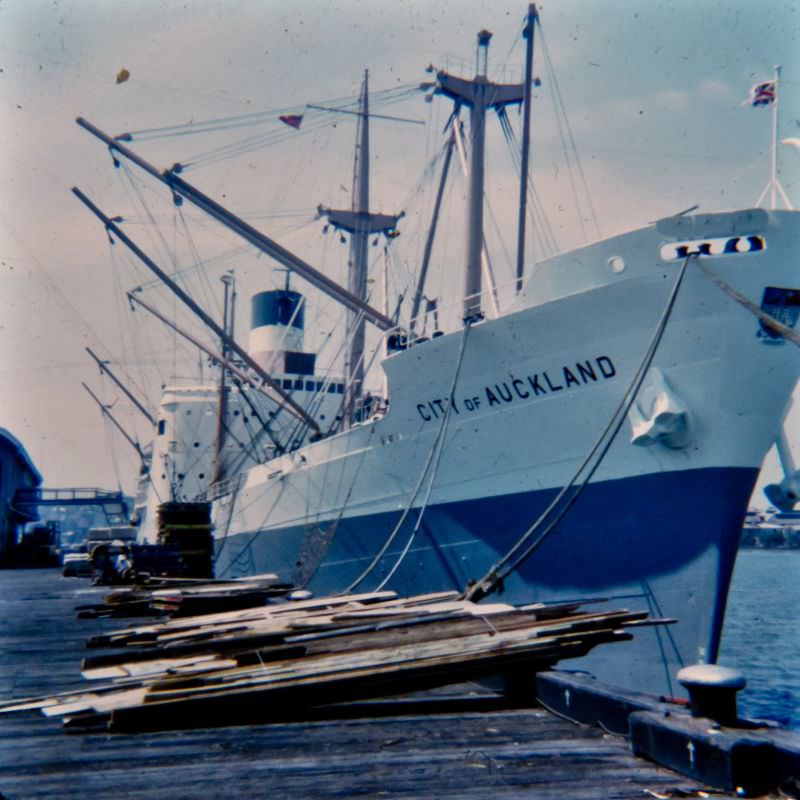
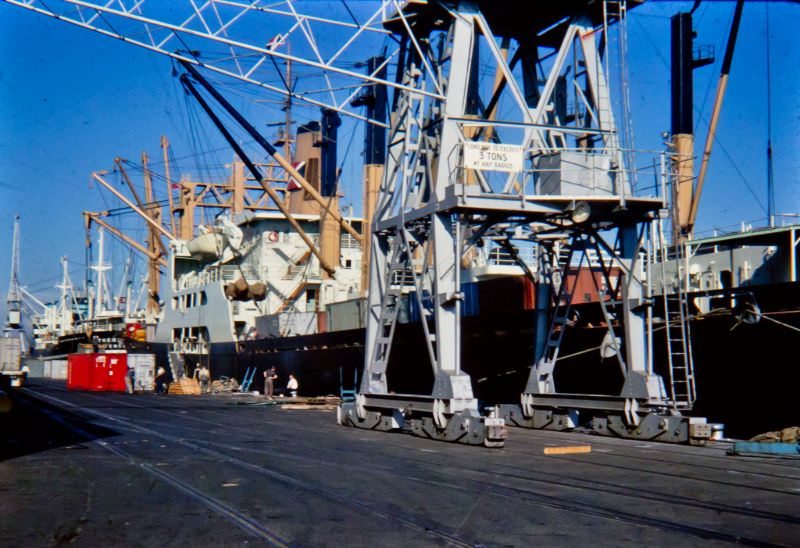
Melbourne’s port was still a serious commercial hub at the start of the decade. Ships from around the world docked along the waterfront, bringing cargo and passengers into the city. The City of Auckland, a well-known vessel on the Australia–New Zealand route, was a regular presence at the Melbourne docks in 1970.
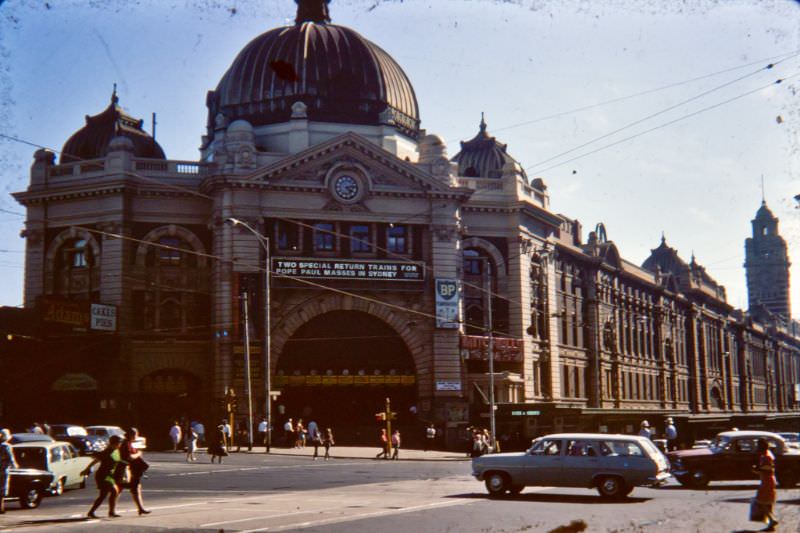
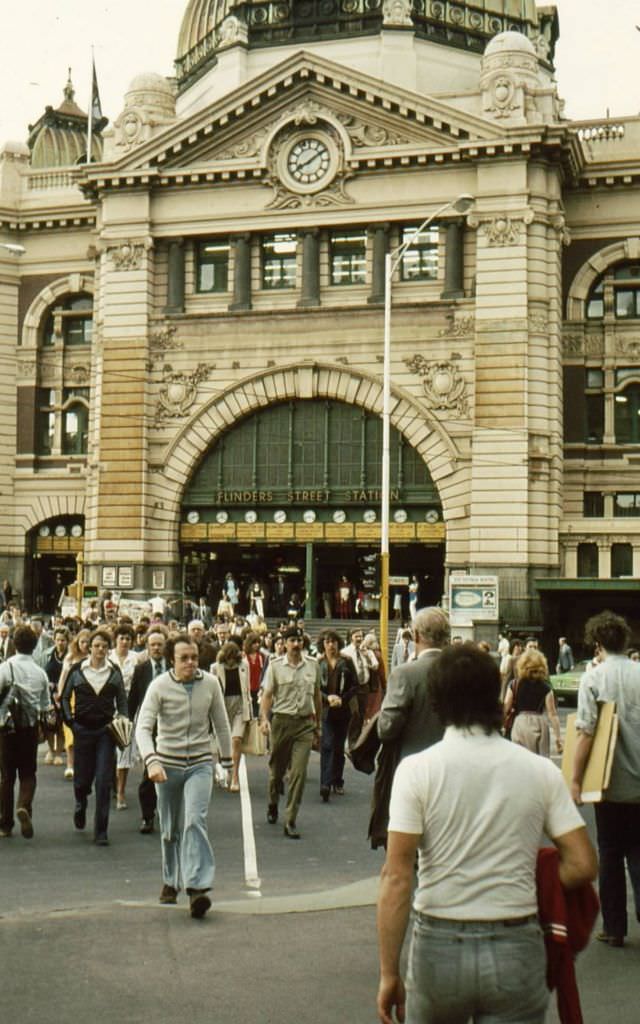
Flinders Street Station stood — as it always had — as the beating heart of Melbourne’s rail network. Its distinctive yellow facade and famous clocks above the entrance were landmarks that every Melburnian knew. The station handled enormous passenger volumes daily, linking the suburbs to the city center and serving as a meeting point for generations of residents.
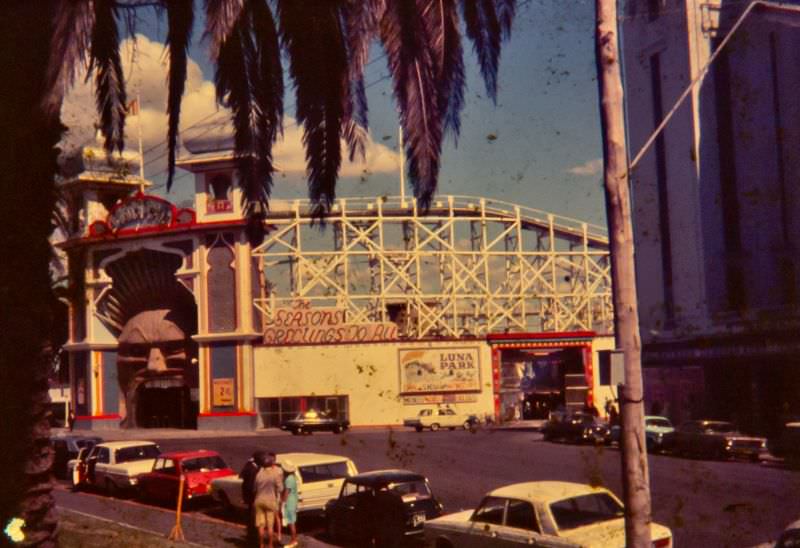
Not everything in 1970s Melbourne was about commerce and transit. Luna Park, perched on the edge of Port Phillip Bay in St Kilda, offered an escape. Its grinning face entrance and vintage rides had been pulling in crowds since 1912, and by 1970 it remained a well-loved fixture of Melbourne’s leisure culture.
The docks themselves told their own story of industrial Melbourne. Cranes, freight containers, and moored vessels filled the waterfront with activity. The port connected the city to global trade routes at a time when sea freight still dominated international shipping.
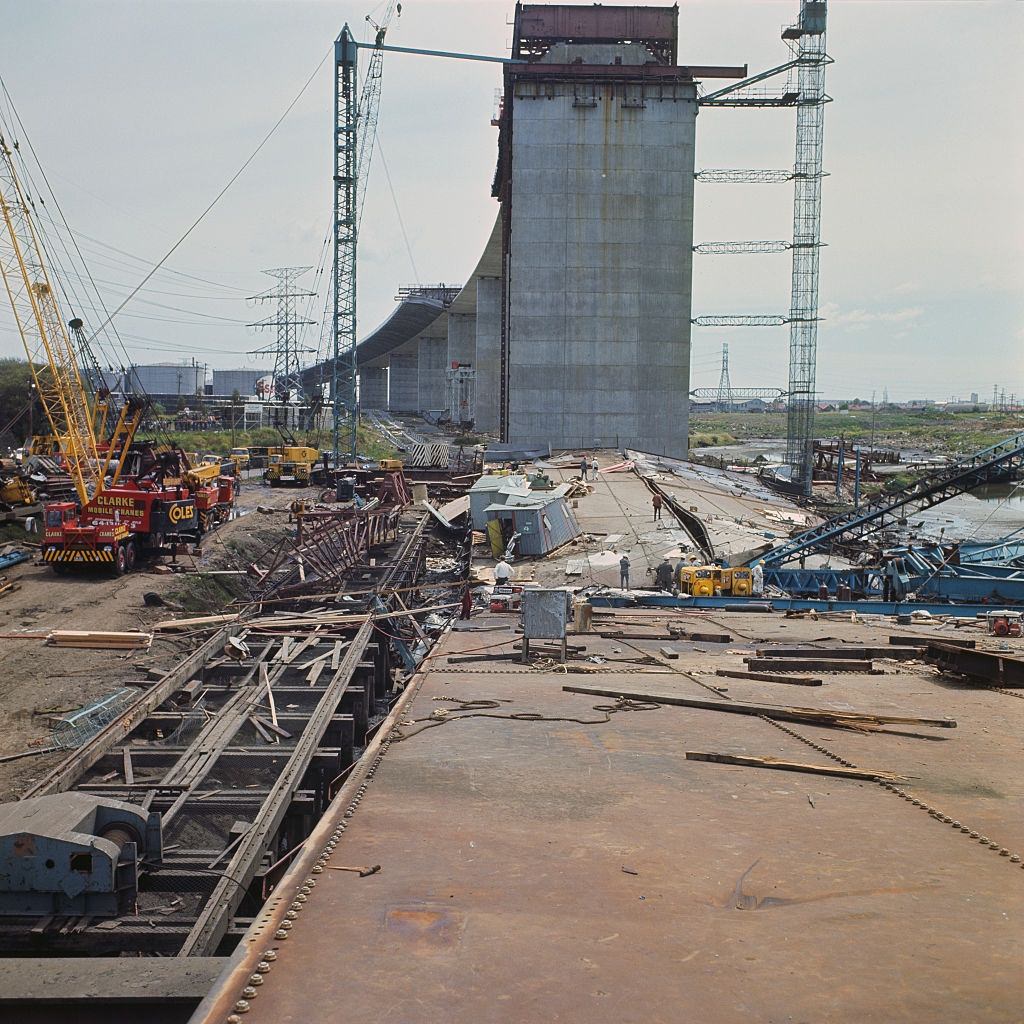
October 15, 1970 became one of the darkest days in Australian industrial history. A 112-meter span of the West Gate Bridge collapsed during construction over the Yarra River, killing 35 workers. It remains Australia’s worst industrial accident. The bridge had been intended to ease traffic flow across the river and connect Melbourne’s western suburbs to the city — a goal that was eventually achieved when the structure finally opened in 1978.
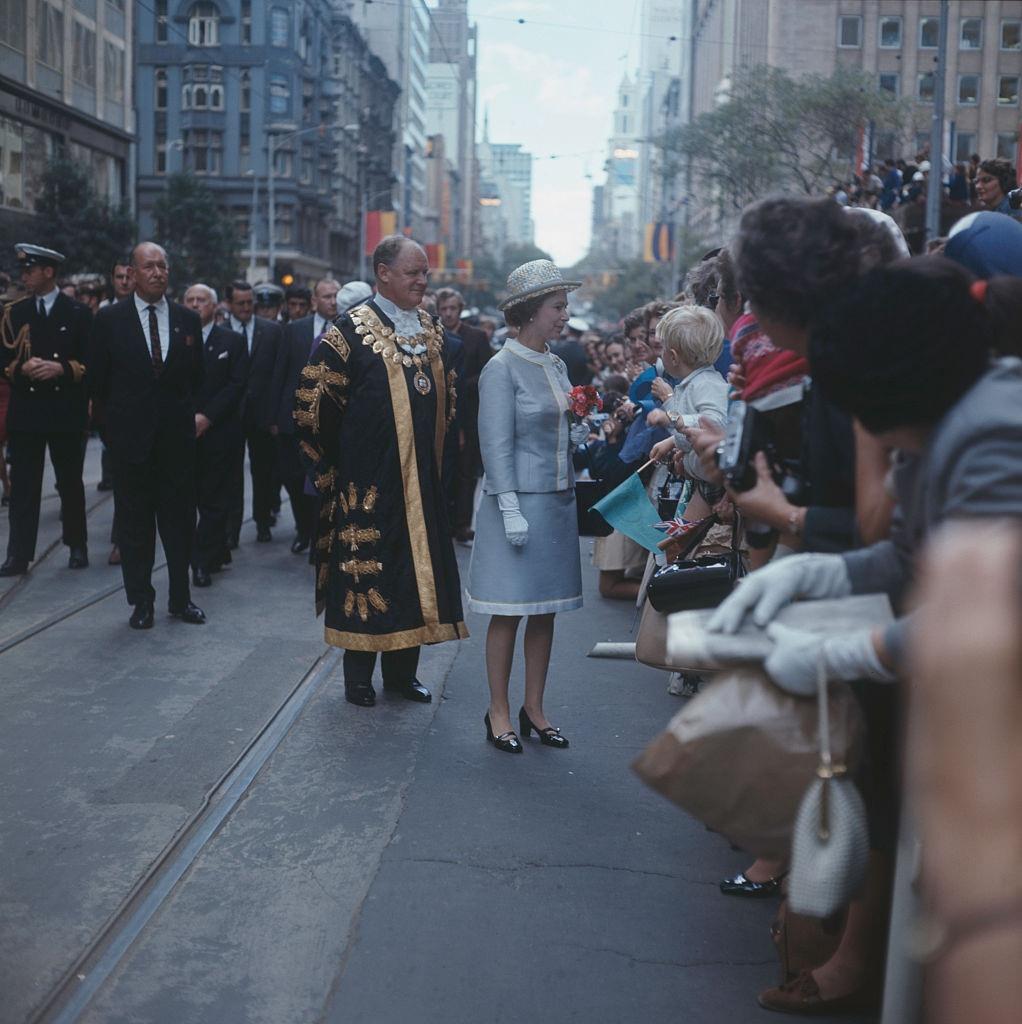
Also in April 1970, Queen Elizabeth II visited Melbourne as part of her Australian tour. She walked through the city alongside Ted Best, the Lord Mayor of Melbourne at the time, drawing large crowds. Royal visits still carried significant public weight in Australia during this era, and the walkabout drew widespread attention across the city.
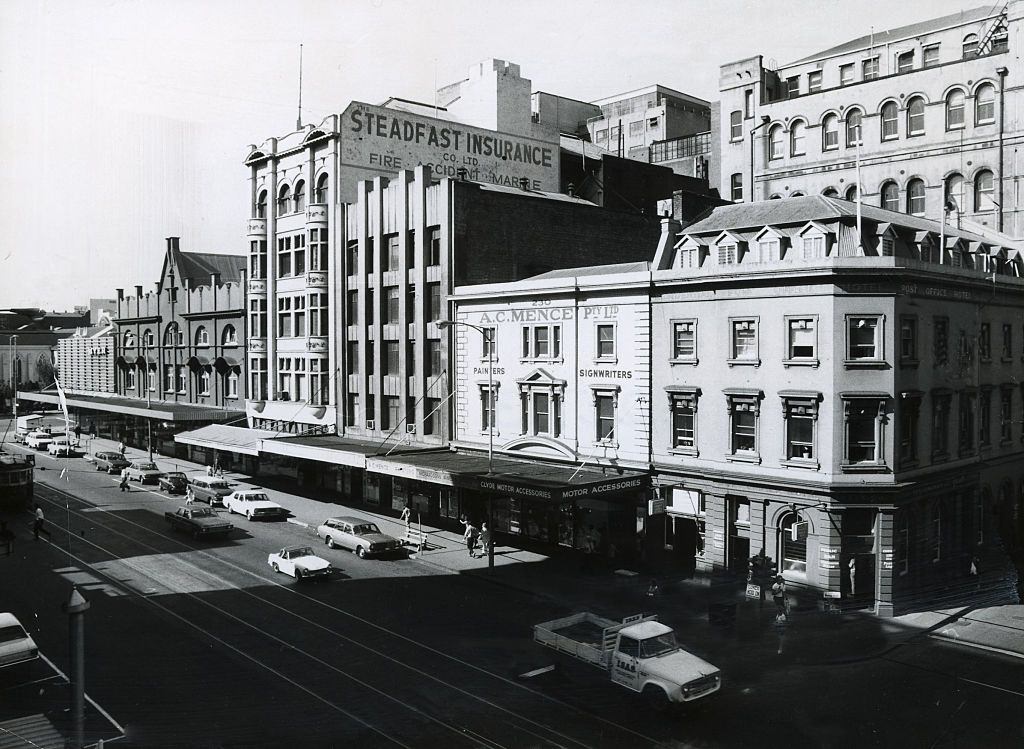
Elizabeth Street cut through the heart of the retail district, with the massive Myer emporium anchoring one end and the Post Office Hotel at the other. This stretch between Lonsdale and Little Bourke Streets was one of the busiest in the city, packed with pedestrians, delivery vehicles, and the kind of street-level energy that defined inner Melbourne.
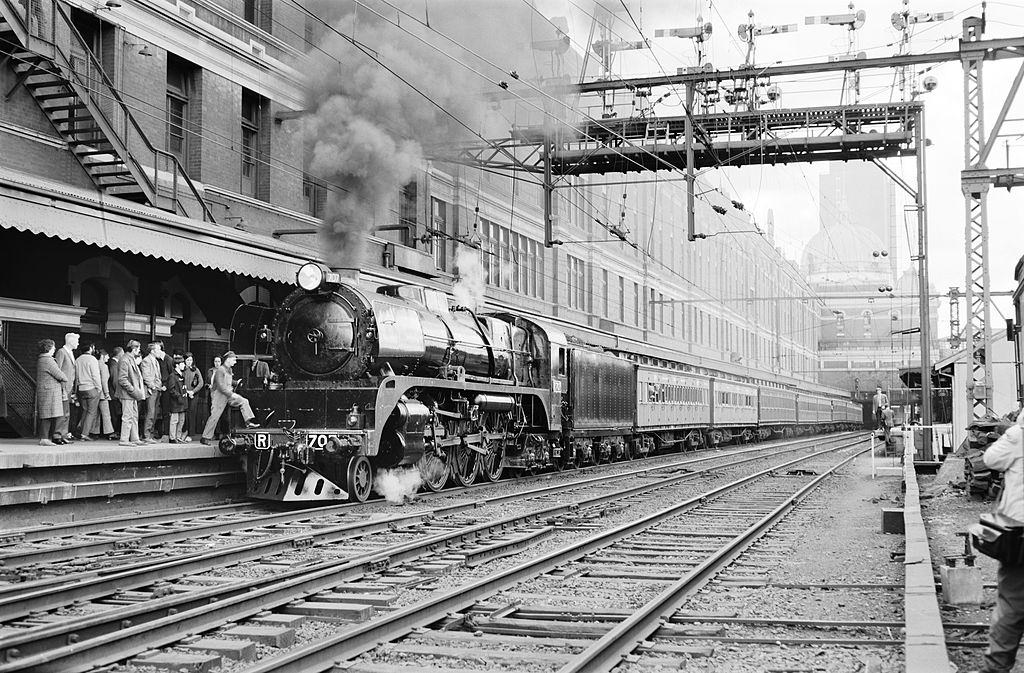
Locomotives at Flinders Street Station were a common sight at the start of the decade, before diesel and electric trains fully took over the suburban lines. These engines represented an older era of rail travel that was rapidly giving way to more modern rolling stock across the network.
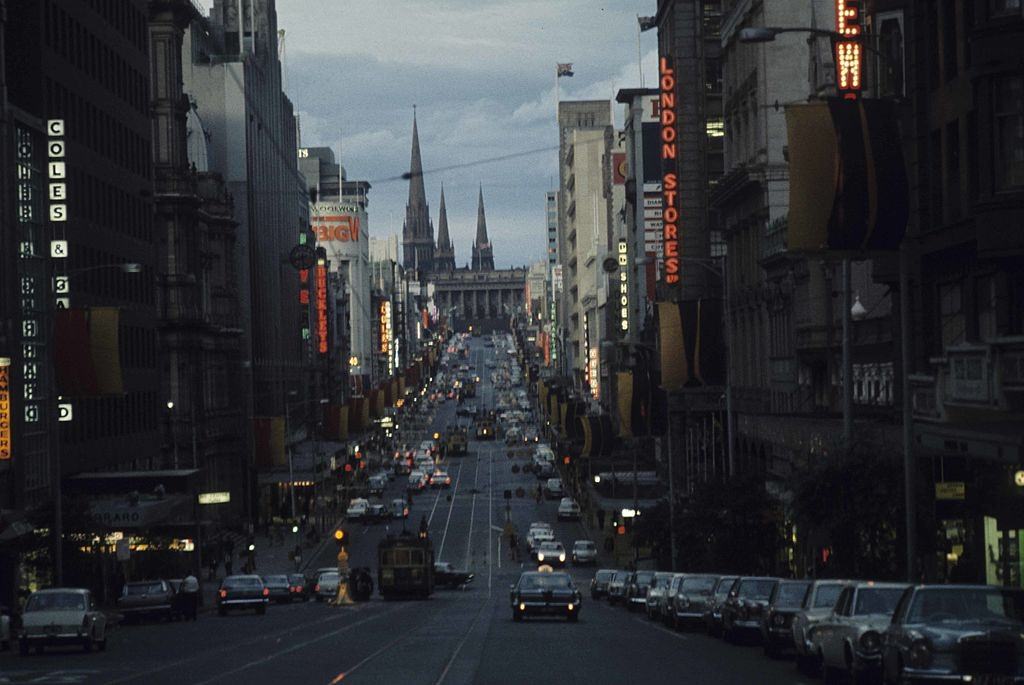
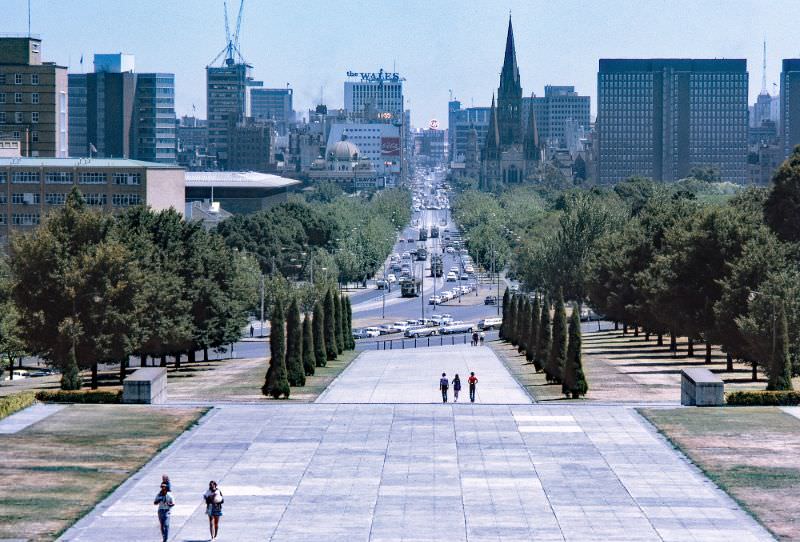
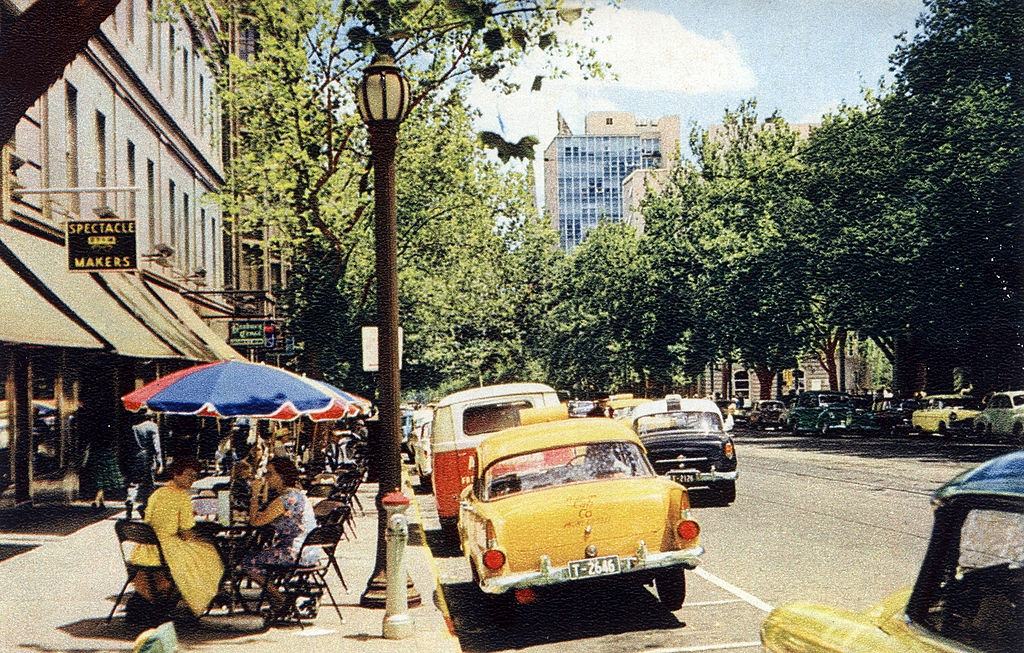
The wide tree-lined avenues of central Melbourne gave the city a formal, almost European character. These streets, designed on a strict grid during the colonial era, had aged well and provided a graceful backbone for the city’s growth.
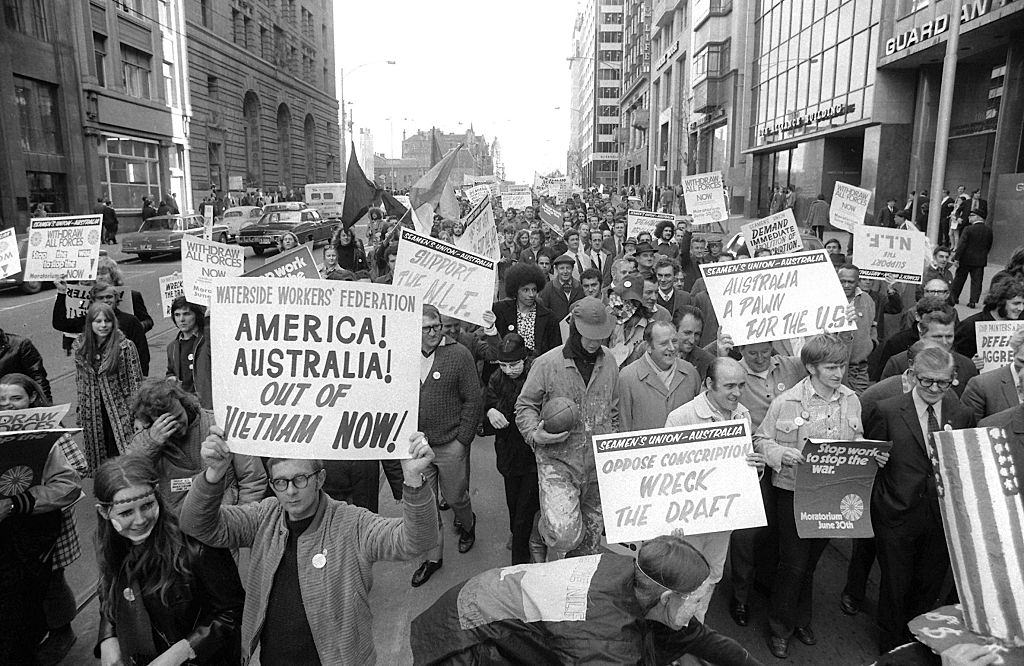
In 1971, anti-Vietnam War protests brought demonstrators into Melbourne’s streets. Australia had committed troops to the conflict, and public opposition had been growing steadily. The marches in Melbourne were part of a nationwide wave of dissent that put significant pressure on the government’s military commitments.
Bourke Street continued to evolve through the early years of the decade. By 1971, the mix of department stores, corner hotels, and street-level businesses gave the strip a layered, lived-in quality. Hawthorn Road, a major suburban thoroughfare, reflected a similar energy — busy with local traffic and lined with the kind of small businesses that served the surrounding residential neighborhoods.
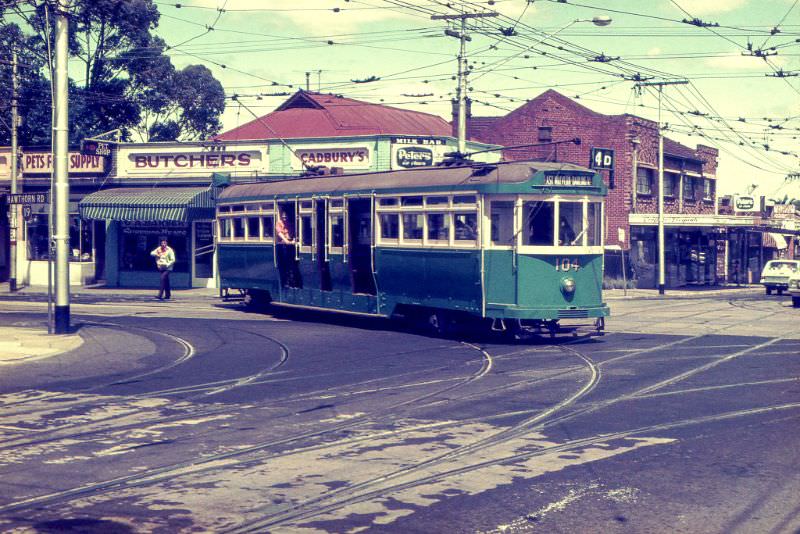
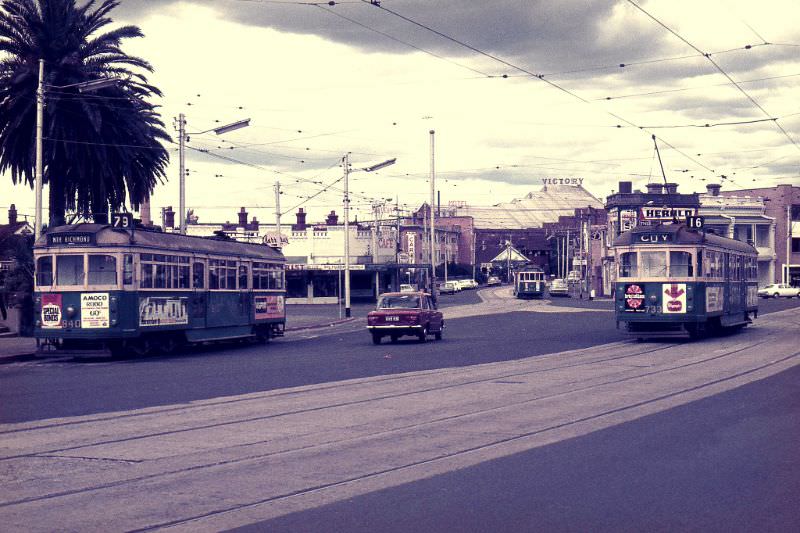
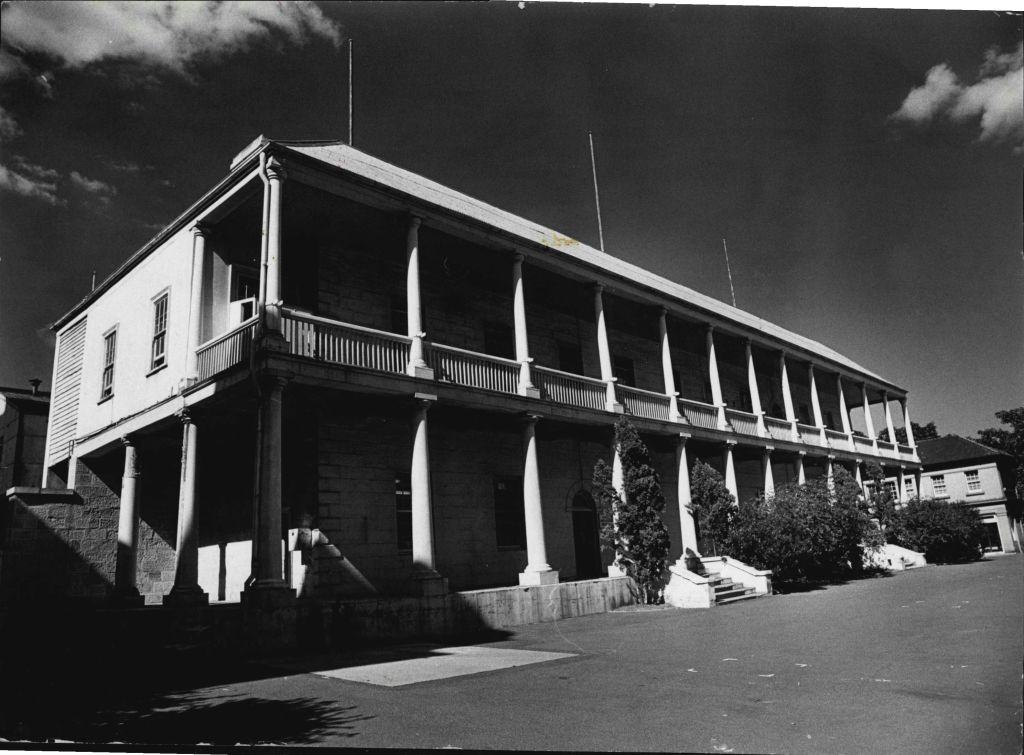
The Old Mint on Macquarie Street, photographed in 1971, was one of many historic buildings that survived the wave of demolition sweeping through inner Melbourne during the decade. Many others weren’t as fortunate — entire blocks of Victorian-era architecture were cleared to make way for glass and concrete office towers.
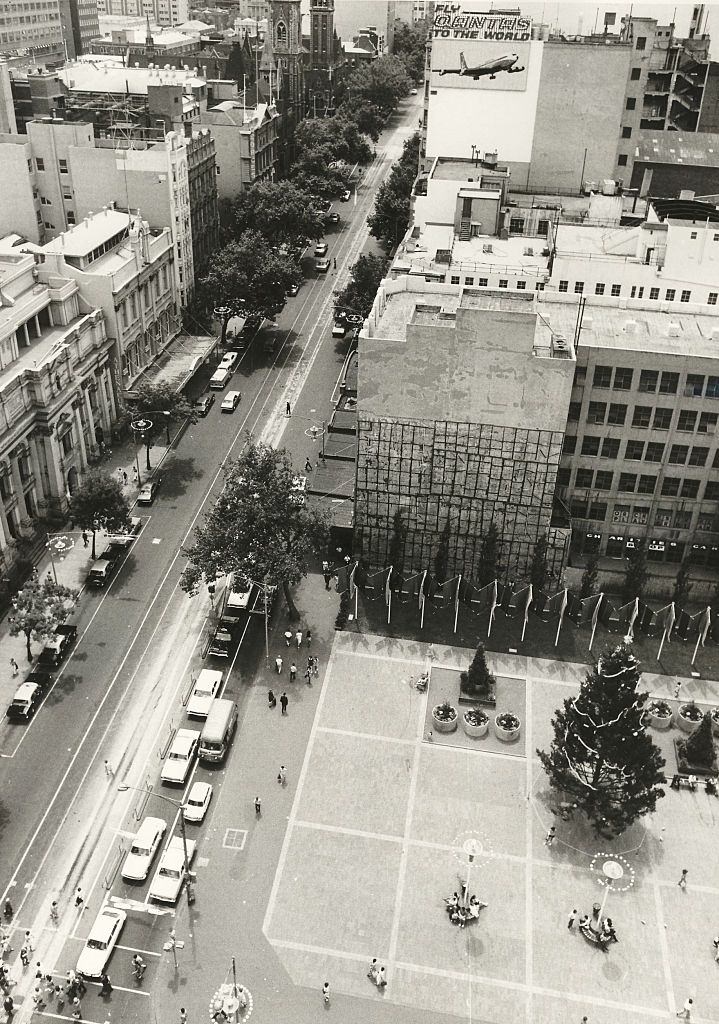
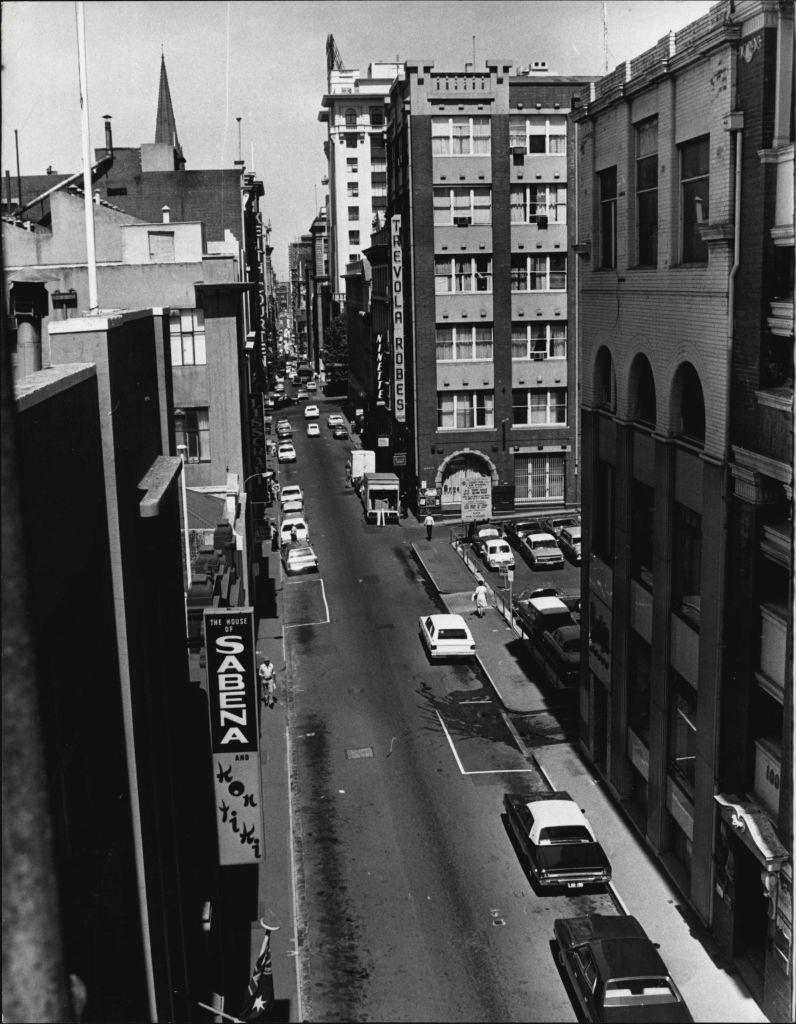
By 1972, Collins Street offered a clear view of this transformation from above. Looking west from the City Square, the street revealed a patchwork of old and new — low heritage buildings pressed up against the rising walls of modern developments. The rag trade district, Melbourne’s garment manufacturing hub, was still active during this period, packed with fabric warehouses, workshops, and small factories.
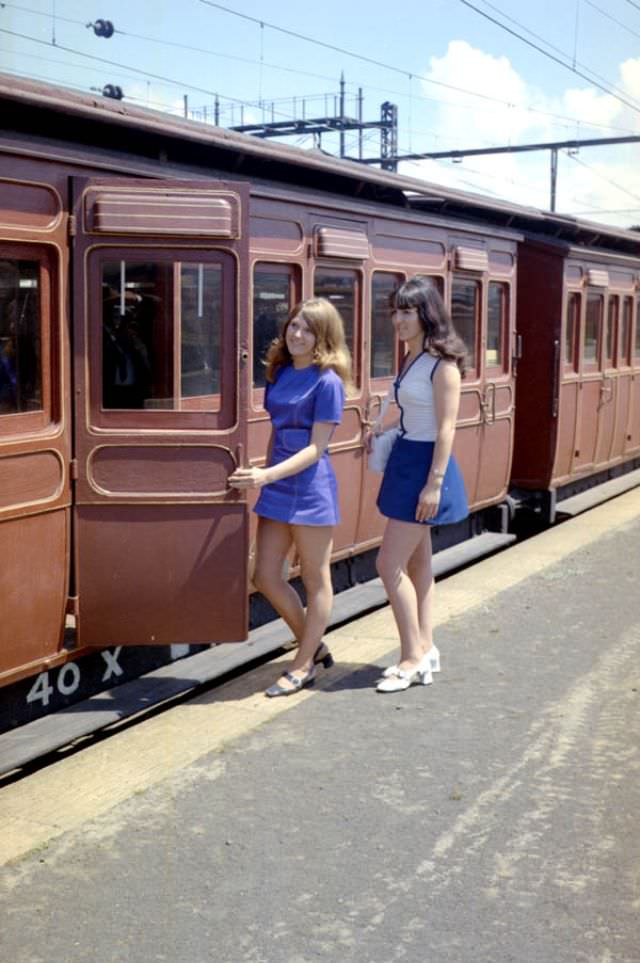
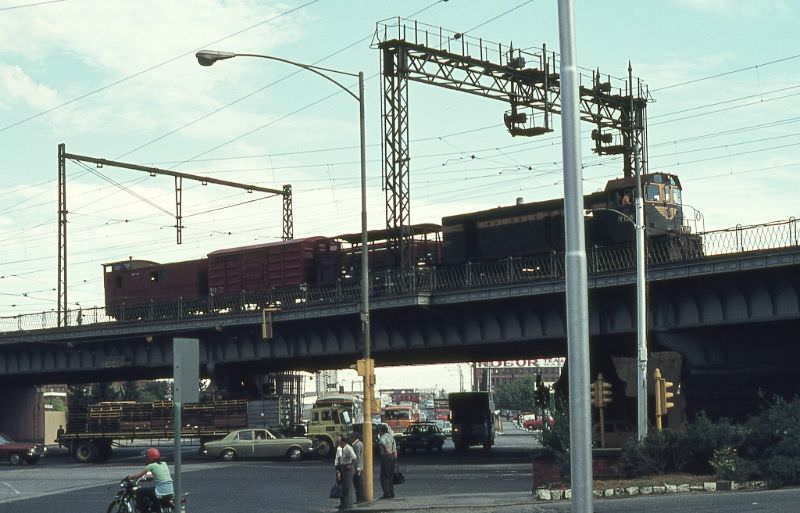
Spencer Street in 1972 was a key transit corridor, with its viaduct and vintage rolling stock representing the older infrastructure that still kept the city moving. The station at Spencer Street handled both suburban and interstate rail services, making it one of the busiest transport nodes in Victoria.
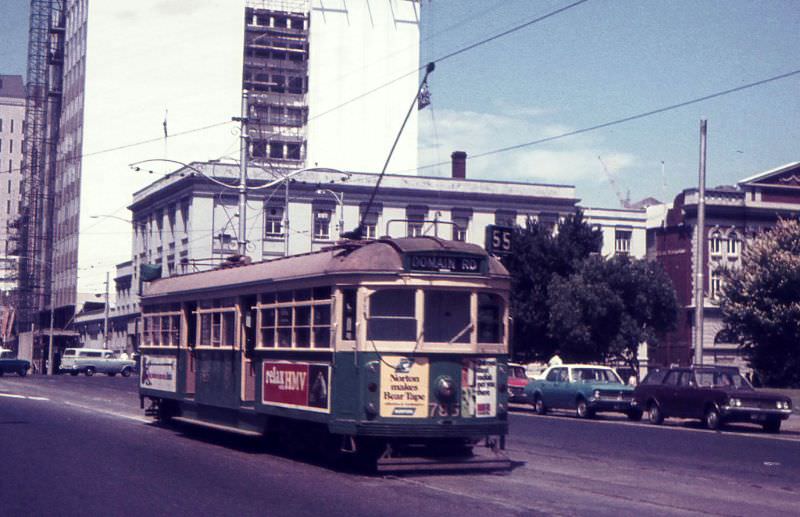
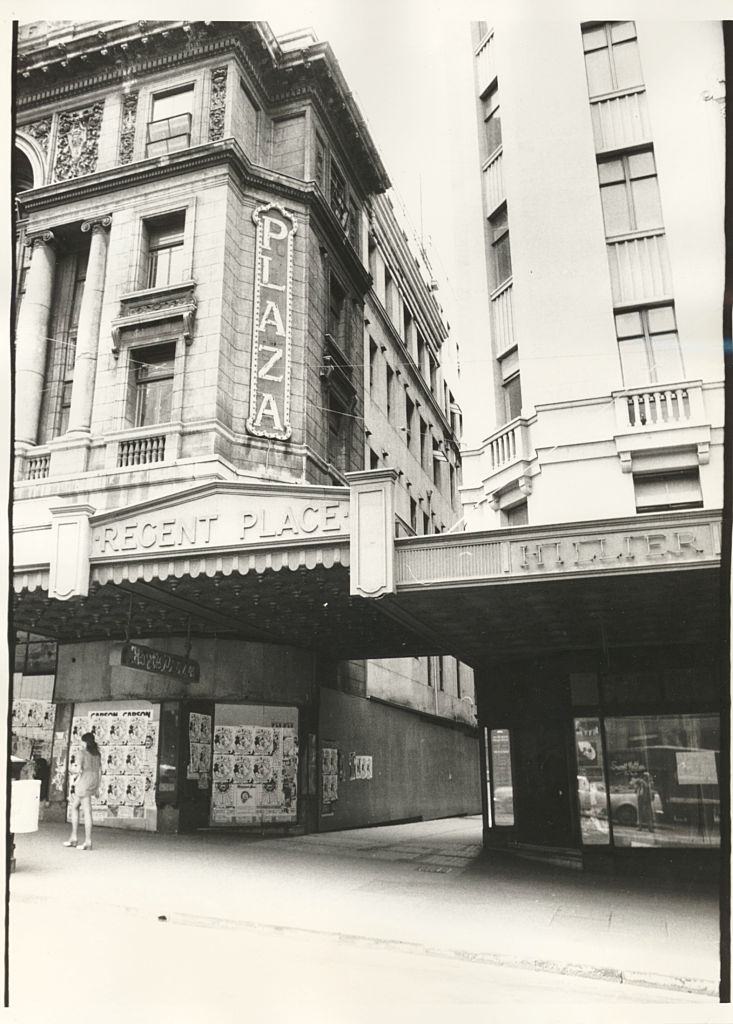
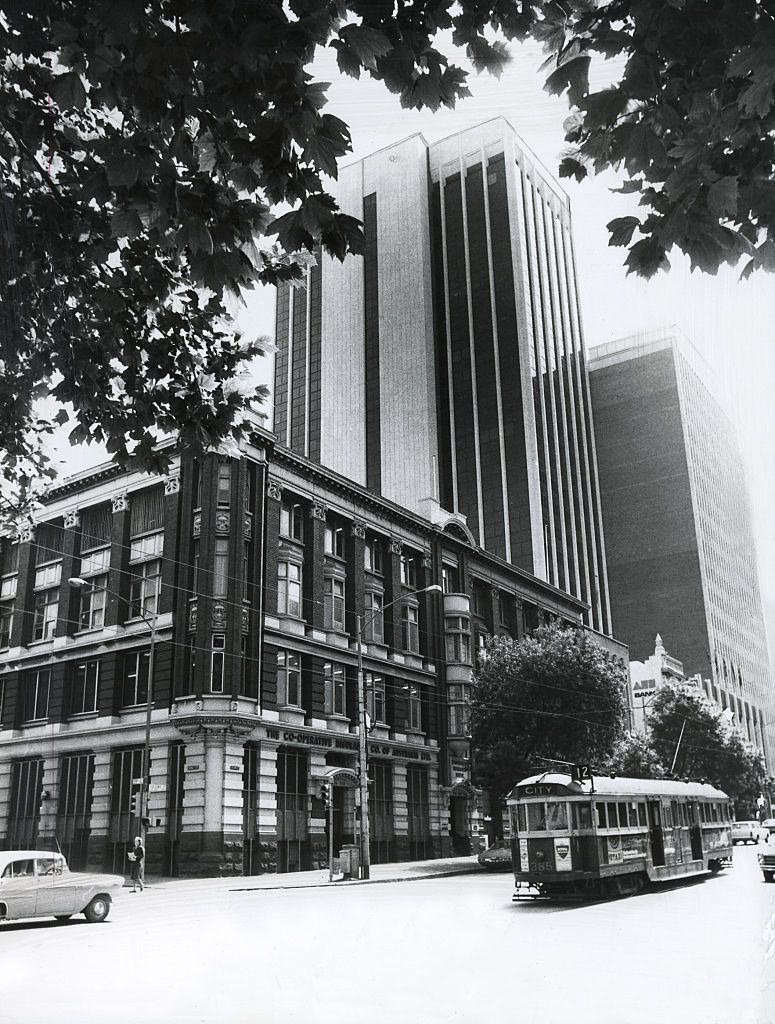
January 1973 brought news that the arcade running beside the Regent Cinema — connecting Collins Street to Flinders Lane — was set to be demolished. It was a familiar story across the city. Older pedestrian spaces and laneways were being swallowed up by redevelopment. The corner of Collins and King Streets, home to the Co-operative Insurance building, captured the architectural tension of the moment: older masonry structures standing in the shadow of newer, taller neighbors.
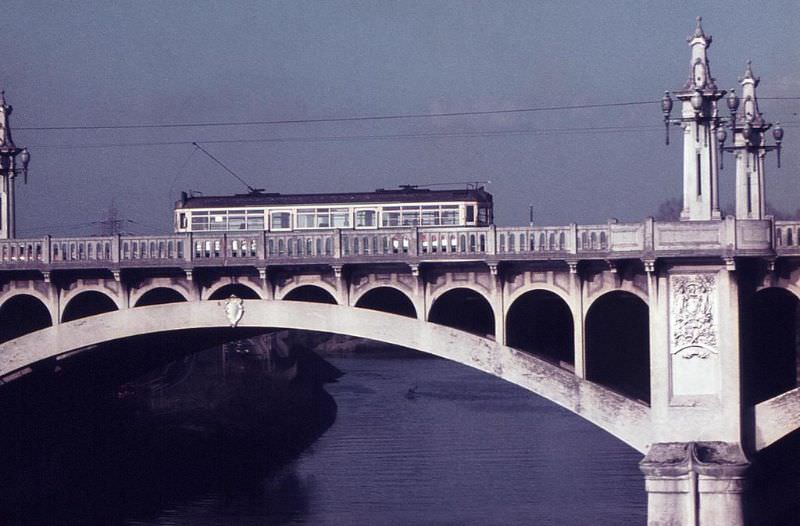
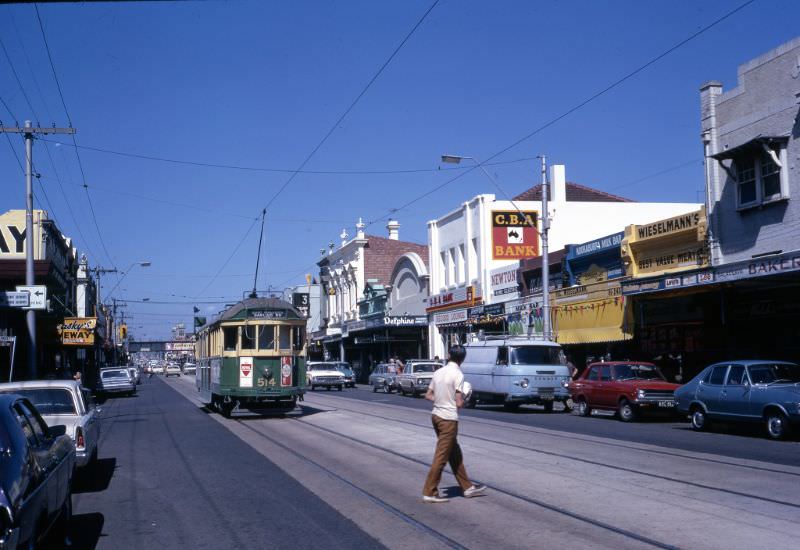
Bourke Street and the Chapel Street bridge crossing the Yarra River were two of the city’s most photographed locations in 1973. St Kilda Road, meanwhile, had emerged as one of Melbourne’s most prestigious addresses — wide, leafy, and lined with both government buildings and private offices. The Malvern East tram line continued to serve the city’s southeastern suburbs, part of a network that kept suburban residents connected to the center.
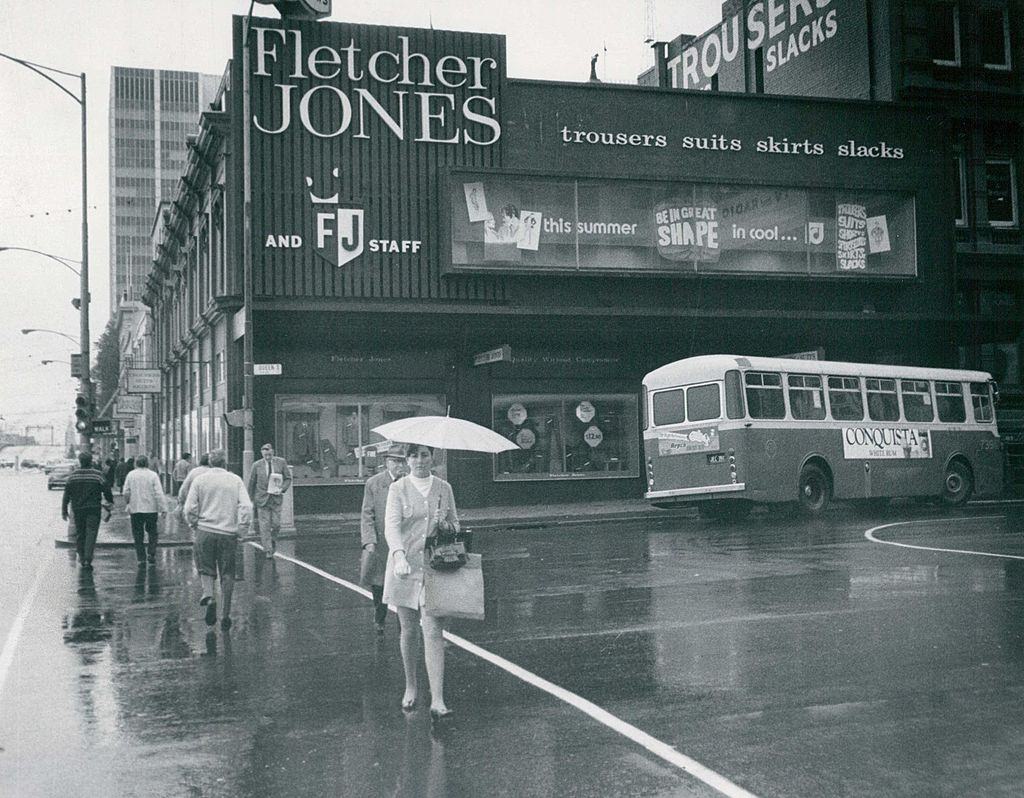
Fletcher Jones, the men’s clothing retailer, operated what was claimed to be the world’s largest store specializing in men’s slacks. Its Melbourne location was a retail landmark, drawing customers from across the city. By the mid-1970s, suburban shopping centers were beginning to pull retail activity away from the central business district, but stores like Fletcher Jones kept the city’s core commercially relevant.
Little Collins Street and the broader network of Melbourne’s central streets remained lively through 1974. The city’s street scenes from this period show a mix of 1950s-era cars, pedestrians in the fashions of the day, and storefronts that hadn’t yet been swallowed by chain retail.
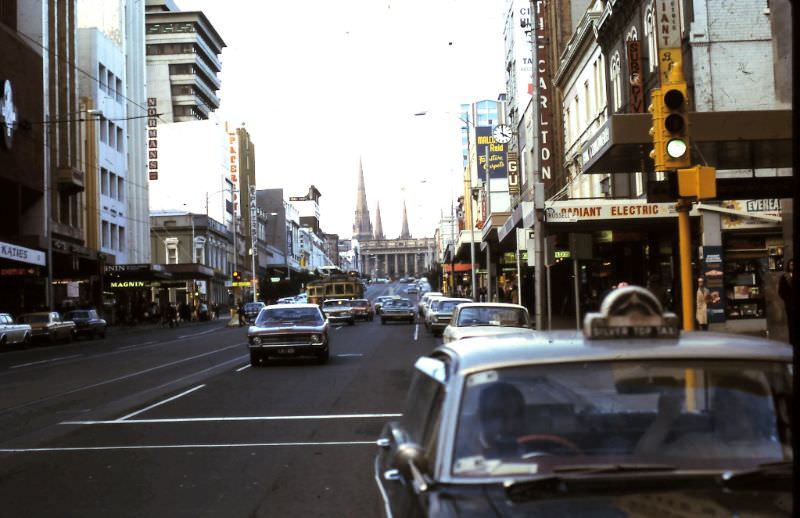
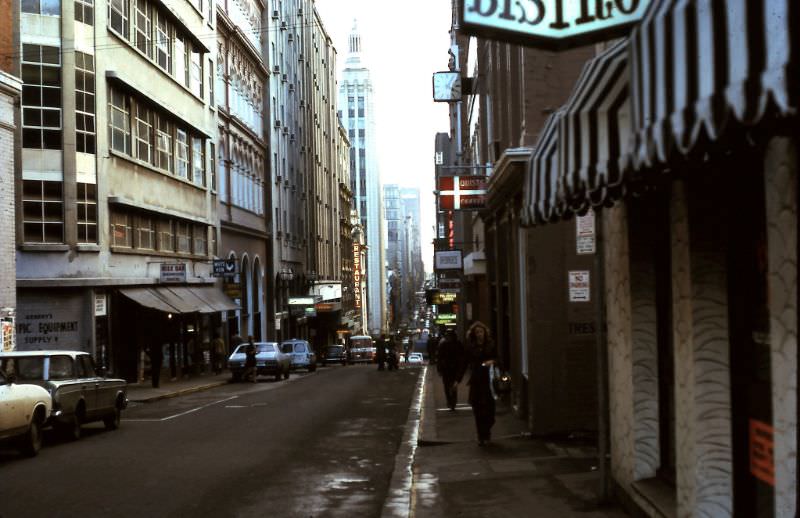
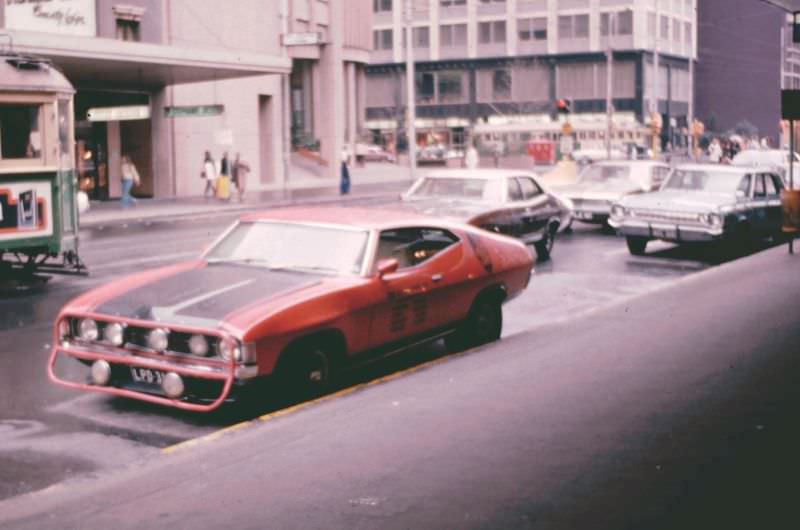
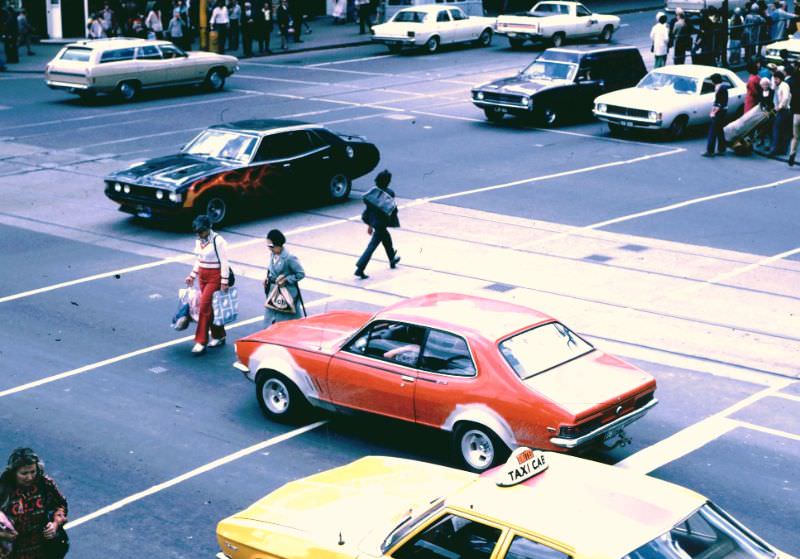
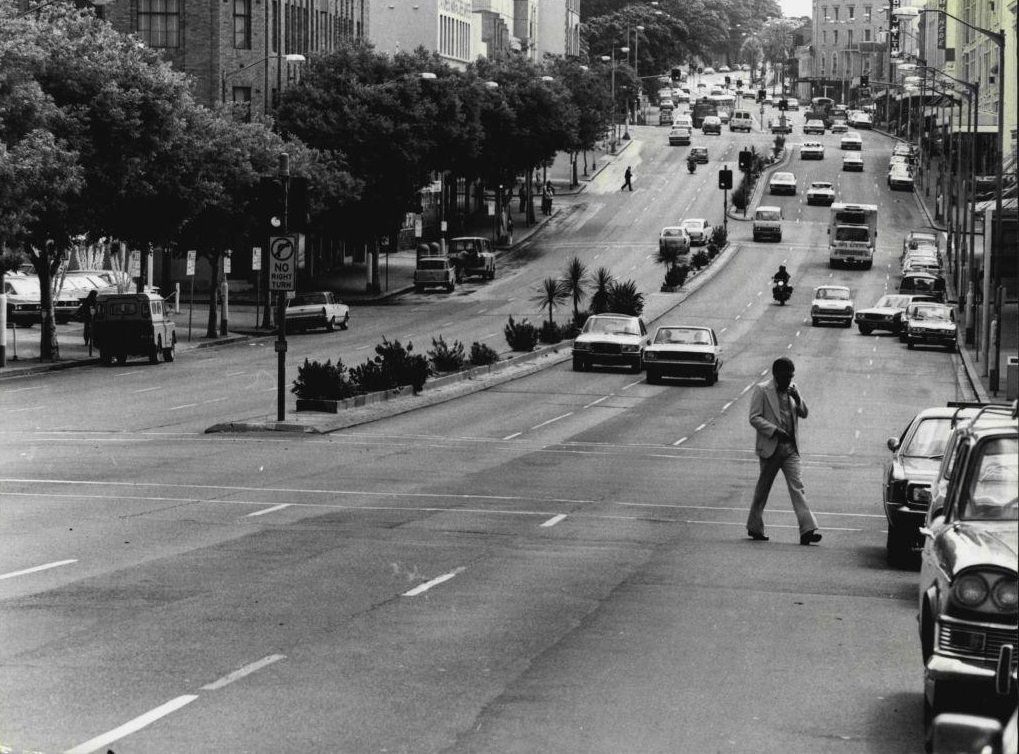
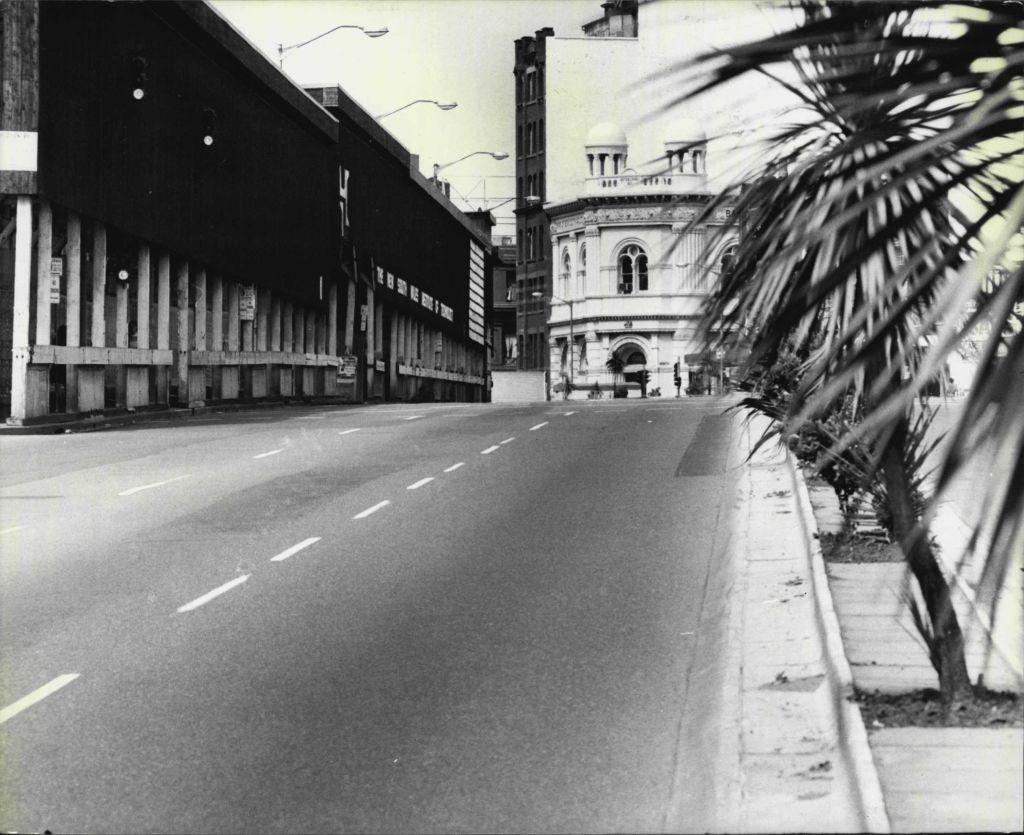
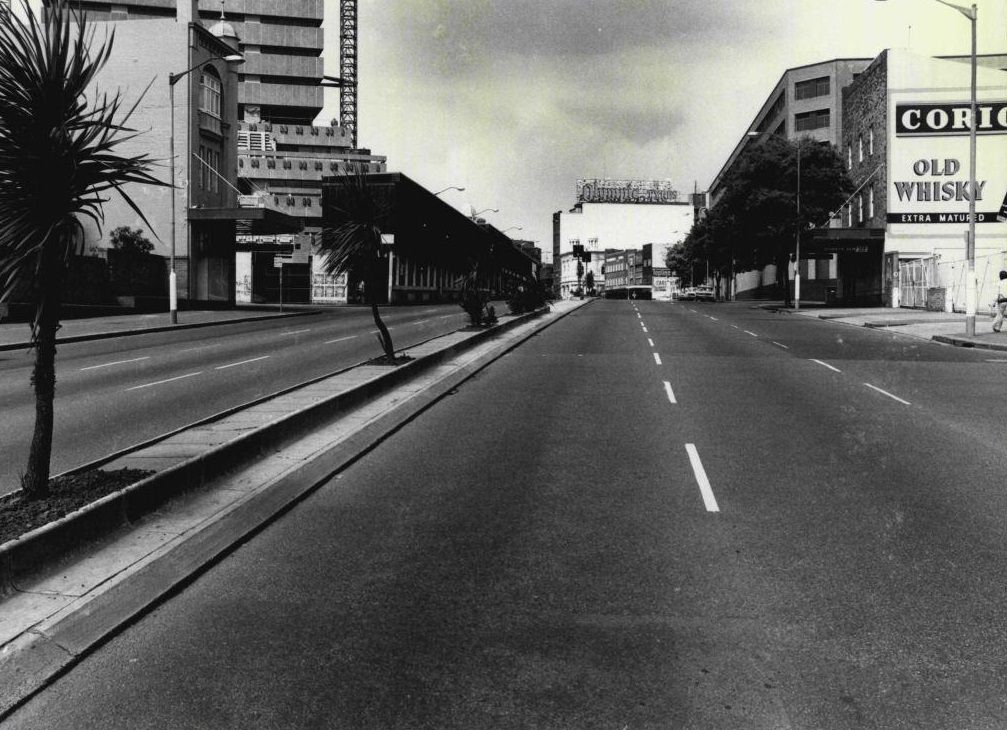
On November 2, 1976, Melbourne Cup day turned the city’s streets eerily quiet. Broadway ran nearly empty as the race was run — a reminder of how deeply the Melbourne Cup was woven into Australian life. Businesses closed, crowds gathered around televisions and radios, and the streets that were usually packed with traffic stood almost deserted for the duration of the race.
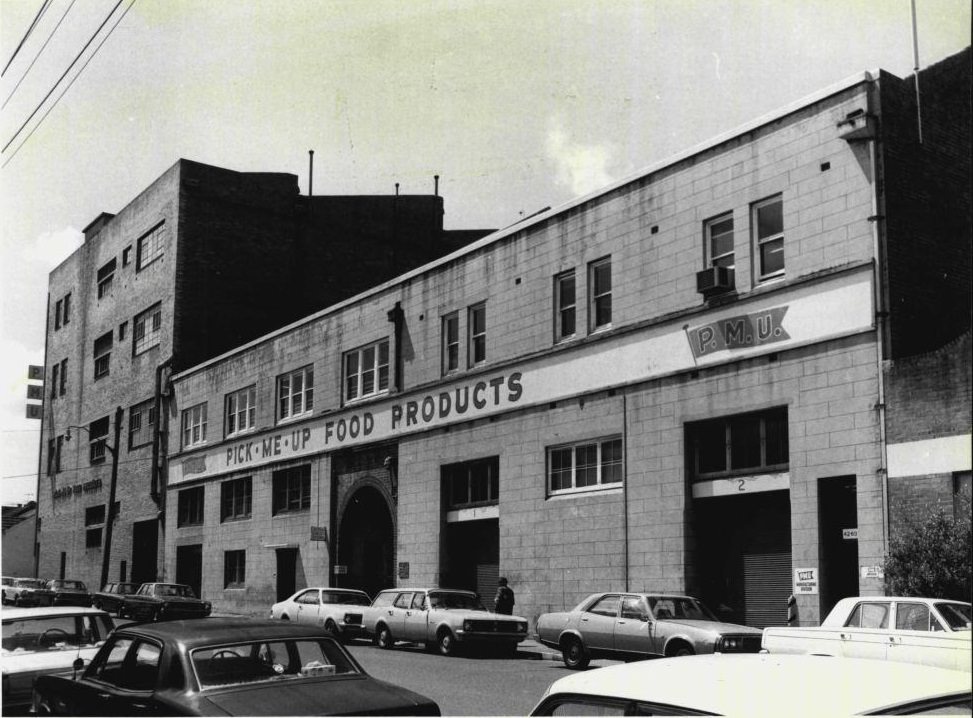
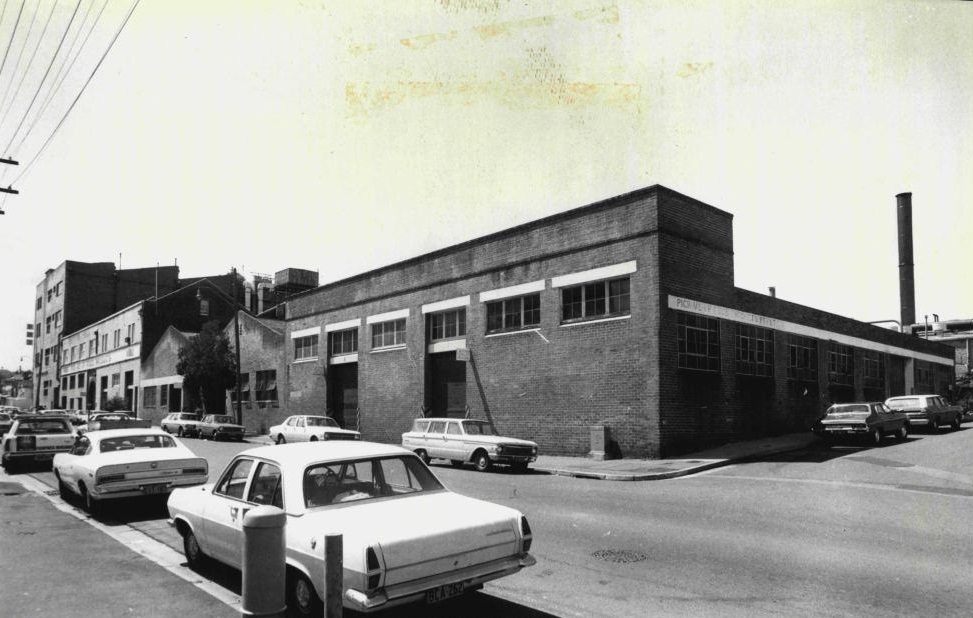
Also in 1976, a PMU factory in Alice Street, Newtown, prepared to close its doors as the company relocated its operations to Melbourne. The move reflected a broader pattern of industrial consolidation that was drawing manufacturing activity into the Victorian capital from smaller cities and towns across the country.
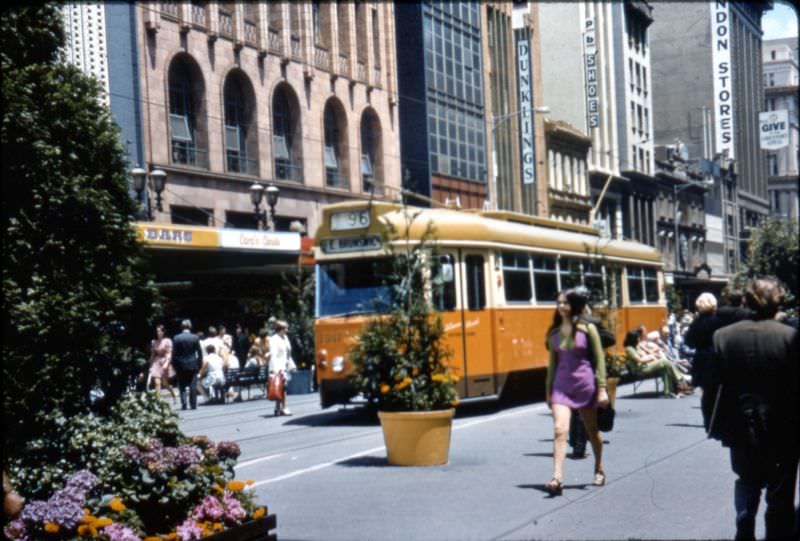
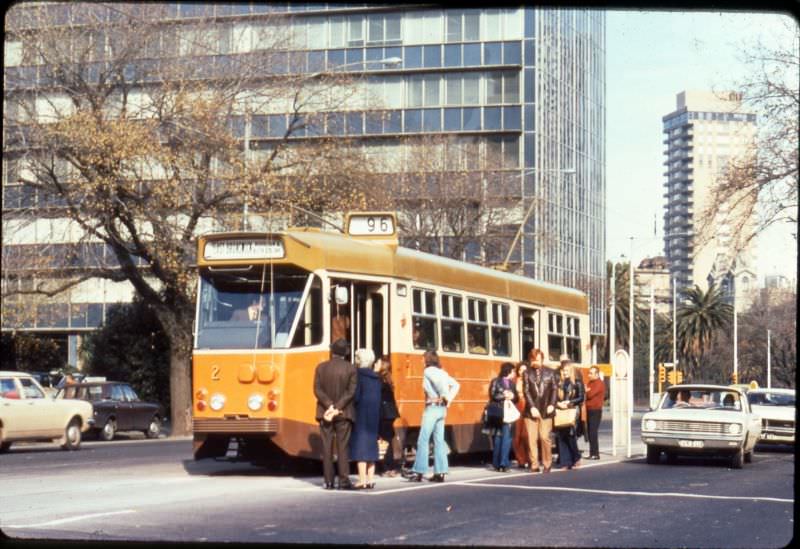
The late 1970s brought new tram models onto Melbourne’s streets. The Z1 class trams, introduced from 1975, were a significant upgrade — air-conditioned, quieter, and more reliable than the older wooden-bodied cars they replaced. By 1977, they were running along key routes including Bourke Street and Flinders Street, photographed at the corner of Elizabeth Street and outside the main station.
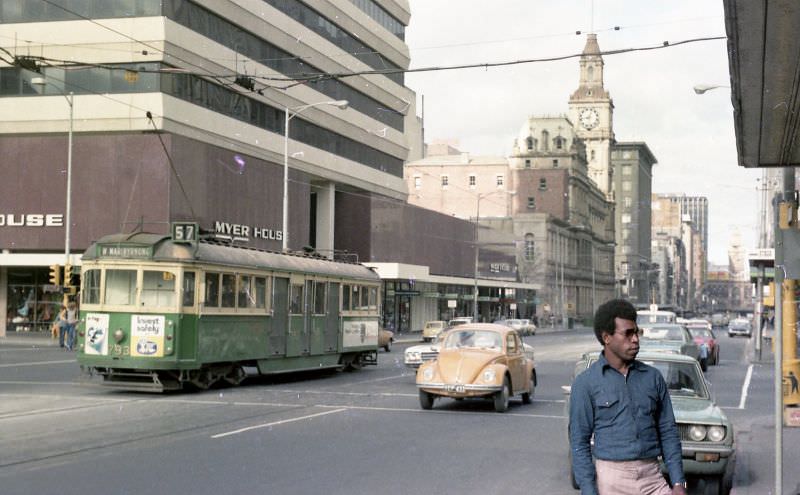
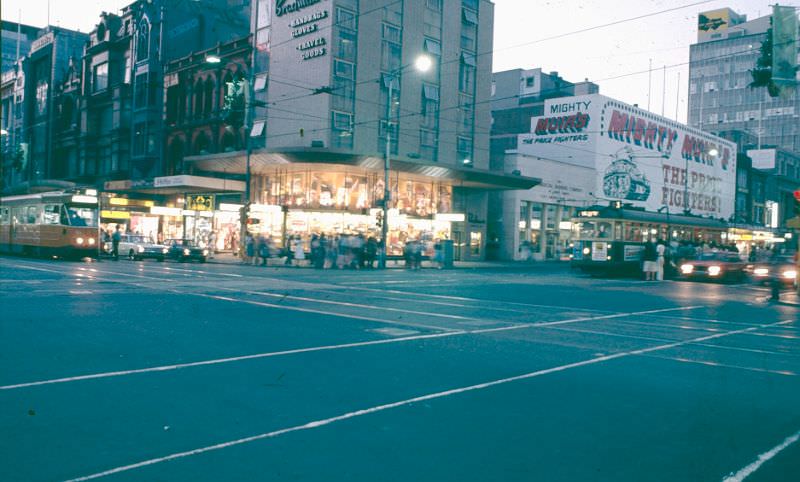
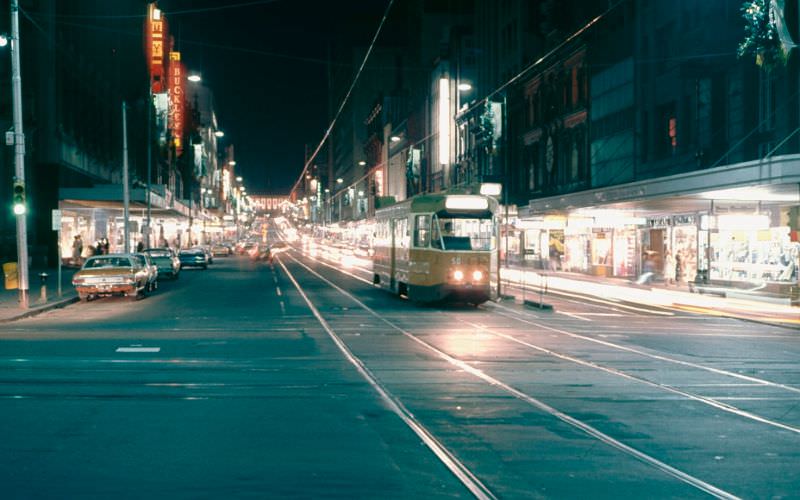
By 1978, the intersection of Swanston and Collins Streets had become one of the most photographed corners in Melbourne. The Z1 trams were now a regular presence on Flinders Street, running past the station’s famous facade. These images from 1978 capture a city that had largely completed its postwar building boom and was settling into a new, denser version of itself.
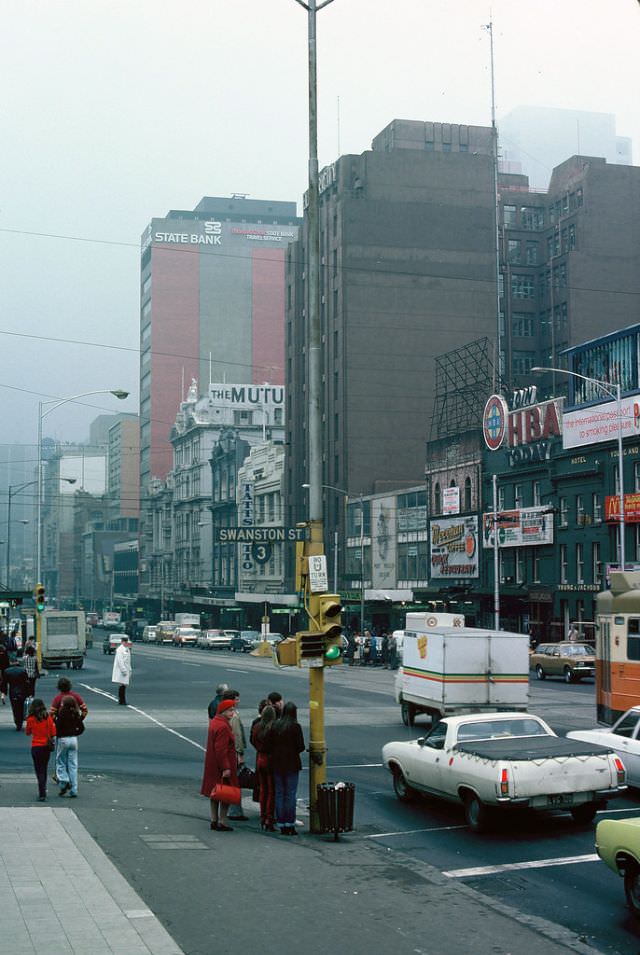
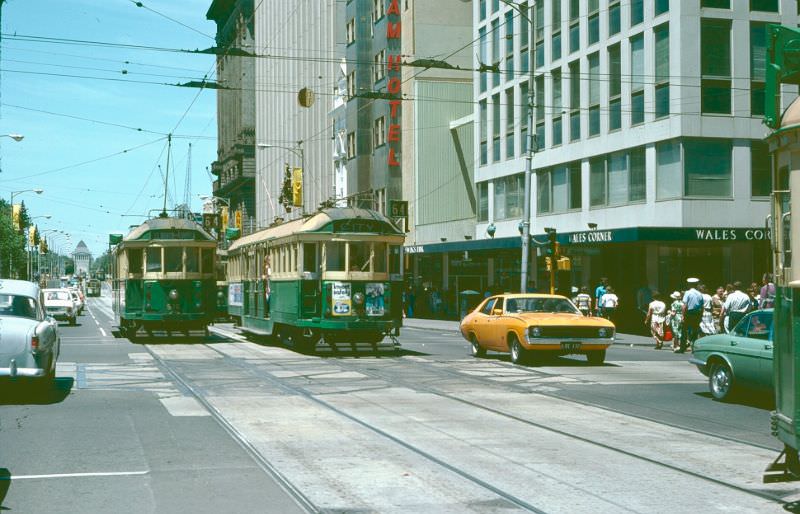
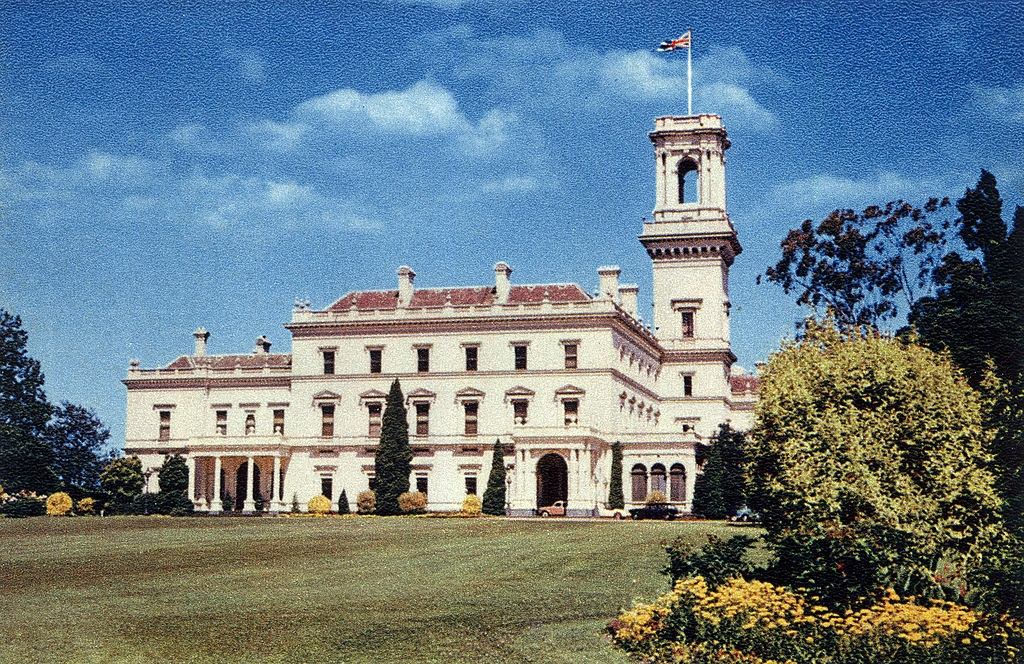
Flinders Street Station was photographed again in 1979, a year before the decade closed. The station looked much as it had in 1970 — its exterior unchanged even as the city around it continued to shift. The same was true of Government House, the official residence of the Governor of Victoria, which stood on its grounds near the Royal Botanic Gardens as a symbol of institutional continuity in a changing city.
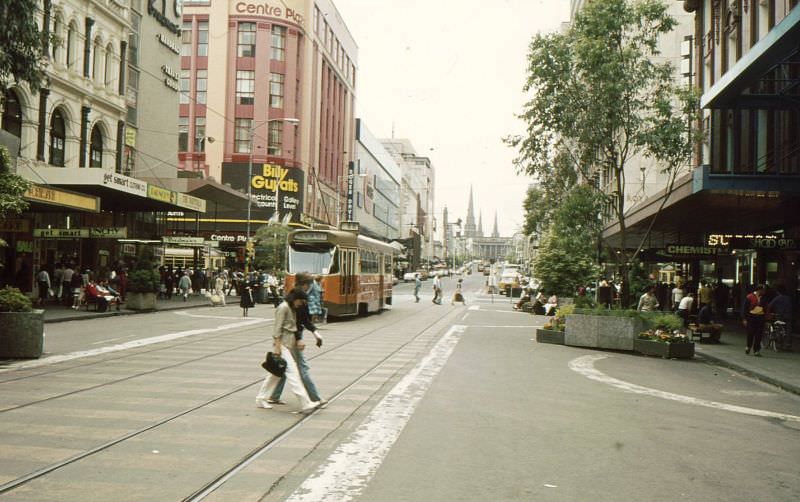
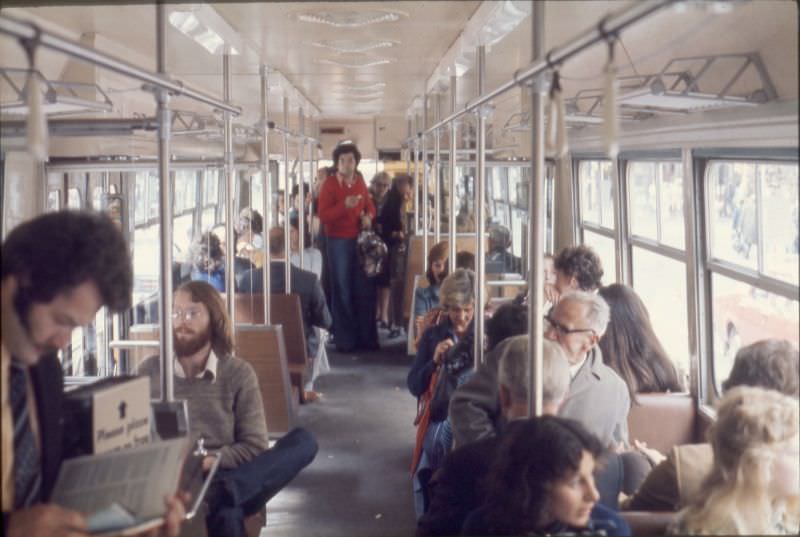
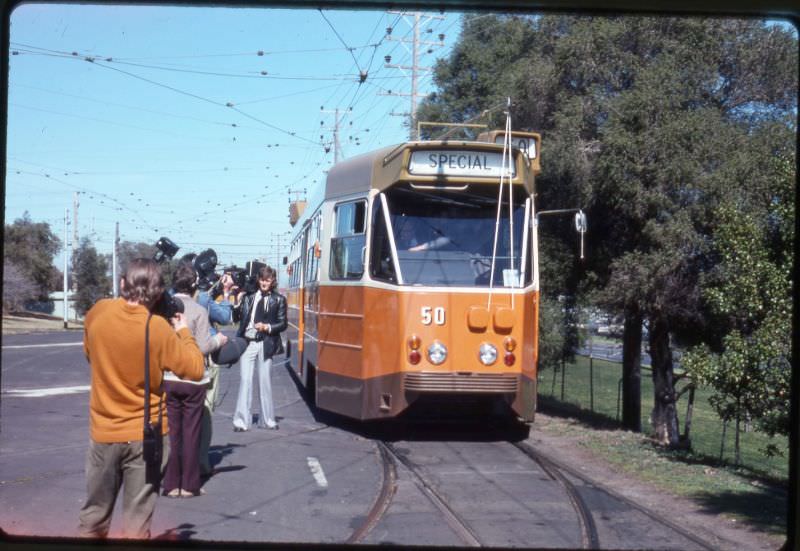
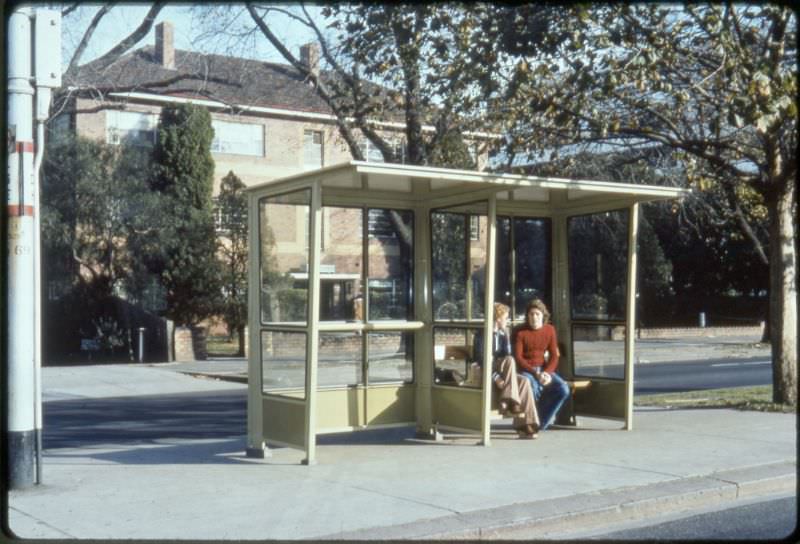
Melbourne’s tram network was one of the largest in the world by the late 1970s, and it remained central to how people moved around the city. The East Brunswick route, the interior of a tramcar, and the no. 50 tram — caught on camera with news reporters alongside it — all reflect the network’s deep presence in everyday Melbourne life. Passengers waiting at stops, trams rounding corners, conductors checking tickets: these were the rhythms that defined urban movement across the decade.
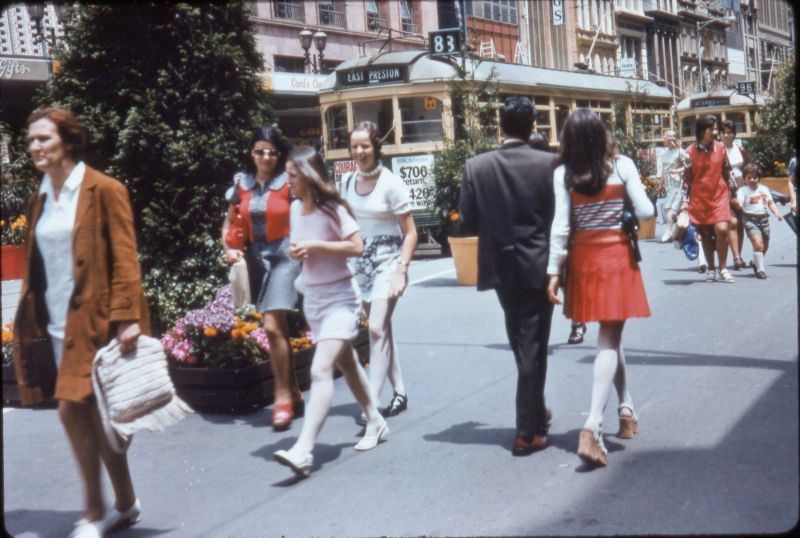
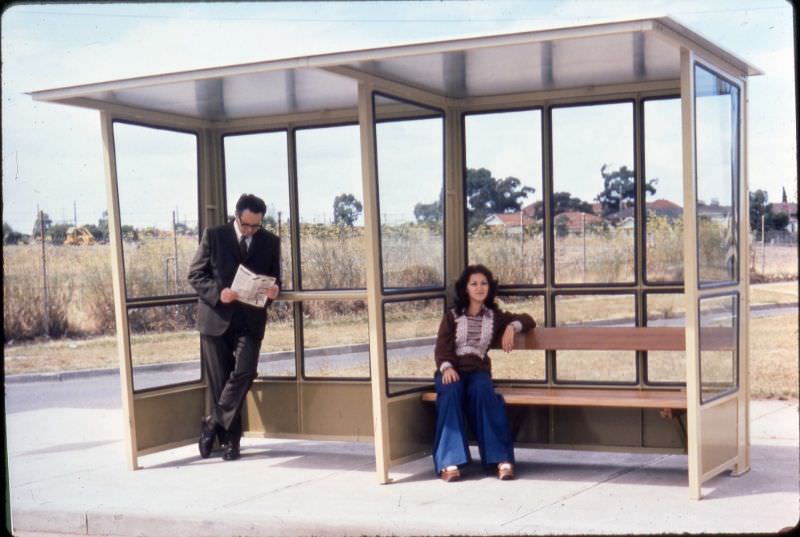
The end of the White Australia Policy opened the door to migration from Asia on a scale not seen since the gold rush era. Vietnamese, Cambodian, and Chinese communities began settling in Melbourne in meaningful numbers through the 1970s. The Muslim population grew rapidly as well, and multicultural policy at both state and federal levels actively encouraged ethnic and religious communities to maintain their cultural identities rather than assimilate entirely. At the same time, mainstream Christianity’s hold on public life weakened, and secularization became an increasingly visible feature of city culture. Collins Street, Government House, and the familiar avenues of central Melbourne bore witness to all of it — a city changing not just in its buildings and roads, but in the people who called it home.





It’s McCEwans; that’s a blast from the past. Did Bunnings acquire them?
In 1993, yes. For a while, it was a Bunnings.
Isn’t that opposite Hardware St.?
Melbourne is the city I fell in love with. Travelling from the country to visit Melbourne was one of the highlights of my young life. There was something nostalgic about the sounds and sights.
Except the “Melbourne tram, 1970” photo is actually a Ballarat tram.
We really built great cars back in the day.
I hear it was also in black and white back then.
Much nicer looking today
We had much cooler views and sight-lines before they planted all the trees. Pros and cons I guess.