
Charles Weever Cushman was not a professional photographer. He was an amateur with a camera and an eye for the real city — its corners, its crowds, and its quiet moments. In the early 1940s, he walked the streets of Manhattan and shot thousands of photographs in Kodachrome color, a format that most photographers at the time reserved for special occasions. Cushman used it on everything.
His timing placed him in a city caught between two worlds. The United States was entering World War II, and New York was shifting fast — economically, socially, and physically. Cushman’s photographs freeze that specific moment in time with a clarity that black-and-white images simply cannot match. The color in his shots makes the streets feel lived-in rather than historical.
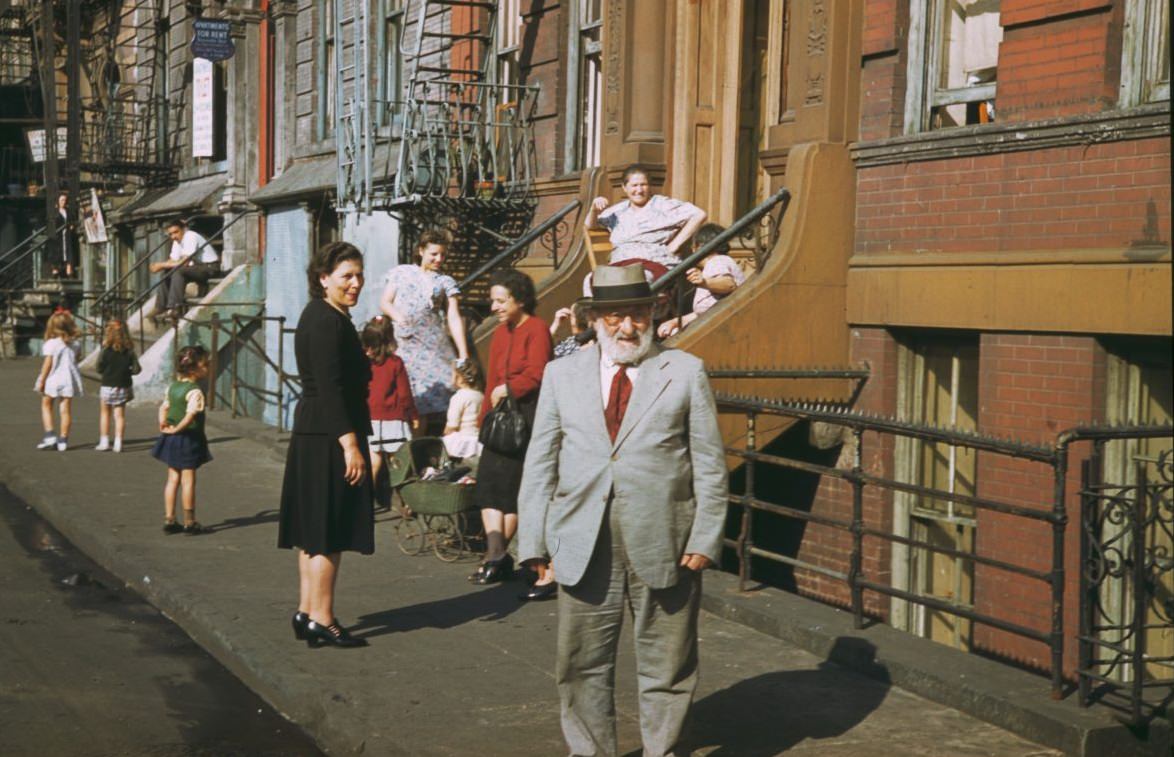
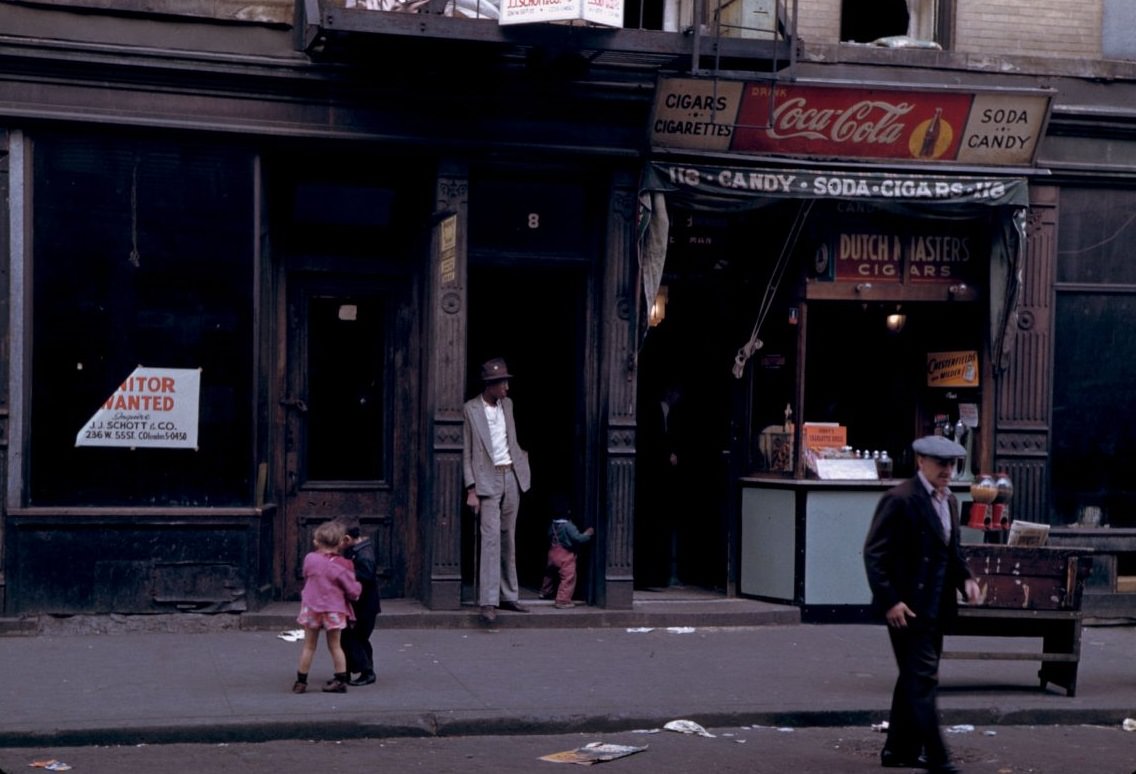
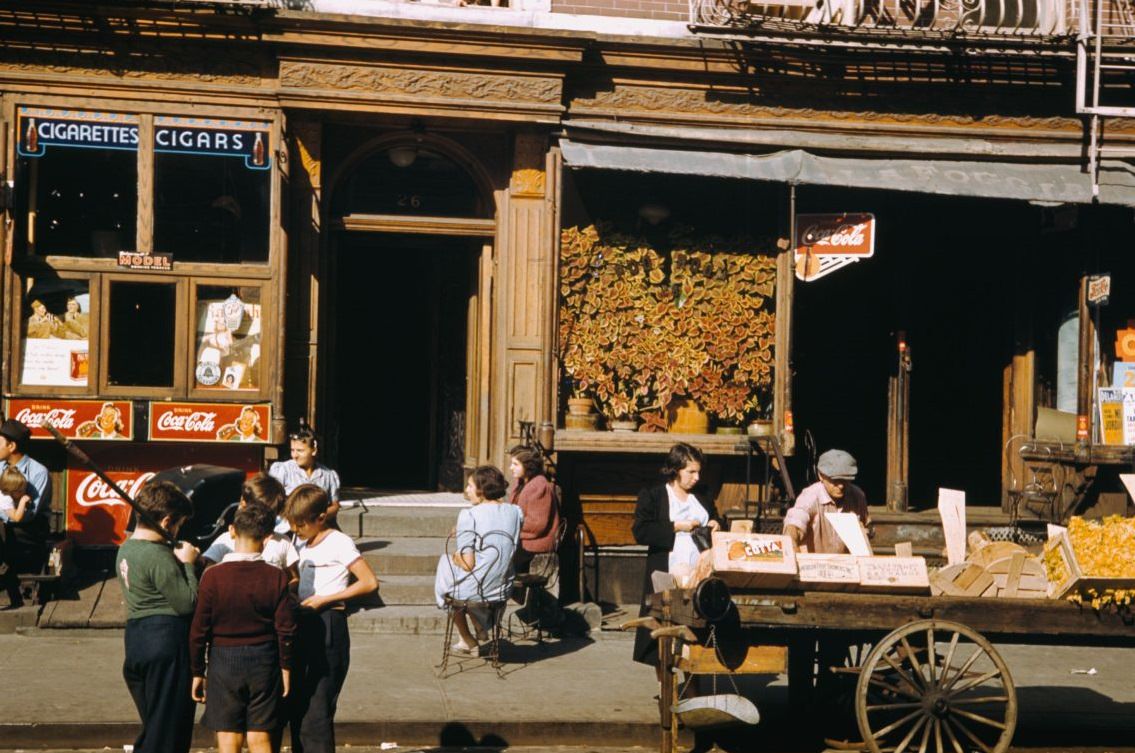
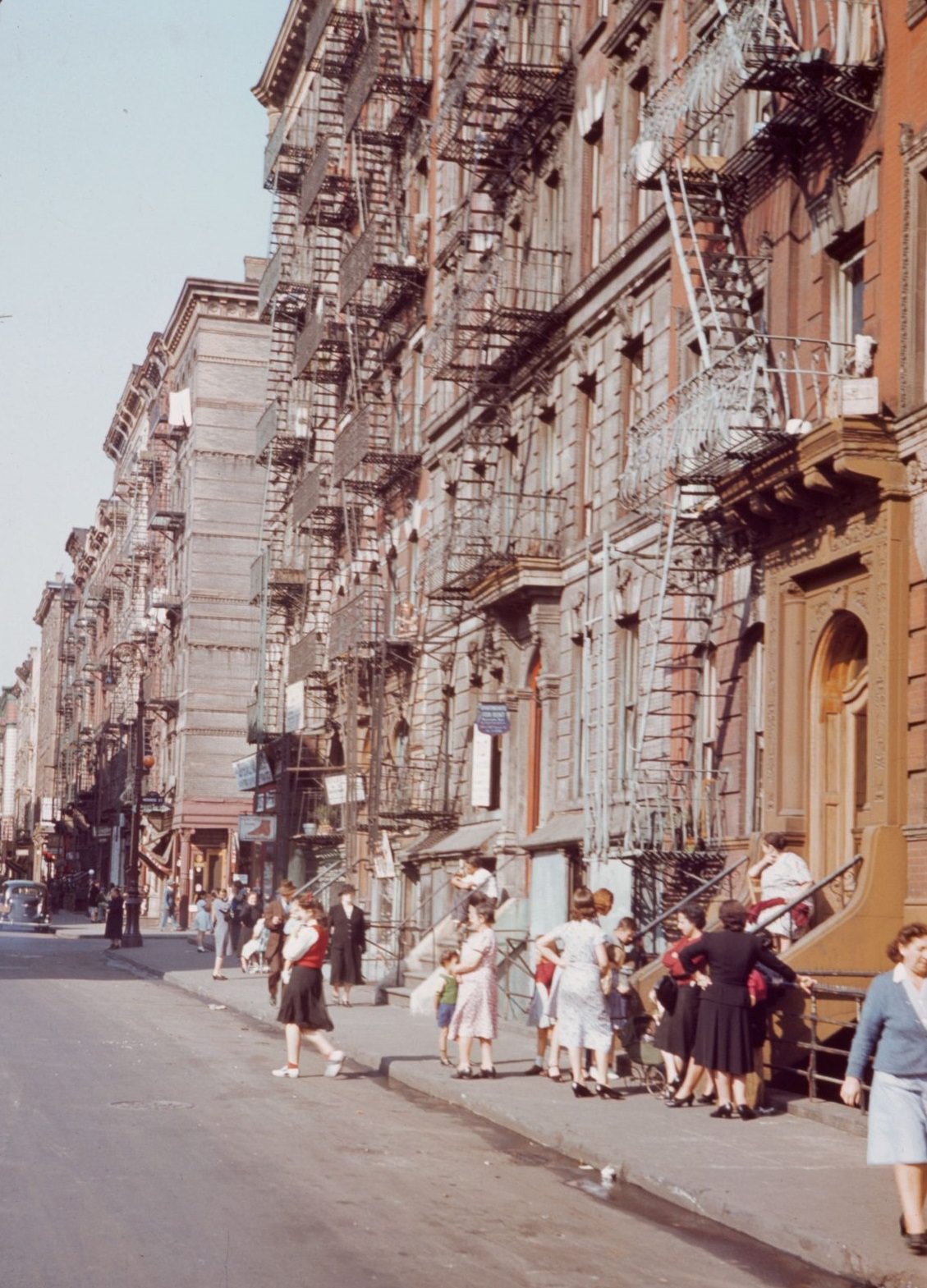
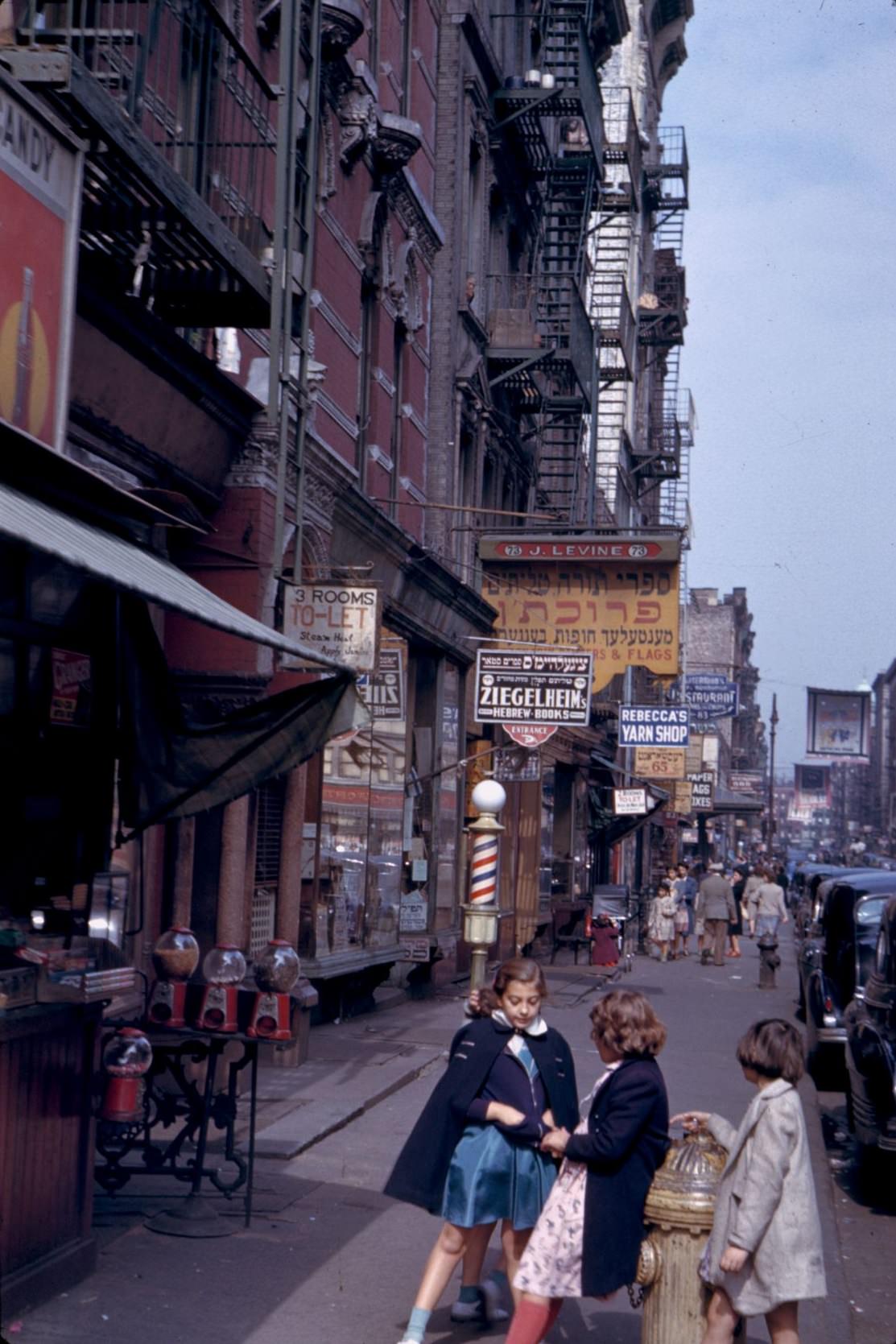
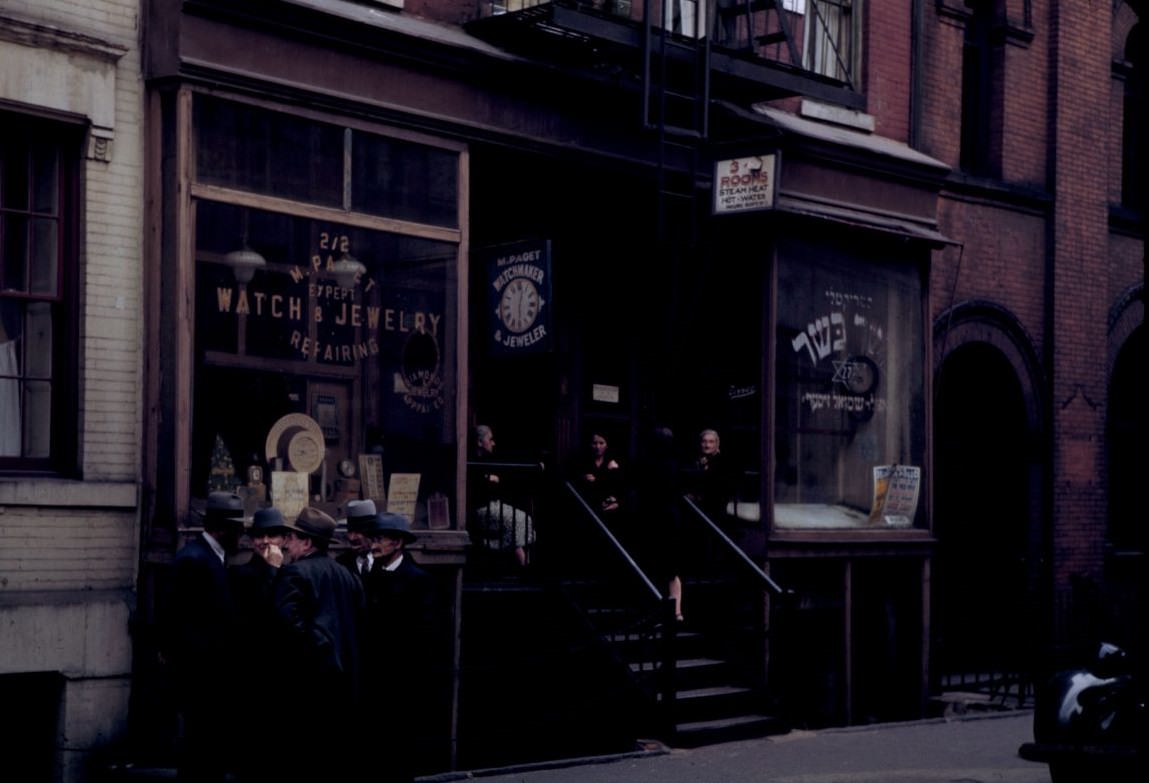
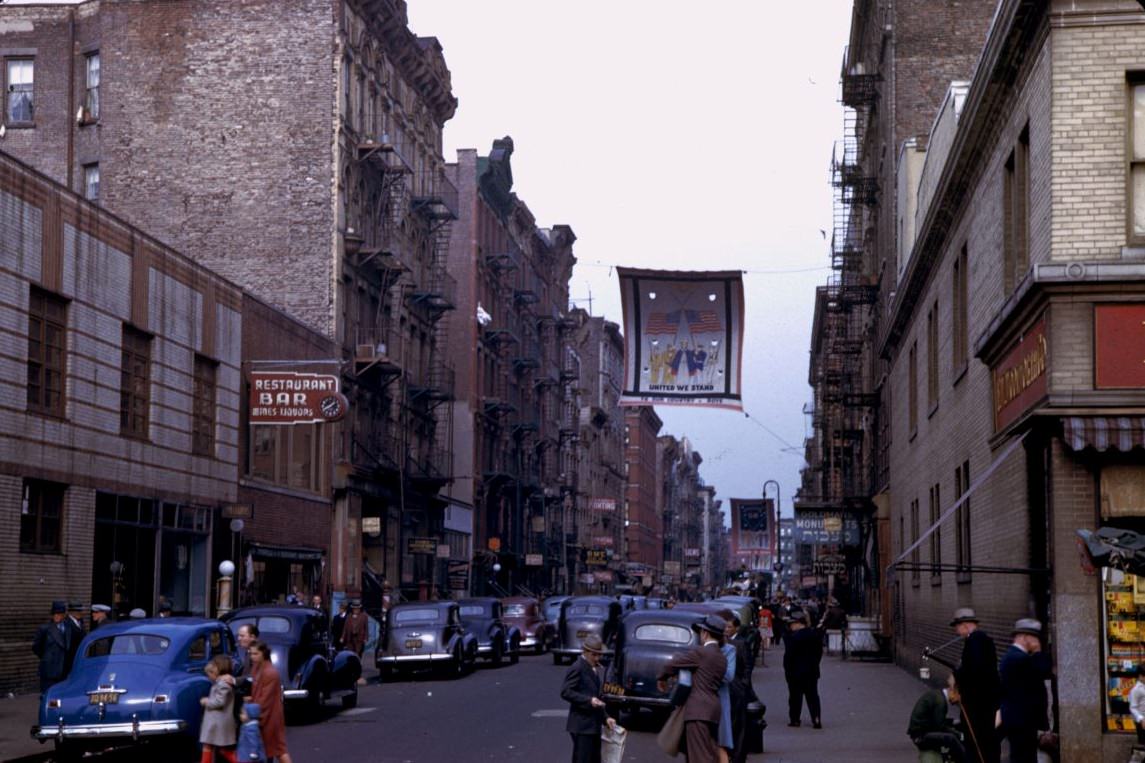
The Lower East Side was one of Cushman’s most frequently visited areas. The neighborhood was densely packed, its tenement blocks filled with immigrant families, street vendors, and working-class New Yorkers. On any given Saturday, sidewalks along streets like Clinton became outdoor living rooms — neighbors talking, children running, older residents watching the street from stoops.
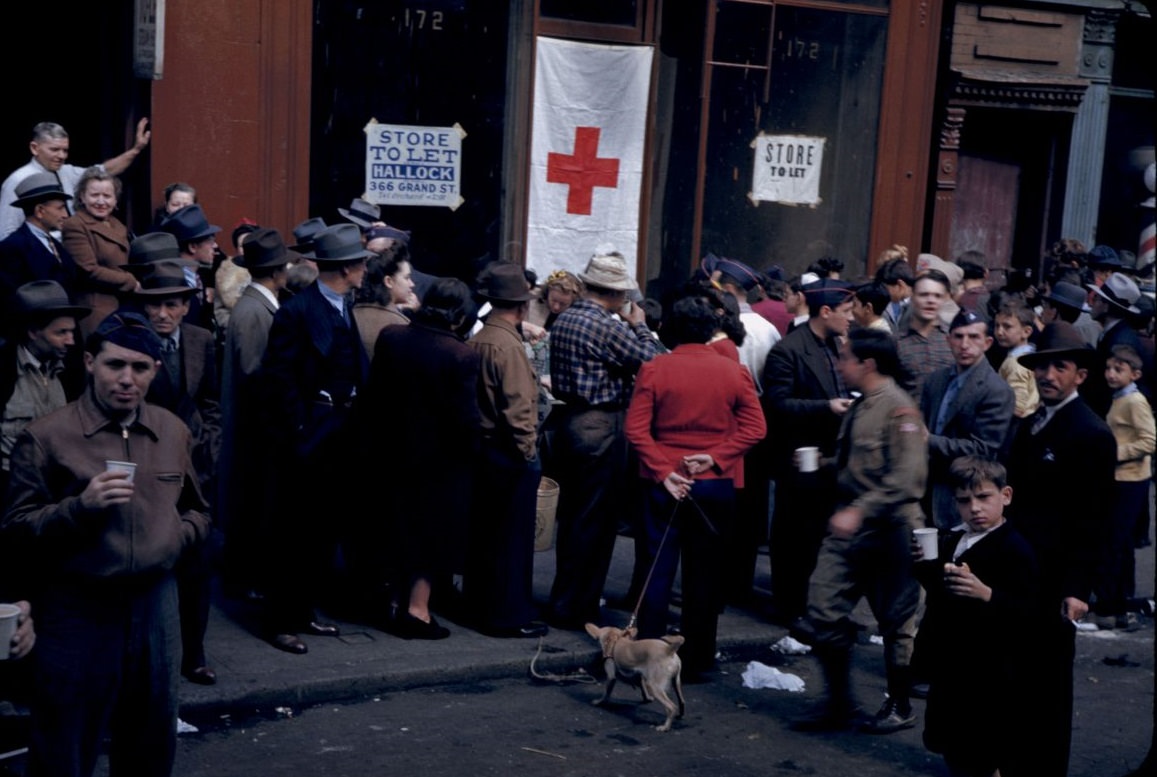
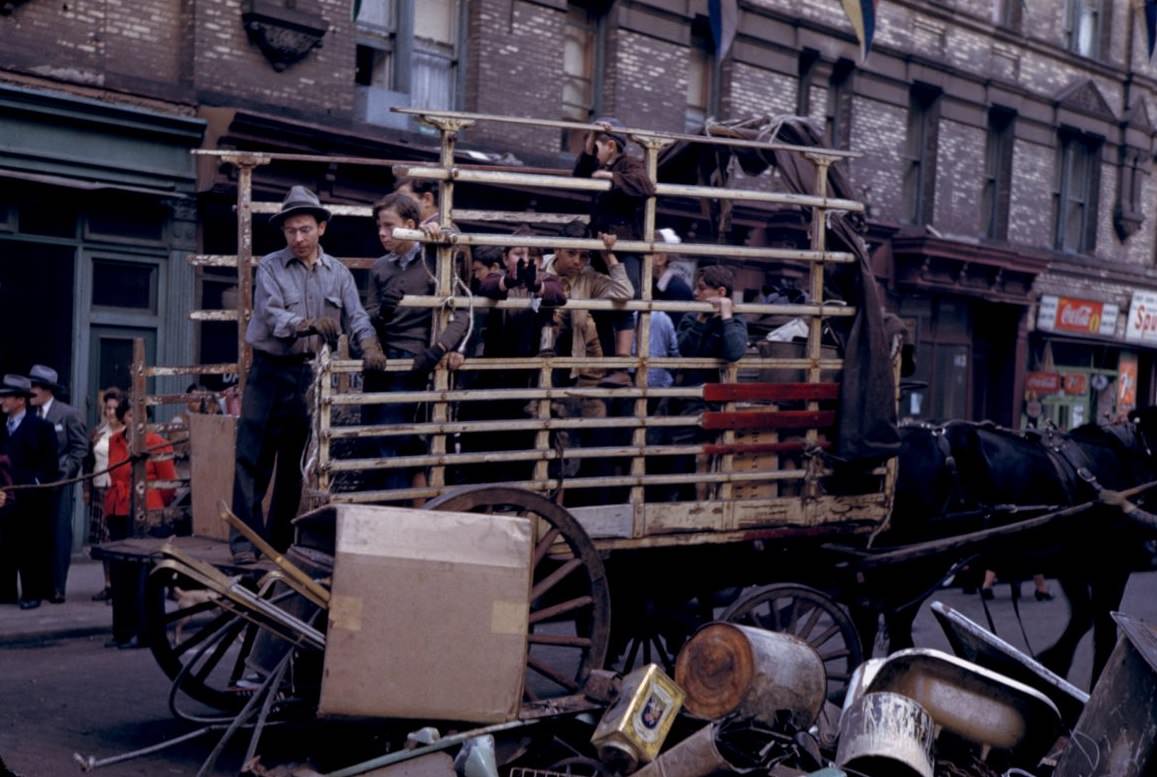
Cushman also documented the wartime effort playing out at the neighborhood level. In 1942, salvage drives were organized across New York City as part of the national push to collect scrap metal, rubber, and other materials for the war effort. On the Lower East Side, these collections drew large crowds.
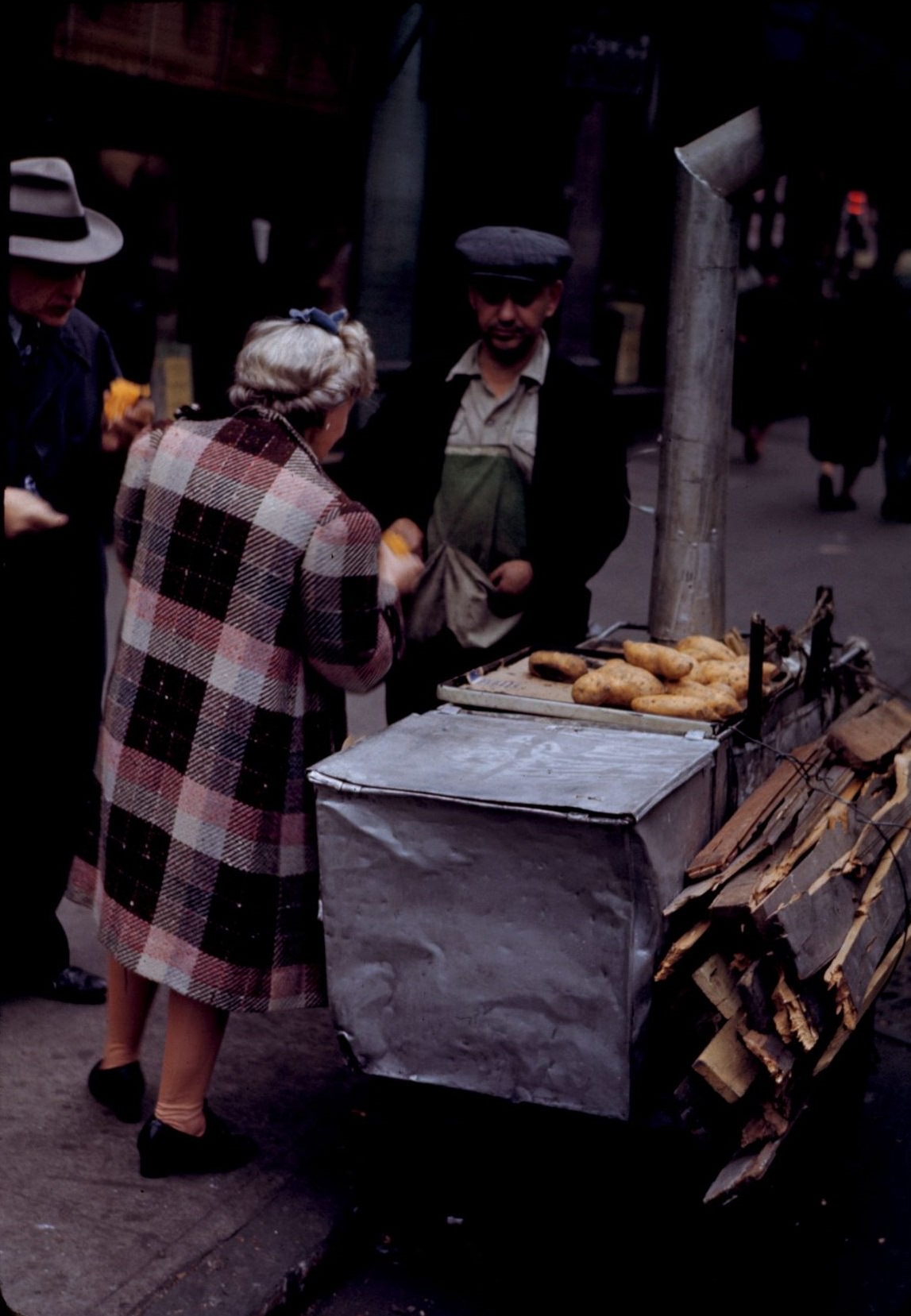
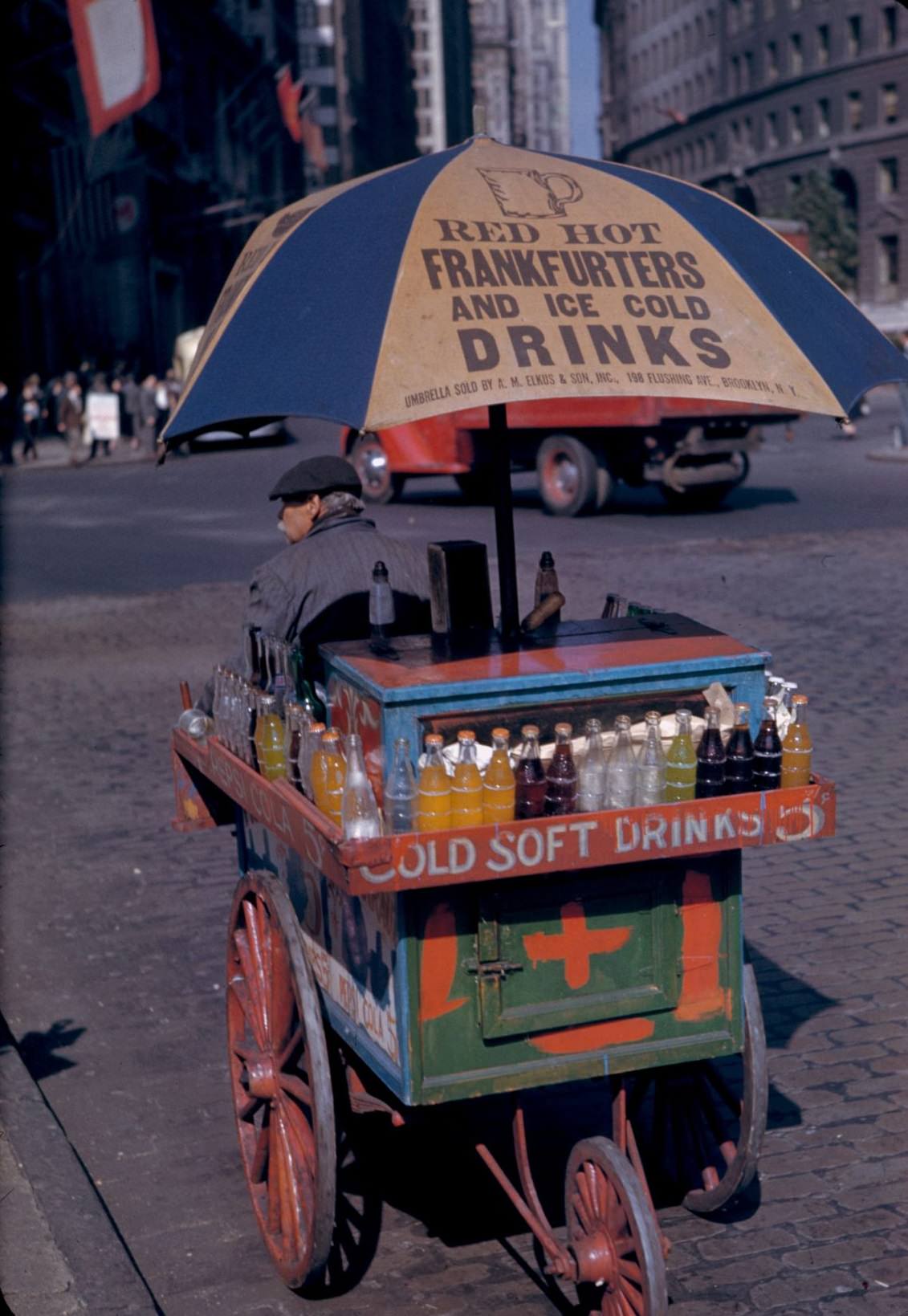
Street vendors were a constant presence throughout the borough. Cushman photographed them regularly, capturing the small-scale commerce that kept city life moving. A man selling hot sweet potatoes from a cart, a portable soft drink stand set up near Bowling Green — these were ordinary sights that rarely made it into formal records of the era.
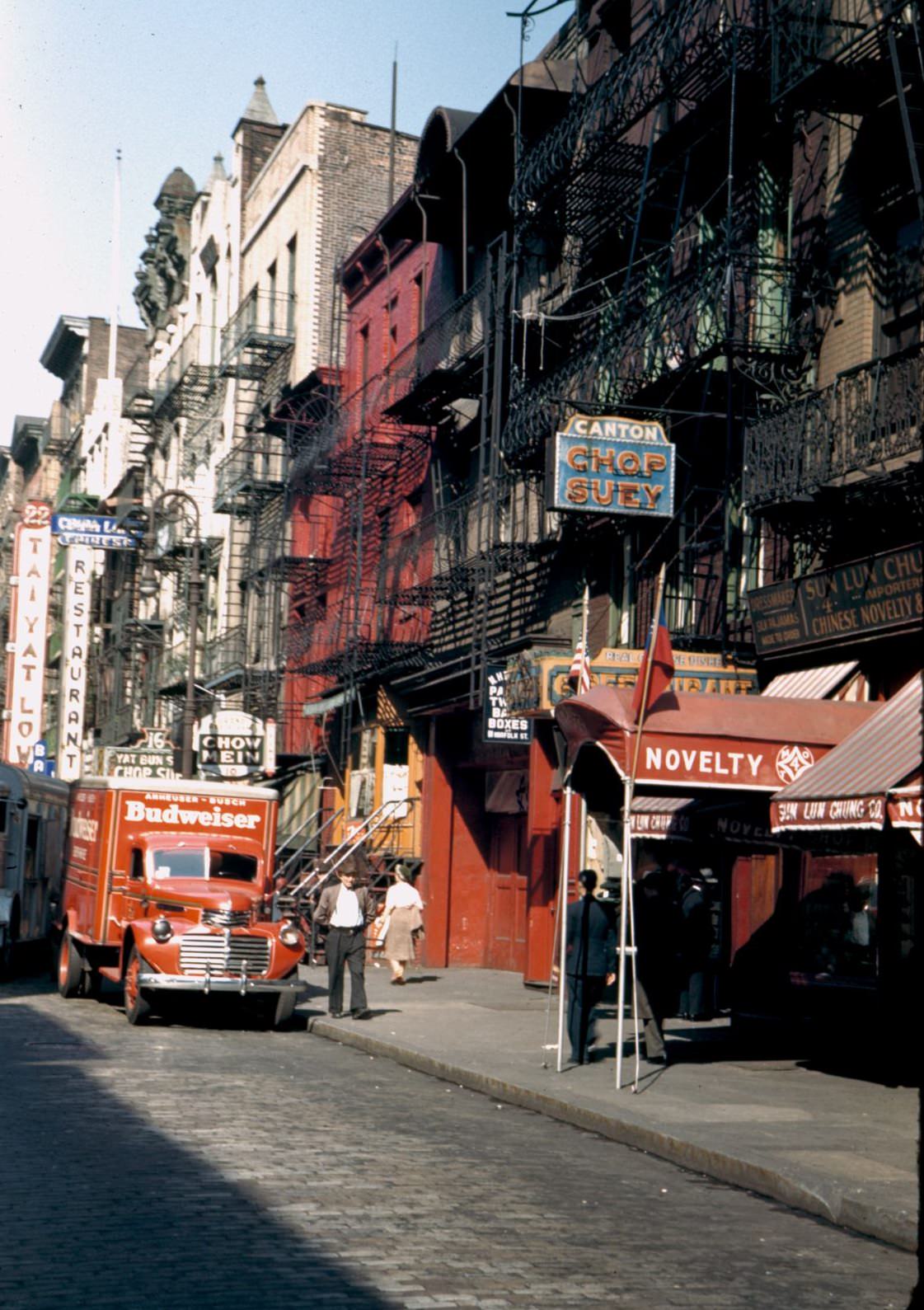
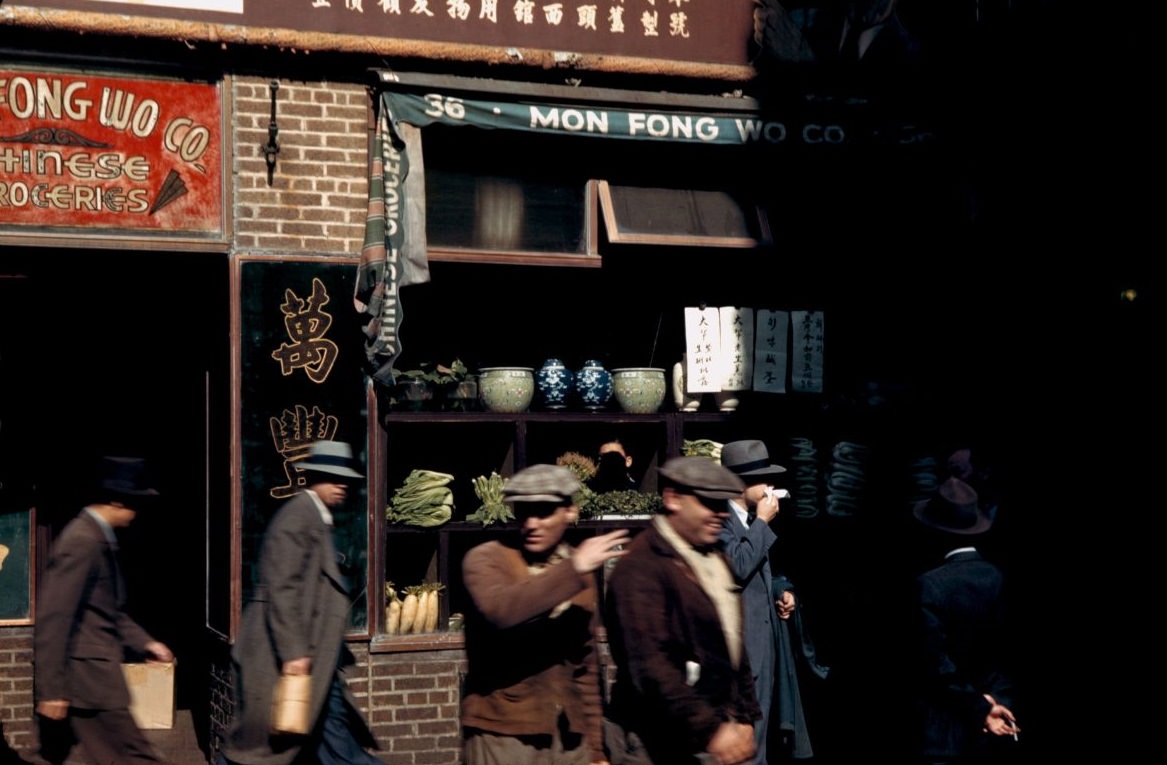
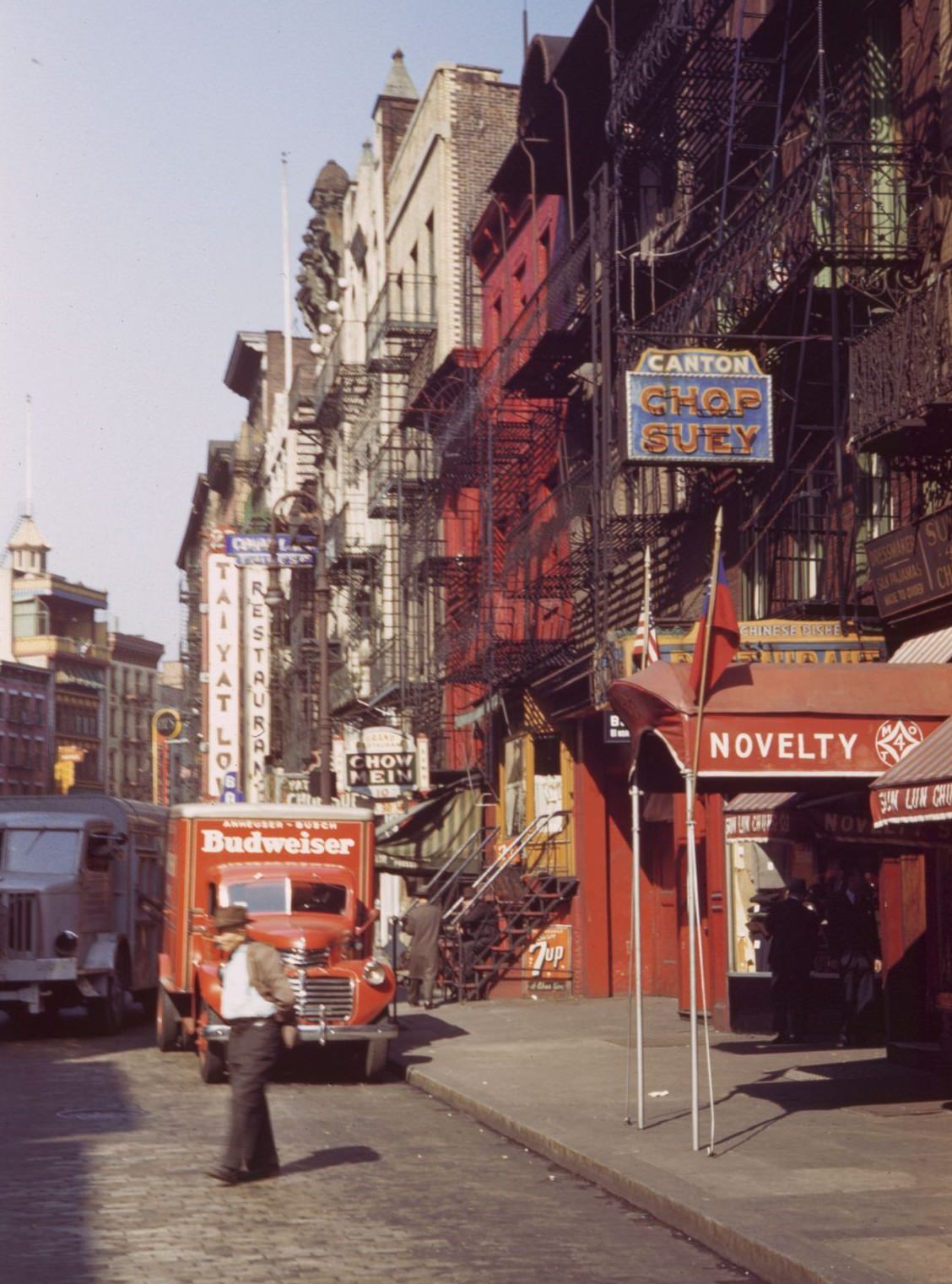
Chinatown was another neighborhood Cushman returned to more than once. By 1942, the area centered around Mott Street had been a distinct Chinese-American community for decades. His photographs show the storefronts, signage, and street activity that defined the neighborhood — a level of everyday detail that makes each frame feel like a document rather than a snapshot.
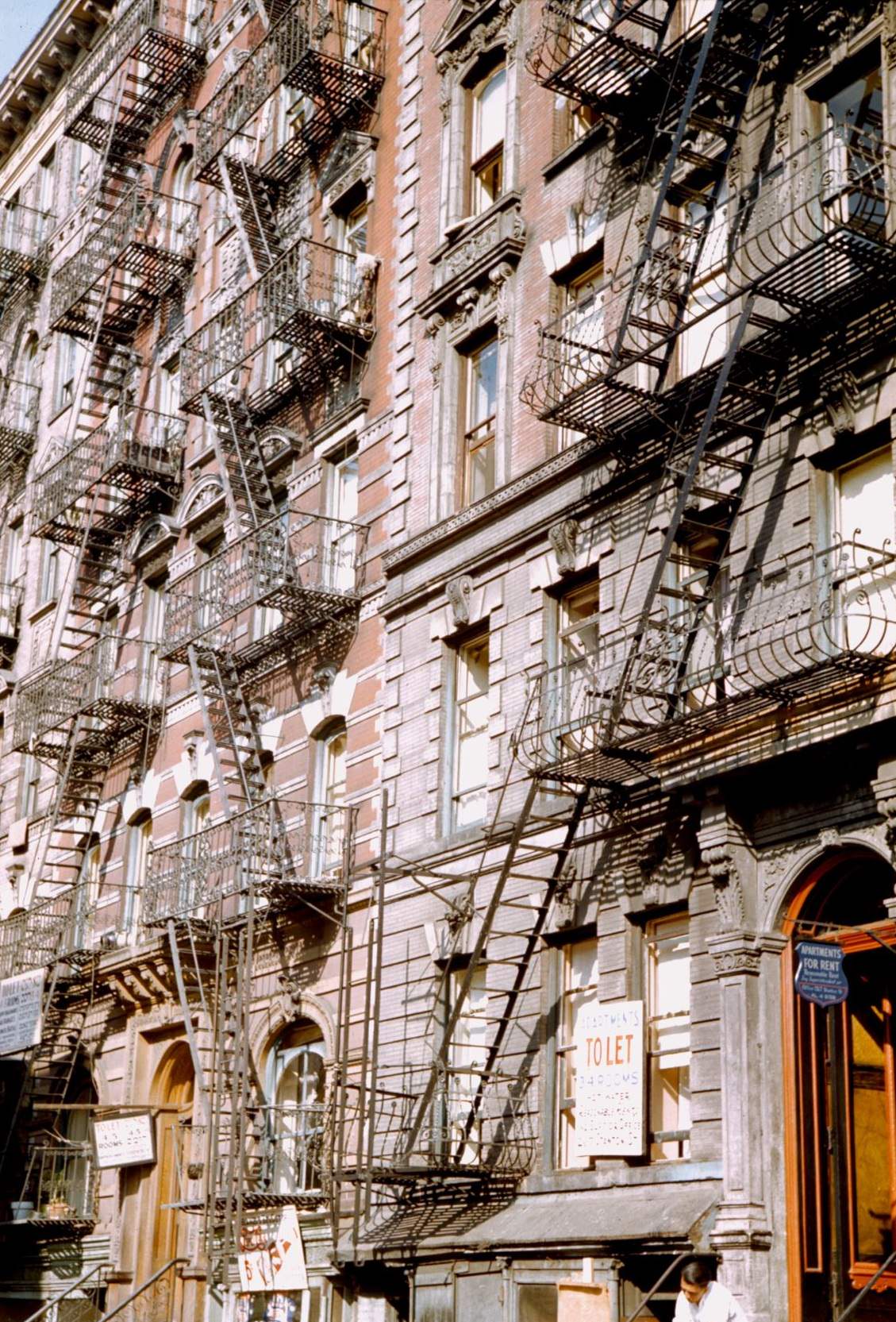
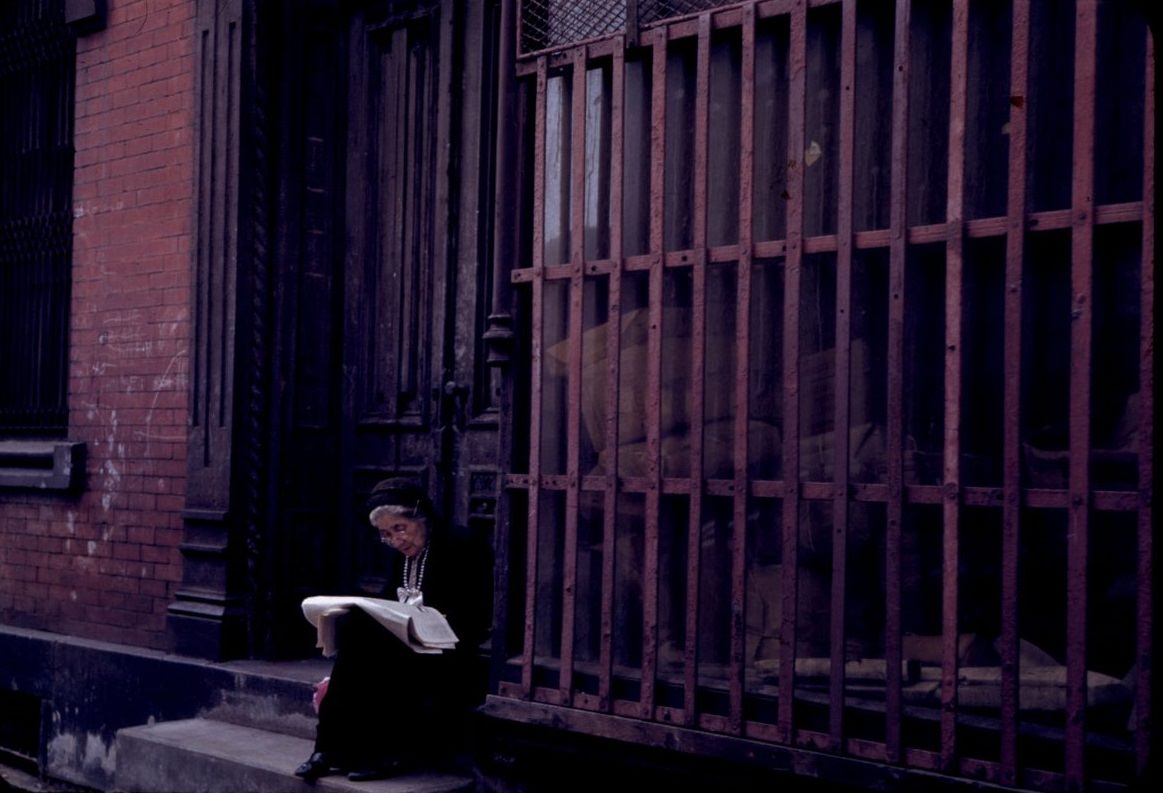
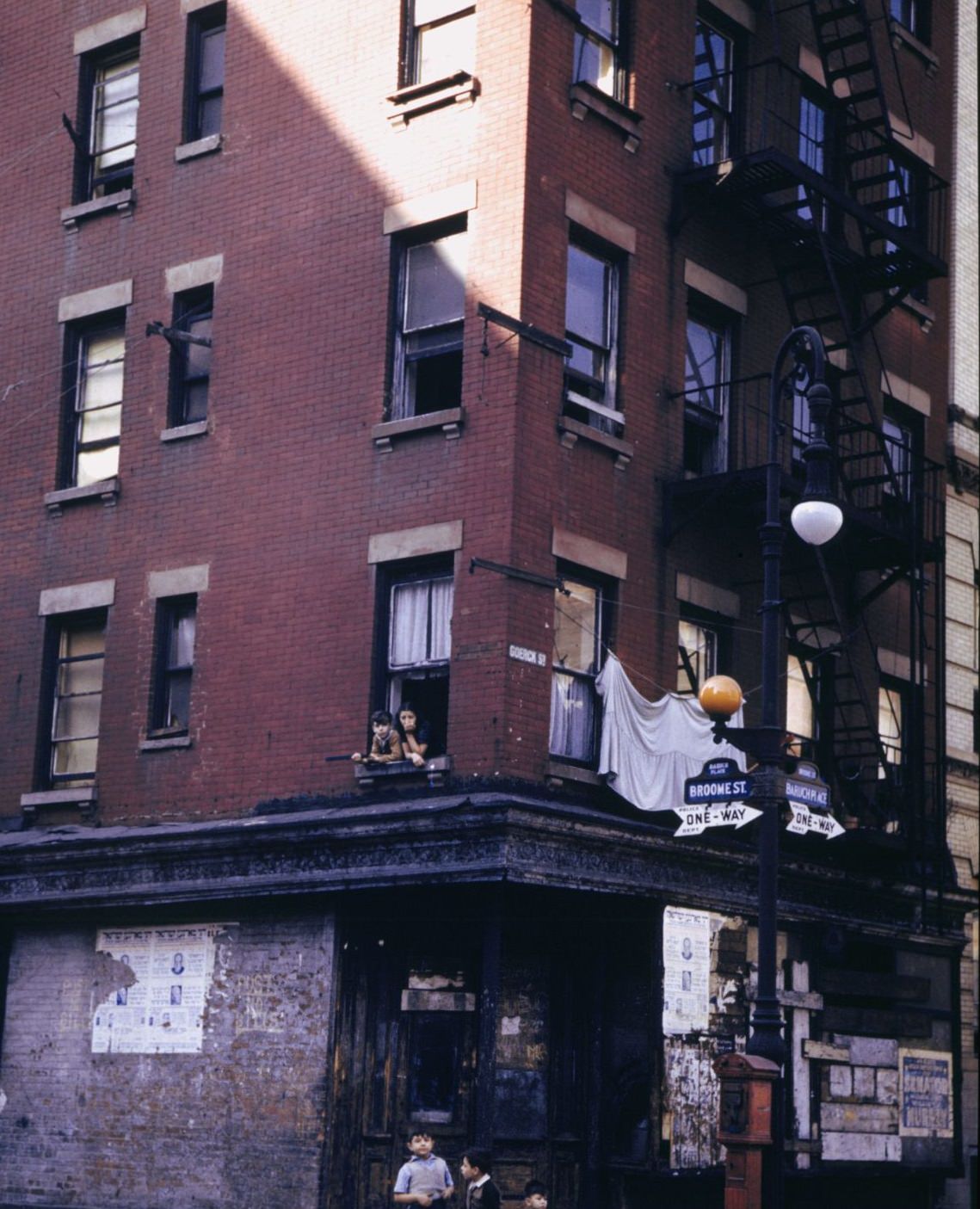
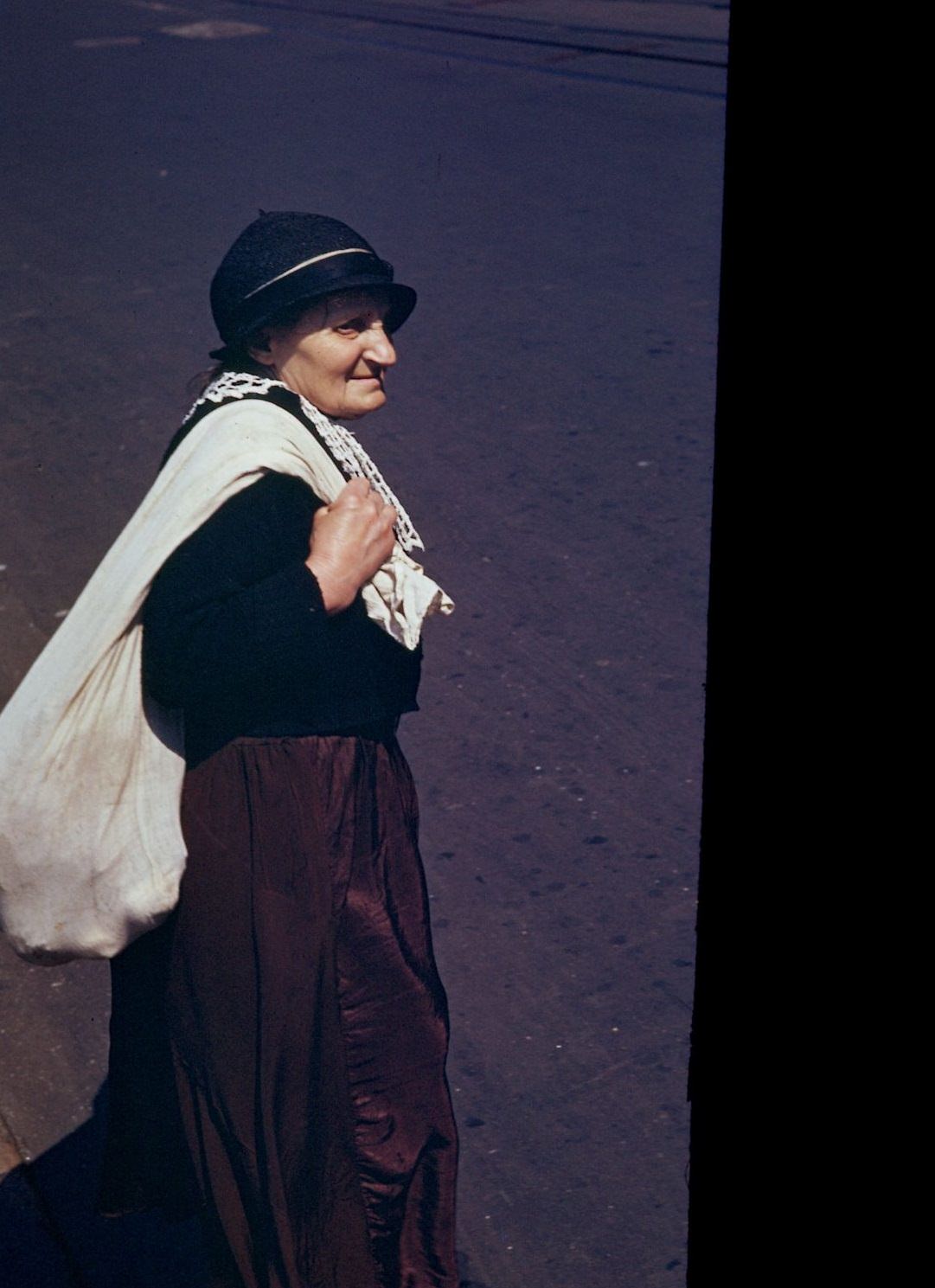
Not every photograph was of crowds or commerce. Some of Cushman’s most striking images are quieter — a woman on the Lower East Side reading the Sunday paper alone, or the worn facades of apartment buildings along Broome Street. These details show a city of individuals, not just a mass of people.
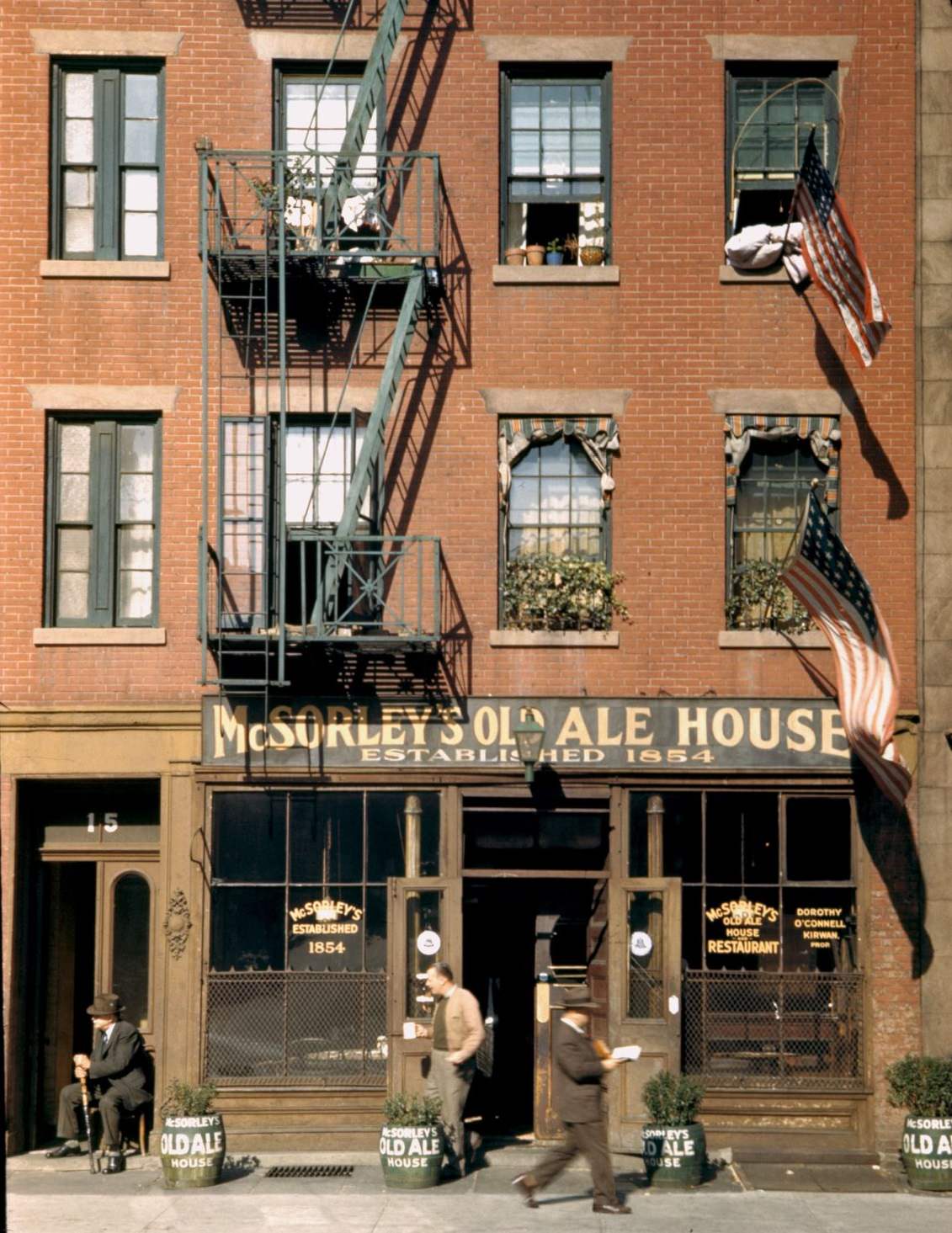
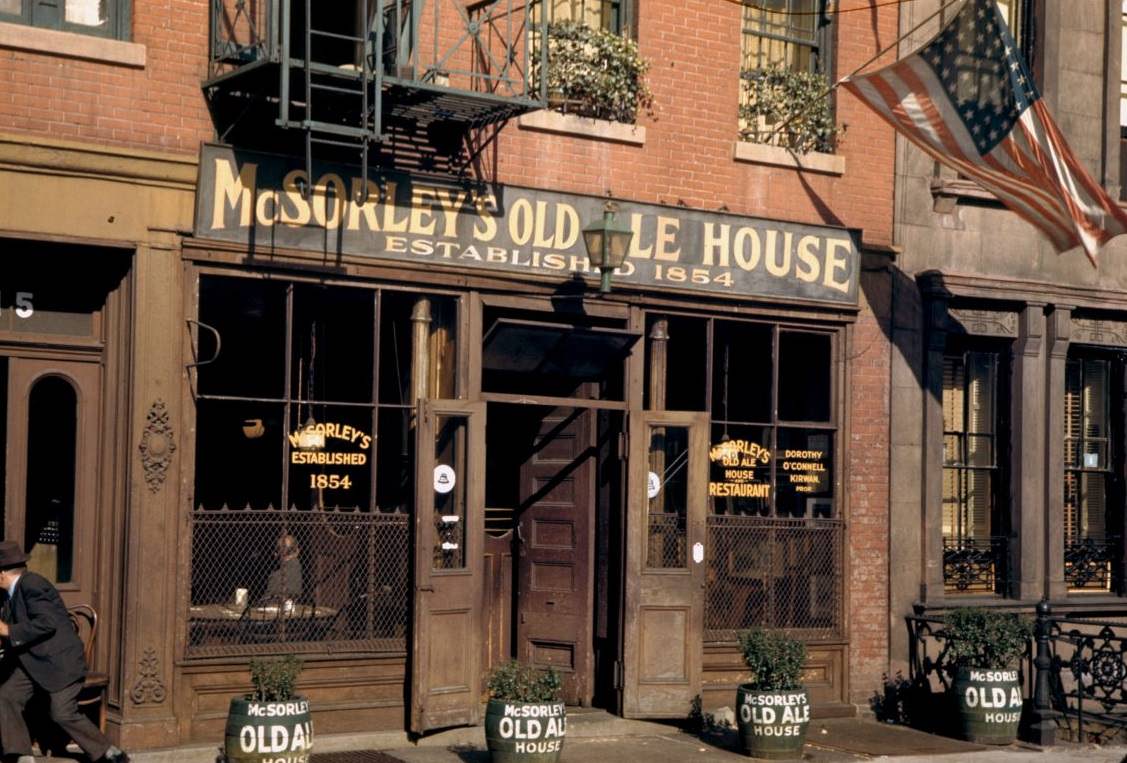
McSorley’s Old Ale House on East 7th Street, one of the city’s oldest bars, appeared in Cushman’s work as well. Established in 1854, it was already an institution by the time Cushman photographed it in 1942. Its sawdust floors and gas lamps had barely changed since the 19th century, and Cushman’s Kodachrome captured that timelessness in full color.
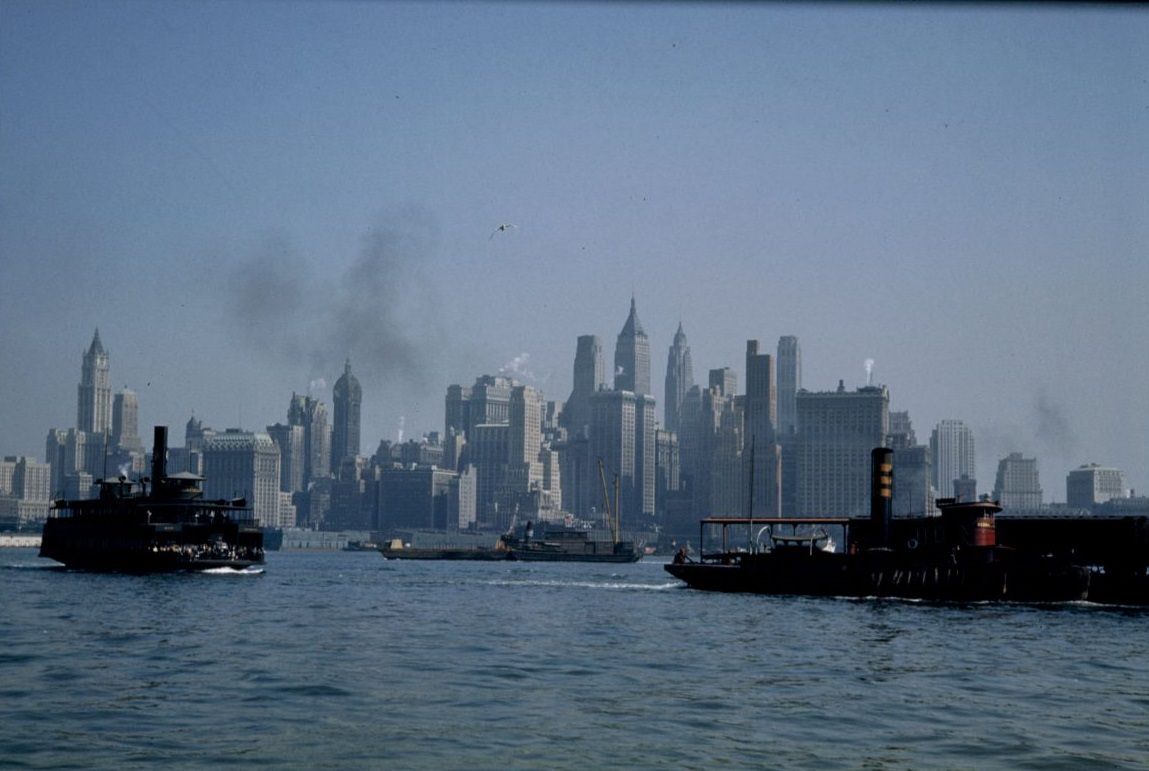
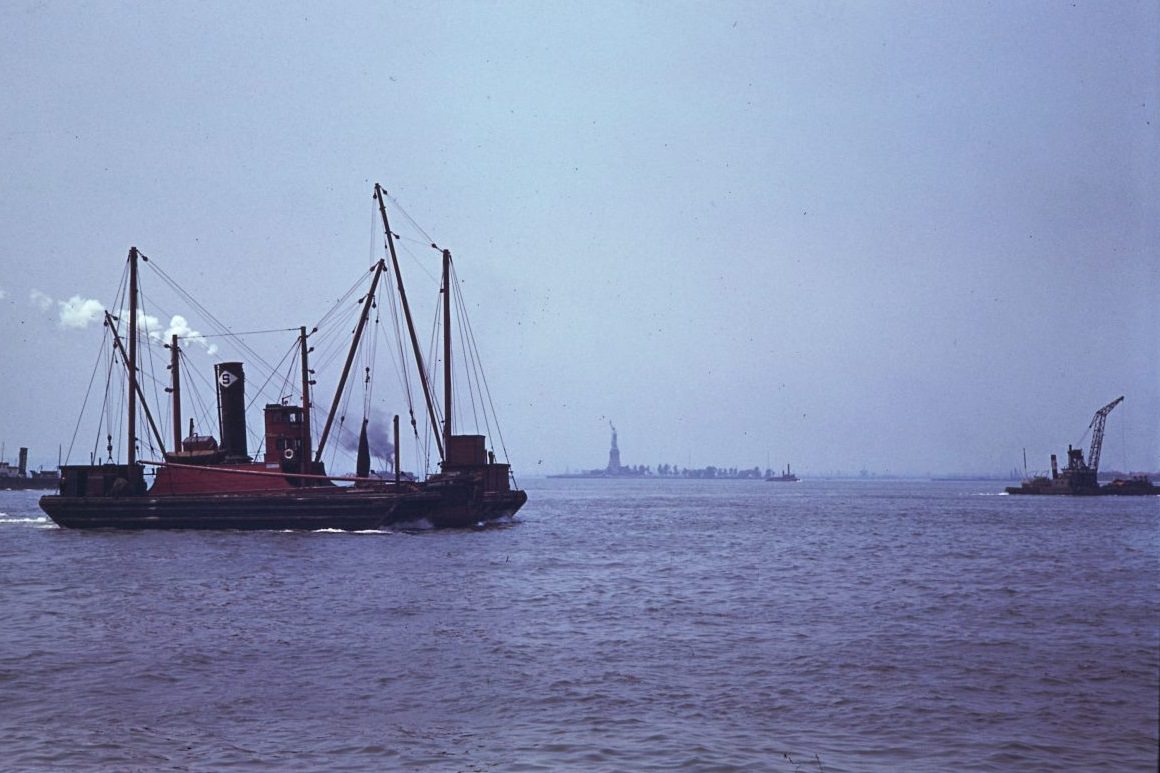
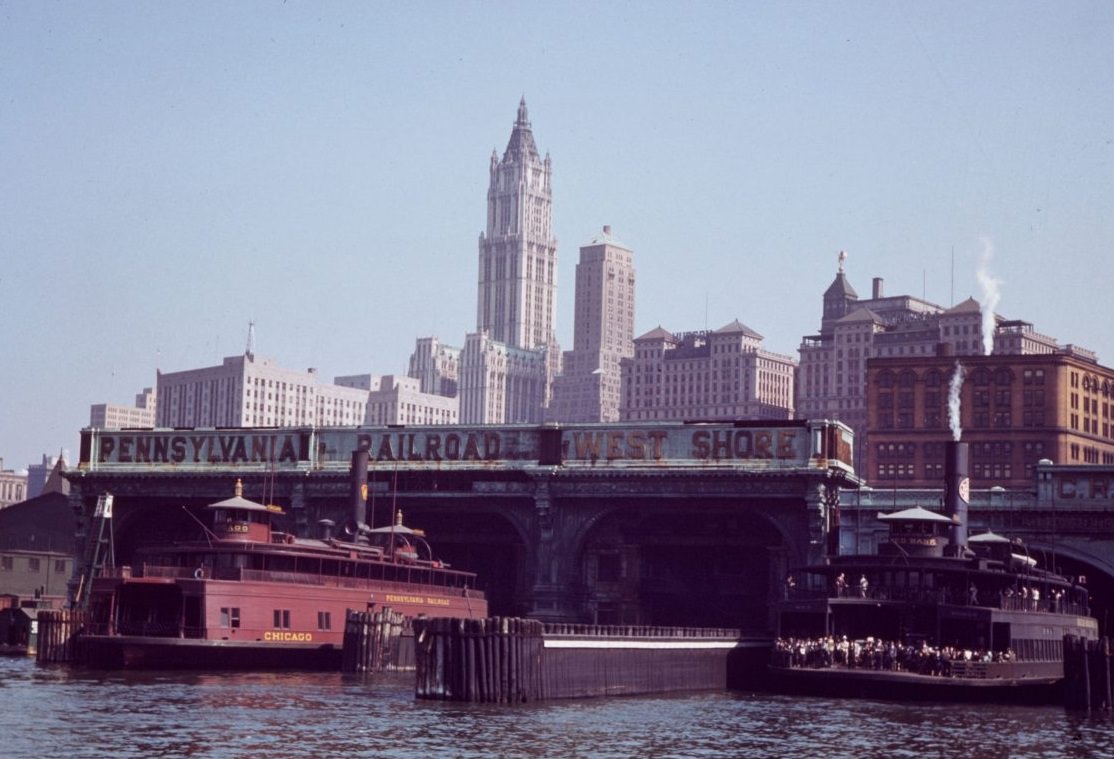
Lower Manhattan’s skyline and waterfront also drew Cushman’s attention. He photographed the financial district’s towers from East River piers, shot the Manhattan skyline from the Jersey City ferry, and captured the Statue of Liberty from the Battery. These were familiar views, but in Kodachrome they carried a different weight — saturated, sharp, and thoroughly of their moment.
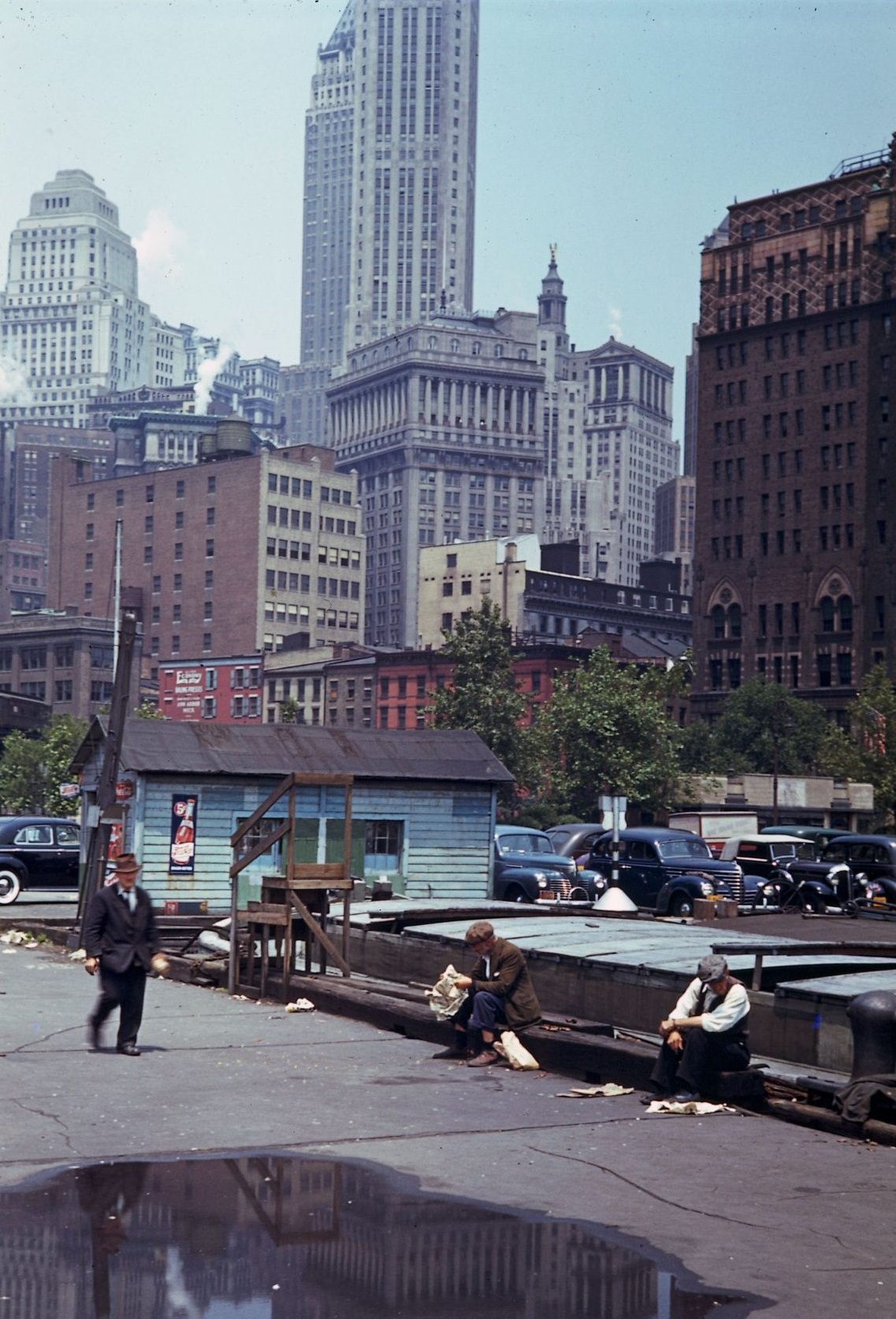
City Hall Square and other civic spaces gave Cushman a chance to photograph New Yorkers in motion — commuters, workers, and passersby who had no idea they were being recorded for history. The diversity in his frames is striking: immigrants alongside longtime residents, laborers alongside office workers, all sharing the same pavement.





Seems Manhattan has been the same for a very very long time