
Managua, the capital and largest city of Nicaragua, sits just 163 feet above sea level, making it one of Central America’s warmest capital cities. For much of the Spanish colonial period, it was considered a minor Indian town, overshadowed by the rival cities of León and Granada. When those two cities wore each other down through years of internal conflict, Managua was chosen as the permanent capital in 1857. The land surrounding the city is fertile, supporting crops of coffee, cotton, and corn that have long shaped the local economy.
The 20th century was not kind to Managua. Two devastating earthquakes struck the city, and Hurricane Mitch brought further destruction in 1998. Each disaster left its mark — old buildings were wiped out, and new streets and monuments rose in their place. In Managua, those monuments serve a practical purpose beyond remembrance: residents use them as landmarks to navigate the city in place of traditional street maps.
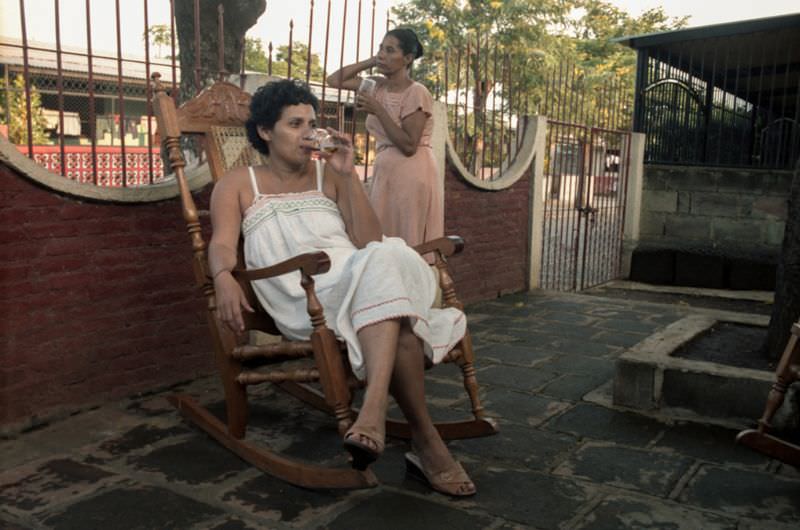
In 1985, American photographer Janet Delaney traveled to Managua and documented the lives of ordinary Nicaraguans living under the Sandinista government, just six years after the revolution that overthrew the Somoza dictatorship. Her images center largely on the Montano family and their community, offering an intimate look at daily routines, political realities, and family bonds during a turbulent period in the country’s history. The photos below present that world in striking detail.
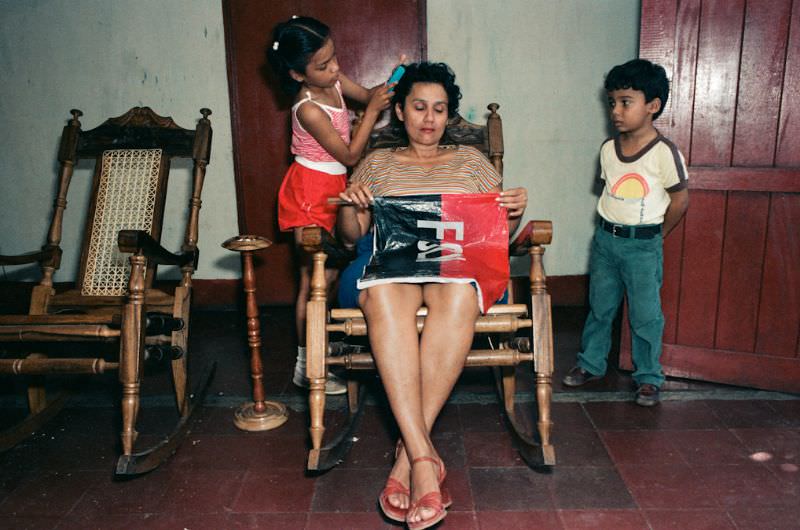
Angela, daughter of Doña Mercedes Montano, is photographed holding the flag of the FSLN — the Sandinista National Liberation Front — alongside her two young children. The image captures how deeply the revolution had woven itself into family life. For many households like the Montanos, political loyalty was not a distant abstraction but something displayed openly at home.
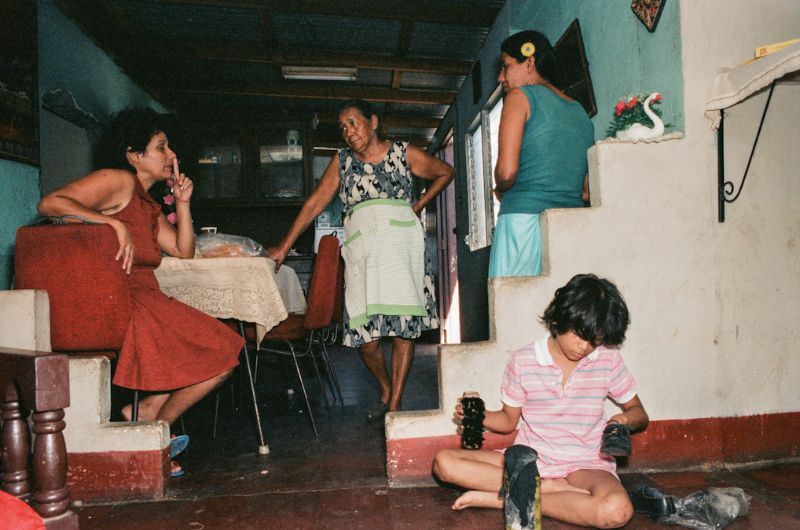
Household routines continued alongside the political backdrop. Young Anna polishes shoes with black paint while the adults around her carry on conversation. Small tasks like this filled the hours for children in Managua’s neighborhoods, where daily survival required everyone to contribute.
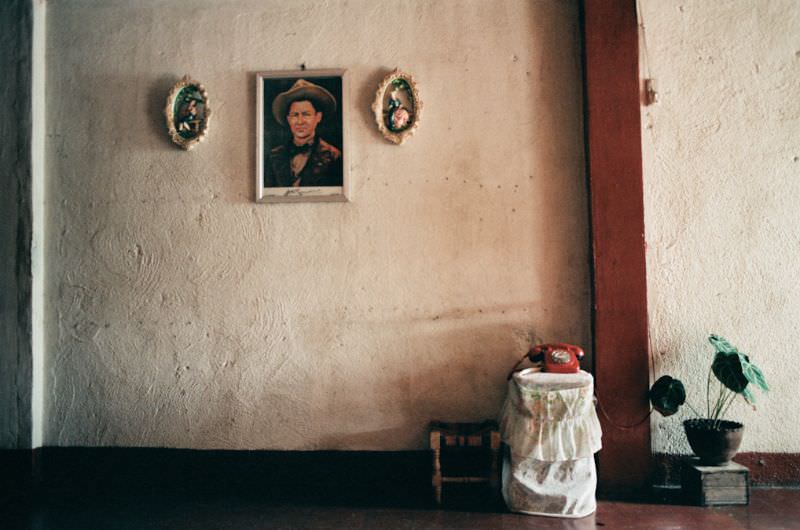
Inside the Montano home, a portrait of Augusto Sandino hangs on the living room wall. Under the Somoza dictatorship, displaying Sandino’s image had been forbidden. By 1985, that portrait was a statement of pride — a symbol of what the family and so many others had fought for. Sandino, the guerrilla leader who resisted U.S. occupation of Nicaragua in the 1920s and 30s, remained a powerful figure in the national identity of revolutionary Nicaragua.
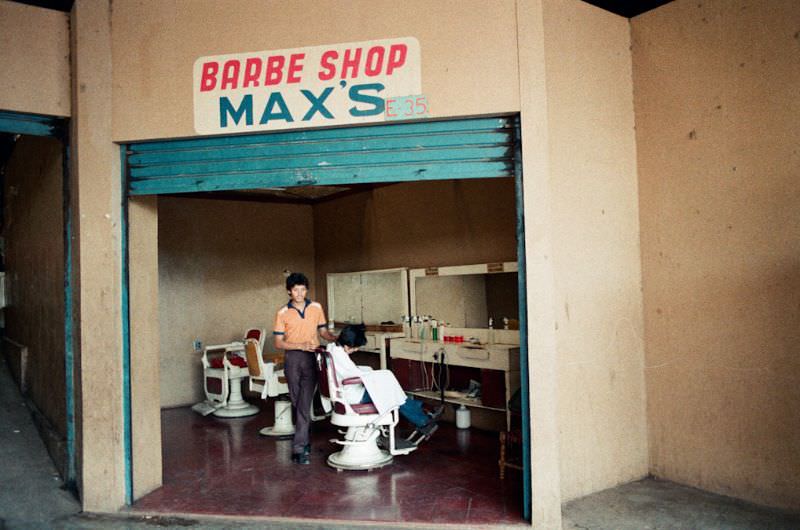
The Mercado Oriental, Managua’s vast open-air market, was the economic heart of the city. Vendors, service workers, and shoppers packed its sprawling stalls. A barbershop operating right on the market floor shows how commerce and everyday services blended together in a single crowded space.
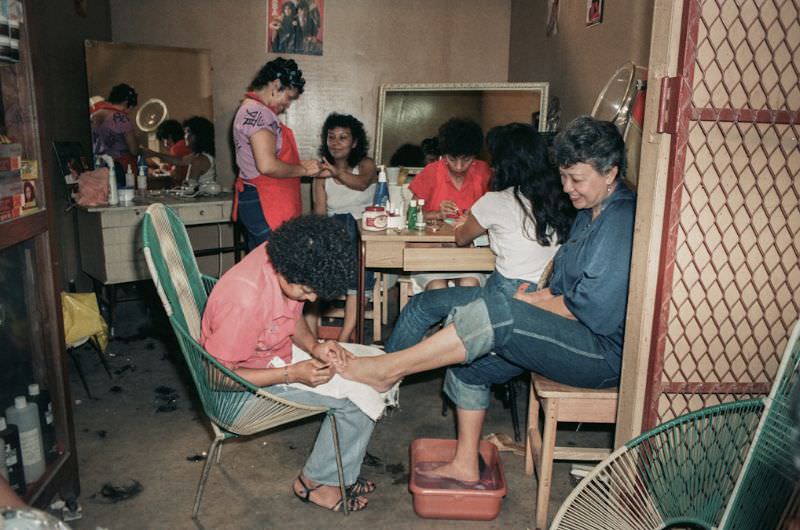
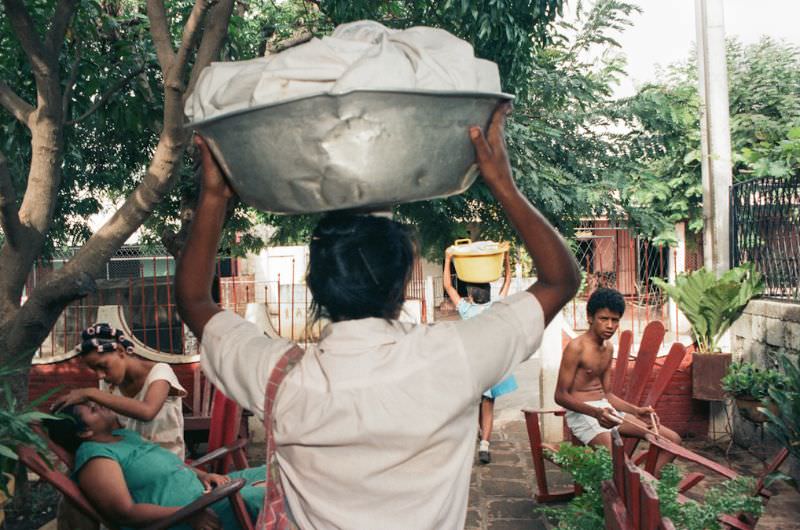
Beyond the market, vendors moved through residential neighborhoods selling bread door to door. This kind of street commerce was a staple of daily life in Managua, keeping food accessible to families in areas far from the city center. It was a practical system built on community familiarity rather than formal retail.
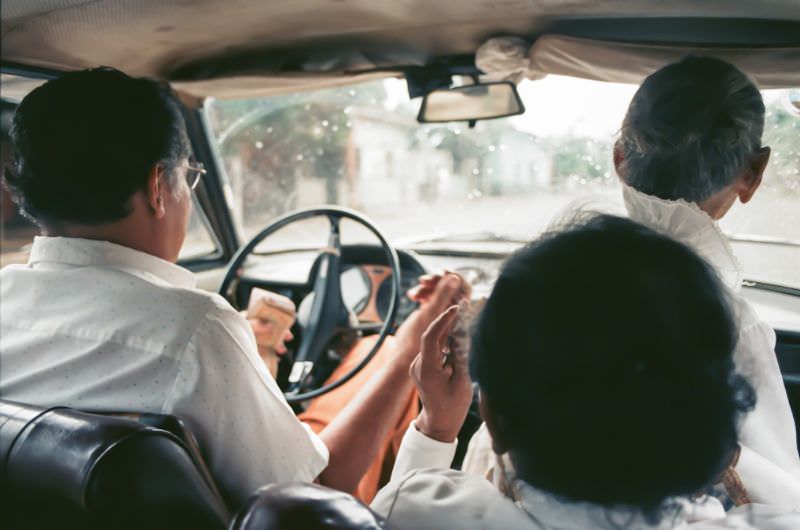
Getting around Managua required patience. Doña Mercedes and her sister squeeze into an already overcrowded taxi on their way to the market. Public transport in 1985 Managua was stretched thin, and shared taxis crammed with passengers were a common sight on the city’s streets.
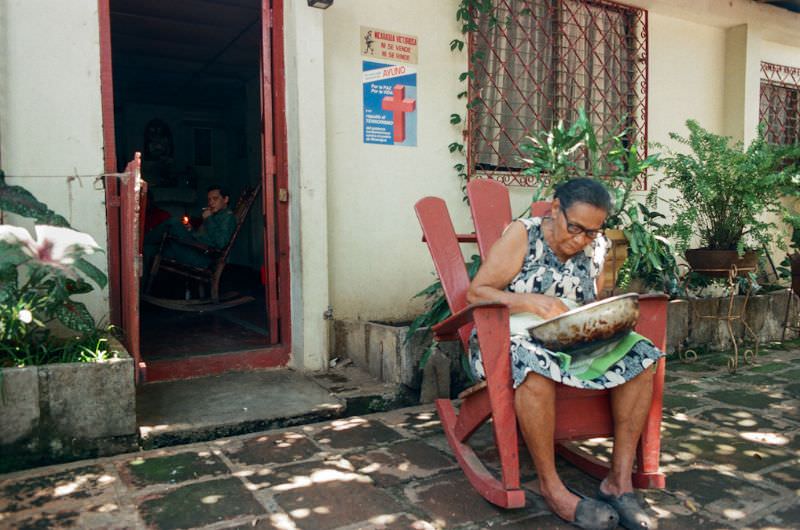
Doña Mercedes Montano emerges as the central figure in Delaney’s photographs. Here, she sits in front of her home carefully sorting through beans, removing rocks before cooking. It is an unhurried, familiar task — the kind of work that anchored daily life for women across Managua.
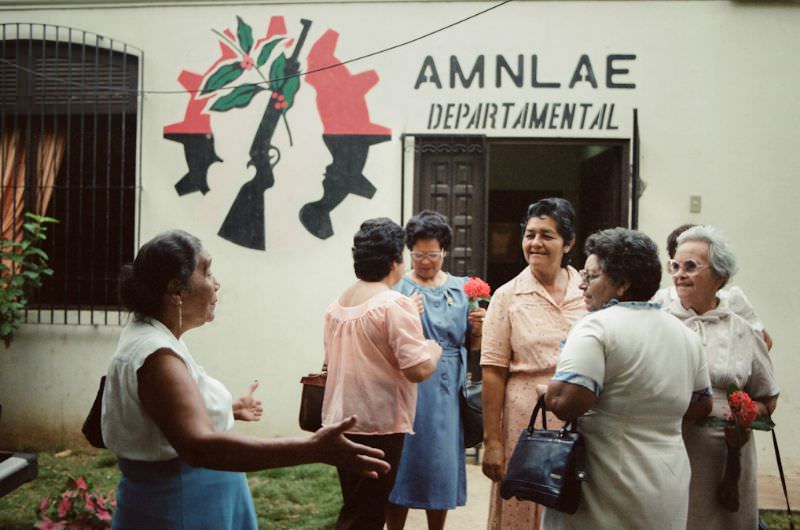
Doña Mercedes was also active in her community beyond the home. She is photographed greeting friends at the AMLAE meeting house — AMLAE being the Luisa Amanda Espinoza Association of Nicaraguan Women, a Sandinista-affiliated organization that promoted women’s rights and civic participation. Meetings like these were a regular part of life for politically engaged women in the neighborhood.
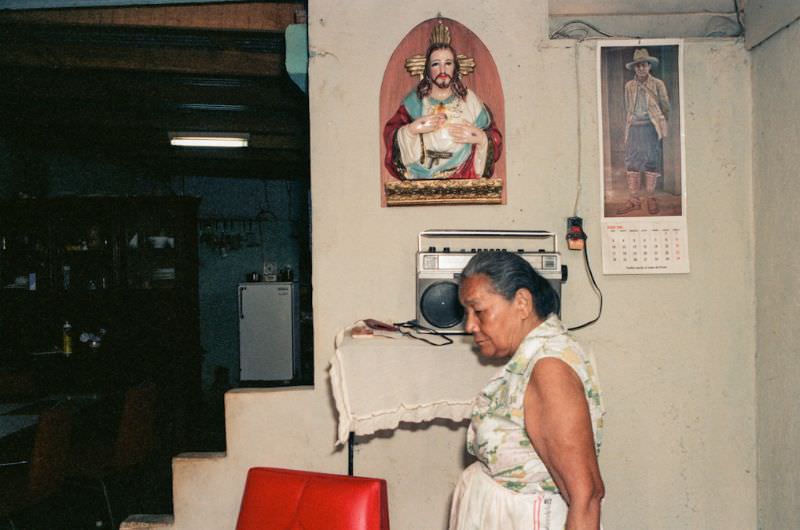
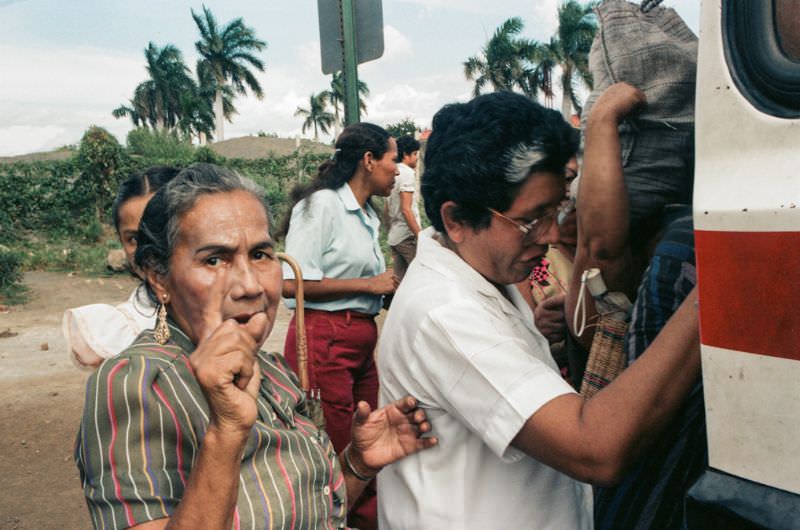
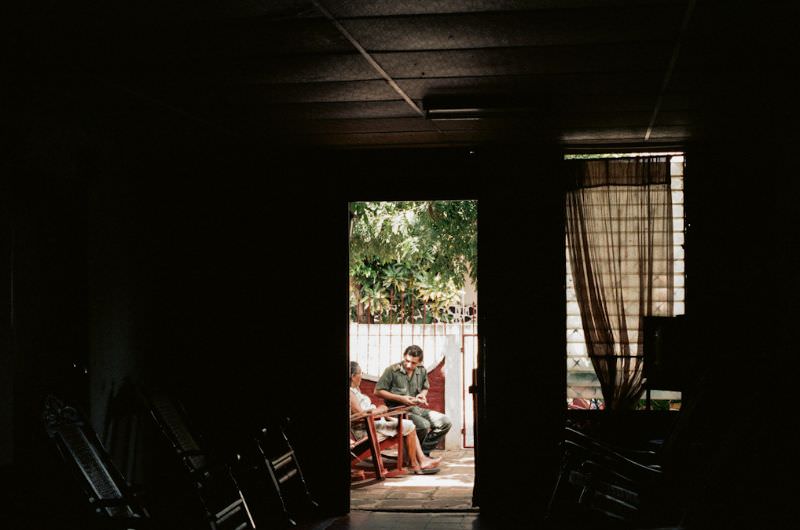
Each morning at 6 a.m., Doña Mercedes tuned in to Radio Sandino, the official voice of the Sandinista revolution. The radio kept households connected to news and government messaging in an era before television was widely accessible. The front patio, where she is also photographed relaxing with her son Julio, served as the social center of the Montano home.
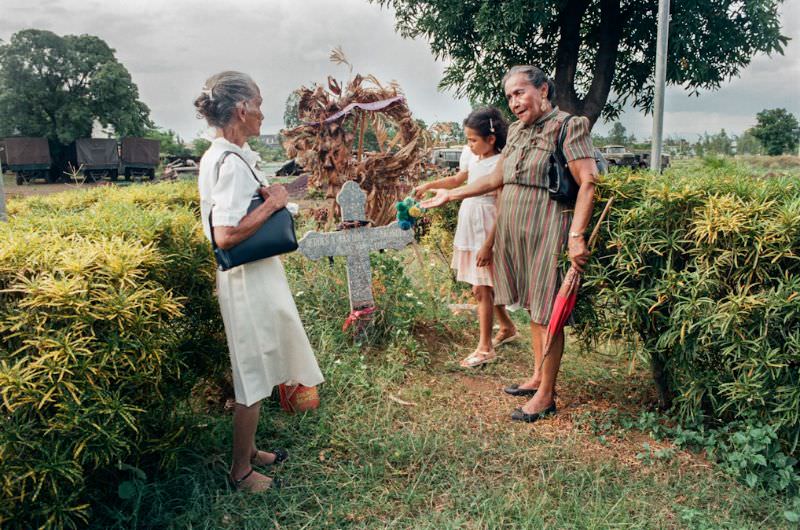
compañeros were buried here, some alive, during their fight against Somoza, Managua, Nicaragua, 1985
The weight of the revolution was carried personally by families like the Montanos. Doña Mercedes visits the grave of her son alongside her sister and granddaughter Anna. The caption notes that compañeros — fellow fighters — were buried at this site during the struggle against the Somoza regime, some of them buried alive. The grief was real and recent, less than a decade old at the time Delaney took this photograph.
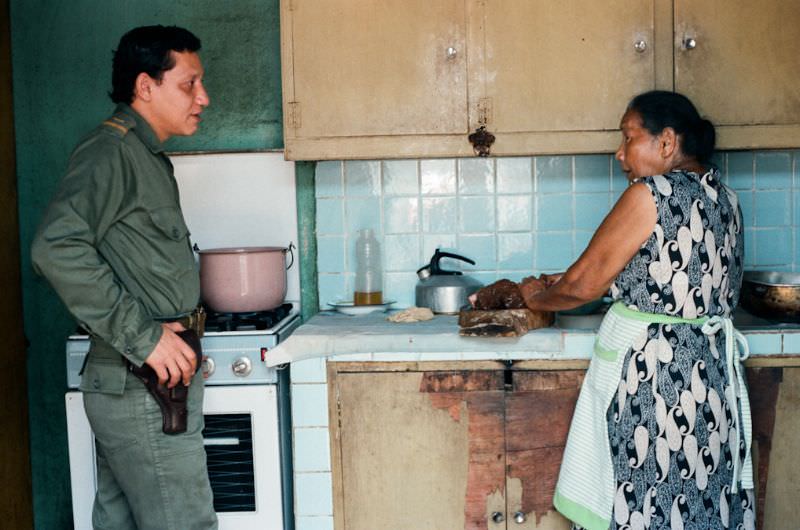
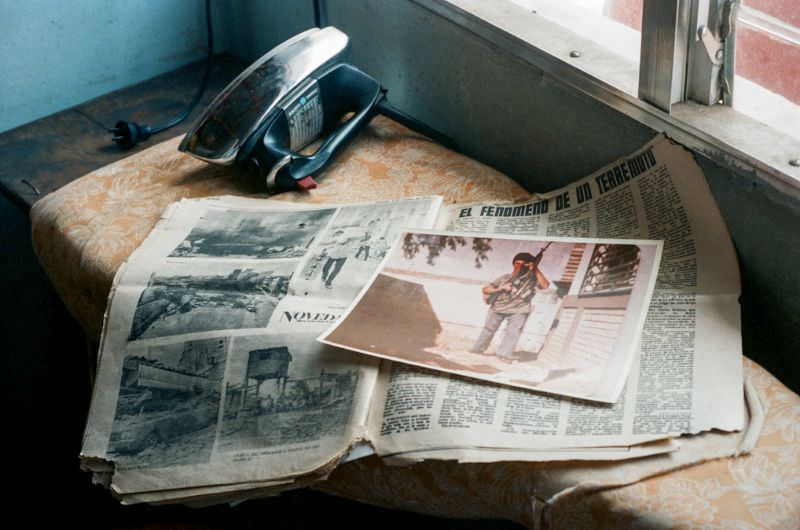
Luis Felipe Montano joined the revolution against Somoza in 1972, years before the final Sandinista victory in 1979. His photograph stands as a record of one family’s direct participation in the armed struggle that reshaped Nicaragua. His brother Julio remained at home with his wife Elba and their son, all living together in the Montano household.
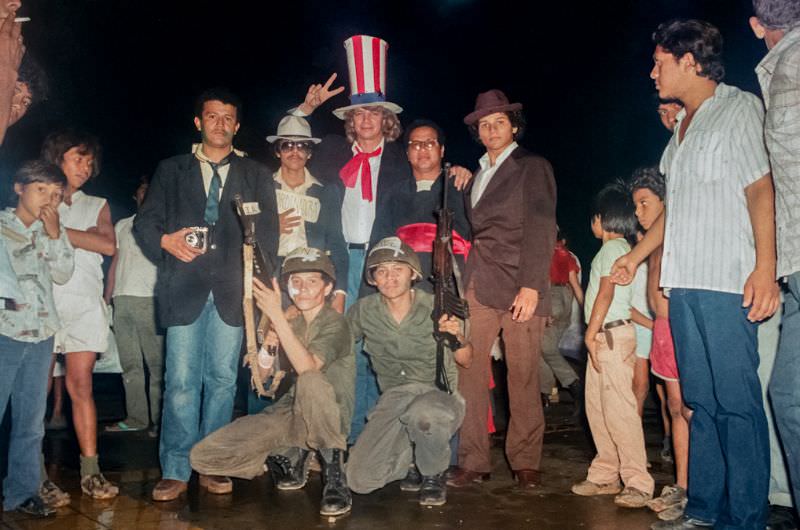
July 1985 marked the sixth anniversary of the Sandinista revolution, and Managua celebrated loudly. Students dressed as CIA agents, Contra soldiers, and Catholic priests to openly mock the forces they saw as enemies of the revolution. The Contras, backed by the United States, were actively fighting the Sandinista government at the time, making the satire pointed and political.
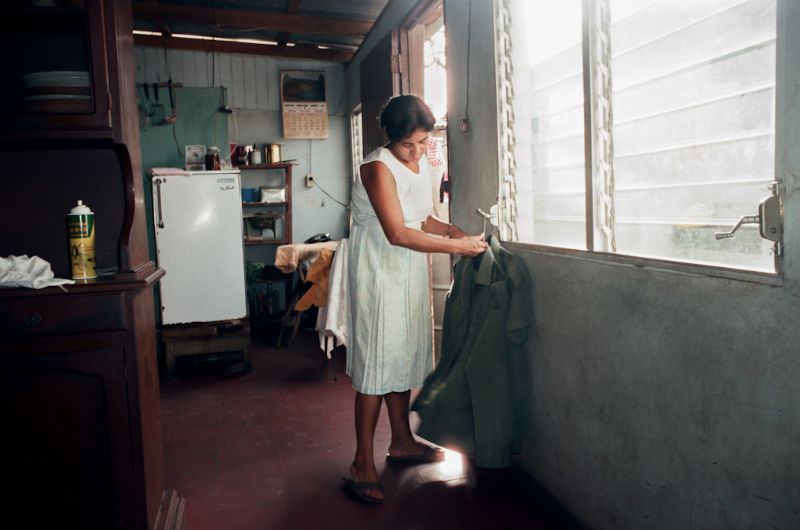
Inside the house, domestic life carried on. Elba, Julio’s wife, irons his military uniforms — a quiet image that connects the personal and the political. With the Contra war ongoing, uniformed service was a part of everyday reality for many Nicaraguan families in 1985.
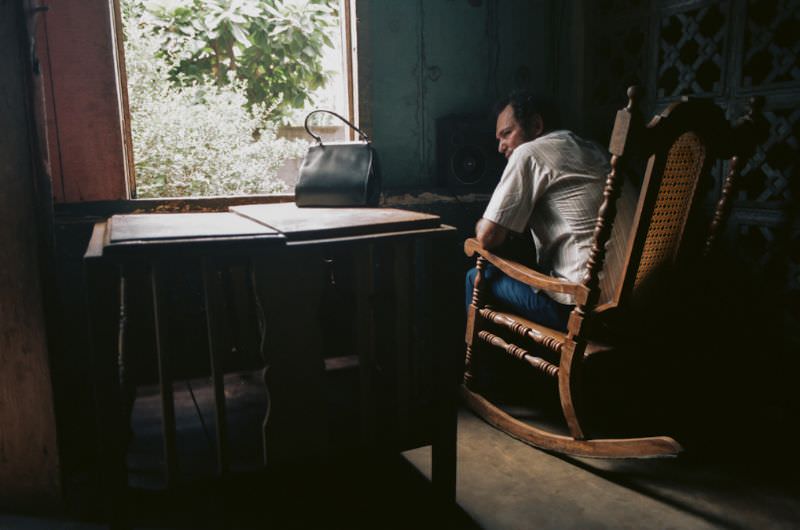
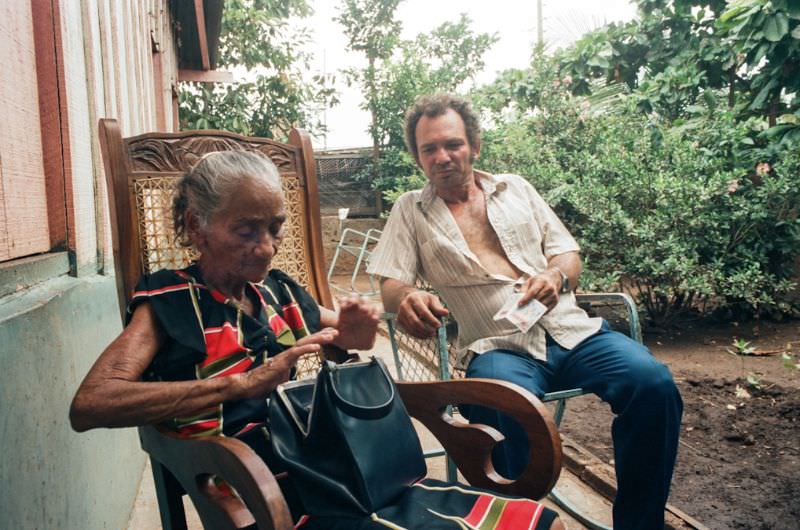
Not every family in Managua was uniformly behind the Sandinistas. La Conchita, Doña Mercedes’ sister, quietly confides to Delaney that her son is listening to Contra-supported radio broadcasts. She whispers it — a detail that reveals the tension within families and communities divided by the conflict. Tuning into opposition radio in 1985 Nicaragua was not something done openly.
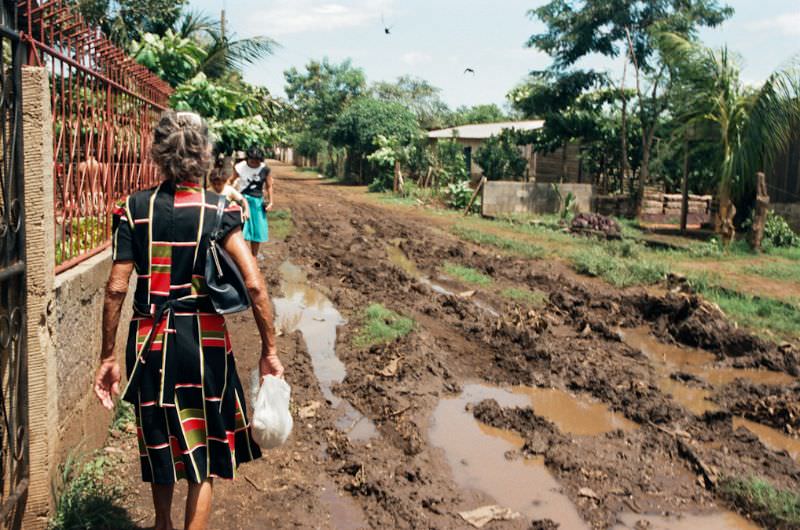
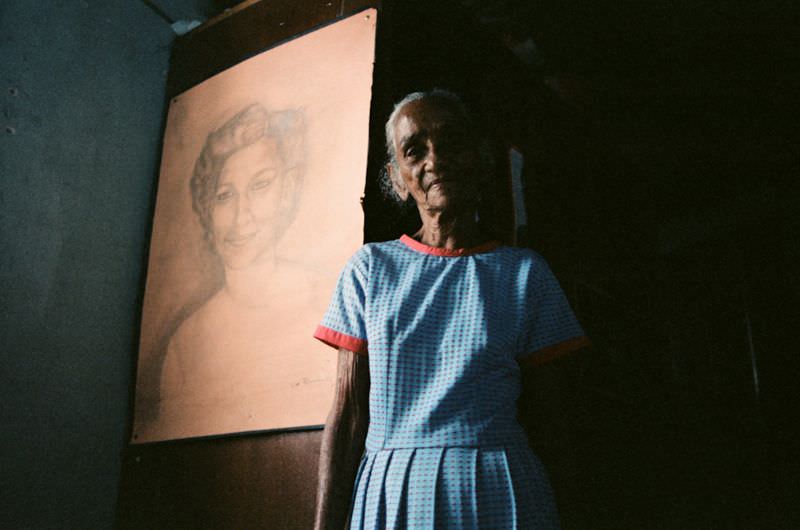
La Conchita navigated the tensions in her family with the pragmatism of a mother and grandmother. She holds a drawing of her grand niece Milena Montano, a younger member of the extended family who appears frequently in Delaney’s photographs. Despite political divisions, family ties remained the constant thread running through daily life.
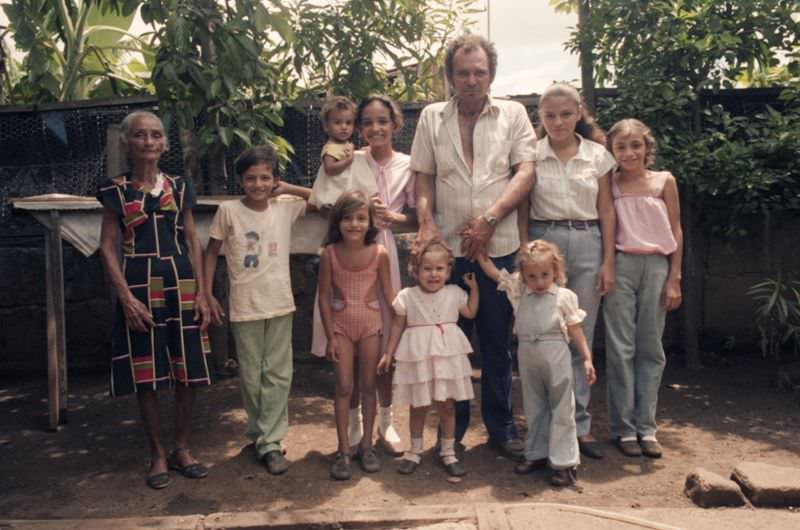
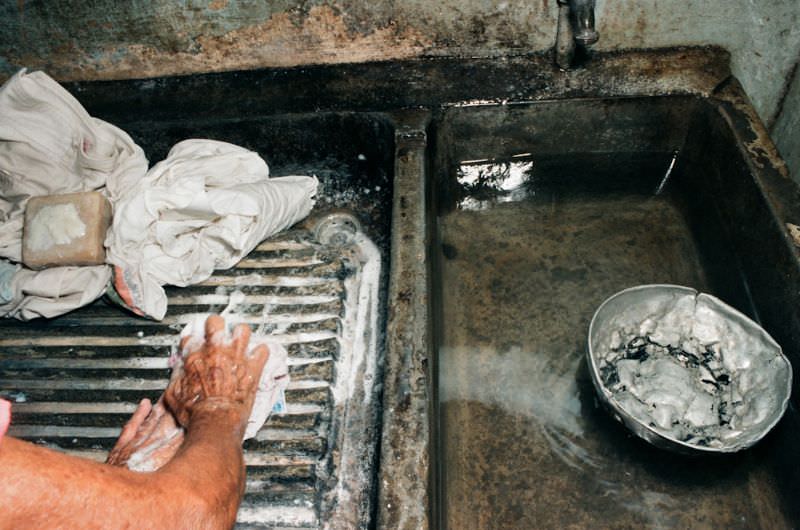
La Conchita’s son had eight children — a large household by any measure. Between visits to family across the city, La Conchita carried out the regular work of domestic life, including hand-washing clothes. Running water and laundry facilities were not guaranteed in Managua’s neighborhoods, and washing by hand was routine.
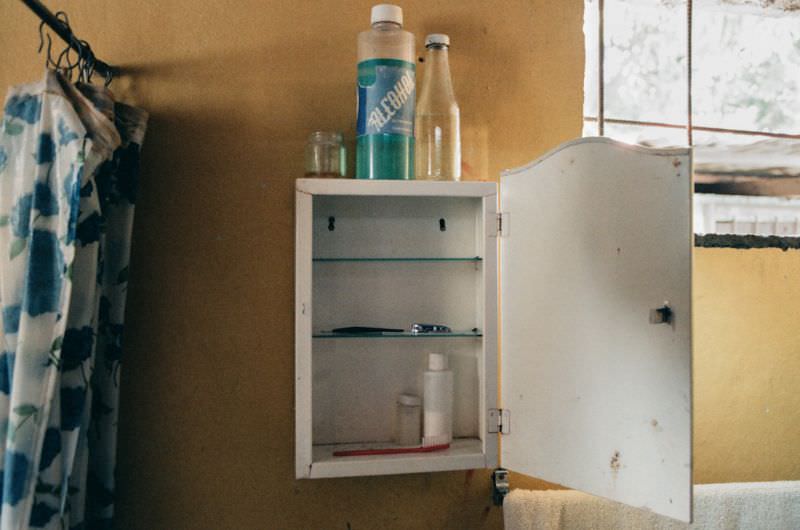
The U.S. economic embargo against Nicaragua, imposed in 1985, cut off imports to the country and created serious shortages. The medicine cabinet serving six members of the Montano family reflects those shortages directly — its sparse contents a consequence of policies decided thousands of miles away. Basic medications that were available elsewhere became scarce in Managua.
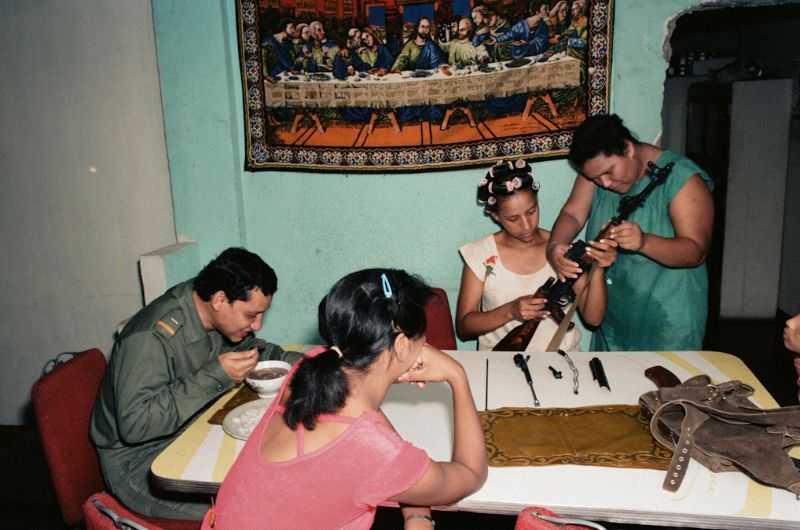
Civil defense was a real responsibility in 1985 Nicaragua. Milena Montano and her cousins are photographed cleaning a gun in preparation for civil defense duties. The Sandinista government organized neighborhood militias across the country, and young people were expected to participate. This was not an unusual scene for Managua at the time.
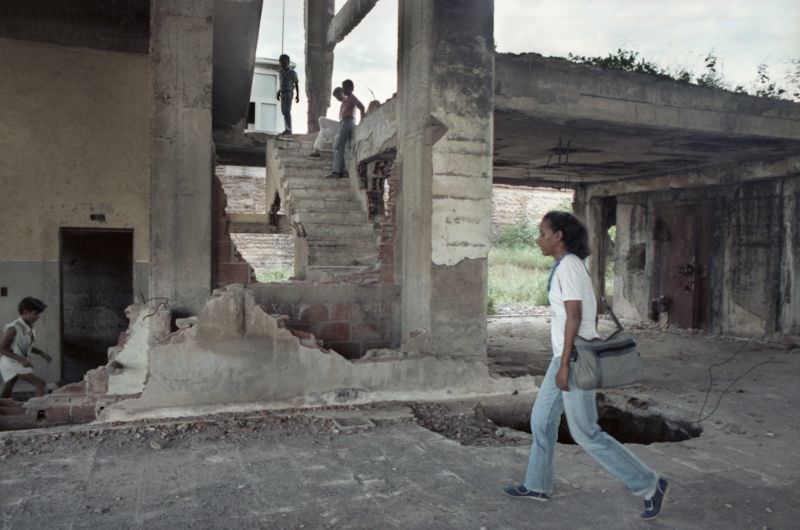
Walking through central Managua in 1985 meant moving through a city still carrying the scars of the 1972 earthquake, which killed thousands and leveled much of the old downtown. Thirteen years later, large sections remained unbuilt. The city had reorganized itself around the destruction rather than fully recovering from it.
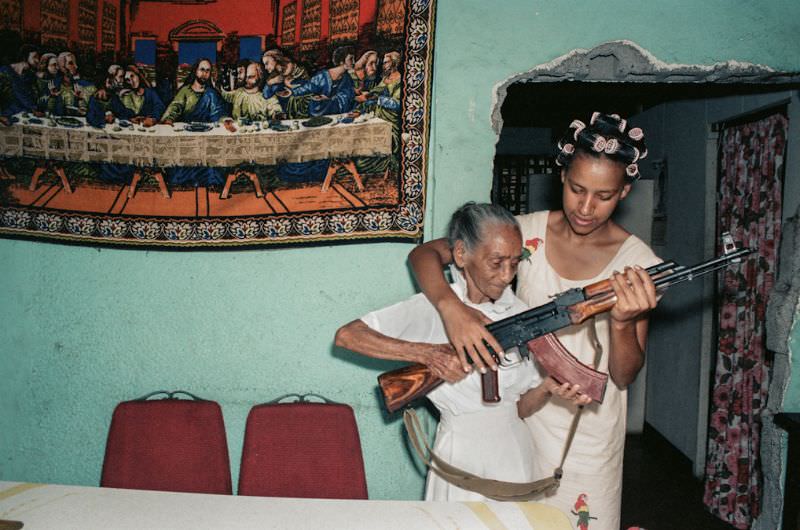
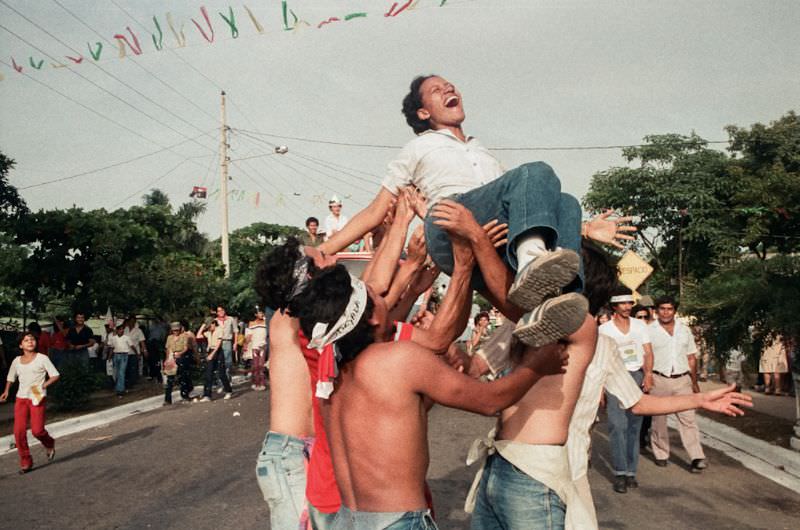
Milena helped her great aunt La Conchita pose with an AK-47 — a moment that blends the ordinary and the extraordinary in Delaney’s work. At the anniversary celebrations, Milena appears again, this time with friends, joined in the public festivities that marked one of the most important dates on the Sandinista calendar.
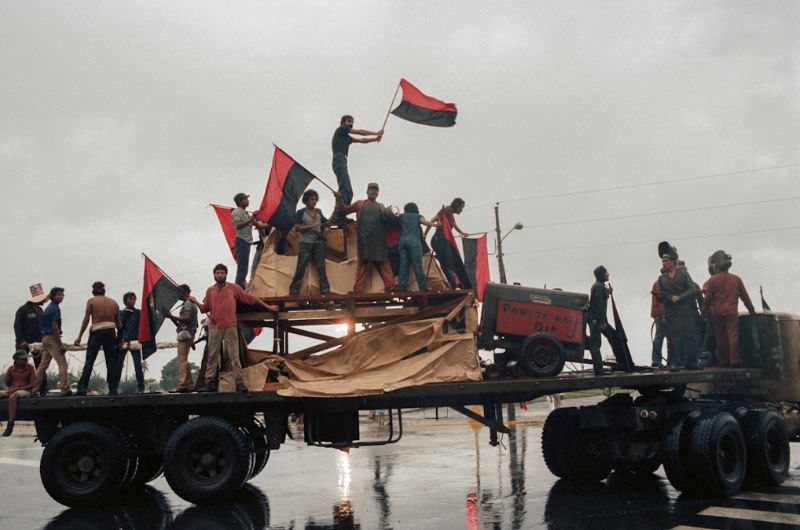
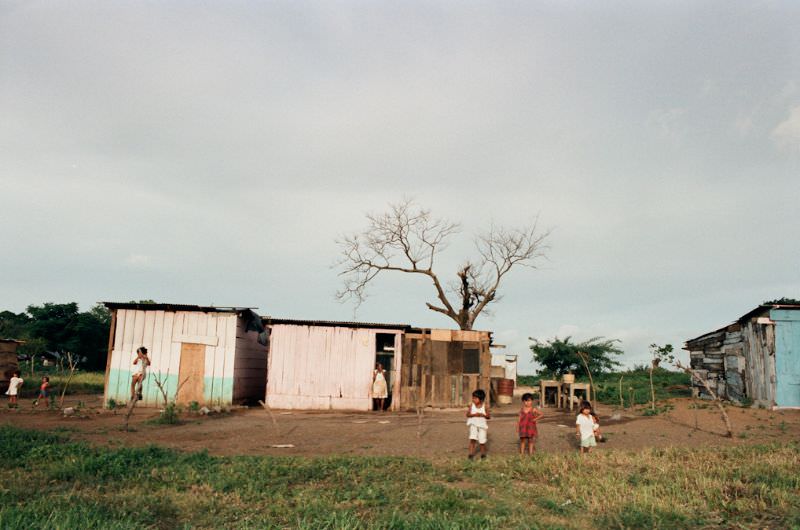
The anniversary parade moved through the streets of Managua with crowds turning out to mark the occasion. Delaney also captured Managua from the window of a moving bus — a passing view of the city’s streets, storefronts, and pedestrians that gives a sense of the urban texture of the capital in mid-decade.
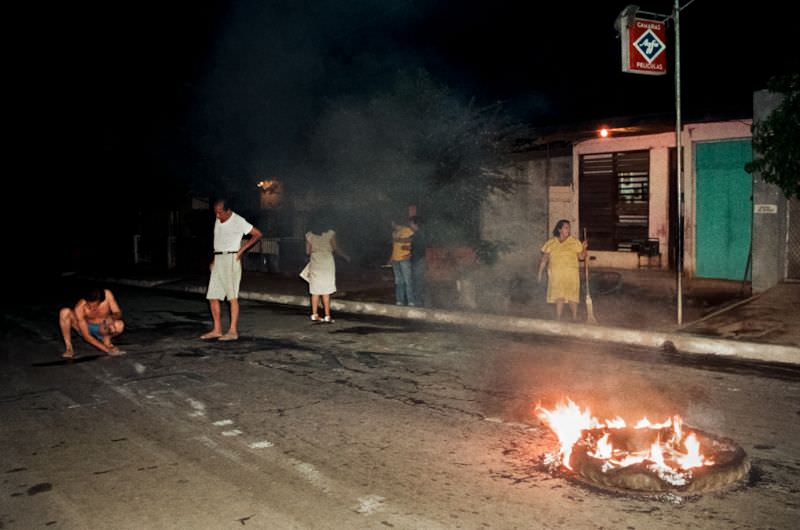
The celebration ended with tires burning in the streets — a raw and vivid expression of revolutionary energy. Janet Delaney’s full collection from 1985 Managua captures a city and a people living through extraordinary circumstances while still carrying out the ordinary acts of daily life: cooking beans, ironing uniforms, washing clothes, and raising children.




