Hey There! Before You Go. 😧
Get the best vintage content straight into your inbox!

Don't worry, we don't spam

The Historic 1972 London School Strike Through the Eyes of Its Young Protesters

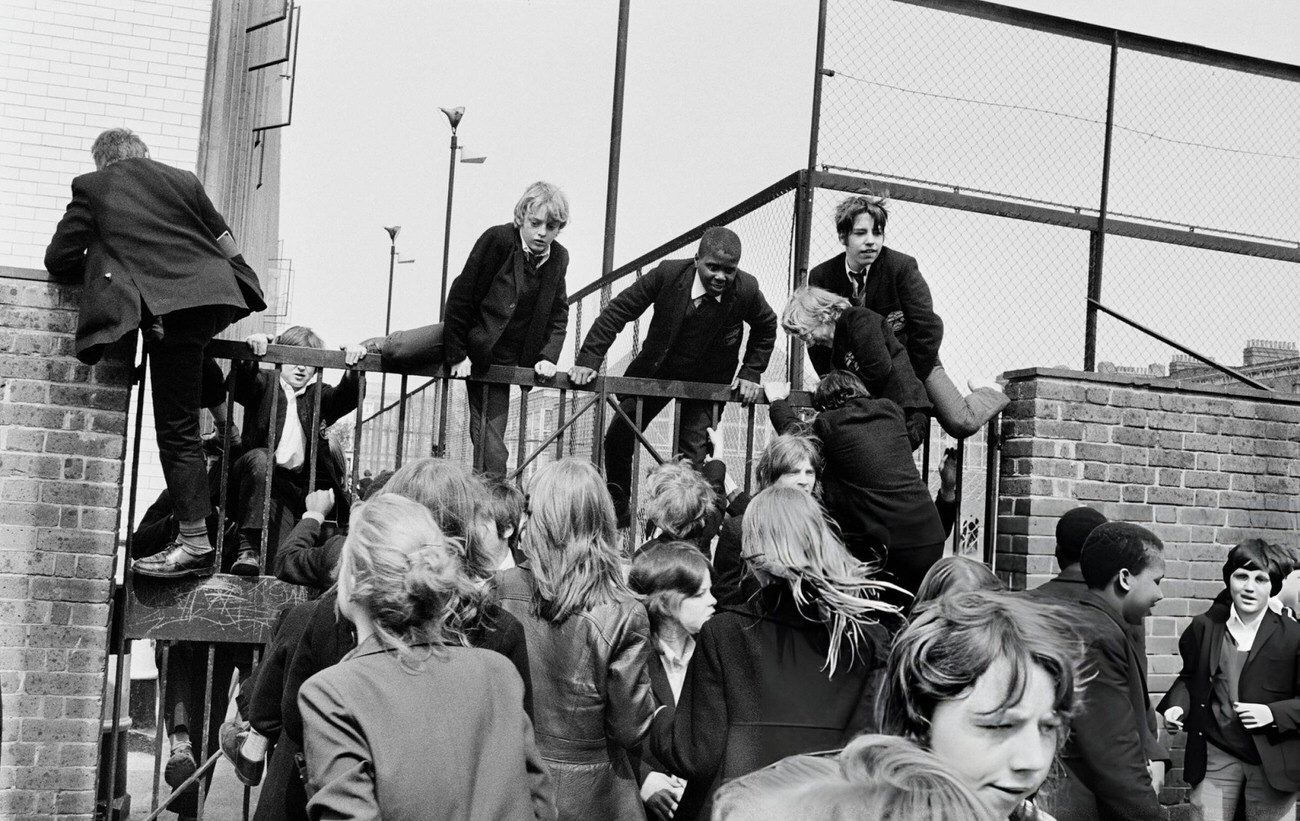
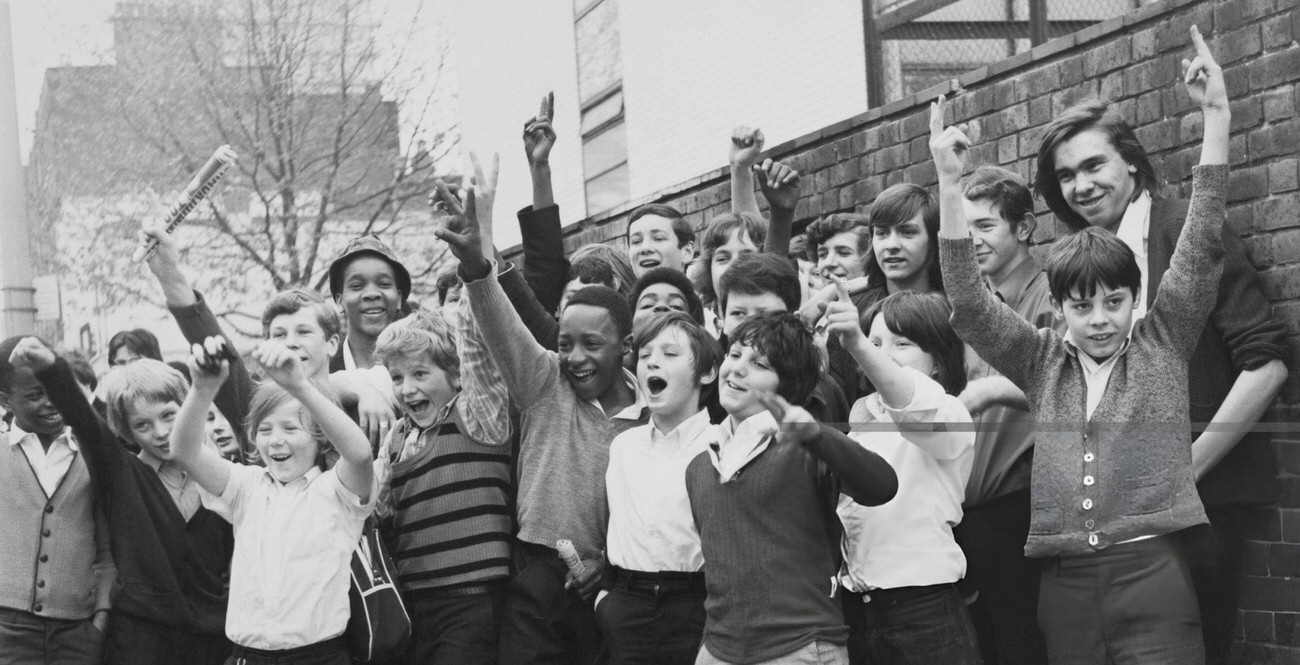
In 1972, thousands of London schoolchildren walked out of their classrooms in one of the largest student strikes the city had ever seen. It was organized by the Schools Action Union, a student-led group that had been building momentum across London’s state schools. The protests were not a spontaneous act of rebellion — they were planned, coordinated, and driven by a clear list of demands.

The grievances were specific. Students objected to corporal punishment, particularly caning, which teachers still used as a disciplinary tool. They also pushed back against compulsory school uniforms, the quality of school dinners, and what they described as headmaster dictatorships — the unchecked authority of school leaders with no student input. Overcrowded classrooms and a shortage of teachers added fuel to the fire. Many students felt their education was being neglected by a system that gave them no voice.
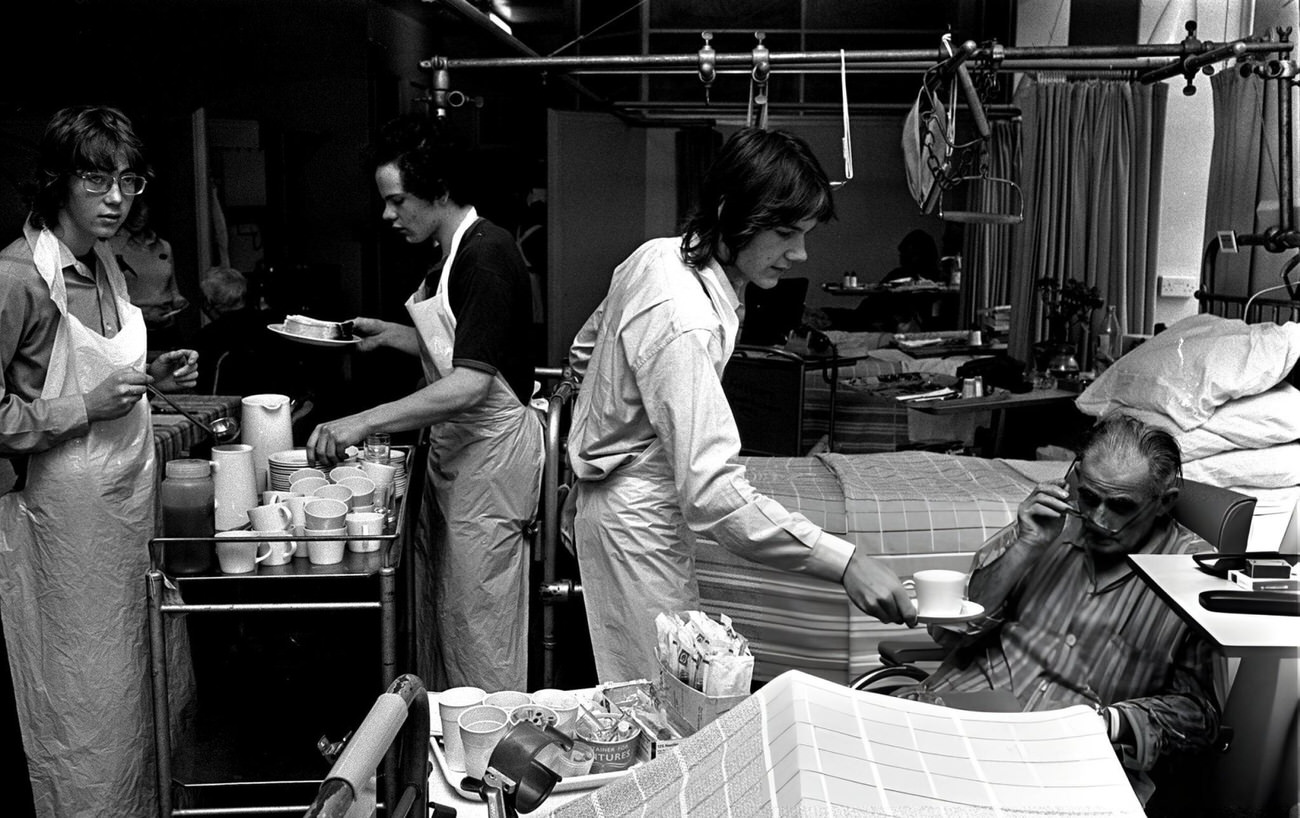
Pupils from Westminster City School, London help to serve food and drinks to patients at London's Westminster Hospital, 1972.
Pupils from Westminster City School, London help to serve food and drinks to patients at London’s Westminster Hospital, 1972.

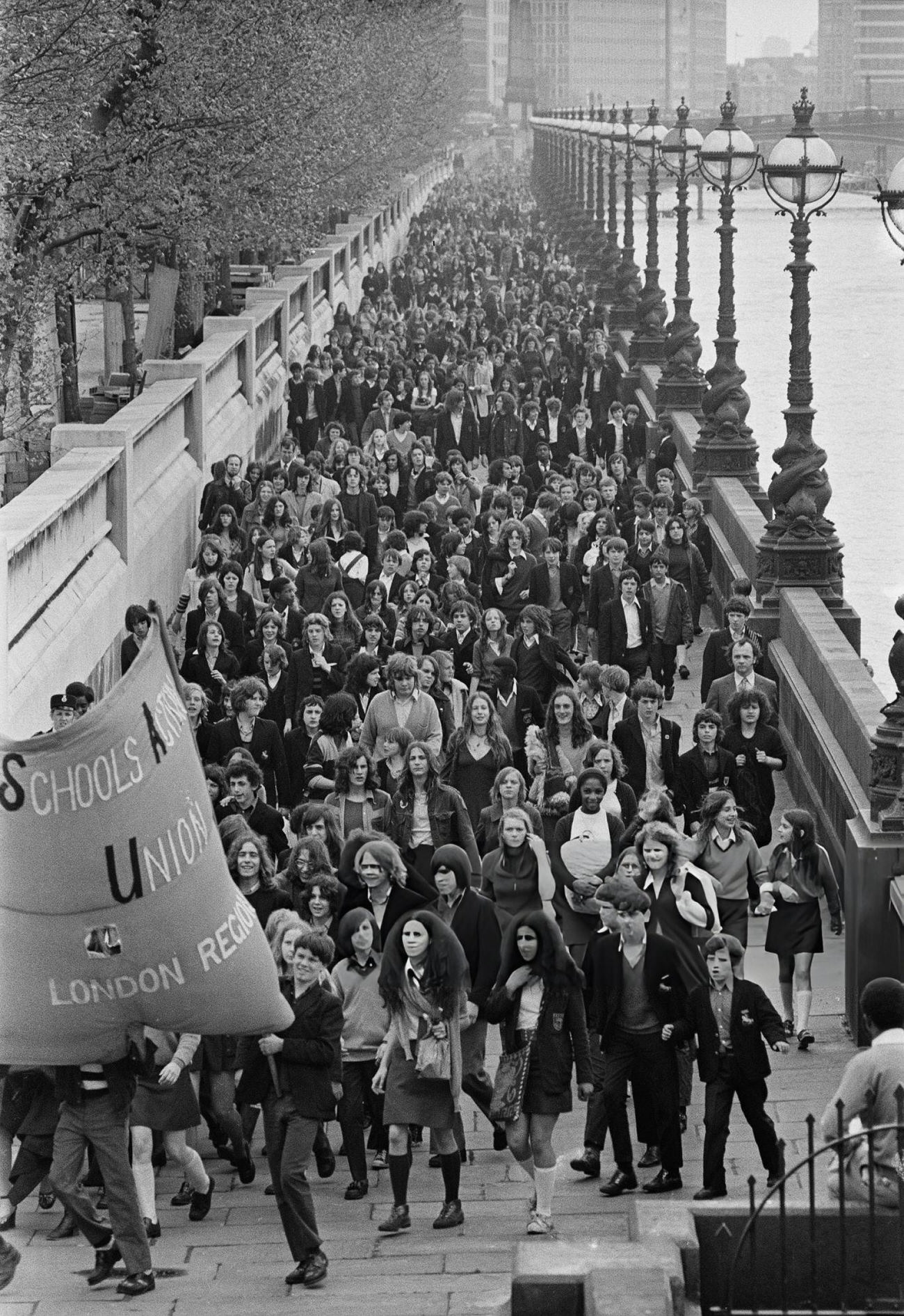
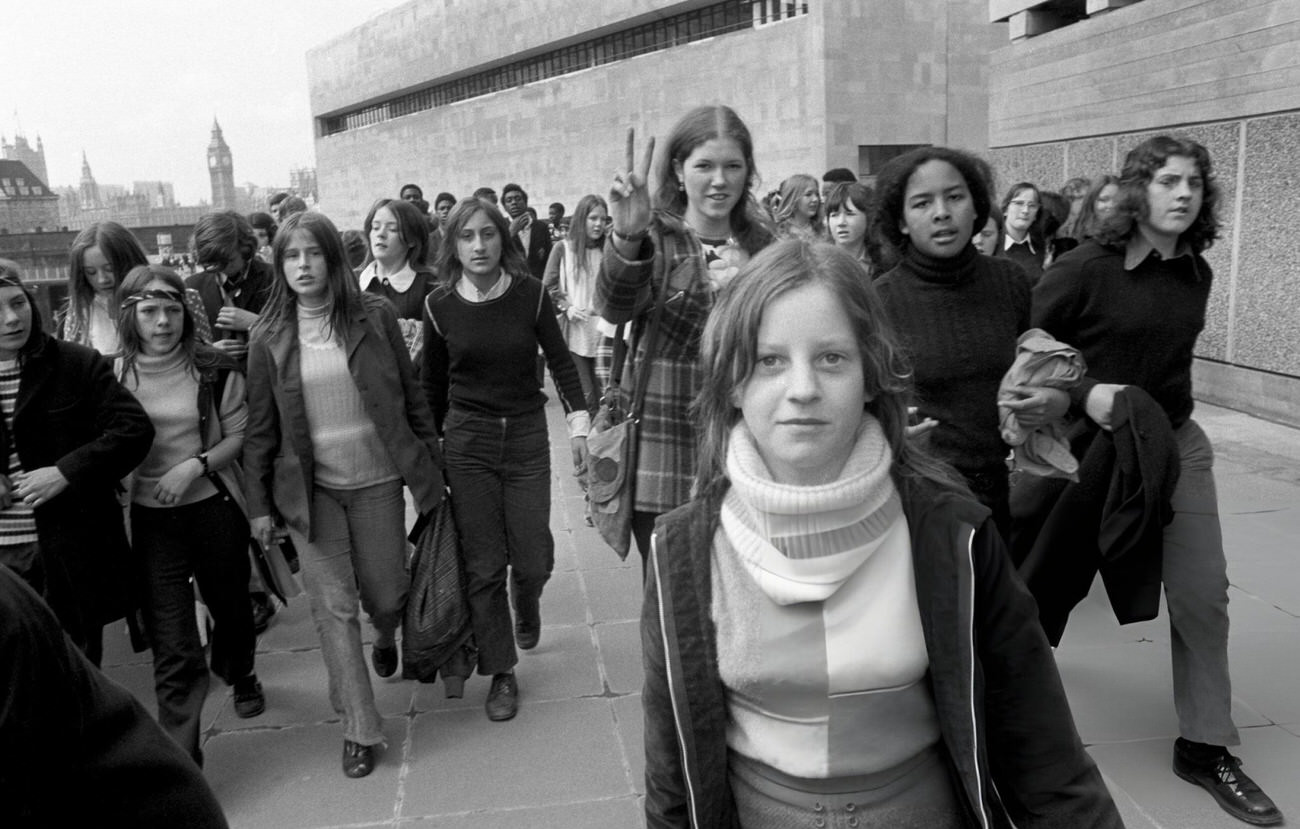
The Schools Action Union channeled student frustration into organized action. Marches were planned to high-profile locations across London, including County Hall — the headquarters of the Greater London Council — Trafalgar Square, Hyde Park’s Speakers’ Corner, and the South Bank. The routes were chosen deliberately to draw public and media attention. Students carried signs, chanted slogans, and marched in groups that grew larger as more schools joined in.
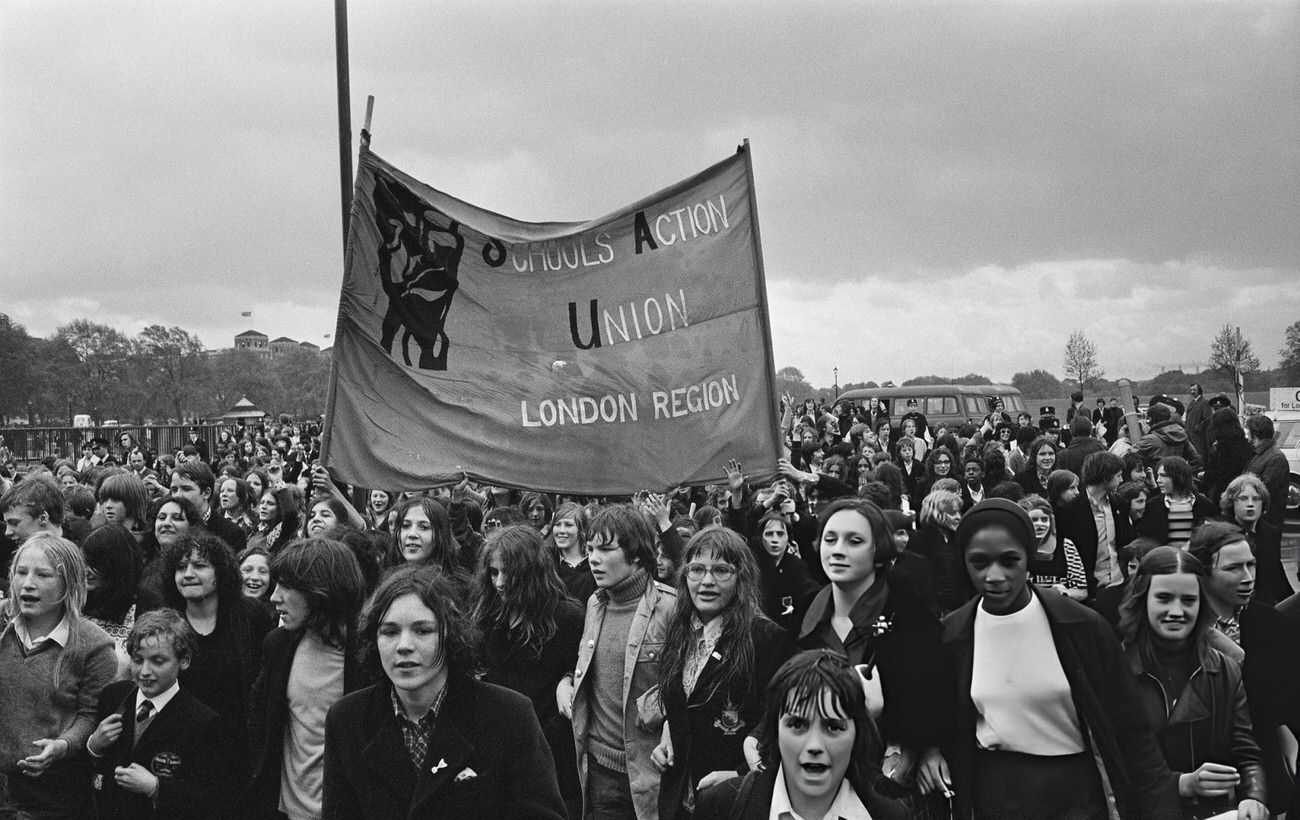
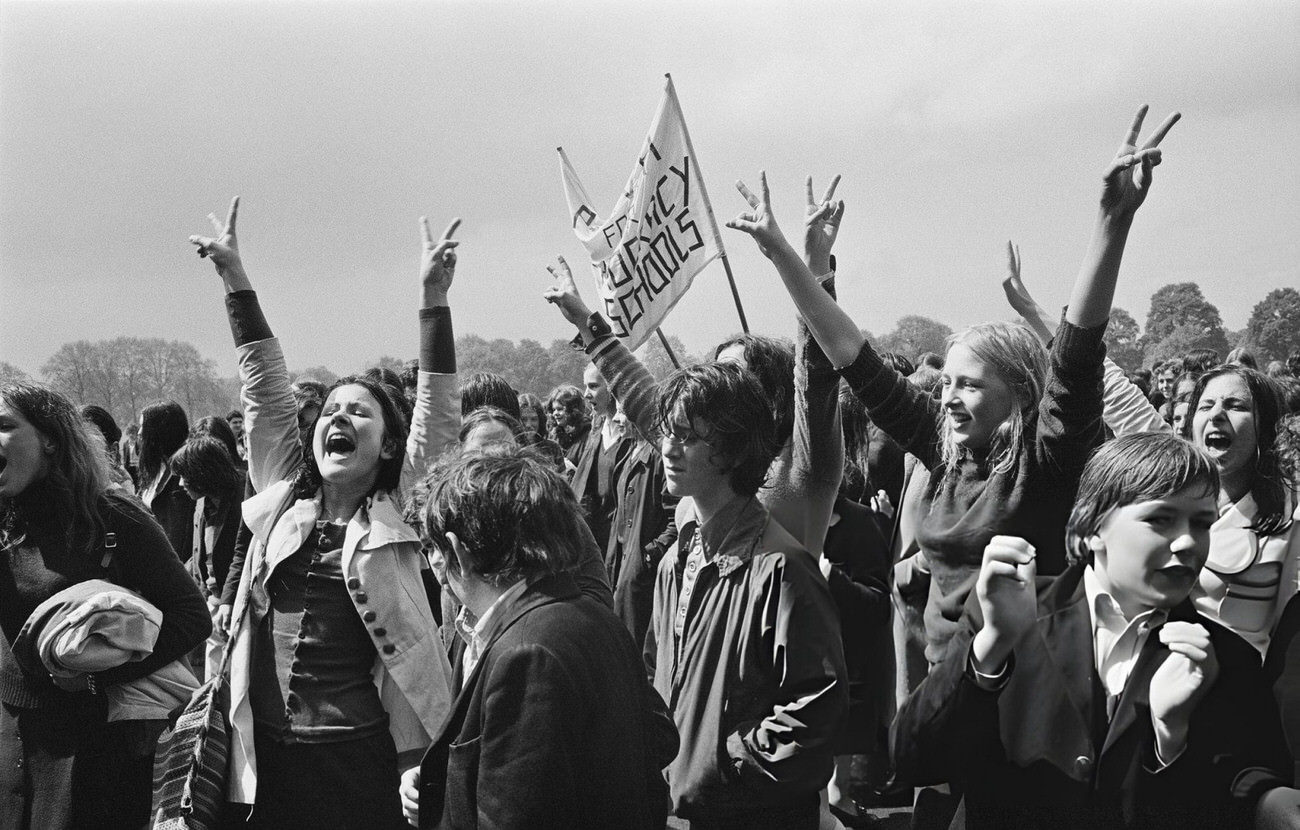
School children march to County Hall as part of a demonstration for the School Action Union against school dinners, caning, and school uniforms, London, 1972.

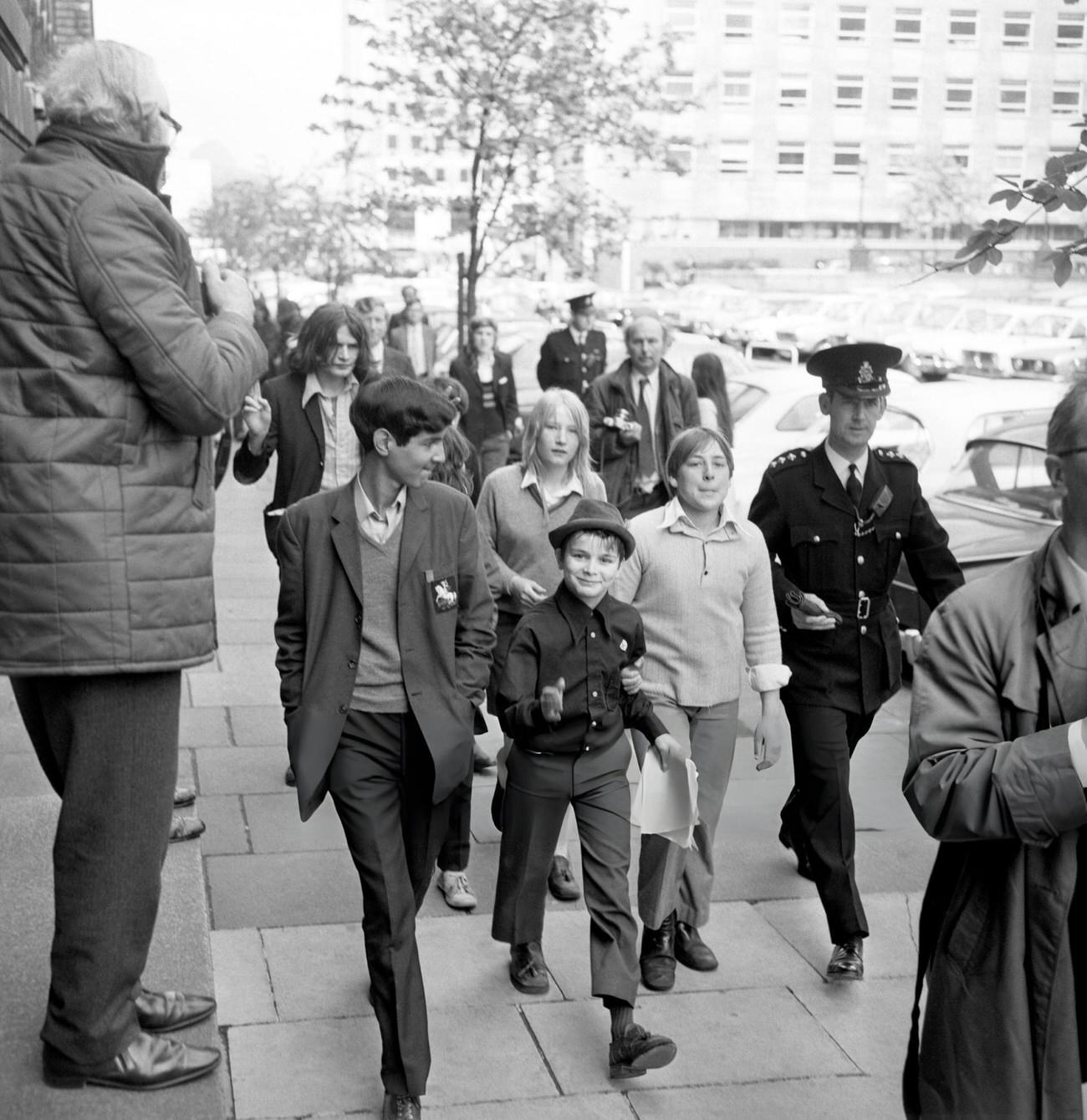
One of the most recognizable faces of the strike was 18-year-old Steve Finch, a pupil at Rutherford Comprehensive School in Marylebone. Finch served as the strike’s spokesperson and leader, speaking to crowds and engaging with the press. He was escorted by police to meetings with officials, a sign that authorities were taking the movement seriously enough to sit down and talk.
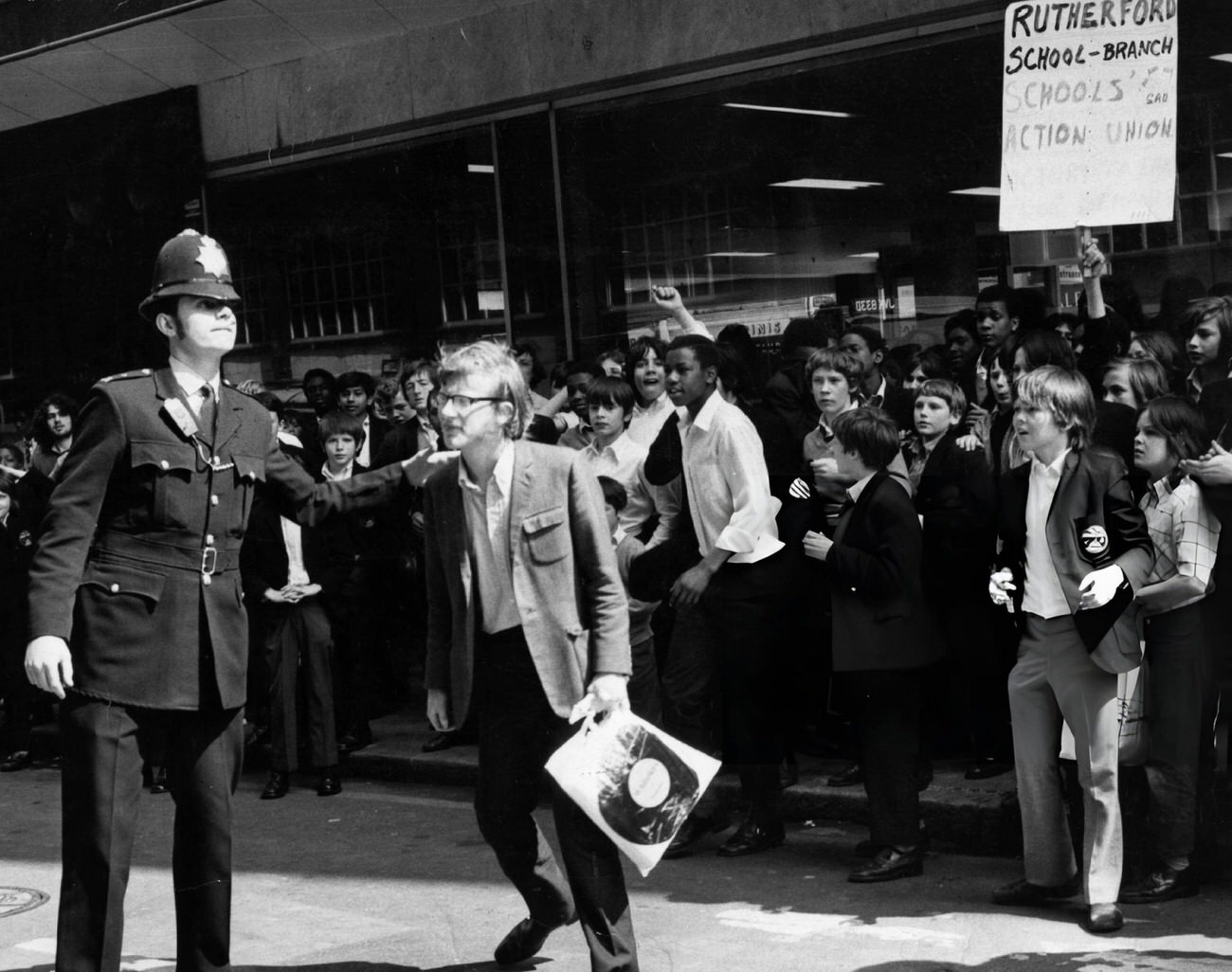
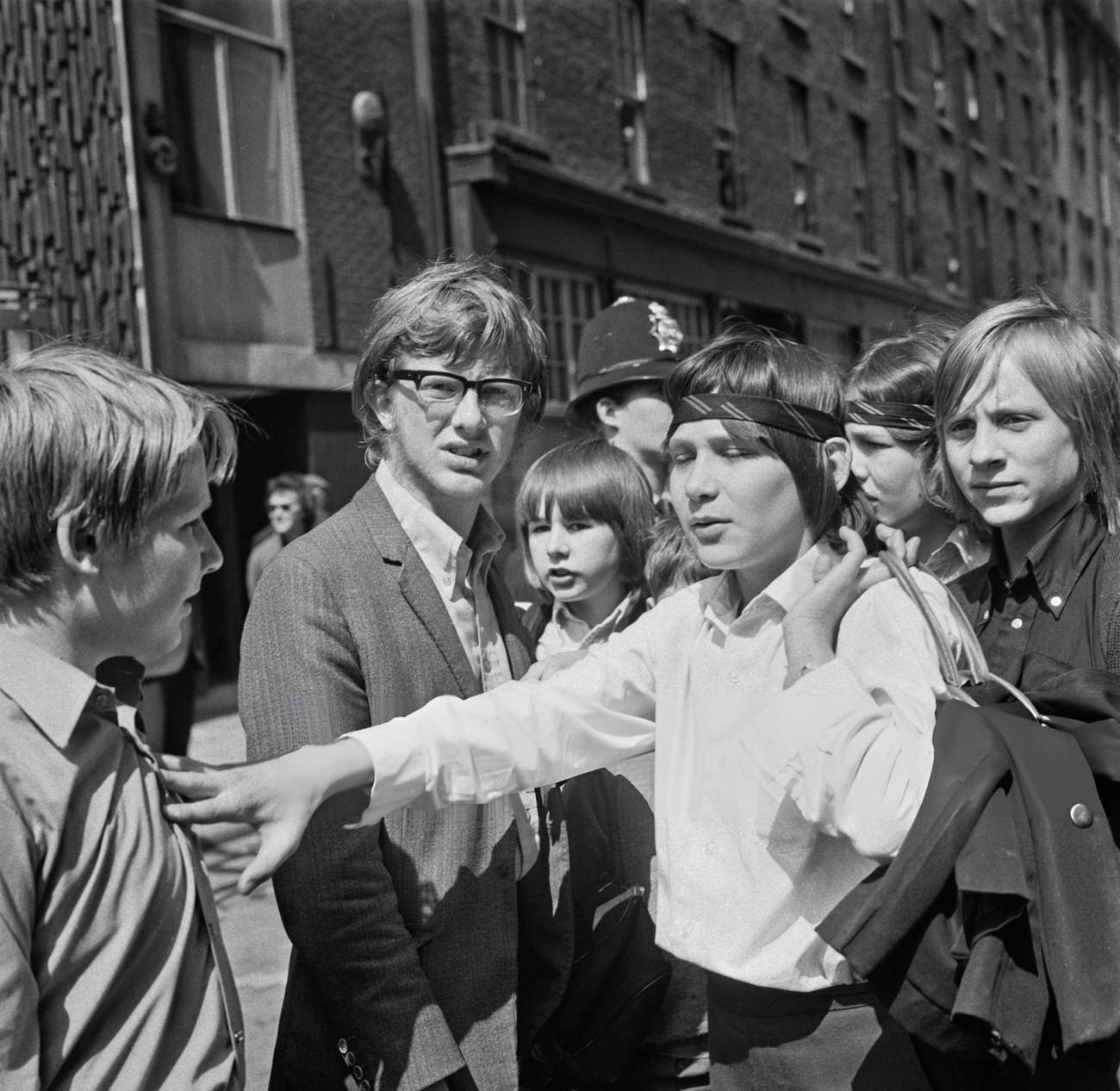
Leader of school strike Steve Finch, aged eighteen, with fellow pupils of Rutherford School, is escorted by a policeman to a meeting in London, 1972.
Spokesperson Stephen Finch leads pupils of Rutherford Comprehensive School in Marylebone, London, on a strike organized by the Schools Action Union, 1972.

Rutherford Comprehensive was one of the most active schools in the strike. Its pupils marched through Marylebone alongside students from Sarah Siddons Comprehensive School, a girls’ school nearby. The two schools joining forces was a deliberate show of solidarity — boys and girls united against the same rules. Some students made a point of arriving at school in their ordinary clothes rather than uniforms, a quiet but direct act of defiance.
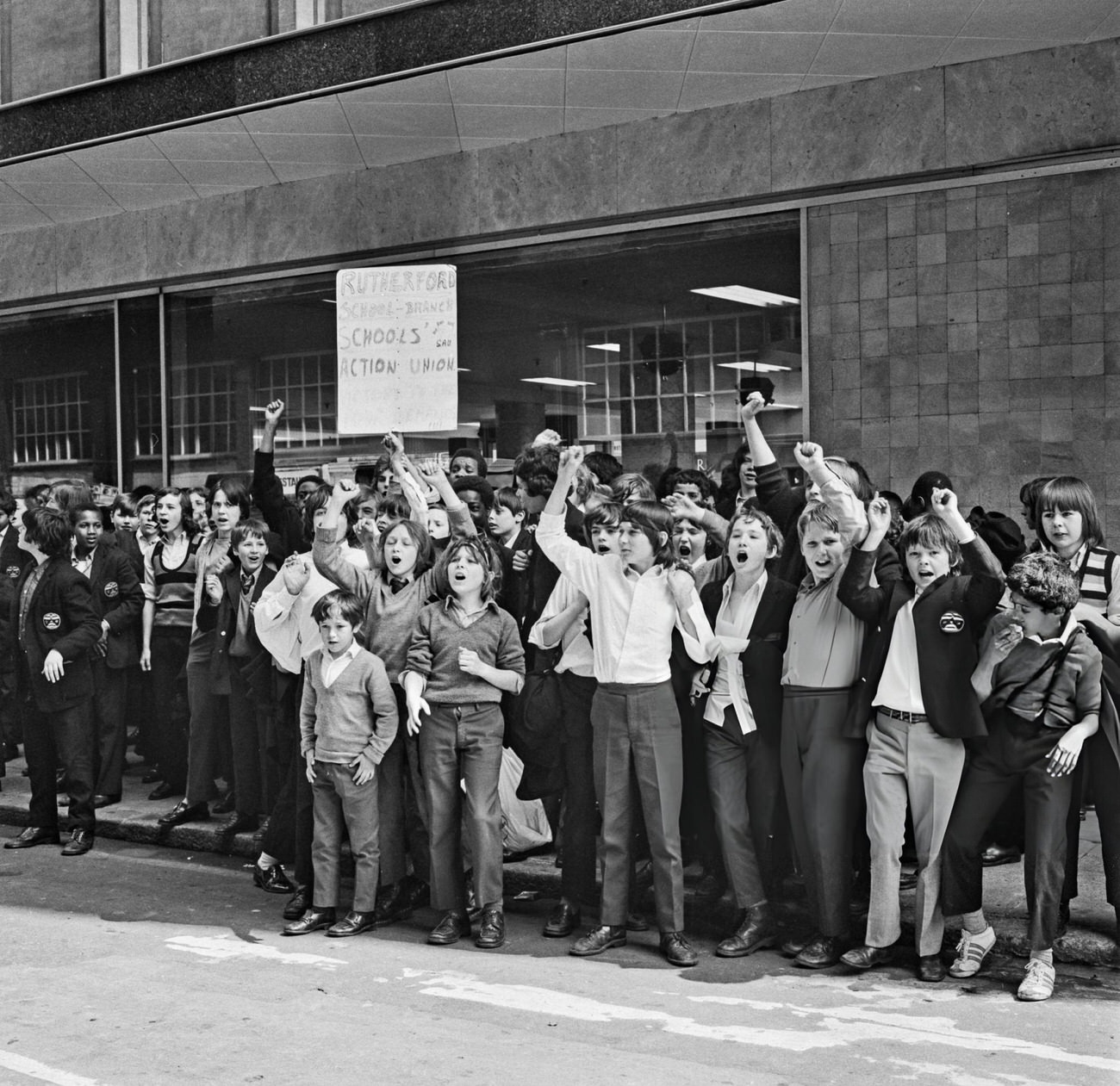
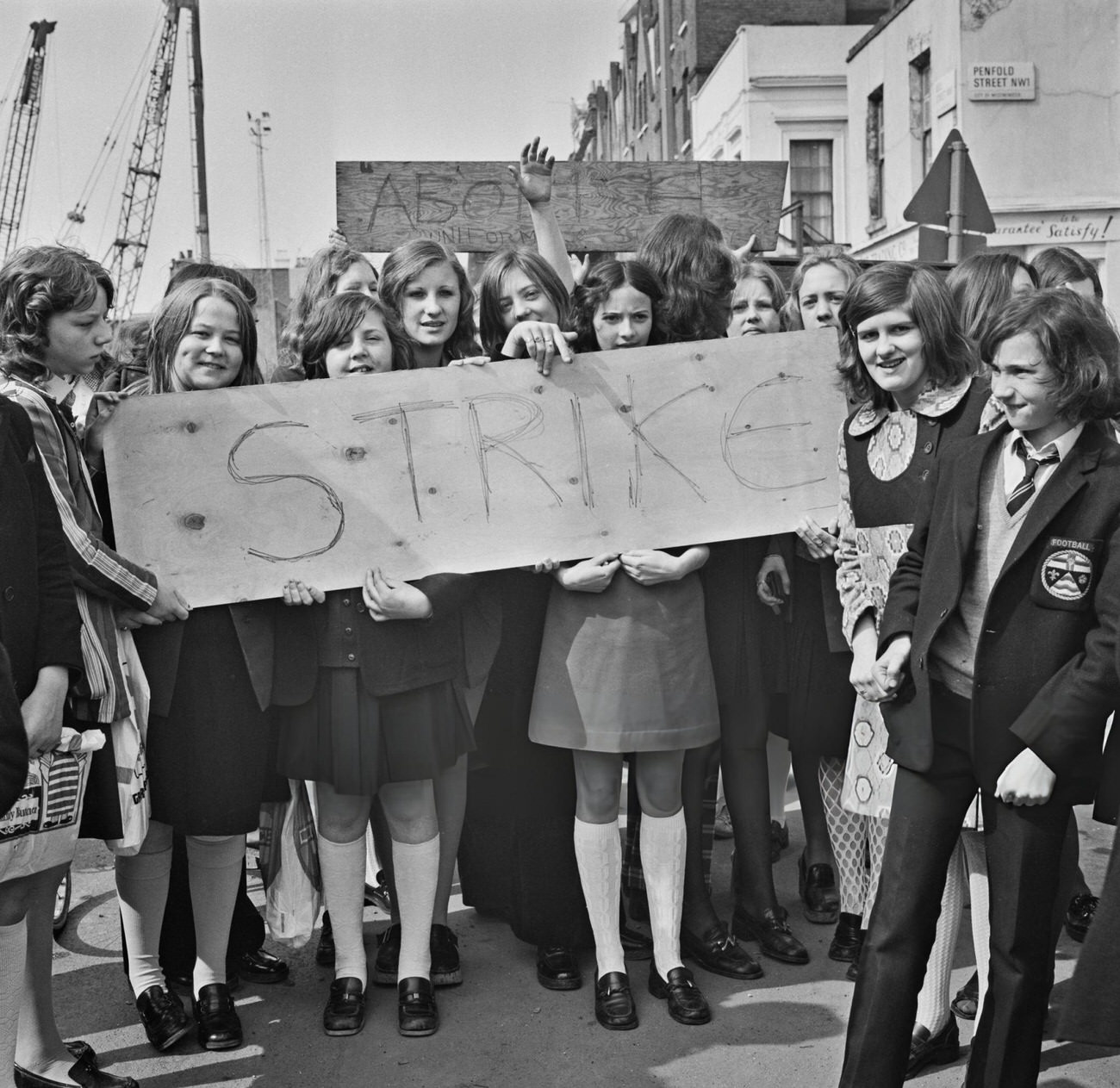
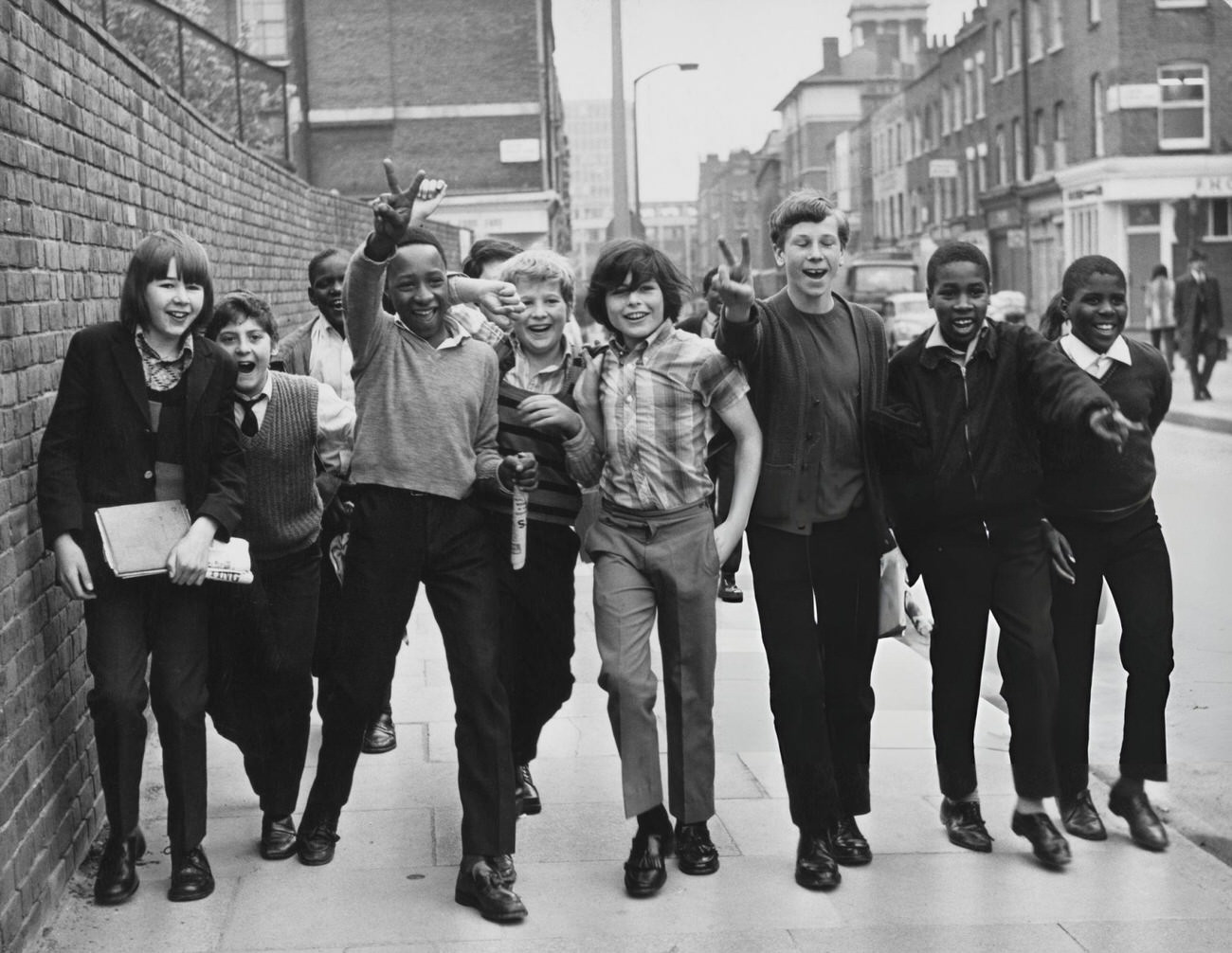
Pupils of Rutherford Comprehensive School in Marylebone, London, during a strike by schoolchildren organized by the Schools Action Union, 1972.
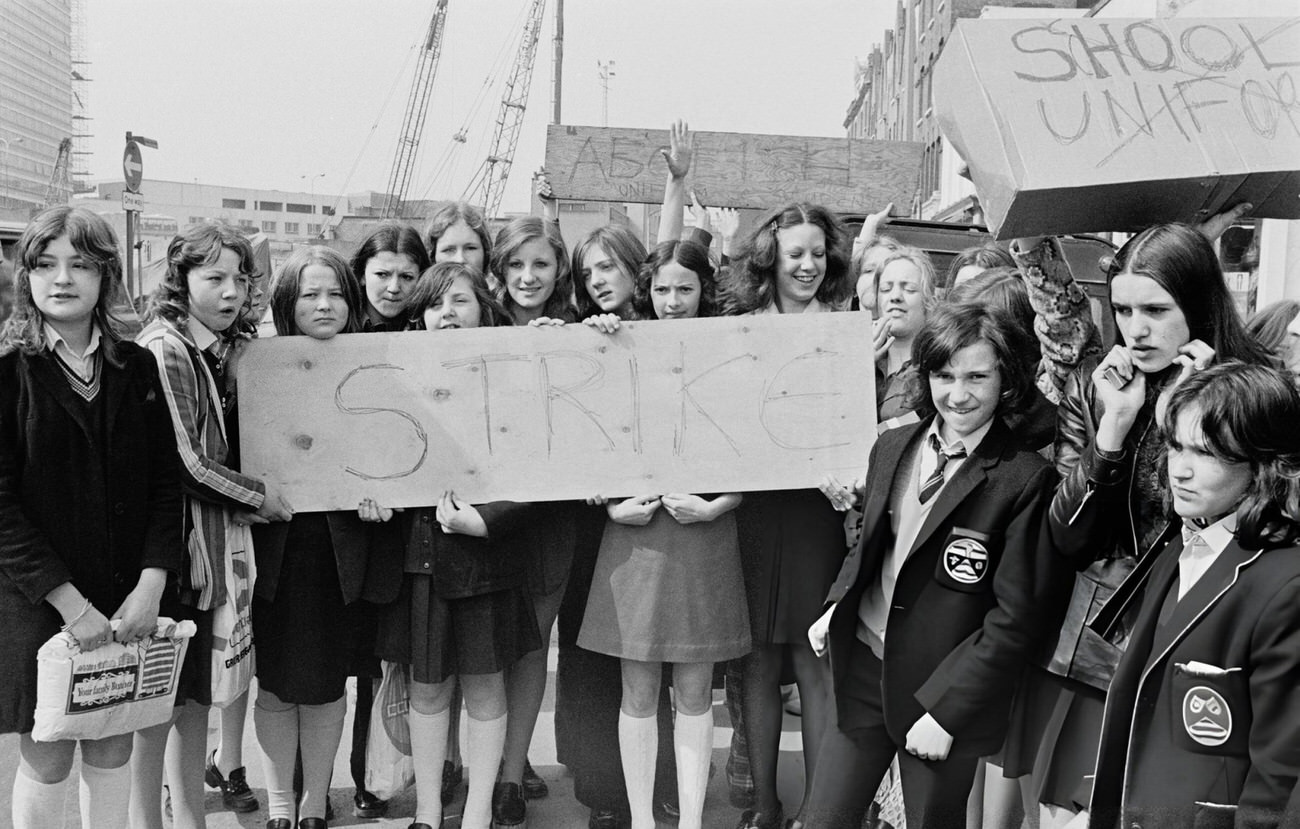
Pupils from the Sarah Siddons Comprehensive School in London, protesting in Marylebone during a strike by schoolchildren organized by the Schools Action Union, 1972.
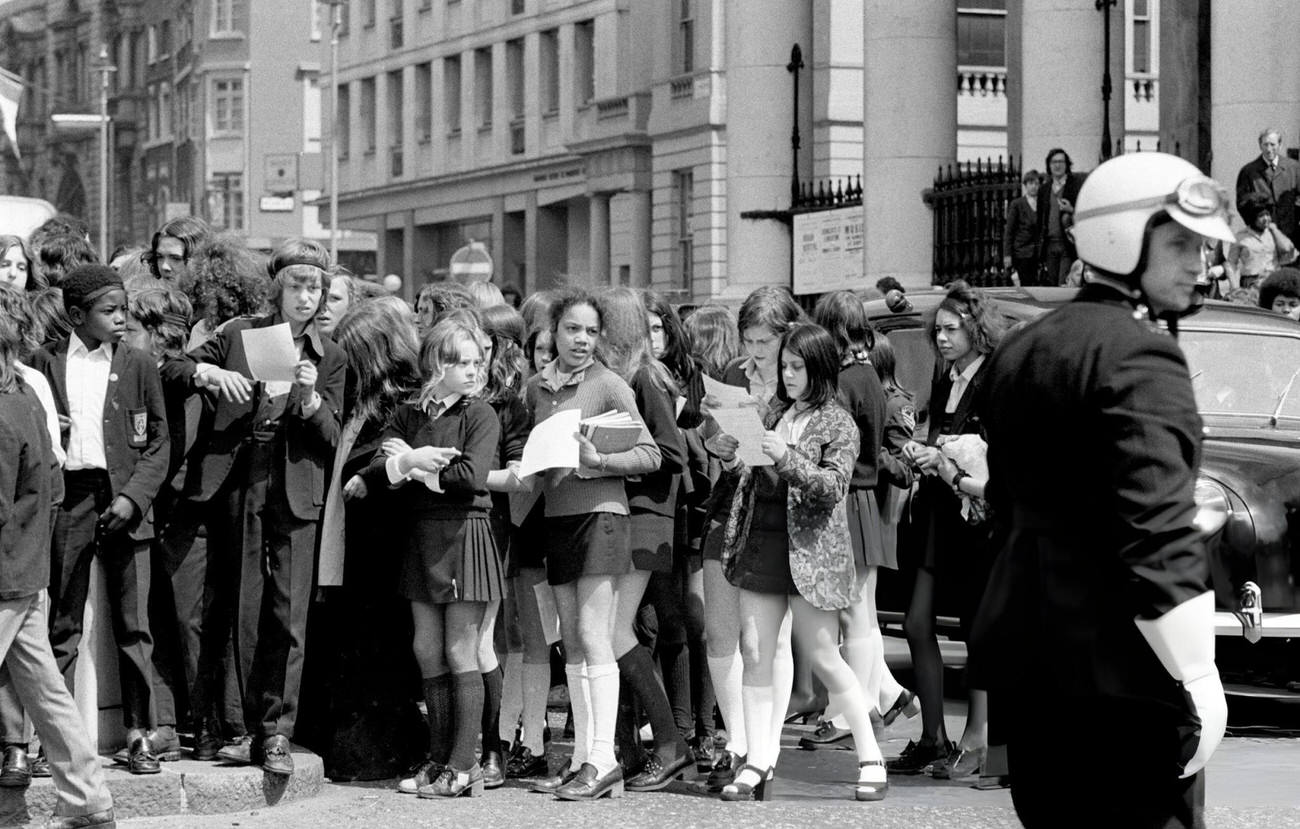
Male pupils of Rutherford School and female pupils of Sarah Siddons Comprehensive join forces to strike against caning, detention, uniforms and headmaster dictatorships, Marylebone, London, 1972.
Rutherford Comprehensive School pupils wearing their ordinary clothes arrive at the school in Marylebone, London, 1972.

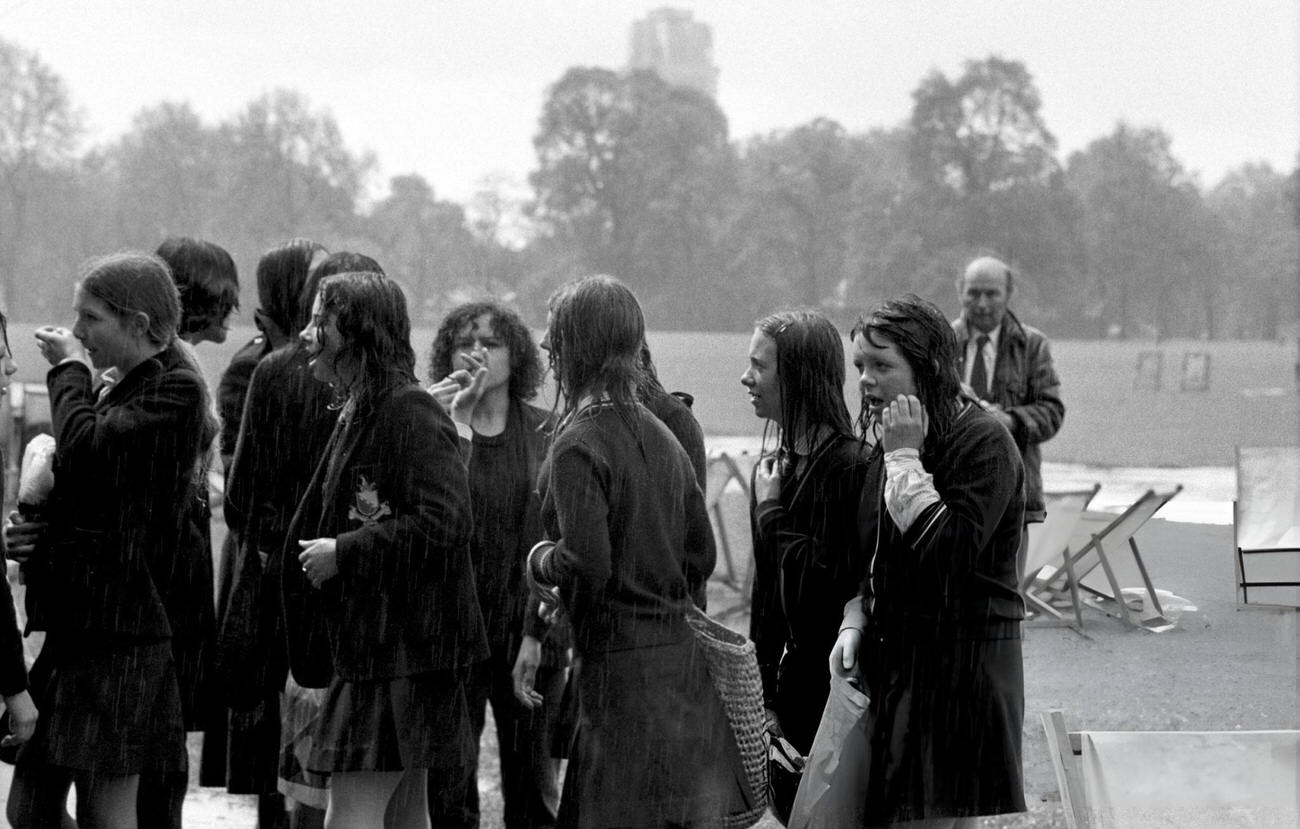
The marches reached some of London’s most iconic public spaces. Students ran through Trafalgar Square and flooded into Hyde Park, where a rally was held at Speakers’ Corner — a location historically associated with public debate and free speech. The symbolism of that choice was not lost on observers. A heavy downpour hit during one of the Hyde Park demonstrations, scattering students across the park’s verges, but the rain did not end the action. After the rally, the crowd marched on to County Hall.
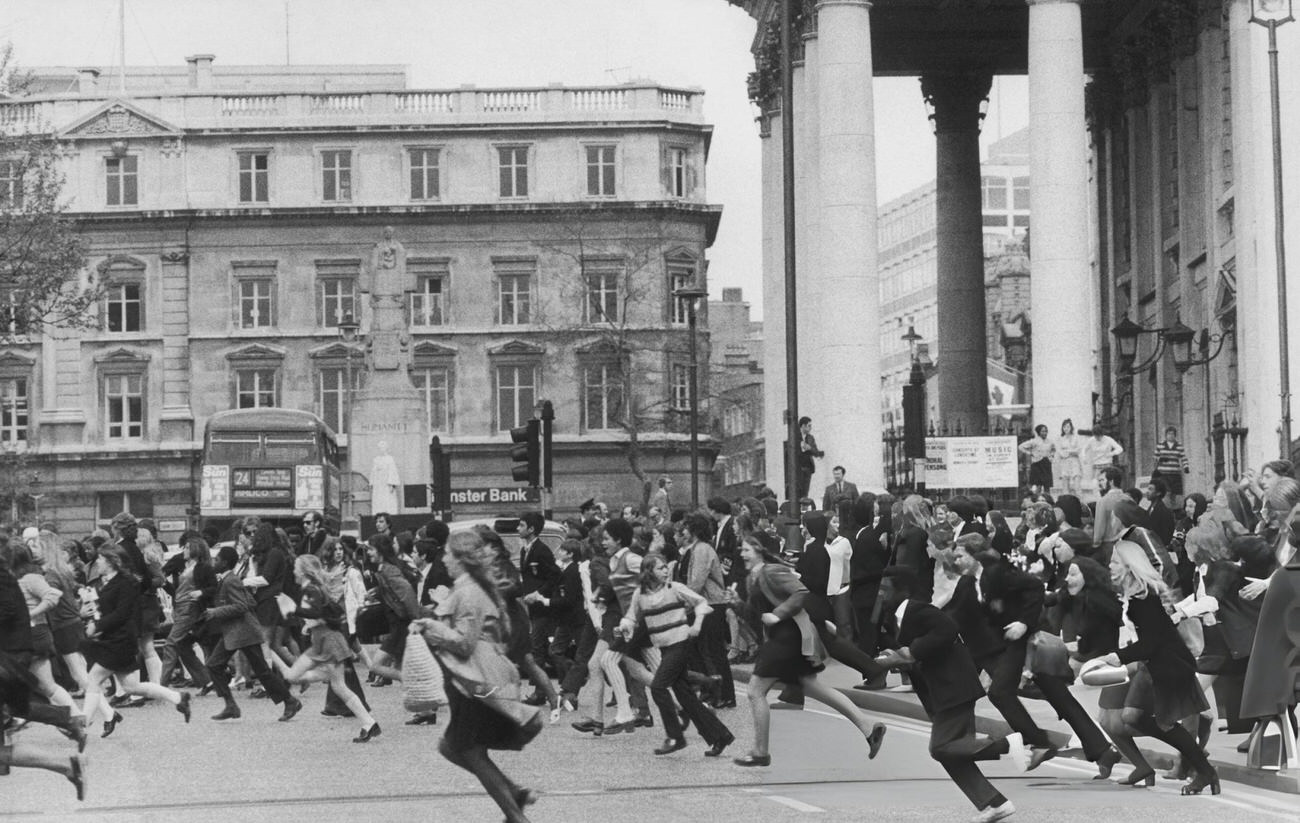
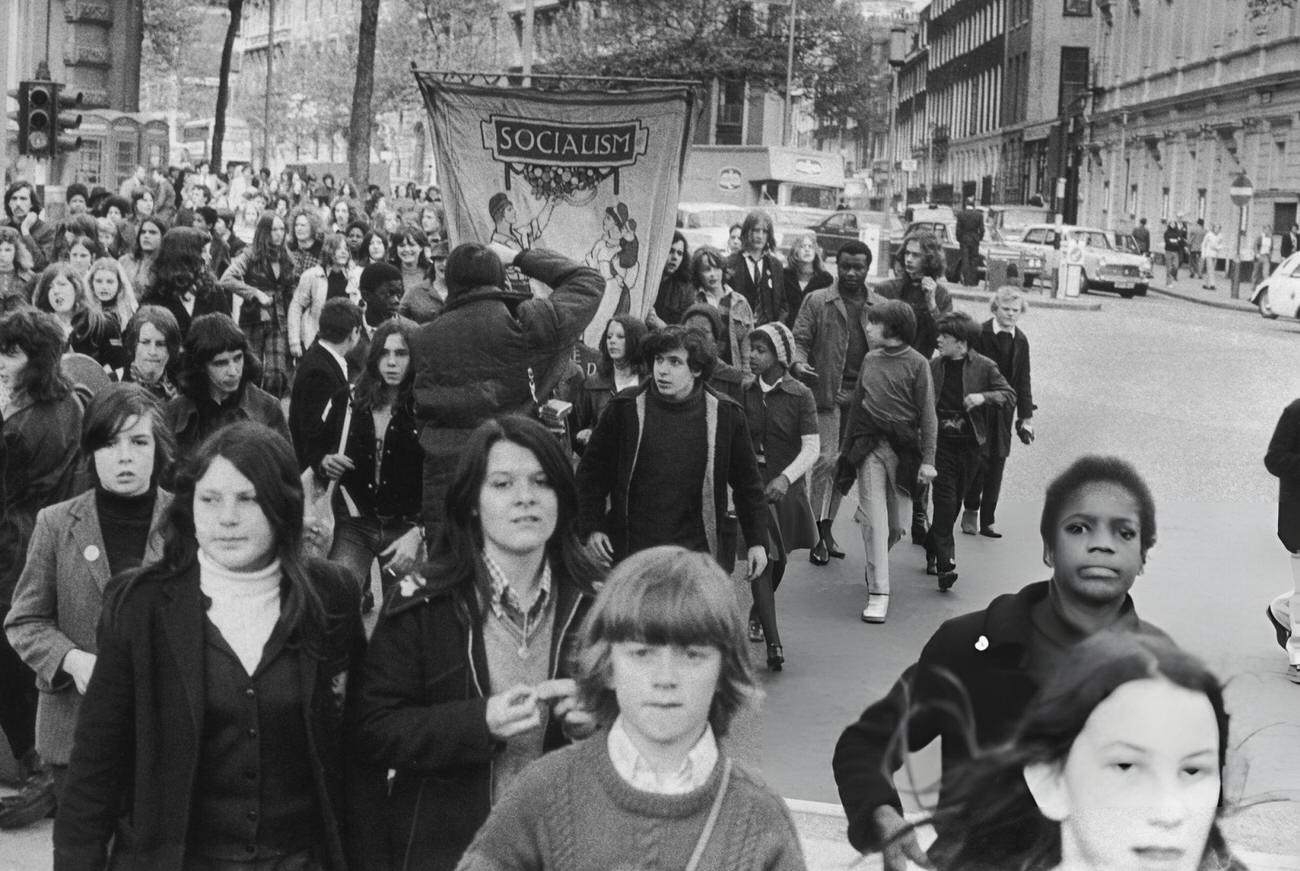
Pupils running across a road during a school strike demonstration, Trafalgar Square, London, 1972.
Pupils march into Trafalgar Square, London during a school strike, 1972.
Schoolchildren taking part in a protest march on their way to the South Bank, London, 1972.
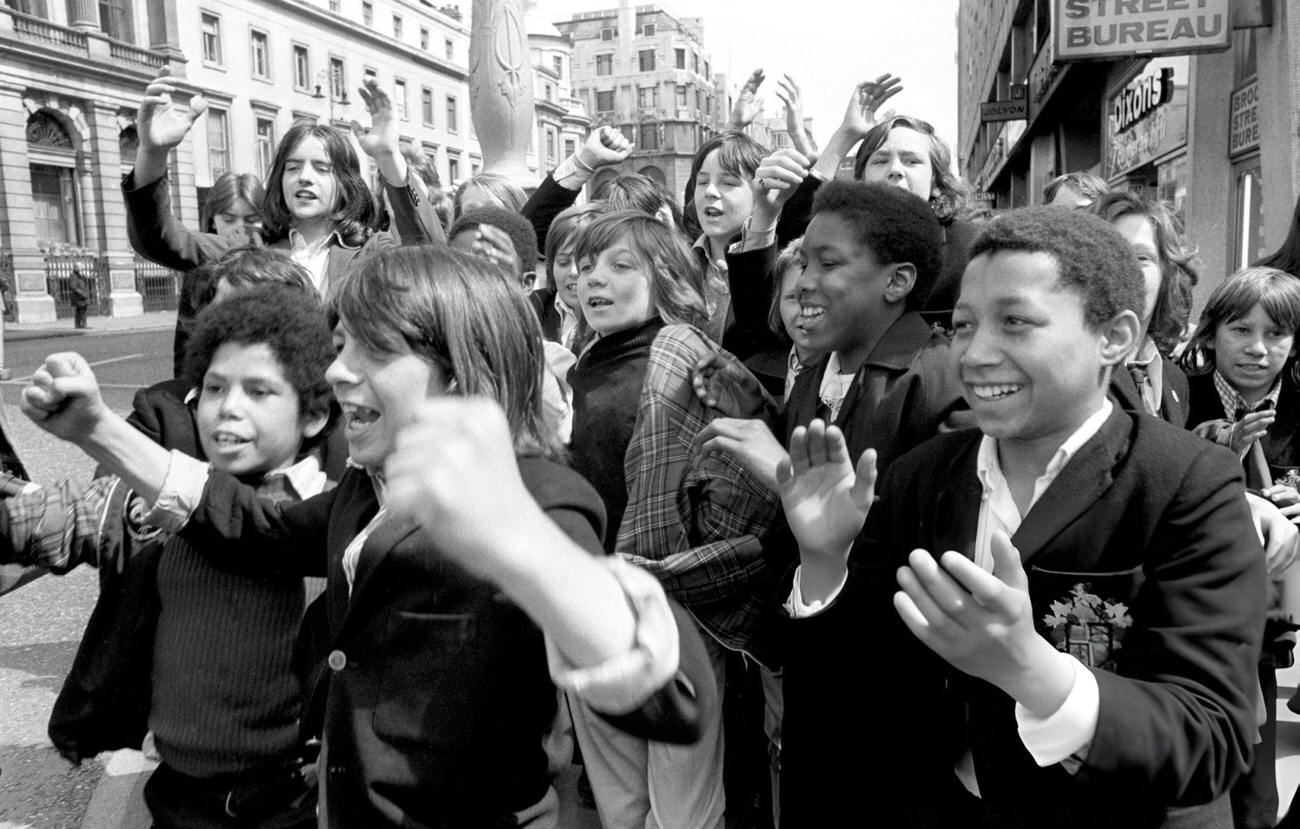
London schoolchildren at Charing Cross support a strike called by the Schools Action Union, 1972.
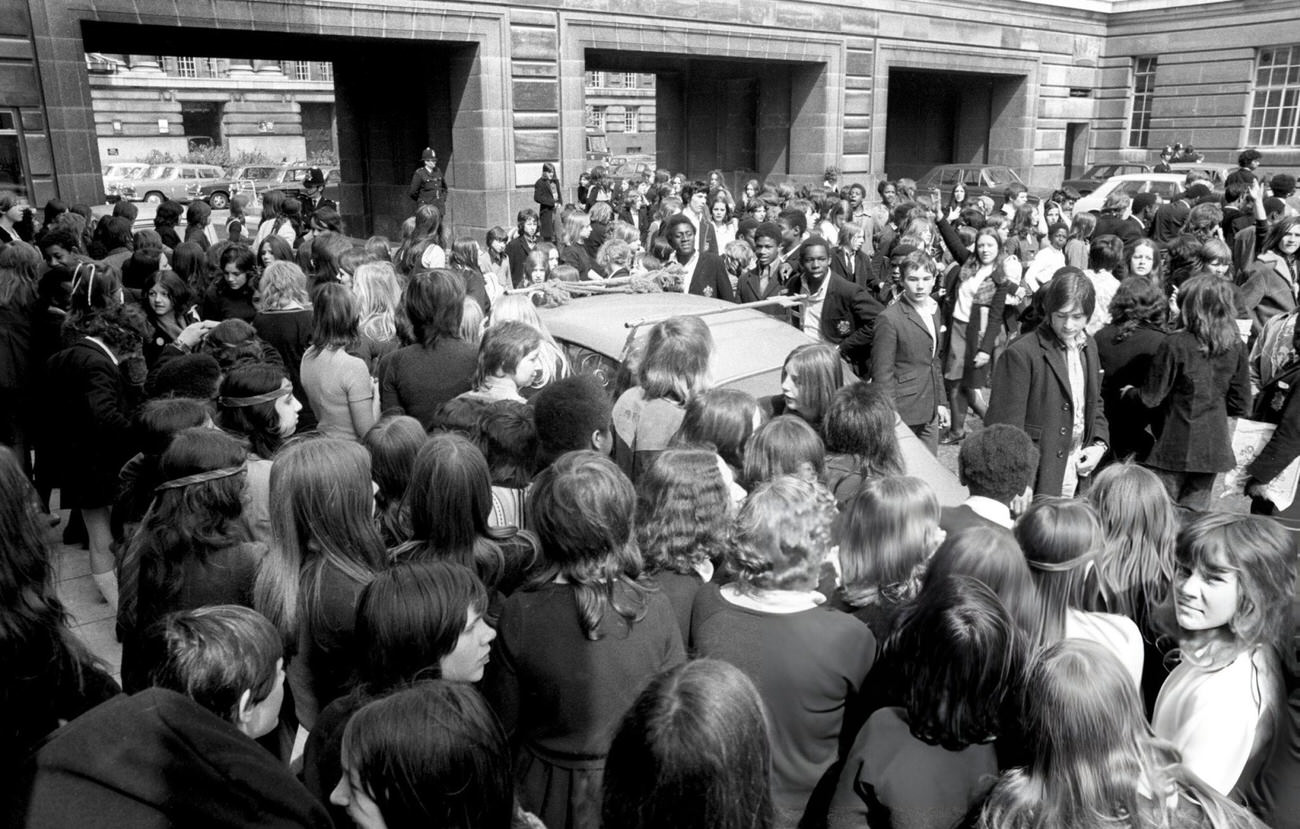
London schoolchildren take part in a mass rally at County Hall, organized by the Schools Action Union, 1972.
London schoolchildren attend a demonstration in Trafalgar Square, 1972.

Police were present throughout the demonstrations. At County Hall, officers physically restrained protesters outside the building. Some clashes were tense, with police grabbing activists to prevent them from pushing past barriers. Teachers and parents were divided. Some backed the students openly, agreeing that conditions in London’s schools needed urgent attention. Others felt that street protests were the wrong way to make the case, and that students belonged in classrooms.
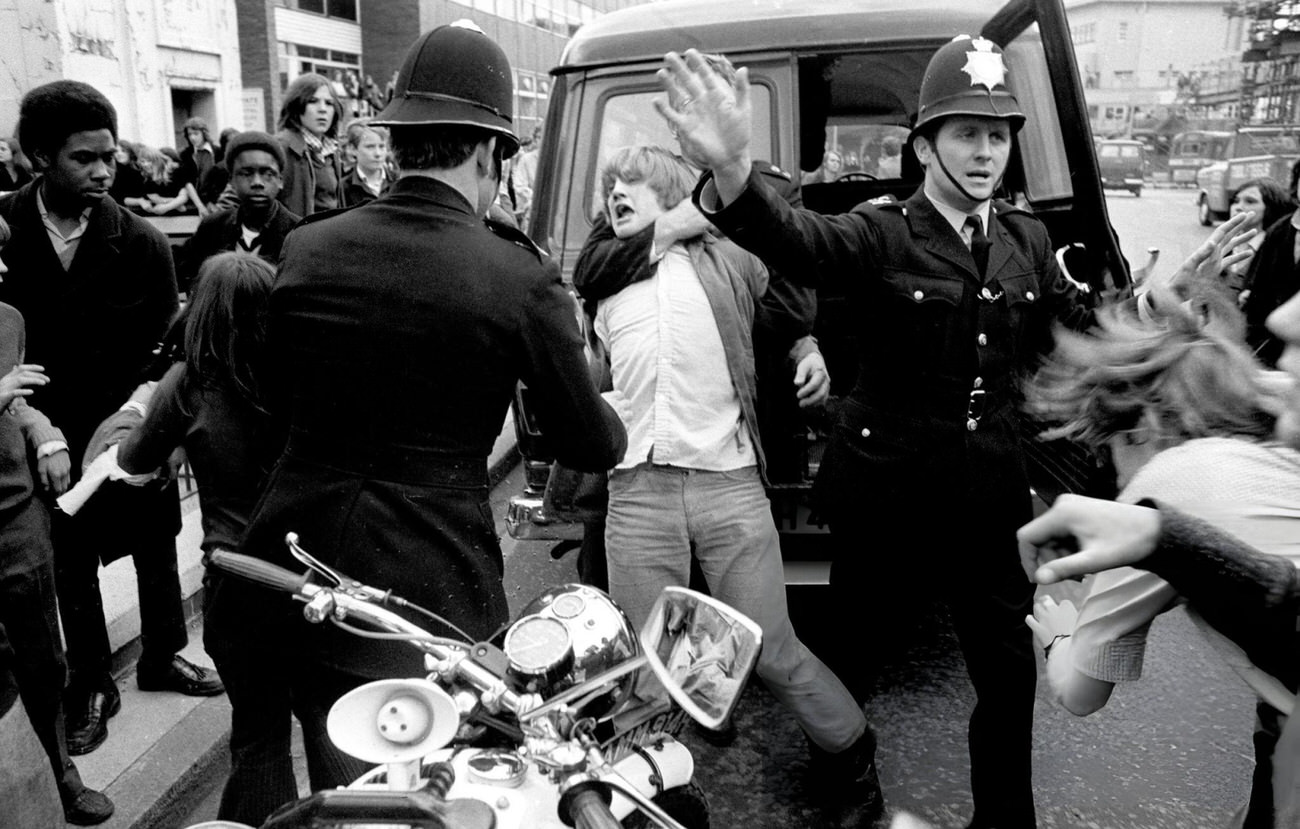
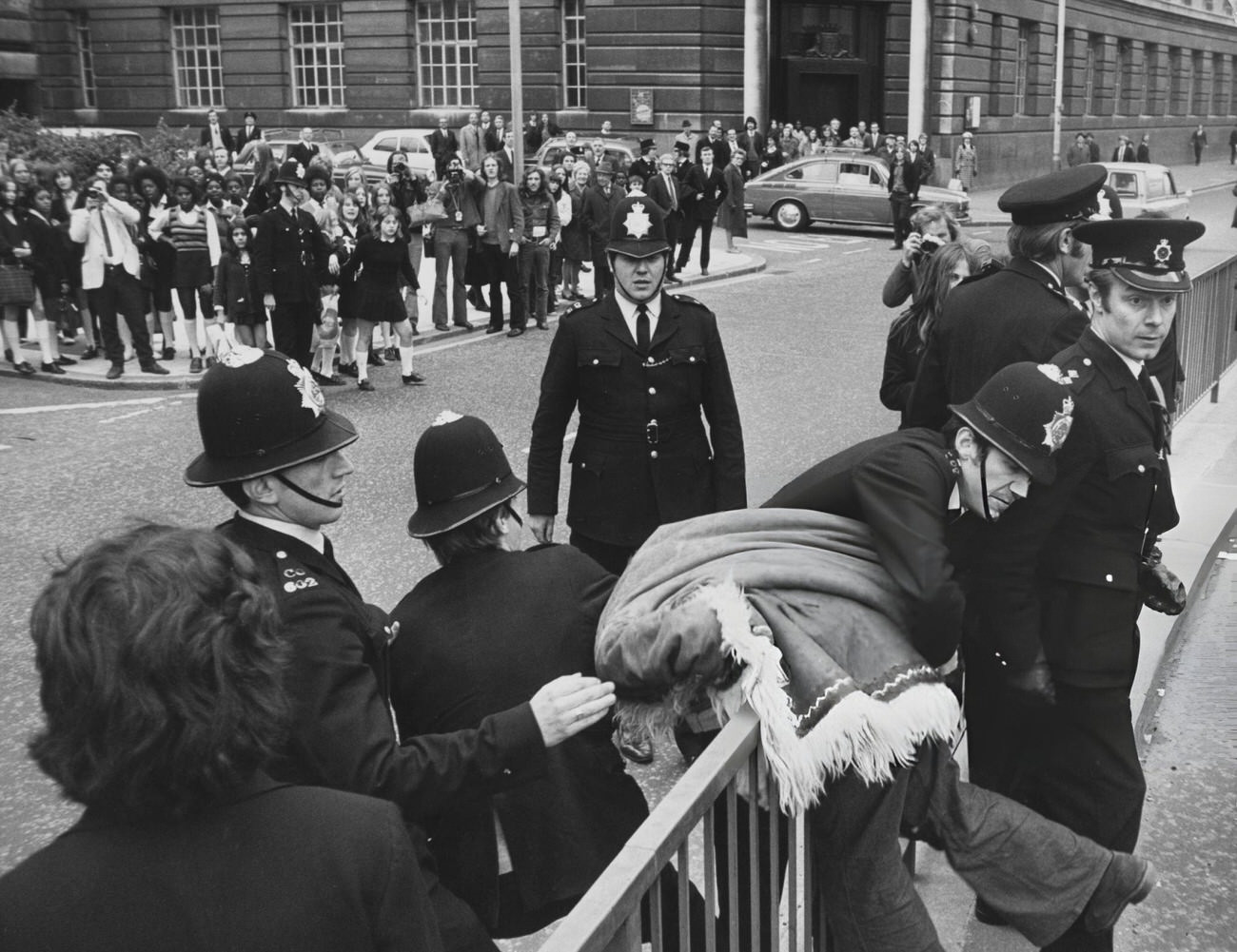
A policeman restrains a protestor outside County Hall in Lambeth, where schoolchildren were demonstrating in support of the demands put forward by the Schools Action Union, 1972.
Police officers restrain an Afghan-coated activist during a one-day strike organized by the Schools Action Union protest outside the Greater London Council headquarters at County Hall, 1972.

Stephen Finch continued to address students throughout the strike, speaking at gatherings across West London, including at Paddington Green. His presence gave the movement a public face and kept the media’s attention locked on the students’ demands. Government officials eventually agreed to meet with student leaders. The meetings were tense, but they produced promises — more teachers, better facilities, and a closer look at how schools were being run.
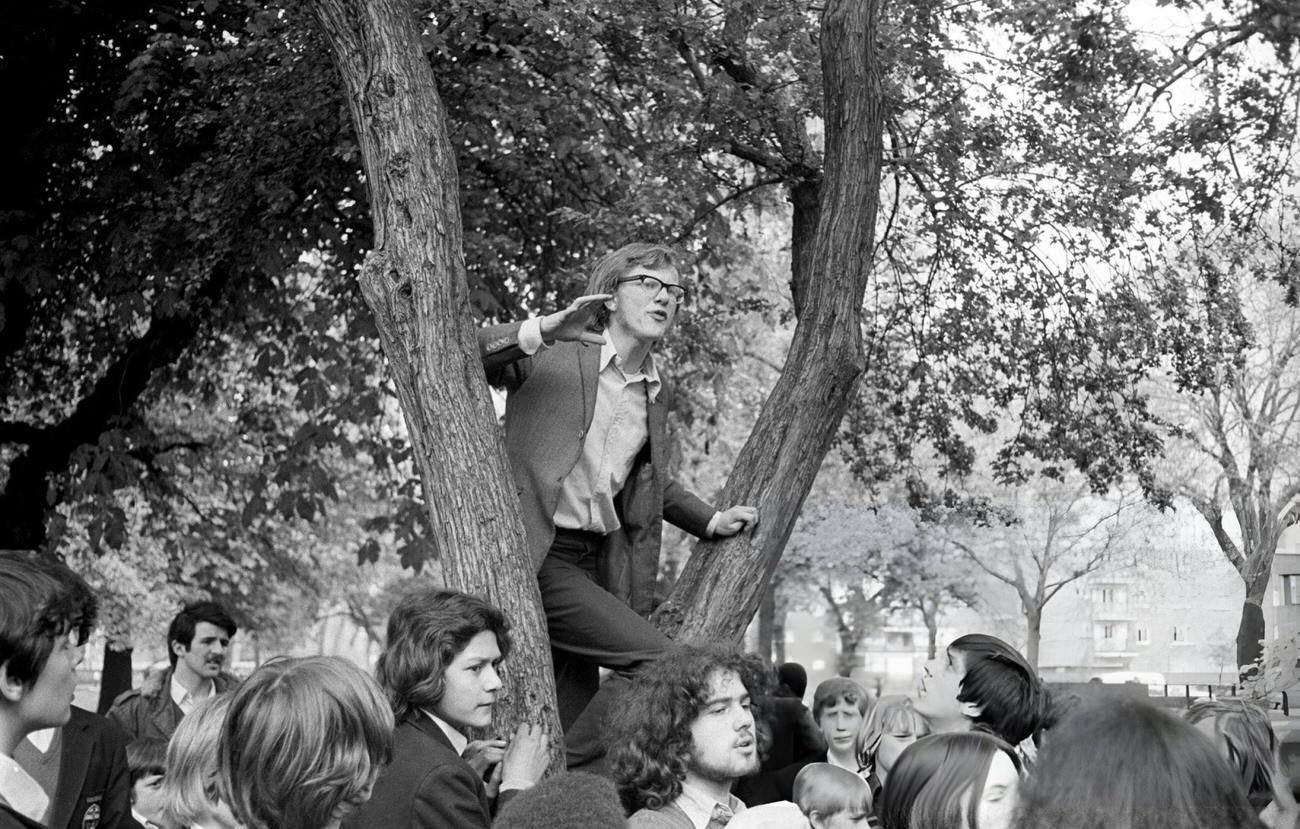
Stephen Finch, 18, leader of the West London schoolchildren's strike, talks to fellow pupils at Paddington Green, 1972.
Stephen Finch, 18, leader of the West London schoolchildren’s strike, talks to fellow pupils at Paddington Green, 1972.
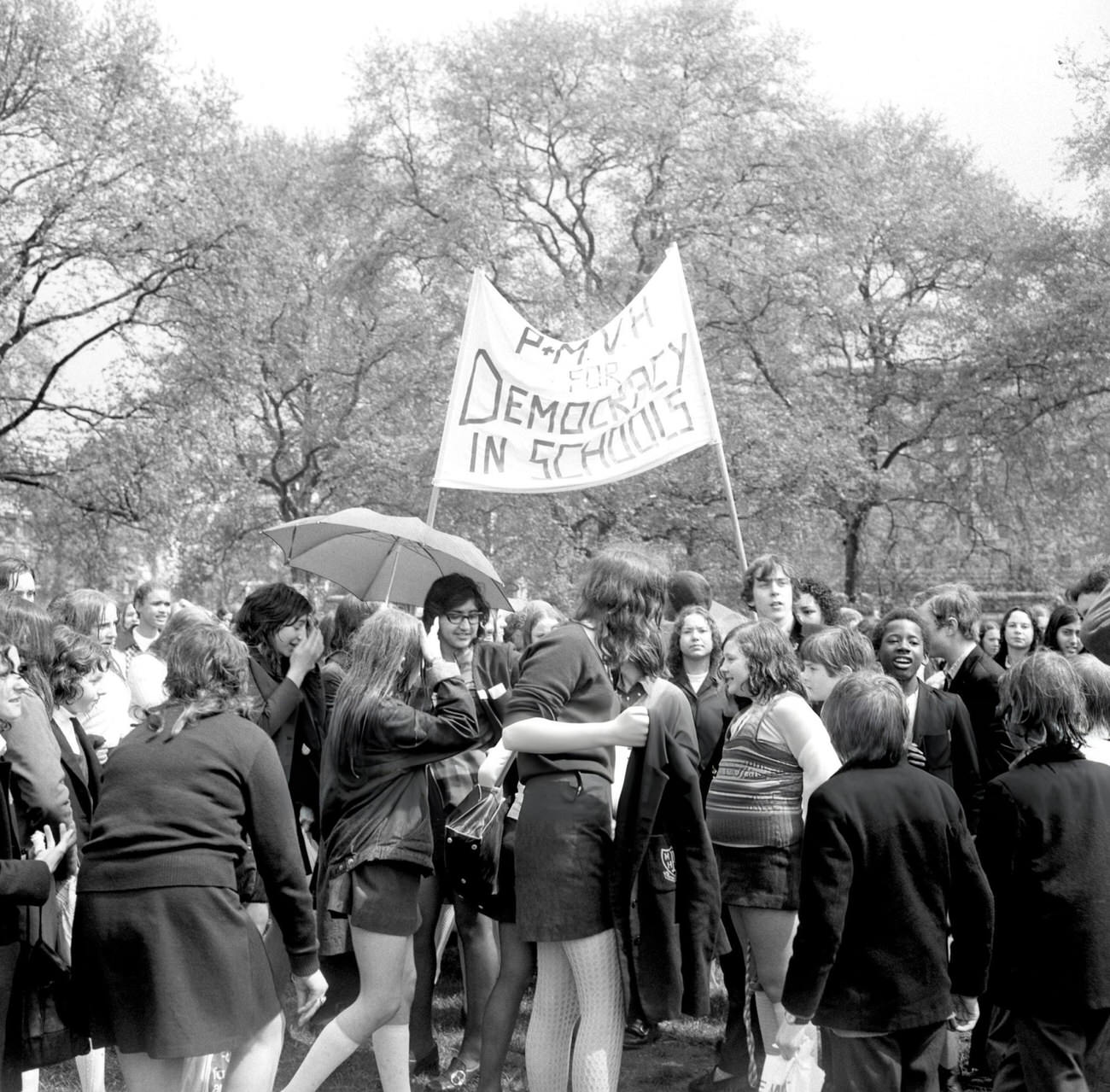
A group of schoolchildren head for shelter after a heavy downpour dampens their 'pupil power' demonstration at Speaker's Corner in Hyde Park, 1972.
A group of schoolchildren head for shelter after a heavy downpour dampens their ‘pupil power’ demonstration at Speaker’s Corner in Hyde Park, 1972.
A group of schoolchildren hold a 'pupil power' demonstration at Speaker's Corner in Hyde Park, 1972.
A group of schoolchildren hold a ‘pupil power’ demonstration at Speaker’s Corner in Hyde Park, 1972.
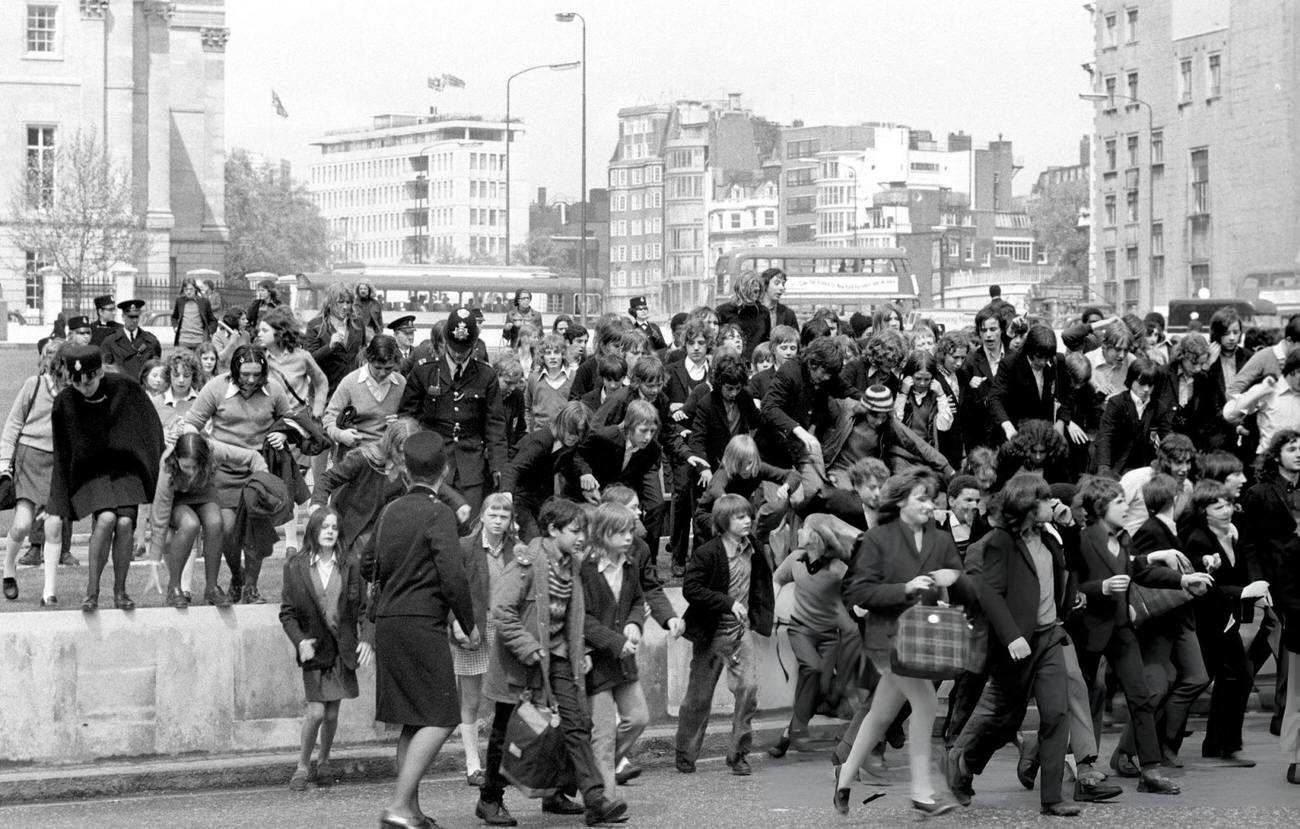
Schoolchildren clamber over the verges in Hyde Park, where a 'pupil power' demonstration took place at Speakers' Corner. They then marched to County Hall, 1972.
Schoolchildren clamber over the verges in Hyde Park, where a ‘pupil power’ demonstration took place at Speakers’ Corner. They then marched to County Hall, 1972.
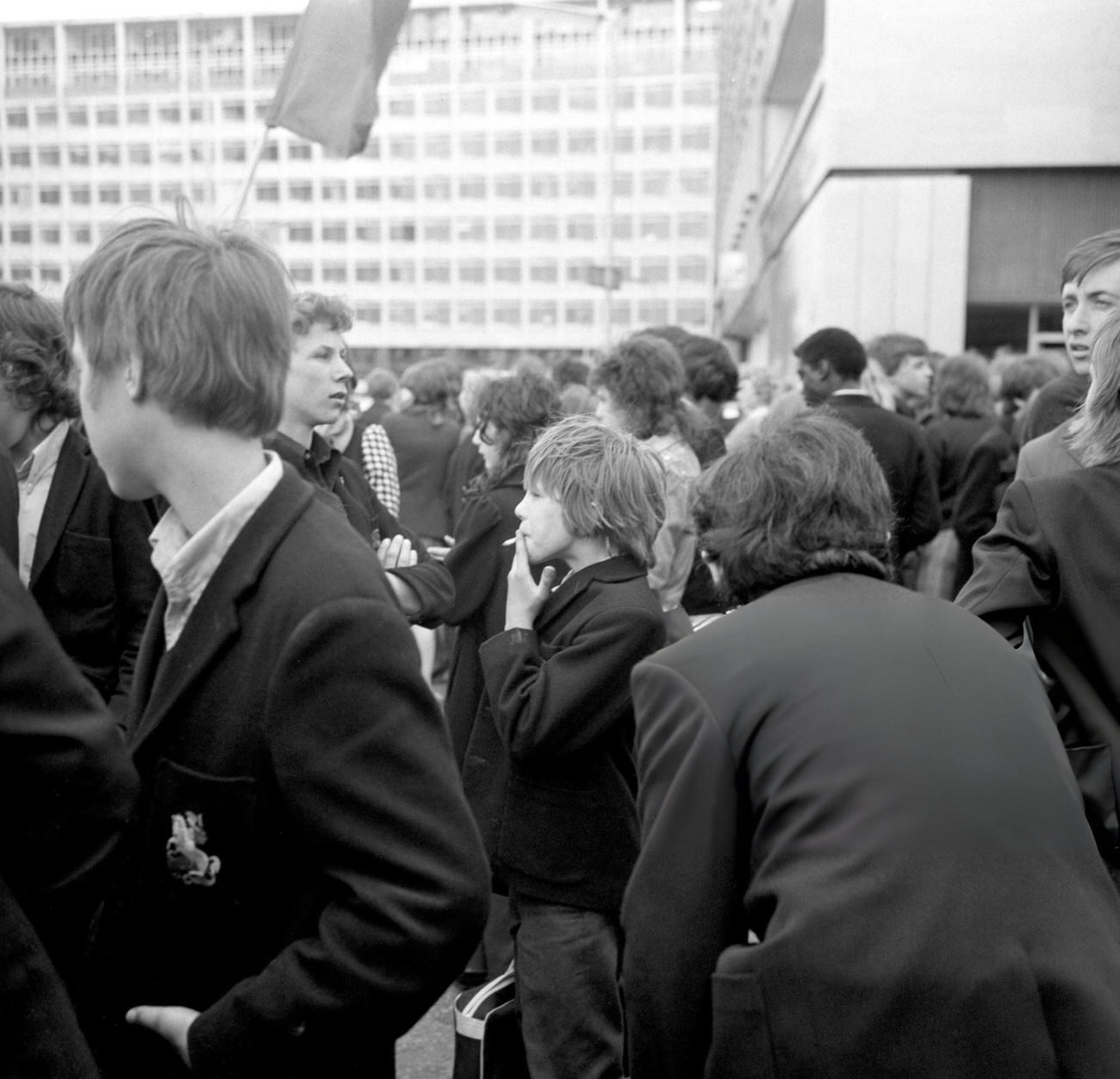
A schoolboy smokes as a 'pupil power' demonstration breaks up near County Hall following a rally in Hyde Park, 1972.
A schoolboy smokes as a ‘pupil power’ demonstration breaks up near County Hall following a rally in Hyde Park, 1972.

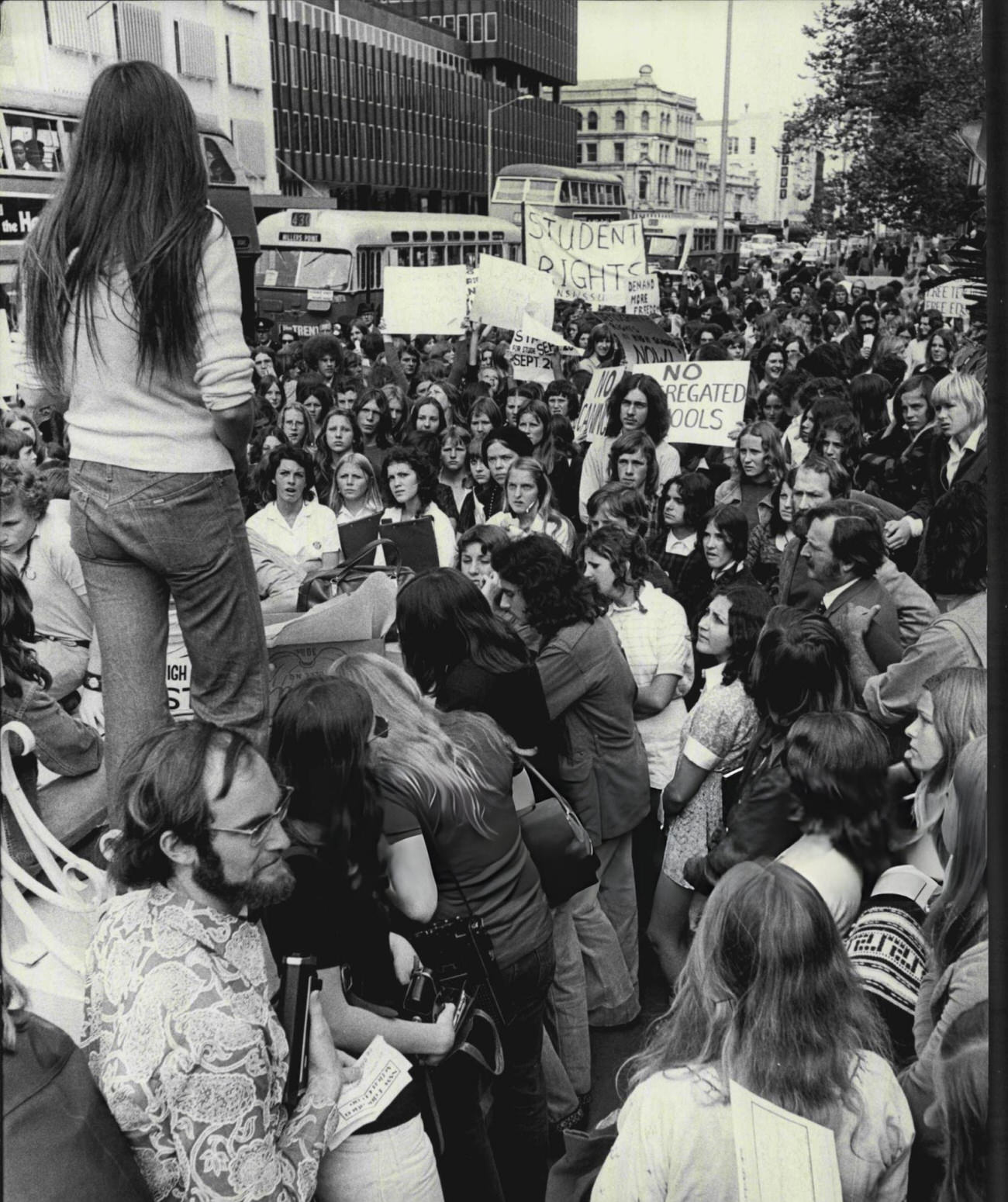
The phrase “pupil power” became the rallying cry of the movement. It captured exactly what the students were asking for — not just better school dinners or an end to caning, but a genuine shift in who held authority inside schools. Hundreds of students attended meetings outside town halls and then marched through city streets toward Parliament. The strikes showed that young people, organized and vocal, were capable of forcing a conversation that adults had long avoided.
Schoolchildren taking part in a 'pupil power' demonstration march towards County Hall, 1972.
Schoolchildren taking part in a ‘pupil power’ demonstration march towards County Hall, 1972.
Several hundred striking high school students attended a meeting outside the Town Hall, before marching through the city to Parliament House, 1972.
Enjoyed this post? Get new ones in your inbox.

Leave a Comment

Your email address will not be published. Required fields are marked *

Share this Post 🥺

Please take a moment to share this content. Your support is greatly appreciated! 🙌🙏

Share this Post 🥺

Please take a moment to share this content. Your support is greatly appreciated! 🙌🙏
Scroll to Top
 
Hey Friend, Before You Go.. Please like & follow for more interesting content