
In the summer of 1902, American author Jack London arrived in the city that shared his name — and what he found there shocked him. London, England, was then the largest city in the world, a sprawling metropolis of wealth and industry. But beneath the grandeur was a hidden population of hundreds of thousands of people living in conditions that most of the outside world never saw. Jack London was determined to change that.
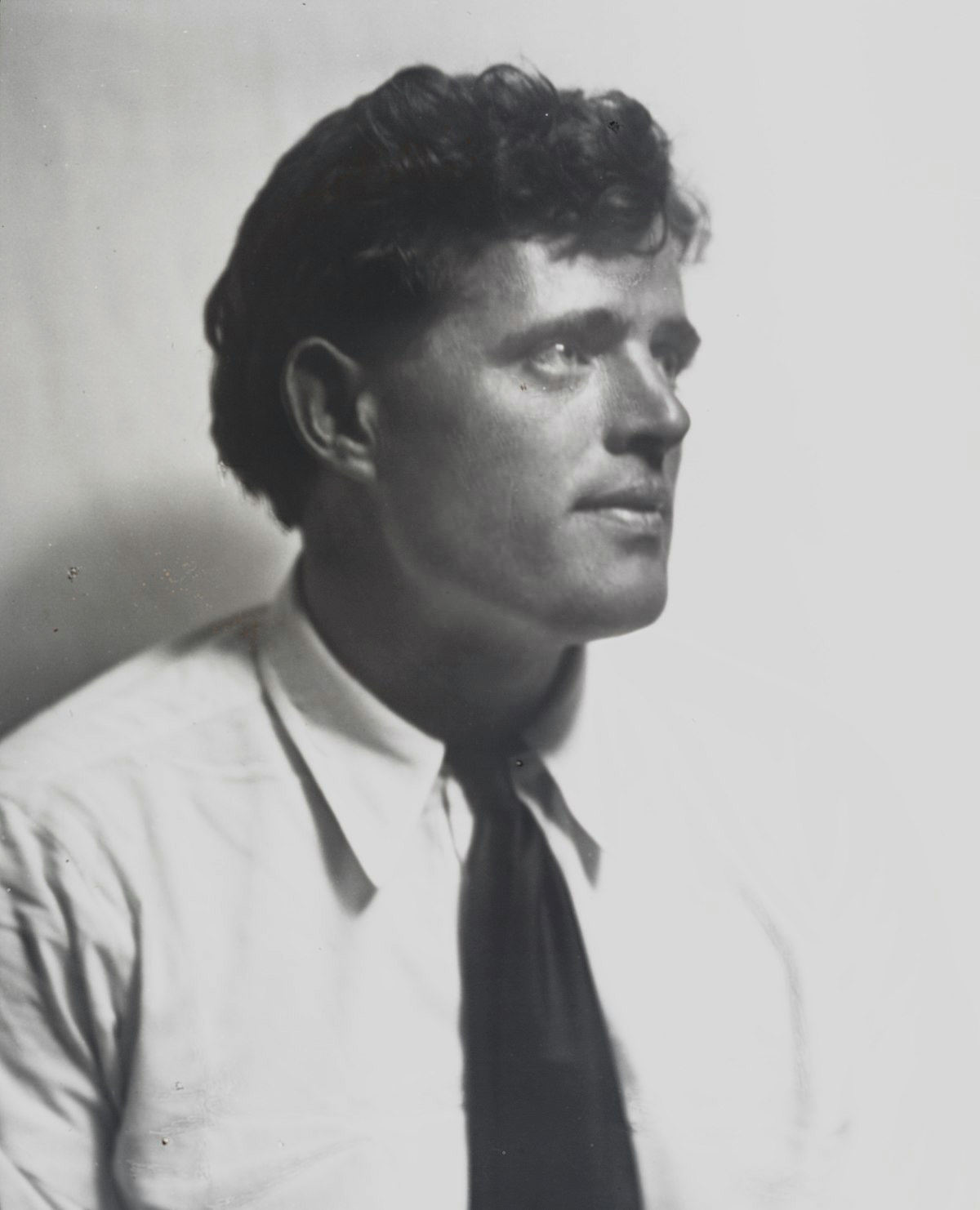
To document the lives of the city’s poorest residents, Jack London didn’t observe from a distance. He moved into the Whitechapel district himself, sleeping in workhouses, doss-houses — cheap lodging houses — and sometimes on the streets. He bought ragged secondhand clothes, blended in with the destitute population, and took photographs of what he witnessed firsthand. His goal was not to report on poverty from the outside but to live it.
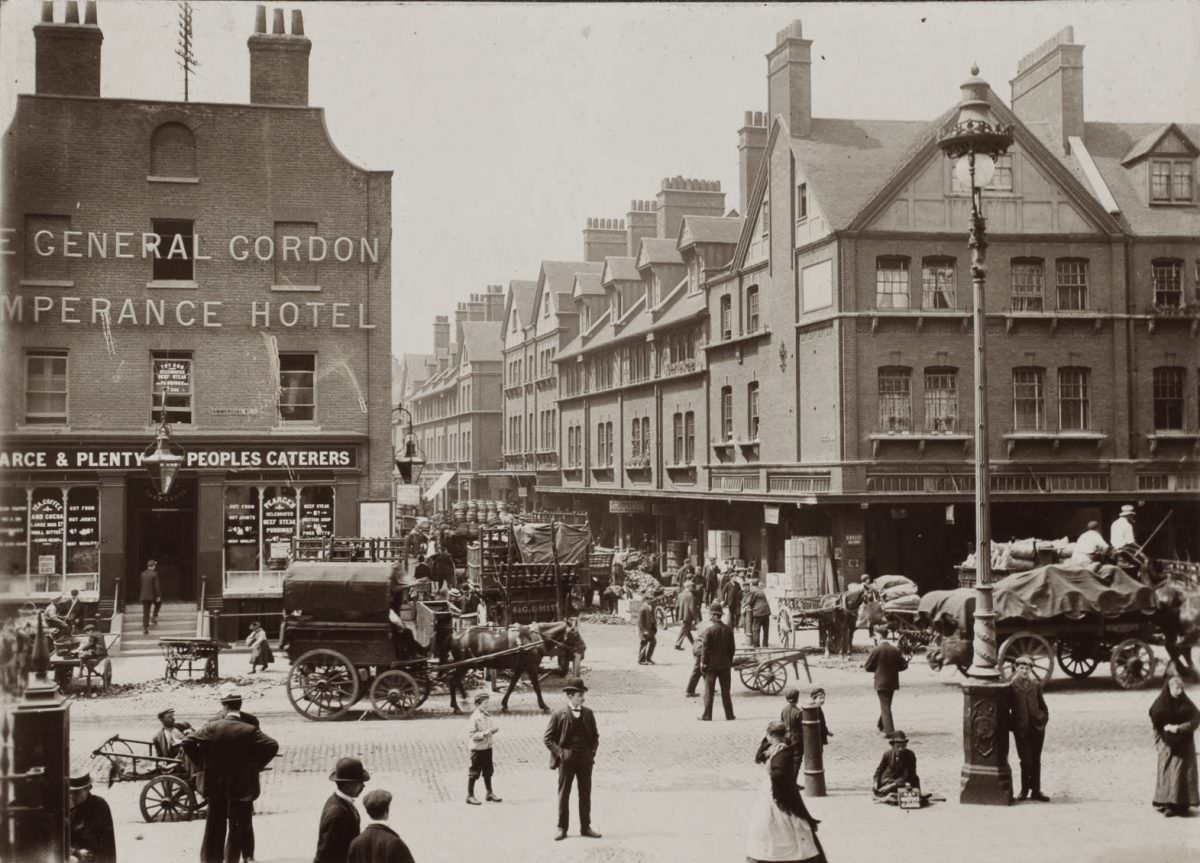
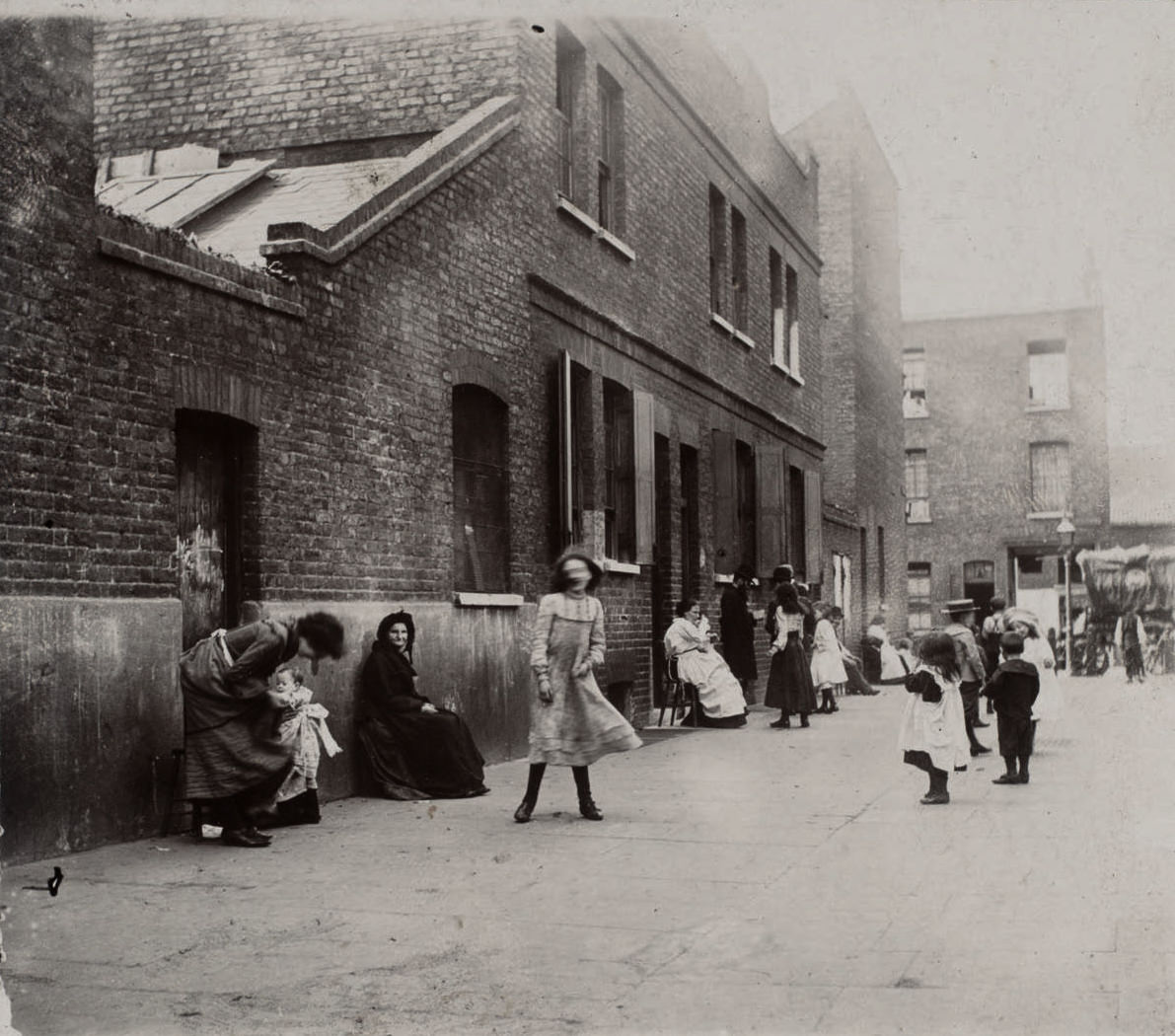
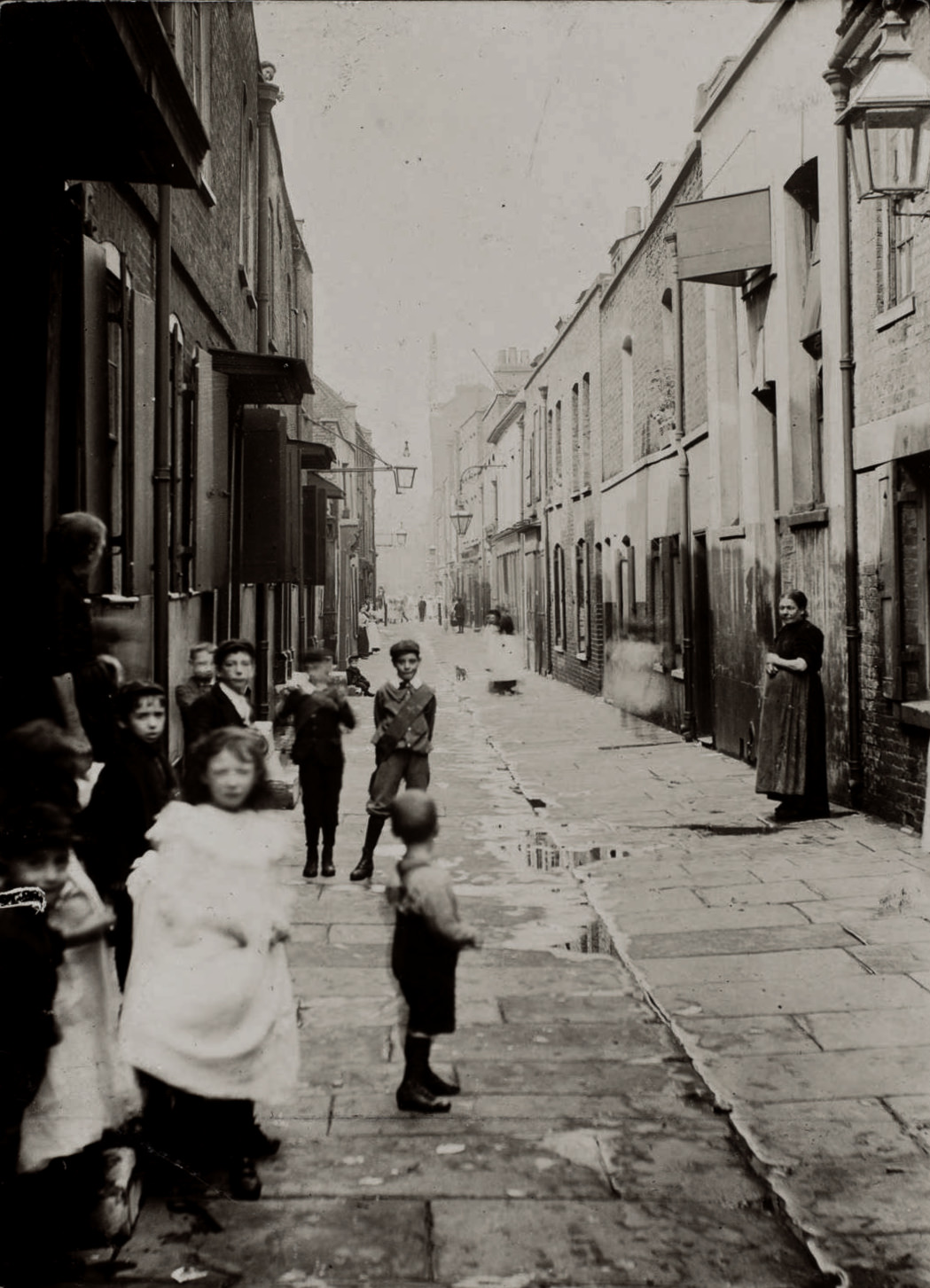
The neighborhood of Whitechapel and the surrounding East End streets were densely packed with the working poor, the unemployed, and those who had simply run out of options. Roughly half a million people lived in these conditions across the city. Men, women, and children crowded into single rooms, shared narrow alleys, and competed for space in lodging houses that offered little more than a cot and a roof.
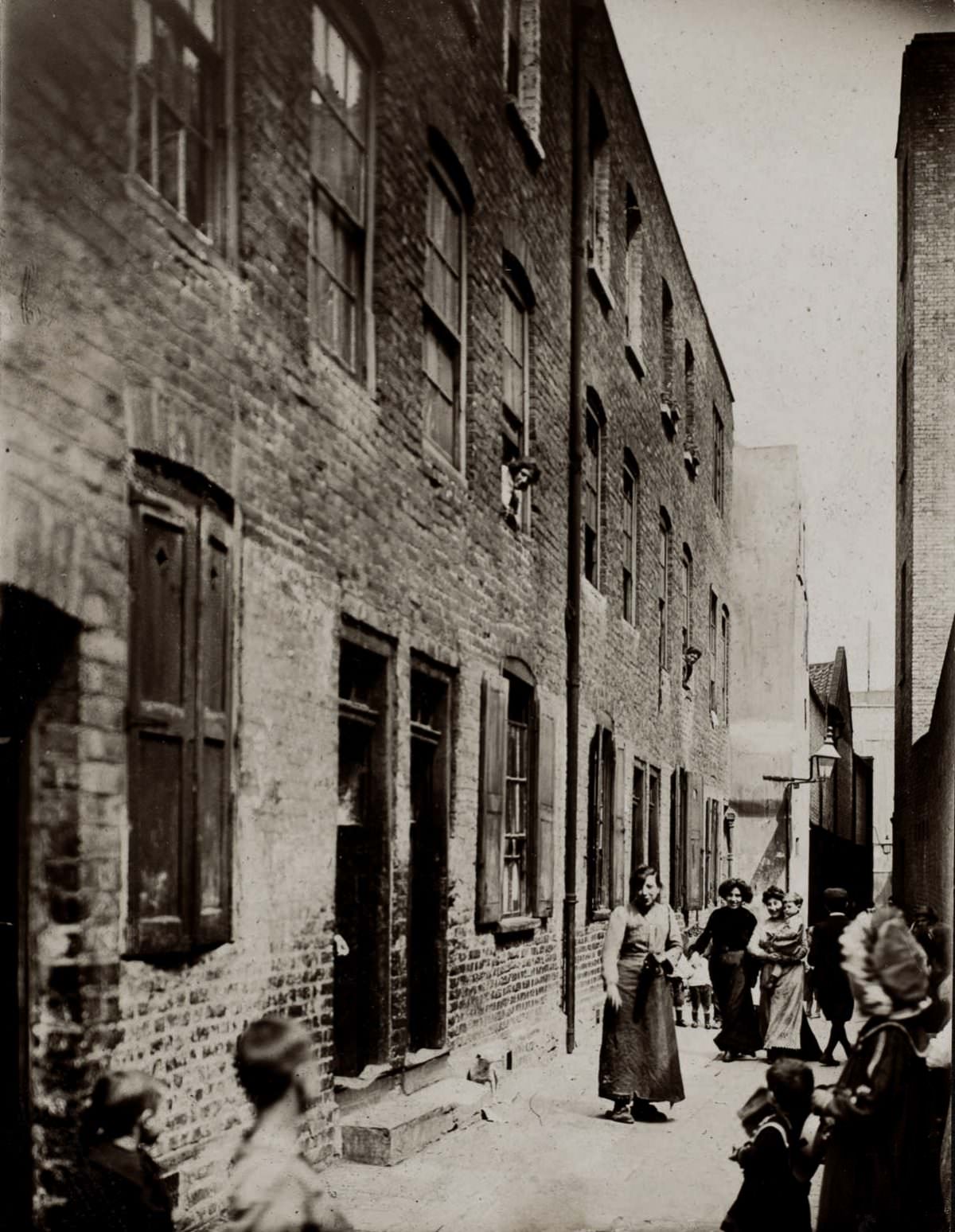
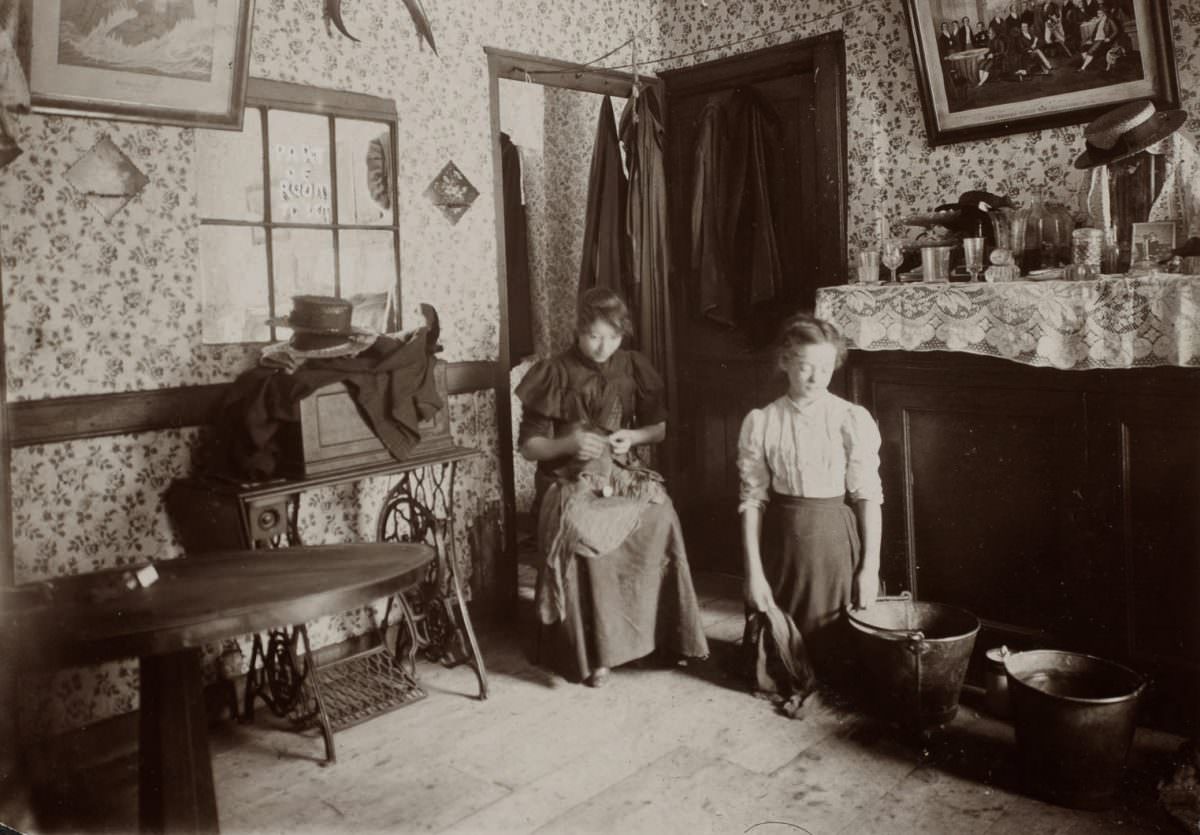
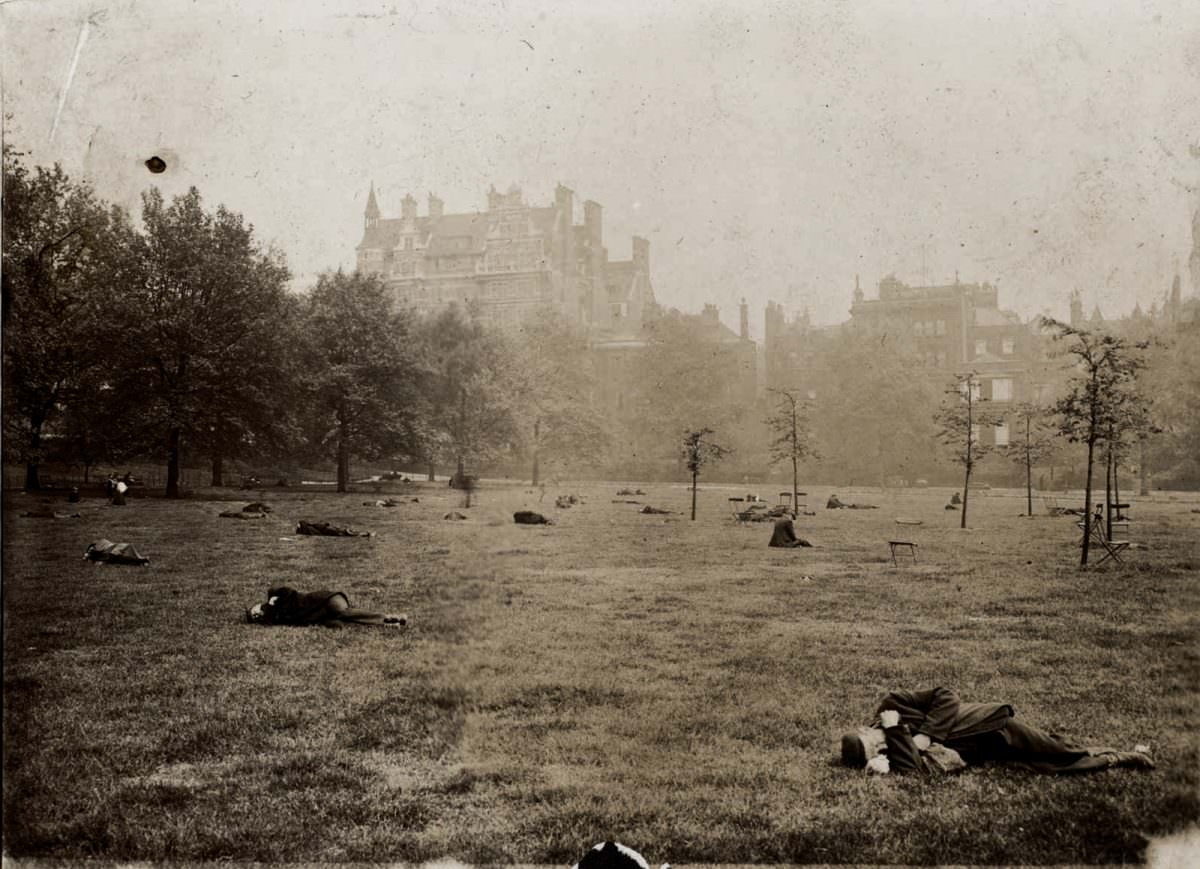
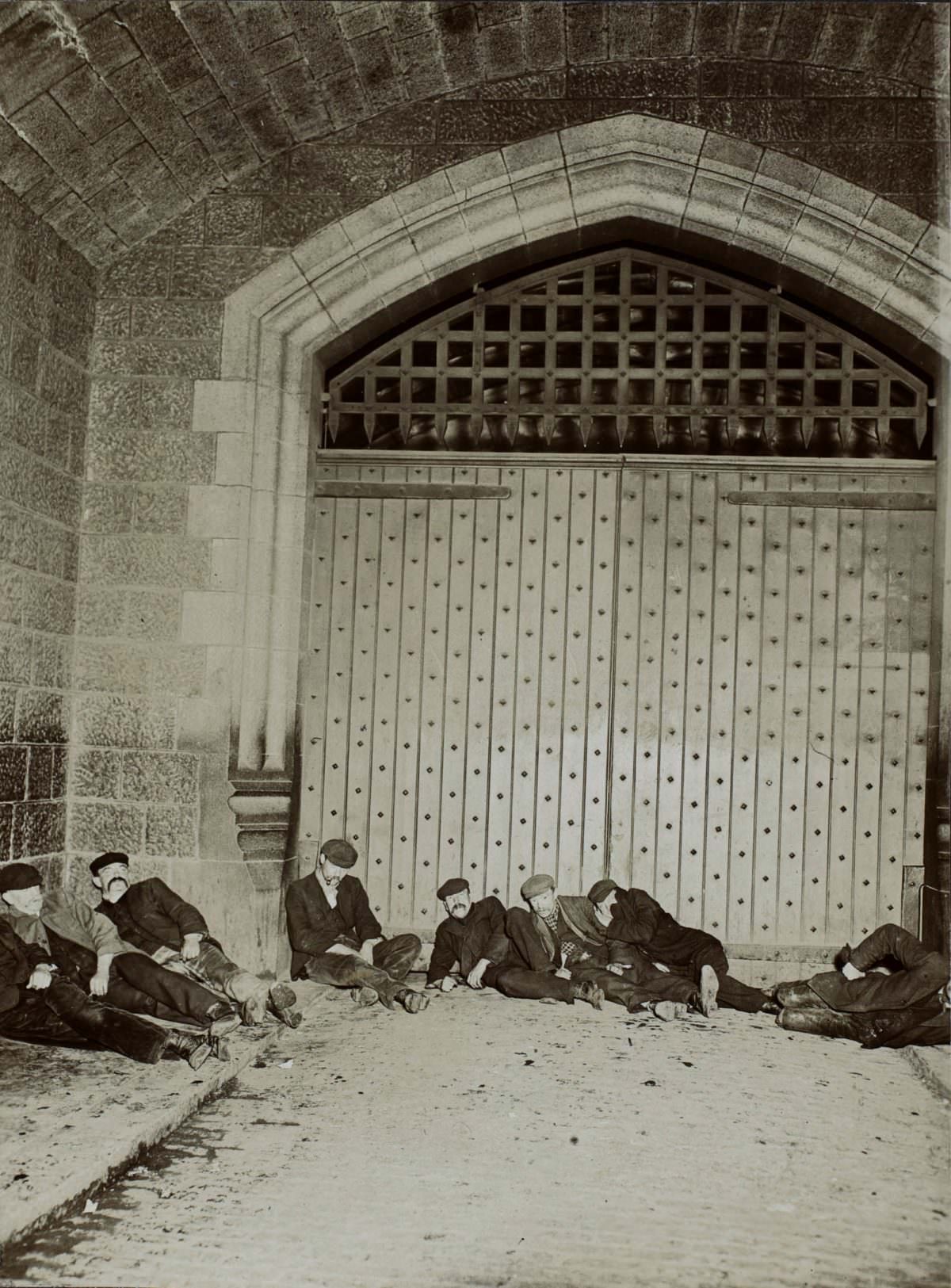
What disturbed Jack London most was the sheer number of men and boys with nowhere to sleep. On any given night, men of all ages — elderly, middle-aged, and very young — had no choice but to lie down on pavements and in parks. Green Park was one such place, where men stretched out on the grass simply because there was no other option available to them.
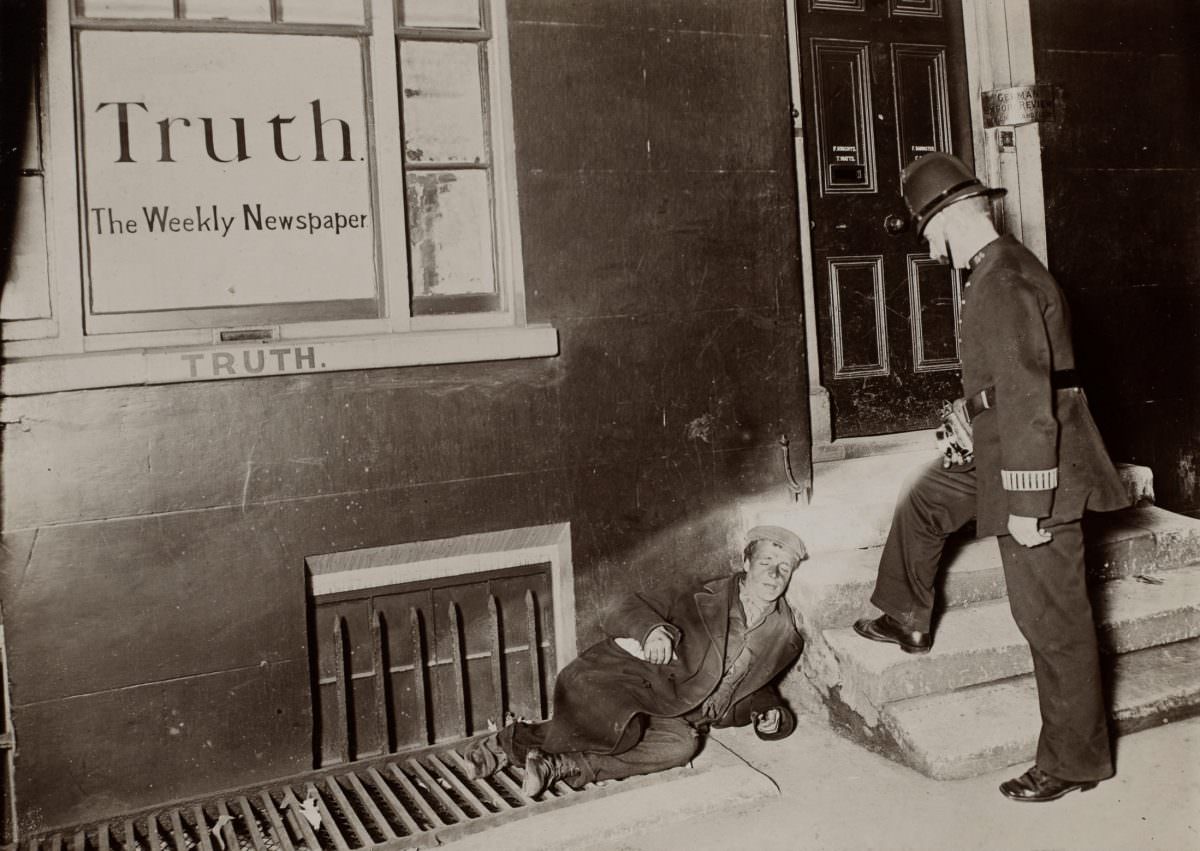
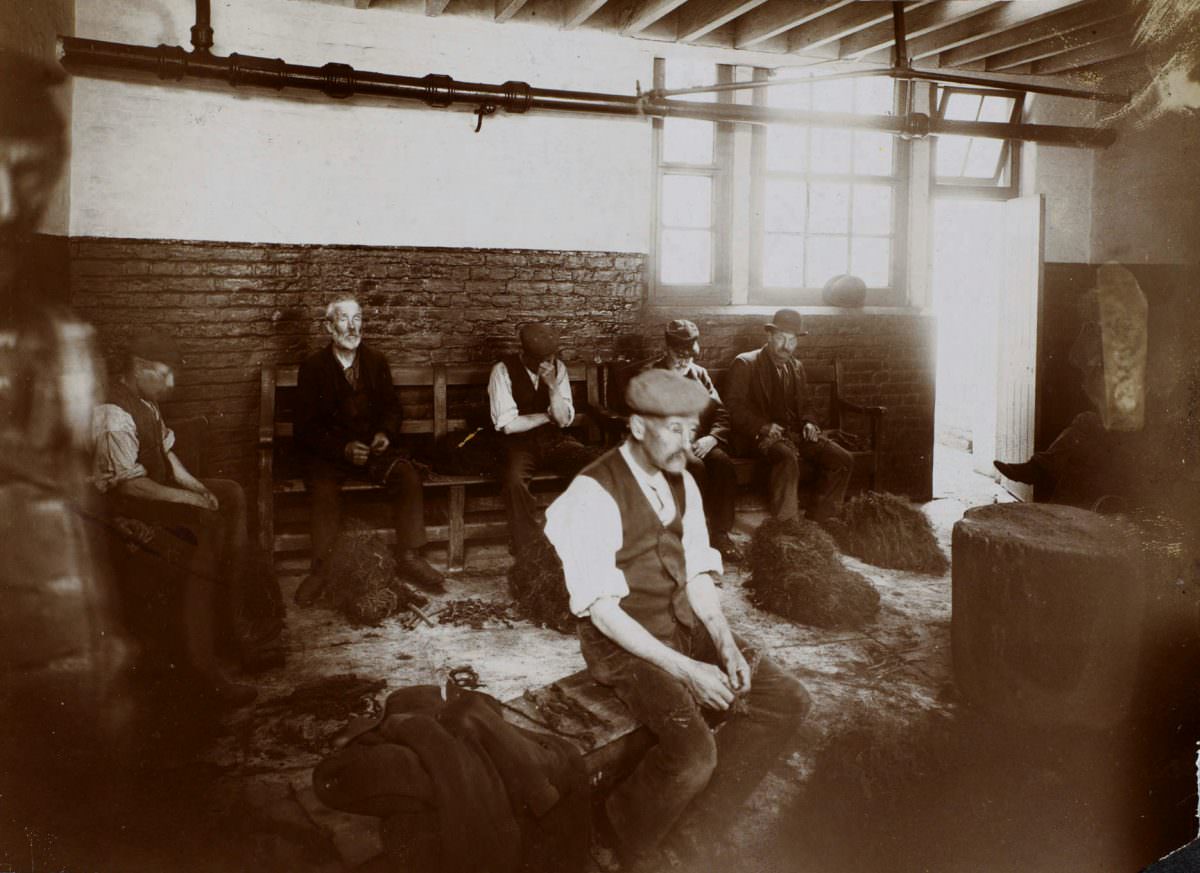
For those who could get inside, the options were grim. Workhouses offered beds in exchange for hard labor. One common task was picking oakum — pulling apart the fibers of old ropes by hand. The work was tedious and brutal on the fingers, and it was the price men paid for a night indoors.
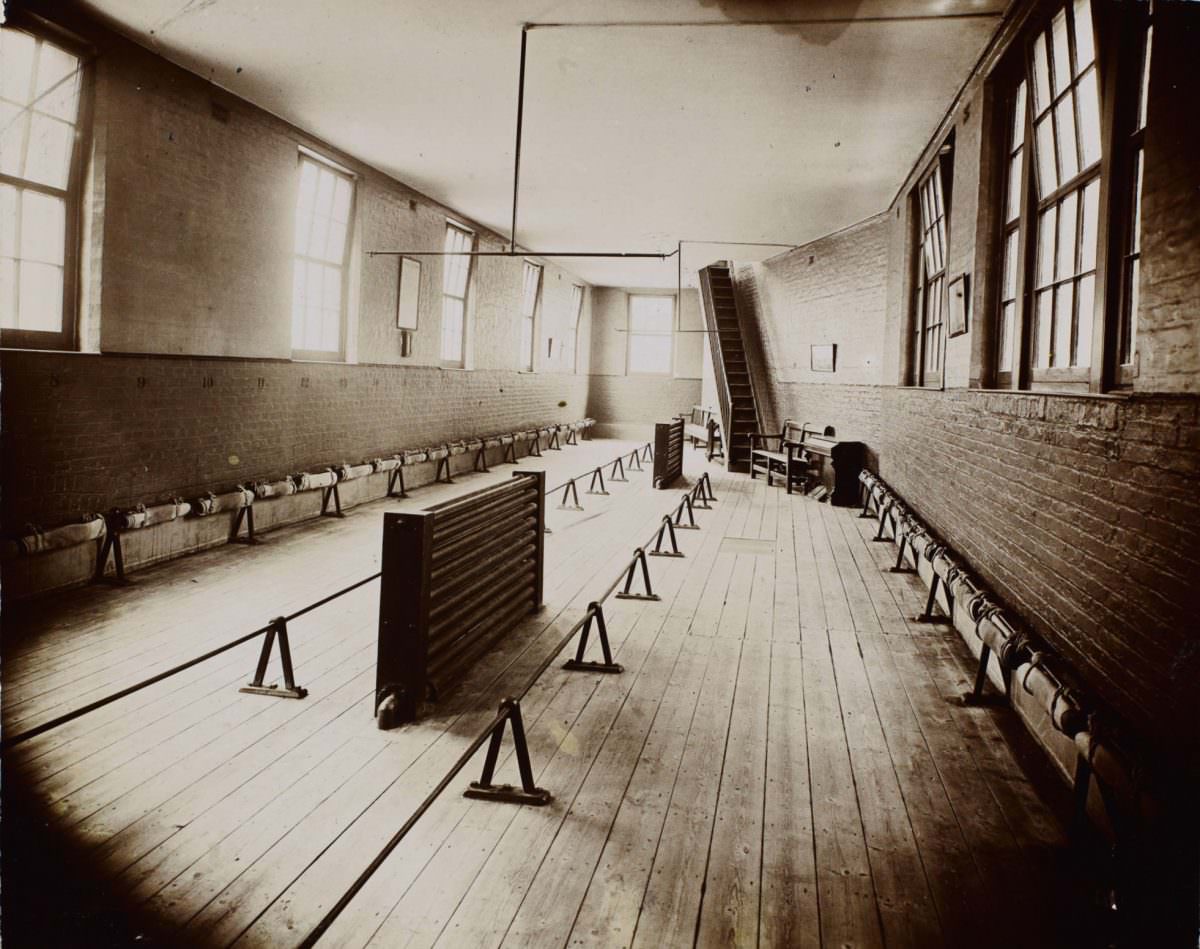
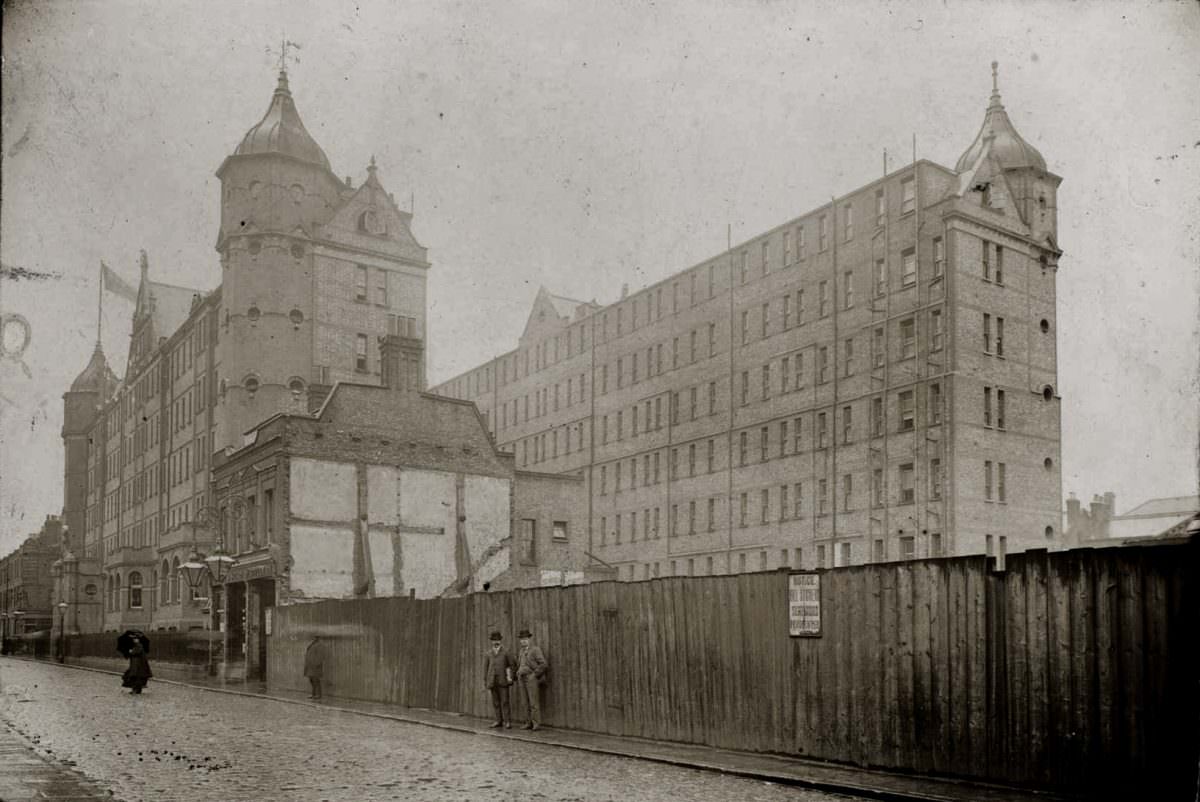
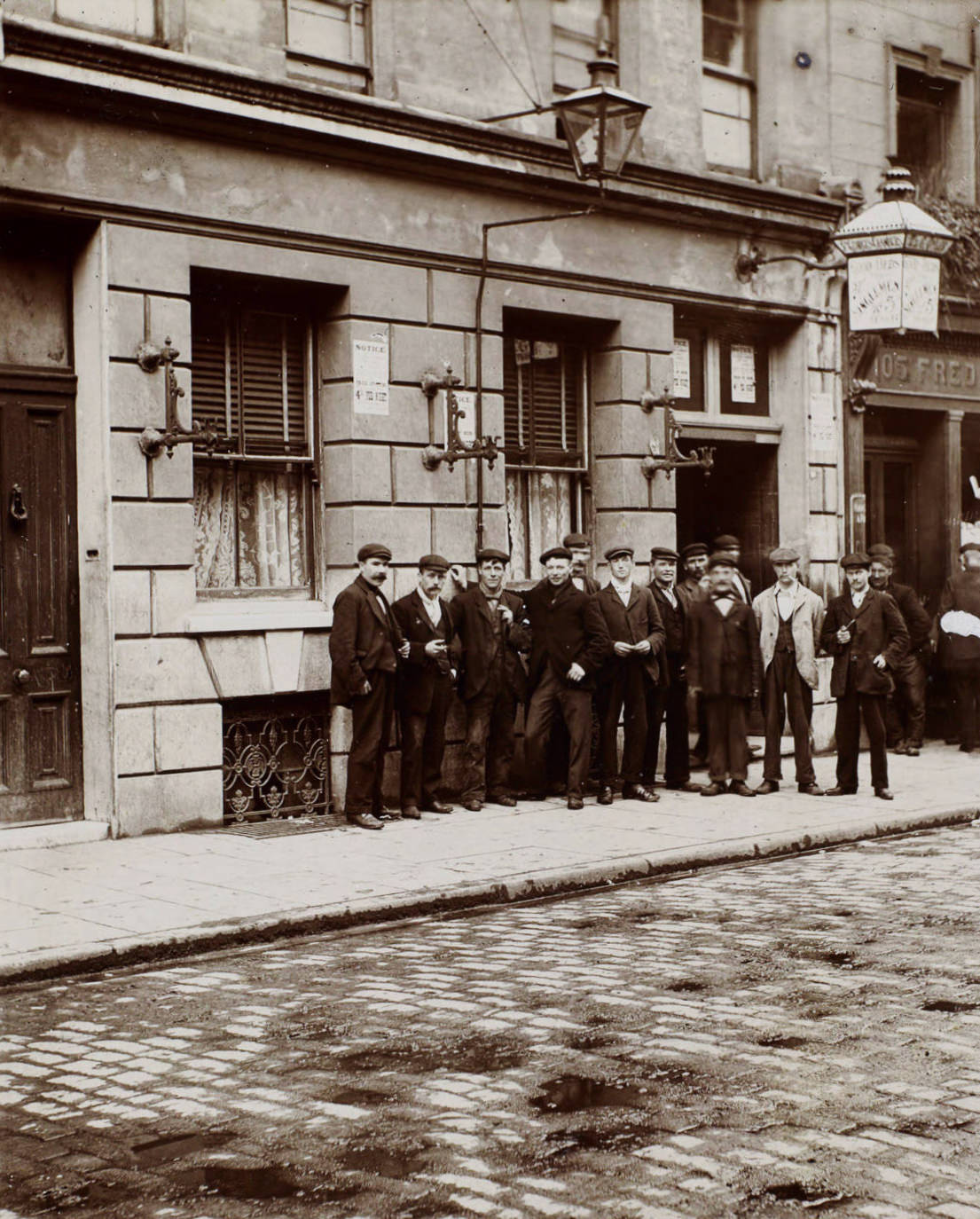
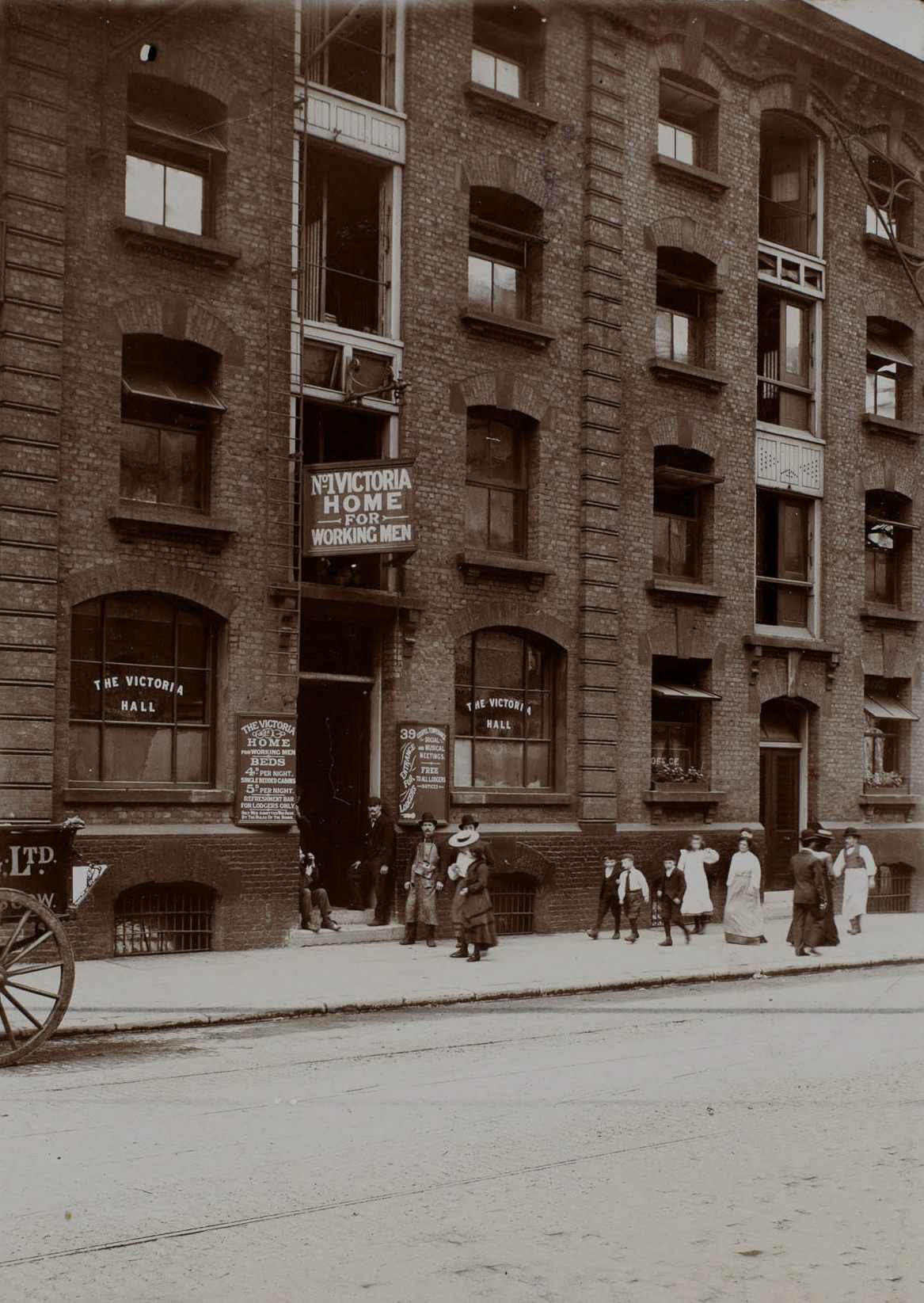
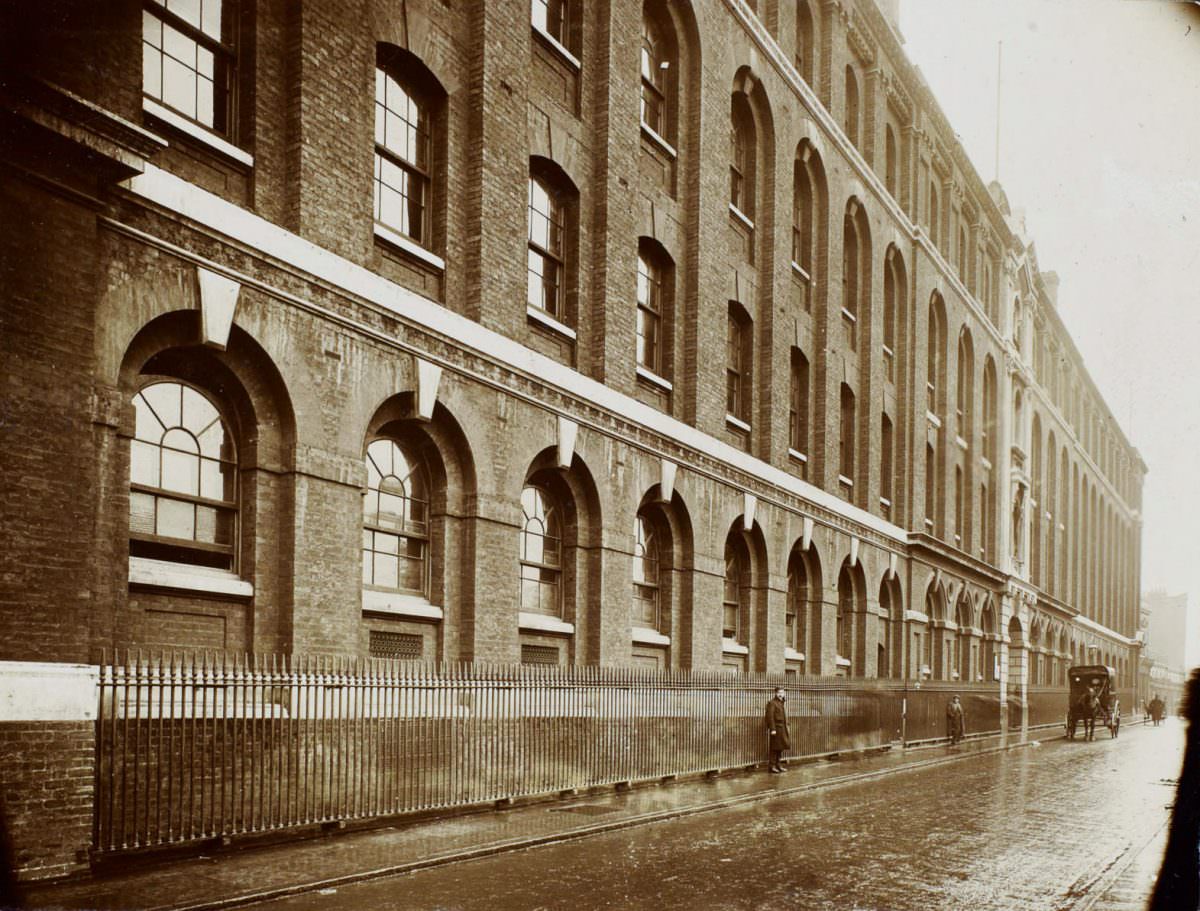
The doss-houses, or common lodging houses, varied in size and quality. Rowton House on Fieldgate Street in Whitechapel was one of the largest, known to London as a “gigantic dosshouse.” It offered basic accommodation to working men at a low price. Some lodging houses operated on a relay system, where men who worked nights waited for day-shift lodgers to vacate their beds before they could lie down.
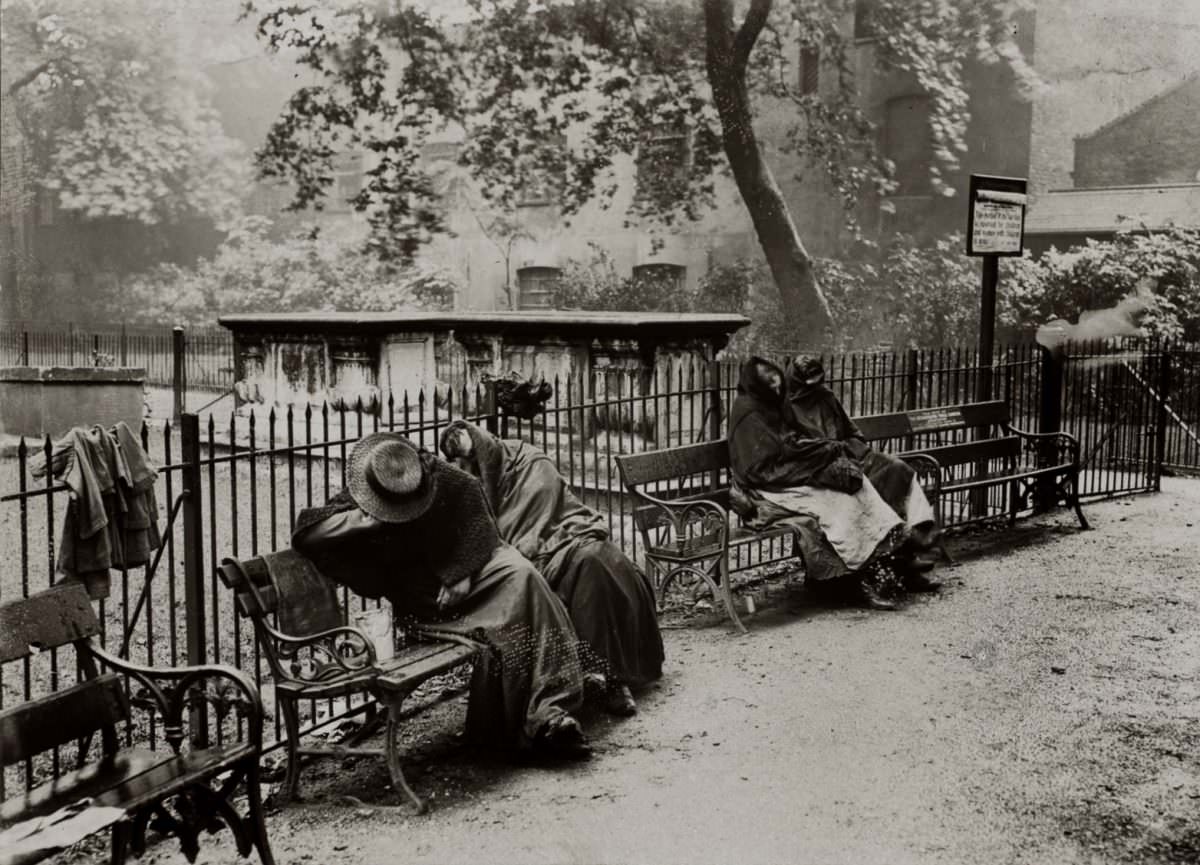
Women were not spared from the streets either. The churchyard of Christ Church in Spitalfields served as a gathering place for homeless women who had nowhere else to go. London photographed them there, resting among the gravestones. The gardens, known as Spitalfields Garden, appear in several of his images — a recurring backdrop for destitution.

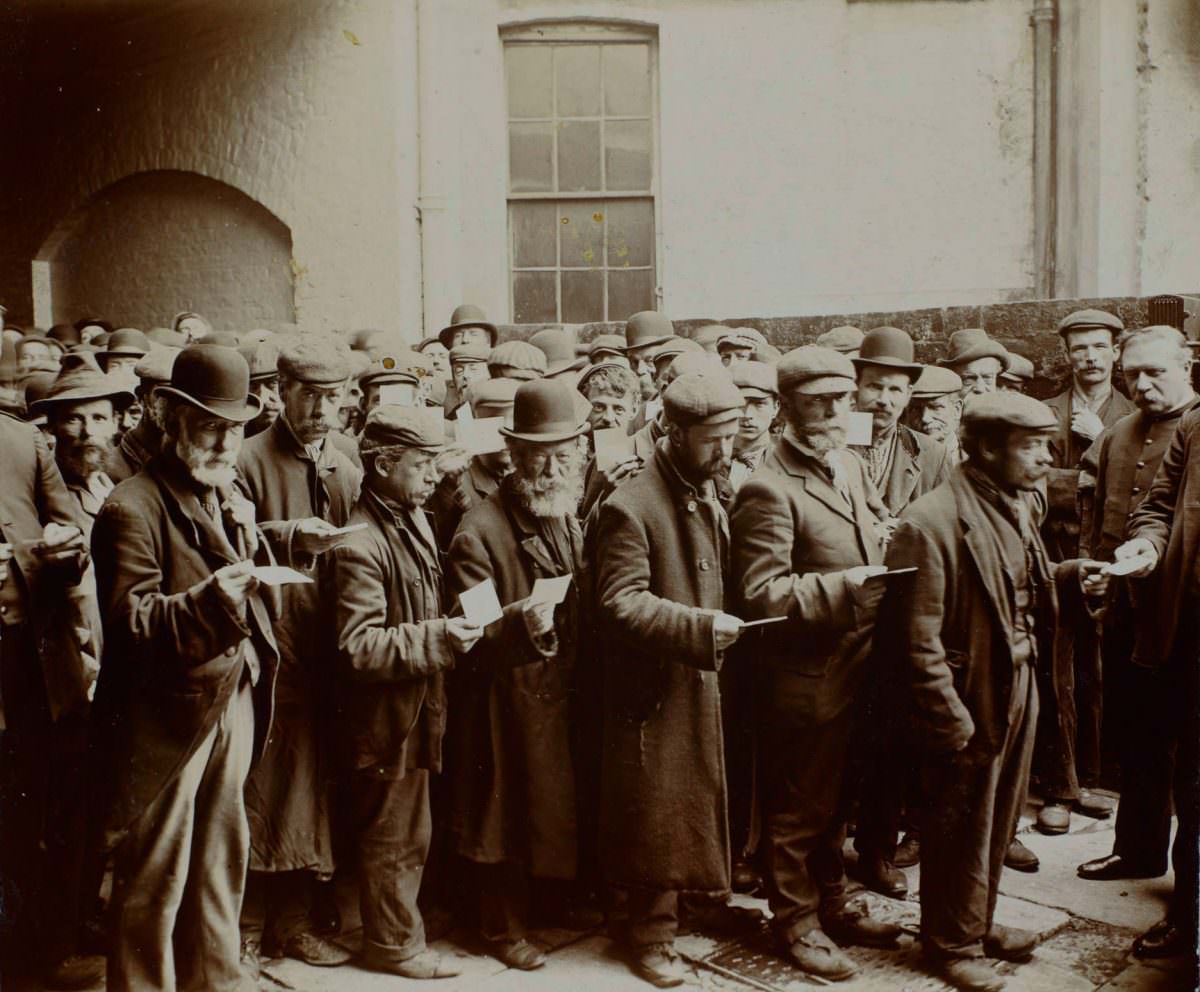
Religious and charitable organizations were a presence in the East End. The Salvation Army ran barracks that provided shelter and services to those in need. London captured a Sunday morning inside one such courtyard, where people gathered seeking food, faith, or simply a moment of stability.
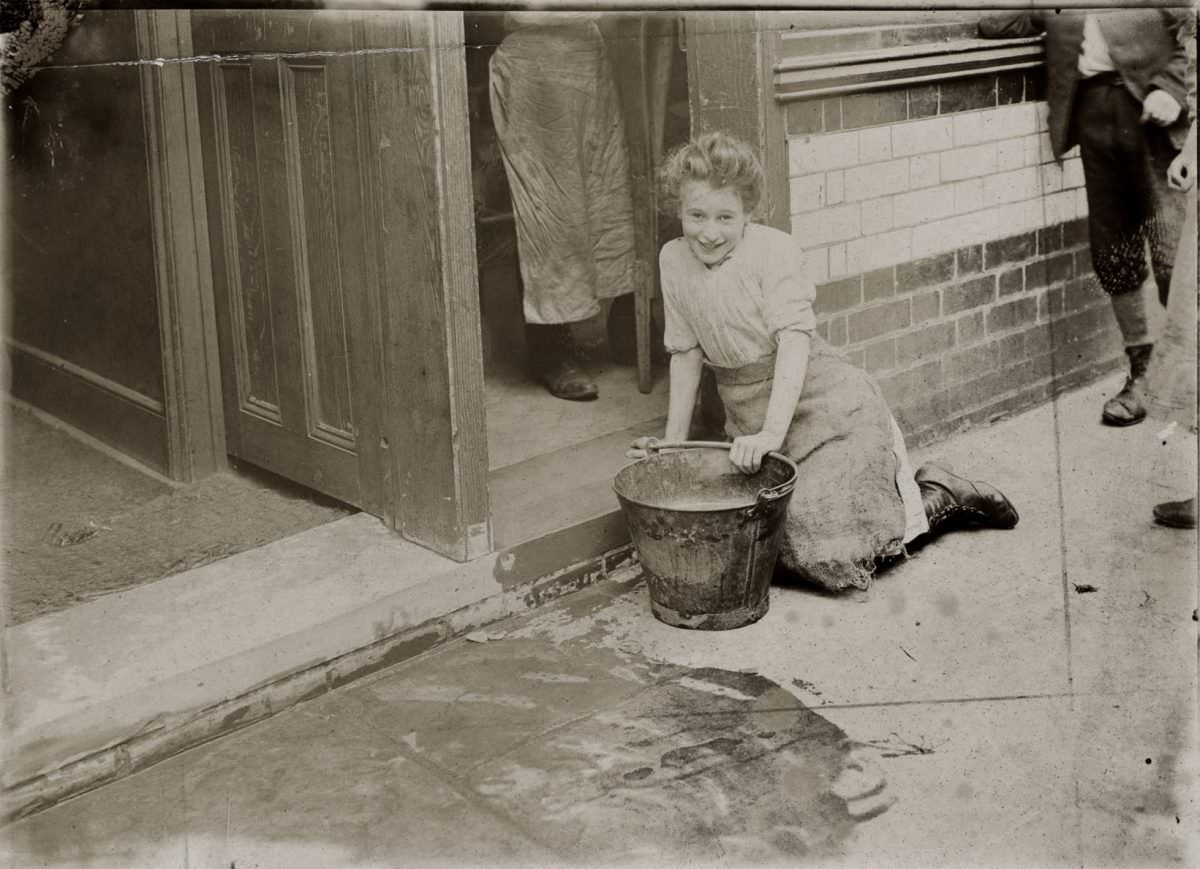
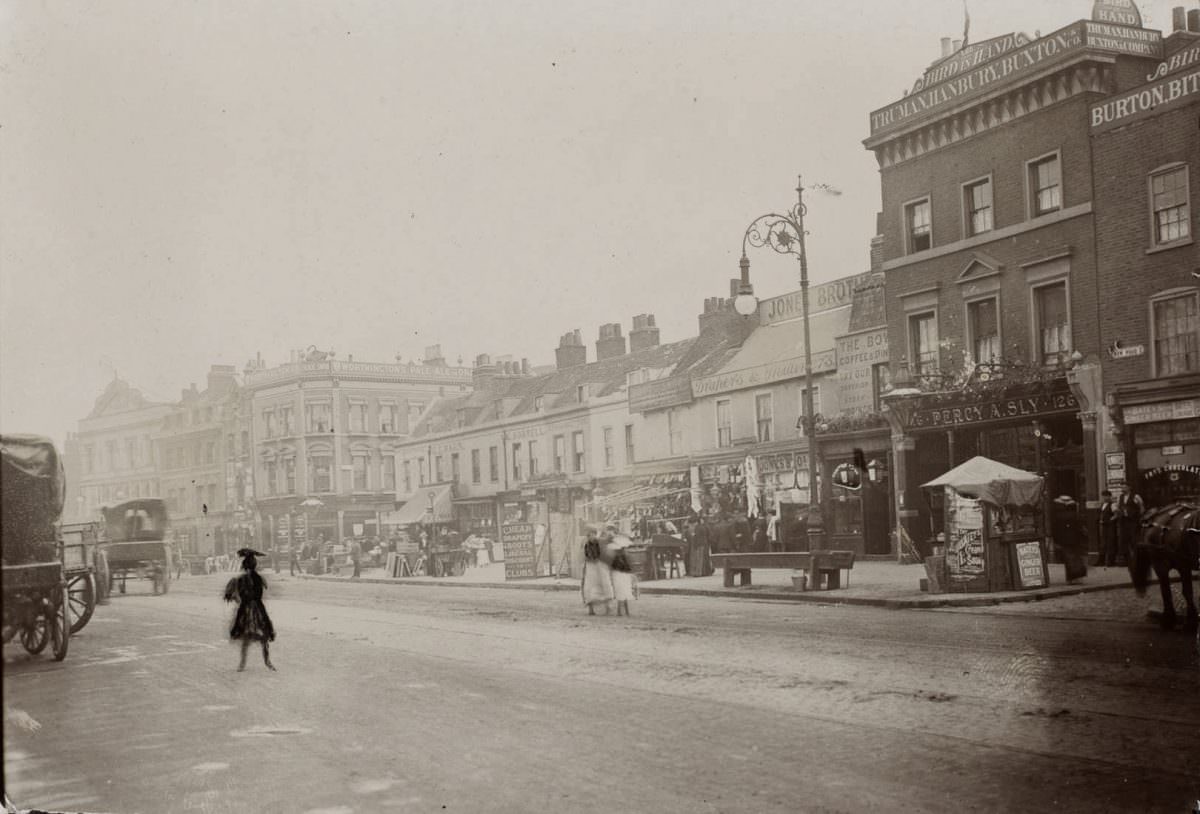
Beyond the shelters and the streets, London photographed the texture of everyday East End life — the workers, the storefronts, the neighborhoods. He captured a slavey, a term for a hard-worked maidservant, and the busy scenes on Whitechapel streets during a bank holiday. He walked through Wapping, Hoxton, and Stratford, recording what he saw with his camera.
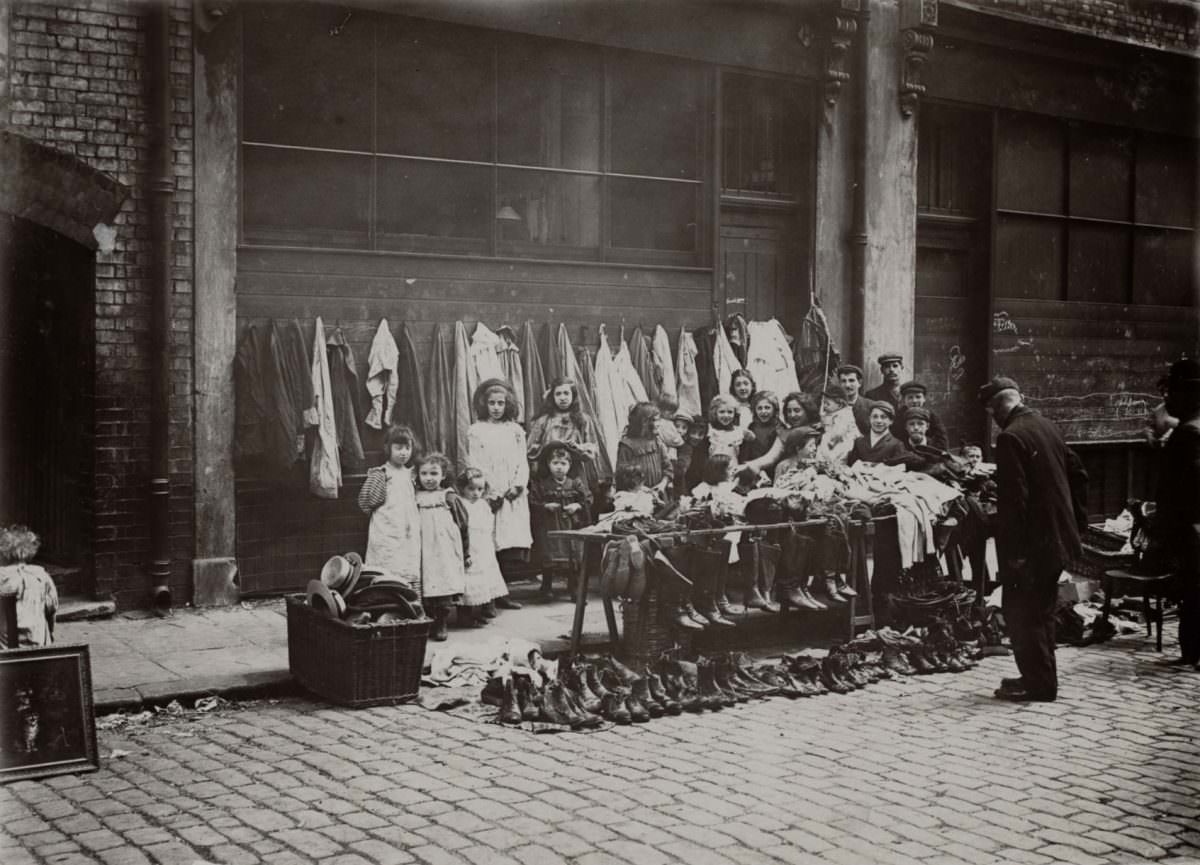
The infrastructure of poverty had its own economy — secondhand clothing shops where the poor bought and sold worn garments, working men’s homes that offered basic lodging to those with a modest income, and infirmaries like the Whitechapel Infirmary where the sick and destitute received medical care.
Some in the East End slept under the arches of bridges spanning the Thames — a location that offered some shelter from the weather while remaining entirely exposed to the elements and the dangers of city streets. London photographed these spaces too, making sure that no part of the survival landscape went unrecorded.
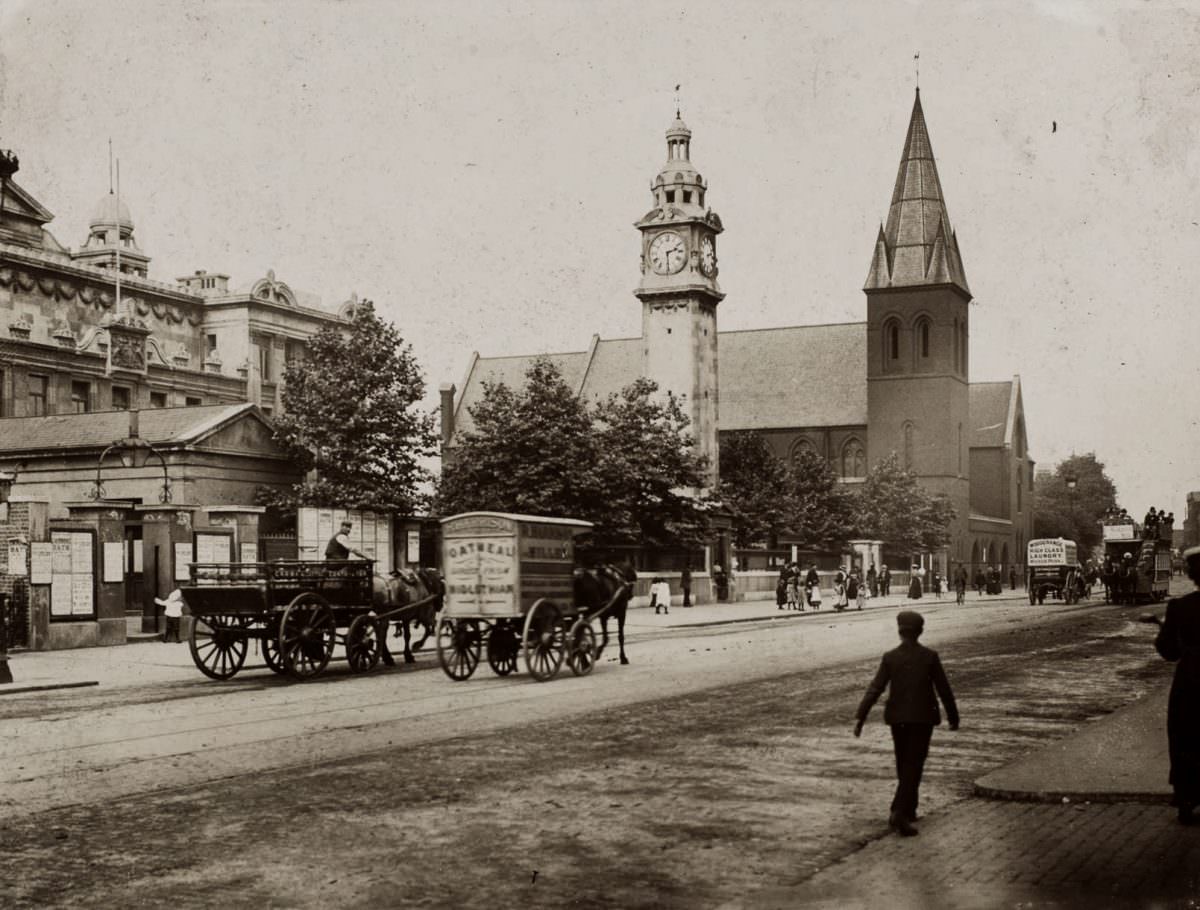
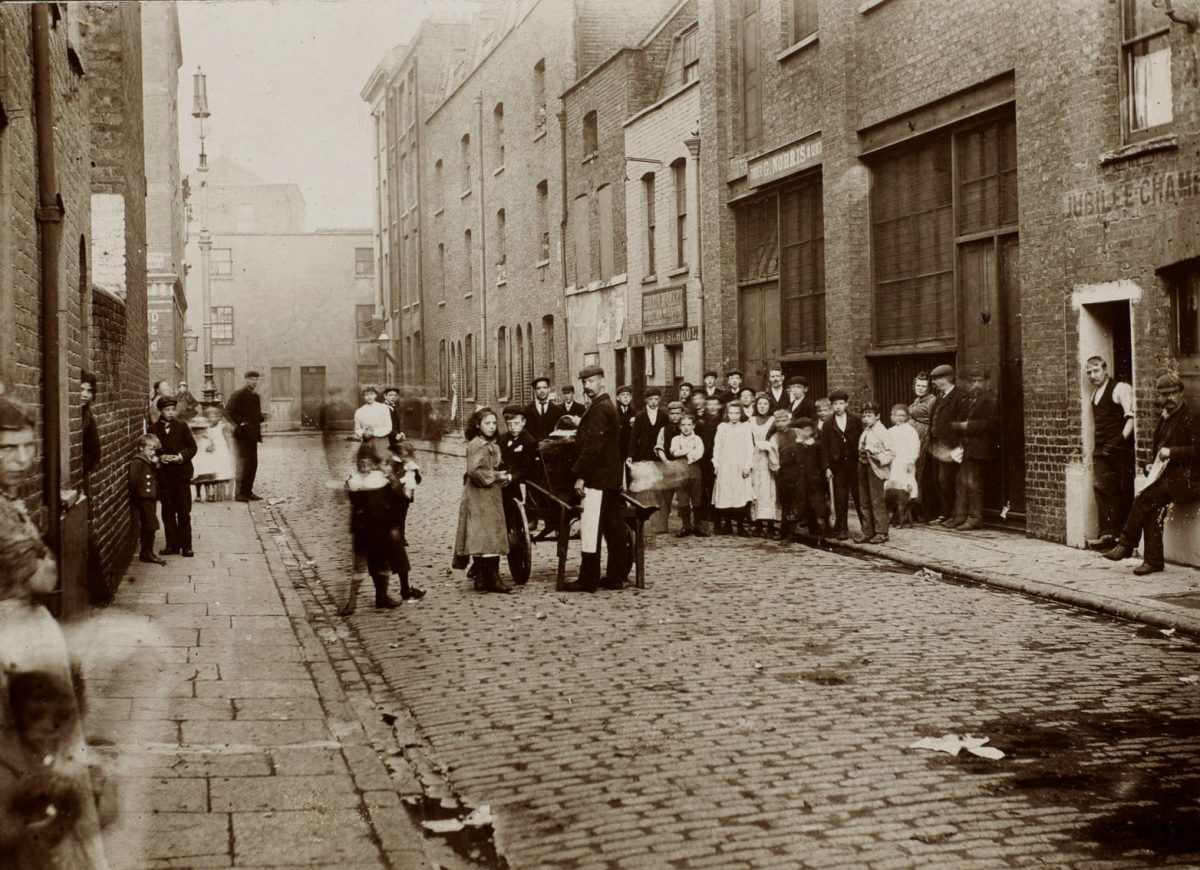
Jack London compiled his photographs and experiences into a book titled The People of the Abyss, published in 1903. That same year, his novel The Call of the Wild was serialized — making 1903 one of the most productive years of his career. The People of the Abyss stands apart from his fiction as a direct, documented account of a city’s forgotten population, recorded by a man who chose to live among them rather than simply write about them.





It’s amazing. I wonder what the story of the Green Park sleeping men is. Did it happen every day? And the streets are generally spotless despite the poverty!
He visited the free library and browsed through the papers till he was weary, then he took out Stevenson’s New Arabian Nights, but he could not read the words. He continued to contemplate his helplessness. The persistence of his thoughts made his head ache because he kept on thinking the same thing all the time. A craving for fresh air compelled him to lay on the grass in Green Park. Because of his deformity, he was unable to participate in to fight. He dreamt he was suddenly on a horse out at the Cape in a regiment of yeomanry, based on your papers’ illustrations. He saw himself in khaki, sitting with others around a fire at night on the Veldt. Upon waking, he found that it was still relatively light, and he heard Big Ben strike seven. He had twelve hours of nothing to do. He dreaded the endless night. His sky was overcast, and he feared it would rain. He would have to stay in a lodging-house since there were lamps outside houses in Lambeth advertising Good Beds for sixpence, and he had never been inside one. If possible, he decided to stay in the open air. After the park closed, he began to wander around. He was exhausted. The thought crossed his mind that an accident would be a piece of luck. This is because he could be rushed to a hospital and lie there for weeks in a clean bed. In the middle of the night, he was starving, so he went to a coffee stall at Hyde Park Corner, ate a couple of potatoes, and had a cup of coffee. He then walked away. He couldn’t sleep because he was too restless, and he dreaded being evicted by the police. He noticed that he was looking at the constable differently from a new perspective. It was his third night out. Occasionally, he sat on the benches in Piccadilly, and in the morning, he strolled down to The Embankment. Big Ben struck every quarter-hour, and he calculated how long it would be till the city awoke again. He spent a few coppers on making himself neat and clean, bought a newspaper to read the ads, and set out once more on the hunt for work. This continued for several days. In addition to having scarce food, he was weak and ill, so that he had little energy to go searching for the work that seemed so difficult to find.
Jack London’s book (people of the abyss) is highly recommended! It was a daily occurrence because there wasn’t always enough space in the workhouses – long lines, or they couldn’t afford the doss houses (even sleeping on the string line). Therefore, they would sleep in the park, but the police would constantly wake them up, so they could never get a good night’s sleep. There was also a discussion of how people would do a circuit of the workhouses when there was no room, and I believe some parishes only allowed a certain amount of ‘relief.’ Then they would move on to another for a few days, then to another, and so on. I imagine that parks were the last resort for many.
As sleeping in cold, wet grass would be impossible, I imagine it was a relatively dry and warm night.
That might be due to poverty. The first reason was that there simply wasn’t the consumer culture we have now: people couldn’t afford it, and the goods weren’t available. Secondly, what you see on the streets today is plastic trash. Plastic did not exist in 1902. In addition, the garbage there was much more recyclable (since there were lots of poor people eager to make use of every scrap they could find), or at least burnable. Additionally, if there are pieces of cloth on the roads, it will be much harder to spot them, as they are less likely to be printed in bright colors, more dirt and soil on the street, and the pictures aren’t always of excellent quality.
I would recommend People of the Abyss to everyone. Sadly, attitudes towards poverty have not changed.
Amazing! I feel most of what we see of London around this time is portrayed in Sherlock Holmes films, but this shows something decidedly less glamorous. I’m especially intrigued by the men sleeping in that park. That must have been the norm at the time for people without lodging.
Jack London’s book would appeal to you. He gives up his possessions and tries to live like a poor person during that time. He describes how he wanders the streets at night looking for a place to sleep. Parks are great until the wardens throw them out and they have to walk again. Then he is too tired to work during the day. A vicious cycle ensues.
The Sherlock Holmes video games do an excellent job portraying what it was like, showing poverty in places like Whitechapel.
I am amazed at how small the men in Sally’s Army courtyard are. They are so tiny. It must be malnutrition in youth.
It’s all posh bars and Ottolenghi in Frying Pan Alley/Artillery Passage now!
Jack London had just explored the Yukon’s Klondike goldfields. From one of the wildest places in the world to a cultural centre. In 1903 ‘Call of the Wild’, my favourite book, was published.
I bet workhouses will be brought back in 10 years.
Does anyone remember Workfare? I think it was the same concept, just modernized.
How much?
Given that we have a labour shortage, I don’t see why you think that.
Workhouses provided accommodation as well as slavery to the poor.
Is that all you have to say about our current labour shortage?
I am fascinated by what people will think of our current photos, lives, etc., a century from now. Will we have advanced further or destroyed everything…
When they see photos of us in masks, they will comment on how unprepared we were.
It’s amazing. After moving to London from Oakland (where Jack London is from), I read people of the abyss years ago. I was unaware that photographs were accompanying the book, which was fascinating and heartbreaking. Thanks for posting them! I might take a stroll around Spitalfields this week.
At this time, my family would have been here. After World War I, they were moved to the Becontree estate in Dagenham
Damn london did the griddy? They were emoting
The book he wrote about his experiences is well worth a read.
I’ve just ordered it, looks very interesting. Those photos are captivating.
You can download the whole thing for free, but it’s also nice to have your own copy. It might seem judgemental to a 21stC reader, but it’s a ground-breaking piece of investigative journalism. Also recommended if you like it: Orwell – Down & Out in Paris and London Dostoyevsky Houses of the Dead and especially…Solzhenitsyn – One Day in the Life of Ivan Denisovich
Sometimes a physical book is just nice, in a tactile sense. Furthermore, I can pass it along to my elderly mother who will devour it, and it was only $4. Thanks for the other recommendations, I’ll look into them.