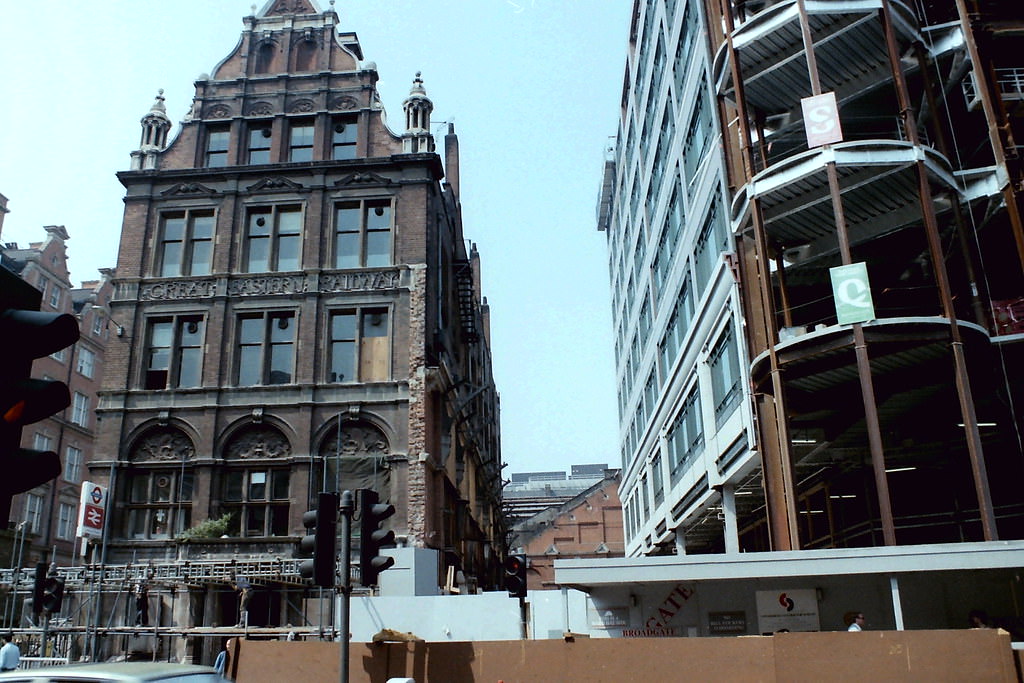
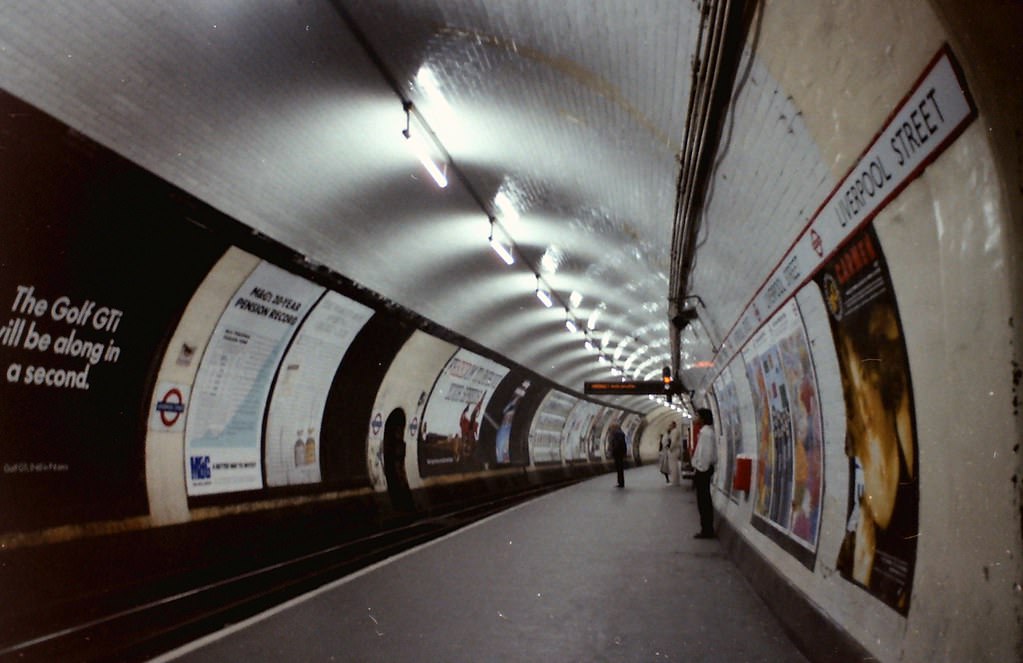
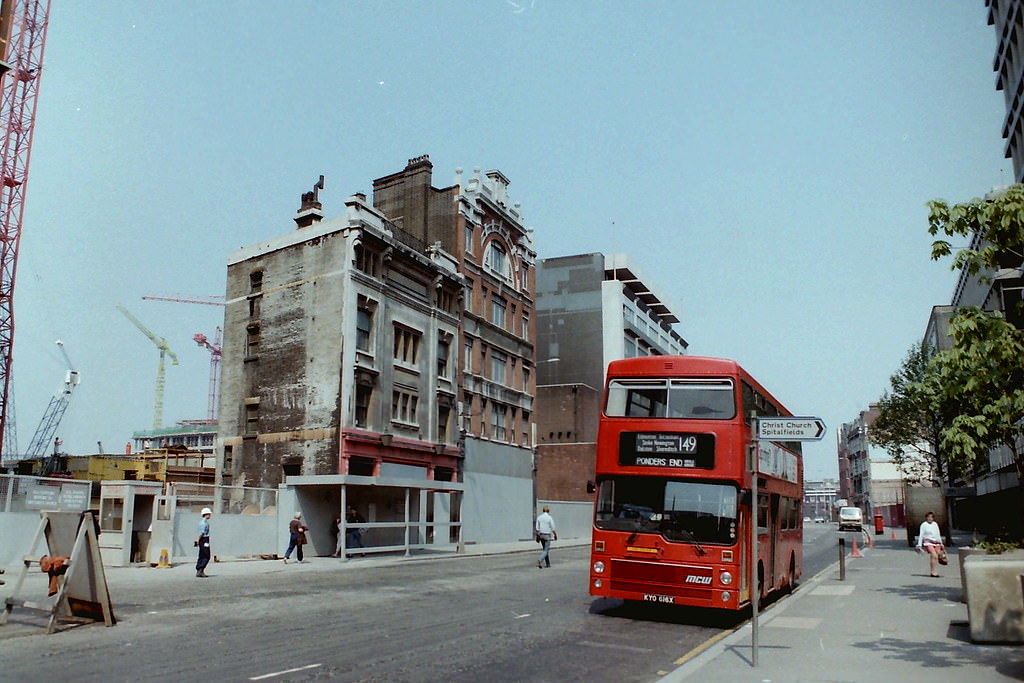
Liverpool Street station sits in the north-eastern corner of the City of London, and for decades it served as one of the busiest and most recognisable railway terminals in the country. These photographs were taken by Tim Brown, who regularly rode the 149 bus from Stoke Newington through Hackney on his way to work as a train driver. That daily route took him past the station again and again, and he made a point of recording what he saw. The result is a detailed visual record of the station and its surroundings across the 1980s — a period of enormous change for this part of London.
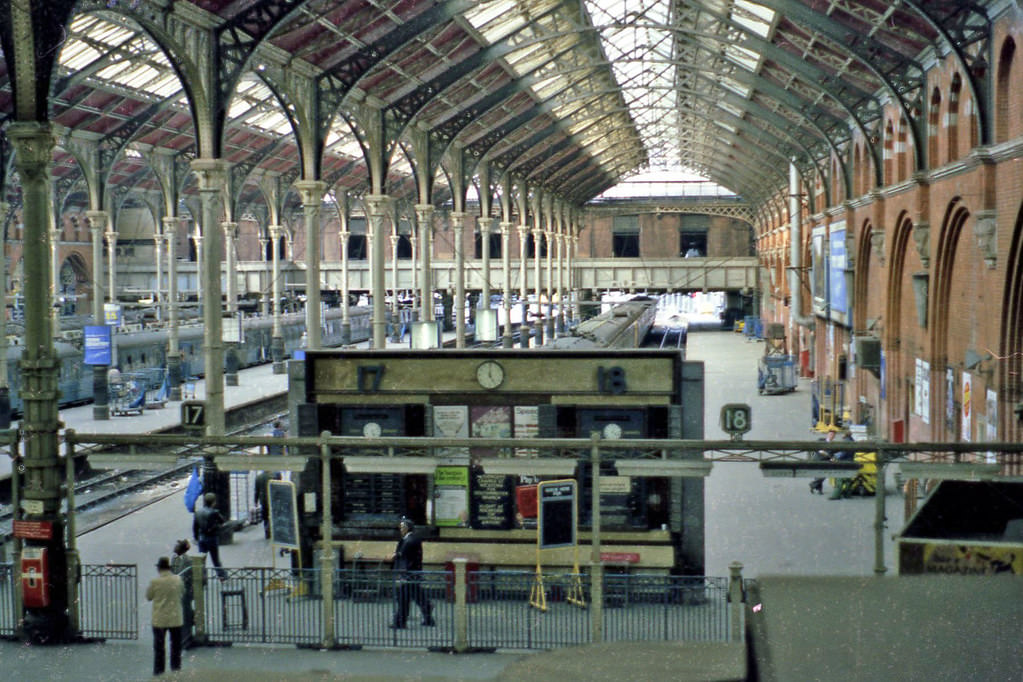
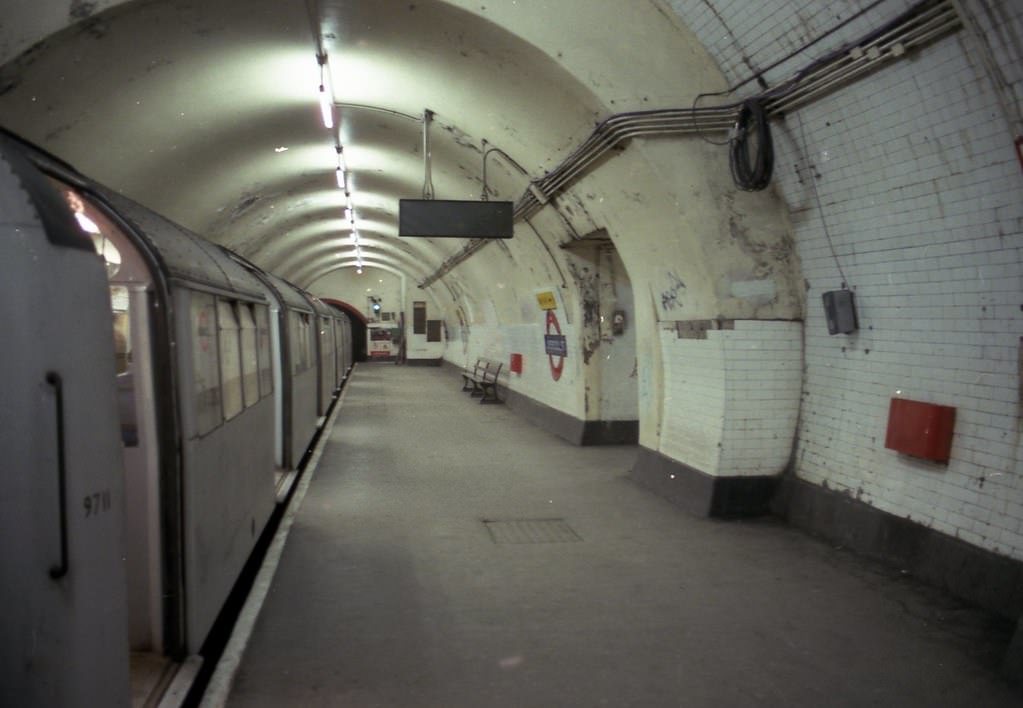
The station itself has deep roots. It was built in 1874 to serve east London, Essex, and East Anglia for the Great Eastern Railway. Just a year later, in November 1875, it was connected to the Metropolitan Railway — the first underground railway in the world. That connection made Liverpool Street a key interchange from very early in its life. The station’s impressive roof was designed and built by the Fairburn Engineering Company, the same firm responsible for the roof of the Royal Albert Hall.
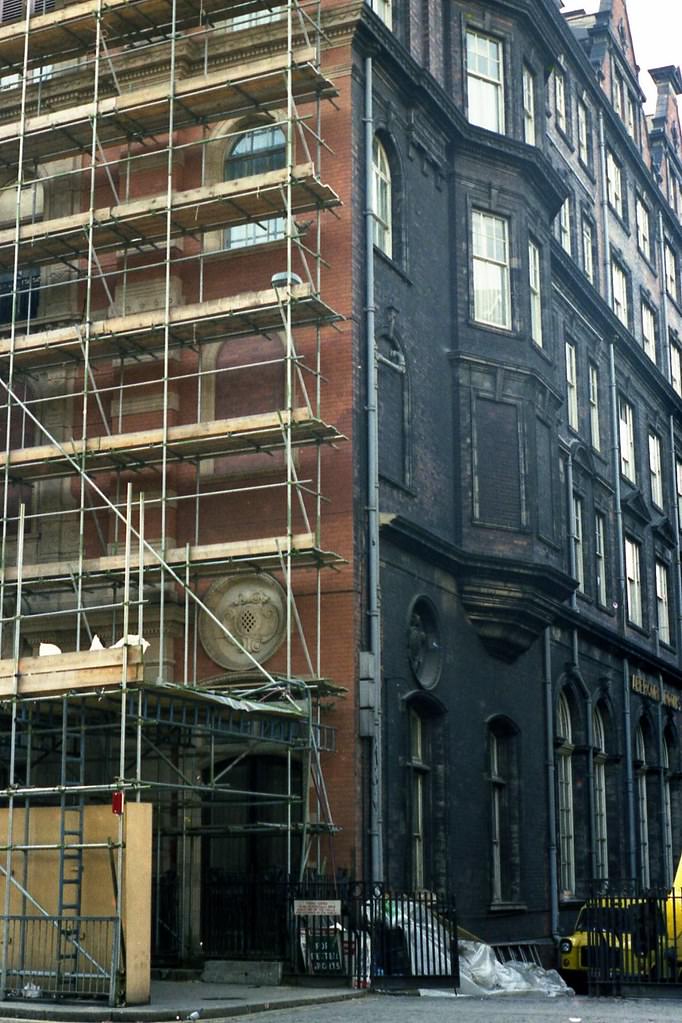
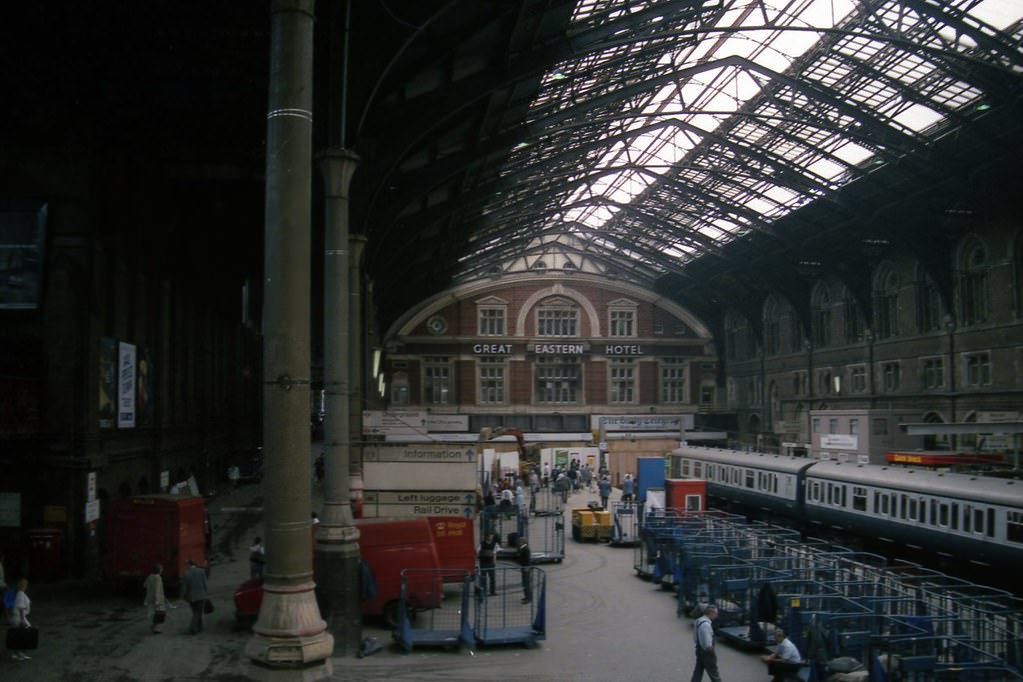
By 1980, when Tim Brown began taking these photographs, the station still had the feel of a working Victorian terminus. The Great Eastern Hotel, photographed that same year, shows the kind of soot-darkened stonework that was common across London before cleaning programmes brought out the original colours of the buildings. The contrast once cleaned was striking.
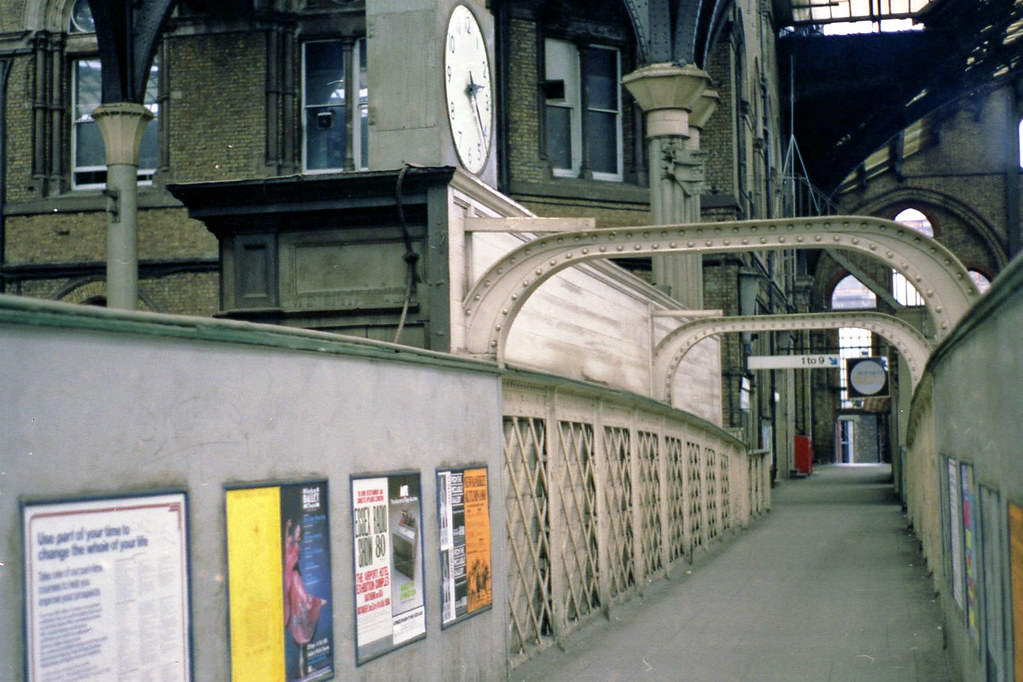
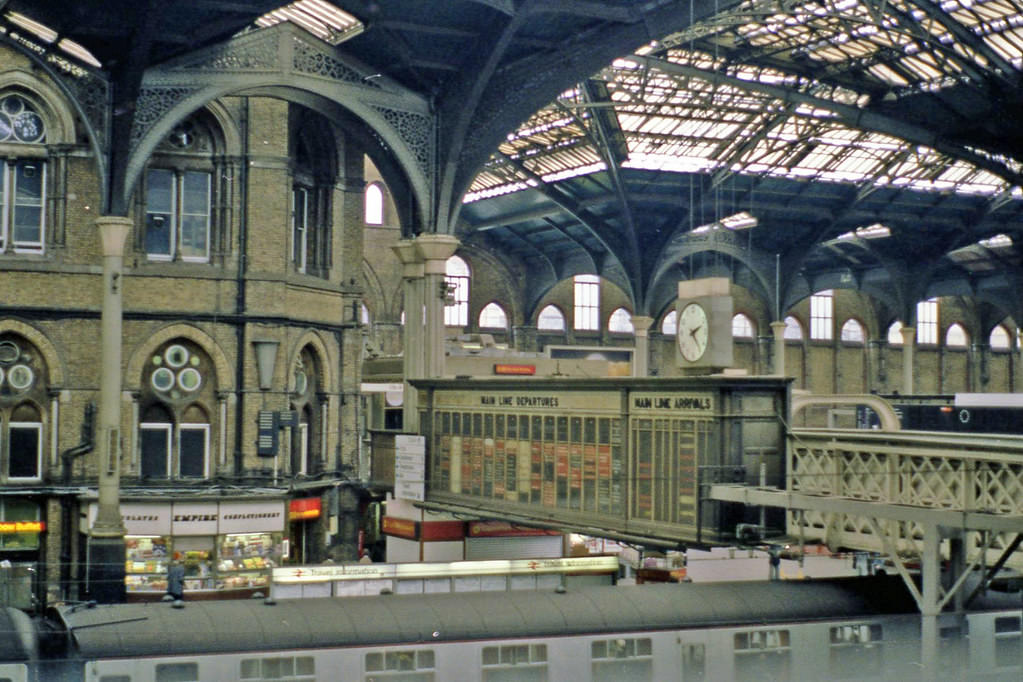
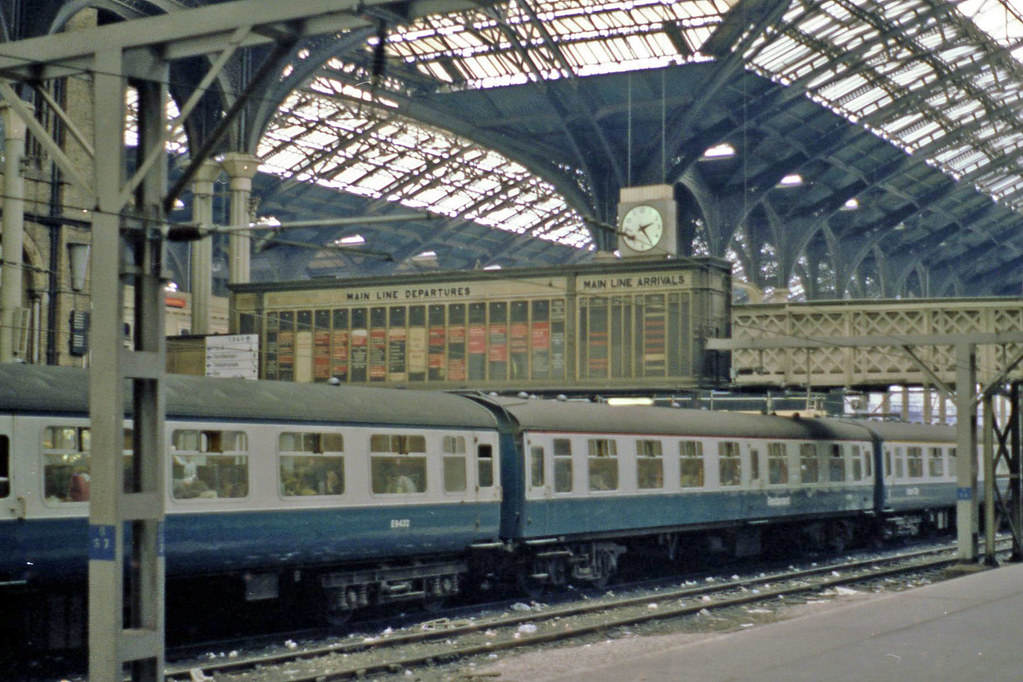
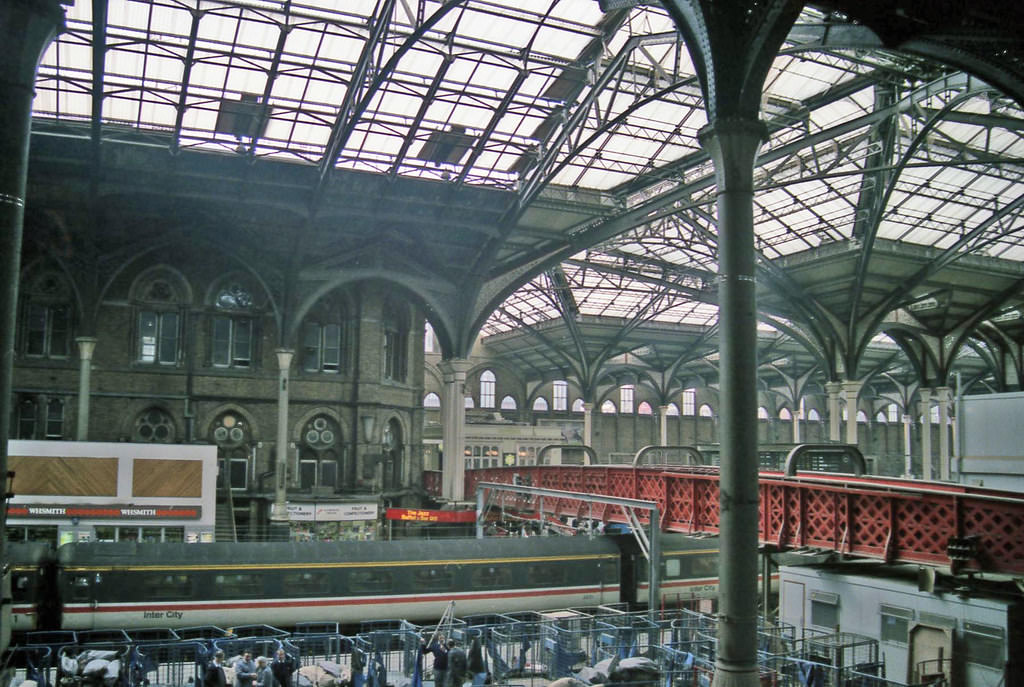
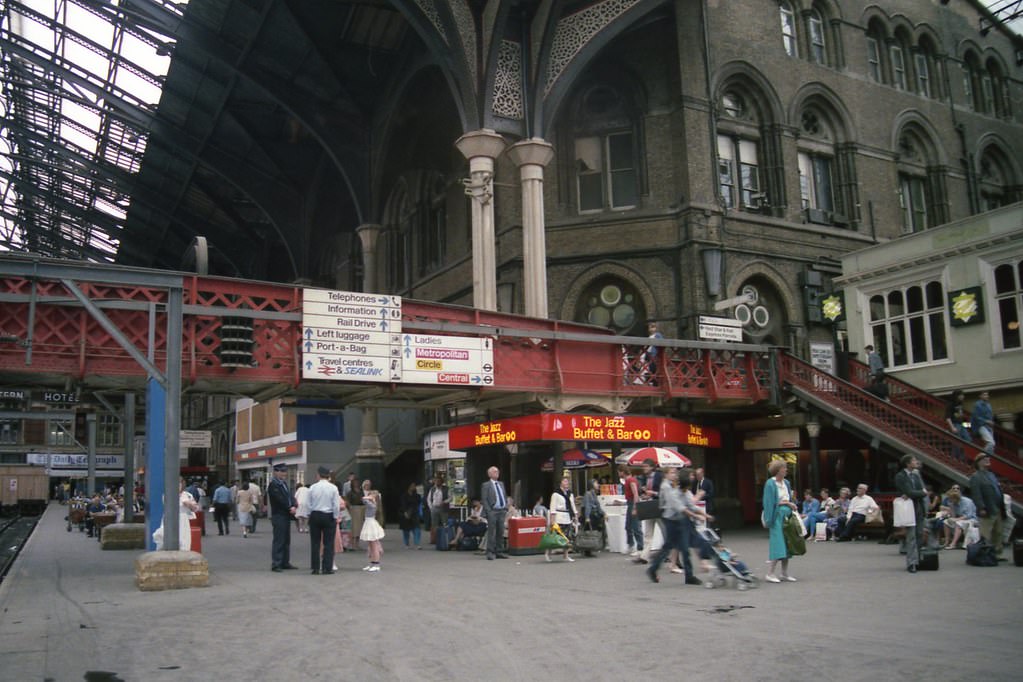
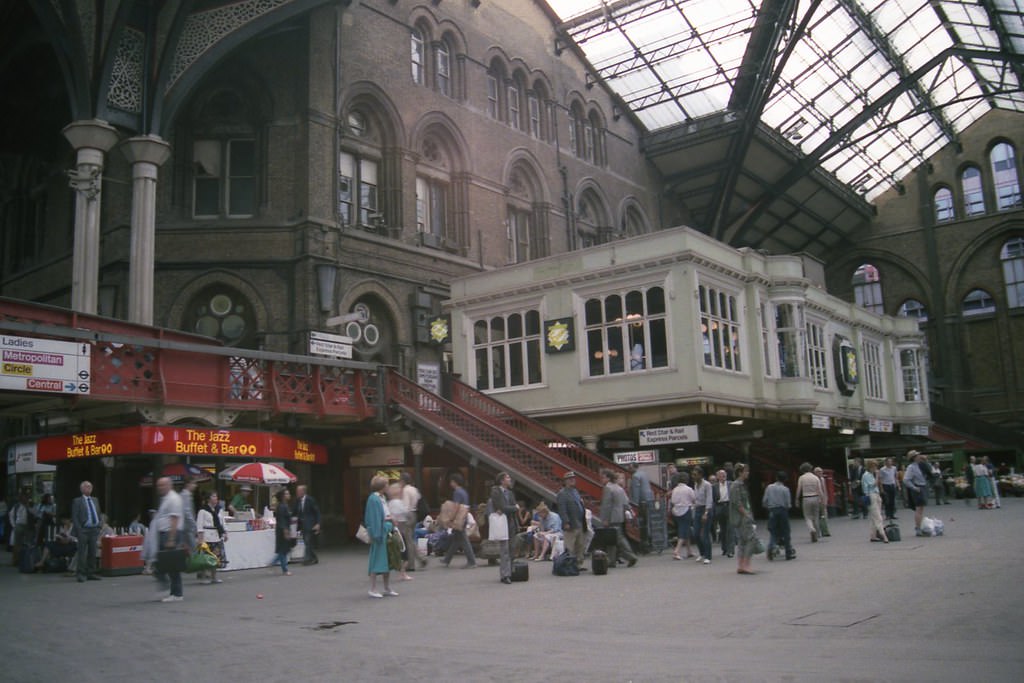
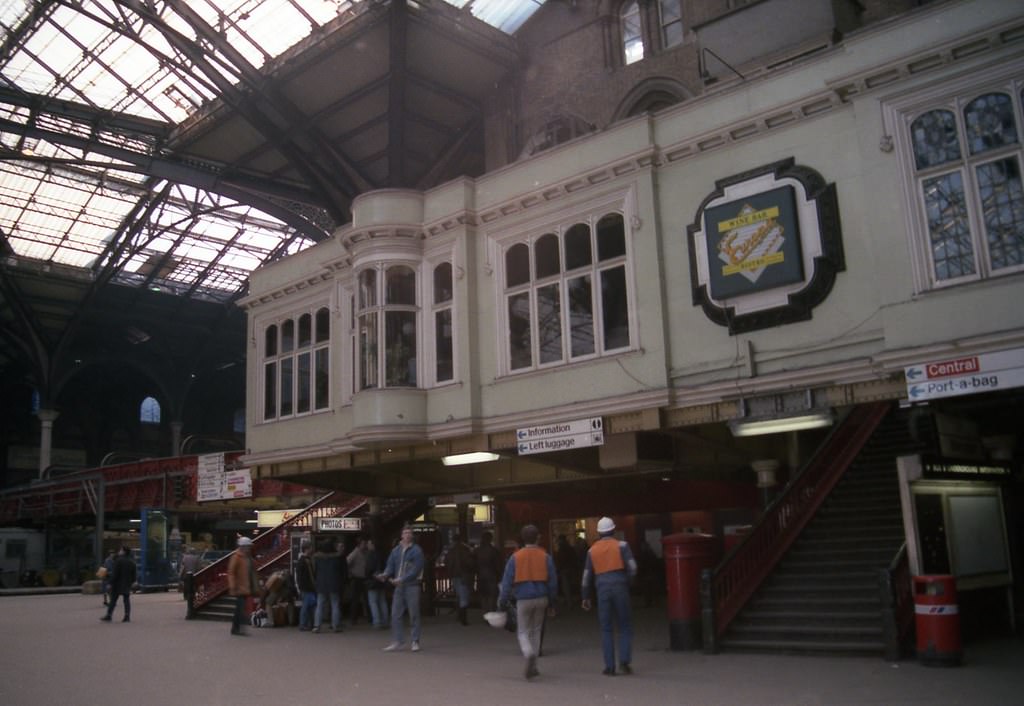
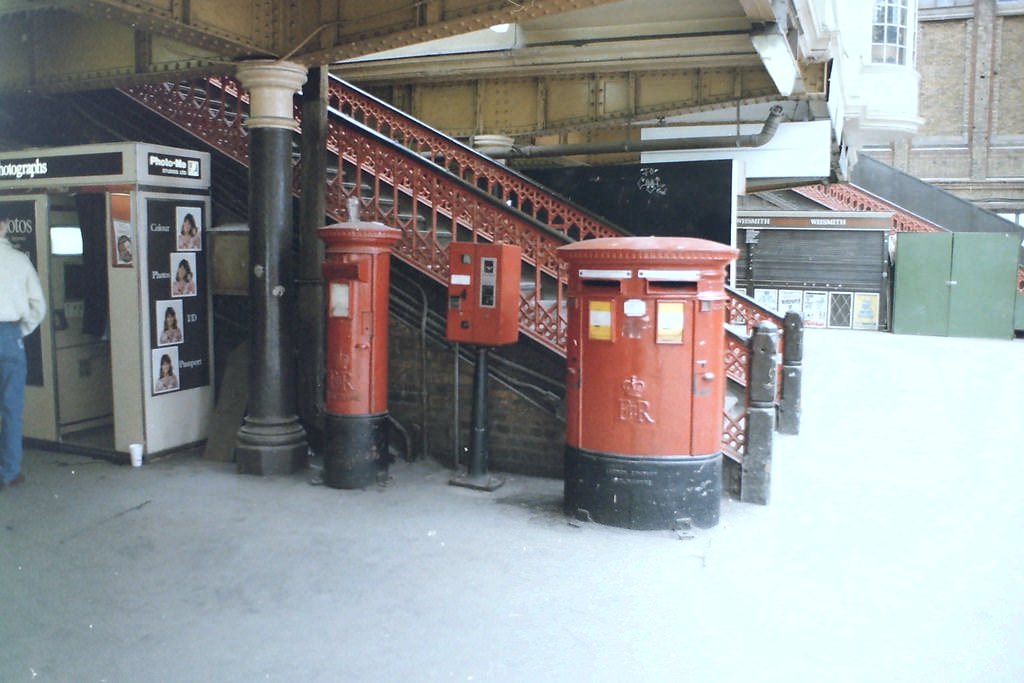
Inside the station, everyday commercial life carried on. A WH Smith branch operated within the concourse — a standard stop for commuters picking up a newspaper or magazine before the days of smartphones and remote working. Where the old station master’s office once stood, a bistro had taken its place. These small details help paint a picture of how the station functioned as a social space, not just a transport hub.
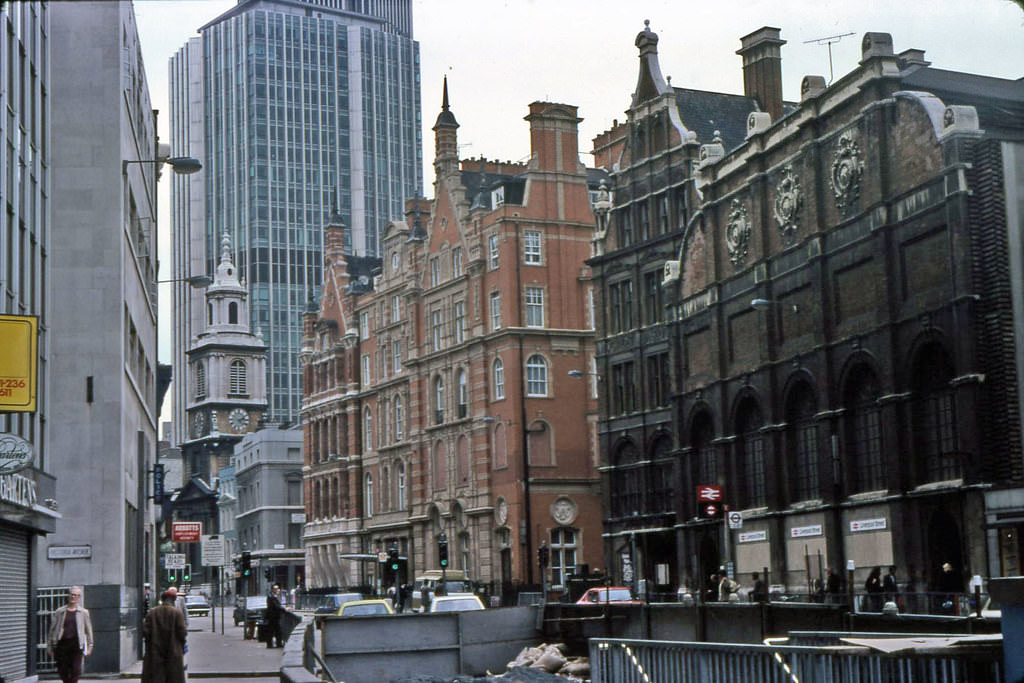
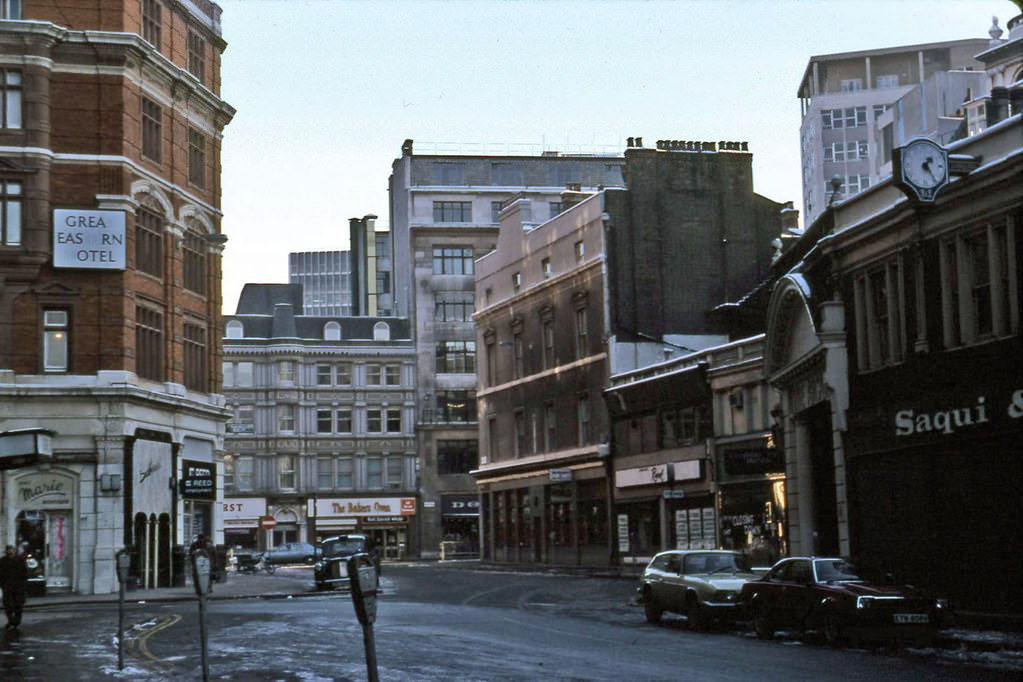
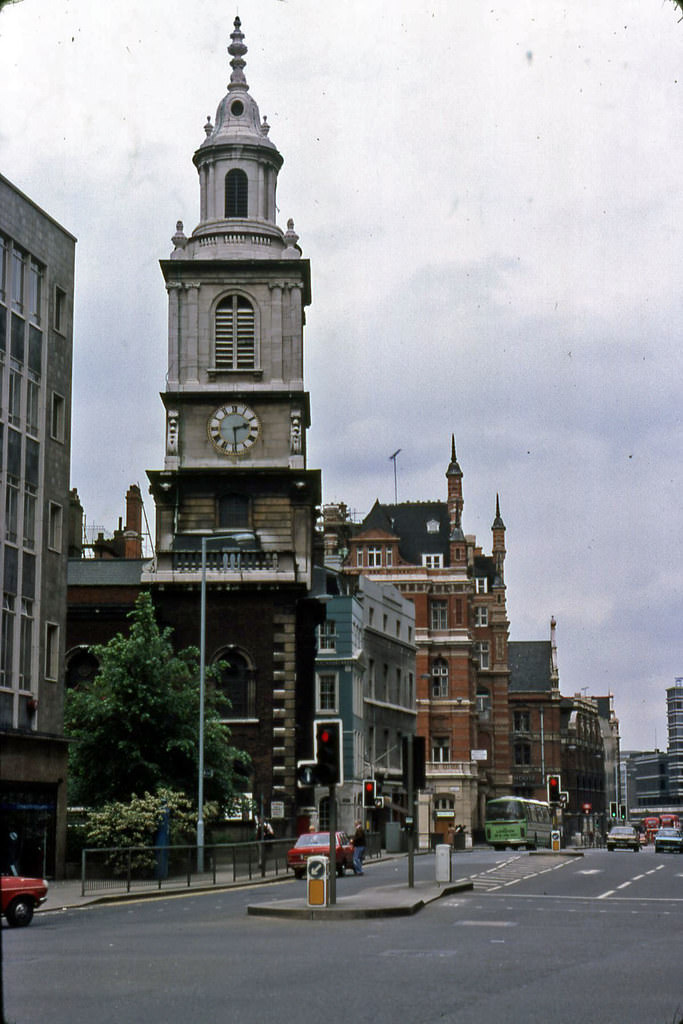
The surrounding streets — particularly Bishopsgate — were a mix of Victorian commercial architecture, pubs, and offices. Nearby Broad Street station, which sat adjacent to Liverpool Street, was still standing in the early 1980s and features in a number of Brown’s photographs from this period. Broad Street had served the North London Railway and, by this point, was operating a much-reduced service compared to its Victorian heyday.
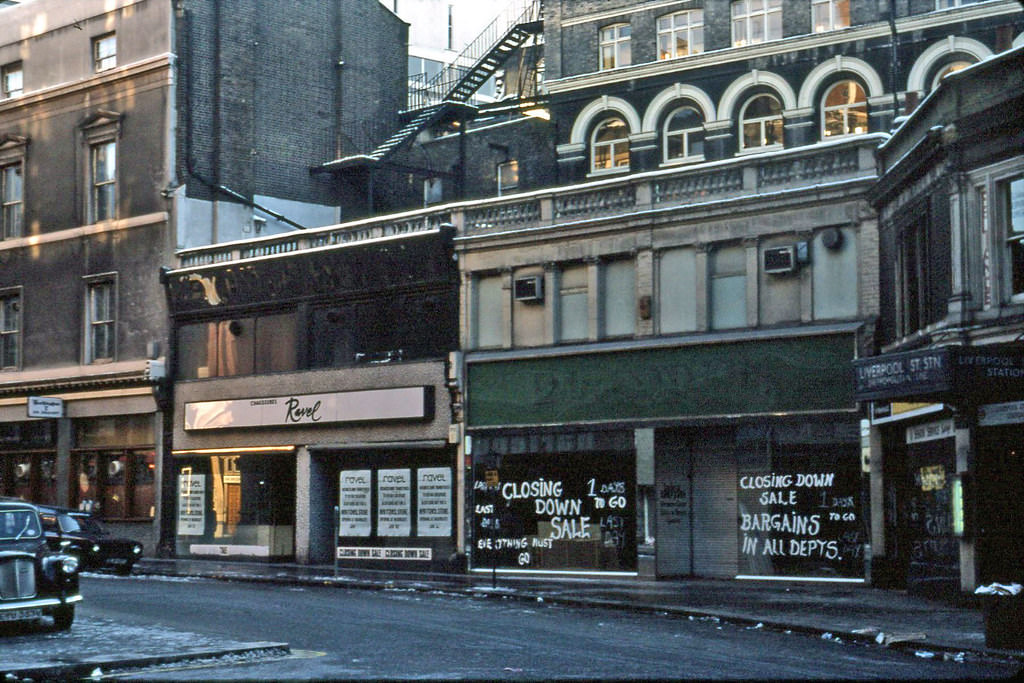
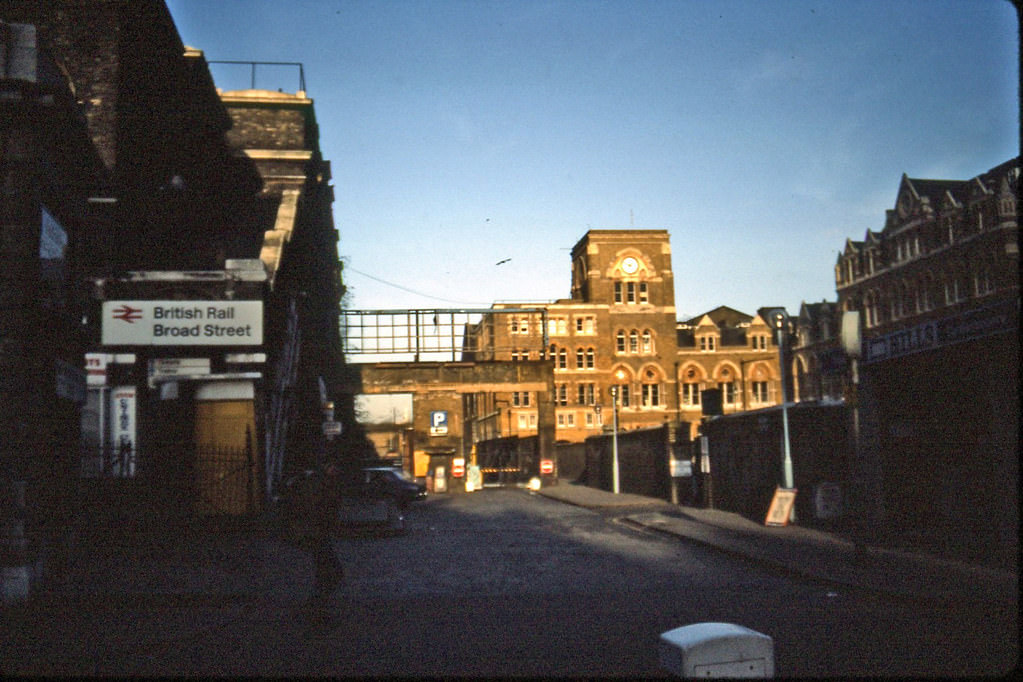
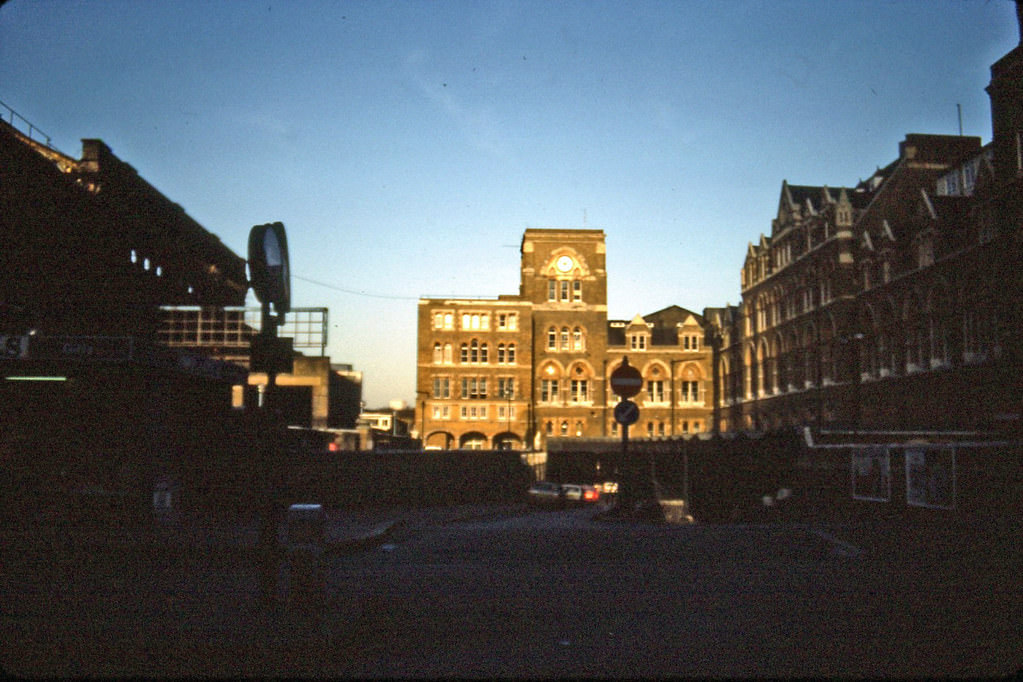
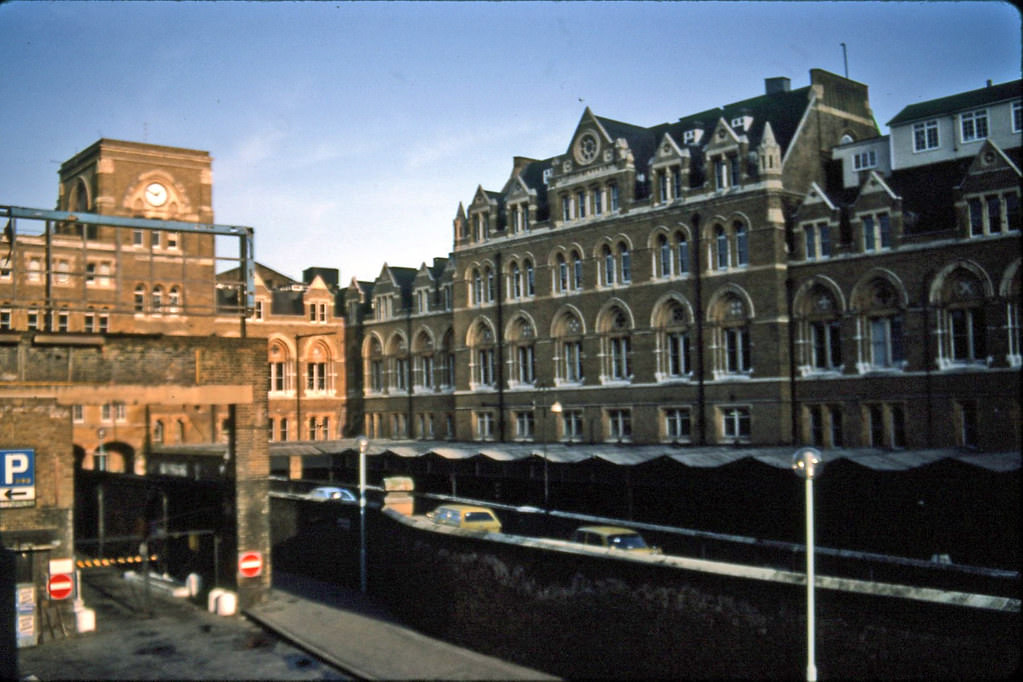
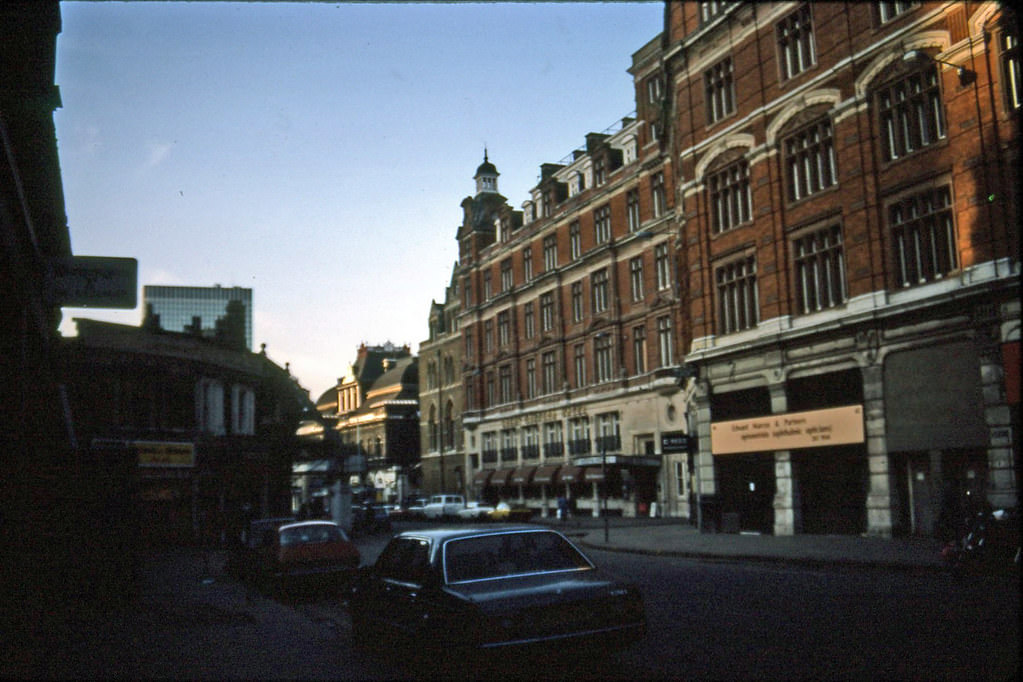
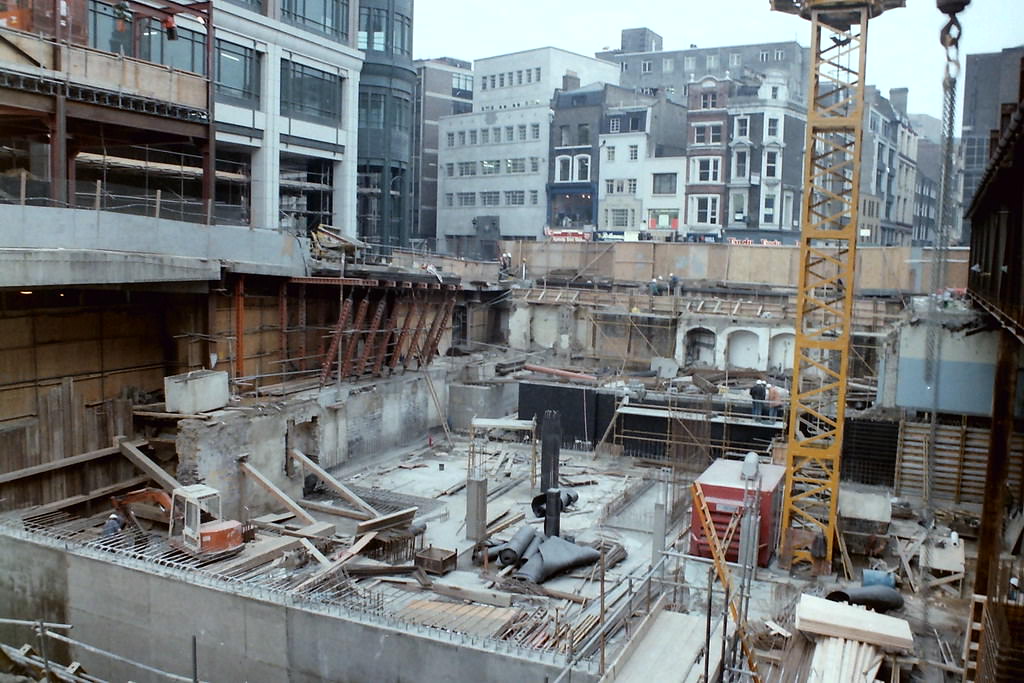
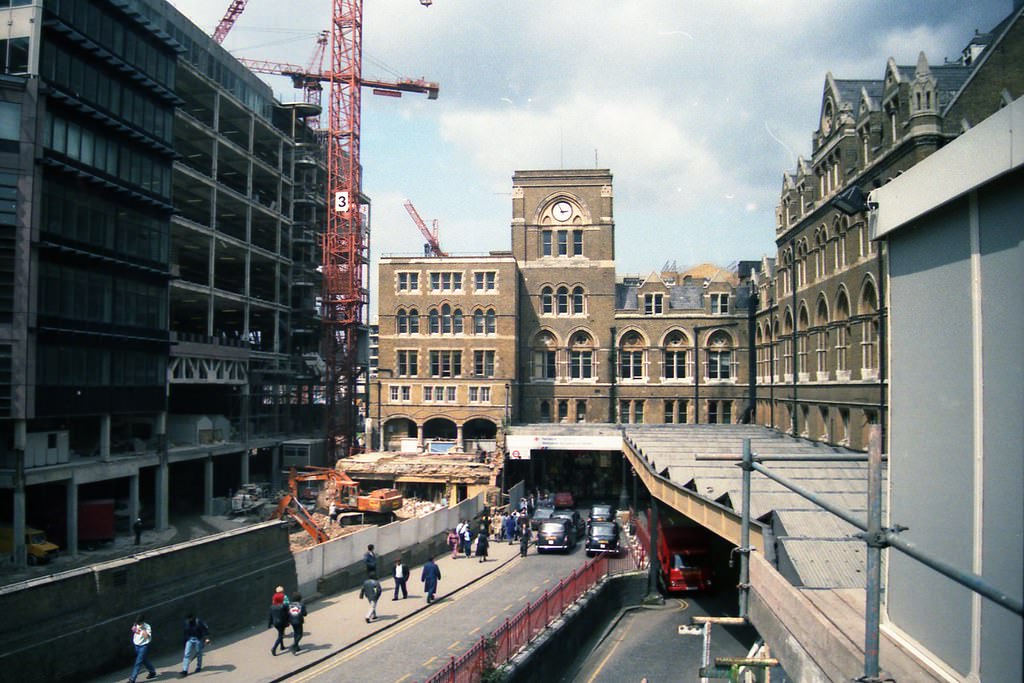
By 1986, the pace of change around Liverpool Street had accelerated sharply. That year, Broad Street station was demolished. In its place — and on the land surrounding it — a vast new development called the Broadgate Centre was constructed. It brought shops, bars, restaurants, and offices to a site that had previously been occupied by a struggling railway terminus and a tangle of Victorian infrastructure.
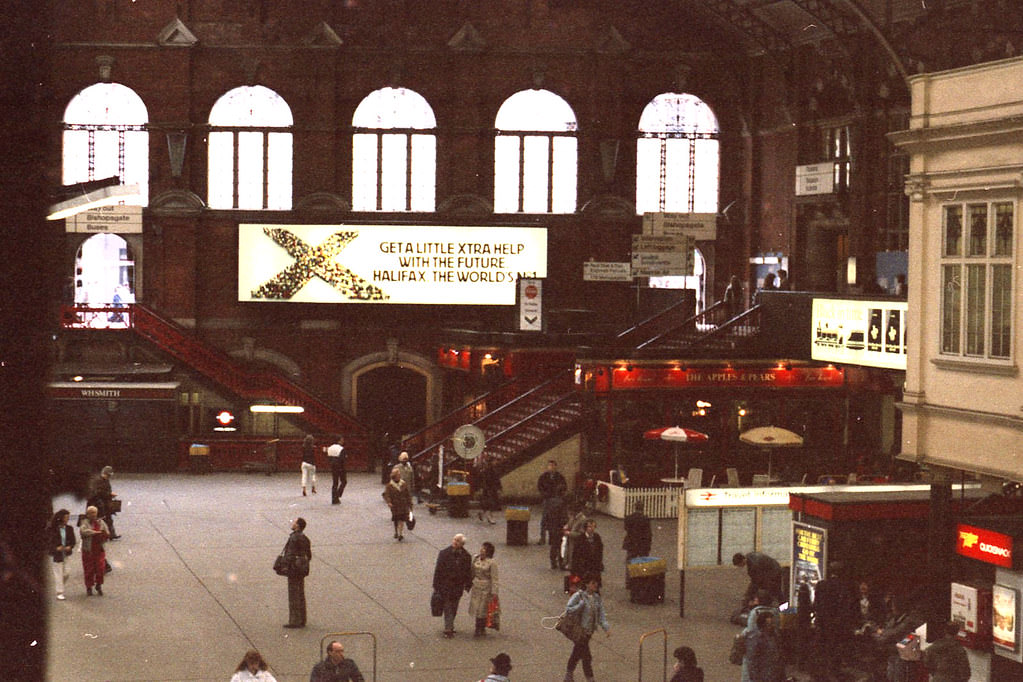
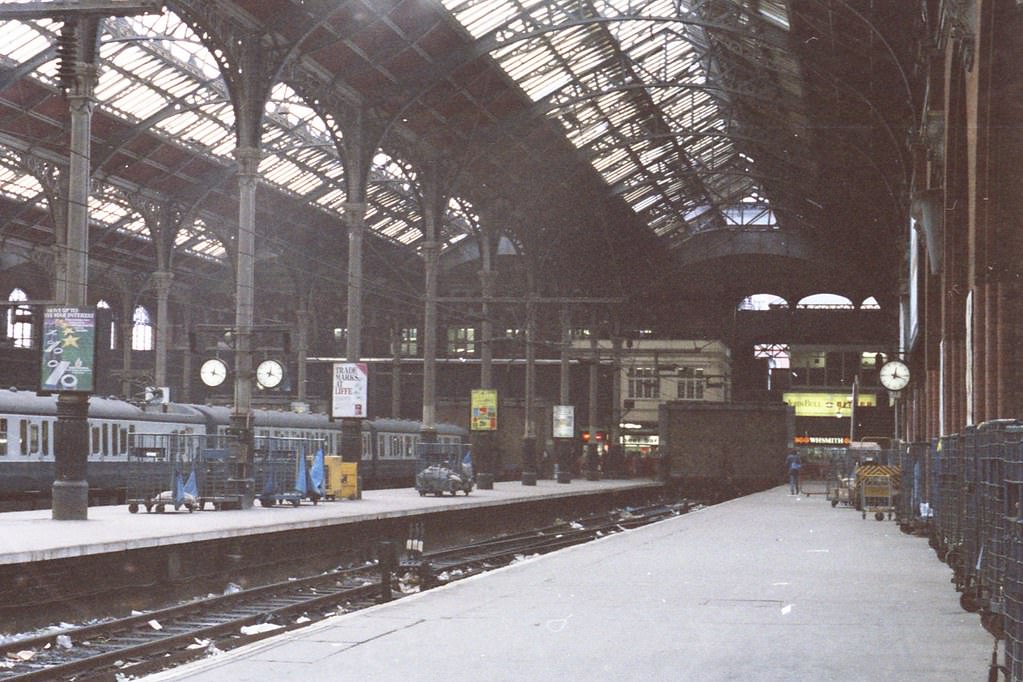
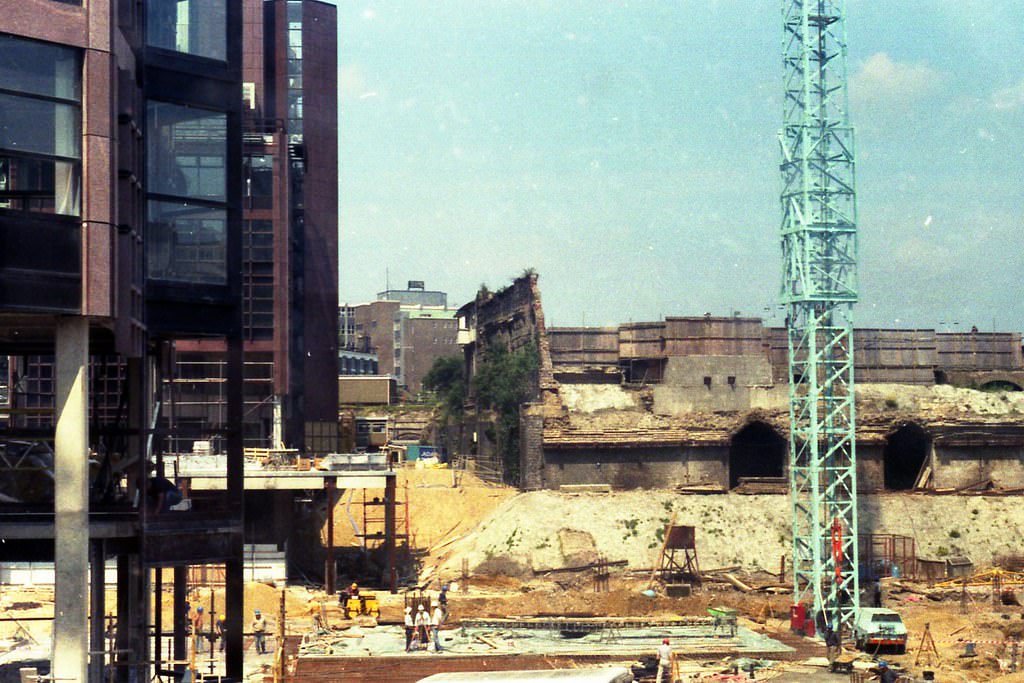
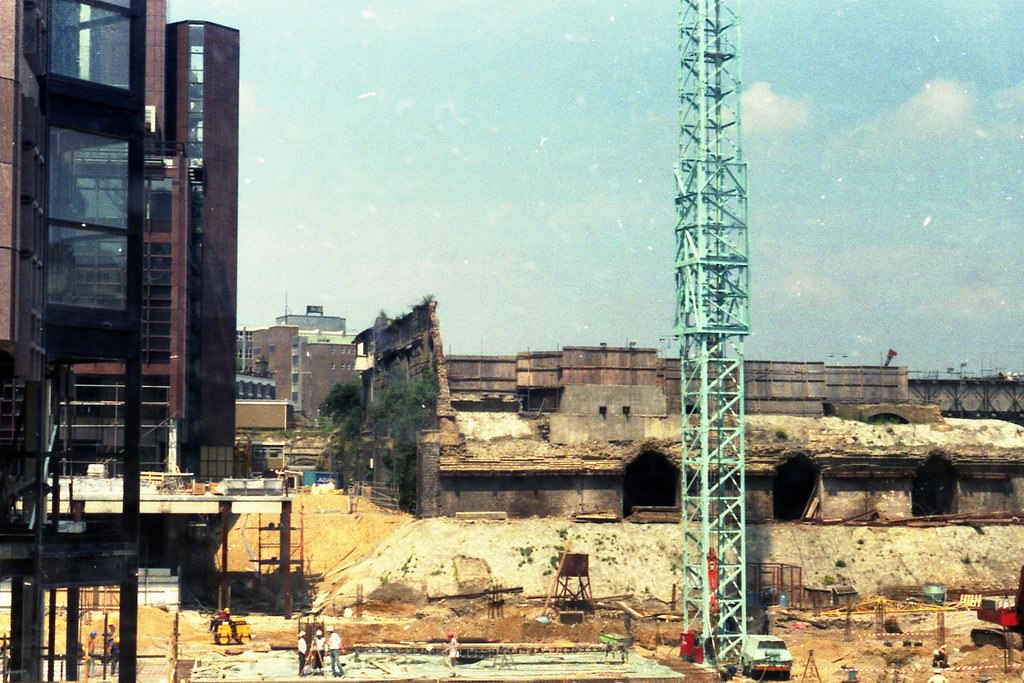
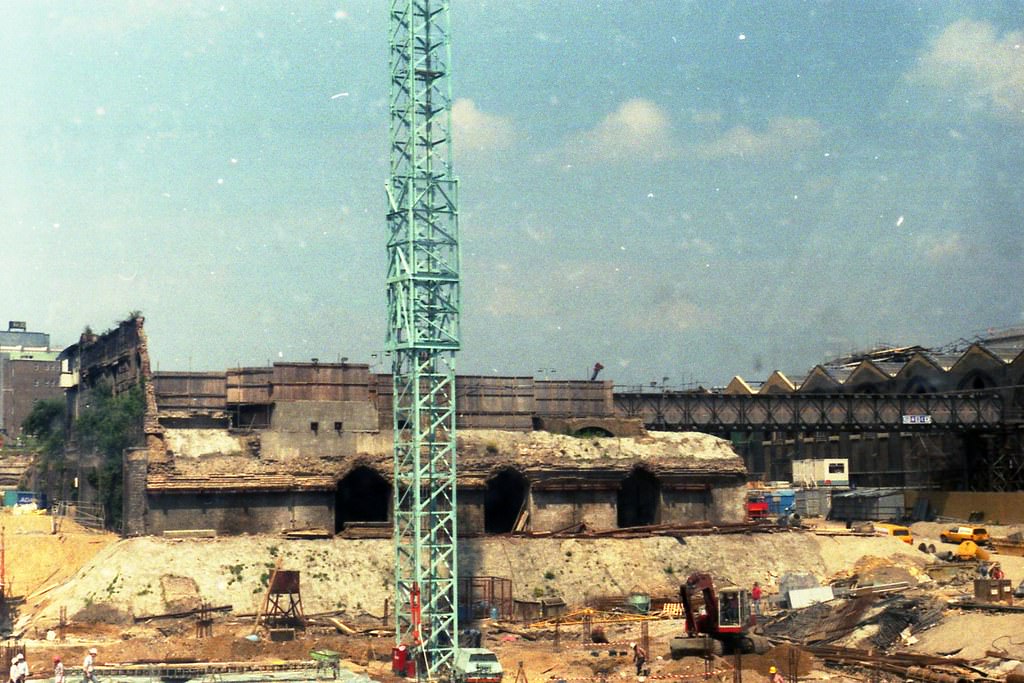
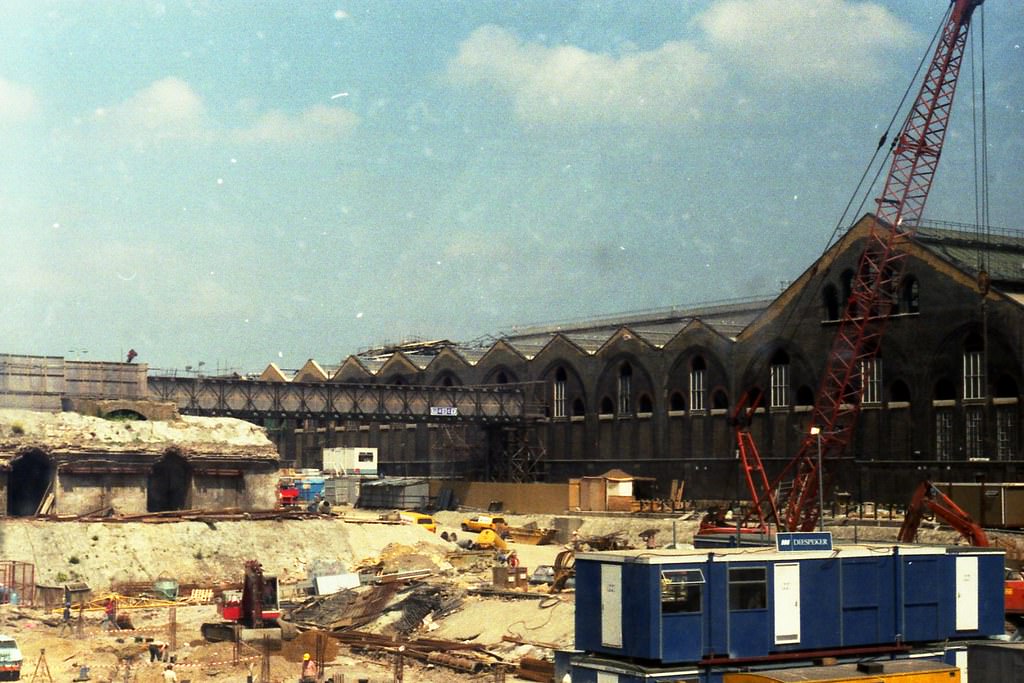
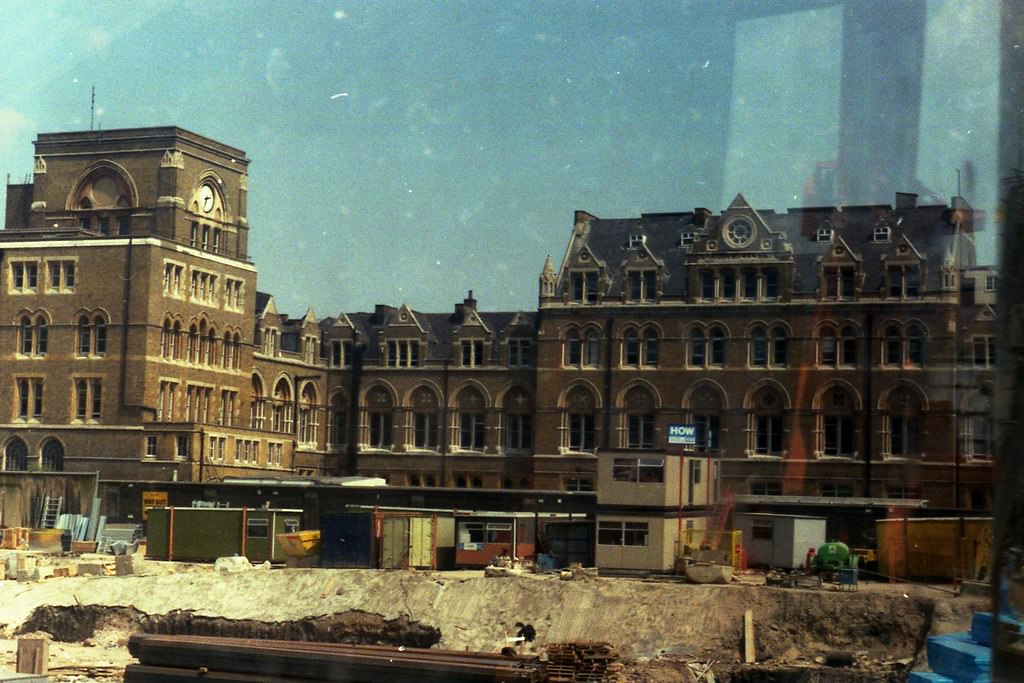
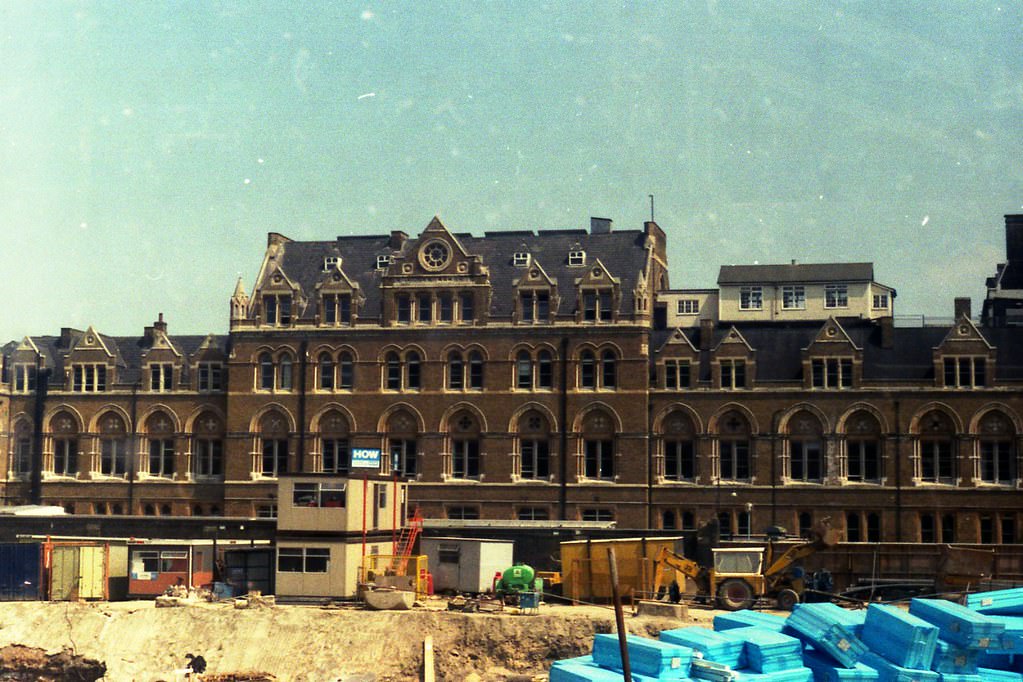
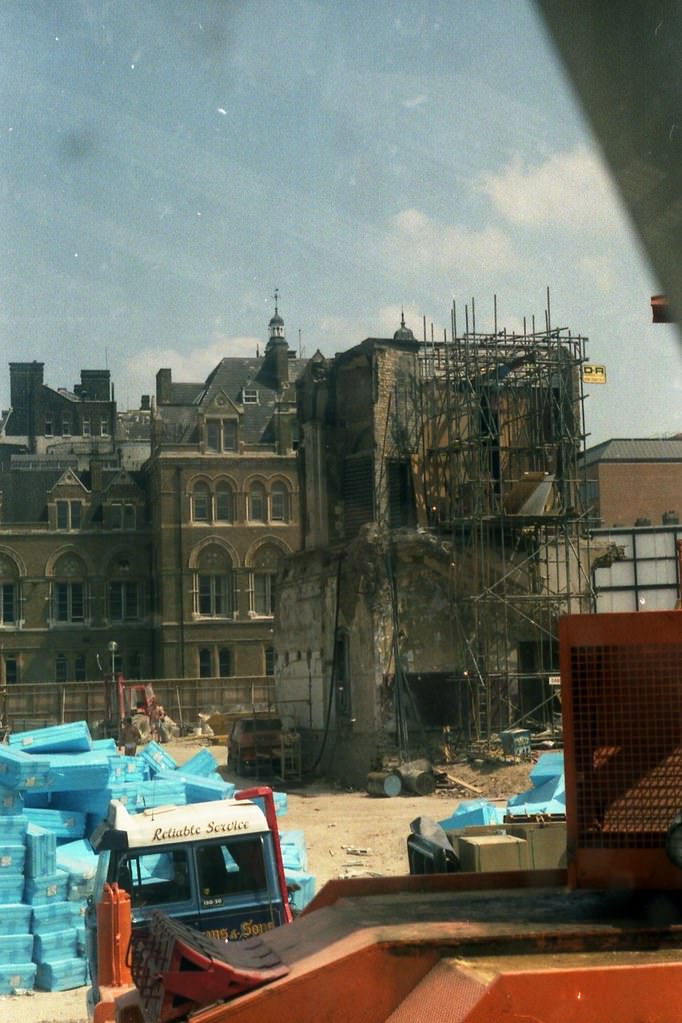
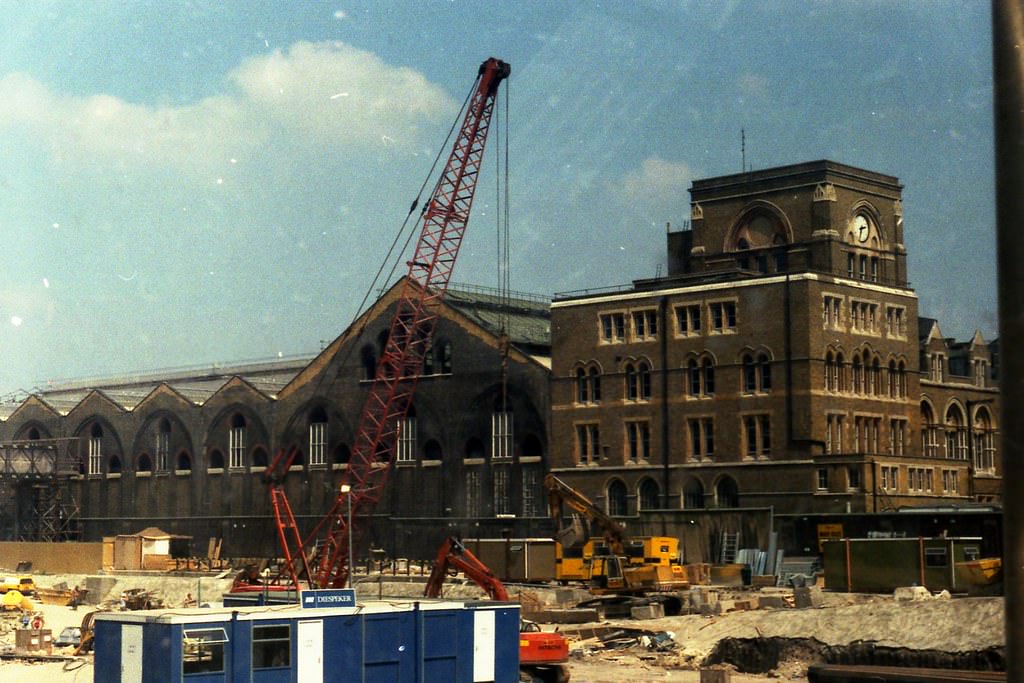
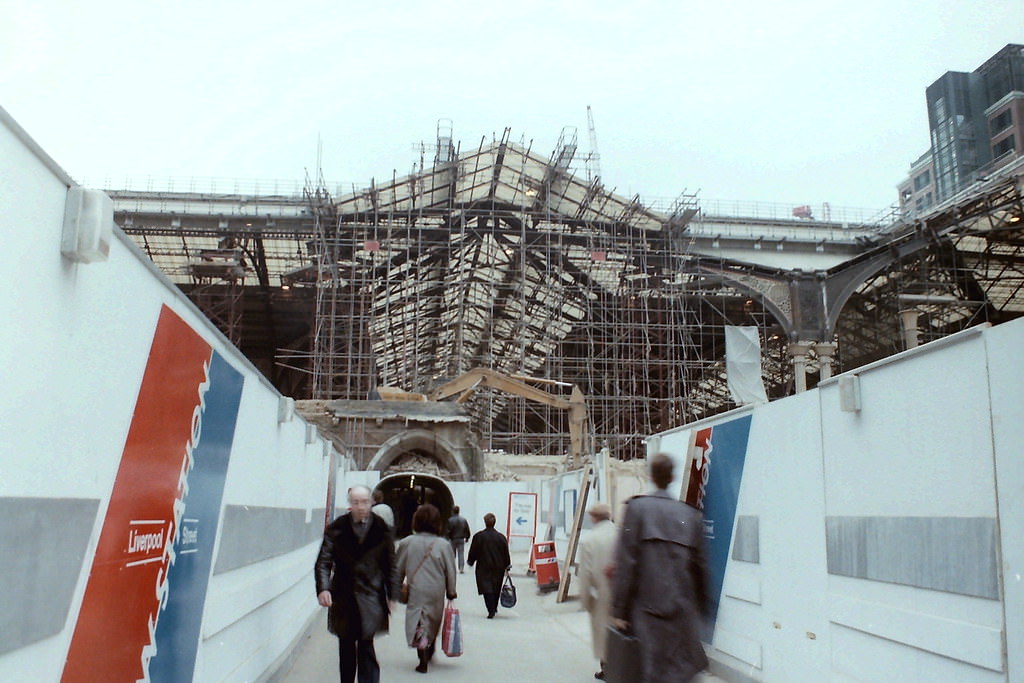
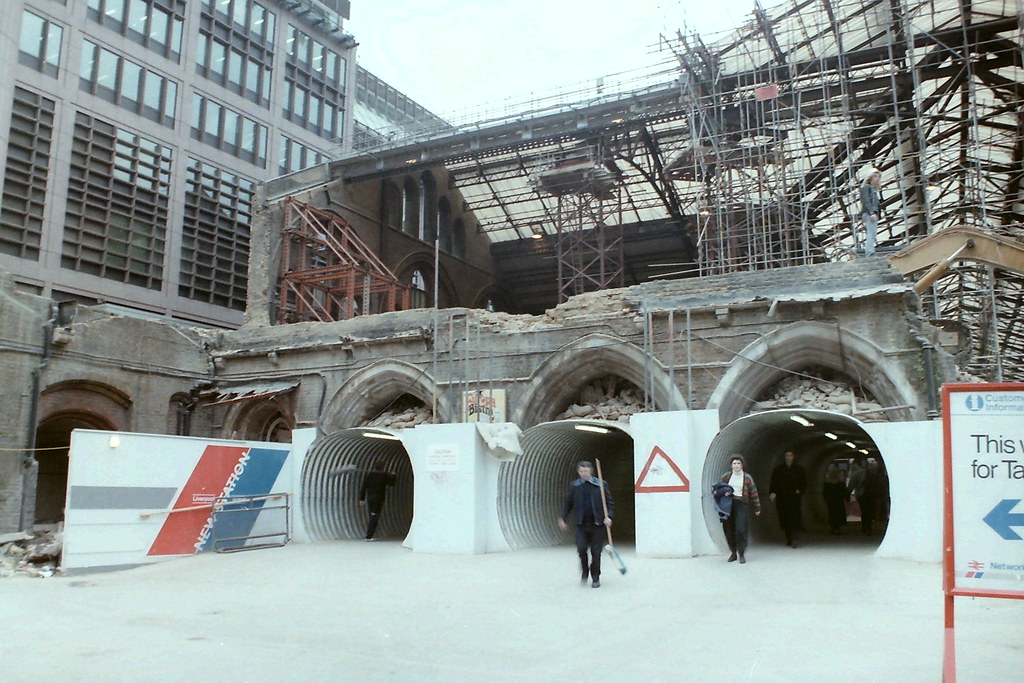
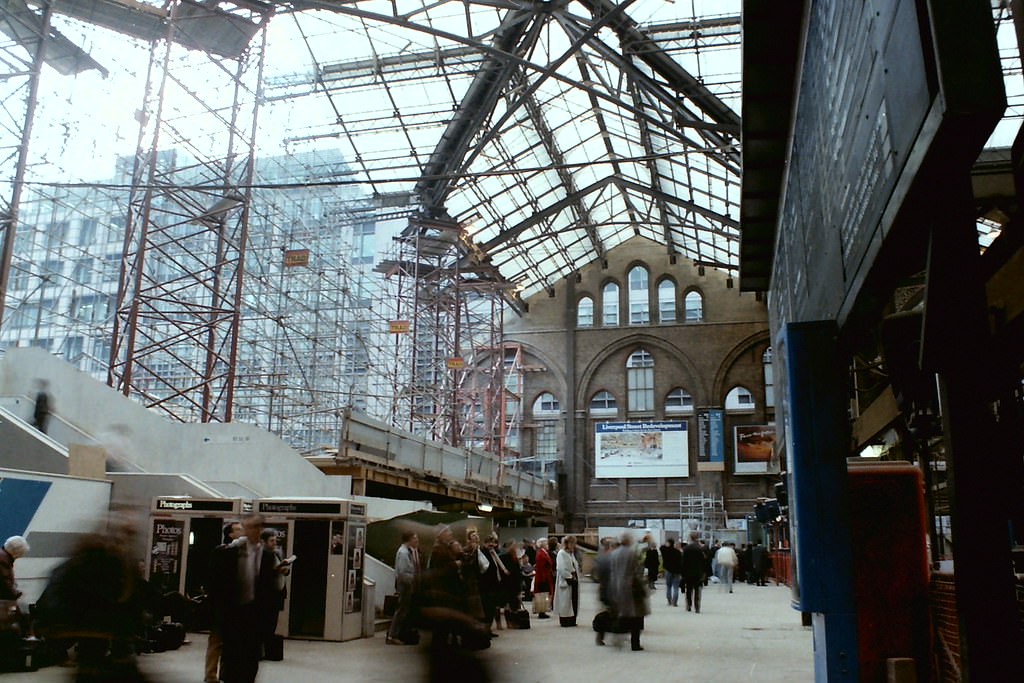
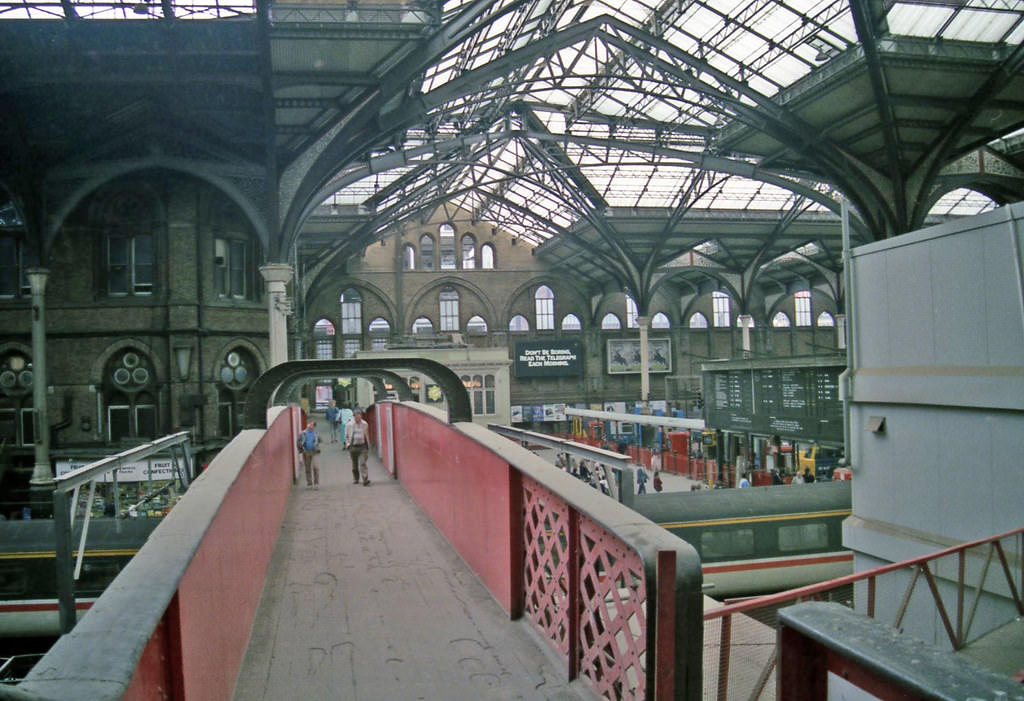
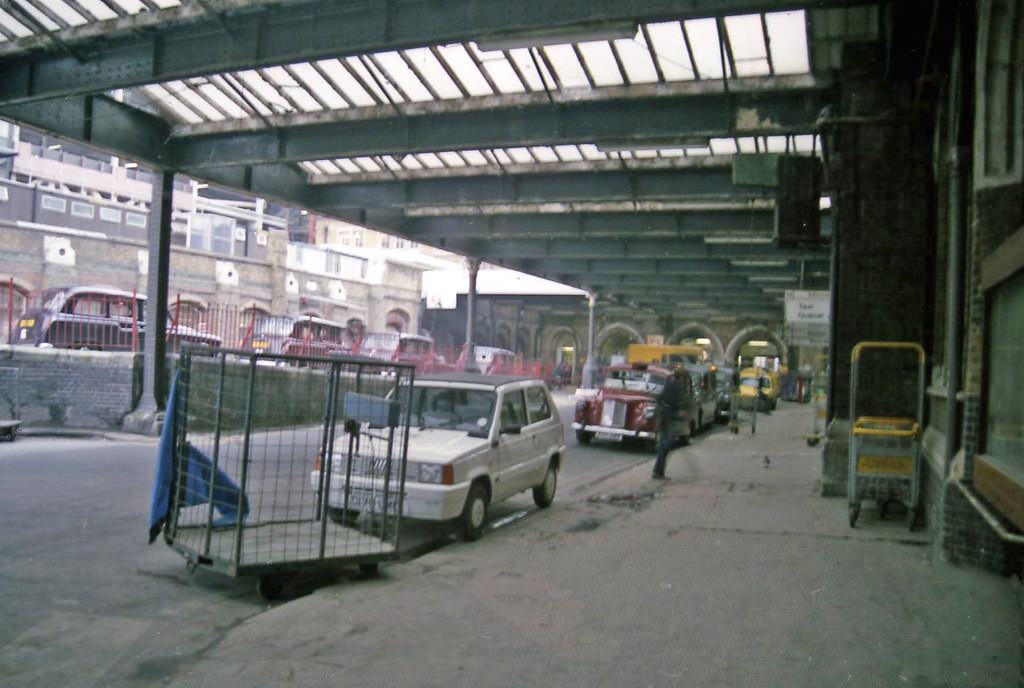
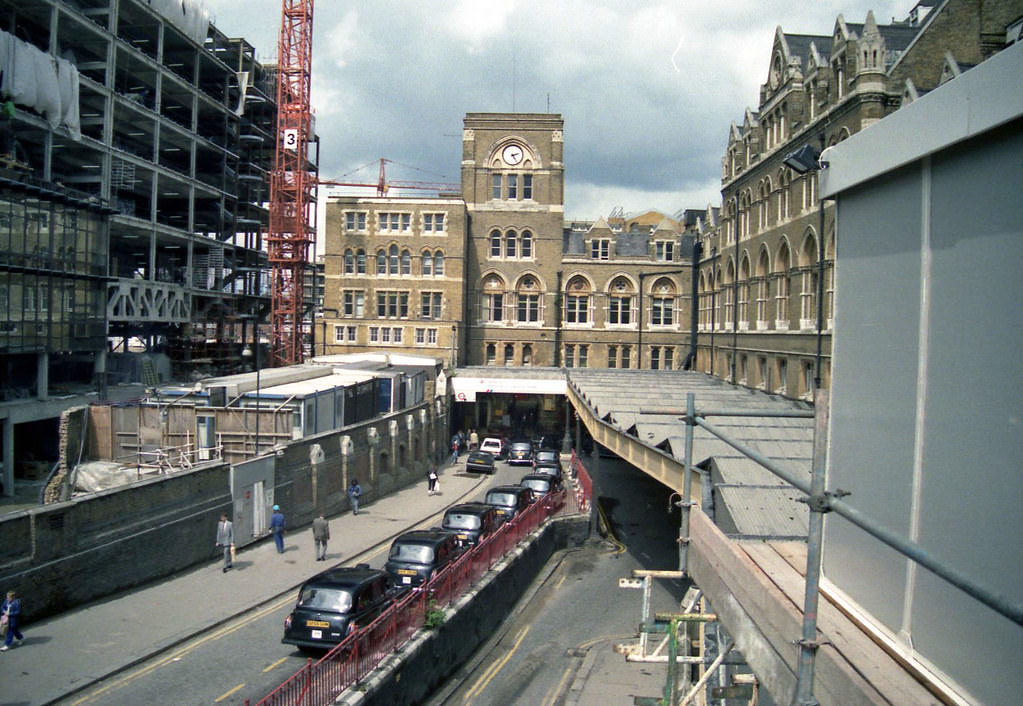
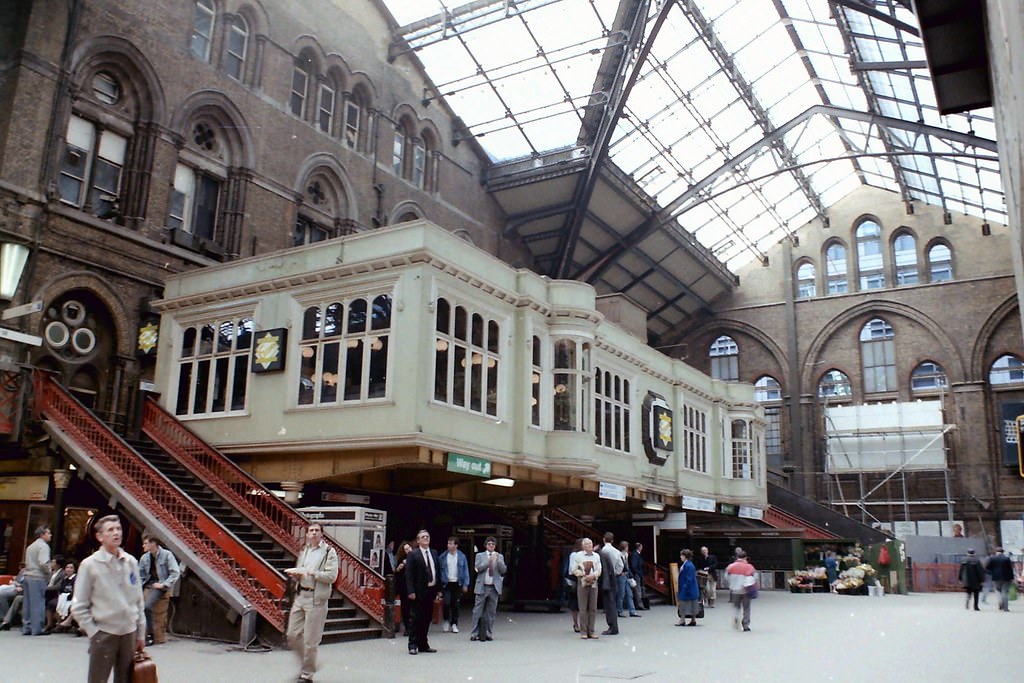
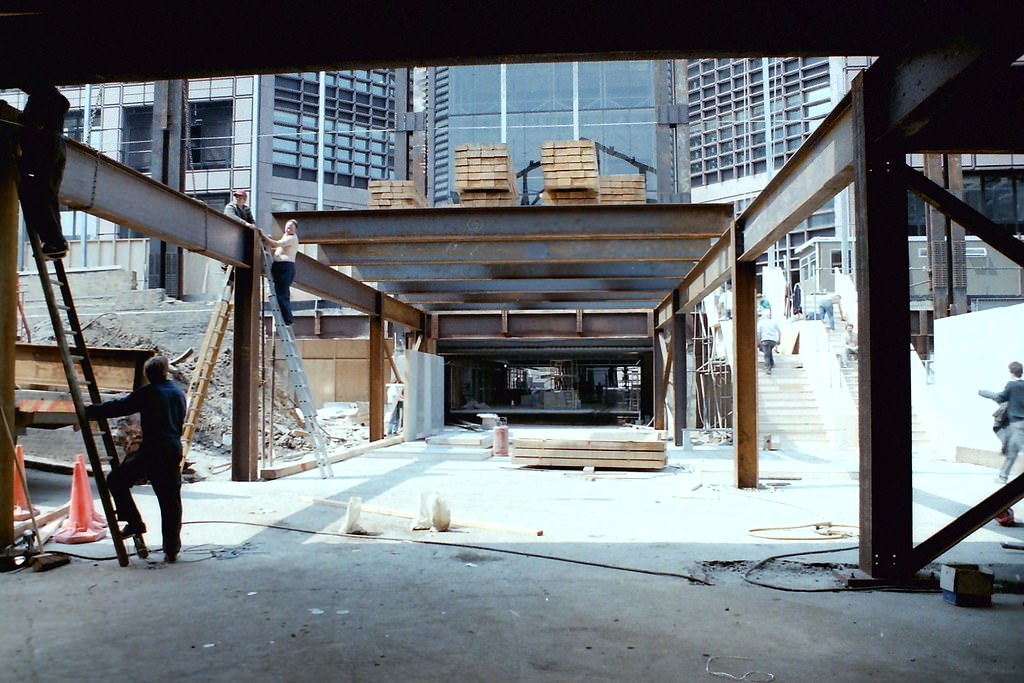
Liverpool Street station itself also underwent a major redevelopment during the mid-1980s. Brown was on hand to document the station before, during, and after the building work. His 1987 photographs capture the terminal in a state of transition — parts of the old fabric still visible, construction activity already underway nearby. The taxi ramp and taxi rank outside the station appear in several shots from this year, showing the practical, unglamorous infrastructure that kept the station running day to day.
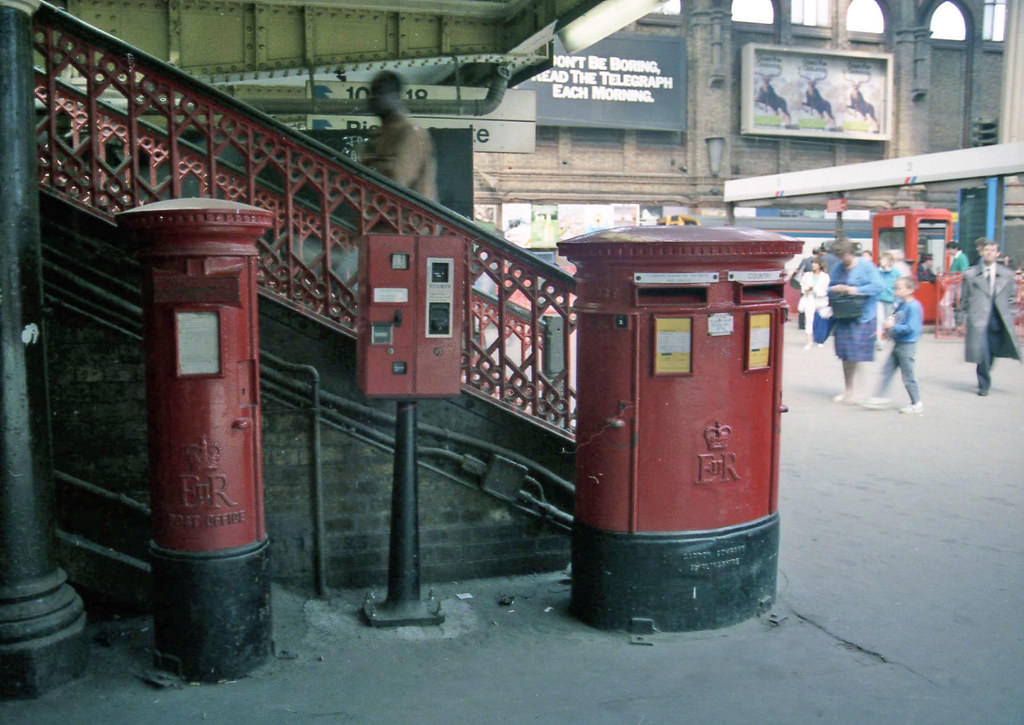
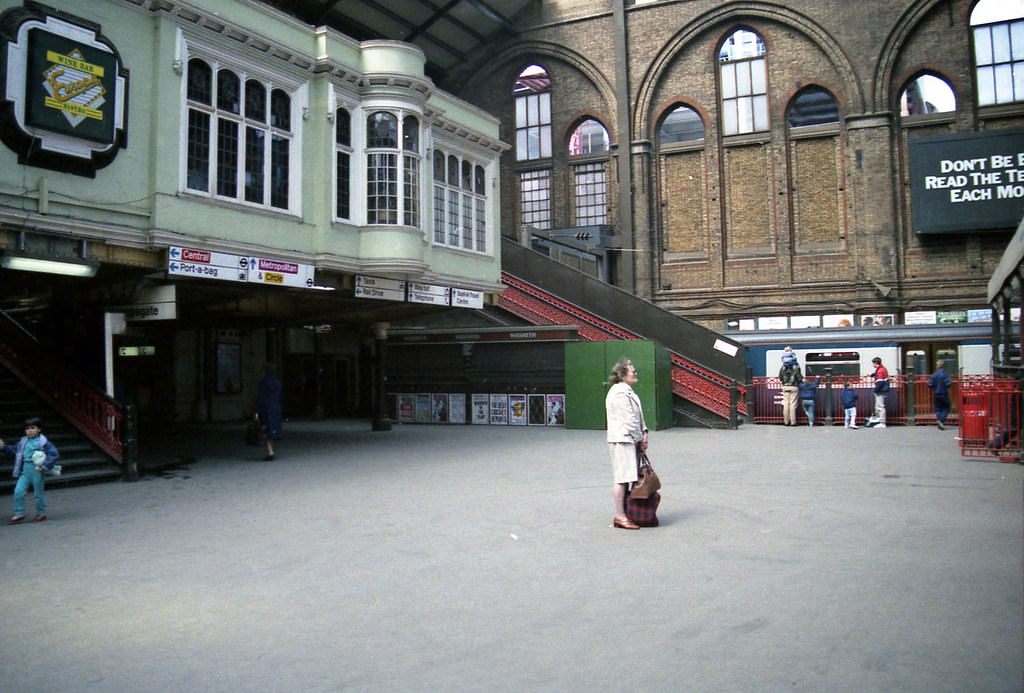
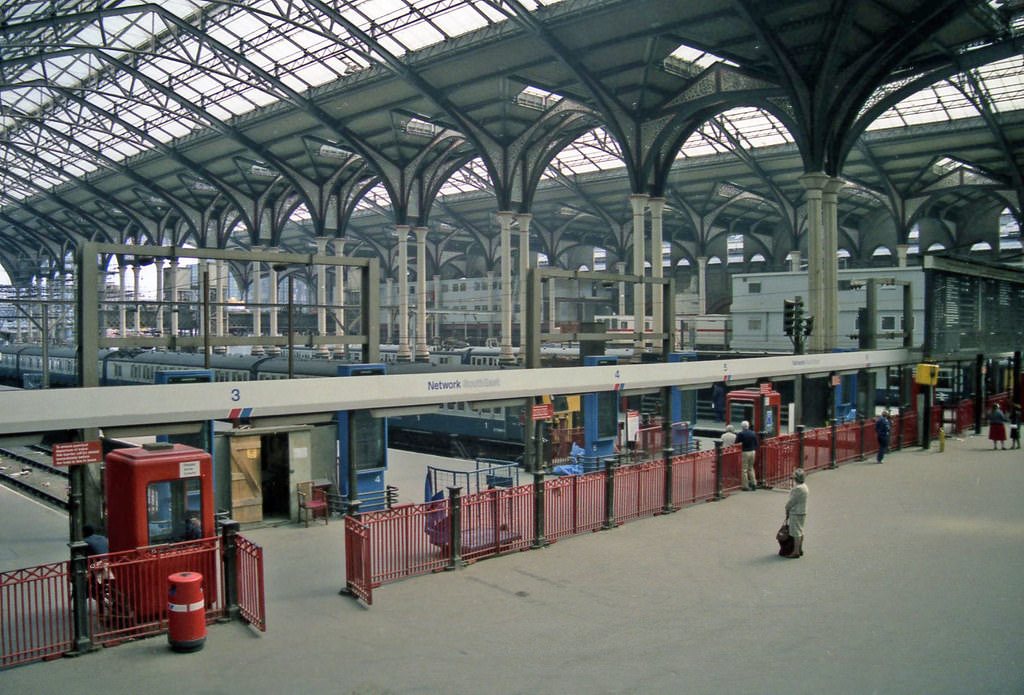
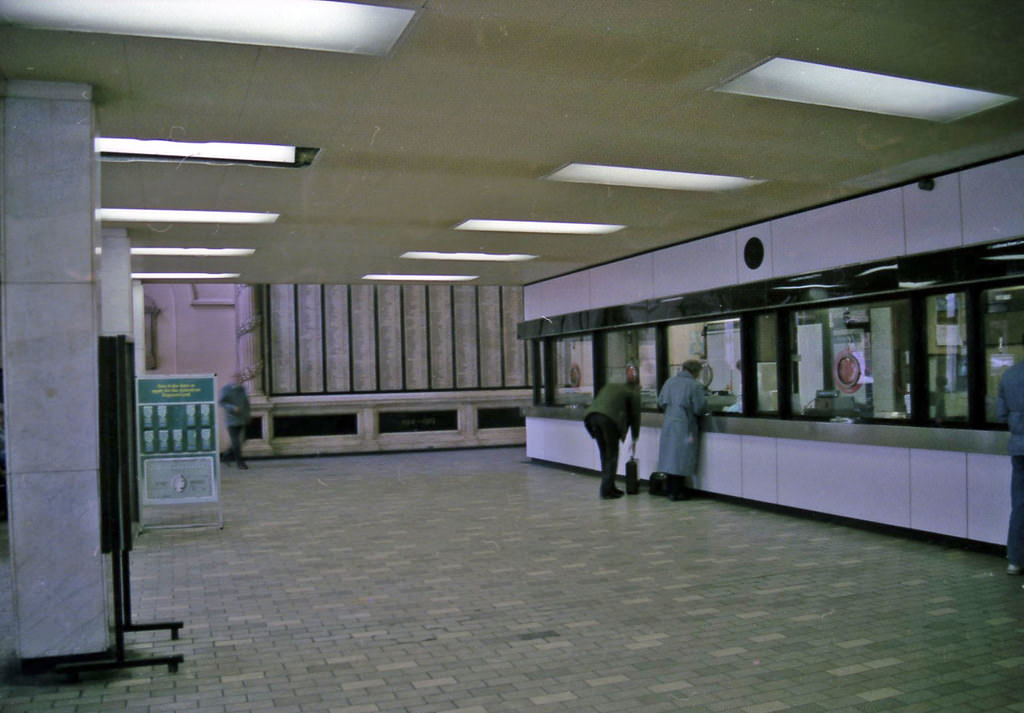
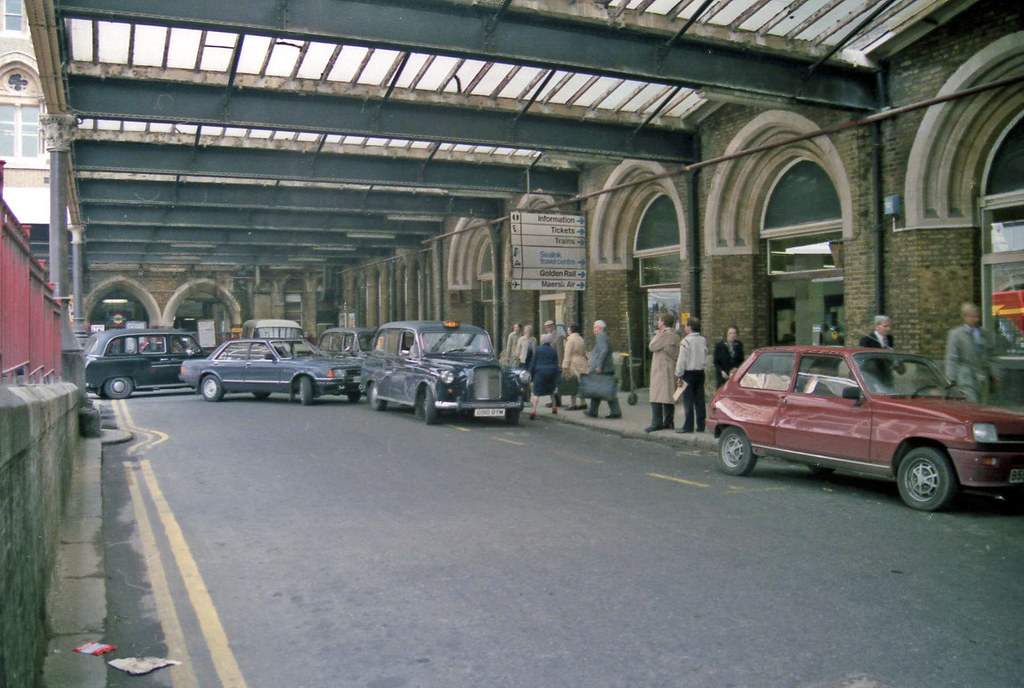
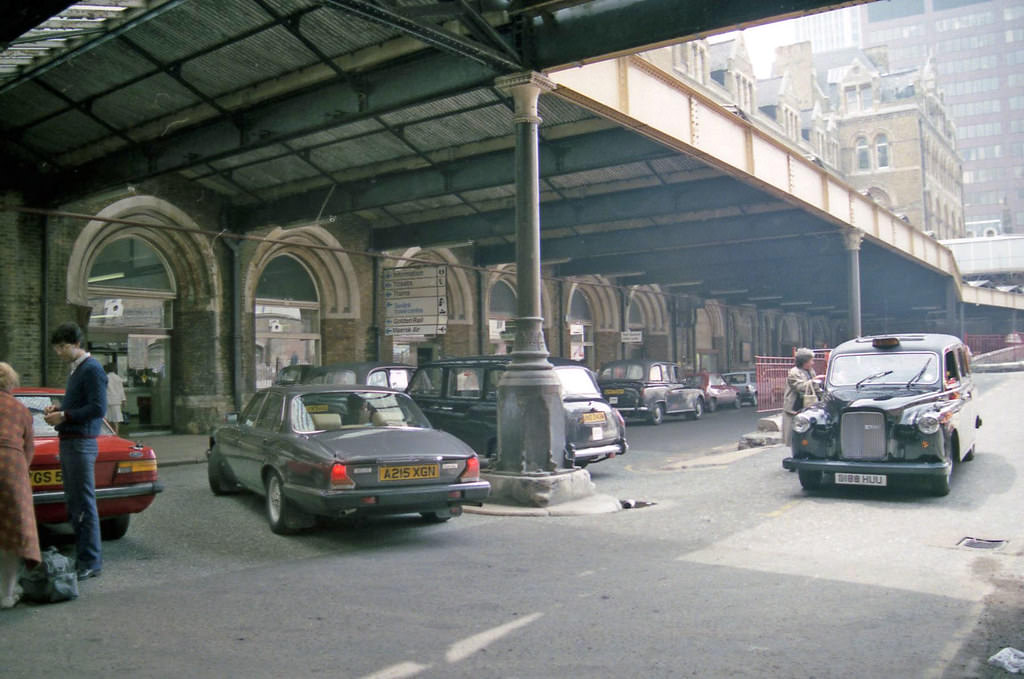
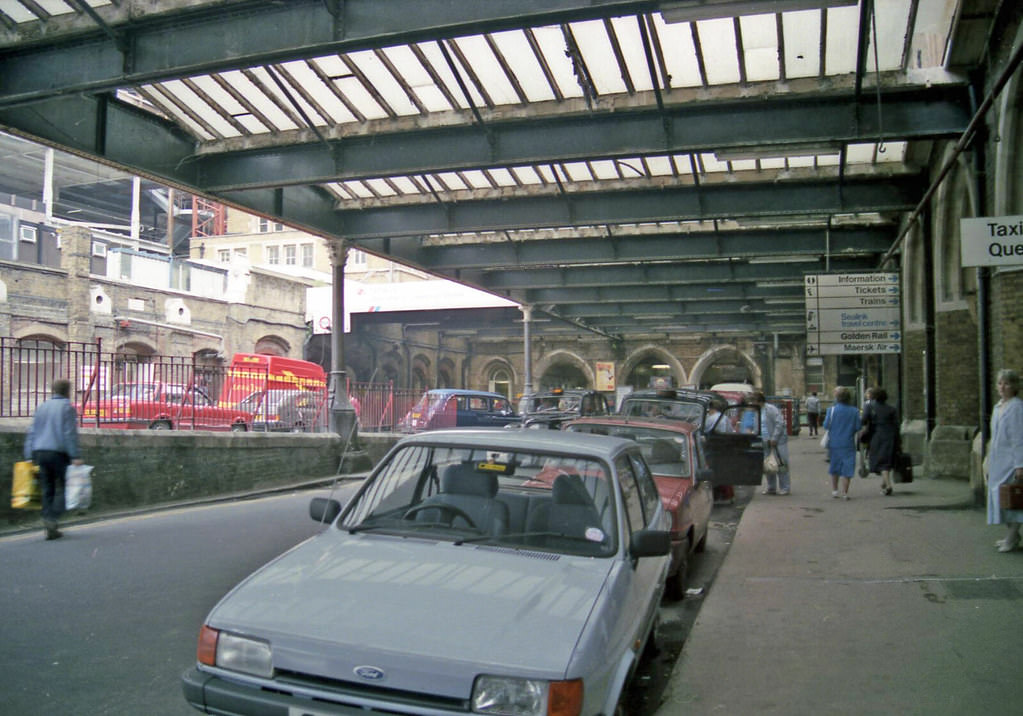
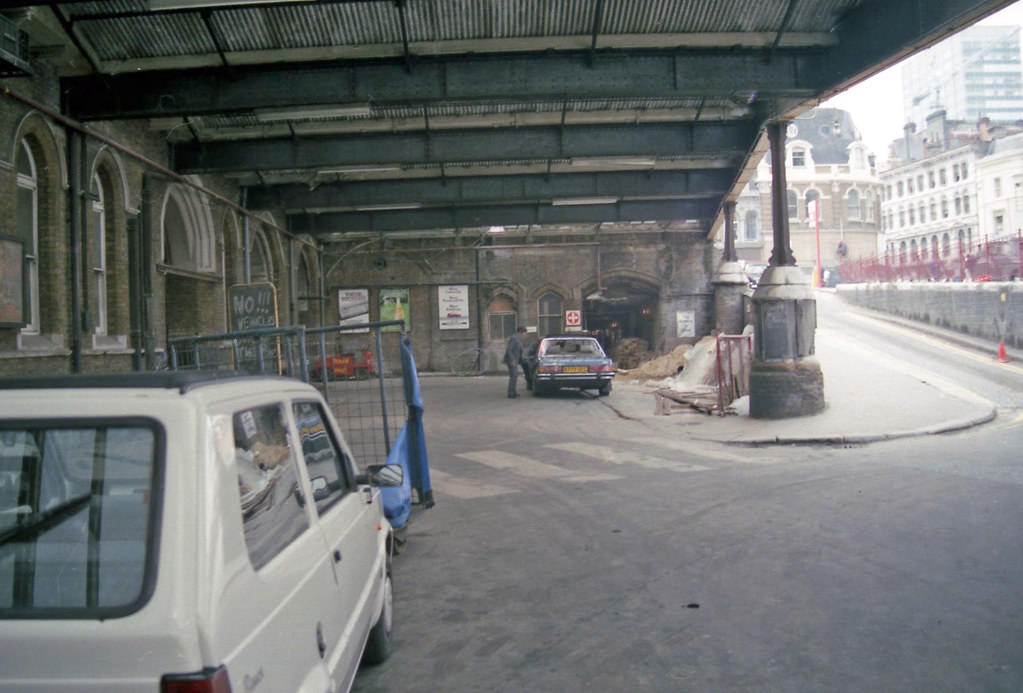
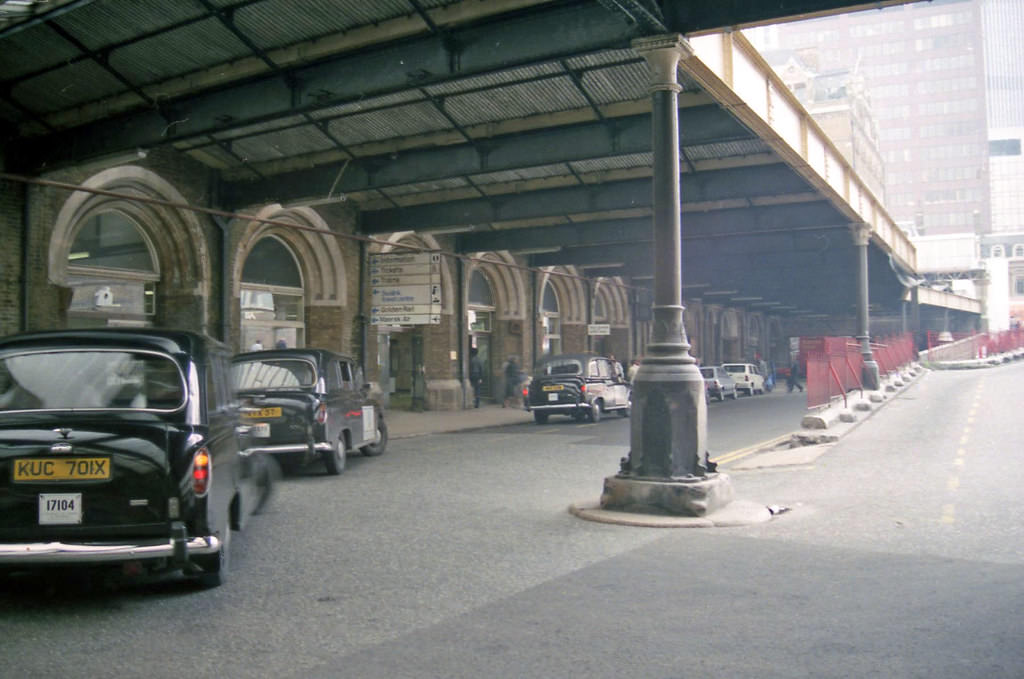
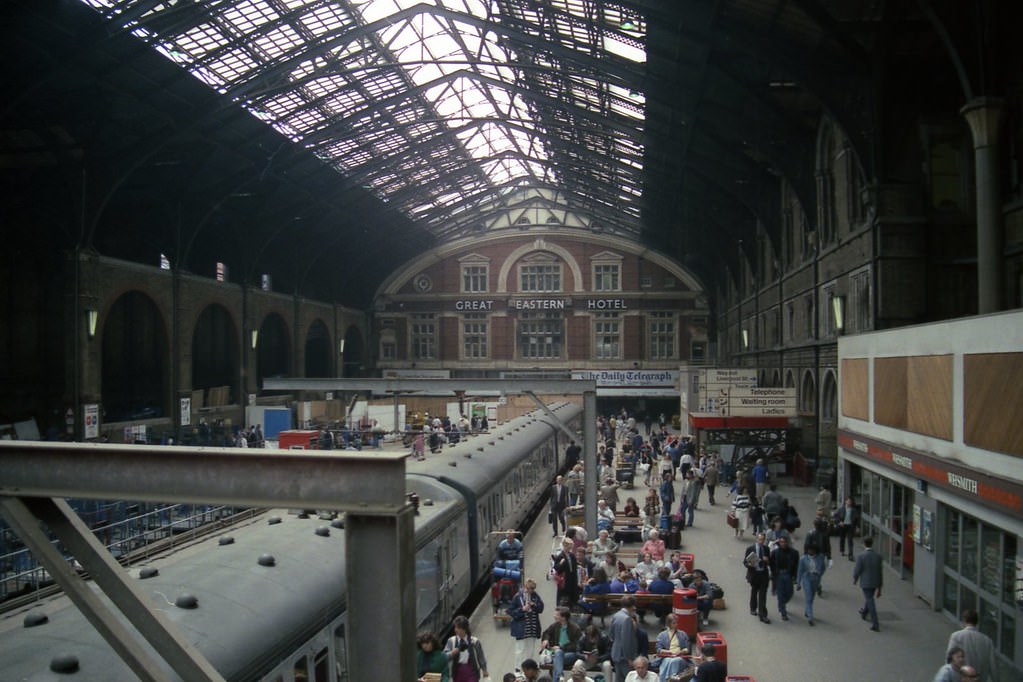
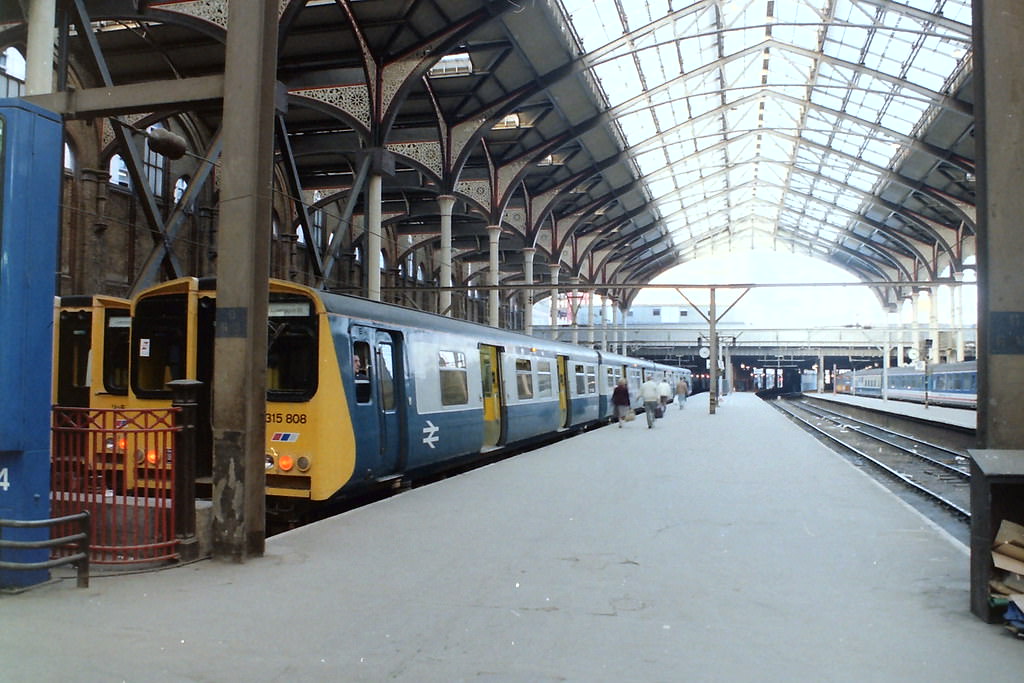
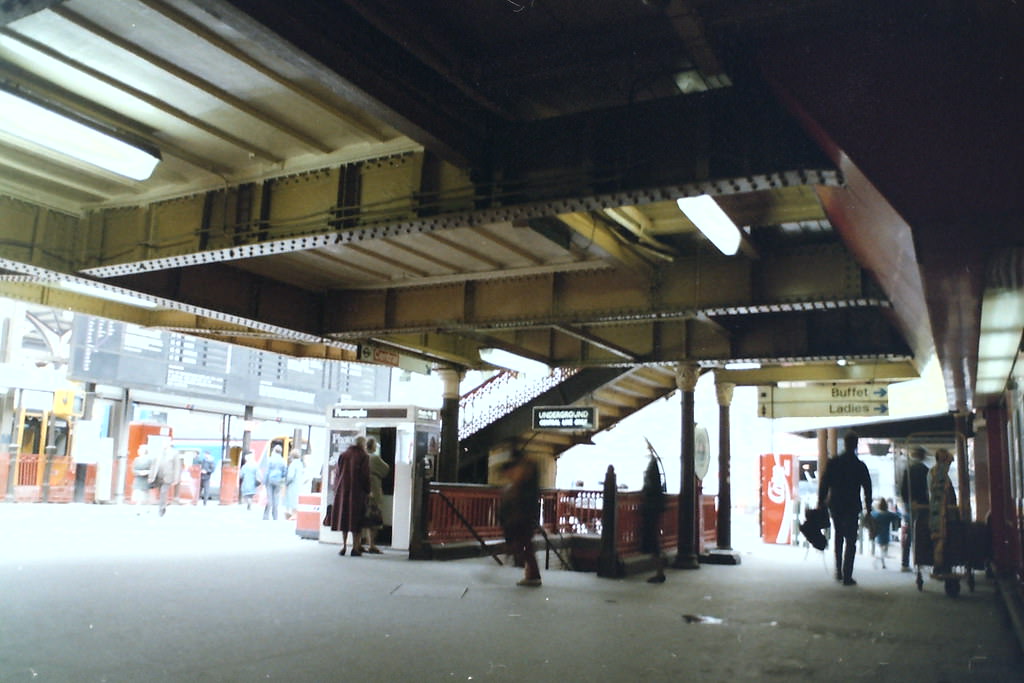
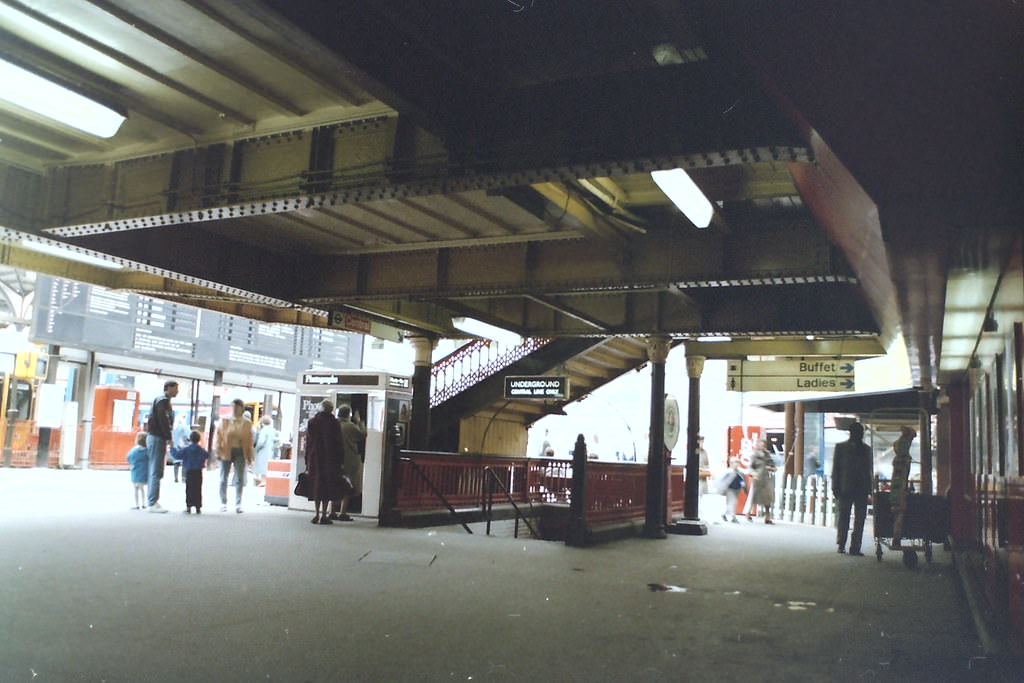
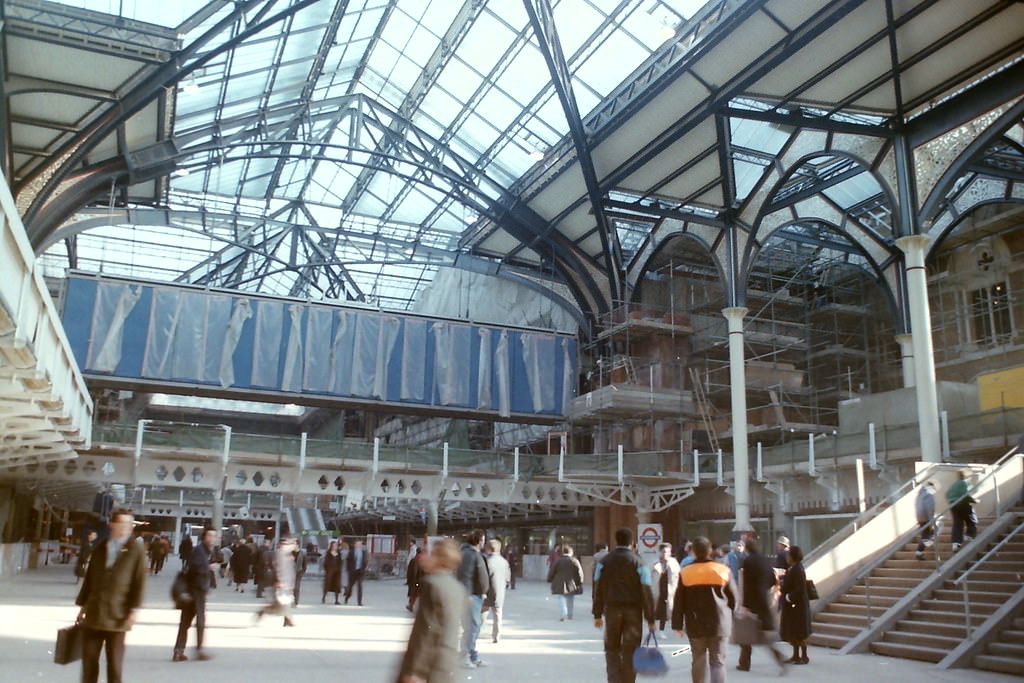
The interior of the station in 1987 still retained much of its older character. High iron columns supported the roof structure, and the platforms were busy with the kind of activity that had defined Liverpool Street since the Victorian era — thousands of commuters passing through each day from Essex and East Anglia. British Rail operated the mainline services at this point, and the ticket office was very much a place you had to visit in person to make travel arrangements.
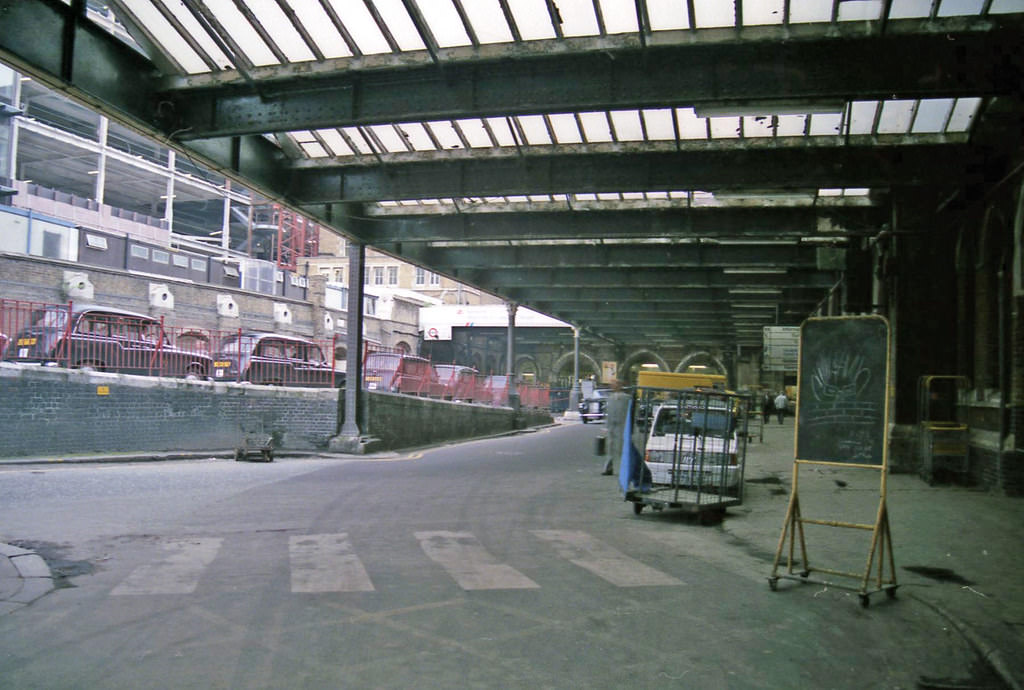
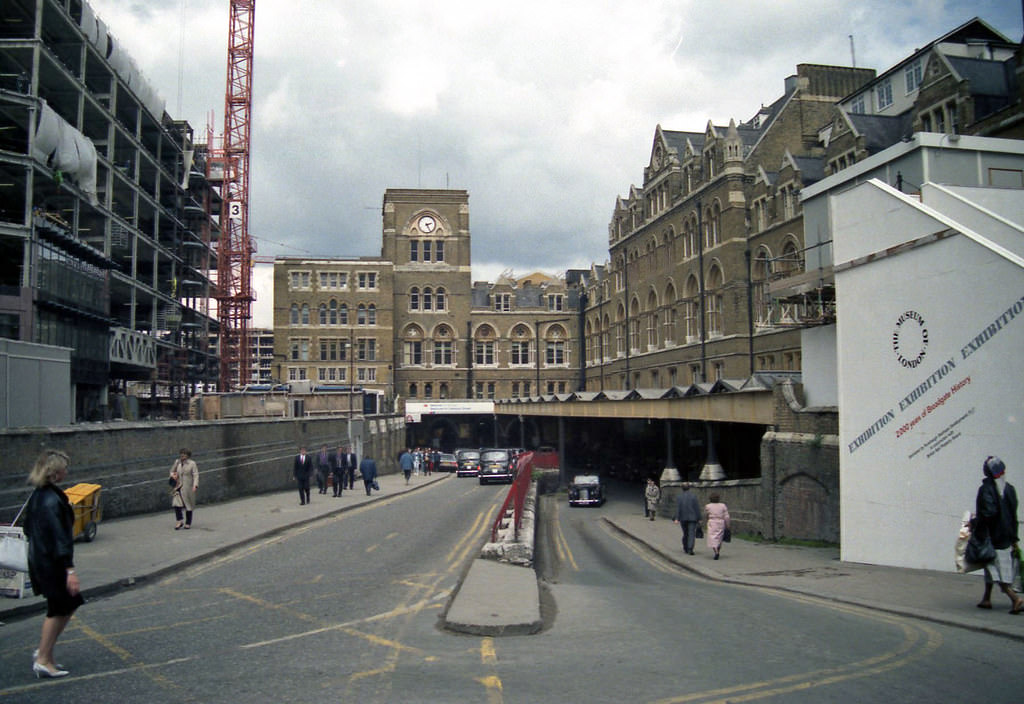
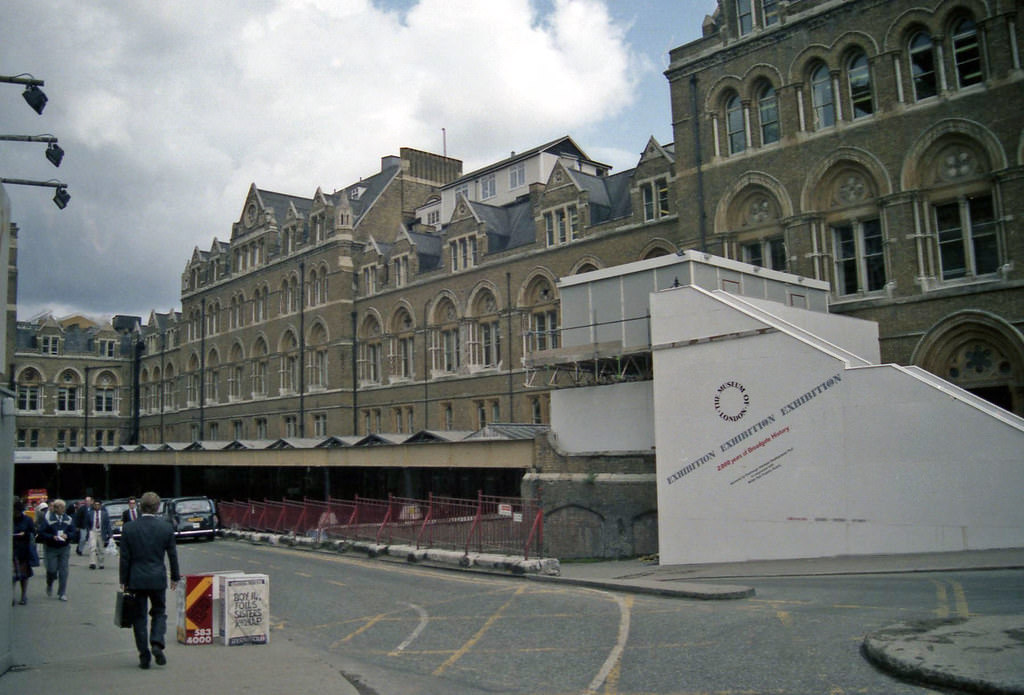
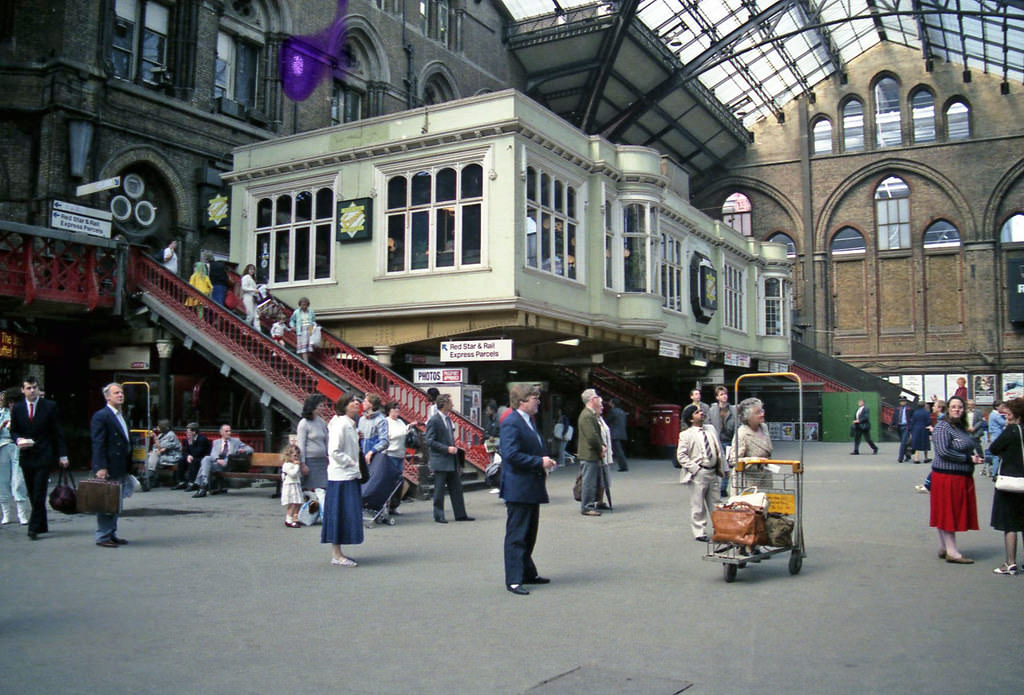
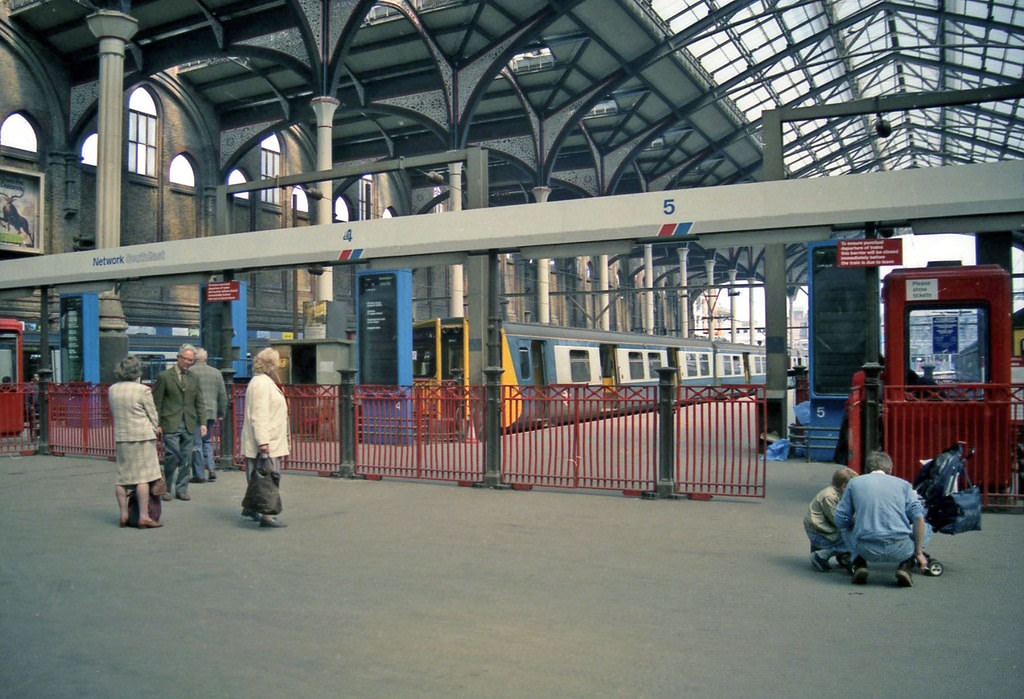
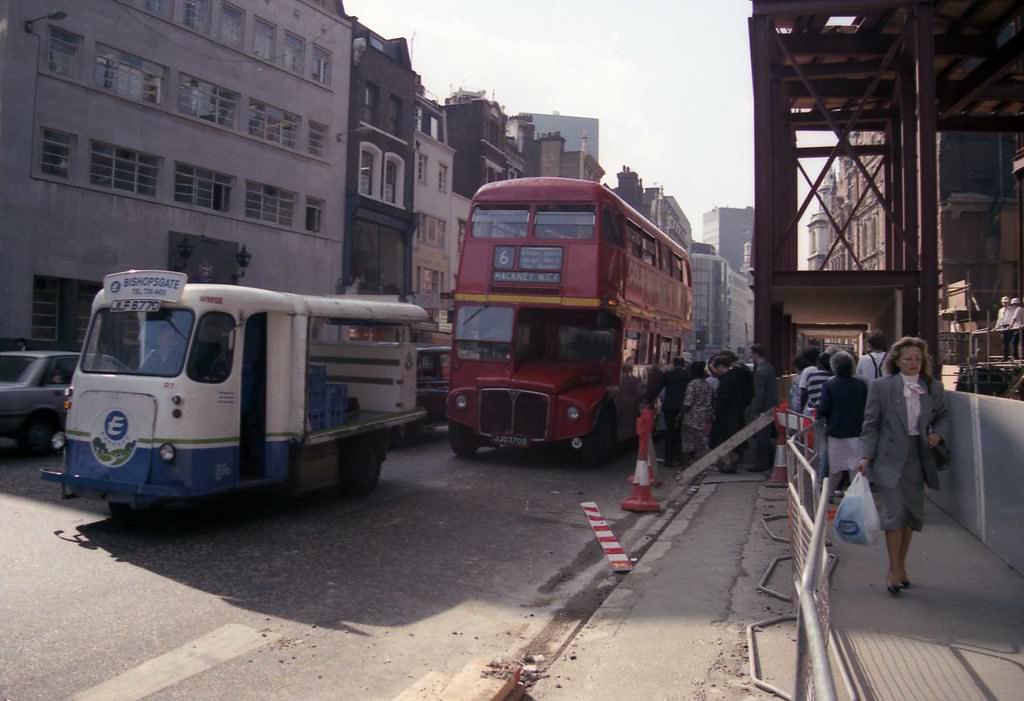
Bishopsgate, the main road running past the station’s eastern side, was a busy artery lined with buses. Routemaster buses were still a common sight on this stretch in September 1987, their distinctive red double-decker forms threading through traffic past the station entrances. Pindar Street, just off Bishopsgate, is also captured in Brown’s photographs from this period.
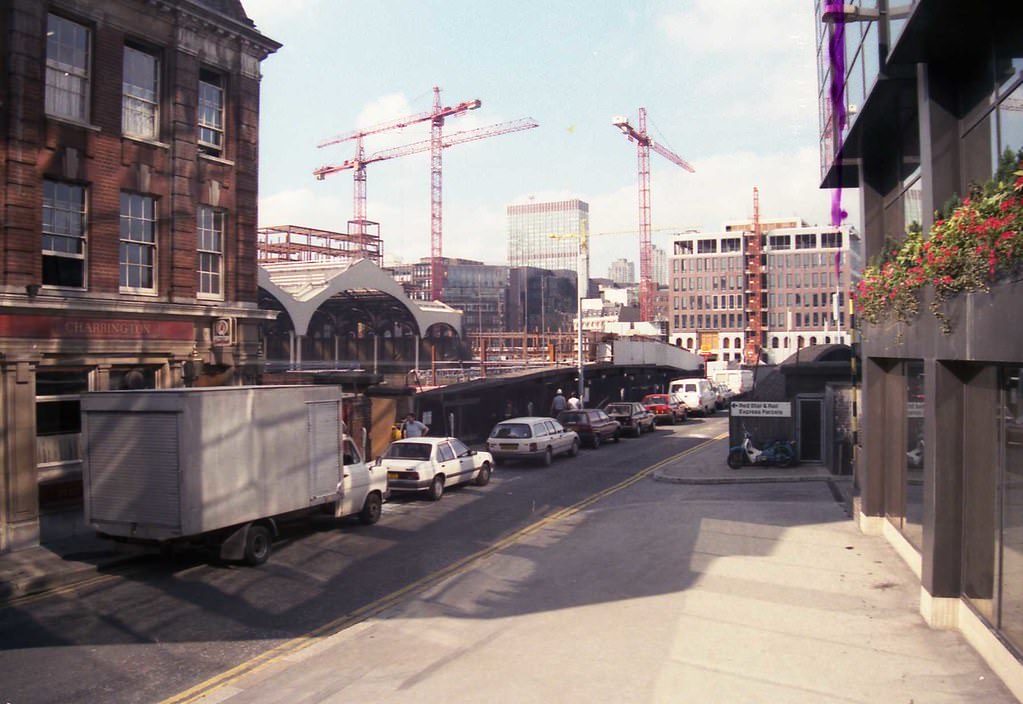
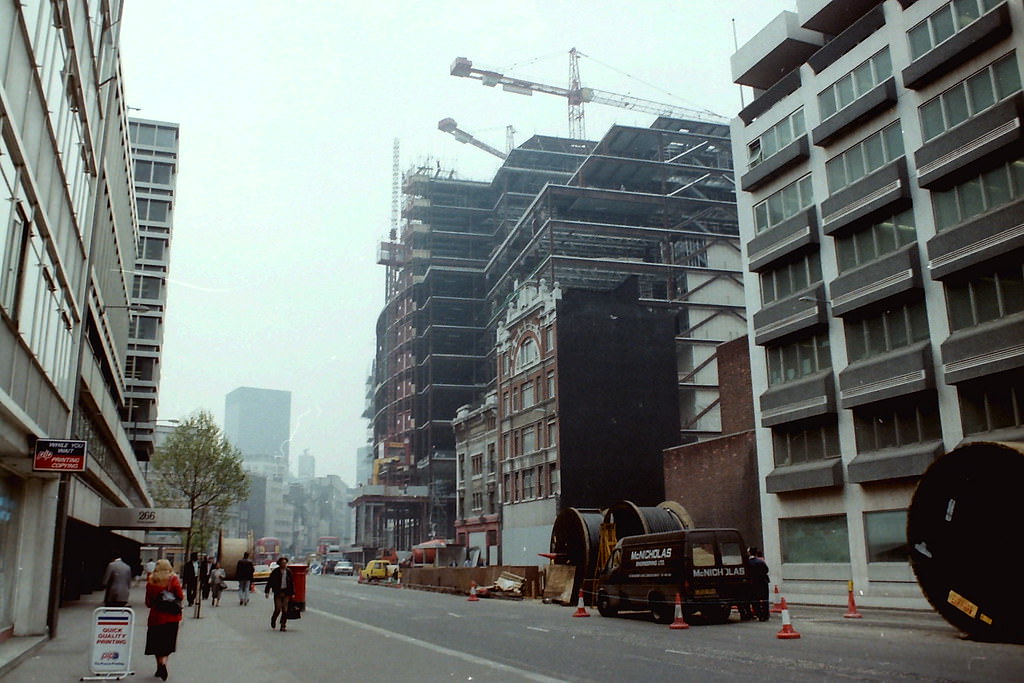
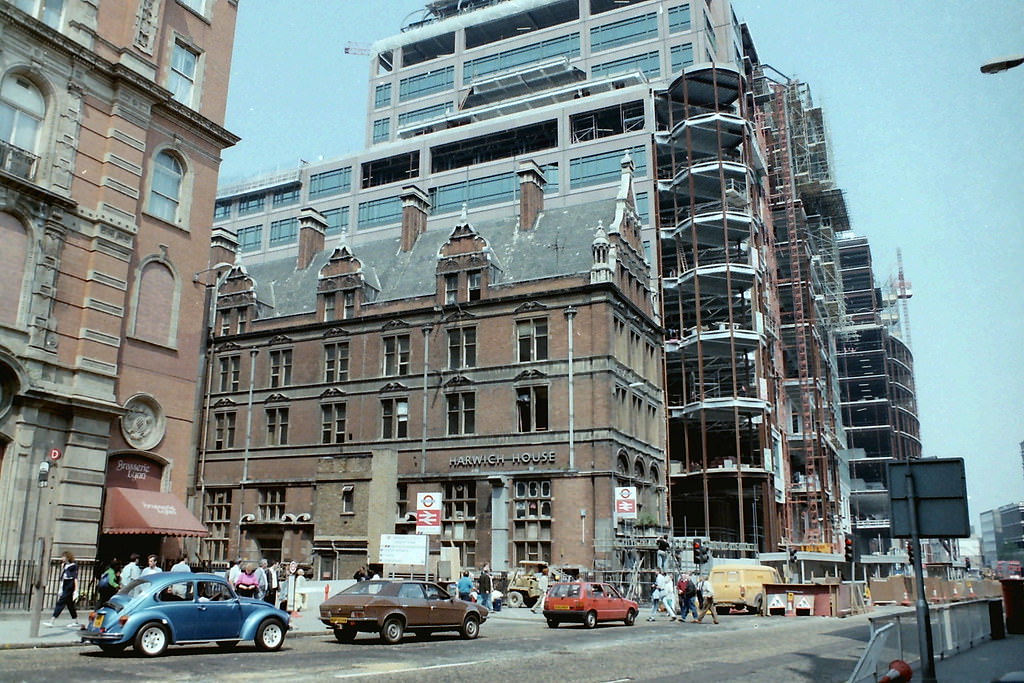
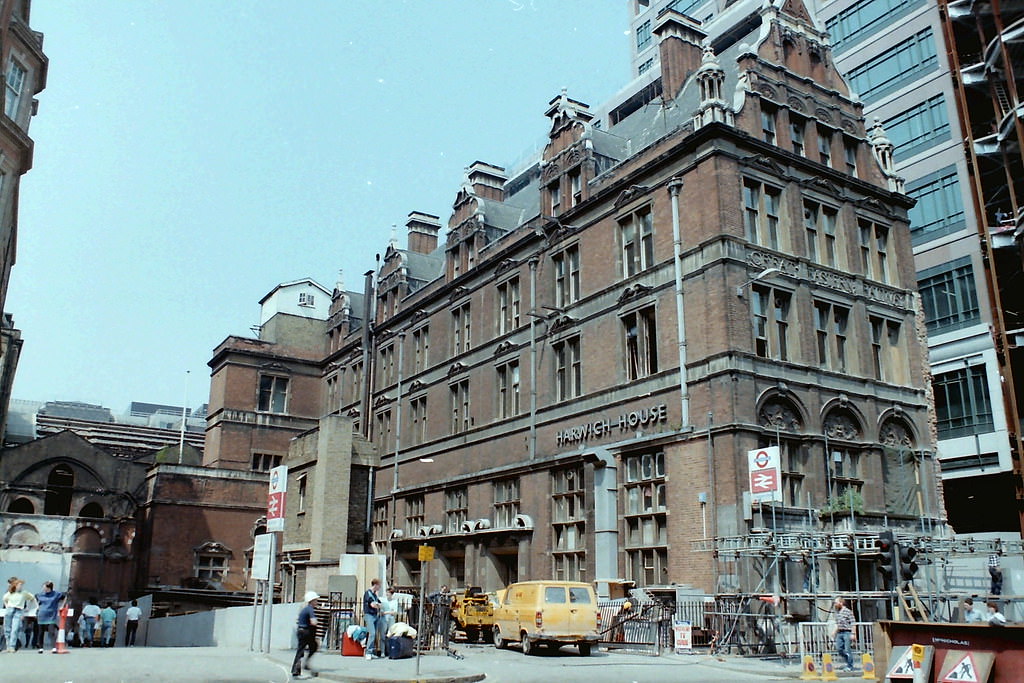
As 1988 arrived, the physical transformation of the area became even more visible. Harwich House, a building on the station’s edge, was already in the early stages of demolition by May 1988 to make way for the rebuilding work. The photographs from this month capture the site in a raw, mid-demolition state — a clear illustration of how thoroughly the station’s surroundings were being reshaped.
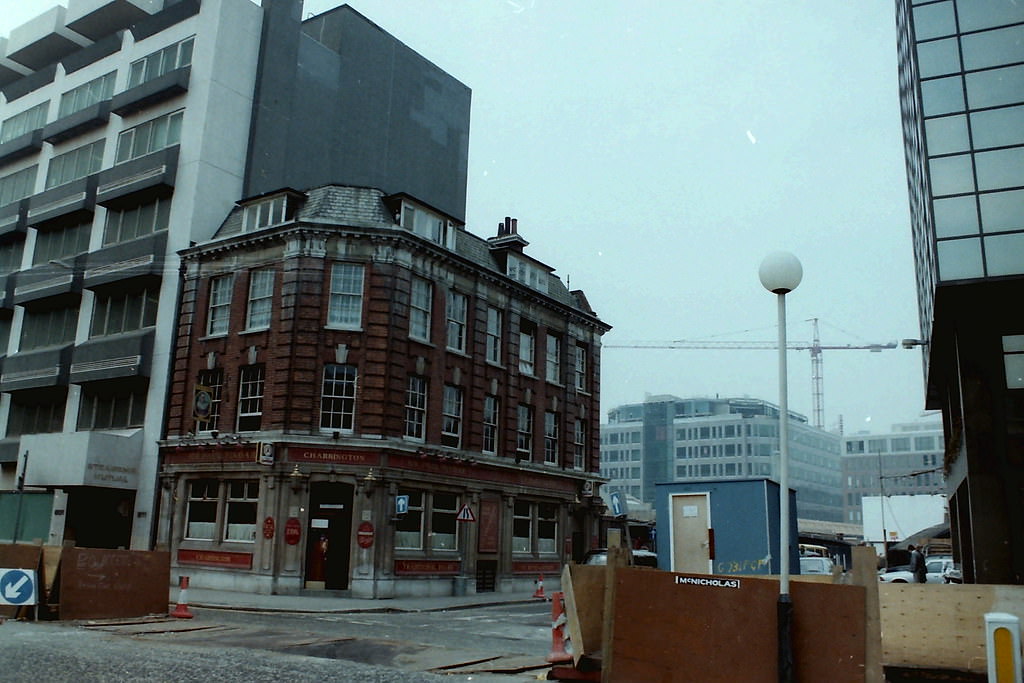
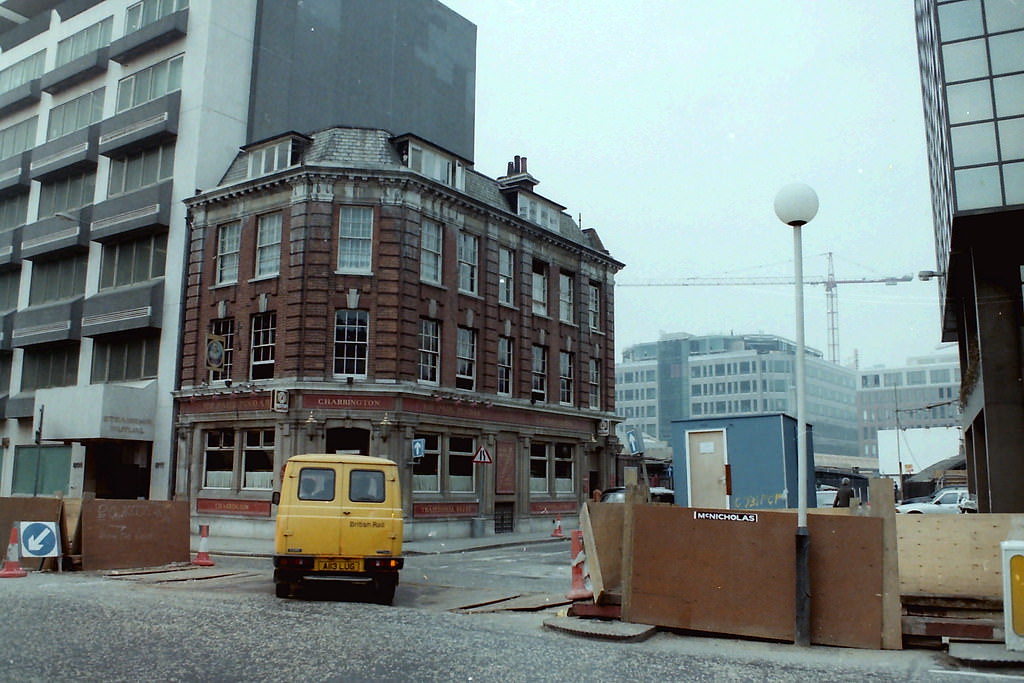
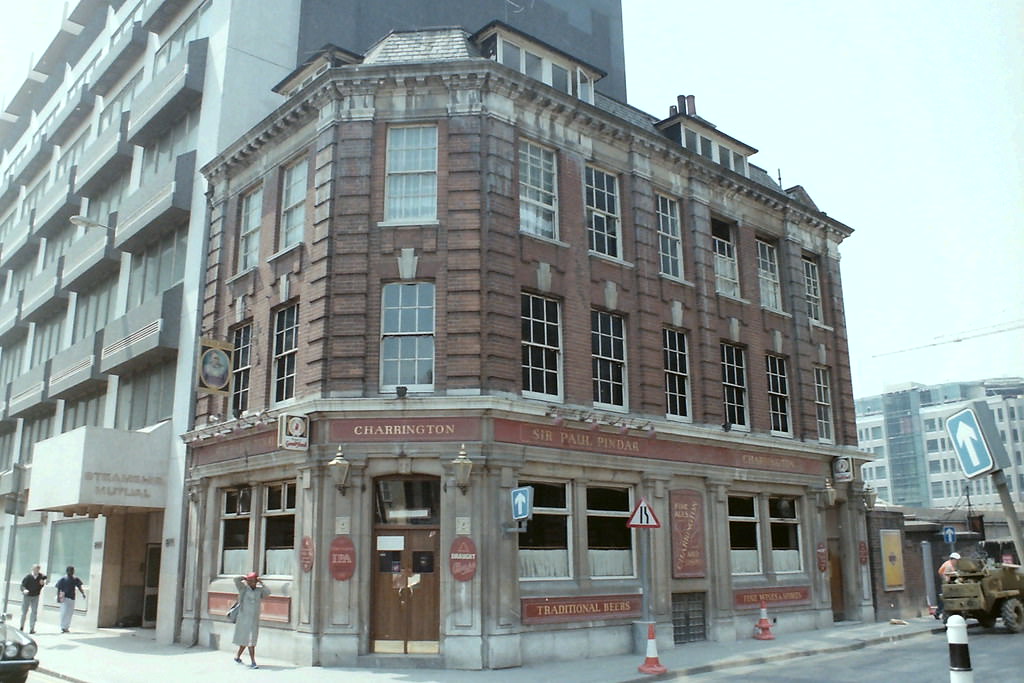
The local pubs around Liverpool Street were a fixture of daily life in this part of the City. The Hand Pump pub, also known as the Black Raven, and the Sir Paul Pindar pub both appear in Brown’s photographs from May 1988. These were the kinds of establishments where workers and commuters stopped before and after shifts — a social fabric woven tightly into the rhythm of the station.
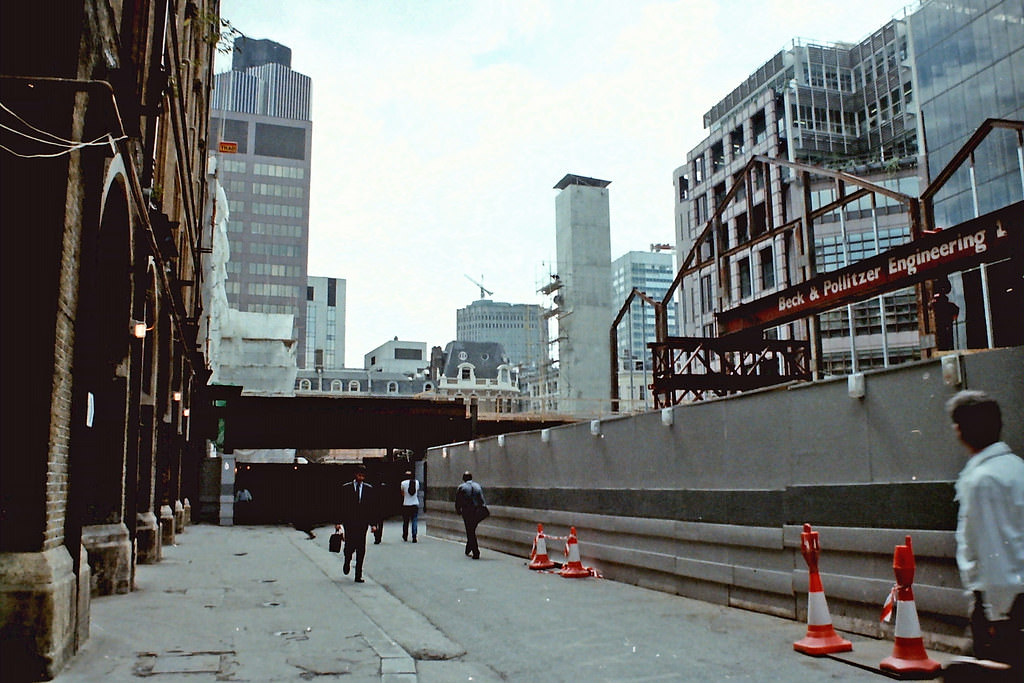
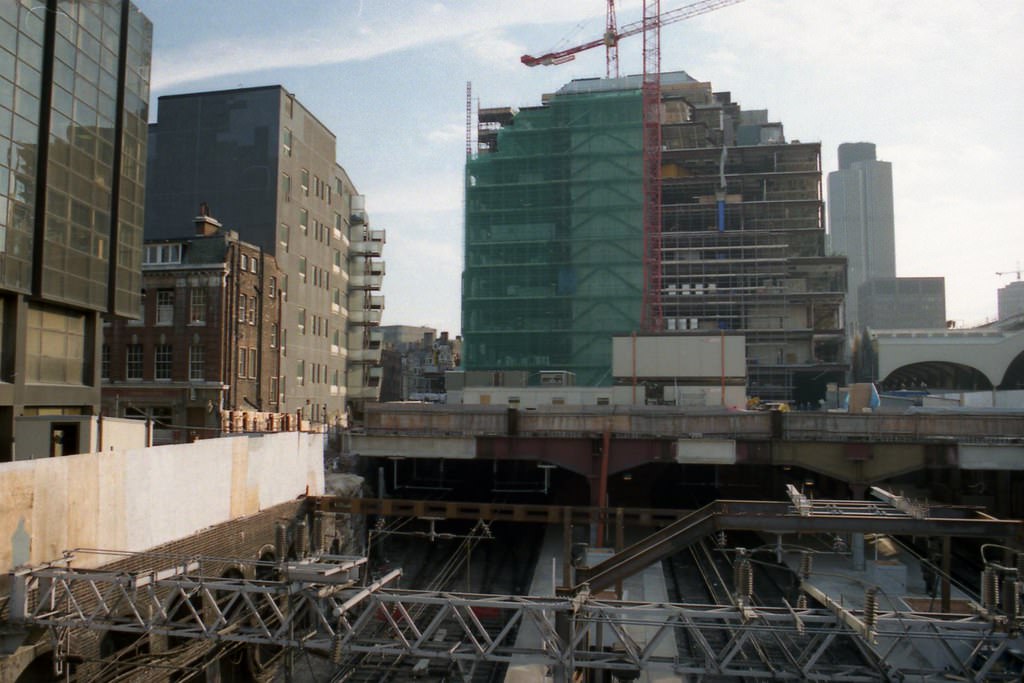
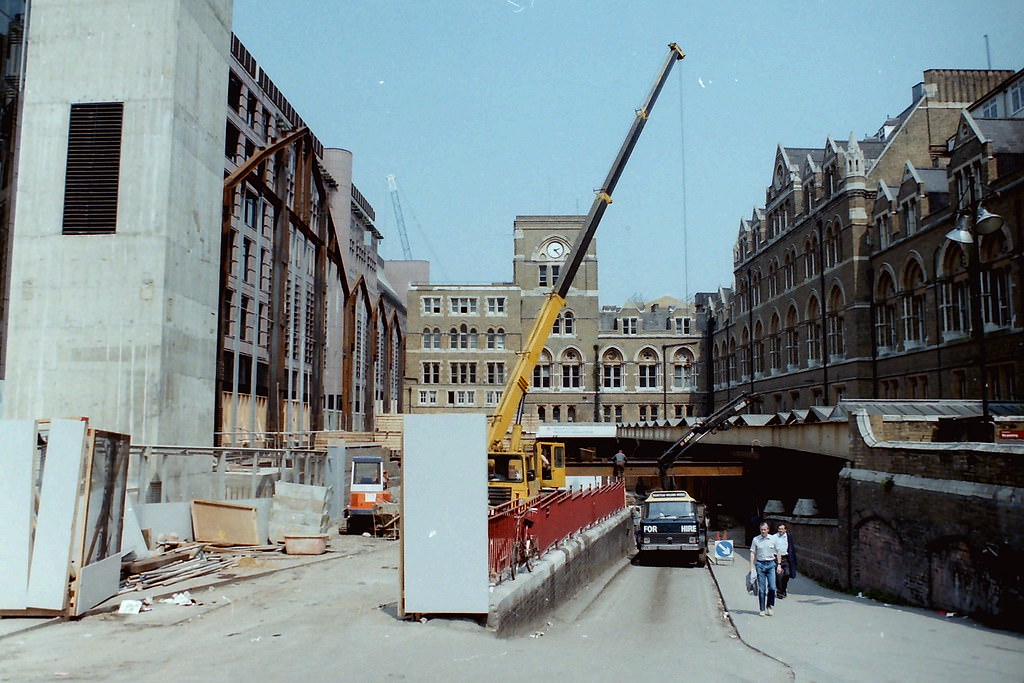
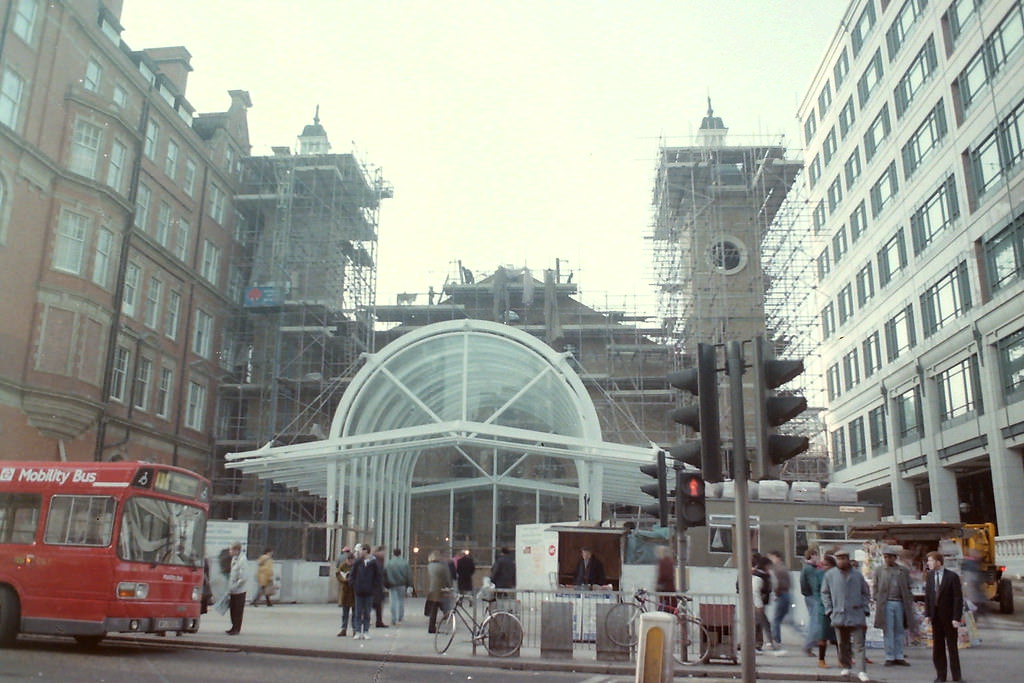
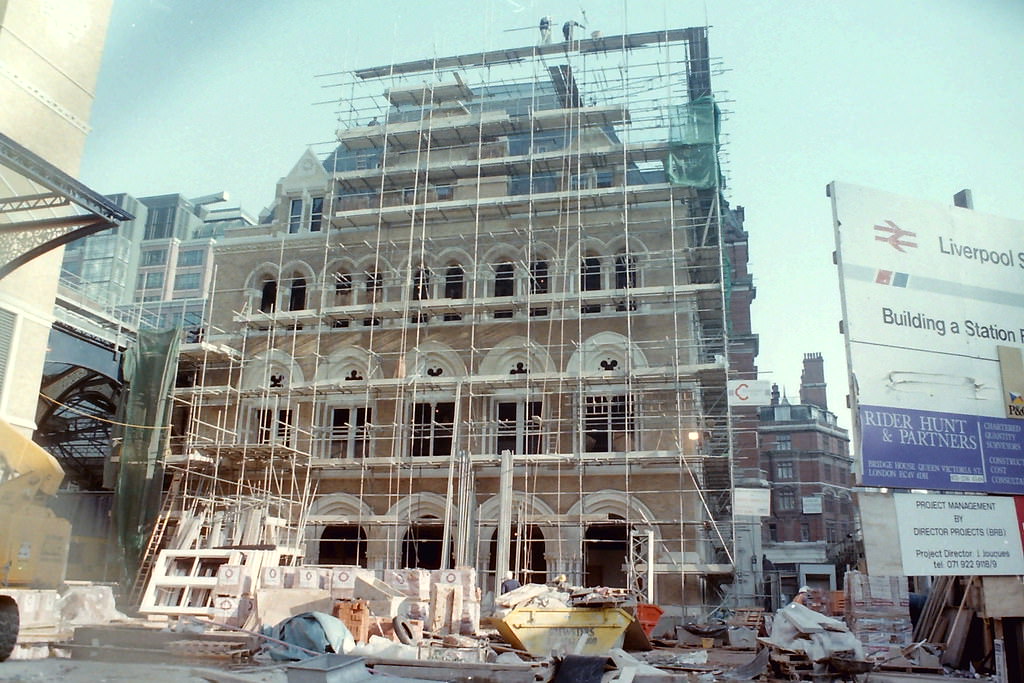
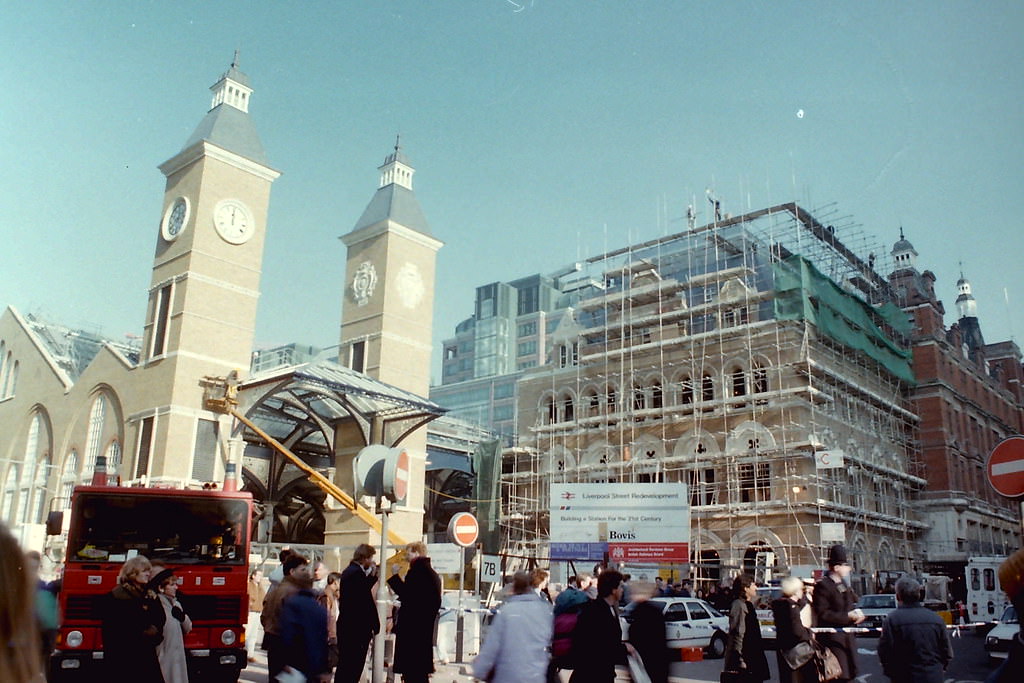
Through the winter of 1988 and into 1989, the reconstruction work continued at pace. Brown photographed the site repeatedly on 3 February 1989, capturing the scale of what was being built. The old station fabric was being stripped back and replaced. By this point, the Broadgate Centre development next door was already taking shape, and the broader character of the area was shifting towards the glass-and-steel office district it would become.
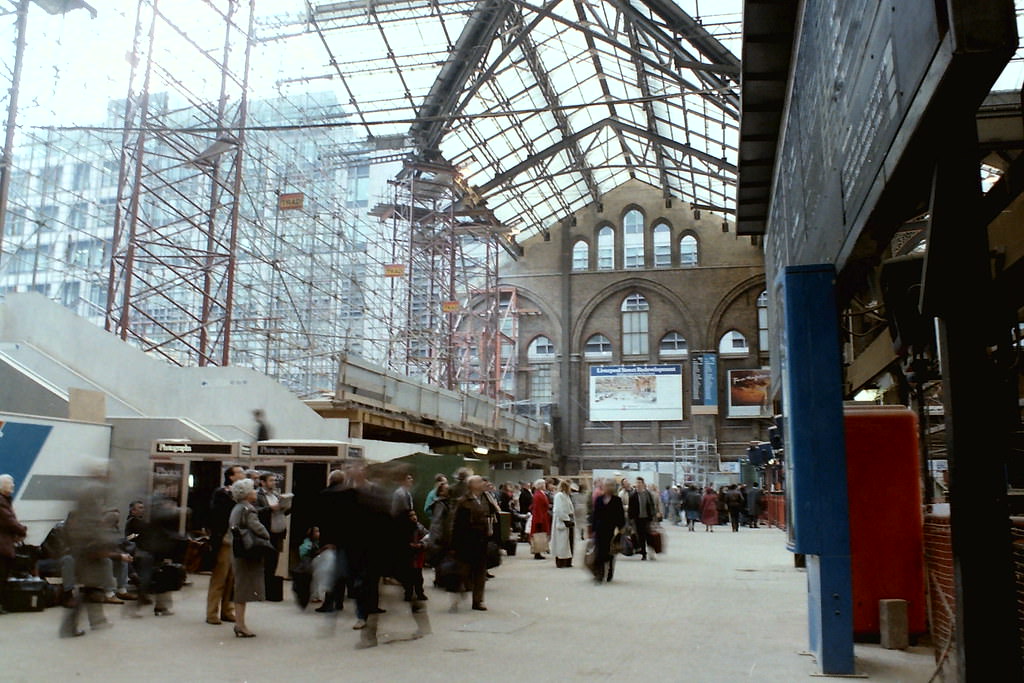
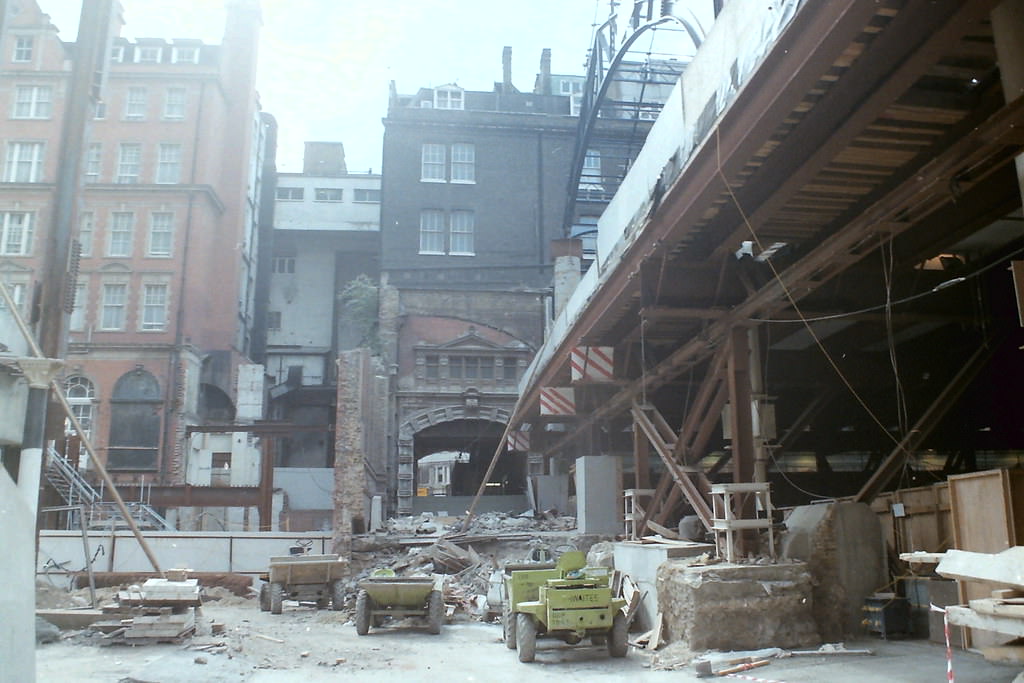
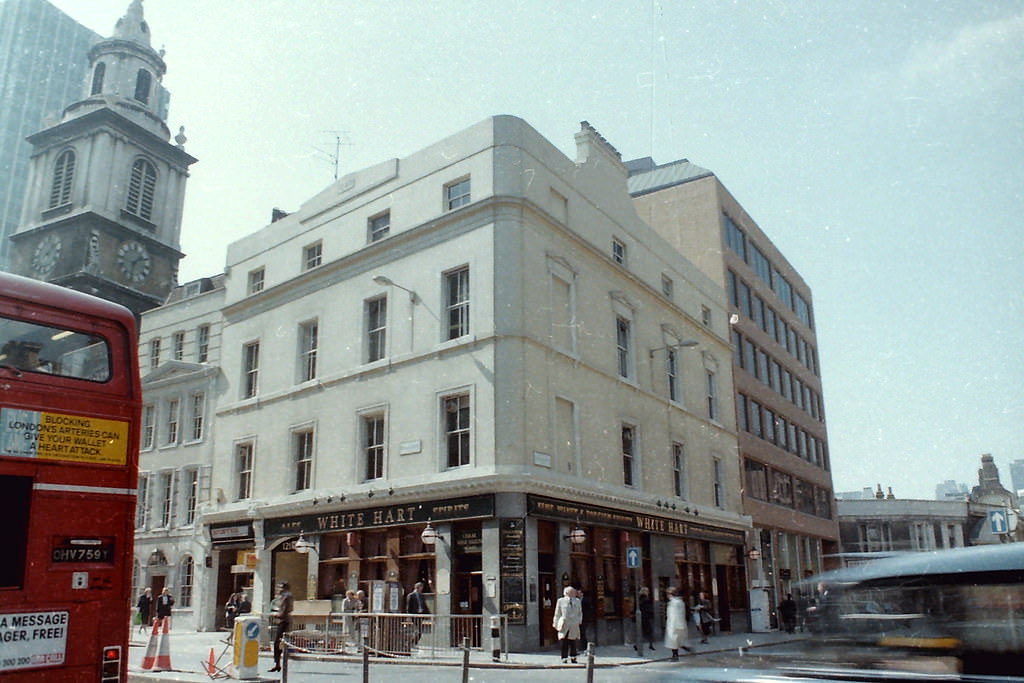
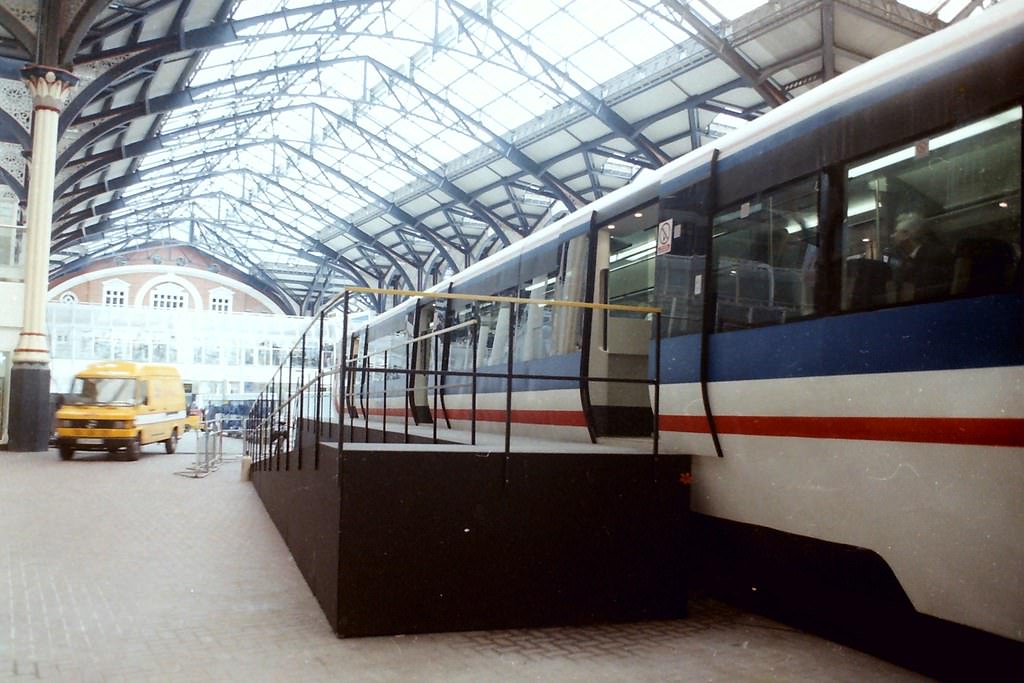
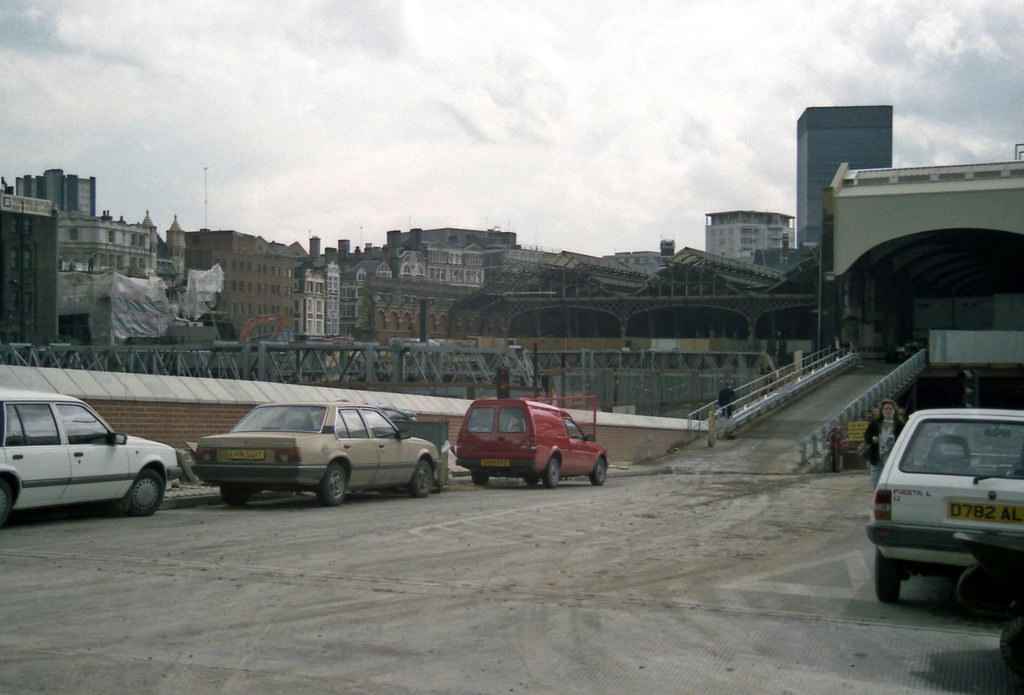
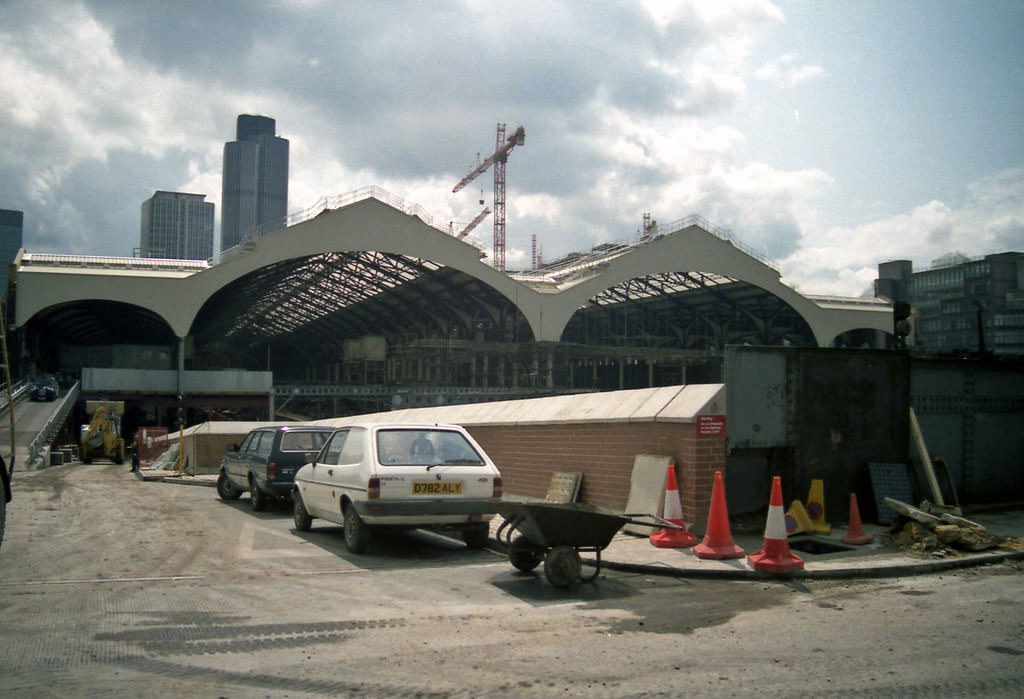
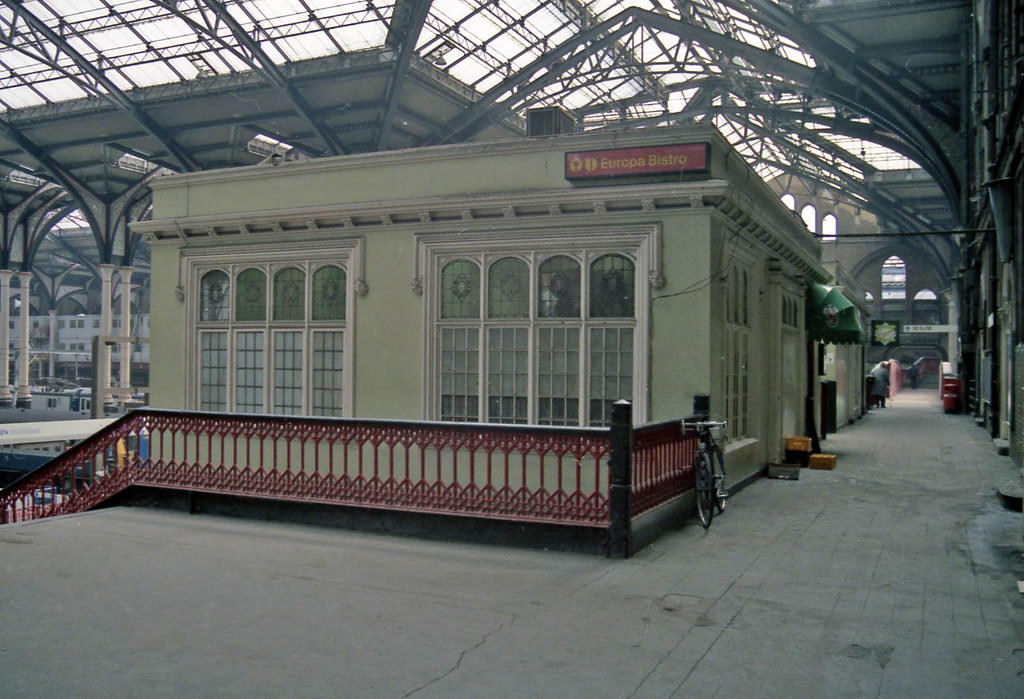
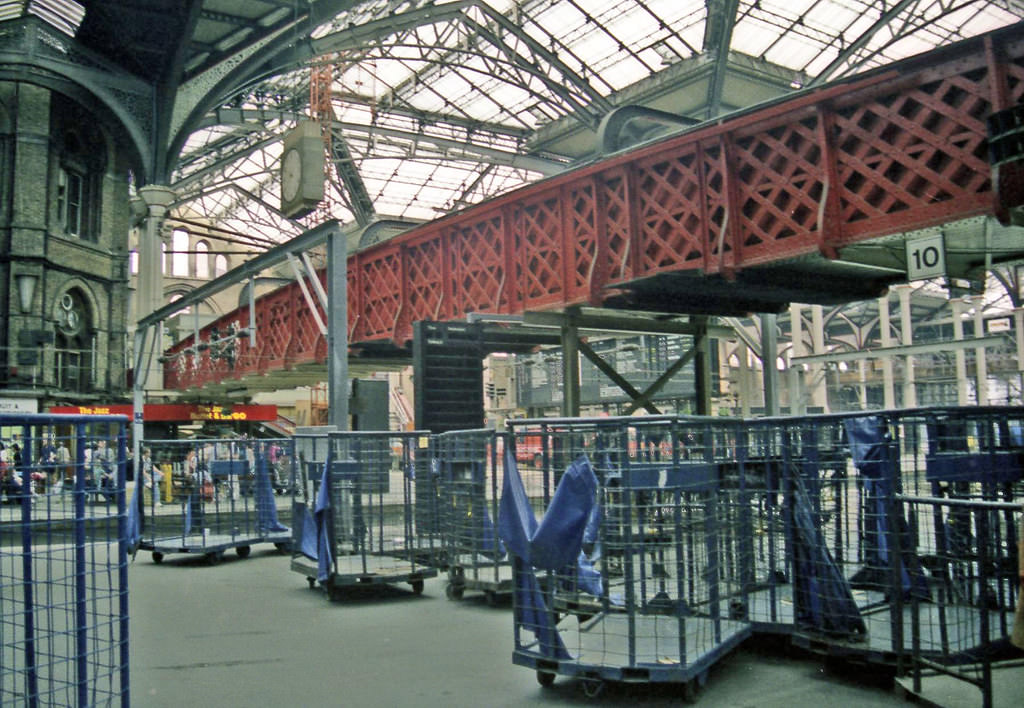
The February 1989 photographs are some of the most detailed in Brown’s collection. Several shots focus specifically on different sections of the station — the platforms, the concourse, the surrounding approach roads — giving a comprehensive view of what was changing and what was still standing.
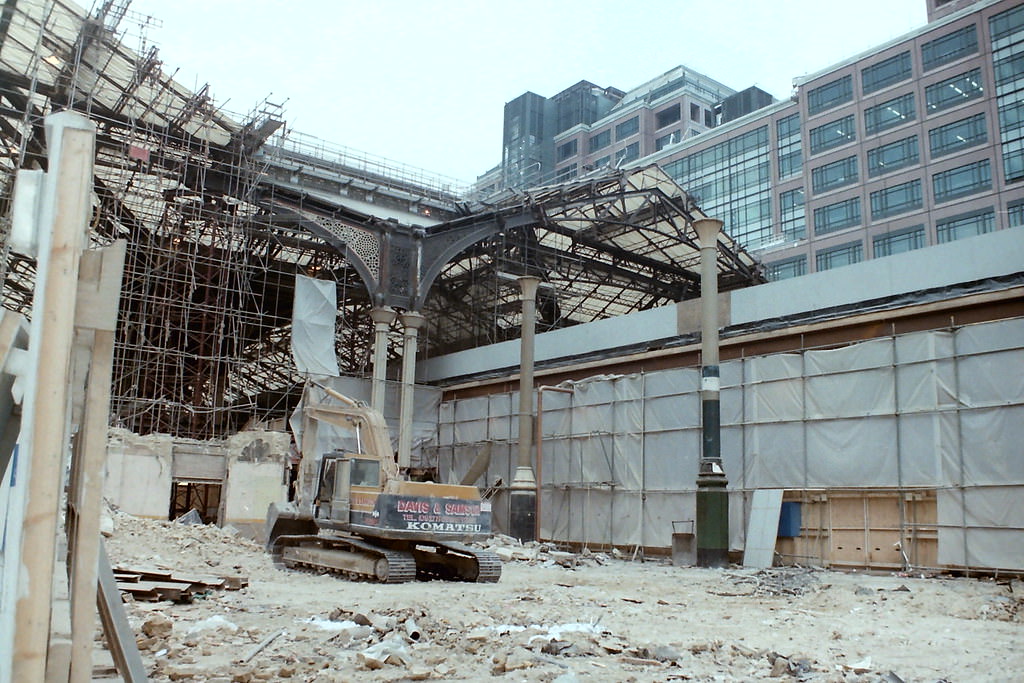
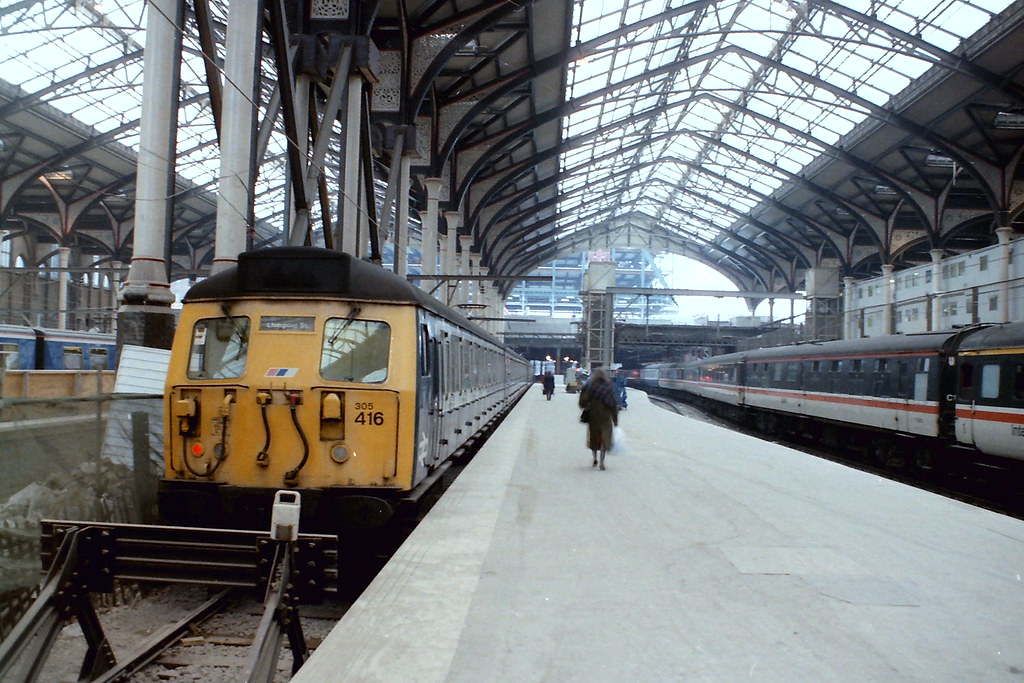
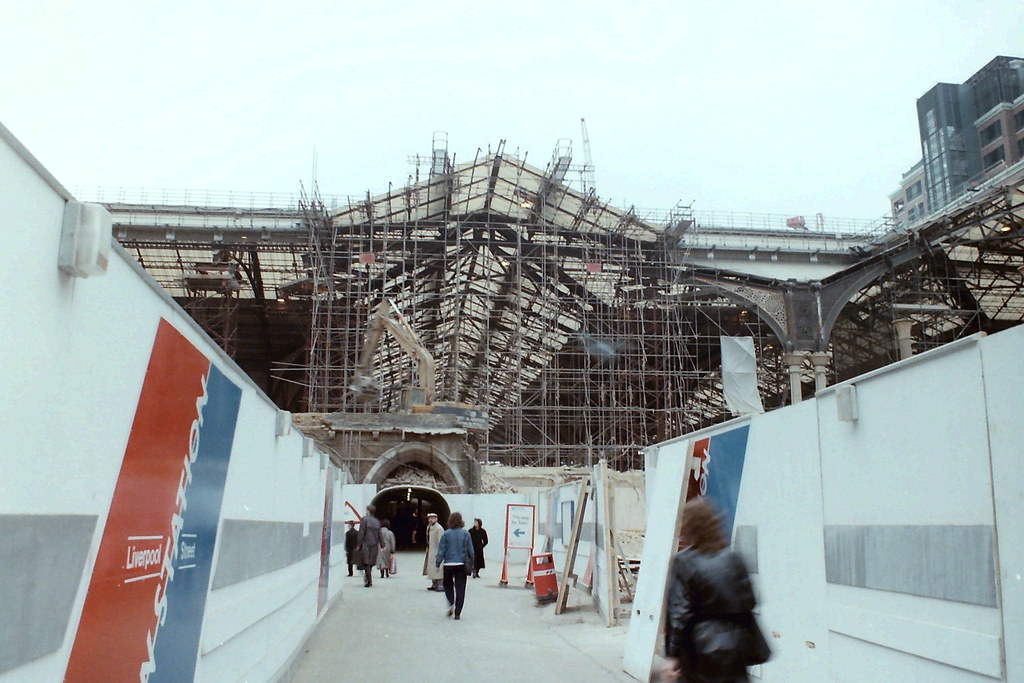
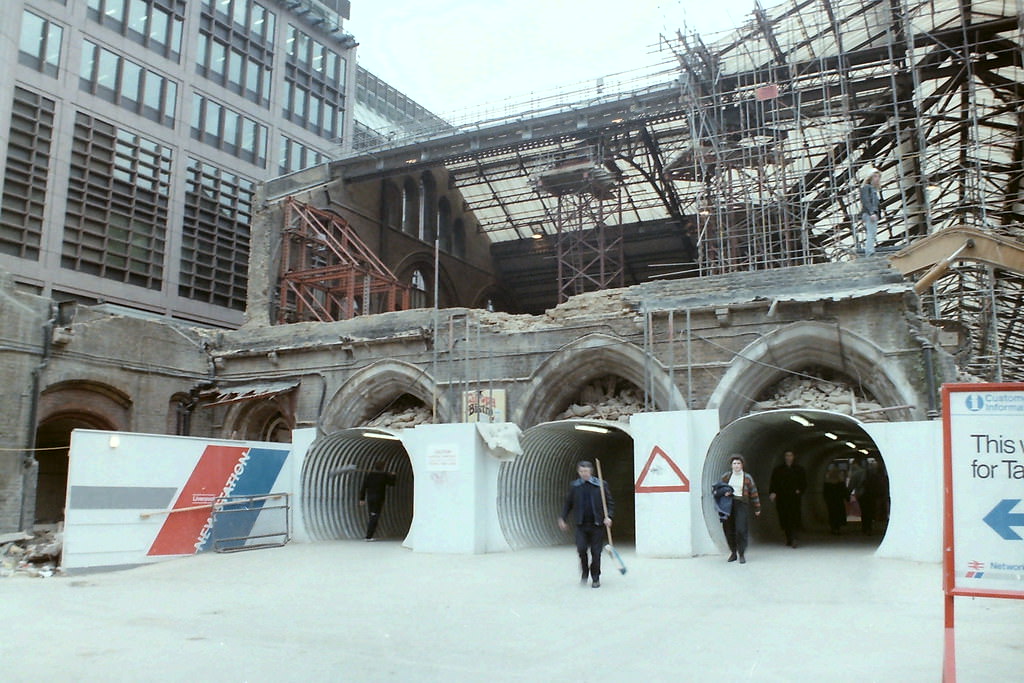
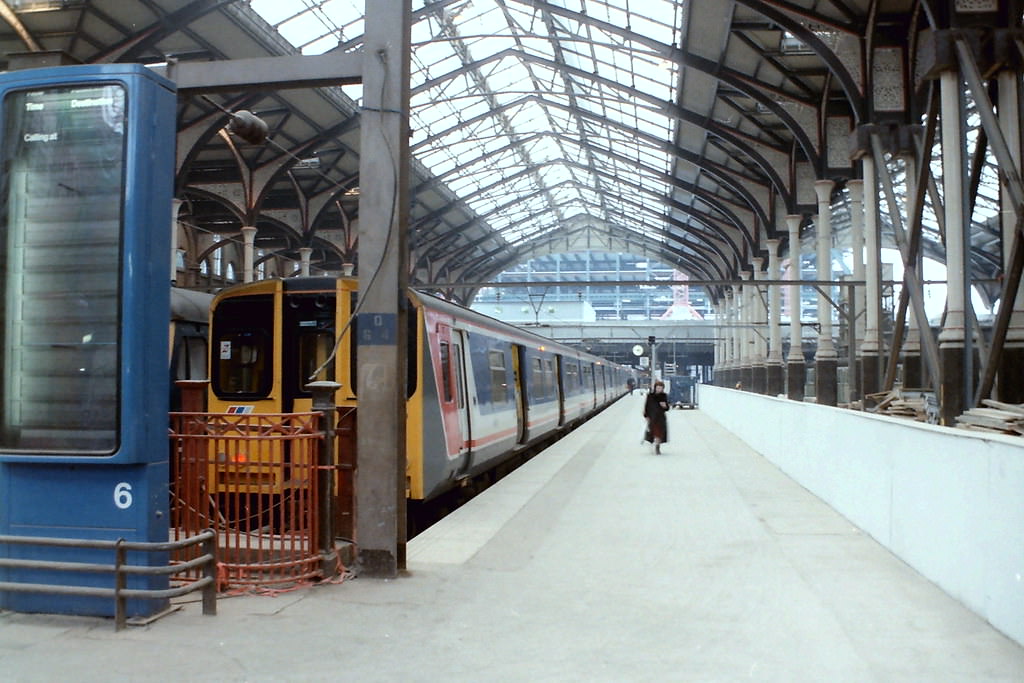
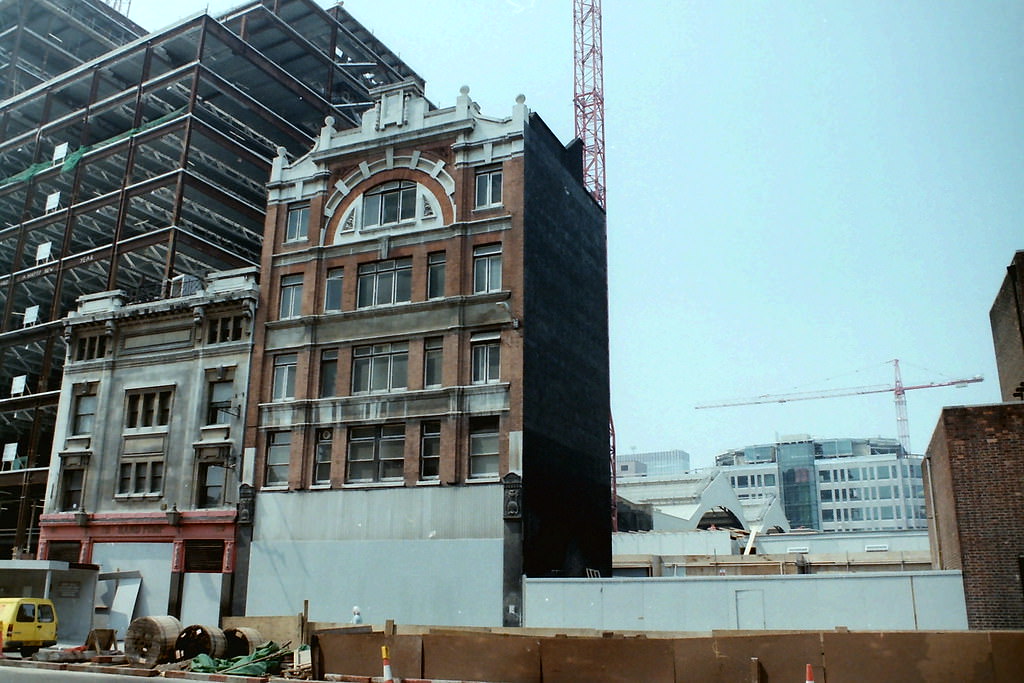
Harwich House features across multiple photographs from May 1988. Its demolition was directly tied to the rebuilding programme, and the images show how tightly it sat against the station boundary. One photograph from that month also captures the relationship between the Harwich House site and the emerging Broadgate development — a rare side-by-side view of what was being torn down and what was being built in its place.
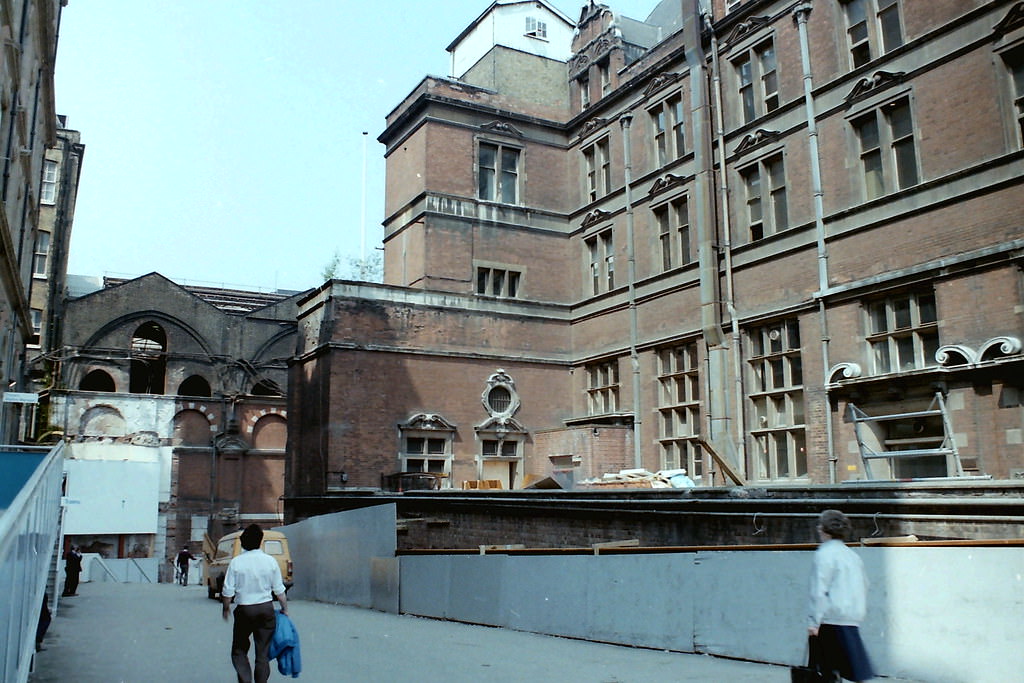
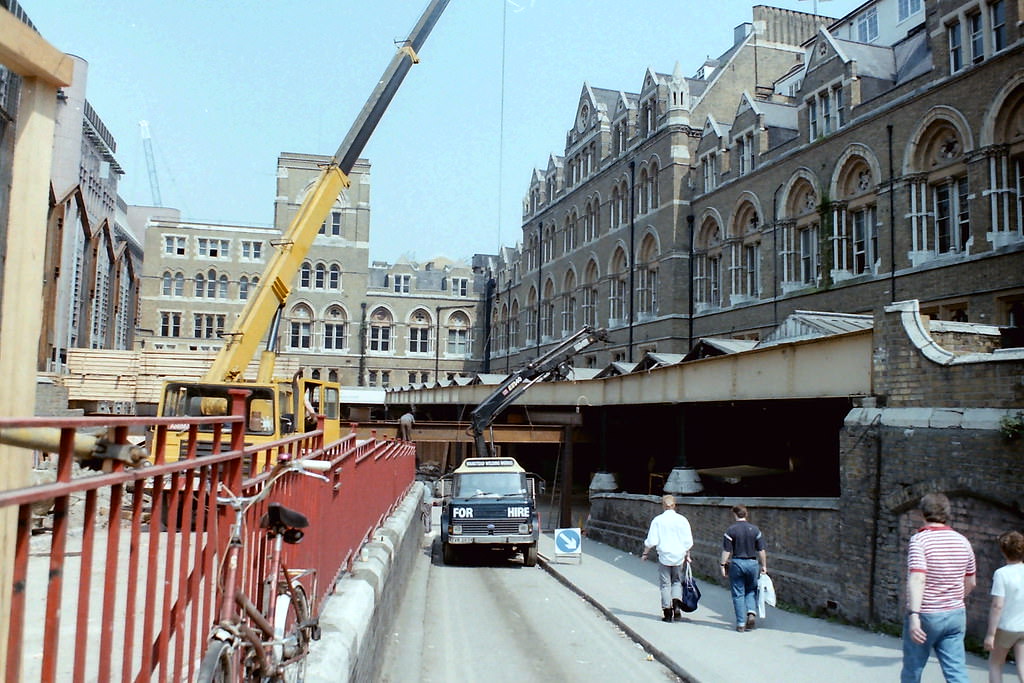
Earlier in 1988, Brown had also photographed the station in April. Those images show the station still in active use while work proceeded around it — trains running, passengers moving through, and construction visible just beyond the platforms. The station was never closed during the rebuilding; services continued throughout.
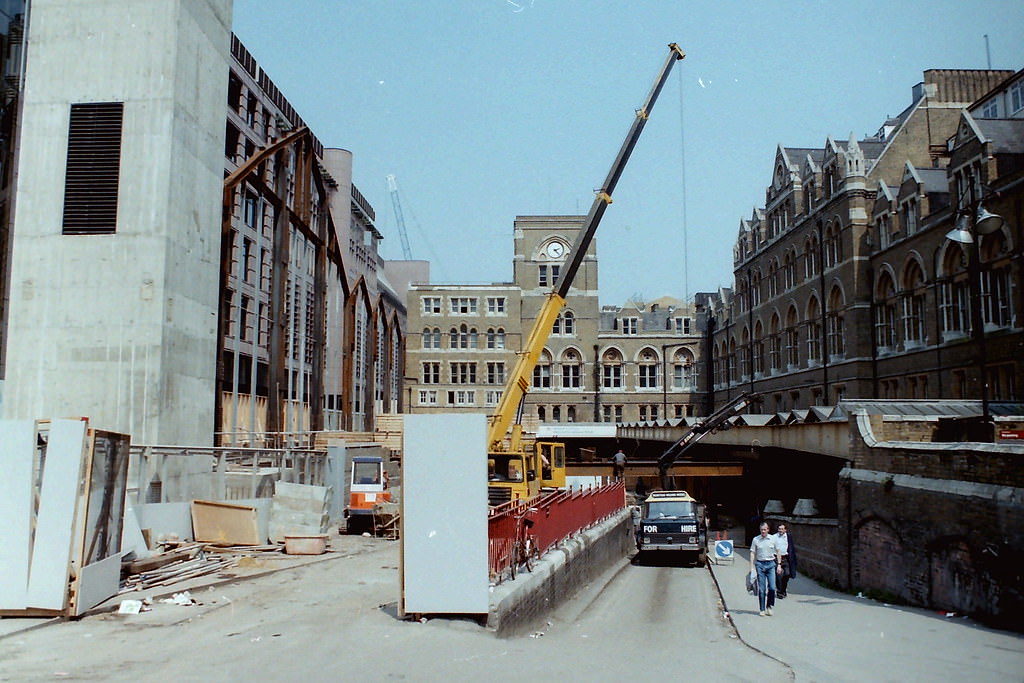
By February 1991, the rebuilding was nearly complete. Brown returned to photograph the station at this stage, and the contrast with his earlier images is pronounced. The new structure was cleaner, more open, and built to handle the demands of a modern commuter terminal. The 1991 photographs show the station emerging from years of construction work — recognisable in its bones but substantially altered in its appearance.
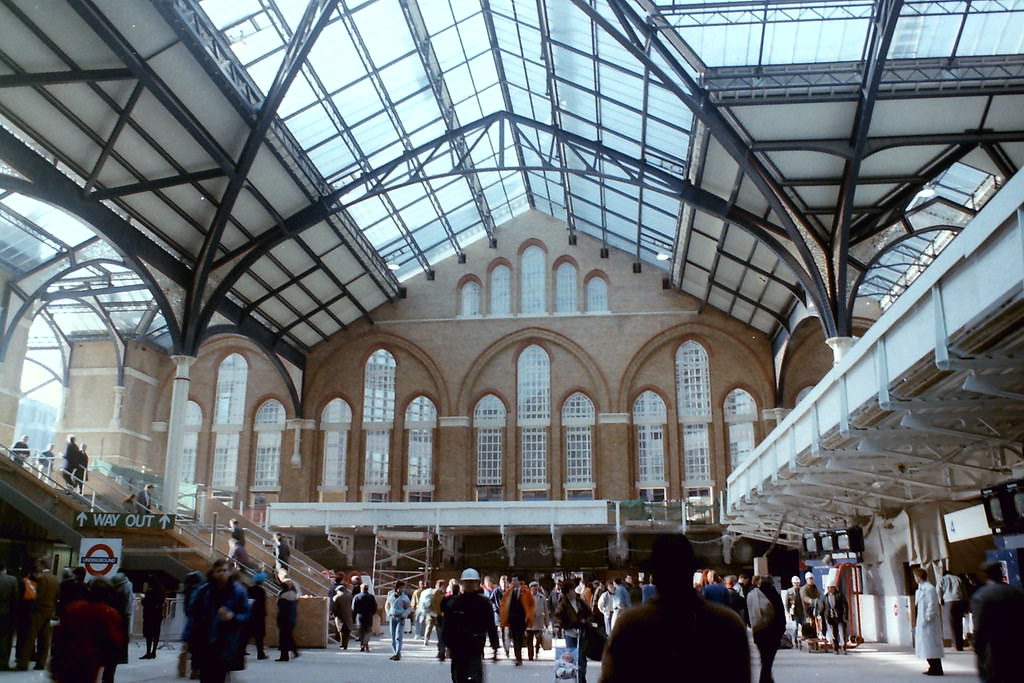
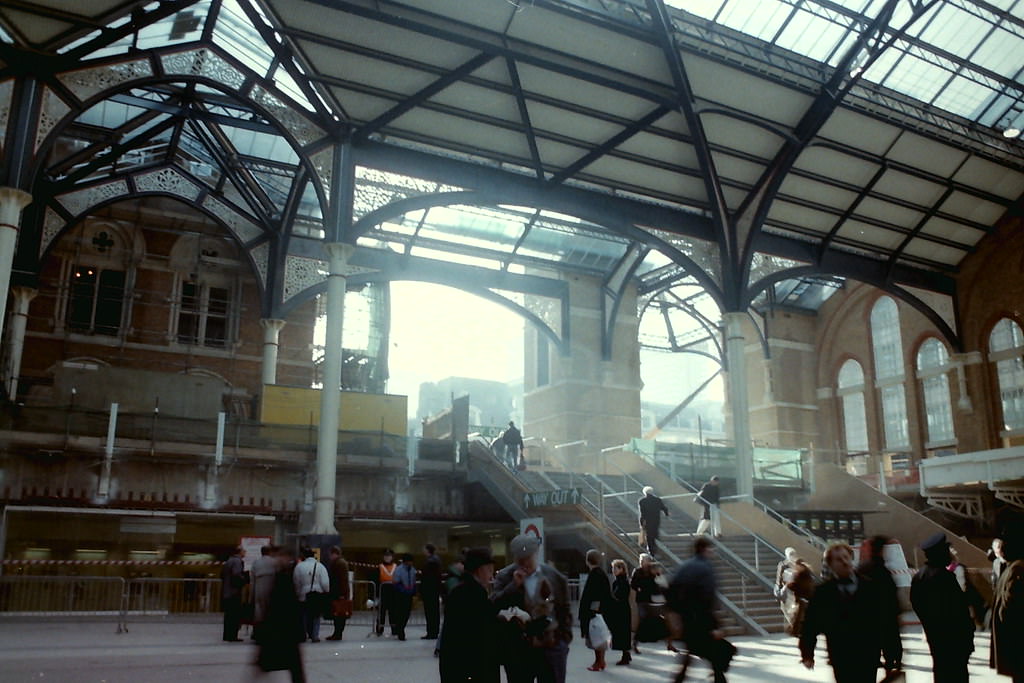
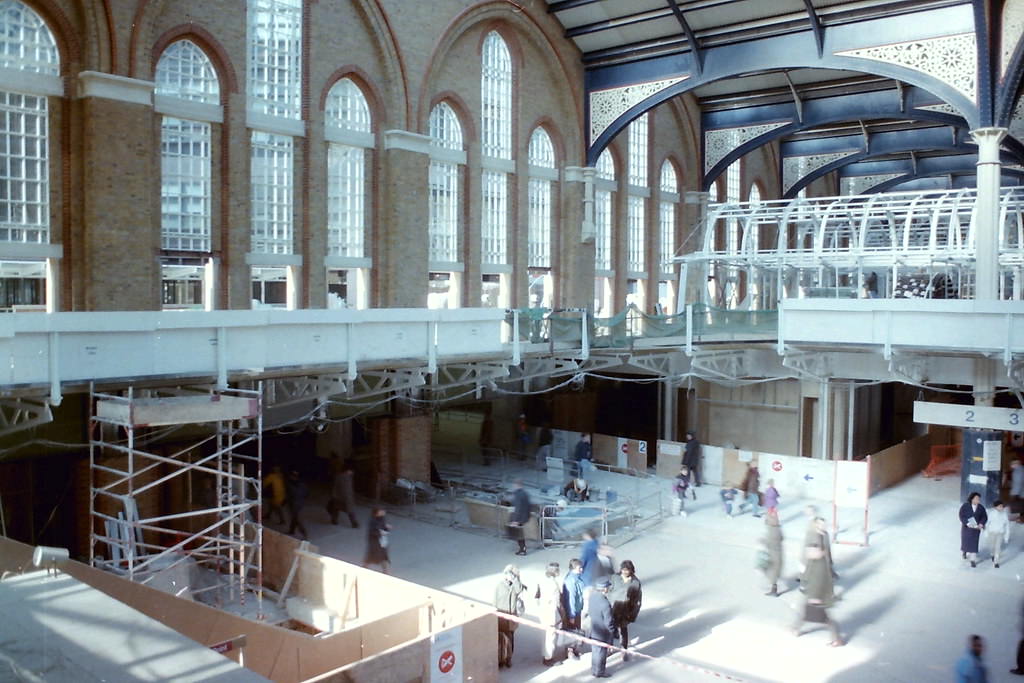
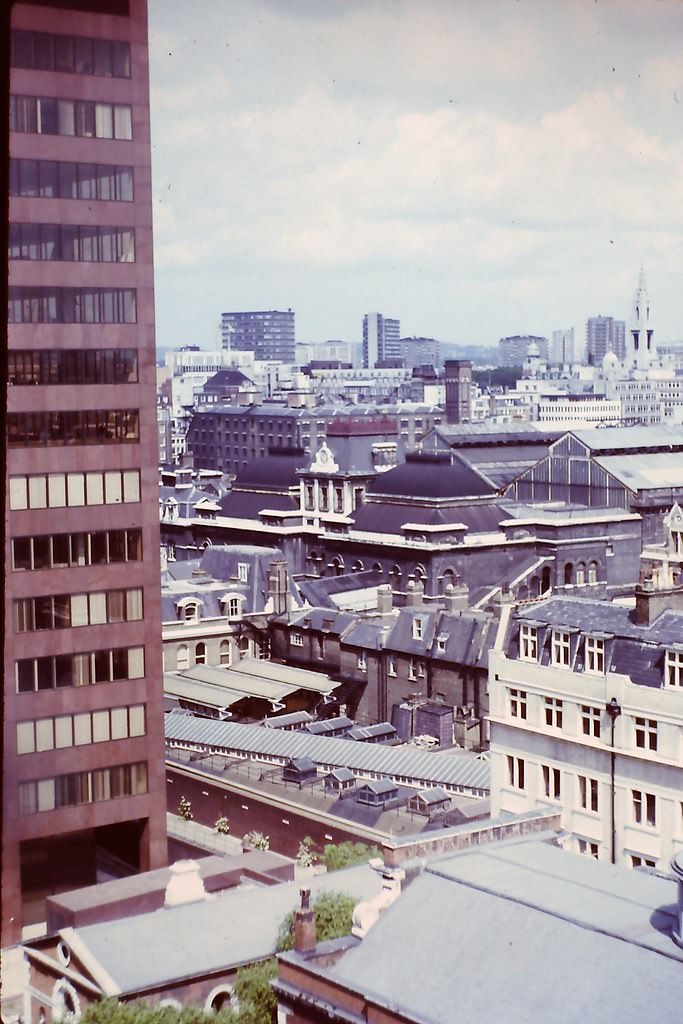
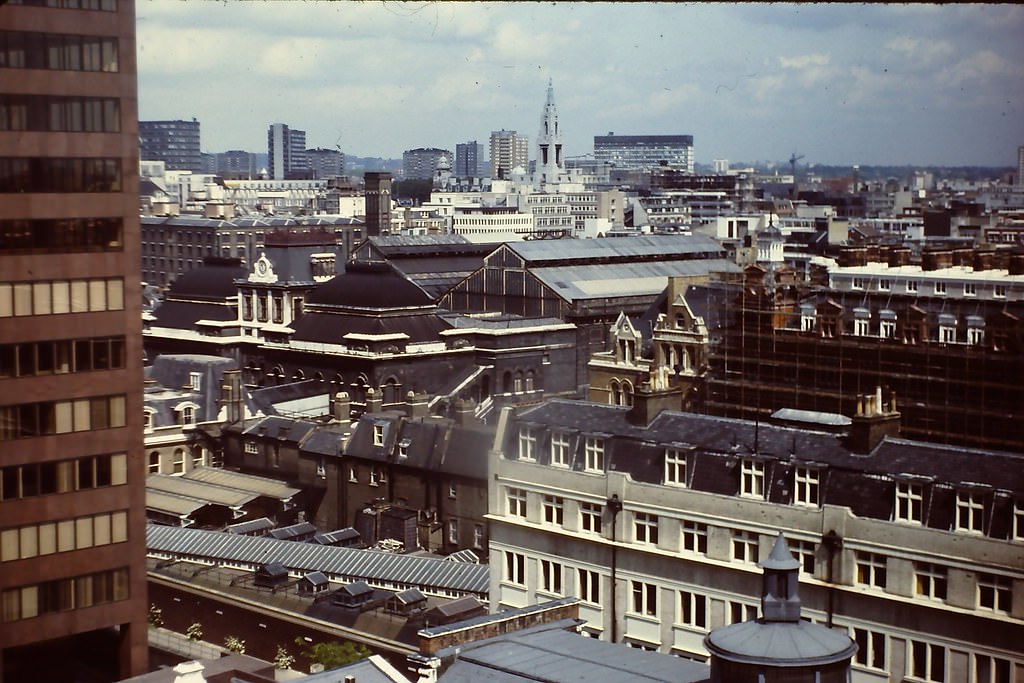
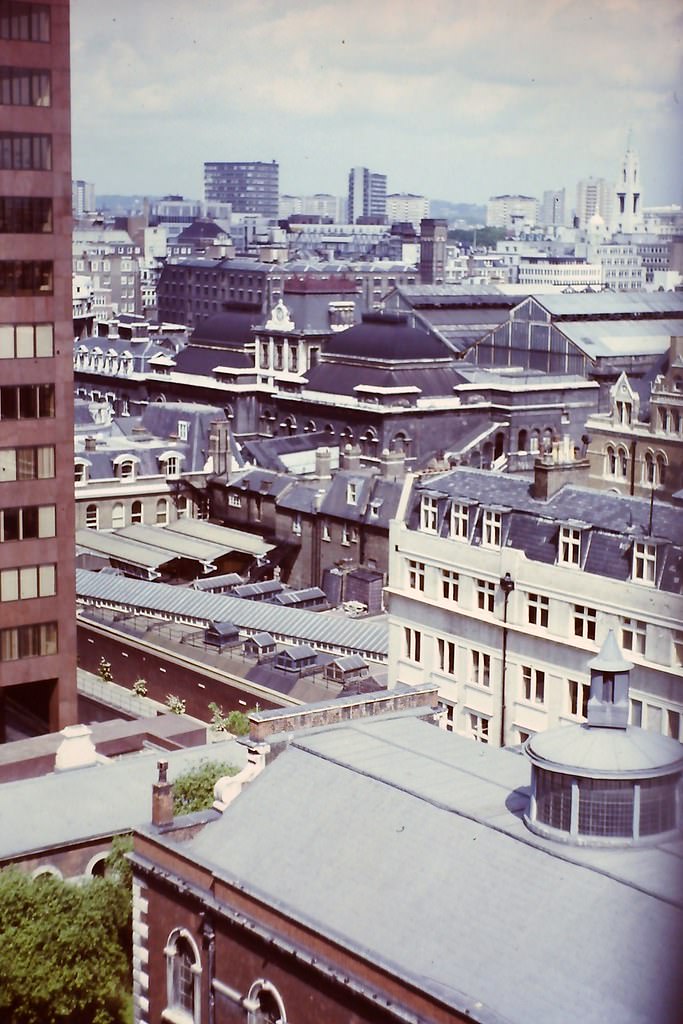
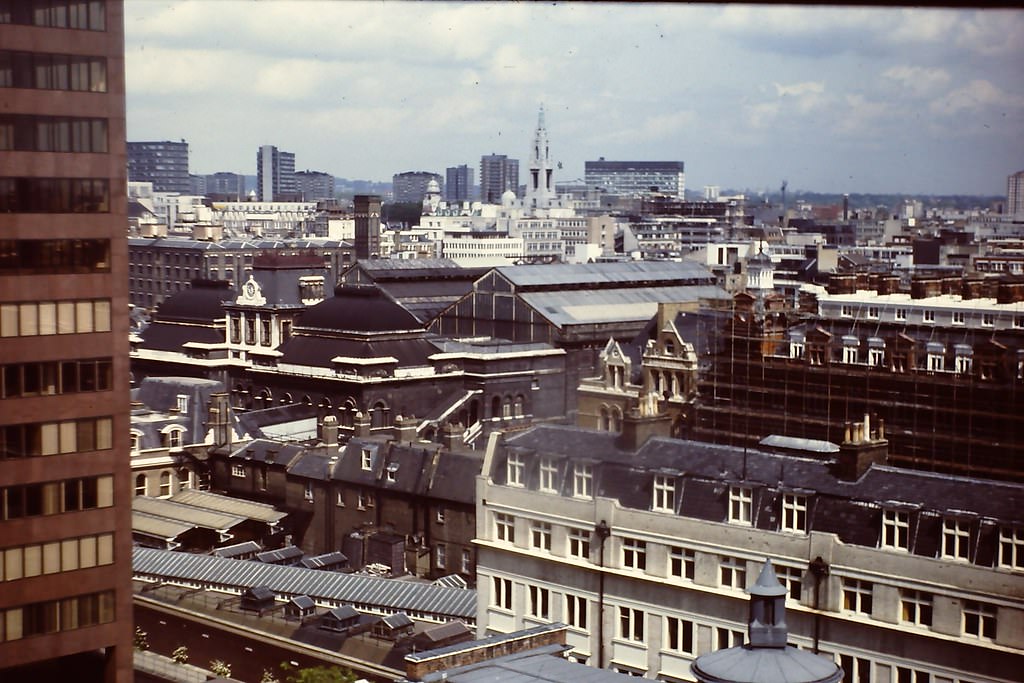
Brown also photographed Broad Street station on 3 June 1981, before its demolition five years later. One of those images was taken from Bishops House, which was later replaced by the Heron Point Tower. From that elevated position, the scale of Broad Street’s site — and its proximity to Liverpool Street — is clearly visible. These photographs are among the very few surviving records of Broad Street station in its final years of operation.