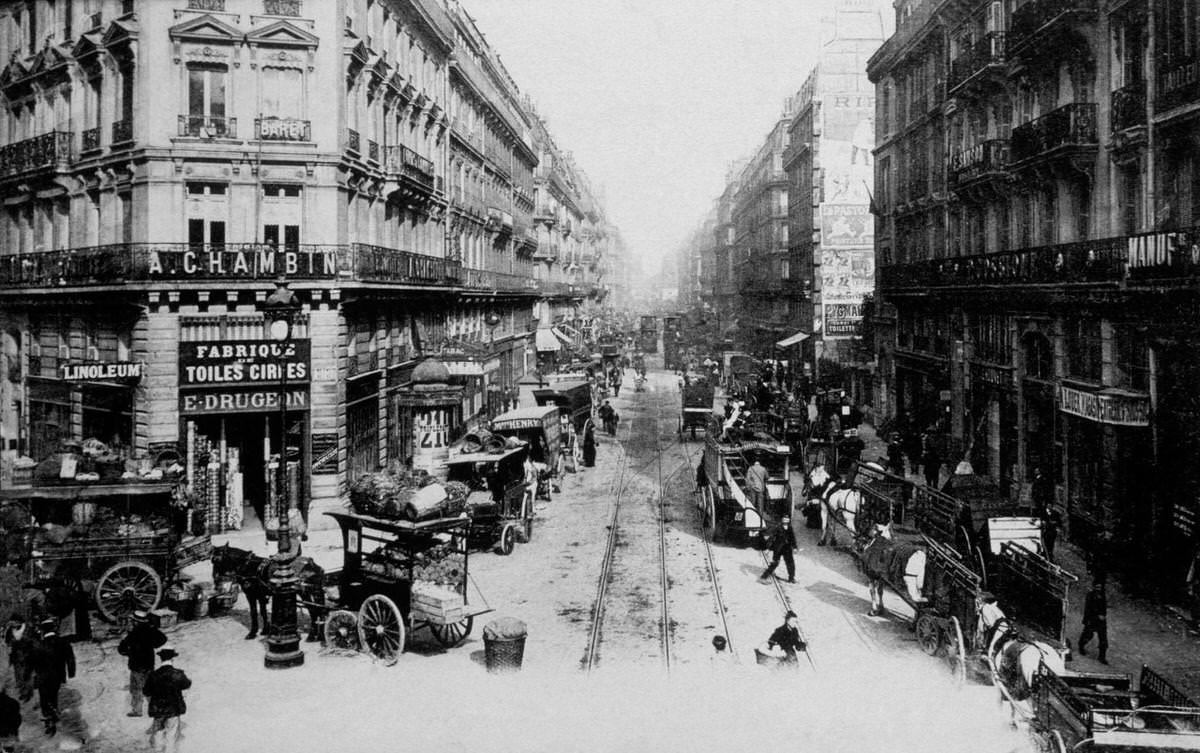
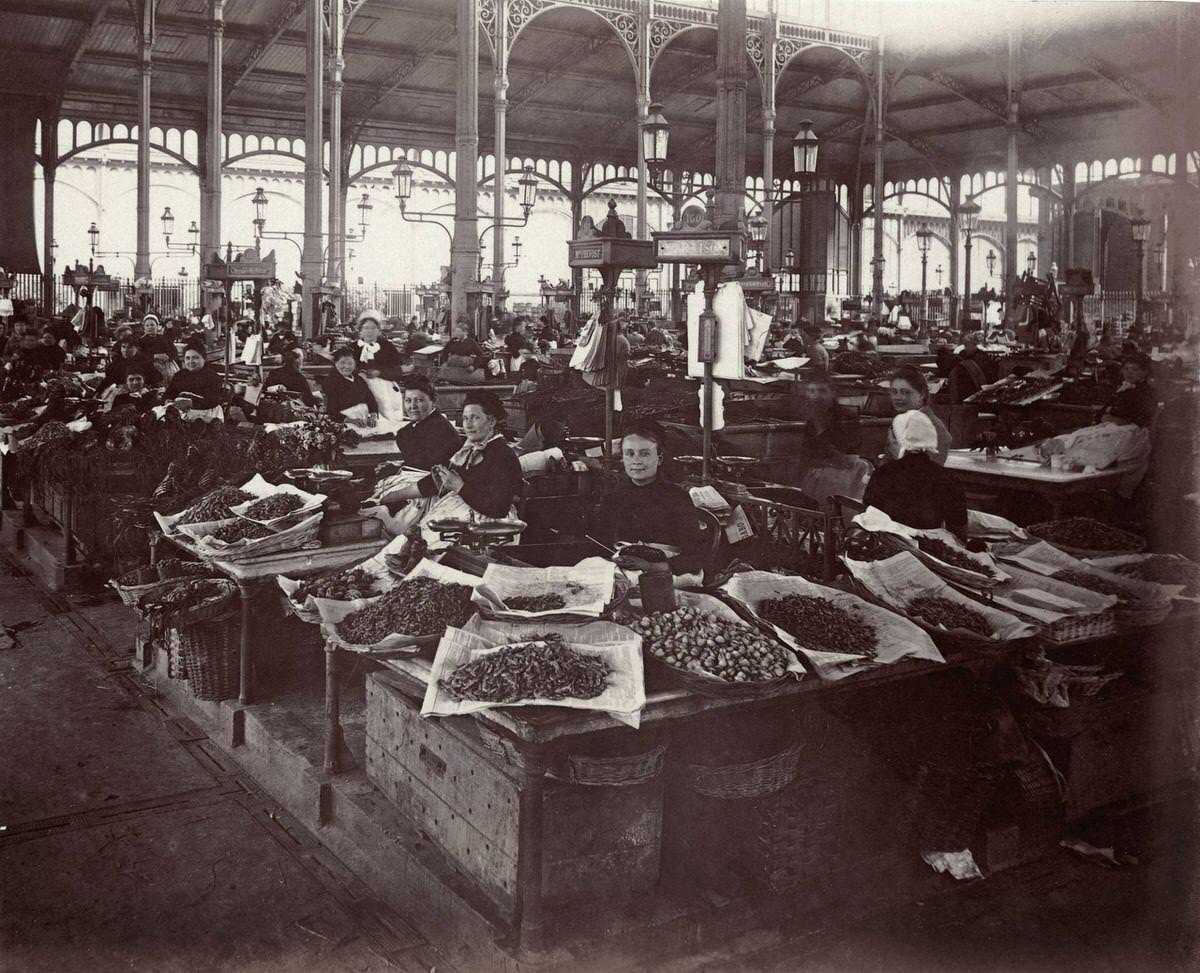
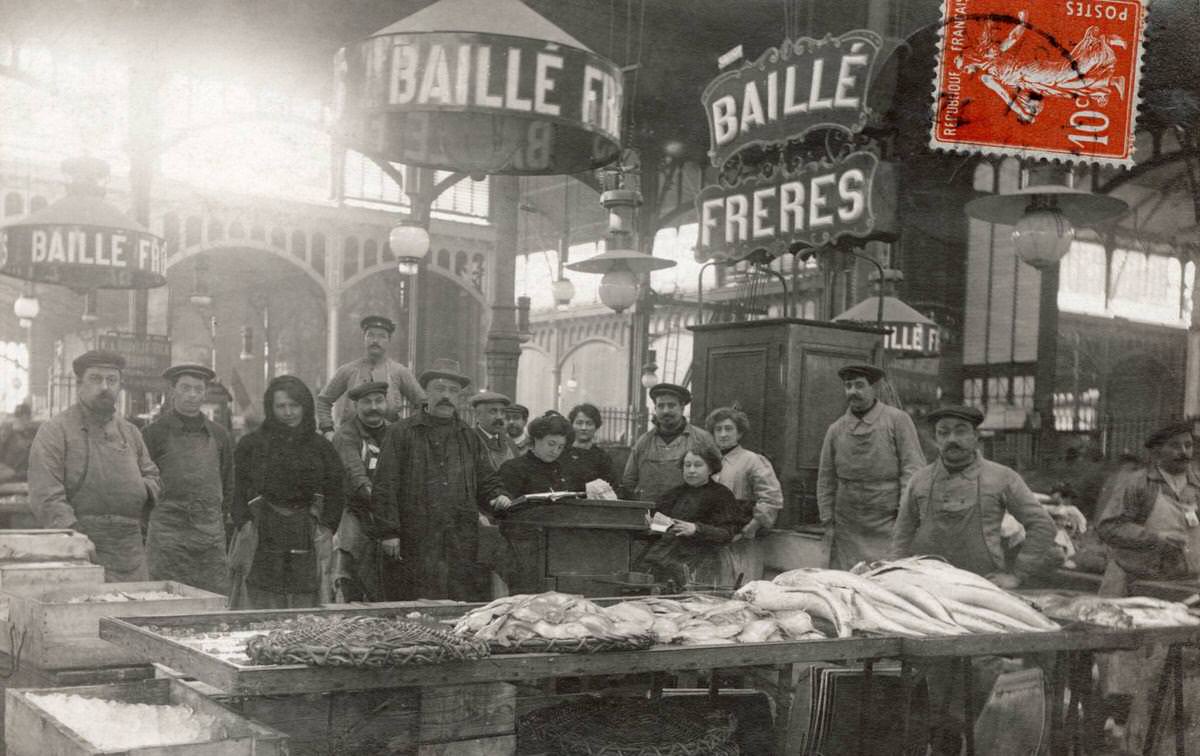
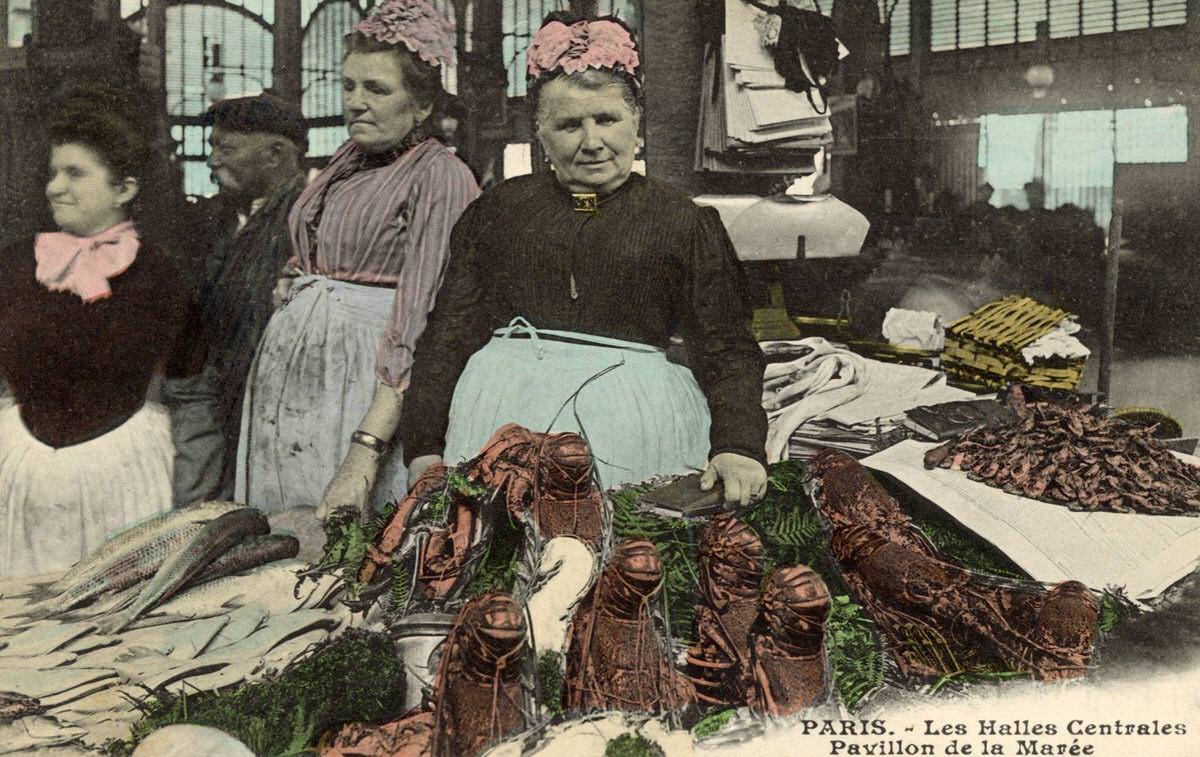
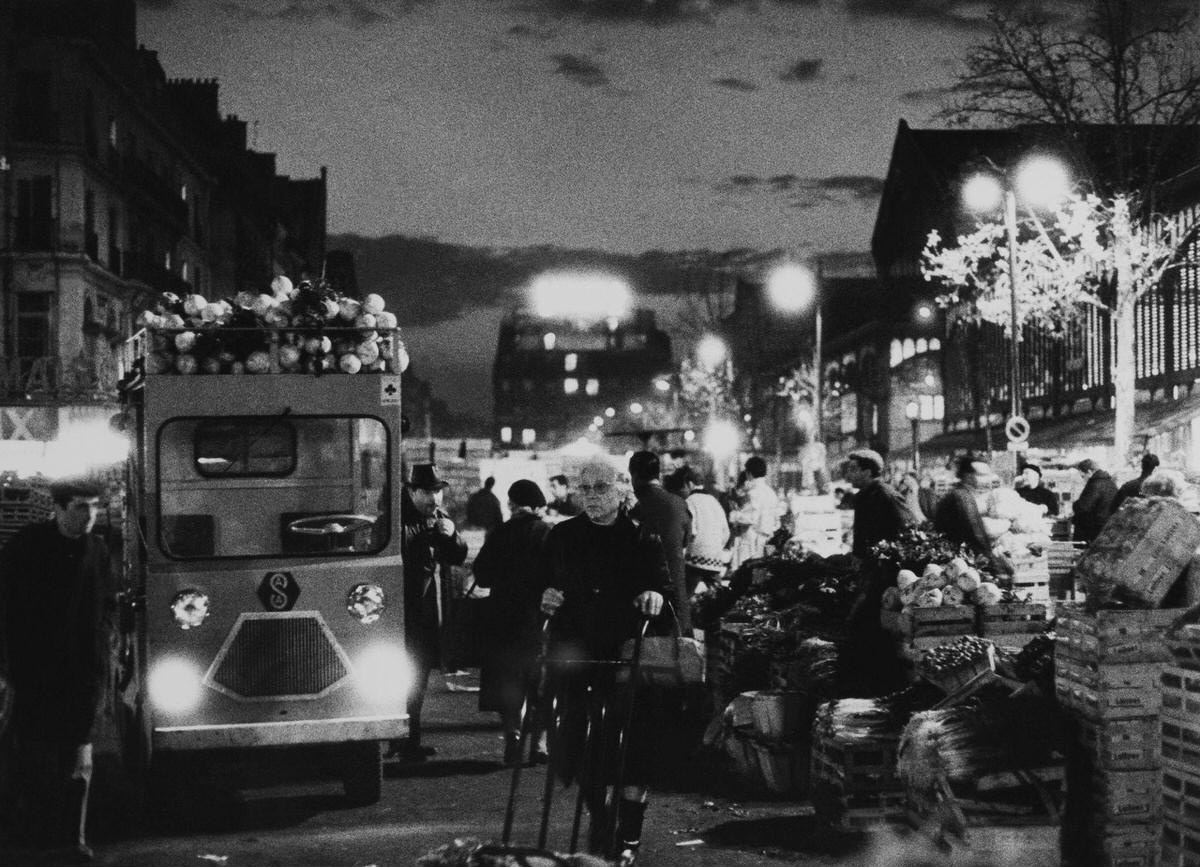
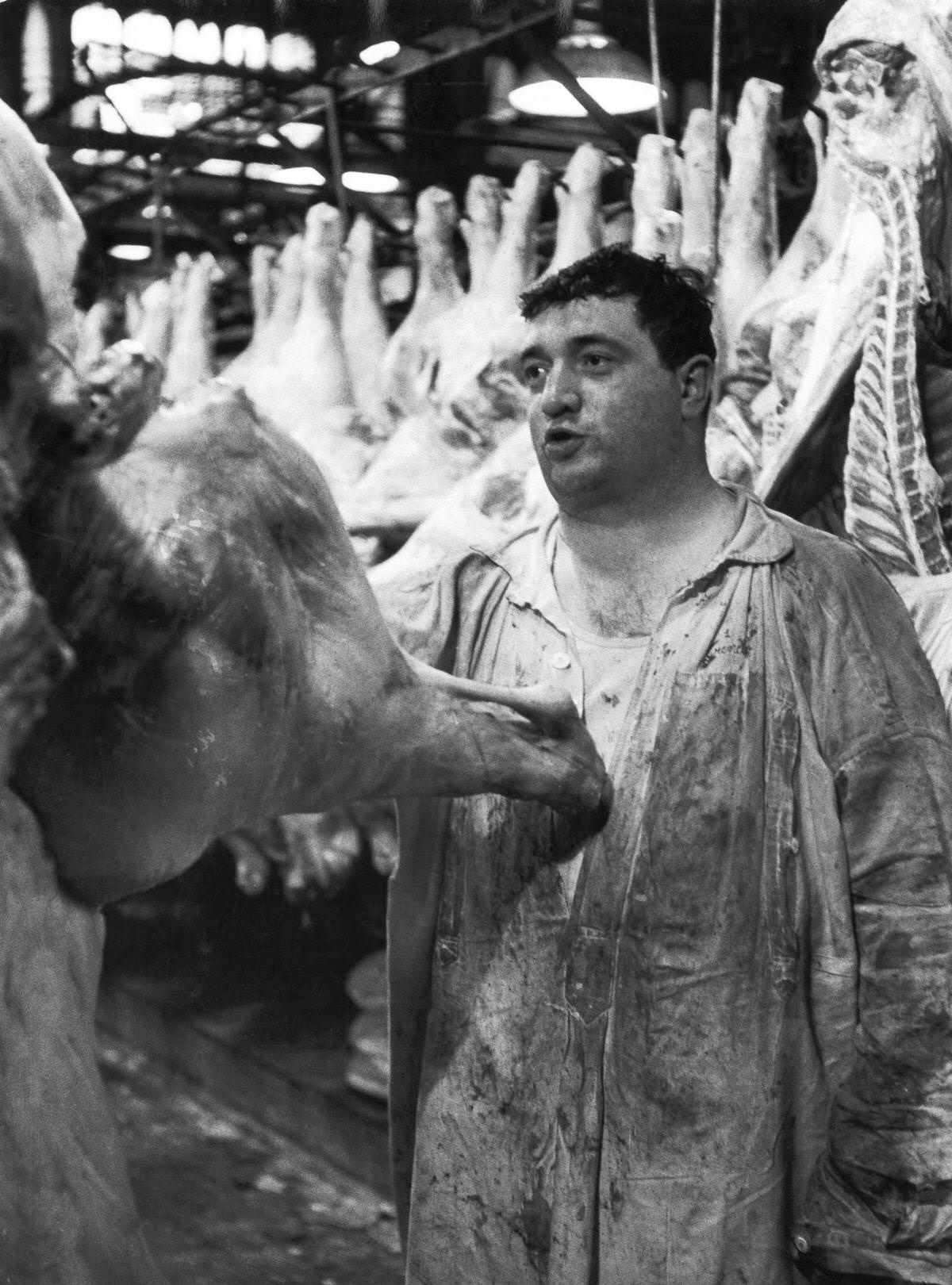
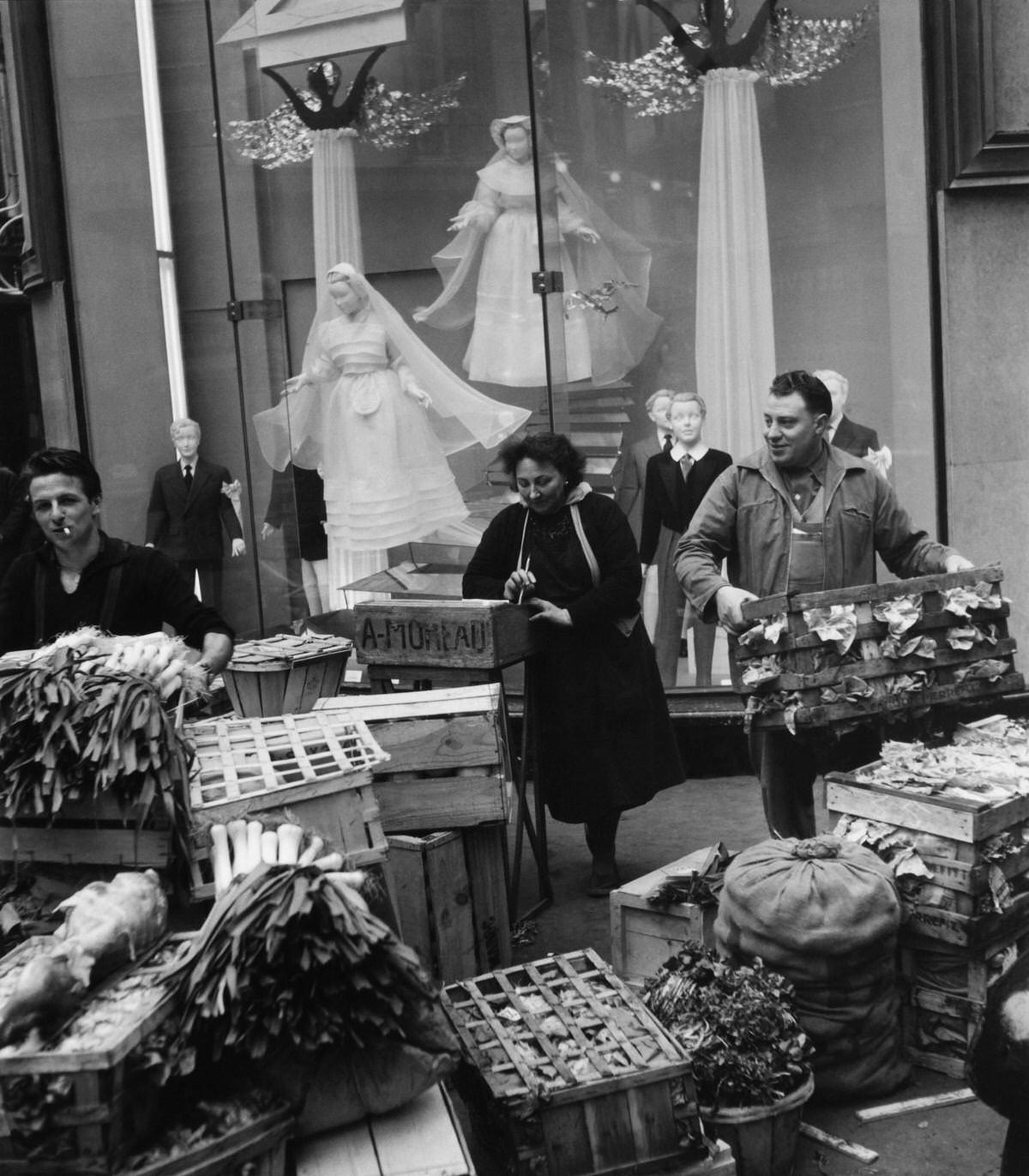
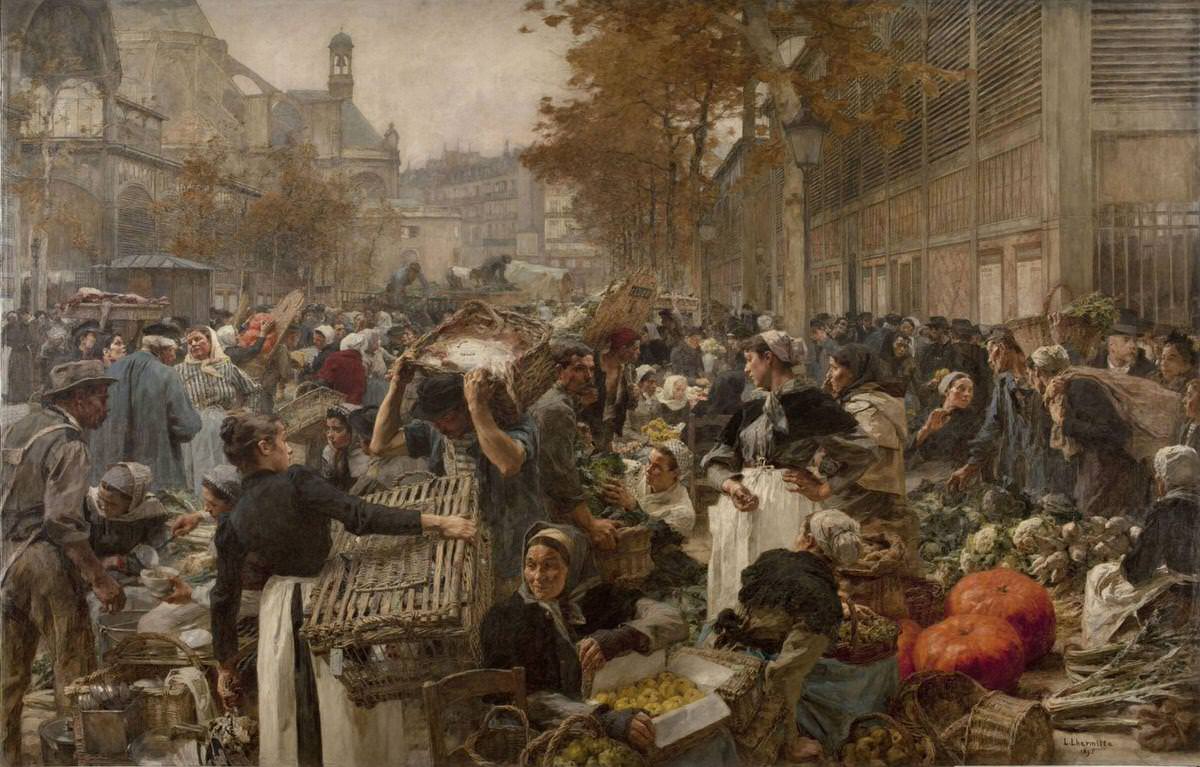
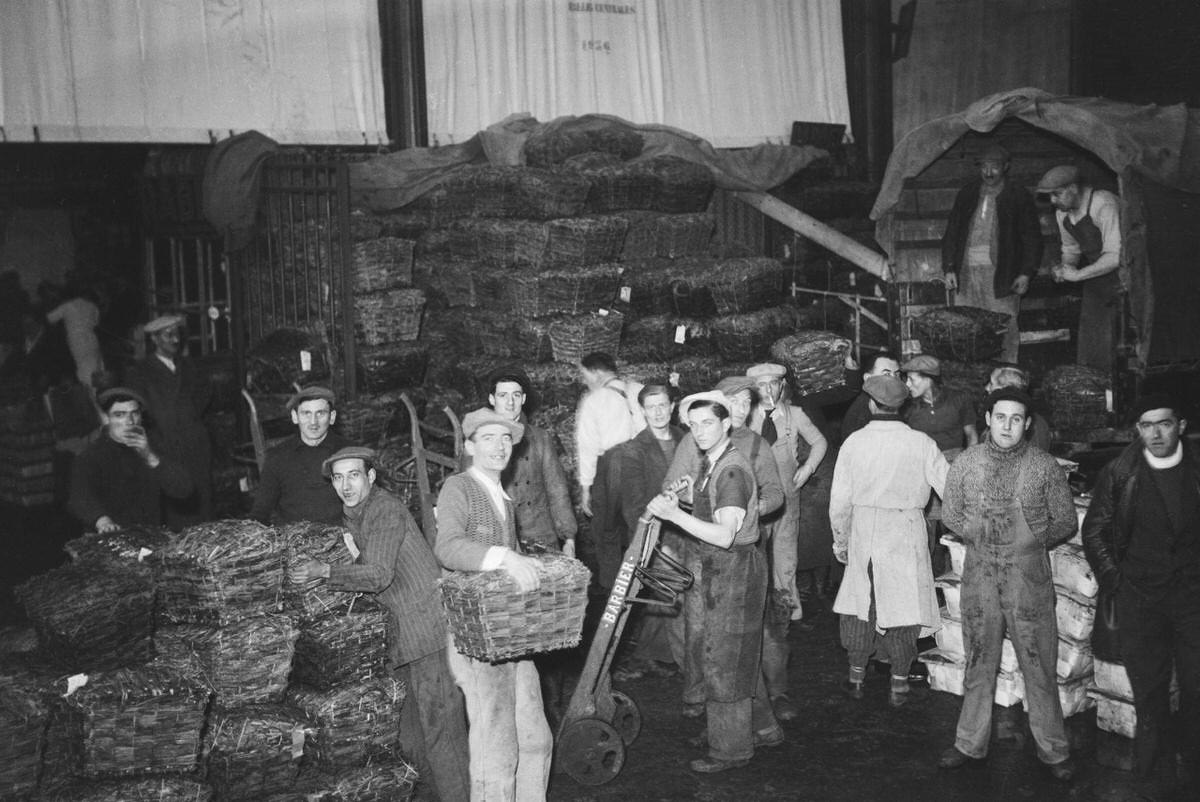
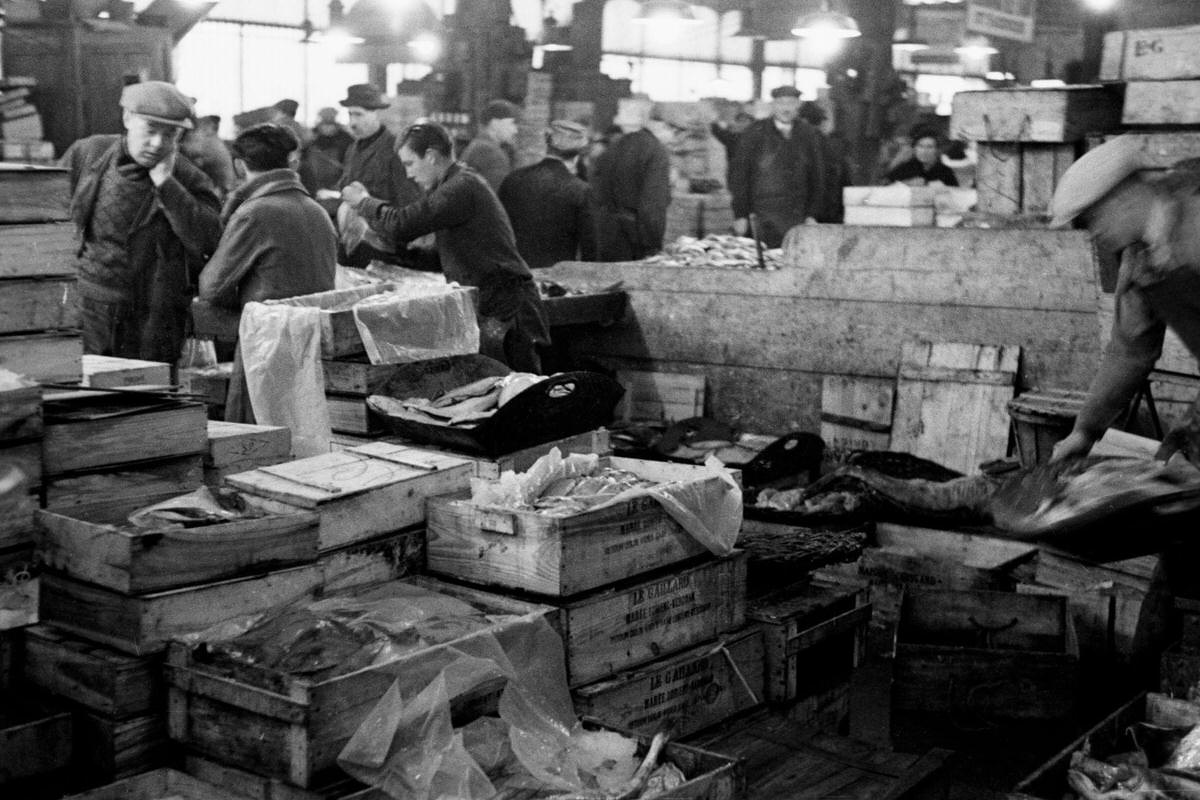
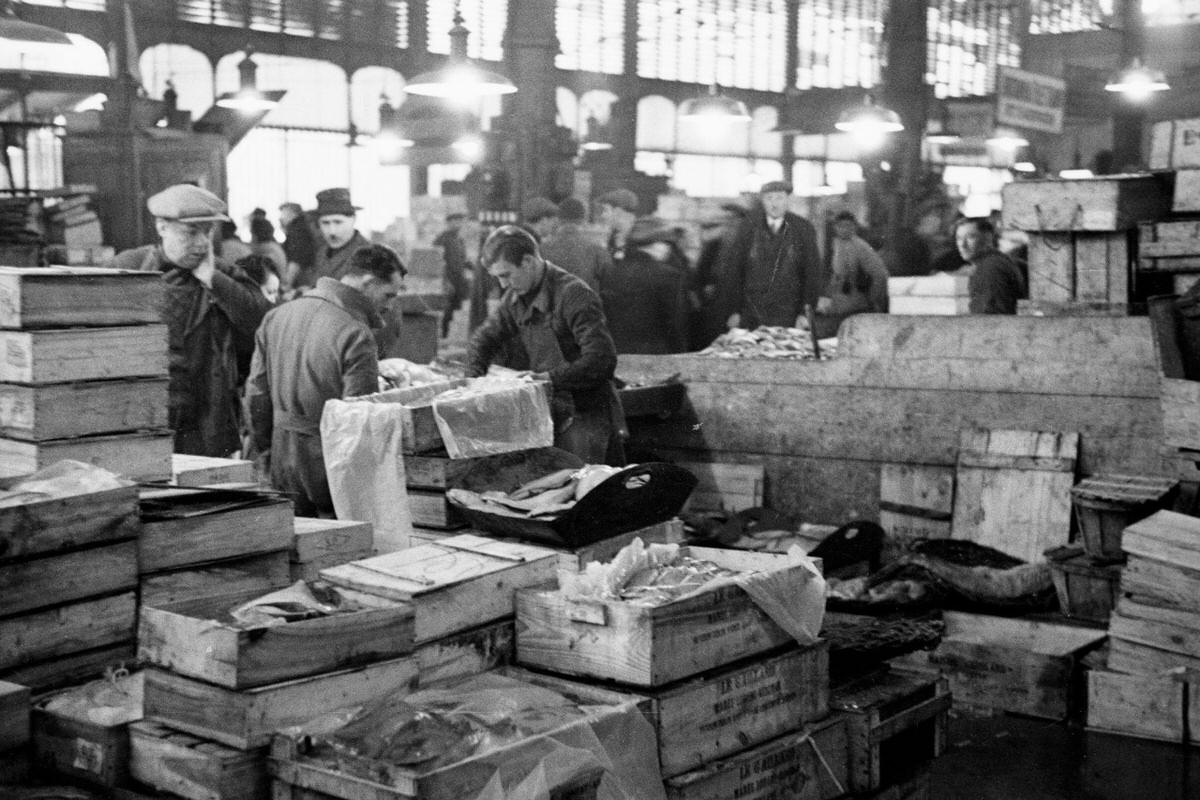
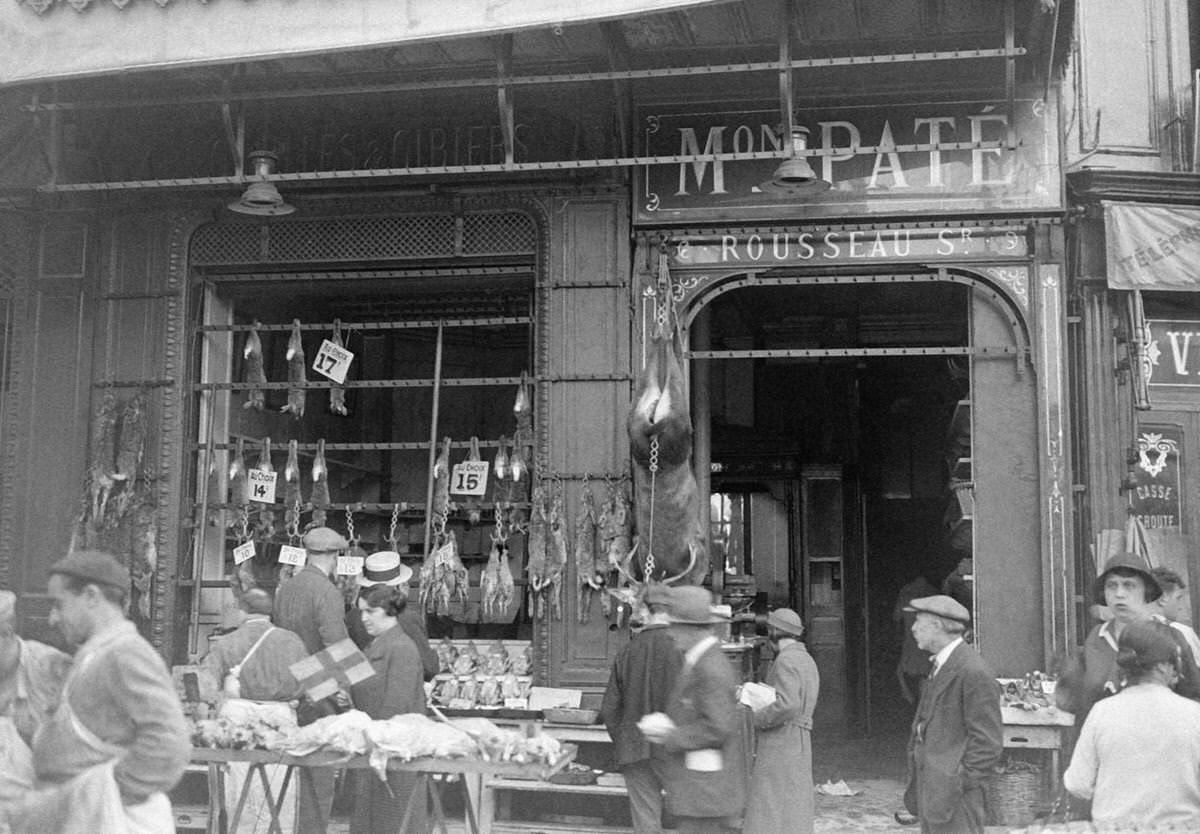
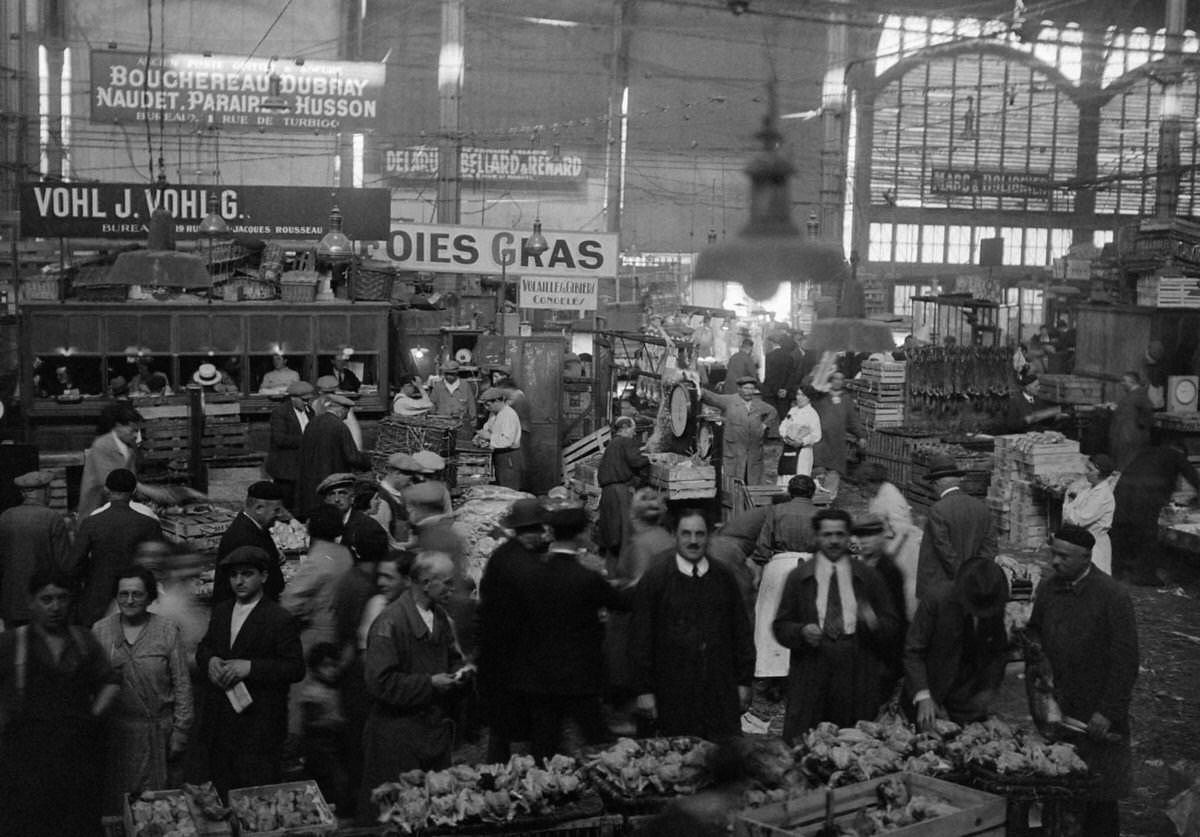
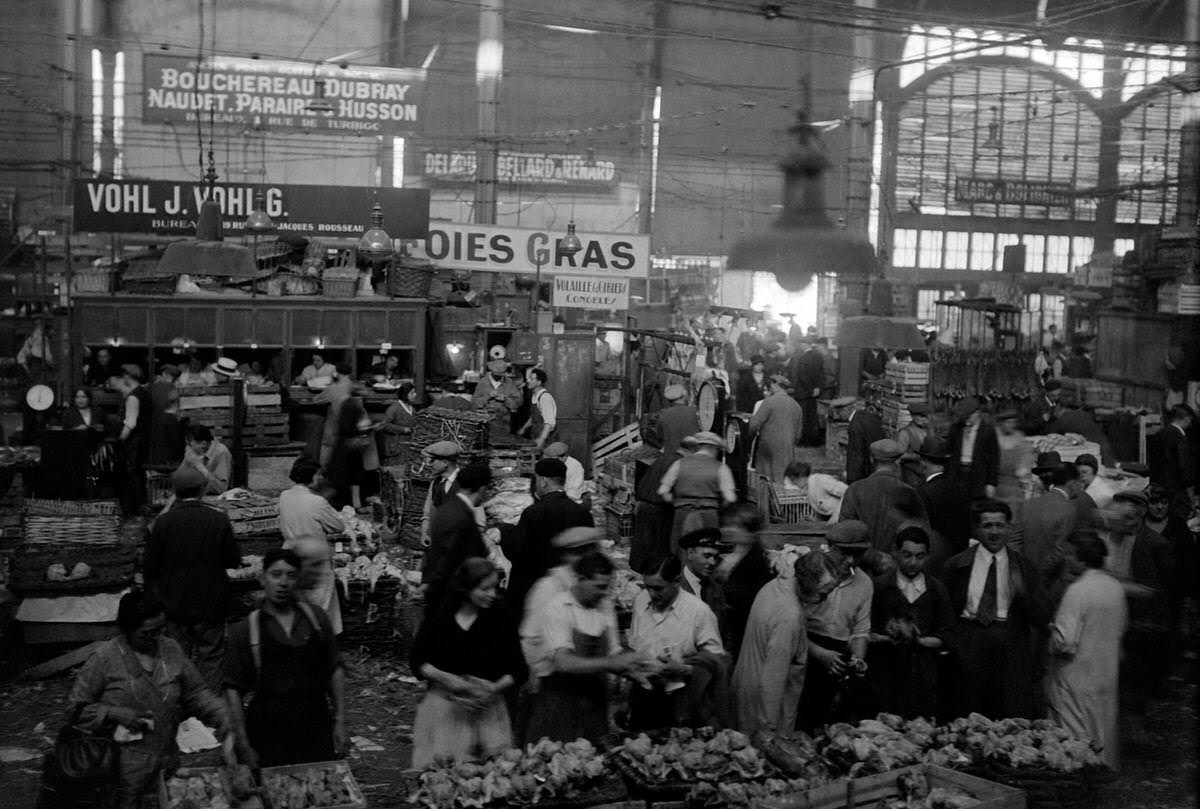
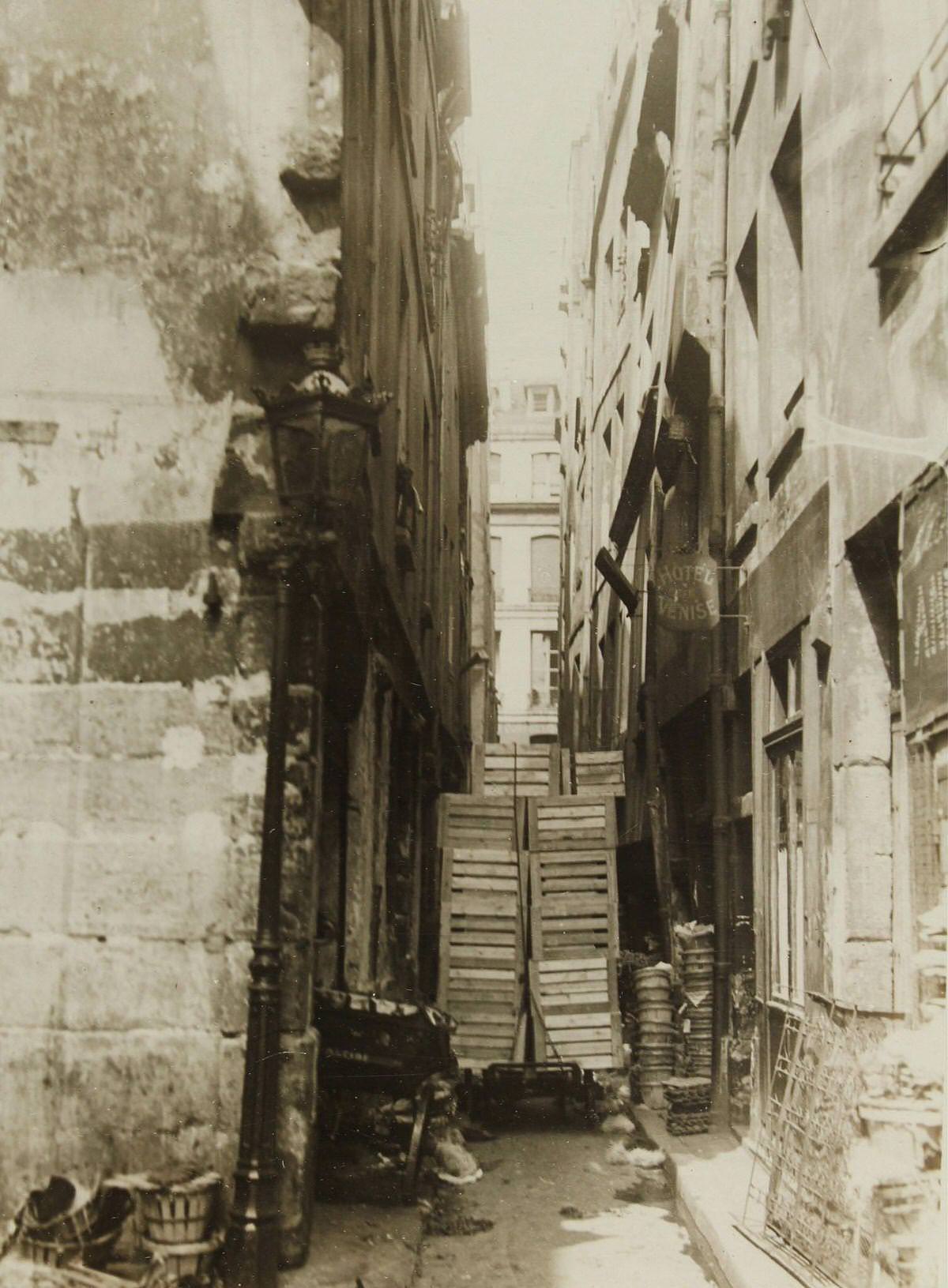
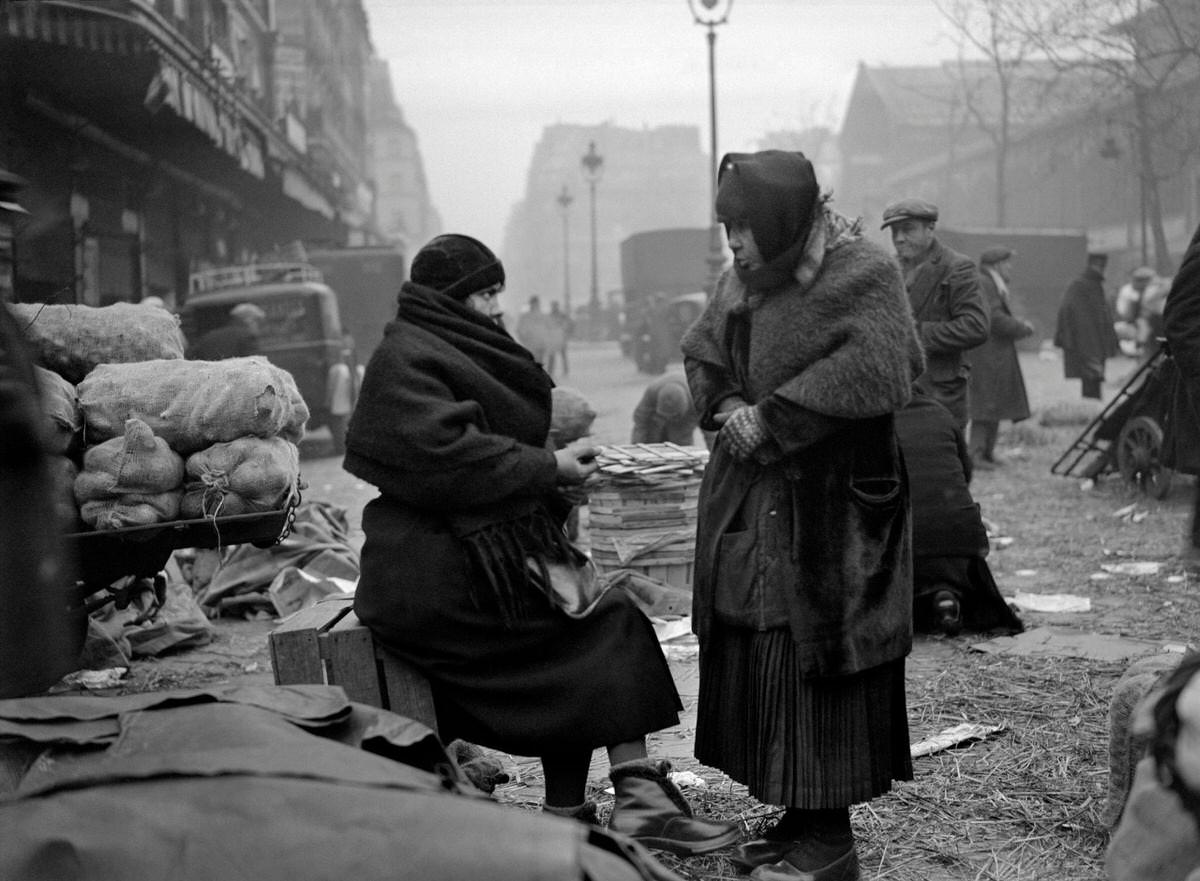
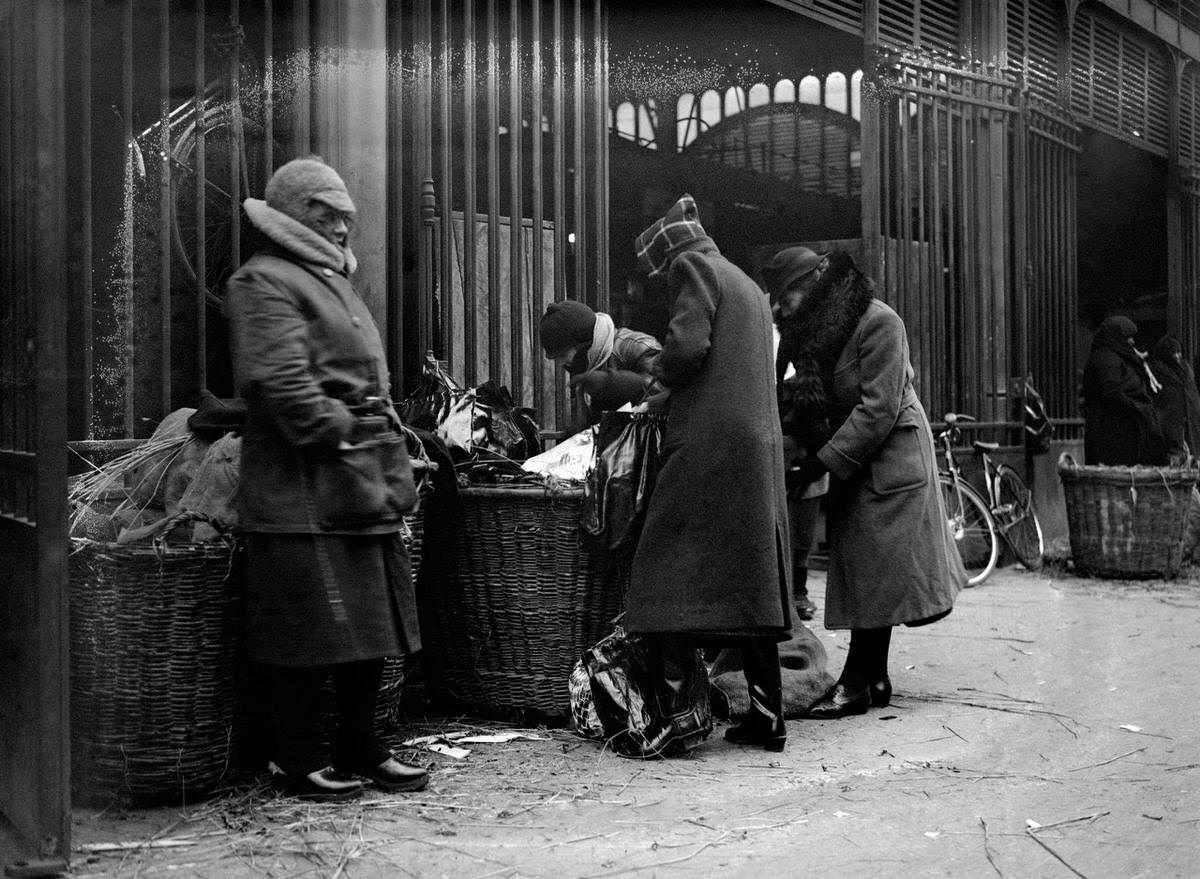
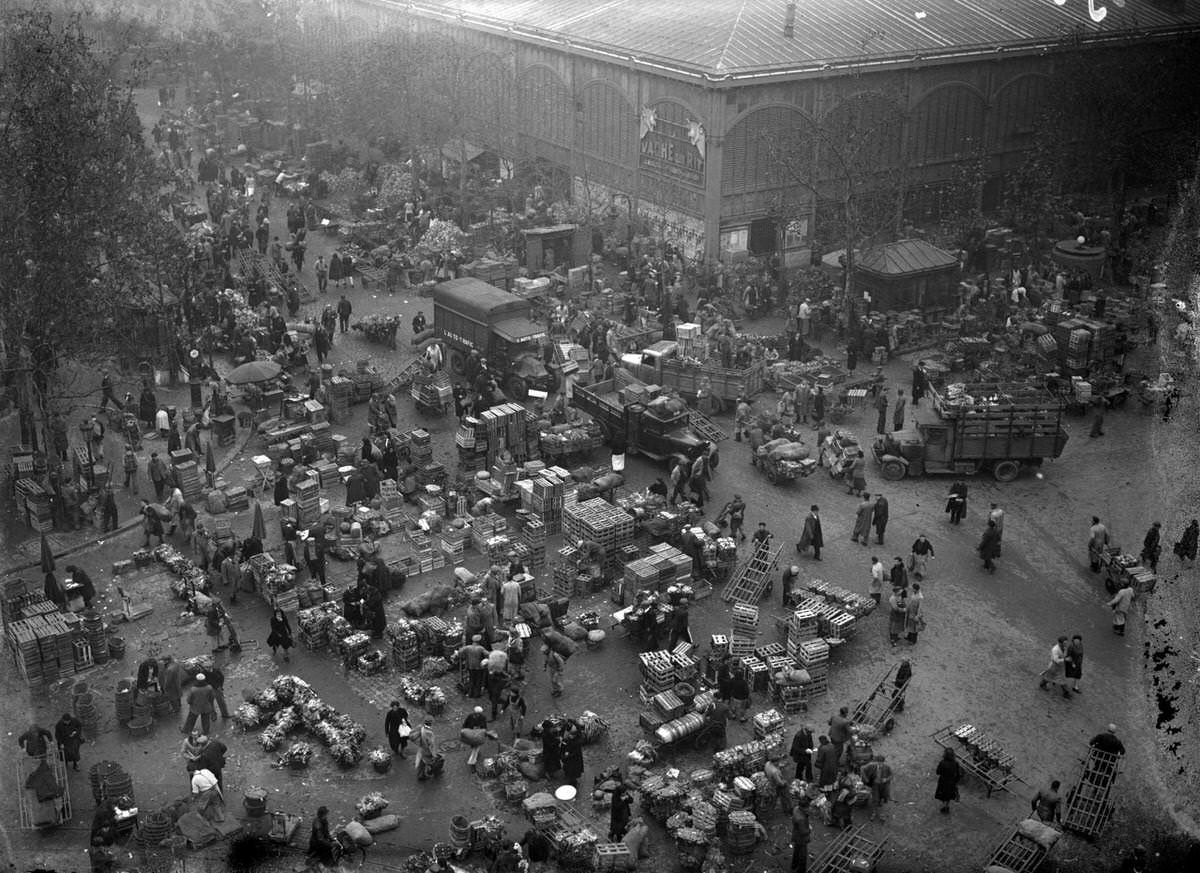
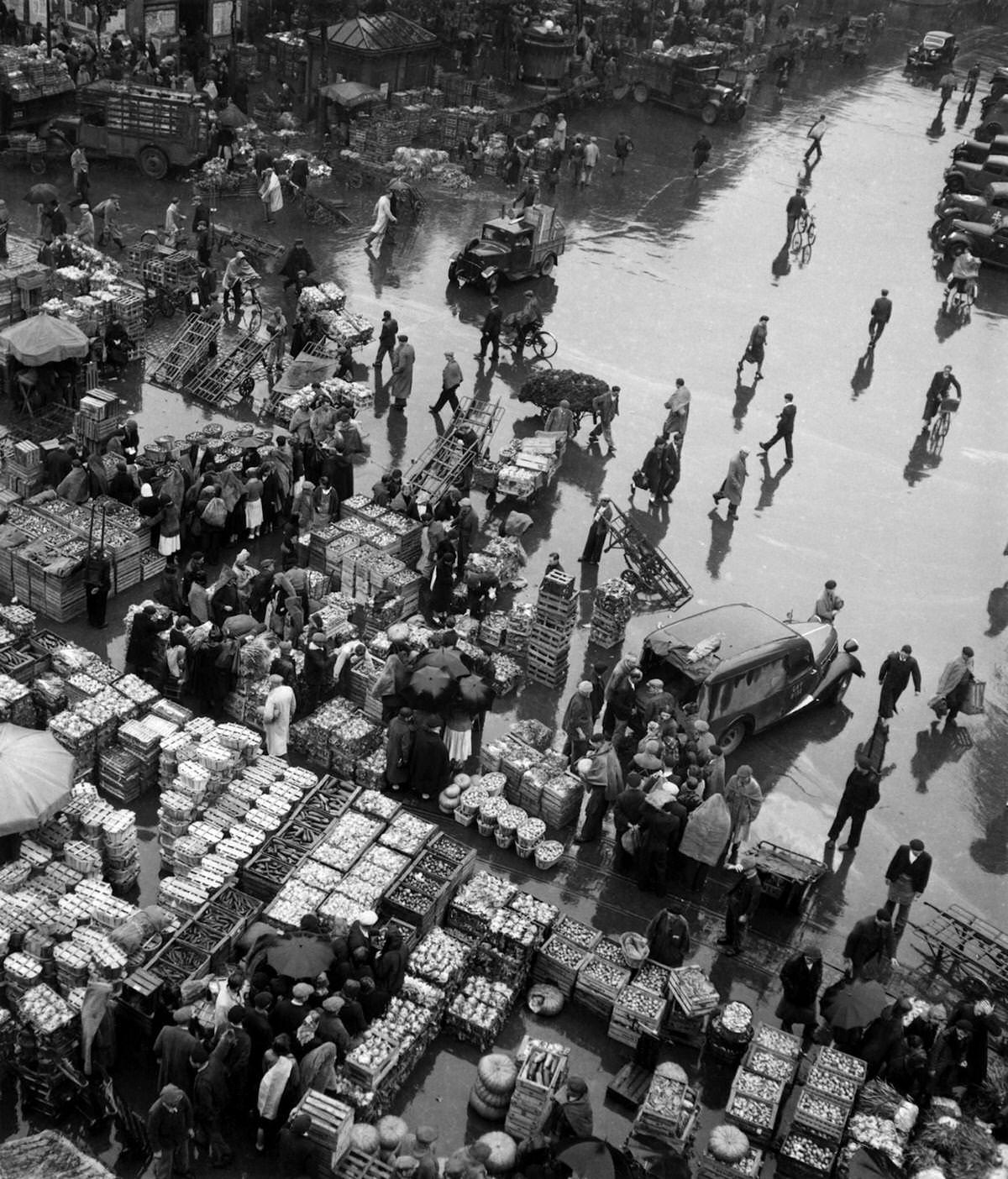
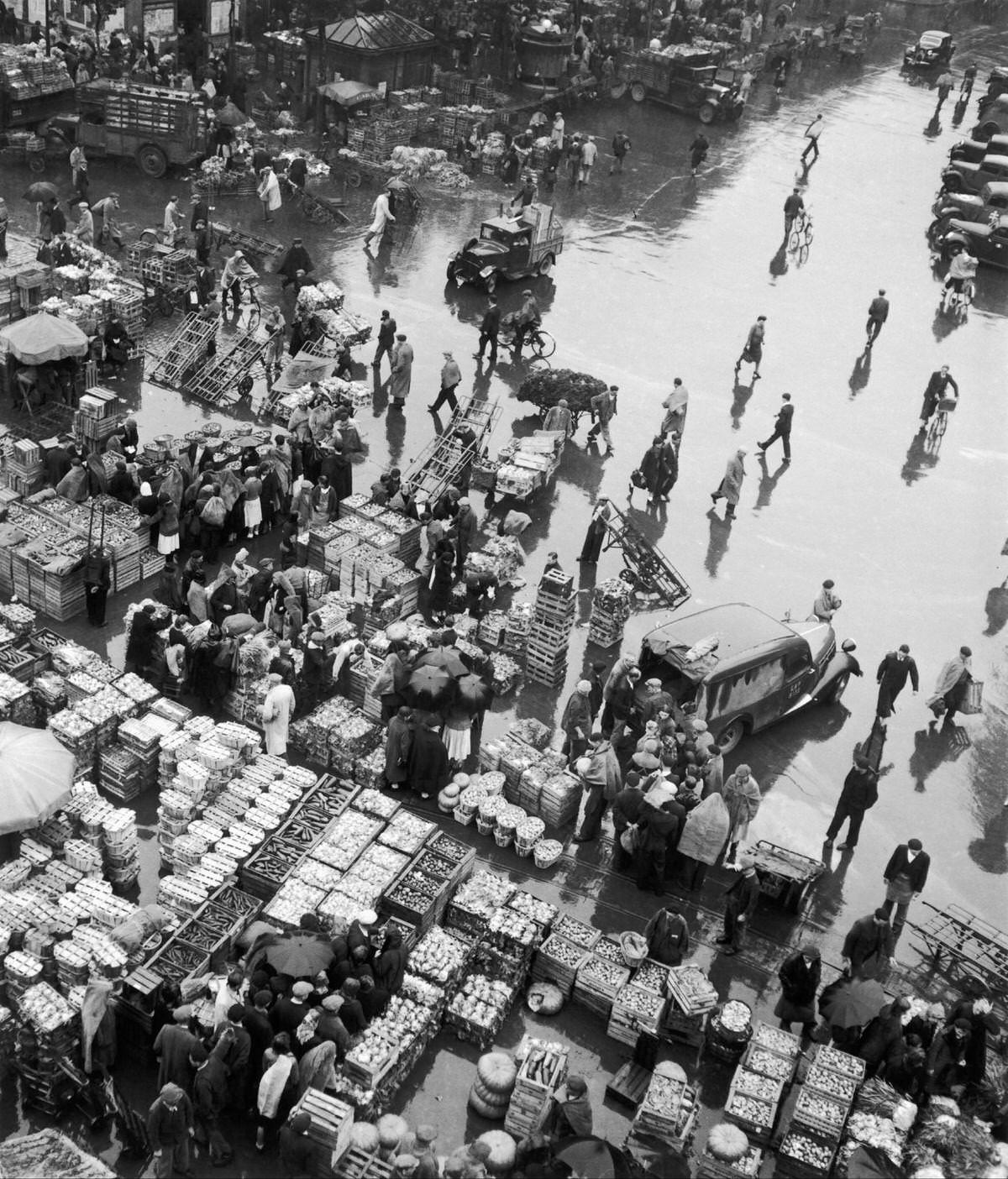
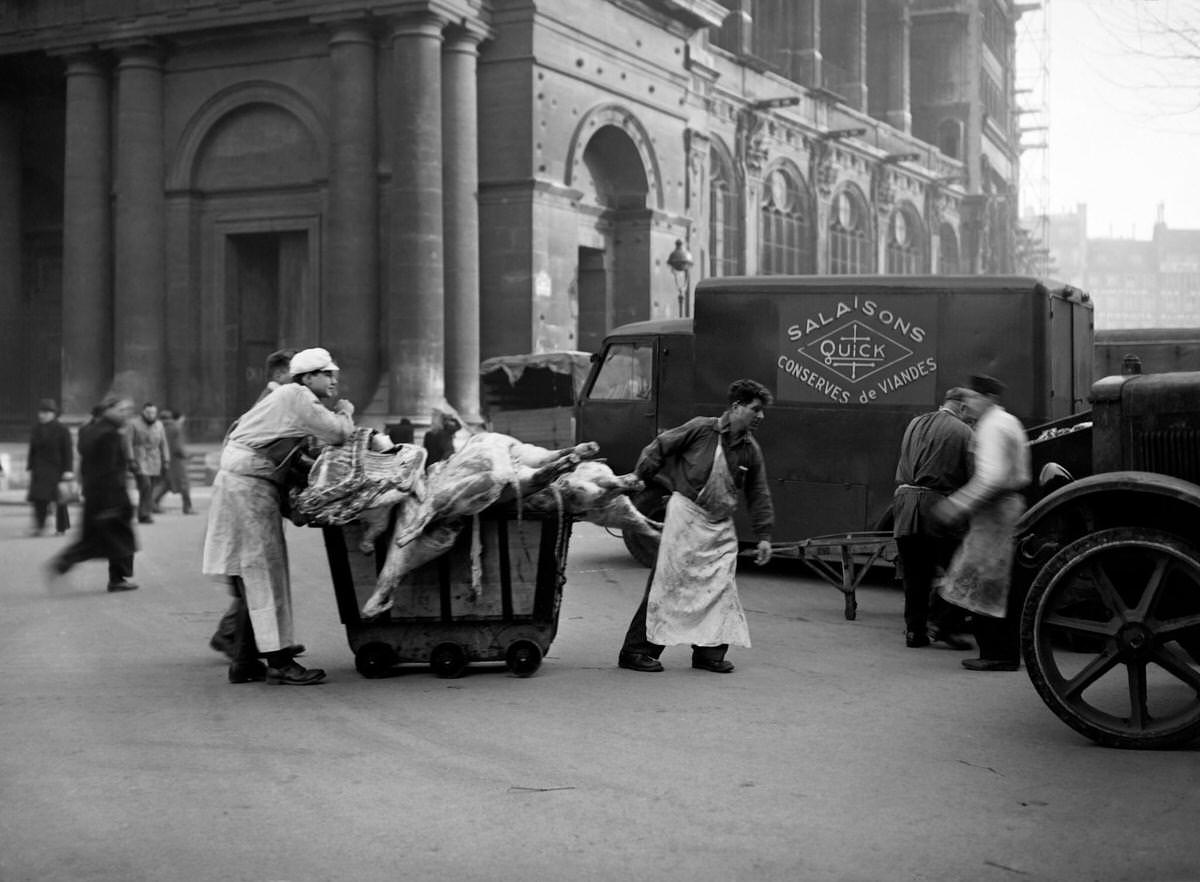
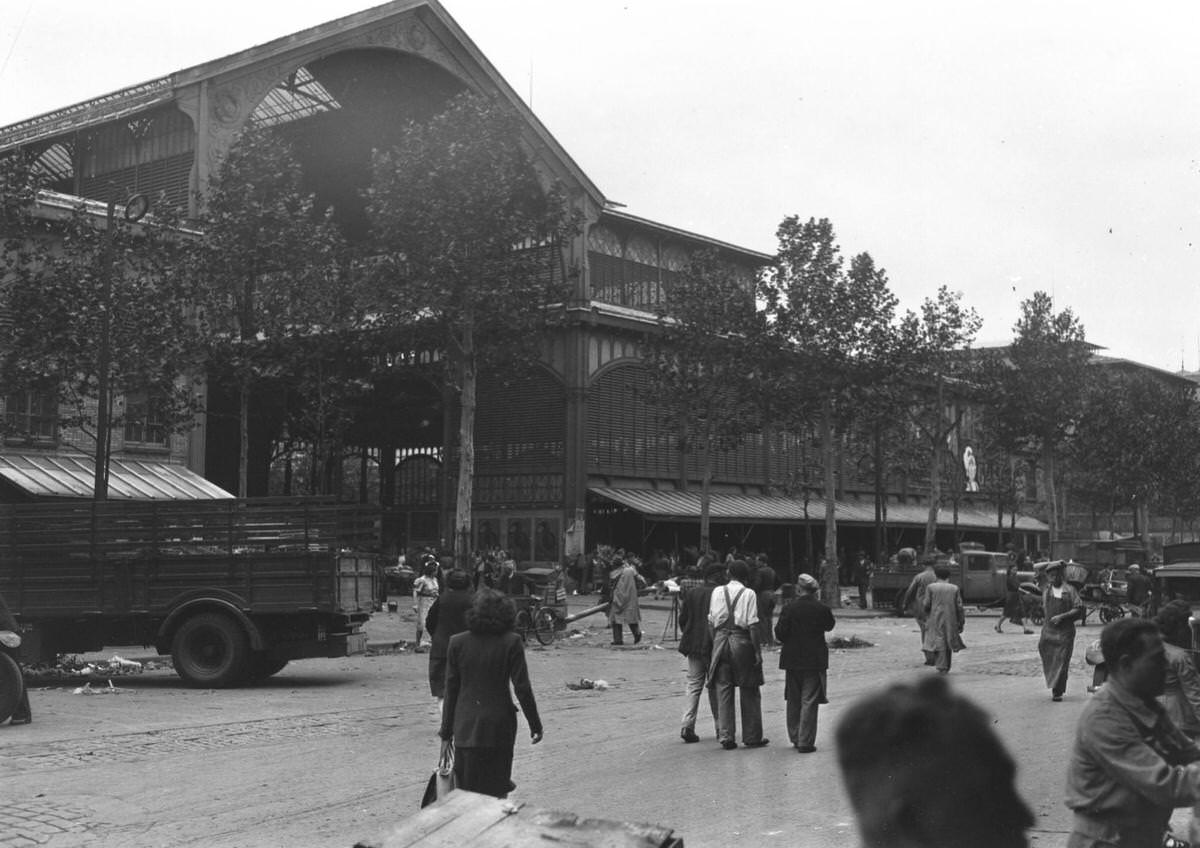
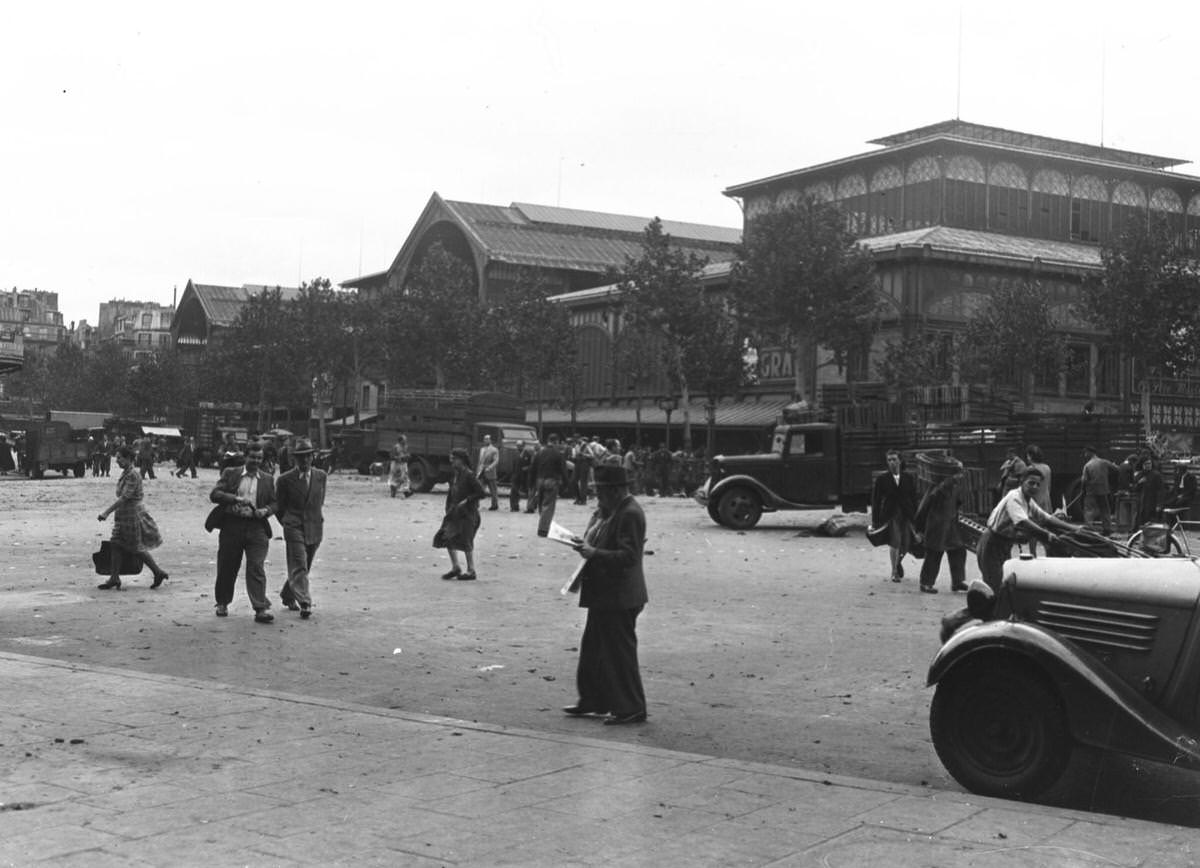
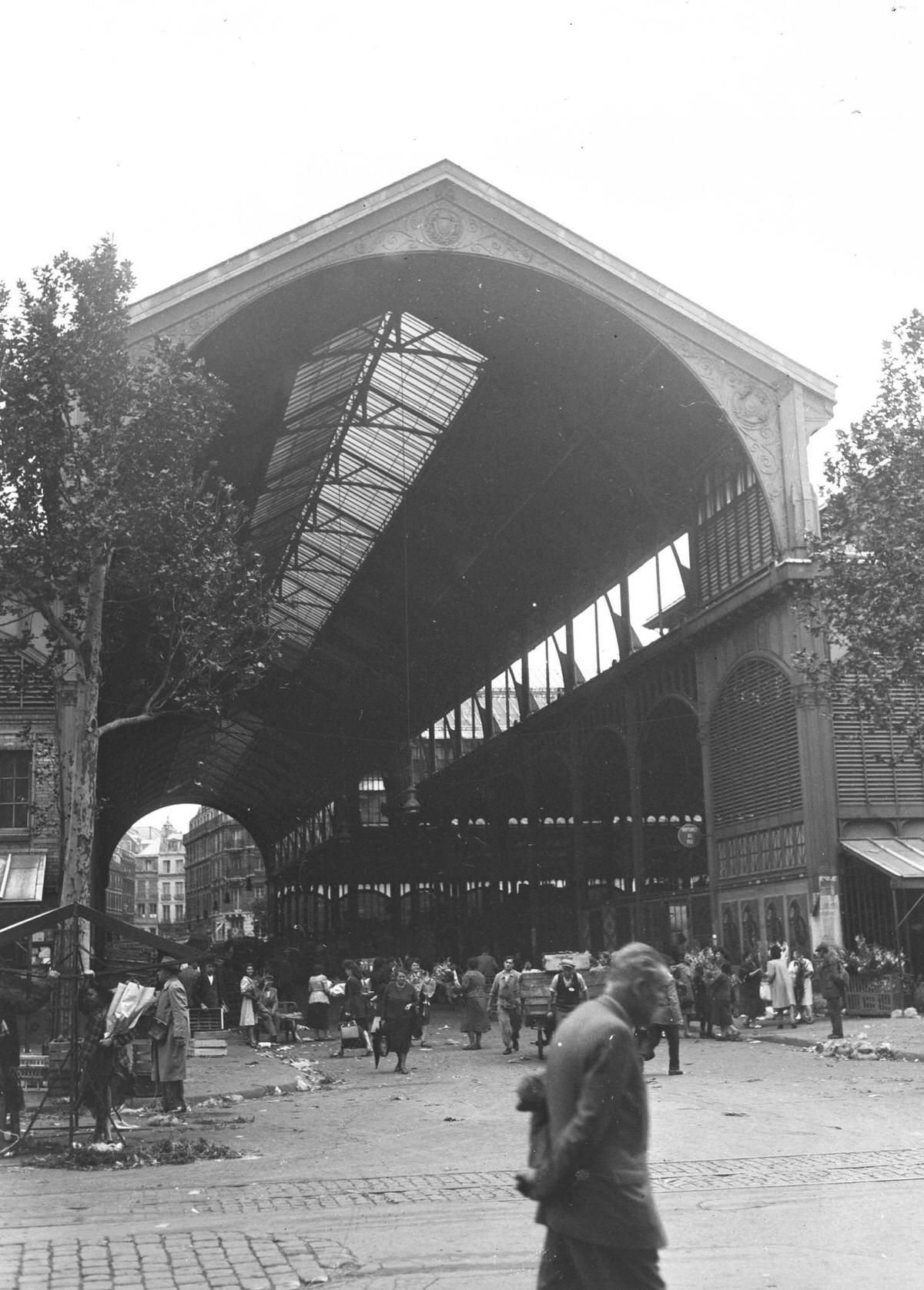
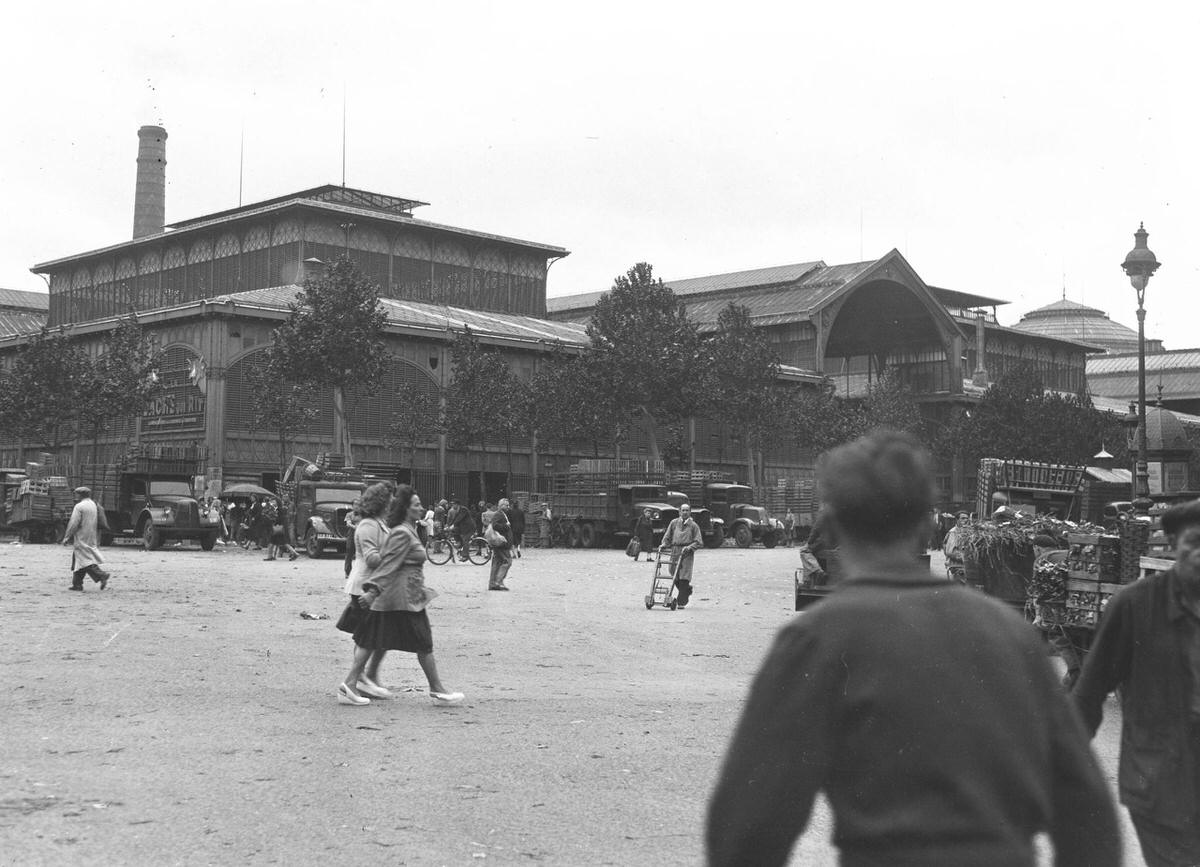
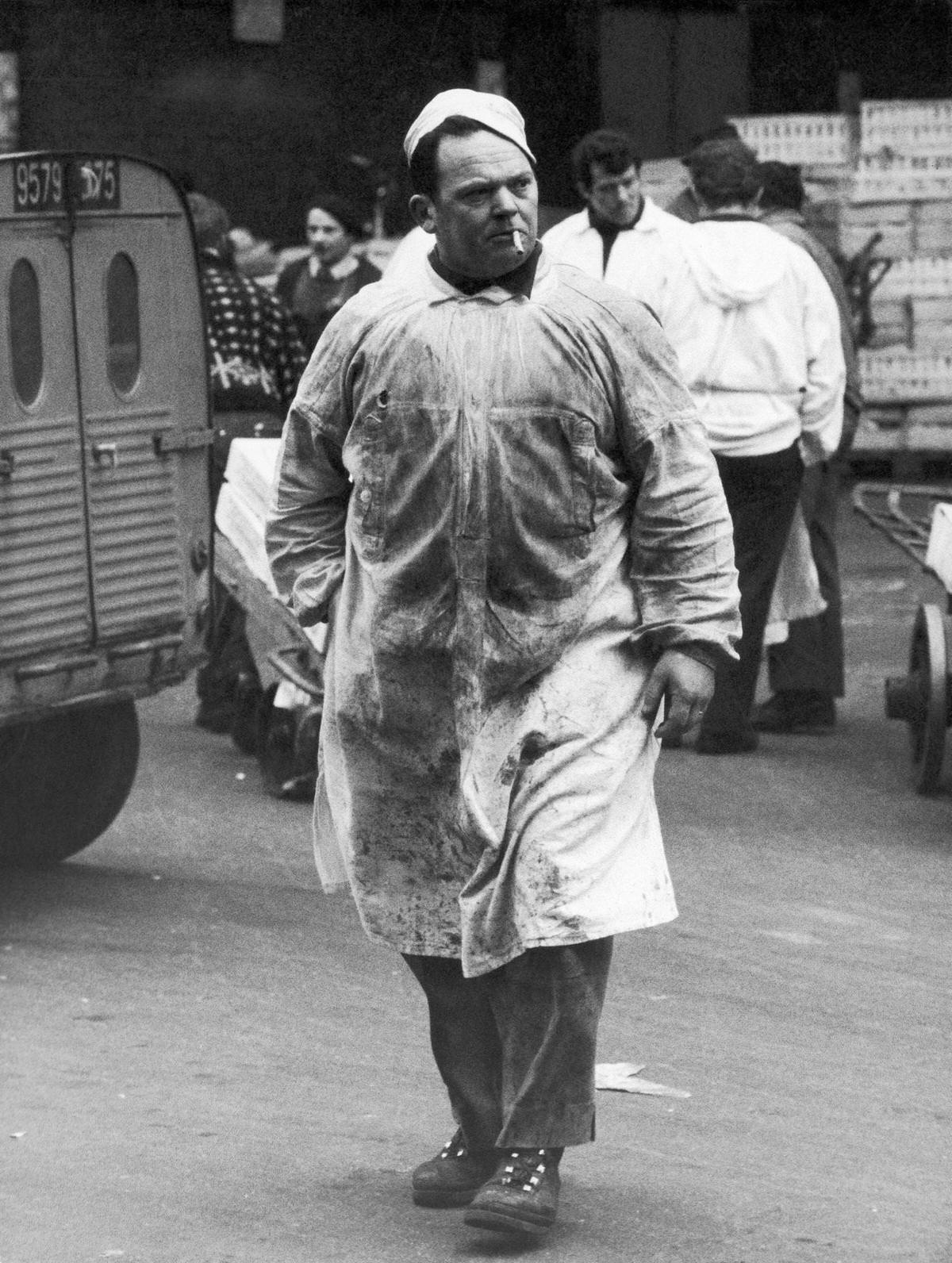
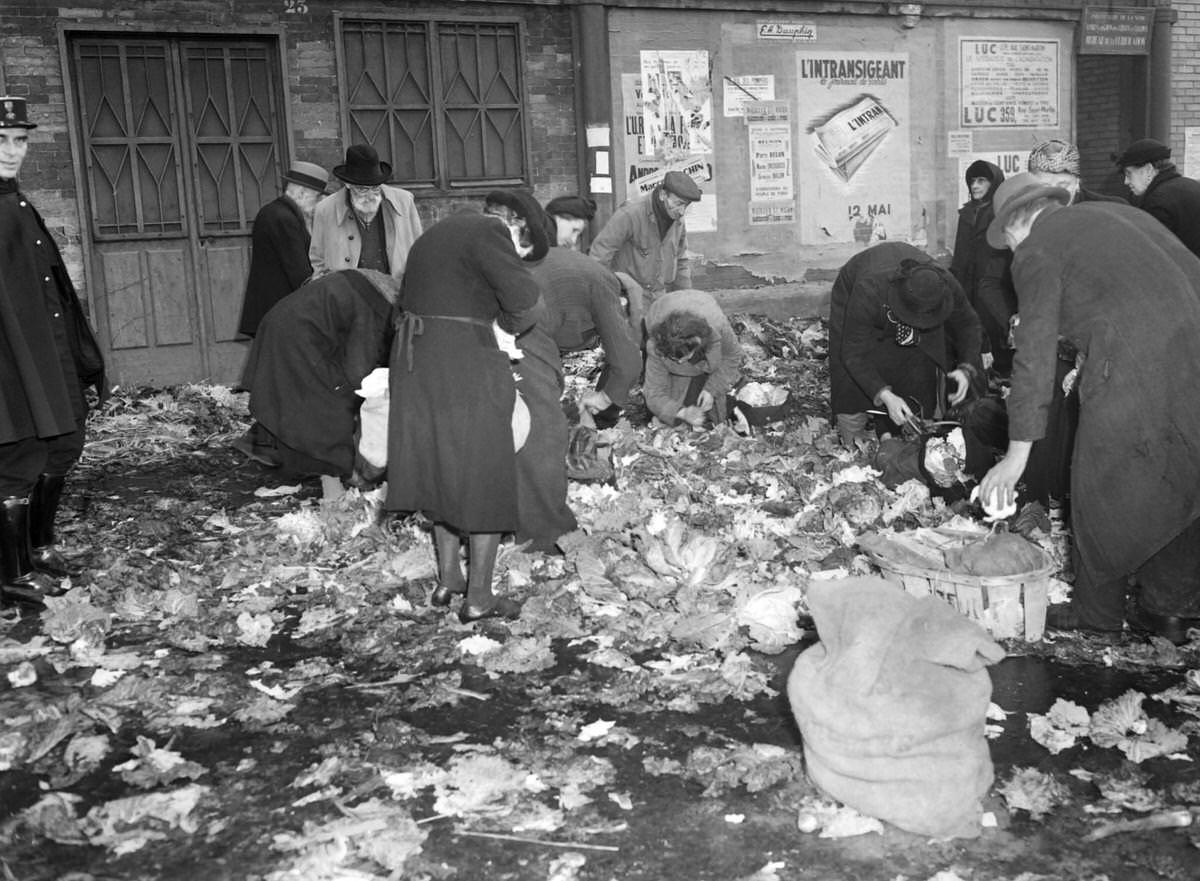
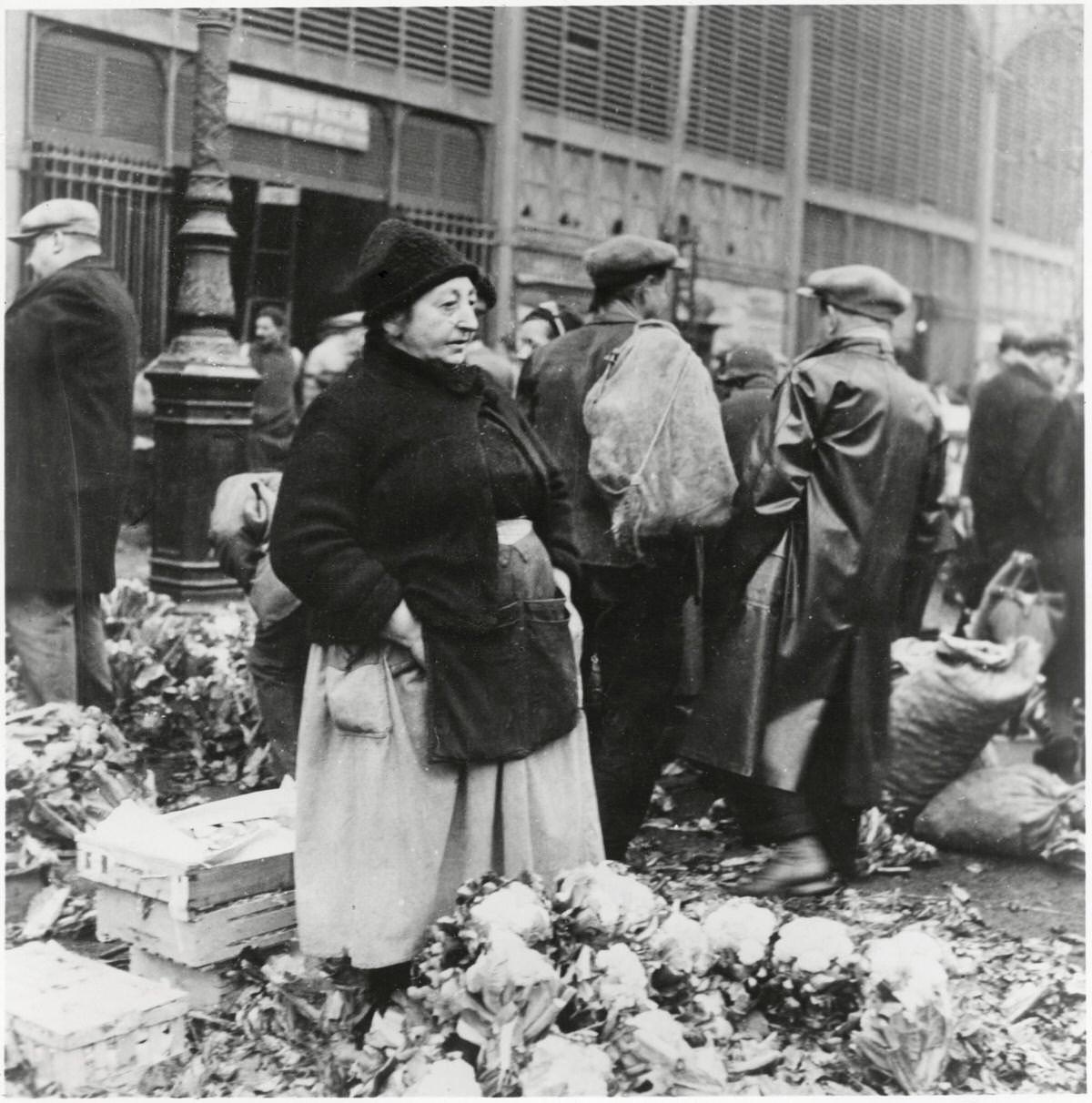
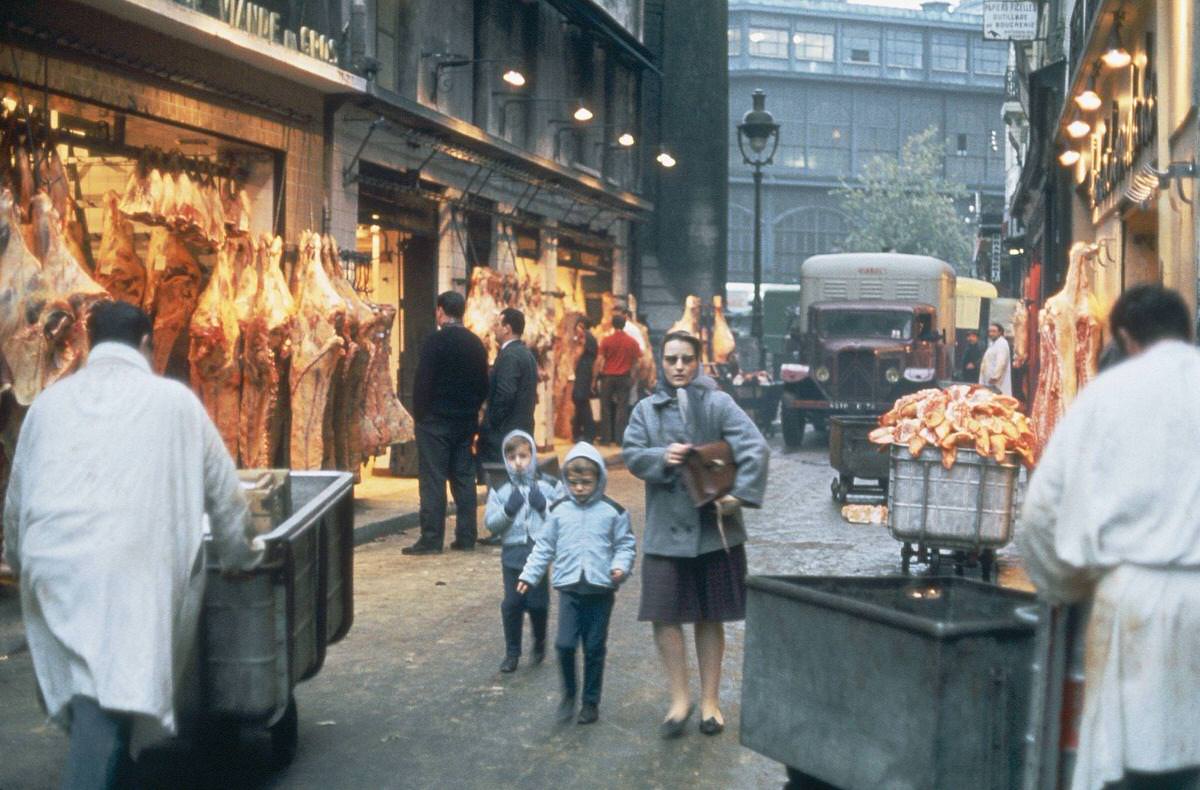
For nearly nine centuries, Les Halles sat at the heart of Paris — a sprawling, chaotic, and endlessly alive marketplace that fed an entire city. It was known as “The Belly of Paris,” a name that fit perfectly. Fruit sellers shouted across narrow lanes, butchers hauled carcasses through the early morning dark, and florists arranged bouquets a few steps away from stalls piled high with fresh-caught fish. The smells alone told you everything: warm bread, wet stone, raw meat, and cut flowers, all mixed together under a canopy of iron and glass.
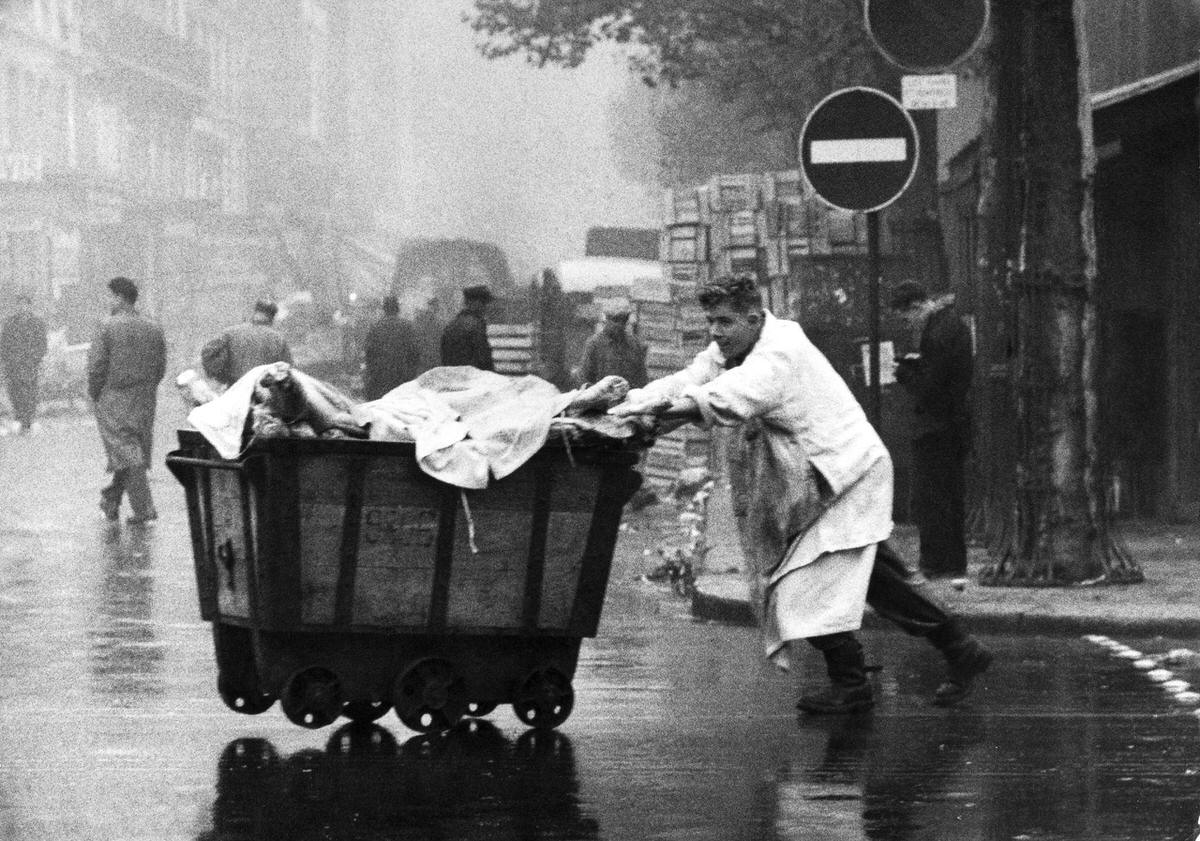
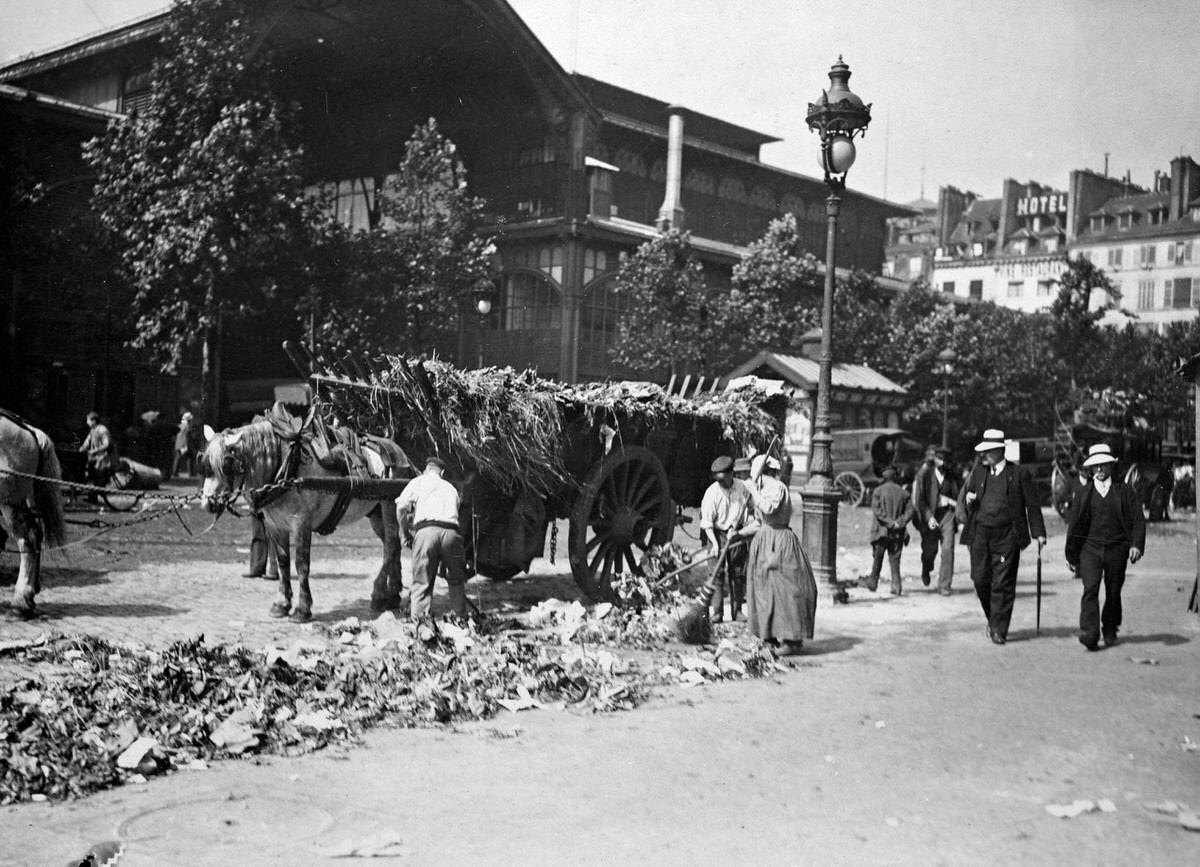
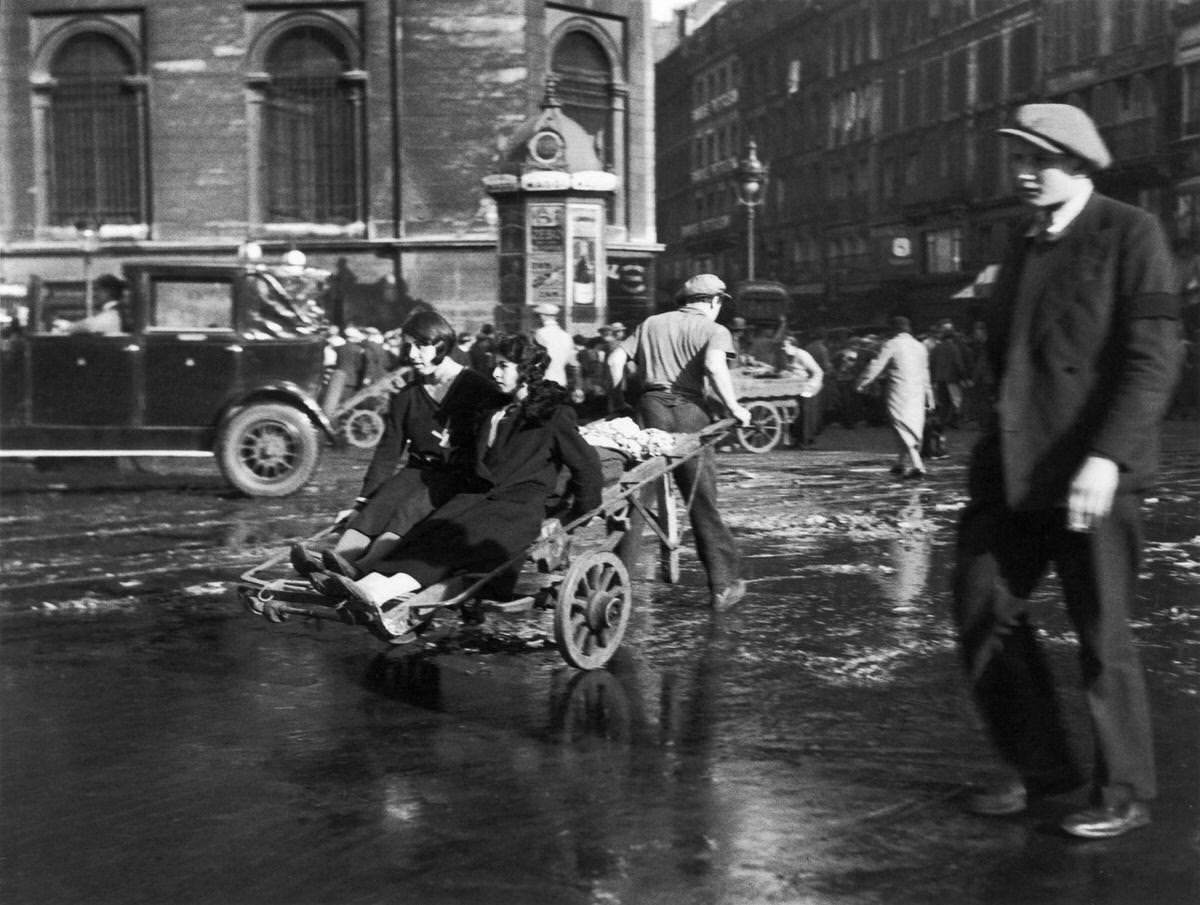
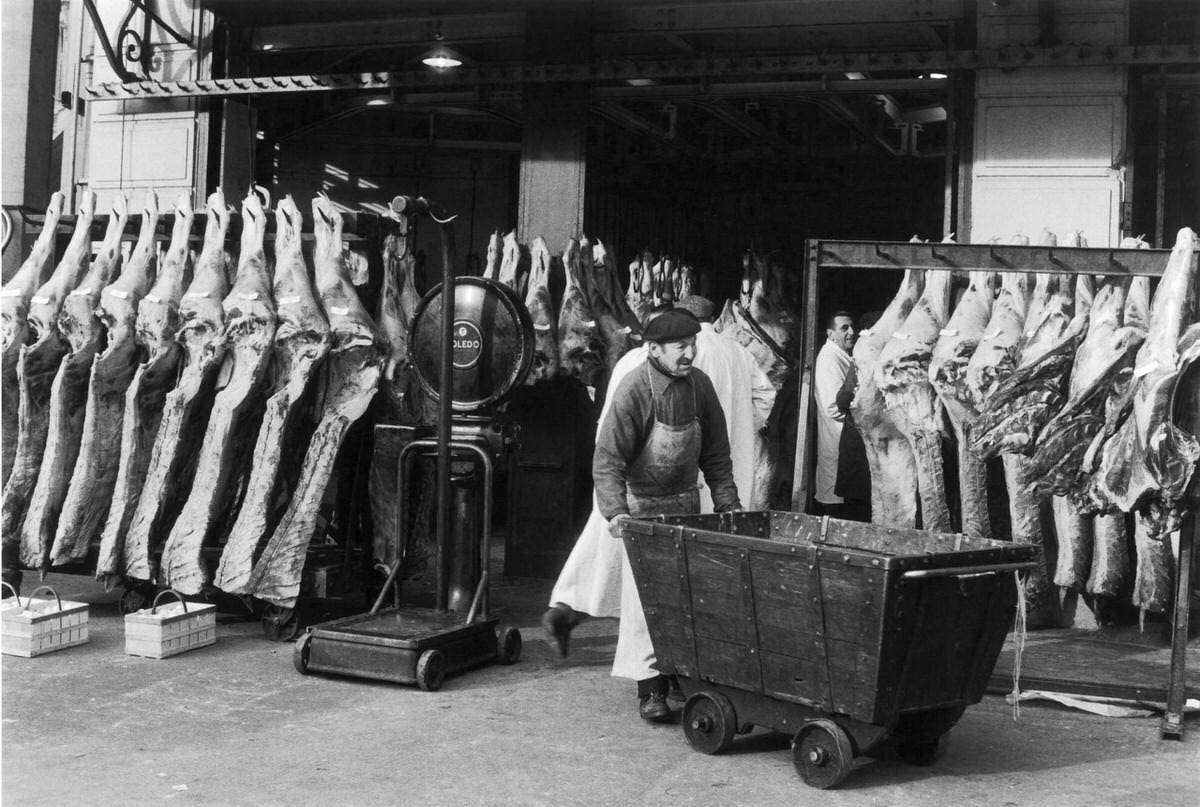
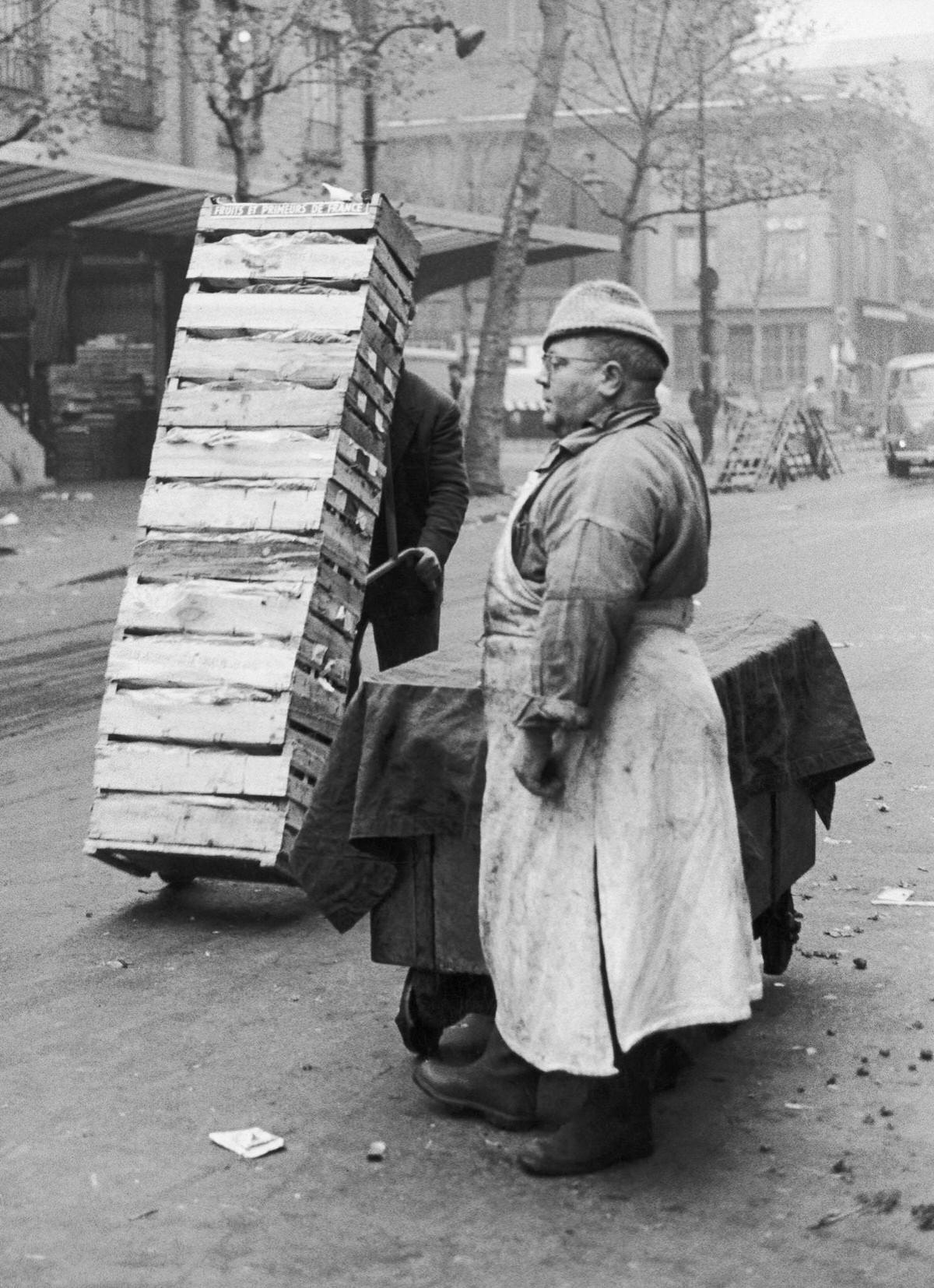
Butcher pushing a cart, Les Halles, Paris, 1900
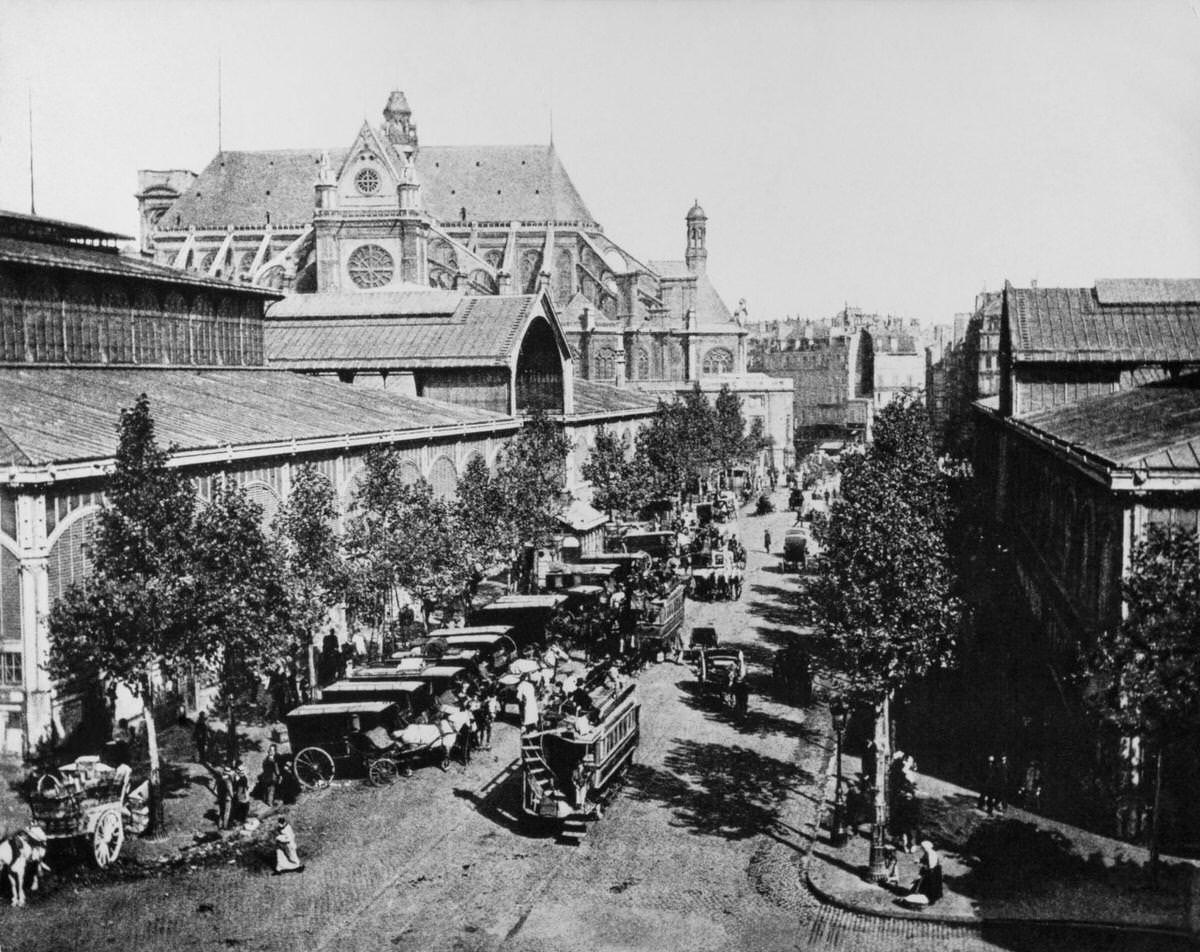
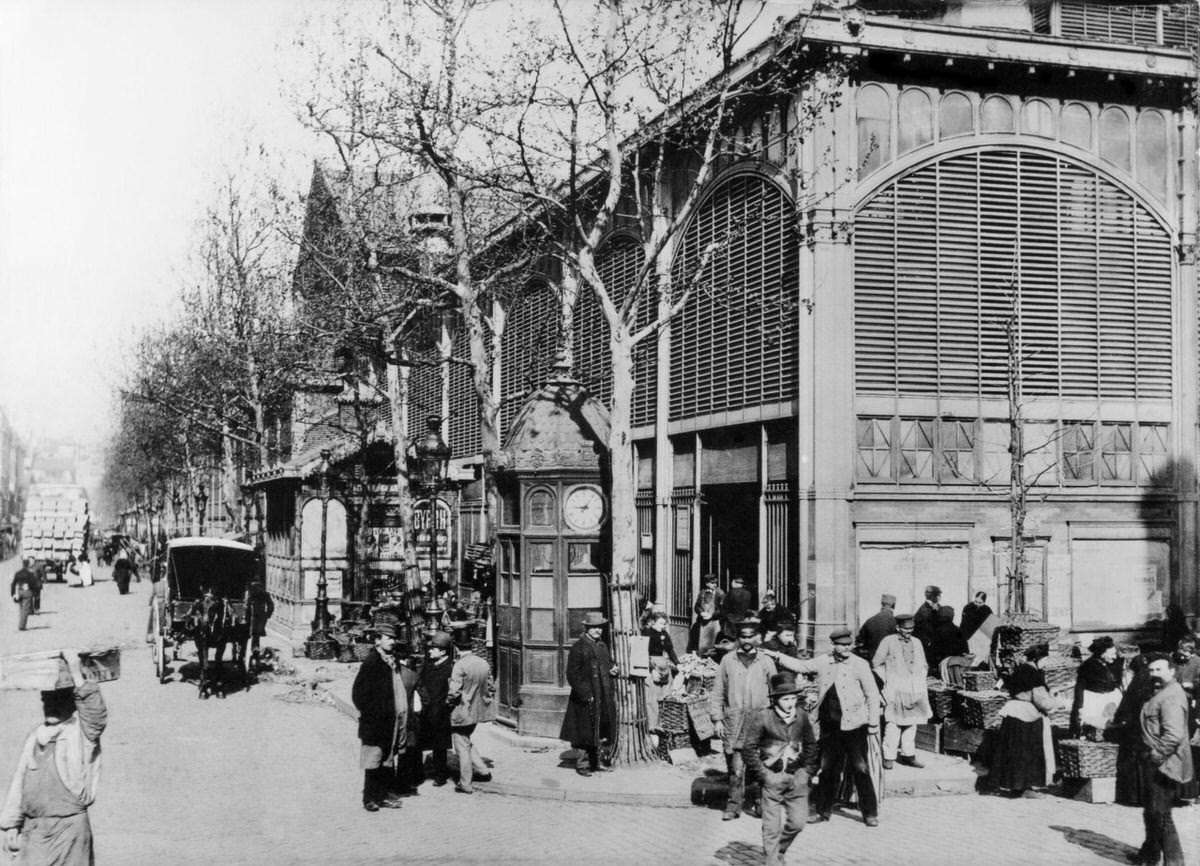
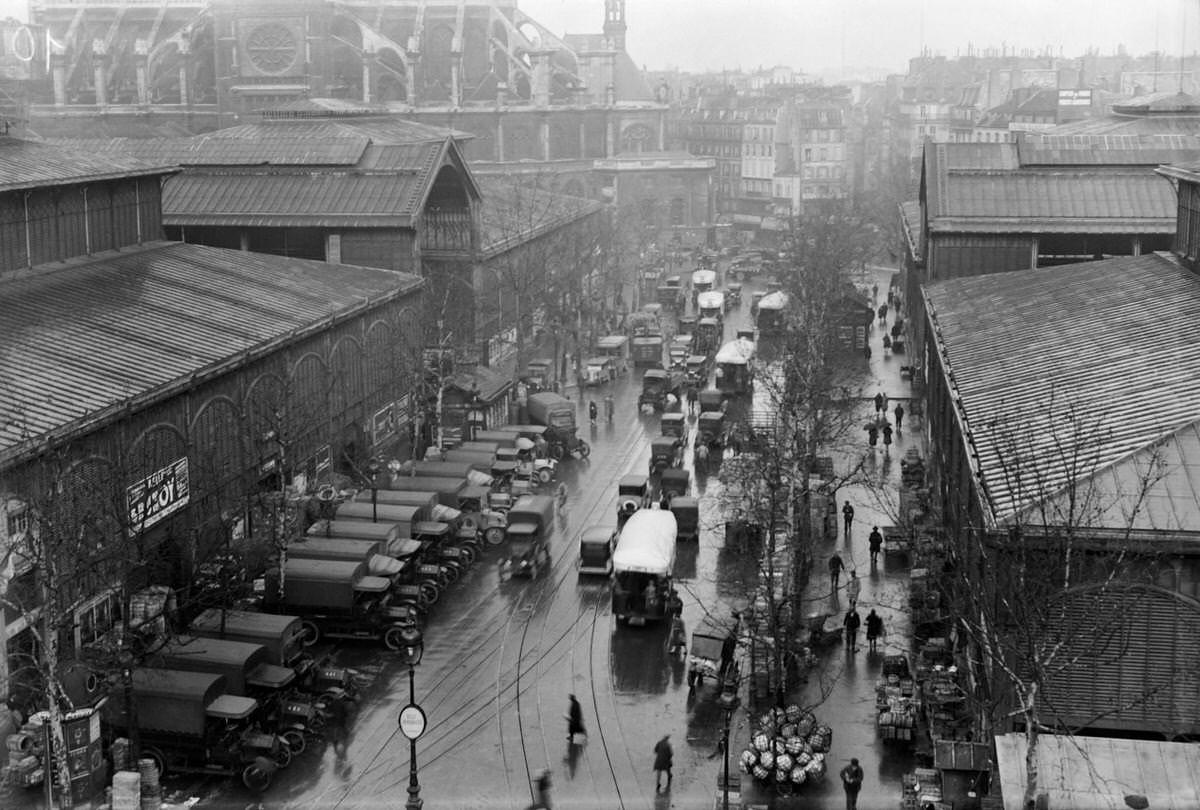
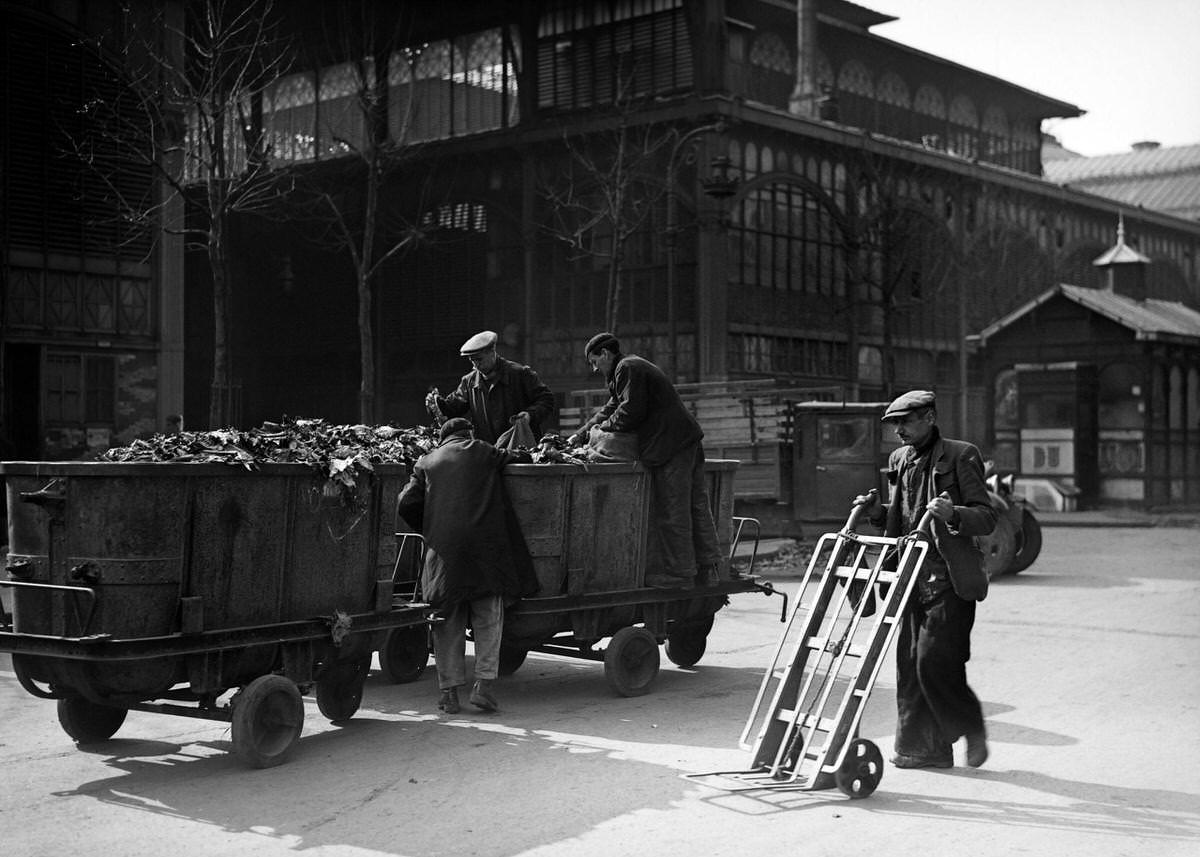
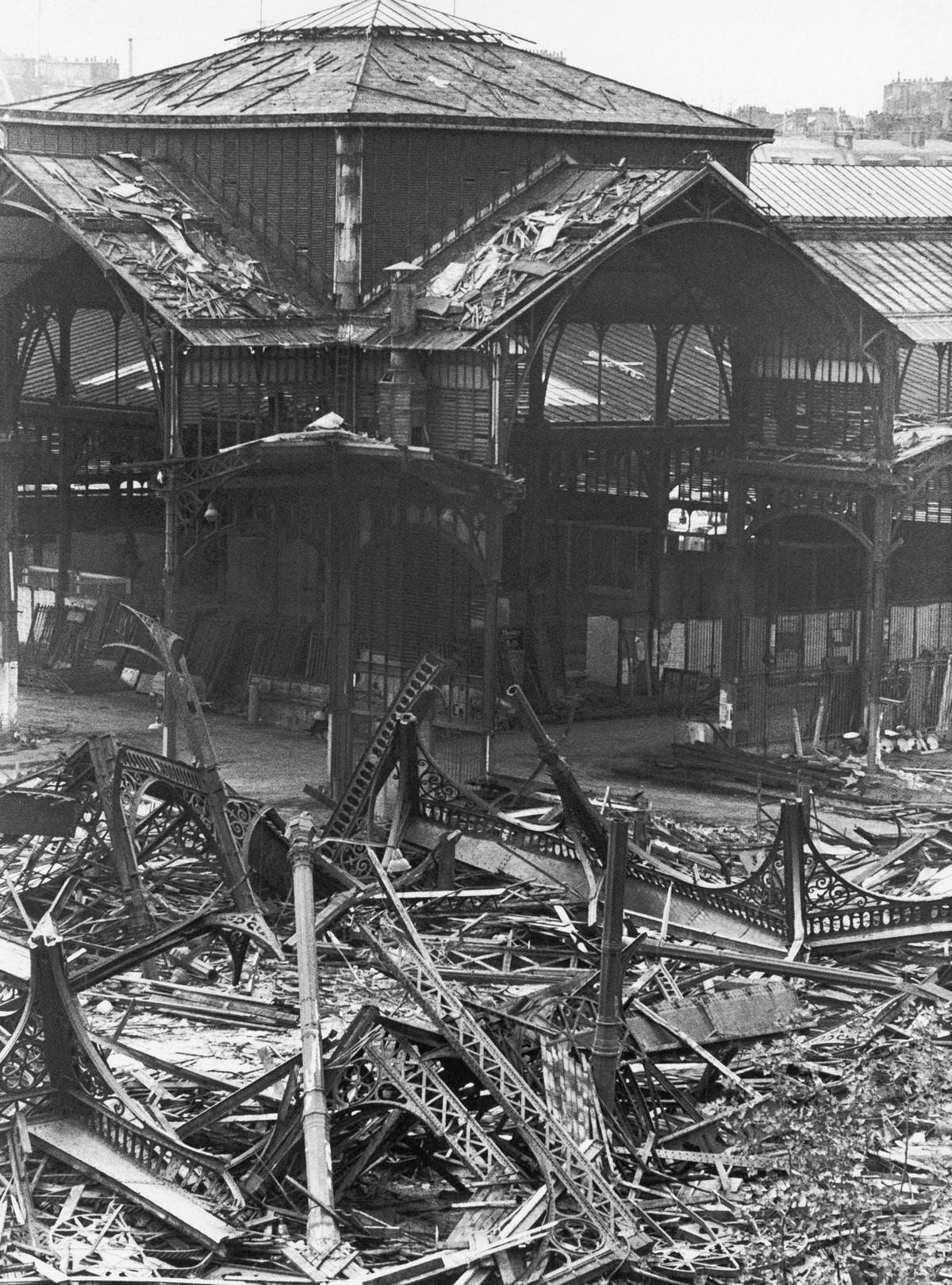
The market’s origins trace back to a Royal Decree in the twelfth century, when the King of France formally established a central market in Paris. For hundreds of years, it operated in various forms across the city center. The modern version — the one captured in these photographs — was born in the nineteenth century. Architect Victor Baltard designed its twelve iron-and-glass pavilions in a bold style that was considered avant-garde at the time. High beams, paint-encrusted rivets, and wide glass awnings defined the look. The structure was both functional and striking, built to handle the enormous volume of trade that passed through every single day.
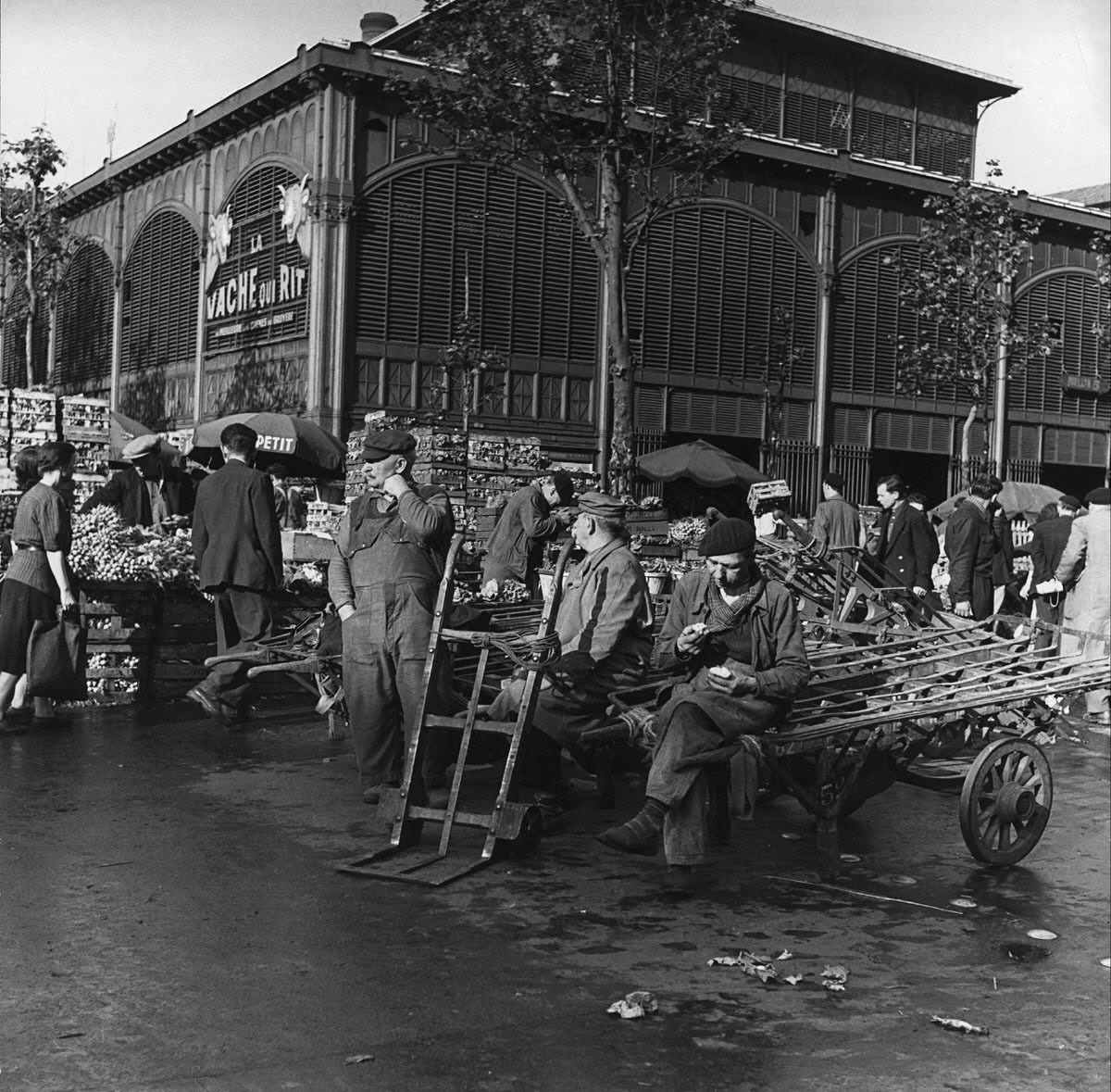
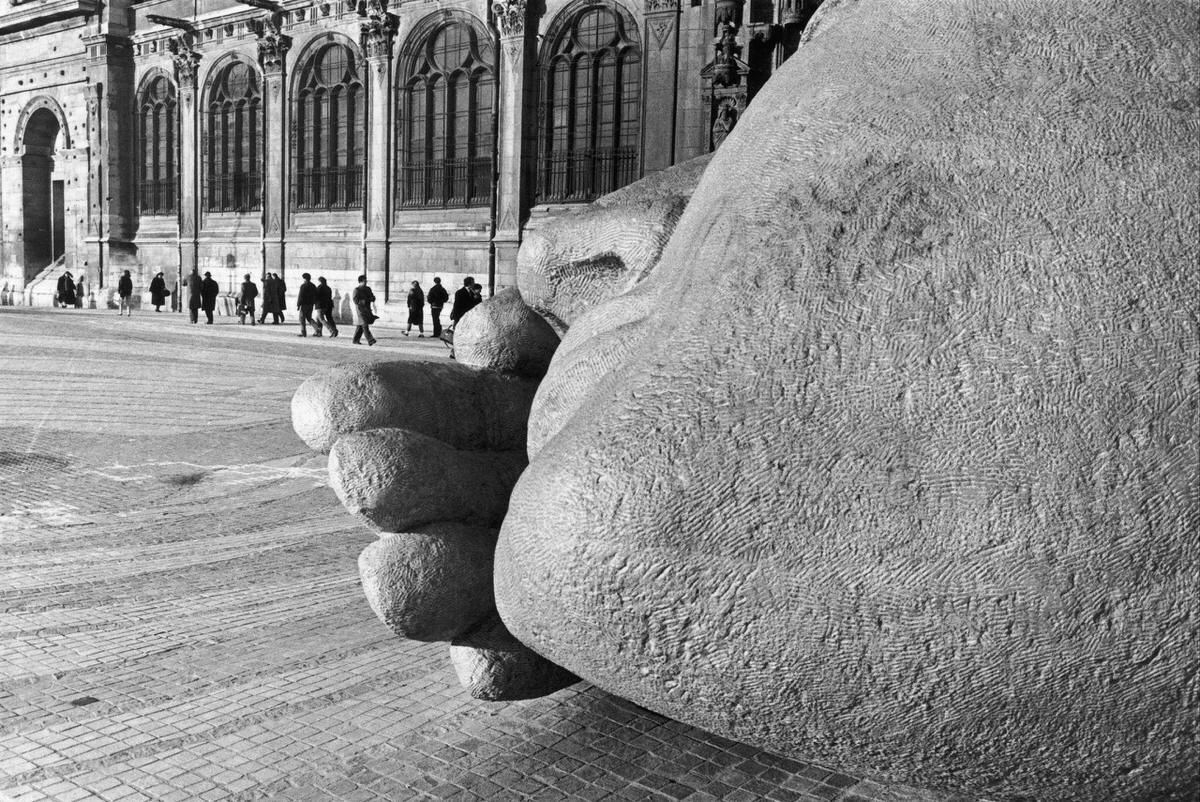
Fruit and vegetable market, Les Halles, Paris, 1900Beaubourg, space where fallow has implemented the Centre Georges Pompidou, Les Halles, Paris, 1900
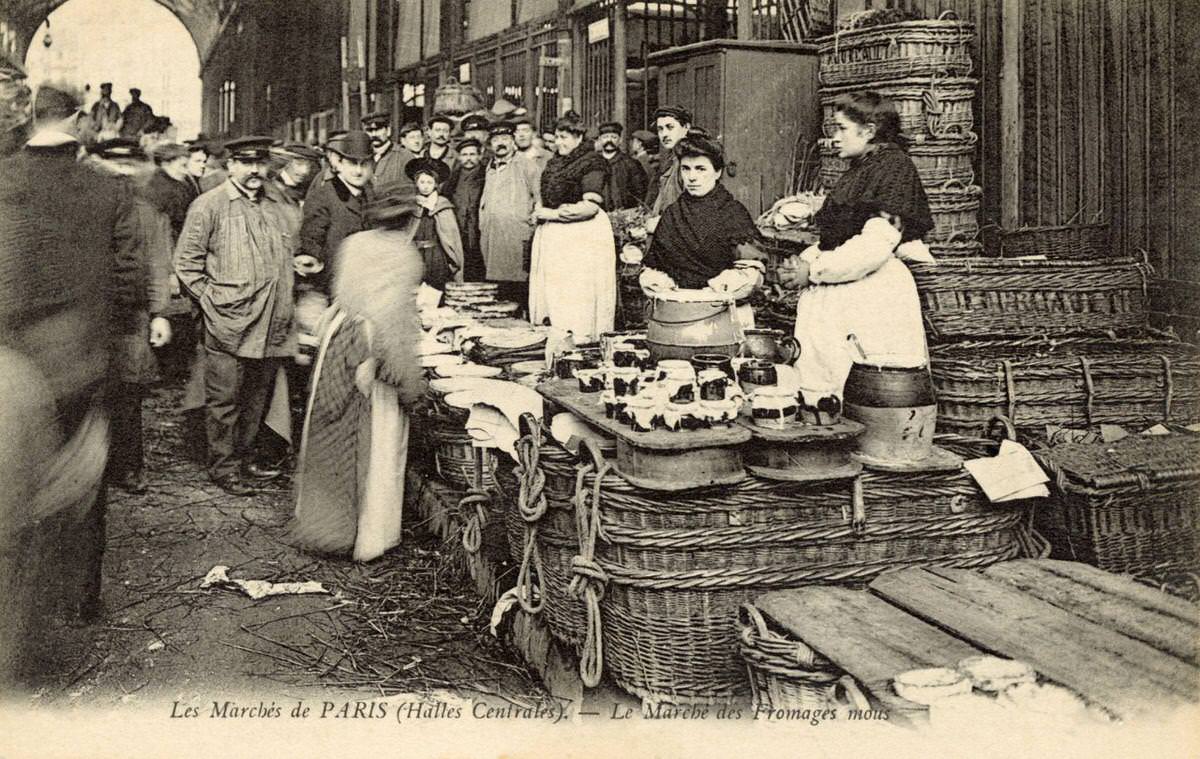
Each pavilion specialized in a different trade. One handled fish, another meat, another vegetables, another cheese. Stalls spilled out of the pavilions and into the surrounding streets, so the market was impossible to contain within any boundary. It grew organically, loudly, and without apology.
Halls Under Construction, Les Halles, Paris, 1900sculpture by Henri de Miller Paris, 1900
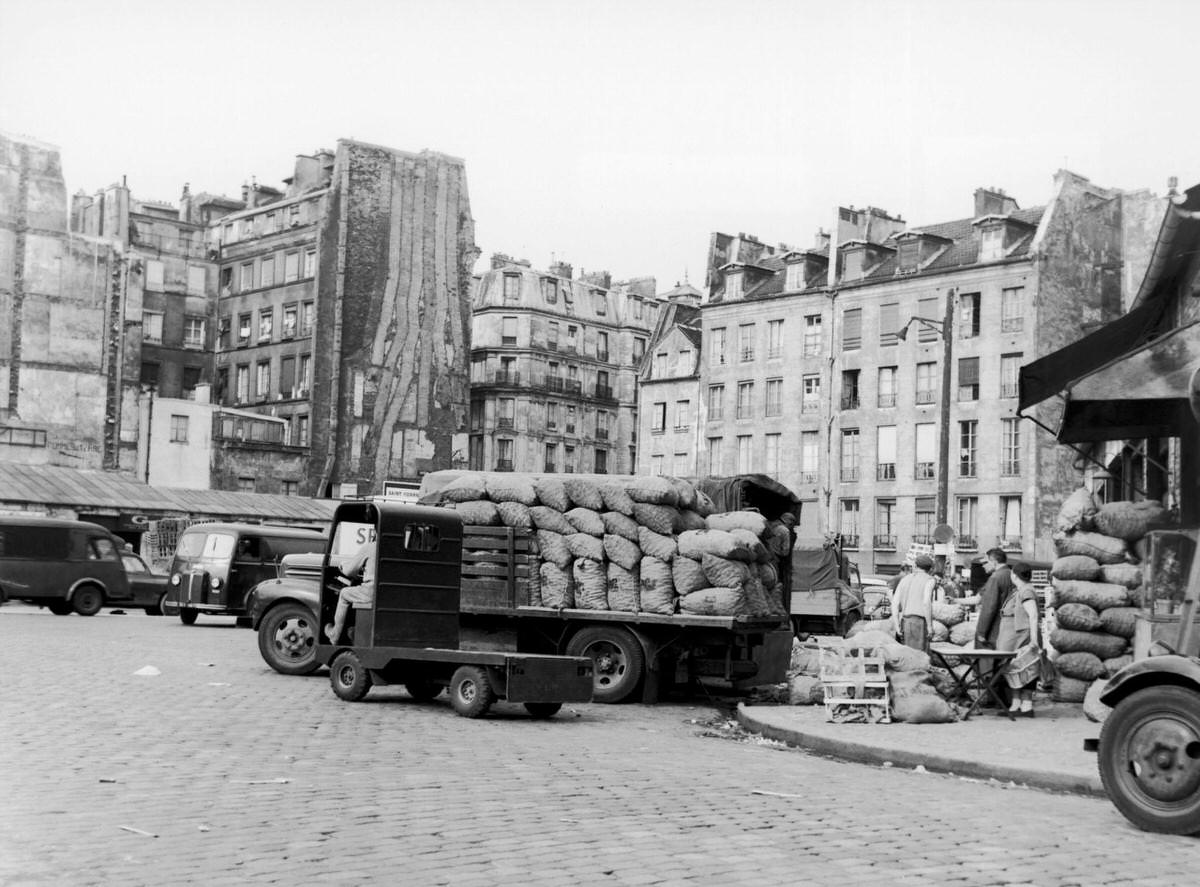
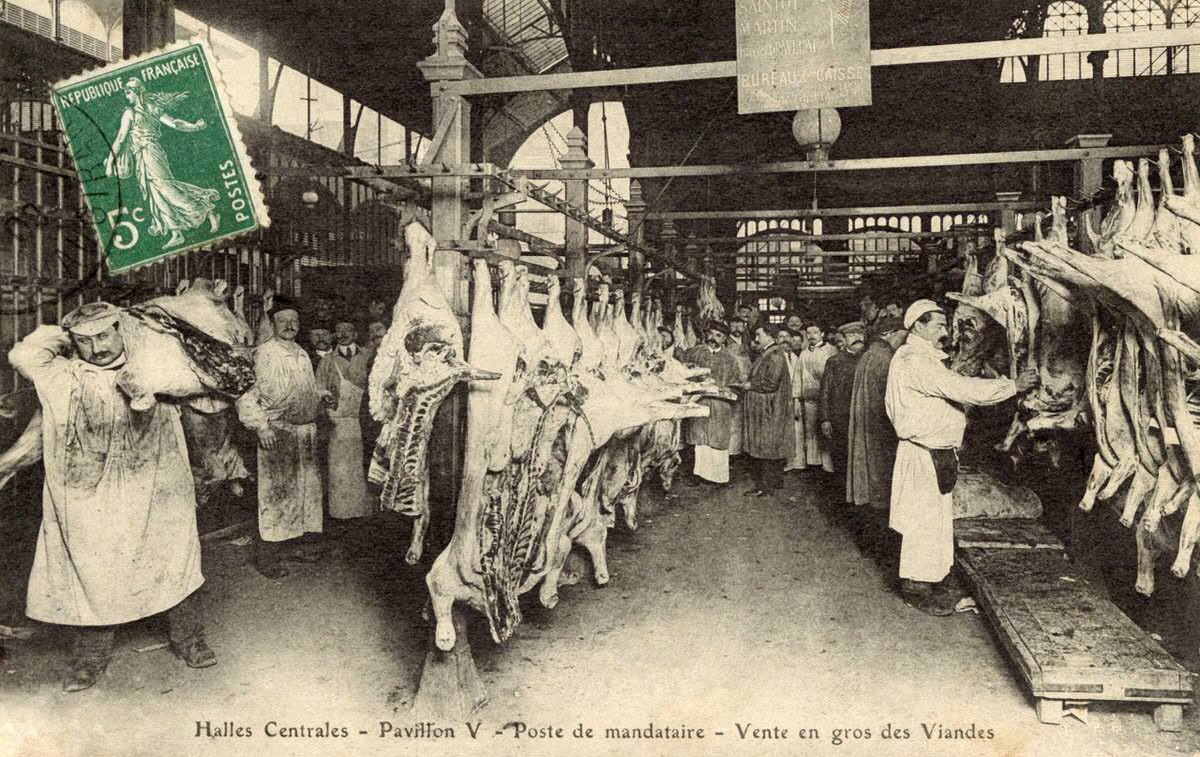
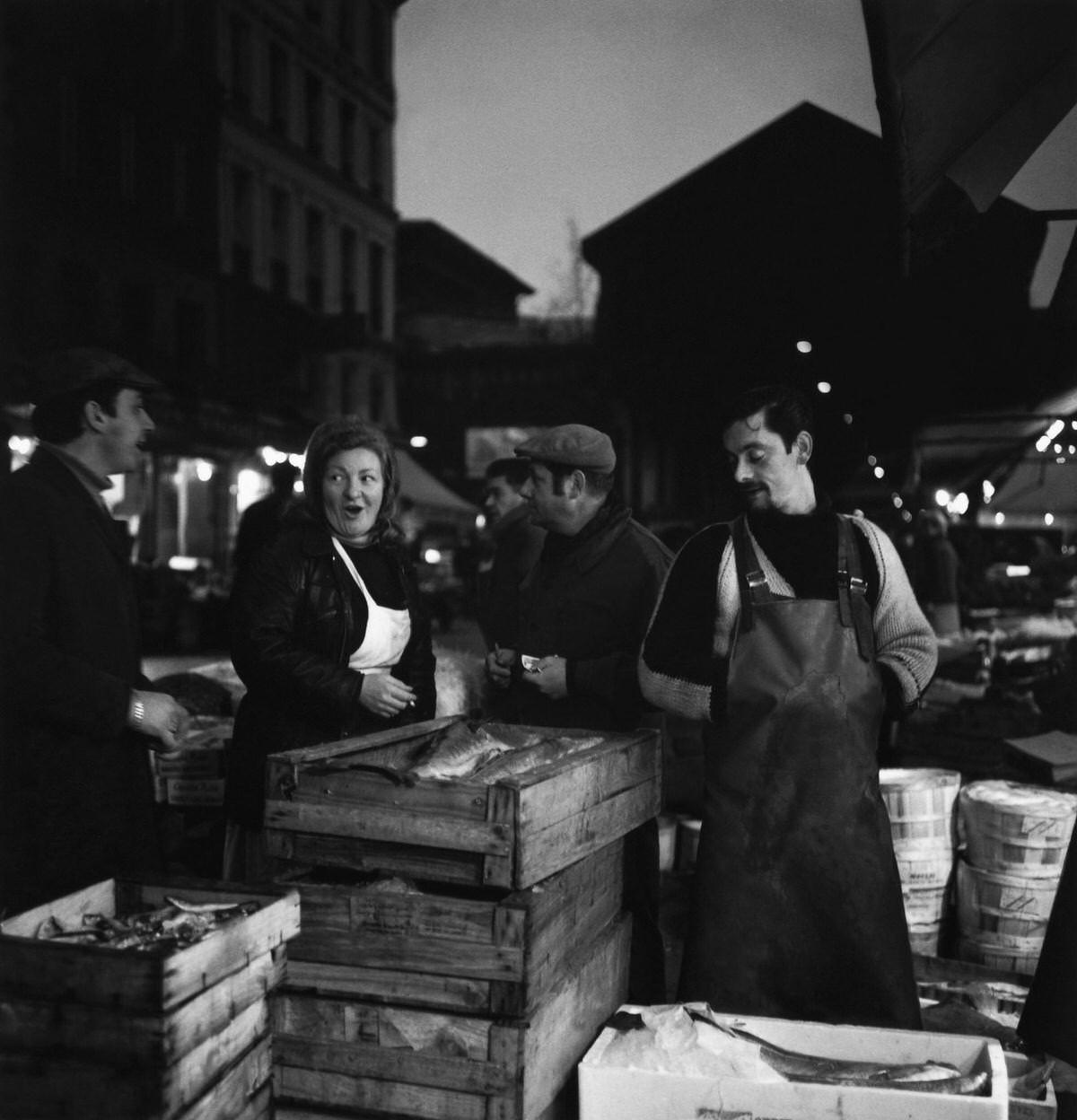
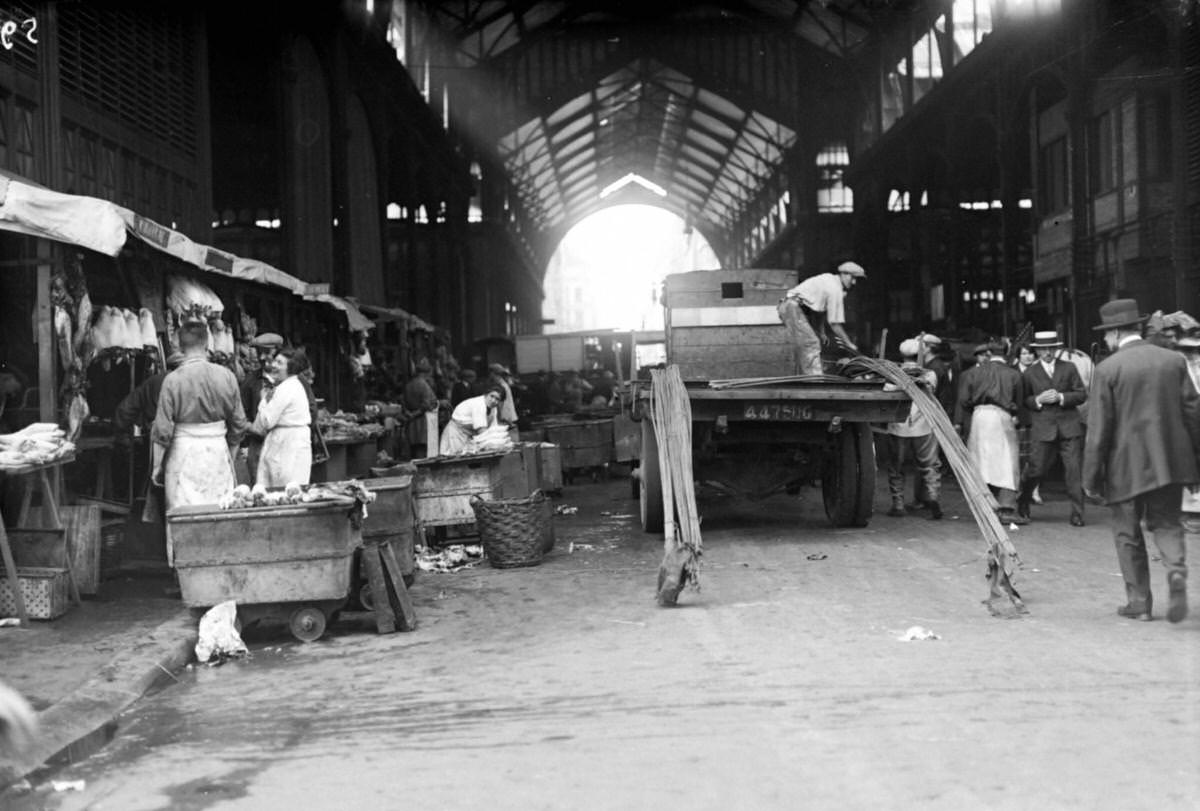
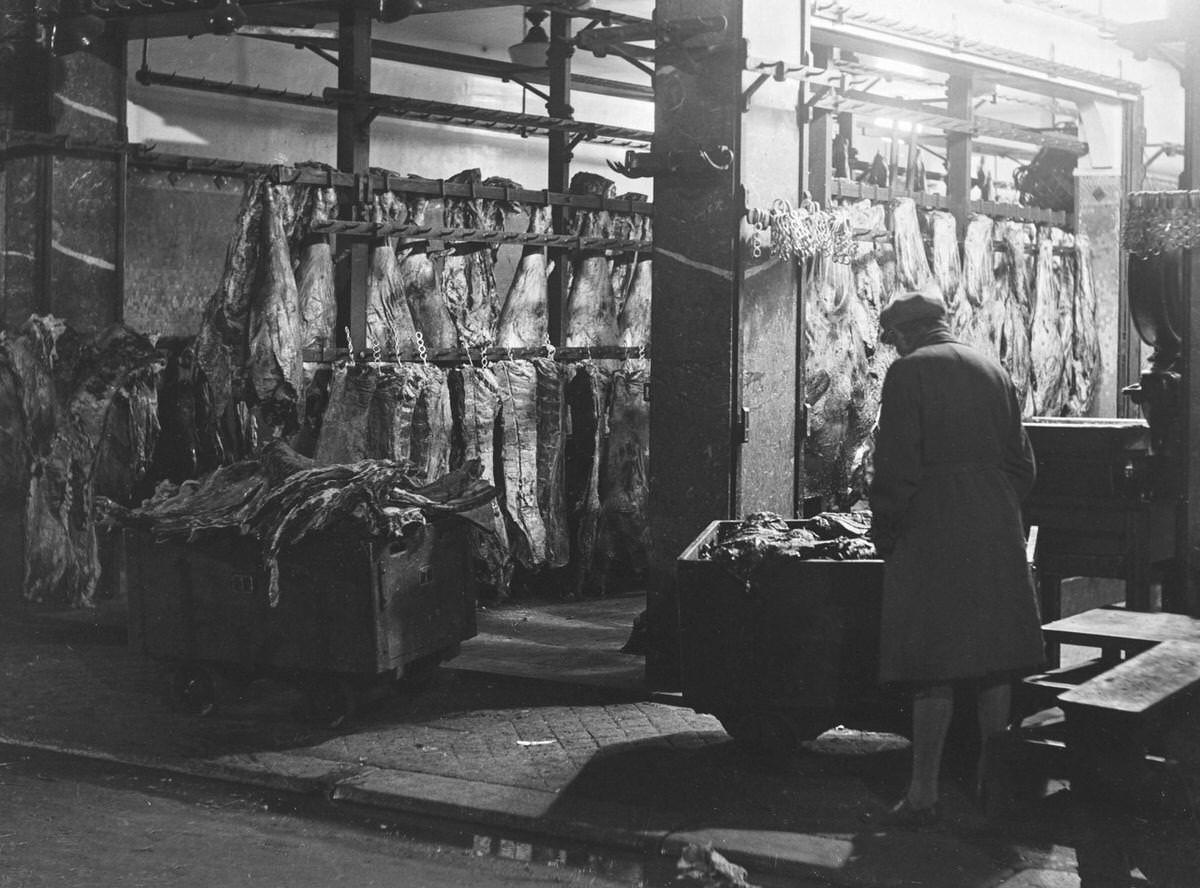
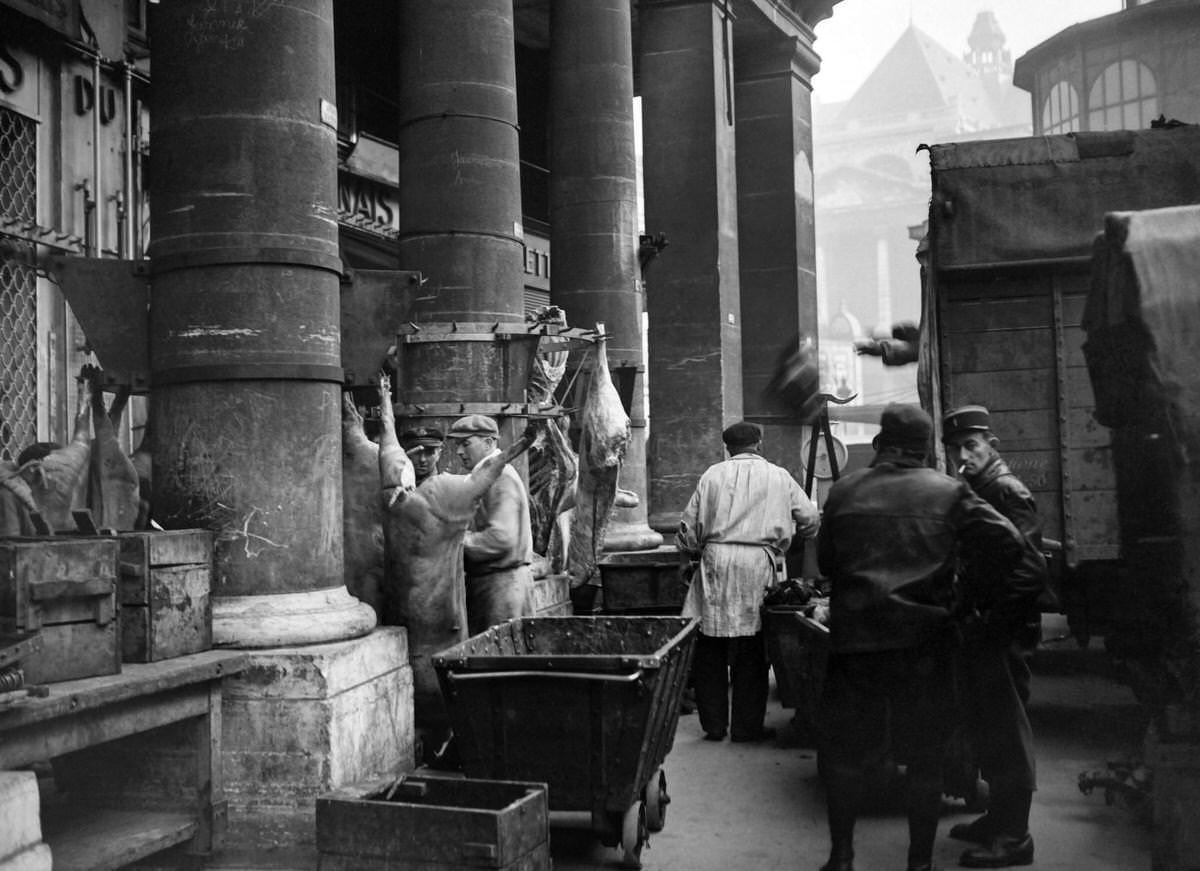
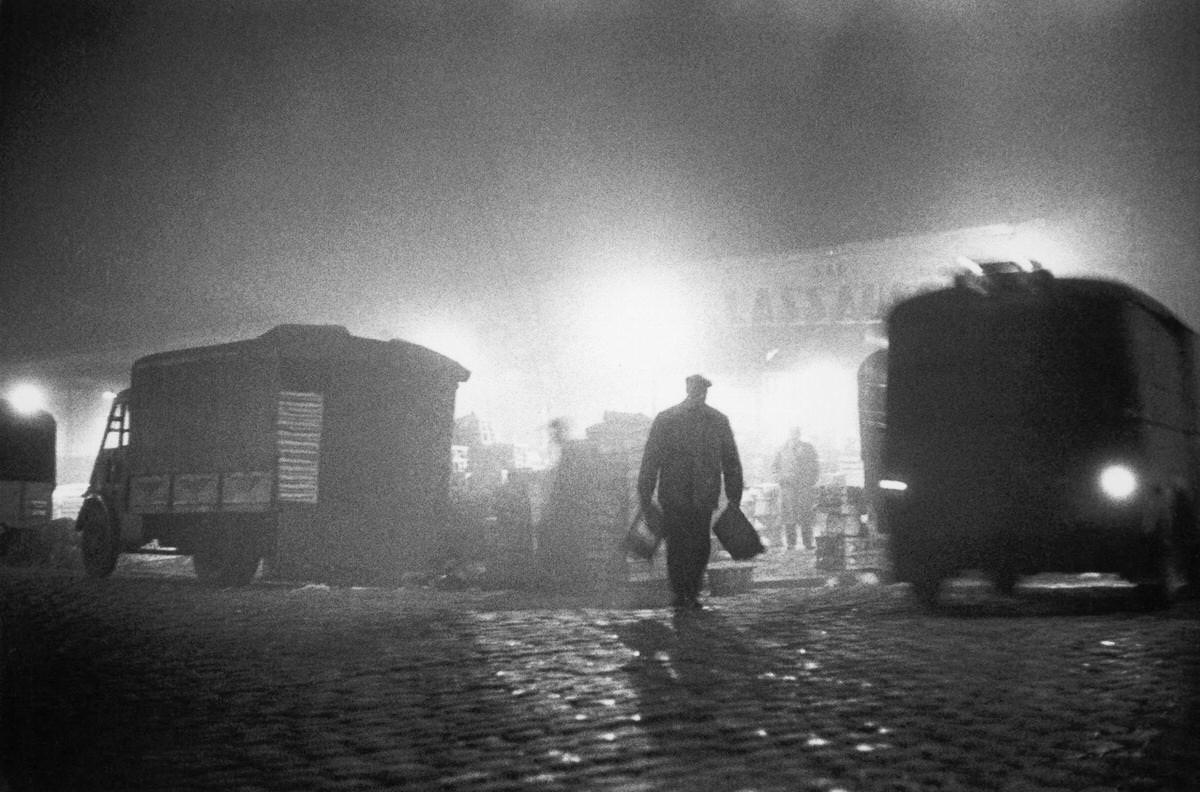
The market was most active at night. While most of Paris slept, the meat and fish pavilions roared to life. Thousands of tons of goods were unloaded, sorted, butchered, and traded before sunrise. Workers moved through gas-lit passages with hooks and handcarts, and by dawn, the buying and selling were already well underway. The photographs taken around 1900 show this world in raw detail — workers hauling loads, vendors arranging displays, and the iron structures rising above it all.
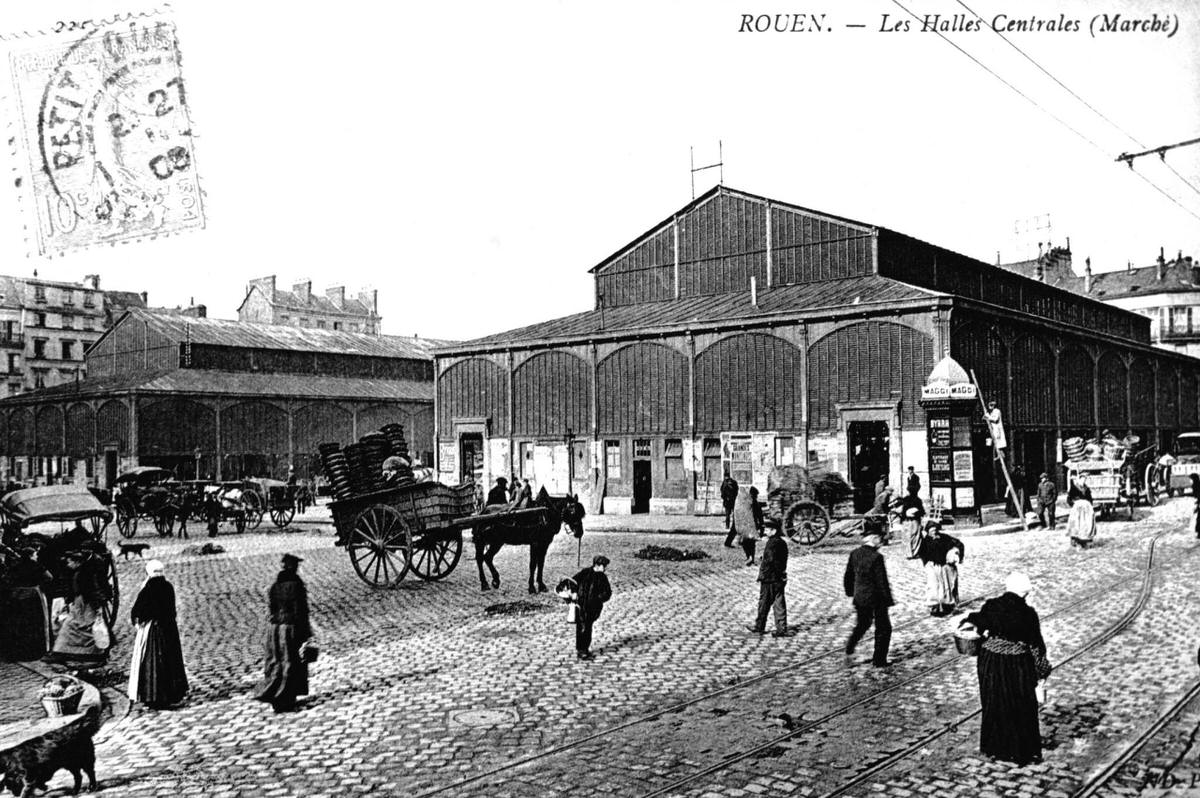
Les Halles in the morning, 1900The central halls of Rouen, in Seine-Maritime, 1900Seafood stalls in Les Halles, 1900
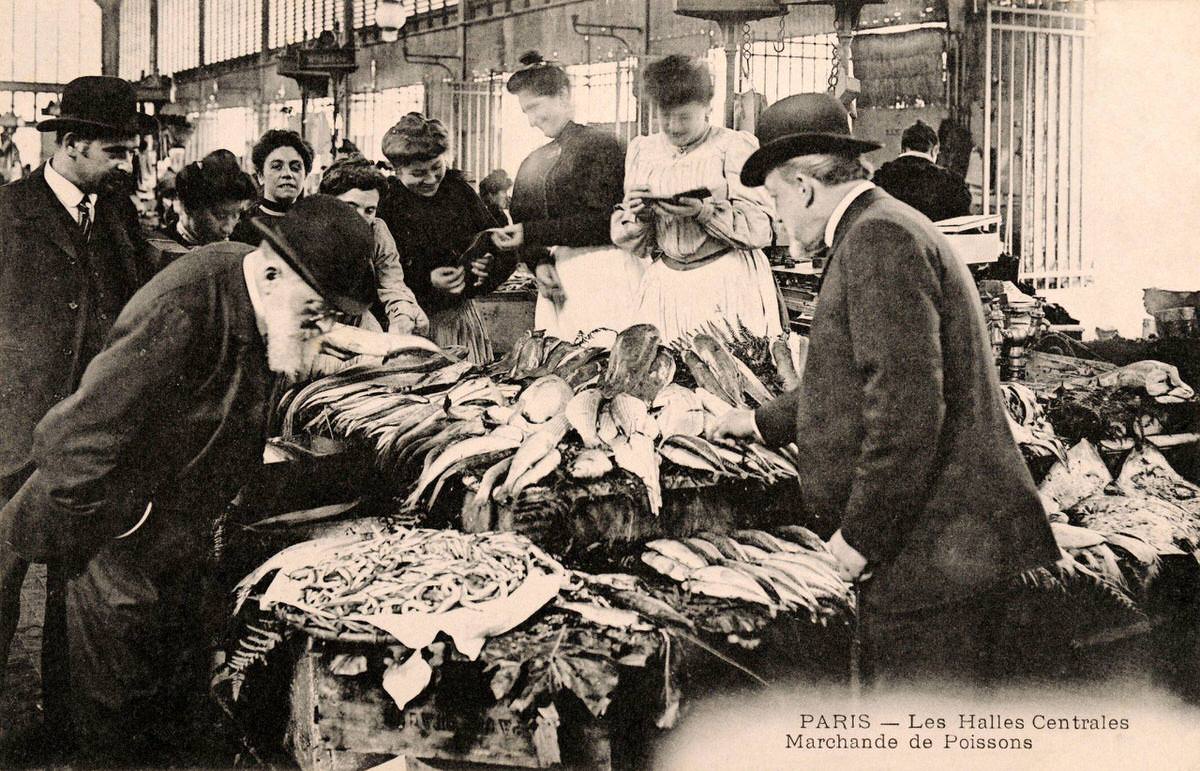
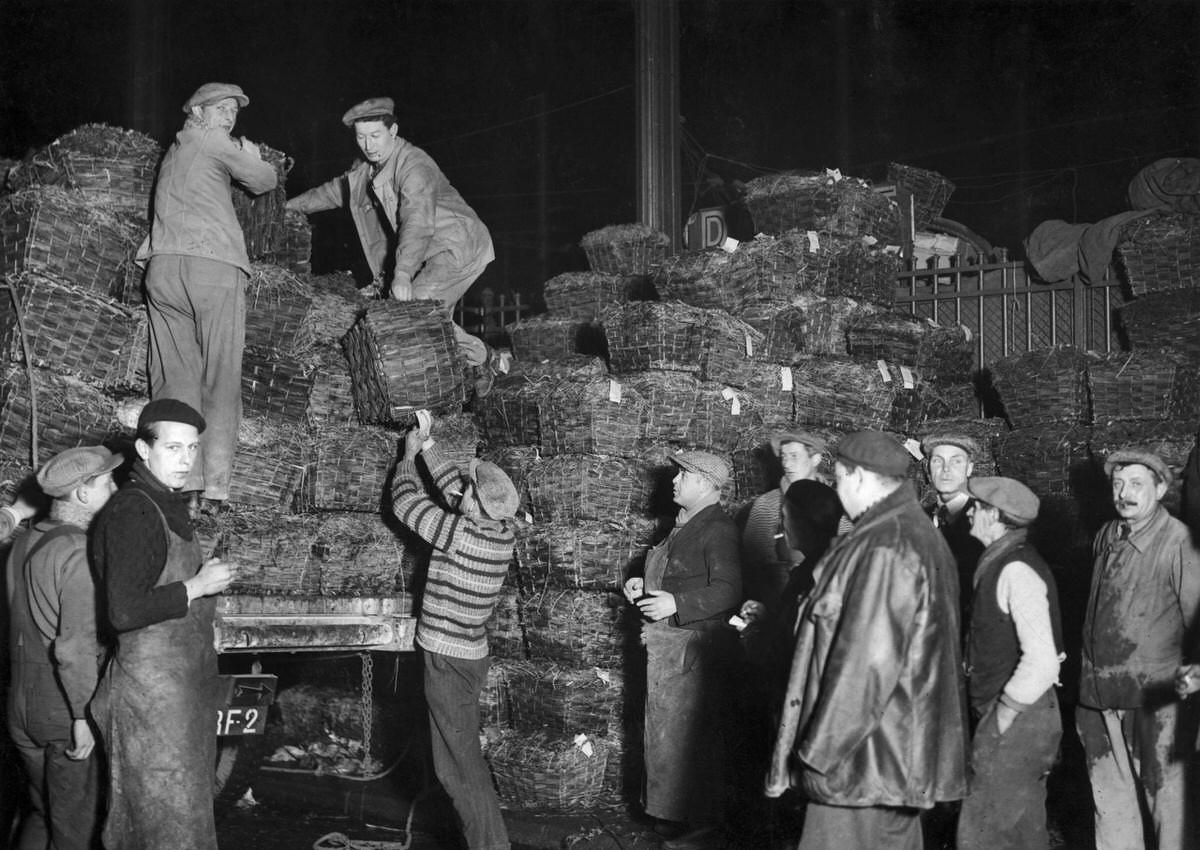
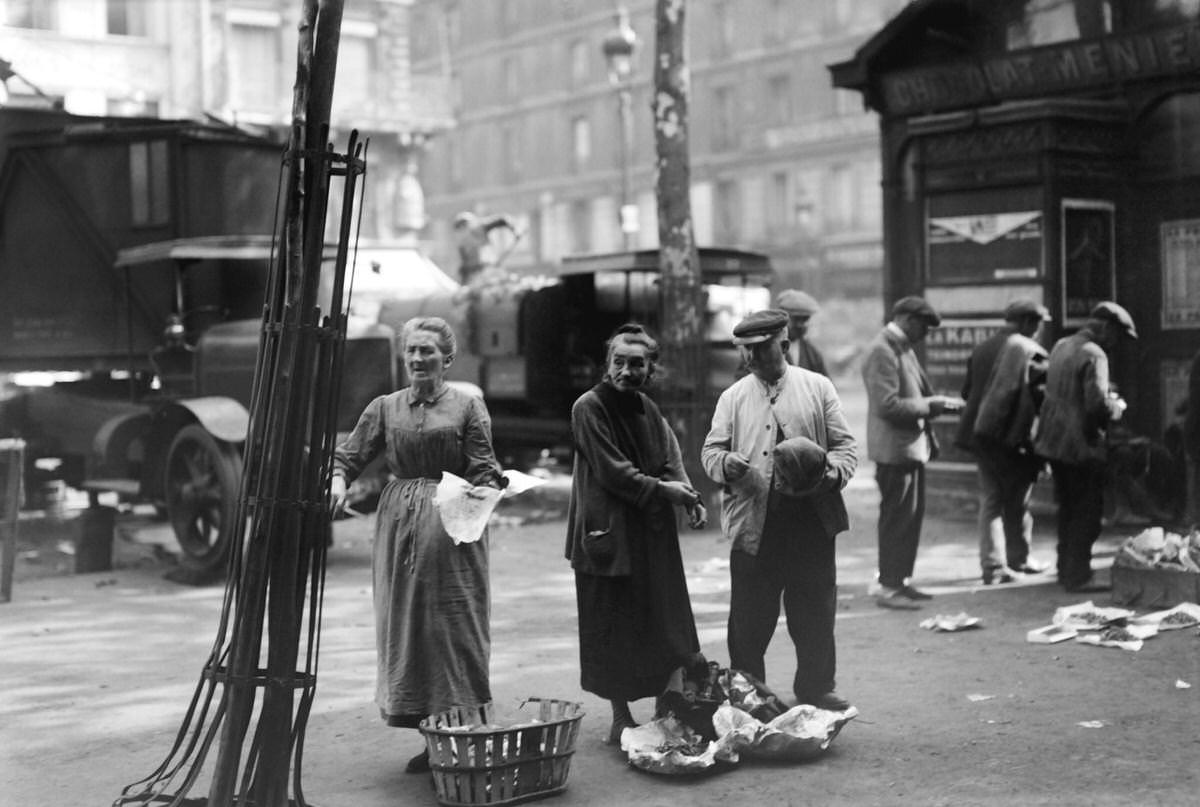
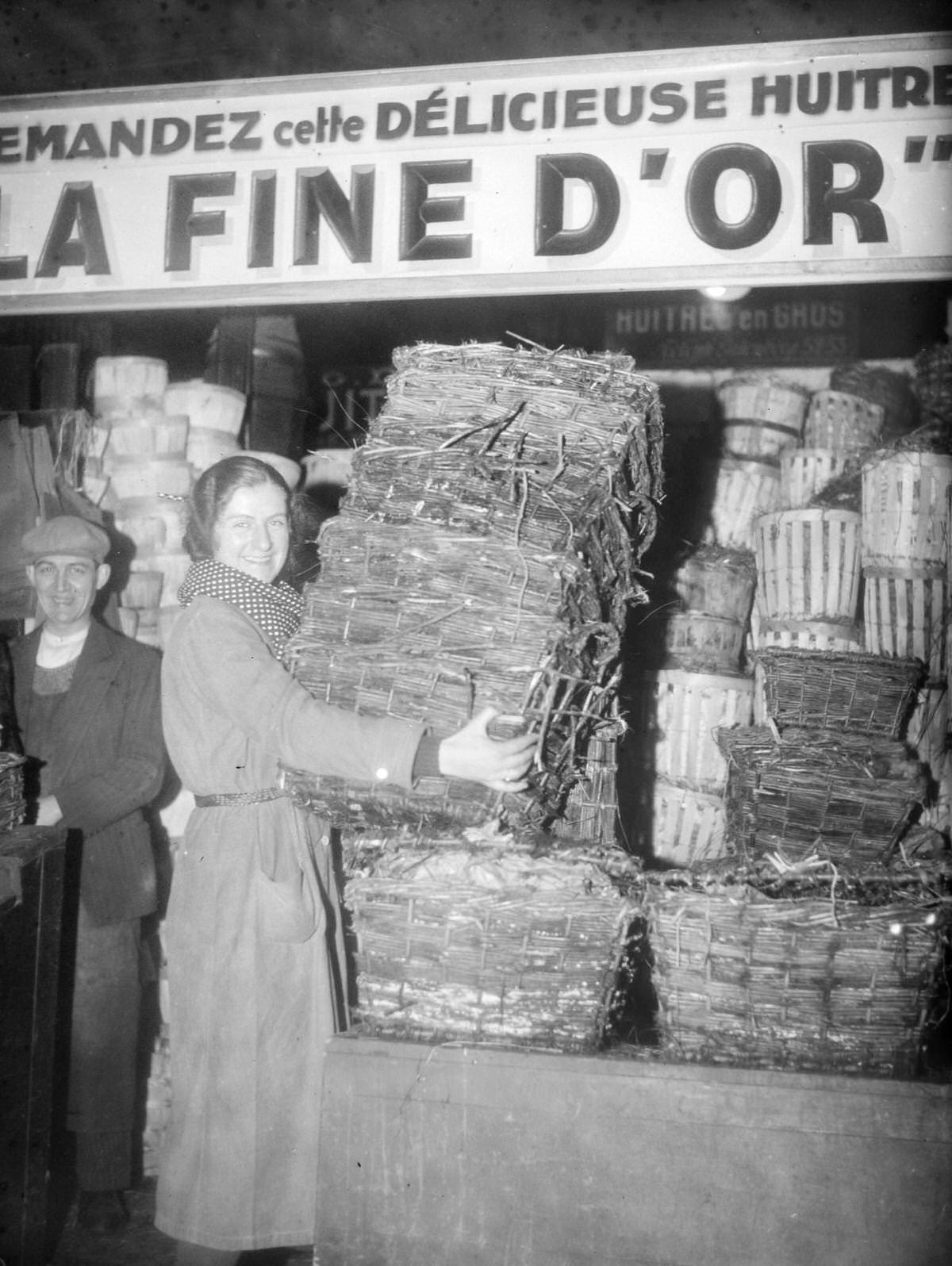
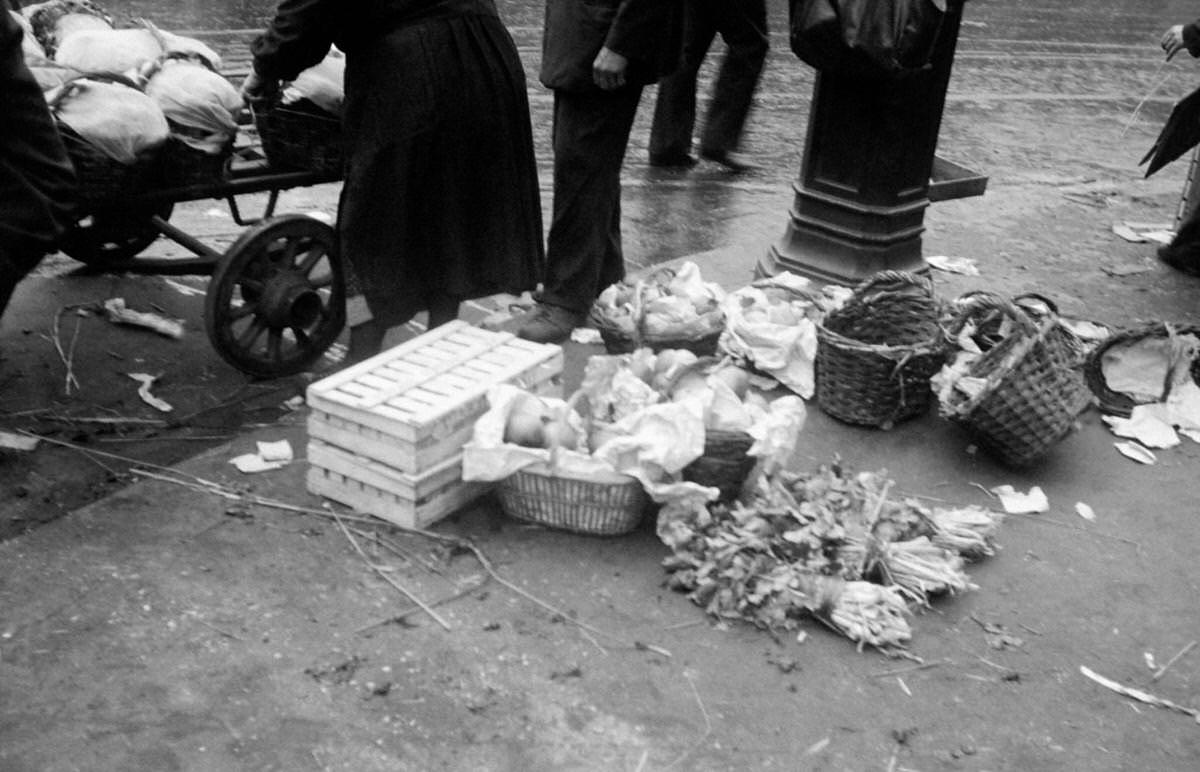
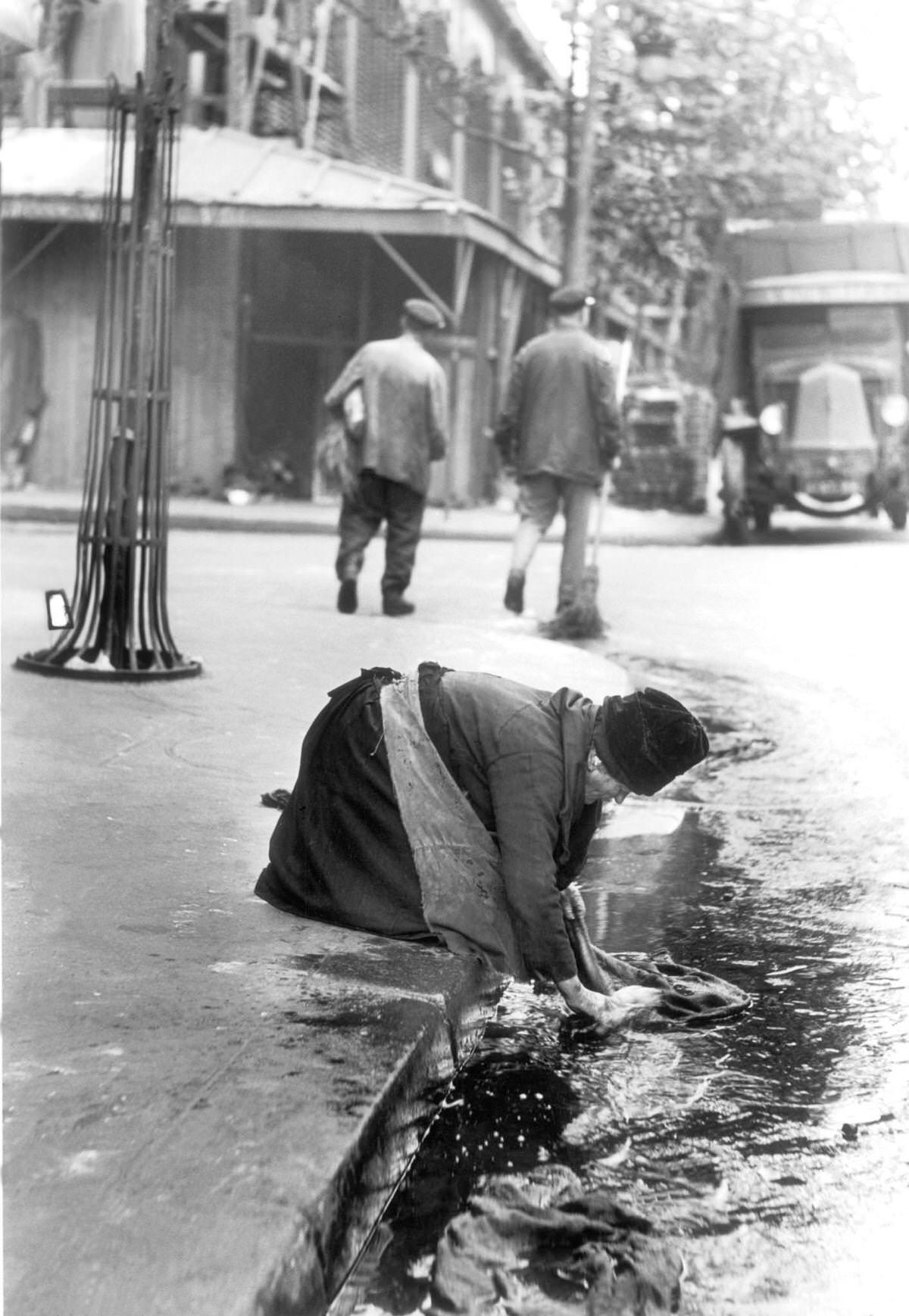
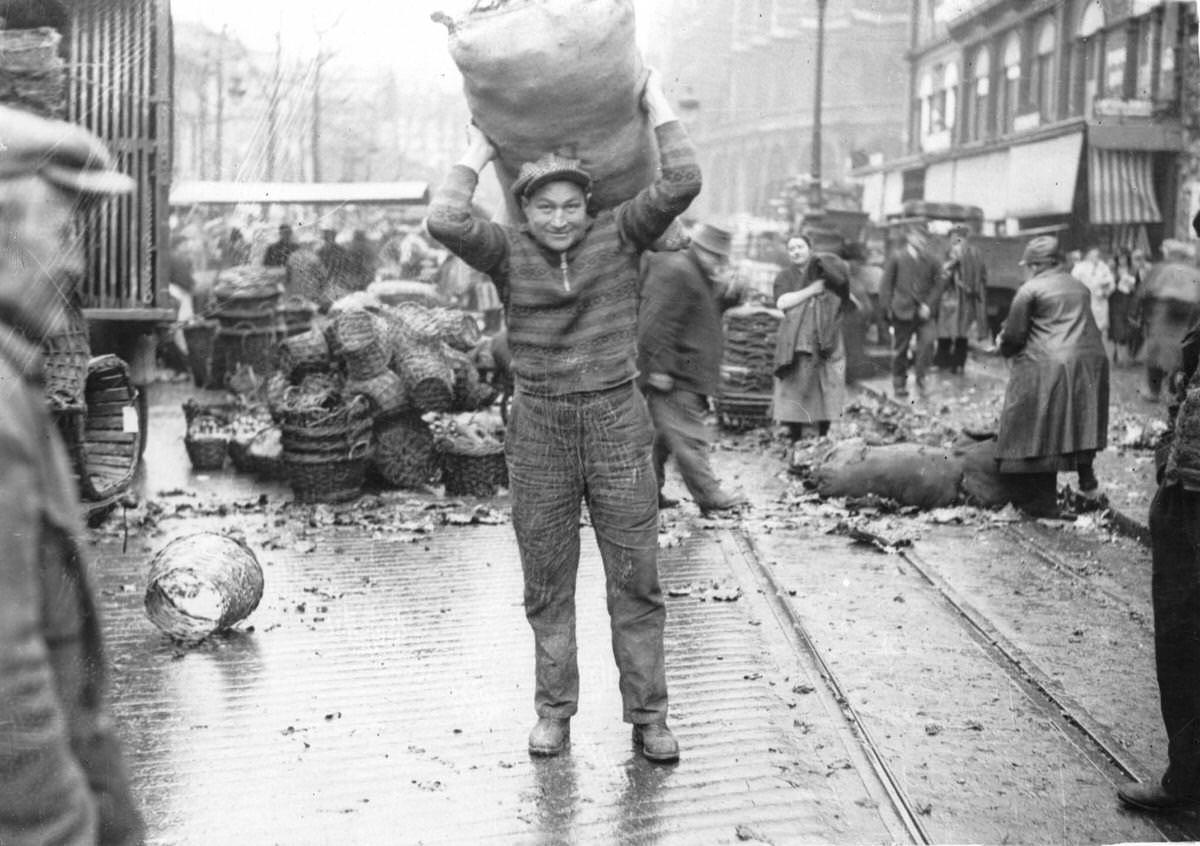
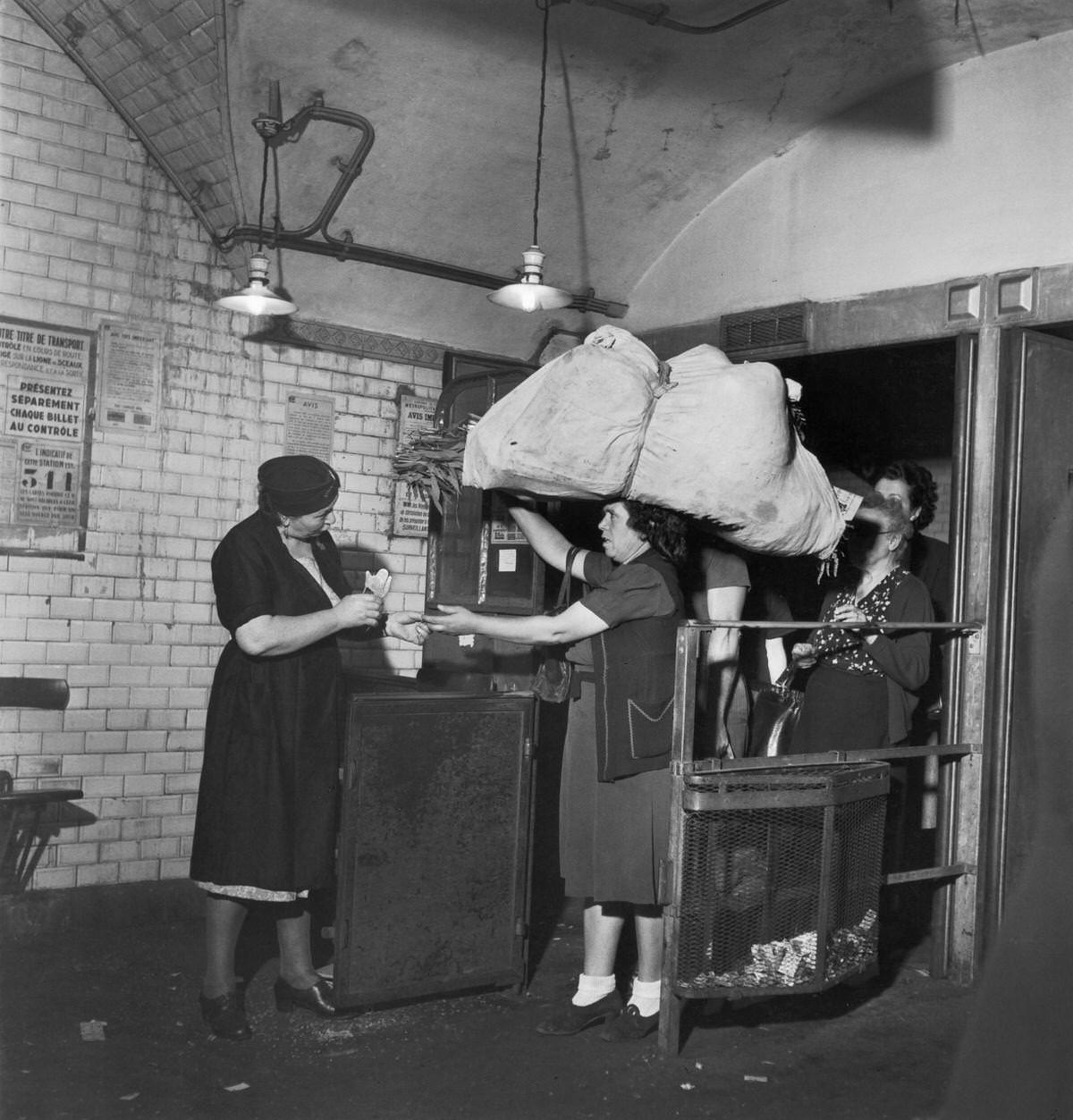
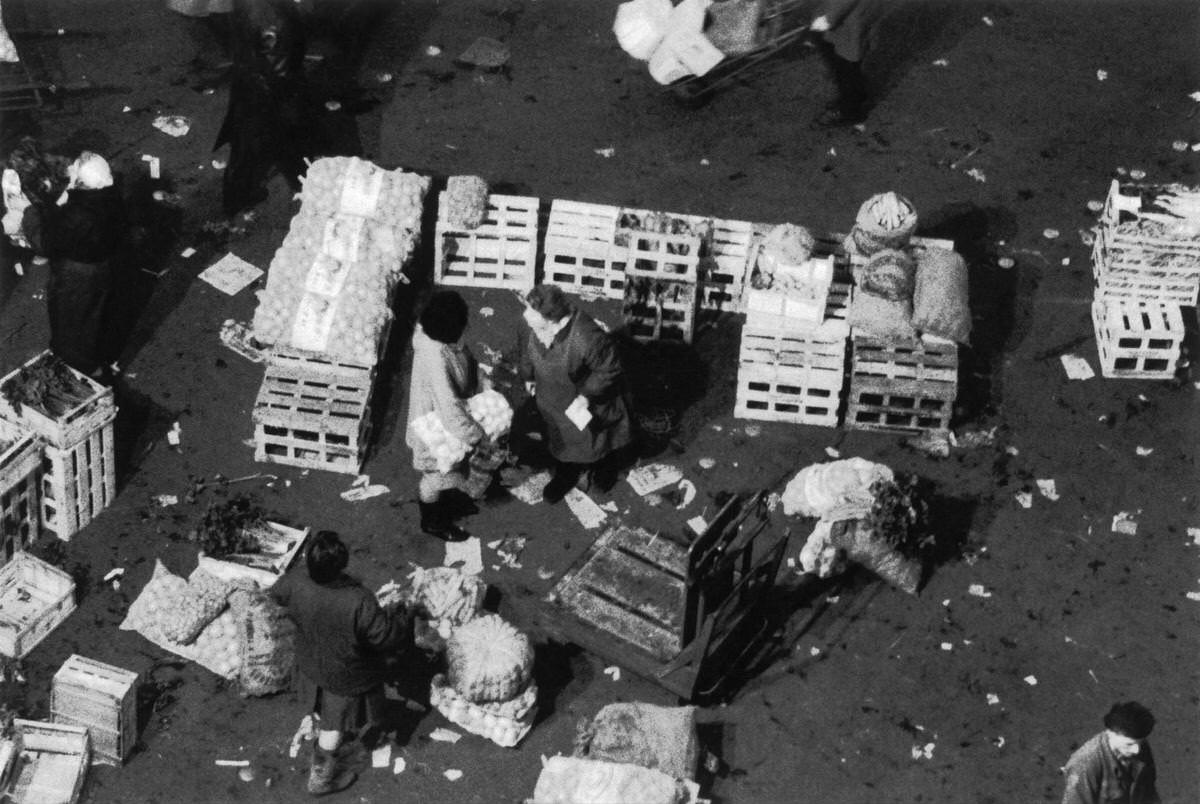
By the early 1900s, the market employed thousands of workers — from the legendary “Forts des Halles,” the muscle-bound porters who carried impossibly heavy loads on their backs, to the women who scrubbed market bags in the gutters each night so they could be filled again the next morning. The fish stalls were among the busiest. Oysters arrived by the cartload, especially around the Christmas season when demand exploded. Workers stacked baskets five and six high along the pavements to keep up.
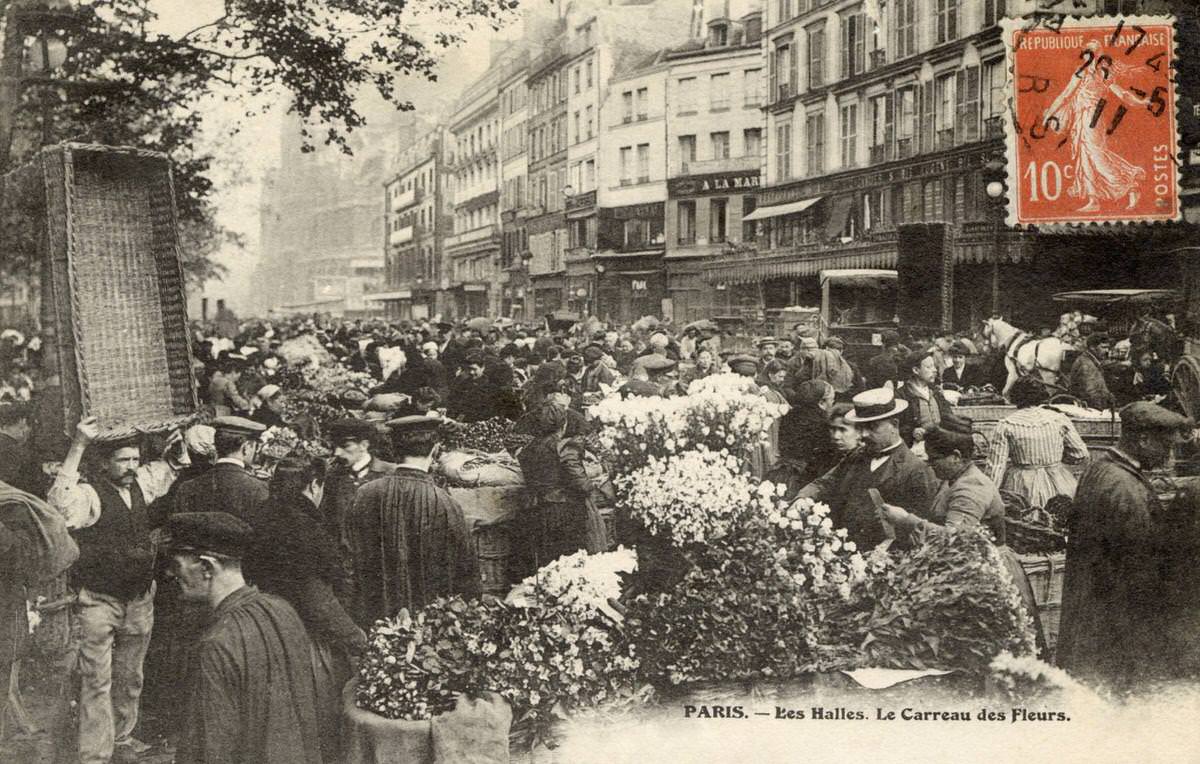
Employees and customers of the Fish Market at Les Halles in Paris, 1910.A flower stall and street scene outside Les Halles in Paris, 1908.
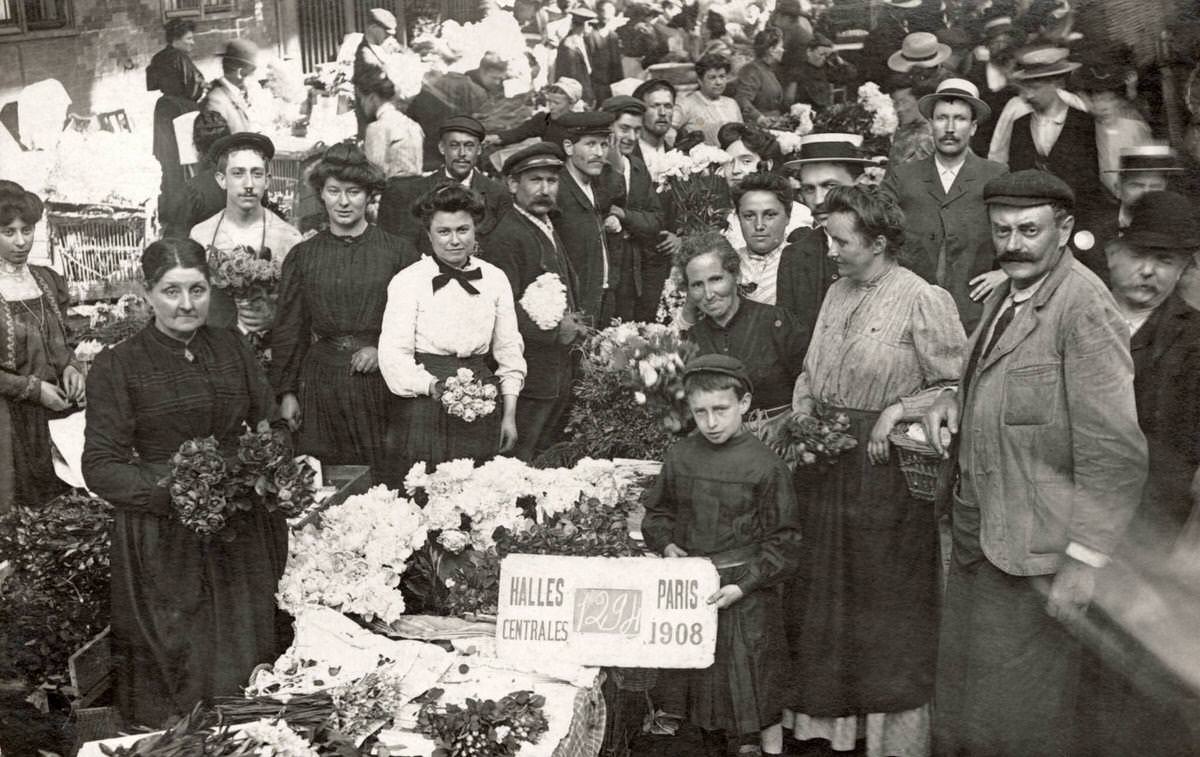
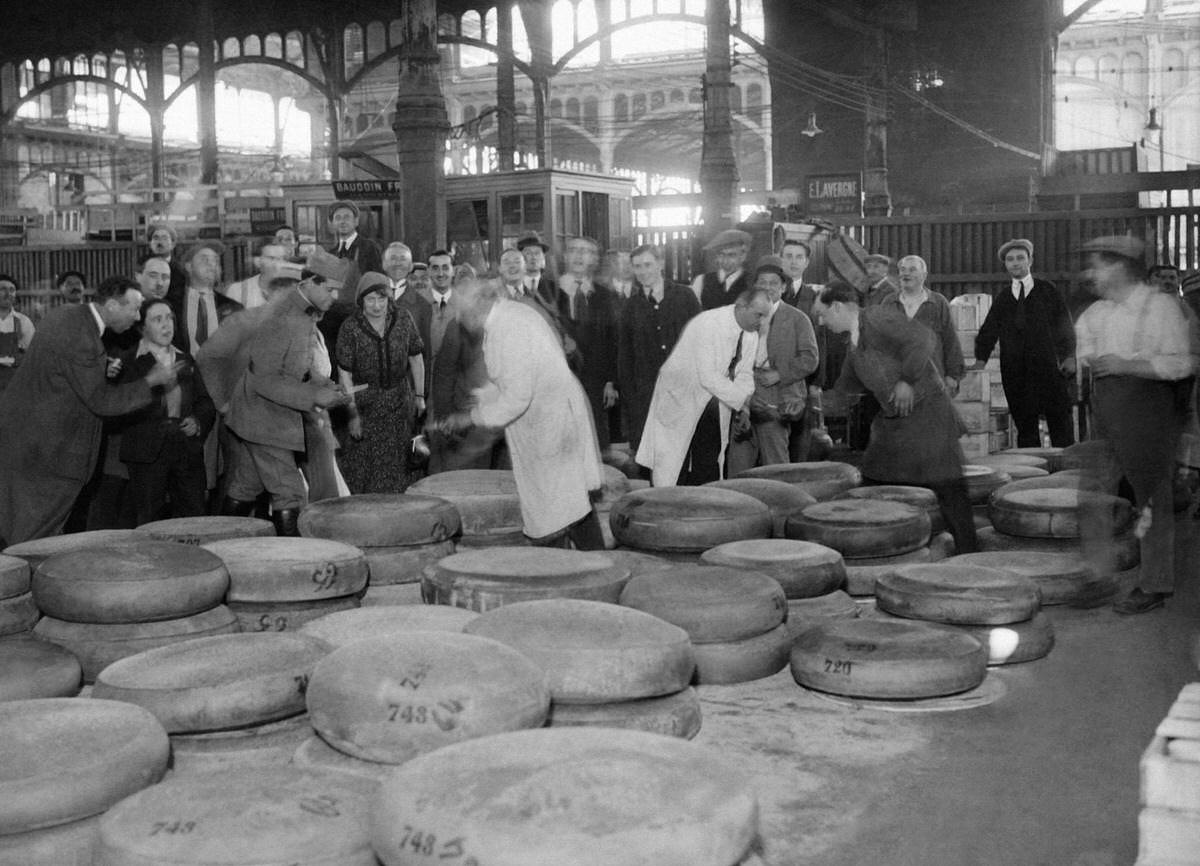
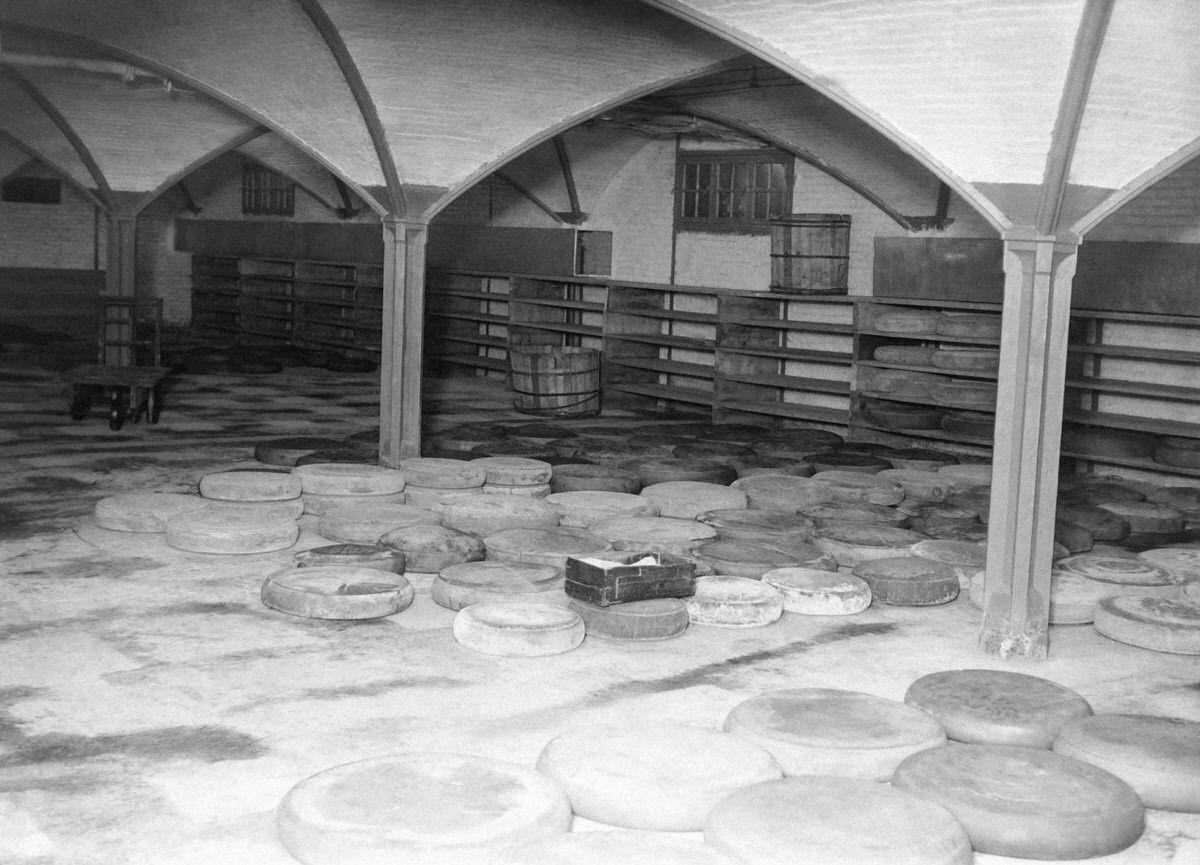
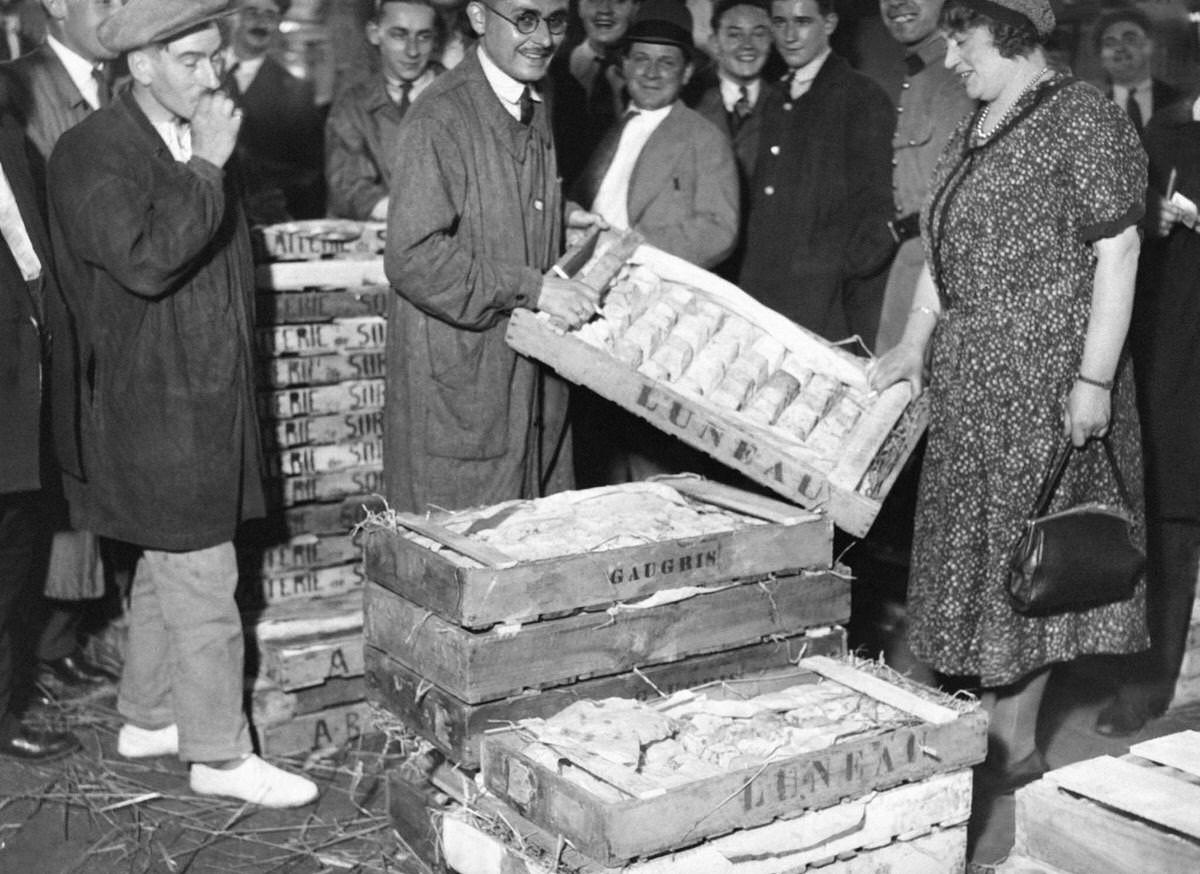
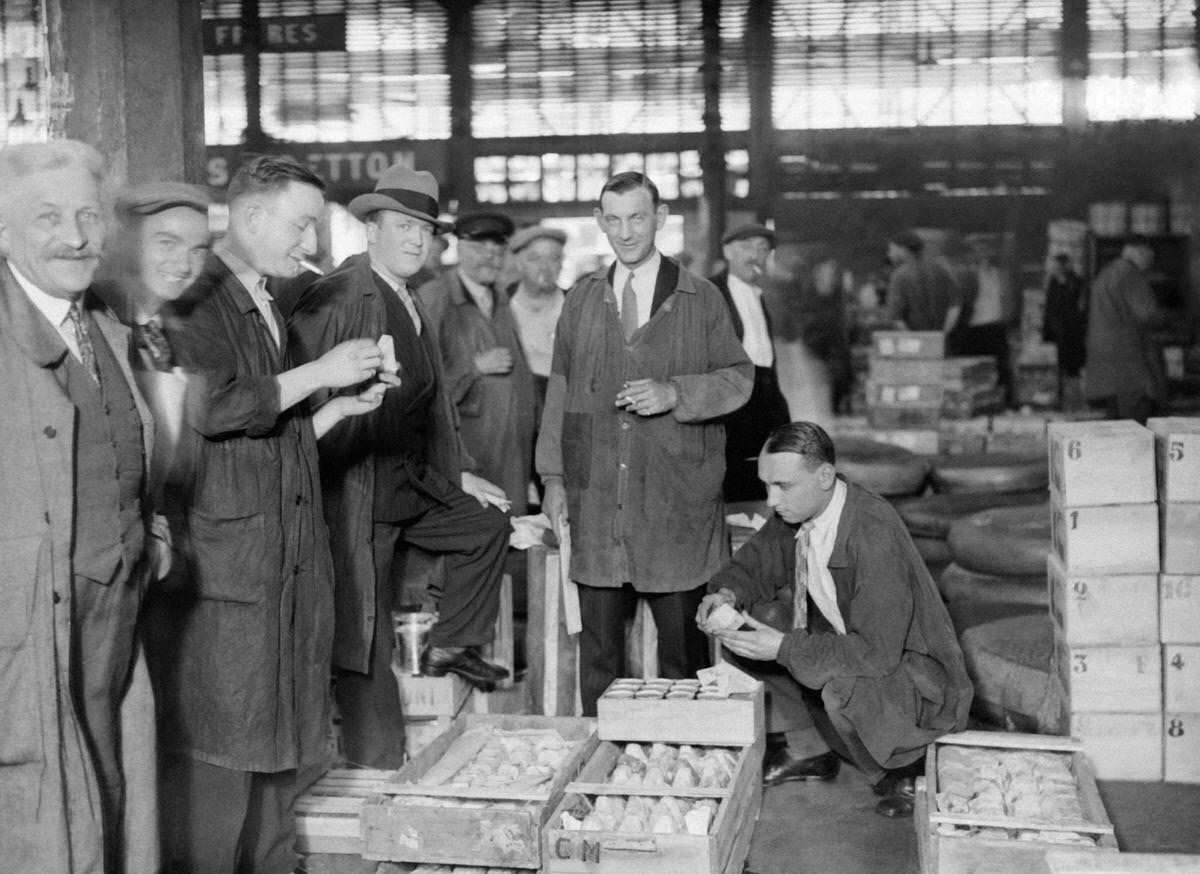
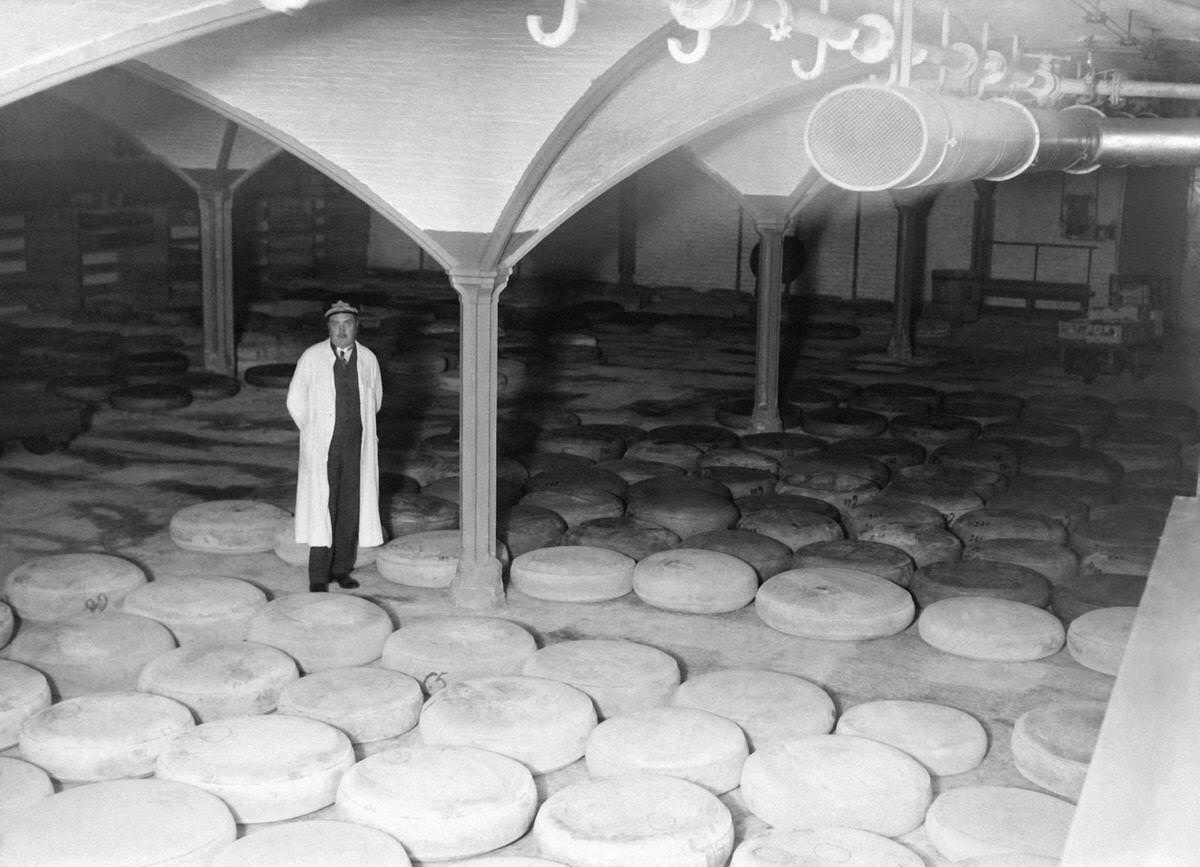
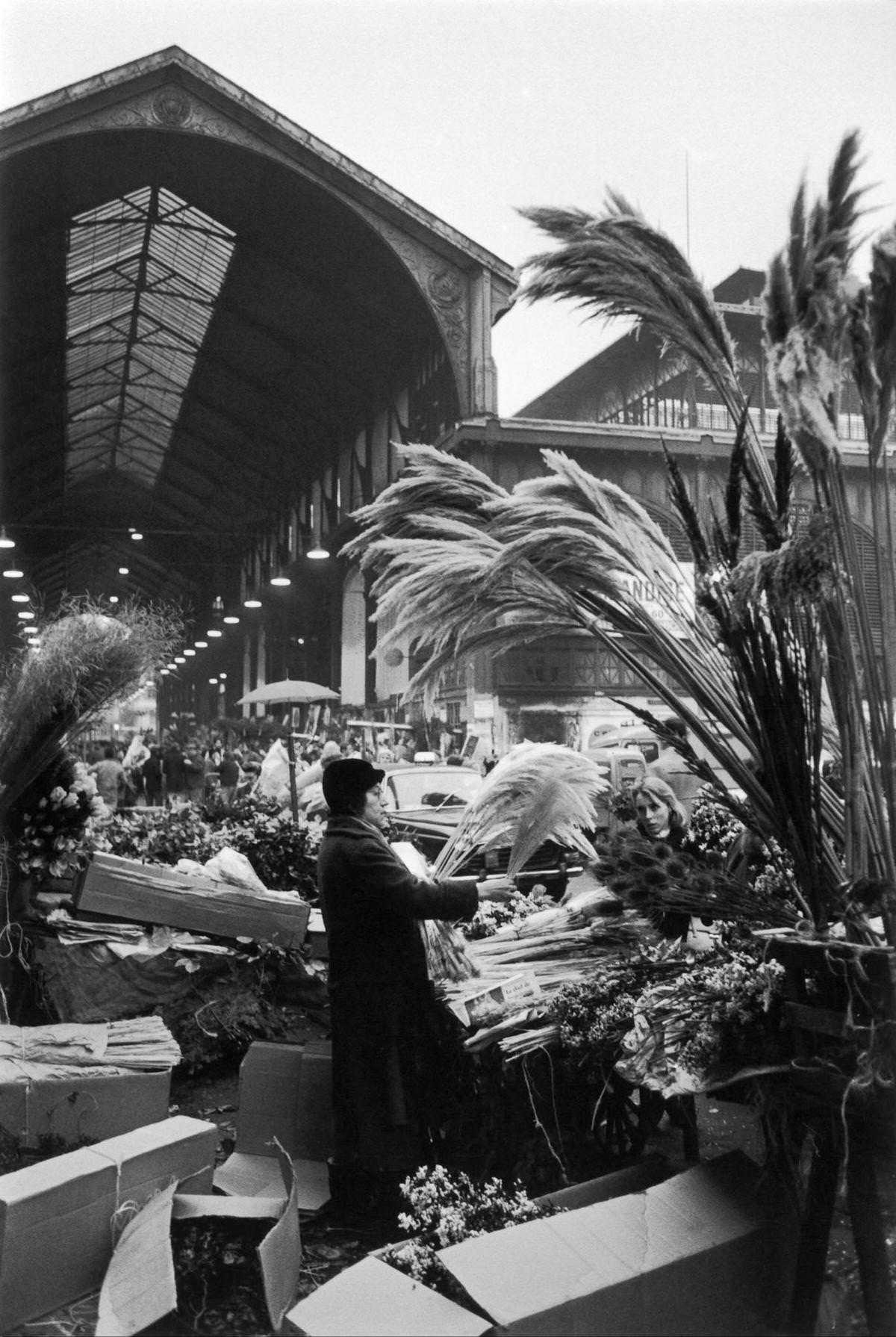
The flower and cheese markets drew a different kind of crowd. Women browsed flower stalls that lined the streets just outside the main pavilions, while cheese sellers kept their stock in cool underground cellars beneath the market. In 1930, a dedicated cheese conservation room was formally opened in those cellars — a sign that even within the chaos, there was careful attention to quality and storage.
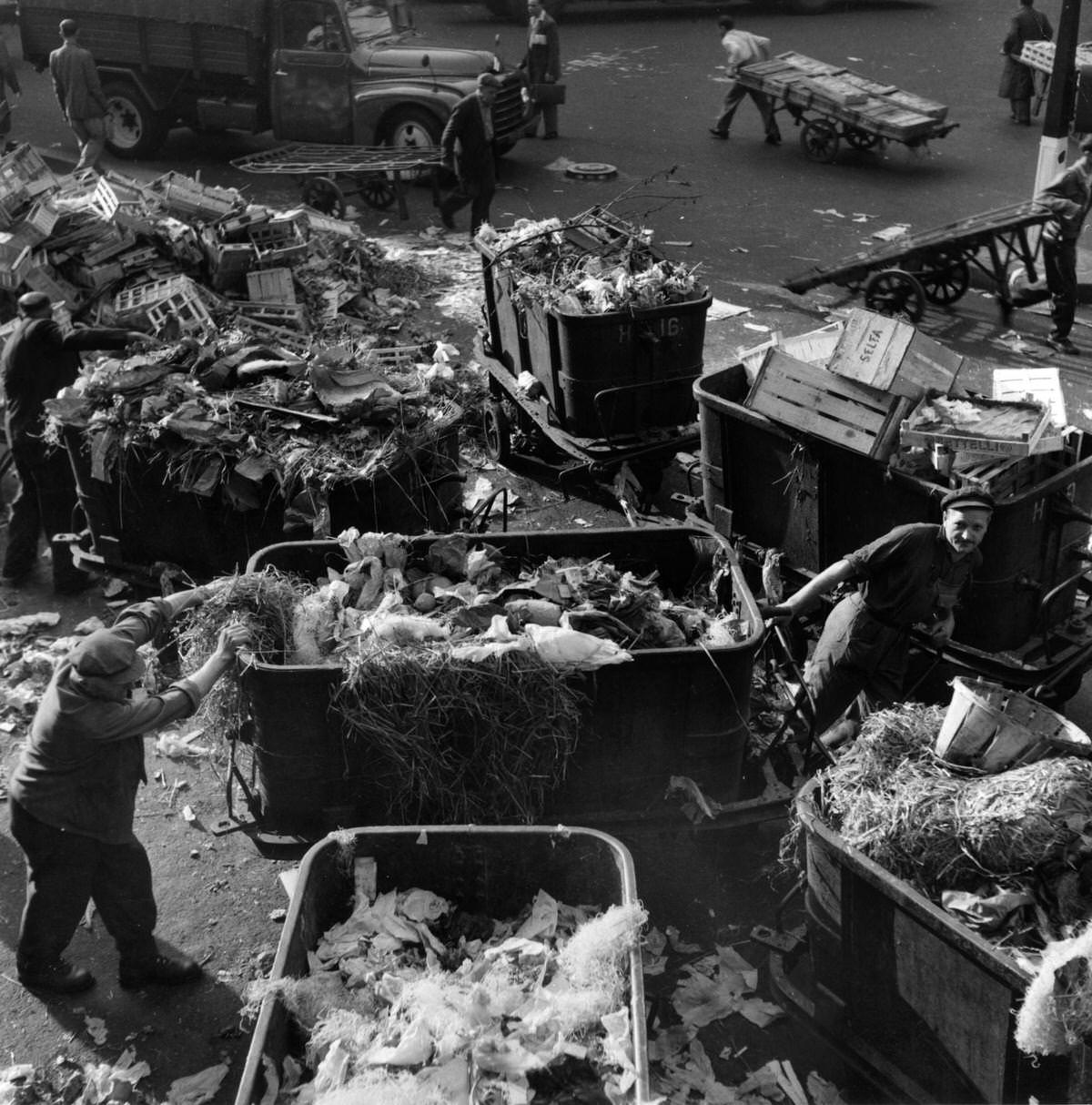
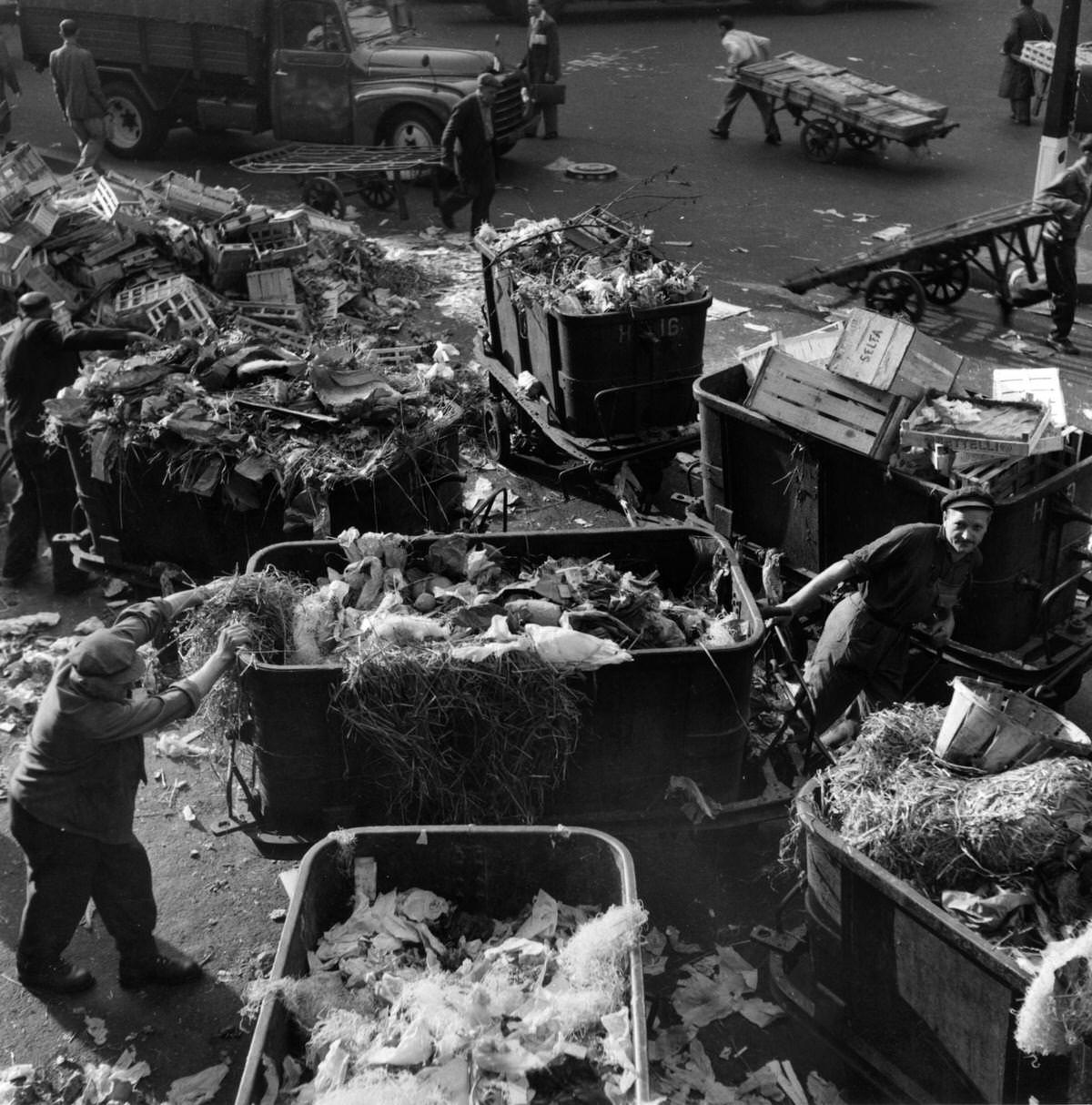
A wholesale meat market at Les Halles in Paris, 1908.Customers and employees of a market stall selling flowers at Les Halles in Paris, 1908Employess and costumers of a seafood stall in Les Halles in Paris, 1908.Ladies selling seafood in Les Halles in Paris, 1908.A cheese stall in Les Halles in Paris, 1908.Rubbish collectors in Les Halles, Paris, 1908.
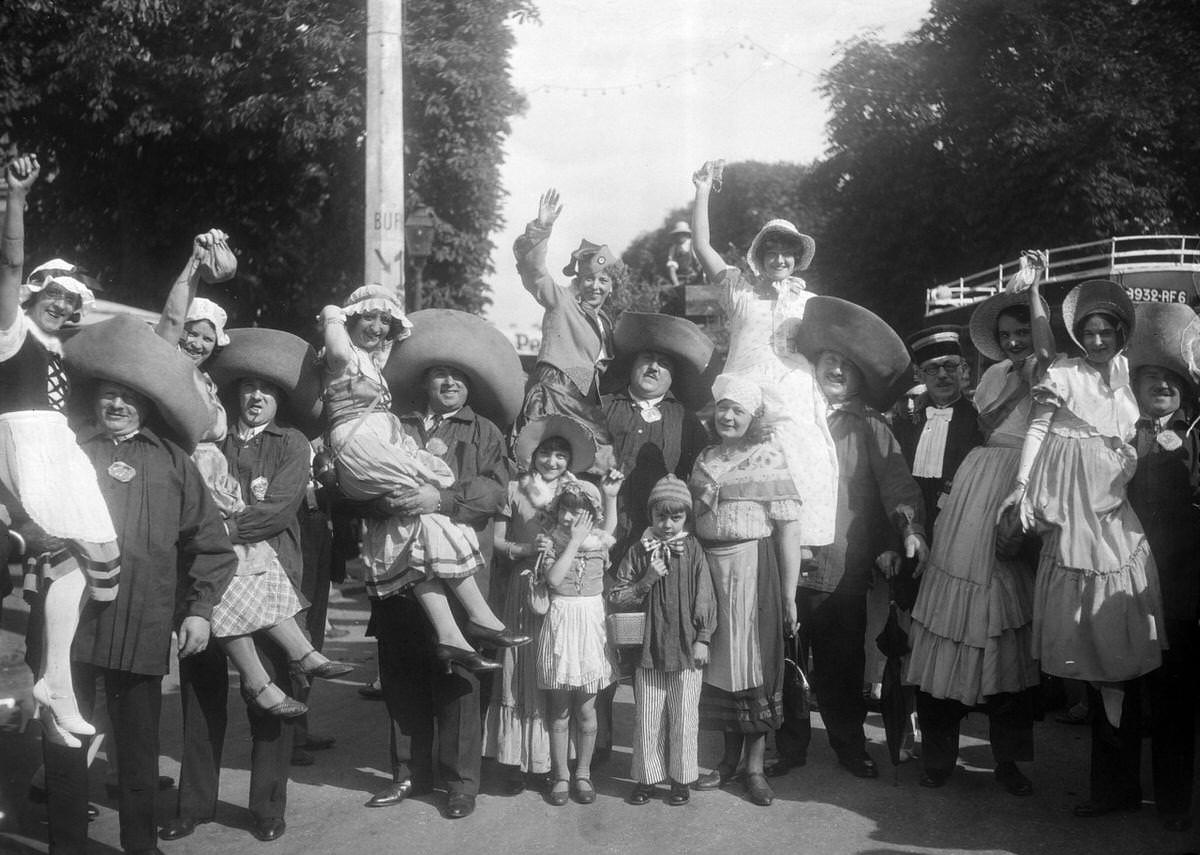
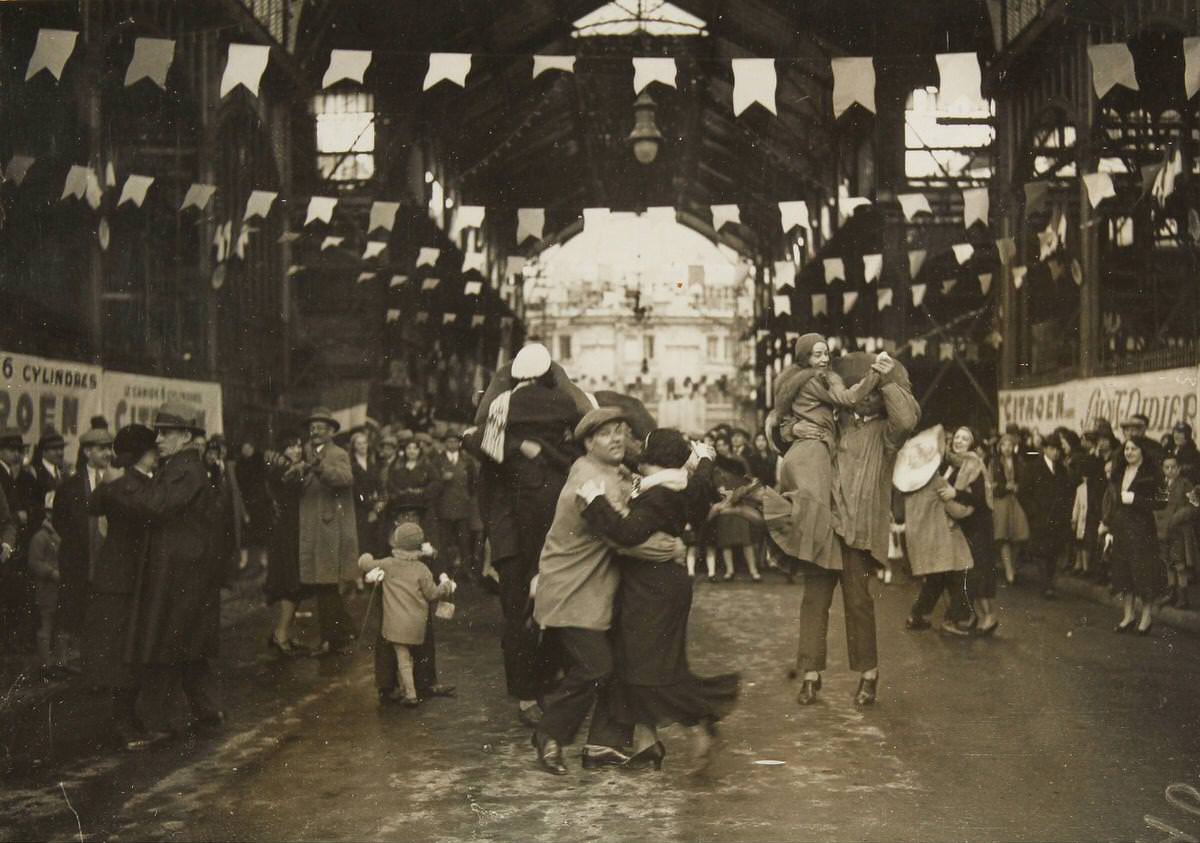
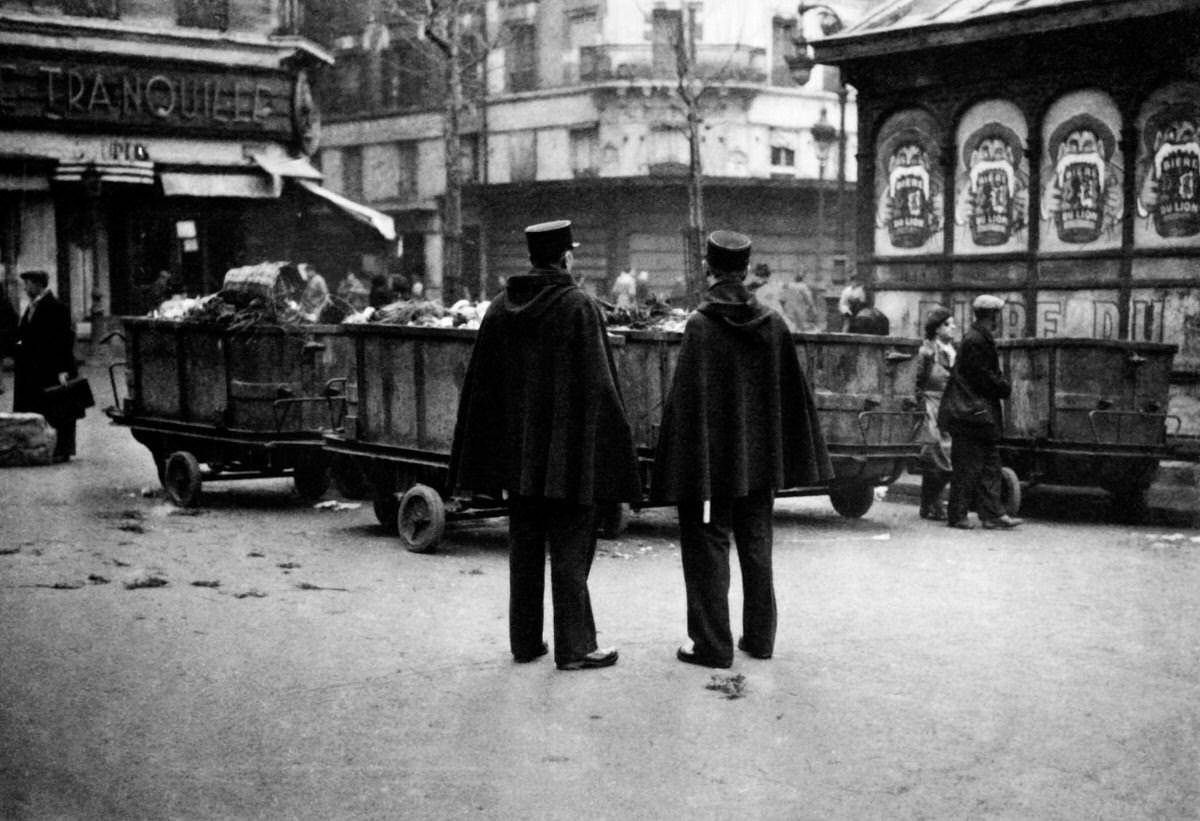
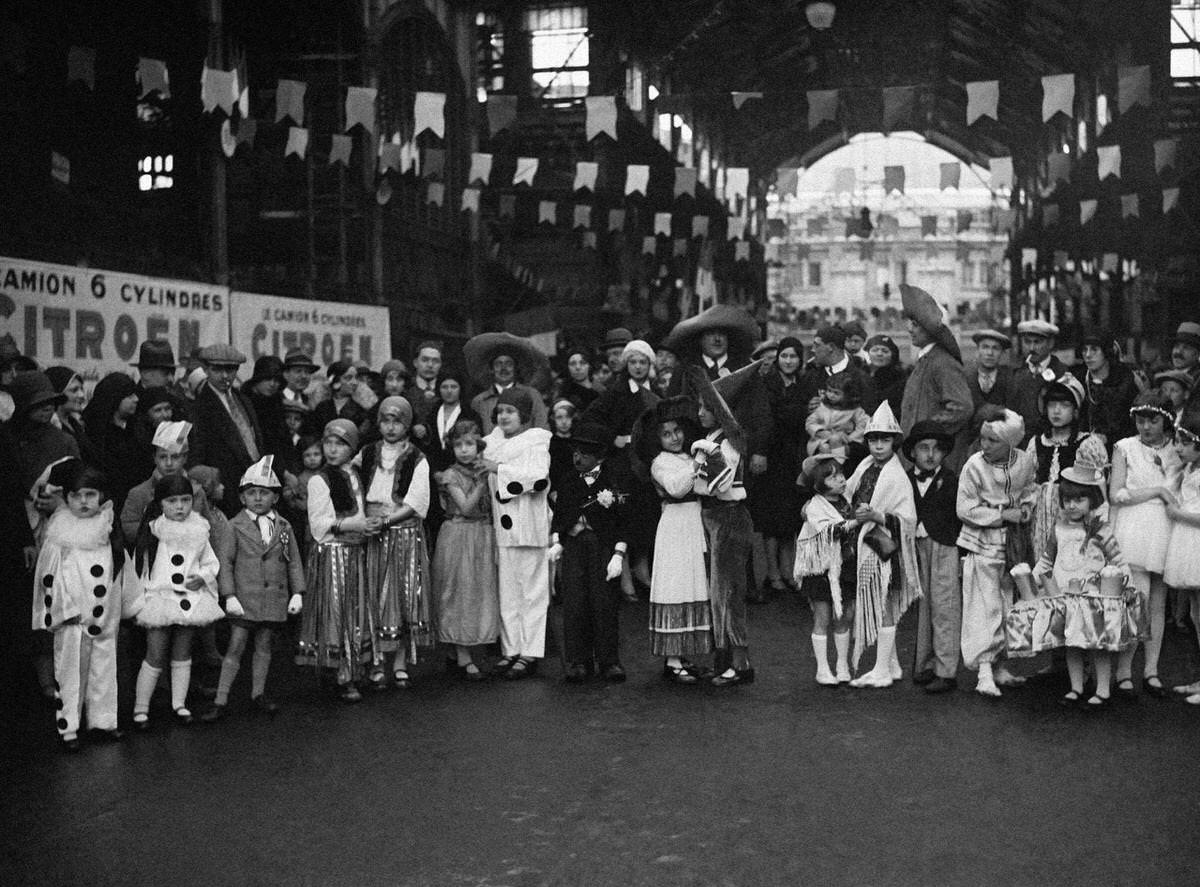
Beyond food, Les Halles was a social world of its own. Workers held annual festivals inside the pavilions. The Lily of the Valley festival each spring drew large crowds, with dancing in the halls and children dressed in costumes wandering through the market stalls. Police patrolled the district regularly — not because of unusual crime, but simply because the volume of people, goods, and money moving through the area demanded a constant presence.
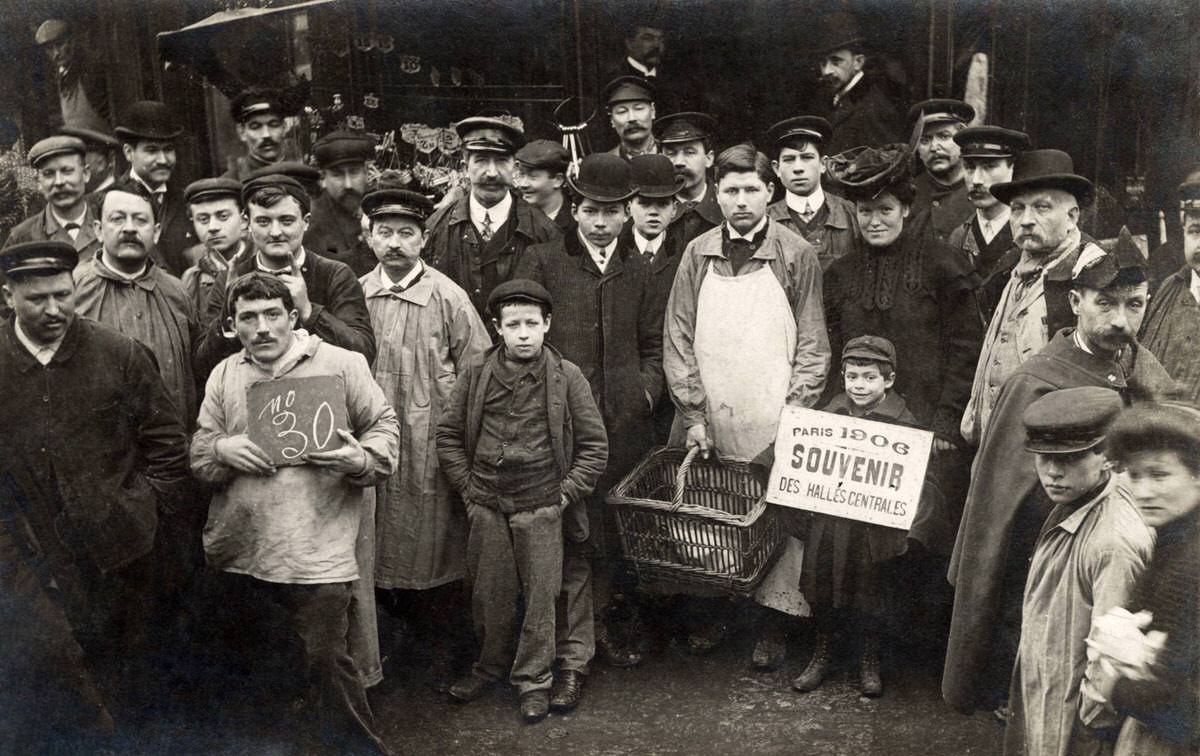
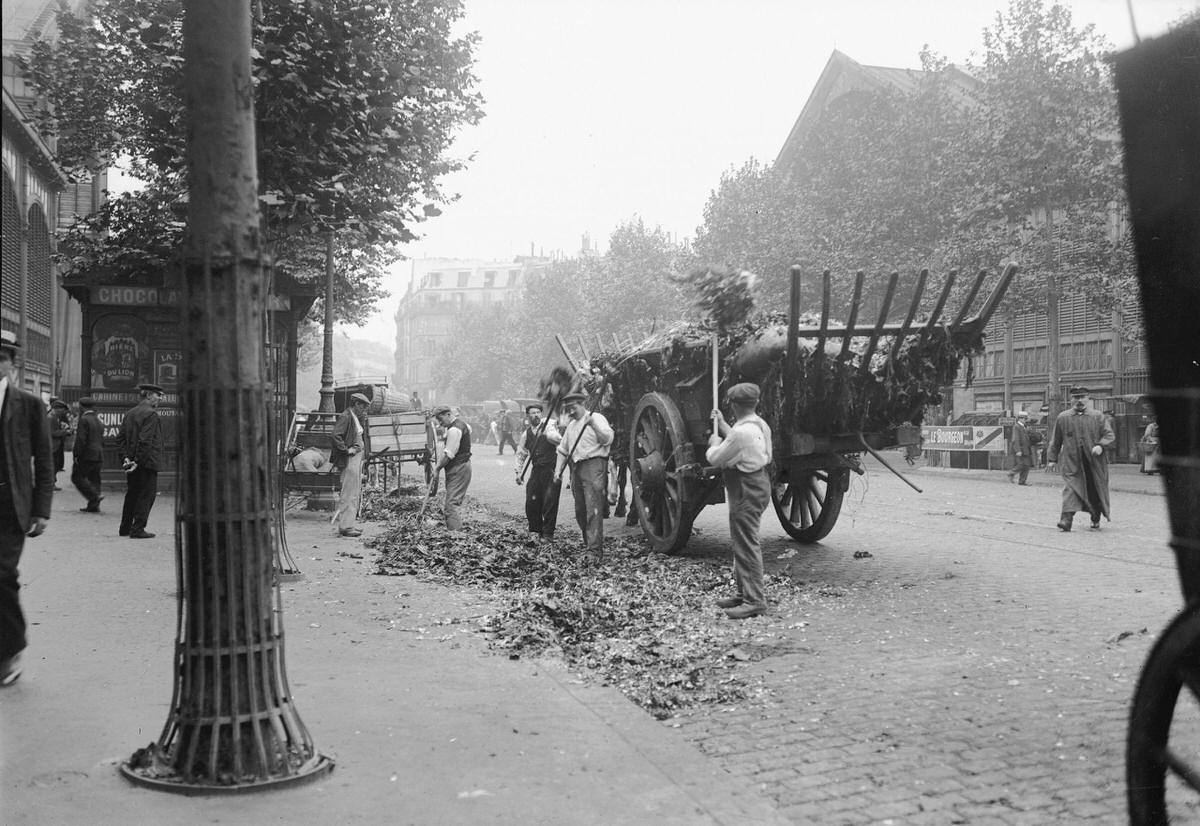
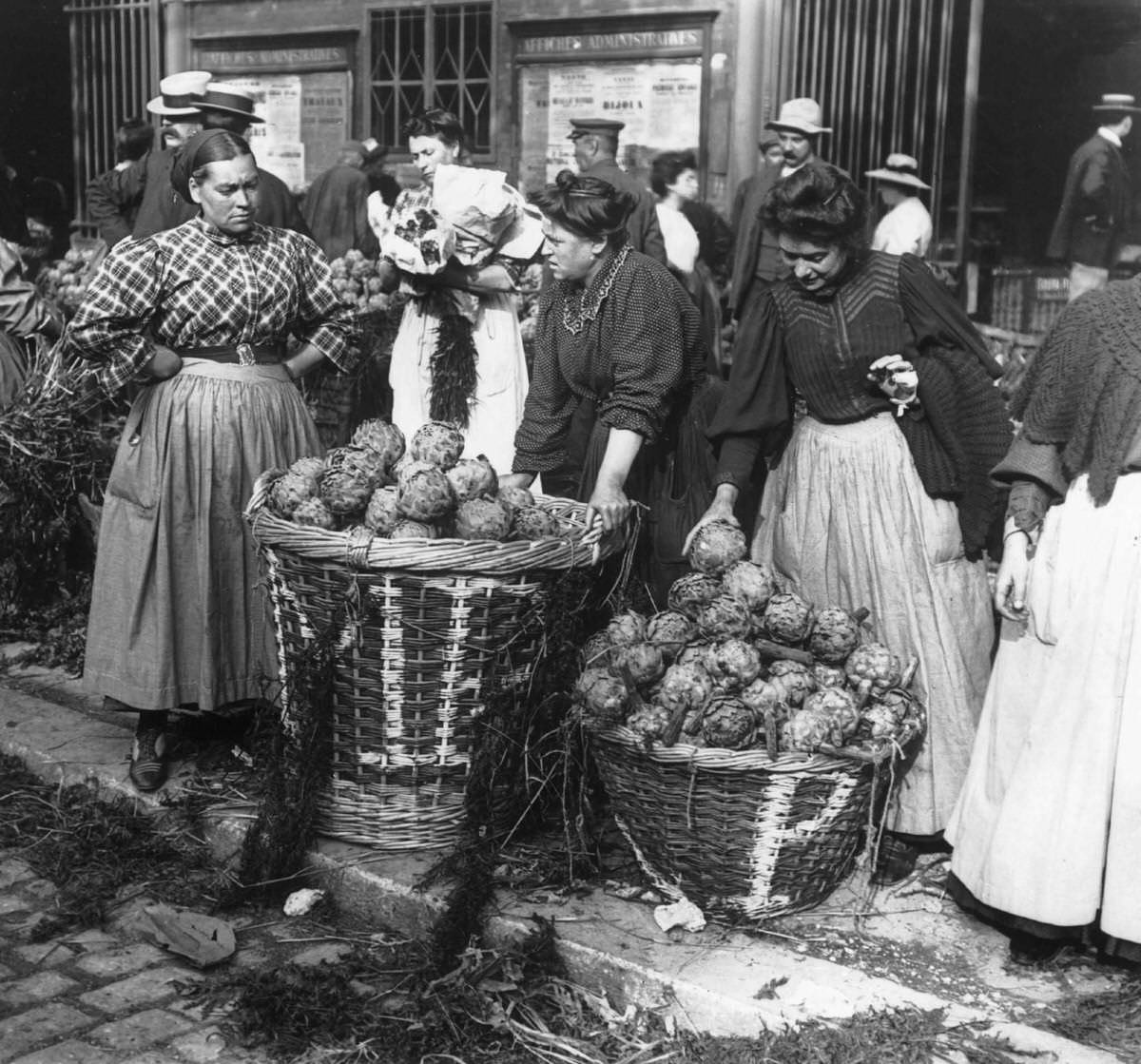
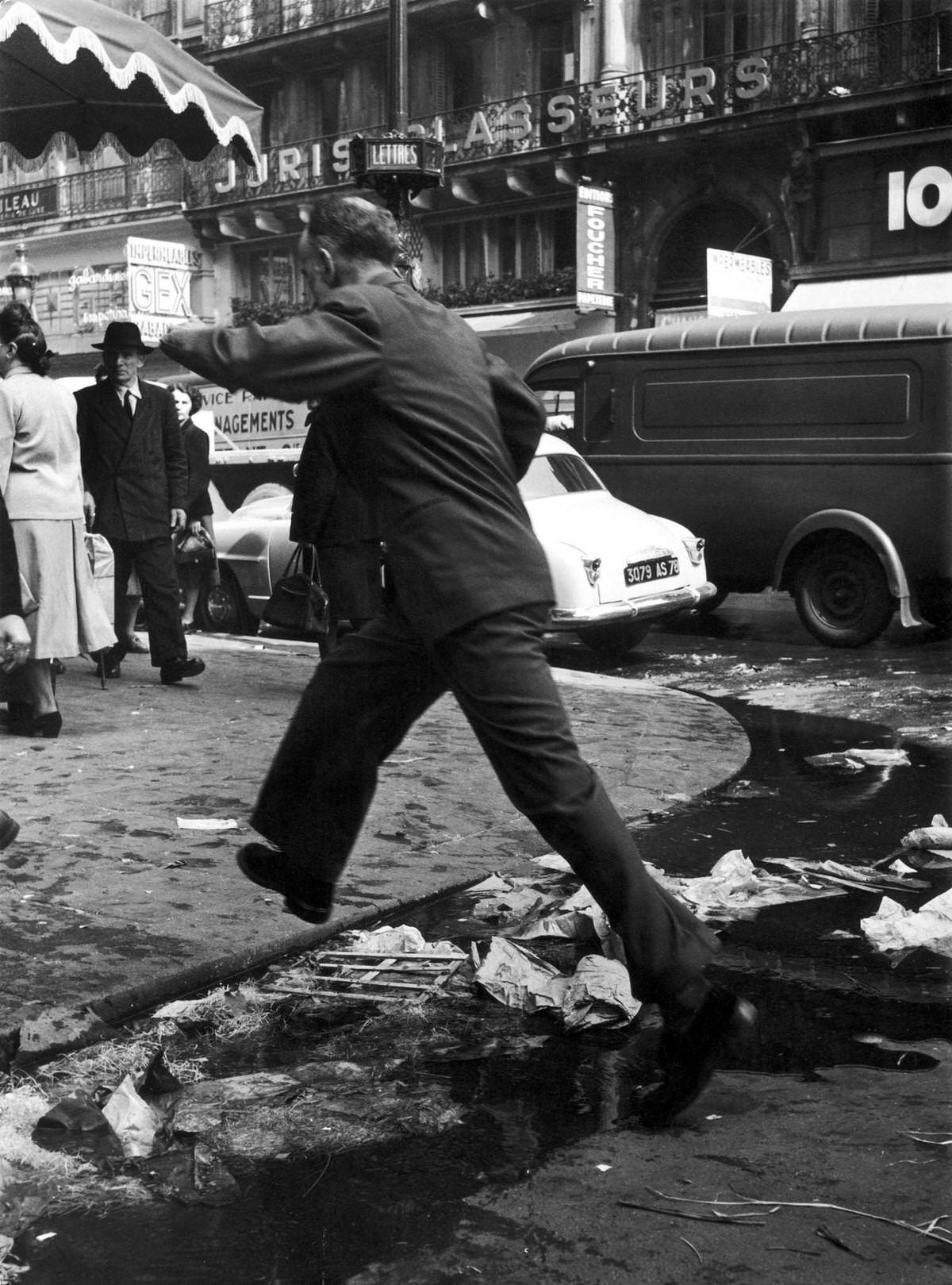
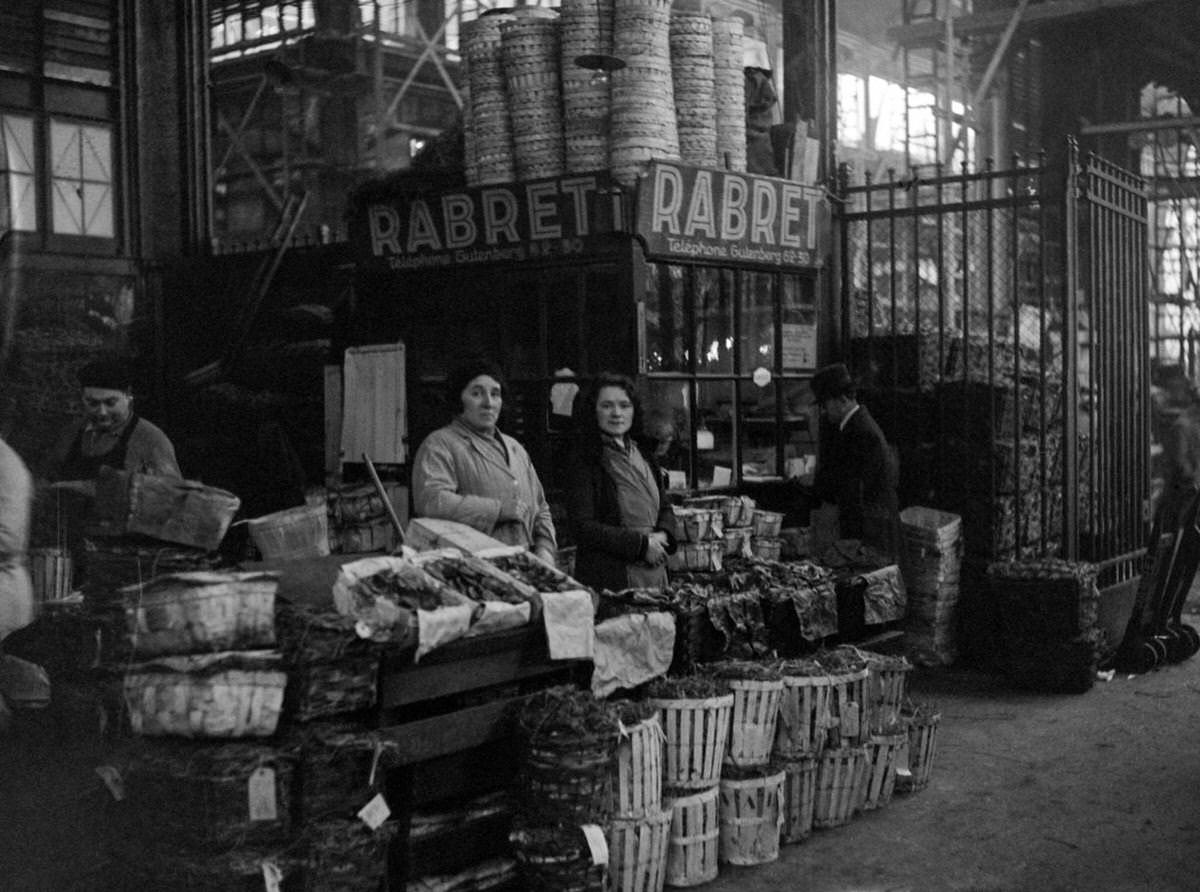
Employees and customers of Les Halles market stalls in Paris, 1906.Loading of refuses in the district of the “Halles”, the central market of Paris, 1910.Oyster Sellers in Les Halles, 1900sVegetable-seller at the “Halles” of Paris, 1900.Les Halles, 1900Les Halles, 1900sThe Halles, Paris, 1900The Halles, Pairs, 1900The Dawn Of Wholesalers, Les Halles, Paris, 1900Butcher at The Halles, Paris, 1900Renovation of the Halles, 1900Jumping over the Gutter, The Halles of Paris, 1900Les Halles, One Morning at a Fishes Stall, Les Halles, 1900Vegetables Market in Les Halles, 1900The Halles of Paris, Saint-Eustache Church, 1900
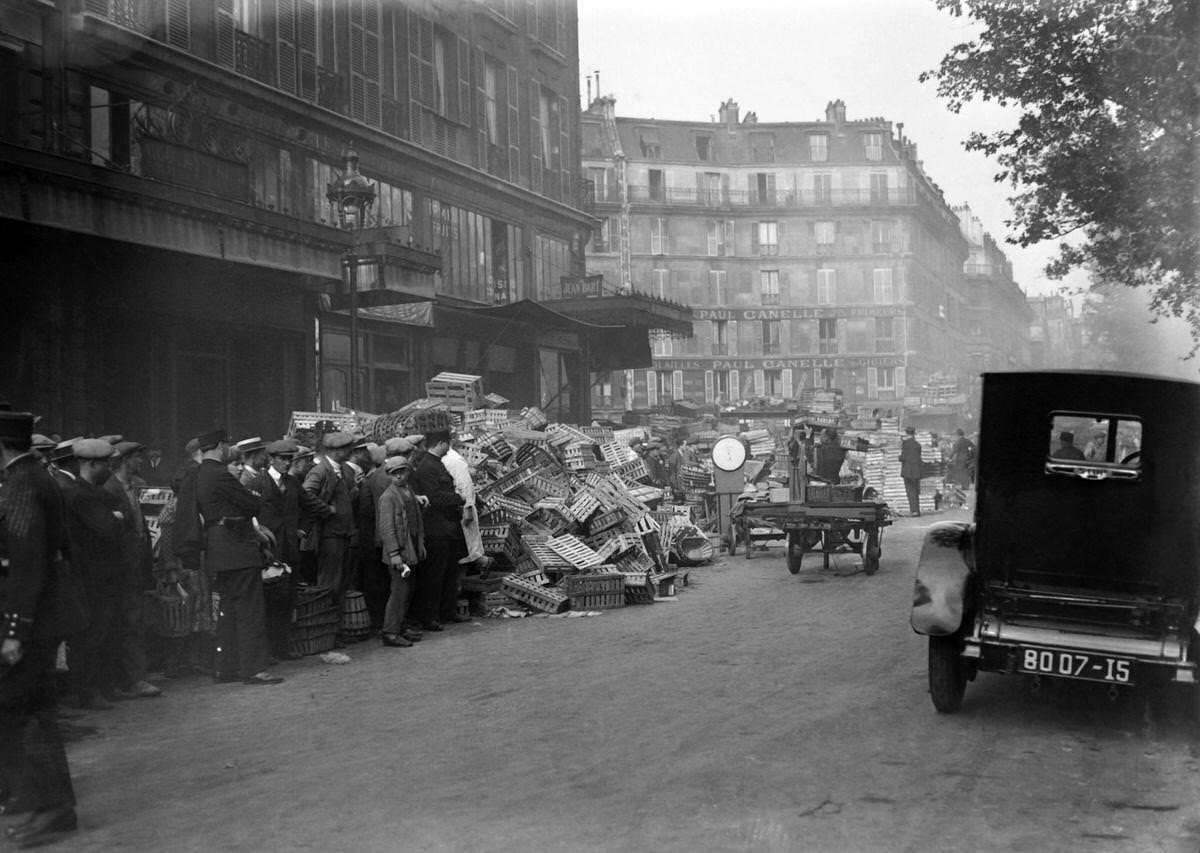
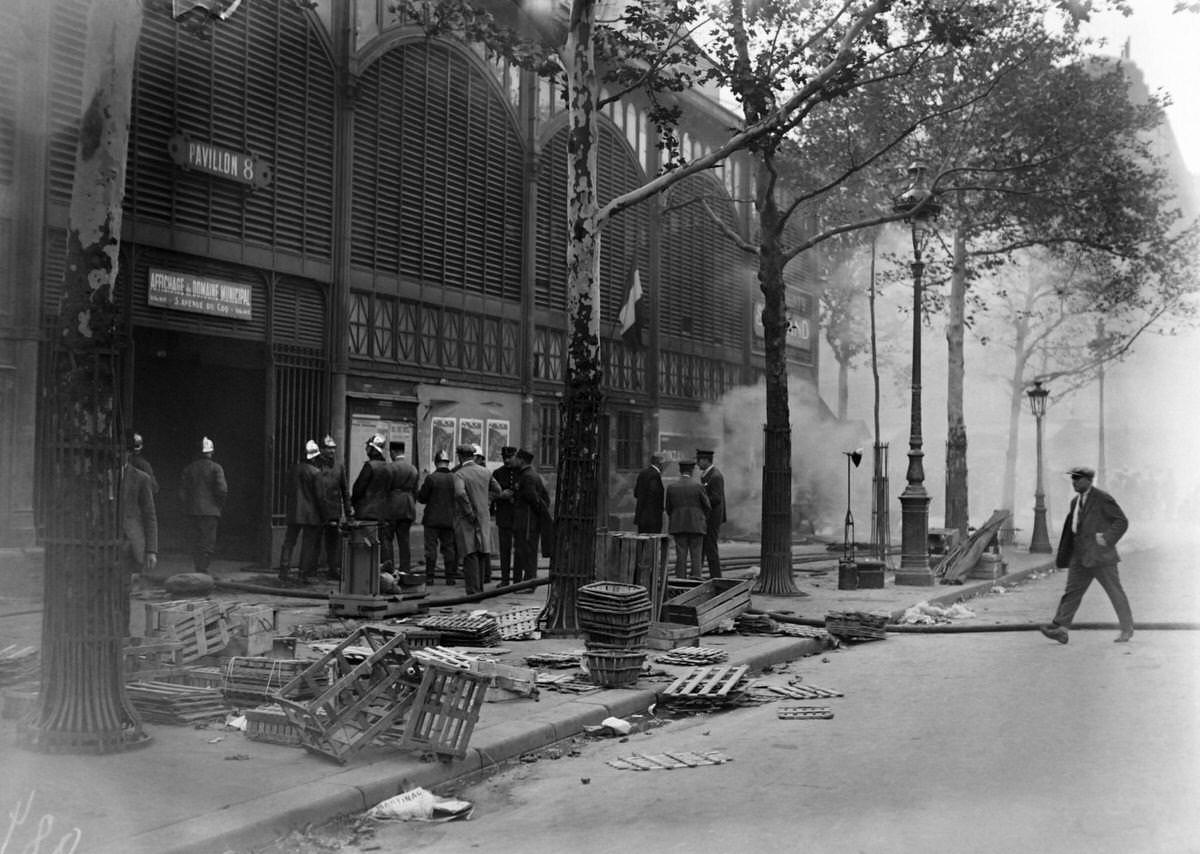
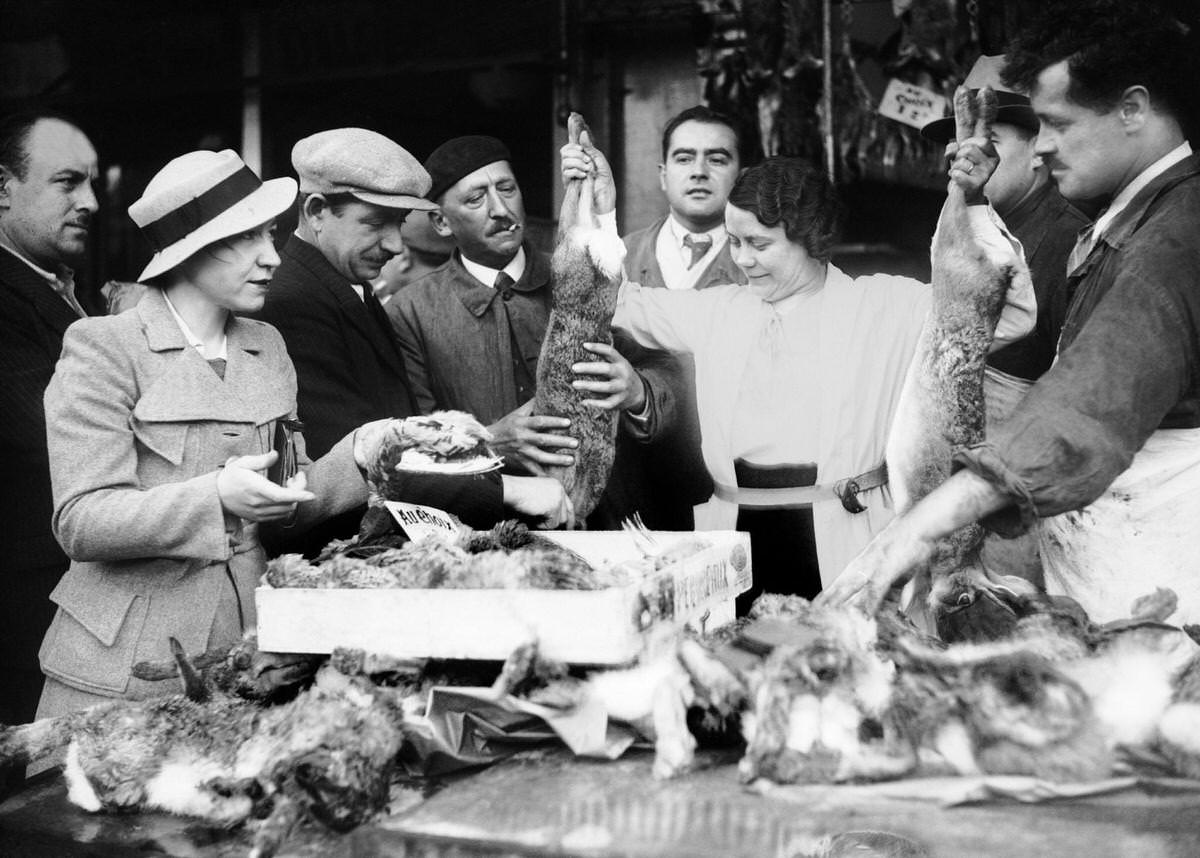
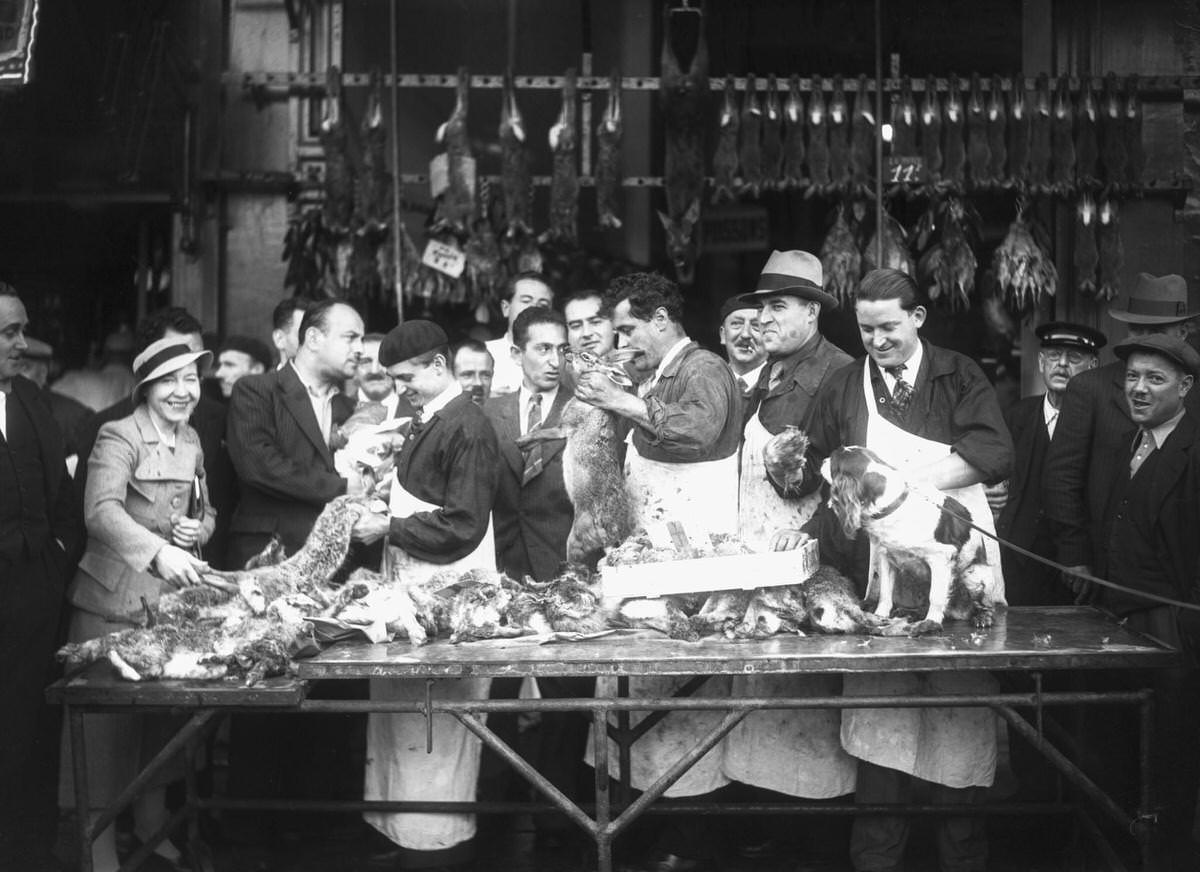
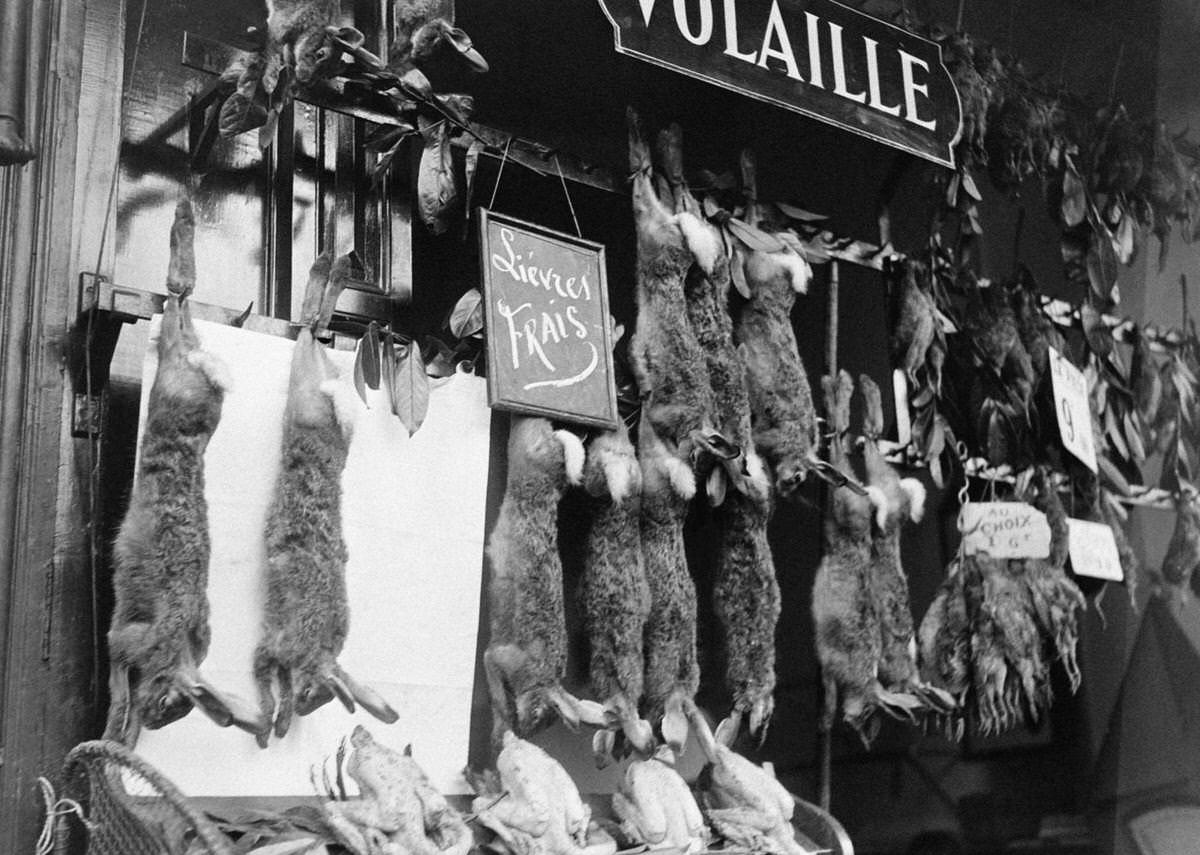
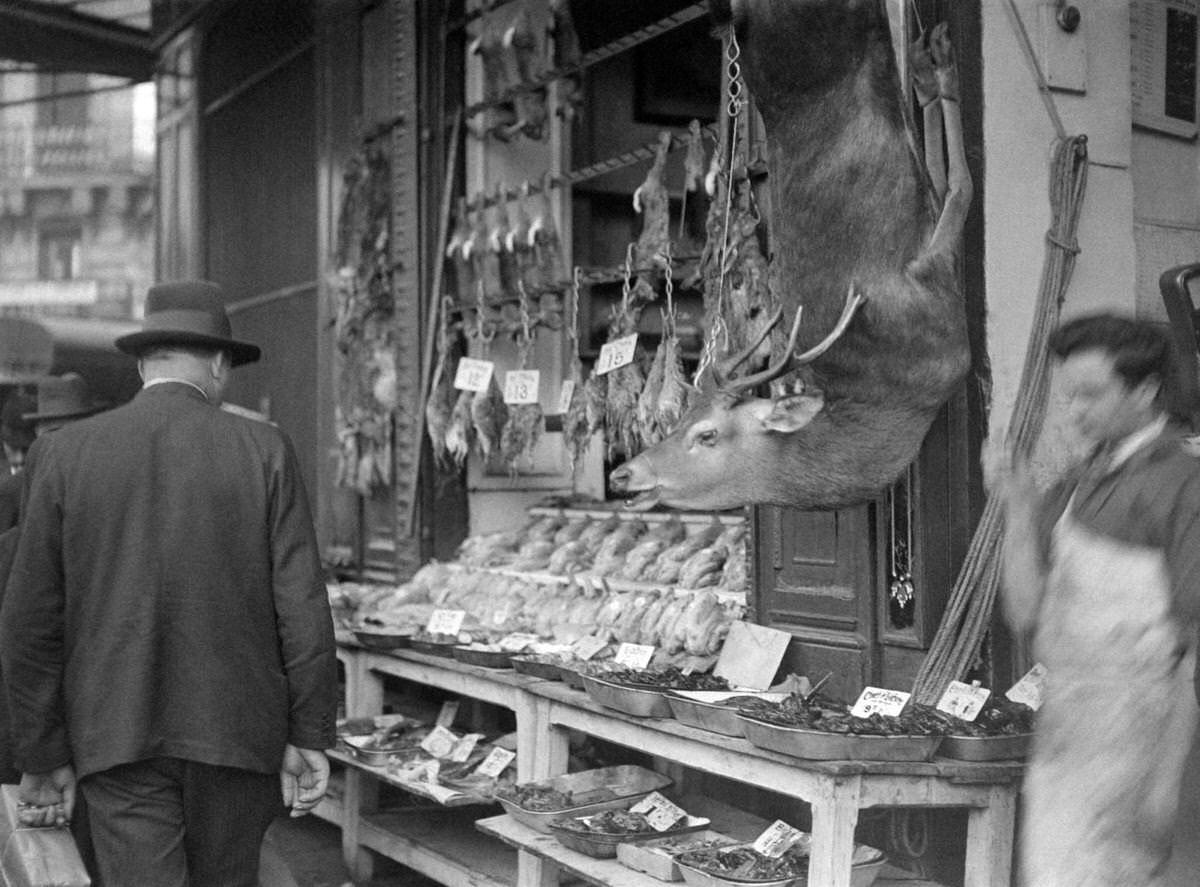
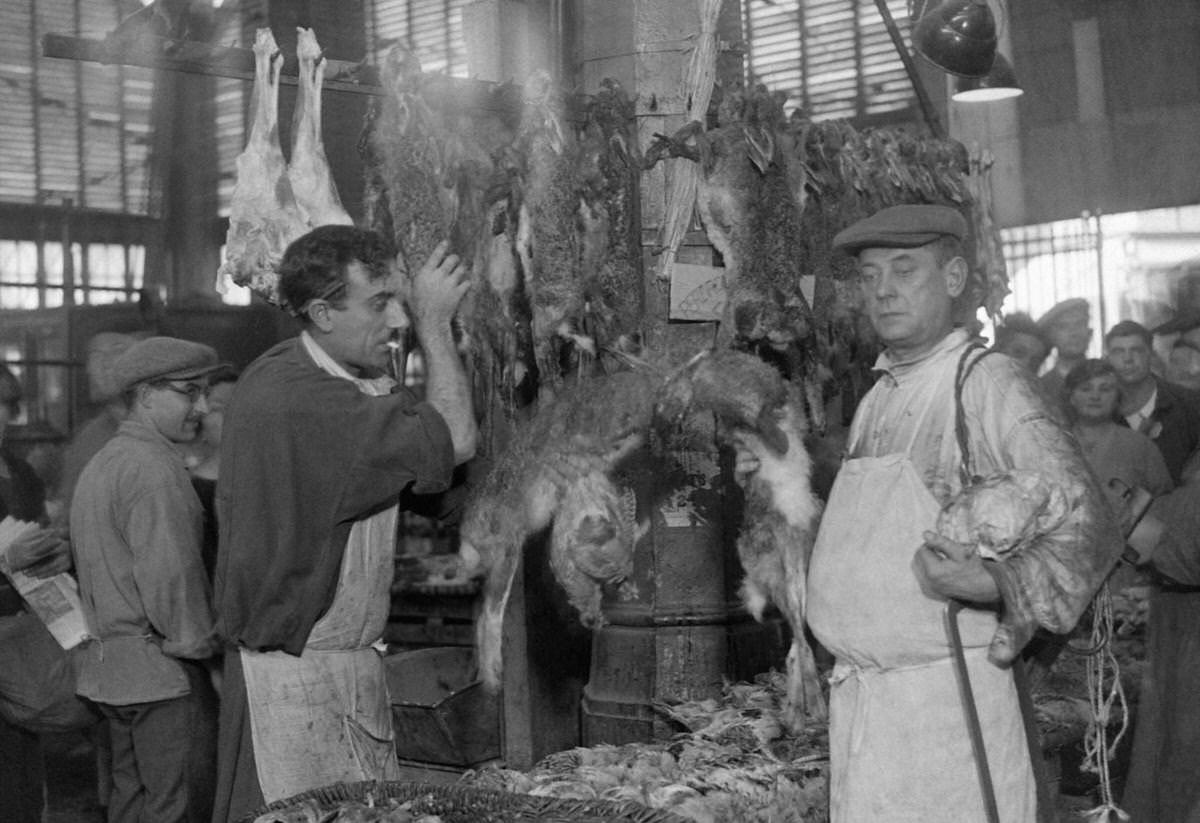
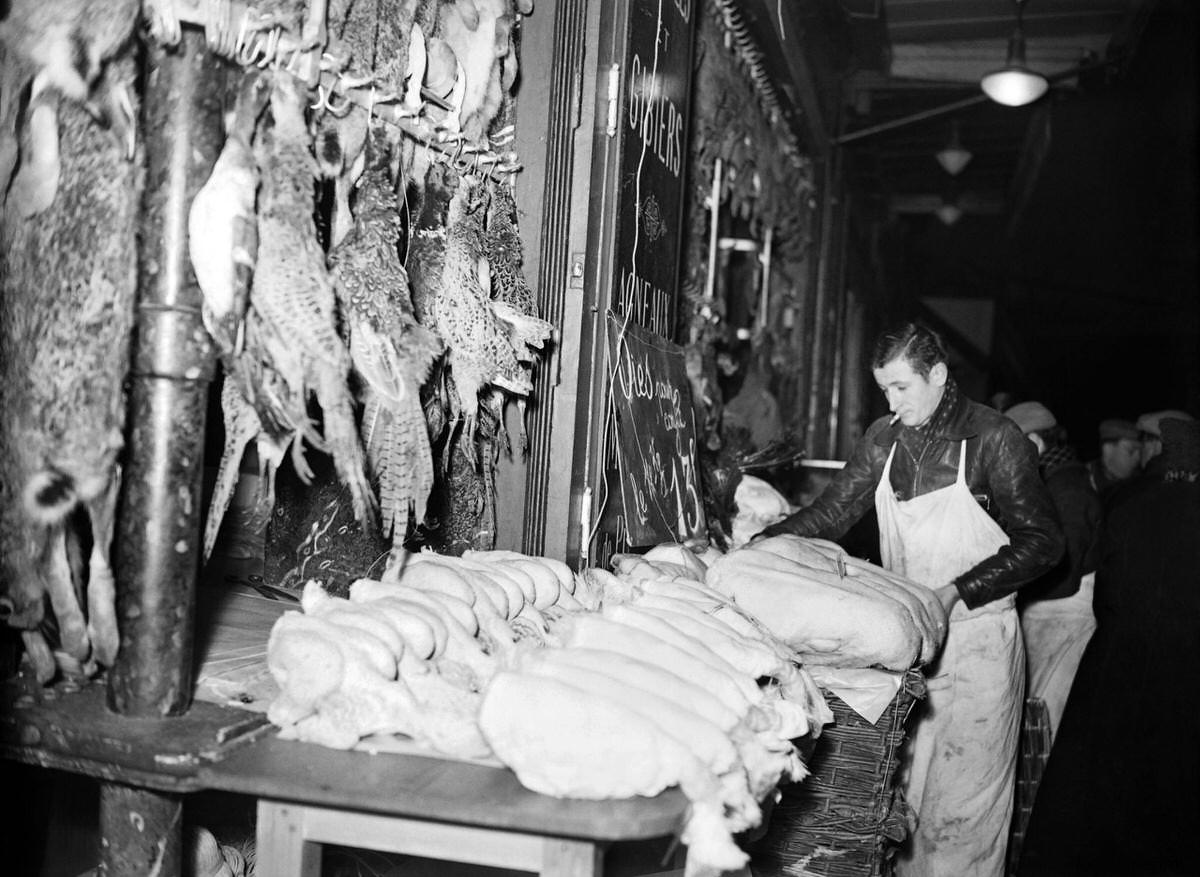
In August 1929, a violent fire broke out at the central wholesale marketplace, damaging sections of the complex and drawing massive crowds of spectators. The market recovered and kept operating, but the event illustrated how vulnerable such a dense, crowded site could be. Through the late 1920s and into the 1930s, Les Halles continued to expand its offerings. Game stalls opened just after hunting season, and the opening days saw abundant displays of pheasants, hares, and other wild game hanging from hooks in long rows.
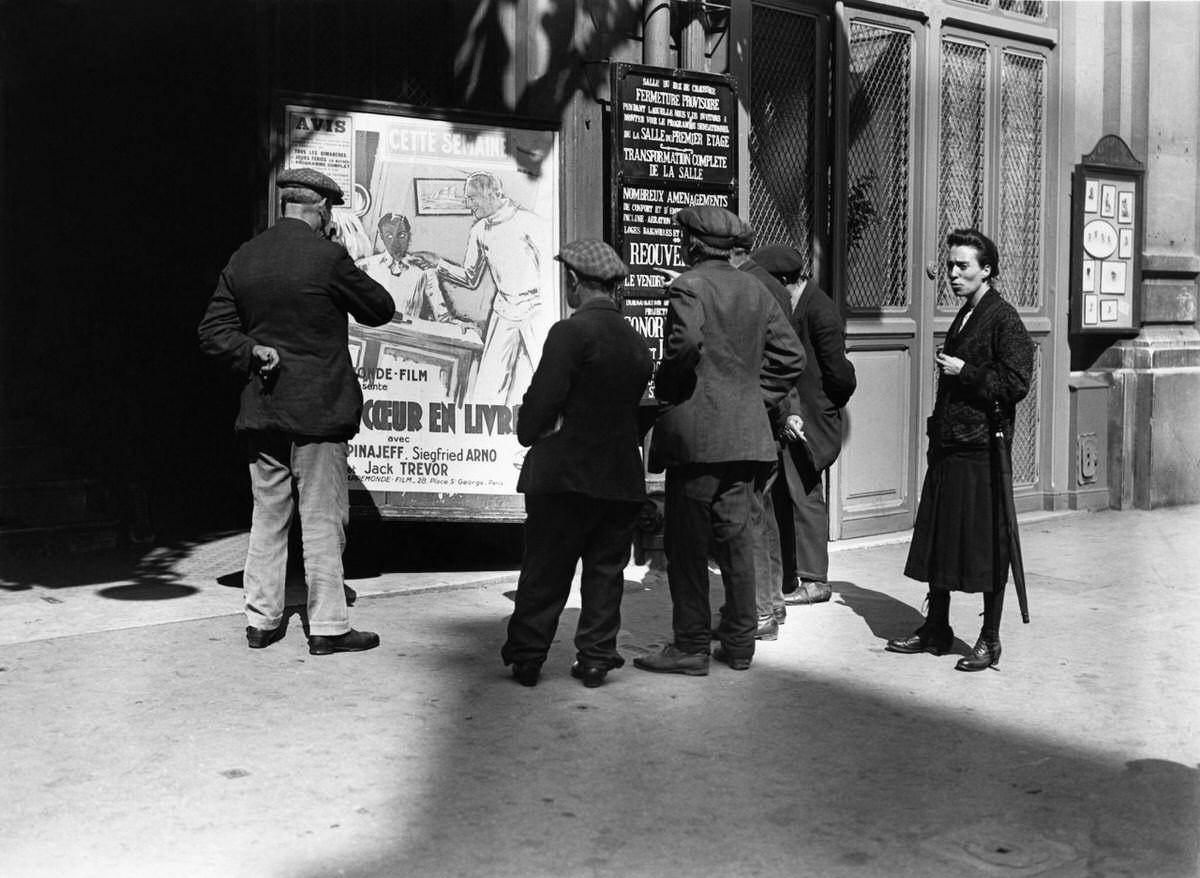
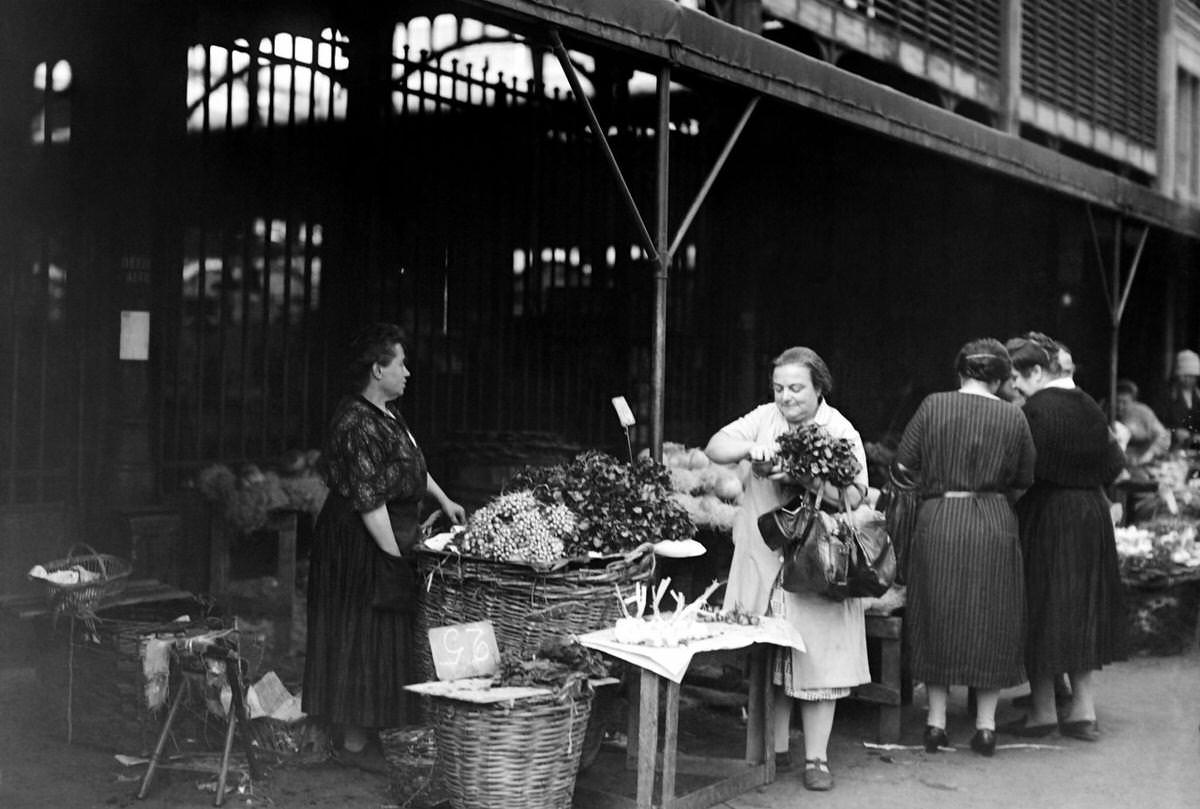
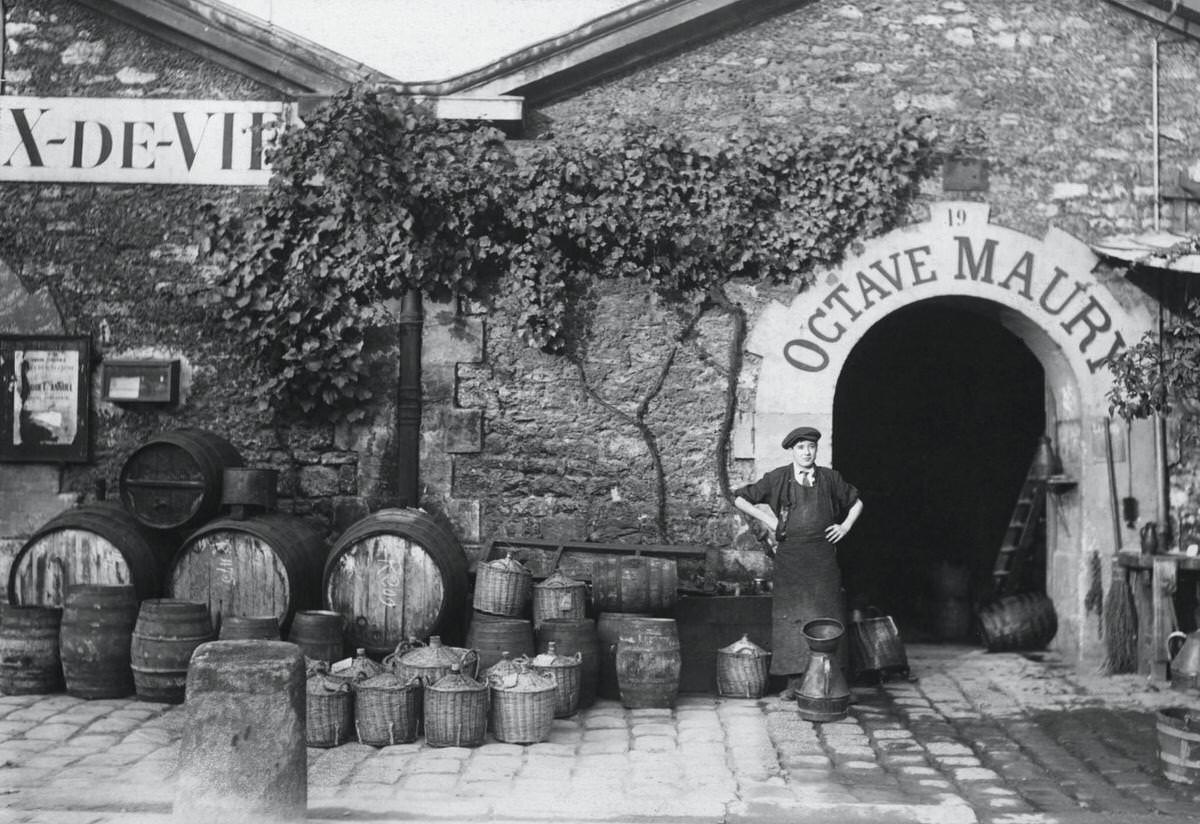
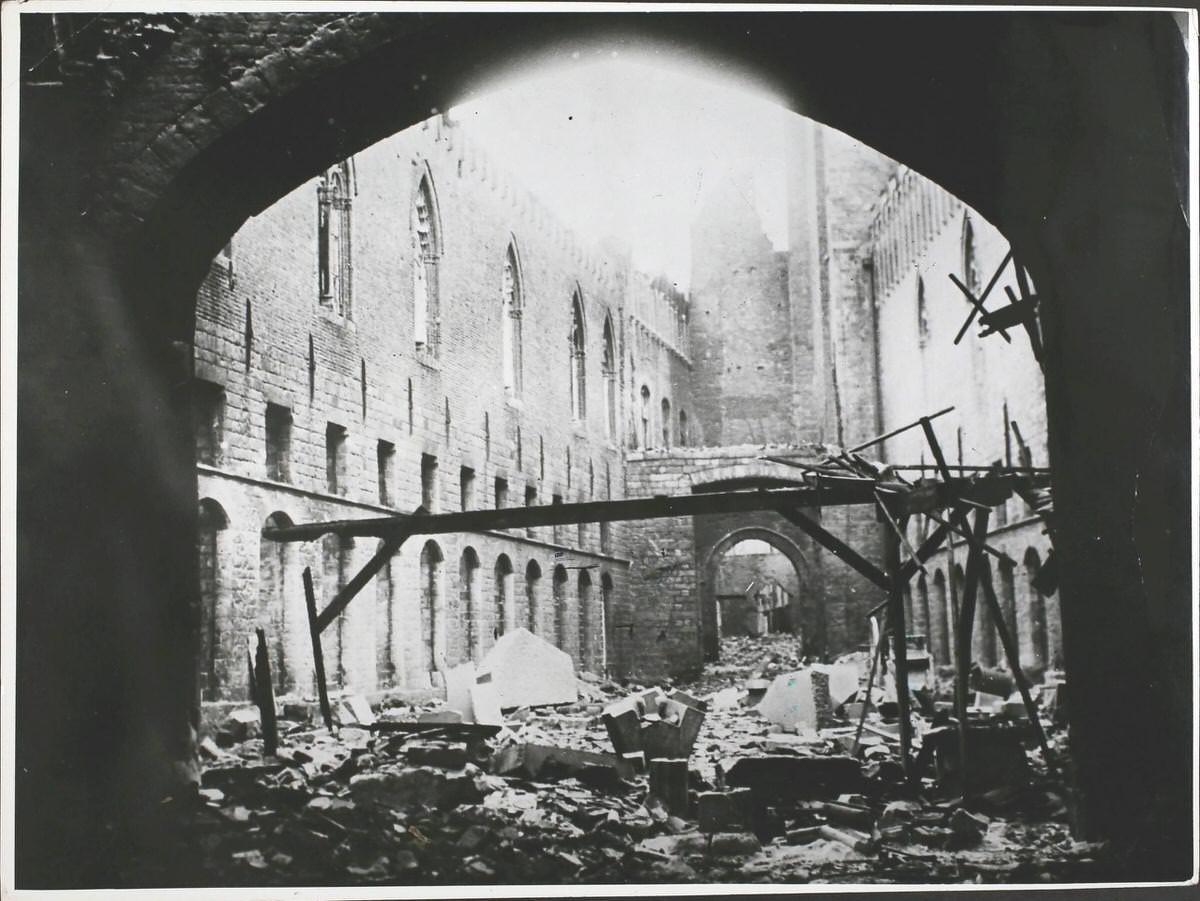
Violent fire at Les Halles central wholsale marketplace in August 1929 in Paris.Violent Fire at Les Halles Wholesale Marketplace, 1929A Movie Theater near Les Halles in August 1929.Les Halles, Paris central market, in 1929 in Paris.Shopping at les Halles, the central market in 1929 in Paris.Les Halles, traditional food market in the centre of Paris, in December 1928 in Paris,Street hawkers in the Halles market area in 1928 in Paris, France.Les Halles, 1925A worker standing with barrels and baskets outside the entrance to Octave Maury at the wine sellers storehouse in Les Halles, 1920sLes Halles after bombardment, 1920
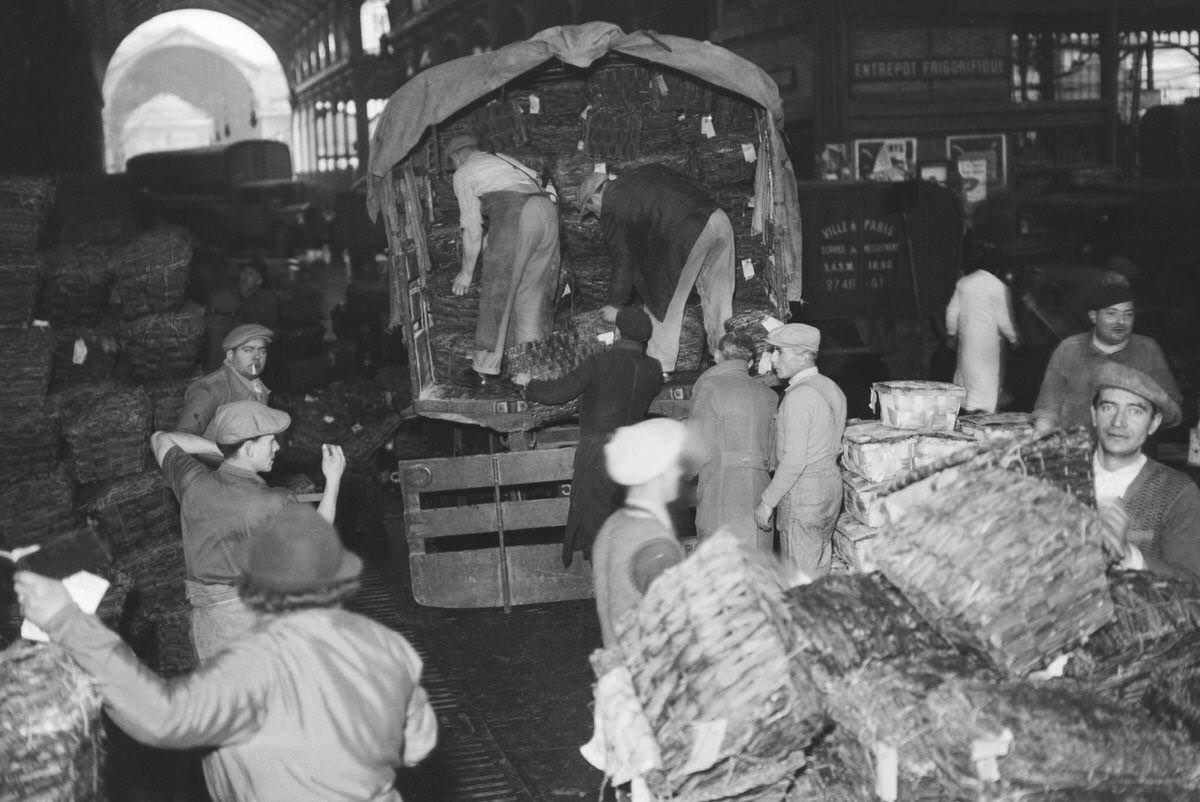
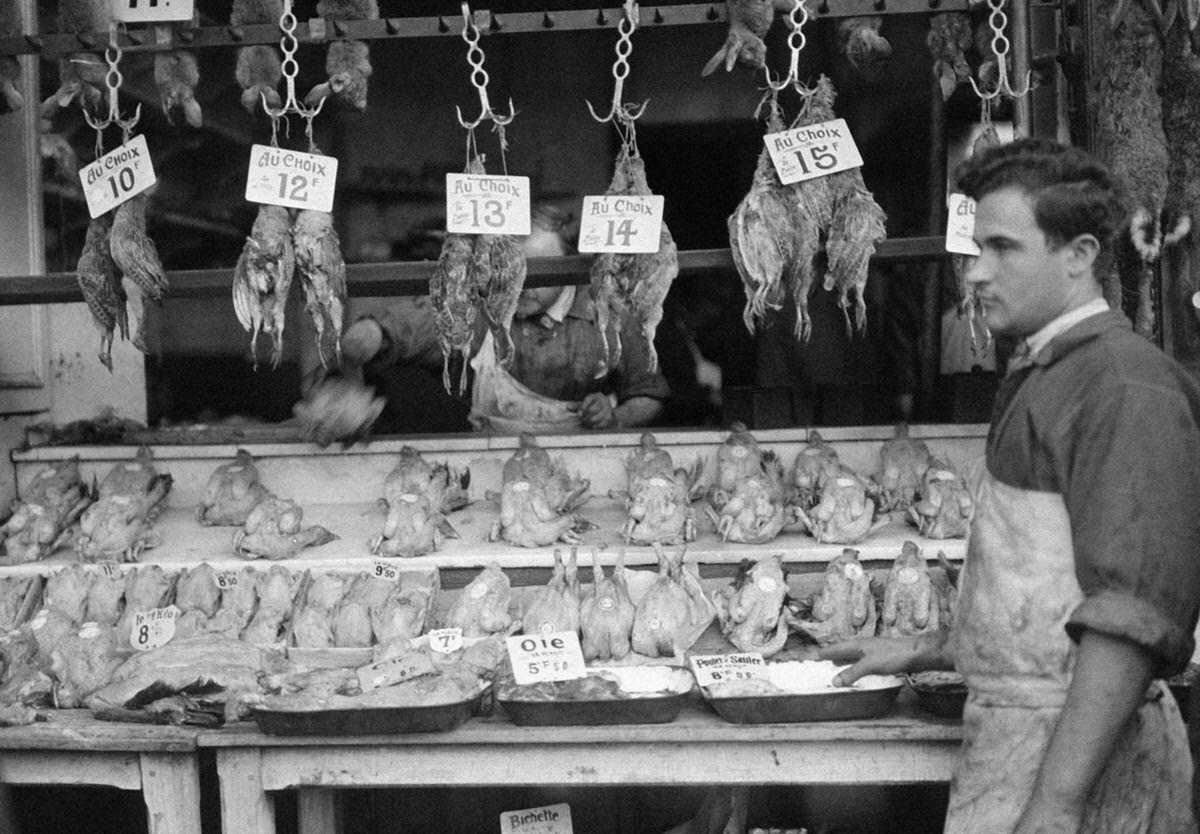
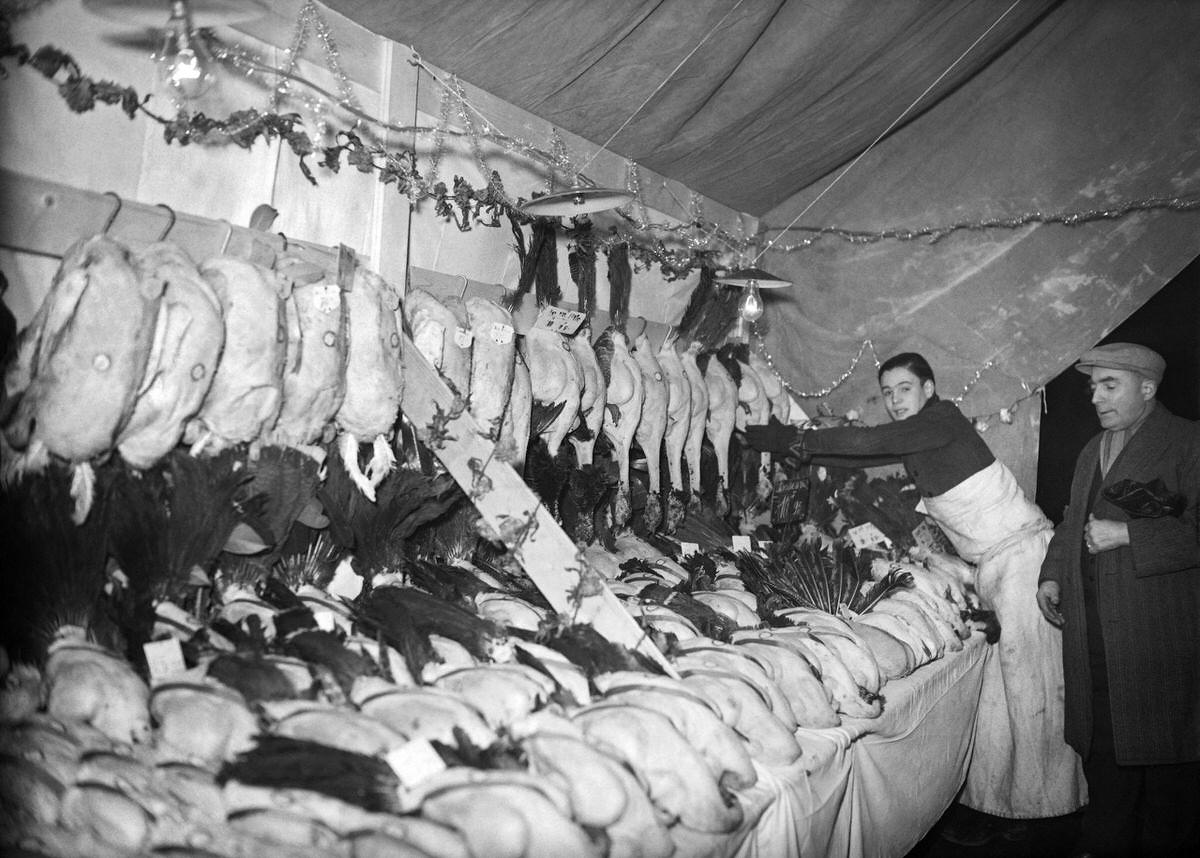
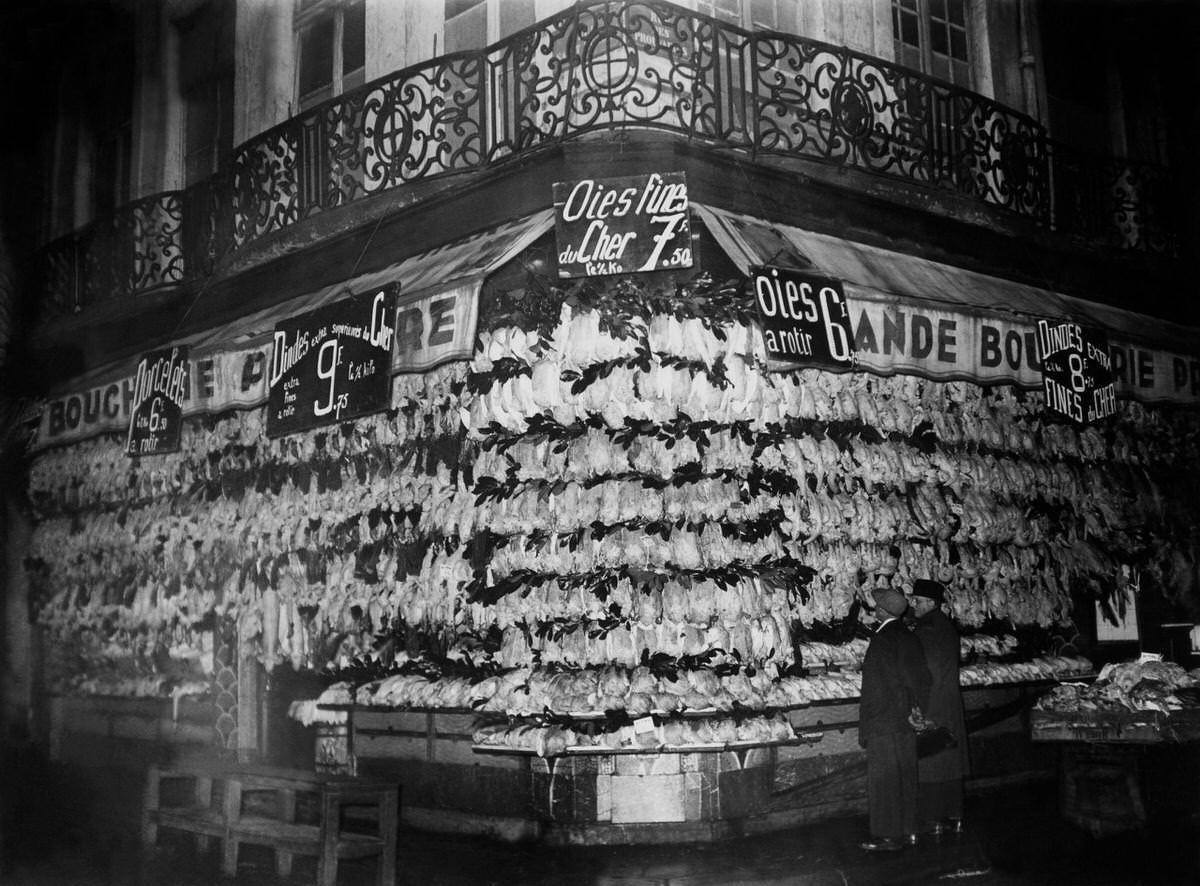
Each December brought one of the market’s most dramatic spectacles: the arrival of oysters for the Christmas and New Year celebrations. On December 23, 1936, workers unloaded wave after wave of oyster shipments, stacking crates and baskets along the market streets as buyers competed to secure their supply for the holiday season. The following year, poultry vendors lined the streets with rows of dressed birds, and butchers set up elaborate displays of geese and chickens for the Christmas market.
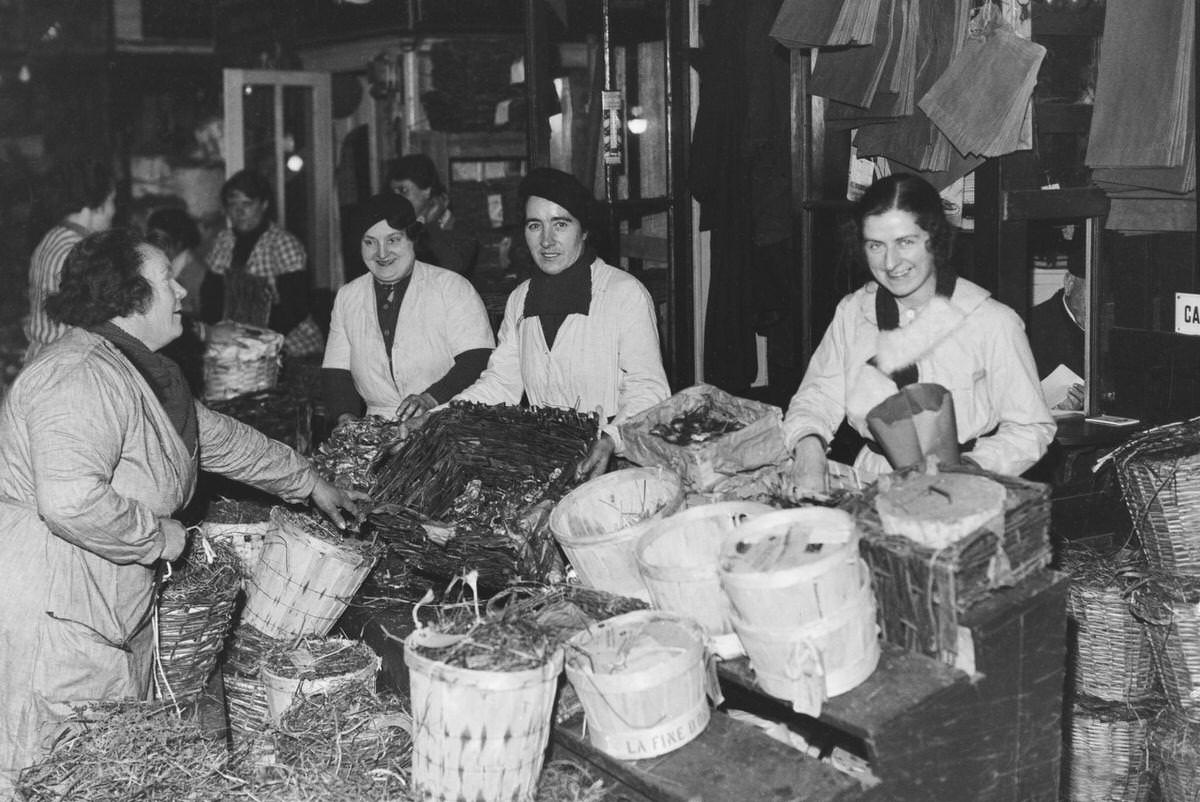
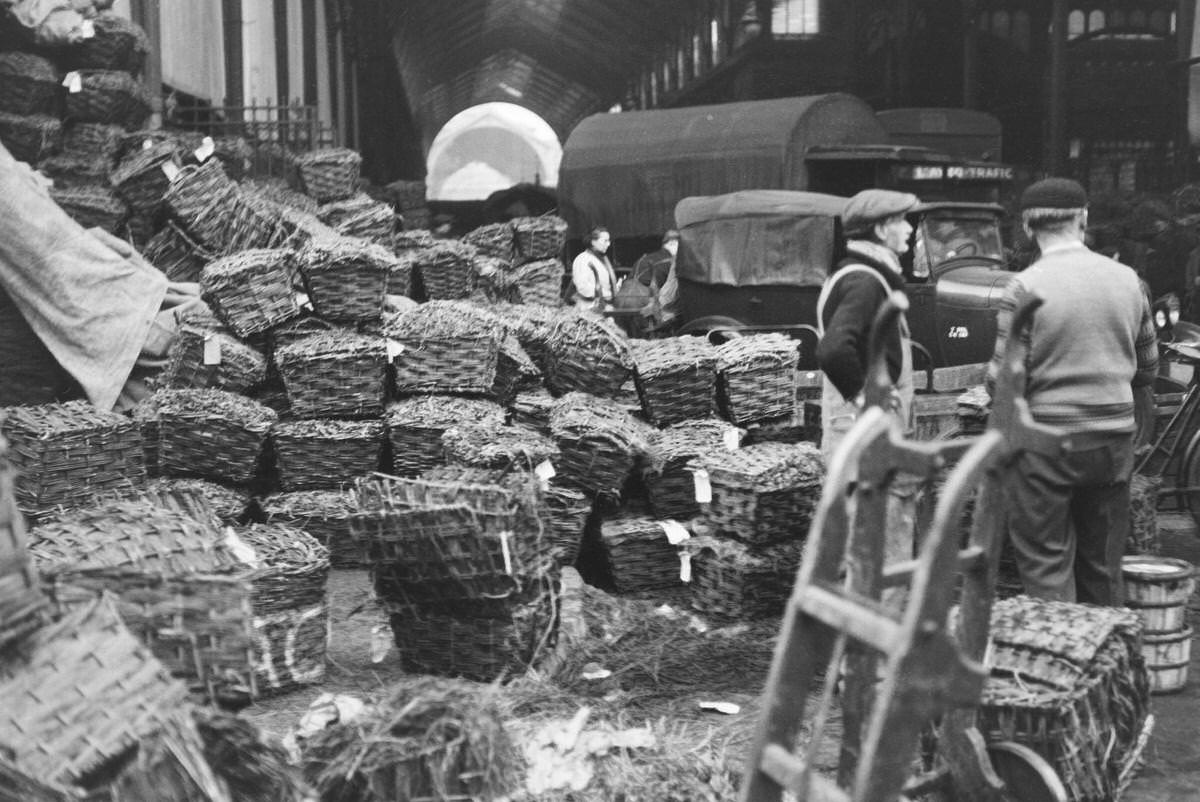
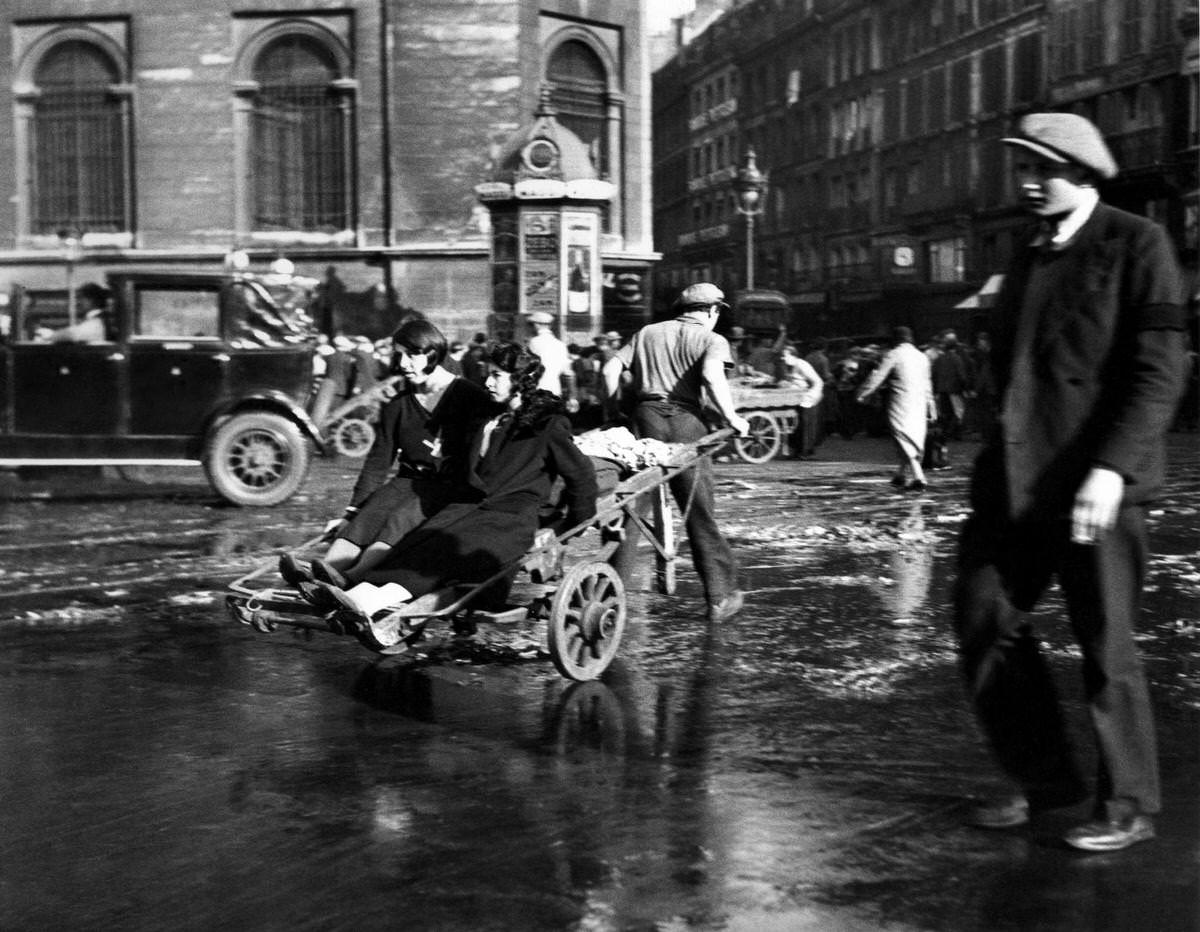
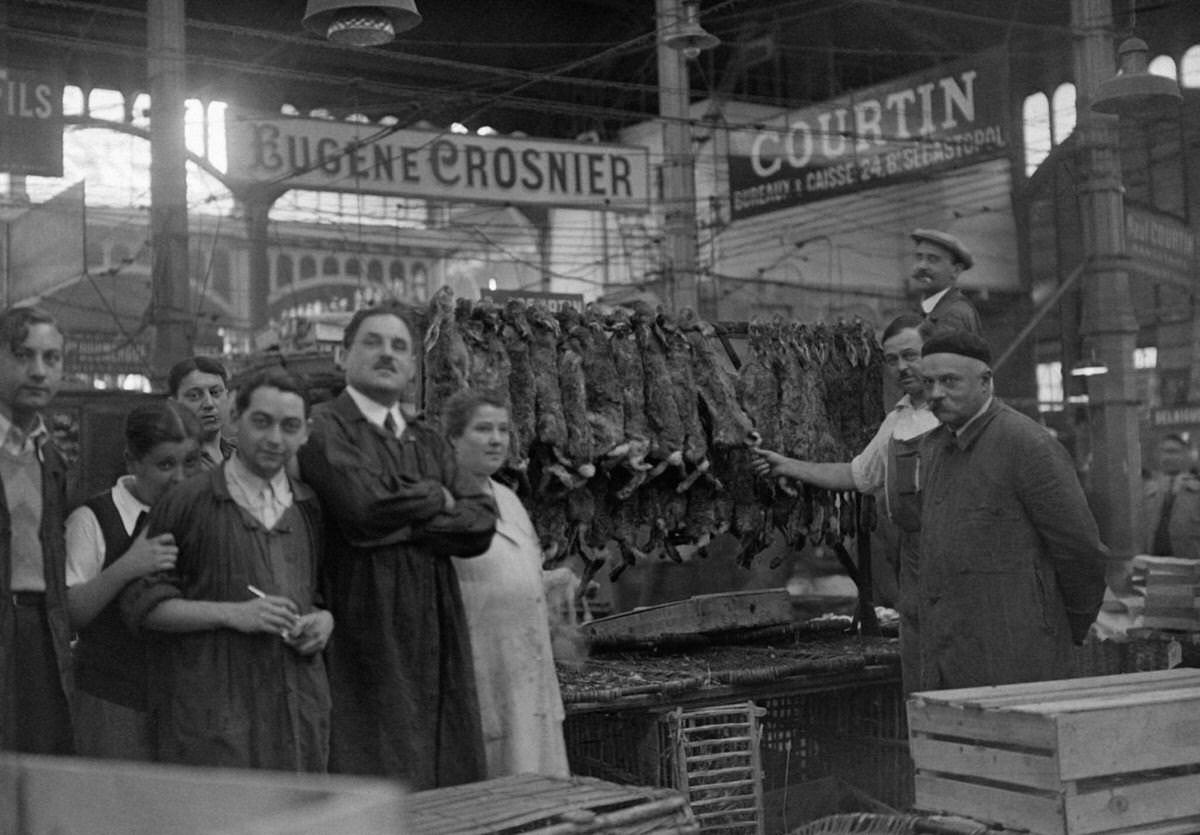
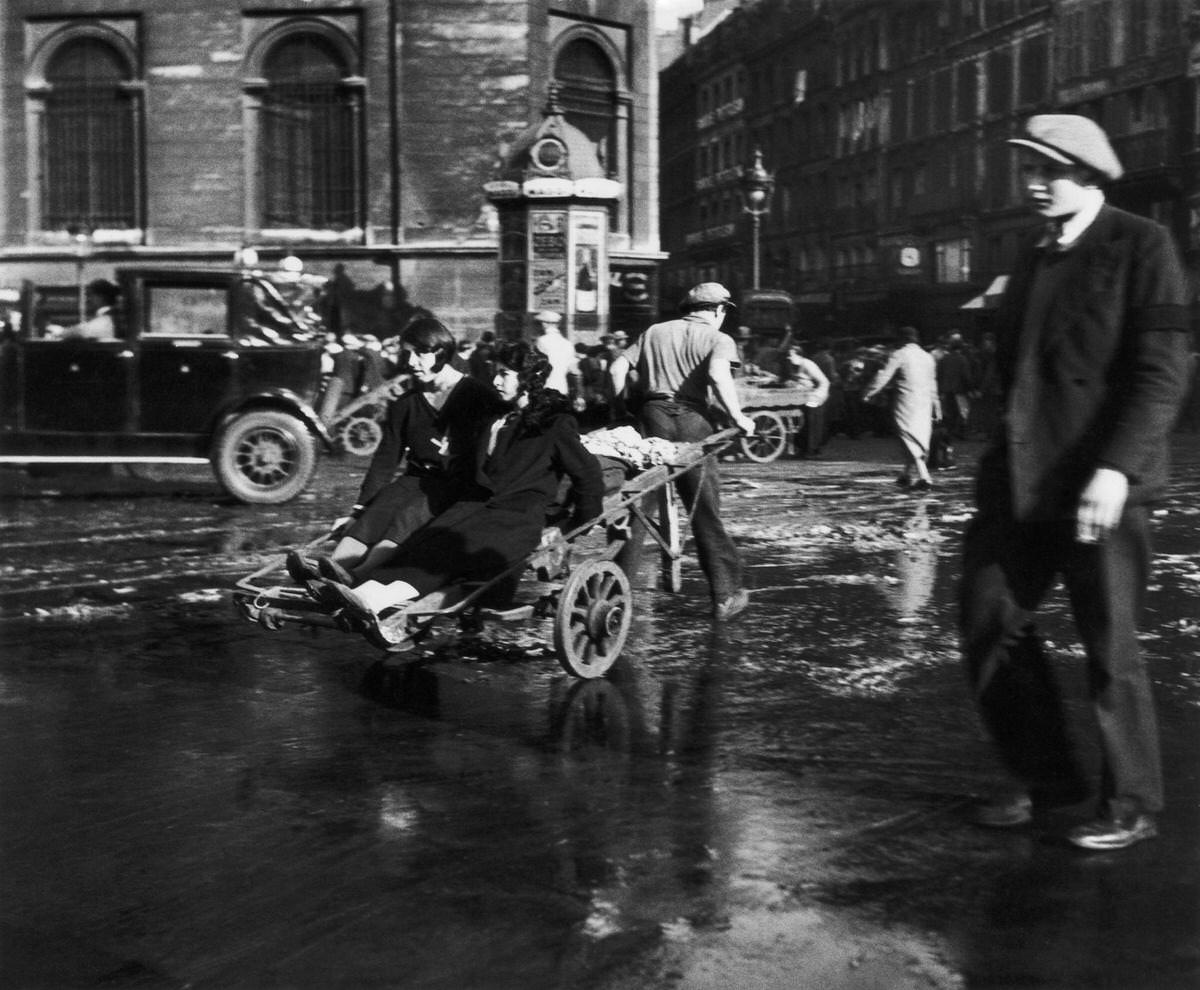
Arrival of oysters at the Les Halles market for the end of year celebrations, December 23, 1936Arrival of oysters at the Les Halles market for the end of year celebrations, December 23, 1936Arrival of oysters at the Les Halles market for the end of year celebrations, December 23, 1936Arrival of oysters at the Les Halles market for the end of year celebrations, December 23, 1936The day after the opening of hunting : abundant game on the shops’ displays at les Halles, 1940sCustomers buying game in a store in Les Halles, Paris, 1936Fish market at Les Halles de Paris in 1936Fish market at the Halles de Paris in 1936Butcher on the Halles market in Paris, 1936Employee setting up a large shipment of oyster baskets at Les Halles in Paris, France, on December 22, 1934.Les Forts des Halles carrying in their arms the ‘Queens of France’ during the celebration of the goatherd bean, 1934Women carried on a trolley Les Halles, 1934Stall of hares at Les Halles, in Paris, 1933Crates and baskets at Les Halles market in Paris, 1933Oyster vendors at the Halles de Paris, 1932Les Halles, 1932Les Halles, 1932Les Halles, 1932Les Halles, 1932Les Halles, 1932Les Halles, 1932Les Halles, 1932
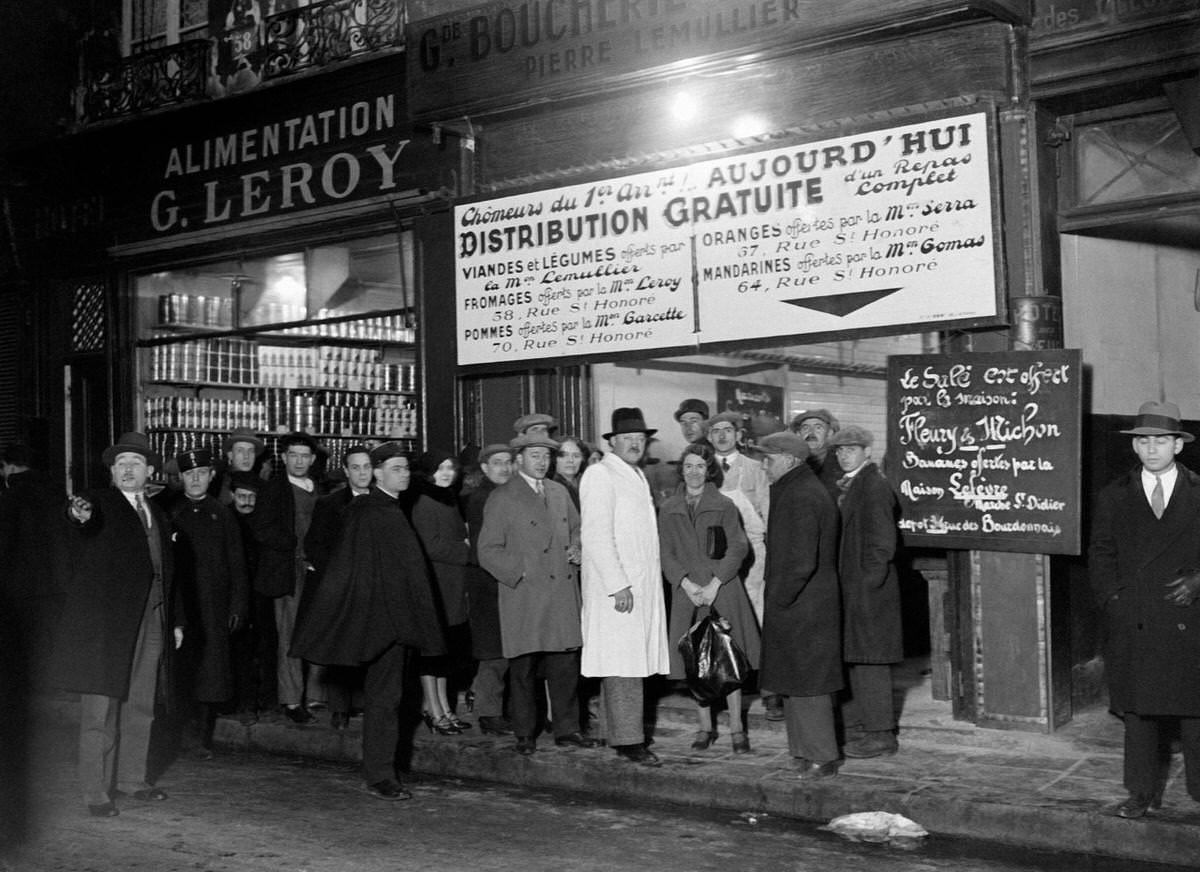
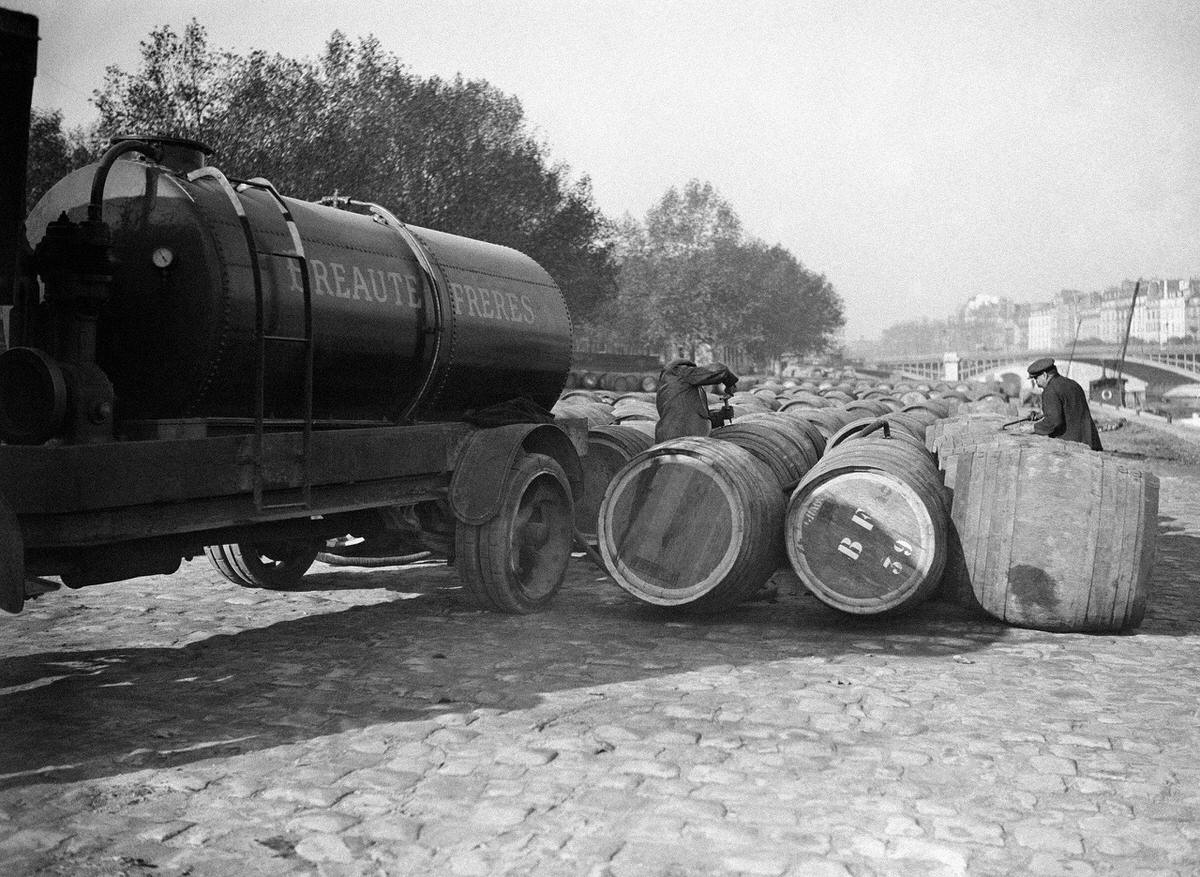
The early 1930s brought economic depression to France as it did to much of the world. In 1931, a crowd gathered outside a Les Halles butcher’s shop that was distributing food to unemployed neighborhood residents. Workers at the nearby wine quays continued filling barrels, and market sellers washed their empty sacks in the street gutters each night, ready to be refilled at dawn. The market kept moving regardless of the wider world’s troubles.
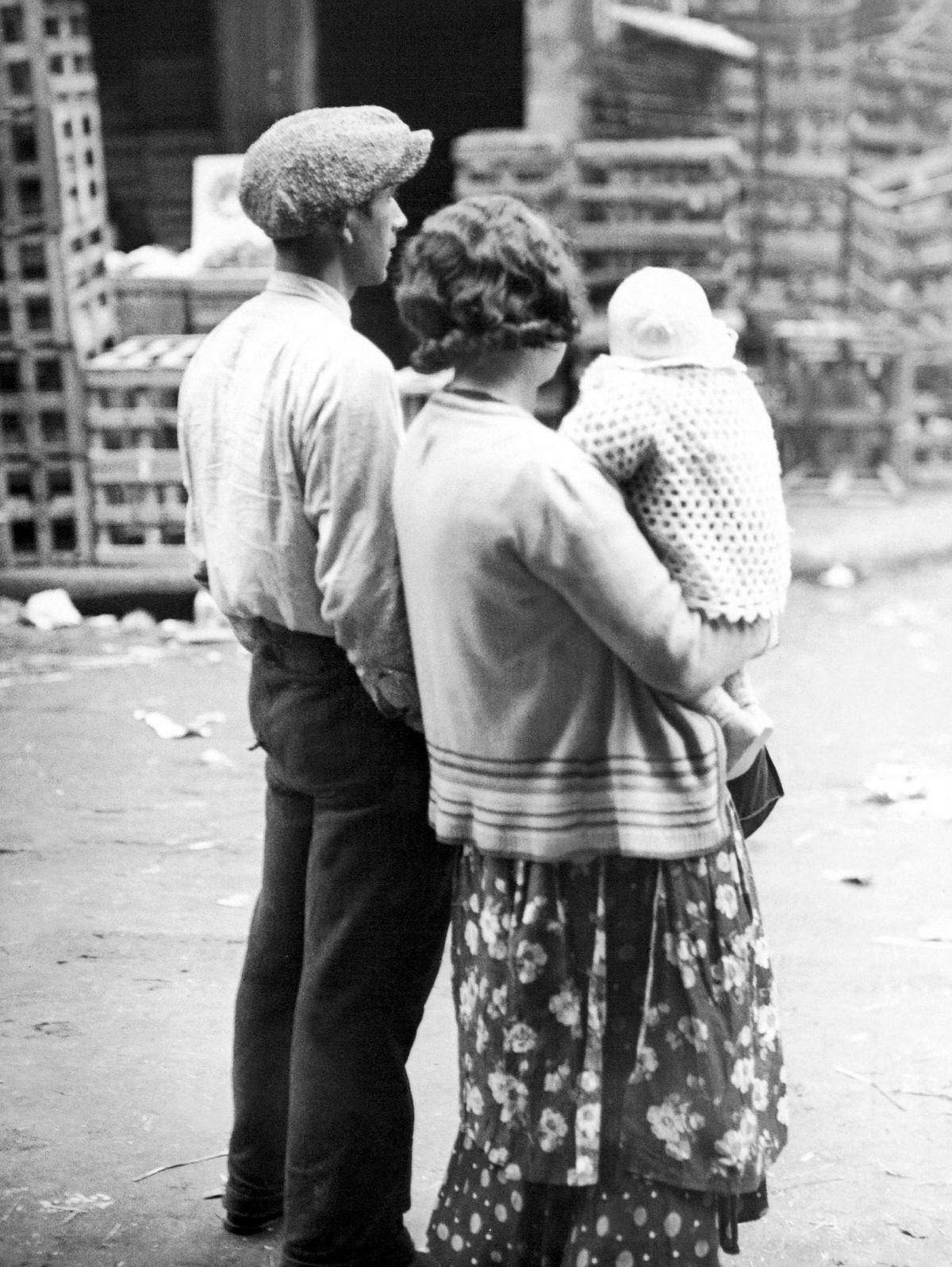
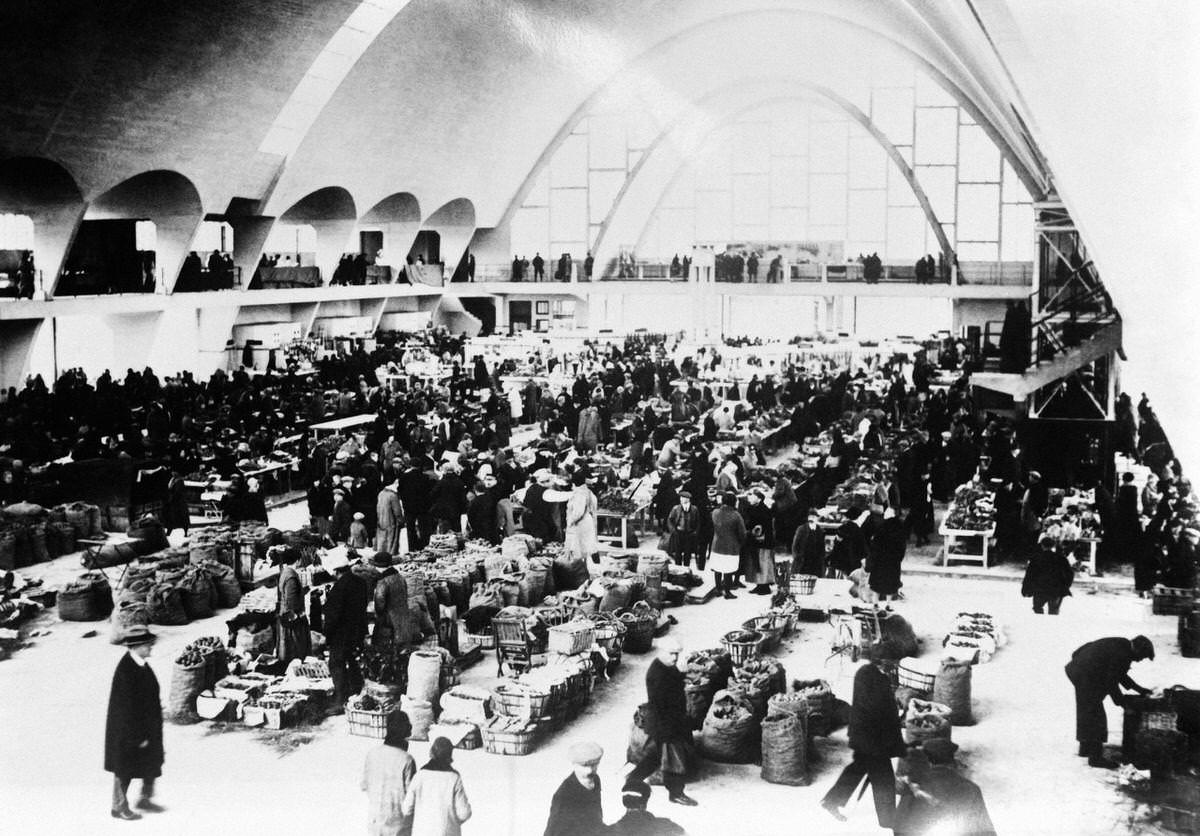
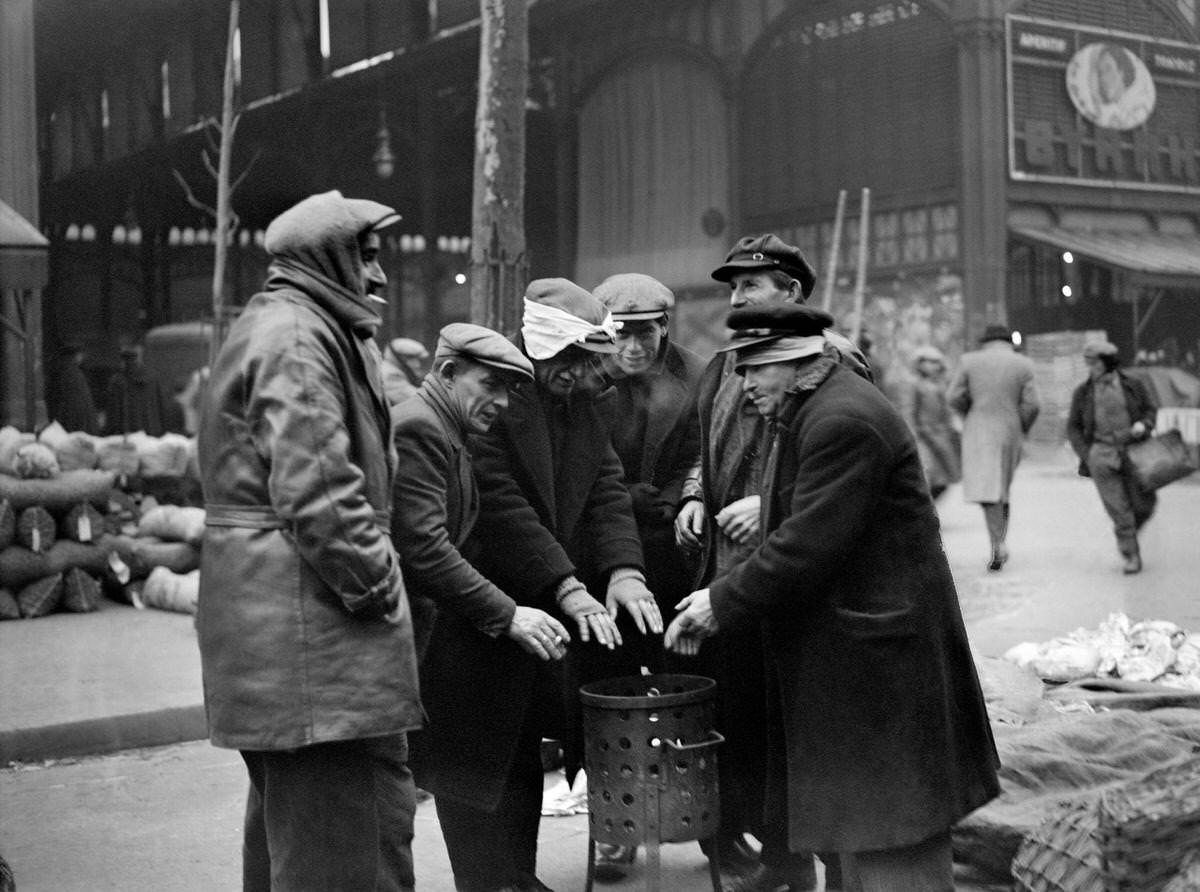
The crowd in front of the Les Halles butcher’s shop which distributes food to the unemployed in the neighborhood, in Paris, 1931Workers filling barrels with wine, on the quay, near Les Halles au vin, in Paris, France on November 6, 1931.Seller in les Halles market washing her bags in the gross which would be filled up with some other fruits and vegetables on the following day, 1931Dance in the halls of the central market Les Halles on the occasion of the annual festival Lily of the Valley, 1931Policemen patrolling Les Halles district ( central food market) at Paris among the workers of the trade, 1931Parisian family in the Les Halles district of Paris, France, 1930.Children in disguise at the Lily of the Valley festival organized by the ‘Forts des halles’ in the halls of Paris, 1930.Interior view of the Halles Centrales de Reims, 1930Inauguration of a room in the cellars of Les Halles for the conservation of cheeses, in Paris, 1930Inauguration of a room in the cellars of Les Halles for the conservation of cheeses, in Paris, 1930Inauguration of a room in the cellars of Les Halles for the conservation of cheeses, in Paris, 1930Inauguration of a room in the cellars of Les Halles for the conservation of cheeses, in Paris, 1930Les Halles, 1930Transport of goods through the narrow streets to Les Halles – the ‘Belly of Paris’, 1930Women freezing during the season of winter, in the street of the Les Halles district, 1930sMen warming up around a brazier, during the season of winter, in the street of the Les Halles district, 1930sWomen freezing during the season of winter, in the street of the Les Halles district, 1930sEugene Stueber works on the market in Les Halles, Paris, 1930
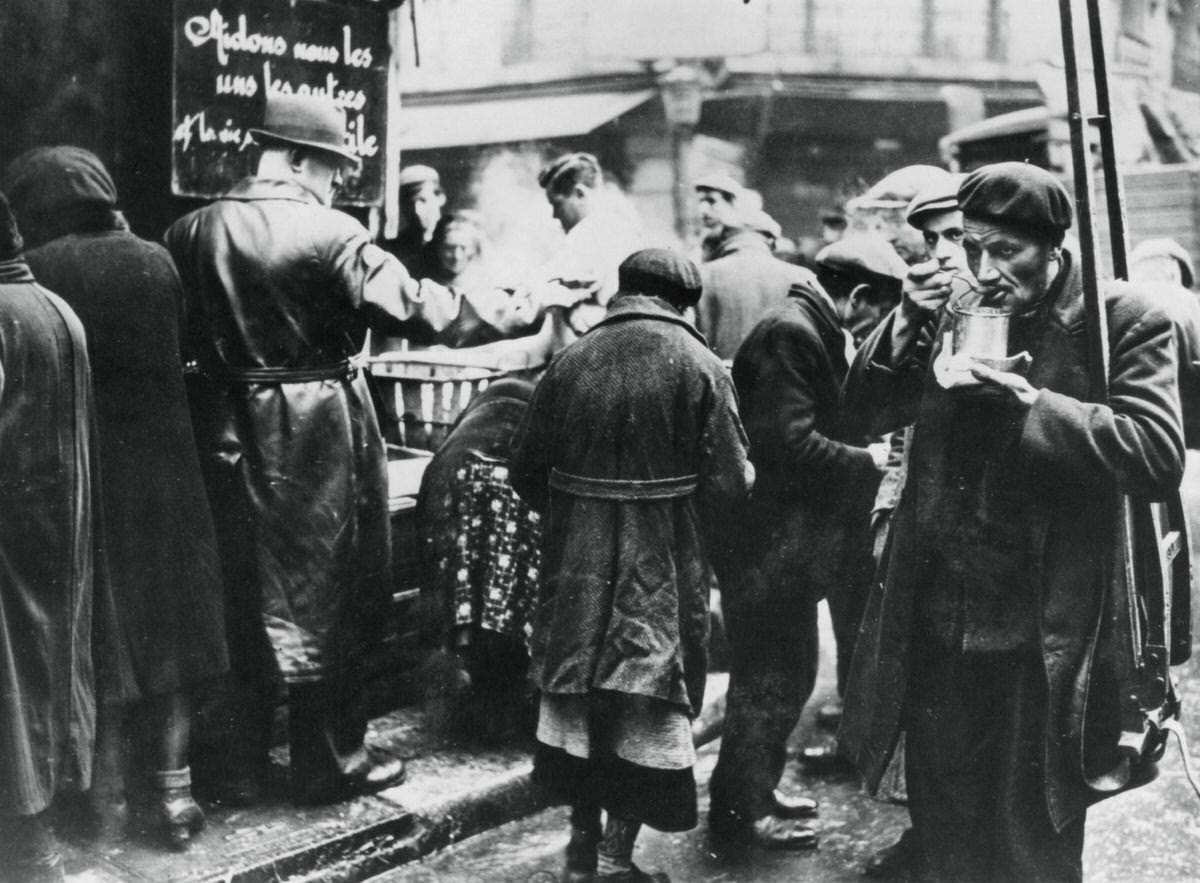
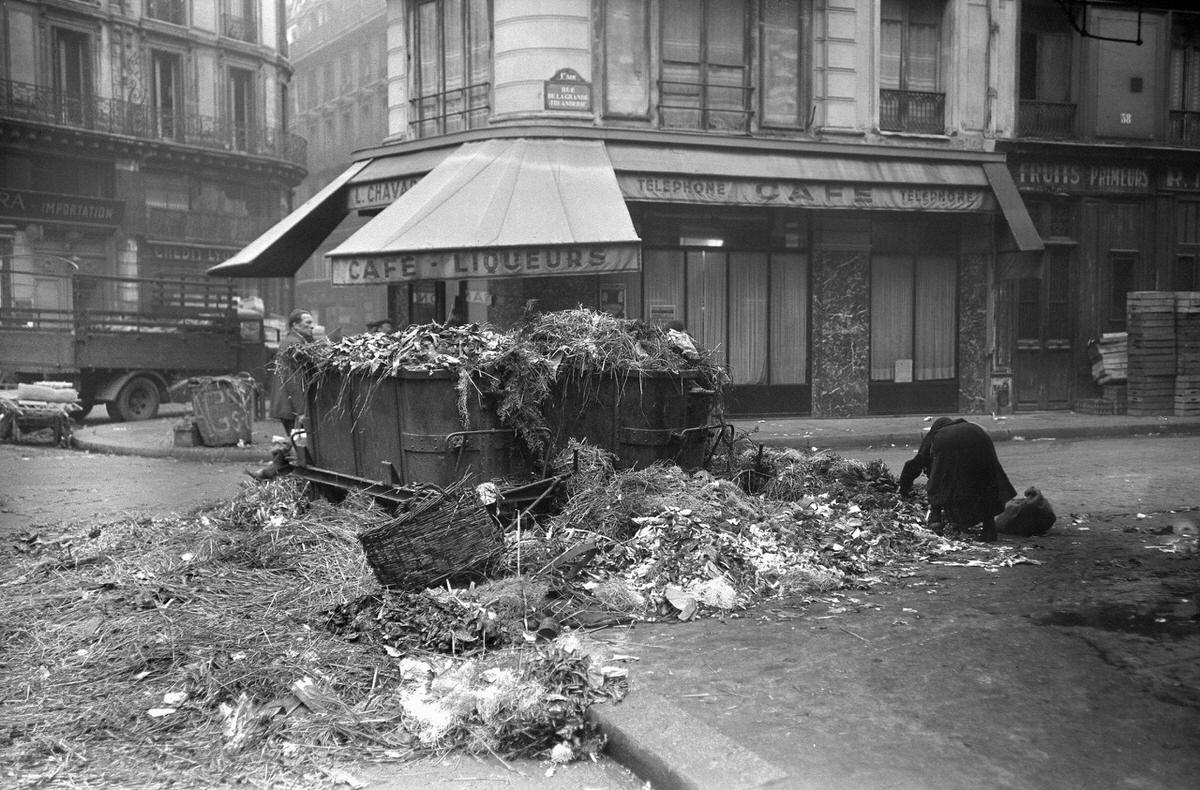
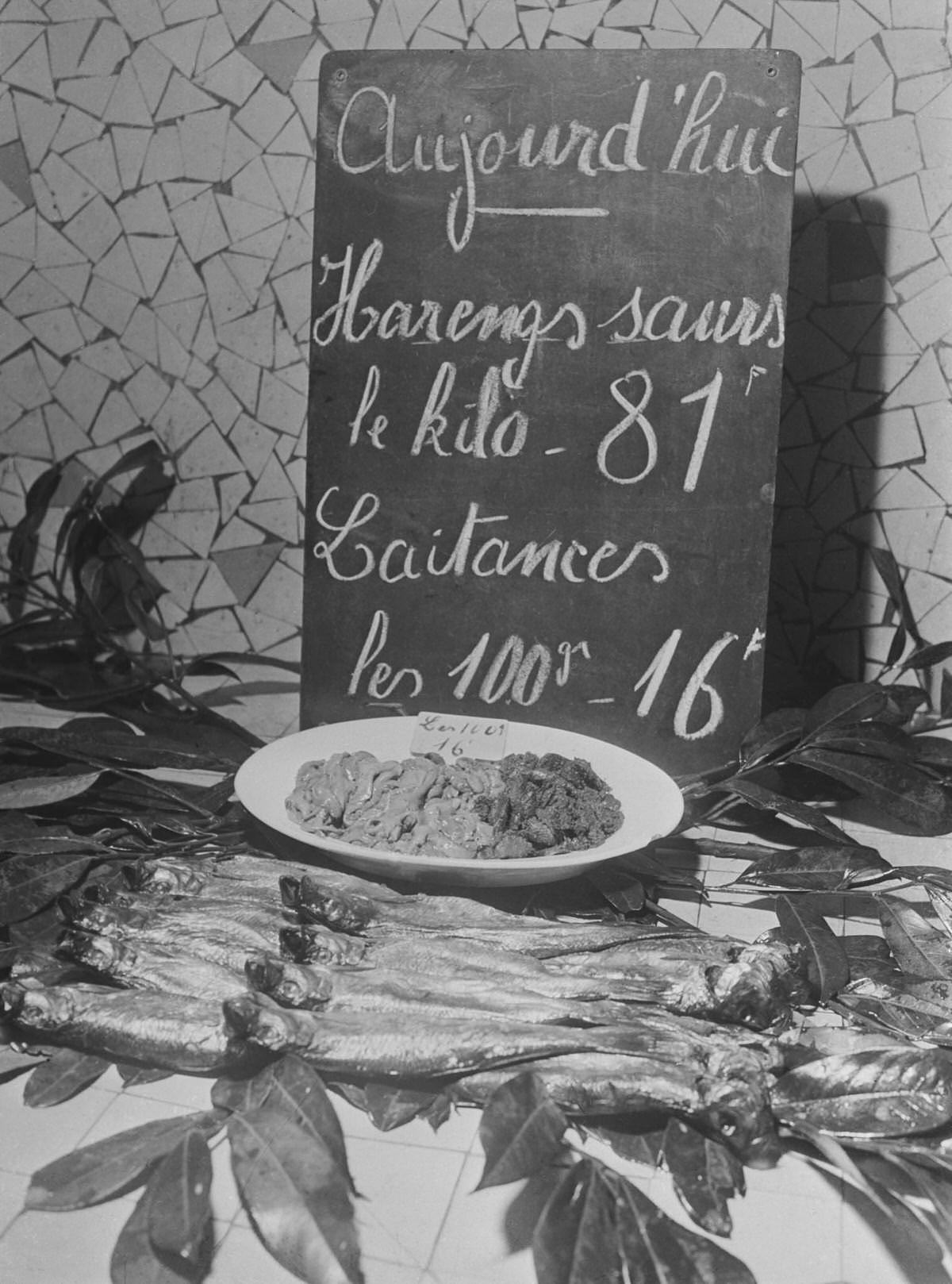
When German forces occupied Paris in 1940, Les Halles kept operating — but under entirely different conditions. Rationing was imposed, supply chains were disrupted, and the abundance that had defined the market for generations gave way to scarcity. Photographs from 1940 and 1941 show German soldiers present in the district and soup kitchens set up to feed those who could not afford food. By early 1945, people were searching through garbage cans in the Les Halles district for scraps.
Les Halles under German occupation, 1940Soup kitchen for the needy, Les Halles, 1941Soup kitchen for the needy, les Halles, 1941On the market at les Halles of Paris, 1943Poor people search a garbage can in March 1945, in the district of Les Halles in Paris, 1940sLes Halles under the rain, which was historically the traditional central market of Paris during 1945 in Paris, France.Paris in Occupied France, Les Halles, 1945Les Halles, 1945
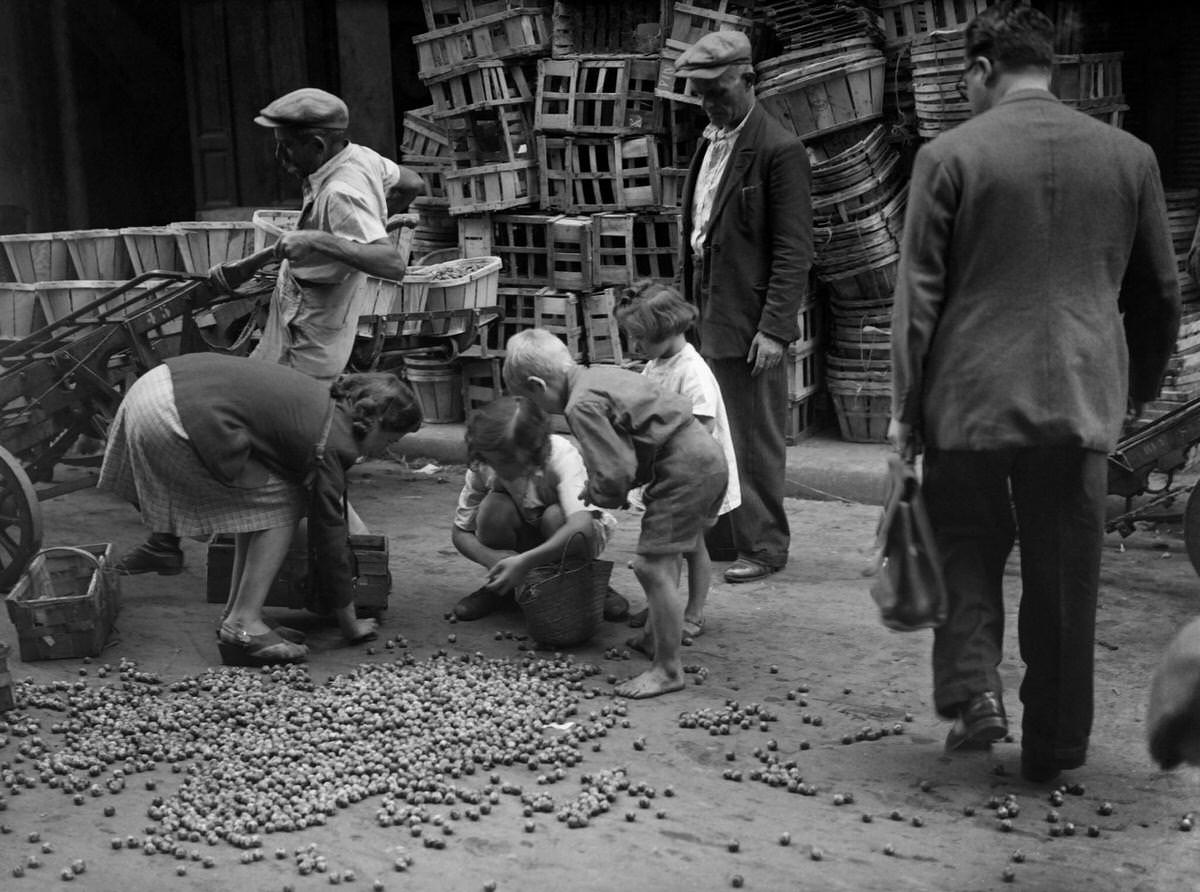
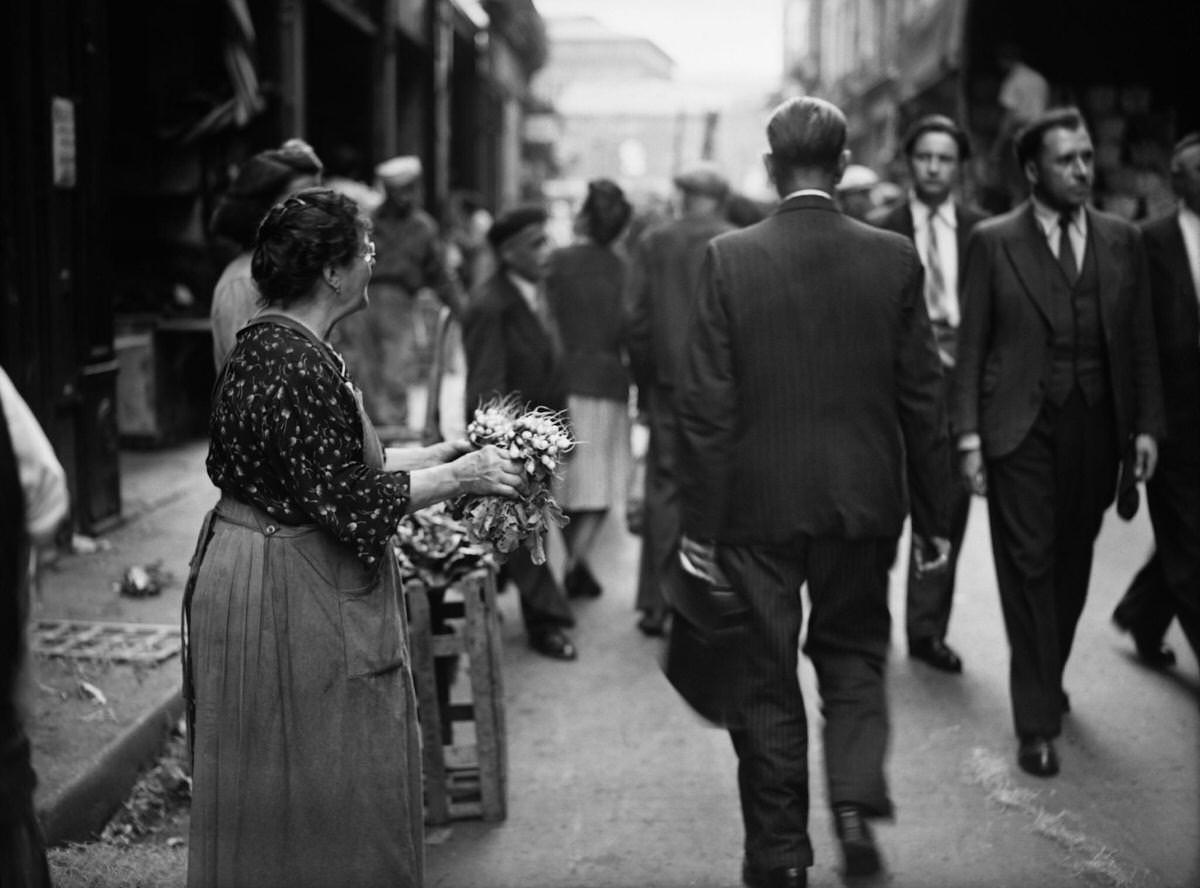
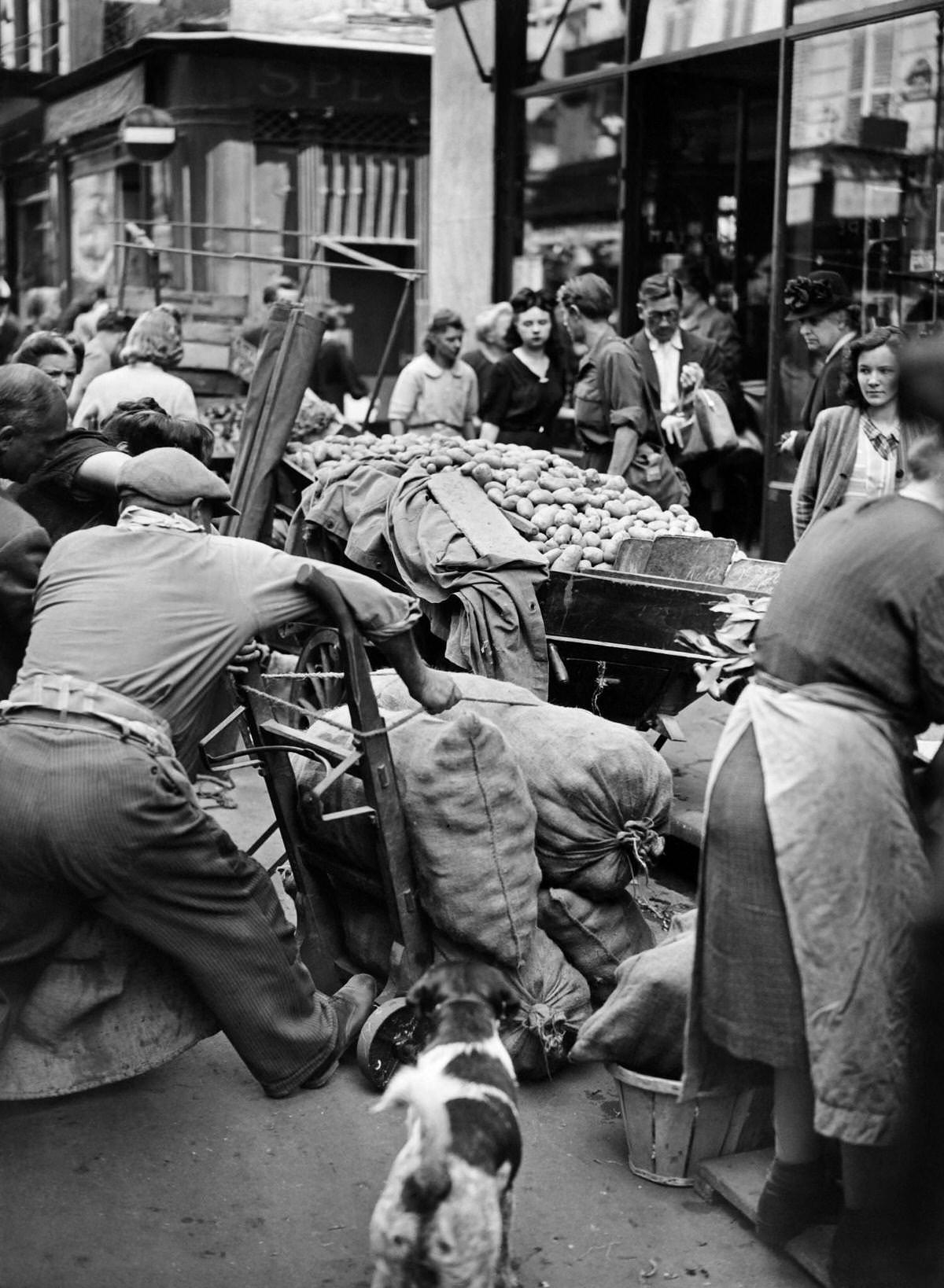
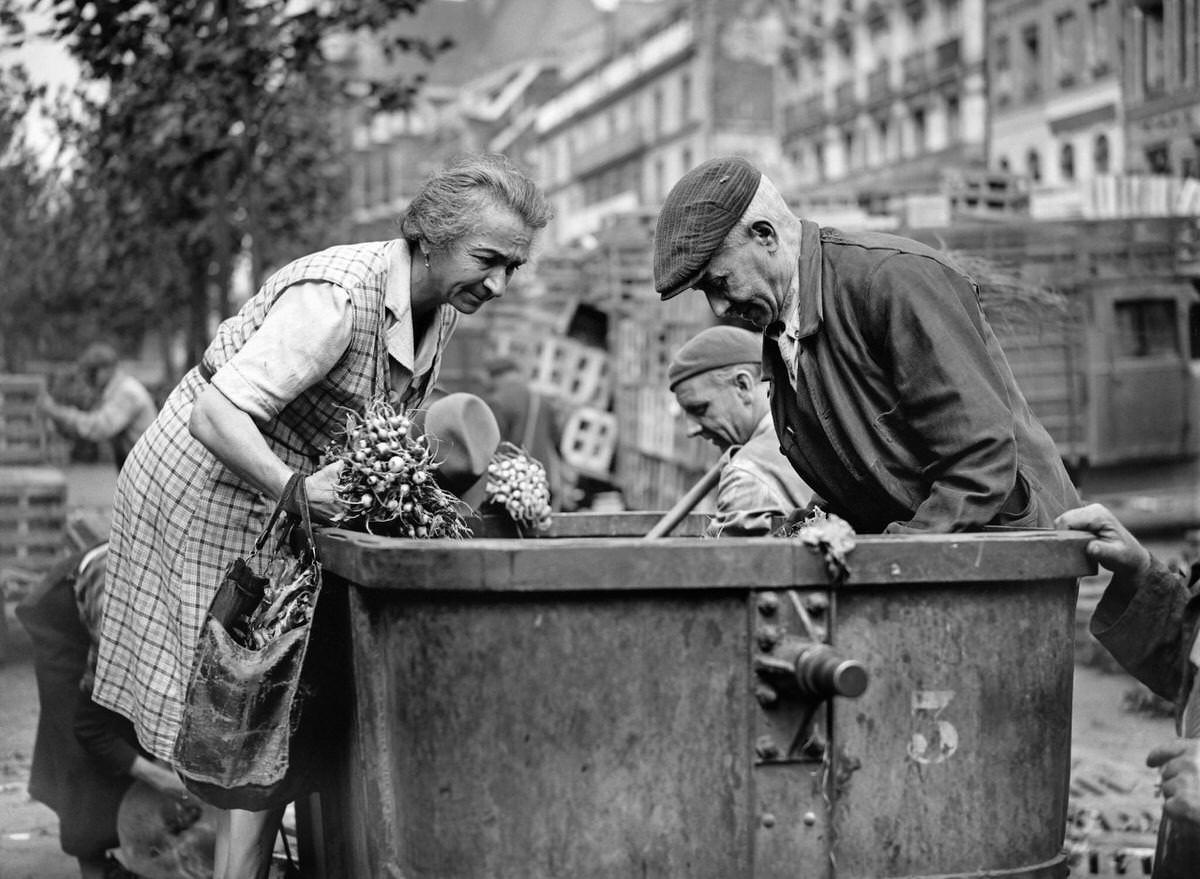
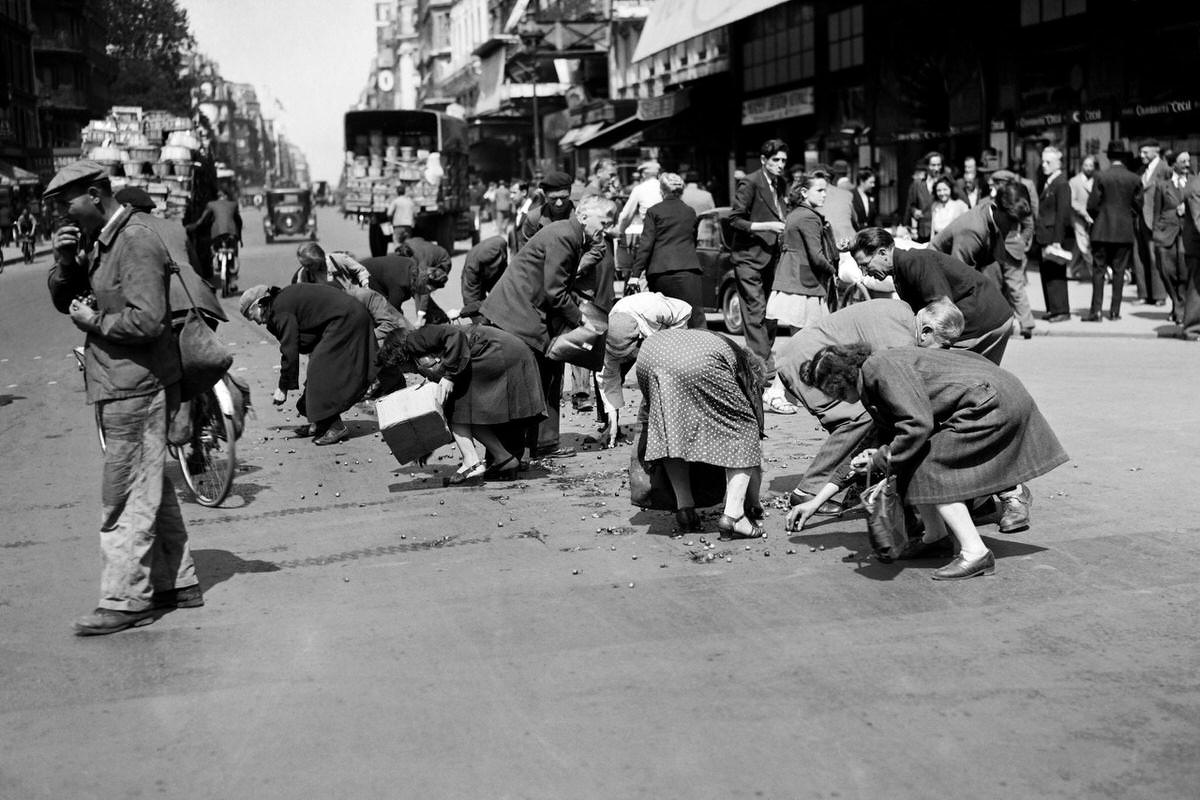
As France was liberated in 1945 and the occupation ended, life at Les Halles slowly resumed. Butchers returned to work in January 1946 while rationing measures were still in force. Poor children picked up cherries that had fallen from trucks in the streets, and people still searched garbage bins for discarded food. At the same time, workers were beginning to carry sacks of potatoes through the lanes again, and sellers were hawking radishes from the pavement — the market district returning to something approaching its old rhythm.
Poor children pick cherries in a street of Les Halles district in August 1945 in ParisButchers work at les Halles district in January 1946 in Paris, while rationing measures are still in force in France.Butchers work at les Halles district in January 1946 in Paris, while rationing measures are still in force in France.Workers of a butcher’s shop carry meat in Les Halles district (central food market) in January 1946 in Paris during the meat strike.Pavillon des Halles de Paris, 1946Pavillon des Halles de Paris, 1946Pavillon des Halles de Paris, 1946Pavillon des Halles de Paris, 1946A woman sells her radish production, in August 1946 in the district of Les Halles in Paris, at the resumption of the activity in the Halles quarterA man carries bags of potatoes in August 1946 in a busy street of Les Halles district in Paris at the resumption of the activity in the HallesPeople search a garbage can in August 1946, in the district of Les Halles in Paris, at the resumption of the activity in the Halles quarterParisians collect cherries fallen from a truck on a boulevard near Les Halles district, in June 1946 in Paris.
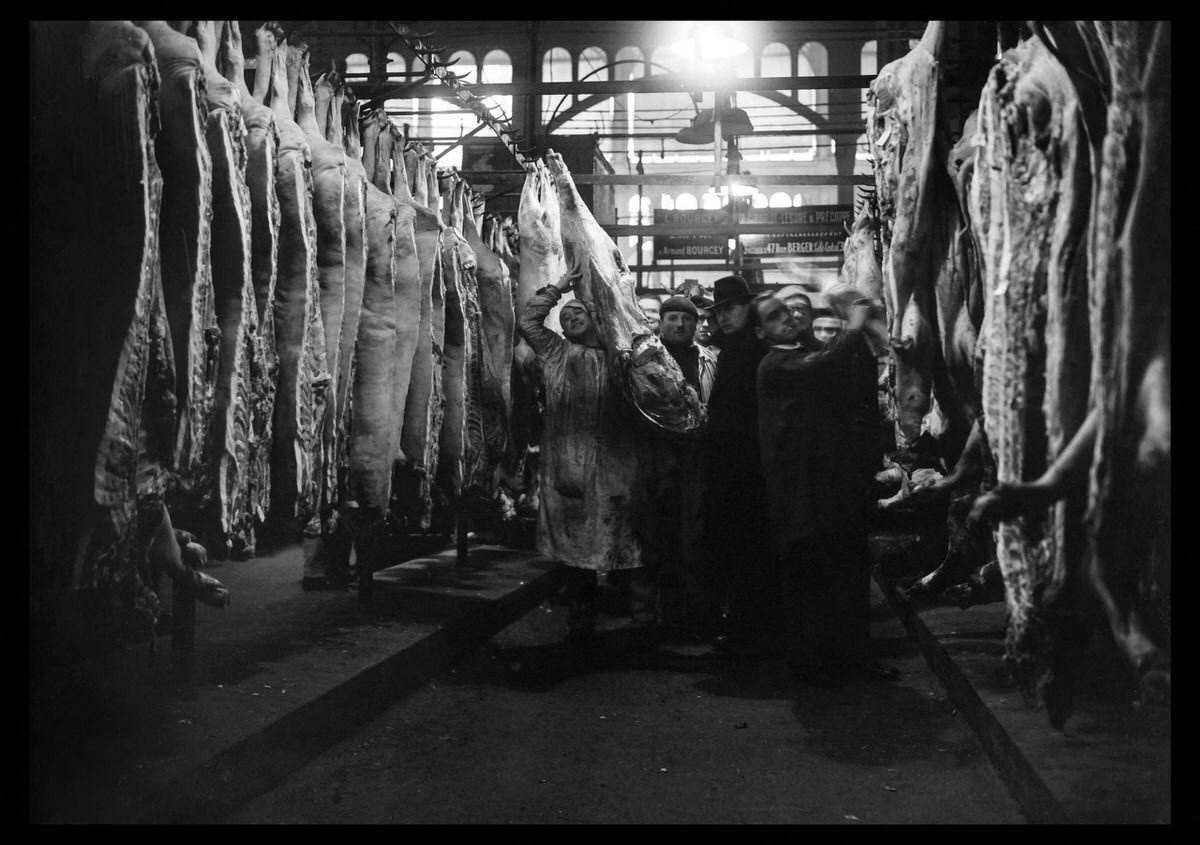
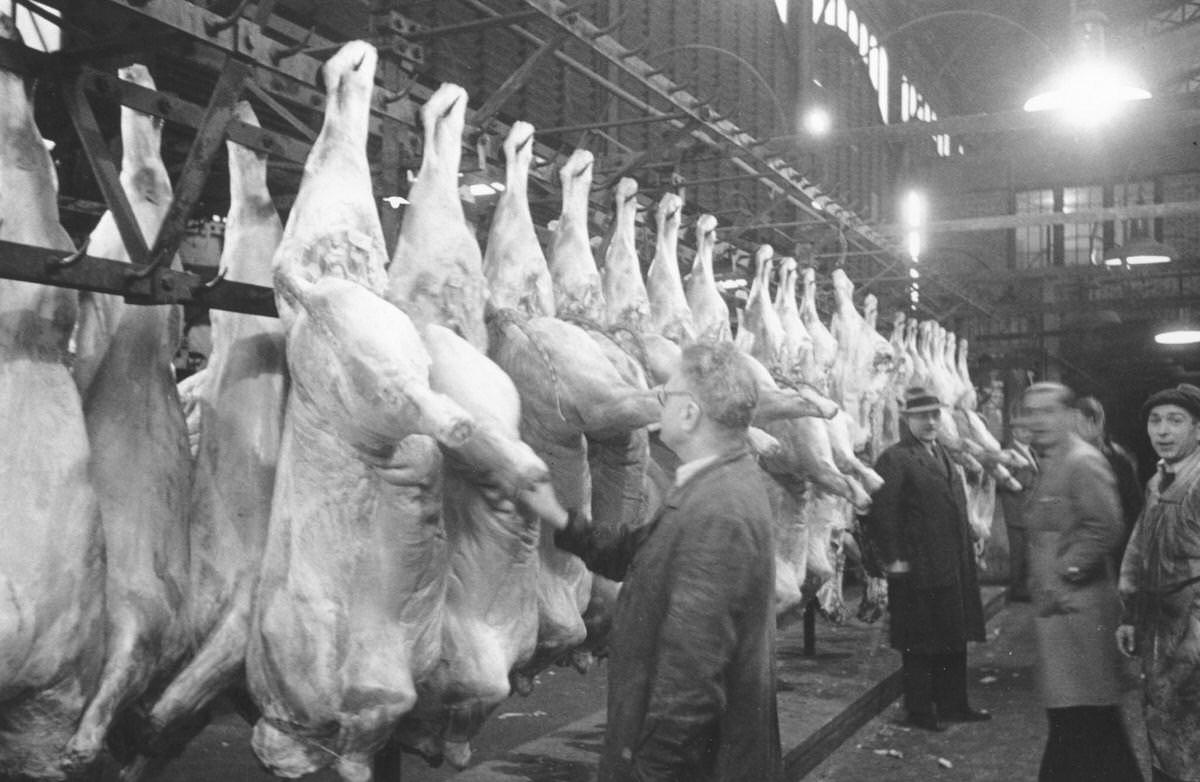
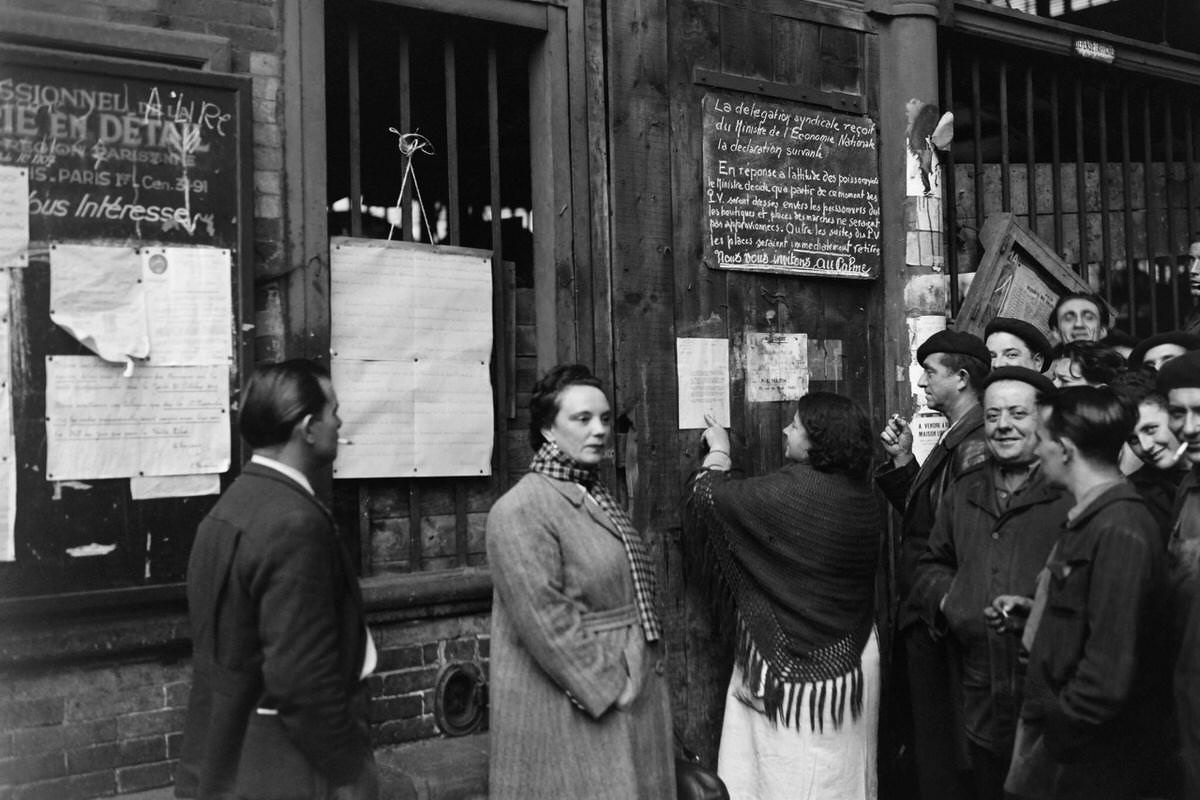
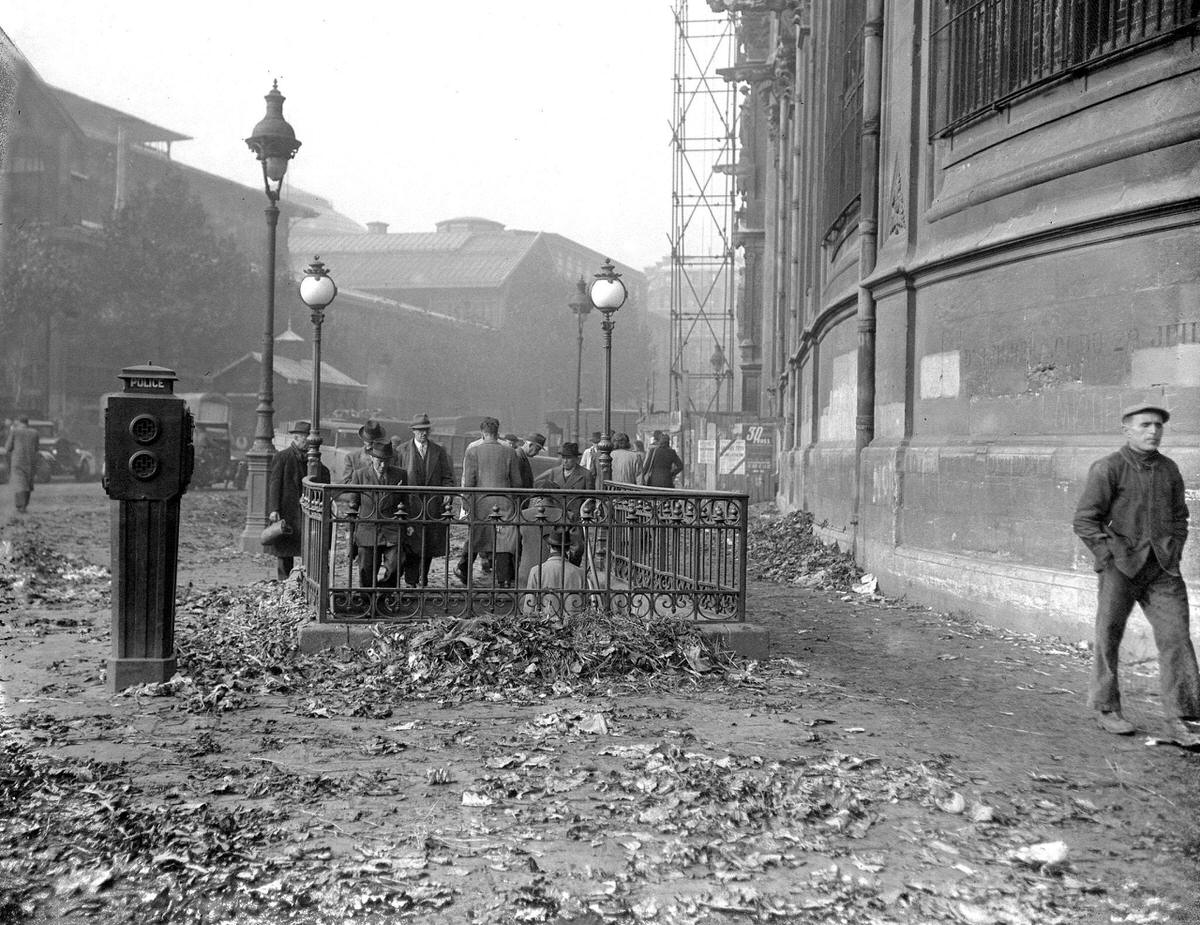
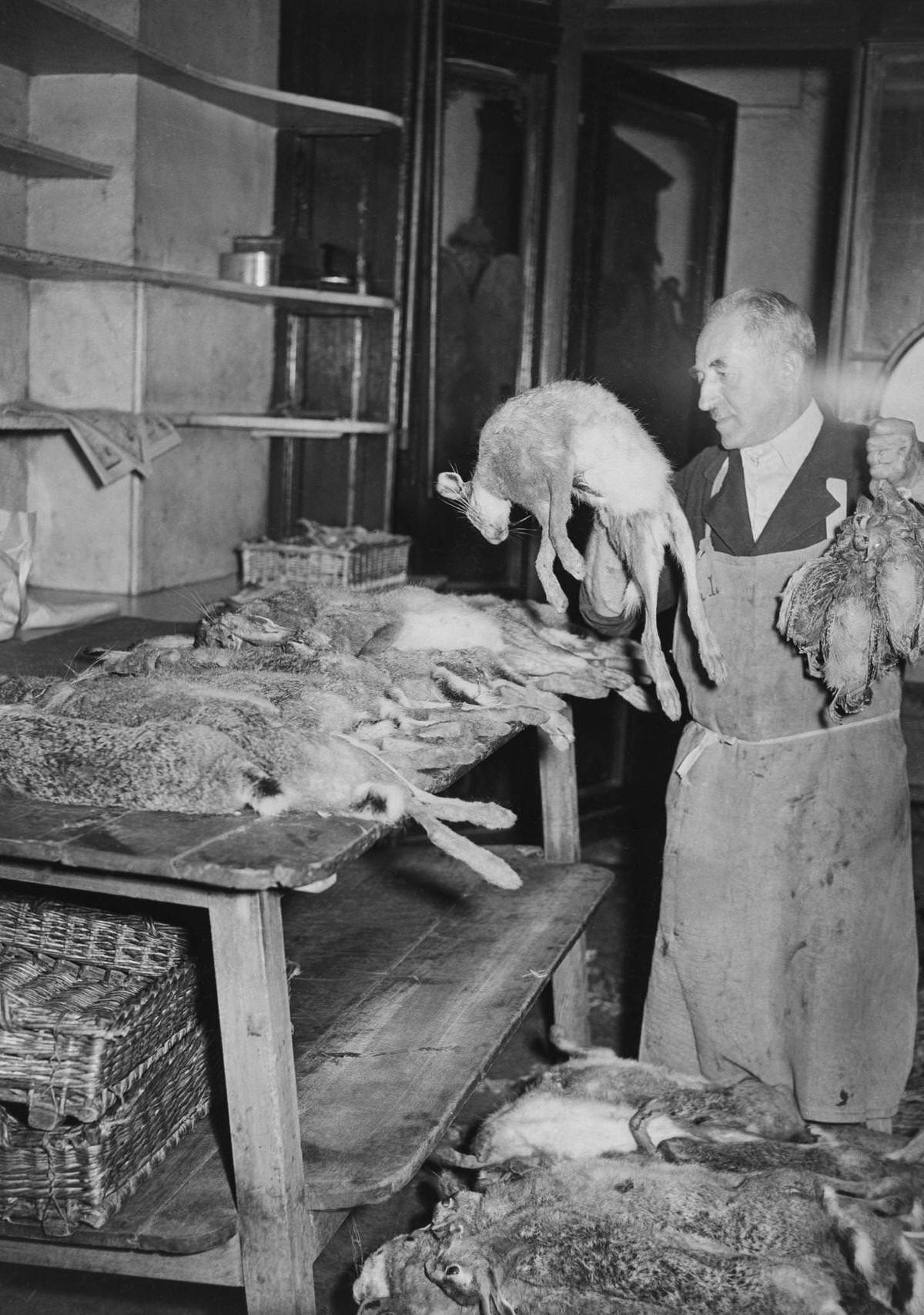
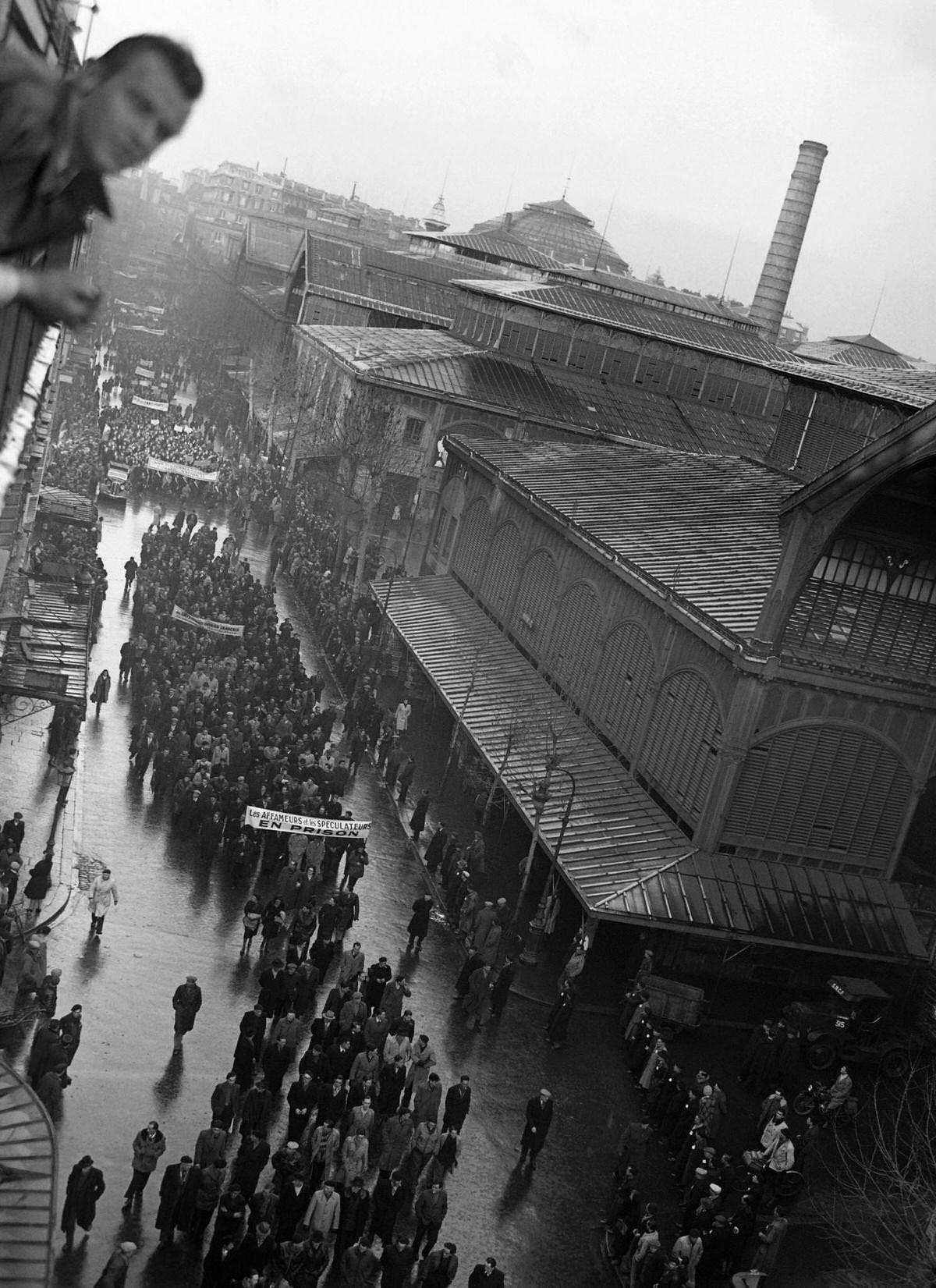
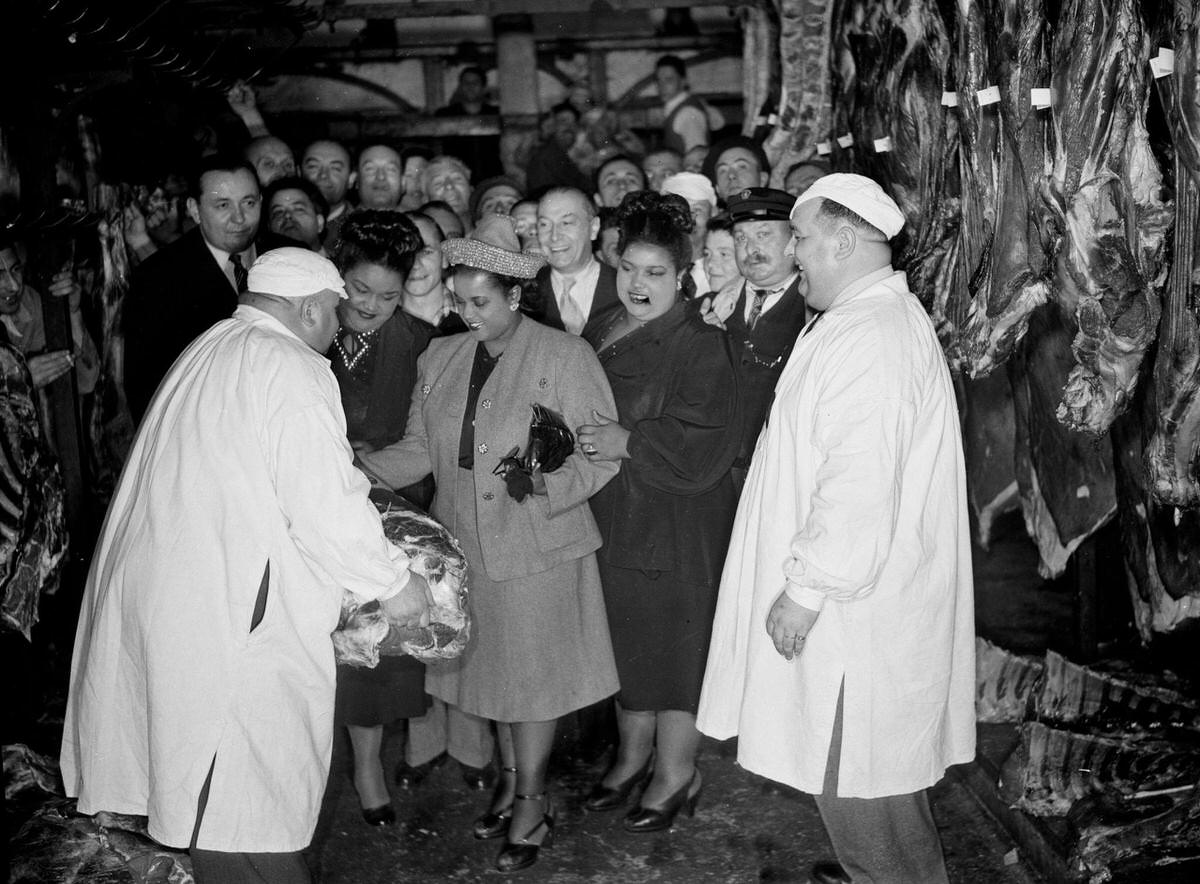
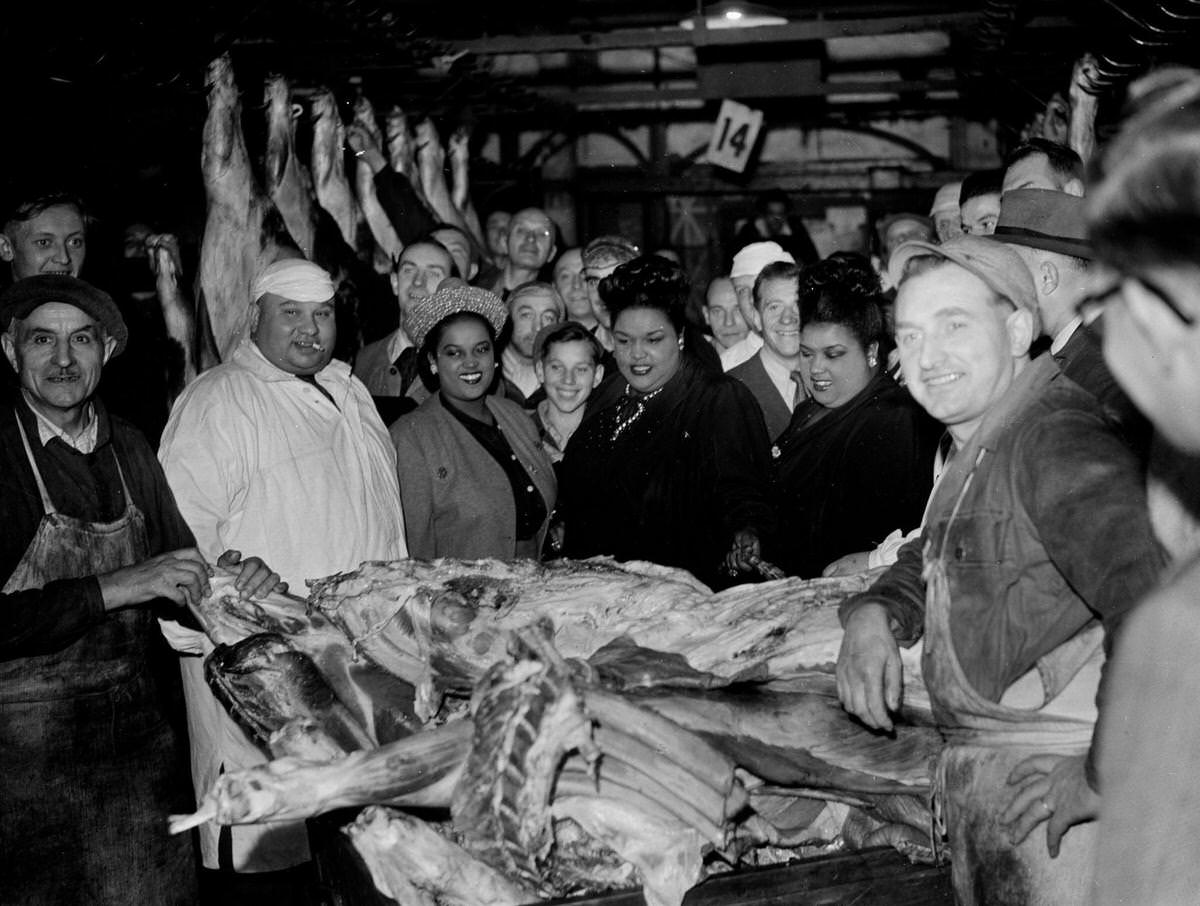
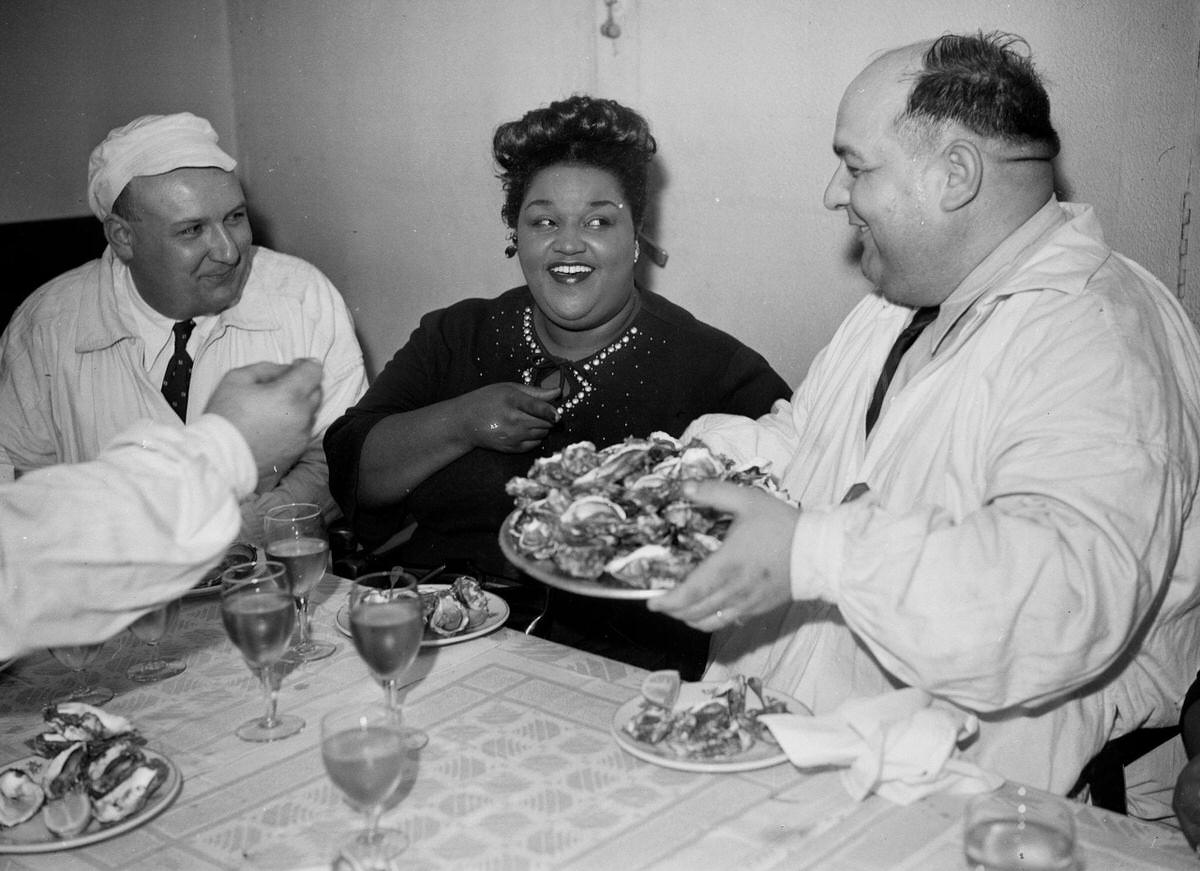
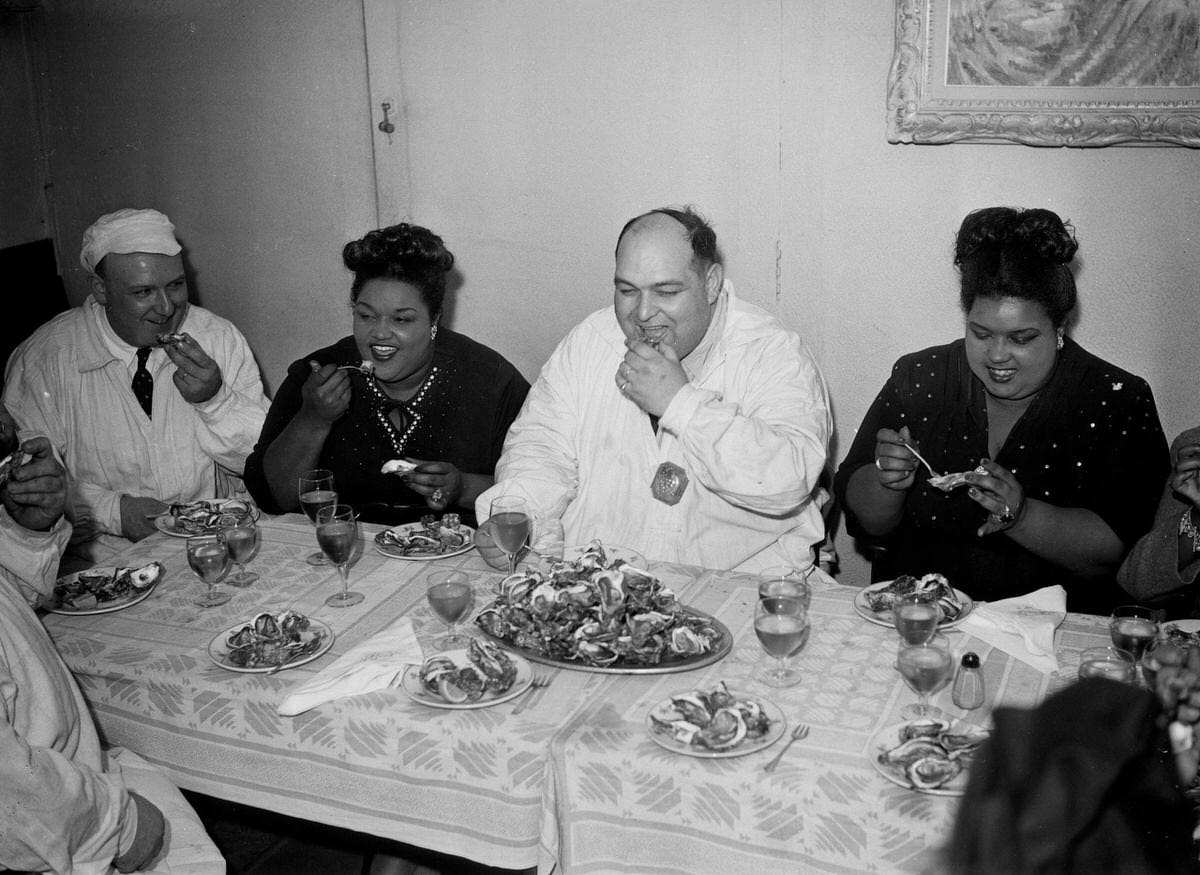
The postwar years brought new troubles. In November 1947, wholesale fishmongers went on strike, and long queues formed outside the few shops that remained open. That same month, a garbage collectors’ strike left the streets of the Les Halles district buried under piles of refuse. On December 12, 1947, Parisians marched near Les Halles to protest rising food costs and supply shortages. Meanwhile, in the meat pavilion that year, the American singing group the Peters Sisters paid a visit — an unusual and widely photographed moment of celebrity in an otherwise grim period.
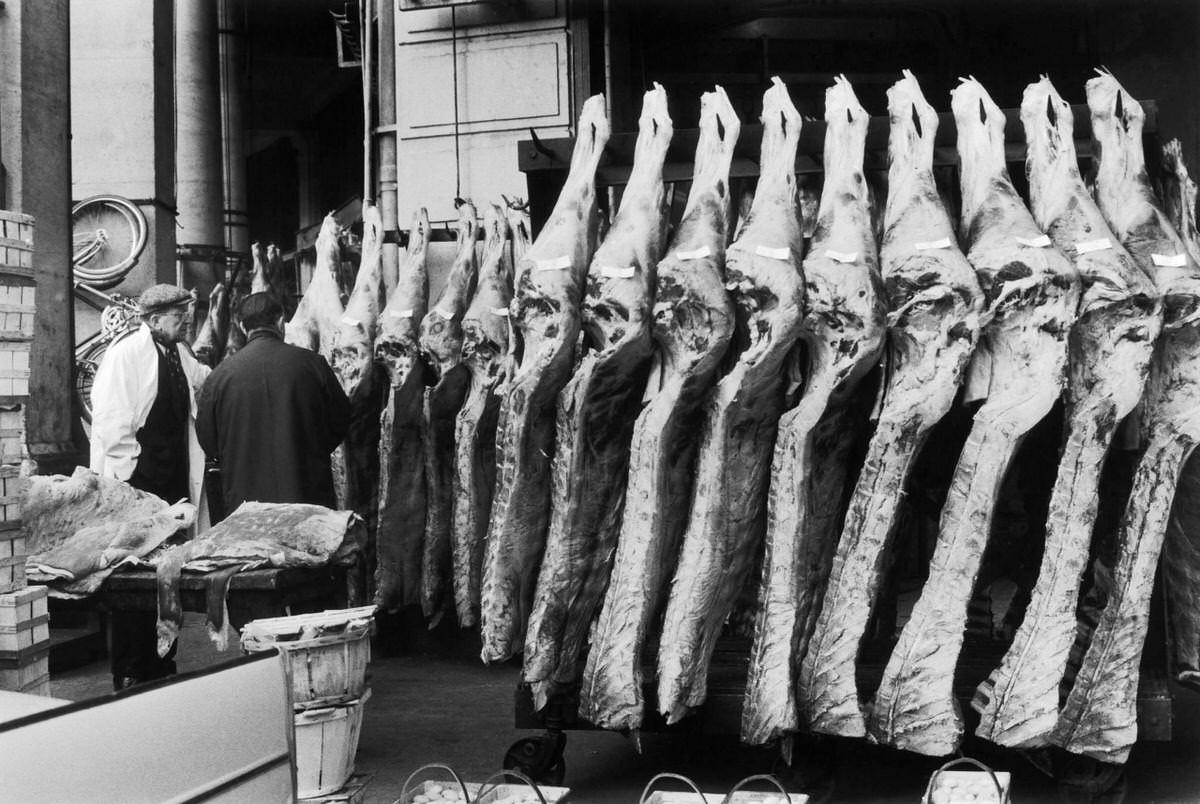
Carcasses of animals hanging up in a meat market at Les Halles, Paris, 1947People line up in front of a fish shop in Les Halles district in Paris on November 12, 1947 during the fishmongers’ strike.A street of the Les Halles district littered with garbage during the Paris binmen’s strike, 1947A street of the Les Halles district in Paris littered with garbage during the city binmen’s strike, 1947
Fish stall during a wholesale fishmongers’ strike at Les Halles market in November 1947
Game stand at the Halles market in Paris in September 1947
Parisians demonstrate on December 12, 1947 near Les Halles in Paris to protest against the expensive life and supply difficulties.American singers, the ‘Peters Sister’s’, visited the meat pavilion at Les Halles de Paris in 1947American singers, the ‘Peters Sister’s’, visited the meat pavilion at Les Halles de Paris in 1947American singers, the ‘Peters Sister’s’, visited the meat pavilion at Les Halles de Paris in 1947Les ‘Peters Sister’s’ visitent les Halles de Paris, 1947Knacker in The Halles District, 1947.Les Halles, 1947.Knacker in the Halles District, 1947.The Halles, 1947Les Halles, 1947People search for food in the garbage after closing time of the market of Paris Les Halles district on December 28, 1947.Vendor Les Halles Paris, 1949The Halles’S Construction Project, 1948The Halles Building Site, 1948.
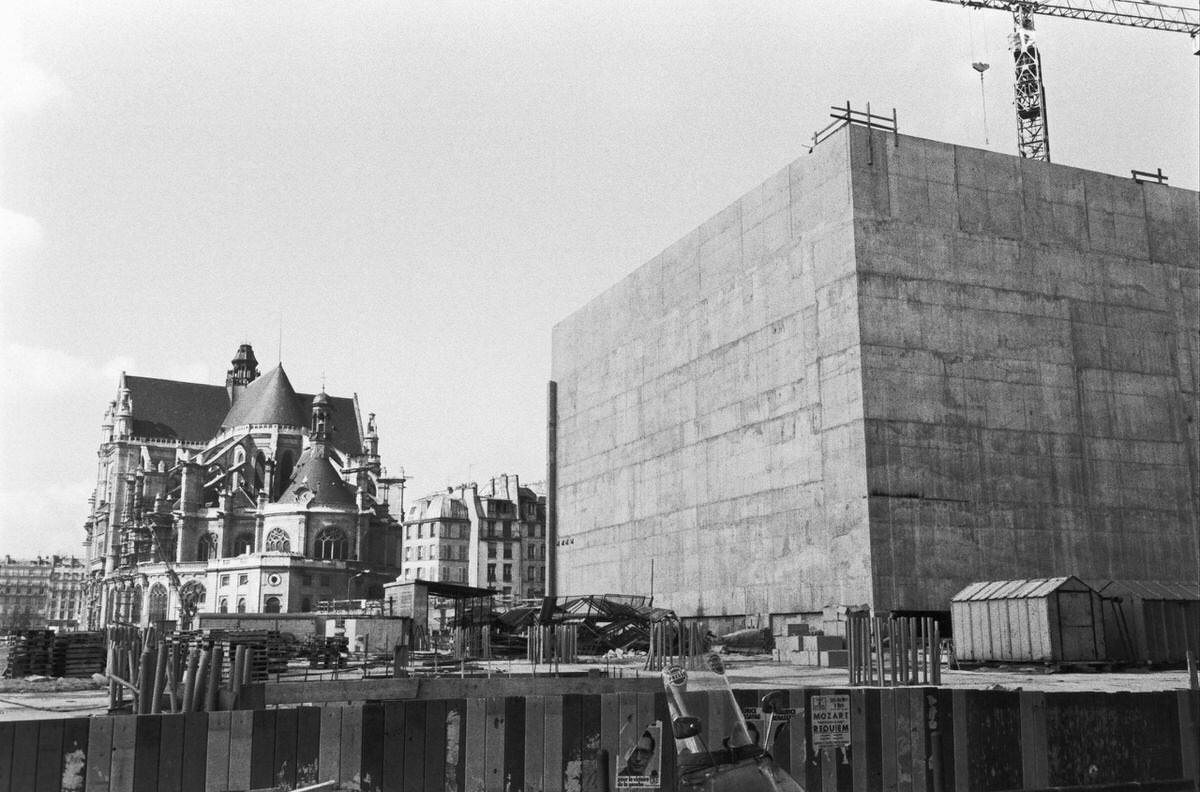
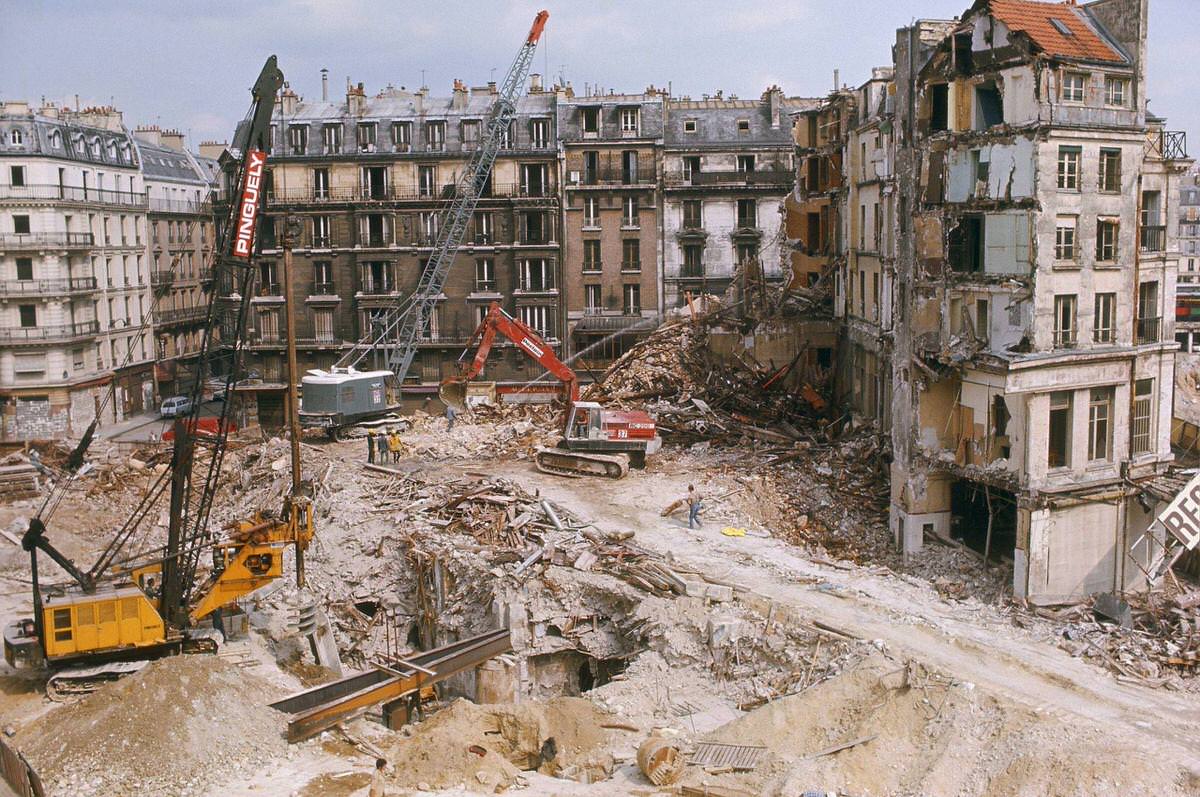
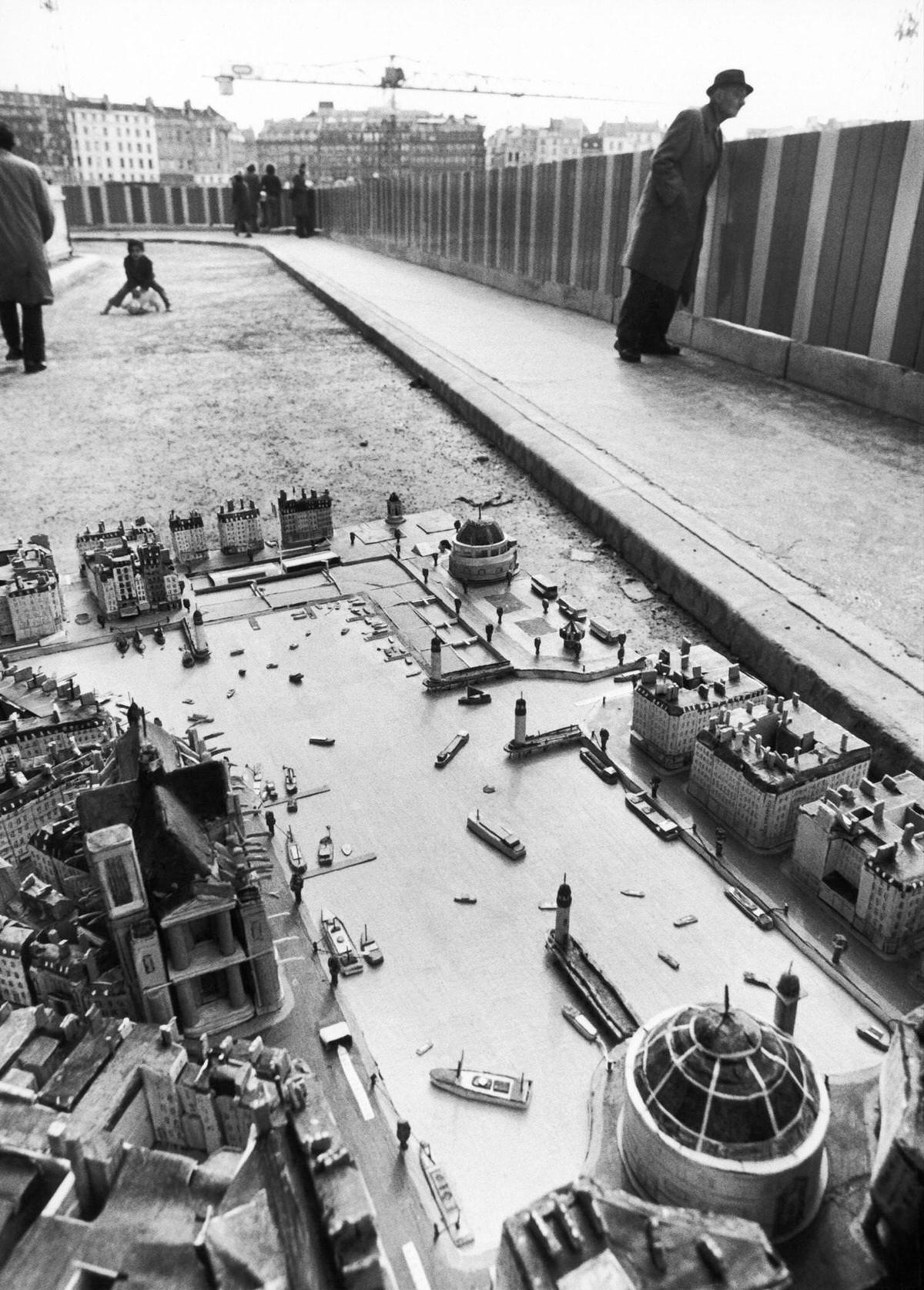
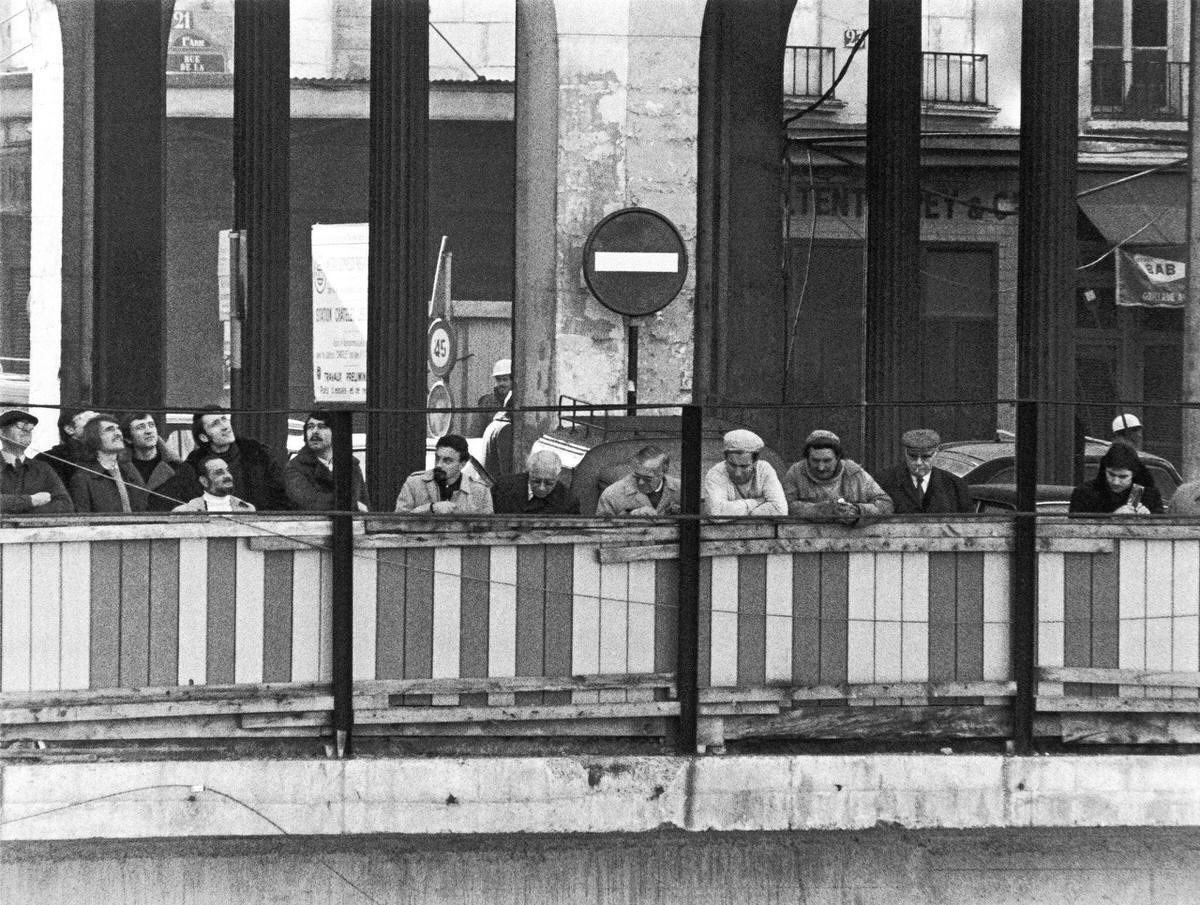
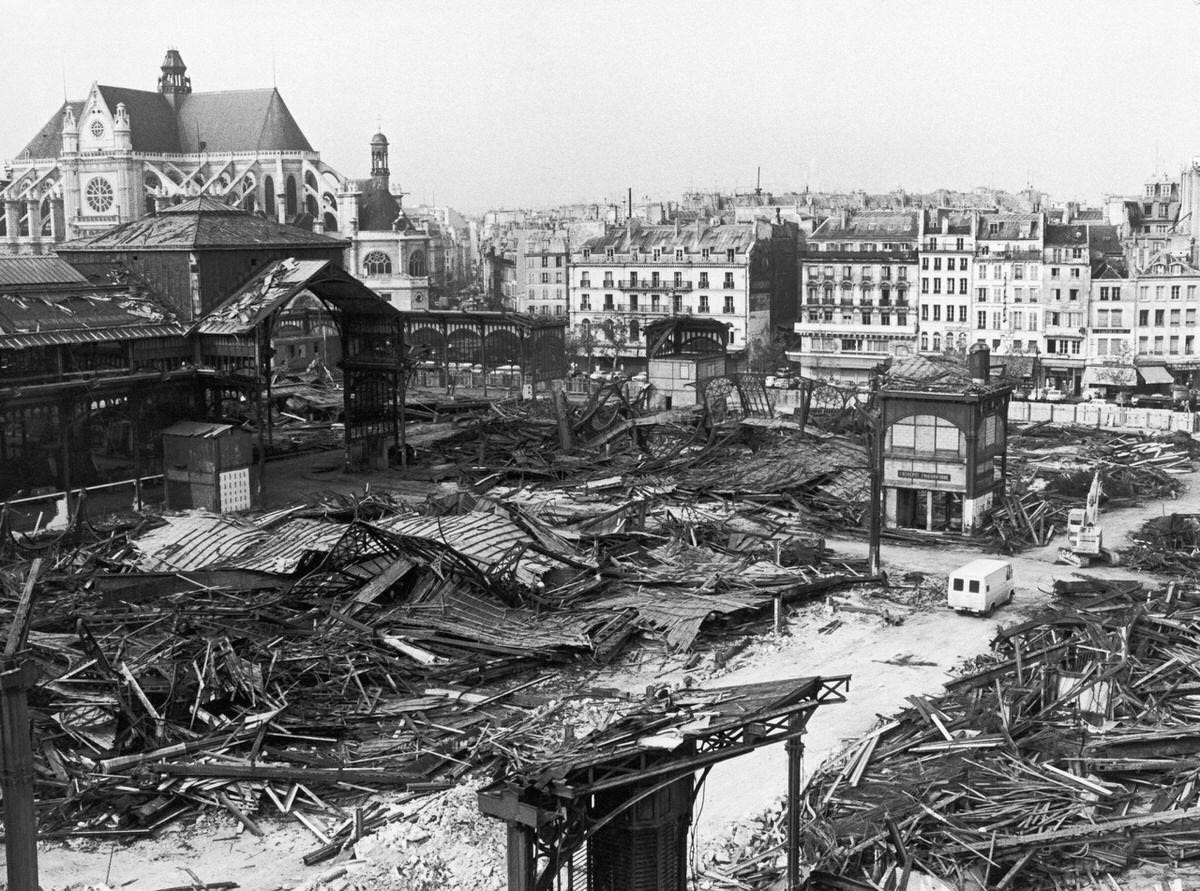
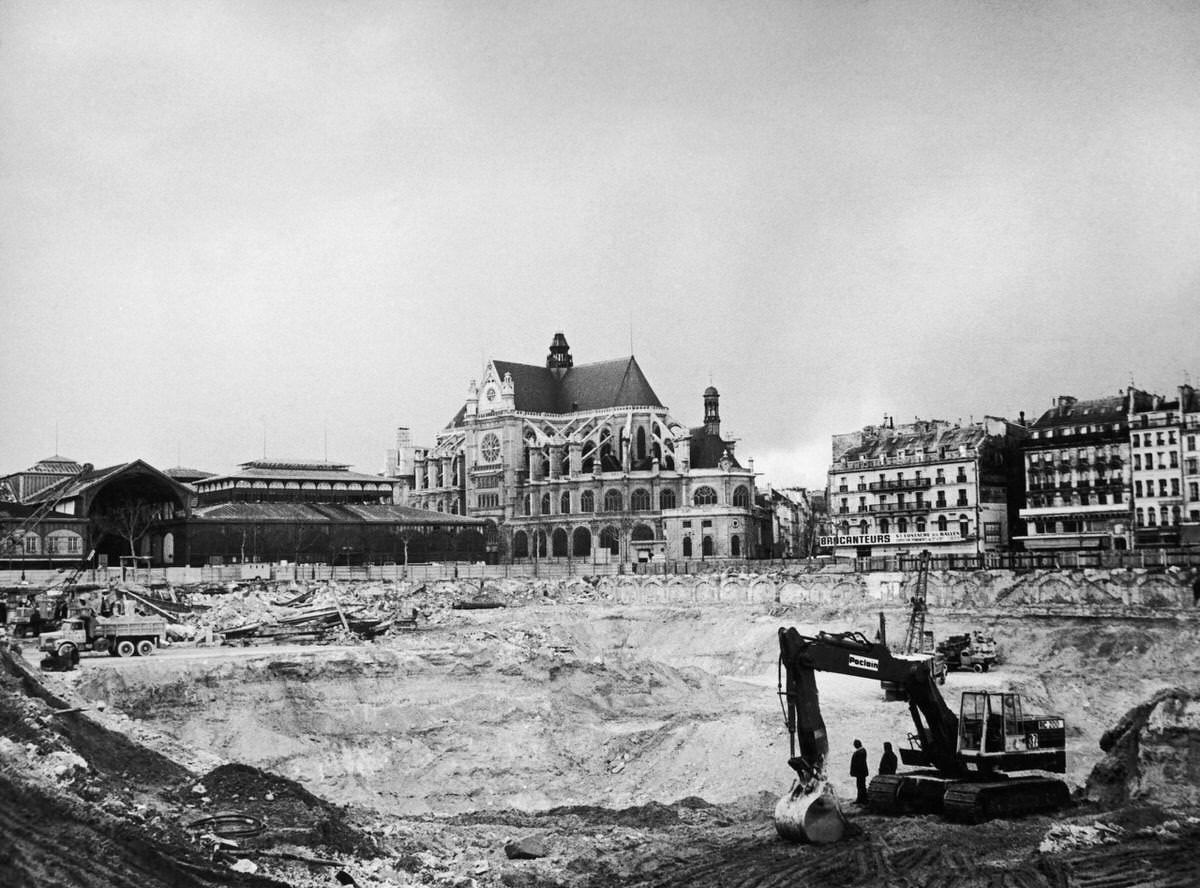
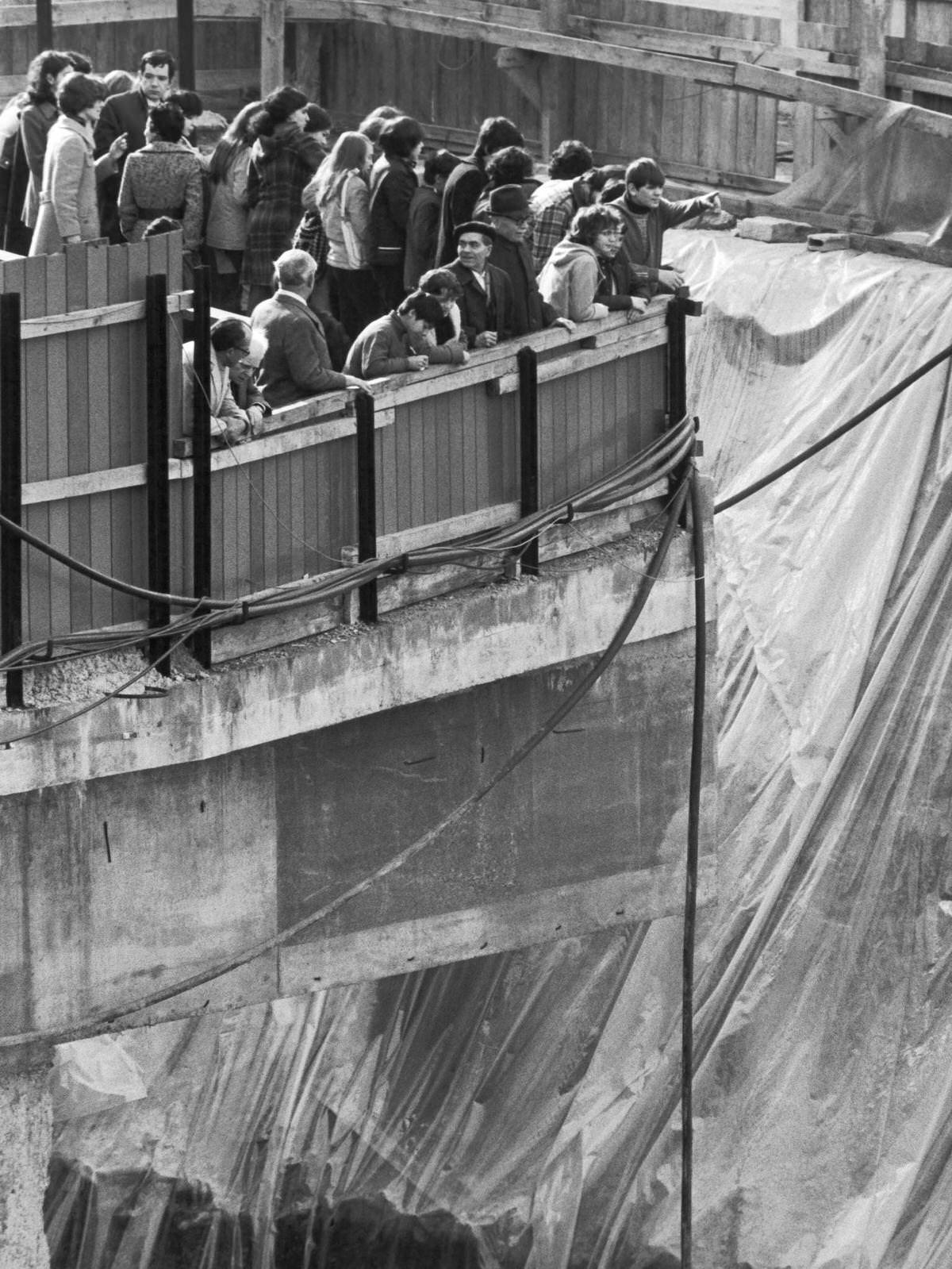
By the 1960s, the sheer size of the market had become a problem for the city. Delivery trucks clogged the surrounding streets day and night, creating traffic bottlenecks that paralyzed central Paris. The market also required massive structural repairs that would have been costly to carry out. In 1971, the decision was made to dismantle the Baltard pavilions and move the wholesale operations to Rungis, south of Paris. Two of the iron-and-glass pavilions were carefully dismantled and rebuilt elsewhere — one in Yokohama, Japan, and one in Nogent-sur-Marne, just outside Paris. The site they left behind was redeveloped as a major underground transit hub, connecting new express rail lines running east, west, and south across the city.
The Halles of Paris, Demolition of Pavillons Baltard, 1900Beaubourg District, The Hole Of The Halles, 1900
Demolition of The Halles De Baltard, 1900
Building of the Forum Des Halles, 1900
The Halles of Paris, 1900Les Halles, 1900Paris: The Halles, Paris, 1900A butcher sells his poultries at Les Halles district (central food market) in Paris on December 1938.A butcher sets up his poultries at Les Halles district (central food market) in Paris on December 1938.Poultry Array For Christmas Near Les Halles in Paris, 1937.