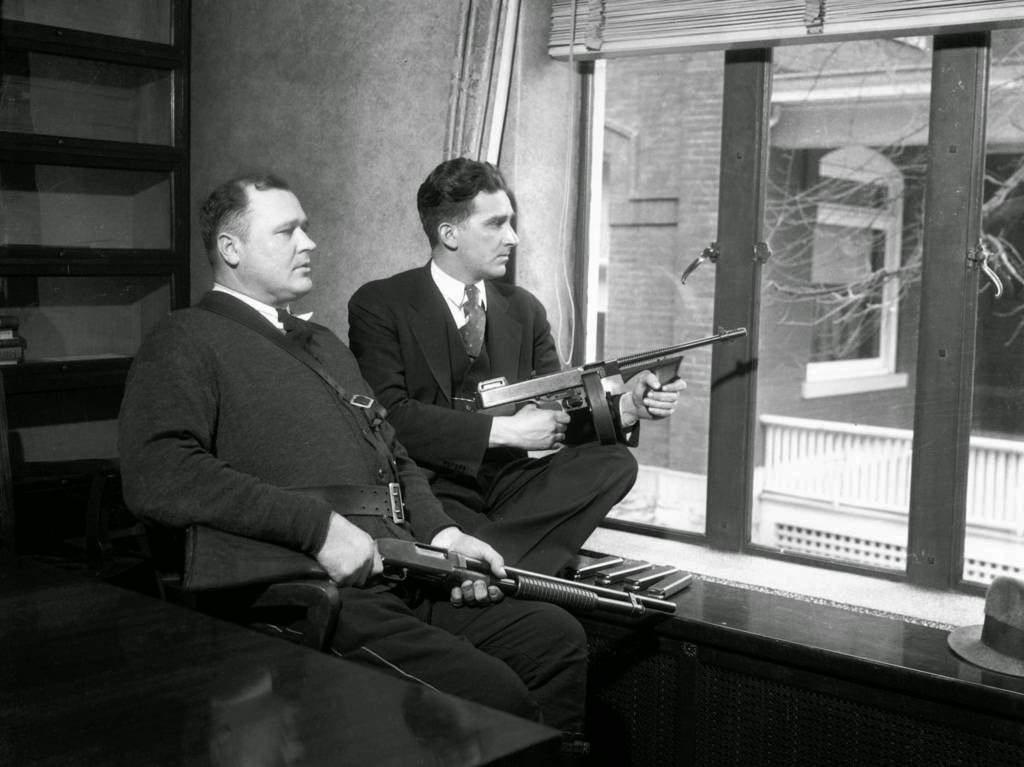
John Dillinger walked into banks with a Thompson submachine gun and a smile. Born in Indianapolis, Indiana, he assembled a crew of hardened criminals who terrorized the Midwest during the Great Depression. On January 15, 1934, Dillinger and his gang hit the First National Bank in East Chicago, Indiana. During the chaotic robbery, 43-year-old police officer William O'Malley was shot and killed. Federal and local authorities launched a massive manhunt for the outlaw. Law enforcement officers eventually tracked Dillinger to Tucson, Arizona, where local police arrested him on January 25, 1934, and placed him on a plane back to the Midwest.
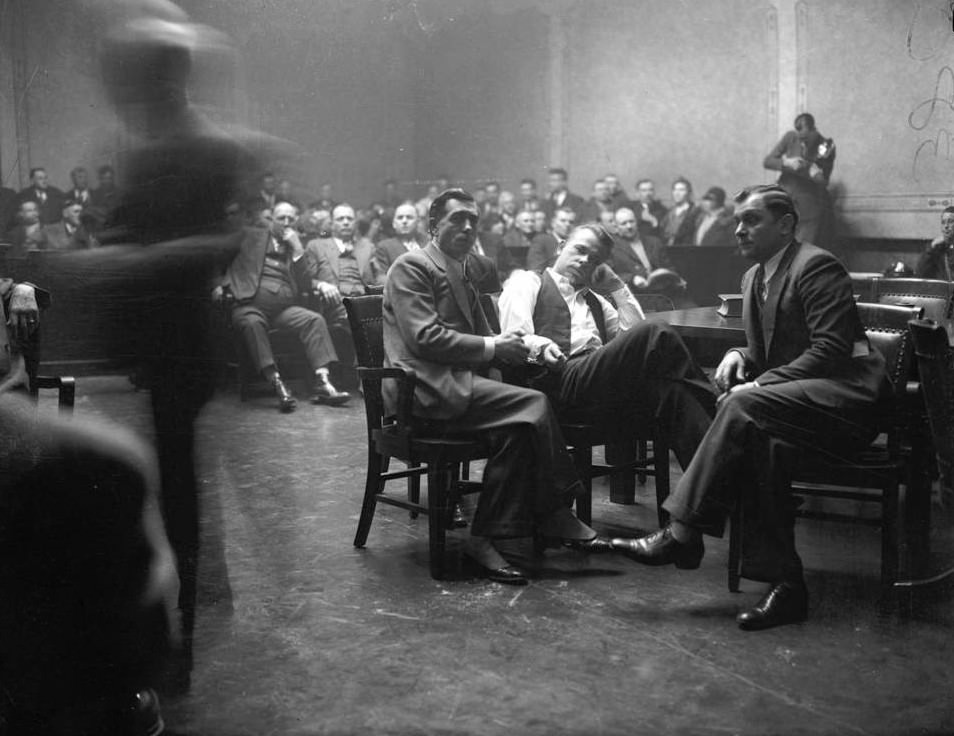
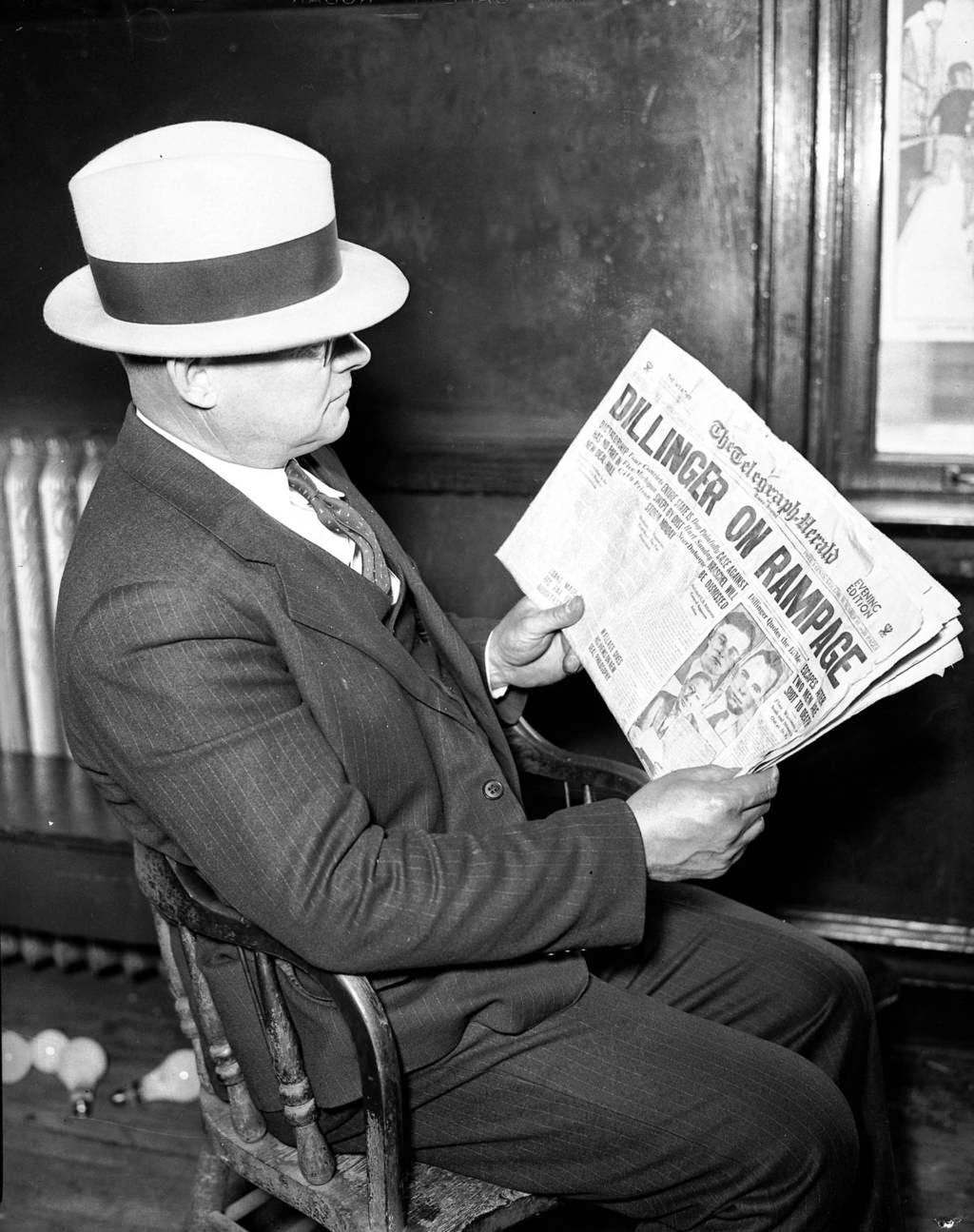
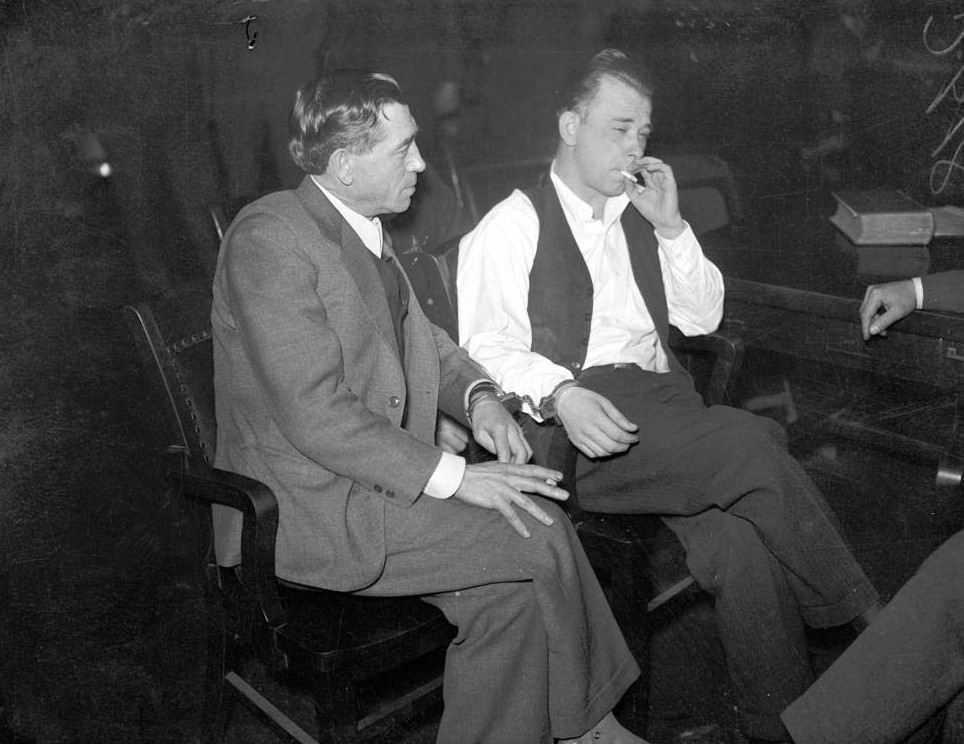
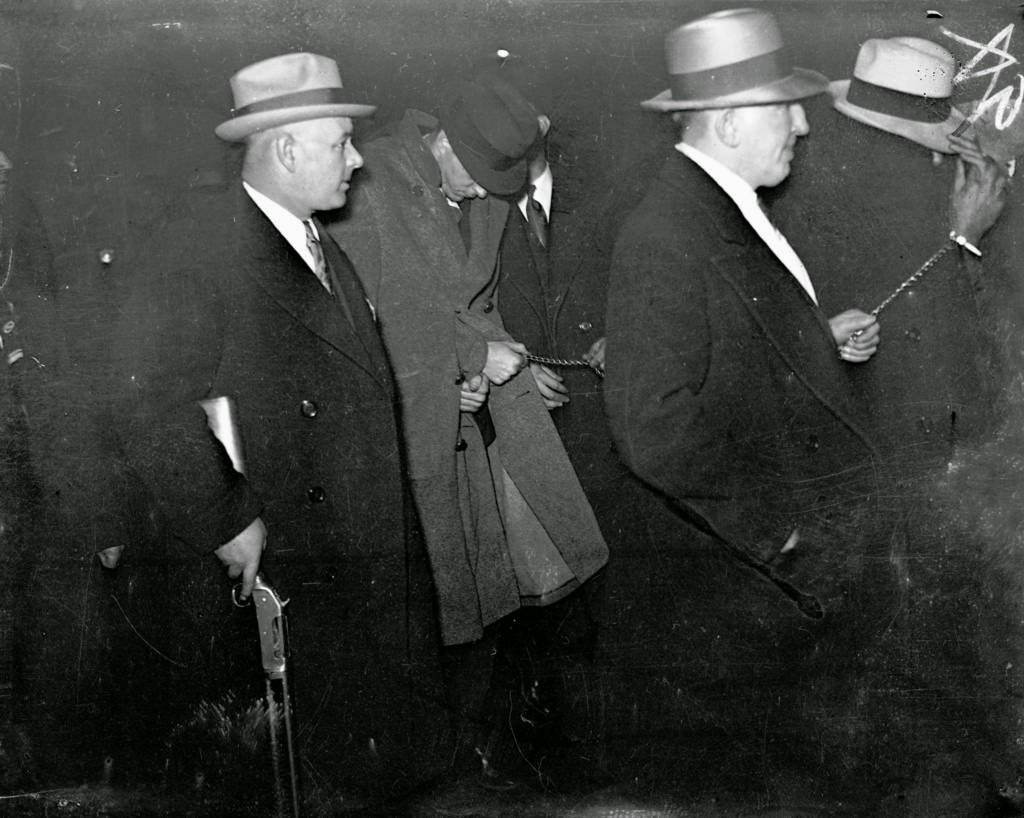
John Dillinger, center, is handcuffed to Deputy Sheriff R. M. Pierce, left, during Dillinger's court hearing in Crown Point, Indiana during the first weeks of February 1934. Dillinger was charged with killing police officer William O'Malley, 43, during a bank robbery in East Chicago, Indiana on Jan. 15, 1934. His trail date was set for March 12, 1934. Dillinger would break out of the Crown Point, Indiana jail on March 3, 1934. — Chicago Tribune historical photoSgt. Edward A. Grim of the North Robey Street police station with a Dubuque, Iowa newspaper found in John Dillinger's stolen and abandoned automobile on May 2, 1934. The bloodstained getaway car, found at 3338 N. Leavitt Street in Chicago, had a surgical kit, matches from the Little Bohemia Resort, and the newspaper dated April 23, 1934 with the headline "Dillinger On Rampage." — Chicago Tribune historical photo
Indiana authorities locked Dillinger inside the county jail in Crown Point, Indiana, to await trial for the murder of officer O'Malley. The jail was supposedly escape-proof, but Dillinger had friends on the outside. On September 26, 1933, ten convicts led by John Hamilton broke out of the Michigan City prison using smuggled guns. Dillinger had engineered that breakout before his own arrest in Ohio. Those escaped convicts formed the core of the Dillinger gang. Newspapers printed screaming headlines about the criminals roaming farming districts and small towns across Indiana, Ohio, and Illinois, keeping local sheriffs on high alert day and night.
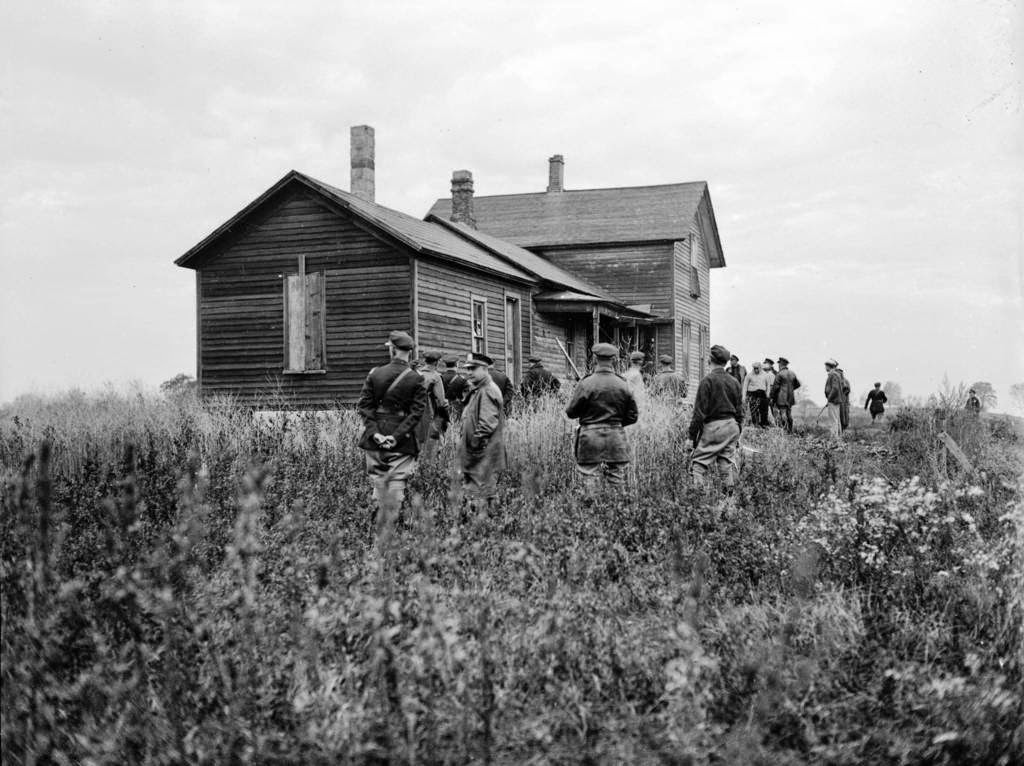
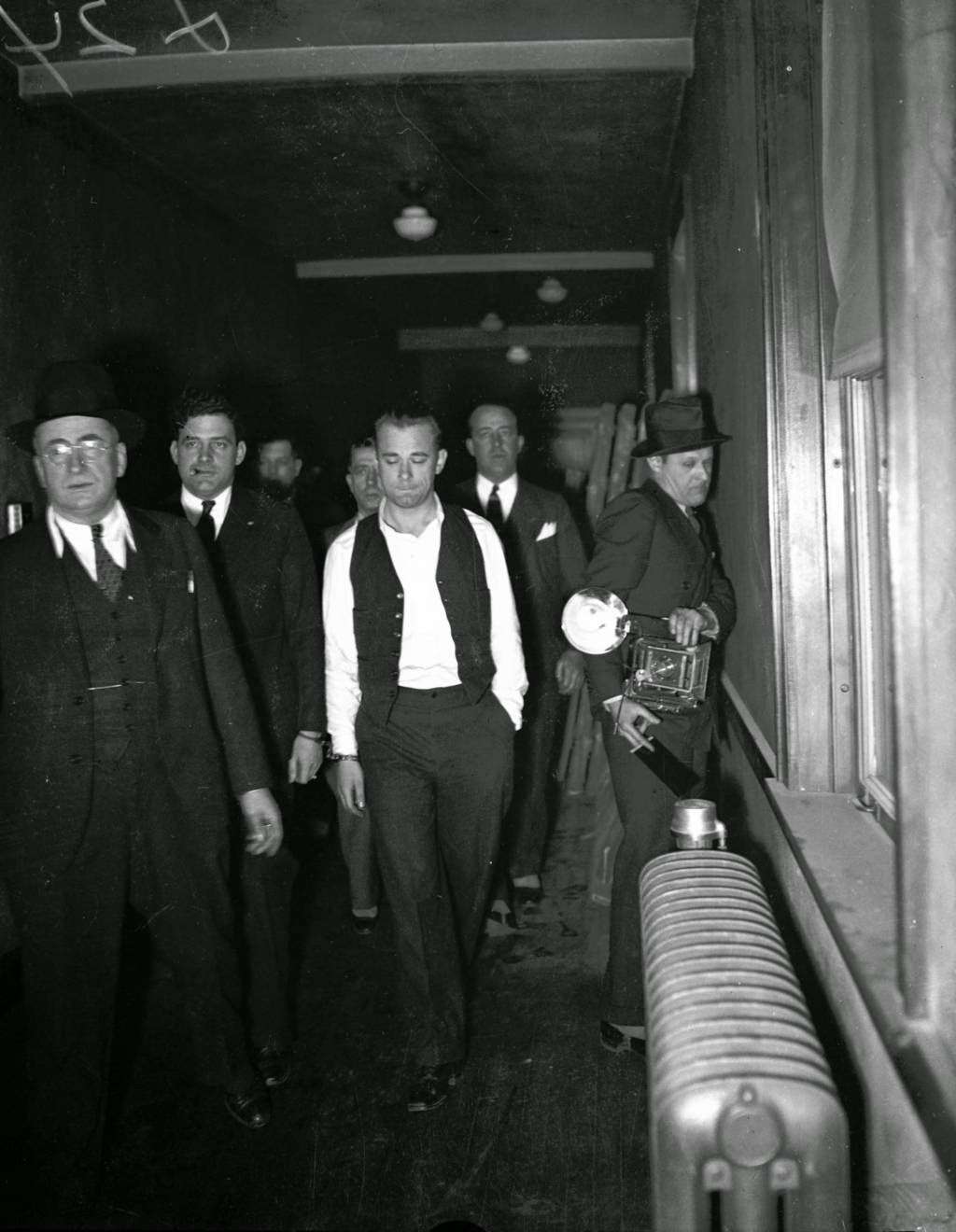
Indiana state police surround the house where two of the convicts were supposed to have been from the Michigan City prison break, circa Oct. 1933. On Sept. 26, 1933, ten convicts, lead by John 'Red' Hamilton, broke out of the Indiana State Prison in Michigan City, Indiana, using guns smuggled to them by John Dillinger. In the coming days after the prison break, the Chicago Tribune reported over "500 vigilantes, police and deputy sherriffs" searched the farming districts near Michigan City for the felons. Dillinger, who was in a jail cell in Lima, Ohio, engineered the escape of the ten convicts, who became known as Dillinger's gang. Less than a month after they escaped from Michigan City, several of Dillinger's gang broke him out of the jail in Lima, Ohio. — Chicago Tribune historical photoJohn Dillinger, center, is led through the Crown Point, Indiana court building on Jan. 31, 1934 to be viewed by witnesses from the First National Bank robbery that occurred on Jan. 15, 1934 in East Chicago, Indiana. Dillinger had been caught in Arizona and flown back to Indiana to be tried for the murder of patrolman William O'Malley, 43. — Chicago Tribune historical photo
Armed guards surrounded the courthouse in Crown Point while Dillinger awaited his day in court. Reporters crowded the hallways to see the famous prisoner as deputies moved him from his cell to the courtroom. Dillinger sat calmly during hearings, smoking cigarettes and talking with his lawyers while officers kept heavy iron handcuffs clamped to his wrists. His trial date was scheduled for March 12, 1934. The state felt confident they had locked away their man behind thick steel bars and heavy wooden doors guarded by armed men working around the clock.
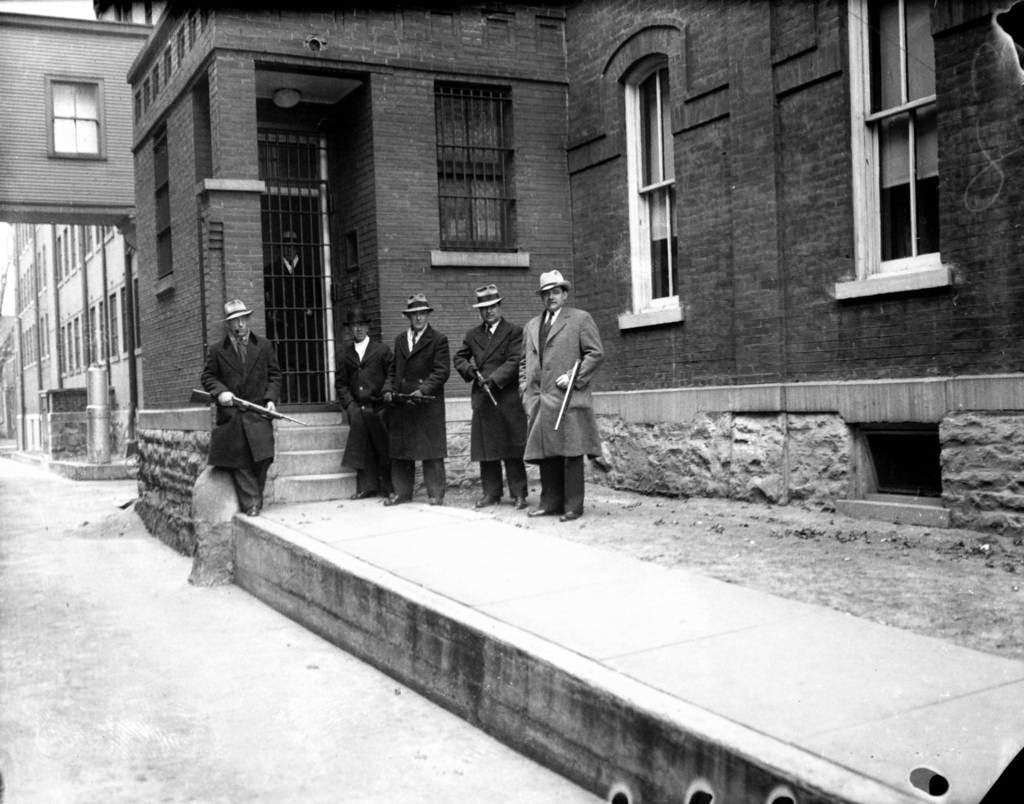
John Dillinger arrived back at the county jail at Crown Point, Indiana on Jan. 30, 1934 after being caught in Arizona five days earlier. Authorities were fearful that Dillinger's gang would try to rescue their leader, so heavily armed guards surrounded the court house and jail. Dillinger was charged with killing police officer William O'Malley, 43, during a bank robbery in East Chicago, Indiana on Jan. 15, 1934. — Chicago Tribune historical photoJohn Dillinger is handcuffed and guarded as he smokes during a court recess while Deputy Sheriff R. M. Pierce, left, looks on during Dillinger's hearing at Crown Point, Indiana in the first weeks of February 1934. Dillinger was charged with killing police officer William O'Malley, 43, during a bank robbery in East Chicago, Indiana on Jan. 15, 1934. His trail date was set for March 12, 1934. Dillinger would break out of the Crown Point, Indiana jail on March 3, 1934. — Chicago Tribune historical photo
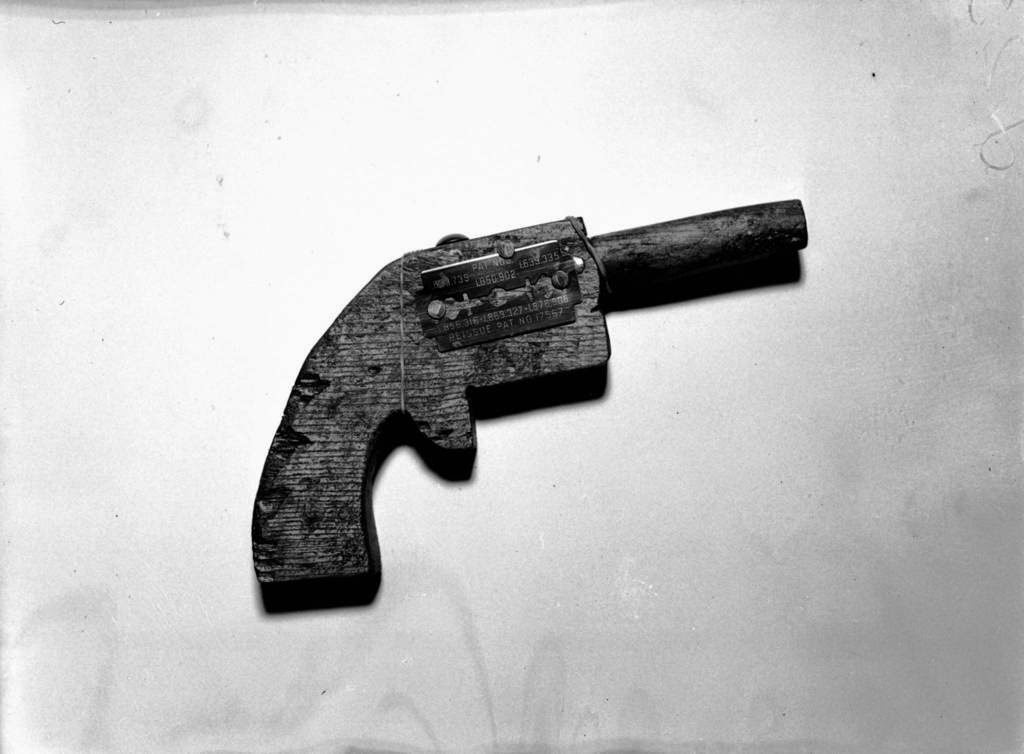
Security measures failed completely on March 3, 1934. Dillinger carved a piece of wood into the shape of a pistol, blackened it with shoe polish, and used the toy to bluff his way past guards. He locked more than a dozen jailers and deputies inside a cell block before walking out to the garage. He stole the sheriff's personal Ford car and drove straight across the state line into Illinois, humiliating local law enforcement and embarrassing federal agents. Newspapers across the country printed stories of the wooden gun escape, turning the outlaw into a folk hero for millions of struggling Americans.
John Dillinger arrived at the county jail at Crown Point, Indiana, on Jan. 30, 1934 after being caught in Arizona five days earlier. Authorities were fearful that Dillinger's gang would try to rescue their leader, so heavily armed guards surrounded the court house and jail. — Chicago Tribune historical photoJohn Dillinger escaped from the county jail at Crown Point, Indiana, with only a toy gun on March 3, 1934. Dillinger threatened deputy sheriffs with a wooden gun and then locked up more than a dozen guards before fleeing in the sheriff's own car. Dillinger was in jail awaiting trial for killing police officer William O'Malley, 43, during a bank robbery in East Chicago, Indiana on Jan. 15, 1934. His trail date had been set for March 12, 1934. — Chicago Tribune historical photo
Police departments across the Midwest chased every tip and rumor. Officers investigated abandoned vehicles, finding stolen cars loaded with weapons, maps, and surgical kits used to patch up wounded gang members. The outlaws moved from state to state, hiding in tourist lodges and rural cabins. In April 1934, the gang rented rooms at the Little Bohemia Resort in Manitowish Waters, Wisconsin, run by lodge owner Emil Wanatka. Local residents and resort staff noticed the heavily armed guests and alerted federal agents, setting the stage for a violent confrontation in the woods.
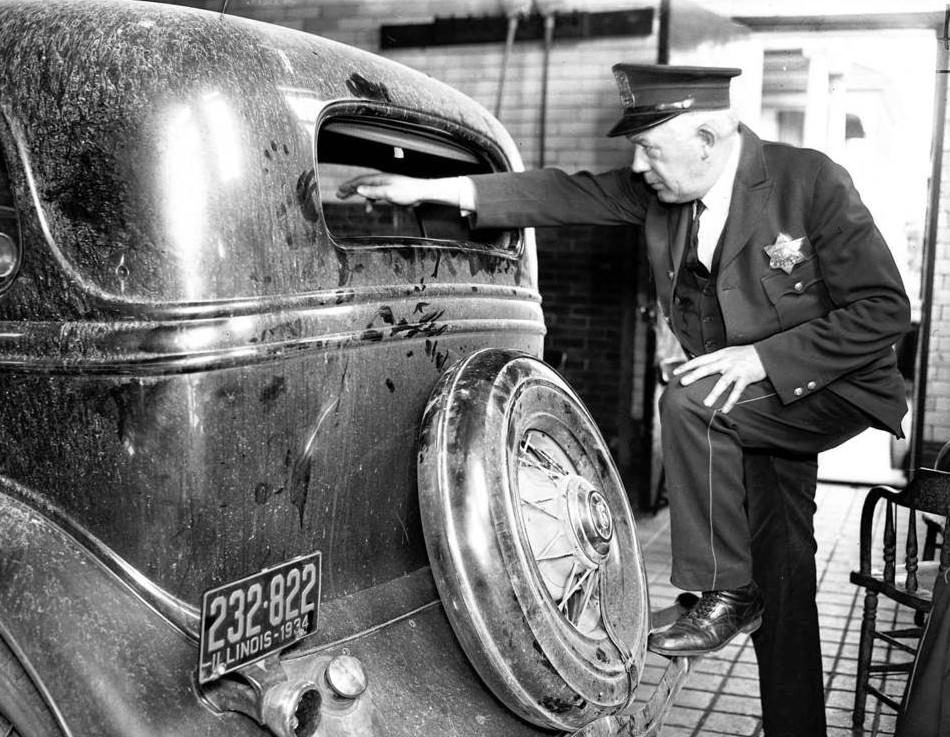
The Crown Point, Indiana, Jail house, right, and County Courthouse, left, after John Dillinger escaped with only a toy gun on March 3, 1934. Dillinger threatened deputy sheriffs with a wooden gun and then locked up more than a dozen guards before fleeing in the sheriff's own car. — Chicago Tribune historical photoA police officer shows the busted out rear window of John Dillinger's stolen and then abandoned automobile at the North Robey Street police station on May 2, 1934. The bloodstained Ford V-8 sedan, found at 3338 N. Leavitt Street in Chicago, had a surgical kit, matches from the Little Bohemia Resort, and a Dubuque, Iowa, newspaper dated April 23, 1934 with the headline "Dillinger On Rampage." — Chicago Tribune historical photo
Federal agents Melvin Purvis and Hugh Clegg led a team of Bureau of Investigation men to the Little Bohemia lodge on April 22, 1934. Agents surrounded the wooden building after dark, but the operation went wrong almost immediately. Two innocent men walked out of the lodge toward a car and were fired upon by nervous agents, leaving one local man dead. Gang members inside returned heavy gunfire with automatic weapons. Federal agent W. Carter Baum took a fatal bullet fired by gang member Lester Gillis, known widely as Baby Face Nelson. Dillinger and his associates managed to slip away down the dark lake shore.
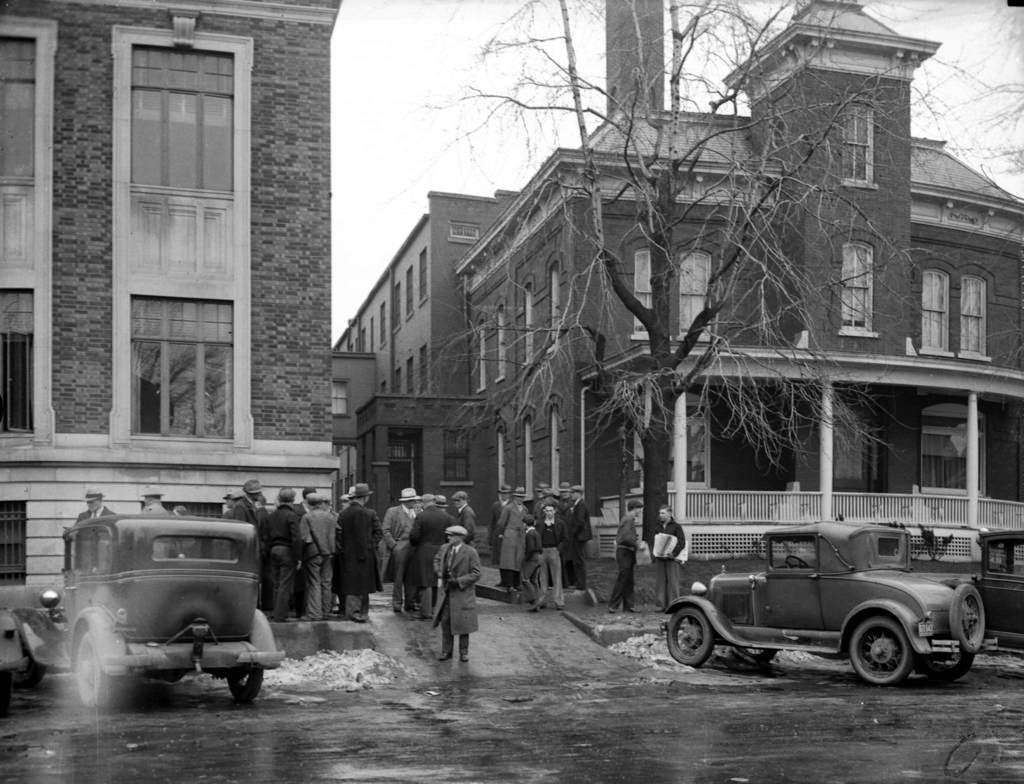
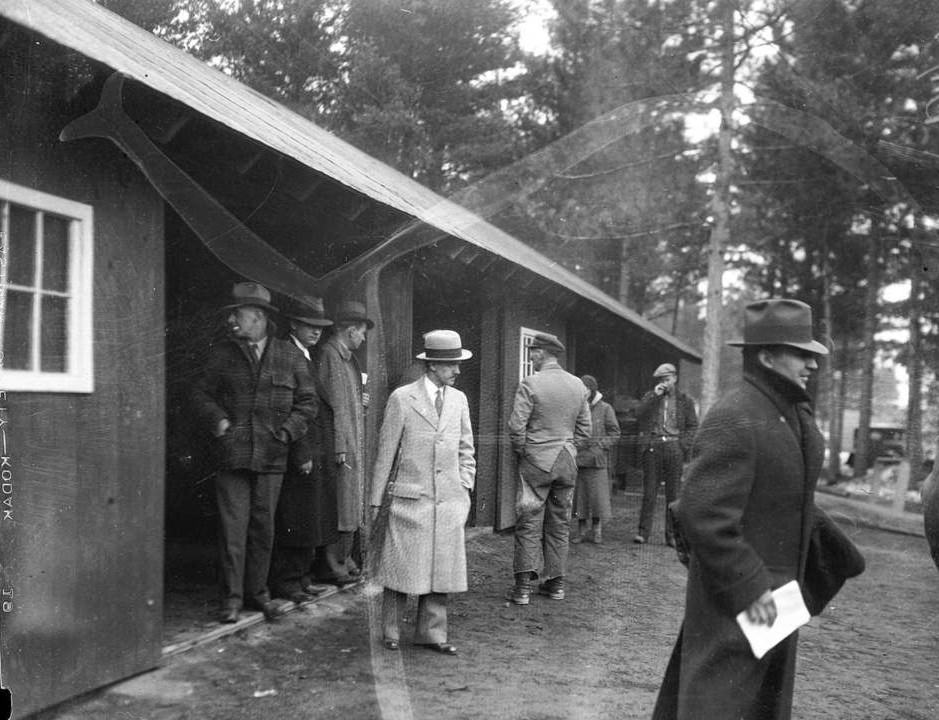
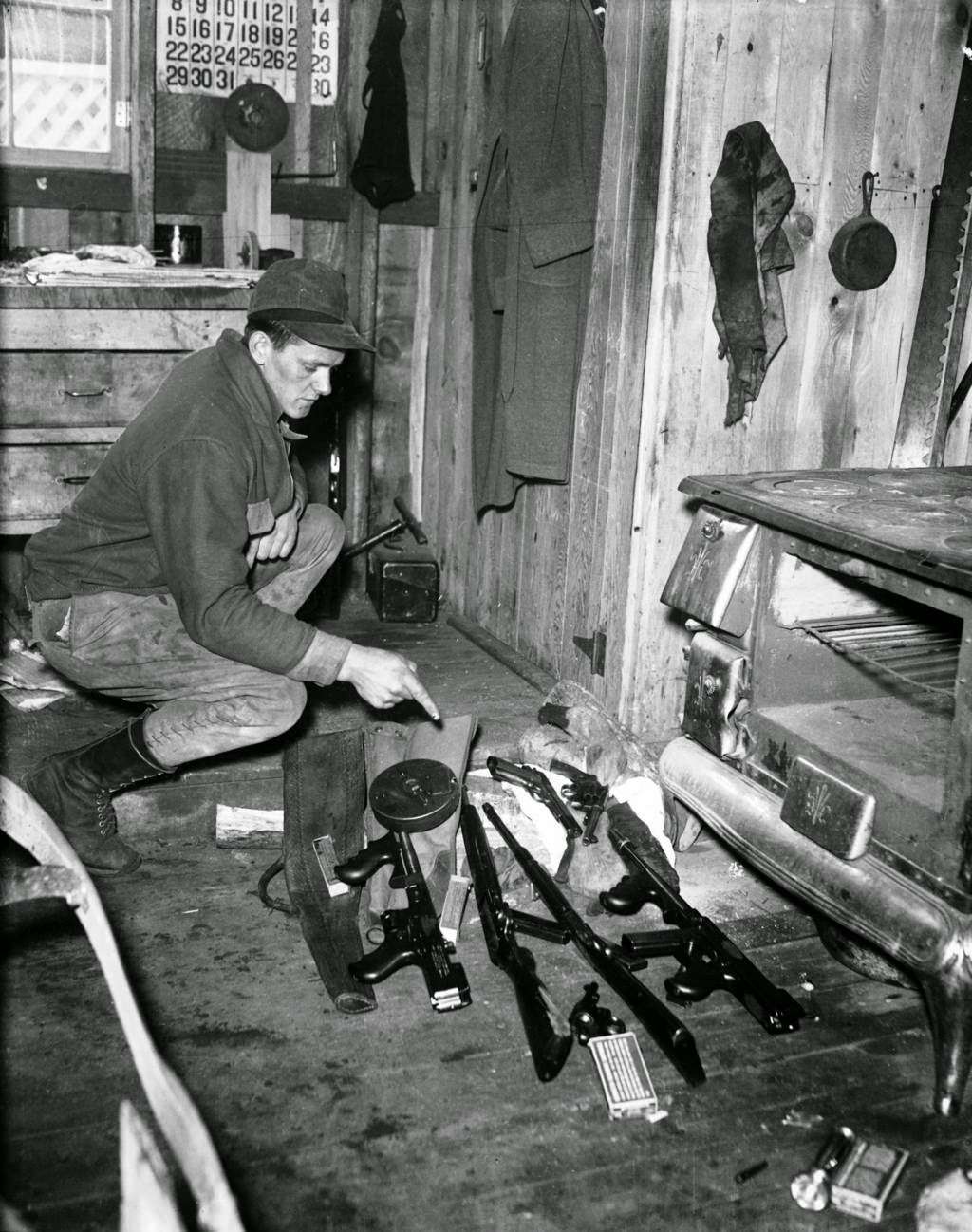
Government men at the Little Bohemia Resort in Manitowish Waters, Wisconsin, where a gun battle with John Dillinger and his gang took place on April 22, 1934. Leading the group of G-men were federal agents Melvin Purvis and Hugh Clegg. FBI agents had surrounded the lodge, but Dillinger and his gang were able to escape along the shore of the nearby lake. — Chicago Tribune historical photoMax Organist looks at the guns left behind by John Dillinger and his gang on April 22, 1934 at the Little Bohemia Resort in Manitowish Waters, Wisconsin. FBI agents had surrounded the lodge were Dillinger and his gang were staying, but the outlaws were able to escape along the shore of the nearby lake. — Chicago Tribune historical photo
Chaos followed the failed raid at the Wisconsin resort. Agents searched snowy woods and collected discarded shotguns, rifles, and clothing left behind by fleeing criminals. Townspeople and local law enforcement tended to wounded men, including Constable Carl Christensen who survived serious gunshot wounds inflicted by Baby Face Nelson. The FBI faced harsh public criticism for the botched ambush and the death of an agent, increasing pressure on Director J. Edgar Hoover to capture or kill Dillinger before public confidence in federal law enforcement completely collapsed.
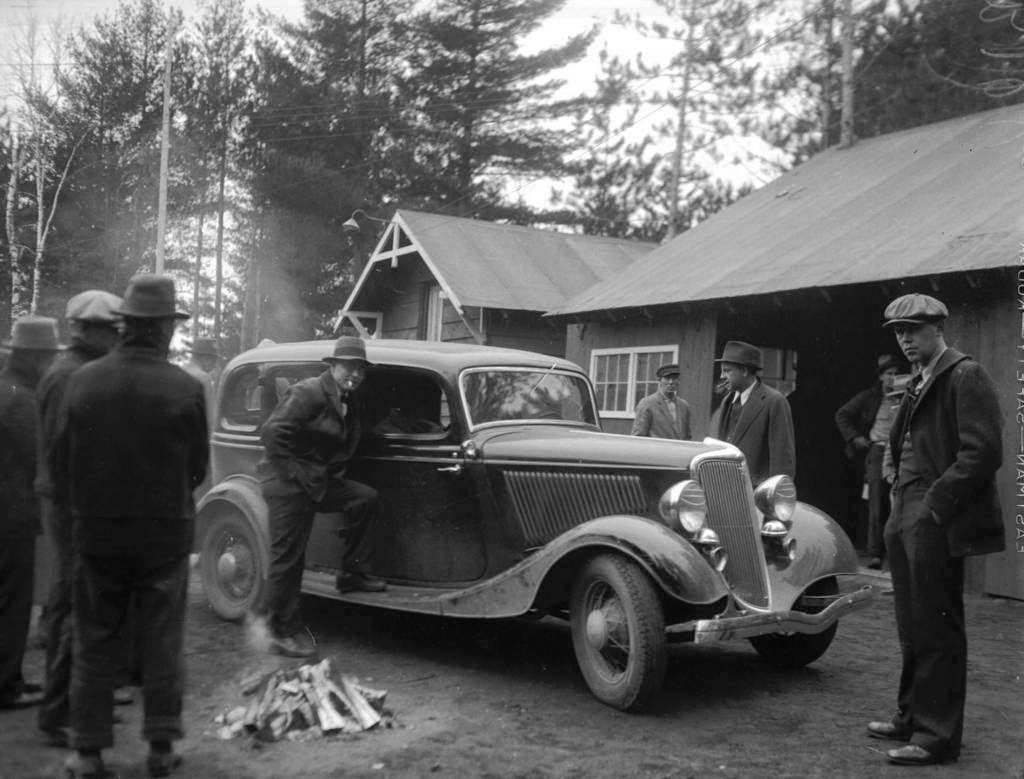
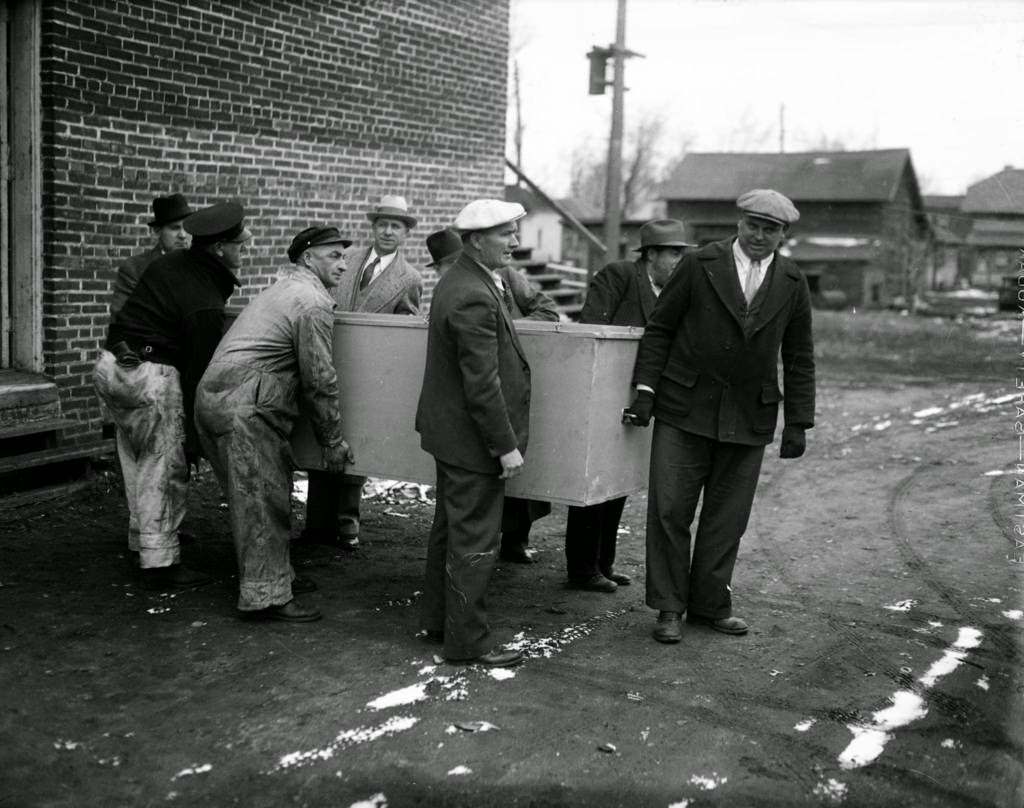
Government men stand by the Ford that was abandoned by John Dillinger during a gun battle between authorities and Dillinger's gang at the Little Bohemia Resort on April 22, 1934 in Manitowish Waters, Wisconsin. FBI agents had surrounded the lodge, but Dillinger and his gang were able to escape along the shore of the nearby lake. Two people were killed during the raid, an FBI agent and a local man who was mistaken for one of Dillinger's gang. — Chicago Tribune historical photoMen carry the body of Chicago federal agent W. Carter Baum, a government man who was killed by "Baby Face" Nelson of John Dillinger's gang, during a shoot-out at the Little Bohemia resort in Manitowish Waters, Wisconsin on April 22, 1934. Two people were killed during the raid, an FBI agent and a local man who was mistaken for one of Dillinger's gang. — Chicago Tribune historical photo
Authorities shifted their focus to people helping the outlaw network survive. Federal agents tracked Evelyn Billie Frechette, Dillinger's 25-year-old girlfriend, to a Chicago street corner and arrested her on April 9, 1934, while Dillinger watched helplessly from a parked car across the street. Frechette was convicted of harboring a fugitive and spent two years in a federal prison in Milan, Michigan. After her release in January 1936, she traveled the country appearing in a theatrical stage show about crime alongside members of the Dillinger family.
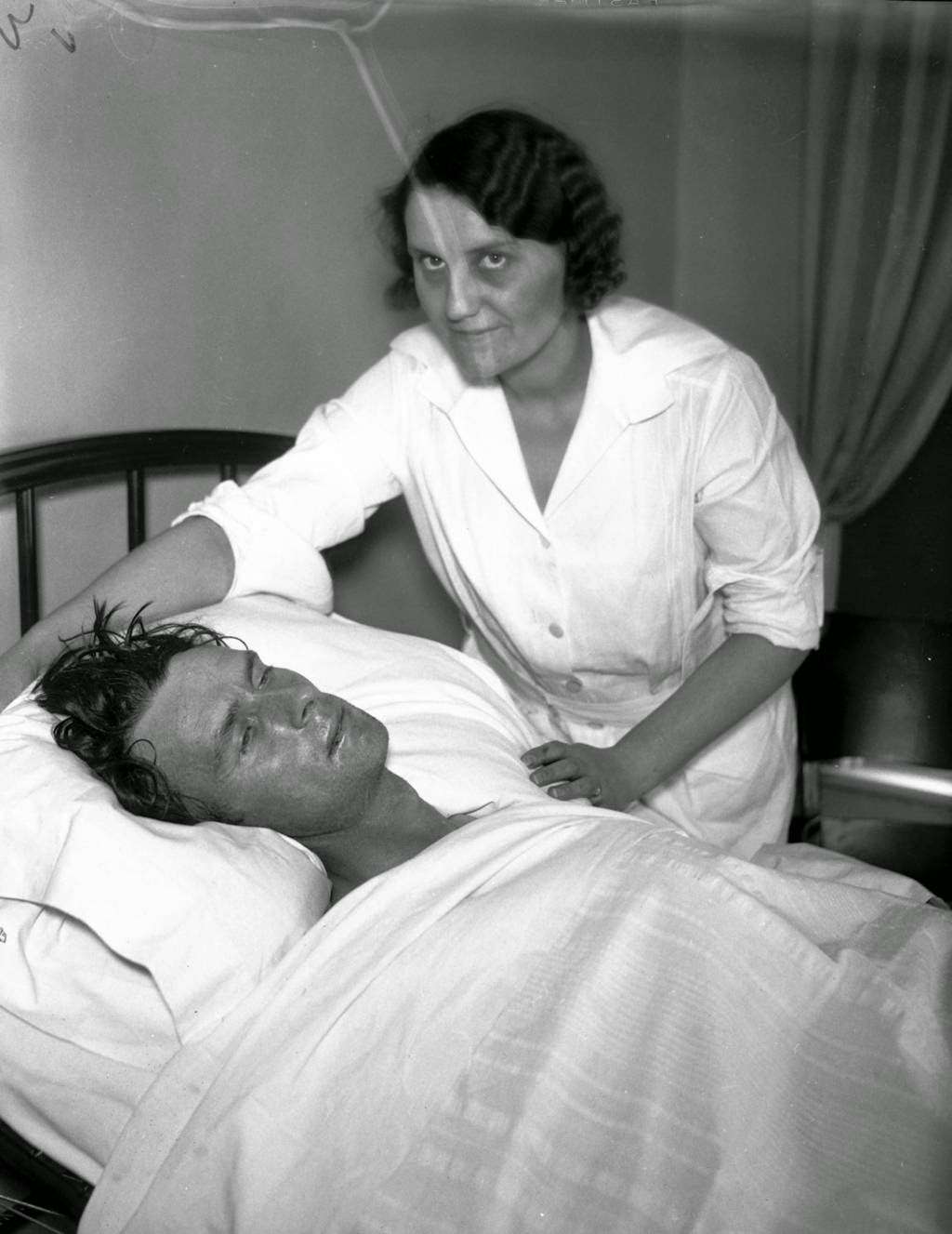
Constable Carl C. Christensen with Mary Levendoski at the Twin City Hospital in Ironwood, Michigan after Christensen was shot by "Baby Face" Nelson of the John Dillinger gang during a gun fight at the Little Bohemia Resort in Manitowish Waters, Wisconsin on April 22, 1934. Christensen, a Spider Lake, Wisc. constable, was said to be gravely wounded but survived his wounds. — Chicago Tribune historical photoEveyln "Billie" Frechette was released from prison on Jan. 30, 1936. Frechette was arrested in Chicago while her boyfriend and fugitive, John Dillinger, watched helplessly nearby on April 9, 1934. Frechette, who had met Dillinger in 1933, was charged with harboring a fugitive in her St. Paul, Minnesota apartment. She spent two years in jail, getting out in 1936. Upon her release, Frechette toured in a theatrical production called "Crime Doesn't Pay" with members of Dillinger's family. — Chicago Tribune historical photo
Dillinger hid out in Chicago apartments under assumed names while plastic surgeons altered his fingerprints and facial features to prevent identification. His core gang members were hunted down one by one across multiple states. Harry Pierpont and Charles Makley were captured, tried, and sentenced to death for murders committed during bank robberies. Federal agents closed the net tighter around Dillinger as summer arrived in 1934, relying on informants who moved within the same underworld circles as the desperate fugitive.
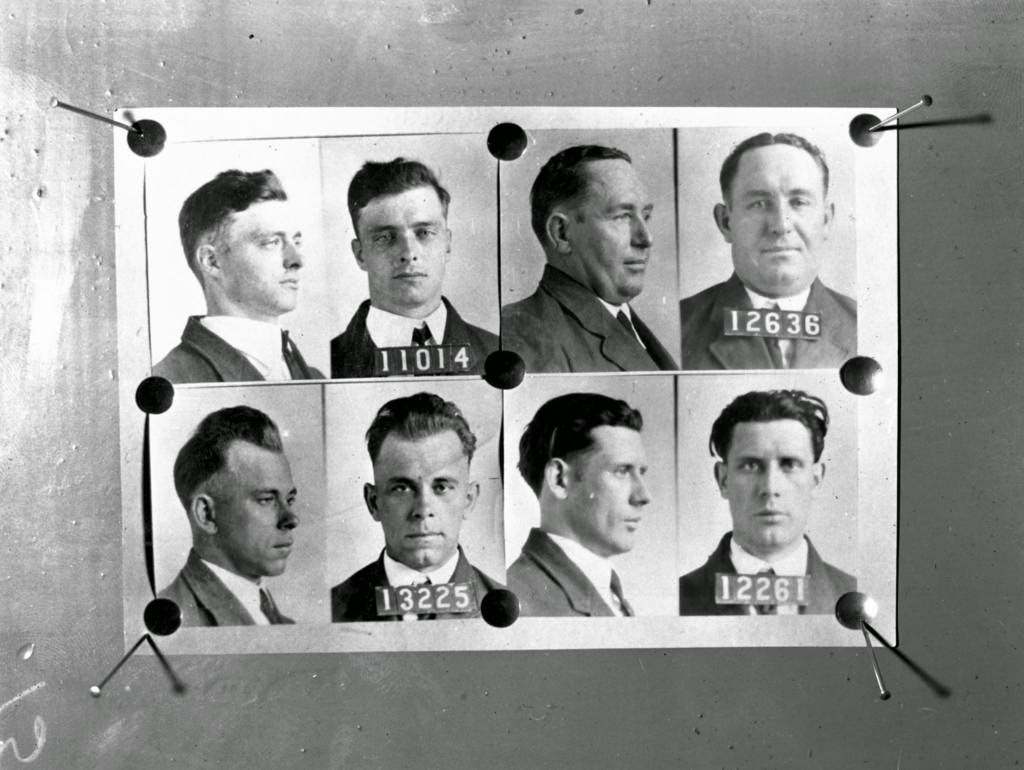
John Dillinger and his gang arrive in Chicago on Jan. 30, 1934 after their arrest in Arizona five days earlier. Dillinger had been caught in Arizona and flown back to Indiana to be tried for the murder of patrolman William O'Malley, 43. O'Malley was shot down during the First National Bank robbery in East Chicago, Indiana. Dillinger's trail date was set for March 12, 1934. Dillinger would break out of the Crown Point, Indiana jail on March 3, 1934. — Chicago Tribune historical photoCopy photos of members of John Dillinger's gang, circa Dec. 1933. From top left, are Harry Pierpont (11014), Charles Makley (12636), John Dillinger (13225), and Russell Clark (12261). — Chicago Tribune historical photo
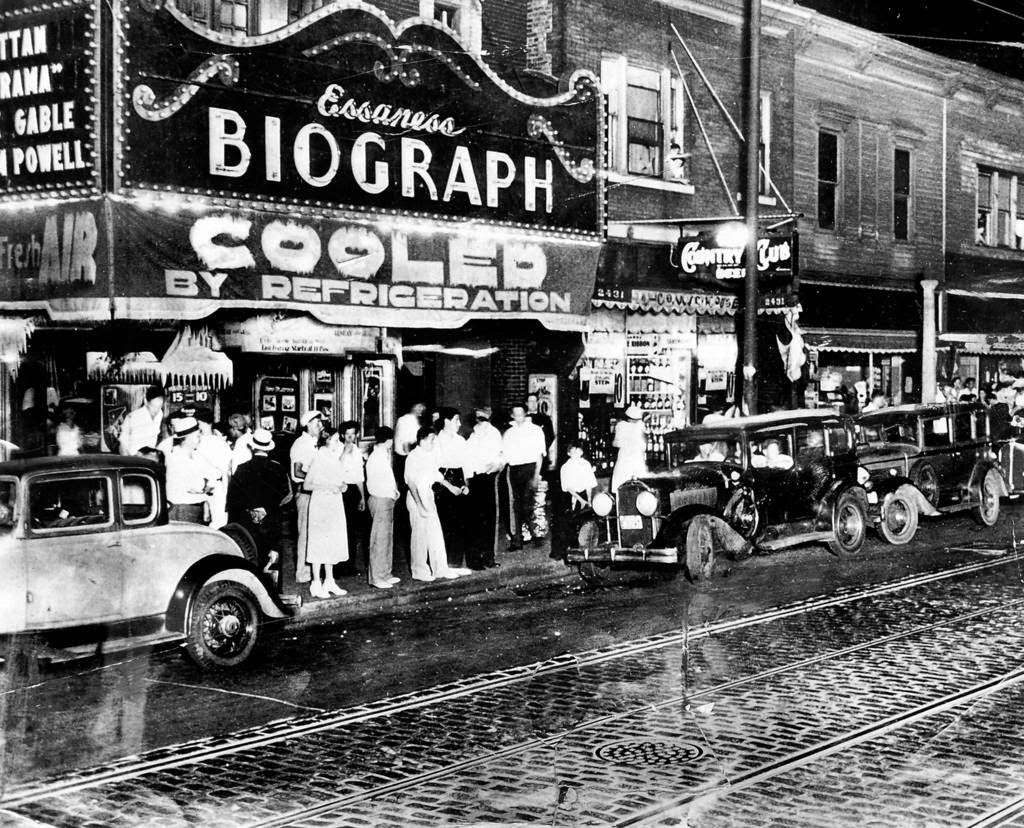
An acquaintance named Anna Sage, a brothel owner facing deportation to Romania, went to federal agent Melvin Purvis with critical information. Sage told Purvis that she, Dillinger, and another woman named Polly Hamilton would attend a movie at the Biograph Theater on Lincoln Avenue in Chicago on July 22, 1934. Sage promised to wear an orange skirt so agents could identify her in the crowd. Federal agents staked out the theater exits while patrons watched a Clark Gable film titled Manhattan Melodrama inside the air-conditioned auditorium.
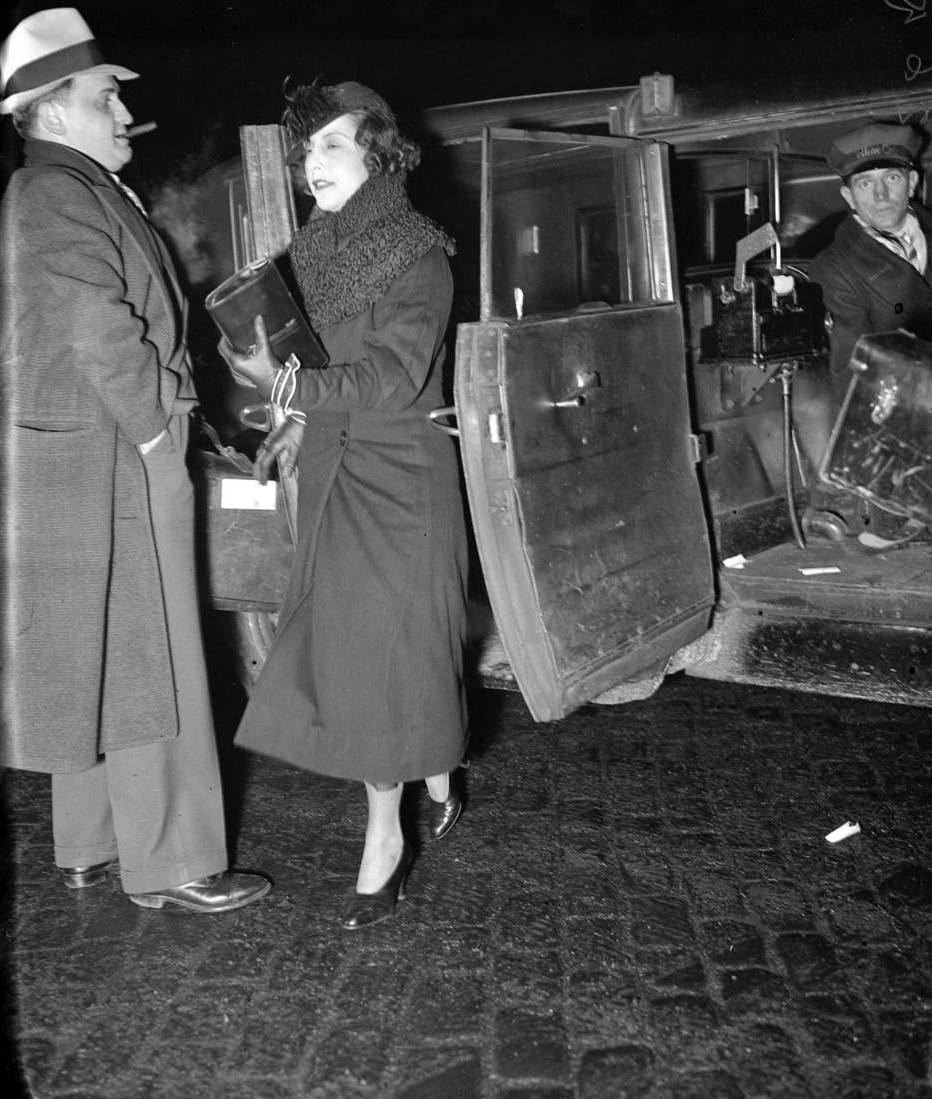
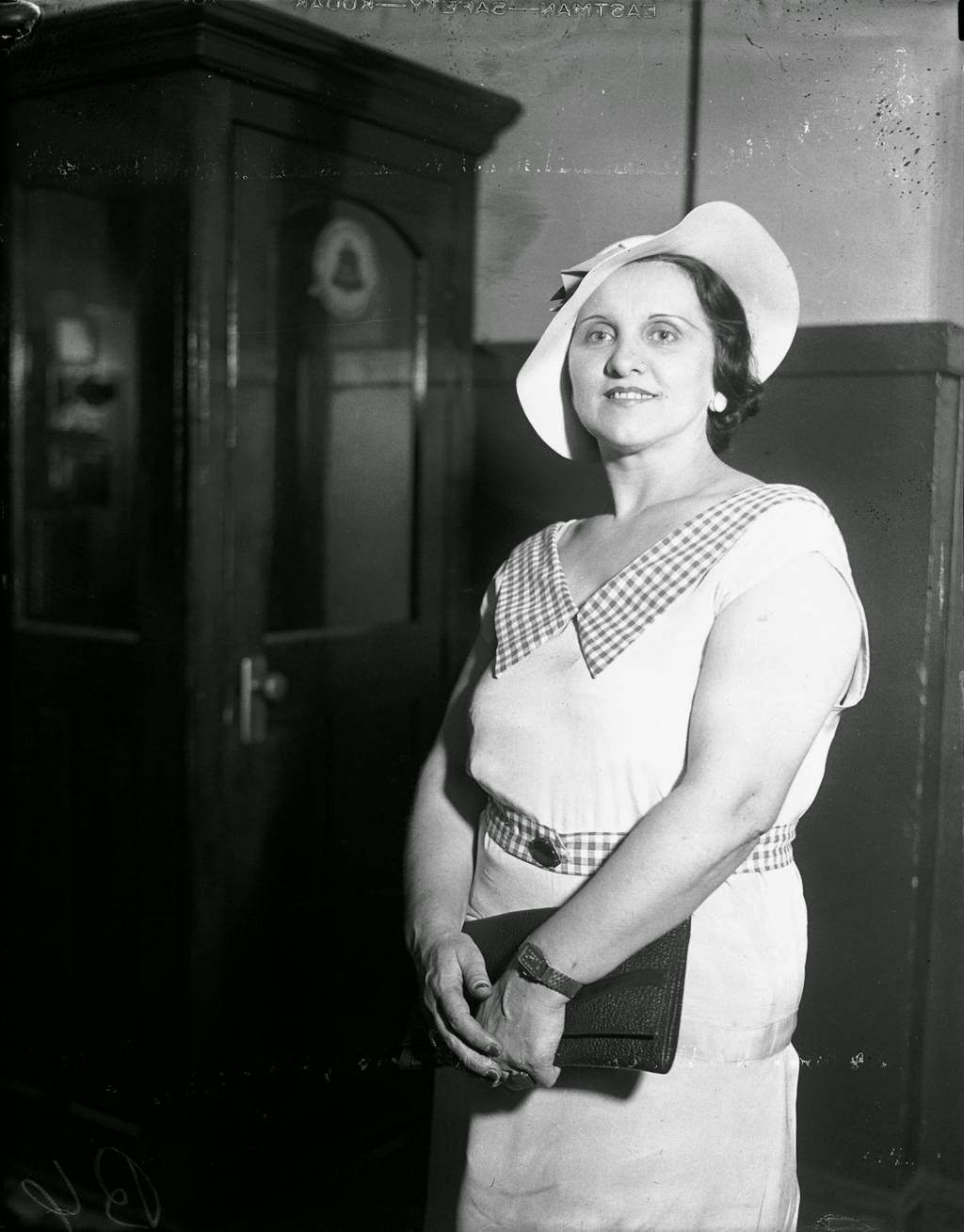
Dillinger was shot and killed by FBI agents on July 22, 1934 at the Biograph Theater on Lincoln Avenue in Chicago after receiving a tip from Dillinger's friend Anna Sage. Sage, known as the "Woman in Red," told authorities that she, Dillinger, and Dillinger's girlfriend Polly Hamilton Keele would be at the movies and to look for her dressed in red. Some reports say Sage was actually dressed in orange. — Chicago Tribune historical photoAnna Sage, nicknamed the "Women in Red", at the Sheffield Avenue police station in July 1934. Sage, who wore red or orange as a mark for the FBI, had been with John Dillinger when he was shot and killed by the FBI outside the Biograph Theater in Chicago on July 22, 1934. Sage said she made a deal with famous FBI agent Melvin Purvis. In exchange for information on Dillinger's whereabouts, she would not be deported to her home country of Romania for running a brothel. — Chicago Tribune historical photo
Dillinger stepped out onto the sidewalk at 10:30 p.m. alongside Sage and Hamilton. Melvin Purvis lit a cigar as a prearranged signal to his men. Agents stepped forward, and Dillinger ran toward a dark alley while reaching for a pistol tucked into his trousers. Three federal agents opened fire, hitting the outlaw multiple times. Dillinger collapsed face down in the dirt of the alley behind the theater. He died before an ambulance arrived to transport him to Alexian Brothers Hospital.
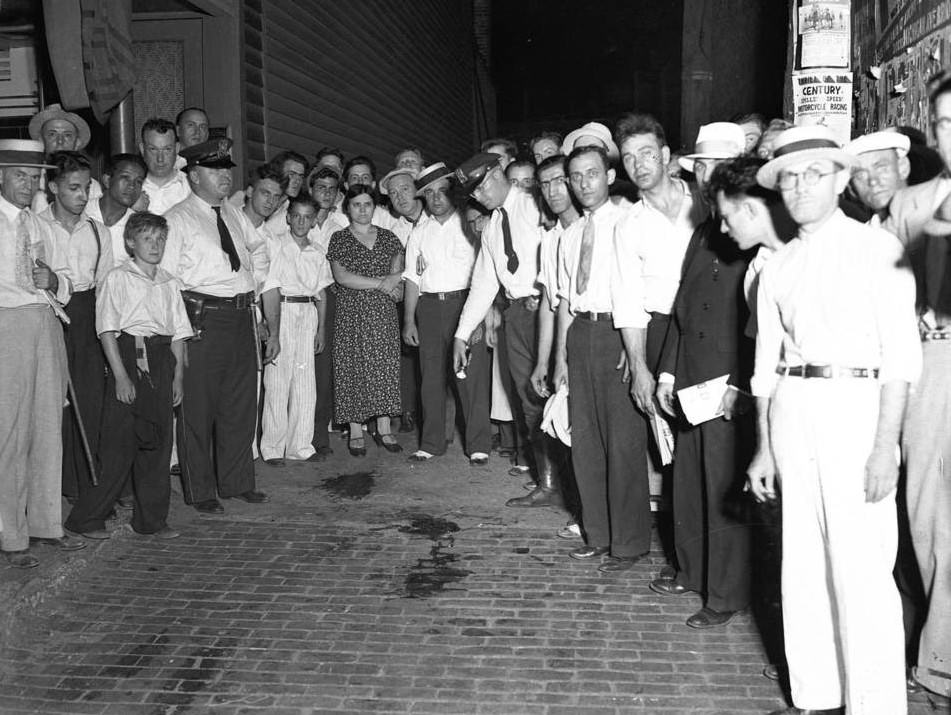
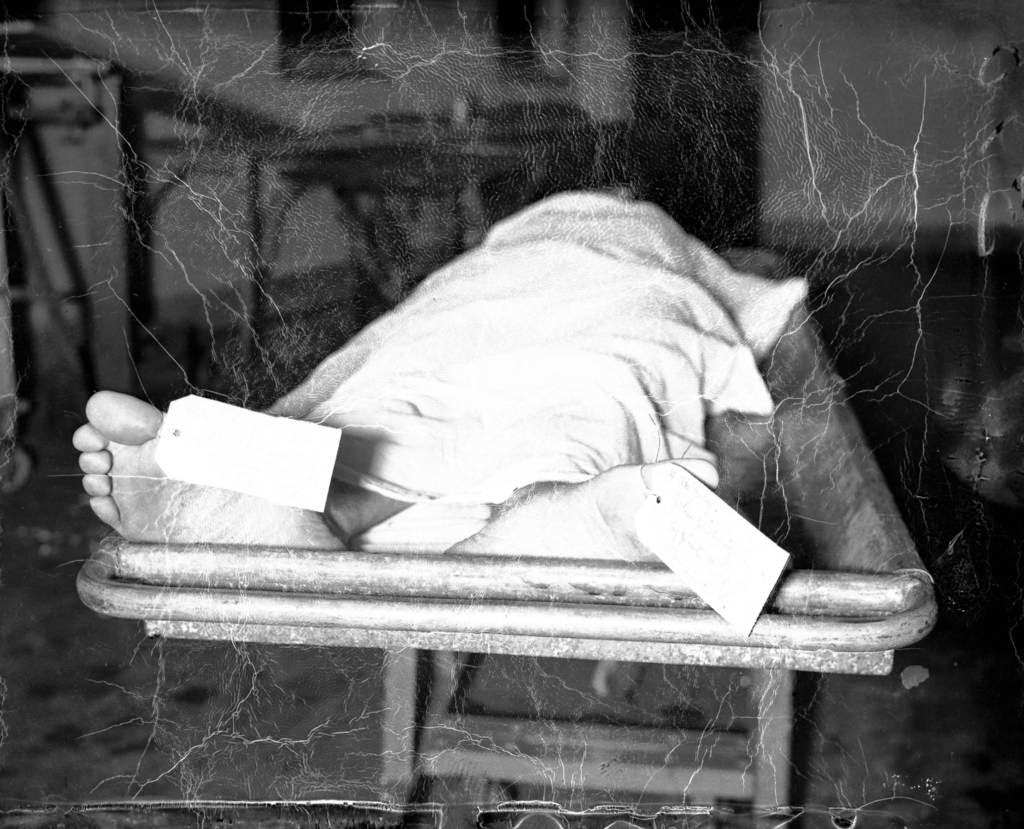
People stand around the blood stain from John H. Dillinger, 32, in the alley behind the Biograph Theater in Chicago. Dillinger was shot and killed by FBI agents on July 22, 1934 after receiving a tip from Dillinger's friend Anna Sage. Sage, known as the "Woman in Red," told authorities that she, Dillinger, and Dillinger's girlfriend Polly Hamilton Keele would be at the movies and to look for her dressed in red. Some reports say Sage was actually dressed in orange. — Chicago Tribune historical photoJohn Dillinger's body lies dead on a slab at the Cook County Morgue after he was shot and killed by FBI agents on July 22, 1934 at the Biograph Theater in Chicago. According to the Chicago Tribune, Dillinger was "partly covered with a sheet below which well manicured feet protrude, a tag labeled "Dillinger" on each big toe." — Chicago Tribune historical photo
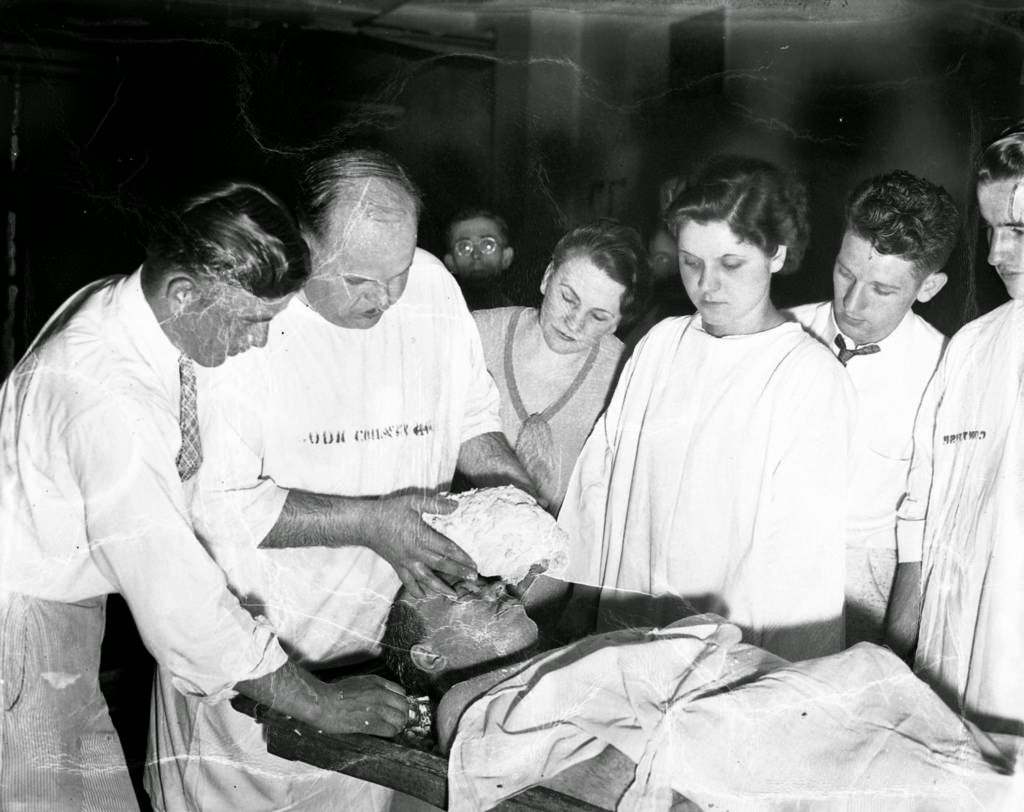
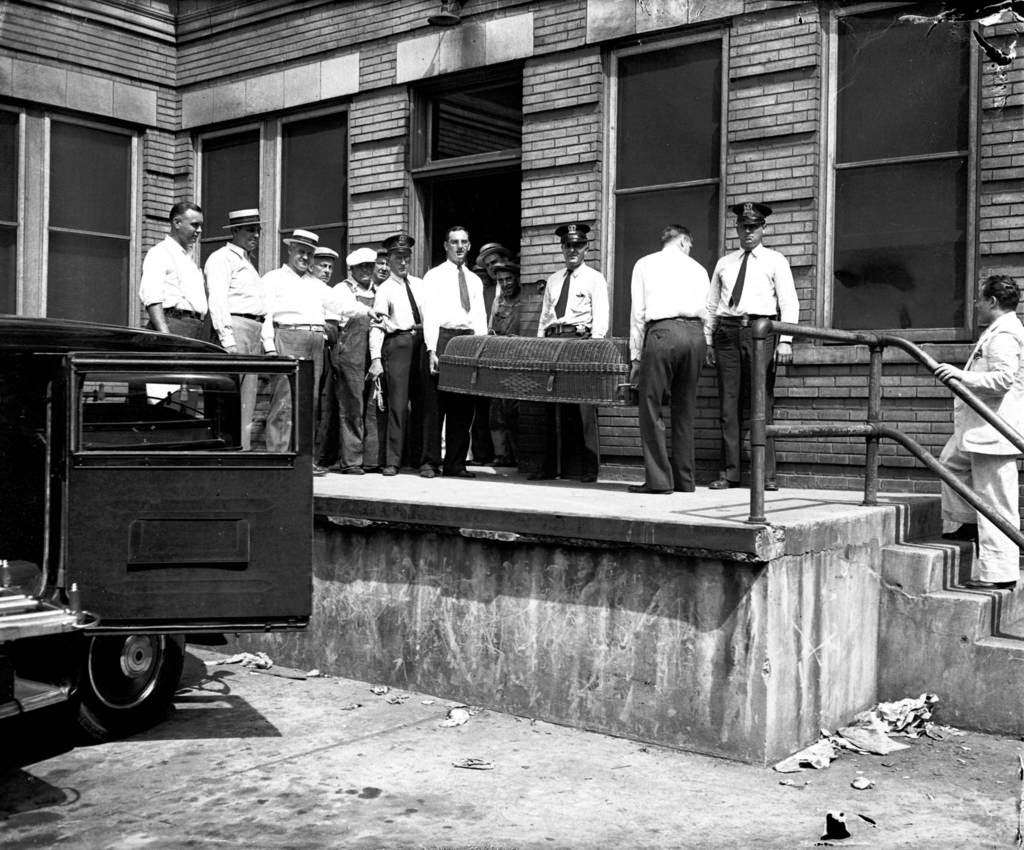
Crowds gathered instantly in the alley to press handkerchiefs into pooling blood as souvenirs. The body was taken to the Cook County Morgue, where thousands of curious spectators lined up outside to view the corpse. Inside the morgue, a mortuary science instructor and his students tried to make an unauthorized plaster death mask of the dead man's face before police caught them and confiscated the mold. Newspapers published photographs of the cold body laid out on a steel slab with identification tags tied to his toes.
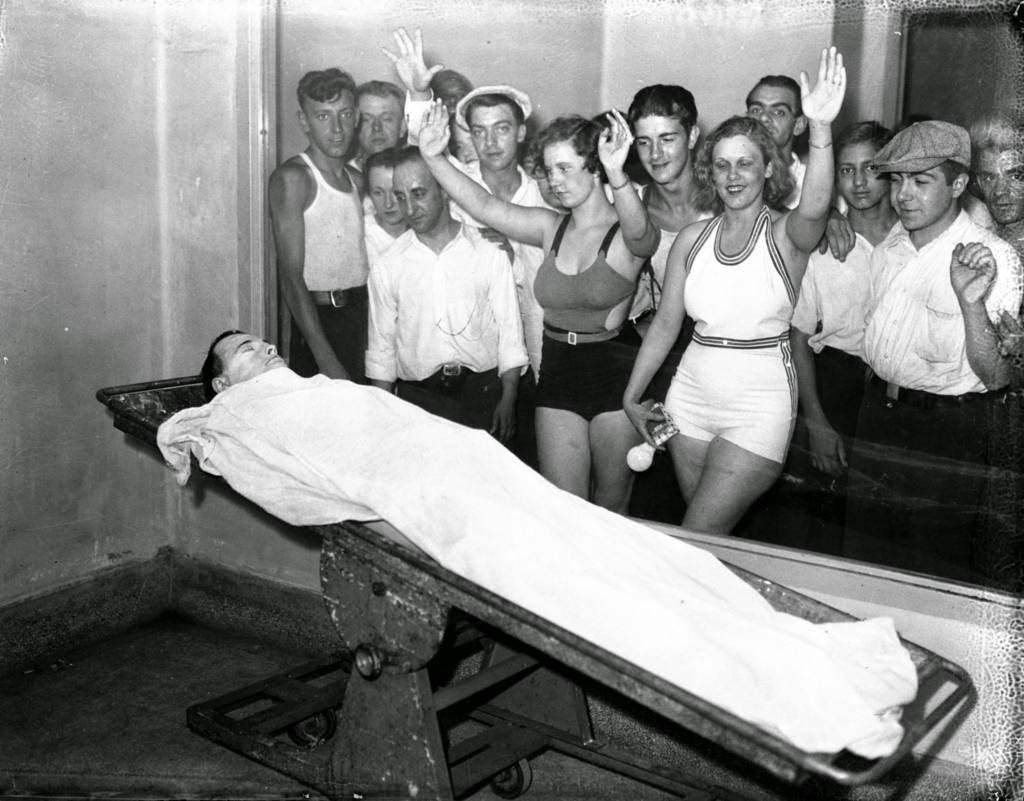
Prof. D. E. Ashworth lifts a plaster death mask off the face of John Dillinger while his students watch on July 23, 1934 at the Cook County Morgue in Chicago. Prof. Ashworth, of the Worsham College of Mortuary Science, had told employees at the morgue the he had permission to create the mask, but didn't. Ashworth and his students were ousted from the morgue and the partially completed mask was confiscated by the police. Unbeknownst to the FBI, a complimentary copy of another death mask was sent to the bureau from the Reliance Dental Corporation, who also did not have permission. To this day, there is controversy over how many death masks were made of Dillinger's face and the authenticity of the masks. — Chicago Tribune historical photoBetty Nelson and Rosella Nelson view the body of John Dillinger, 32, while in bathing suits at the Cook County Morgue, located at Polk and Wood Streets, in Chicago. In the days after Dillinger was killed on July 22, 1934, massive crowds lined up outside the morgue to get a glimpse of the notorious public enemy. — Chicago Tribune historical photo
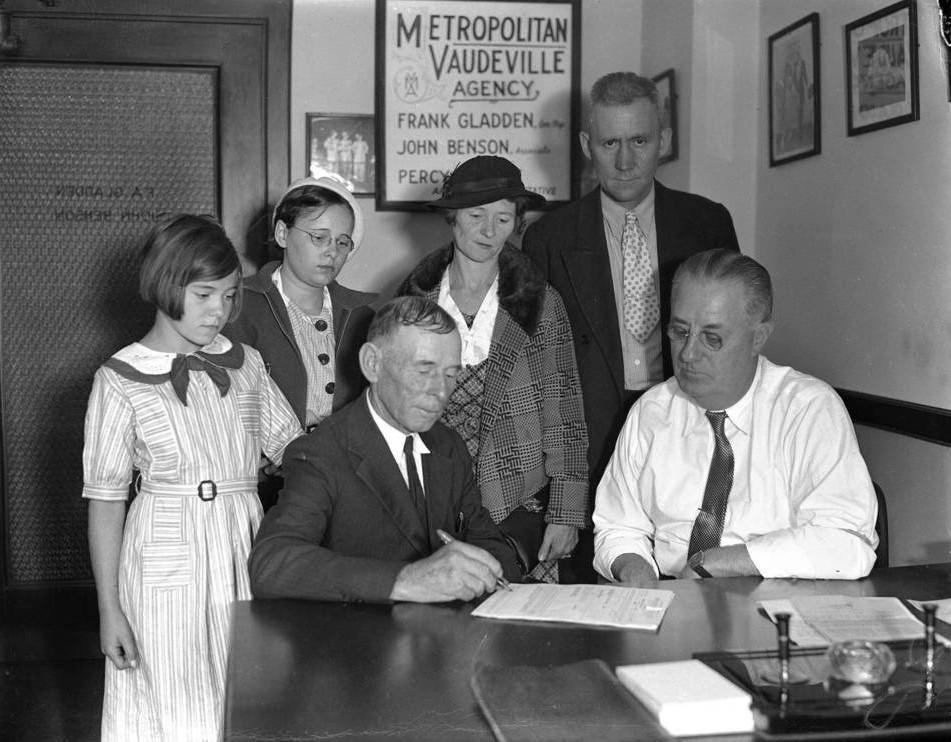
John Dillinger Senior traveled from Mooresville, Indiana, to claim his son's body from the Chicago morgue on July 24, 1934. Funeral directors embalmed the remains and shipped them back to Indiana for burial in Crown Hill Cemetery. Following the funeral, surviving Dillinger family members signed contracts to tour with a vaudeville theatrical troupe, performing across the country to capitalize on the sensational fame of the dead bank robber.
John Dillinger's body leaves the Cook County Morgue at Polk and Wood Streets to be taken to McCready Funeral home at 4506 Sheridan Road on July 24, 1934. Dillinger's father, John Dillinger Sr., 70, traveled from Mooresville, Ind. to claim his son's body. Dillinger was embalmed and then taken back to Indiana for burial. — Chicago Tribune historical photoJohn Dillinger Sr., seated (the father of notorious gangster John Dillinger), signs a contract to appear at the Walk-a-thon at Calumet City, Ill., while Frank Gladdin, general manager of the Metropolitan Vaudeville Agency, watches at the Woods Theater building on Aug. 28, 1934. With Dillinger Sr. are, from left, Frances Dillinger, 12, Doris Dillinger, 16 (both step-sisters of John Dillinger Jr.), Mrs. Audrey Hancock, (John Dillinger Jr.'s sister), and her husband Mr. Emmett Hancock. The Dillinger family, along with John Jr.'s girlfriend Evelyn "Billie" Frechette, toured with a theatrical production called "Crime Doesn't Pay" after Dillinger's death. — Chicago Tribune historical photo
Andrew's writing is grounded in research and provides unique insights into the cultural and historical contexts of vintage pieces. Through his work, he aims to foster a greater appreciation for the value and beauty of vintage items.