Spirit photography took off in the mid-nineteenth century alongside double exposures and Spiritualism. At Raynham Hall in Norfolk, local lore claimed Lady Dorothy Townshend roamed the halls after her husband locked her away in 1726. Two magazine photographers visited the estate in September 1936 to shoot interior architecture. Miles away in Cheshire, the library at Combermere Abbey became famous when a camera captured an armchair occupied by a faint figure while Lord Combermere’s funeral occurred four miles away in 1891.
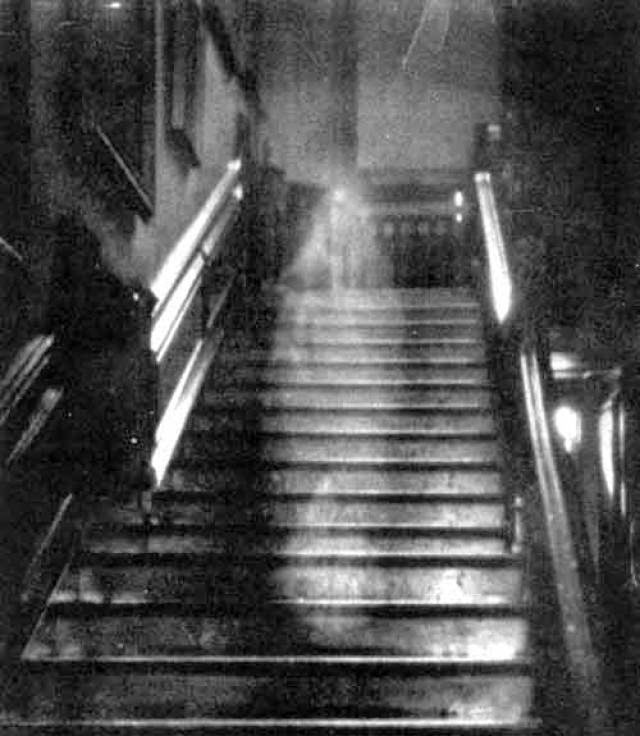
In September 1936, photographers Captain Hubert C. Provand and Indre Shira visited Raynham Hall in Norfolk, England. Country Life magazine hired them to take interior shots of the historic estate. As Shira set up the flash equipment along the grand staircase, Provand focused the camera lens on the wooden steps. Shira noticed a faint, shrouded shape moving down the stairs toward them and quickly squeezed the flash bulb. The resulting plate revealed a glowing silhouette wearing a heavy dress. Local lore connected the apparition to Lady Dorothy Townshend, who married Charles Townshend in 1713. According to town records, Charles locked Dorothy in her rooms at Raynham Hall after discovering her past affair with Lord Wharton. Official records listed her funeral in 1726, though rumors persisted that her burial was faked to hide her continued imprisonment. Guests at the estate claimed to see her wandering the halls during the nineteenth century. Skeptics later argued the exposure resulted from a double flash or trickery, but the image became one of the most famous spirit exposures in British history.
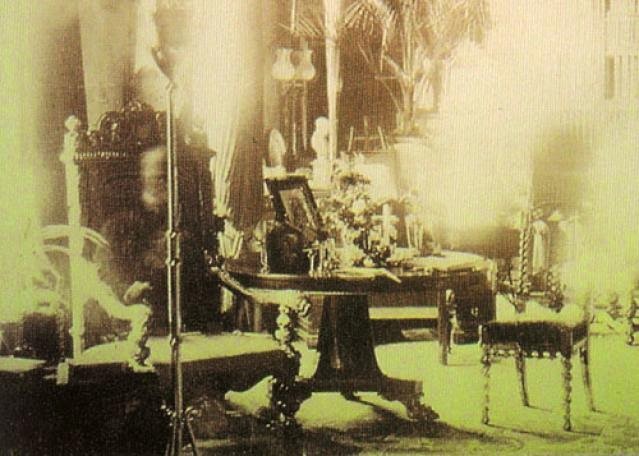
Combermere Abbey in Cheshire housed a sprawling library filled with leather-bound books and heavy wooden furniture. In 1891, Sybell Corbet set up a camera on a tripod inside the quiet room. She opened the shutter for an exposure lasting sixty minutes while family members attended the funeral of Lord Combermere four miles away. Lord Combermere had served as a British cavalry commander before a horse-drawn carriage struck and killed him on a local road. When Corbet processed the photographic plate, a faint figure appeared in the large carved armchair on the left side of the room. The figure showed the head, collar, and right arm of an older man sitting in the seat. Skeptics pointed out that a servant might have sat in the chair briefly during the long exposure, leaving a ghosted print on the glass plate. However, staff members insisted every servant attended the military funeral outside the estate. The image circulated widely in print publications, prompting debates among photographic scientists and spiritualists.
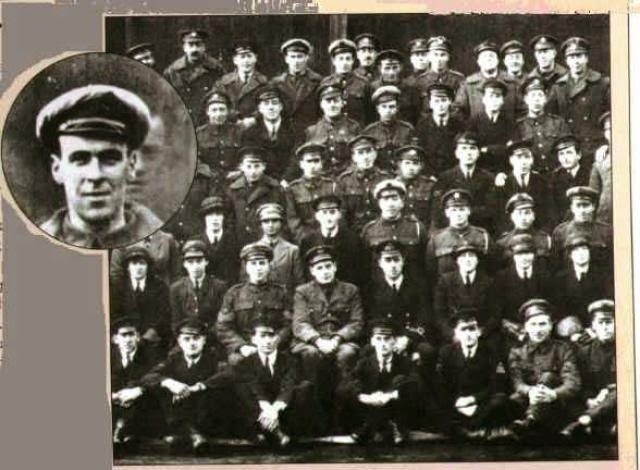
In 1919, Royal Air Force mechanic Victor Goddard gathered his squadron for a group portrait at the HMS Daedalus training station. Dozens of airmen stood in rows in front of an aircraft hangar, posing in their standard military uniforms. Among the men was air mechanic Freddy Jackson, who had died two days earlier in a gruesome accident when an airplane propeller struck him on the tarmac. His funeral took place shortly before the photographer snapped the portrait. When the negative was developed and printed for the squad members, the airmen noticed a extra face peeking out from behind a mechanic in the back row. The face showed a man without a cap, sporting a slight smile. Several airmen instantly recognized the features as Freddy Jackson. They believed Jackson remained unaware of his own death and showed up for the scheduled squad photo as usual. The print circulated among veterans for decades before Goddard published it publicly in 1975, prompting widespread discussion about wartime anomalies.
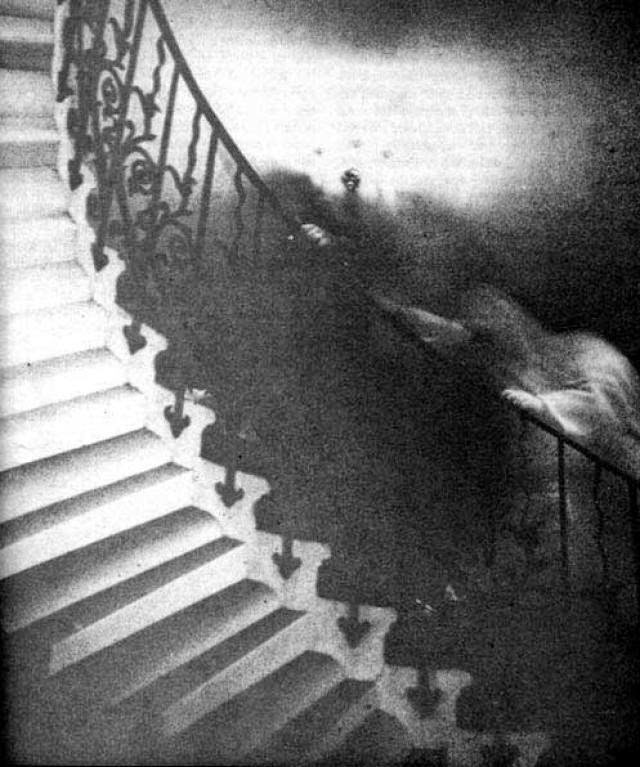
Reverend Ralph Hardy visited the National Maritime Museum in Greenwich, England, in 1966. He walked through the Queen’s House, a seventeen-century royal residence designed by architect Inigo Jones. Hardy took a photo of the Tulip Staircase, a wrought-iron spiral staircase that climbed three floors without a central supporting pillar. Upon returning home to Canada, Hardy developed the film prints. The picture revealed a shrouded figure clinging to the wrought-iron railing with both hands, ascending the stairs in a stooped posture. A second, fainter figure appeared to follow directly behind it. Hardy sent the negative to researchers at Kodak, who tested the film for chemical stains, double exposures, or manual tampering. The technicians concluded the negative was authentic and unaltered. Museum staff reported hearing unexplained footsteps near the staircase over the years, alongside cold spots along the iron railings. Historical records showed a maid fell from the upper railing in 1640, dying on the marble floor below, which fueled local interest in the print.
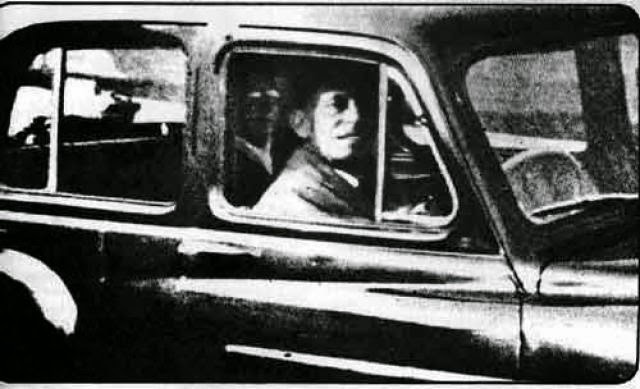
In 1959, Mabel Chinnery walked through an English cemetery with her husband, Jim. She brought her camera to photograph her mother’s grave on a quiet afternoon. After taking several pictures of the headstone and surrounding flowers, Mabel walked back toward their parked car. Jim sat alone in the driver’s seat, waiting for her to finish. Mabel raised her camera and took a photograph of Jim through the rear windshield. When the film developed, a figure appeared sitting directly behind Jim in the back seat. The figure wore heavy glasses and a high-collared coat, resembling Mabel’s mother, whom they had buried weeks earlier. Jim insisted no one else entered the automobile while he waited in the lot. Photo experts examined the original negative and found no evidence of double exposure, reflection artifacts, or film manipulation. The photo gained widespread attention in British newspapers as a rare example of an unplanned snapshot capturing an apparent apparition inside a modern vehicle.
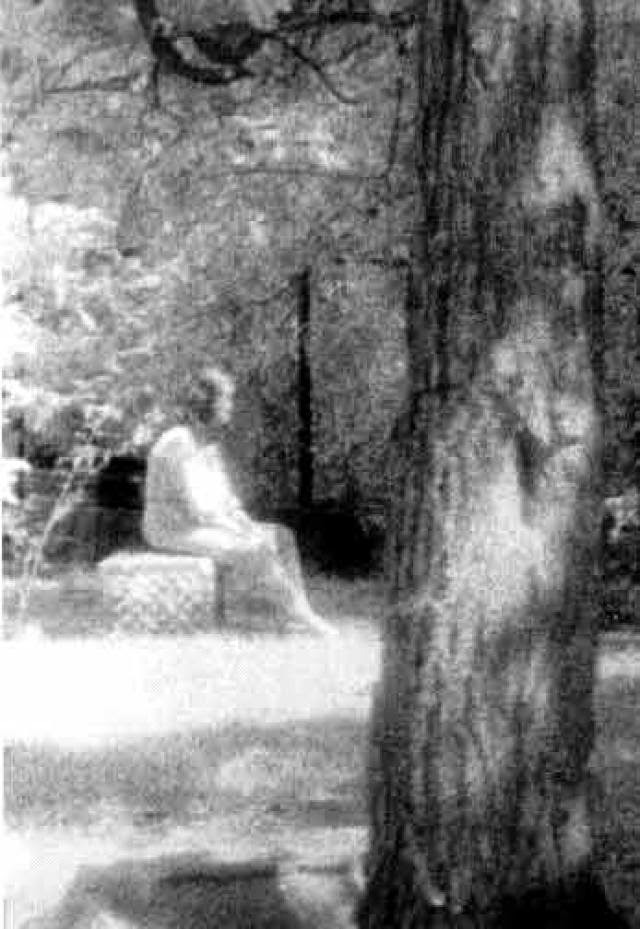
Bachelor’s Grove Cemetery sits tucked away in an overgrown forest preserve in Cook County, Illinois. Established in the 1840s, the small burial ground saw decades of vandalism, abandoned graves, and local rumors of strange events. On August 10, 1991, members of the Ghost Research Society visited the cemetery to conduct a survey of the grounds. Researcher Jude Huff-Felz used a high-speed infrared camera to take photographs of the weeds and broken markers near the center of the yard. At the time she pressed the shutter, no visible people sat on the stones in front of her. When the team developed the infrared film, a white figure appeared sitting on a mossy tombstone. The figure resembled a young woman wearing a full-length gown or burial shroud, looking down toward the grass with her arms crossed over her lap. Researchers checked the surroundings for light leaks or chemical errors, but the infrared film showed sharp, clear outlines of the woman’s profile against the dark trees.
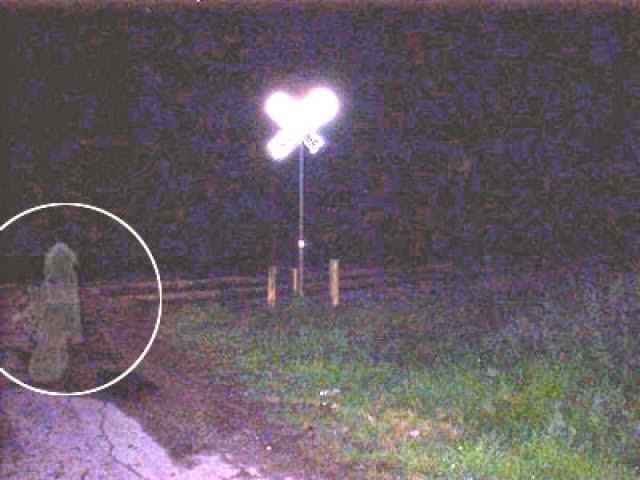
A popular urban legend in San Antonio, Texas, centers on a railroad crossing at Shane Road. Local stories claim that during the 1930s, a school bus filled with children stalled on the tracks and was struck by a fast-moving train, killing the driver and passengers. Decades later, drivers began visiting the rural crossing to test the story. Visitors parked their vehicles across the tracks, shifted into neutral, and dusted their rear bumpers with baby powder. Many reported their cars rolled upward off the tracks against gravity, leaving small handprints in the powder on the trunk lid. In the late twentieth century, curious locals captured photos of faint, white shapes floating near the tracks late at night. Local historians pointed out that city records show no record of a fatal bus crash at the site during that era. Engineers explained the movement of the cars as an optical illusion caused by the surrounding topography, which makes a slight downhill gradient look like an incline.
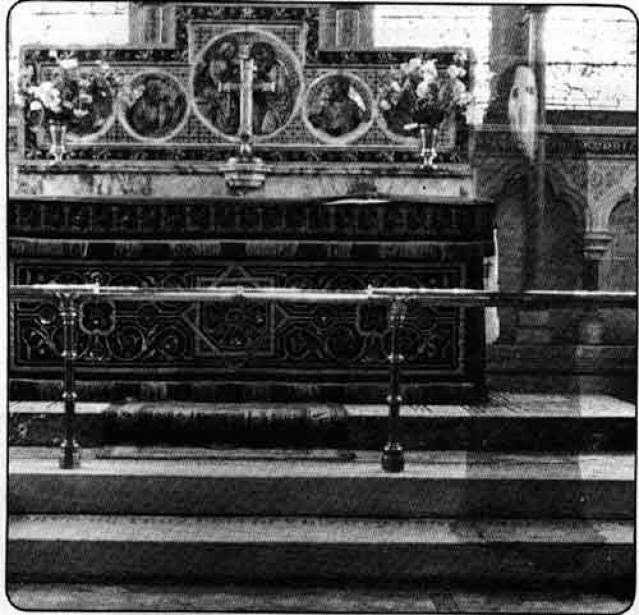
Reverend K. F. Lord took a photograph inside the Church of Christ the Consoler at Newby Hall, Yorkshire, in 1963. He intended to capture the altar and surrounding architecture of the nineteenth-century church. When Lord developed the film, a tall figure appeared standing to the right of the altar. The shape wore a long white robe and a dark cowl or hood over its head, resembling a medieval monk. The figure stood over nine feet tall, with a distorted white shape where its face should have been. Photo analysts inspected the negative carefully for signs of double exposure or chemical contamination. They determined the exposure showed no evidence of manipulation or overlay techniques. The floorboards around the altar showed no reflections that matched the figure, and the church contained no historical records of monks on the site, as the building was erected in 1870. The image became one of the most debated church photos in Britain.
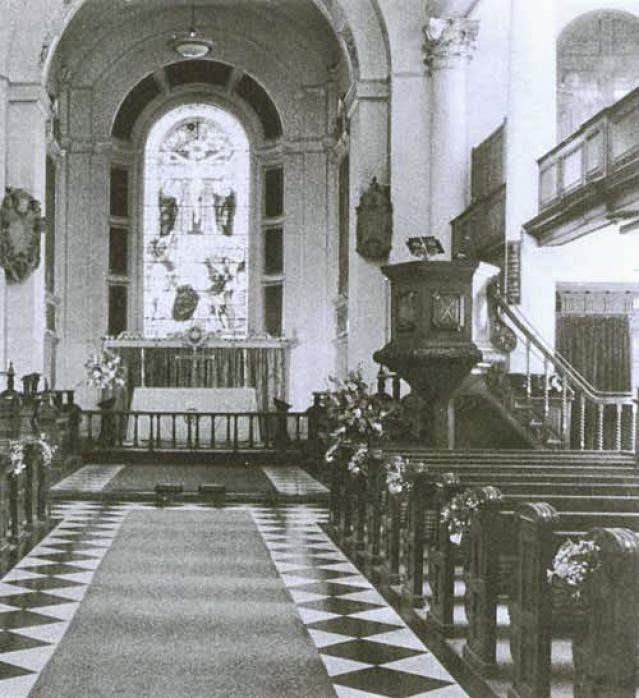
In 1982, a visitor brought a camera to St. Mary the Virgin Church in Kempton, Worcestershire, during an afternoon organ recital. The building dated back to medieval times, featuring heavy stone arches and an elevated choir loft above the main nave. While the musician played on the ground level, the visitor snapped a photograph pointing up toward the vacant choir balcony. Upon developing the film, a stark white silhouette appeared standing beside the wooden railing of the loft. The figure appeared to be a figure in a long gown, glowing against the dark wood paneling of the church walls. Witnesses in the pews confirmed that no one had climbed the stairs to the choir balcony during the entire performance. Local church records mentioned centuries of quiet worship, but no specific tragic accidents tied to the choir loft. The photograph circulated among local historians and researchers as a classic example of an optical anomaly recorded in an active place of worship.
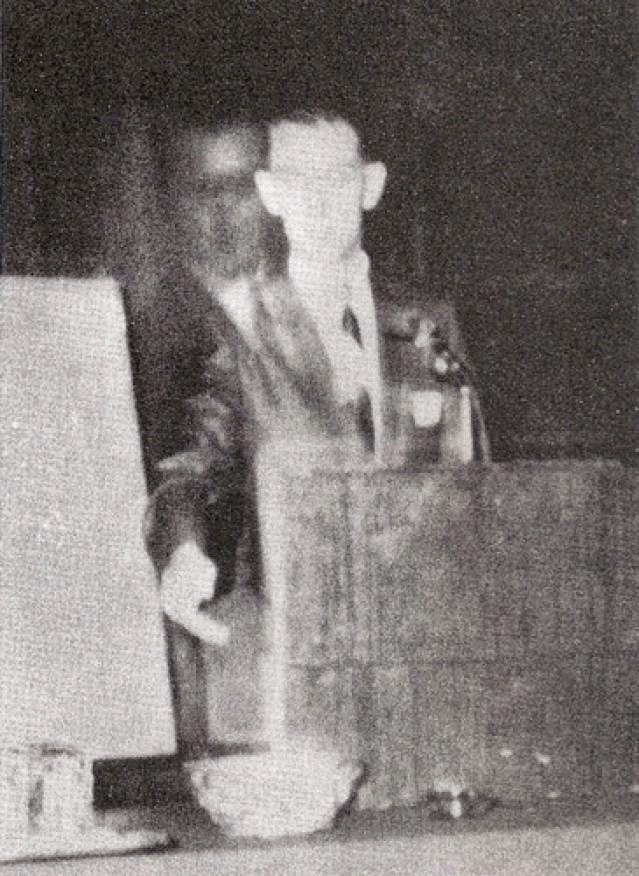
In November 1968, telepathy researcher Robert A. Ferguson delivered a speech at a Spiritualist convention in Los Angeles, California. A colleague in the audience pointed a camera toward the podium and took a snapshot of Ferguson mid-speech. When the film was processed, a second, clear face appeared right next to Ferguson’s head. The figure appeared to be an older man in a modern suit, surrounded by a faint white mist. Ferguson immediately recognized the second face as his brother, Walter Ferguson. Walter had served in the military and died in 1944 during World War II, twenty-four years before the Los Angeles convention. Because the photo was taken with a Polaroid camera in front of multiple witnesses, investigators ruled out standard darkroom double-exposure techniques. Critics suggested the film pack might have been re-exposed or pre-printed by an external party, while supporters pointed to the sharp facial features of Walter Ferguson as evidence of a genuine photographic anomaly during a live public lecture.
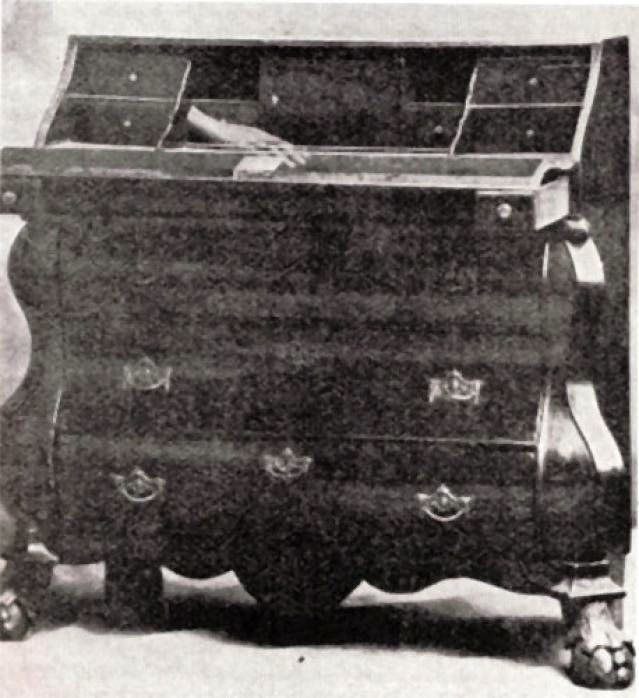
In 1975, antique dealer and photographer Montague Dawson purchased a seventeenth-century oak bureau from an estate sale in England. He placed the heavy wooden cabinet in his studio to photograph it for a sales catalog. Dawson set up steady lighting, mounted his camera on a tripod, and took several black-and-white shots of the carved woodwork. When he developed the prints in his darkroom, he noticed an unexpected shape near the top desktop trim. A pale, disembodied hand and forearm appeared resting flat against the dark oak edge. The fingers looked slim and elongated, casting a faint shadow on the wooden finish. Dawson examined the bureau carefully to see if any reflective glass or polished brass had created an illusion, but the desk surface consisted of dull, aged wood. He checked the film negative and confirmed that no other people had entered the room during the exposure, leaving the origins of the pale arm unexplained.
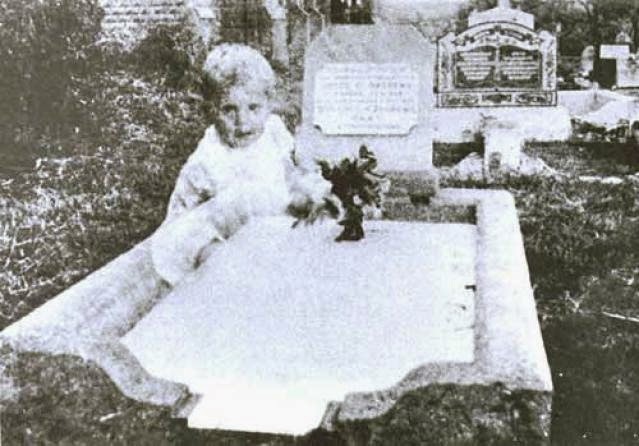
Mrs. Andrews visited a cemetery in Queensland, Australia, in 1946 to tend to the grave of her teenage daughter, Joyce, who had died a year earlier. She brought a small camera and took a photograph of the newly erected headstone and the grassy mound. When the film came back from the developer, Mrs. Andrews was stunned to see a small child sitting on top of her daughter’s grave. The child appeared to be a young toddler, fully visible in bright daylight, looking directly at the camera lens. Mrs. Andrews stated that no young children were present in the cemetery when she took the shot, nor did she recognize the boy. Years later, ghost researcher Australian paranormal investigator Malcolm Kirk checked local records. He discovered that two infant girls were buried in an unmarked grave just a few feet away from Joyce’s plot. The picture remains one of Australia’s most famous cemetery photographs.
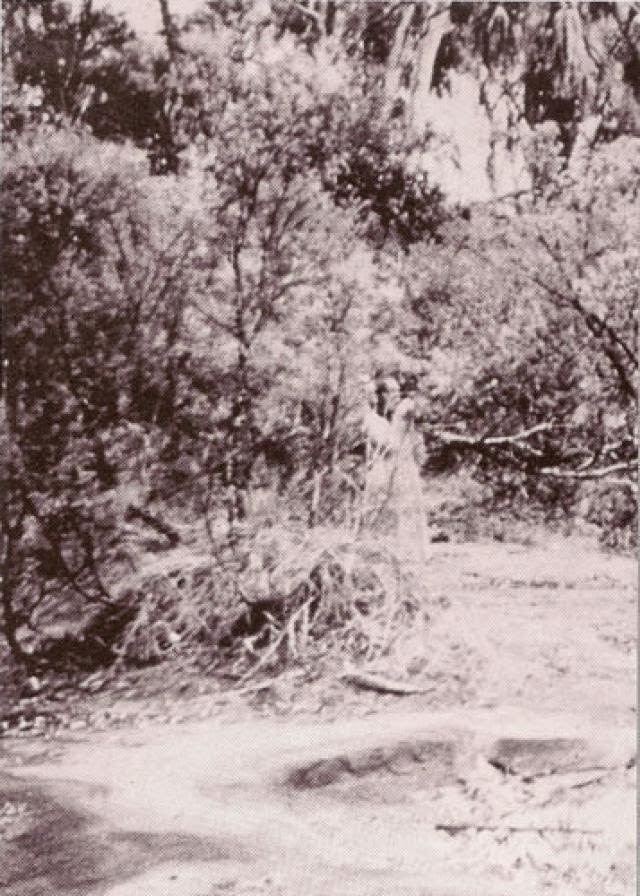
Corfe Castle stands on a steep hill in Dorset, England, built by William the Conqueror in the eleventh century. Parliament ordered the castle blown up with gunpowder in 1646 to prevent royalists from using it during the English Civil War, leaving behind massive, tilted stone walls and empty archways. Over the centuries, visitors walking through the ruins reported sudden drops in temperature, unseen footsteps, and dark shapes moving along the broken parapets. Local legends spoke of a woman in a white dress seen wandering the outer bailey late at night. Photographers visiting the site frequently recorded odd light streaks, shadows that did not match the stone structures, and faint figures standing along the exposed ledges. Tourists often shared photos showing indistinct shapes standing in former window openings high above the ground where no access walkways remained. The English Heritage foundation preserved the site as a national monument, drawing thousands of visitors each year who explore the historic stone ruins.
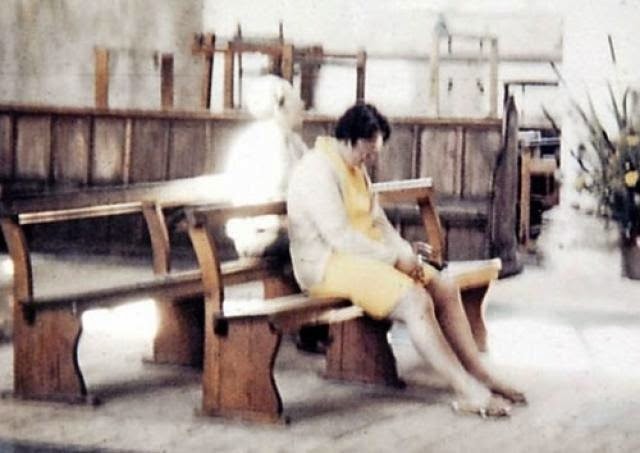
In 1975, Peter Berthelot visited St. Mary’s Church in Worstead, Norfolk, along with his wife, Diane. Diane felt unwell, so she sat down on a quiet wooden bench near the back of the church to rest while her husband explored the building. Peter pulled out his camera and took a photo of Diane sitting alone on the bench with her hands folded in her lap. When they returned home and developed the film prints, they noticed a figure sitting directly behind Diane on the wooden seat. The figure wore a light-colored bonnet and historical dress, glowing with a soft white light. The couple returned to the church and spoke with the vicar. The priest explained an old parish legend regarding a white lady who was believed to haunt the church nave, bringing healing to sick visitors who sat near the altar on Saint Bartholomew’s Day.