
Houston in the 1880s was a city on the move. What had been a modest Texas town was rapidly becoming one of the South’s most important commercial centers. Population numbers climbed steadily throughout the decade, new businesses opened along its streets, and construction crews were kept busy from one end of the city to the other. These rare photographs capture that moment in time — before the oil boom, before the Ship Channel, when Houston was still finding its footing but growing fast.
Education was a priority for Houston’s growing population. The Houston Academy stood as one of the city’s early commitments to formal schooling, serving students in a period when public education infrastructure was still being built across Texas.
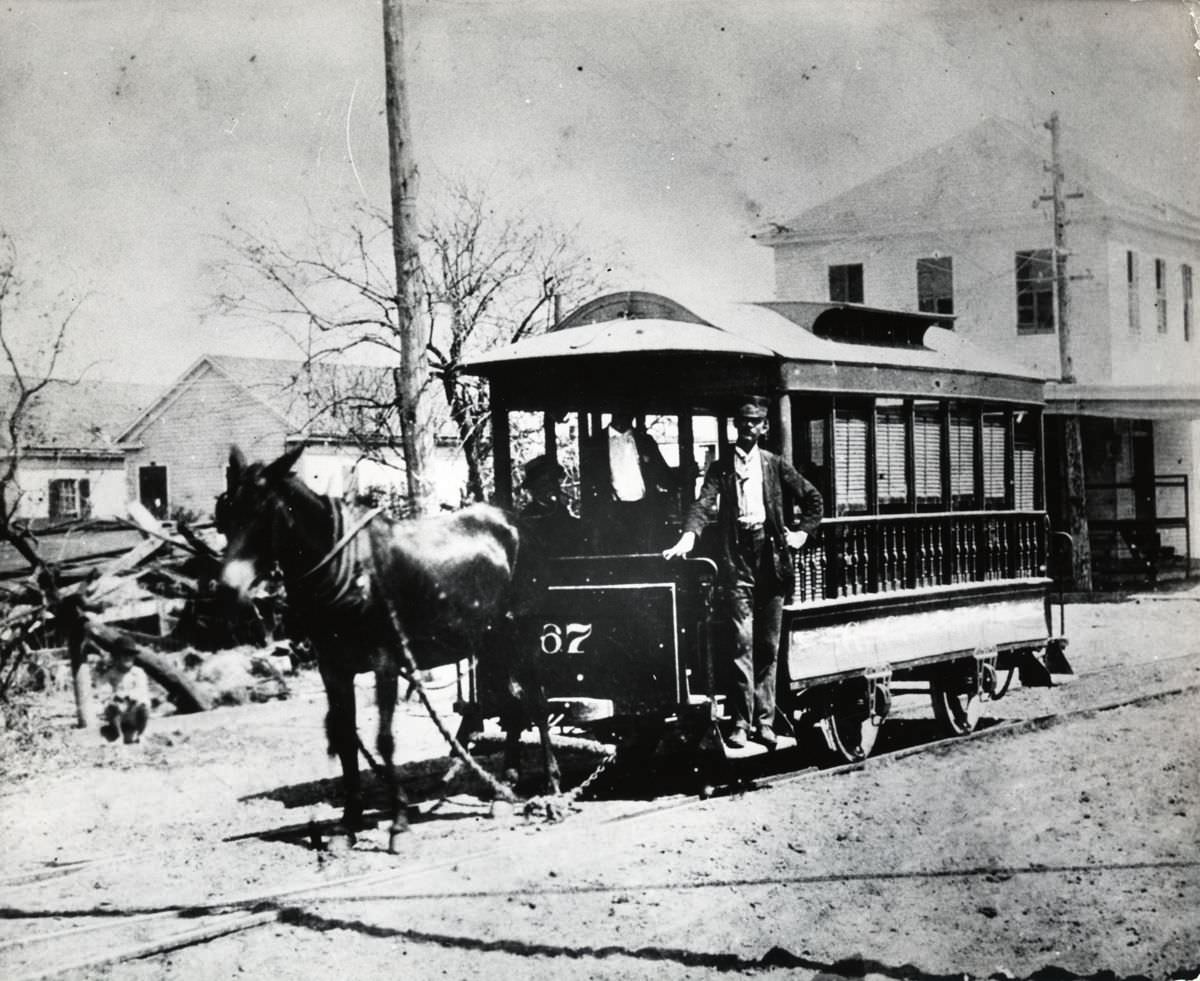
Getting around Houston in the early 1880s meant relying on mule-drawn streetcars. The city’s streetcar lines ran through the main thoroughfares, offering residents a way to move across town without walking every step. It was slow by later standards, but it was the backbone of daily urban transportation.
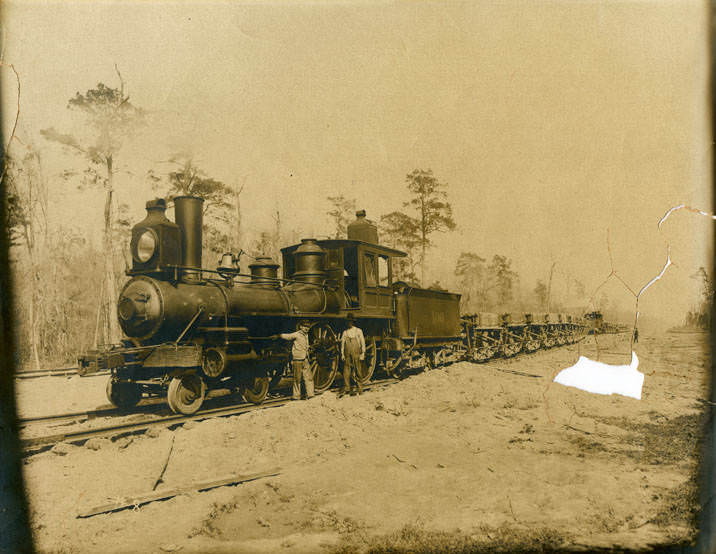
Nothing reshaped Houston in the 1880s more than the railroad. Lines like the Houston and Texas Central Railway and the Galveston, Houston and Henderson Railroad turned the city into a regional shipping hub. Goods moved in and out at a scale previously impossible, and the railroads brought settlers and business owners who saw Houston as a place worth investing in.
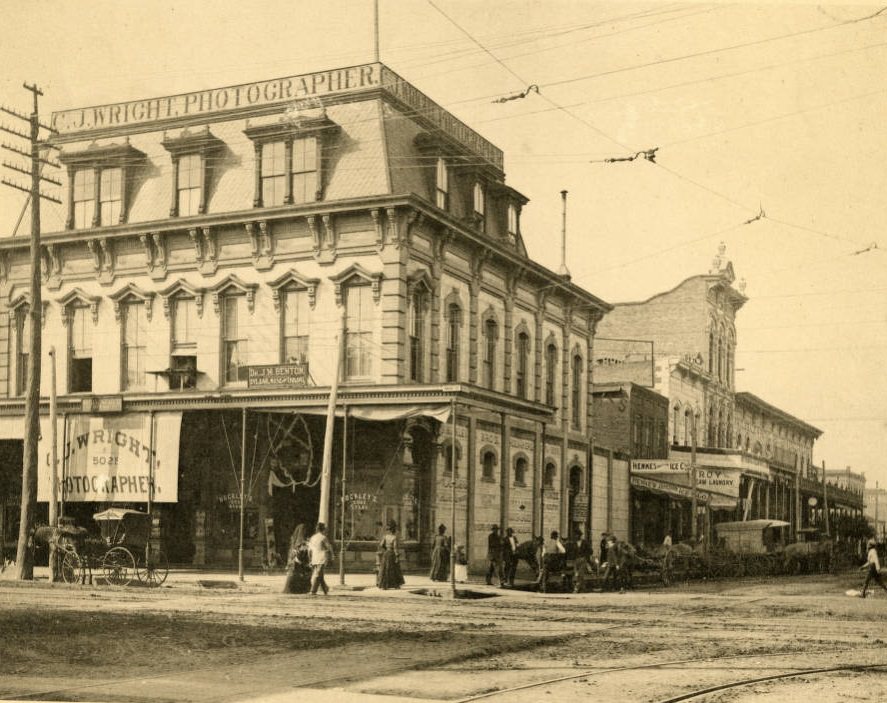
Houston’s streets in the 1880s reflected the energy of a city under construction. Wooden storefronts lined unpaved roads, and foot traffic mixed with horse-drawn wagons hauling goods to and from warehouses. The street scene was busy, commercial, and often dusty.
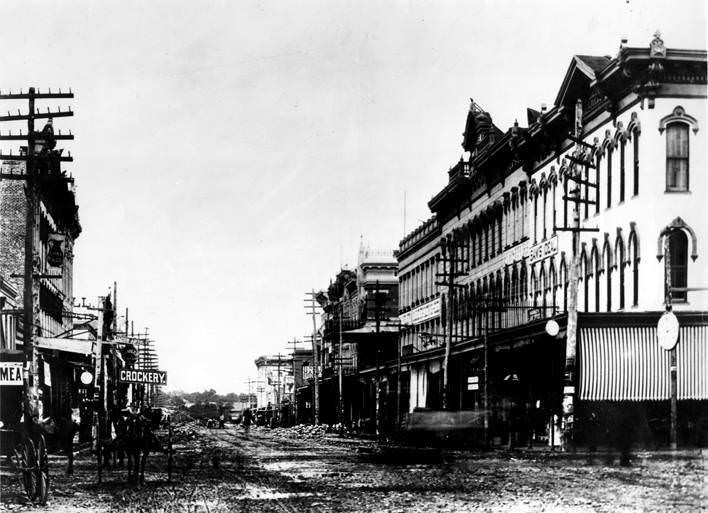
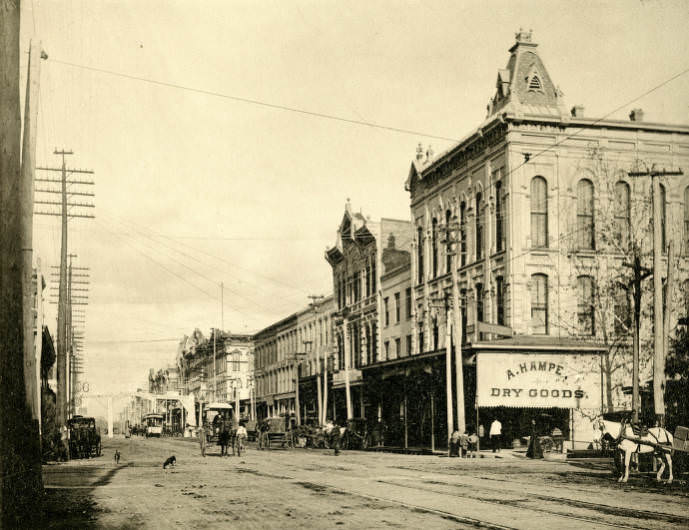
Main Street was the commercial spine of Houston. Looking south along its length in the 1880s, you could see the density of the city’s business activity — storefronts, signs, and wagons crowding the road. It was the address that mattered most for merchants who wanted visibility in the city.
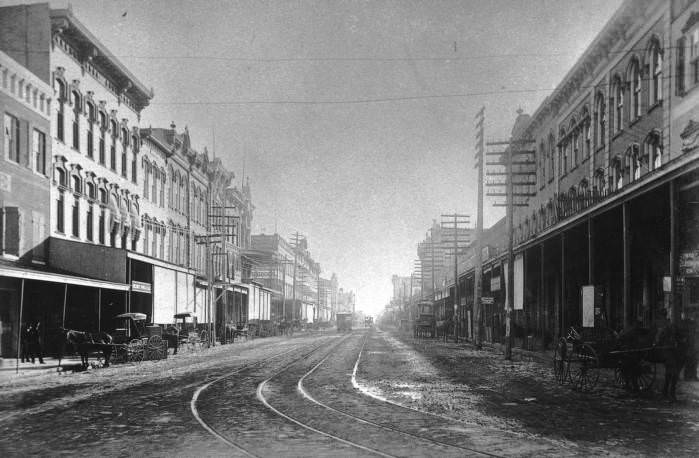
Houston’s infrastructure extended beyond its main streets. Bridges like the one over San Jacinto Street connected neighborhoods and allowed the city to spread outward as its population grew. These structures were functional necessities, built to keep pace with expansion.
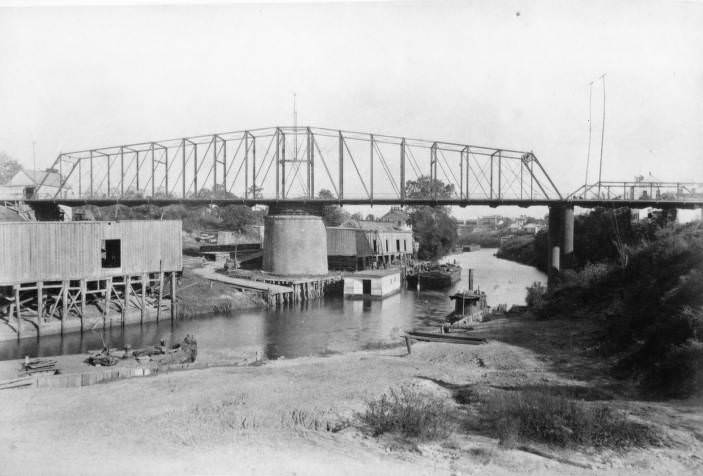
Congress Avenue was one of Houston’s key corridors. It ran through a part of the city that mixed commercial and civic activity, and like much of Houston in this era, it showed the blend of ambition and practical need that defined the decade.
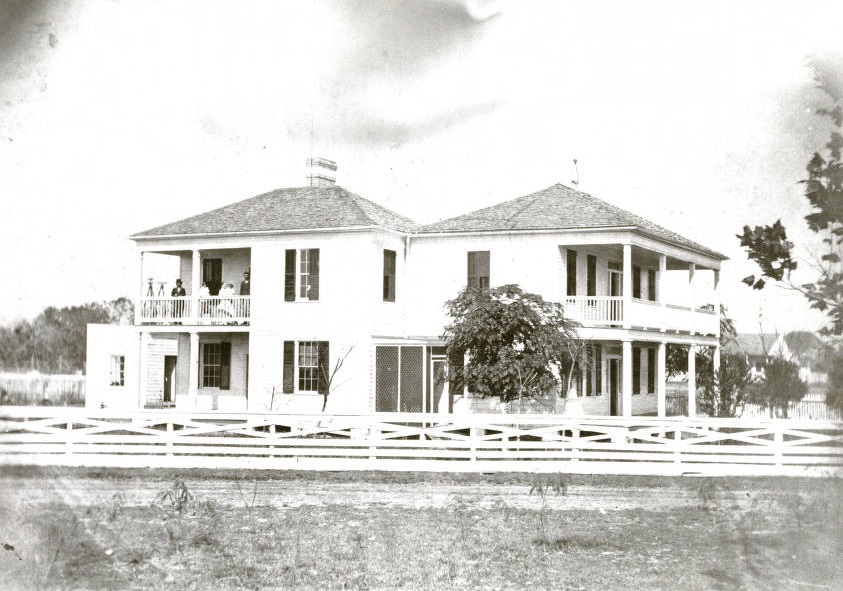
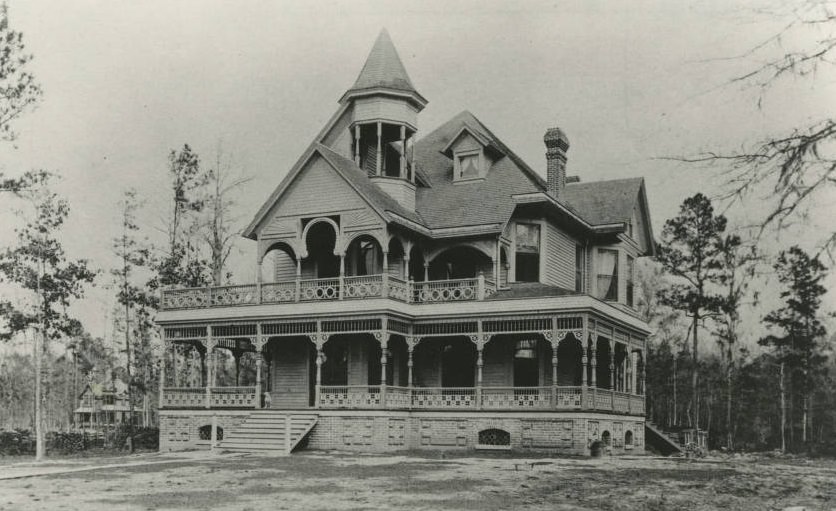
Residential life in 1880s Houston ranged from modest homes to substantial private residences built by the city’s more prosperous citizens. The Will Powars house is one example of the domestic architecture that marked the neighborhoods taking shape on the edges of downtown.
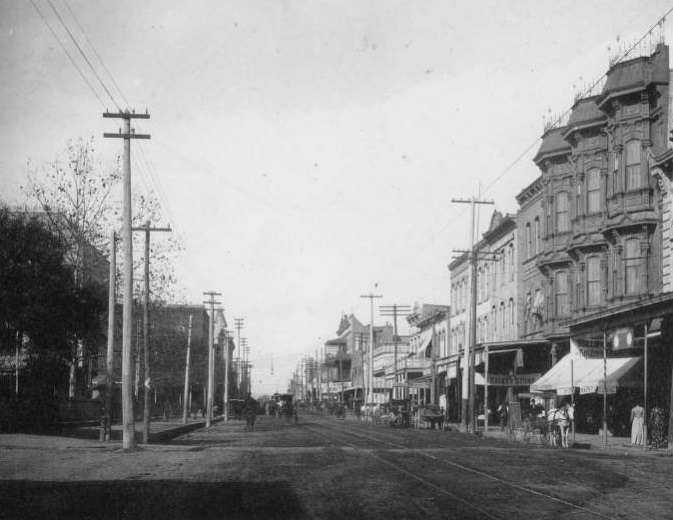
By 1889, the intersection of Main Street and Prairie Avenue had developed into a recognizable commercial corner. Multi-story buildings were replacing earlier wooden structures, a sign that Houston’s merchants expected the city’s growth to continue and were building accordingly.
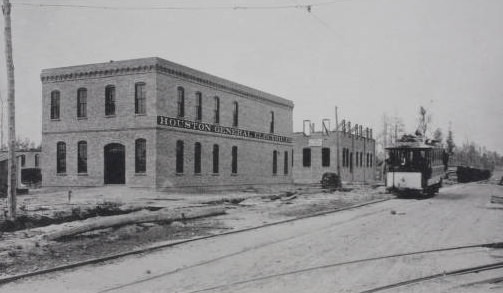
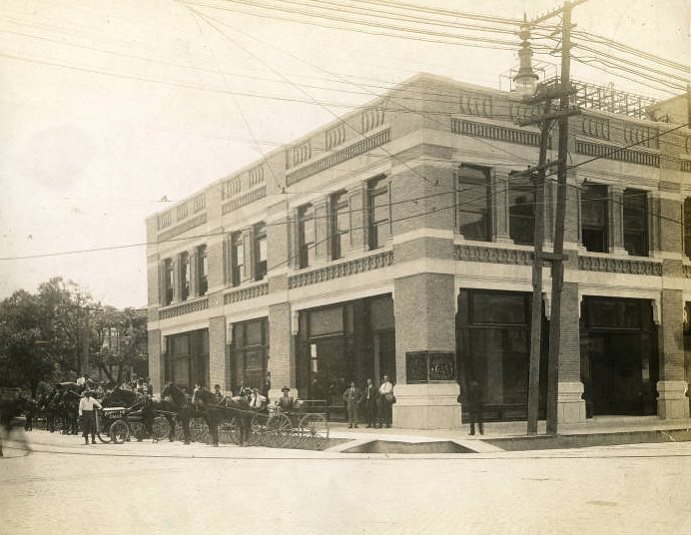
Electricity arrived in Houston during the 1880s, and the Houston General Electric Company was at the center of that change. The company’s building represented a new era for the city — one in which electric lighting would begin to replace gas lamps on Houston’s streets and in its homes.
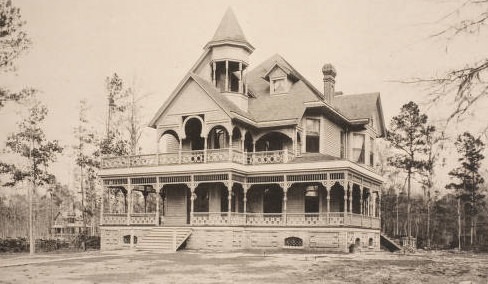
Houston Heights was developing as a distinct community during this period. Prominent residents like N. L. Mills built substantial homes there, and the neighborhood took on a character separate from the bustle of downtown Houston proper.
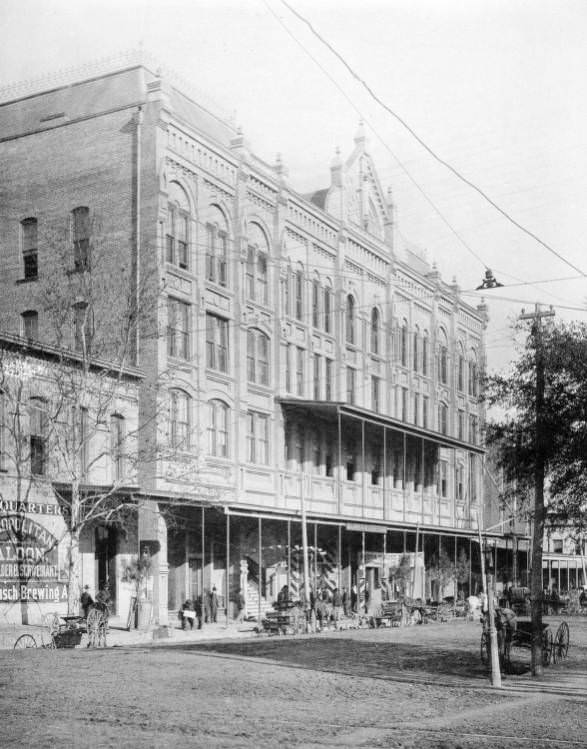
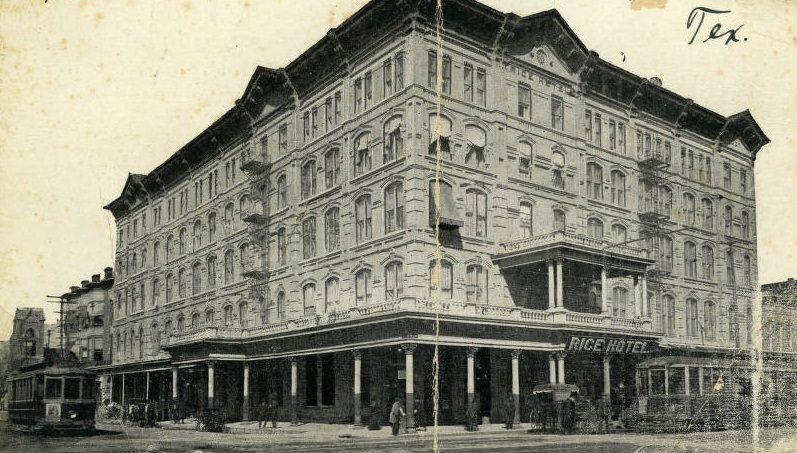
Four-story commercial buildings were a statement of confidence in Houston’s future. Constructing a building of that scale in the 1880s required capital and a belief that business would sustain it. These structures anchored the growing downtown district and gave Houston a skyline that matched its commercial ambitions.
Newton L. Mills built one of the notable private residences in Houston during this era. His home reflected the wealth that commerce and real estate were generating for a segment of Houston’s population as the city’s economy expanded through the decade.
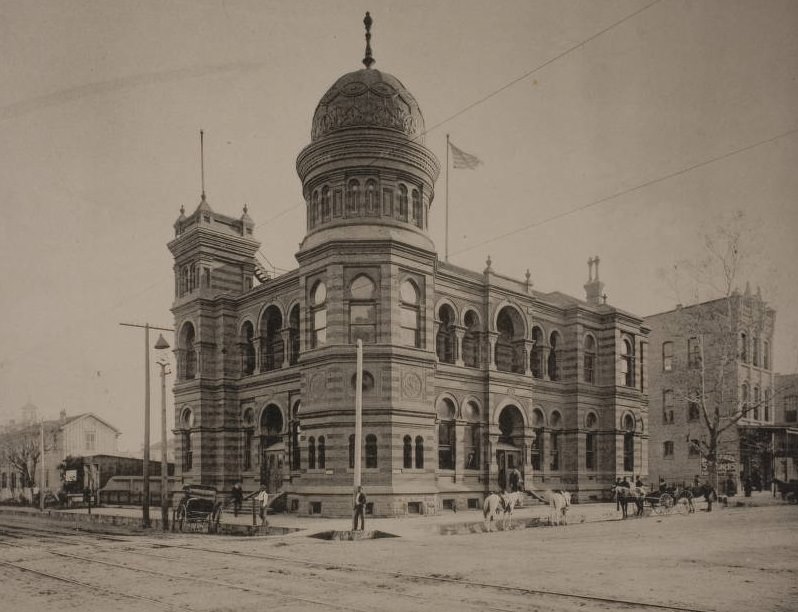
Federal presence in Houston grew alongside the city itself. The United States Post Office building was a concrete symbol of that presence — a government-built structure that served the communication needs of a rapidly expanding population and its businesses.
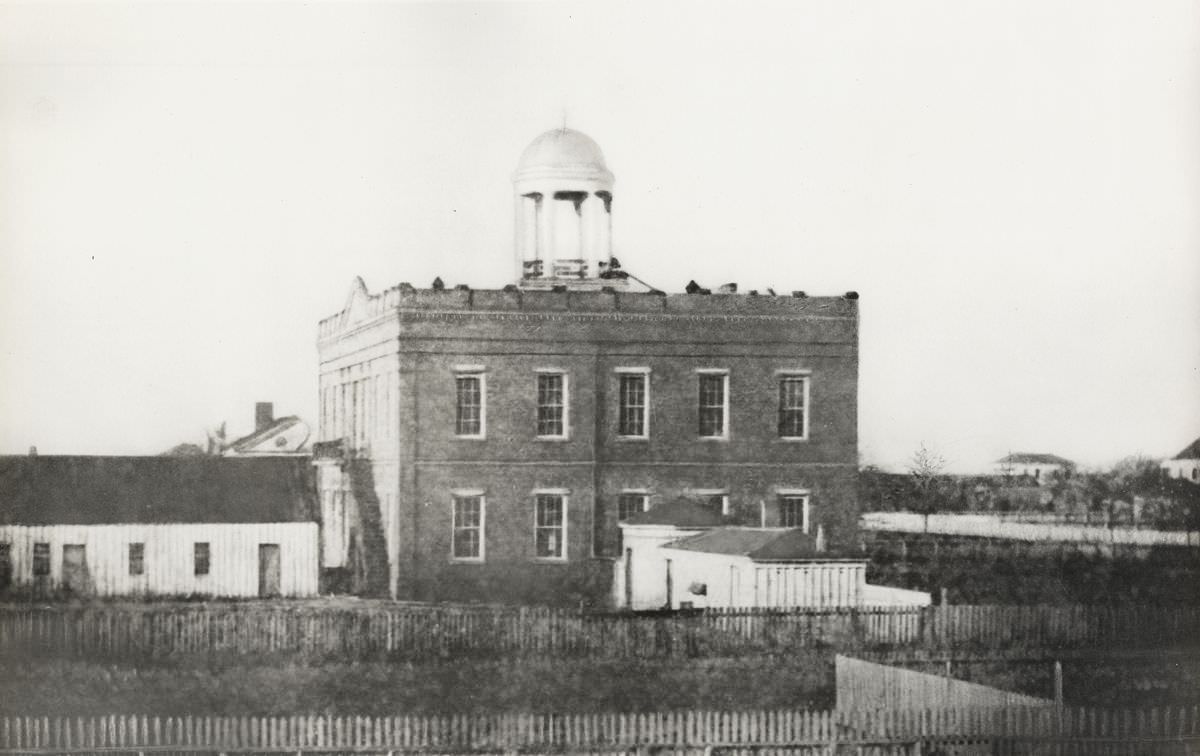
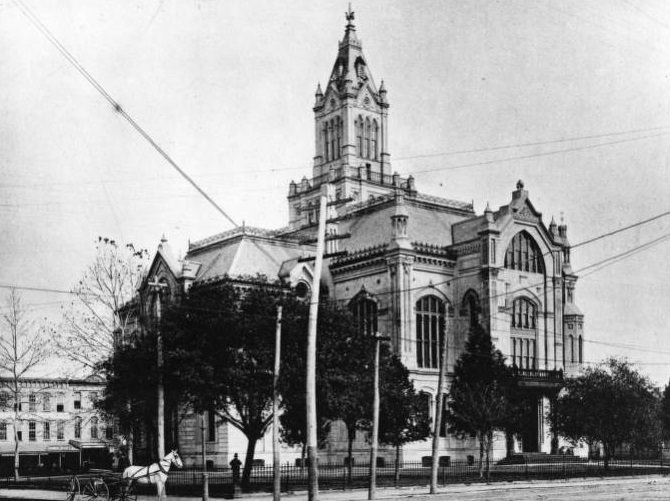
By 1883, Harris County had its courthouse firmly established as a civic landmark in Houston. The building served as the center of local government and legal proceedings for the county, handling everything from land disputes to criminal cases during one of the region’s busiest periods of growth.
Looking north from Prairie Avenue along Main Street gave a clear view of just how developed Houston’s core had become. The density of commercial activity visible in these photographs from the 1880s stands as a record of how quickly the city built itself up during this single decade.
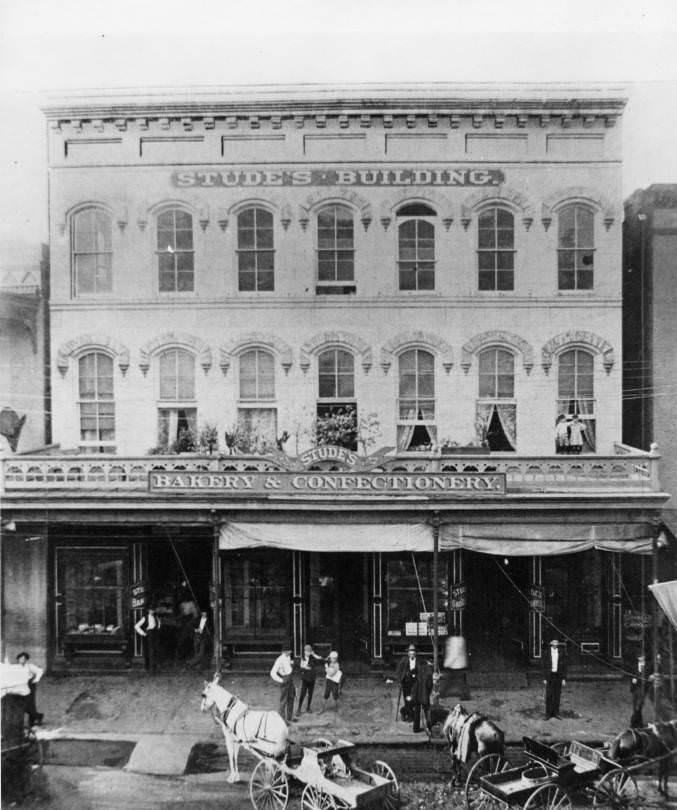
Local businesses served the daily needs of Houston’s residents. Stude’s Building housed a bakery and confectionery — the kind of neighborhood establishment that fed the city’s growing population and gave its streets a working, lived-in character beyond the large commercial firms.
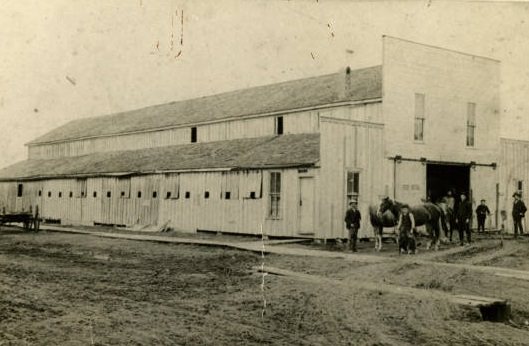
Horses were still essential to the city’s operation in every corner of daily life. The Palace Livery Stable was a critical business in 1880s Houston — stabling, renting, and caring for the horses that kept goods moving, people traveling, and the city functioning before the automobile age.
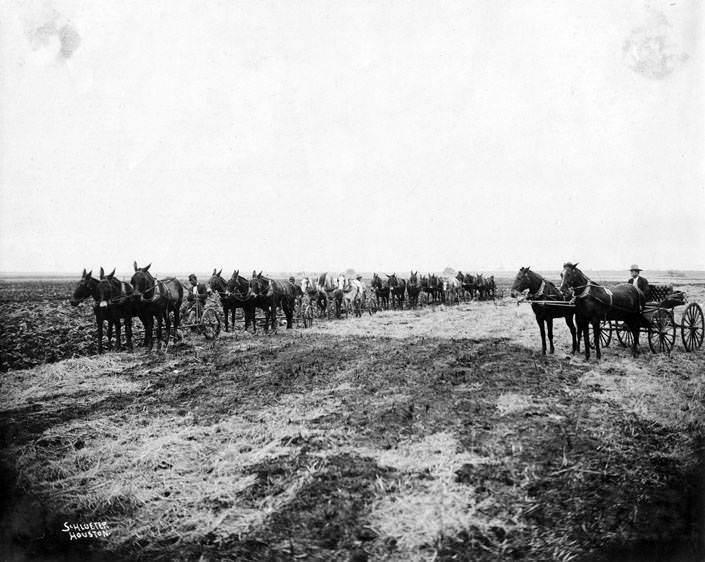
Agriculture remained part of Houston’s wider economy throughout the 1880s. Teams of horses pulling plows across fields in 1888 were a common sight just outside the city’s developed center, where cotton and other crops fed into the commercial trade networks running through Houston’s railroad depots and warehouses.
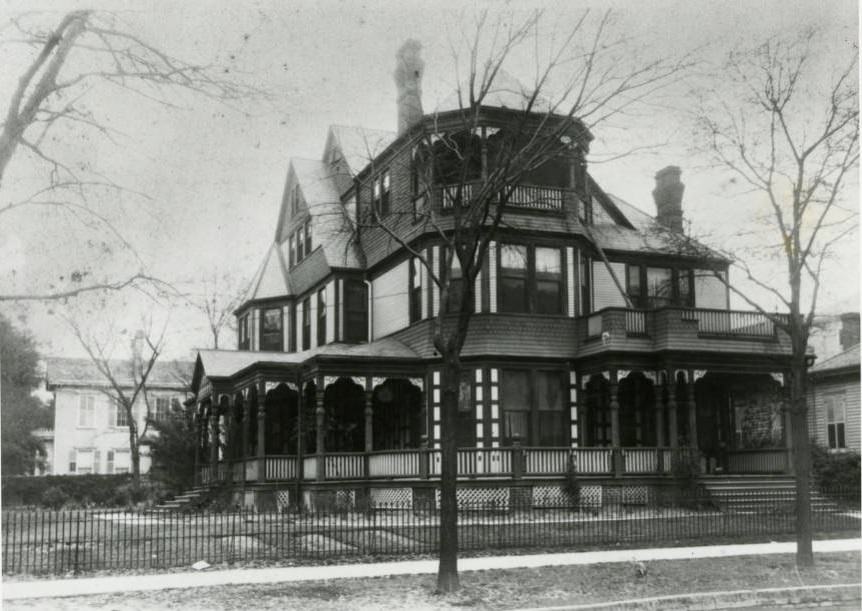
By 1889, successful Houston residents were building homes that reflected their prosperity. The Charles Dillingham house is one example of the private architecture that was appearing in Houston’s residential areas — well-built, designed with care, and set apart from the modest worker housing elsewhere in the city.
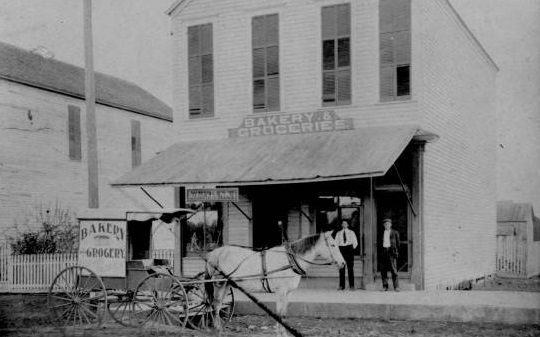
Small businesses were the fabric of Houston’s commercial life. A combined bakery and grocery operation — with its proprietors posed out front for the camera — shows the human scale of commerce that ran alongside the larger firms and railroad companies shaping the city’s broader economy.
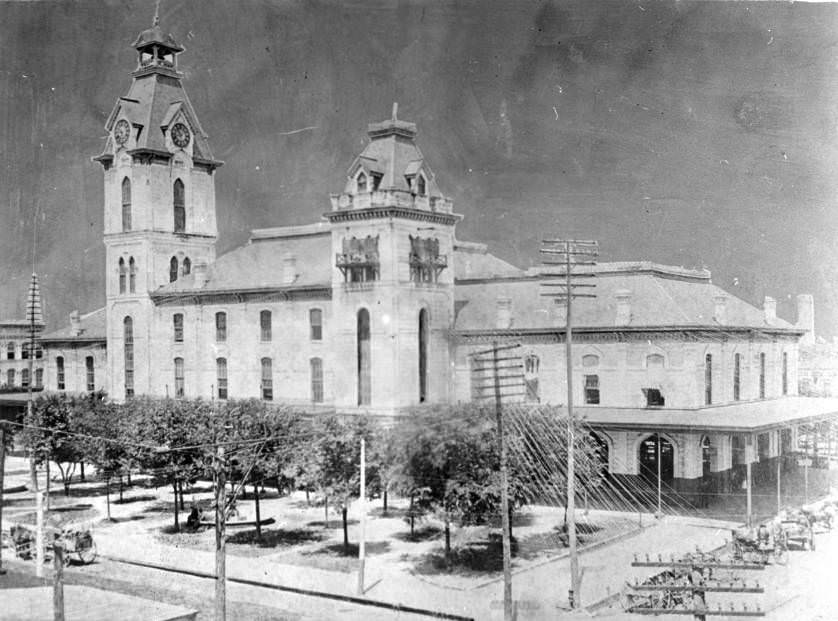
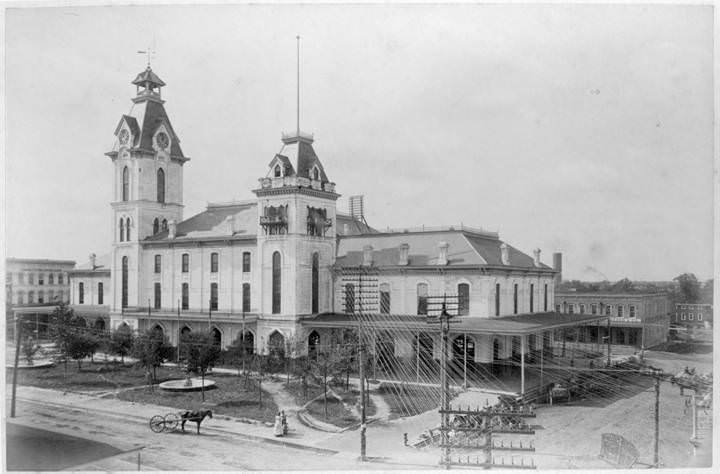
Houston’s City Hall stood as the seat of municipal government during this transformative decade. The grounds around it and the telephone poles visible in photographs of the building tell their own story — the city was wiring itself into the modern age even as construction crews were still laying out its streets.
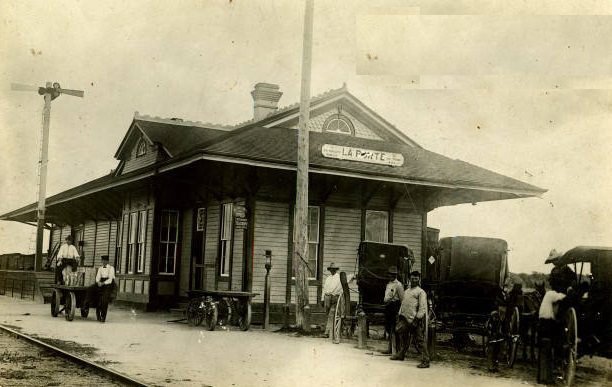
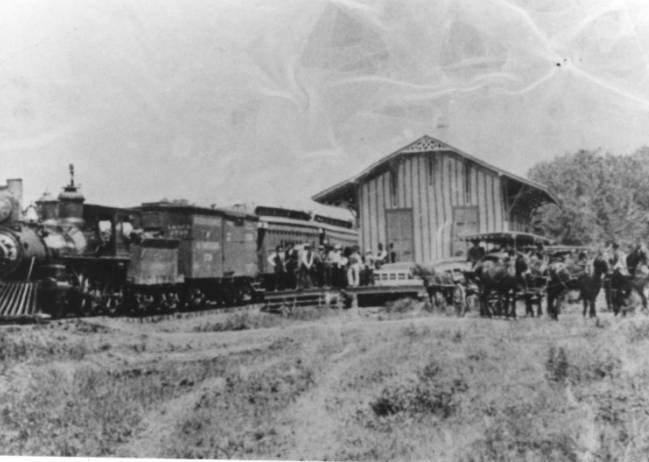
Train depots were some of the busiest places in 1880s Houston. Men waiting at the West Depot were part of a constant flow of travelers and workers moving through the city. The railroads didn’t just carry freight — they brought the people who would build, buy, and settle in Houston.
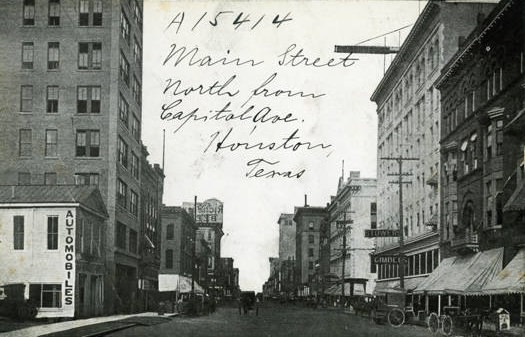
Looking north from Capitol Avenue on Main Street offered one of the clearest views of downtown Houston’s development. The commercial blocks stretching ahead in photographs from this era show a city that had packed a remarkable amount of growth into a short span of years.
Before electricity took full hold, gas lighting kept Houston’s streets and buildings lit after dark. The Houston Gas Company maintained its office and fleet of horse-drawn wagons to service the city’s gas lines — a business that ran parallel to the electric company as both competed to supply the city’s energy needs.
The Market House was one of Houston’s most important public buildings in the 1880s. With its distinctive twin towers and the horse-drawn vehicles crowding the street outside, it served as the central marketplace where residents and vendors came together to buy and sell goods. It was the kind of civic structure that anchored daily life.
At any given depot in 1880s Houston, a crowd of people was either arriving or seeing others off. The railroads made Houston a crossroads, and scenes of people meeting trains captured the human reality of that connectivity — new arrivals stepping onto Houston soil for the first time, and freight unloaded that would stock the city’s stores and warehouses.
The Rice Hotel was one of Houston’s most recognized landmarks during this era. It stood as a symbol of the hospitality industry growing up around the city’s booming commercial traffic — a place where railroad travelers, cotton merchants, and civic figures could stay while conducting business in one of Texas’s fastest-growing cities.





Too bad most if not all of those classic buildings are gone.
Is it me or does the pic of “West Depot” say “La Porte” on it?
Also, “City Hall” and “Market Palace” are the same structure.