
When World War II ended, Hawaii was not the same place it had been before Pearl Harbor. The attack on December 7, 1941, triggered strict martial law across the islands, and that military control did not lift until the war was over. During those years, the US military set working hours, fixed wages, regulated bars and restaurants, imposed curfews, and censored the press entirely. Anyone who spoke out against these measures was labeled unpatriotic. There was no public debate, no free press, and no room for dissent.
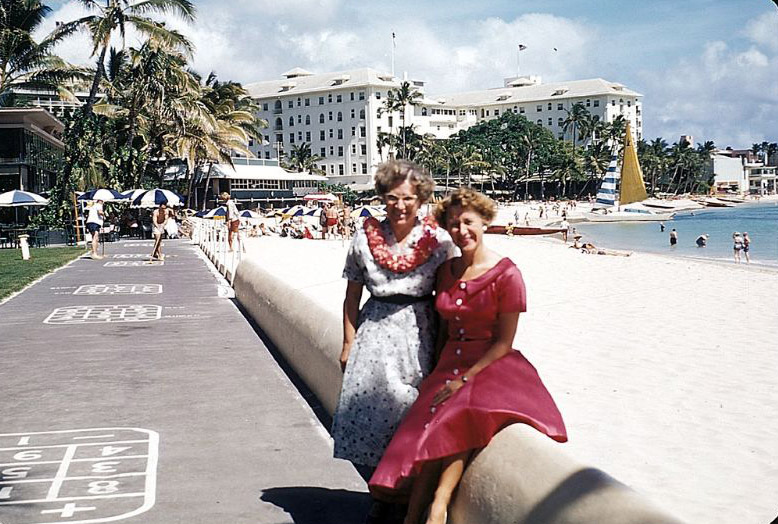
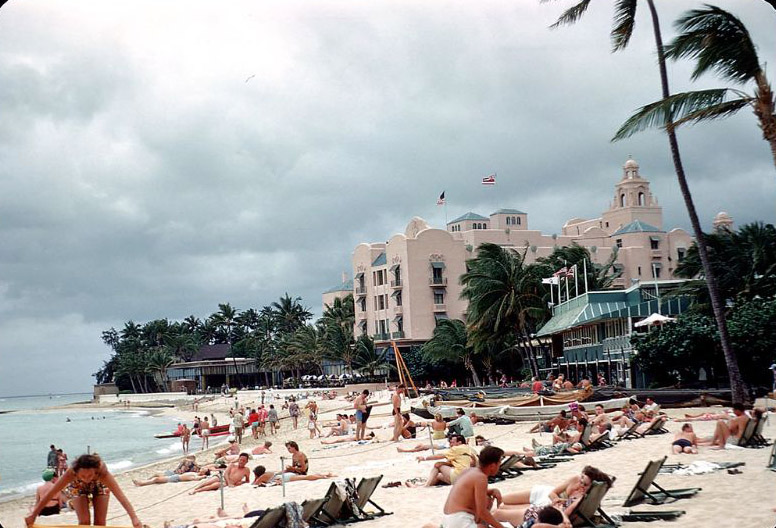
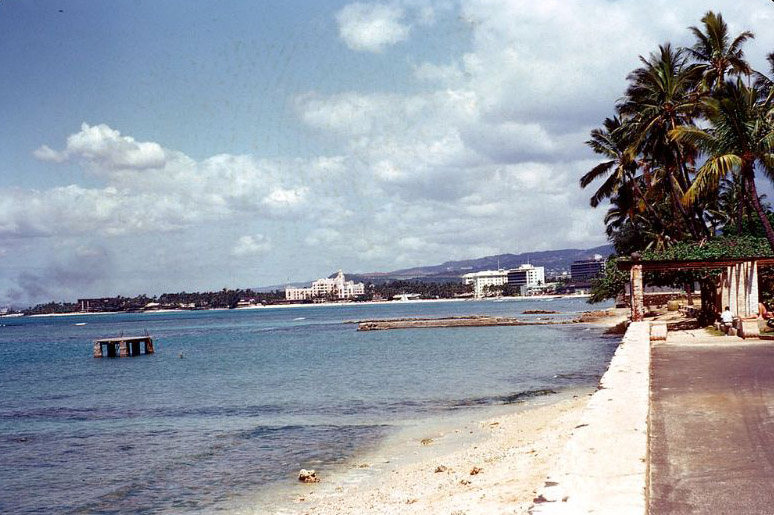
When peace returned, Hawaii’s people did not sit still. Residents of Oahu launched campaigns to rebuild the island and draw visitors back. The effort worked. Tourism began to recover, and the famous hotels and beach clubs of Waikiki once again became gathering places for both locals and travelers. The Royal Hawaiian Hotel, with its pink facade right on Waikiki Beach, stood as a symbol of that revival.
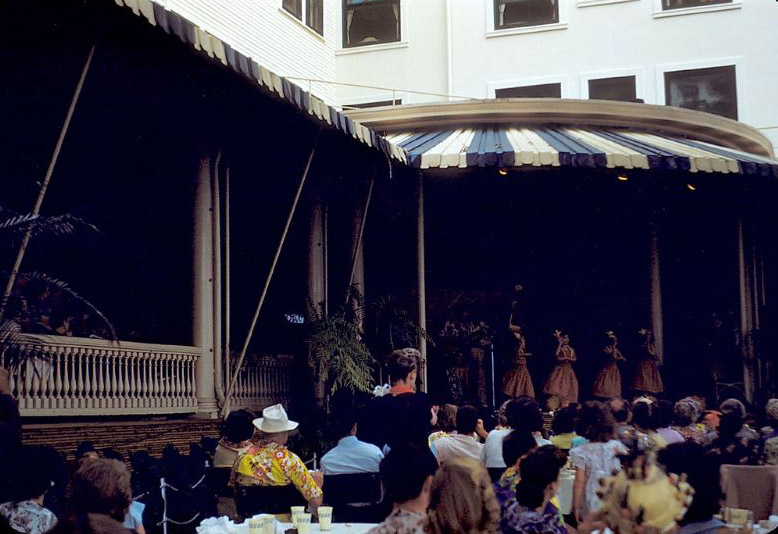
Music played a big part in spreading Hawaii’s image to the rest of the world. The “Hawaii Calls” radio show, broadcast live from the Banyan Court of the Moana Hotel on Waikiki, reached millions of American listeners every week. The show featured Hawaiian music, chanting, and the sounds of the surf, and it made many mainlanders dream of visiting the islands.
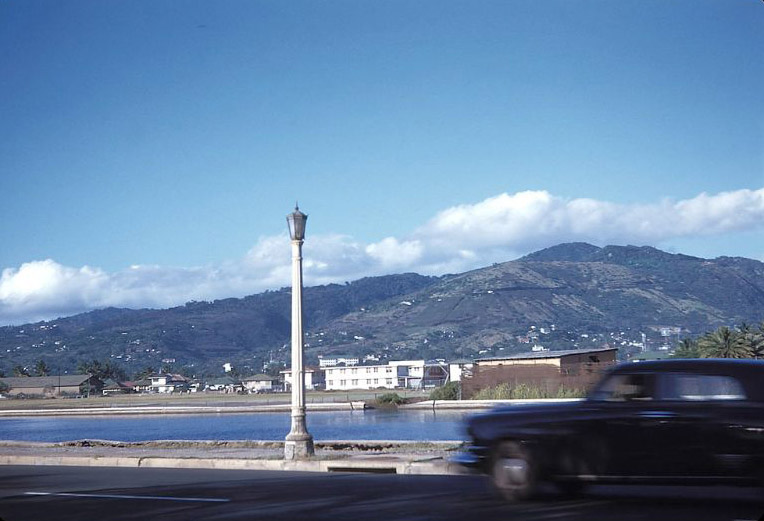
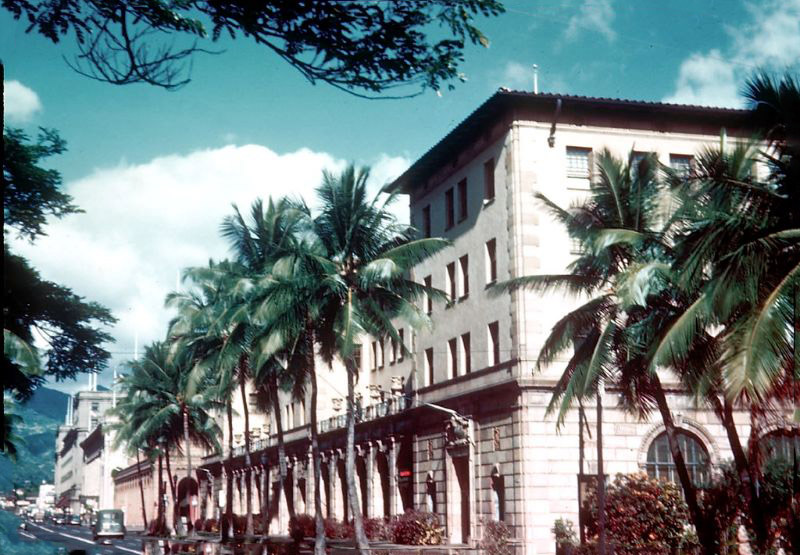
Downtown Honolulu in the 1950s was a city in motion. Bishop Street ran through the heart of the business district, lined with solid commercial buildings like the Dillingham Transportation Building. Meanwhile, the Ala Wai Canal bordered Waikiki, separating the resort area from the rest of Honolulu. These streets and waterways formed the backbone of daily life for thousands of residents.
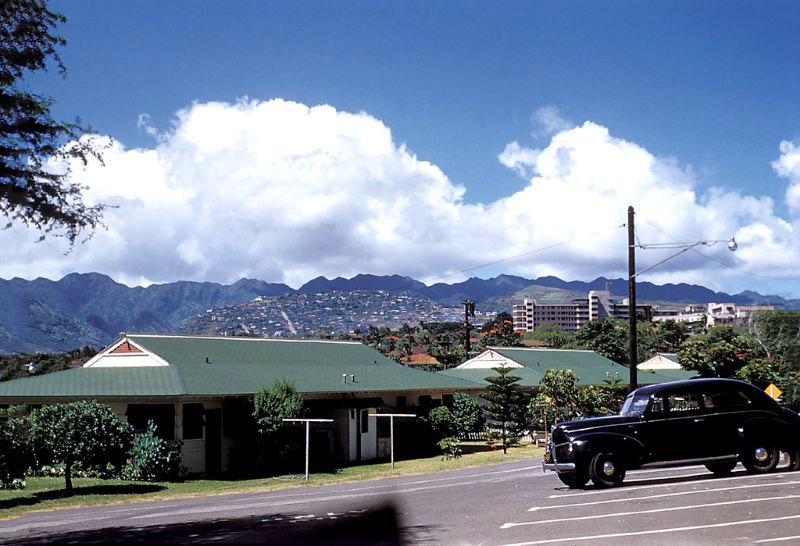
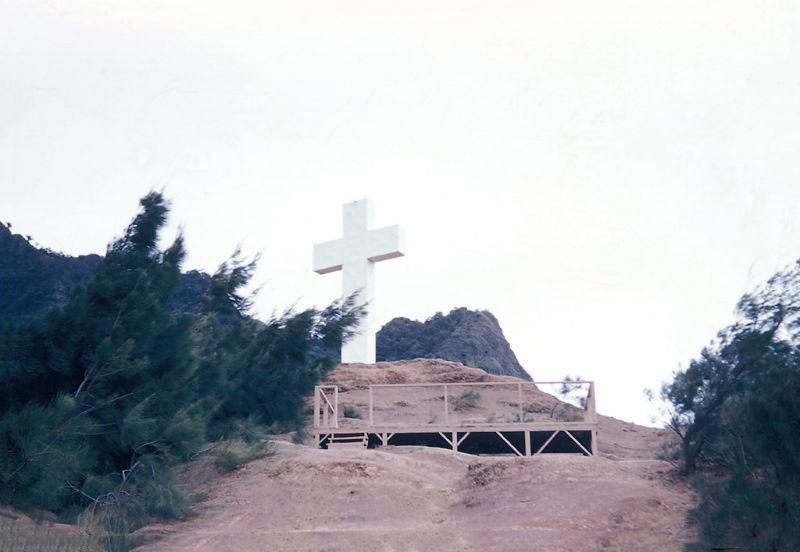
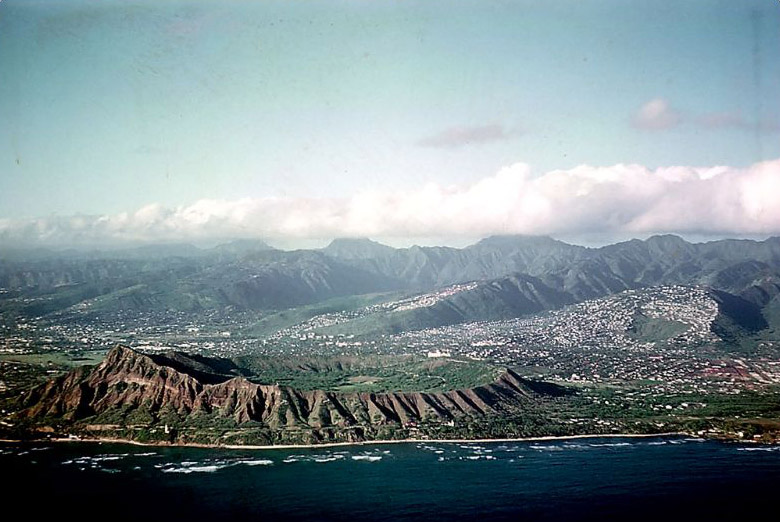
The military presence in Hawaii during the 1950s was impossible to miss. Fort Ruger sat on the slopes of Diamond Head, the famous volcanic crater that defines Honolulu’s eastern skyline. Schofield Barracks, one of the largest US Army posts in the country, dominated central Oahu. A giant cross once stood on its grounds — a landmark that has since been removed.
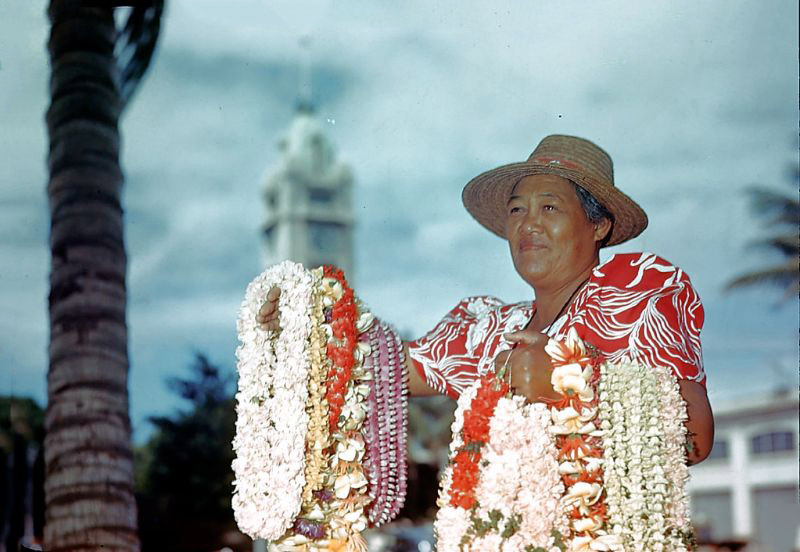
At Honolulu Harbor, the Aloha Tower rose ten stories above the docks — the tallest structure in Hawaii for decades. When passenger ships pulled in, lei sellers lined the waterfront, greeting arrivals with fresh flower garlands. This was the first image most visitors saw of Hawaii, and it set the tone for everything that followed.
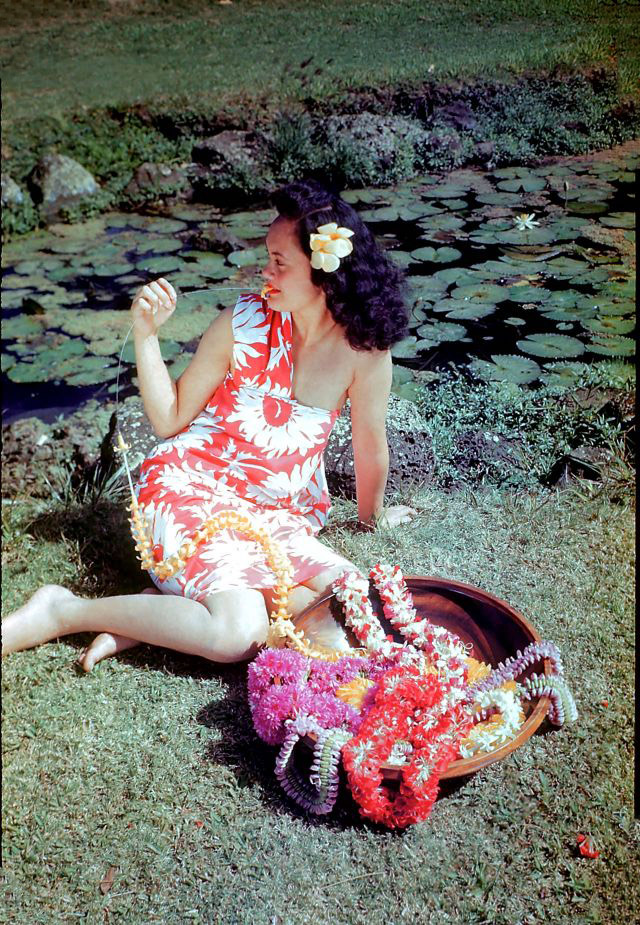
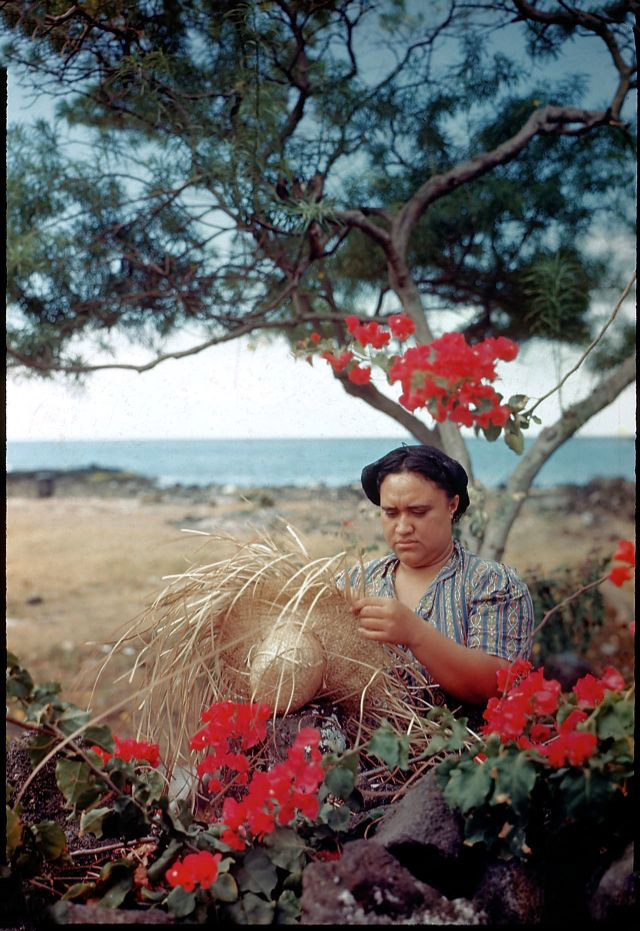
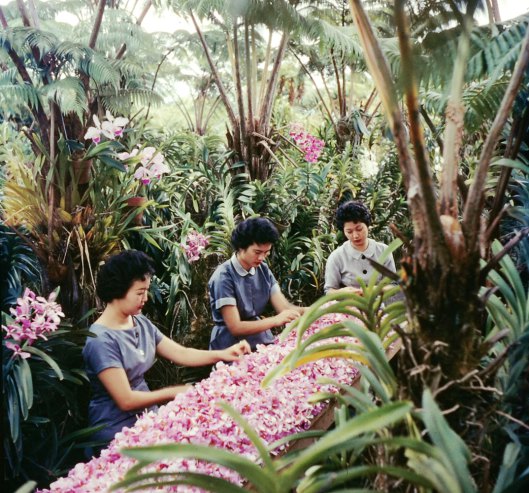
The lei was more than a tourist souvenir. For Hawaiian women who crafted and sold them, it was a livelihood. Stringing plumeria, orchids, and pikake into garlands was skilled, time-consuming work. The women who sold them near the harbor and the airport were a fixture of 1950s Hawaiian life, their colorful displays visible from a distance.
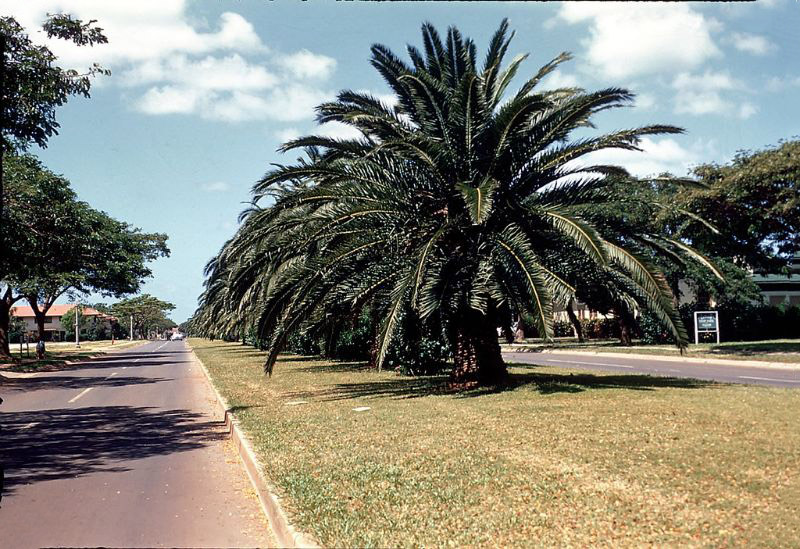
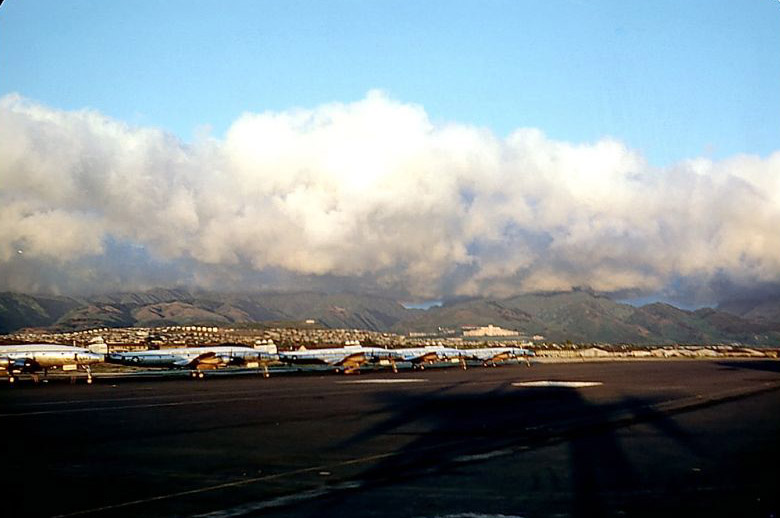
Hickam Field, adjacent to Pearl Harbor, remained one of the most strategically important air bases in the Pacific throughout the 1950s. The Korean War kept military activity high across the islands. Planes moved constantly in and out, and the base’s wide runways and hangars handled everything from combat aircraft to transport flights carrying troops and supplies across the Pacific.
Honolulu itself was a city of contrasts. Traditional Hawaiian culture existed alongside mid-century American commercial life — diners, movie theaters, department stores, and cars crowding streets that had once been quiet. The city was growing fast, fueled by returning veterans, new residents, and the steady rise of tourism.
In 1954, Hawaii’s political landscape changed dramatically. A wave of nonviolent protests, strikes, and acts of civil disobedience swept across multiple industries. That same year, the territorial elections removed Hawaii’s Republican Party from the legislature, replacing it with the Democratic Party of Hawaii. The new Democratic majority immediately began pushing hard for statehood.
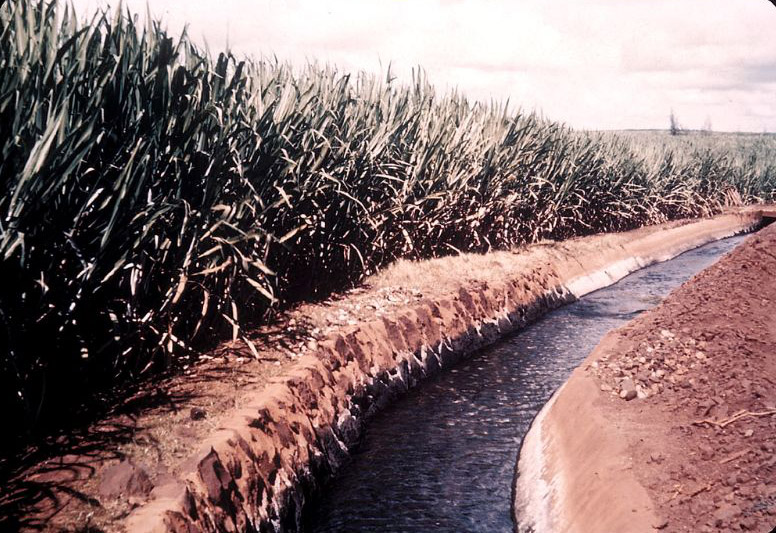
Agriculture remained central to Hawaii’s economy throughout the decade. Sugar cane fields stretched across large portions of the islands, fed by carefully managed irrigation ditches. Pineapple farming was equally important. Dole’s massive 15,000-acre plantation near Honolulu was one of the largest agricultural operations in the entire United States.
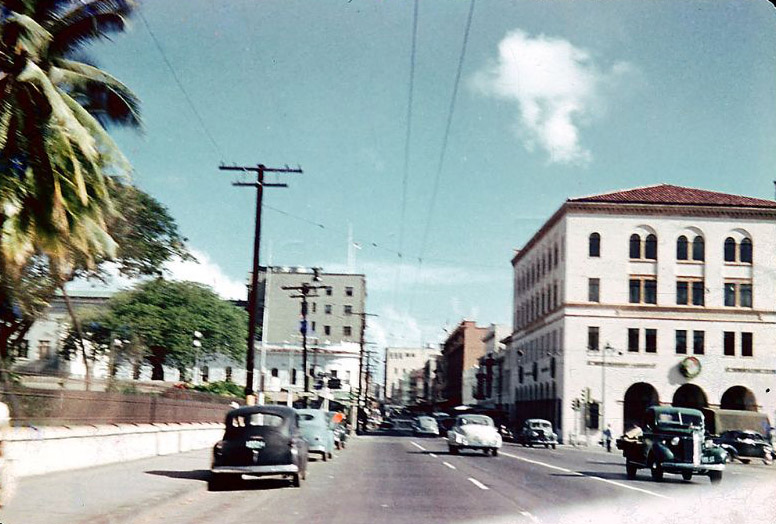
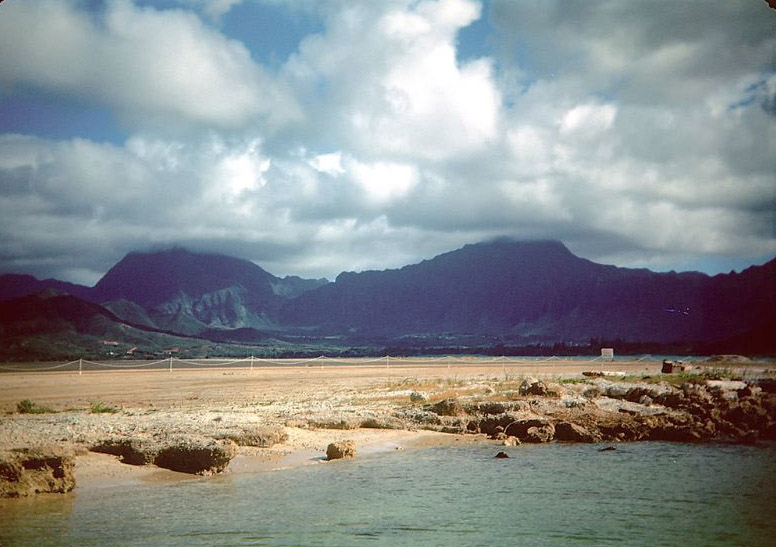
King Street in downtown Honolulu ran past the wall of Iolani Palace — the only royal palace on American soil. The palace served as a constant reminder of Hawaii’s history as an independent kingdom before annexation in 1898. Across the island, the Ko’olau Mountains rose sharply from the coast, their ridges often wrapped in clouds, forming one of the most dramatic backdrops in the Pacific.
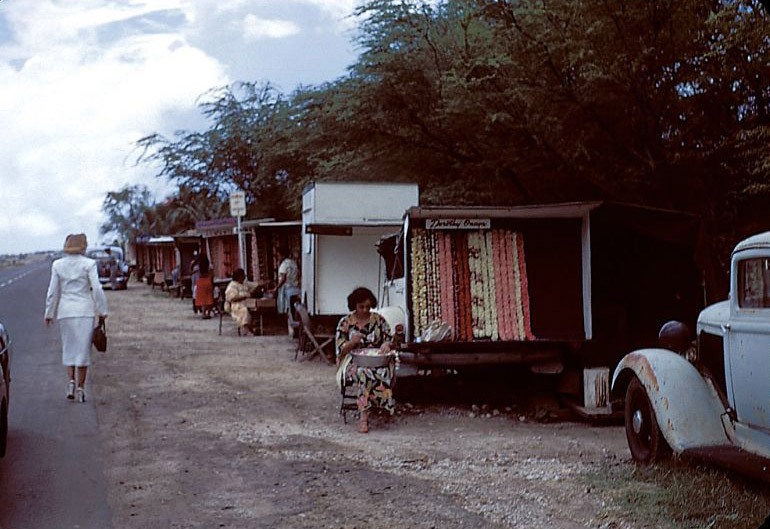
Near Honolulu Airport, lei sellers parked their cars along Lagoon Drive and waited for arriving passengers. This informal roadside market was a uniquely Hawaiian institution. Travelers who had flown in from the mainland stepped into warm, humid air and were immediately offered a garland of fresh flowers — a greeting that became one of the defining symbols of the islands.
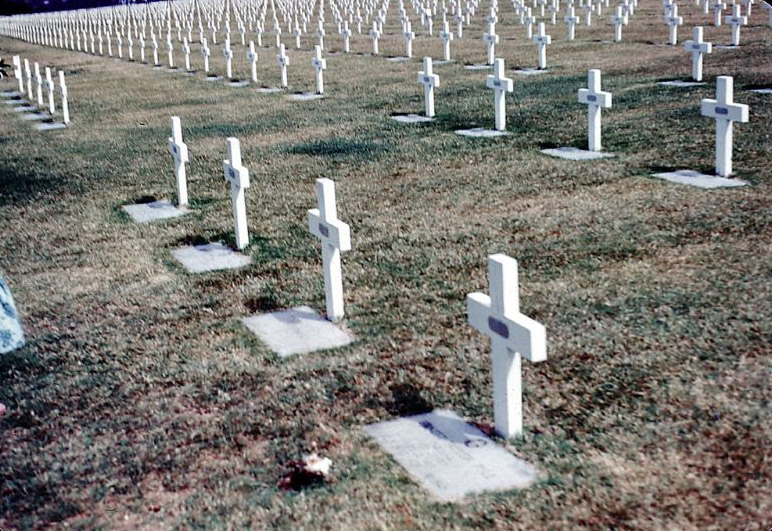
The National Memorial Cemetery of the Pacific, set inside Punchbowl Crater above Honolulu, opened in 1949. By the 1950s, it held the remains of thousands of American service members killed in World War II and the Korean War. The site’s volcanic bowl, known in Hawaiian as Puowaina — “Hill of Sacrifice” — gave the cemetery a solemnity that matched its purpose.
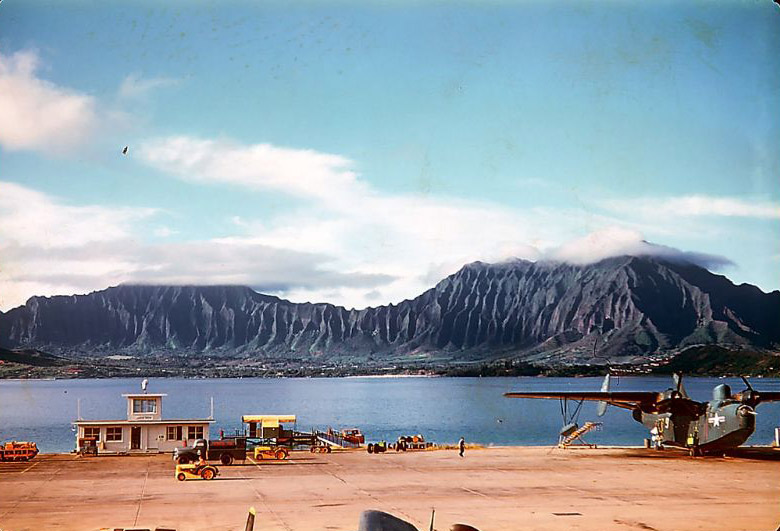
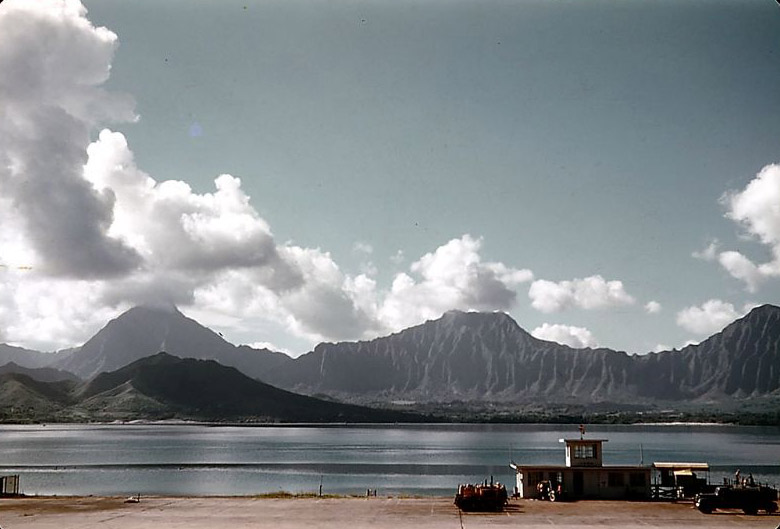
Pearl Harbor remained the headquarters of the US Pacific Fleet throughout the 1950s. The Navy’s presence shaped the economy, culture, and demographics of Oahu in profound ways. Thousands of sailors and their families lived on or near the base, and the military payroll was one of the largest economic forces on the island.
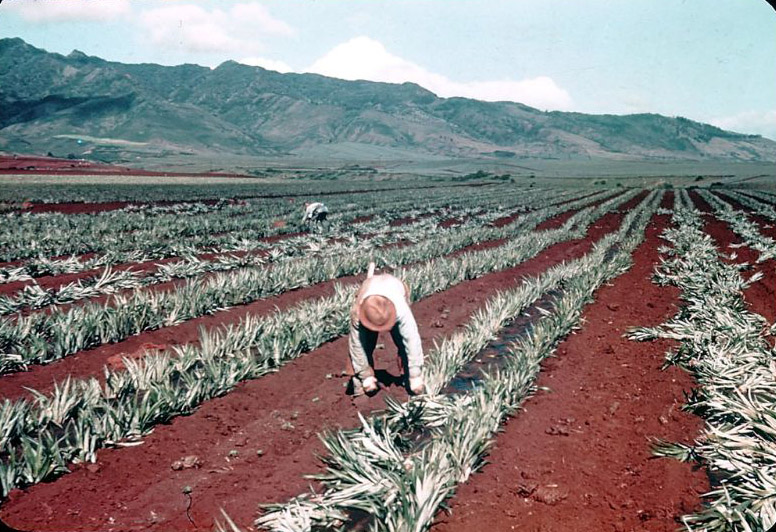
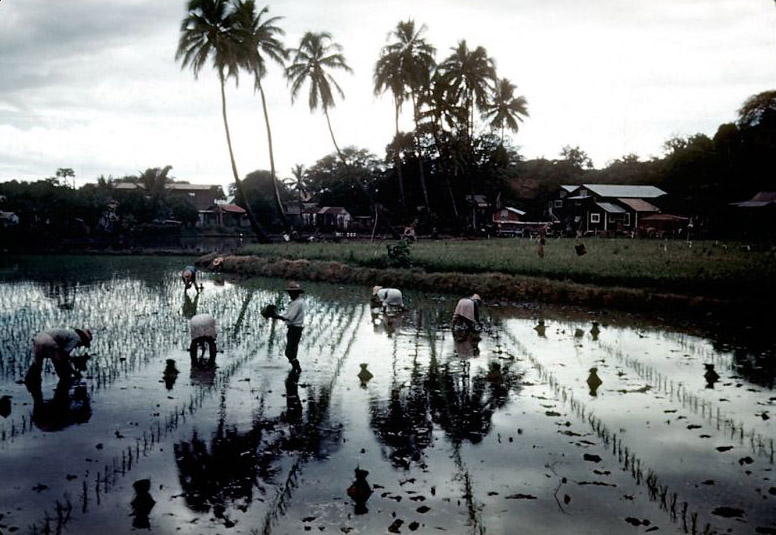
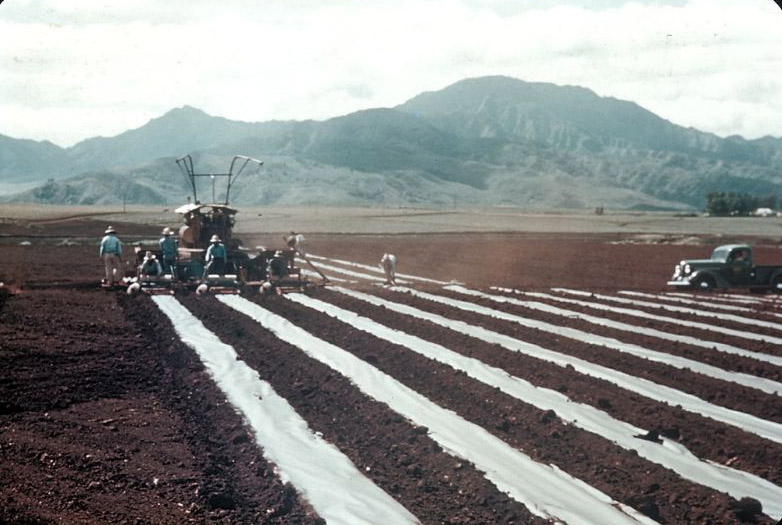
Pineapple planting was backbreaking labor. Workers pushed crowns into the soil by hand across vast fields in central Oahu. Rice cultivation also continued on the islands, reflecting the influence of Asian immigrant communities — particularly Japanese, Chinese, and Filipino workers — who had come to Hawaii as plantation laborers generations earlier and built deep roots in island society.
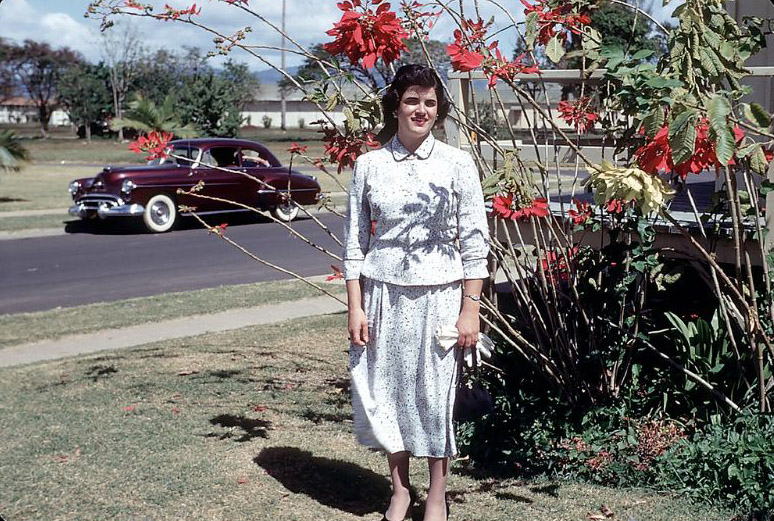
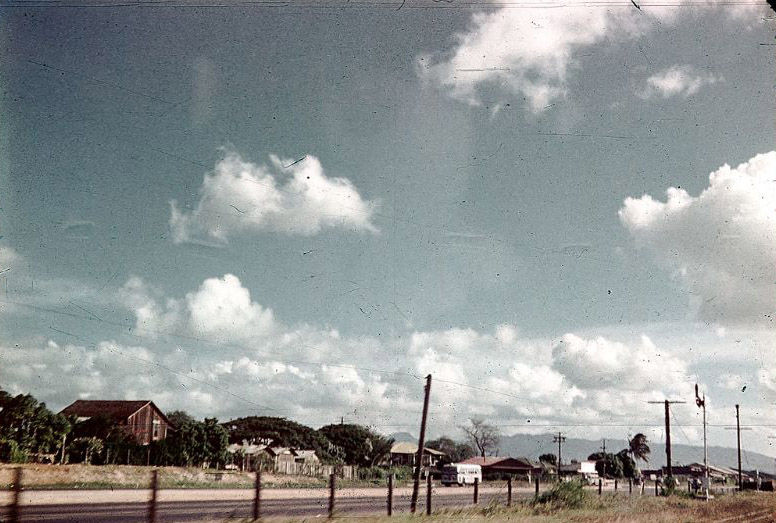
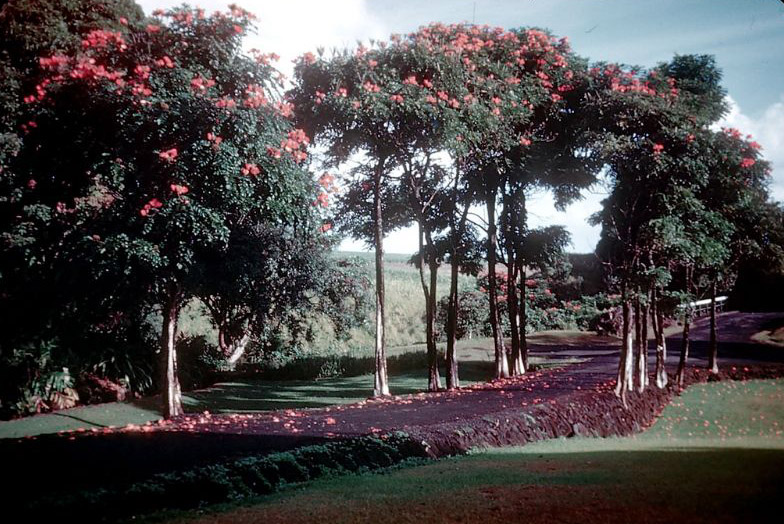
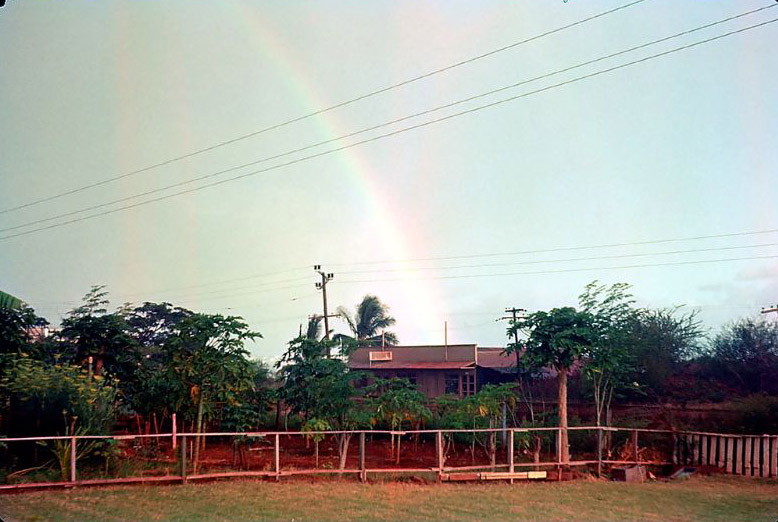
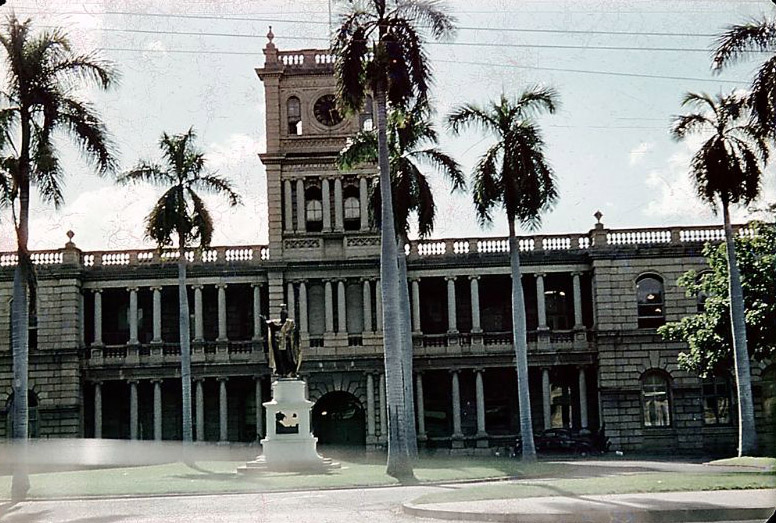
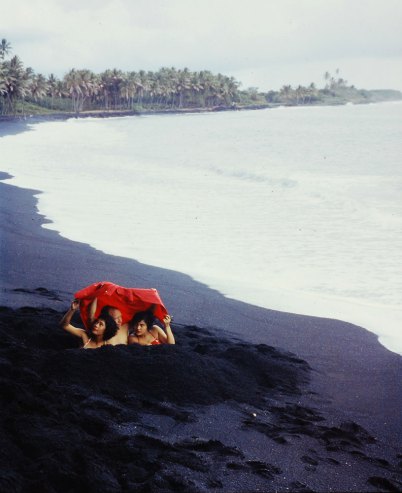
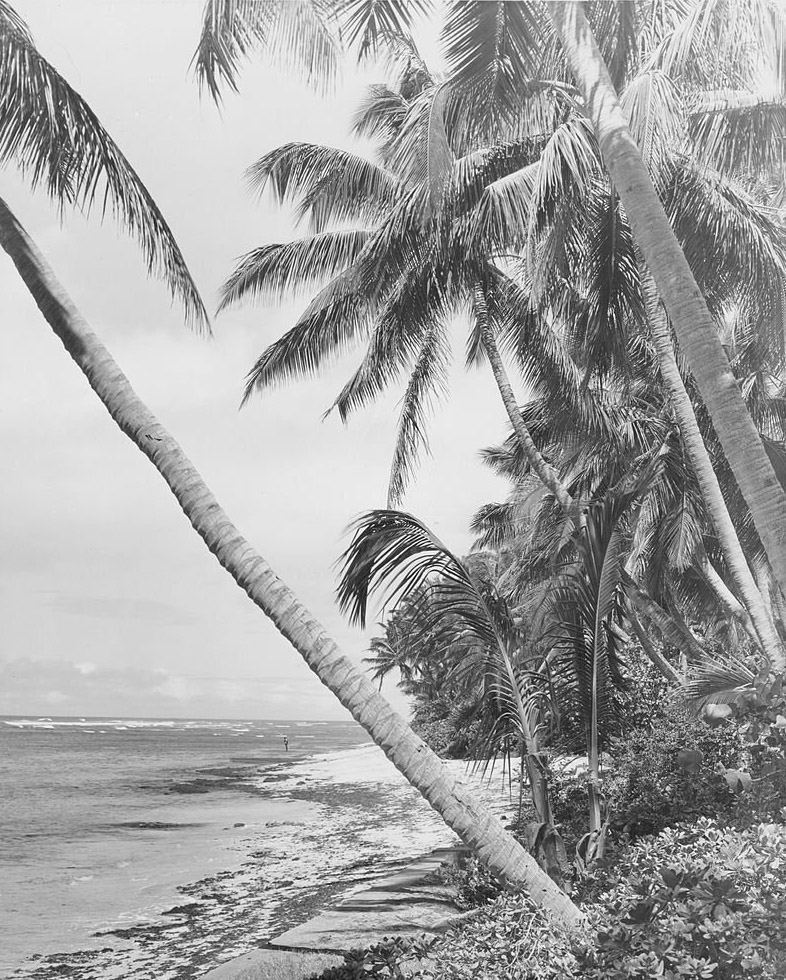
Beyond the cities and military bases, Hawaii in the 1950s was still a place of striking natural beauty. Quiet valleys, black sand beaches formed by waves battering volcanic rock, and remote coastlines existed just miles from Honolulu’s streets. Life in the outer islands — Kauai, Maui, and the Big Island — moved at a slower pace, with small communities, farms, and churches defining daily life.
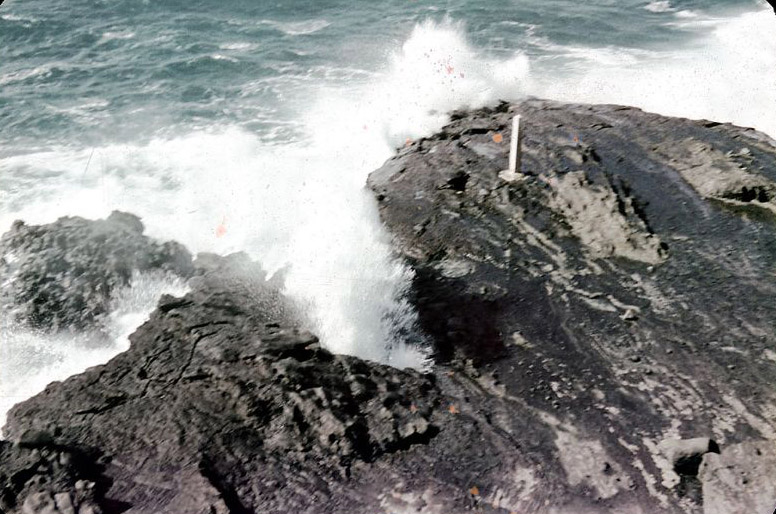
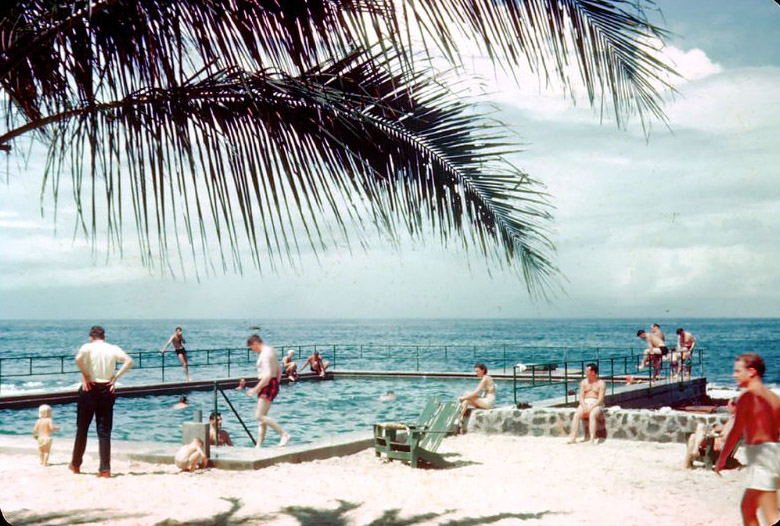
Oahu’s southeastern coastline featured one of the island’s most dramatic natural attractions — the Halona Blowhole, where ocean swells forced seawater through a lava tube and shot it into the air. On the other side of the islands, the Kona Inn on Hawaii’s Big Island offered guests a saltwater swimming pool perched at the ocean’s edge, blending resort comfort with the raw power of the Pacific.
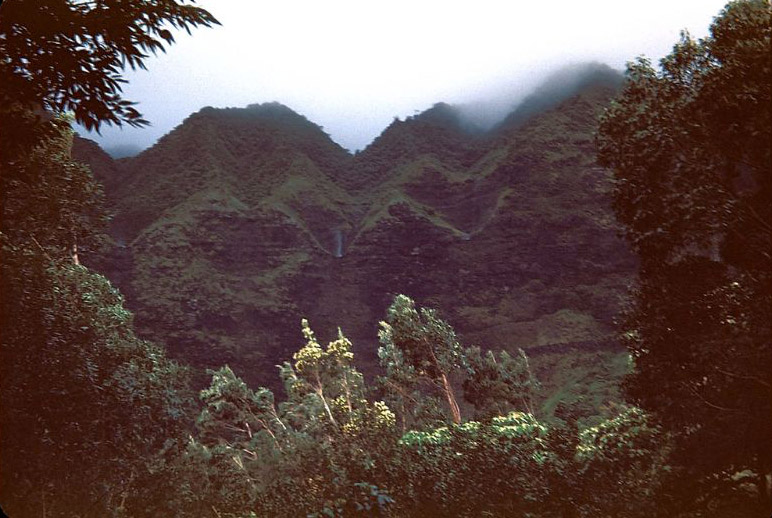
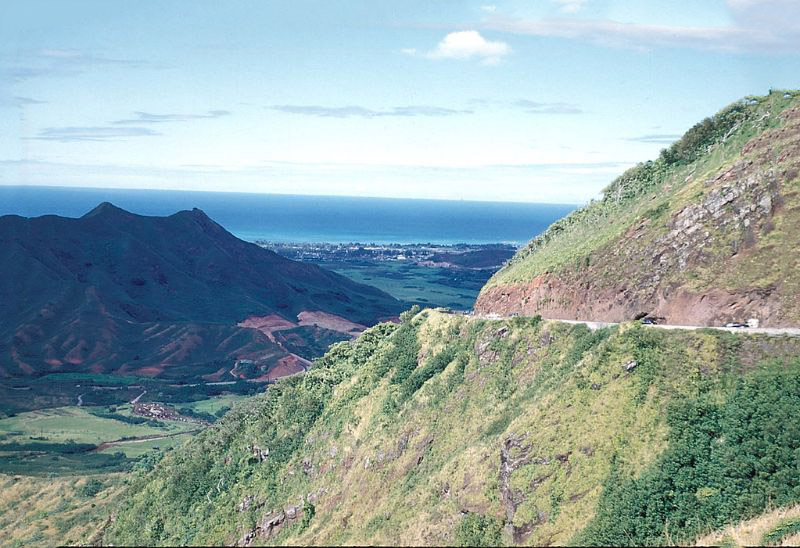
Nuuanu Valley on Oahu offered two of the island’s most remarkable sights. The so-called Upside-Down Falls — where trade winds are strong enough to push waterfall spray back upward — drew curious visitors to the valley’s upper reaches. Nearby, the Nuuanu Pali Lookout gave a sweeping view down the sheer cliffs toward Kailua on the windward coast, where the Ko’olau range dropped almost vertically to the sea.
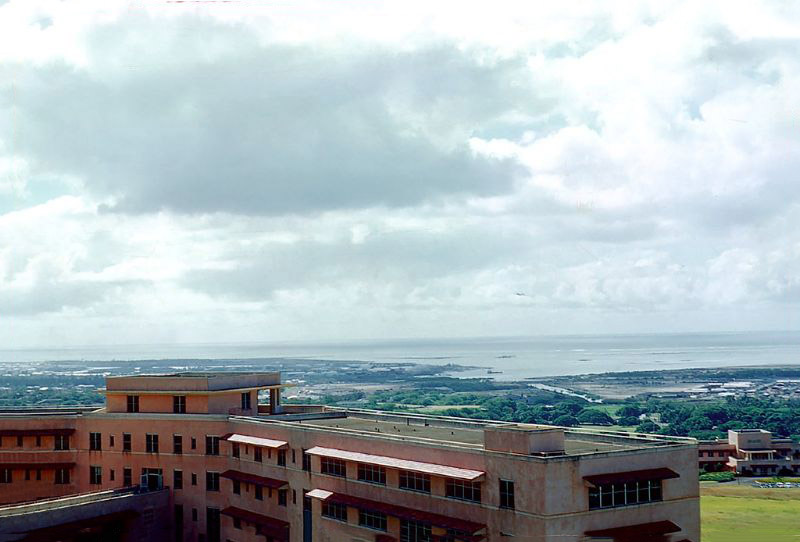
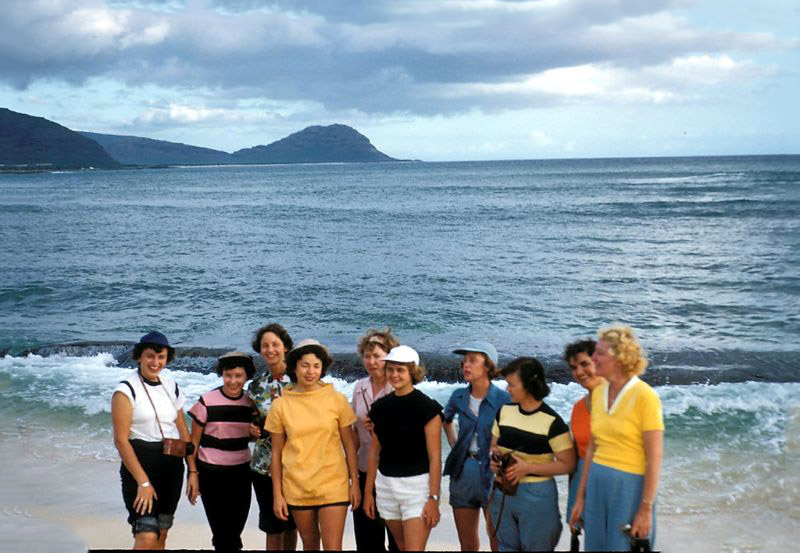
Tripler Army Medical Center, with its distinctive pink exterior, sat on a hill above Honolulu and served military personnel and their families from across the Pacific. Its elevated position offered views across the city and harbor. Down on the beaches, life was far more relaxed — women sunbathed on white sand, and the beaches of Hawaii became increasingly associated with leisure and freedom in the American imagination.
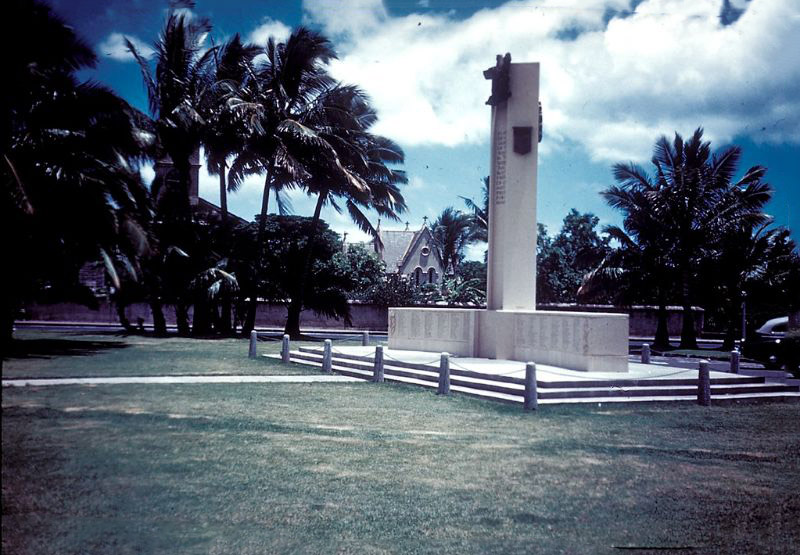
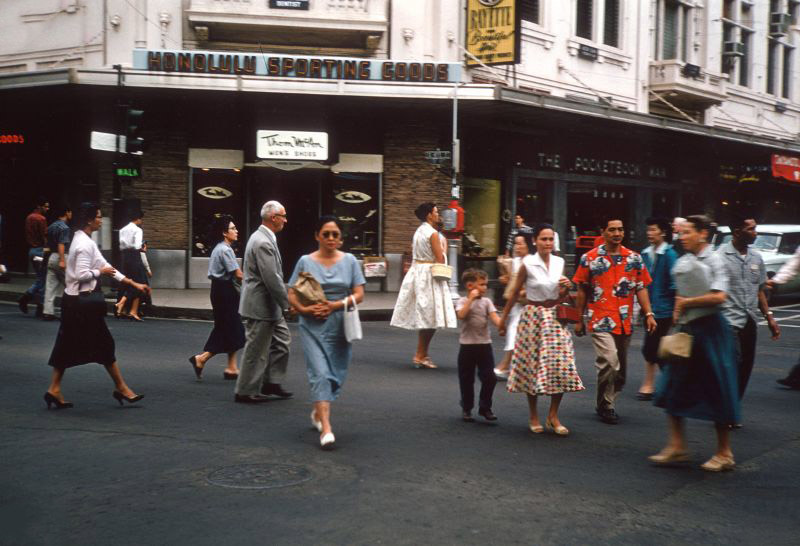
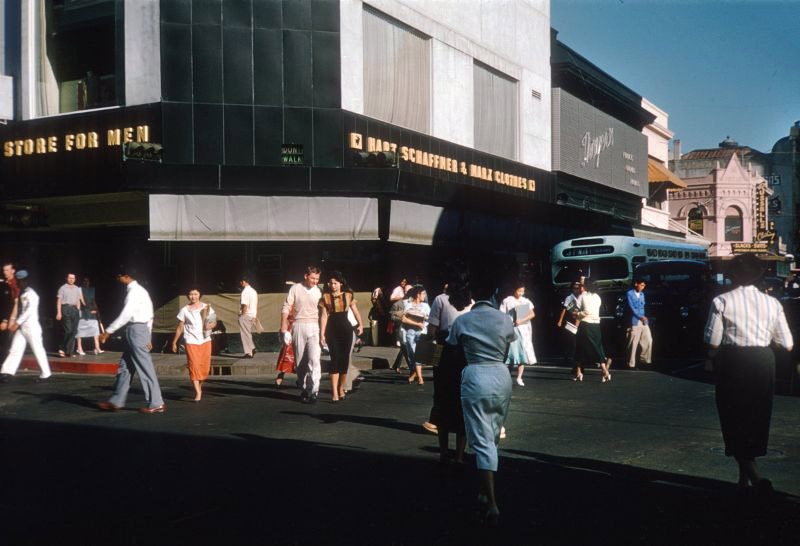
World War II memorials appeared across Honolulu, reminding residents of the cost the islands had paid. At the intersection of Punchbowl Street and King Street, a monument stood as a permanent tribute. Meanwhile, ordinary commercial life continued on the streets around it — sporting goods stores, restaurants, and shops serving the everyday needs of a city that was growing quickly and looking toward the future.
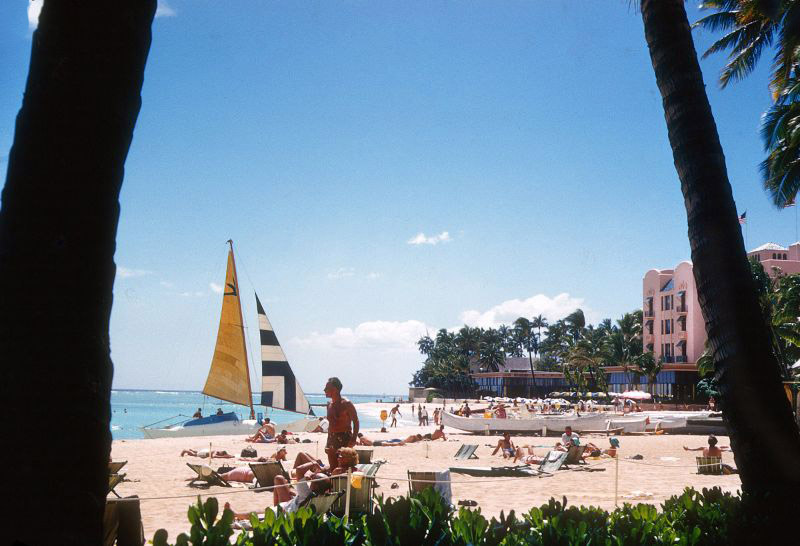
The Royal Hawaiian Hotel — nicknamed the “Pink Palace of the Pacific” — was one of the most famous resort hotels in the world by the 1950s. Set directly on Waikiki Beach, it attracted celebrities, politicians, and wealthy tourists who arrived by ship after a five-day crossing from the mainland. The hotel’s grounds and beach remained among the most photographed spots in all of Hawaii.
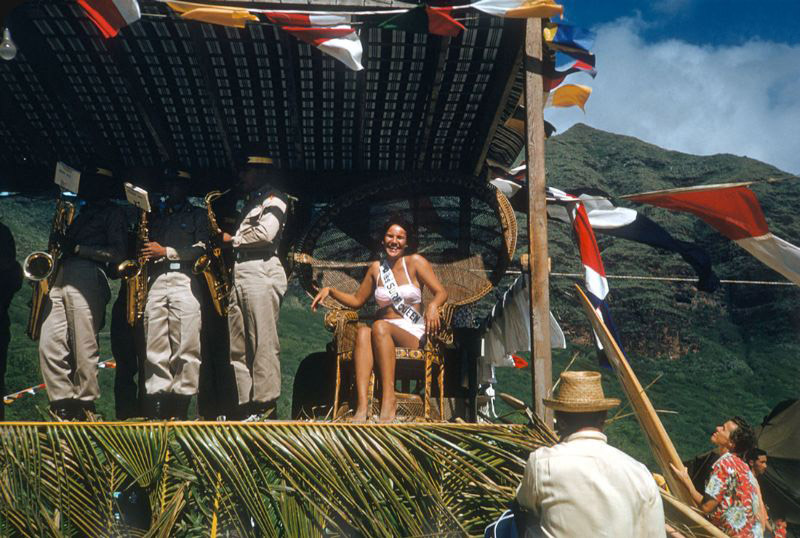
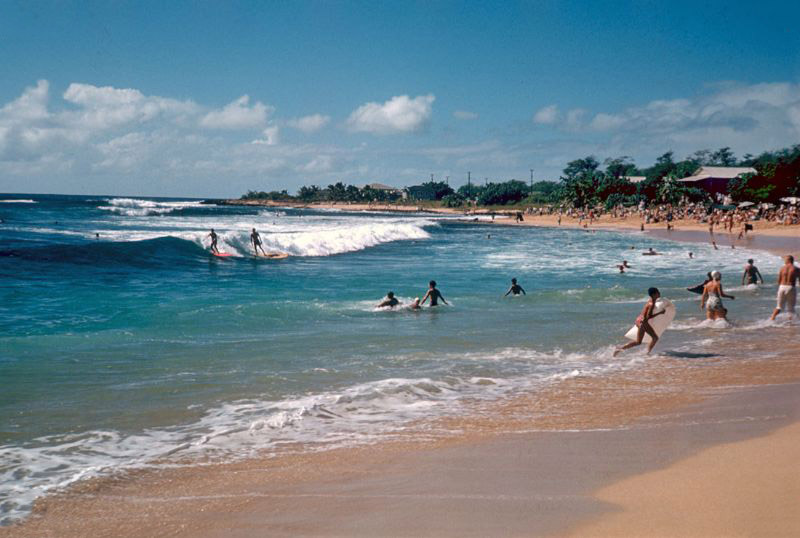
Surfing competitions and beauty pageants were a regular part of 1950s Hawaiian beach culture. The Miss Surf Queen contest celebrated both surfing ability and island style. Waikiki’s surf instructors, many of them from established Hawaiian beach boy families, taught mainlanders to ride waves and became minor celebrities in their own right. Surfing was not yet the global sport it would become — in the 1950s, it was still deeply associated with Hawaii specifically.
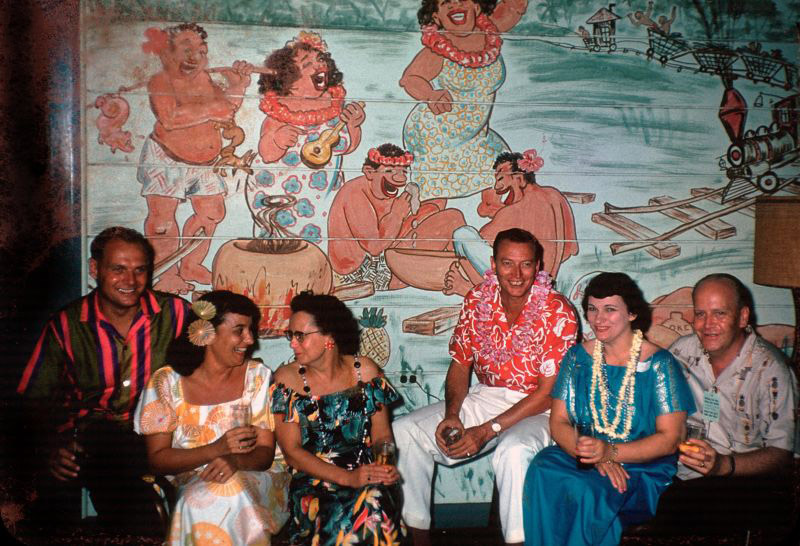
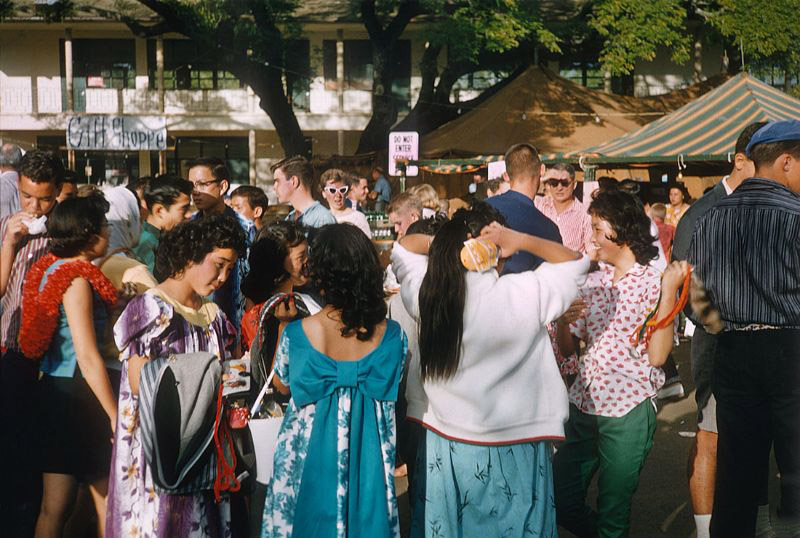
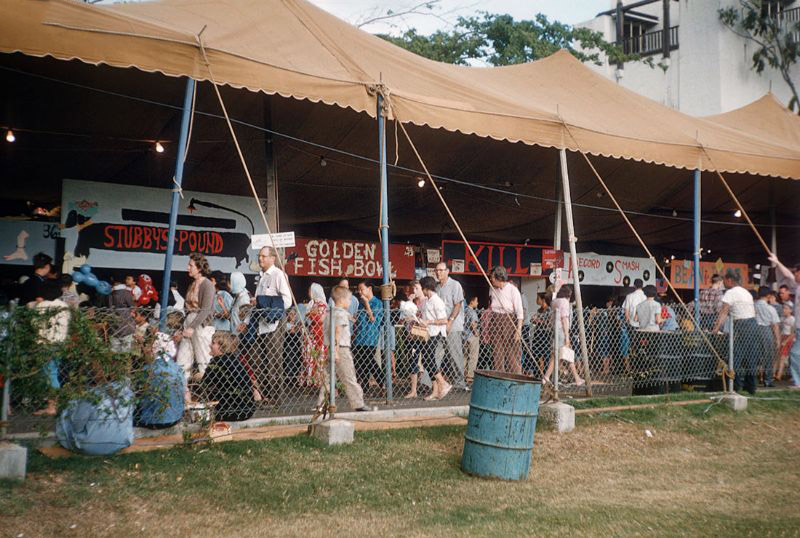
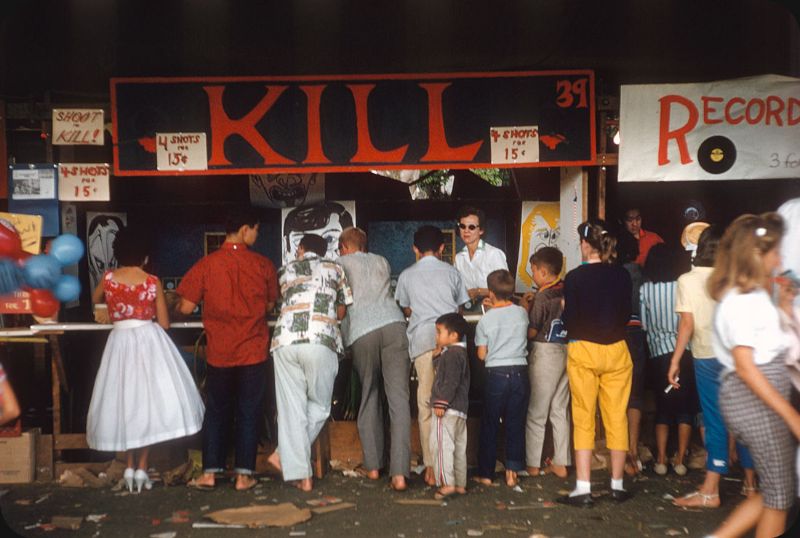
Street fairs and community events were regular features of island life throughout the decade. These gatherings brought together Hawaii’s diverse population — Native Hawaiians, Japanese Americans, Filipino Americans, Chinese Americans, Portuguese Americans, and white mainlanders all lived and worked side by side. The 1950s were a period of genuine social mixing, even as racial tensions that existed on the mainland were largely absent from Hawaii’s day-to-day culture.
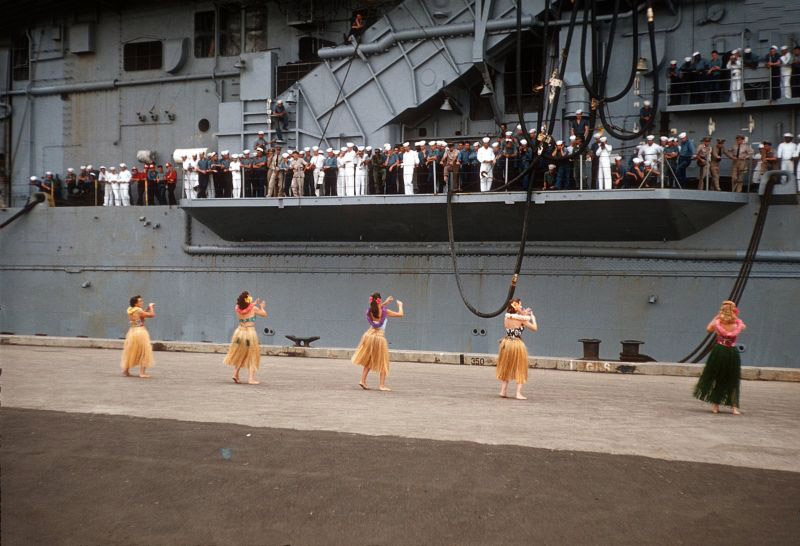
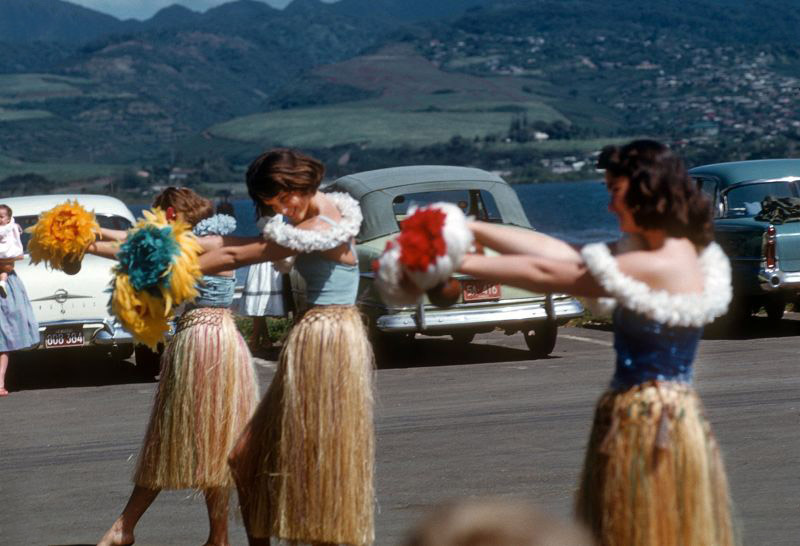
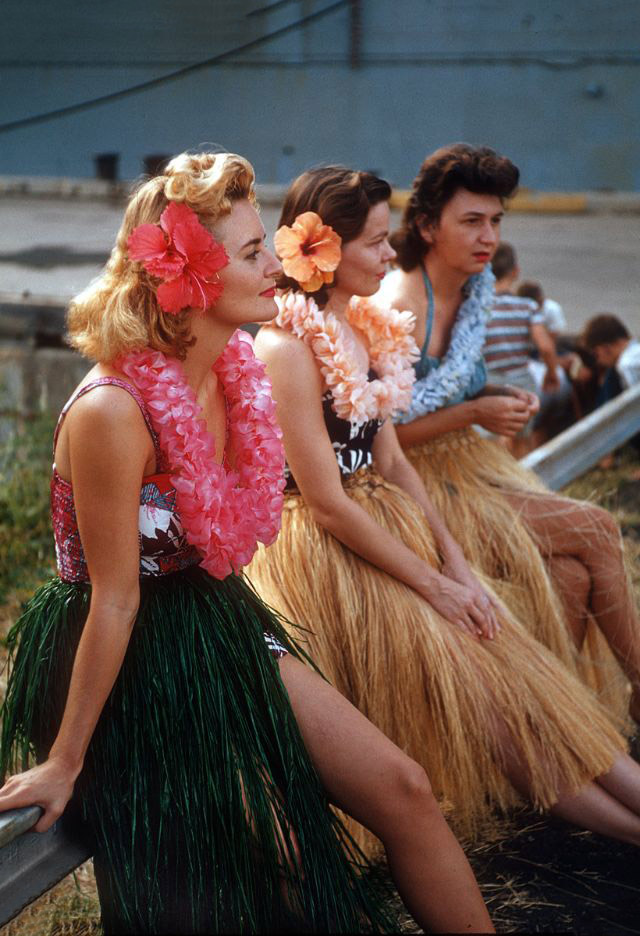
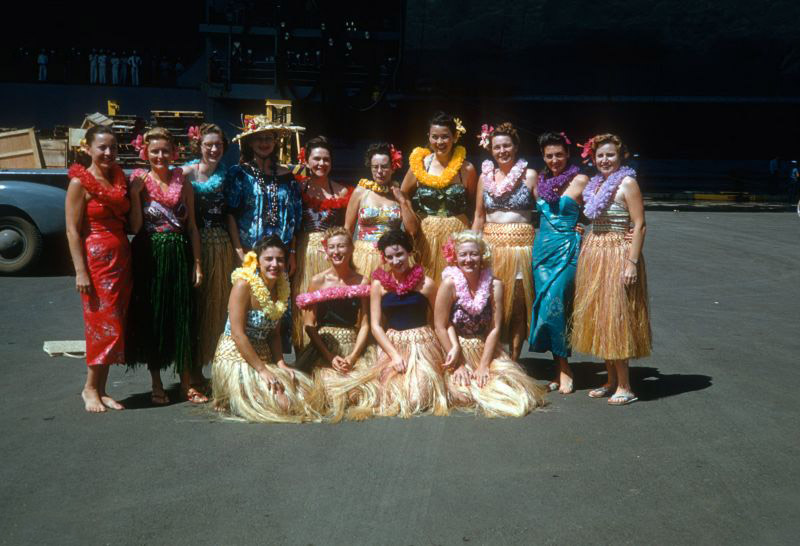
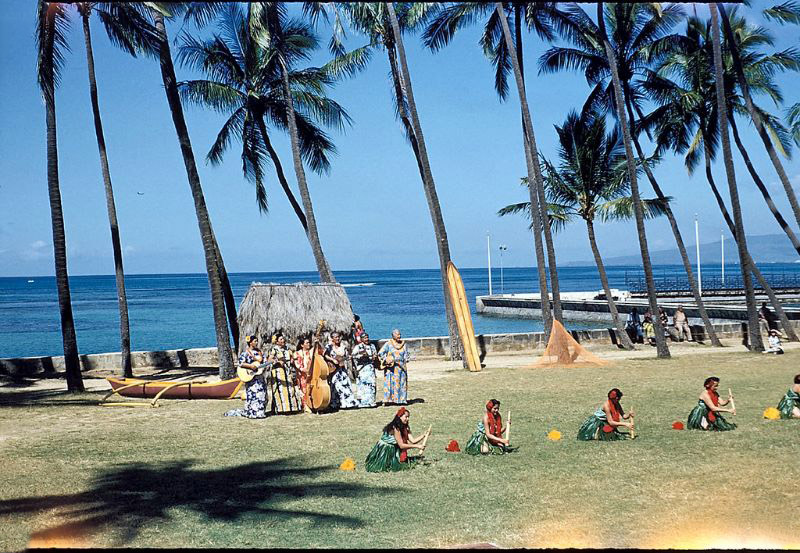
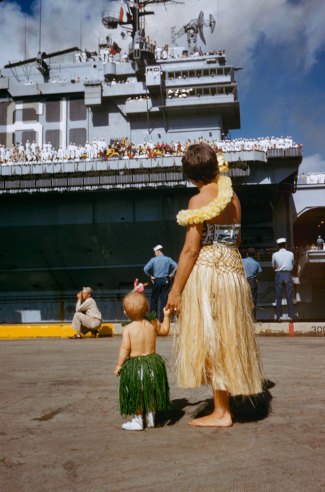
Ford Island, sitting in the middle of Pearl Harbor, was an active naval air station throughout the 1950s. Hula performances there were used to welcome returning sailors and officers — a formal recognition of Hawaii’s cultural traditions within the military framework. The performances blended celebration with ceremony, honoring both the returning servicemen and the island culture that surrounded the base.
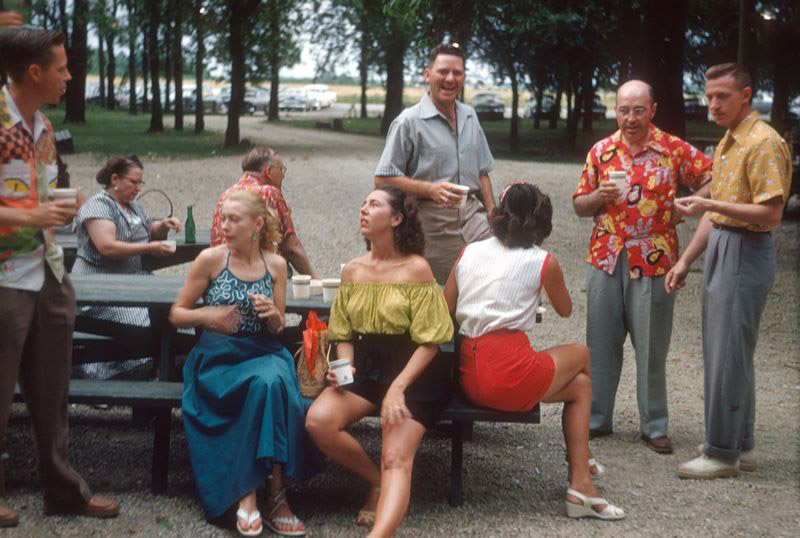
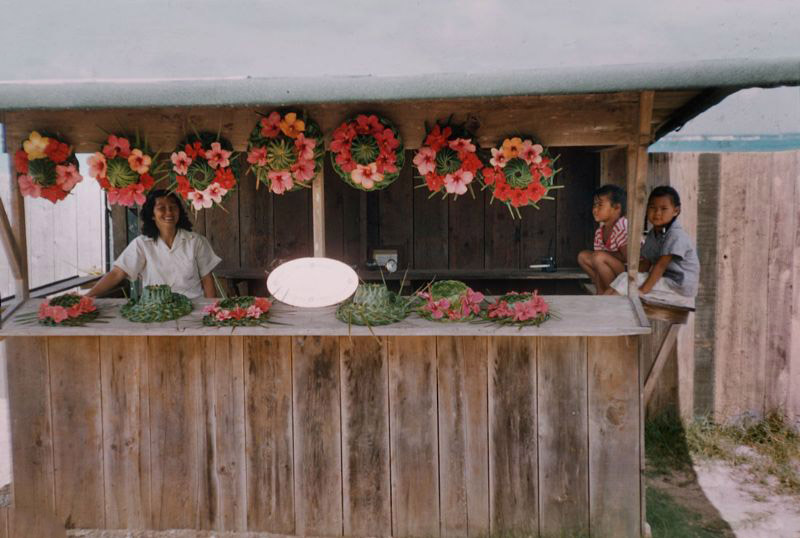
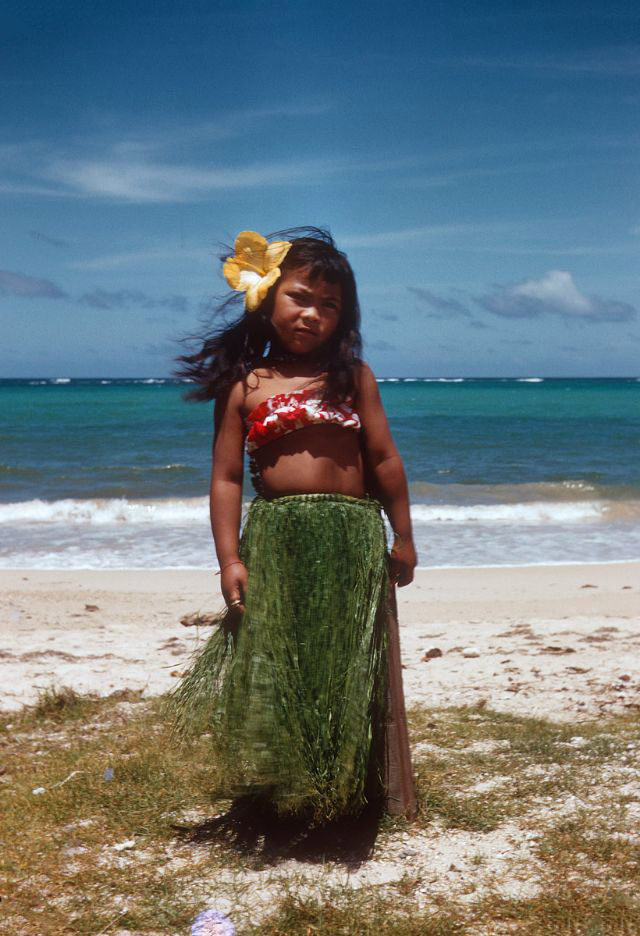
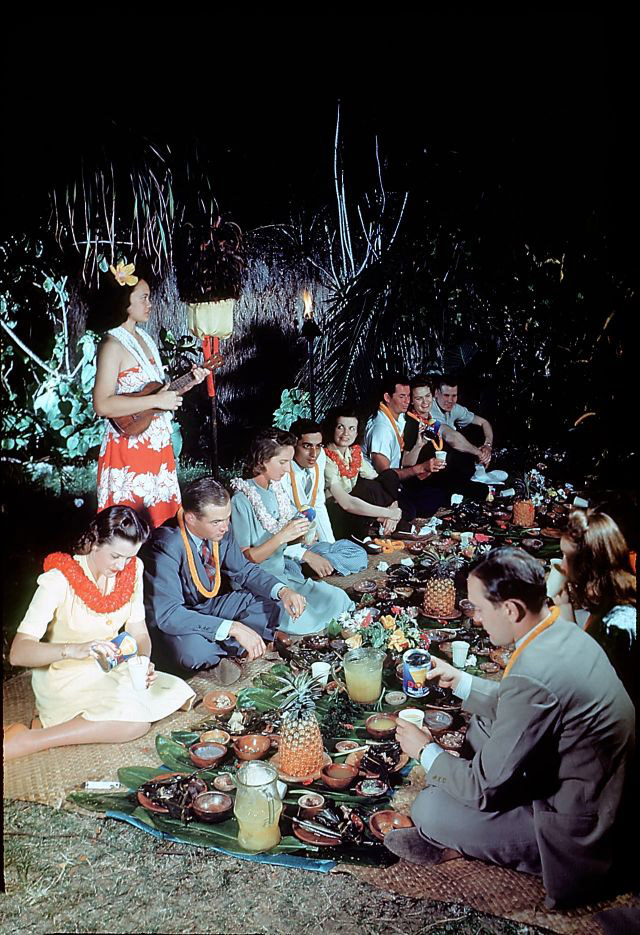
Outdoor social events — picnics, parties, and public performances — were central to military community life in Hawaii. Palm frond hats woven on the spot and hula performances at informal gatherings reflected how deeply Hawaiian traditions had woven themselves into everyday life, even among those who had come from the mainland. These weren’t staged tourist shows — they were part of how people actually spent their weekends.
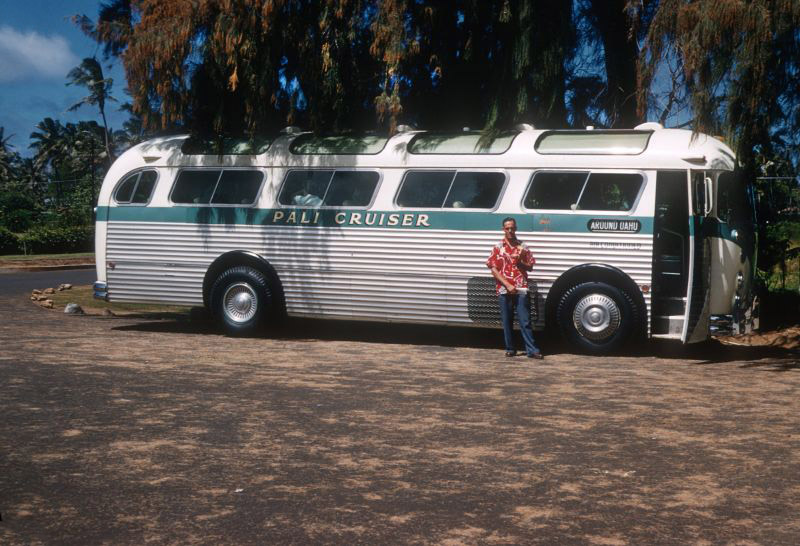
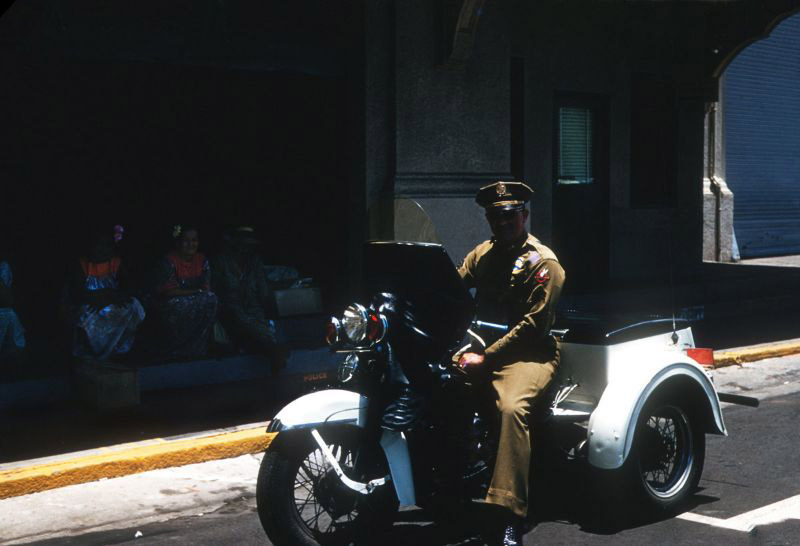
Getting around Oahu in the 1950s meant navigating the Pali Highway, which cut through the Ko’olau Mountains via the dramatic Nuuanu Pali pass. The “Pali Cruiser” service transported passengers through the mountains between Honolulu and the windward coast. Honolulu’s police force maintained order in a city that was changing fast, managing the mix of military personnel, tourists, and permanent residents that filled its streets.
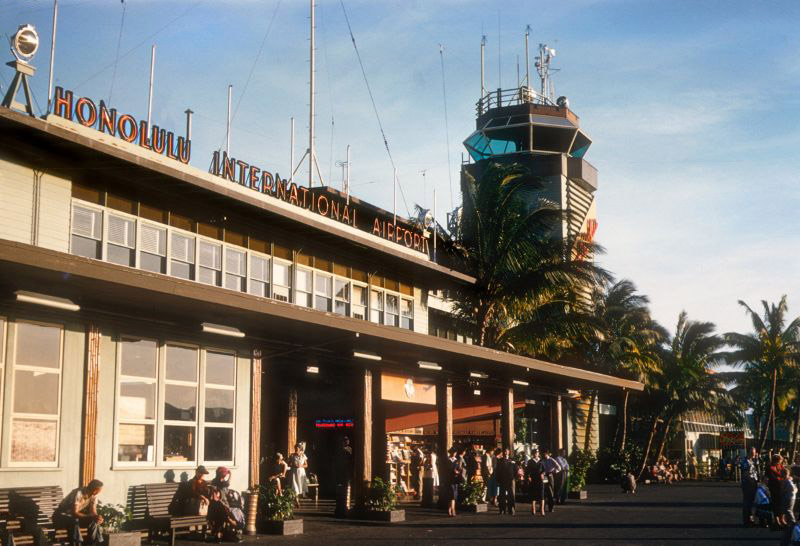
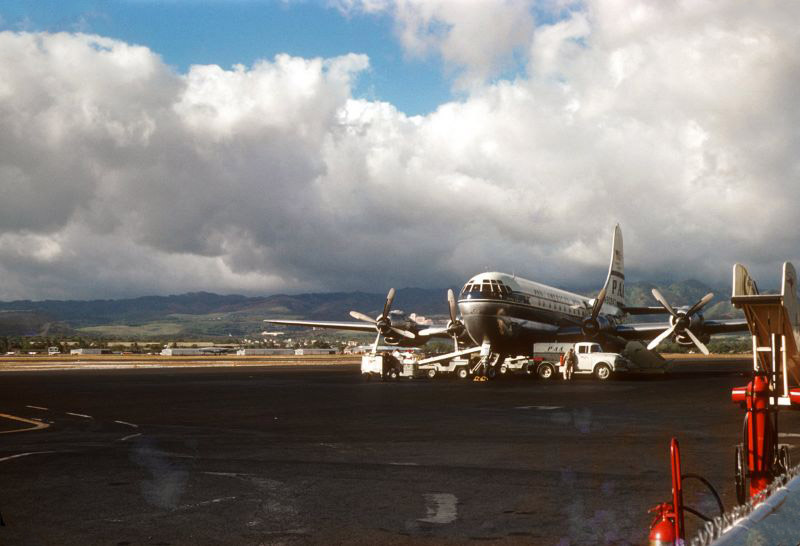
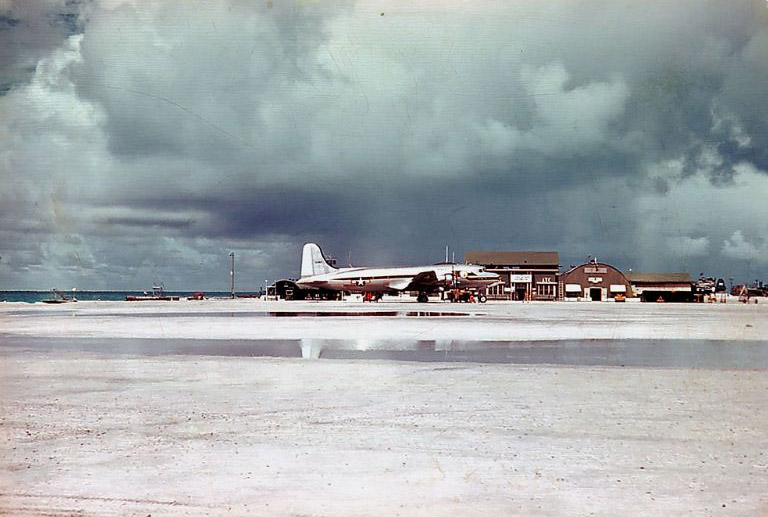
Honolulu International Airport underwent significant growth during the 1950s as commercial air travel began to replace ocean liner travel as the main way to reach the islands. Propeller-driven airliners made the flight from the mainland possible, though it took much longer than the jet flights that would follow later. The airport tarmac of the era shows a world on the edge of transformation — the jet age was just around the corner.
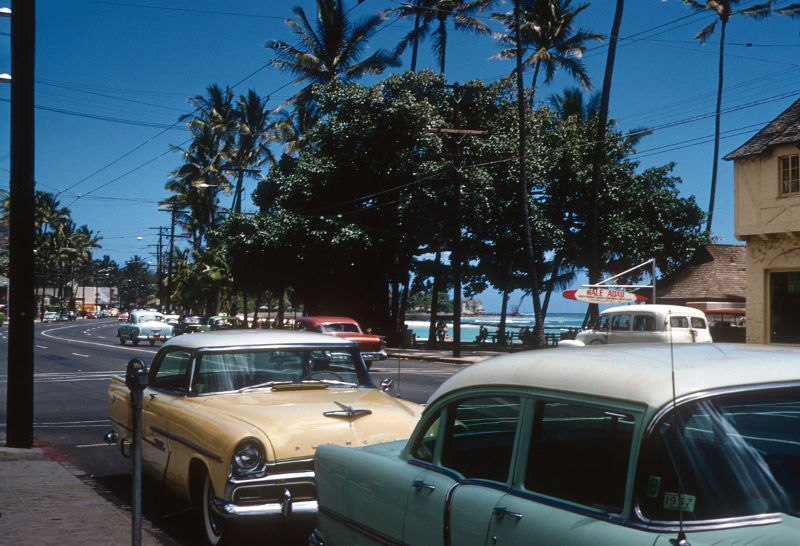
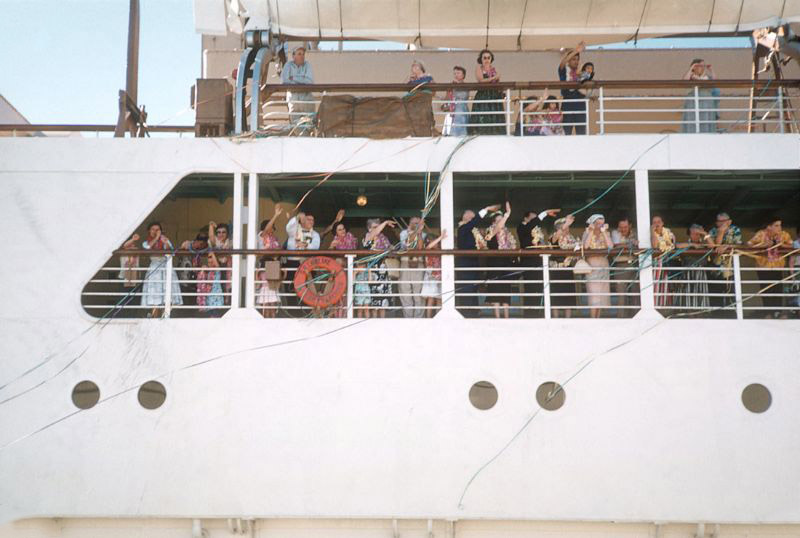
Kalakaua Avenue ran the length of Waikiki Beach, and in the 1950s it was lined with hotels, shops, and restaurants catering to a growing tourist trade. The SS Lurline, operated by the Matson Navigation Company, was one of the most famous ships making the run between San Francisco and Honolulu. Its arrivals at Honolulu Harbor were festive occasions, with leis, music, and crowds greeting passengers at the dock.
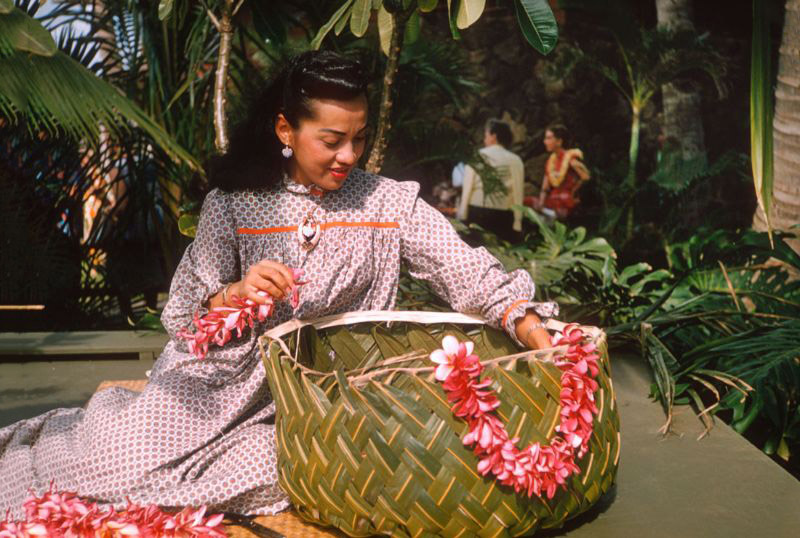
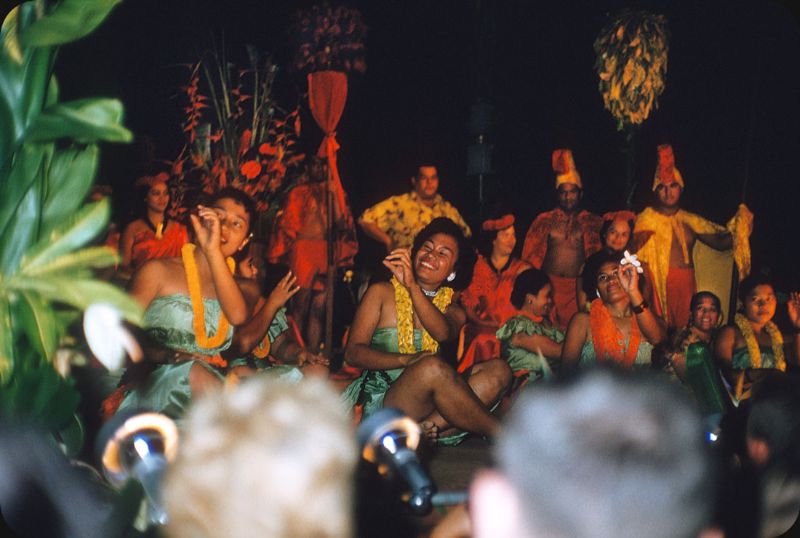
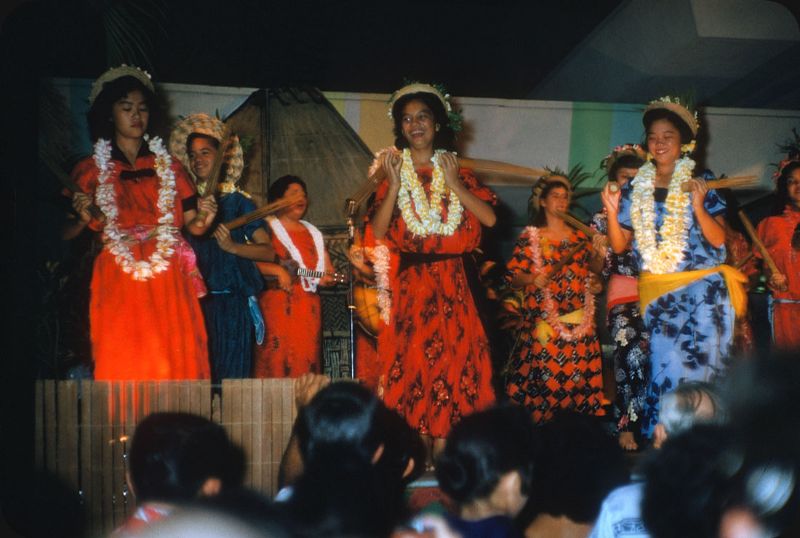
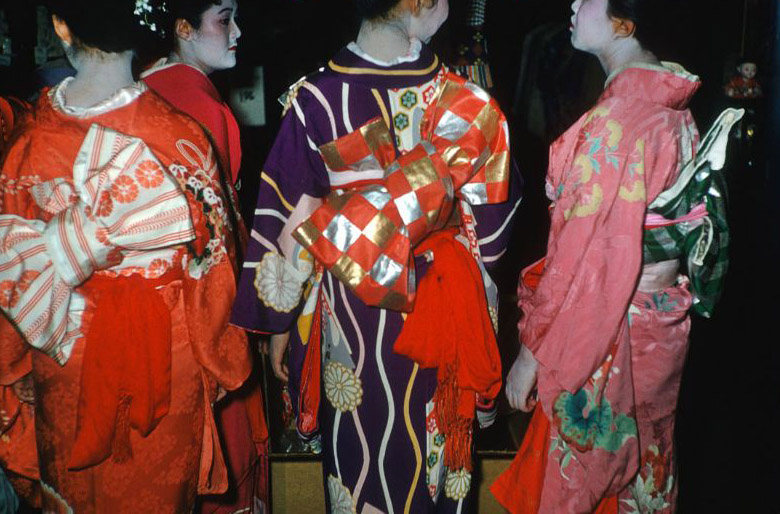
Lei Day, celebrated on May 1st each year, was one of Hawaii’s most important cultural events. Established in 1928, the holiday honored the lei as a symbol of Hawaiian identity. By the 1950s, the celebrations in Honolulu included lei-making demonstrations, hula performances, and multicultural performances that reflected the islands’ diverse population. Japanese Hawaiian women dressed in traditional geisha attire performed alongside Native Hawaiian dancers, demonstrating the layered cultural identity of the islands.
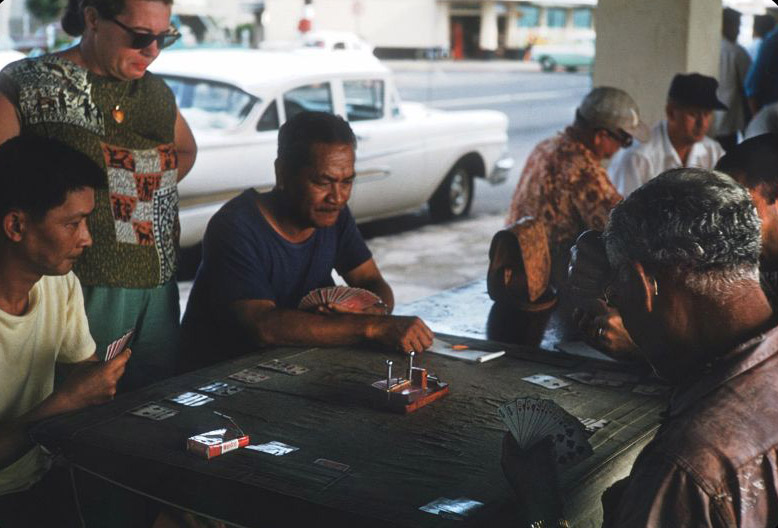
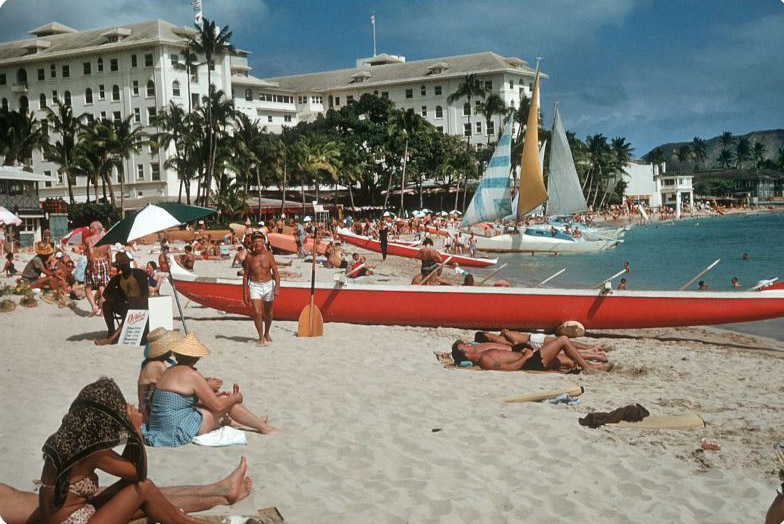
Everyday leisure in 1950s Honolulu included both the grand and the simple. Card games among friends, afternoons at the beach, and evenings in local bars were part of the regular rhythm of island life. Waikiki Beach itself was not yet the heavily developed strip it would become in later decades — in the 1950s, it still had open stretches of sand and a relatively relaxed atmosphere, even as hotels continued to rise along its shore.
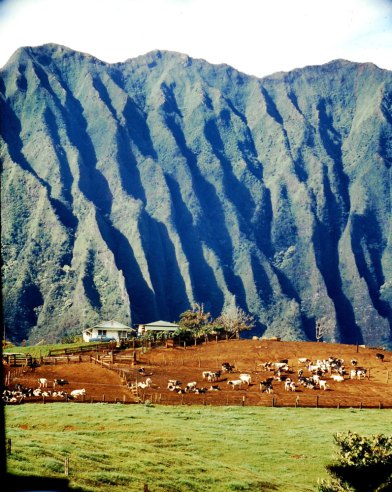
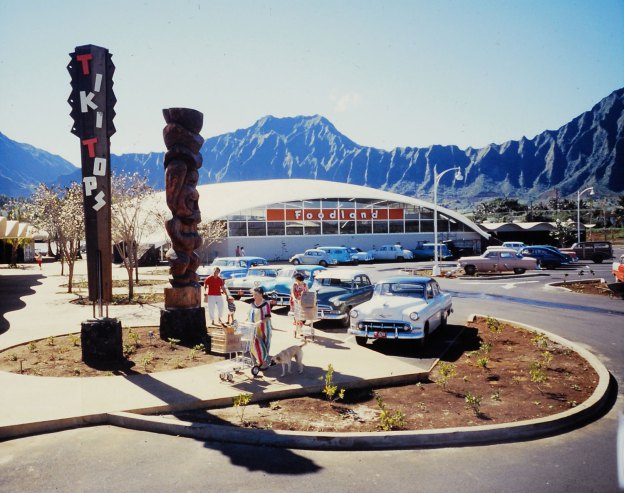
By 1959 — the year Hawaii became a state — the islands presented a striking mix of old and new. Cattle grazed beneath volcanic cliffs on Oahu as they had for generations, while modern Foodland supermarkets had appeared to serve a growing consumer economy. The supermarket’s arrival symbolized Hawaii’s integration into mainstream American commercial life, even as the islands retained a landscape and culture entirely their own.
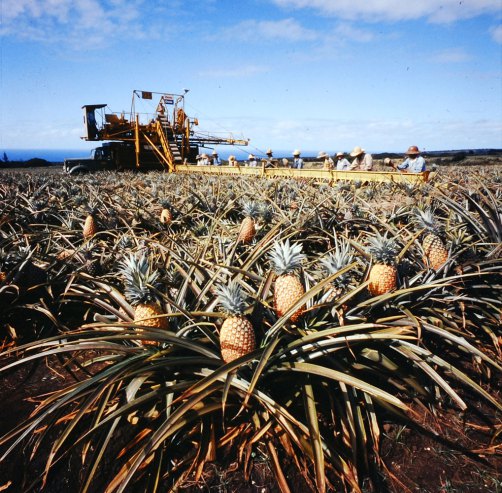
On March 18, 1959, President Dwight D. Eisenhower signed the Hawaii Admission Act. Hawaii officially became the 50th state on August 21, 1959, following a referendum in which more than 93% of voters chose statehood. Dole’s vast Wahiawa pineapple plantation near Honolulu continued to operate as one of the island’s economic cornerstones — a reminder that even as Hawaii entered a new political era, its agricultural foundations remained.
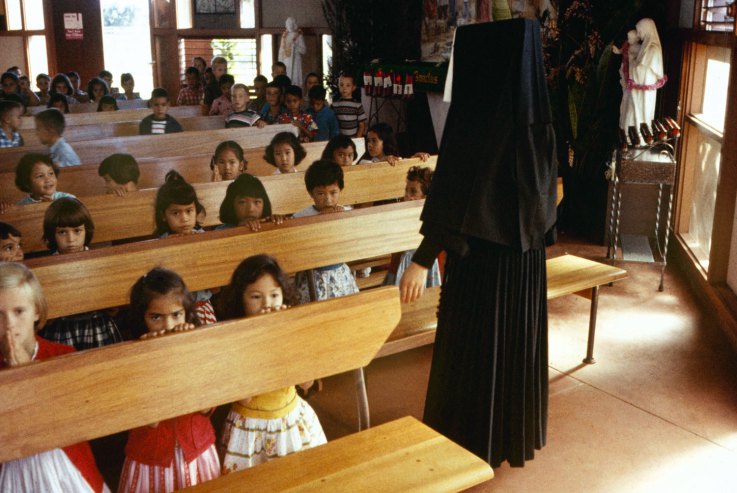
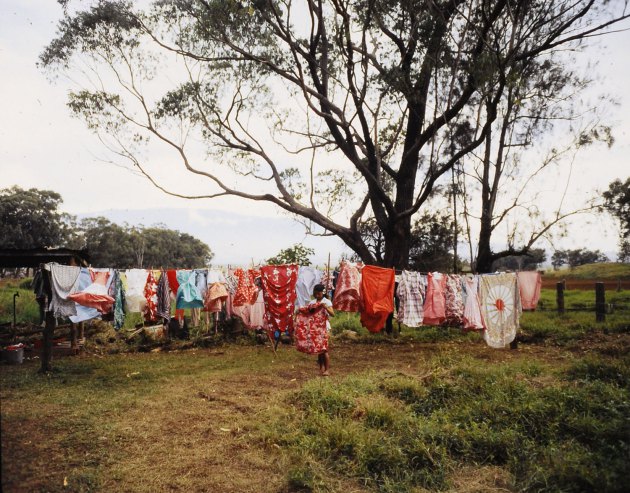
Religion was woven into the fabric of community life across the islands. On Kauai, young parishioners at St. Catherine’s Church represented the strong Catholic presence that missionary activity had established over the previous century. In neighborhoods across the islands, laundry hung out to dry in the warm Hawaiian breeze — a mundane image that captured the ordinary domestic life behind the postcard scenery.
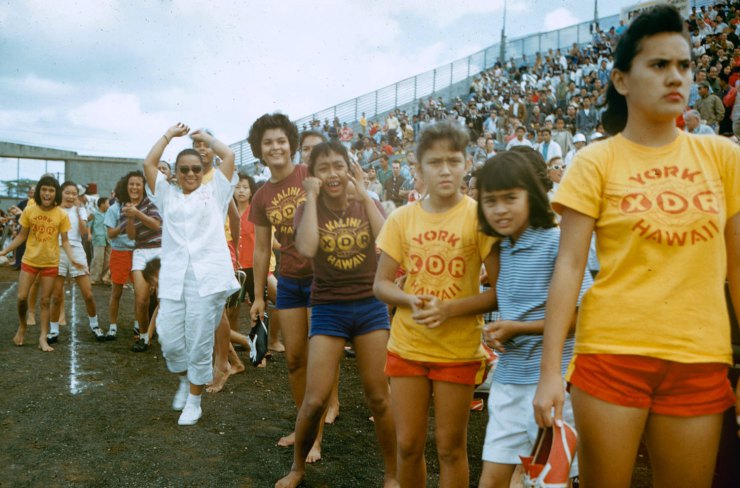
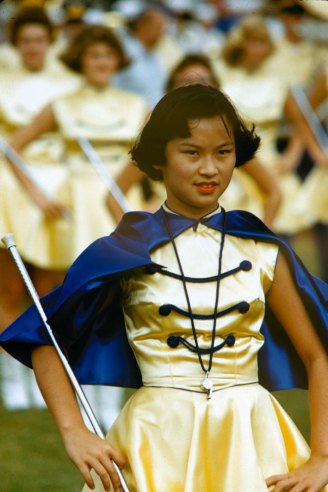
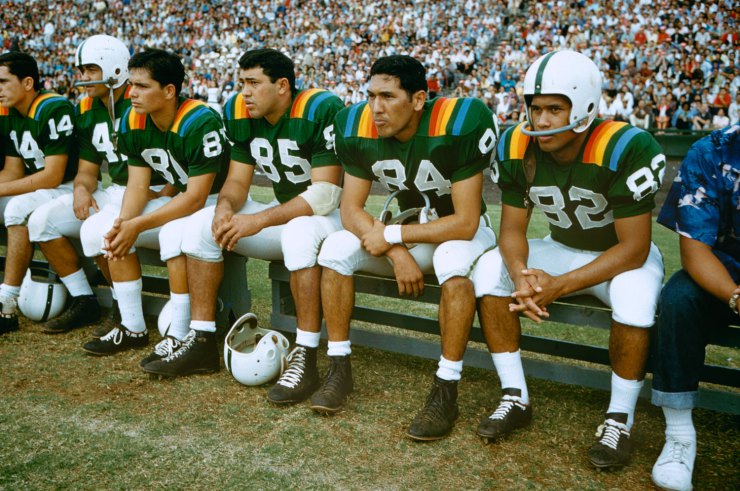
American sports culture was firmly established in Hawaii by the late 1950s. Football games in Honolulu drew enthusiastic crowds, complete with marching bands, drum majorettes, and the pageantry that accompanied high school and college athletics on the mainland. These games were community events, drawing fans from across Oahu’s diverse neighborhoods.
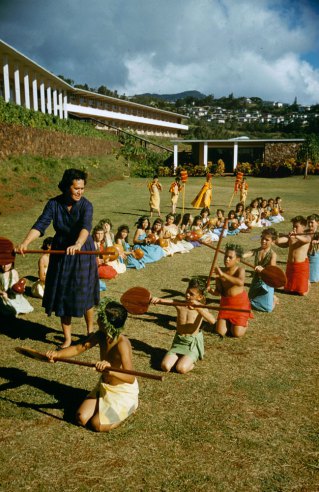
Traditional Hawaiian practices continued to be performed and preserved throughout the 1950s. The Mamala paddle dance, performed in honor of Lono — the Hawaiian god of agriculture, fertility, and rainfall — connected modern Hawaiians to ancient ceremonial traditions. These performances were not purely for tourists; they were genuine expressions of cultural identity maintained by communities determined to keep their heritage alive.
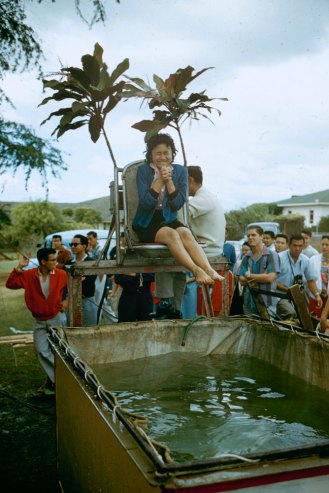
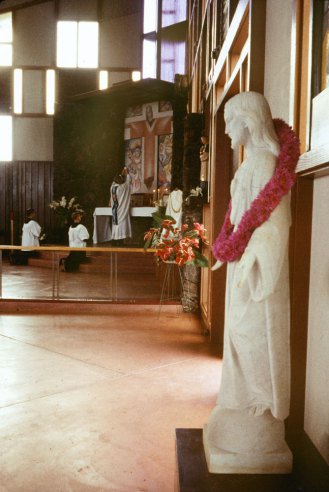
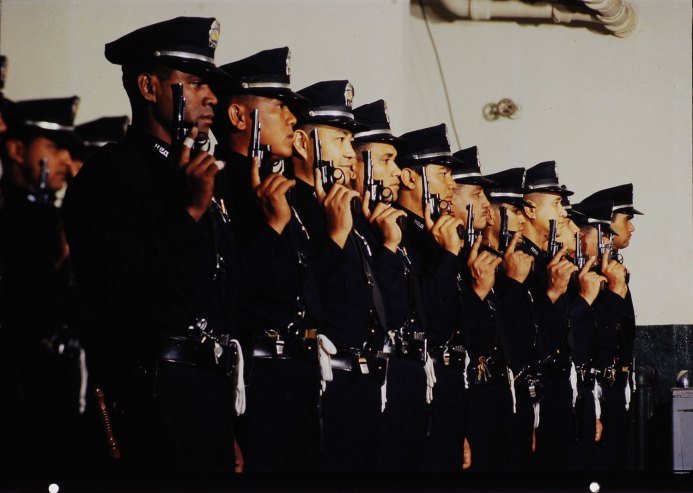
County fairs with dunking pools and carnival games reflected how thoroughly American popular culture had taken root in Hawaii by the time statehood arrived. Roman Catholic churches, built during the missionary era, served large congregations across the islands. Hawaiian police officers in 1959 were part of a territorial law enforcement system that was about to transition, along with everything else, into that of a full US state.
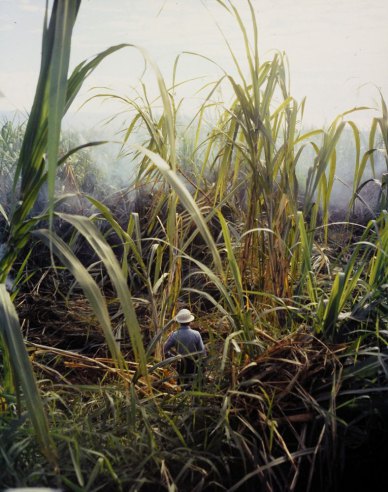
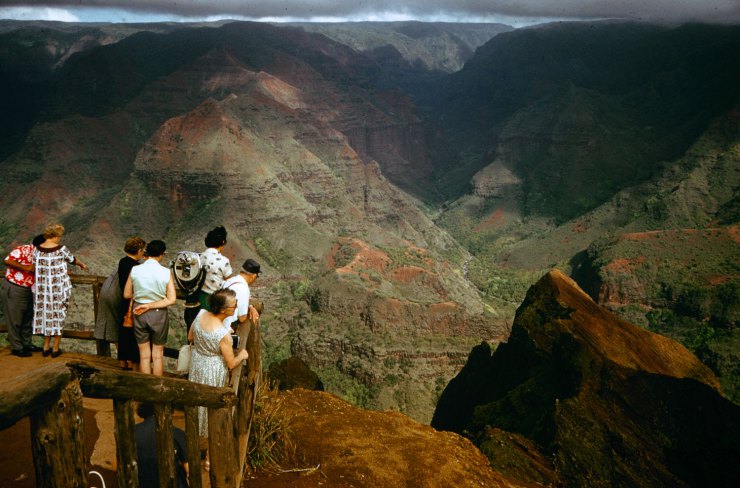
Plantation life and tourism existed side by side in 1959 Hawaii. The plantation system that had dominated the islands for a century was slowly declining as land values rose and industrial farming became less profitable. Tourism, by contrast, was accelerating. Visitors arrived by ship and increasingly by air, eager to see the island that Americans had been hearing about on the radio and reading about in magazines for years.
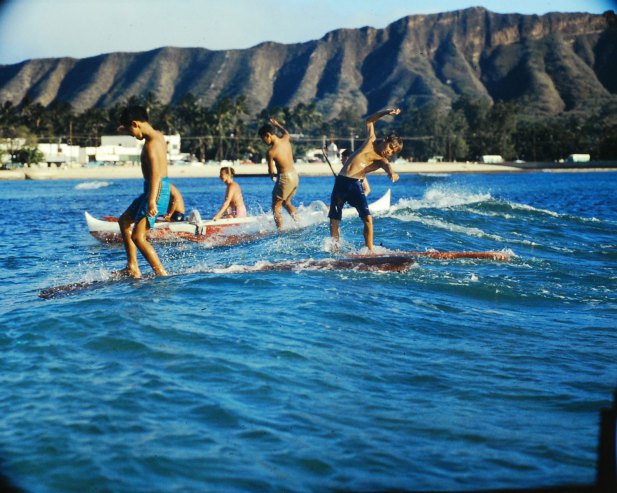
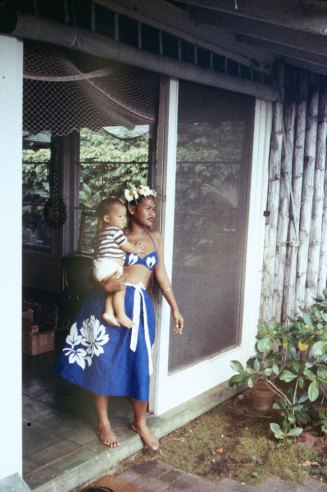
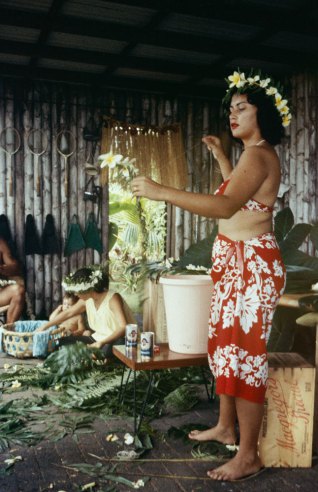
Surfing in 1959 was still a largely Hawaiian pursuit, practiced on long wooden boards by riders who had grown up in the water. The sport was beginning to attract mainland attention, but had not yet exploded into the global phenomenon it would become in the 1960s. Young Hawaiian mothers raised their children in neighborhoods that blended Pacific island tradition with American suburban life — a combination that was uniquely Hawaiian and unlike anywhere else in the country.
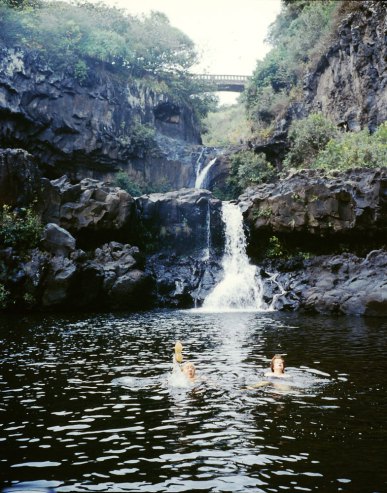
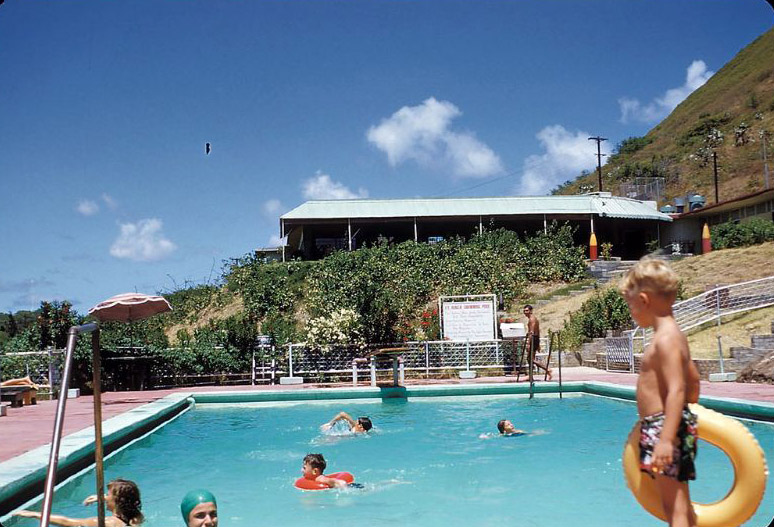
Pearl Harbor in 1959 was both an active military installation and a site of profound historical memory. The wreck of the USS Arizona still lay where it had sunk on December 7, 1941, leaking oil that rose in rainbow-colored ribbons to the surface. Elsewhere on the island, locals swam in freshwater pools fed by mountain streams — a quieter, more private pleasure away from the ocean beaches and hotel pools.
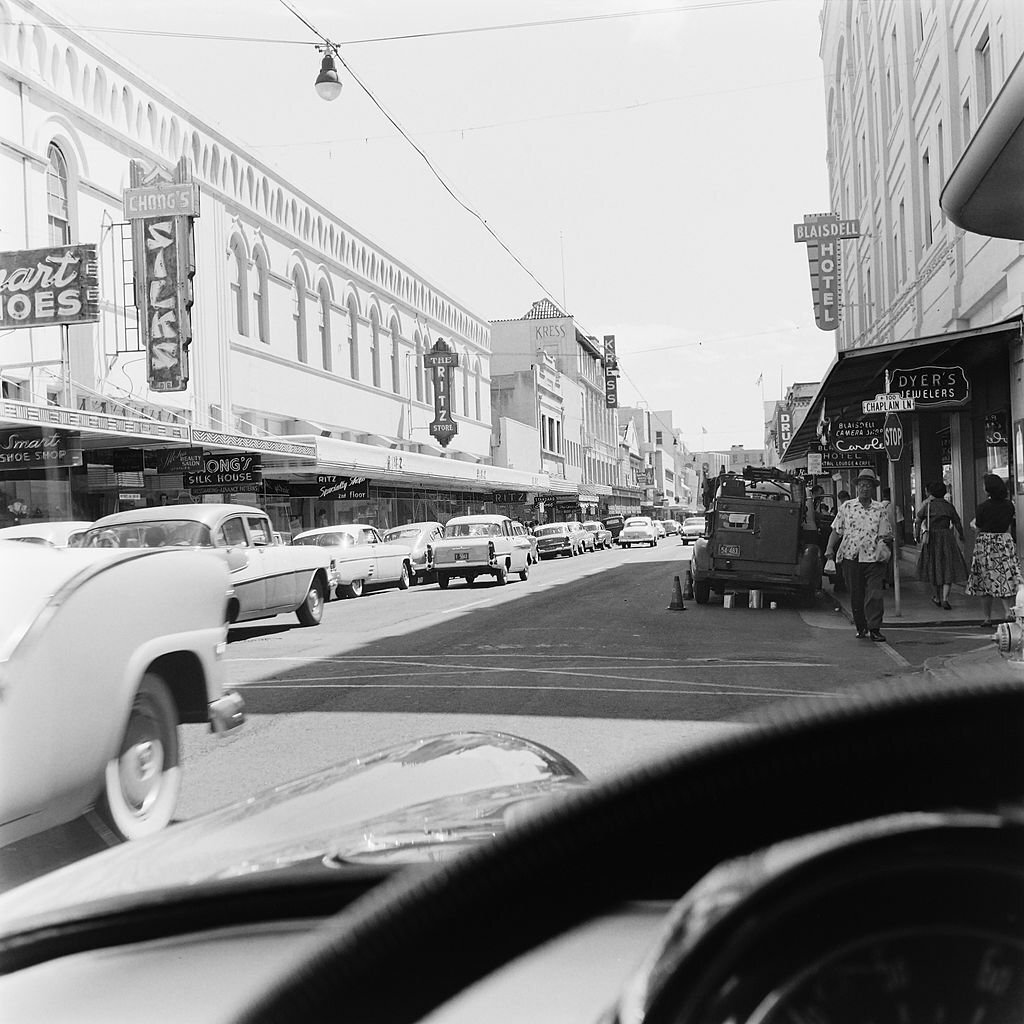
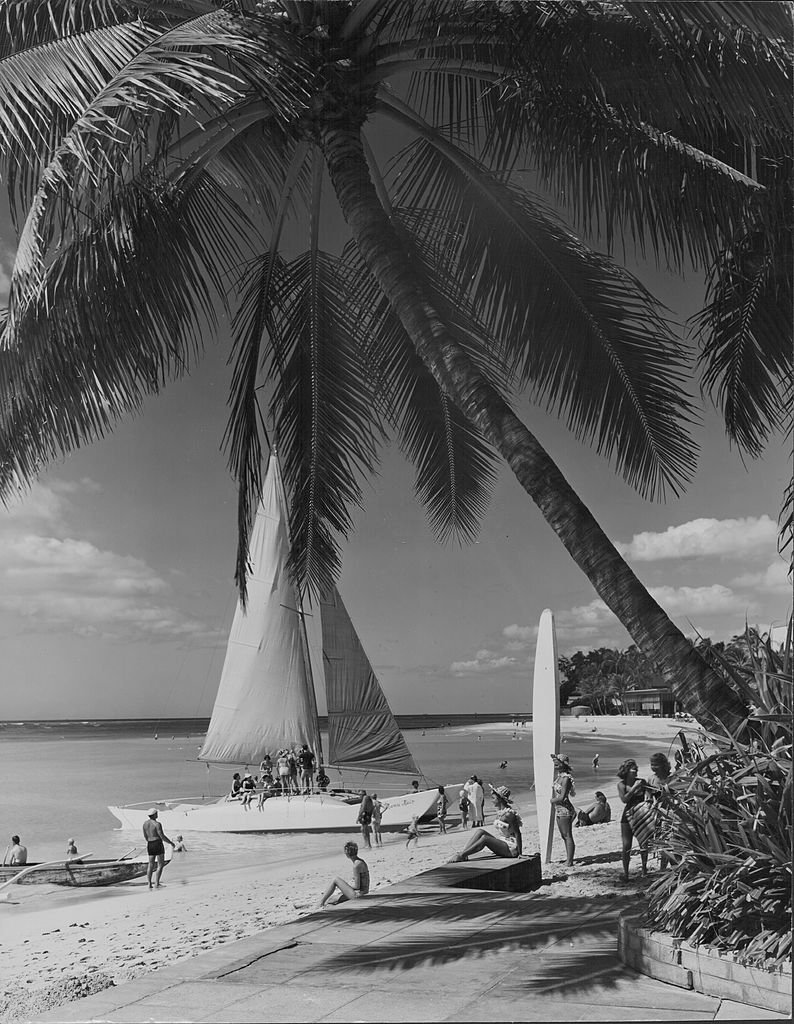
Hawaii Speed Week brought auto racing enthusiasts to the islands, reflecting a broader American obsession with cars and speed that reached even into the Pacific. On Waikiki Beach, the Outrigger Waikiki — a bar and hotel that took its name from the traditional Hawaiian canoe — offered cold drinks and live music steps from the surf. The Outrigger was a favorite of both locals and visitors who wanted something less formal than the grand resort hotels nearby.
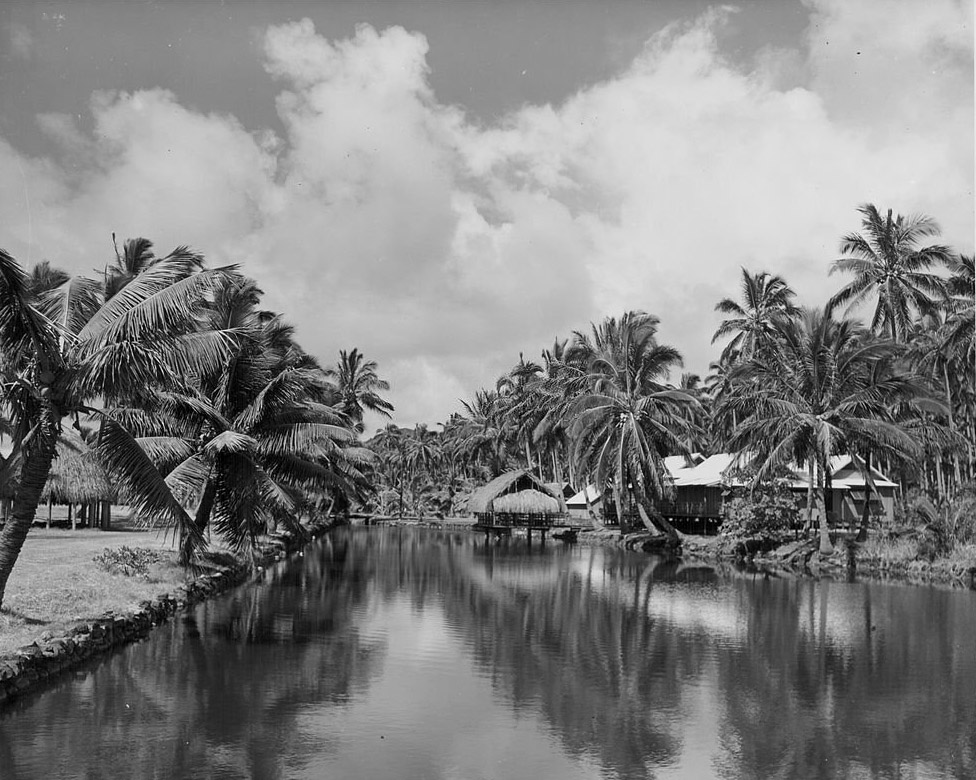
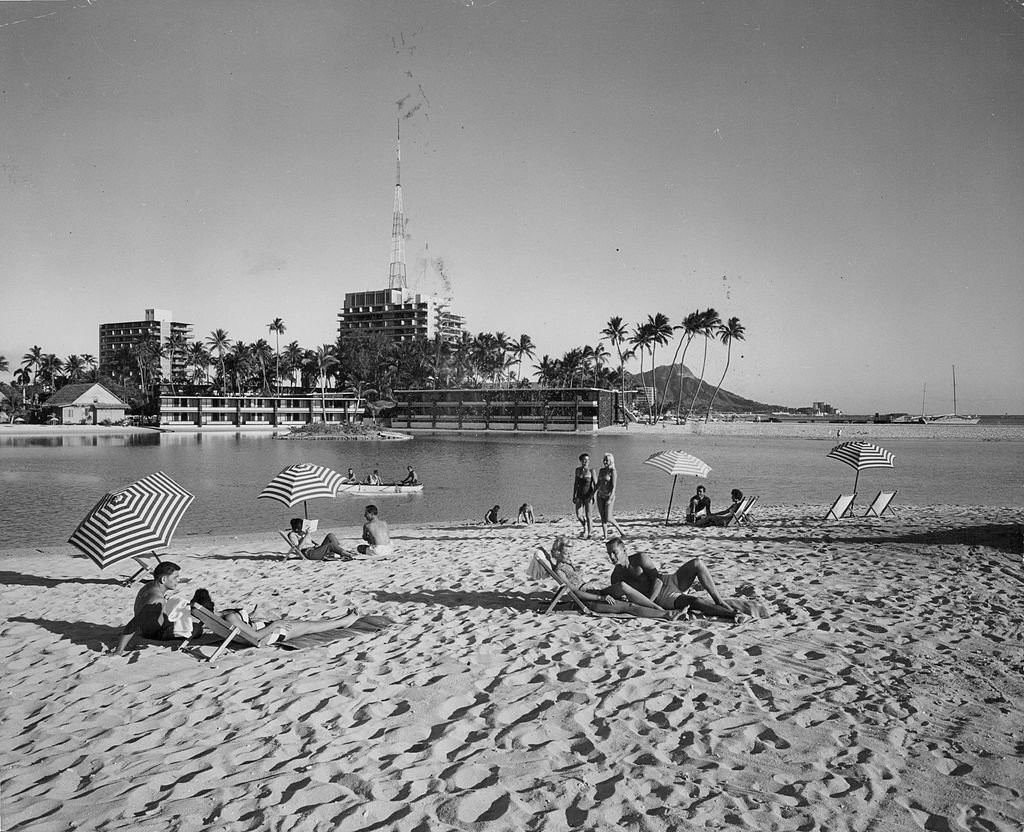
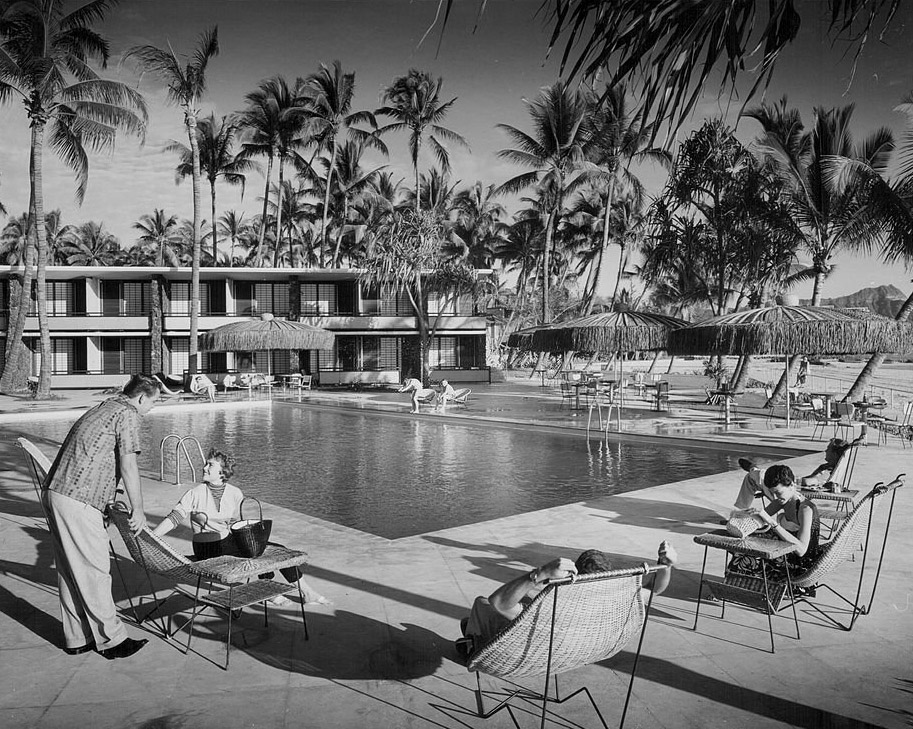
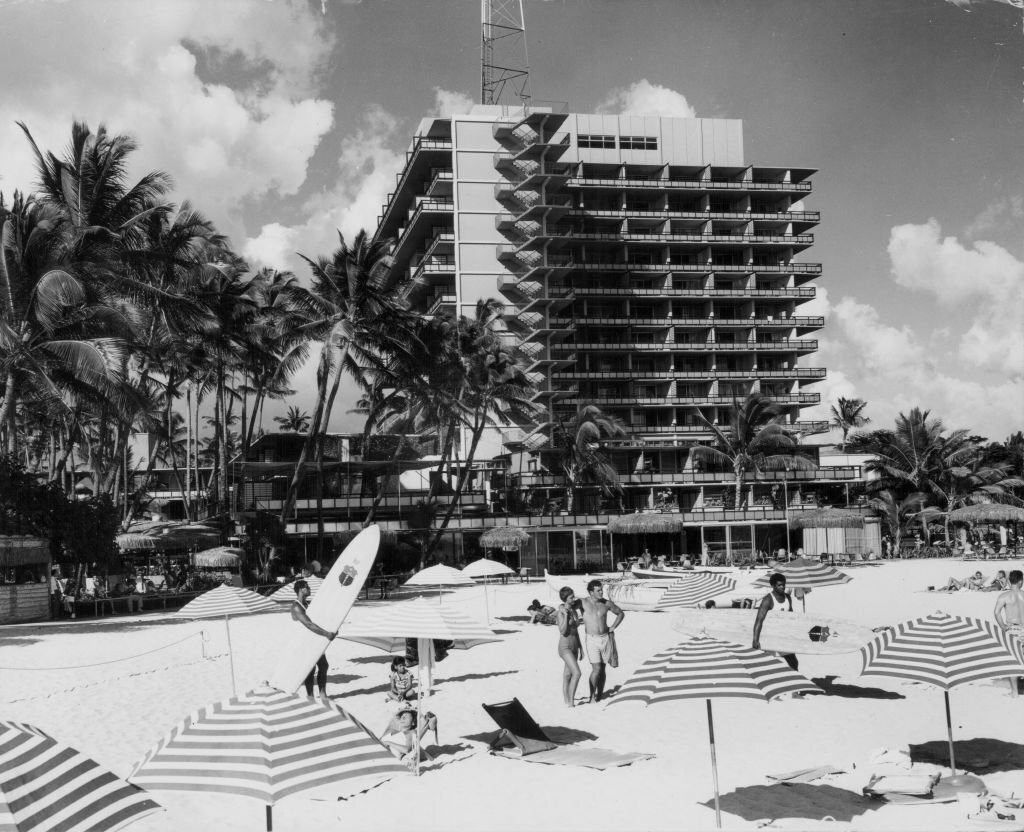
Kauai, the oldest of the main Hawaiian Islands geologically, remained far less developed than Oahu throughout the 1950s. The Wailua River and its tributaries wound through lush valleys that had changed little since ancient times. On Oahu, the contrast was stark — Honolulu’s beachfront was filling rapidly with hotels, their modern facades rising above the palms along the waterline.
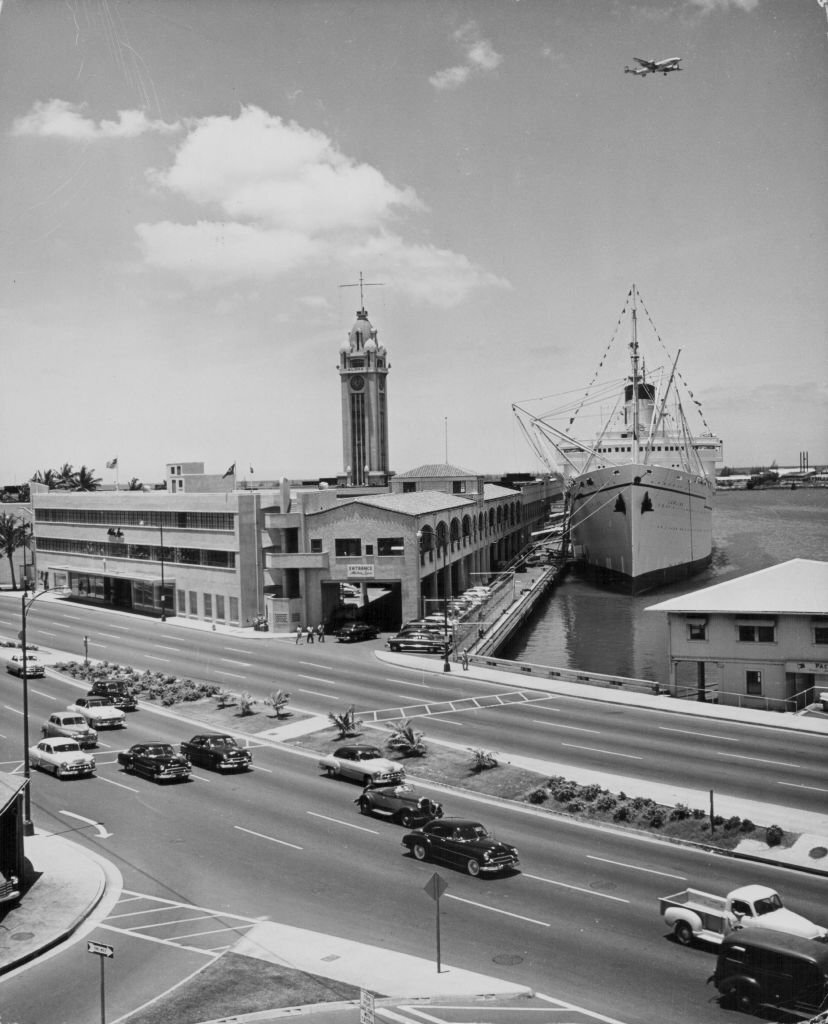
The Honolulu Docks, with the Aloha Tower standing watch above them, handled a steady flow of cargo and passengers throughout the decade. Freighters brought goods from the mainland; passenger liners like the Lurline carried tourists and returning residents. The docks were the economic lifeline of an island chain that produced much of its own food but still depended heavily on imports for manufactured goods.
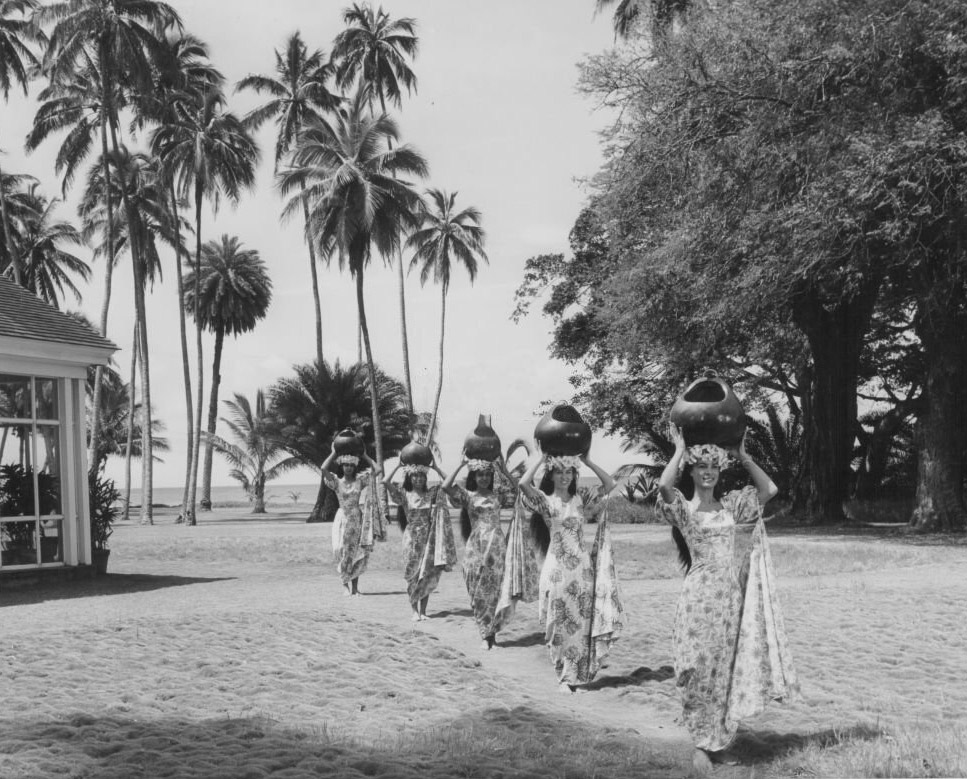
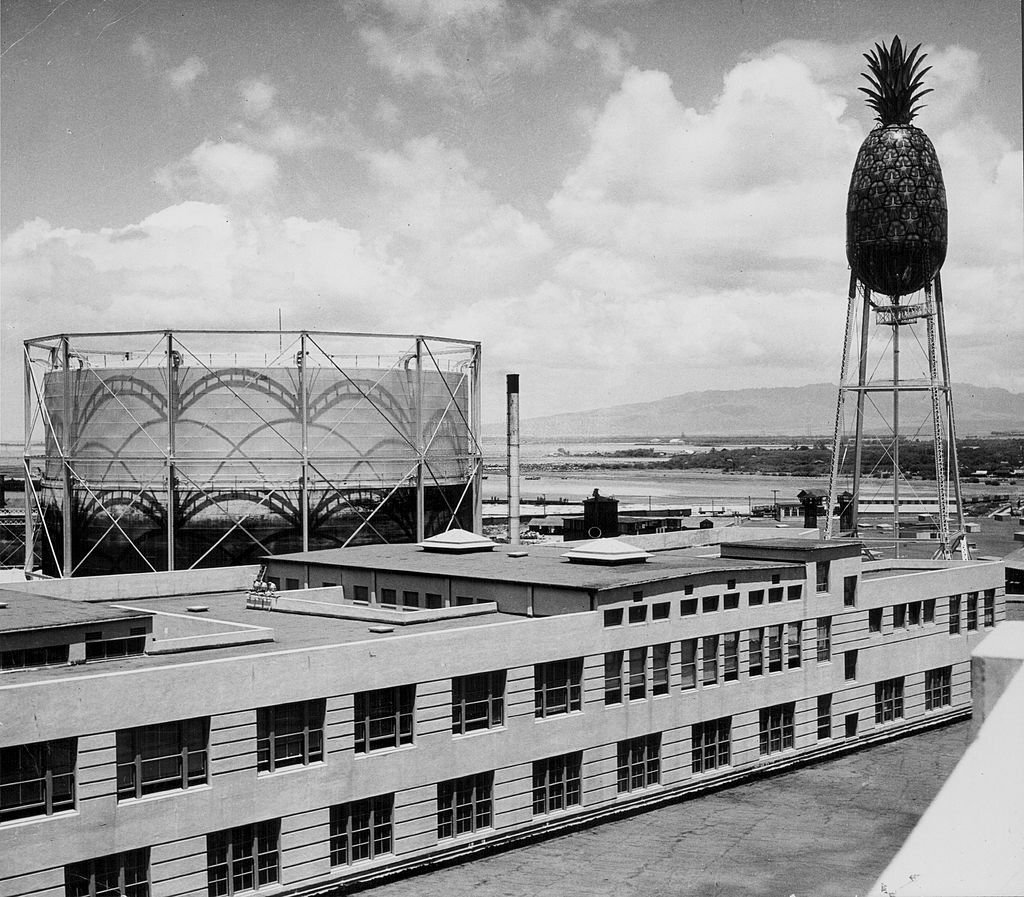
On Kauai, women wore traditional native Hawaiian garments for ceremonial and cultural events, maintaining a visible connection to pre-contact Hawaiian dress and identity. In Honolulu, the pineapple canning industry employed thousands of workers. Factories ran at full capacity during harvest season, processing fruit from the central Oahu plantations and shipping canned pineapple to grocery stores across the United States.
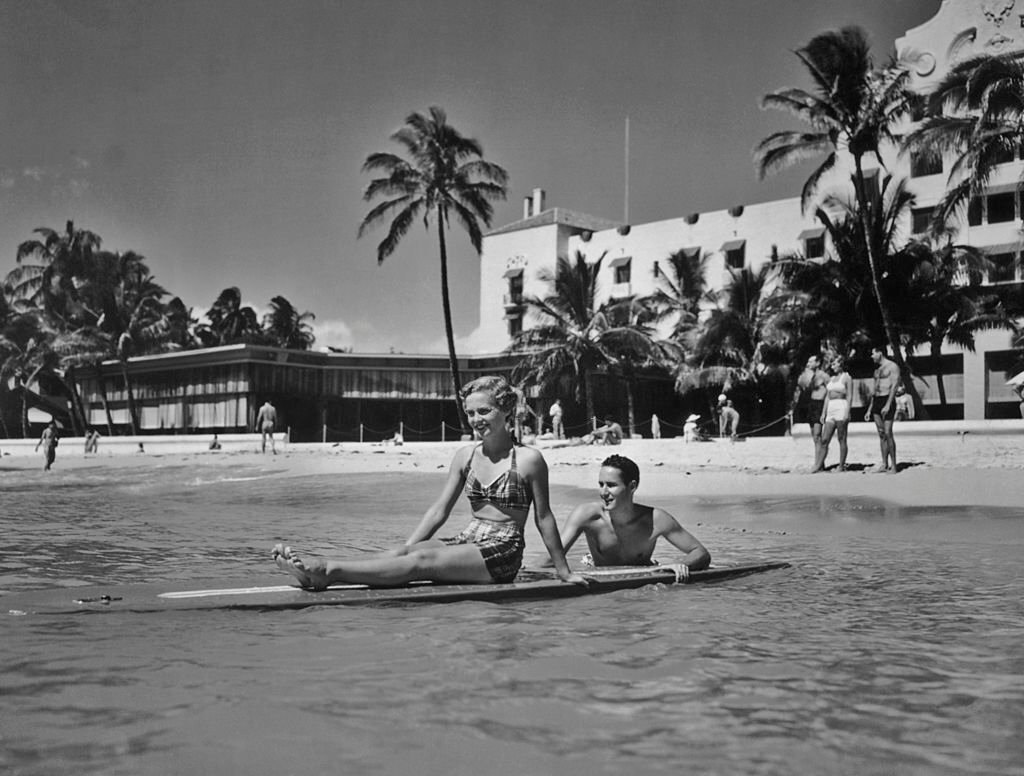
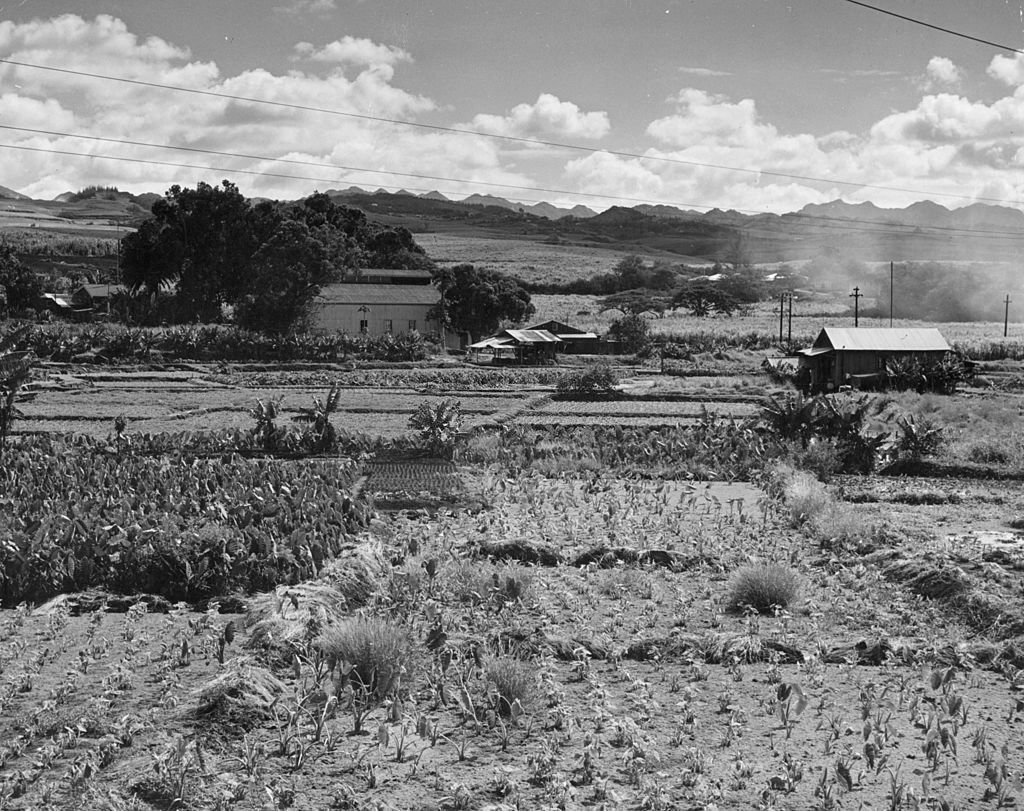
By 1955, Waikiki’s beach boys had turned surfing instruction into a small but thriving business. Tourists who had never stood on a board were pushed out into the gentle Waikiki break and given their first taste of wave riding. Away from the resorts, small farms and their surrounding fields occupied valleys and coastal plains across the islands, producing taro, vegetables, and other crops for local consumption.
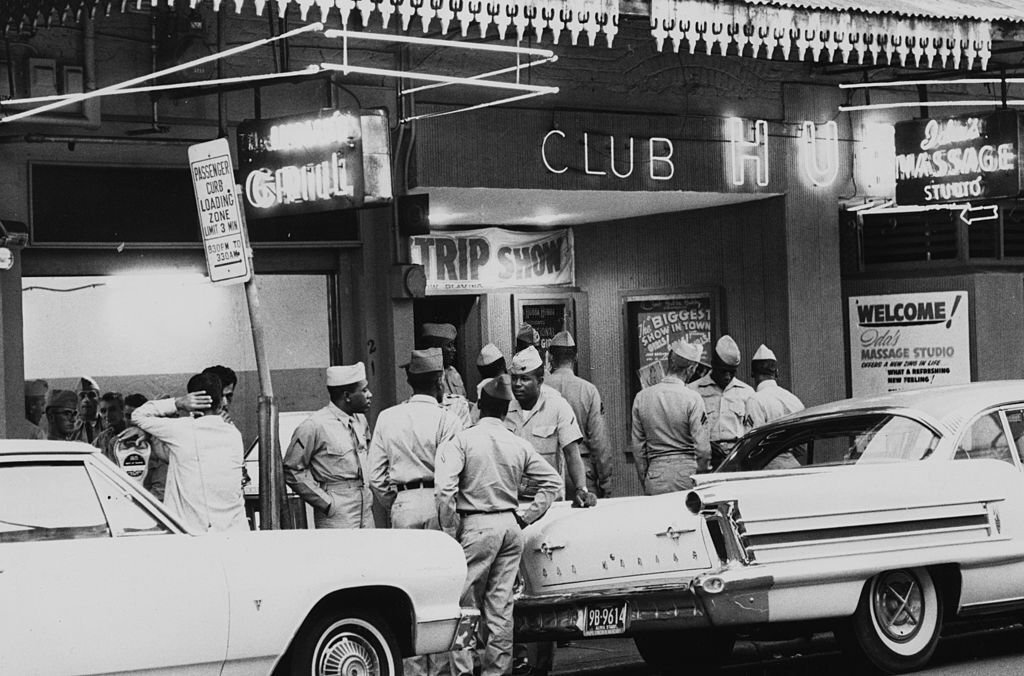
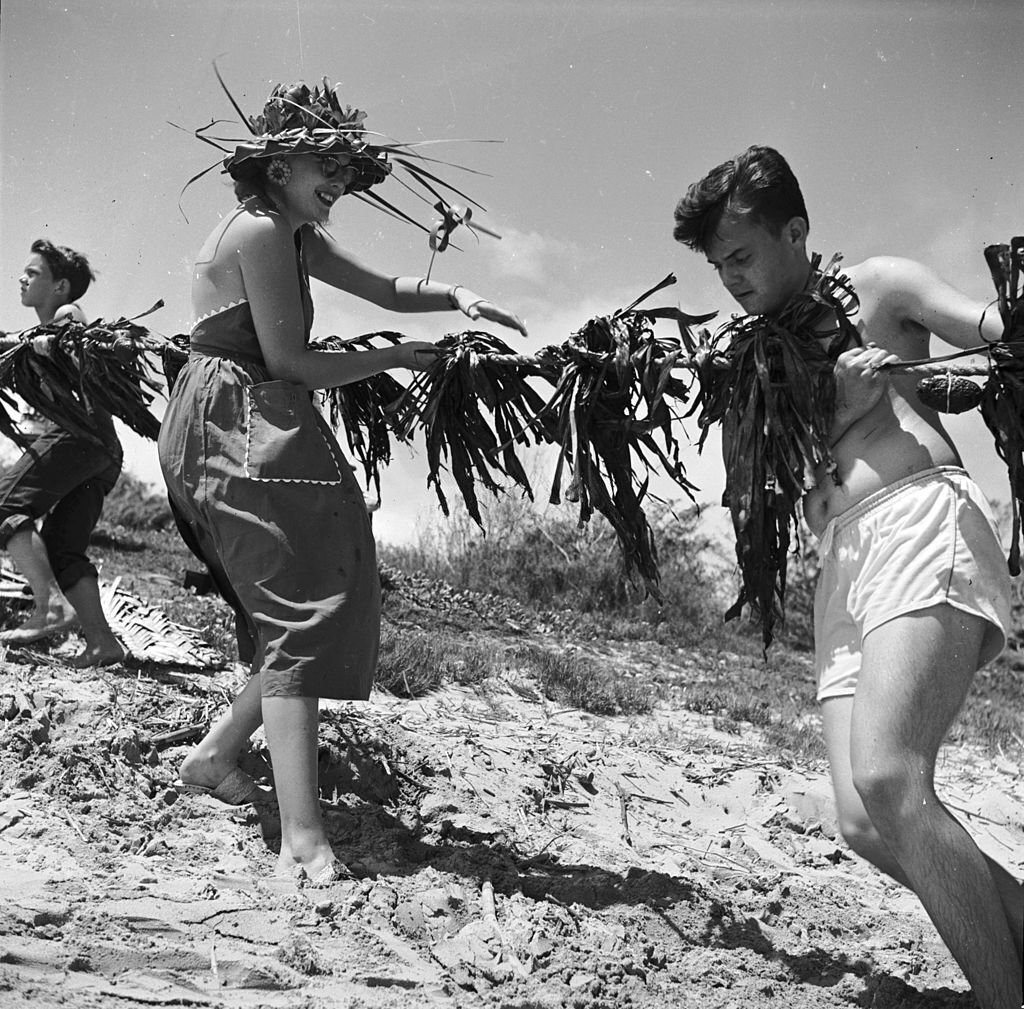
Hotel Street in downtown Honolulu was the entertainment hub for military personnel stationed on Oahu. Bars, clubs, and theaters lined the street, and US Marines outside establishments like Club Hubba Hubba were a common sight in 1955. On a far more wholesome note, the Hukilau — a traditional Hawaiian communal fishing method — was adopted as a tourist experience, with visitors invited to haul nets onto the beach alongside local fishermen.
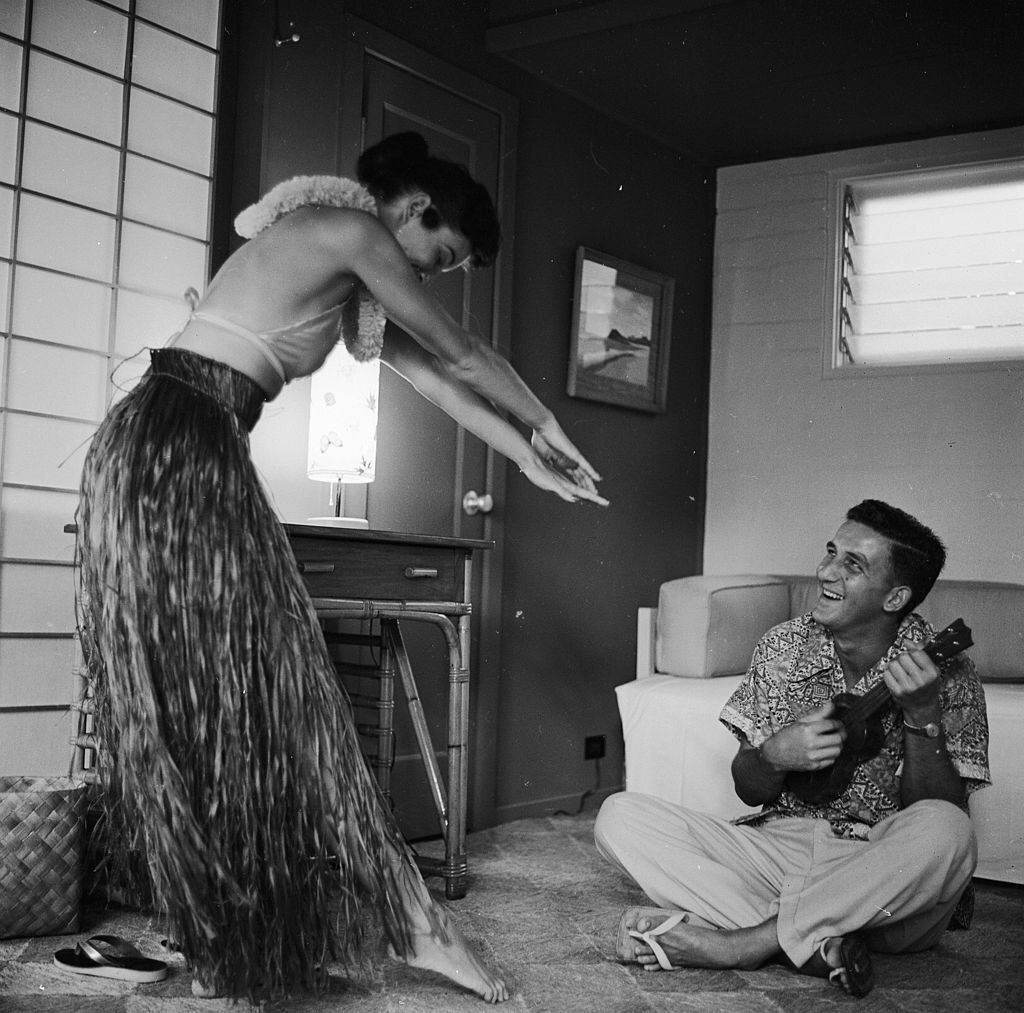
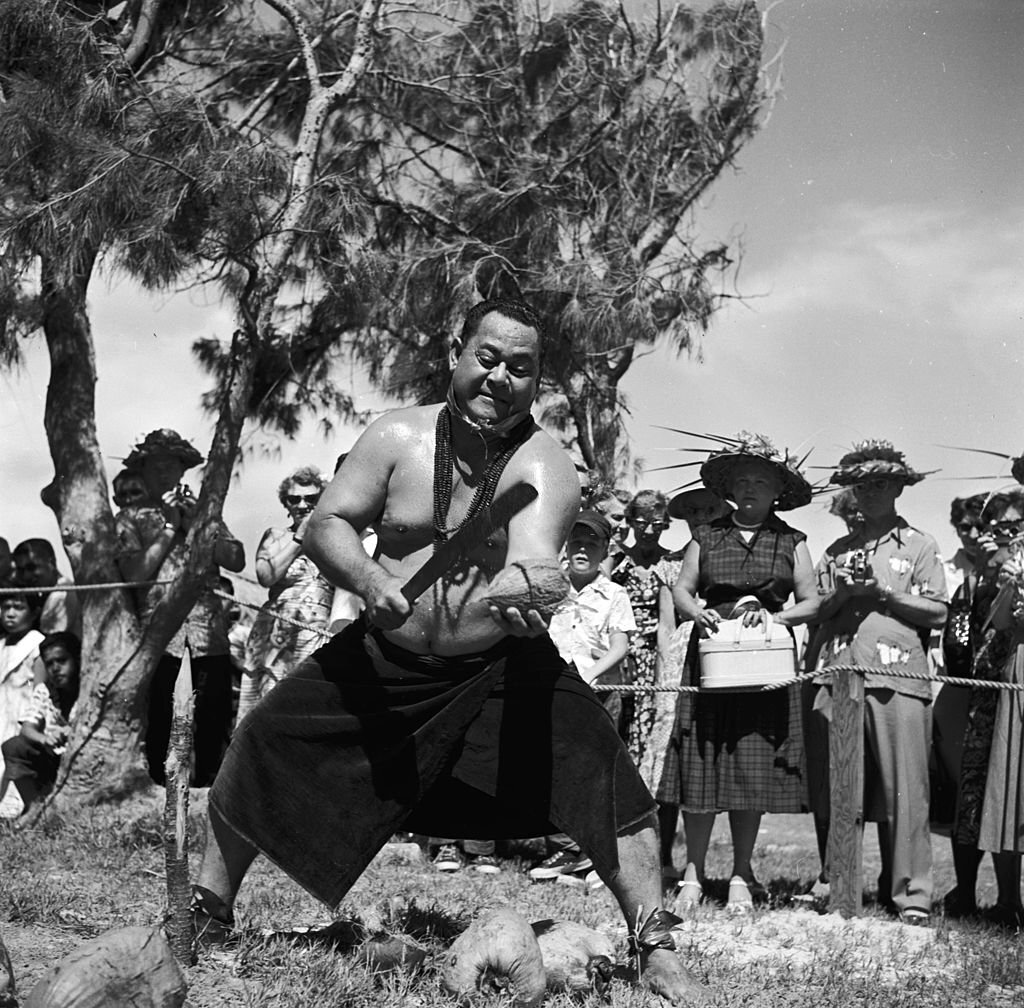
Hawaii’s reputation as a honeymoon destination was fully established by the mid-1950s. Young American couples made the trip as their first great adventure together, drawn by the romance of the Pacific and the exotic appeal of island culture. The islands also showcased the broader Pacific cultural traditions that had reached Hawaii through Polynesian migration — Samoan performance traditions, including ceremonial weapon displays, appeared at shows and cultural events across the islands.
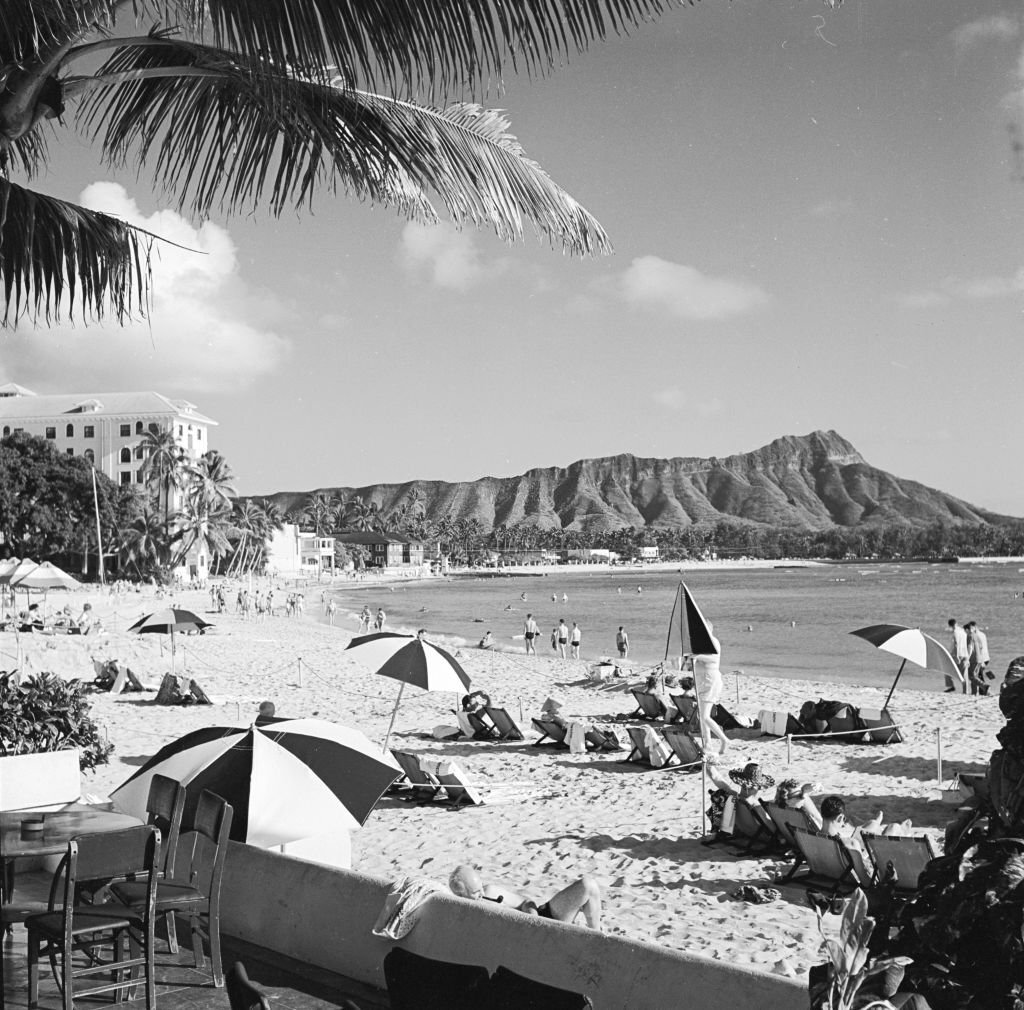
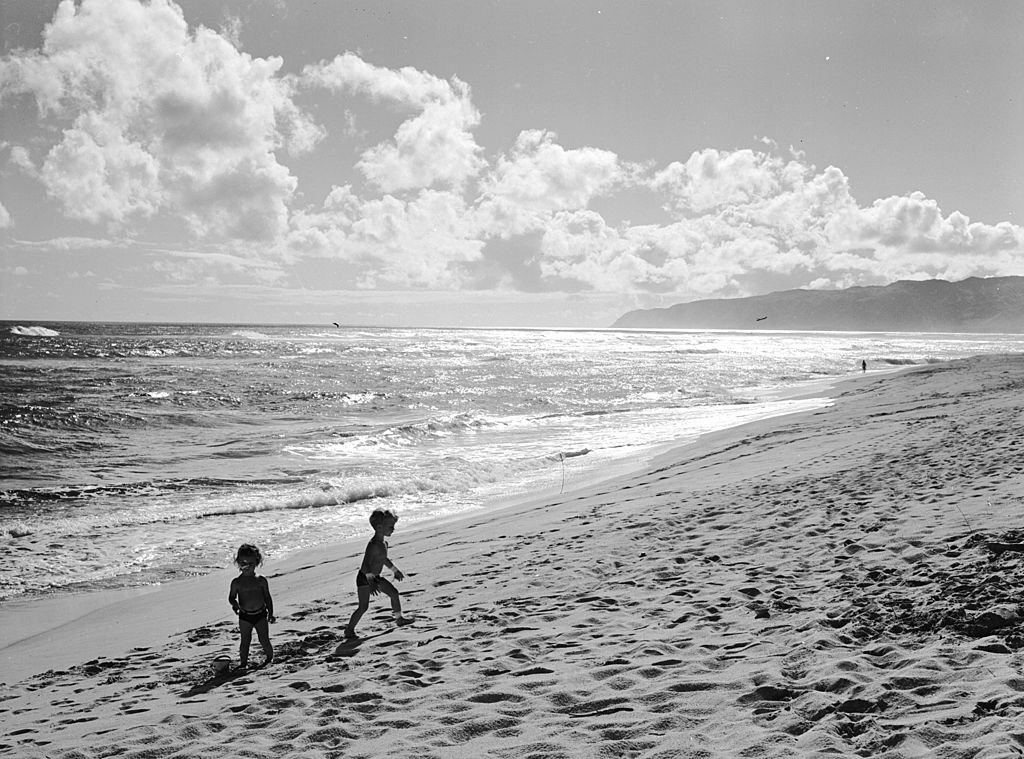
Christmas on Waikiki Beach in 1955 looked nothing like Christmas on the mainland. Sunbathers stretched out on white sand while palm trees swayed overhead — no snow, no heavy coats, just warm Pacific air and the sound of waves. For mainland Americans accustomed to cold winters, these images of a tropical December were almost impossibly appealing, and they did as much to drive tourism as any advertising campaign.
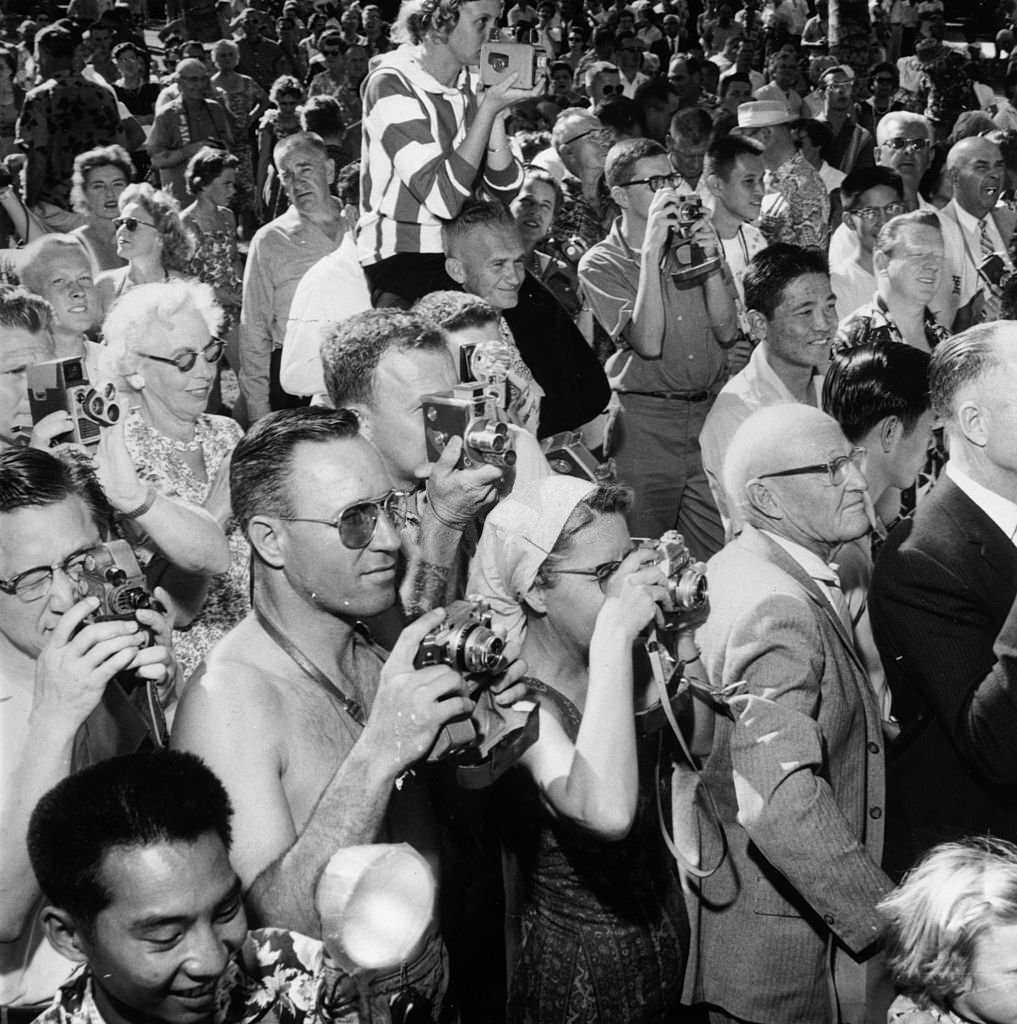
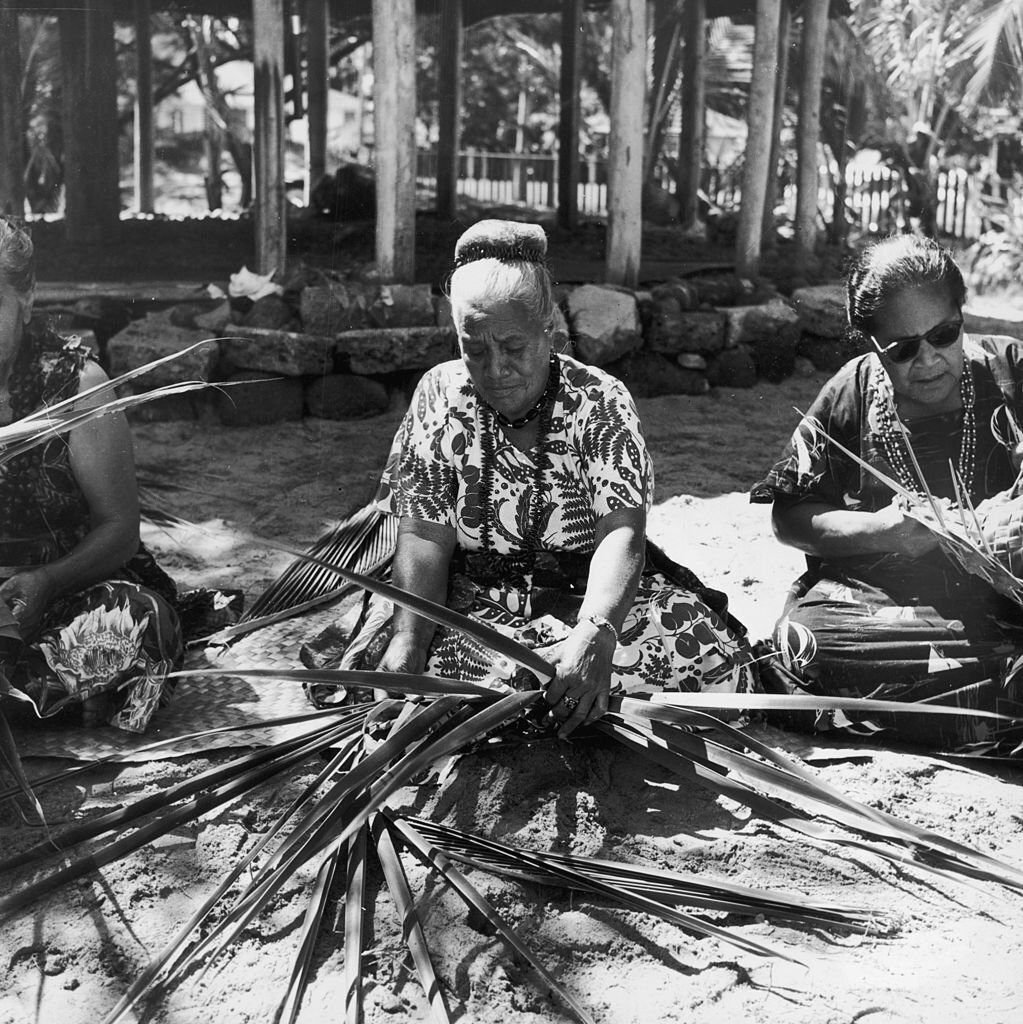
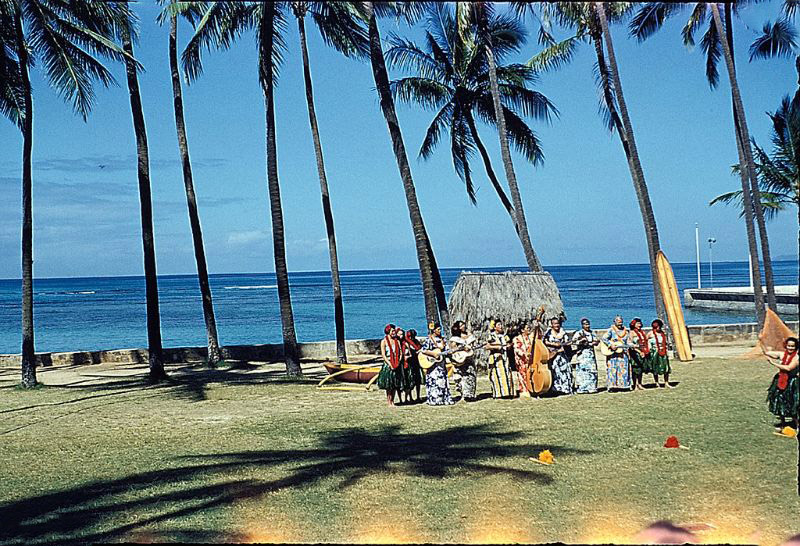
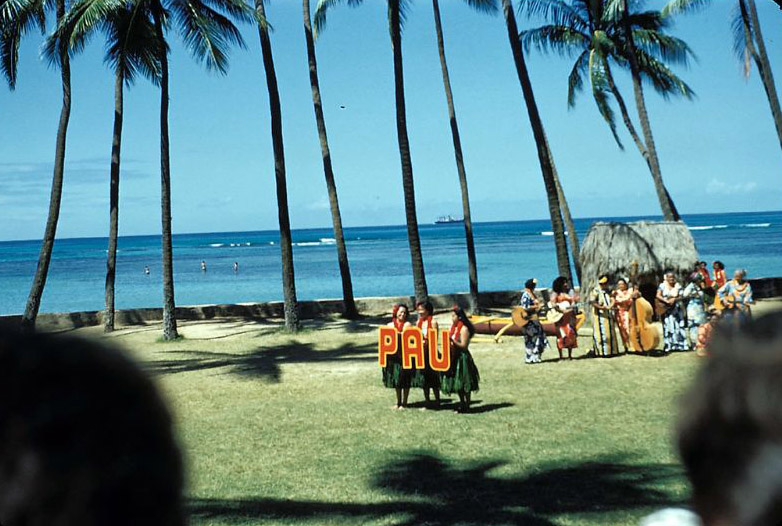
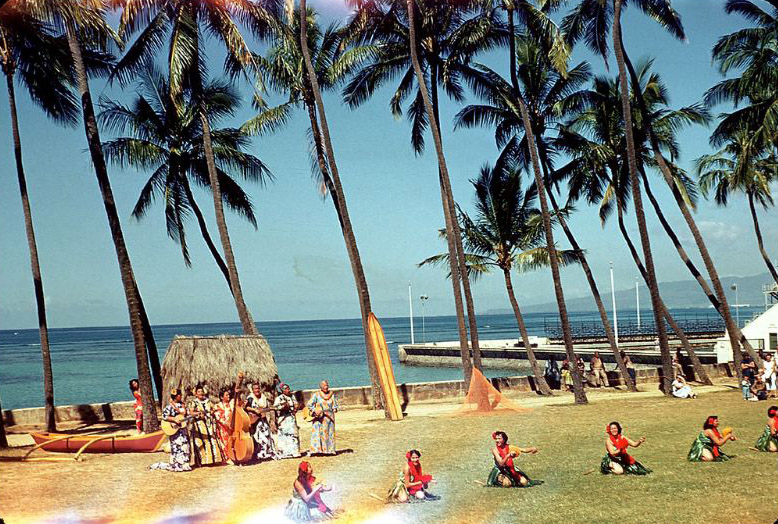
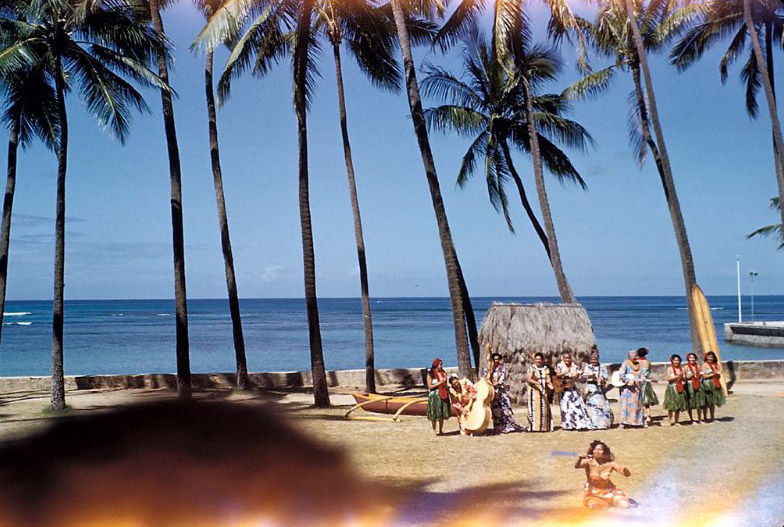
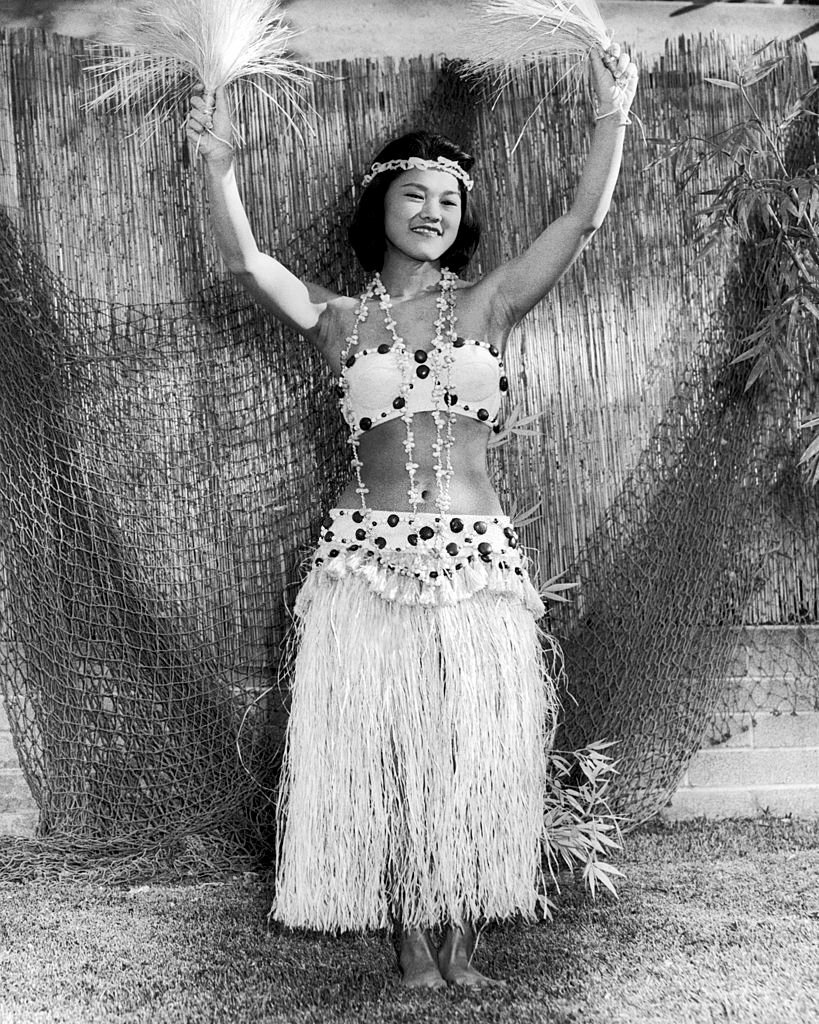
Hula shows for tourists became a major part of Hawaii’s visitor economy in the 1950s. Crowds of camera-toting visitors gathered to watch performances on Waikiki, capturing images to bring back to the mainland. In Kapiolani Park, Hawaiian women demonstrated traditional weaving — turning rushes into baskets, mats, and hats using techniques passed down through generations. These demonstrations gave visitors a glimpse of Hawaiian craft traditions that predated Western contact.
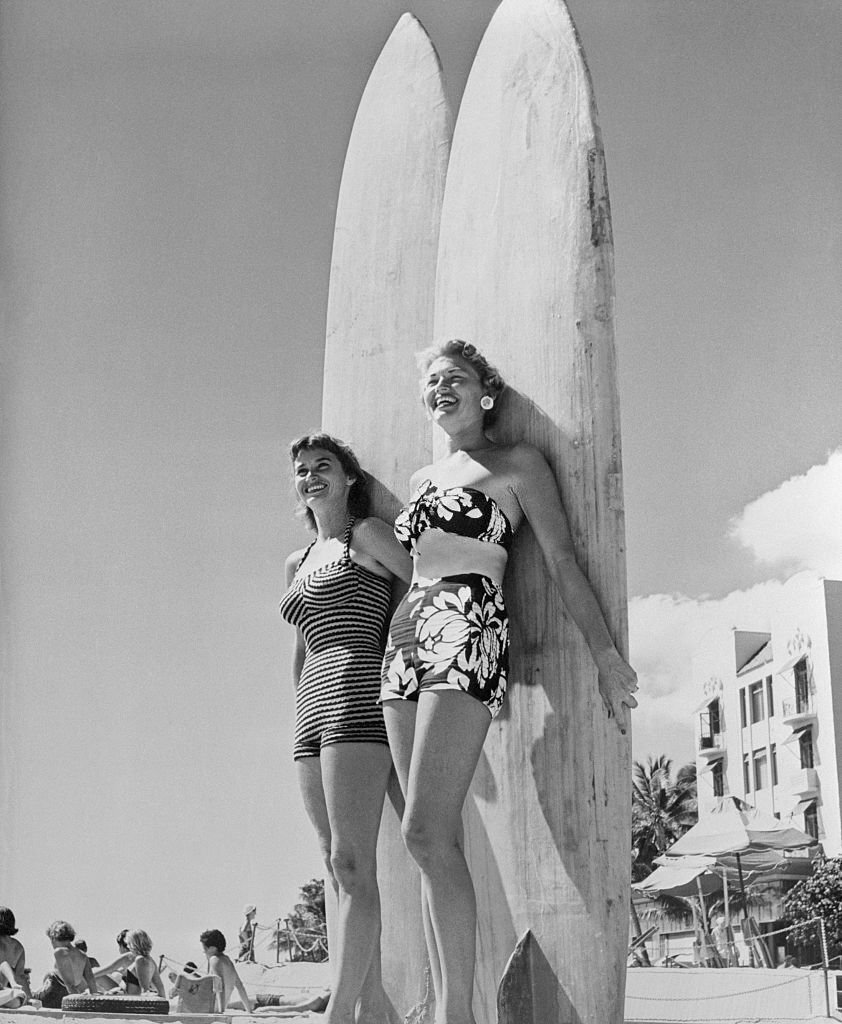
Women surfers were a visible presence on Waikiki Beach by 1955. Mary Ray Fearon and Oralee Kiewit, posing proudly with their boards, represented a growing number of women who rode the waves regularly rather than simply watching from shore. The heavy wooden longboards of the era required significant strength and skill to handle, and women who mastered them earned real respect from the beach community.
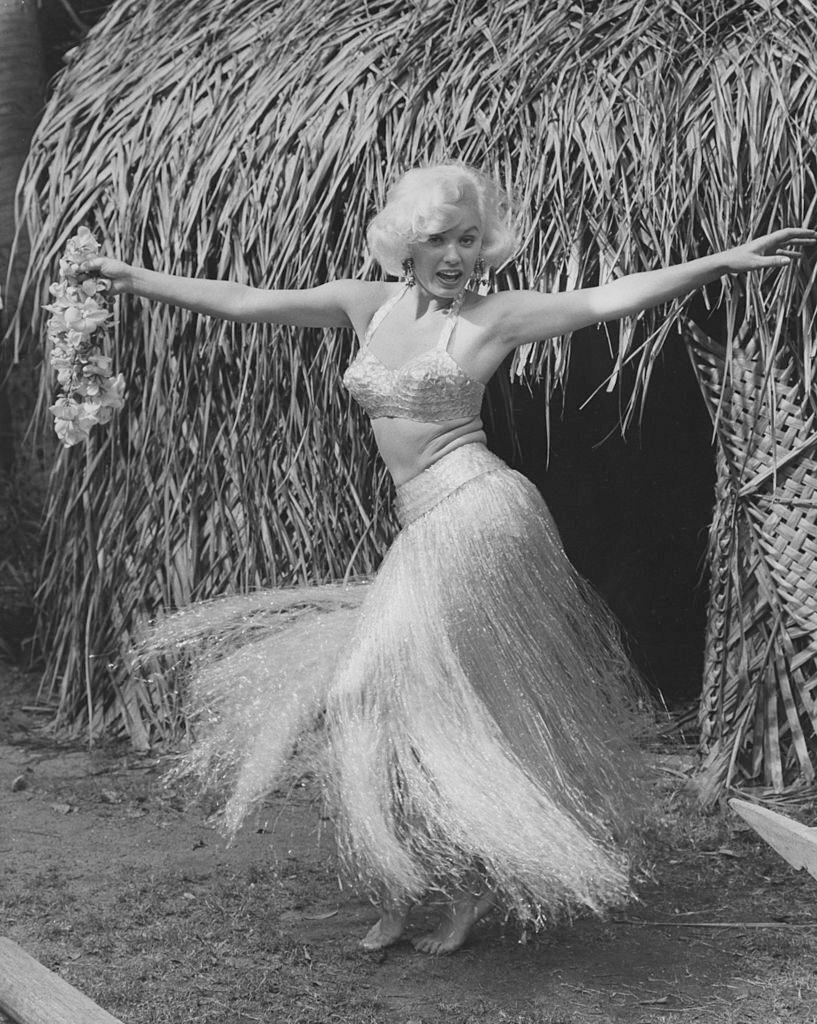
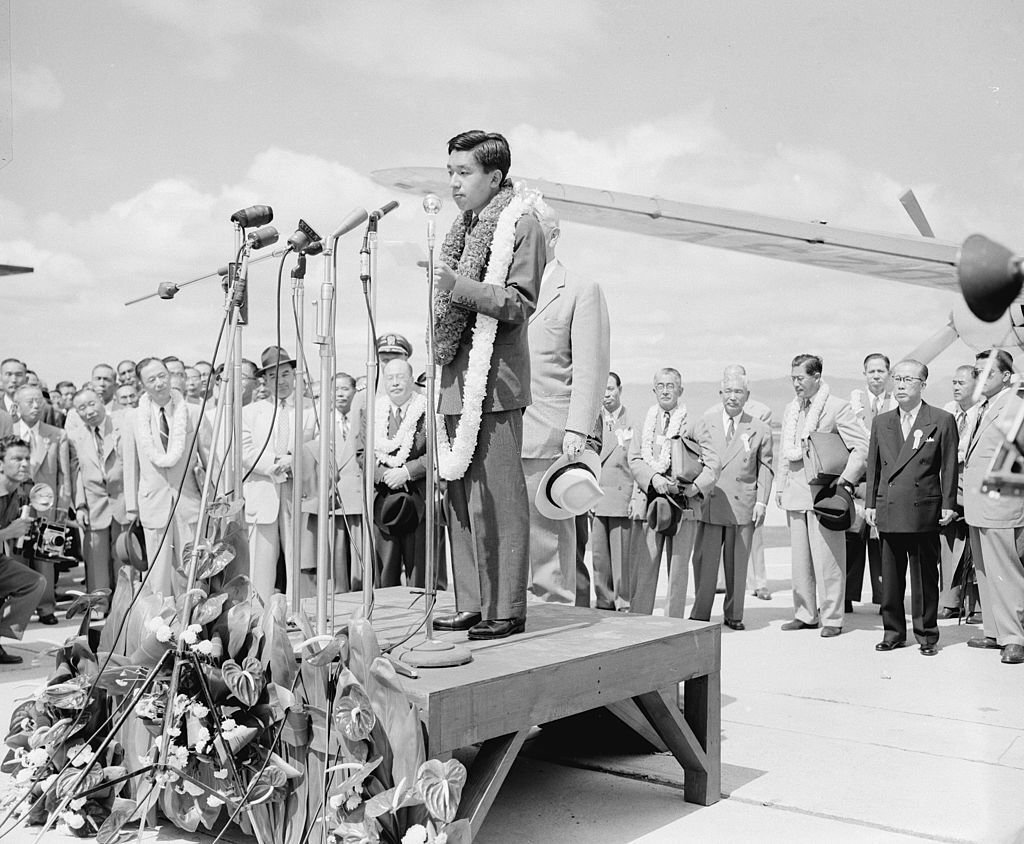
Hawaii attracted a parade of notable visitors throughout the 1950s. American actress Mamie Van Doren visited in 1954 at the height of her fame, adding to Hawaii’s glamorous image in the American press. The following year, Japan’s Crown Prince Akihito stopped in Honolulu on his way to attend Queen Elizabeth II’s coronation in London — a visit that underscored Honolulu’s growing role as a crossroads of the Pacific world.
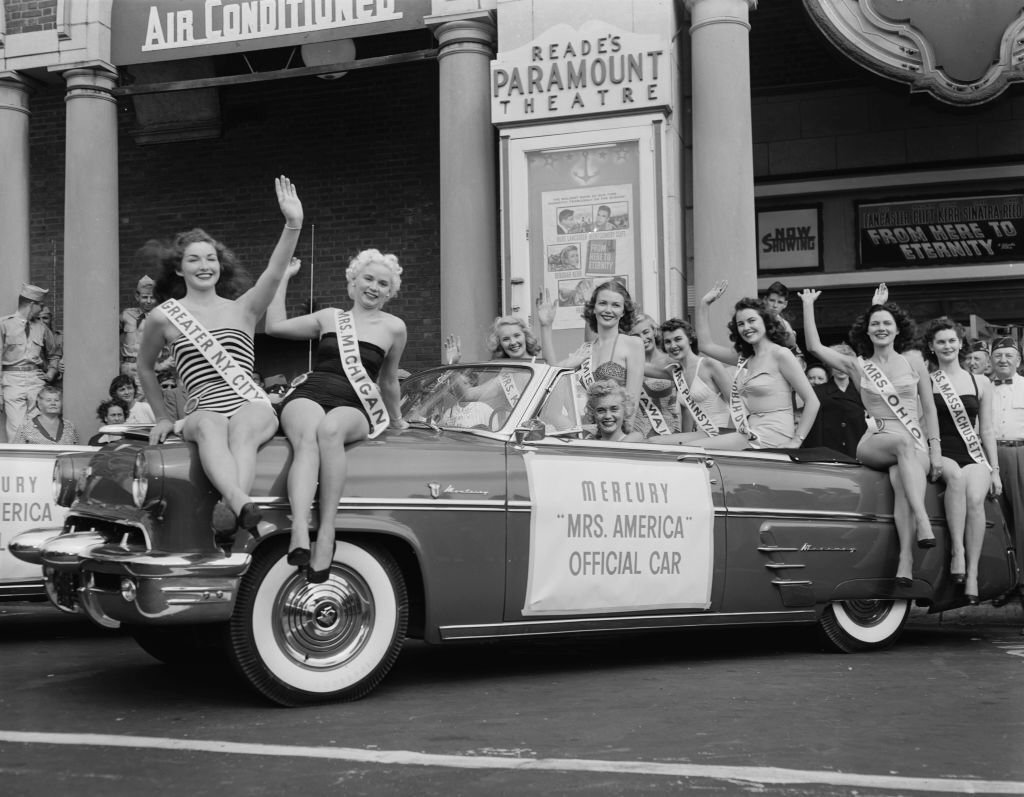
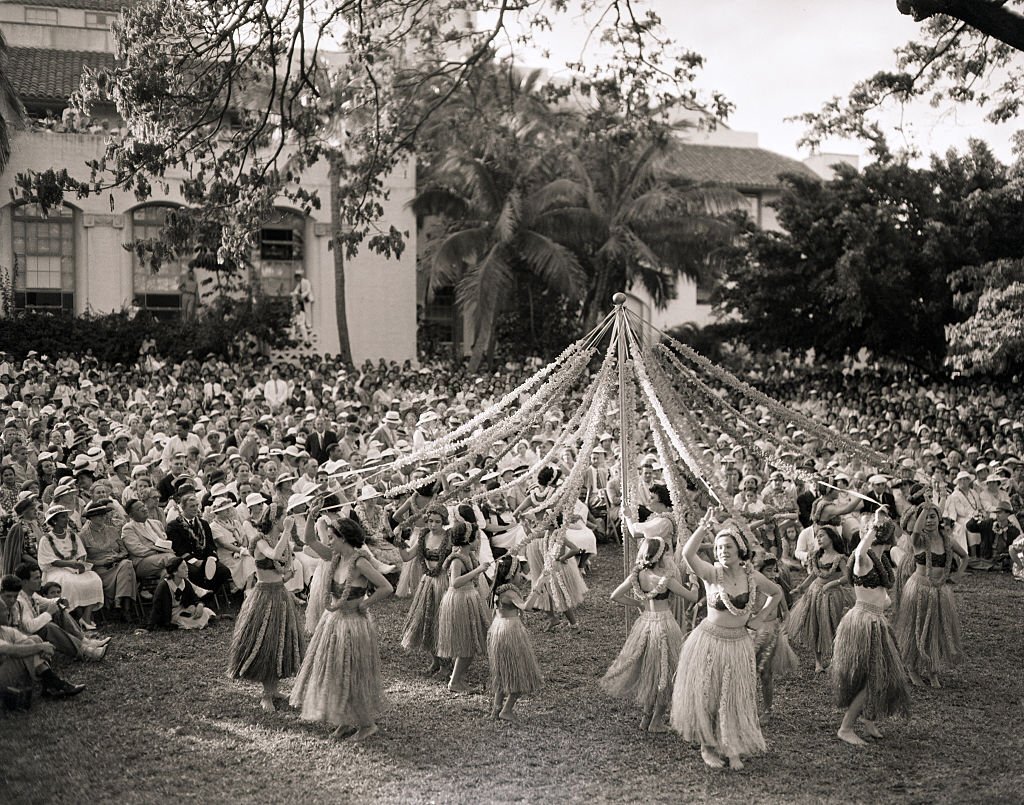
The Mrs. America pageant of 1953 brought its contestants to Hawaii, photographed posing with the Mercury automobile that bore the contest’s name. Events like these reinforced Hawaii’s image as an aspirational destination in mid-century American culture. On the cultural side, hula dancers performing around a maypole showed how Hawaiian and Western traditions sometimes merged into something entirely new and distinctly Hawaiian.
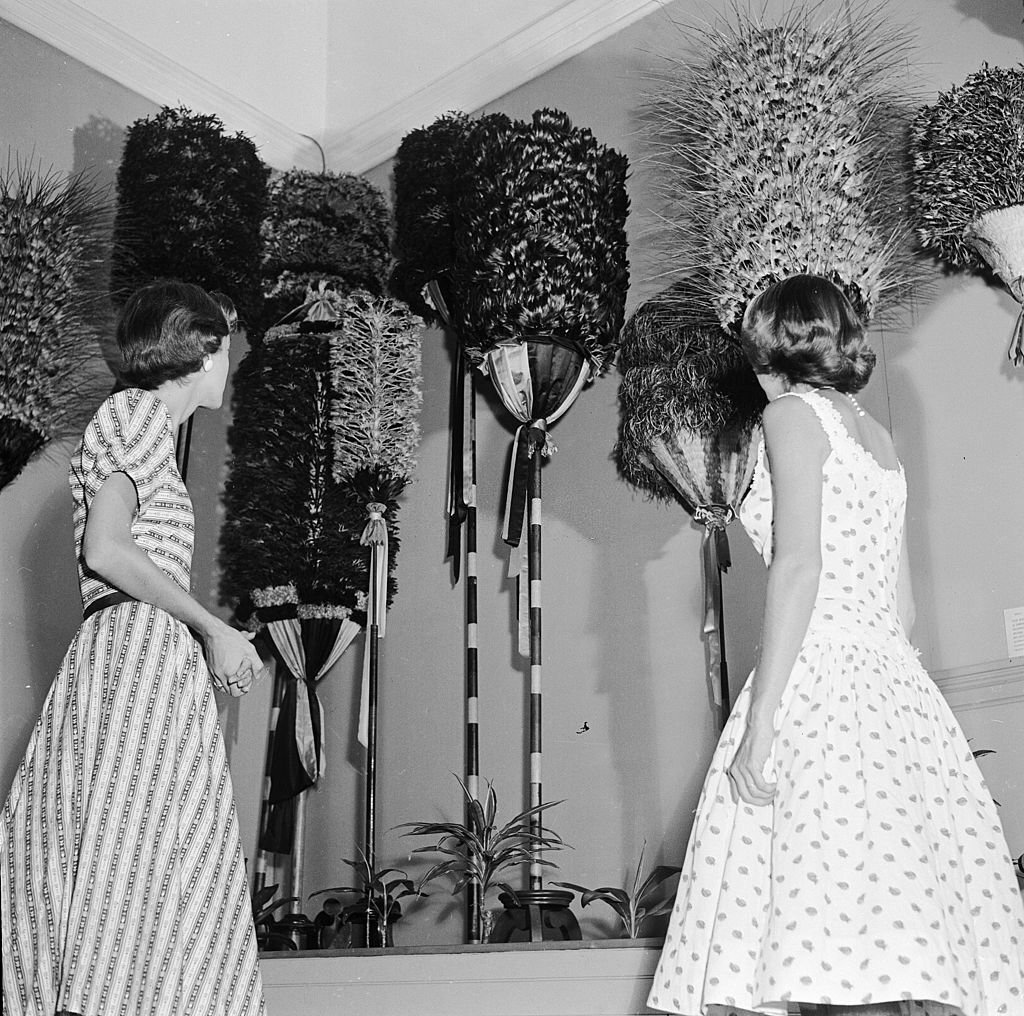
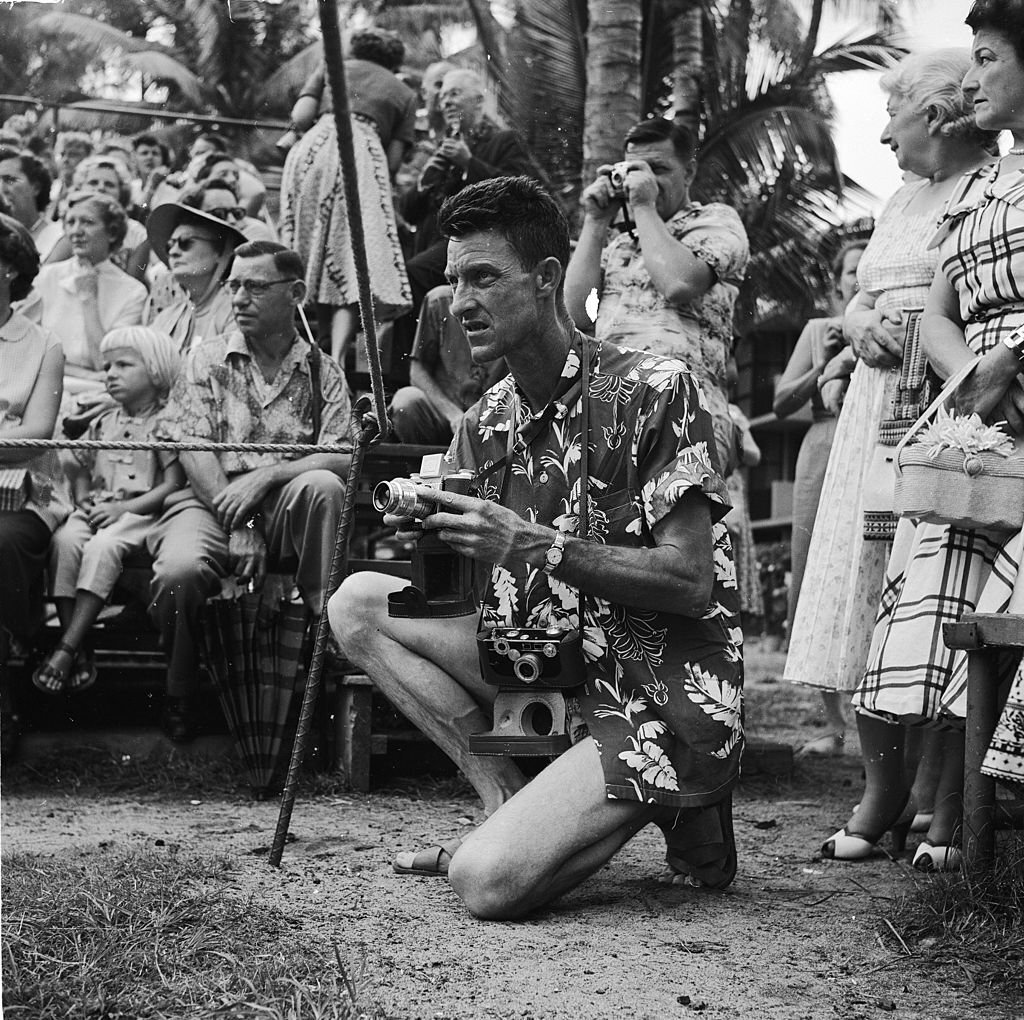
The Bishop Museum in Honolulu was the premier institution for Hawaiian and Pacific cultural artifacts. Its collection of feather-topped staffs — kahili — represented the symbols of Hawaiian royal authority, displayed now for public education. Outside on Waikiki Beach, tourists in aloha shirts crouched with cameras poised, waiting for hula dancers to appear. The Hawaiian shirt itself, by 1953, had become one of the most recognizable symbols of American leisure culture.
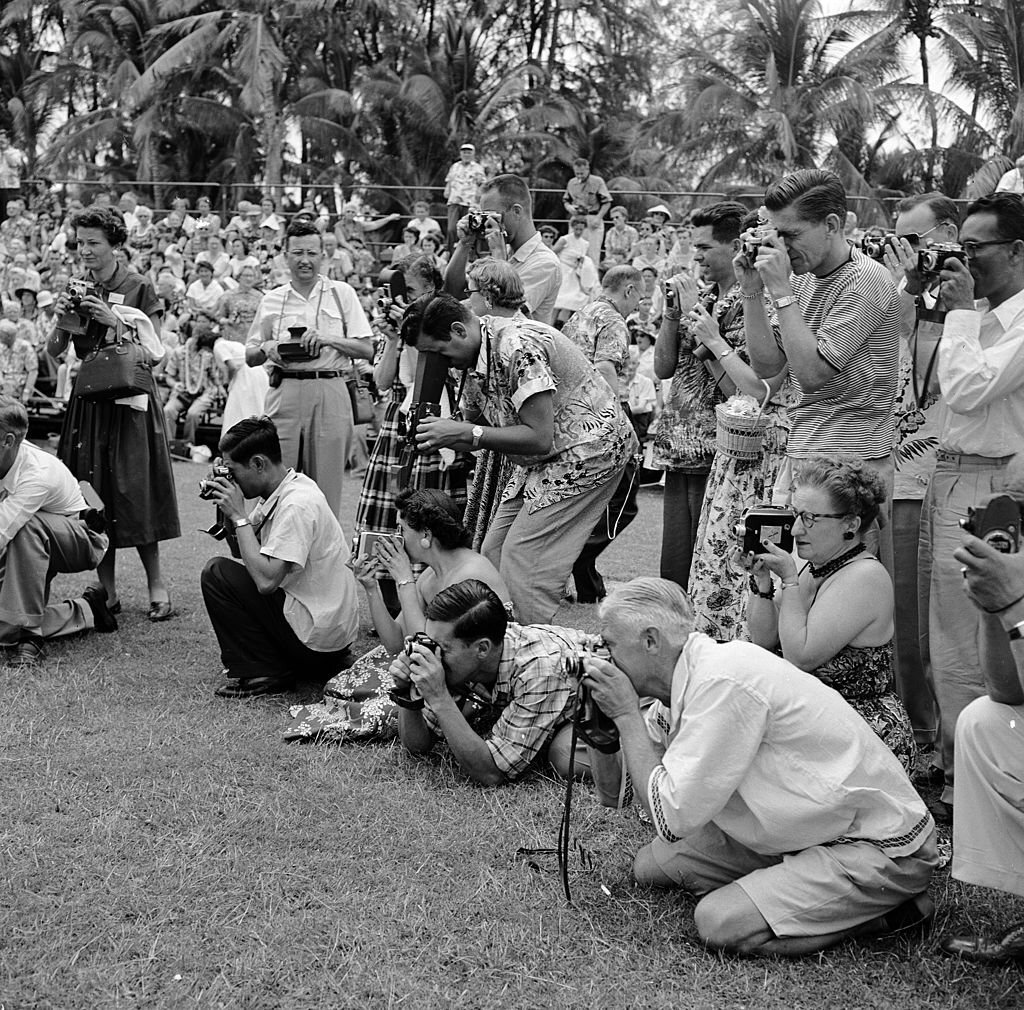
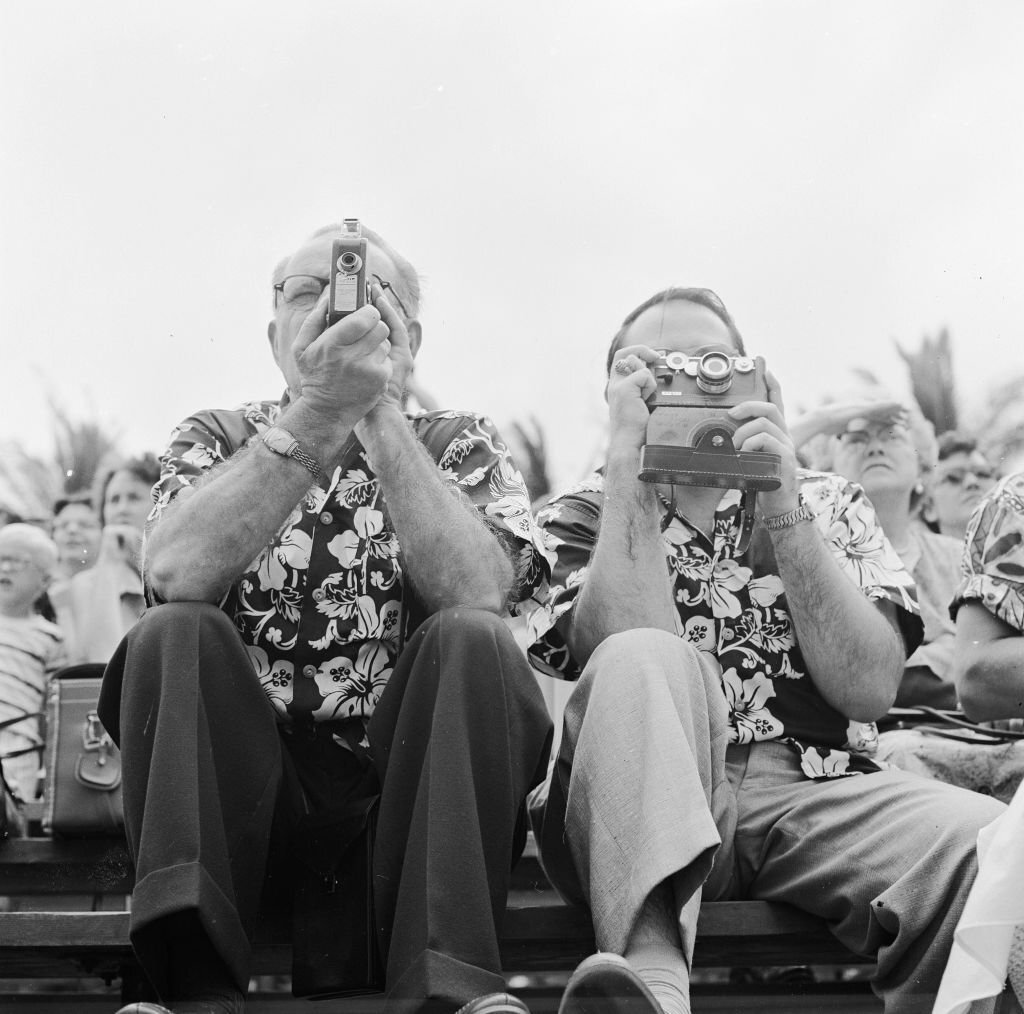
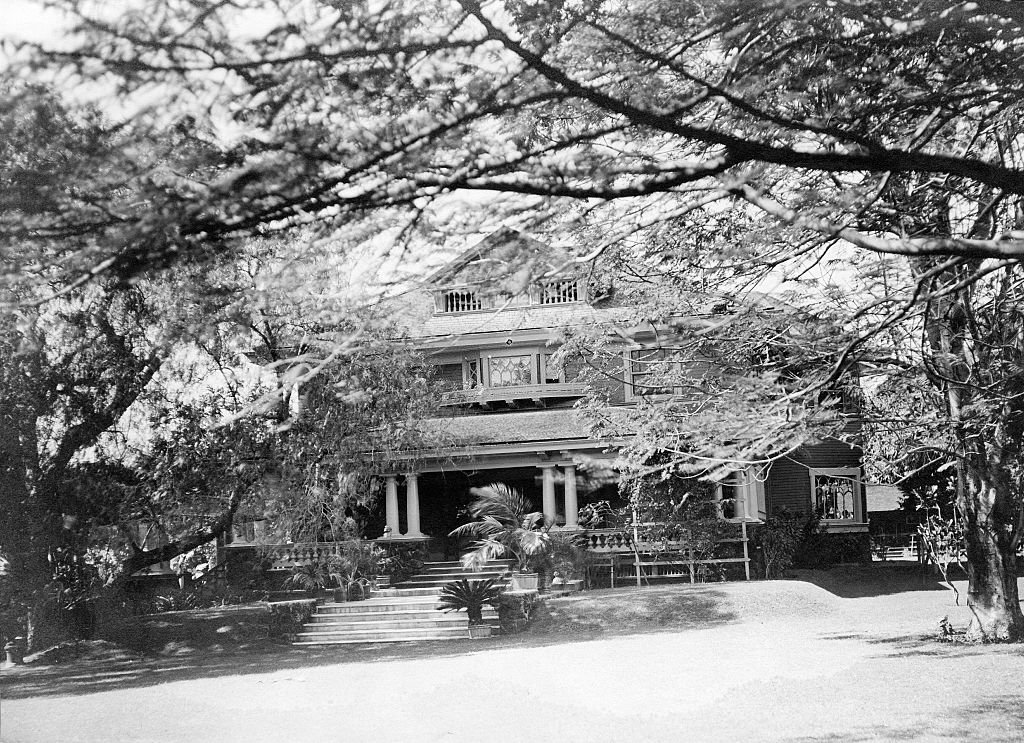
The tourist ritual of photographing hula performances was already well established by 1953. Groups of visitors in matching Hawaiian shirts lined up on Waikiki, cameras raised, capturing images they would show to family and friends back home. Meanwhile, Honolulu also had its quieter, more private side — grand mansions set behind elaborate gardens spoke to the wealth that sugar and pineapple had generated for Hawaii’s plantation elite over the previous century.
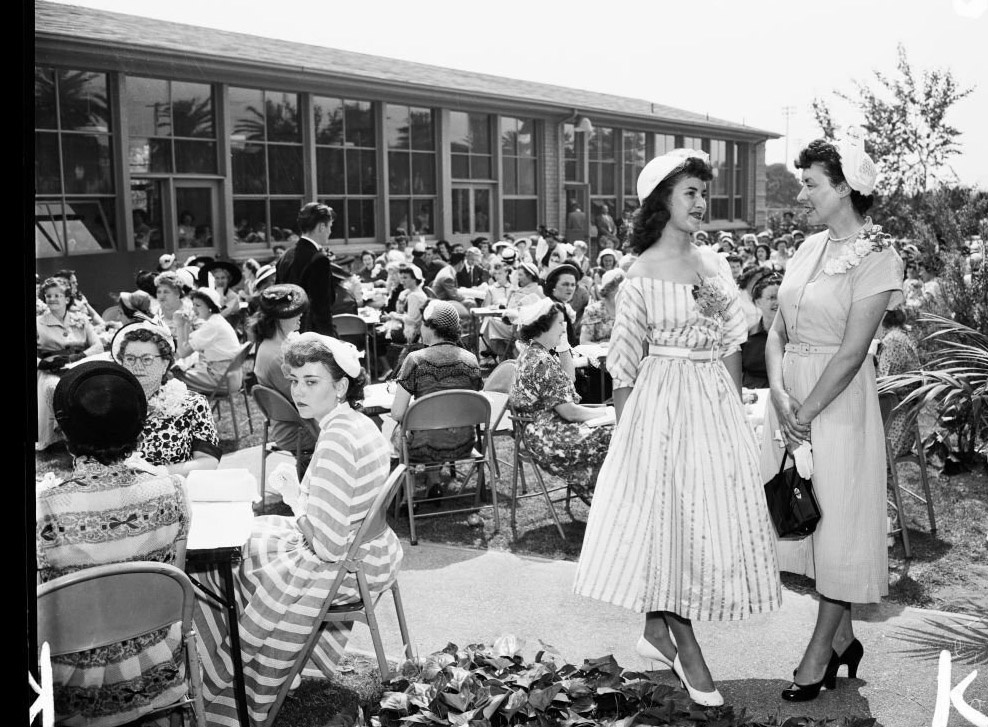
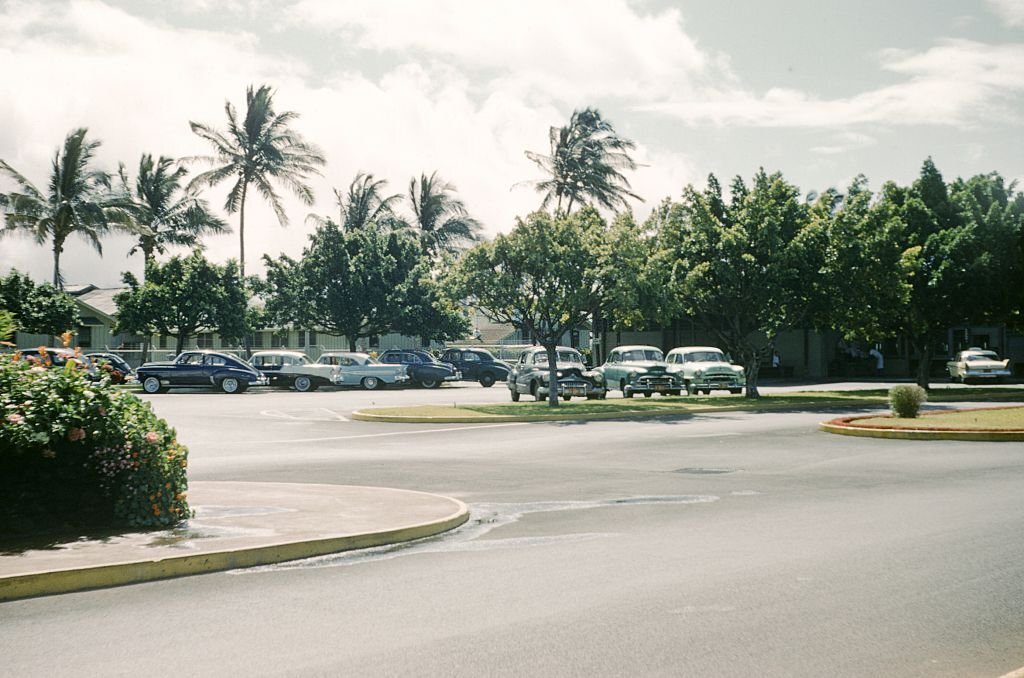
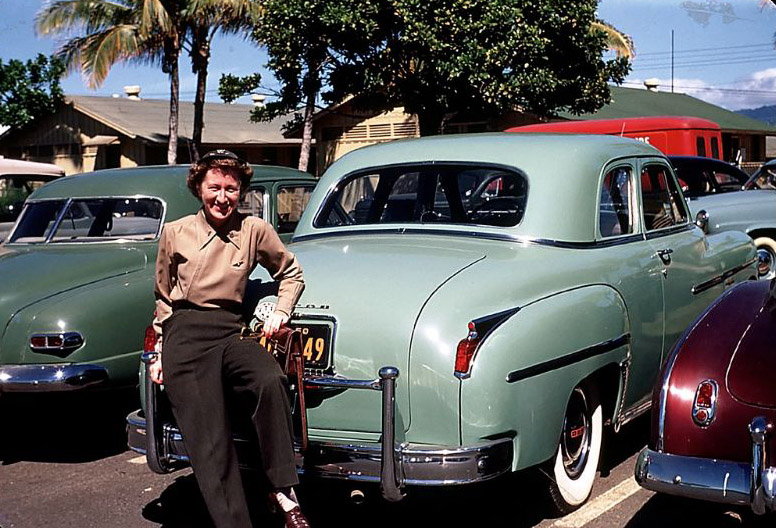
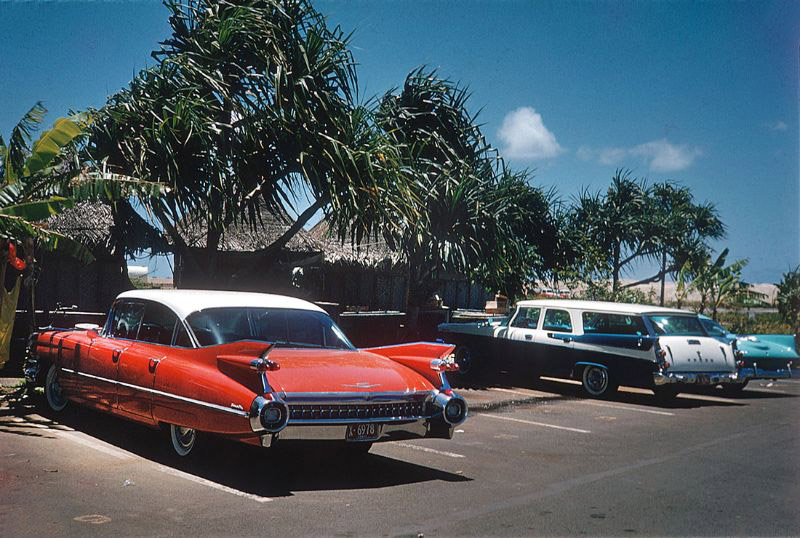
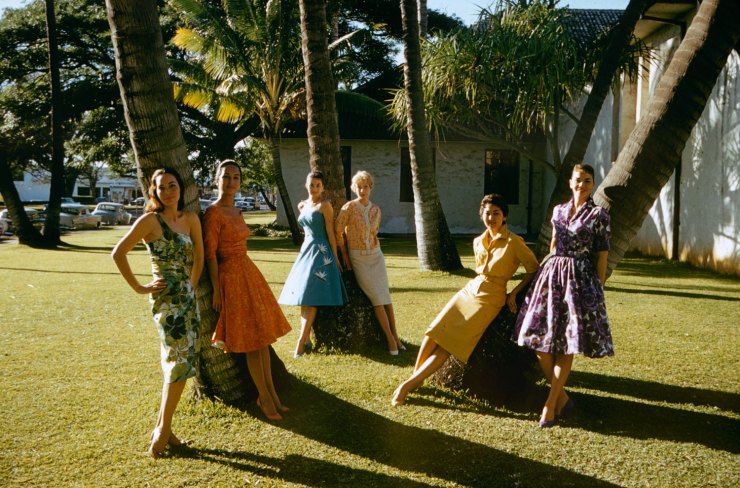
School and community events maintained the rhythms of normal life across the islands. A senior mother’s tea at Covina High School in 1952 could have happened anywhere in America — it just happened to take place in Hawaii. Cars parked among palm trees in Honolulu captured the visual collision of mainland American consumer culture and Pacific island setting that defined life on Oahu in the early 1950s.
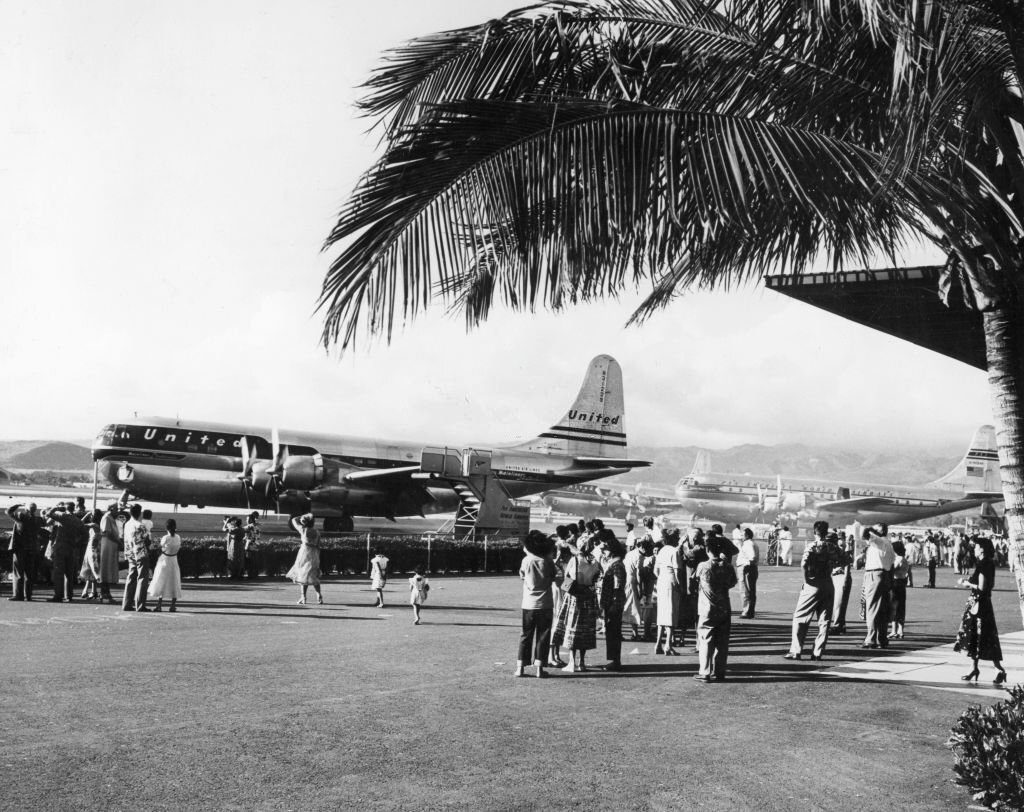
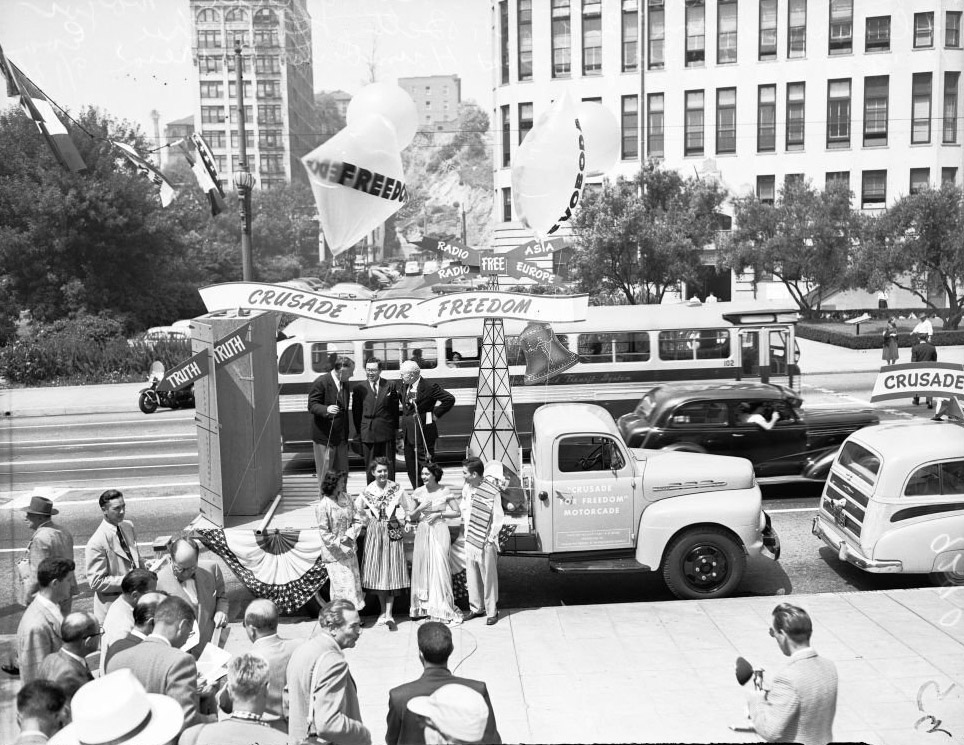
Honolulu International Airport in 1951 was a modest facility compared to what it would eventually become. Travelers arriving or departing stepped out into the warm, open air of the terminal area, often greeted with leis before they had even reached the curb. The Crusade for Freedom — a Cold War campaign to fund Radio Free Europe — reached Hawaii’s city hall just as it reached cities across the mainland, a sign of how thoroughly Hawaii participated in the national political culture of the era.
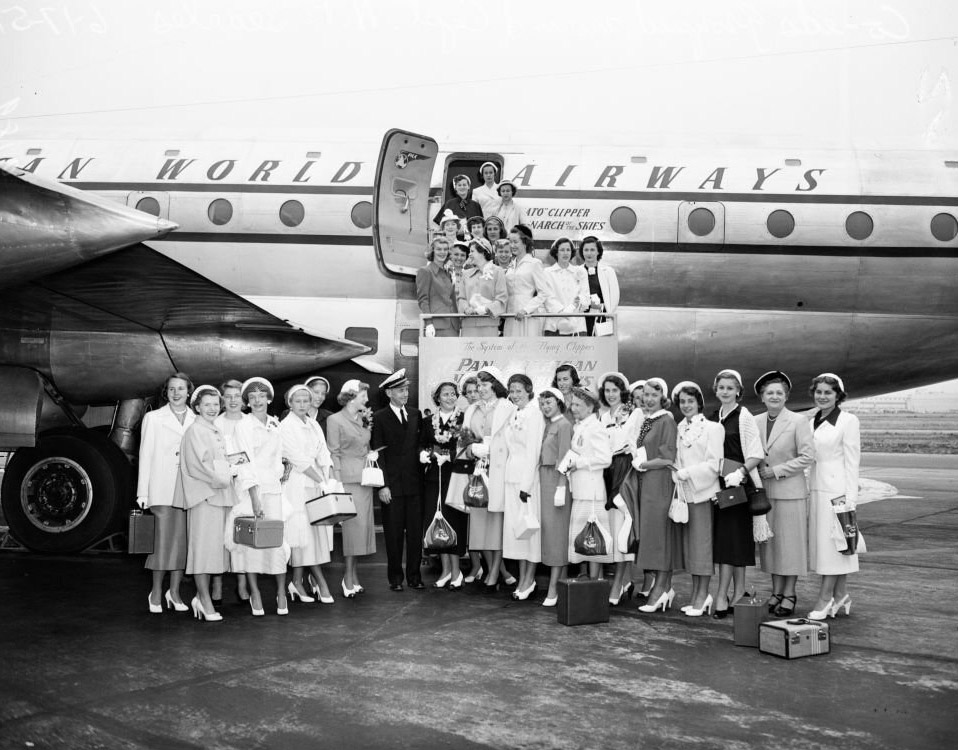
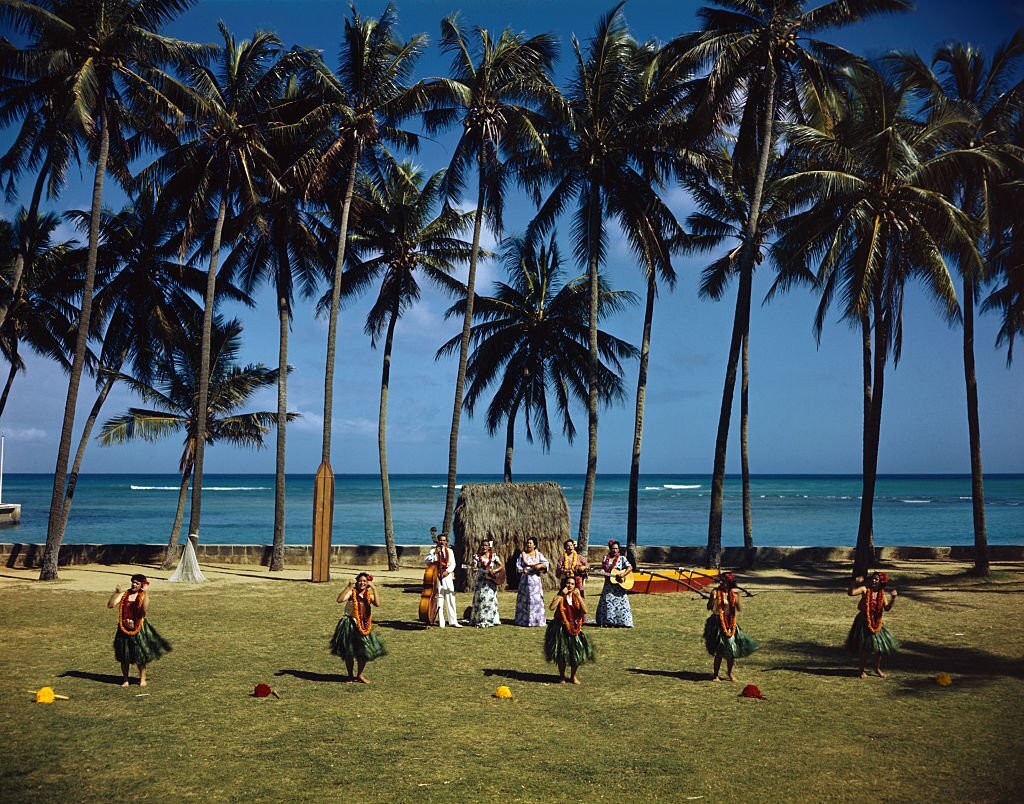
Young women making the trip to Hawaii in 1951 were part of a growing wave of college-age travelers who saw the islands as an adventurous and attainable destination. Their arrival added to Waikiki’s youthful energy. On the beaches, Hawaiian dancers performed in the open air, their movements set to the sound of slack-key guitar and ukulele, carrying on traditions that had survived the upheaval of World War II and the years of martial law that followed.
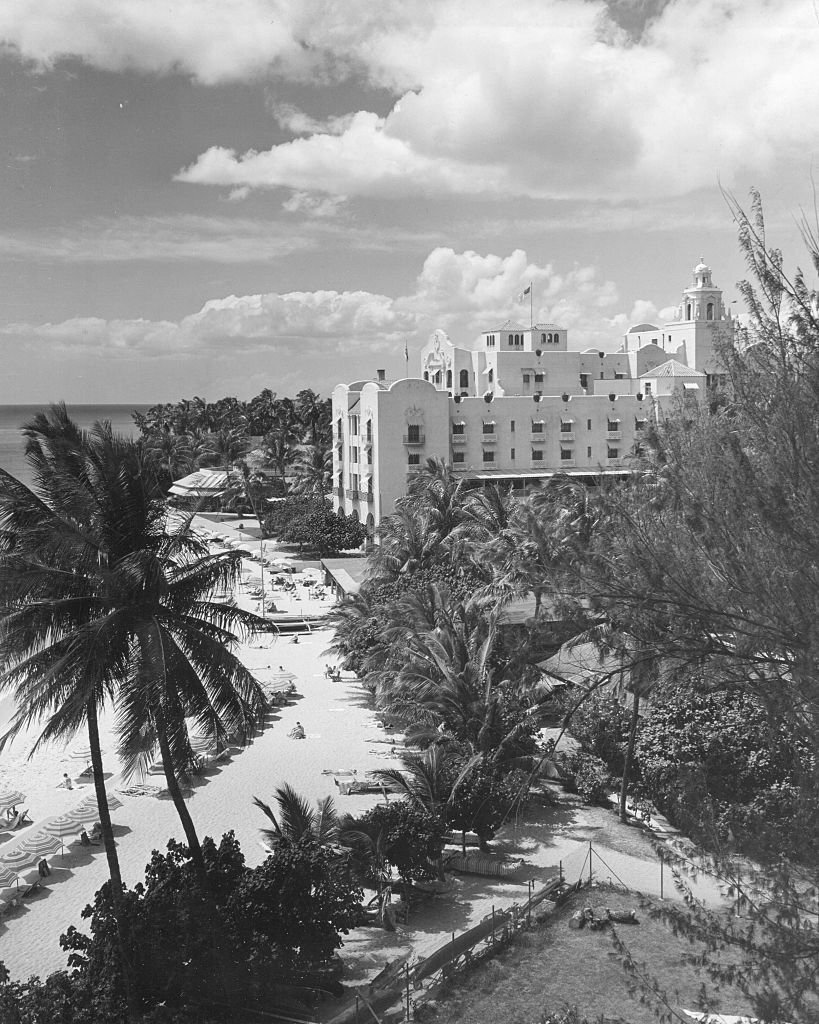
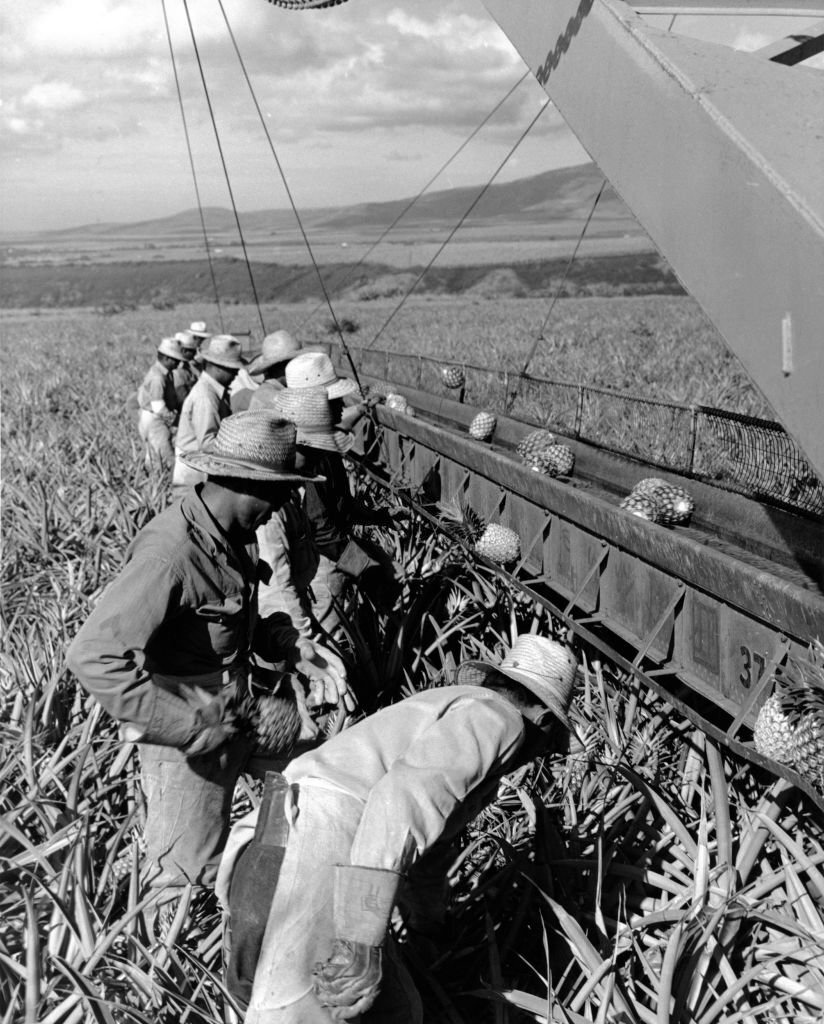
An aerial view of the Royal Hawaiian Hotel in 1950 showed the hotel set against the open beach, with Diamond Head rising in the background and relatively few buildings around it compared to what would come in later years. In the pineapple fields of central Oahu, workers wearing broad straw hats against the intense sun picked fruit by hand and loaded it onto conveyor belts for transport to the canneries — hard physical labor performed in conditions that had changed little since the plantation era.
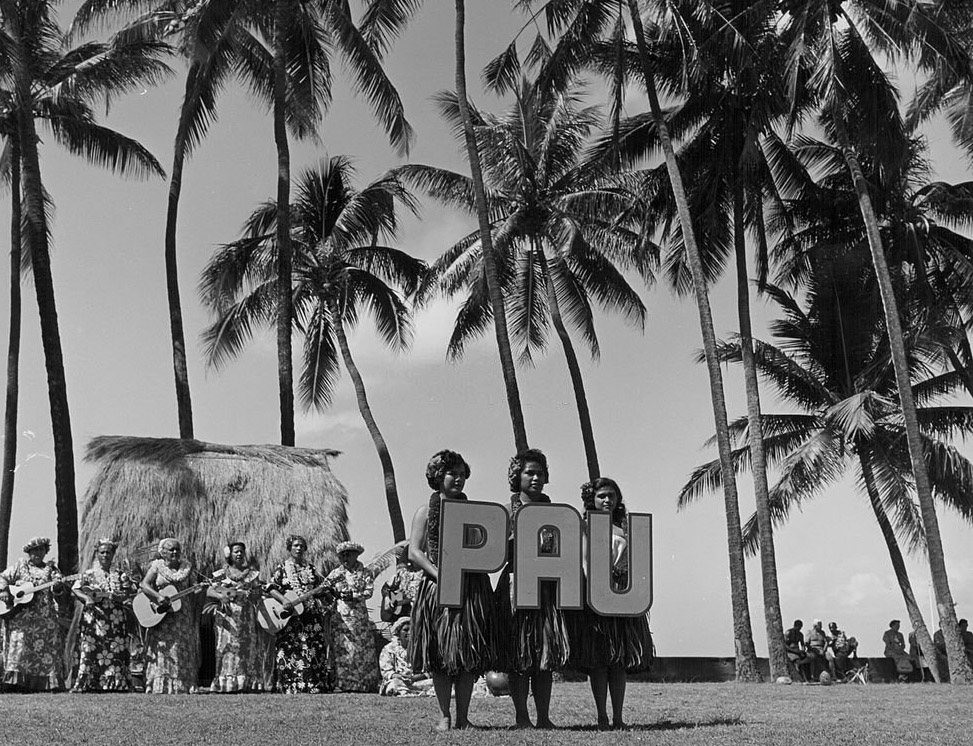
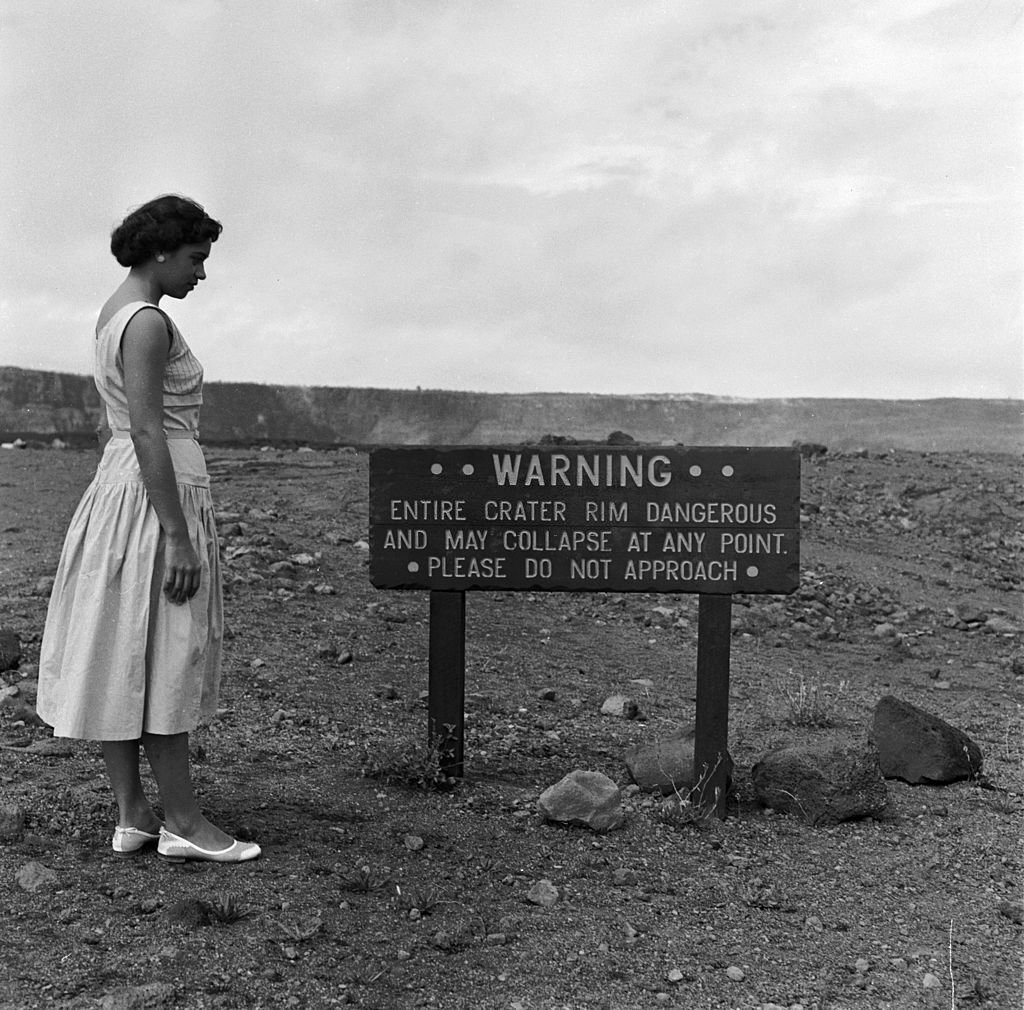
Traditional hula, performed by Native Hawaiians in Honolulu, was distinct from the simplified tourist versions staged at hotels. The authentic form used precise gestures, chants, and footwork to tell specific stories from Hawaiian history and mythology. On the Big Island, Hawaii Volcanoes National Park drew visitors to the rim of Kilauea — specifically to Halemaumau Crater, known in Hawaiian tradition as the home of the volcano goddess Pele. Warning signs near the rim were a necessary reminder that this was an actively dangerous volcanic environment.
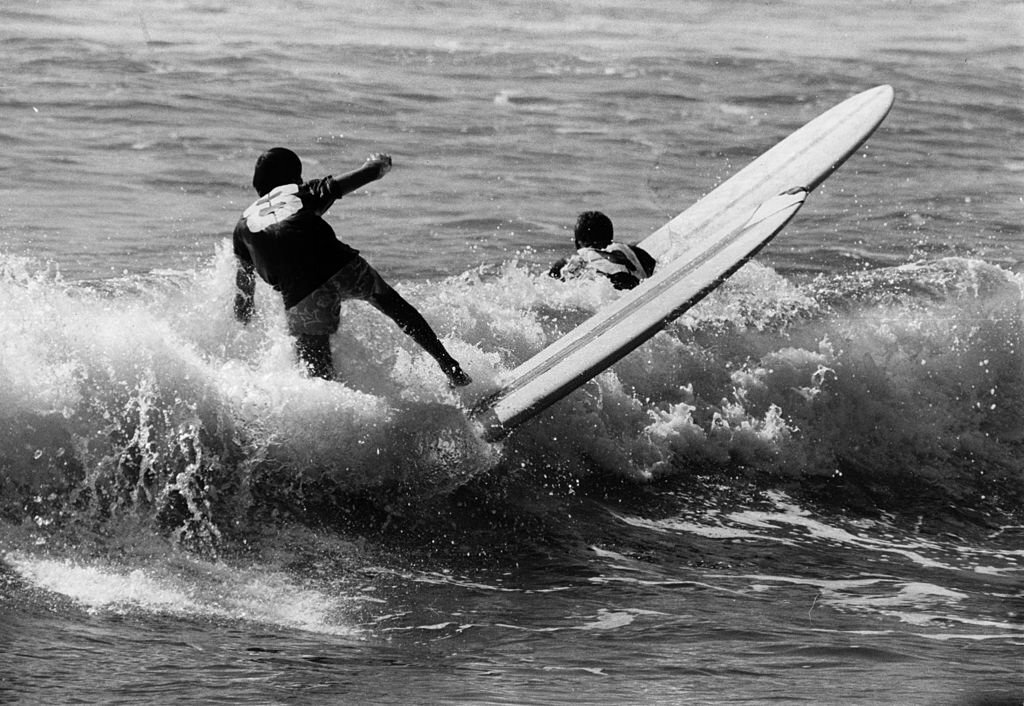
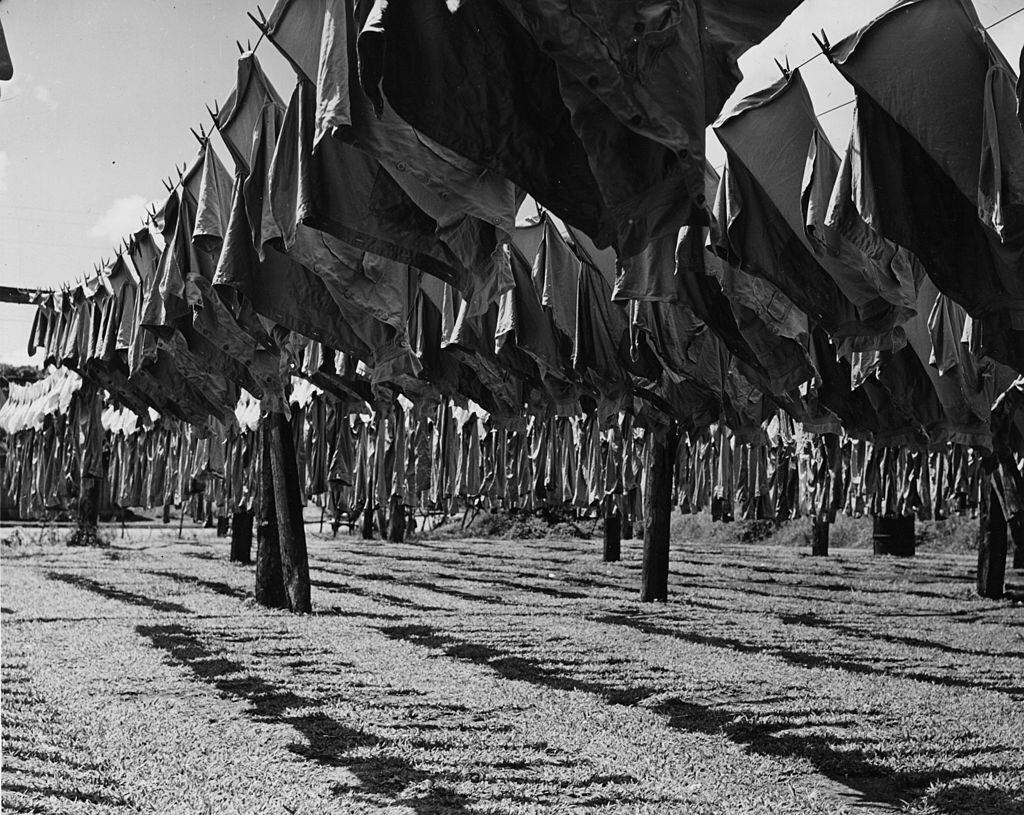
Surfers off Hawaii’s coast in 1950 rode waves on solid wooden boards that bore little resemblance to the fiberglass designs that would transform the sport later in the decade. The physical demands of the sport — paddling a heavy board through powerful Pacific surf — meant that experienced surfers were typically strong and highly skilled. At army camps outside Honolulu, rows of soldiers’ uniforms hung out to dry in the Hawaiian sun, a mundane domestic scene from a military presence that was still enormous in the early 1950s.
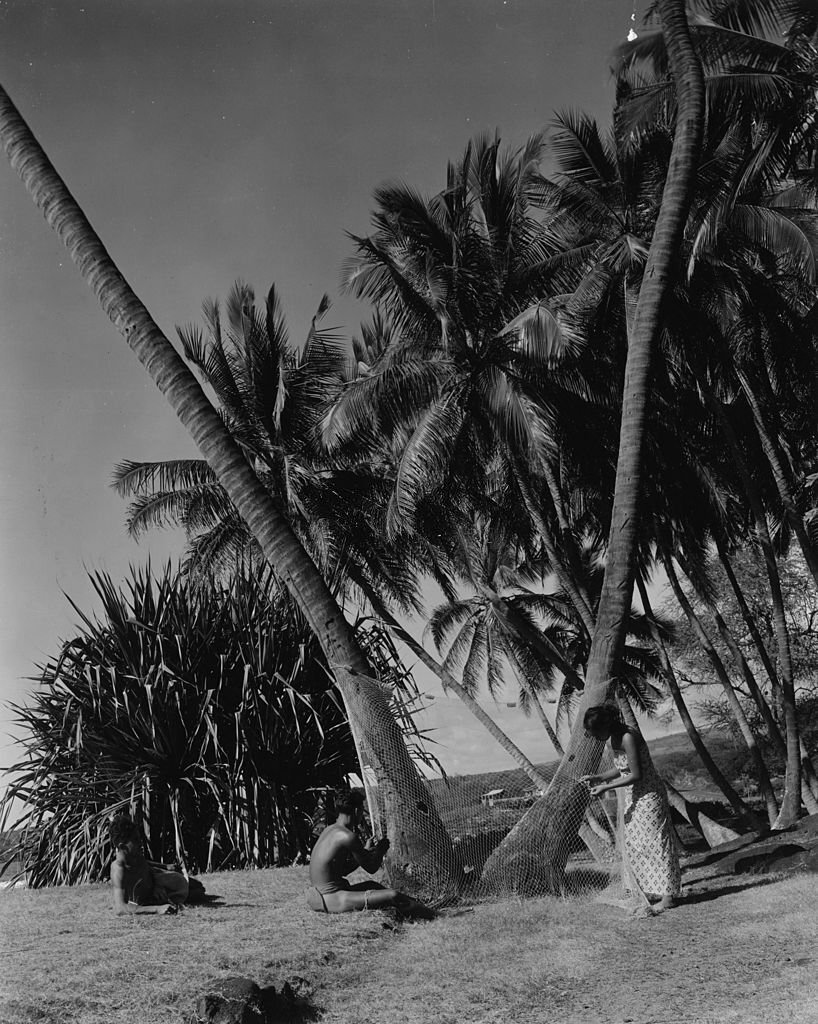
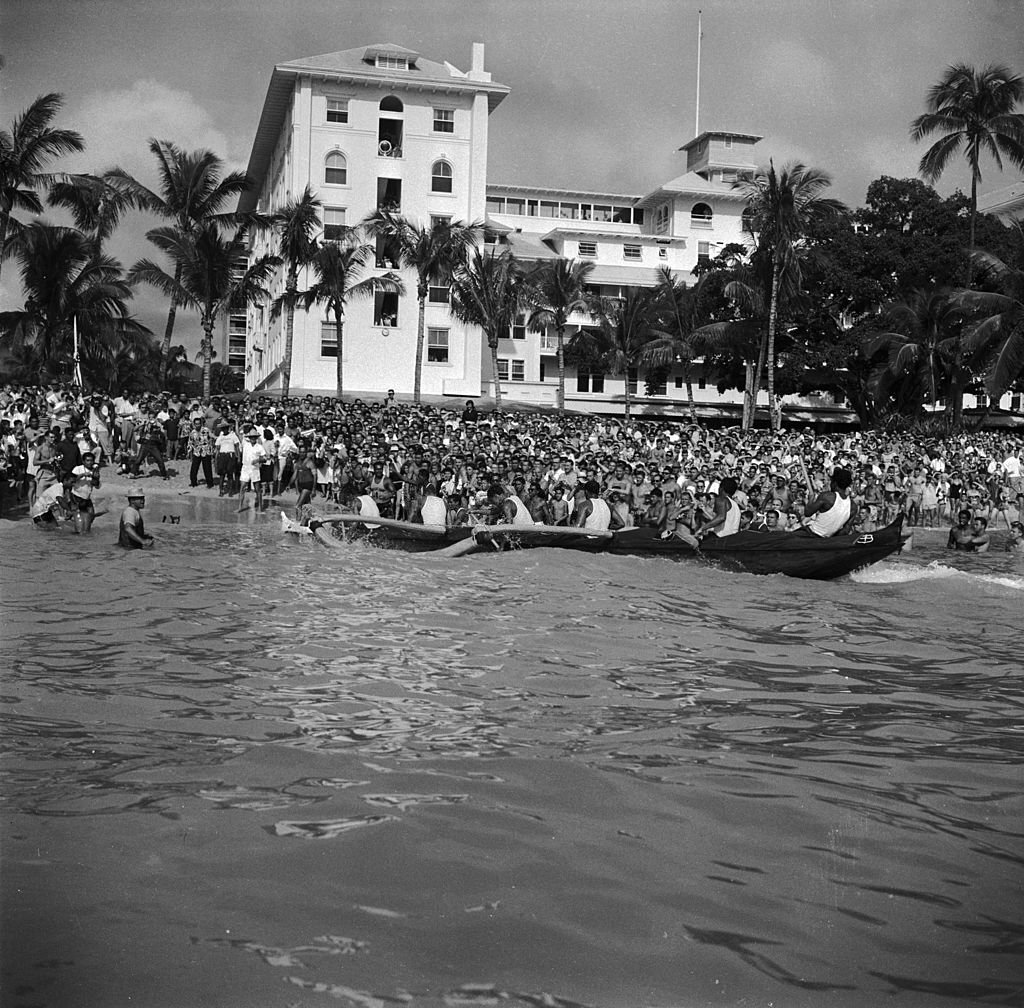
Fishing remained a way of life in remote parts of Hawaii in 1950. A couple repairing a net strung between palm trees worked at a task that connected them to generations of Hawaiian and Pacific Islander fishermen before them. The 36-mile outrigger canoe race on Oahu — the Molokai Hoe, which ran from Molokai to Oahu — drew massive crowds to the finish line. The race was one of the most grueling water sports events in the world and drew the best paddlers from across Hawaii and beyond.
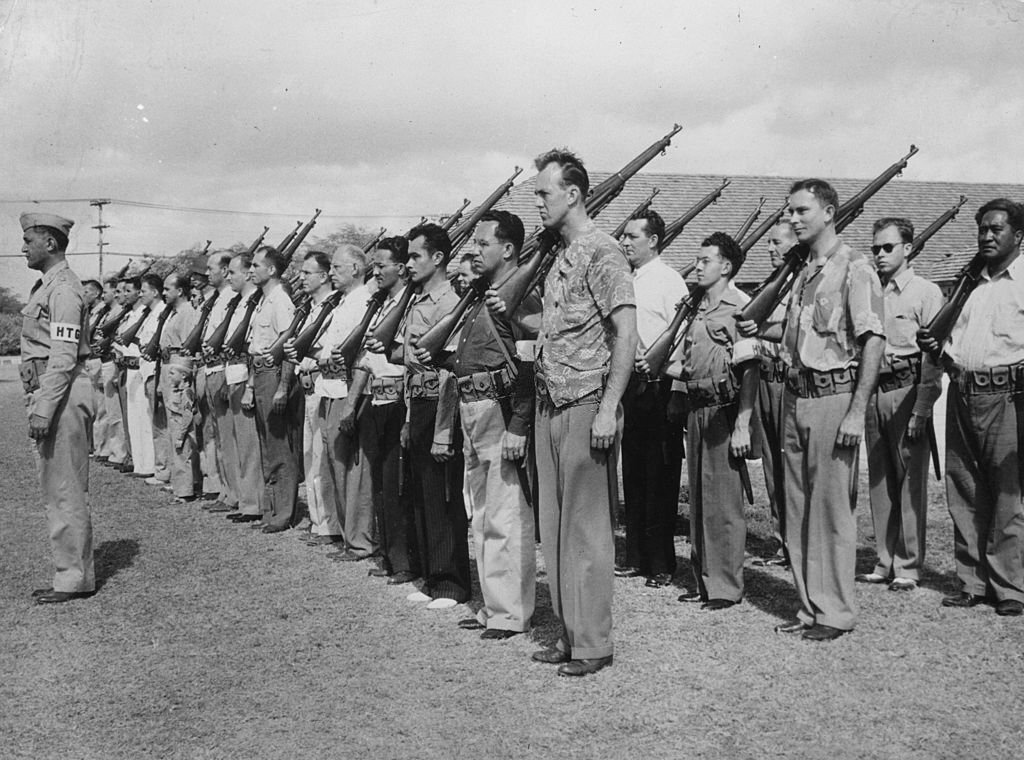
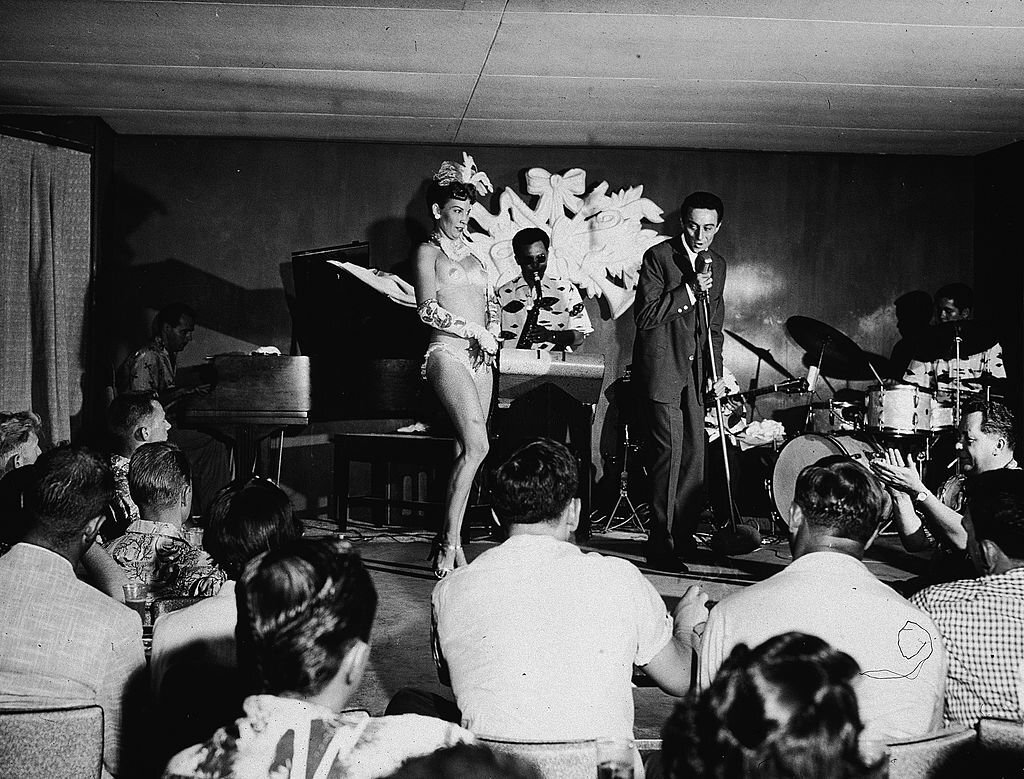
The Hawaiian Territorial Guard conducted weapons training in 1950, maintaining a defense force even as the formal military presence on the islands was handled by the US Army, Navy, and Marine Corps. On the entertainment side of Waikiki, the Orchid Room hosted performers from the mainland, including comedian Lenny Bruce, who appeared there alongside exotic dancer Windee Gayle and a saxophonist. These nightclub performances were a world away from the hula shows staged for tourists on the beach.
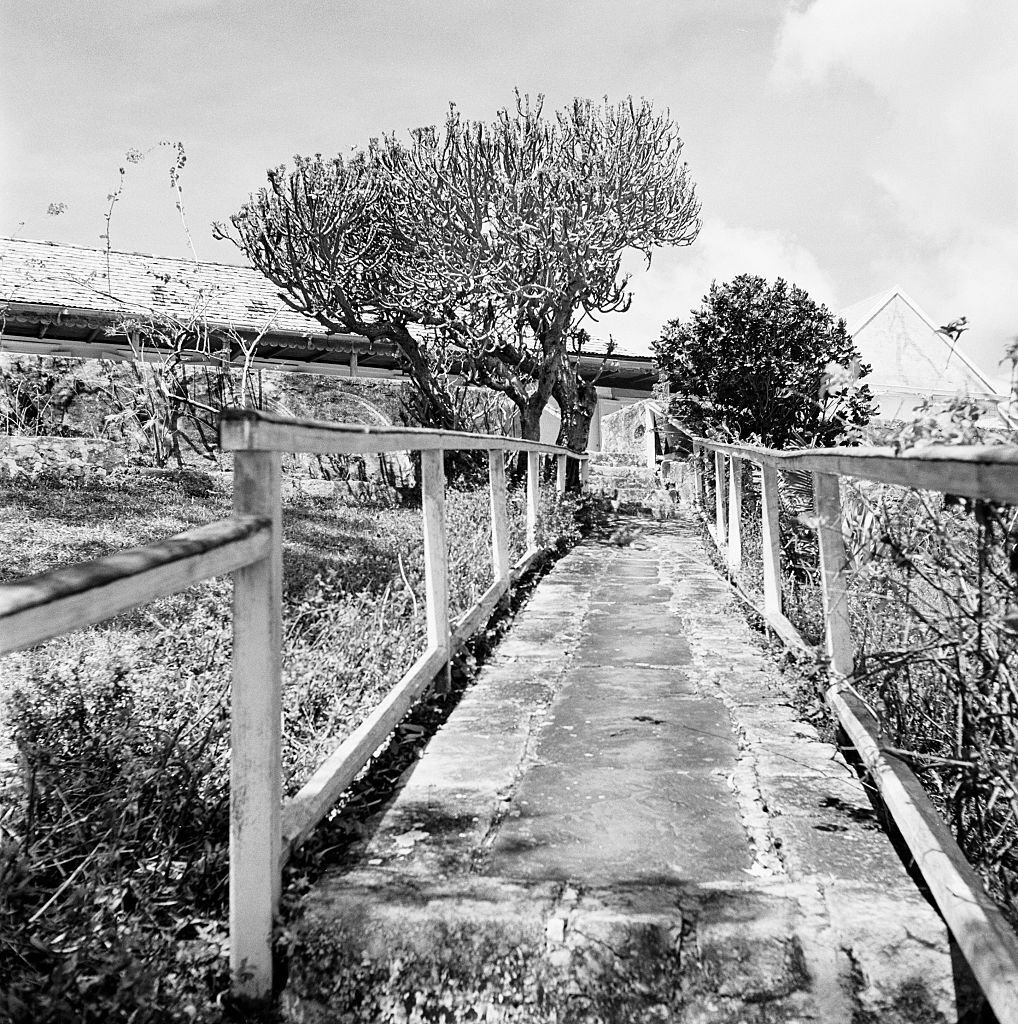
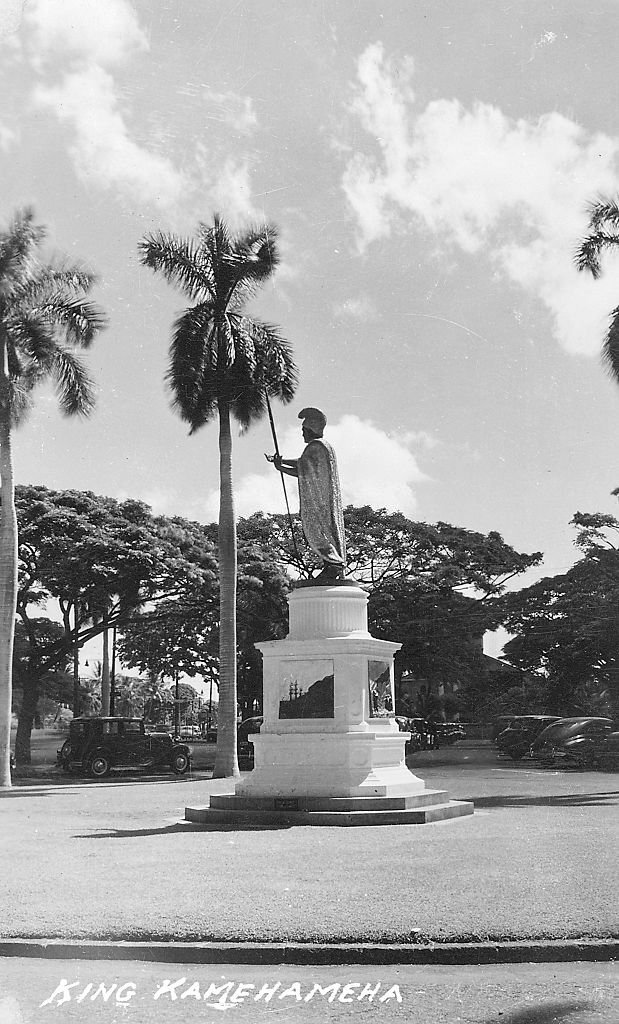
Quiet residential pathways led to modest homes across the islands, away from the tourist zones and military bases. The statue of King Kamehameha I stood in a Honolulu square surrounded by palms — a monument to the warrior king who unified the Hawaiian Islands under a single rule in the early 19th century. His gold-painted figure, arms outstretched, remained one of the most visited landmarks in Honolulu throughout the decade. These photographs together — from plantation fields to royal statues, from military runways to hula dancers on the sand — show Hawaii in a decade of enormous change, holding tightly to what it had always been while stepping into a new era as America’s newest state.




