Halloween has ancient roots. It grew out of Samhain, a Celtic festival marking the shift from summer to winter. People lit bonfires and wore costumes to ward off wandering spirits. When Irish immigrants arrived in the United States, they brought the tradition with them. By the Victorian era, Halloween had become one of the most popular seasonal celebrations in the country, and that enthusiasm carried straight into the Edwardian era of the 1900s and 1910s.
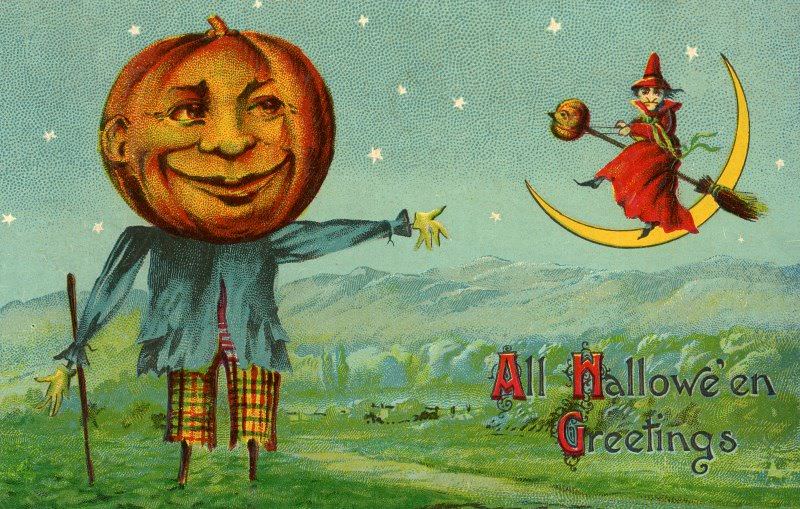
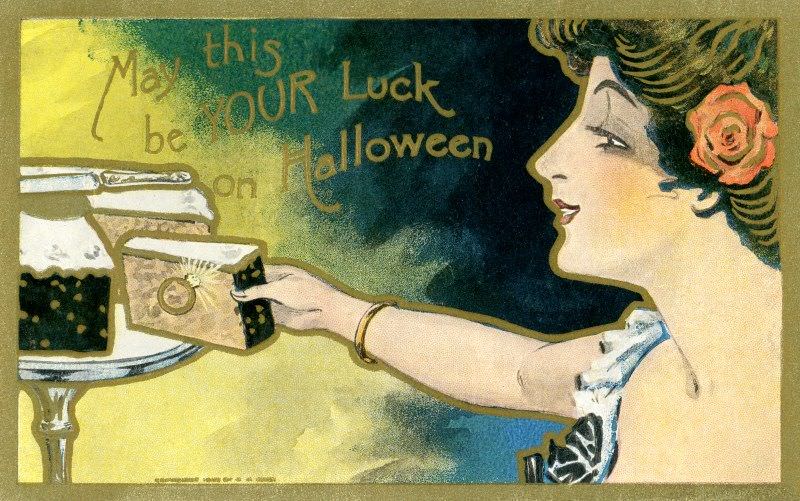
One of the most charming customs of that period was the Halloween postcard. These cards carried the same social weight as Christmas or birthday greetings. People mailed them to friends and family with the same care and intention they gave any other holiday message. The imagery was rich and distinctive — witches on broomsticks, grinning jack-o’-lanterns, black cats, fortune-telling scenes, and costumed children running through the night. Below is a collection of original Halloween postcards from that era, each one a small window into how people celebrated the holiday over a century ago.
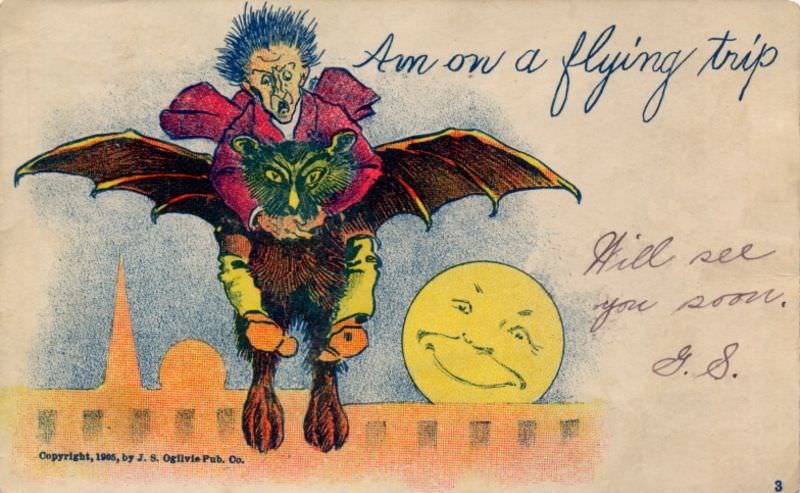
Many of these cards were mailed with short, personal notes scrawled on the back. Card #2 carries a handwritten message from someone signing off as G.S., promising a visit soon. That kind of personal touch made postcards feel immediate and warm — closer to a text message than a formal letter.
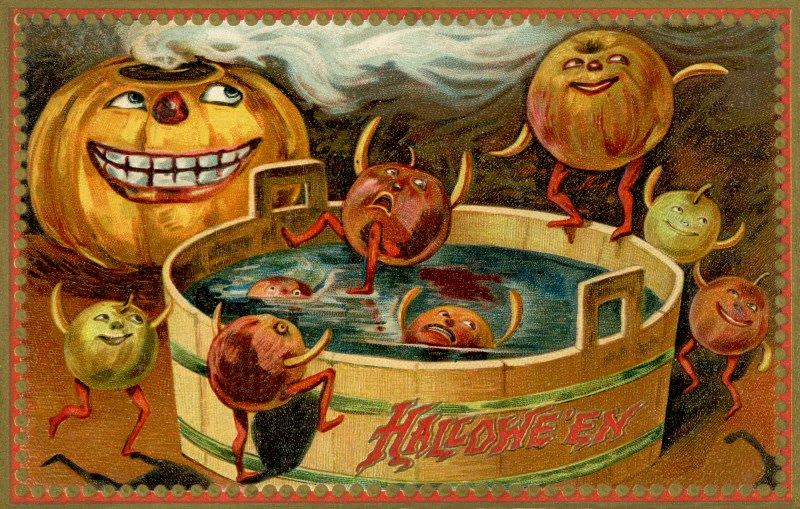
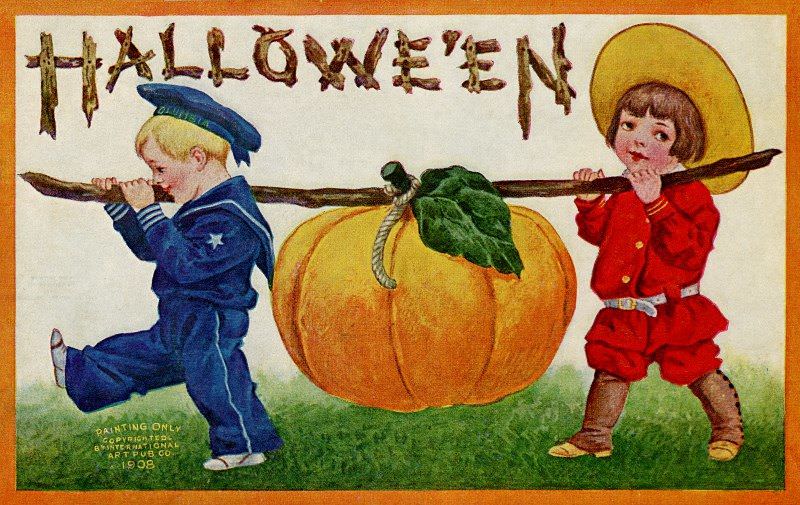
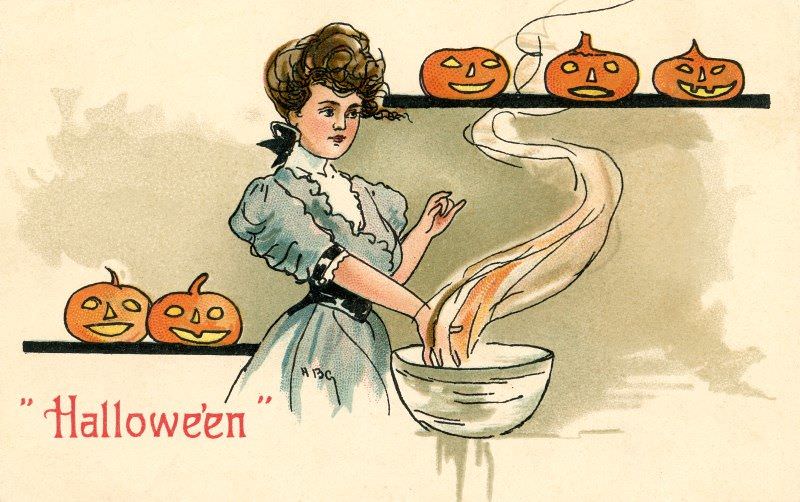
Apple bobbing was a staple Halloween game during the Edwardian period. It had roots in old harvest traditions and carried a hint of fortune-telling — the first person to bite an apple was said to be the next to marry. Pumpkin carving was equally central to the celebration. Bringing home the Halloween pumpkin was a ritual in itself, and artists depicted it with genuine warmth and excitement.
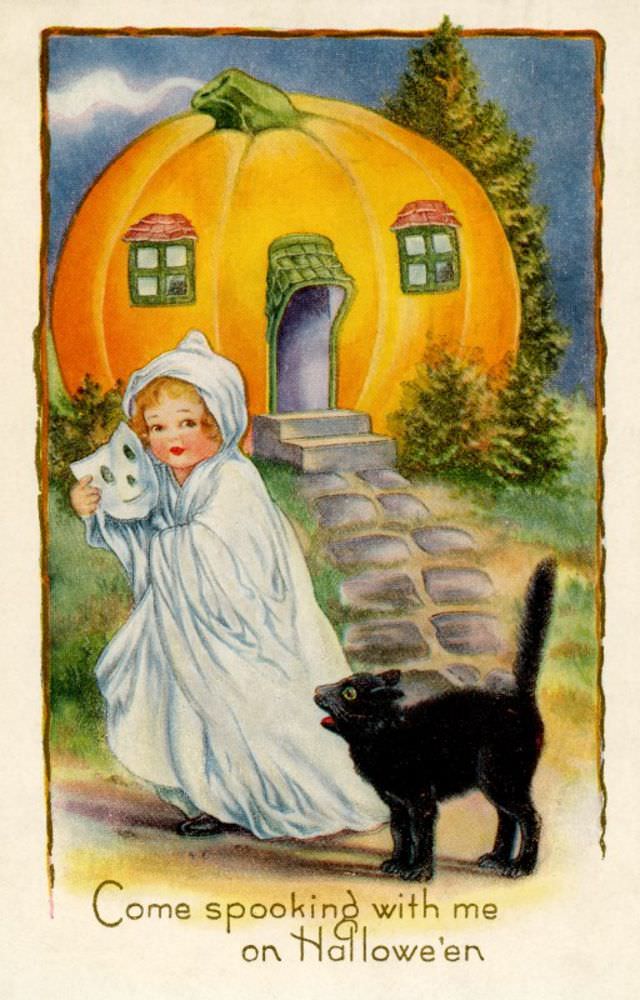
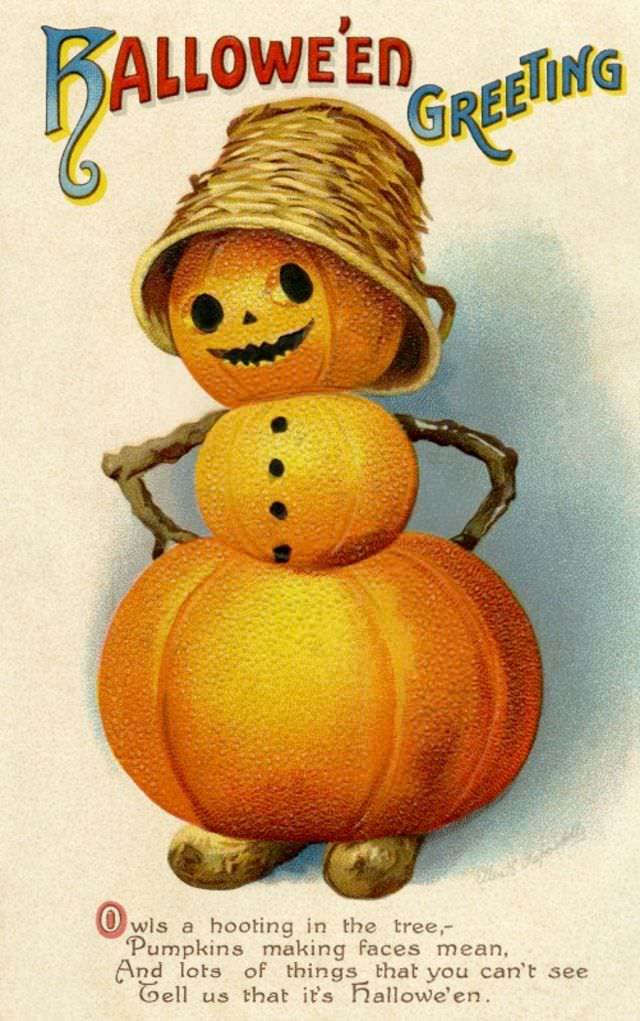
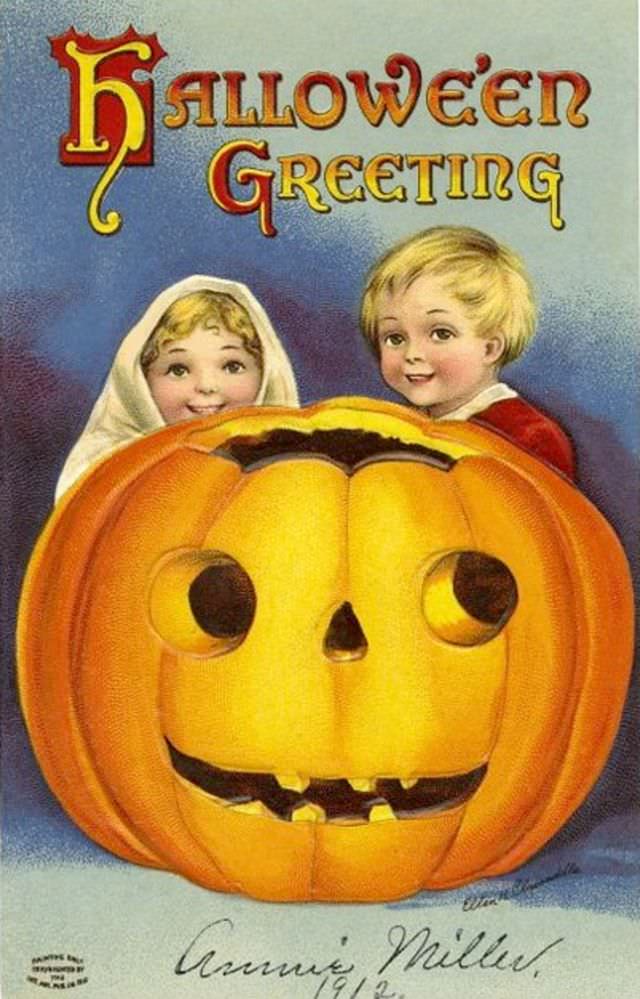
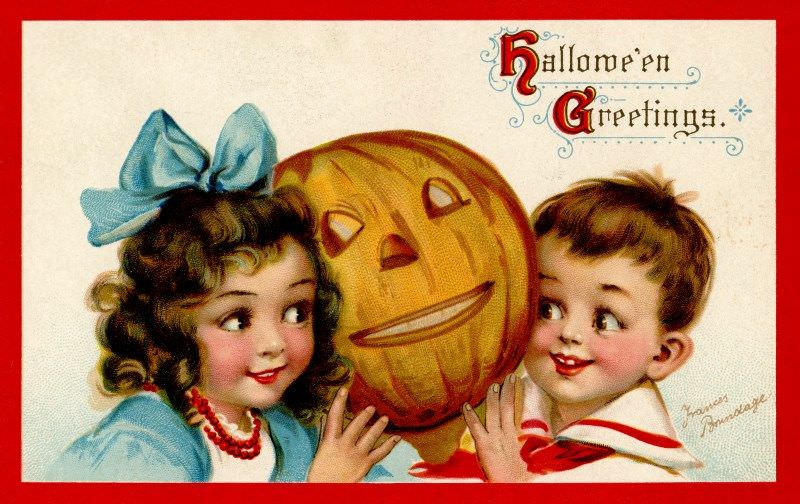
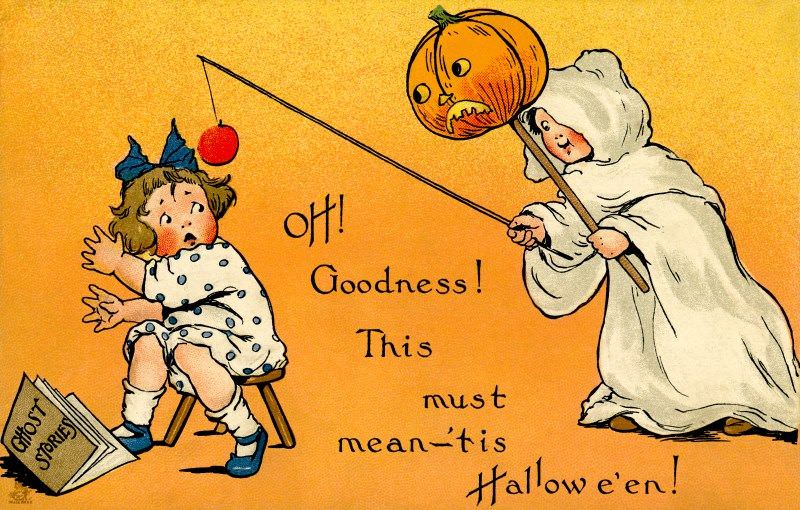
The artist Frances Brundage was one of the most recognized illustrators working on holiday postcards during this time. Her Halloween designs featured bold colors, expressive children, and theatrical compositions. Her cards are among the most sought-after by collectors today.
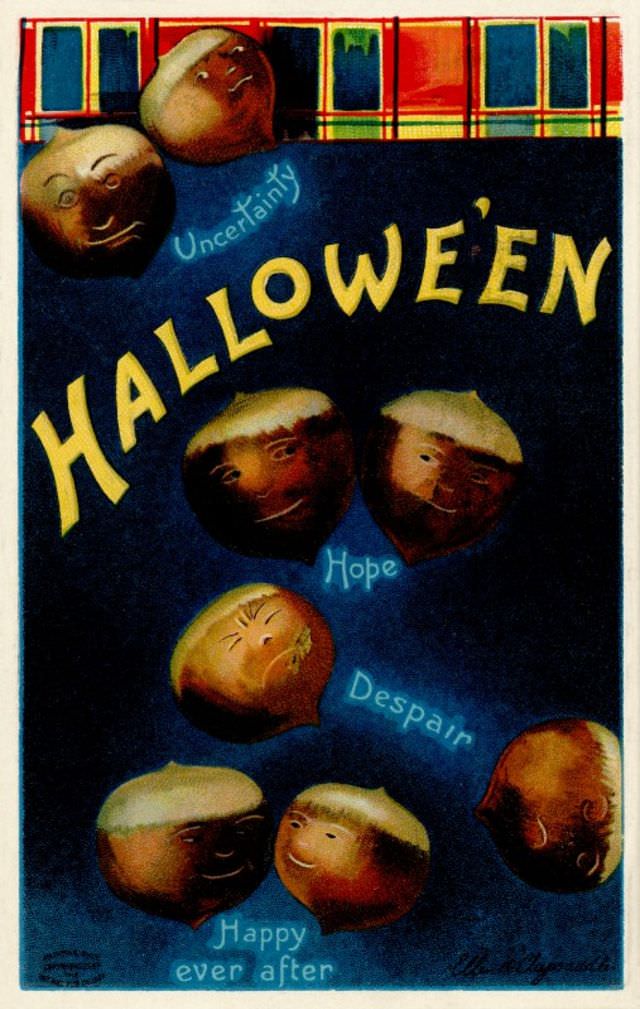
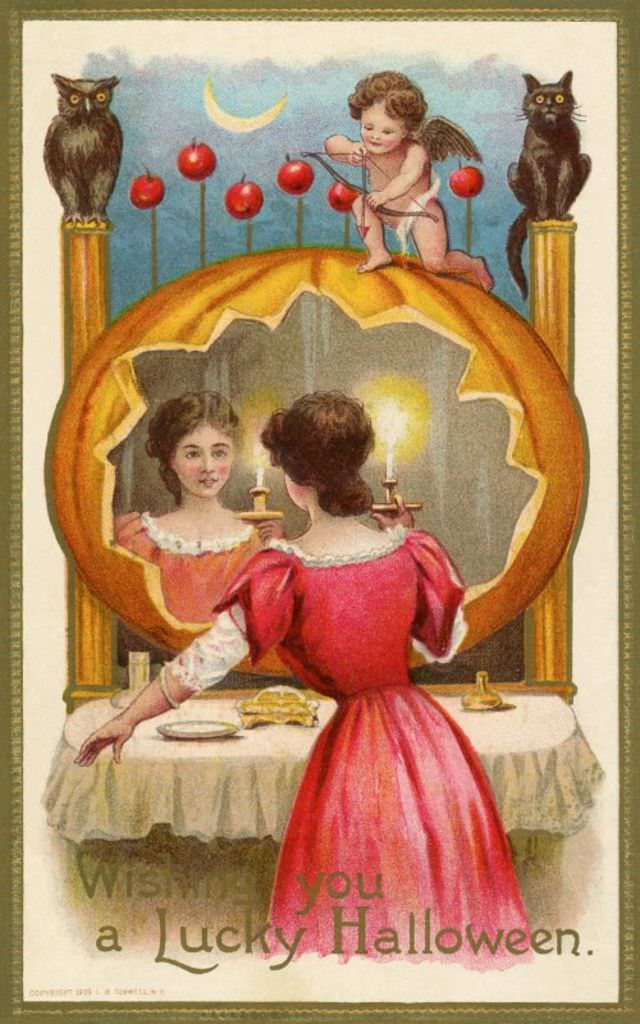
Fortune-telling was a major theme across Edwardian Halloween cards. Young women were especially depicted using mirrors, candles, apple peels, and other folk methods to divine who their future husband might be. Card #9 captures this perfectly, walking through the emotional arc of the ritual: uncertainty, hope, despair, and finally, a happy ending.
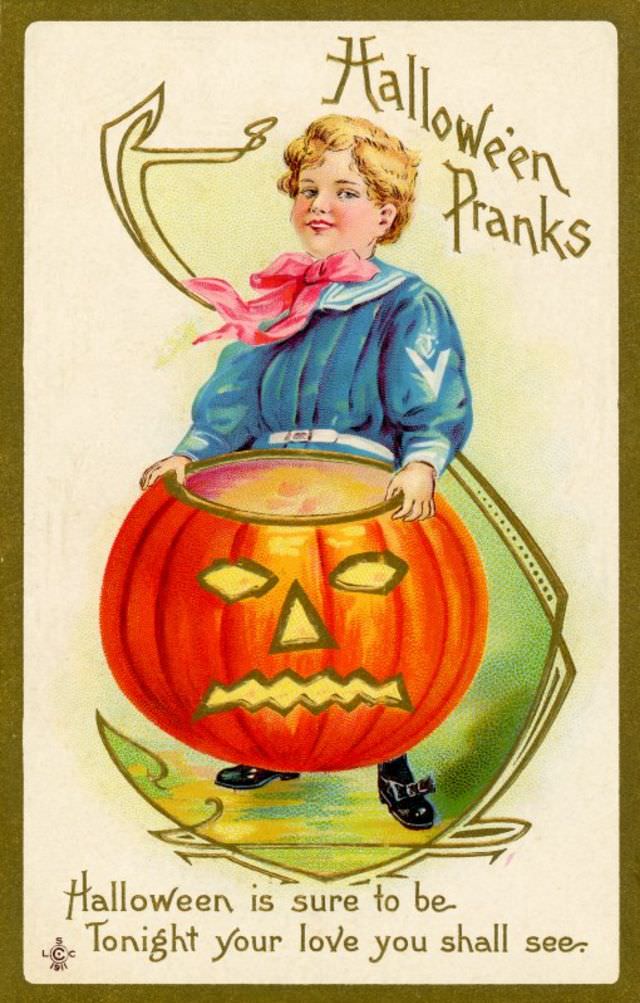
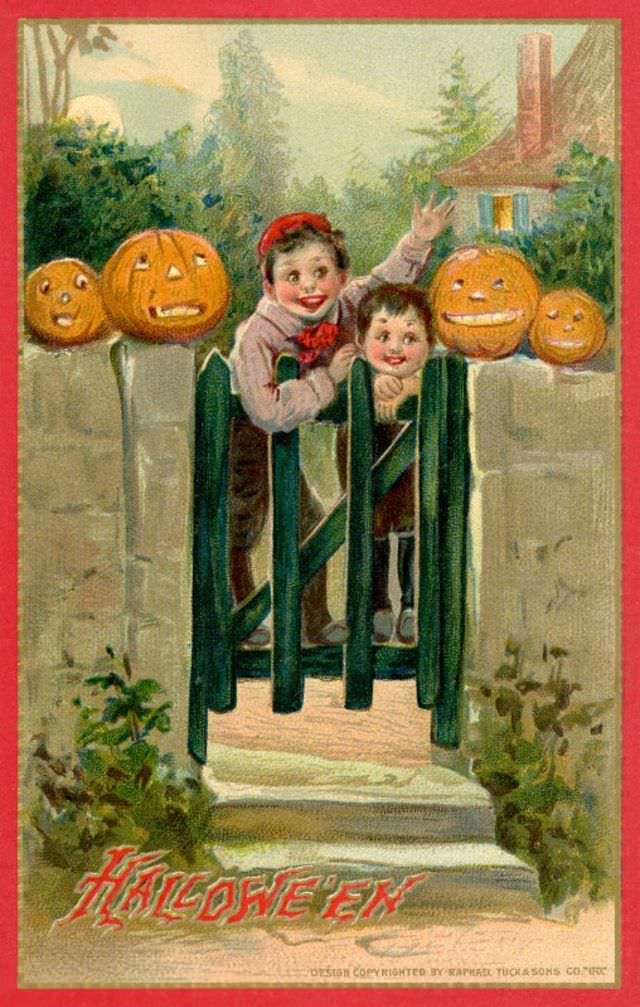
Pranks were a well-documented part of Halloween in this era. Tipping outhouses, moving furniture onto rooftops, and letting animals loose were common enough that some communities passed ordinances against Halloween mischief. Cards celebrating pranks treated the chaos with humor rather than alarm.
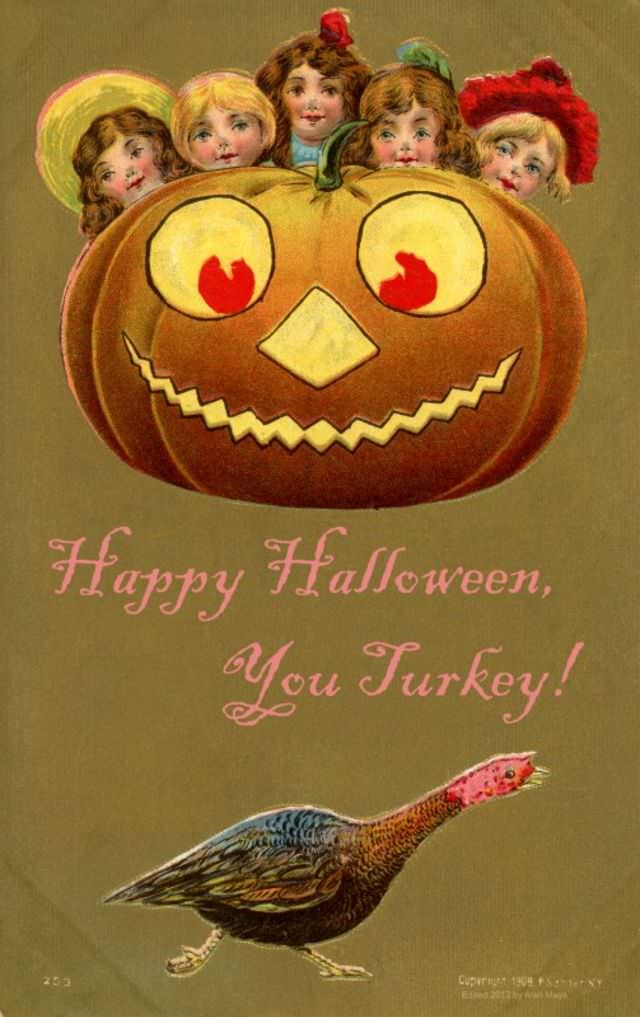
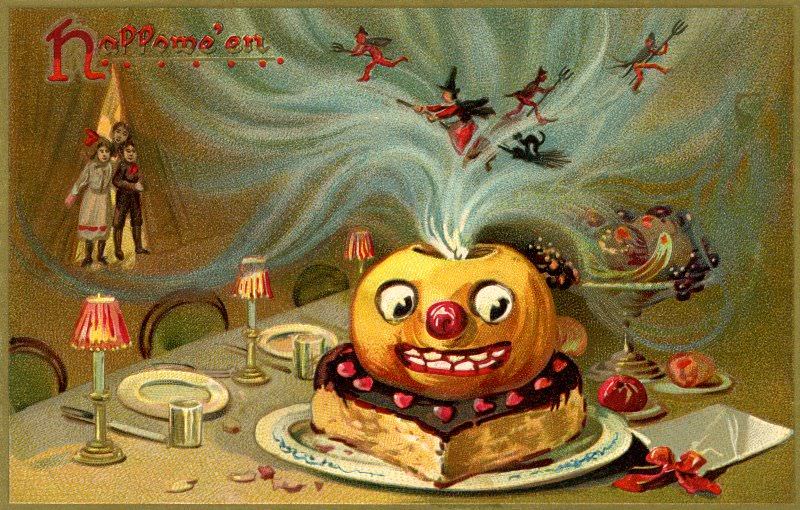
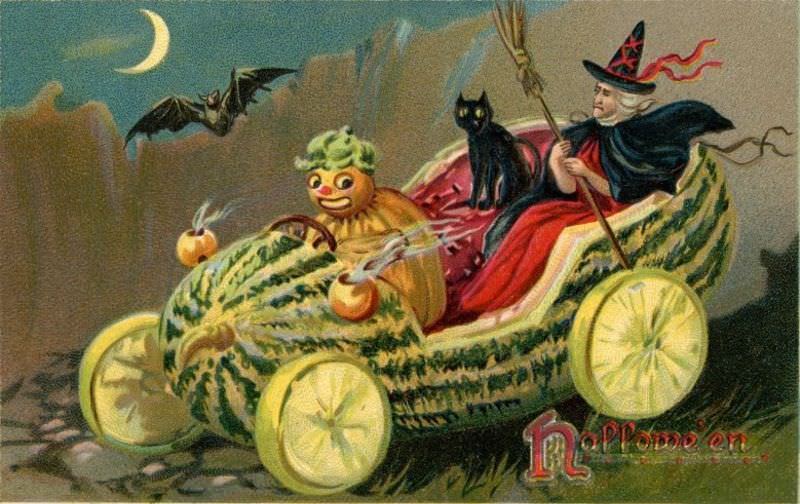
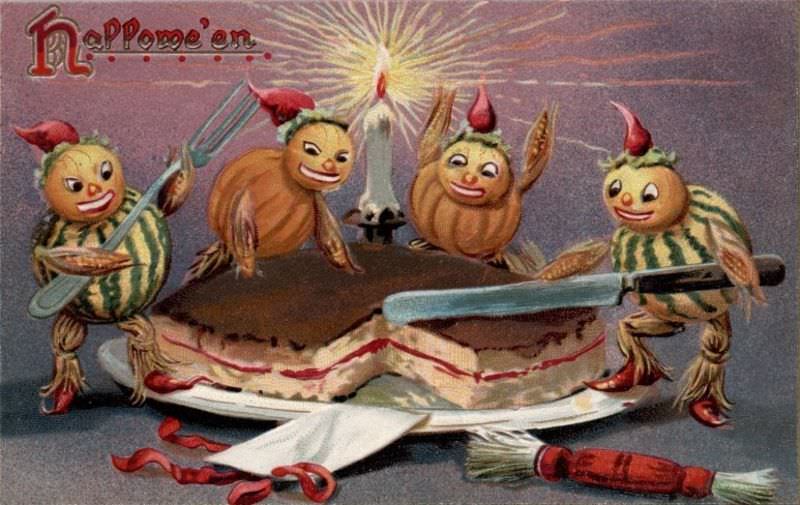
Some cards leaned fully into the bizarre. Oversized vegetables serving as vehicles, figures with pumpkin heads, and dreamlike scenes where scale and logic collapse entirely were all fair game. The surreal quality of cards like #15 shows that Edwardian illustrators were not shy about strange imagery.
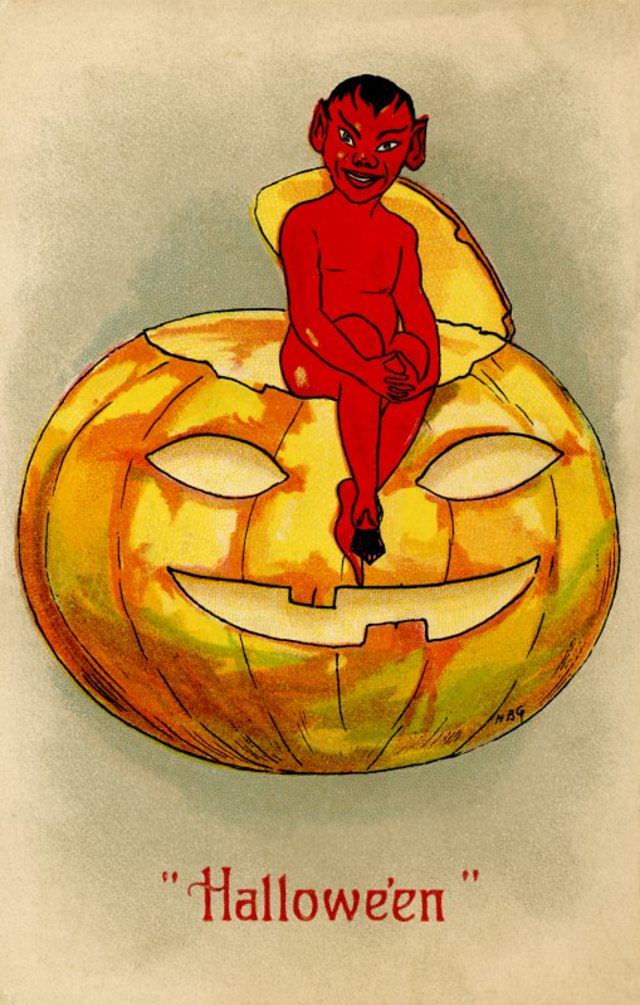
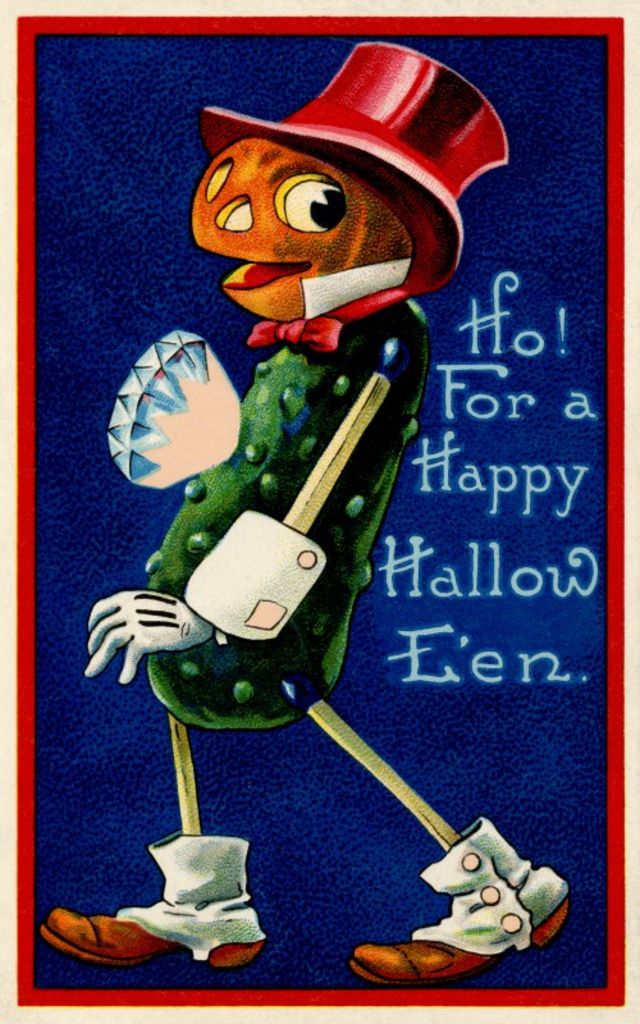
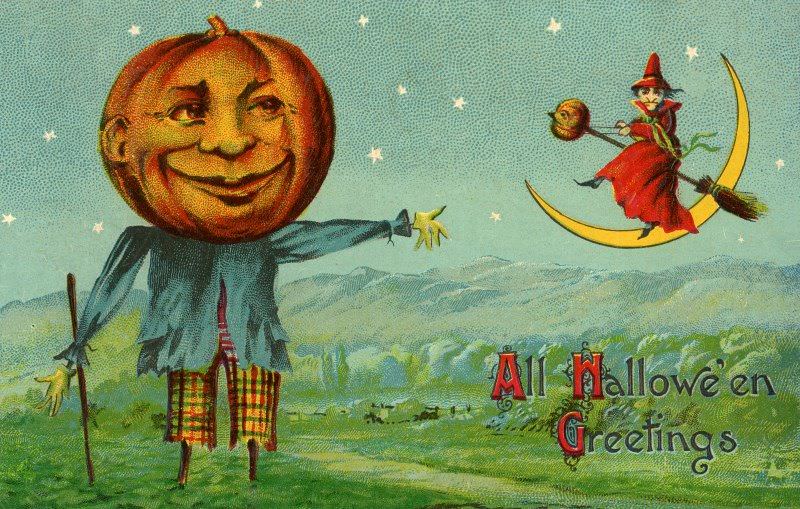
The printing quality of these postcards was surprisingly high. Germany was the leading producer of printed postcards during this period, and many American publishers sent their designs overseas to be printed there. The result was vivid lithography with rich oranges, deep blacks, and glowing yellows that still look striking today.
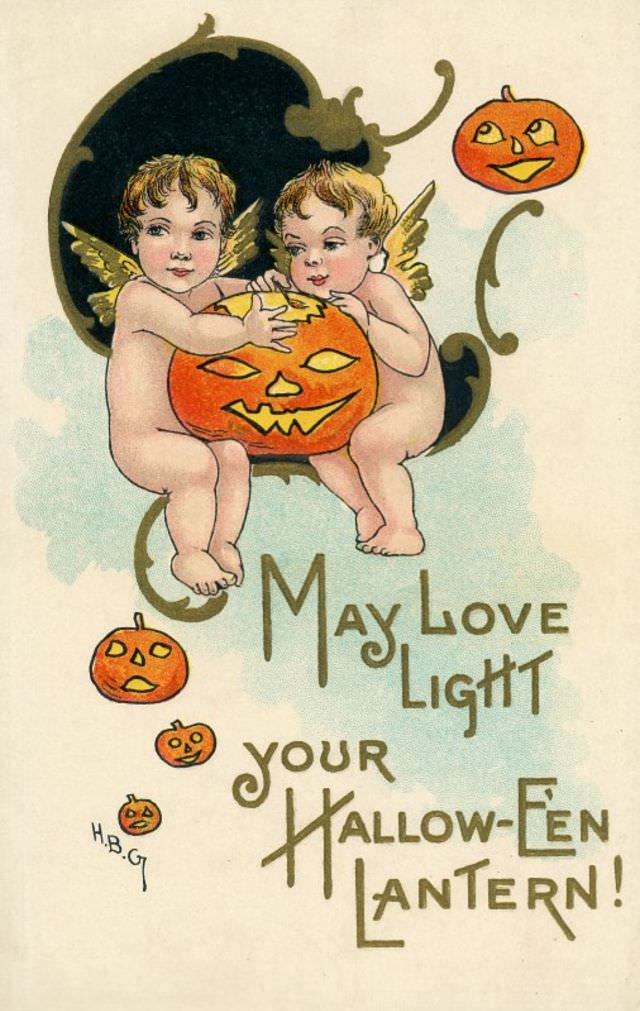
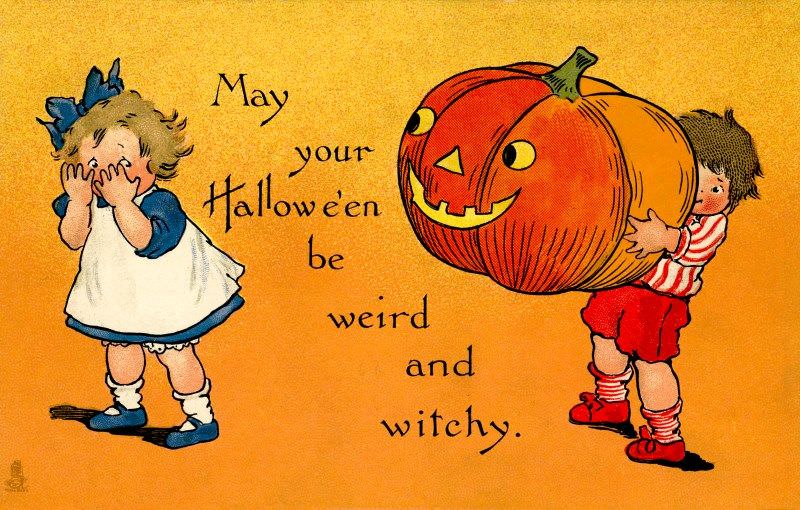
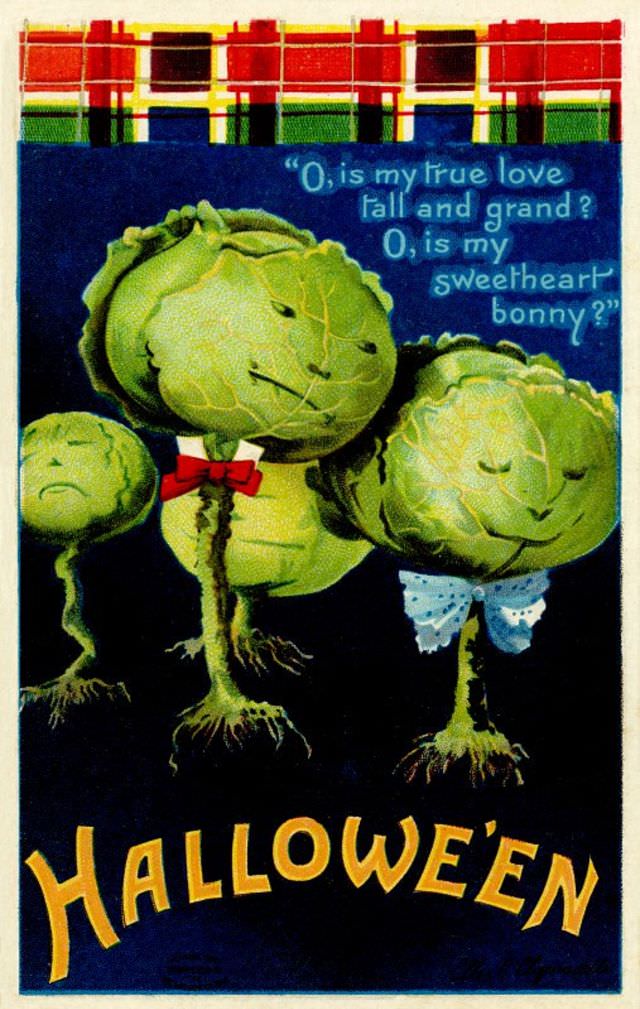
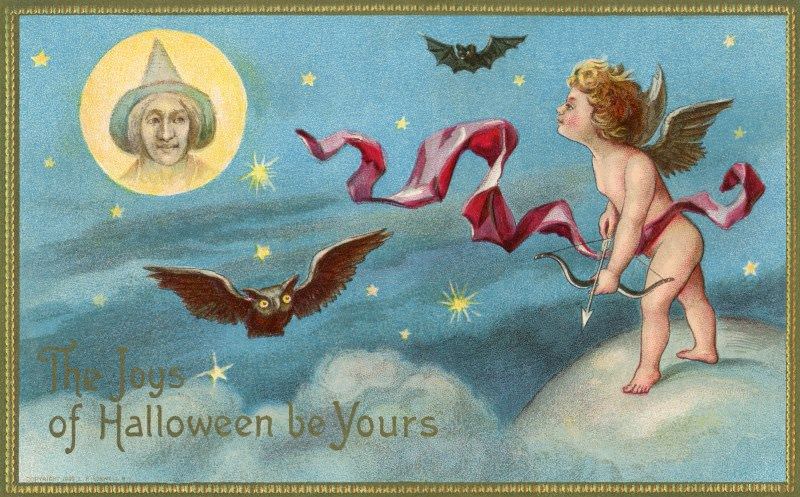
Romantic themes appeared frequently on Halloween cards, particularly those aimed at young women. Verses like the one on card #21 referenced old Scottish folk poems connected to Halloween divination rituals. The night was seen as a time when the veil between the everyday world and the supernatural was thin — making it the perfect moment to seek answers about love and the future.
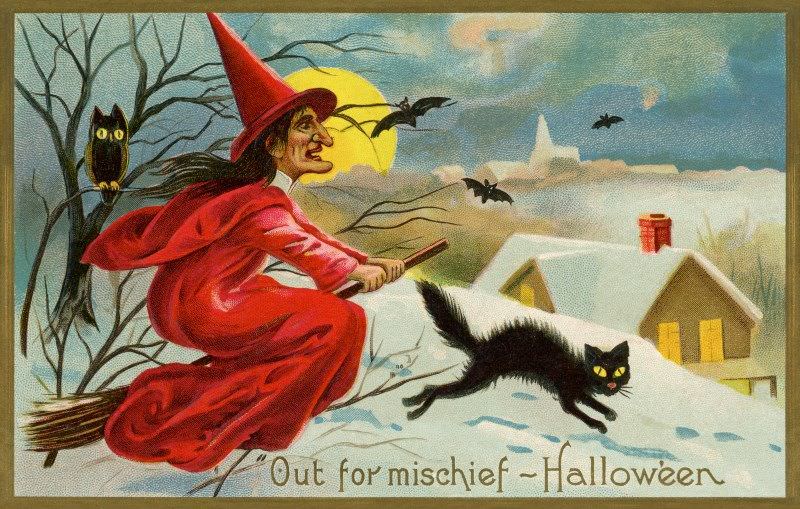
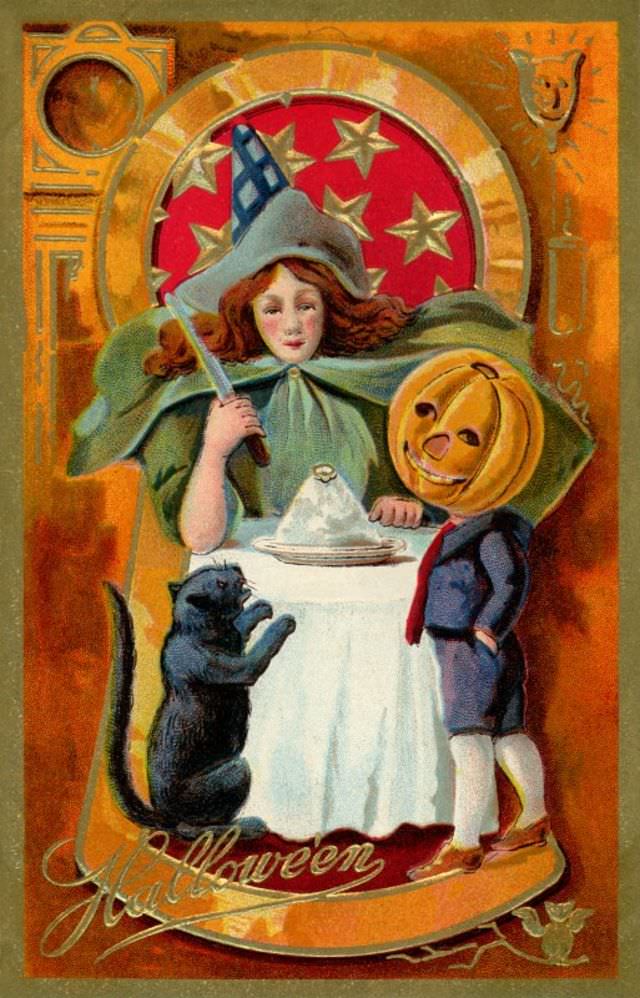
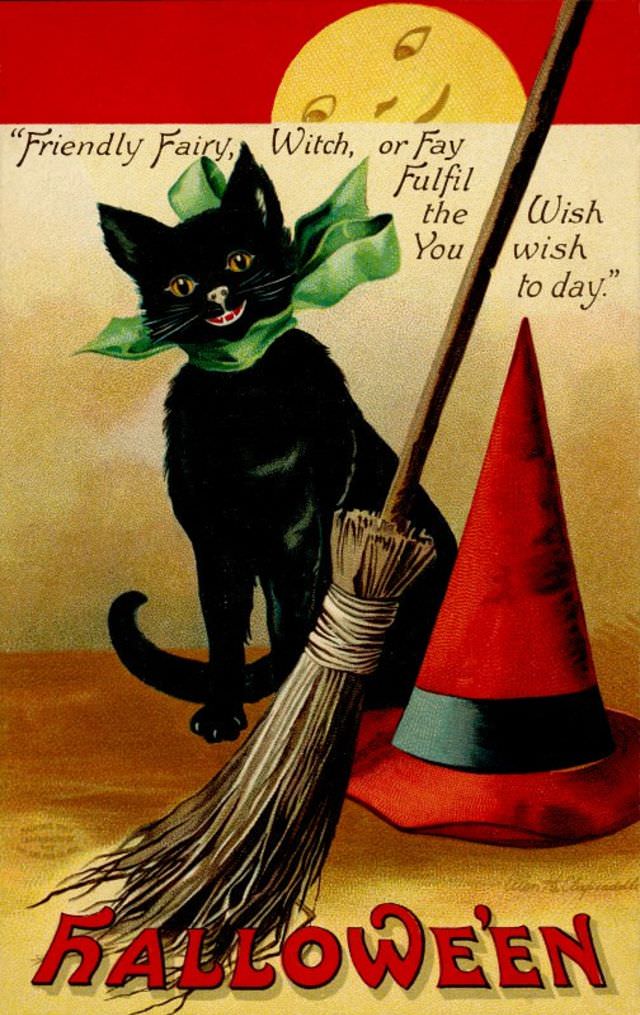
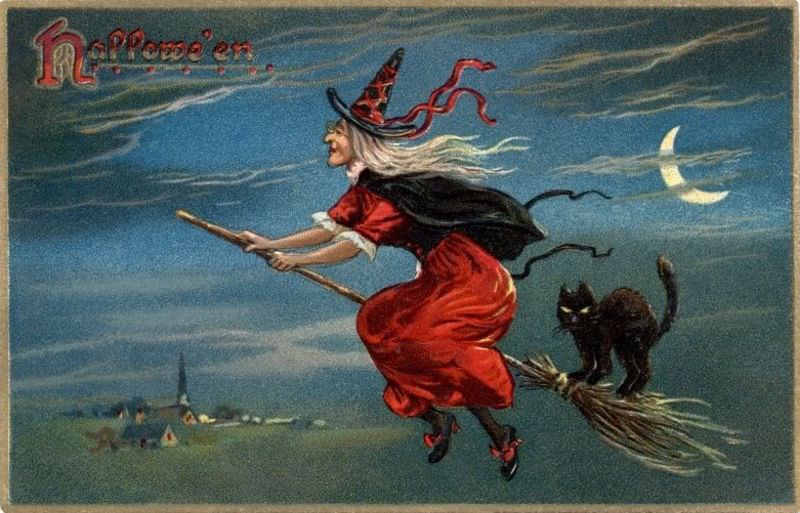
Black cats and witches appeared on nearly every card in one form or another. Both had long associations with Halloween and the supernatural in Western folklore. The witch on a broomstick, in particular, had become fully standardized as a Halloween symbol by the Edwardian period.
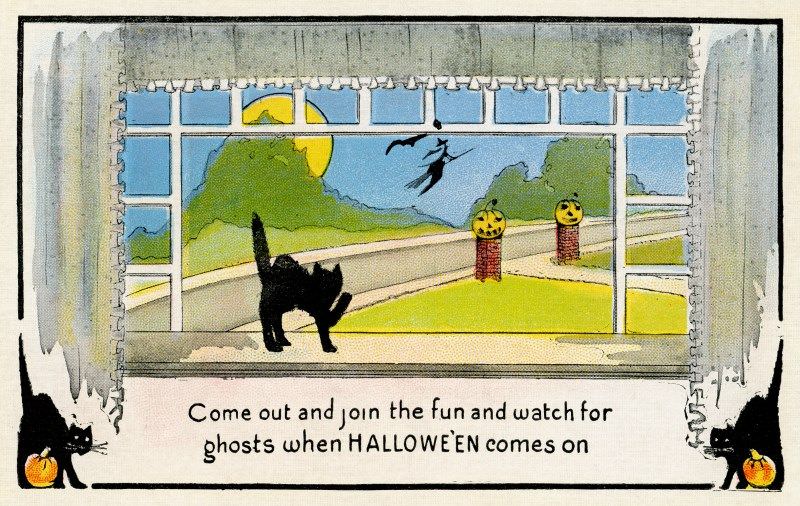
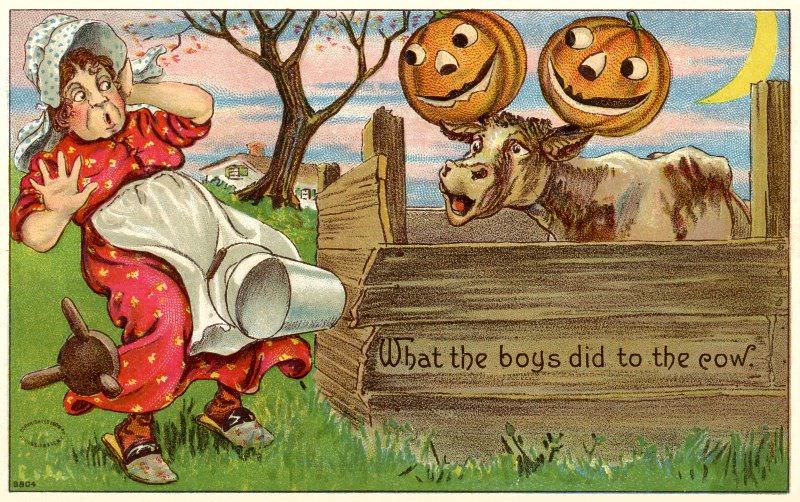
Cards depicting Halloween pranks involving farm animals were surprisingly common. Letting cows loose, moving pigs, or generally disrupting rural households were real pranks carried out by young men on Halloween night. Card #27 treats it as comedy, which reflects the general attitude of the time — Halloween mischief was expected and often laughed off.
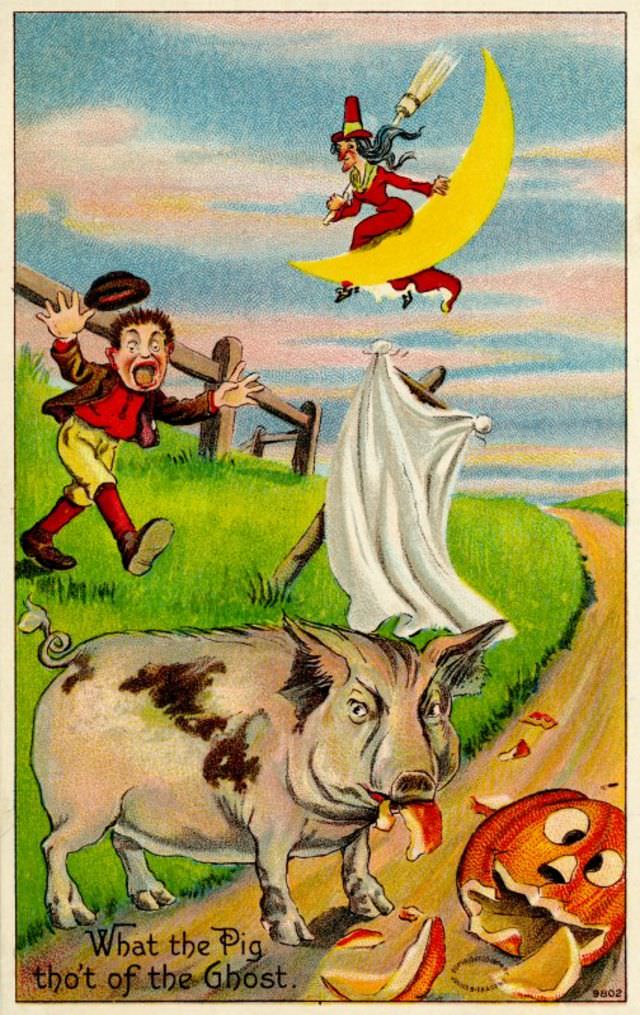
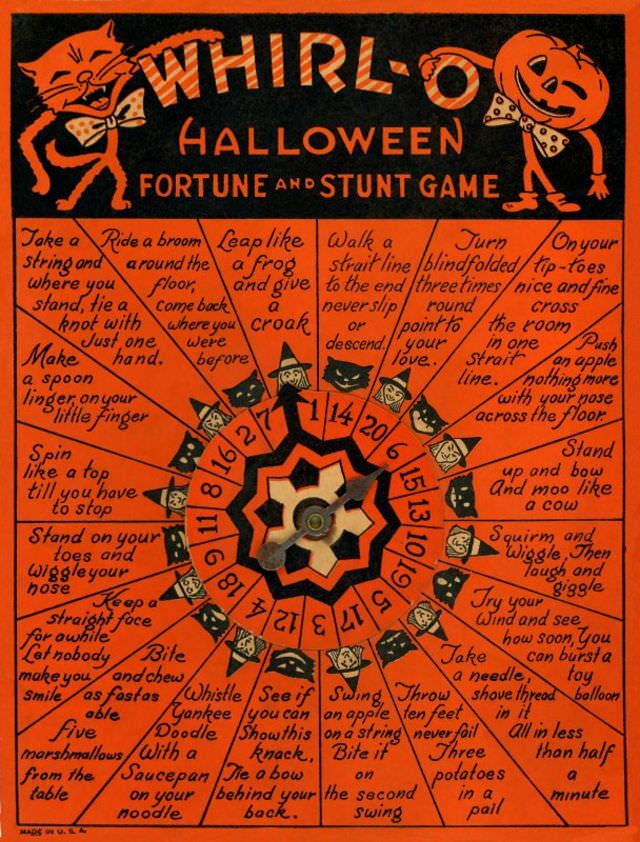
Party games were a big part of Edwardian Halloween gatherings. The Whirl-O Fortune and Stunt Game shown in card #29 is a great example — a spinning wheel that assigned party guests a fortune or a silly task. These kinds of games were marketed directly on postcards as a way to promote seasonal fun.
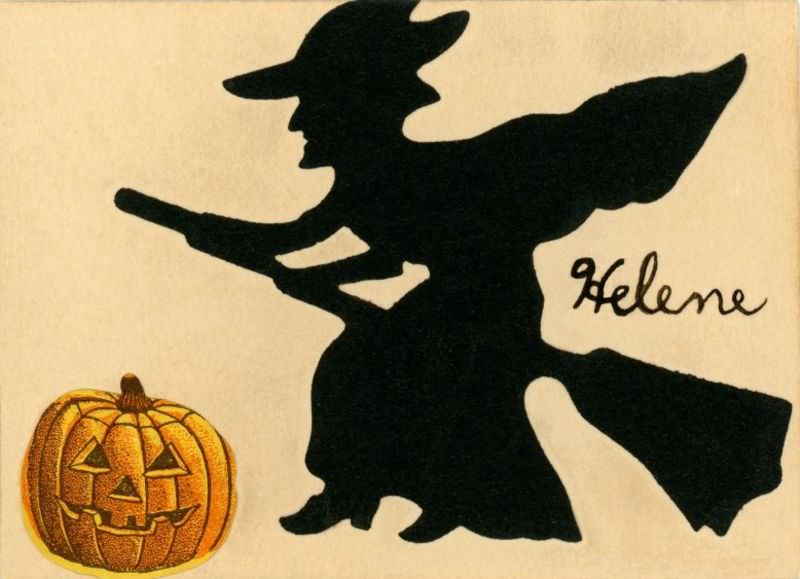
Some postcards were personalized for a specific recipient. Card #32 was made out to someone named Helene, combining printed artwork with a handwritten dedication. This kind of card sat somewhere between a greeting card and a keepsake.
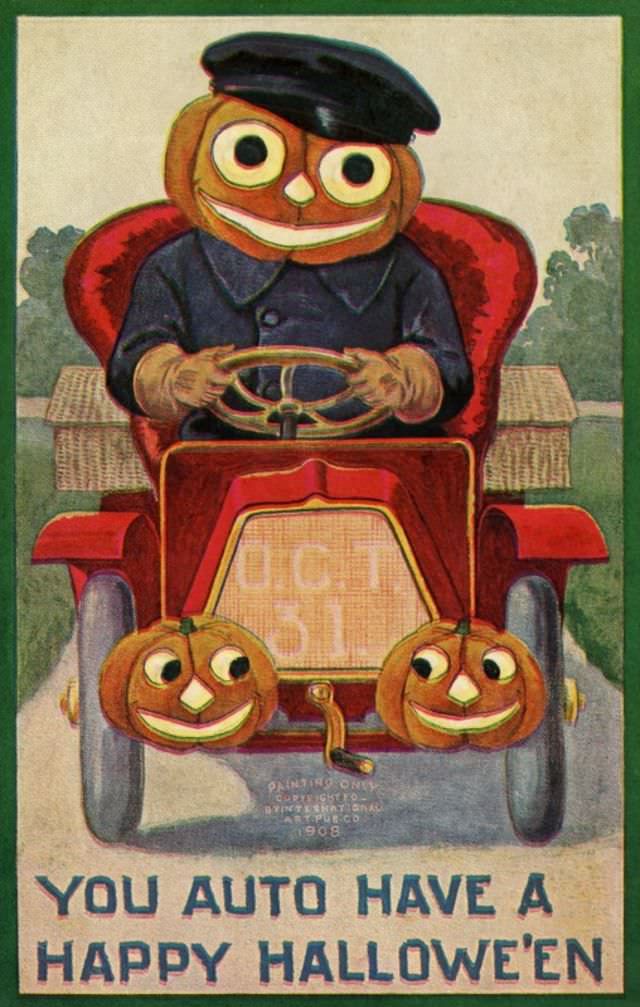
The automobile was a brand-new technology during the Edwardian era, and it showed up in Halloween cards almost immediately. Card #34 plays on the word “auto” as a pun, blending the excitement of modern technology with the familiar imagery of the holiday. It was a clever way for illustrators to keep the cards feeling current.