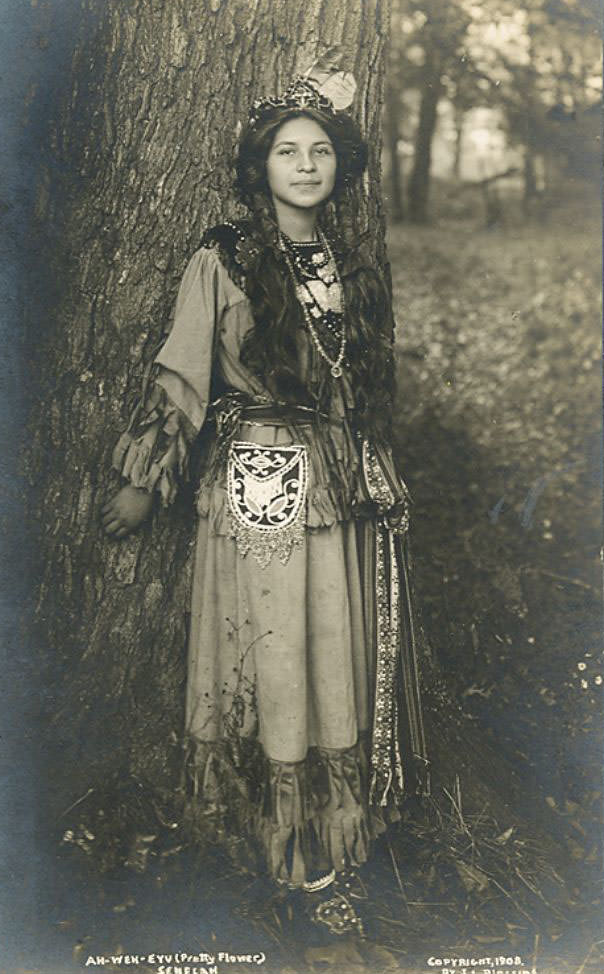
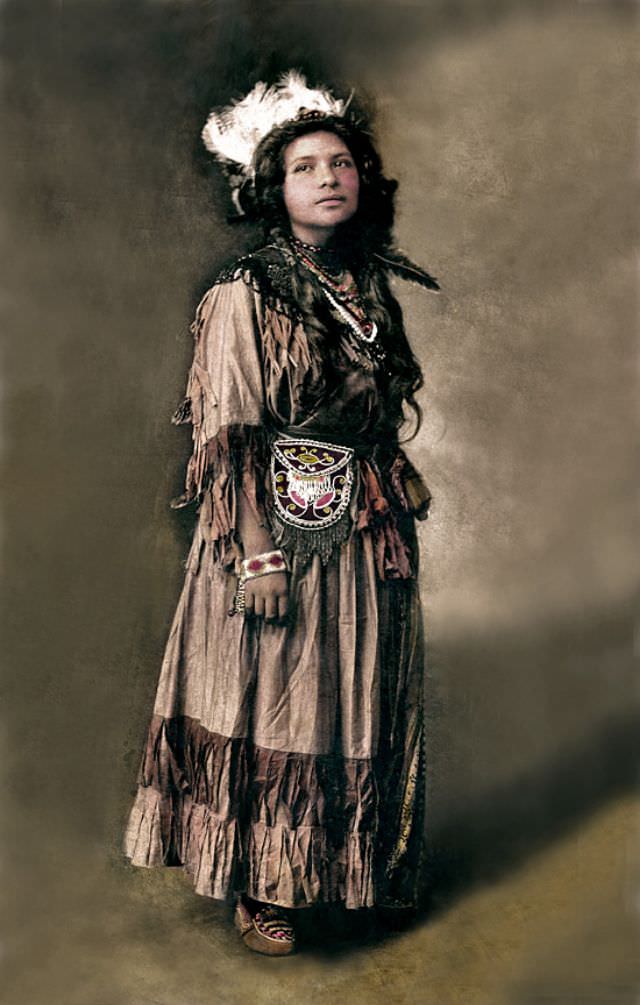
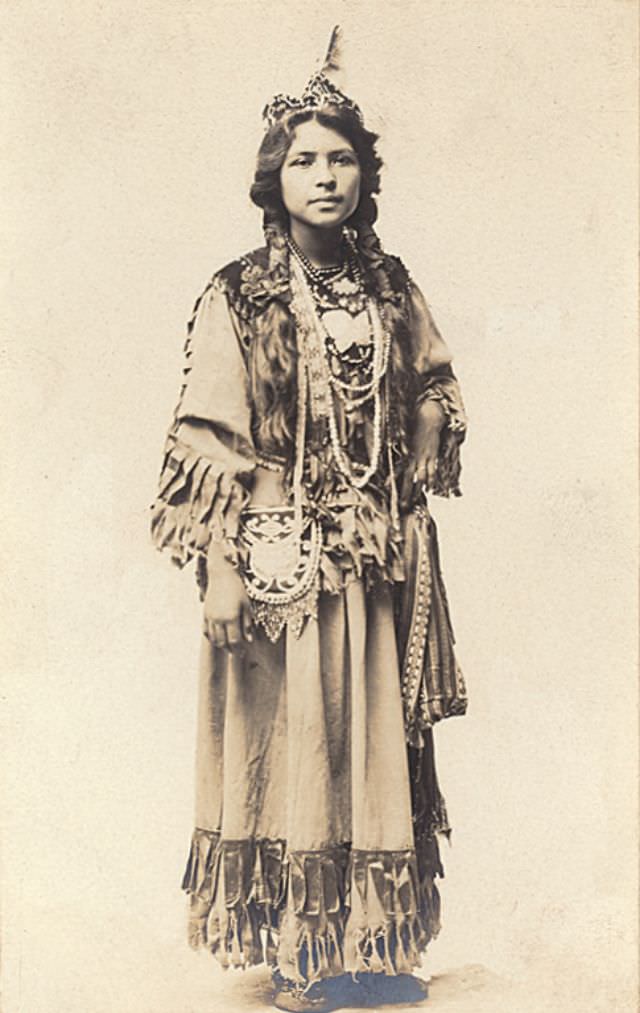
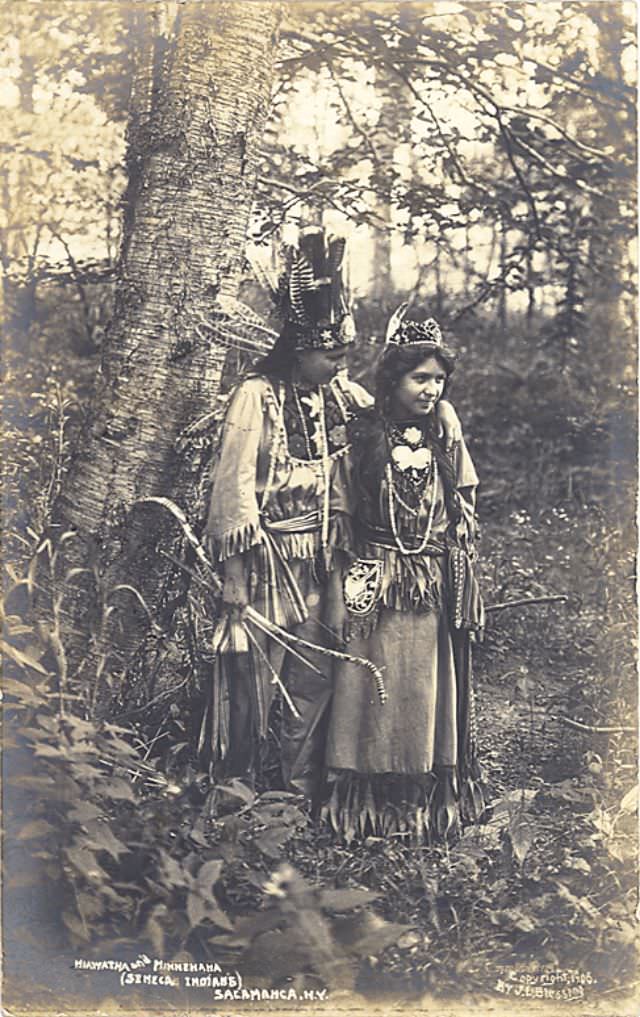
Her Seneca name was Ah-Weh-Eyu — Pretty Flower. Born in 1892 in Salamanca, New York, Goldie Jimerson Conklin was a member of the Heron Clan of the Seneca Nation and lived on the Allegany Reservation in southwestern New York. She grew up during one of the most turbulent periods in Native American history, yet she carved out a place for herself in a world that rarely saw Indigenous women as anything other than a myth or a stereotype. Around 1910, Goldie stepped in front of a camera and became something few Native American women had been allowed to be in the public eye: a real, individual person.

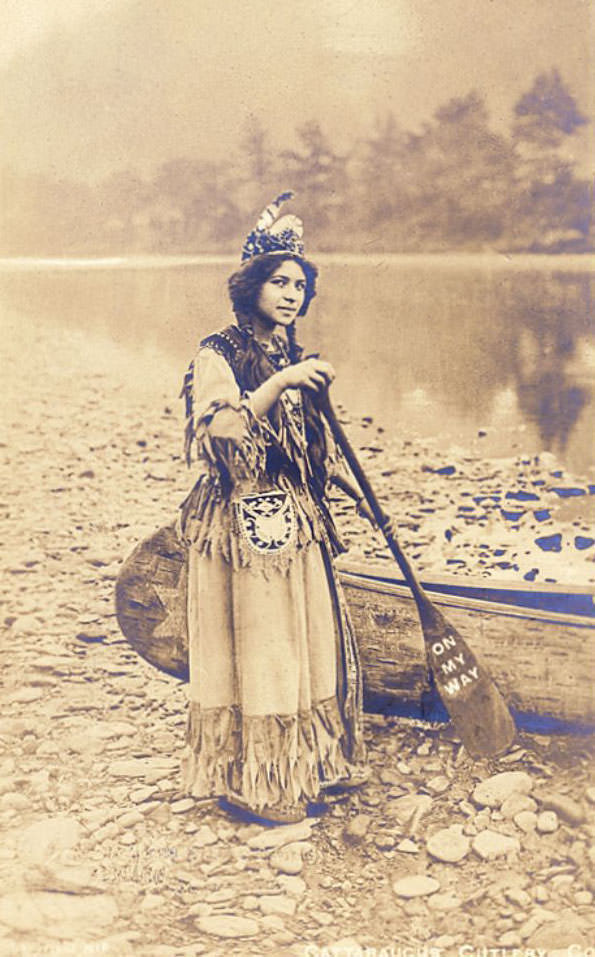
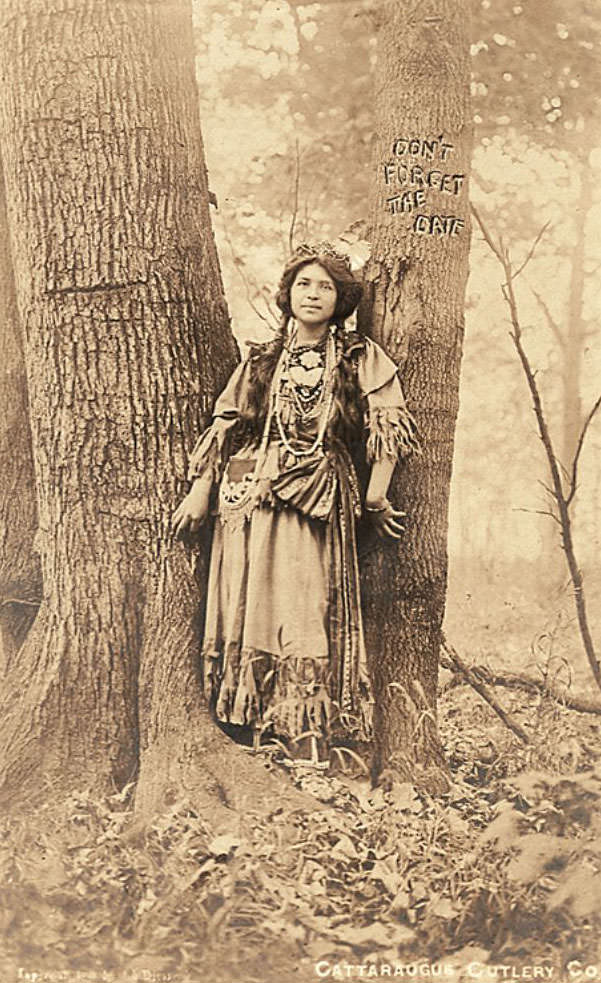
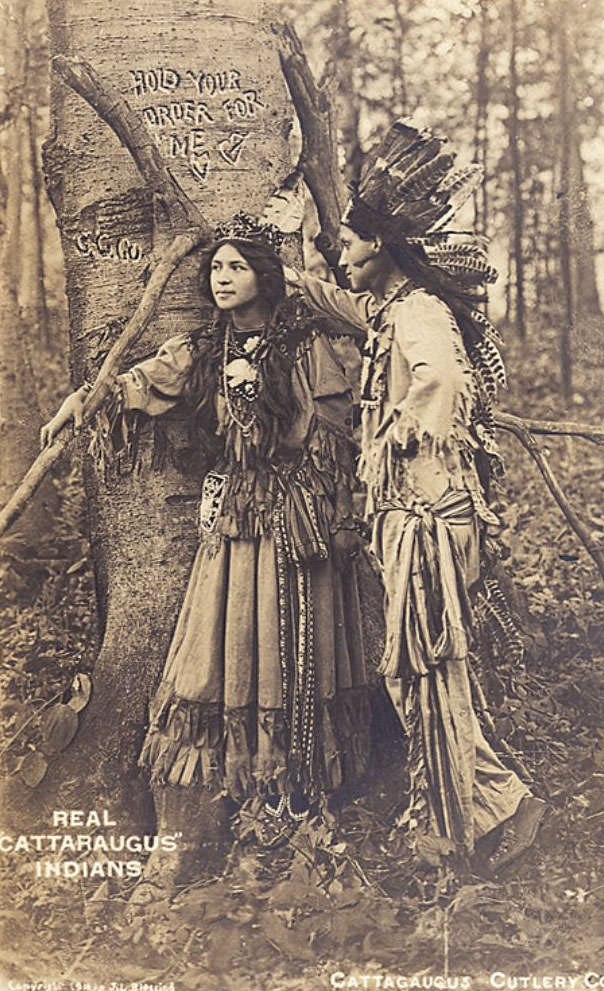
The company that hired her was the Cattaraugus Cutlery Company, based in Little Valley, New York. The company sold a line of knives and household goods under the name “Indian Brand,” and they were looking for a Native American model to anchor their postcard advertising campaign. Goldie fit the role — but she brought far more to it than the company likely expected. Her photographs were striking. She carried herself with a quiet confidence that came through clearly in every image, and she quickly became a recognized face in postcard advertising circles.

Using Native American imagery in advertising was widespread during the early 1900s. Two cultural archetypes drove much of this trend: the “Noble Savage” and the “Indian Princess.” Neither had any grounding in reality. Both were invented by novelists, filmmakers, and showmen who had little to no actual contact with Native communities. Yet these images sold products. Companies across the country slapped them onto packaging, postcards, and print ads because consumers responded to them. The Cattaraugus Cutlery Company was no different in that regard — but the woman they chose to represent their brand was.

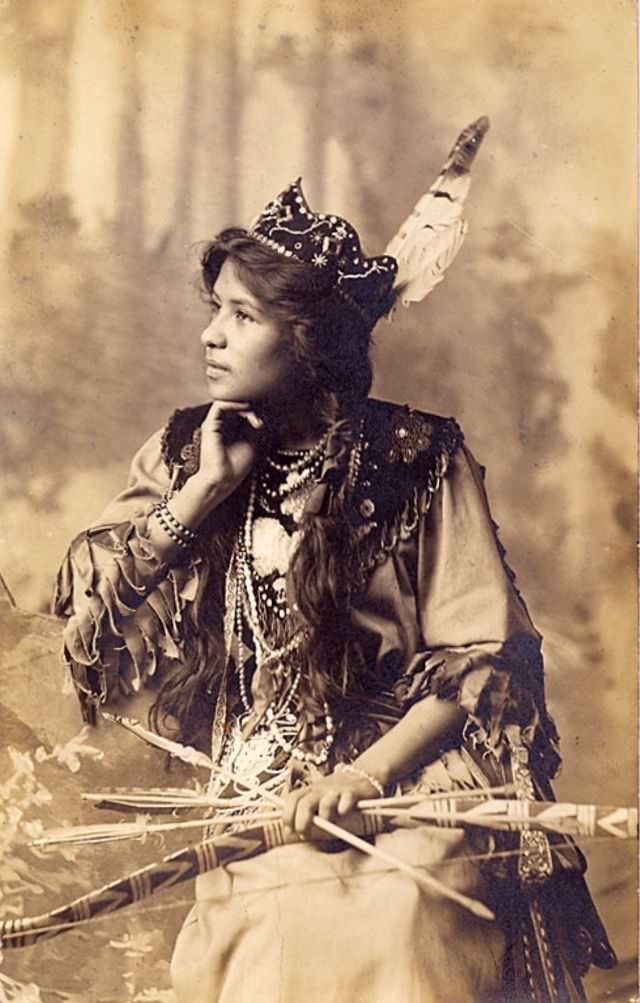
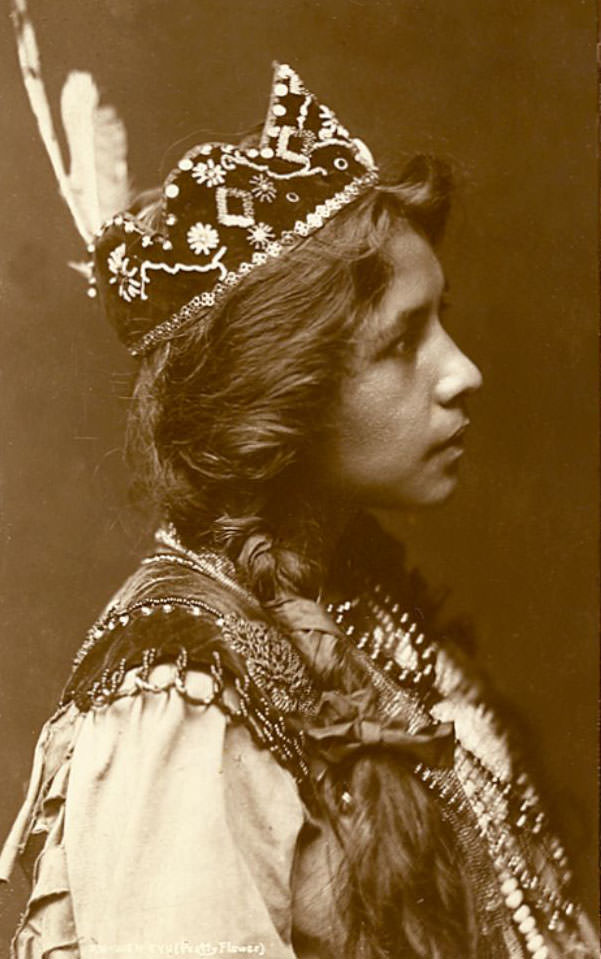
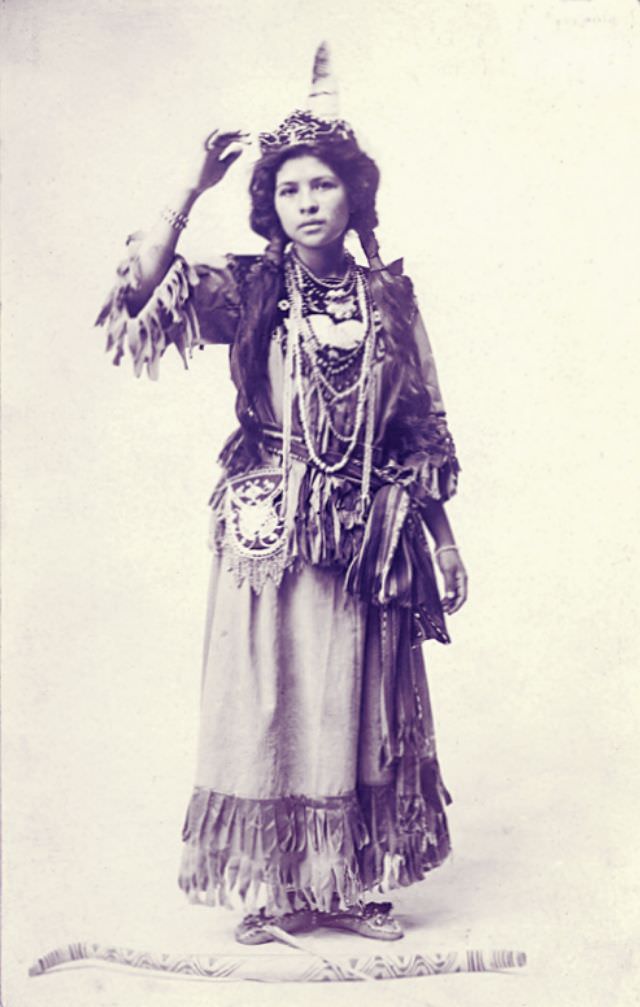
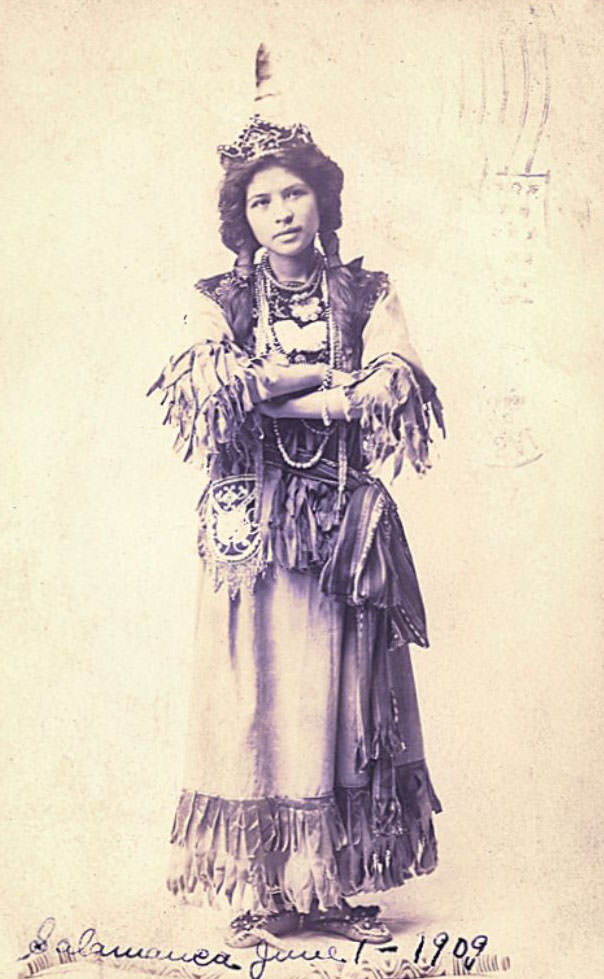
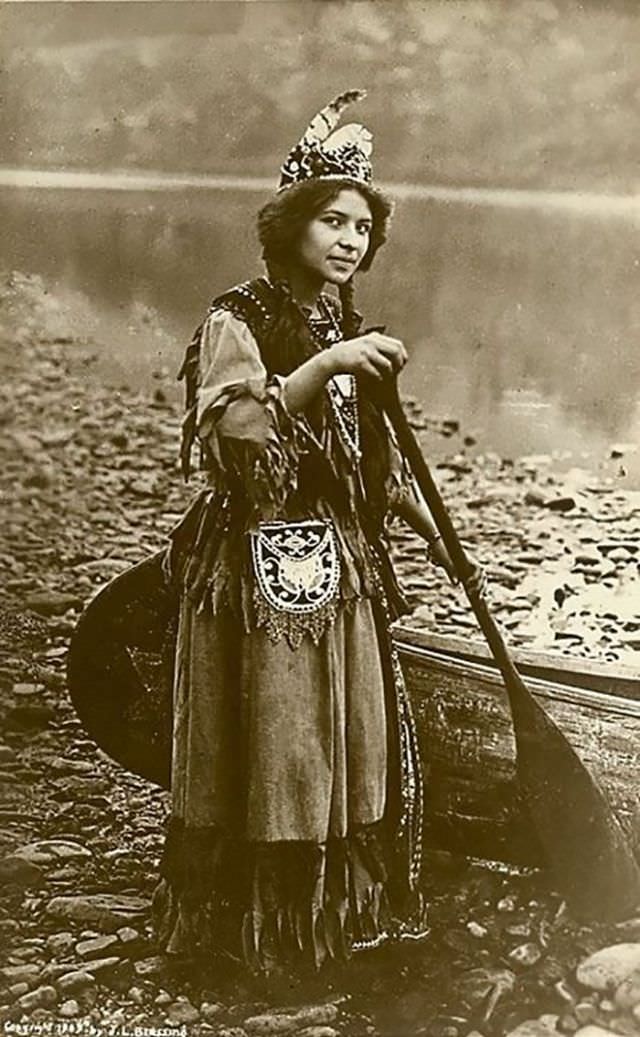
Goldie’s parents were Jacob J. Jamison and Eliza D. Jamison. She was baptized at St. Andrews Church in Irving, New York, on July 7, 1921. The photographs taken around 1910 show her in traditional dress, and in most of the images she wears a beautifully beaded bag. Based on everything known about her life and skill set, that bag was almost certainly her own work. Seneca women were accomplished beadworkers, and the craftsmanship visible in the bag in these photographs reflects a deep cultural tradition passed down through generations.

What separated Goldie from many of the models used in this kind of advertising was how she looked in the photographs — not just physically, but in terms of presence. There was no performance of a stereotype. She looked directly and deliberately into the camera with a composed, dignified bearing. The images did not reduce her to a prop. They showed a woman who was aware of what she was doing and who brought her own identity into the frame.

The world Goldie lived in outside of these photographs was shaped by constant pressure on Native communities. The boarding school era forced Indigenous children away from their families and languages. Land was taken through a long series of legal mechanisms and forced removals. The Indian Citizenship Act of 1924 granted Native Americans U.S. citizenship — a right they had been denied on their own land — but it came with complicated political implications for tribal sovereignty. Goldie lived through all of it. The Allegany Reservation was not sheltered from these pressures, and the Seneca Nation fought hard to maintain its identity and land base throughout this period.

Her modeling work existed within this context. For mainstream American consumers in 1910, a postcard featuring a Native American woman was often just a novelty. But for people who looked more carefully, Goldie’s photographs offered something different. She was not a war bonnet or a buckskin cliché. She was a Seneca woman from a specific place, from a specific clan, wearing items she likely made herself, presenting herself on her own terms as much as the commercial format allowed.

The Cattaraugus Cutlery Company’s “Indian Brand” line was one of many product lines during this era that leaned heavily on Native American imagery to signal authenticity, durability, or craftsmanship. Knives carried particular symbolic weight — the association between Native Americans and skilled knife-making was a common advertising angle. Goldie’s face and image were tied directly to that branding, which means her likeness appeared on products distributed across the country.

Postcards were one of the dominant forms of mass media in the early 20th century. The postcard craze, which peaked roughly between 1905 and 1915, saw billions of cards printed and mailed across the United States. A model whose image appeared on a widely distributed postcard reached an audience that rivaled anything a modern social media following could claim. Goldie’s photographs circulated through this system, landing in homes, collections, and albums across the country.

The beaded bag she wears in many of these photographs deserves its own attention. Seneca beadwork from this period was highly sophisticated. Designs were not random — they carried cultural meaning and reflected the artisan’s knowledge of Haudenosaunee traditions. If Goldie made the bag herself, as the evidence suggests, then the photographs are not just advertising images. They are also a record of her skill as an artist and craftsperson.

Goldie Jimerson Conklin lived until 1974 — long enough to see the Civil Rights Movement, the founding of the American Indian Movement in 1968, and the beginning of a broader national reckoning with how Native Americans had been treated and represented throughout U.S. history. She was born when Native Americans had no federal citizenship and lived to see the first major legal protections for tribal self-determination. The span of her life covered nearly the entire arc of 20th-century Native American history.

The photographs taken around 1910 remain among the most detailed visual records of her life. They capture a young Seneca woman from the Allegany Reservation at a specific moment — wearing her clan’s traditions, sitting for a commercial photographer, and being seen by a country that rarely looked at Native women as fully realized human beings. Goldie Jimerson Conklin, born Ah-Weh-Eyu, gave those photographs something no advertising brief could script: her actual self.