In 1976, Dutch travelers Ed Sijmons and his partner Louise made their way through Scotland, stopping in Edinburgh before arriving in Glasgow. They carried their cameras with them throughout the city, documenting streets, bridges, storefronts, and everyday life. The photos they took are a rare, ground-level record of Glasgow at a very specific moment in time — a city in the middle of major change.
The pair stayed in Glasgow for several days, beginning at a B&B they described as terrible before moving to a much more welcoming host just down the same street. Both addresses were in a working-class neighborhood that reflected the broader character of the city at the time. Glasgow in 1976 was a place of worn stonework, busy markets, and streets that carried the weight of decades of industrial life.
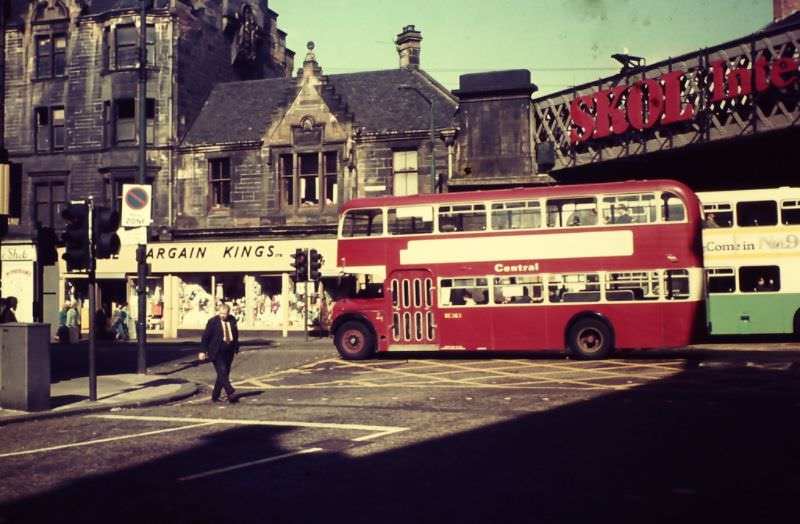
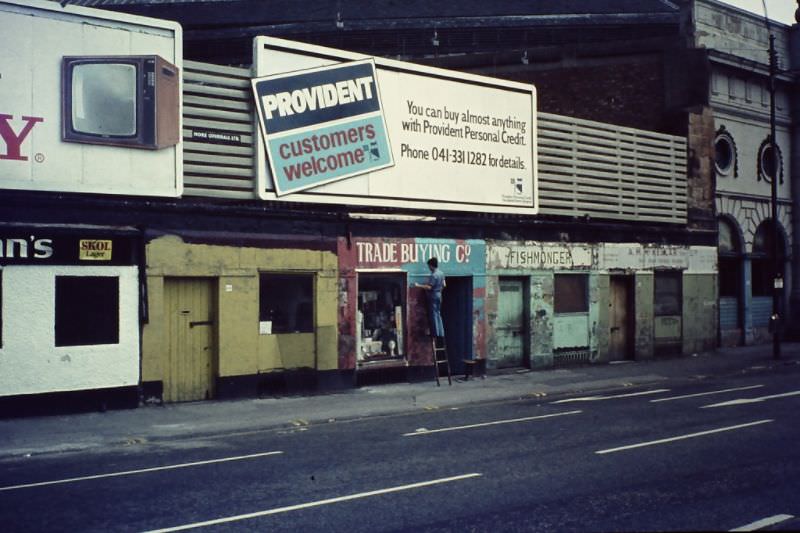
The Saltmarket area sat at the heart of old Glasgow. Looking toward the railway bridge from St. Andrew’s Street, the scene captures the dense urban fabric that defined this part of the city. Iron, stone, and soot-darkened brick were the textures of the streetscape here.
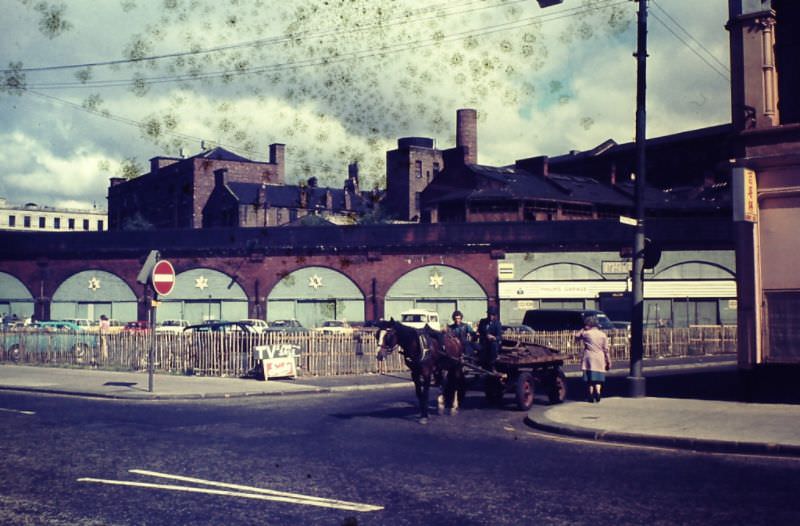
Not far from the Saltmarket, the streets retained a rough, lived-in energy. The area around Gallowgate was one of Glasgow’s oldest, and by 1976 it showed every one of its years.
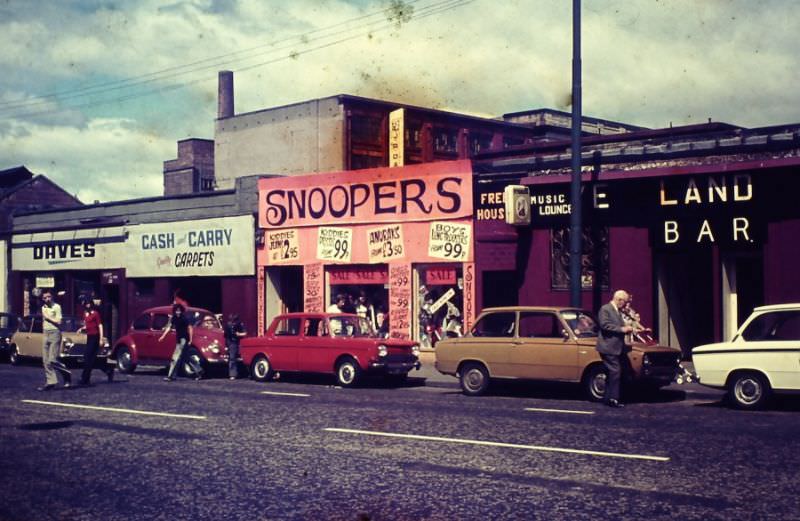
Down by the River Clyde, Clyde Street ran parallel to the water near Victoria Bridge. This stretch of the city connected commerce and transport, with the river always present just beyond the buildings.
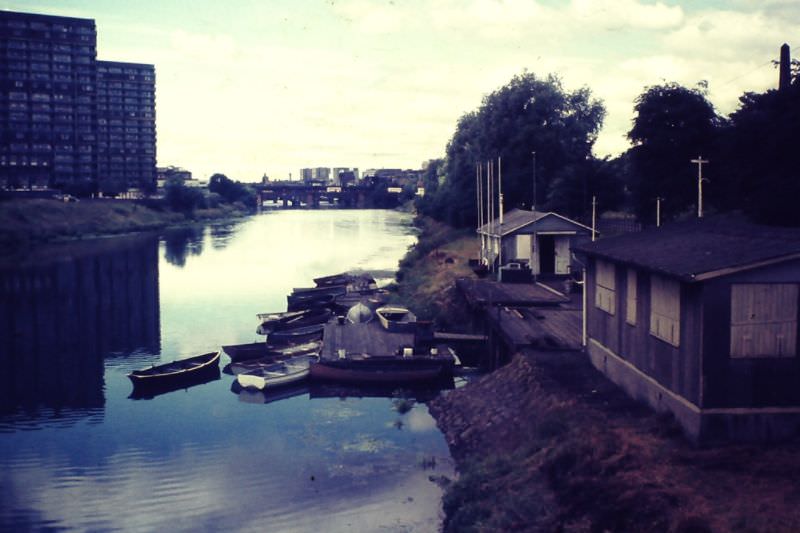
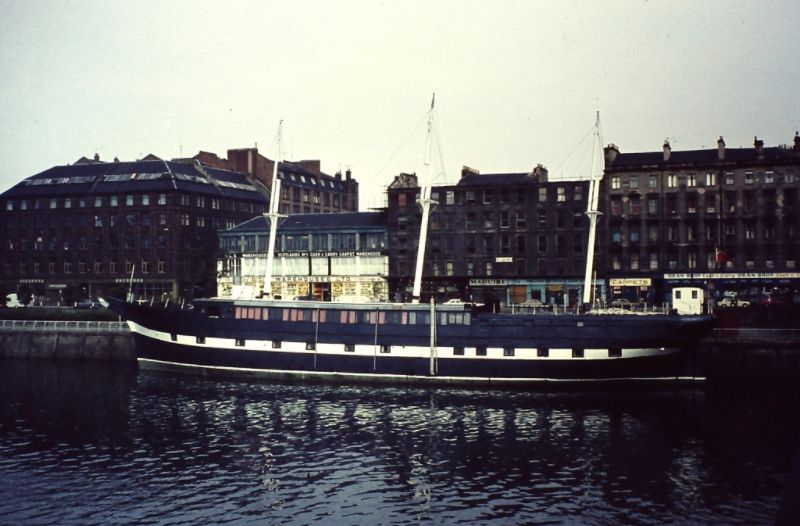
The Clyde itself was a defining feature of Glasgow’s identity. Once one of the busiest shipbuilding rivers in the world, by the mid-1970s it had grown quieter. An old ship still moored near Clyde Street and Victoria Bridge served as a visible reminder of what the river had been.
Bridge Street offered another angle on the city’s layered built environment. Bridges over the Clyde were more than crossings — they were landmarks that stitched the north and south sides of Glasgow together.
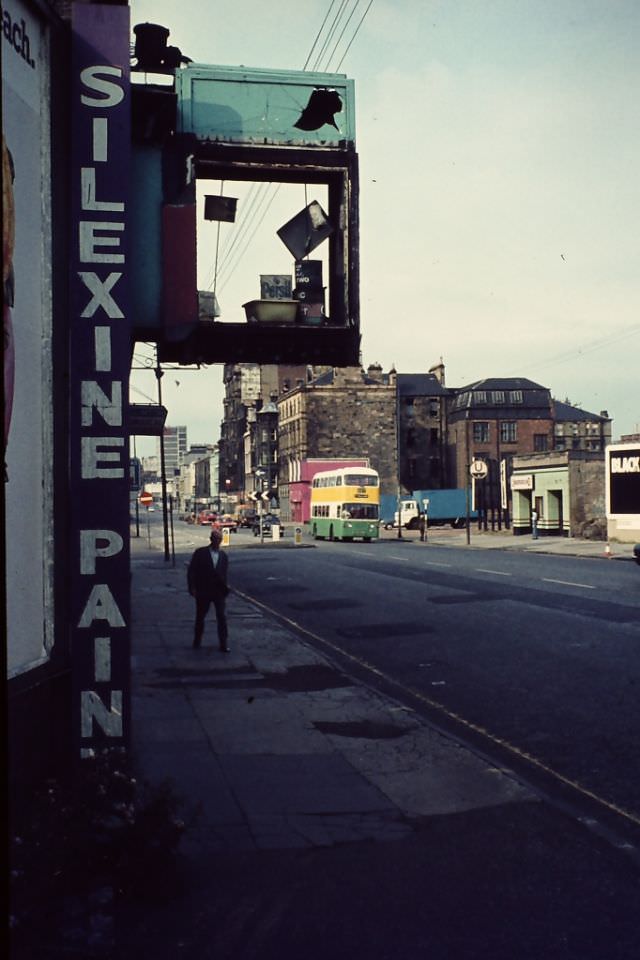
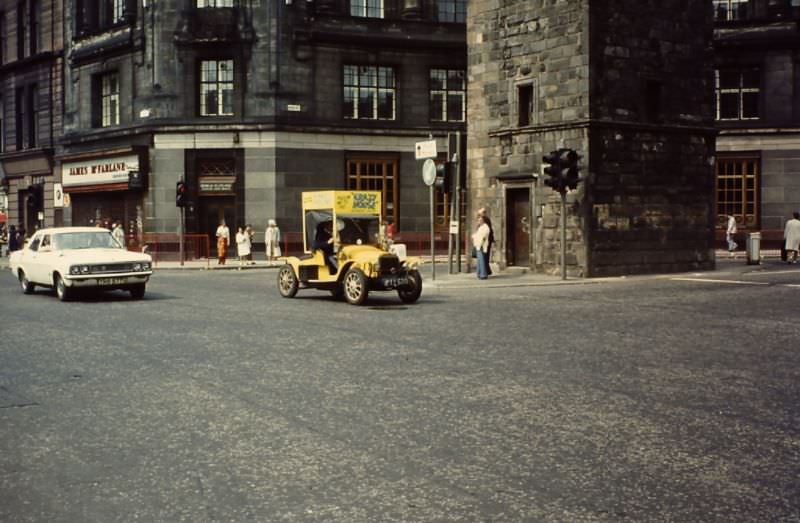
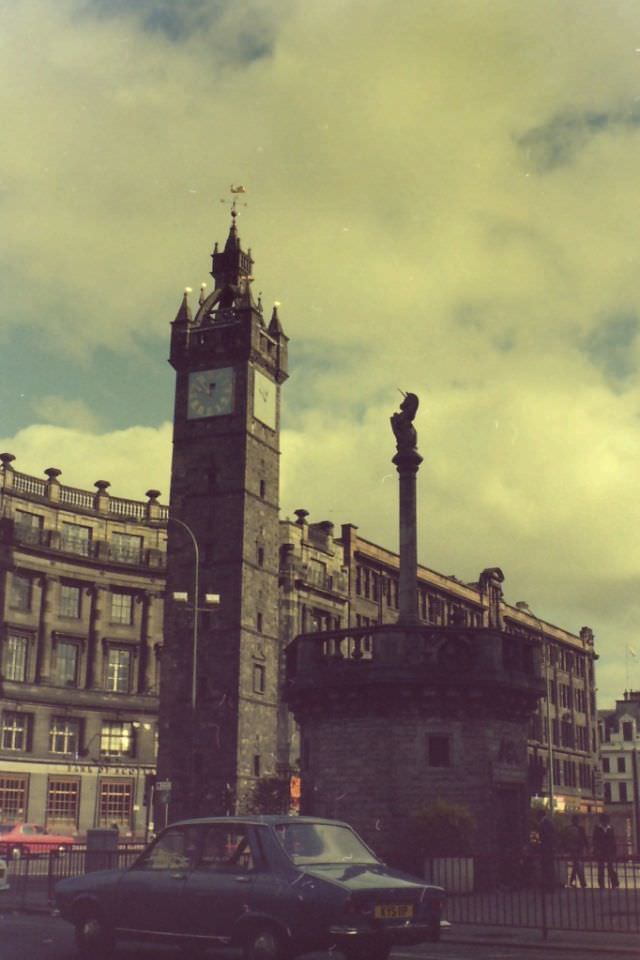
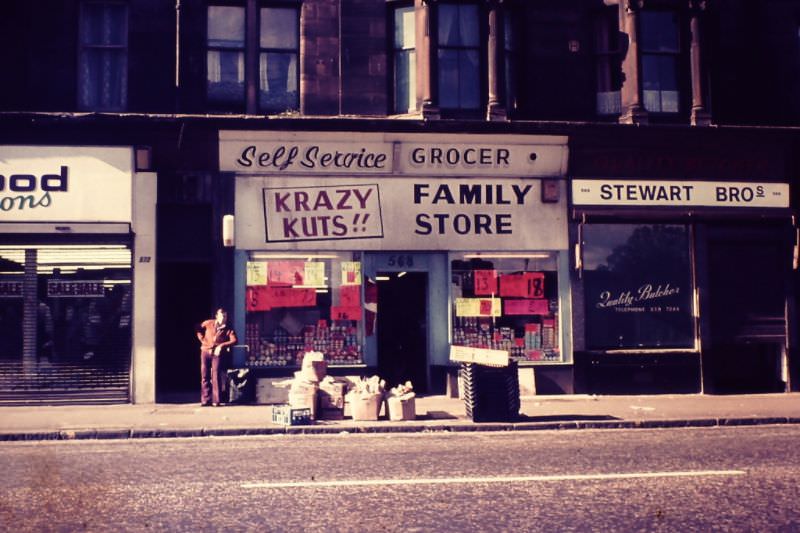
Trongate was one of Glasgow’s main commercial streets, running east from the city center. In 1976, it was lined with shops and pedestrians, its architecture a mix of Victorian grandeur and mid-century wear. The junction at High Street and Trongate was particularly busy, with the distinctive car from the Crazy House department store parked directly opposite, adding a touch of the unexpected to the scene.
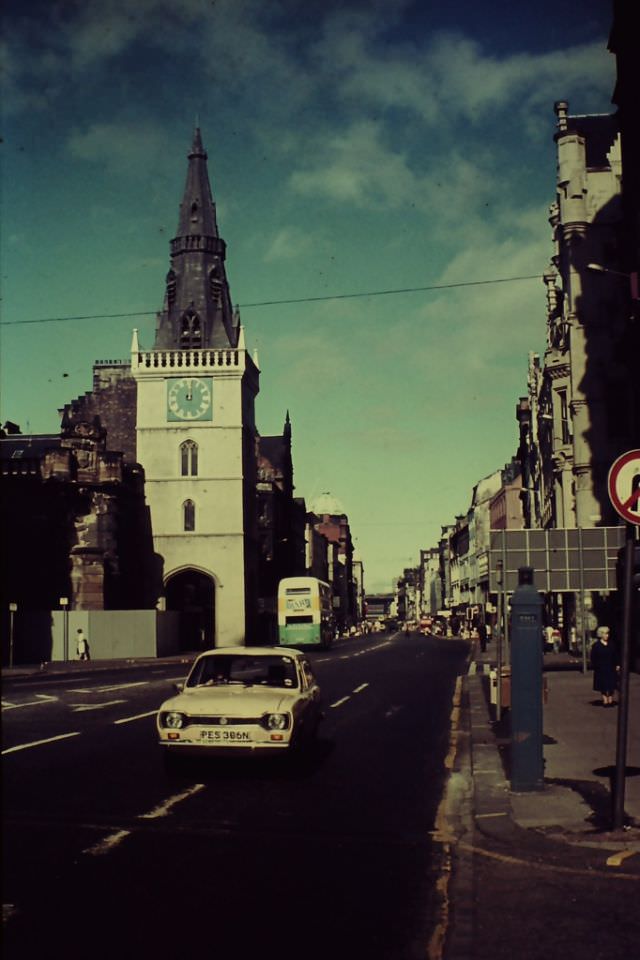
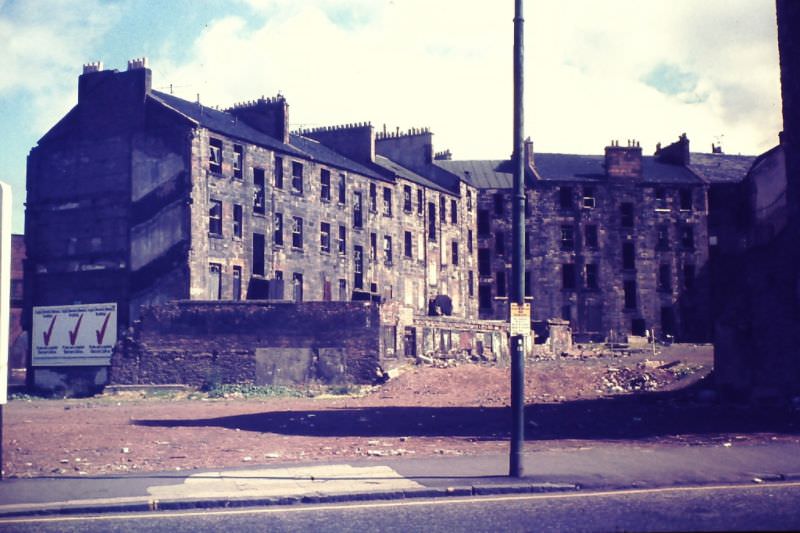
One of the most striking images from the collection shows Glasgow tenement blocks standing empty and boarded up, marked for demolition. Glasgow’s slum clearance program had been running since the 1950s, and by 1976 whole neighborhoods were being torn down and rebuilt. The tenements that had housed thousands of families were coming down one block at a time.
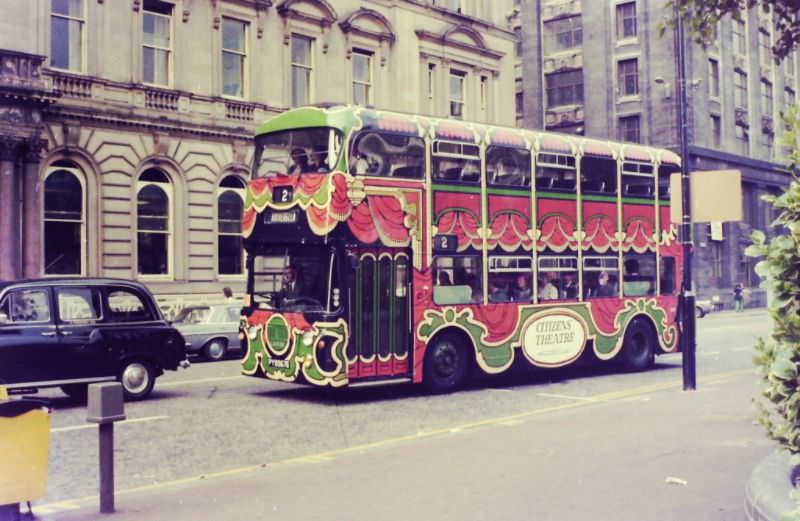
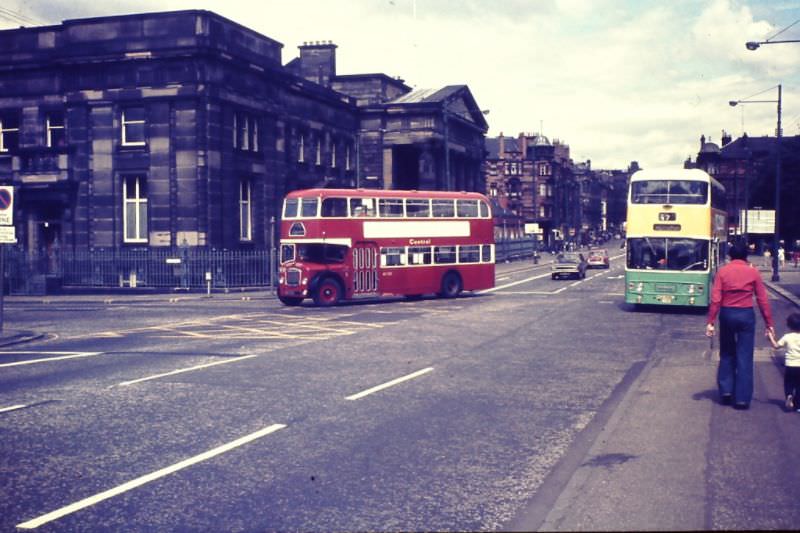
George Square, Glasgow’s civic heart, still hummed with activity. A bus rolls past the former Post Office building, one of the square’s most prominent structures. The red double-decker buses were as much a part of the city’s visual identity as its sandstone buildings.
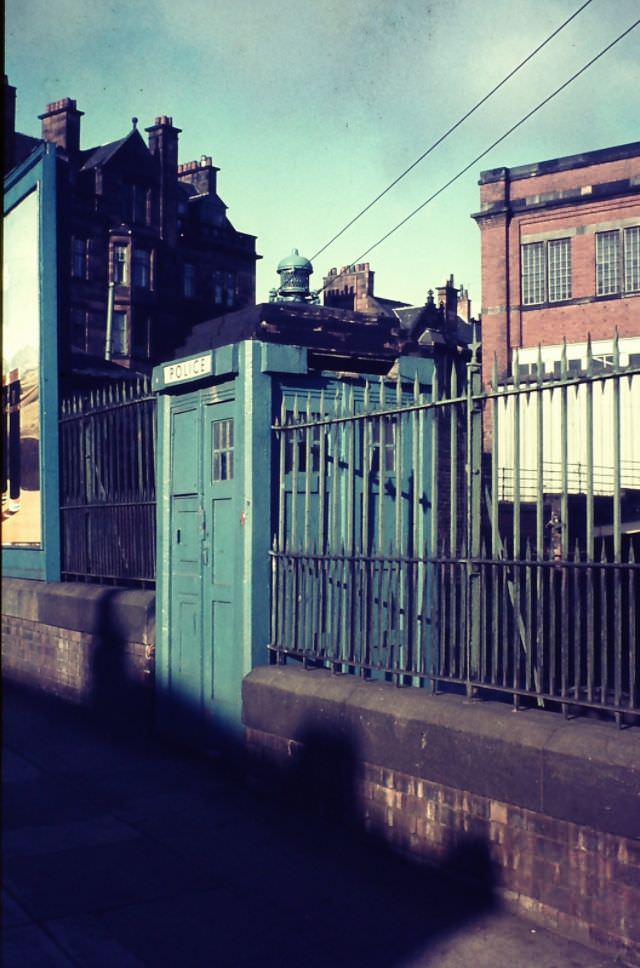
Glasgow’s famous police boxes — dark blue cast-iron cabinets used as communication hubs for officers on the beat — were still a common sight across the city in 1976. They stood on street corners as a quiet emblem of municipal order.
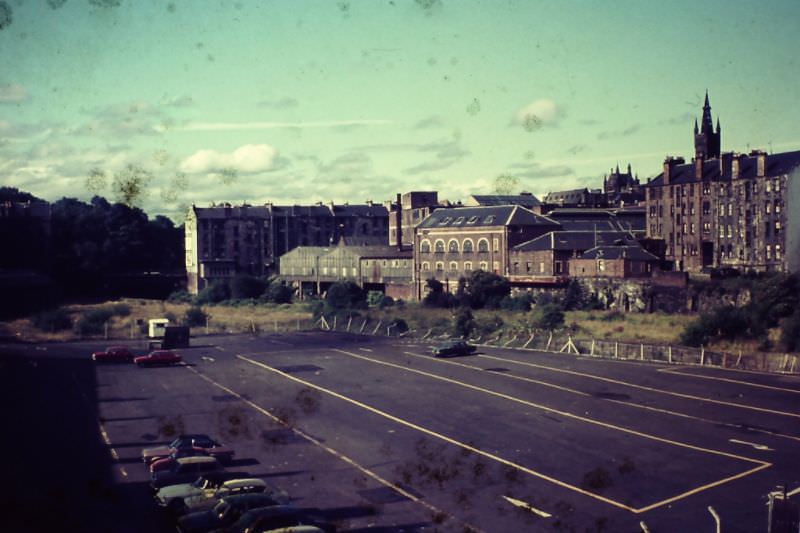
Dumbarton Street, on the city’s west side, offered a quieter residential view compared to the busier city center arteries. Further west, the car park at Kelvinbridge Underground Station sat beside one of the stops on Glasgow’s subway — one of the oldest underground rail networks in the world, opened in 1896.
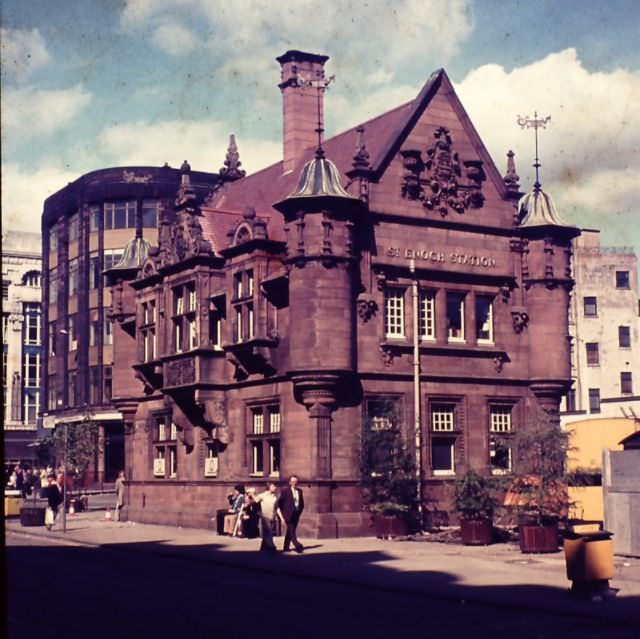
St. Enoch Underground Station was another stop on the same circular subway line. The station building itself had a distinctive character, and by 1976 the entire subway system was approaching a major renovation that would modernize it significantly.
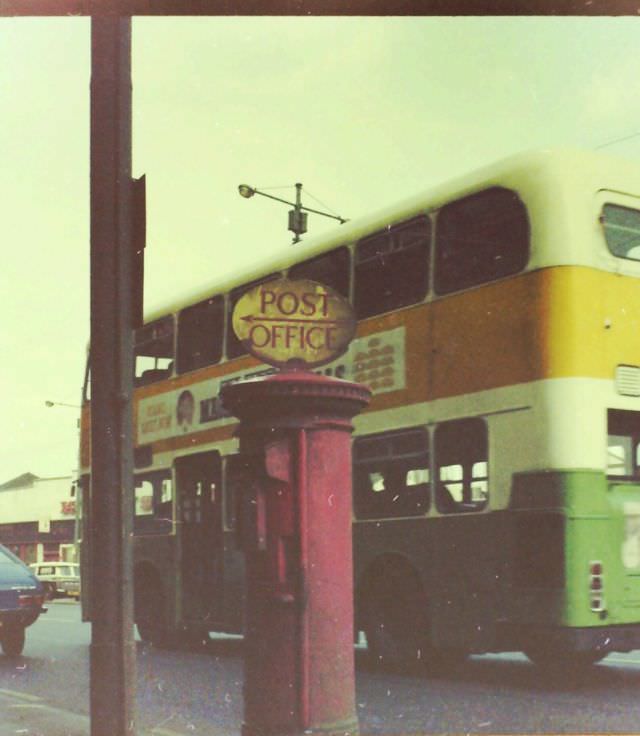
A red pillar-box and a double-decker bus together in one frame sum up a certain kind of British street scene that was entirely at home in Glasgow’s neighborhoods. The Saltmarket at the corner of Clyde Street, seen from Albert Bridge, shows how closely the city’s commercial and riverside worlds overlapped.
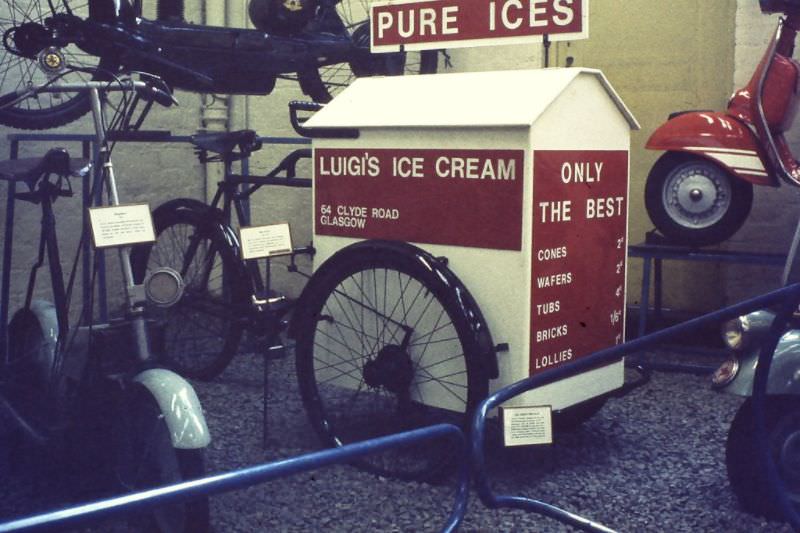
The Glasgow Transport Museum held a Luigi’s Ice Cream cart among its exhibits — a nod to the Italian community that had settled in Scotland and become central to the city’s street food culture. Ice cream vans and cafes run by Italian families had been a fixture of Glasgow life since the late 19th century.
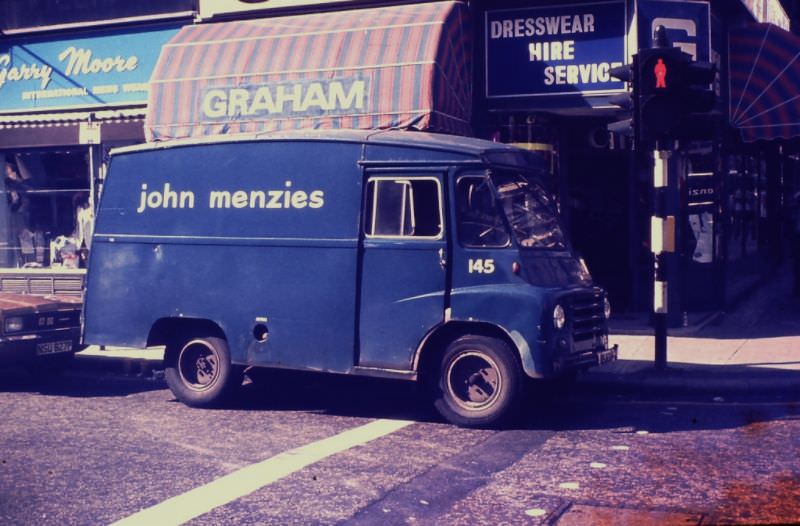
A Menzies van rounds out the collection — a delivery vehicle from John Menzies, the Scottish newsagent and distribution company that was a constant presence on British high streets and in transport hubs throughout the 20th century. It’s a small but telling detail of commercial life in 1970s Glasgow.