In 1900, Germany was a young nation by European standards. Unified only in 1871 under Chancellor Otto von Bismarck, the German Reich was just three decades old when the new century began. At its head stood Kaiser Wilhelm II, a grand-nephew of Britain’s Queen Victoria and a ruler with enormous ambitions. He wanted Germany to be a global power — in industry, in military strength, and in international reach. The photographs collected here capture that Germany: a country building itself at full speed, where ancient church towers stood beside new factories, and horse-drawn carts shared cobblestone streets with electric trams.
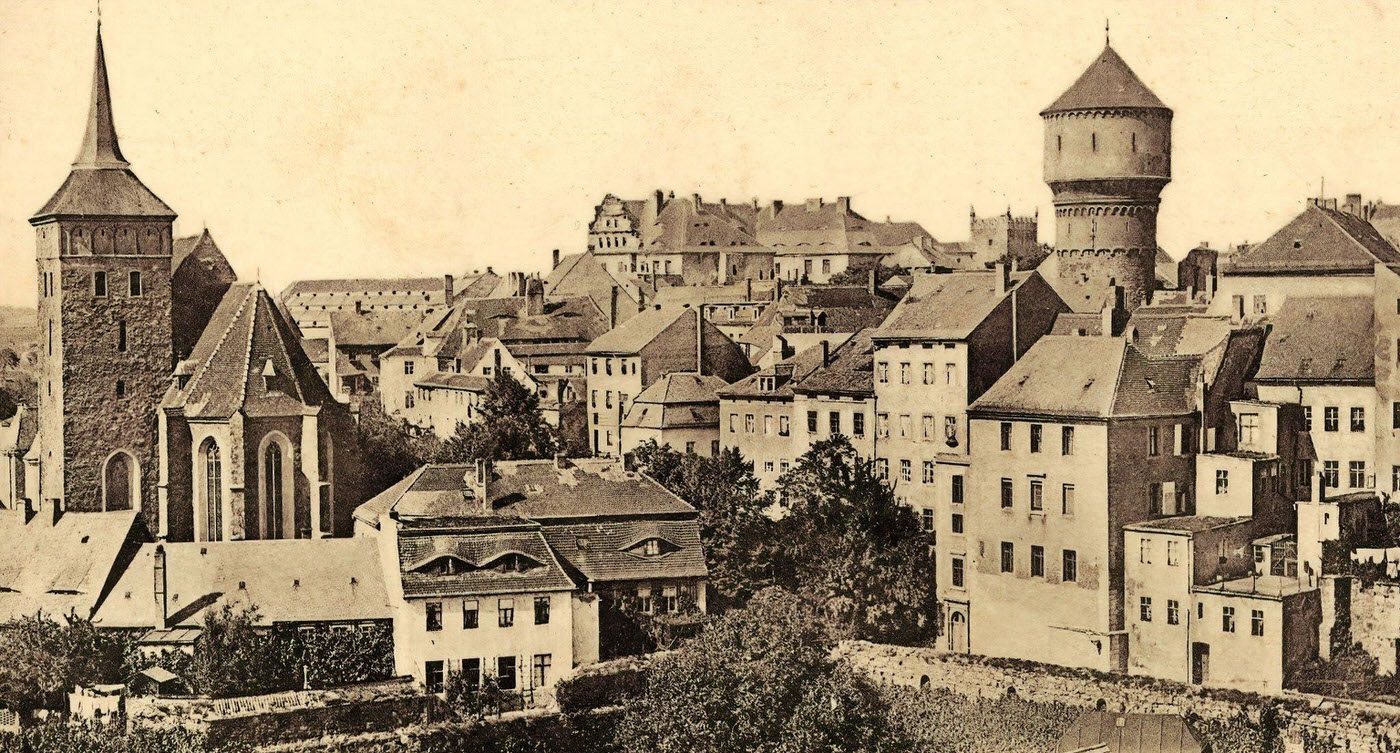
The towns of Saxony in eastern Germany offer some of the clearest windows into everyday life at the turn of the century. Bautzen, a fortified hilltop city with roots going back over a thousand years, still carried its medieval character into the modern age. Its towers and cathedral walls rose over the Spree River just as they had for centuries, while the streets below adapted to a faster-moving world.
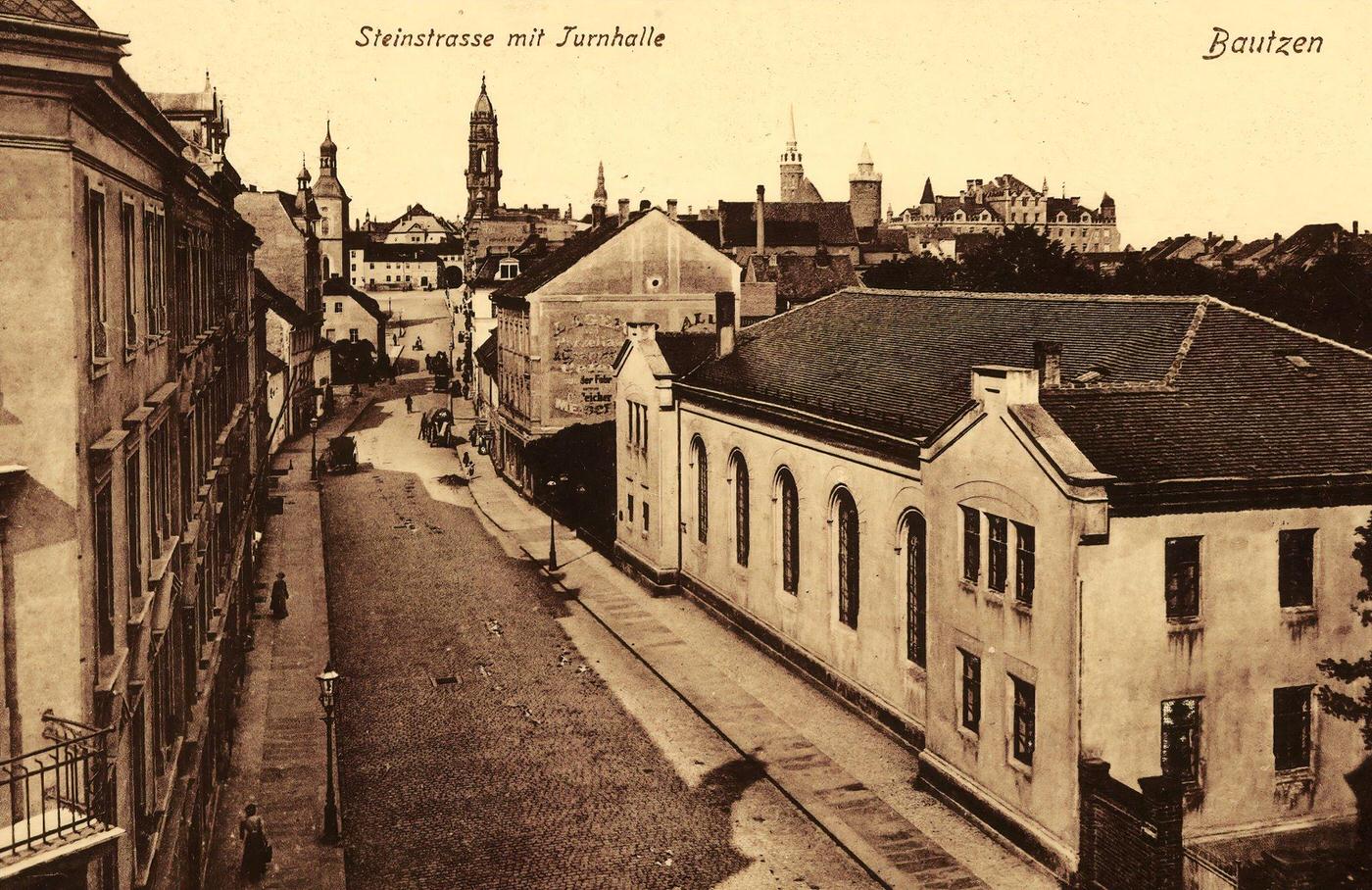
The Reichenturm — Bautzen’s famously leaning tower — had already been tilting noticeably for centuries by the time this photograph was taken. It remained one of the city’s most recognizable landmarks, a physical reminder that Germany’s modernity was always built on top of a very old foundation. Towns like Dobeln and Eilenburg told the same story: civic squares, market streets, and transport infrastructure all layered onto medieval bones.
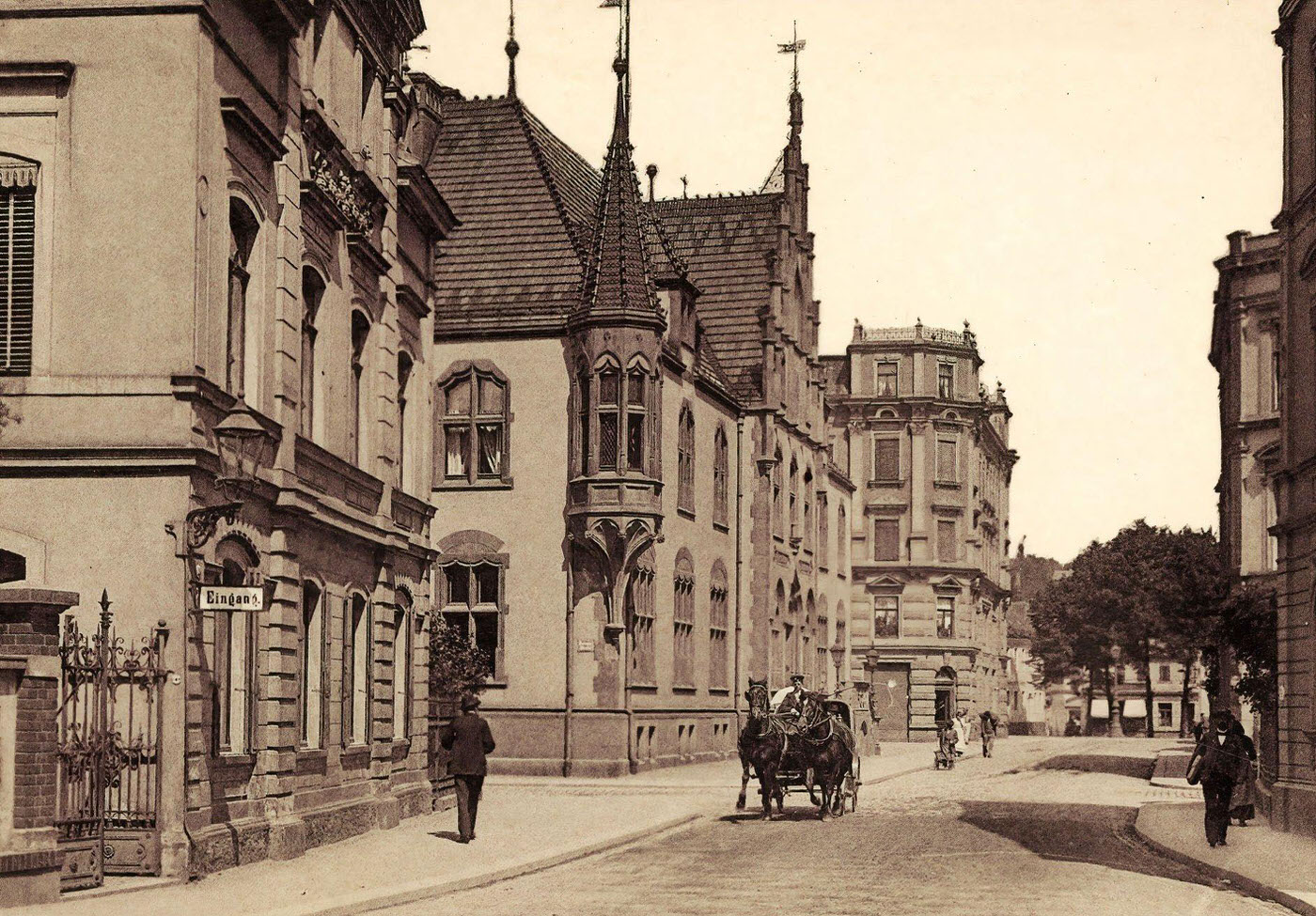
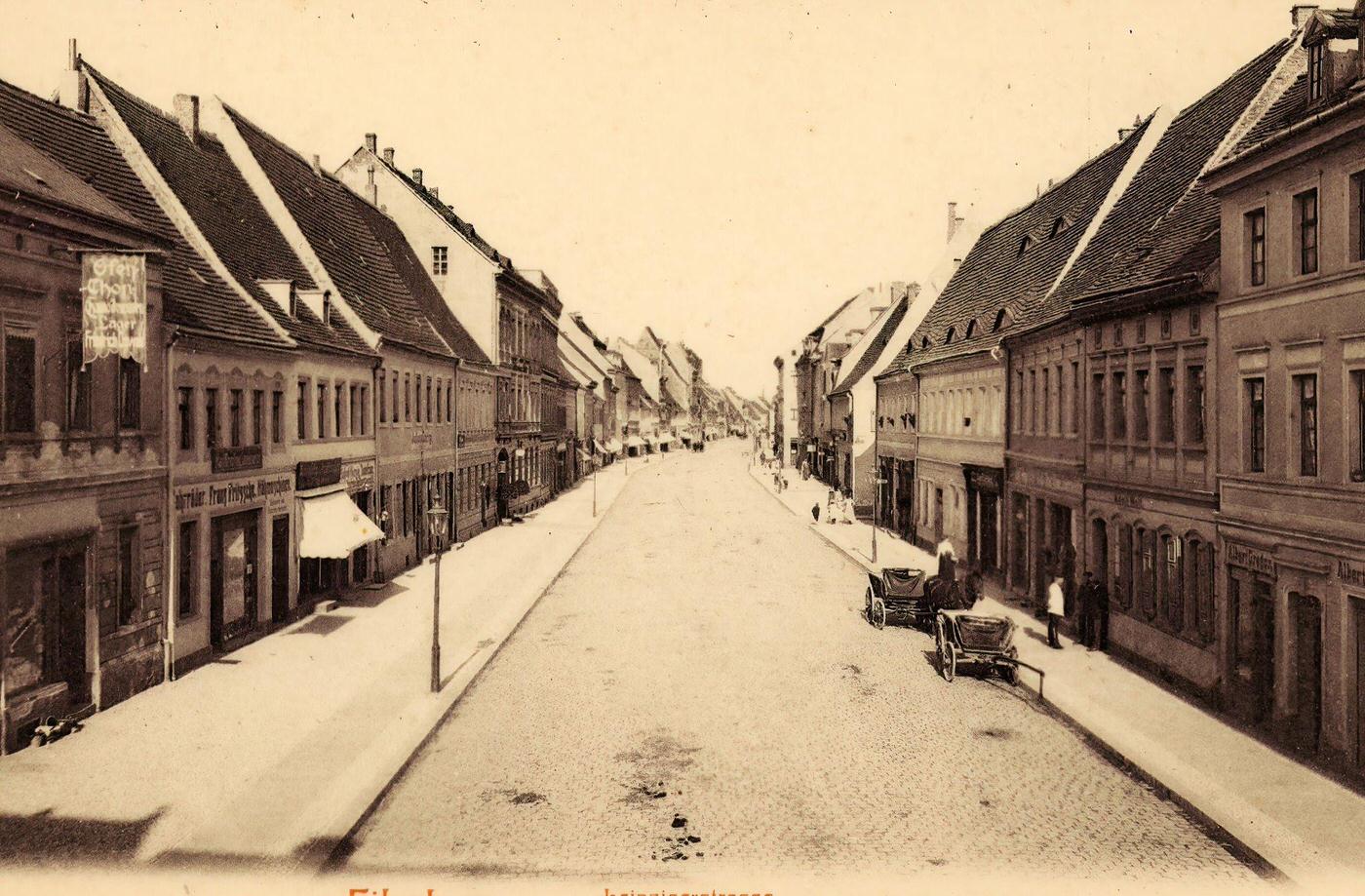
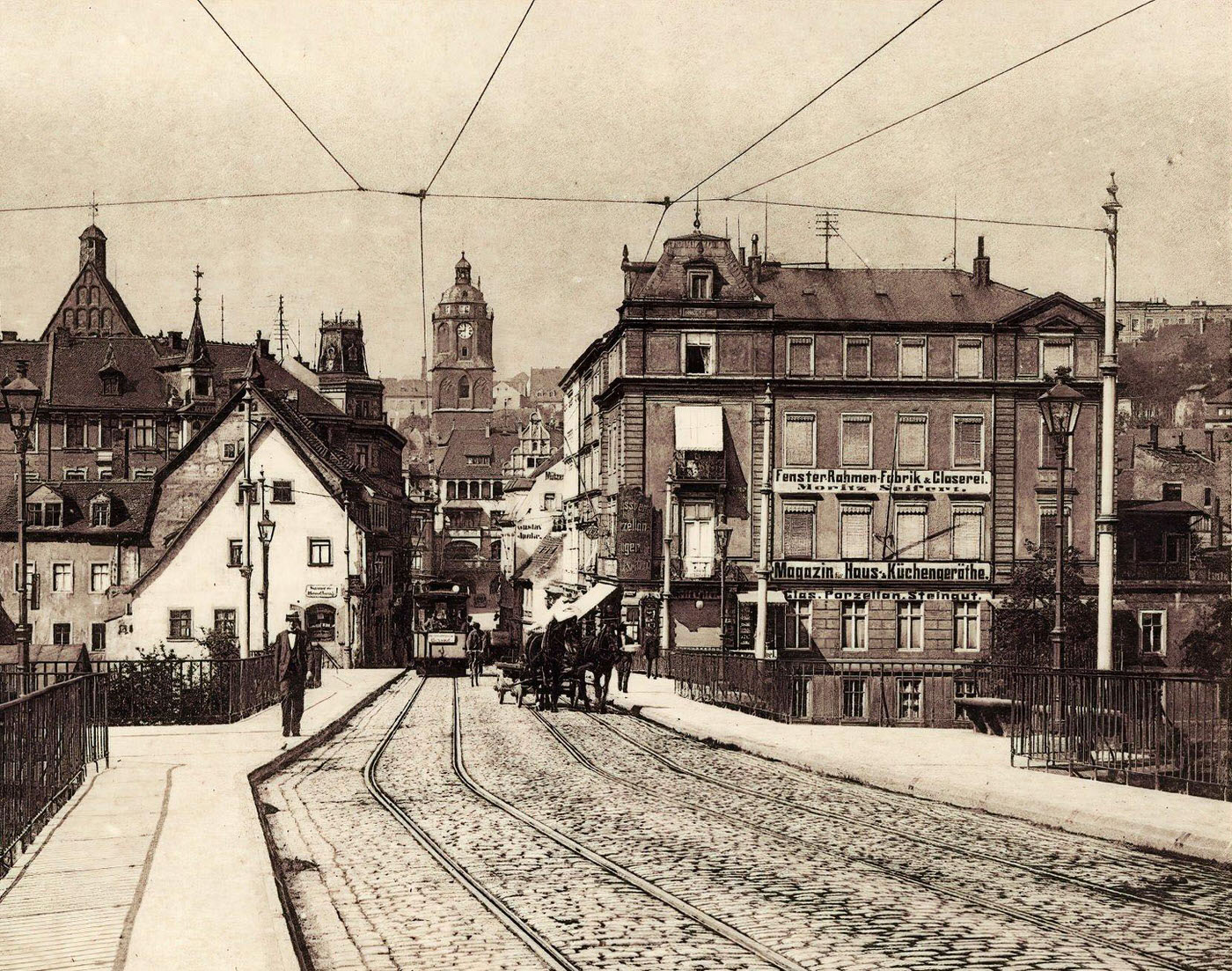
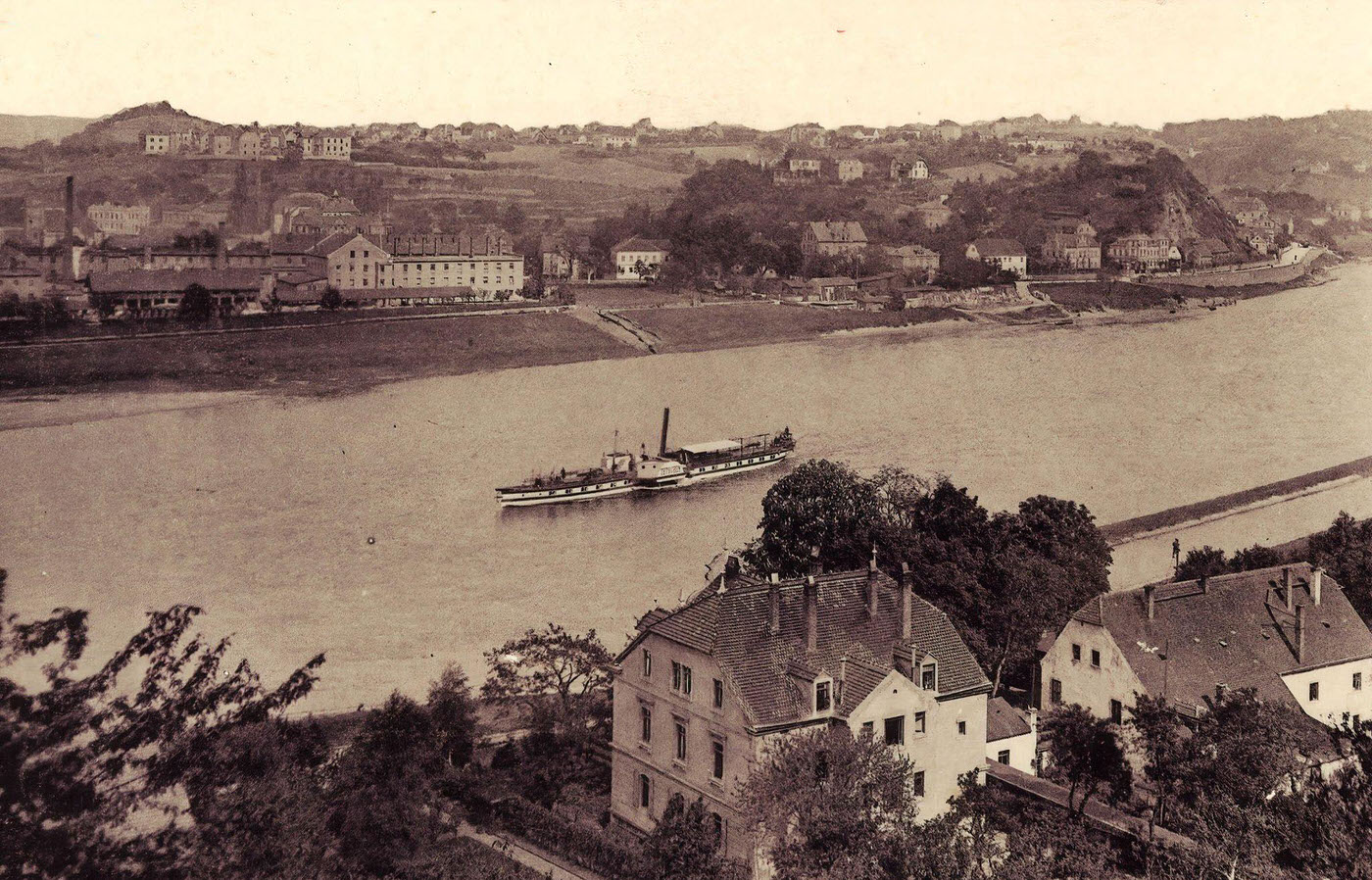
Transportation in early 1900s Germany was in a state of transition. The horse was still the dominant working animal, pulling cargo wagons, passenger carriages, and farm equipment across the country. But the electric tram was rapidly claiming the cities. Meissen, the porcelain city on the Elbe River, was already running trams past its famous Frauenkirche and across its old stone bridge by 1904. On the same river, ferries and steamships carried goods and passengers along one of Germany’s most important waterways.
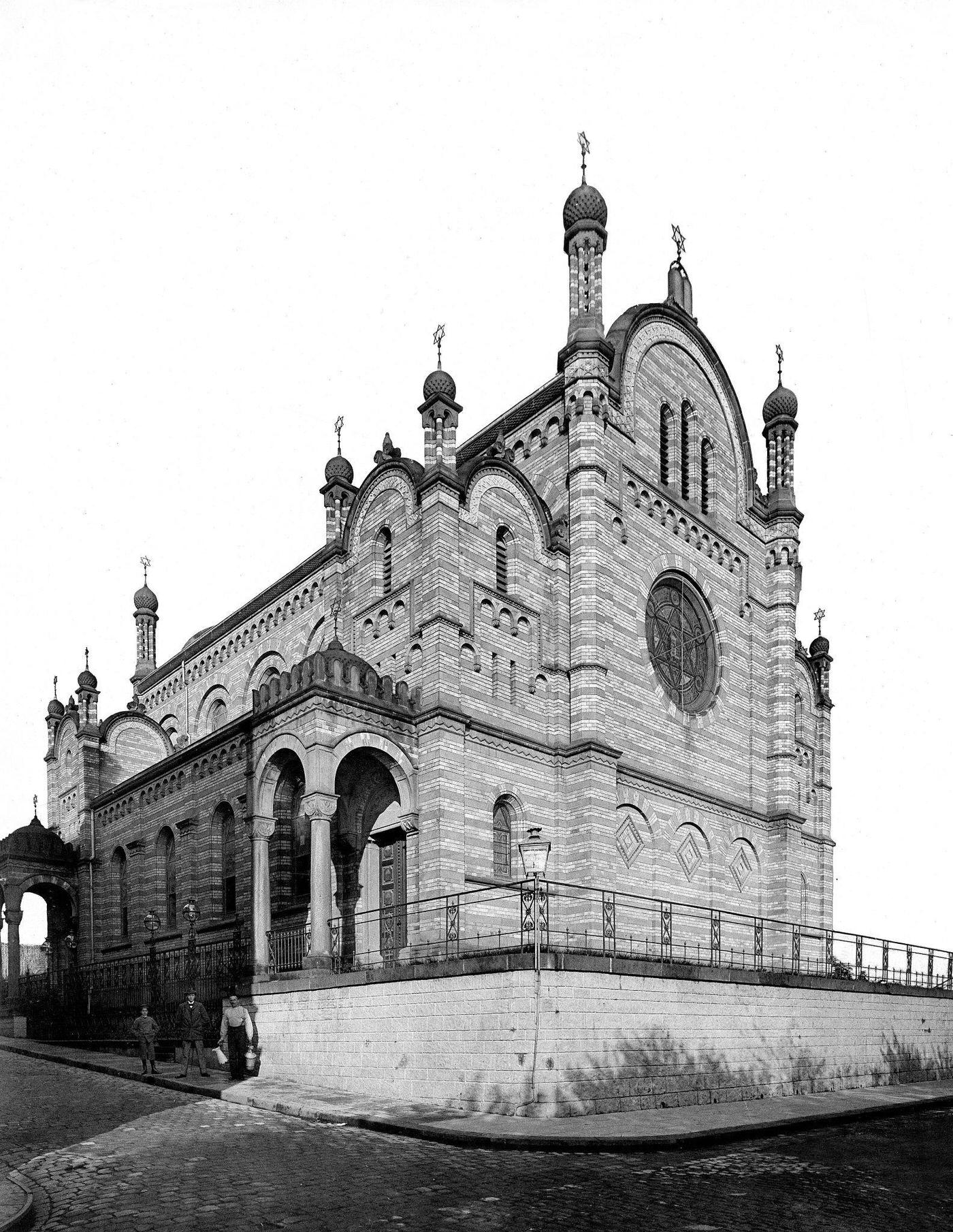
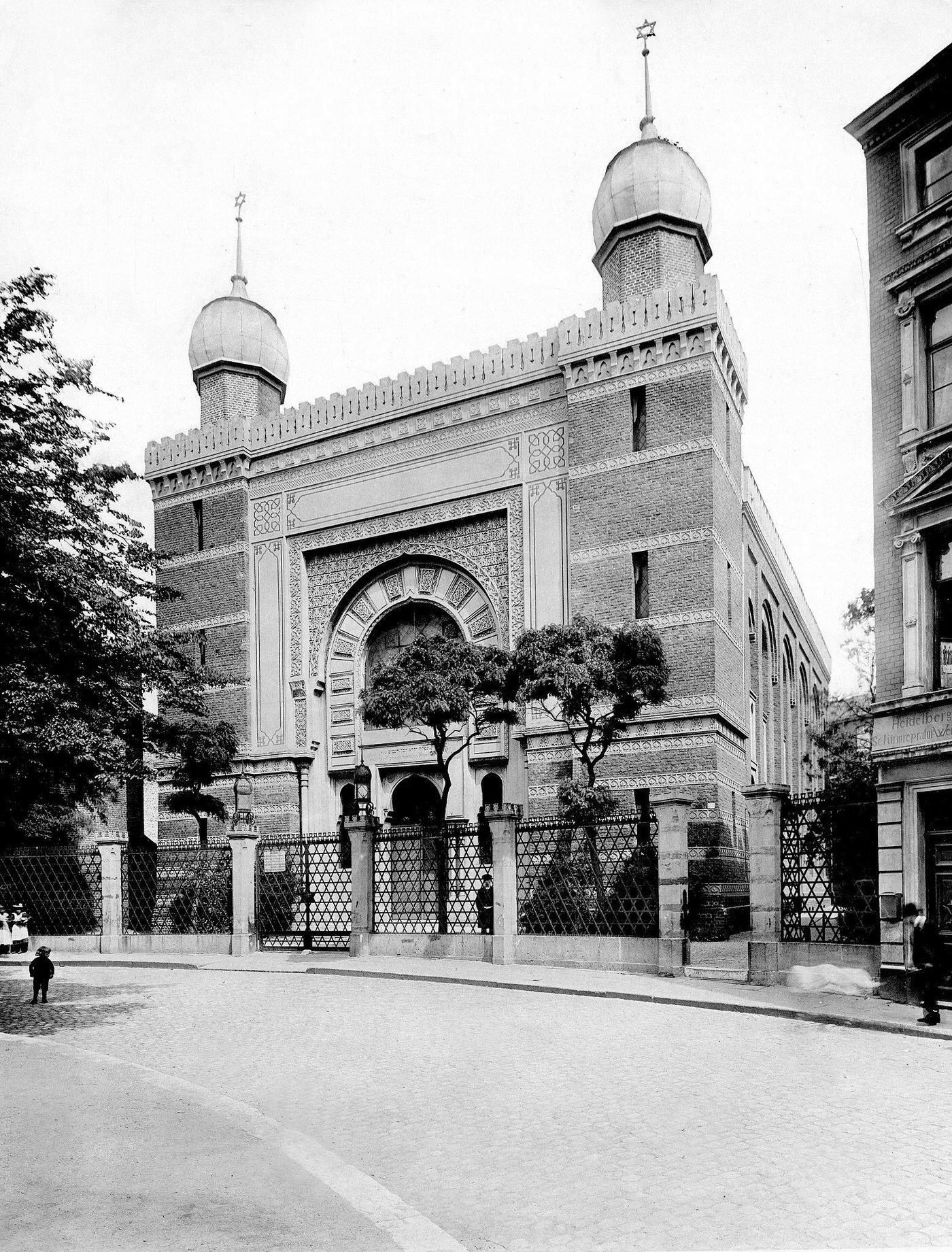
Religious architecture was central to the identity of German cities and towns in this era. In the Rhine Province to the west, both Christian churches and Jewish synagogues formed prominent parts of the urban landscape. Bonn opened a grand new synagogue in 1900, and Aachen’s historic synagogue stood as a reflection of the Jewish communities that had been part of German civic life for generations. Germany’s Jewish population numbered around 600,000 at this time, concentrated in major cities and well represented in commerce, medicine, law, and the arts.
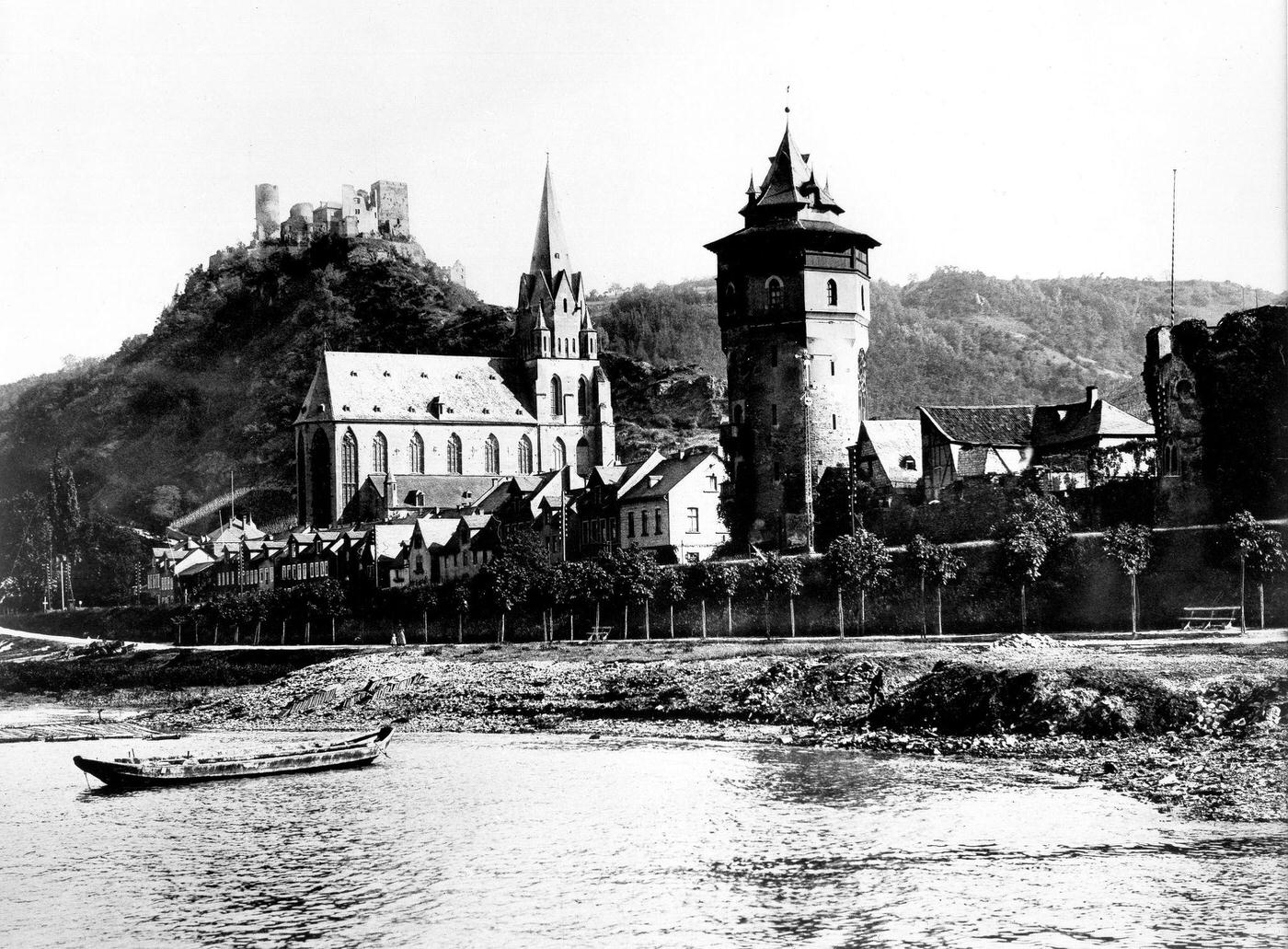
Along the Rhine Valley, medieval towns and castles made Germany one of the most visually dramatic countries in Europe. Oberwesel, a small town with well-preserved defensive walls and towers, sat on the Rhine just south of the Loreley cliffs. Its Liebfrauen Church, with its distinctive red tower, overlooked the river alongside the ruins of Schönburg Castle — a scene that had changed little in centuries.
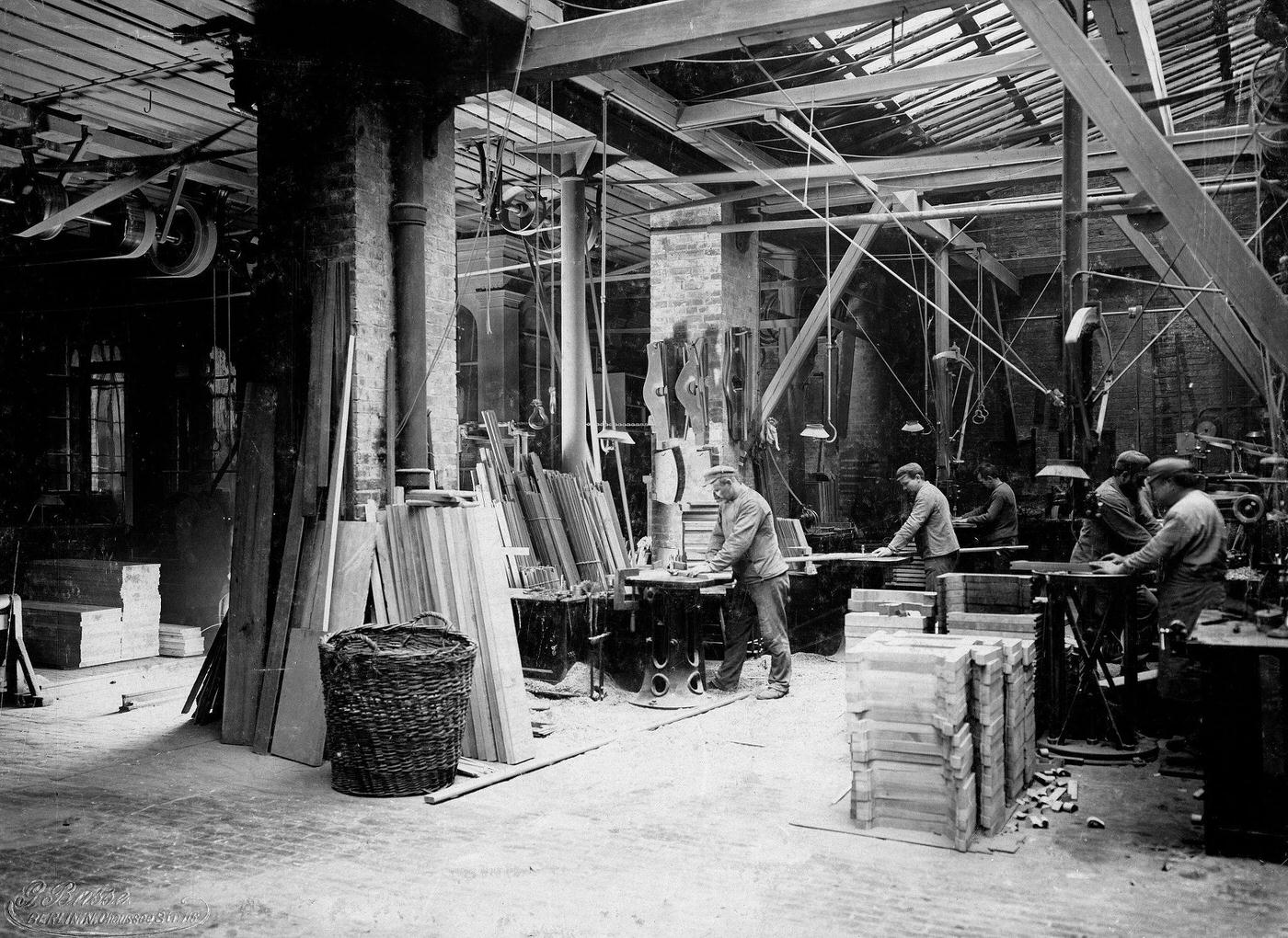
Germany’s industrial strength in this period was real and growing. Its coal and steel output was rising fast, and its manufacturing base — covering chemicals, electrical equipment, and machinery — was competing directly with Britain and the United States. Berlin sat at the center of this boom. Factories like the Carl Bechstein piano works employed hundreds of skilled craftsmen and exported instruments across Europe. The city’s theaters and music halls reflected the wealth this industry was generating.
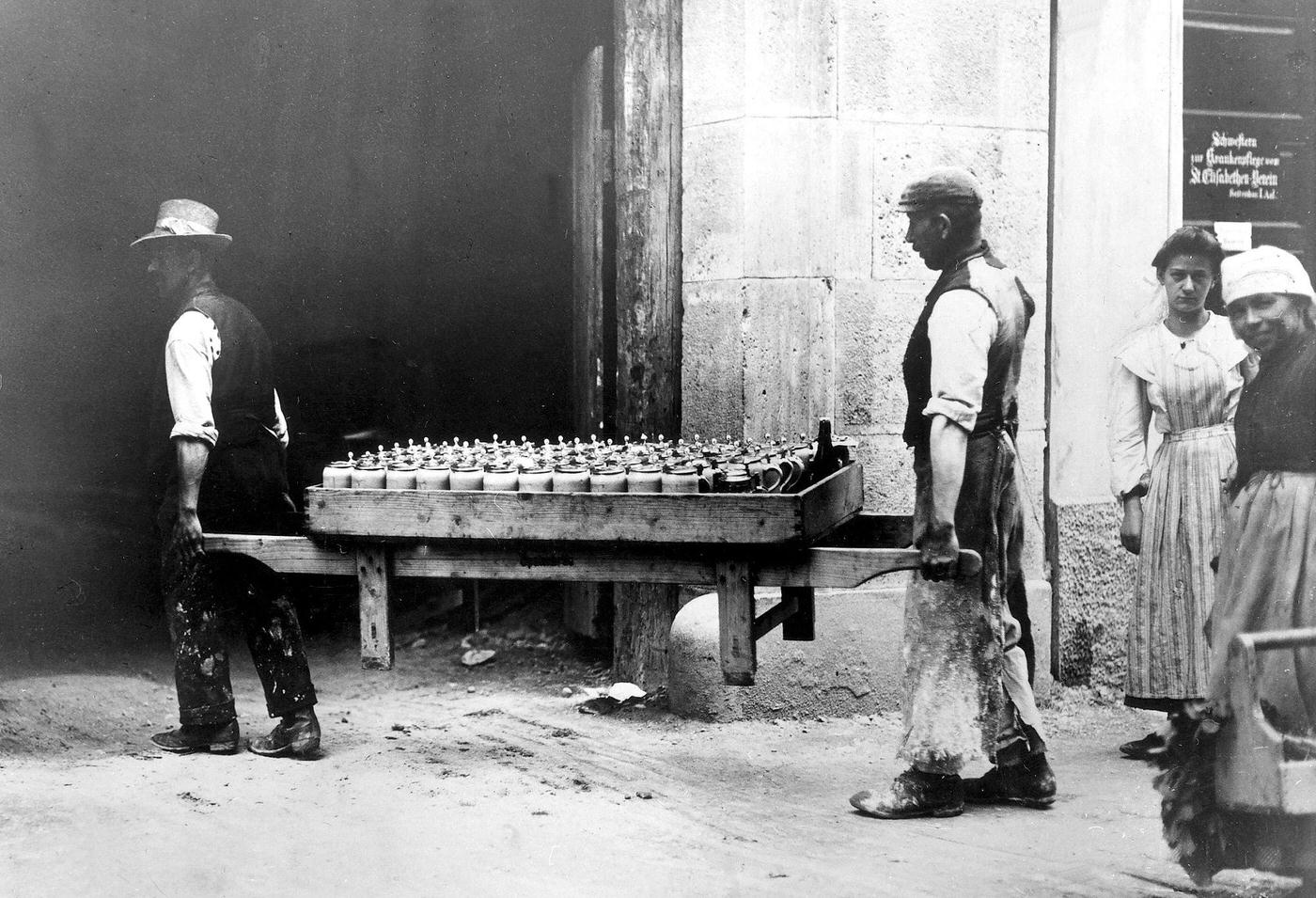
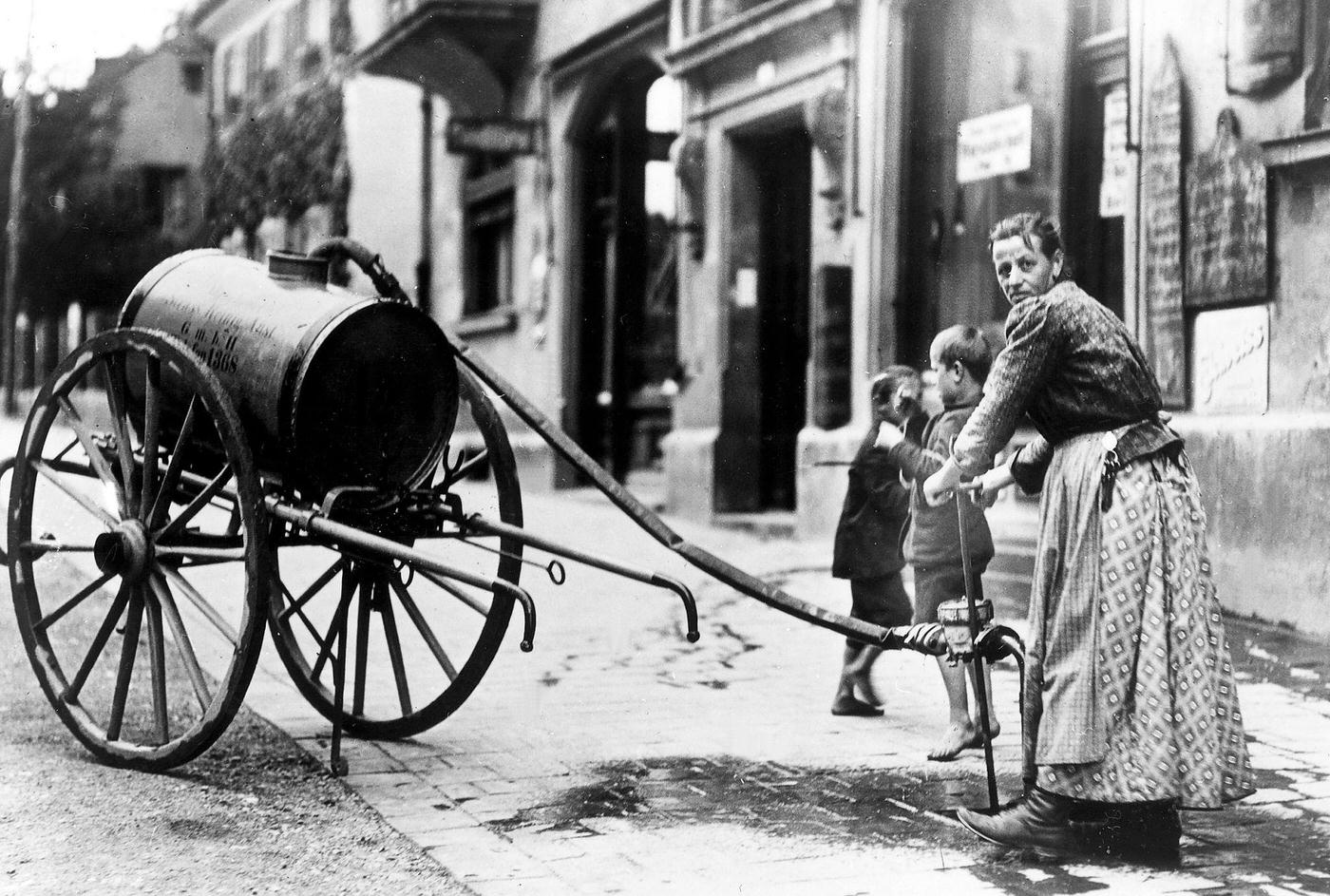
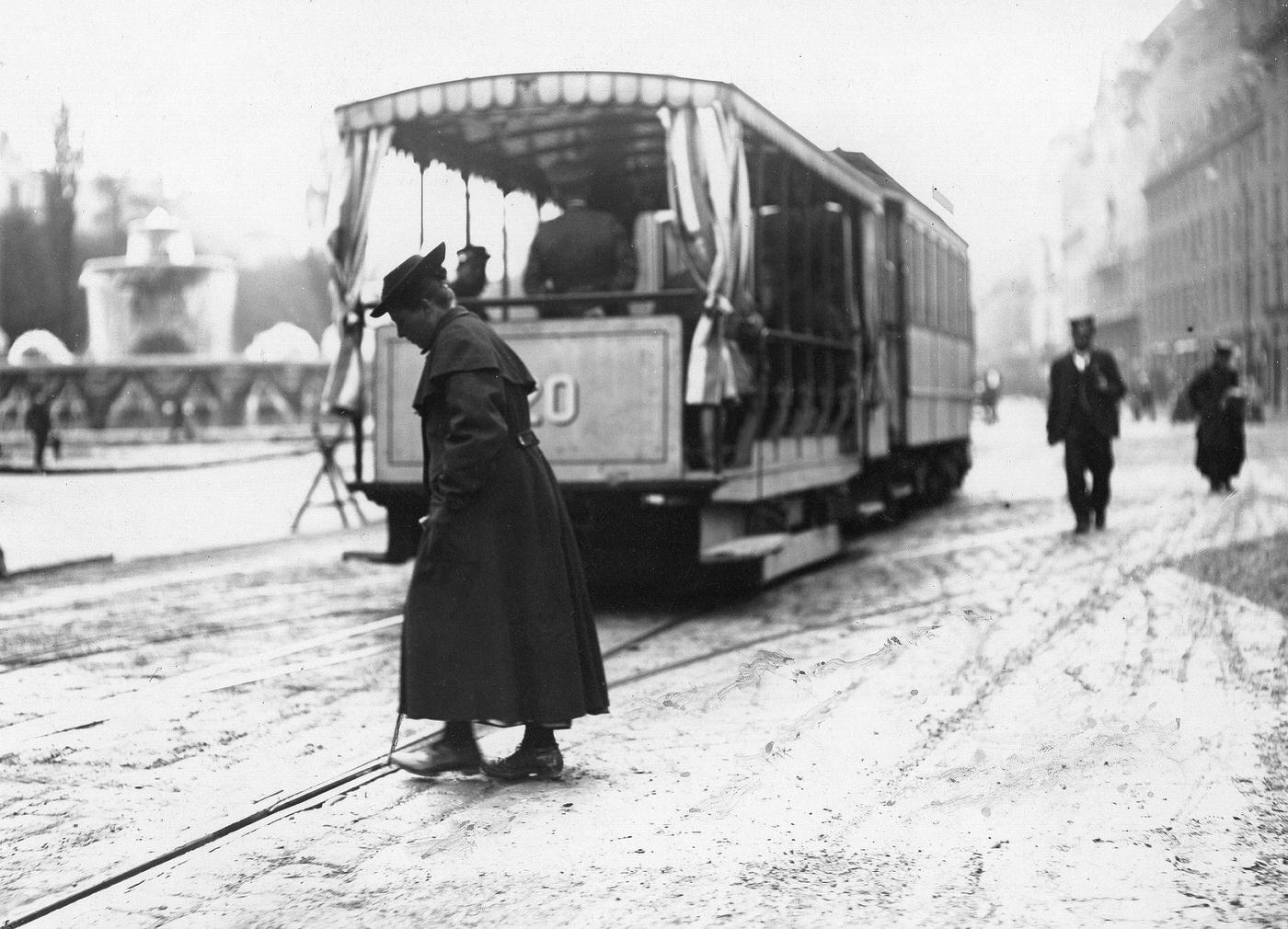
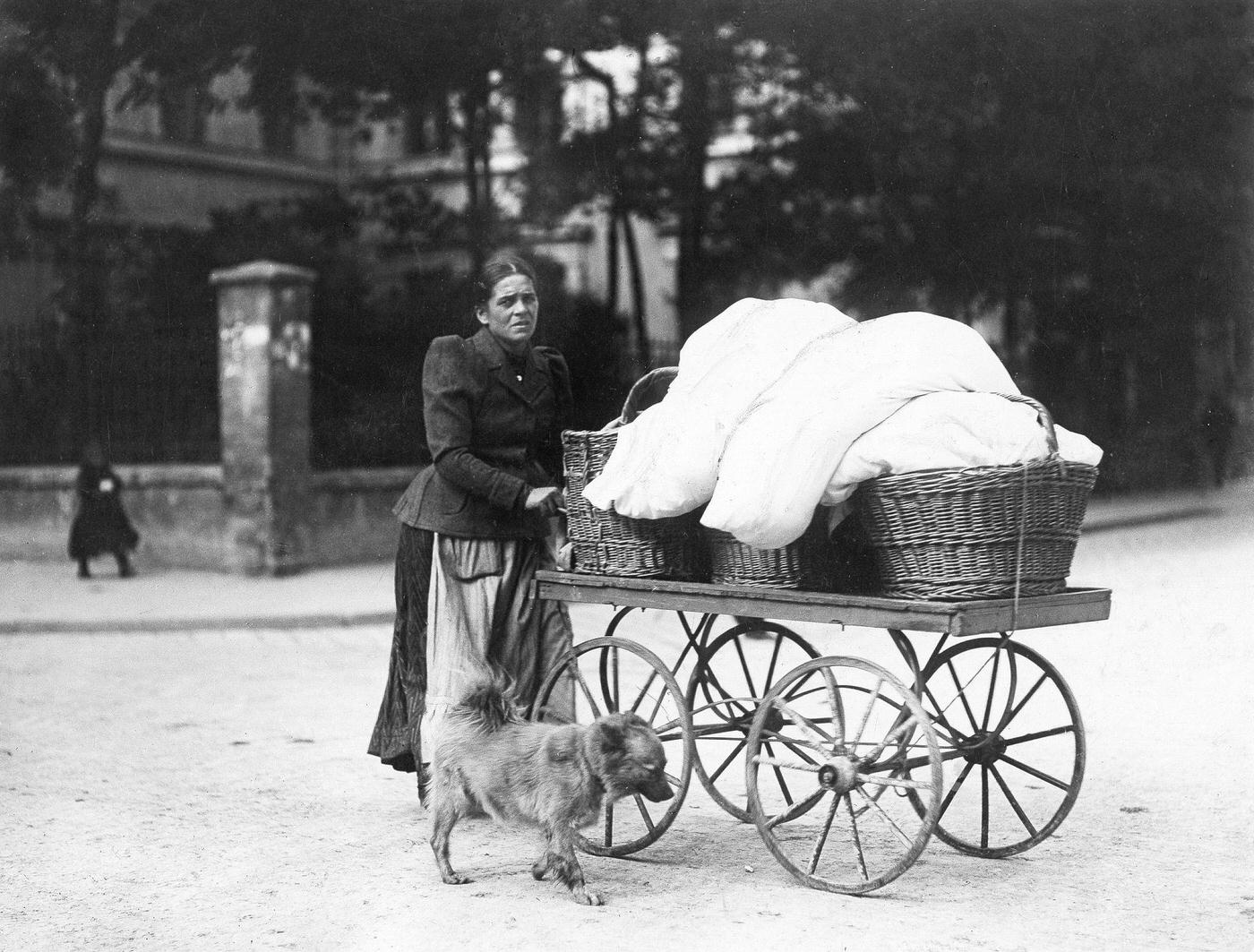
Daily working life in Munich around 1900 was physical and unglamorous for most people. These photographs show ordinary workers doing ordinary jobs — carrying heavy kegs of beer across a building site, hauling laundry on a cart through the streets, refilling water containers, or manually switching tram points at street junctions. Women performed much of this labor alongside men, often in roles tied to domestic supply and city maintenance.
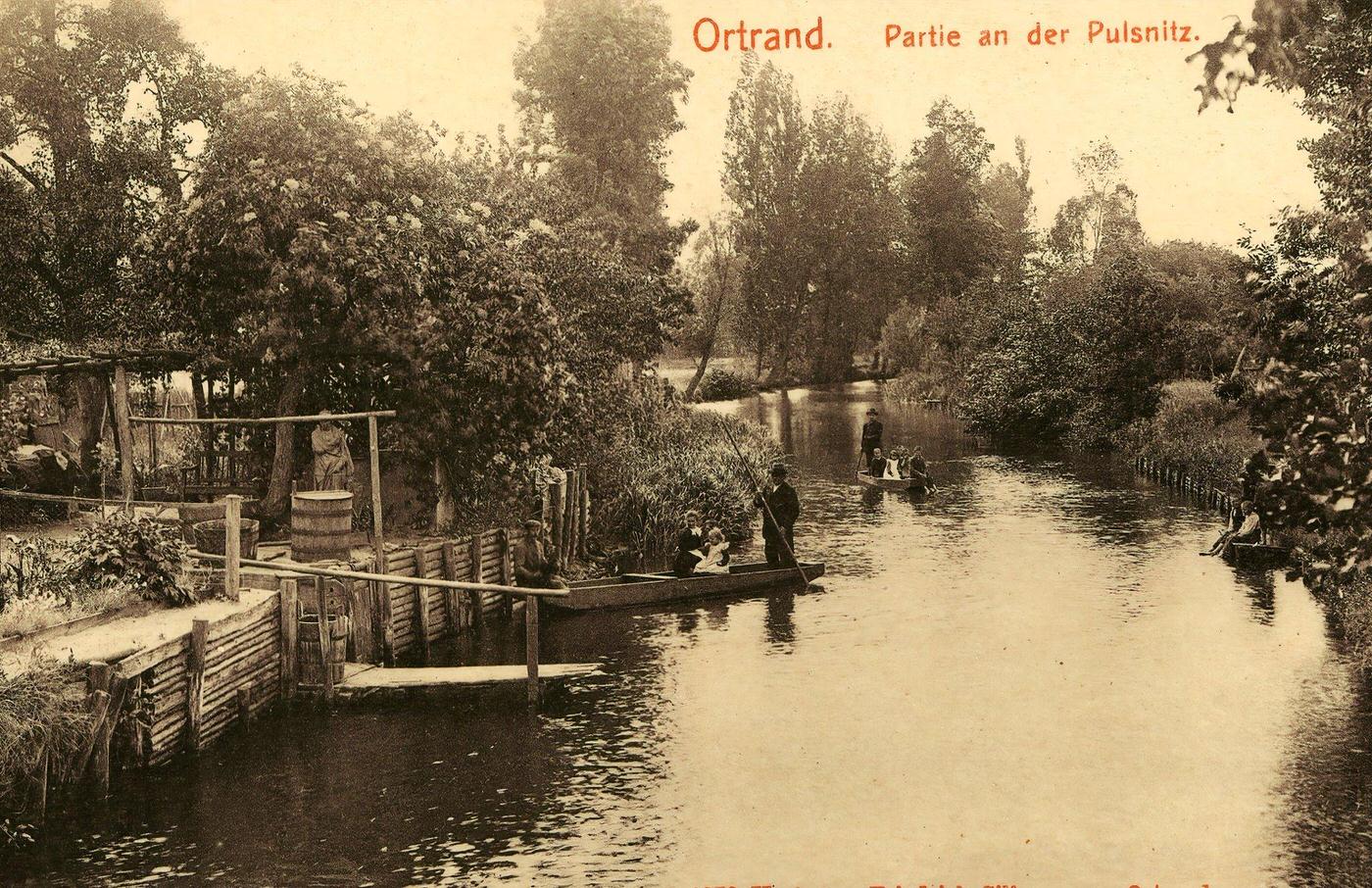
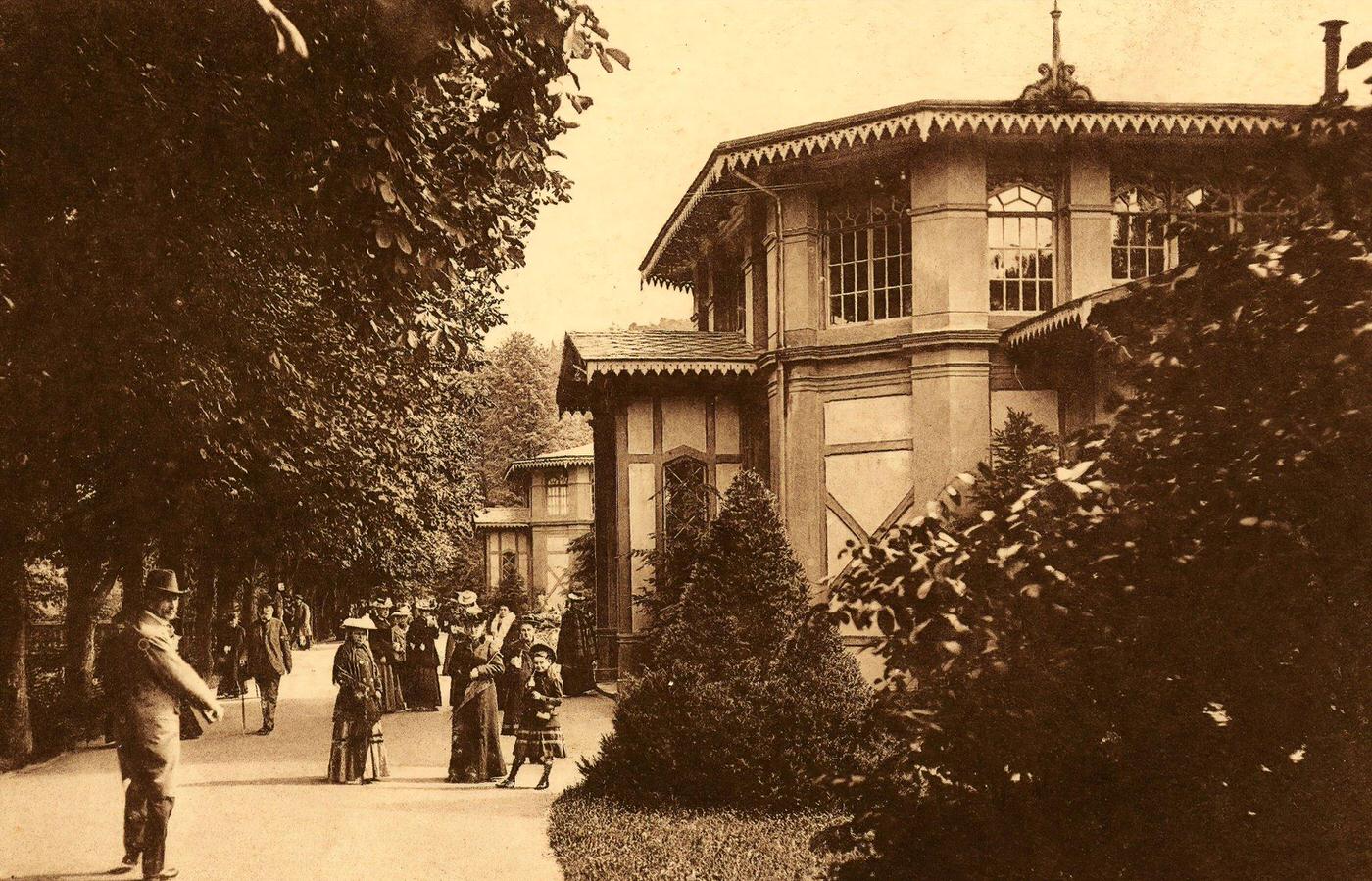
Germany’s river network was not just scenically impressive — it was economically essential. Rivers like the Pulsnitz in Brandenburg and the Elbe through Saxony moved timber, grain, coal, and manufactured goods between towns and cities. Small river ports and landing stages dotted the banks, and the men and vessels that worked them formed the backbone of regional trade. Saxony’s spa towns and resort villages, meanwhile, were beginning to attract visitors in meaningful numbers, with esplanades and promenade gardens laid out specifically for leisure.
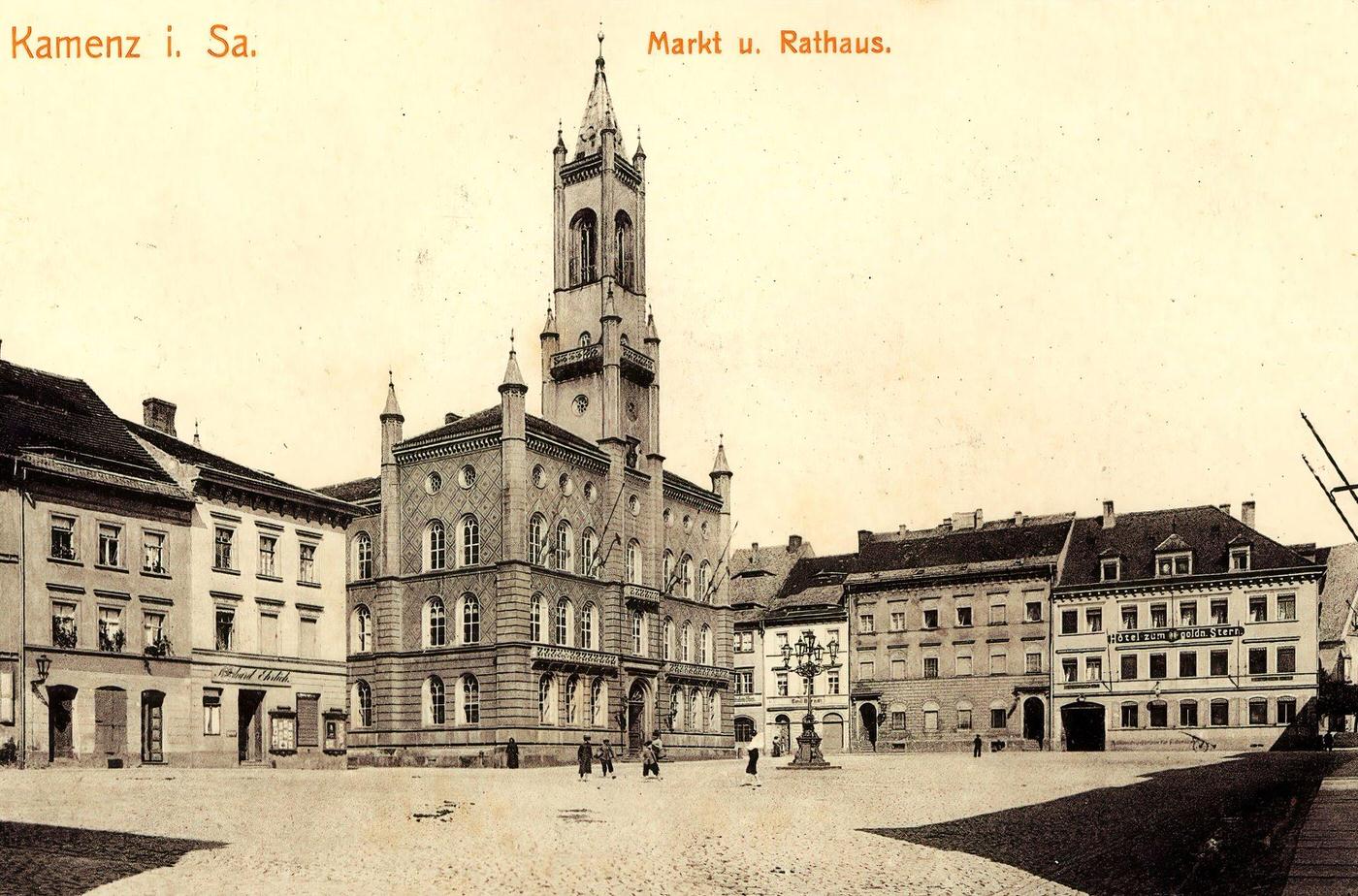
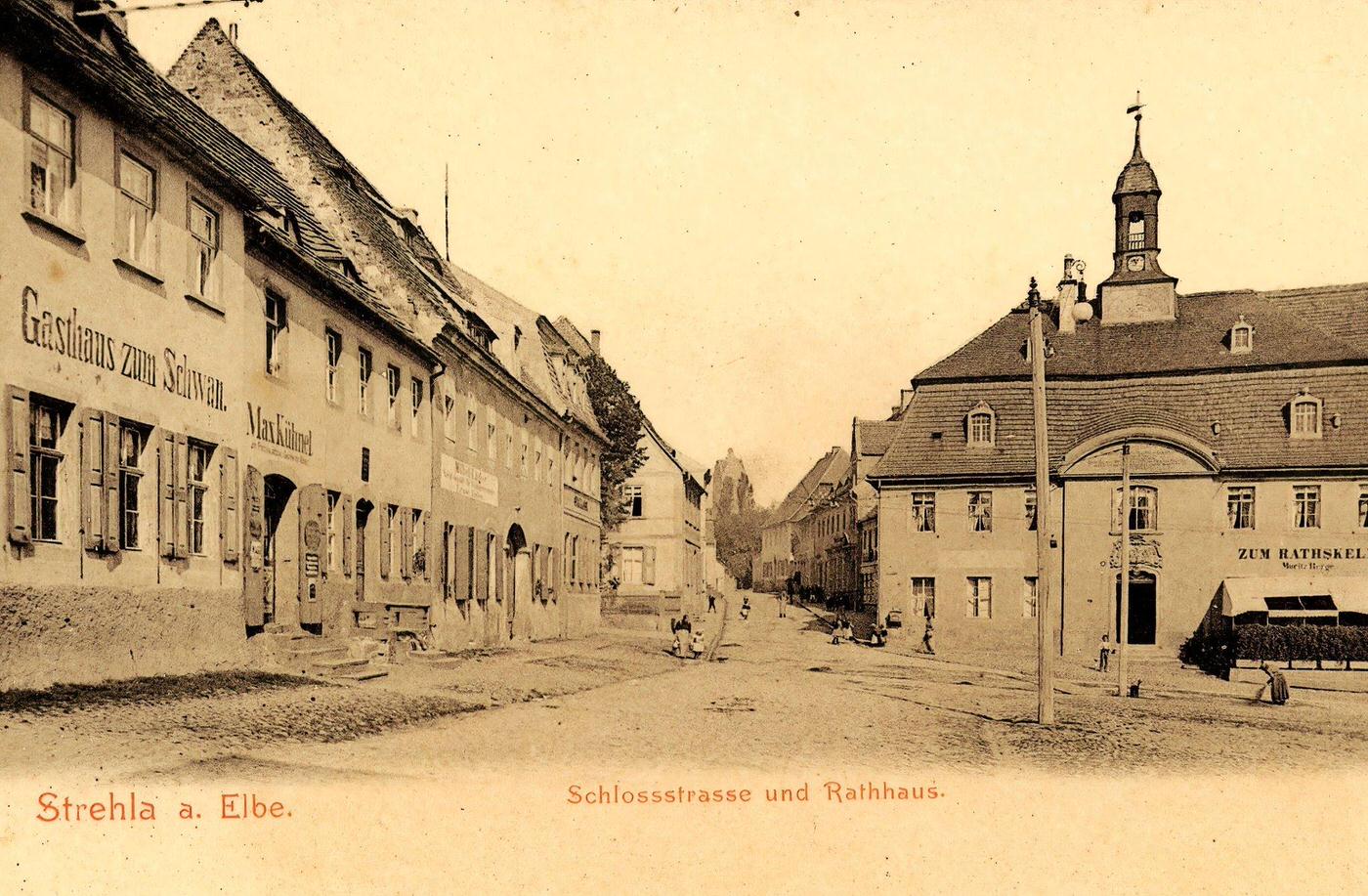
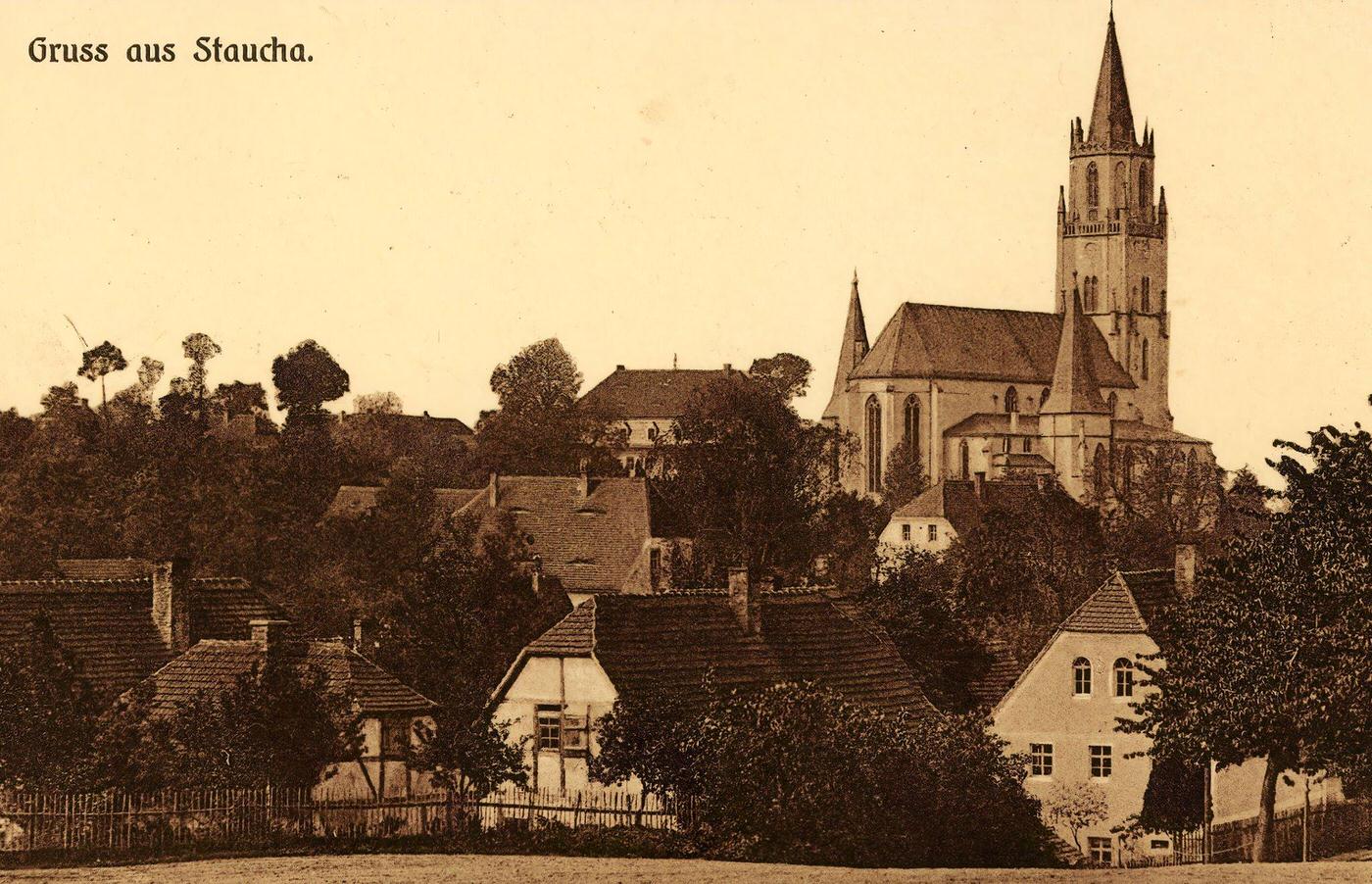
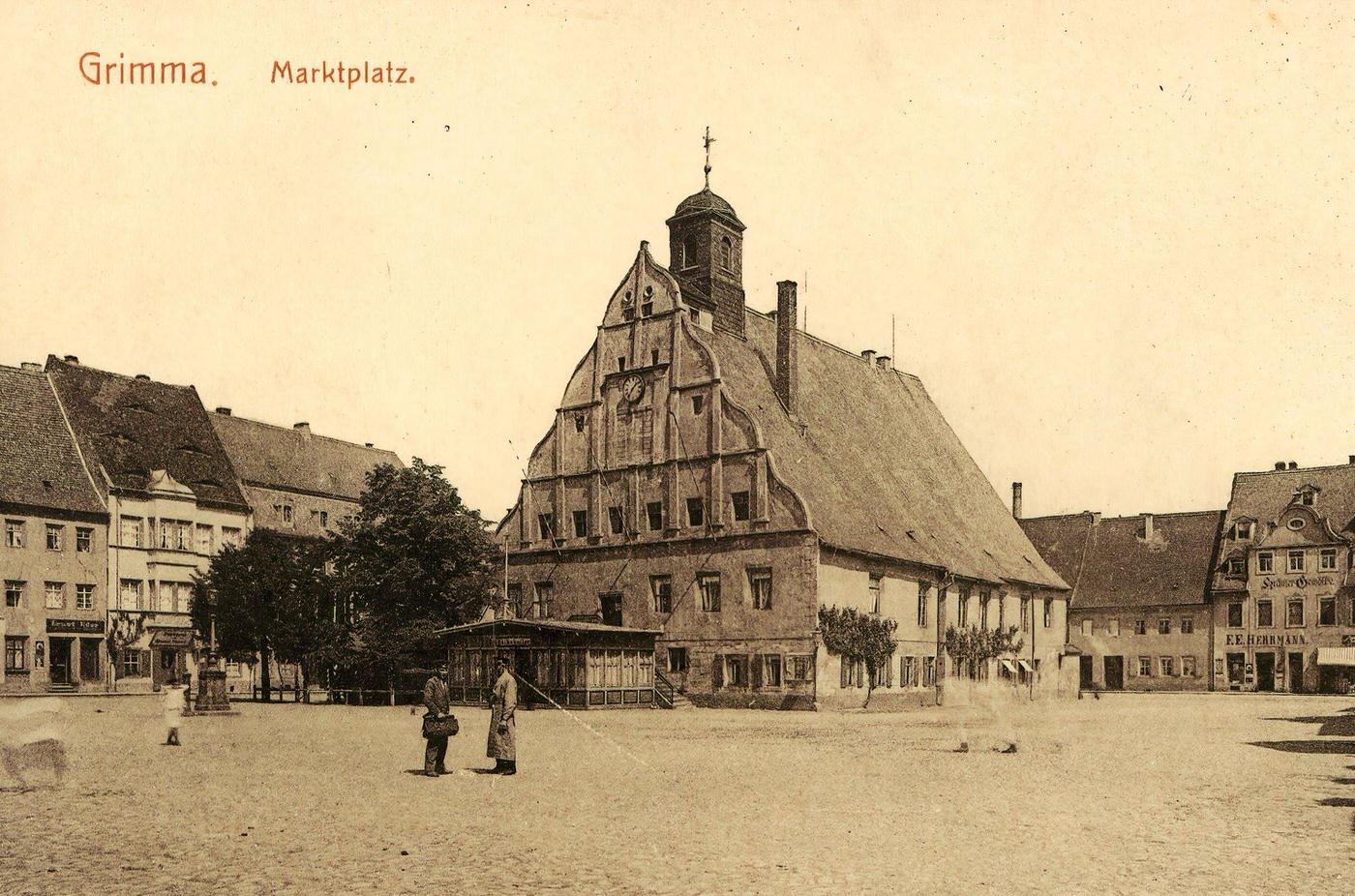
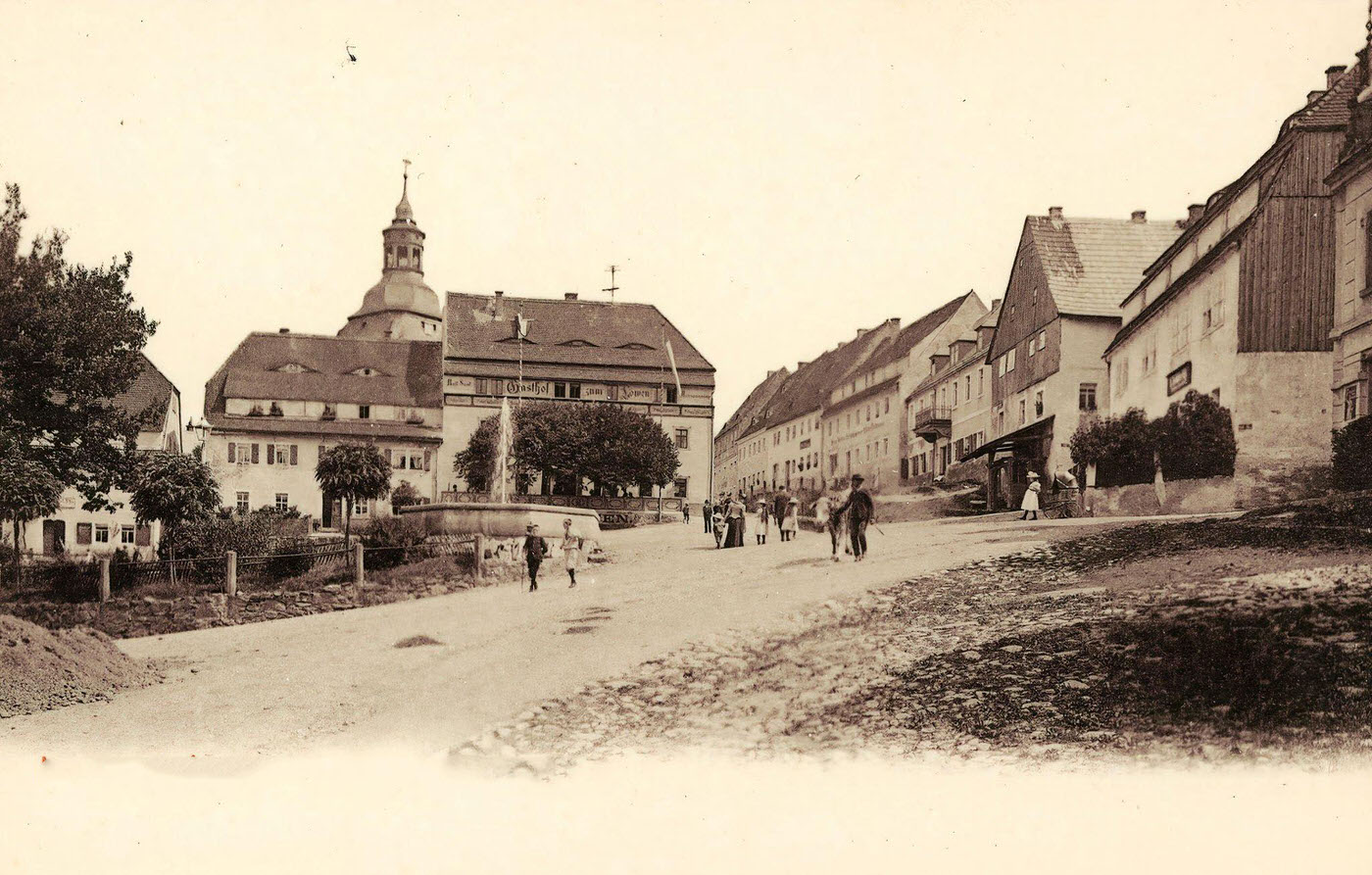
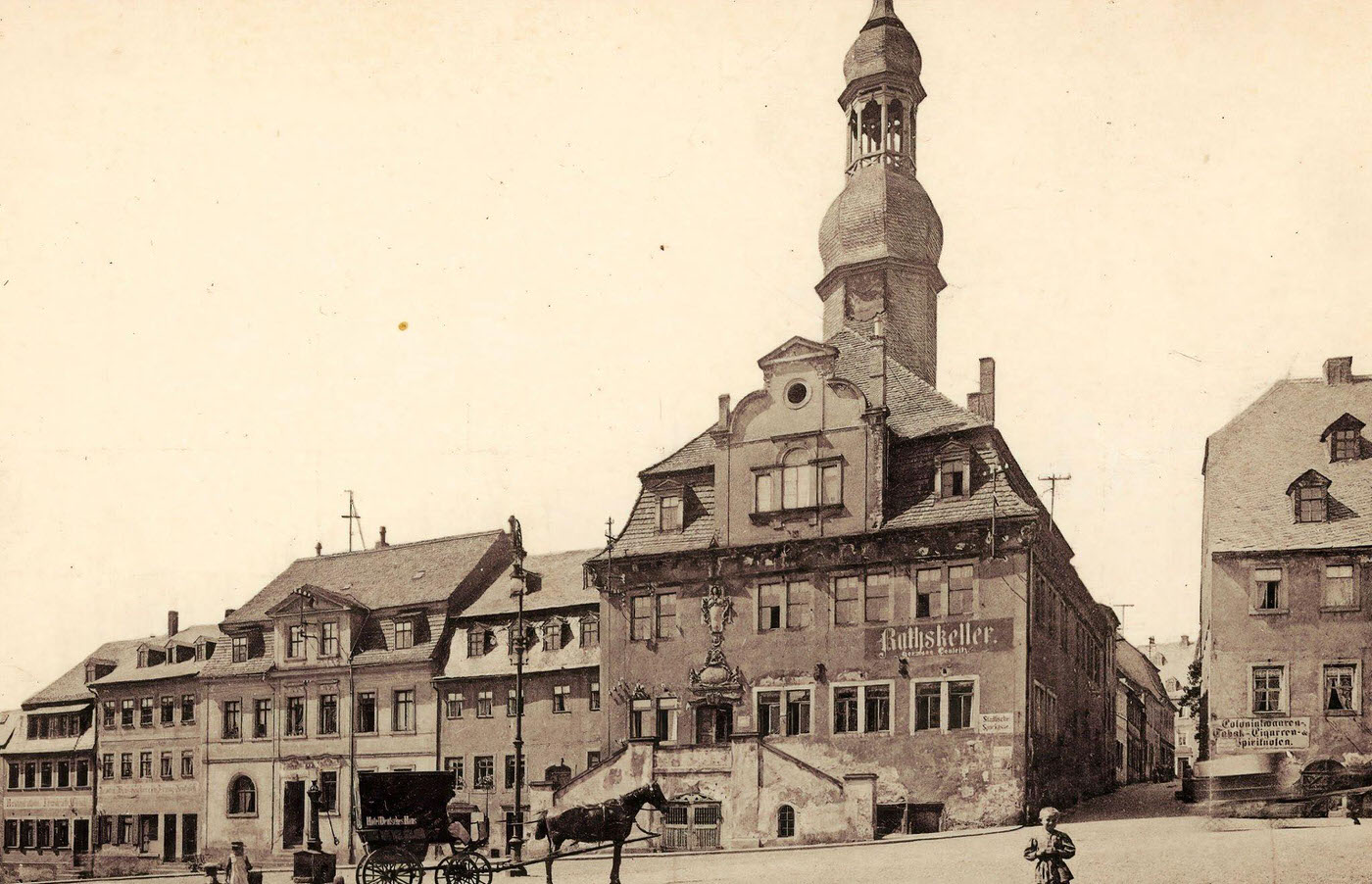
Town halls were the defining civic buildings of German towns in this era. They housed local government, courts, and public records, and their market squares served as the commercial heart of every community. In Kamenz, Grimma, Torgau, and dozens of other Saxon towns, the Rathaus and its surrounding marketplace looked much the same in 1903 as they had for the previous two centuries — except for the bicycles, postal buildings, and telegraph lines beginning to appear alongside the wells and wooden carts.
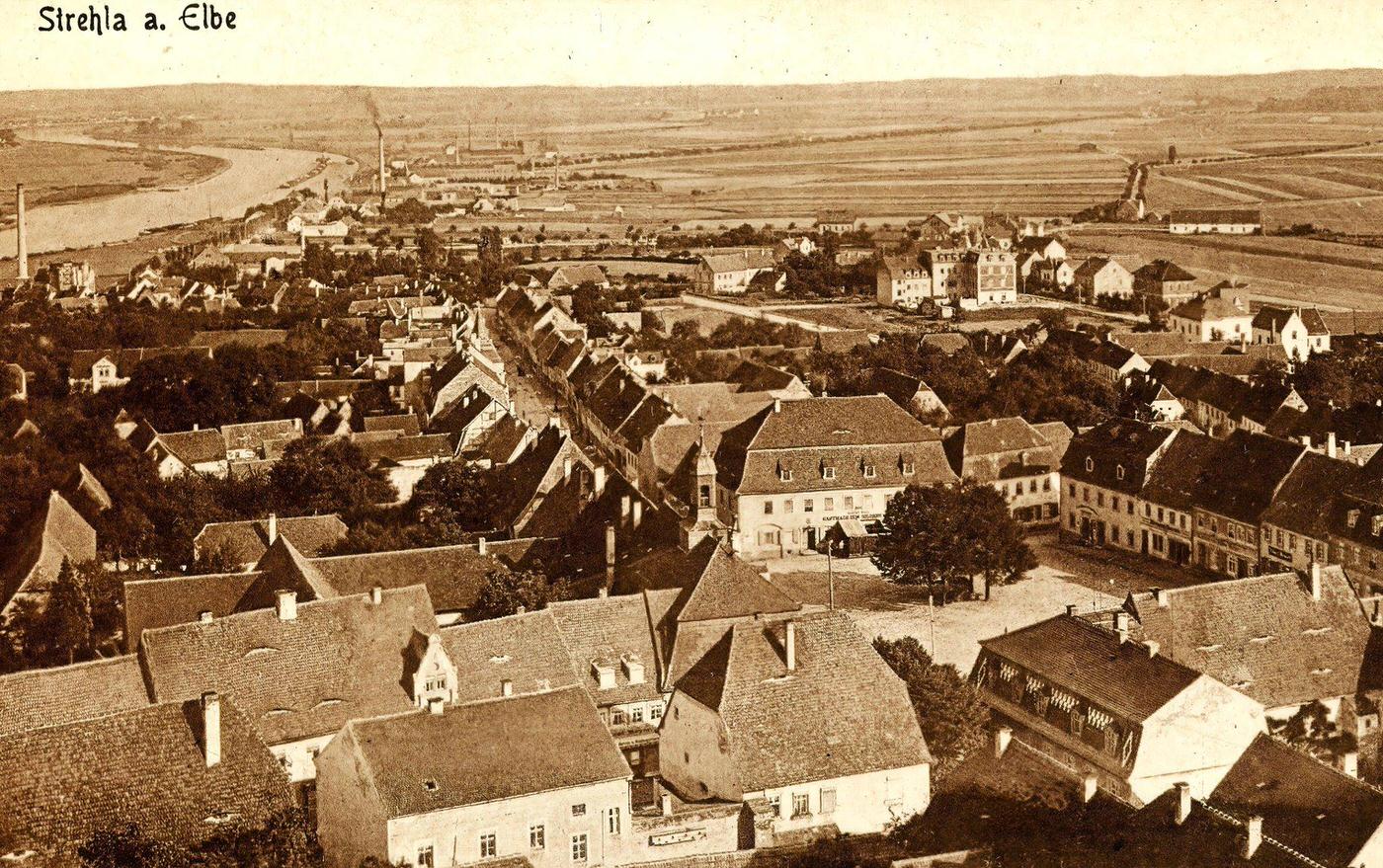
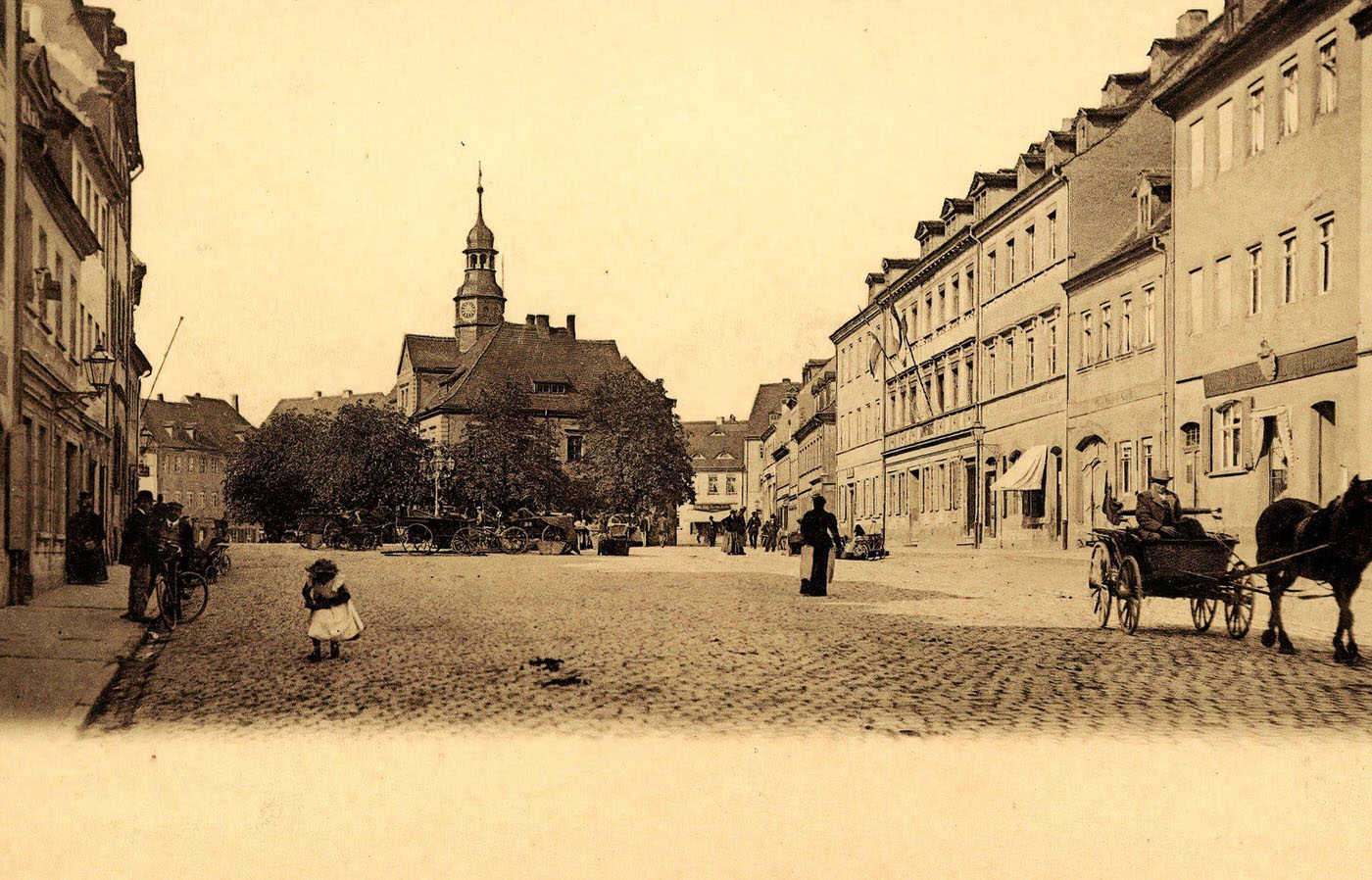
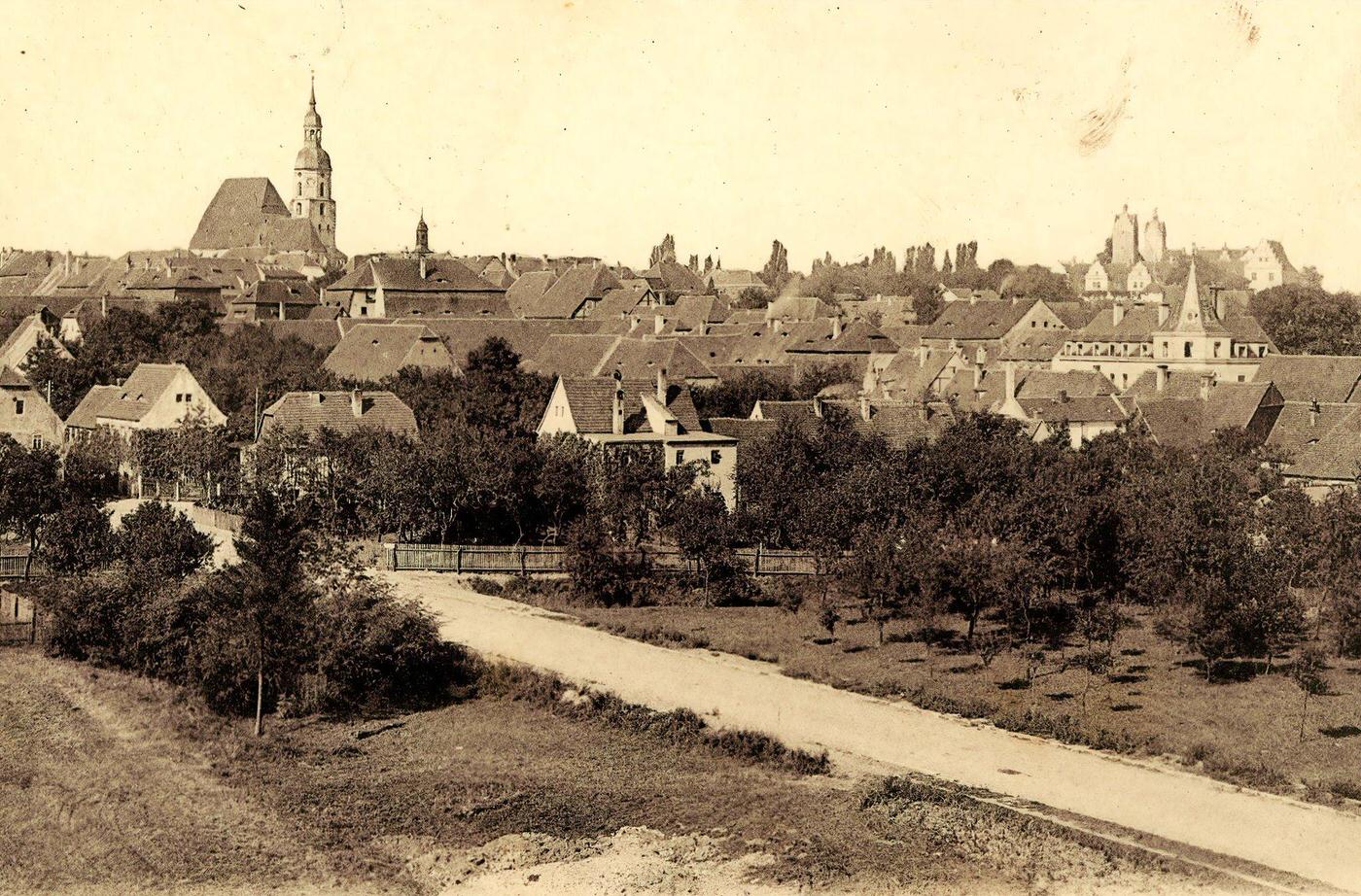
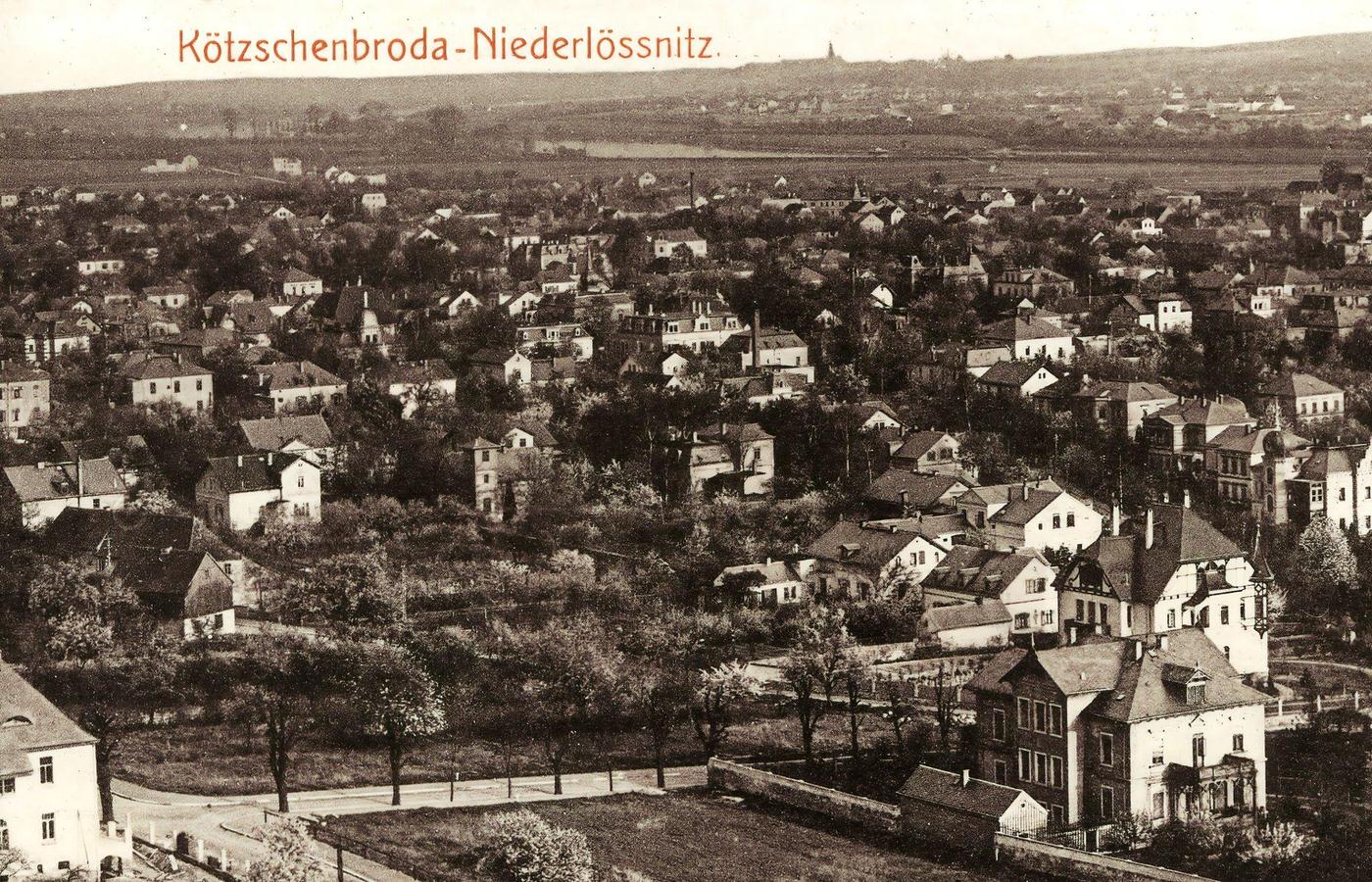
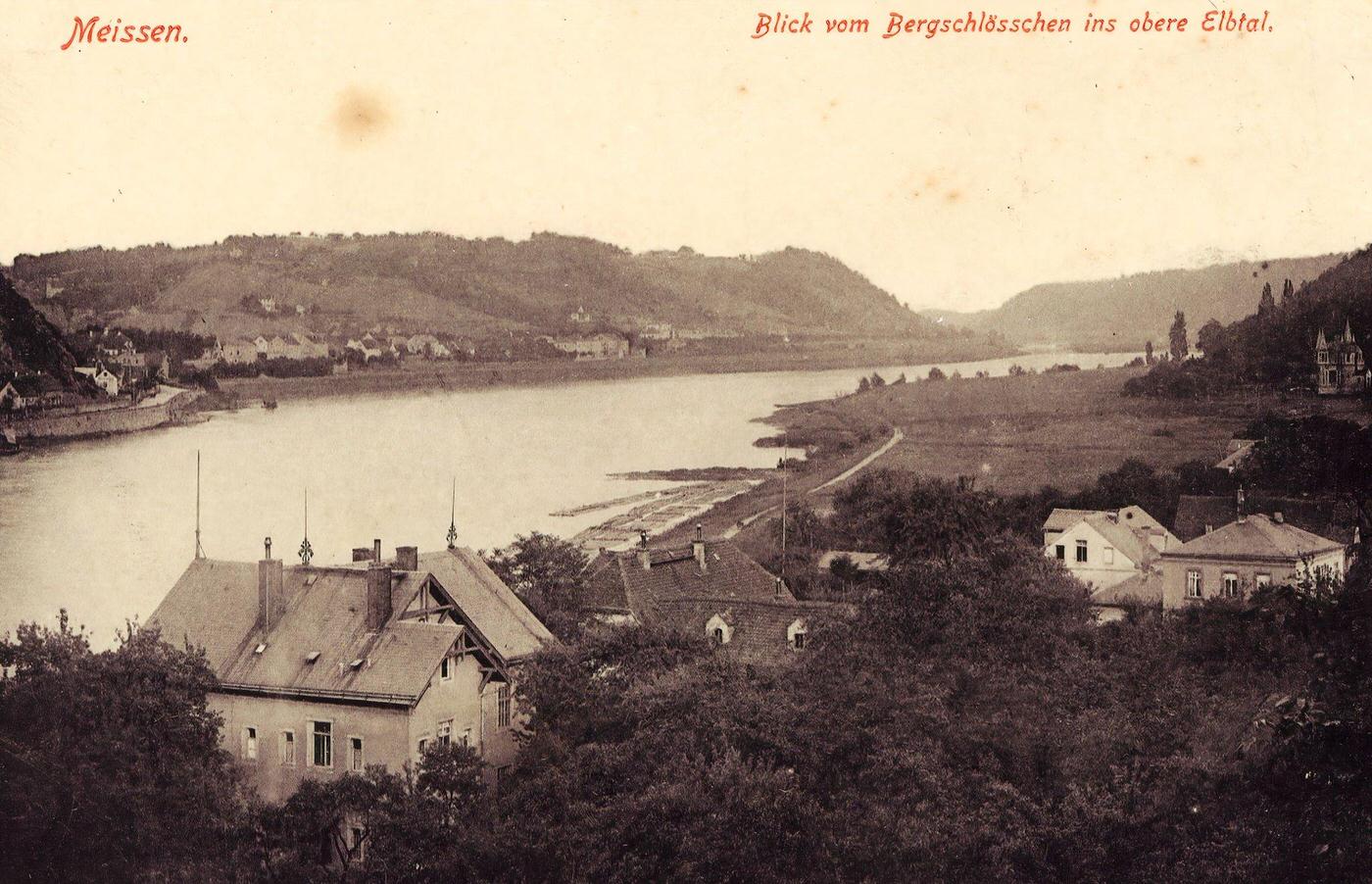
The Meissen district of Saxony was among the most photographed regions of early 1900s Germany, and these images make clear why. The area combined historic castles, working farmland, elegant villas, river scenery, and active market towns within a compact area. Radebeul, just northwest of Dresden, was home to prosperous merchants and artists who built fine houses along the Lossnitz slopes above the Elbe.
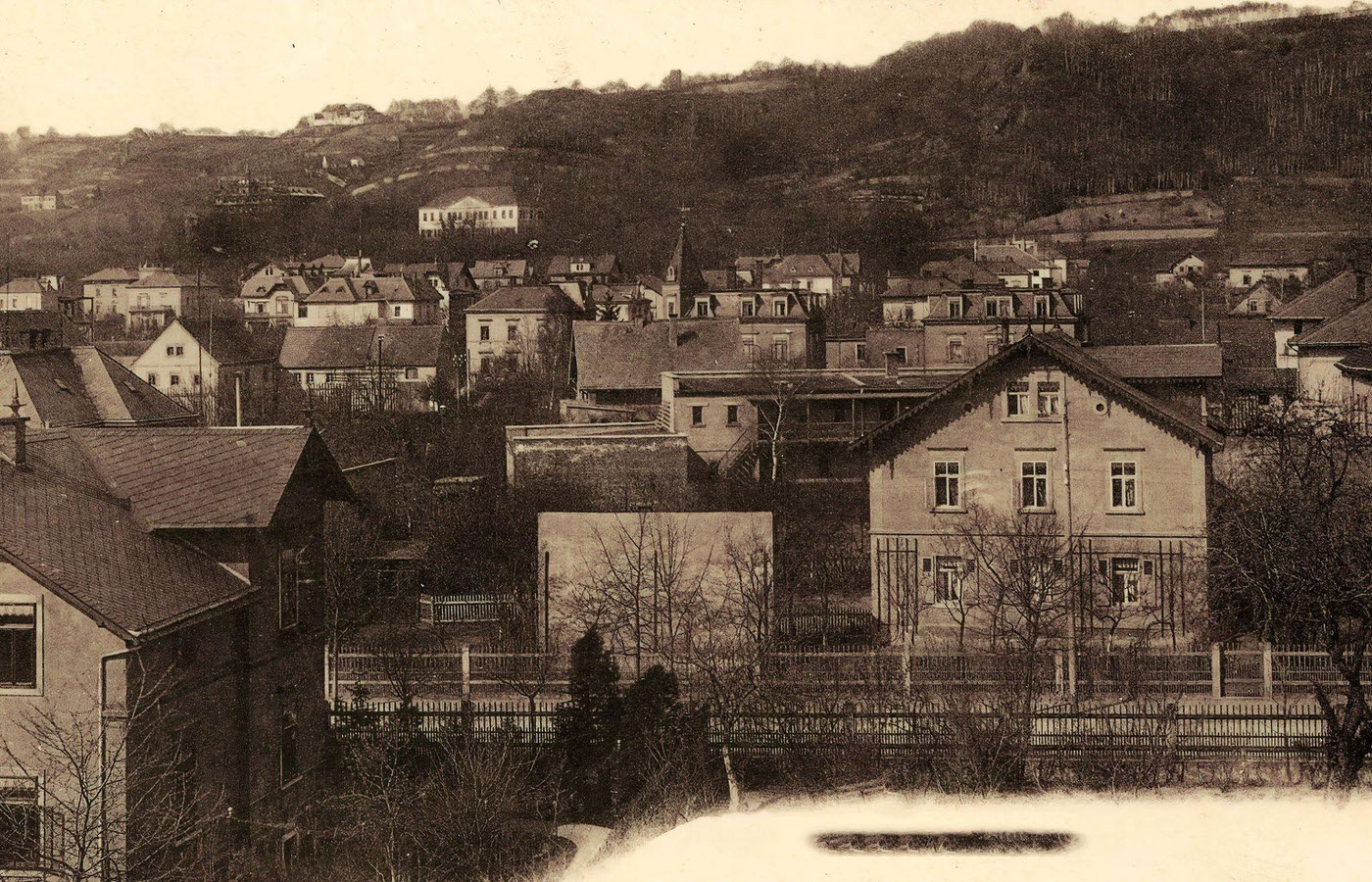
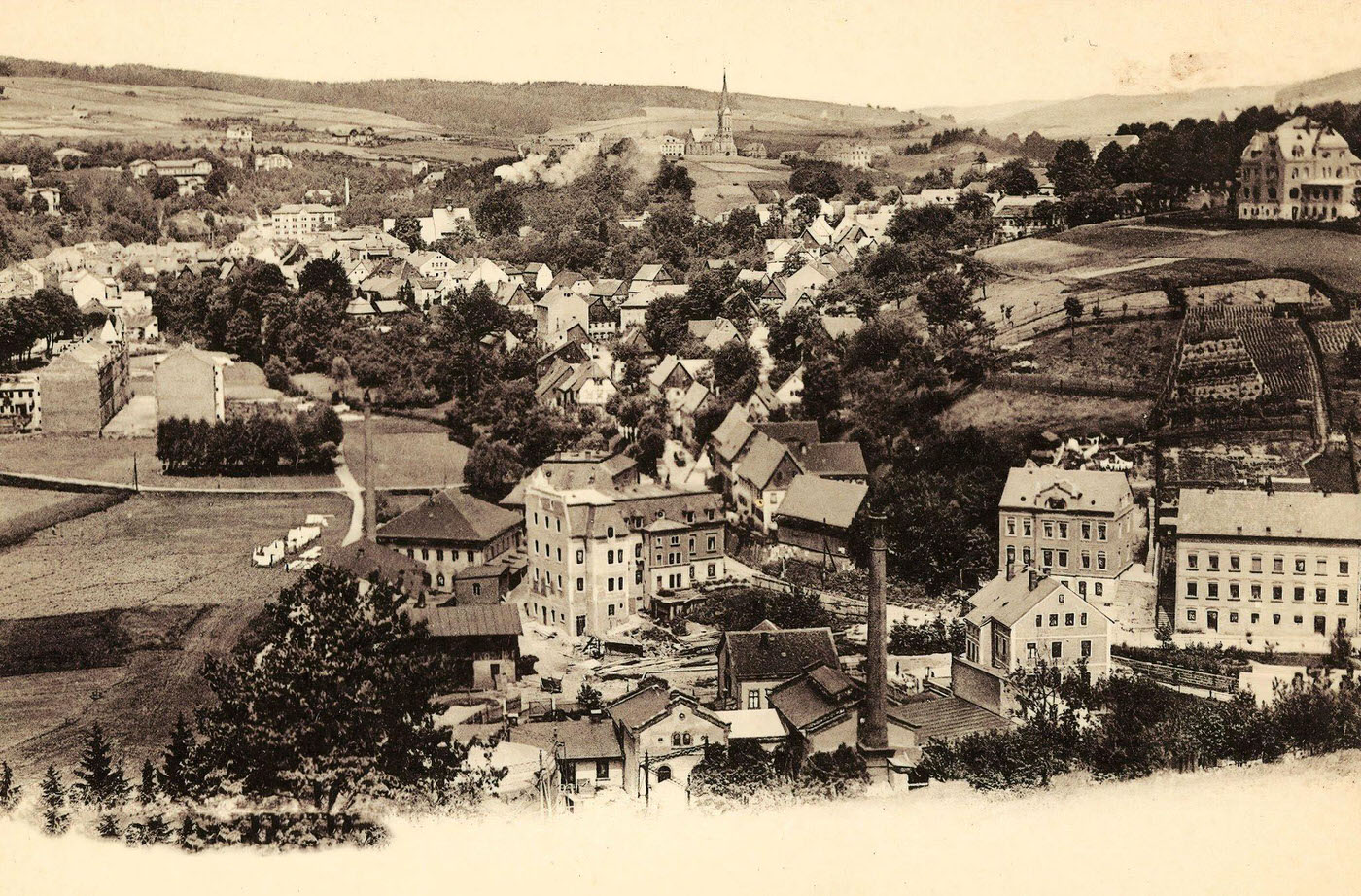
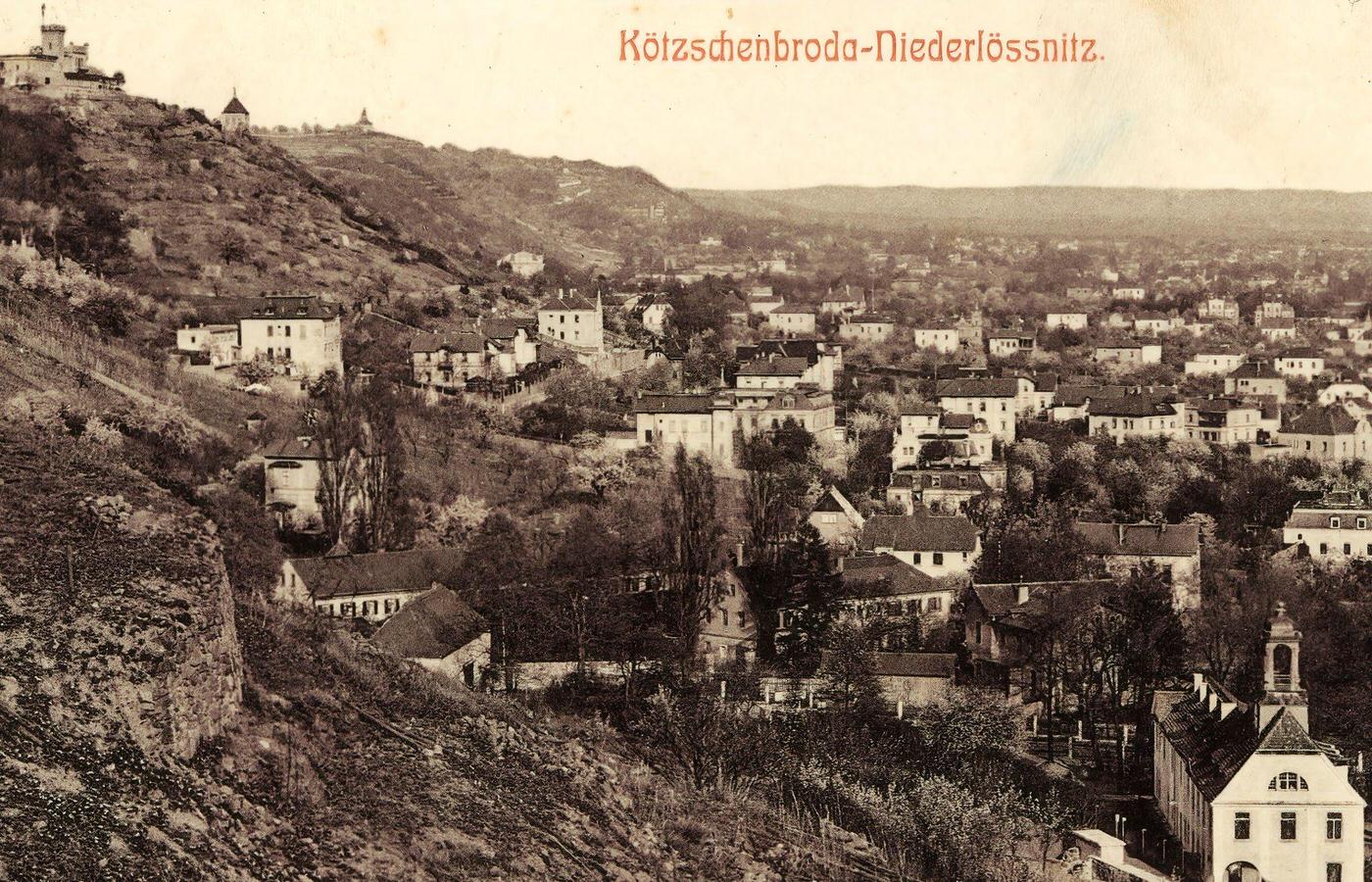
Covered wagons and horse-drawn transport remained the standard way of moving goods between smaller Saxon towns in 1903. Penig, a small textile town in the Mittelsachsen district, had its church spires and wagon traffic photographed alongside the infrastructure of a working provincial town. Across the region, water wells in public squares remained the primary source of water for many households — indoor plumbing was still far from universal, even in towns close to major cities.
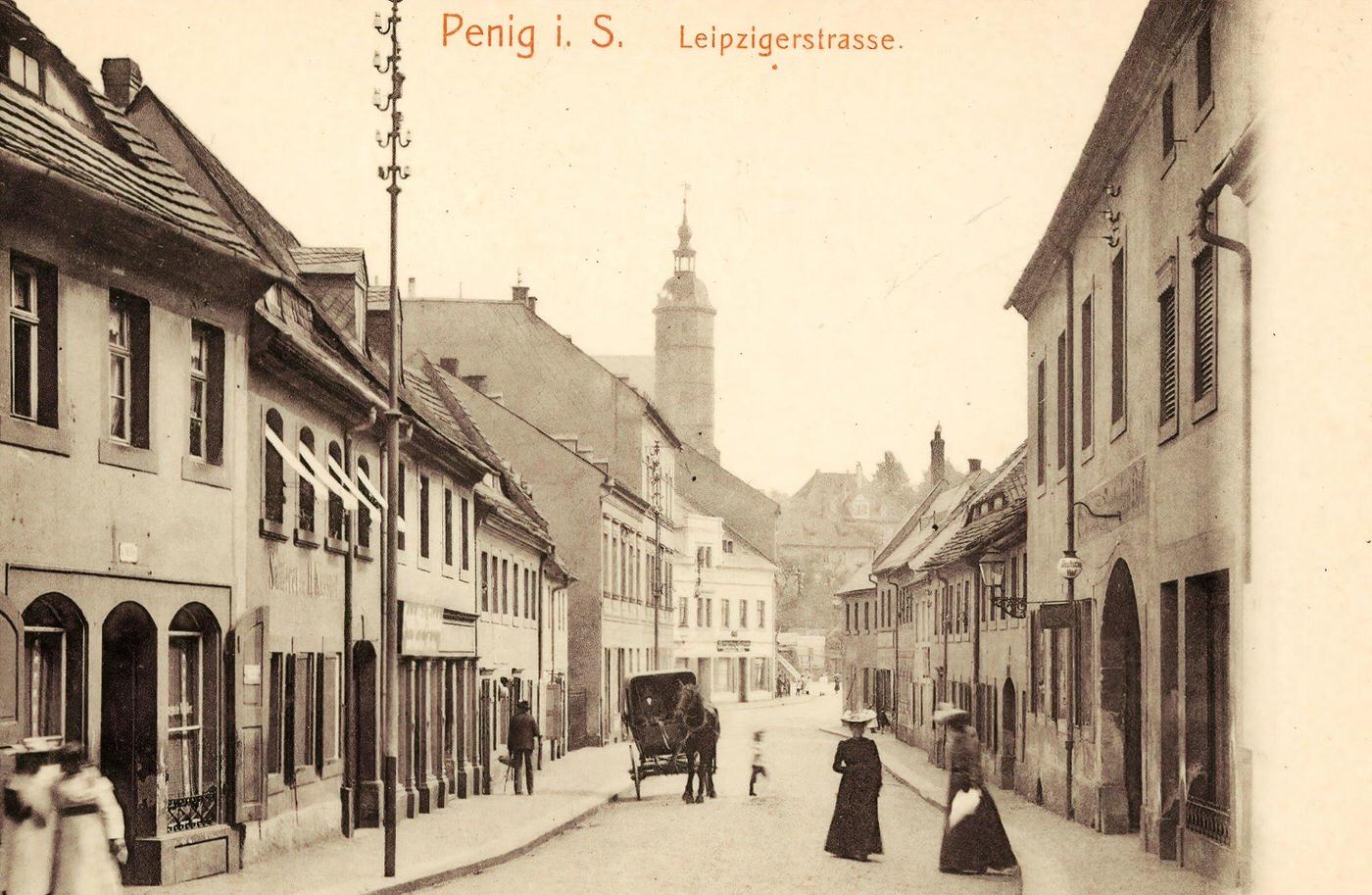
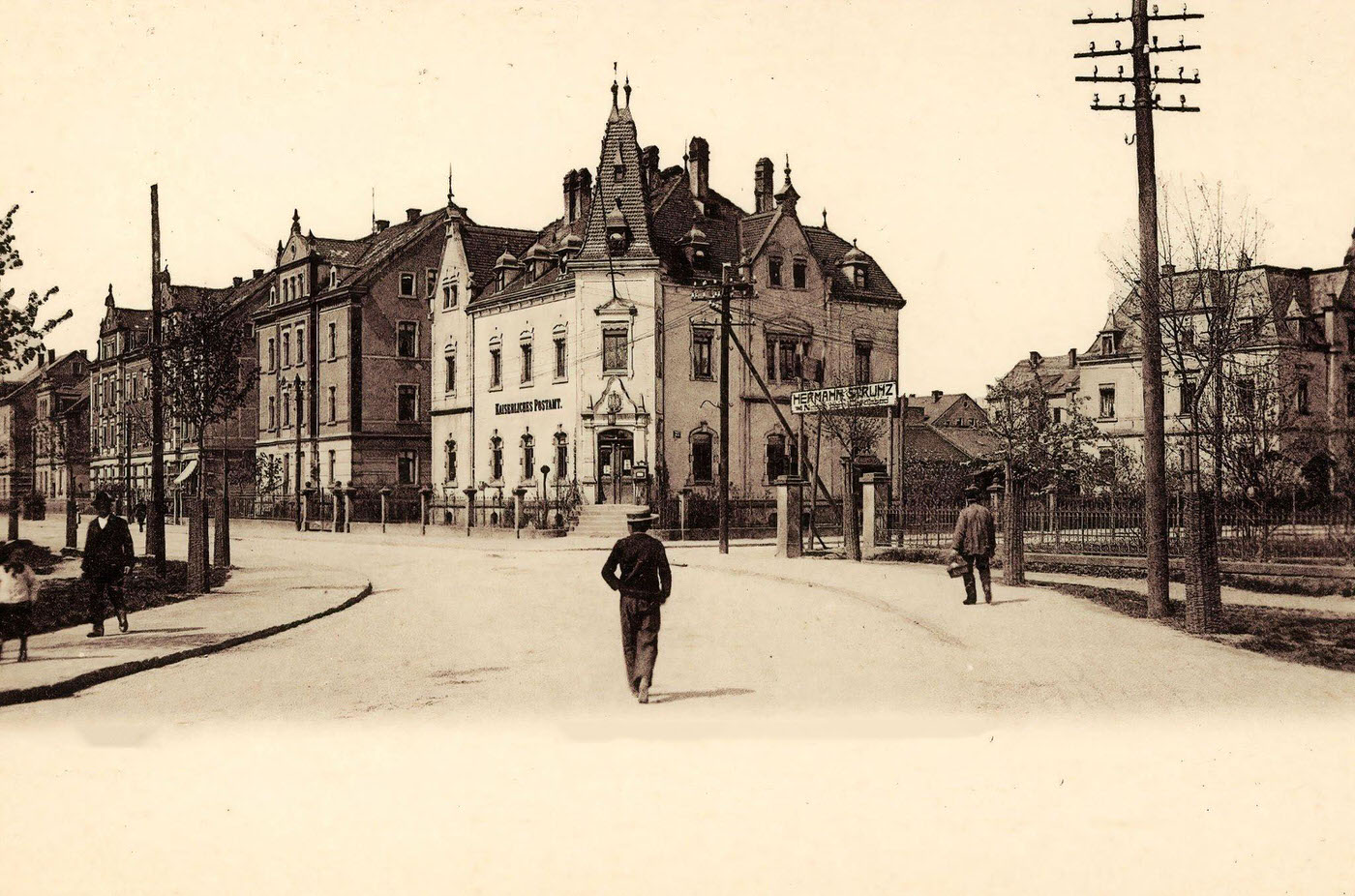
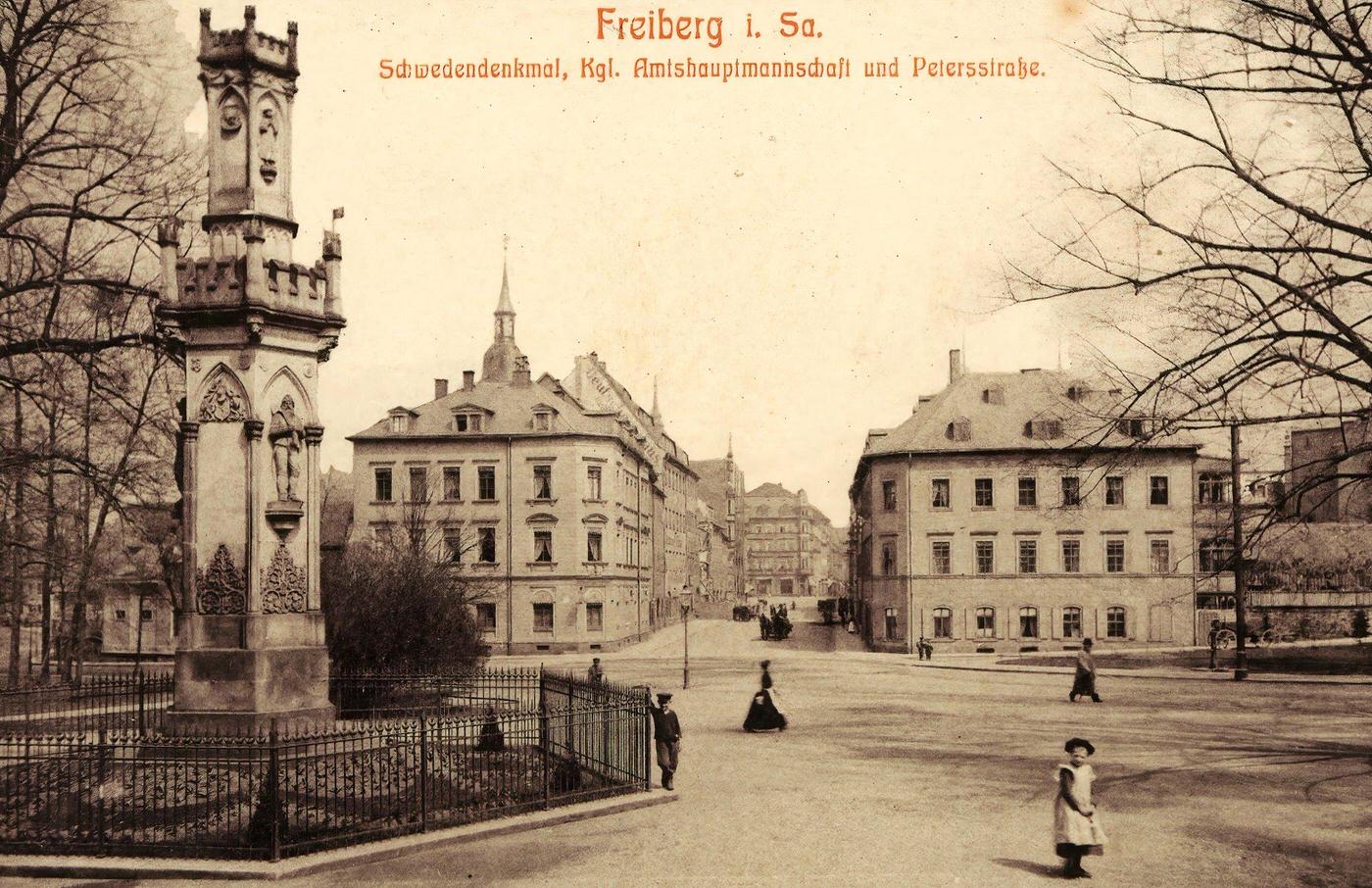
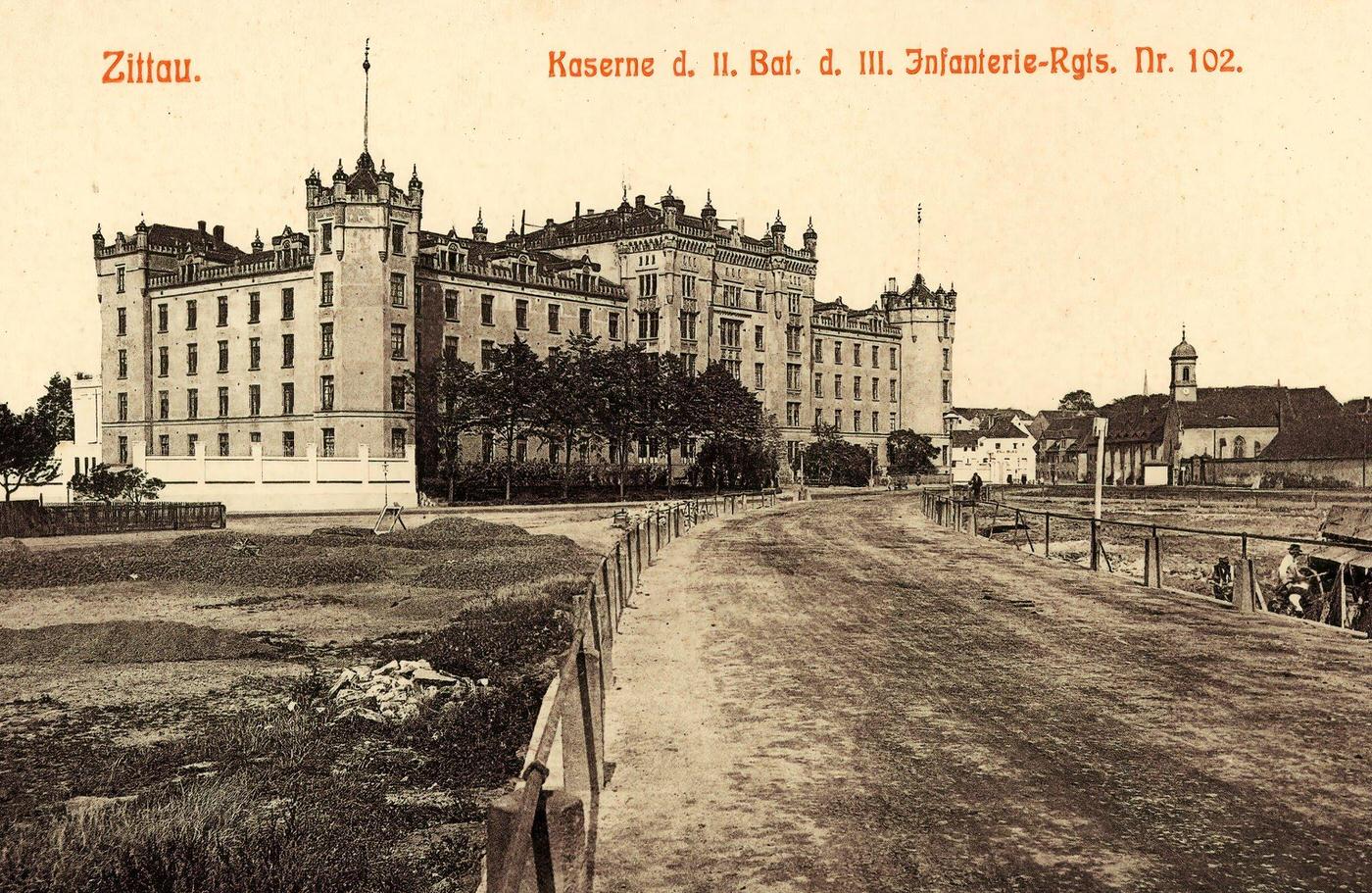
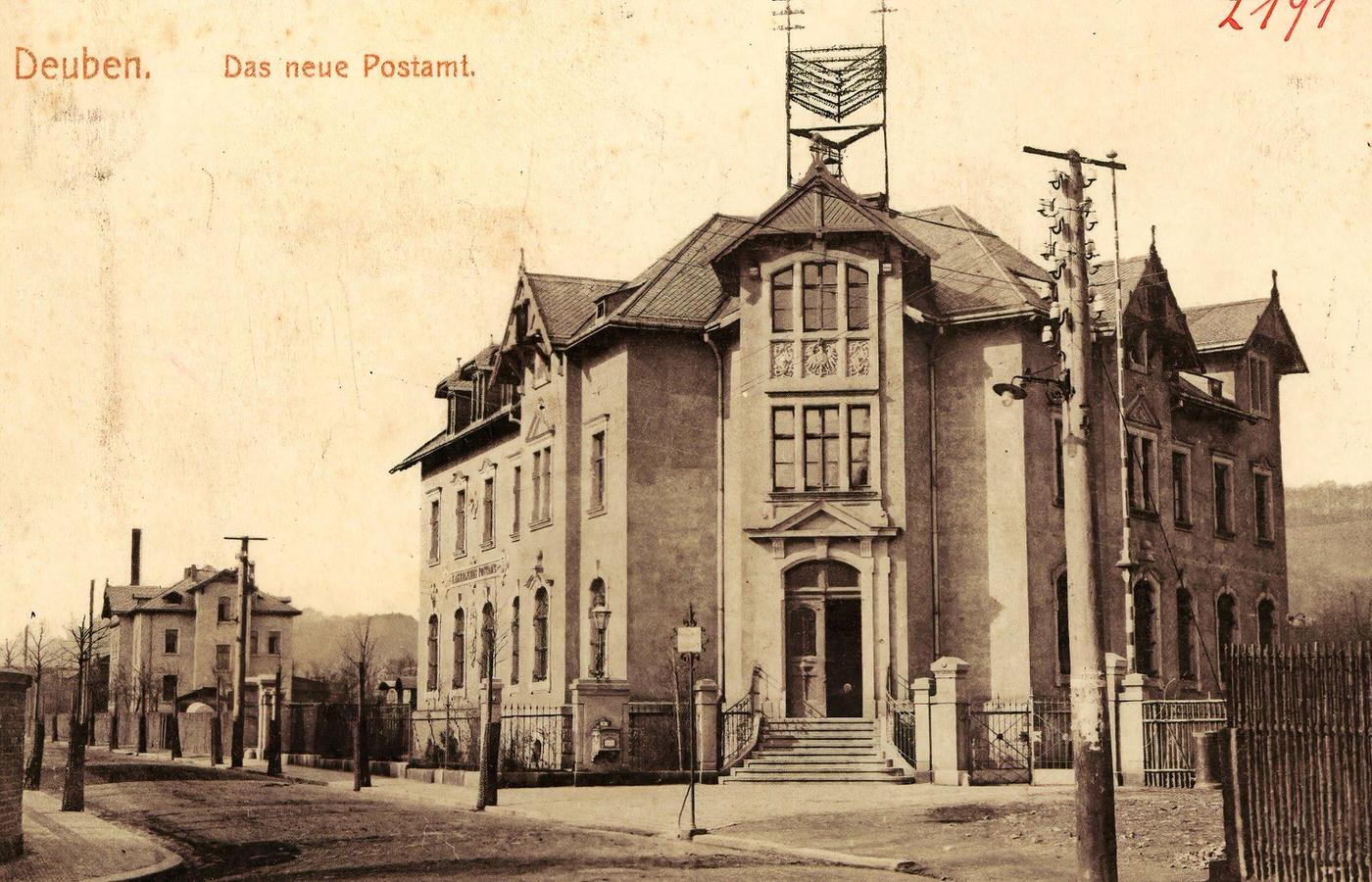
Germany’s postal system in this era was remarkably efficient. The Reichspost operated a dense network of post offices across the country, connecting even small towns like Floha to the national mail and telegraph grid. In Freiberg, a silver mining city in Mittelsachsen, public monuments marked the town’s history while its streets carried the traffic of an active regional center. Military presence was also visible across the German landscape — infantry regiments garrisoned in towns like Görlitz, and cavalry barracks in Dresden, were a constant reminder of the empire’s military priorities.
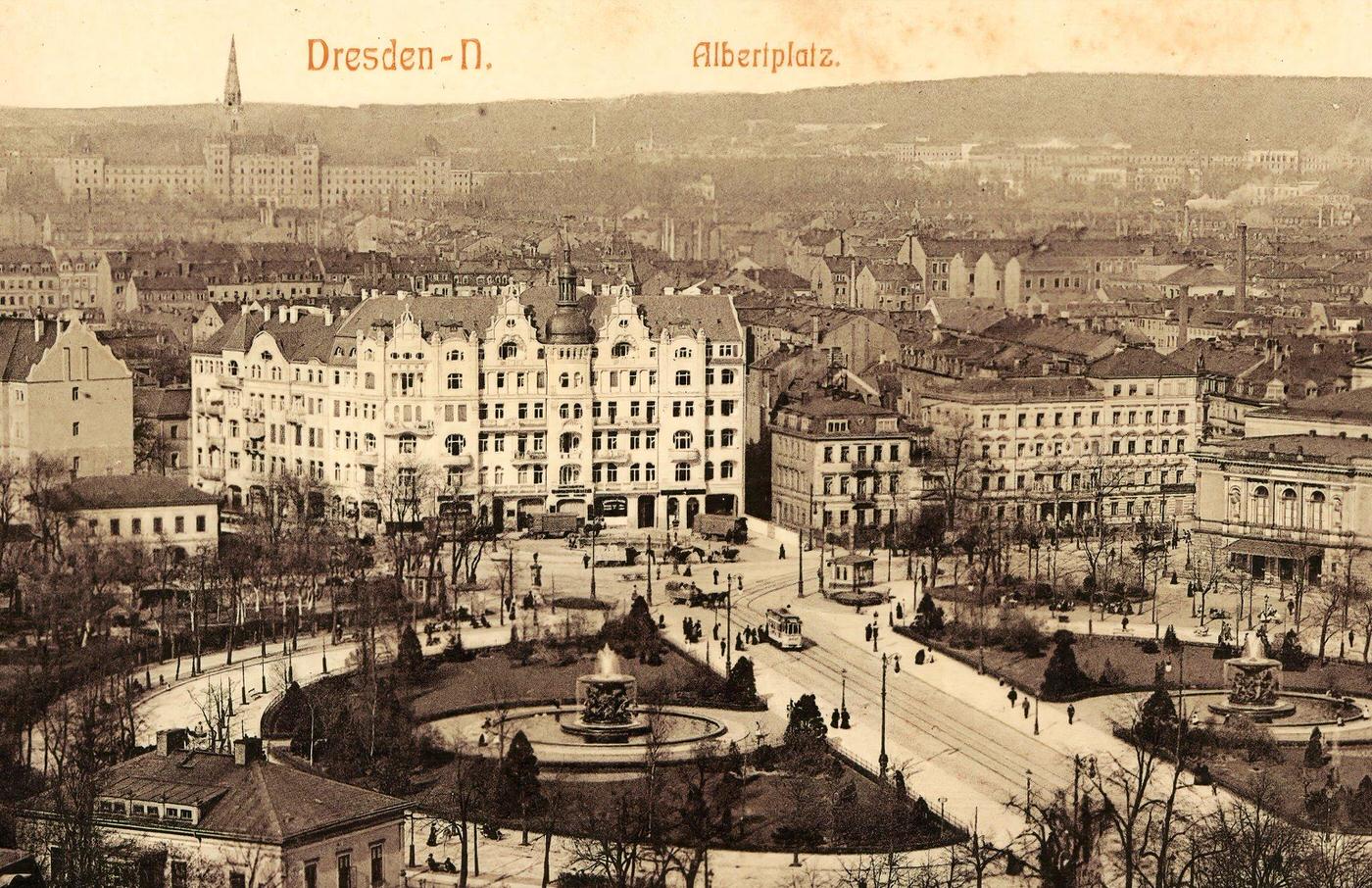
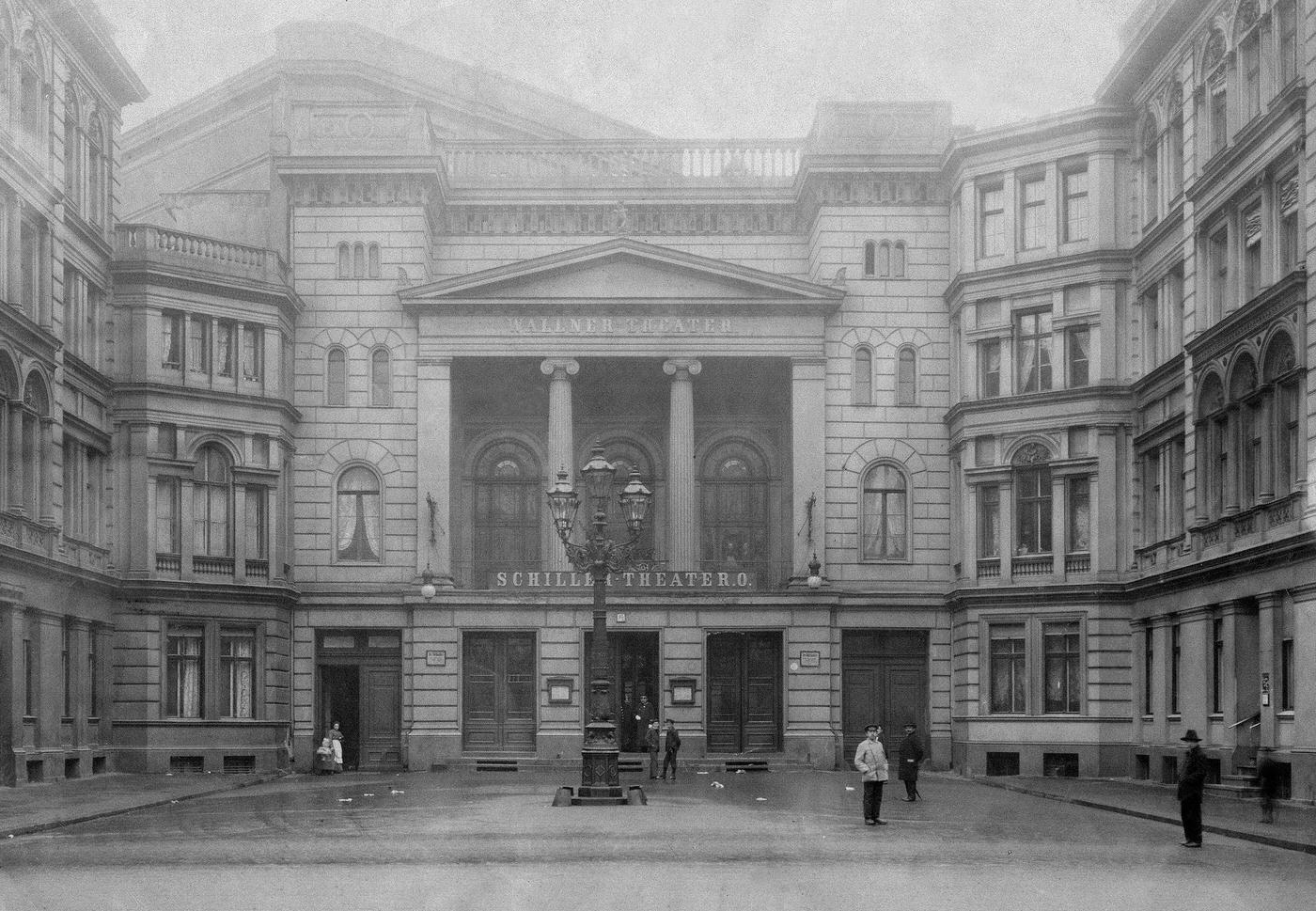
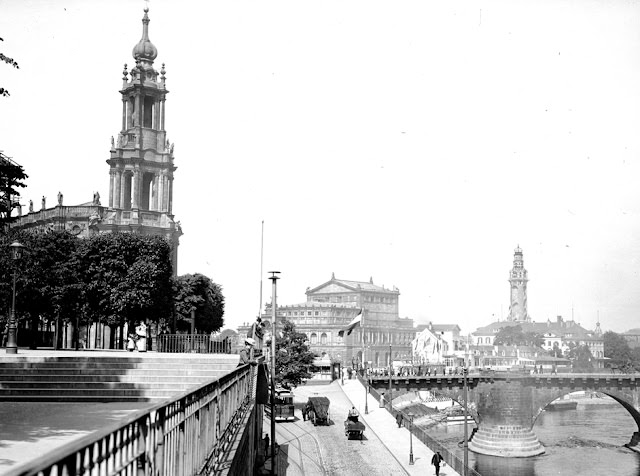
Dresden, Saxony’s capital, was one of Germany’s most beautiful and culturally rich cities. Its Albertplatz district hosted a military barracks alongside tram lines and civic buildings, a typical mix of military and civil life in a major German city. The Wallner Theater in Berlin, photographed around this time, was one of many cultural venues that made the capital a center for theater and performance — it would eventually be demolished in 1939.
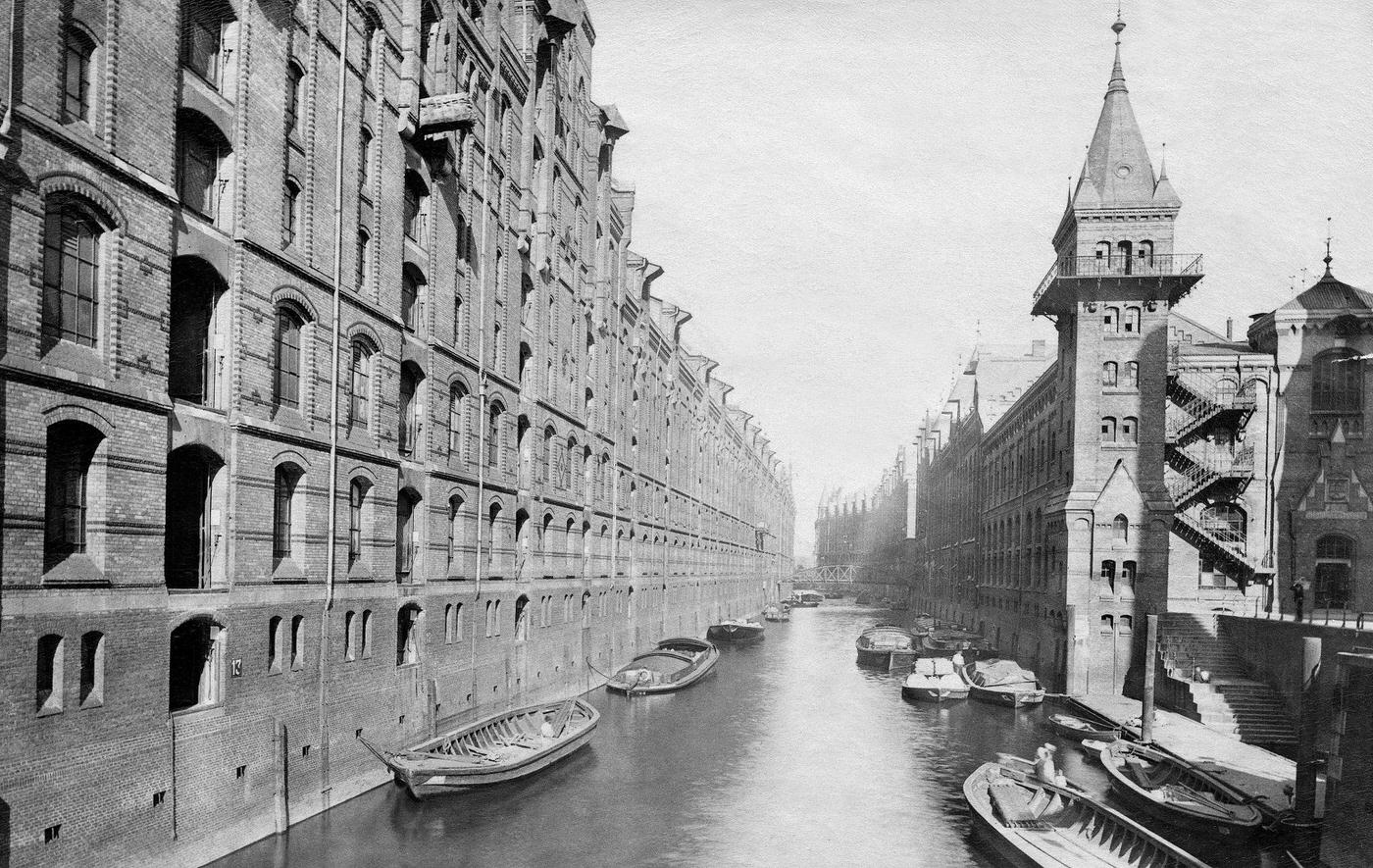
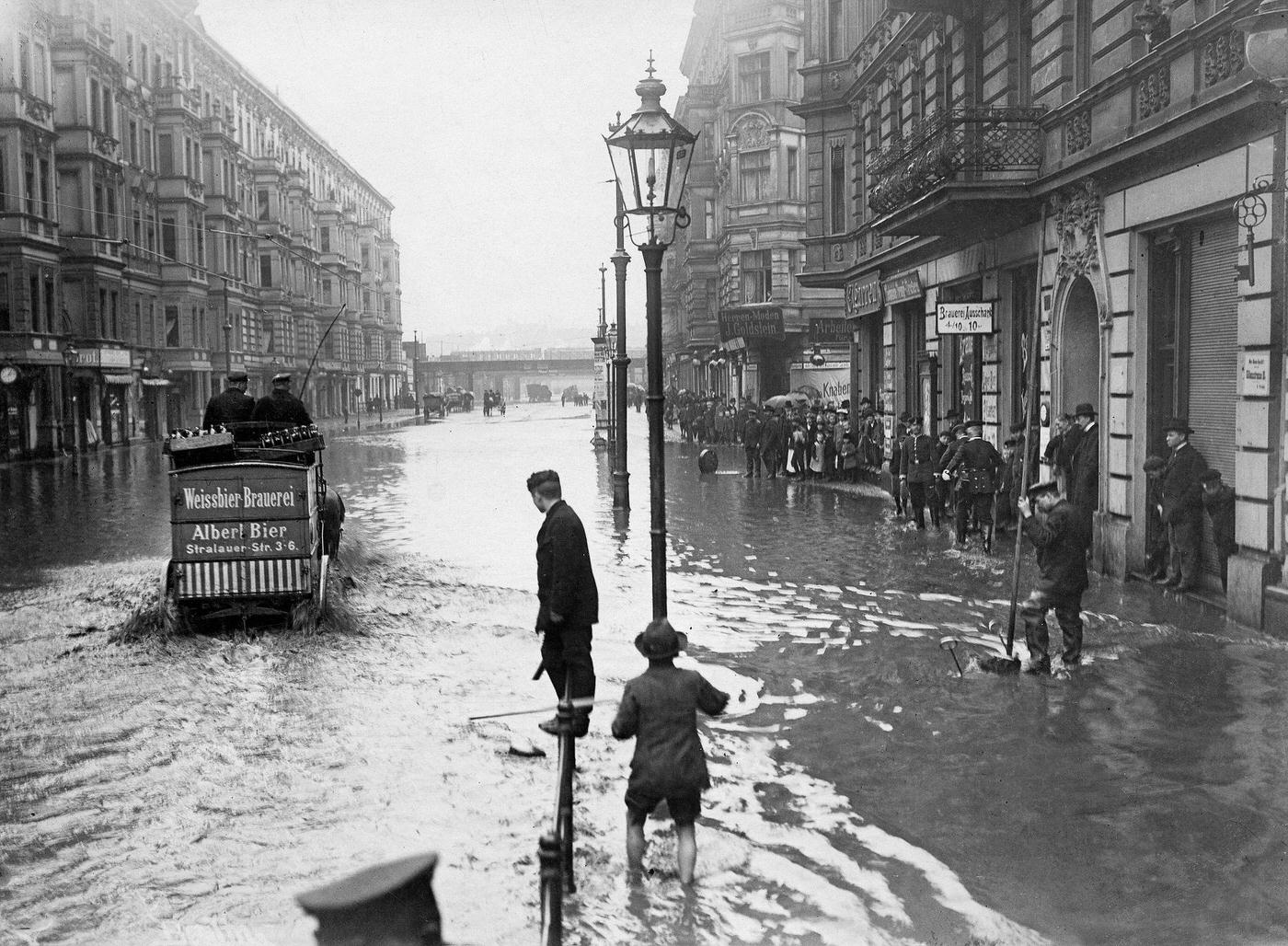
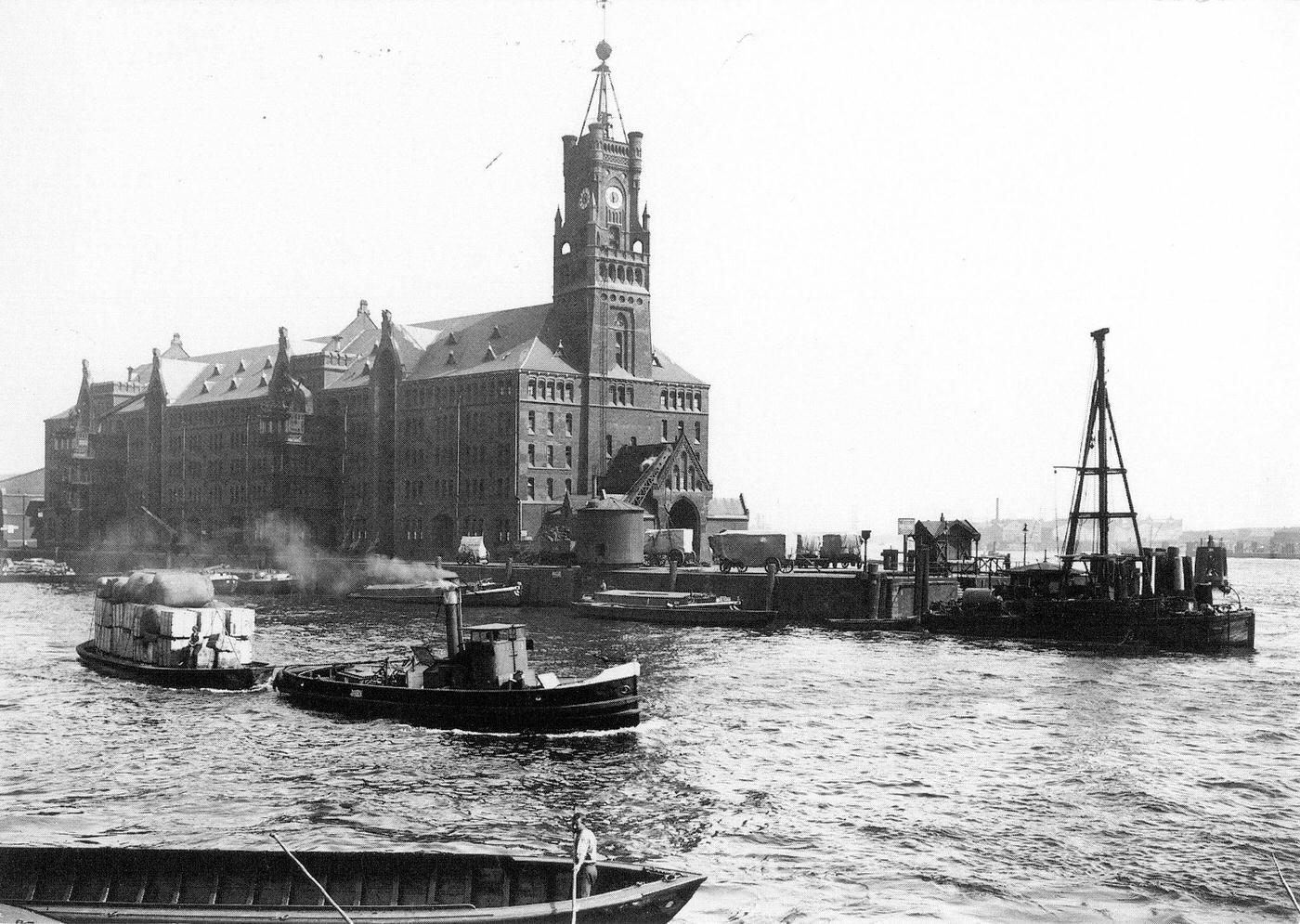
Hamburg was Germany’s great port city, and its waterfront warehouses handled an enormous volume of international trade. The Speicherstadt — the warehouse district built on islands in the Elbe — was completed in stages between 1885 and 1927, and by 1902 it was already one of the largest warehouse complexes in the world. Hamburg’s position as a commercial hub made it one of the wealthiest cities in the empire. Berlin, by contrast, suffered urban growing pains: in 1902, a severe rainstorm flooded low-lying streets and left residents wading through submerged neighborhoods.
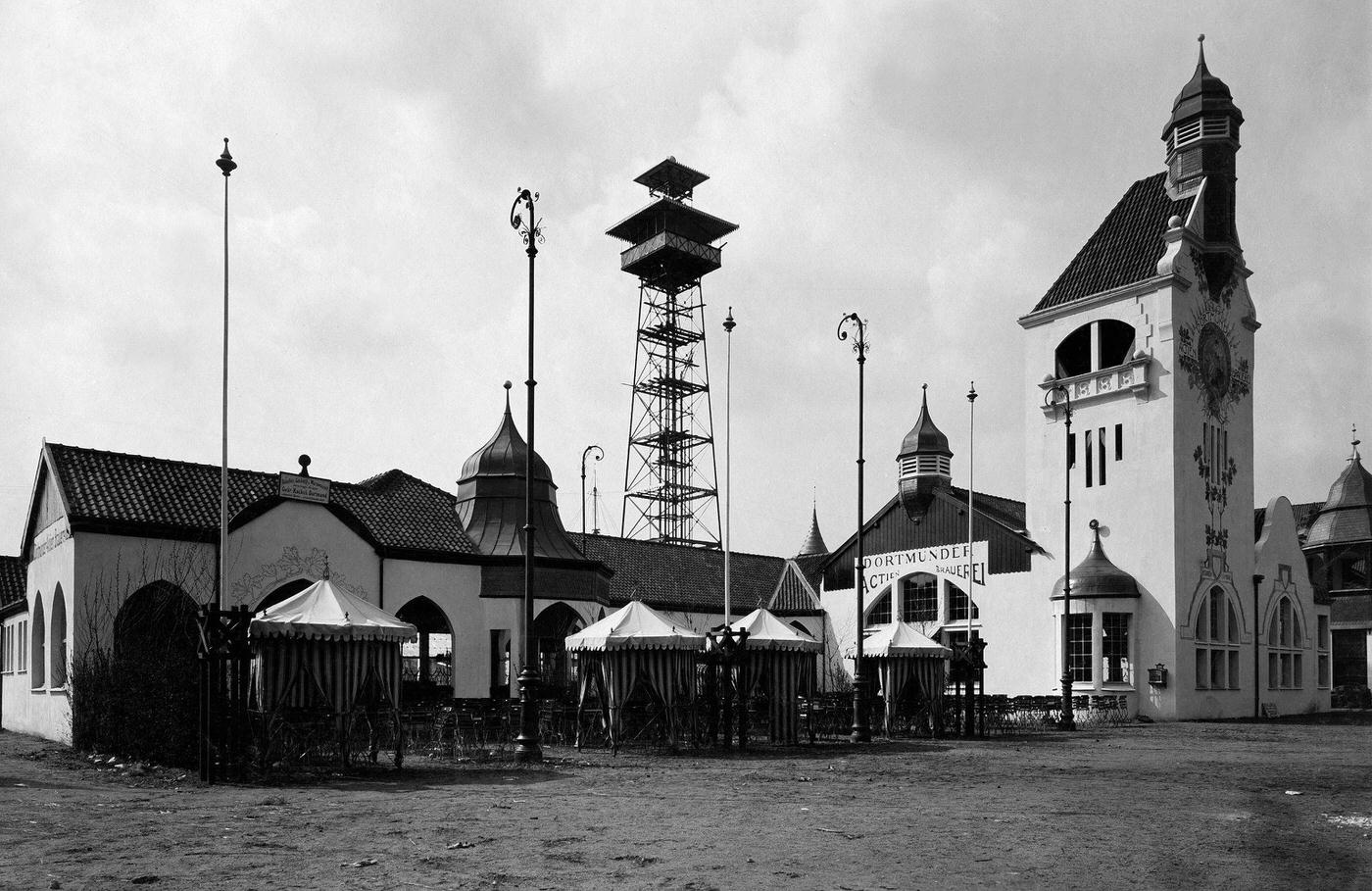
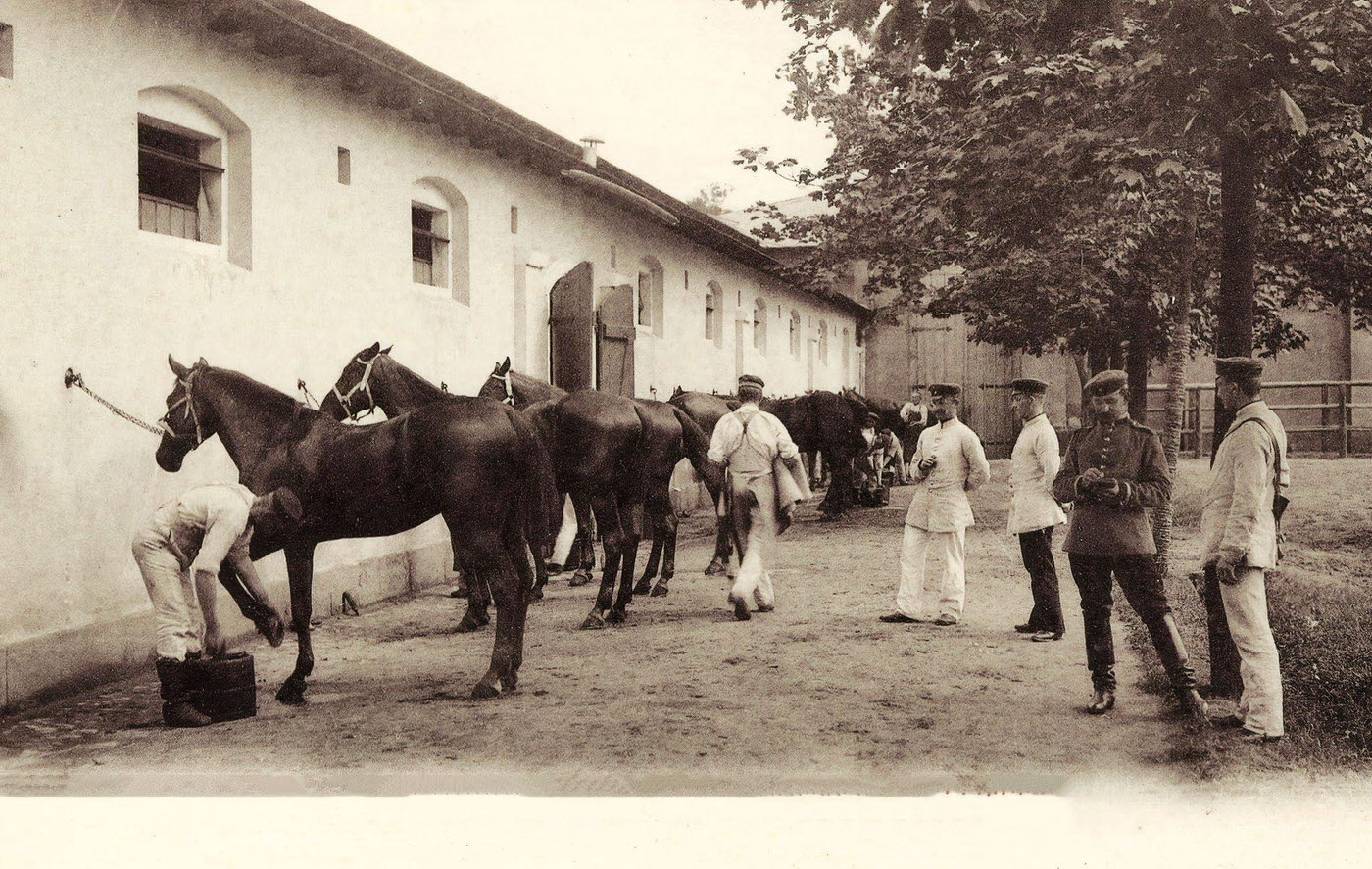
Germany’s confidence in its industrial and commercial power was on full display at the 1902 Industrial and Trade Exhibition in Düsseldorf. Events like this showcased German manufacturing — machinery, chemicals, textiles, and electrical technology — to domestic and international audiences. The military too was investing heavily in horses and logistics infrastructure, as seen in the cavalry and transport facilities photographed at Dresden’s Train-Kaserne in 1901.
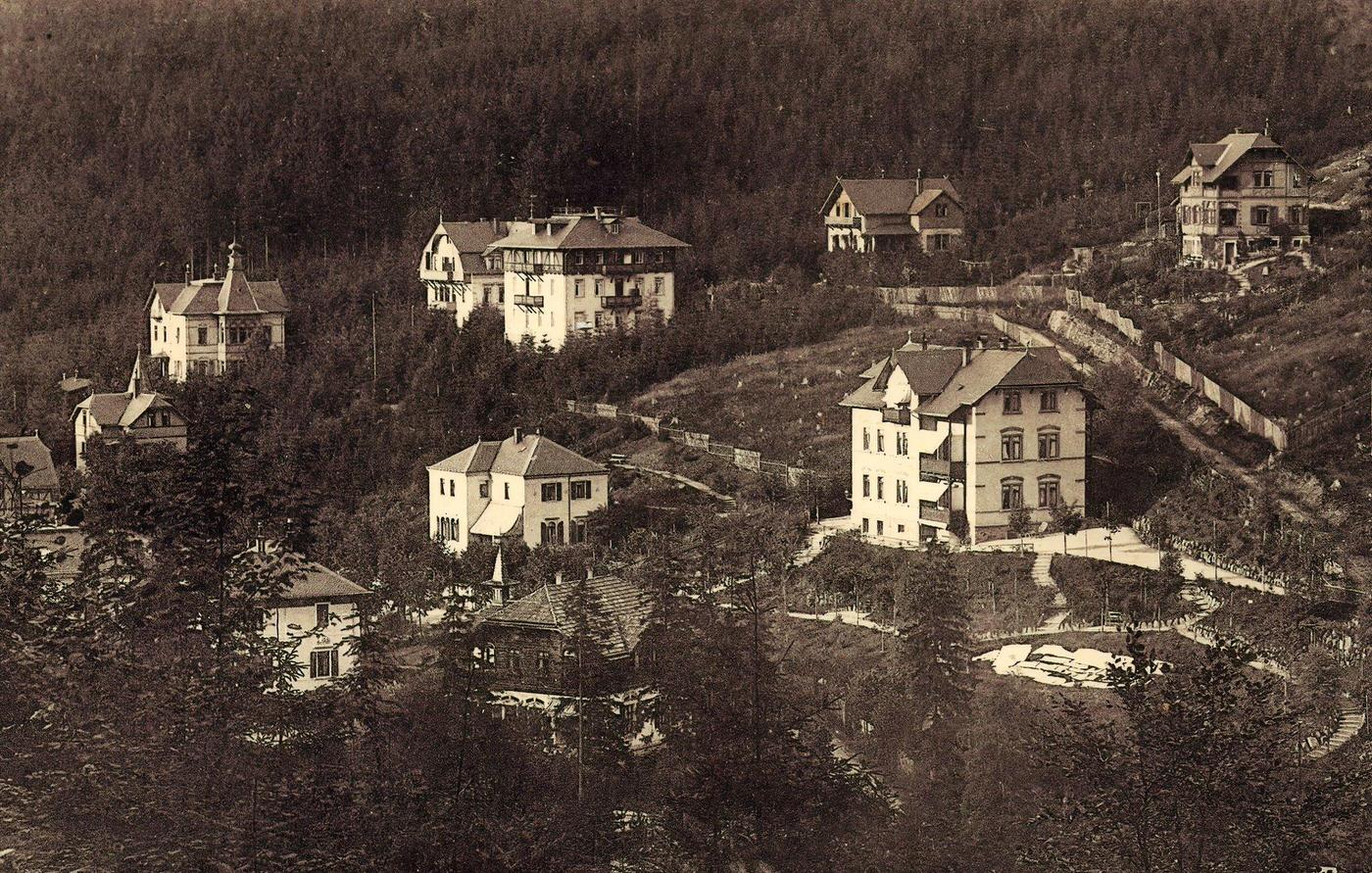
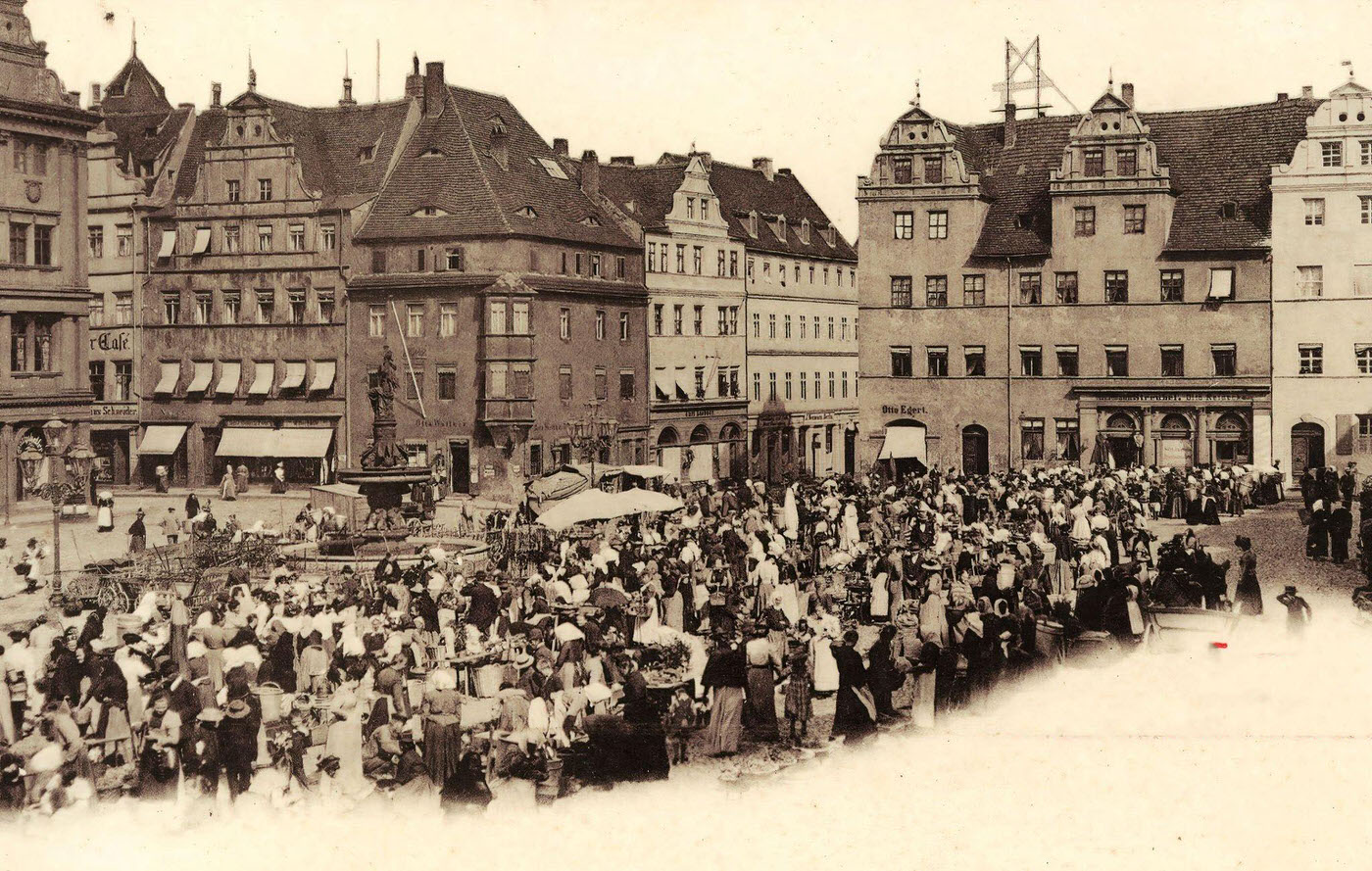
Prosperous Saxon families built comfortable villas in the countryside and market towns of the region in the early 1900s. Landowners, merchants, and factory managers invested in solid, well-decorated homes that reflected their social standing. Meanwhile, market towns like Torgau and Grossenhain maintained the rhythm of weekly market days that had organized rural commerce for centuries — with water wells at the center of the square and stalls radiating outward.
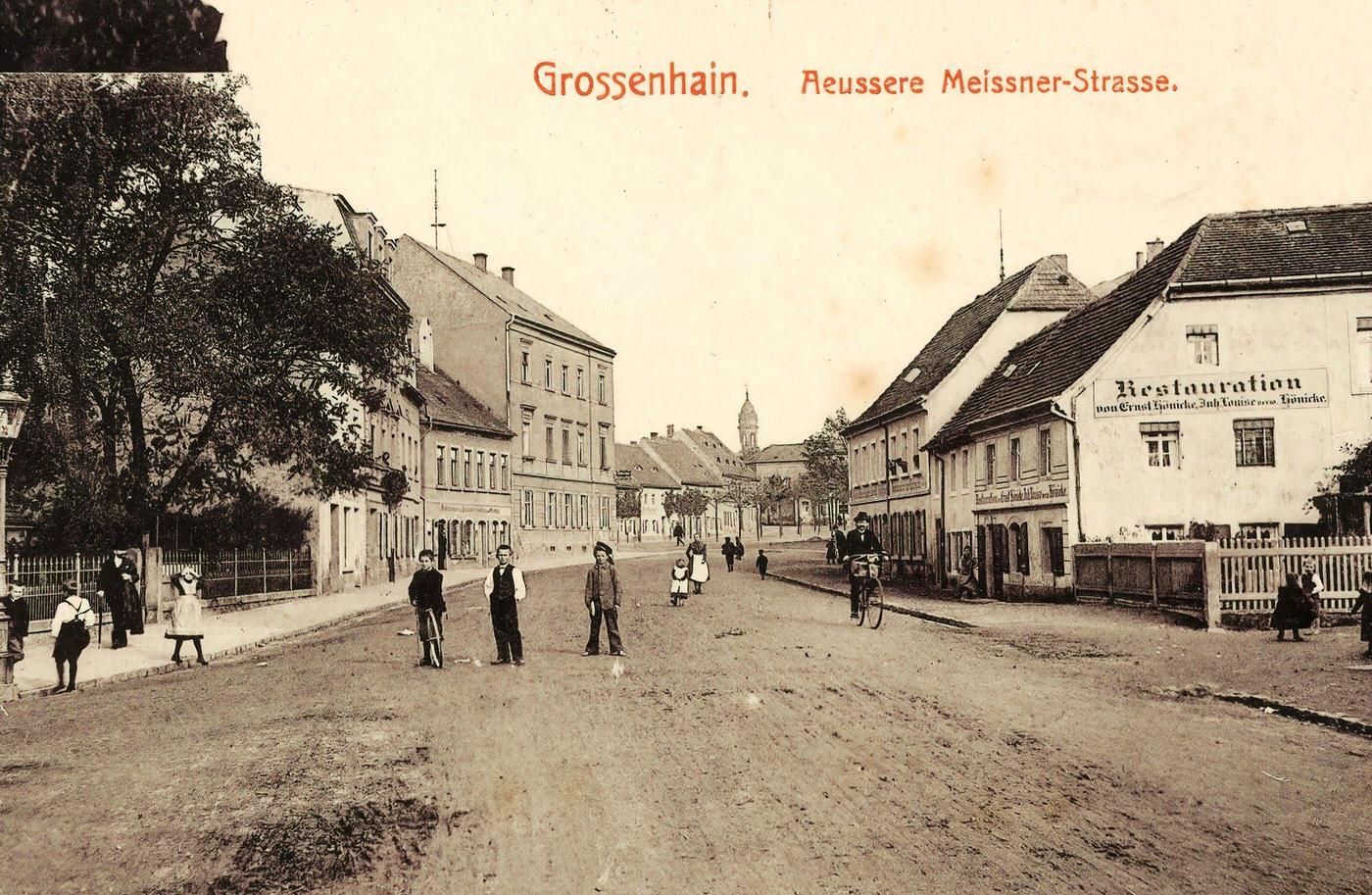
The Reichspost building in Borna, in the Landkreis Leipzig, represented Germany’s commitment to a connected, administered state. Post offices were government buildings as much as service centers, designed to project authority and permanence. In Berlin, the Ullstein publishing house on Brunnenstrasse was one of the largest media companies in Europe by 1900, producing newspapers, magazines, and books that reached millions of readers across the German-speaking world.
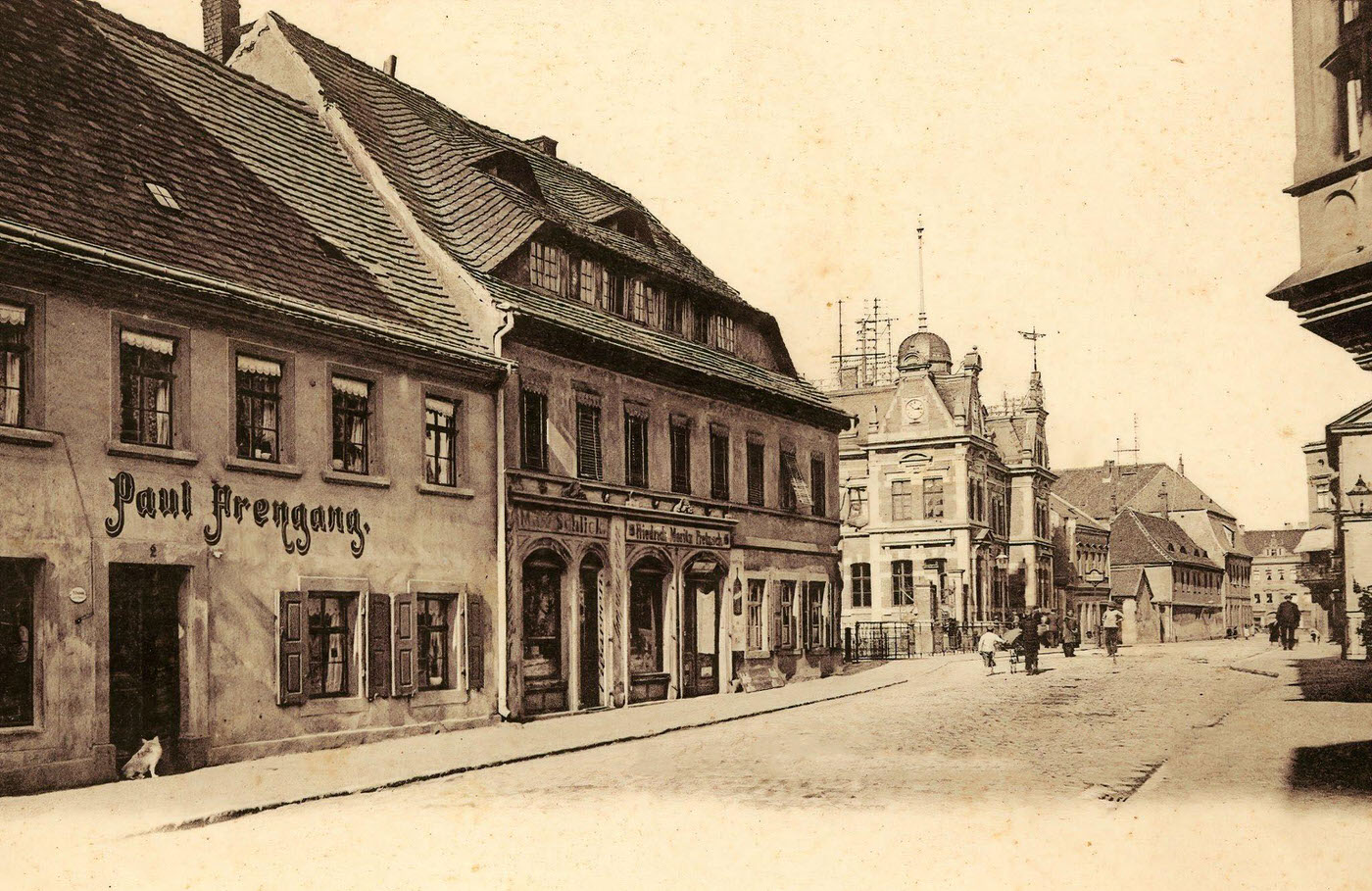
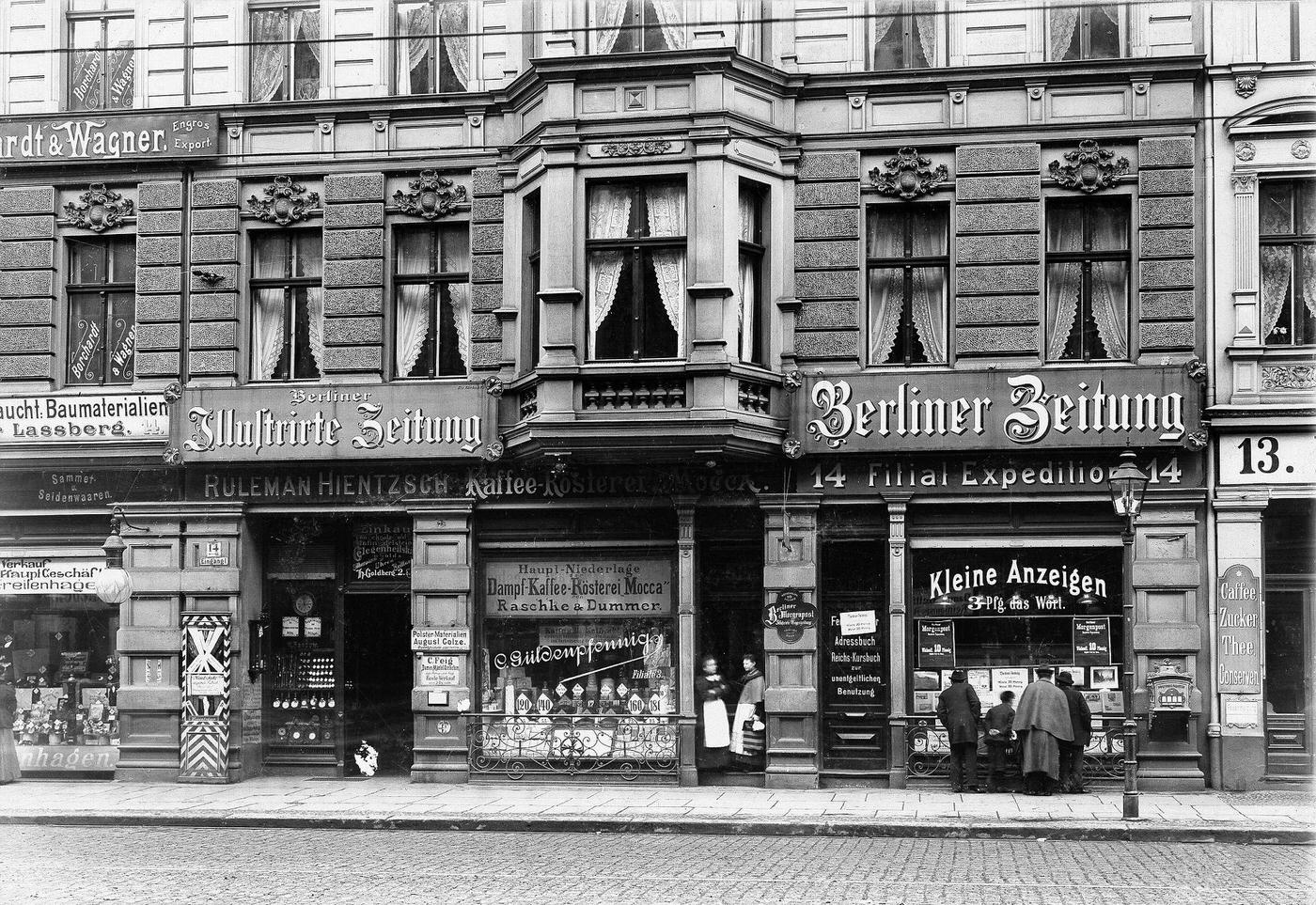
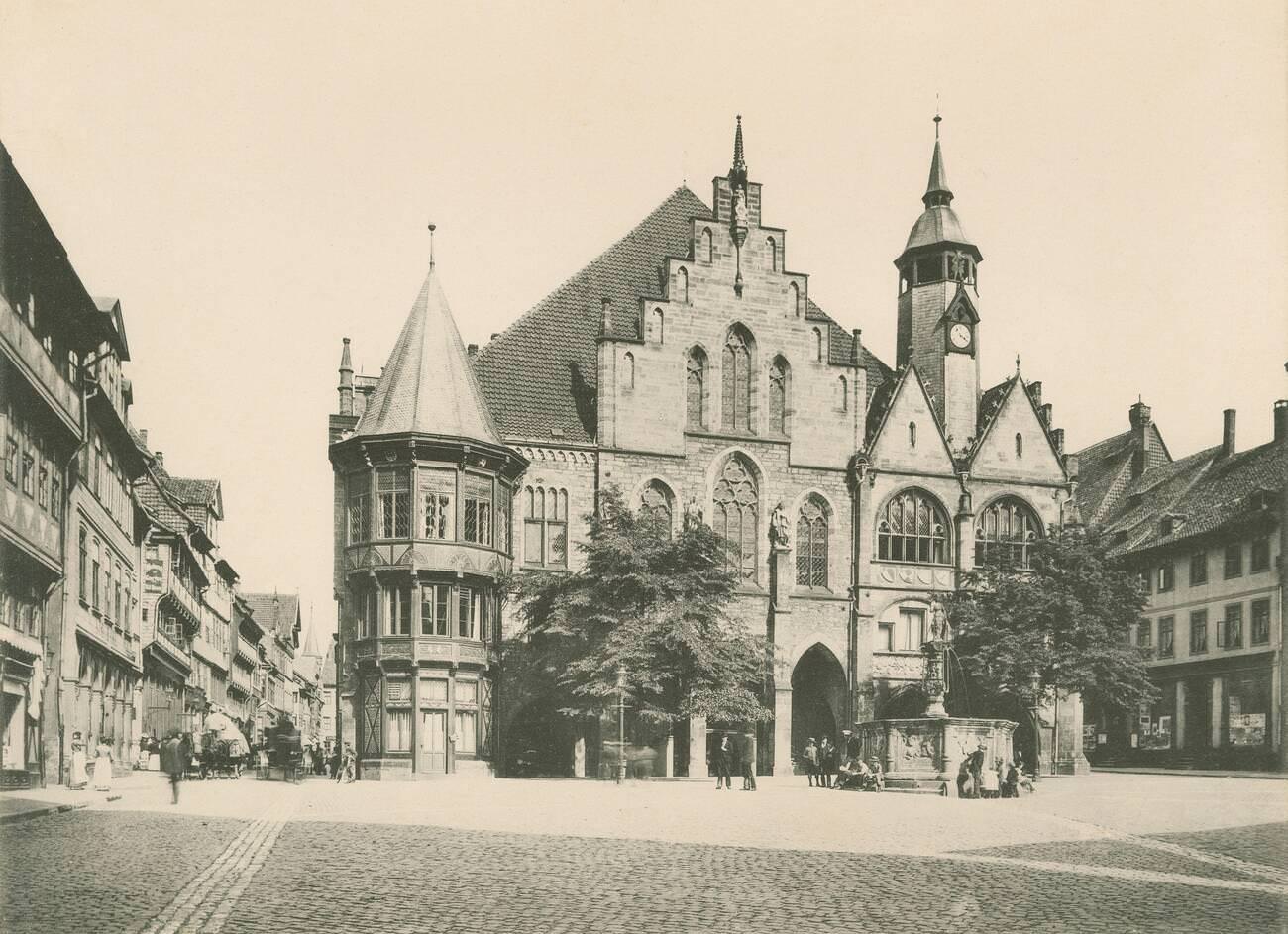
Berlin’s old city streets, like the Parochialstrasse in the Altstadt, mixed historic buildings with busy commercial life. Pubs, restaurants, and small shops occupied the ground floors of centuries-old structures. Hildesheim, in Lower Saxony, had one of Germany’s best-preserved medieval city centers, with its famous market square drawing visitors who came specifically to see the timber-framed buildings that dated back to the 15th and 16th centuries.
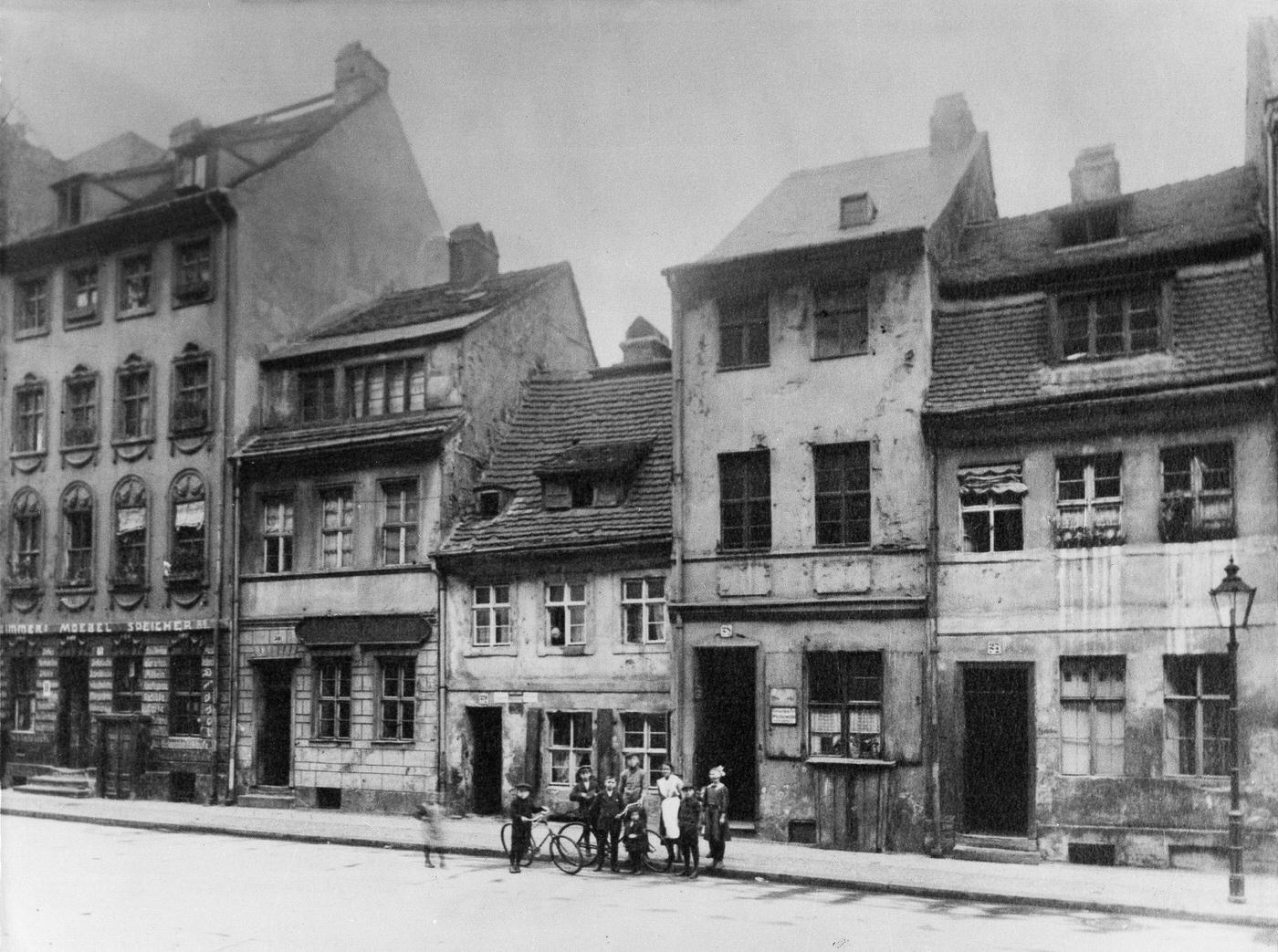
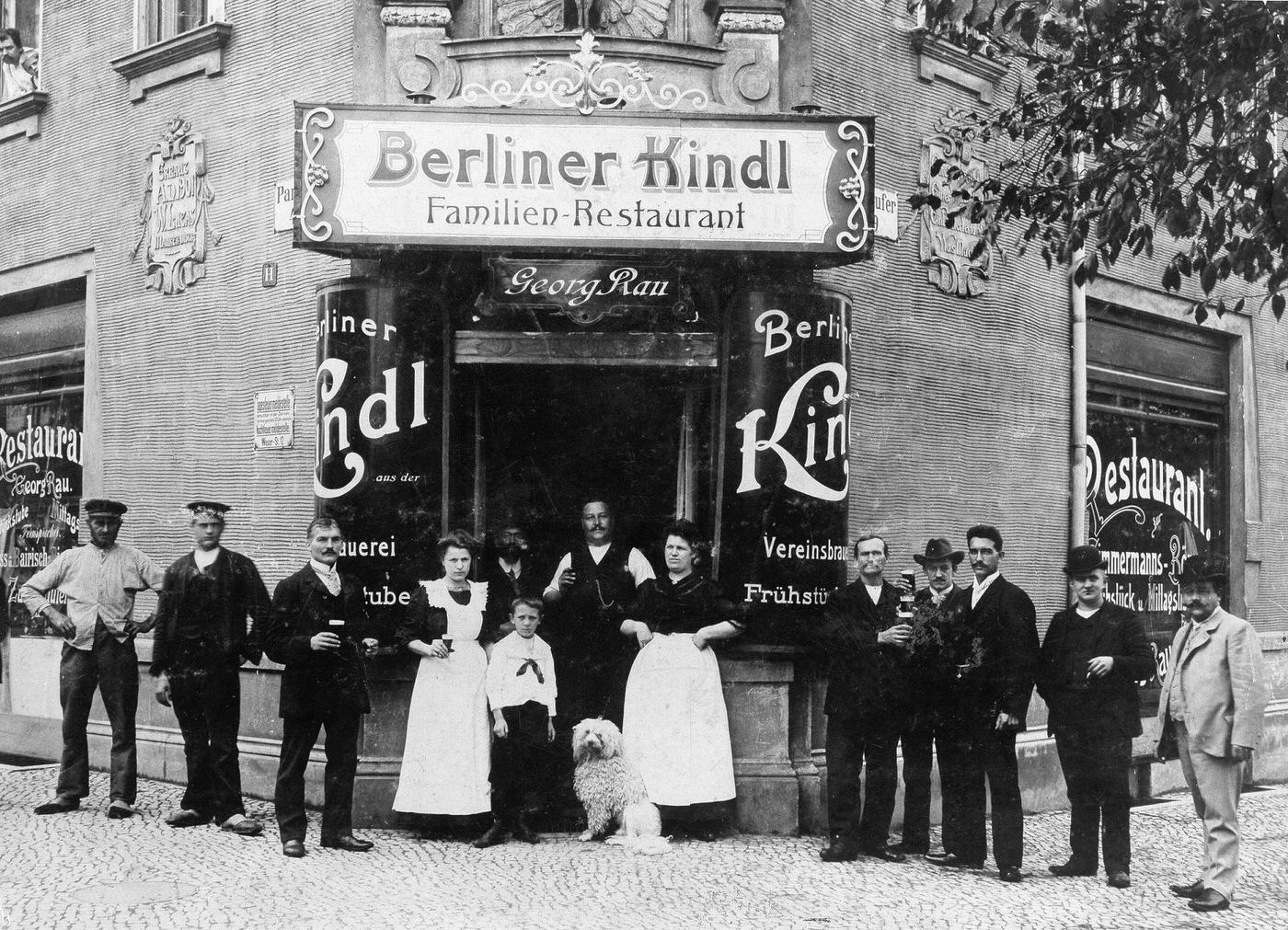
Hamburg’s Kaiserspeicher at Kaiserhoeft was one of the great storage warehouses of the era, built to handle the enormous volume of goods flowing through Germany’s busiest port. In Berlin, restaurants were springing up across the expanding city, including purpose-built establishments like the Familien-Restaurant Georg Rau in Rixdorf, completed in 1901. These dining establishments served a growing urban working and middle class that had disposable income and time to spend it.
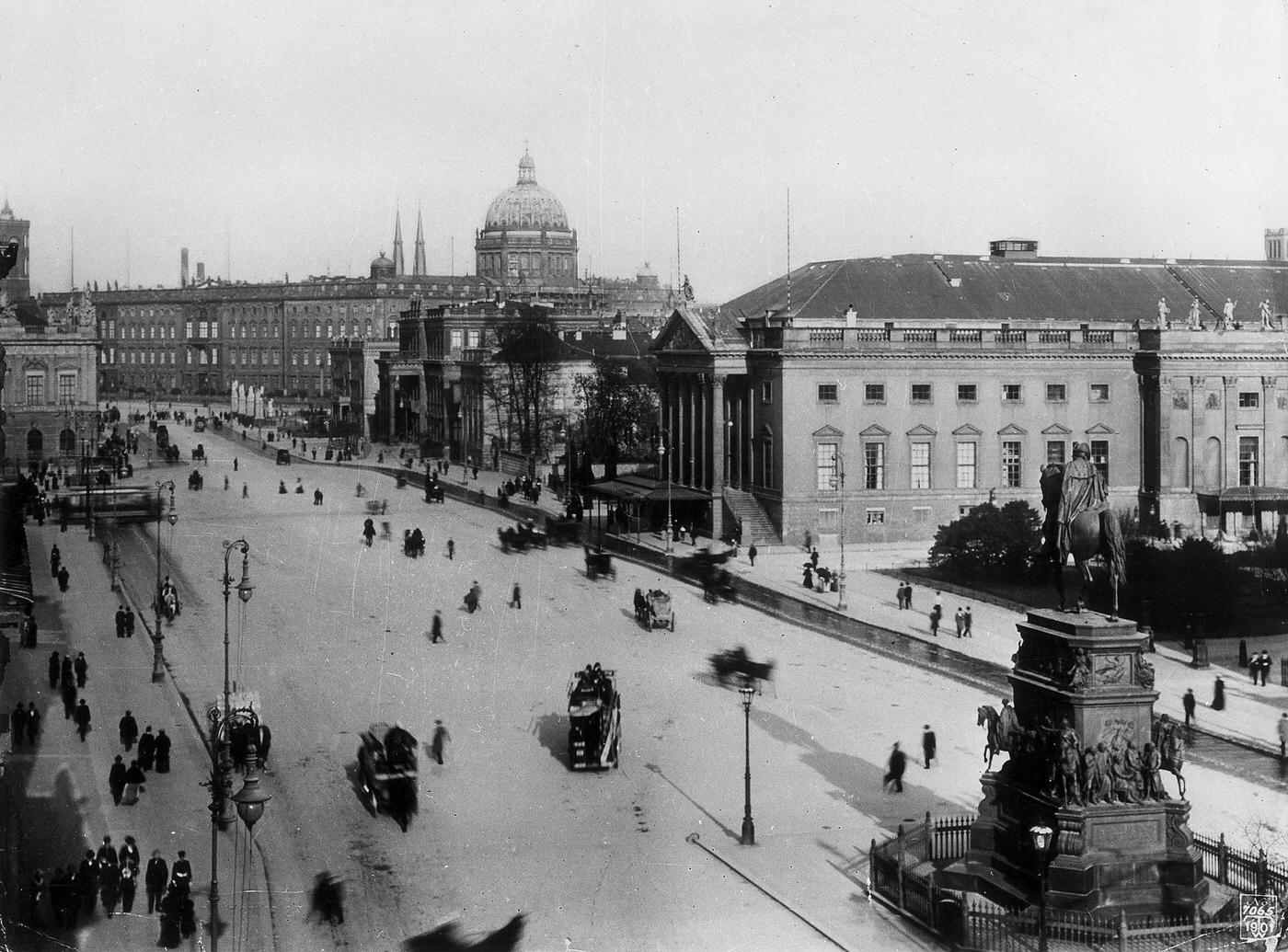
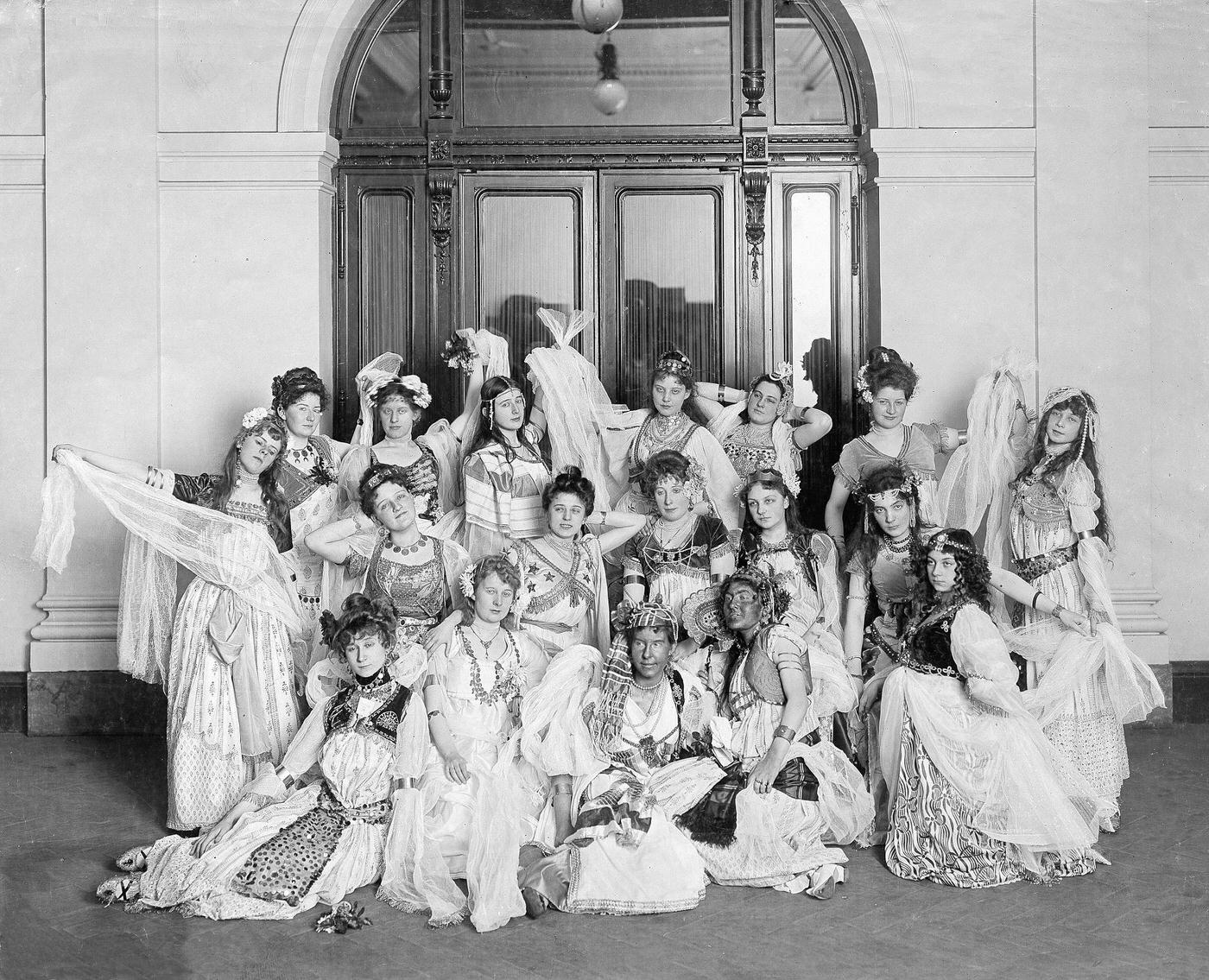
The view along Unter den Linden in central Berlin in 1901 captured the heart of the German Empire: the Royal Opera House, the Kronprinzenpalais, and in the distance, the Berlin City Palace where Kaiser Wilhelm II held court. This boulevard was the ceremonial spine of the empire, where state parades and official processions passed before crowds of onlookers. High society Berlin also had its social calendar — events like the Colonial Society’s costume parties brought together the city’s elite in elaborate dress.
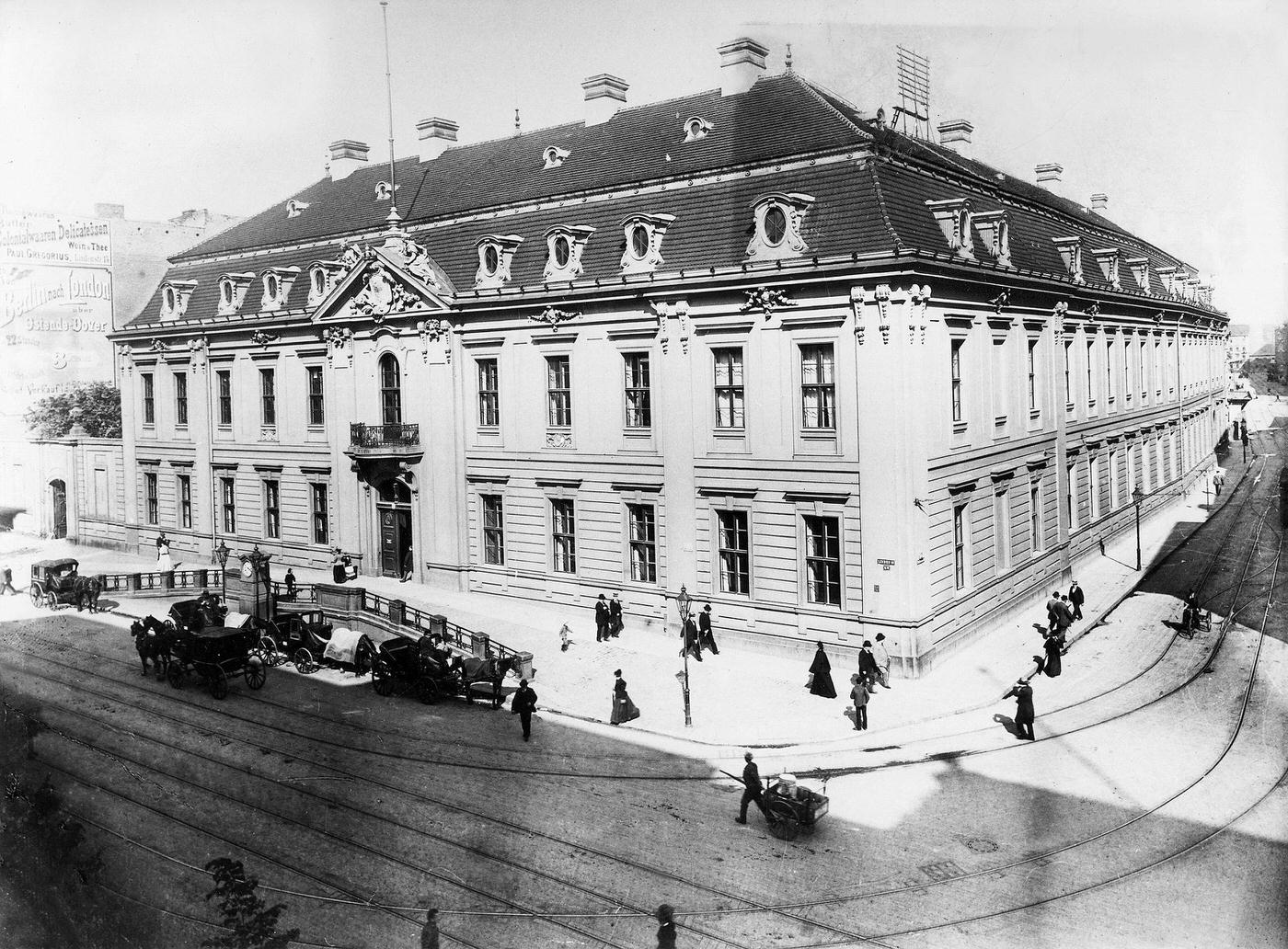
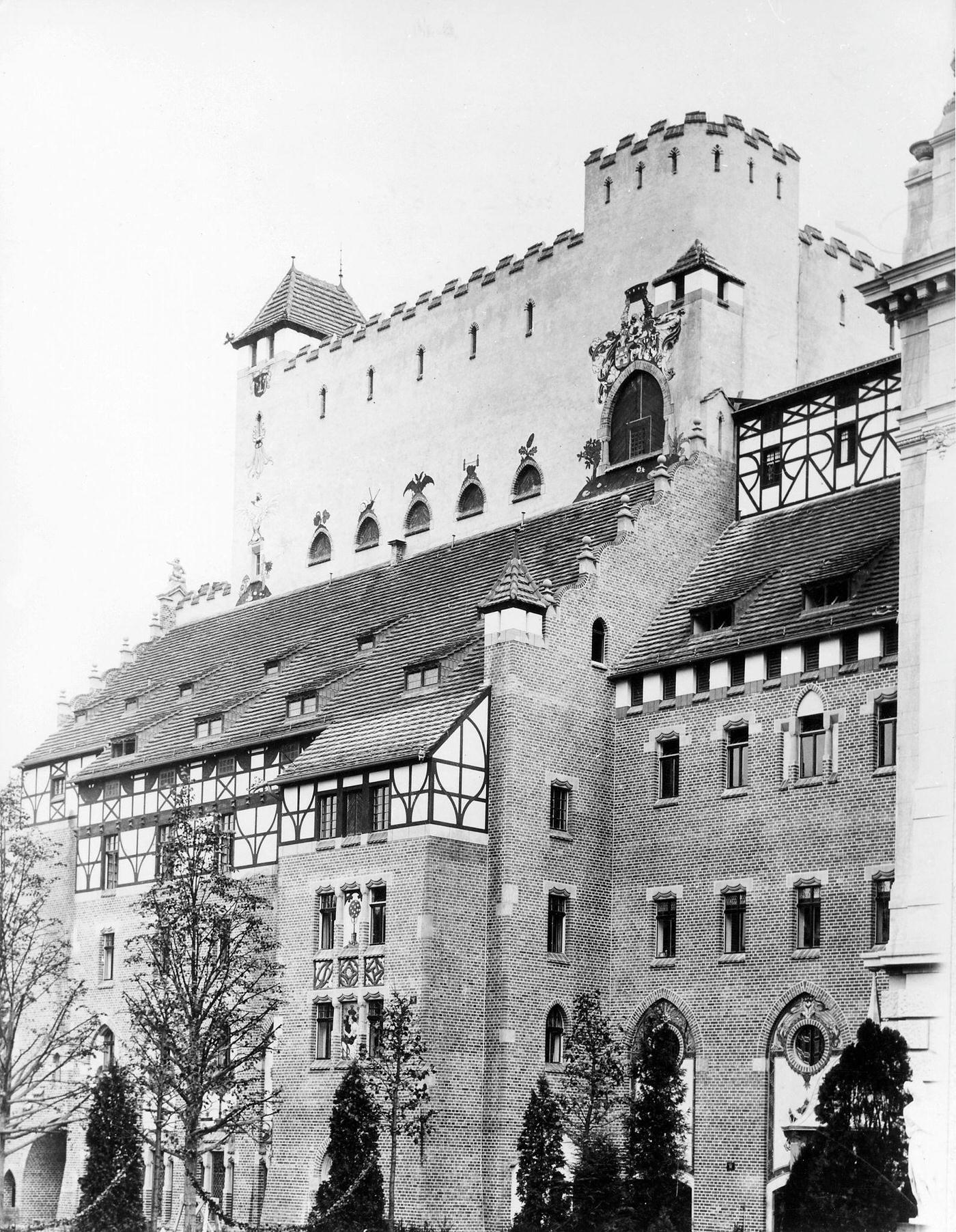
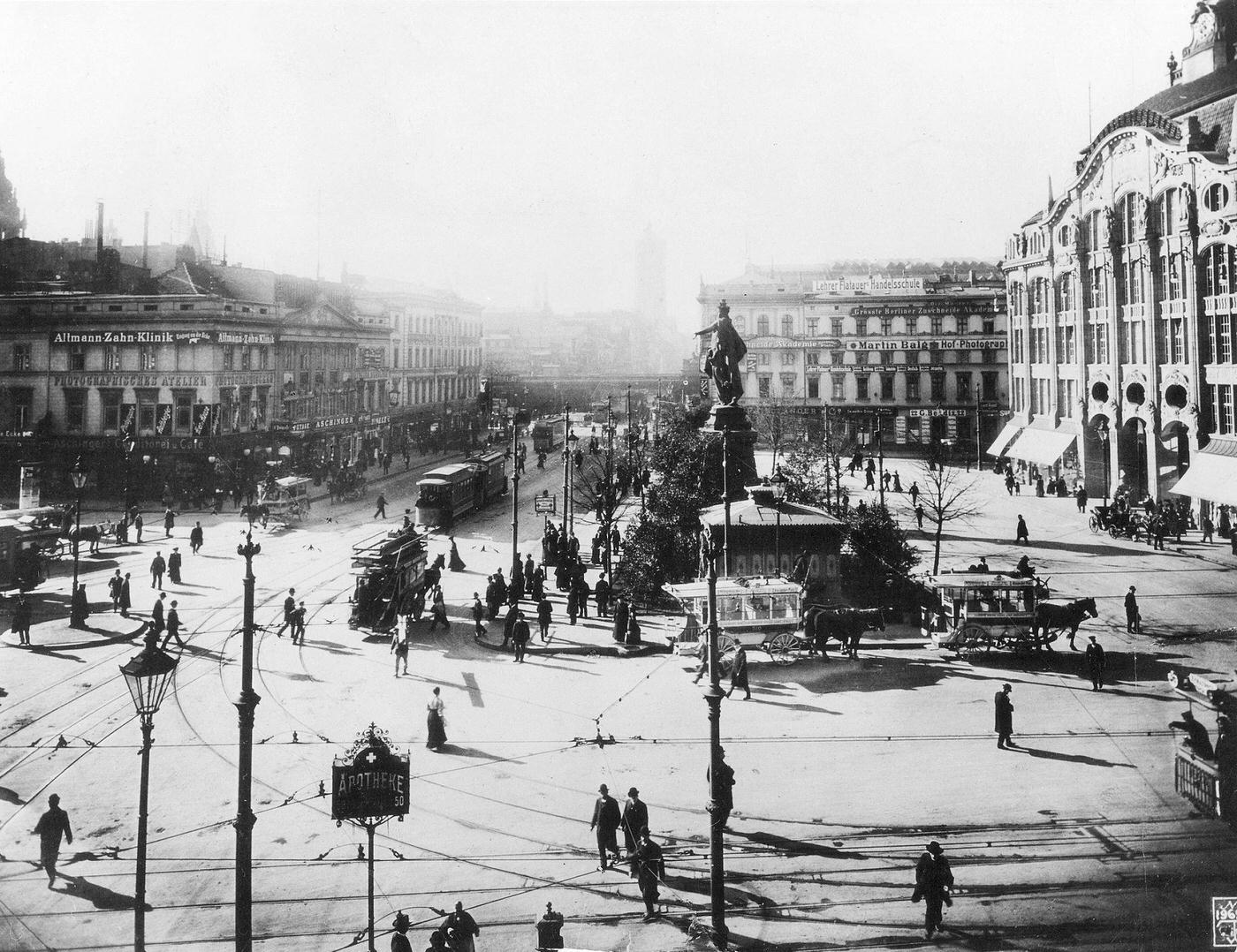
Germany’s legal and administrative architecture was housed in imposing buildings that announced the seriousness of state power. The Kammergericht — Berlin’s highest court — occupied a grand building in Lindenstrasse, while the Theater des Westens, designed by architect Bernhard Sehring and opened in 1896, gave Berlin’s wealthy western districts their own major performance venue. At Alexanderplatz, the cast-iron Berolina statue stood before the Kaufhaus Hertie department store, marking one of the busiest intersections in the city.
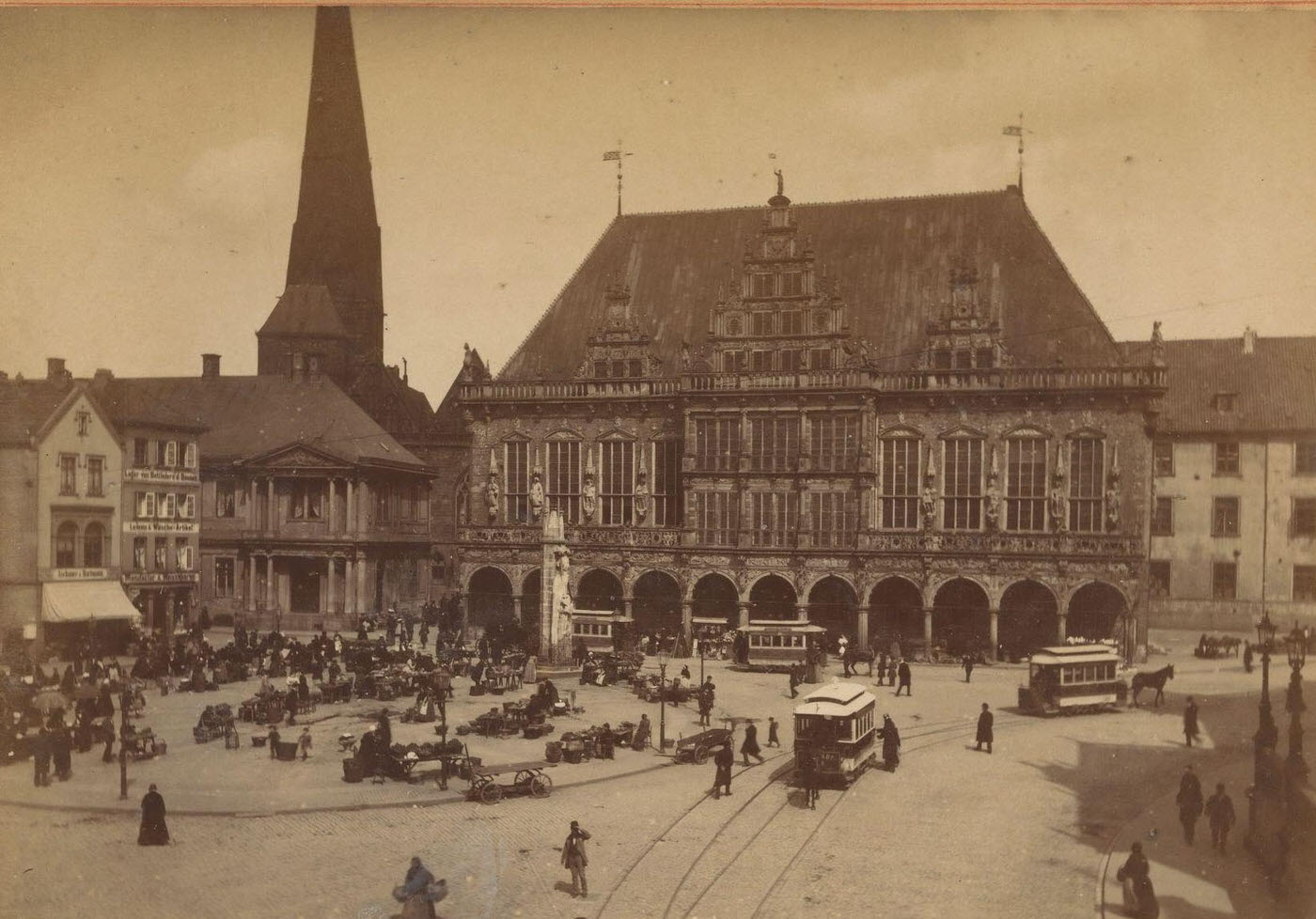
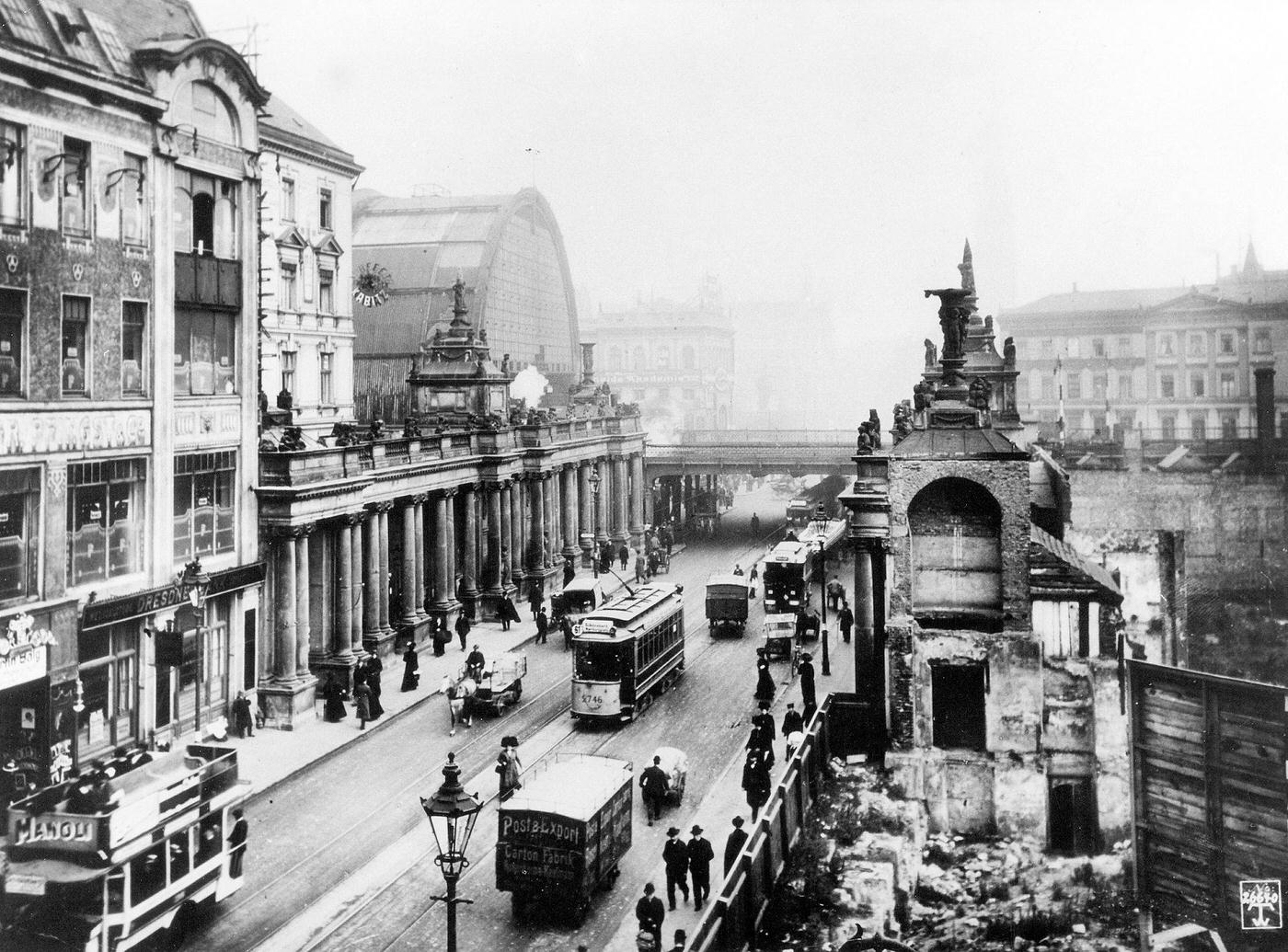
Bremen, a free Hanseatic city with its own proud civic identity, centered its public life on the Marktplatz. The city’s Gothic town hall, begun in 1405 and renovated in the early 17th century, dominated the square and served as the seat of civic government. Back in Berlin, Königstrasse toward Bahnhof Alexanderplatz showed a city in rapid motion — trams, pedestrians, shop fronts, and the elevated railway that had opened in 1882 all sharing space in one of the most dynamic urban environments in Europe.
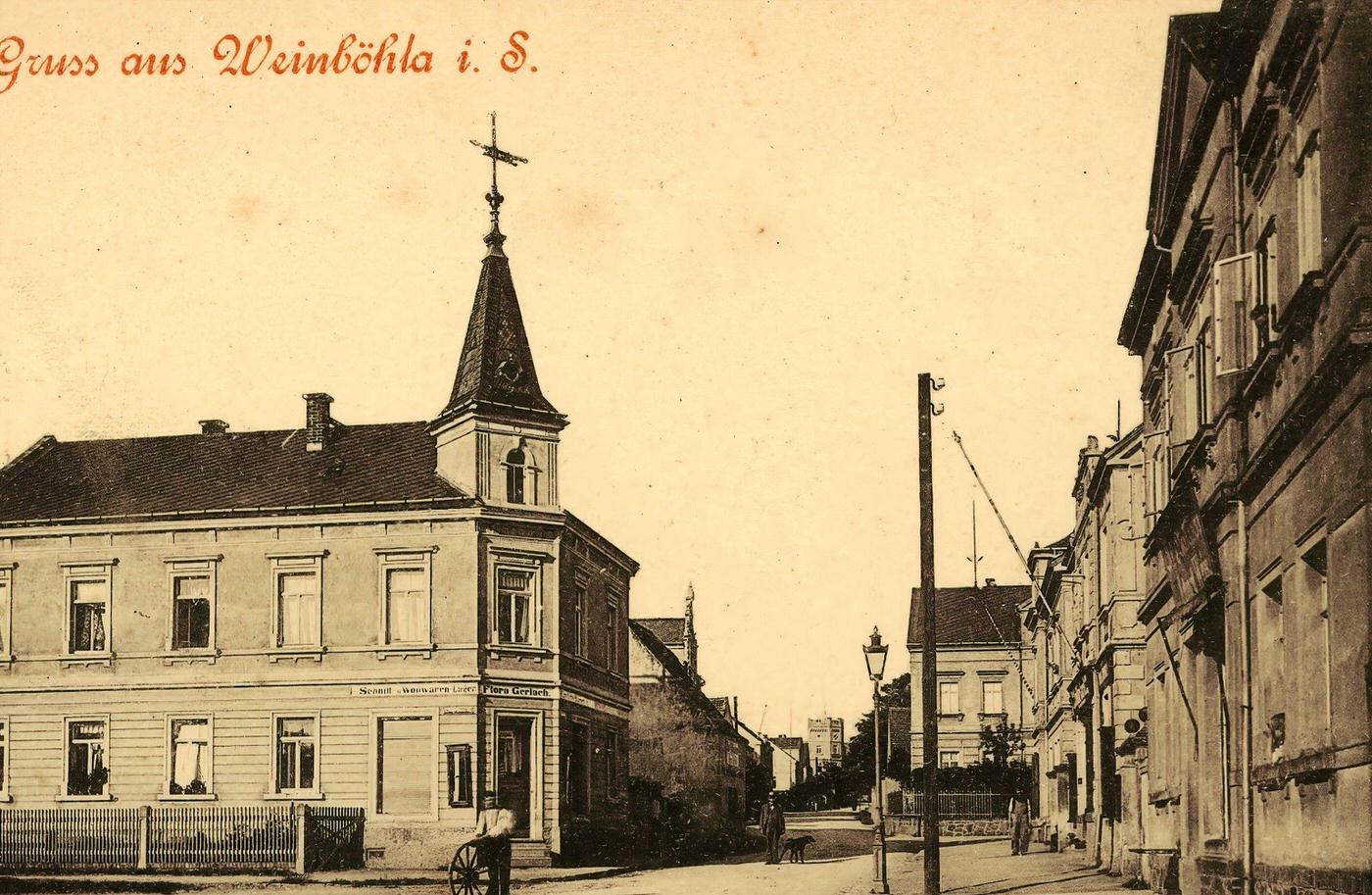
Rural Saxony in 1901 looked very different from the booming cities. Villages like Heyda bei Falkenhain in the Lossatal were clusters of farmhouses and small holdings, where the rhythm of life was set by the harvest rather than the factory shift. In the Meissen district, small-town streets showed the details of commercial life at ground level — weather vanes on rooftops, shop signs on walls, cartwheel rims stacked outside workshops, all the physical texture of a working provincial community.
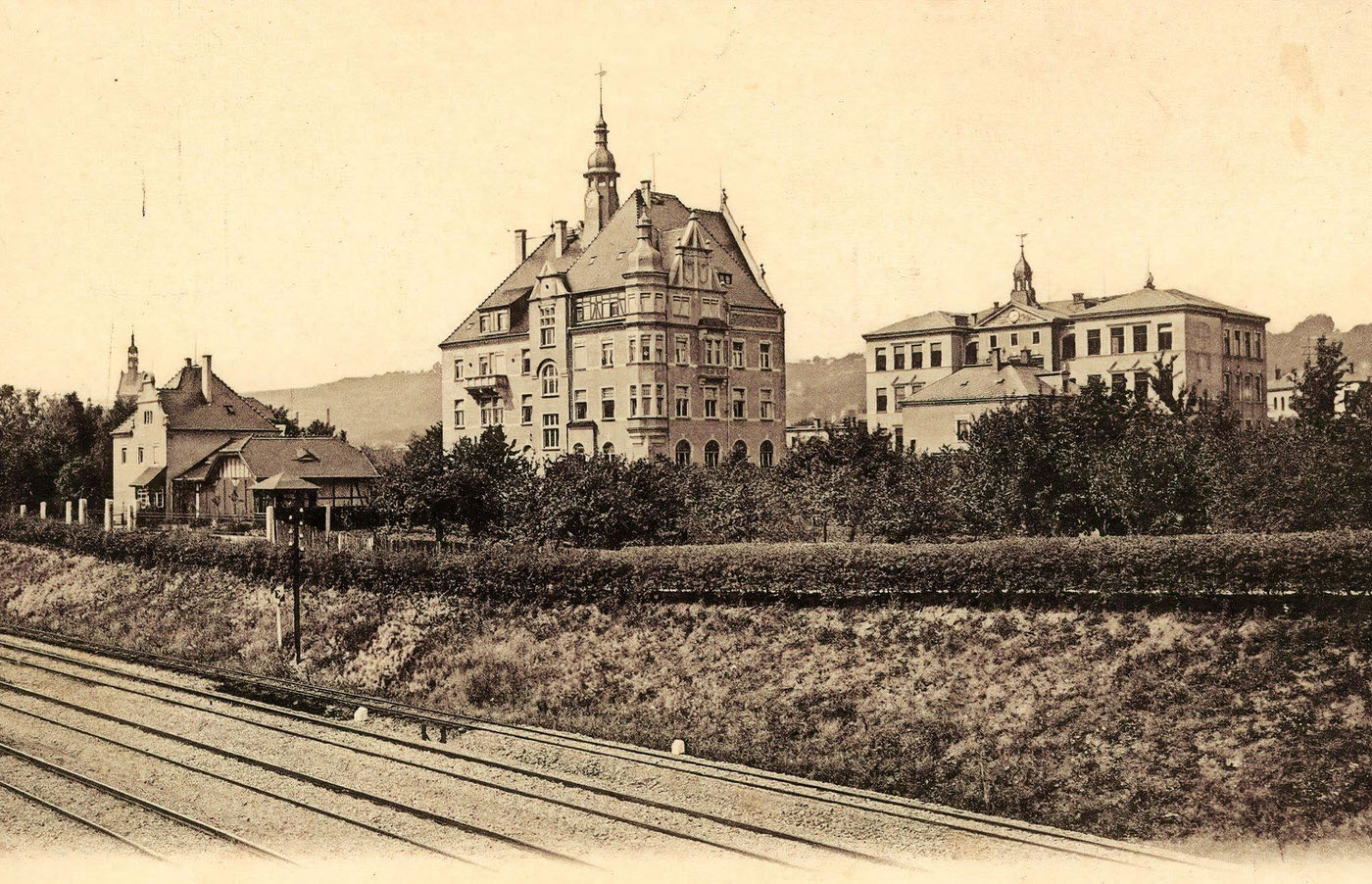
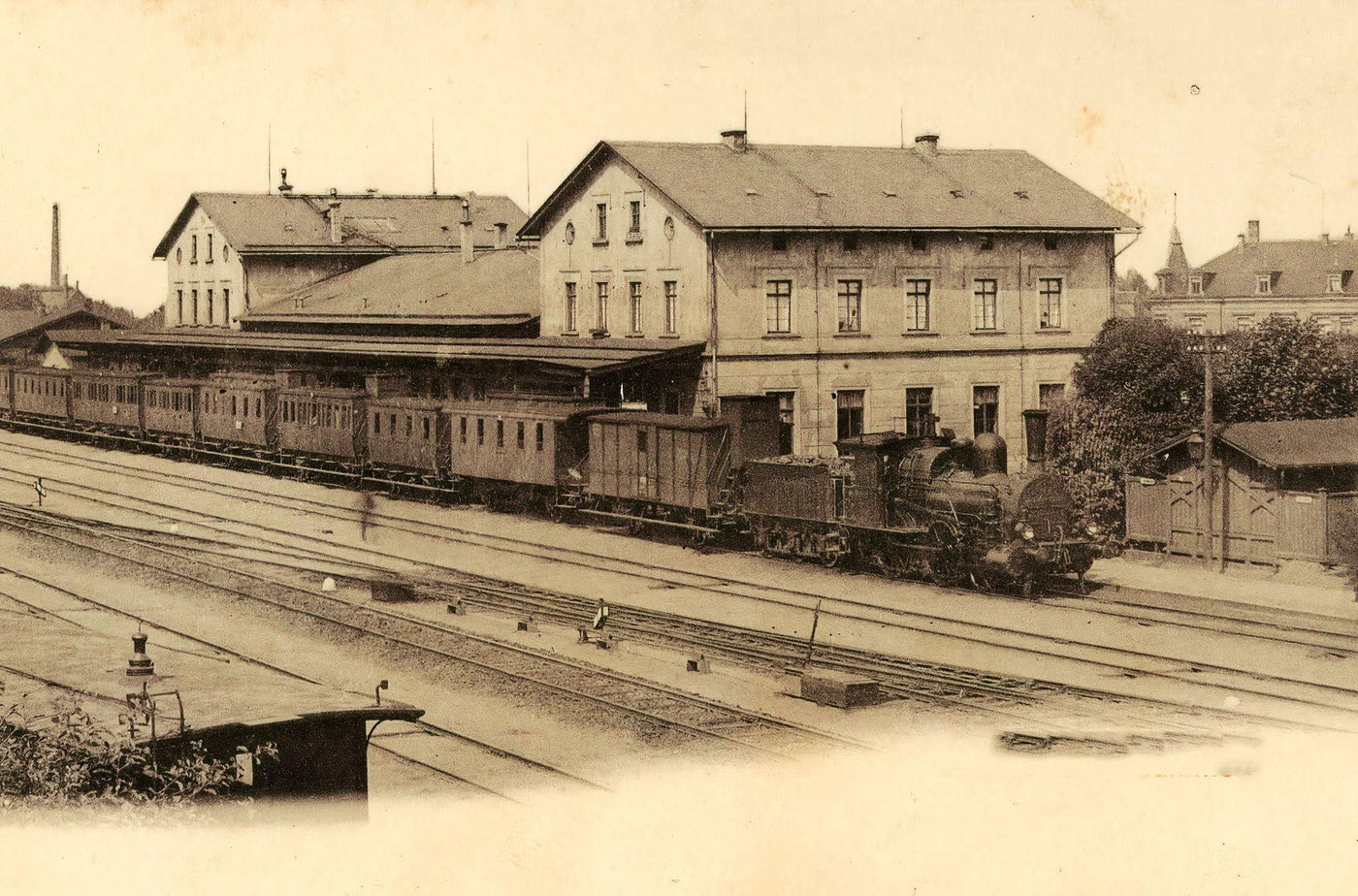
Radebeul’s civic buildings — its town hall, police office, schools, and churches — were all documented in photographs from 1901. The Lossnitzgrundbahn, a narrow-gauge railway running through the Lossnitzbachtal valley, connected Radebeul to nearby towns and was already a fixture of local transport. Passenger trains were transforming mobility across Saxony, as seen at Kamenz station, where scheduled services linked smaller towns into the wider rail network.
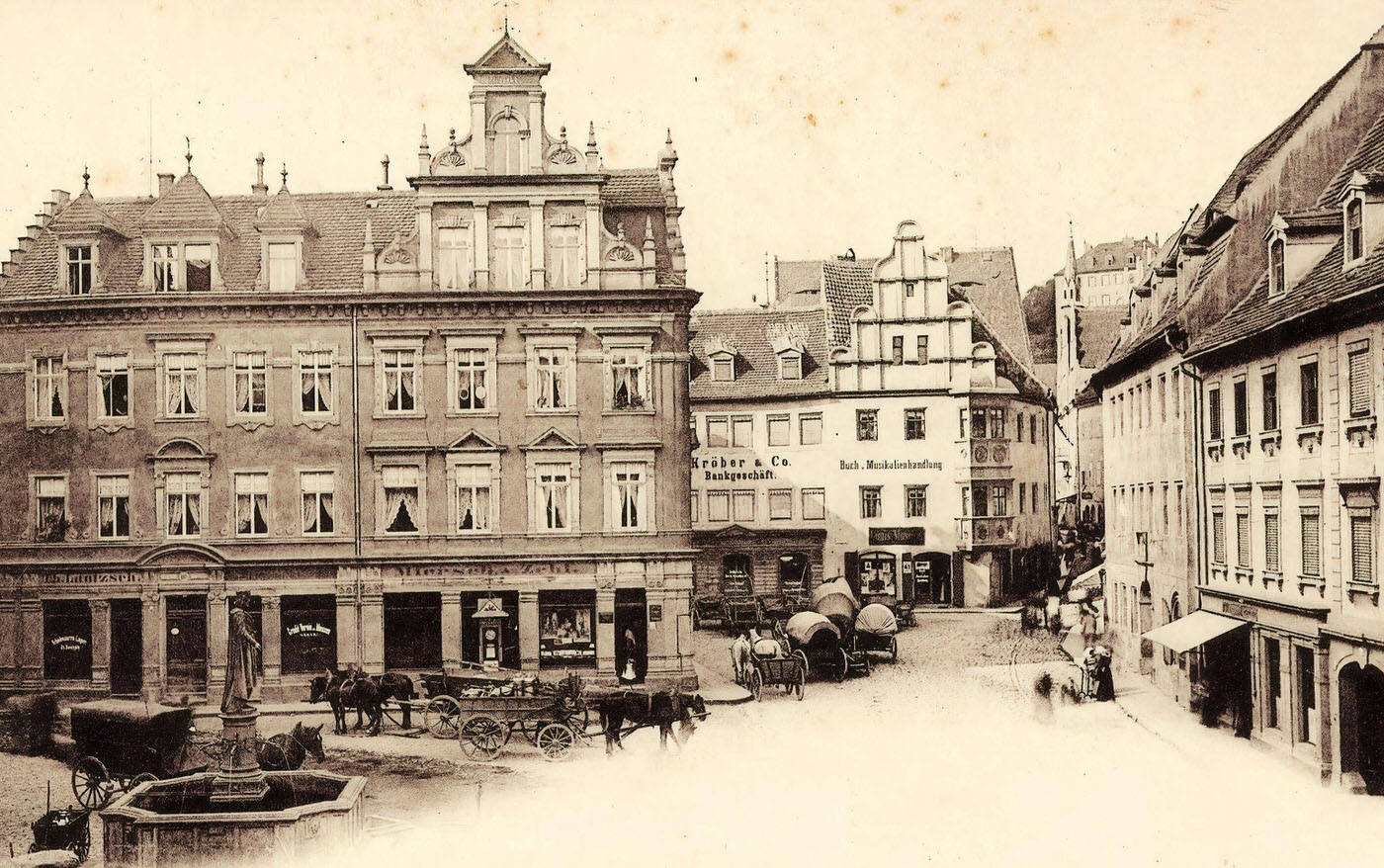
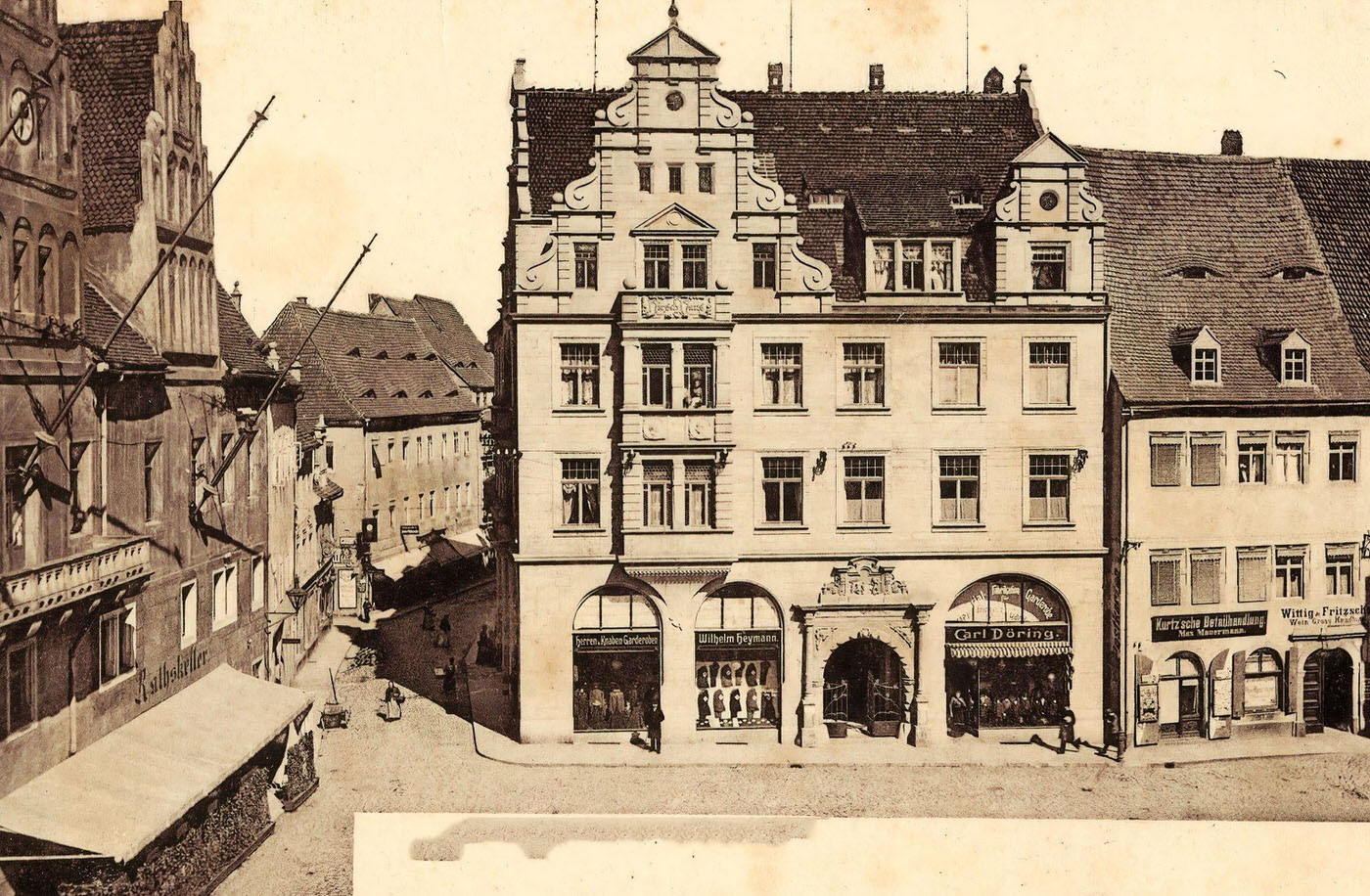
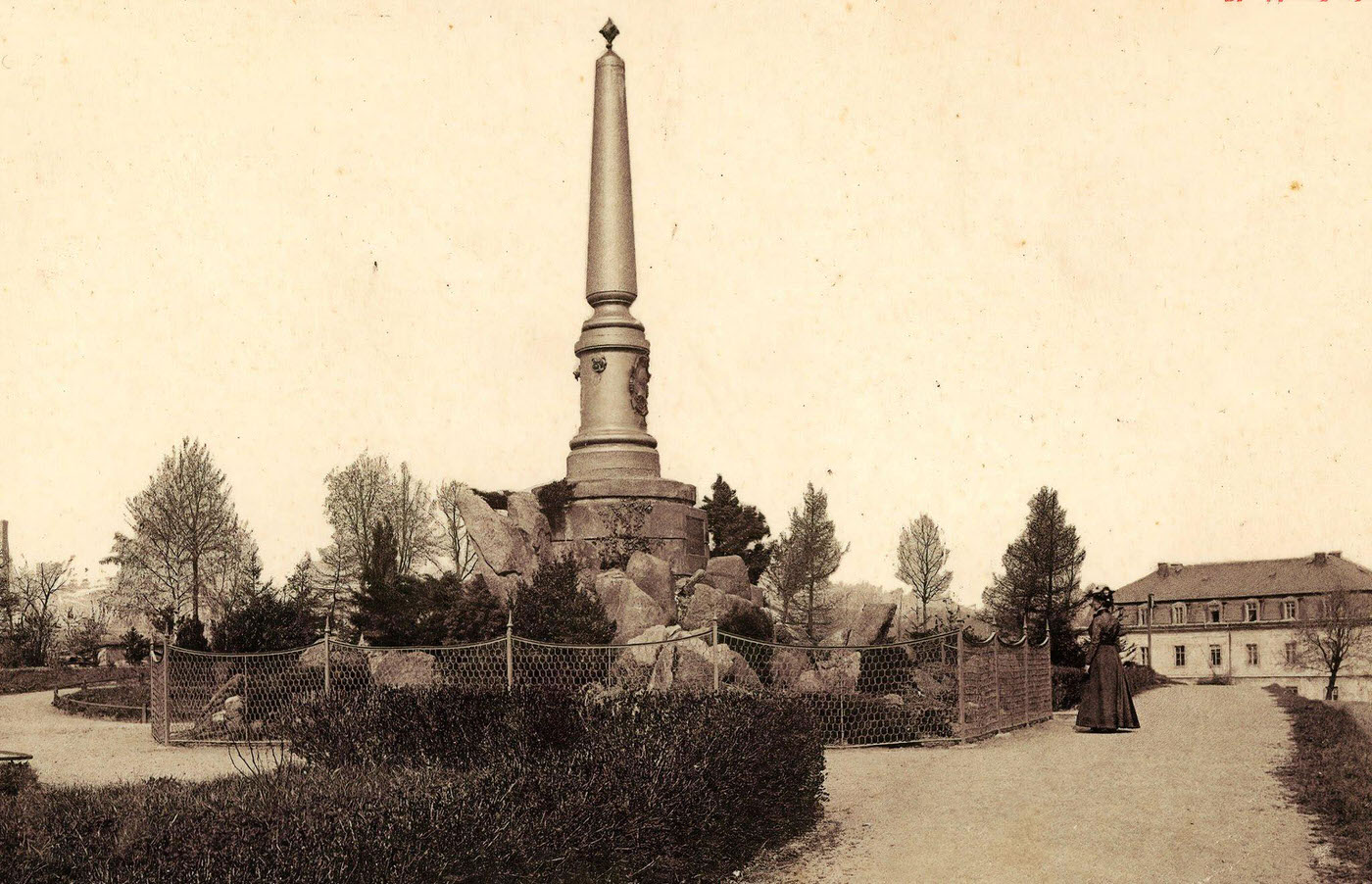
Meissen’s market square in 1902 still had the character of a medieval trading town, with the Hirschhaus and surrounding buildings reflecting centuries of commercial activity. Nearby, a column monument to Otto von Bismarck — the man who had united Germany in 1871 — stood as a civic tribute to the founding chancellor. Bismarck memorials were erected across Germany in the decades after his death in 1898, a sign of how central he was to German national identity.
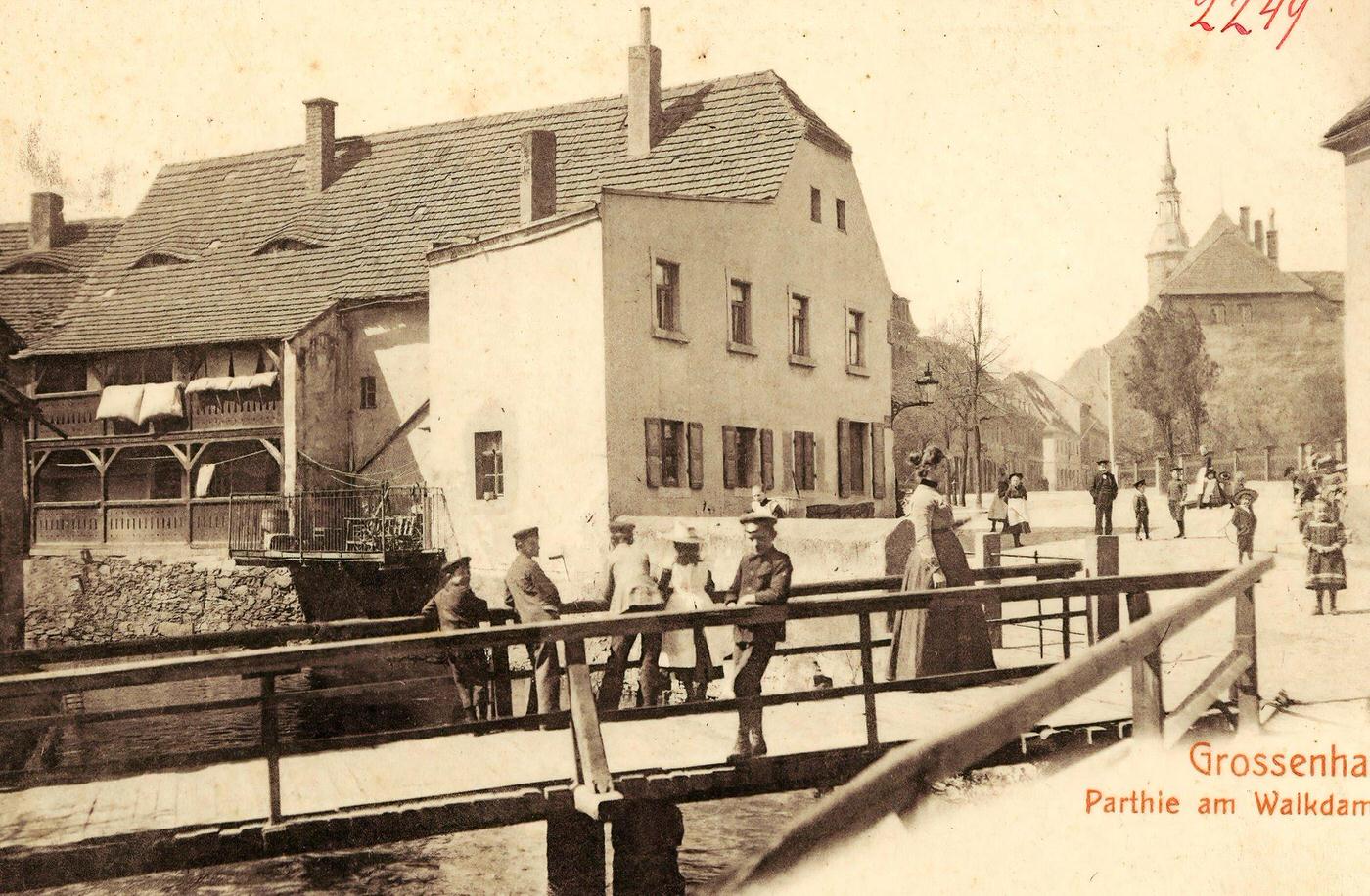
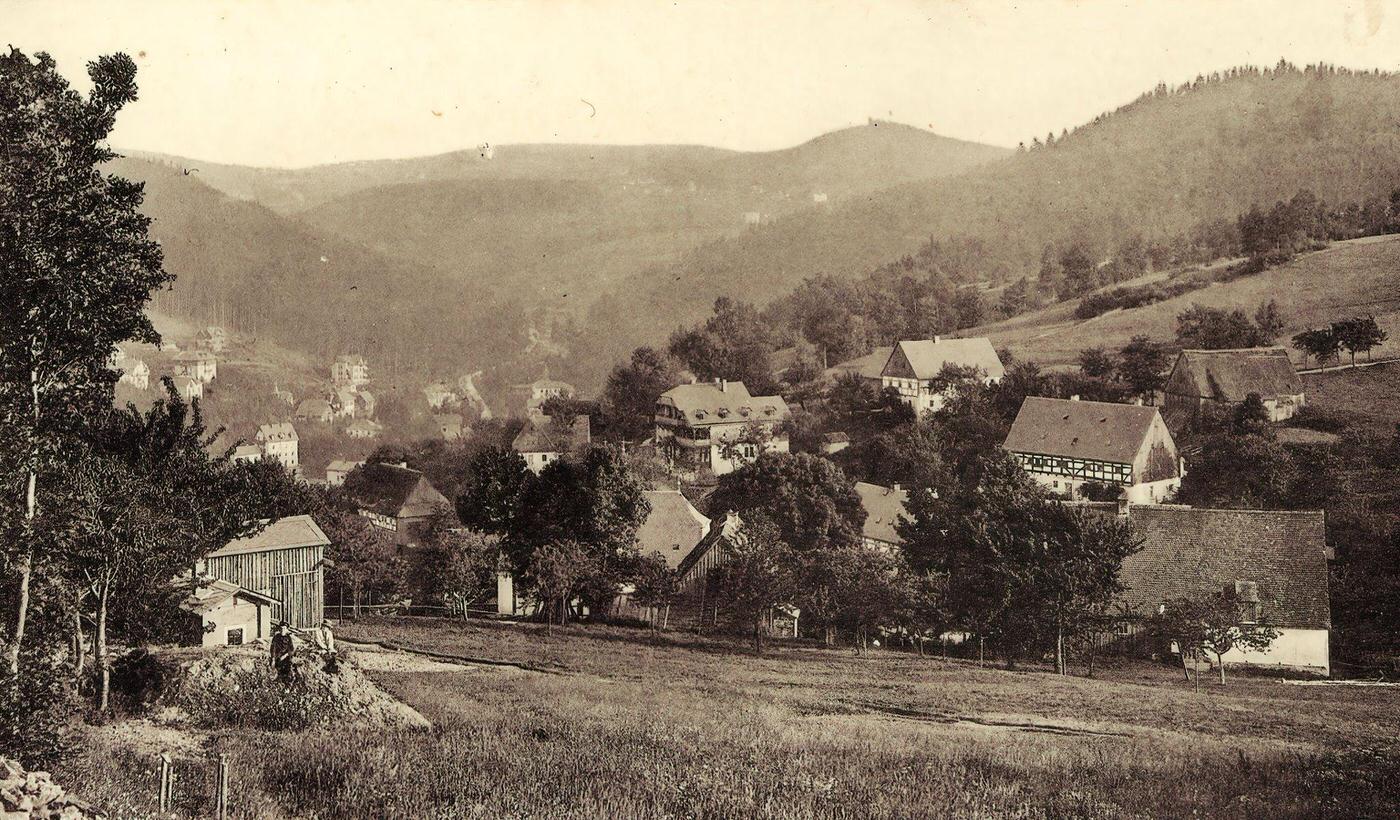
Stone bridges over the Saxon rivers connected towns that had otherwise been separated by the Elbe and its tributaries for centuries. The bridges at Grossenhain and Rochlitz served both commercial and daily pedestrian traffic. In the high-altitude village of Kipsdorf, in the Erzgebirge mountains south of Dresden, older building styles had changed very little since the 18th century — timber construction, steep roofs, and small windows designed for a cold climate.
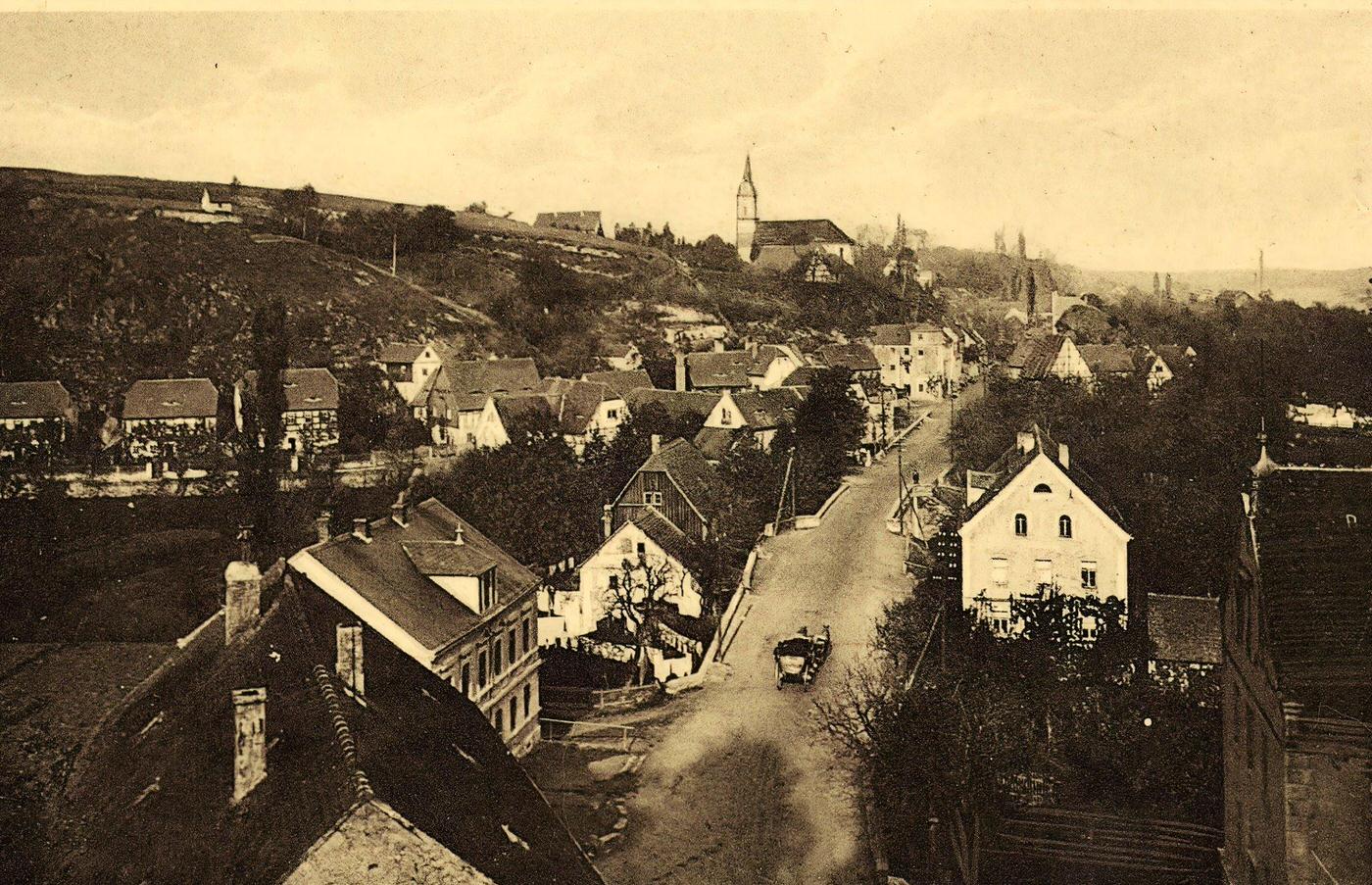
The small church of St. Michaelis in Zehren, perched above the Elbe near Meissen, was typical of the rural ecclesiastical architecture scattered across Saxony. Schloss Nossen, a castle complex that had served various purposes including as a monastery and a noble residence, stood on the eastern edge of Nossen town. By 1900 it was largely in administrative use, its medieval walls still intact and dominating the surrounding landscape.
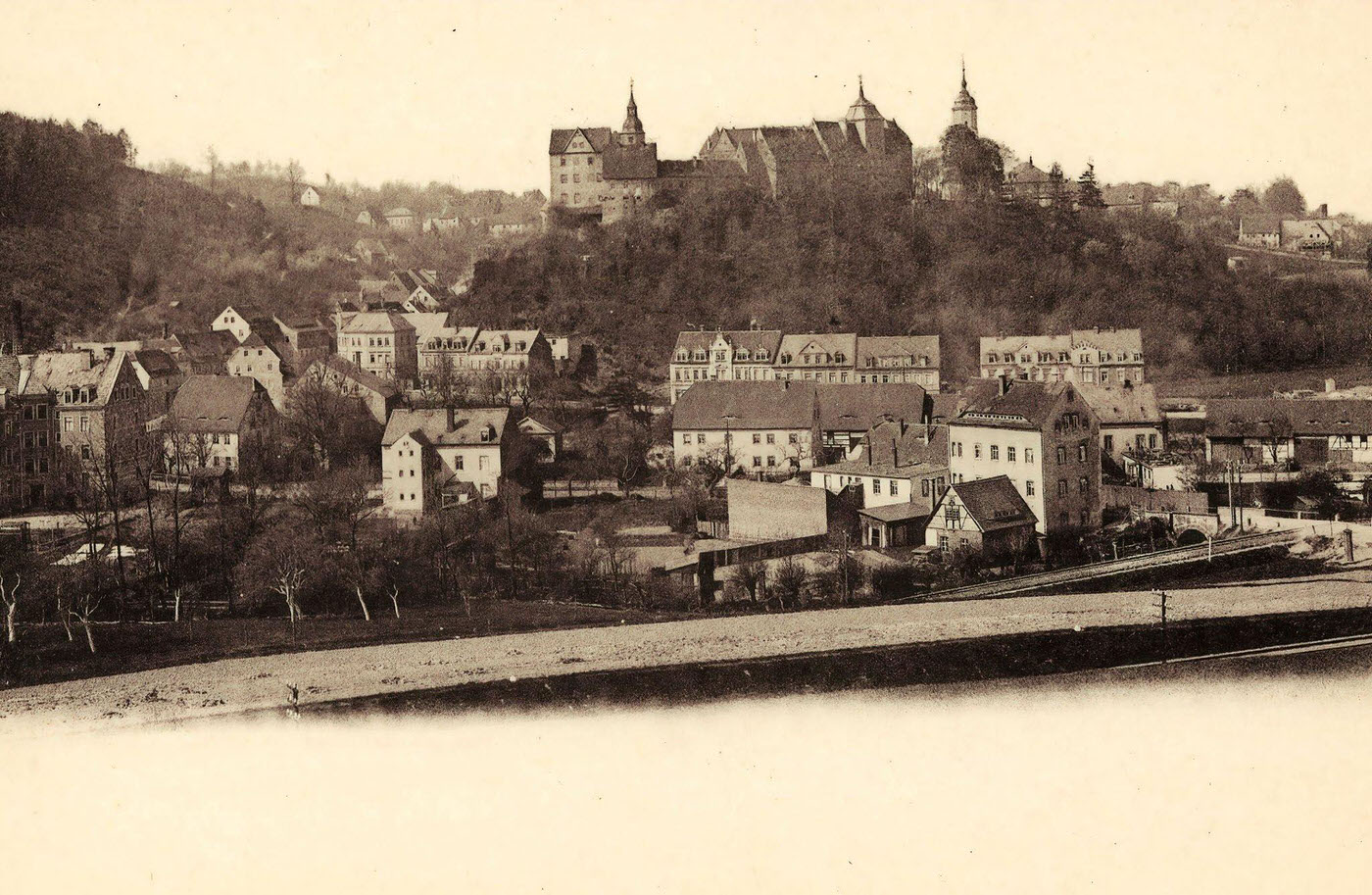
Radeburg’s Grossenhainer Platz was a busy hub for horse-drawn wagon traffic in 1901. Farmers and tradesmen brought goods into town on regular market days, and the square filled with the noise and movement of animals, wheels, and commerce. The Lossnitz tram line in Radebeul — running horse-drawn cars in its early years before electrification — gave local residents a regular service that was modern by small-town standards.
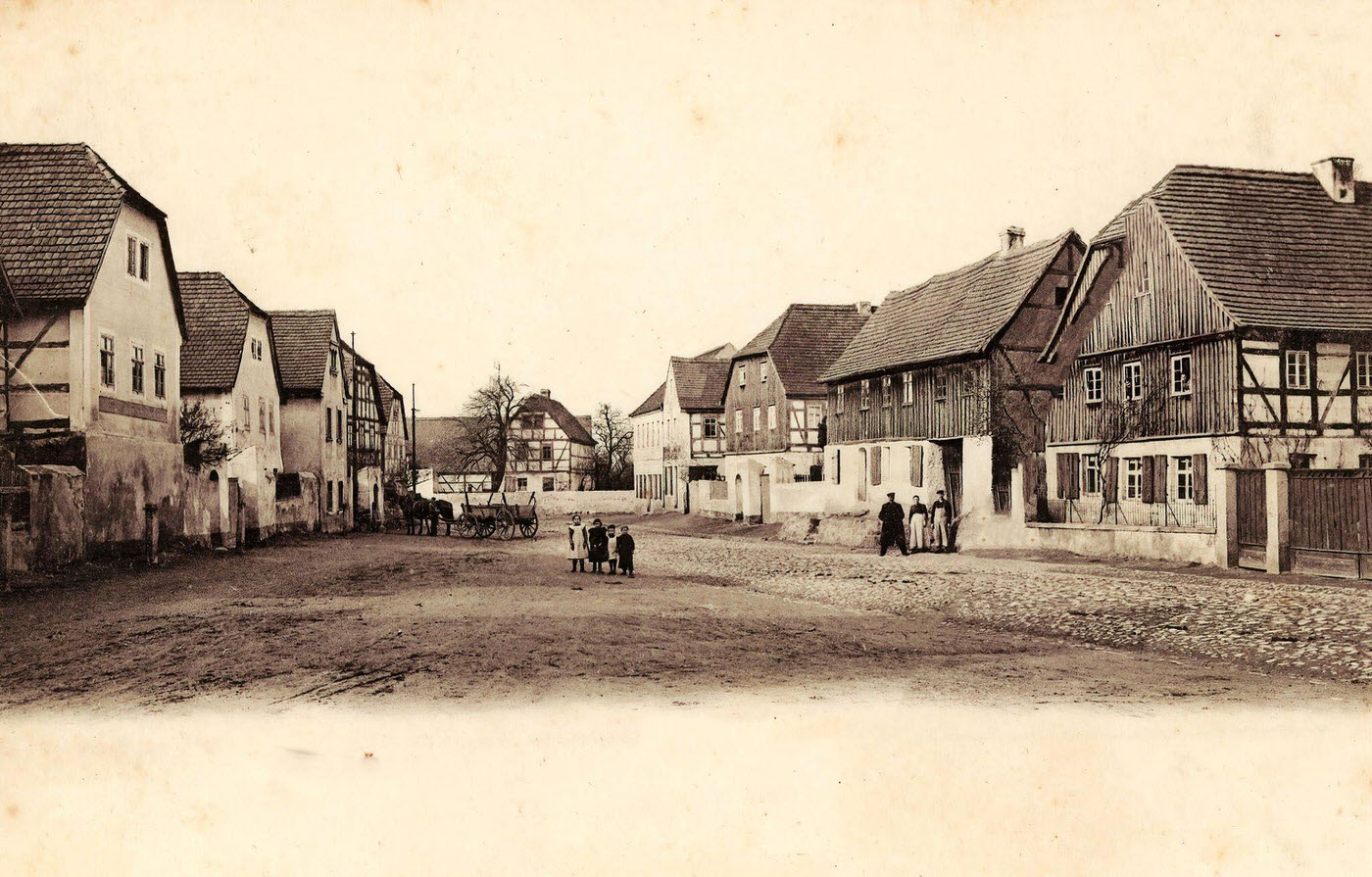
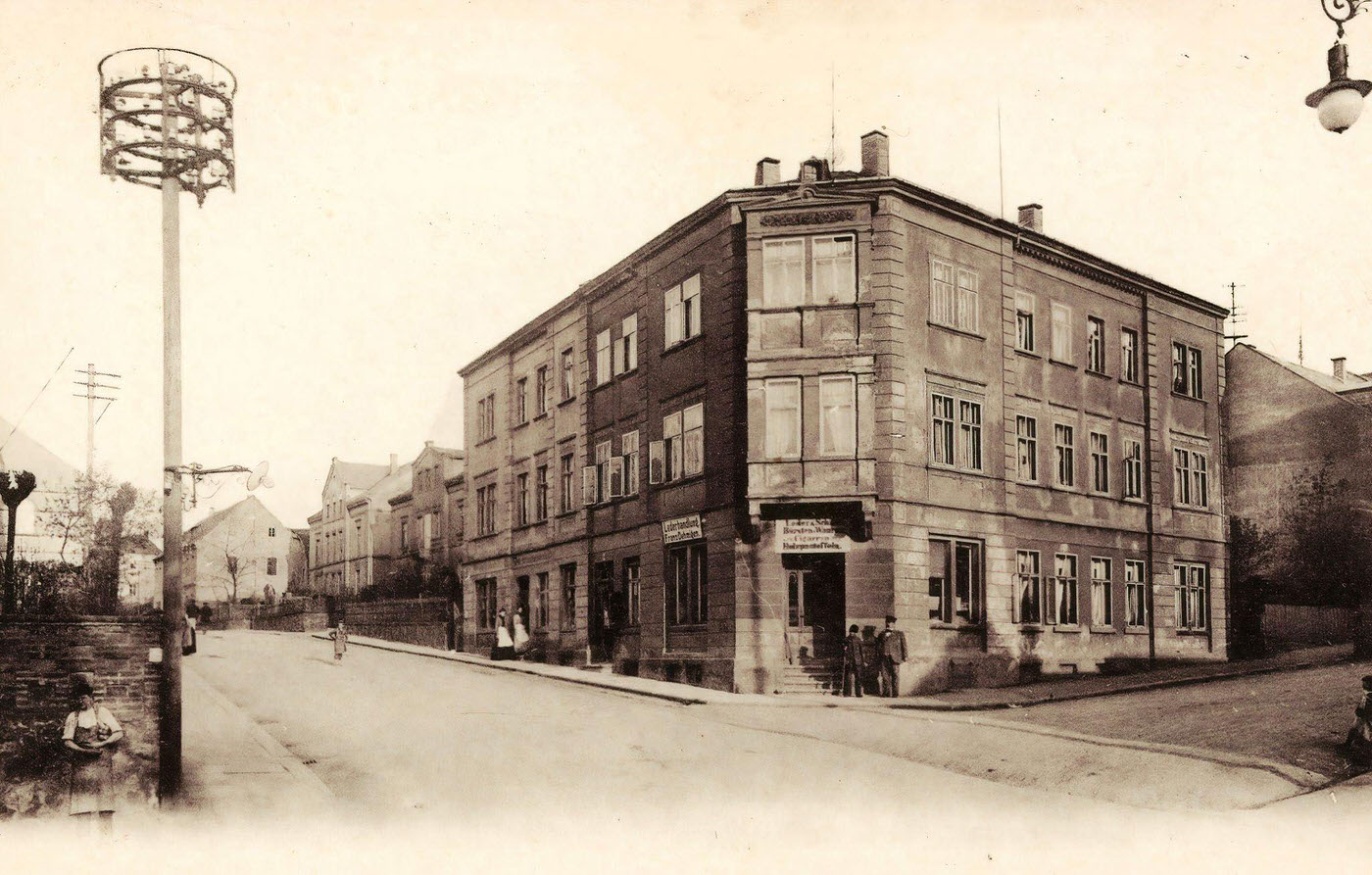
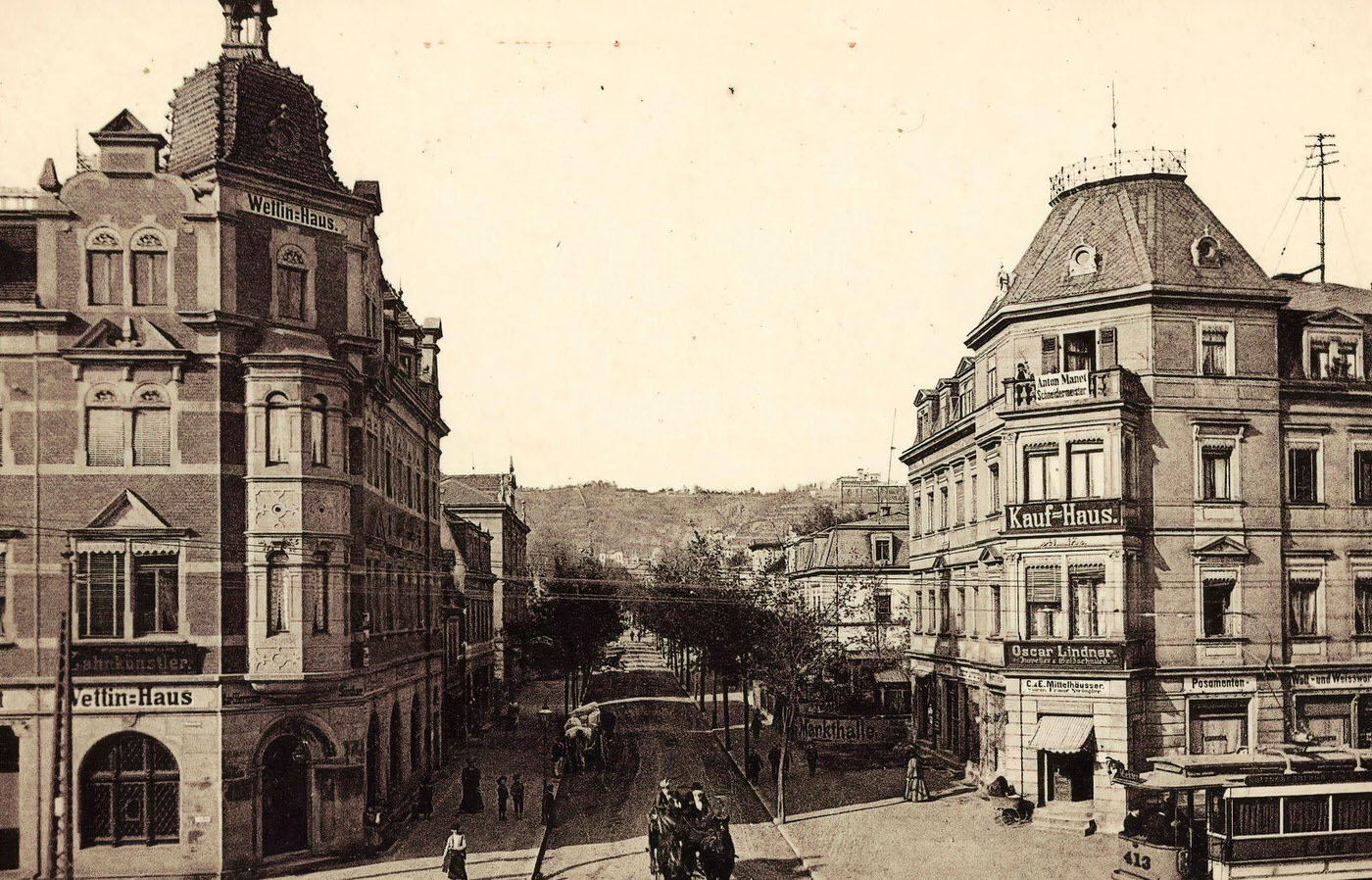
Waldenburg, in the Zwickau district, had a weekly market that drew horse-drawn carriages from the surrounding farms and villages. The town also had its own castle — Schloss Waldenburg — which housed the local ruling family and gave the town its distinctive silhouette. Nearby Bad Elster, in the Vogtland region, was an established spa town known for its mineral springs. It attracted a genteel clientele who came to take the waters, promenade through its gardens, and attend concerts.
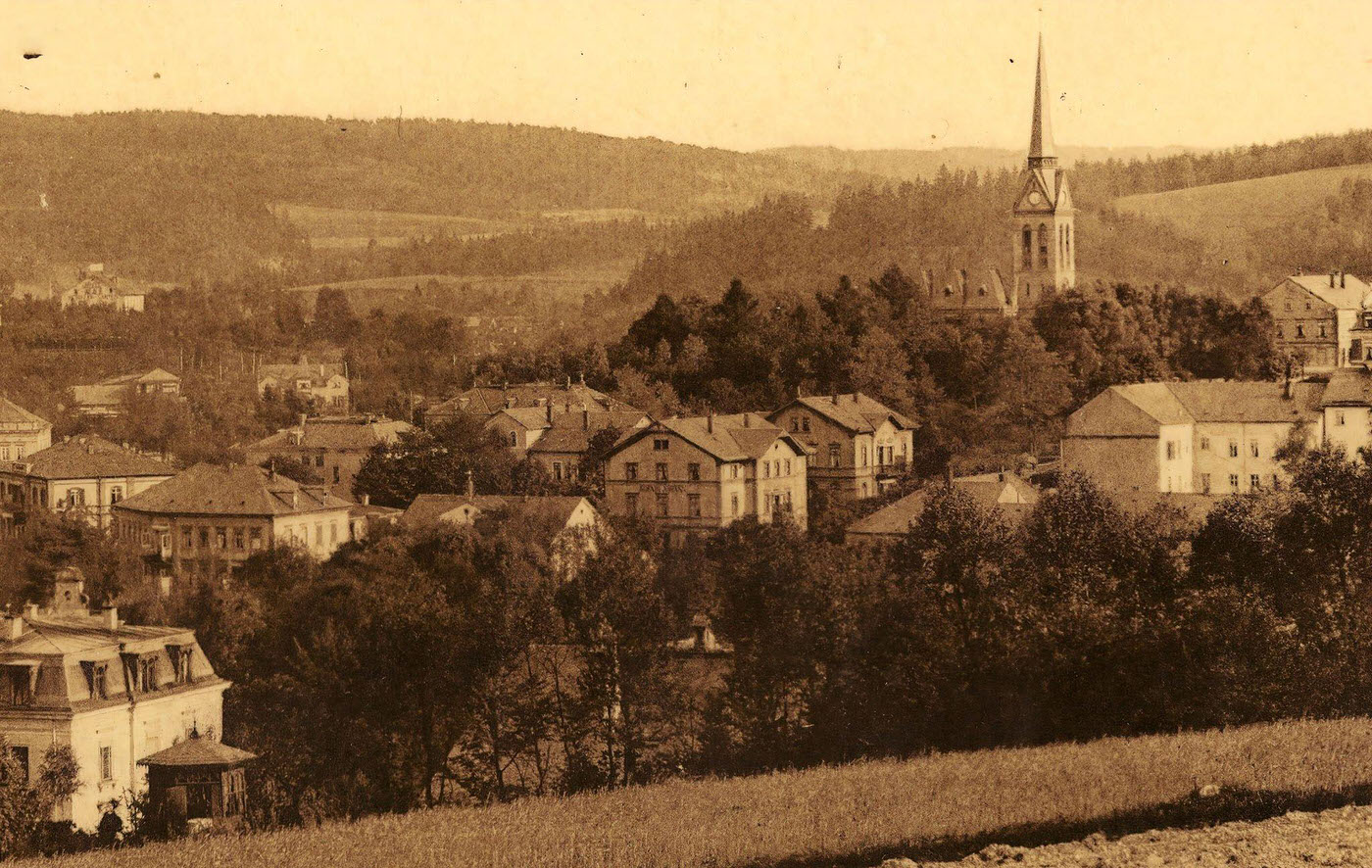
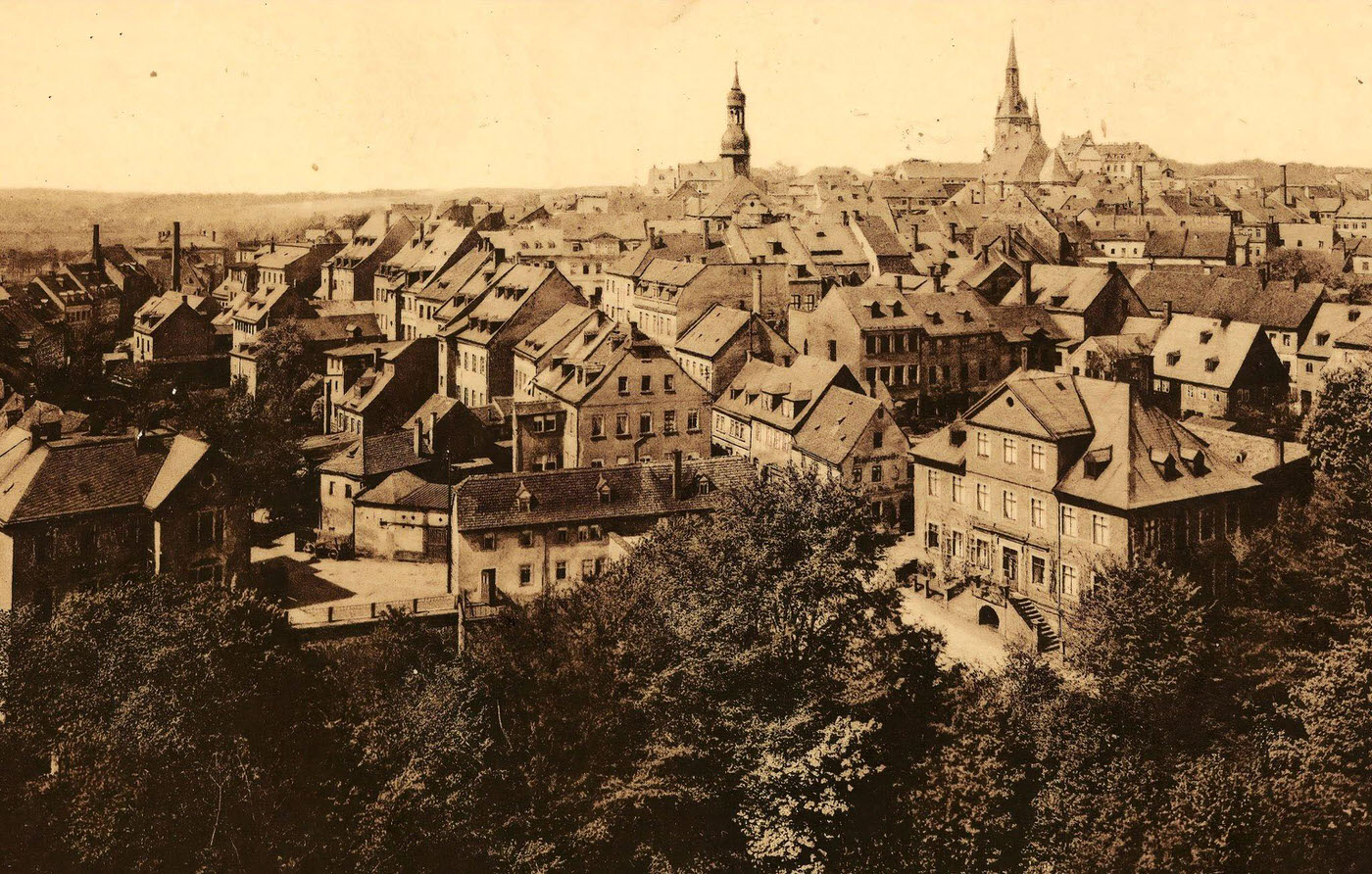
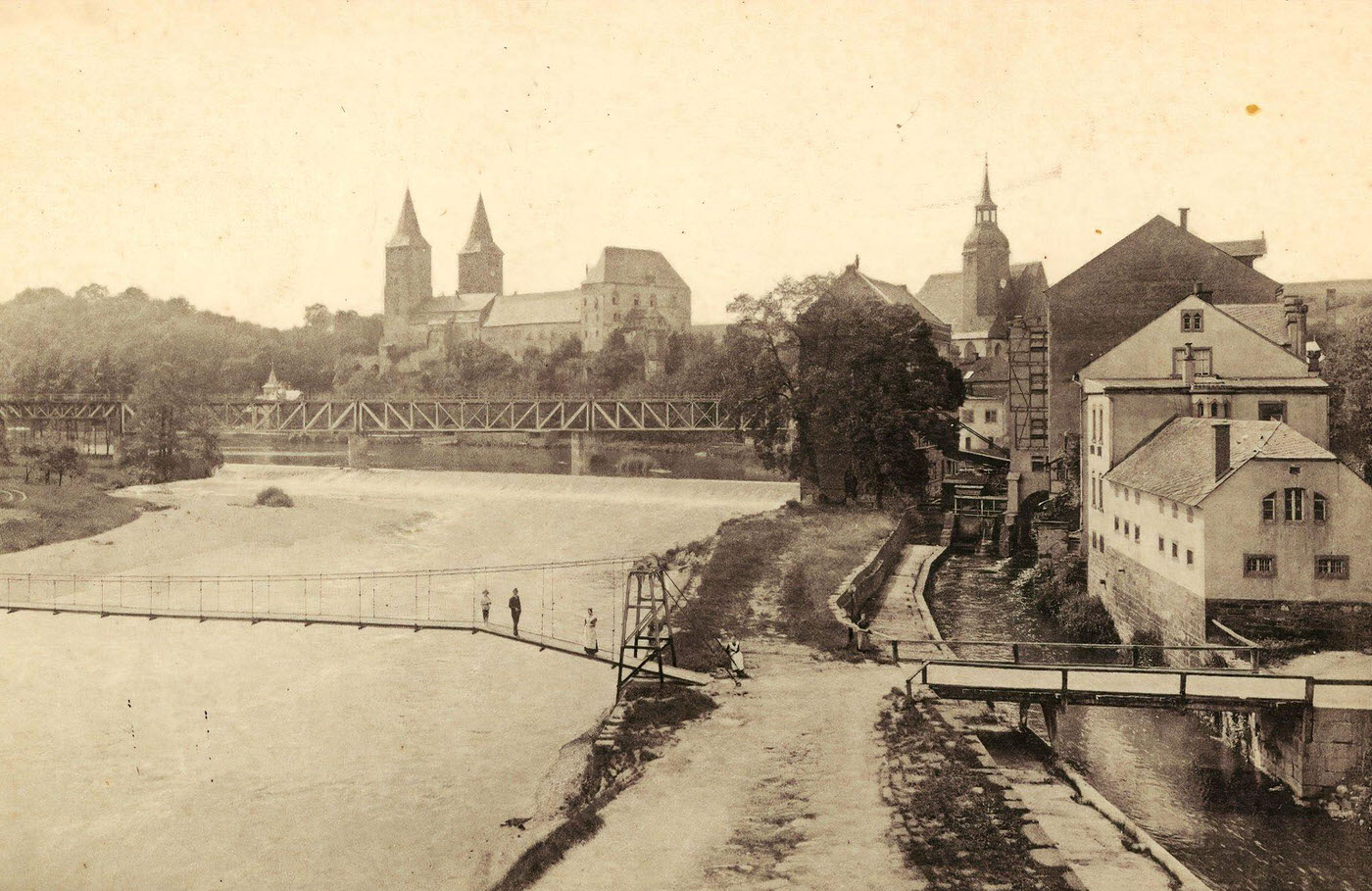
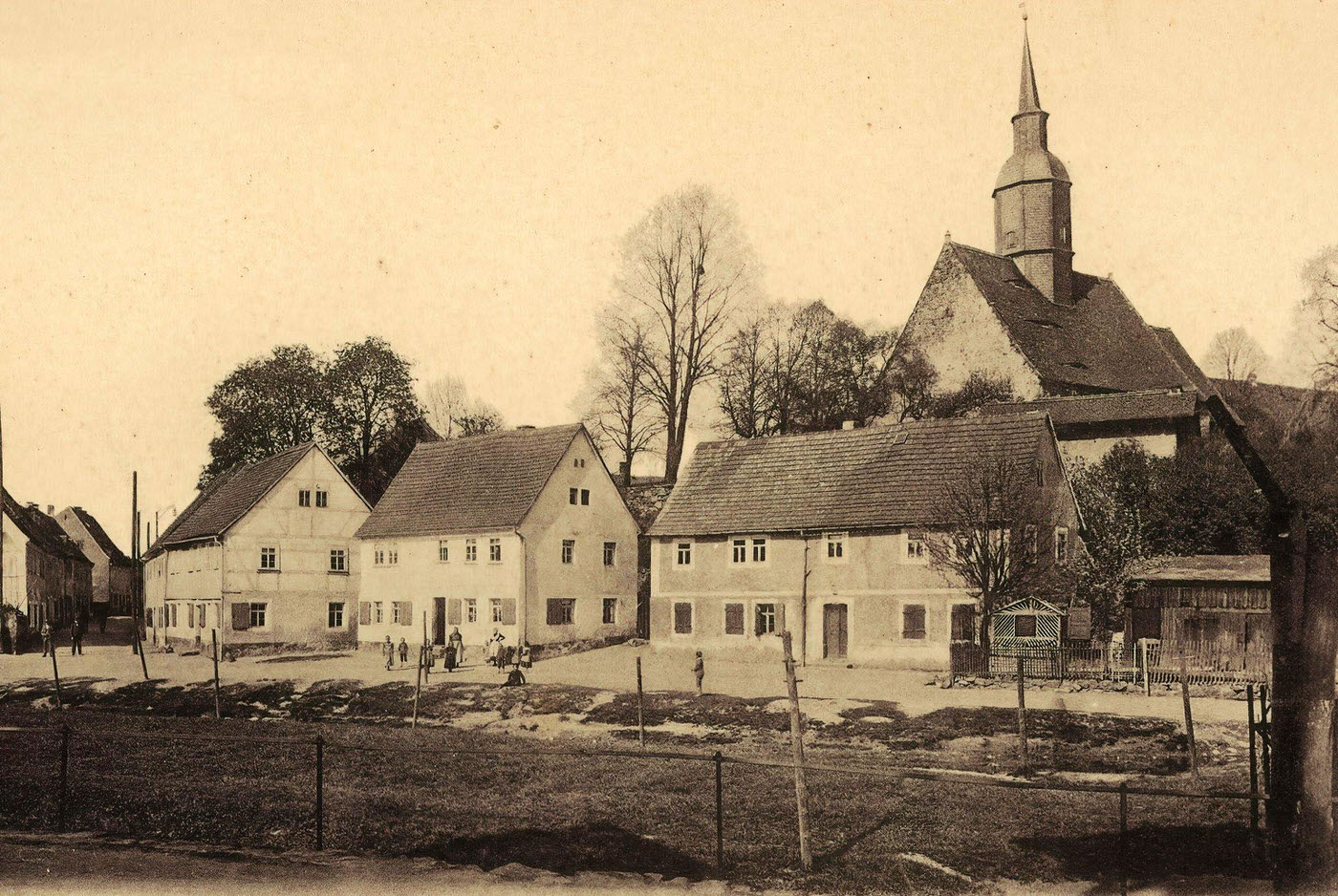
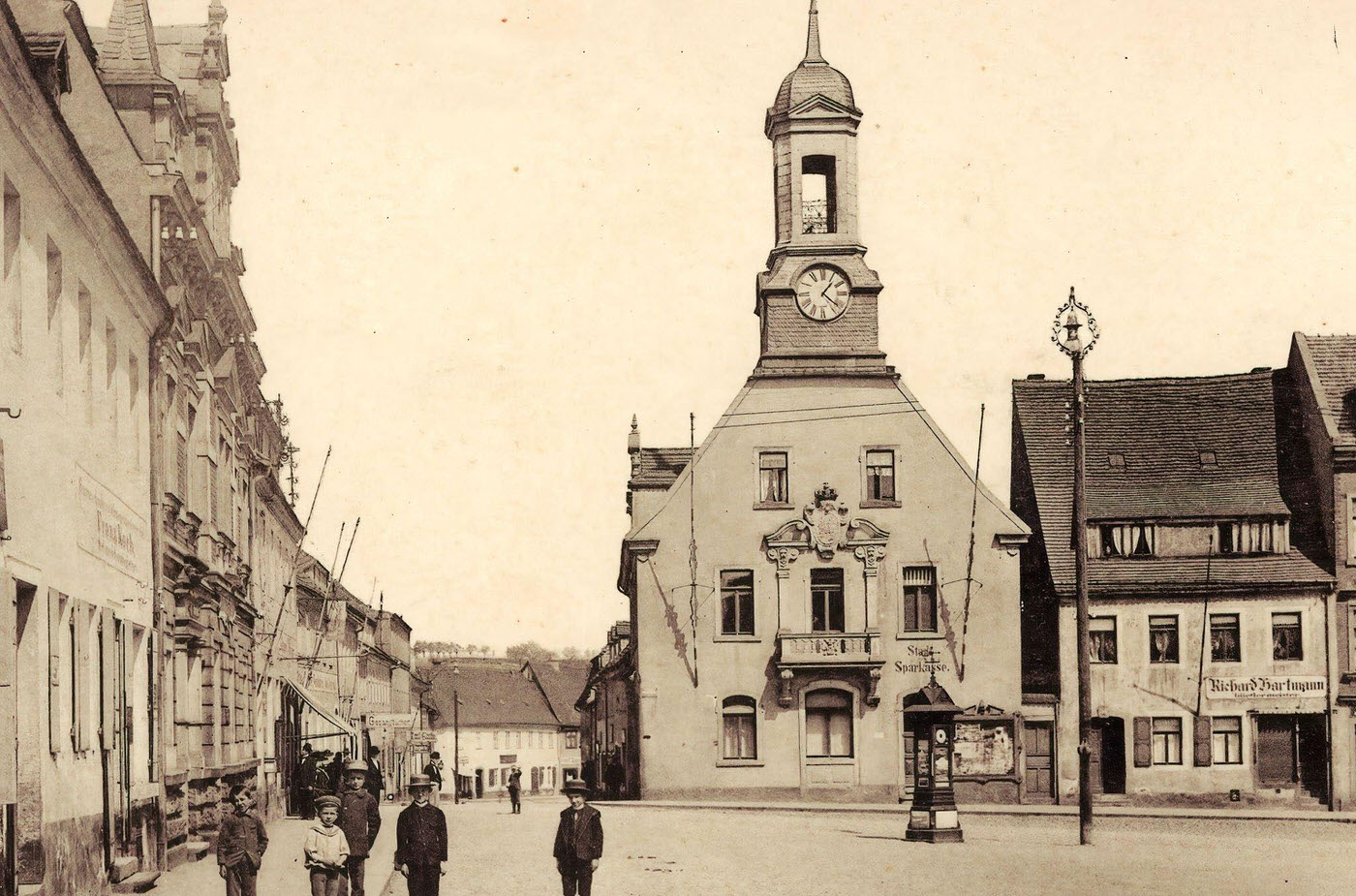
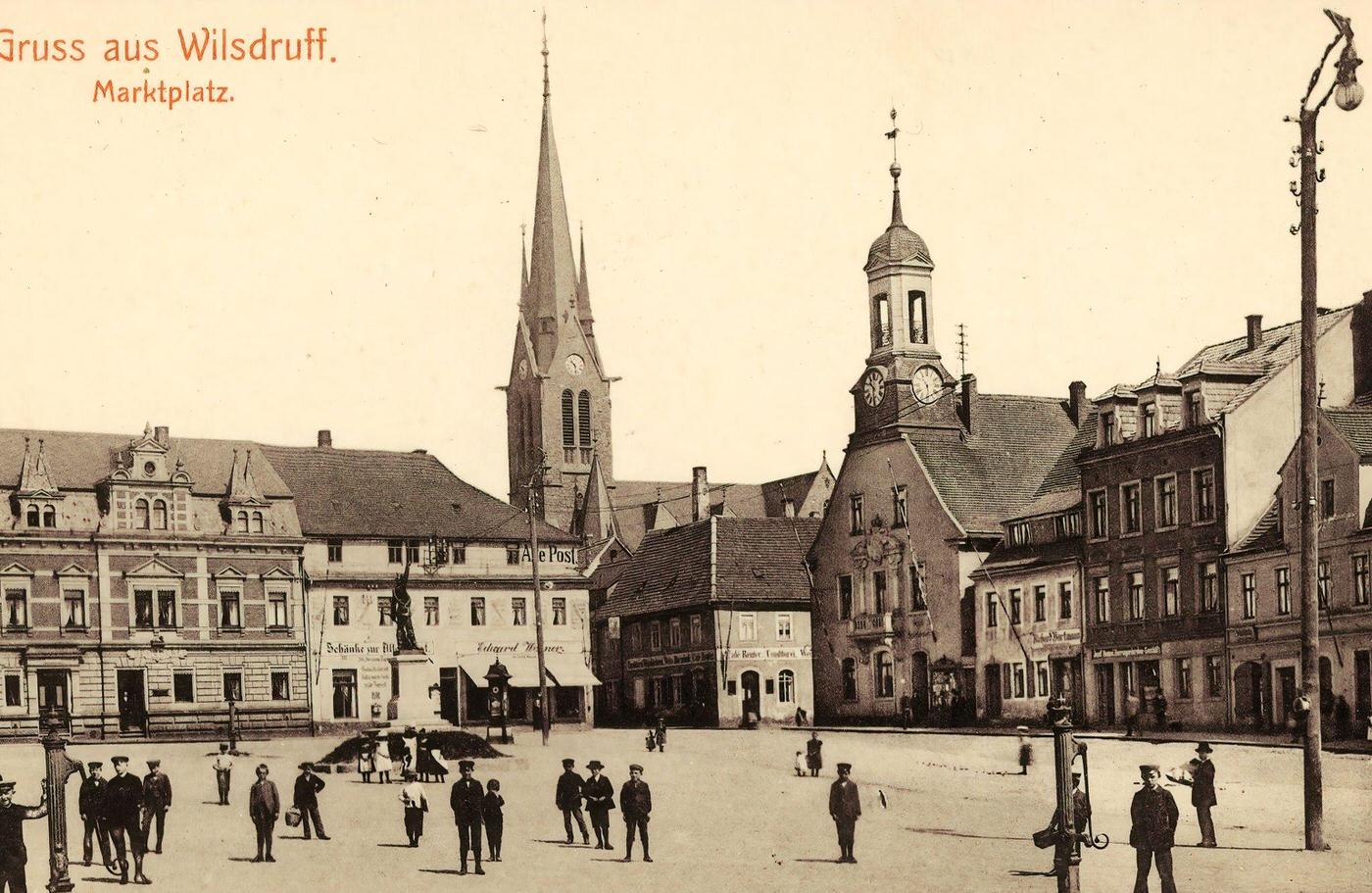
Schloss Rochlitz, rising above the Zwickauer Mulde river on a rocky spur, was one of Saxony’s best-preserved medieval fortresses. Its stone bridge below it carried both pedestrians and carts across the river. Further west, the small towns of Wilsdruff had their own parish churches, town halls, and public wells — a complete picture of small-town German civic life at the turn of the century.
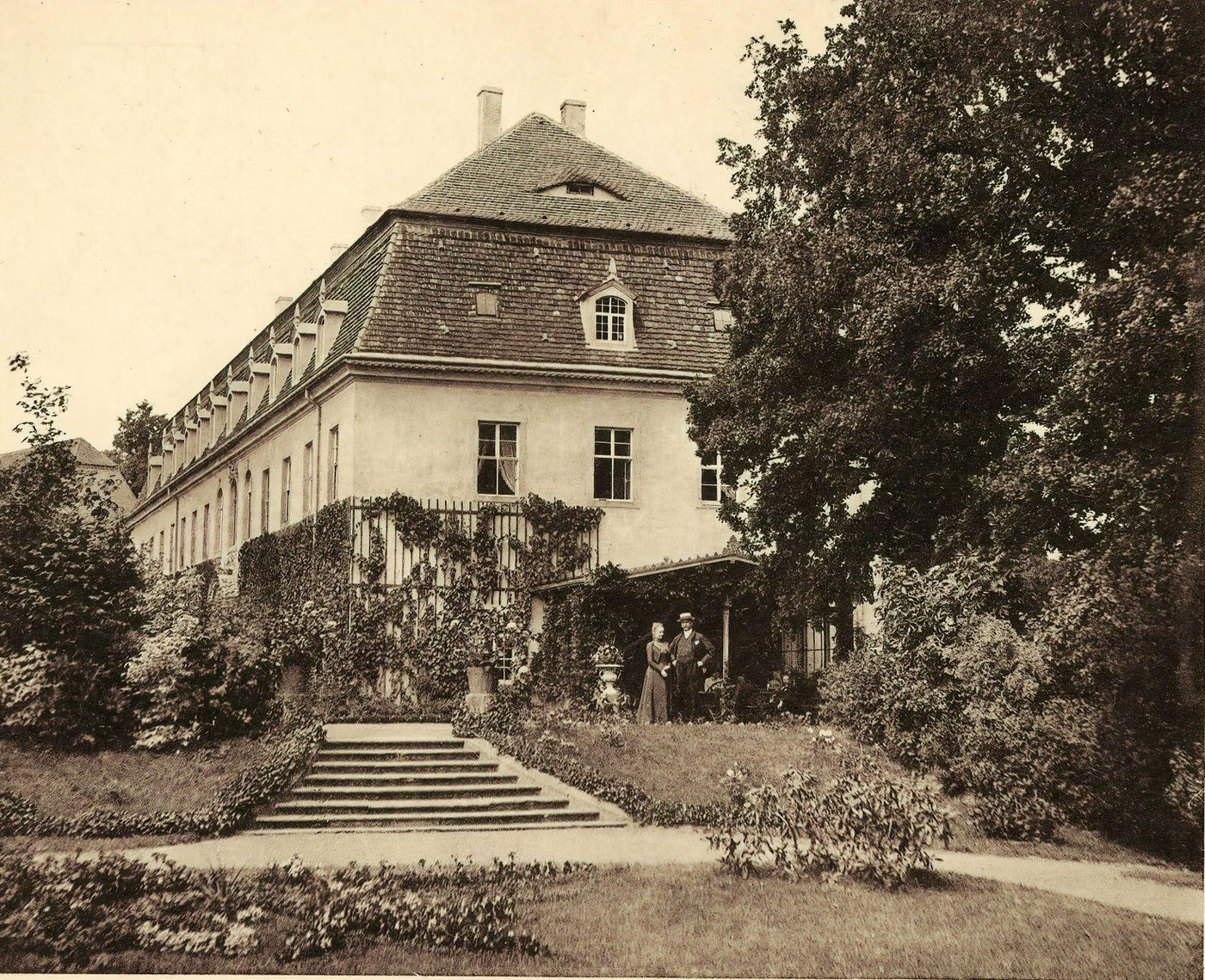
Wealthy Saxon families built villas like the Villa Garke in the Meissen district, combining Historicist architectural styles with large gardens and a degree of comfort that was far beyond what most Germans experienced. Rail transport continued to expand its reach — the station at Riesa on the Elbe was an important junction for Saxon rail traffic, and the Lossnitz narrow-gauge line in Radebeul carried passengers through a winding valley route that became a local landmark.
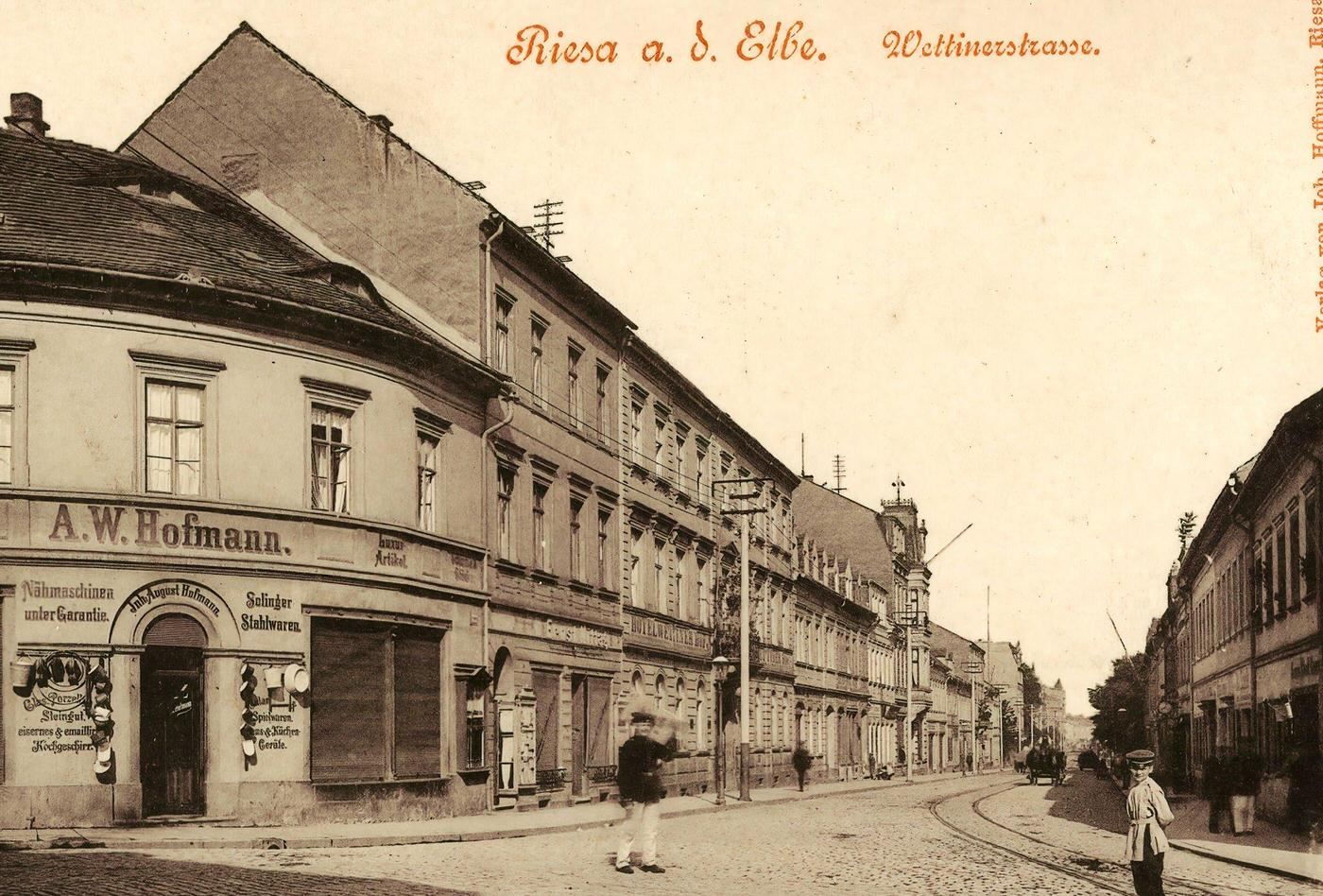
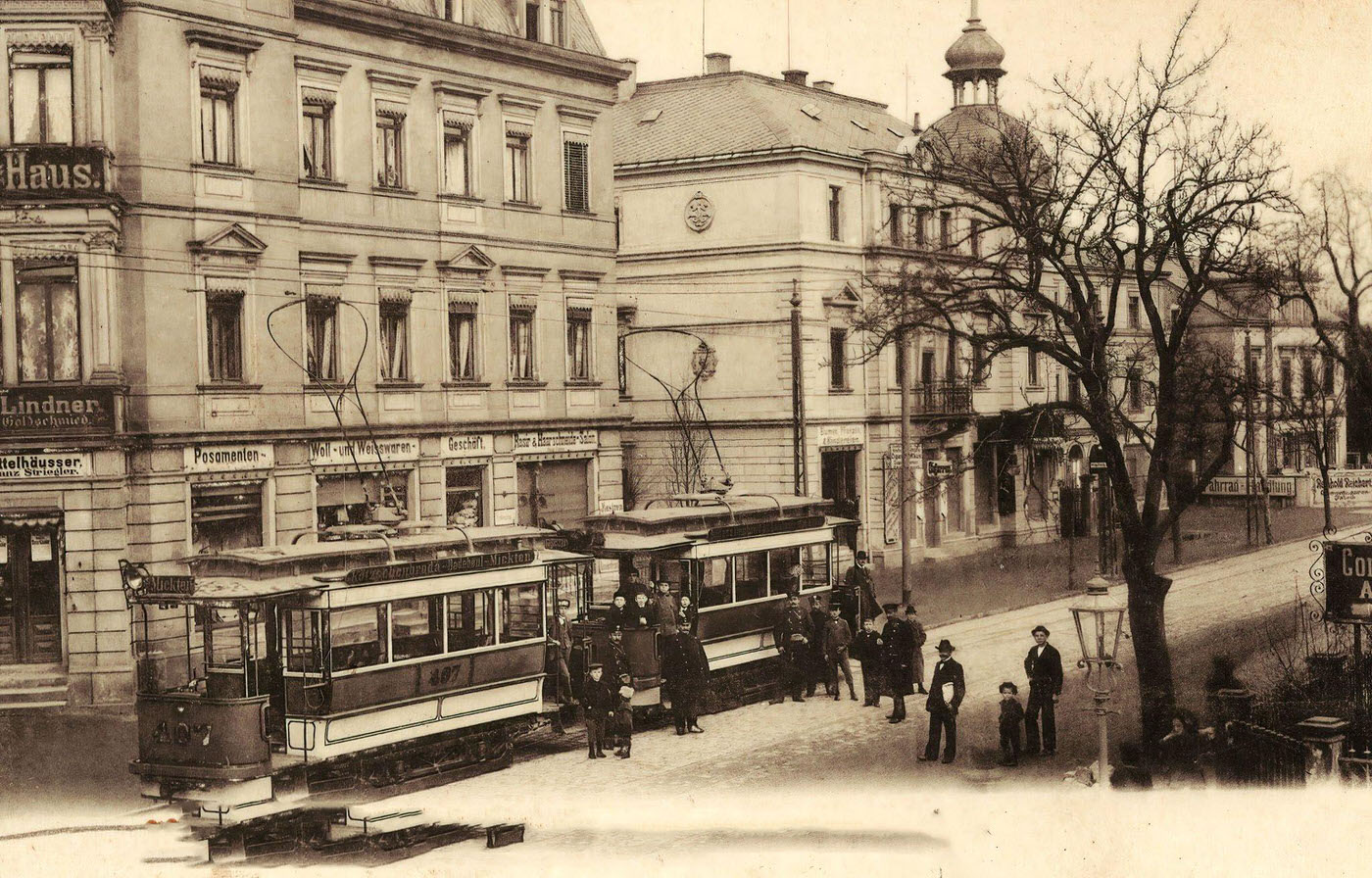
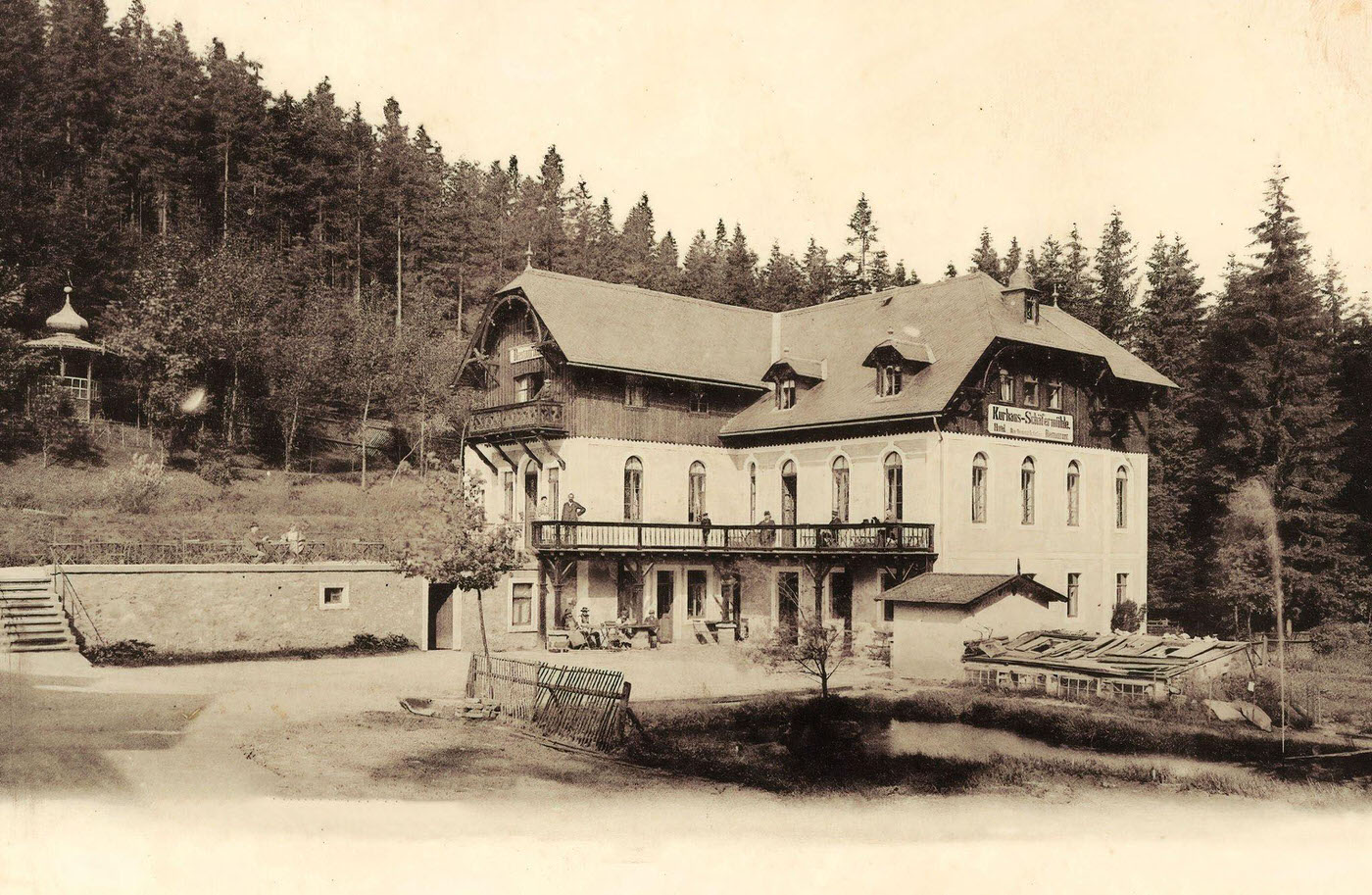
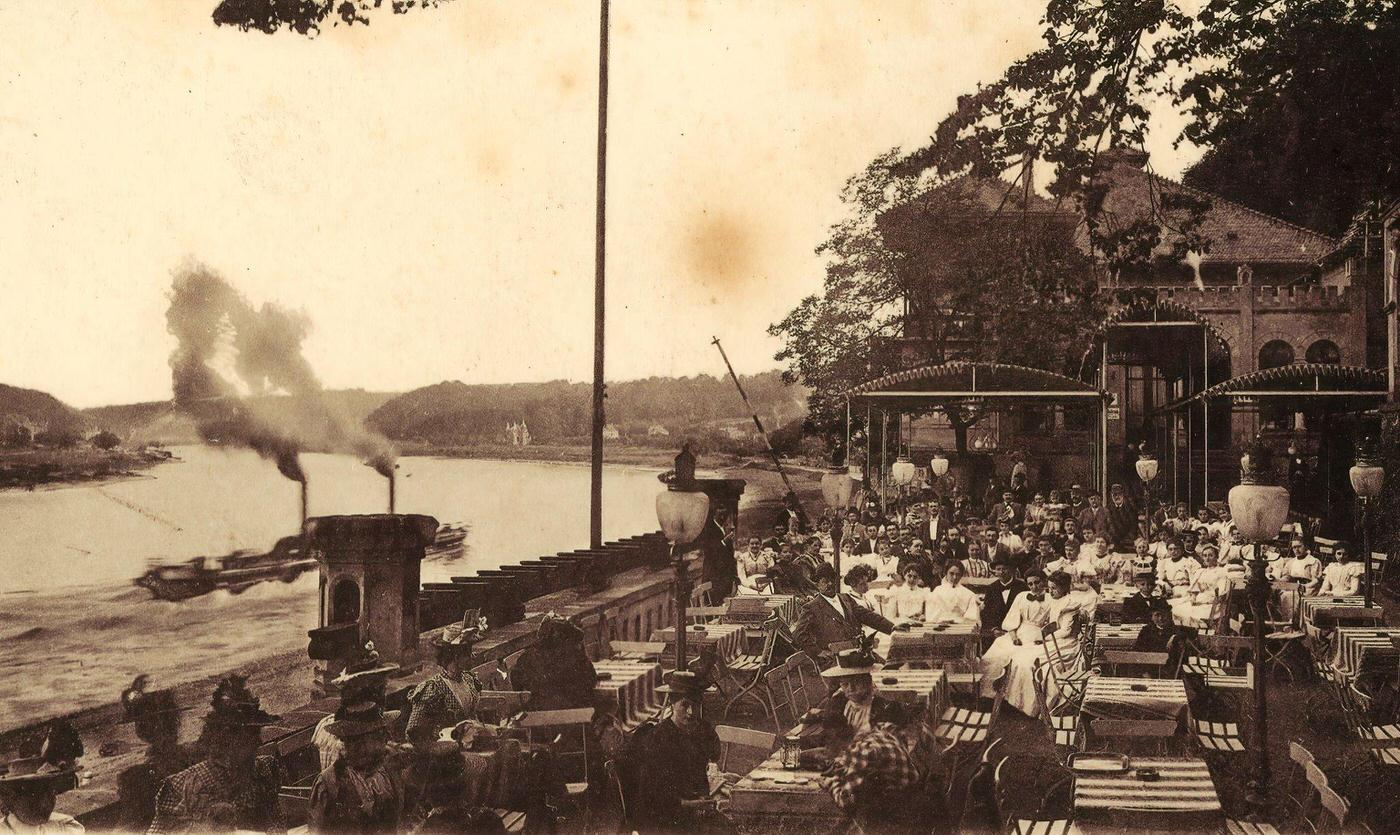
Saxon shop fronts of the early 1900s were busy and visually cluttered in the best possible way — painted signs, hanging merchandise, horse-drawn carts parked at the kerb, and customers moving in and out. Cafes near the Frauenkirche in Meissen offered outdoor seating along streets that had the leisurely pace of a prosperous small city. On the Elbe, steamships passed the Geipelburg and called at riverside restaurants that catered to passengers and local diners alike.
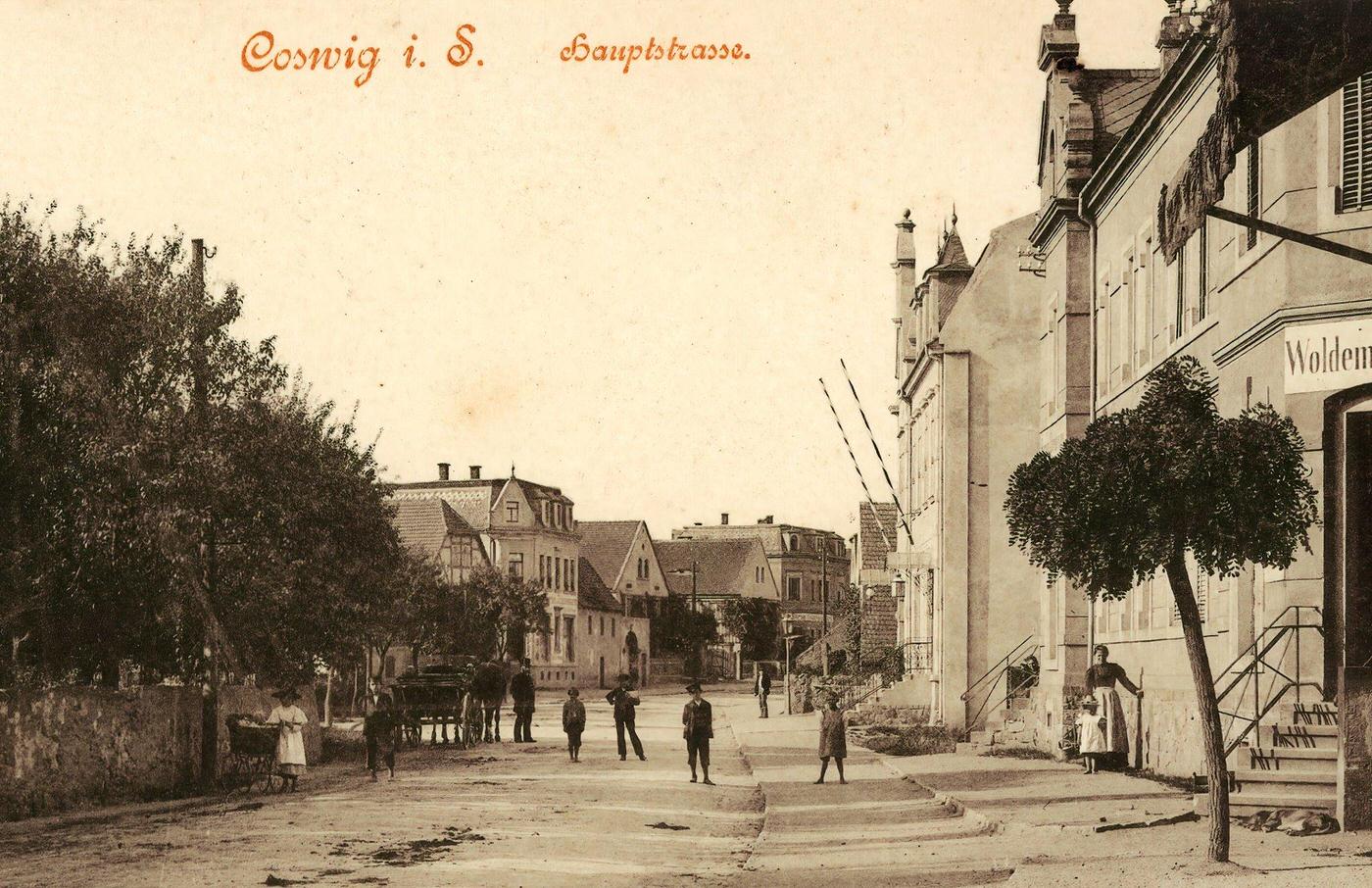
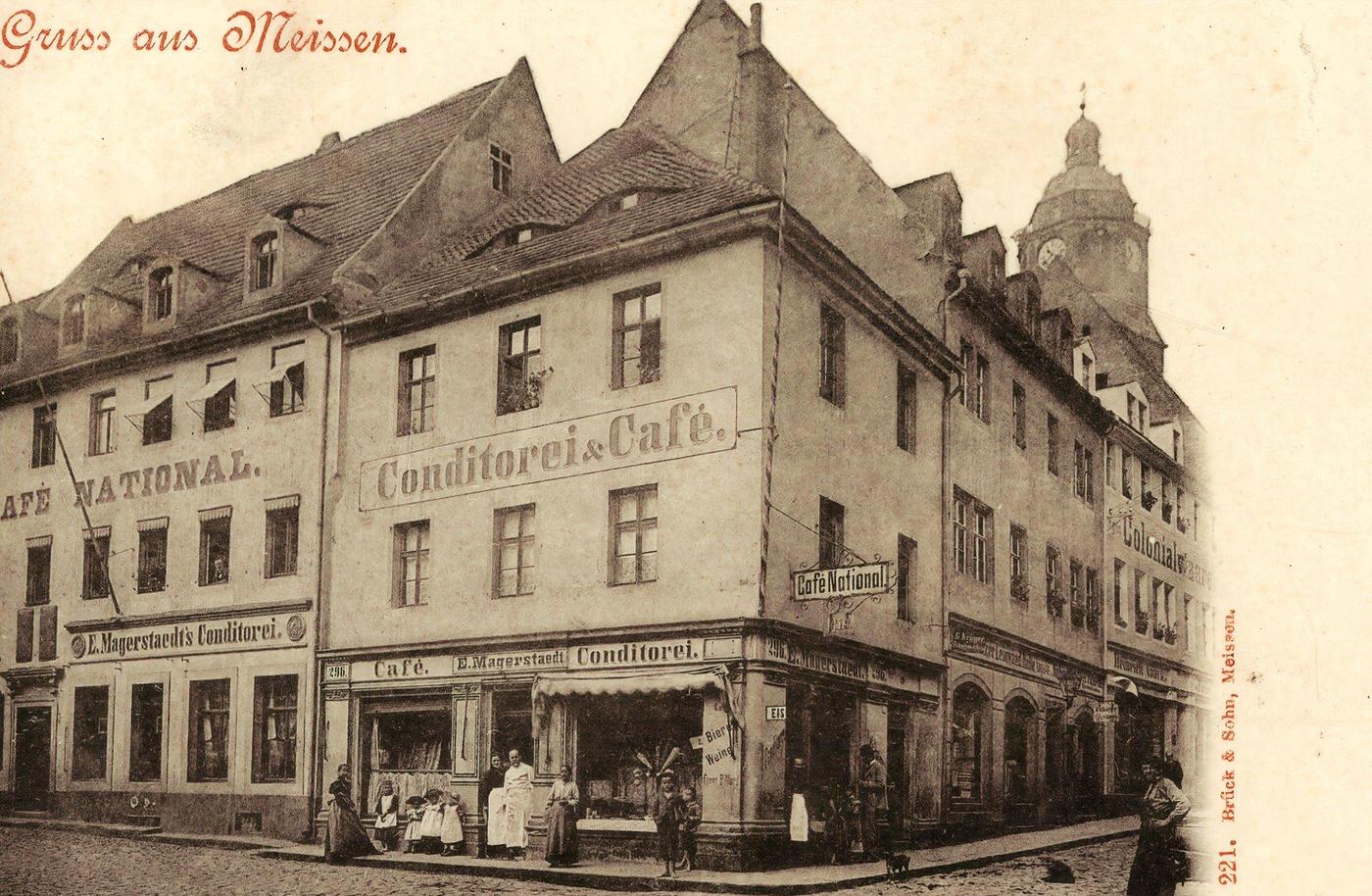
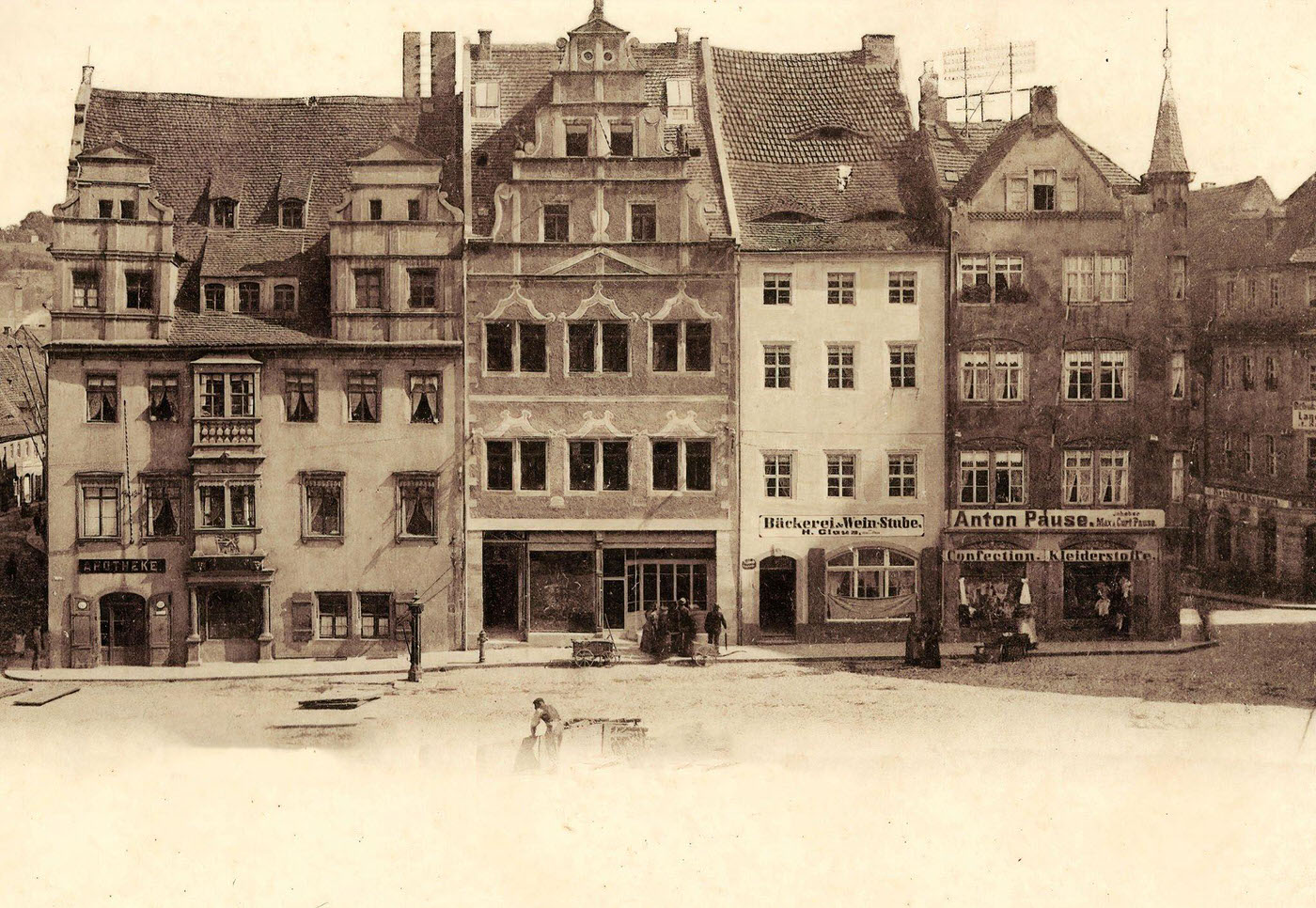
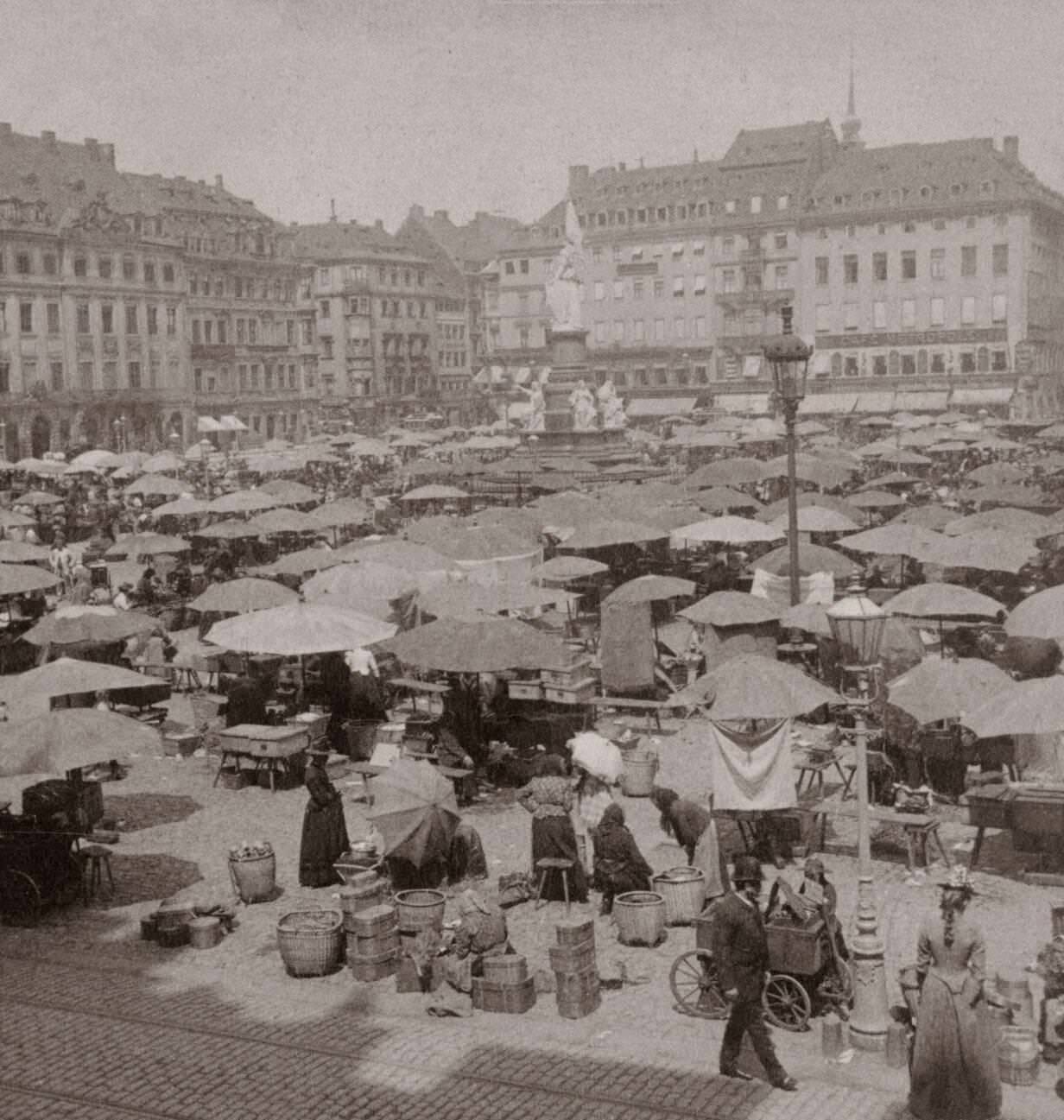
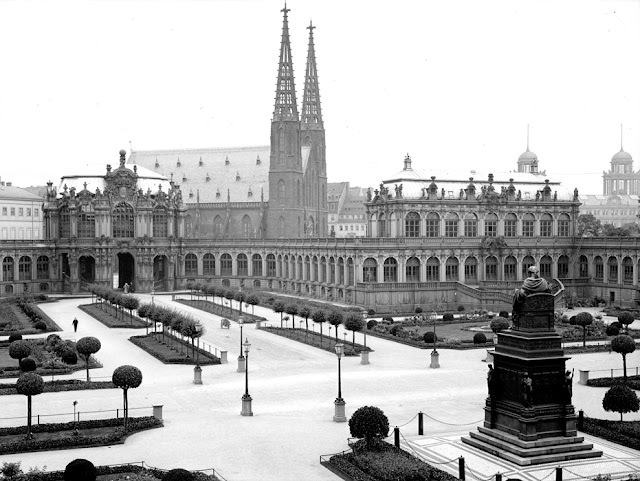
Meissen’s commercial streets supported a full range of services — pharmacies like the Markt-Apotheke, bakeries, and specialty shops all operating within a short distance of the cathedral and castle. Dresden’s markets were even larger, with stalls filling the historic squares beneath some of the finest baroque architecture in Europe. The Zwinger Palace, completed in 1728 and fully restored after wartime damage in the 19th century, remained one of the great showpieces of German court architecture.
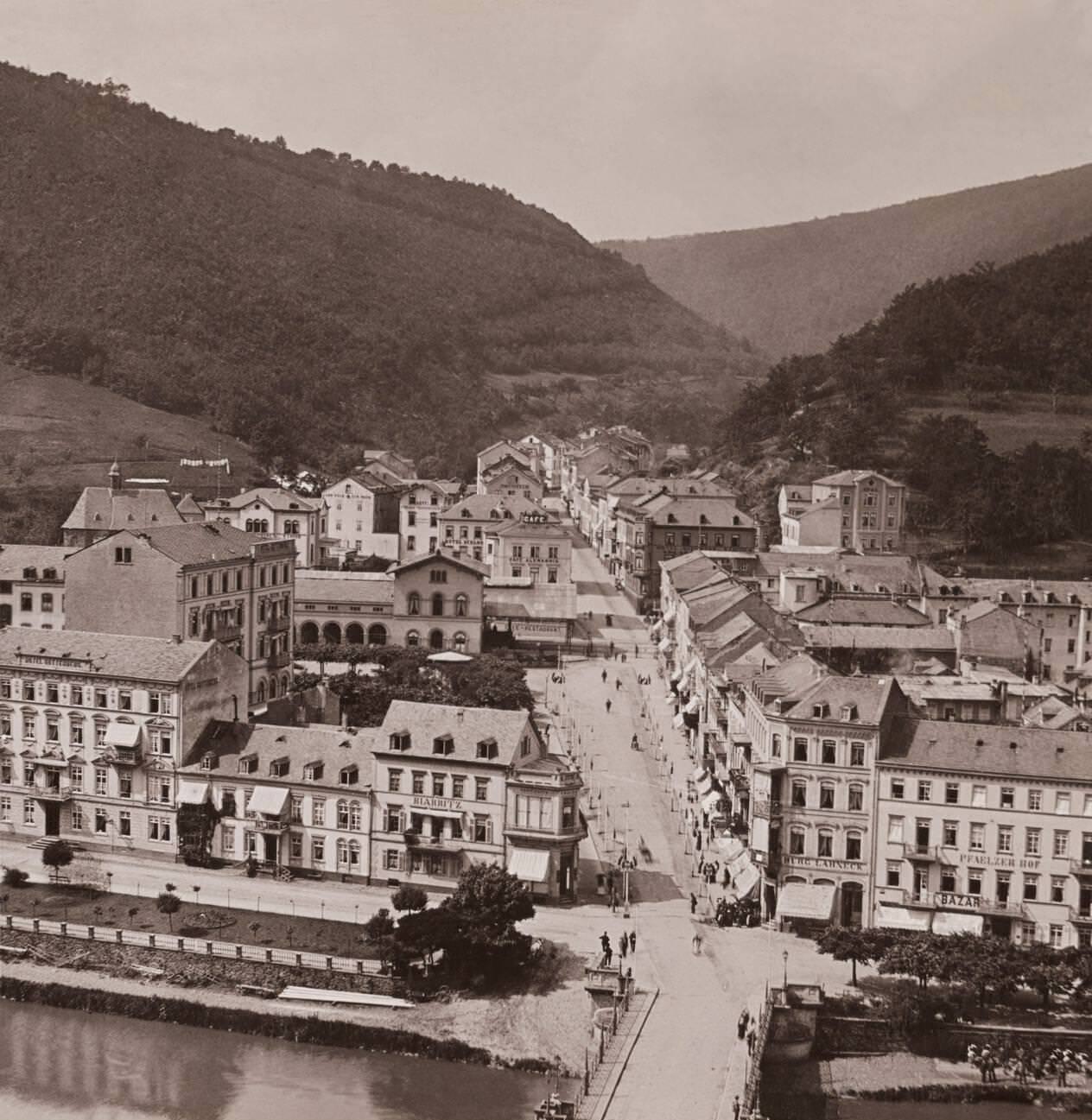
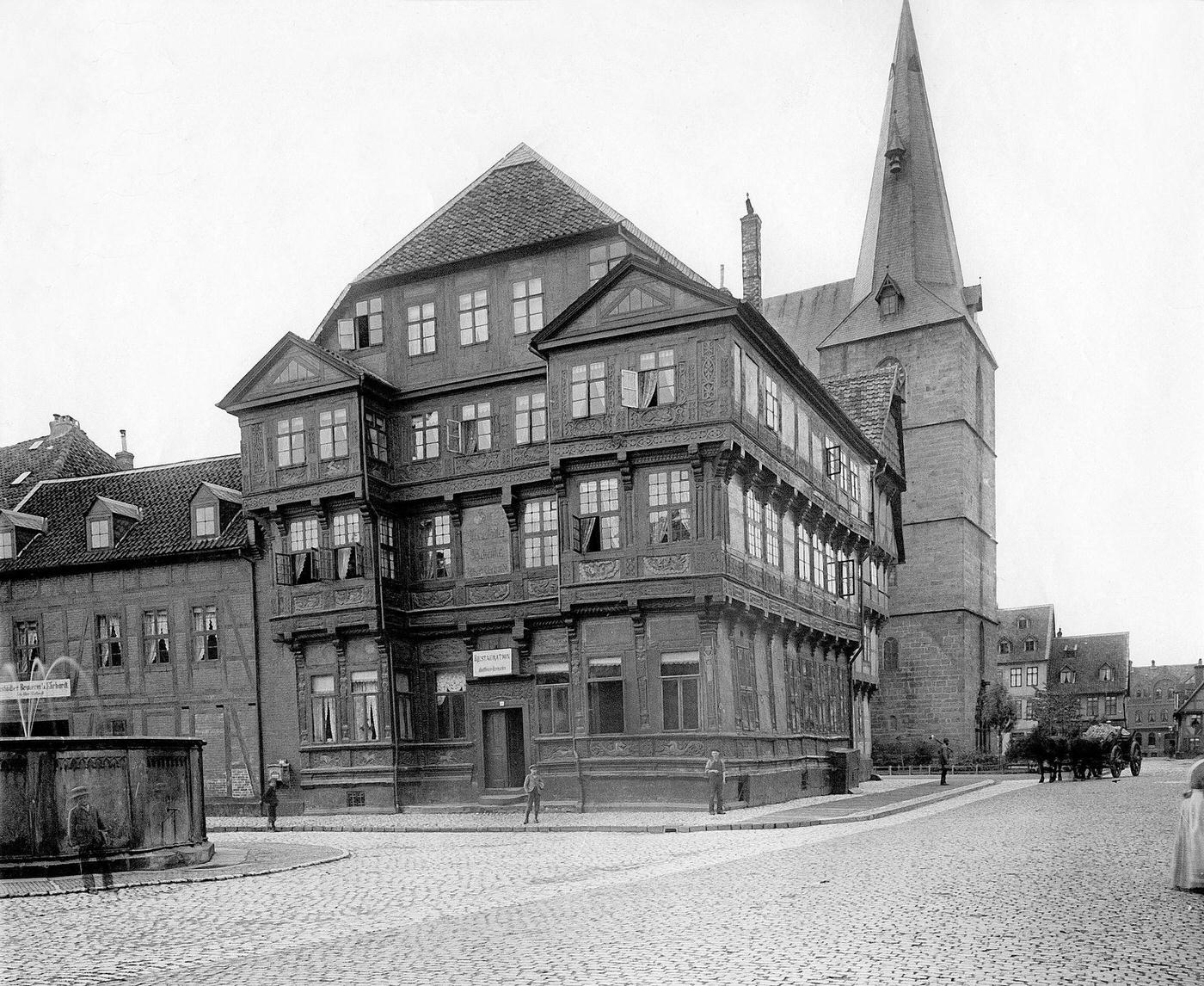
Baden-Baden, nestled in the Black Forest, was one of Europe’s most fashionable resort towns. Its thermal baths, casino, and grand hotels drew aristocrats and wealthy visitors from across the continent. Hildesheim’s historic market square in 1902 was a masterpiece of medieval civic architecture, with its Knochenhaueramtshaus — a richly carved timber-frame building from 1529 — standing as one of the finest examples of Renaissance woodwork in northern Europe.
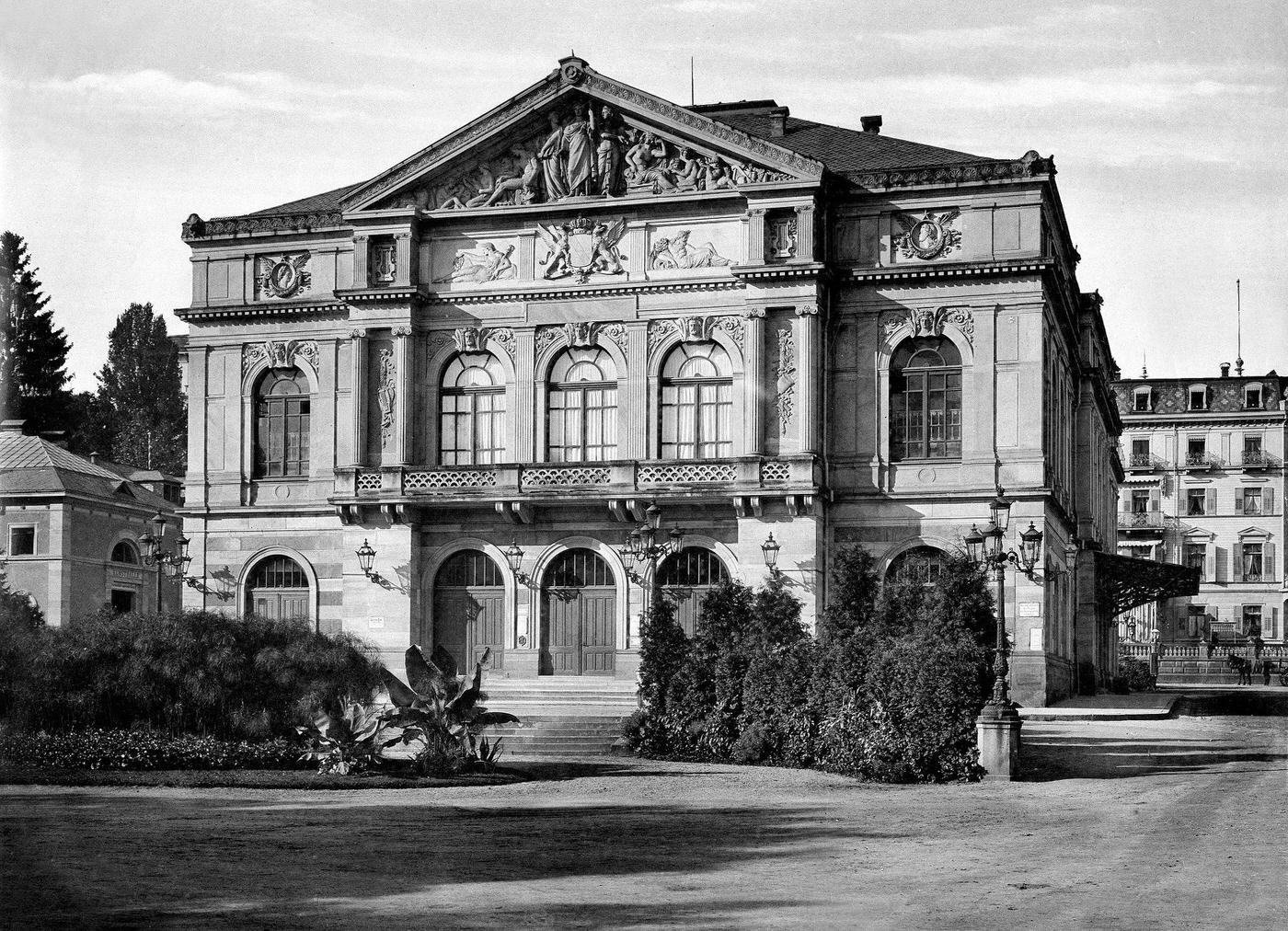
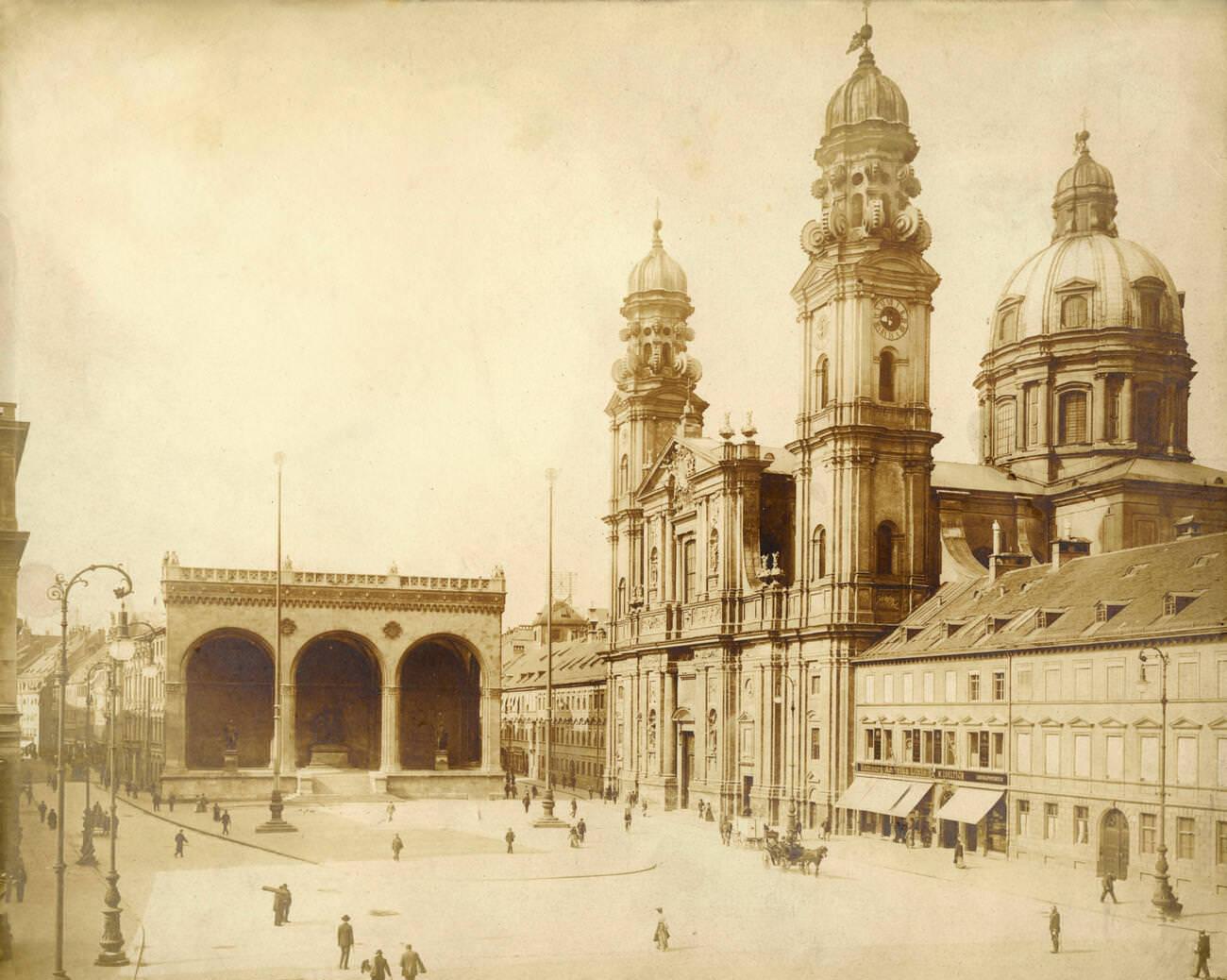
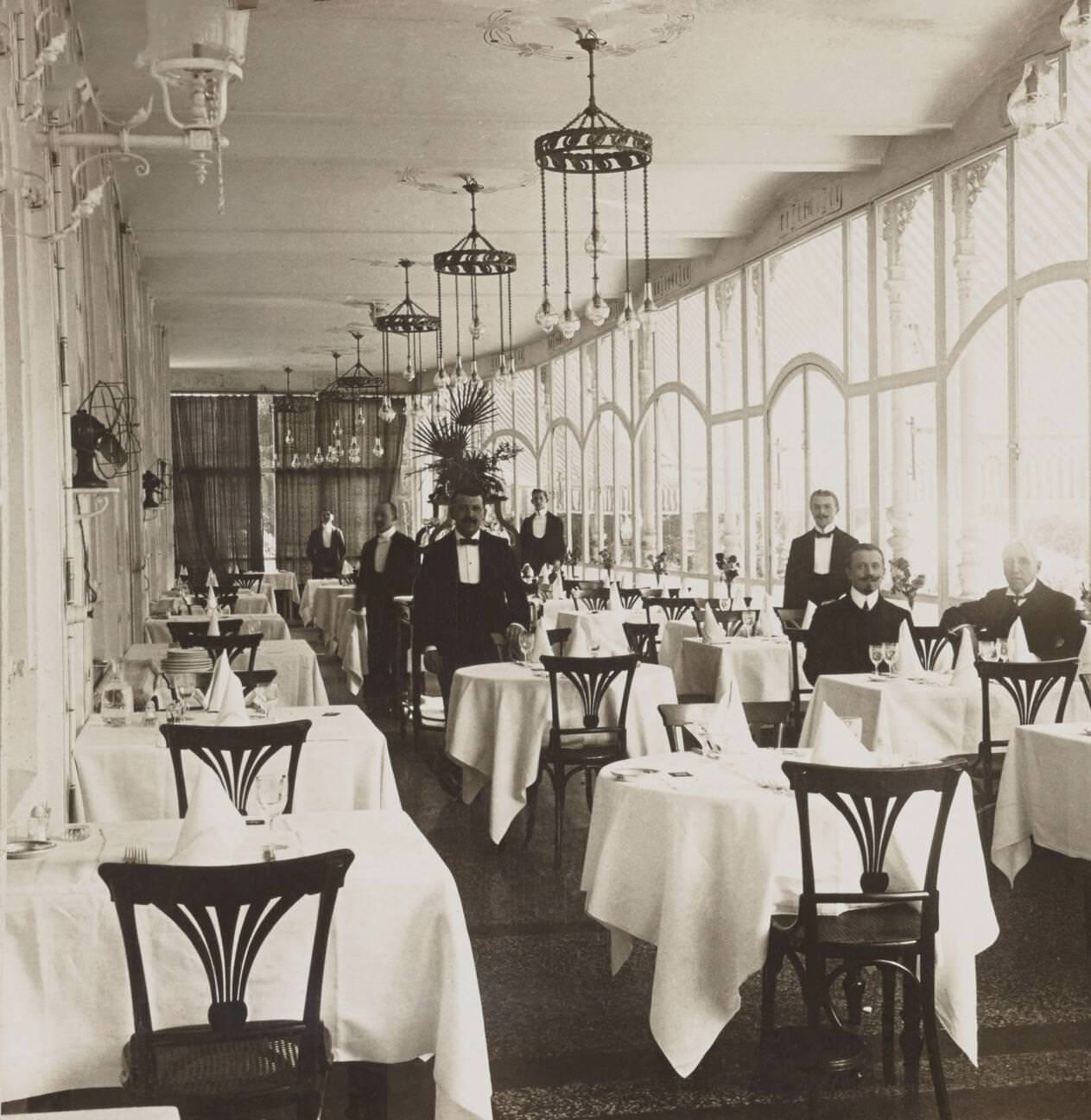
Munich’s Odeonsplatz was the grand northern entrance to the city’s royal boulevard, the Ludwigstrasse. Flanked by the Theatinerkirche and the Feldherrnhalle — a loggia modeled on the Loggia dei Lanzi in Florence — the square was used for state ceremonies and military parades. The Englischer Hof hotel in Baden-Baden, photographed in 1907, showed the standard of luxury that Germany’s premier resort towns offered their visitors: a formal dining room with white tablecloths, attentive service, and an international clientele.
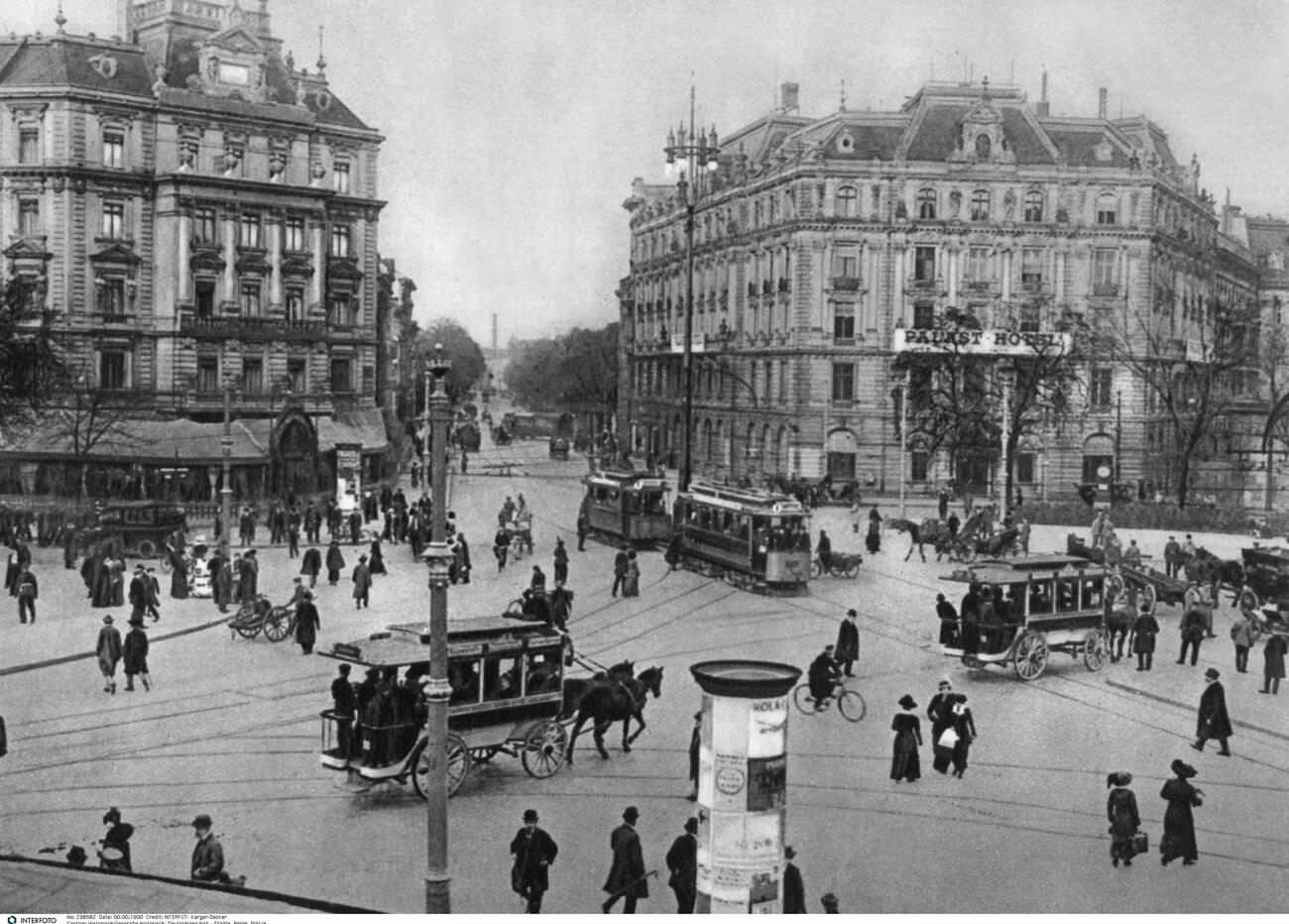
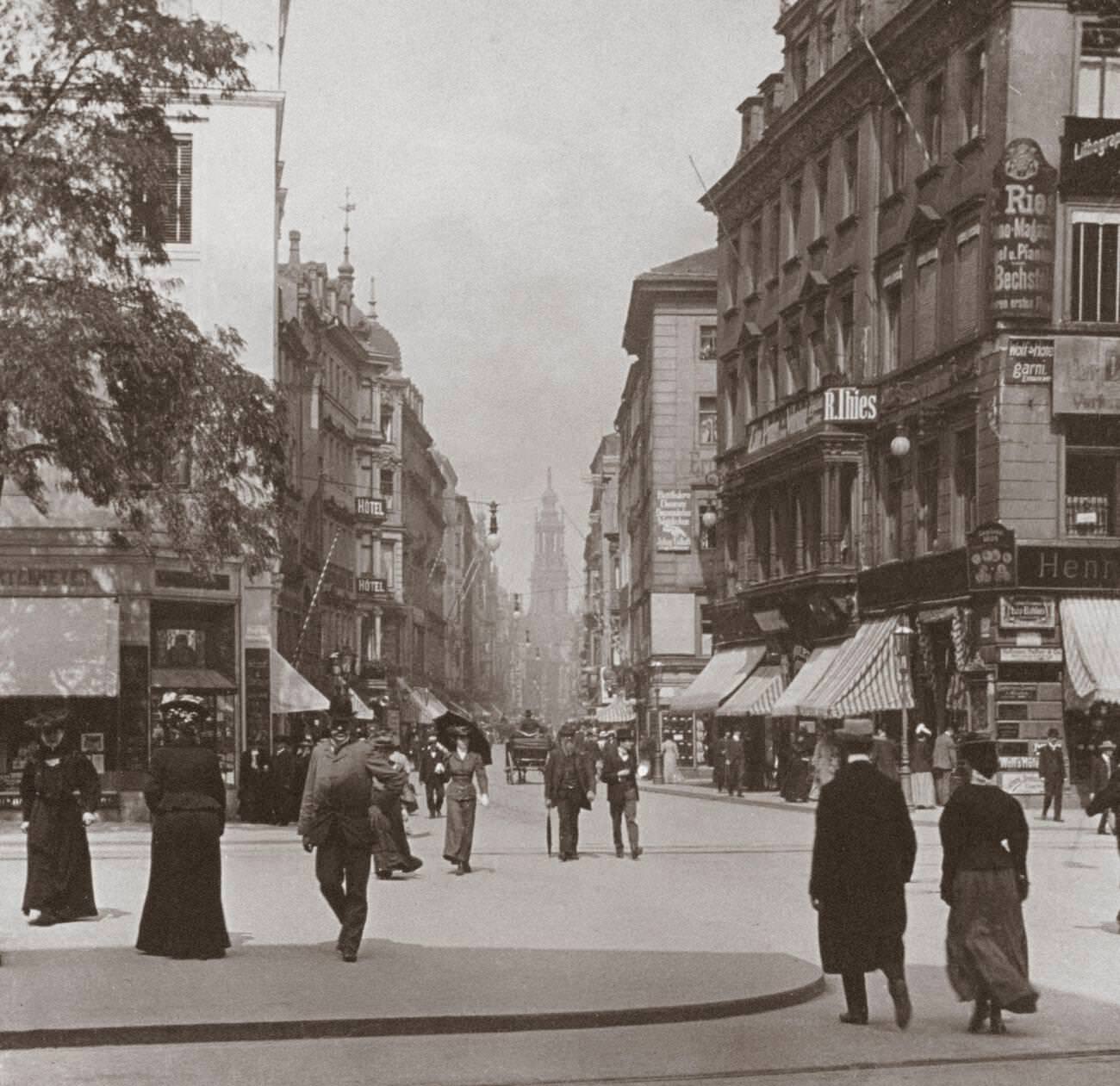
Berlin’s Potsdamer Platz around 1900 was already one of the busiest traffic intersections in Europe. Horse-drawn carriages, pedestrians, and early motor vehicles all competed for space at a junction where several major roads converged near the heart of the city. Dresden’s streets, photographed in the same decade, showed a cleaner and more orderly city than most — wide paved roads, planted trees, and buildings in good repair reflected the wealth generated by Saxony’s manufacturing industries.
Nuremberg in the early 1900s was a city visitors came to specifically for its medieval heritage. The Frauenkirche on the Hauptmarkt, built in the 14th century, drew tourists who gathered to watch its famous Männleinlaufen clockwork display. The city’s ancient walls and towers were still standing in their near-complete medieval form, making Nuremberg one of the best-preserved walled cities in Germany.
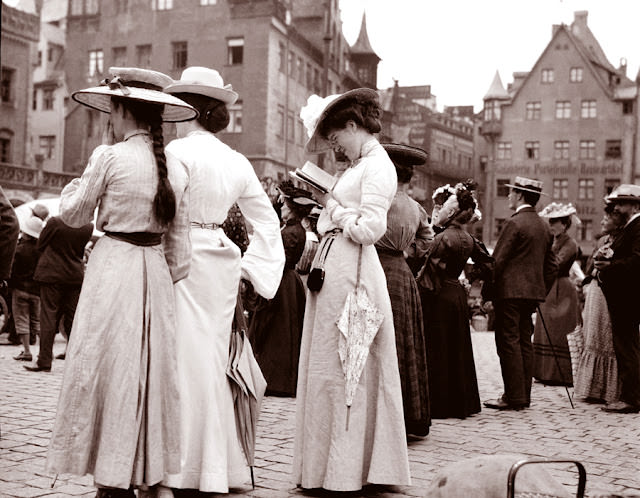
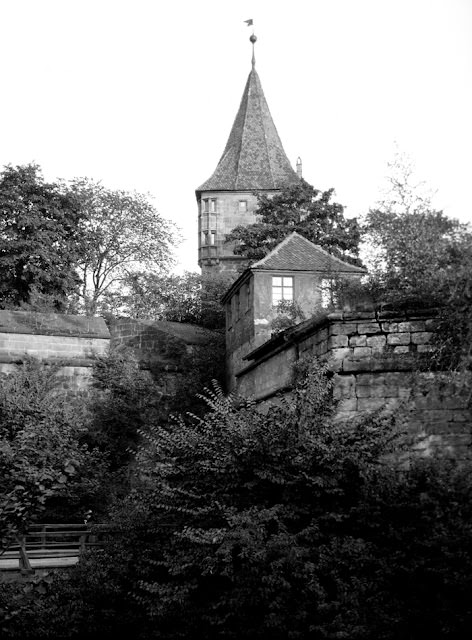
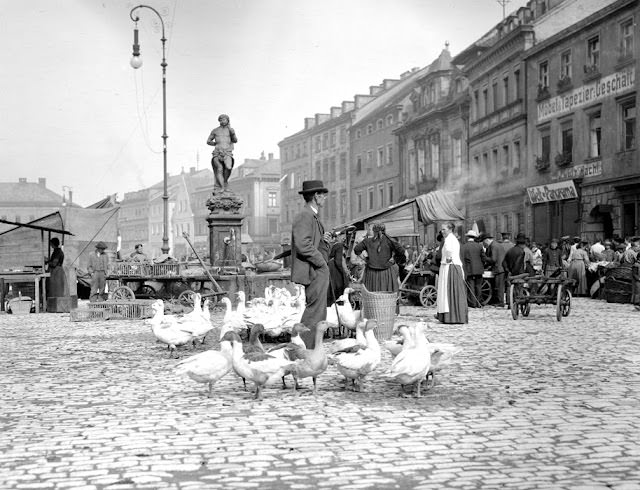
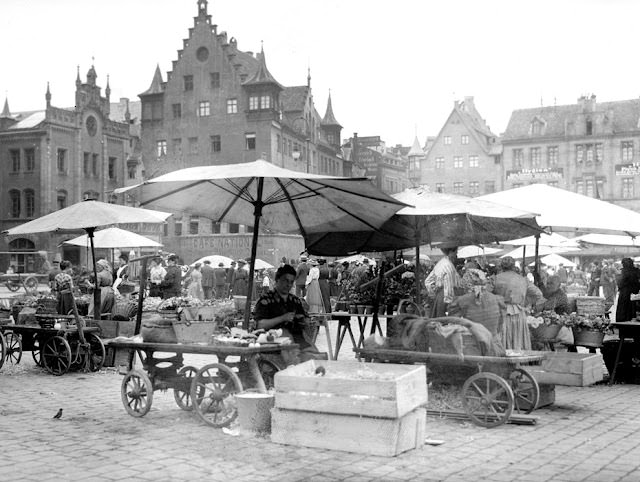
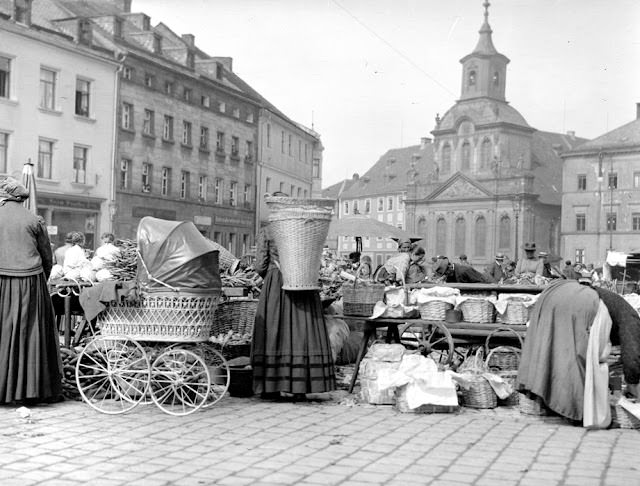
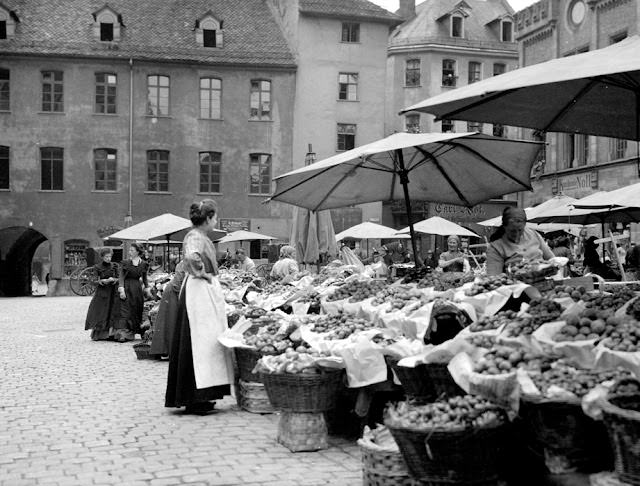
Bayreuth, in northern Bavaria, was known internationally as the home of the Wagner Festival, established by composer Richard Wagner in 1876. The town’s market was a working Bavarian market where local women in traditional dress sold produce and goods just as they had for generations. In 1904, photographers captured Bayreuth’s market activity alongside similar scenes in Nuremberg, documenting the commercial street life of Bavarian towns in close detail.
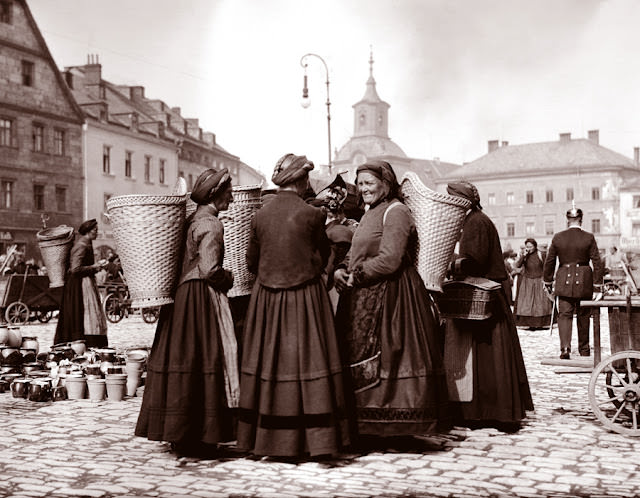
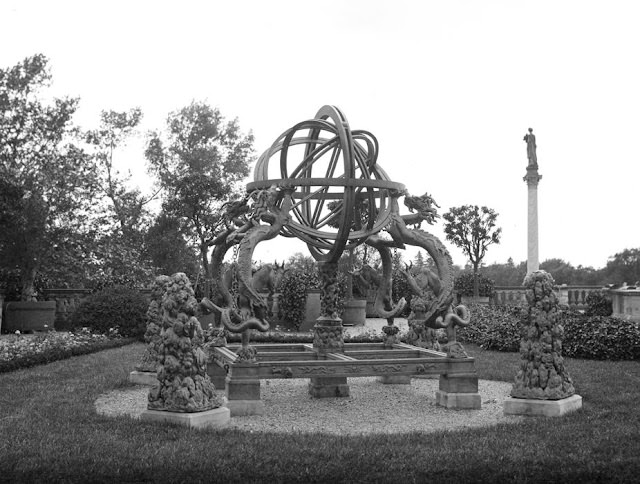
Potsdam, just southwest of Berlin, was the seat of Prussian royal power and home to Frederick the Great’s Sans Souci palace. The armillary sphere photographed there in 1904 stood in the palace’s formal gardens, a decorative astronomical instrument that reflected the Enlightenment taste of the 18th-century court. In Bavaria, the markets of Bayreuth and Nuremberg were alive with vendors and customers, the traditional commercial heartbeat of two of the region’s most important towns.
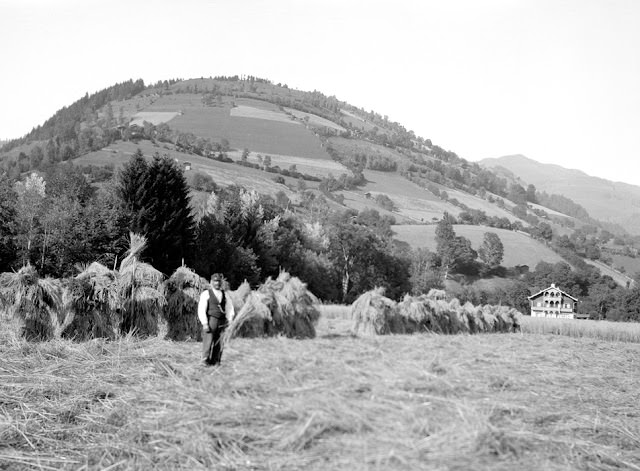
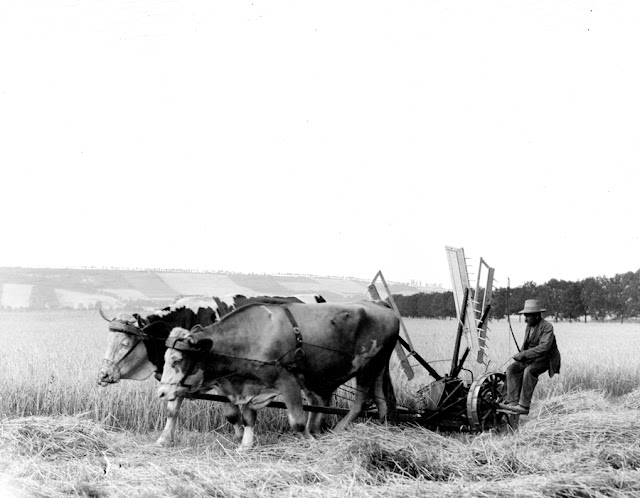
Farming in early 1900s Germany was still largely done with animal power. In 1904, photographs captured German farmers cutting hay with teams of oxen — slow, heavy work that would only begin to be mechanized in the following decades. Agriculture employed a large portion of the German population in 1900, even as urbanization and industrialization were pulling workers steadily toward the cities.
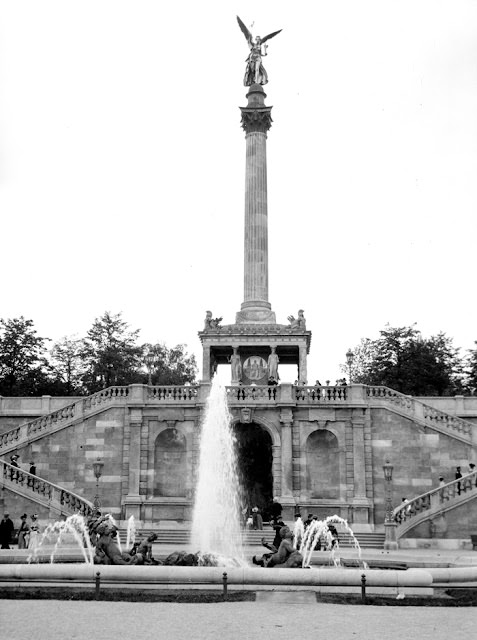
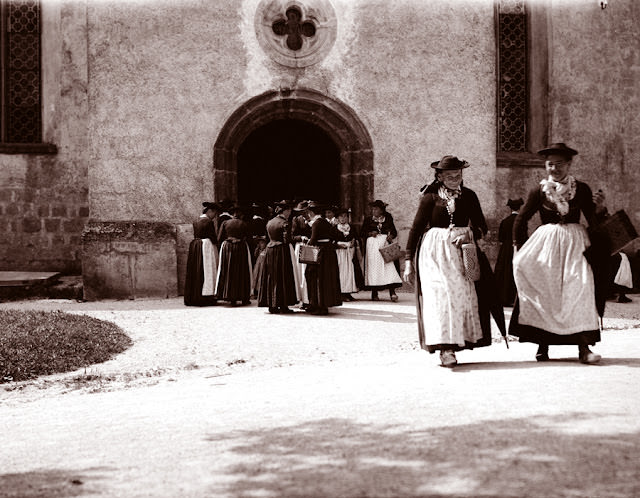
Munich’s Friedensengel — the Angel of Peace — was unveiled in 1899 on a tall column above the Isar River to mark the 25th anniversary of the end of the Franco-Prussian War. By 1904, it was already one of the city’s most recognizable monuments, a gilded figure standing high above the terraced gardens of the Maximilianlagen. In the streets below, ordinary Munich residents — couples, individual men, groups of women leaving Sunday church — went about their daily lives.
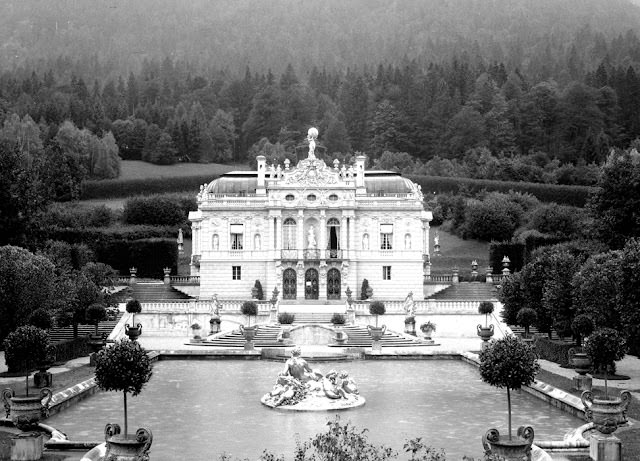
Linderhof Palace in Bavaria was the smallest of the three palaces built by King Ludwig II and the only one he completed in his lifetime. Finished in 1878, it was modeled on French Rococo style and surrounded by formal gardens with terraced fountains and a grotto. Ludwig II died in 1886 under disputed circumstances, but his palaces became major tourist destinations almost immediately afterward. By 1904, Linderhof was receiving regular visitors who came by carriage through the Bavarian Alps to see what the eccentric king had built.
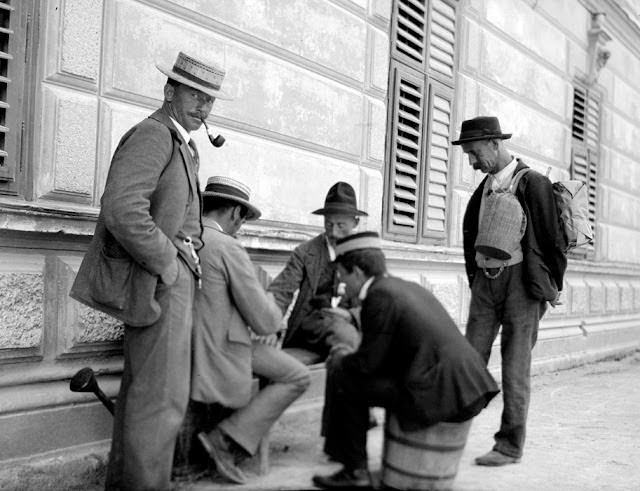
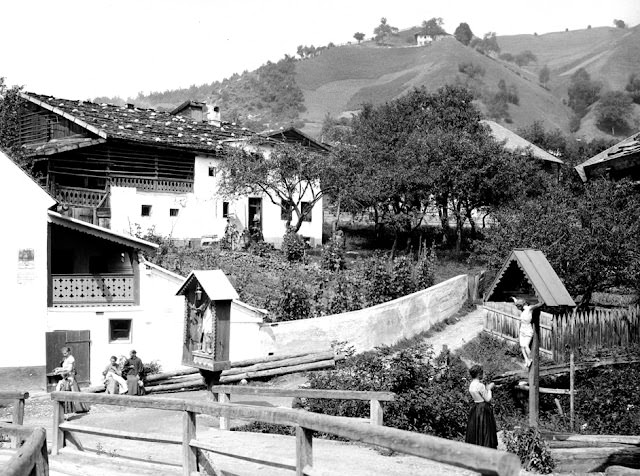
Roadside religious shrines — small carved figures of saints, crucifixes, or votive niches — marked the roadsides of Catholic Bavaria and other southern German regions in 1904 just as they had for centuries. They were waypoints for travelers, memorials for the dead, and expressions of popular faith outside the formal church. Men with free time gathered in public spaces, sat on benches, and watched street life pass — a scene that was familiar in every German town from Hamburg to Munich.
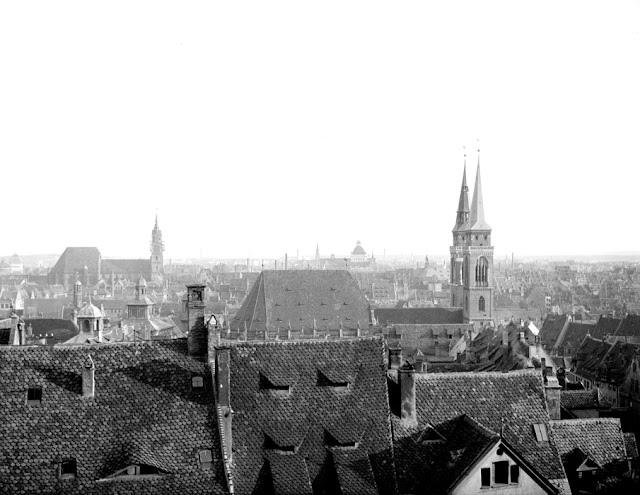
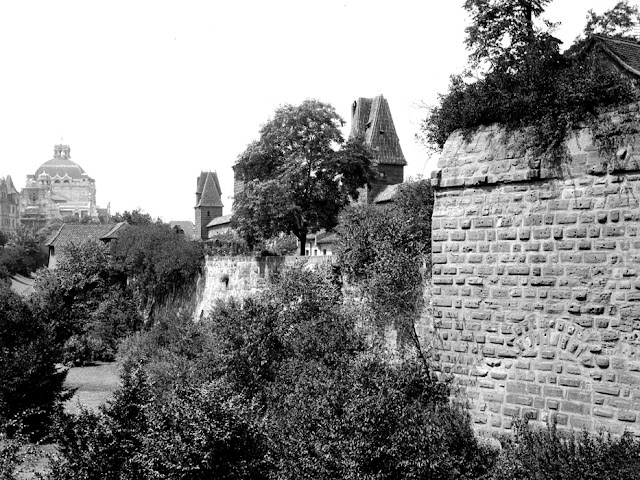
The rooftops of Nuremberg in 1904 showed a city that had grown within its medieval frame rather than beyond it. Red-tiled roofs, dormer windows, chimneys, and the spires of Gothic churches filled the skyline in every direction. The city’s ancient stone walls, some sections dating back to the 13th century, were still intact — a circuit of defensive fortifications that had long since lost their military purpose but remained one of the finest examples of medieval city walls in central Europe.