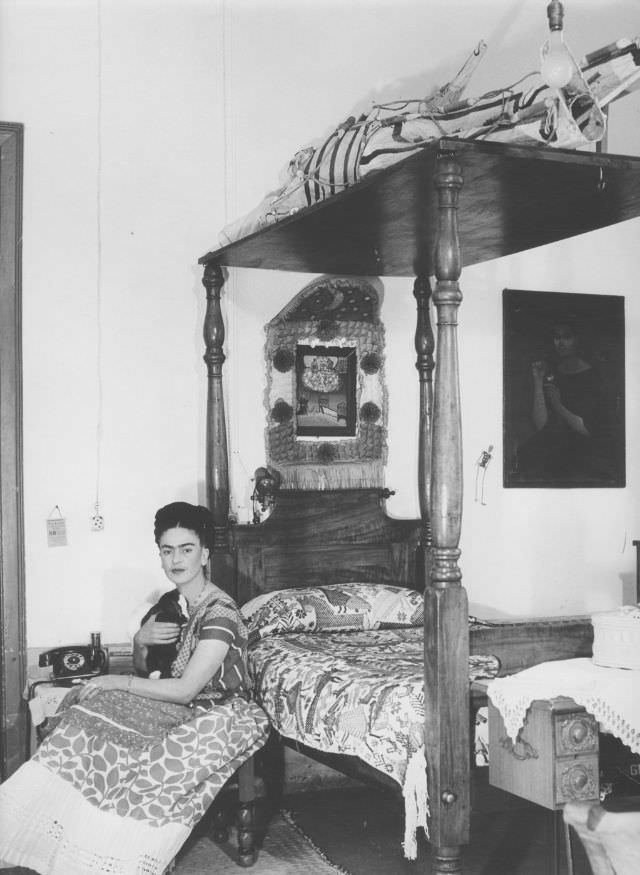
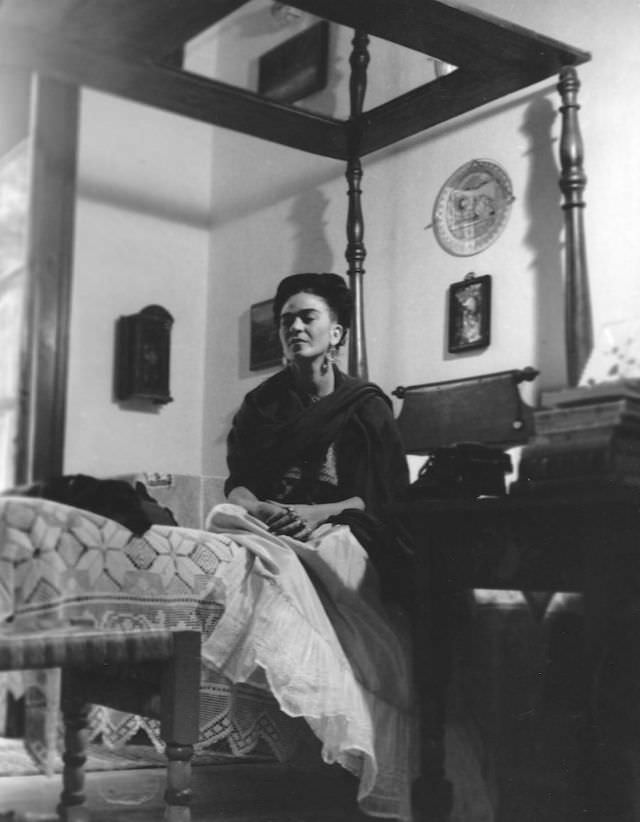
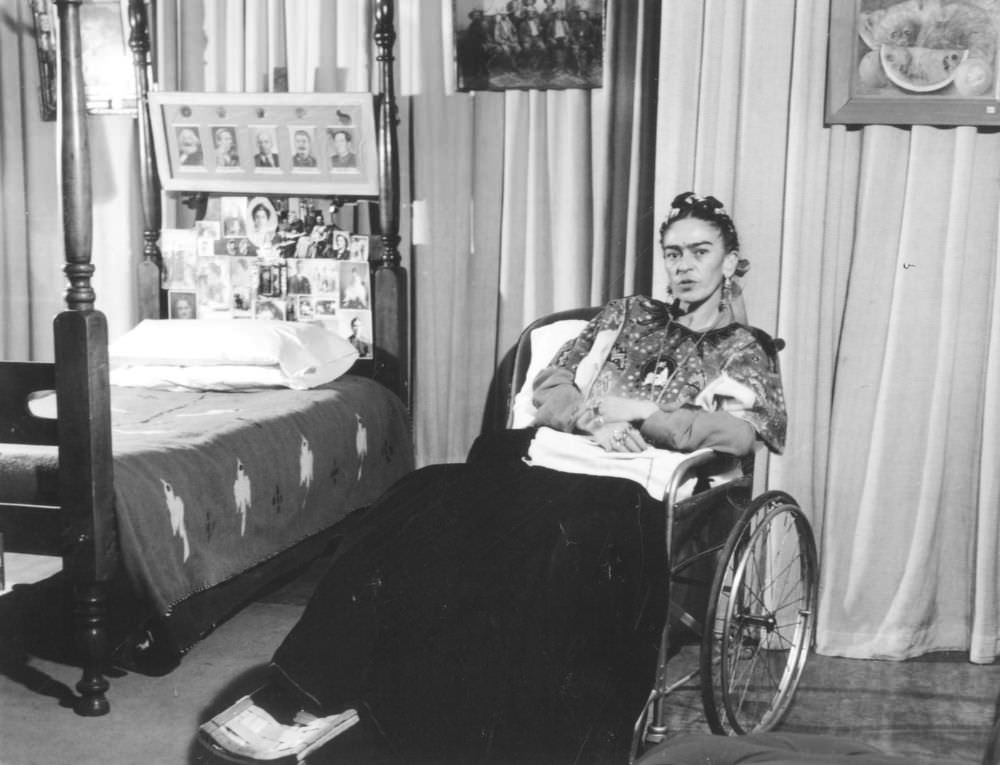
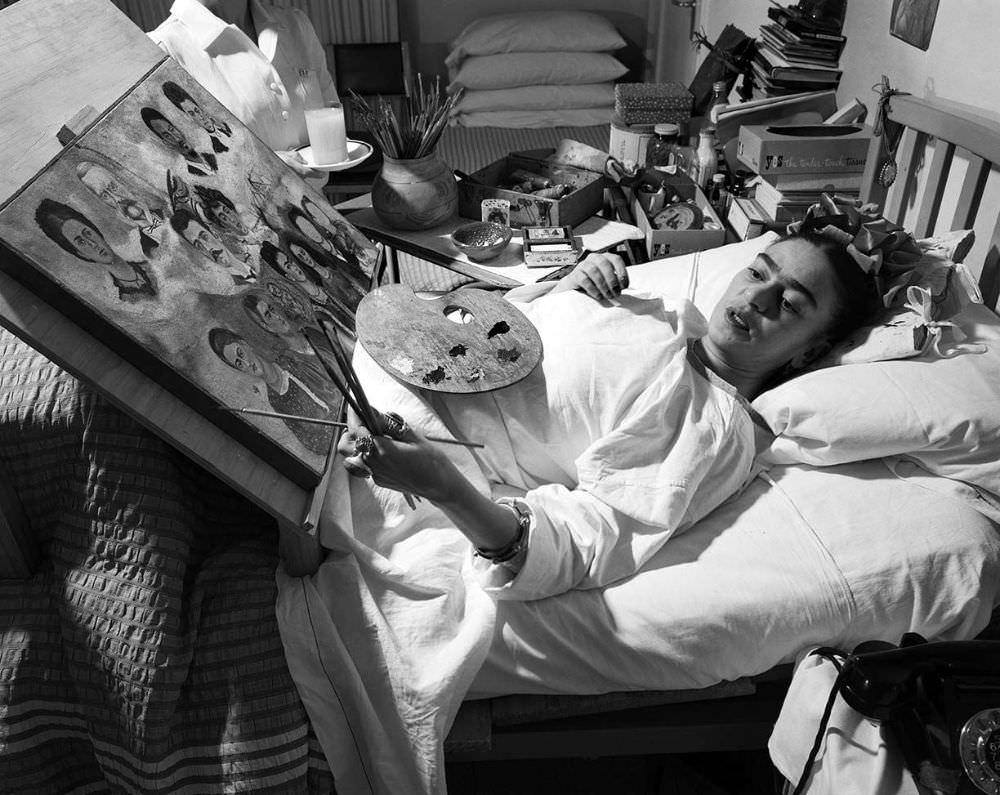
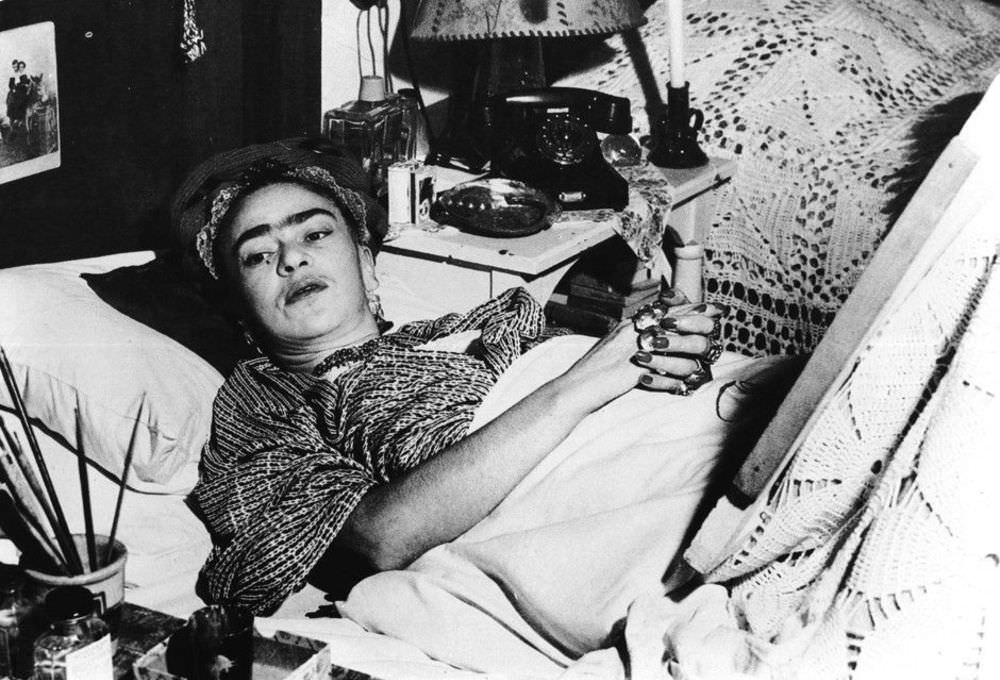
Mexican author and politician Andrés Henestrosa described Frida Kahlo’s life as “lived dying.” It was not a dramatic exaggeration. From childhood onward, her body was a site of constant physical trauma, and yet she kept painting through nearly all of it. The photographs taken during her final years in the 1950s show exactly that — a woman propped up in a hospital bed or at home, brush in hand, refusing to stop working.
Kahlo’s physical suffering began early. At age 6, she contracted polio, which left her right leg shorter and thinner than her left. She walked with a limp for the rest of her life. Then, at 18, she was a passenger on a bus that collided with a streetcar in Mexico City. The crash killed several people on board. Kahlo survived, but barely. She fractured her ribs, both legs, and her collarbone. An iron handrail pierced her body, entering through her hip and exiting through her pelvis, fracturing the pelvic bone in the process.
She spent about a month in the hospital after the bus accident and underwent more than 30 surgeries over the course of her life. It was during her earliest recovery that she began painting seriously. Her mother had a special easel built so she could work flat on her back, and a mirror was mounted to the canopy above her bed — that reflection became the subject of many of her most recognized self-portraits.
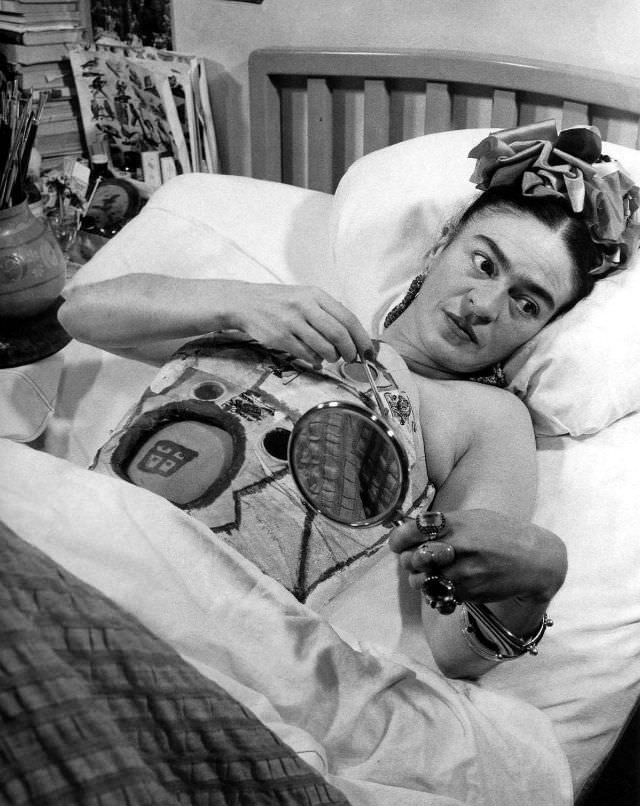
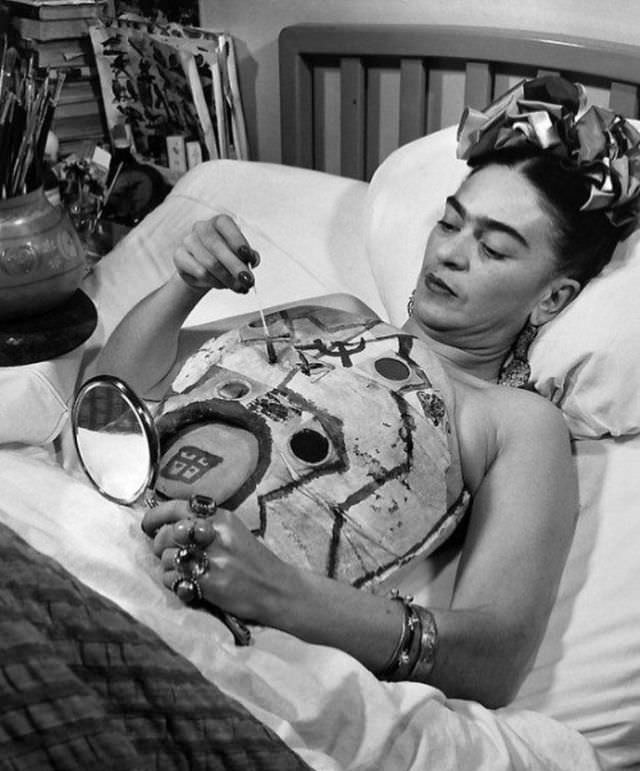
Kahlo also had two abortions, both of which resulted in serious hemorrhaging and added to her long list of medical complications. By the early 1940s, the pain in her spine and foot had grown significantly worse. Doctors fitted her with a steel corset to support her back. She wore various versions of these rigid body supports for years. Rather than hide them, she painted and decorated them — attaching photos, mirrors, and stars, turning medical devices into personal art objects.
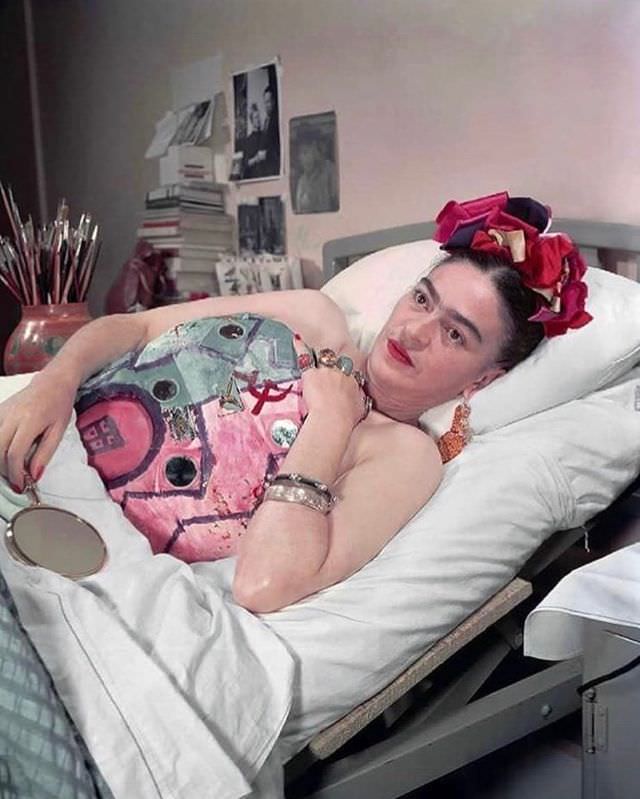
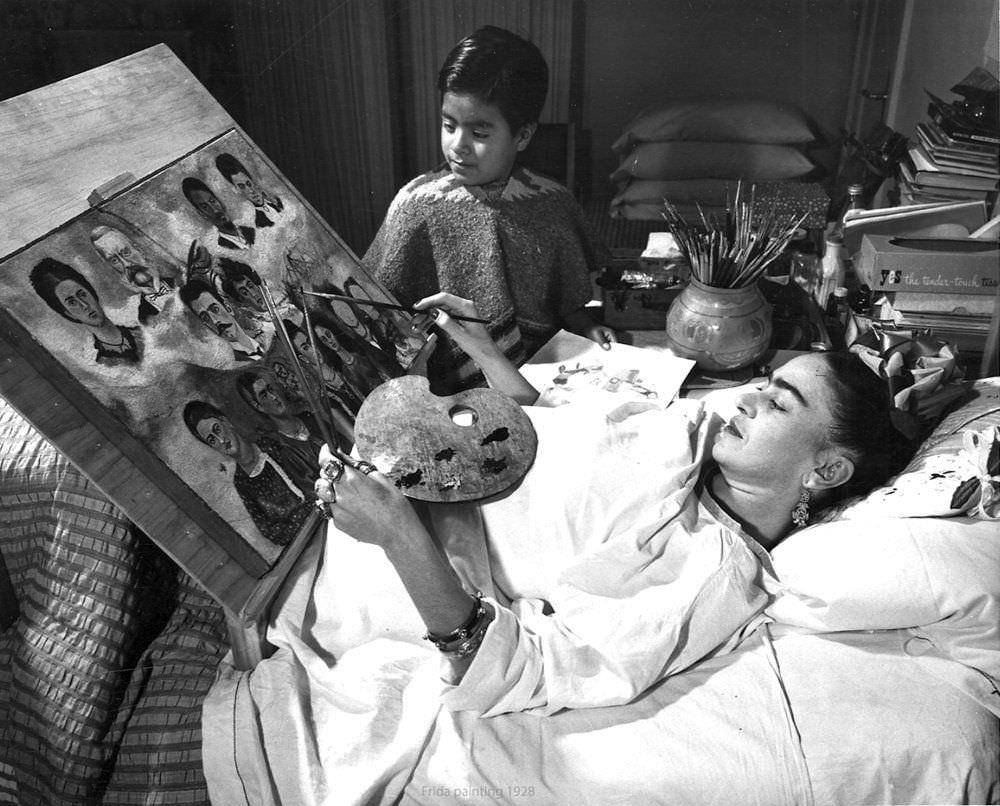
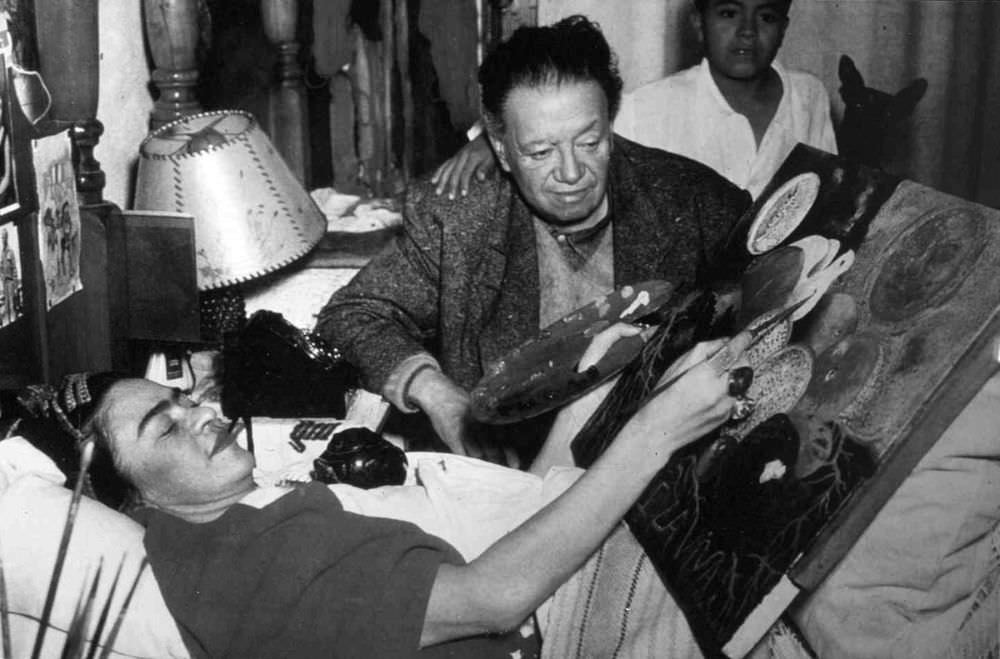
By the early 1950s, Kahlo’s condition had deteriorated sharply. She spent long stretches in the hospital and was confined to bed for much of the time. When her health allowed, she painted. The photographs from this period show her working with remarkable focus despite her condition — canvases positioned in front of her while she lay or sat propped up, paintbrushes in hand.
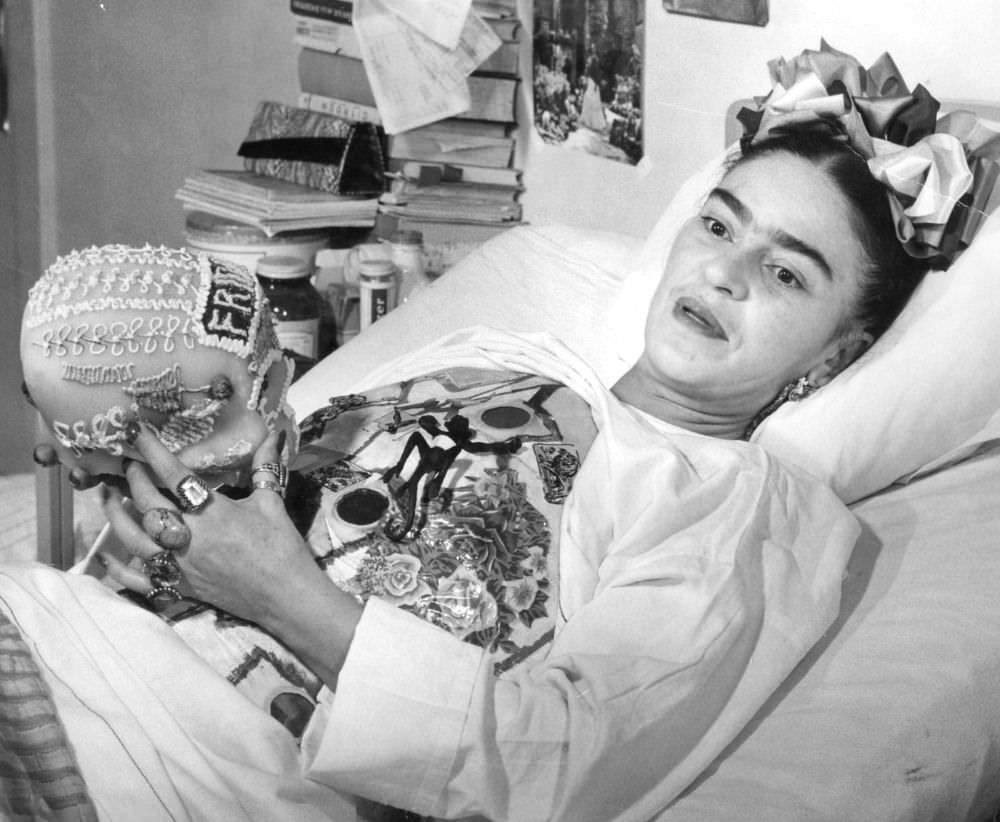
In 1953, her right leg was amputated below the knee due to gangrene. The amputation devastated her. In her diary, she wrote openly about her desire to end her life. The entries from this period are stark and direct — she did not dress up her despair. She had identified deeply with her body her entire life, had painted it obsessively, and losing a limb broke something in her that surgeries and corsets had not.
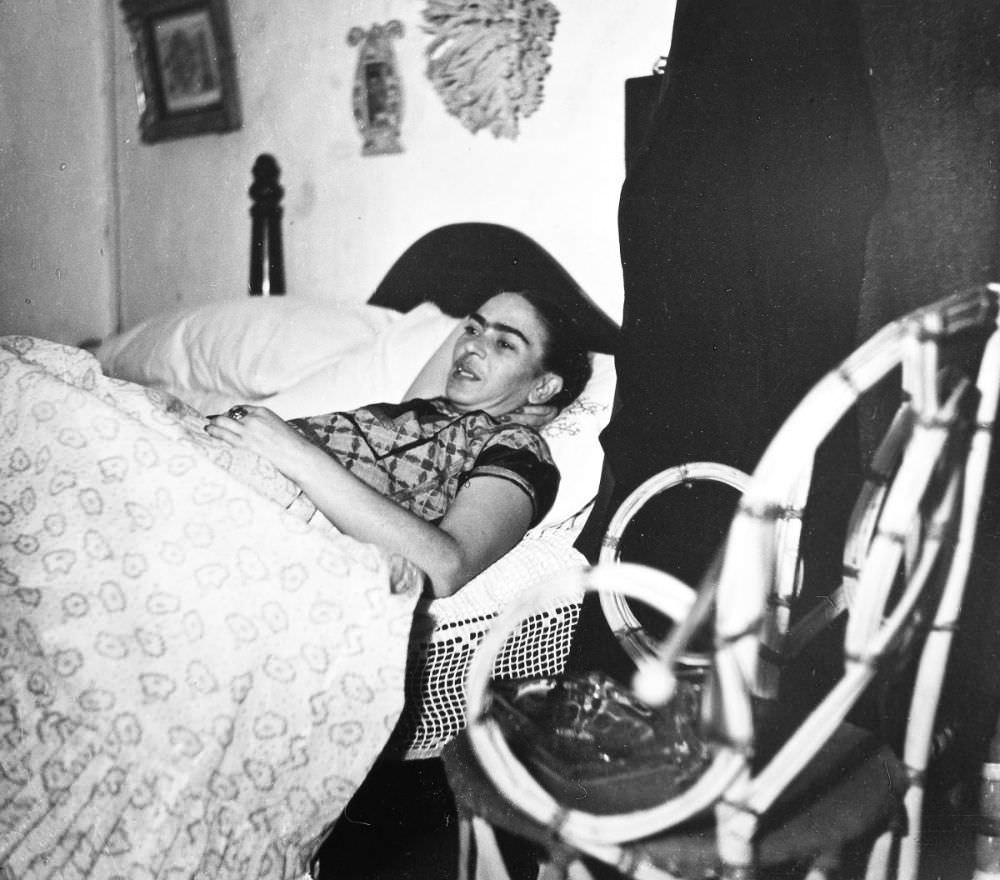
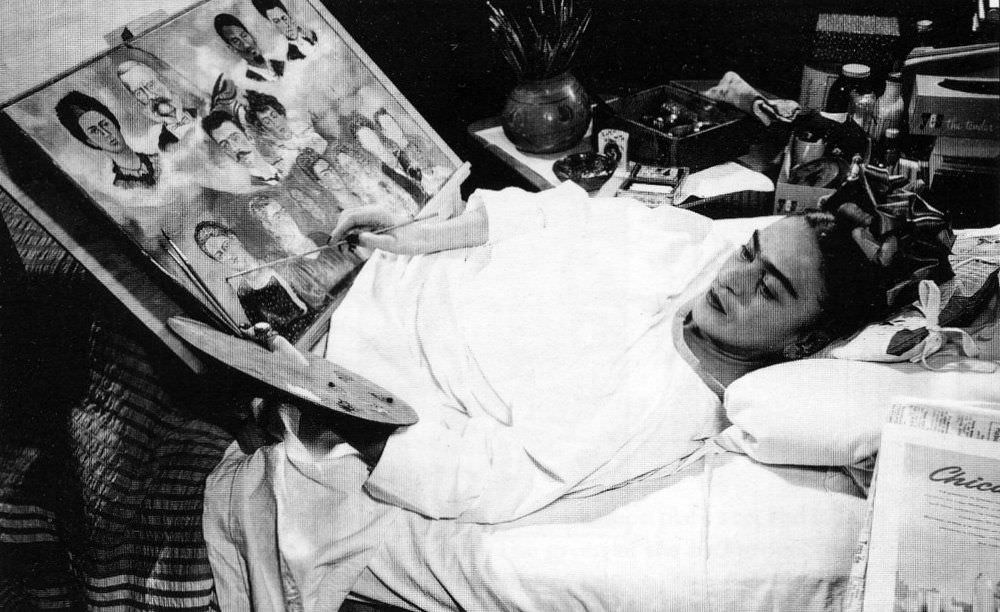
She continued to paint in the months that followed the amputation, though her output slowed considerably. The works from her final year are raw and often fragmented compared to earlier pieces. Her diary entries during this time combine text and drawings in a way that reads more like visual thinking than traditional journaling.
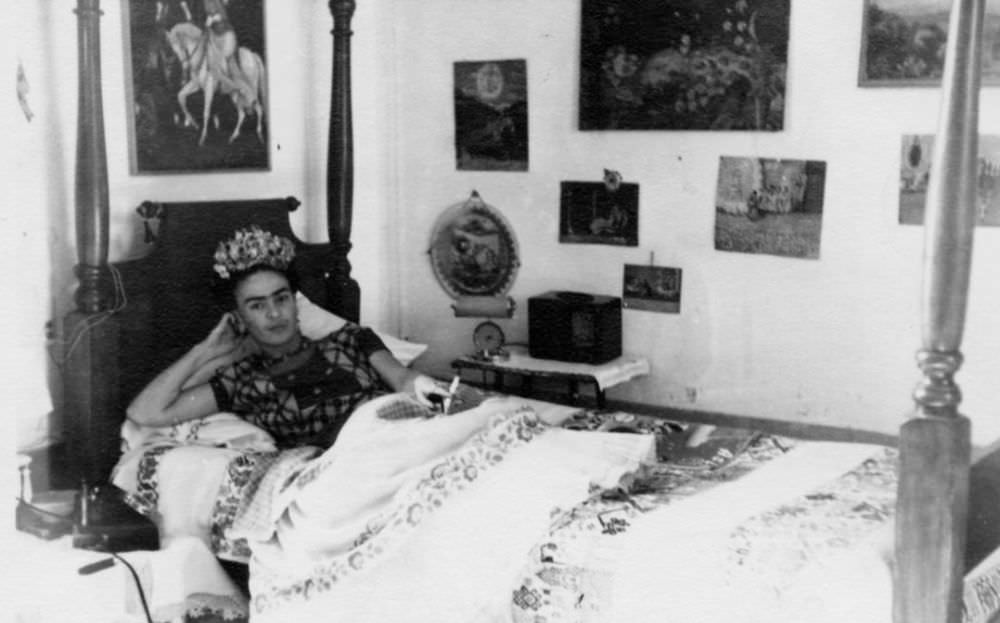
Frida Kahlo died on July 13, 1954, from a pulmonary embolism. She was 47 years old. The official cause of death was listed as pulmonary embolism, though some accounts from people close to her have raised questions about whether it was intentional. No definitive conclusion was ever established.
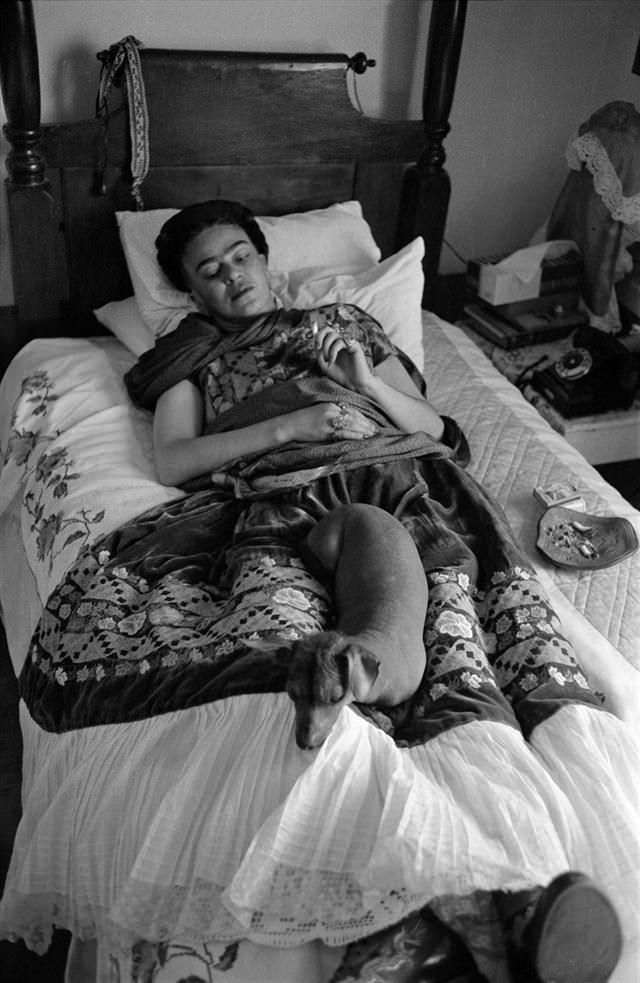
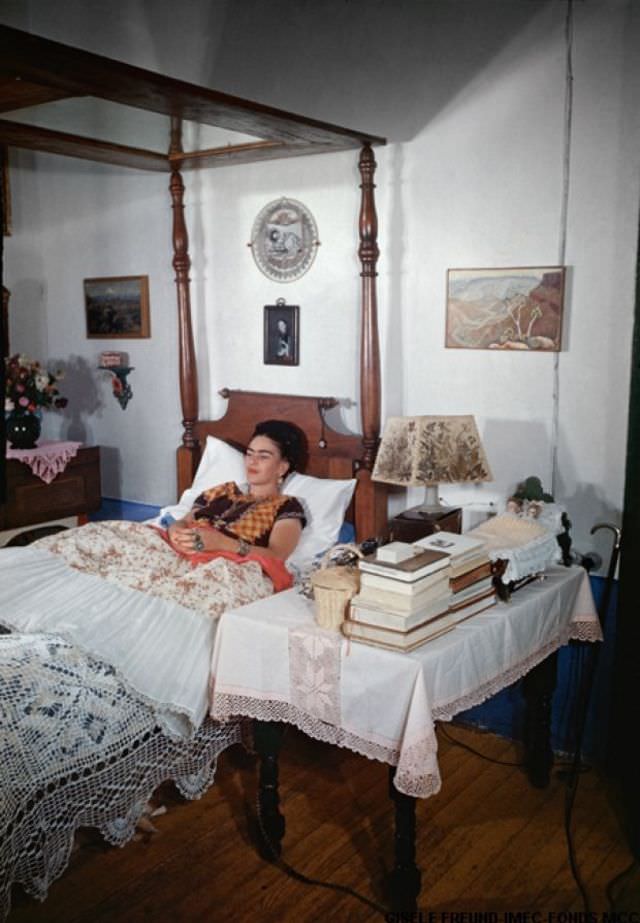
The photos gathered here document the last years of her life. They show her in bed, at her easel, surrounded by the objects and people that filled her world at the Casa Azul — the Blue House in Coyoacán, Mexico City, where she was born and where she died. What these images make clear is that painting was not a hobby or a distraction. For Kahlo, it was the central activity of her existence, one she returned to even as her body gave out around her.