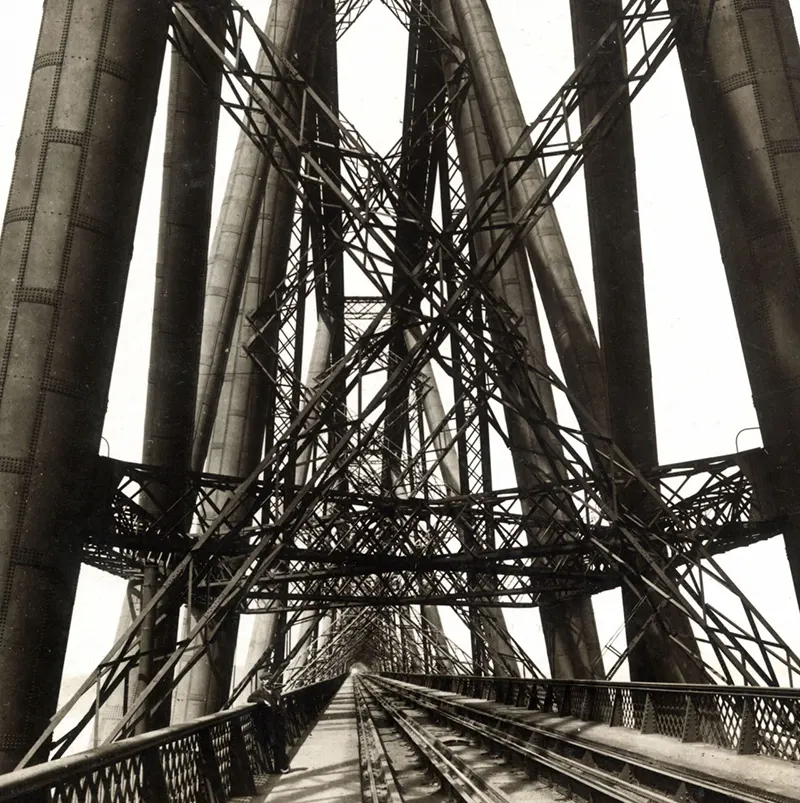
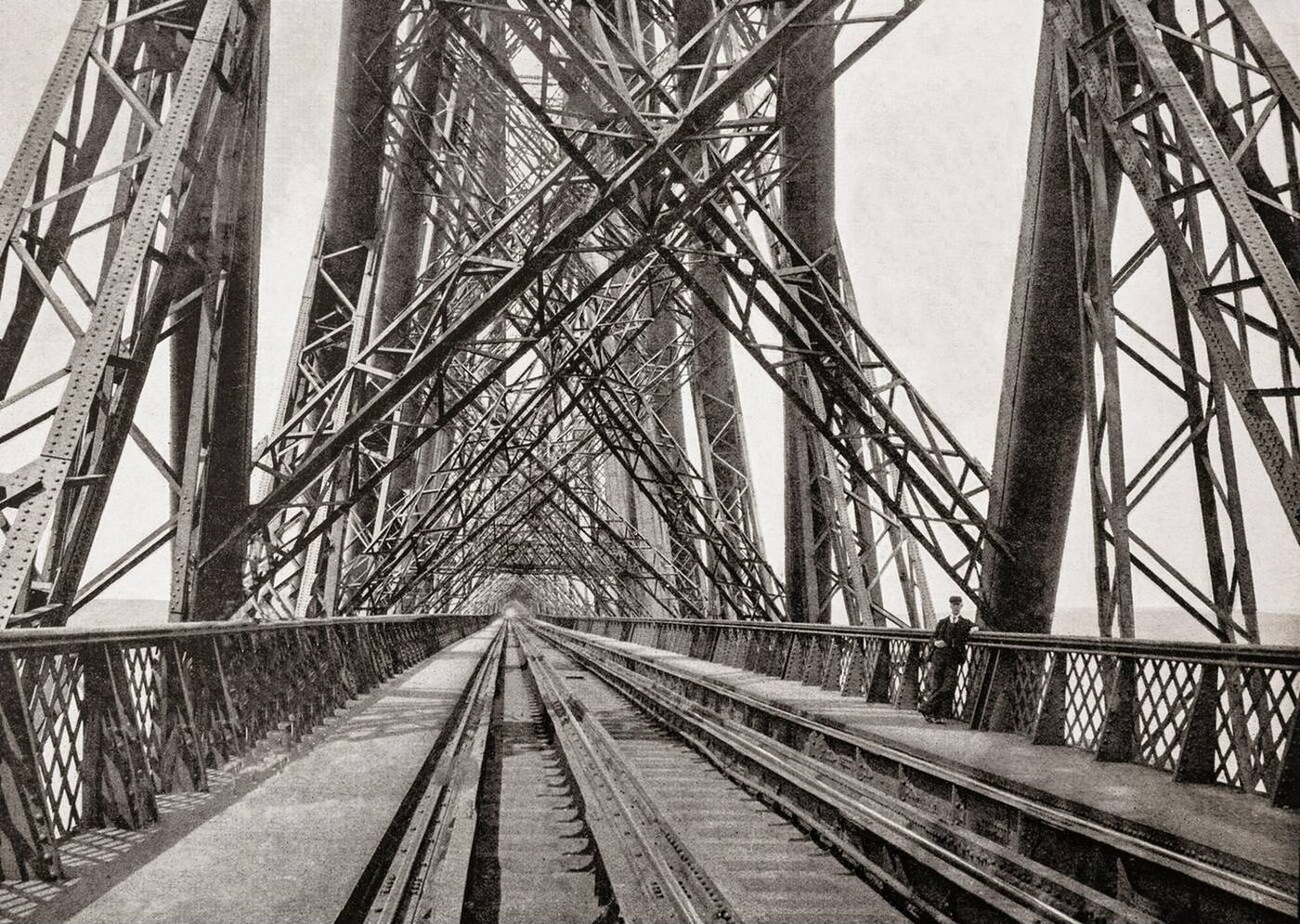
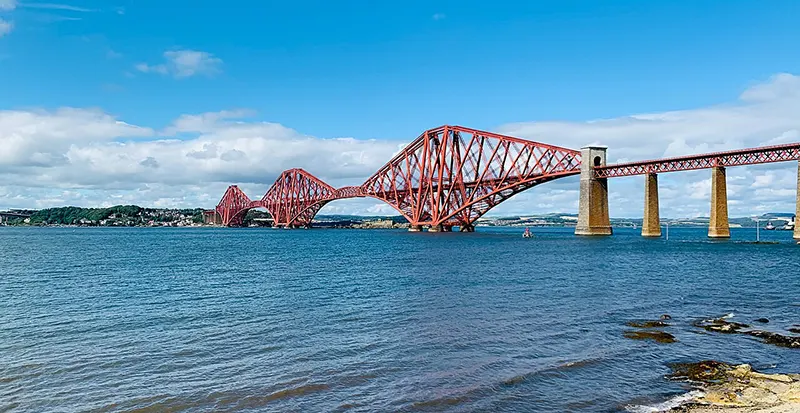
The story of the Forth Bridge begins with a disaster. In 1873, Parliament approved a suspension bridge over the Firth of Forth, designed by engineer Thomas Bouch. Work started in 1878, but when Bouch’s Tay Bridge collapsed in 1879 — killing 75 people — his Forth design was scrapped. Four railway companies joined forces as the Forth Bridge Railway Company and called for a completely new plan, one built to survive wind loads of 56 pounds per square foot.
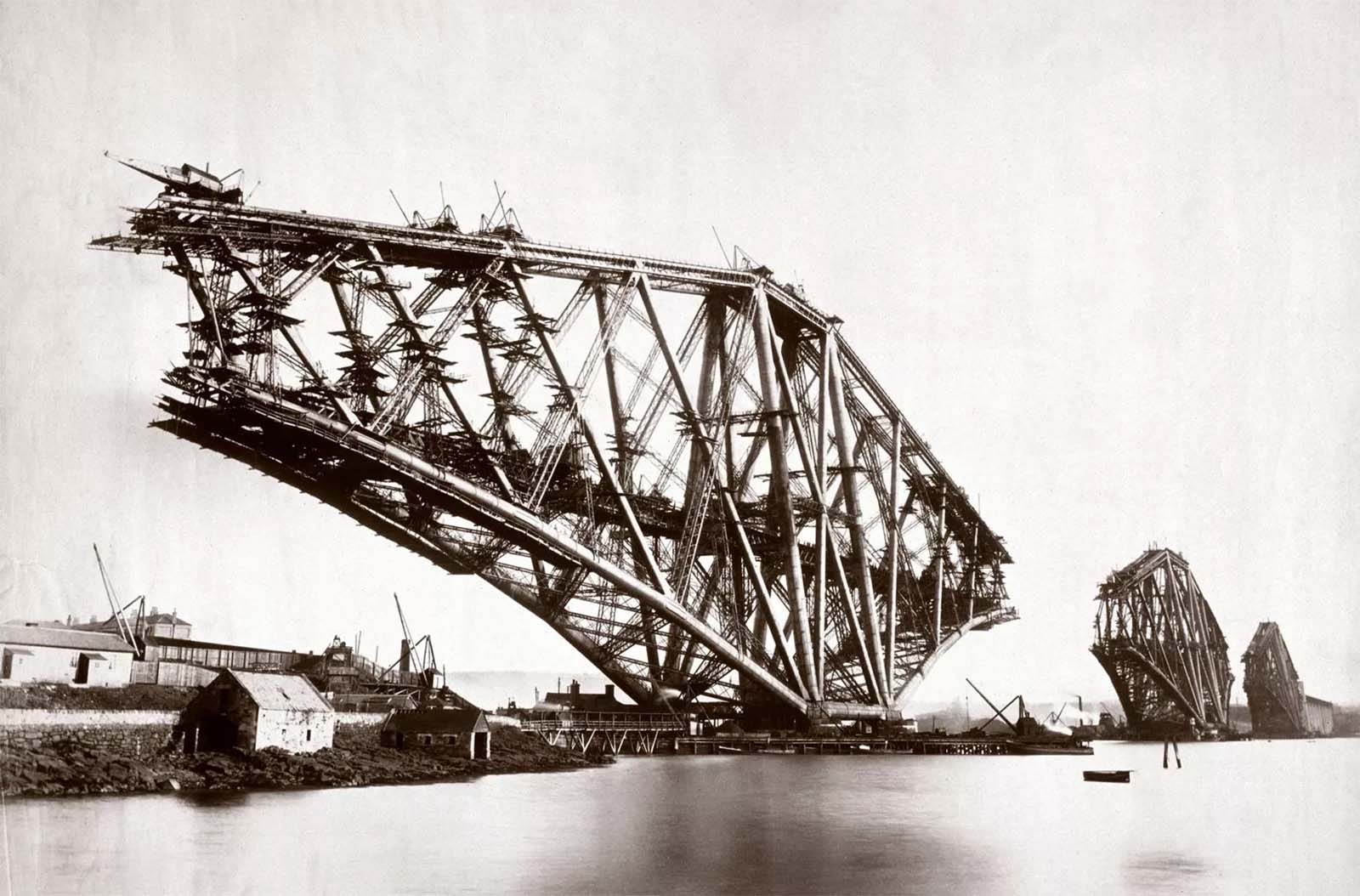
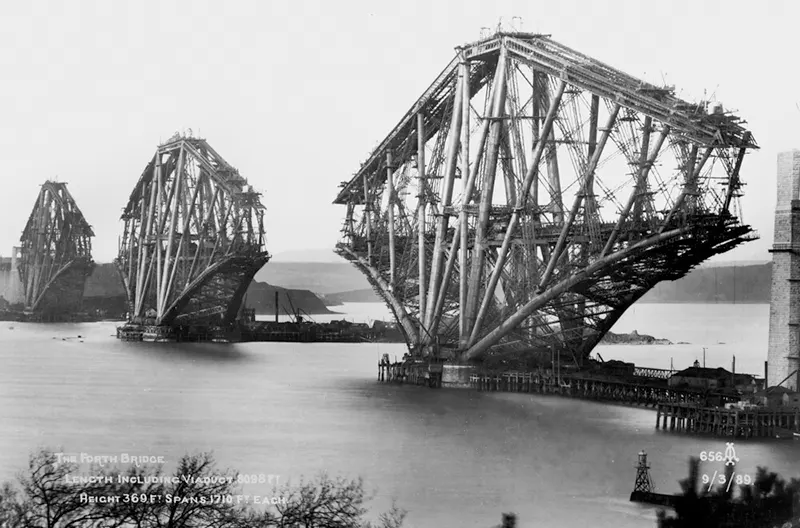
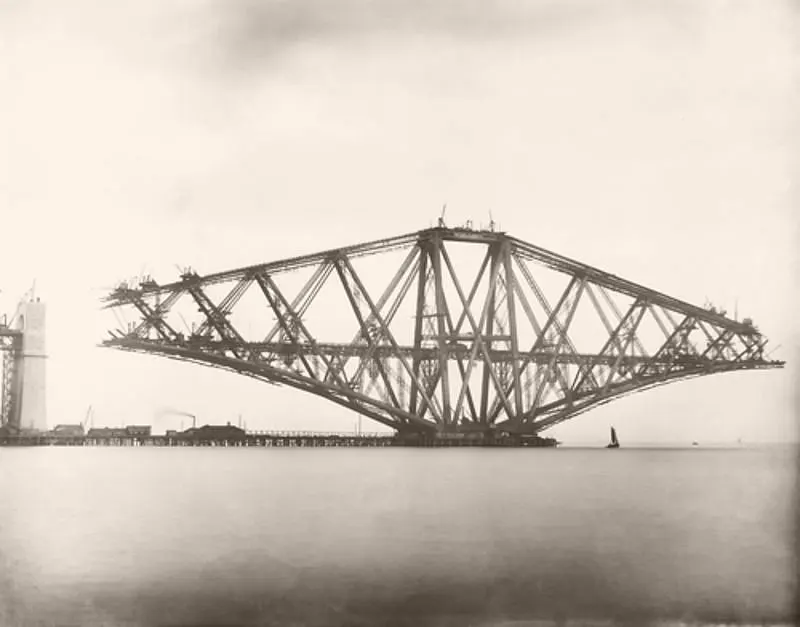
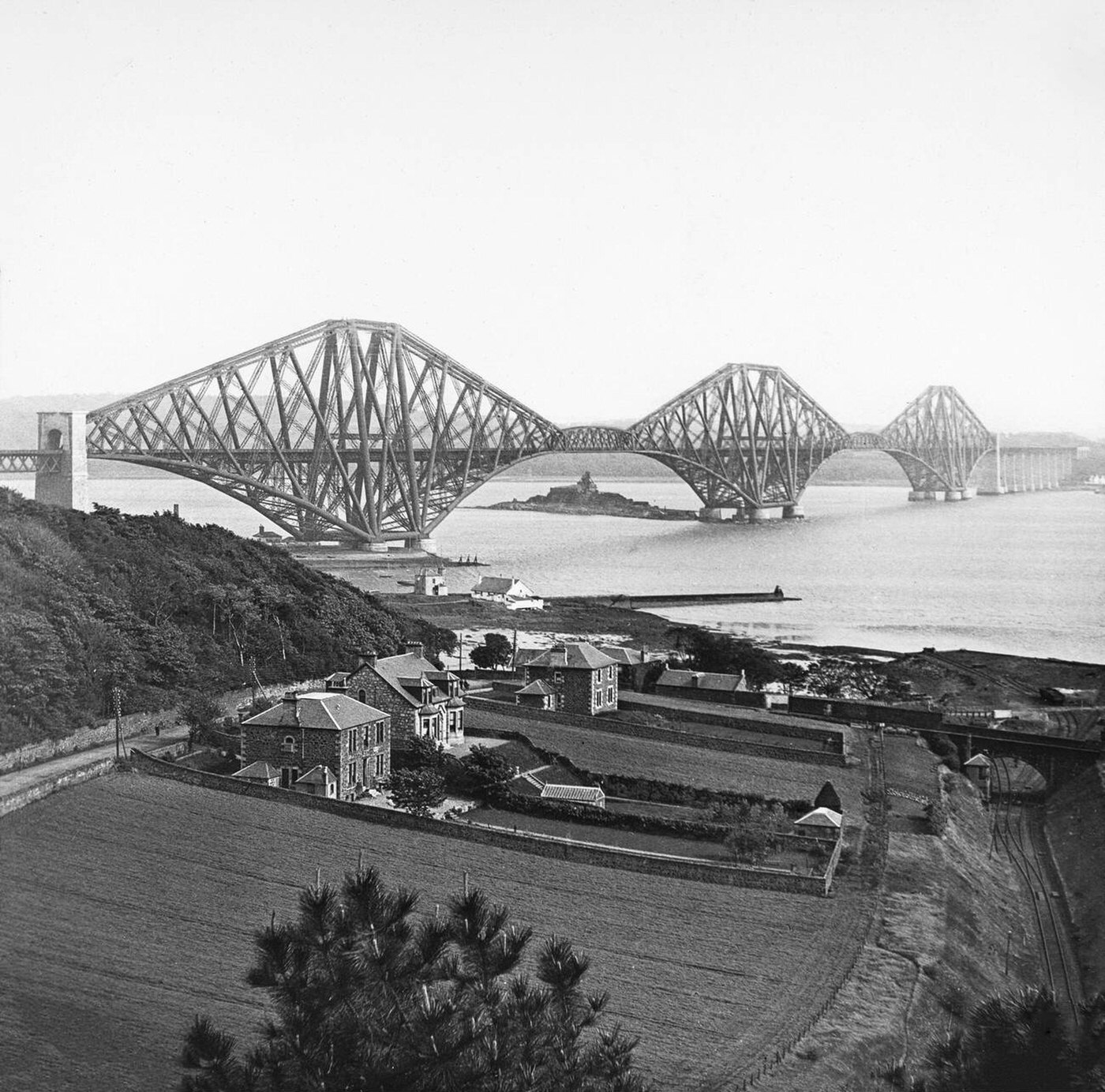
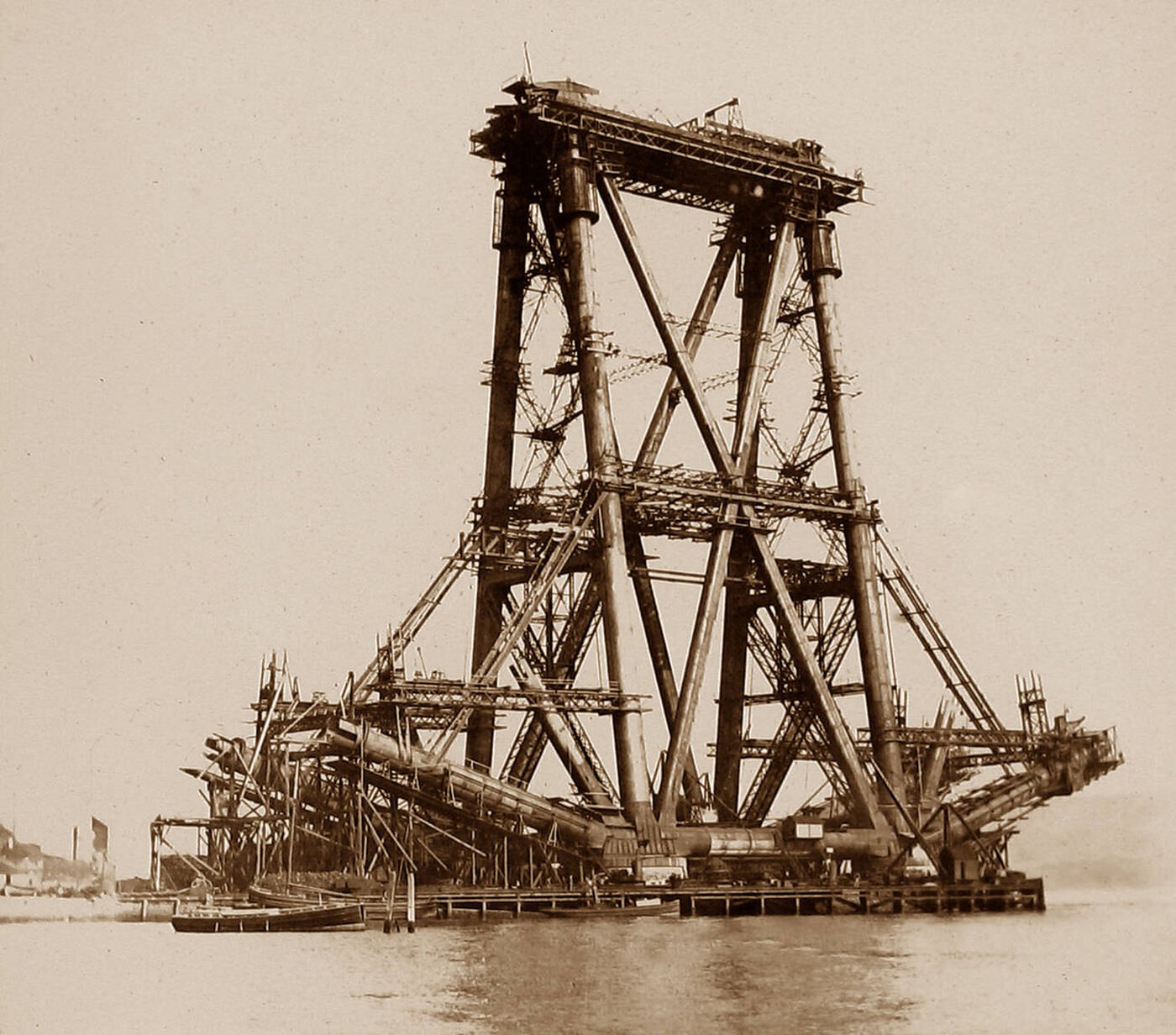
Sir John Fowler and Sir Benjamin Baker won the commission with a cantilever design. Three double cantilevers, connected by girders, would carry the rail line 150 feet above high water — high enough for ships to pass beneath. Each main span stretched 1,700 feet, the longest in the world at the time. The total length, including approach viaducts, reached 8,094 feet. Construction contracts went to Sir William Arrol & Co. in December 1882, and site work began immediately at both Queensferry ends.
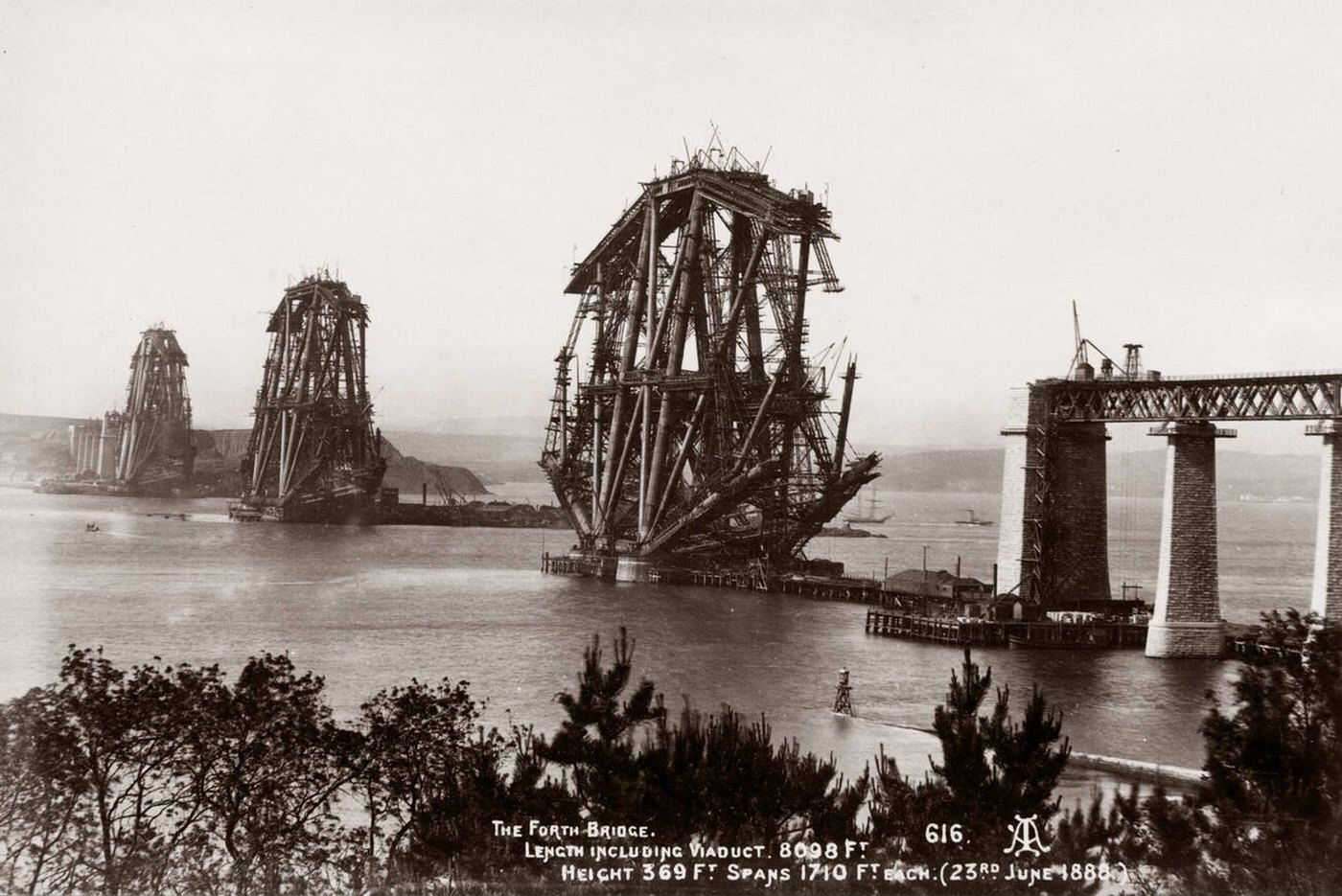
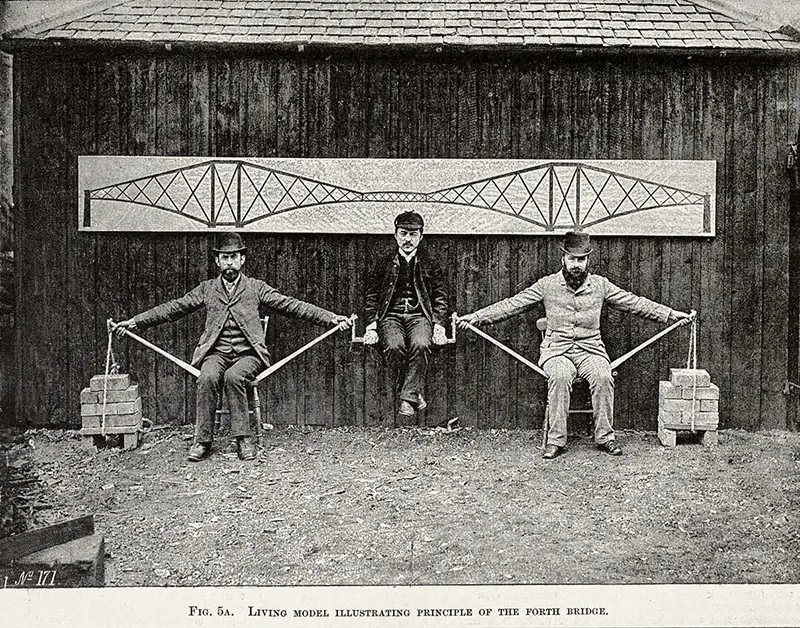
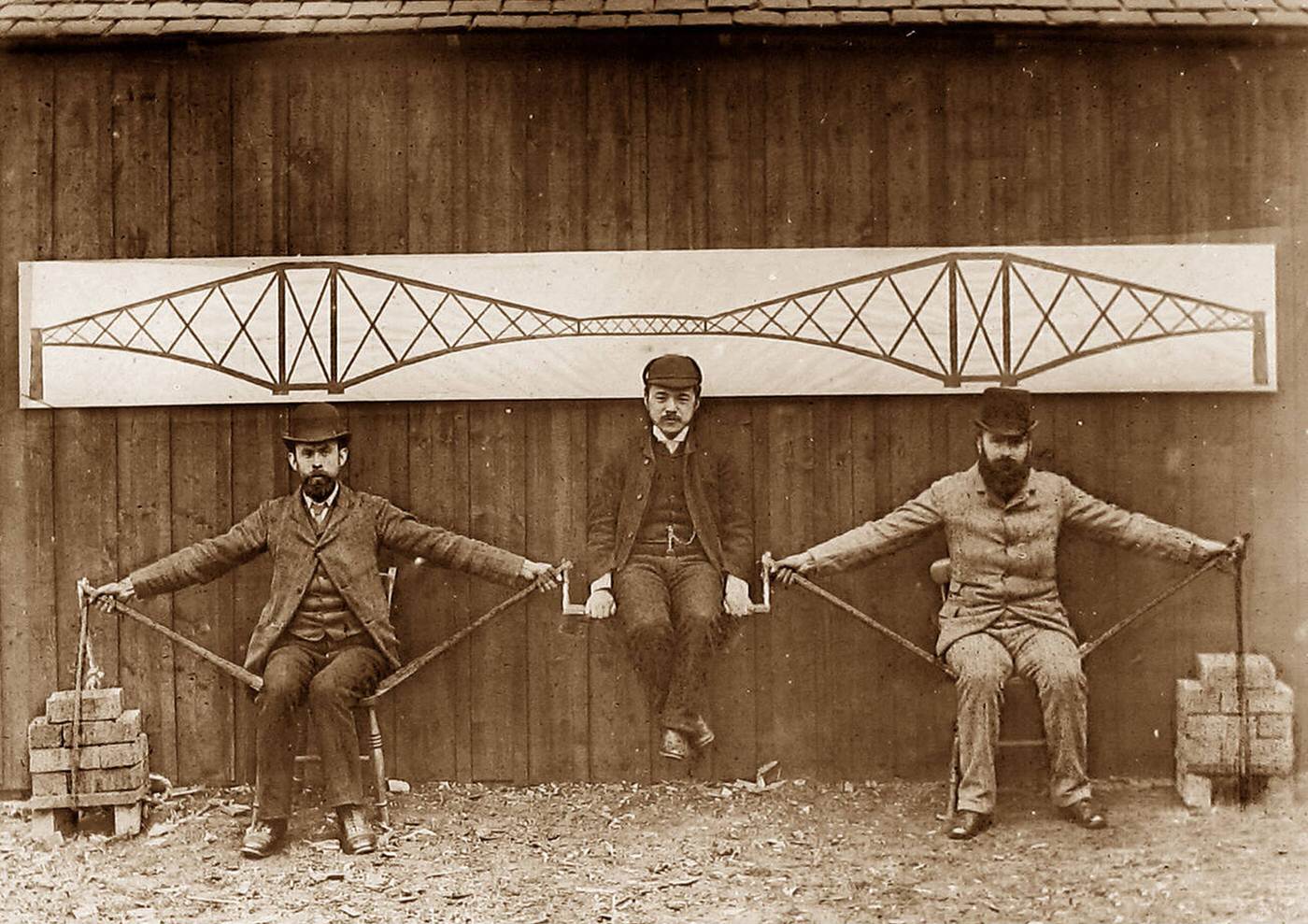
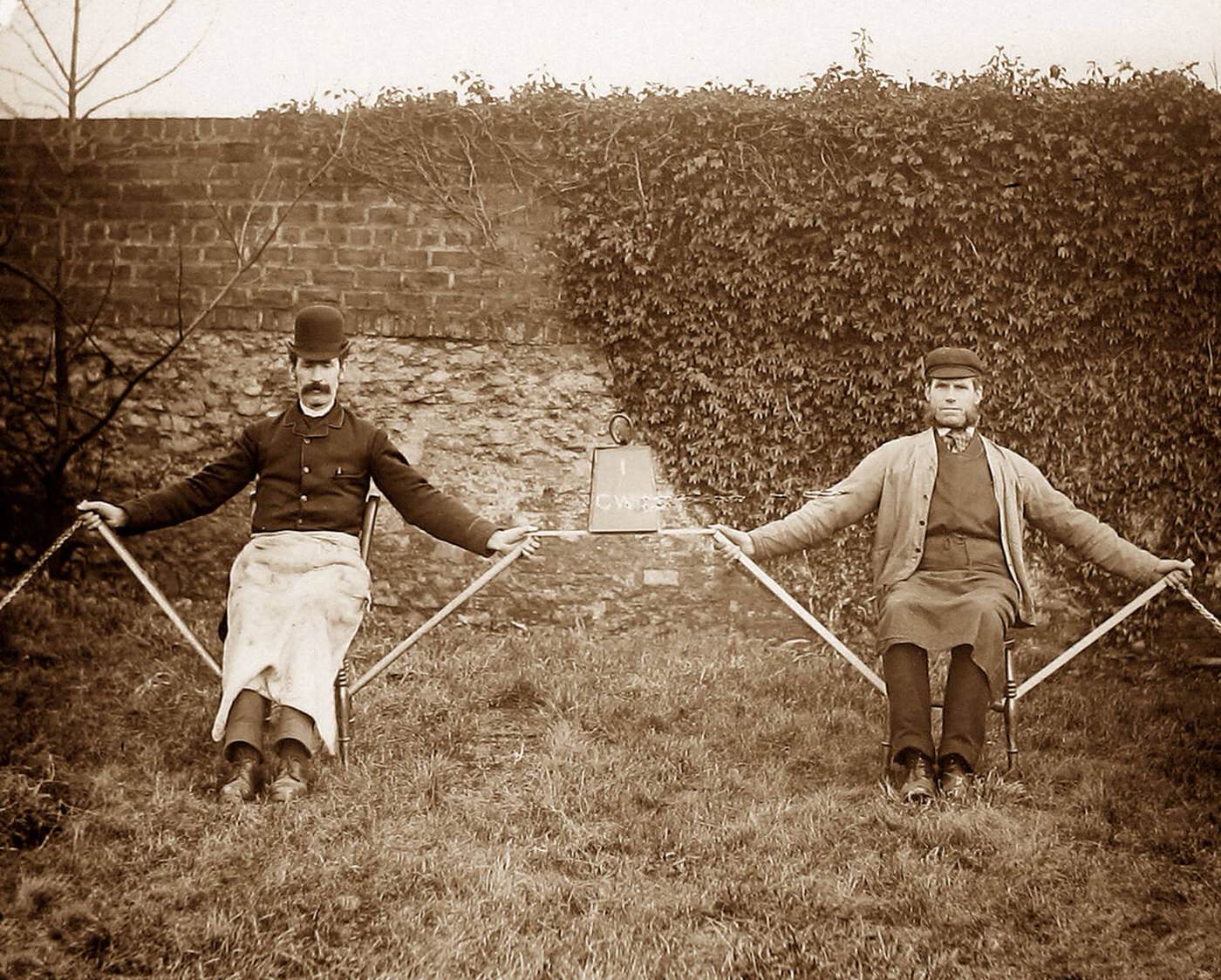
To explain how the cantilever system worked, Baker staged a now-famous demonstration in 1887. He and Fowler sat in chairs, extending their arms outward and gripping sticks anchored to the ground. A man named Kaichi Watanabe sat suspended between them — his weight held by the tension and compression of their arms. The image made an abstract engineering principle immediately clear.
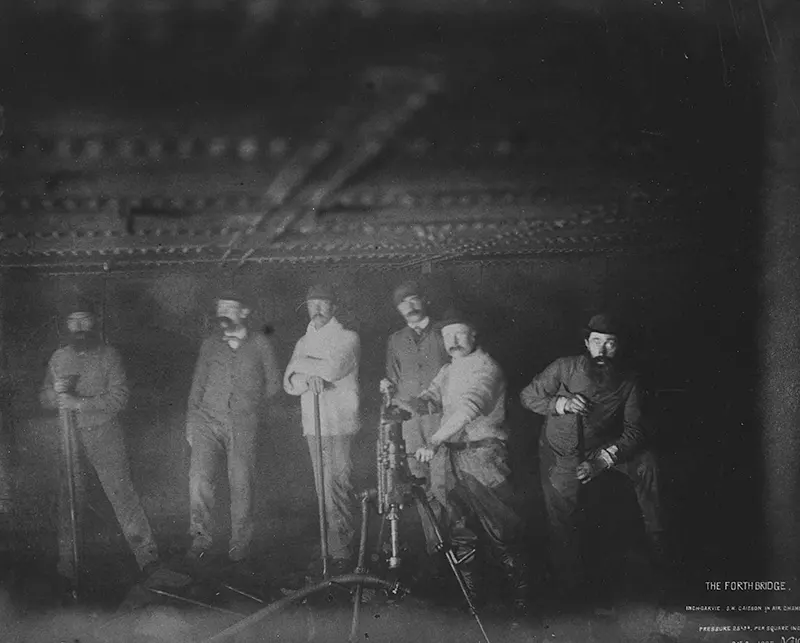
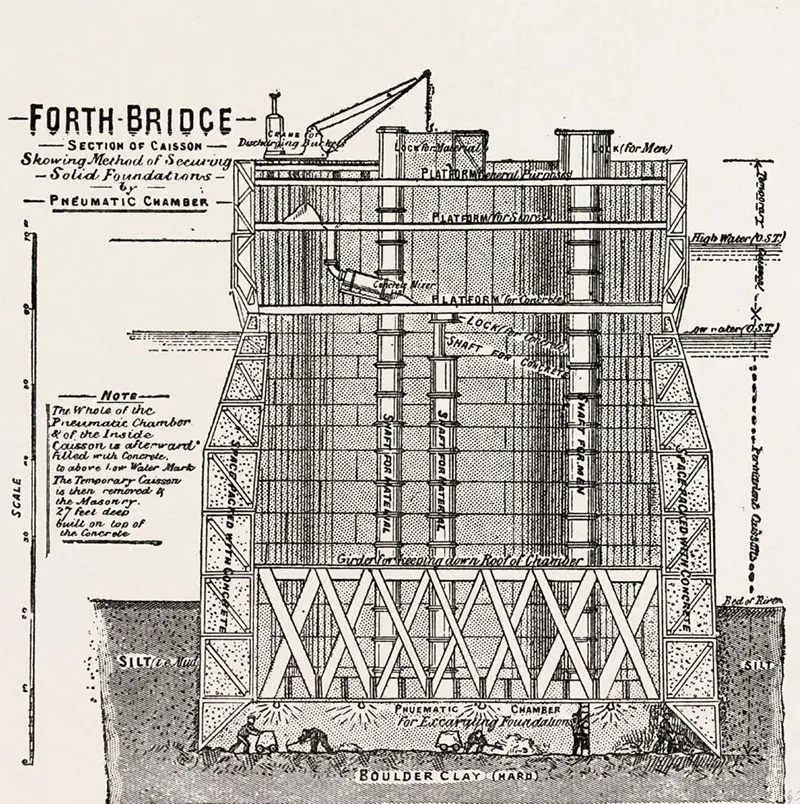
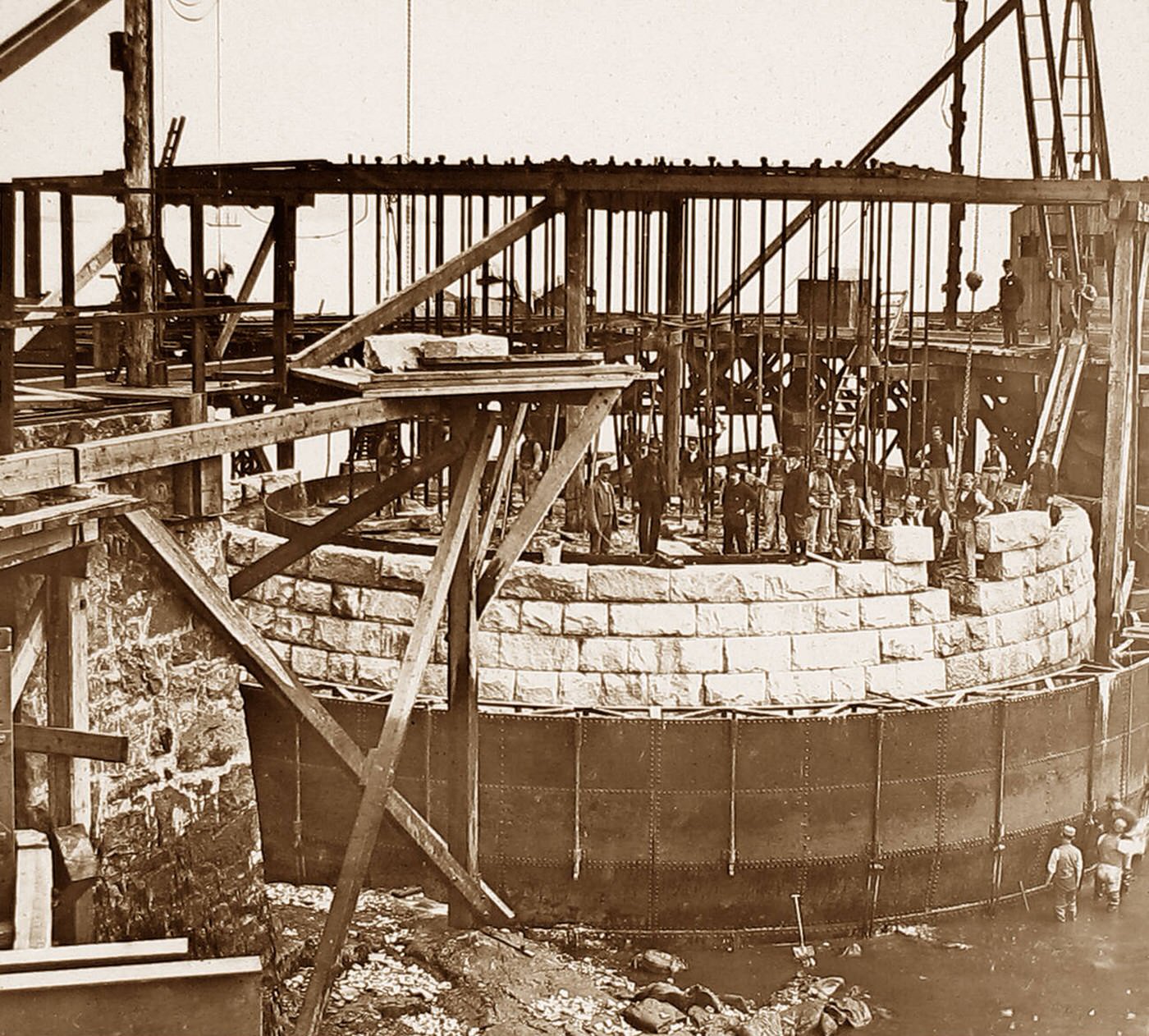
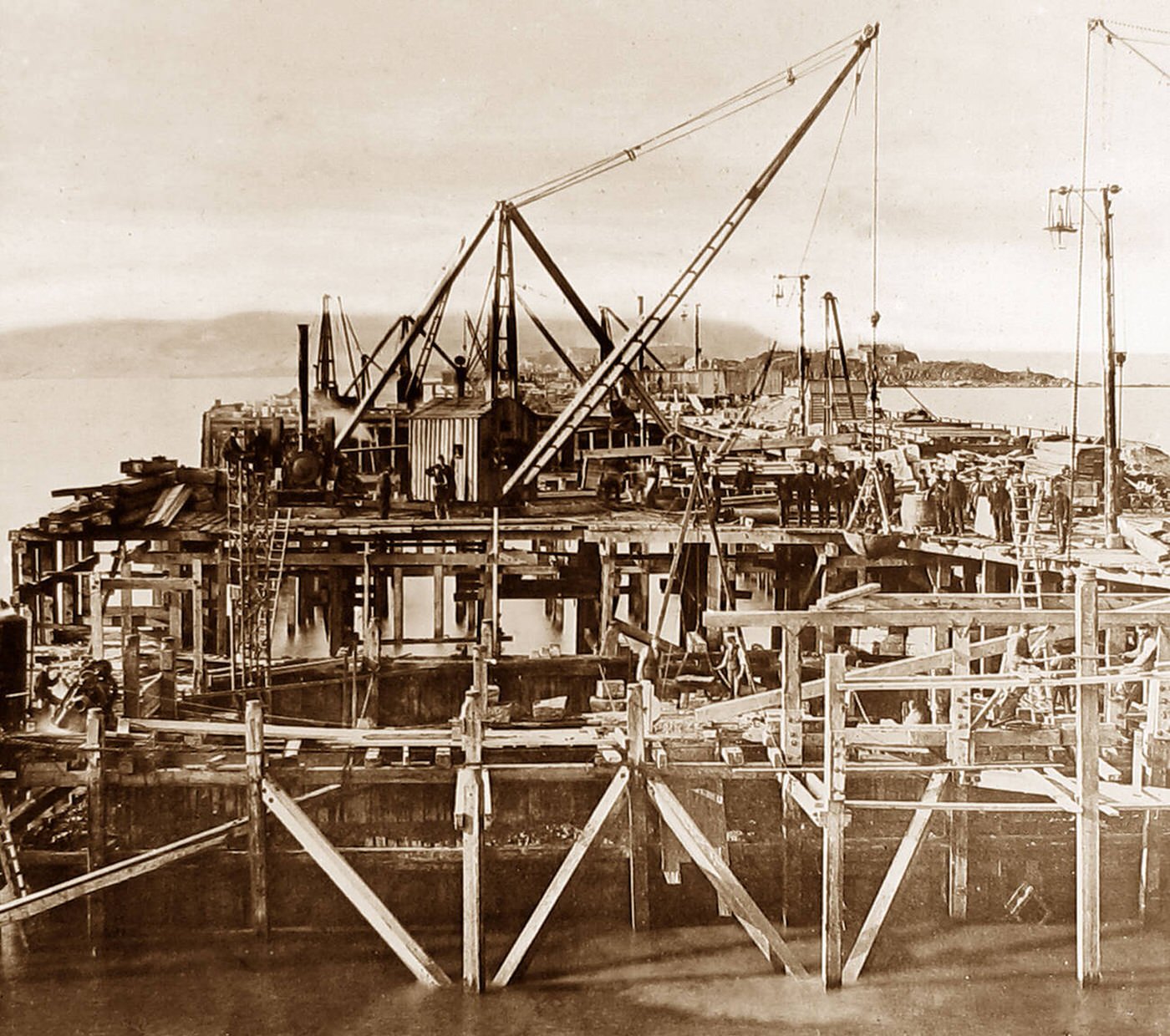
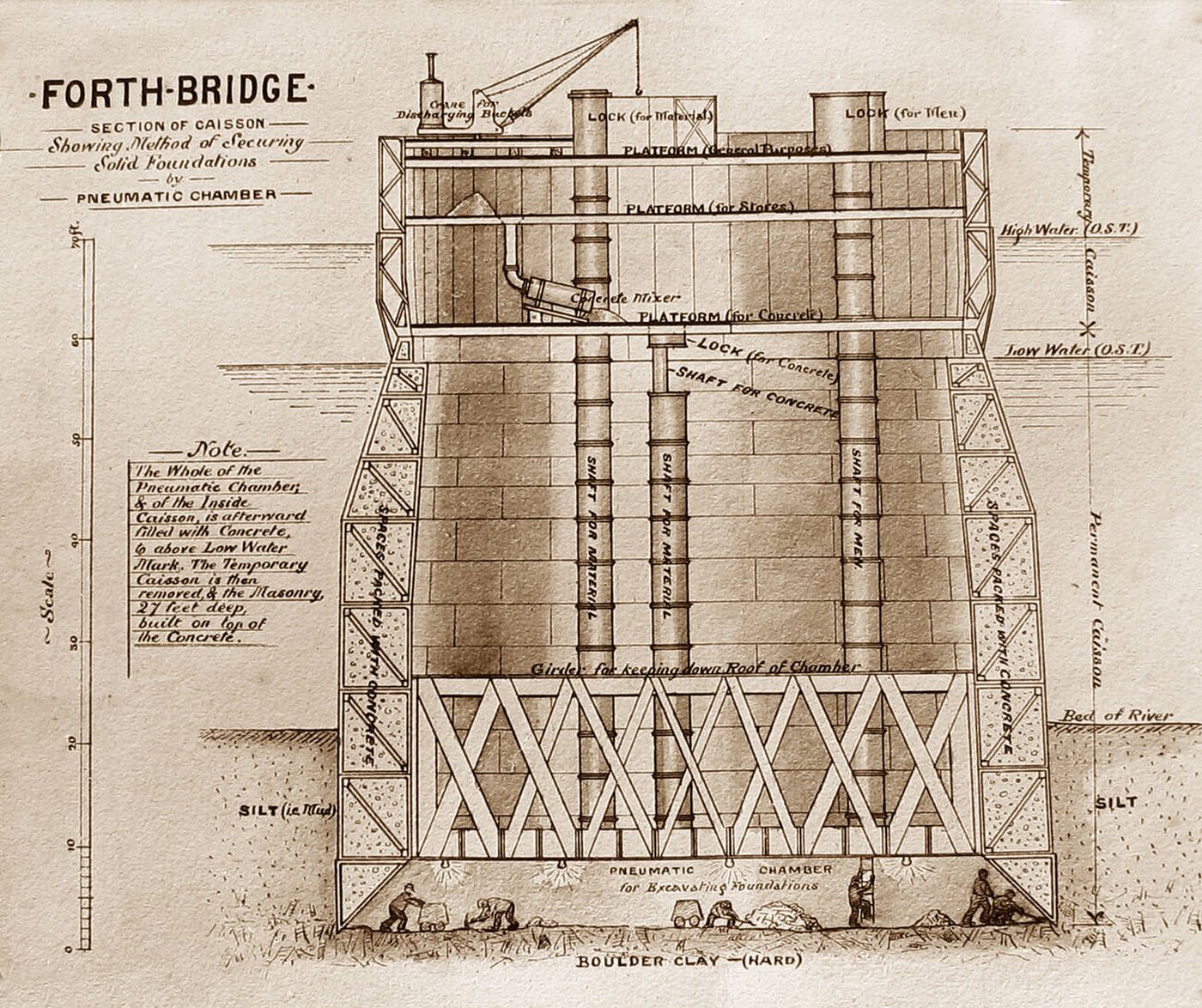
Foundation work was among the hardest parts of the project. Crews sank massive wrought iron caissons into the riverbed, pumped out water, and used compressed air in the deeper ones so men could dig through silt and rock. Six caissons were launched from Glasgow between May 1884 and May 1885. One — the Inchgarvie south caisson — tilted on New Year’s Day 1885. Workers braced it with timber and refloated it in October 1885. Foundations were complete by 1886.
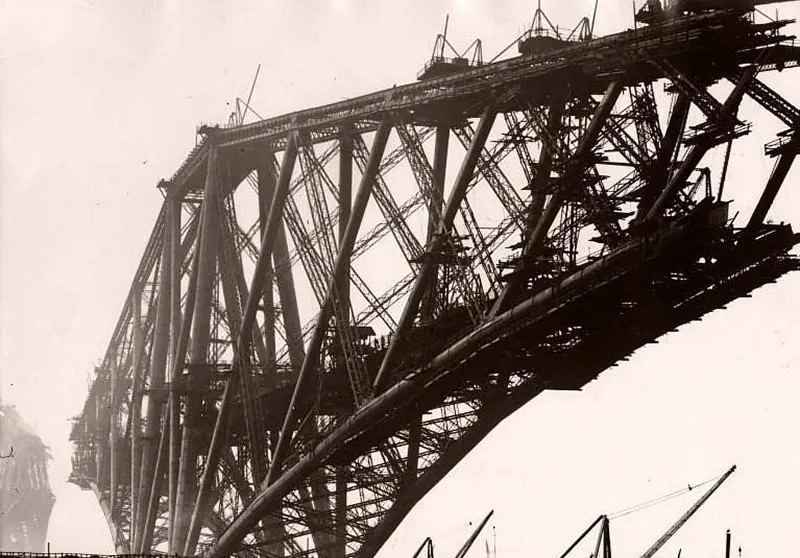
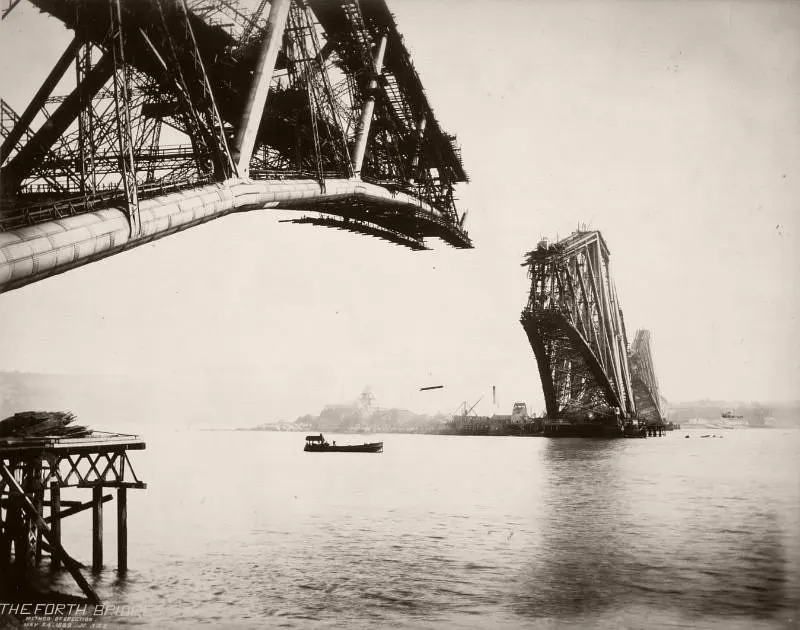
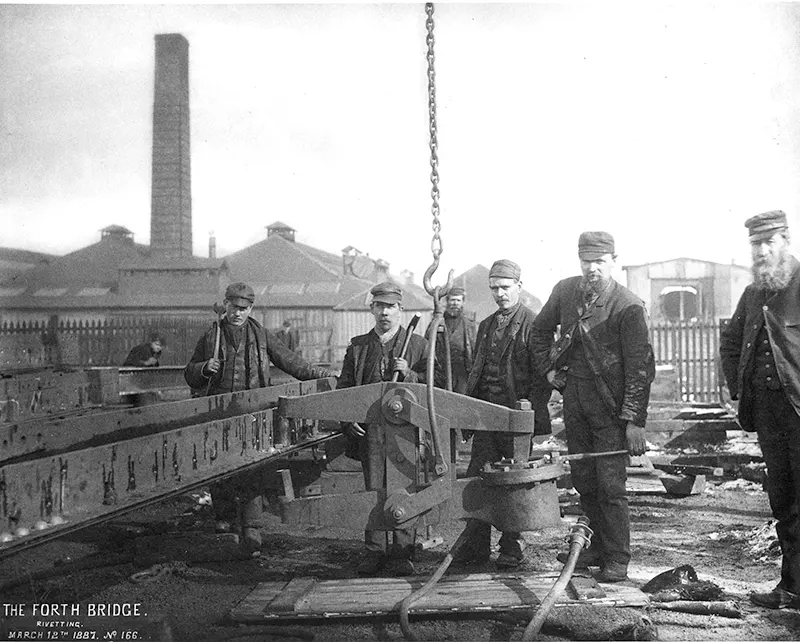
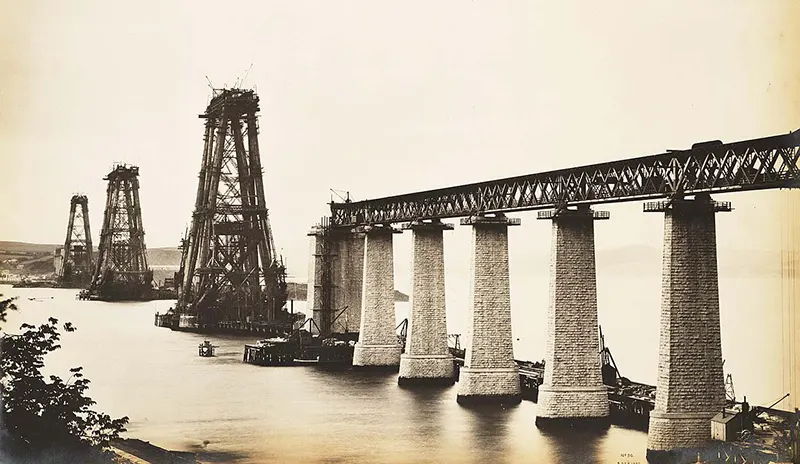
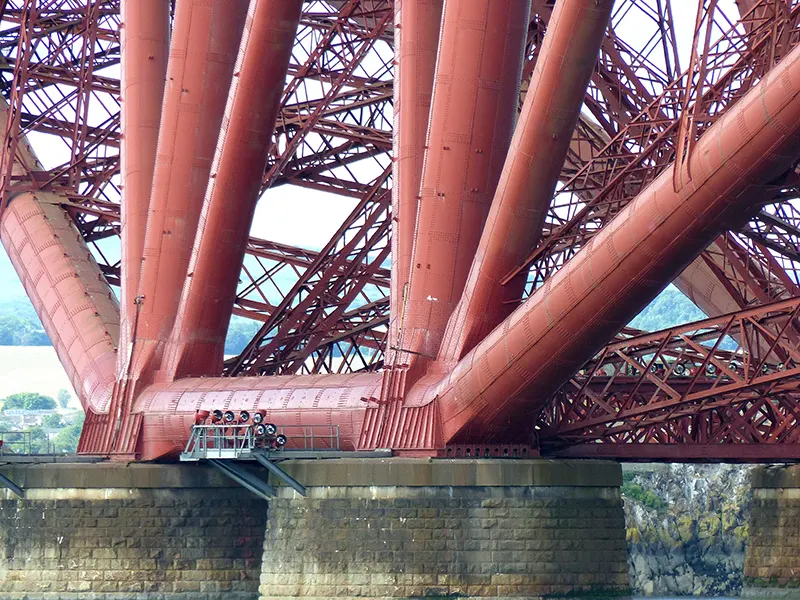
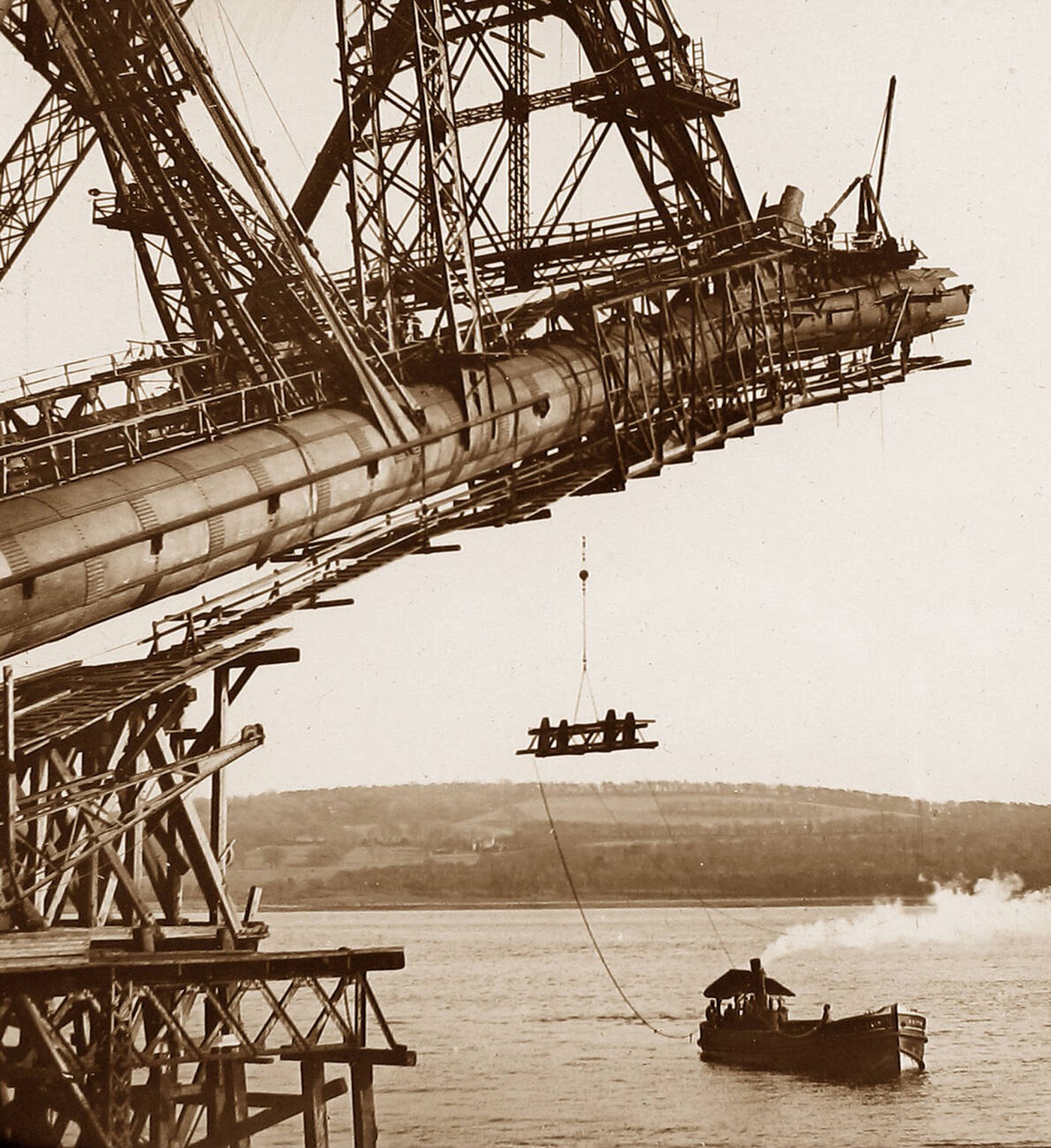
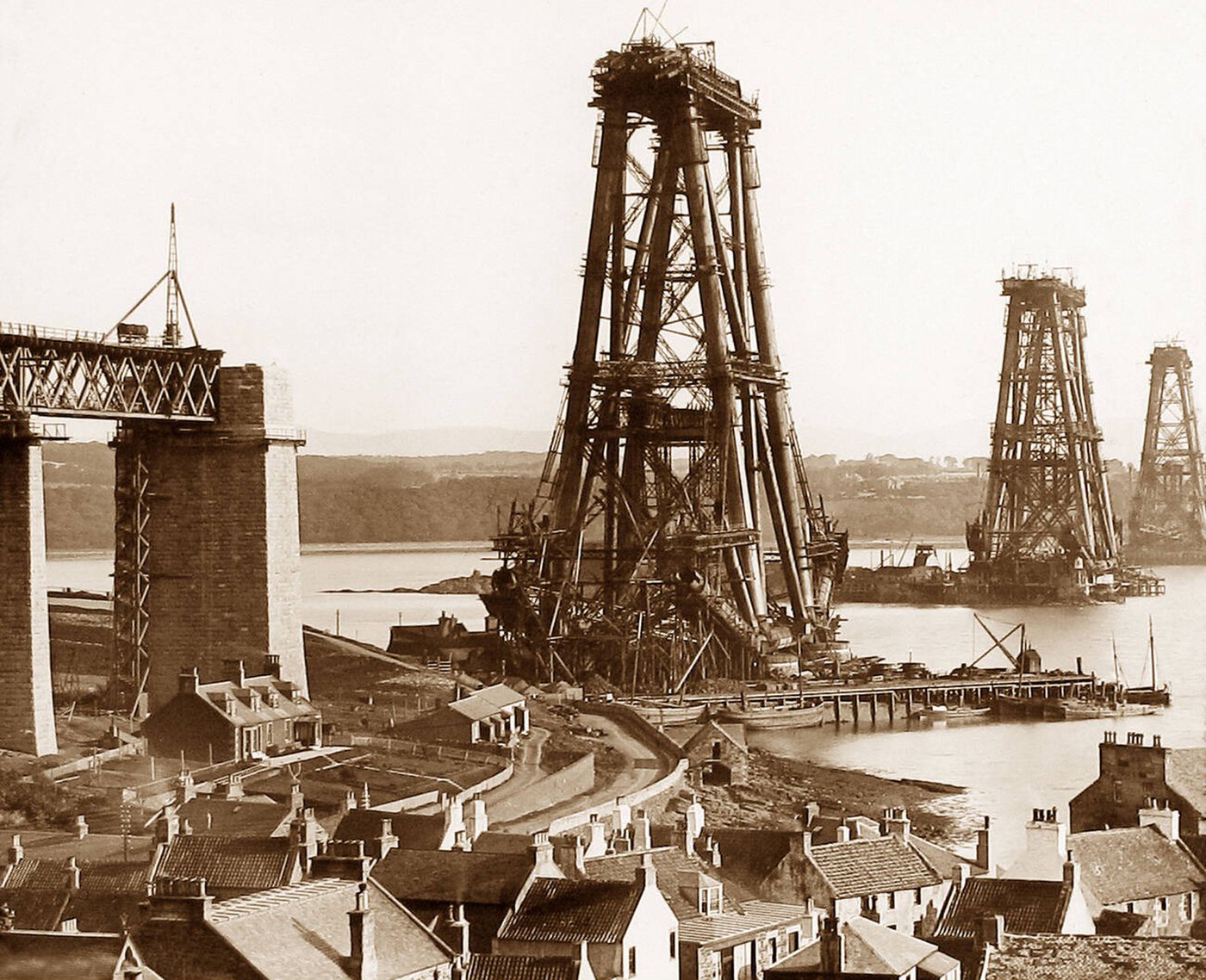
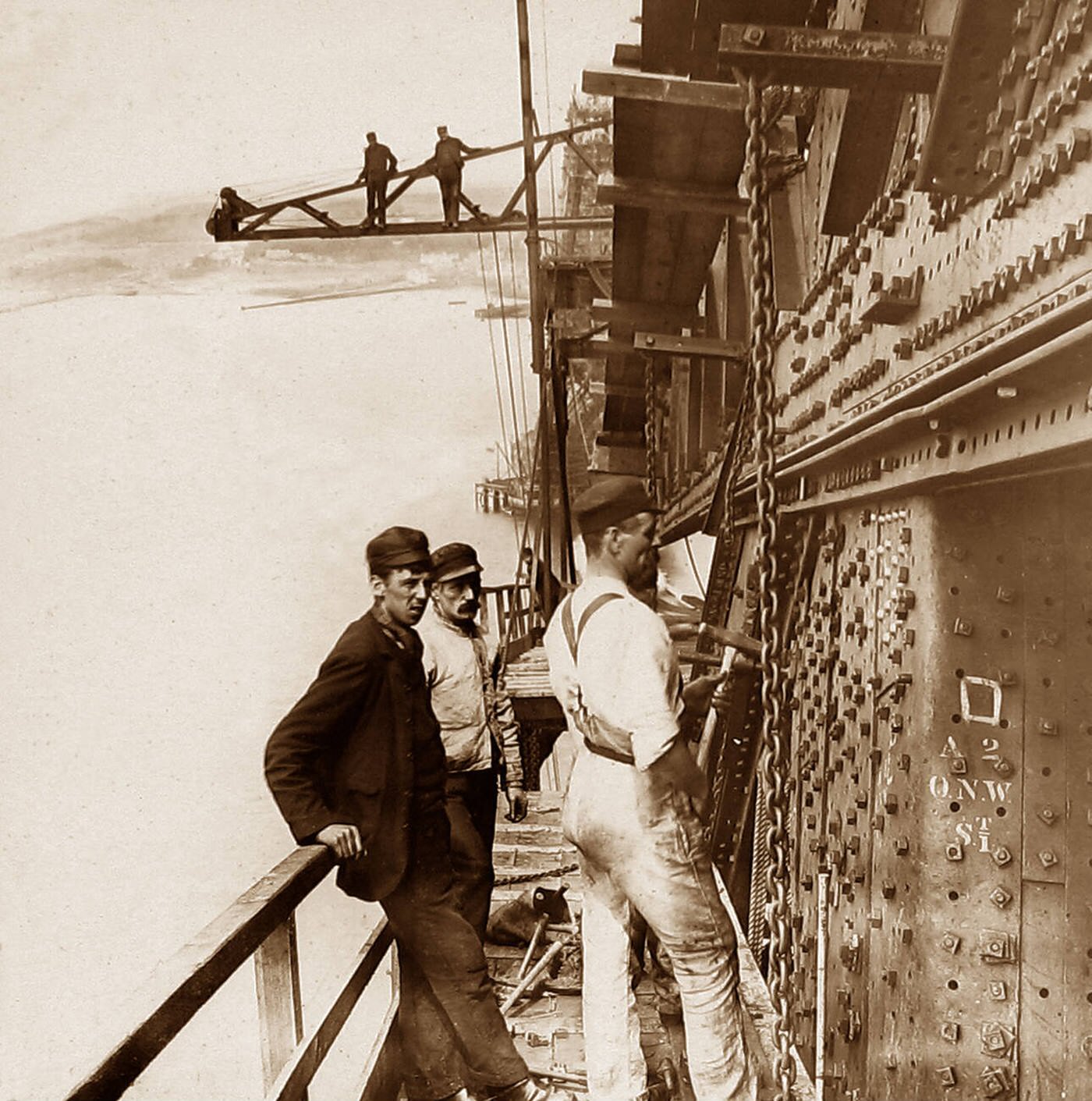
Once the piers rose from their granite bases, the superstructure took shape fast. Steel plates were heated in gas furnaces and bent on mandrels, then fixed in place by hydraulic riveters. The bridge consumed 55,000 tonnes of steel and 6.5 million rivets — rivets alone weighed 4,200 tonnes. Workers also laid 640,000 cubic feet of granite and 140,000 cubic yards of masonry.
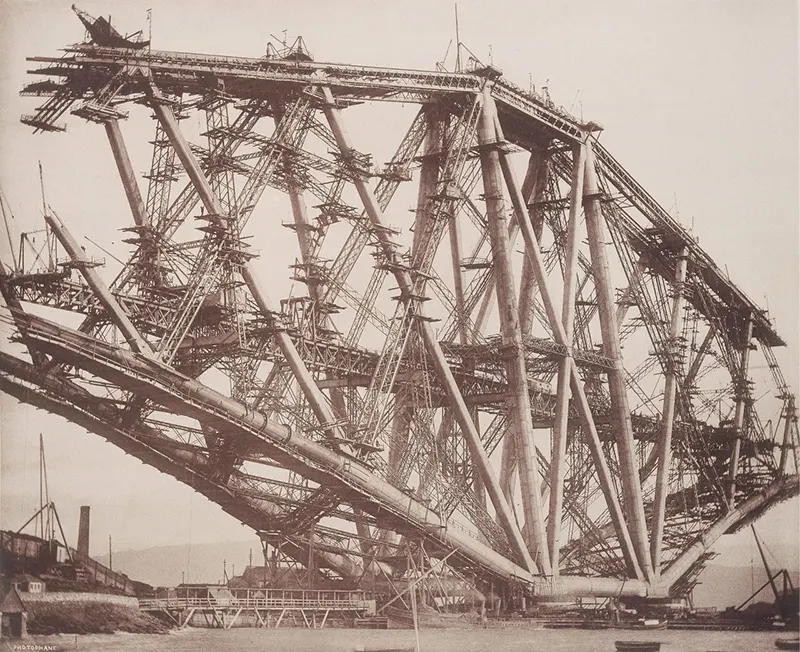
Up to 4,600 men — known as Briggers — worked on the bridge at its peak. They earned above-average wages and had access to a Sick and Accident Club that provided medical care and injury payments. Safety boats pulled eight men from the water. But the work was brutal. A log book recorded 26,000 accidents and illnesses. Seventy-three men died from falls, crushing, drowning, and caisson disease — a condition caused by rapid pressure changes when leaving the compressed-air work chambers.
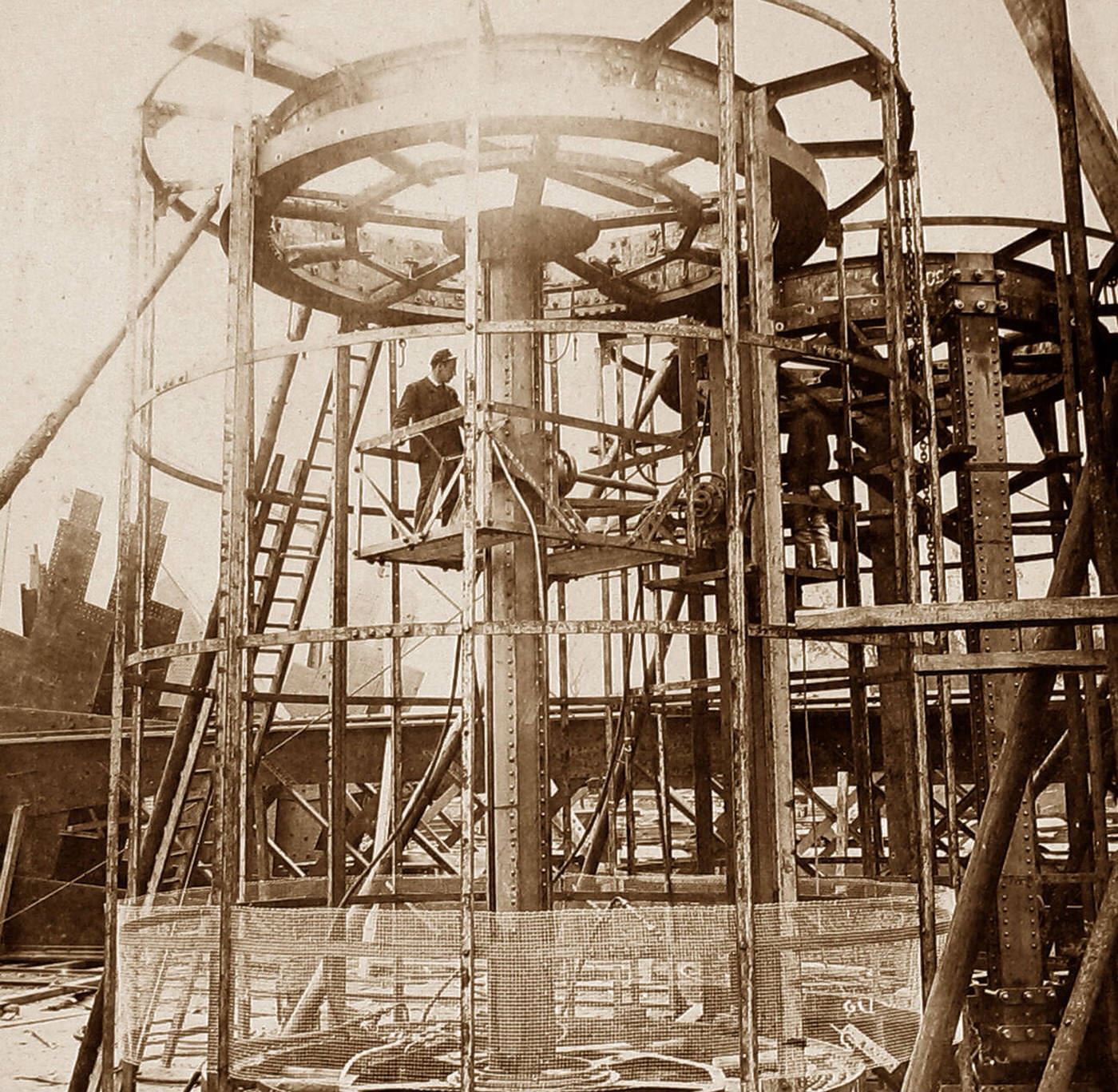
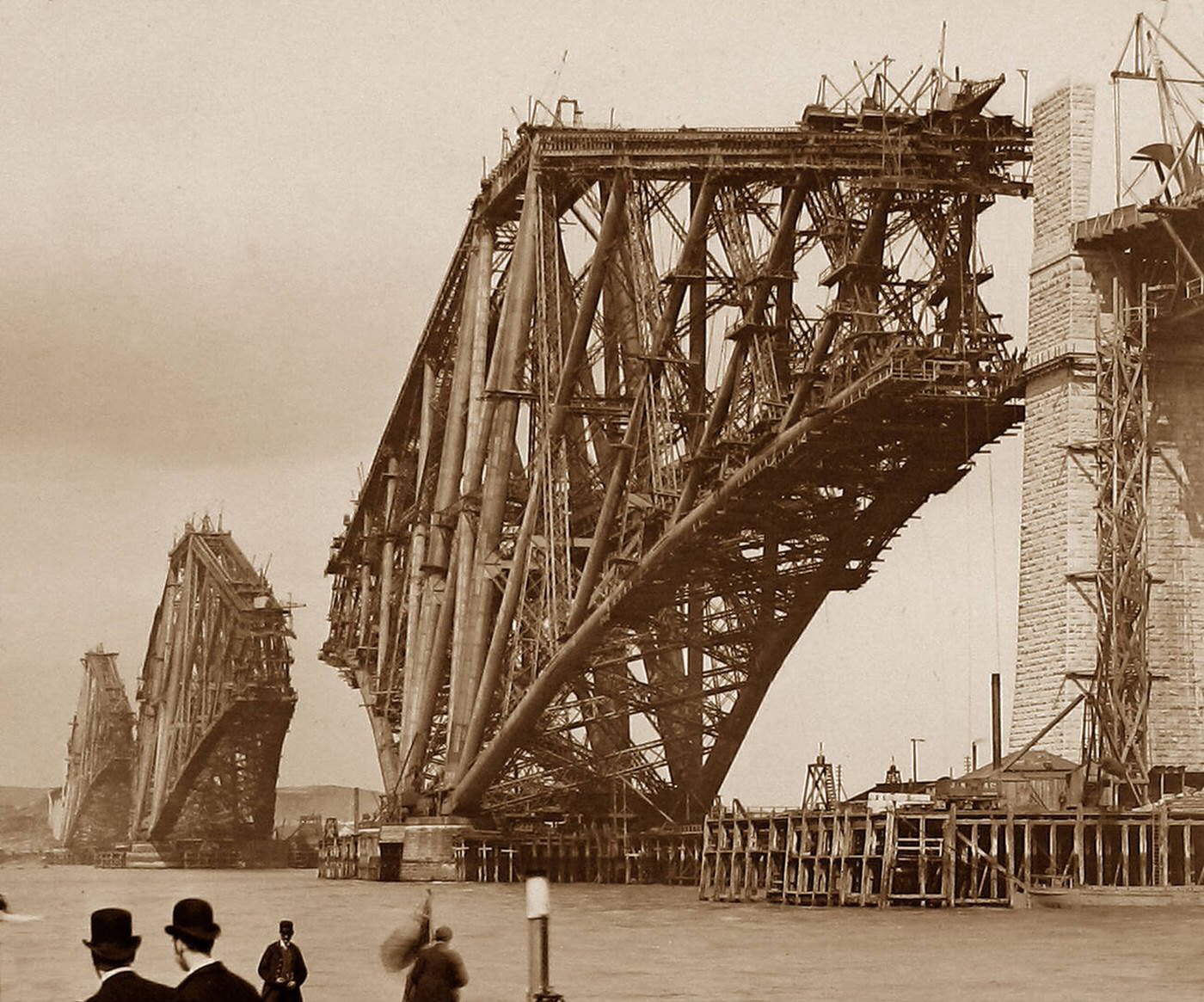
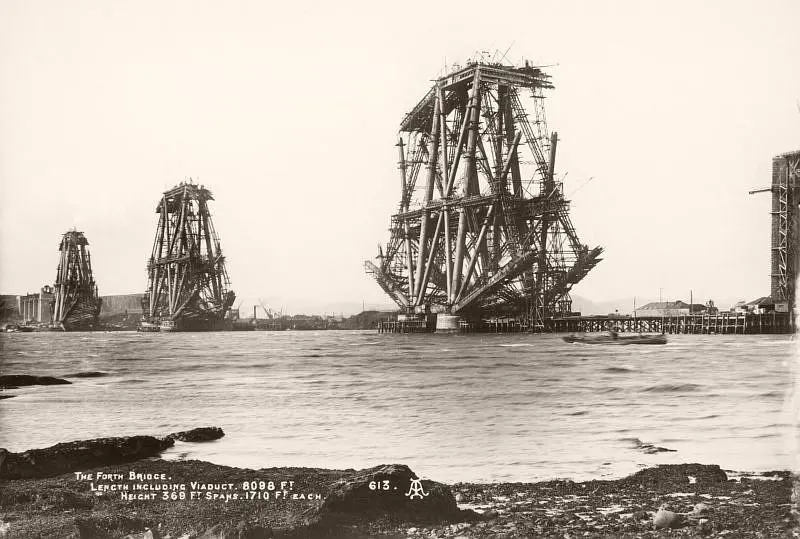
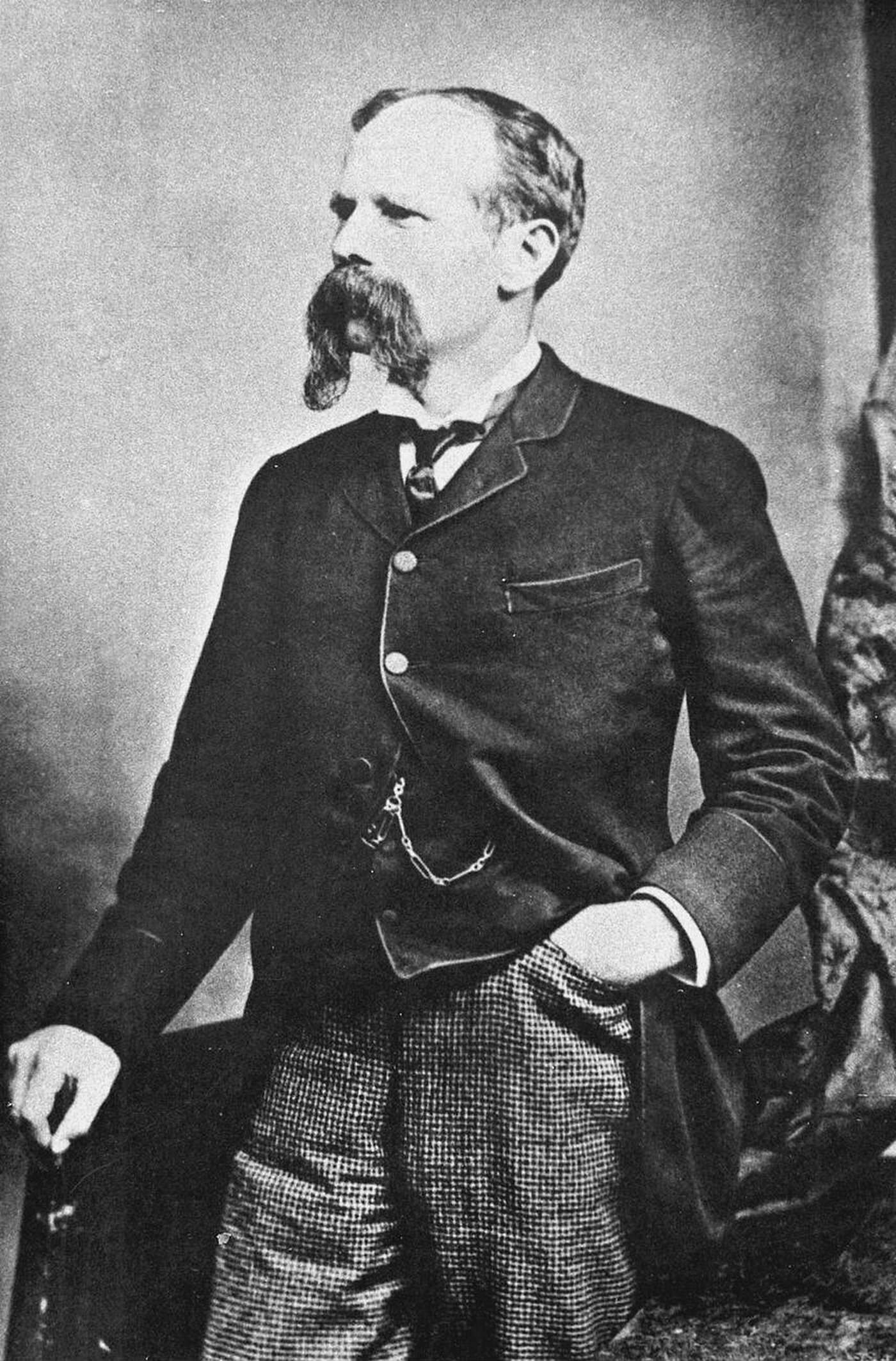
Photographer Evelyn George Carey documented the entire build in extraordinary detail. Shooting from fixed positions, he captured thousands of images that show individual steel components slowly becoming a unified structure. His work, along with stereo photographs from later years, gives a rare ground-level view of what it took to assemble 1,630 meters of steel across a cold Scottish firth.
The bridge was complete by December 1889. Load tests in January 1890 used trains weighing a combined 1,880 tons. The Prince of Wales officially opened it on March 4, 1890. The Board of Trade’s strict post-Tay safety rules had pushed engineers to overbuild certain sections — but that caution is part of why the structure still stands.