Pierre Balmain opened his Paris fashion house in 1945, and within just a few years, he had secured a place among the most respected names in haute couture. By the 1950s, his work defined what it meant to dress with elegance. His signature look centered on fitted bodices, tiny waists, and long bell-shaped skirts. He worked with luxurious materials — silk, velvet, chiffon, and lace — and finished each piece with intricate embroidery and careful detailing. For Balmain, true elegance came from restraint, not excess.
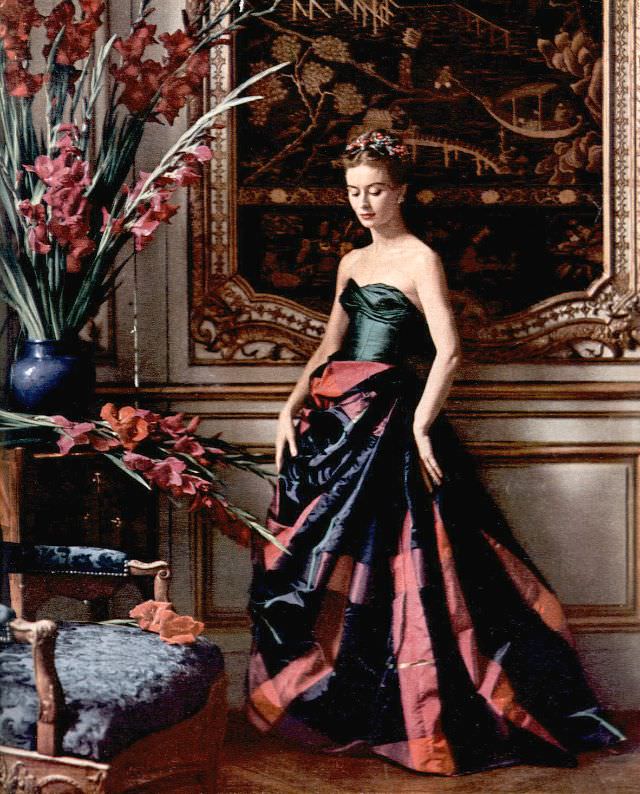
Gigi Terwalgne in an evening gown with a voluminous plaid taffeta skirt and a green taffeta bustier that laces up the back by Pierre Balmain, 1951.
In 1952, Balmain launched the collection that would define his decade: “Jolie Madame.” It presented a polished, deeply feminine silhouette — fitted through the bodice, full through the skirt — that stood apart from the heavier, more rigid styles of the 1940s. The line was an immediate success and became a touchstone of 1950s fashion.
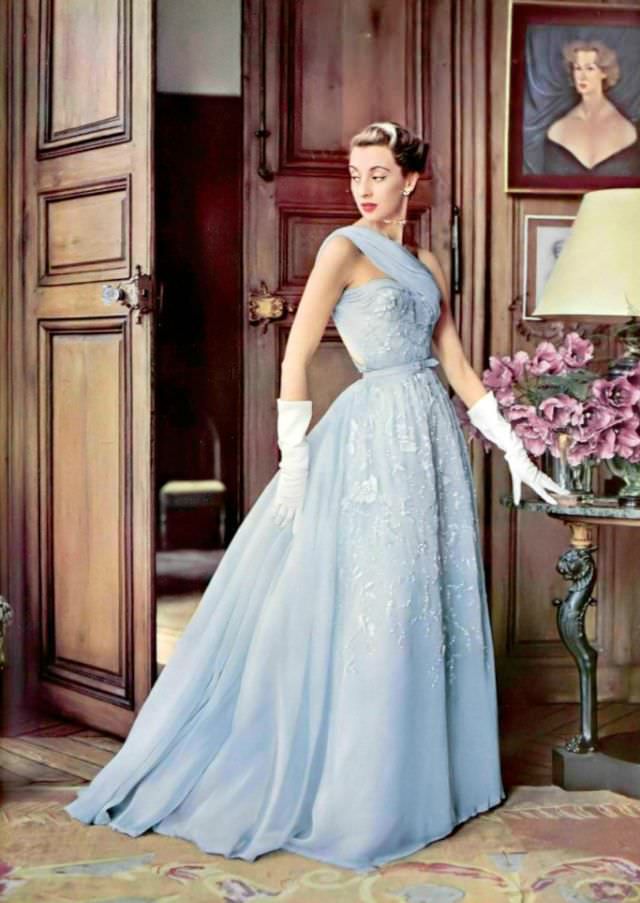
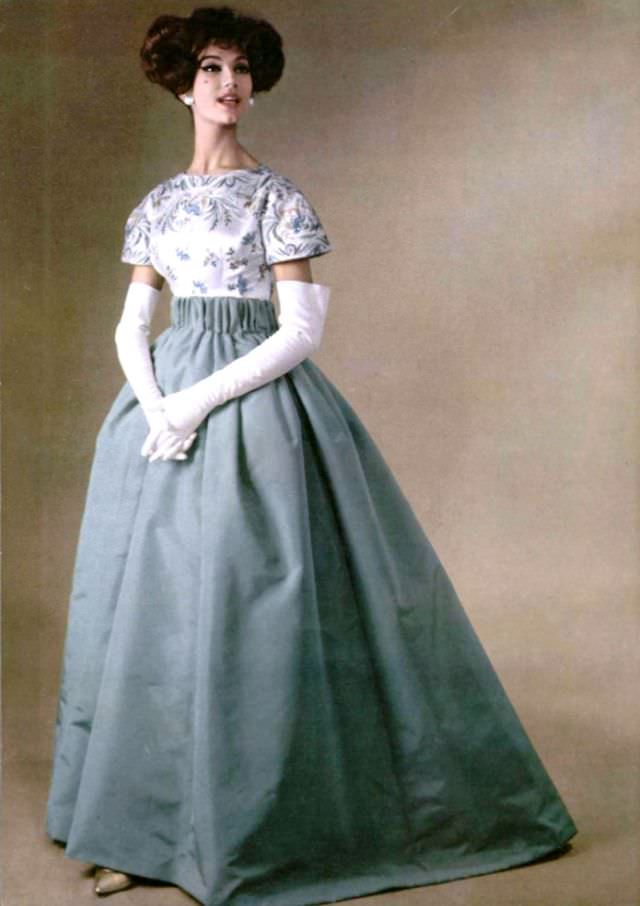
Marie-Thérèse in an evening gown of pale blue embroidered chiffon by Pierre Balmain, 1952.
Balmain’s evening wear drew particular admiration. His gowns were built for high-society events and formal occasions, favoring flowing skirts, strapless necklines, and lavish surface decoration. Actresses including Audrey Hepburn and Marlene Dietrich wore his designs publicly, and his gowns became fixtures at red carpet appearances throughout the decade.
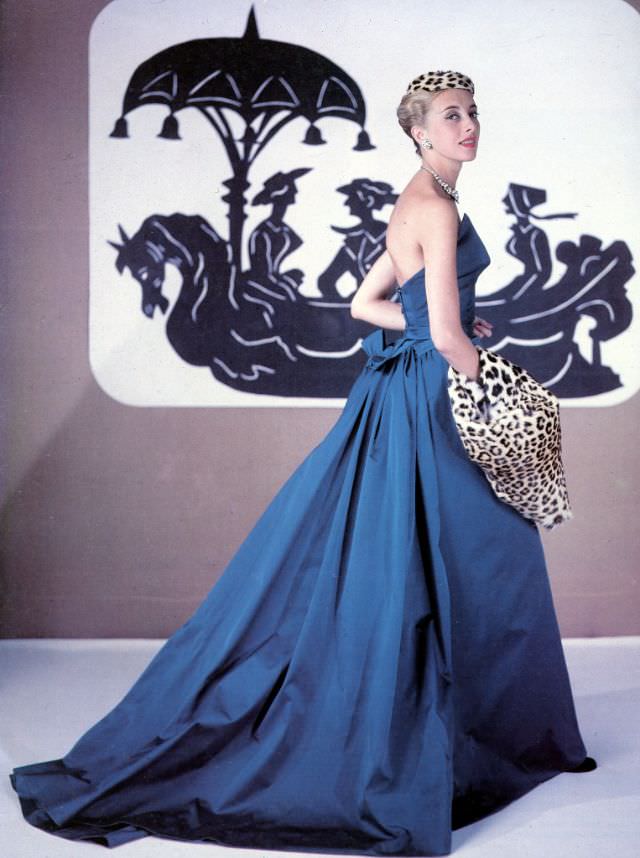
Balmain mannequin Marie-Thérèse models his evening gown accented with a leopard hat and muff, 1953.
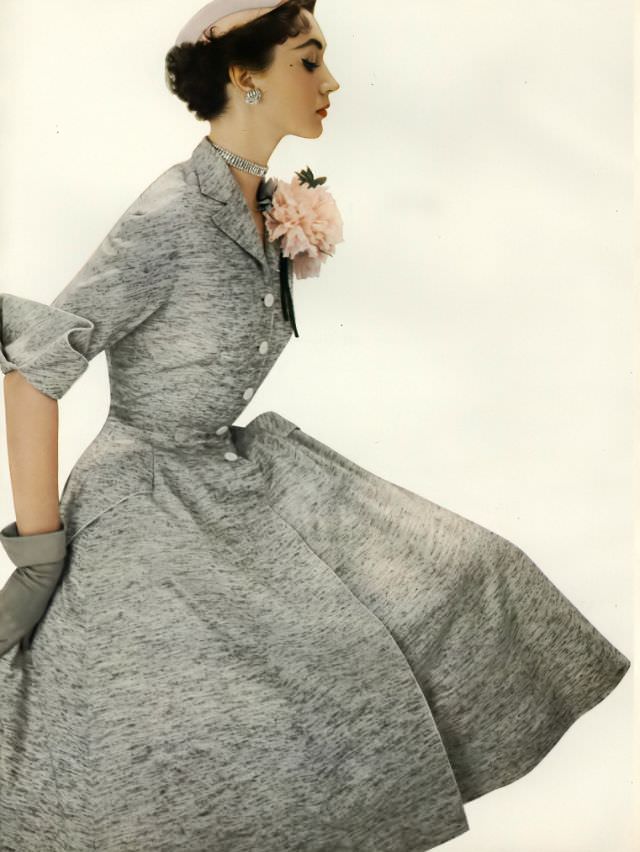
Dovima in a redingote of Celanese acetate and silk by Pierre Balmain, 1953.
The year 1953 was particularly productive. Balmain produced striking pieces that ranged from figure-hugging paillette sheaths to sequin-covered dance dresses. His use of bold animal prints alongside delicate chiffon showed the breadth of his design vocabulary.
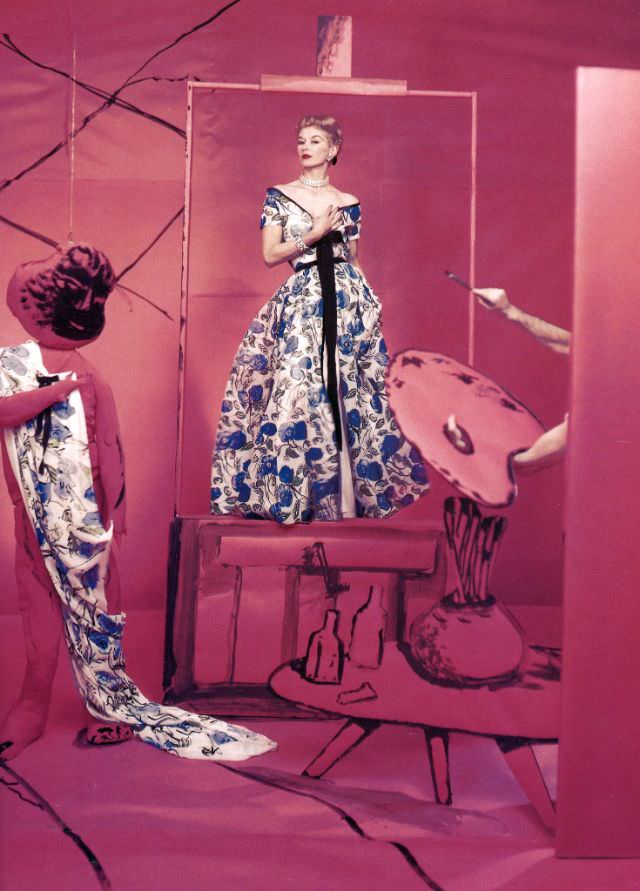
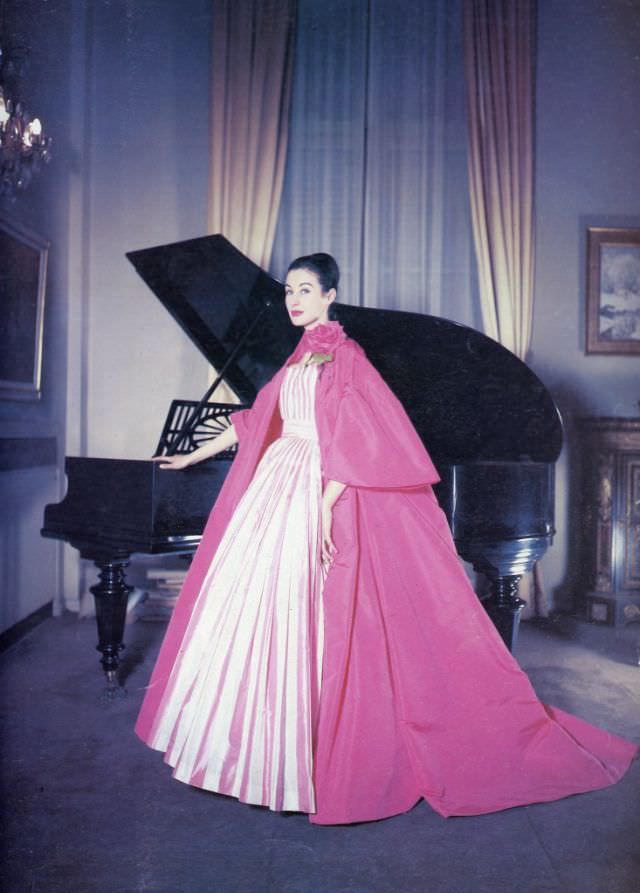
Lisa Fonssagrives in the “Poppy” gown by Pierre Balmain, 1953.
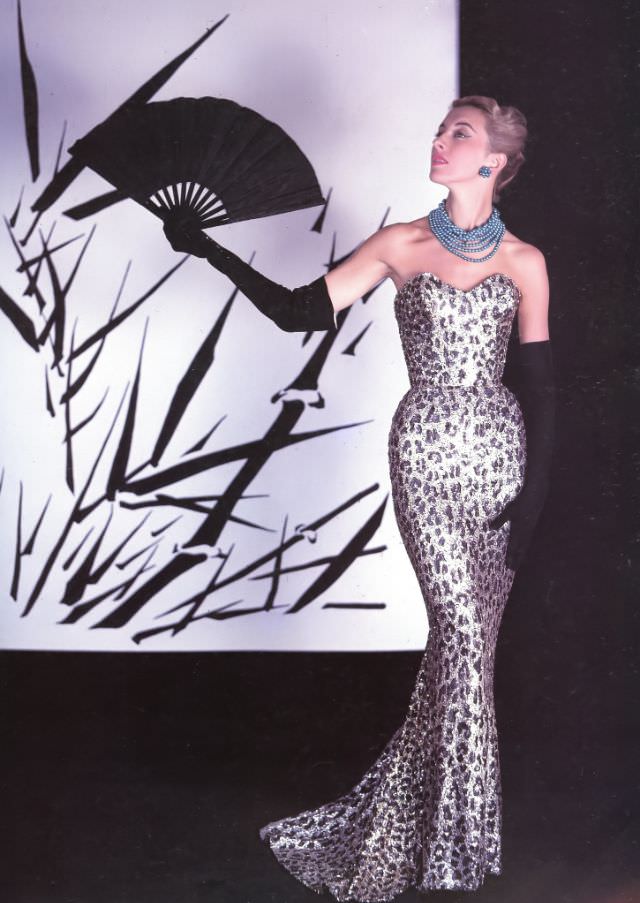
Marie-Thérèse in Balmain’s famous sheath of embroidered paillettes in a leopard spot design, 1953.
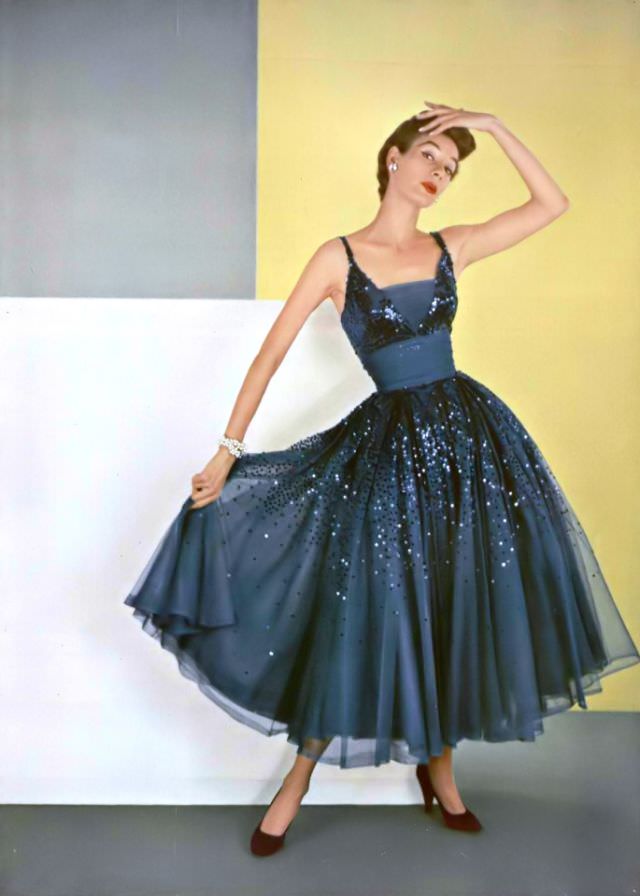
A model in a midnight blue chiffon dance dress strewn with sparkling sequins by Pierre Balmain, 1953.
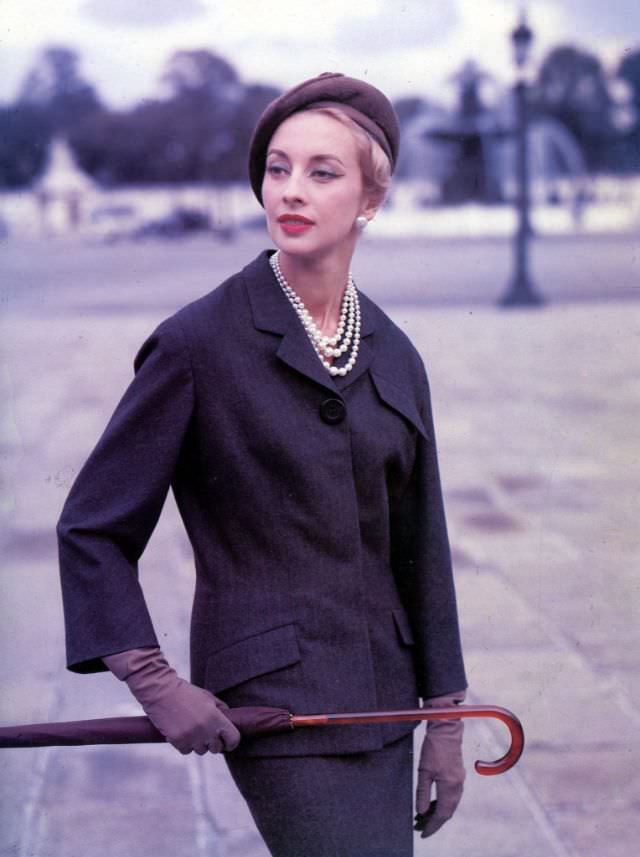
Balmain’s daywear received the same careful attention as his eveningwear. His suits and day dresses were sharply tailored and polished, built for the modern woman who needed to move through public life with confidence. He used structured ottomans, lightweight linens, and glazed wools to create daytime looks that were both functional and refined.
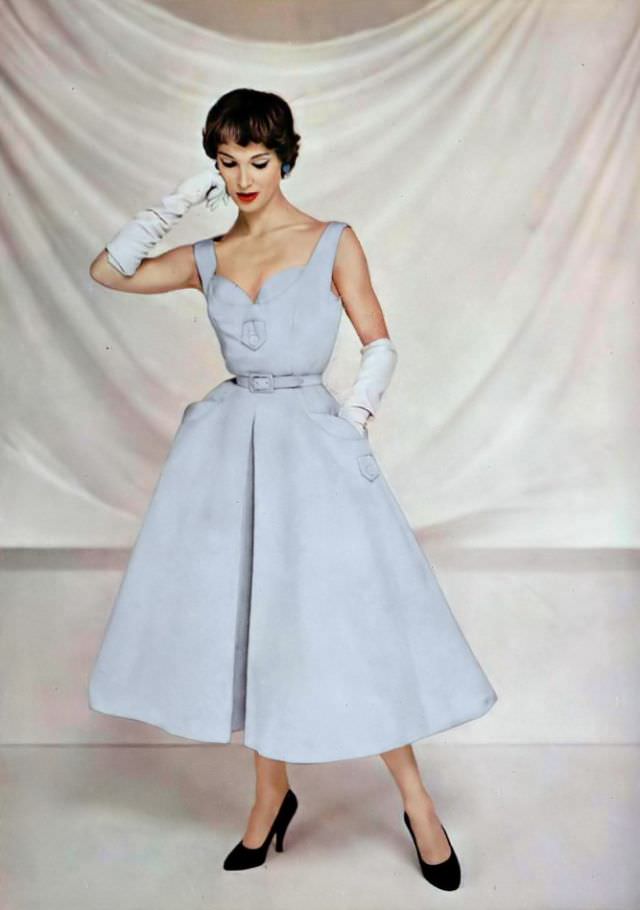
Ann Farrar in a pale blue ottoman dress, the bodice has buttoned tabs as do the pockets, the skirt is wide with an inverted pleat, by Pierre Balmain, 1954.
Geneviève Richard in a summer suit of lilac and purple linen, the curved jacket has a bib front by Pierre Balmain, 1954.
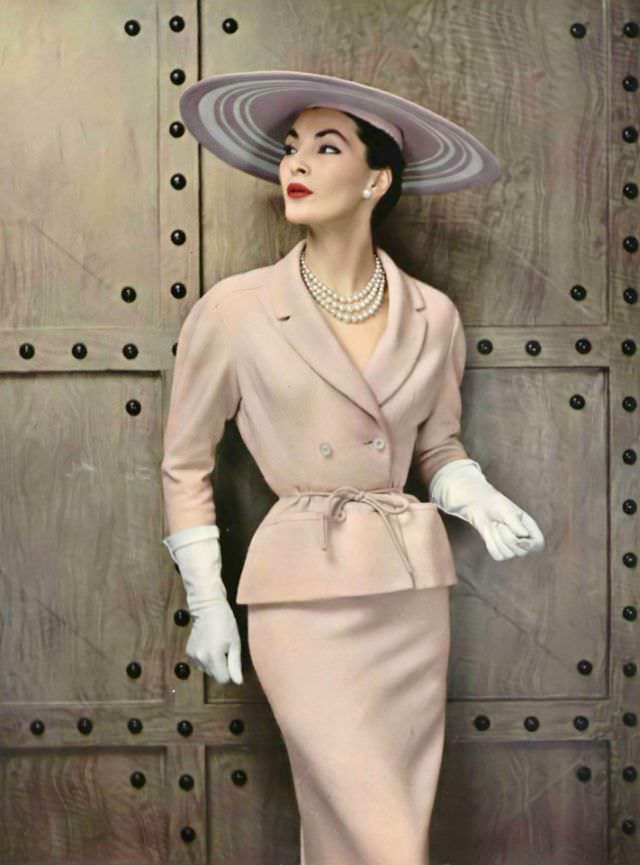
Lucie Daouphars in a lightweight glazed wool suit, the jacket has rounded shoulders and a shawl collar, tied at the waist with cord of the same material by Pierre Balmain, 1954.
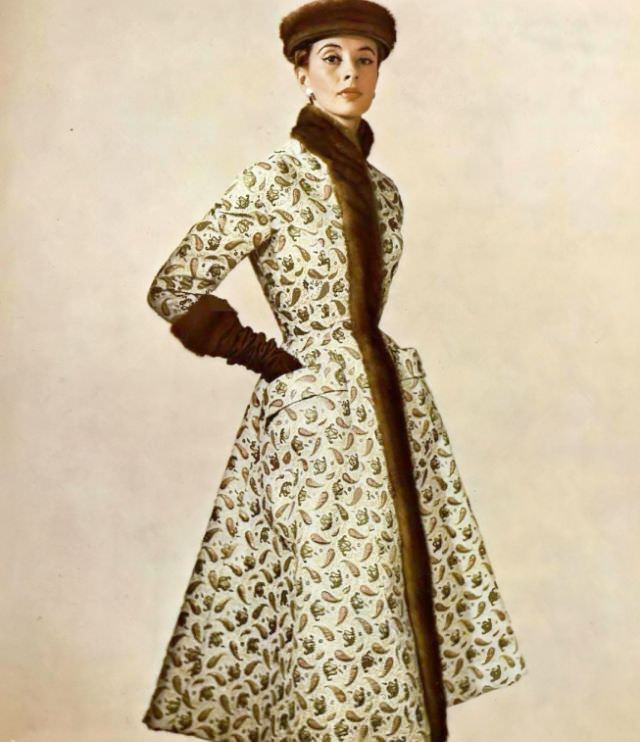
For cooler seasons, Balmain turned to rich outerwear. His 1954 gold brocade coat featured a Persian-inspired pattern and a dramatic stand-up mink collar that extended down the front — a statement piece that reflected his command of opulent materials.
Marie-Thérèse in a gold brocade coat of Persian design, a high stand-up collar of mink that extends down the front, by Pierre Balmain, 1954.
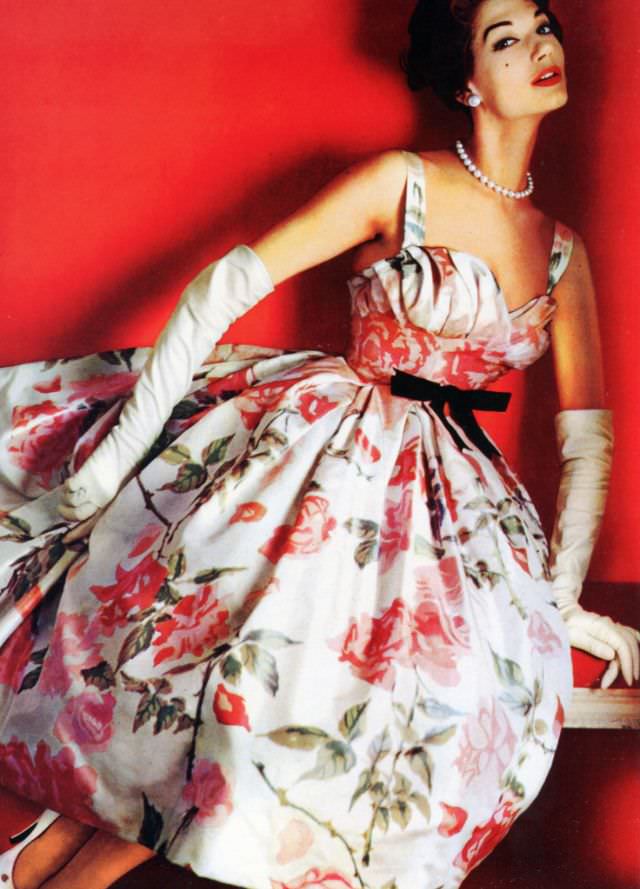
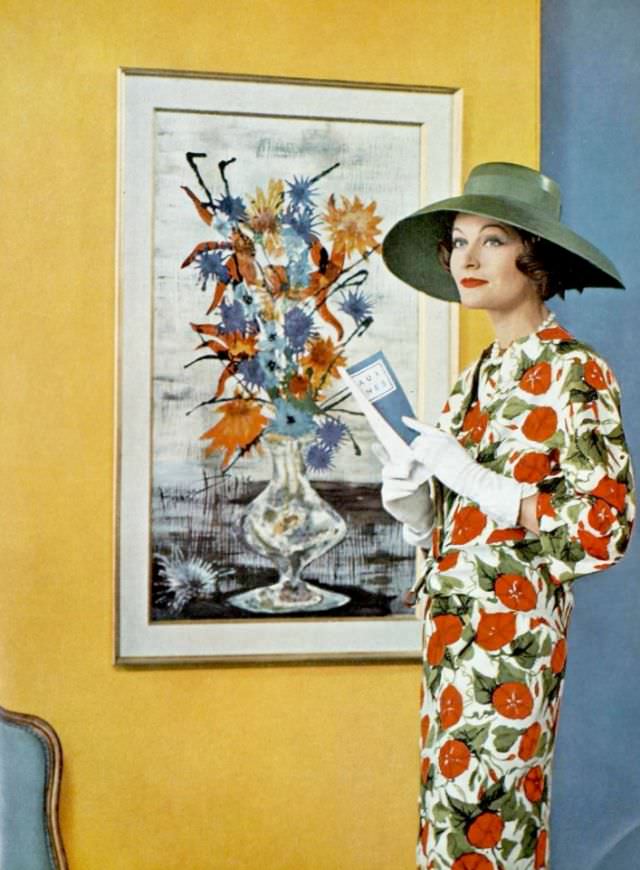
Marie-Thérèse in a silk floral print dress by Pierre Balmain, 1954.
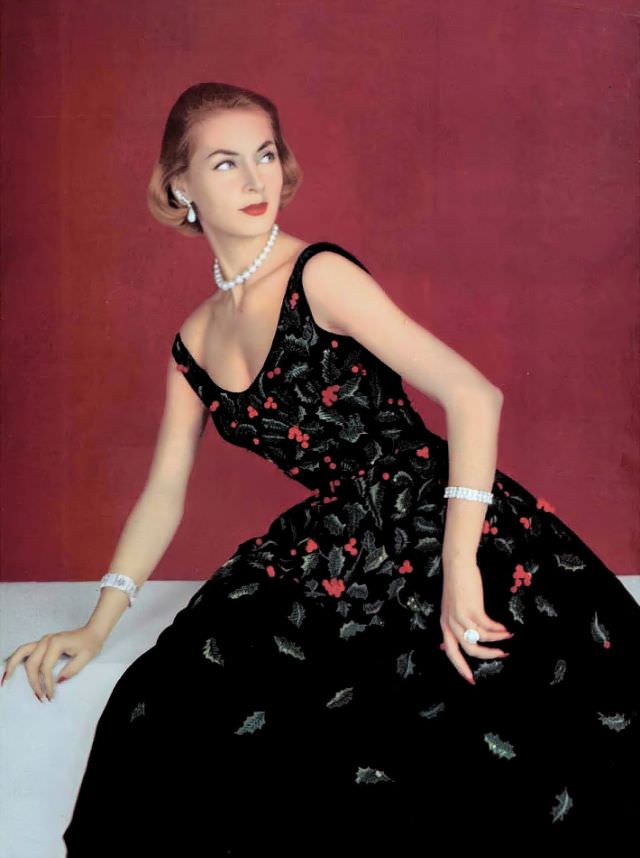
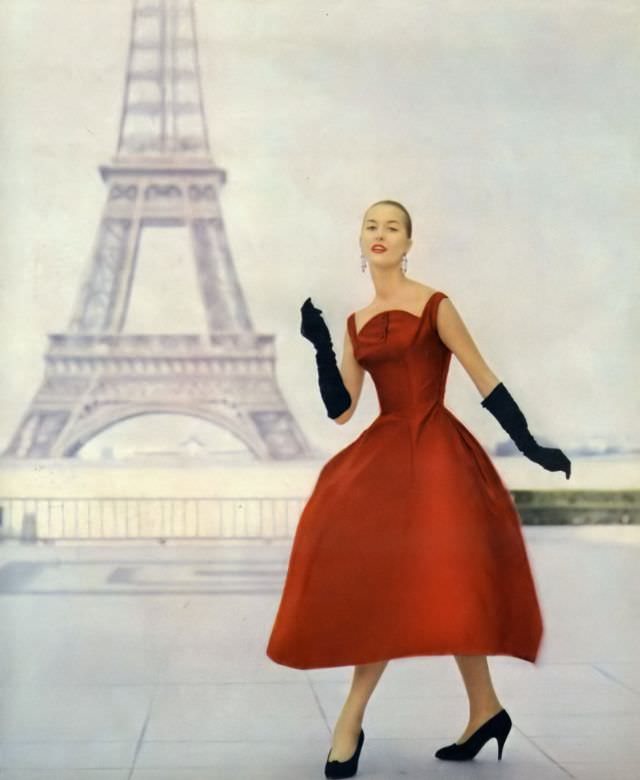
By 1955, Balmain was producing pieces with a distinctly festive character. A black velvet holiday dress embroidered with green holly sprigs and red berries showed his ability to incorporate seasonal detail without sacrificing sophistication. His shorter dance dresses — like a red satin piece with a belled skirt and upturned circle neckline — brought energy and playfulness to formal occasions.
Ghislaine Arsac in the perfect holiday dress, black velvet embroidered with sprigs of green holly and red berries by Pierre Balmain, 1955.
A model in a short little dance dress of red satin with an upturned circle neckline and belled skirt by Pierre Balmain, 1955.
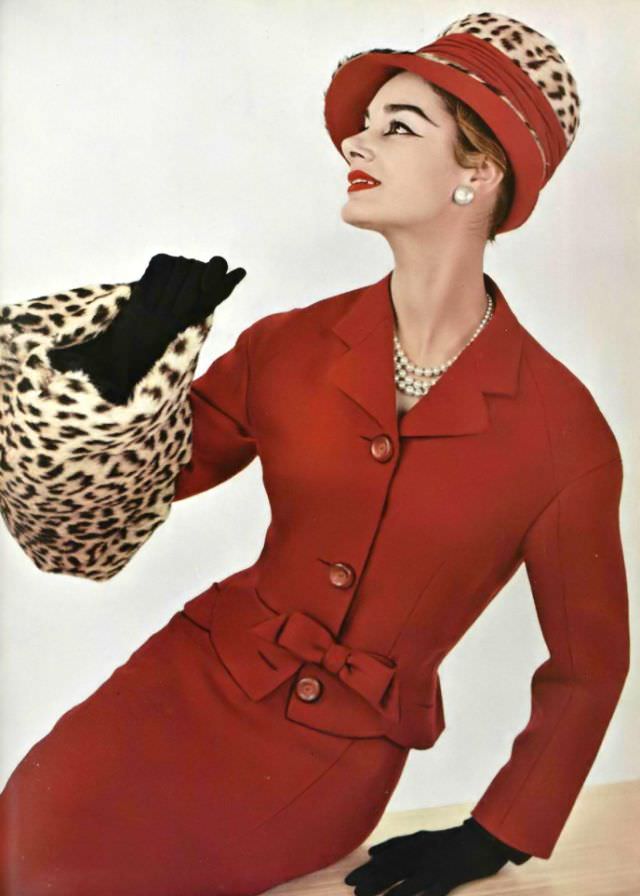
In 1956, the “Jolie Madame” name reappeared — this time on an elegantly tailored flannel suit that demonstrated how versatile the concept had become. His daywear suits of this period often paired with leopard fur accessories, reinforcing a sense of curated glamour.
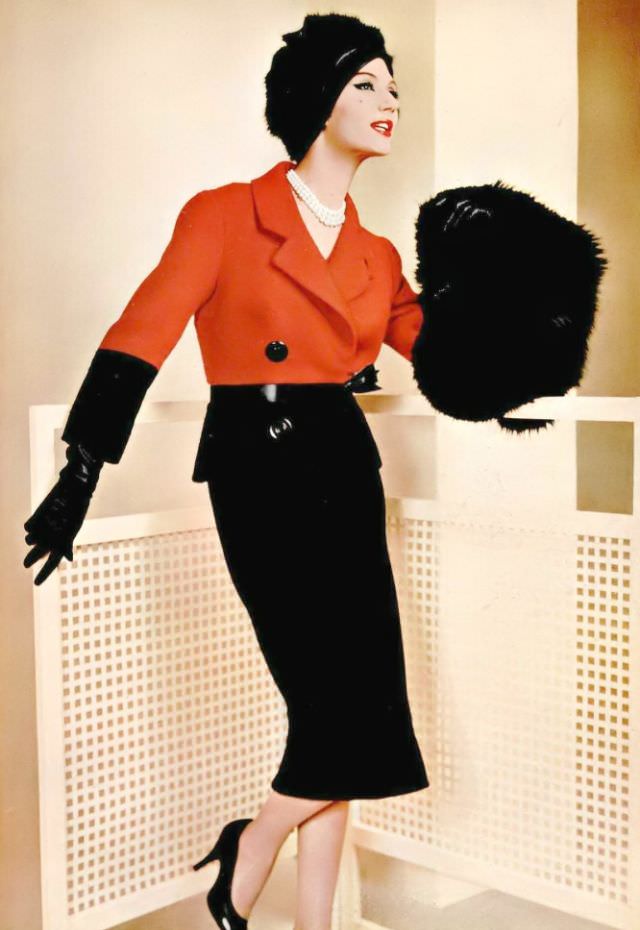
Jacky Mazel in a red Shetland wool suit, the fitted jacket has a small bow at the waist, worn with a leopard fur muff and hat by Pierre Balmain, 1956.
Marie-Thérèse in Balmain’s elegantly tailored flannel suit named “Jolie Madame”, 1956.
From 1957 onward, Balmain’s output grew even more varied. His evening gowns reached new levels of drama — a sapphire blue and garnet red satin gown with a gray satin sash and stole, and the named gown “Erato,” both stand as examples of his mastery of color and structure. His coats, suits, and printed silk dresses showed an equal command of daytime dressing.
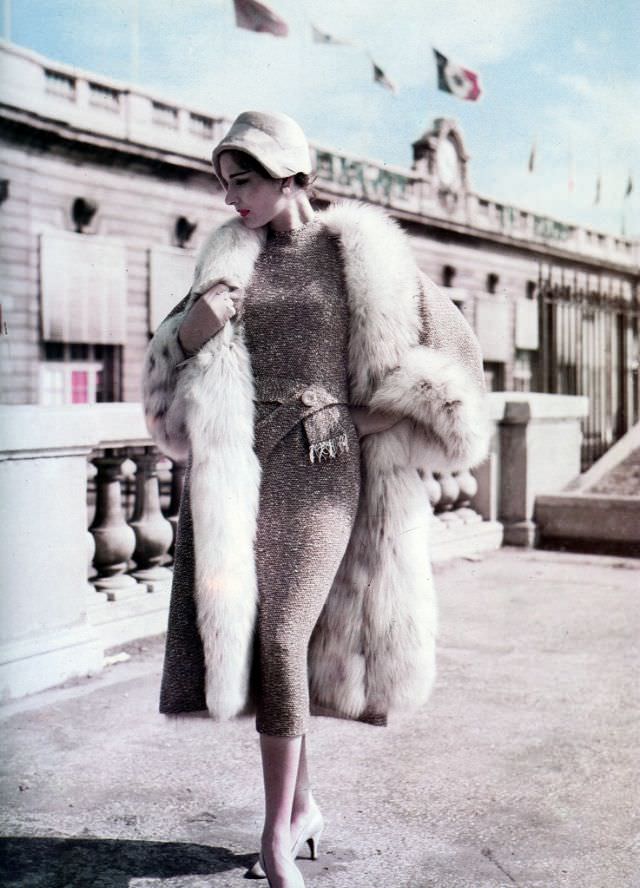
Balmain’s dress and matching coat lined in fur, 1957.
Balmain’s evening gown called “Erato”, 1950s.
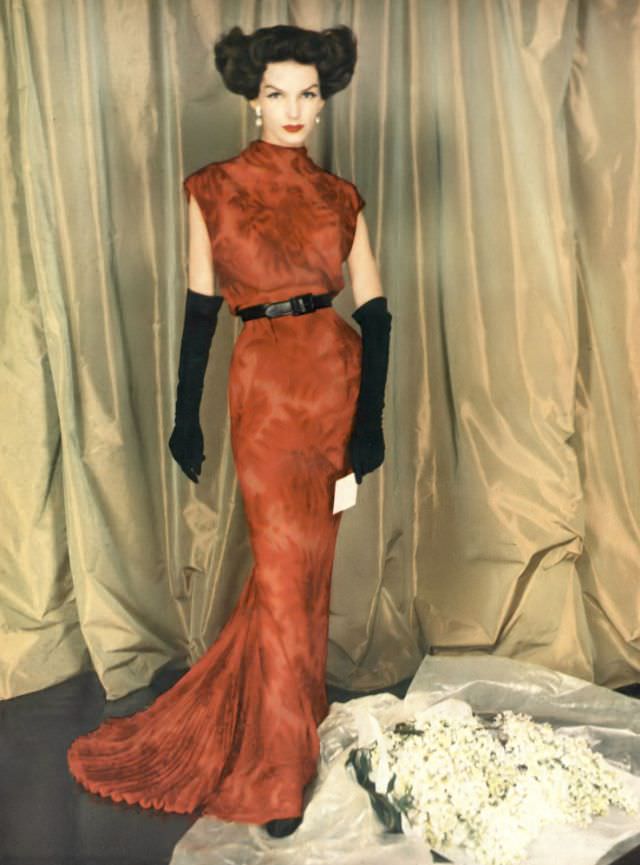
Joanna McCormick in a garnet red print chiffon sheath, bloused over a leather belt, an air-vent in the back and a fan pleat train, by Balmain, 1957.
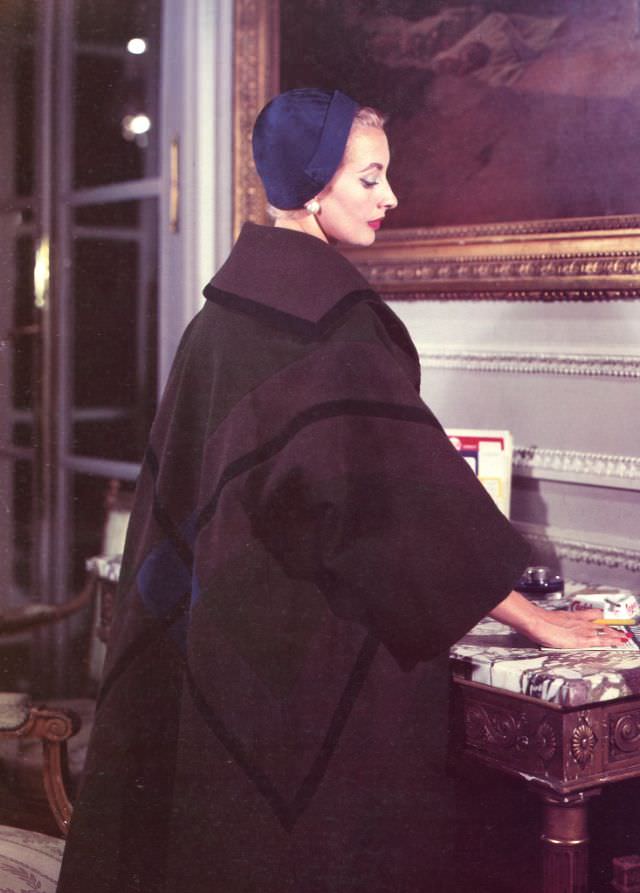
Marie-Thérèse in Balmain’s plaid wool coat of assembled panels, 1957.
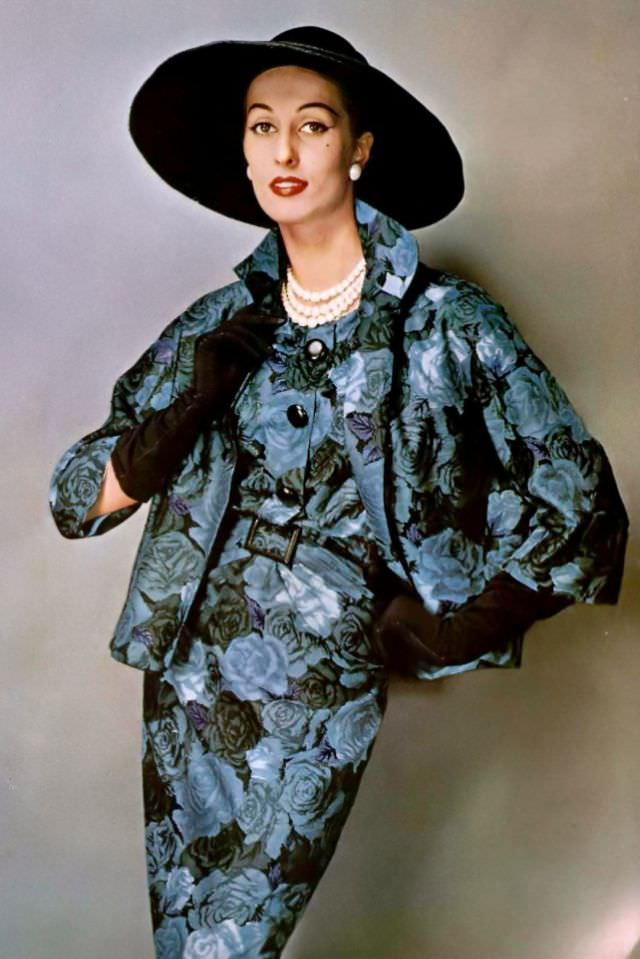
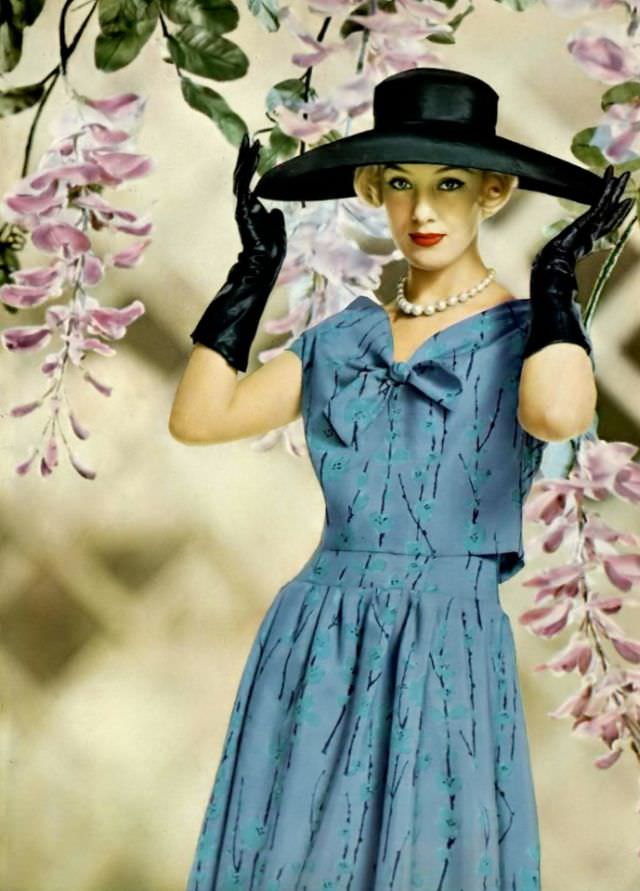
Marina Nicolaïdes in a crepe sheath dress and short jacket in a blue and green rose print by Pierre Balmain, 1957.
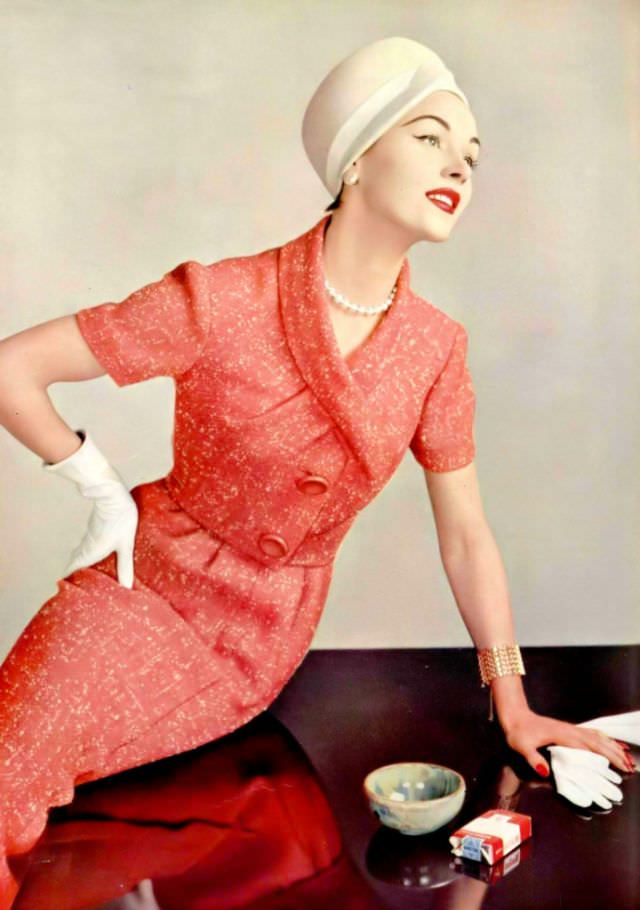
A model in a coral speckled tweed two-piece, a very short jacket with a criss-cross neckline and short sleeves, by Pierre Balmain, 1957.
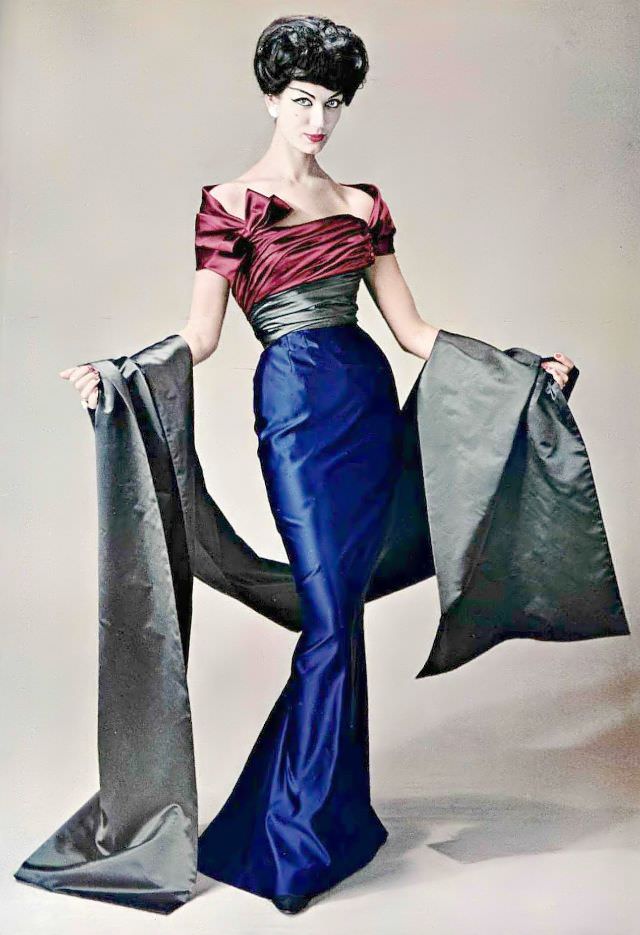
Simone d’Aillencourt in an exquisite satin evening gown in sapphire blue and garnet red, a sash and stole are in gray satin, by Pierre Balmain, 1957.
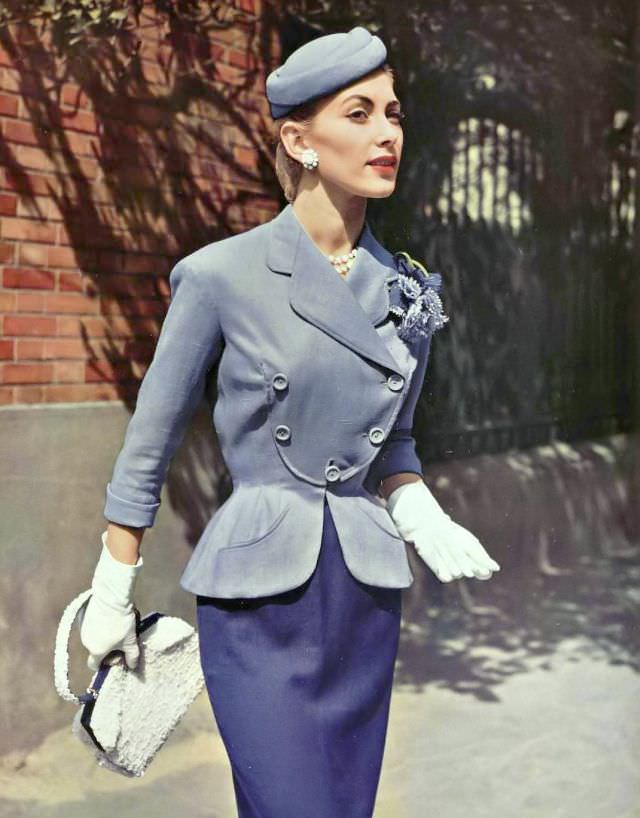
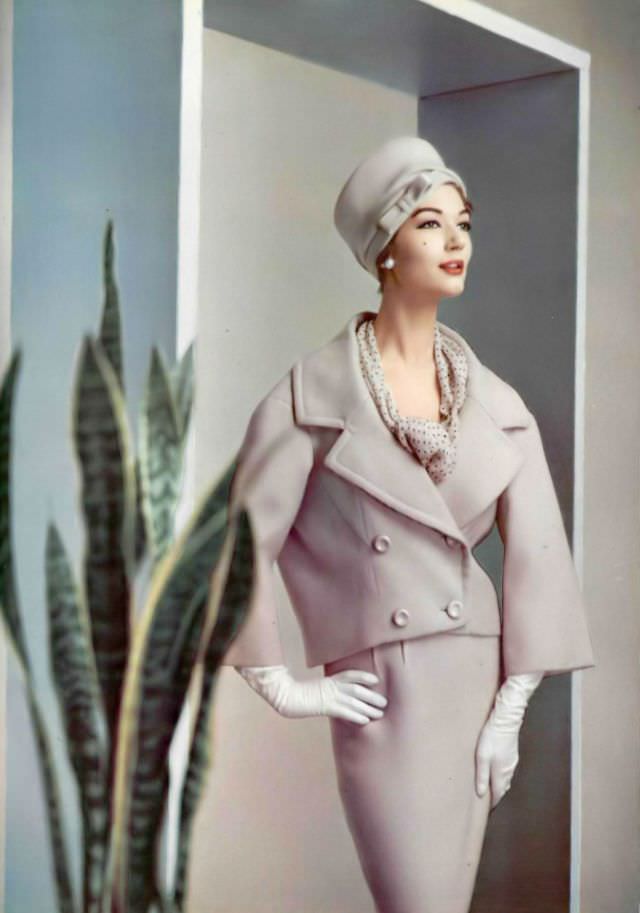
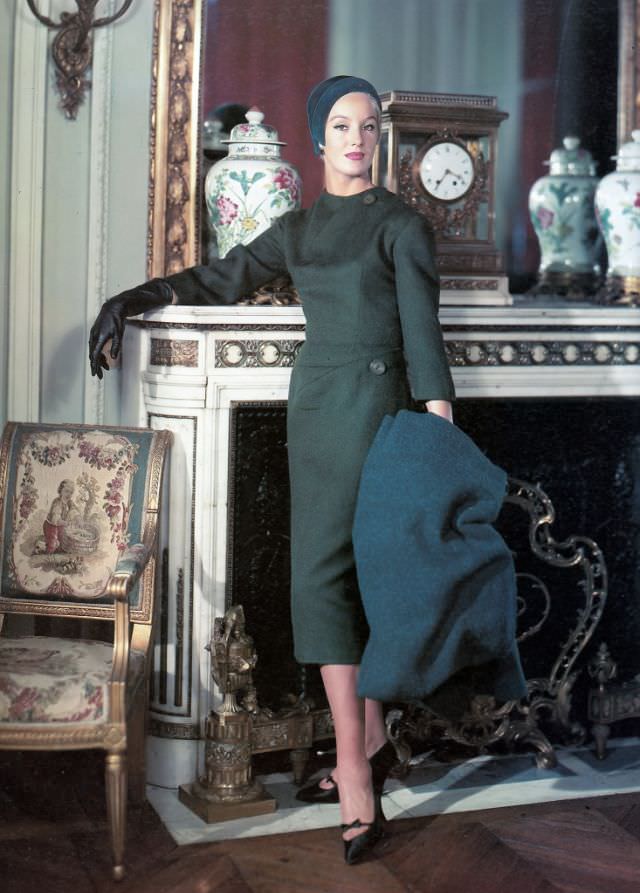
Simone d’Aillencourt in a lilac wool suit, the collar and lapels are widened and the jacket tilts slightly to the back, by Pierre Balmain, 1957.
Simone d’Aillencourt in a pink crepe de chine floral party dress by Pierre Balmain, 1957.
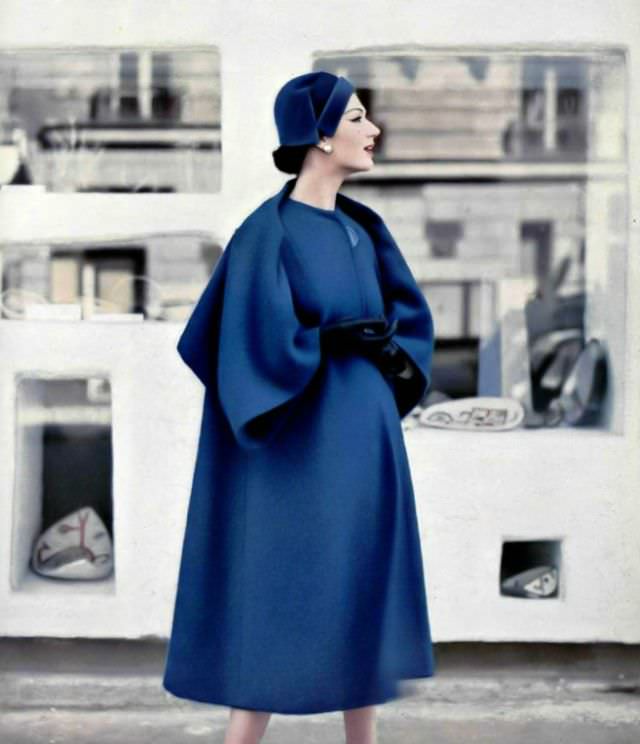
Simone d’Aillencourt in a roomy blue coat whose effect of a short cape at the back is given by the cut and sleeve setting, collarless and one large button-closure, by Pierre Balmain, 1957.
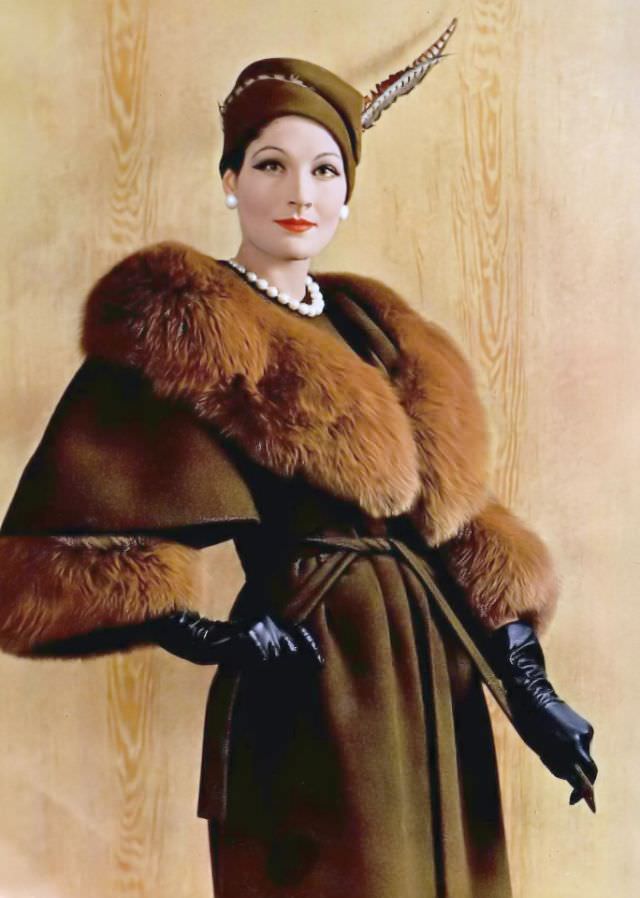
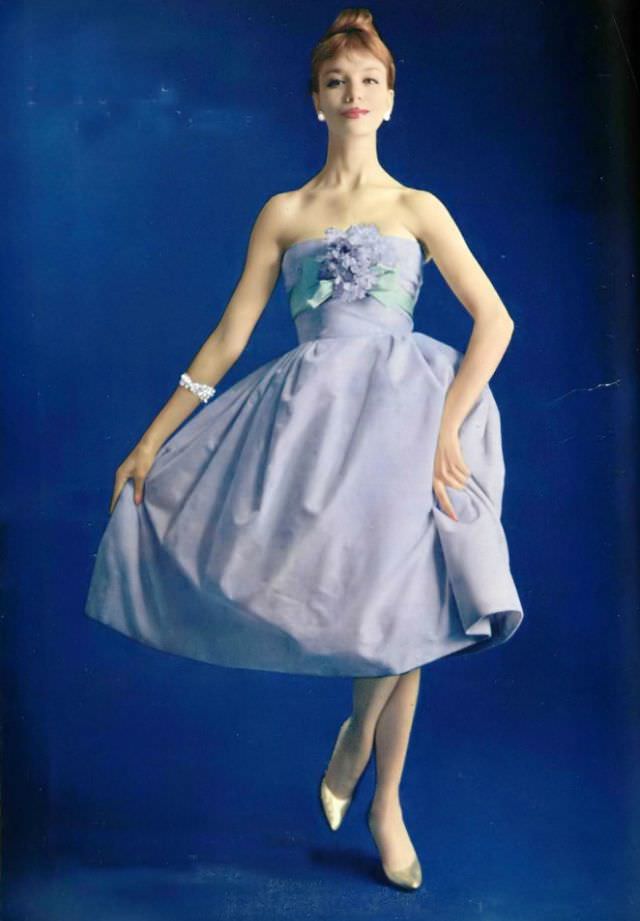
By 1958, Balmain’s Spring/Summer collection and his broader output for the year showcased a full range of his abilities. Welsh model Bronwen Pugh — later Lady Astor — wore both a silk floral print ensemble and a wool wrap coat with red fox collar and cuffs. A strapless pale lilac velvet gown wrapped in pale green faille ribbon with a corsage of violets, and a silk faille gala gown with an embroidered satin top, further demonstrated the range of his formal work.
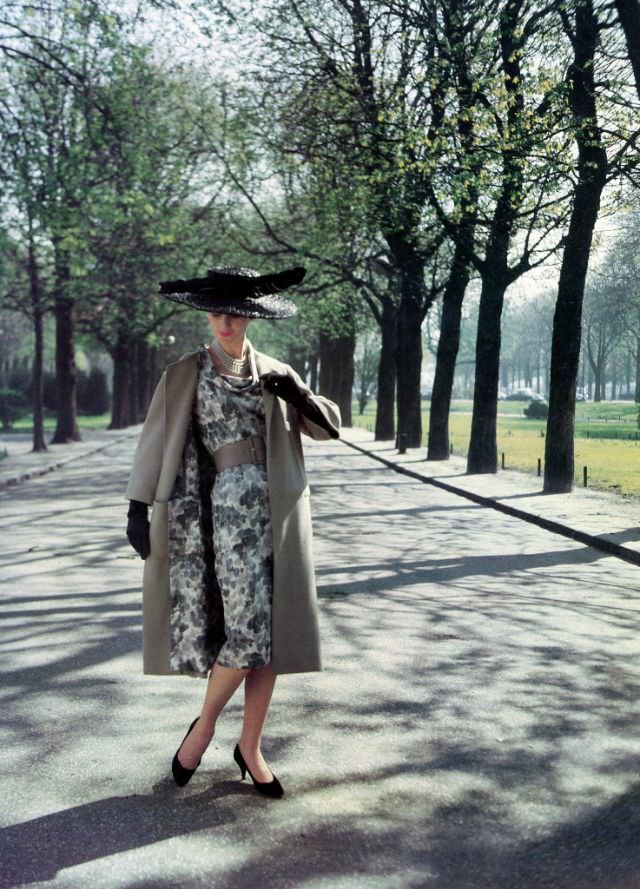
Balmain’s town dress and coat modeled here by Barbara Cailleux, 1958.
Barbara Cailleux in a printed silk dress, long-waisted with a short bolero top, by Pierre Balmain, 1958.
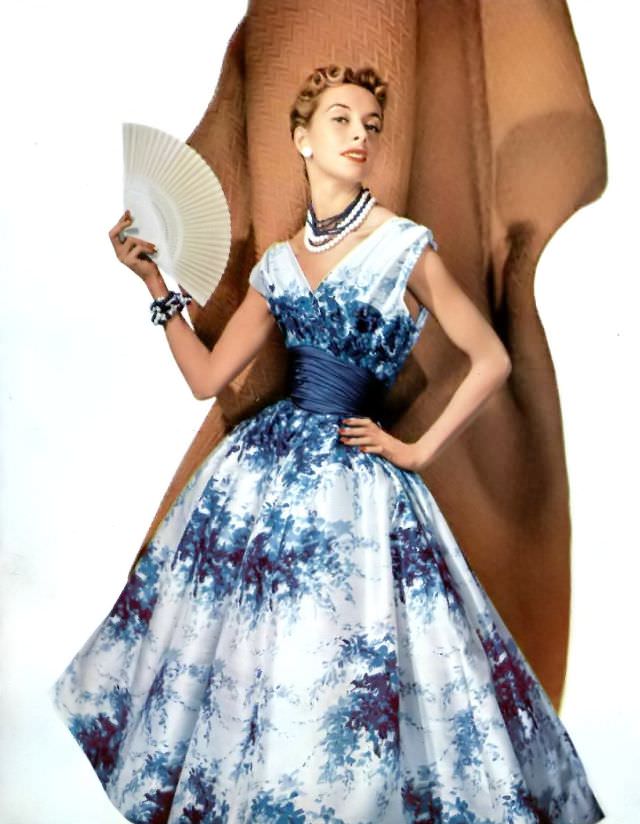
Bronwen Pugh (Lady Astor) in a silk floral print ensemble by Pierre Balmain, 1958.
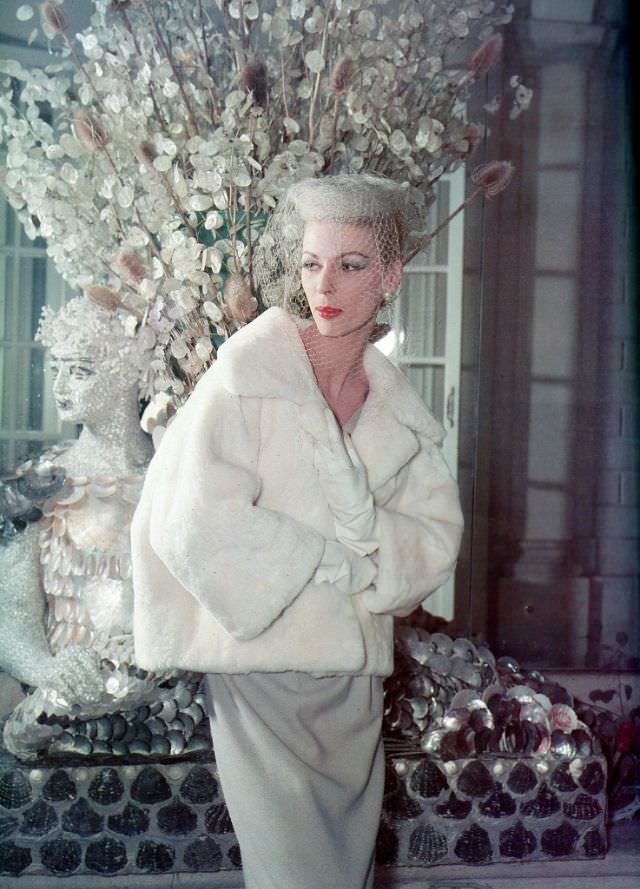
Bronwen Pugh (Lady Astor) in a wool wrap coat with a red fox collar and cuffs by Pierre Balmain, 1958.
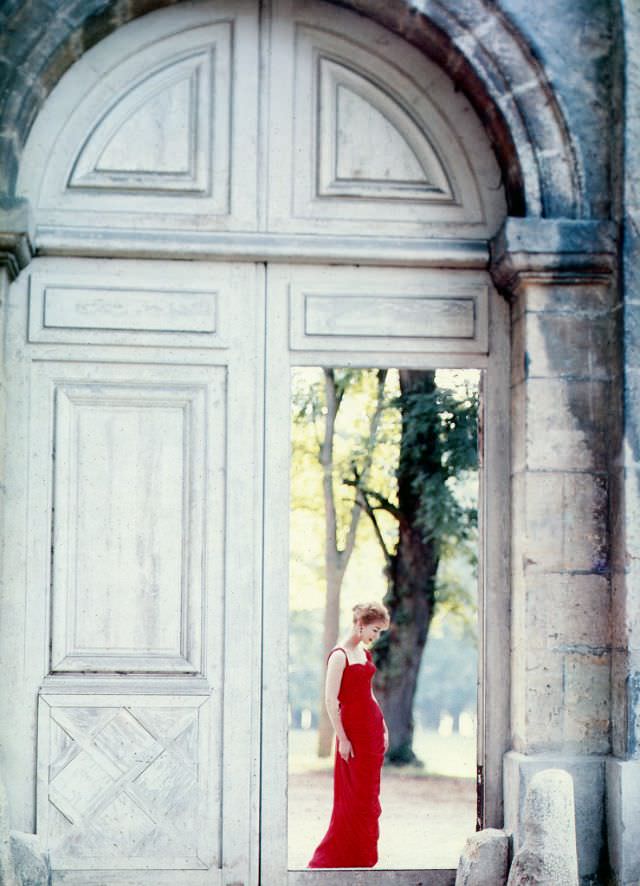
Gunila in a lovely pale lilac velvet dress, the strapless bodice is wrapped in pale green faille ribbon with a corsage of violets, by Pierre Balmain, 1958.
A model is wearing Balmain’s print ensemble from the Spring/Summer collection of 1958.
Simone d’Aillencourt in a gala evening gown of silk faille skirt with an embroidered satin top, by Pierre Balmain, 1958.
Simone d’Aillencourt in a striking red and black wool suit by Pierre Balmain, 1958.
Balmain closed the decade with pieces that looked both backward and forward. His 1959 evening gown “Nuit à Trianon” evoked grand French classical style, while a long velvet skirt with richly embroidered chiffon bodice drew on Renaissance silhouettes. His Spring 1959 town suit “Lexique” and a pale lilac silk mousseline day dress showed that, even at decade’s end, his range remained wide — from structured tailoring to delicate, belted softness.
Balmain’s evening gown called “Nuit à Trianon”, 1959.
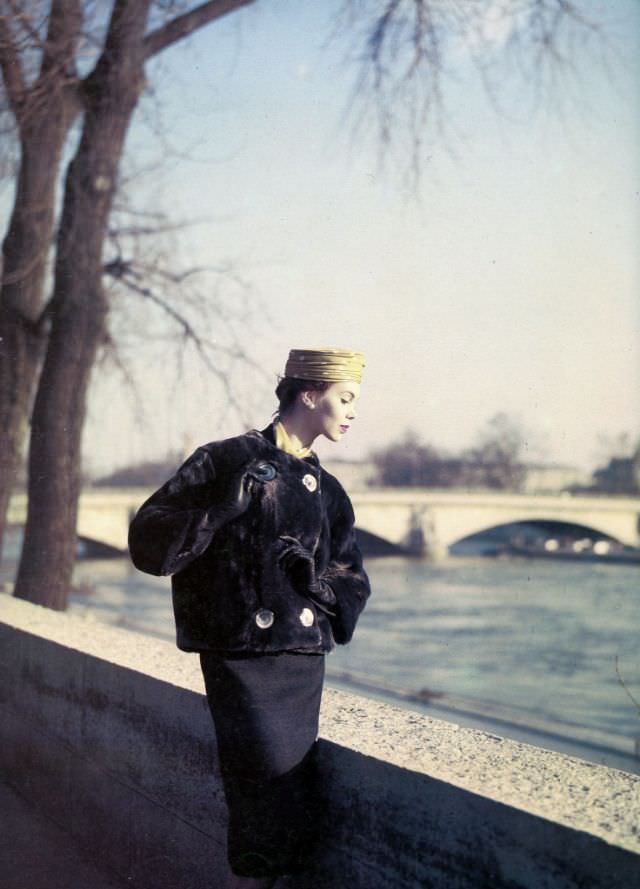
Dorothy is wearing Balmain’s short fur jacket, 1959.
A model in Balmain’s fur jacket, 1959.
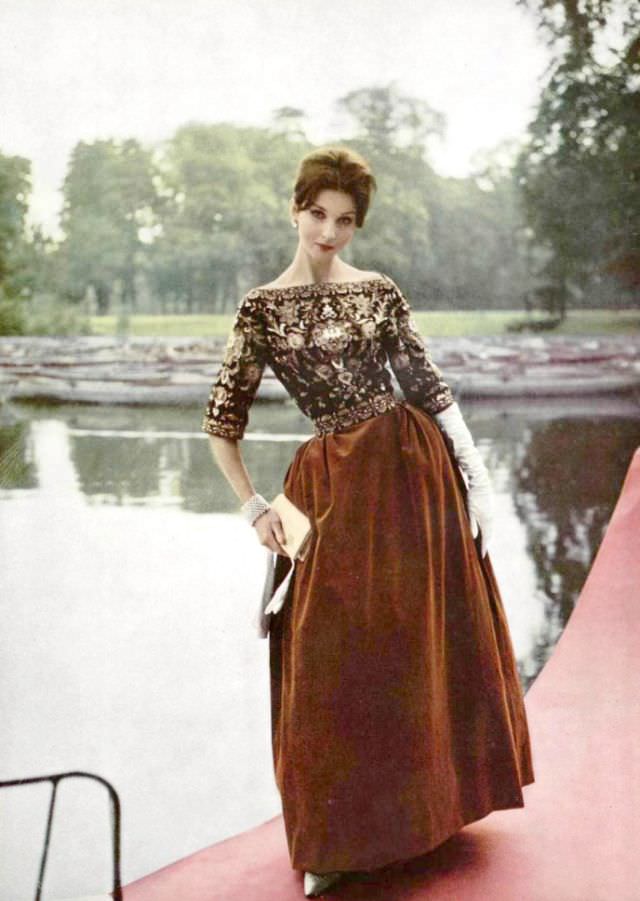
A model in a long velvet skirt reminiscent of the Renaissance, the bodice is richly embroidered chiffon, by Pierre Balmain, 1959.
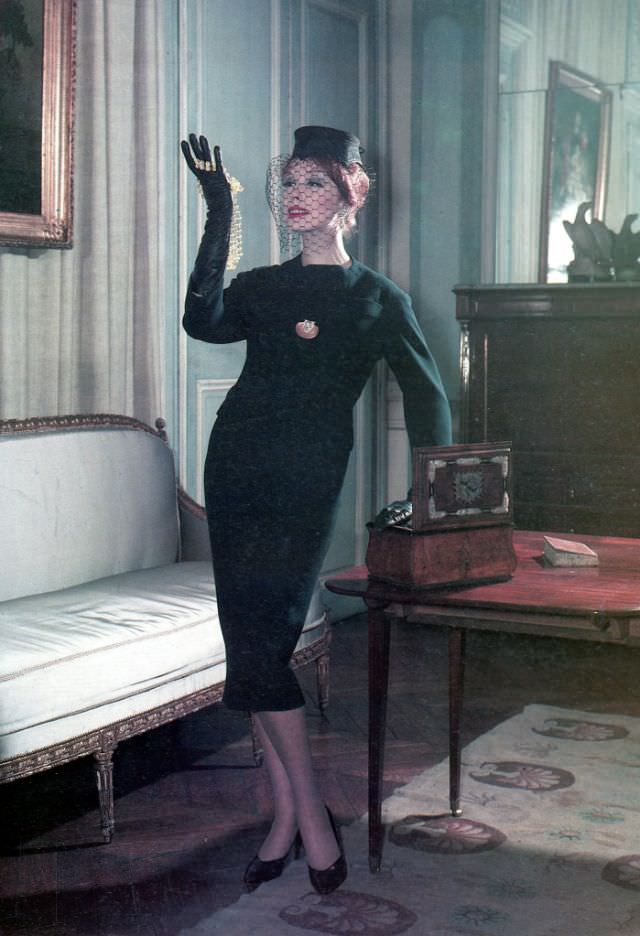
A model is wearing a town suit called “Lexique” from Balmain’s Spring collection of 1959.
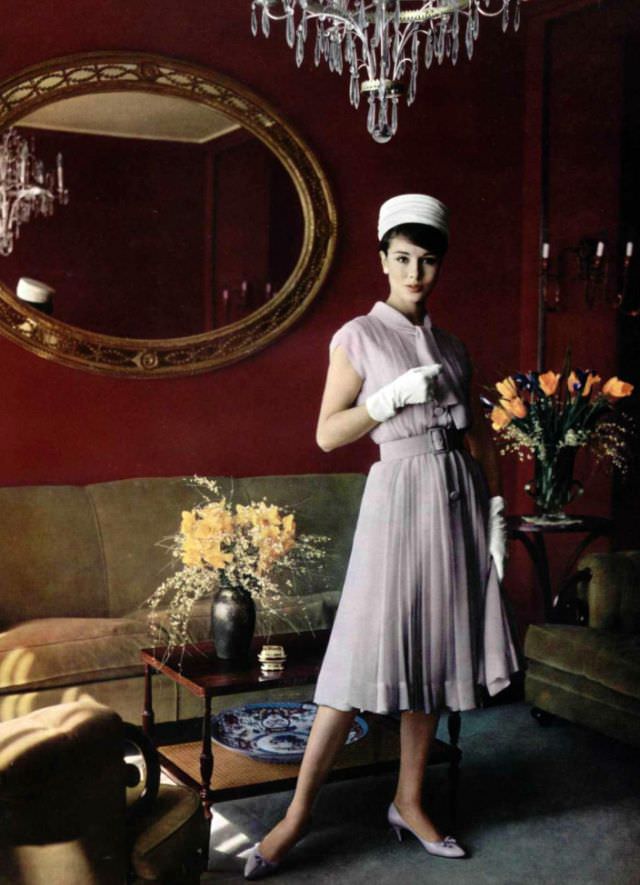
Sondra Peterson in a pale lilac silk mousseline dress, belted and pleated by Pierre Balmain, 1959.
Rachel Mitchell is a vintage fashion enthusiast with a passion for all things retro. She is interested vintage fashion styles, trends, and accessories, and provides tips and tricks for incorporating vintage pieces into modern wardrobes.