Hey There! Before You Go. 😧
Get the best vintage content straight into your inbox!

Don't worry, we don't spam

Nederlandse Spoorwegen: Vintage Photos of the Dutch National Railways in the 1950s

In the early 1950s, the Nederlandse Spoorwegen — the Dutch National Railways — was the backbone of daily life in the Netherlands. Trains moved workers, schoolchildren, goods, and travelers between cities, small towns, and the flat polder countryside. The network stretched from the busy urban hubs of Amsterdam and Utrecht to quiet rural stops that saw only a handful of passengers each day. The photos in this collection were taken between 1950 and 1959, and together they form a rare ground-level record of a railway system in full swing.

The Haarlemmermeer lines — a group of regional routes running through the low-lying farmland west and southwest of Amsterdam — appear repeatedly in these early images. On February 22, 1950, a photographer made a full day’s journey across several of these stops, capturing scenes that would vanish within months. The platform at Nieuwersluis was unusually crowded for a winter morning, though the sharp backlight of that February day made the crowd difficult to pick out.
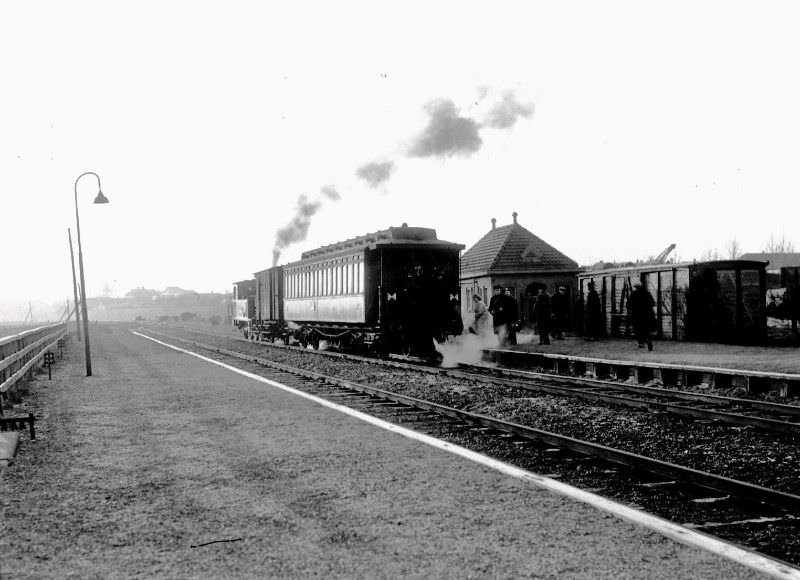
A standard train waiting for Nieuwersluis. Due to the strong backlight on this February day, it is somewhat difficult to see, but for this line there is a lot of crowds on the platform, February 22, 1950

Just down the line at Uithoorn, the railway yard stretched out above the flat polder landscape. A coal park, freight wagons, and a water column sat alongside the locomotive shed — all of it visible from a single vantage point that showed just how exposed these installations were in the open Dutch countryside.
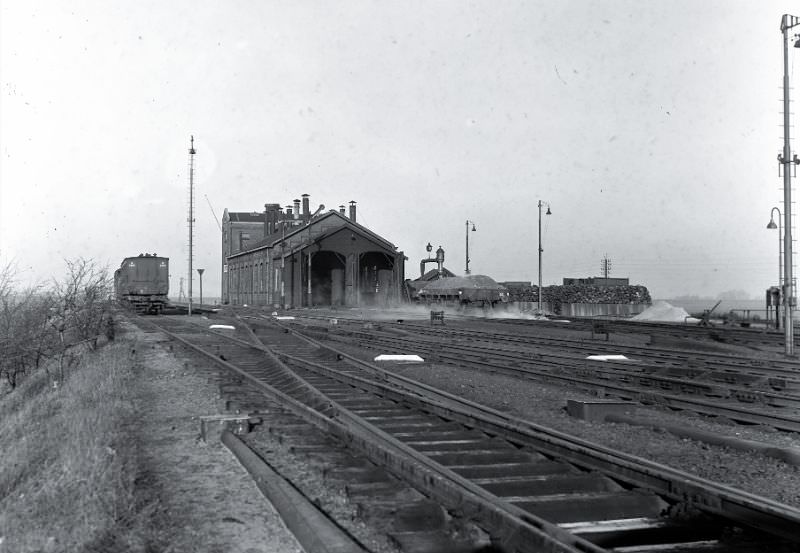
A view over the yard that protrudes above the bare polder plain to the workshop and locomotive shed of Uithoorn with the coal park, wagons with and for coal and the water column, February 22, 1950

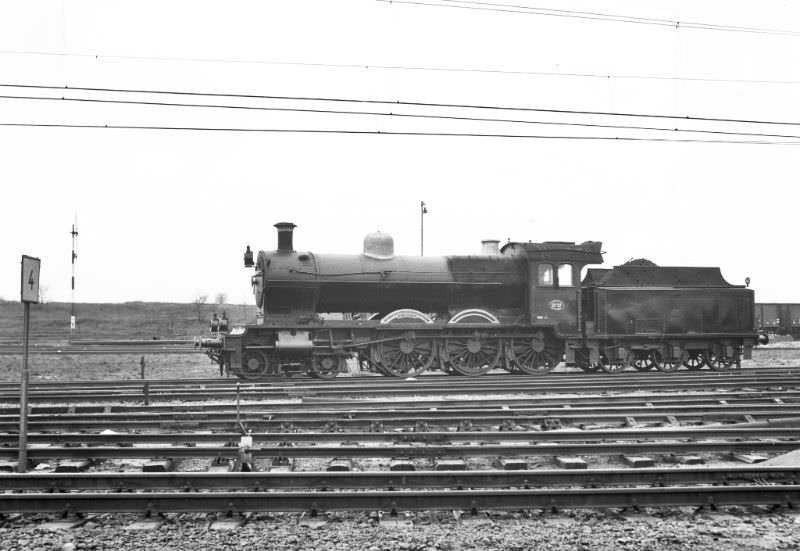
Inside that same locomotive shed, maintenance work continued around the clock. The 7009 sat cold over an inspection pit, awaiting repair. Nearby stood the 7706, a type regularly used across the Haarlemmermeer routes. These steam engines were workhorses — unglamorous but essential.
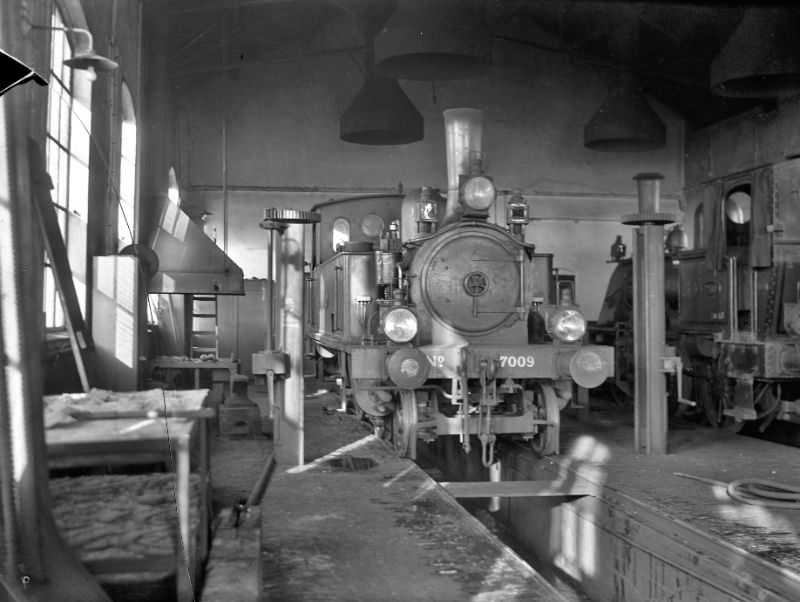
Into the locomotive shed, where the 7009 has been stored cold above the pit for maintenance or repair of a small defect. On the right is the 7706, a type that was also used on the Haarlemmermeer lines, February 22, 1950

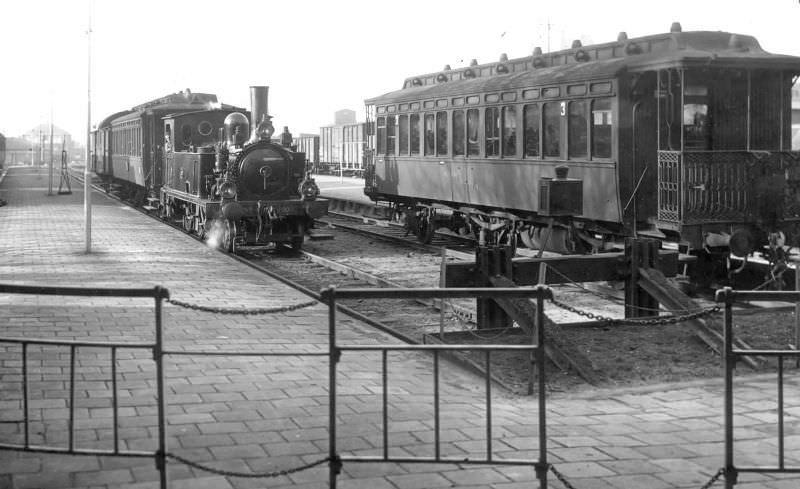
At Uithoorn station, locomotive 7003 stood ready with a train bound for Amsterdam, breathing small clouds of smoke across the platform. Meanwhile, locomotive 7001 made an impressive departure from Amstelveen, heading south toward Aalsmeer on the right-hand track.
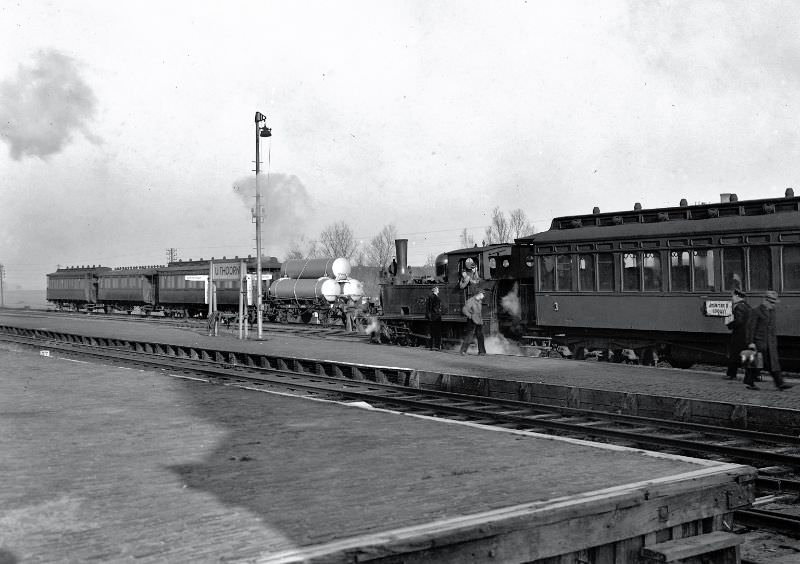
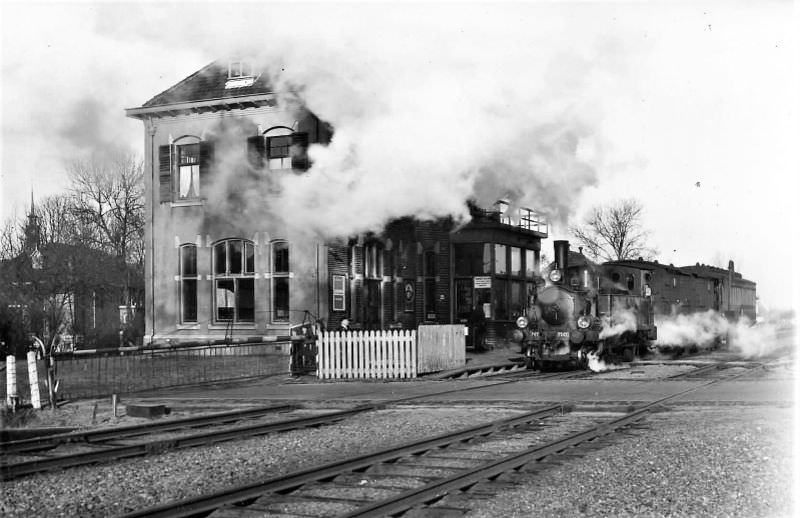
The 7003 is ready for the train to Amsterdam, blowing small clouds of smoke over the platform, Uithoorn, February 22, 1950
The 7001 departs from Amstelveen station in an impressive way. Given that he is on the right track, he will head towards Aalsmeer, February 22, 1950

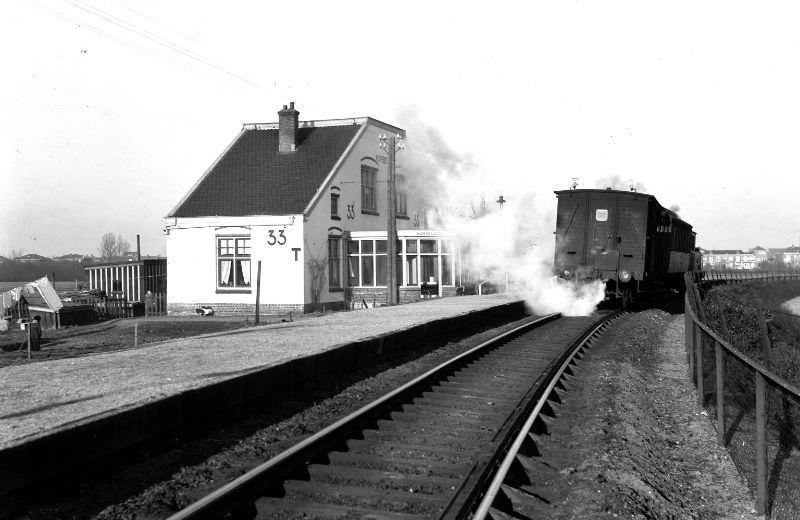
Between stations, the Haarlemmermeer lines passed through stretches of complete rural silence. When no train was in sight, the tracks simply disappeared into the flat horizon. A guard house at no. 33 on the Karselaan in Amstelveen marked the route as trains rolled past toward Amsterdam. These small structures were staffed to manage level crossings — a reminder of how labor-intensive the railway operation was.
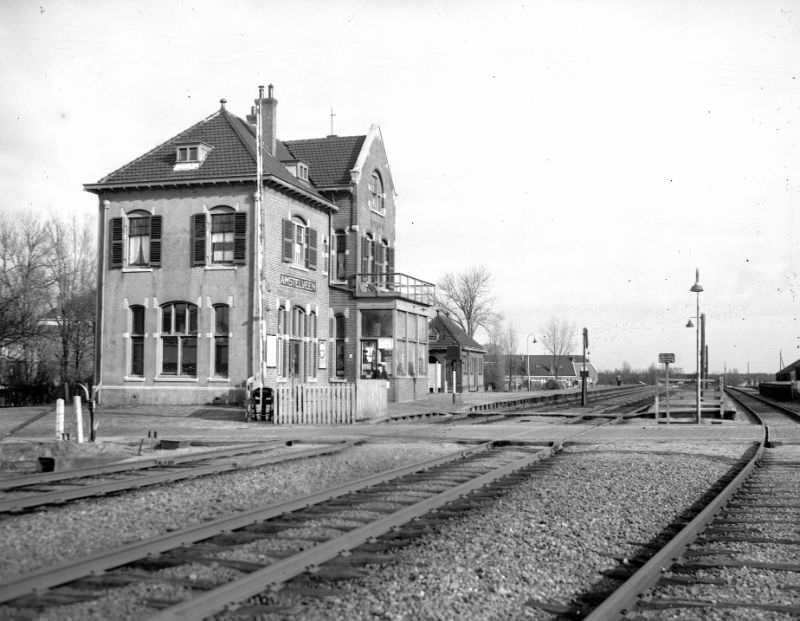
The ultimate tranquility that the Haarlemmermeer lines radiated when there was no train in sight, February 22, 1950
On the way to Amsterdam, just such a standard composition passes one of the many guard houses along the track. It is no.33 on the Karselaan in Amstelveen, circa 1950

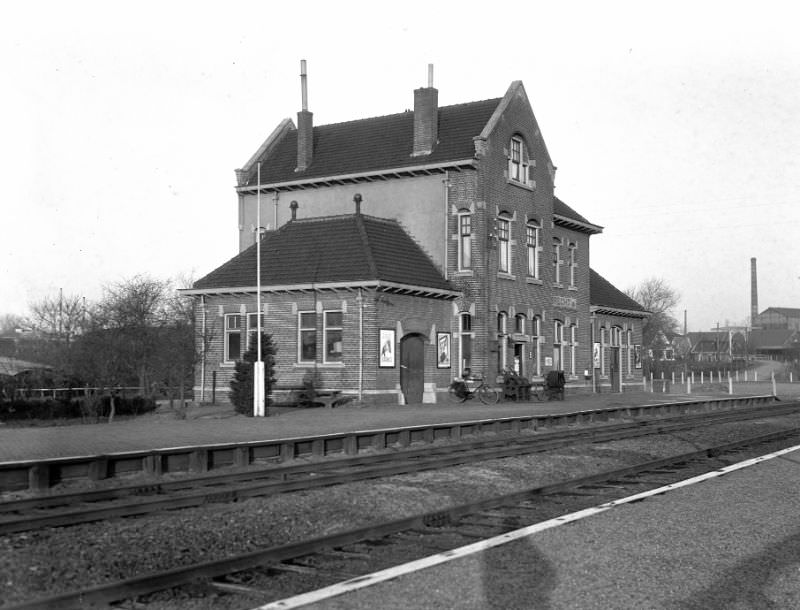
Several stations along the Haarlemmermeer lines were already in their final months of operation when these photos were taken. The stop at Legmeerpolder stood alone in thick black clay with no passengers in sight on February 22, 1950 — it closed in September of that year and was demolished in 1963. The Amstelveen stop on the Amsterdamseweg, photographed the same day, also closed in September 1950. Its building survived until 1986.
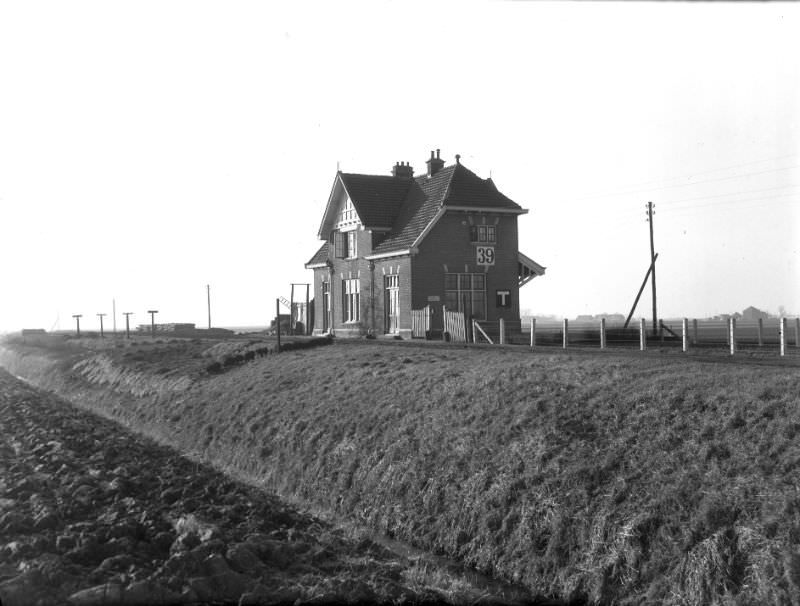
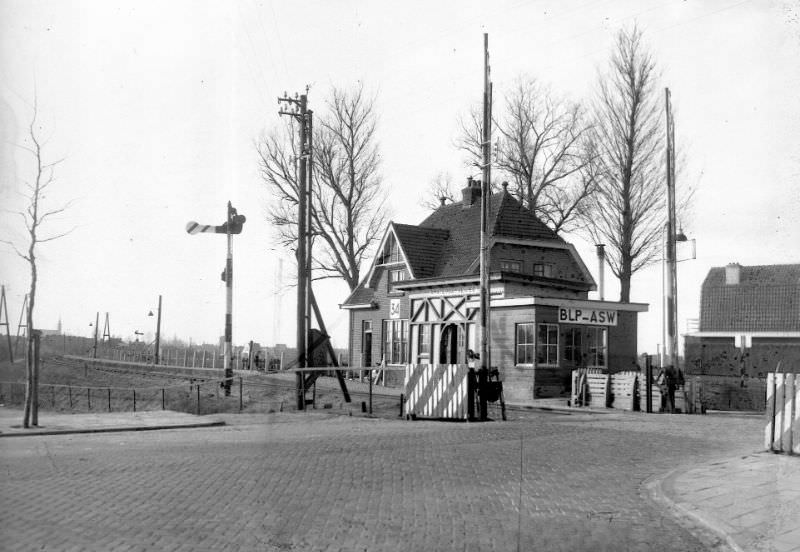
The station Legmeerpolder is lonely in the thick black clay - so no stop, February 22, 1950. This station was also in service until September 1950. It was demolished in 1963
The station Legmeerpolder is lonely in the thick black clay – so no stop, February 22, 1950. This station was also in service until September 1950. It was demolished in 1963
Such a "multifunctional" building was not very common at the HESM Look south from the Amsterdamseweg in Amstelveen, February 22, 1950. This stop was last operated in September 1950. The building was demolished in 1986
Such a “multifunctional” building was not very common at the HESM Look south from the Amsterdamseweg in Amstelveen, February 22, 1950. This stop was last operated in September 1950. The building was demolished in 1986

Not all stations were quiet. At Enschede in the far east of the country, a major station handled significant traffic. At Aalsmeer, a three-carriage train prepared for departure to Amsterdam, the locomotive crew packed and ready at their machine.
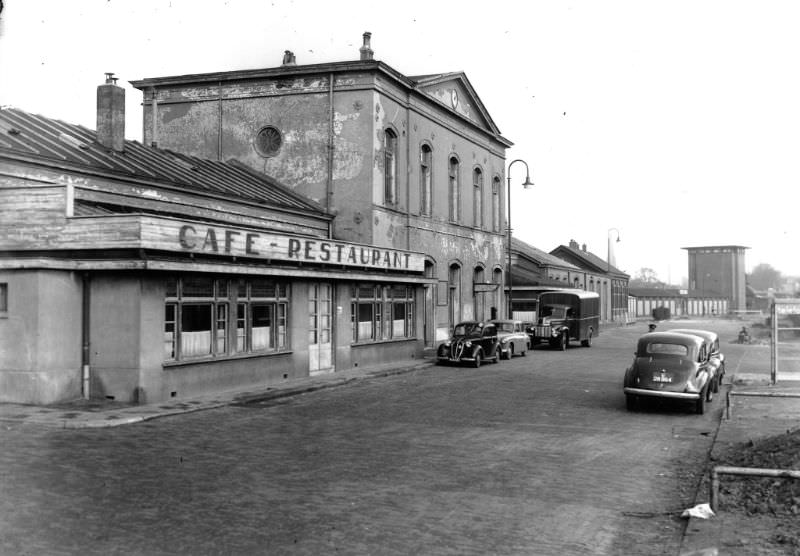
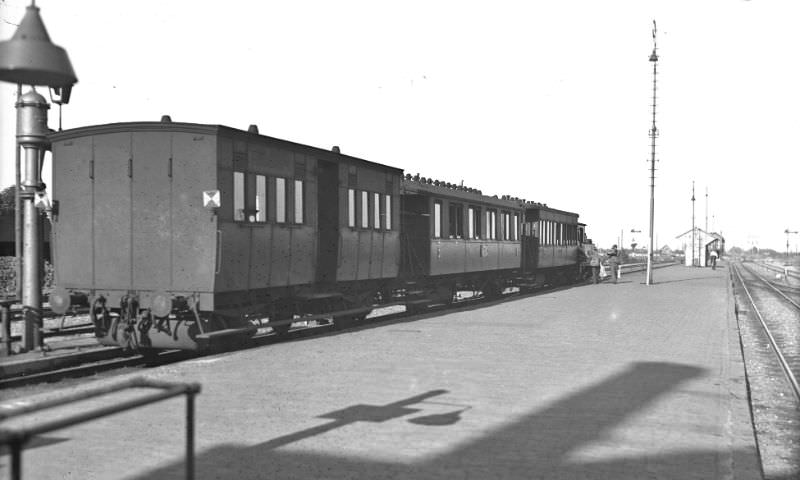
Enschede station, one of the most eastern stations in the Netherlands, March 1, 1950
Train with no fewer than three carriages ready for departure to the capital. The locomotive personnel have arrived at their machine packed and ready to go, Aalsmeer, circa 1950

Locomotive 7008 was photographed puffing through Bovenkerk with a 1+1 standard consist, bound for Aalsmeer. At Vinkeveen, the stationmaster and signal box keeper stood stiffly in front of his Post B for the camera. At Mijdrecht — a name that railway enthusiasts remembered with mixed feelings, likely due to its complicated operating history — the line continued its route through the polder.
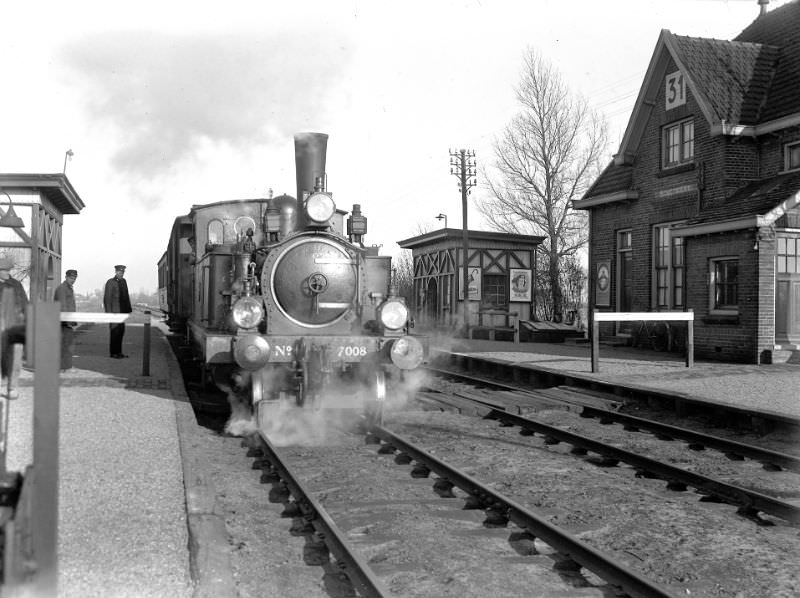
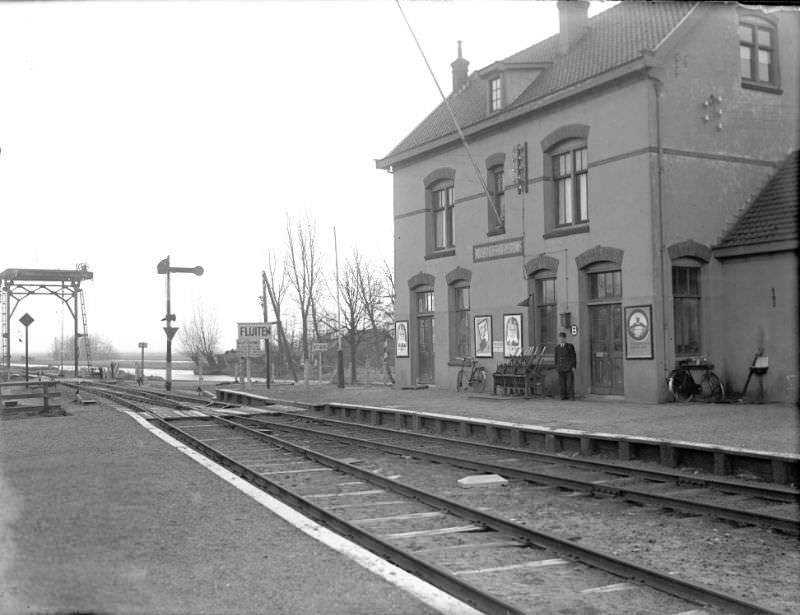
The 7008 puffing in Bovenkerk. The train, again assembled according to the 1+1 standard, is on its way to Aalsmeer, February 22, 1950
Vinkeveen station with the station master annex signal box keeper stood a bit stiffly in front of the door of his Post B, February 22, 1950
Mijdrecht, a name that arouses mixed feelings among railway enthusiasts, February 22, 1950

Other shots from the same day show additional stations in the Haarlemmermeer network. Aalsmeer’s second station — originally called Oosteinde when it opened in 1915, renamed Aalsmeer Oost in 1930 — still handled goods traffic at this point. It would continue to do so until 1972. Remnants of the broader Haarlemmermeer network, still just barely running passenger services, were also captured in February 1950.
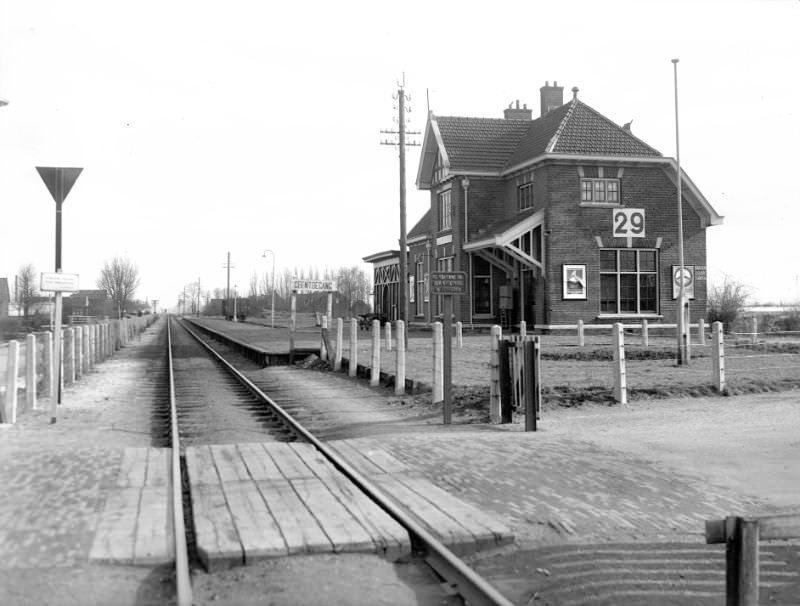
Oosteinde station is opened in 1915. In 1930, to avoid confusion with a nearby hamlet, the name was changed to Aalsmeer Oost. Goods traffic was still possible until 1972, after which the last remnant was also broken up, circa 1950
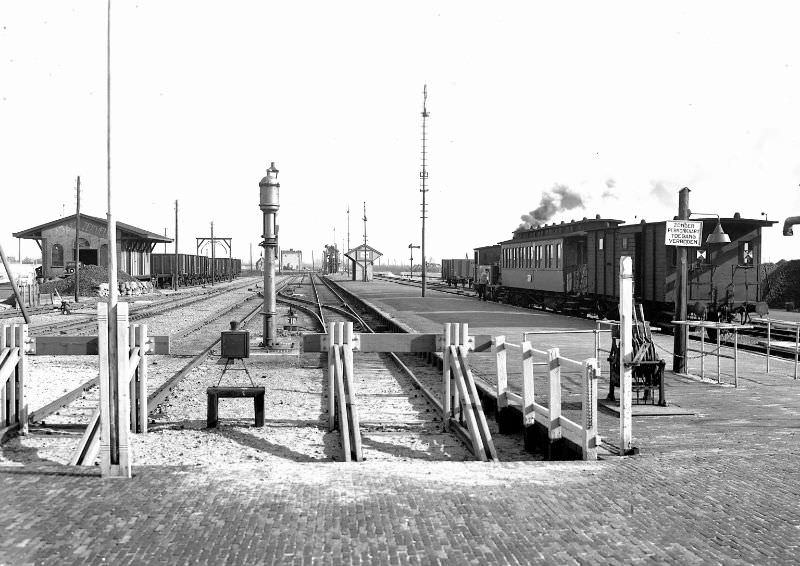
From behind the station building, the train to Amsterdam has been prepared, Aalsmeer, circa 1950
Remnants of the Haarlemmermeer railway lines, which were still just in passenger service, February 1950

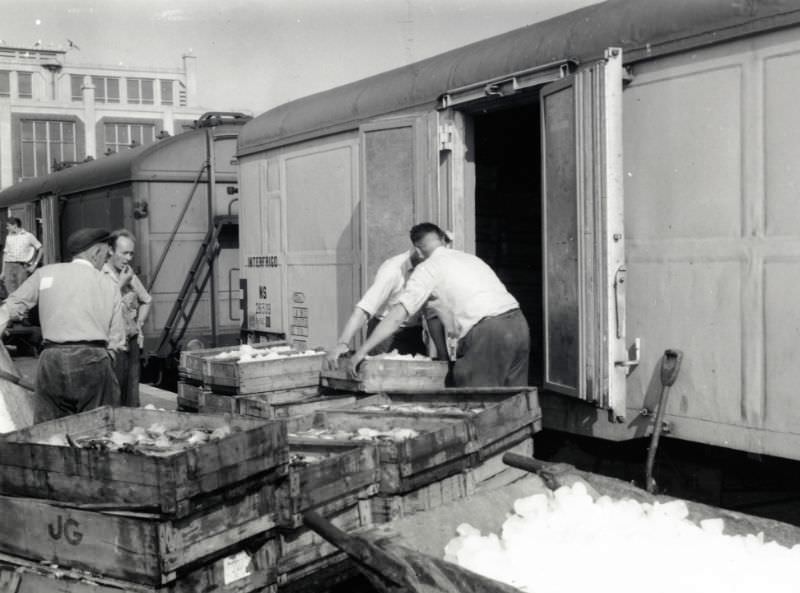
Freight operations were a major part of what the NS handled every day. In Schiedam in 1951, workers transferred boxes of bottles into baskets on the platform. At the Maarn Goederen yard, a three-axle marble carrier car — code 92316mw, rated for 30 tons — sat in the yard on July 16, 1951. Fish was transported by rail from IJmuiden as late as 1994, and a 1959 photo shows a fish load being handled at the docks.
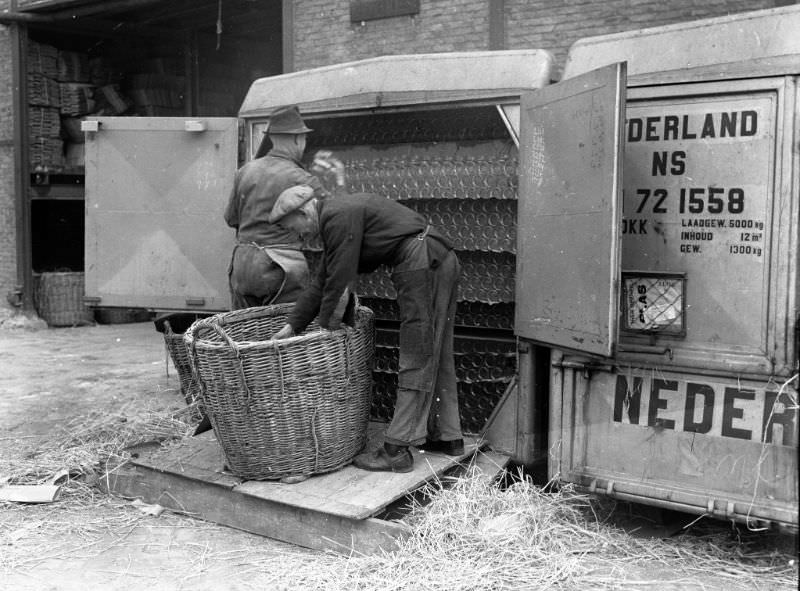
A box full of bottles is being transferred into baskets, Schiedam, 1951
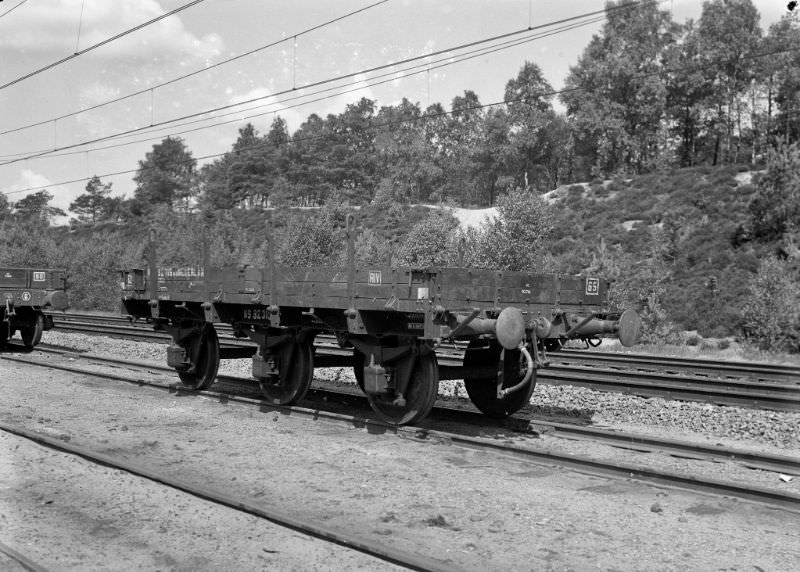
A loose three-axle marble carrier car at the Maarn Goederen yard. The car carries the code 92316mw and can load 30 tons of the precious stone, July 16, 1951
Fish load. Until 1994, fish was transported by rail from IJmuiden, September 12, 1959

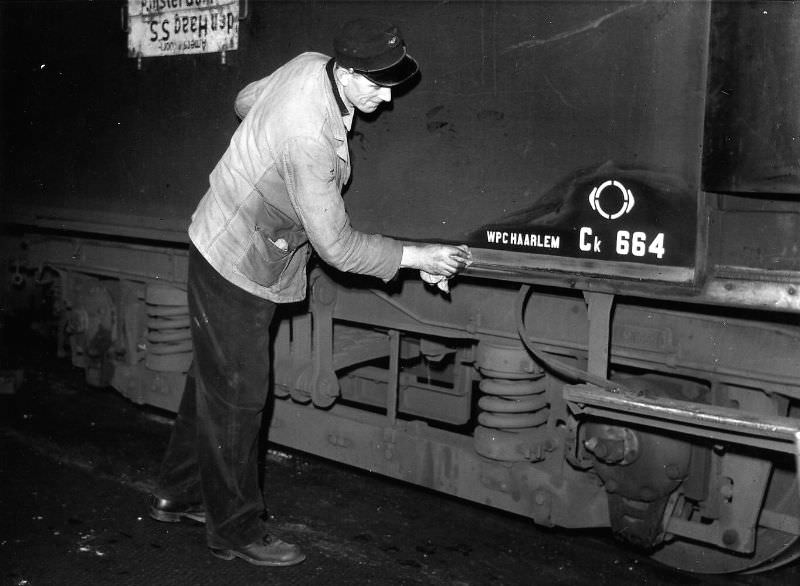
The NS workshops at Zaanstraat in Amsterdam were photographed on October 29, 1951. Outside the warehouse, workers managed equipment and materials. Inside, carriage cleaners worked through the facility’s rolling stock. By July 1950, the first new locomotive had arrived in Tilburg before being transferred to Amsterdam Zaanstraat two days later.
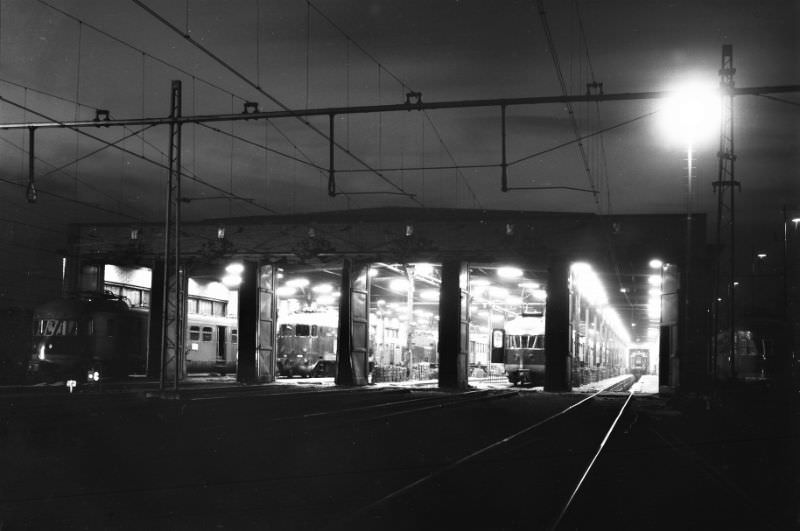
In front of the warehouse of the Werkplaats Zaanstraat, October 29, 1951
The carriage cleaner in the Amsterdam Werkplaats Zaanstraat, October 29, 1951
The first locomotive arrives on July 7, 1950 in Tilburg, to arrive 2 days later to Amsterdam Zaanstraat

In August 1952, an NS inspector arrived by service bicycle at a farm in Broek op Langedijk to discuss matters with local farmers — a scene that illustrated how deeply the railway was embedded in rural commerce. That same month, Pernis station was photographed, adding another freight and industrial stop to the record.
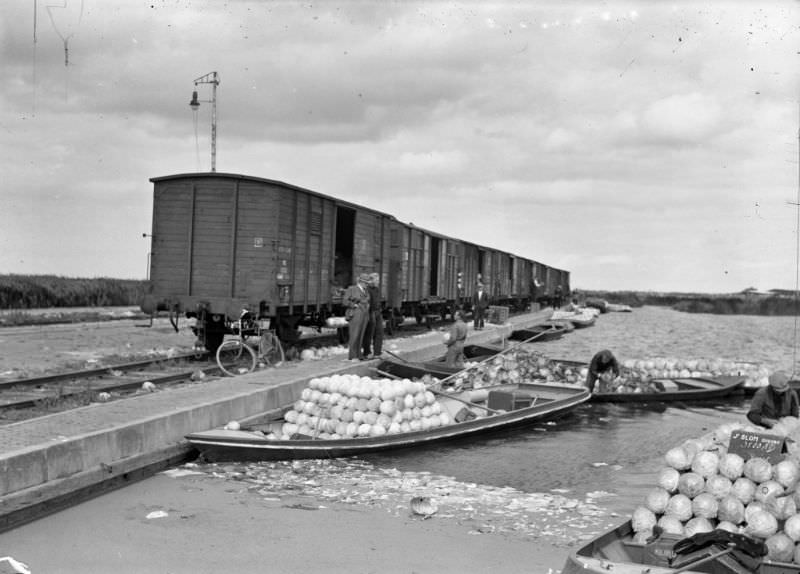
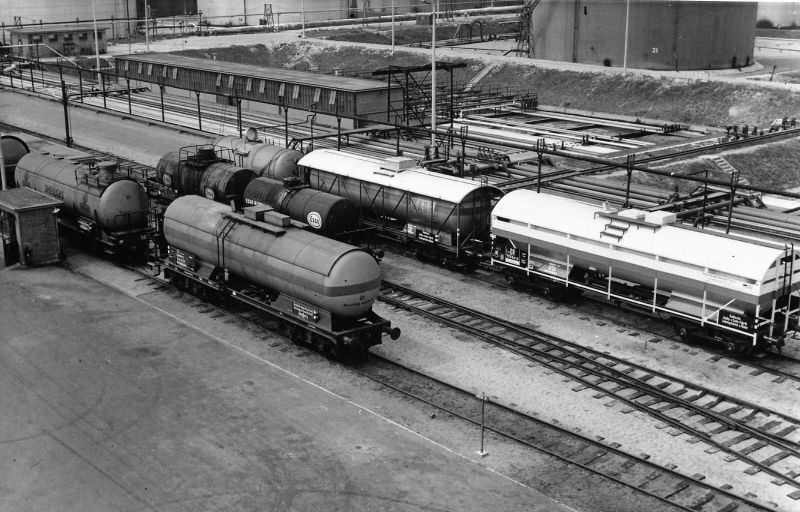
An inspector (or other high-ranking official) has arrived by service bicycle to discuss things critically with the local farmers, Broek op Langedijk, August 21, 1952
Pernis, August 14, 1952

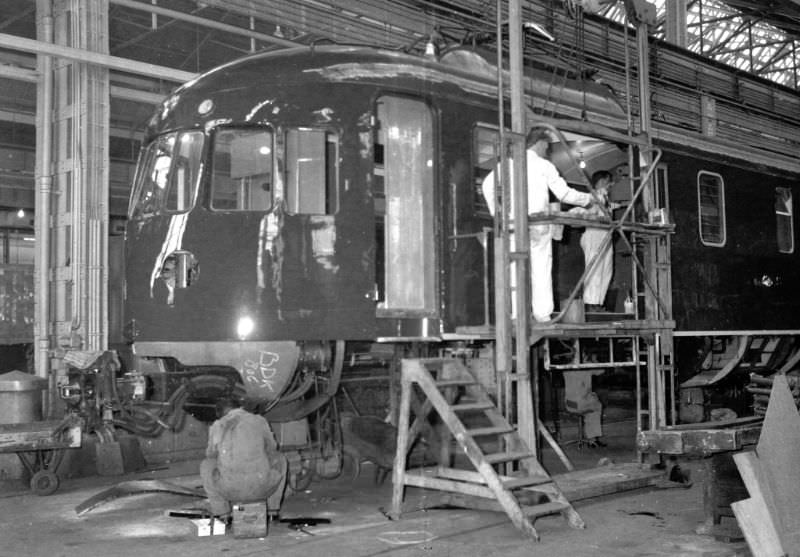
October 1952 brought a look at the then brand-new ELD2 electric train set 296, photographed in Den Bosch. These modern electric units represented the NS’s steady push away from steam and toward electrified rail. By 1957, the Haarlem Hoofdwerkplaats was refurbishing older train set material from the 1940s — the BDk 806 being finished up to return the set to service as good as new.
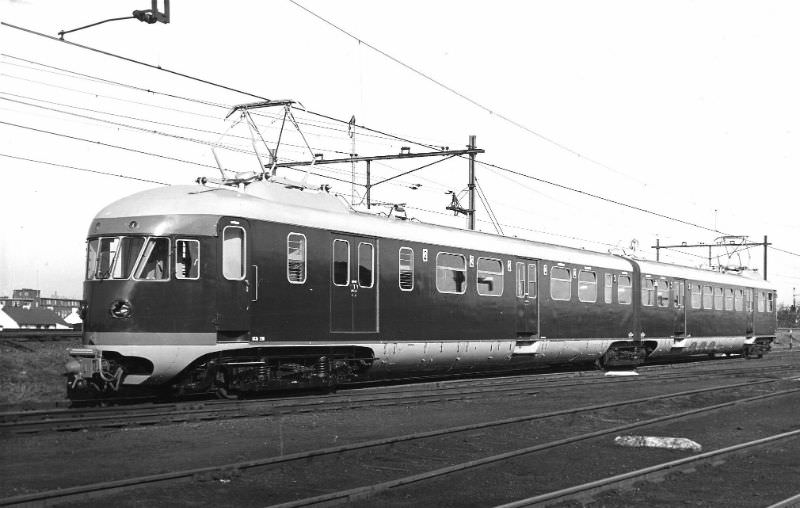
The then brand-new ELD2 train set 296 in Den Bosch, October 11, 1952
The BDk 806 in the Hoofdwerkplaats Haarlem was being finalized in order to be able to send the train set material '40 back into service as good as new, October 20, 1959
The BDk 806 in the Hoofdwerkplaats Haarlem was being finalized in order to be able to send the train set material ’40 back into service as good as new, October 20, 1959

Station interiors told their own story. The entrance to Haarlem station was photographed in November 1953. At Utrecht Centraal in February 1954, advertisements lined the first platform. Amsterdam Centraal featured an AEG ticket printer behind the counter in July 1956, and by October 1959 a coffee vending machine had been installed against the back of the freight elevator — a small modern convenience for travelers.
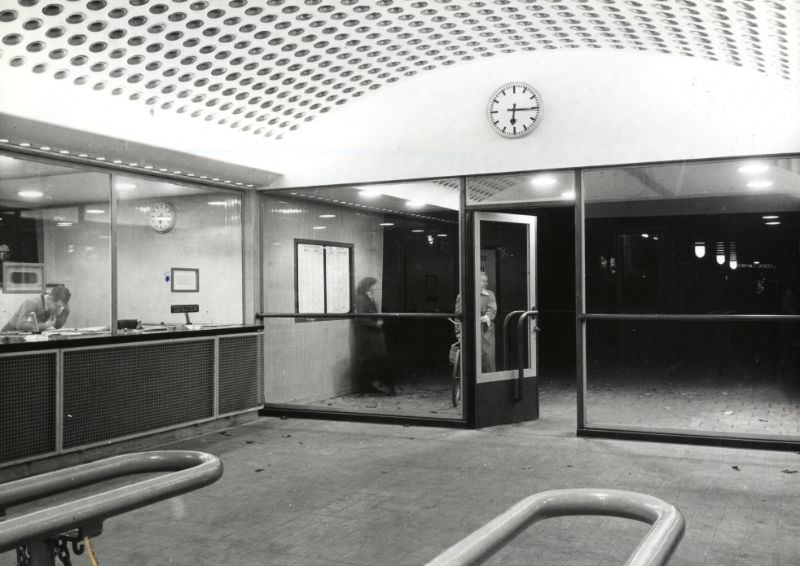
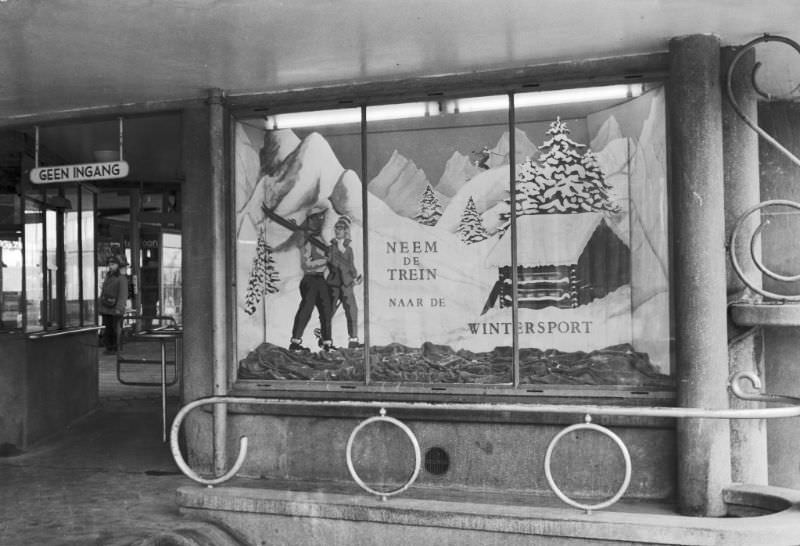
Entrance, Haarlem, November 11, 1953
Advertisement along the first platform of Station Utrecht Centraal, February 8, 1954
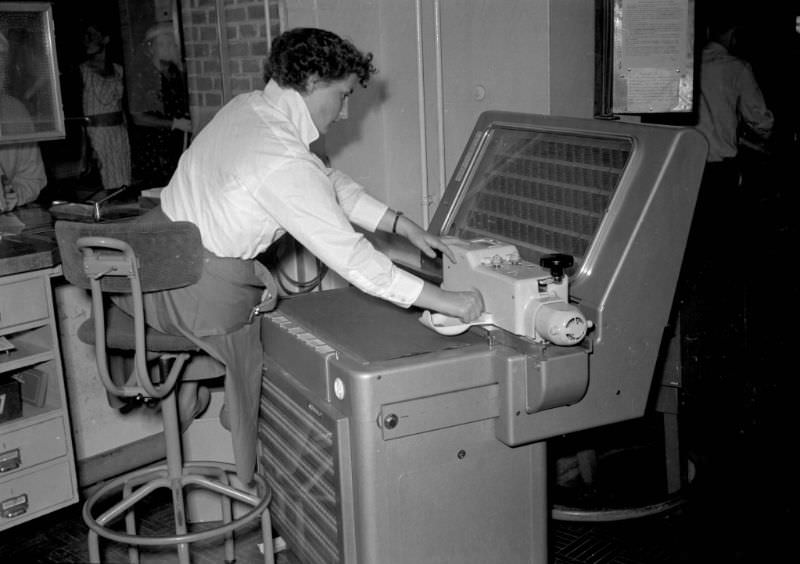
AEG ticket printer at the counter of Amsterdam Centraal Station, July 1956
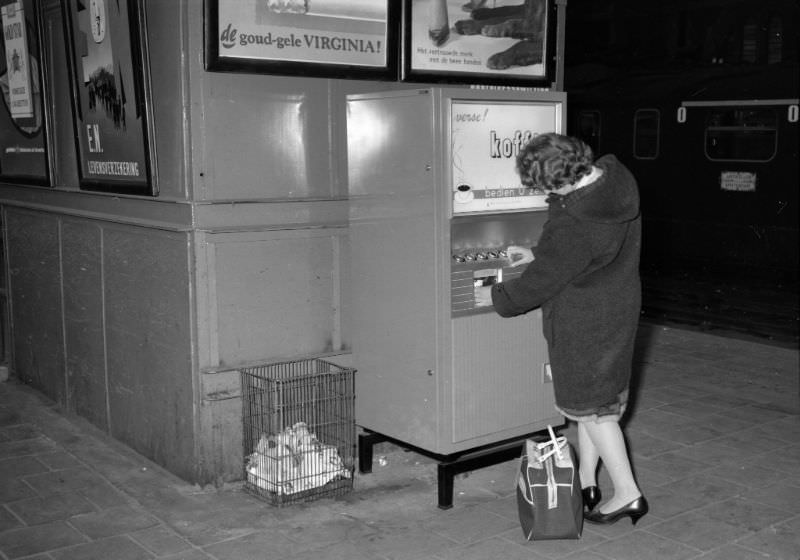
Lady gets coffee from a vending machine at Amsterdam Central Station. The device is placed against the back of the freight elevator, October 19, 1959

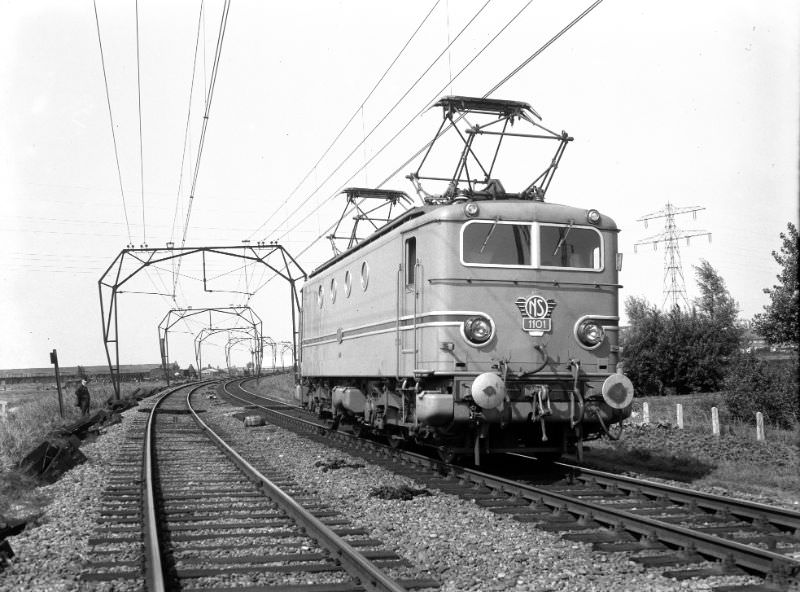
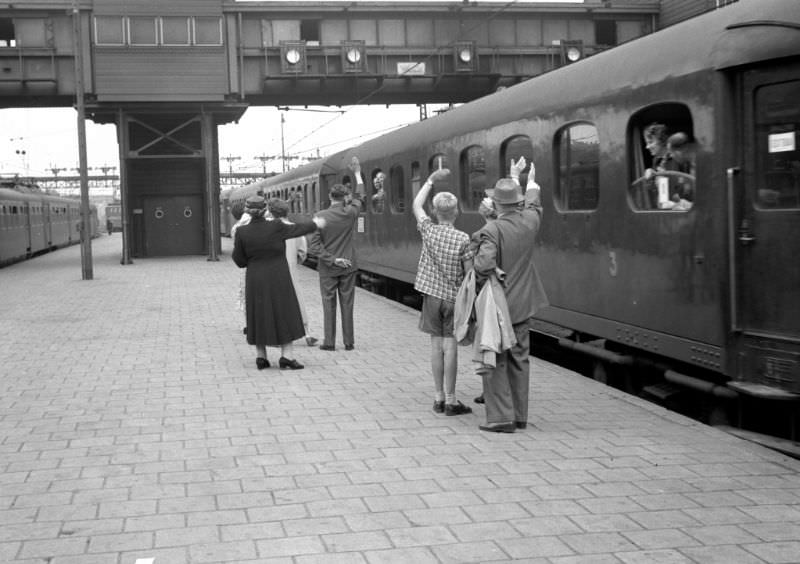
International travel was also part of the NS picture. In September 1954, the Hotelplan Express departed The Hague Central headed for Switzerland, Austria, and Italy. The following year, passengers said goodbye to family and friends at Amsterdam Centraal on track 8a, where a Paris-bound D train — pulled by an 1100-class locomotive — was about to leave.
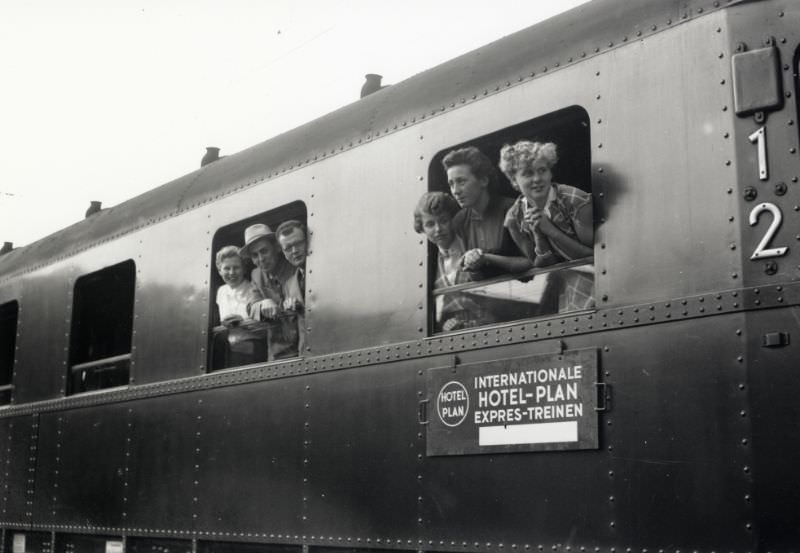
Hotelplan Expres (here with one 's') which goes from The Hague Central to Switzerland, Austria and Italy, September 18, 1954
Hotelplan Expres (here with one ‘s’) which goes from The Hague Central to Switzerland, Austria and Italy, September 18, 1954
Goodbye to acquaintances, family and loved ones at a departing train on track 8a (then- 3rd platform west side) on the D train drawn by an 1100 to Paris, De Wallen, 1955

Operational infrastructure appears throughout the collection as well. At Velp in November 1956, the service telephone used by drivers to contact signal posts along the route was documented. At the new Sloterdijk station in March 1957, ticket checkers monitored the exit. The same year, Roosendaal’s waiting room offered a view of what was then considered the most famous steam locomotive in the Netherlands.
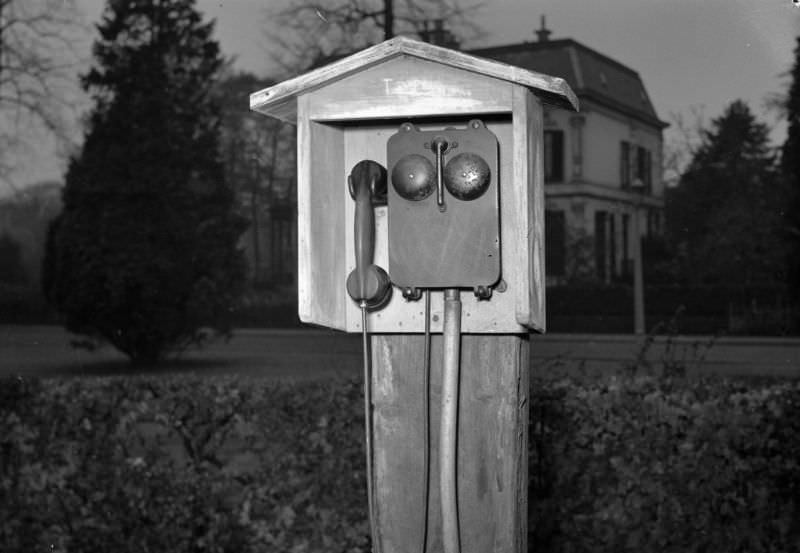
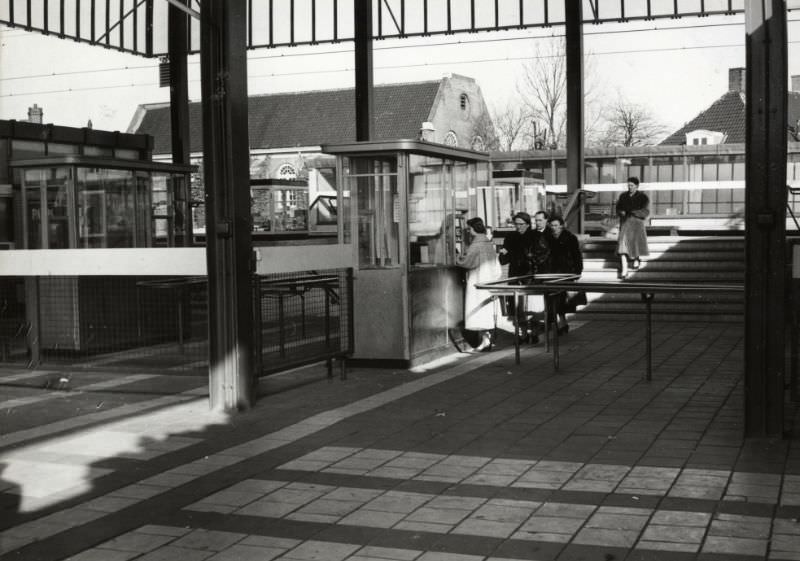
The service telephone with which the drivers could contact the signal posts along the track and at stations, Velp, November 13, 1956
Takers at exit check at the brand new Sloterdijk station, March 8, 1957
The most famous steam locomotive in the Netherlands from the waiting room in Roosendaal, December 1, 1957

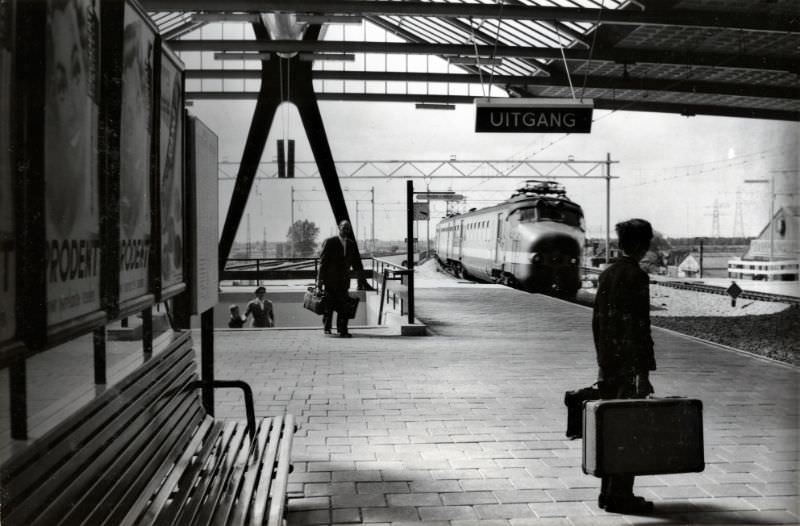
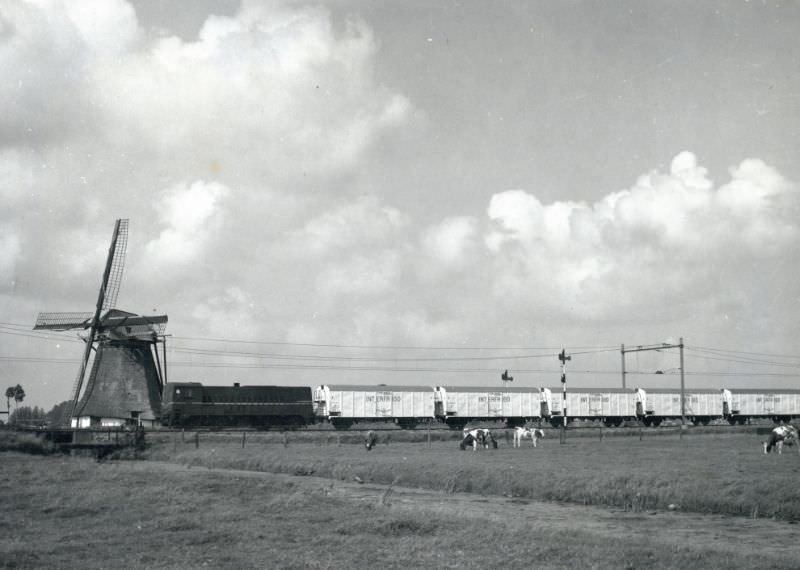
By the late 1950s, older steam-era stations were giving way to newer facilities. In June 1958, a Hondekop no. 747 departed from the old Schiedam station — a modern electric multiple unit passing through a station soon to be replaced. Near Hazerswoude in July 1958, a tow of Interfrigo refrigerated cars rolled toward Leiden Lammenschans, where they would be unloaded at the auction house beside the Rijnenburger mill. The new Schiedam station was photographed just a year later in July 1959, showing how quickly the network was modernizing.
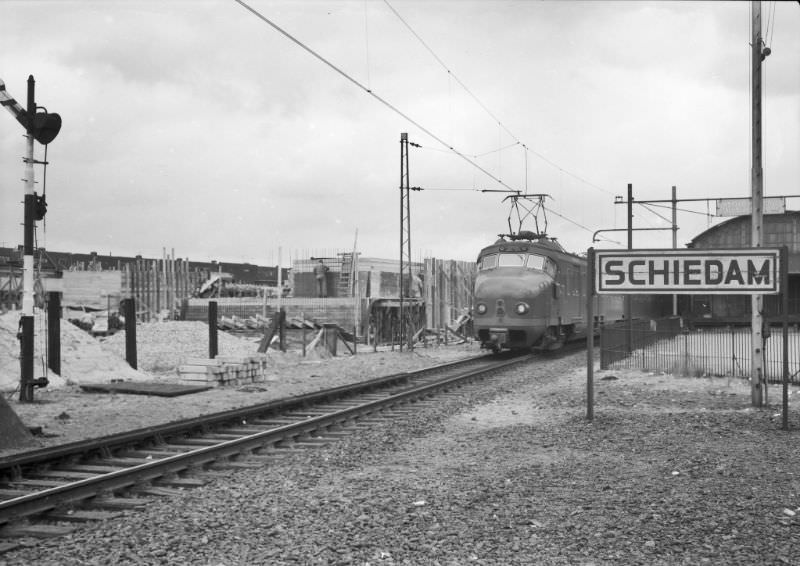
A Hondekop no.747 departing from the old station, Schiedam, June 12, 1958
The Rijnenburger mill near Hazerswoude, a tow of Interfrigo cars on the way to Leiden Lammenschans, where the refrigerated trucks may be unloaded at the auction, July 22, 1958
At the Schiedam station, July 14, 1959
Enjoyed this post? Get new ones in your inbox.

Leave a Comment

Your email address will not be published. Required fields are marked *

Share this Post 🥺

Please take a moment to share this content. Your support is greatly appreciated! 🙌🙏

Share this Post 🥺

Please take a moment to share this content. Your support is greatly appreciated! 🙌🙏
Scroll to Top
 
Hey Friend, Before You Go.. Please like & follow for more interesting content