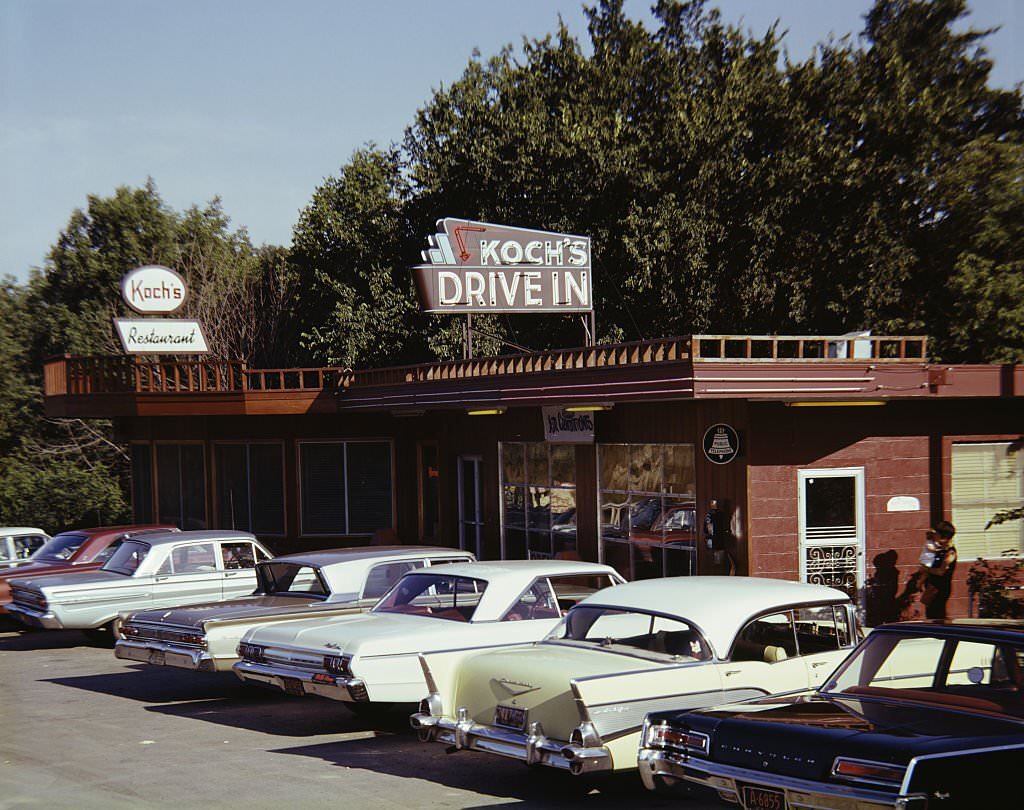
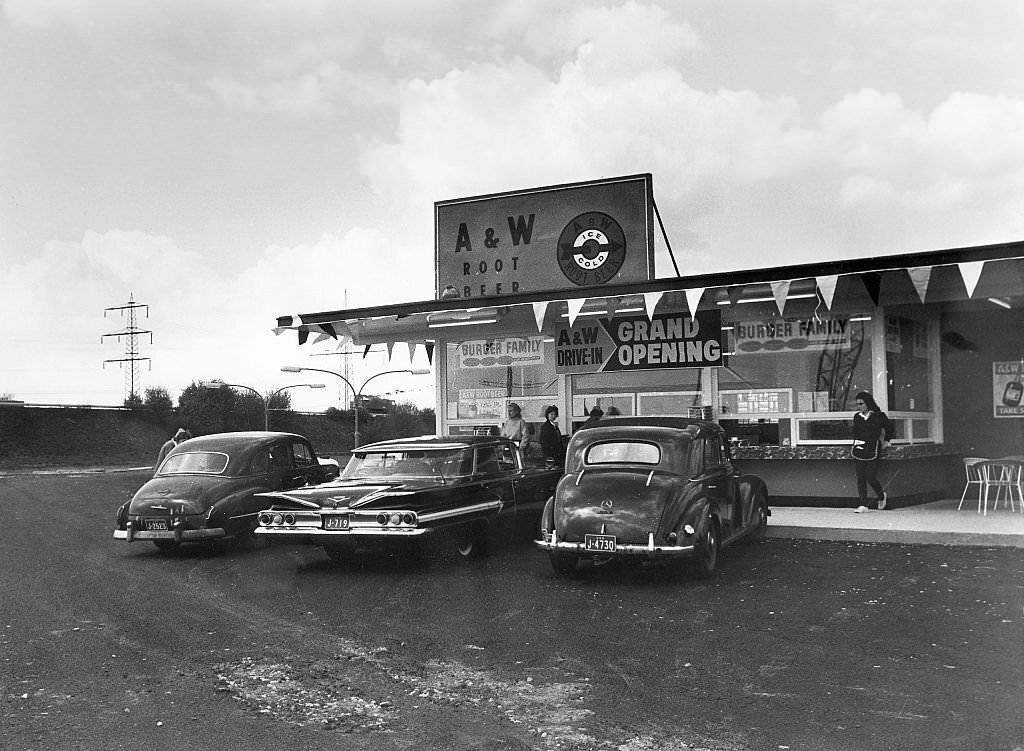
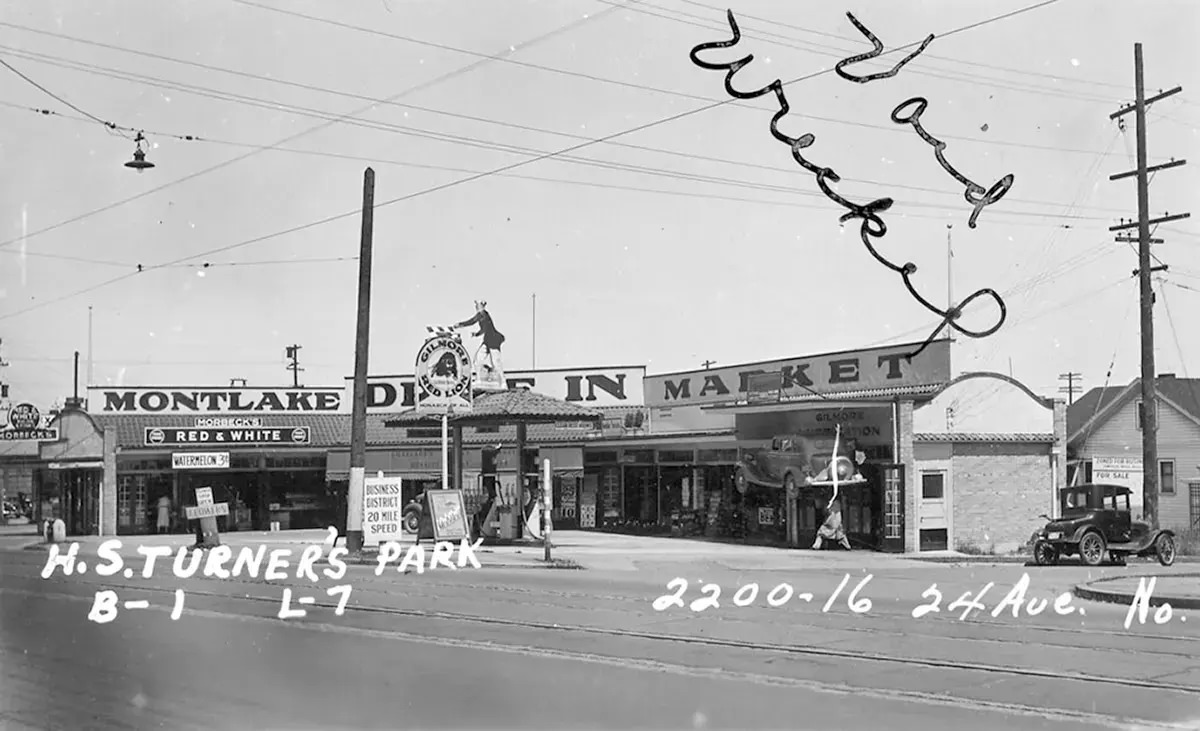
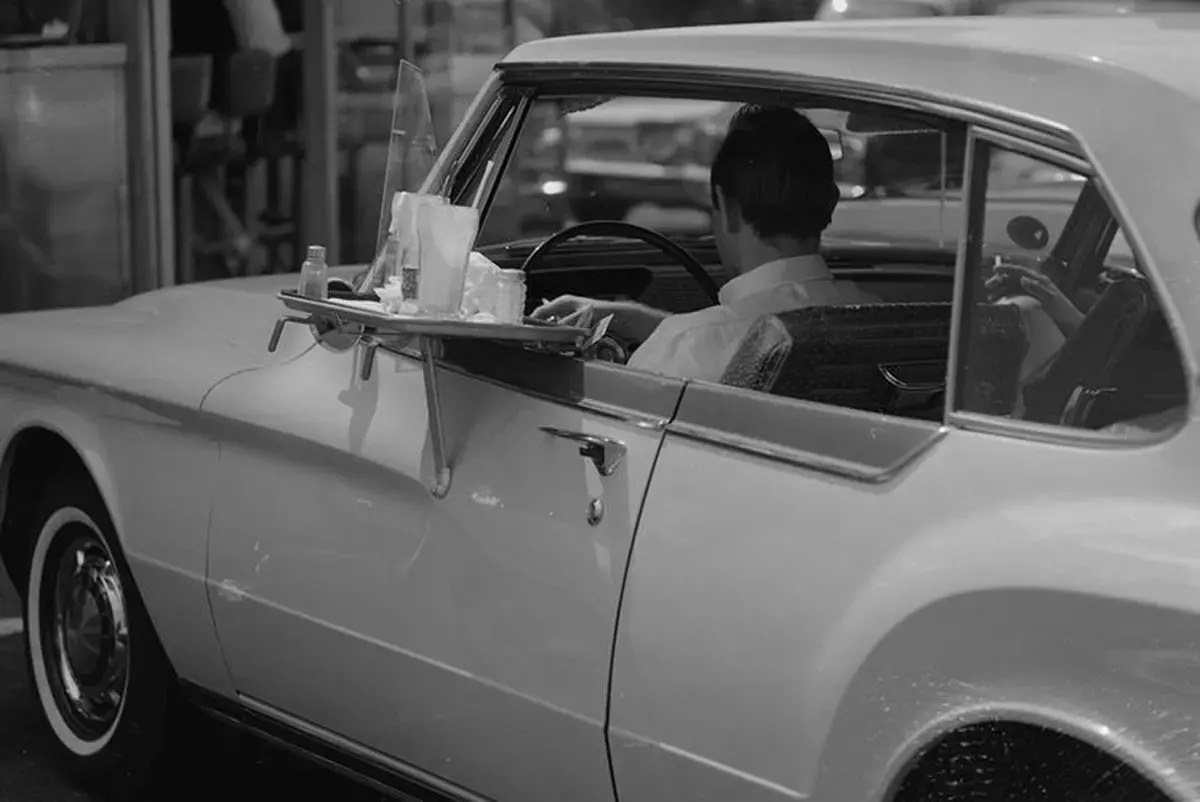
When cars became a everyday part of American life in the 1920s, they didn’t just change how people got around — they changed how people ate. The economy was growing, wages were rising, and more families than ever before could afford a vehicle. Businesses quickly caught on. New kinds of restaurants began popping up along roadsides and in parking lots, built entirely around one idea: serve the customer without making them leave their car.
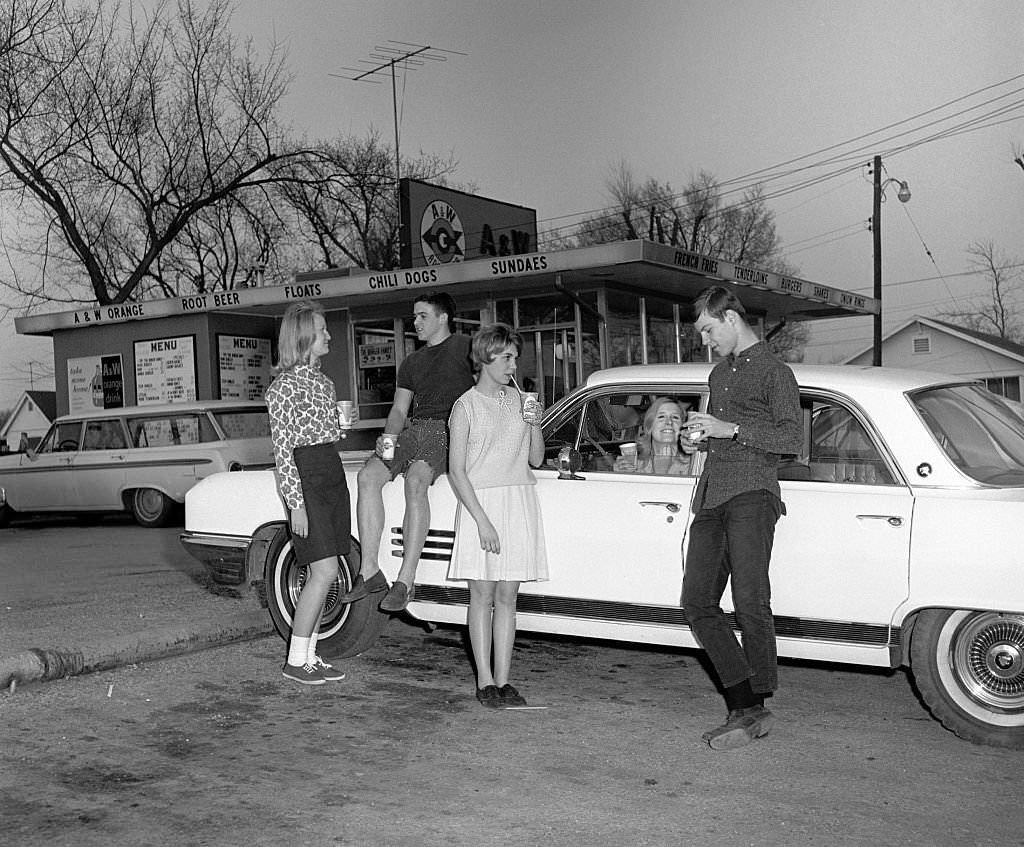
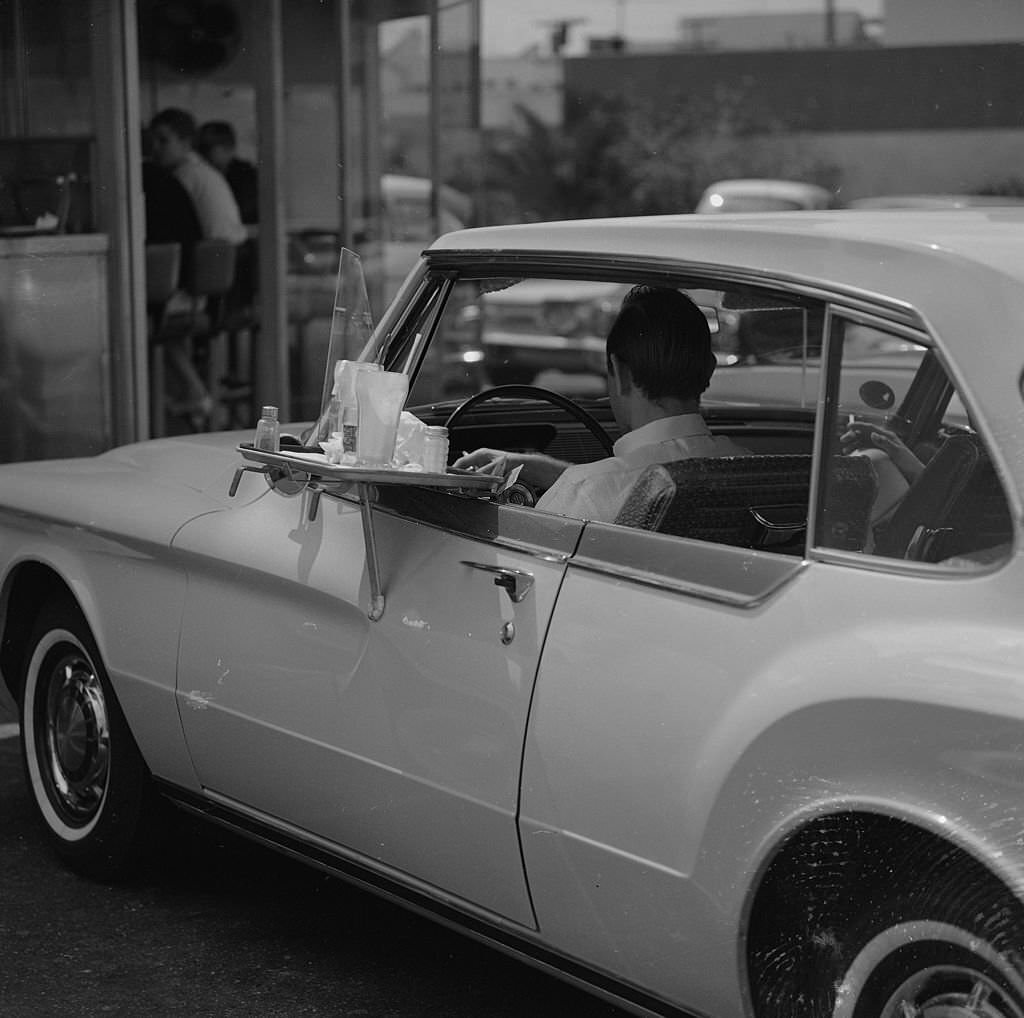
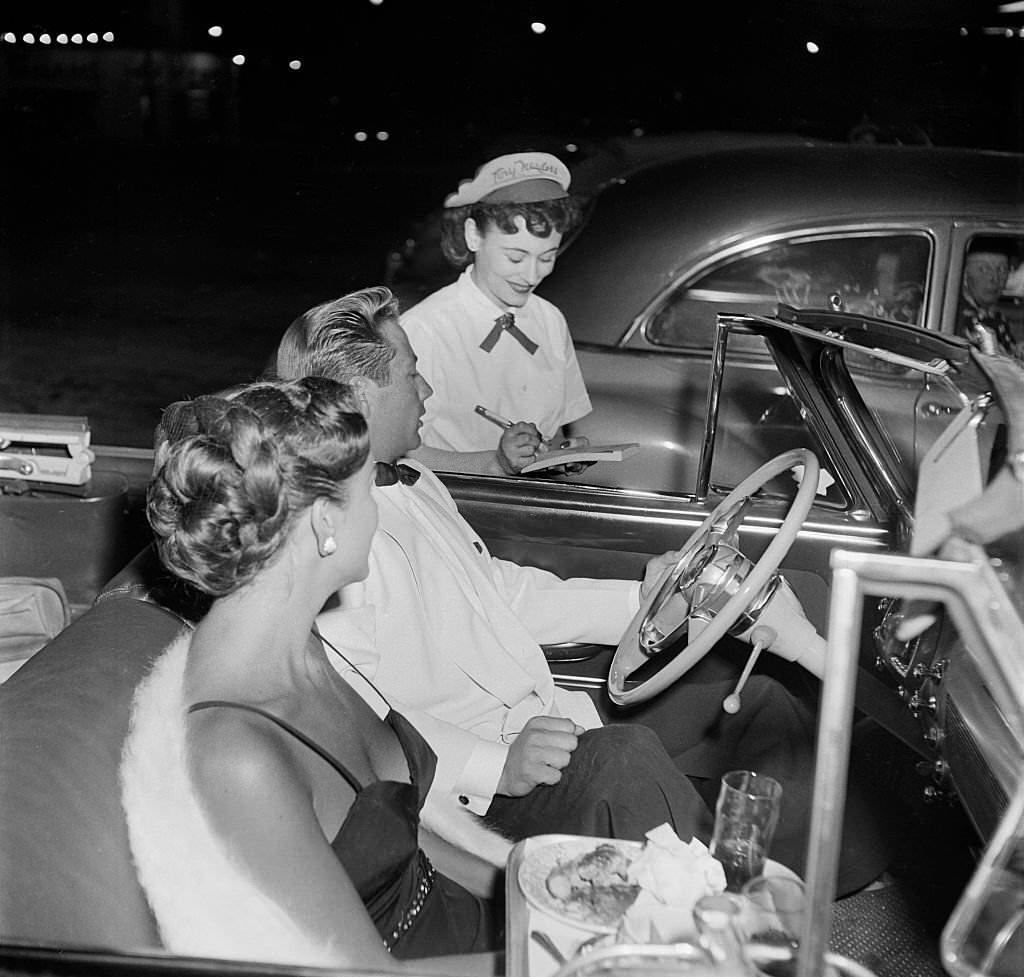
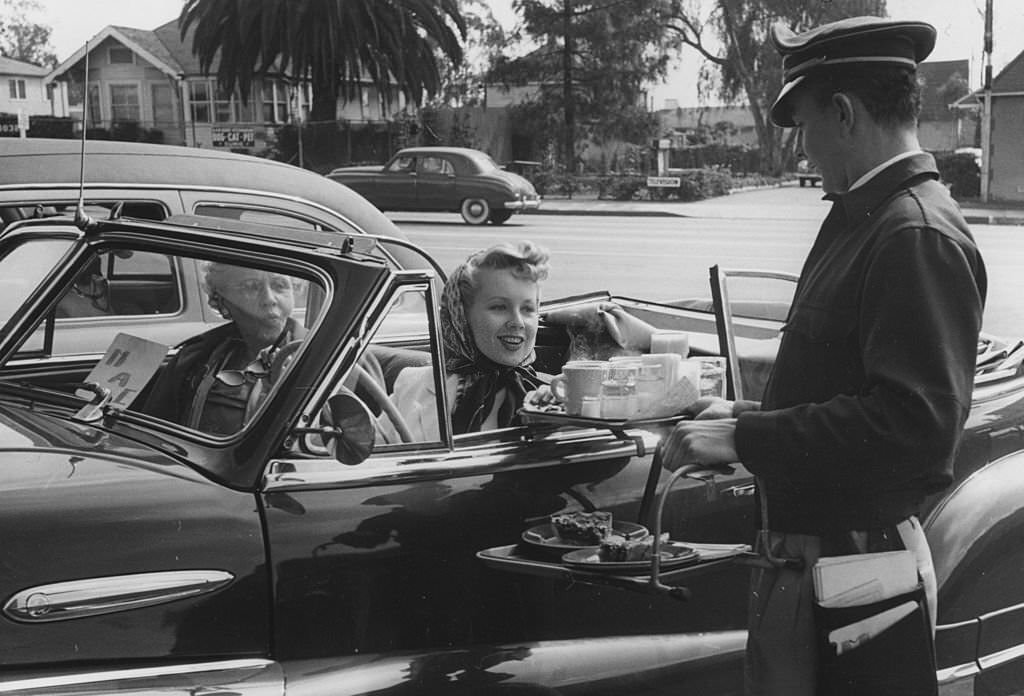
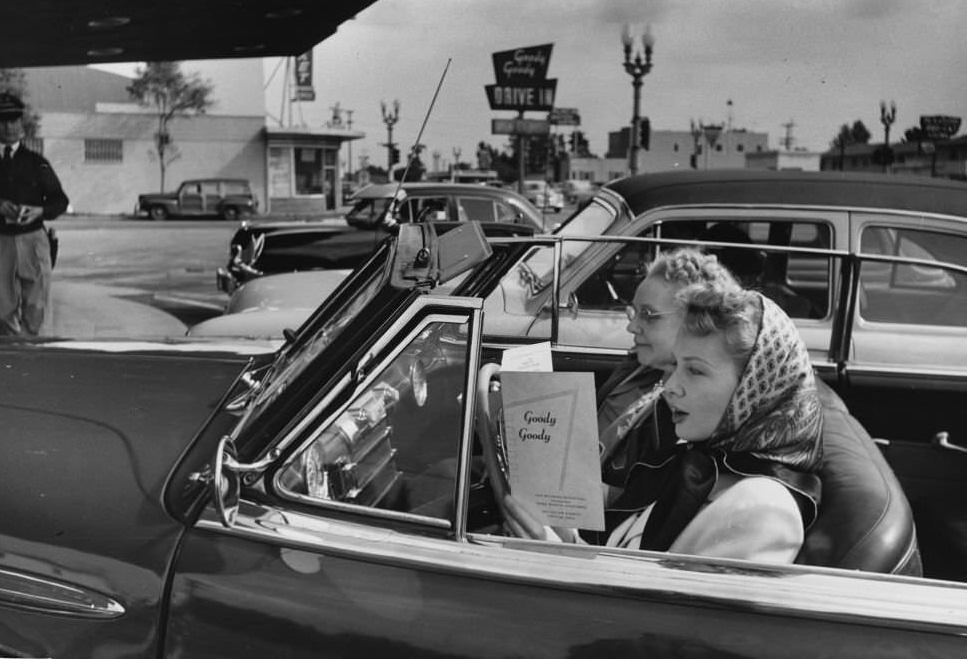
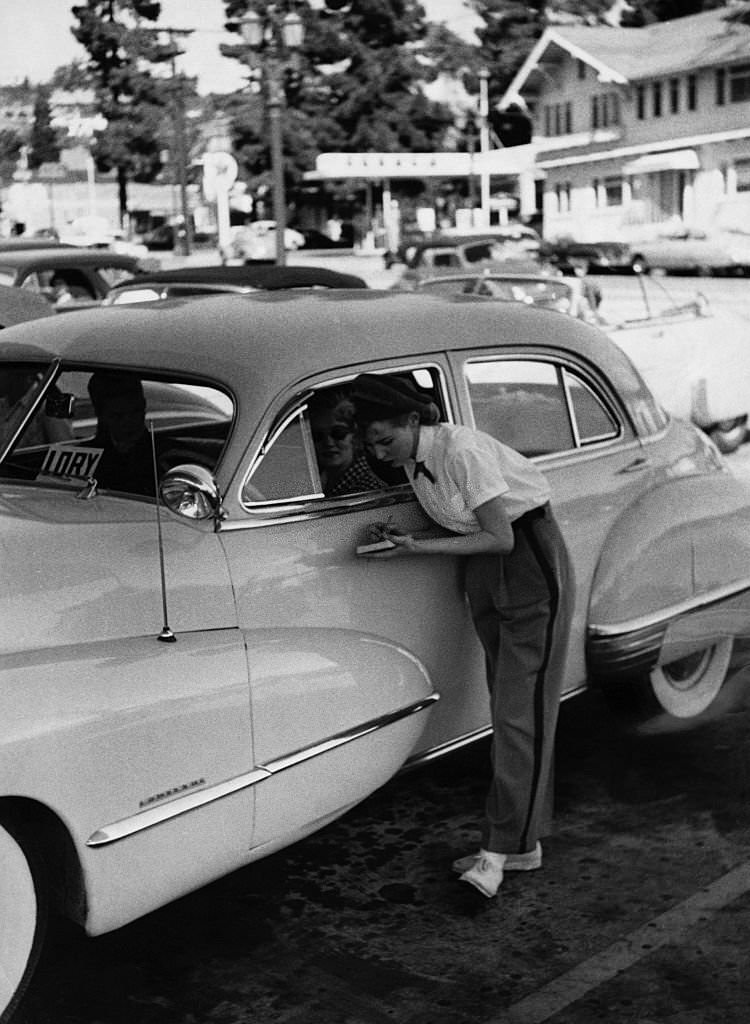
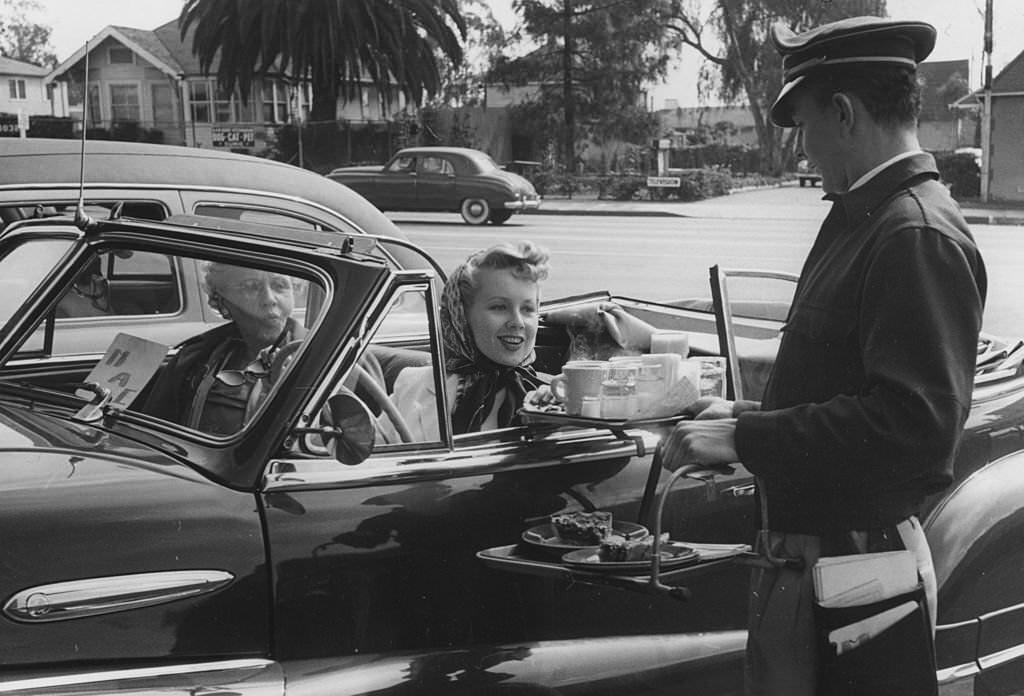
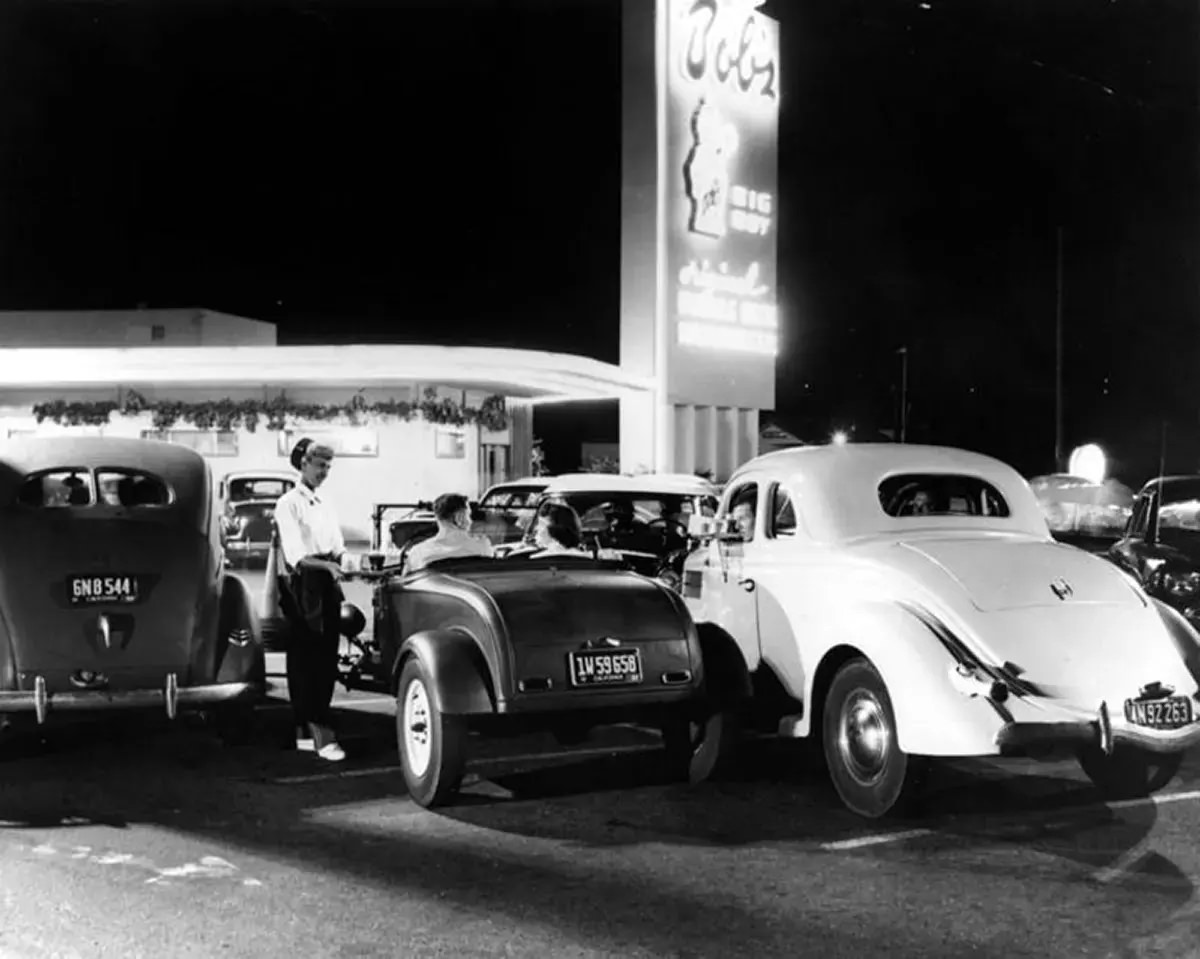
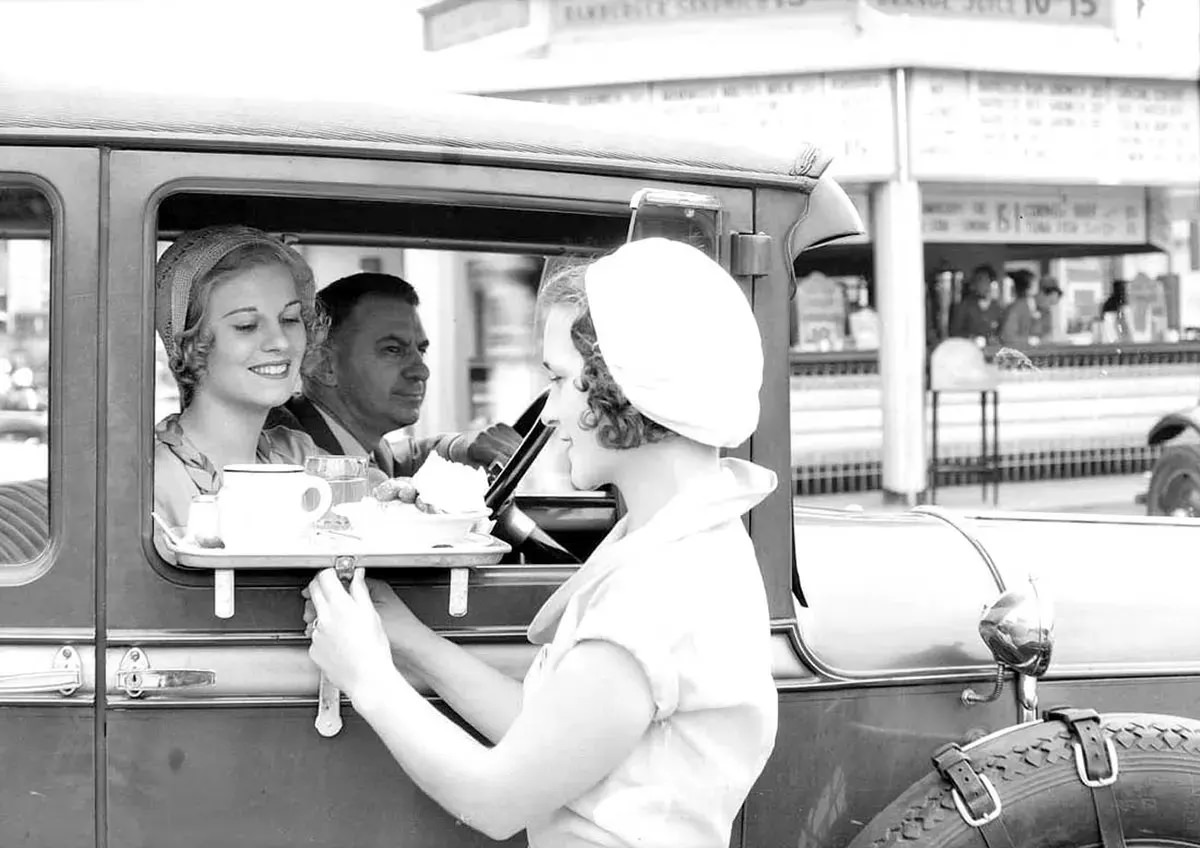
The drive-in restaurant was born in 1921 when the Pig Stand chain opened in Texas. It was the first restaurant to make the parked car the center of the dining experience. Customers pulled in, stayed behind the wheel, and waited for someone to come to them. That someone was the carhop — a worker who took orders at the car window, carried them to the kitchen, and brought the finished food back out. No table, no chairs, no dining room needed.
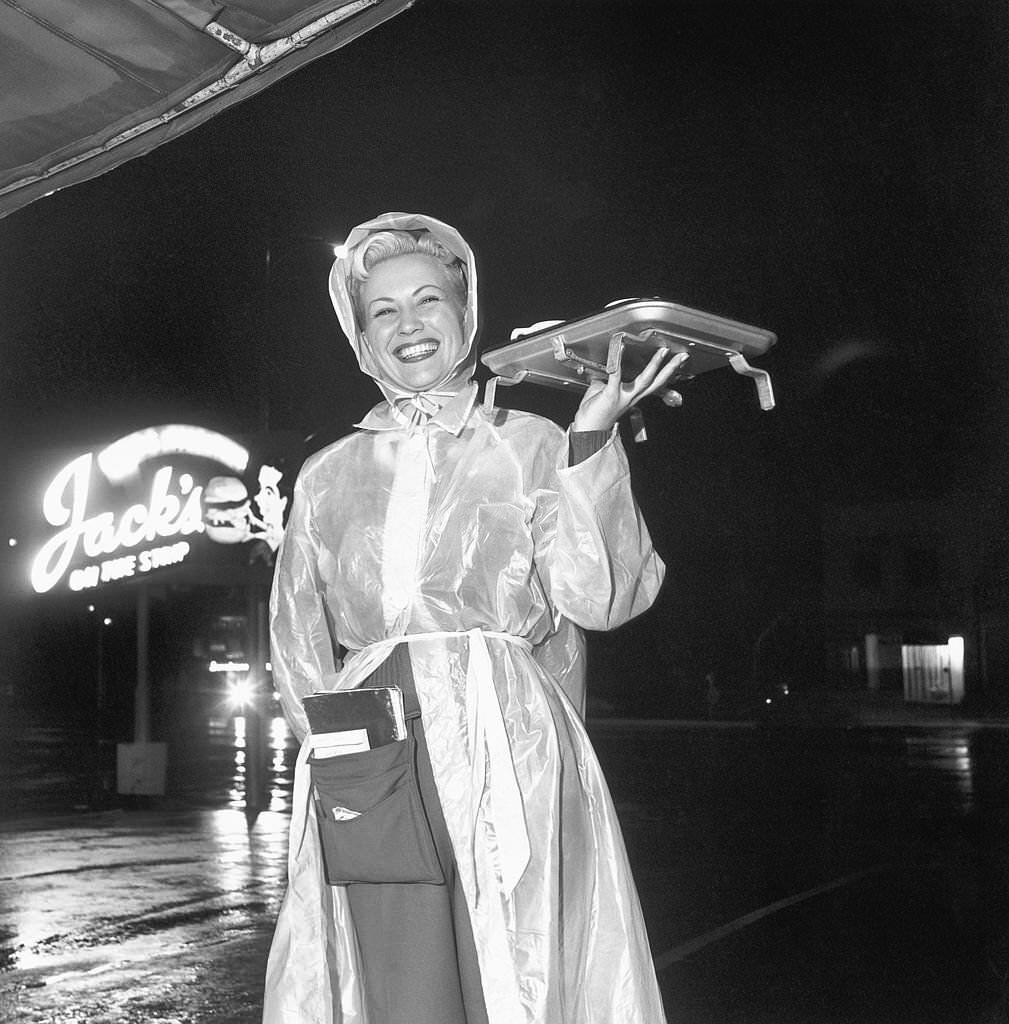
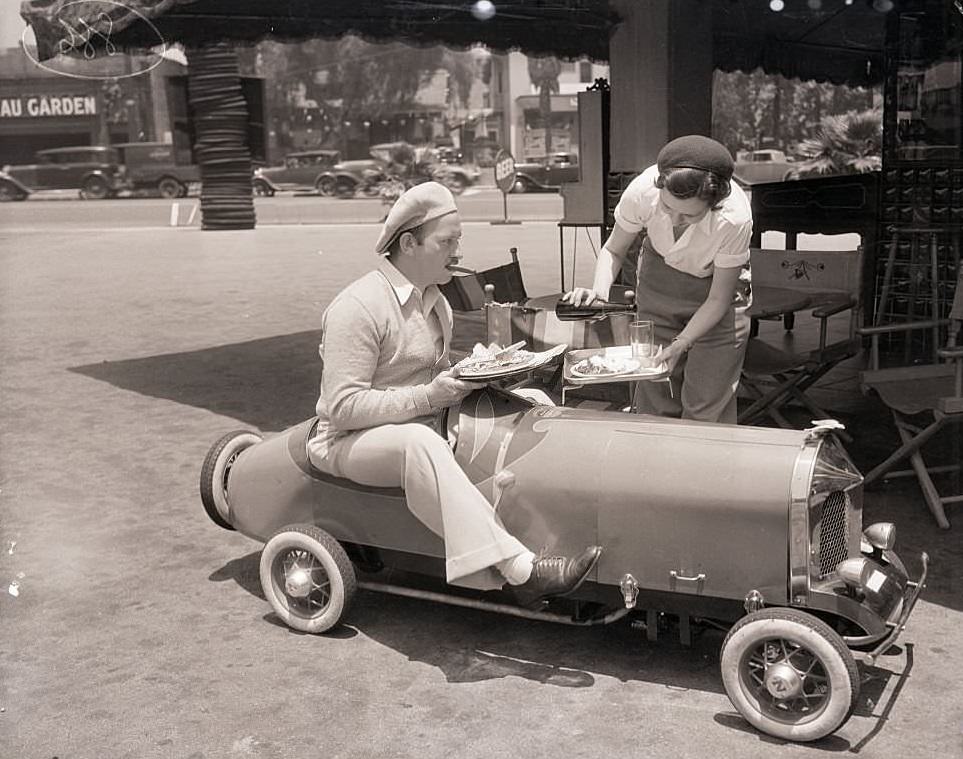
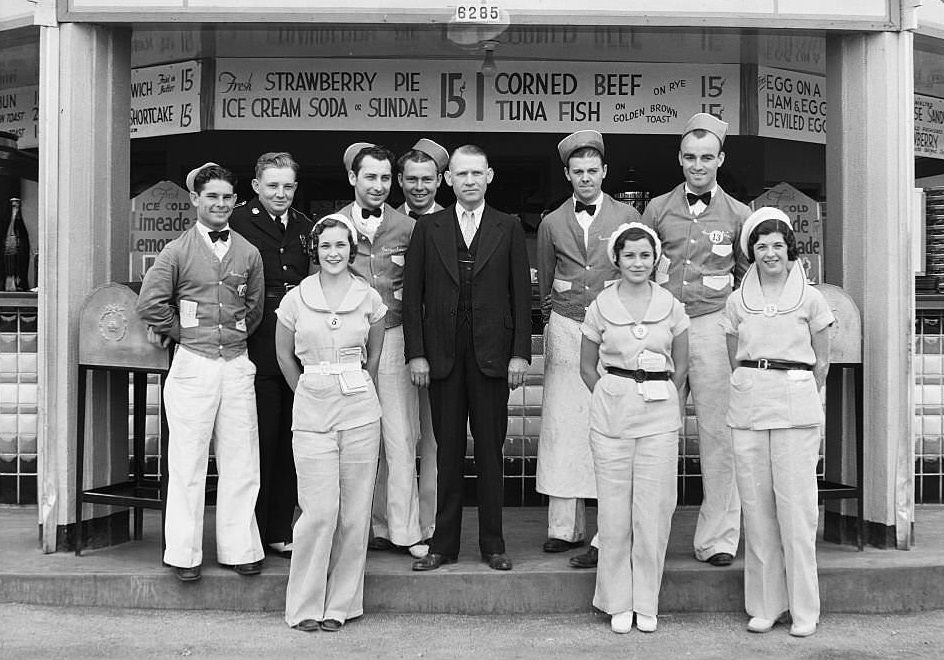
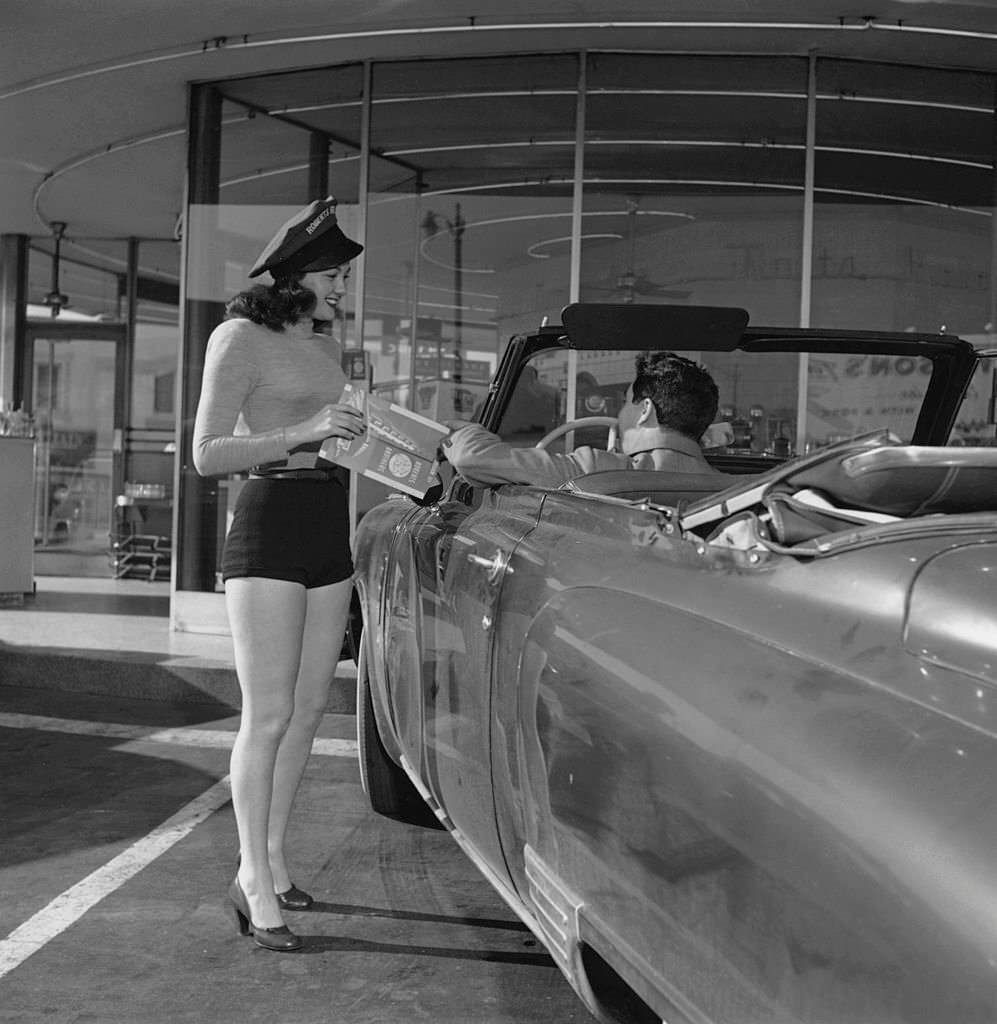
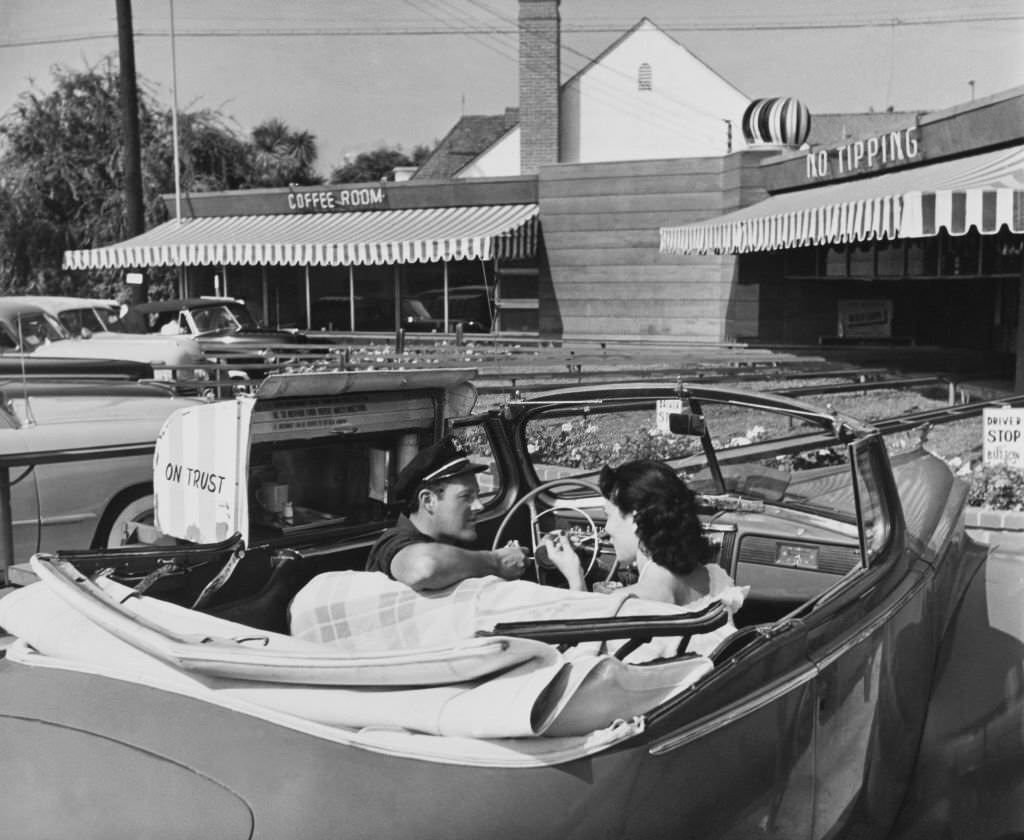
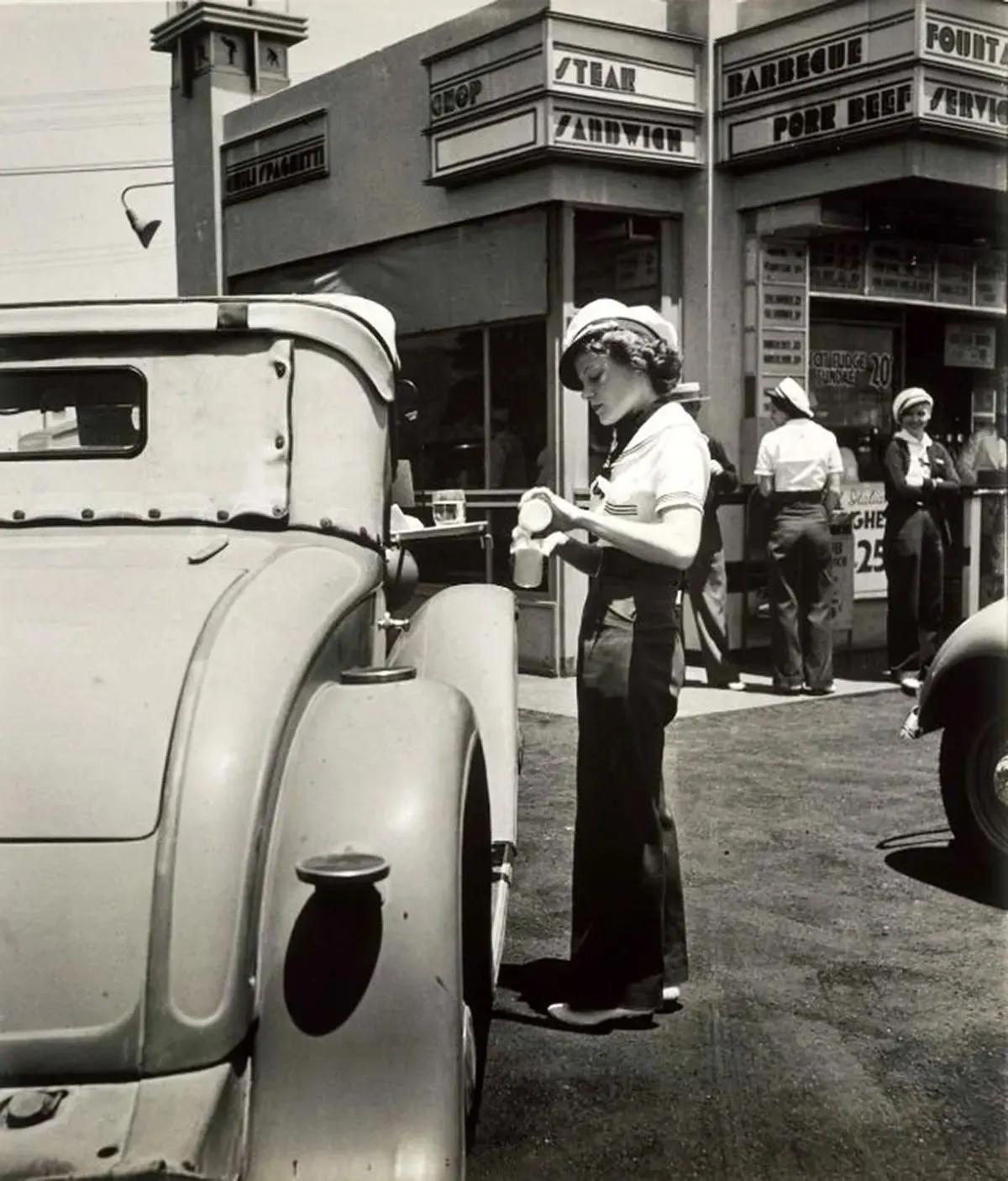
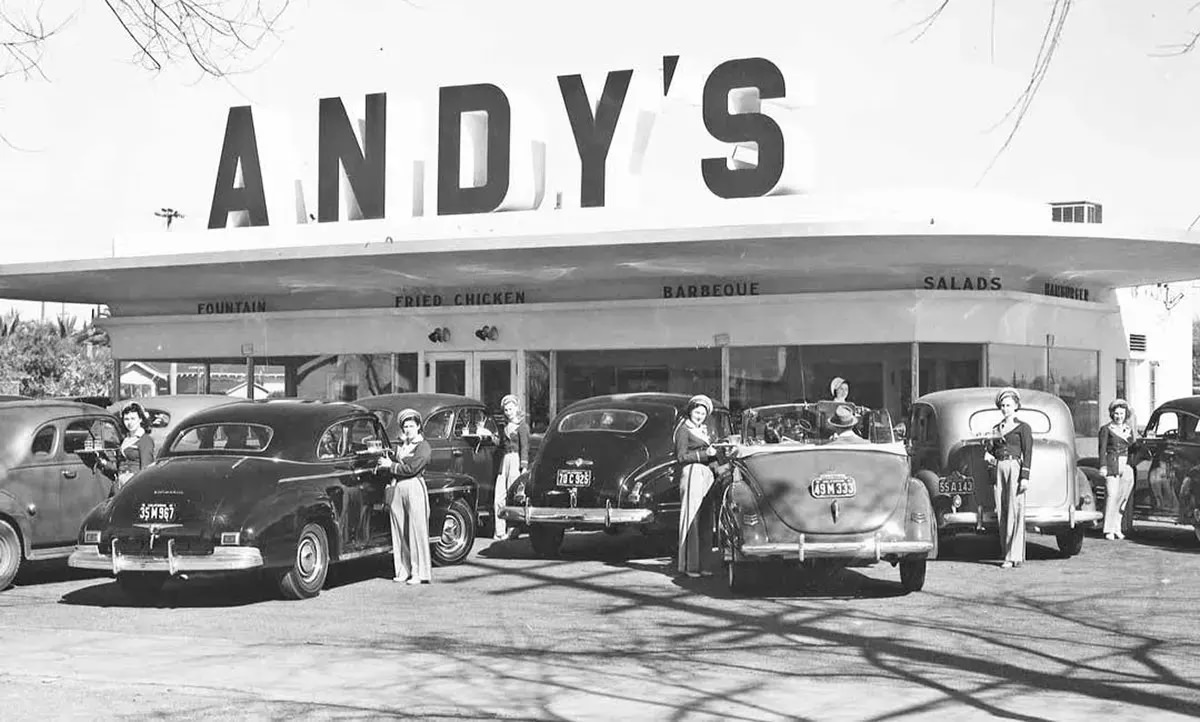
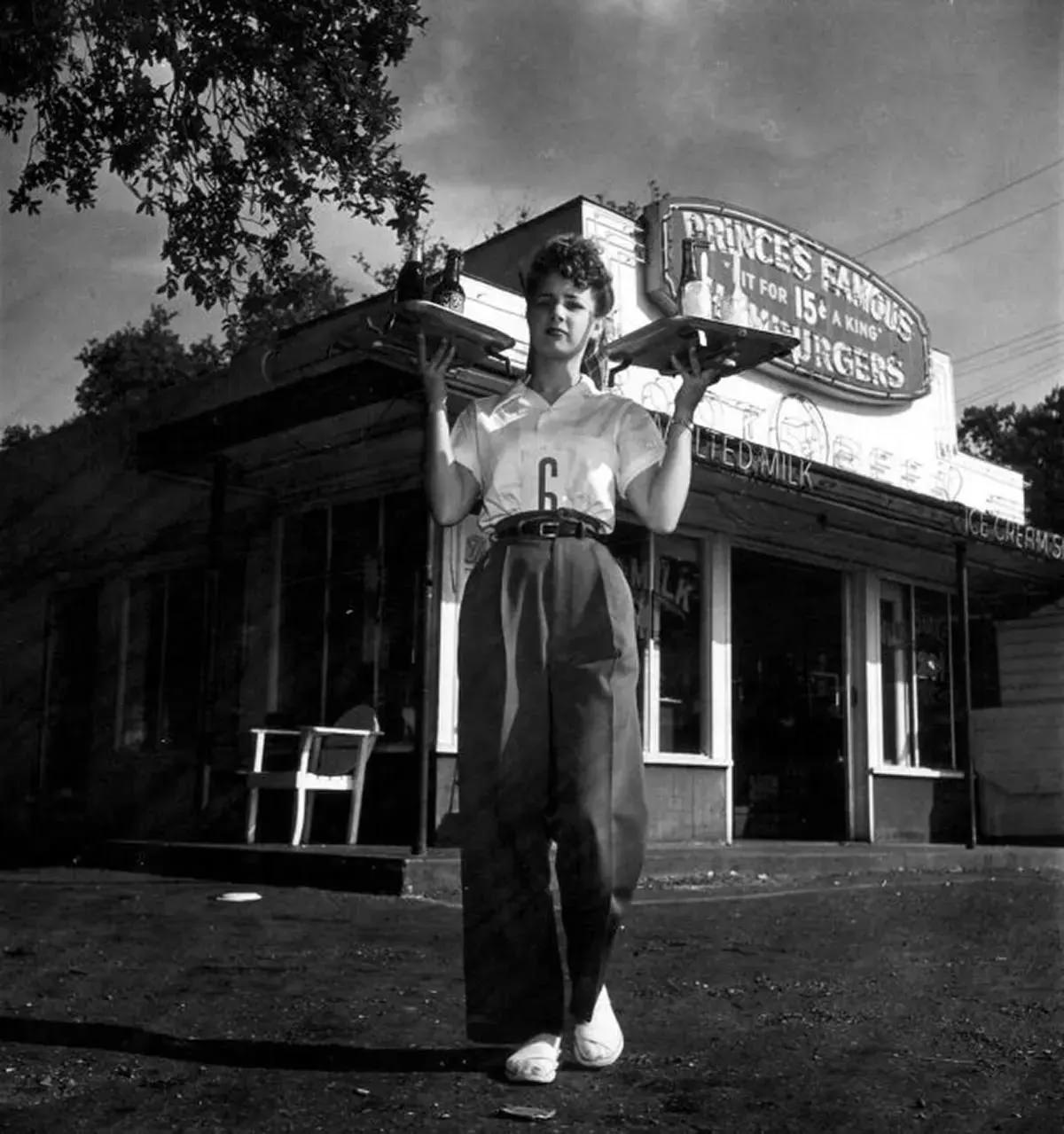
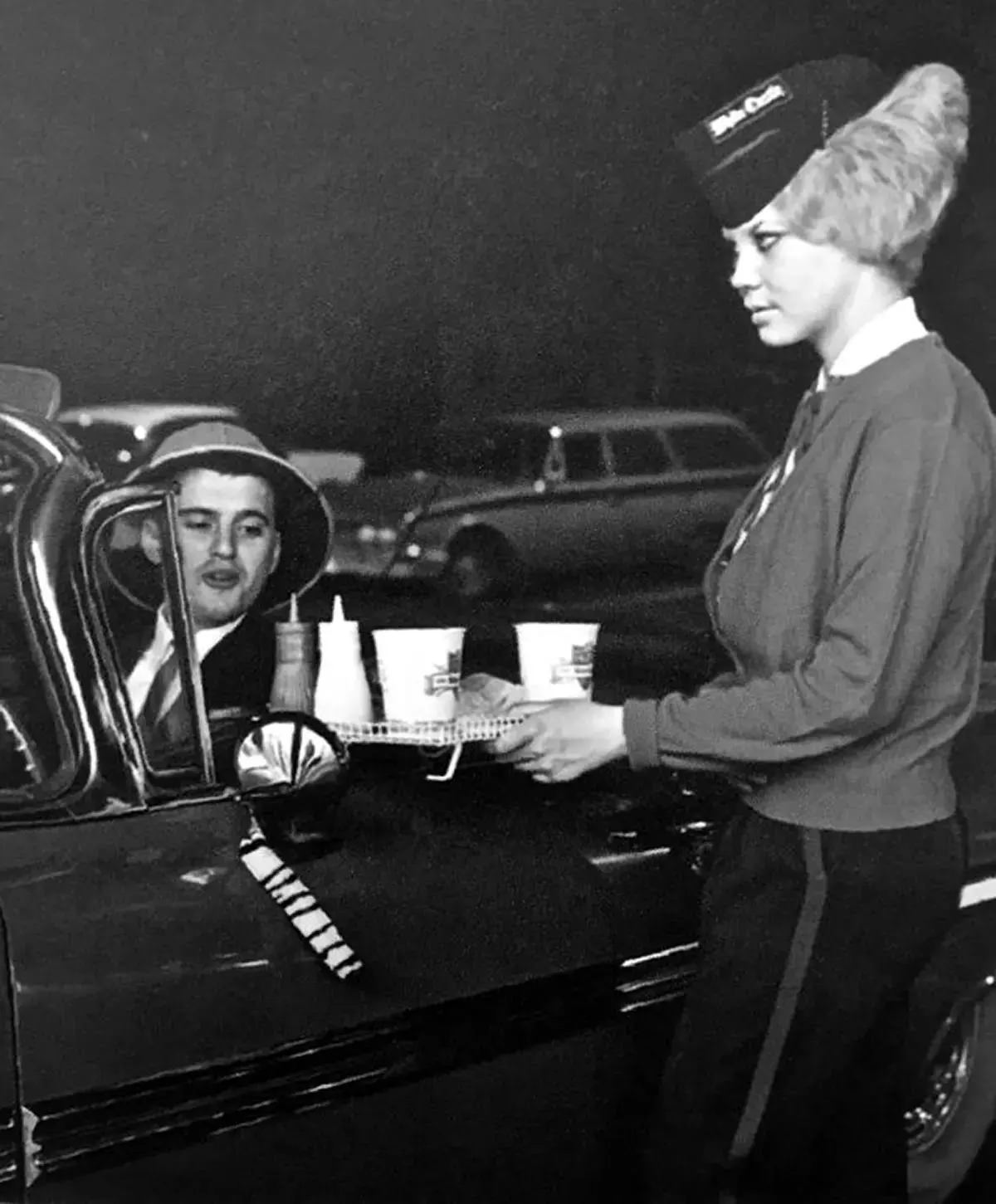
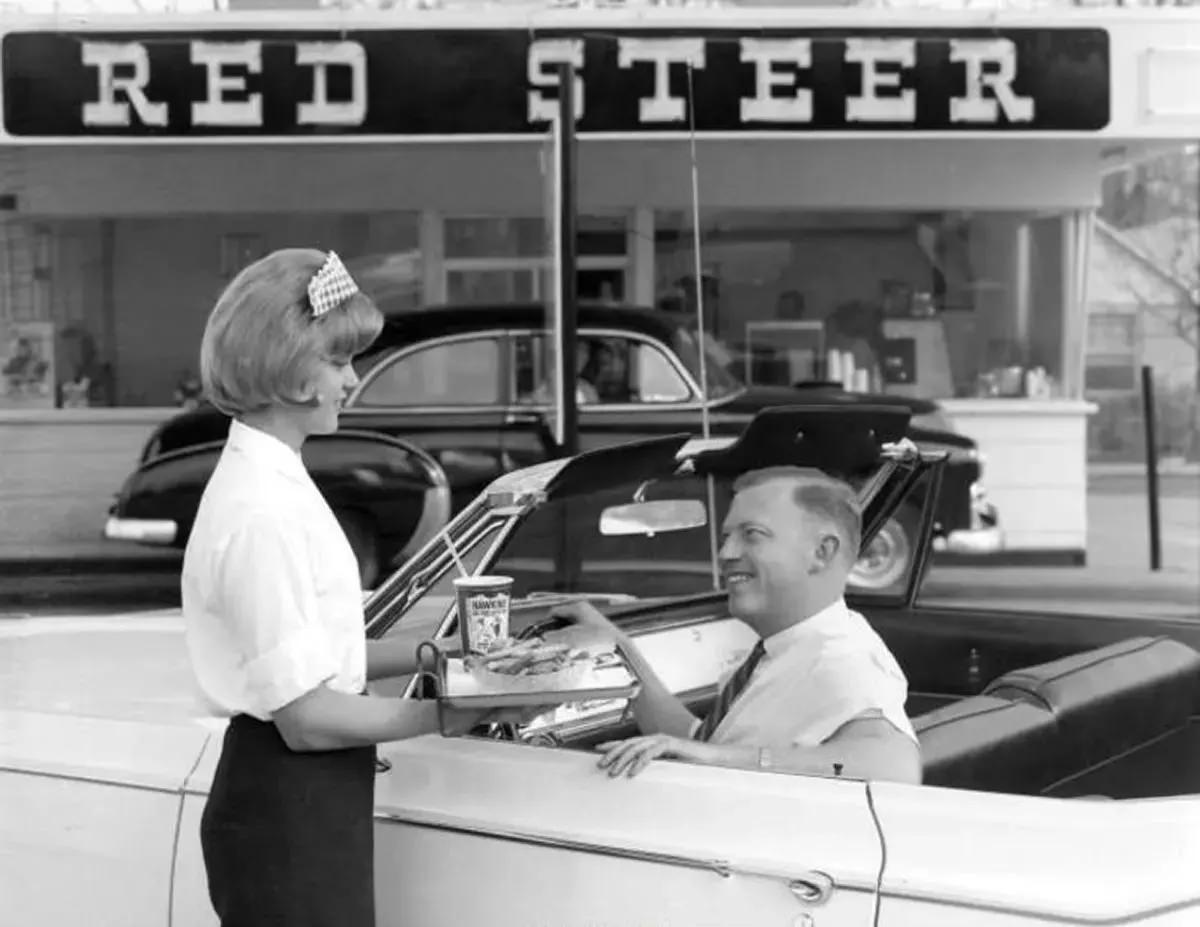
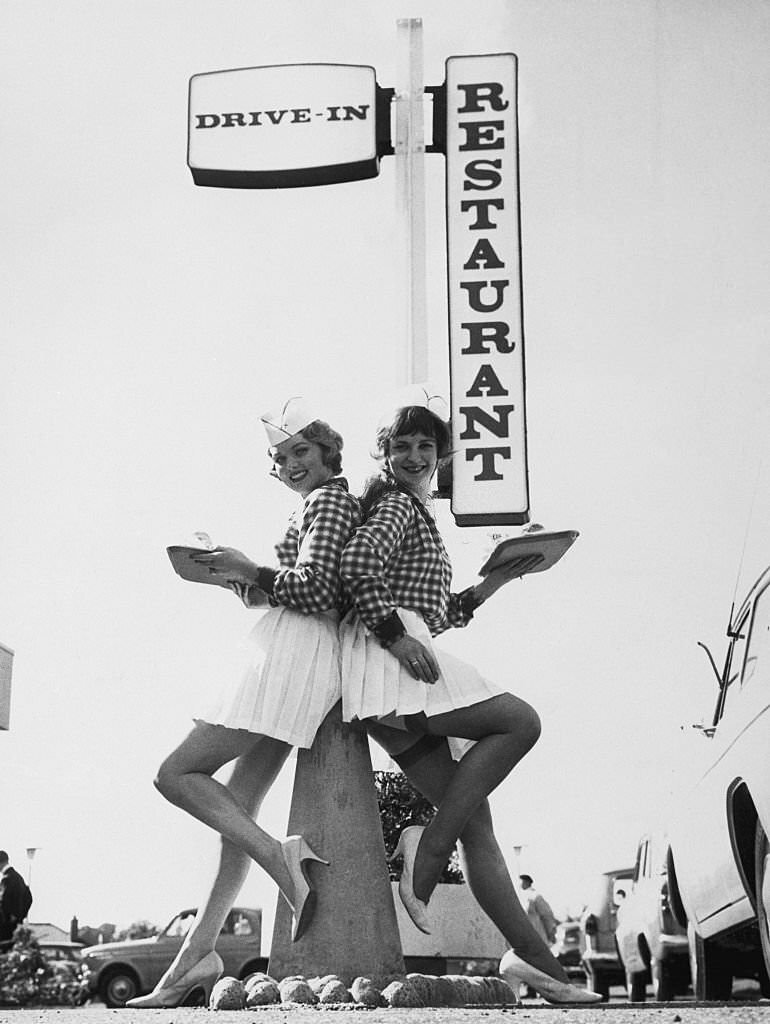
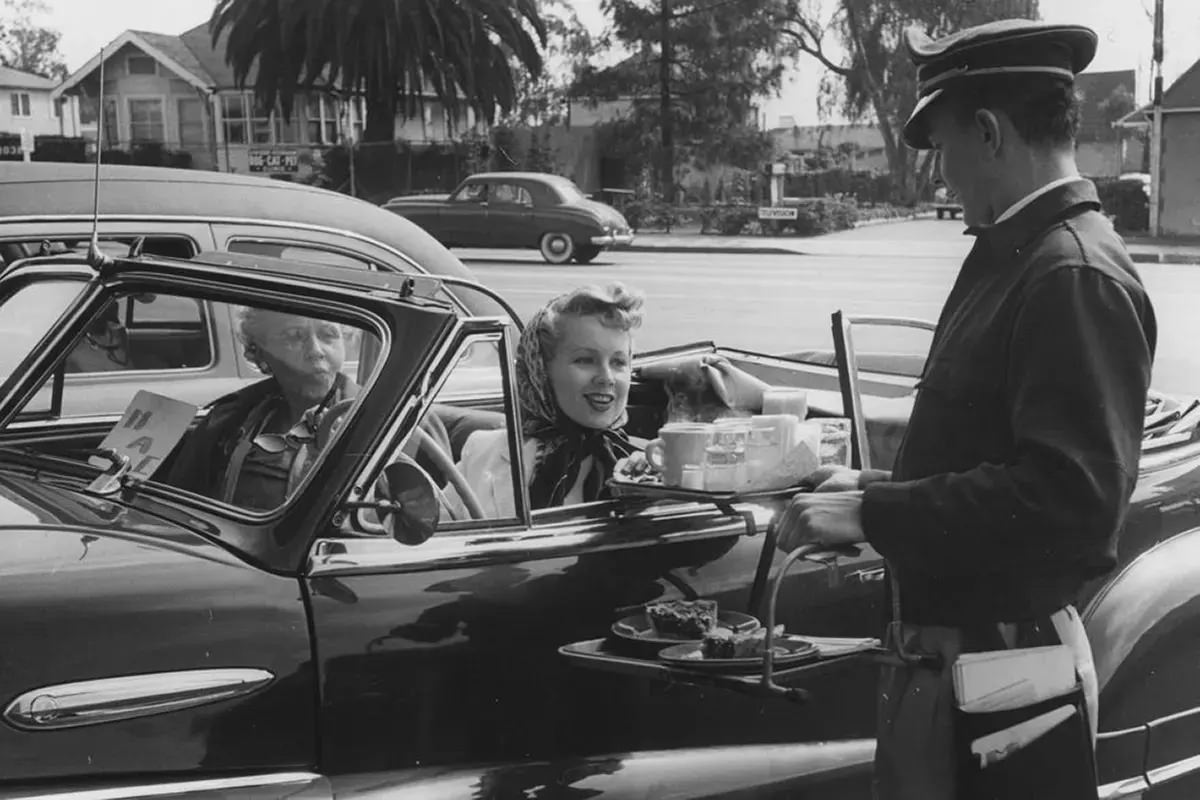
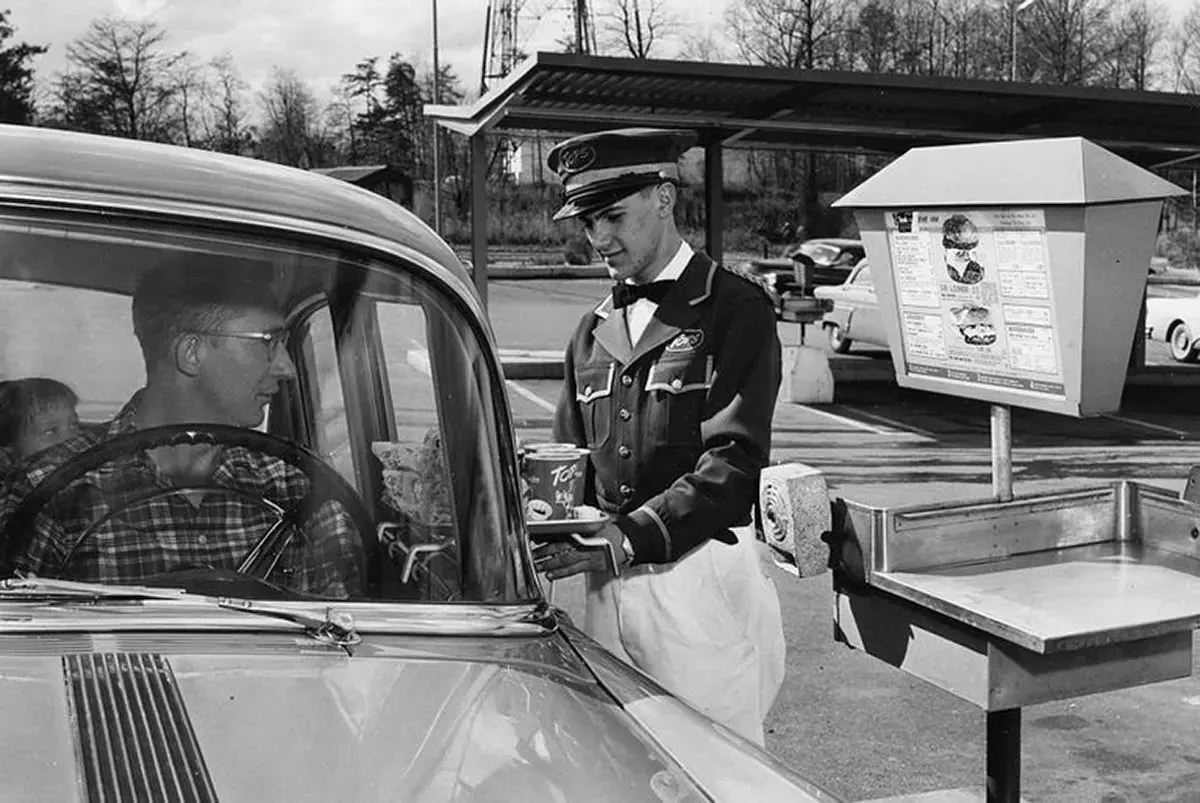
The carhop became the face of the drive-in. Their job required speed, balance, and friendliness in equal measure. They carried heavy trays of food across parking lots in all kinds of weather, often juggling multiple orders at once. Some wore uniforms. Some wore shorts. All of them worked for tips as much as wages, which kept them motivated to move fast and keep customers happy.
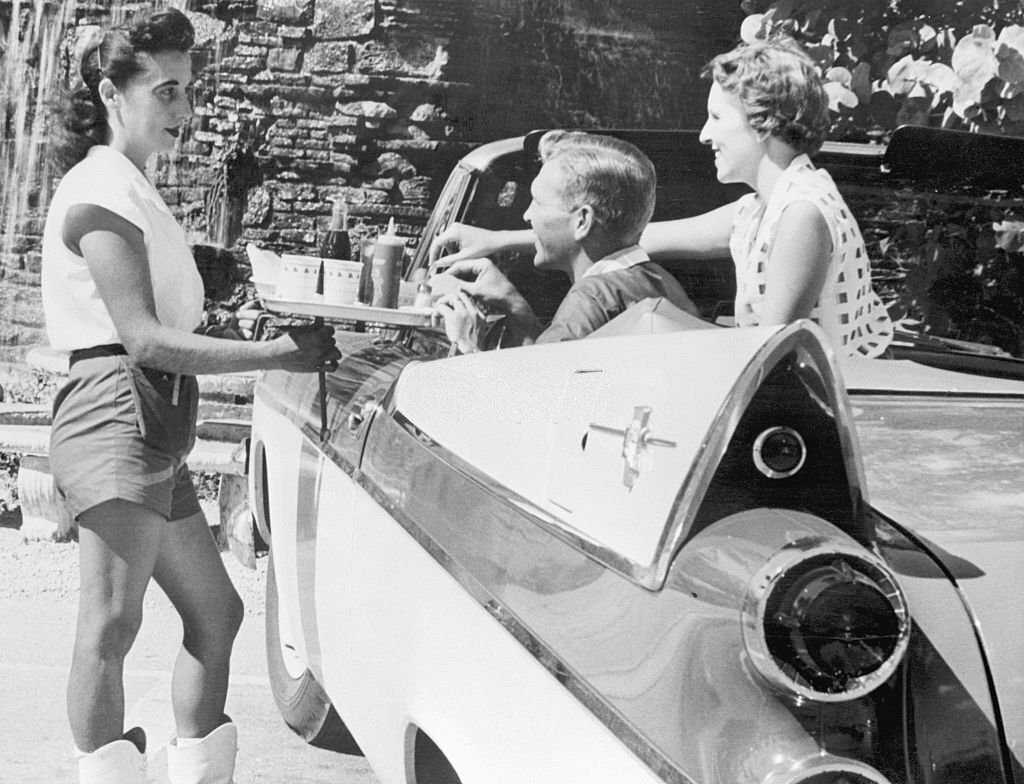
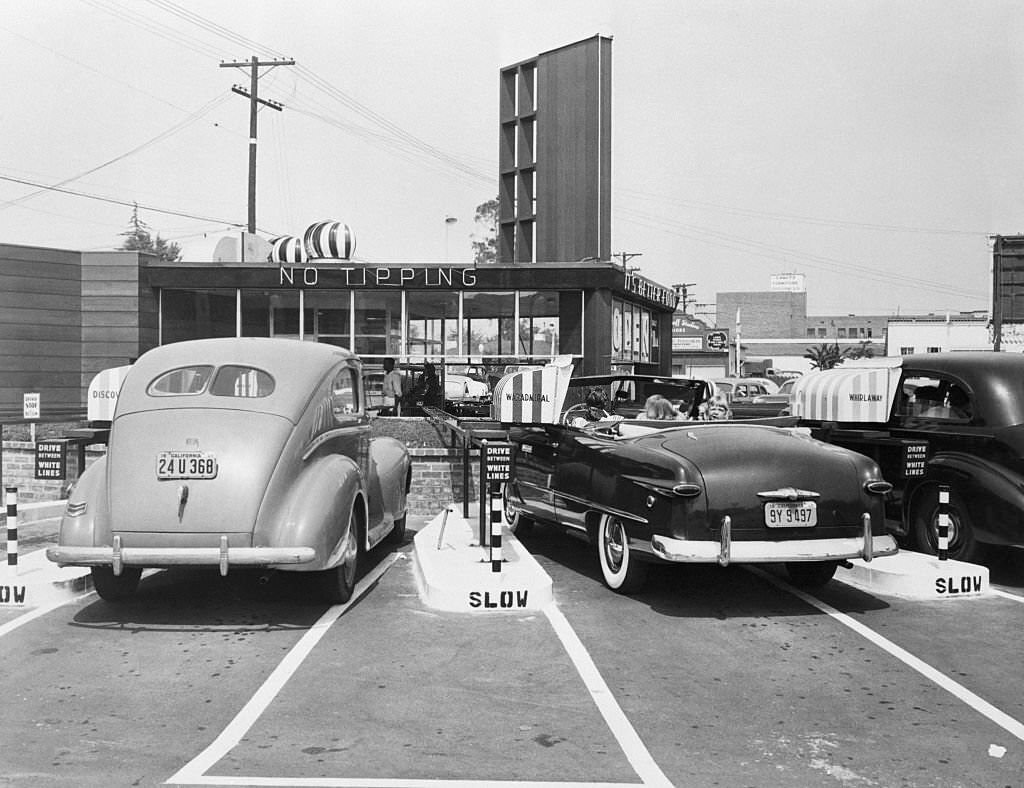
At the Clock Drive-In in California, carhops like “Irish” became local fixtures. Photos from 1955 show her and her colleagues delivering orders to cars packed with customers who had no intention of stepping outside. The Clock Drive-In was one of many California restaurants that helped make the drive-in a West Coast institution.
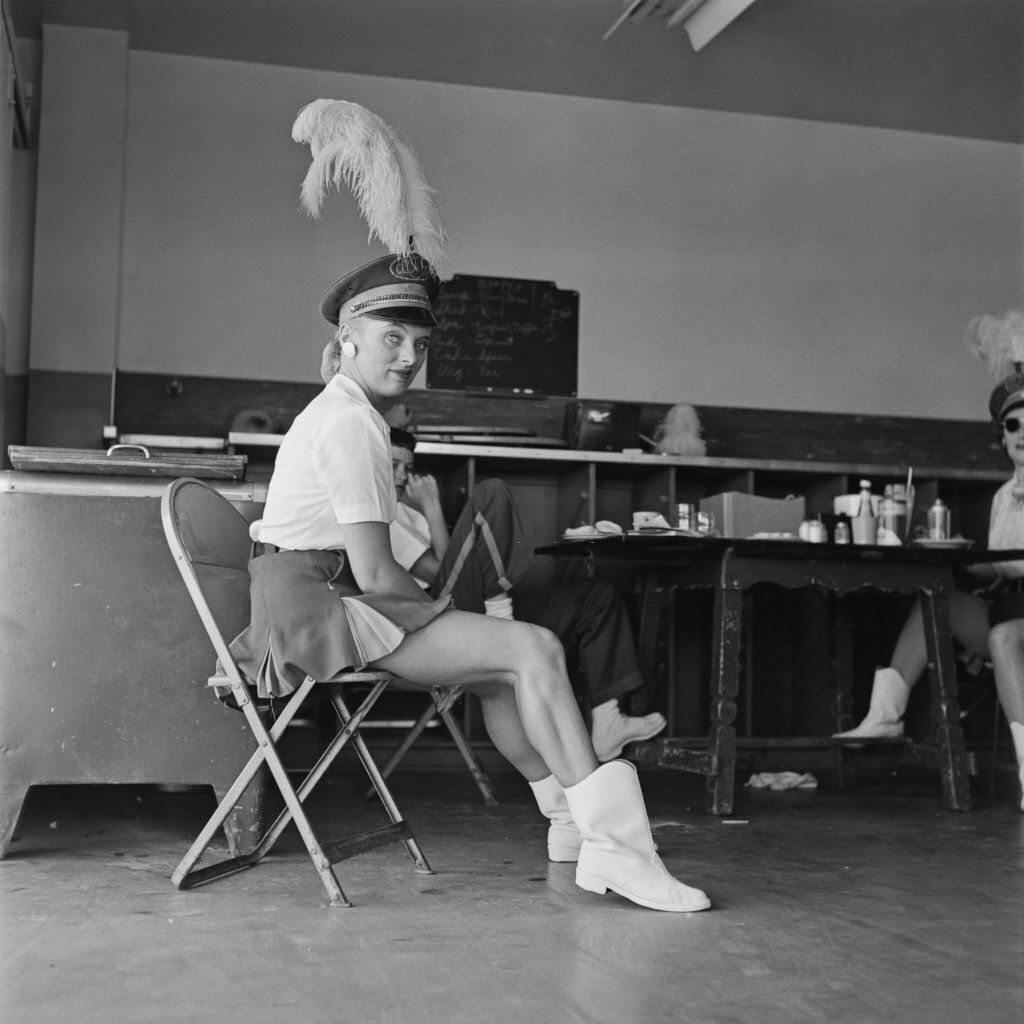
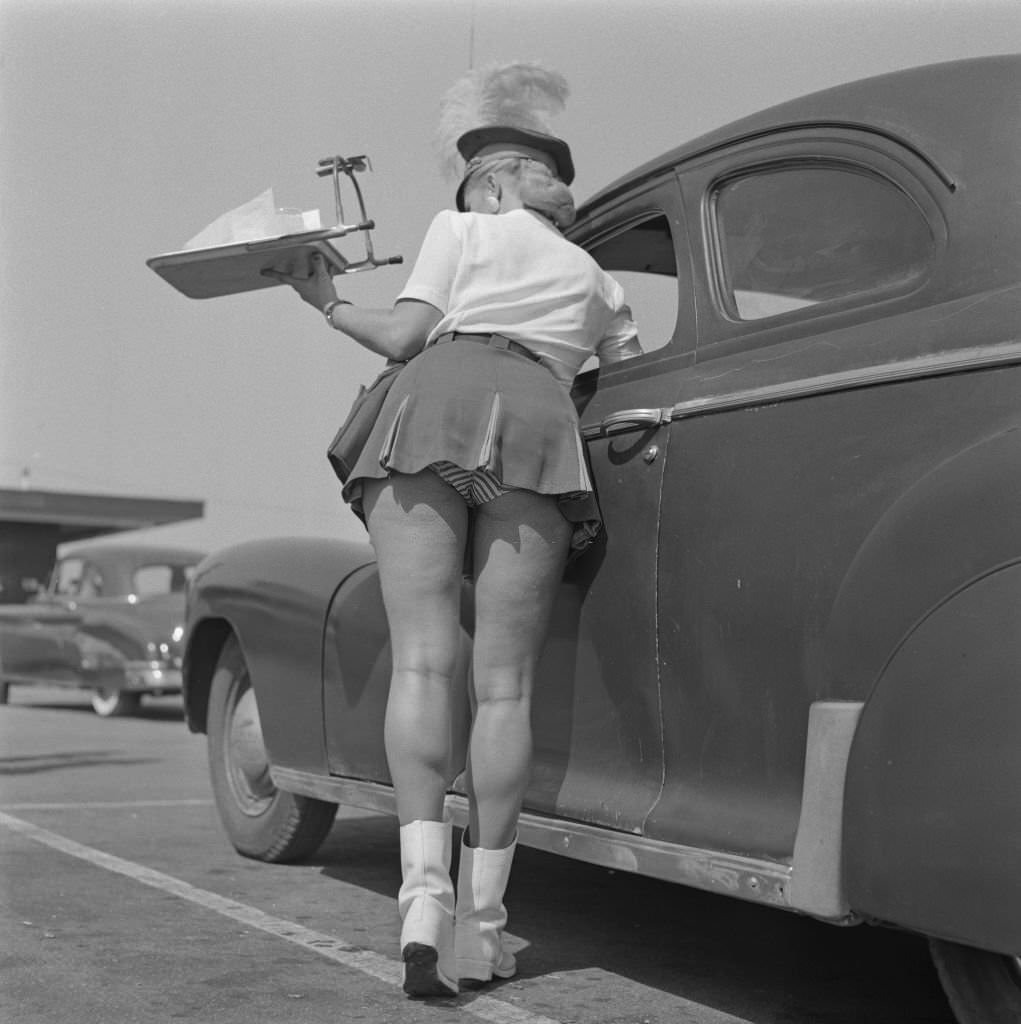
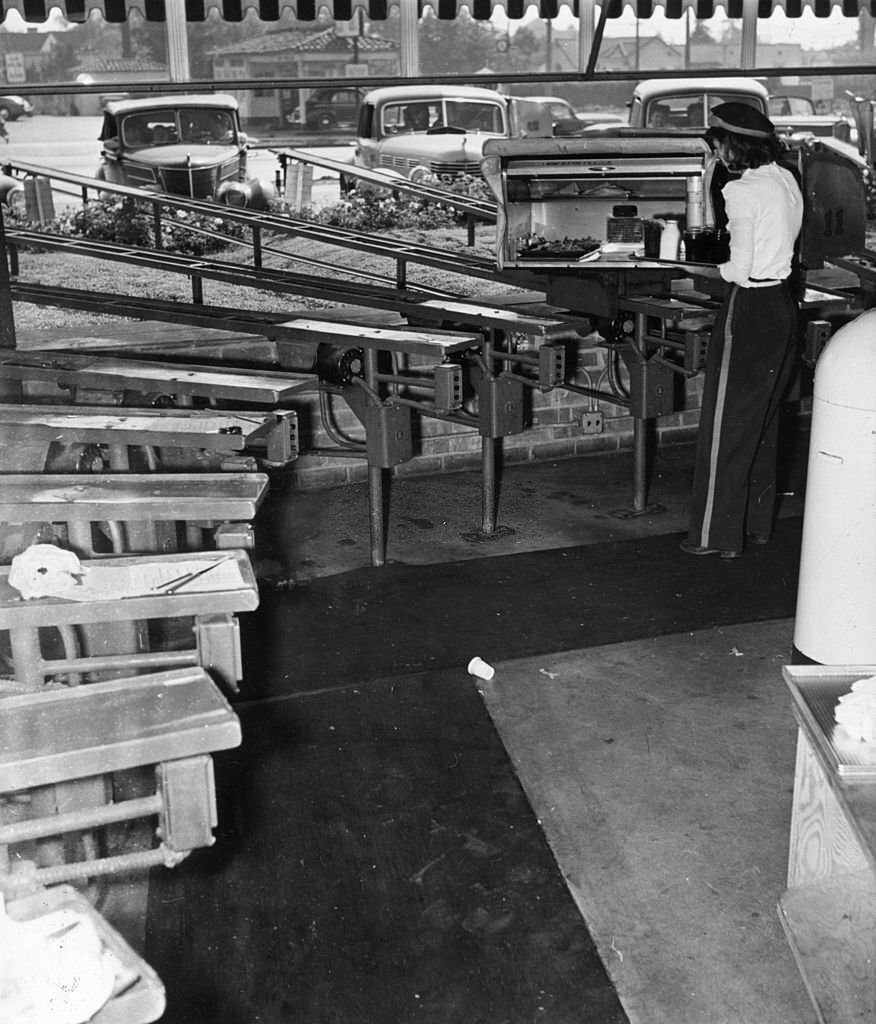
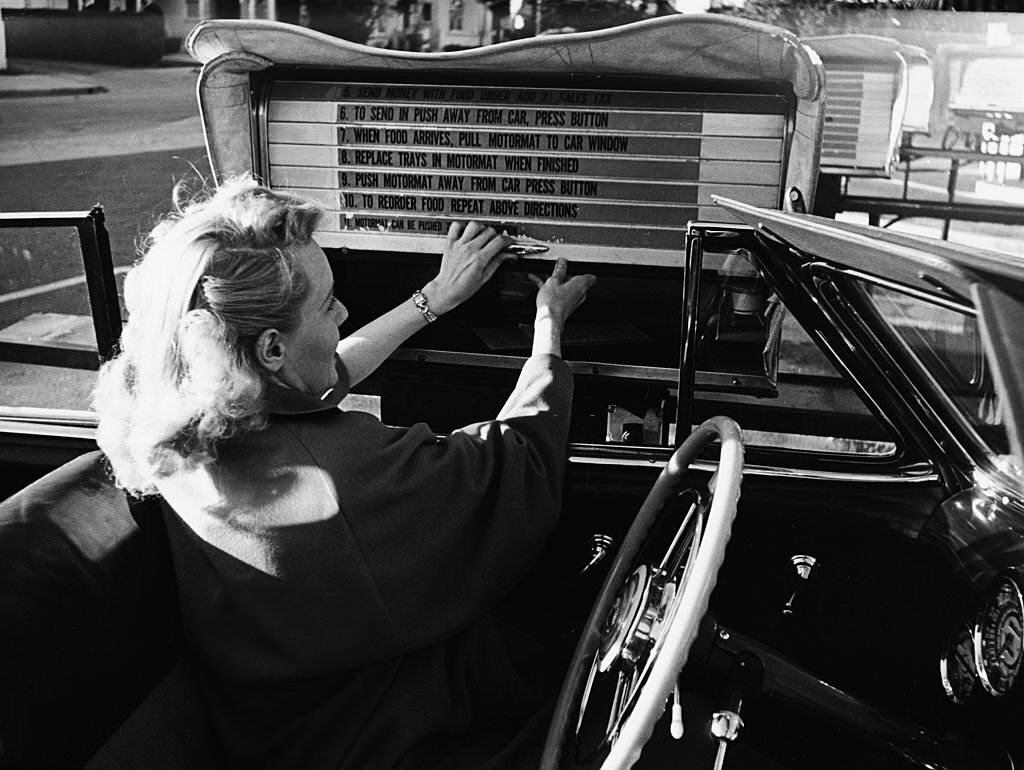
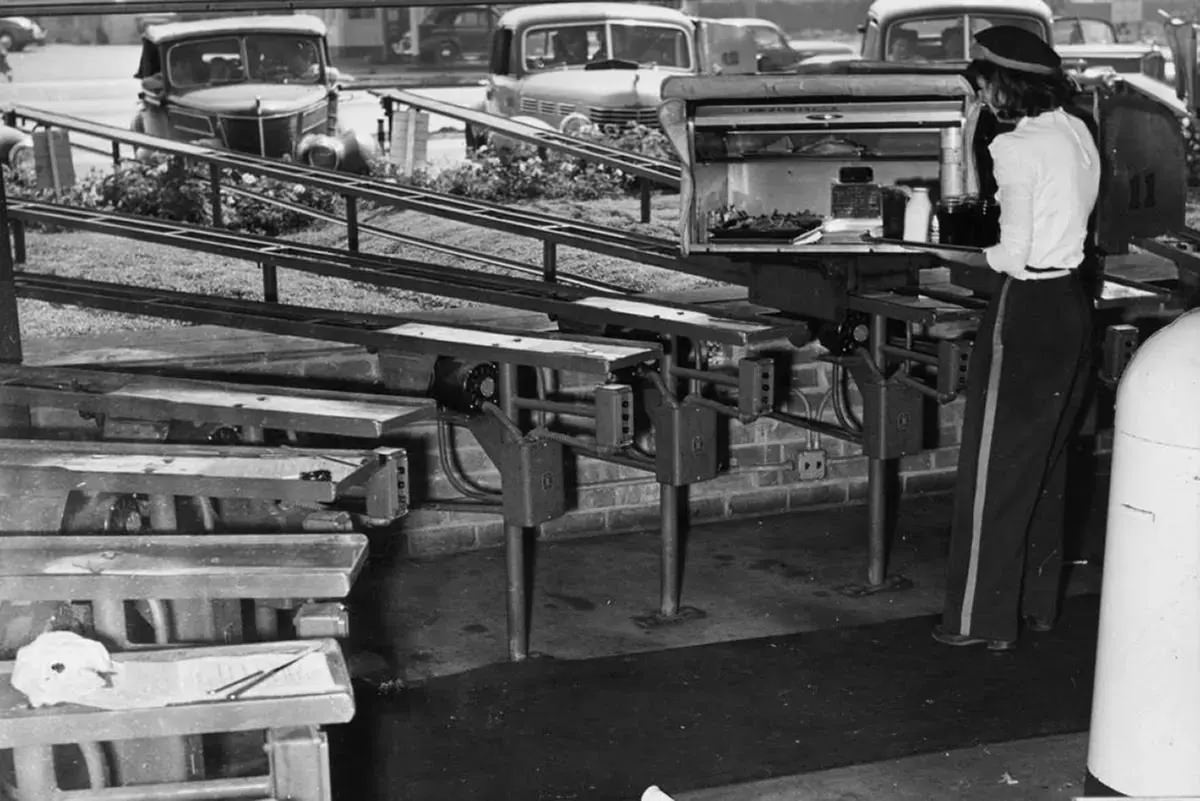
Speed was everything in the drive-in business. Restaurants that could turn tables — or rather, turn parking spots — faster than the competition earned more money. That pressure drove some owners to get creative. One notable innovation was the automated conveyor belt system, where individual belts ran food directly from the kitchen to each parked car. No carhop needed. The machine brought the meal to the driver.
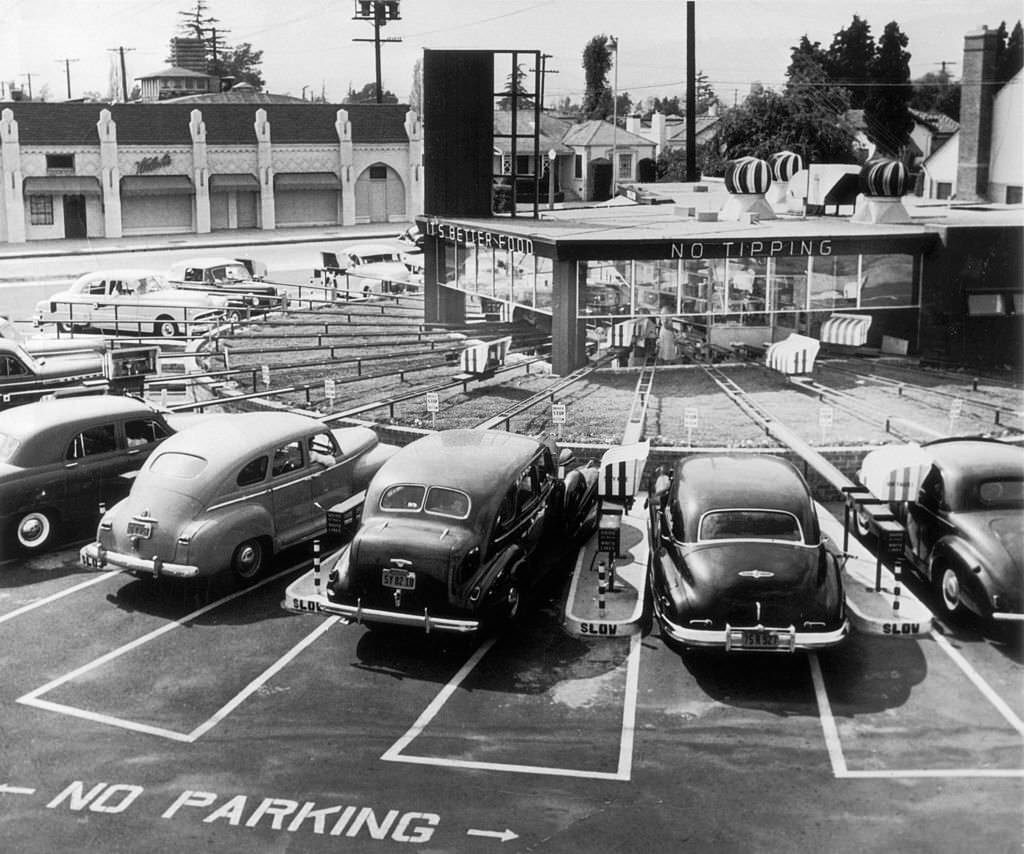
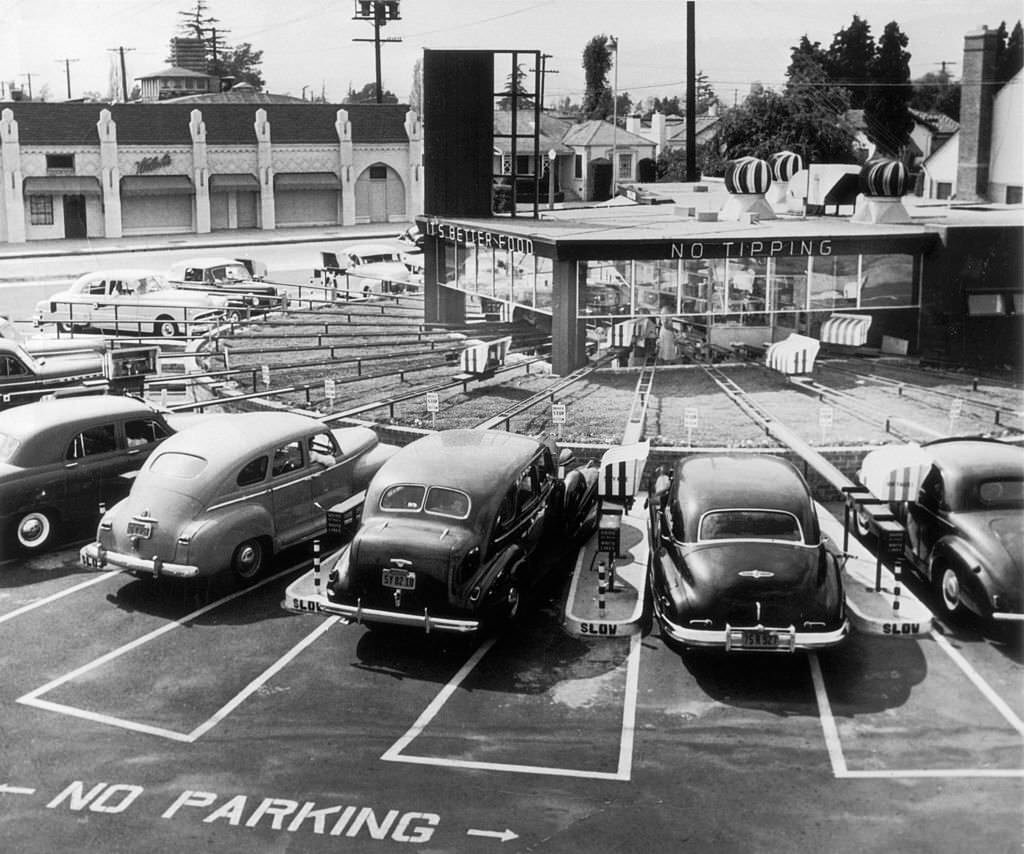
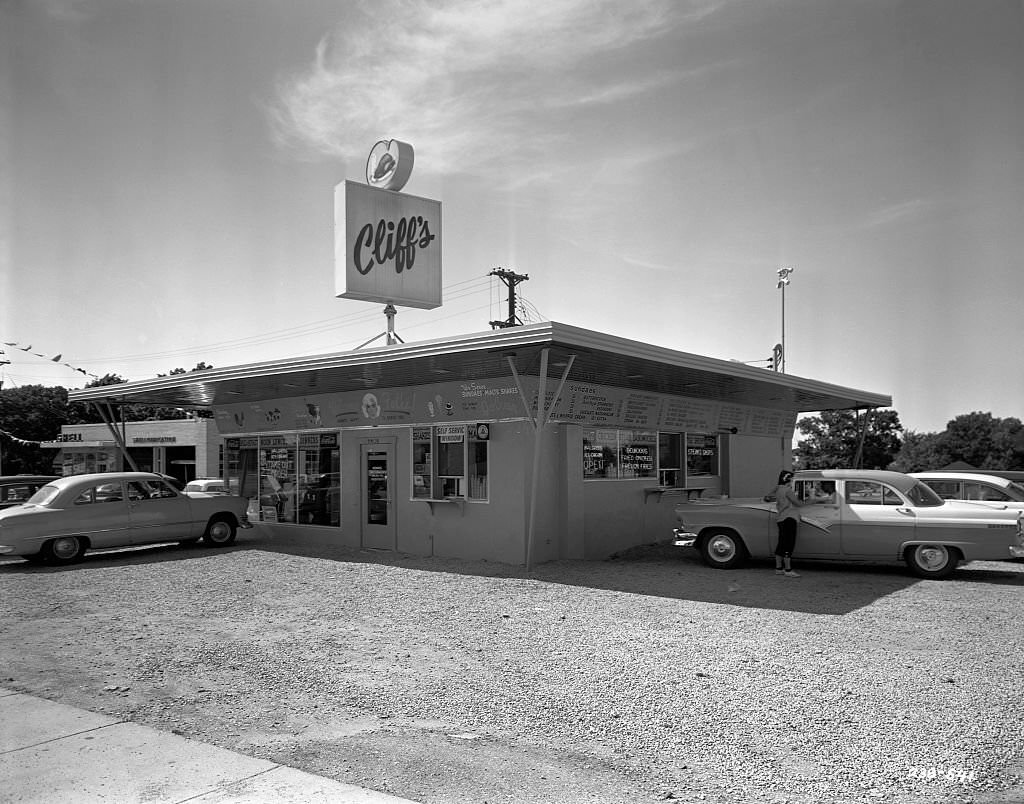
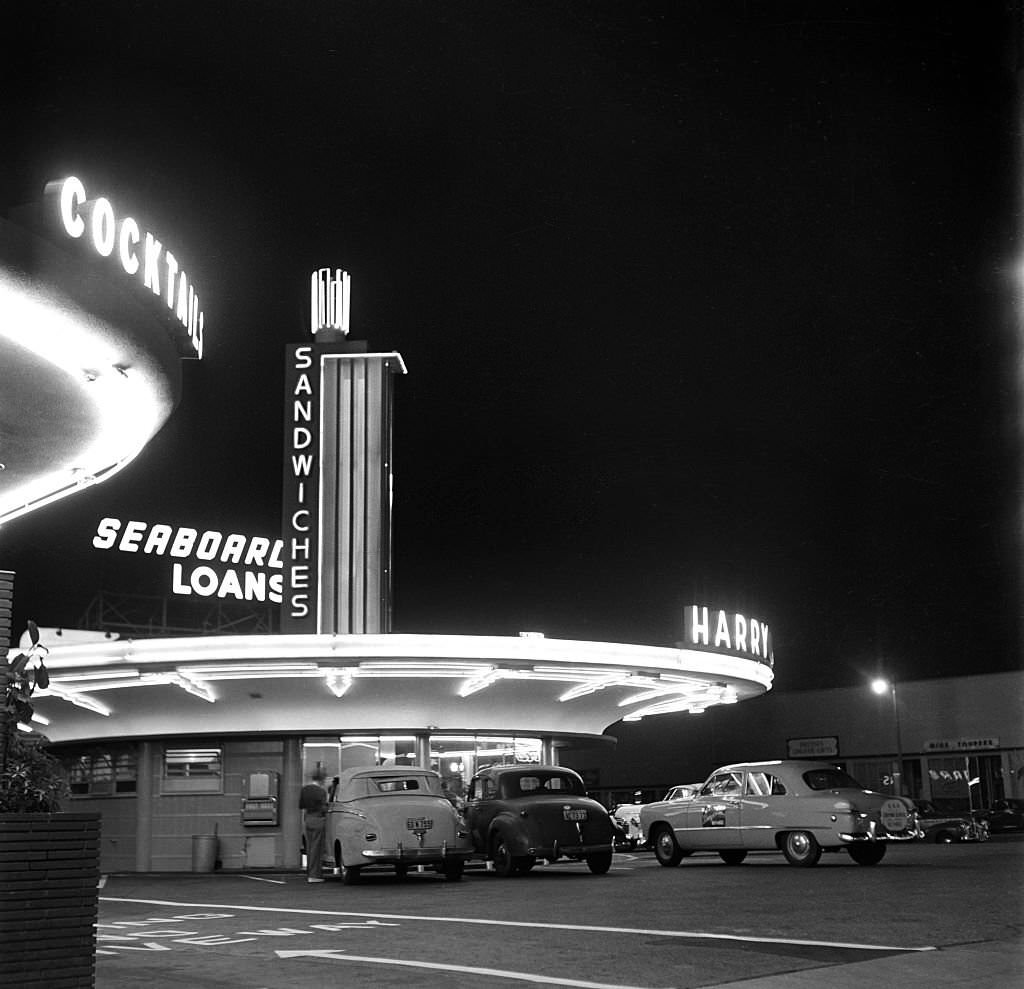
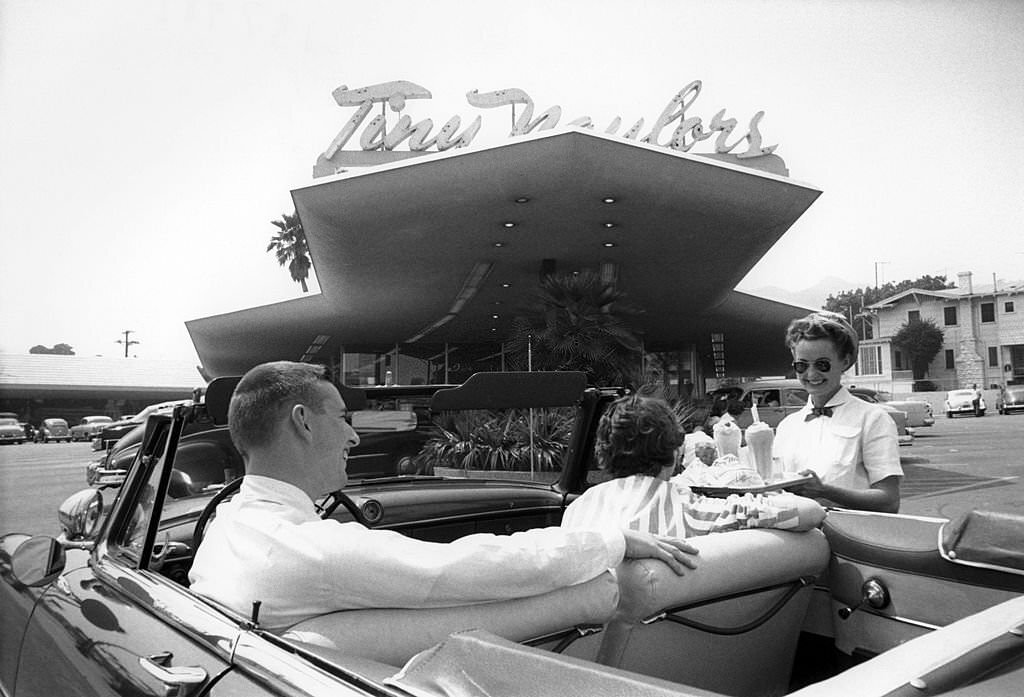
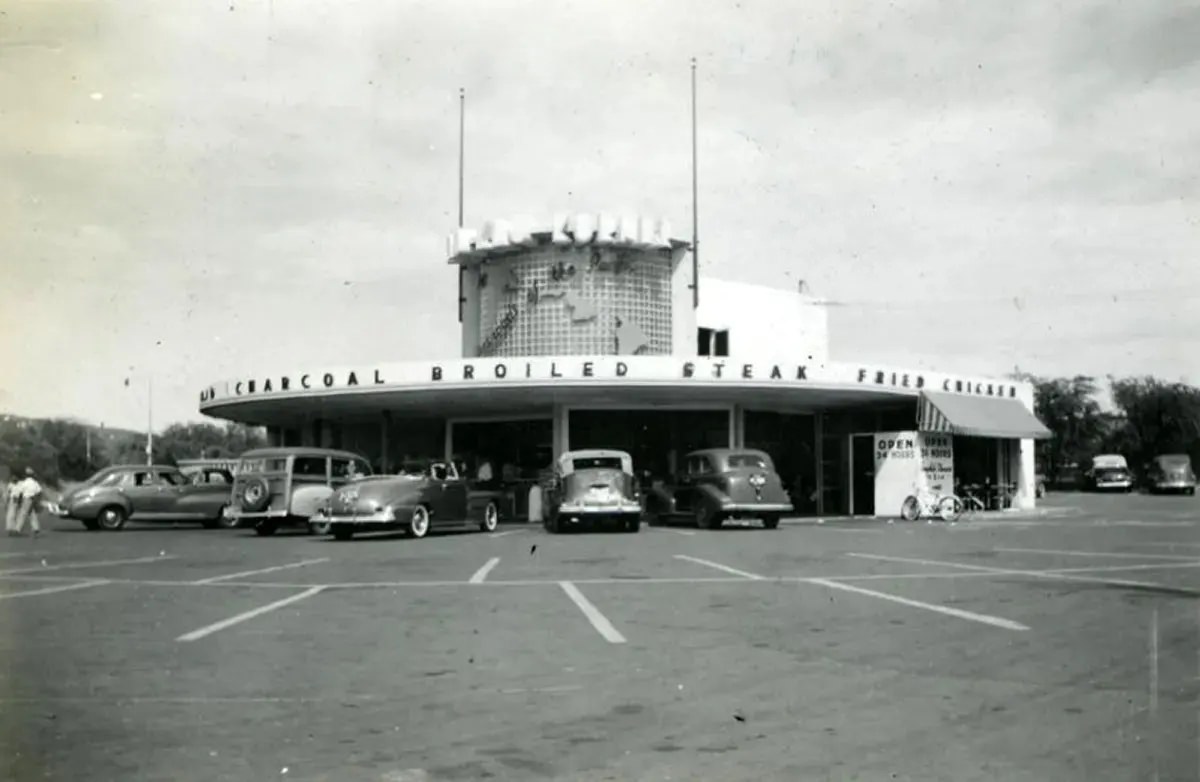
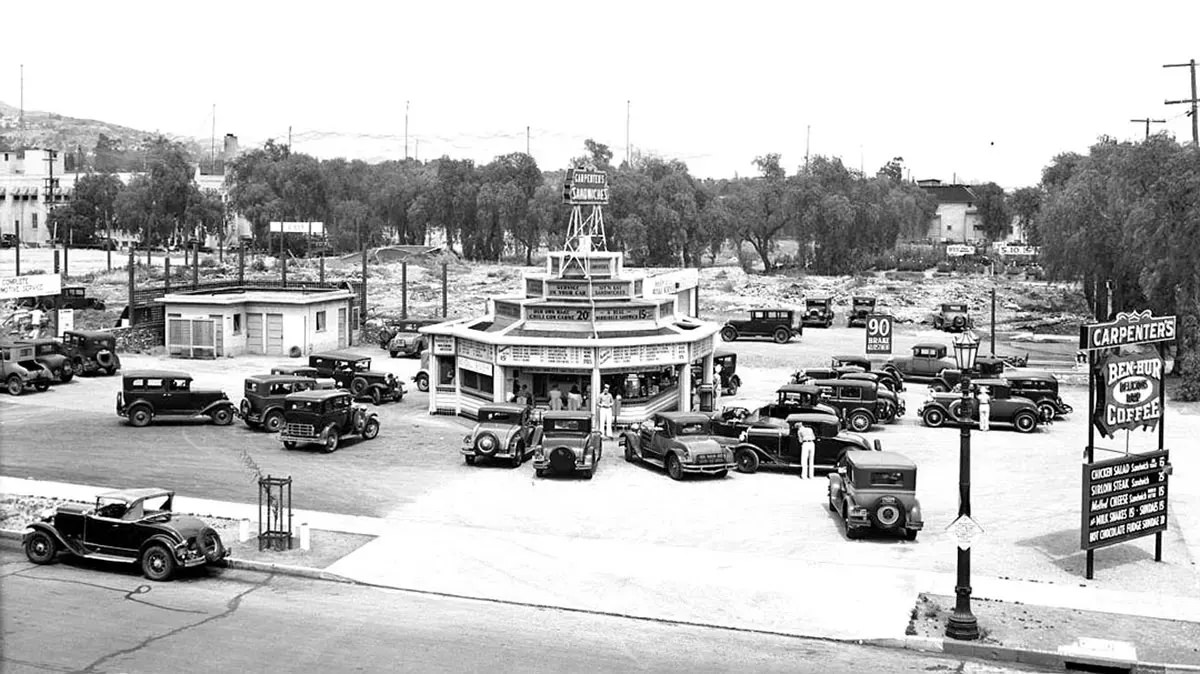
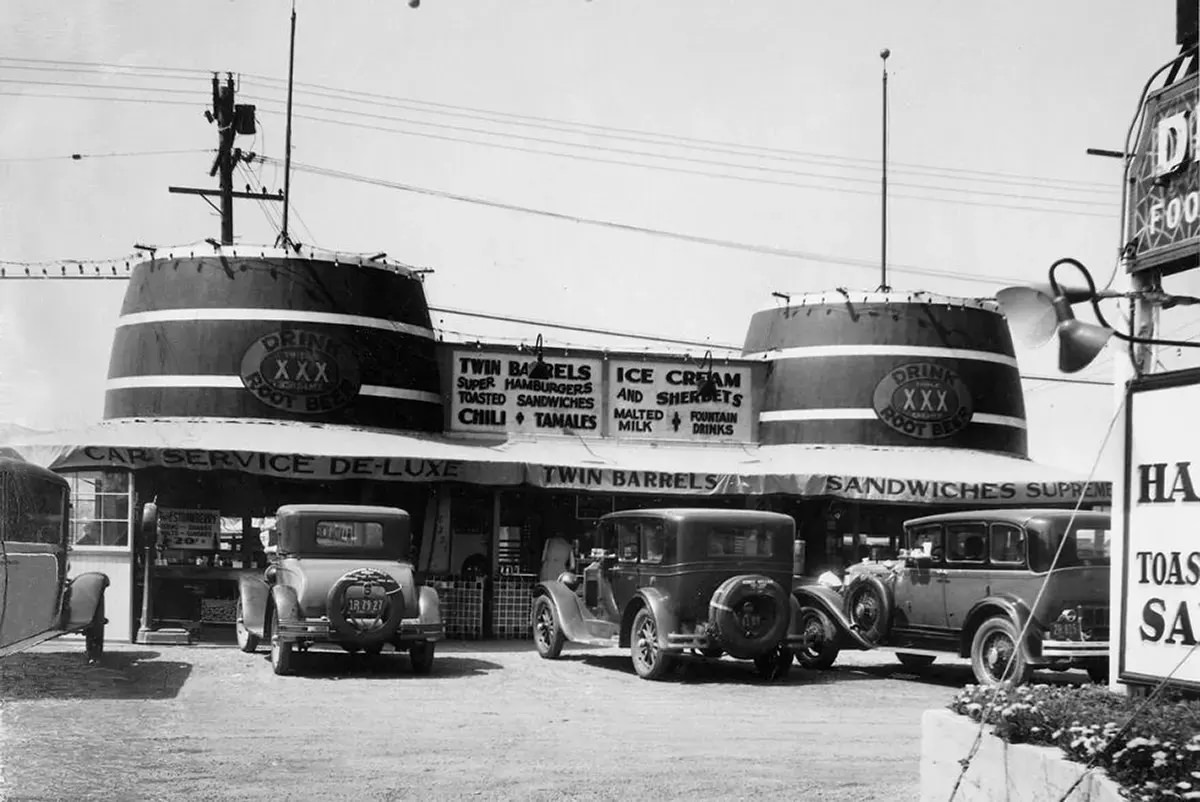
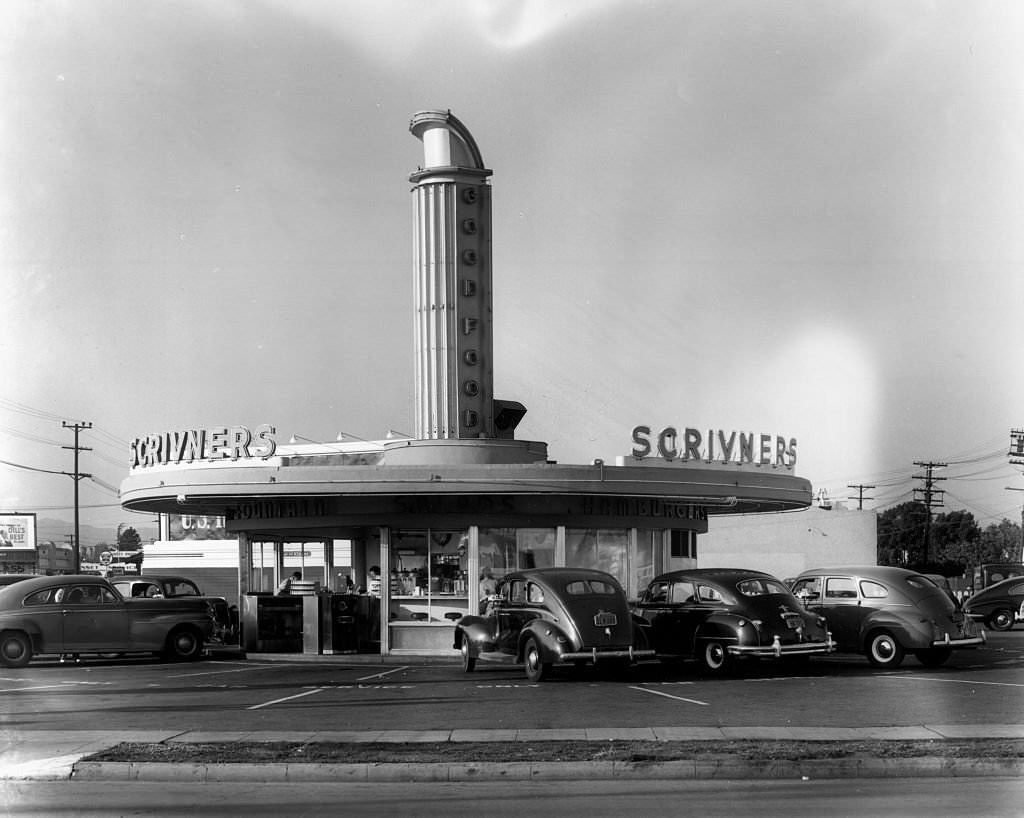
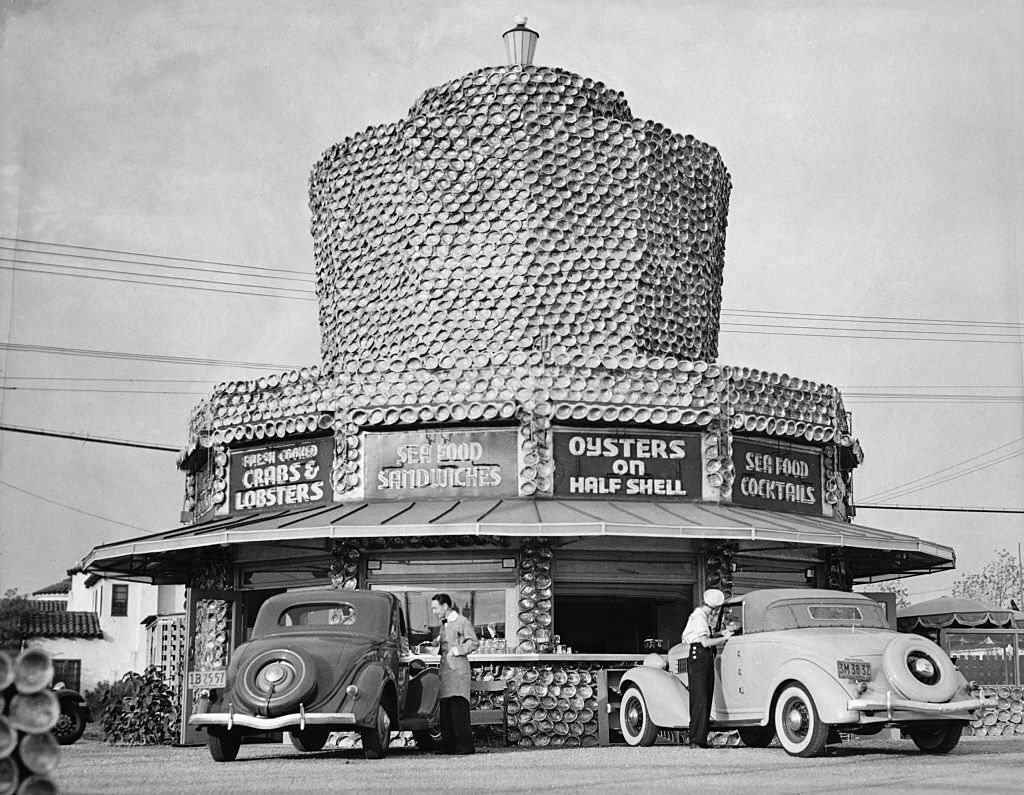
Not all innovations were mechanical. Architects also rethought how drive-in buildings should be designed. Circular layouts became popular because they let carhops move in efficient loops from the kitchen to the outer ring of parked cars. Large canopies stretched over parking areas to shield both workers and customers from the sun. The buildings themselves became part of the attraction — some were oddly shaped, brightly lit, or decorated in ways meant to stand out from the road.
The drive-in reached a new level of popularity when roller-skating carhops entered the picture. Strapping on skates let workers cover the parking lot in a fraction of the time it took on foot. Restaurants that adopted the trend quickly became destinations. People didn’t just come for the food — they came to watch the carhops weave between cars, balancing trays, calling out orders, and moving at a pace that seemed almost impossible.
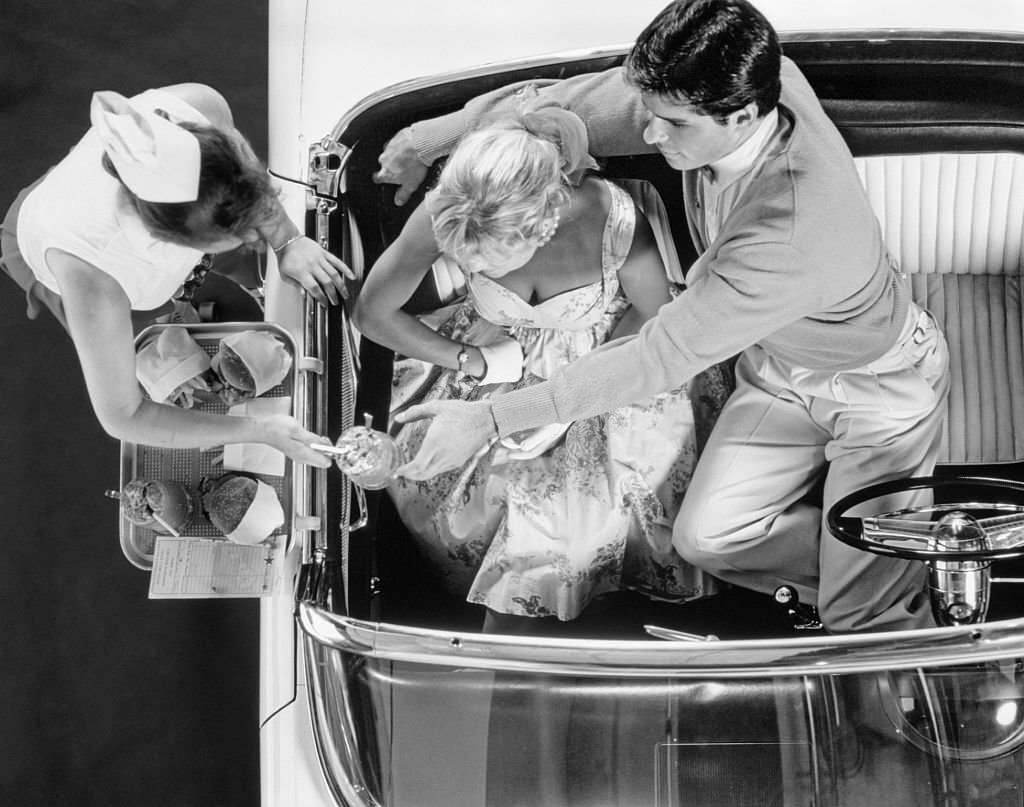
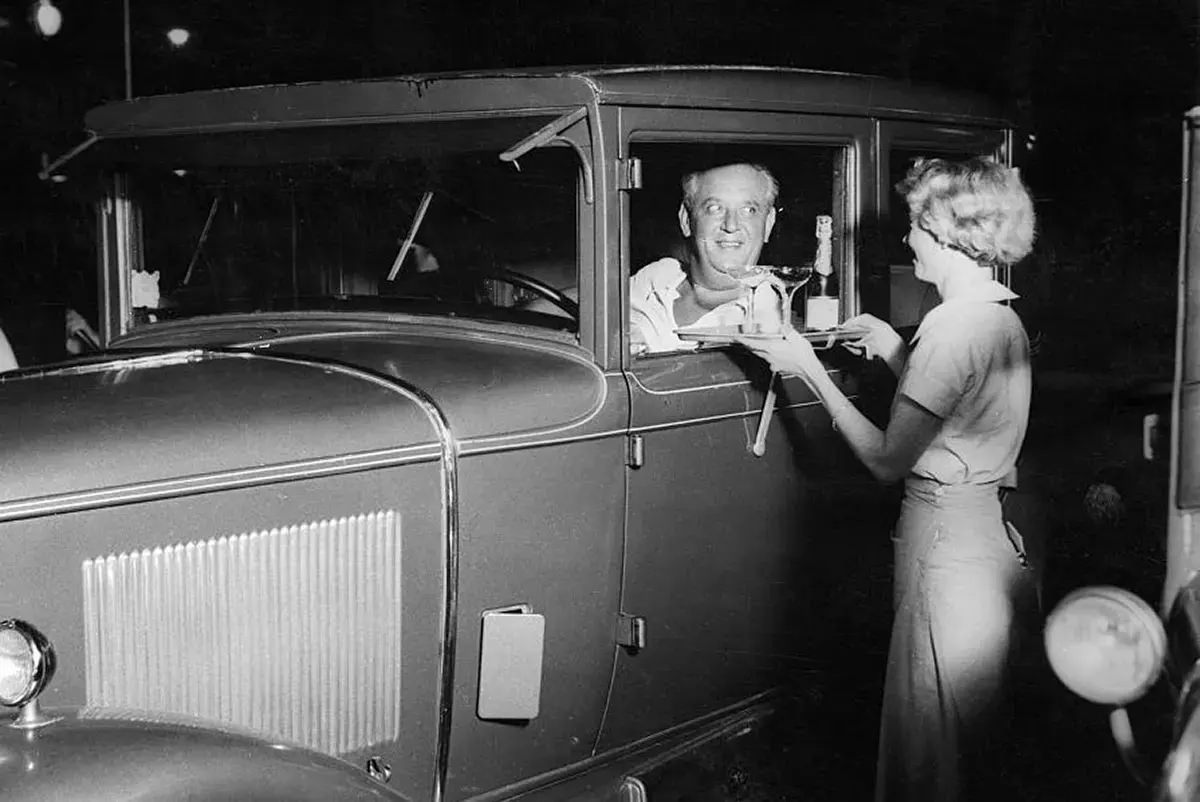
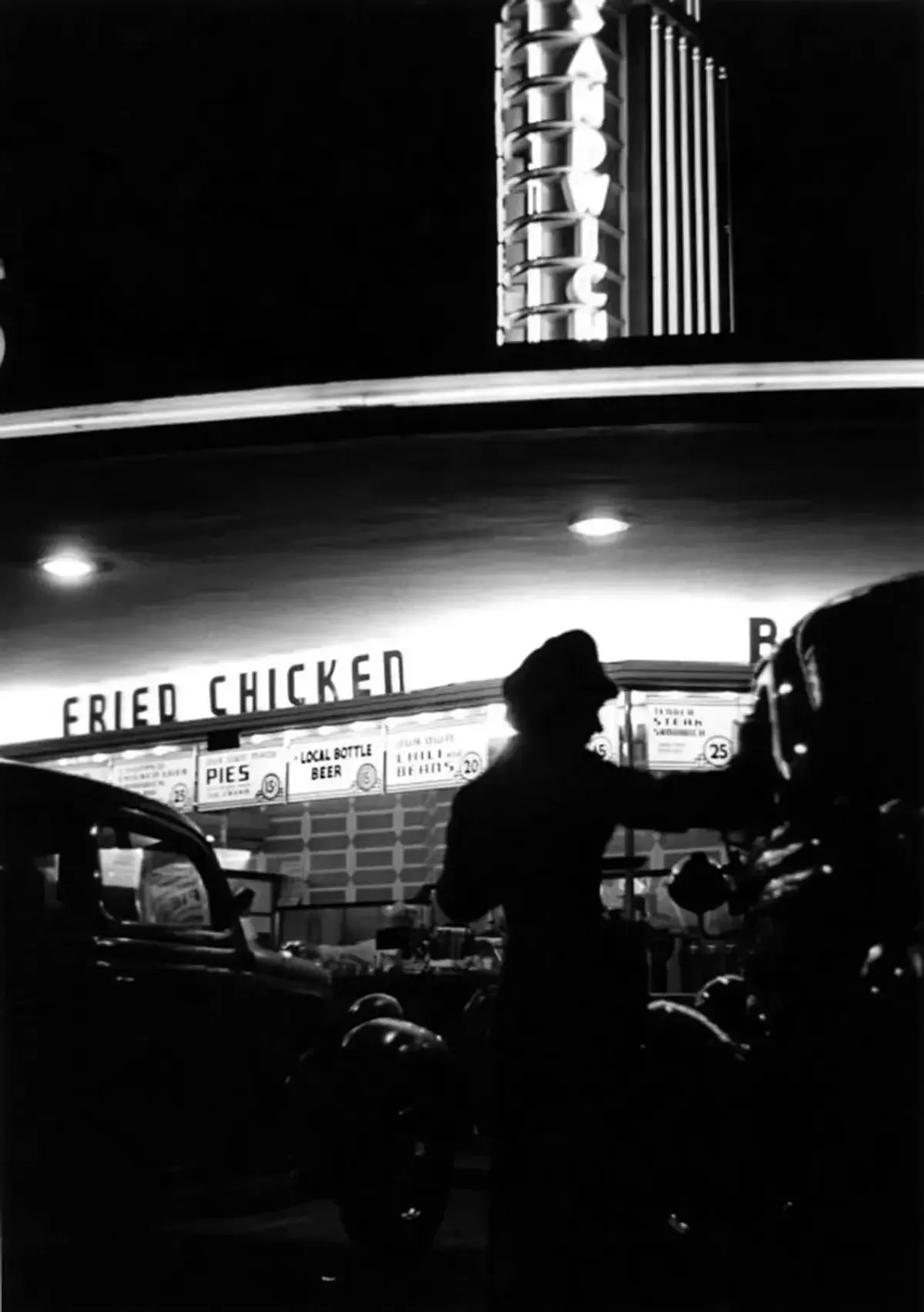
Drive-in menus varied more than most people remember. Burgers and fries were standard, but many restaurants offered full meals — fried chicken, seafood, sandwiches, and even steak. Coffee came in ceramic mugs, ice cream in proper dishes, and at some locations, after Prohibition ended in 1933, customers could even order alcohol from the comfort of their front seat.
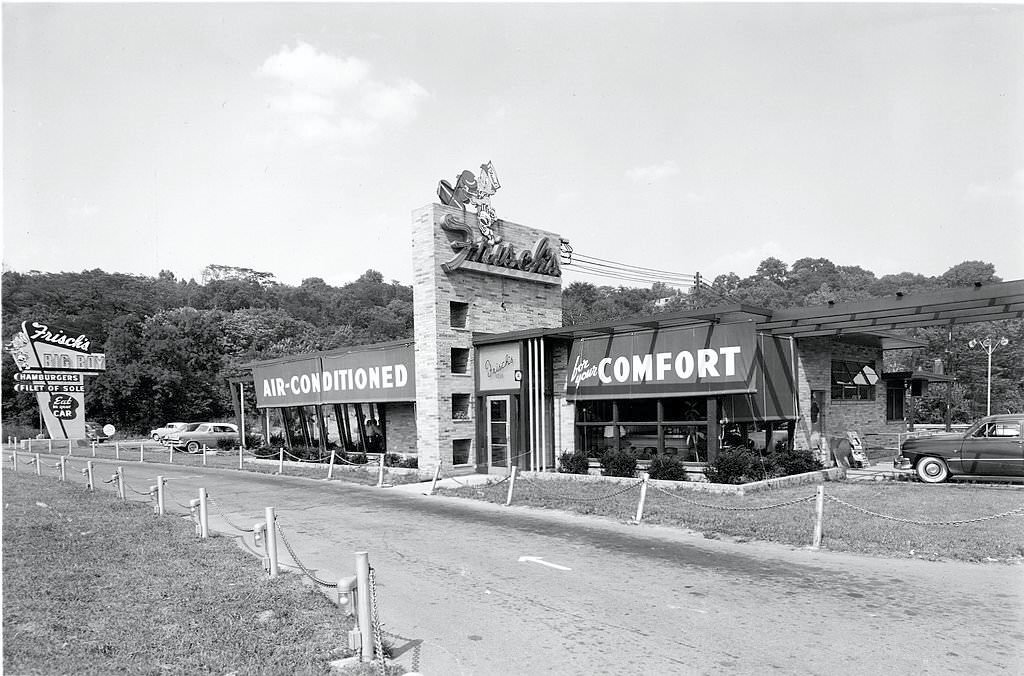
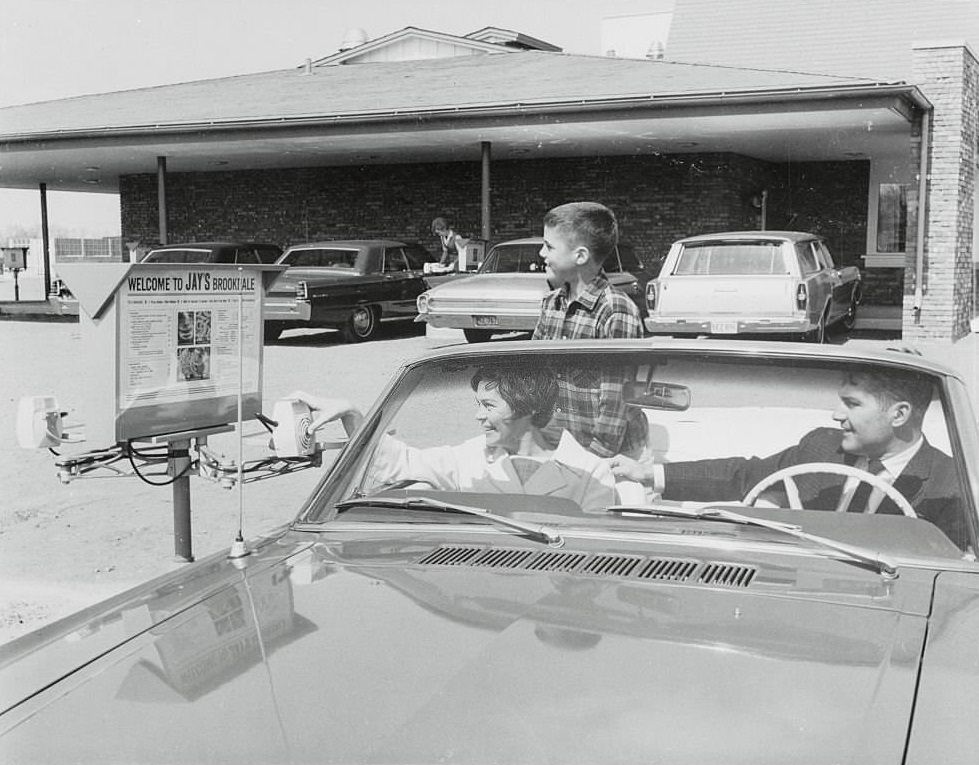
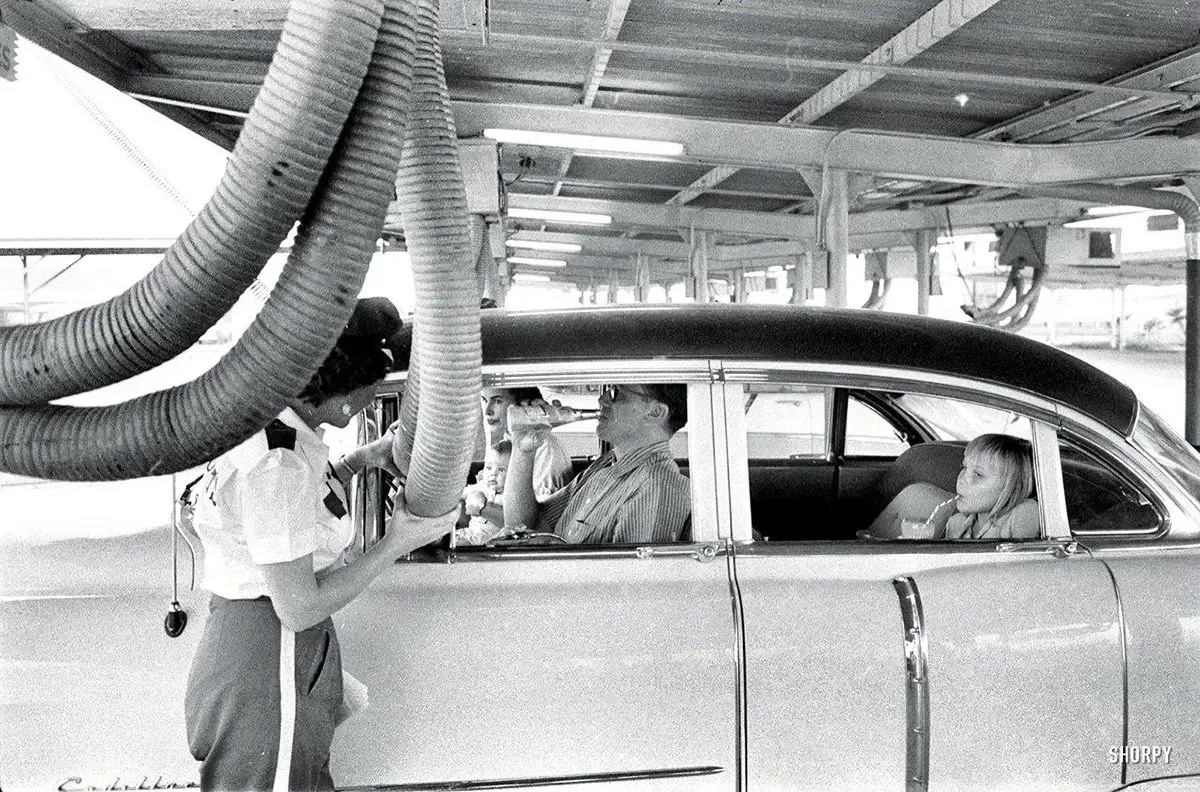
Some drive-ins went even further with the car-based experience. A 1957 photograph shows a family sitting in their parked car while cool air was piped directly into their vehicle through a hose — essentially an early form of drive-in air conditioning. In the California heat, this was a genuine selling point. Comfort behind the wheel was the whole point, and restaurants competed to offer it in every form they could.
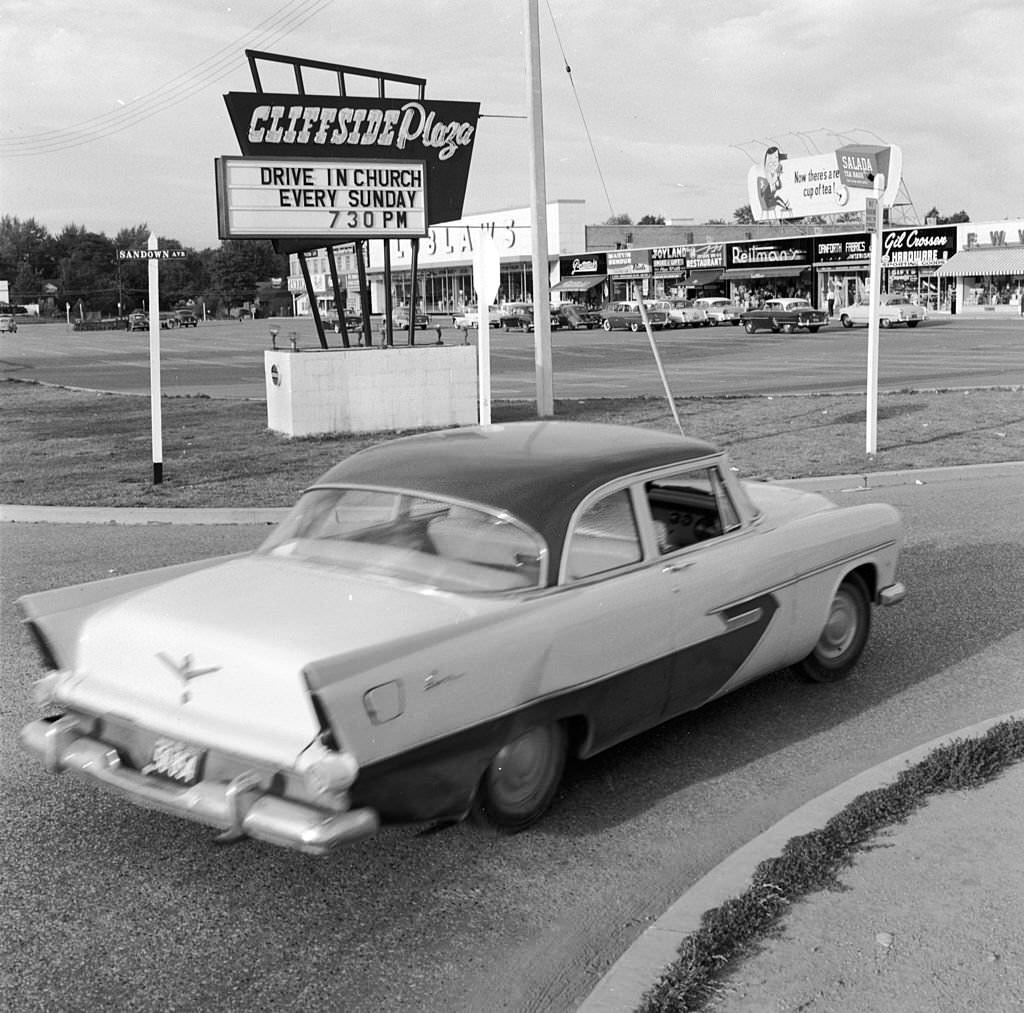
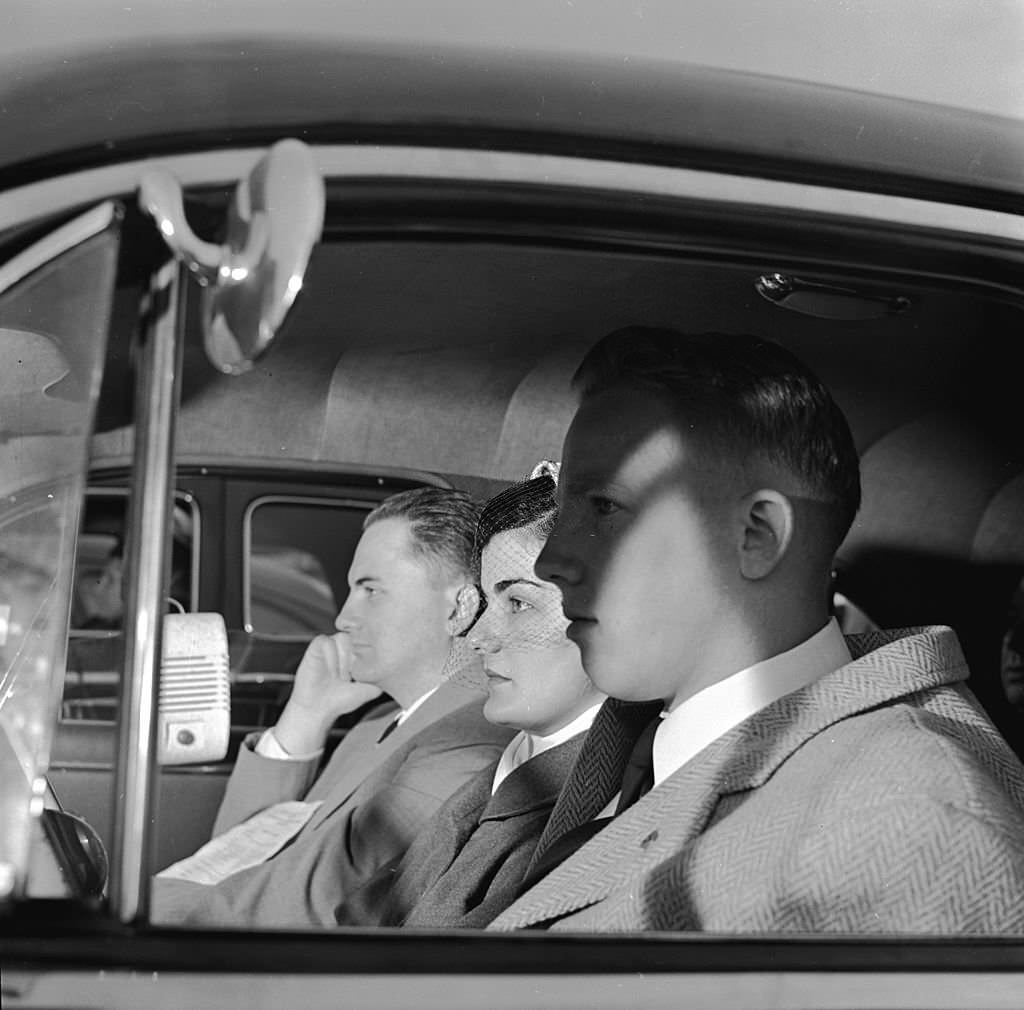
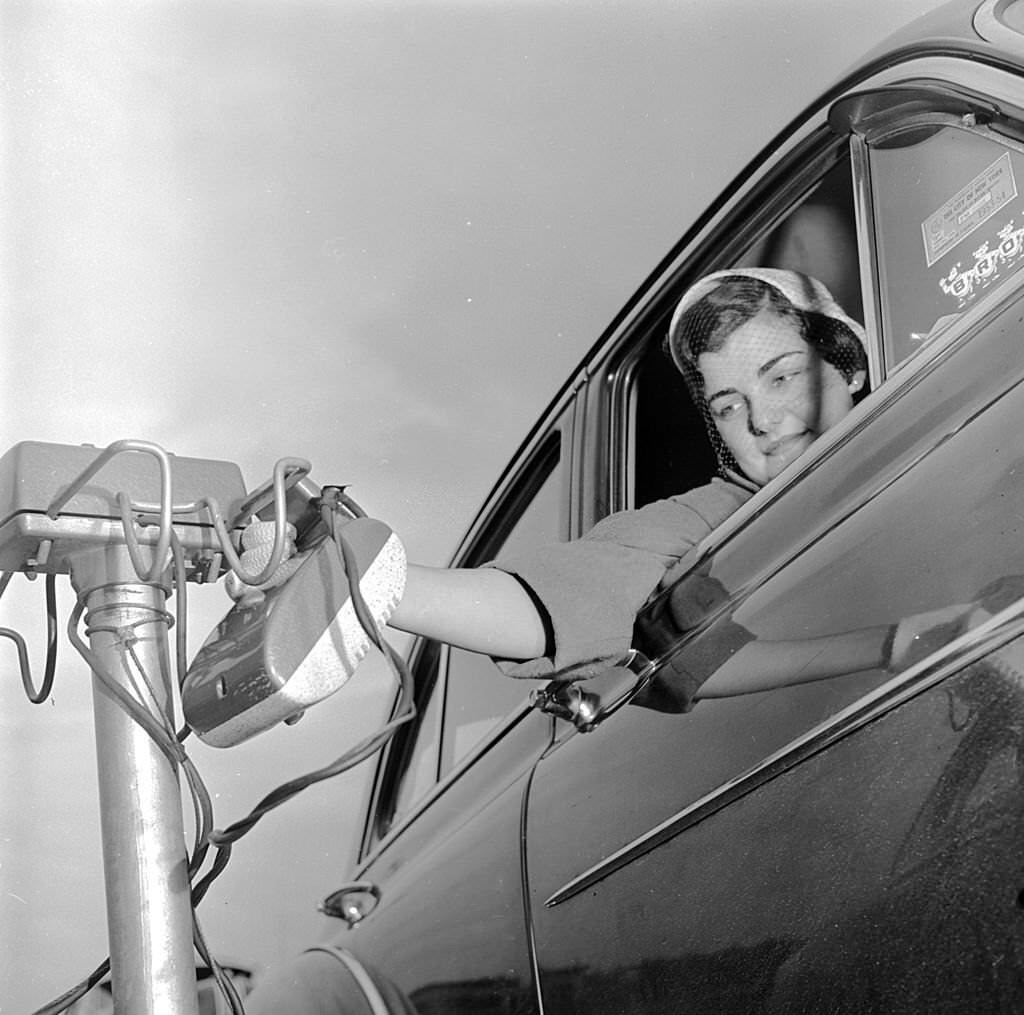
The drive-in concept spread far beyond restaurants. By the mid-1950s, churches were also adopting the format. In Scarborough, Ontario, a Canadian shopping mall hosted a drive-in church service where congregants stayed in their vehicles and listened to sermons from their windows. Similar services appeared across the United States. Worshippers in a 1955 photograph sit inside their car at a drive-in theatre that had been converted into a Sunday service venue.
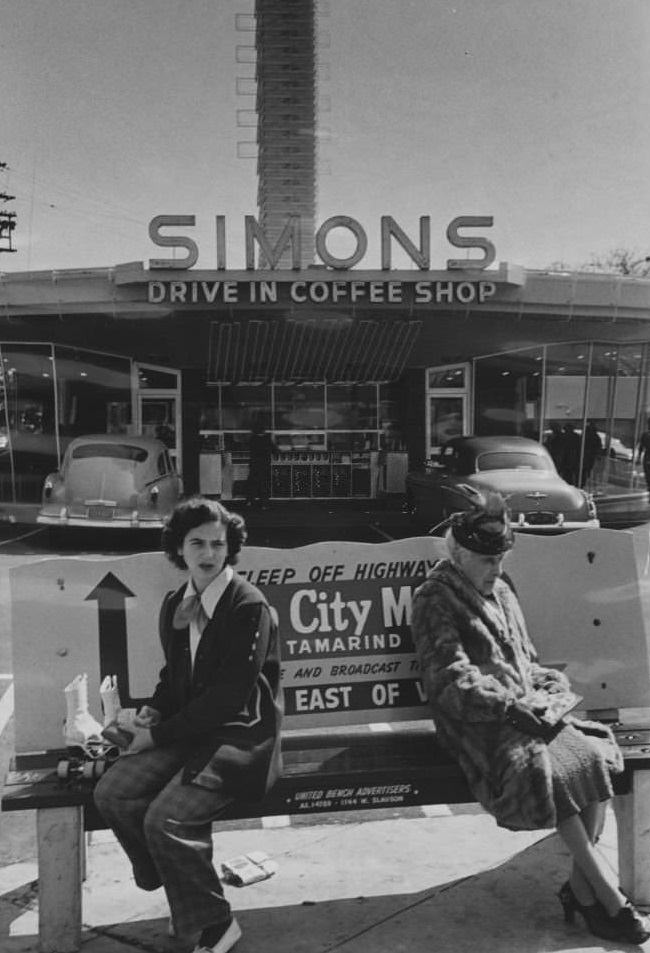
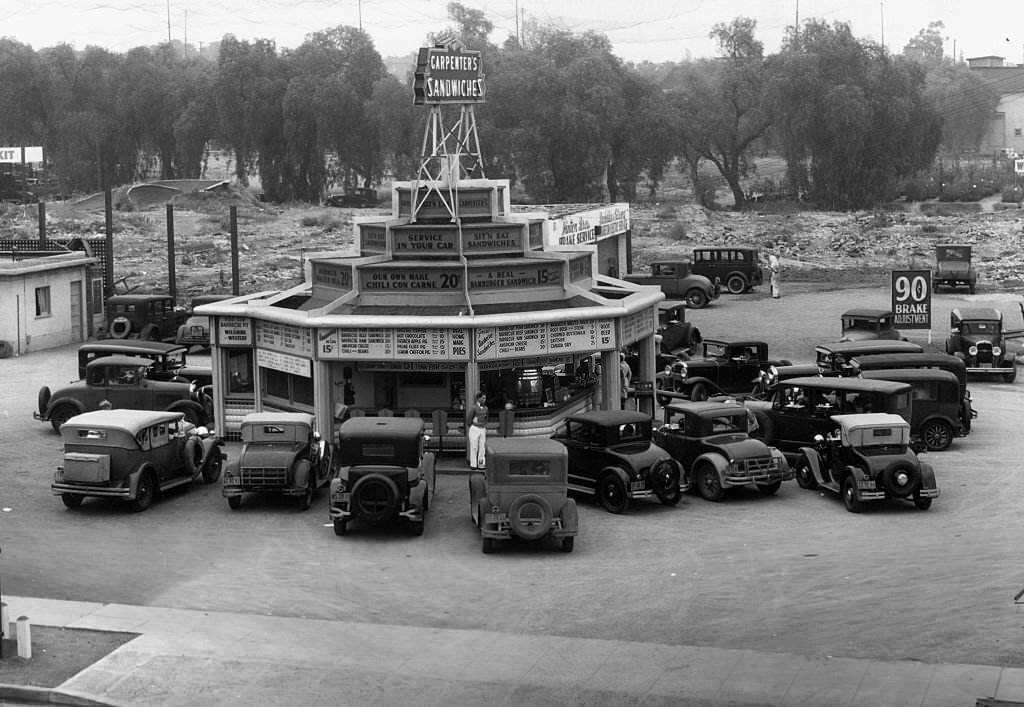
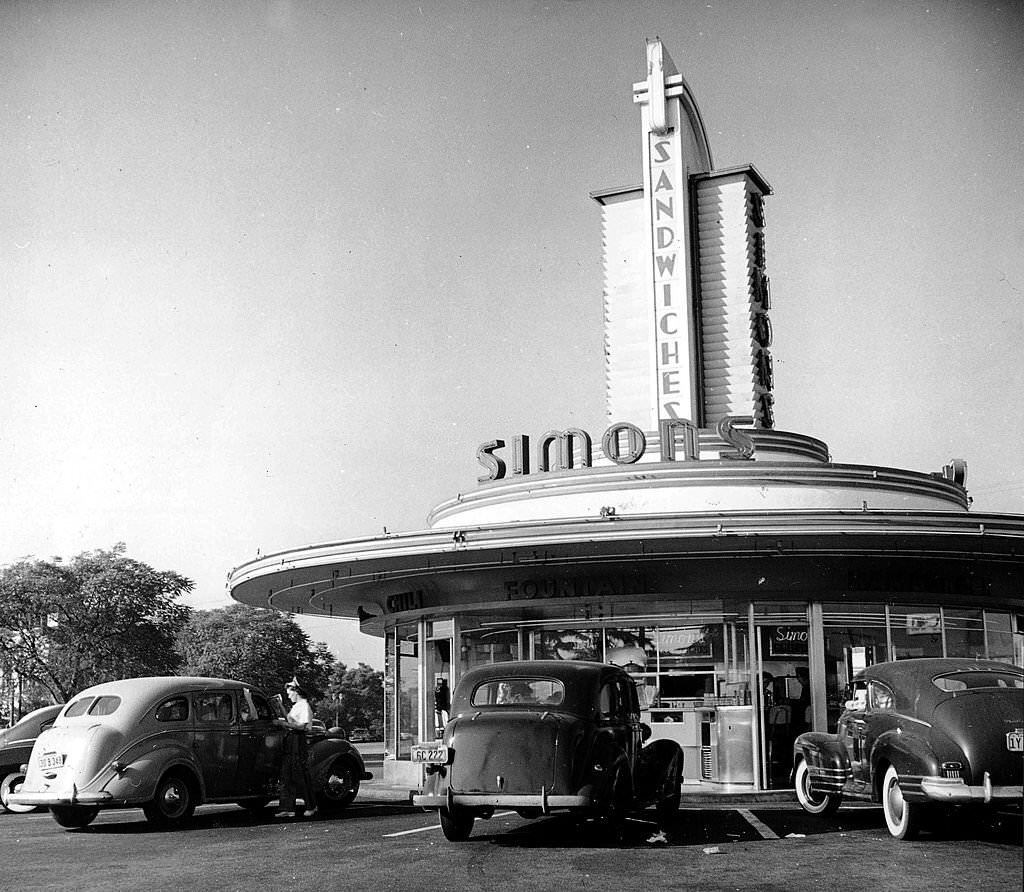
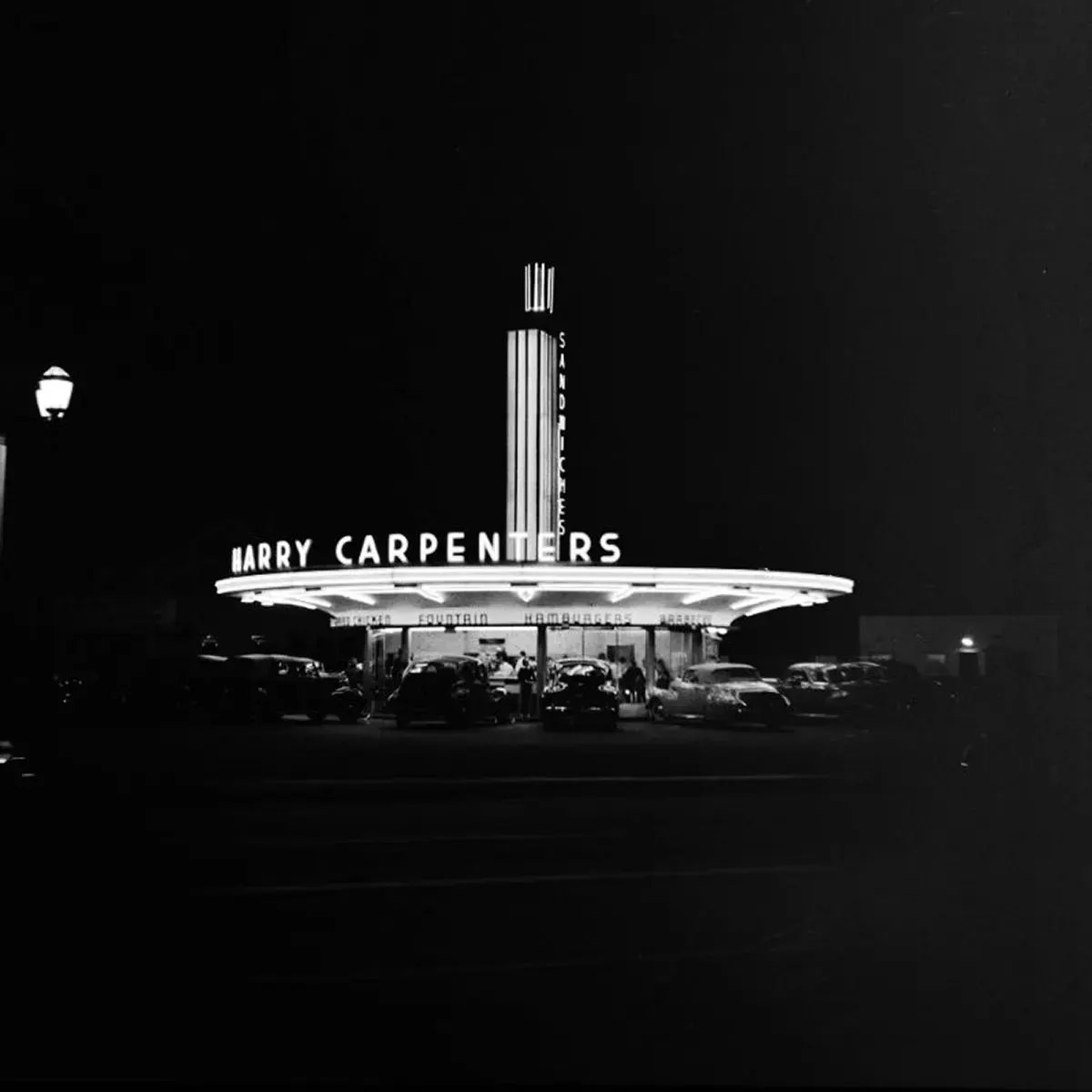
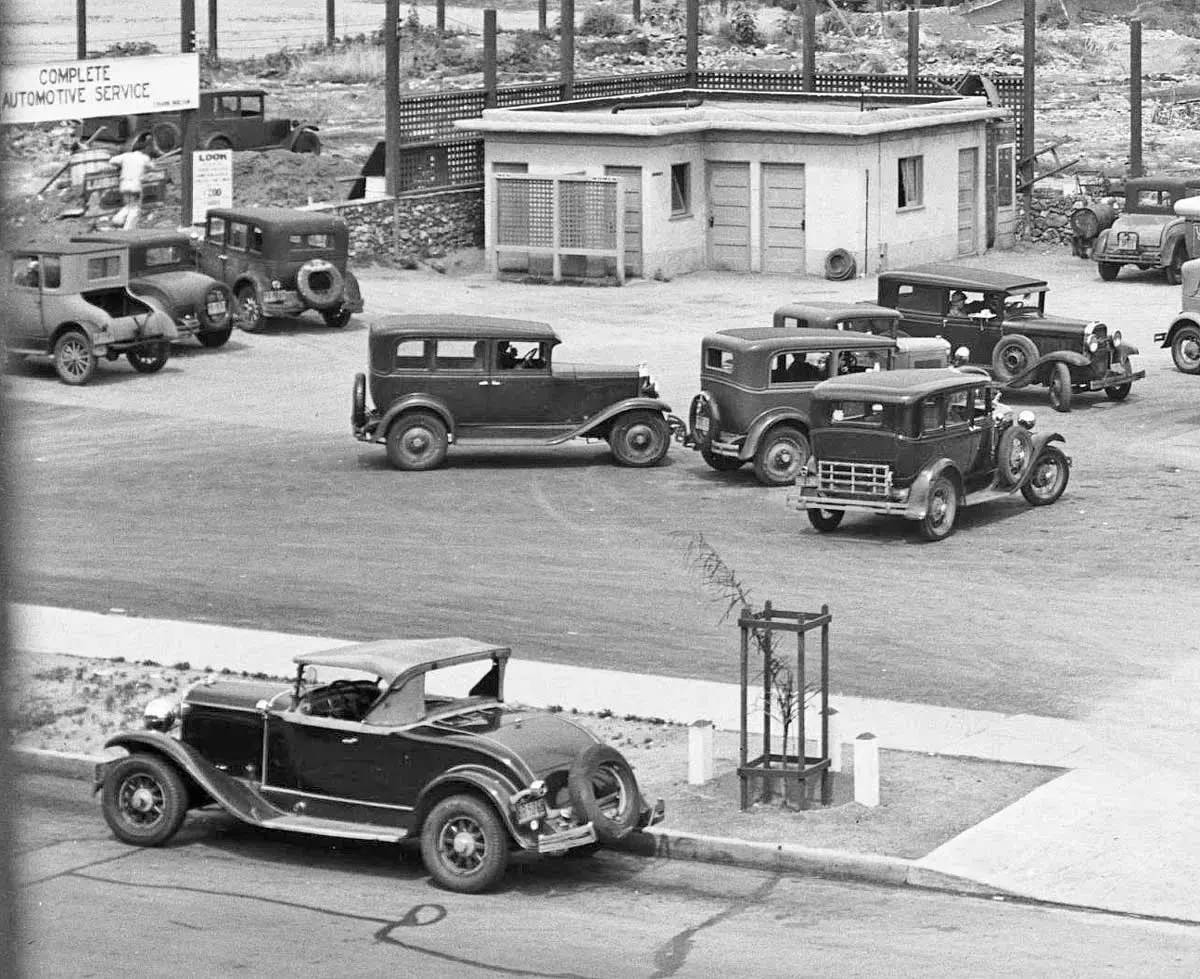
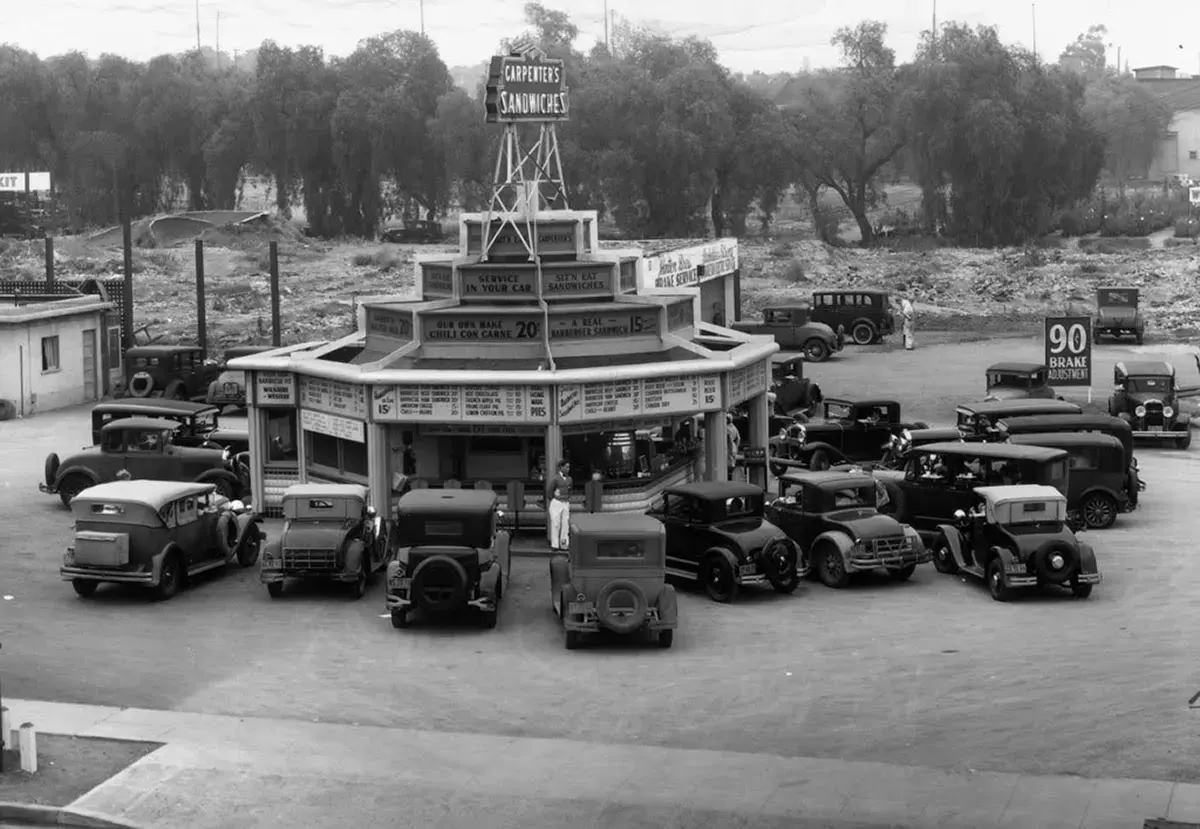
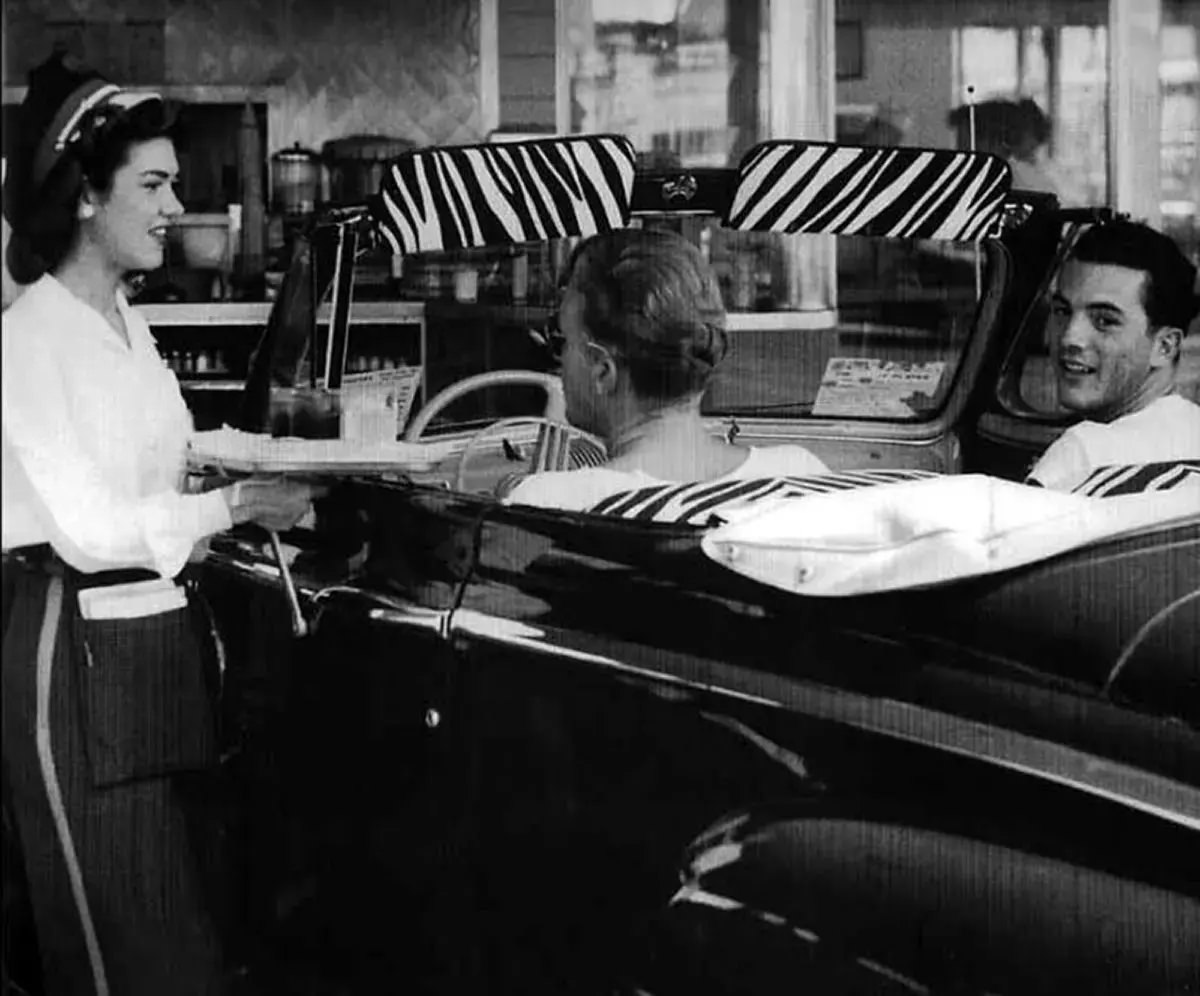
Back in the food world, the 1930s and 1940s gave rise to some of the most recognizable early drive-in names. Carpenter’s Sandwich Stand at West Sunset Boulevard and Vine Street in Los Angeles opened in the 1930s and drew huge crowds. McDonnell’s Drive-In operated through the same era, glowing with neon at night and serving a steady stream of cars. Simon’s Drive-In, photographed in 1948, showed carhops chatting with customers in convertibles while orders were loaded onto trays.
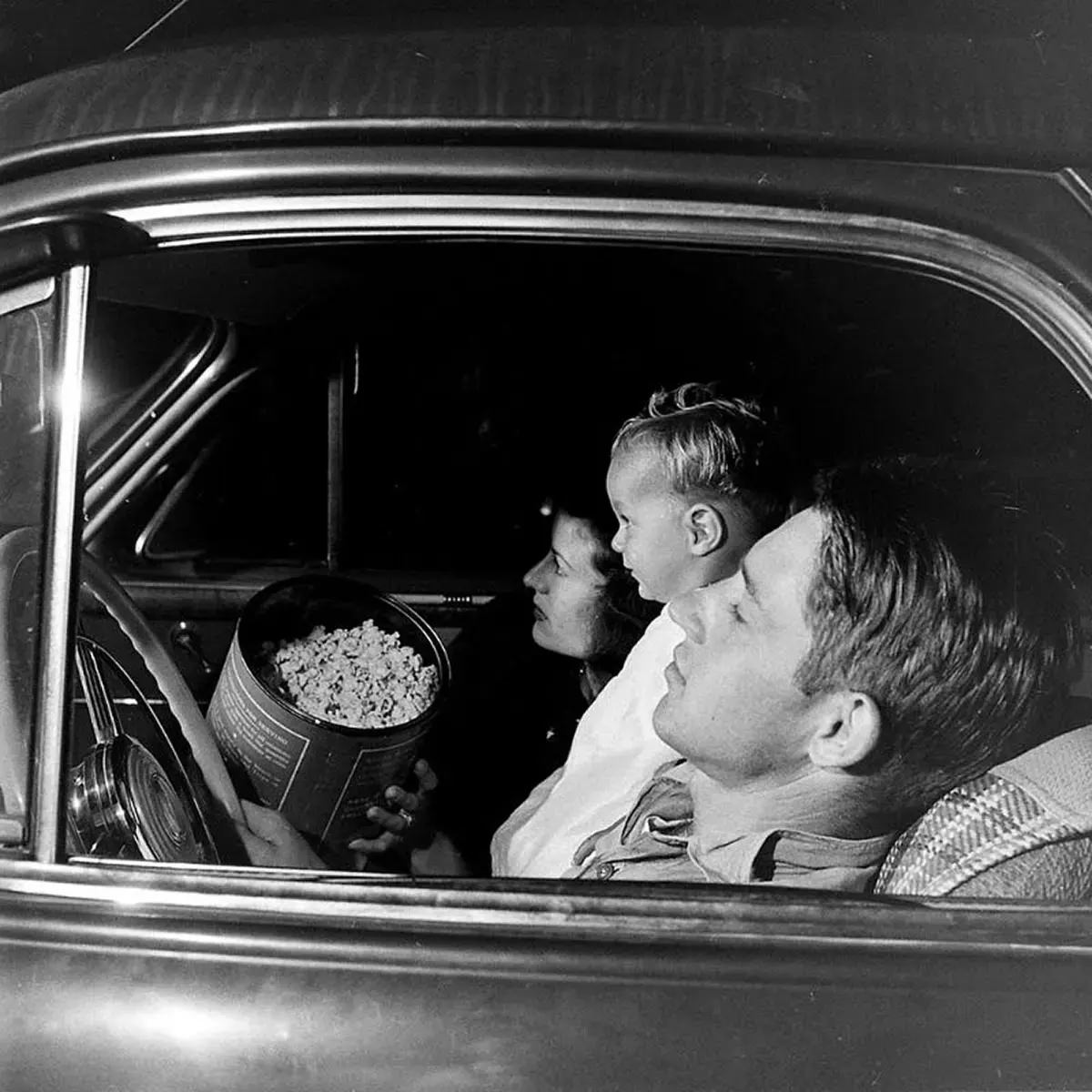
The drive-in experience extended to entertainment as well. Drive-in movie theatres became a fixture of American culture through the late 1940s and 1950s. Families loaded into their cars at dusk, tuned their radios to the broadcast frequency, and watched films on outdoor screens. A now-famous photograph shows a couple and their young son parked in their 1941 Buick coupe late at night, a massive tub of popcorn balanced between them, all three watching the screen from inside the car.
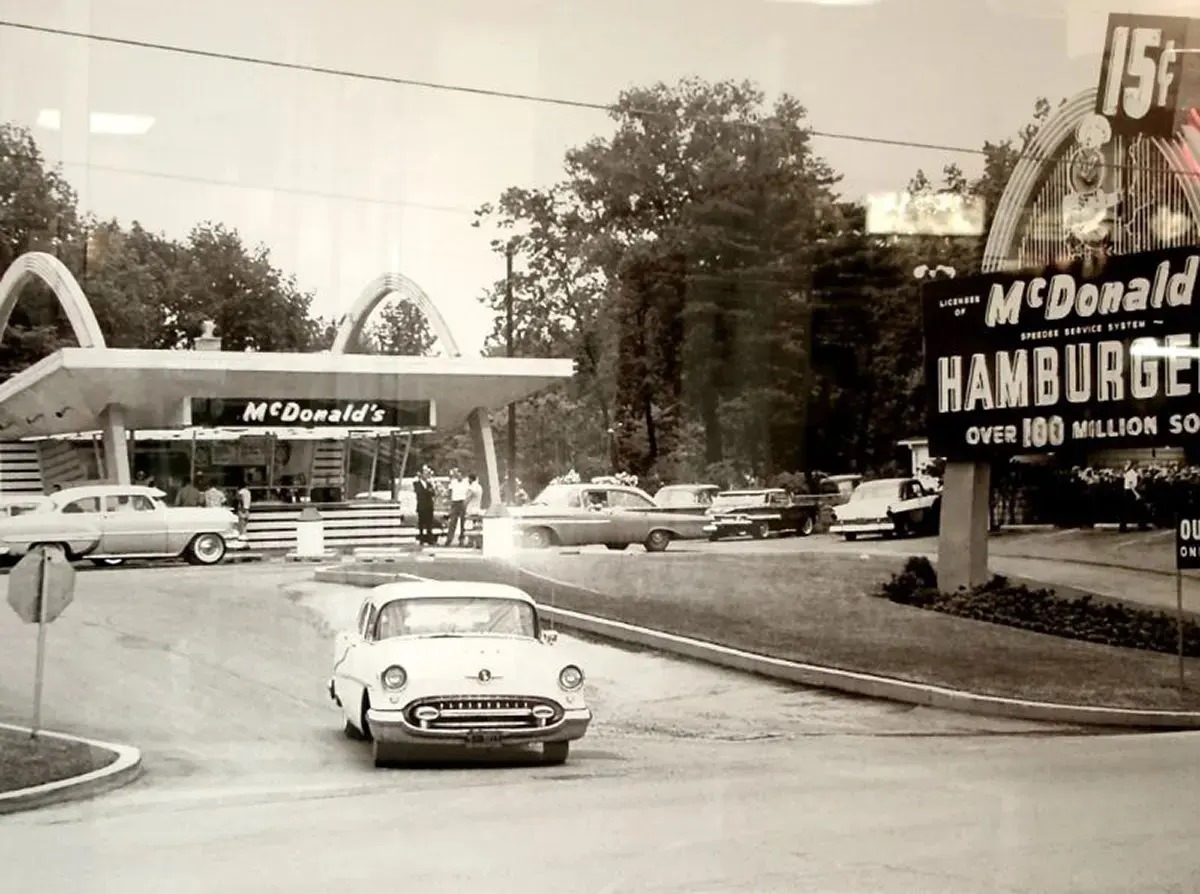
By the 1970s, the drive-in restaurant was in serious decline. Labor costs were rising, and the carhop model was expensive to run. Drive-through restaurants offered a faster, cheaper alternative. Customers lined up in their cars, spoke into an intercom, paid at one window, and picked up their food at the next. No parking required. No carhop needed. In-N-Out Burger in California had pioneered the drive-through format as early as 1948, but the real turning point came in 1975 when McDonald’s opened its first drive-through window in Arizona. After that, the industry shifted permanently.
The Pig Stand restaurants of Texas had set the model in motion more than fifty years earlier. What followed was decades of innovation, competition, and reinvention — roller skates, conveyor belts, circular kitchens, neon signs, and menus that stretched well beyond fast food. The drive-in restaurant was a product of the automobile age, shaped by the machine and by the workers who ran between the cars.