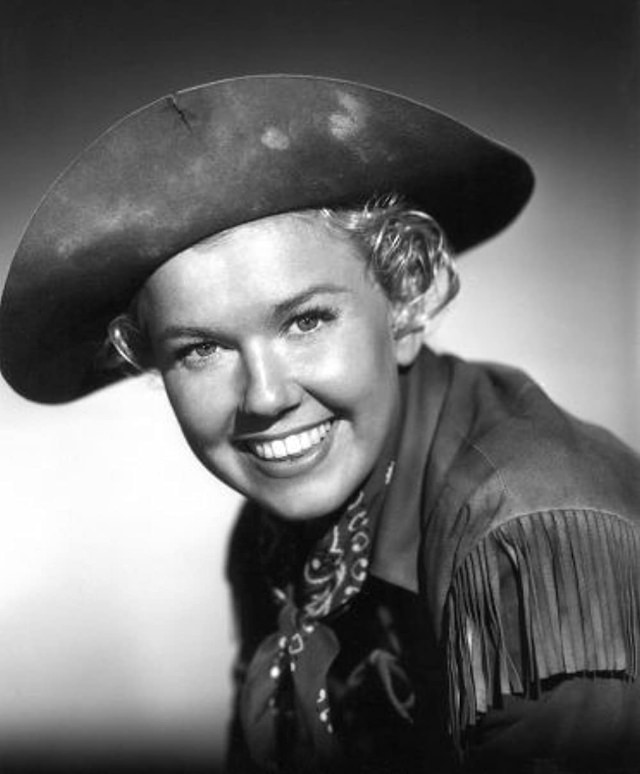
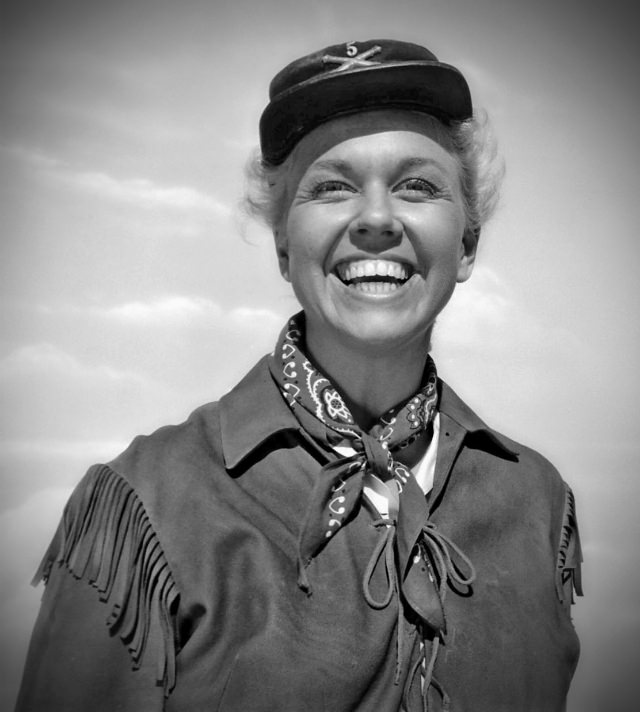
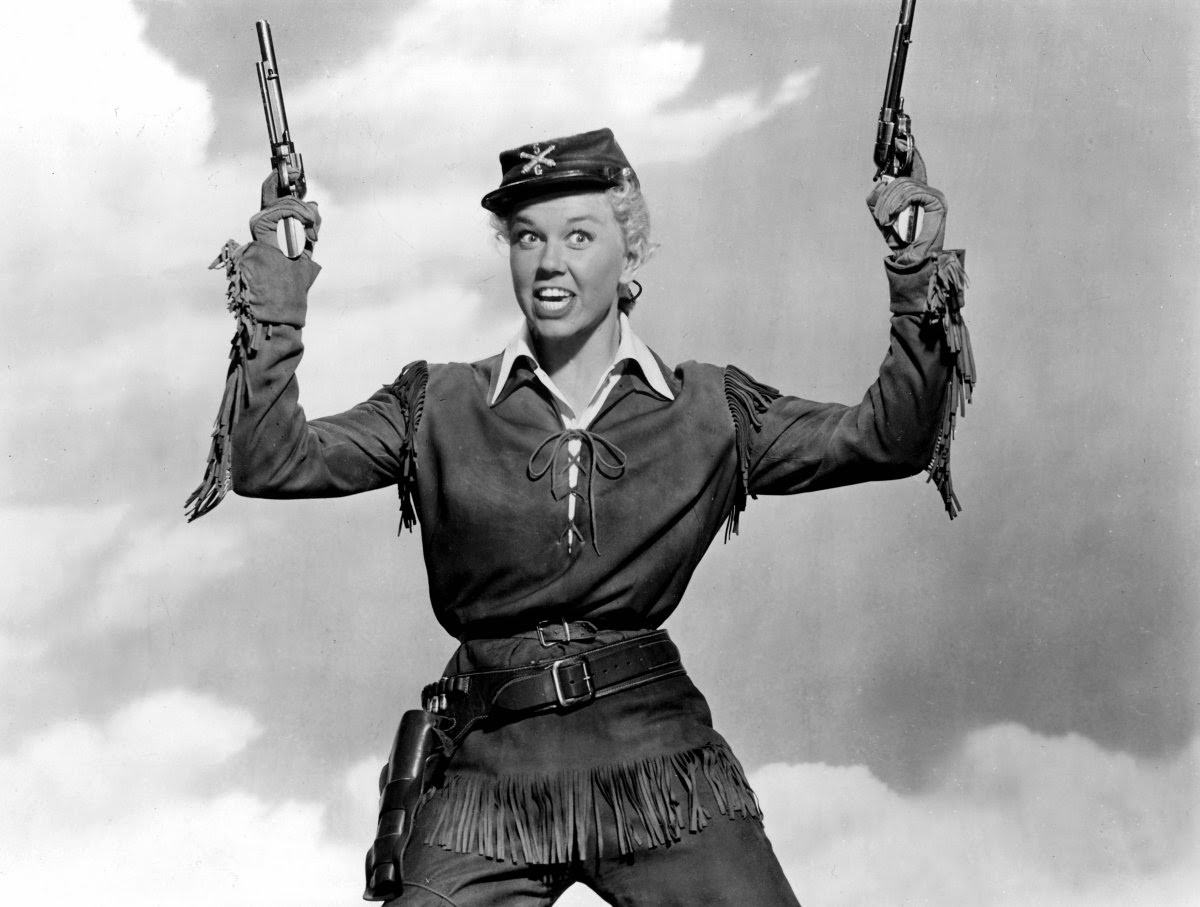
When Doris Day strapped on a holster and swapped her usual glamour for buckskin and a frontier attitude, the result was one of Hollywood’s most entertaining musicals of the decade. Calamity Jane, released in 1953 and directed by David Butler, brought the legend of the Wild West’s most colorful heroine to the big screen — and Day threw herself into the role with full comic energy.
The film paired Day with Howard Keel, who played Wild Bill Hickok. Their on-screen chemistry was built on bickering, bravado, and sharp comedic timing. The story follows an alleged romance between Calamity Jane and Hickok — two equally loud, stubborn personalities who can barely stand each other before, naturally, falling in love.
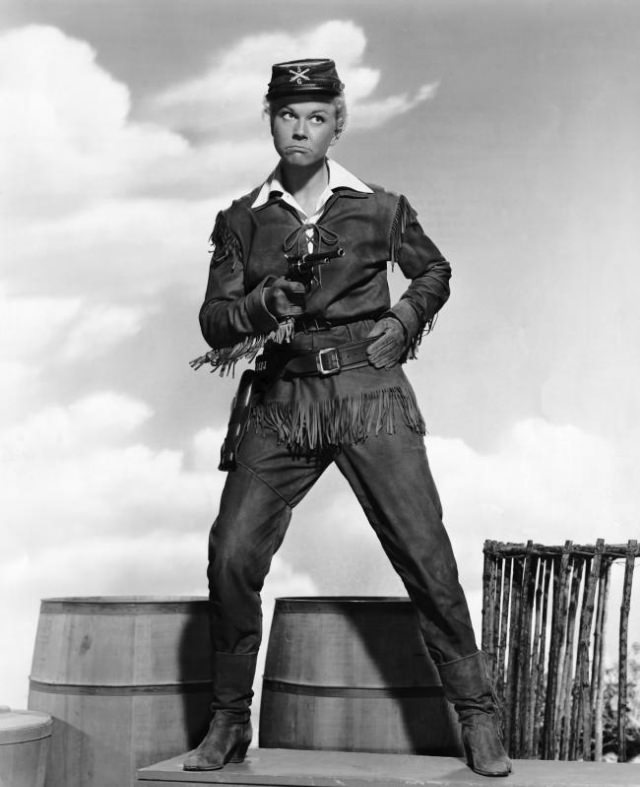
Day’s physical comedy throughout the film is a big part of what made it so memorable. Whether she’s stumbling through a saloon, firing off rounds in a crowded street, or trying to act like a proper lady for five uncomfortable minutes, she commits completely to every scene.
The film won the Academy Award for Best Original Song for “Secret Love,” one of the most well-known tracks Day ever recorded. It was also nominated for Best Music, Scoring of a Musical Picture, and Best Sound, Recording — a strong showing for what many dismissed at the time as light musical entertainment.
A significant subplot involves Jane’s friendship with Katie Brown, a performer who comes to Deadwood and ends up living with Jane. The two of them paint “Calam and Katie” on the door of their shared home. Film critic Jamie Stuart pointed out that the film carries clear lesbian overtones — Jane is portrayed as a strong, independent woman who lives openly with another woman in a domestic arrangement the film treats warmly and without hesitation.
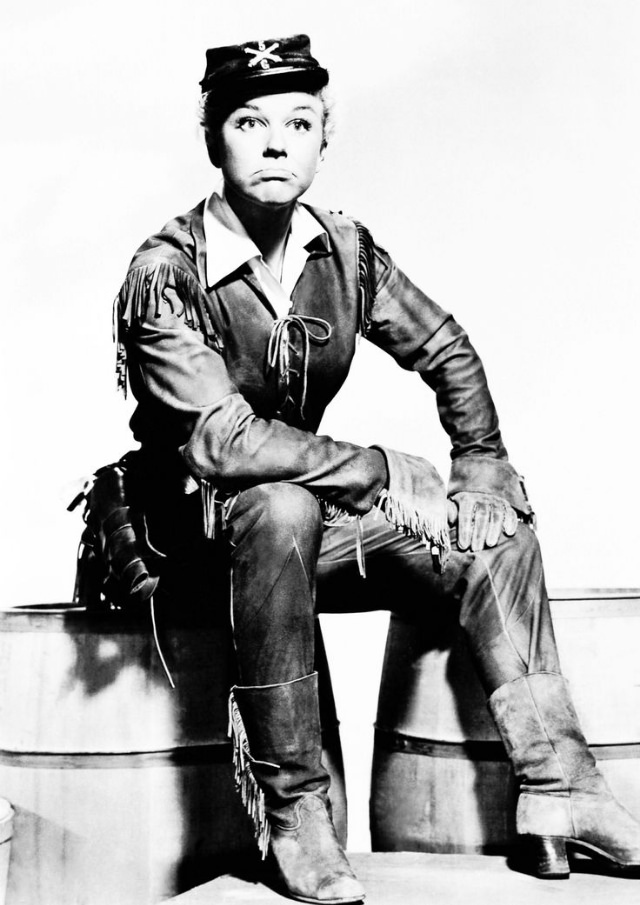
The film’s depiction of female friendship and companionship — hugging, holding hands, sharing a home — was understood by its 1953 audience as innocent and unremarkable. Decades later, those same scenes took on additional meaning for different audiences. The film was screened at the London Lesbian and Gay Film Festival in 2006, finding a new generation of viewers who connected with it in a different way.
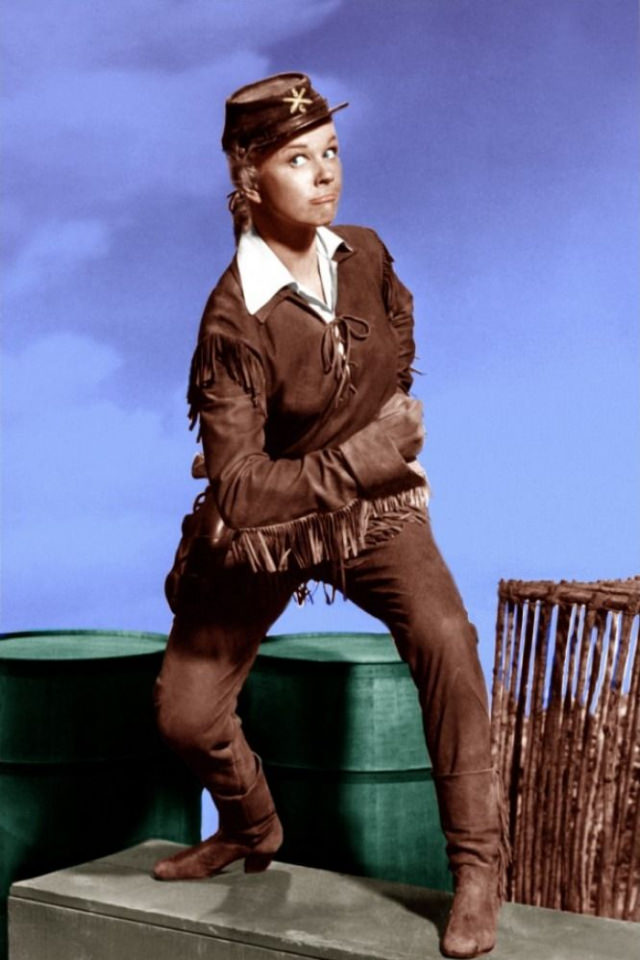
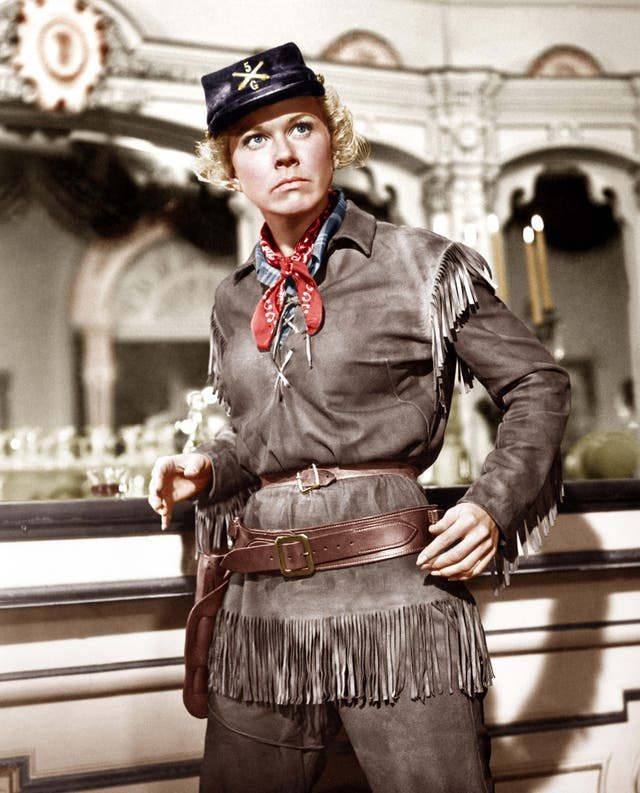
Day’s Calamity Jane is loud, brash, and completely sure of herself — right up until she isn’t. The humor of the role comes from that contrast: a woman who can outshoot any man in Deadwood but falls apart trying to serve tea or wear a dress. Day plays both sides of that with equal skill.
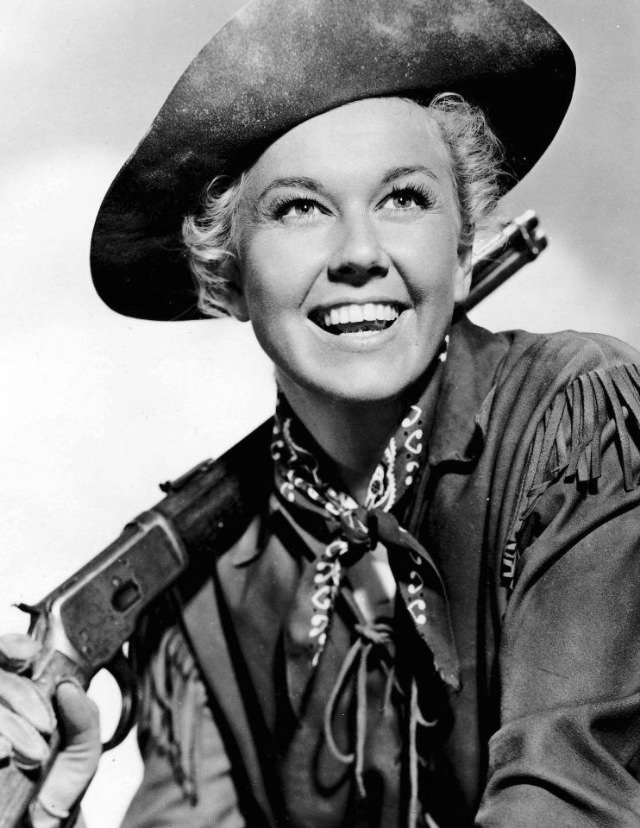
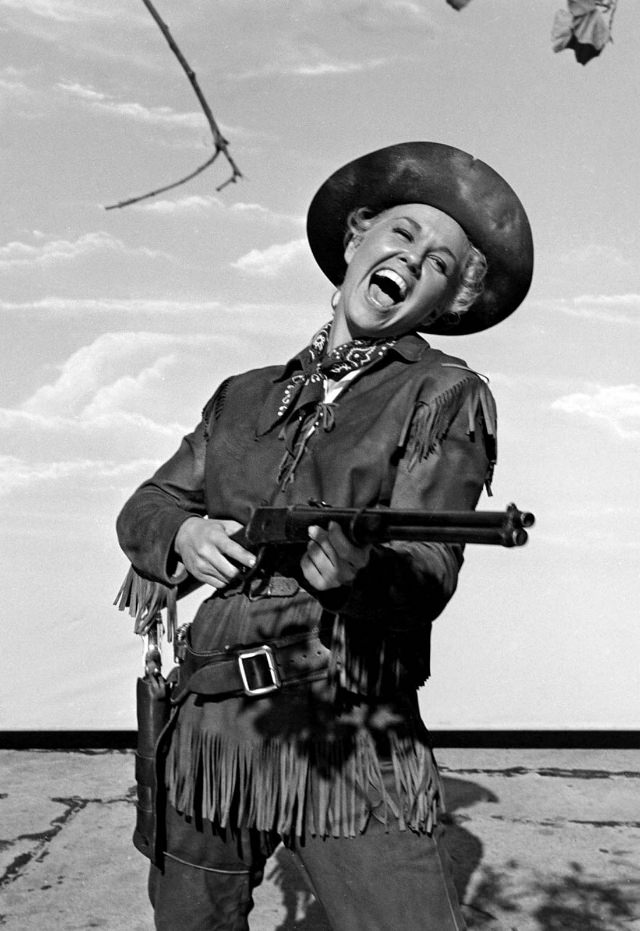
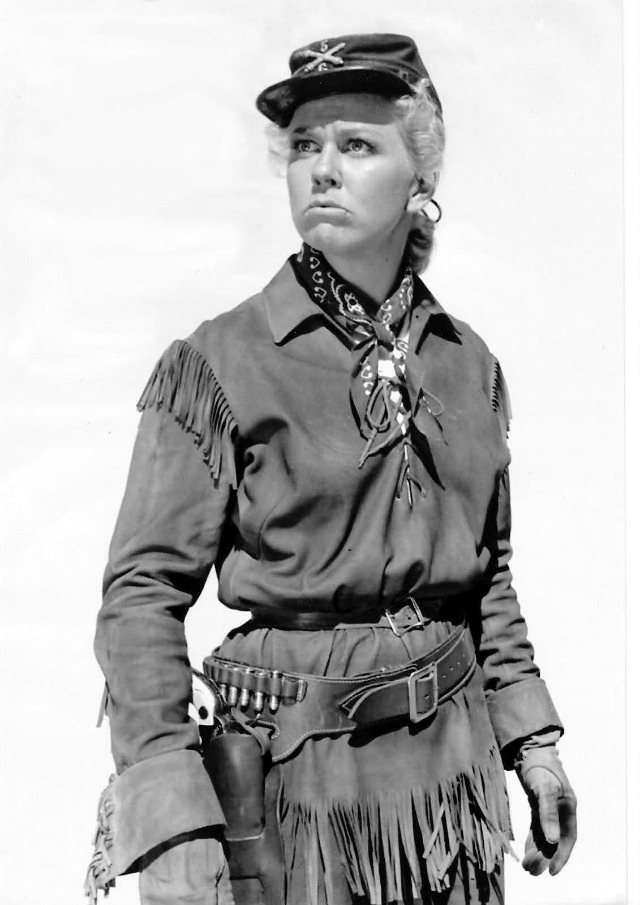
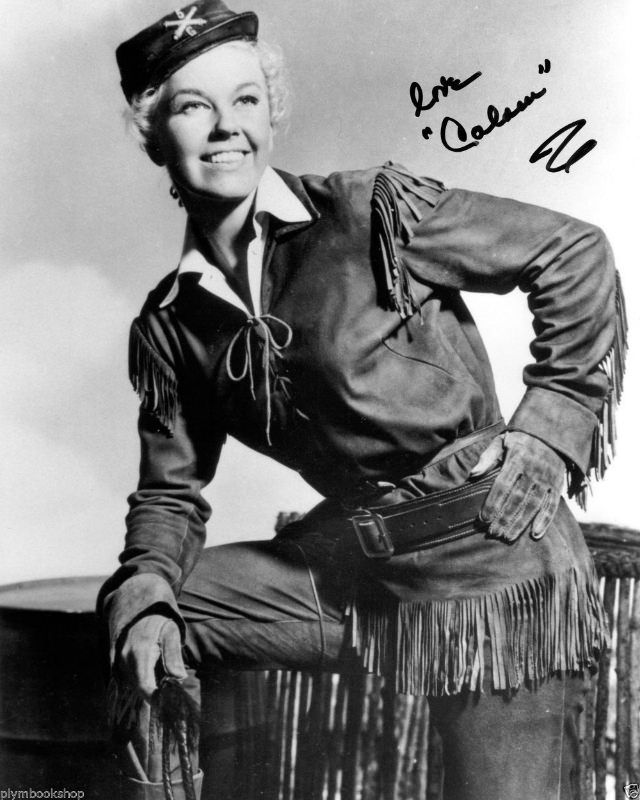
The photos from the production capture Day at her most playful. Wide-eyed expressions, exaggerated poses, and that unmistakable energy she brought to every frame make these images as entertaining today as the film itself. This was Doris Day having fun — and it shows.