Long before sleek wetsuits and lightweight scuba gear existed, divers suited up in heavy metal helmets, stiff canvas, and thick rubber just to survive a few minutes underwater. The history of diving suits is a story of bold experimentation — and more than a few near-disasters. Each clunky, cumbersome design pushed the limits of what humans could endure beneath the surface, and the photographs left behind tell that story better than words alone.
The first full-body diving suit on record was built in 1797 by Karl Heinrich Klingert in Poland. His design paired a metal helmet with a wide metal girdle, waterproof leather pants, and a vest. A pump turret on the surface sent air down to the diver through a long, weighted tube. It was crude, heavy, and far from comfortable — but it worked well enough to prove the concept. Klingert’s suit never caught on widely, but it planted the seed for everything that followed.
The real turning point came in 1819, when British engineer Augustus Siebe introduced a design that would shape the next century of underwater work. Siebe’s suit used a copper helmet sealed with a screw-on brass ring and attached to a waterproof canvas suit with a rubber collar. A glass window let the diver see, and a valve in the helmet controlled airflow from a surface pump. The Royal Navy put it to work almost immediately — for salvage operations and underwater construction at depths of up to 60 feet. By 1837, Siebe patented an improved version with a detachable helmet and a weighted belt for easier descent. That design spread quickly around the world.
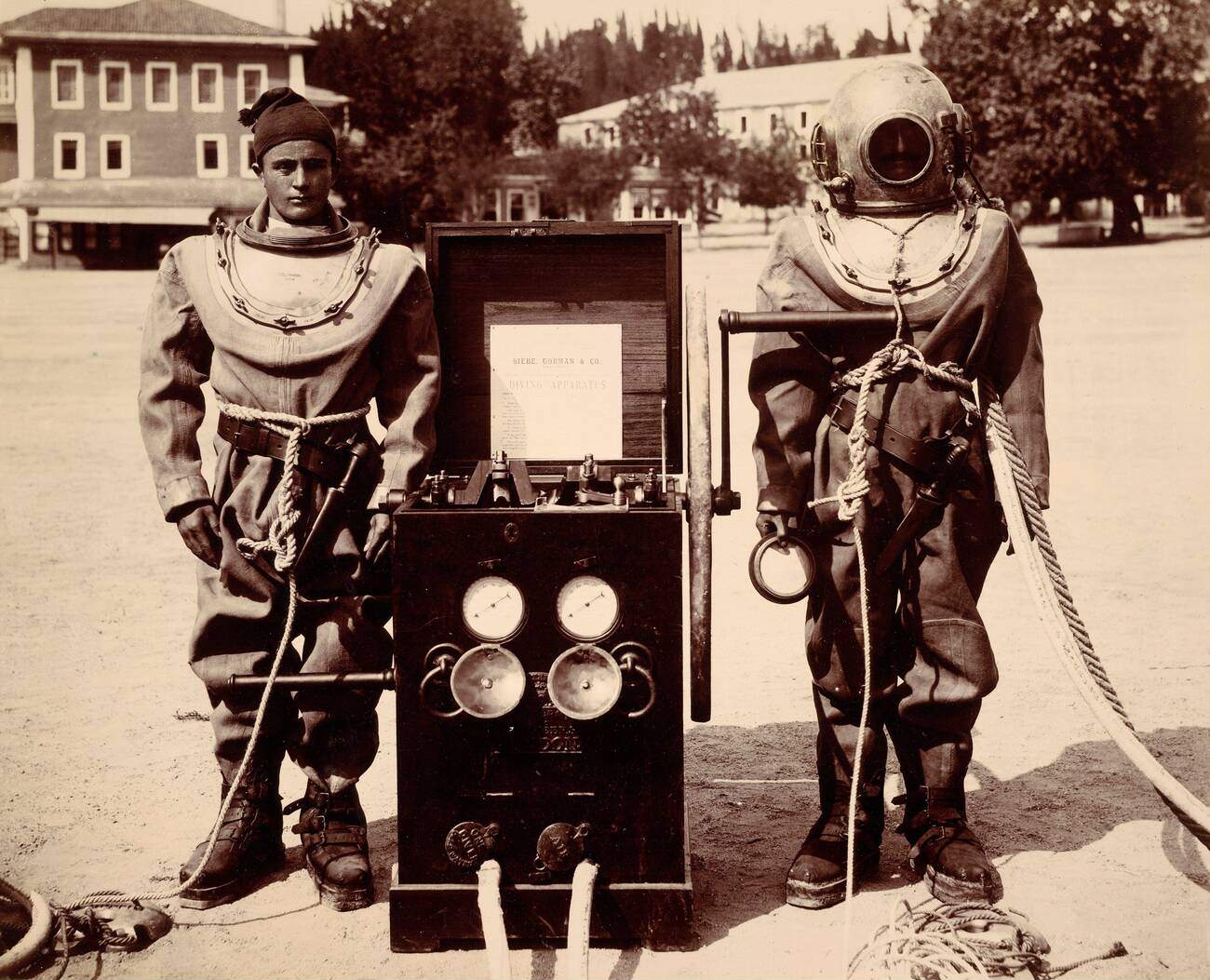
The Siebe Gorman suit, named after the company Siebe eventually formed, refined the formula further. It featured a canvas suit and copper helmet with a glass faceplate, and it was notably more flexible and comfortable than earlier versions. Divers could actually move in it — something that earlier suits made nearly impossible. Around the same time, the Standard Diving Dress became widespread, first appearing in the 1840s with a canvas suit and copper helmet. The U.S. Navy’s Mark V suit, which ran from the early 1900s all the way to the 1980s, was a direct descendant of that standard design.
In 1878, Henry Fleuss took a different approach entirely. His suit used a closed-circuit breathing apparatus that recycled the diver’s exhaled air rather than relying on a surface pump. This extended the time a diver could stay underwater, but the suit was heavy and restrictive. Progress in diving technology rarely came easy — every gain in depth or time underwater came with a new set of physical challenges for the diver wearing the gear.
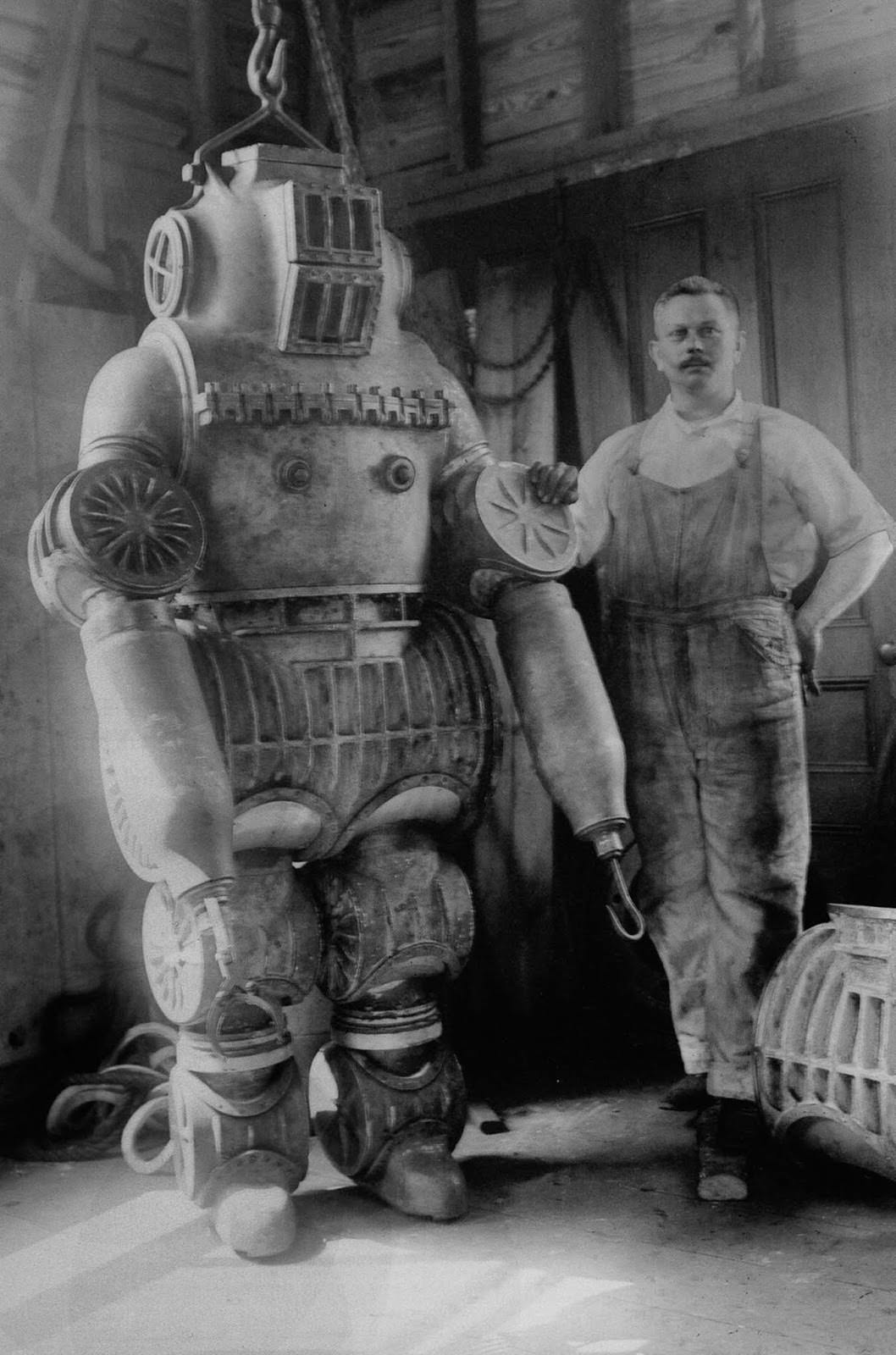
One of the more striking innovations of the early 20th century came in 1914, when Chester MacDuffee built the first diving suit to use ball bearings at the joints. Ball bearings allowed the joints to actually rotate under pressure, giving the diver far more freedom of movement than any previous armored suit.
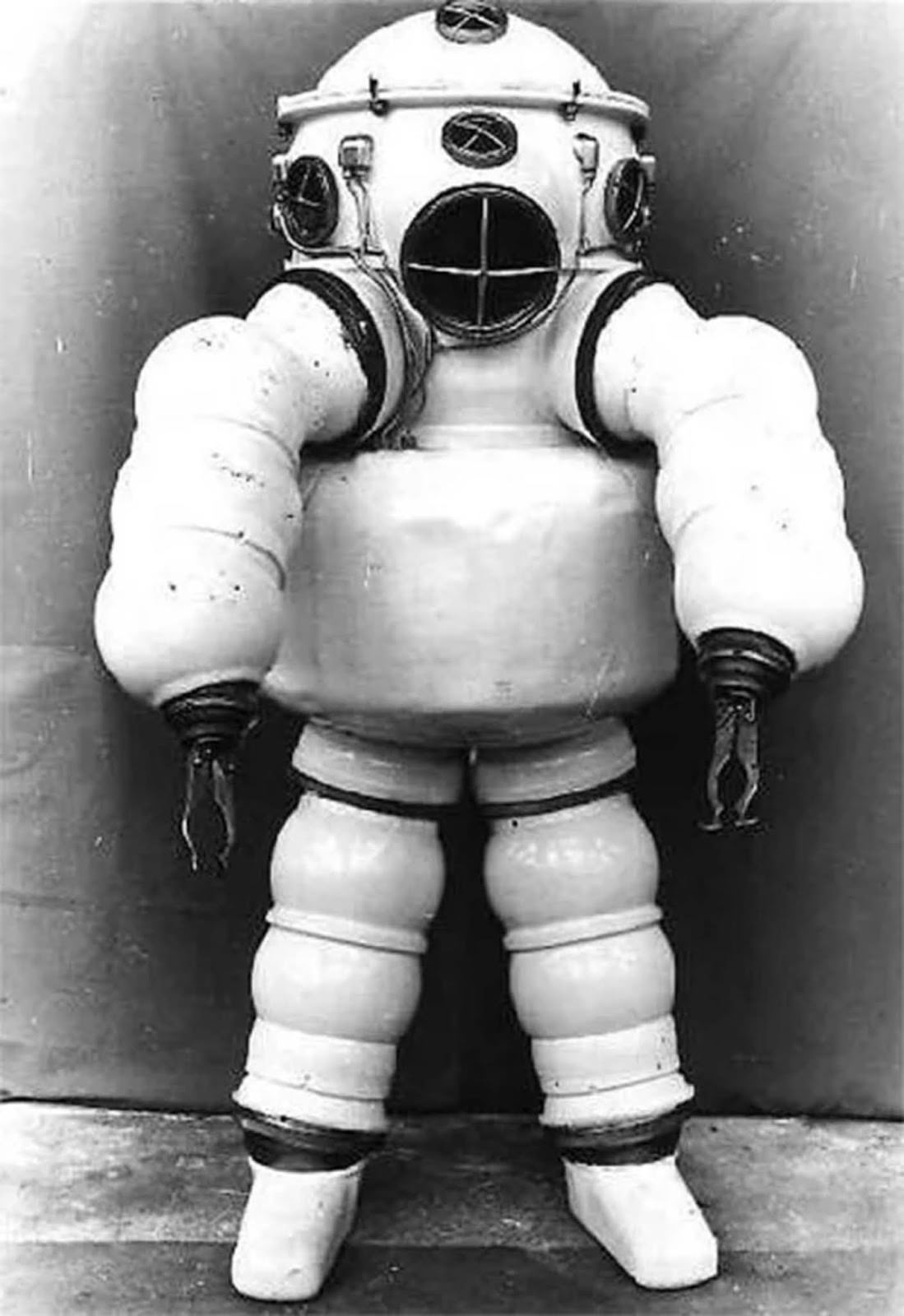
German manufacturer Neufeldt and Kuhnke pushed armored suit technology even further through the 1910s and 1920s. Their metal suits were designed to withstand extreme depths and were tested under serious field conditions, including in France in 1926.
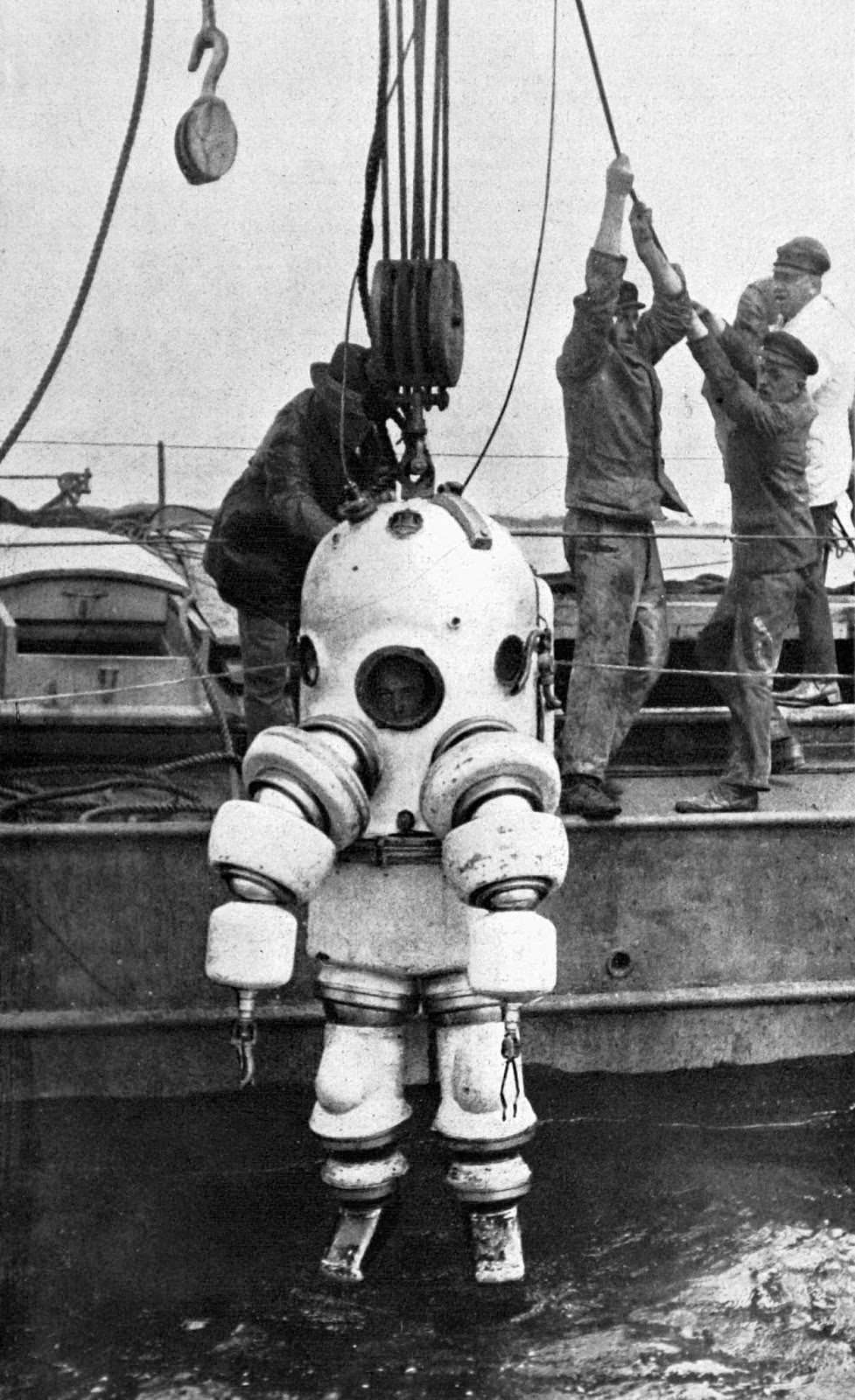
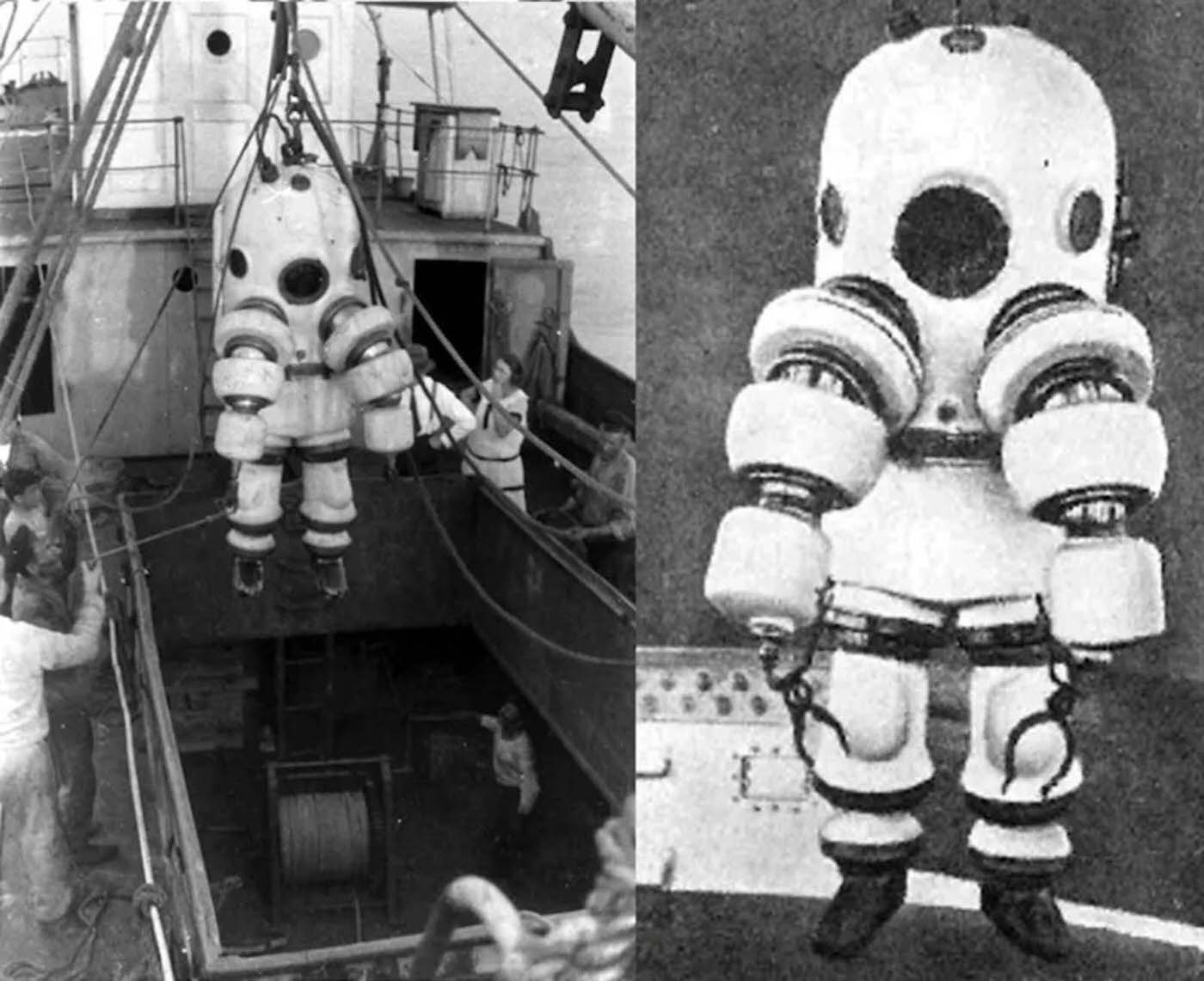
The Neufeldt-Kuhnke suits evolved through several generations. By the third generation — produced between 1929 and 1940 — the design incorporated a closed-circuit breathing system and a built-in telephone. It was rated safe to 525 feet, a remarkable depth for the era.
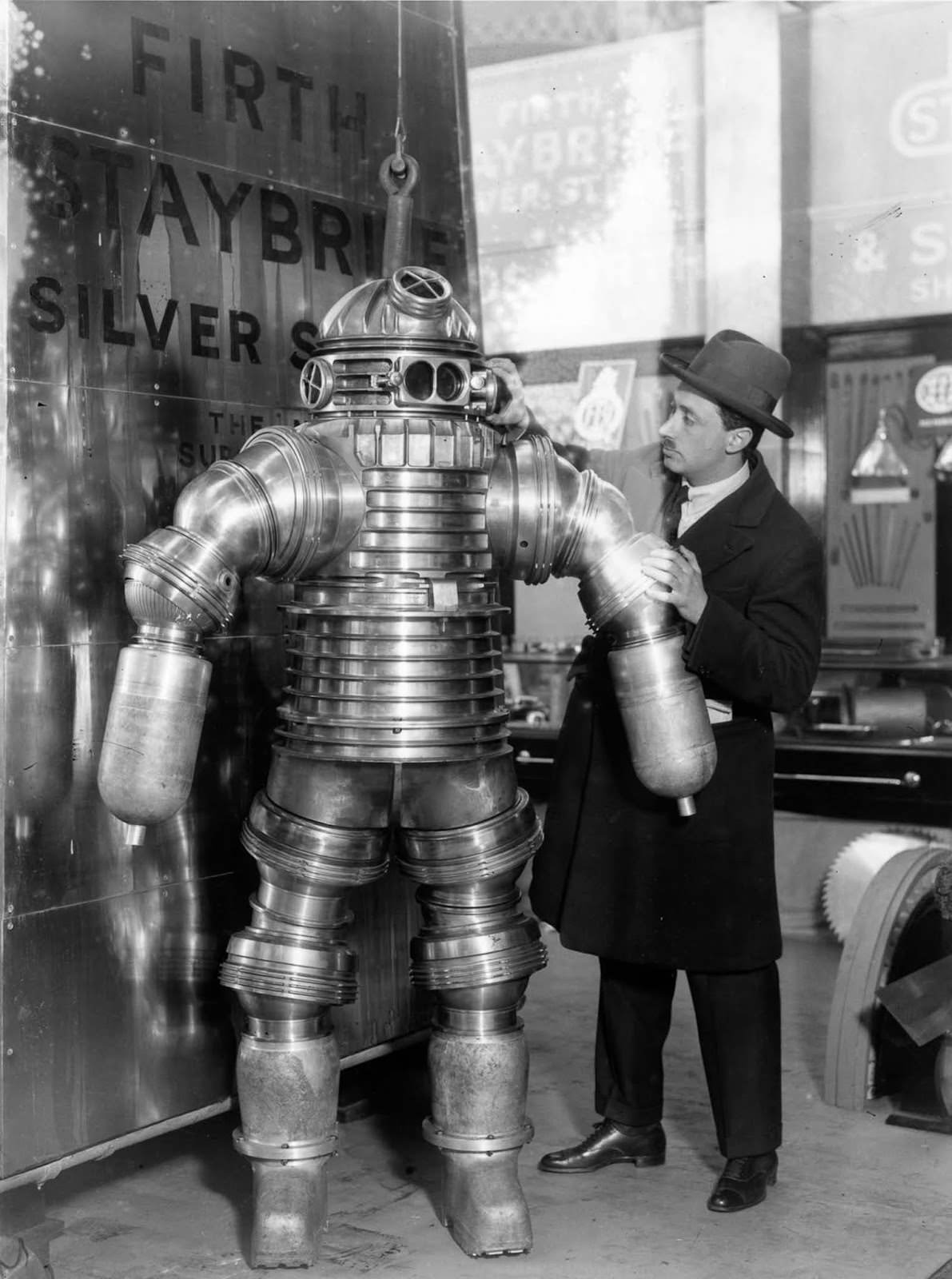
J. S. Peress was another inventor who pushed the boundaries of deep-sea diving gear. His armored suit, made from Staybrite Silver Steel, was designed to operate at depths of up to 650 feet. The suit weighed 550 pounds and was built to withstand crushing underwater pressure. Peress demonstrated his invention at the Olympia Shipping Exhibition in London, explaining its mechanics to onlookers in person.
Before any suit could be put to work in the open ocean, it had to prove itself in controlled testing. In 1930, Peress brought his armored suit to a testing tank in Weybridge, United Kingdom, where the gear was put through its paces before any open-water deployment.
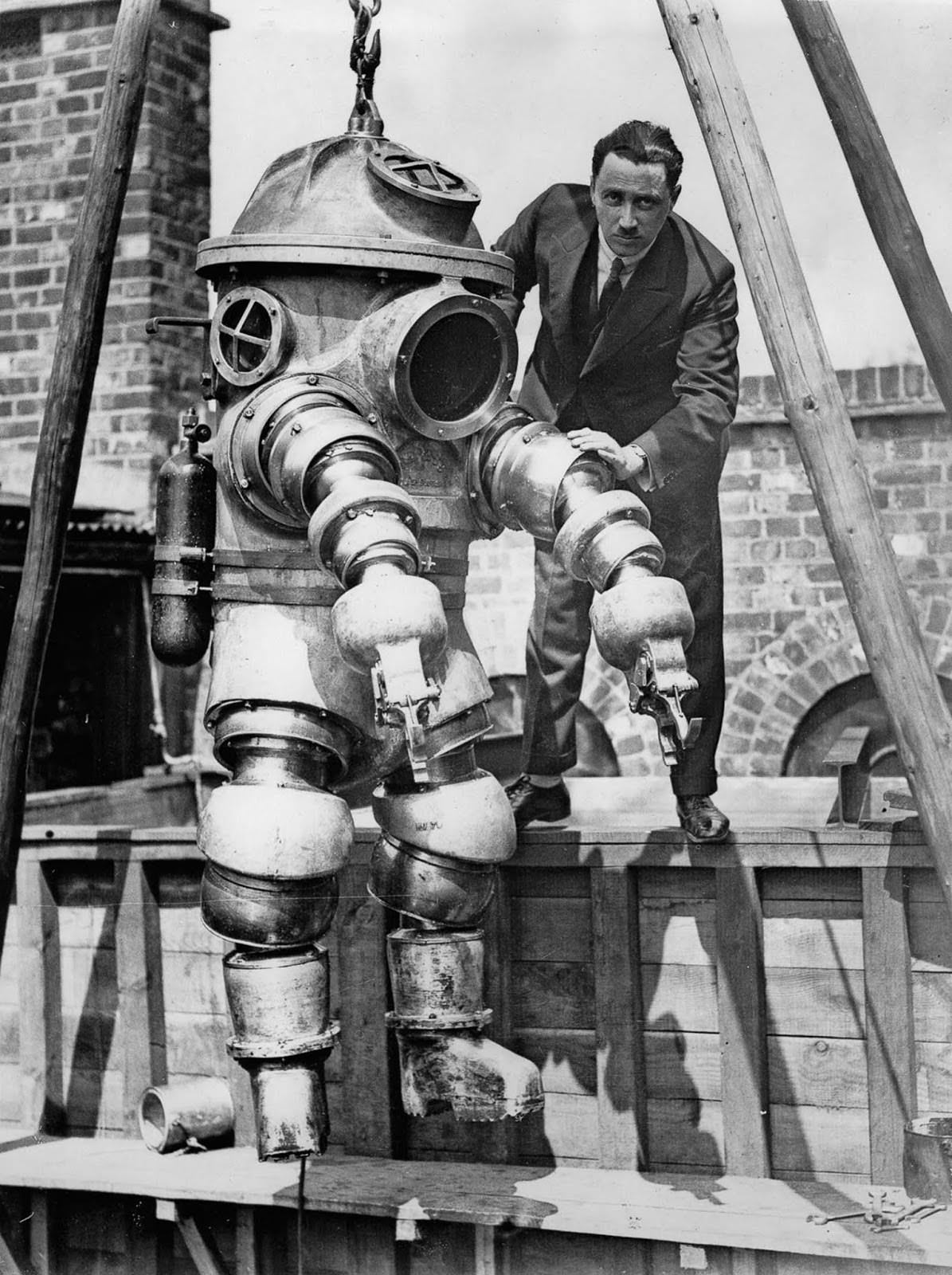
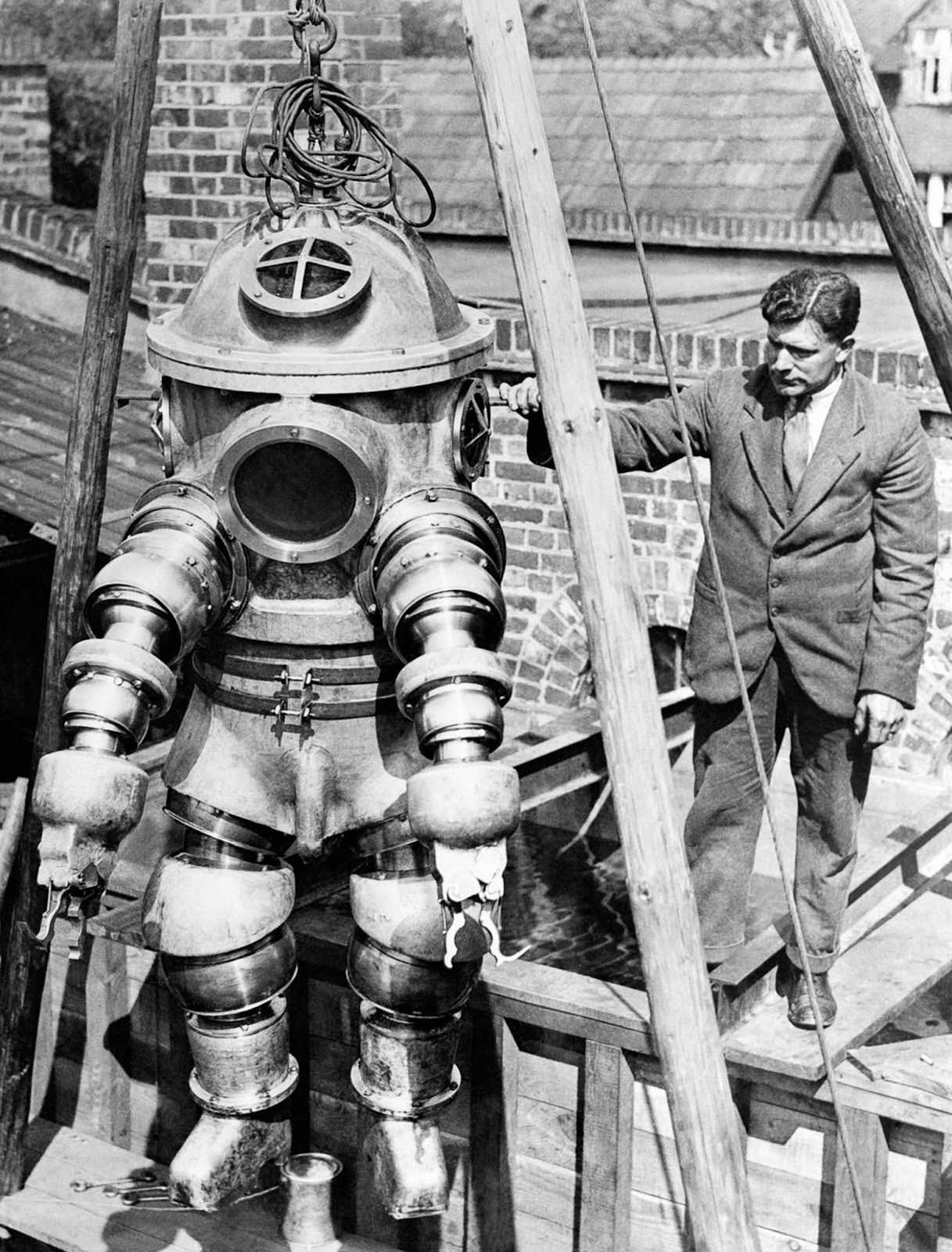
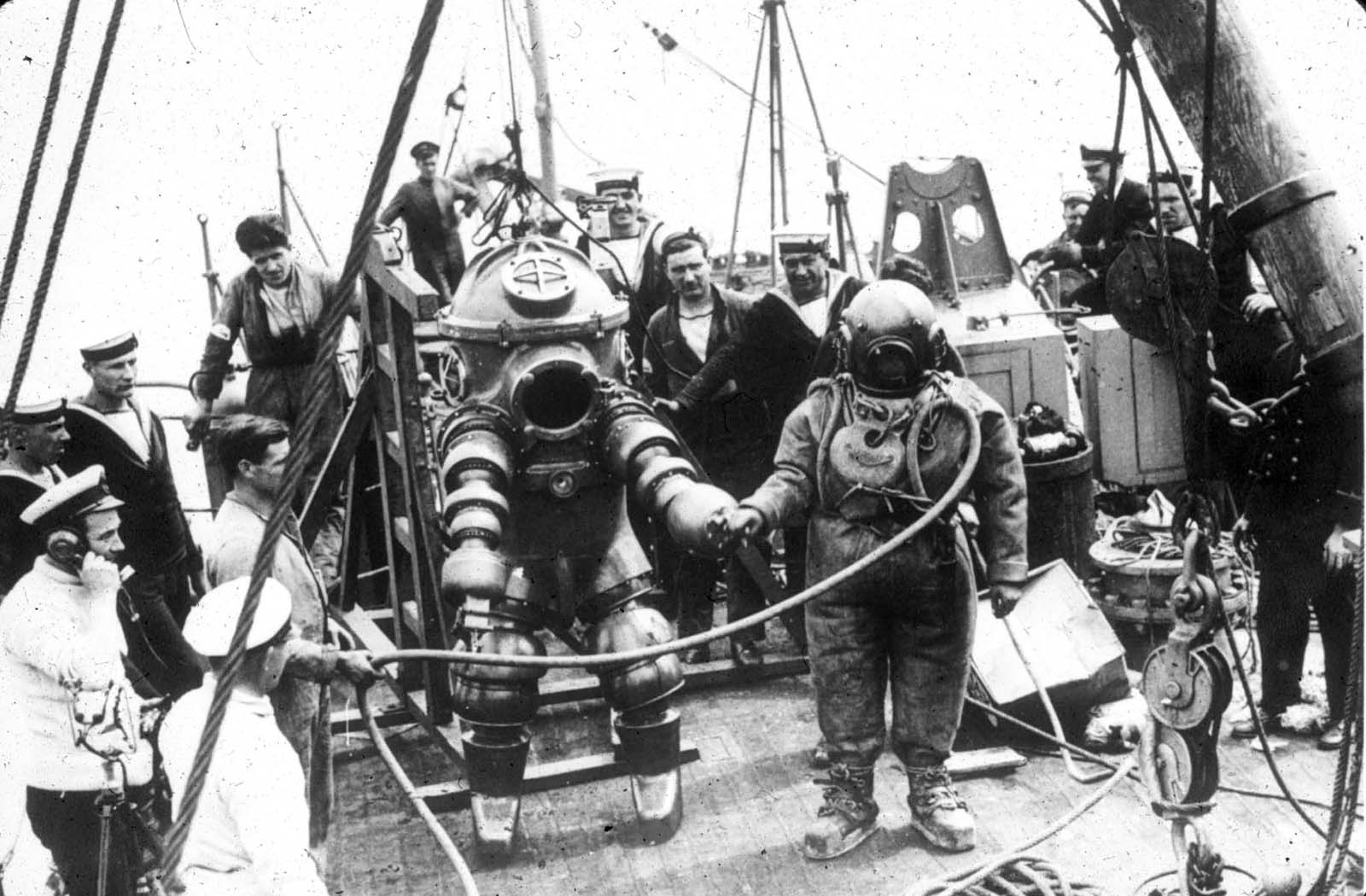
The Tritonia Atmospheric Diving Suit, developed by Peress, made headlines in 1935 when it was used alongside a standard diving dress to explore the wreck of the RMS Lusitania. The Lusitania had sunk off the coast of Ireland in 1915, and the Tritonia allowed divers to reach depths that standard suits simply couldn’t handle. The side-by-side image of both suit types at the dive site captures the gap in technology between old and new.
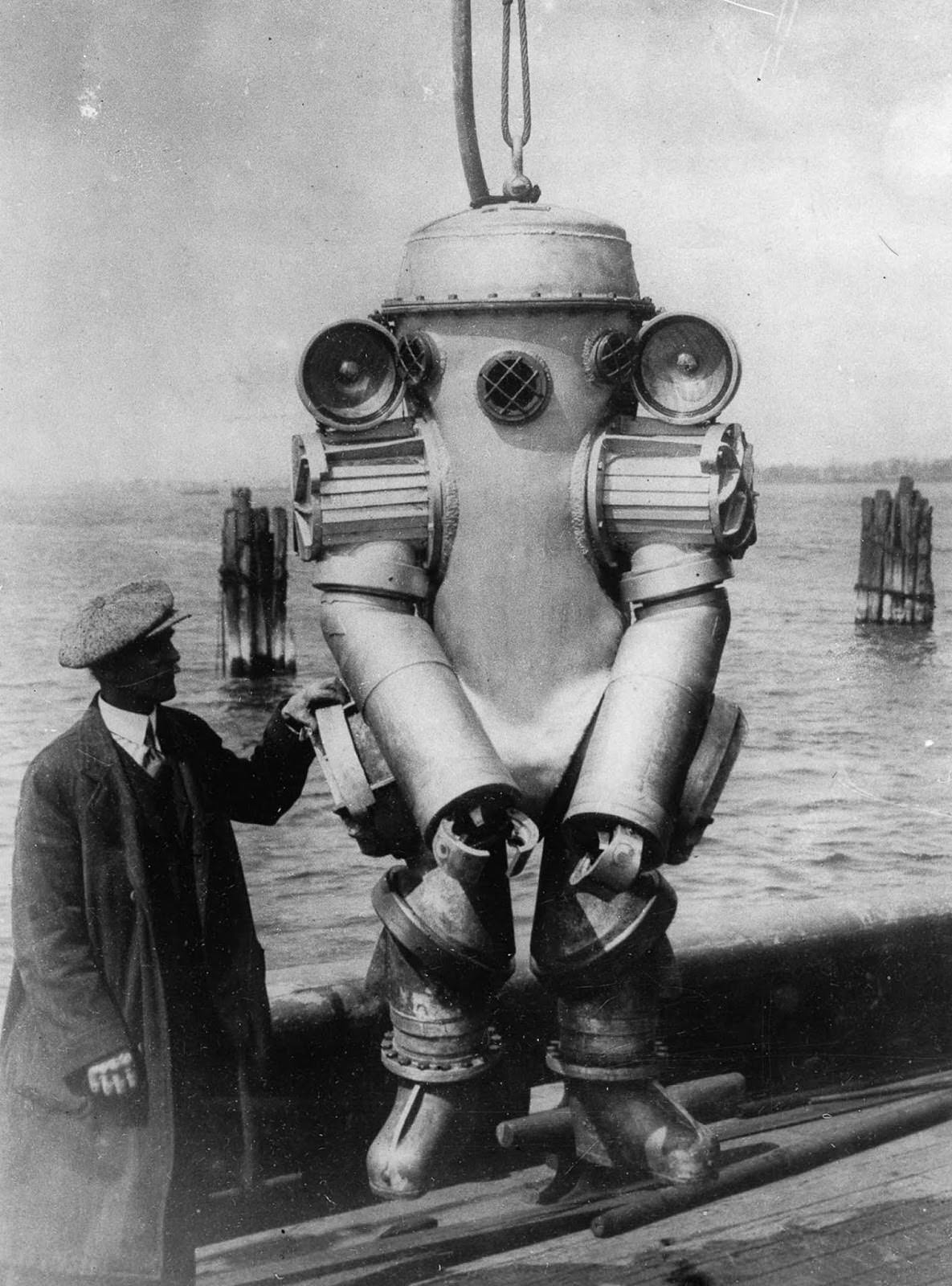
American inventors were working along their own lines during this period. In 1931, H. L. Bowdoin unveiled a deep-sea diving suit that went beyond mere protection — it came equipped with shoulder-mounted 1,000-watt lamps and an integrated telephone system, making it one of the most technologically loaded suits of its time.
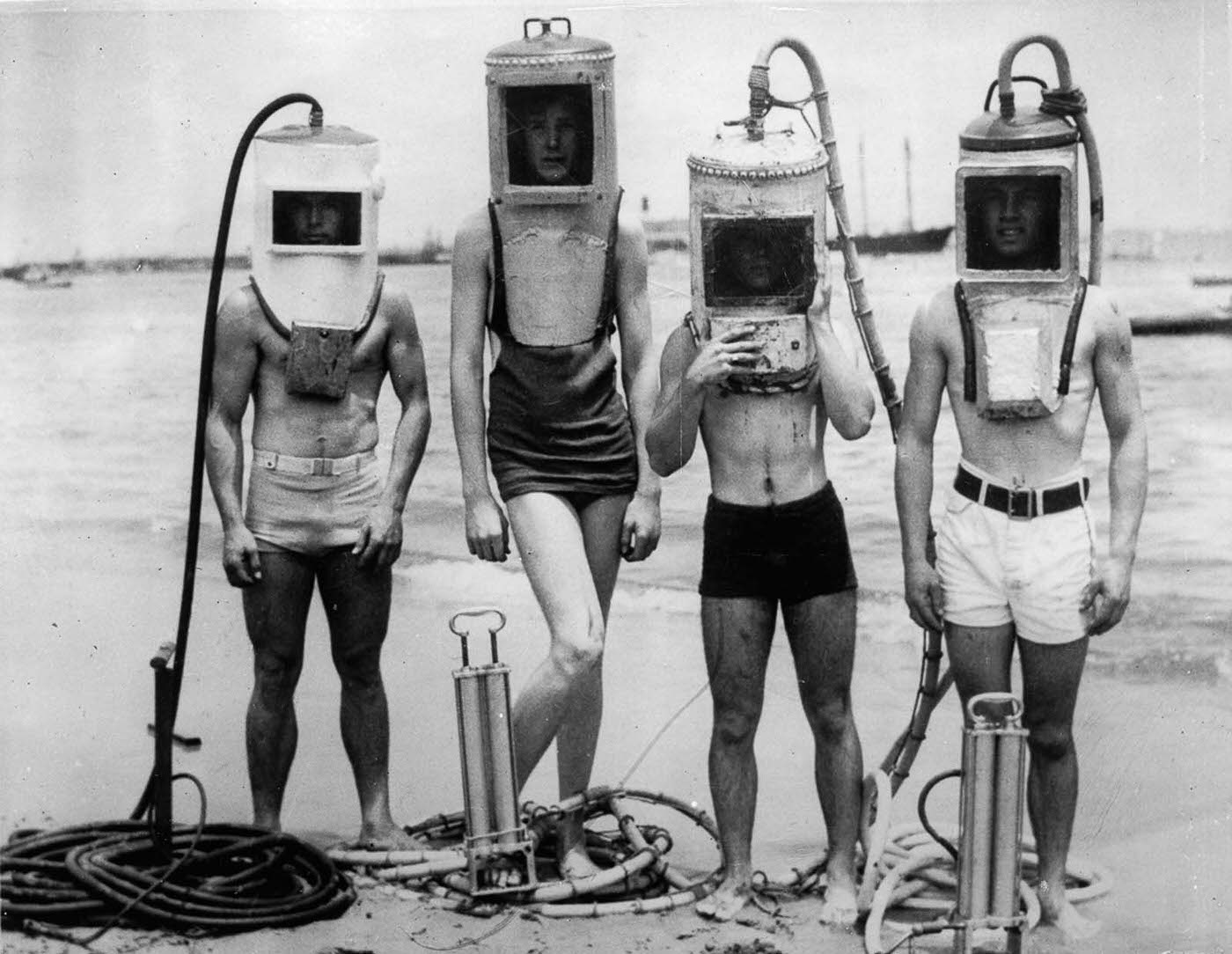
Not all diving innovation happened in laboratories or navy dockyards. In 1933, a group of Los Angeles boys built their own diving helmets from sections of hot water heaters, boilers, and salvaged scrap metal. The results looked like something out of a science fiction story, but they reflected the widespread fascination with underwater exploration during that era.
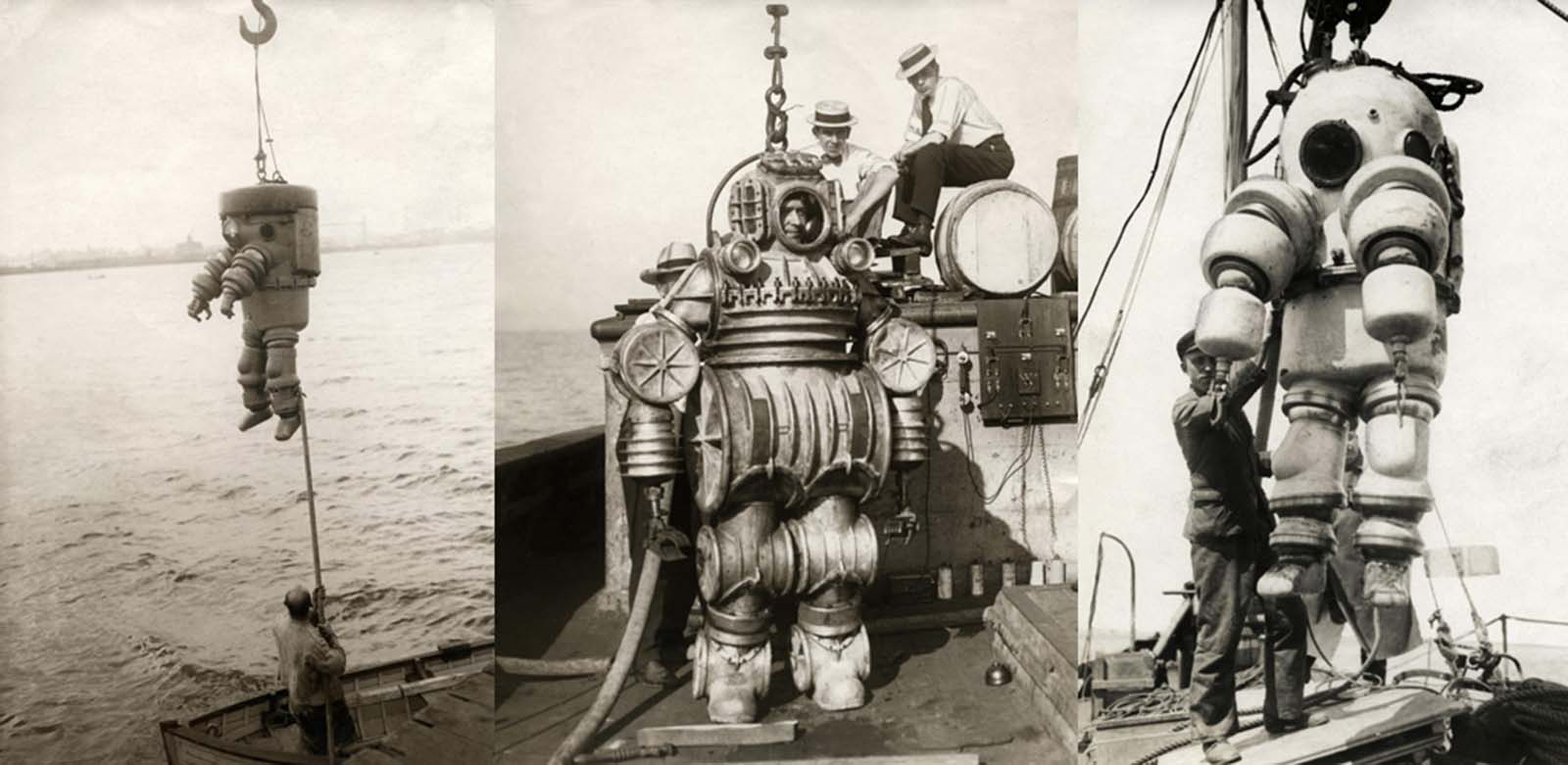
Germany produced some distinctive diving suit designs of its own throughout the 1920s. German suits from this period tended to be heavy, fully enclosing, and built for serious industrial or naval use rather than exploration.
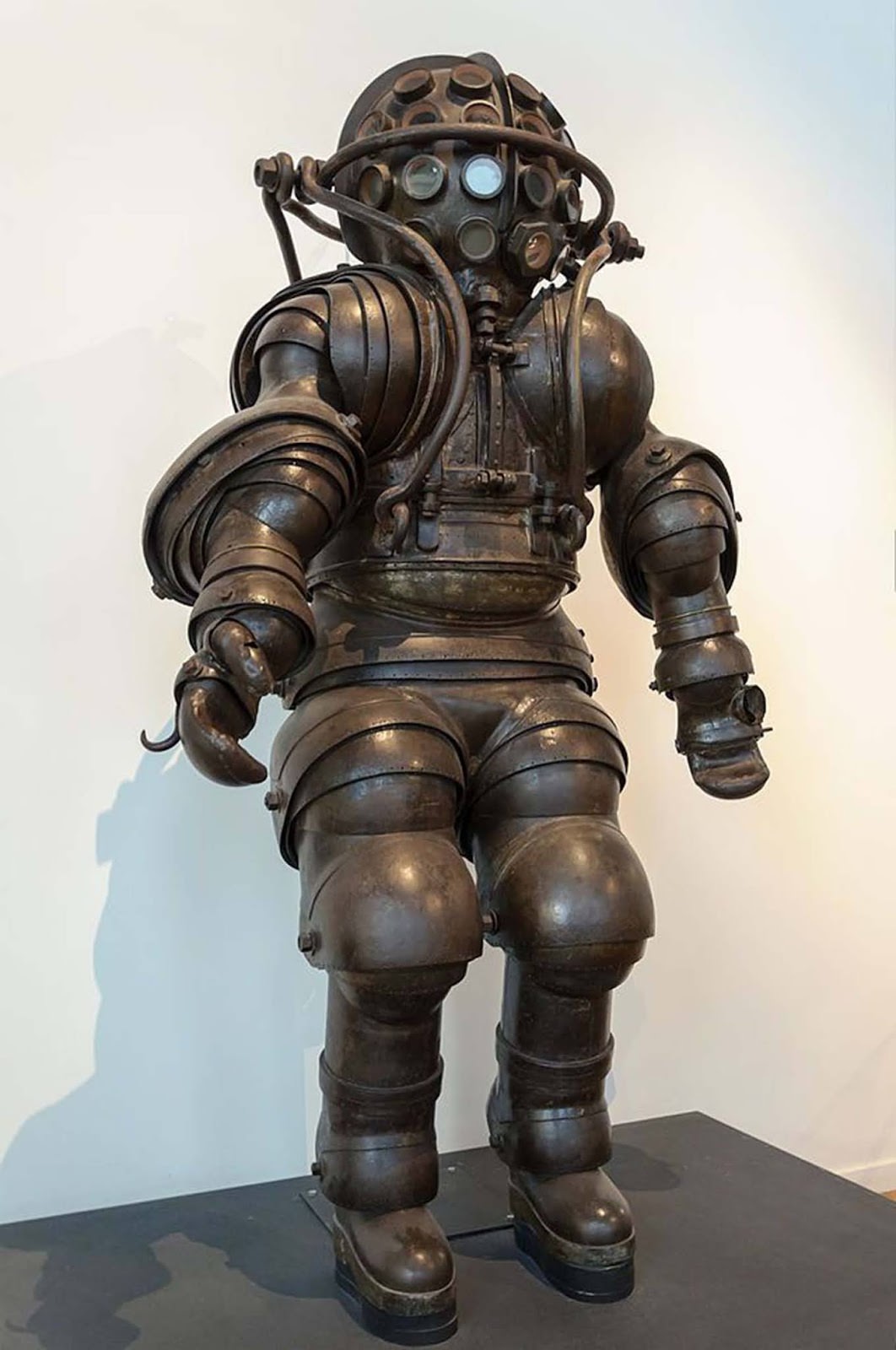
Among the more striking designs in diving history is the suit created by Alphonse and Theodore Carmagnolle. Their suit featured a full set of articulated joints across the arms and legs, attempting to give the diver natural movement at depth. It was never widely used but remains one of the most visually distinctive armored suits ever built.
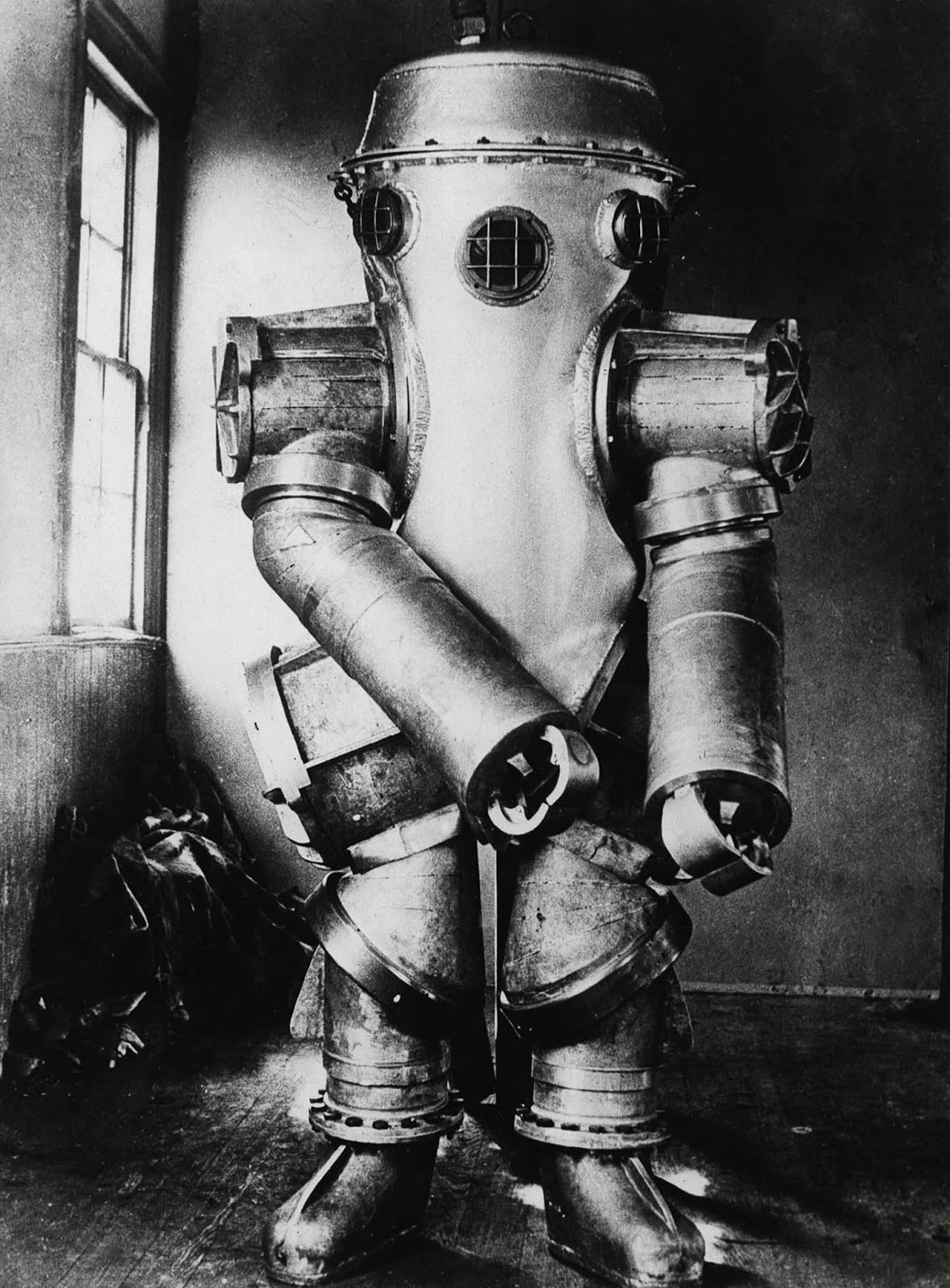
The early Neufeldt-Kuhnke suits from the period between 1917 and 1922 represent the beginning of the company’s armored diving program. These first-generation metal suits were a direct response to the need for deep-water salvage, particularly in the aftermath of World War I, when sunken vessels and their cargo made underwater recovery a priority.
Ottoman naval divers were also using 19th-century diving equipment in Istanbul, then the capital of the Ottoman Empire. Photographs from the period show Turkish naval divers working in the same style of helmet-and-suit rigs that were standard across European navies, demonstrating just how far this technology had spread.
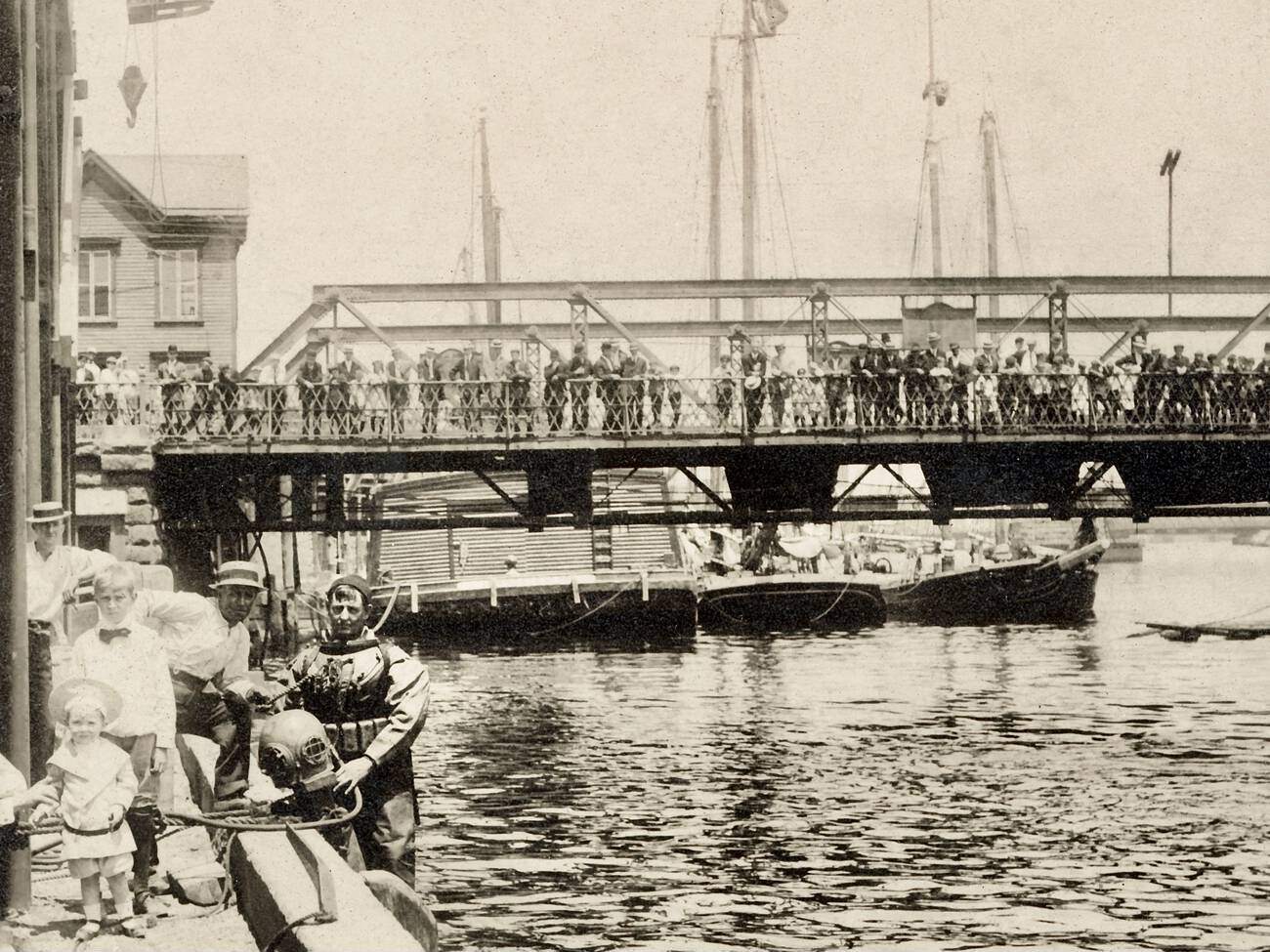
Early diving photographs also captured civilian and recreational divers experimenting with the gear of the day. Around 1900, full-helmet deep-sea diving rigs were occasionally used by early frogmen and enthusiasts, long before the word ‘scuba’ existed.
The next major revolution in diving came not from armored suits but from breathing technology. In 1943, Jacques-Yves Cousteau and Émile Gagnan developed the Aqua-Lung — the first practical open-circuit scuba system. This demand regulator paired with a compressed air tank cut the diver’s connection to the surface entirely. Divers no longer needed a hose or a pump crew waiting above. That freedom transformed underwater exploration from a specialized industrial operation into something that any trained individual could do.
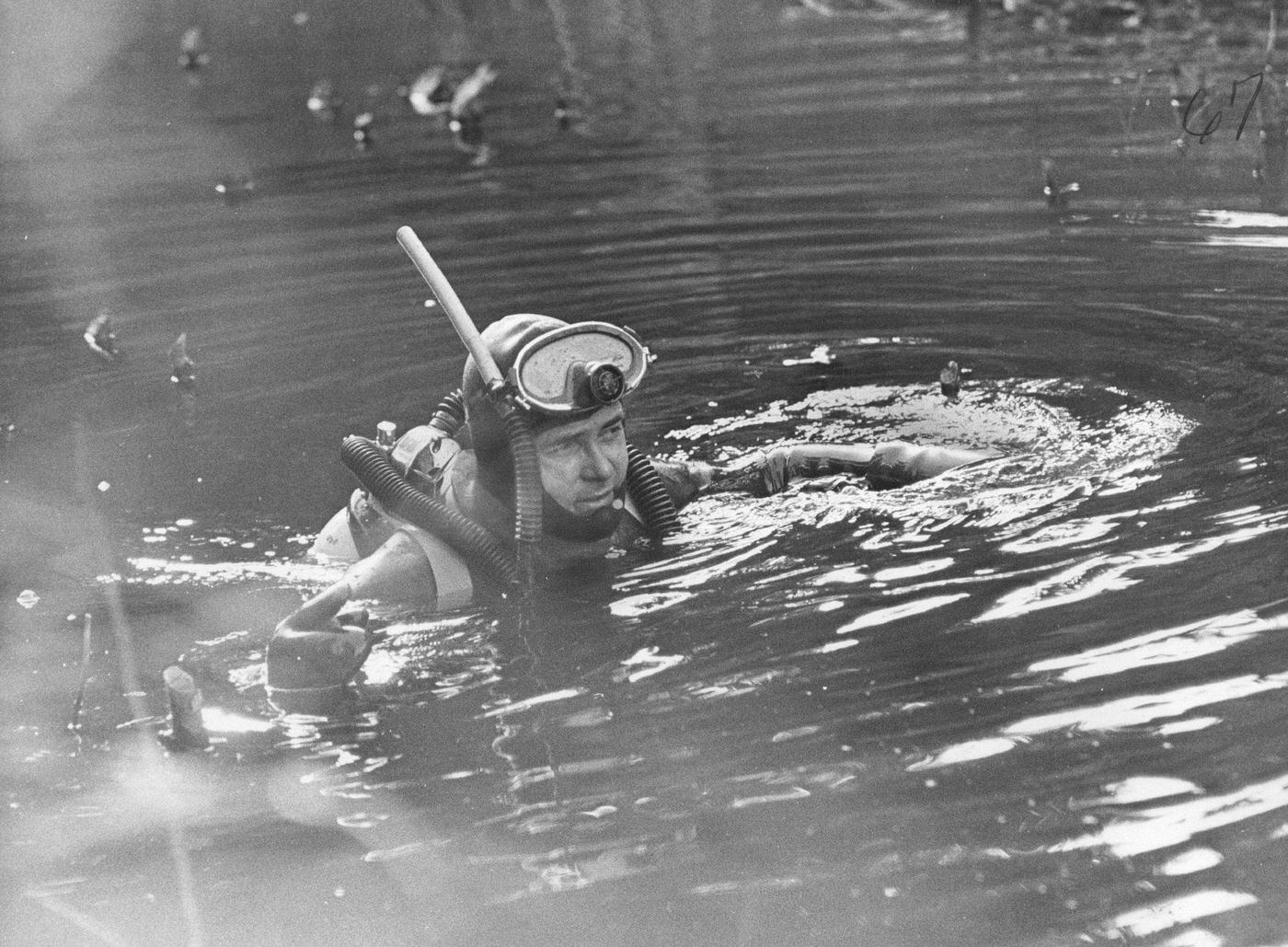
By the 1960s, scuba gear had found its way into scientific research, law enforcement, and military operations. In 1967, experienced diver David Mathias used scuba equipment to search the floor of a lake in Coal Creek Canyon for hidden weapons — a far cry from the salvage work that had driven early diving suit development.
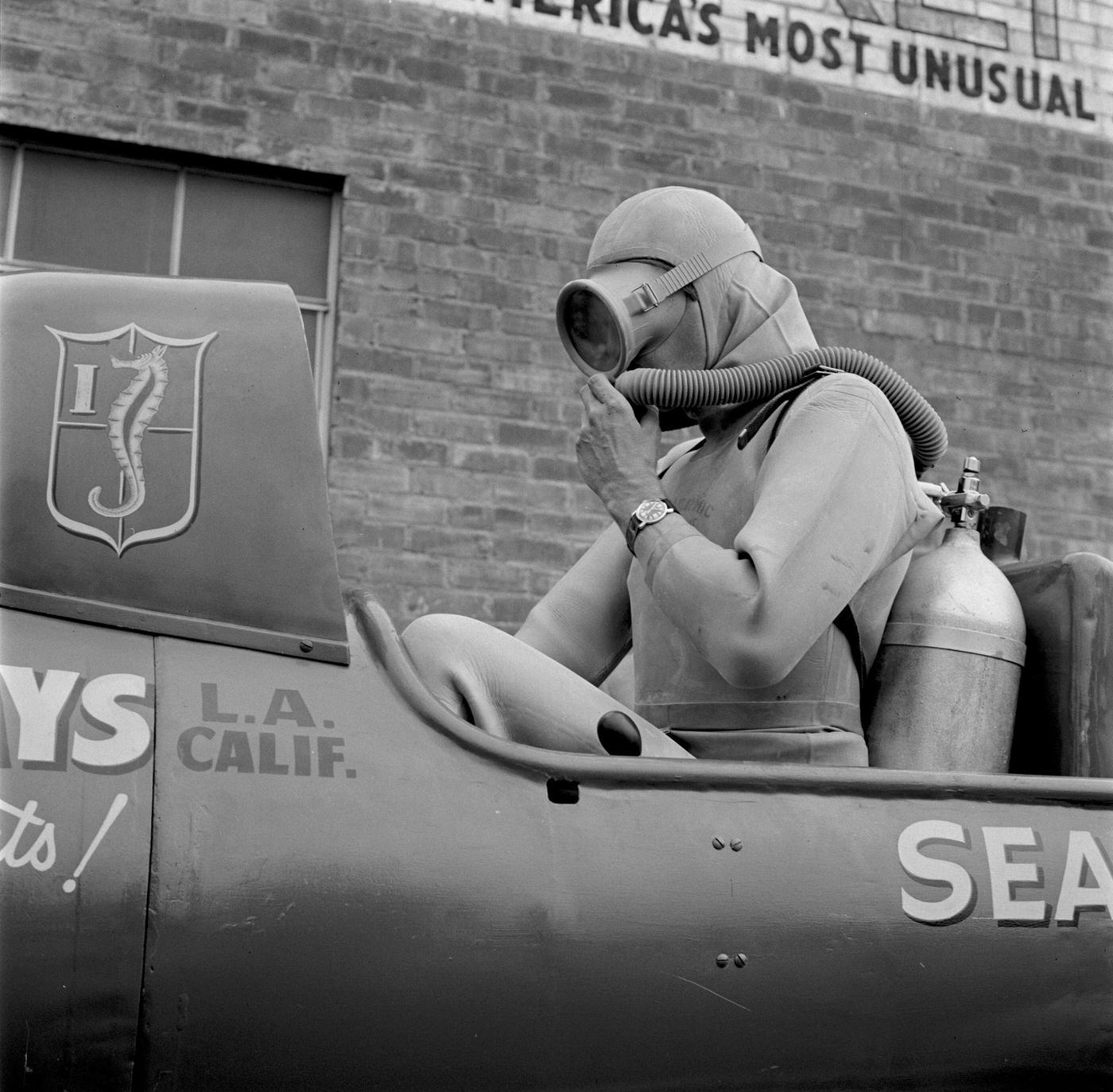
Scuba technology also fueled a wave of consumer products and sporting culture in mid-century America. Companies like Healthways marketed diving equipment and even personal submarines to recreational buyers. Their two-man submarine, Sea Horse I, was displayed on a trailer outside the company’s storefront — part of a broader effort to sell the ocean as the next great American frontier.
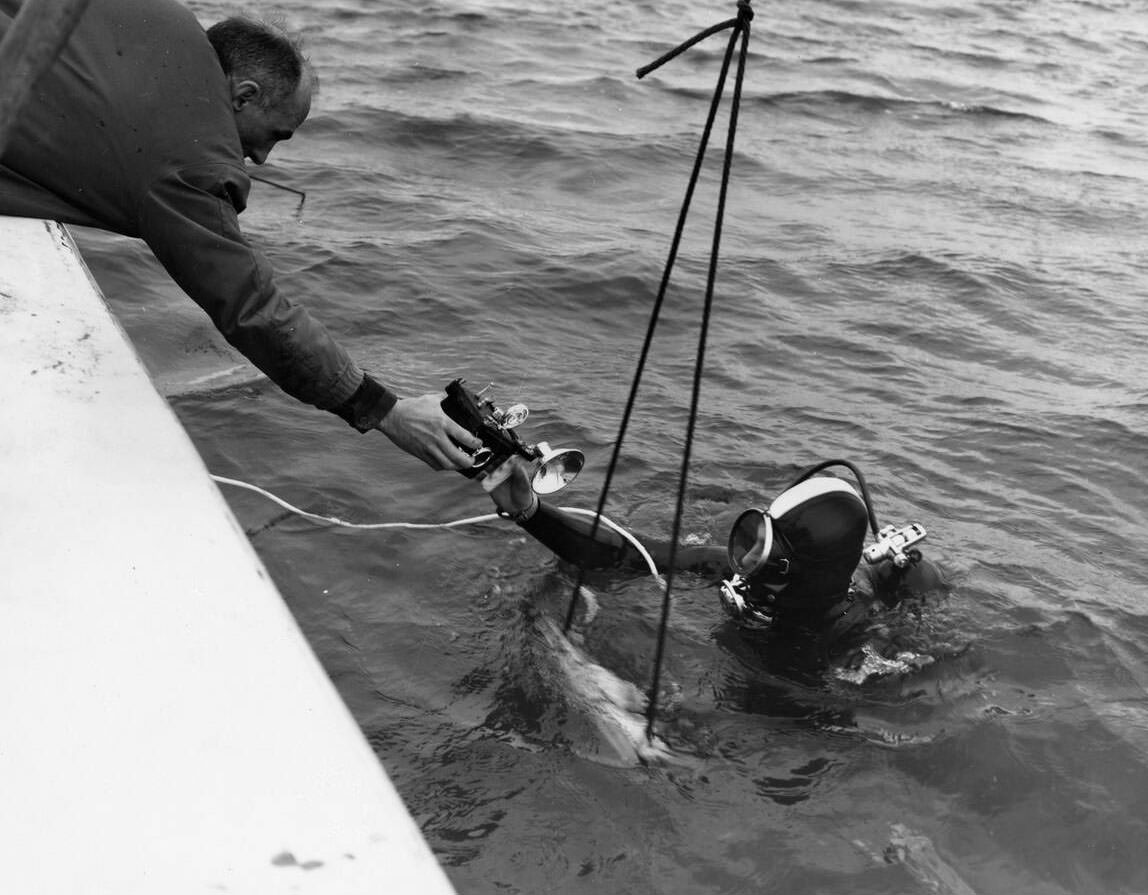
Collaborative efforts between government agencies and civilian divers also expanded what was known about underwater environments. A joint project between the Army Corps of Engineers and the State of Alaska sent divers to study tidal and surf action along the Homer Spit, with a camera passed from boat to diver as the work began.
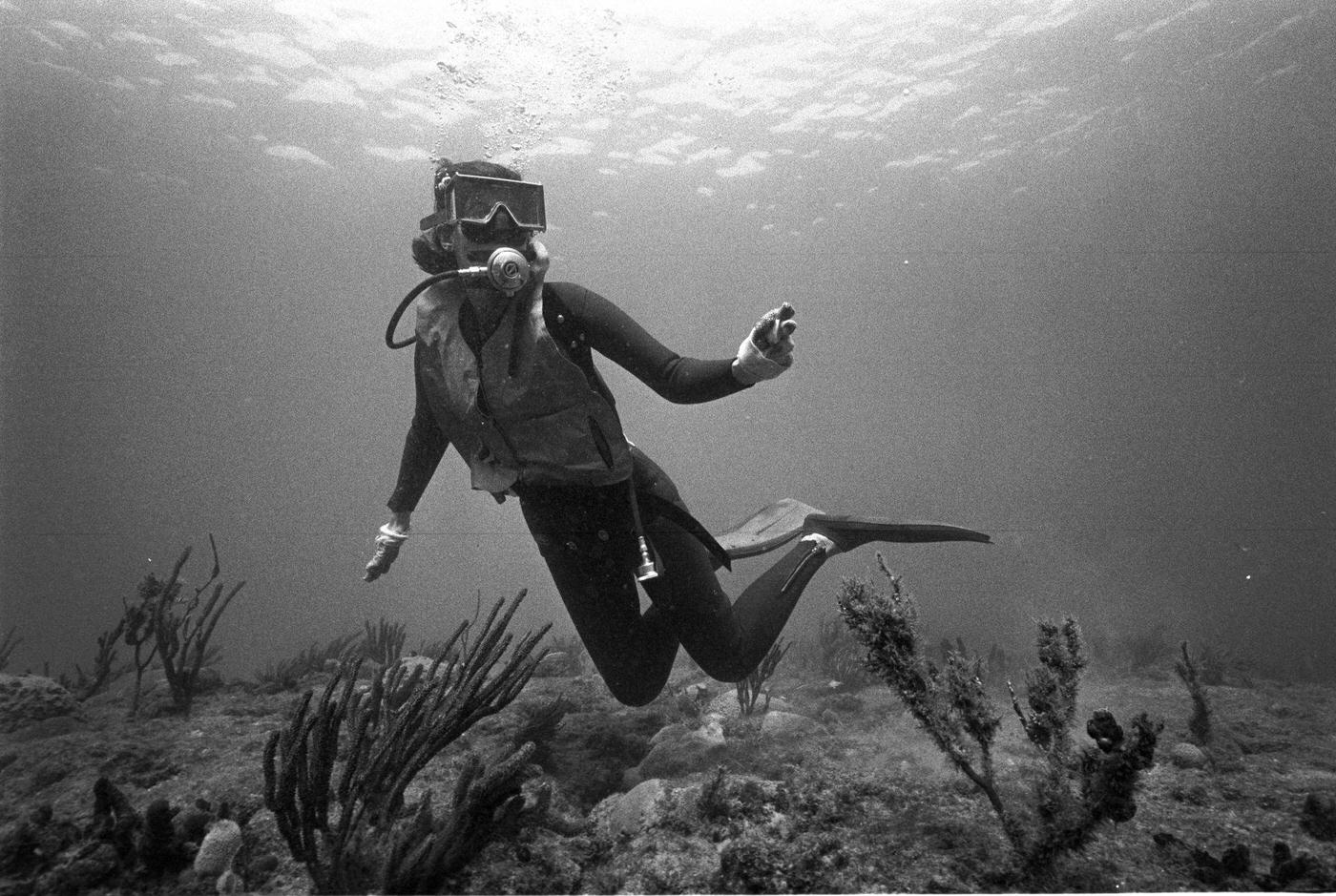
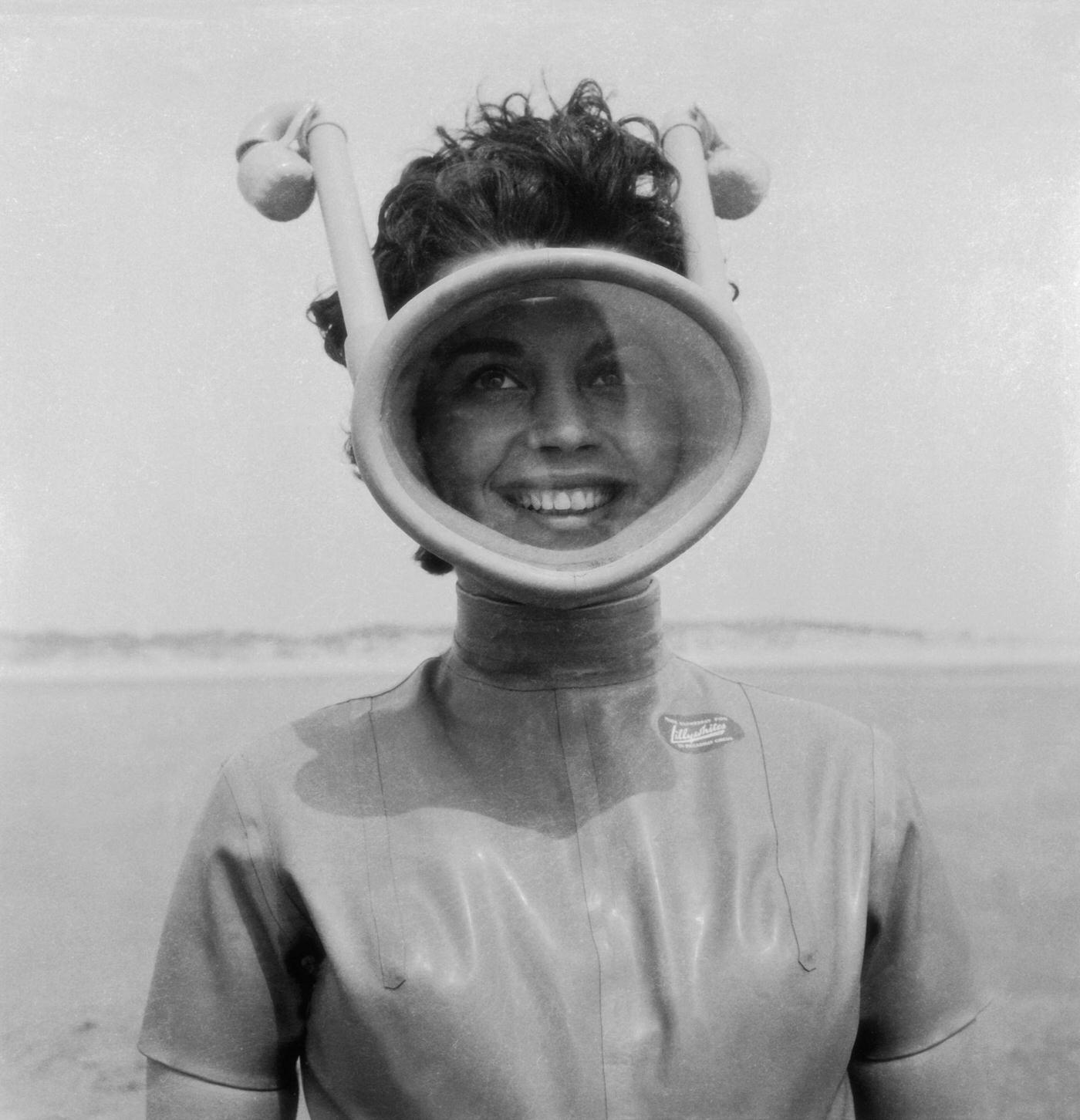
By the time recreational diving had become a fixture off coastlines like Palm Beach, Florida, the distance traveled from Klingert’s leather-and-metal contraption of 1797 was enormous. What had once been a dangerous, experimental act reserved for salvage crews and naval engineers was now accessible to anyone willing to learn.