Hey There! Before You Go. 😧
Get the best vintage content straight into your inbox!

Don't worry, we don't spam

Beautiful Photos of Couples with their Cars from the 1930s

The 1930s were a turning point for the automobile. The flashy, style-driven excess of the 1920s gave way to something more practical — cars that worked better, rode smoother, and looked cleaner. Yet people still dressed up to stand beside them. These photos capture that mix perfectly: everyday couples in their best clothes, proud of the machines parked next to them.
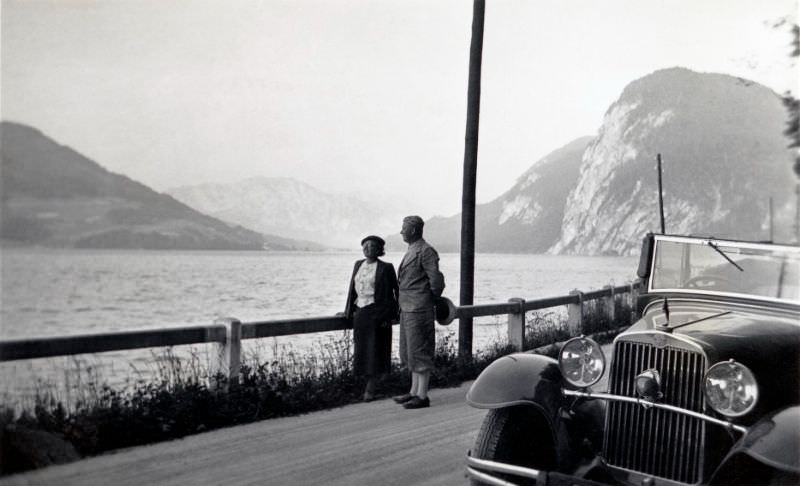
A middle-aged couple posing with a Steyr XX Cabriolet on a gravel road running along the bank of a lake on a bleak summer's day, 1930
A middle-aged couple posing with a Steyr XX Cabriolet on a gravel road running along the bank of a lake on a bleak summer’s day, 1930

At the start of the decade, cars still carried the design language of the late 1920s. Drum-shaped headlights mounted on rods, narrow running boards, and tall radiator shells were common features. The Steyr XX Cabriolet was an Austrian-built machine that embodied this upright, formal style. It sat comfortably in the upper-middle range of the market.
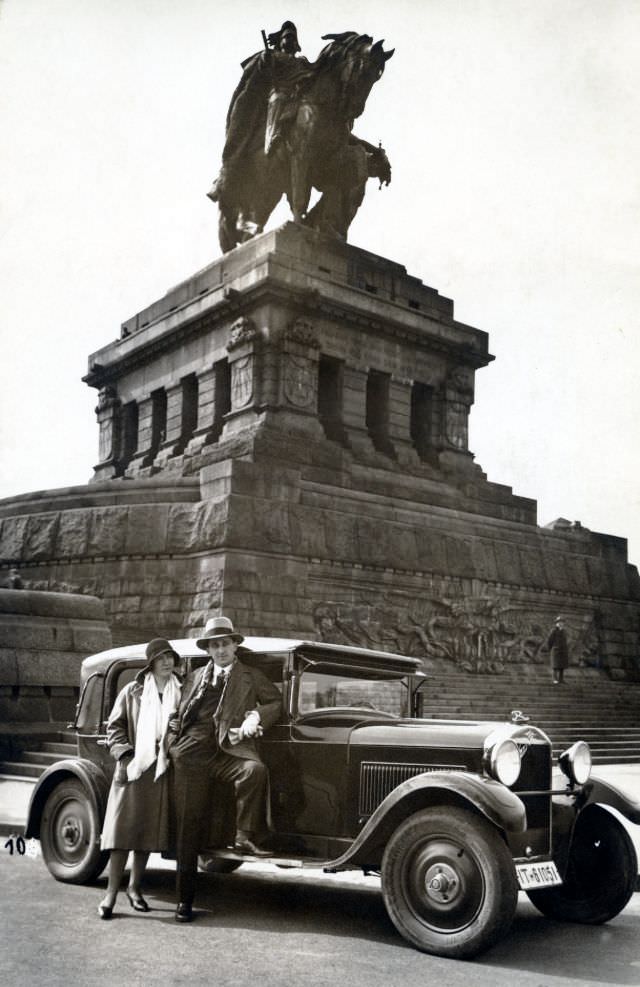
A stylish couple posing with a Röhr 8 9/50 PS Typ R in front of a monumental equestrian statue at Deutsches Eck, 1930

German automakers were well represented throughout the decade. The Röhr 8 was a sophisticated machine with an eight-cylinder engine — rare and impressive for the time. Couples who owned such vehicles often chose grand backdrops to photograph them. The Deutsches Eck, where the Rhine and Moselle rivers meet at Koblenz, gave this photo an appropriately dramatic setting.
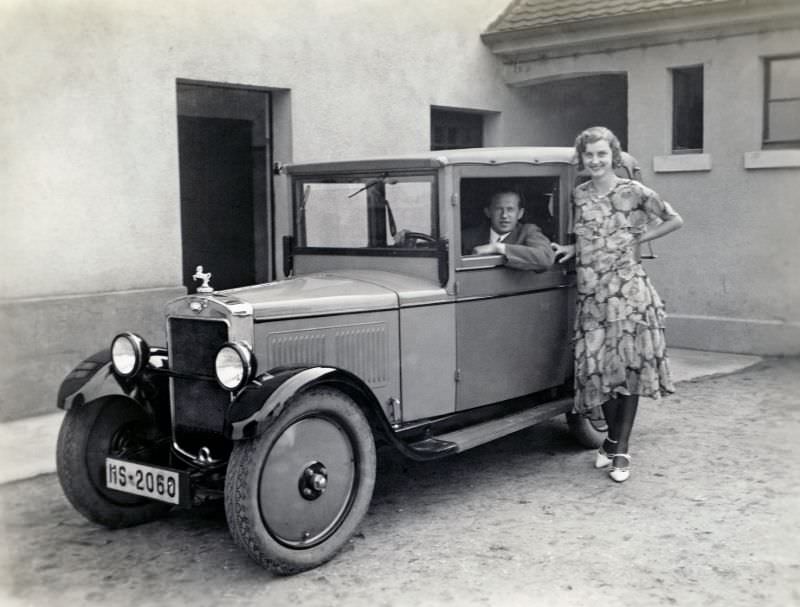
A cheerful lady in a floral dress and a dapper fellow in a suit posing with a Hanomag 4/20 PS Cabriolet-Limousine in the backyard of a private home.
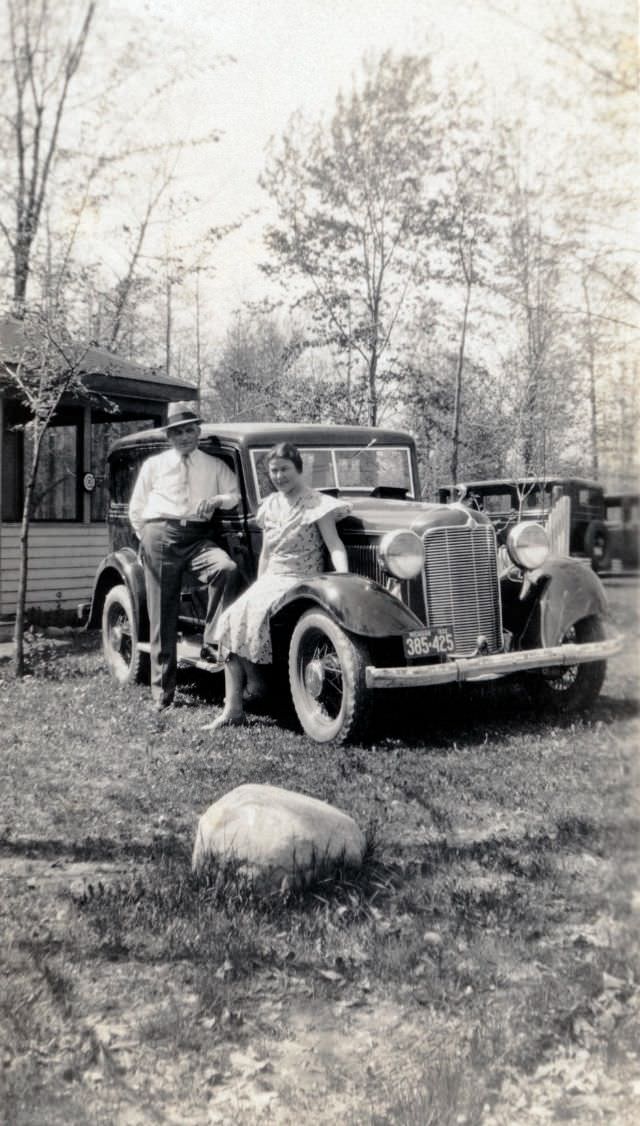
A middle-class couple posing with a 1932 DeSoto Six on a sunny spring day in the countryside.

By 1932, American car design was shifting. Brands like DeSoto were building vehicles with rounder, more streamlined bodies. Headlights began moving closer to the chassis, and the overall silhouette became lower and wider. Low-pressure inner tube tires, introduced on American cars during this era, made for a noticeably smoother ride on rough country roads.
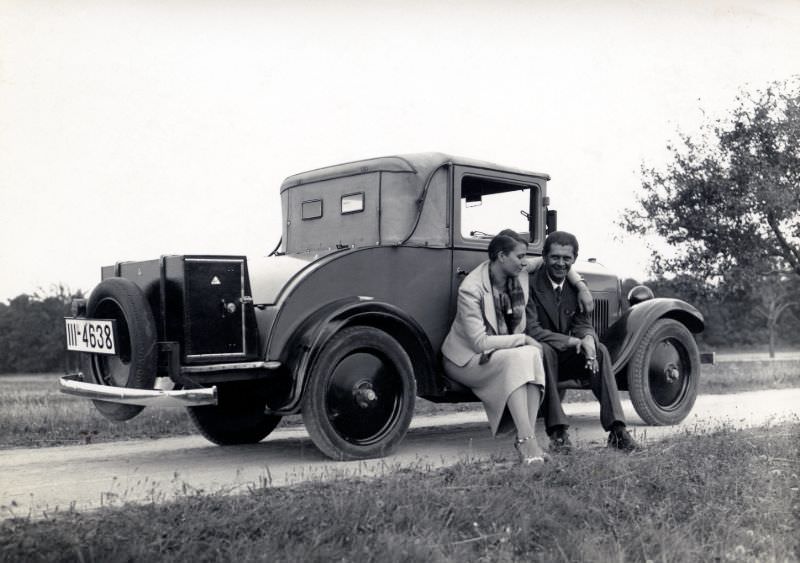
A stylish couple posing on the running board of an Opel 4/20 PS Cabriolet 2 convertible in the countryside.
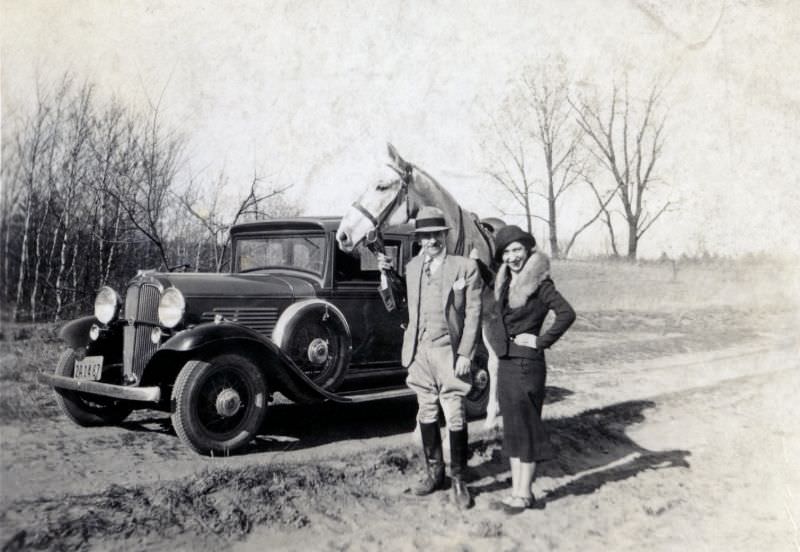
A well-to-do couple posing with their horse and their 1932 Willys-Overland Sedan on a sunny winter's day.
A well-to-do couple posing with their horse and their 1932 Willys-Overland Sedan on a sunny winter’s day.

Not everyone had fully committed to the automobile age. Some owners still kept horses alongside their cars, as this New York couple’s photo shows. The 1932 Willys-Overland Sedan was an affordable American option during a time when the Great Depression was shrinking household budgets. Owning any car at all in 1933 was a mark of relative comfort.
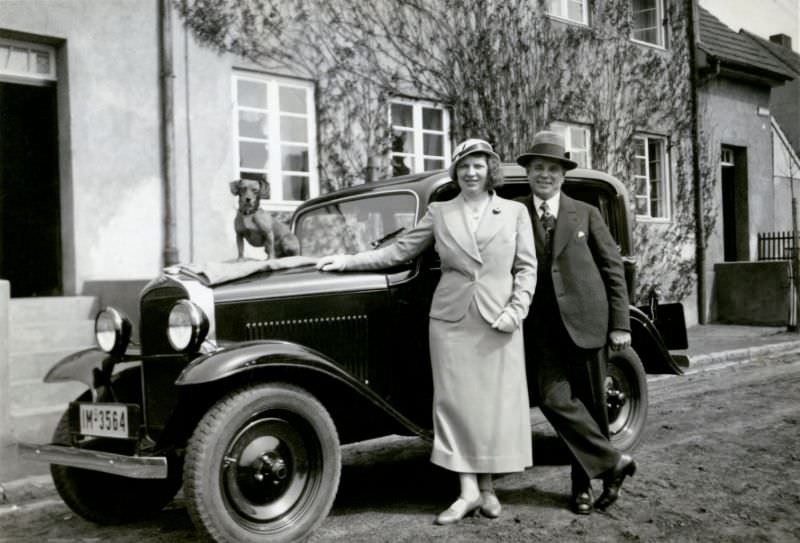
A cheerful couple and posing with an Opel 1,2 Liter in front of a middle-class home in a residential street.
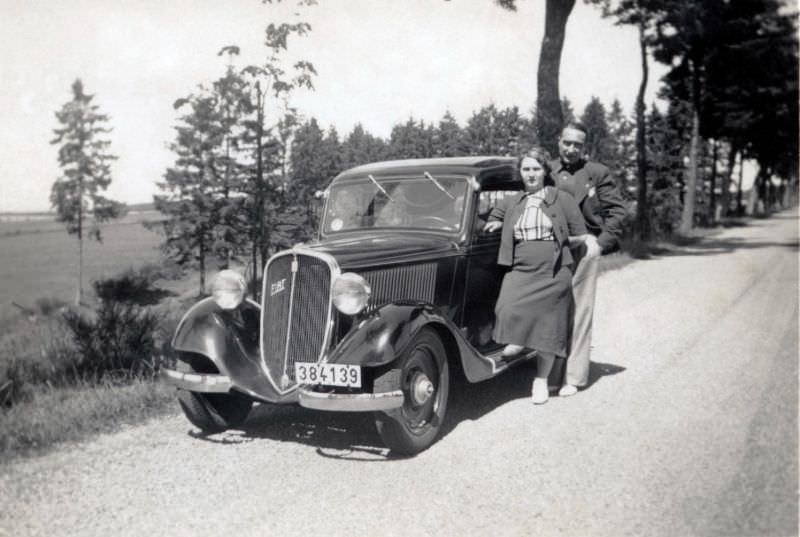
A couple posing with a Fiat Balilla 508 A on a gravel road in the countryside, 1935

The mid-1930s saw compact, affordable cars gain popularity across Europe. The Fiat Balilla 508 A was one of Italy’s most successful small cars of the era. It was light, economical, and within reach of working and middle-class buyers. In Germany, the Opel 1.2 Liter served a similar role — a sensible, modest machine that still gave its owners something to be proud of.
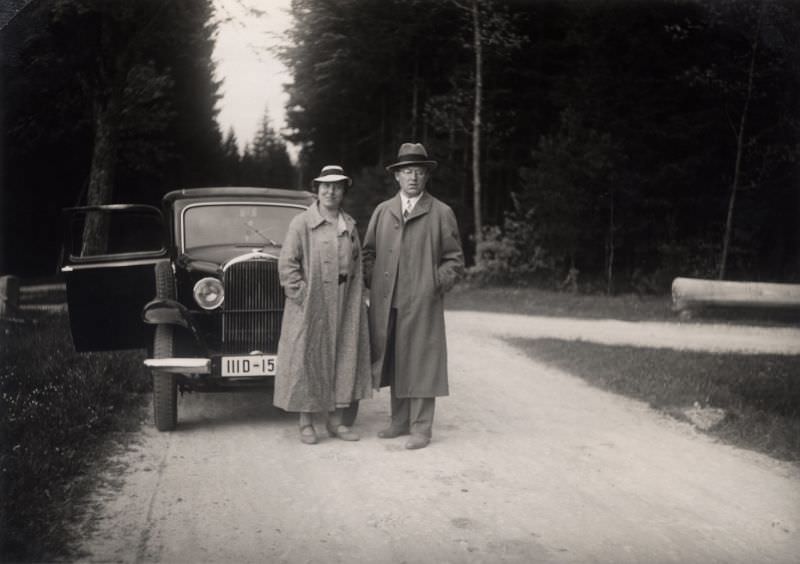
A middle-aged couple wearing raincoats and hats with an Opel 1,2 Liter.
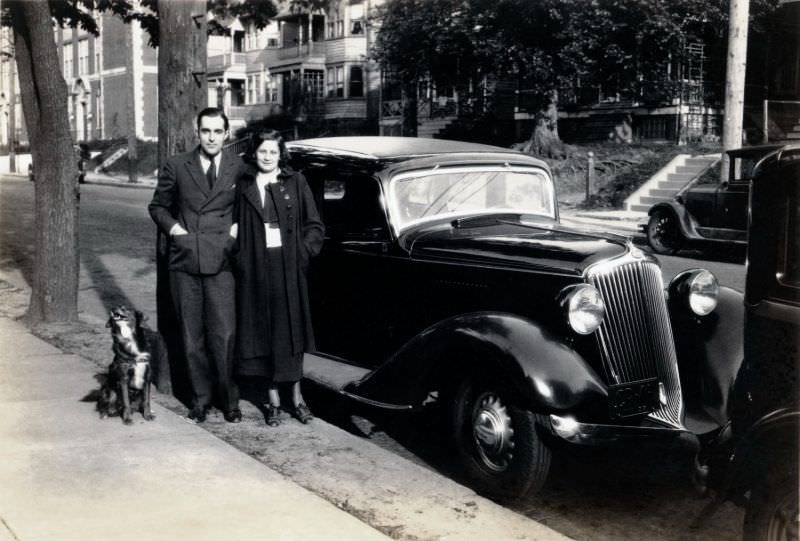
A stylish young couple and their dog posing with a 1933 Graham Blue Streak Sedan in an middle class neighborhood.

The Graham Blue Streak was one of the most forward-looking American designs of the early 1930s. Its skirted fenders and raked windscreen made it look fast even when standing still. Radiator grilles across the industry were being tilted backward slightly during this period, giving cars that sense of forward motion that customers wanted. Windscreens were now being made from cheap but effective safety glass, which shattered into dull fragments rather than sharp shards.
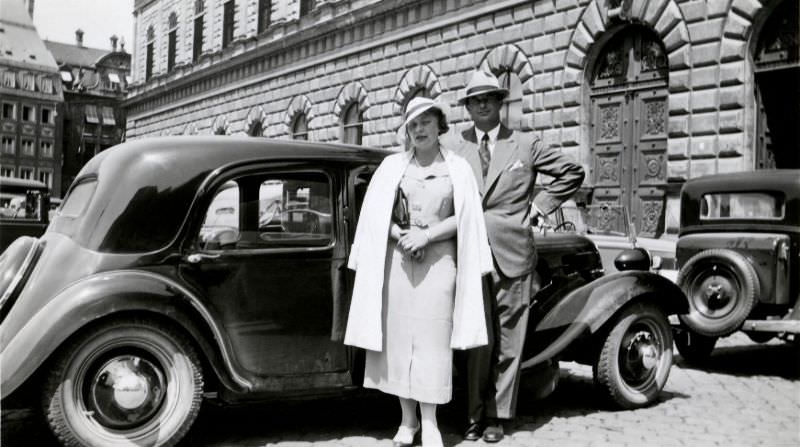
An elegant couple posing with a Citroën 11 CV in front of an impressive Renaissance building in a busy historic town centre, circa 1935
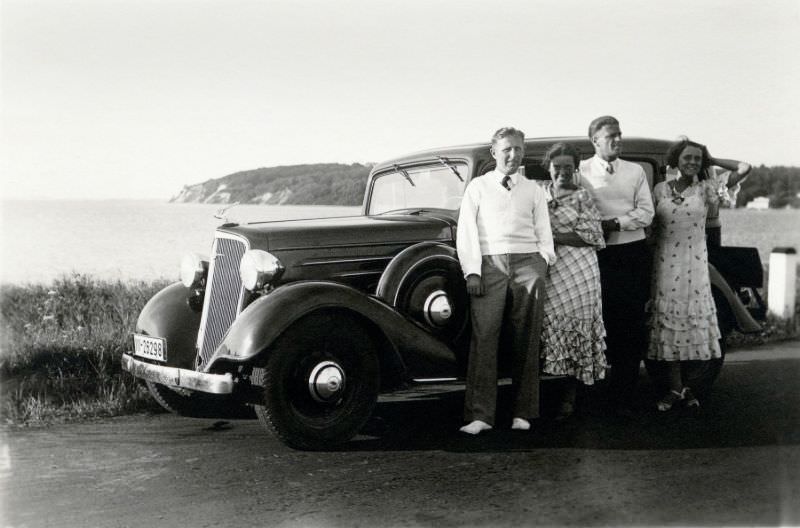
Two stylish couples posing with a 1934 Chevrolet Master Sedan at the seaside on the island of Rügen.

The Citroën 11 CV, known as the Traction Avant, was a genuine engineering milestone. Introduced in 1934, it used front-wheel drive and a unitary body construction — features that most other manufacturers wouldn’t adopt for decades. Its low-slung profile stood out immediately against the taller cars of the era. Meanwhile, American brands like Chevrolet were selling their Master Sedan widely in Europe, as this photo taken on Germany’s Rügen island shows.
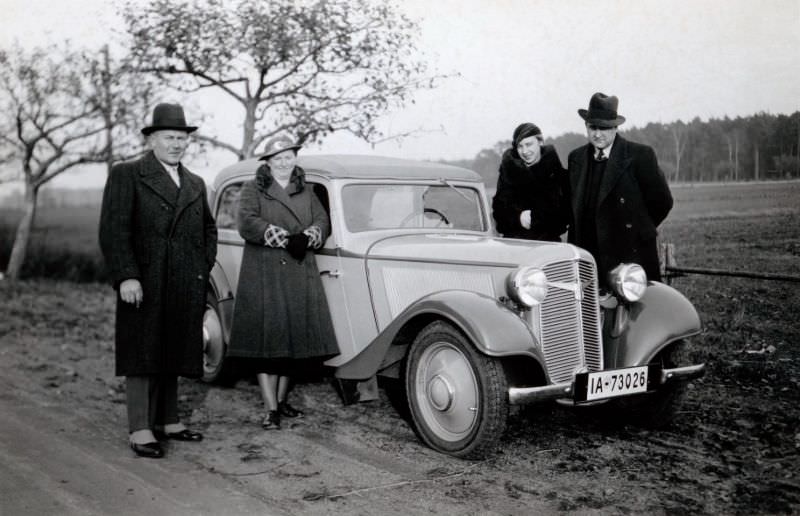
Two stylish couples posing with a Adler Trumpf Junior Cabrio-Limousine on a dirt road in the countryside.
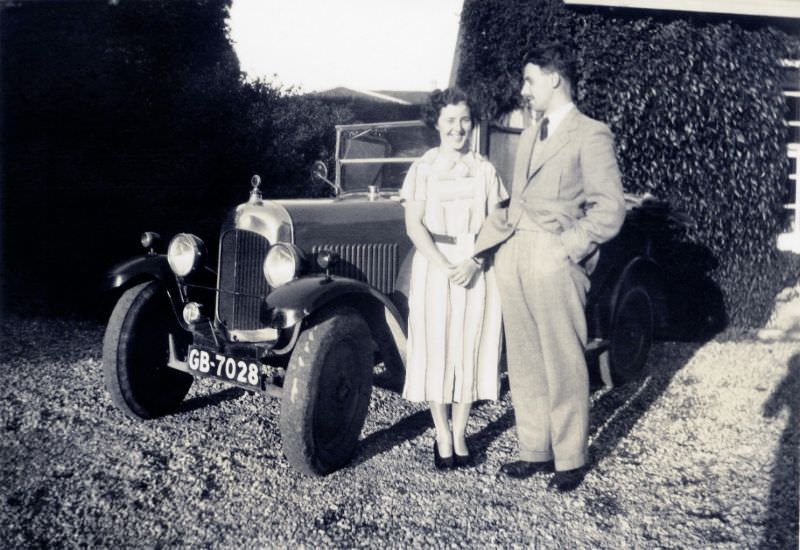
A cheerful lady in a light-colored dress and a fellow wearing a suit and tie posing with an English-built Citroën 7.5 H.P. Type C, circa 1936

Citroën operated a factory in Slough, England, producing British versions of its French models. The 7.5 H.P. Type C was one of these English-built cars, tailored to British tastes and road taxes. It was a compact, practical car — and like many vehicles of this period, it gave couples something cheerful to rally around for a photograph.
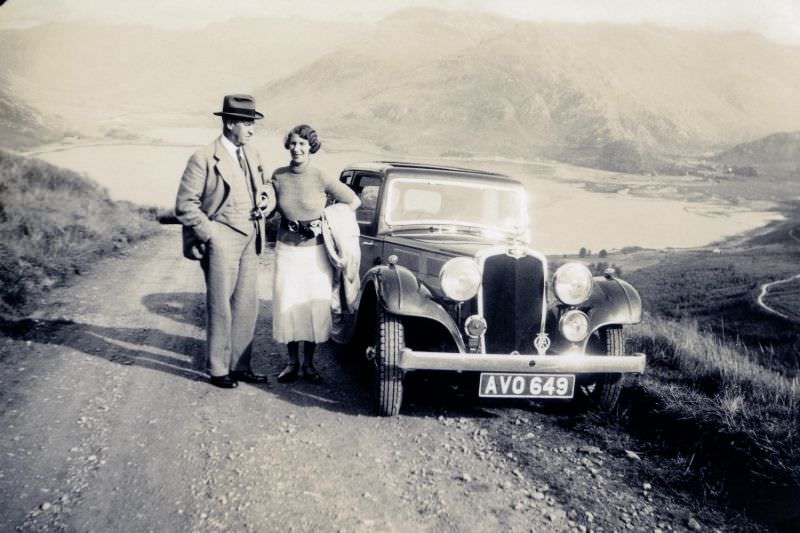
A middle-aged couple posing with a Triumph Gloria Vitesse on a gravel road in the countryside.
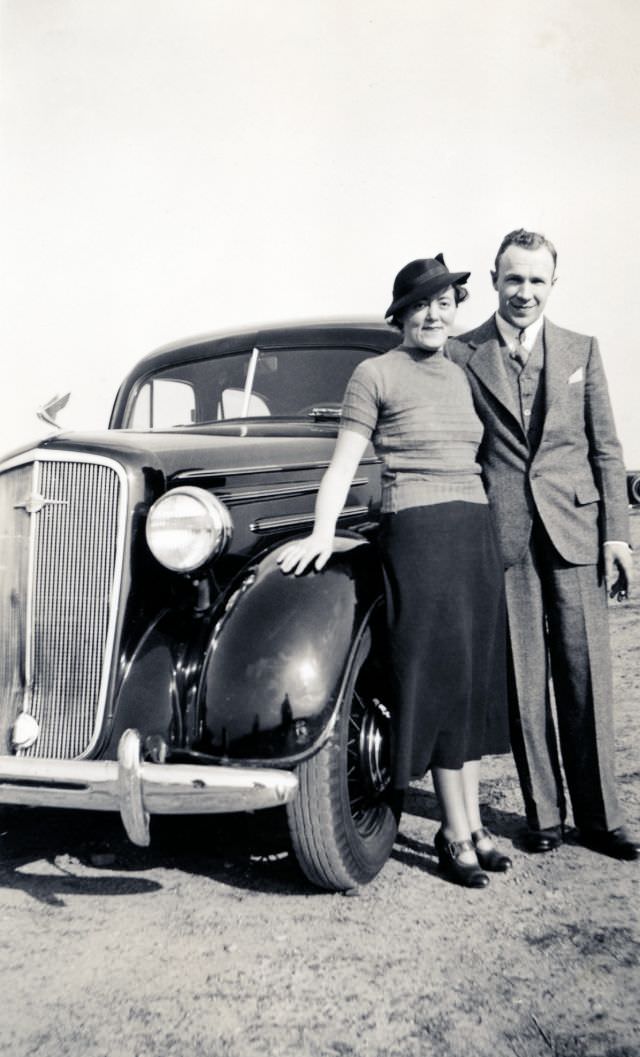
A stylish couple posing with a 1935 Chevrolet Master Deluxe in late afternoon sunshine, circa 1936

By the mid-1930s, Chevrolet’s Master Deluxe had become one of the best-selling cars in America. Its long hood, wide body, and integrated headlights gave it a presence on the road that smaller, older designs simply couldn’t match. Windscreen wipers had become standard equipment on American cars by this point — a practical step forward that made driving in poor weather far safer.
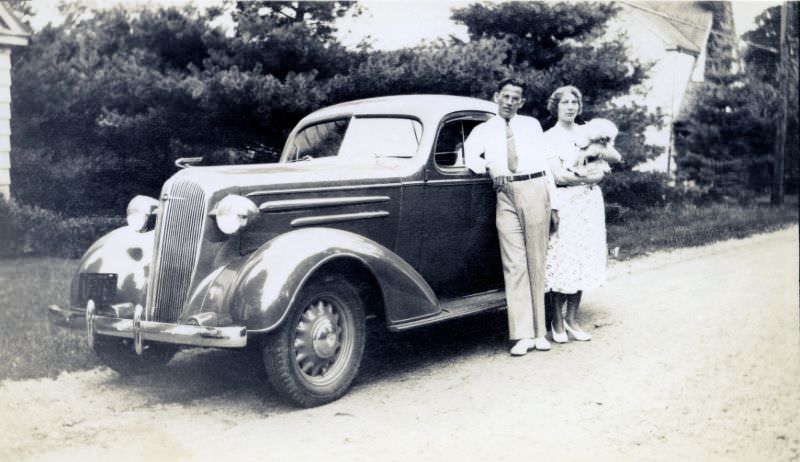
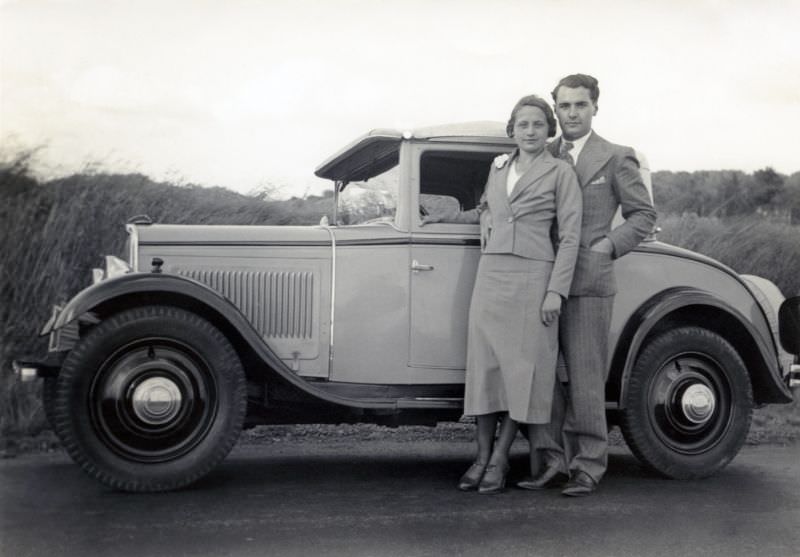
A stylish couple posing with a 1936 Chevrolet Standard Coupe on a gravel road in the countryside on July 22, 1936
A stylish couple posing with a two-tone Peugeot 201 Cabriolet by the side of a country road, circa 1936

Two-tone paint schemes were a popular way to add visual flair in the 1930s. The Peugeot 201 Cabriolet, with its open-top body and contrasting colors, was the kind of car that invited a roadside photo stop. French automakers paid close attention to aesthetics even on smaller, affordable models, and the 201 had been a major success for Peugeot since its launch in 1929.
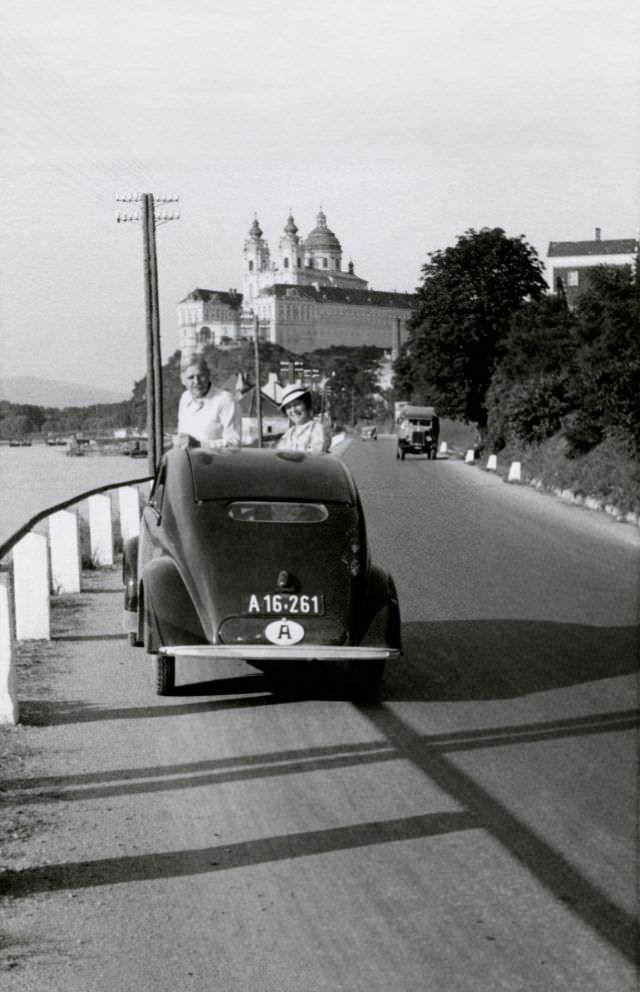
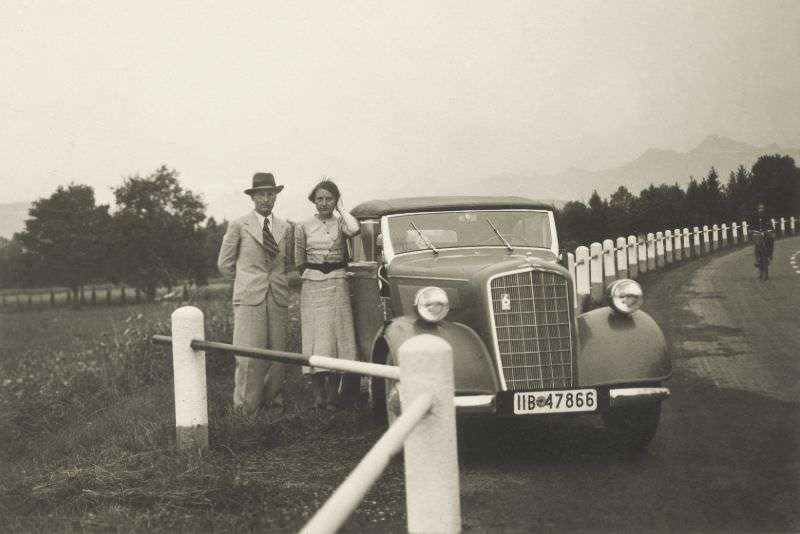
A cheerful couple posing with a Steyr 50 on the side of the road in the town of Melk on the bank of the Danube with the famous monastery visible in the background.
A couple wearing light-colored suits in the fashion of the thirties posing with an Opel 6 Cabriolet in the countryside.

The Steyr 50, nicknamed the “Baby Steyr,” was Austria’s answer to the demand for affordable family transport. Launched in 1936, it had a rear-mounted air-cooled engine and a rounded body that looked thoroughly modern. The Opel 6 Cabriolet, by contrast, was a larger and more expensive machine — the kind of open-top car suited to Alpine roads and summer drives.
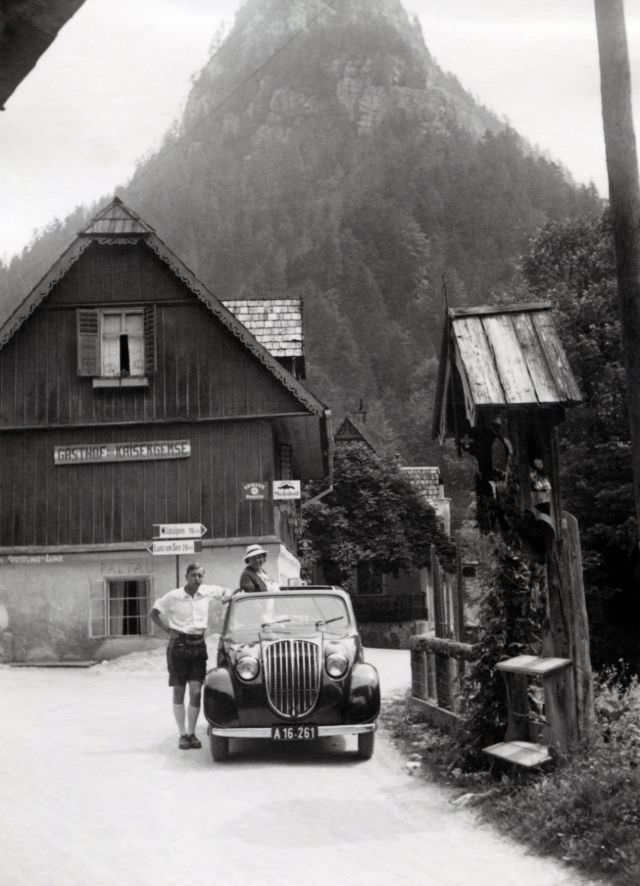
A stylish couple posing with a Steyr 50 in the Styrian village of Palfau, rural Austria.
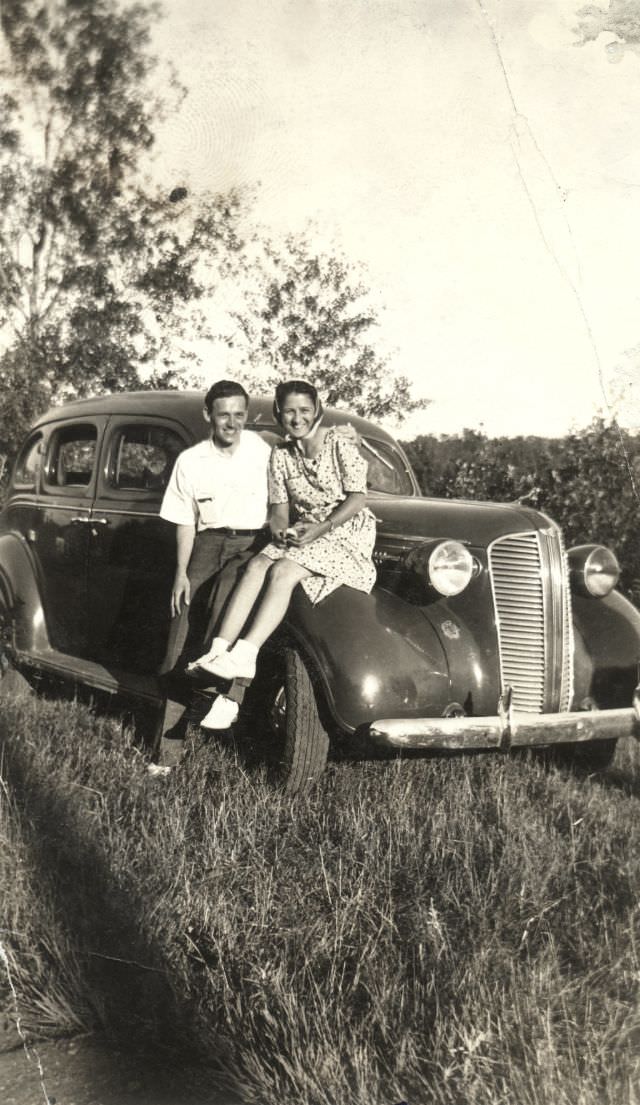
A cheerful couple posing with a 1937 Dodge Sedan on a sunny summer afternoon, somewhere in Canada, 1938

North American cars of the late 1930s were bigger and bolder than their European counterparts. The 1937 Dodge Sedan featured a wide chrome grille, fully integrated headlights, and a long, rounded body. Driving comfort had improved steadily through the decade, and buyers across Canada and the United States responded enthusiastically to these larger, more refined machines.
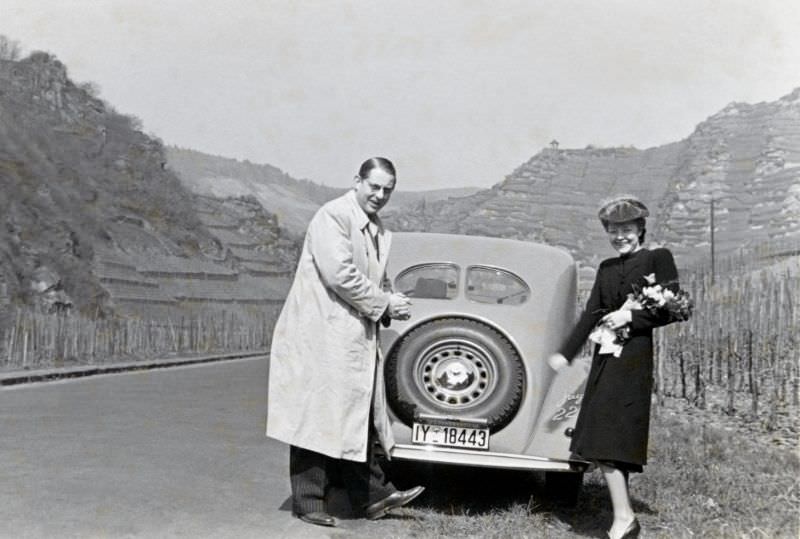
A cheerful couple posing with a Steyr 220 Limousine on a country road in the Ahr Valley, a wine-growing region south of the city of Bonn.
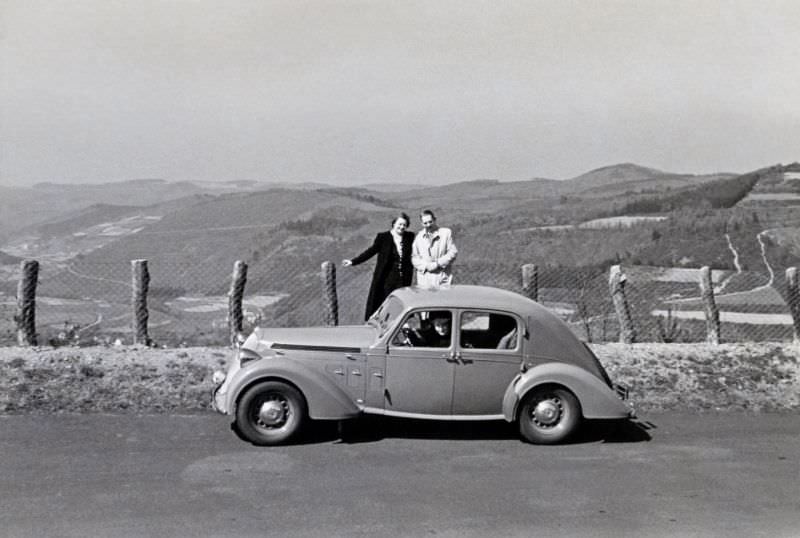
A couple posing with a Steyr 220 Limousine on a mountain road overlooking a valley, 1938

The Steyr 220 was Austria’s most prestigious passenger car of the late 1930s. It featured an overhead camshaft six-cylinder engine and a body that leaned into the streamlined look then sweeping through European design. Both photos here show the same model in very different settings — a vineyard valley in the Rhineland and a dramatic mountain road — suggesting it was a car its owners loved to take out and show off.
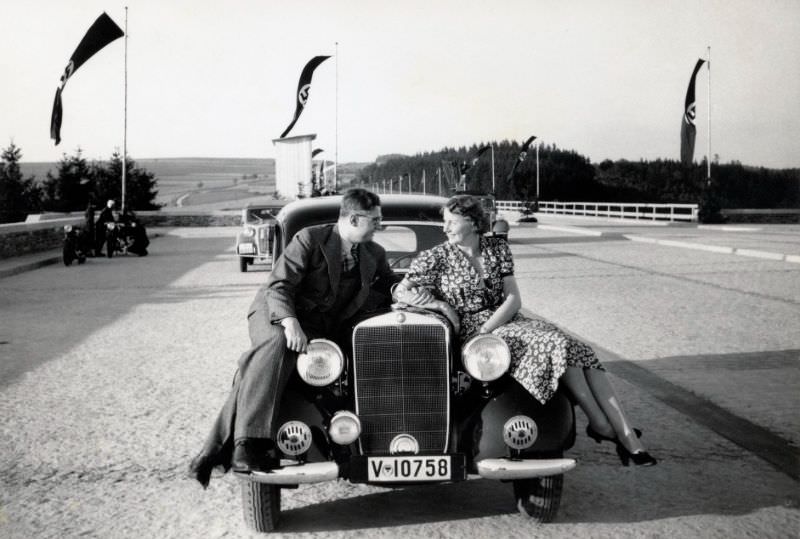
A fellow in a pinstripe suit and a lady in a floral dress posing on the fenders of a Mercedes-Benz 170 V, near the town of Plauen in Saxony.
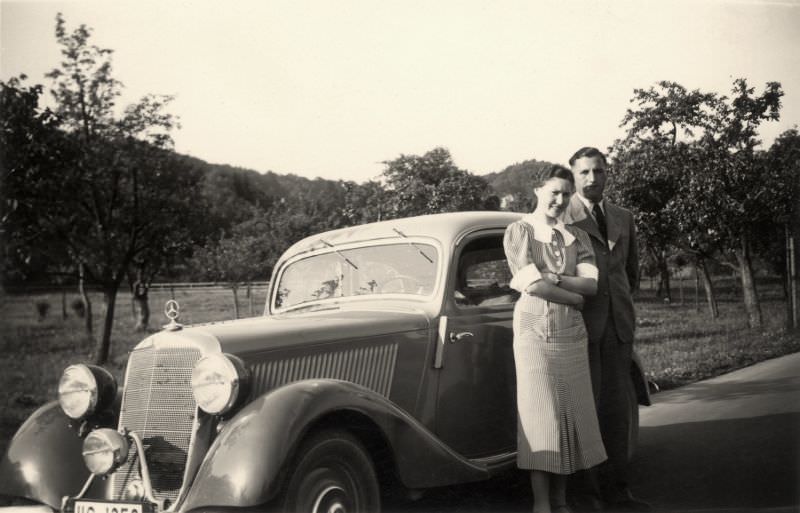
A lady in a short-sleeved dress and a fellow in a suit posing with a Mercedes-Benz 170 V in the countryside.

The Mercedes-Benz 170 V was the most popular German car of the late 1930s. Introduced in 1936, it used a backbone chassis and independent suspension on all four wheels — advanced features for a mass-market vehicle. Its modest 1.7-liter engine kept fuel costs low, which helped it sell well to middle-class buyers across Germany. These two photos, both from 1938, show just how common the 170 V had become.
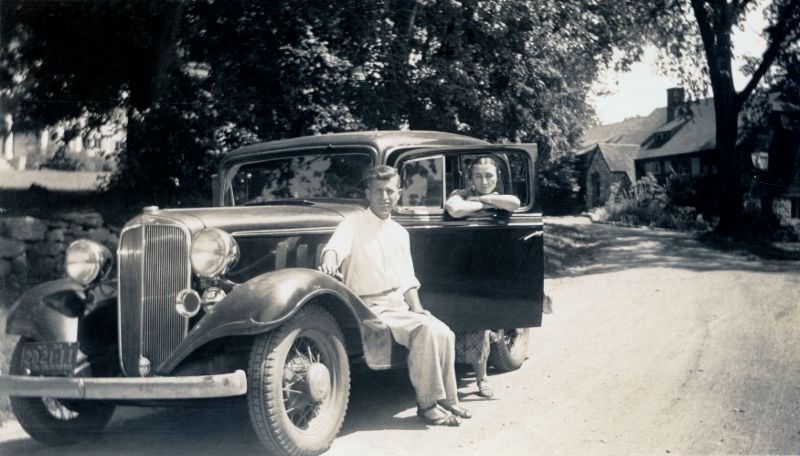
A leisurely clad couple posing with a 1933 Chevrolet Sedan on a sunny summer's day.
A leisurely clad couple posing with a 1933 Chevrolet Sedan on a sunny summer’s day.
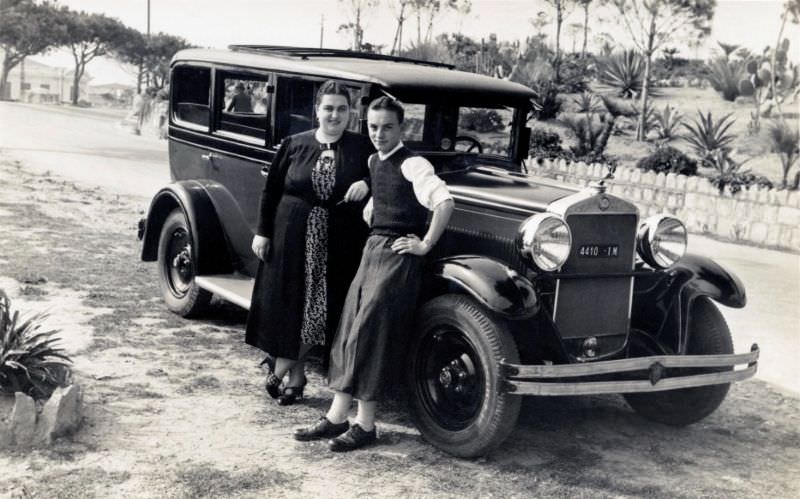
A young couple posing with a Fiat 521 Berlina on the side of a road lined with Italian stone pines.

The Fiat 521 was a larger, more upmarket model than the small Balilla. Registered in the province of Imperia on the Italian Riviera, this particular car was photographed on a road lined with stone pines — a classic Mediterranean scene. The 521 had a six-cylinder engine and a formal, upright body that appealed to professional and upper-middle-class Italian buyers.
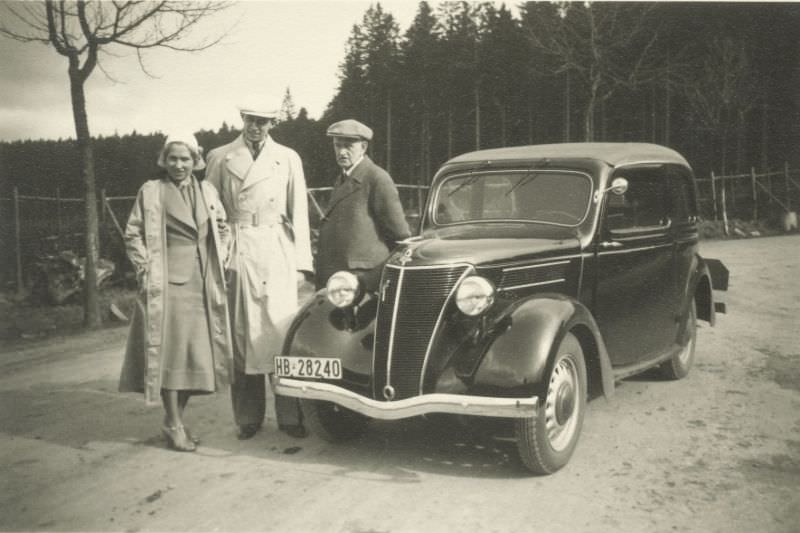
A young elegant couple in trench coats and an elderly gent in a woollen coat posing with a German-built Ford Eifel.
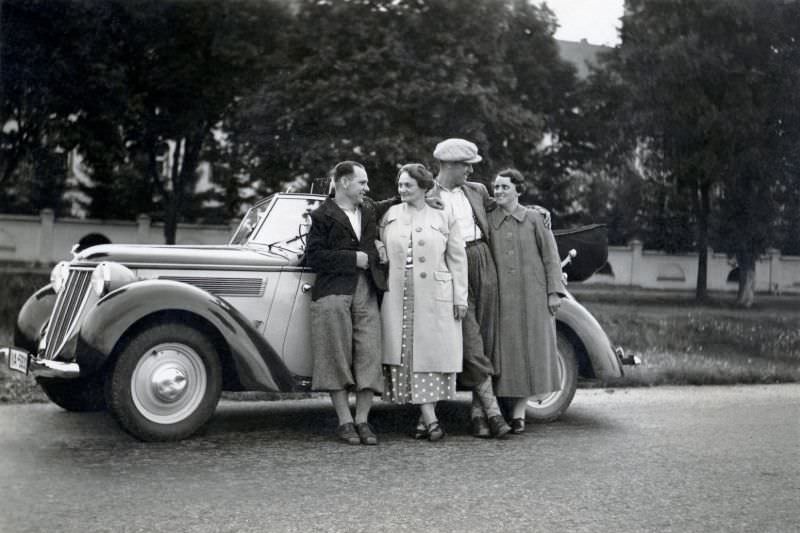
Two fashionable couples posing with an elegant two-tone Wanderer W 23 Cabriolet in summertime.

Ford built its Eifel model specifically for the German market at its Cologne plant. It was a compact, economical car with a modern appearance, and it sold steadily through the late 1930s. The Wanderer W 23 Cabriolet, registered in Berlin, represents a more luxurious end of the German market. Wanderer was part of the Auto Union group, and its cars were well-regarded for quality and finish.
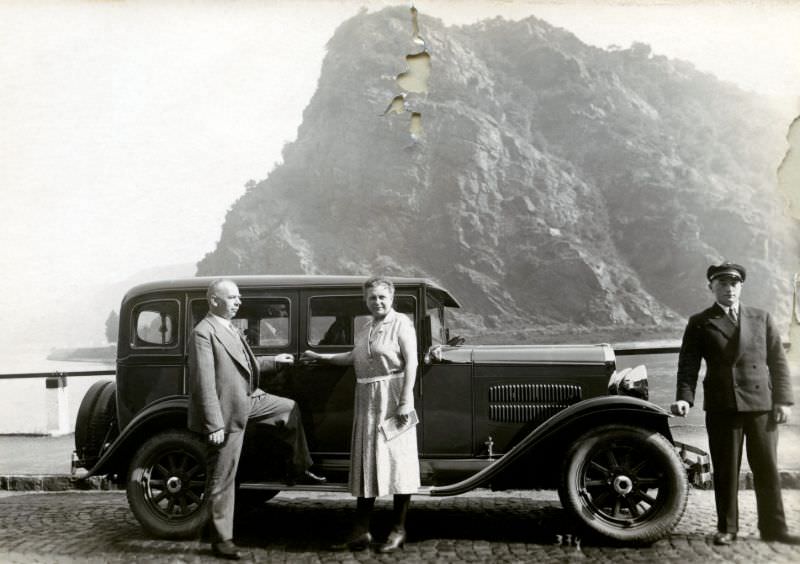
En elderly couple and their chauffeur posing with an 1930 Essex Sedan at Lorelei Rock on the bank of the River Rhine, 1930
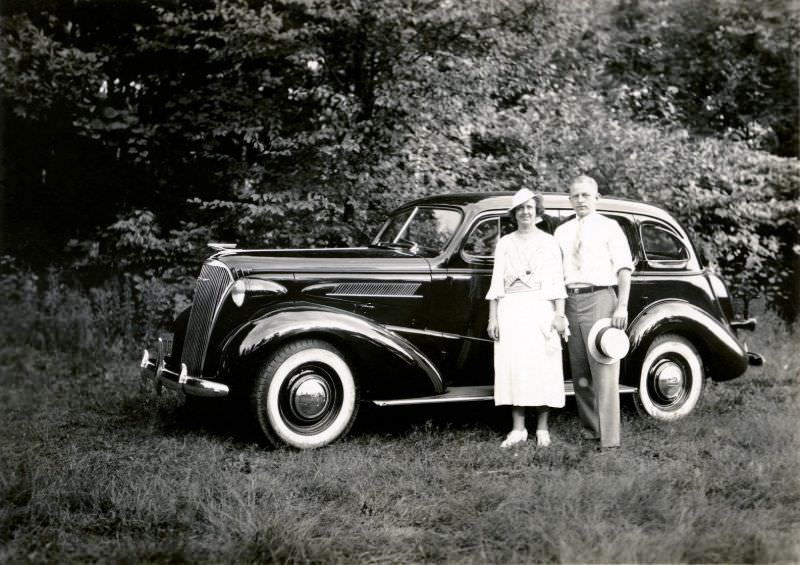
A middle-aged couple from Brooklyn posing with a shiny 1937 Chevrolet Master De Luxe in the countryside.

The Lorelei Rock on the Rhine was a popular stop for motorists traveling through Germany. This 1930 photo of an elderly couple and their chauffeur beside an Essex Sedan shows how car travel had become a leisure activity for the well-off. By 1937, middle-class couples from Brooklyn were making similar trips, this time in the far more modern Chevrolet Master De Luxe — a world away from the upright Essex of seven years earlier.
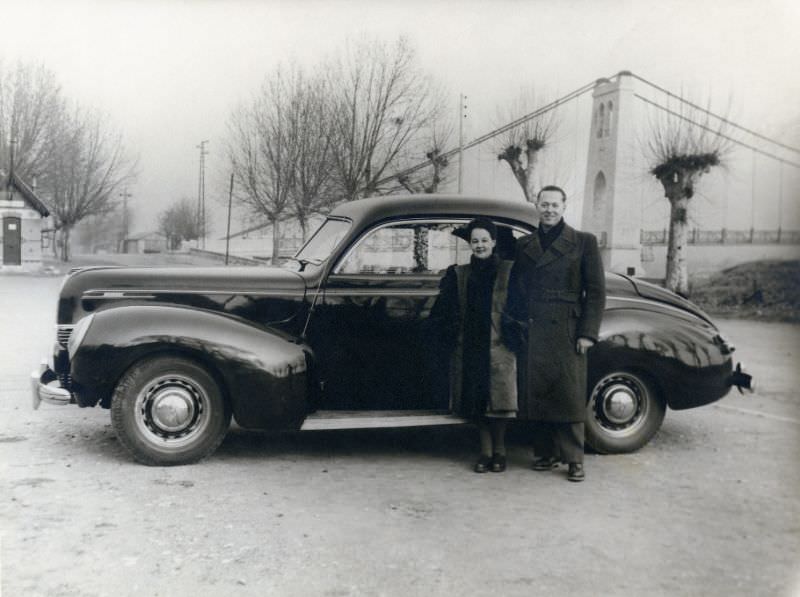
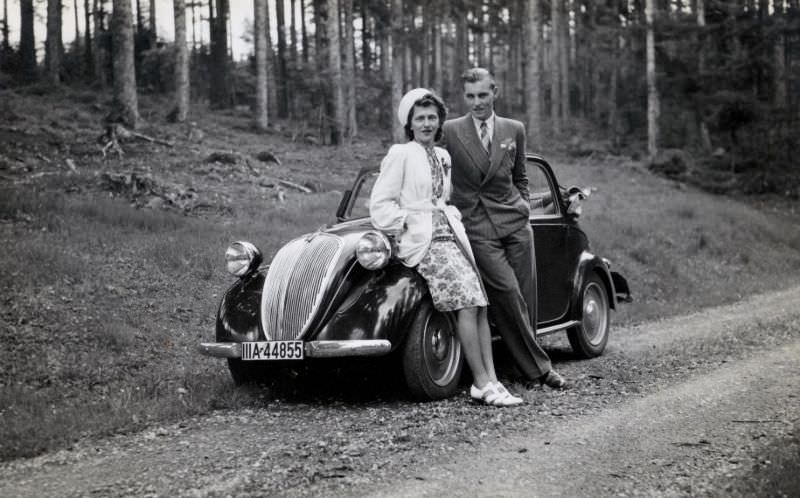
A fashionable couple posing with a 1939 Mercury Eight Club Coupe near a suspension bridge on a bleak winter's day, 1939
A fashionable couple posing with a 1939 Mercury Eight Club Coupe near a suspension bridge on a bleak winter’s day, 1939
A fashionable couple posing with a Fiat 500 A on a gravel road in the countryside. The car is registered in the city of Stuttgart, 1939

Ford launched Mercury as a new brand in 1938, positioned between the budget Ford and the upscale Lincoln. The 1939 Club Coupe had a V8 engine and a sleek fastback roofline that looked genuinely elegant. At the other end of the size scale, the Fiat 500 A — known as the Topolino, or “little mouse” — was one of the smallest production cars in the world. Its Stuttgart registration suggests it belonged to a German owner with an eye for something different.
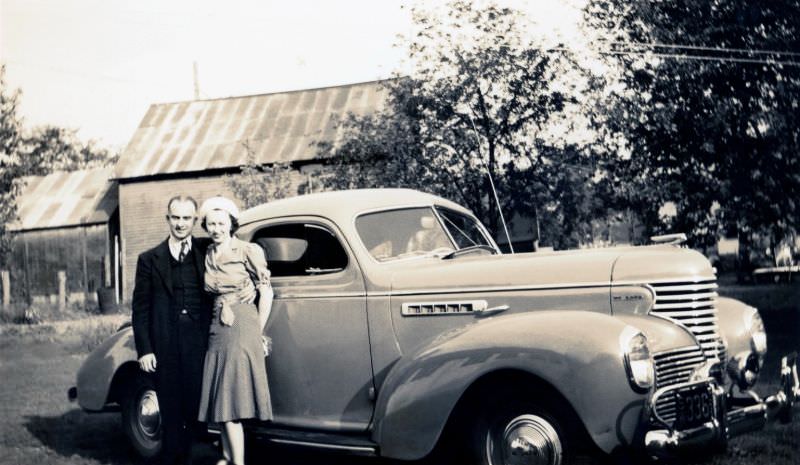
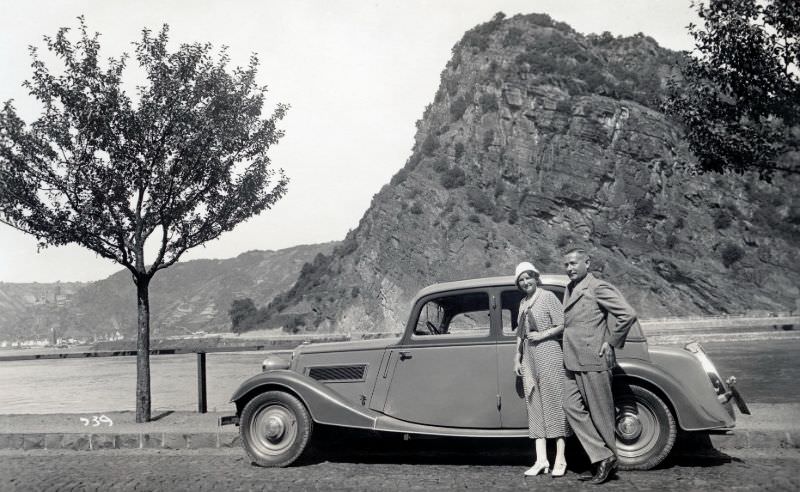
A middle-aged couple posing with a 1939 DeSoto Business Coupe in a back yard in summertime, 1939
A stylish couple posing with a Wanderer W 240 on a sunny summer's day.
A stylish couple posing with a Wanderer W 240 on a sunny summer’s day.

As the decade closed, American cars had reached a visual peak. The 1939 DeSoto Business Coupe featured hidden headlights behind a grille that opened and closed — one of the boldest styling moves of the era. In Germany, the Wanderer W 240 offered a more conservative but still elegant choice, photographed here with Lorelei Rock visible in the background along the Rhine.
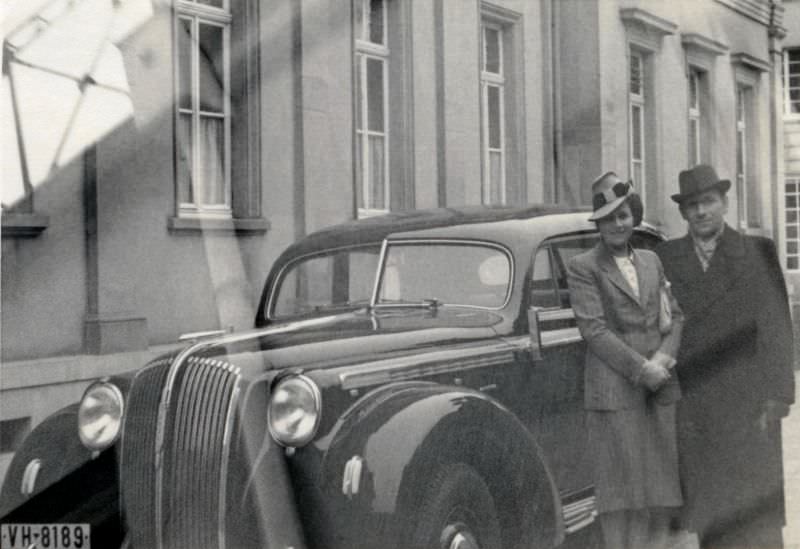
A well-to-do couple posing with an Opel Admiral on a bleak winter's day. The car is registered in the state of Hesse, 1939
A well-to-do couple posing with an Opel Admiral on a bleak winter’s day. The car is registered in the state of Hesse, 1939

The Opel Admiral was one of Germany’s largest and most prestigious cars by the end of the 1930s. With its wide chrome grille, long hood, and fully skirted rear fenders, it reflected everything the decade had worked toward in automotive design — streamlined, confident, and unmistakably modern. These 37 photographs, taken across Europe and North America, show how deeply the car had embedded itself into everyday life, becoming not just transport, but something worth standing next to and remembering.


Enjoyed this post? Get new ones in your inbox.

Leave a Comment

Your email address will not be published. Required fields are marked *

Share this Post 🥺

Please take a moment to share this content. Your support is greatly appreciated! 🙌🙏

Share this Post 🥺

Please take a moment to share this content. Your support is greatly appreciated! 🙌🙏
Scroll to Top
 
Hey Friend, Before You Go.. Please like & follow for more interesting content
