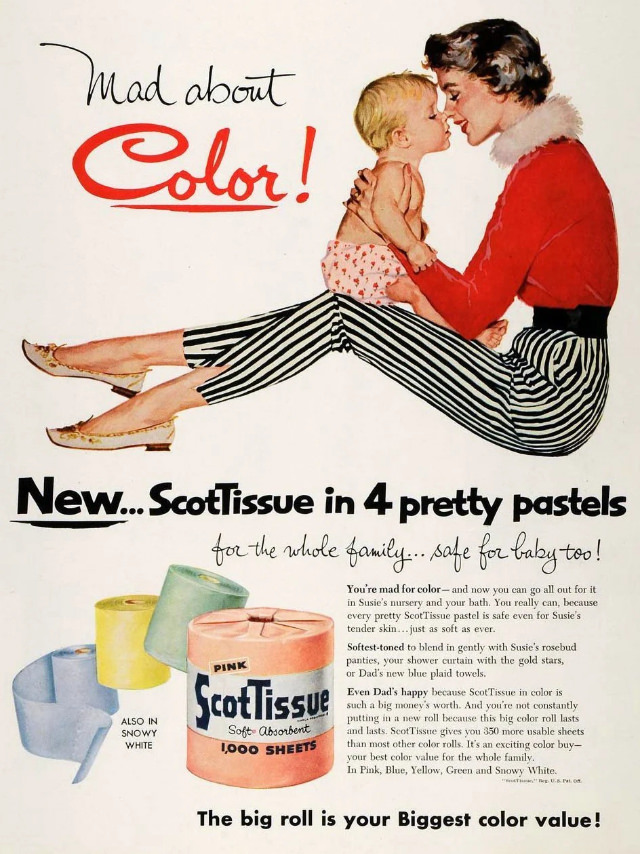
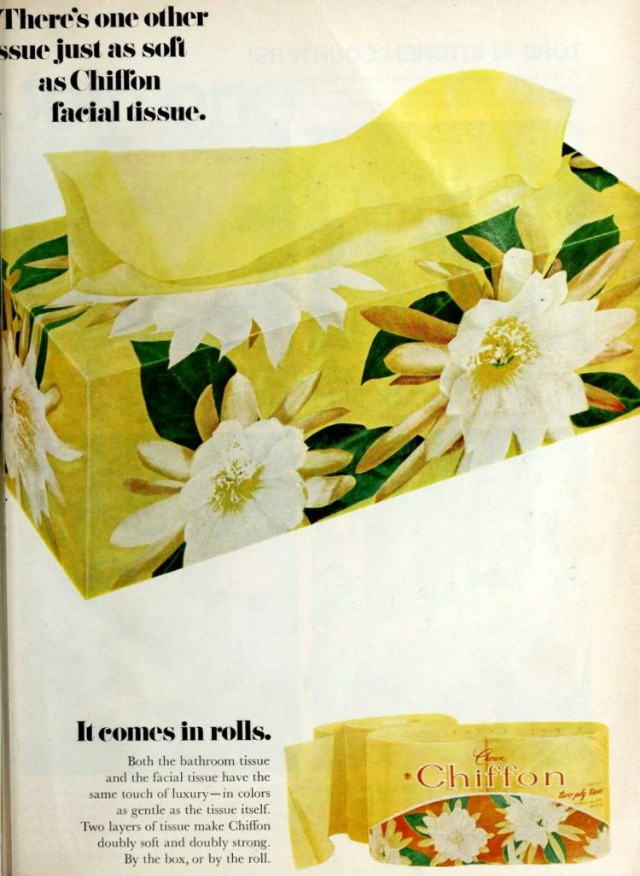
Walk into almost any bathroom today and you’ll find the same thing on the roll: plain white toilet paper. But for roughly three decades — from the 1950s through the late 1970s — white was far from the only option. Colored toilet paper was a genuine consumer product, sold in stores across the United States and stocked in millions of homes.
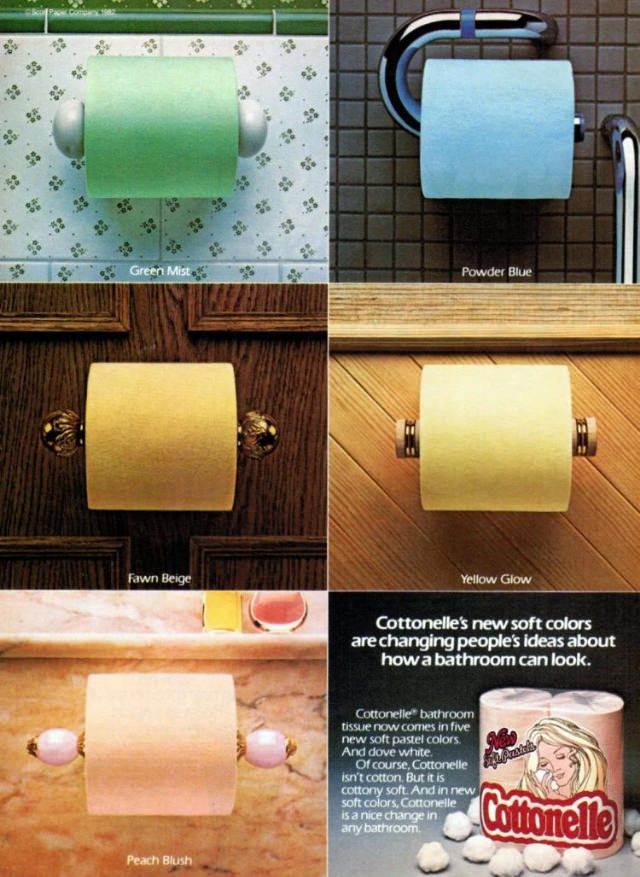
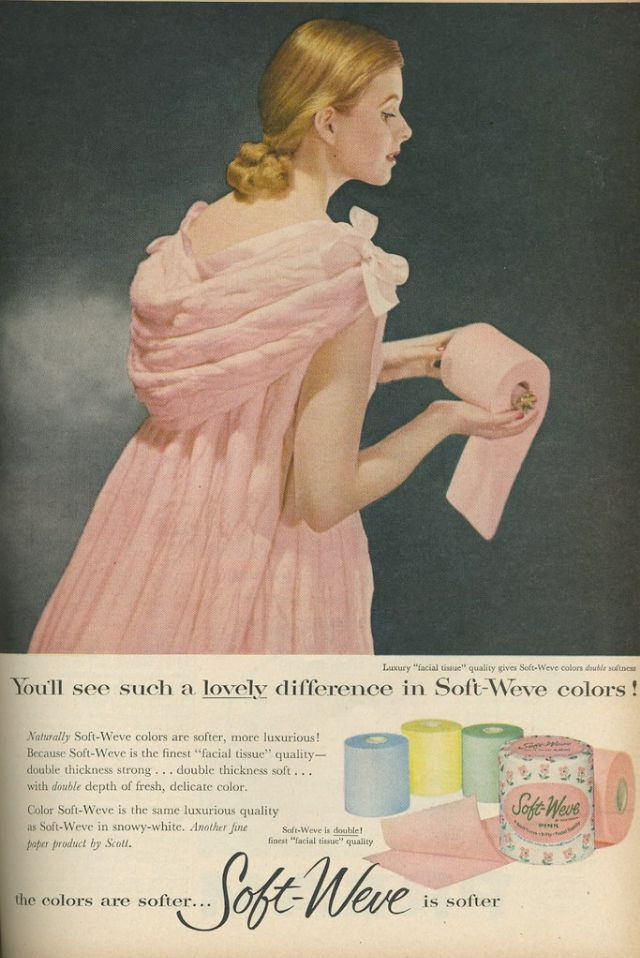
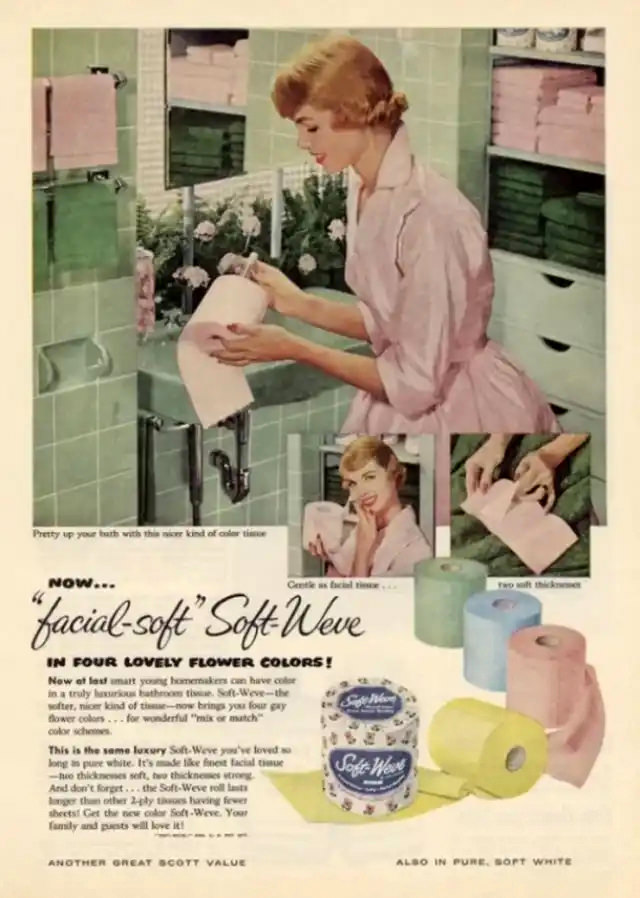
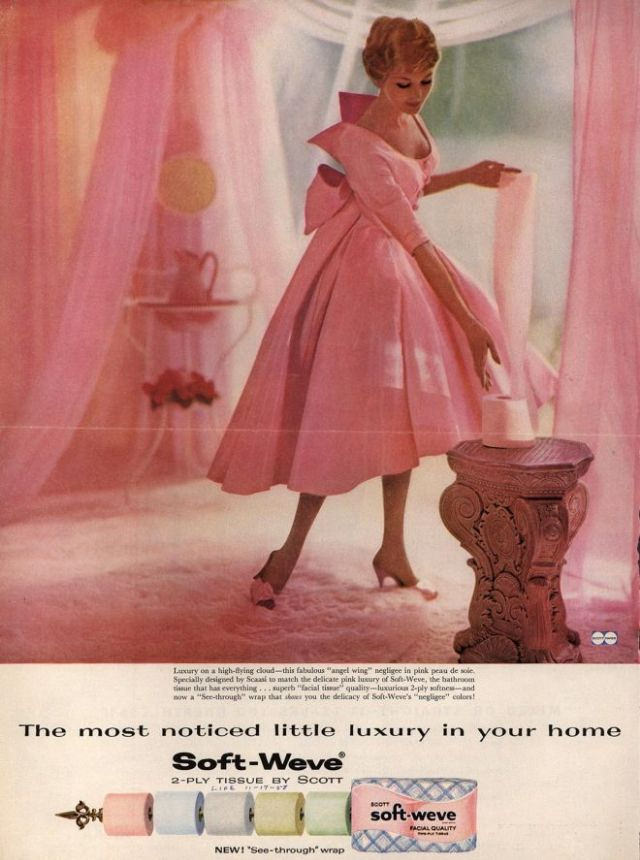
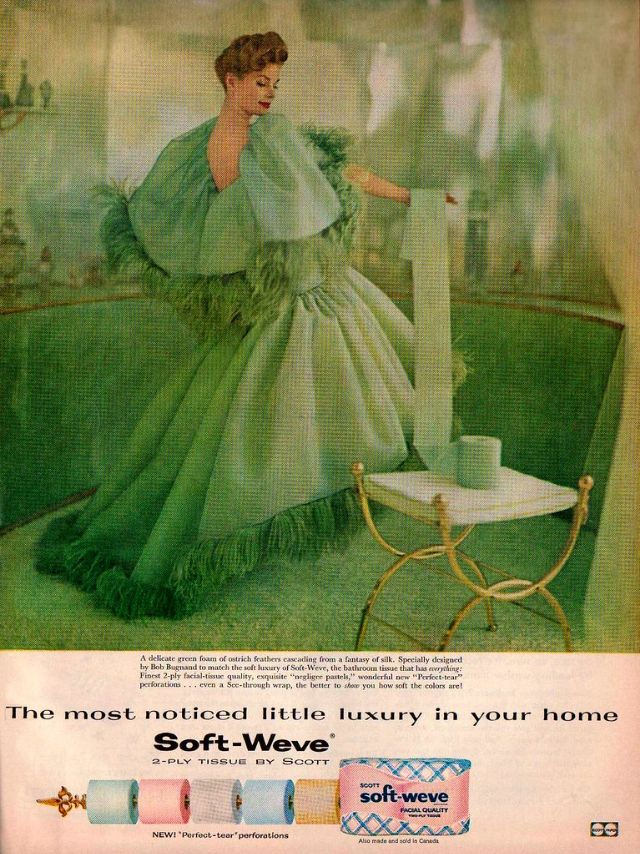
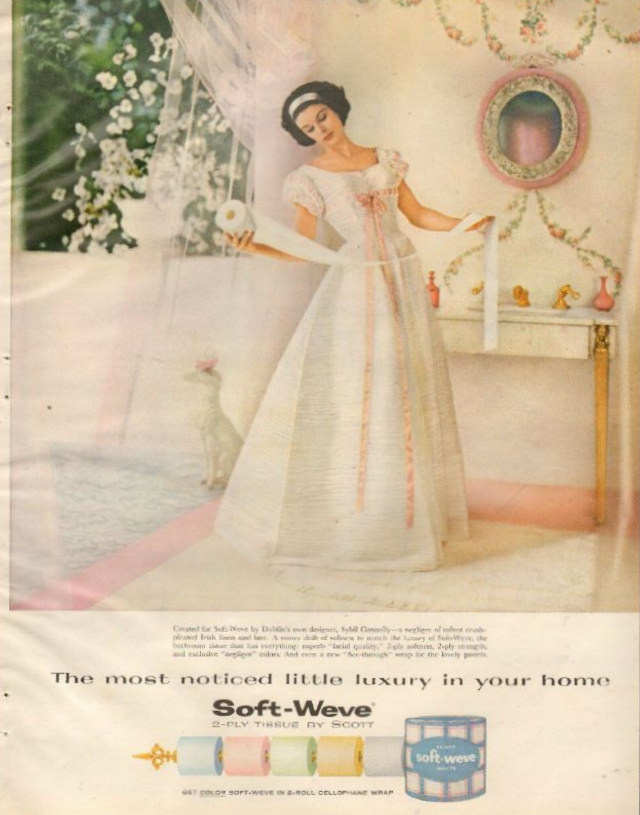
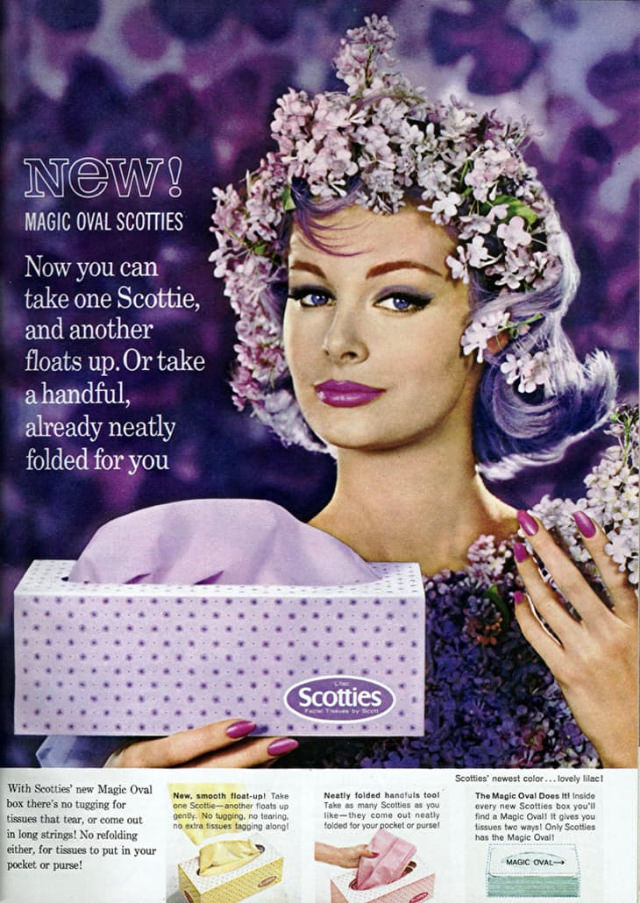
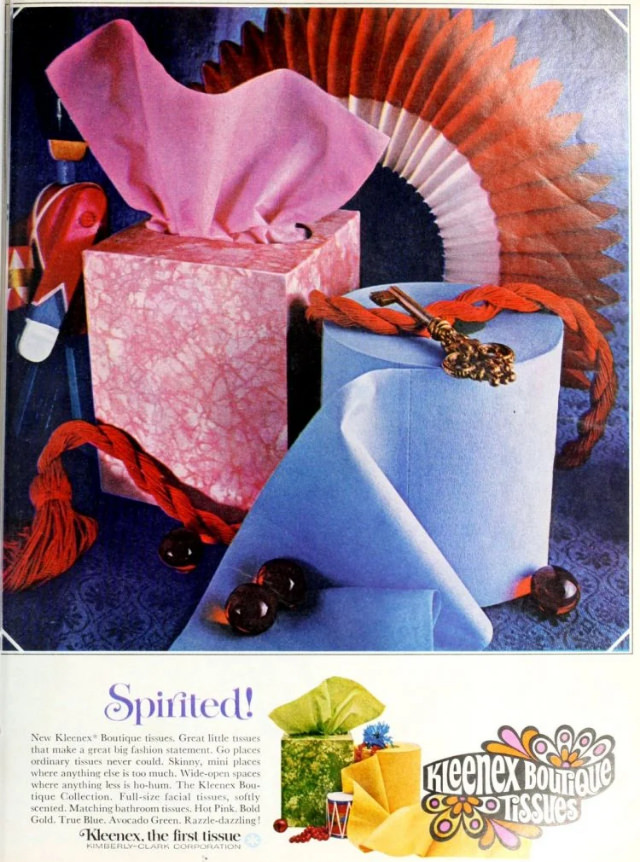
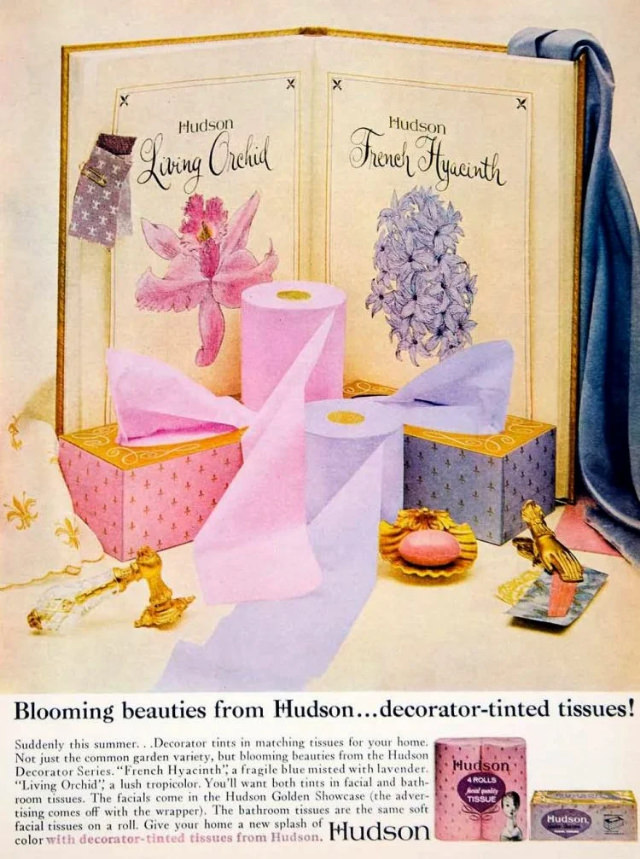
The range of colors was wide. Manufacturers produced rolls in pink, blue, yellow, lilac, tan, and even black. Facial tissues followed the same trend. The idea was simple: your bathroom had a color scheme, and your paper products should match it. Homeowners took this seriously, coordinating their toilet paper with their sinks, tubs, and tile just as carefully as they chose towels or curtains.
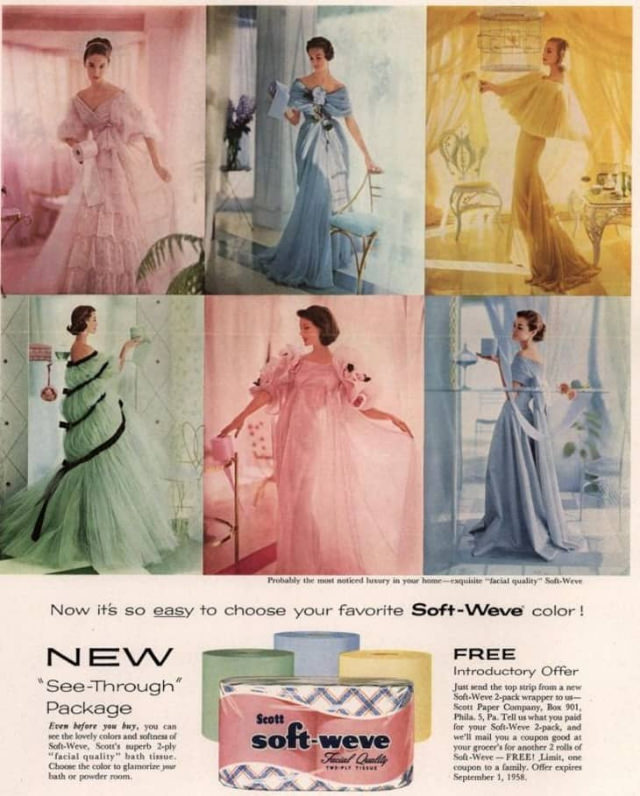
Mid-century bathrooms were bold. Fixtures came in deep pinks, seafoam greens, harvest golds, and powder blues. These weren’t accent colors — they were the main event. Against that backdrop, a white roll of toilet paper would have looked out of place, almost like an oversight. Colored paper completed the room.
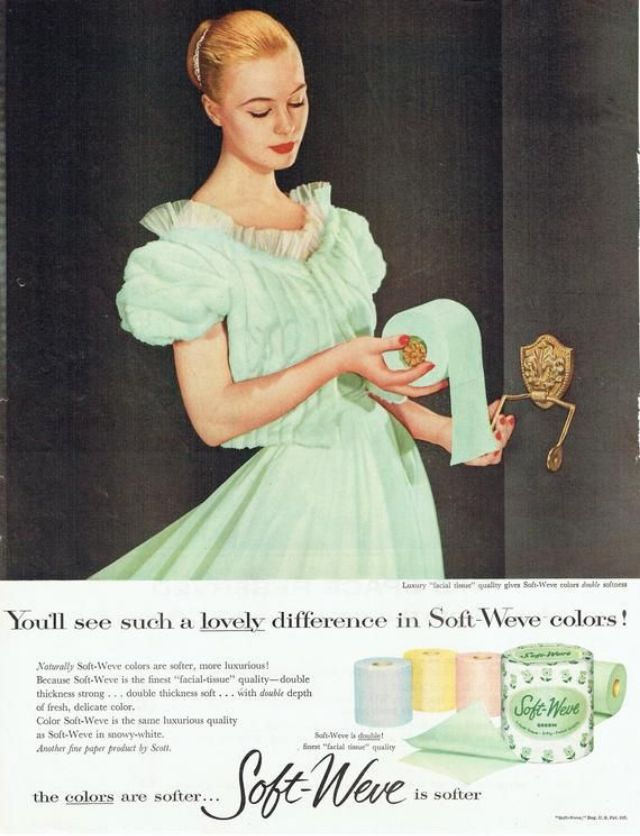
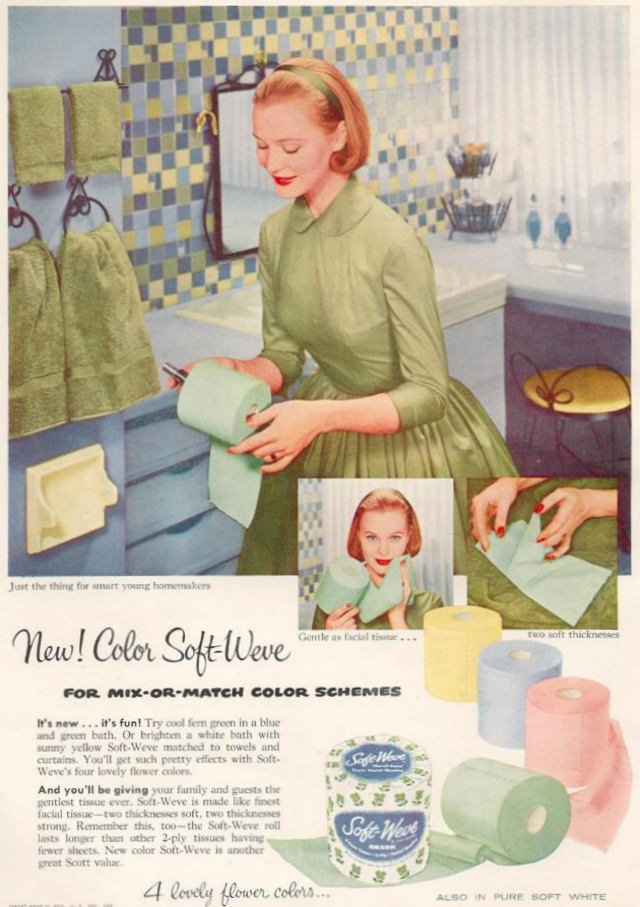
Multiple manufacturers competed in this space throughout the 1950s and 1960s. Colored toilet paper wasn’t a novelty item — it sat on standard store shelves alongside white rolls, priced as a premium option for style-conscious shoppers. Brands leaned into the home décor angle, marketing colored tissue as a finishing touch for a well-designed bathroom.
By the mid-1980s, colored toilet paper had nearly vanished from store shelves. Several forces combined to end the trend. Doctors began raising concerns about the dyes used to color the paper. The chemical compounds in those dyes came into direct contact with sensitive skin repeatedly, and medical professionals warned this posed a real irritation and health risk. Those warnings reached the public and stuck.
Environmental concerns added more pressure. The dye chemicals didn’t just affect people — they raised questions about what entered the water supply after use. As environmental awareness grew through the late 1970s and into the 1980s, the extra chemicals required to produce colored paper became harder for manufacturers to justify.
Cost played a role too. Adding dye to toilet paper is an extra step that costs money. As long as consumers wanted color, manufacturers absorbed that cost to compete. Once demand dropped, there was no reason to keep spending on it. Producing white paper is cheaper, and by the 1980s, that’s what most buyers wanted anyway.
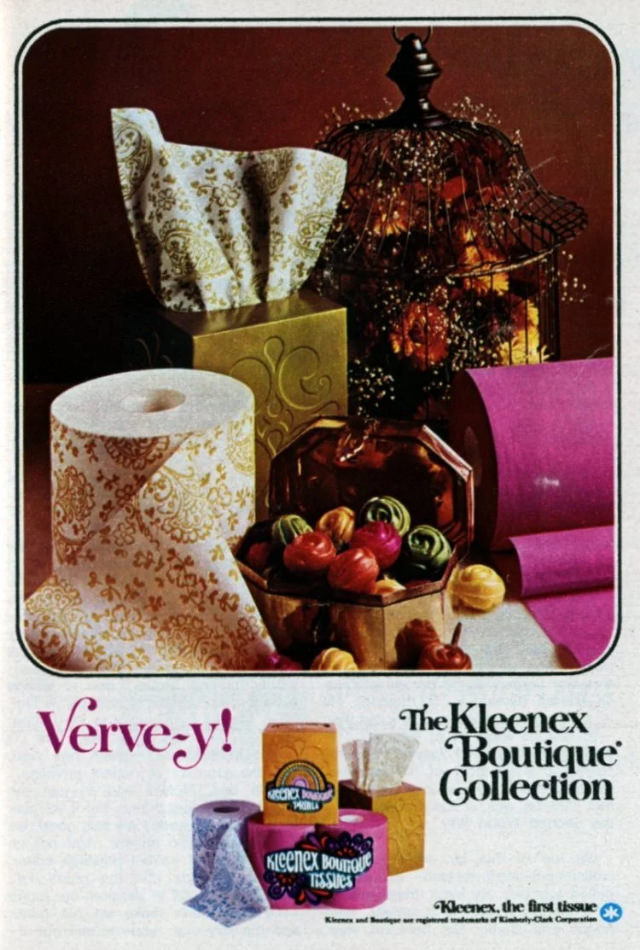
Bathroom design itself shifted dramatically. The bold, saturated color palettes of the mid-century gave way to neutral, minimalist aesthetics. White became the dominant choice for toilets, sinks, and tubs. Tiles went neutral. The colorful porcelain fixtures that had made pink toilet paper look intentional were replaced by all-white suites that made the same pink roll look garish.
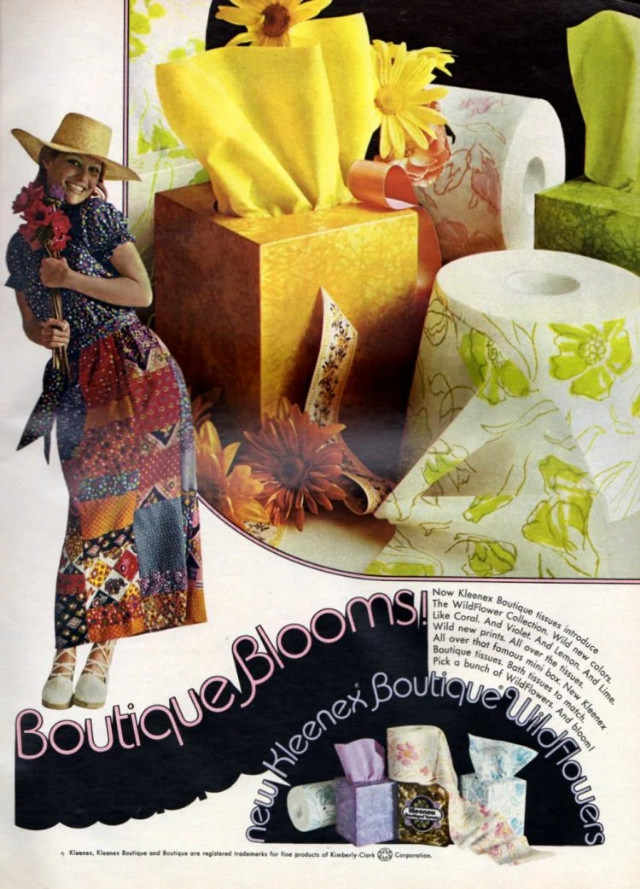
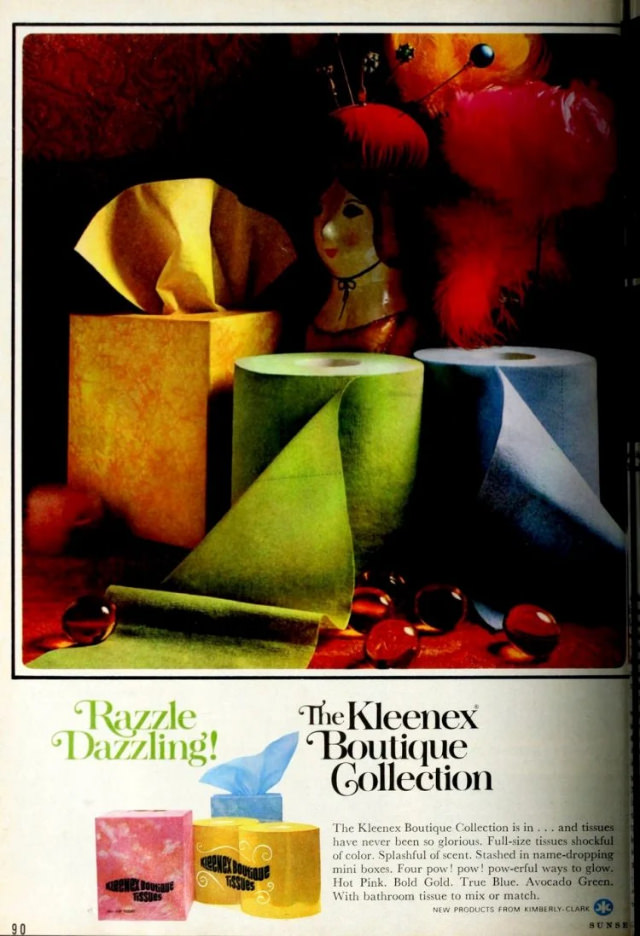
In a white bathroom, a colored roll of toilet paper doesn’t complete the design — it fights against it. The whole premise of matching your paper to your fixtures stopped making sense once the fixtures were all the same color as the paper everyone had been ignoring for decades.
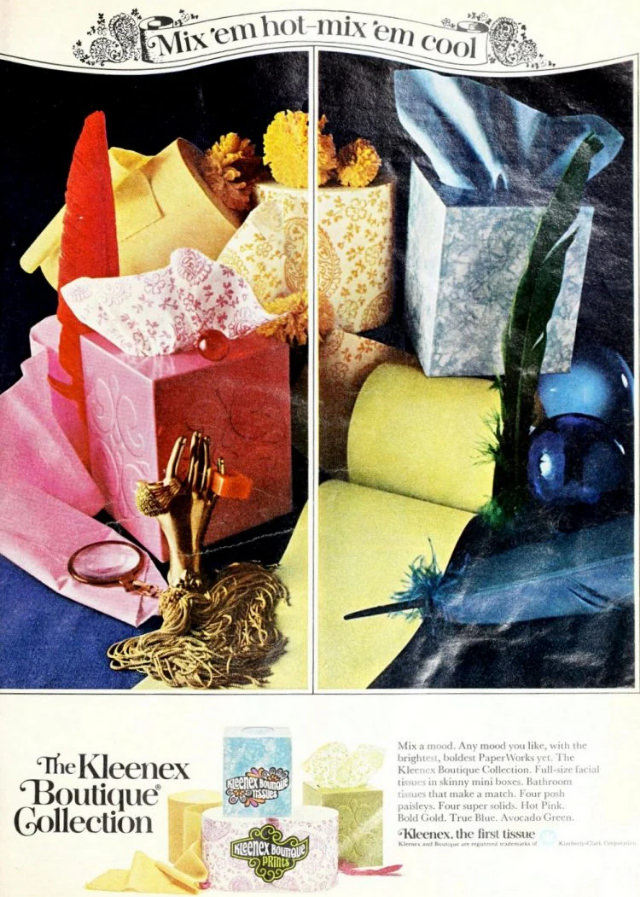
Colorful bathrooms still exist, but they’re the exception now rather than the rule. And in those rare spaces, a matching colored roll is almost impossible to find. The infrastructure that once supported the trend — the dye suppliers, the production lines, the marketing — is gone. What was once a standard consumer choice has become a footnote in the history of home design.