Hey There! Before You Go. 😧
Get the best vintage content straight into your inbox!

Don't worry, we don't spam

The Little Hands That Powered a Nation: Inside the World of Child Cotton Mill Workers of the Early 1900s

Across the American South in the early 1900s, entire families fled failing farms and moved into company-owned mill towns. The cotton mill owned their homes, the store where they bought food, and effectively their futures. To survive, every member of the family worked — including the youngest children.
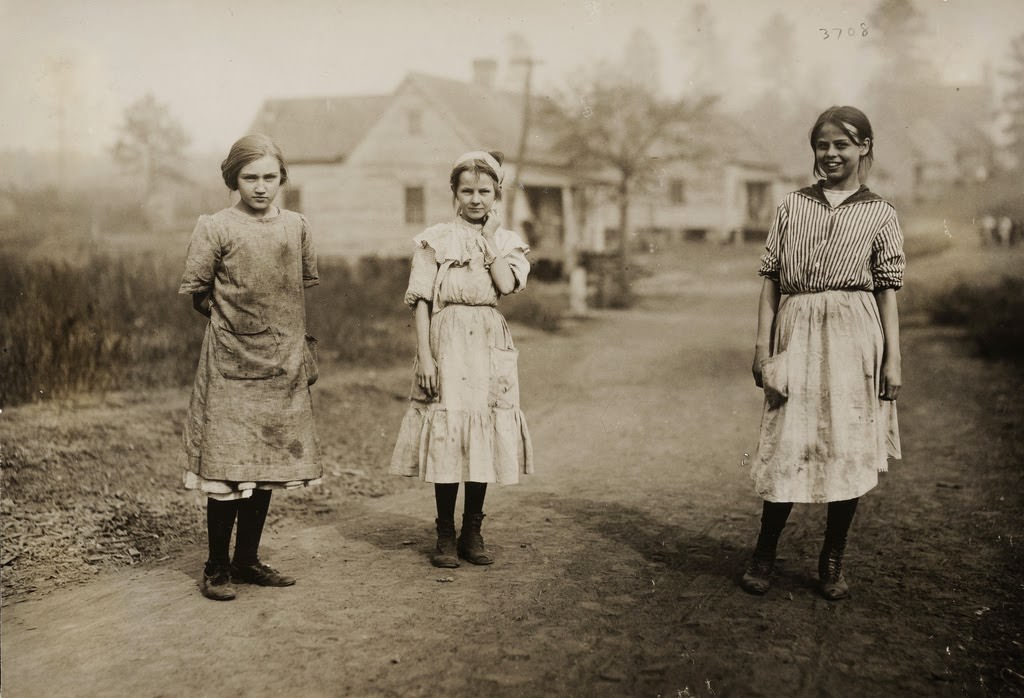
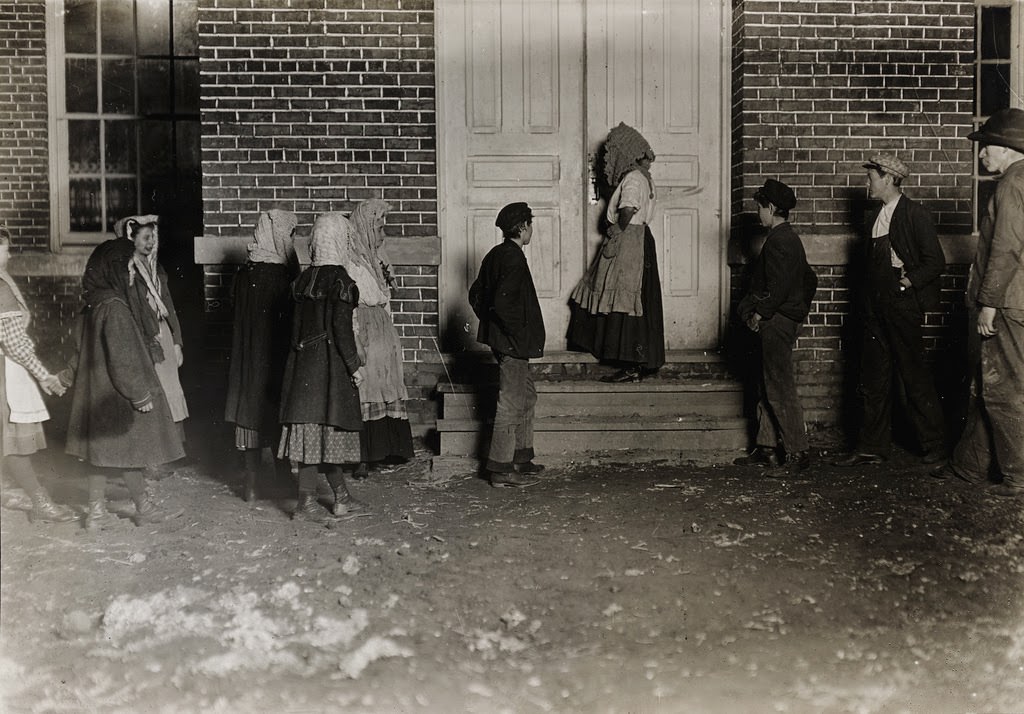
Some of the young workers (not the youngest) in the Kosciusko Cotton Mills. Superintendent objected to me taking photographs. Kosciusko, Mississippi.

Inside the mill, children held specific jobs that kept the entire operation running. Young boys called doffers sprinted down aisles of spinning frames, swapping full bobbins for empty ones — while the machines were still running. One clumsy move near the whirring gears meant a mangled hand.
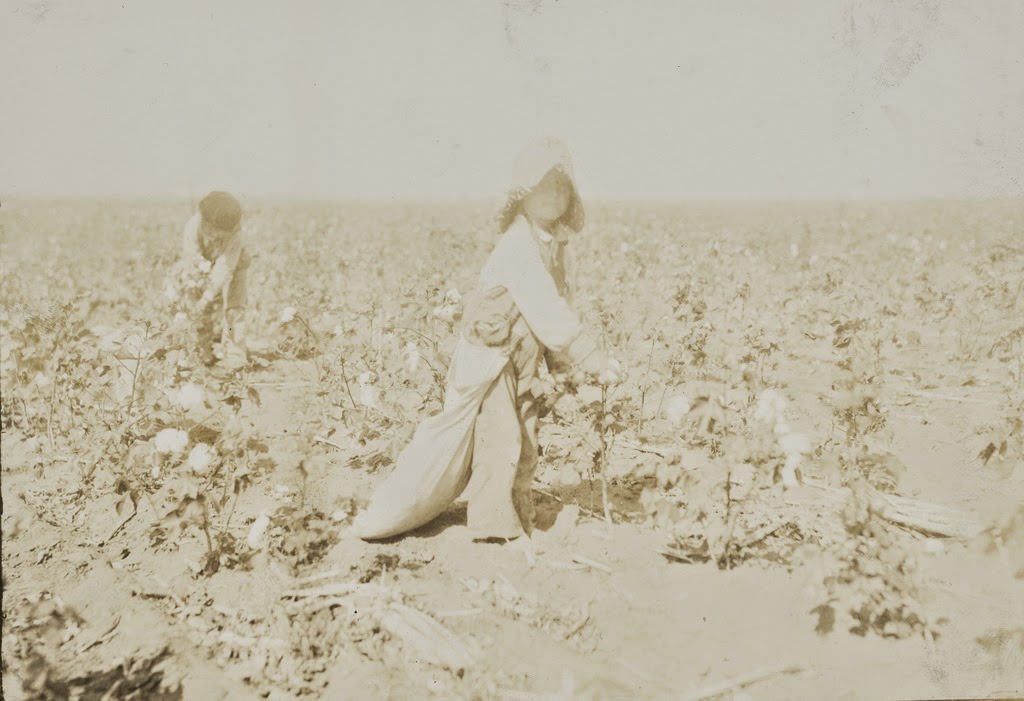
Mart Payne, 5 years old, picks from 10 to 20 pounds a day. Mother said: "Mart, he haint old nuff to go to school much, but he kin pick his 20 pounds a day. Mostly 10 or 15 pounds." Comanche County, Oklahoma.
Mart Payne, 5 years old, picks from 10 to 20 pounds a day. Mother said: “Mart, he haint old nuff to go to school much, but he kin pick his 20 pounds a day. Mostly 10 or 15 pounds.” Comanche County, Oklahoma.

Young girls worked as spinners, walking miles each day along rows of spinning frames, watching for snapped threads. When one broke, they tied it back with a practiced knot. The work was relentless, loud, and hard on their feet.
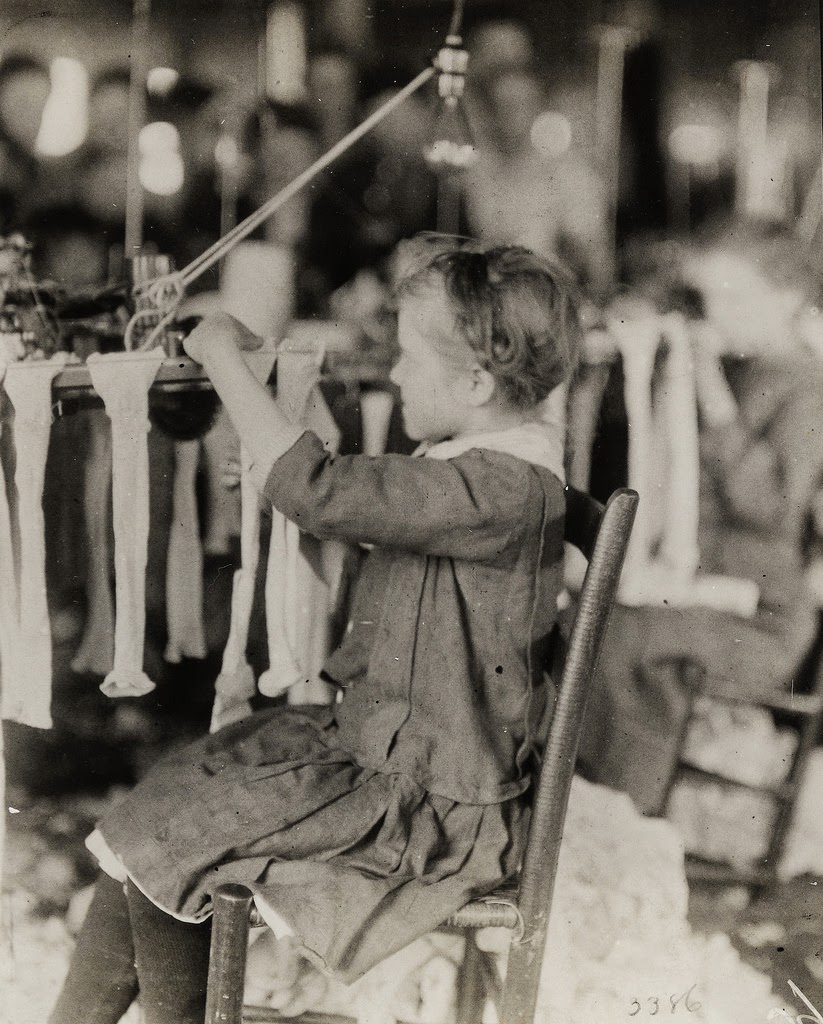
Young girl working at a knittingmachine at Cherokee Hosiery Mill. Rome i Georgia, USA 1913.

The smallest children swept cotton dust and lint from the floors, often crawling beneath active machinery to clean tight spaces. The air inside a mill was thick with floating lint, and breathing it daily caused byssinosis — “brown lung” — a chronic, crippling lung disease.
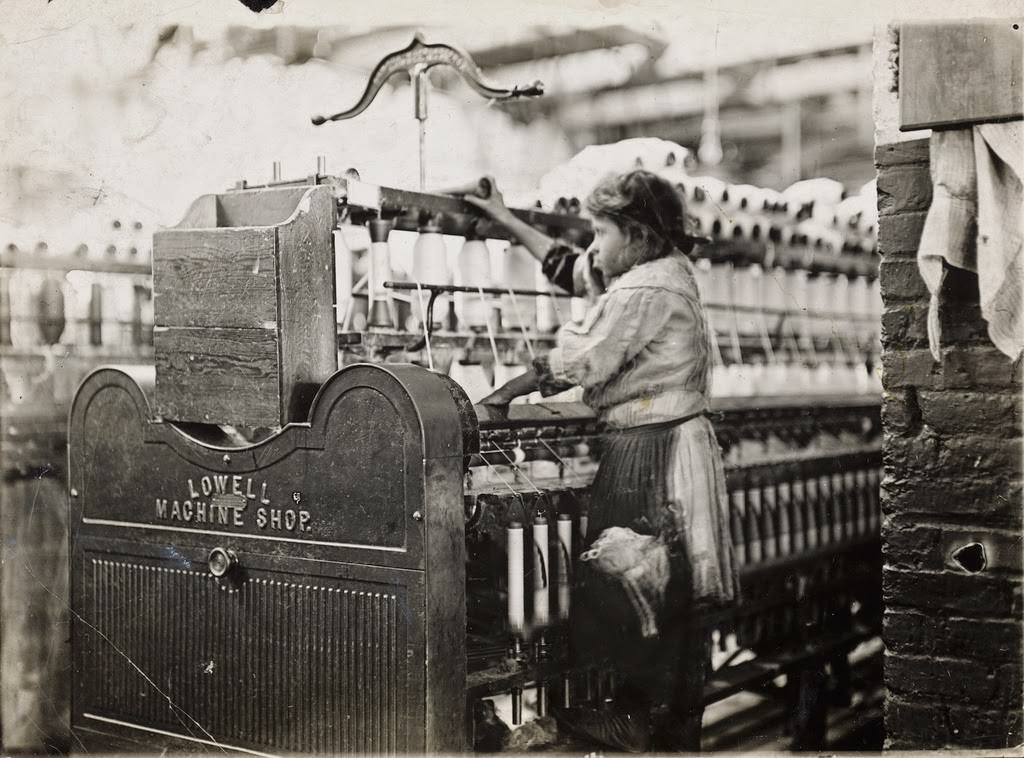
Little spinner in Bibb Mill No. 1, Macon, Ga. She was so small she had to climb up on to the spinning frame to mend broken threads. Jan. 19, 1909.

The machinery had no safety guards. Exposed gears, belts, and pulleys ran at full speed throughout a 10-to-12-hour shift, six days a week. Crushed fingers and mangled limbs were common. Exhaustion only made the danger worse.
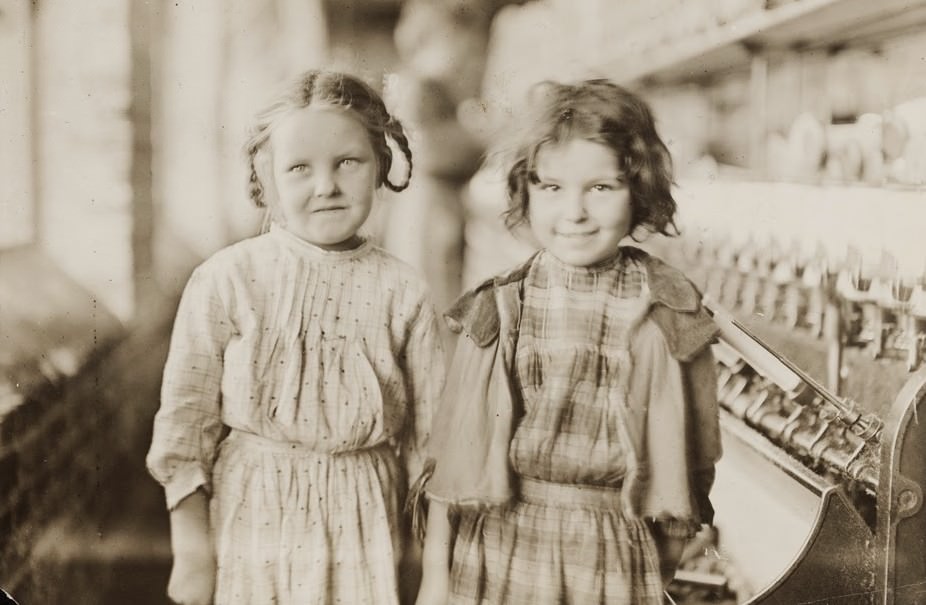
Two of the "helpers" in the Tifton Cotton Mill, Tifton, Ga. They work regularly. 1909.
Two of the “helpers” in the Tifton Cotton Mill, Tifton, Ga. They work regularly. 1909.

Many families were also trapped by the company store. Wages were paid in “scrip,” a credit usable only at the mill-owned store, where inflated prices kept workers permanently in debt. Leaving was nearly impossible. Education laws existed in some states but were rarely enforced in mill towns.
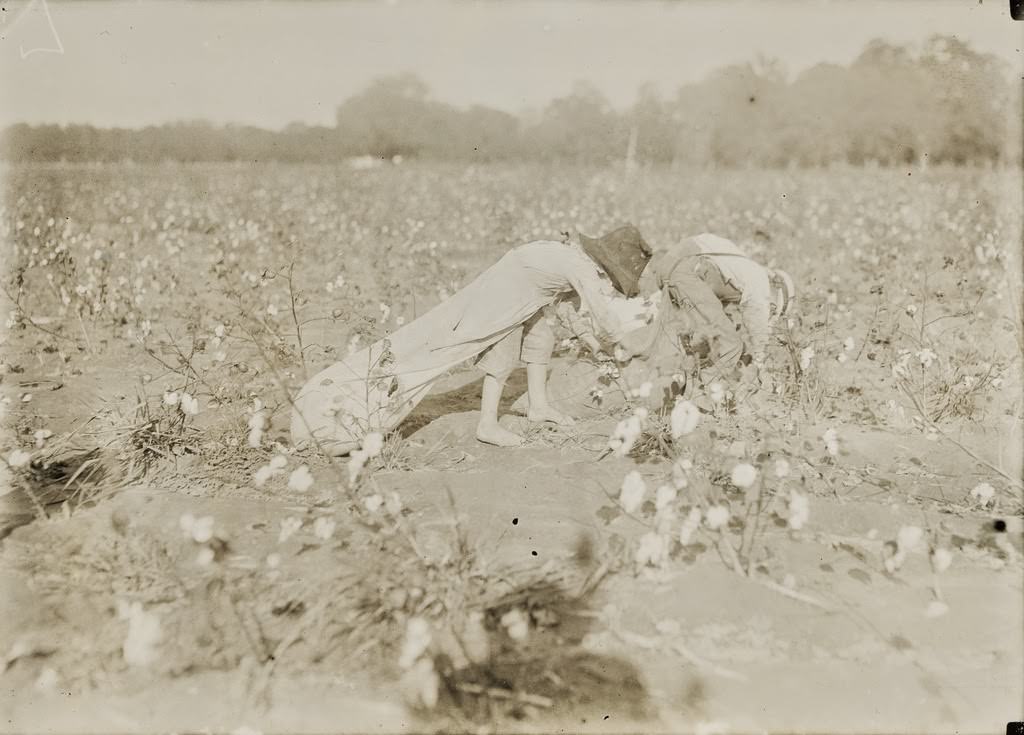
All these children five years, six years, seven years, nine years and two a little older, were picking cotton on H.M. Lane's farm Bells, Texas, USA 1913.
All these children five years, six years, seven years, nine years and two a little older, were picking cotton on H.M. Lane’s farm Bells, Texas, USA 1913.

Photographer Lewis Hine worked for the National Child Labor Committee and made it his mission to document these conditions. Mill owners banned cameras, so Hine went undercover — posing as a fire inspector or insurance salesman to get inside. Once in, he worked fast.
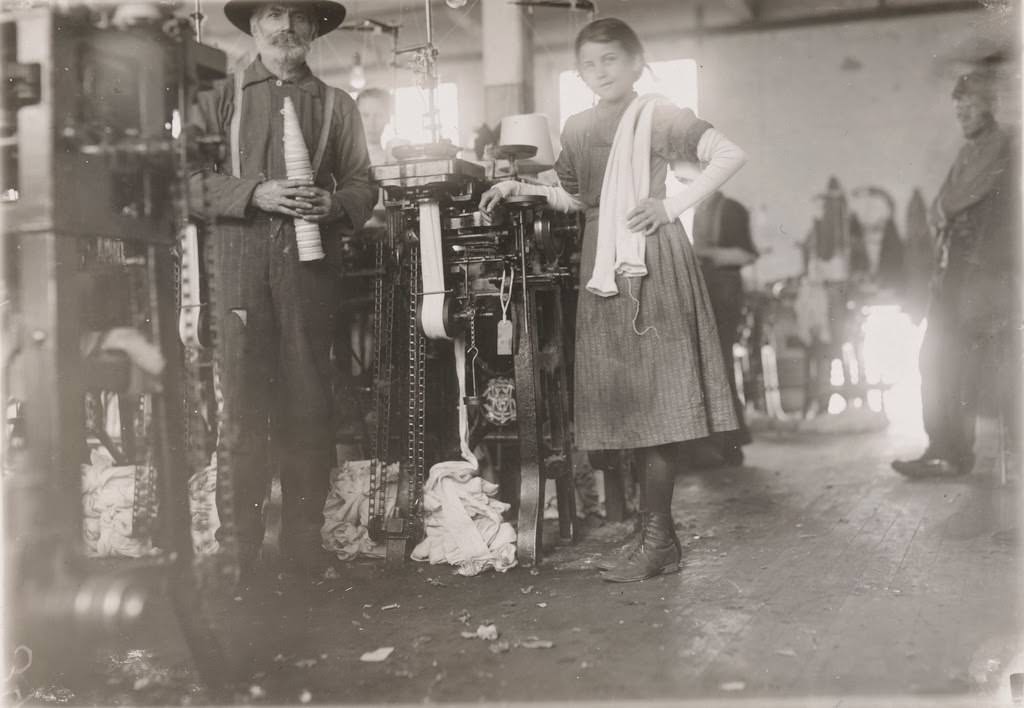
Knitters in Loudon. Hosiery Mills, Loudon Tennessee, USA, December 1910.

Hine recorded children’s names, ages, and time on the job in notes hidden in his pocket. He photographed them next to machines to show, by scale, just how small they were. His captions were blunt and factual, turning each image into documented proof.
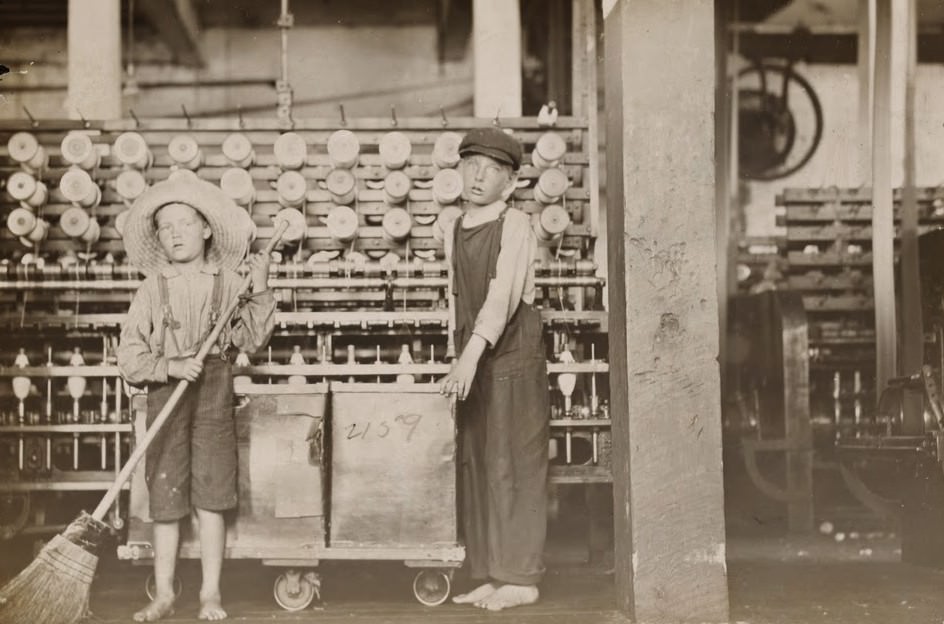
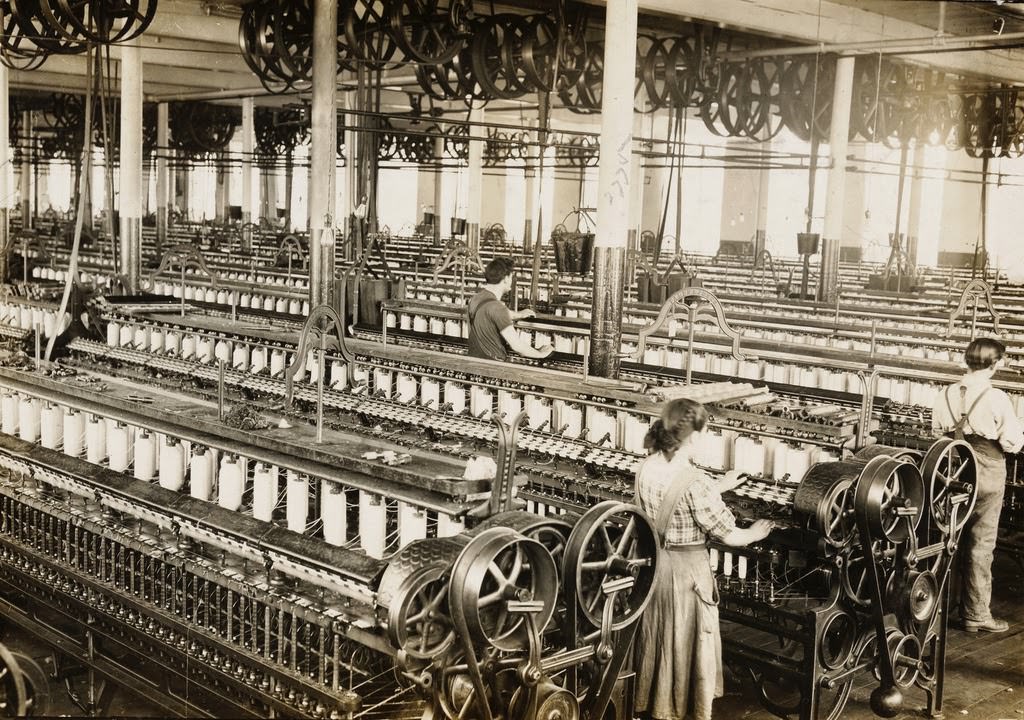
Ronald Webb, twelve year old doffer boy and Frank Robinson, seven year old who helps sweep and doff. Father is cardroom boss, Roanoke (Va.) Cotton Mills. Roanoke, Virginia, USA, May 1911.
Workers at the weavingmachines in The Flint Cotton Mill. Fall River, USA 1912.

One of his most striking subjects was a tiny spinner so small she had to climb onto the frame to reach the threads. His photographs showed exhausted faces and grime-covered hands on children who looked far older than their years.
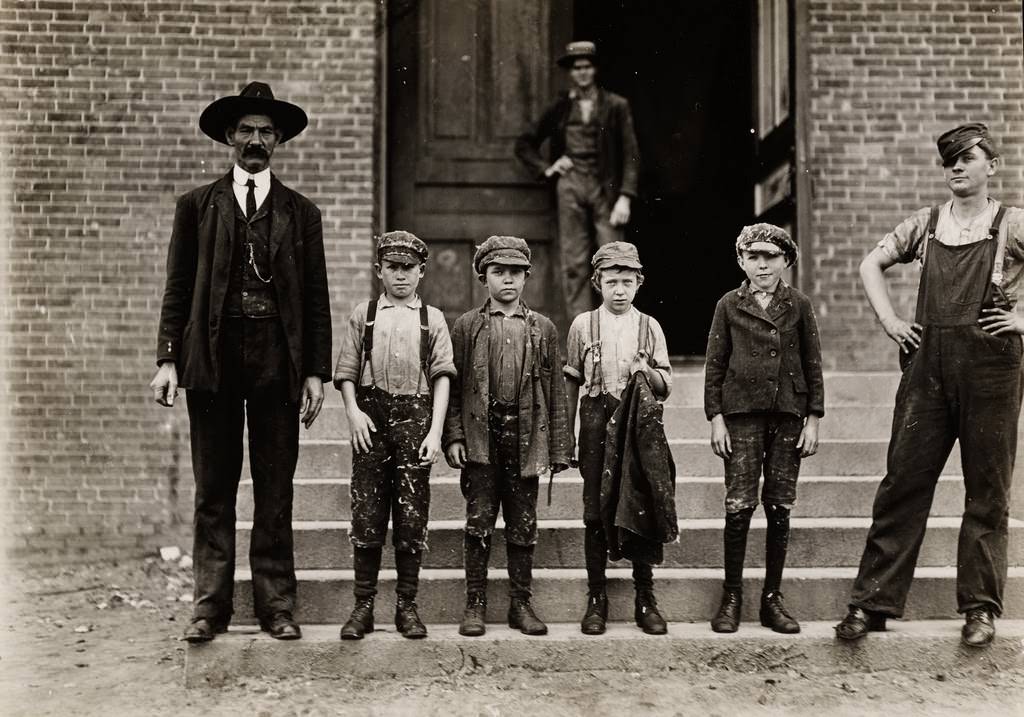
Boy with coat in hand is 11 years old. Been there 9 months. Started at 50 cents a day. Now gets 60 cents. Gastonia, North Carolina, USA 1908.
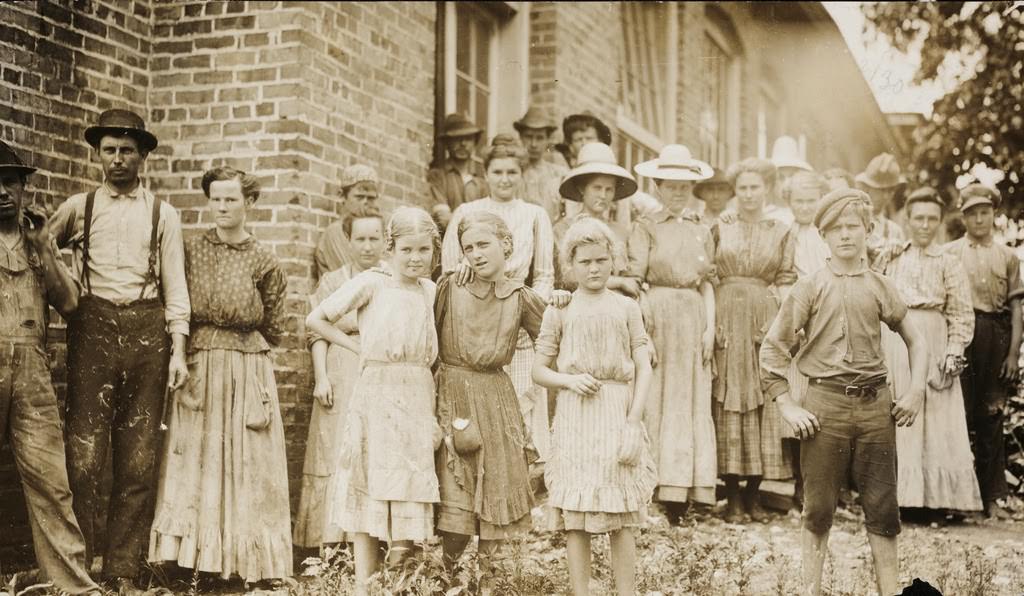
Force working in West Point Cotton Mills.

A typical day began before sunrise. After a 12-hour shift in the deafening spinning room, a child trudged home to a company house covered head to toe in white lint, ate a small meal, slept, and returned the next morning to do it all again.
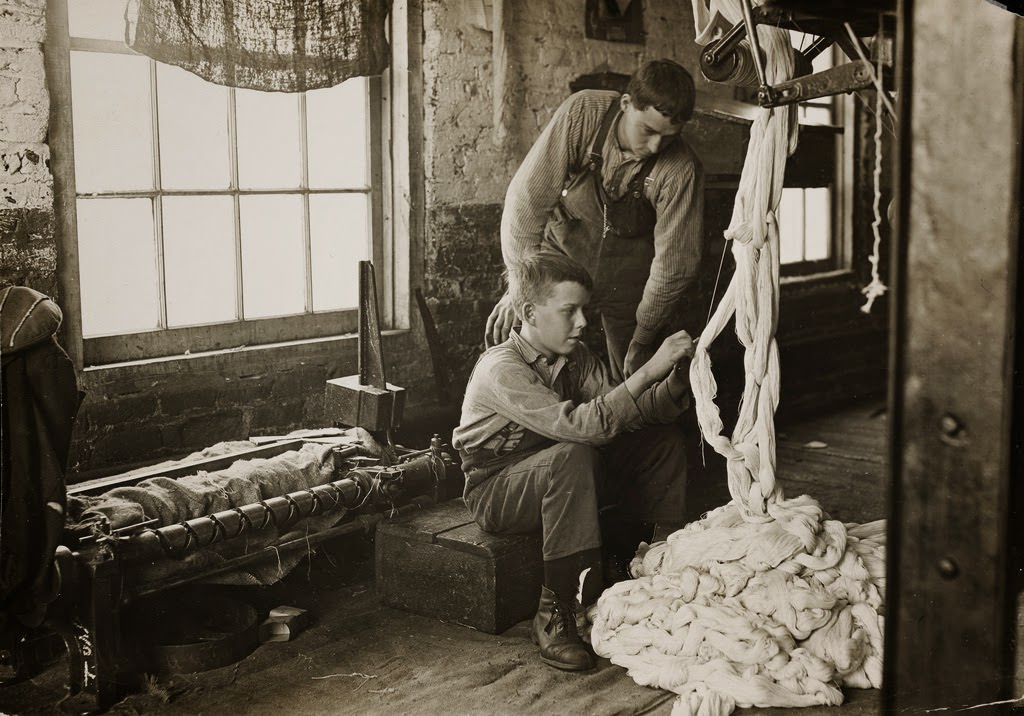
Boy at warping machine. Been there 2 years. Clyde Cotton Mill. Newton, North Carolina, USA 1908.
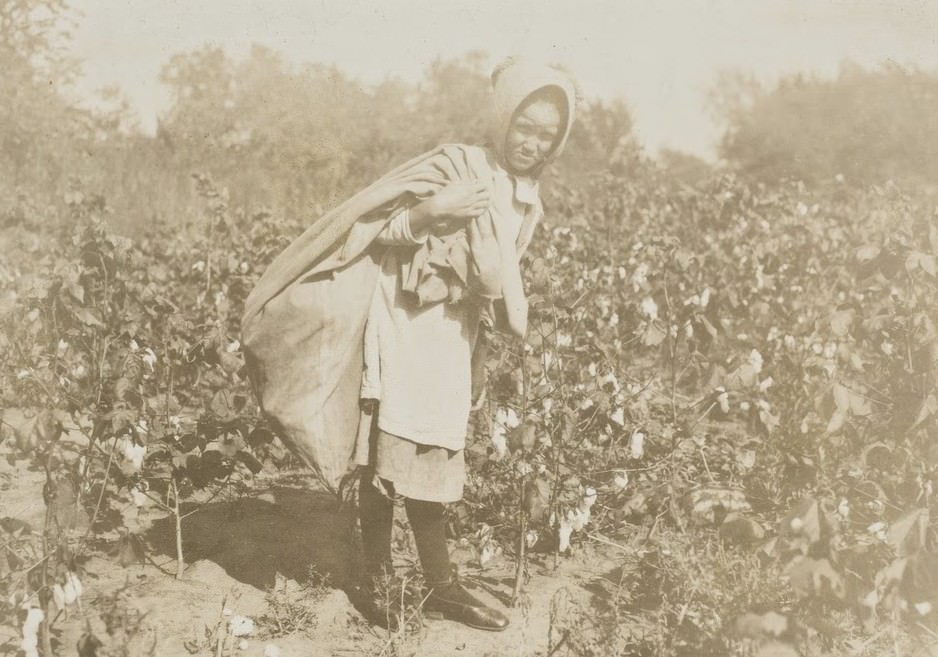
Cleo Campbell, 9 years old, picks 75 to 100 pounds of cotton a day. Expects to start school soon. Said: "I'd ruther go to school and then I wouldn't have ter work." Father said she and her sister begin about 6 A.M. and work until 6 or 7 P.M. with 1 1/2 hours off at noon. Potawotamie, Oklahoma, USA 1916.
Cleo Campbell, 9 years old, picks 75 to 100 pounds of cotton a day. Expects to start school soon. Said: “I’d ruther go to school and then I wouldn’t have ter work.” Father said she and her sister begin about 6 A.M. and work until 6 or 7 P.M. with 1 1/2 hours off at noon. Potawotamie, Oklahoma, USA 1916.
The Little Hands That Powered a Nation: Inside the World of Child Cotton Mill Workers of the Early 1900s
Enjoyed this post? Get new ones in your inbox.

Leave a Comment

Your email address will not be published. Required fields are marked *

Share this Post 🥺

Please take a moment to share this content. Your support is greatly appreciated! 🙌🙏

Share this Post 🥺

Please take a moment to share this content. Your support is greatly appreciated! 🙌🙏
Scroll to Top
 
Hey Friend, Before You Go.. Please like & follow for more interesting content