
Lewis Hine was a New York sociologist and photographer who worked for the National Child Labor Committee to document the exploitative conditions of child laborers in dozens of occupations, from mining to farming to newspaper sales. People began using bicycles for delivery almost immediately after the pedal-driven velocipede was developed in the 1860s, and by the 1890s companies like Western Union were hiring bicycle telegraph boys across major U.S. cities. Most messengers worked exhaustingly long hours for telegraph companies or drug stores, and Hine expressed particular concern about children being sent into red-light districts filled with drug dealers and sex workers. His photos became a symbol of the child labor reform movement that led to the Keating-Owen Act of 1916, which set limits on the age and hours of young workers, and later helped shape lasting reforms during the New Deal of the 1930s.
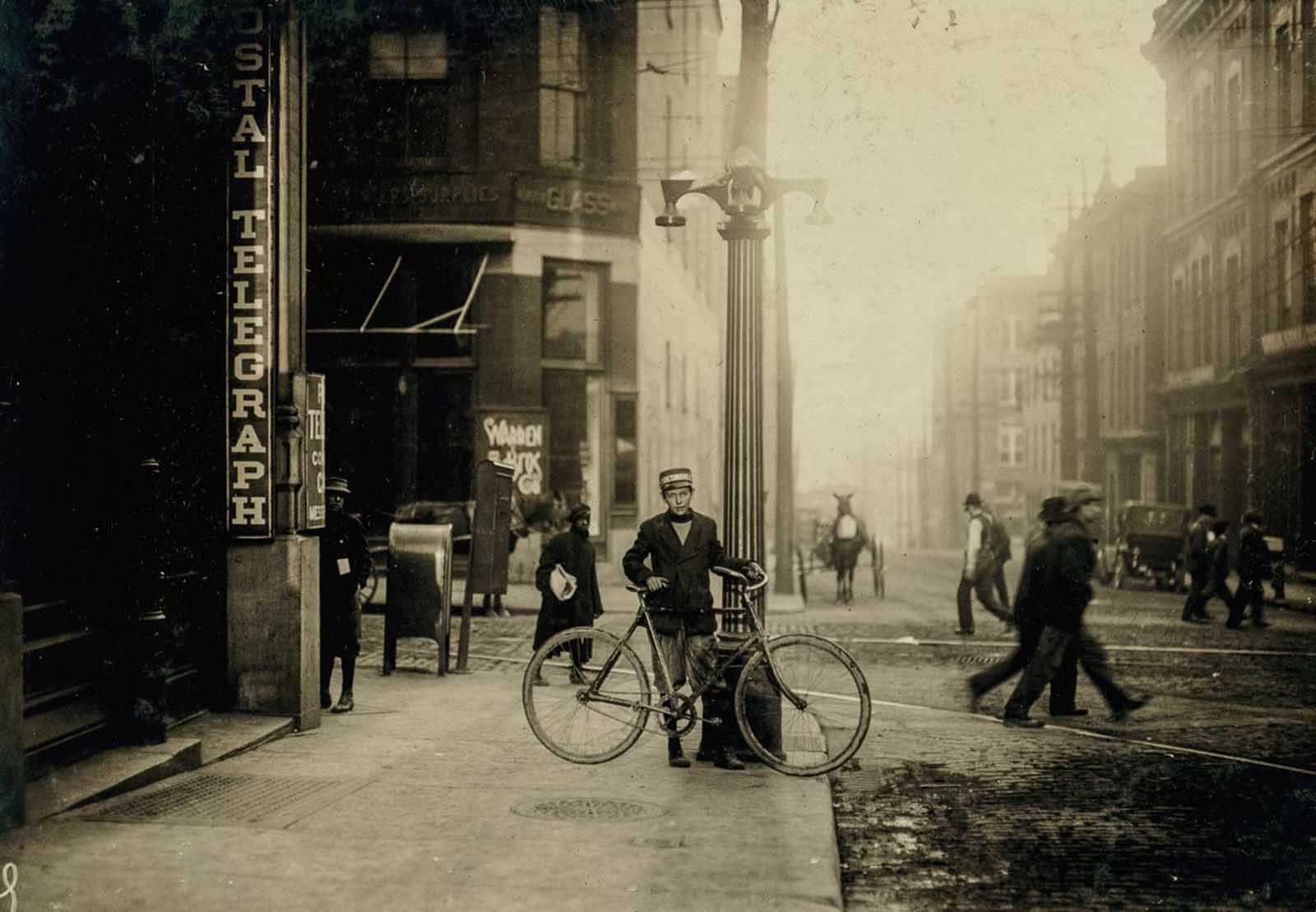
Been at it over 3 years. Does not work nights. Location: Nashville, Tennessee, November, 1910.
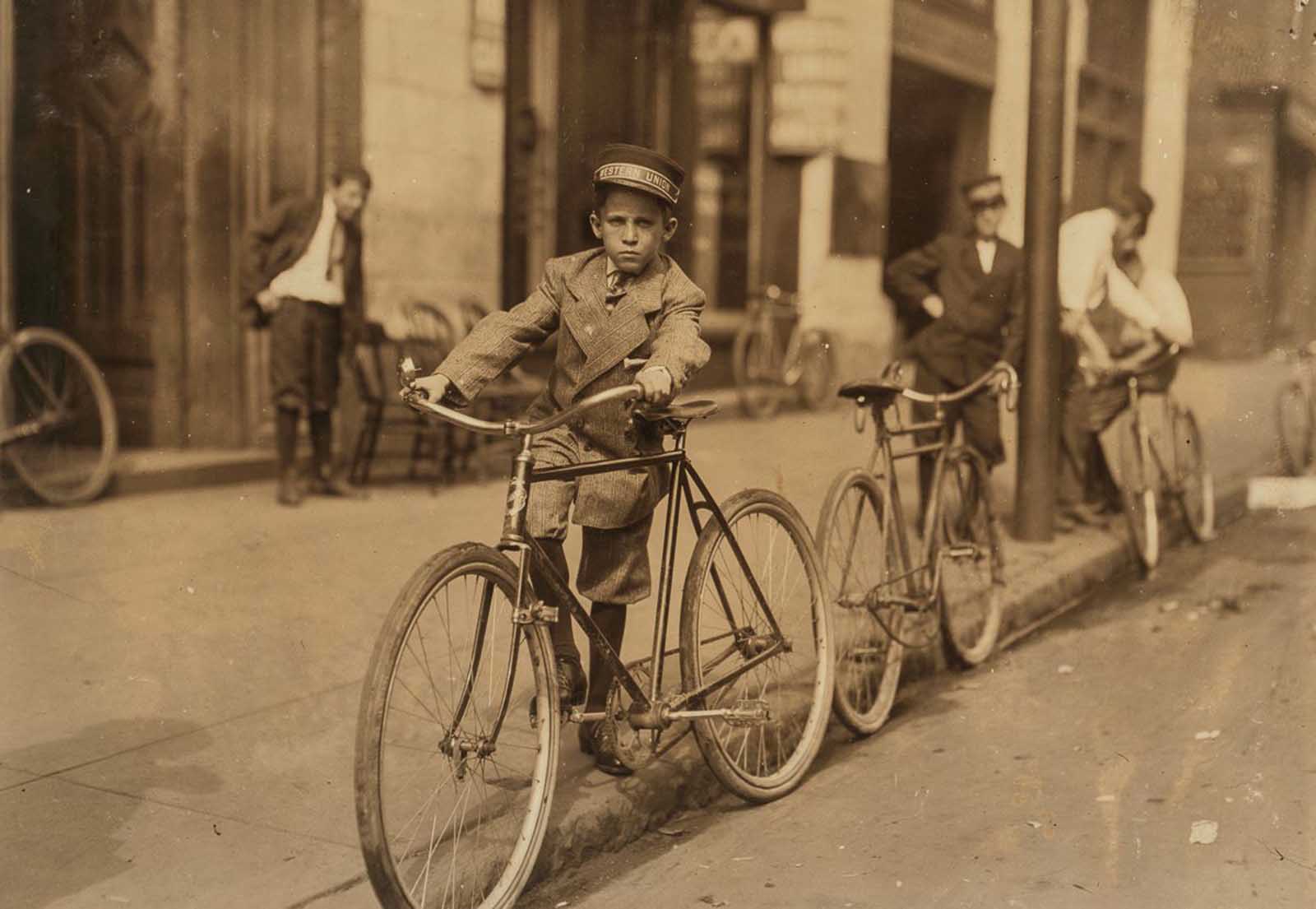
He was fourteen years old. Works until after one A.M. every night. He is precocious and not a little “tough.” He told me he often sleeps down at the Bay Line boat docks all night. Several times I saw his mother hanging around the office, but she seemed more concerned about getting his pay envelope than anything else.
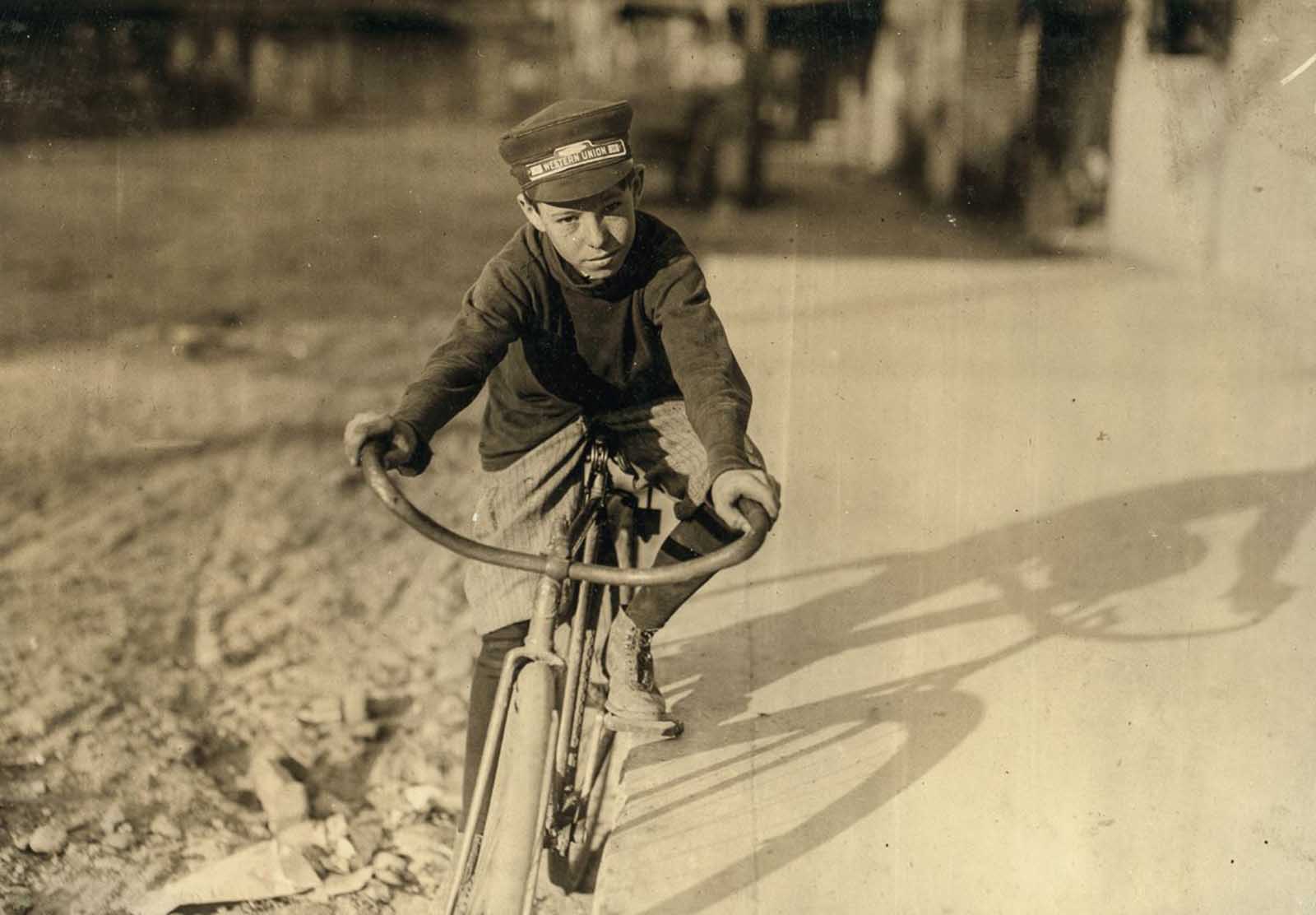
He was fourteen years old. Goes to school. Works from four to eight P.M. Been with WU for six months, one month delivering for a drug store. October 1913.
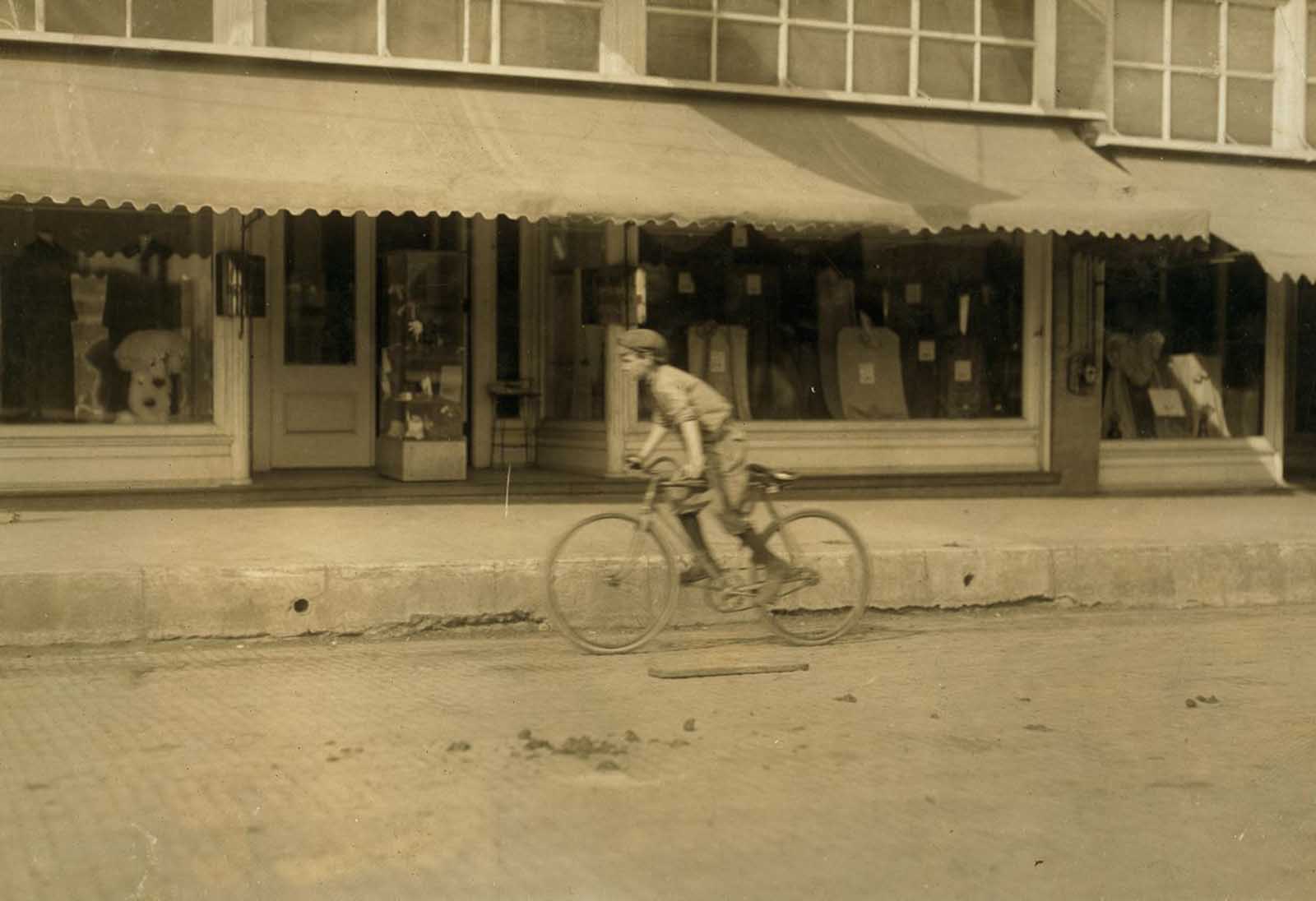
Messenger boy #6 for Mackay Telegraph Company. He has been messenger for different companies for four years. November, 1913.
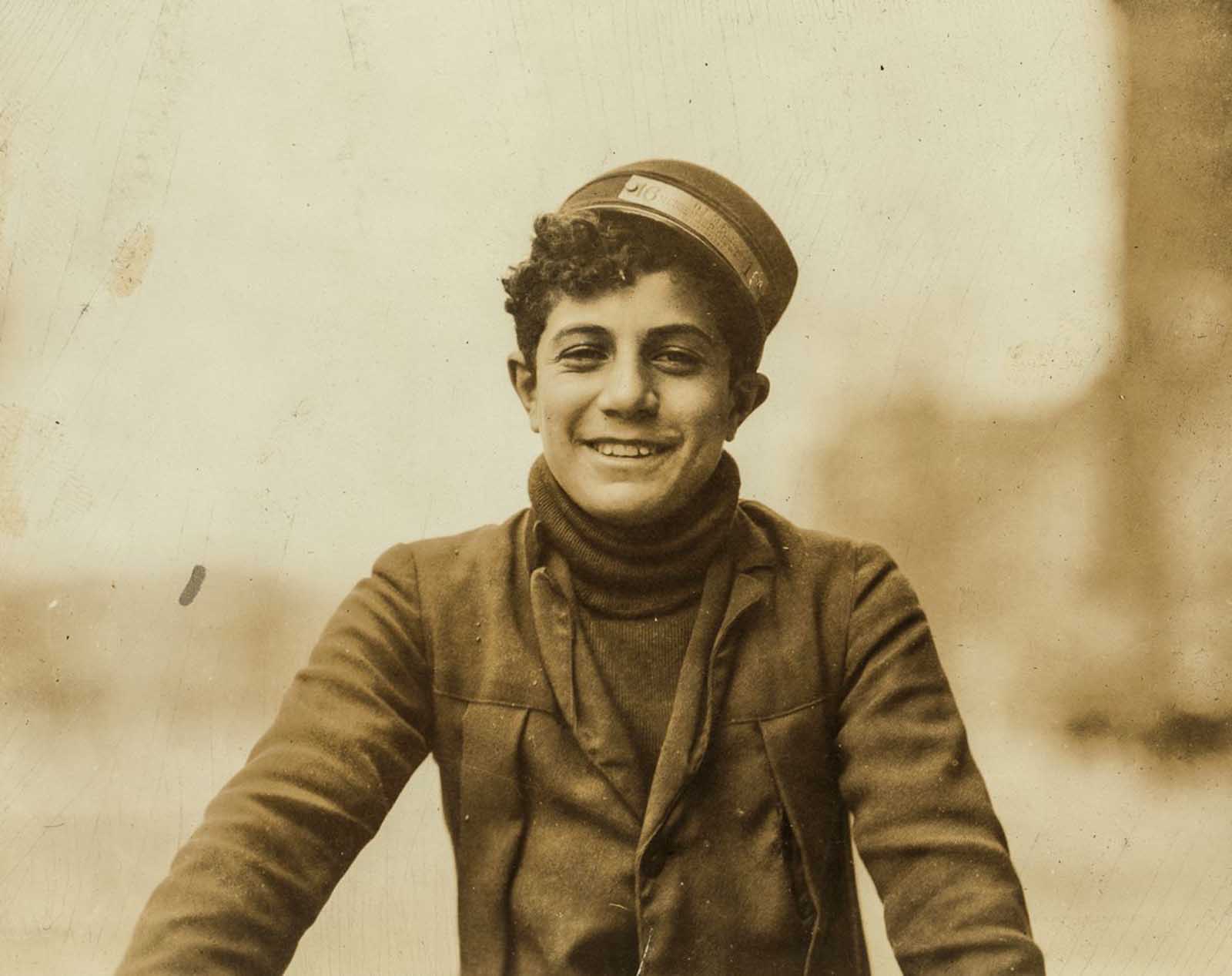
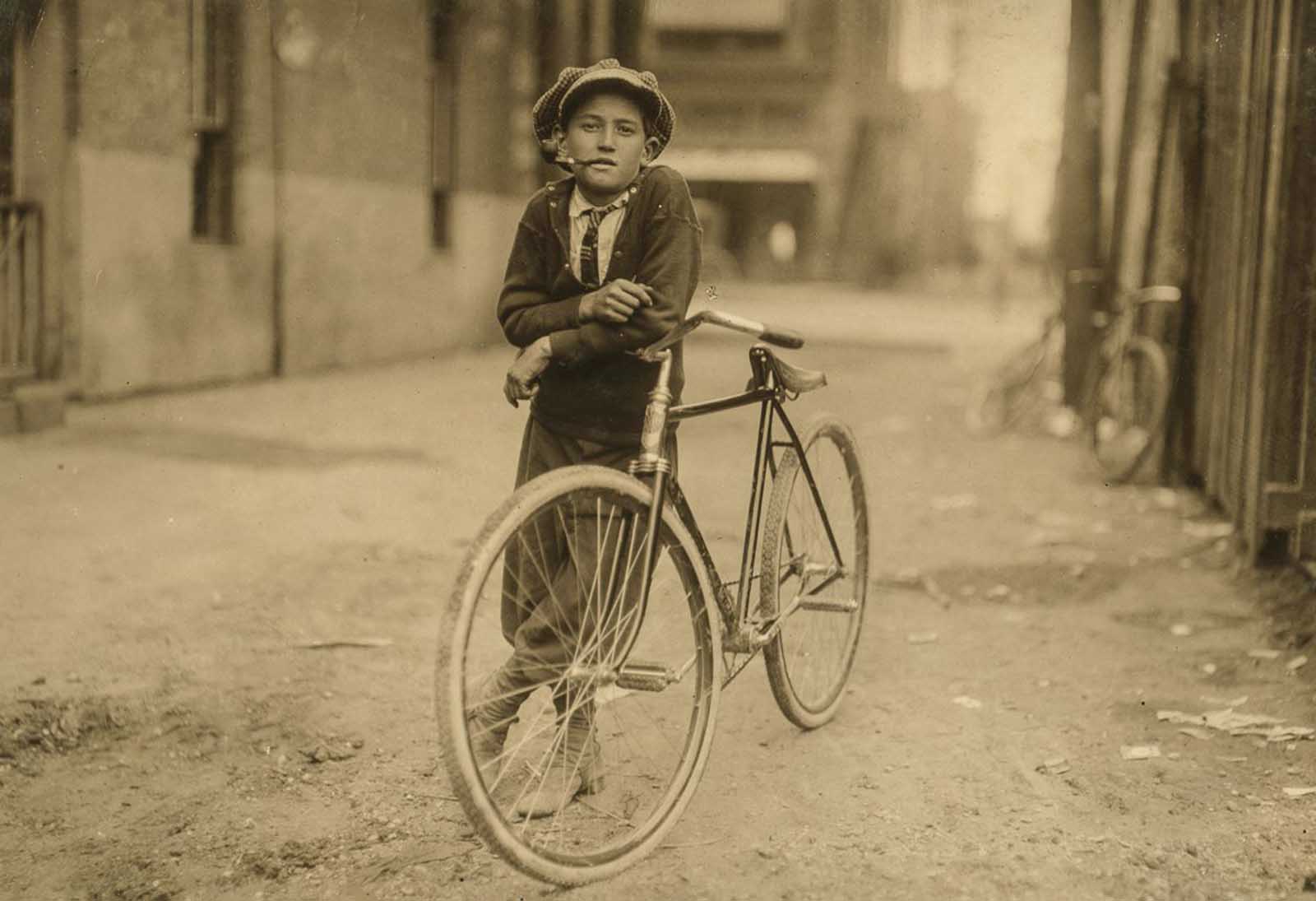
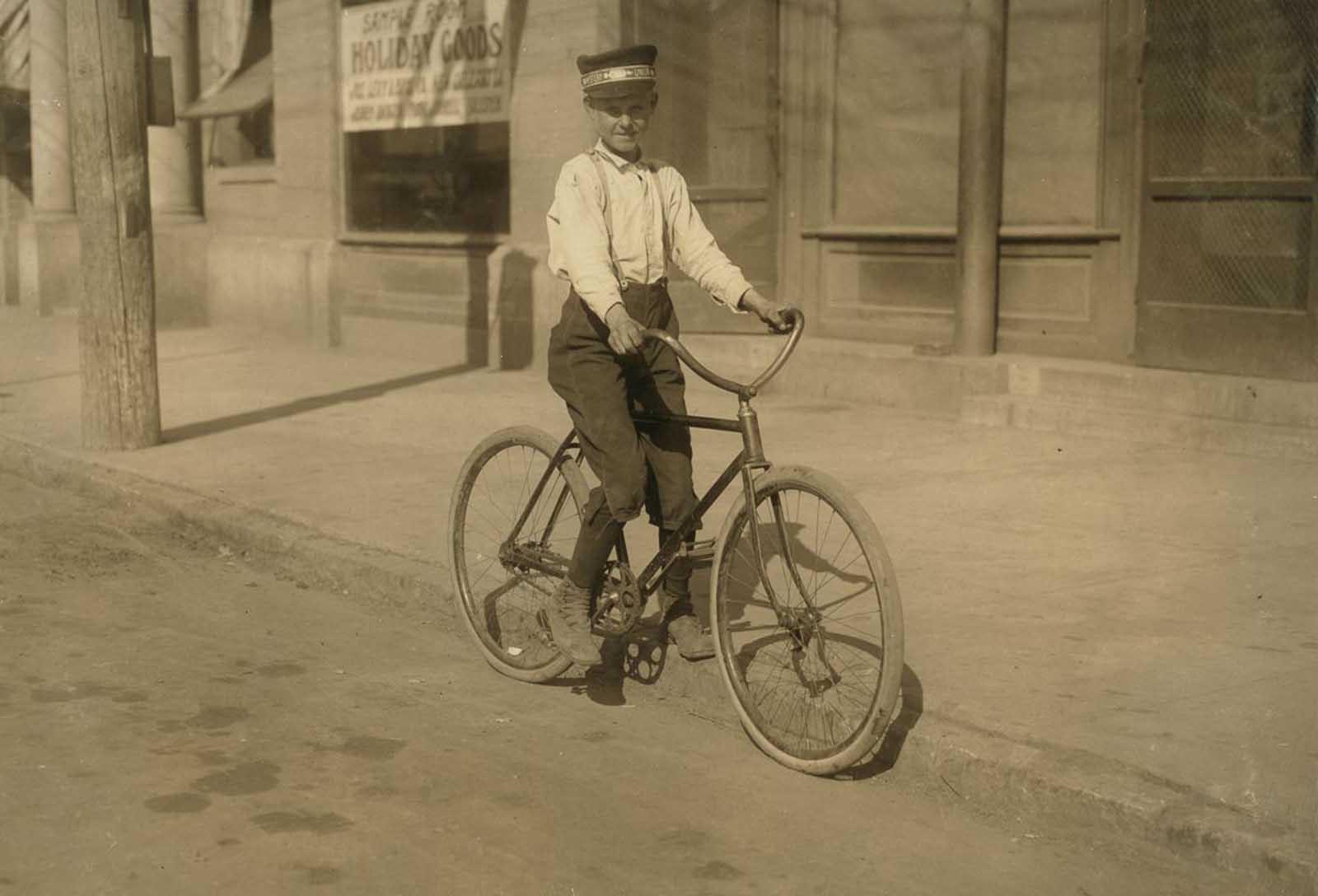
He goes to the Red Light district all the time, November, 1913.
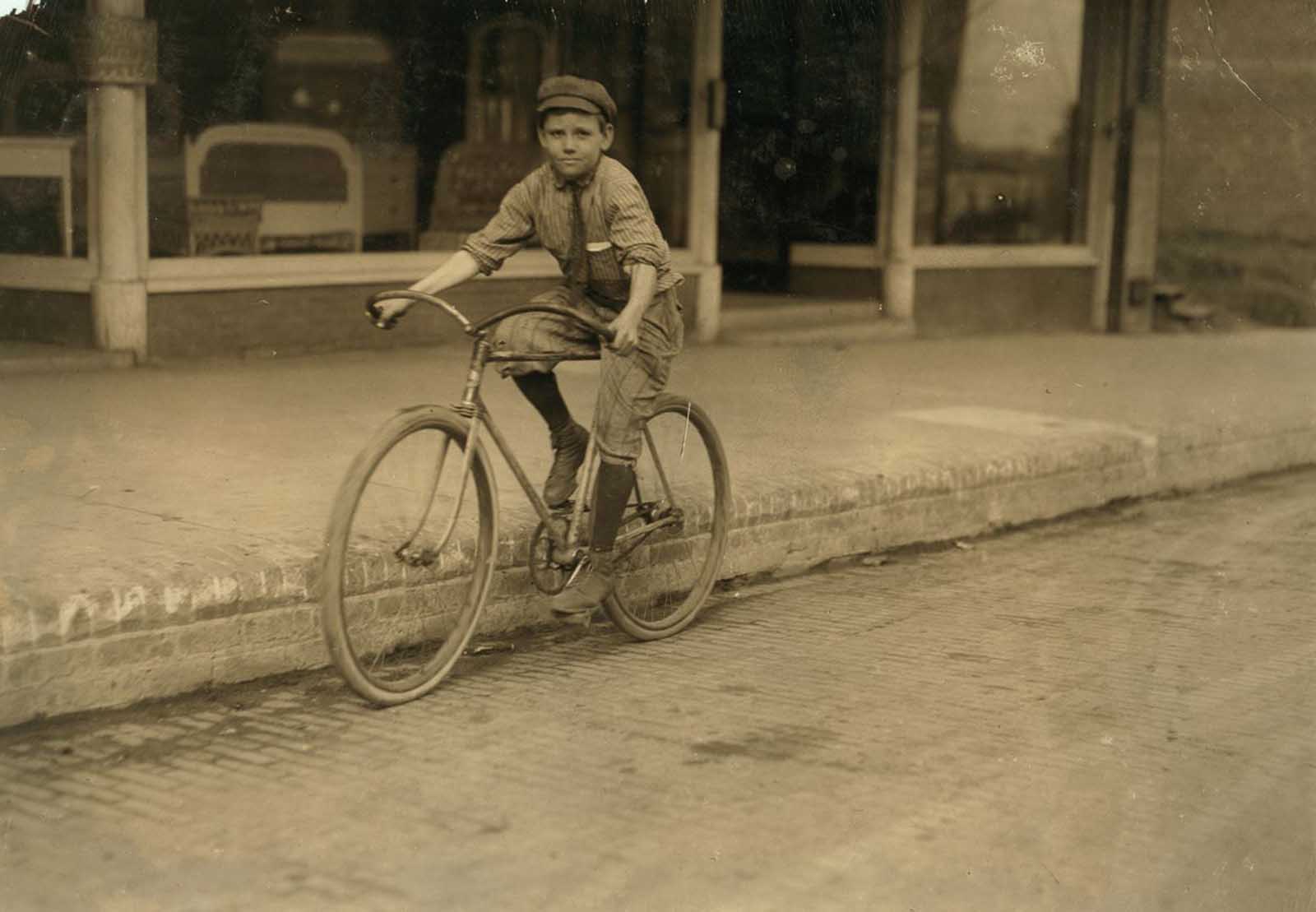
He has been messenger for different companies for four years. November, 1913.
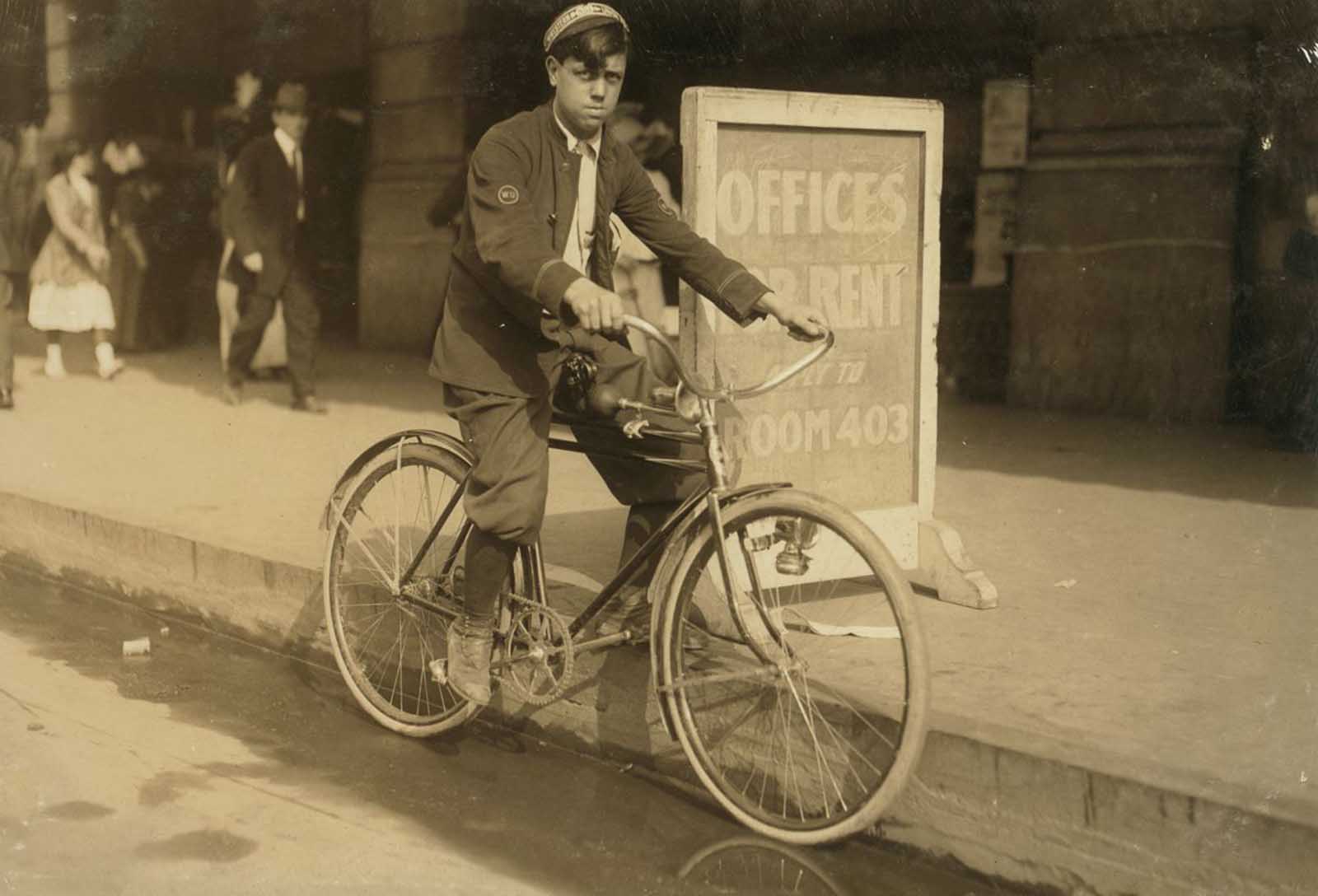
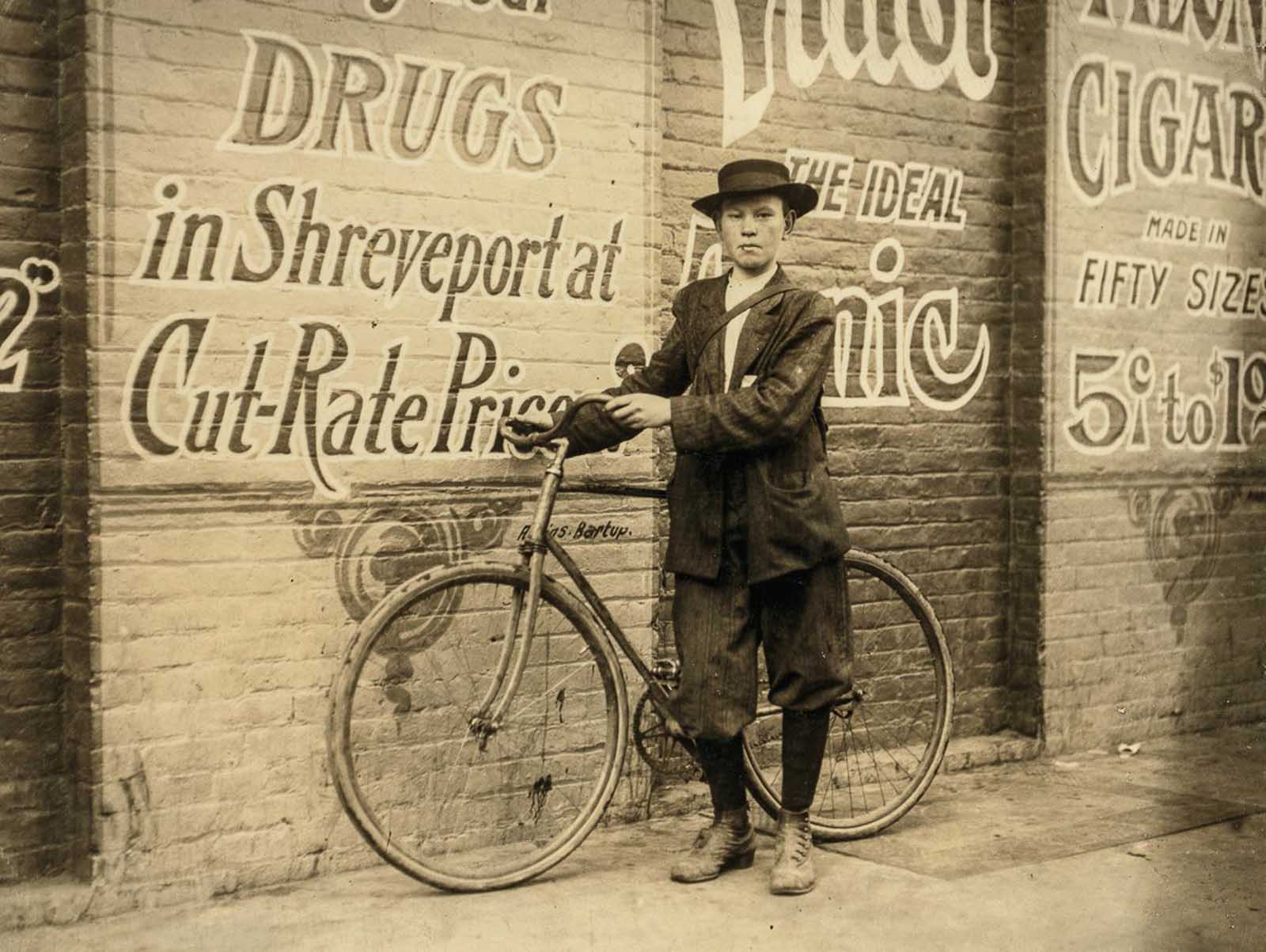
He works from 9:30 A.M. to 10:30 P.M.; has been here three months. Goes to the Red Light every day and night. Says that the company could not keep other messenger boys; they work them so hard. November, 1913.
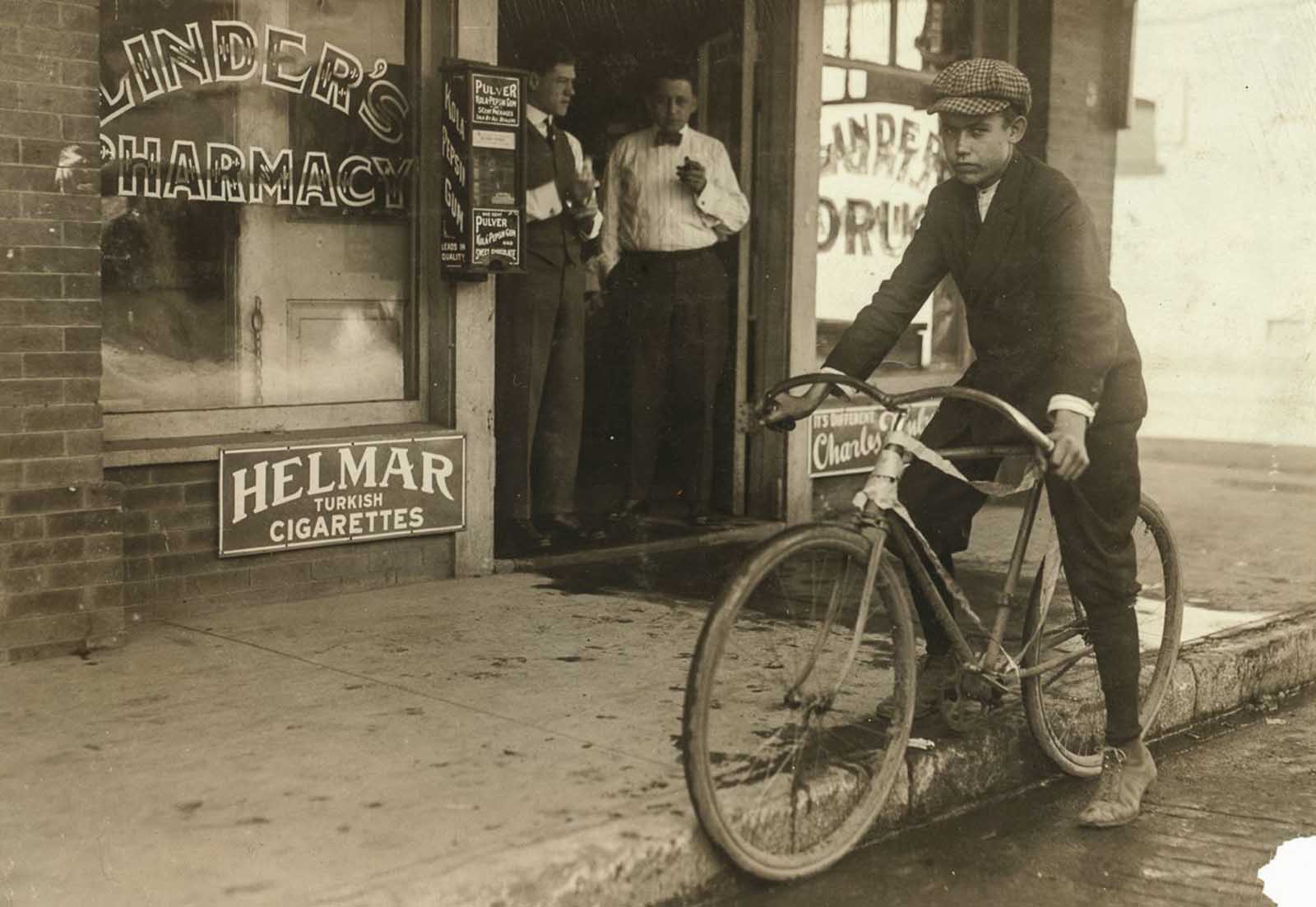
He works from 8 A.M. to 8 P.M. Location: Dallas, Texas. October, 1913.
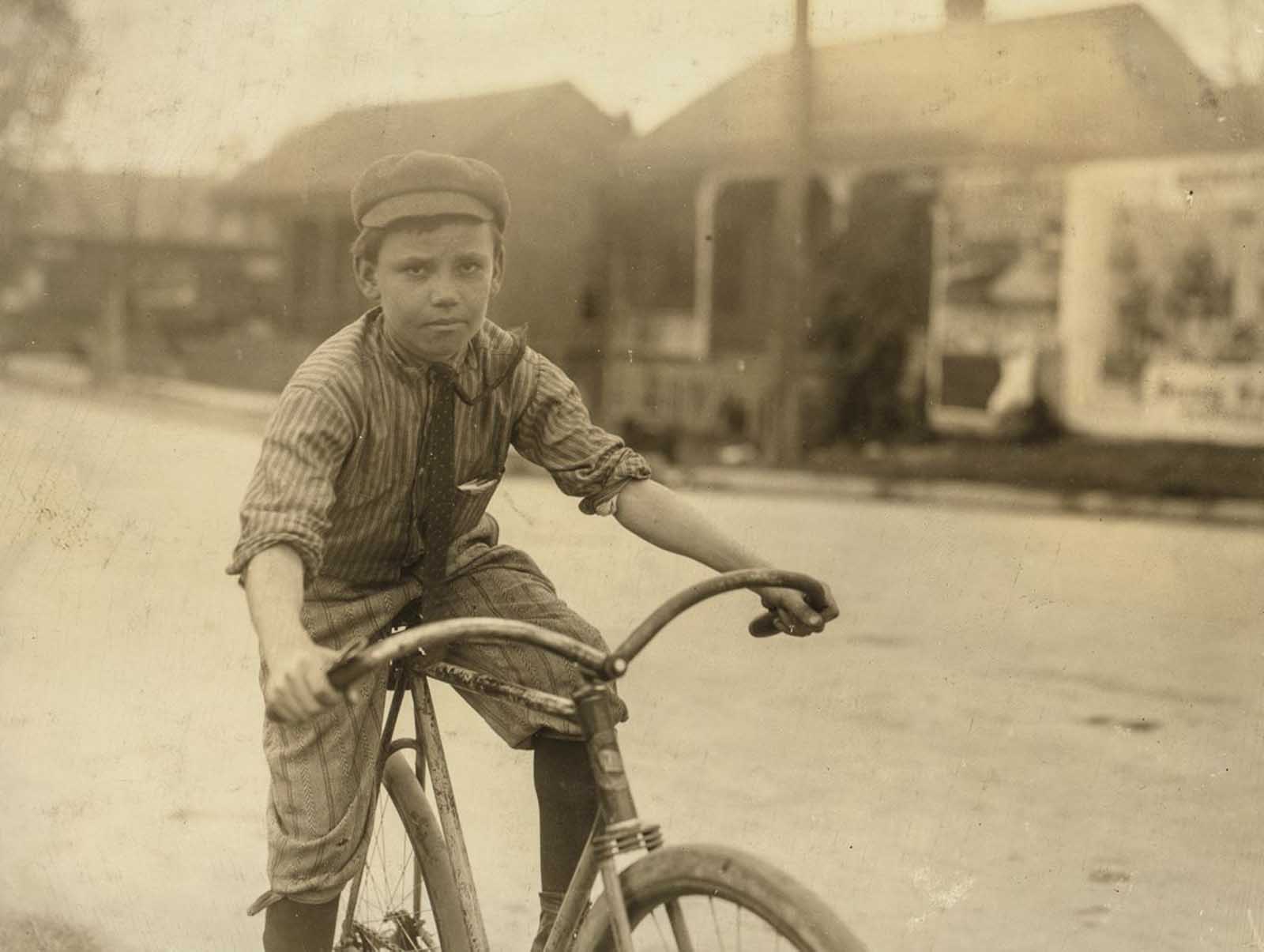
Just come out of one of the houses with message. He said gleefully ‘She gimme a quarter tip.’ November, 1913.
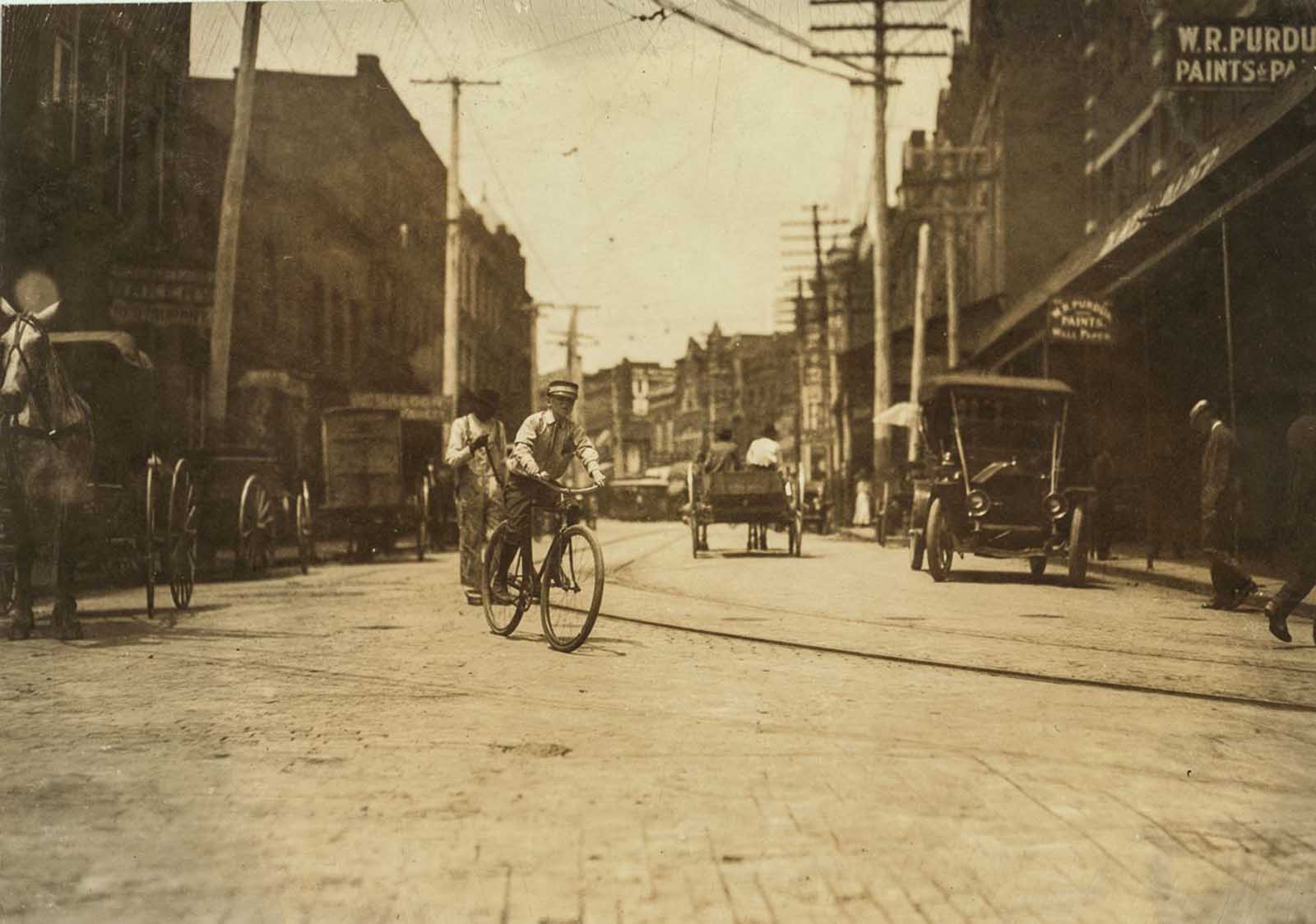
That night he refused to show me through the Red Light District, said the manager did not permit them to go on such errands. June, 1911.
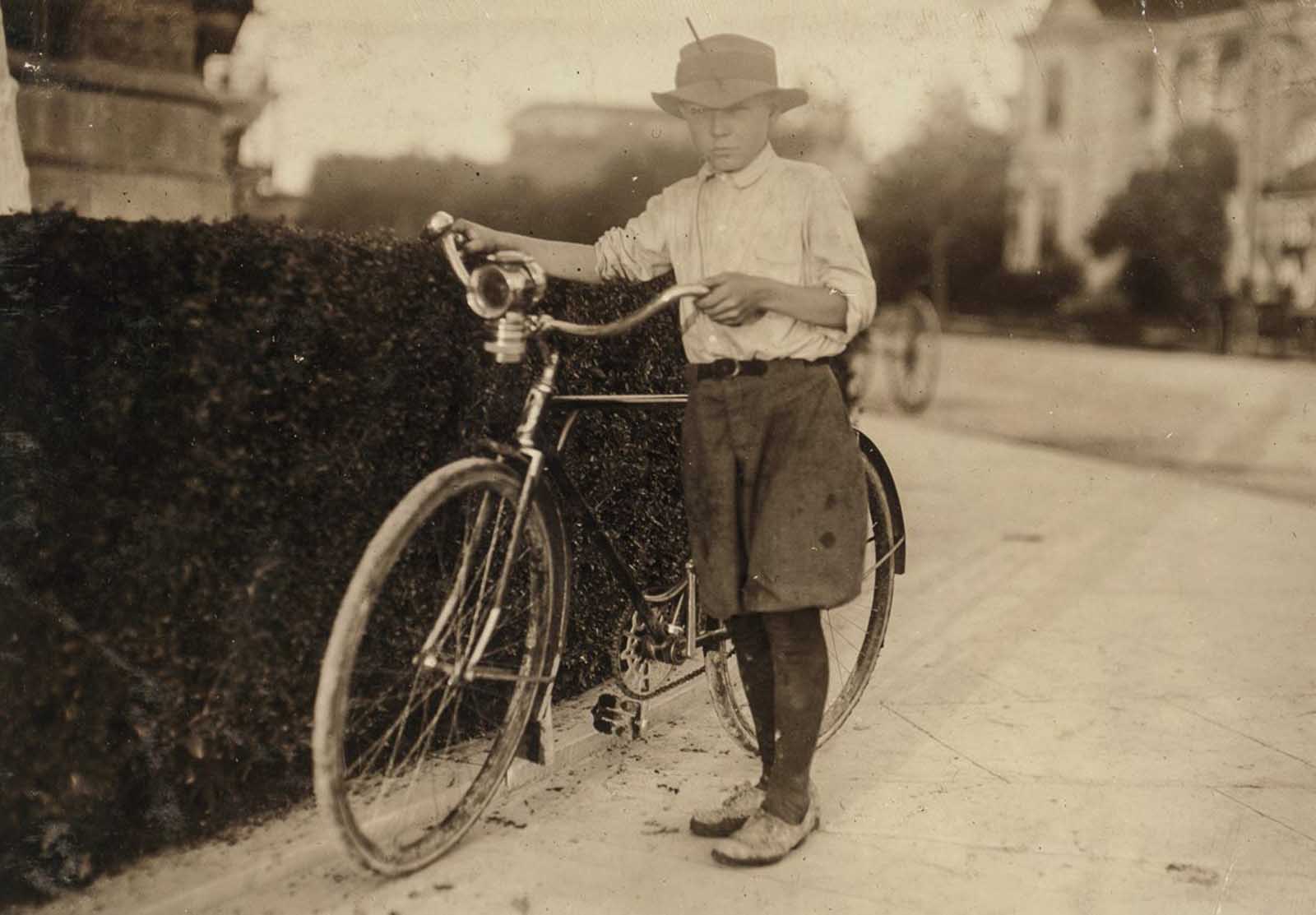
I saw him working at midnight. He goes to school in the daytime, then works from four to twelve. Sundays half a day. Gets $5.00 a week. October, 1913.
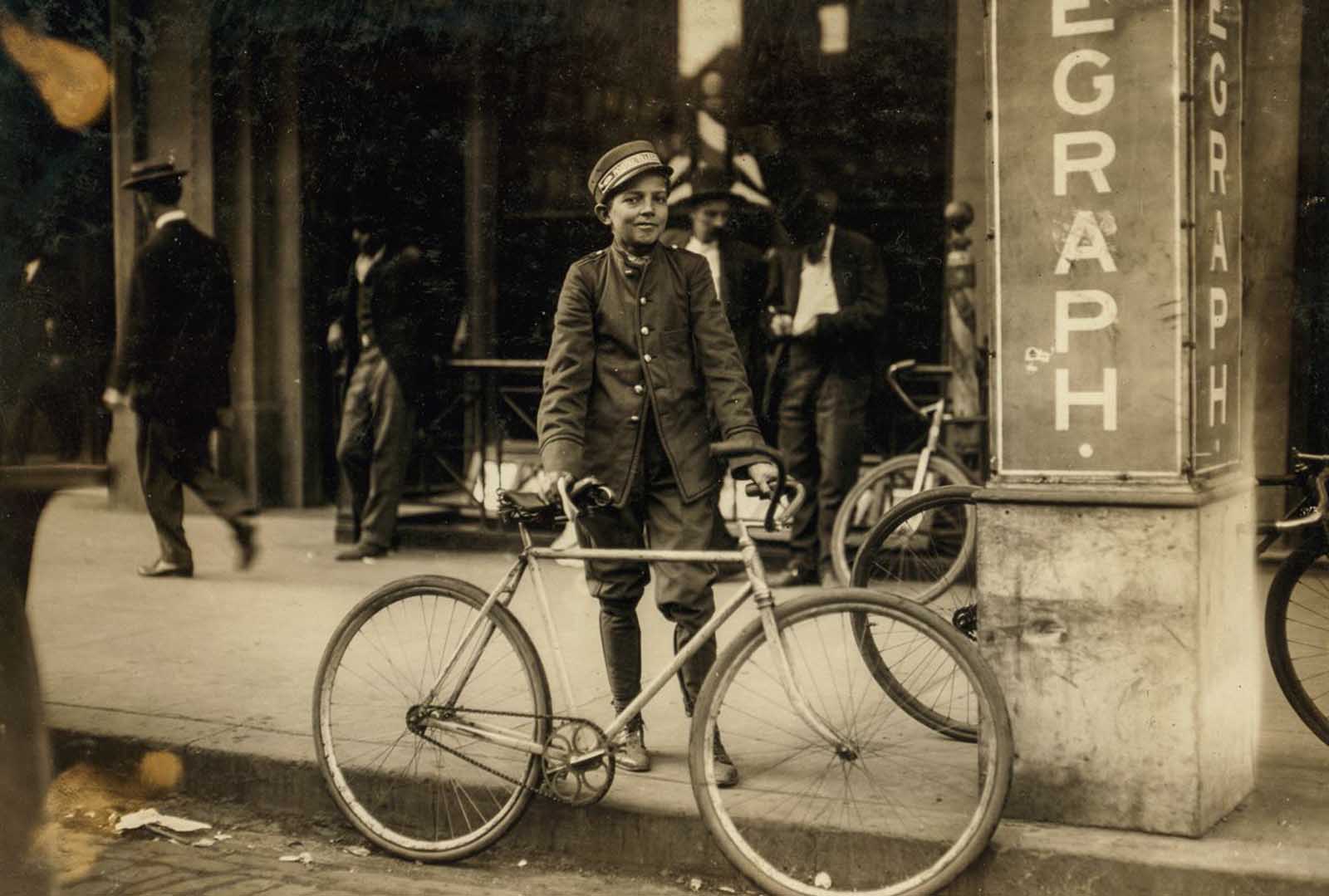
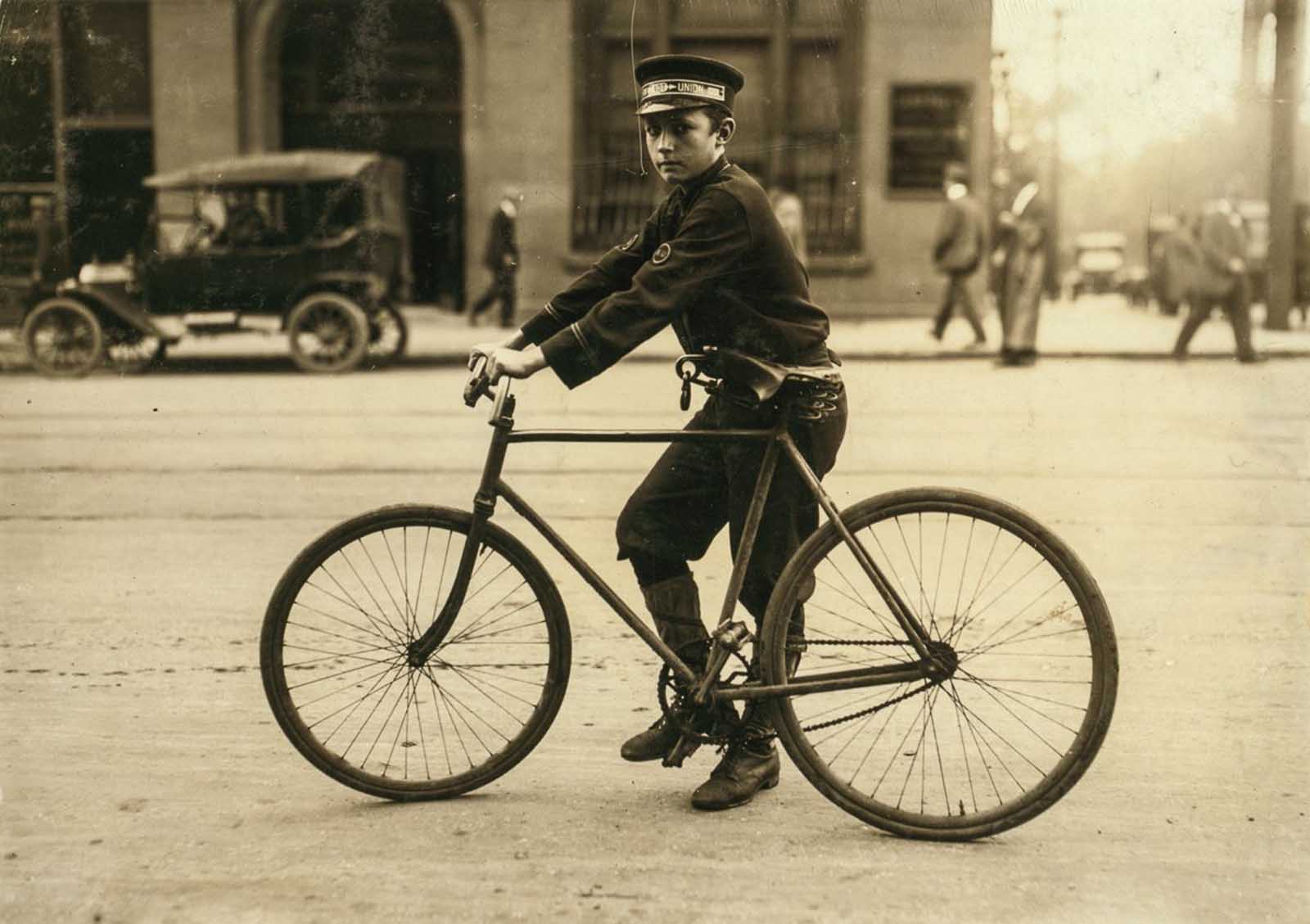
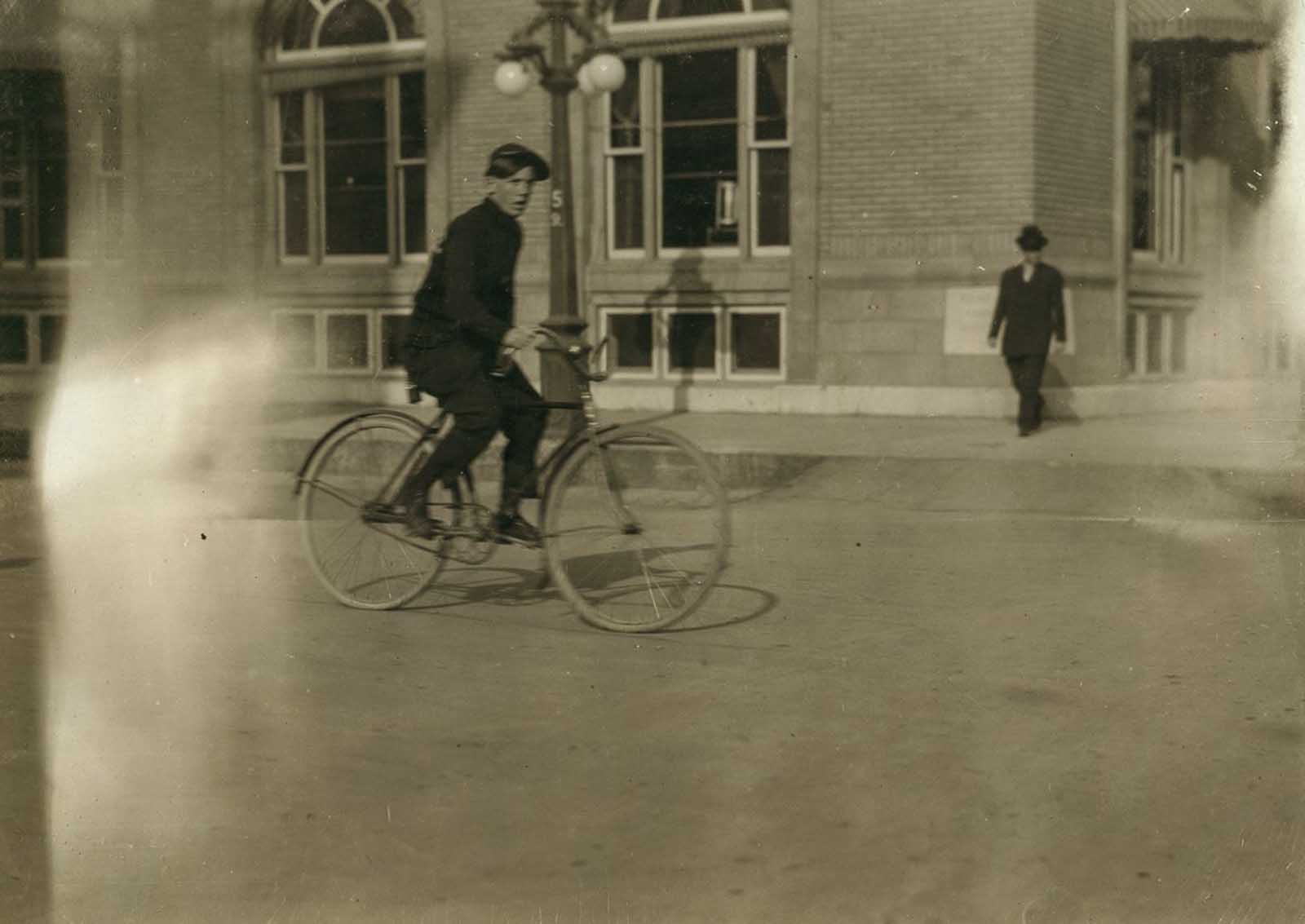
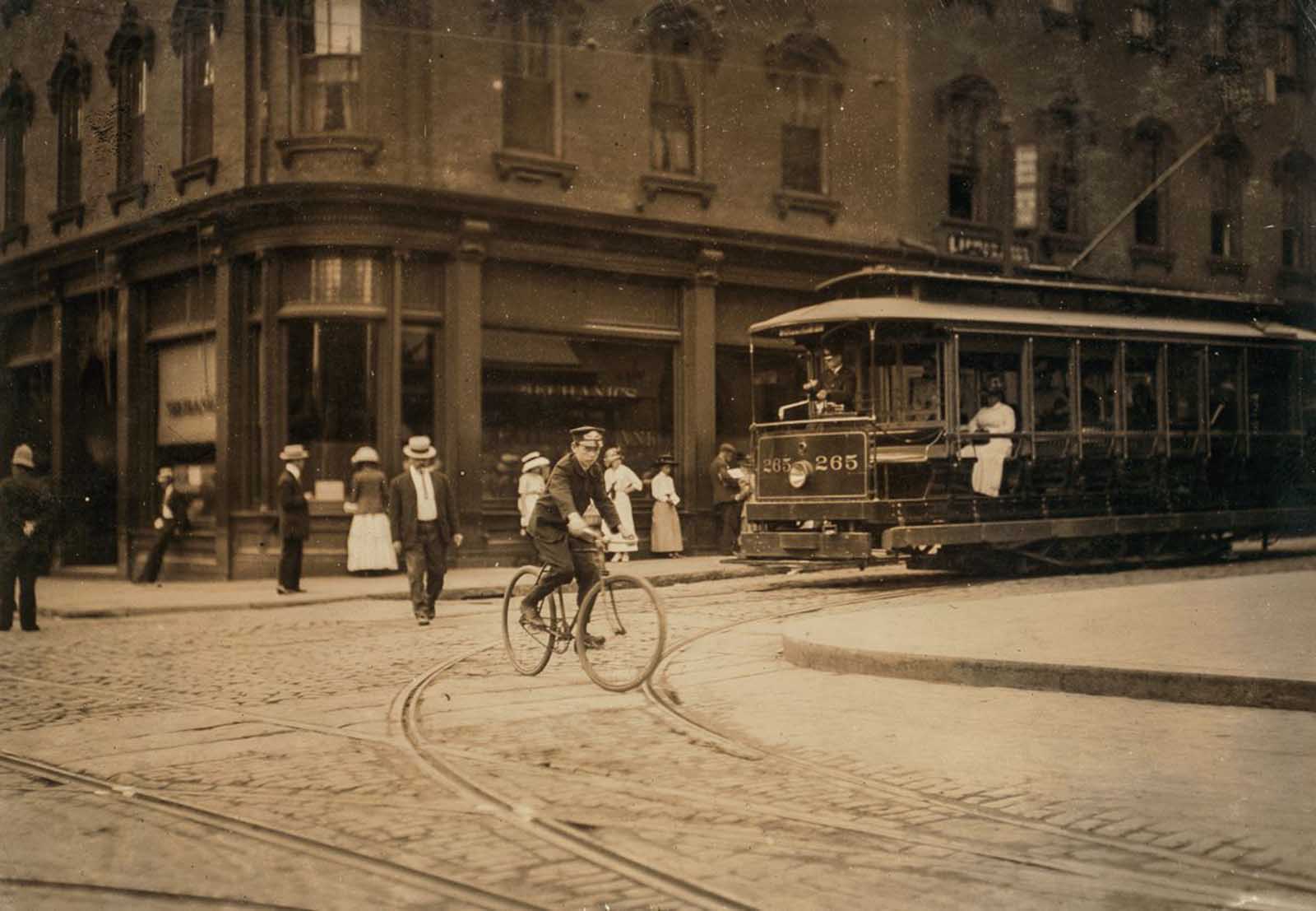
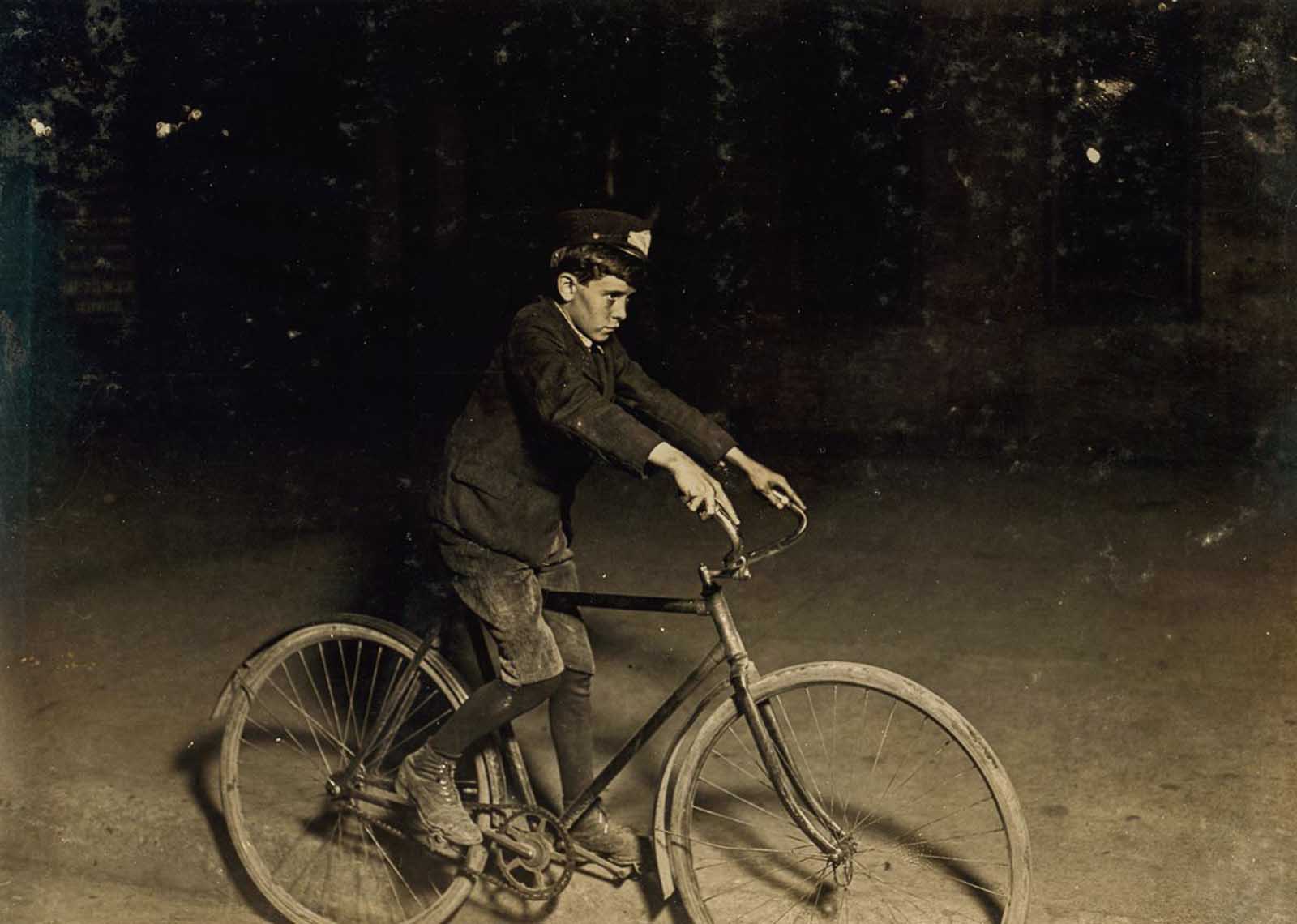
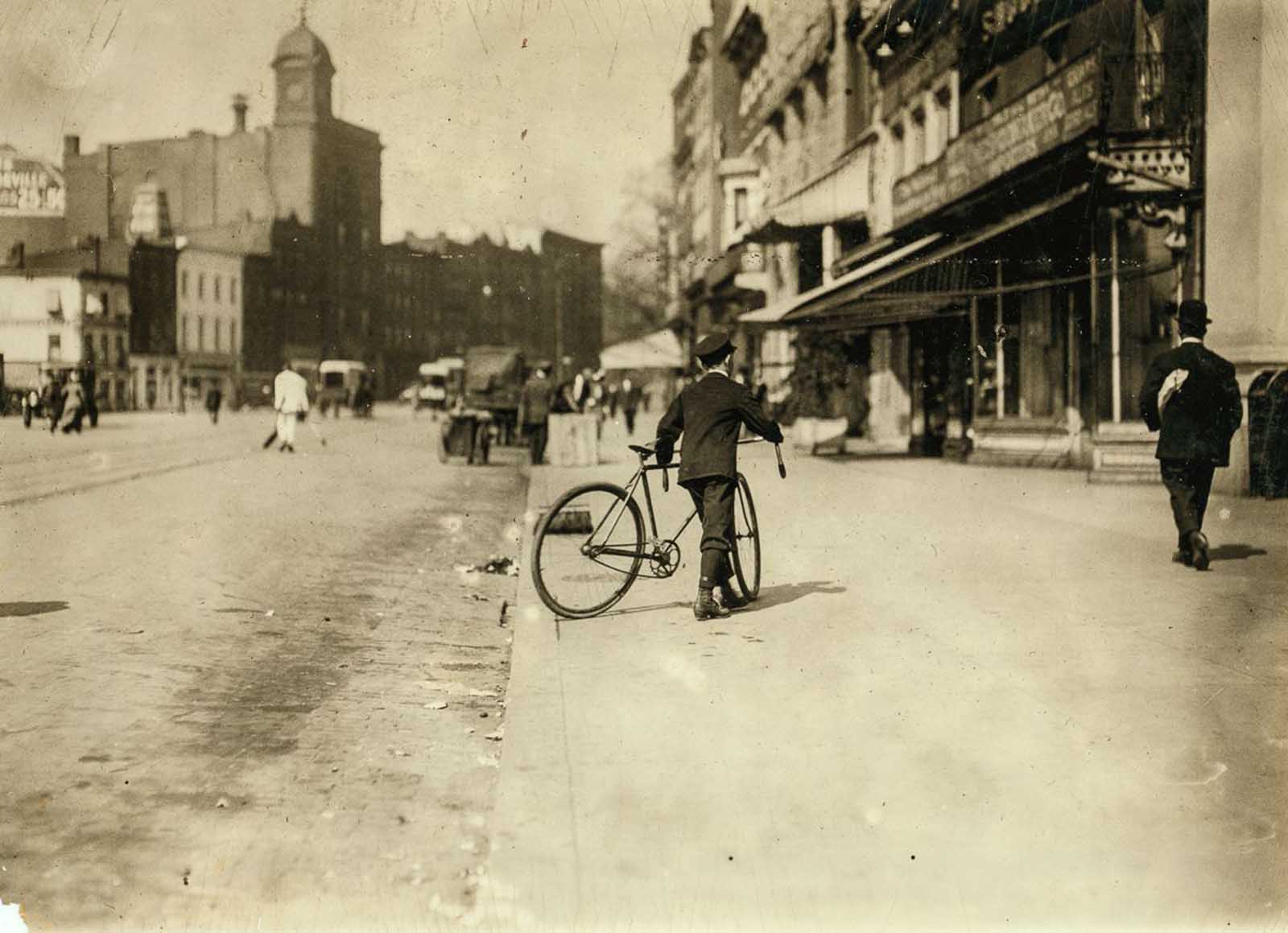
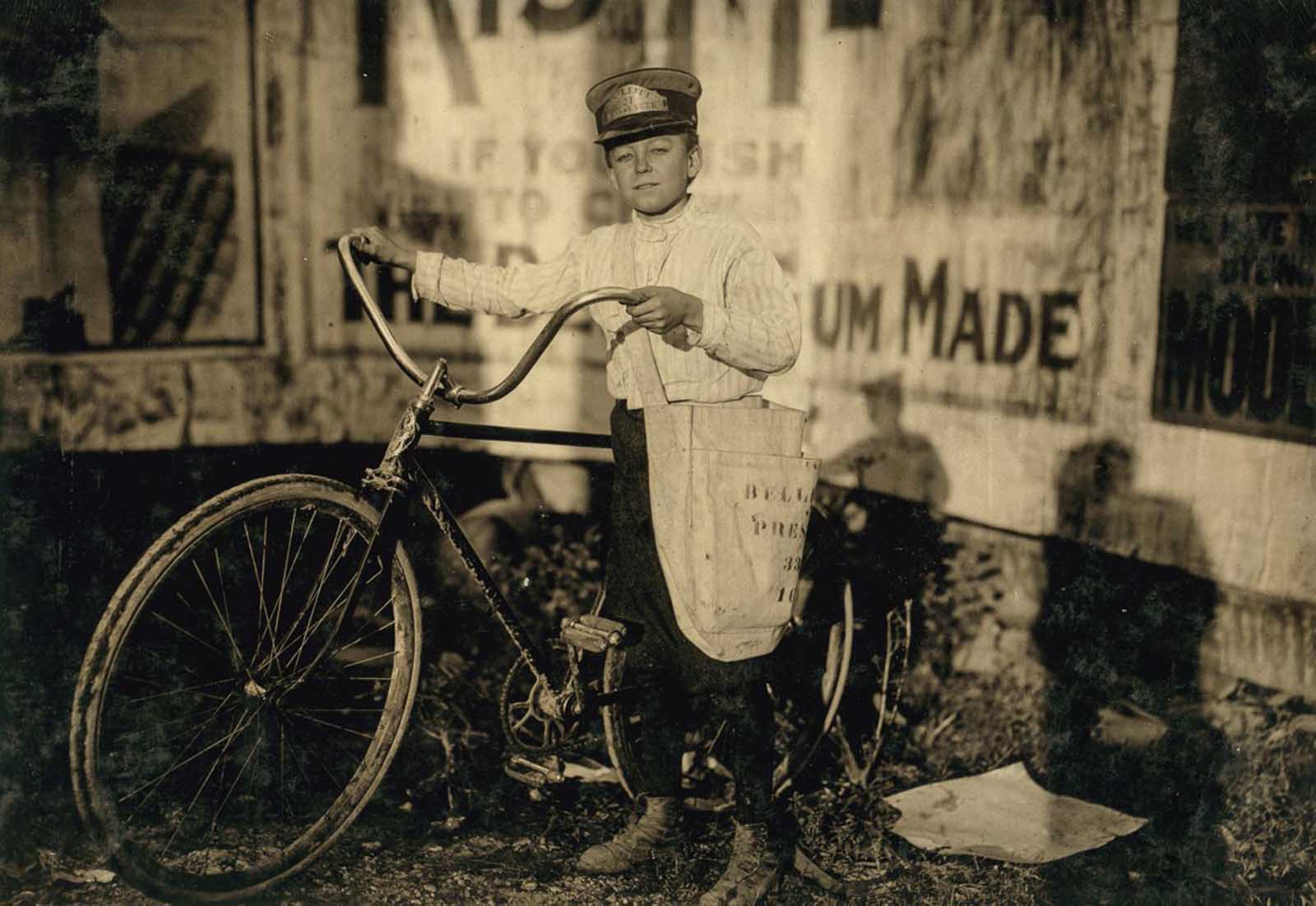
Been messenger, off and on, for two years. Not supposed to go to the Reservation under sixteen years, but I do just the same. The boss don’t care and the cops don’t stop me.’ Location: Houston, Texas, October, 1913.
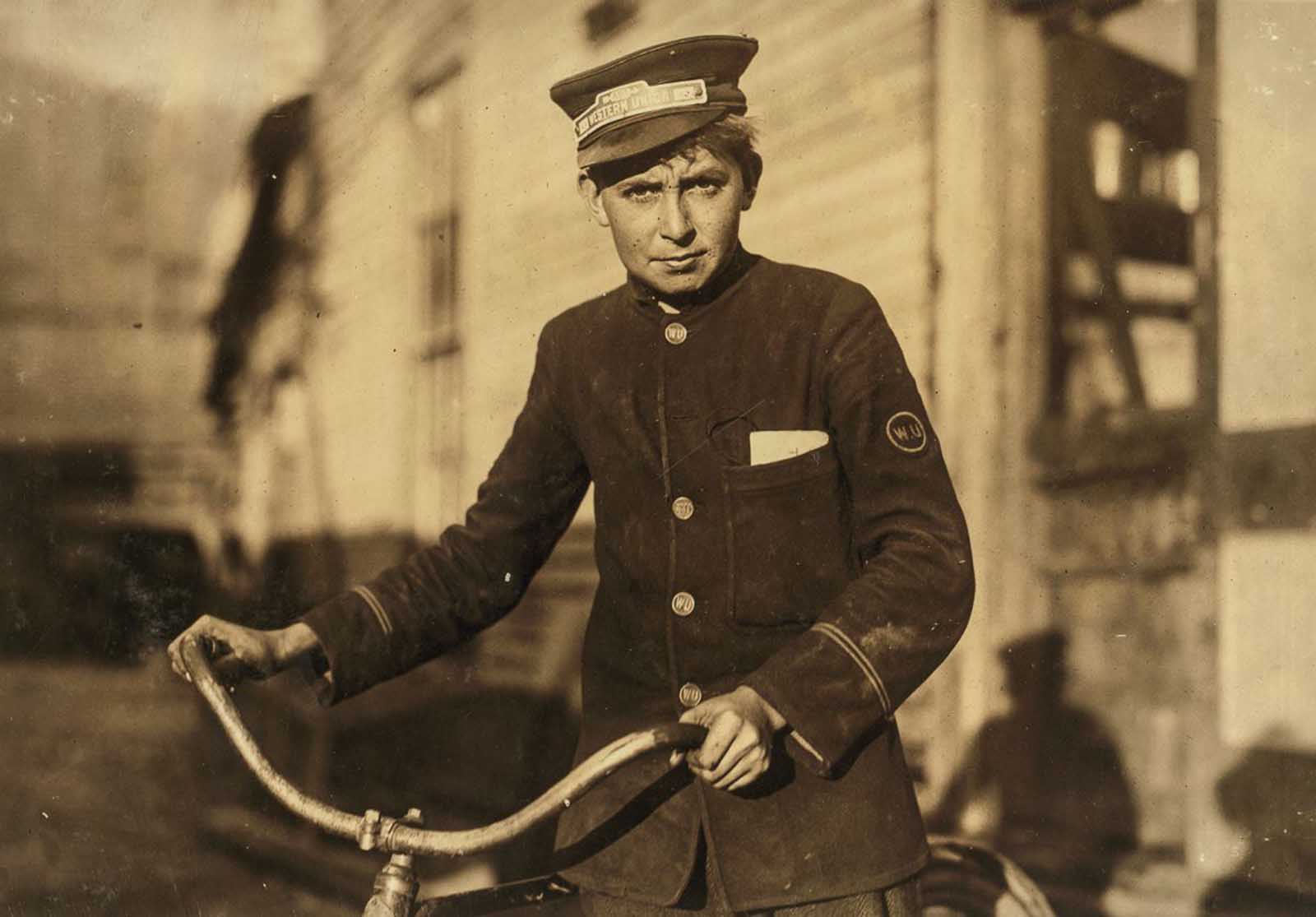
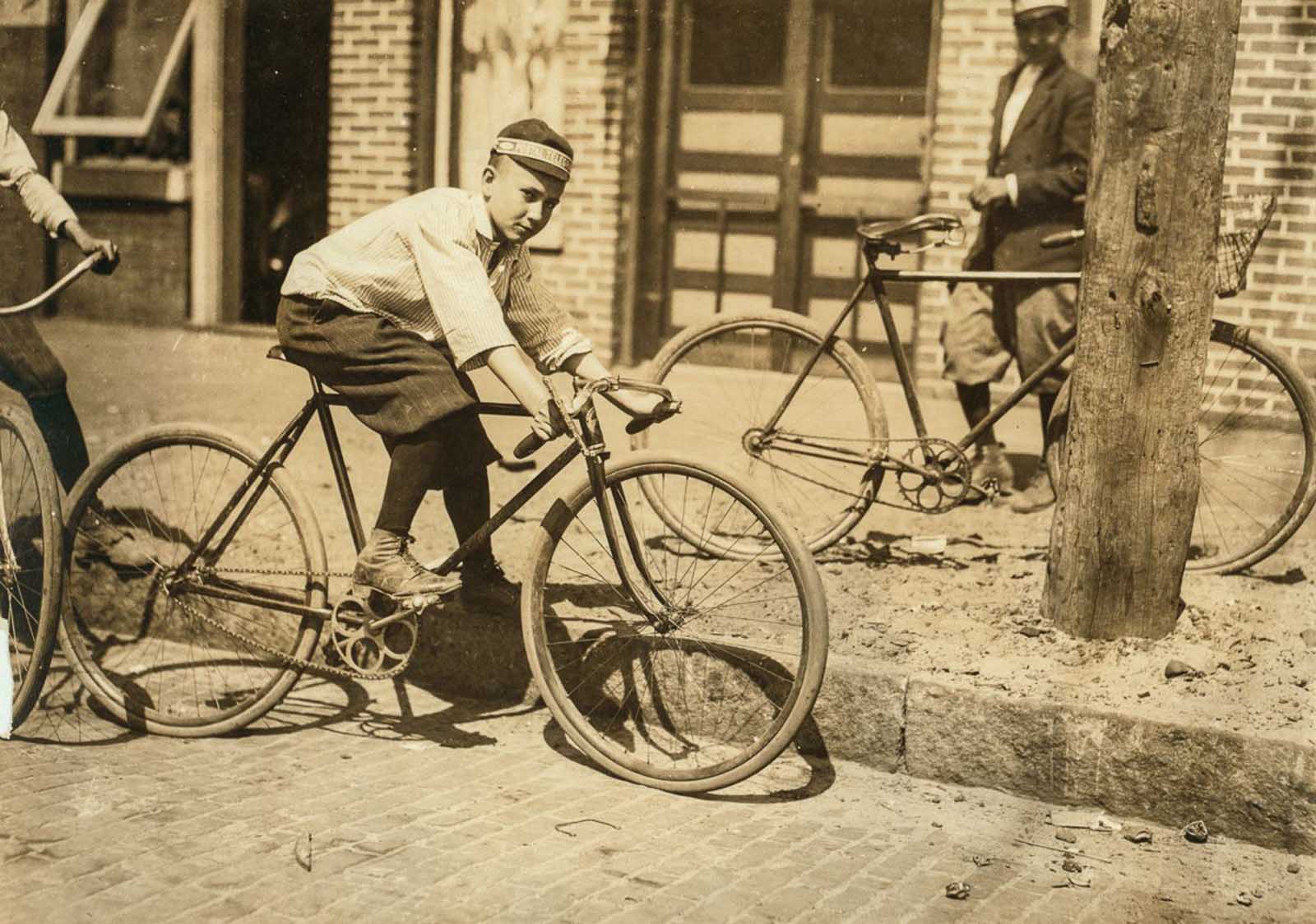
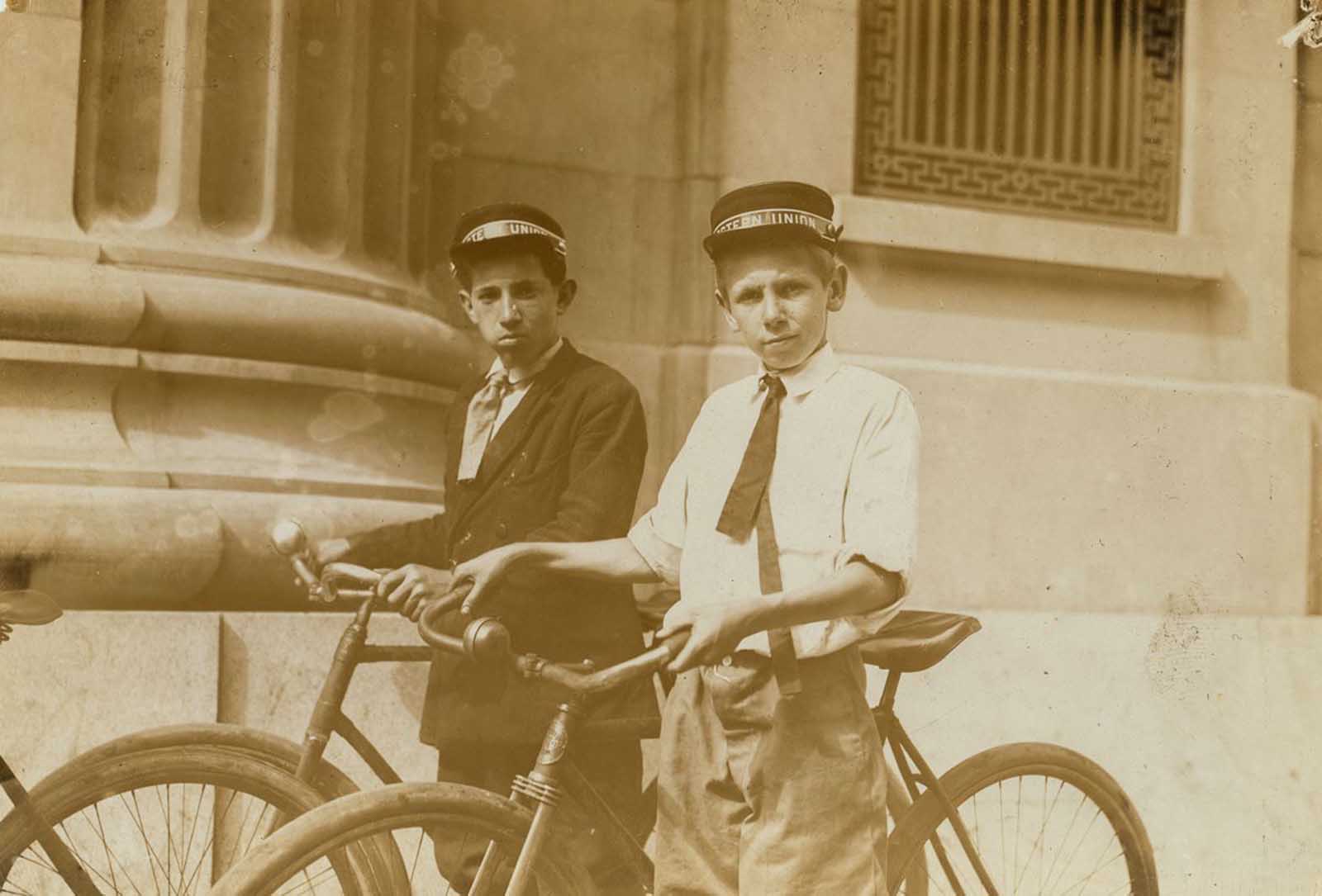
Been working here one month. He, and several other young boys, work until 10:30 P.M. June, 1911.
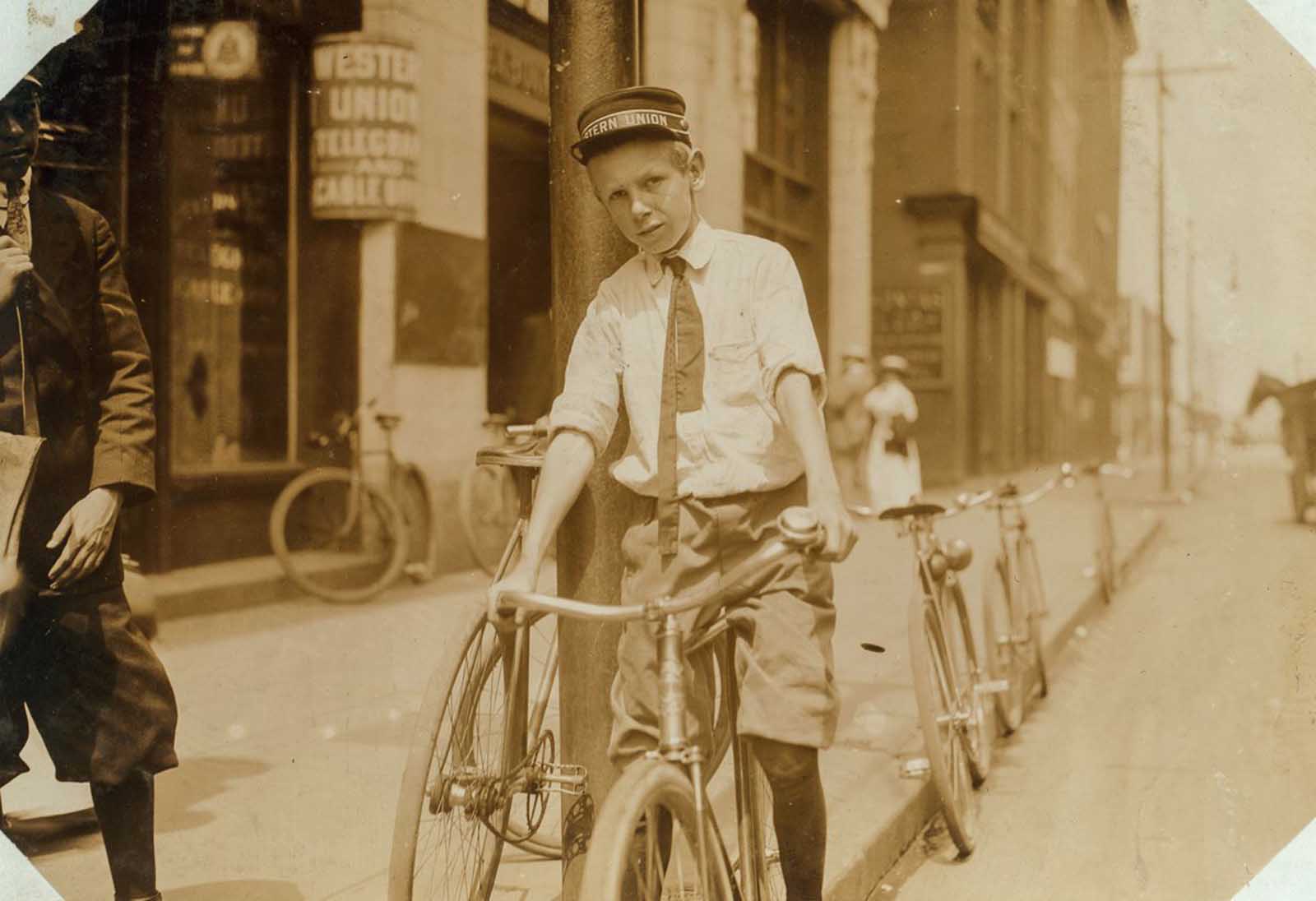
Been working here one month. He, and several other very young boys, work until 10:30 P.M. June, 1911.
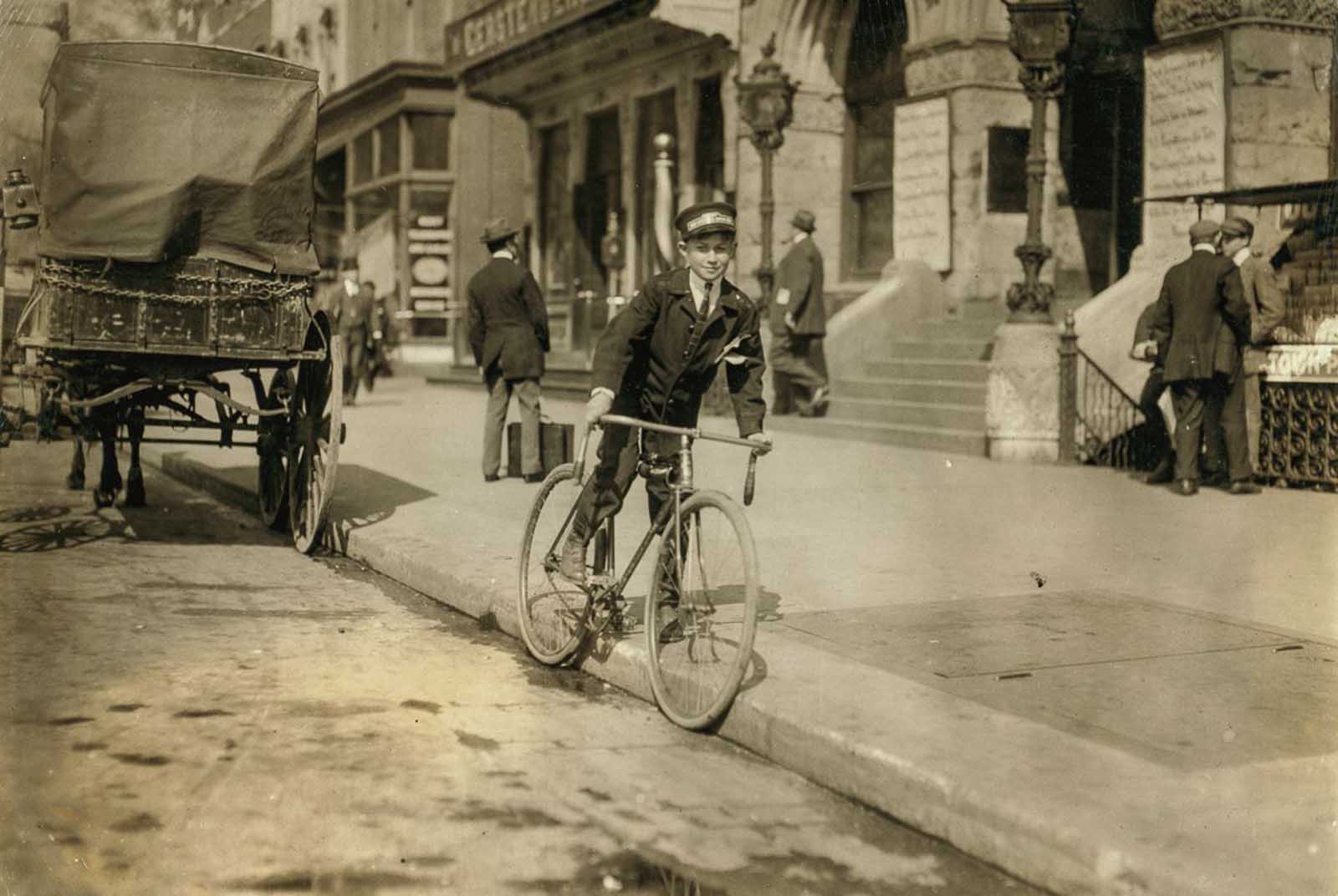
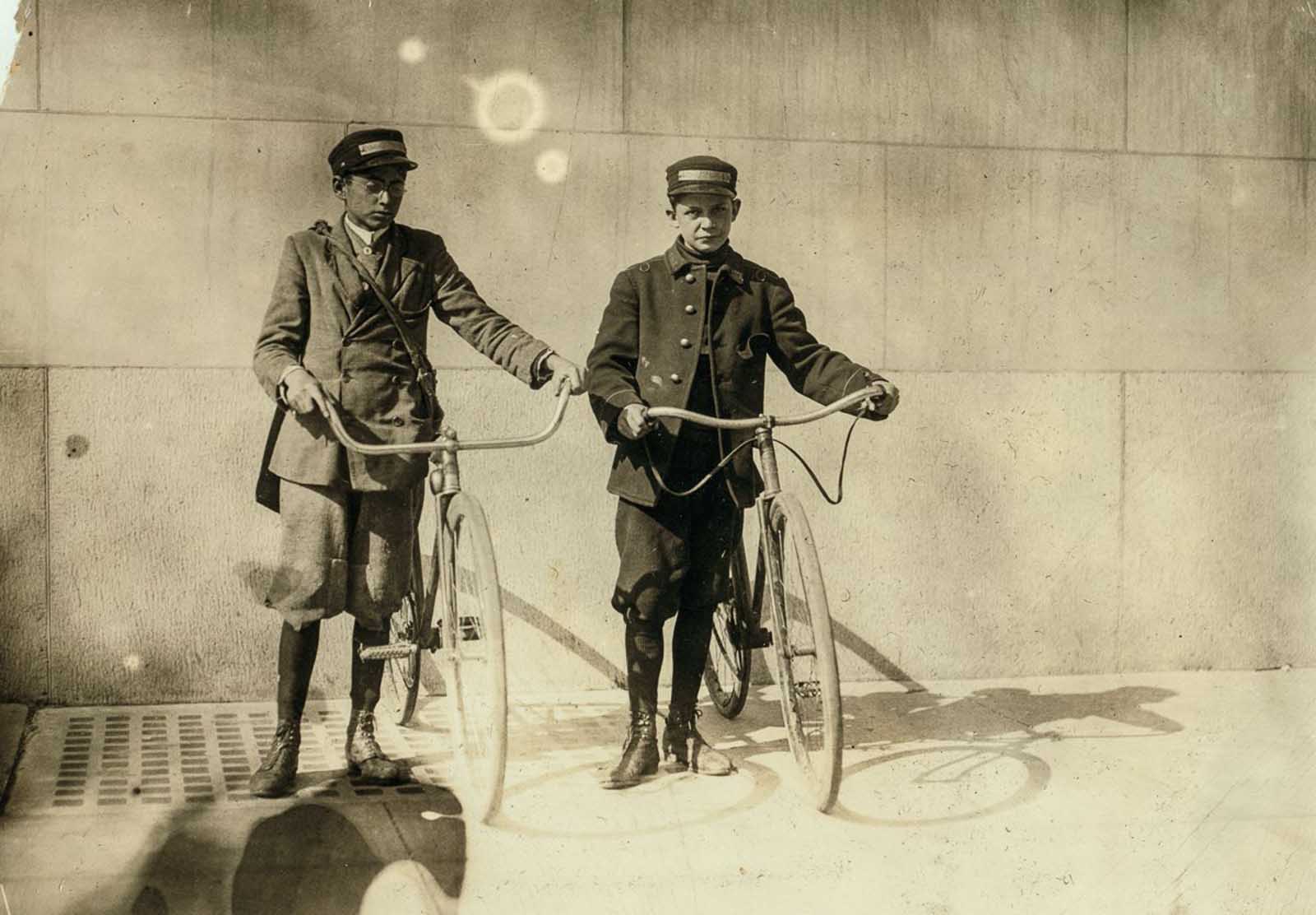
They said they never knew when they were going to get home at night. Usually work one or more nights a week, and have worked until after midnight. They said last Christmas their office had a 9 yr. old boy running errands for them, and that he made a great deal of money from tips. They make about $7 a week and more, sometimes. Said ‘The office is not allowed to send us into the red light district but we go when a call sends us. Not very often.’ April, 1912.
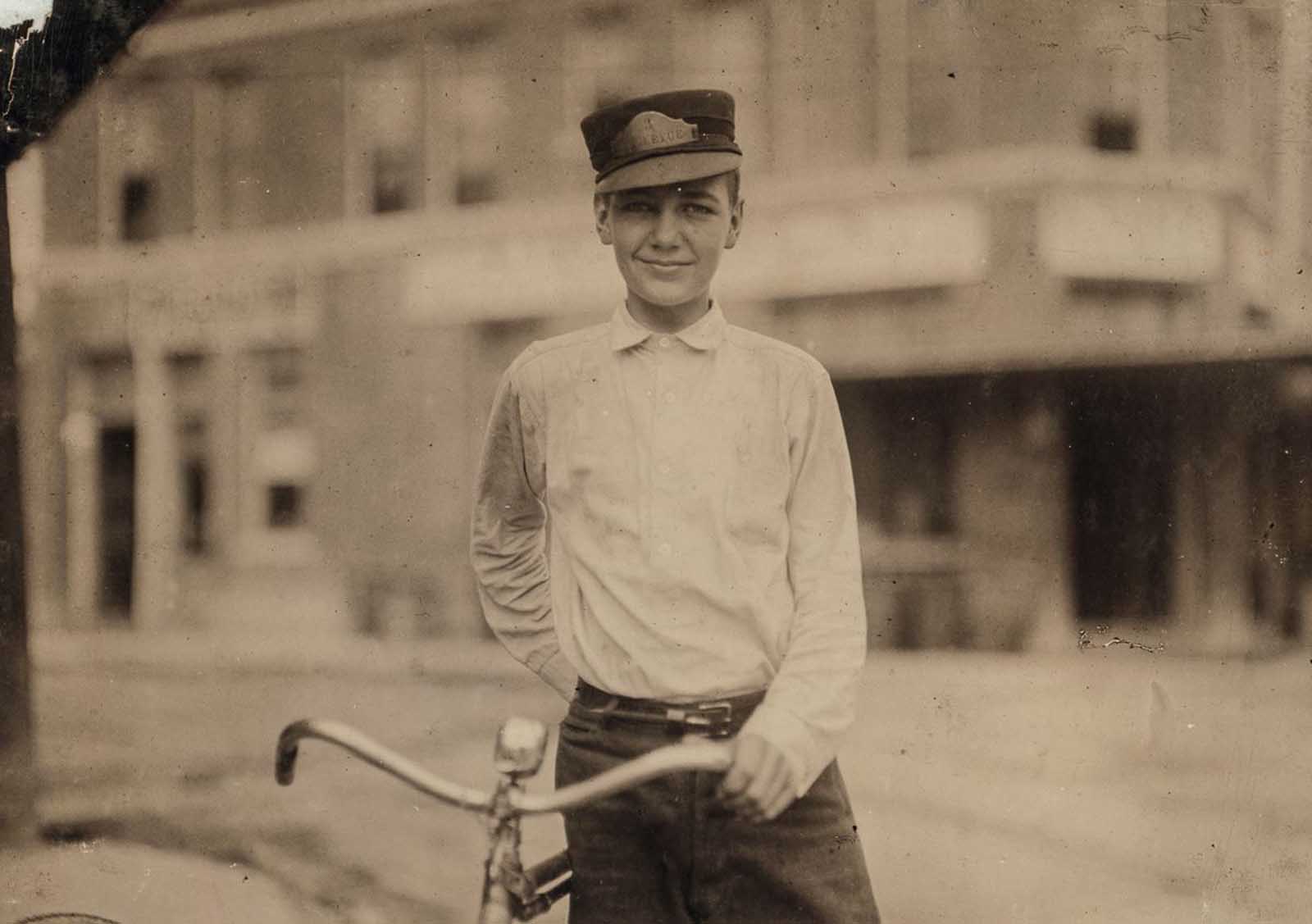
I ran across him and took photos while he was carrying notes back and forth between a prostitute in jail and a pimp in the Red Light. He had read all the notes and knew all about the correspondence. He was a fine-grained adolescent boy. Has been delivering messages and drugs in the Red Light for 6 months and knows the ropes thoroughly. ‘A lot of these girls are my regular customers. I carry ’em messages and get ’em drinks, drugs, etc. Also go to the bank with money for ’em. If a fellow treats ’em right, they’ll call him by number and give him all their work. I got a box full of photos I took of these girls – some of ’em I took in their room.’ Works until 11:00 P.M. Location: San Antonio, Texas. October, 1913.
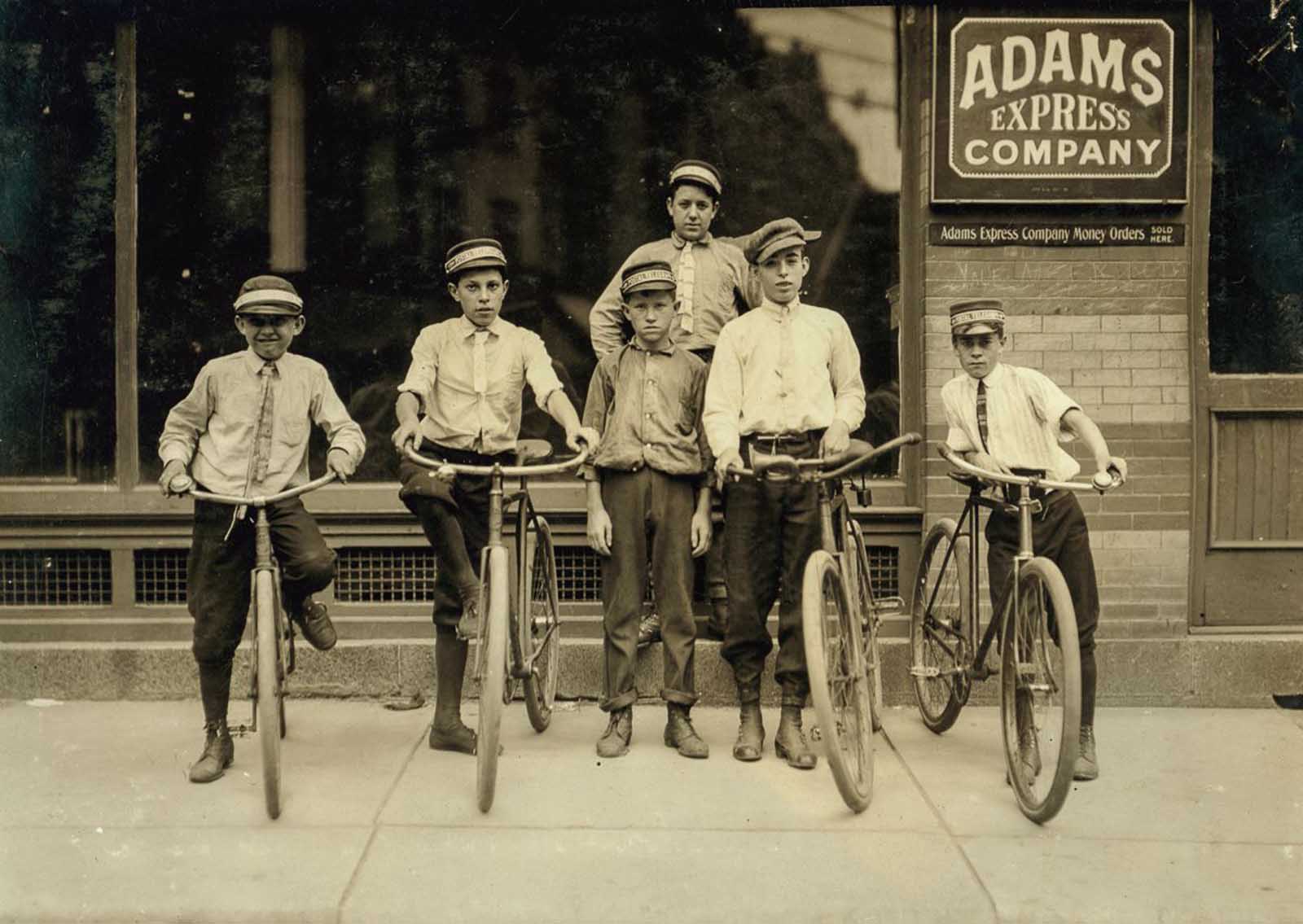
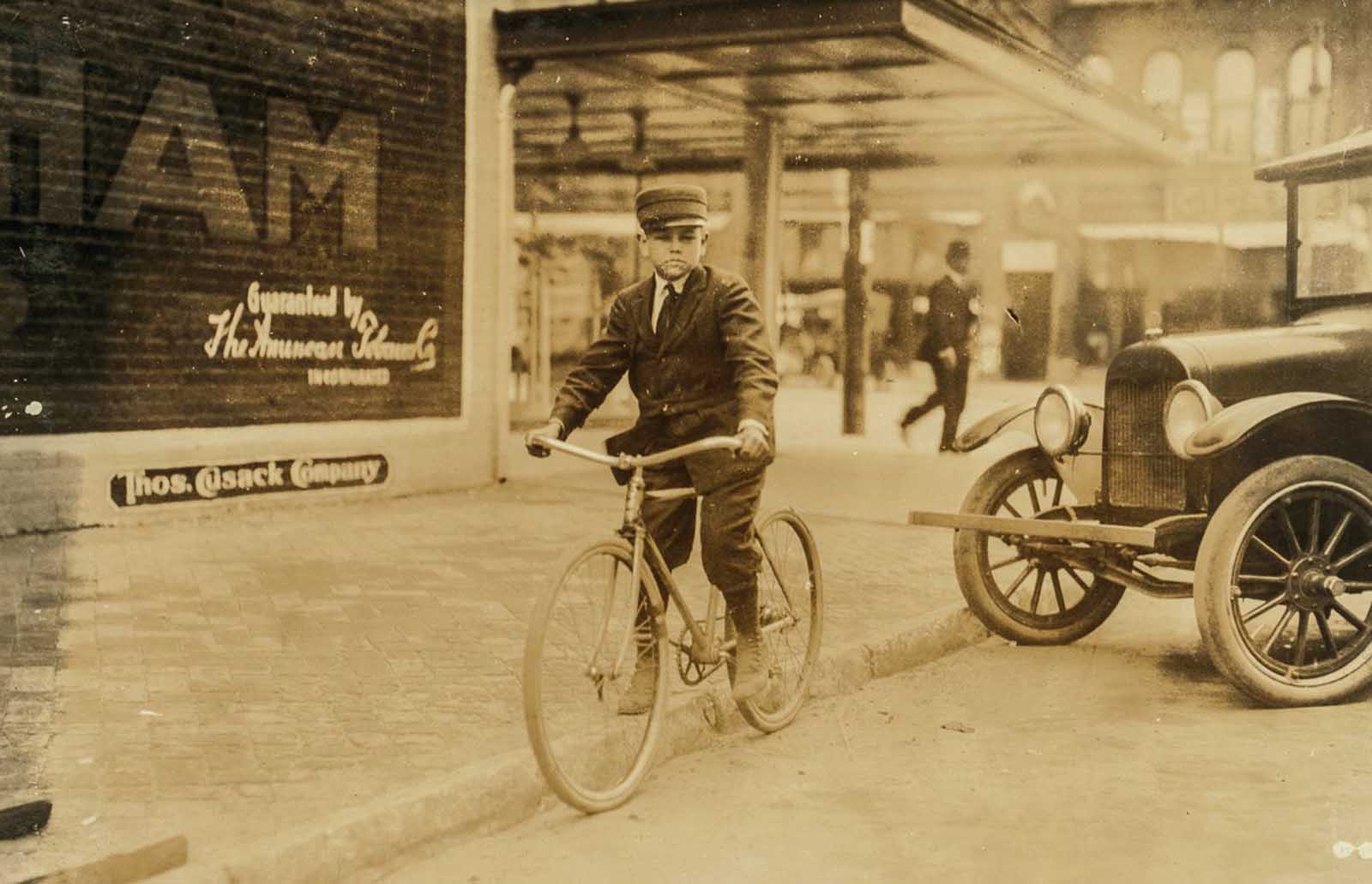
He made $5 a week. Location: Oklahoma City, March, 1917.
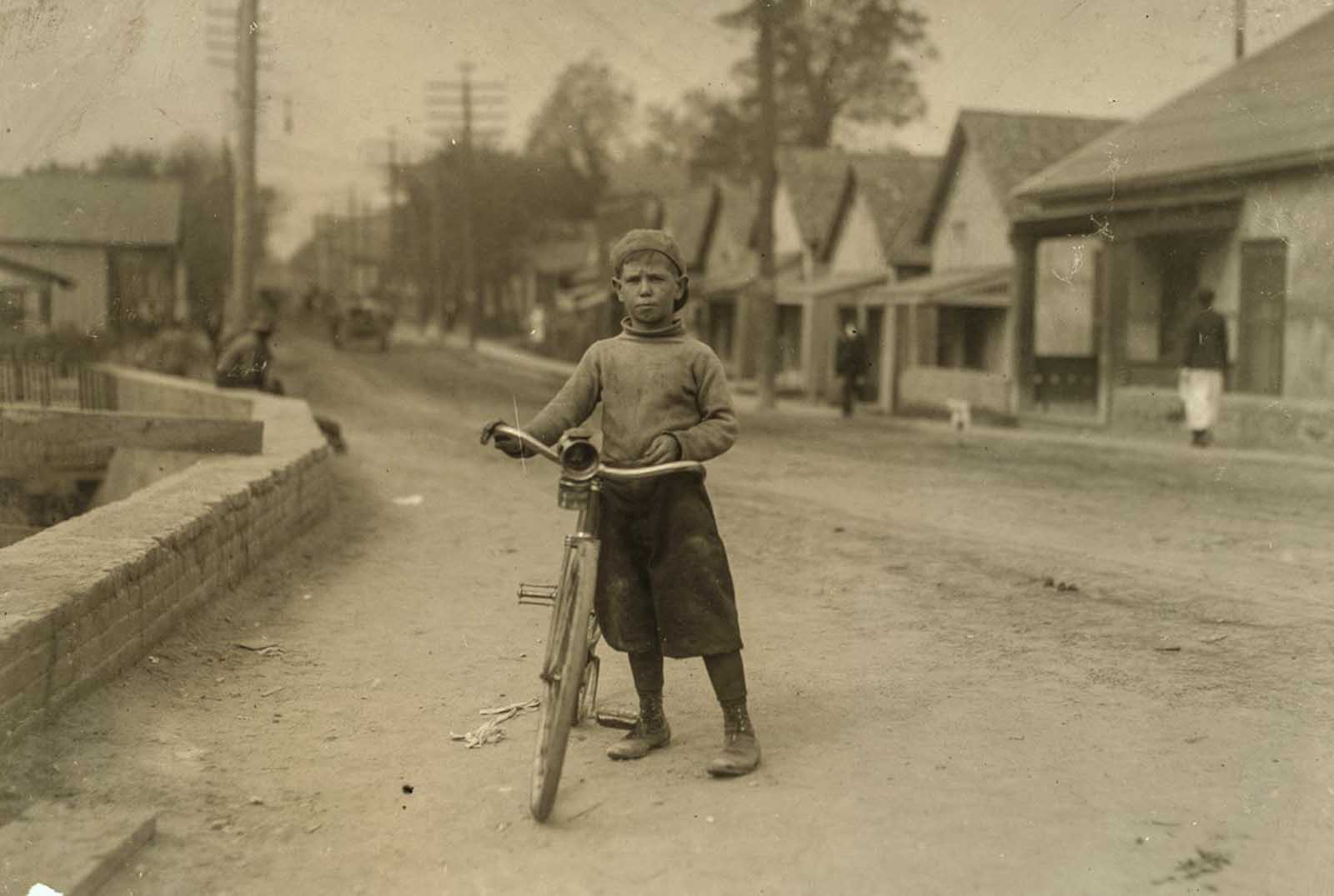
The photo shows him in the heart of the Red Light District where he was delivering messages as he does several times a day. Said he knows the houses and some of the inmates. Has been doing this for one year, working until 9:30 P.M. on Saturdays. Not so late on other nights. Makes from six to ten dollars a week. November, 1913.
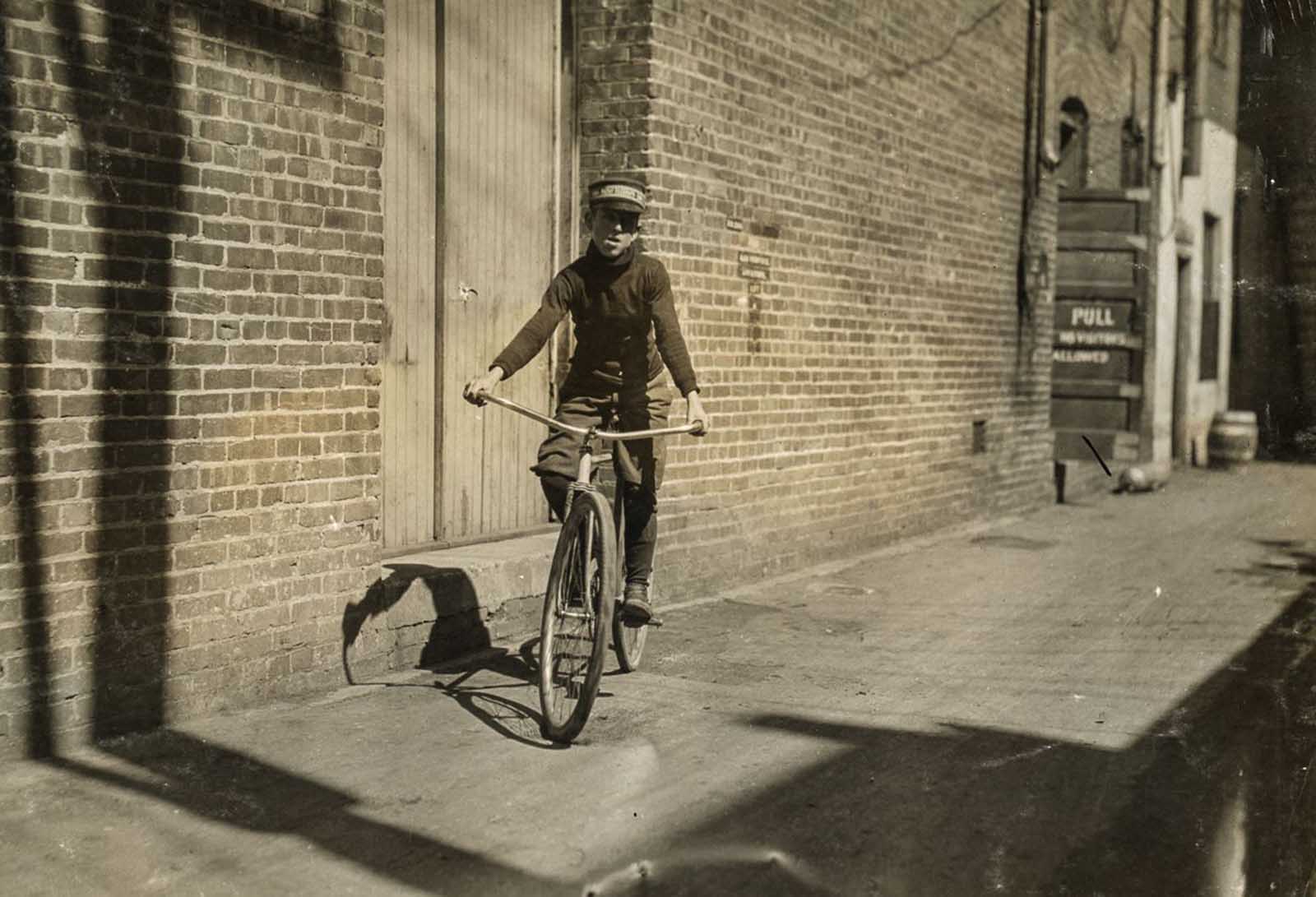
He is 14; school records say 13. Says he has a steady job – “Been a messenger for years. Get $15 for 2 weeks’ pay.” Location: Oklahoma City. March, 1917.
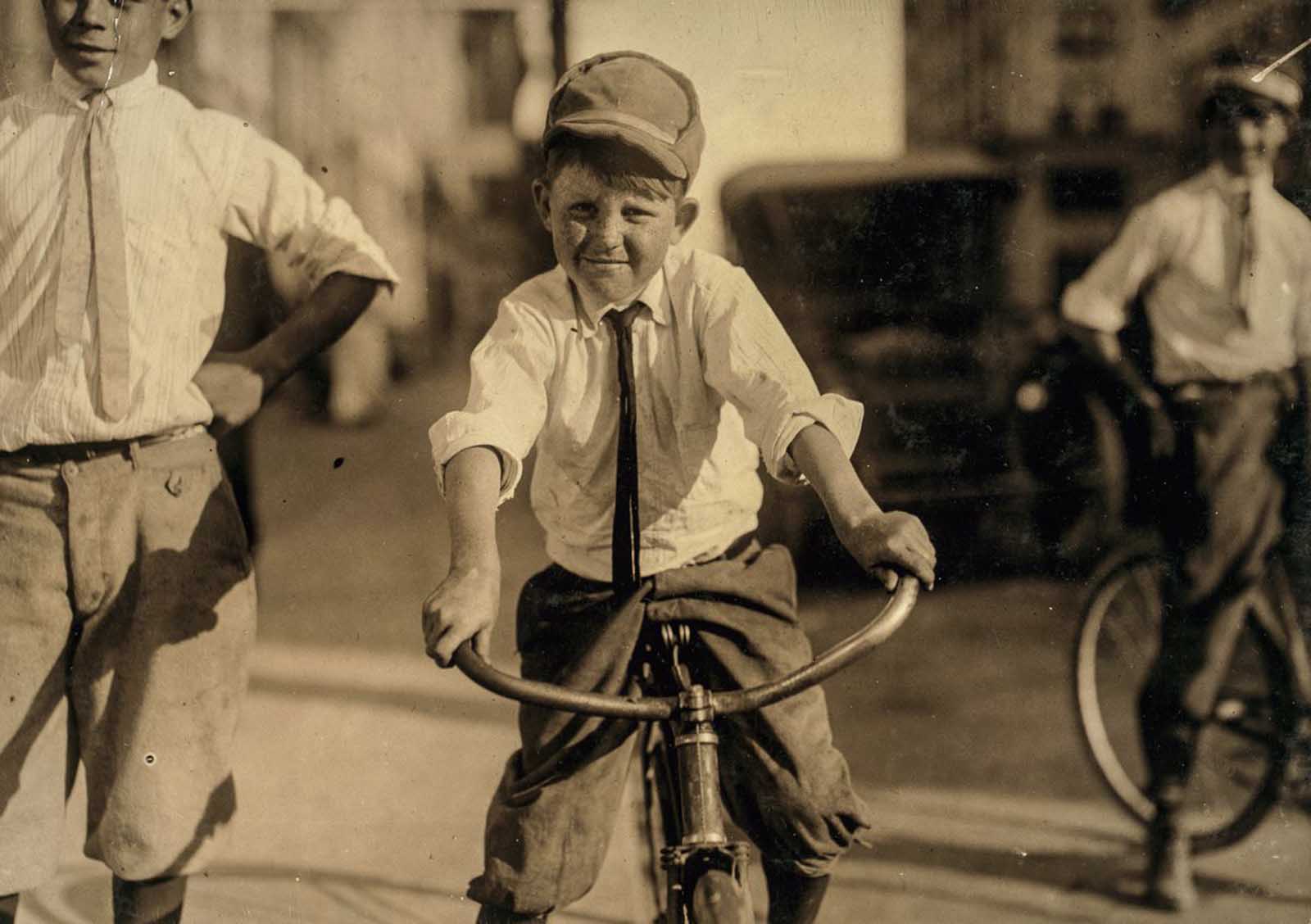
Been day boy here for five months. Goes to Red Light district some and knows some of the girls. Location: Houston, Texas, October, 1913.
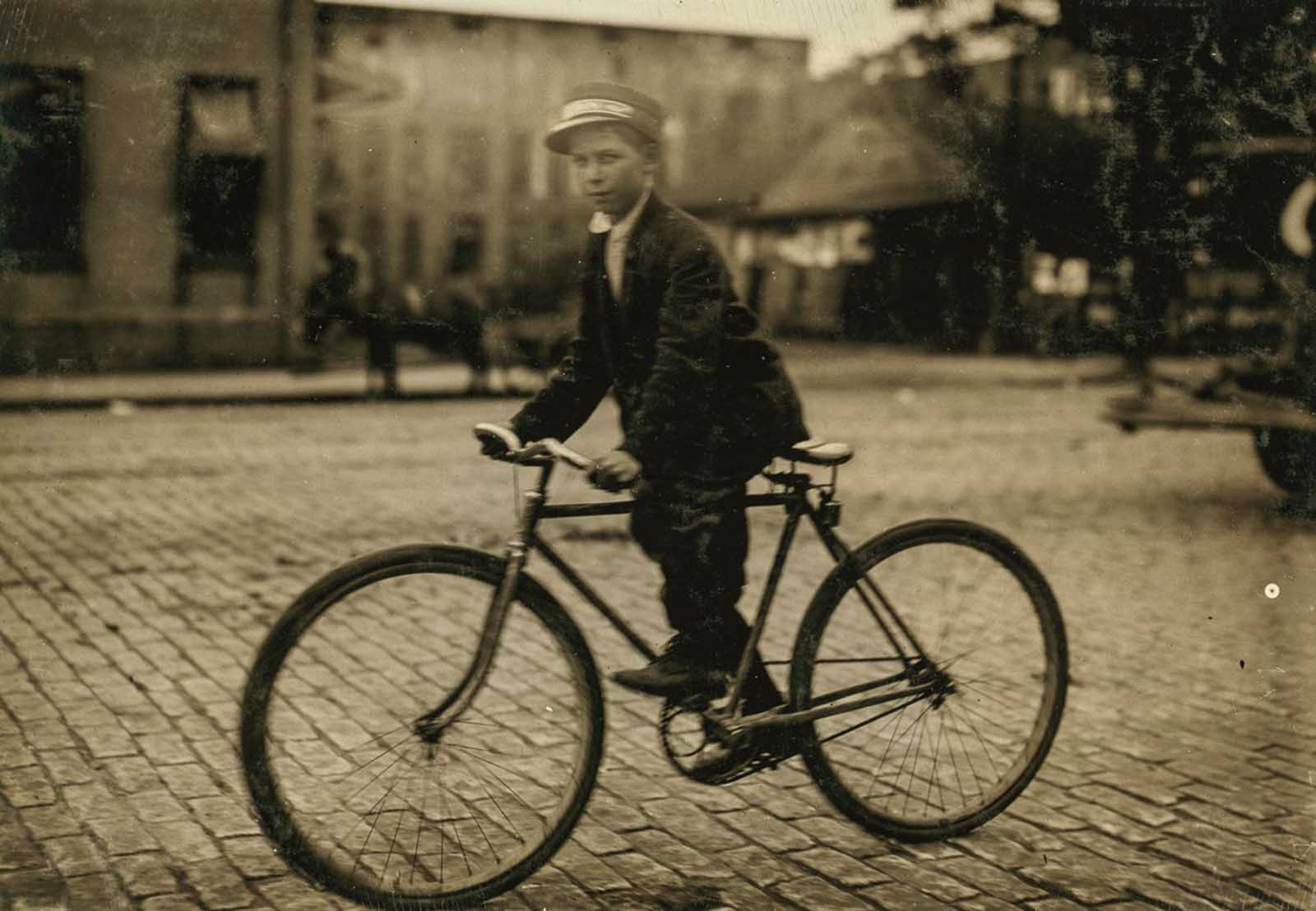
Frail, tiny and stunted. Works until 11 P.M. Says he goes to the Red Light some, and gets 25 cents extra then. Location: Montgomery, Alabama, October, 1913.
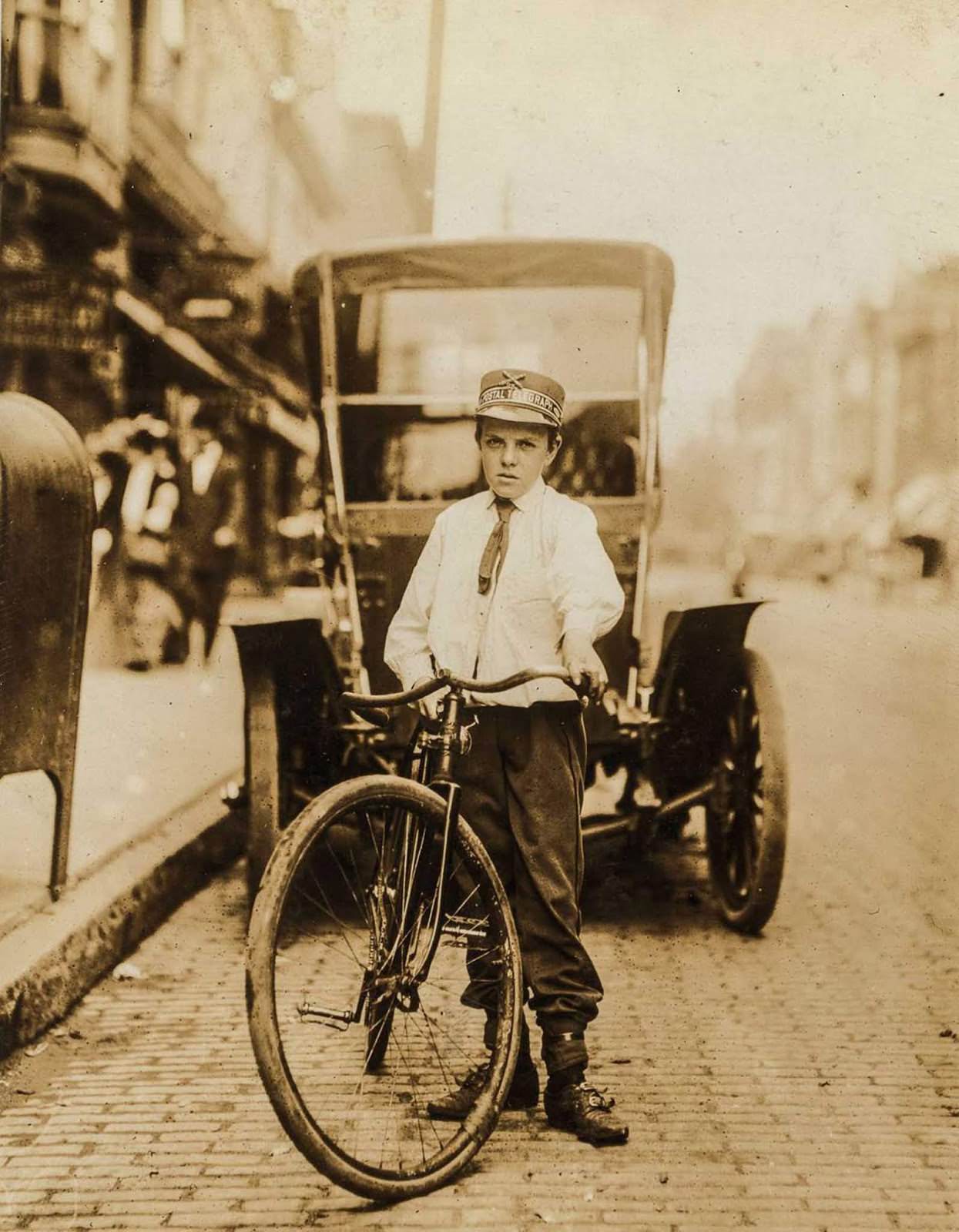
14 years of age. 1 year in service. Works from 7 a.m. to 6 p.m. $4 weekly. May, 1910.




