Catherine Deneuve is one of the most recognizable faces in the history of cinema. She is known for her cool, composed elegance, her work with Europe’s greatest directors, and her status as a global ambassador for French style. She is also almost never seen without a cigarette. For decades, the cigarette has been as much a part of her public image as her blonde hair and sharp cheekbones.
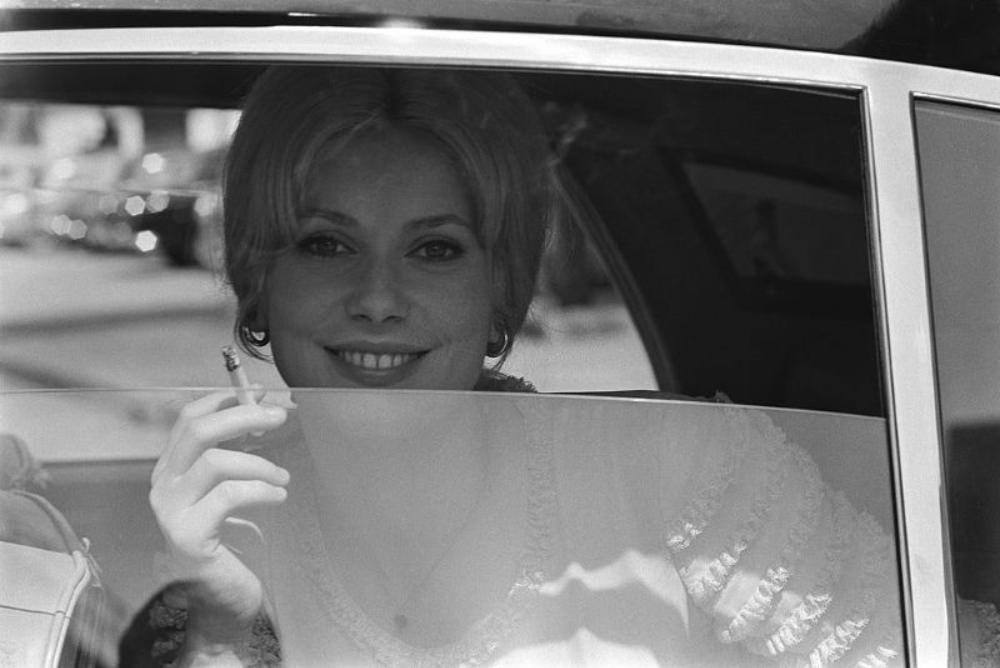
Deneuve has never pretended the habit is a good one. When people questioned her about smoking, she gave a characteristically dry answer: “I no longer inhale. It’s bad for your health.” It is the kind of response that is honest, a little funny, and completely her own. She acknowledged the contradiction without apology.
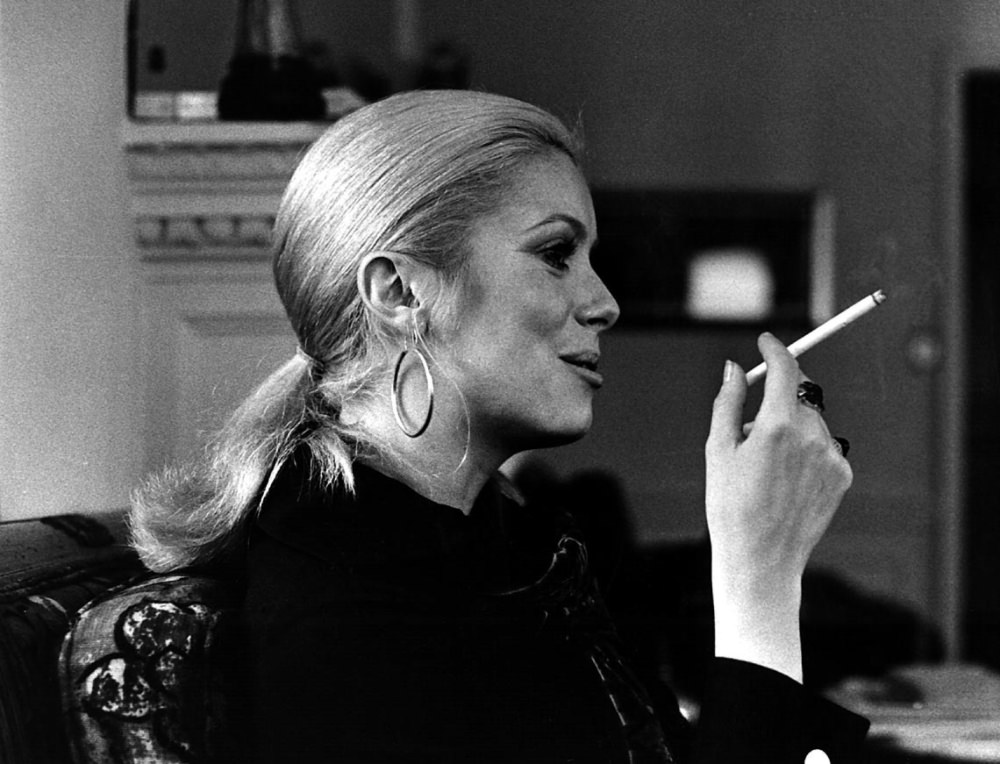
She has spoken openly about her inability to quit. “I try to do what is right with my health, but that is the only thing I haven’t managed to give up yet,” she has said. When people told her she should stop, she pushed back on the framing. “People say I should give up, which of course I should, but that’s not what I’d call advice. That’s a fact. Give me the advice to stop smoking without suffering — now that would be interesting.”
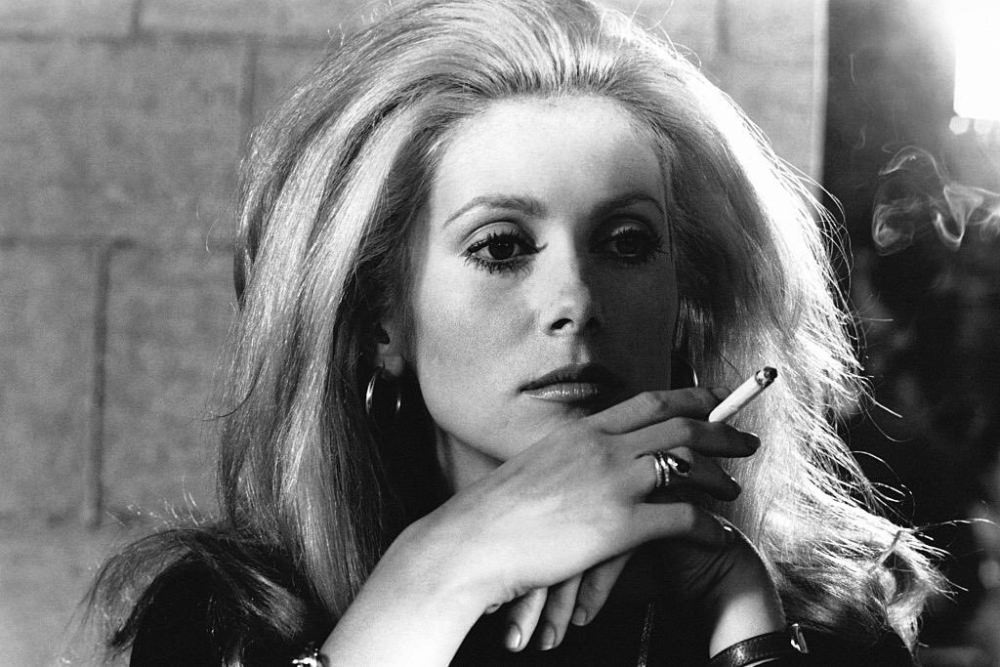
That response cuts to something real. The gap between knowing something is harmful and actually stopping is something millions of people understand. Deneuve simply named it plainly, without the usual performance of guilt or the promise to try harder.
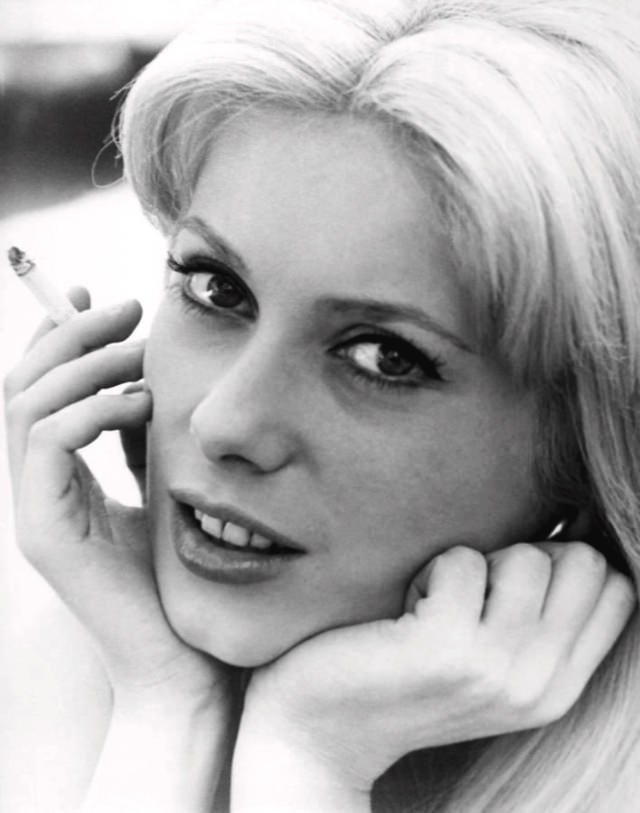
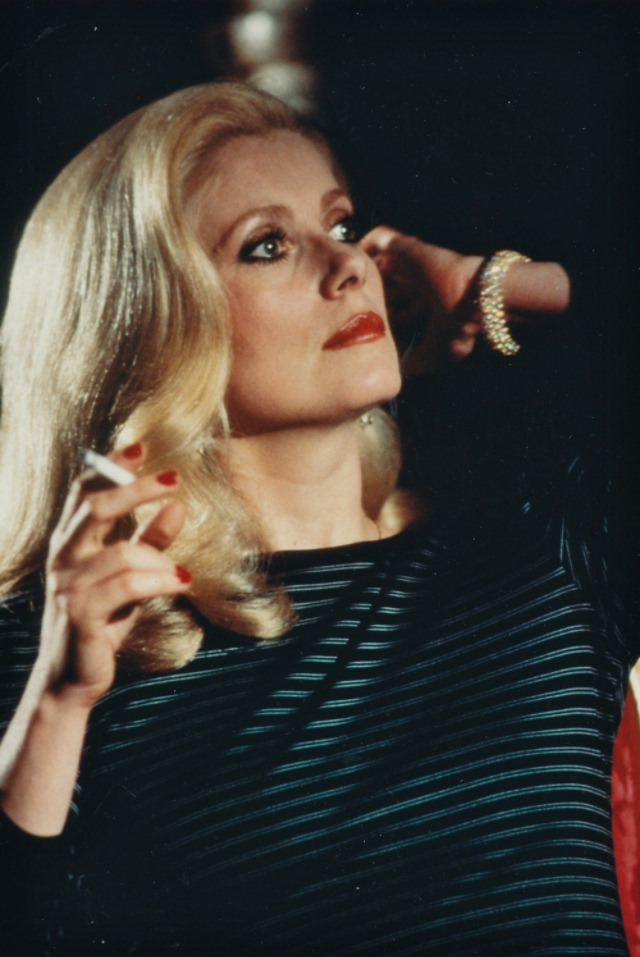
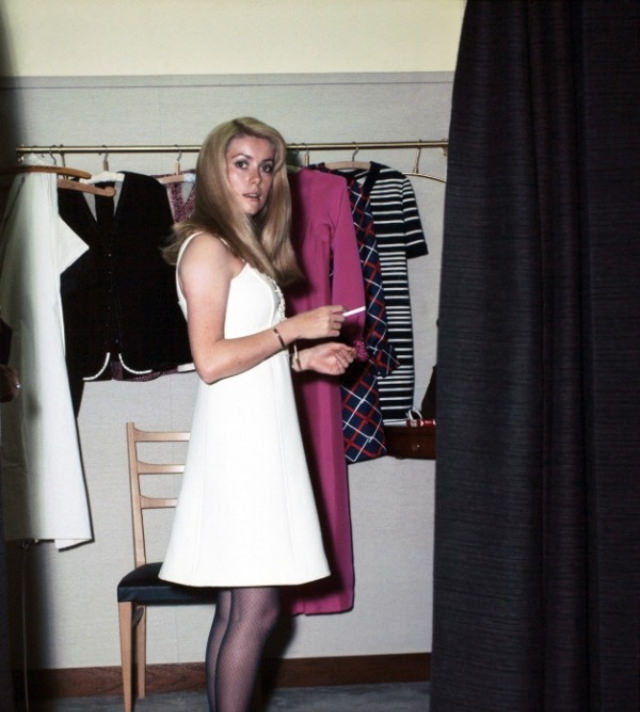
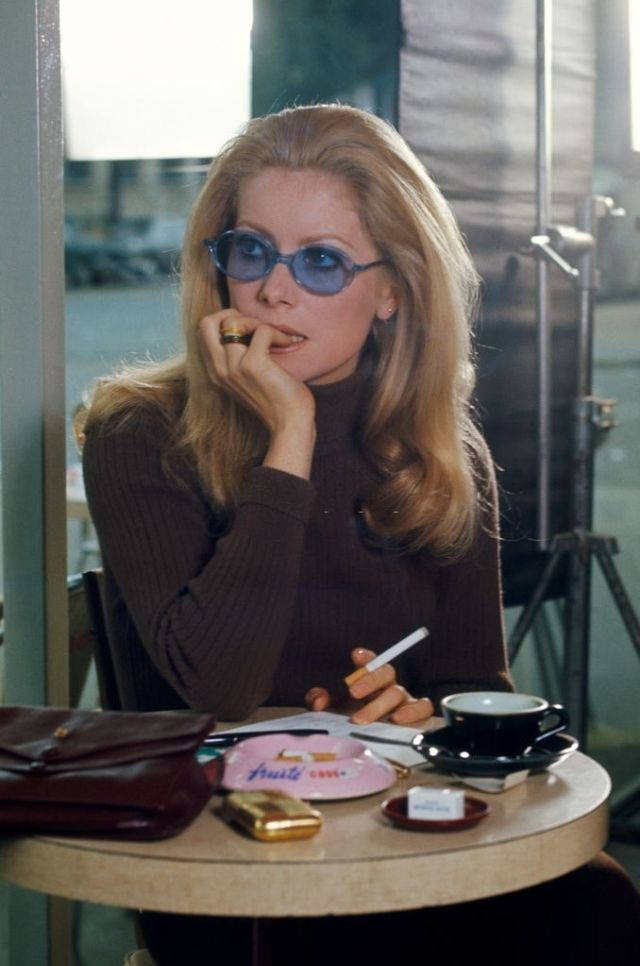
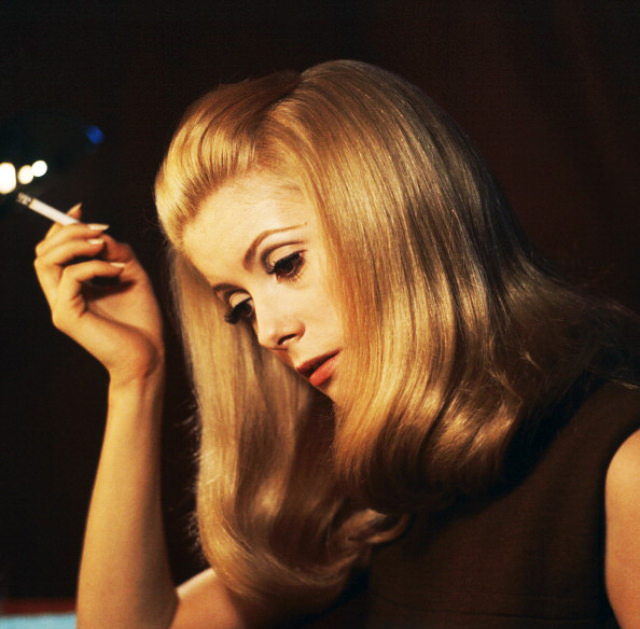
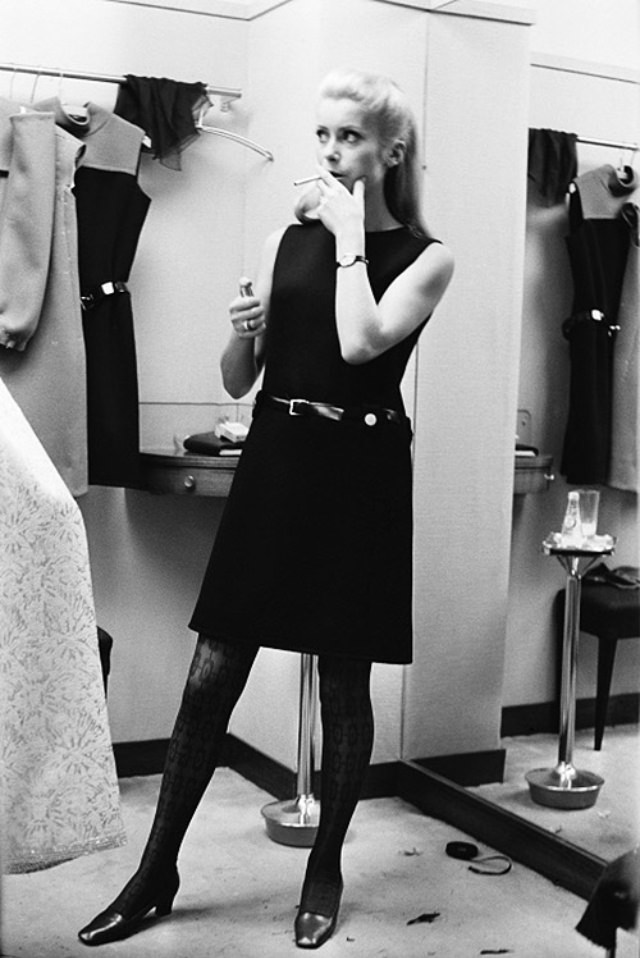
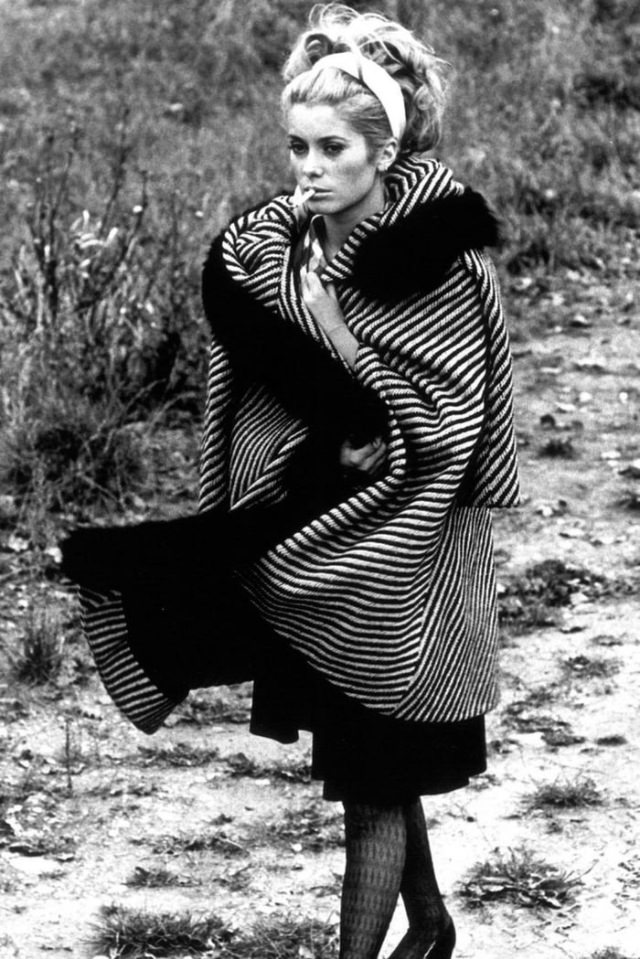
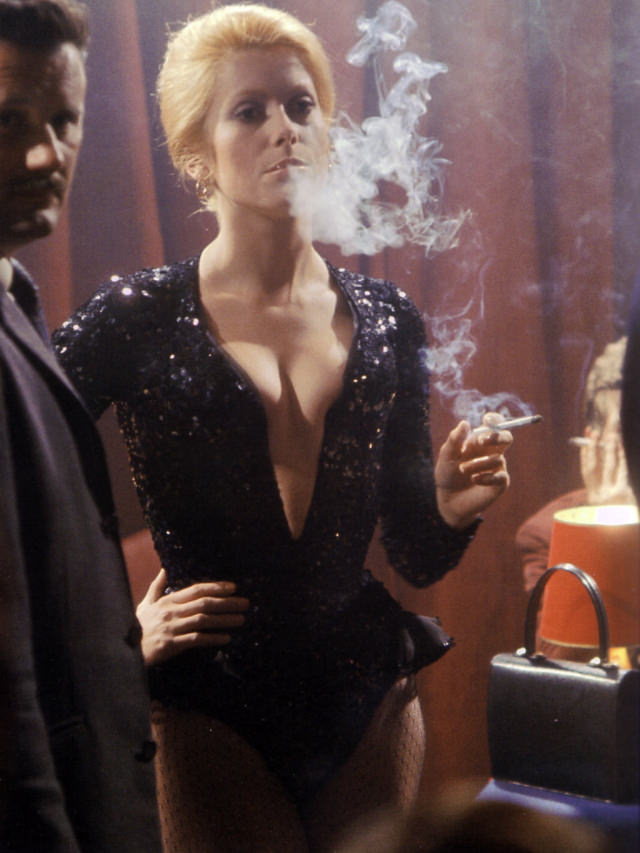
Photographs of Deneuve across five decades tell the same story. One cigarette is finished, and another is lit. The gesture is fluid, natural, and completely without self-consciousness. In many of her most famous photos — on film sets, at press events, in casual portraits — the cigarette is simply part of the frame.
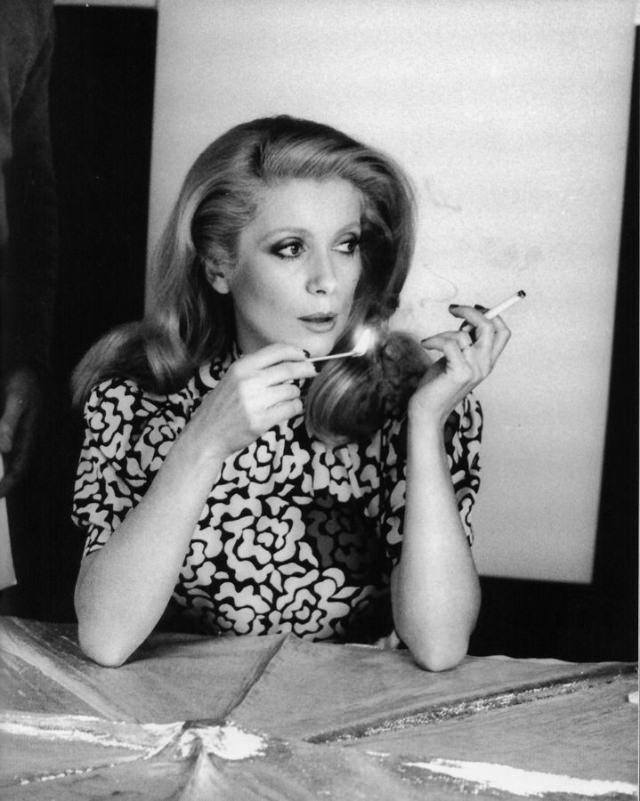
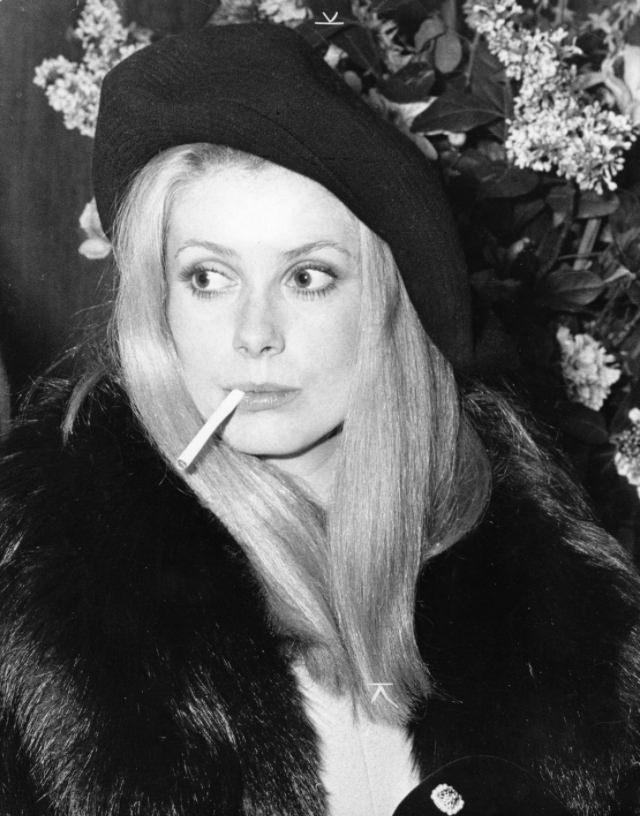
Born Catherine Fabienne Dorléac in Paris on October 22, 1943, Deneuve came from a theatrical family. Her father was actor Maurice Dorléac, and she adopted her mother’s maiden name, Deneuve, early in her career. She rose to international fame in the 1960s, quickly becoming associated with a particular kind of French femininity — precise, self-contained, and quietly formidable.
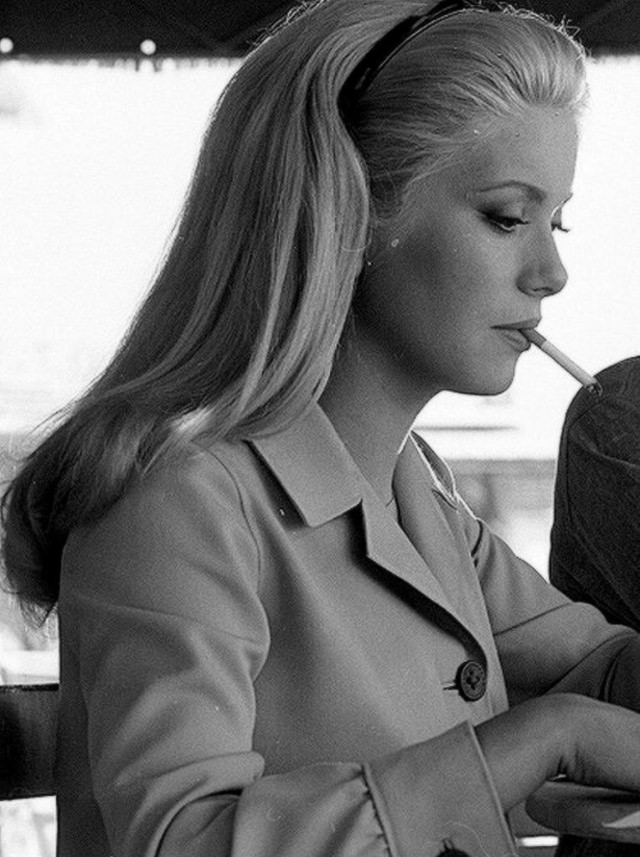
Her personal life during those years was far from quiet. While working in London, she met British fashion photographer David Bailey. The two married on August 19, 1965, after a brief courtship. Their relationship crossed a language barrier and weathered affairs on both sides before ending in divorce in 1972. By all accounts, the split was amicable.
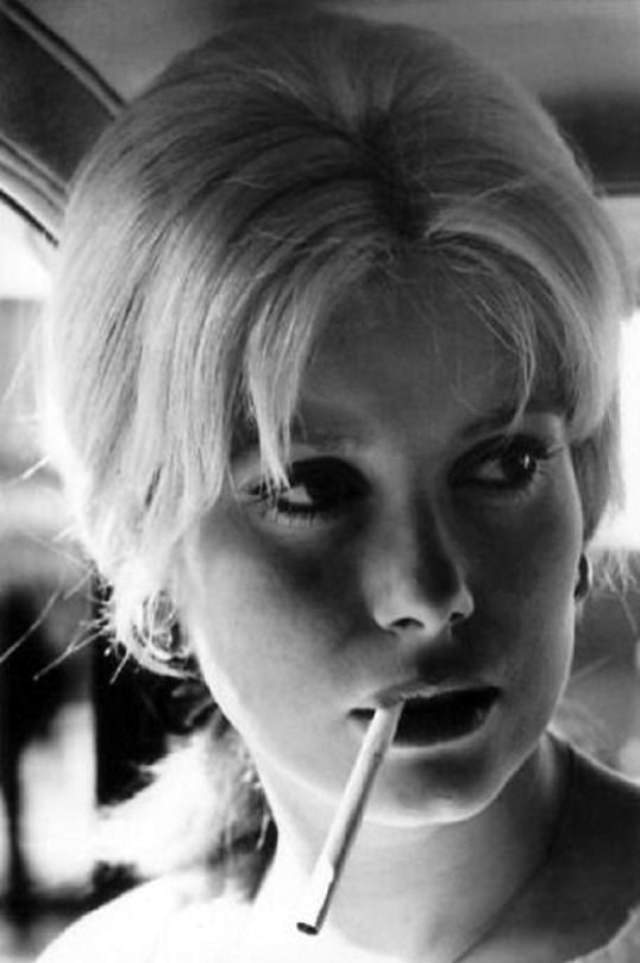
Throughout that decade, Deneuve built one of the most impressive filmographies in European cinema. She worked with directors like Luis Buñuel, Roman Polanski, and Jacques Demy. She had a particular gift for playing women who appeared calm on the surface while something much more complicated moved underneath. That quality — the hidden depth behind the composed exterior — defined her screen presence for generations.
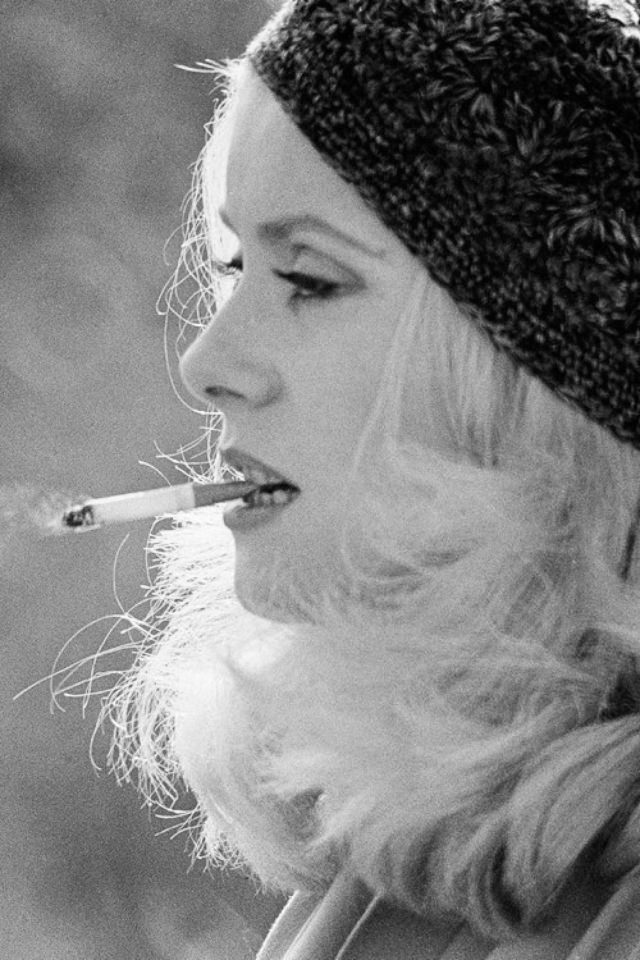
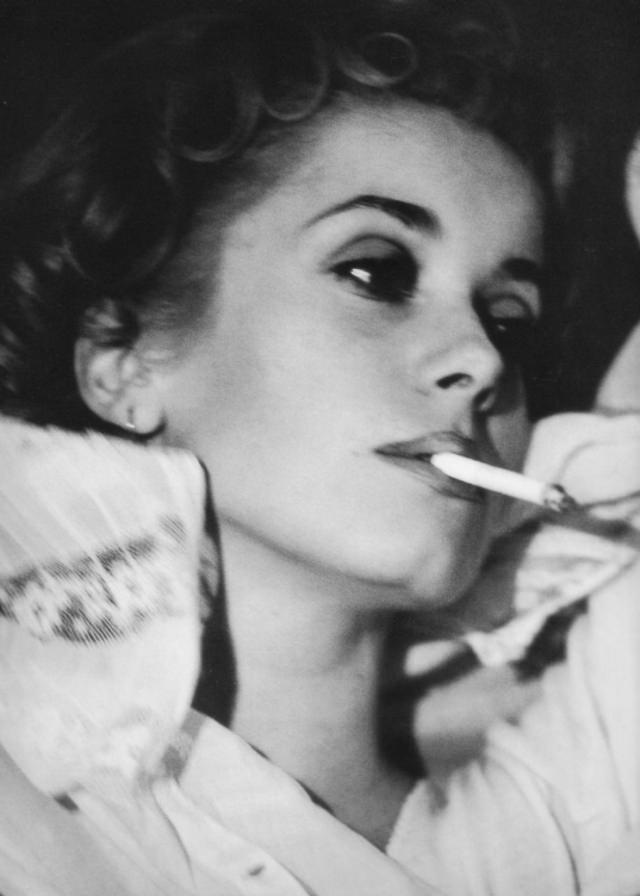
Off screen, Deneuve became a face of French luxury. She represented Chanel No. 5 and became closely associated with Yves Saint Laurent, who dressed her throughout her career. Her image sold perfume, fashion, and an idea of elegance that was distinctly French — not fussy, not trying too hard, but effortlessly assured.
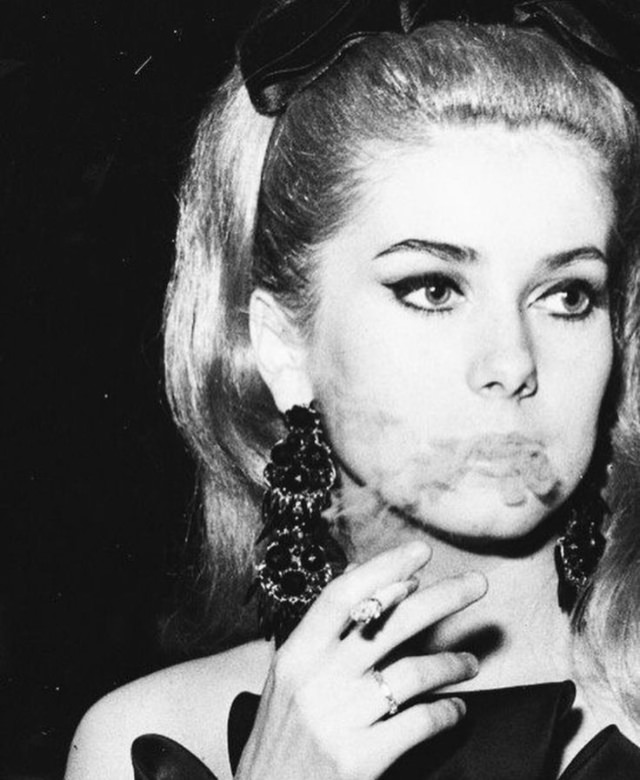
The cigarette fit neatly into that image. Smoking in France carried a different cultural weight for much of the 20th century than it did elsewhere. It was associated with intellectual life, with cafés, with artists and actors. For Deneuve, it was never a nervous habit or a fidget. It looked deliberate.
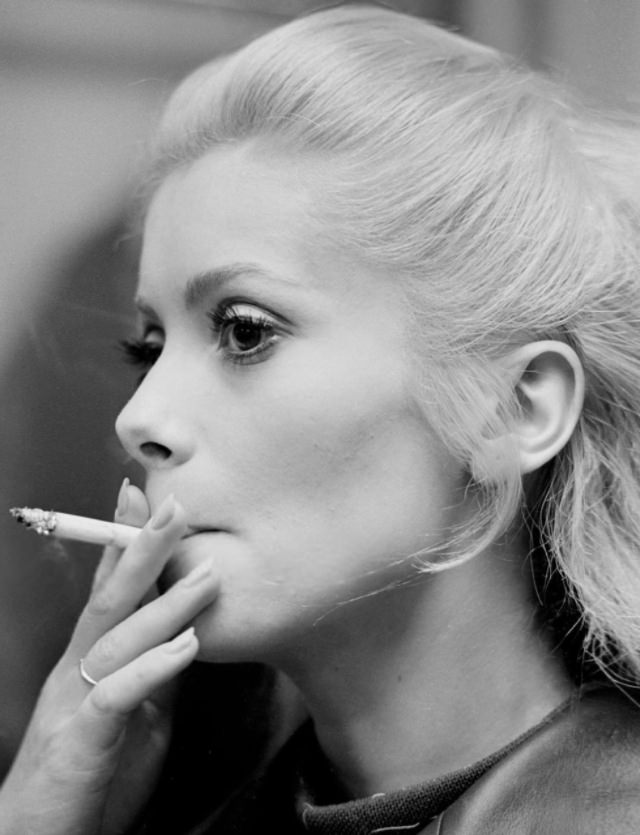
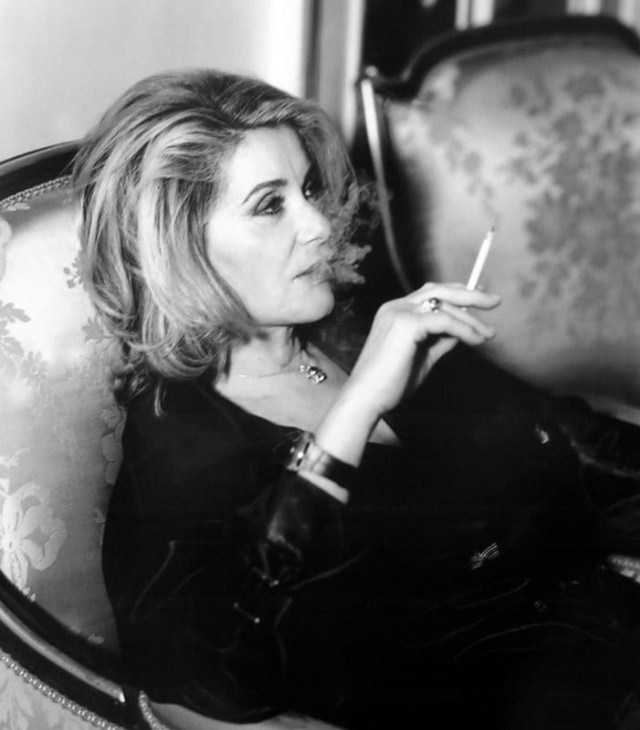
That said, Deneuve has not built her life entirely around her career or her public image. She is known to enjoy gardening, and she stays active by spending time with her grandchildren. These are deliberately private pleasures, far removed from film sets and fashion campaigns.
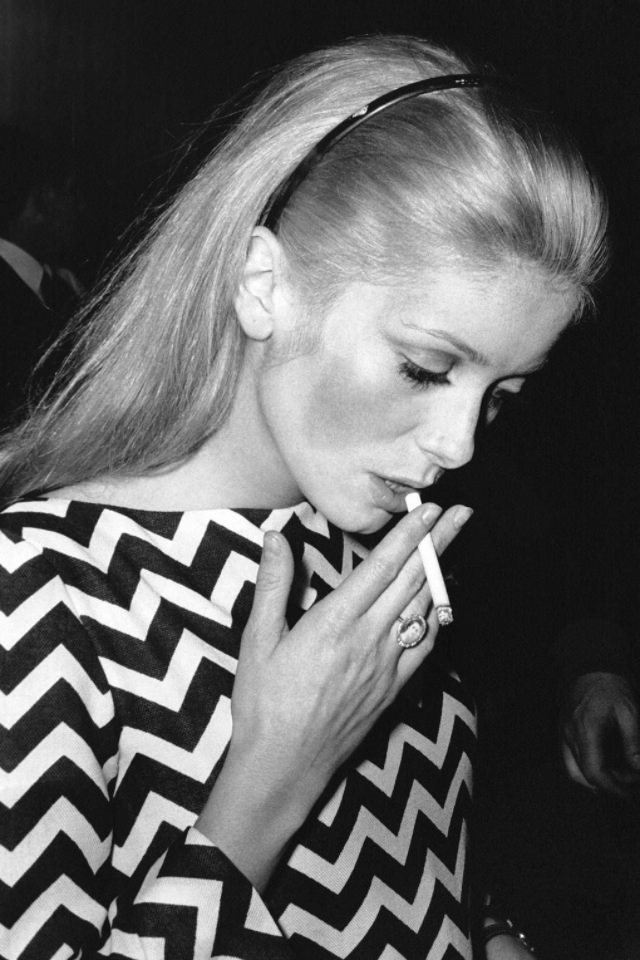
The cigarette, by contrast, has followed her into public life completely. It appears in portraits taken in the 1960s and in photographs taken decades later. The setting changes, the fashions change, but the gesture remains.
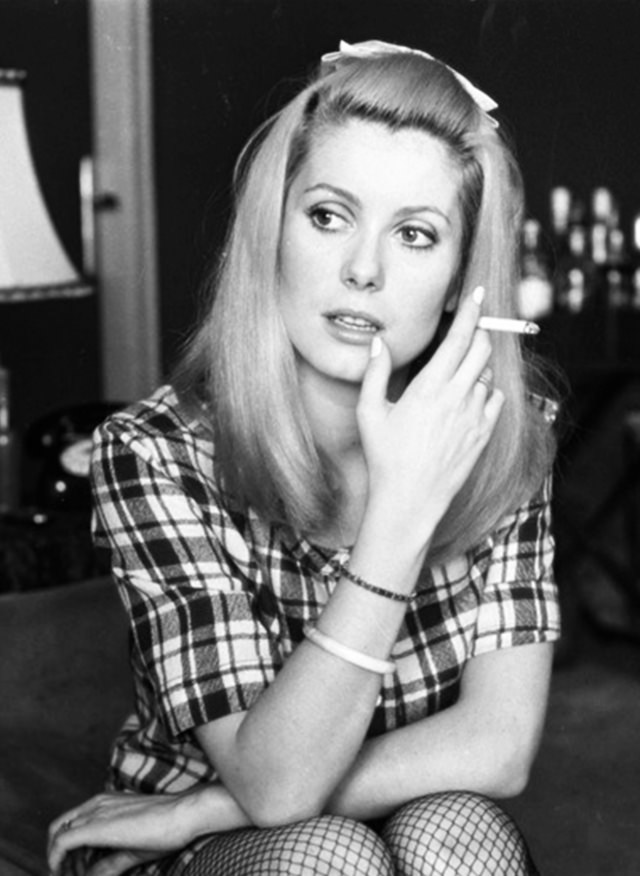
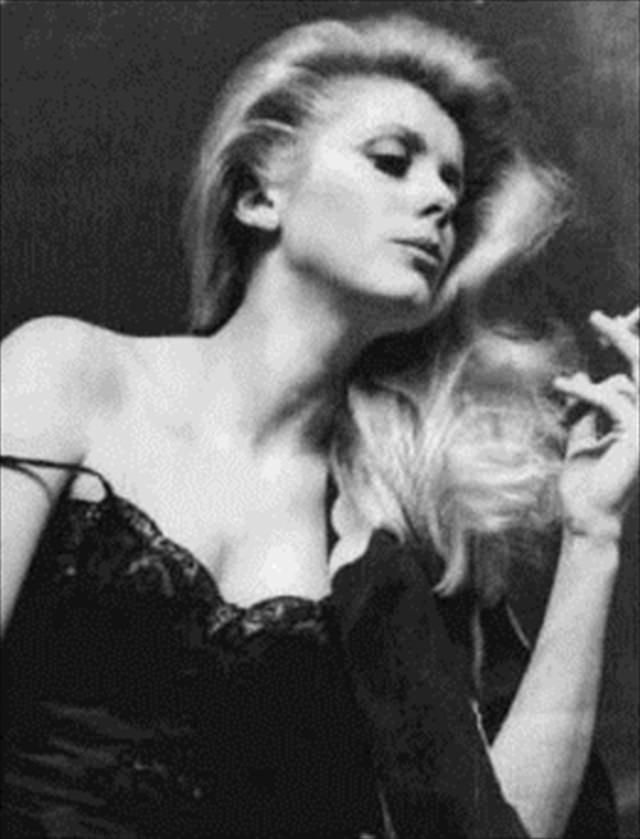
For many fans and photographers, Deneuve smoking has become inseparable from Deneuve as an icon. It is not glamorized in any constructed way — it is simply documented. She smokes, and people photograph her smoking, and the image accumulates over time into something that feels like a signature.
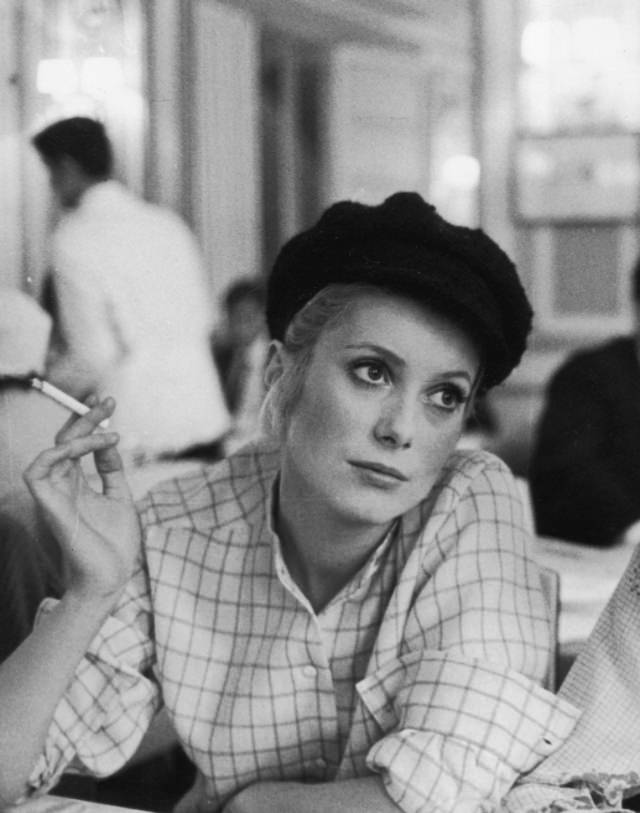
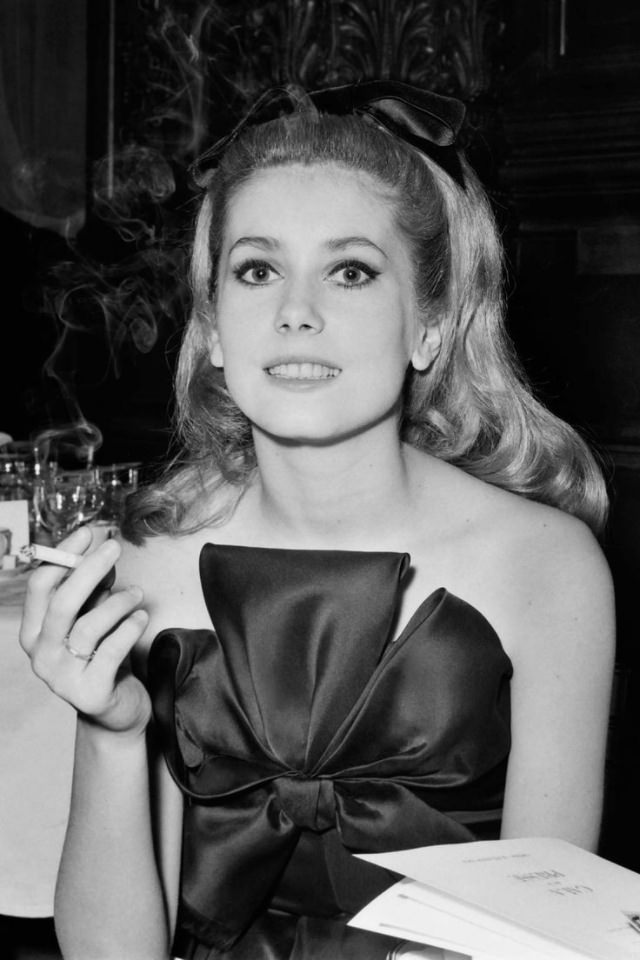
There is a certain consistency in the way she holds a cigarette — relaxed, never performative. Some people smoke as a social prop or to fill silence. Deneuve looks like someone who simply wants a cigarette and is having one.
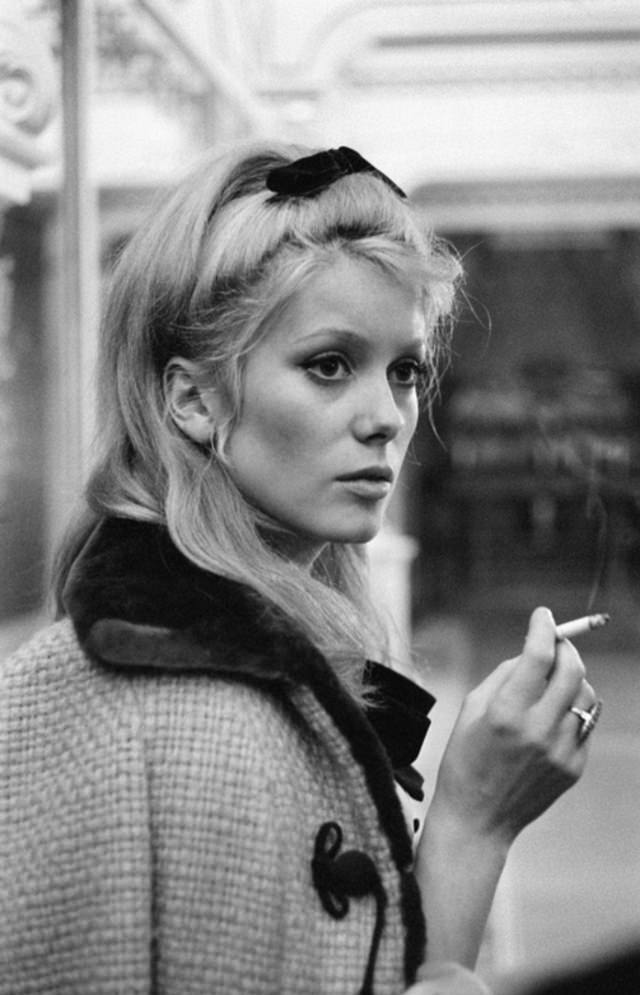
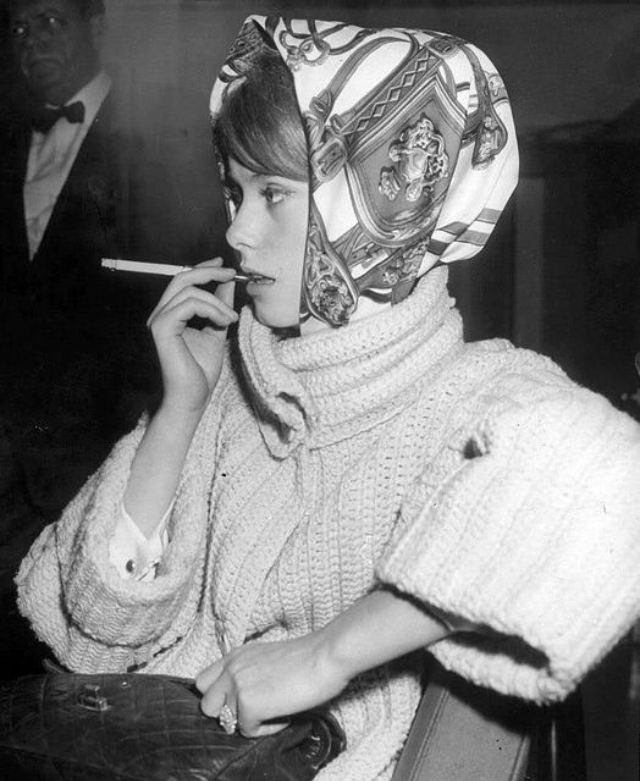
That directness has always been part of her appeal. In interviews, she does not perform warmth she does not feel or make statements she does not believe. When she said that quitting without suffering would be the advice worth hearing, she was not being glib. She was naming a real problem that no one had actually solved for her.
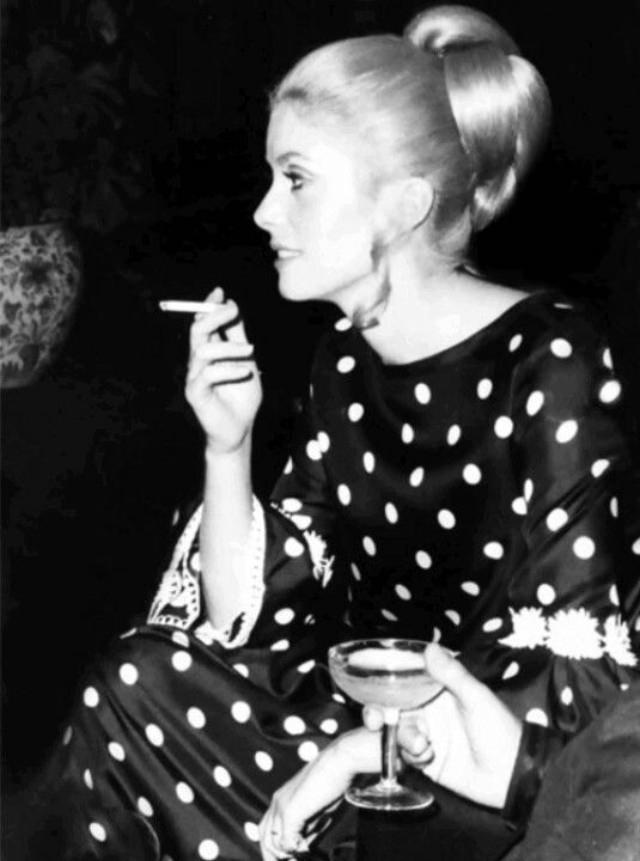
Her career has spanned more than six decades. She has made well over 100 films. She has received César Awards, a BAFTA nomination, and an Academy Award nomination for Best Actress for her role in Indochine in 1993. Through all of it, the cigarette has remained.
There is no mythology being constructed here. Deneuve herself is not sentimental about the habit. She knows what it is, she knows the risks, and she has stated plainly that she has not stopped. That honesty is consistent with everything else known about her public character.
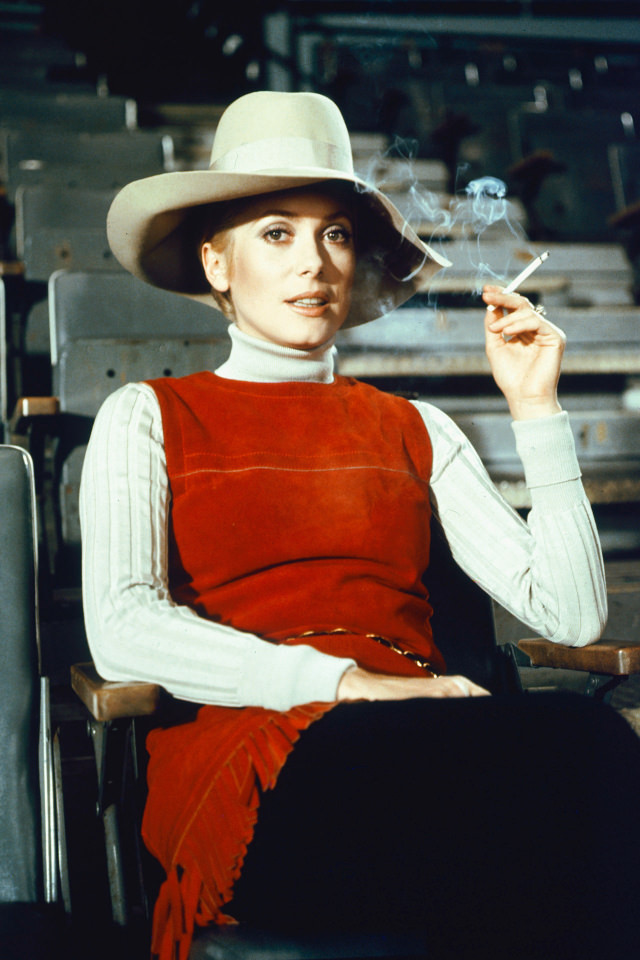
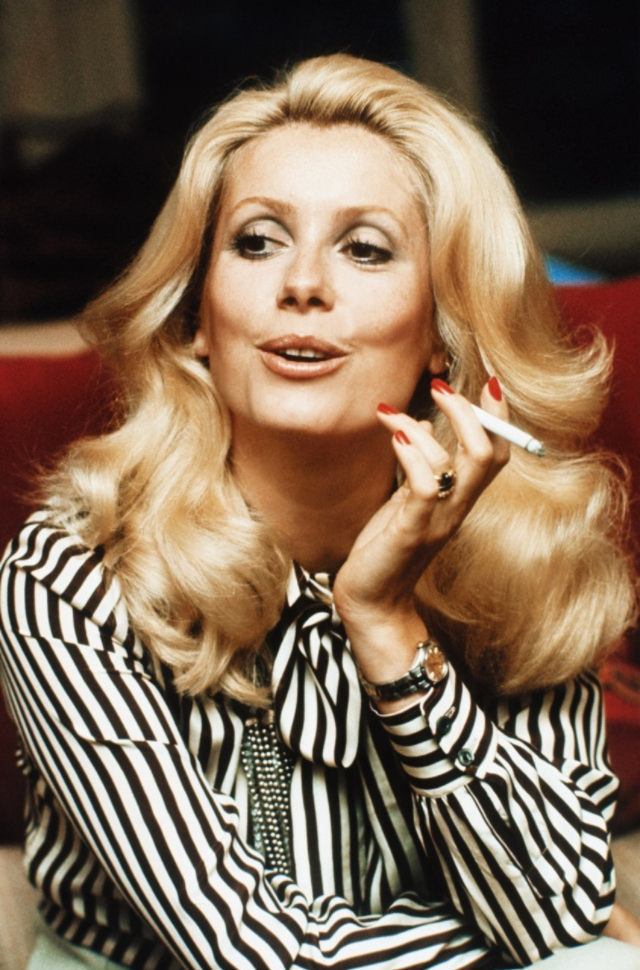
What the photographs collected here show is not a curated image of smoking as style. They show a real habit belonging to a real person — one who happens to be among the most filmed and photographed women in French history. The cigarette in Deneuve’s hand is not a prop. It is simply hers.