
Scarborough in the 1990s was one of Britain’s most beloved seaside destinations. Families arrived in droves every summer, drawn by wide sandy beaches, the sharp smell of salt air, and the promise of a proper seaside holiday. The town had an energy that was hard to replicate — loud, colourful, and unmistakably northern. From a bird’s-eye view, the scale of the town centre becomes clear, with shops, streets, and the seafront all packed tightly together.
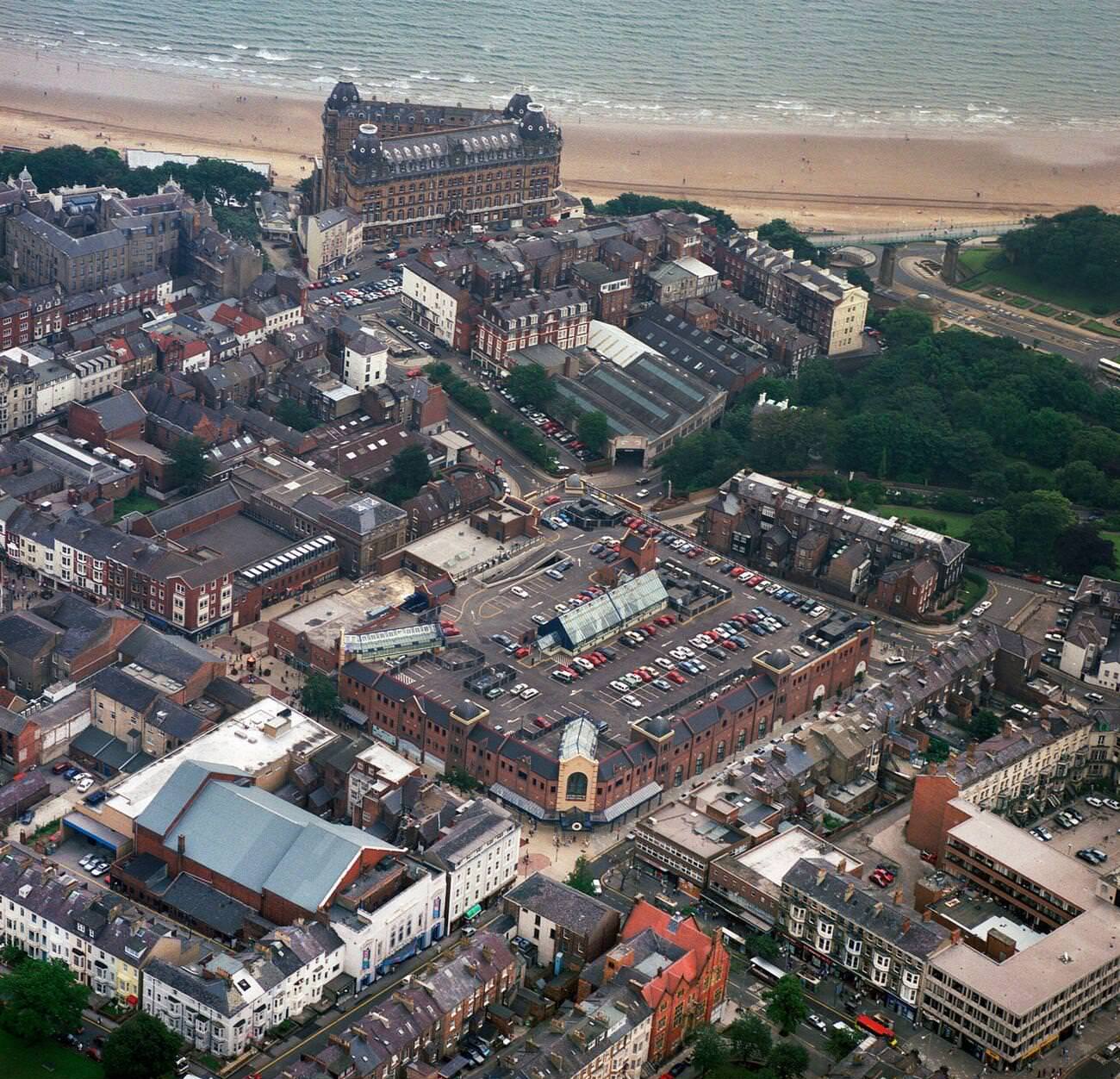
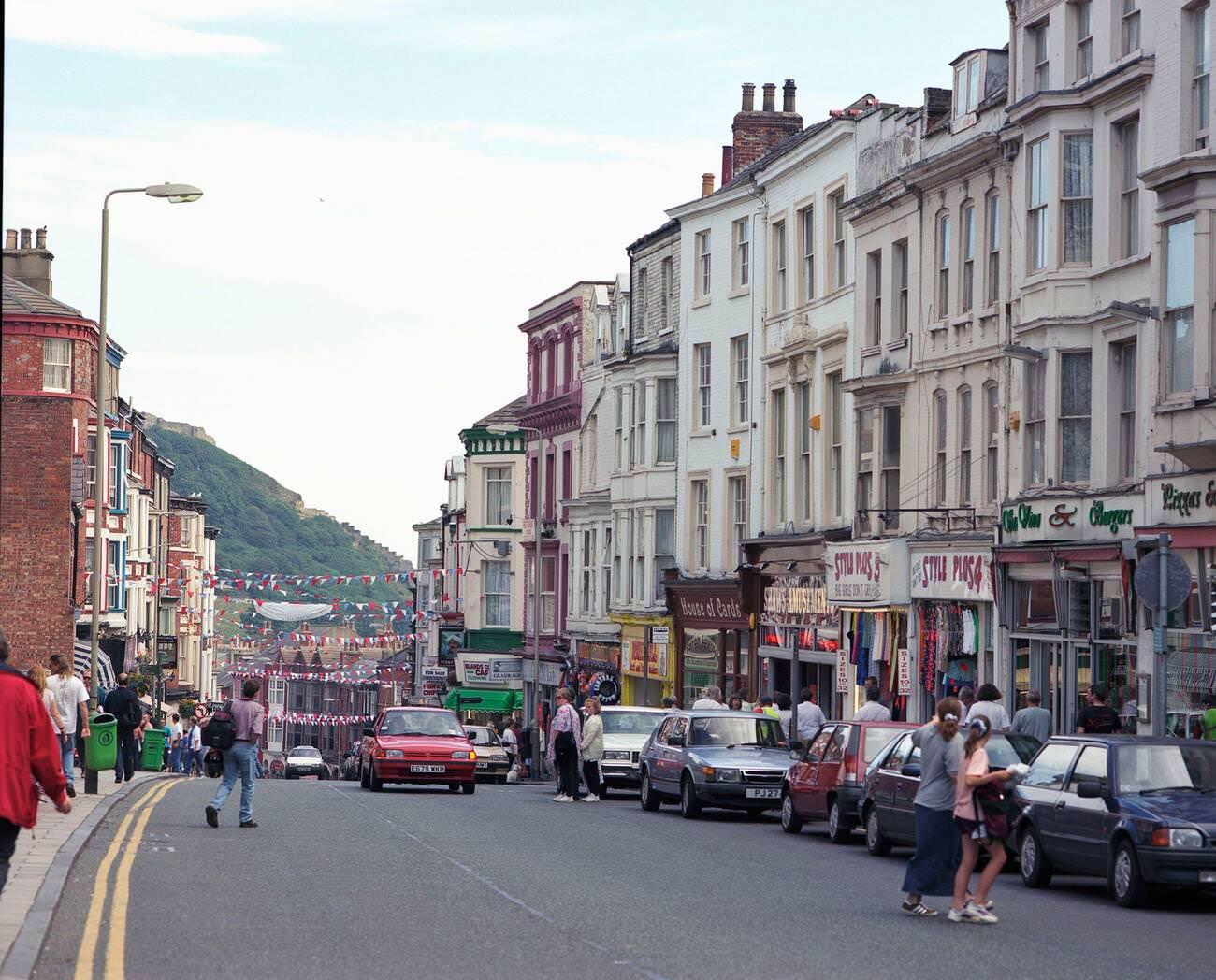
The town centre itself was a busy place throughout the decade. A mix of independent shops, well-known high street names, and souvenir stores lined the streets. Woolworths was a firm favourite, selling everything from pick-and-mix sweets to household goods. The streets stayed full well into the evening, especially during peak summer weeks.
Scarborough’s coastline was divided into two distinct bays. North Bay offered a long, open stretch of sand ideal for families — sandcastles, paddling, and rows of brightly painted beach huts along the promenade. South Bay was the louder, busier side, home to the harbour, amusement arcades, and donkey rides that were a childhood rite of passage. The seafront photographs from this era capture just how packed those beaches could get.
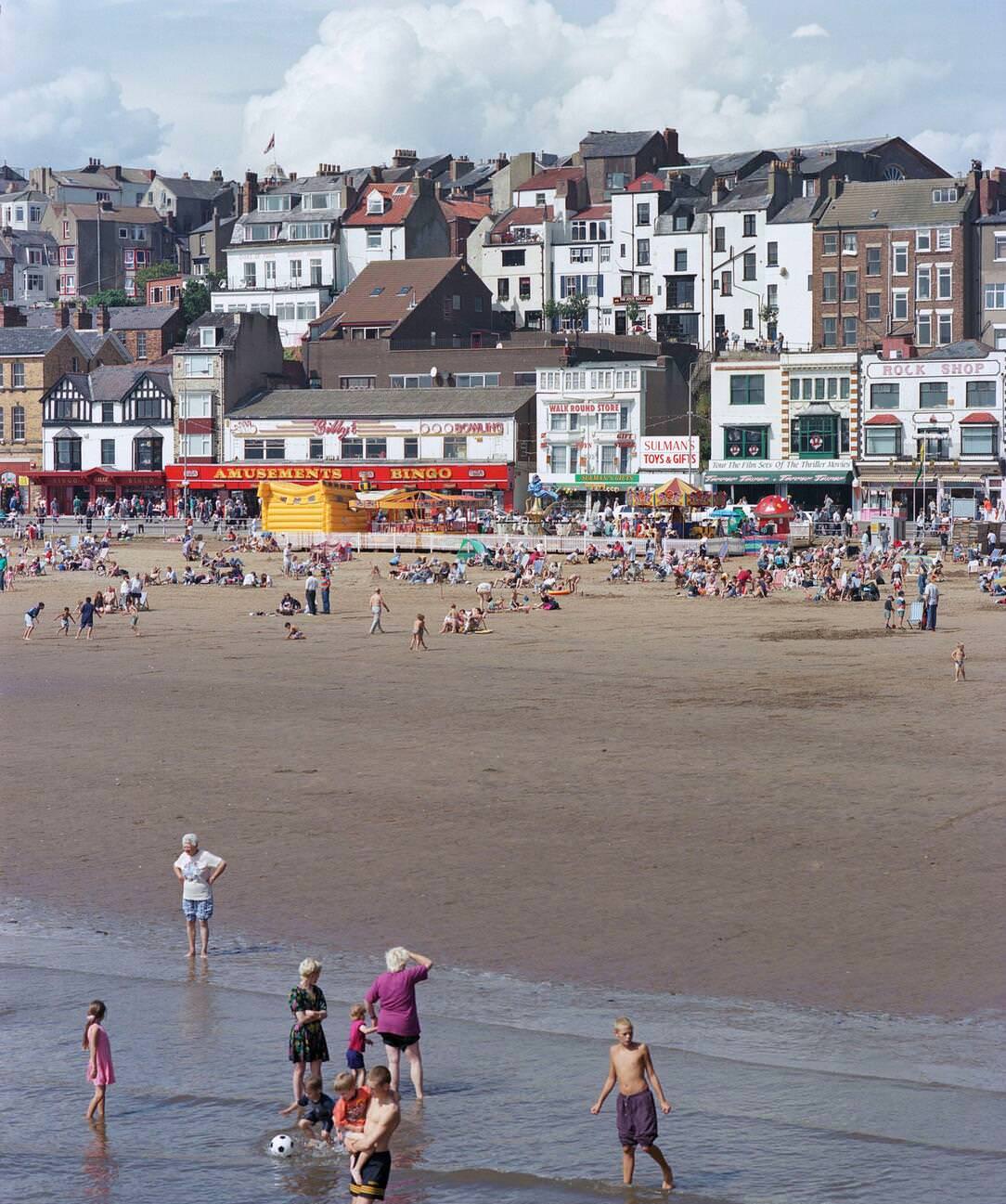
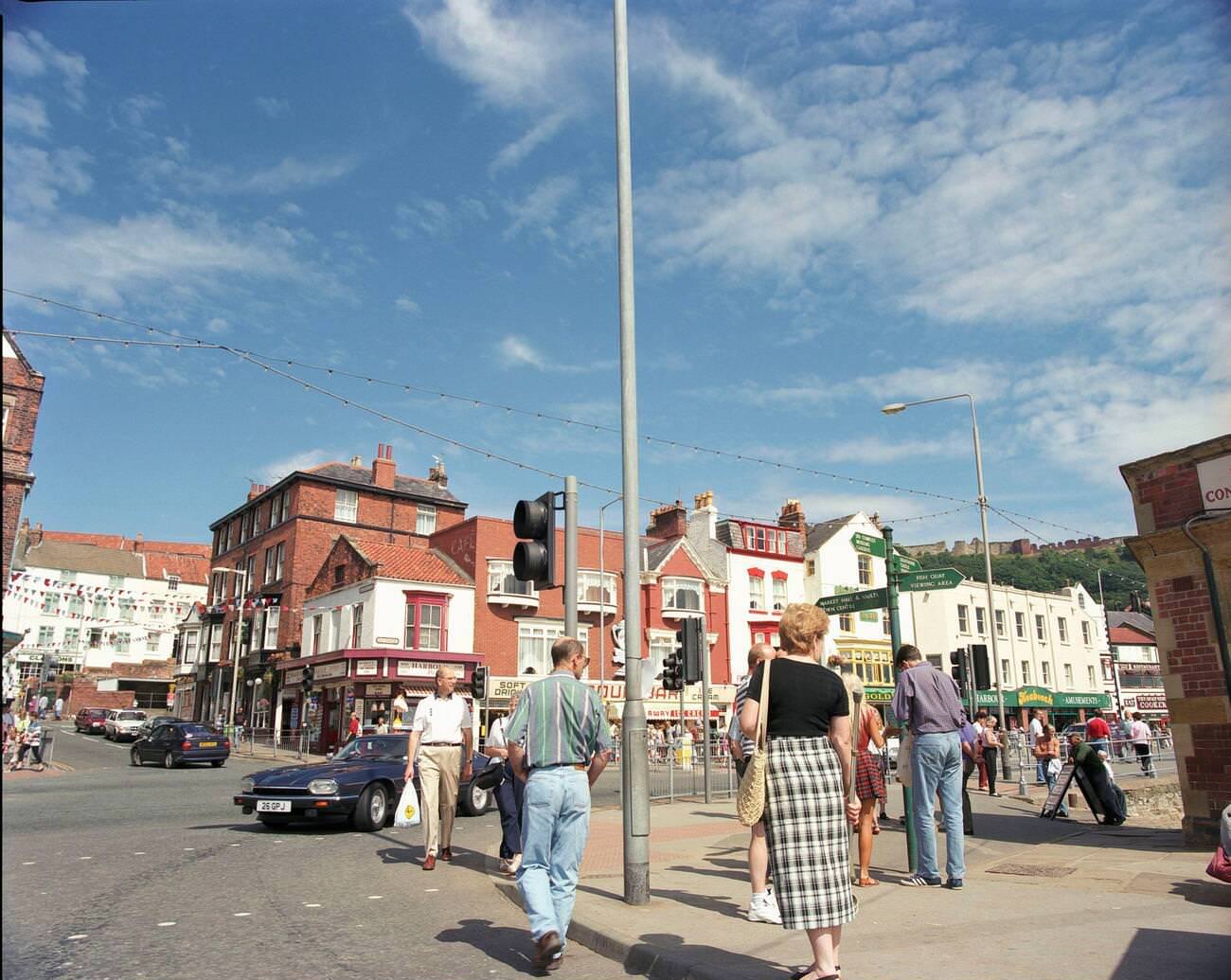
The amusement arcades along the seafront were a major part of the Scarborough experience. Flashing lights, the clatter of coins, and the blaring sounds of Pac-Man and Street Fighter cabinets spilled out onto the promenade. Children fed machines with 2p pieces and cashed in winning tickets for plastic toys or stuffed animals. No visit was complete without a paper cone of hot fish and chips eaten on a bench facing the sea.
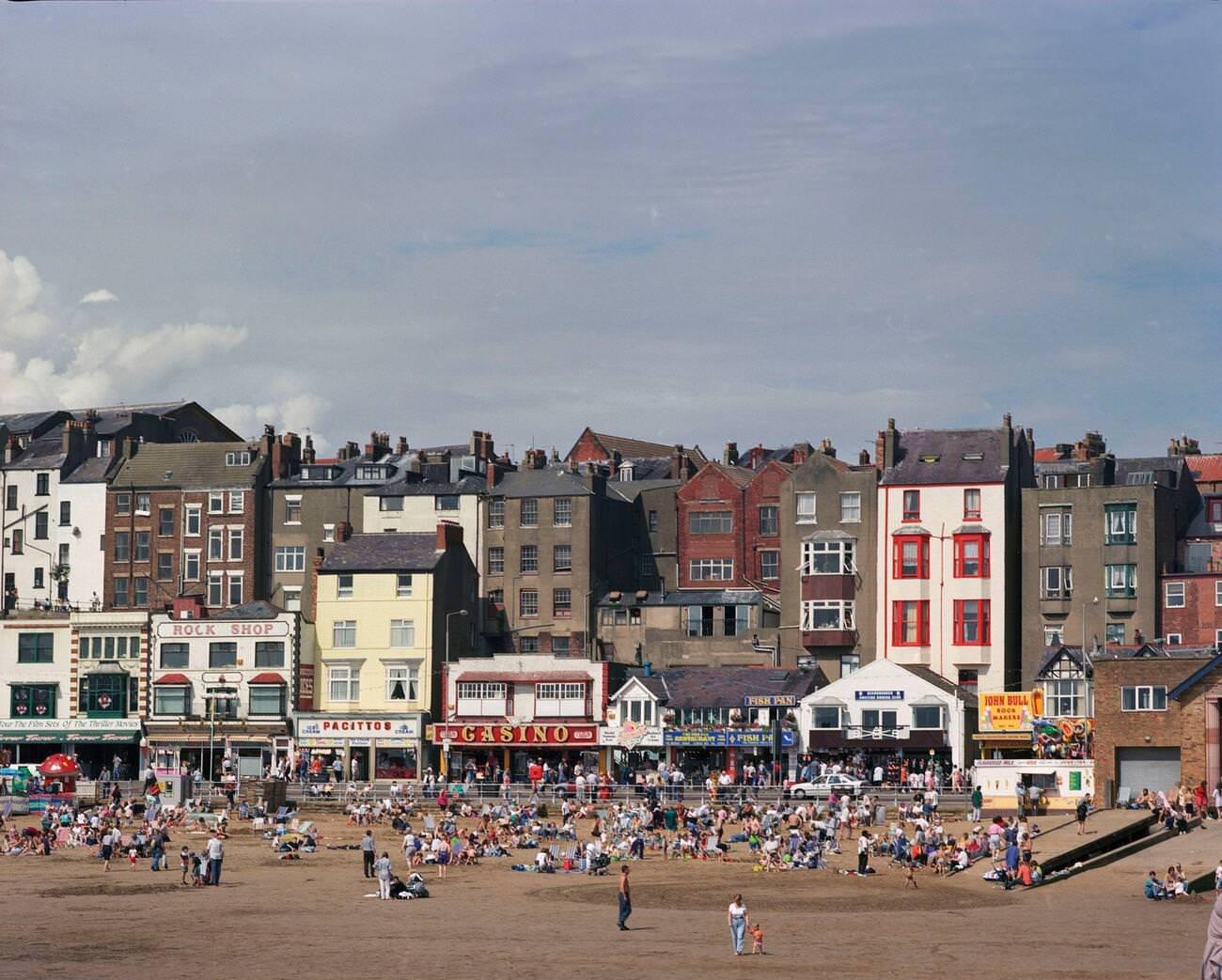
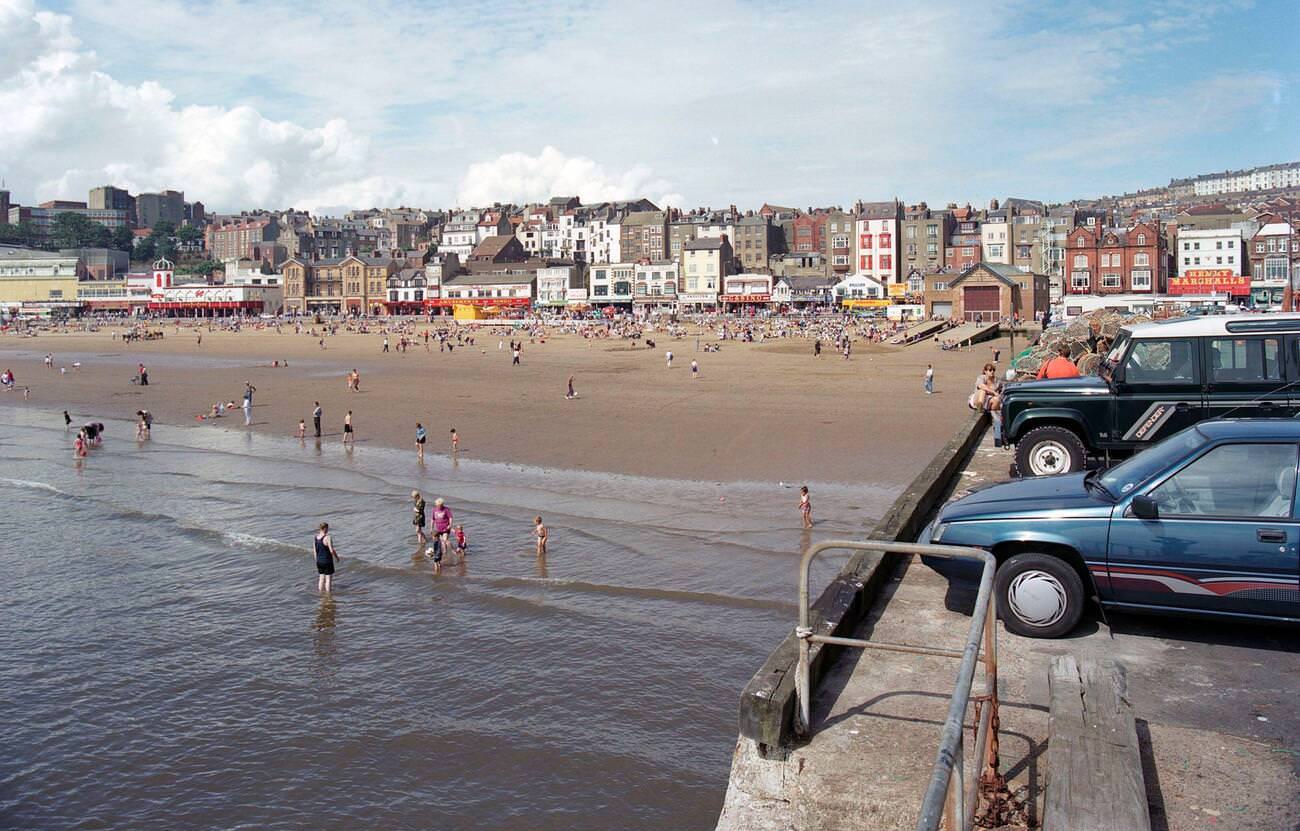
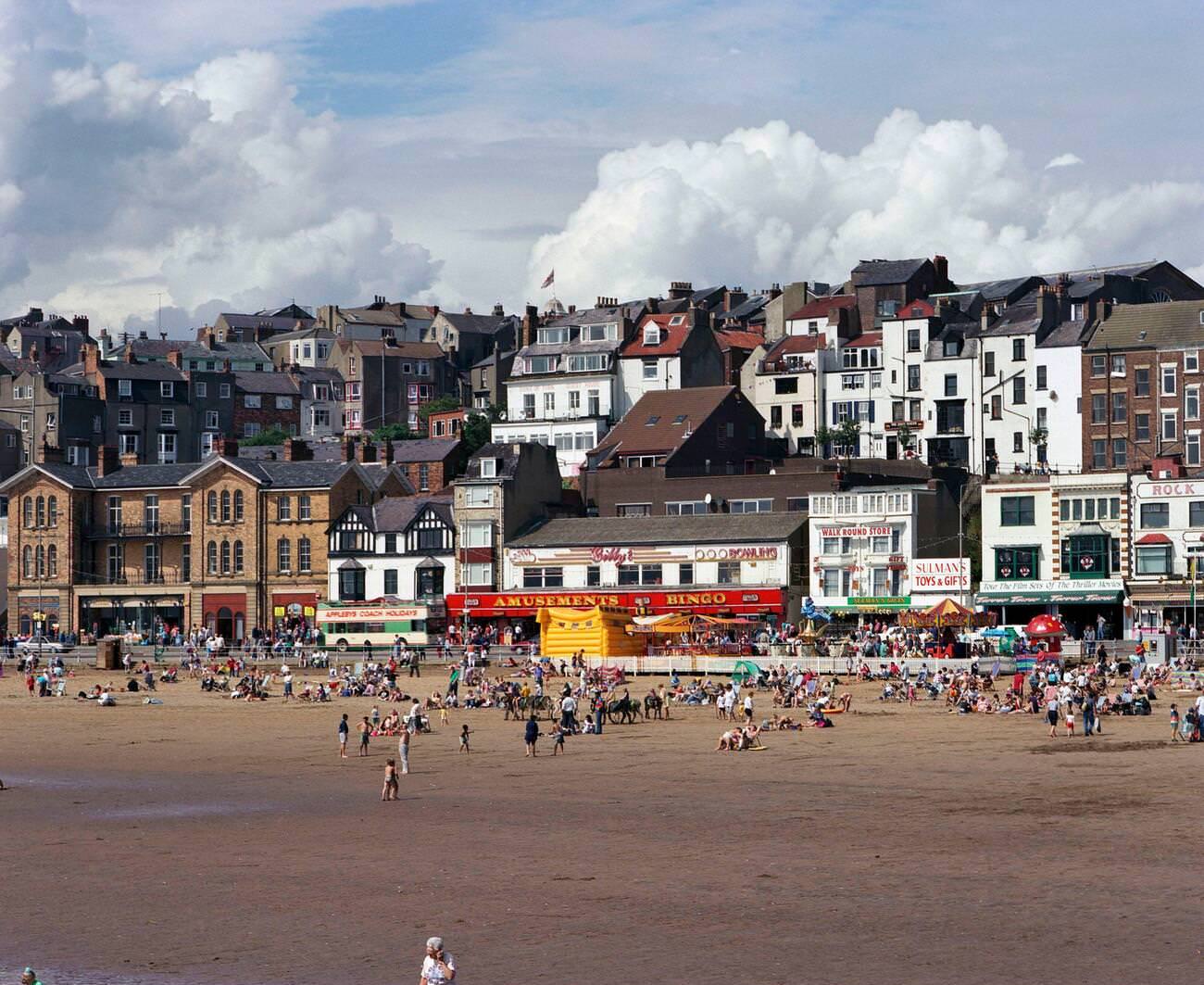
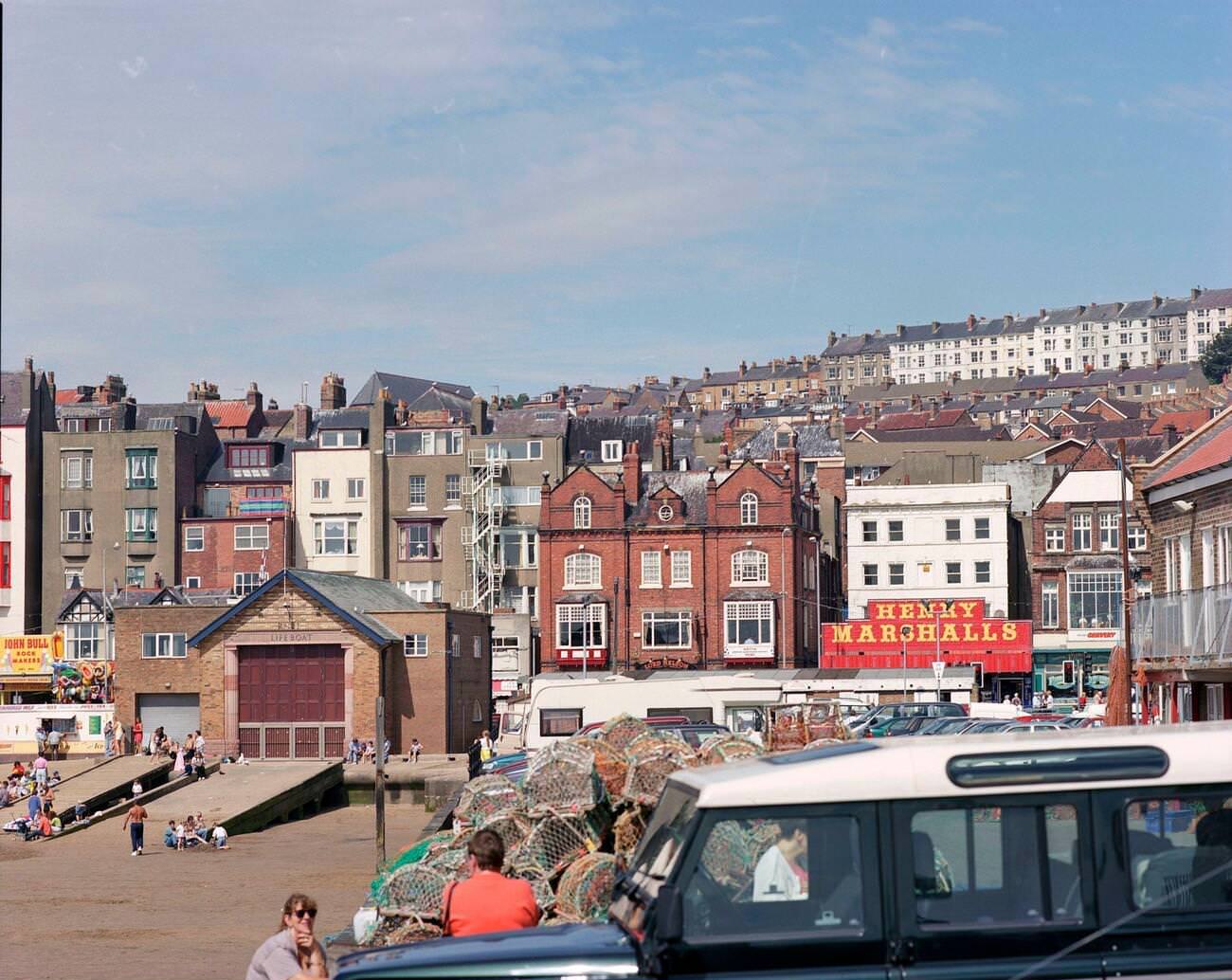
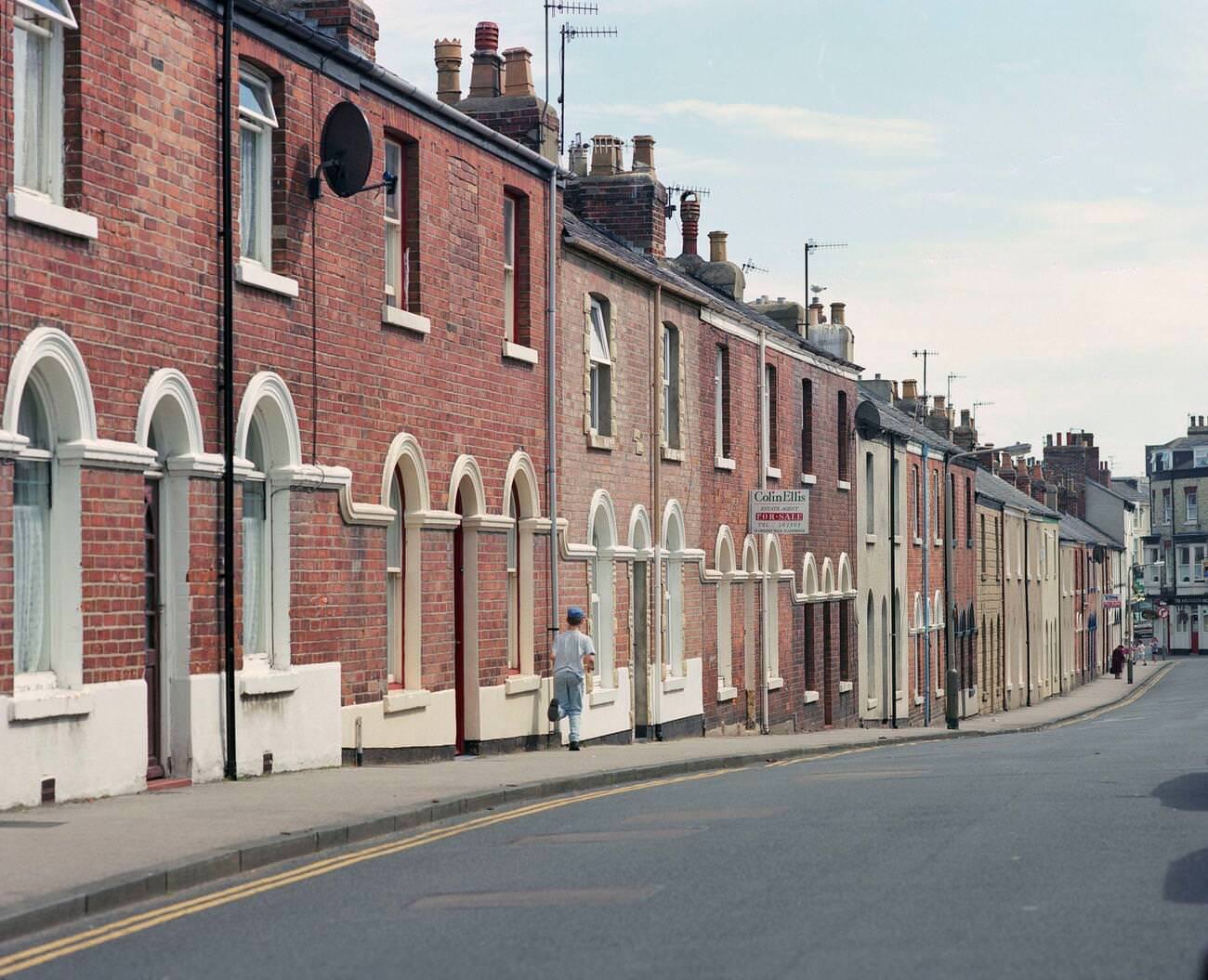
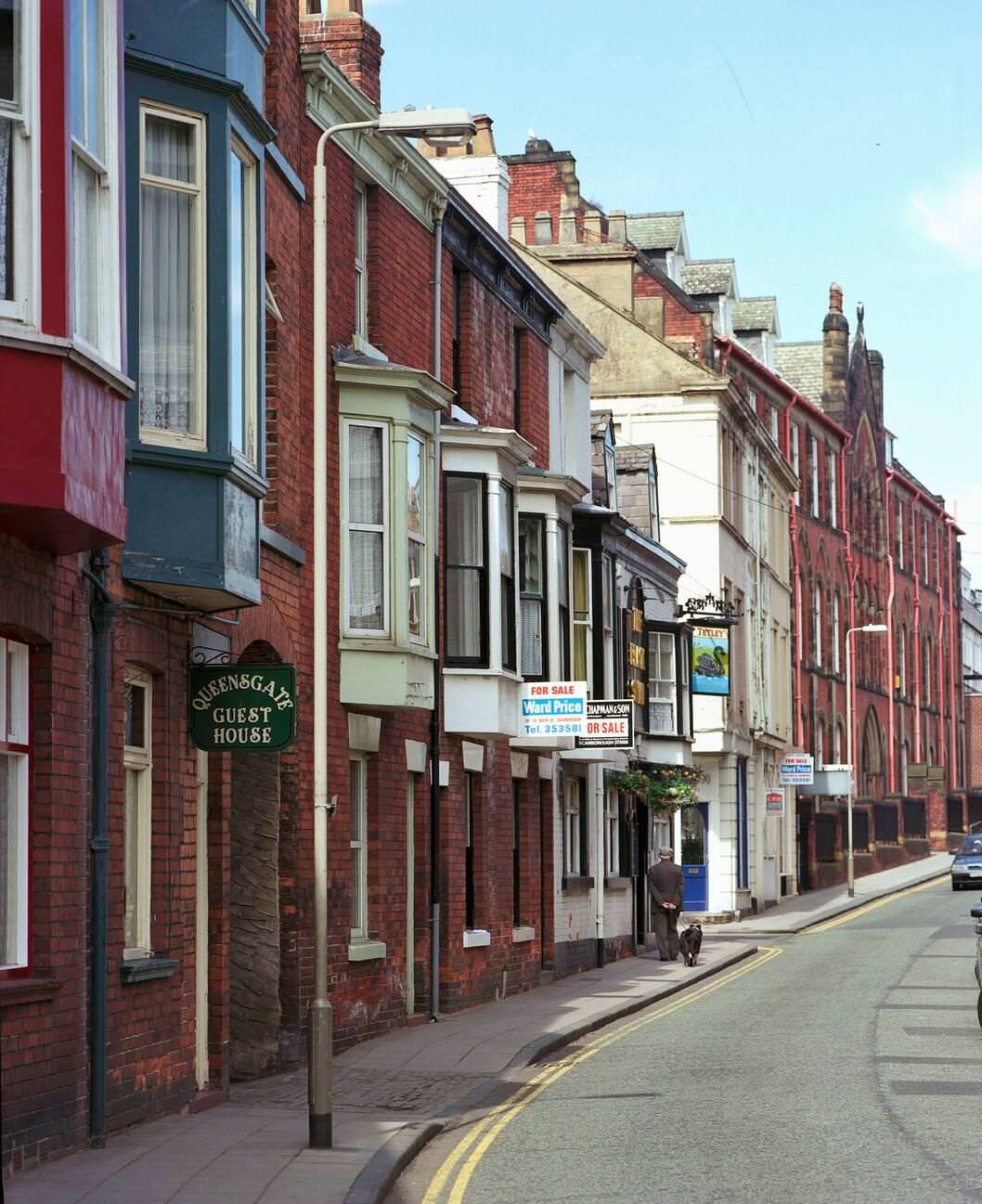
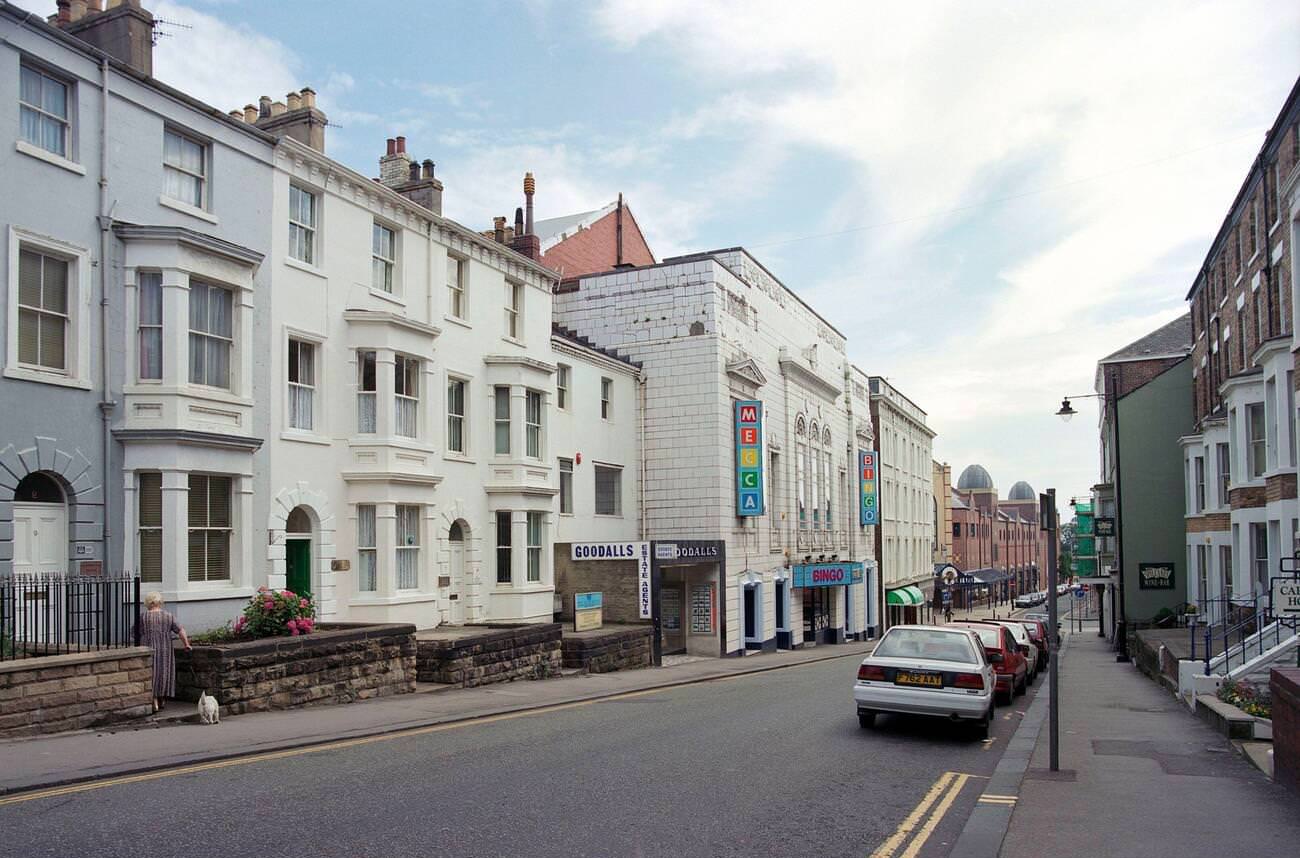
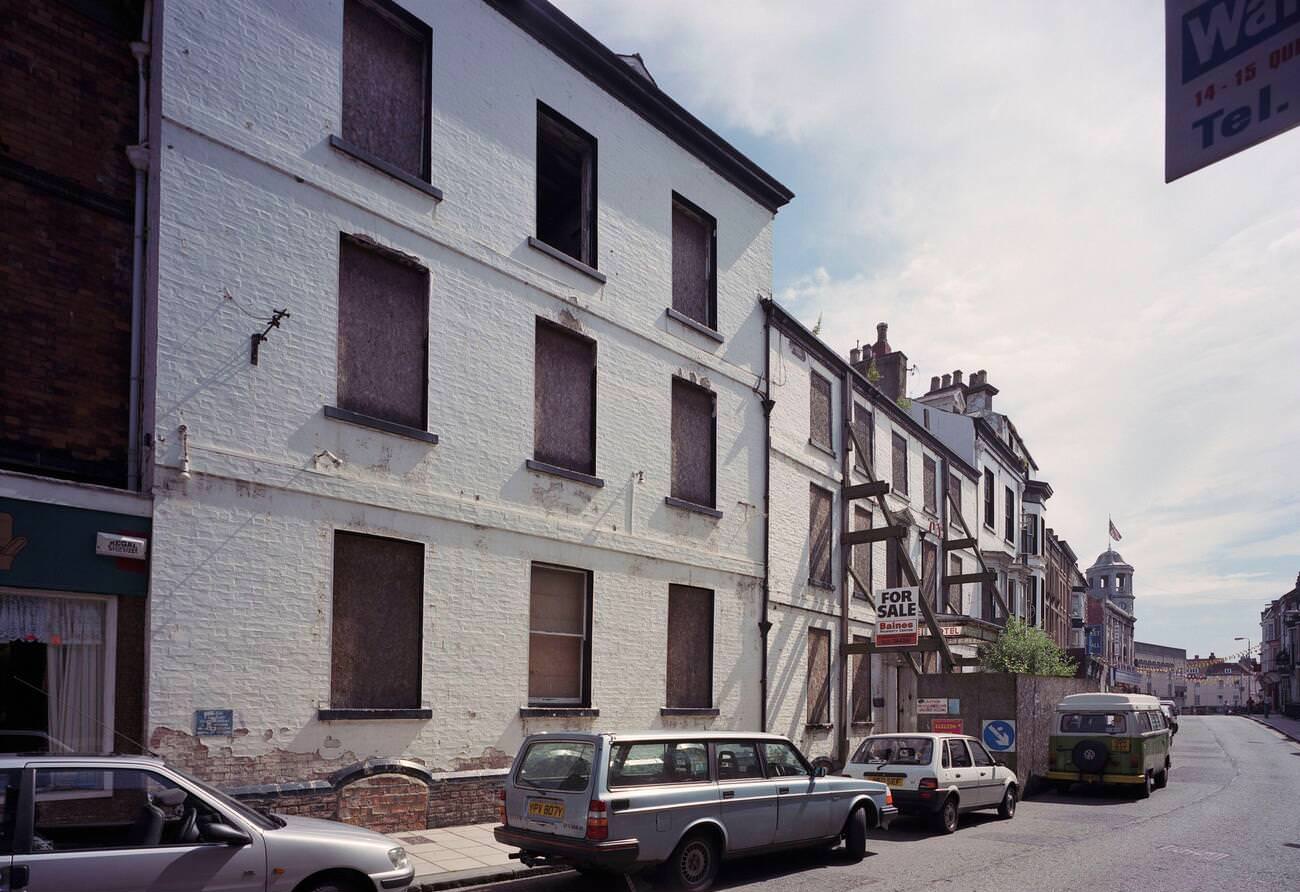
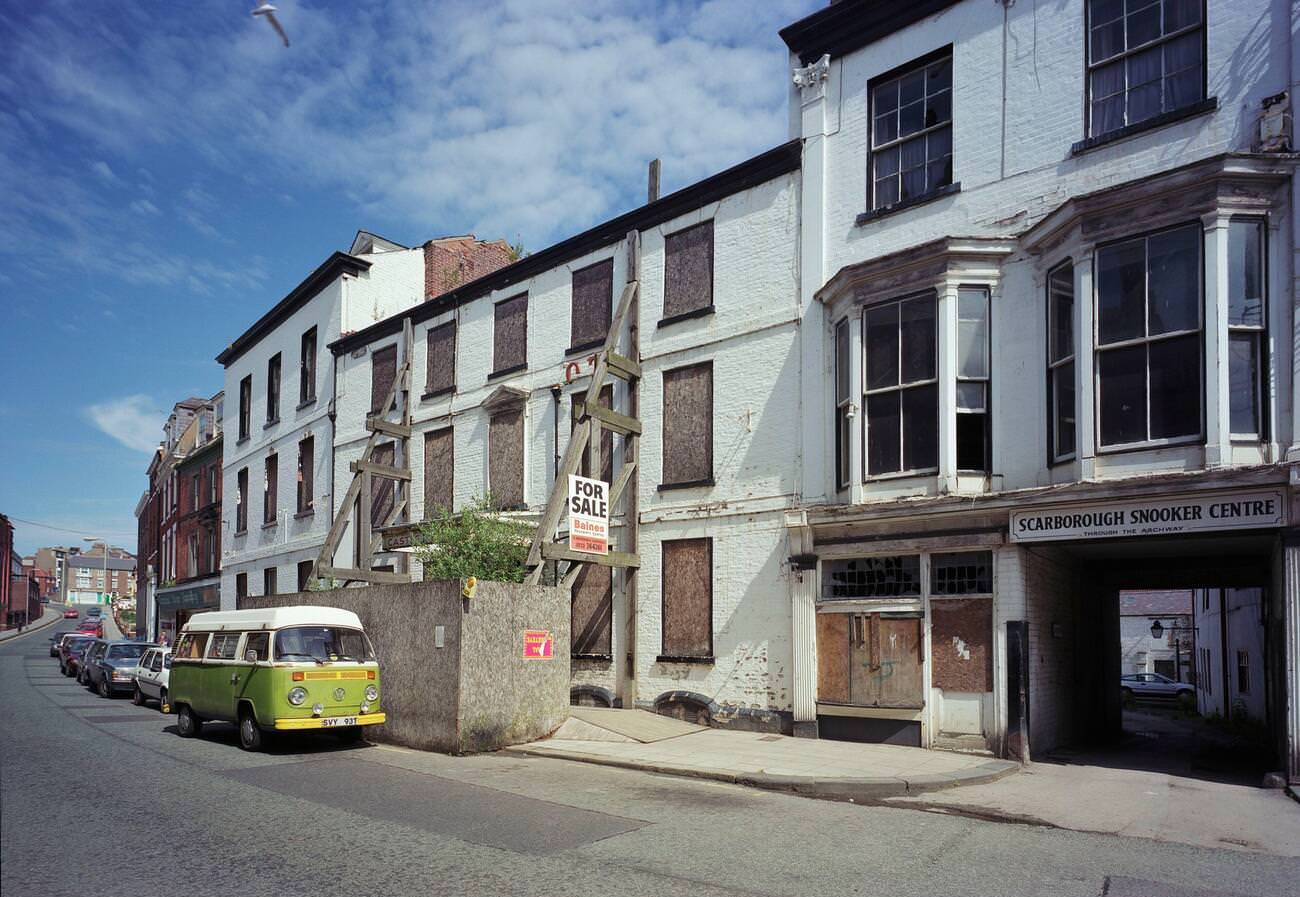
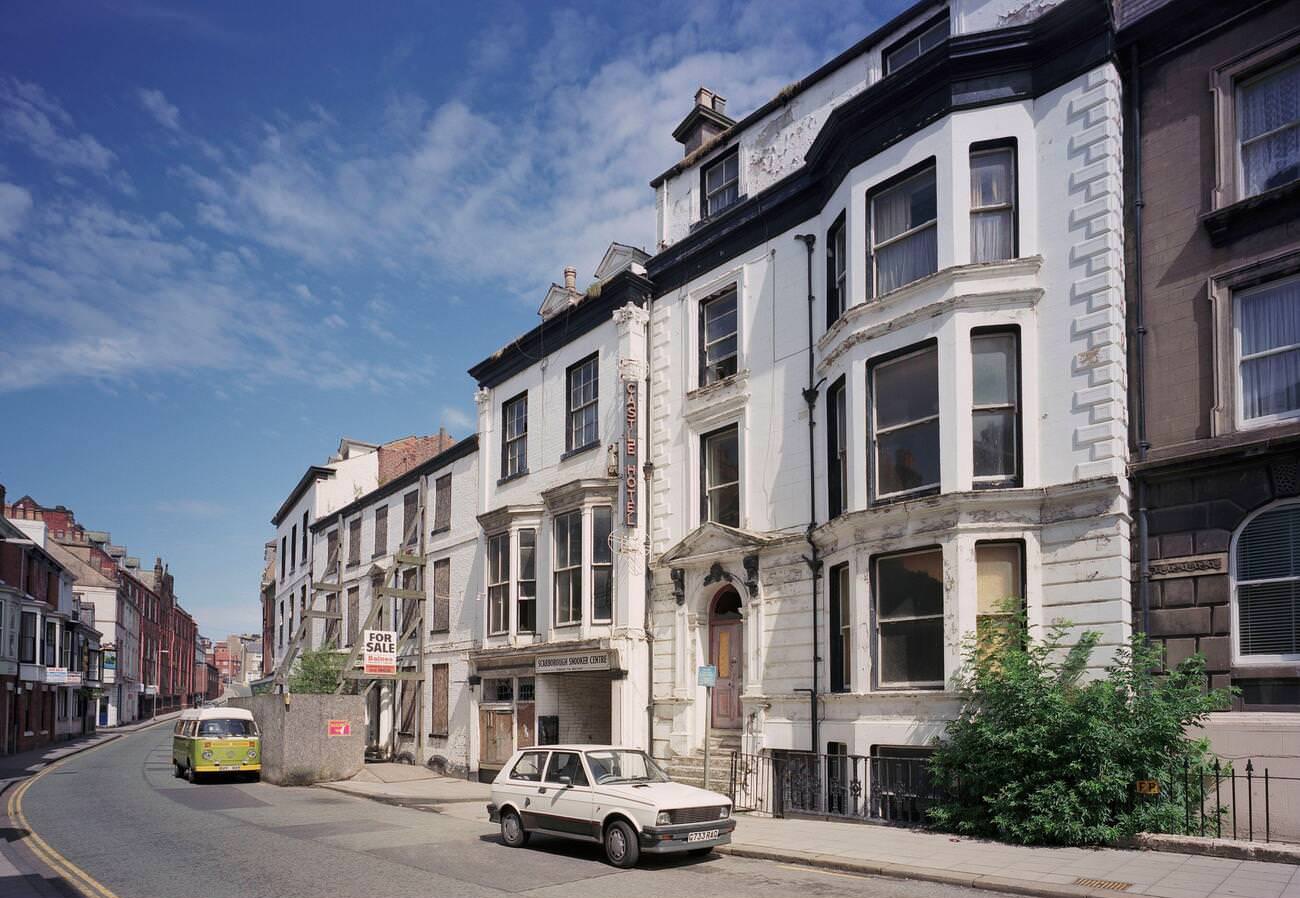
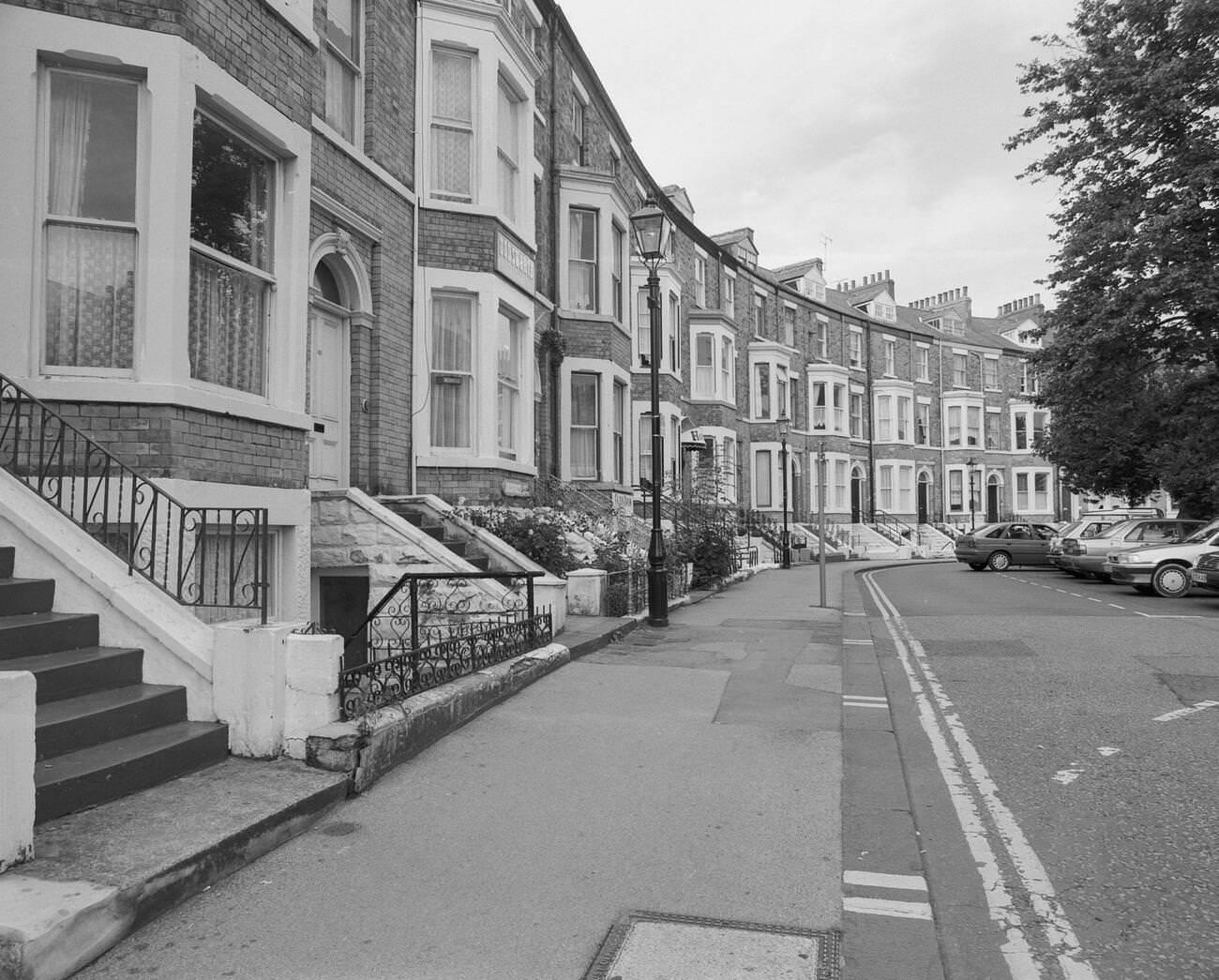
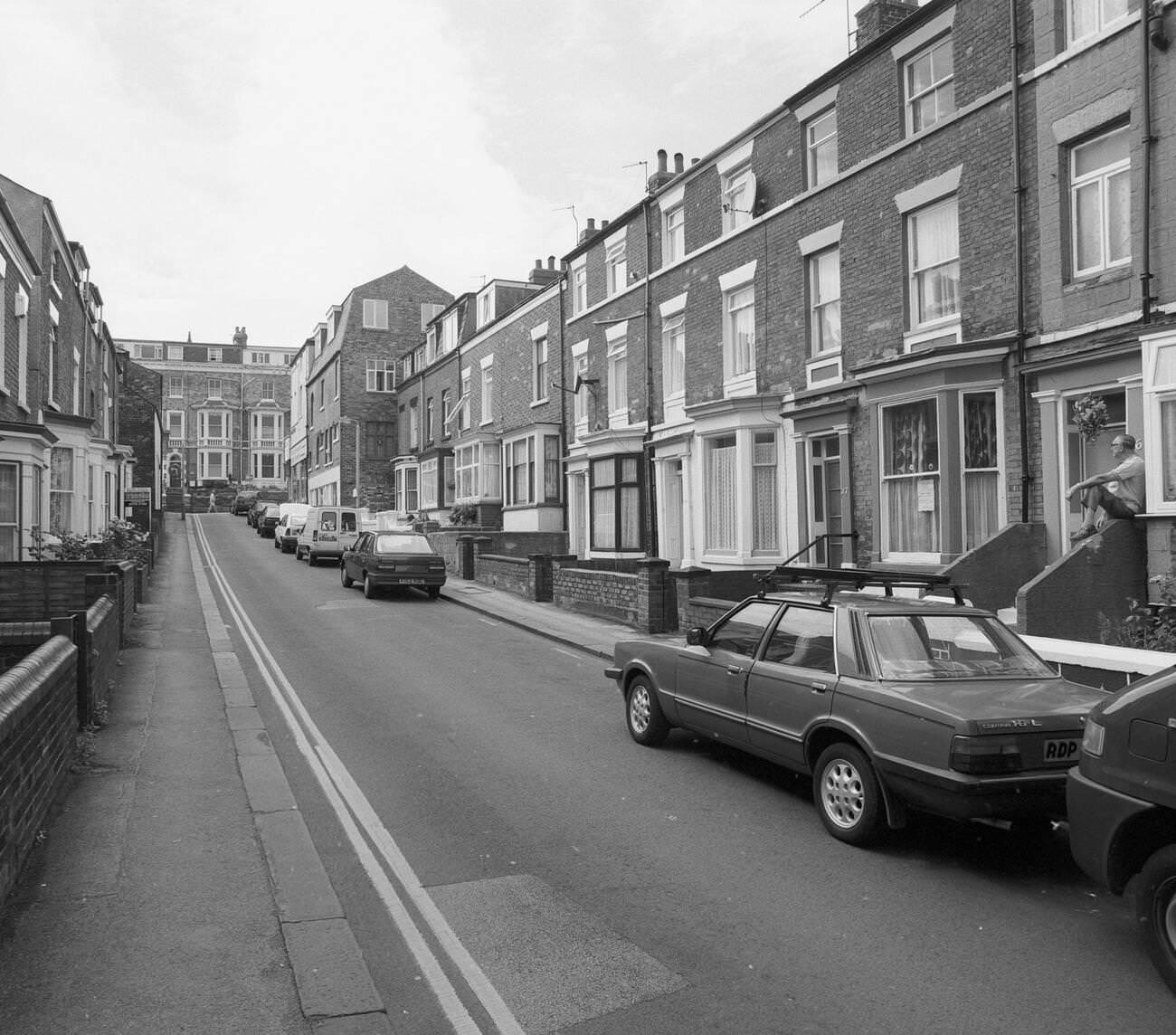
Away from the seafront, the streets of Castle Ward told a different story. Perched on the headland between the two bays, this area sat in the shadow of Scarborough Castle — a medieval fortification high on the cliffs above the North Sea. The Castle Ward streets were a mix of guest houses, shops, and residential terraces, all shaped by the steep, winding geography of the headland.
Scarborough’s Victorian railway station was, and remains, one of the finest examples of 19th-century station architecture in the north of England. Built in 1845, its grand trainshed and sweeping roof welcomed thousands of visitors each year. For many families in the 1990s, stepping off the train at Scarborough was the official start of the holiday. The station photographs from this period show the building in its full working glory.
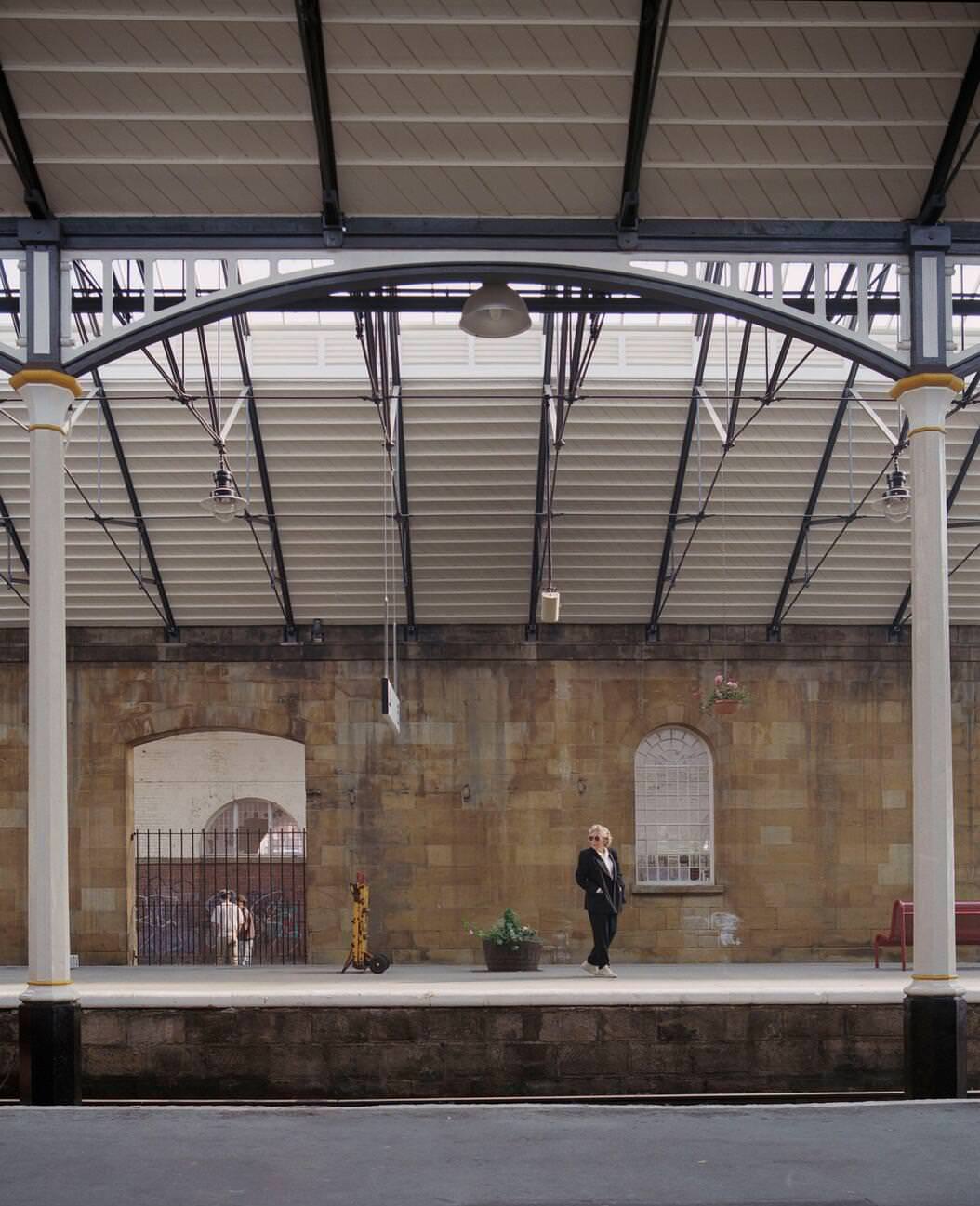
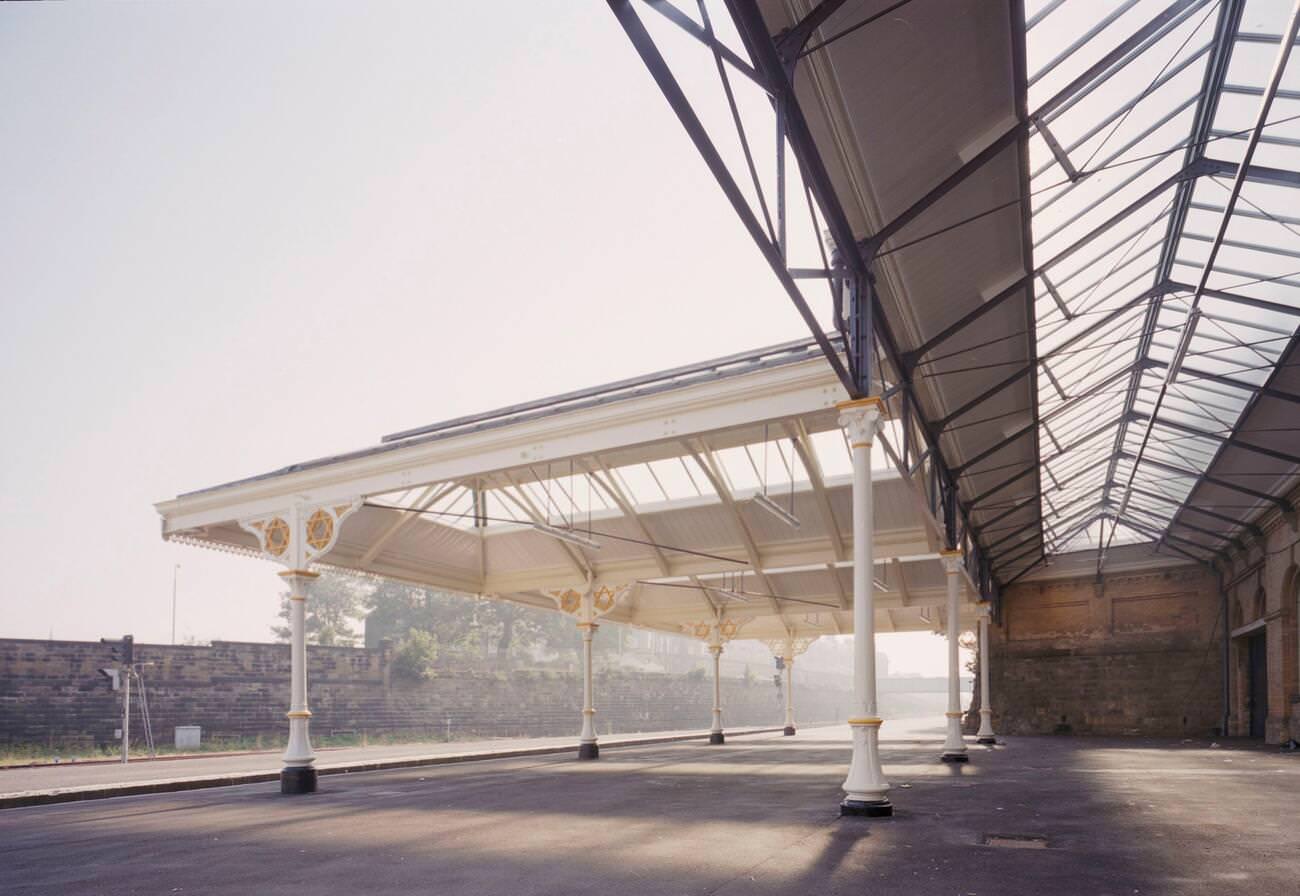
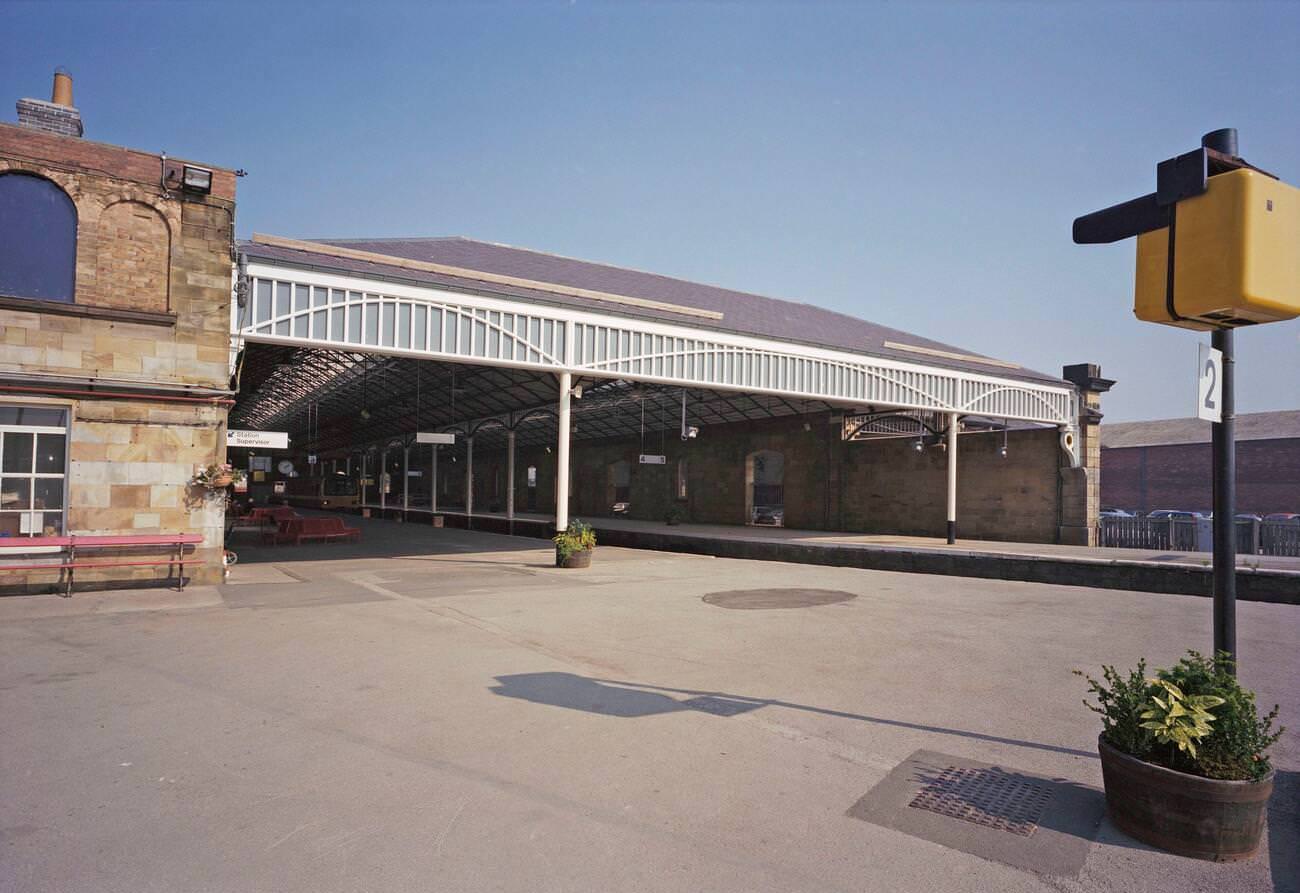
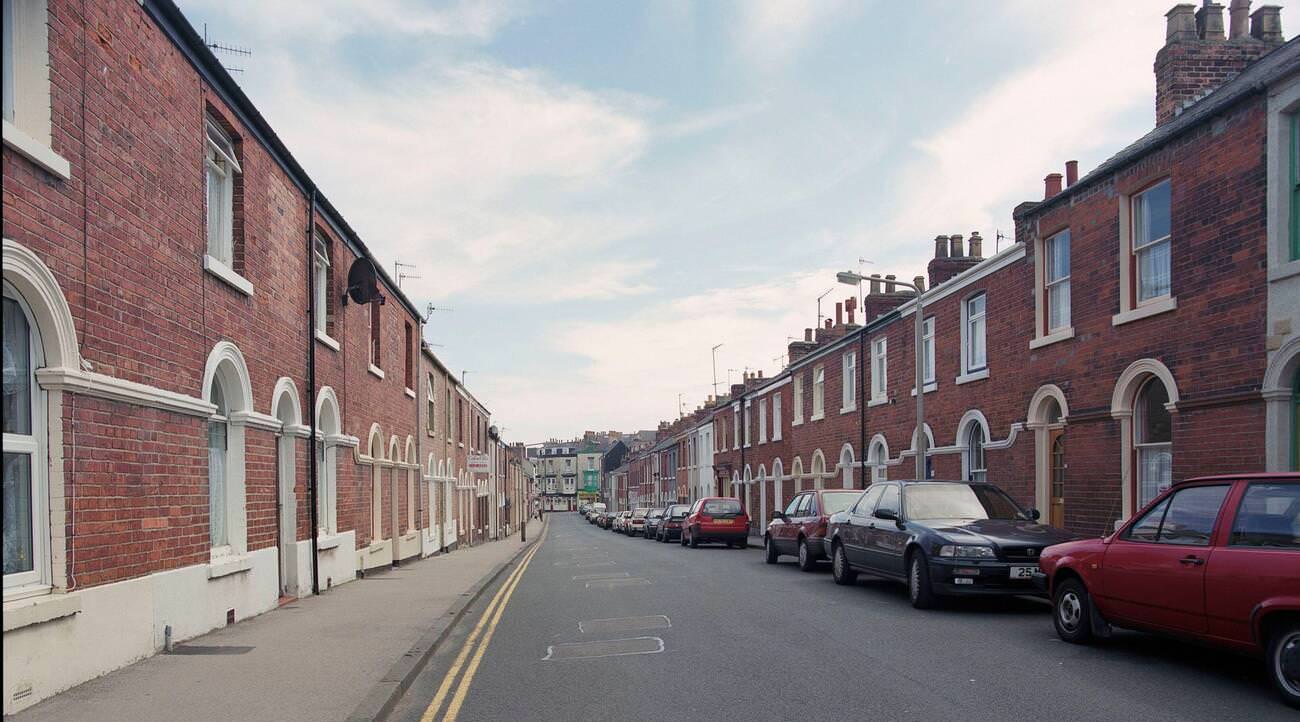
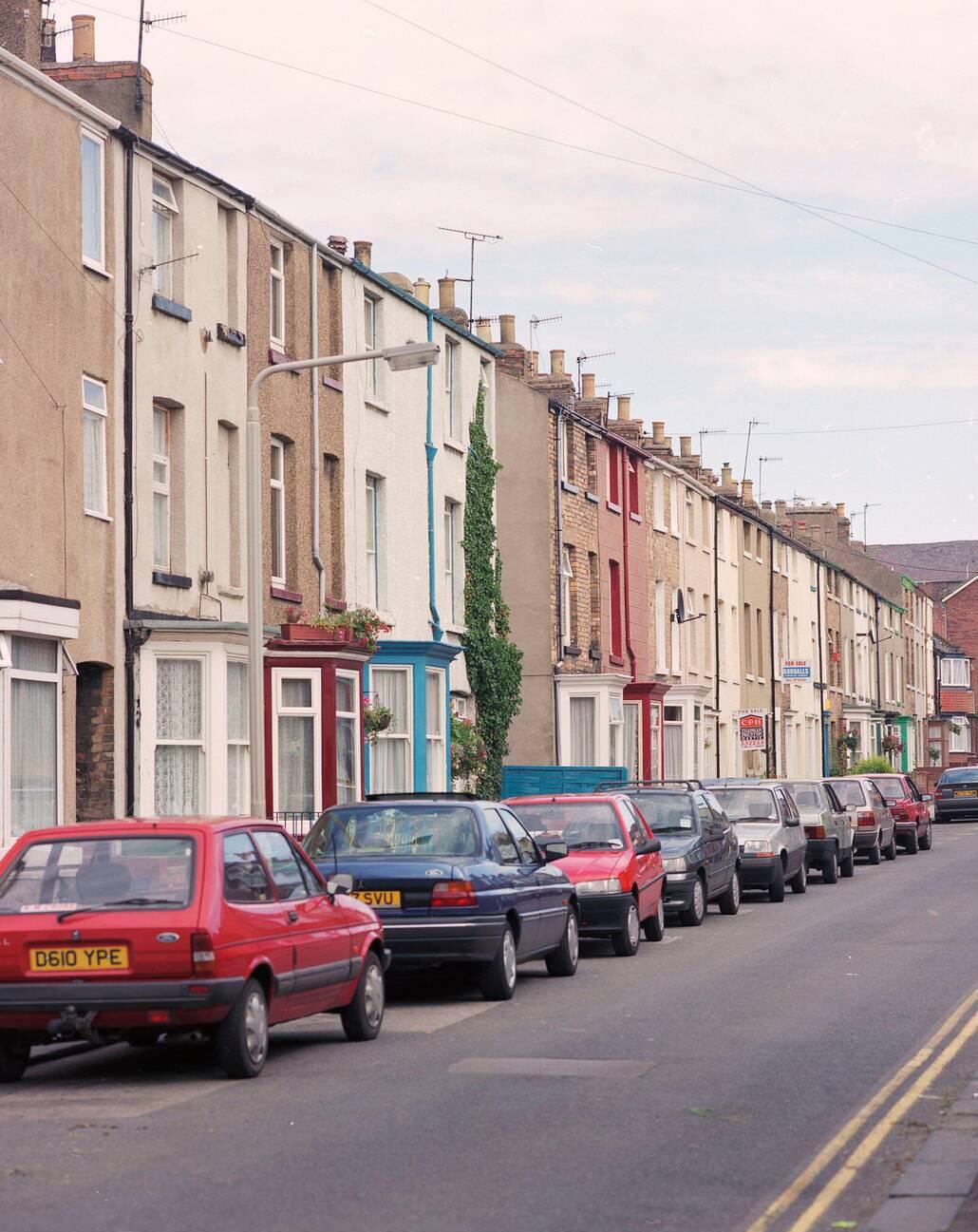
Beyond the tourist spots, Scarborough was a real, working town. Social housing developments provided homes for a large portion of the local population, and these neighbourhoods were as much a part of 1990s Scarborough as the seafront. The decade also brought change — the outdoor Lido pool had closed in 1989, and in 1991, the Sea Life Centre opened, giving visitors a new reason to explore the town beyond the beach.
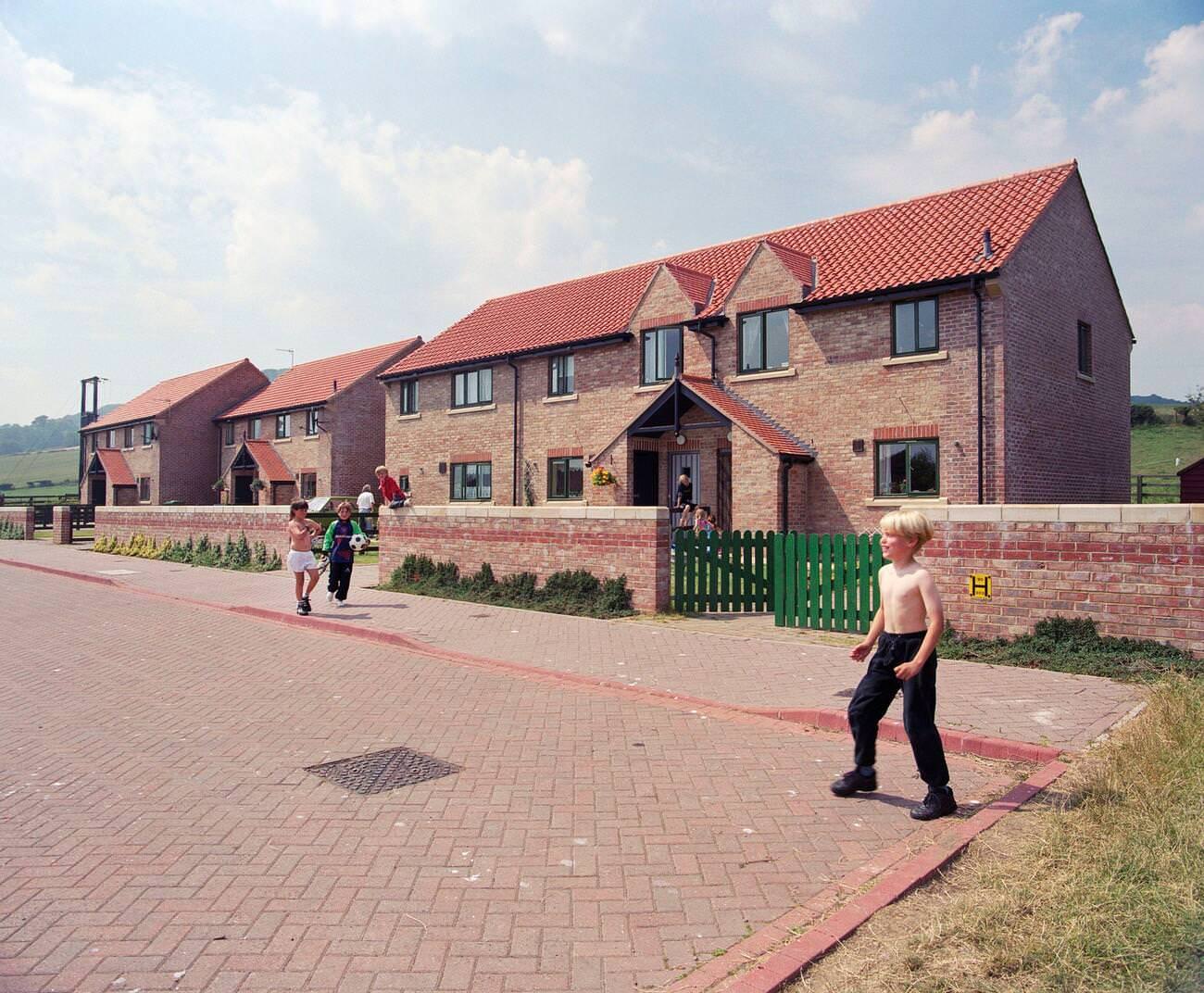





I don’t understand how it’s a glimpse into the 90s if all the photos are recent. Maybe I’m missing something. Is it cos Scarborough doesn’t change? That I get.
I thought after Martin Parr we’d got past the old ‘photographs are only art if they’re in black and white’ (and it helps if the subjects are thoroughly othered by being fat and ugly) trope.