in

Cambodian Genocide: Tragic Story and Haunting Photos From The Killing Fields And Prisons

Between 1975 and 1979, one of the worst genocides of the 20th century unfolded in Cambodia. Under the rule of Pol Pot and the Khmer Rouge, an estimated 1.5 to 2.2 million Cambodians died from execution, starvation, forced labor, and disease. The roots of this catastrophe stretch back further than 1975, shaped by a decade of war, bombing, and political upheaval that tore the country apart before the Khmer Rouge ever took power.

In 1965, Prince Sihanouk officially severed Cambodia’s ties with the United States and declared the country neutral in the Vietnam War. That decision allowed North Vietnamese communist forces to use Cambodian territory as a military corridor. The U.S. responded with an extensive bombing campaign targeting both military sites and Cambodian villages. Between 1965 and 1969, American forces dropped more explosives on Cambodia than all Allied bombing combined during World War II. More than 150,000 people were killed, the vast majority of them civilians.
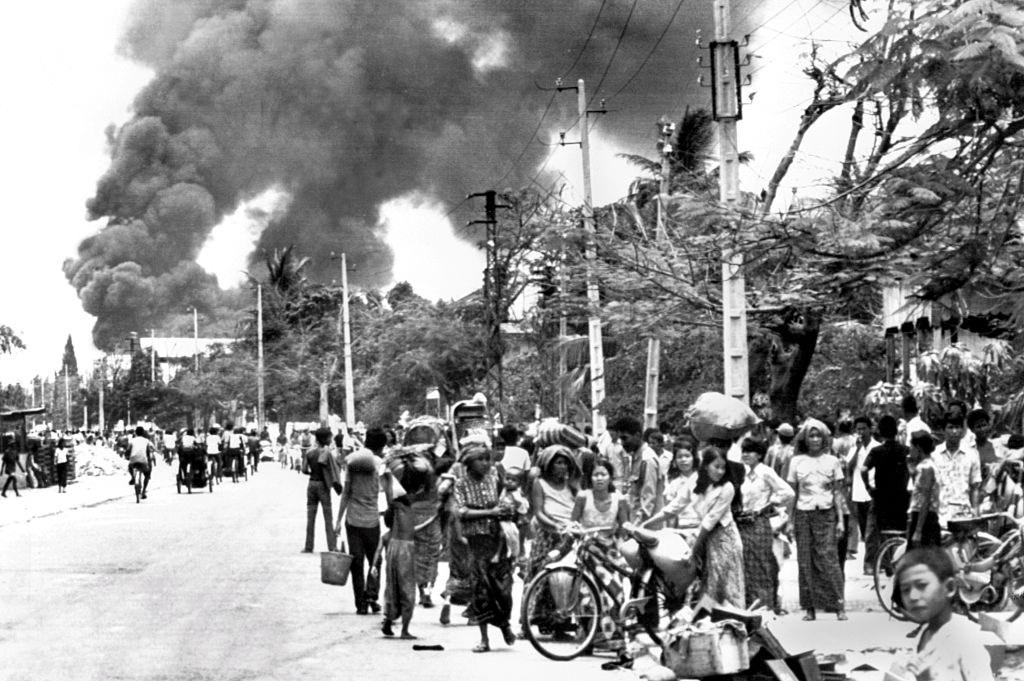
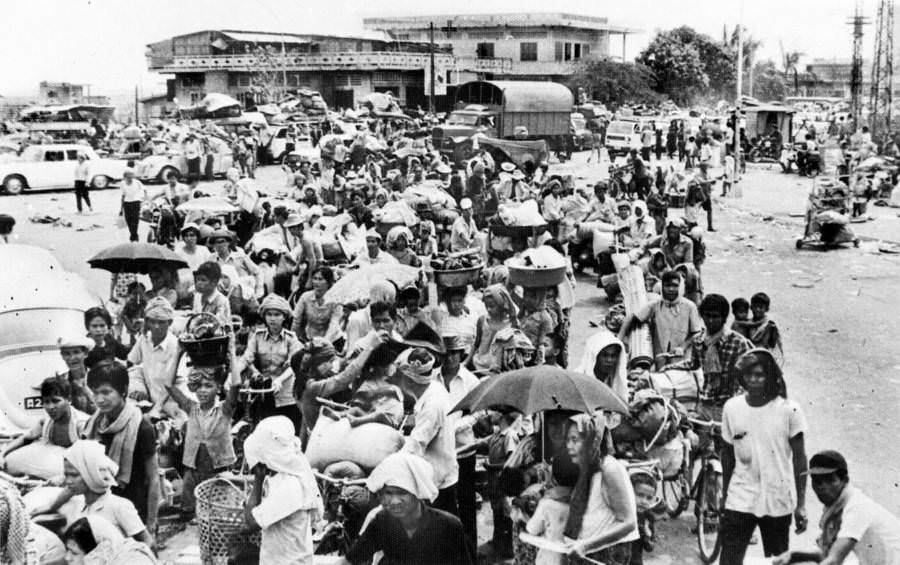
Cambodian inhabitants wait in a street of Phnom Penh, 17 April 1975 as the gasoline depot burns before the Khmer Rouge enter the capital and establish government of Democratic Kampuchea (DK).

The bombing campaign had a direct political consequence. The Khmer Rouge, a small, radical communist movement operating from remote jungle and mountain regions, grew rapidly during this period. Widespread civilian casualties and government instability drove more Cambodians into the arms of the insurgency. The Khmer Rouge allied themselves with the deposed Prince Sihanouk, whose name still carried weight across the country, and used that association to build support in rural communities they had not previously reached.
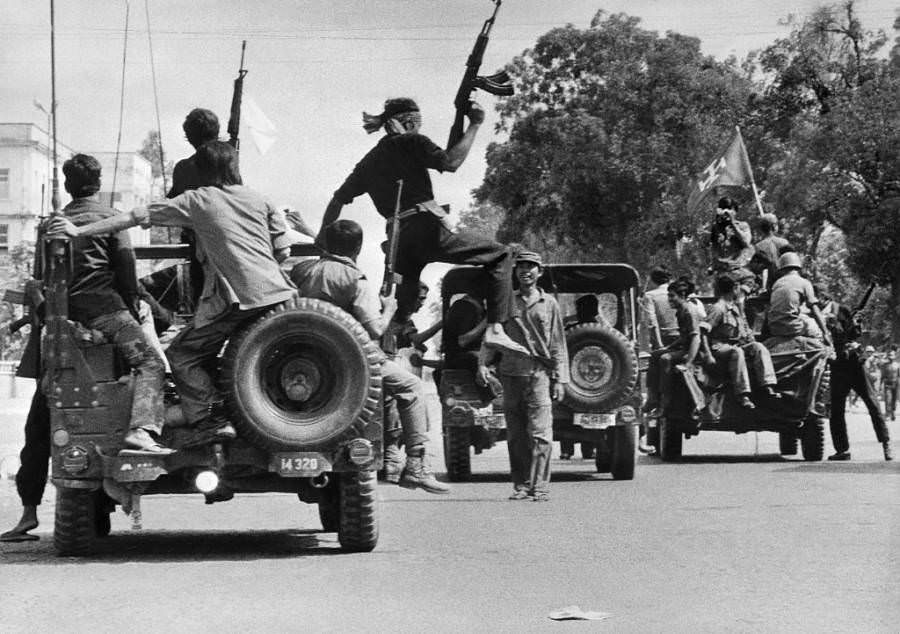
Khmer Rouge soldiers drive through the capital,  Phnom Penh. 1975.
Khmer Rouge soldiers drive through the capital, Phnom Penh. 1975.

On April 17, 1975, Khmer Rouge forces marched into Phnom Penh and seized control of the capital. The victory transferred power not to Sihanouk, but to Pol Pot, the Khmer Rouge’s ideological leader. Pol Pot was driven by a vision of an agrarian utopia — a classless, self-sufficient peasant society stripped of money, religion, and foreign influence. He looked to the rural ethnic communities of northeastern Cambodia as his model, people who farmed their own food and lived outside the cash economy. Everything connected to modern urban life was a target.
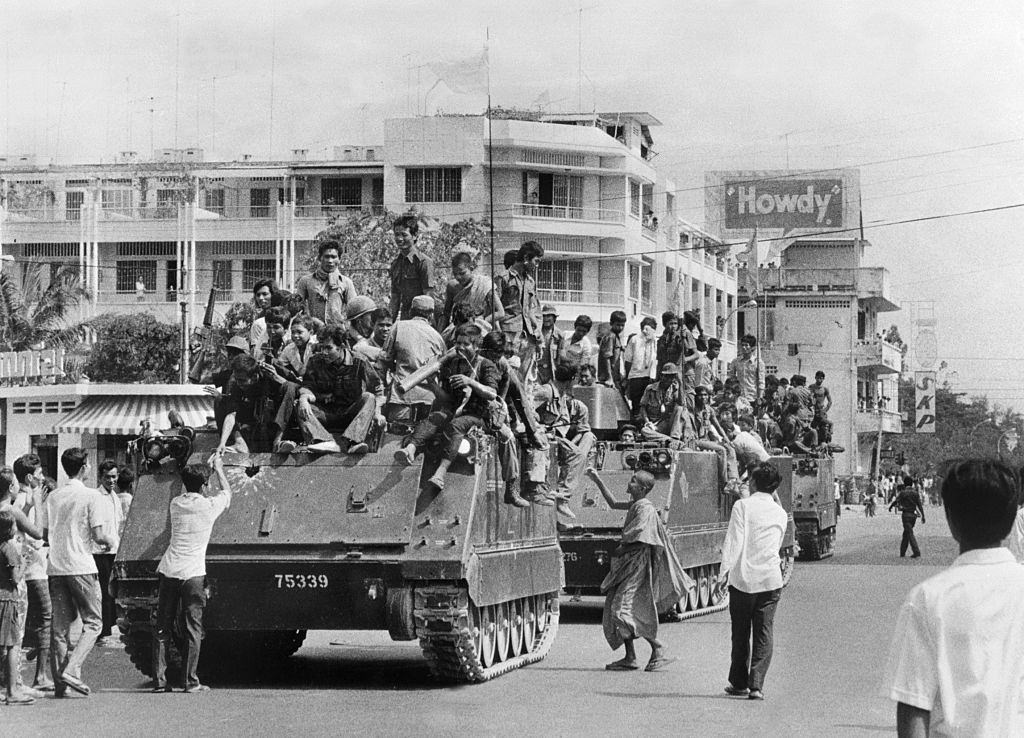
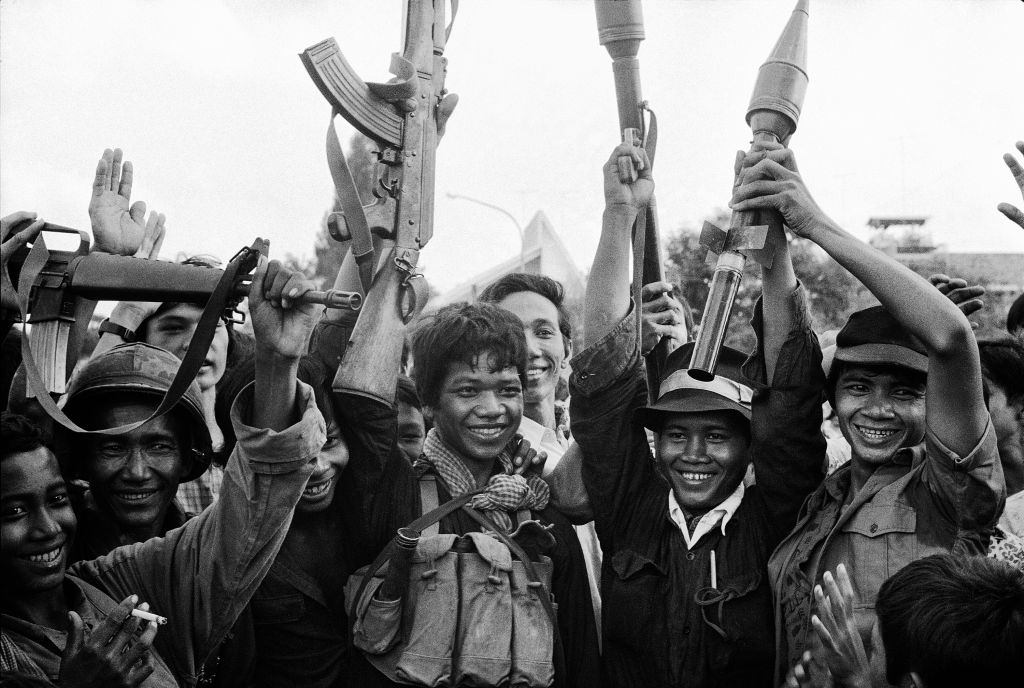
The young Khmer Rouge guerrilla soldiers atop their US-made armored vehicles enter 17 April 1975 Phnom Penh

Within days of taking Phnom Penh, the Khmer Rouge began emptying the cities. Pol Pot renamed the country Kampuchea, abolished the national currency, closed the borders, and revoked all private property. Urban residents — regardless of age, profession, or health — were forced into the countryside to work on collective farms. Hospitals were abandoned. Schools were shut down. Cambodia was cut off entirely from the outside world.
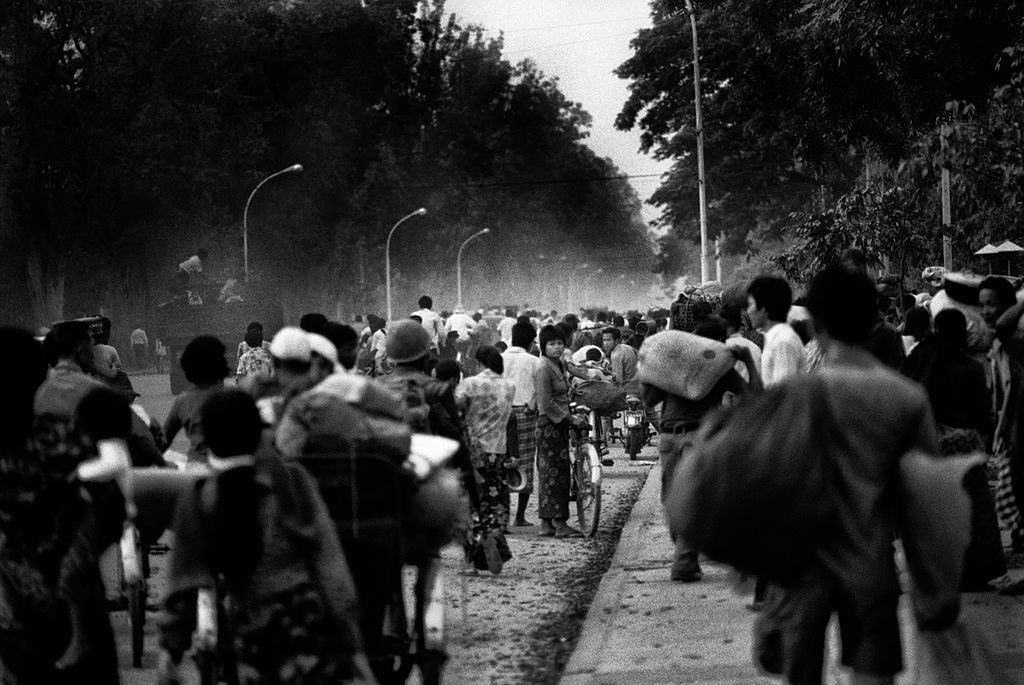
On the evening of the Fall of Phnom Penh to the Khmer Rouge on April 16, 1975 as night fall, thousands of people are streaming towards the center of Phnom Penh on Monivong Boulevard.

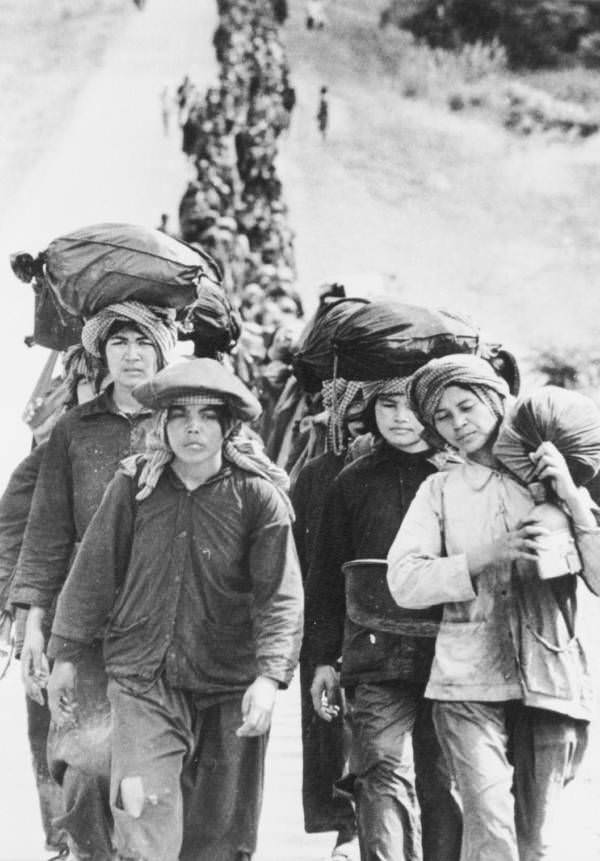
The forced evacuation of Phnom Penh sent hundreds of thousands of people streaming into the streets. The sick were pulled from hospital beds. The elderly and wounded were made to walk alongside everyone else. Those who refused to comply, or who were too weak to move, were shot on the spot. The scenes from those first days captured the scale of what was coming.
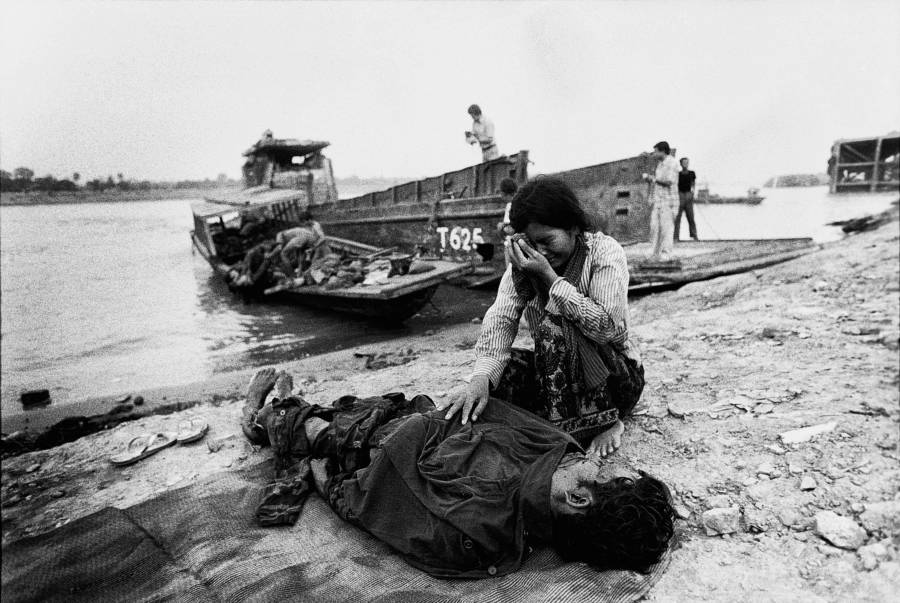
A distraught woman cries over the body of her husband, killed by Khmer Rouge soldiers,  Phnom Penh. 1975.
A distraught woman cries over the body of her husband, killed by Khmer Rouge soldiers, Phnom Penh. 1975.
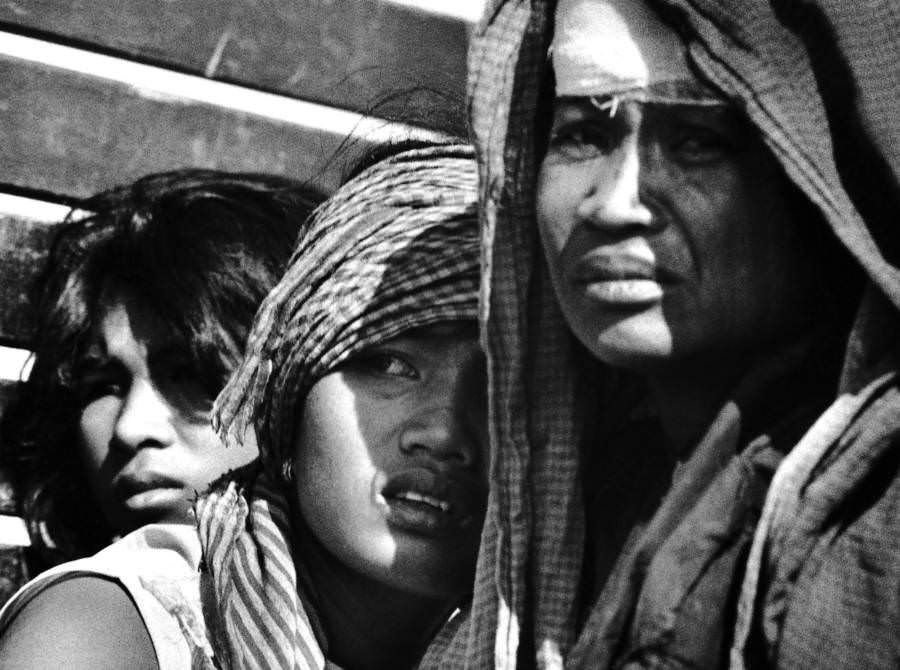
A group of women huddle together, 1975.

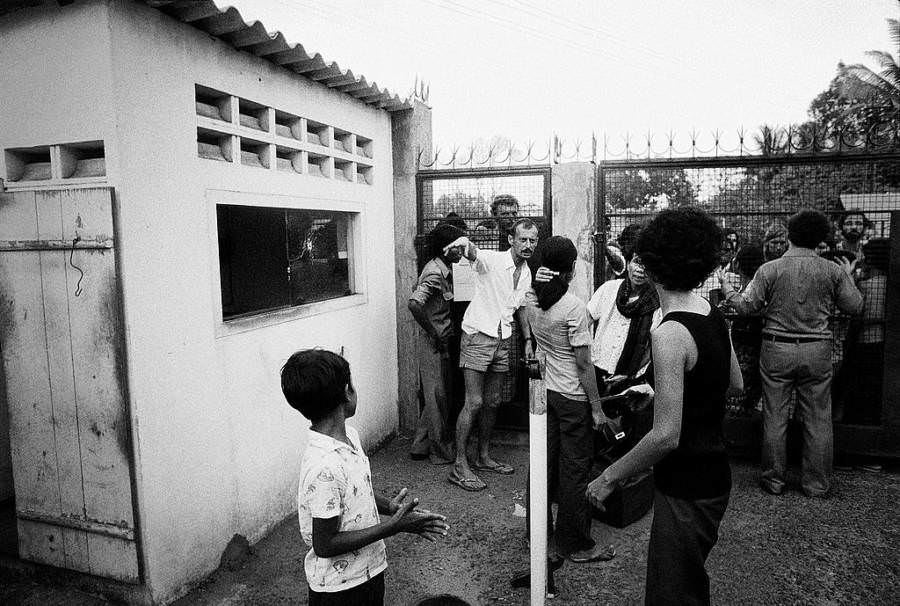
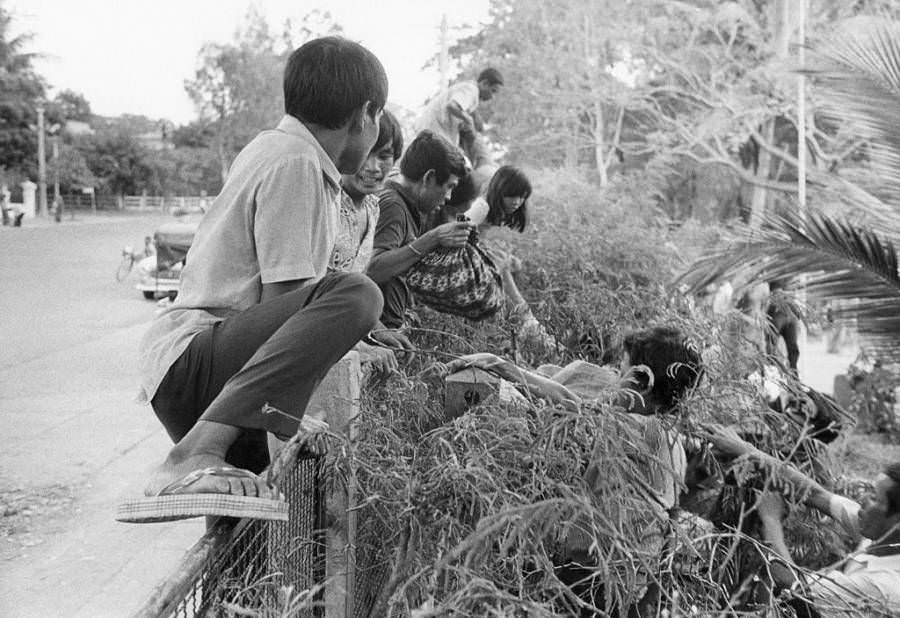
As Phnom Penh fell, thousands of Cambodians rushed toward the French Embassy — one of the few places that offered any possibility of protection. Refugees climbed fences and pressed against the gates, desperate to get inside. The embassy was overwhelmed almost immediately.
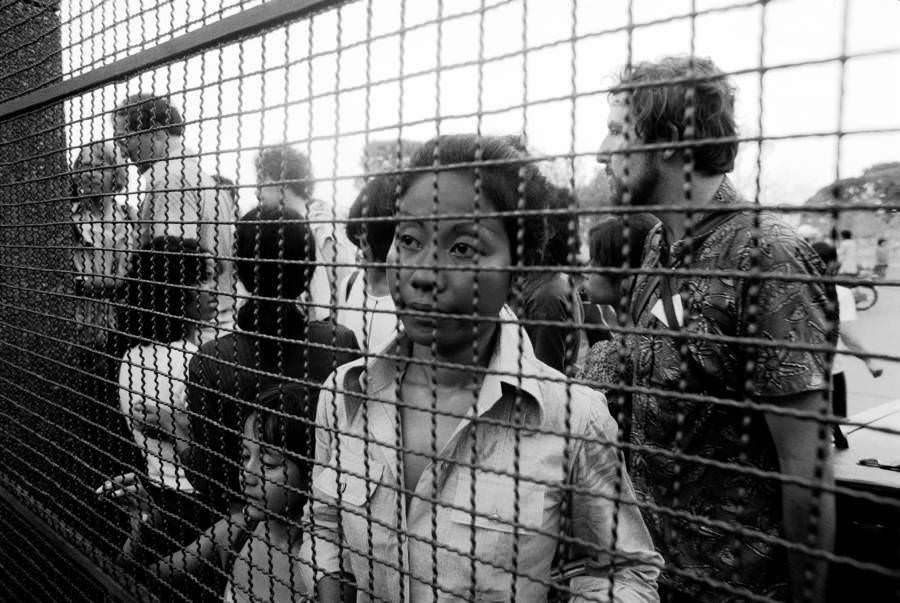
Refugees peer through the gate to the French Embassy, begging to get in,  Phnom Penh. 1975.
Refugees peer through the gate to the French Embassy, begging to get in, Phnom Penh. 1975.
Cambodians climb over a fence, trying to escape to the French Embassy, 1975
The French Embassy in Phnom Penh struggles to handle the hordes of people begging for protection, 1975
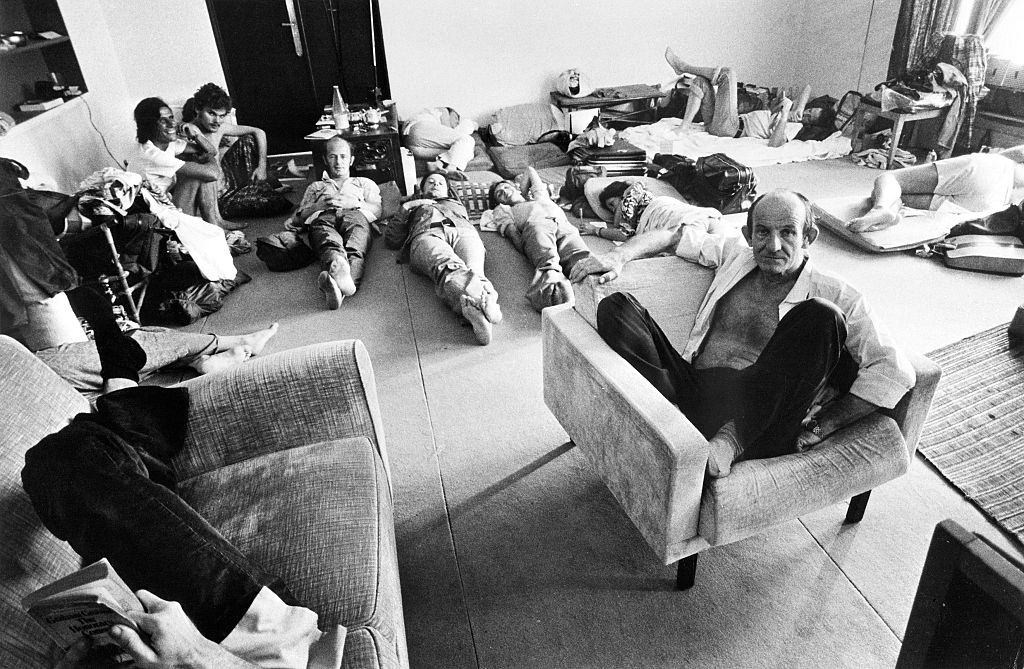
People who found shelter at the French Embassy in Phnom Penh rest in one of the room of the building late April 1975

Out in the streets, the chaos was visible everywhere. Injured civilians sheltered in hospitals that the Khmer Rouge would soon shut down. Others gathered in market areas or along roadsides with nowhere to go.
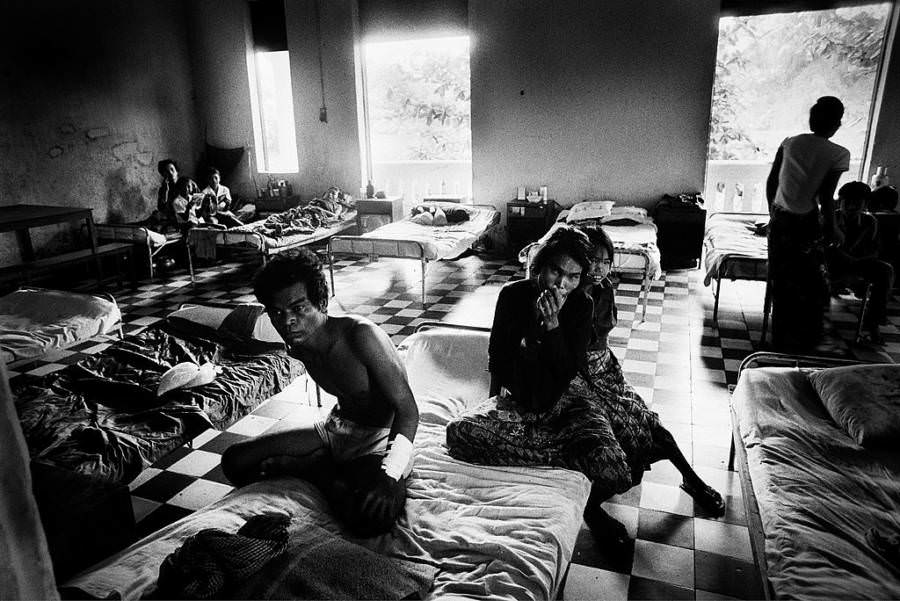
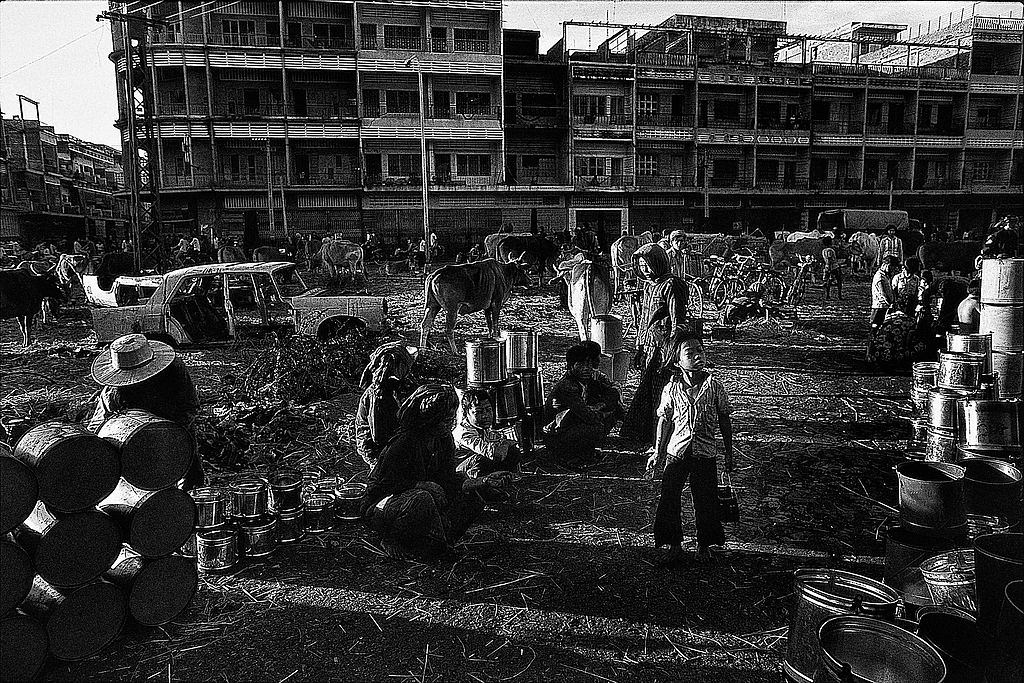
Injured people hide out in the hospital, before the capital was under complete Khmer Rouge control, 1975
The Fall of Phnom Penh. A group of people who found shelter next to an abandoned market area in the city center.
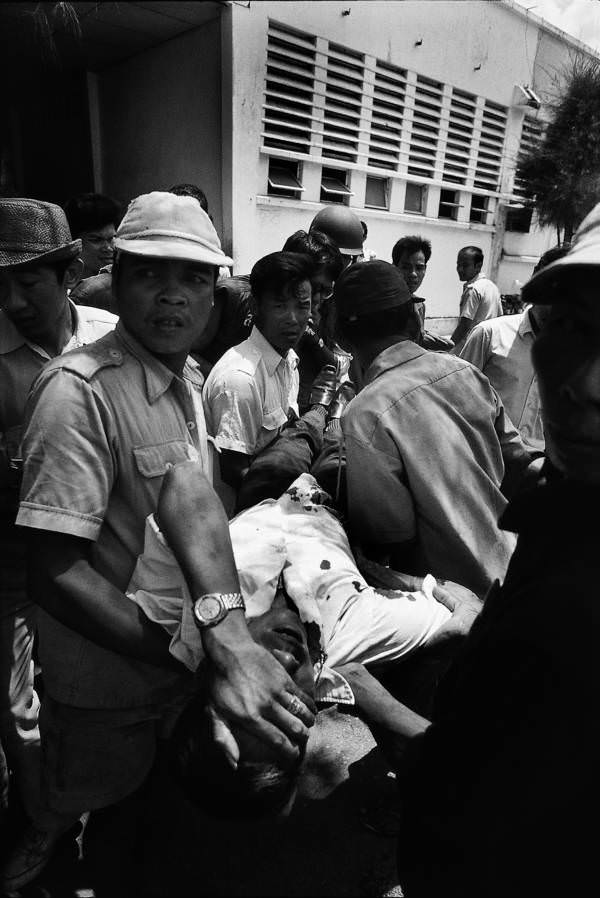
Cambodians helping an injured civilian,  Phnom Penh, 1975.
Cambodians helping an injured civilian, Phnom Penh, 1975.

The Khmer Rouge recruited most of their soldiers from rural villages and ethnic minority groups who had long been looked down on by the urban elite and wealthy class. When the regime took power, those roles were violently reversed. Former soldiers and officers, teachers, doctors, lawyers, anyone who wore glasses or spoke a foreign language was labeled an intellectual and marked for death. The Khmer Rouge also accused many people of being foreign agents or spies working against the revolution. These accusations were almost always fabricated, and the accused had no avenue for appeal.
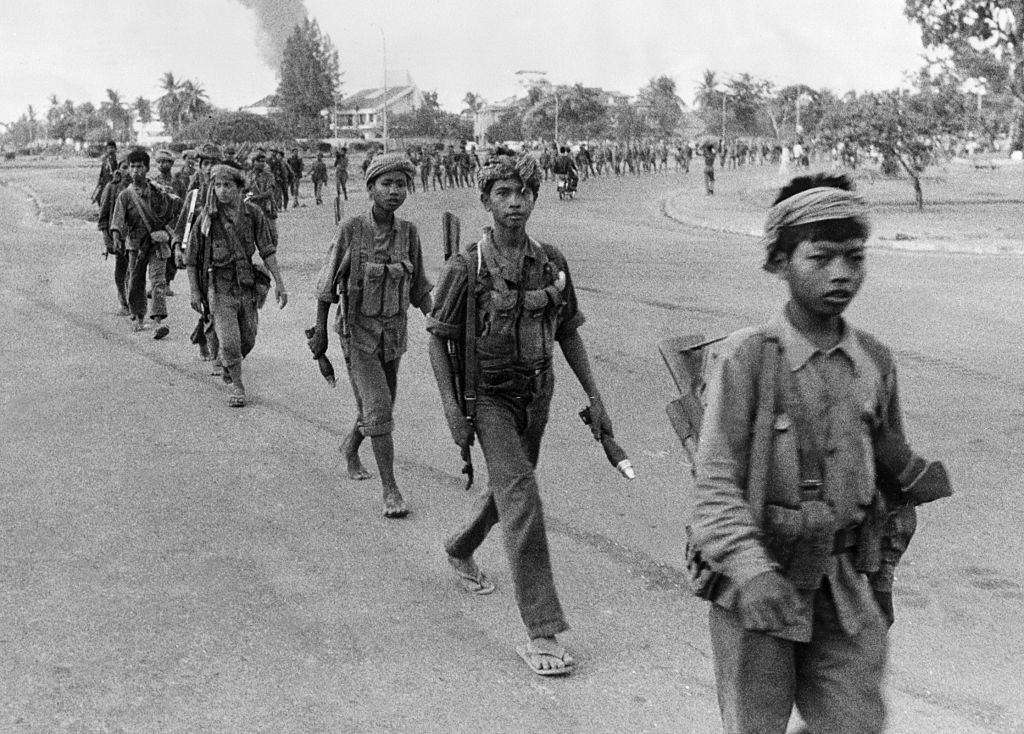
The young Khmer Rouge guerrilla soldiers, 1975

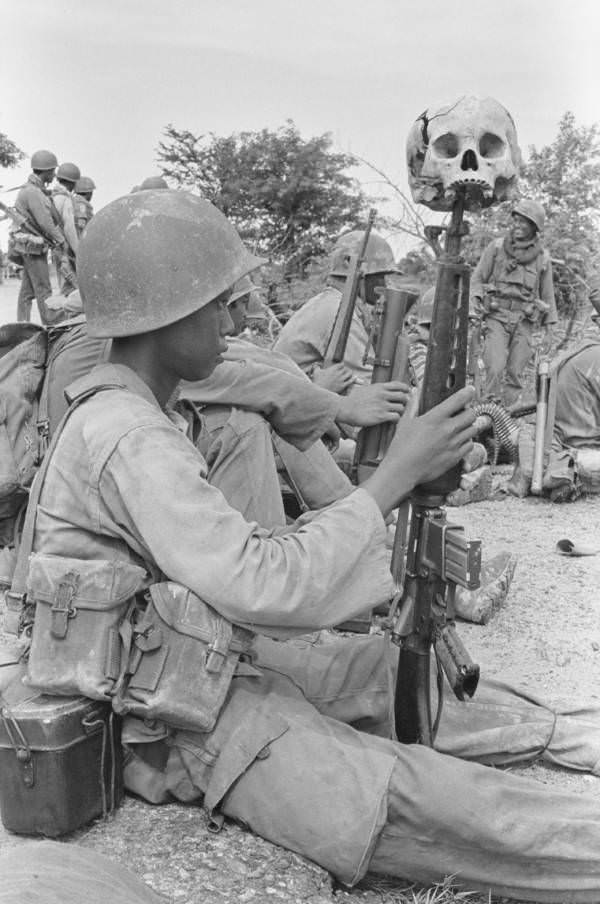
Among the most disturbing features of the Khmer Rouge army was its use of child soldiers. Boys who were barely teenagers carried rifles and enforced the regime’s orders. Some were photographed displaying machine guns. Others stood guard over prisoners or participated directly in killings. These children were recruited young, indoctrinated thoroughly, and given authority over adults.
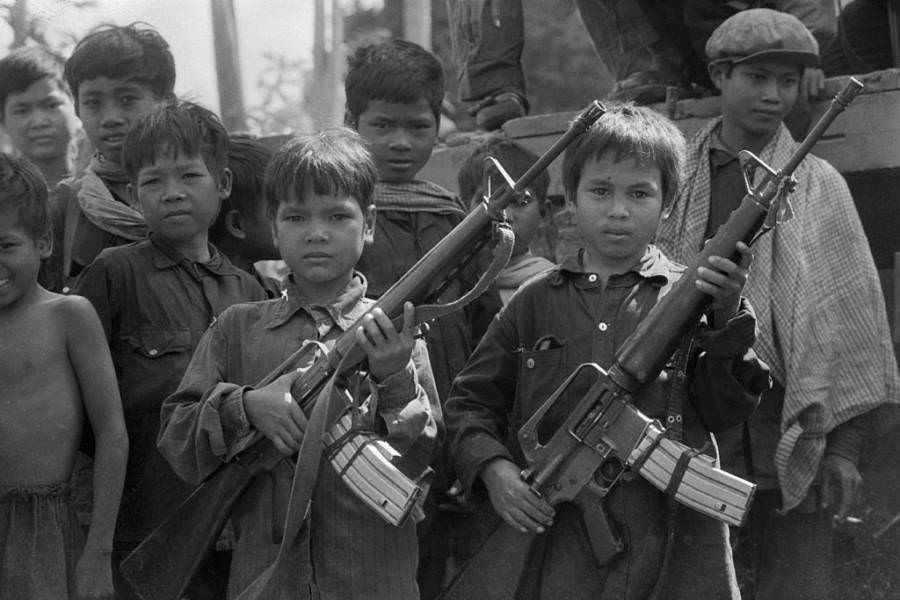
Child soldiers working for the Khmer Rouge show off their machine guns,  Galaw, Cambodia. Circa 1979.
Child soldiers working for the Khmer Rouge show off their machine guns, Galaw, Cambodia. Circa 1979.
A child soldier with a human skull resting on the tip of his rifle,  Dei Kraham, Cambodia. 1973.
A child soldier with a human skull resting on the tip of his rifle, Dei Kraham, Cambodia. 1973.
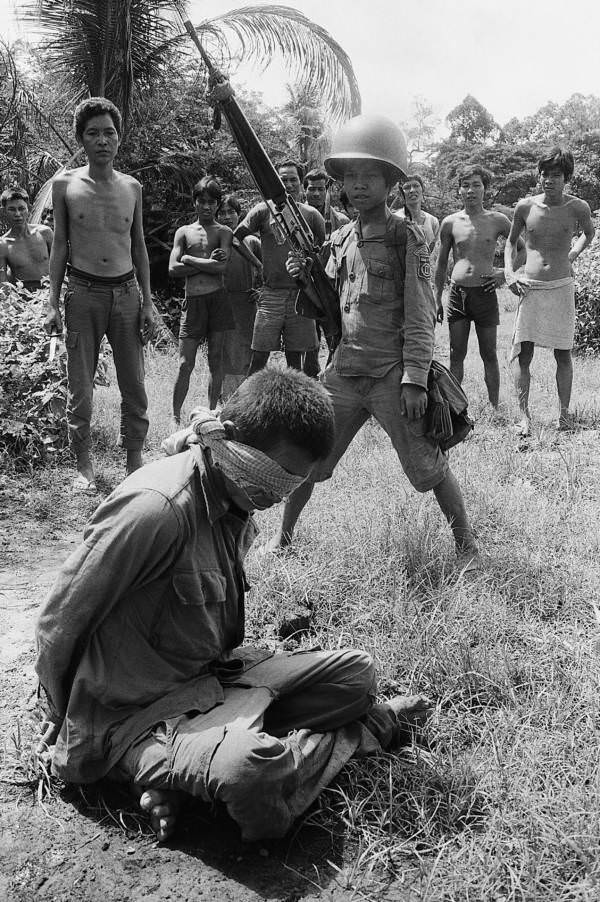
A child soldier stands over a blindfolded soldier,  Angkor Chey, Cambodia. 1973.
A child soldier stands over a blindfolded soldier, Angkor Chey, Cambodia. 1973.

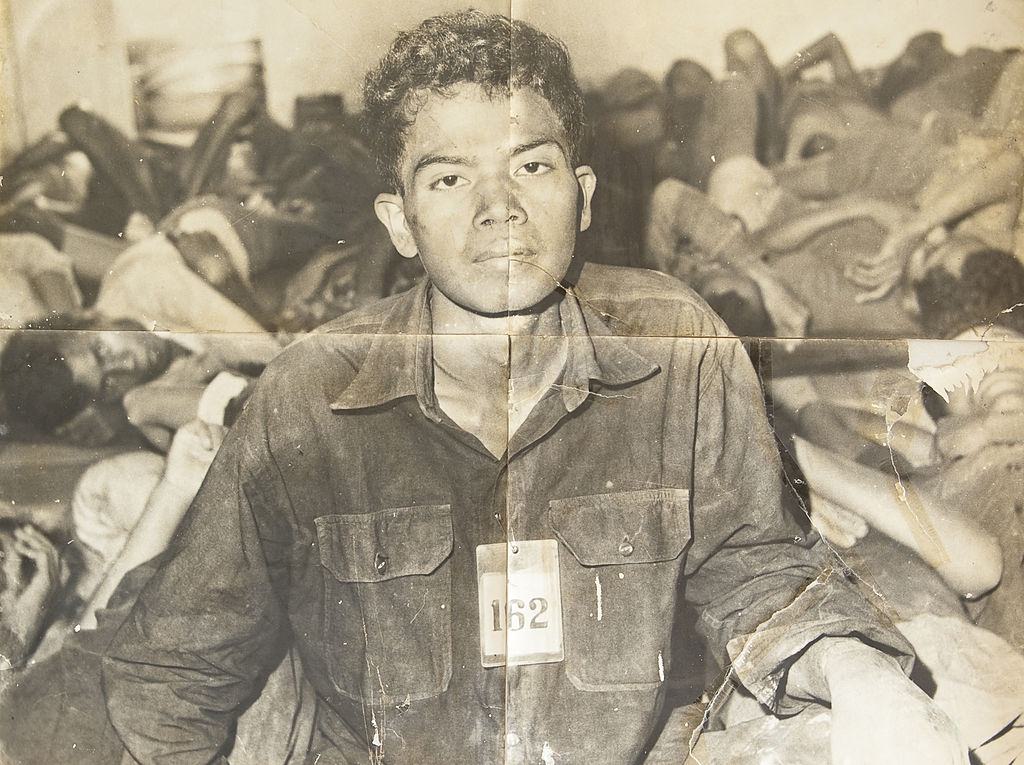
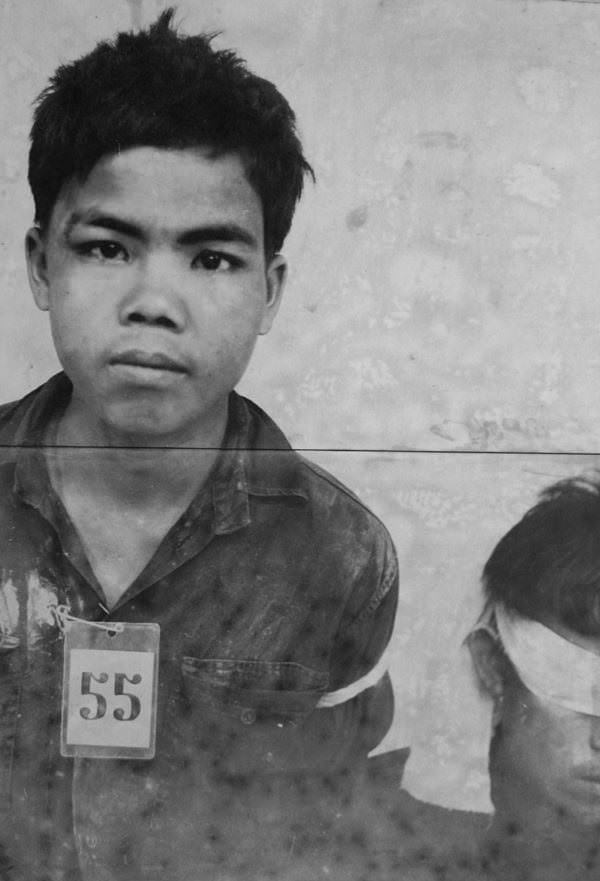
The most notorious detention center under the Khmer Rouge was Tuol Sleng, also known as Security Prison 21, or S-21. It was a former high school in Phnom Penh converted into an interrogation and torture facility. Nearly 20,000 people were imprisoned there. Only seven survived. Every prisoner was photographed upon arrival — men, women, children, the elderly. Those photographs remain among the most haunting records of the genocide.
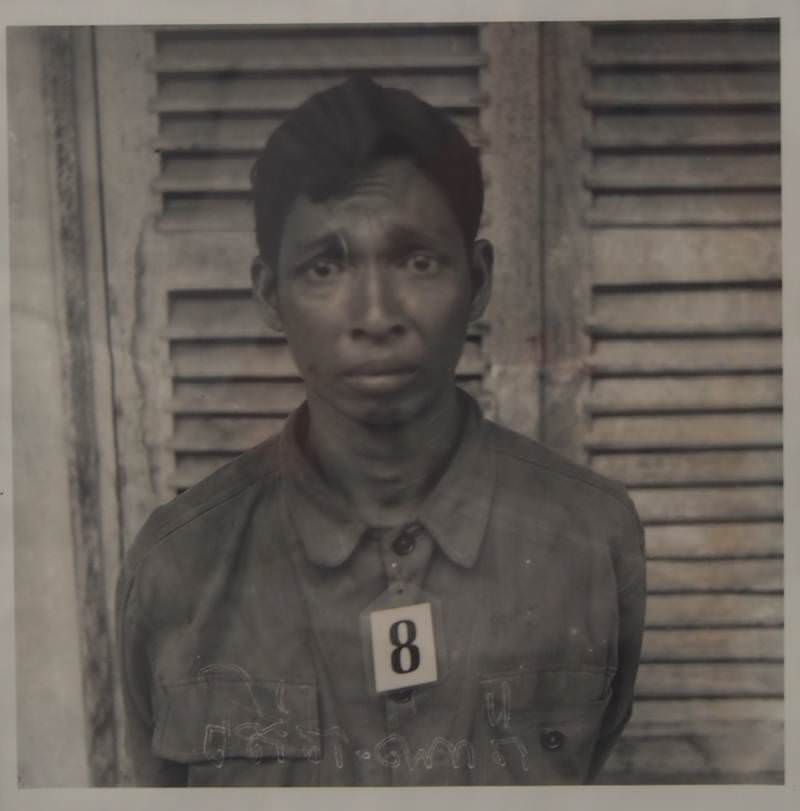
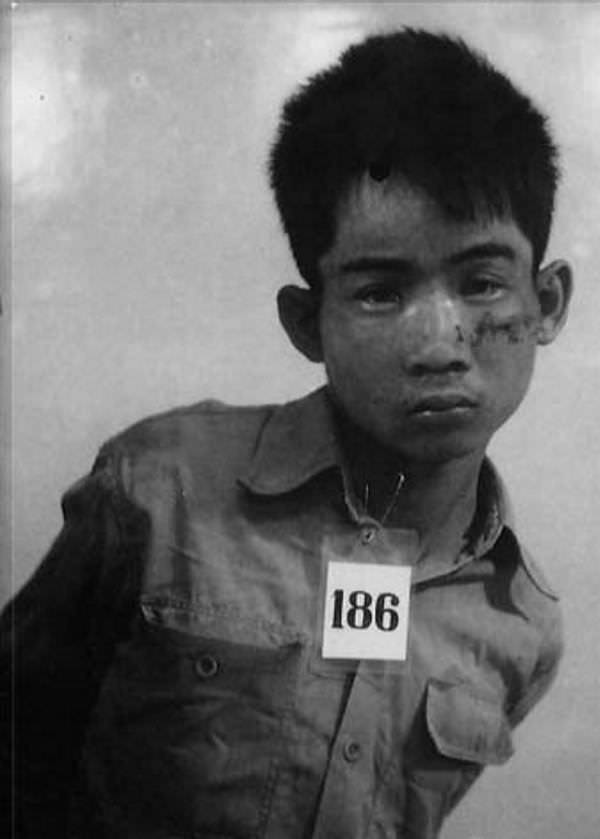
A terrified prisoner inside the Tuol Sleng prison where nearly 20,000 people locked in Tuol Sleng, only seven survived.
A teen prisoner locked in Tuol Sleng

Entire families were brought to Tuol Sleng together. If a person was accused, their spouse, children, and parents were taken too. None were spared because of their age.
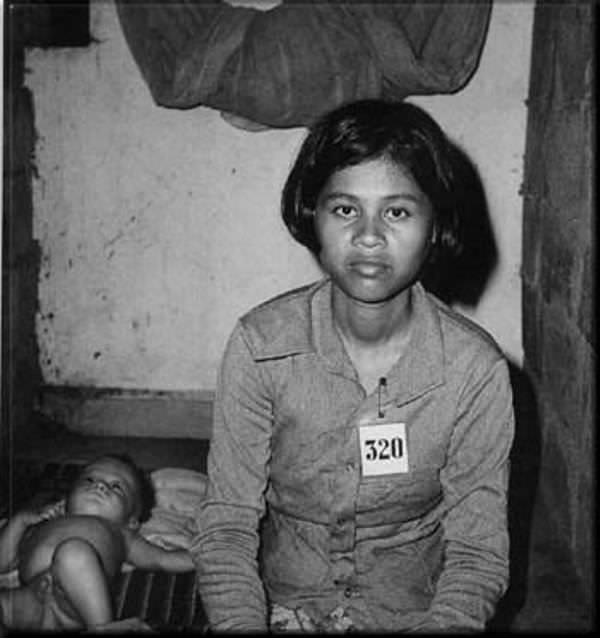
A young girl with her baby in the prison.
A teen prisoner with his brother.

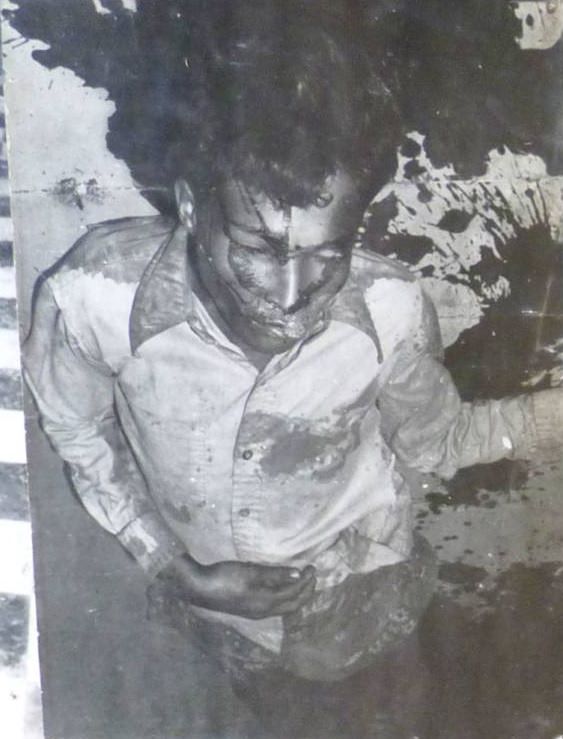
Torture at Tuol Sleng was systematic and documented. Guards used beatings with fists, sticks, and electric wire; burning with cigarettes; electric shocks; waterboarding; suffocation with plastic bags; jabbing with needles; ripping out fingernails; forcing prisoners to eat feces; and placing centipedes and scorpions on the bodies of the detained. The goal was to extract confessions — confessions that were almost entirely forced fabrications used to justify further arrests and executions.
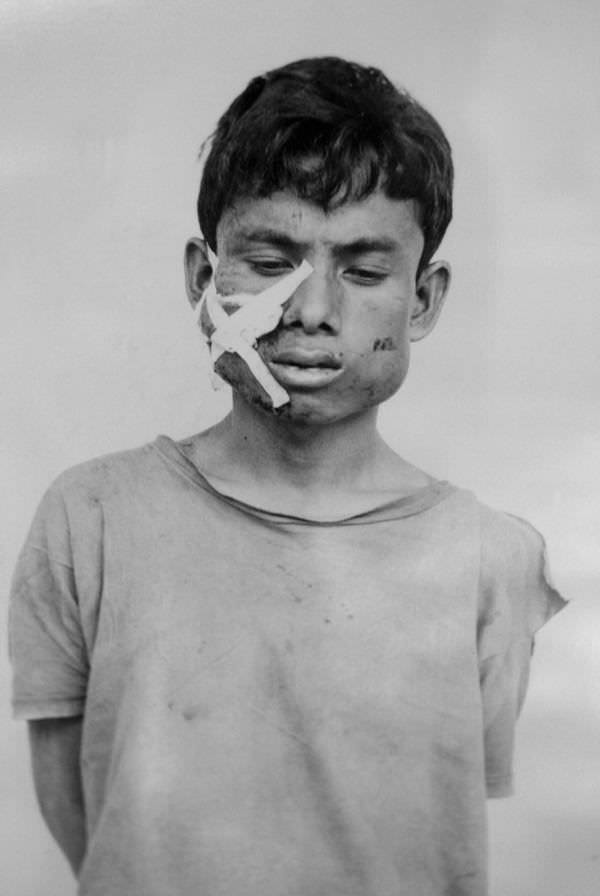
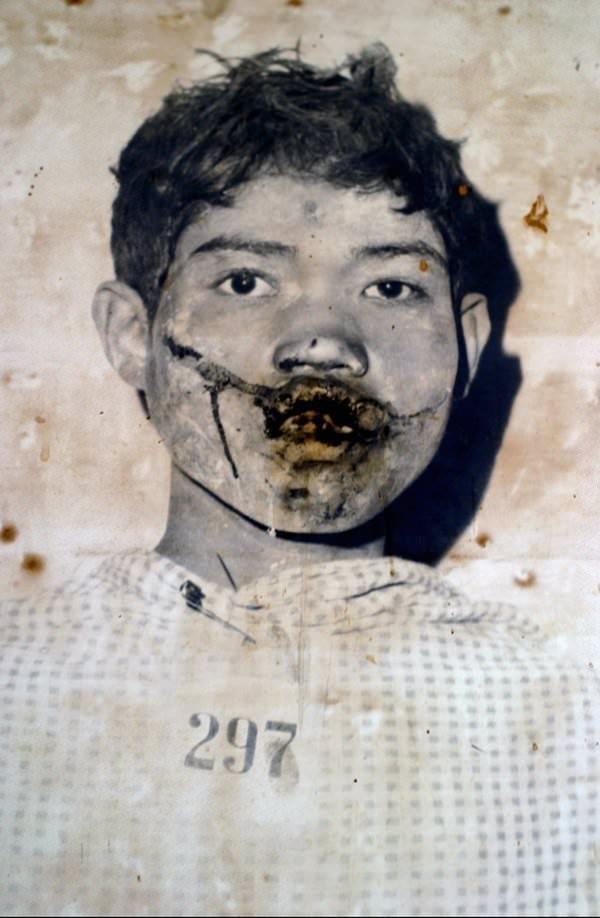
A young prisoner tortured brutally.
Another prisoner tortured brutally.
A prisoner bleeds on the floor of Tuol Sleng, Phnom Penh, 1976
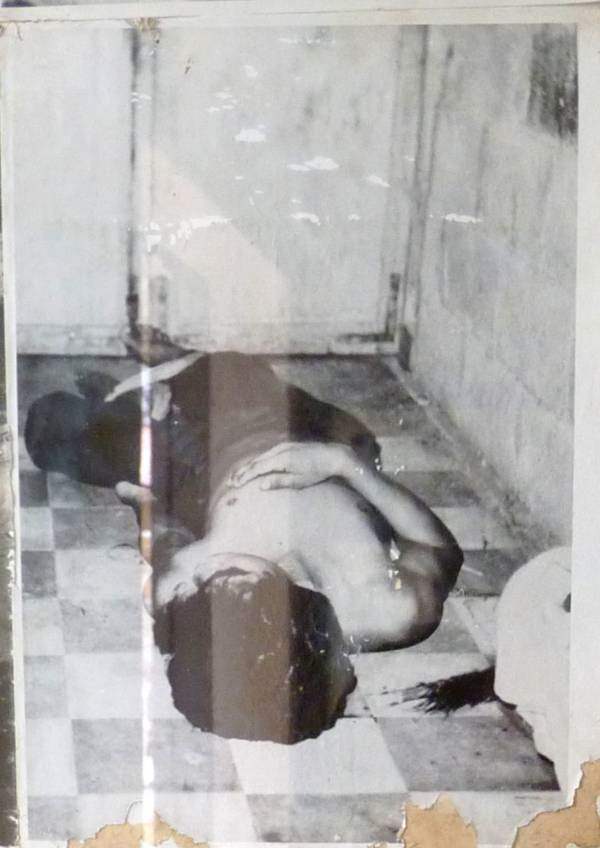
A dead man's body lies on the ground at Tuol Sleng, following his murder by the Khmer Rouge.
A dead man’s body lies on the ground at Tuol Sleng, following his murder by the Khmer Rouge.
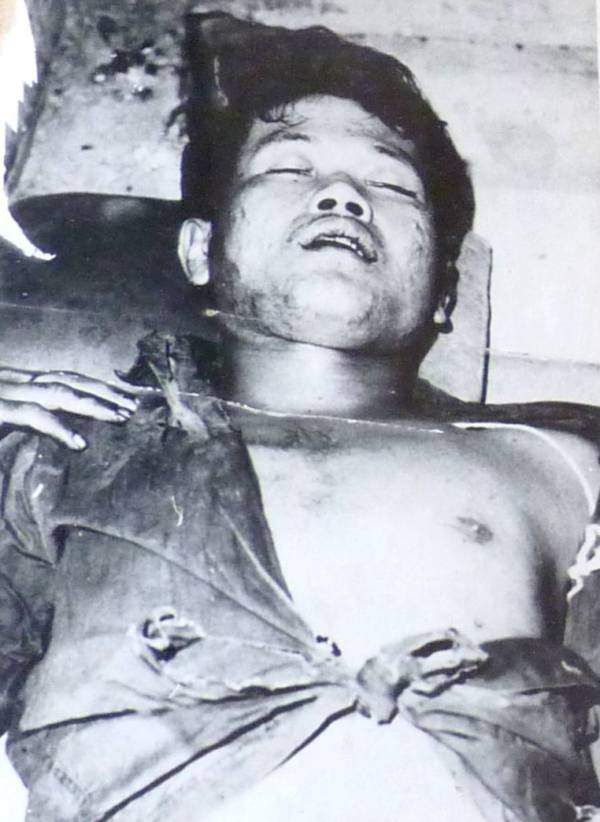
A dead man, with his shirt ripped open, lies on the cold ground of Tuol Sleng.
The of victims in S21, phnom penh, Cambodia

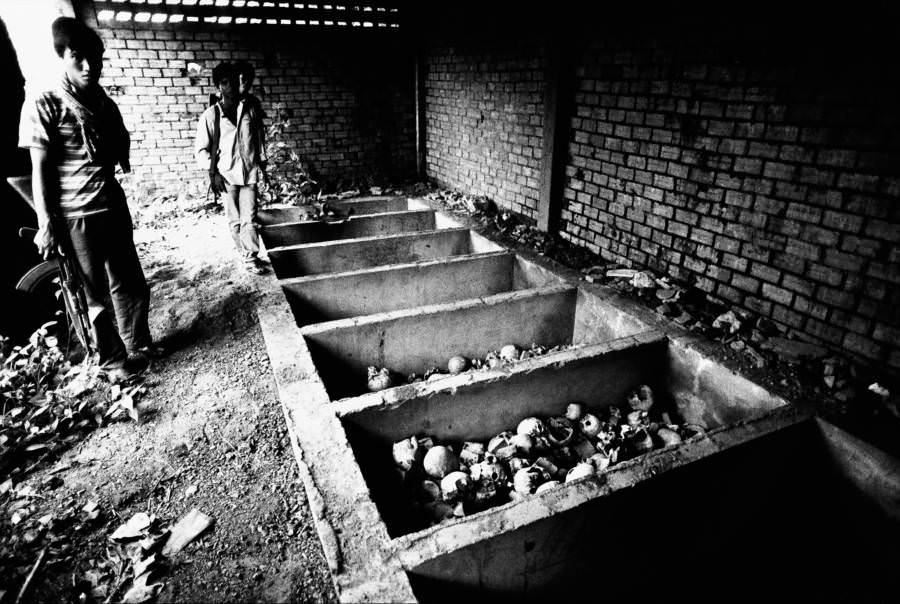
After prisoners at Tuol Sleng were killed, their bodies were transported to execution sites outside the city. The largest of these was Choeung Ek, located a few kilometers south of Phnom Penh. It became the primary mass grave for victims processed through S-21. As the regime’s economy collapsed and international sanctions tightened, bullets became scarce. Executioners were ordered to use pick axes, iron bars, and other makeshift weapons to carry out killings rather than waste ammunition.
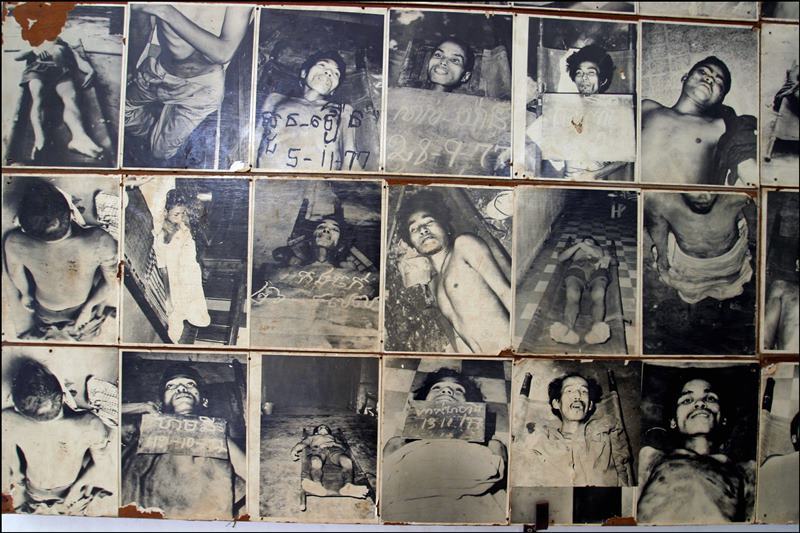
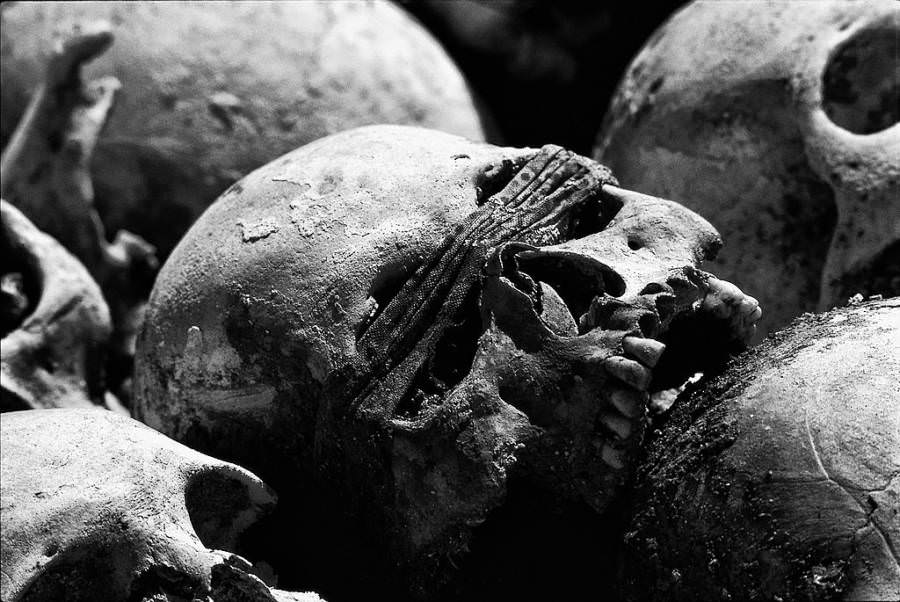
Brutally killed prisoners.
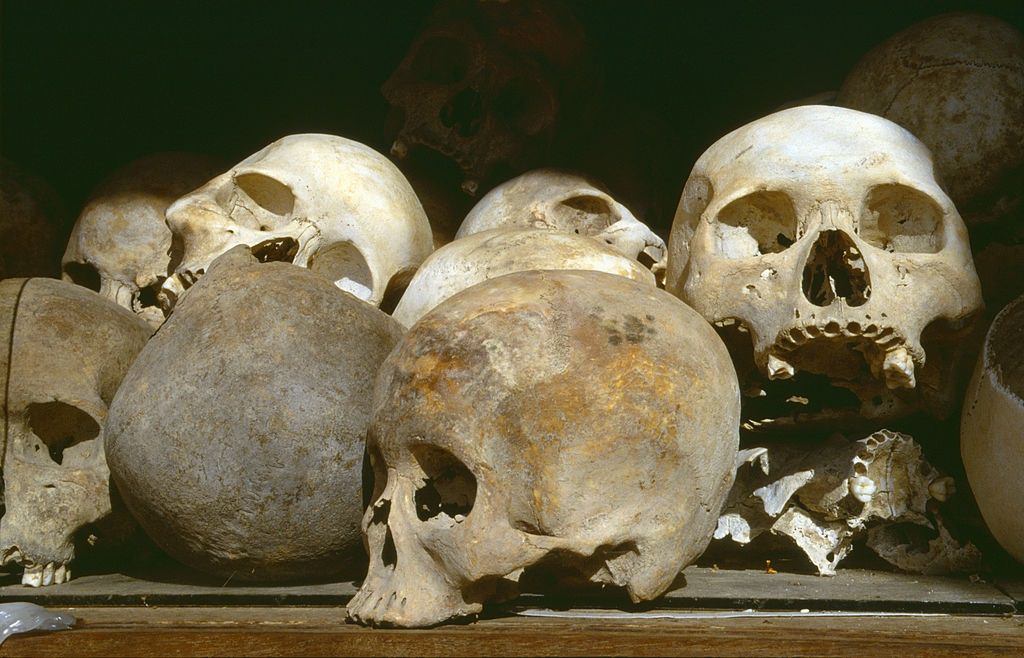
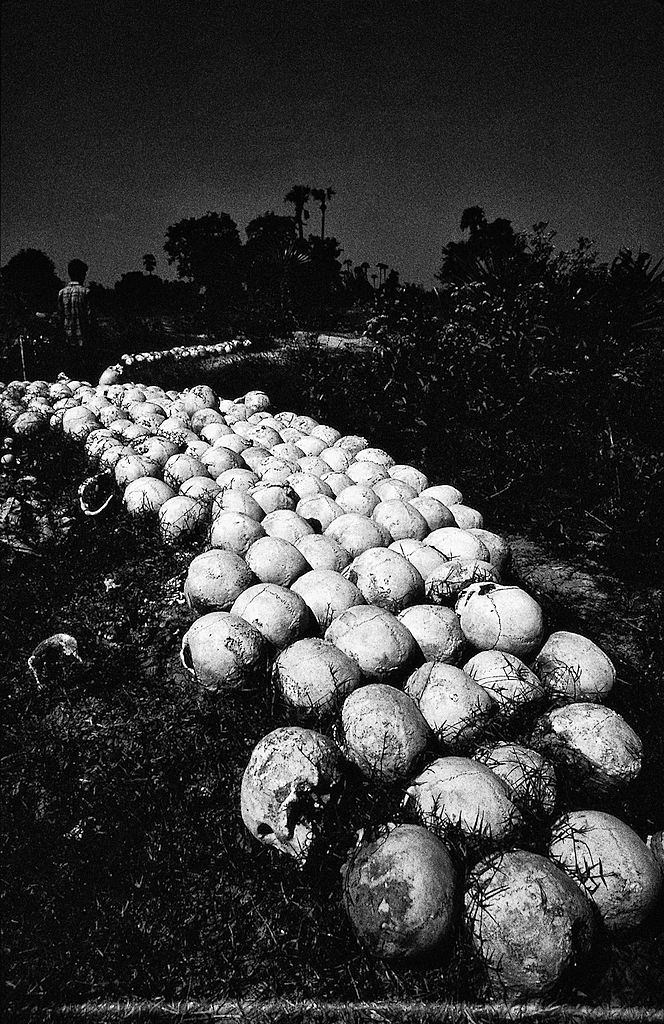
Skulls lie in the killing fields of Choeung Ek, 1981
Skulls at the Killing fields of Choeung Ek
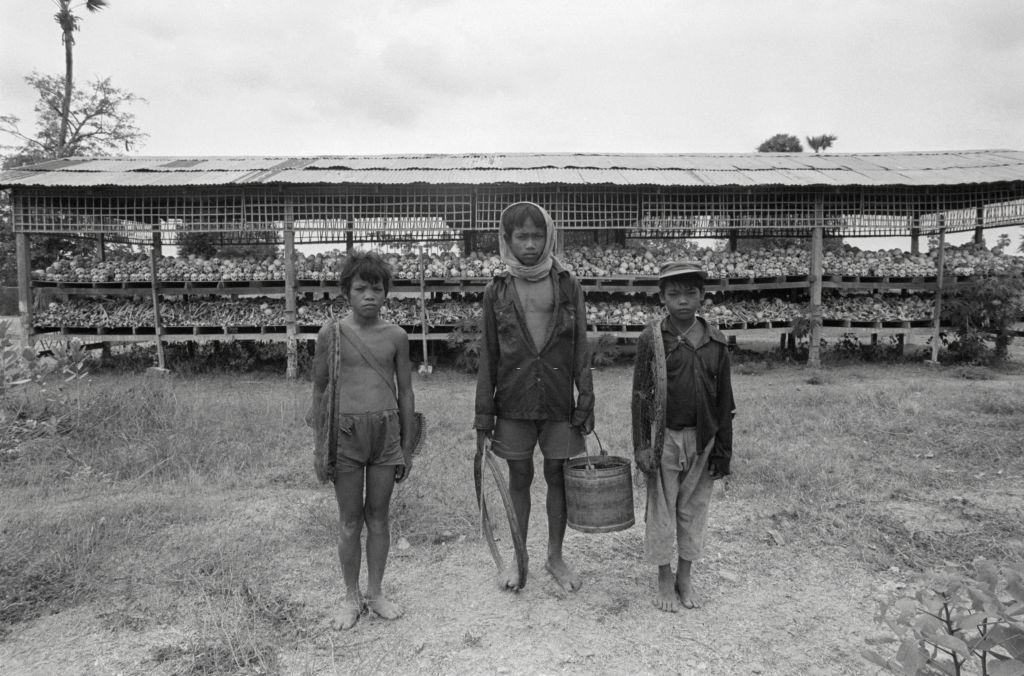
Mass Grave in Cambodia. The simple hut behind the three boys at the Choeung Ek extermination camp contains hundreds of human skulls and bones.
The Killing Fields at Choeung Ek just a few kilometers south of Phnom Penh
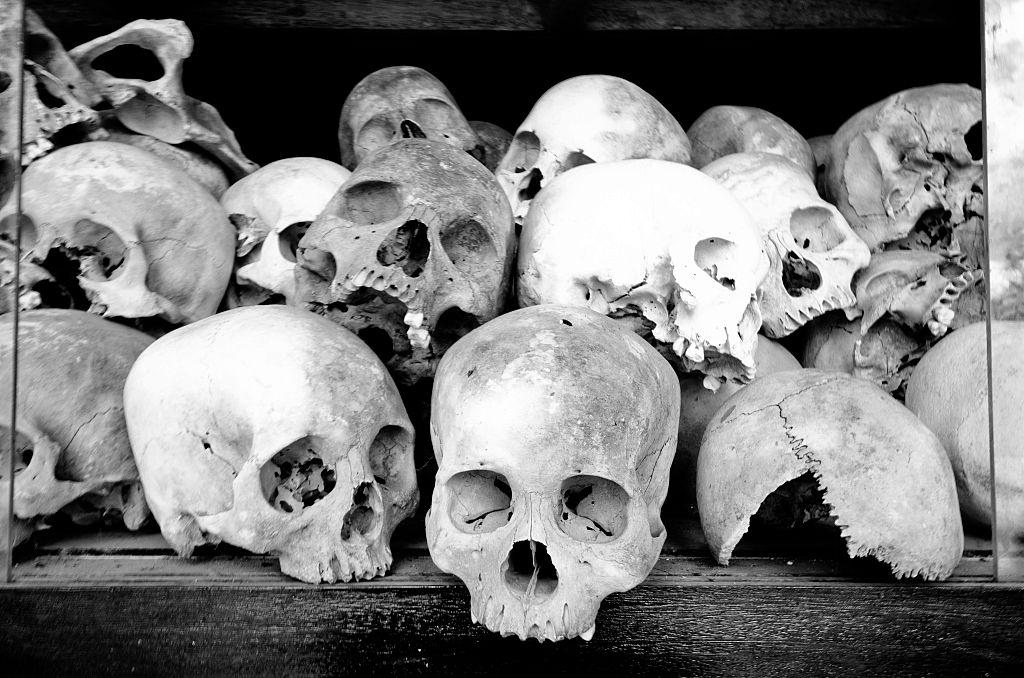
Human Skulls at Choeung Ek Cambodia's Genocide Memorial
Human Skulls at Choeung Ek Cambodia’s Genocide Memorial
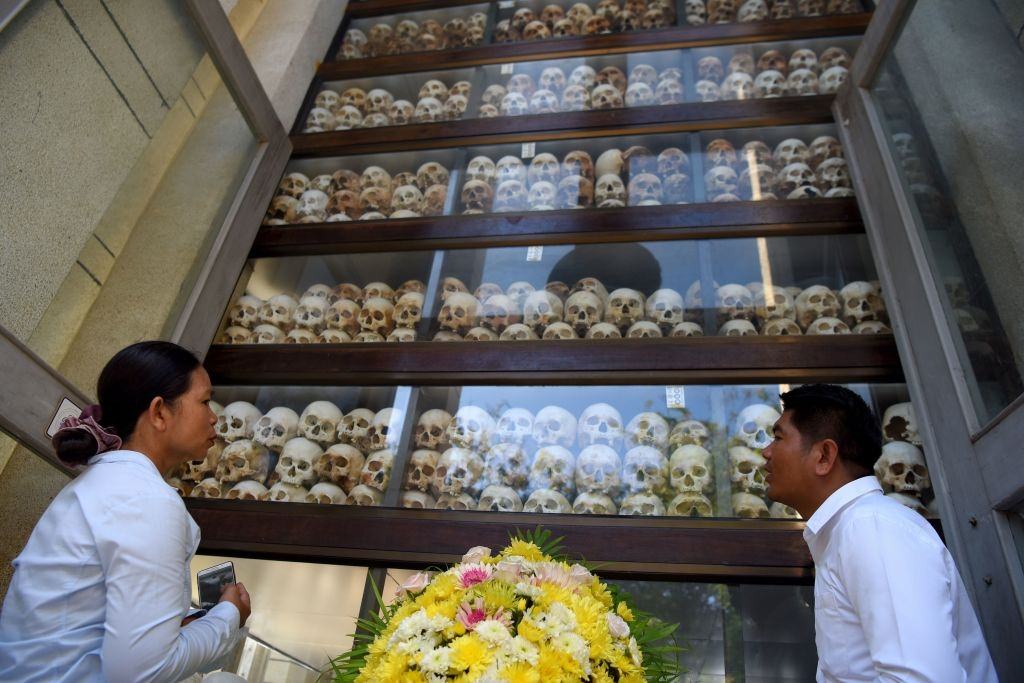
People looking at skulls displayed in a stupa during the annual 'Day of Remembrance' at the Choeung Ek killing fields memorial in Phnom Penh
People looking at skulls displayed in a stupa during the annual ‘Day of Remembrance’ at the Choeung Ek killing fields memorial in Phnom Penh

Violence was not confined to prisons and designated execution sites. Khmer Rouge soldiers killed civilians openly in the streets and in villages across the country. Public executions were used to demonstrate power and suppress any resistance. Bodies were left where they fell.
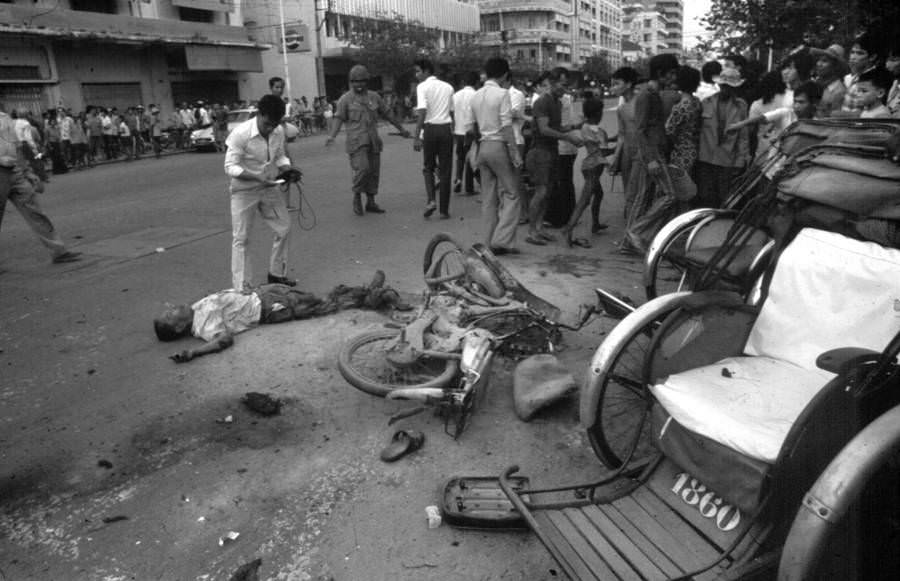
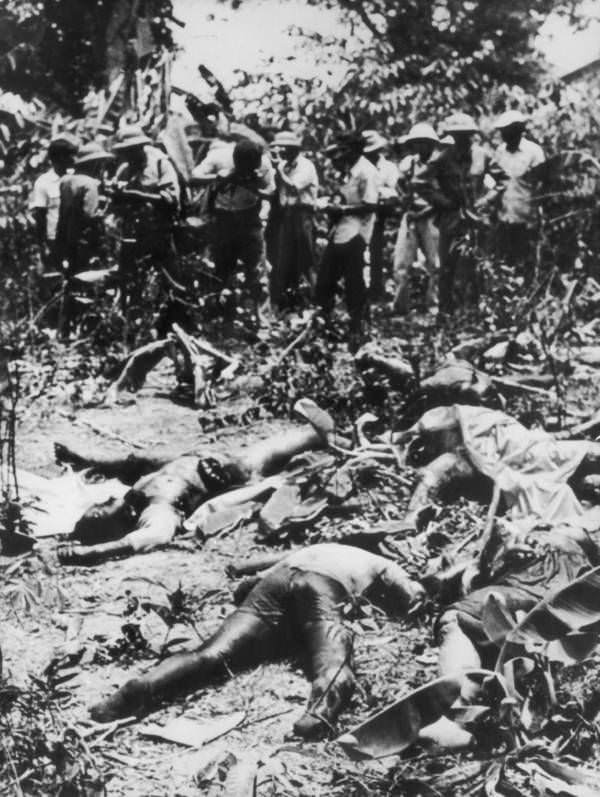
A crowd gathers around a civilian killed by the Khmer Rouge,  Phnom Penh. 1975.
A crowd gathers around a civilian killed by the Khmer Rouge, Phnom Penh. 1975.
A field of people massacred by the Khmer Rouge, My Duc, Vietnam. 1978.
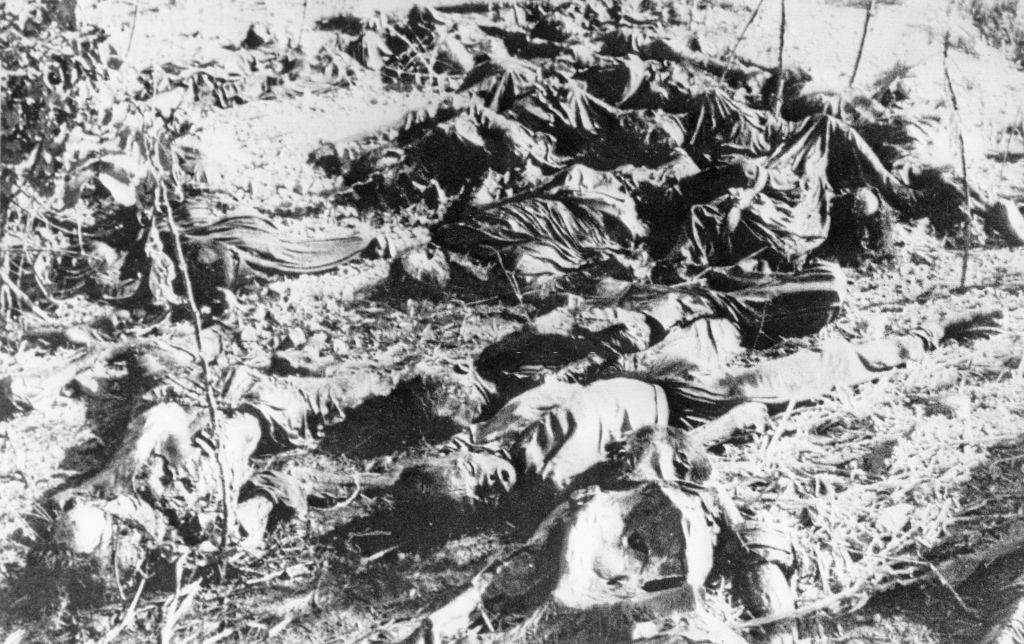
Corpses found at a prison run by the former Khmer Rouge government, about 30 kilometres north-west of Phnom Penh, Cambodia, 28th February 1979.

On the collective farms, survival depended entirely on the Khmer Rouge’s decisions about food distribution. The government deliberately reduced rations to control the population and redirected agricultural output to fund the regime. People died in enormous numbers from starvation, exhaustion, and preventable illness. Medical care was essentially nonexistent. Those who became too sick or too weak to work were executed rather than treated.
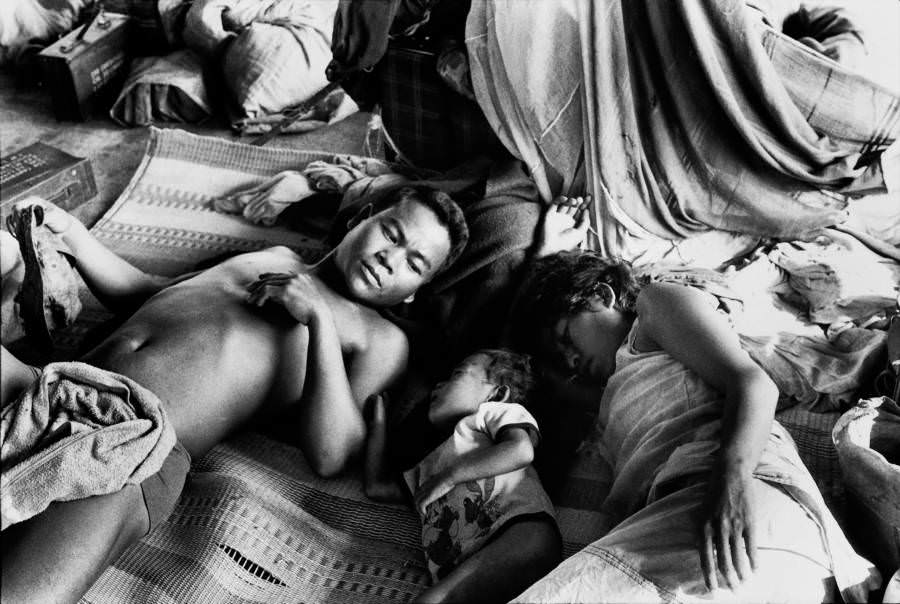
Cambodian soldiers who fought against the Khmer Rouge in the Olympic Stadium, the place the Khmer Rouge used for their executions, Phnom Penh, 1975.
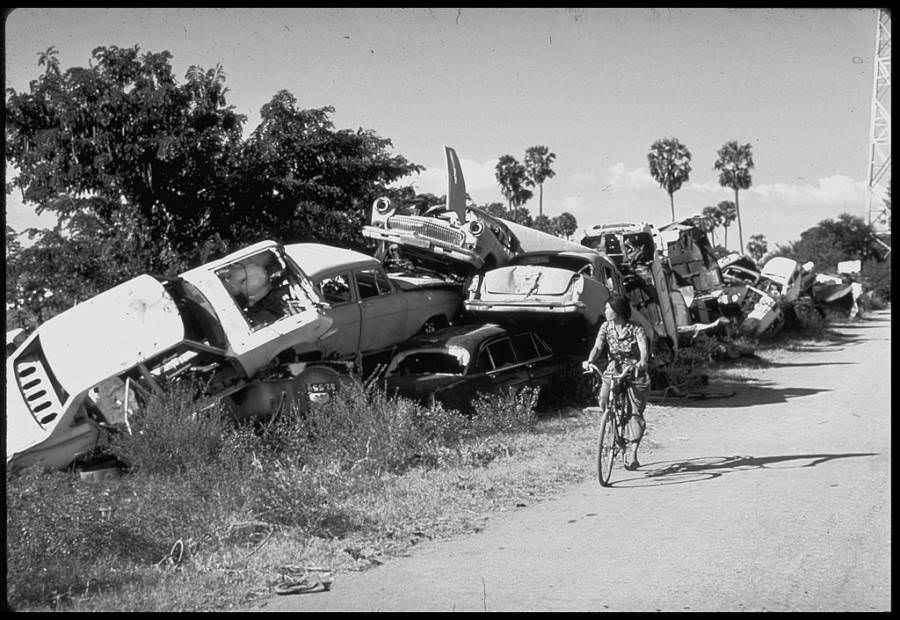
A woman rides a bicycle by a stack of destroyed cars, cast aside by the Khmer Rouge as of symbol of the bourgeoisie, 1979

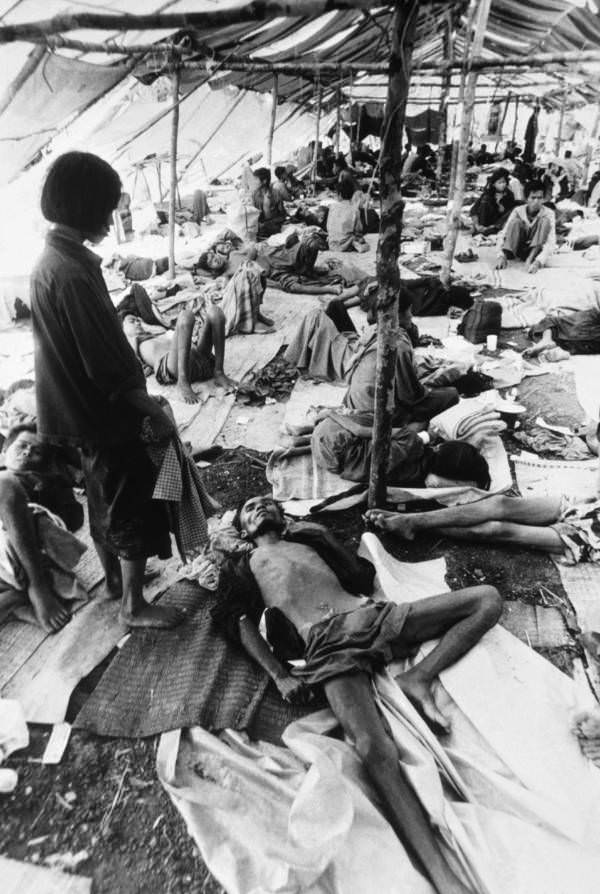
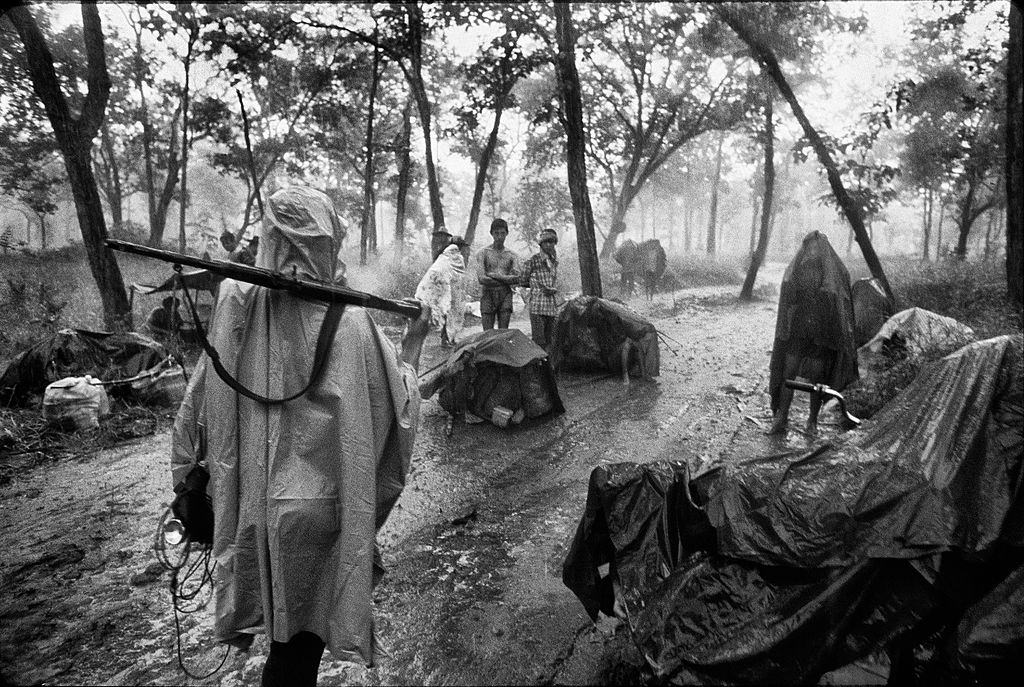
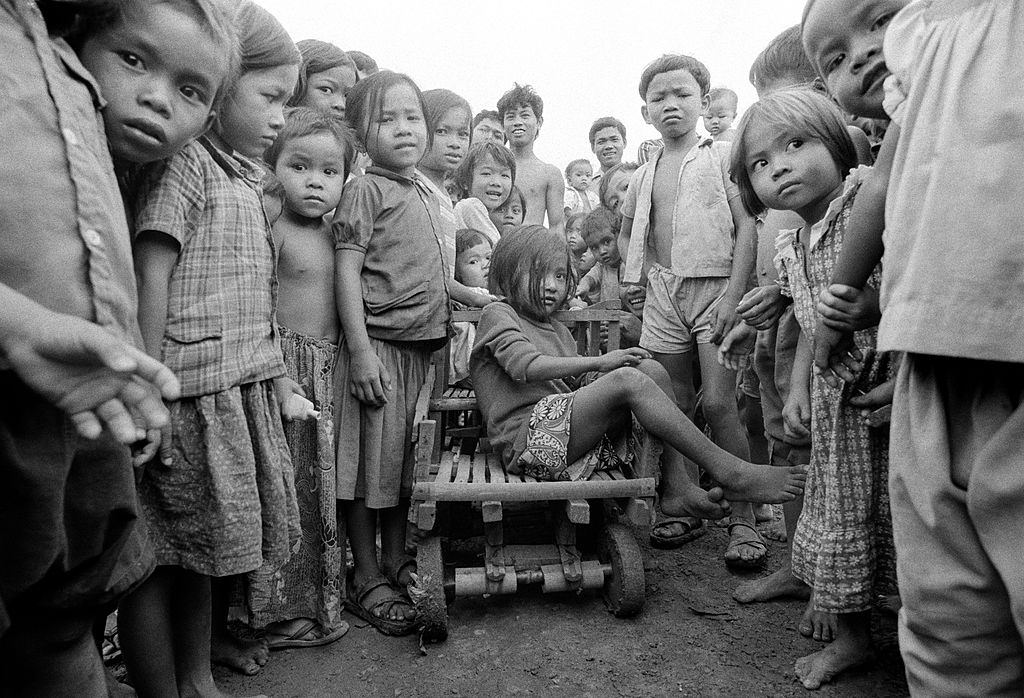
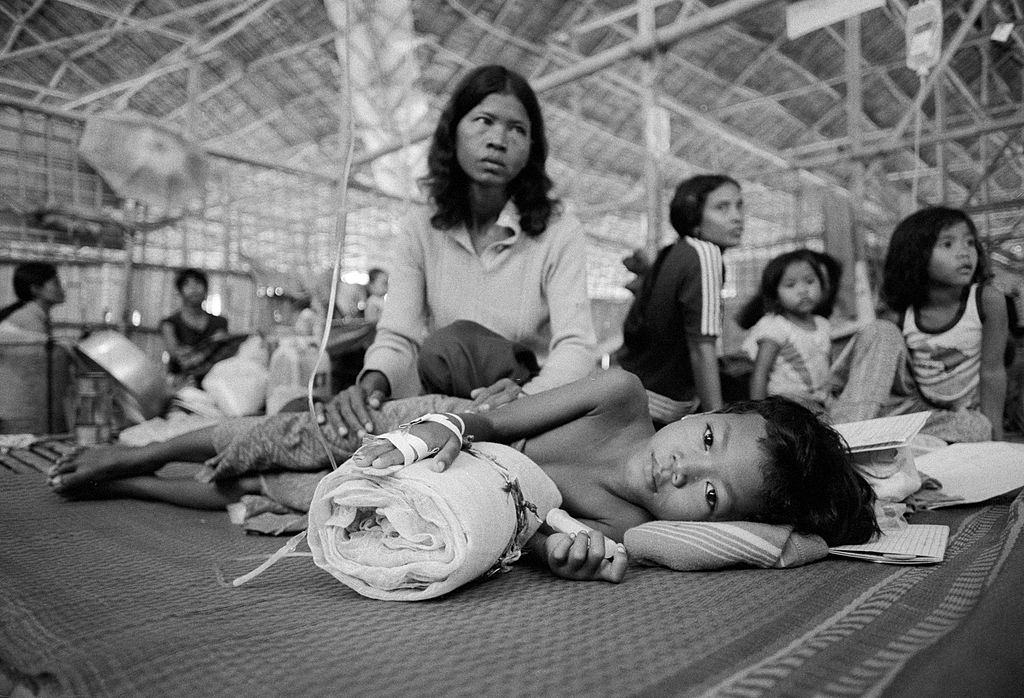
Those who managed to flee the country faced their own ordeal. Cambodians crossed into Thailand in waves, many of them severely malnourished, injured, or sick. Thai border patrols encountered some of the most extreme cases — including children killed by Khmer Rouge soldiers before they could reach safety.
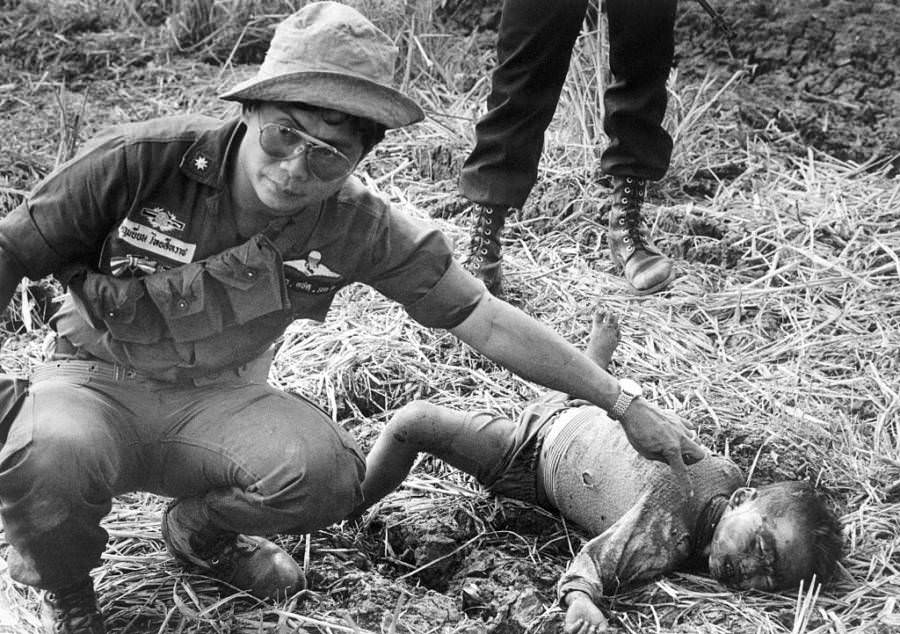
A Thai border patrolman finds a dead child that was killed by Khmer Rouge soldiers, Thailand, 1977
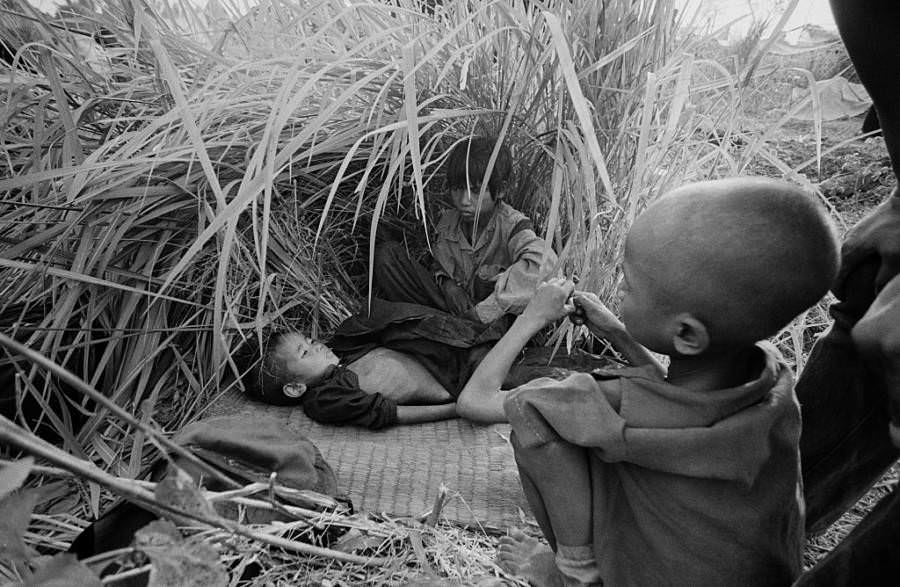
Young refugees hide under tall grass, escaping from the killing fields of the Khmer Rouge,  Aranyaprathet, Thailand, 1979.
Young refugees hide under tall grass, escaping from the killing fields of the Khmer Rouge, Aranyaprathet, Thailand, 1979.
Thousands of refugees prepare to evacuate the capital, fleeing from the Khmer Rouge, 1975
A line of a thousand Cambodian refugees makes it into Thailand,  Klong Kwang, Thailand. 1979.
A line of a thousand Cambodian refugees makes it into Thailand, Klong Kwang, Thailand. 1979.
Starving refugees get help from a Thai relief mission, laying in tents near the border,  Pailin, Cambodia, 1979
Starving refugees get help from a Thai relief mission, laying in tents near the border, Pailin, Cambodia, 1979
Cambodian refugees and pro Sihanouk guerrilla along the Thai border during the rainy season before the Thai authorities and the UN could get the setup of camps to shelter them.
Cambodian refugee children in a refugee camp set up by the UNHCR in Thailand, near the border with Cambodia, 1987.
Cambodian refugees in a hospital in a refugee camp set up by the UNHCR in Thailand, near the border with Cambodia, 1987

In January 1979, Vietnamese forces invaded Cambodia and dismantled the Khmer Rouge government in a matter of weeks. Pol Pot and his forces retreated to the remote northeastern jungles, where the movement continued as an armed insurgency for years. Pol Pot himself lived in that region until 1997, when he died under house arrest. He was never tried for his crimes. None of the senior members of his regime faced a court of law while the regime was still in living memory for millions of survivors.
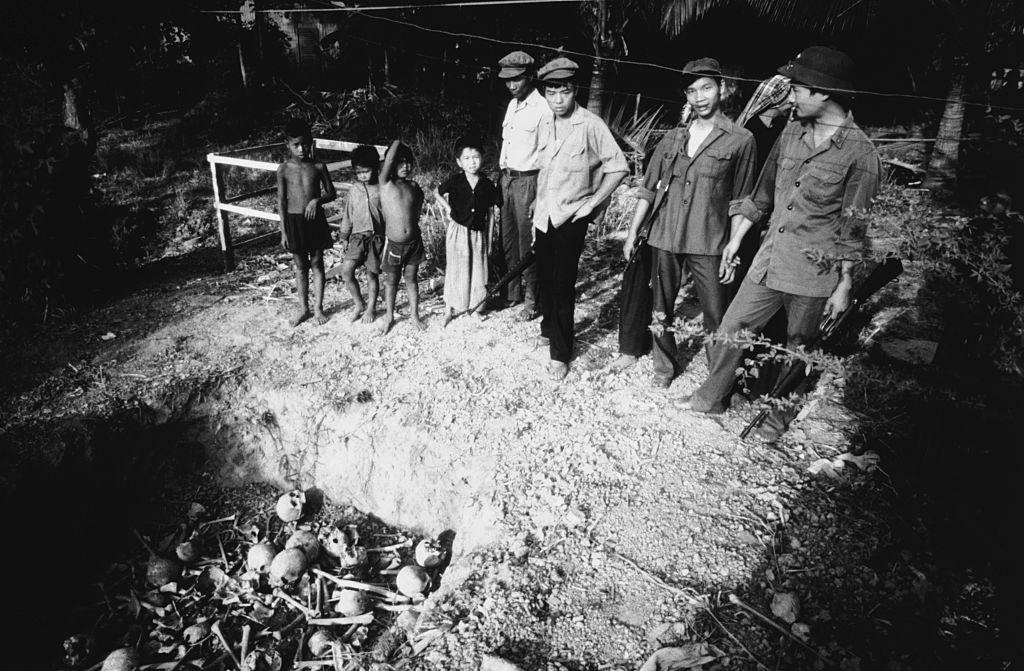
Vietnamese soldiers and a group of children witness the unearthing of a mass grave, 1980
A soldier stands by a mass grave,  Oudong, Cambodia. 1981.
A soldier stands by a mass grave, Oudong, Cambodia. 1981.
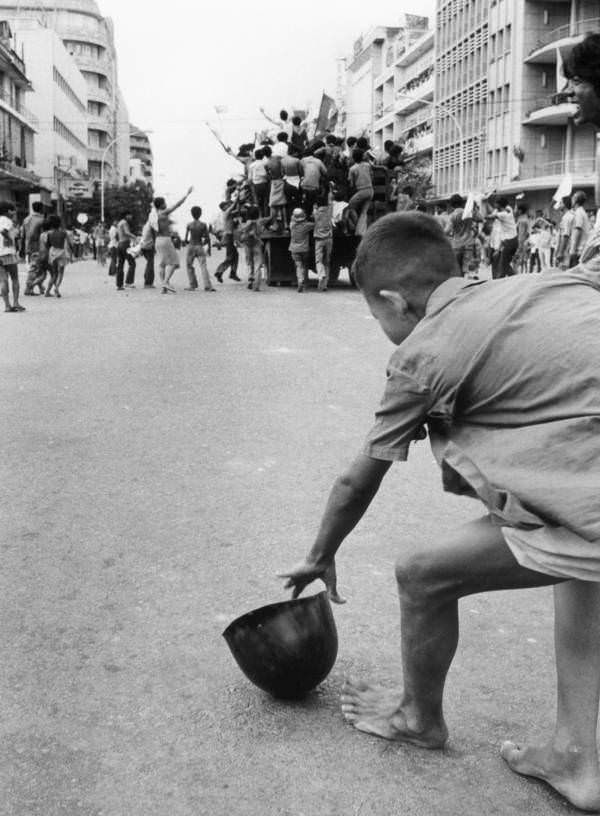
A young boy picks up a soldier's helmet as the victorious Khmer Rouge parades through the streets of his city,  Phnom Penh, 1975.
A young boy picks up a soldier’s helmet as the victorious Khmer Rouge parades through the streets of his city, Phnom Penh, 1975.
The Fall of Phnom Penh to the Khmer Rouge on April 17, 1975
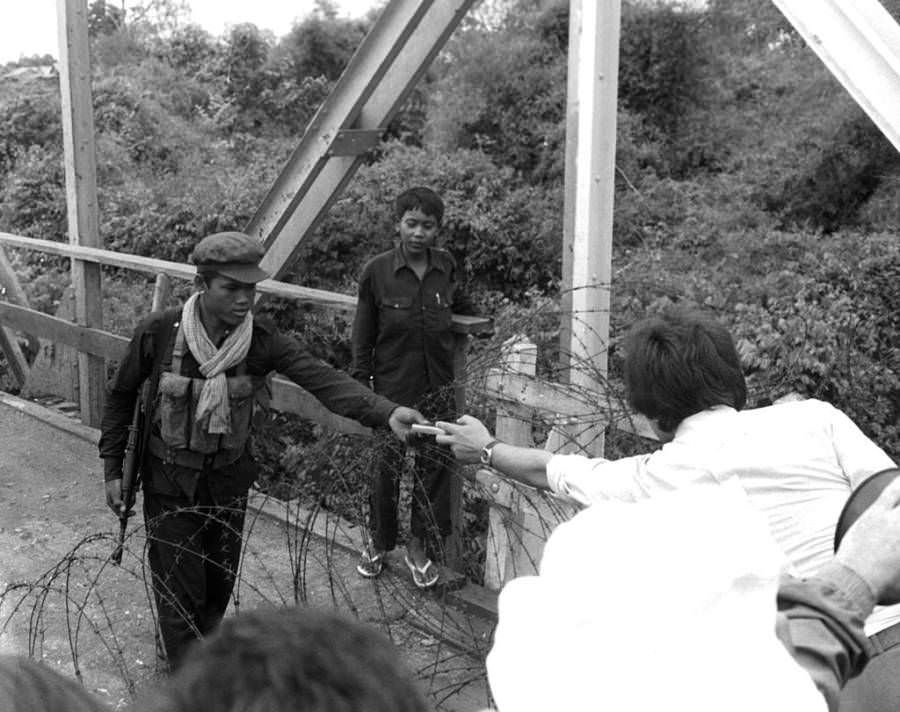
An employee at the French Embassy offers a cigarette to a Khmer Rouge soldier,  Phnom Penh, 1975.
An employee at the French Embassy offers a cigarette to a Khmer Rouge soldier, Phnom Penh, 1975.
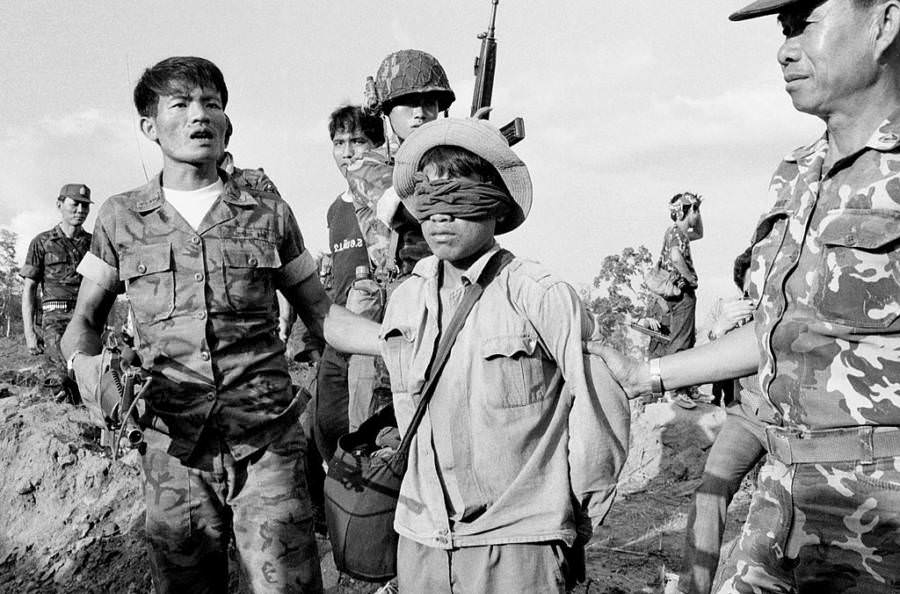
A Cambodian soldier fighting against the Khmer Rouger is captured in Thailand,  Aranyaprathet, Thailand, 1985.
A Cambodian soldier fighting against the Khmer Rouger is captured in Thailand, Aranyaprathet, Thailand, 1985.
Enjoyed this post? Get new ones in your inbox.
Avatar of Benjamin Grayson

Written by Benjamin Grayson

Former Bouquet seller now making a go with blogging and graphic designing. I love creating & composing history articles and lists.

Leave a Reply

Your email address will not be published. Required fields are marked *