Brixton sits in the London Borough of Lambeth, roughly four miles south of the River Thames. It is one of 35 major centers across Greater London and has long been one of the city’s most recognizable districts. Surrounded by Stockwell, Clapham, Streatham, Camberwell, Tulse Hill, Balham, and Herne Hill, Brixton developed rapidly after a British rail link arrived in the 1860s and triggered a major building boom. That growth turned the area into a middle-class suburb, and by the 1920s, Brixton had become the shopping capital of south London, home to three large department stores and early branches of some of Britain’s biggest national retailers.
The Brixton Market, which opened on Atlantic Road in the 1920s to ease street traffic, remained a beating heart of the community decades later. Brixton Road became the main shopping corridor, feeding directly into the market. By the 1980s, the area had a large Afro-Caribbean population that shaped its culture, food, music, and street life in very visible ways. Photographer Peter Marshall walked these streets with a camera and documented what he saw — not tourist landmarks, but the everyday texture of a working neighborhood.
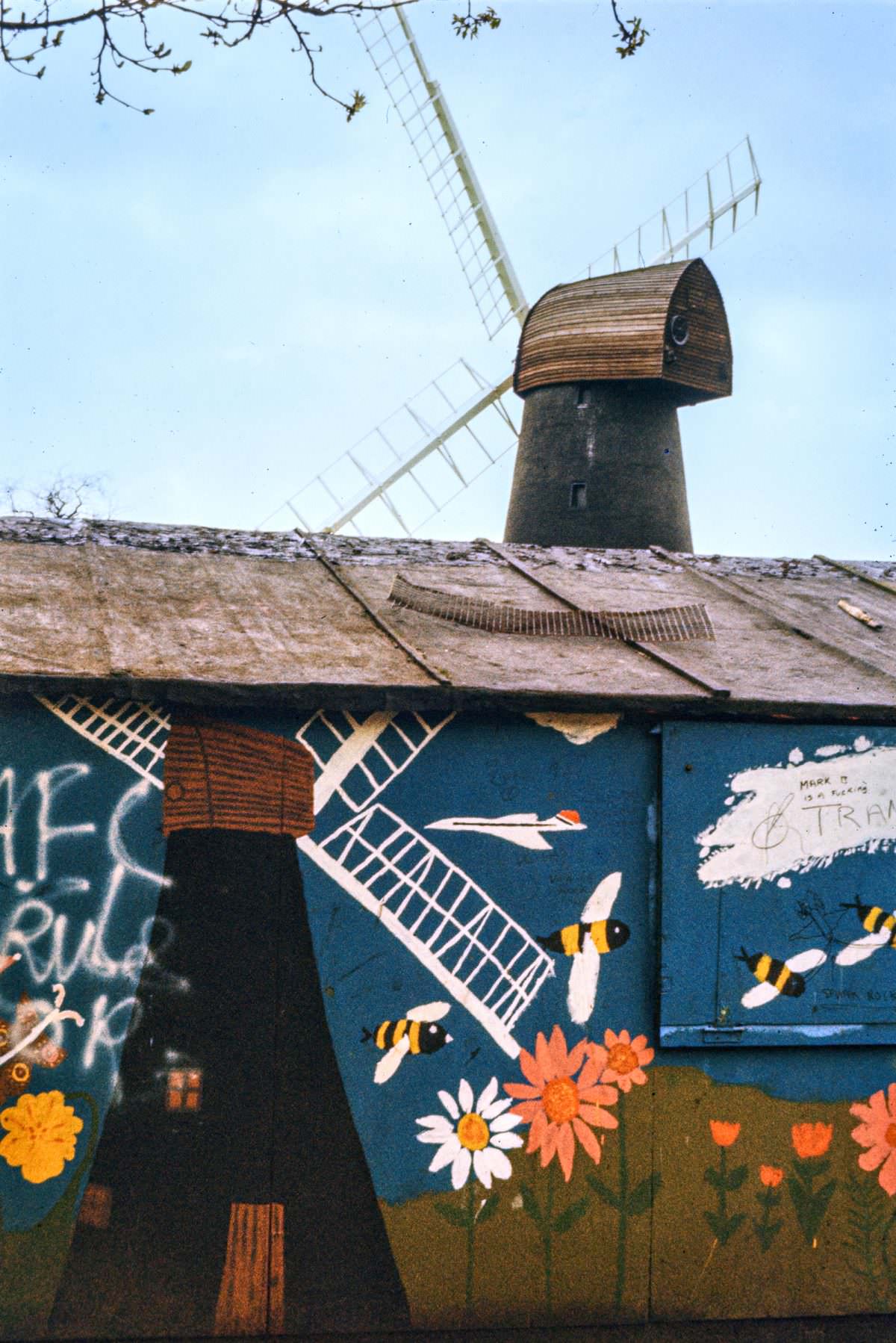
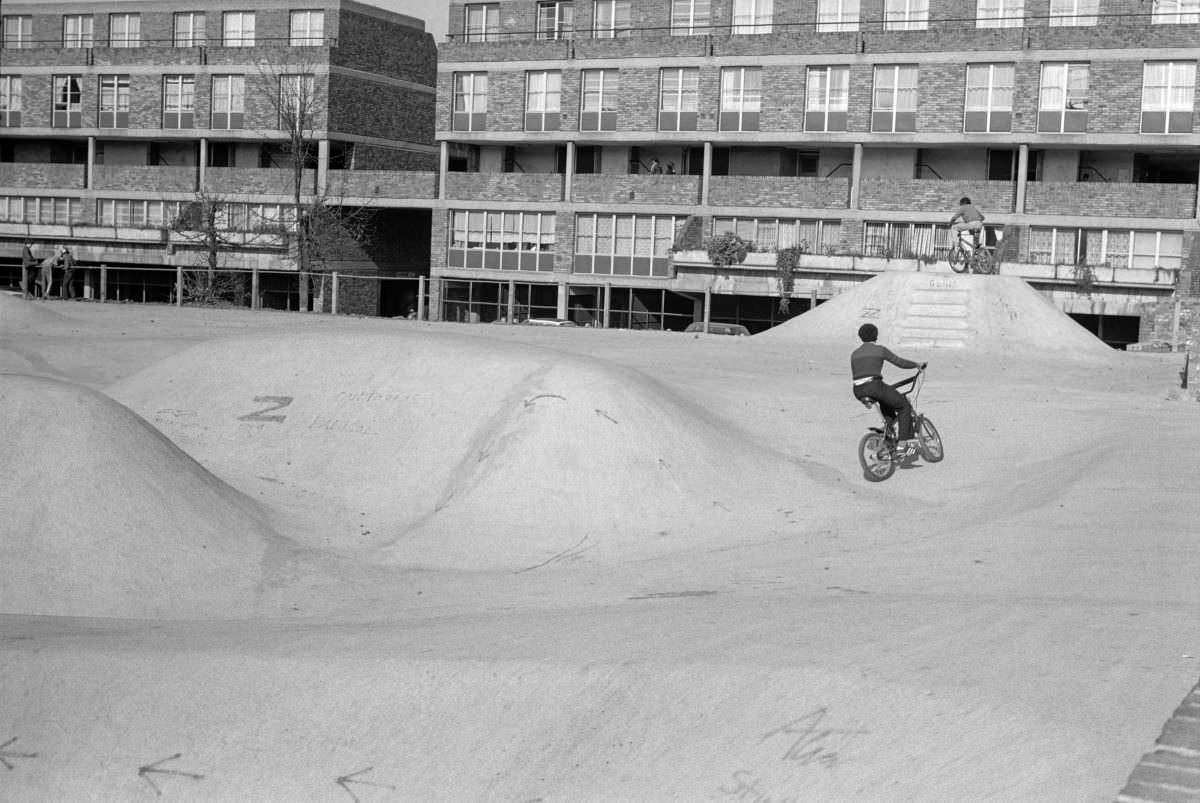
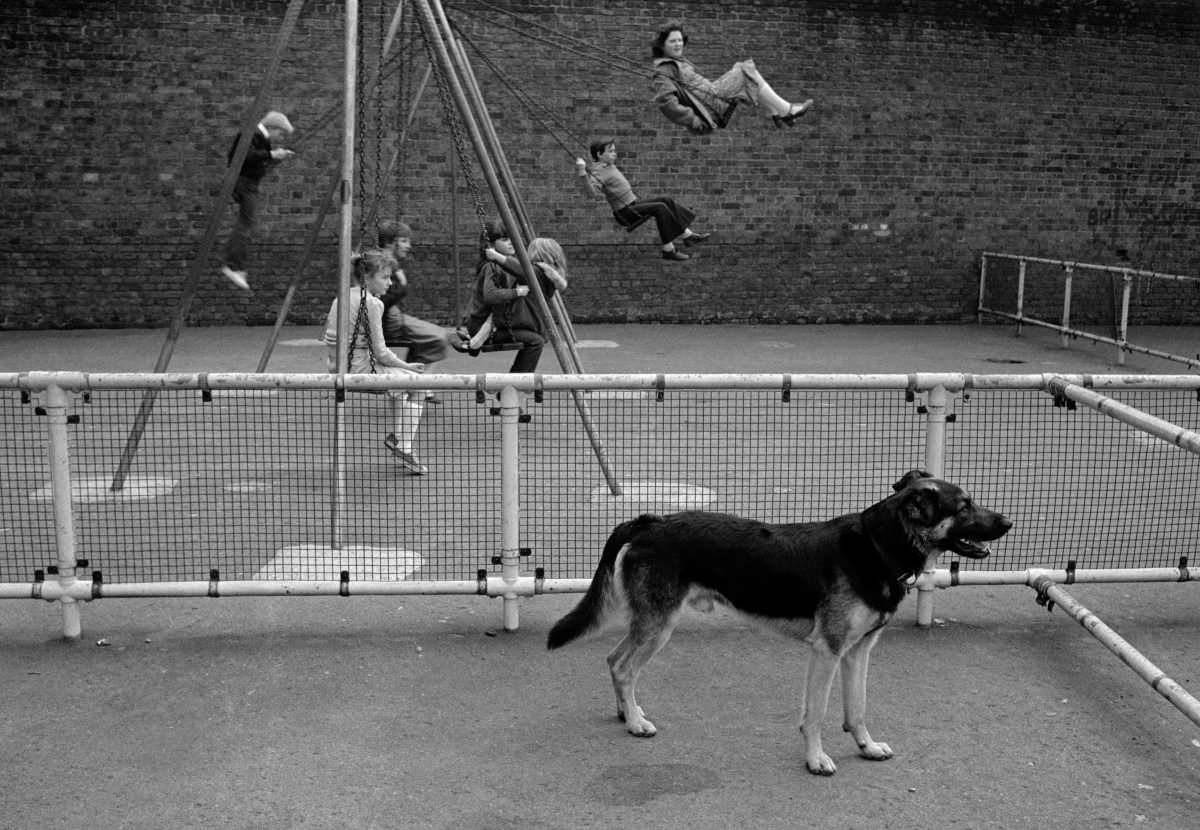
Marshall’s earliest photographs in this collection date to 1980. His lens caught children’s playgrounds, the old Brixton Windmill standing in Blenheim Gardens, and the quiet corners of Stockwell Park. These early images show a neighborhood that was dense, lived-in, and layered — brick housing blocks next to patches of green, old Victorian architecture carrying decades of wear.
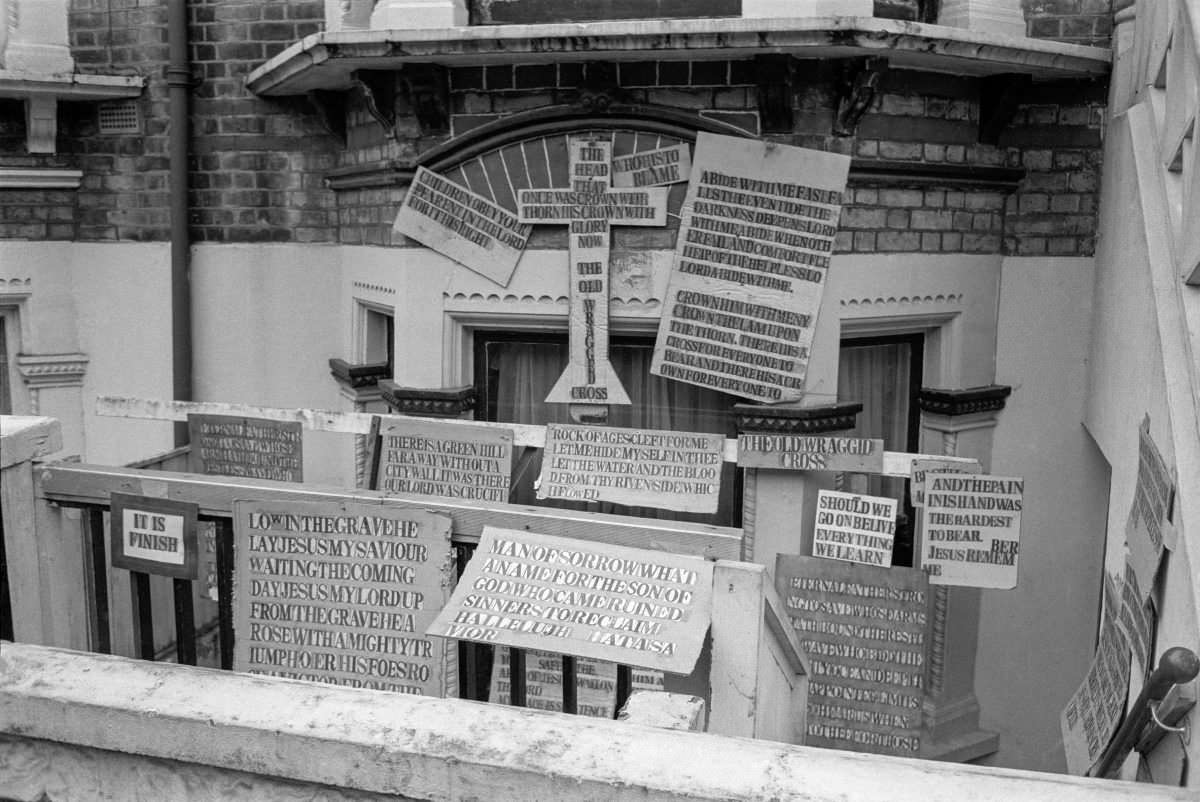
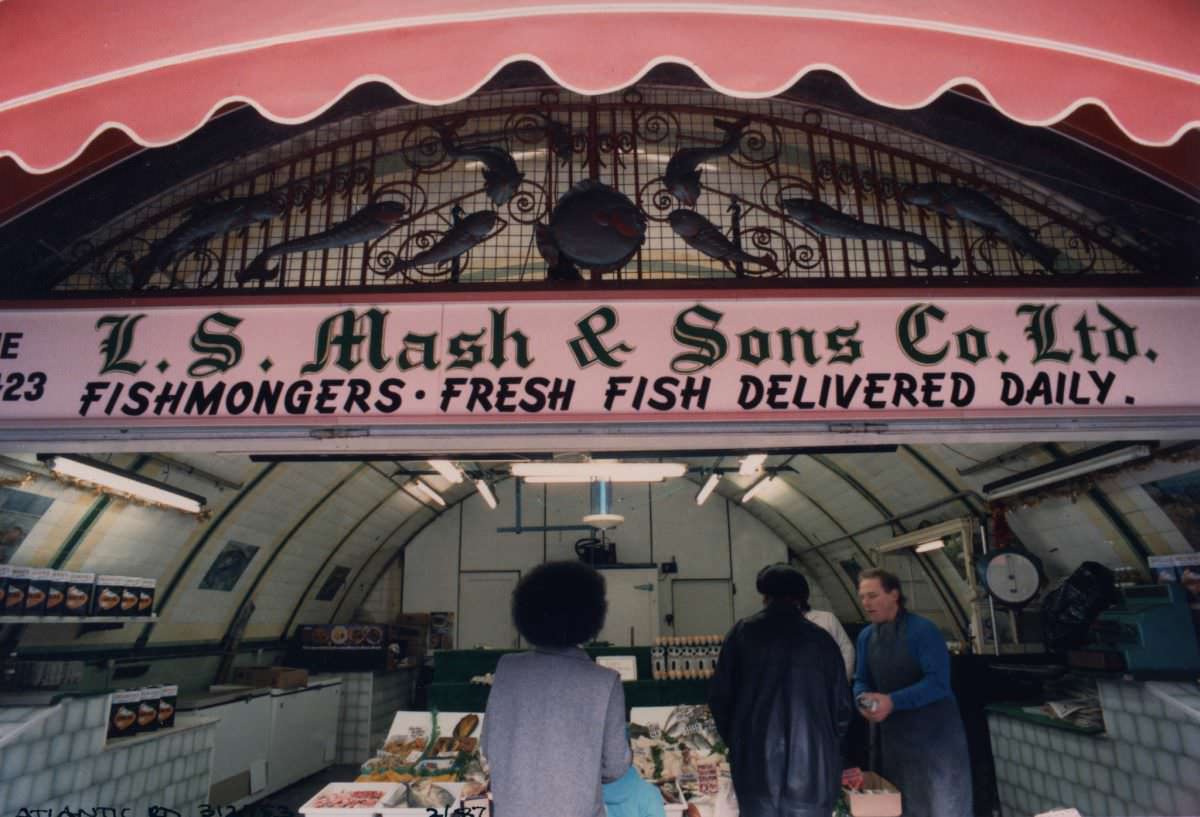
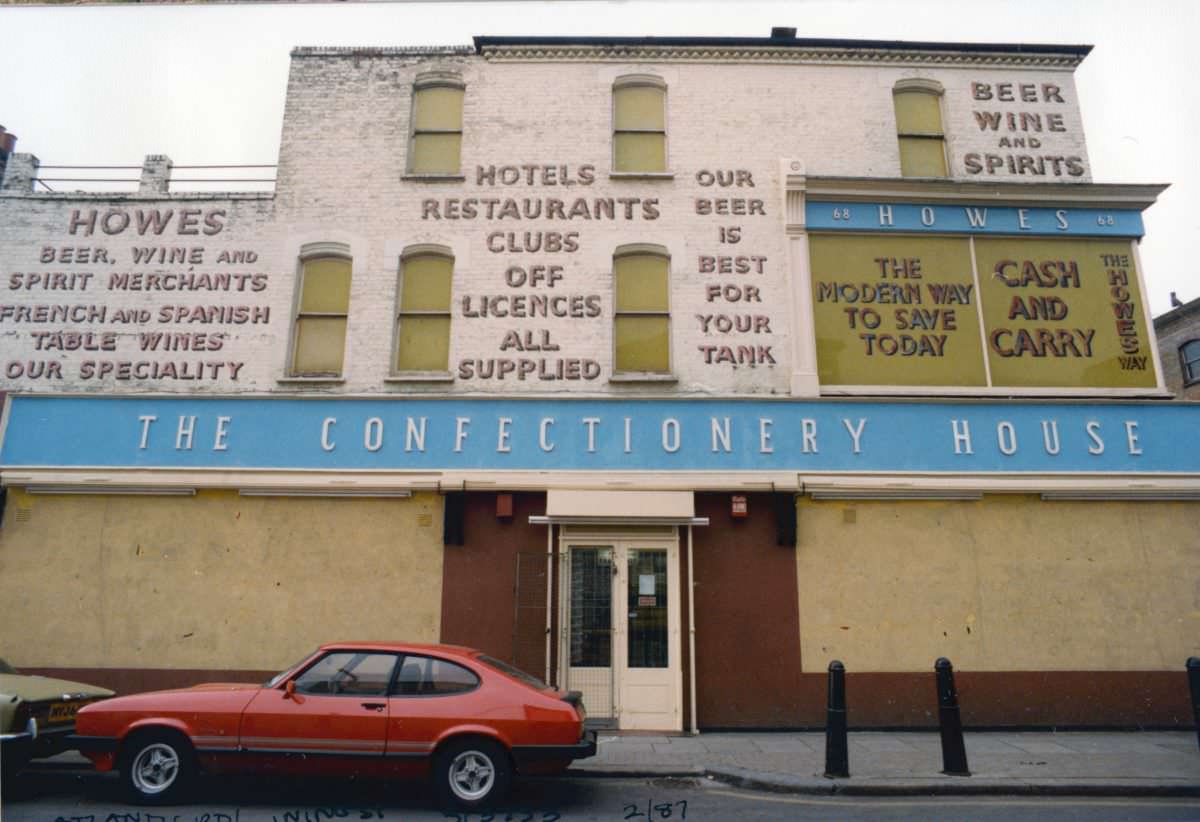
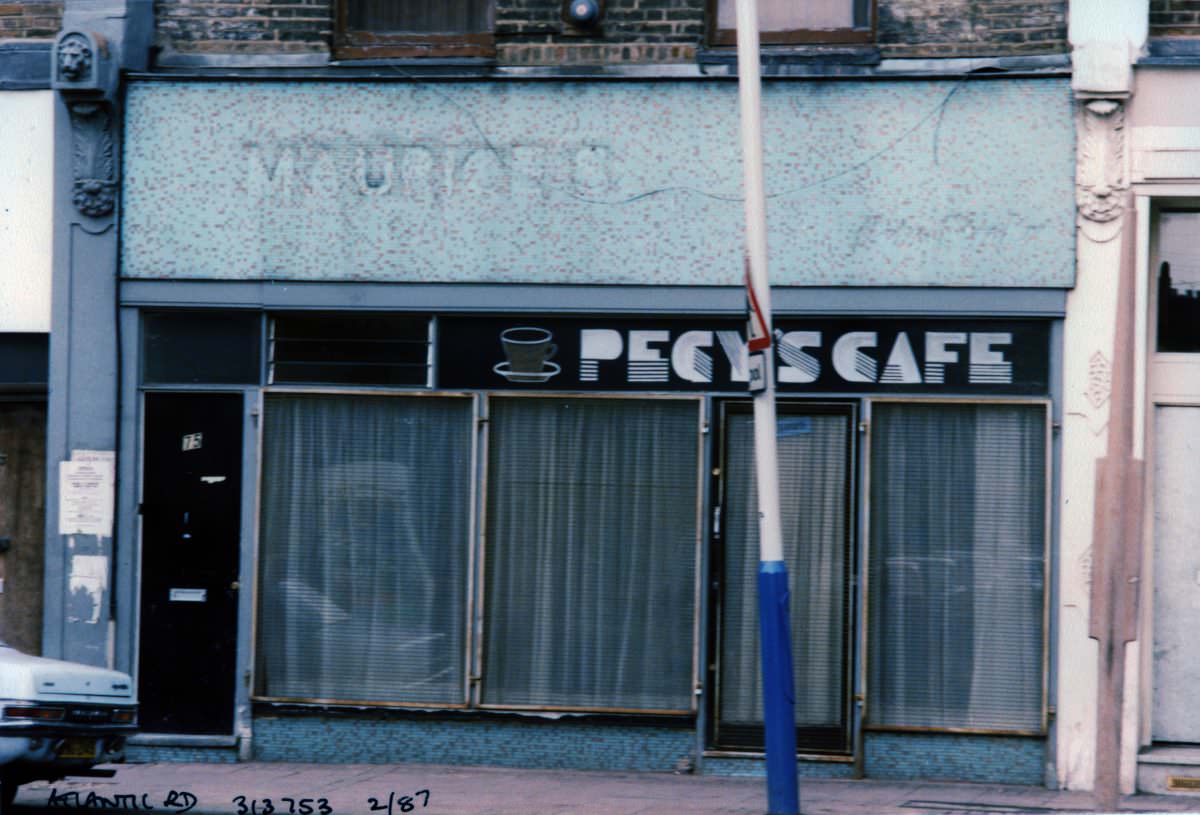
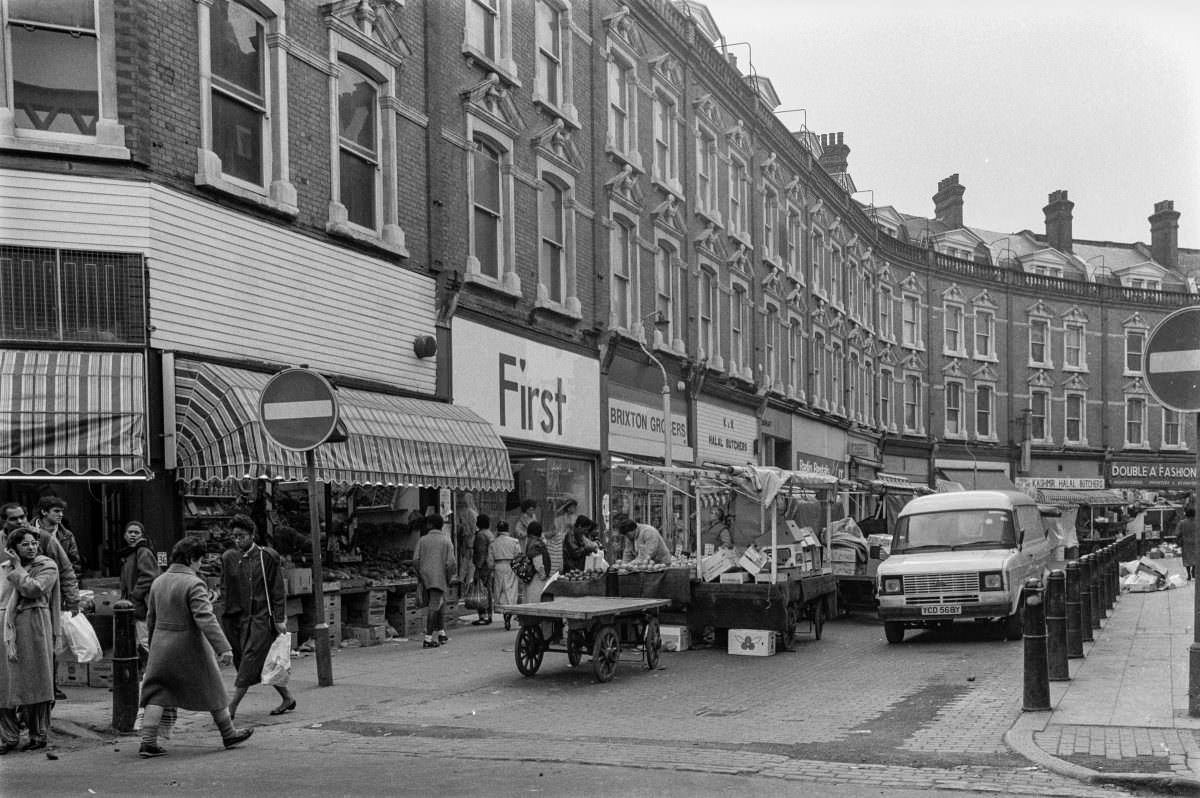
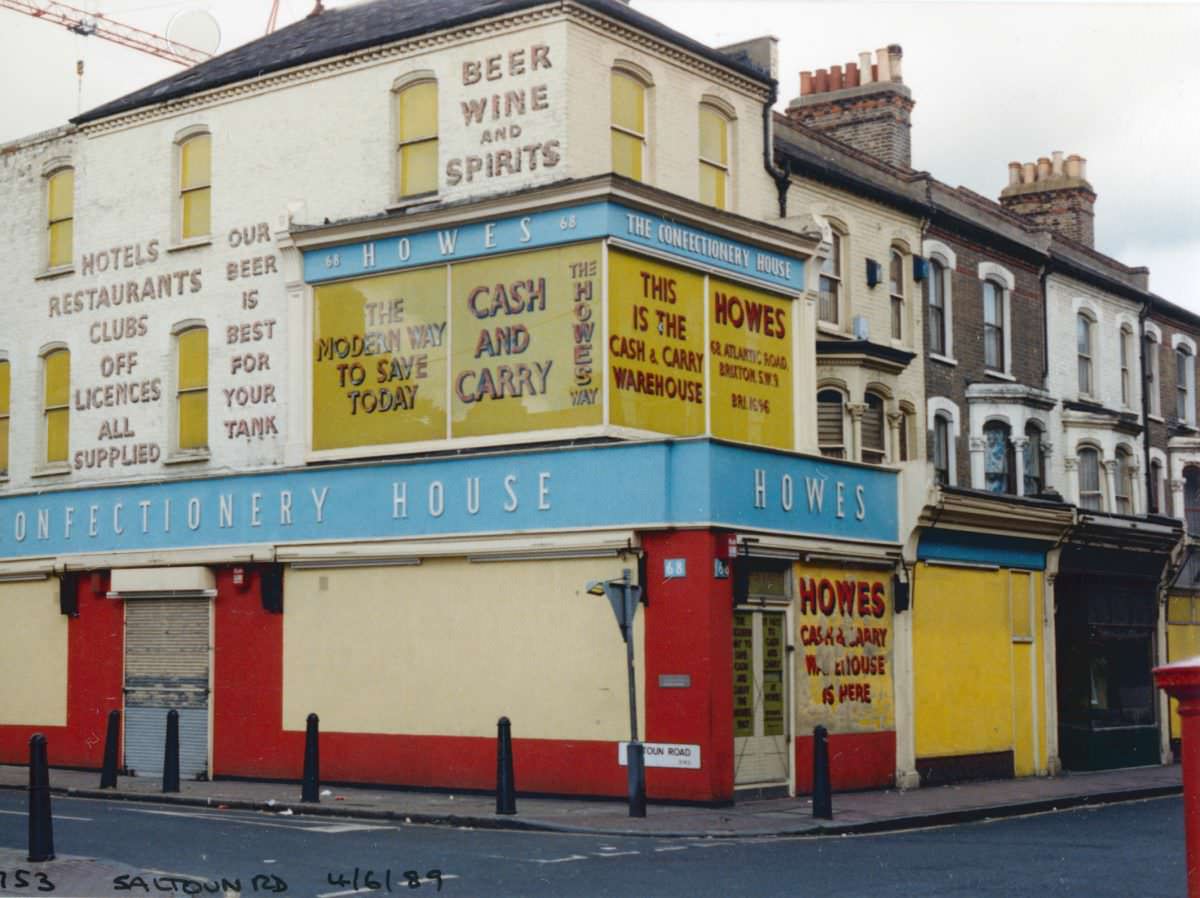
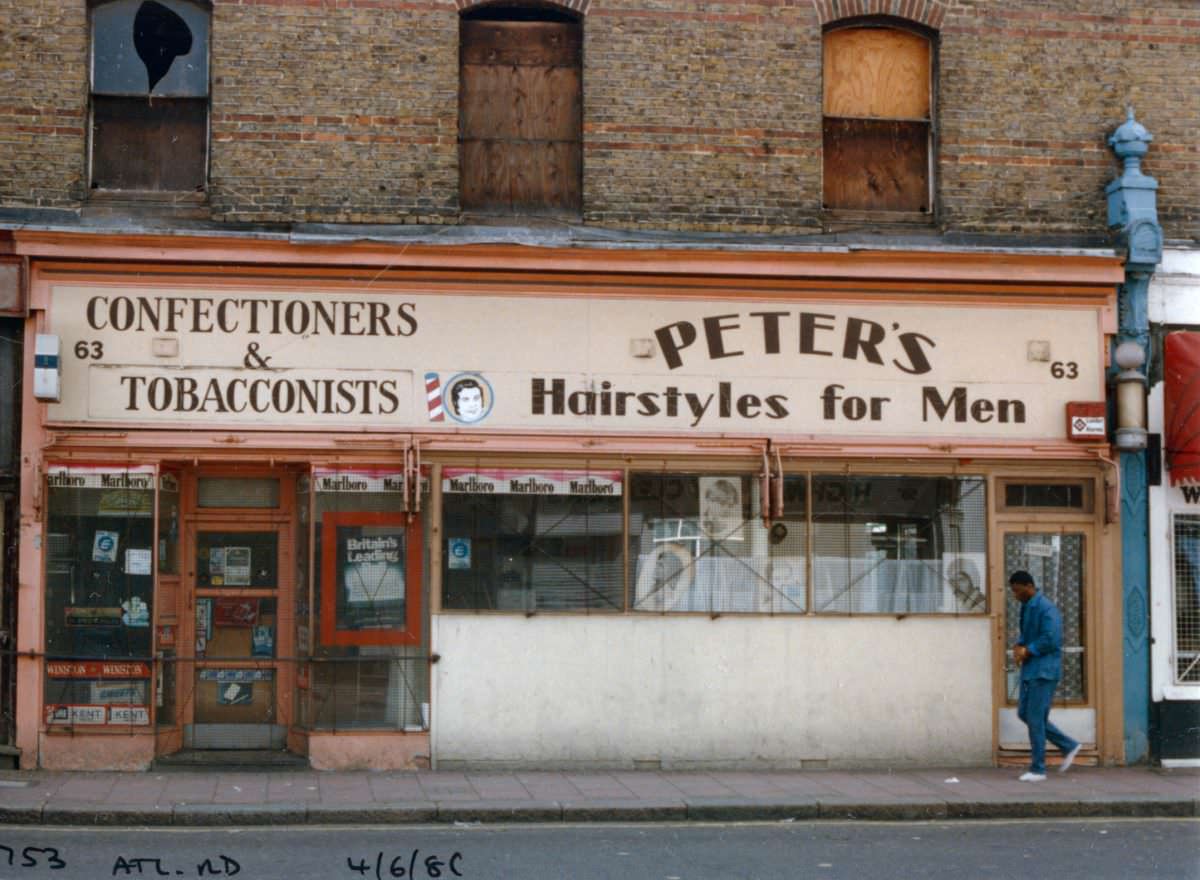
By 1987, Marshall was documenting the commercial streets in close detail. Atlantic Road was packed with independent traders. Fishmongers, cafés, and small shops lined the pavement. The market stalls spilled colour onto the street. These weren’t polished storefronts — they were functional, practical businesses serving the local community.
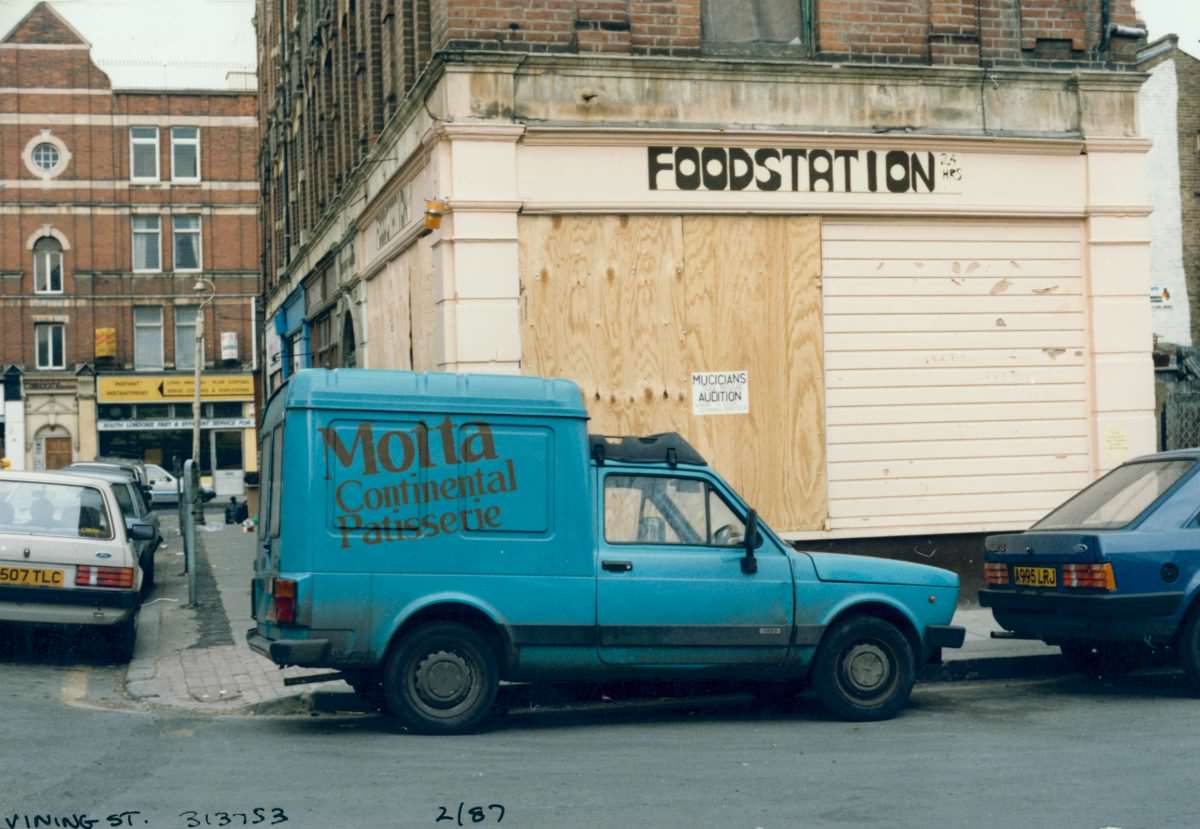
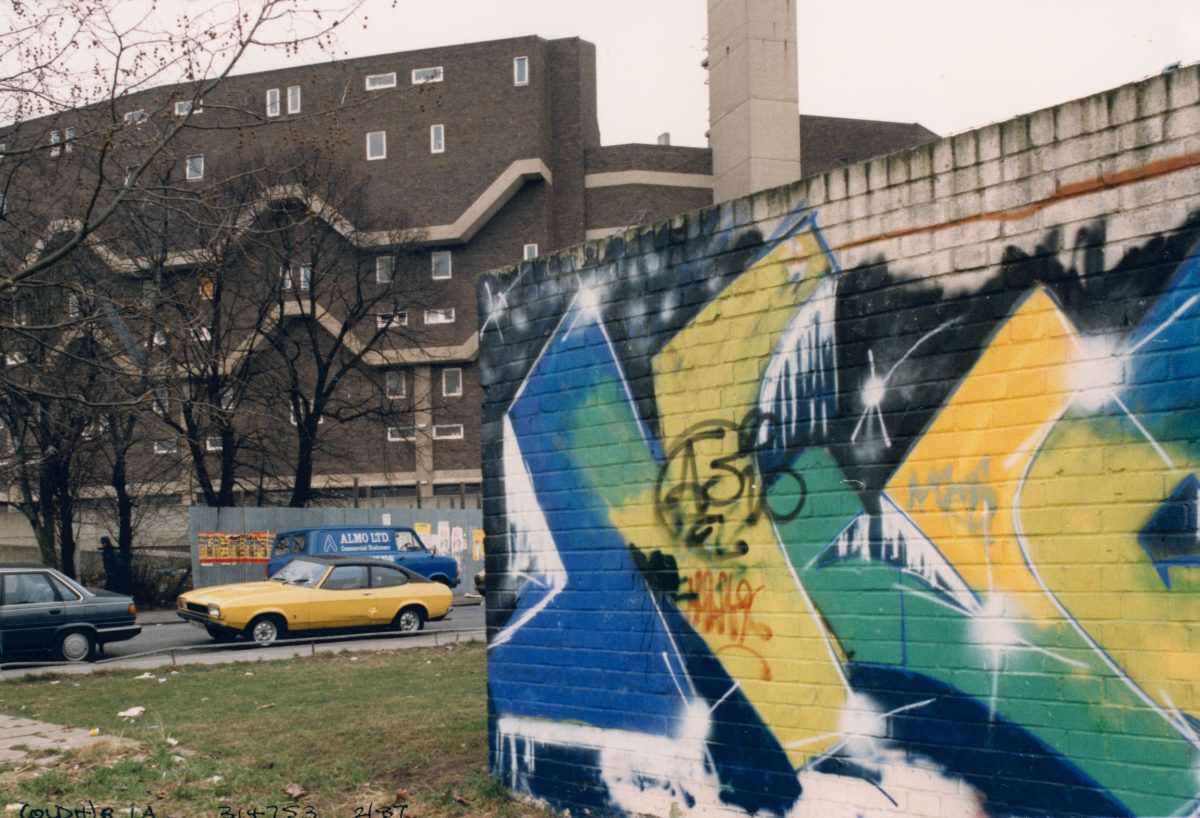
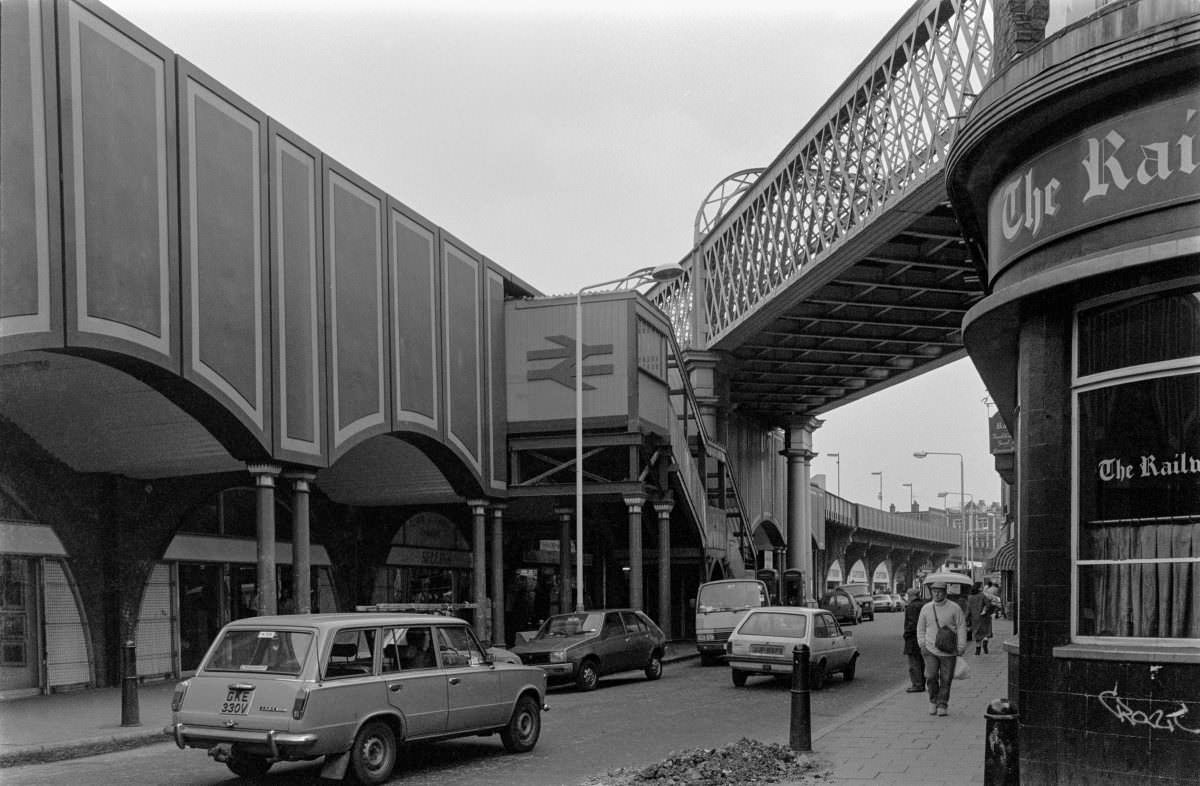
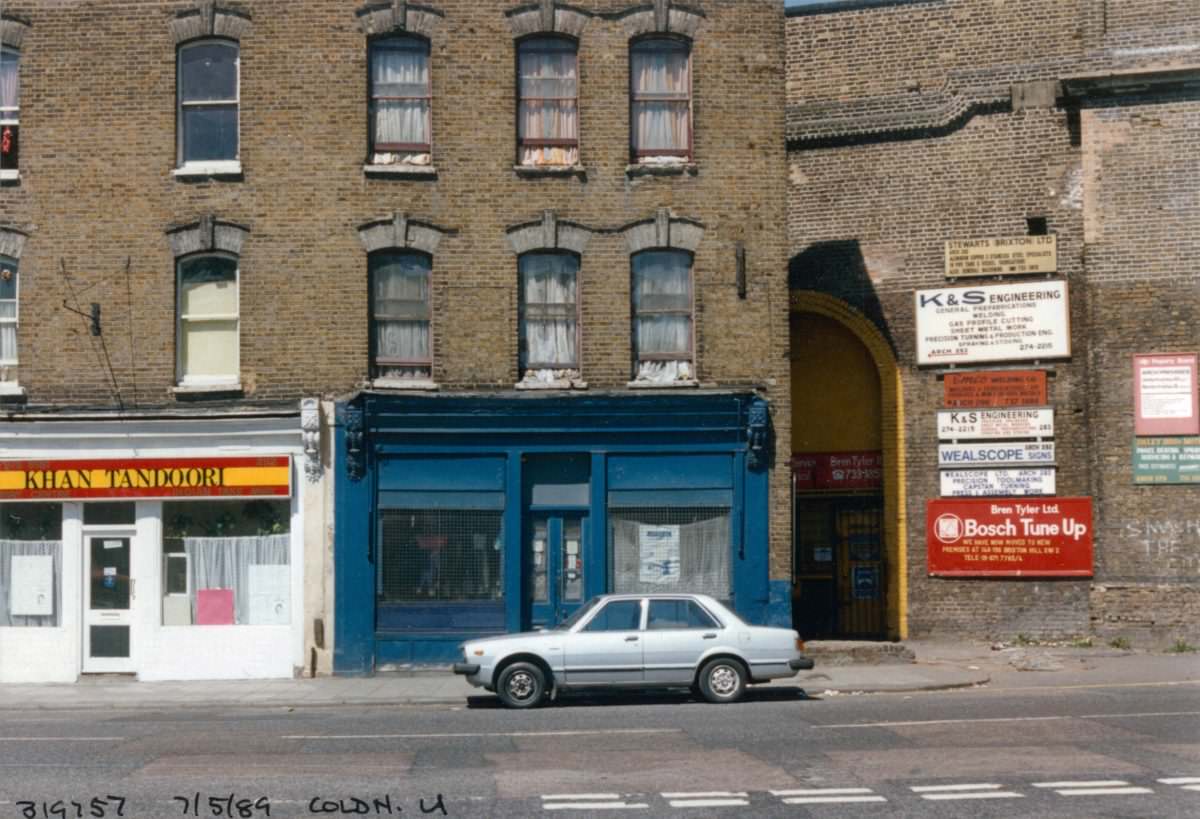
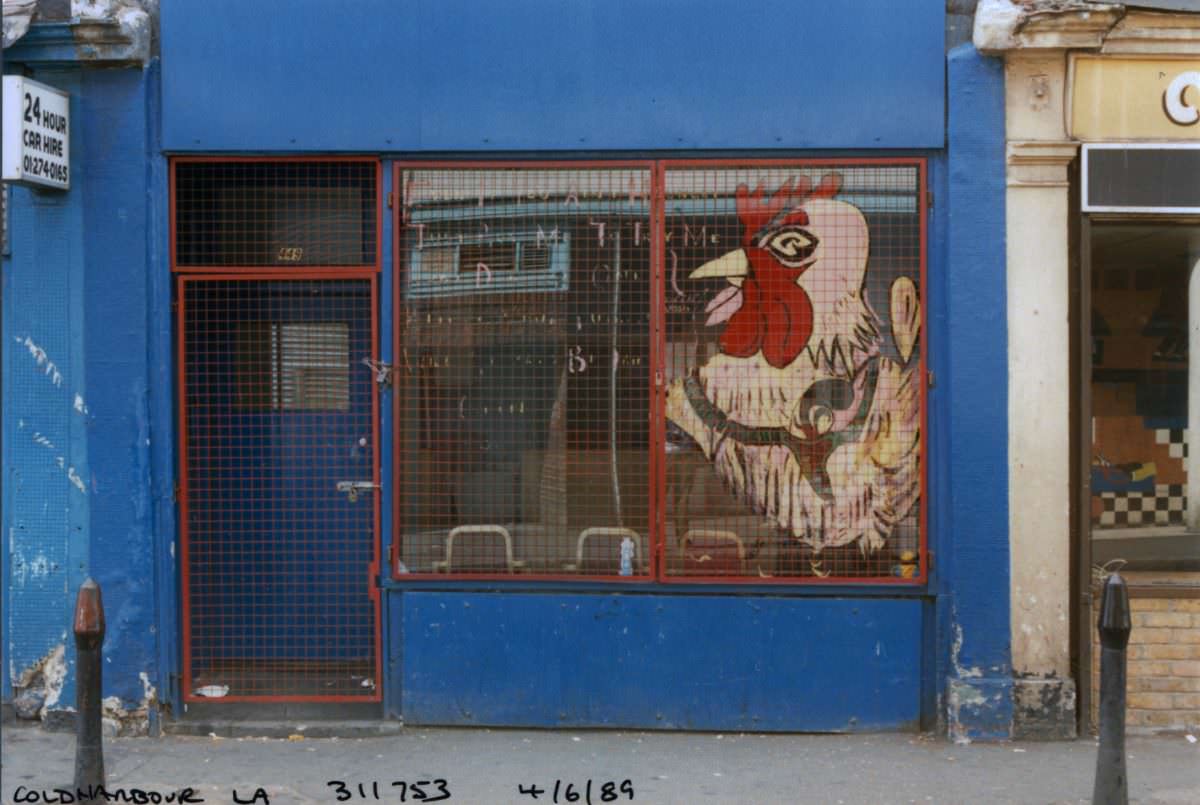
Coldharbour Lane, one of Brixton’s main arteries, appears repeatedly in Marshall’s work. In 1987, it was a mix of traders, foot traffic, and signage stacked on signage. Brixton Station on Atlantic Road anchored the area, while Brixton Village — the covered market arcade — offered shelter from the rain and a concentrated stretch of Caribbean, African, and international food shops.
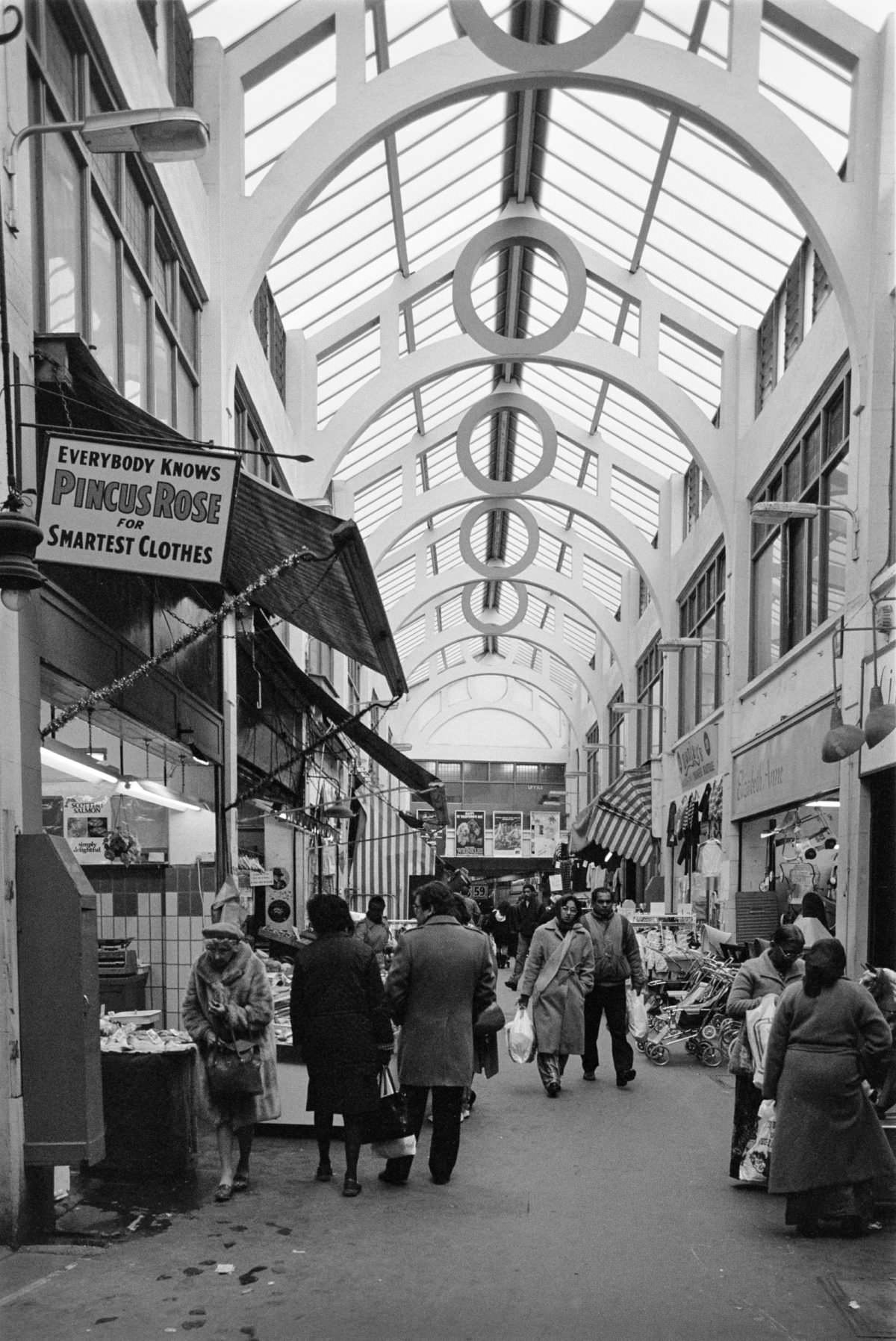
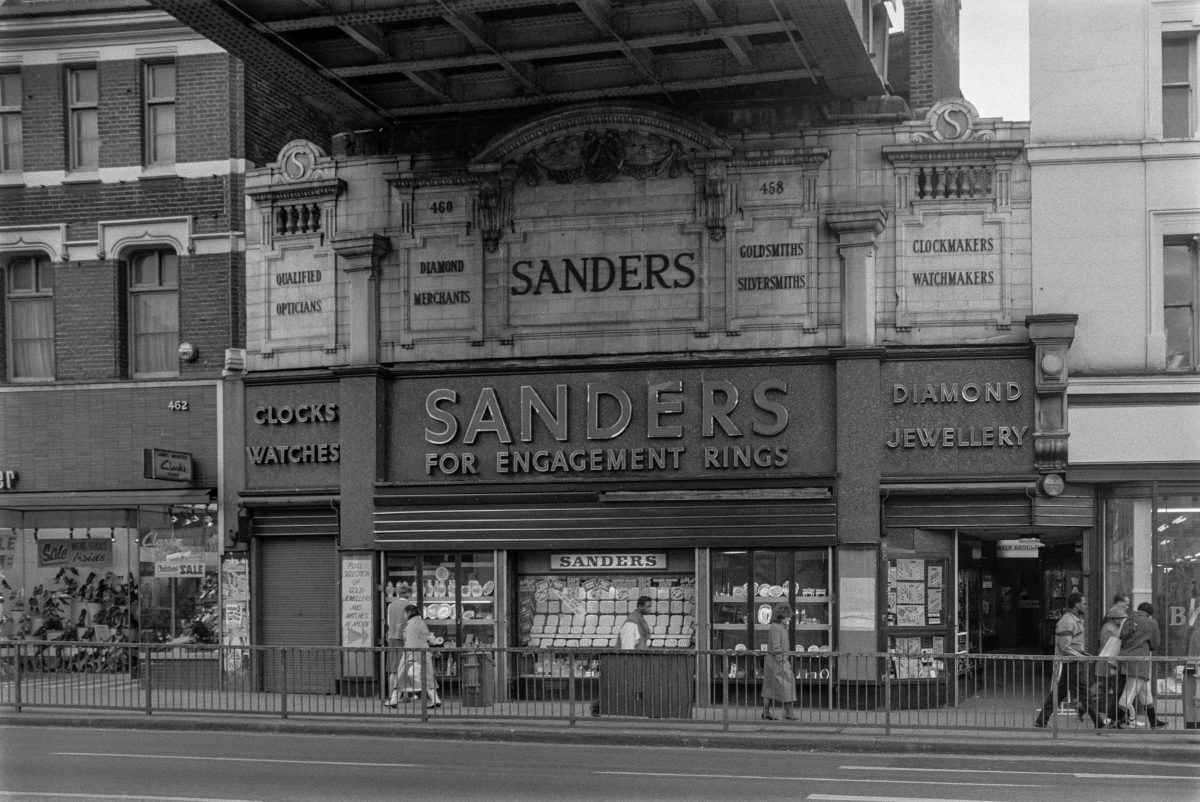
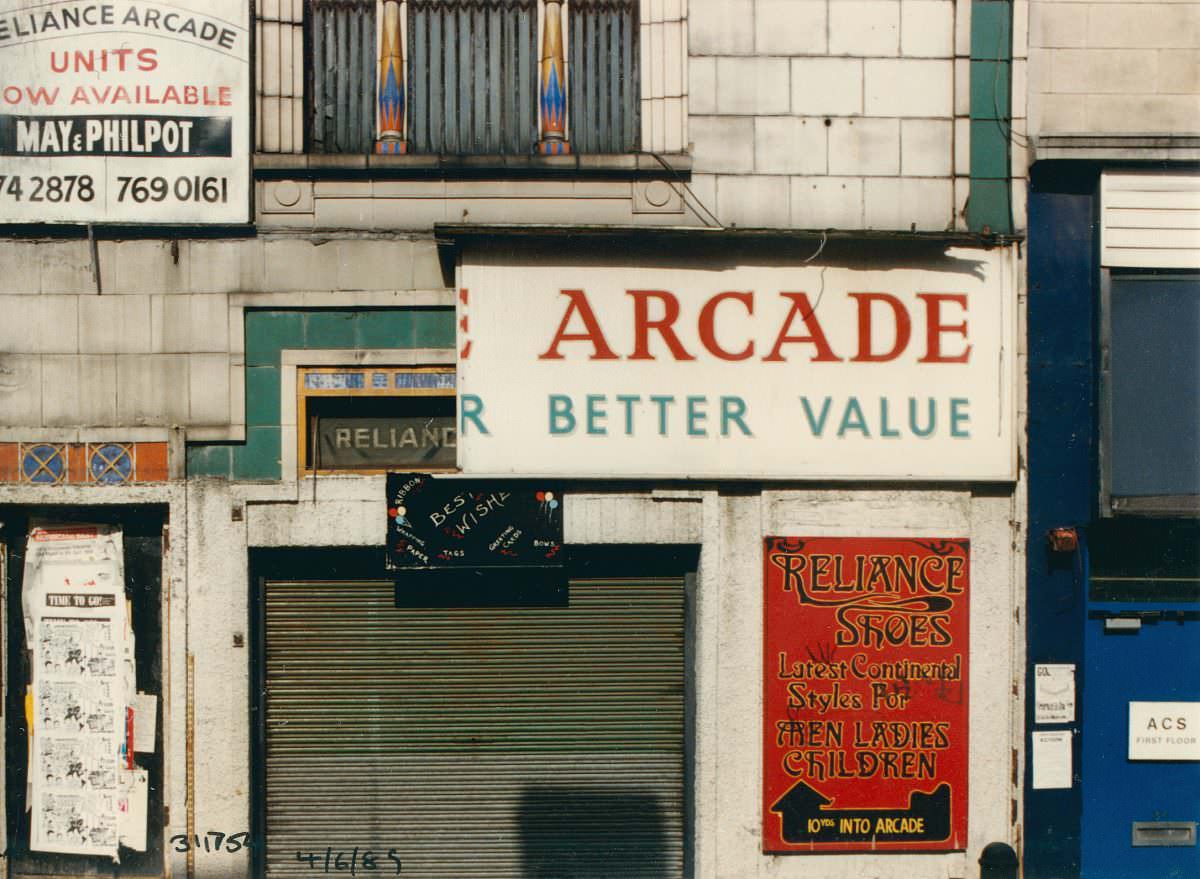
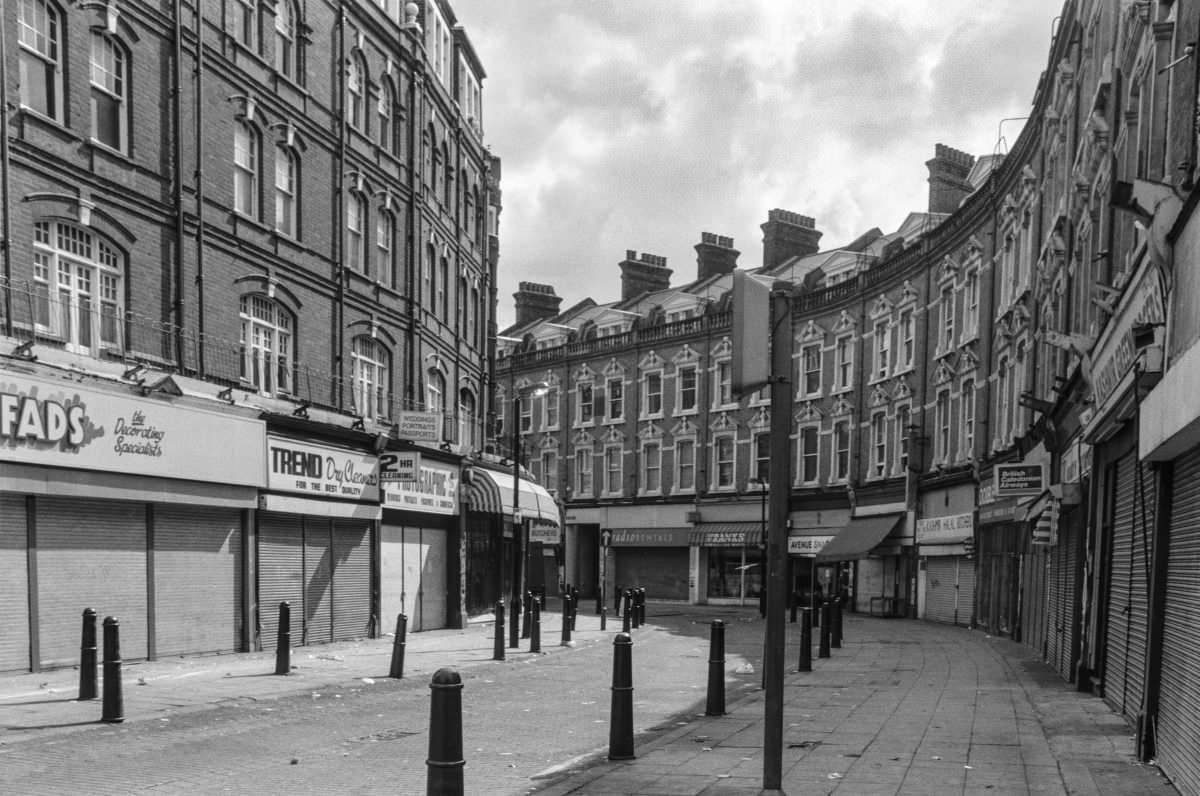
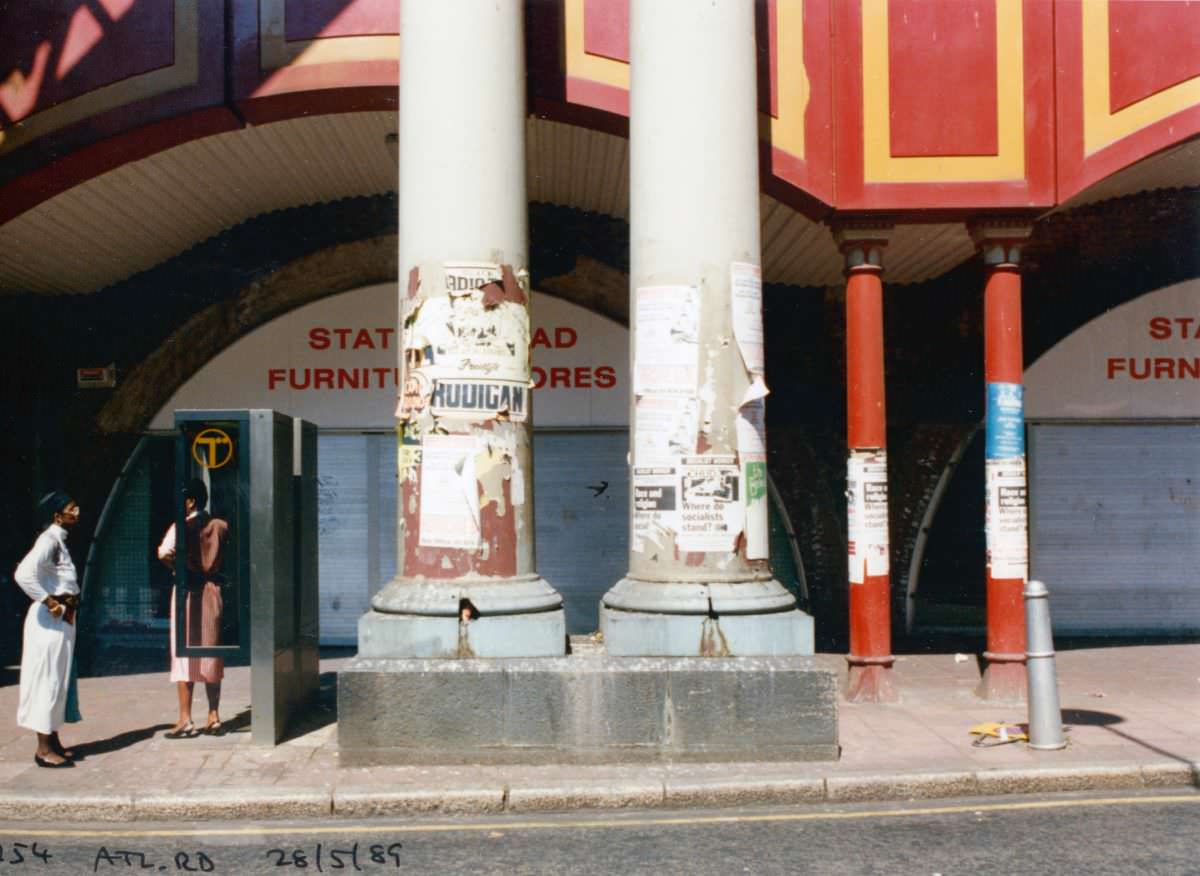
Electric Avenue, made famous by Eddy Grant’s 1982 song, shows up in Marshall’s photographs as a working shopping street, not a novelty. Shops crowded both sides, and the covered iron canopy overhead gave the road a particular character. Just off it, smaller lanes like Electric Lane connected the main roads and housed arcades such as the Reliance Arcade.
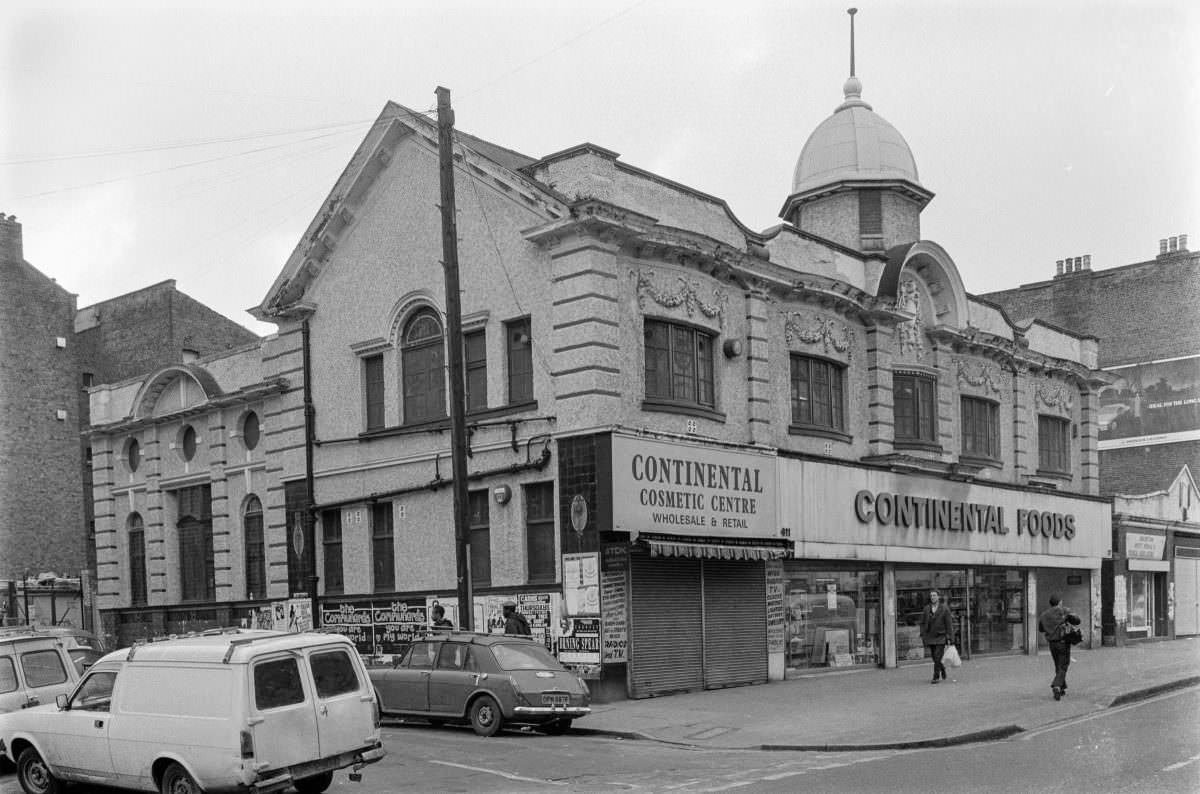
Continental Foods on Coldharbour Lane appears in two separate 1987 photographs, a sign of how central food trade was to the street’s identity. Shops selling ingredients from the Caribbean, West Africa, and beyond gave Brixton’s market area a distinctly international character that set it apart from other south London high streets.
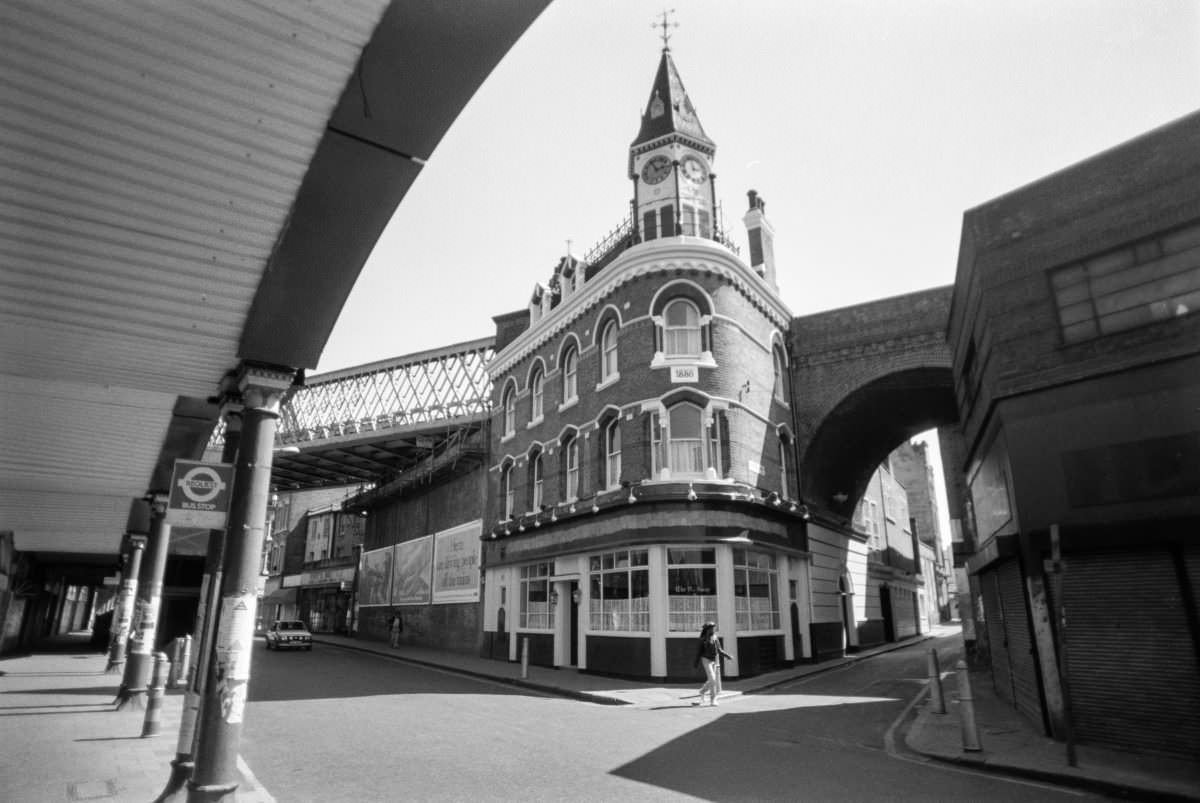
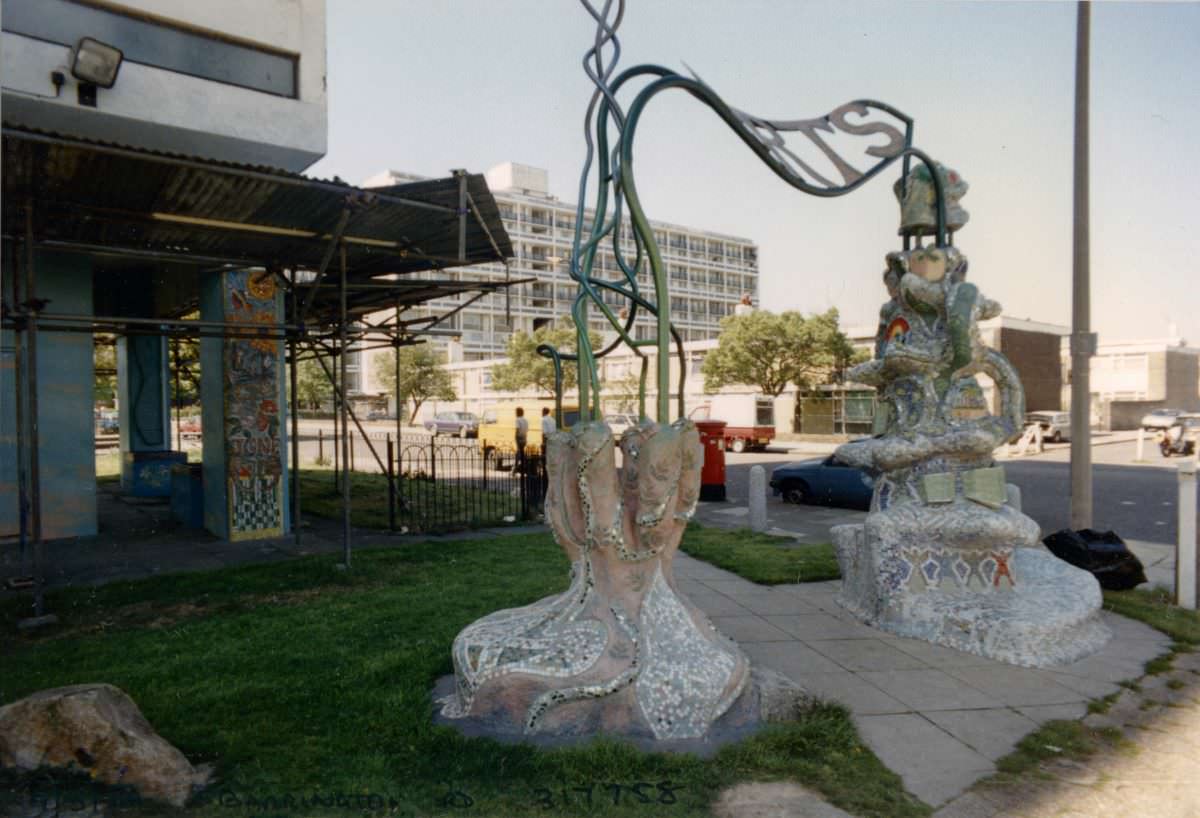
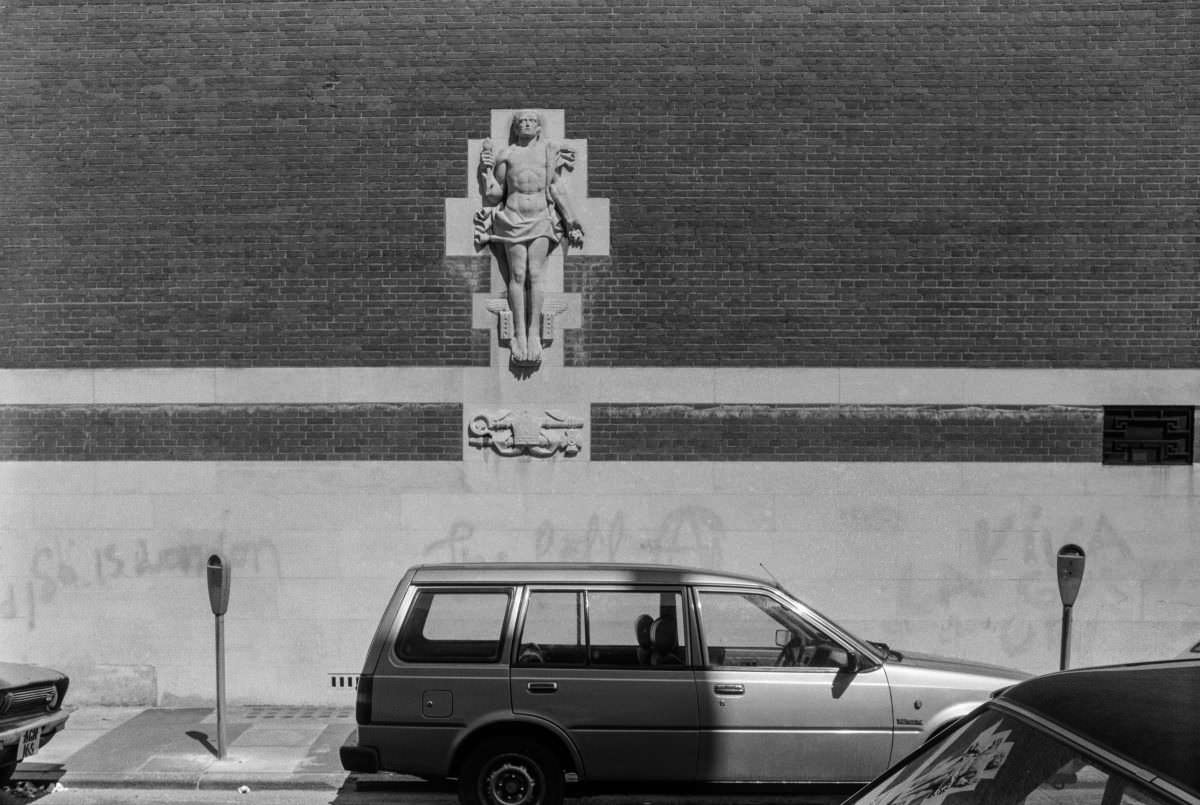
Marshall’s 1989 photographs expand the picture further. The Railway Hotel at the junction of Electric Avenue and Atlantic Road still stood as a local pub landmark. Stockwell Road appeared in his frame, as did residential streets like Barrington Road, where a sculpture stood beside a block of flats. These details — public art next to social housing — reflect the layered character of the area.
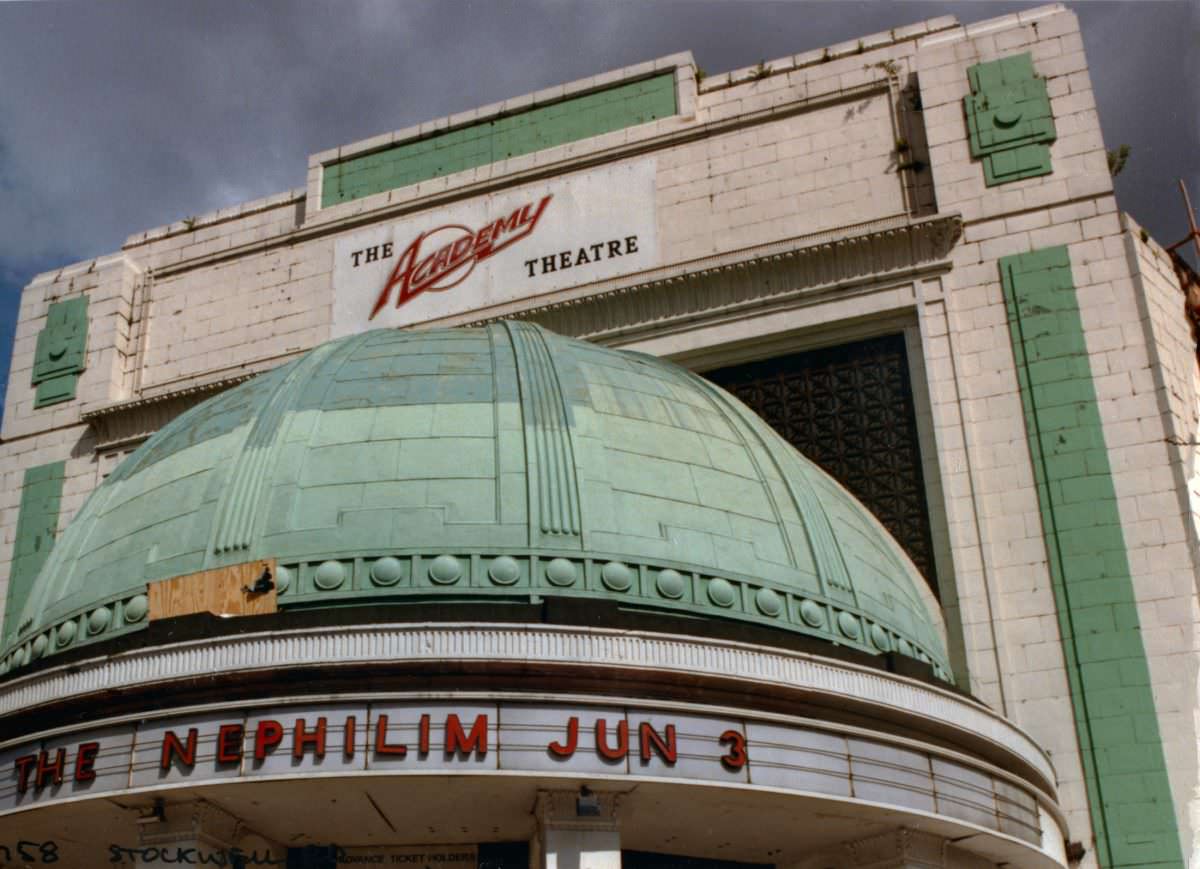
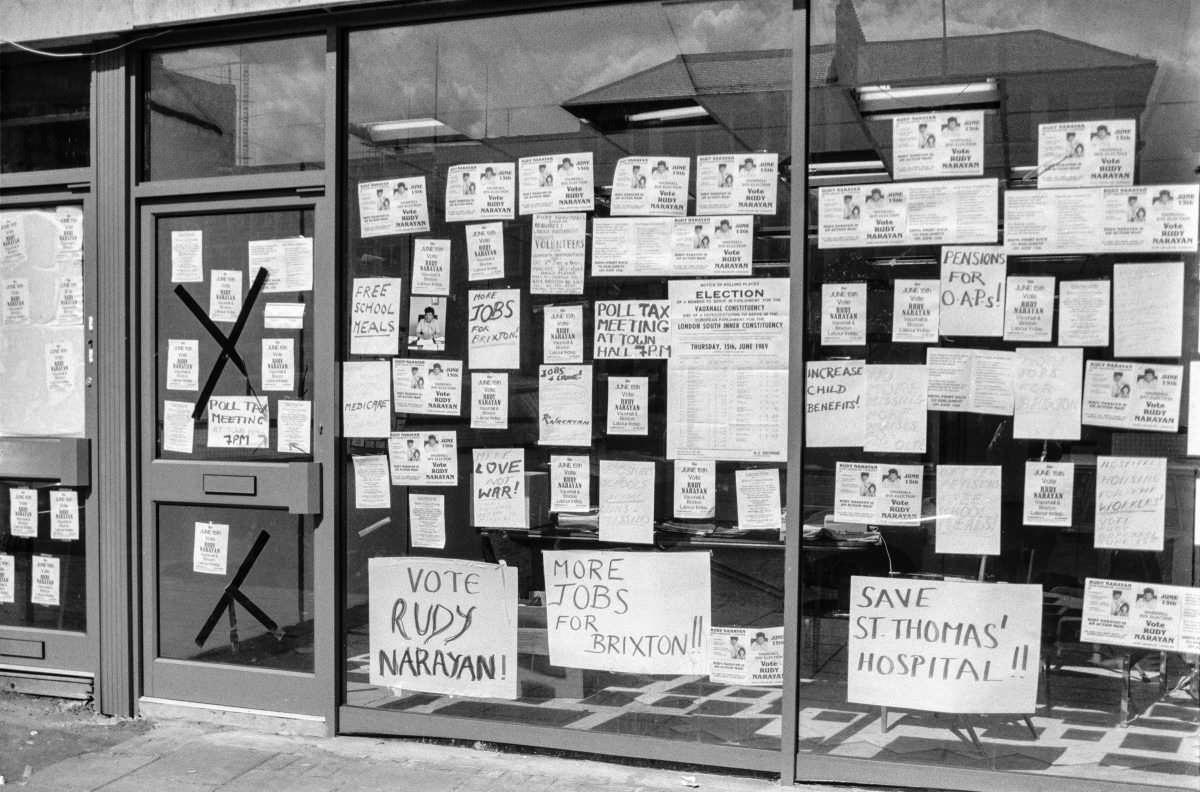
The Brixton Academy on Stockwell Road also features in his 1989 work. The venue, which opened as a cinema in 1929 and was converted into a music hall in 1983, was already drawing major acts by the late 1980s. Nearby, a shop window on Brixton Road displayed a handwritten sign reading “Vote Rudy Naryan,” a direct snapshot of local political campaigning as it happened on the street.
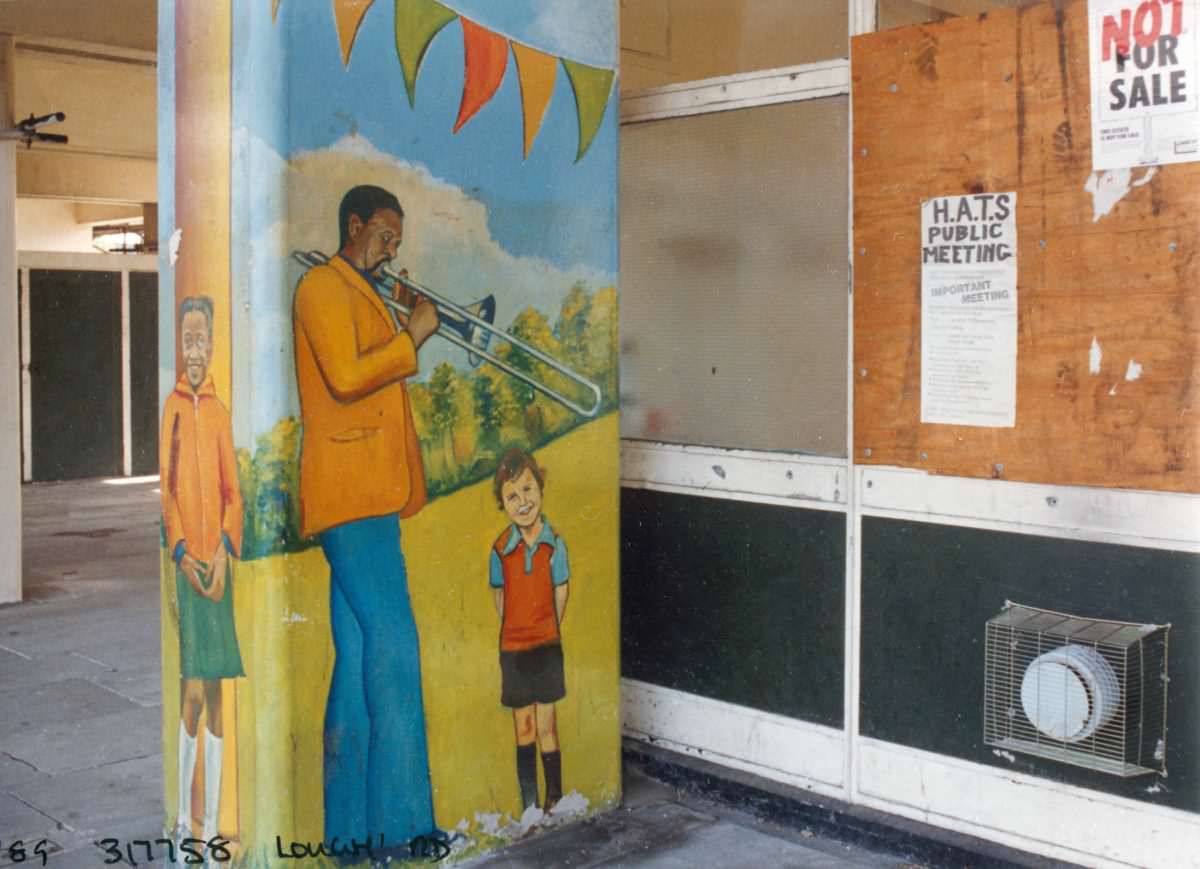
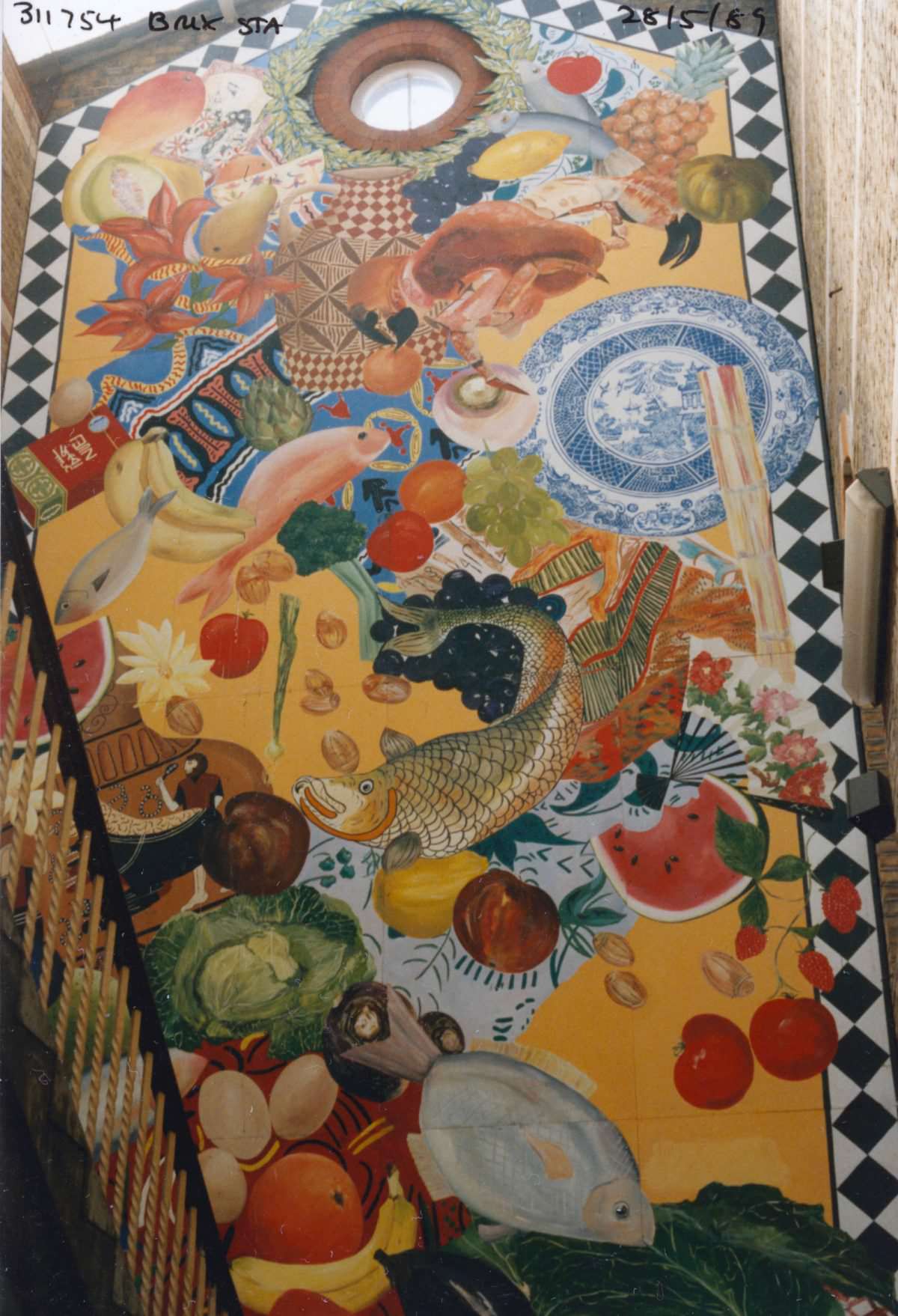
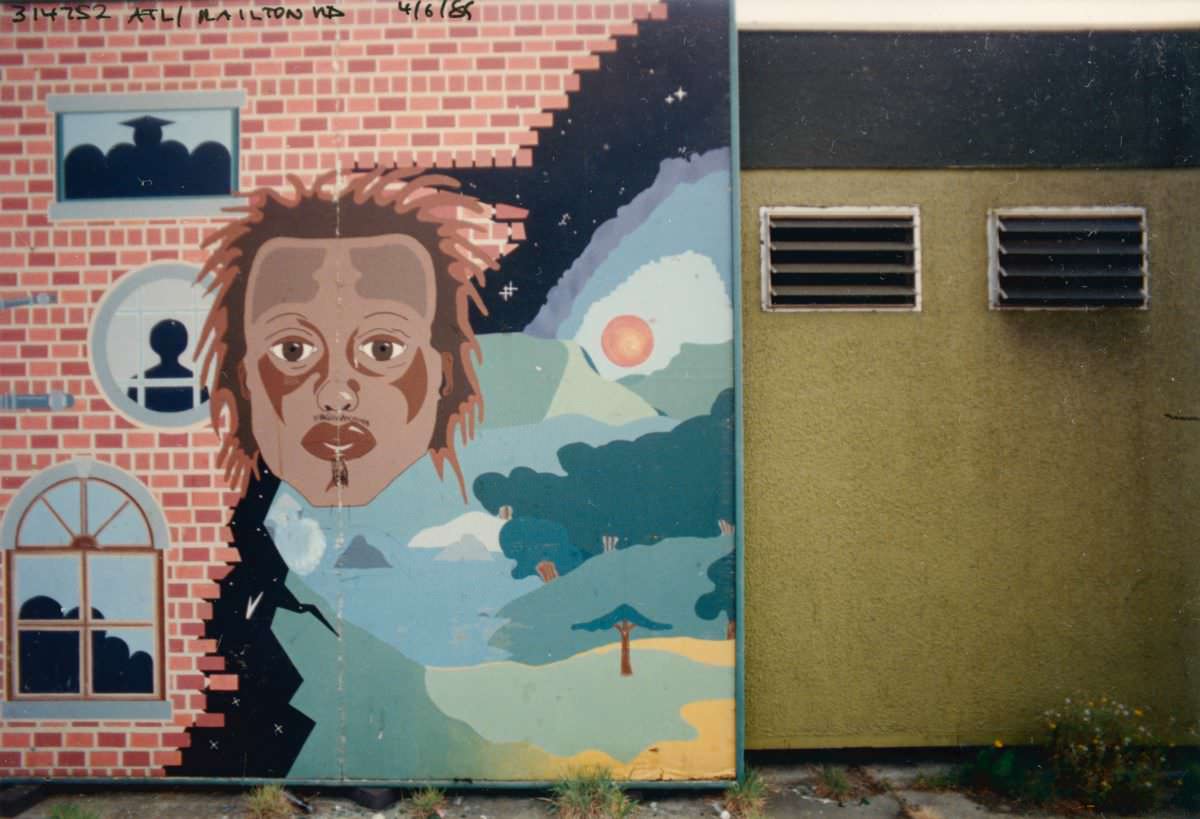
Murals were a visible feature of Brixton’s public spaces. Marshall photographed one at Brixton Station and another on Railton Road in 1989. Railton Road had been at the center of the 1981 Brixton riots and carried significant weight in the community’s memory. By the end of the decade, walls along that road bore painted statements and imagery that reflected local identity and resistance.
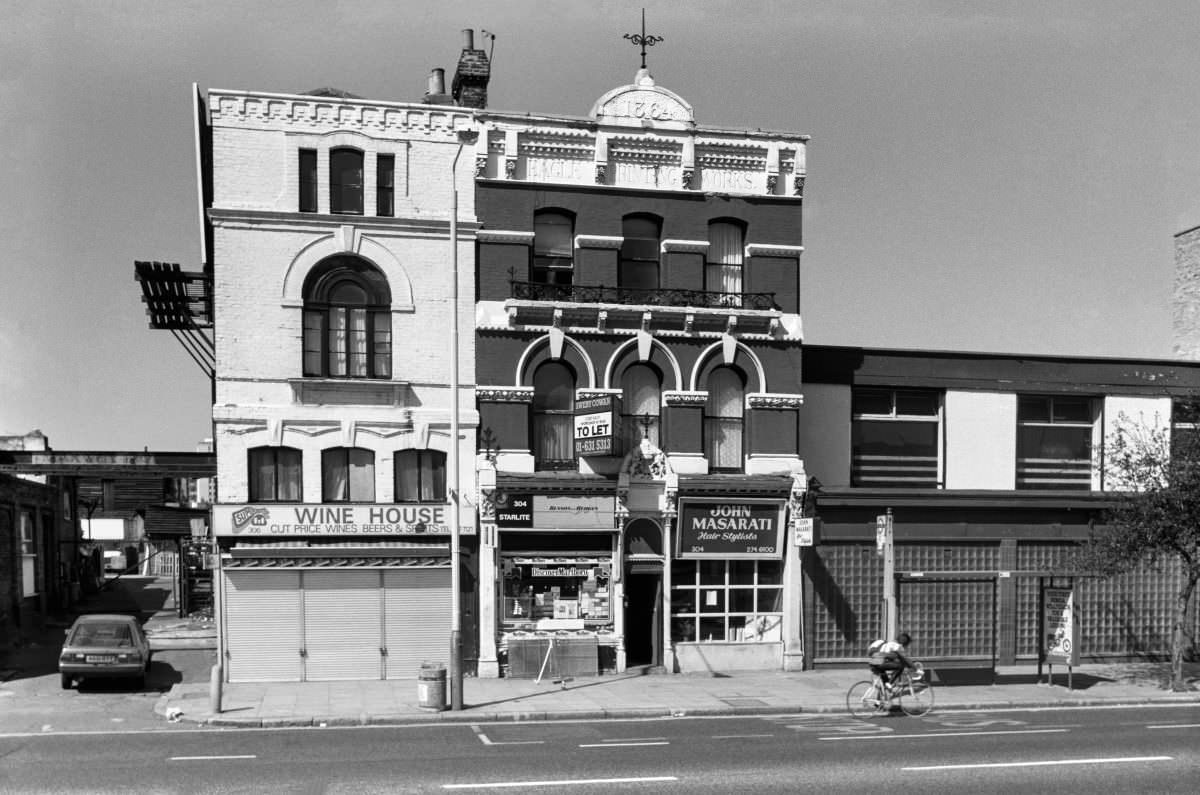
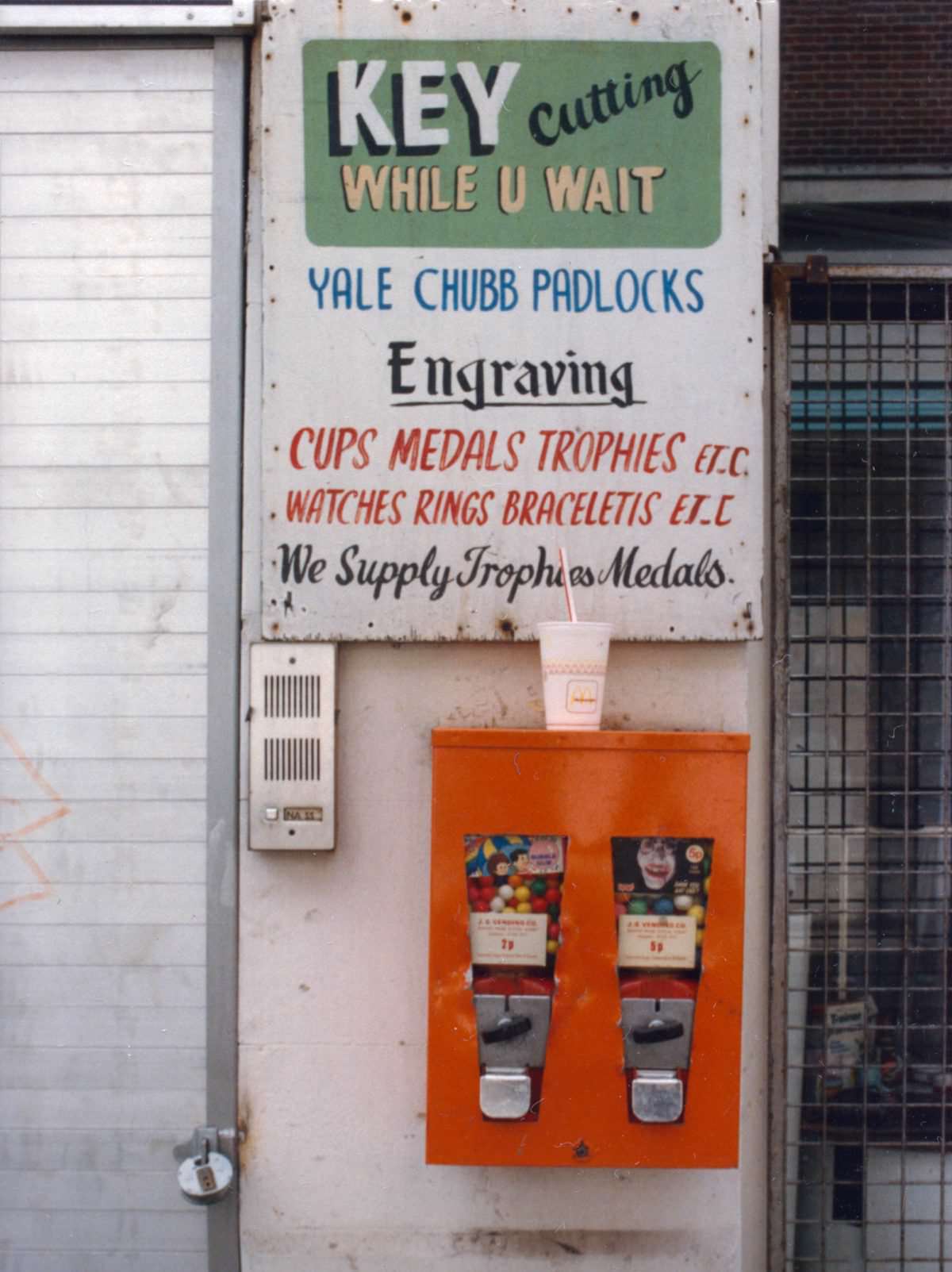
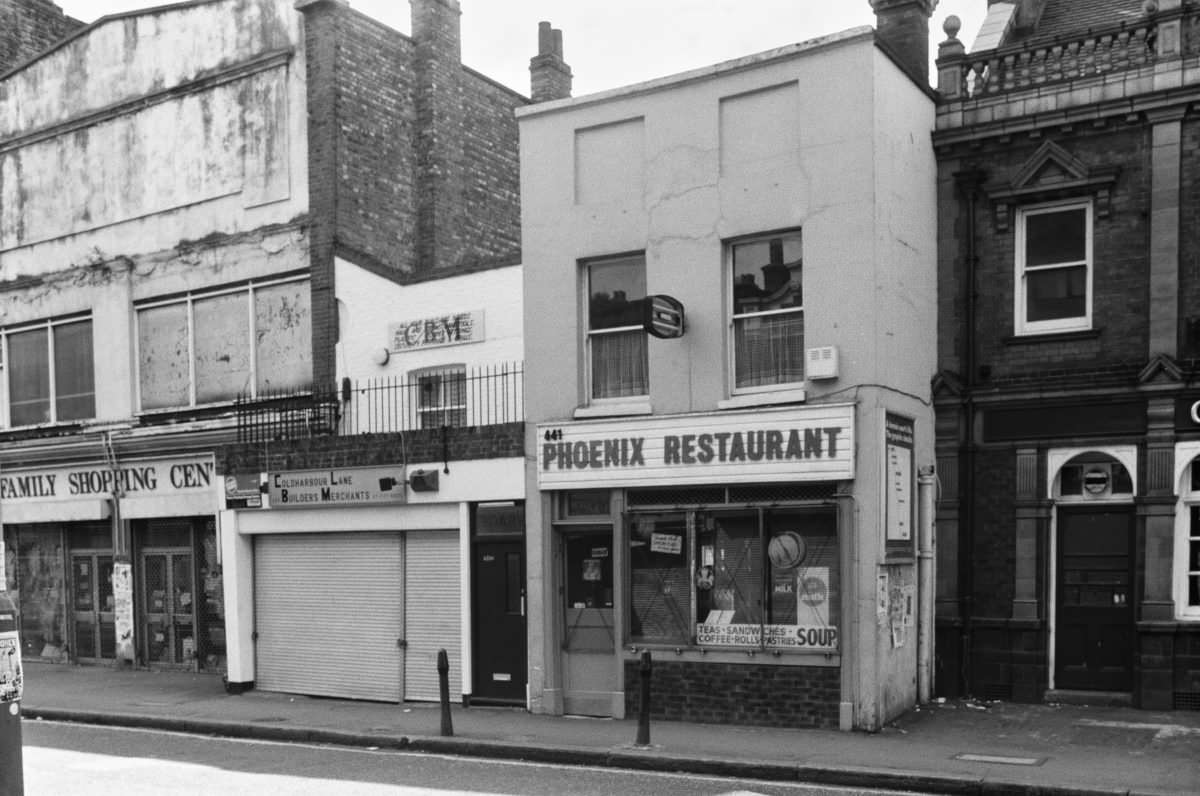
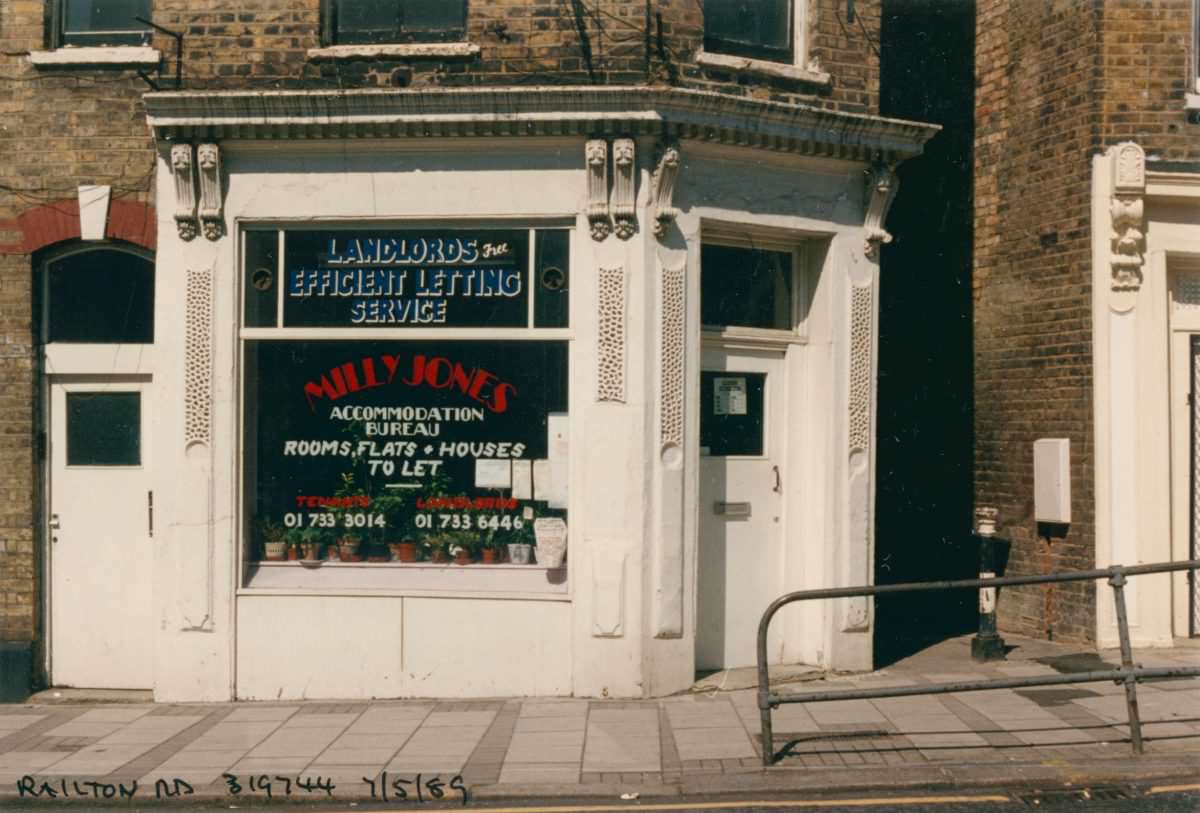
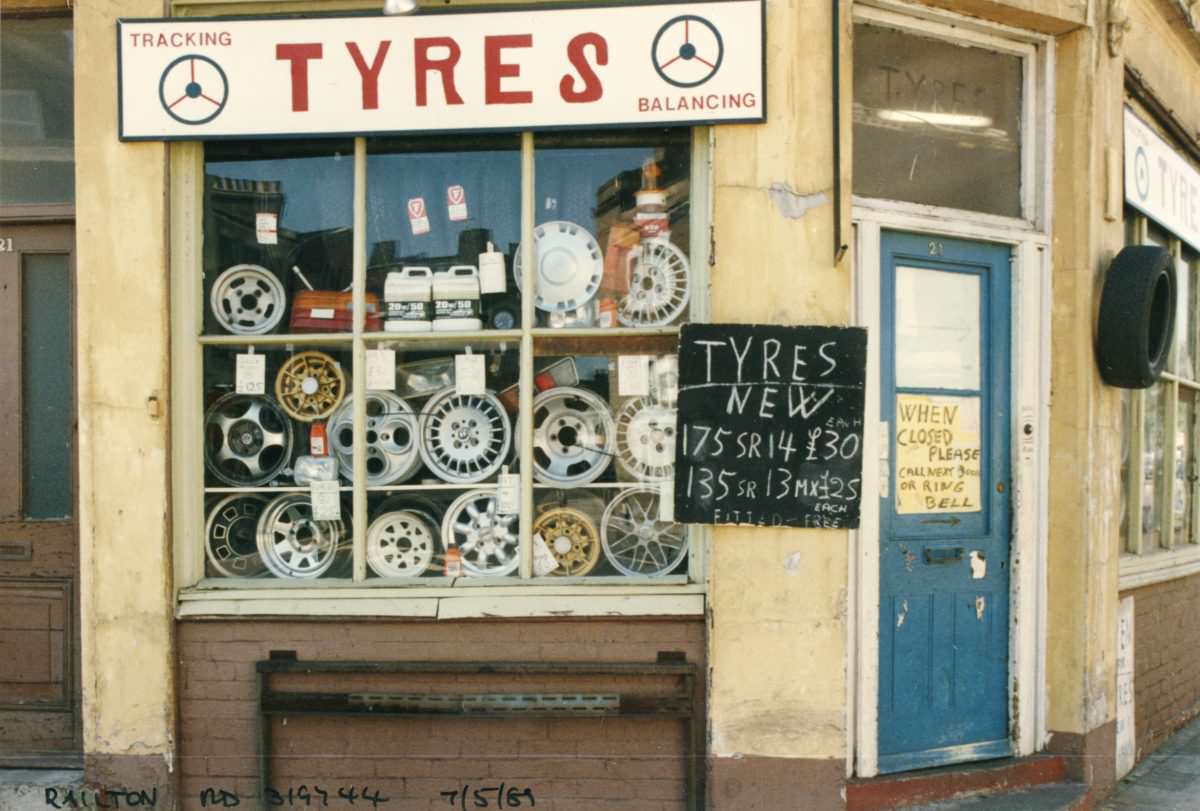
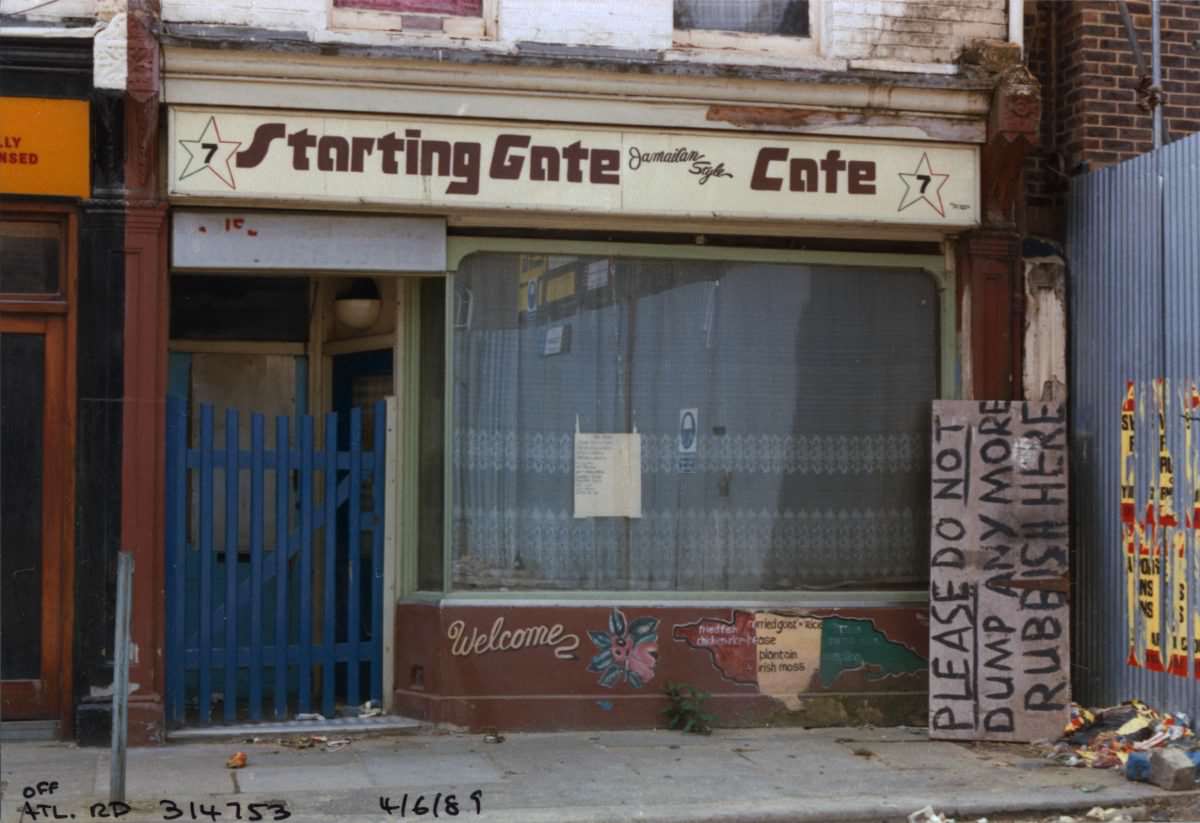
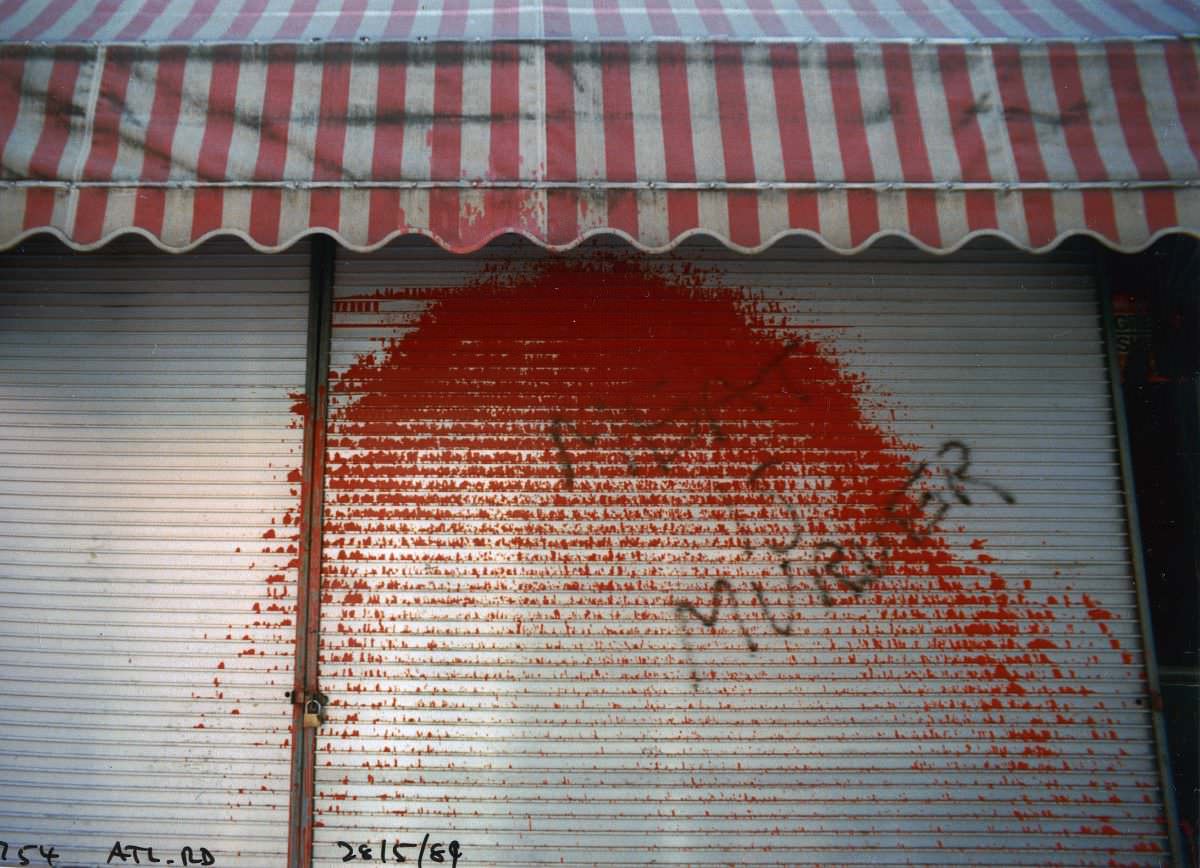
Small businesses filled every gap. The Starting Gate café on Vining Street, a barber shop on Atlantic Road, a letting service and tyre shop on Railton Road — all of these appear in Marshall’s photographs as part of the same ecosystem. Atlantic Road also features a butcher’s shop with a bold protest sign reading “Meat is Murder,” photographed twice, showing how political messaging worked its way into the most ordinary commercial settings.
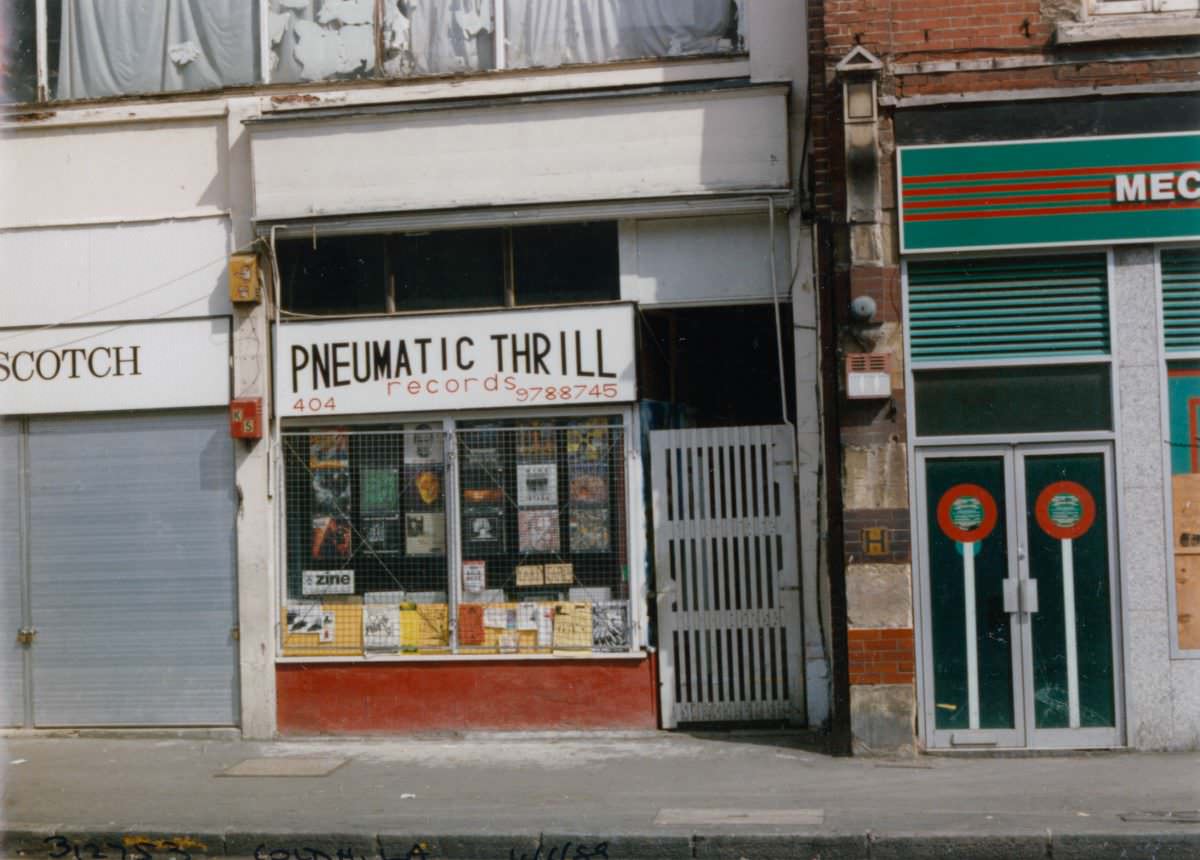
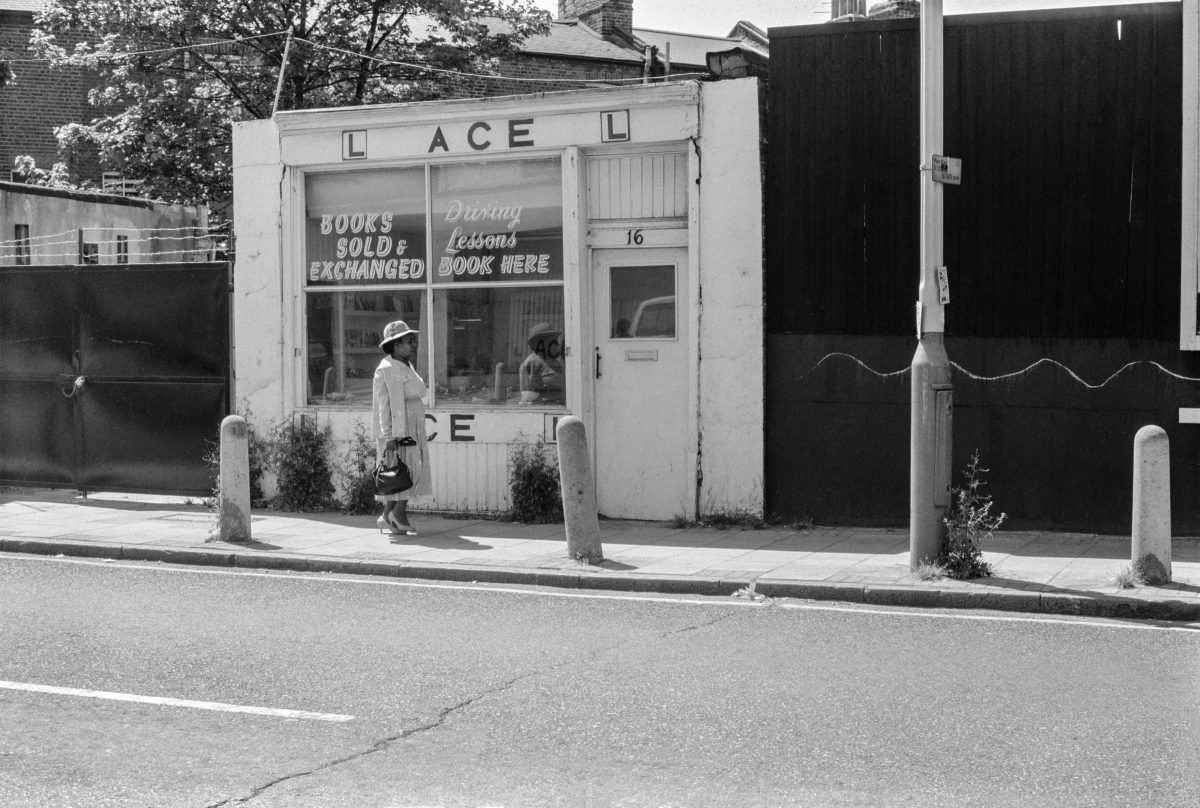
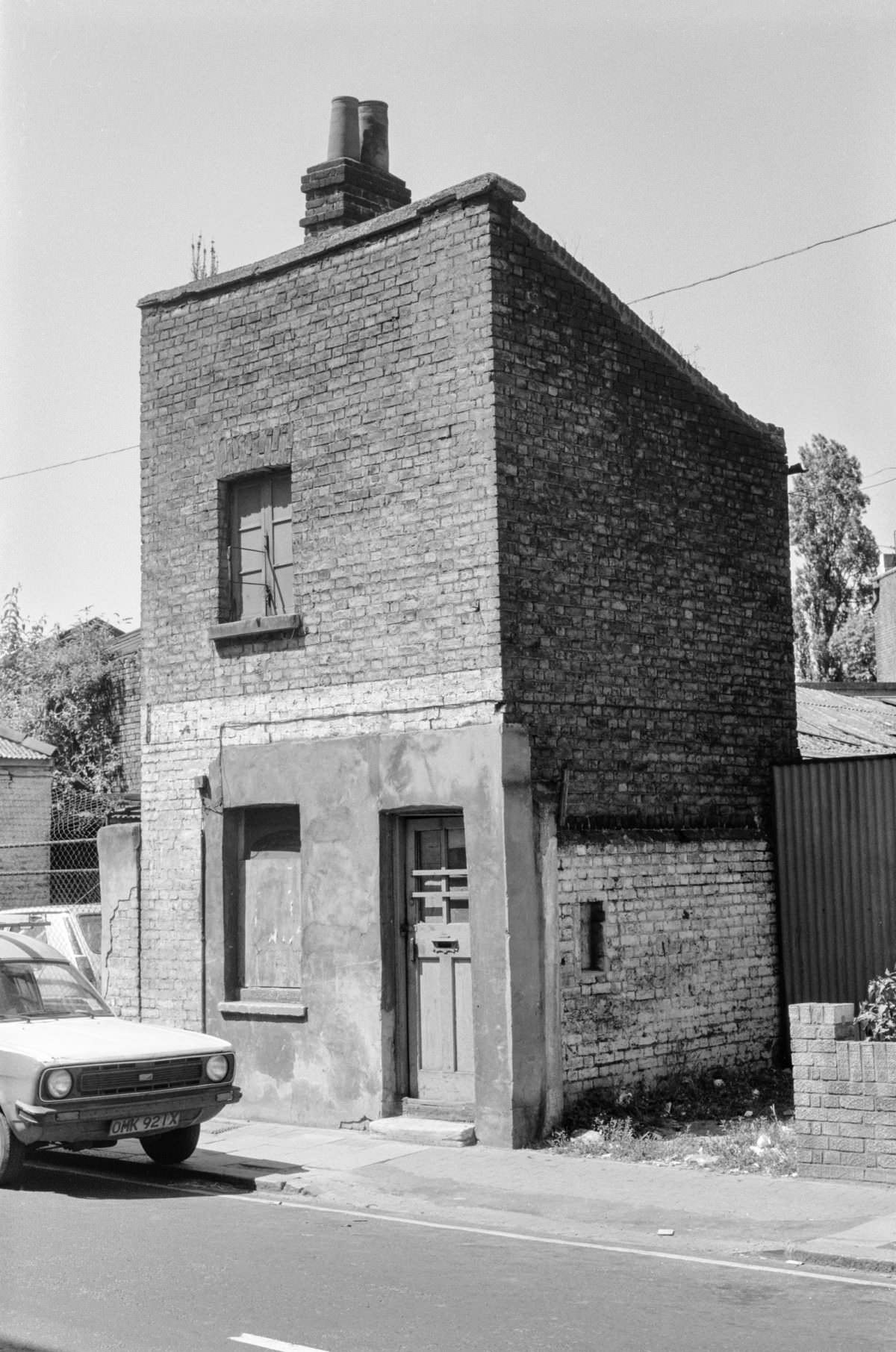
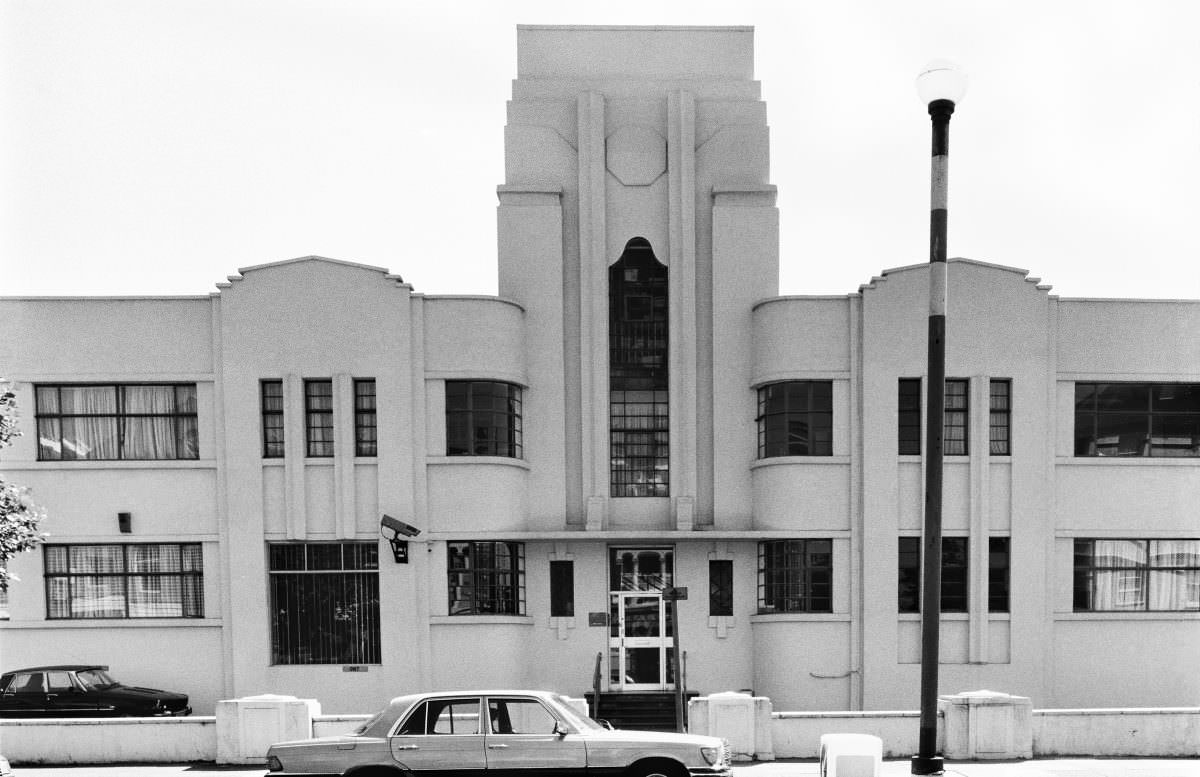
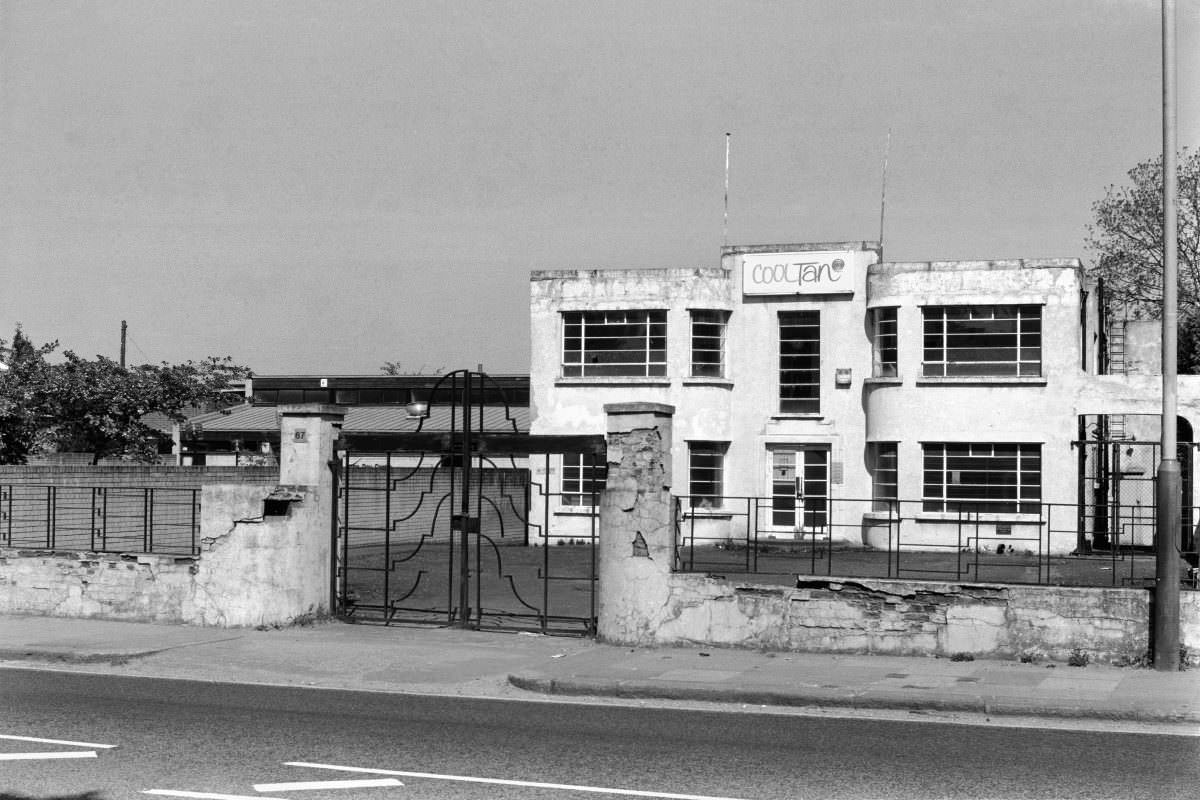
The Lambeth Assembly Hall on Buckner Road near Acre Lane, the Sunlight Laundry at 125 Acre Lane, and the CoolTan Suntan Lotion factory on Effra Road all made it into Marshall’s archive. The CoolTan building is particularly striking — a factory producing suntan lotion in the middle of a dense urban neighborhood, its name painted boldly on the exterior wall.
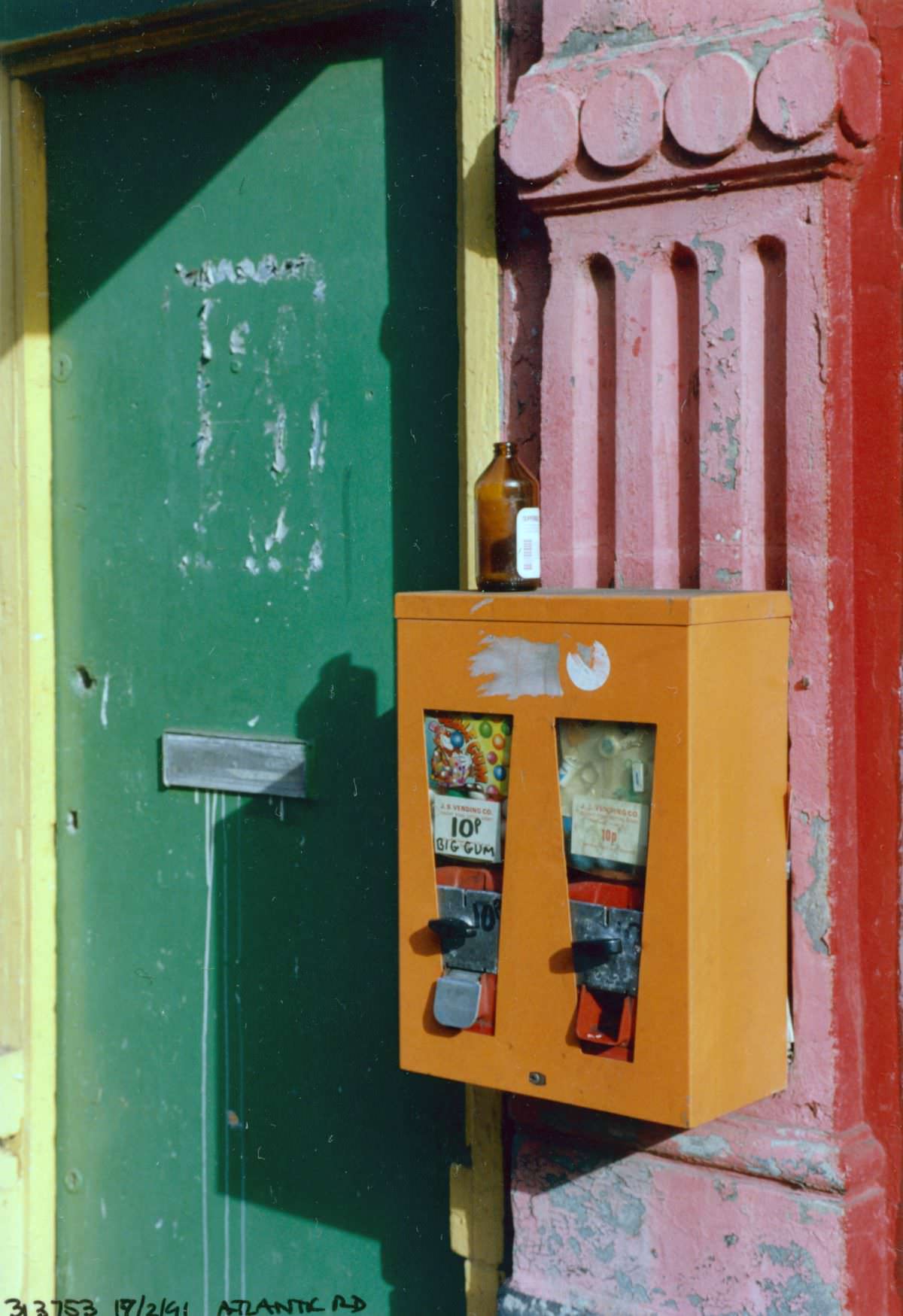
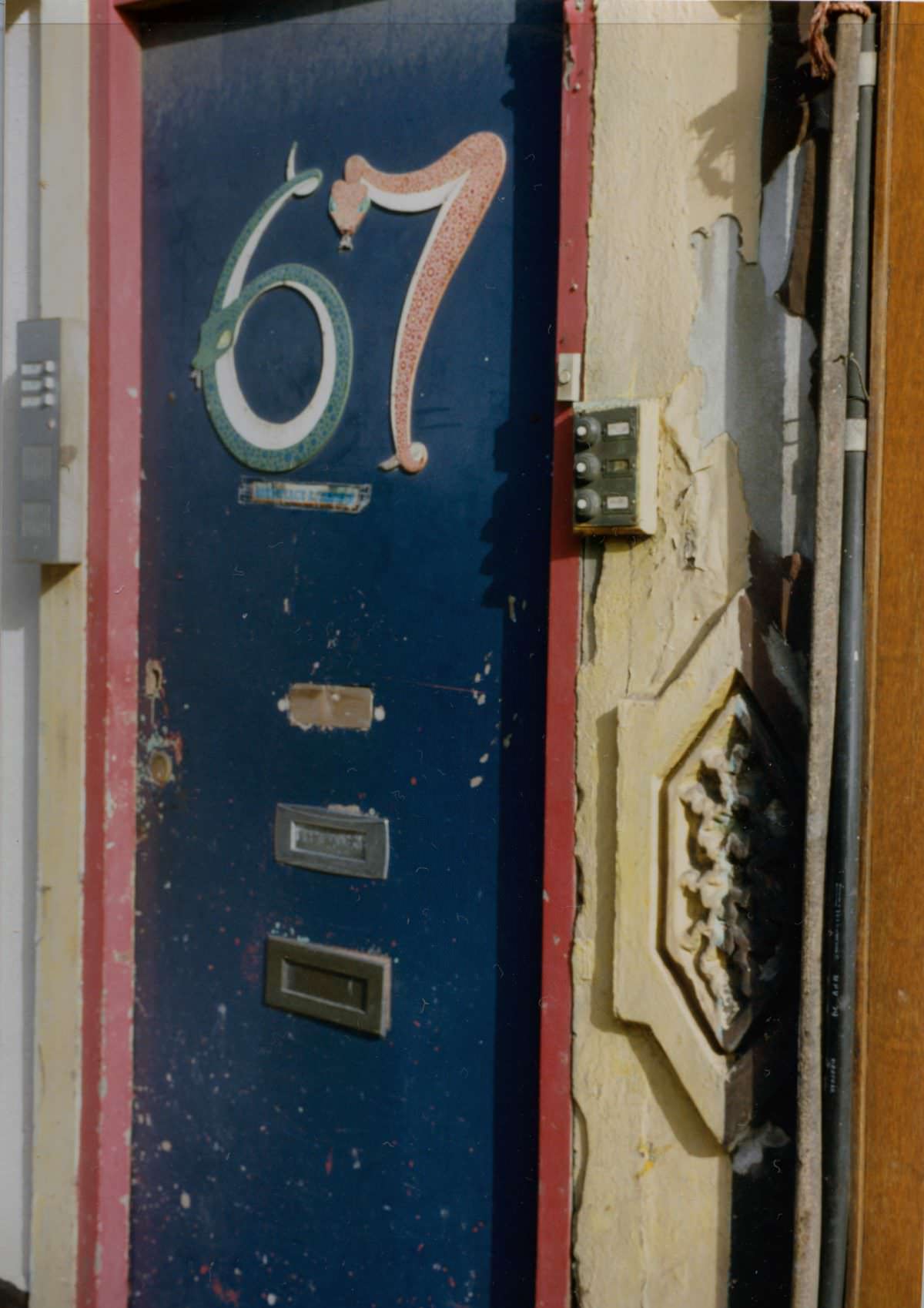
Marshall’s photographs stretch into 1991 with a single image — a door on Atlantic Road. It’s a fitting close to the collection. A door, worn and painted, standing on one of Brixton’s oldest commercial streets. Together, these nearly 50 photographs form an unfiltered record of a neighborhood in a specific decade, taken by someone who walked its streets with care and attention.