
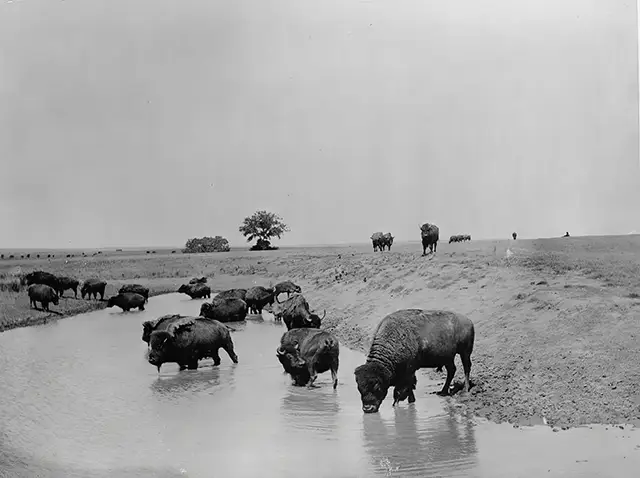
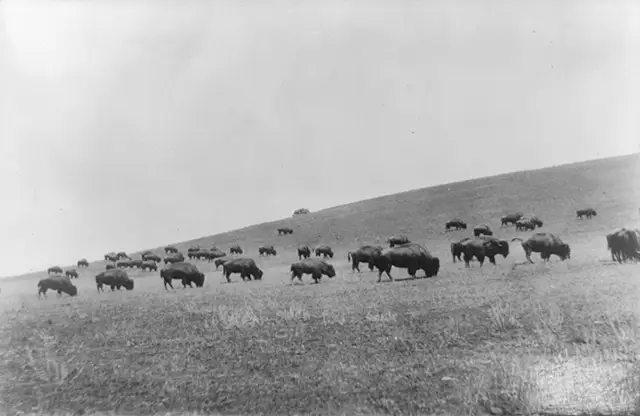
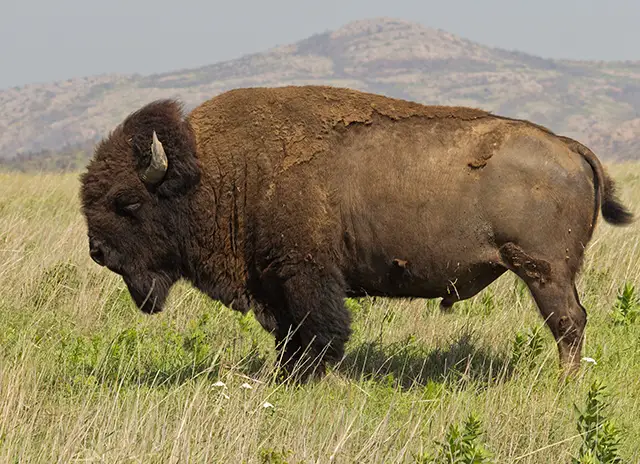
In the early 1800s, an estimated 30 million bison roamed the Great Plains of North America. By the late 1880s, fewer than a few hundred remained. This was not a slow or accidental decline. It was a rapid, deliberate slaughter driven by commercial greed, U.S. government policy, and the expansion of the railroad across the continent. The consequences reached far beyond wildlife — the near-total destruction of the bison was a direct attack on the way of life of dozens of Native American tribes who depended on the animal for their survival.
Before European settlers arrived, Native American tribes had built sophisticated hunting cultures around the bison. Techniques like the buffalo jump — where hunters on foot drove herds over cliff edges — and the buffalo pound — a large enclosure of rock and branches used to trap animals — required deep knowledge of bison behavior and strong cooperation among tribe members. These were not crude methods. They reflected generations of ecological understanding passed down through communities.
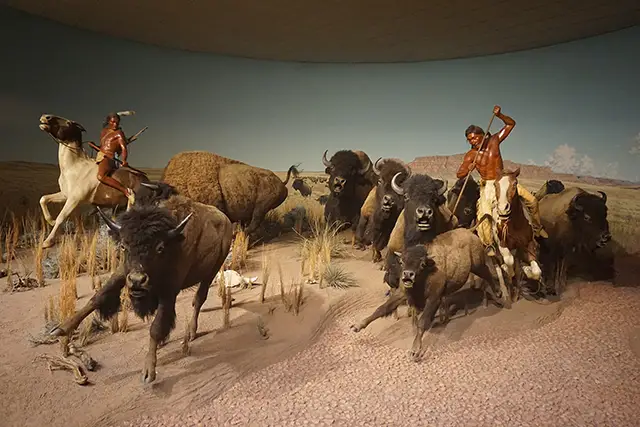
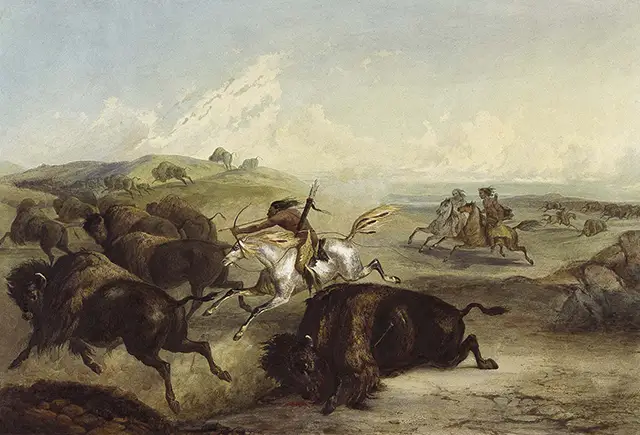
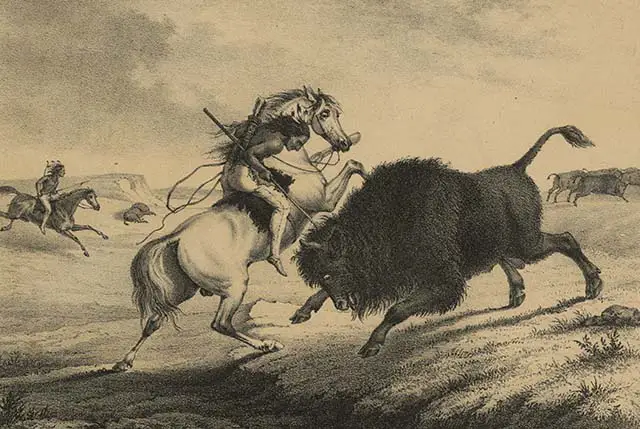
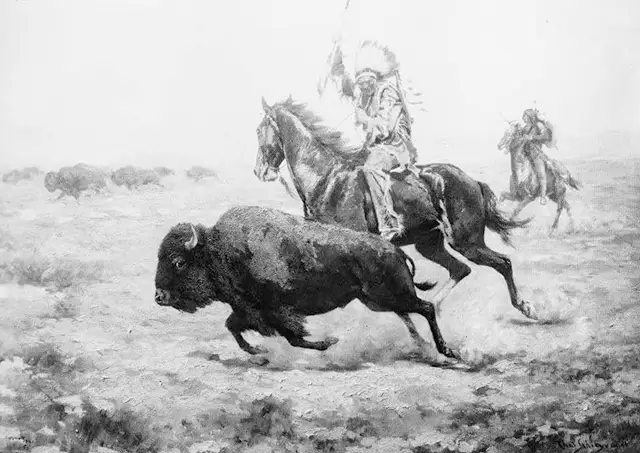
When Spanish explorers introduced horses to the Americas in the 1500s, Native hunting methods shifted dramatically. By the early 1700s, many Plains tribes had adopted horses, allowing hunters to follow migrating herds across vast distances. Mounted hunts became central to tribal life. Bison supplied nearly everything a community needed: meat for food, hides for clothing and shelter, bones for tools, and a spiritual foundation tied to tribal identity and ceremony.
The end of the Civil War in 1865 accelerated westward expansion at a pace the Great Plains had never seen. Railroads pushed across the continent, and towns multiplied along the tracks. With them came commercial hunters who saw the bison not as a living ecosystem but as a profitable commodity. Bison hides were in high demand in eastern markets for clothing and industrial goods. Meat was shipped east to feed a growing urban population. The bison trade became a booming industry, and hunters flooded the plains by the thousands.
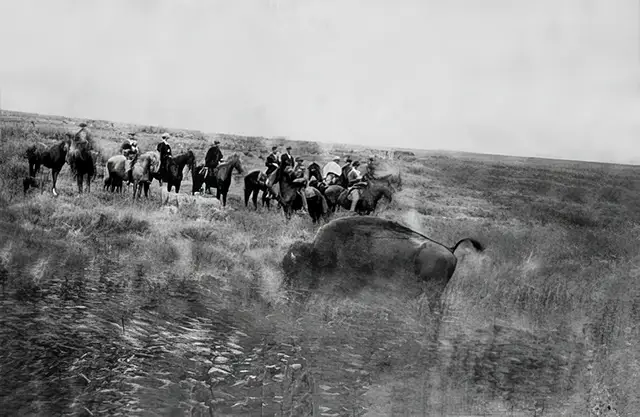
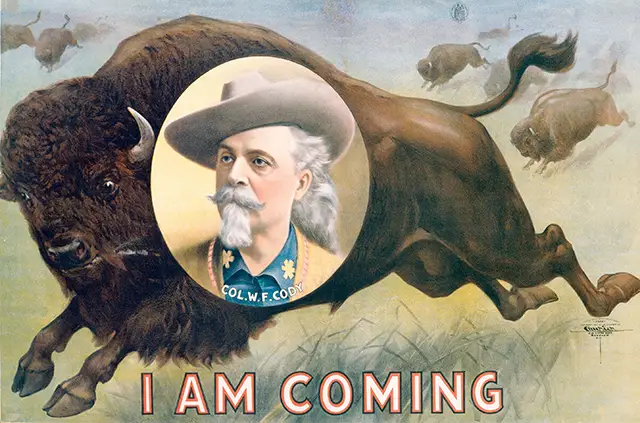
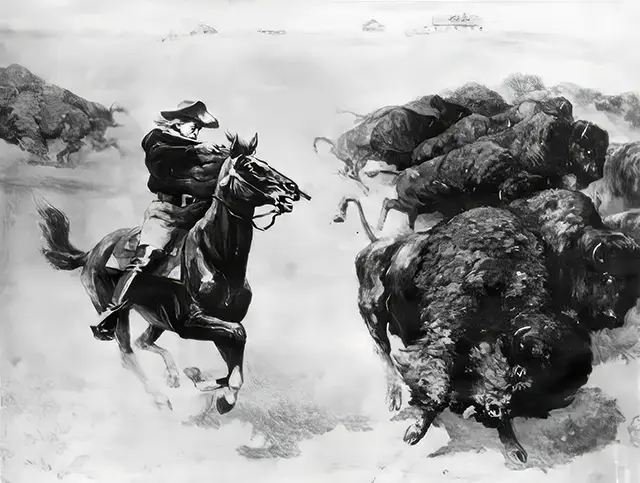
Among the most notorious figures of this era was William “Buffalo Bill” Cody, who killed roughly 4,000 bison in just two years. As staggering as that number was, it barely registered against the broader scale of the slaughter. Professional hunting outfits called “buffalo runners” operated across the plains with industrialized efficiency, using high-powered rifles to drop entire herds before the animals could flee.
One of the most widely documented methods of killing involved shooting bison directly from moving train cars. Passengers and hunters alike fired at herds from the windows and platforms of trains, leaving carcasses strewn across the plains with no intention of using the meat. The hides were stripped, loaded onto freight cars, and sent east. What remained rotted in the open air. By the early 1870s, approximately one million bison were being killed every year.
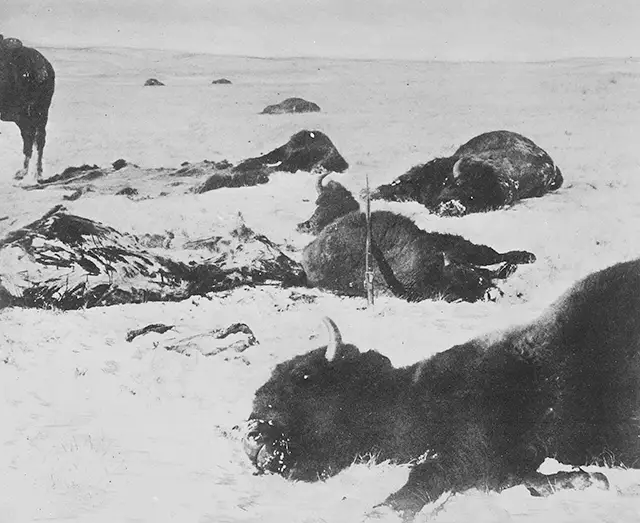
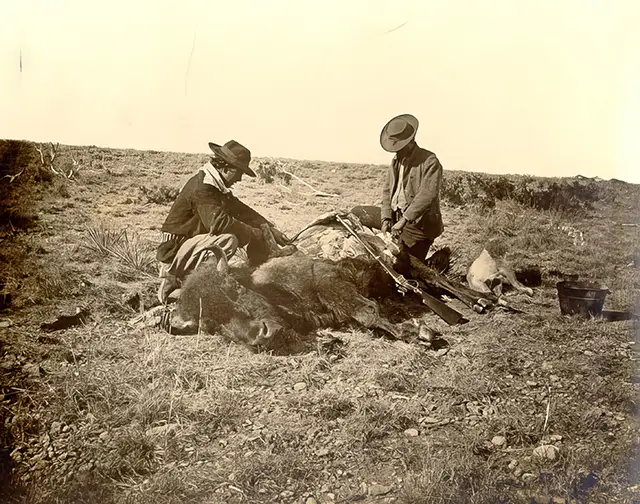
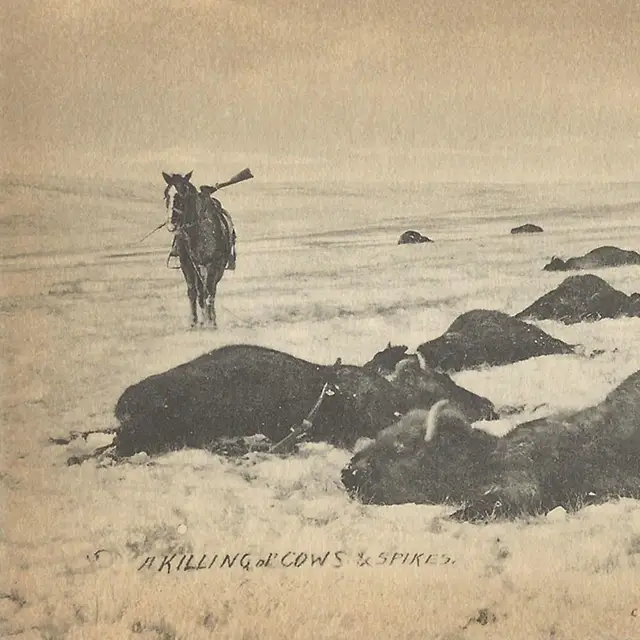
The U.S. government did not simply allow this slaughter — in many cases, it actively encouraged it. Senior military officials saw the destruction of the bison as the most effective tool for forcing Native American tribes off their ancestral lands and onto government reservations. Without bison, tribes could not feed themselves, could not sustain their traditional economies, and could not resist relocation.
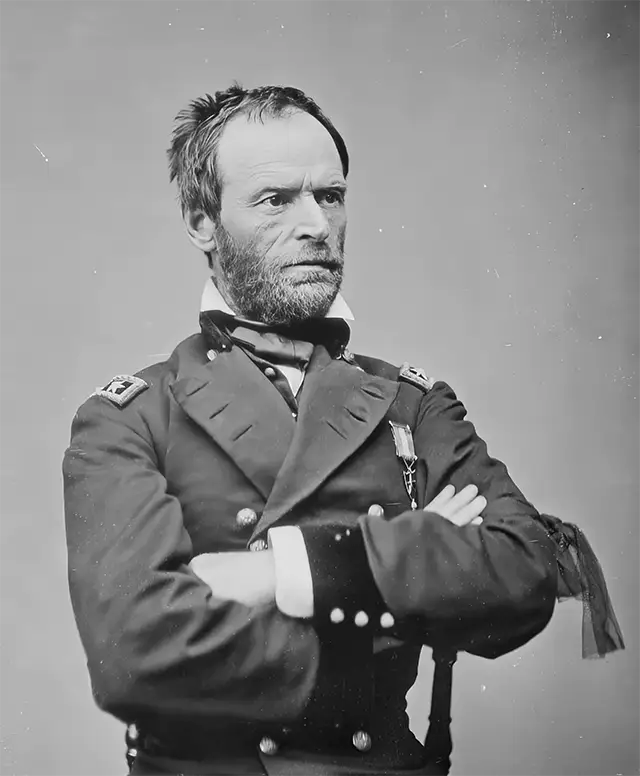
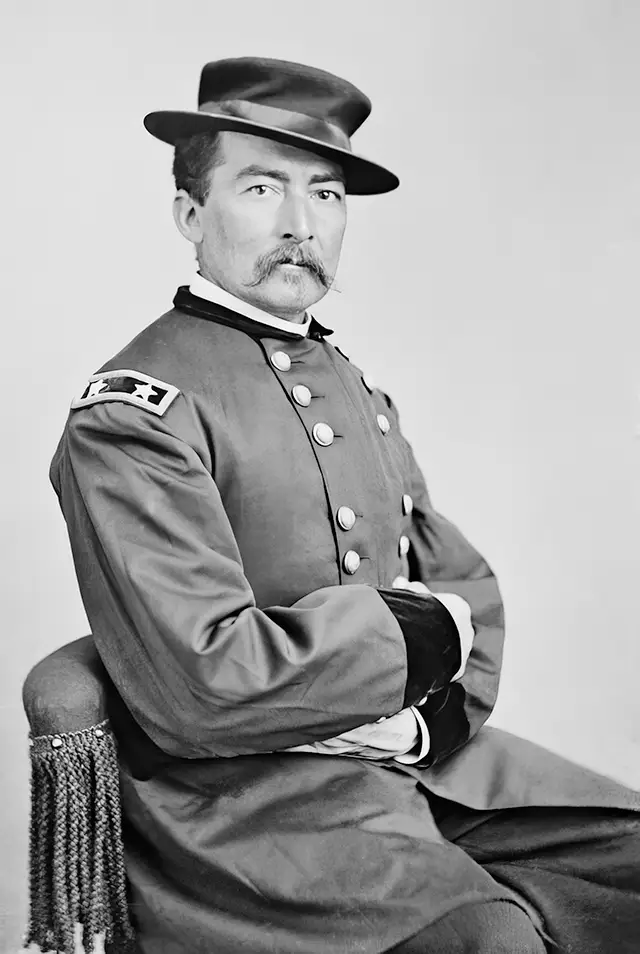
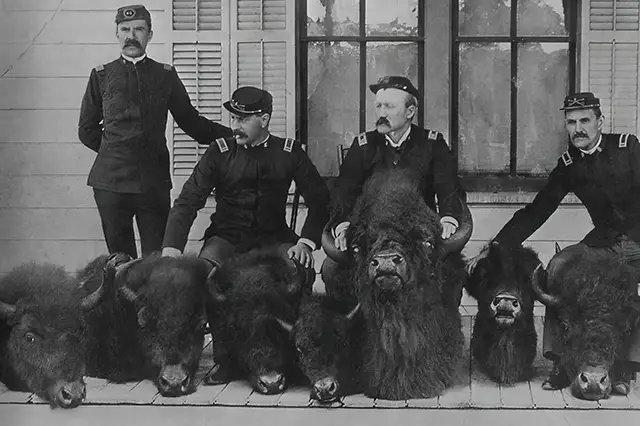
General Philip Sheridan openly praised commercial hunters for doing what the army had failed to accomplish in decades of conflict. He stated that these men had done more in two years to resolve what he called the “Indian question” than the military had managed in forty. The logic was simple and brutal: eliminate the food source, eliminate the resistance. Soldiers provided protection and logistical support to hunters operating in contested territory, making the military a direct partner in the slaughter.
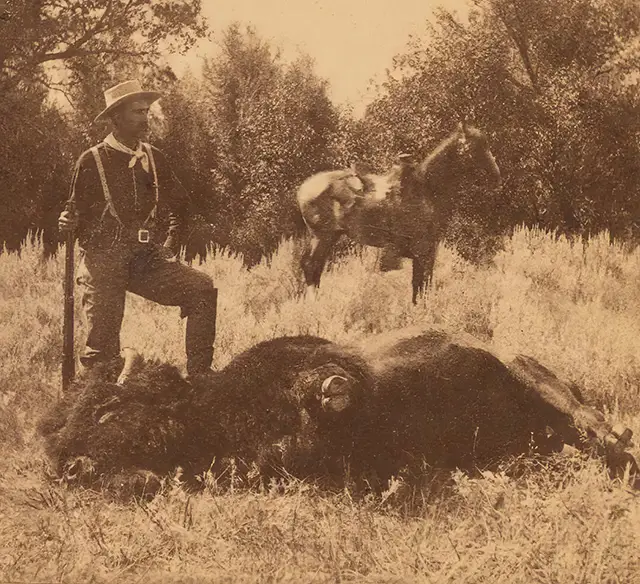
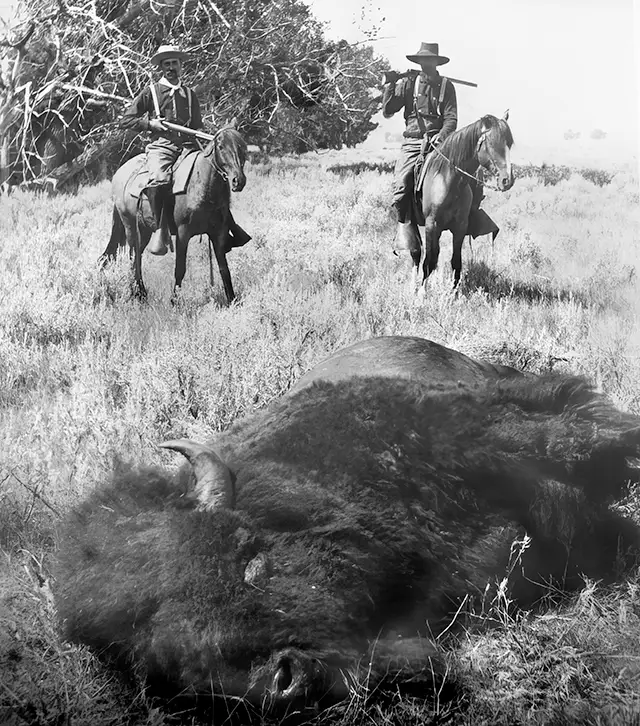
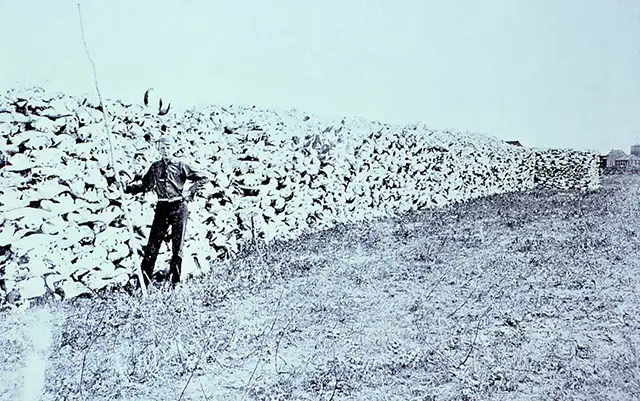
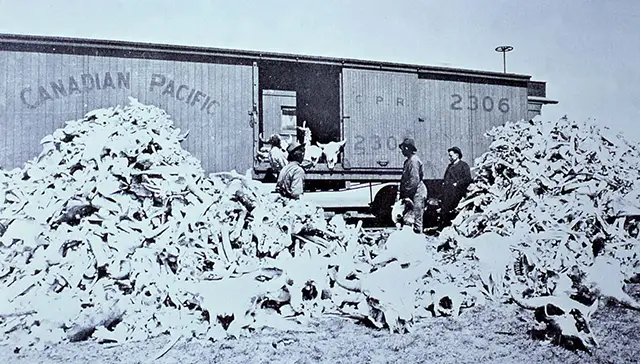
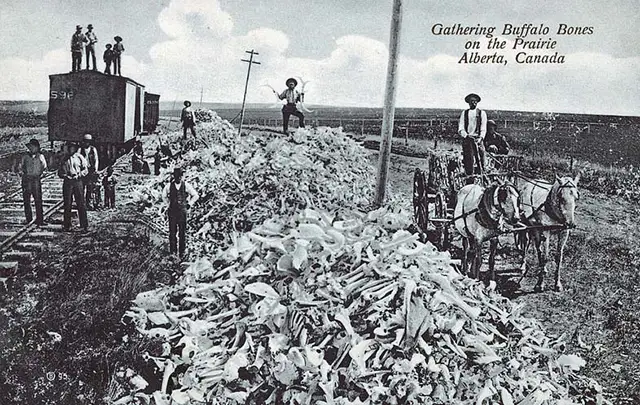
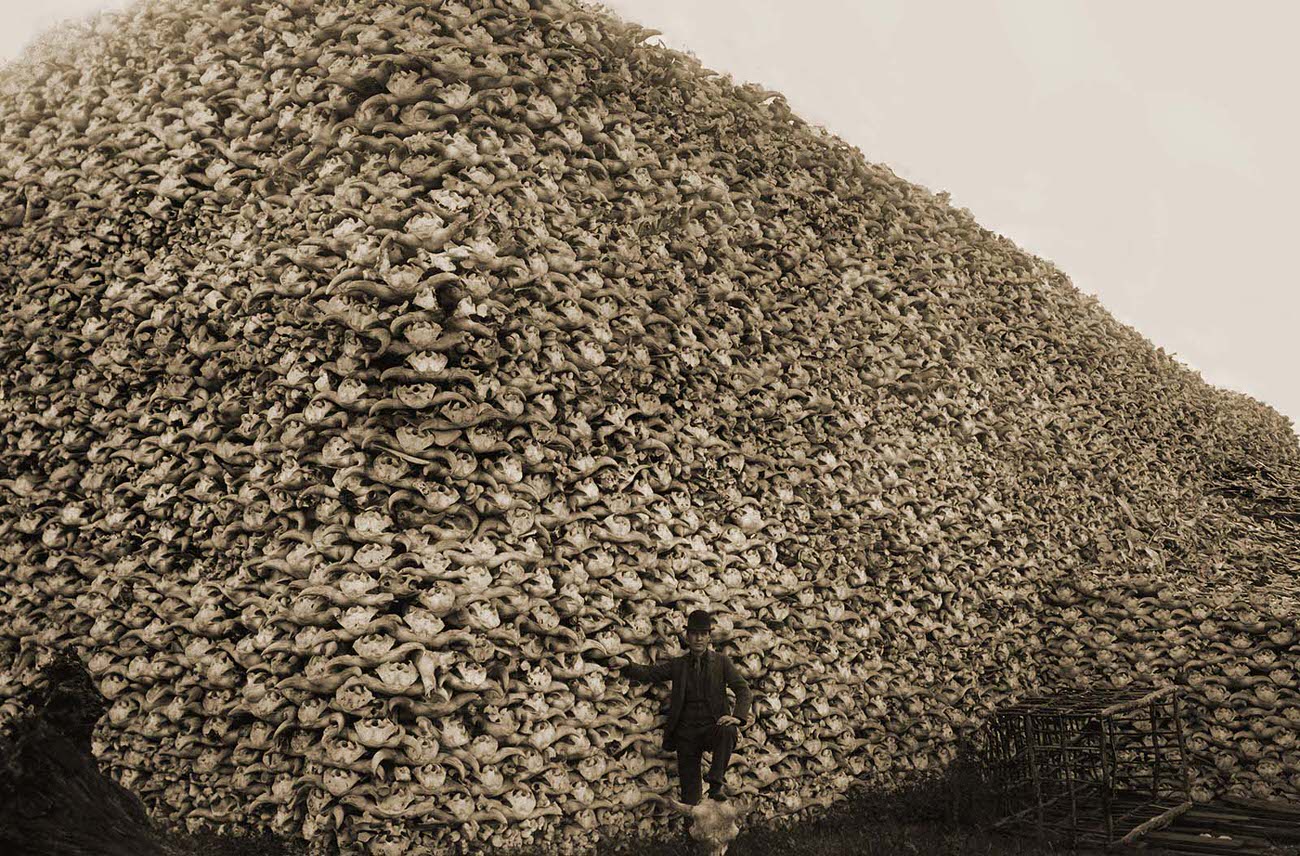
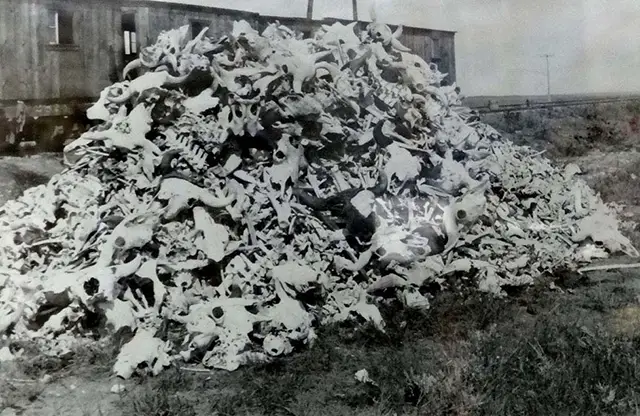
The volume of dead animals produced during this period is almost impossible to comprehend. Hide yards in frontier towns like Dodge City, Kansas stockpiled tens of thousands of hides at a time. Skull piles accumulated across the plains, eventually collected and ground into fertilizer. The bones of millions of animals were sold by the ton. Photographs from the era show stacks of skulls taller than the men standing beside them — a visual record of an industry built entirely on mass killing.
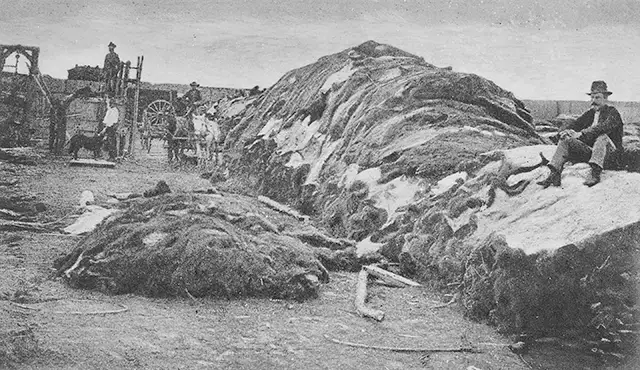
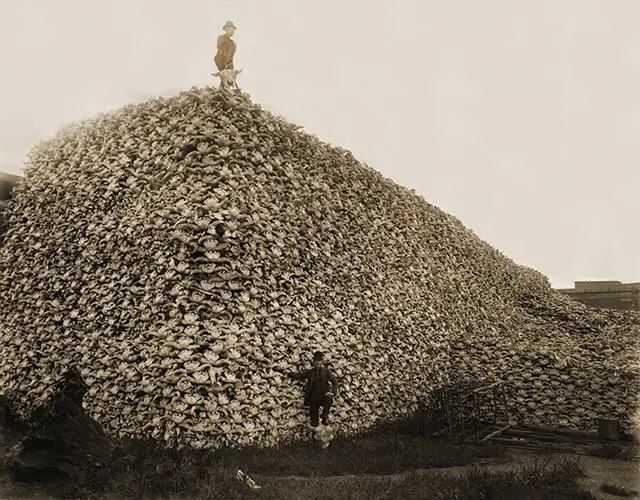
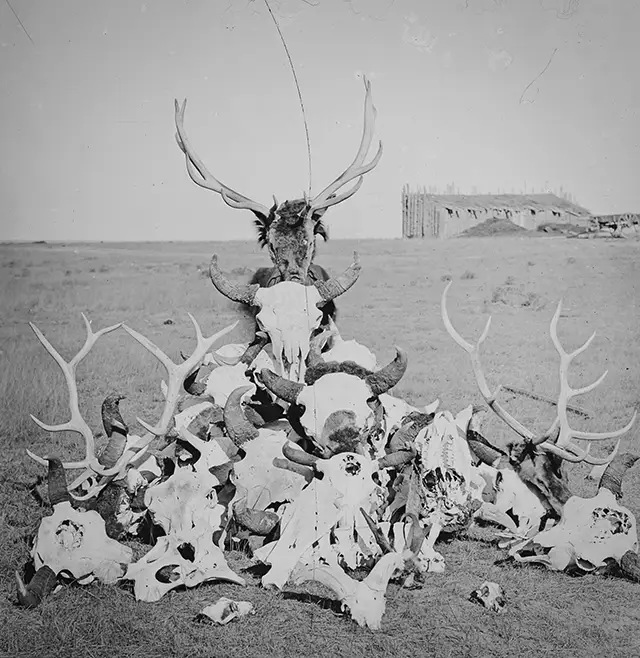
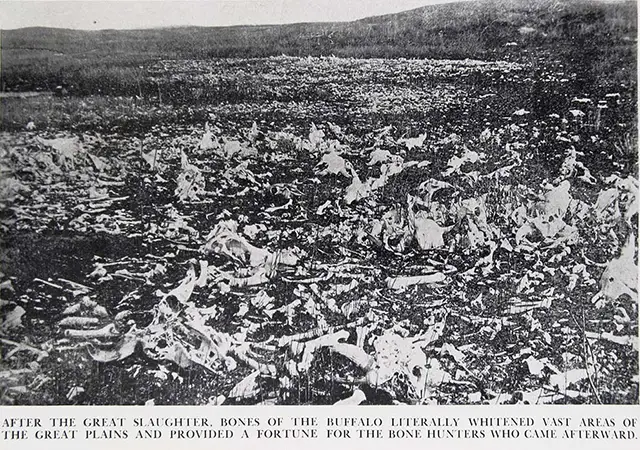
The railroad tracks that cut across the Great Plains did more than transport hunters and hides. They served as a physical boundary dividing bison herds and further fragmenting their range. Piles of bison bones left beside rail lines became a common sight across the region, evidence of an industry that had moved through like a fire and left almost nothing behind.
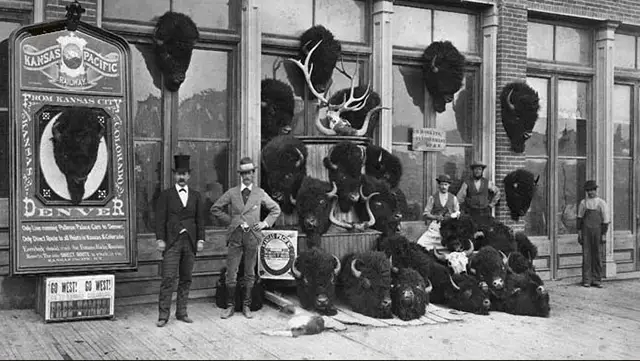
As bison grew scarce, the market for novelty items and trophies expanded. Taxidermists sold mounted bison heads to eastern buyers as symbols of frontier conquest. Law enforcement agencies occasionally seized bison parts from poachers operating in protected areas, but these efforts were too small and too late to slow the overall collapse. The killing continued with little legal interference for decades.
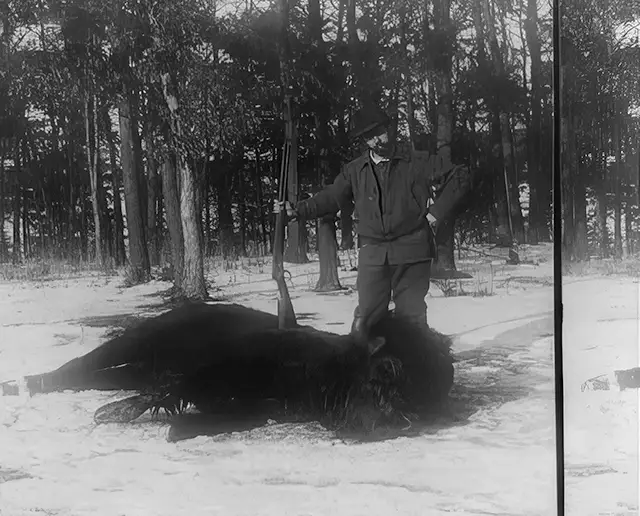
For Native American tribes, the collapse of the bison population meant the collapse of their world. Food shortages spread rapidly. Traditional economies built around bison products — robes, tools, dried meat — disintegrated. Communities that had survived and thrived for centuries were forced into dependency on government rations, often delivered inconsistently and in inadequate quantities. The spiritual and cultural practices tied to bison hunting were severed from daily life as there were no longer animals to hunt.
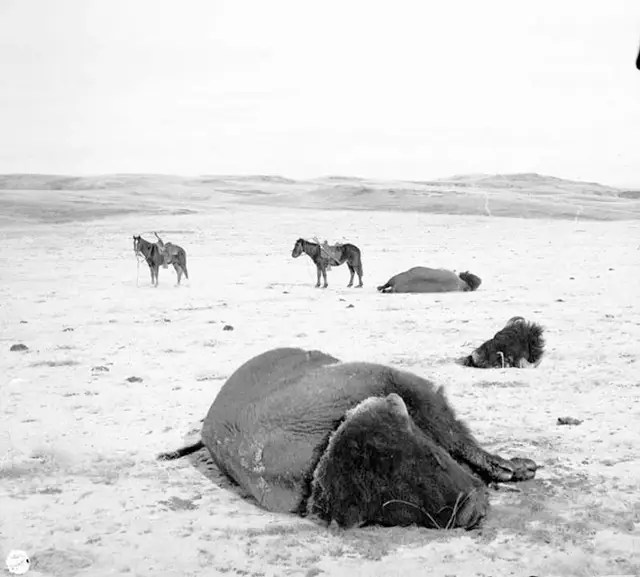
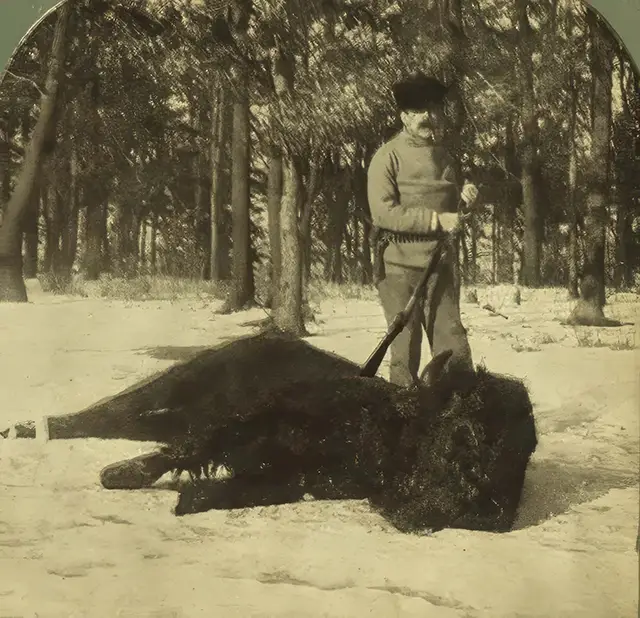
By the late 1880s, the population that had once numbered in the tens of millions was reduced to a few hundred animals scattered across the continent. The scale of the collapse shocked even some who had participated in the hunting industry. A small number of ranchers and conservationists began taking action to save what remained. Charles Goodnight and James “Scotty” Philip each established private herds on their land to protect surviving animals from further slaughter. These efforts were among the first organized conservation actions in American history.
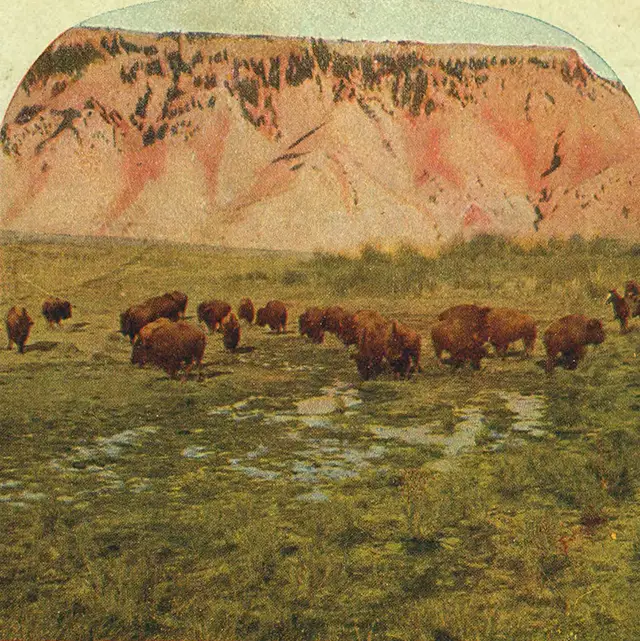
Yellowstone National Park became one of the most important refuges for the surviving bison. The park held a small, continuously wild herd — the only bison population in the United States that had never been domesticated or managed on a ranch. In 1905, the American Bison Society was founded with the goal of raising public awareness and lobbying for federal protections. Wildlife refuges were designated, and breeding programs helped slowly rebuild herd numbers.

Those poor bison. They did not deserve that at all.
I don’t expect anything smart from American or European culture. More sick is that modern humanity is just chasing all that nonsense
Unfortunately it’s not just limited to European and Americans. Look at the current day devastation of southeast asian rainforest and orangutan populations occurring right this minute – we all see it and nearly powerless to stop it. Look at the slaughter of elephant populations, or African old Growth. It’s diabolical
Yeah basically its the culture of consumerism.
It’s eugenics. Starvation has been used on several populations– the Holodomer in Ukraine; the Holocaust; the Irish (the famine was faked- the Ottawa Indians sent food to the Irish and the English refused to allow the ship to unload the food for the Irish); and the Indonesians.
That’s absolutely disgusting! It makes we want to vomit! They’re monsters!
lol. Do you eat meat?
Extermination =/= agriculture or wild harvesting. Those bison weren’t wiped out for food.
The impact of this extermination is horrific.
No, I don’t.
It’s not about the meat, hombre.
I highly recommend reading up on Buffalo Bill and the damage he did, that he regretted later in life. Killing the buffalo was meant to kill the Indians. It worked as designed.
Steve Rinella’s book American Buffalo is super interesting and talks about how they were hunted to the brink and then how all their bones were spread across the prairie making it look like fresh snow. Then eventually people started smashing them up to use as fertilizer and a whole new rush happened.
So sad, the book talks about how disgusting and nasty these bison hunters were too. They would leave their clothes on ant hills for the ants to eat all the carcass debris off the clothes and smelled like putrid decay….
Yet another example of hatred and utter stupidity of humans… We are going to pay for all the bad karma at some point. Some would say we already paid, but that’s a matter of opinion…
Just…holy fuck.
Watch and Learn ppl because this is the stuff Trump is trying to ERASE from America.
Never forget.
We are a country established on genocide and built on slavery.
This was an attempt at “starving” the natives. The cruelty was the point.
I always find these images to be just heartbreaking
Is there anything we haven’t completely fucked up?
Killing the buffalo was intended to make way for development of the plains into farmland. They thought the plains, particularly in the north, got more rain than they actually do, so settlement was sparser and less tenable. But they did make a lot of farmland. It’s wrong to think they killed the buffalo just to get at the natives. That’s like a soap opera version of the past. They saw native culture around the buffalo as being incompatible with settled life, but they felt they were improving the land by getting it ready for cultivation.
You would change your mind if you read the book “Lies my teacher told me”.
Yep. This is the education my parents grew up with. My Dad would say that we tried to make treaties with them. The impression he was left with from his education was the US government made treaties and the native Americans broke them by fighting. Total disregard and ignorance of how the US government used European immigrants to “settle” nearby lands, stoke conflict and use as an excuse to take over previously negotiated lands. Oldest strategy in the book.
We’ve seen this photo a hundred times.
First time I’ve seen it.
Native Americans and the colonists both killed Buffalo as soon as they saw them. I don’t think anyone comes away from this unscathed.