When World War II ended, Germany did not emerge as a single nation. The Allied powers split it into two separate states. The western portion became West Germany, governed by the United States, France, and Britain. The eastern portion became East Germany, officially called the German Democratic Republic (GDR), and was placed under Communist rule backed by the Soviet Union. Berlin, the capital city, was split the same way — East Berlin under Communist control, West Berlin under Western Allied authority.
The difference between the two sides was stark and immediate. West Germany experienced what became known as the Wirtschaftswunder — the “economic miracle.” Jobs were plentiful, food was available, and infrastructure was rebuilt at a rapid pace. East Germany told a different story. Shortages of basic goods were common, economic growth stalled, and opportunities were scarce. People voted with their feet. By the early 1960s, more than 1.2 million East Germans had fled to the West, many of them skilled workers, doctors, and engineers that the GDR could not afford to lose.
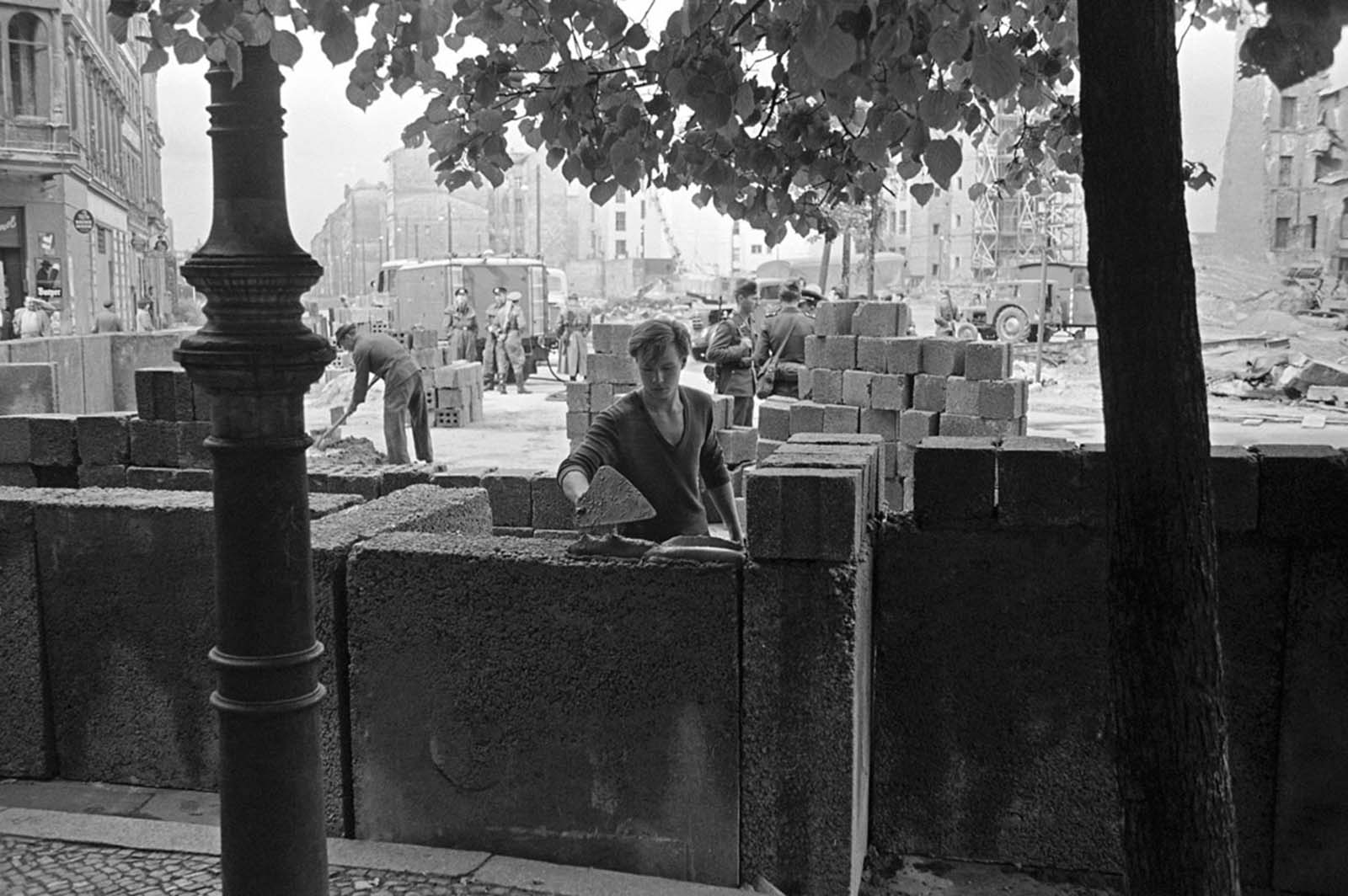
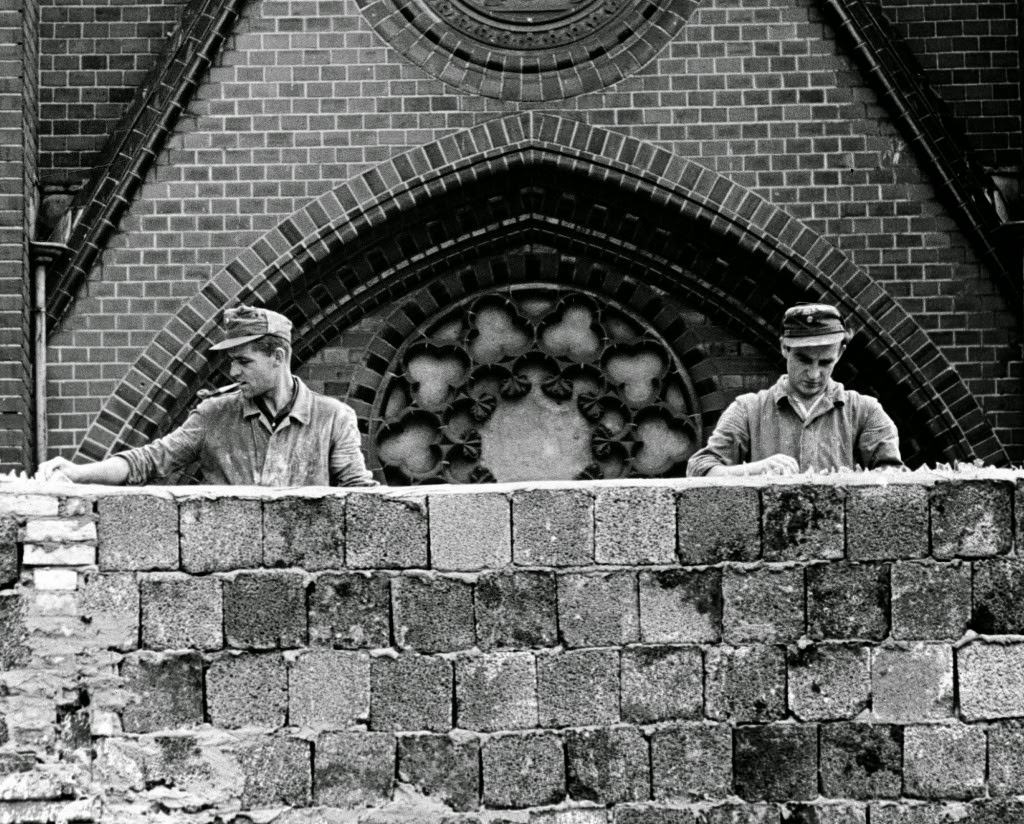
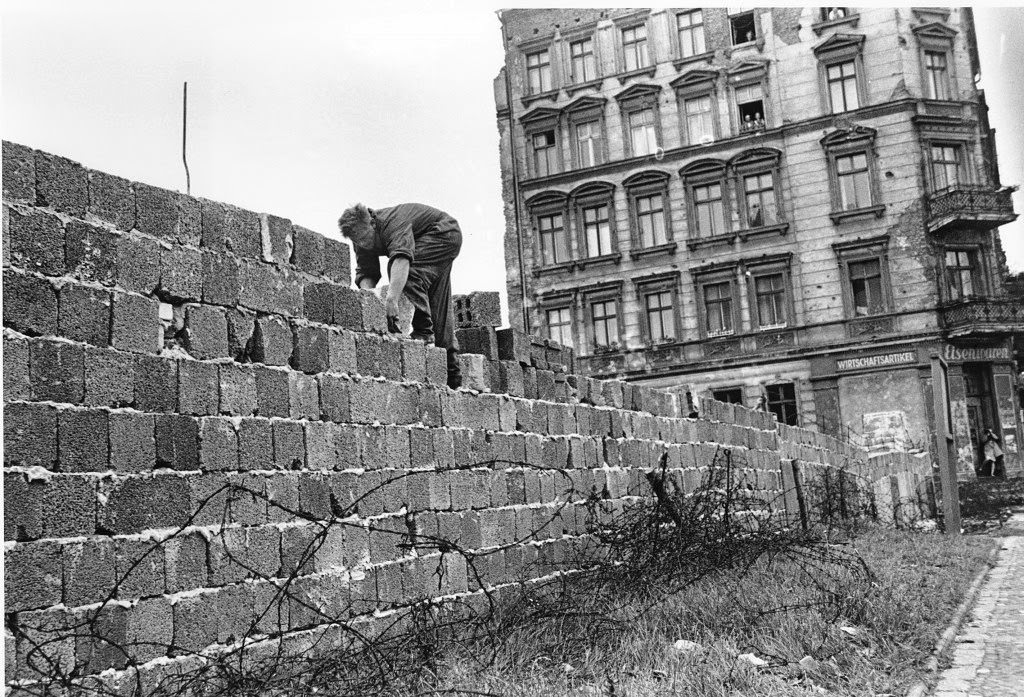
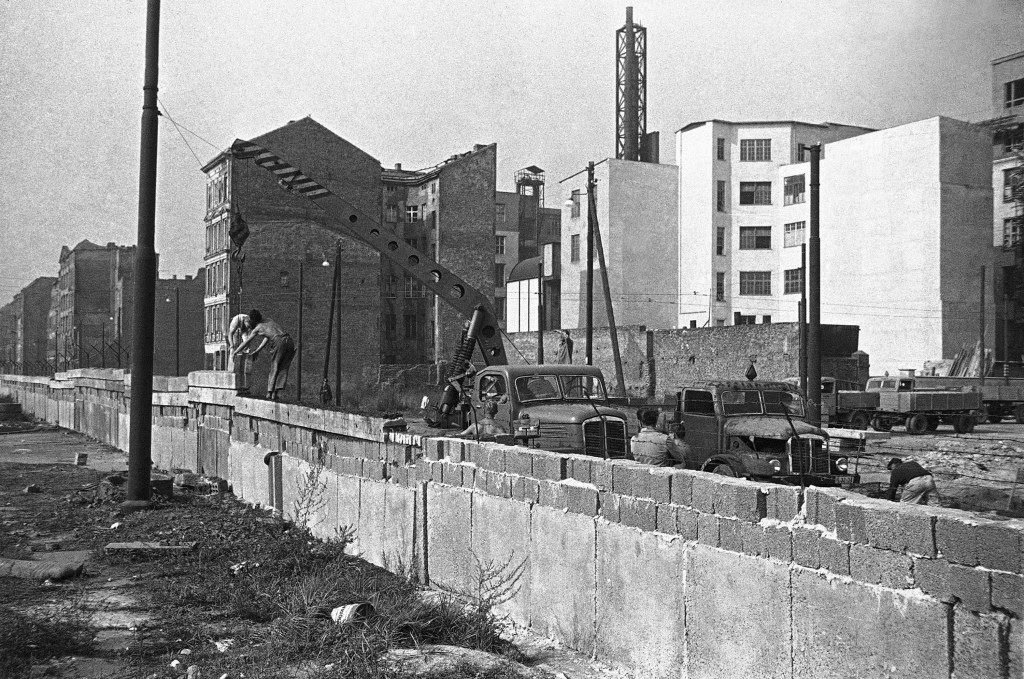
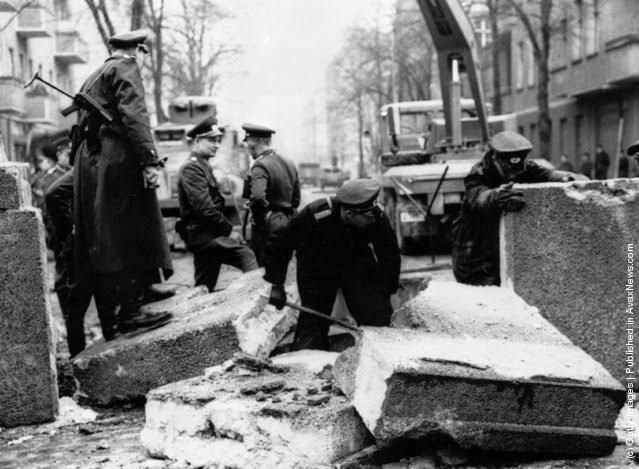
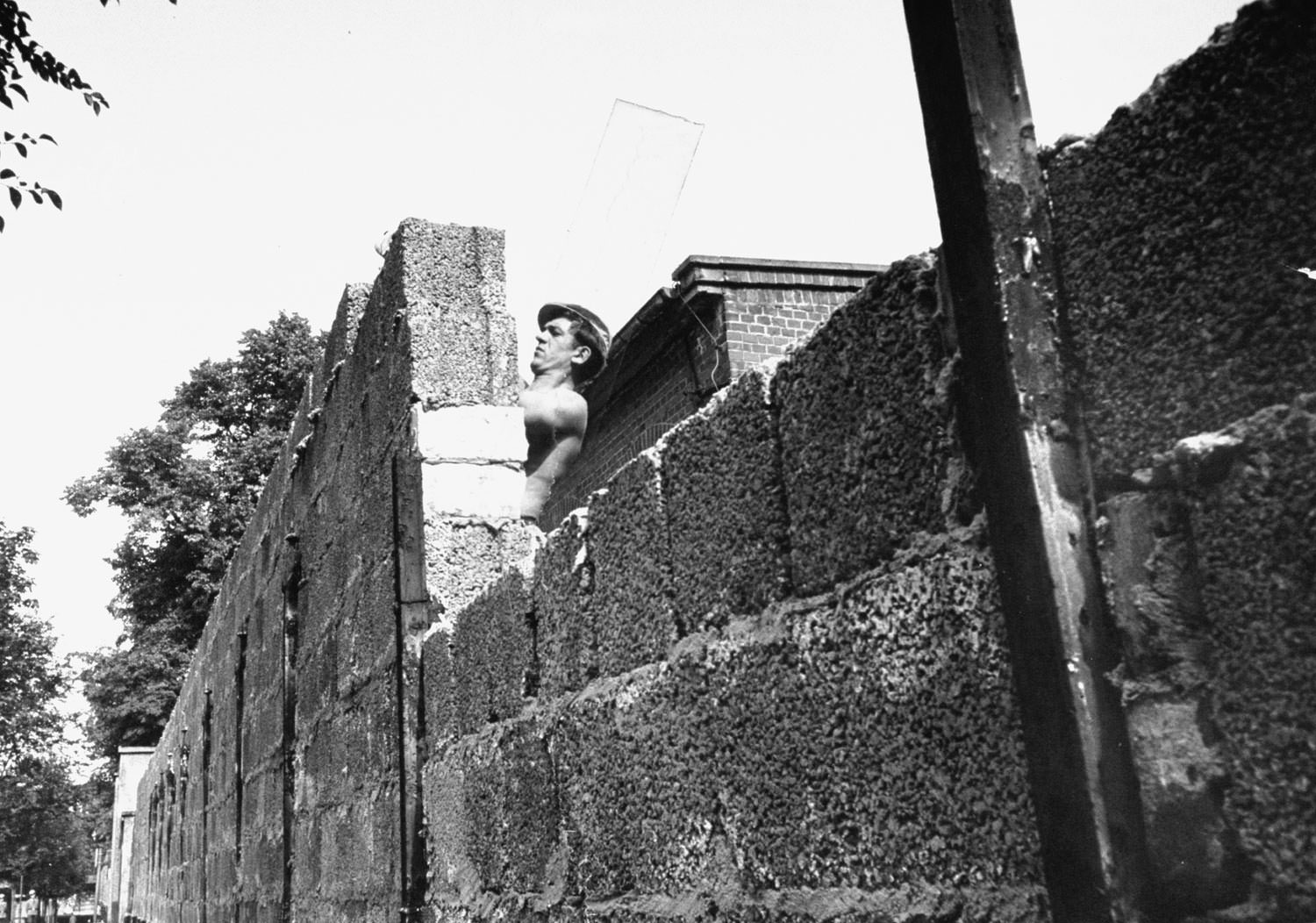
A young East Berliner works on a concrete wall that was later topped by barbed wire at a sector border in the divided city on August 18, 1961.
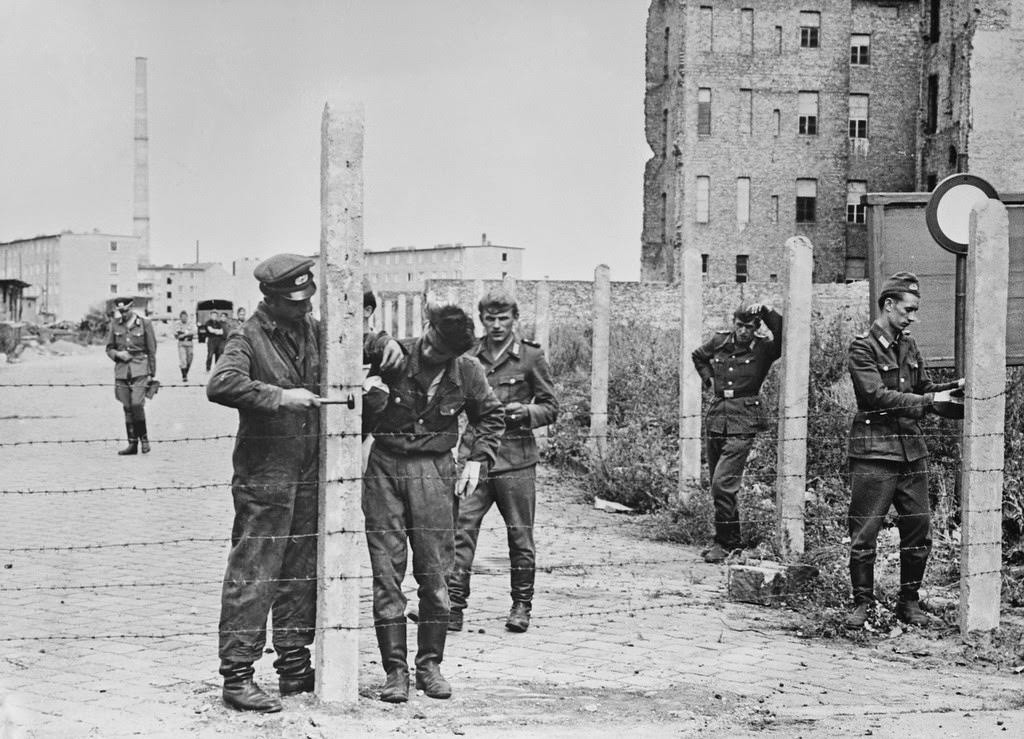
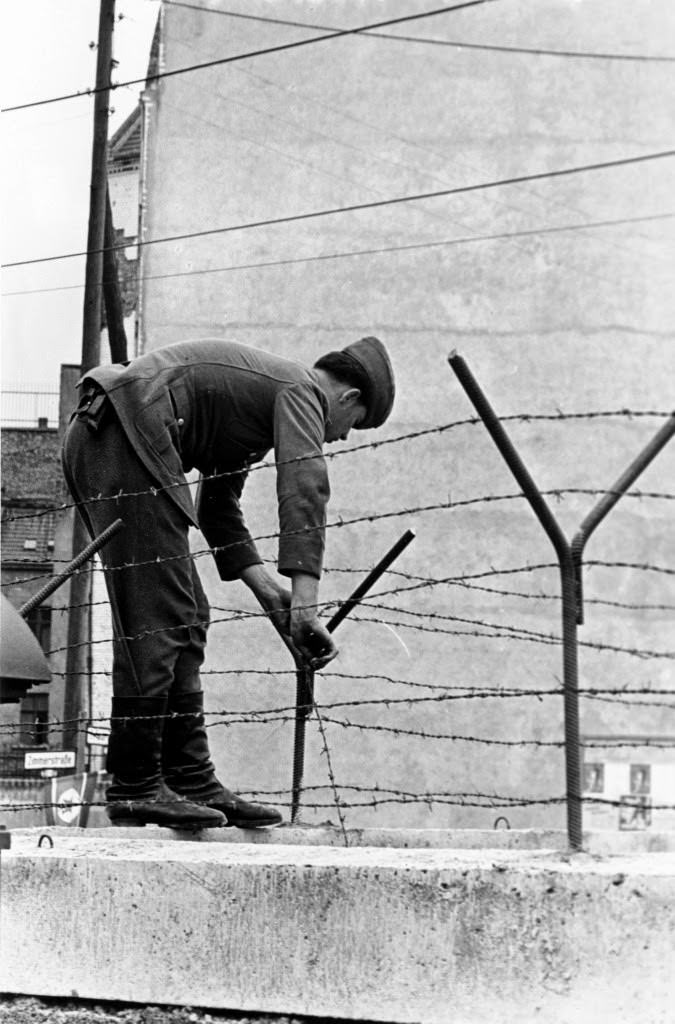
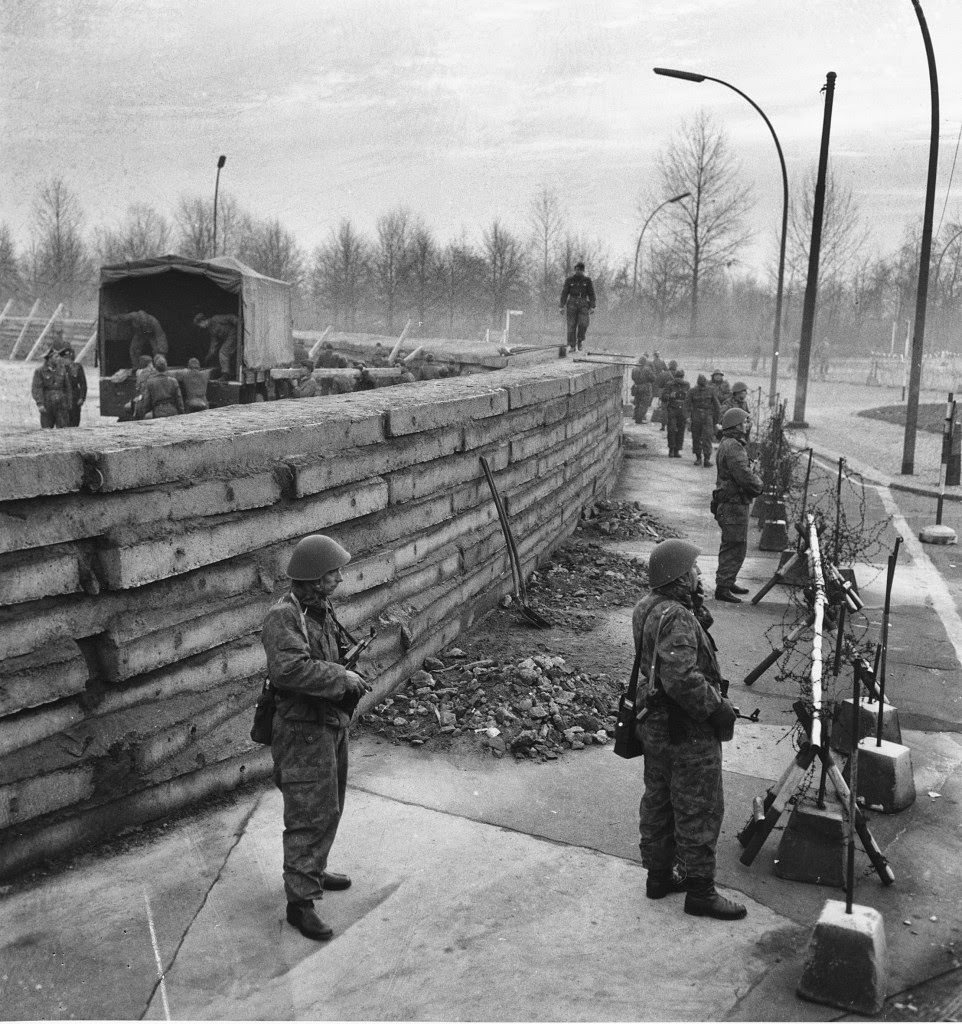
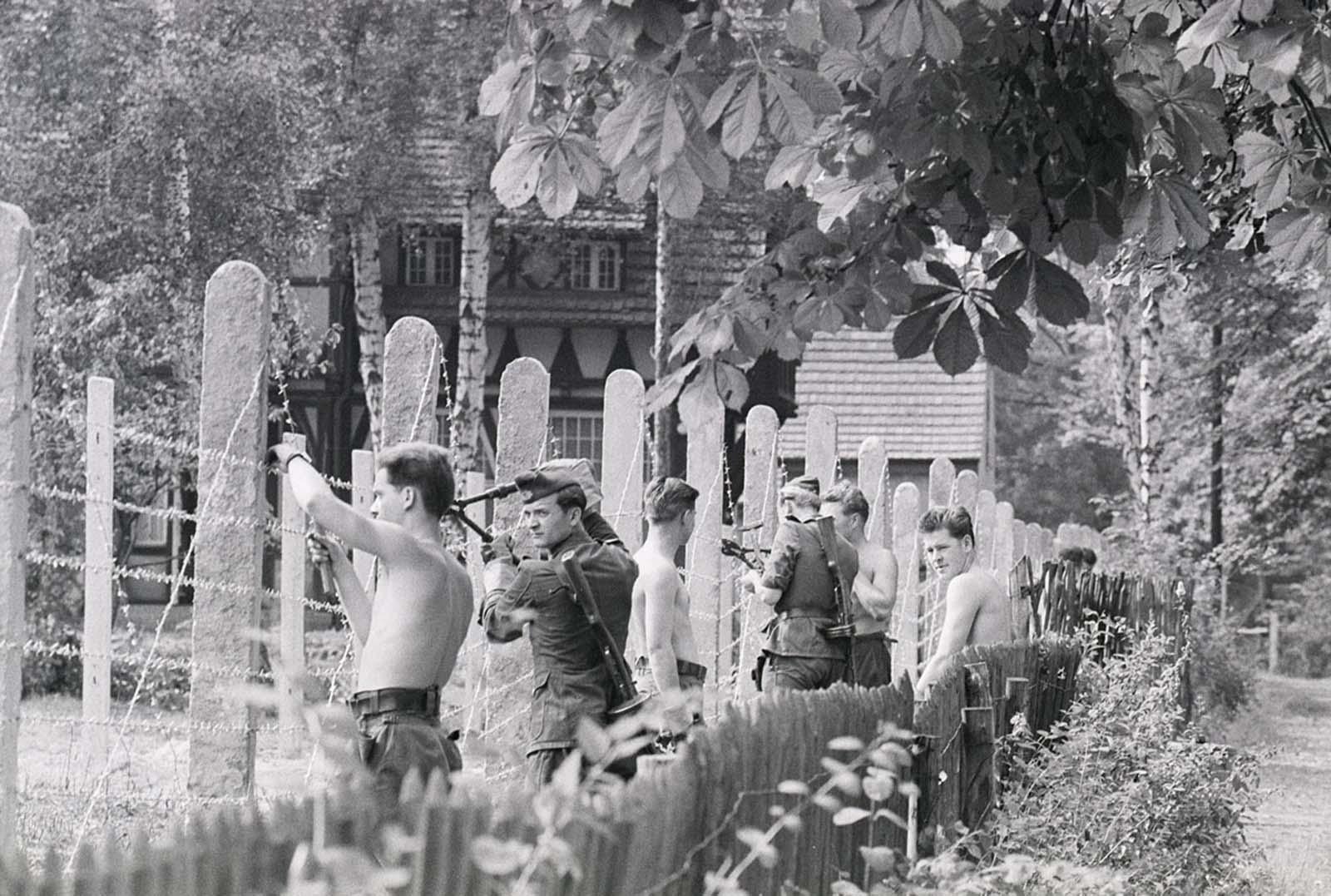
To stop the mass exodus, Soviet leader Nikita Khrushchev authorized the East German government to seal the border. In the early hours of August 13, 1961, East German soldiers and workers began stringing barbed wire along the boundary between East and West Berlin. Within days, concrete blocks replaced the wire in many sections. The GDR officially called the structure the Anti-Fascist Protection Rampart, framing it as a defense against Western aggression. West Berlin’s city government had a different name for it: the Wall of Shame.
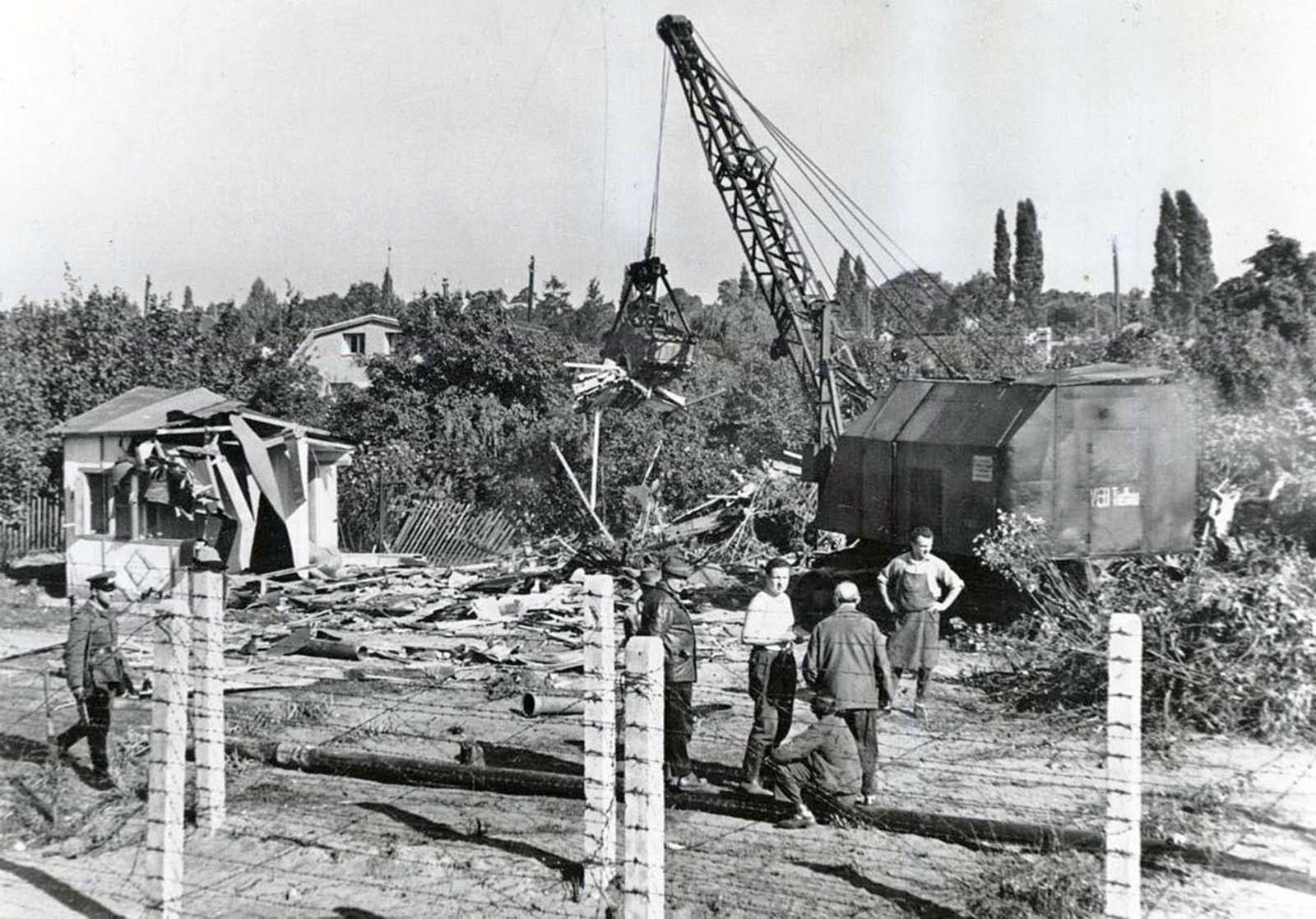
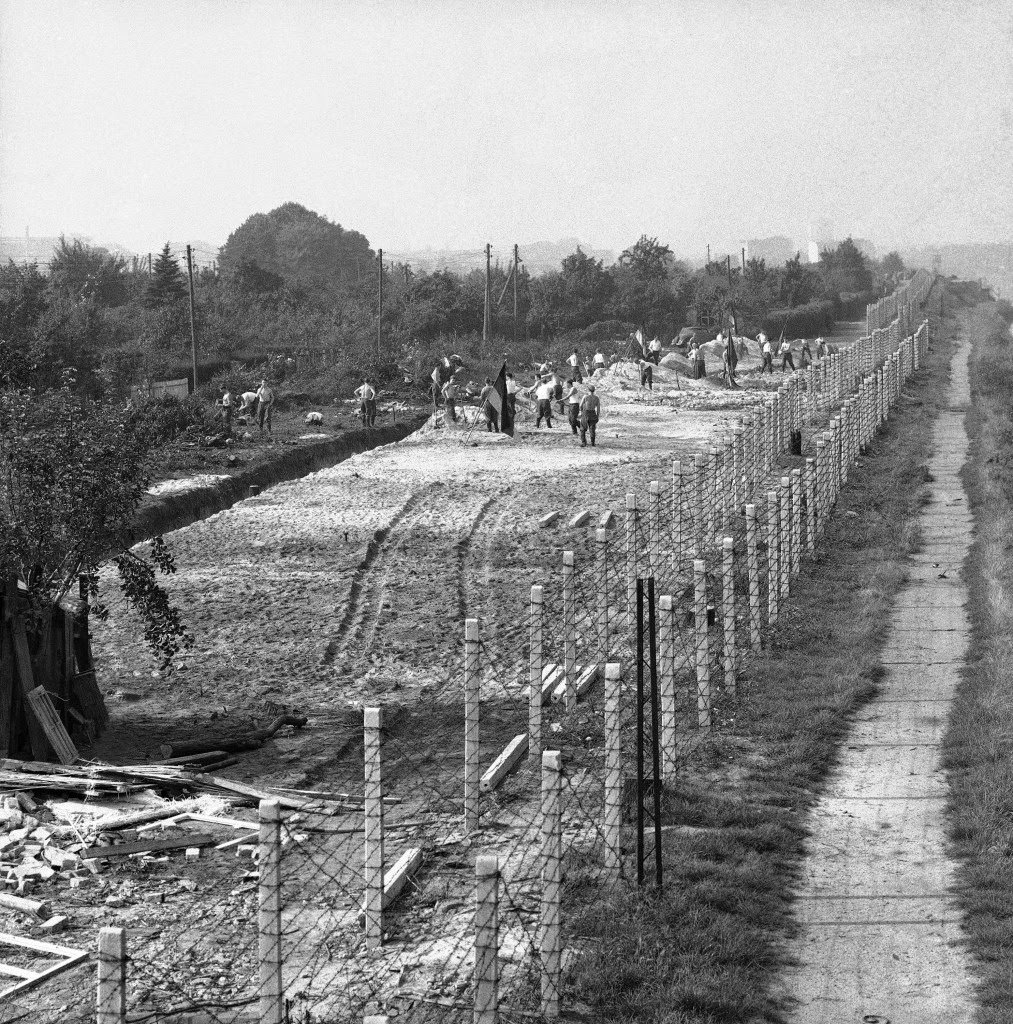
East Berlin workers with a power shovel destroy one of a number of cottages and single-family houses along a sparsely settled stretch of the east-west Berlin boundary in October 1961.
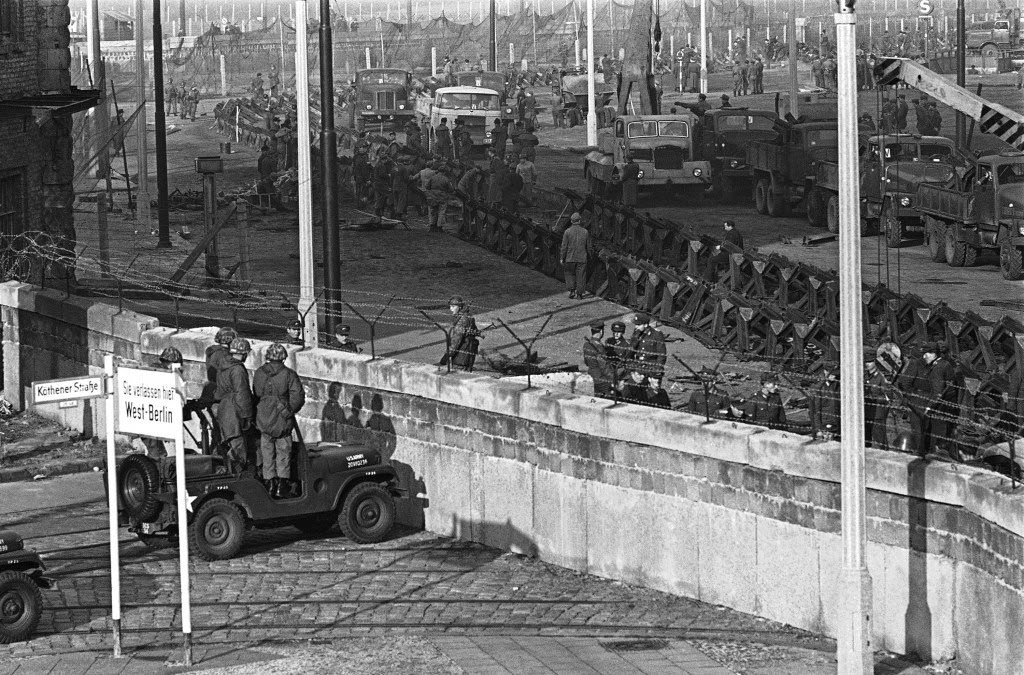
The construction was fast and relentless. Entire neighborhoods were disrupted. Streets were ripped up, tracks were removed, and buildings that sat directly on the border were sealed or demolished. The GDR cleared a wide zone along its side of the wall — a bare, floodlit strip of land that became known as the Death Strip. This open ground made it nearly impossible for anyone to cross undetected. Guard towers overlooked the strip, and soldiers were ordered to shoot anyone attempting to flee.
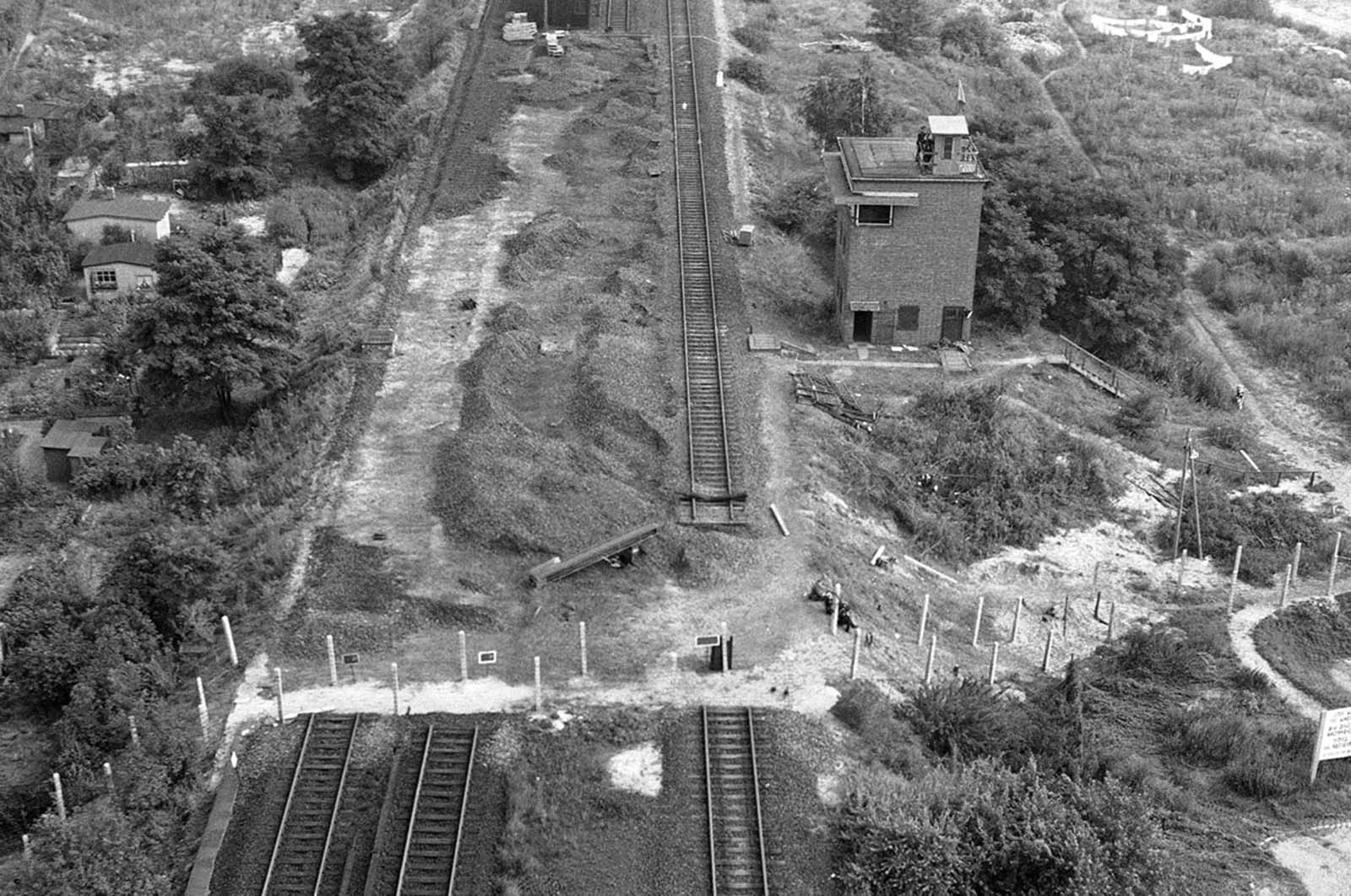
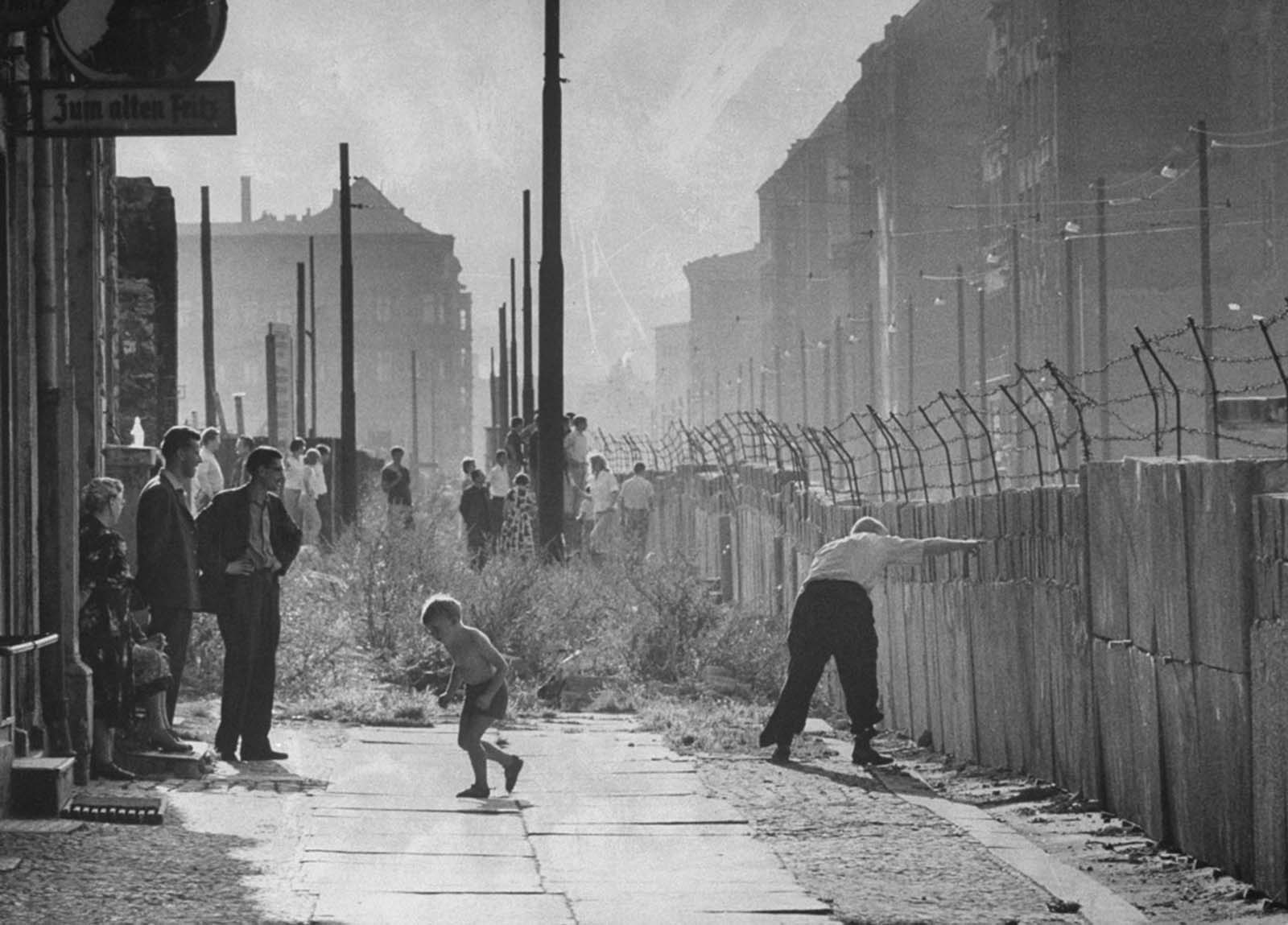
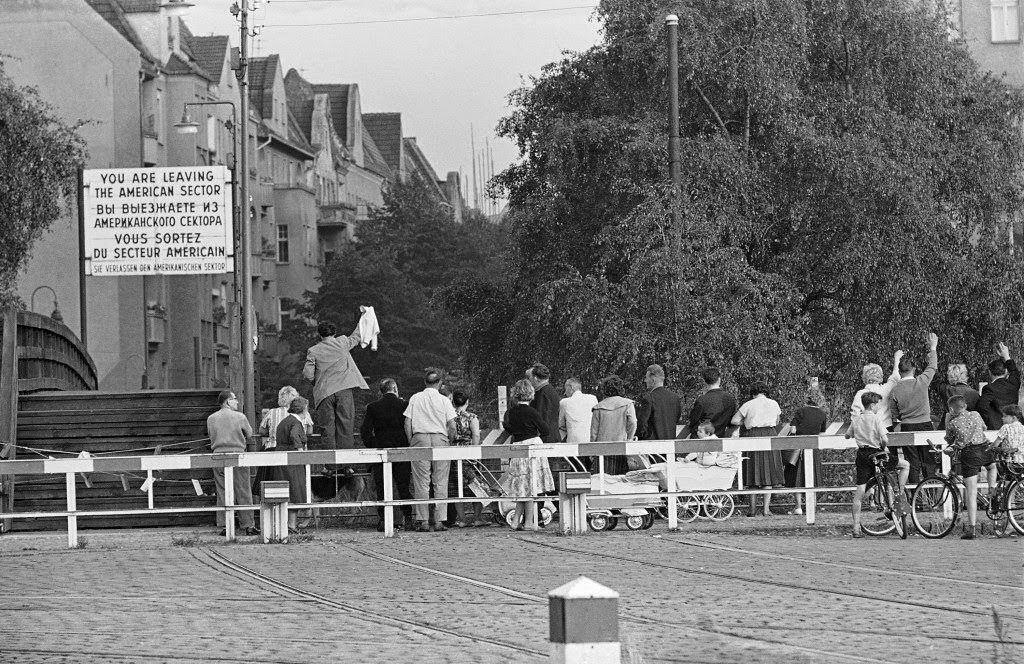
Tracks of the Berlin elevated railroad stop at the border of the American sector of Berlin in this air view on August 26, 1961. BWest Berliners gather near the newly built Berlin Wall in August 1961.
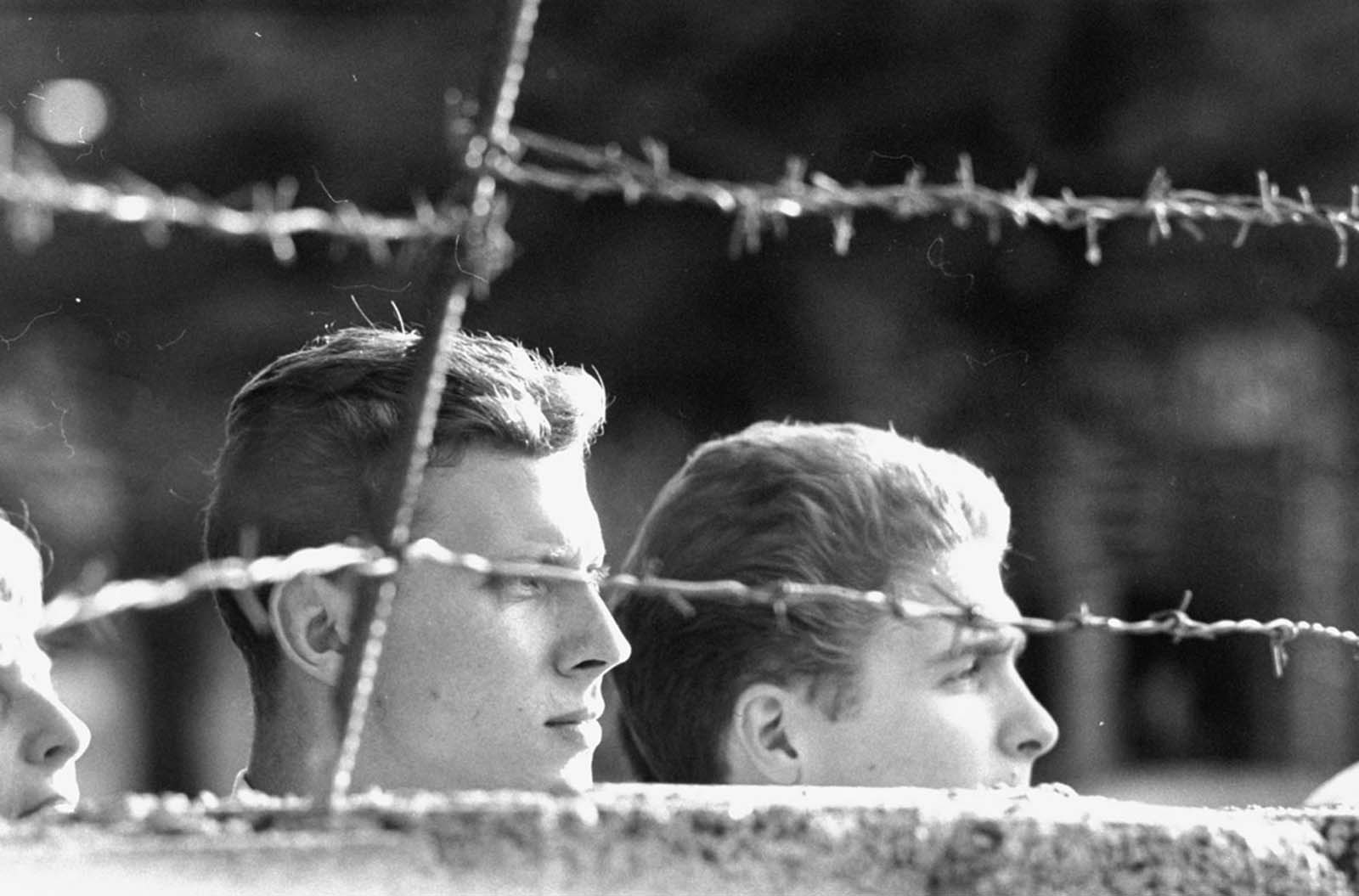
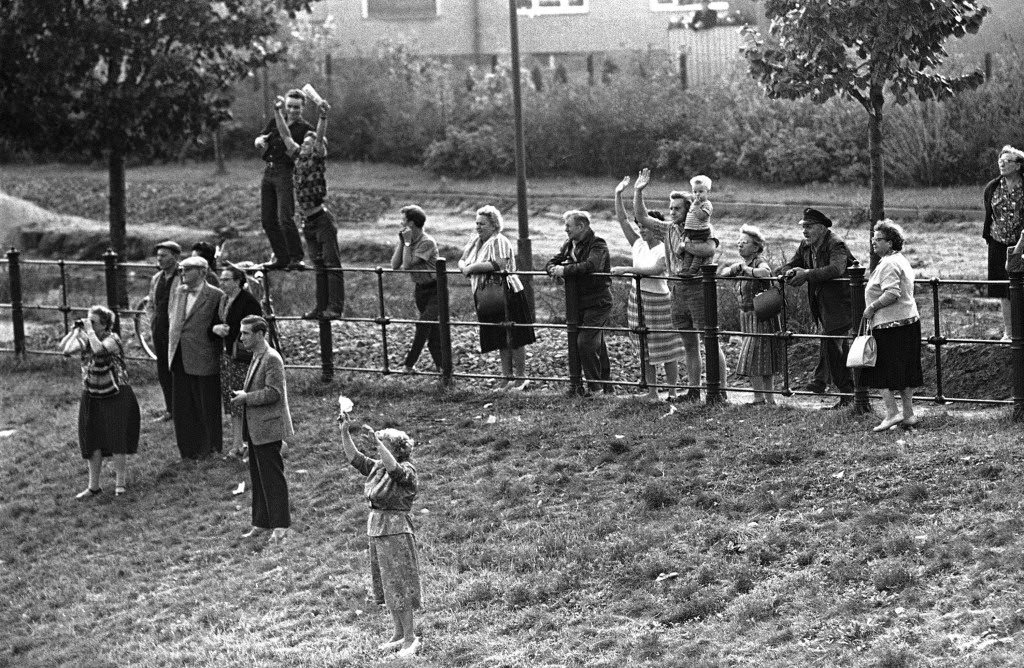
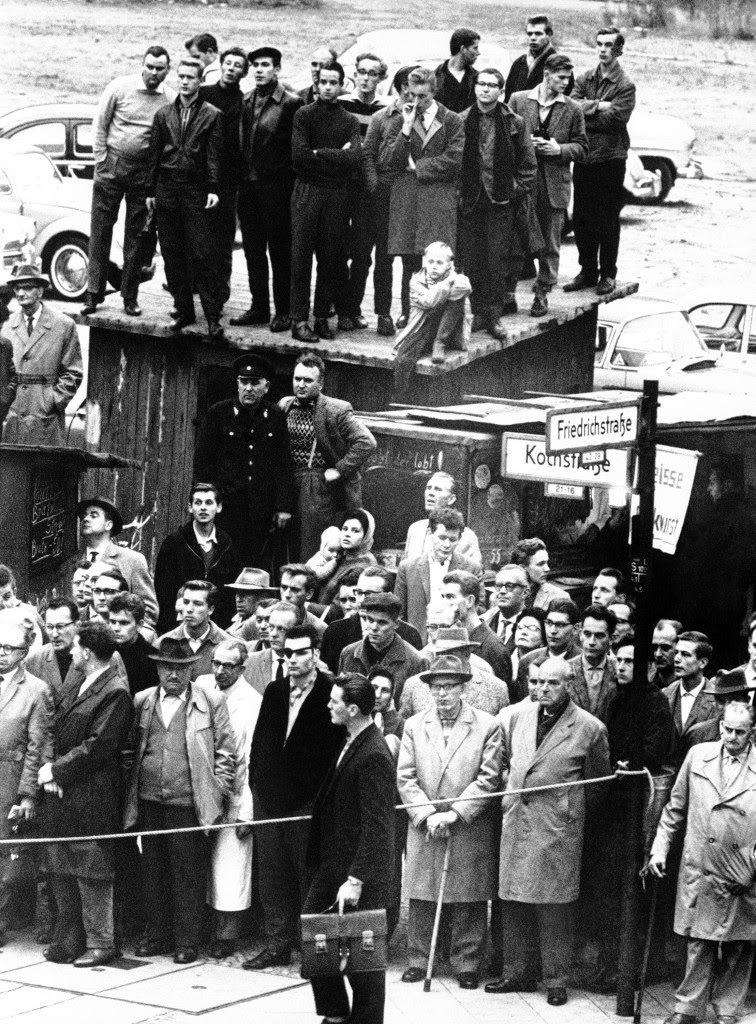
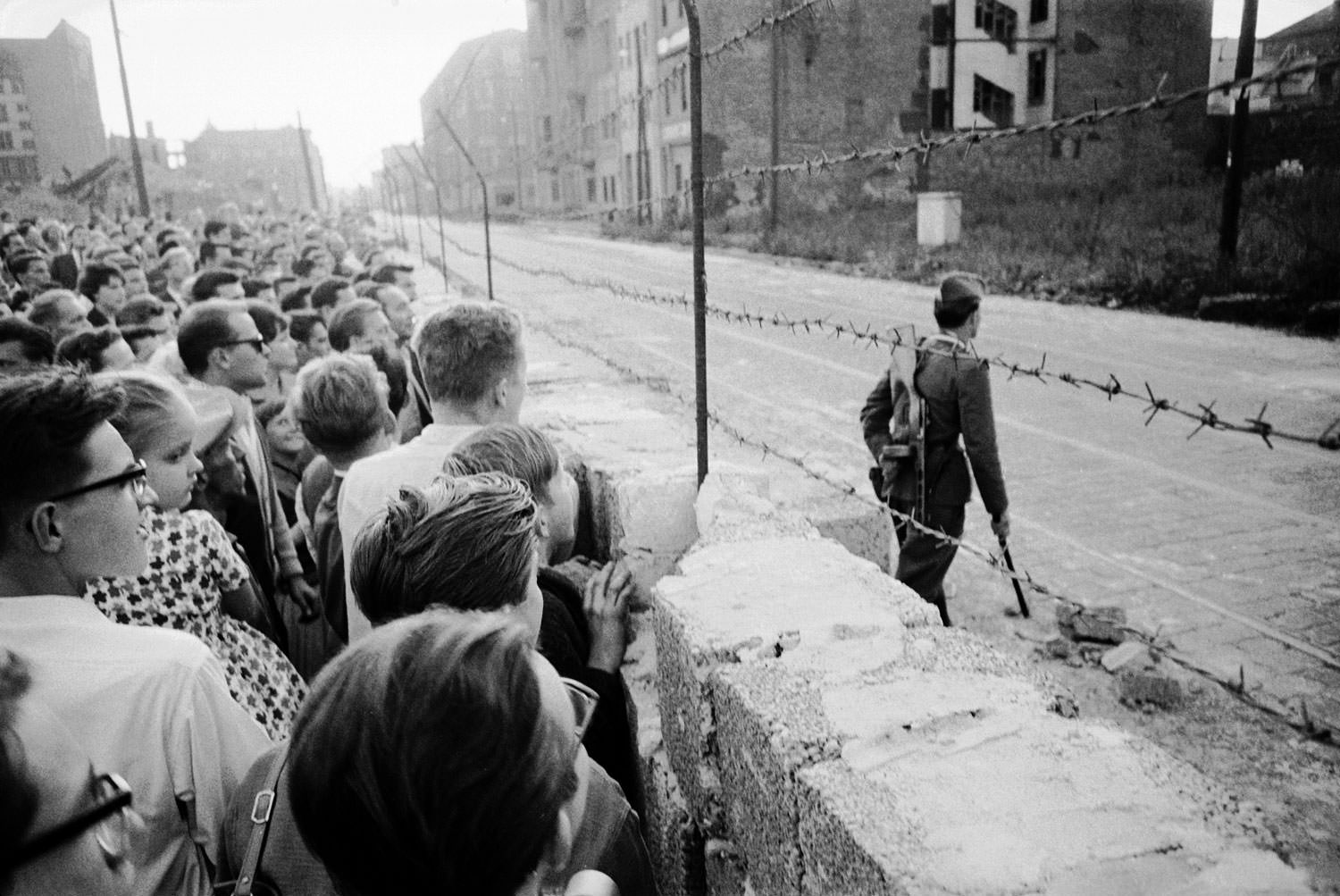
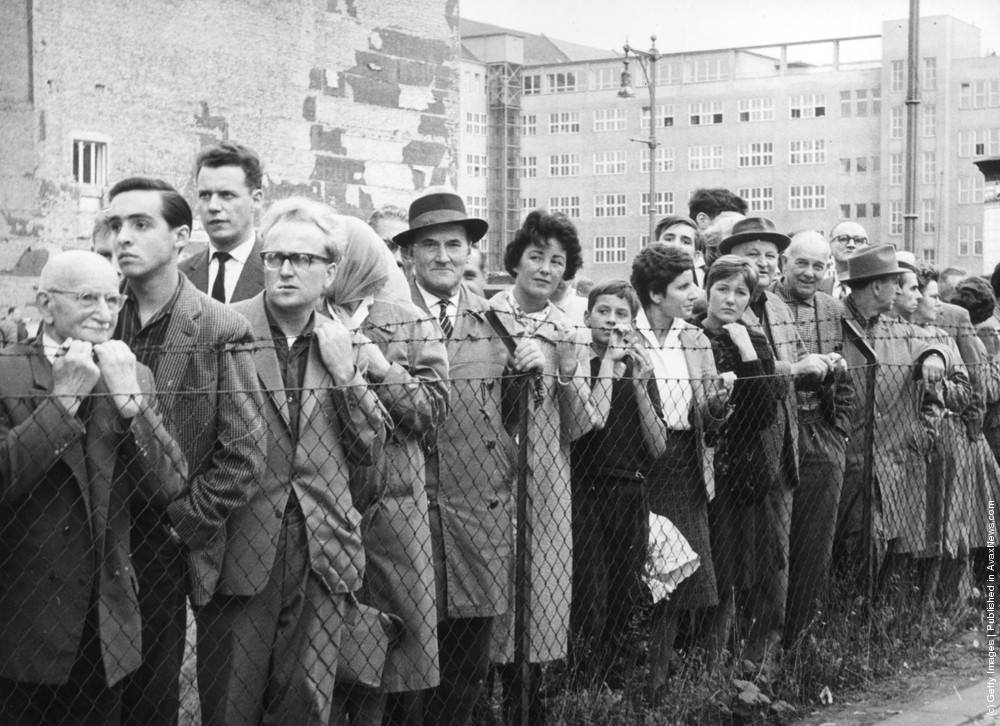
West Berliners watched the wall go up in disbelief. Many had family members on the other side. Overnight, people who had crossed the border for work, for visits, or simply to shop found themselves permanently cut off. Crowds gathered at the barrier, pressing against the wire and concrete, trying to catch a glimpse of neighbors and relatives they could no longer reach.
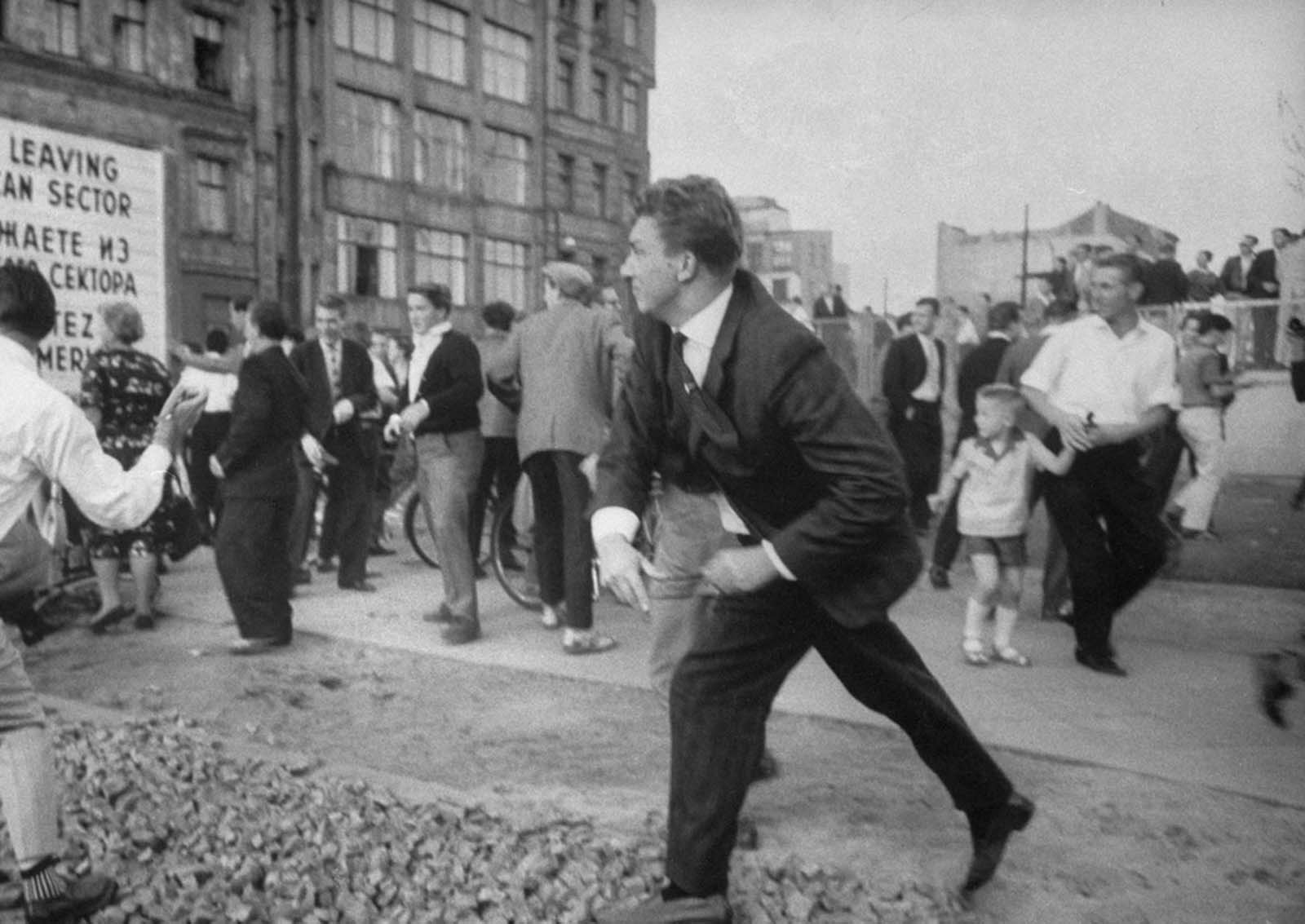
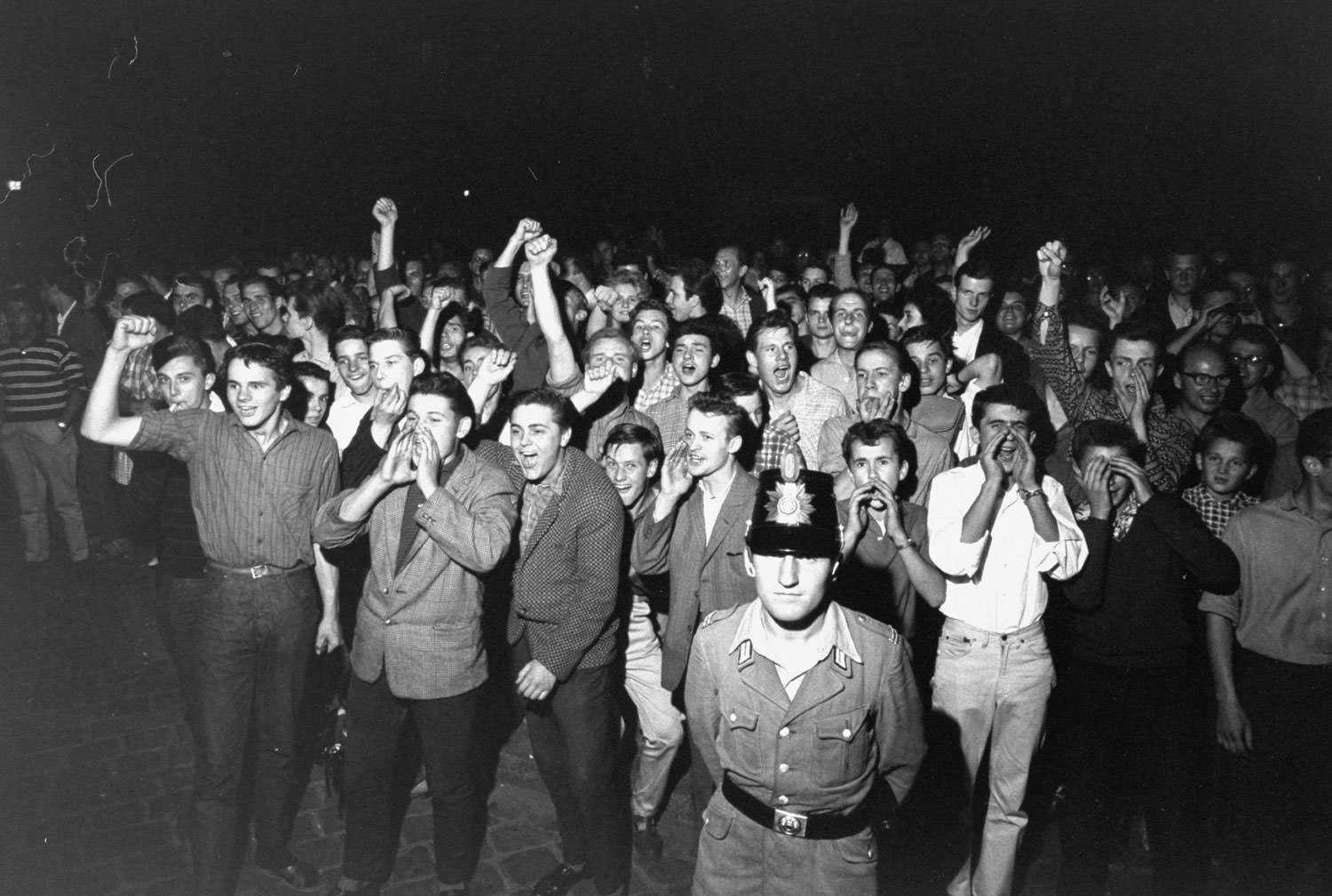
West Berliners, angered by taunts from East Berlin Police, throw rocks in August 1961.West Germans peer over part of the newly constructed Berlin Wall while waiting for relatives to return from the eastern sector in August 1961.
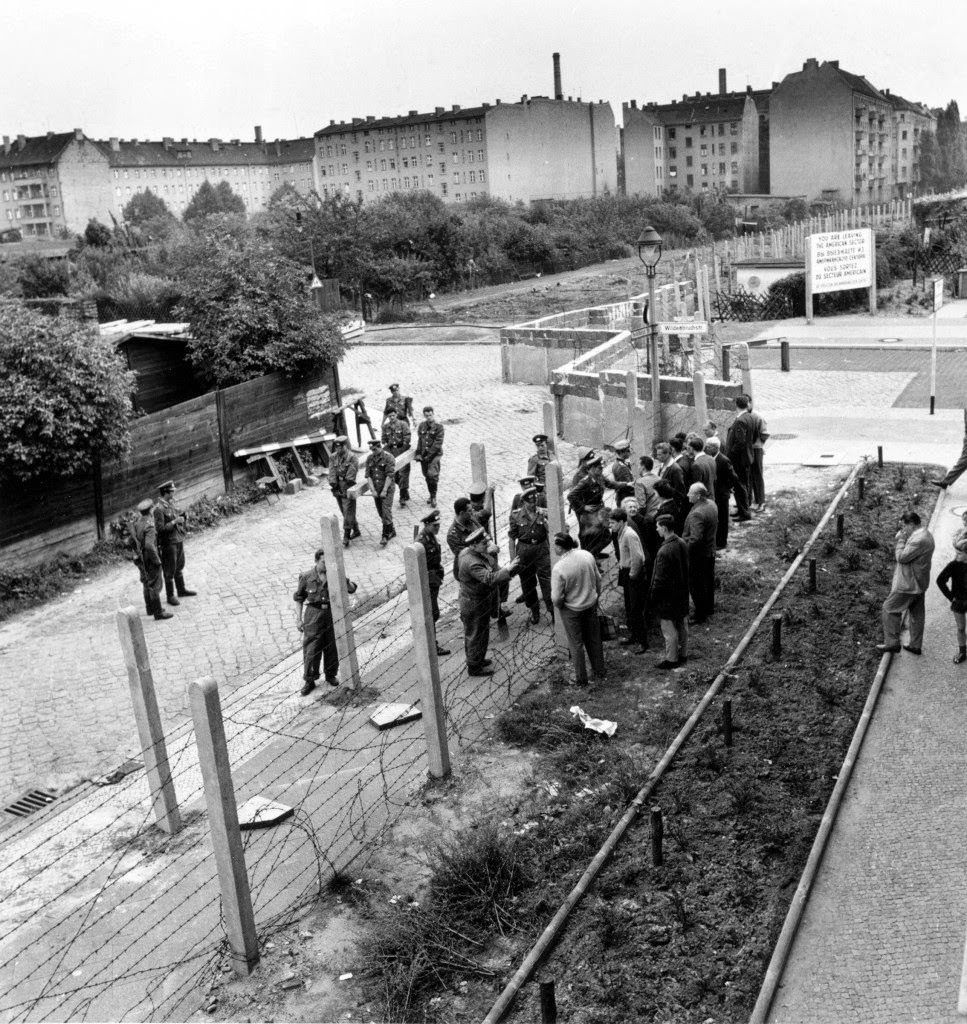
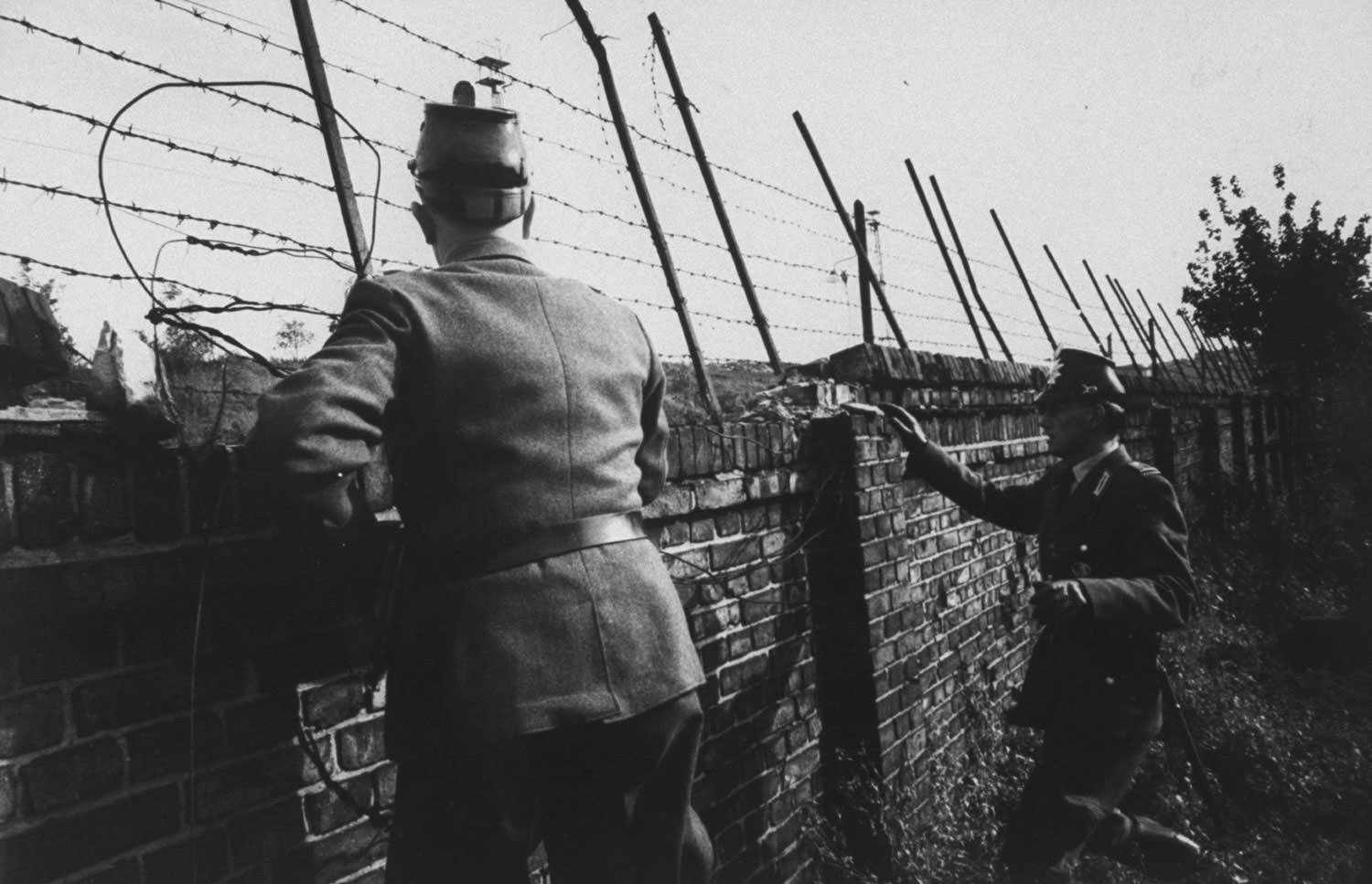
Tensions along the border ran high from the very first days. West Berliners and East Berlin police exchanged taunts across the wire. On both sides of the divide, soldiers and armed officers patrolled constantly. The Western Allies — American, British, and French forces — maintained their own guard presence along the boundary, watching the situation carefully.
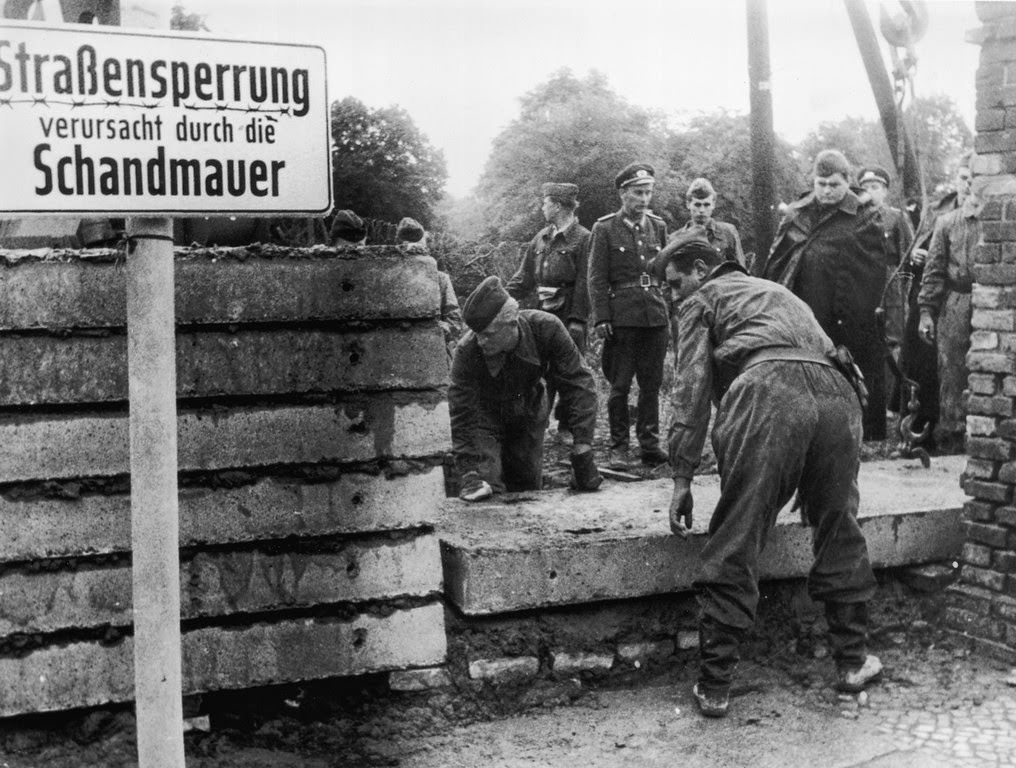
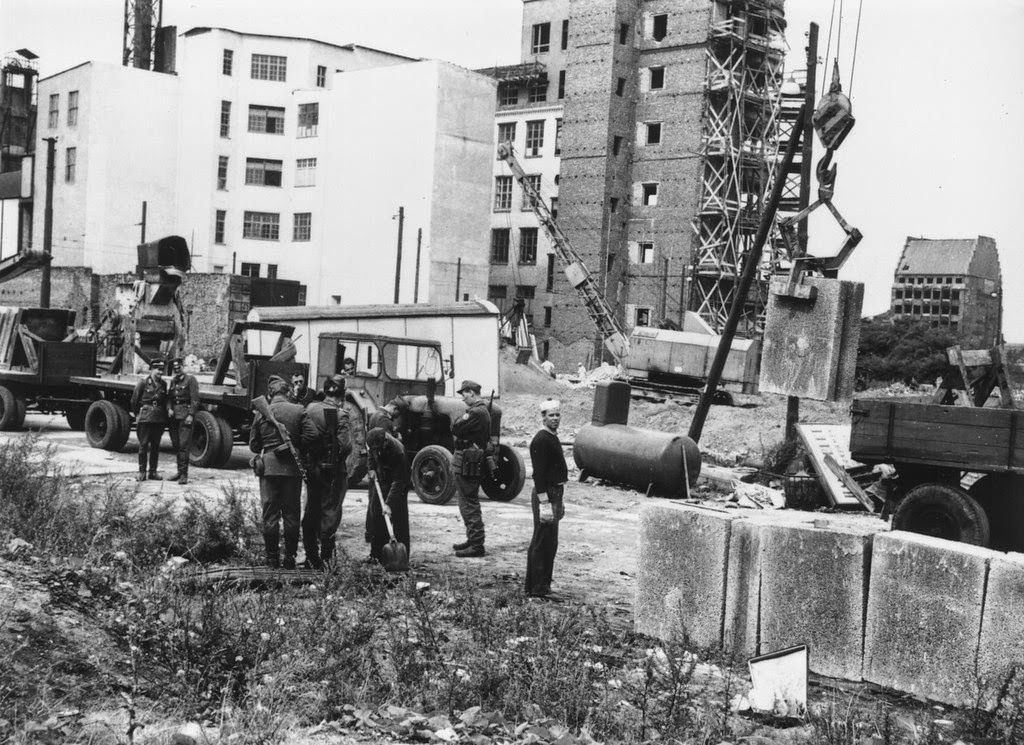
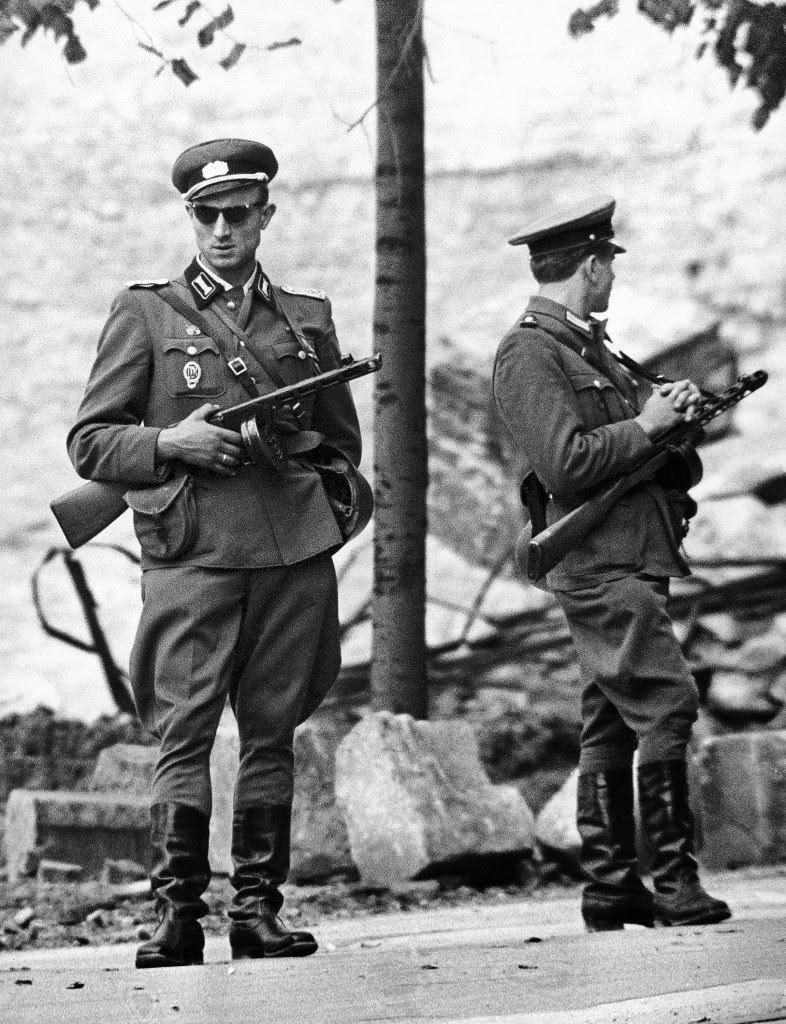
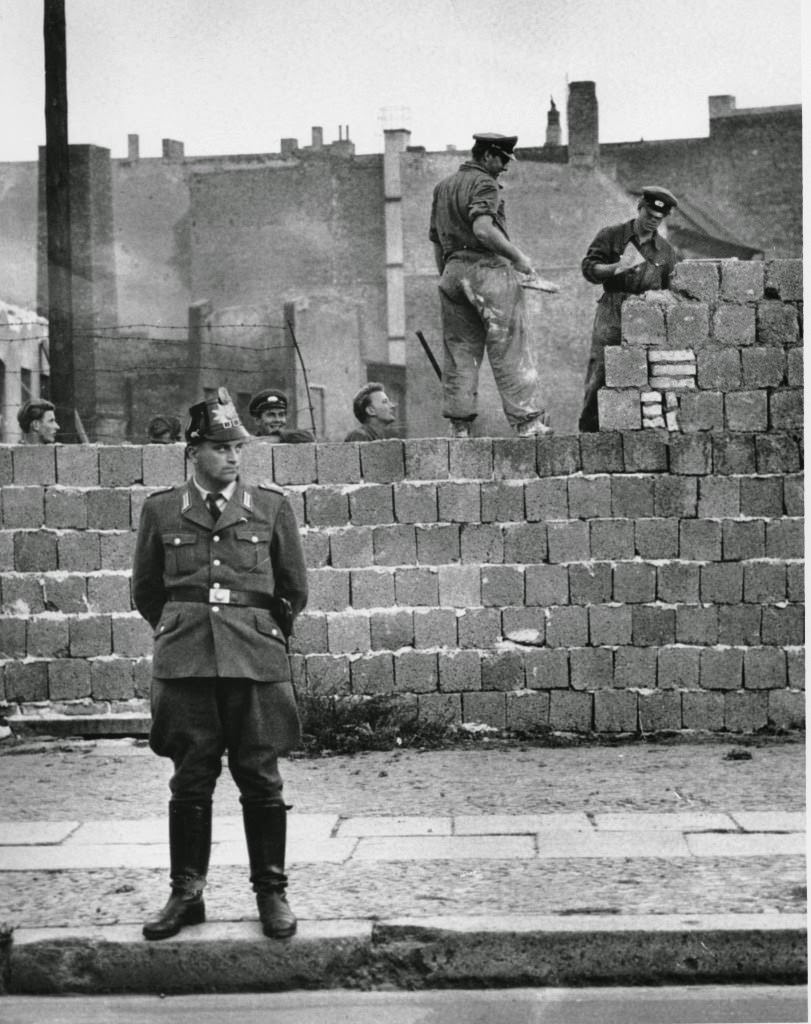
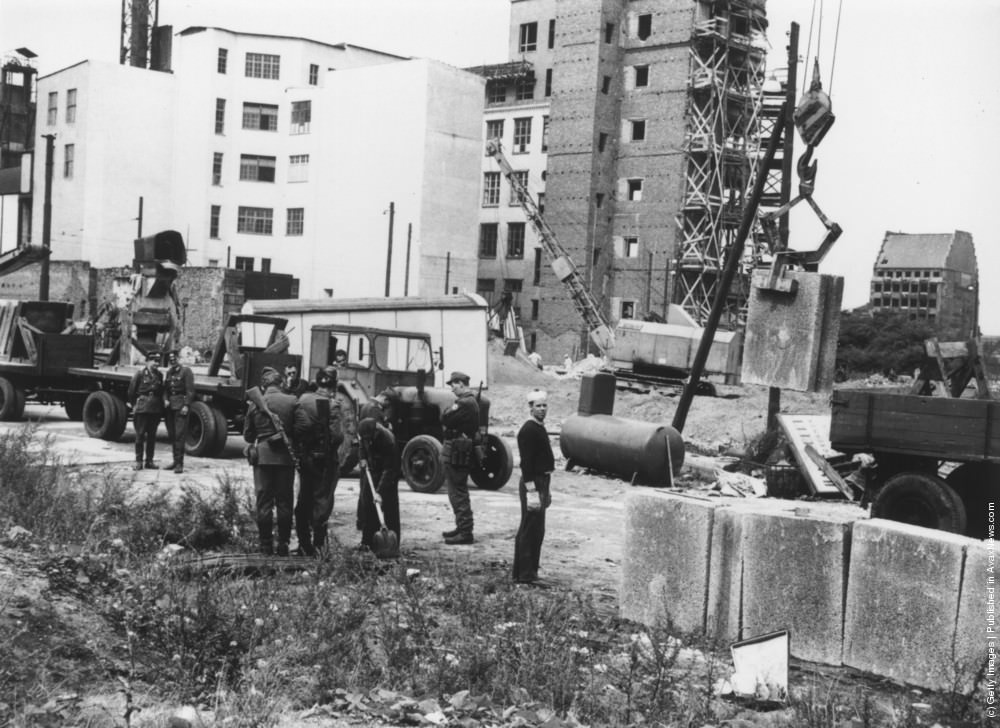
Soldiers building the Berlin Wall as instructed by the East German authorities, in order to strengthen the existing barriers dividing East and West Berlin, 1961.East German military personnel supervising construction of the Berlin Wall in August 1961.
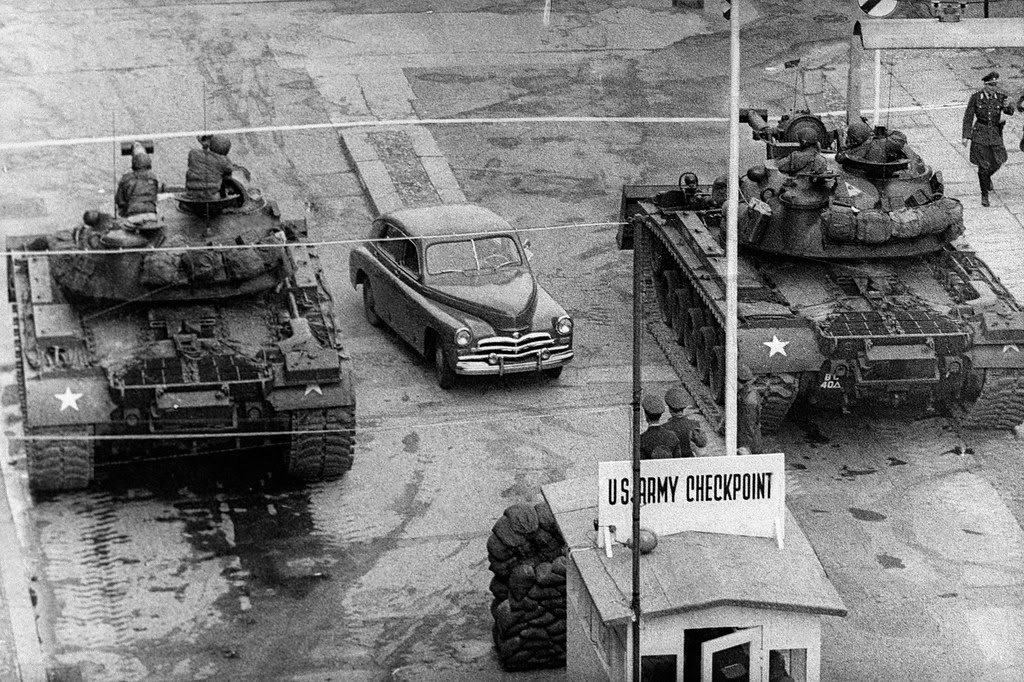
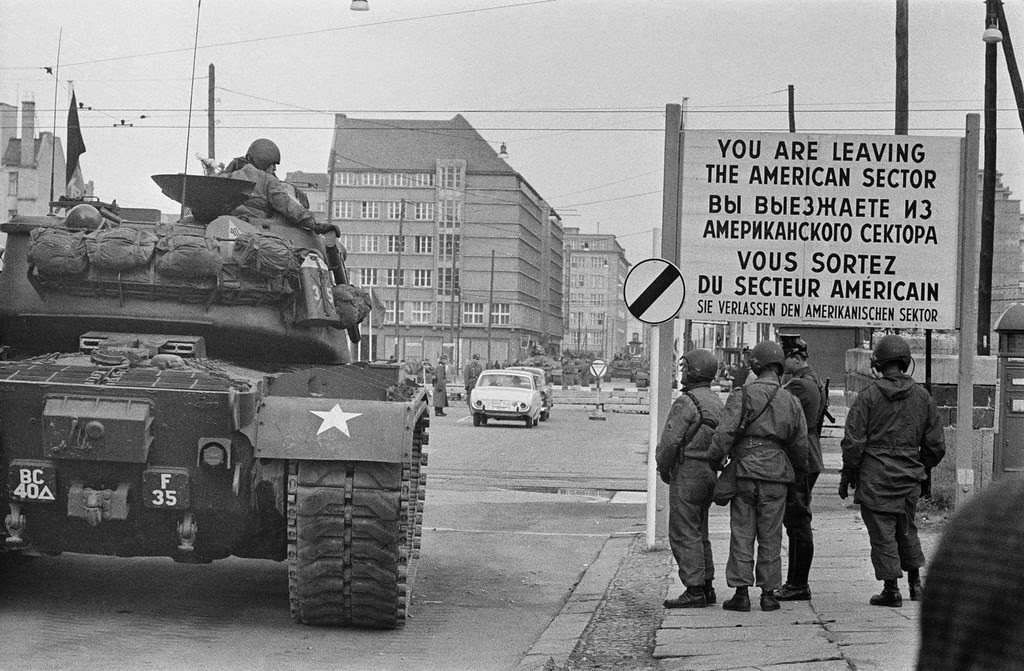
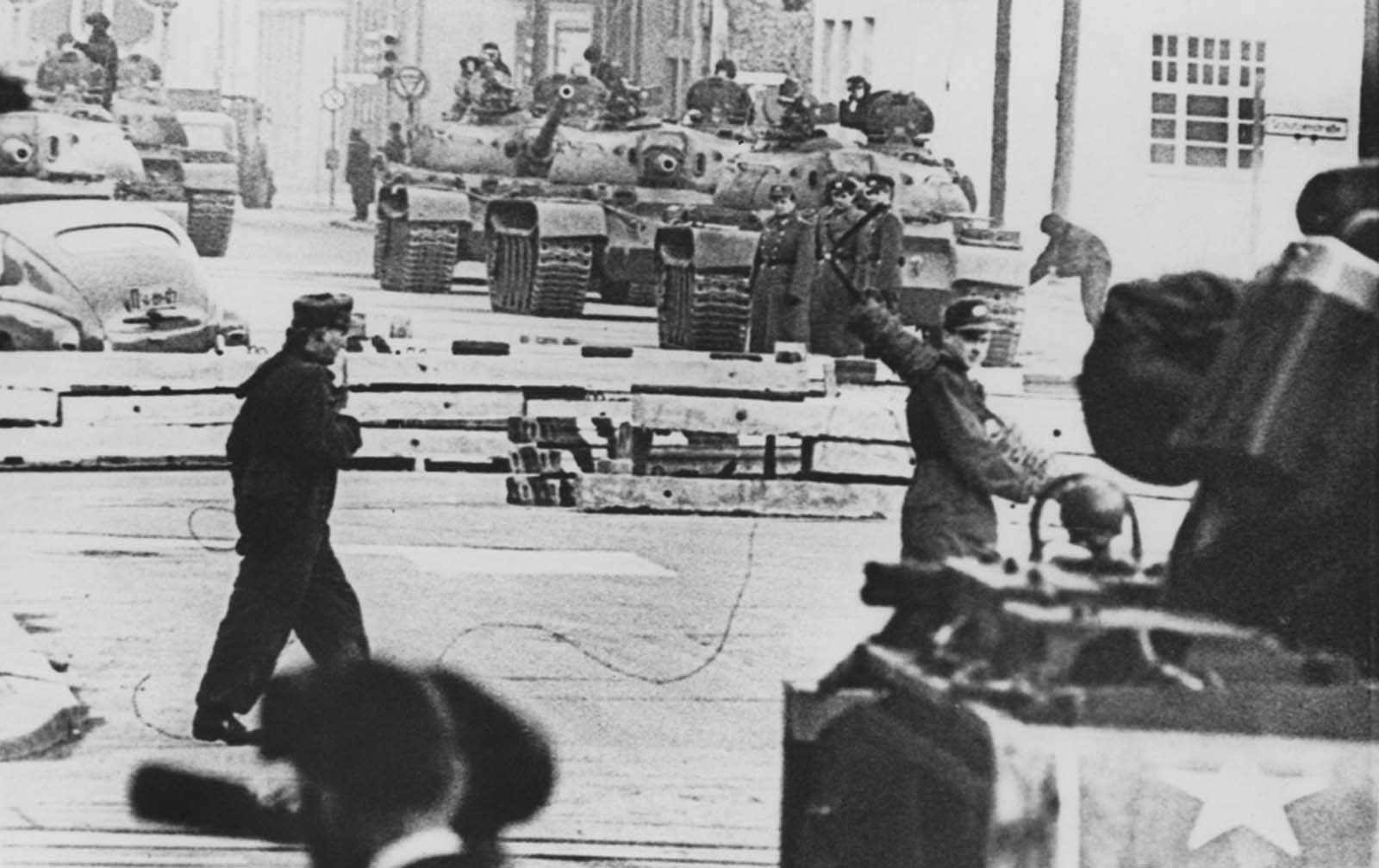
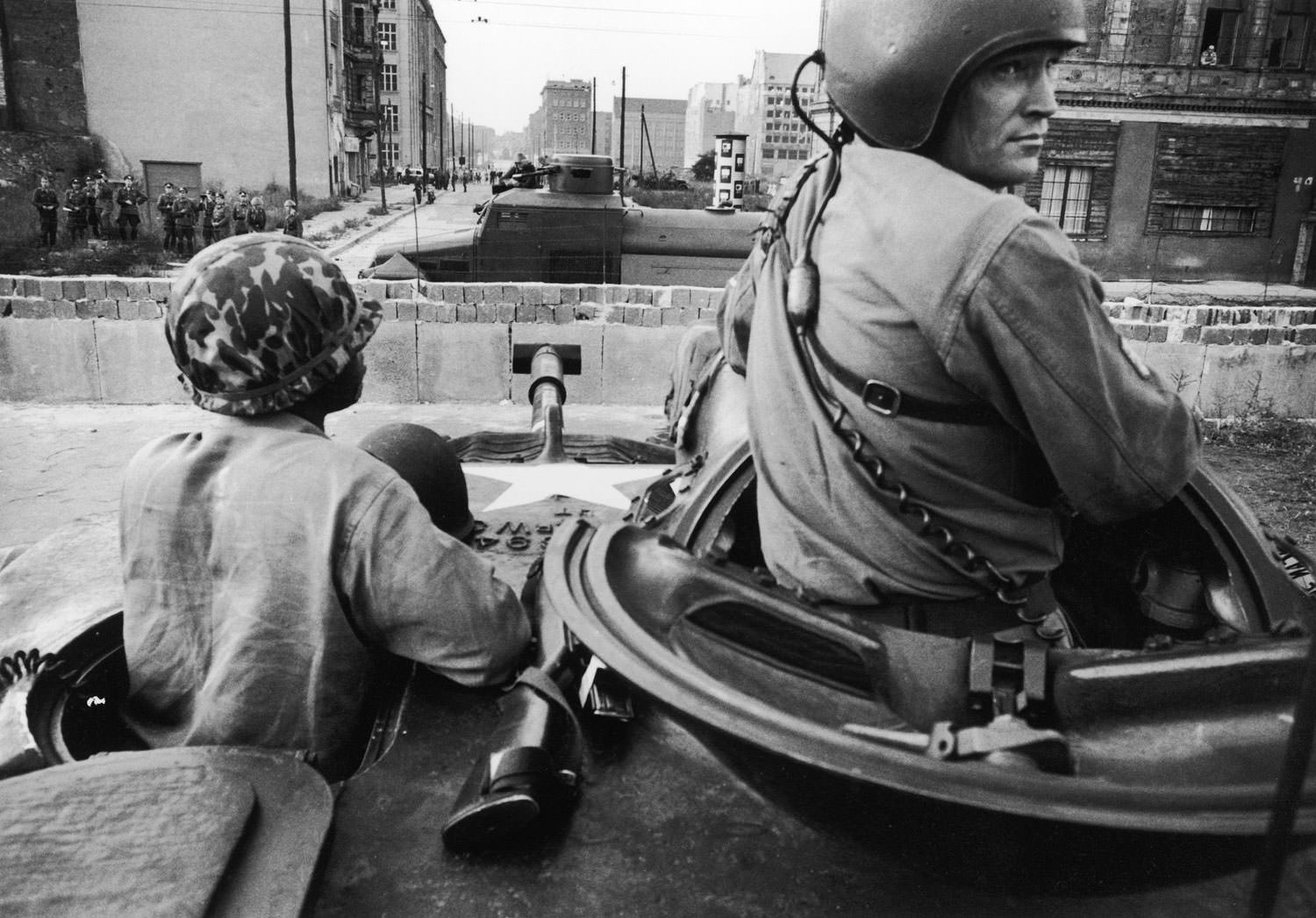
Checkpoint Charlie, located at the junction of Friedrichstrasse, Zimmerstrasse, and Mauerstrasse, became the most internationally recognized crossing point along the wall. It was the only passage in the wall designated for use by foreigners and Allied military personnel moving between the American and Soviet sectors. In October 1961, the checkpoint became the site of a direct military standoff when American and Soviet tanks positioned themselves on opposite sides of the crossing, facing each other for nearly 16 hours before both sides pulled back.
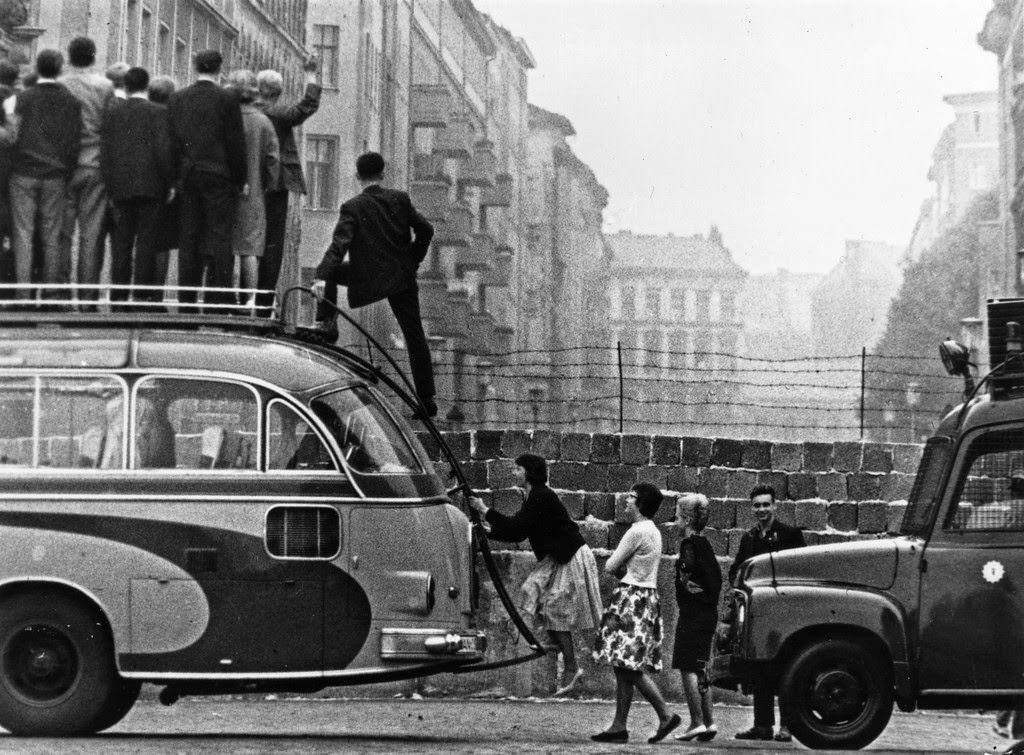
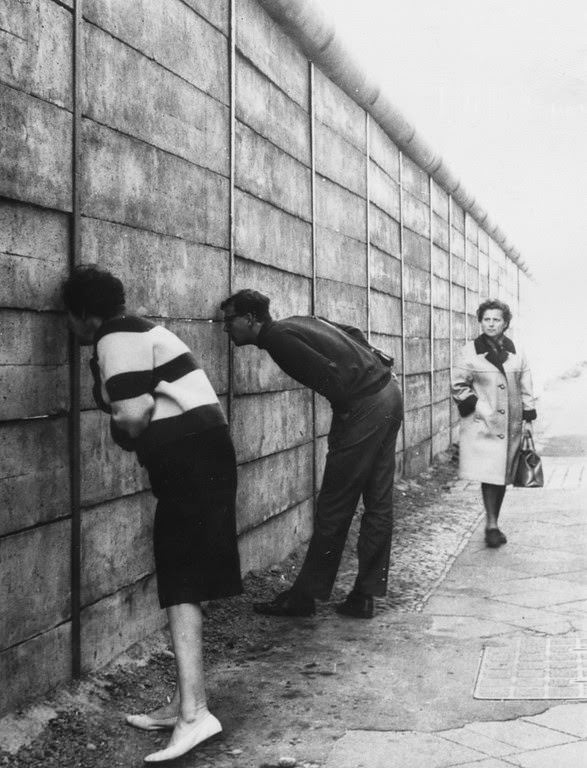
A car rides between US tanks, in October 1961, across the famous border of the American sector in Berlin, at Checkpoint Charlie crossing point, the only one in the Berlin Wall between EastSightseers climb onto a bus to look at the newly-built Berlin Wall.West Berliners peering through the Berlin Wall into the Eastern sector near Check Point Charlie.
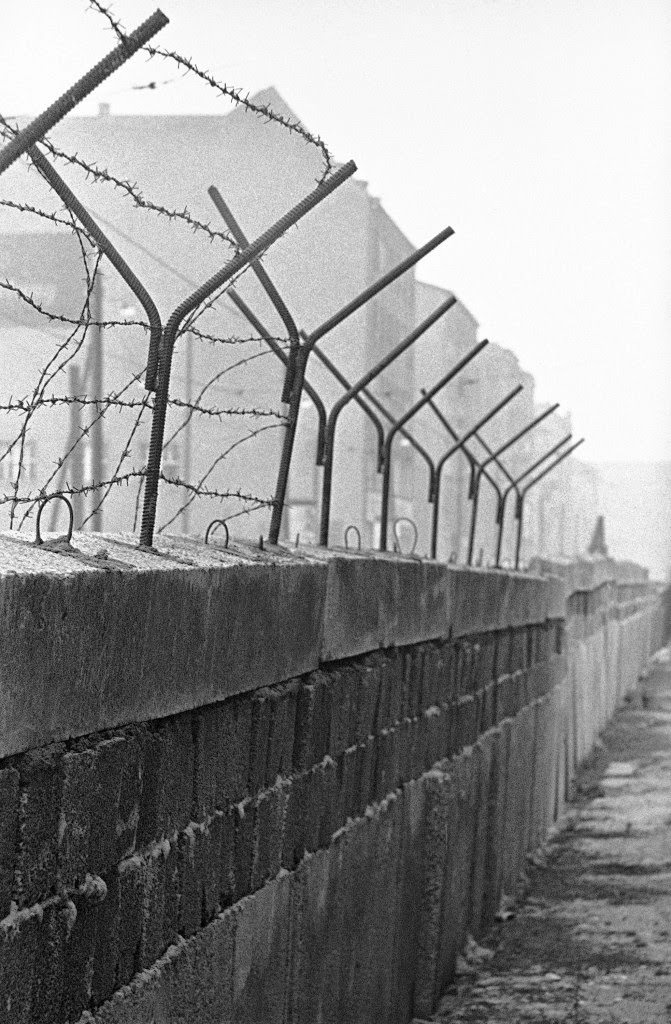
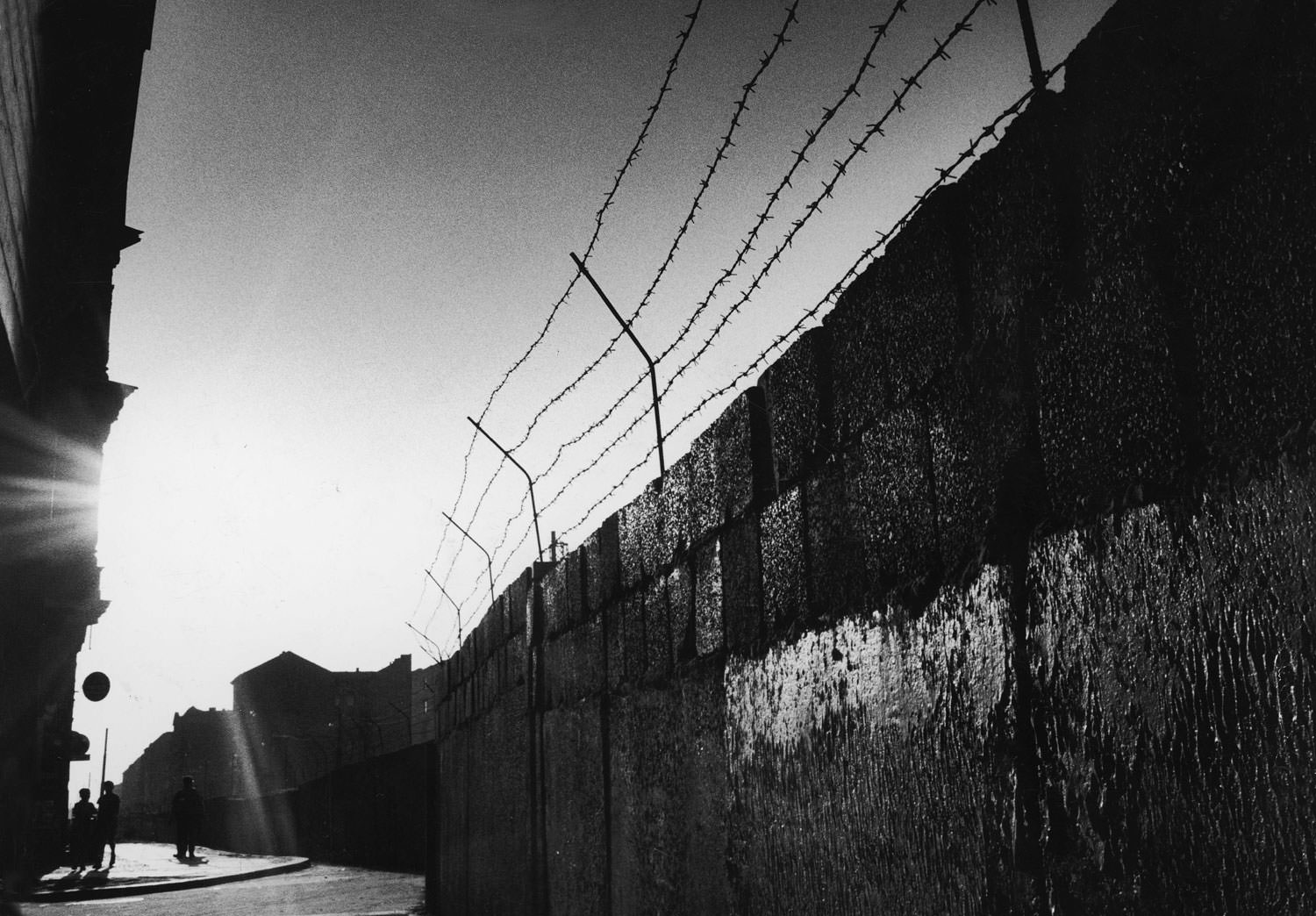
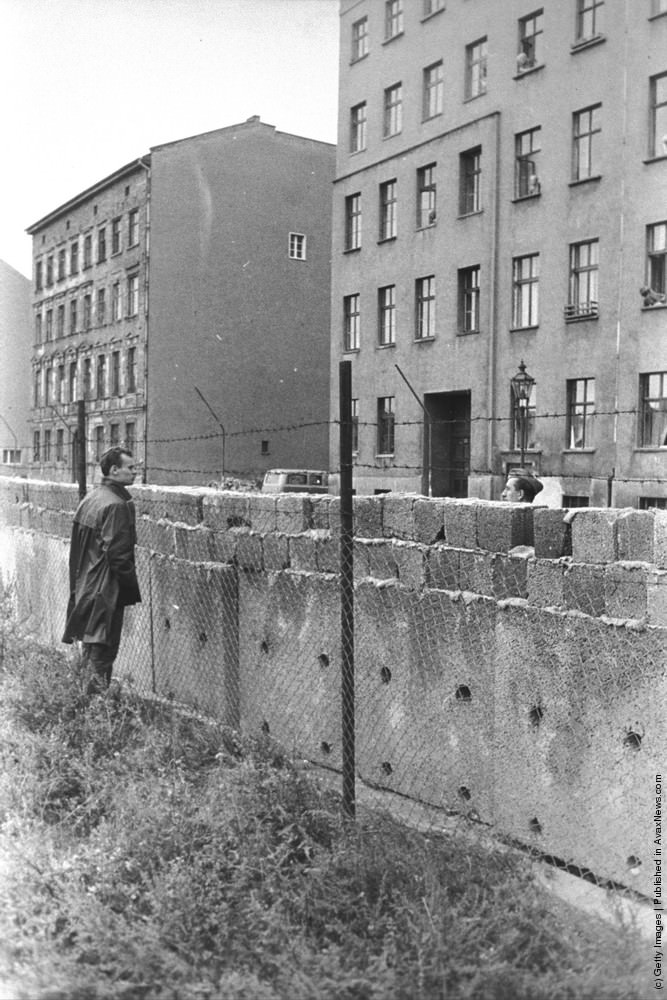
The wall itself went through multiple phases of construction. The initial barbed wire barrier gave way to a rough concrete block wall. That was then reinforced with taller sections, steel bars, and broken glass cemented along the top. Search lights were erected on the eastern side to illuminate the Death Strip at night. The GDR was not building a temporary barrier — they were engineering a permanent, lethal boundary.
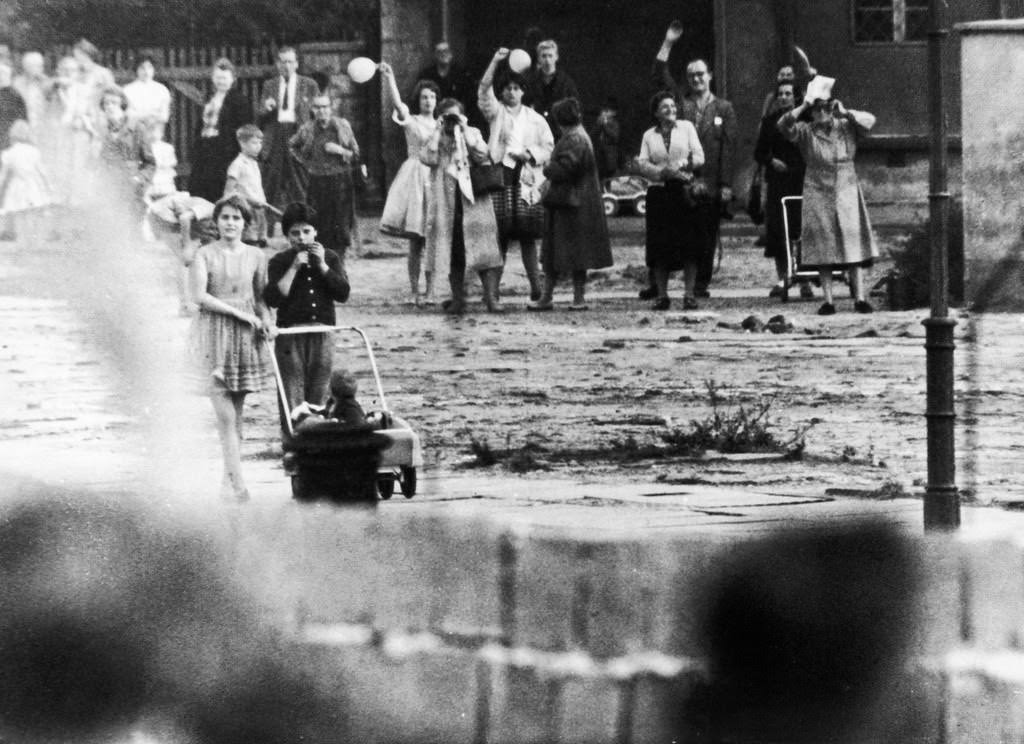
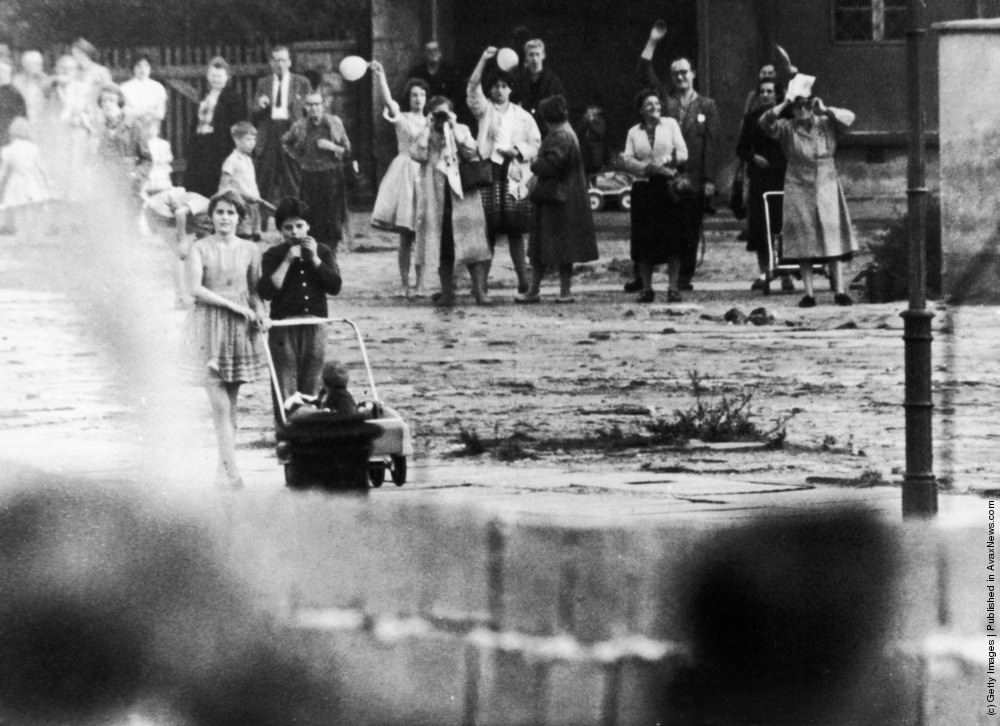
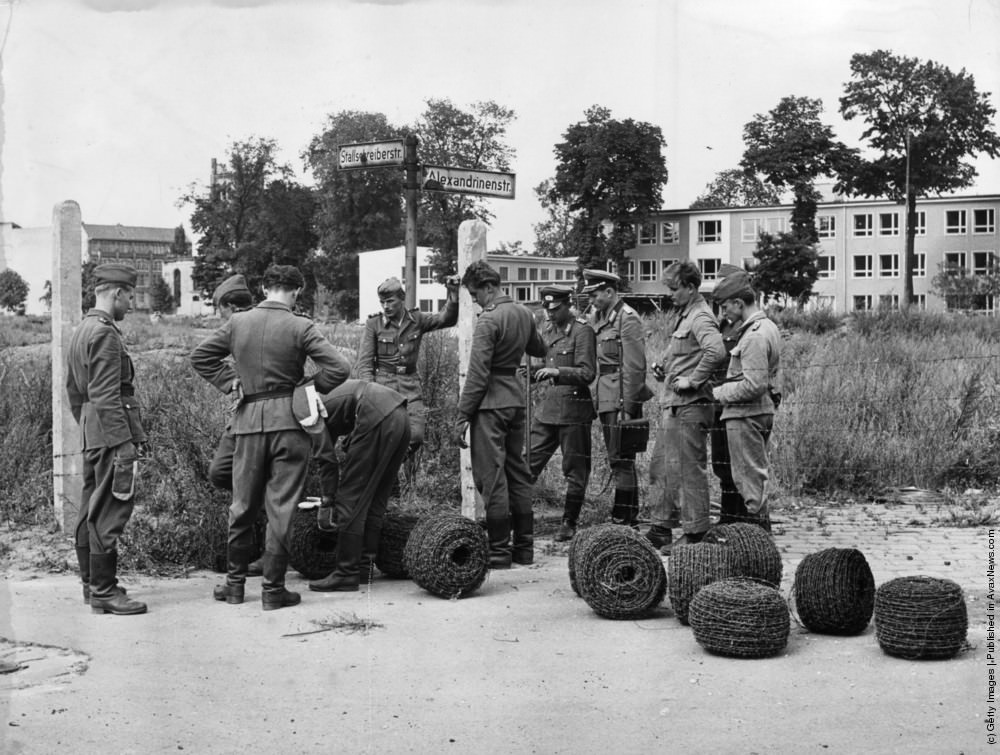
Families and friends, once neighbors, now stand divided and wave across to each other over the Berlin wall.American tanks and troops at Checkpoint Charlie, February 1961.Soldiers of the East German National People’s Army (NVA) erecting barbed wire fences to close off a street in preparation for the construction of the Berlin Wall, Berlin, Germany, 14th August 1961.
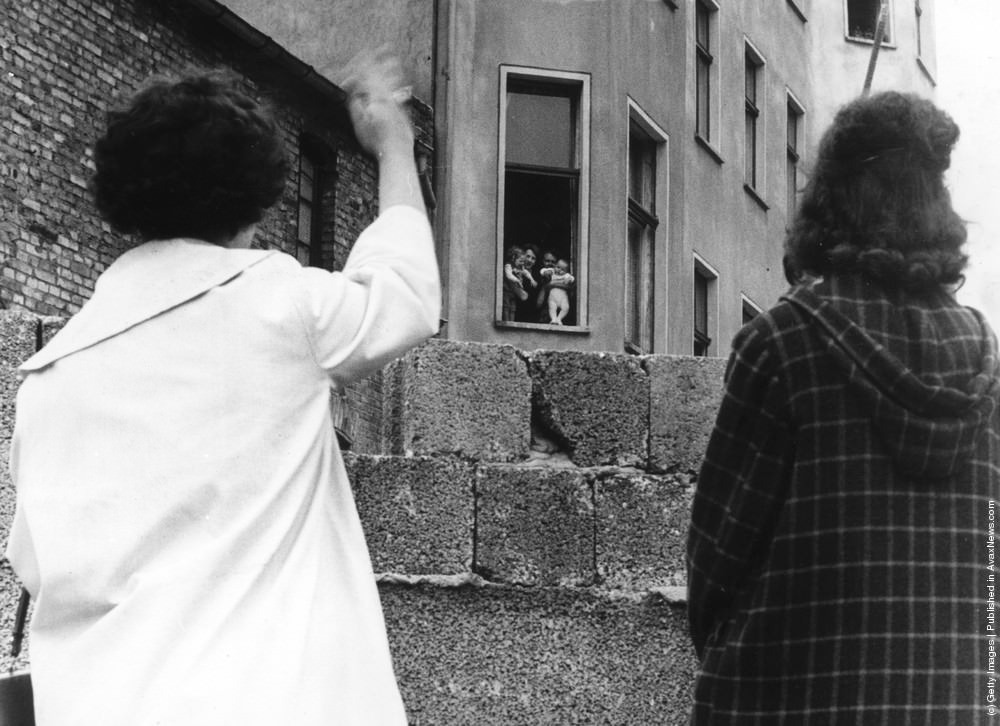
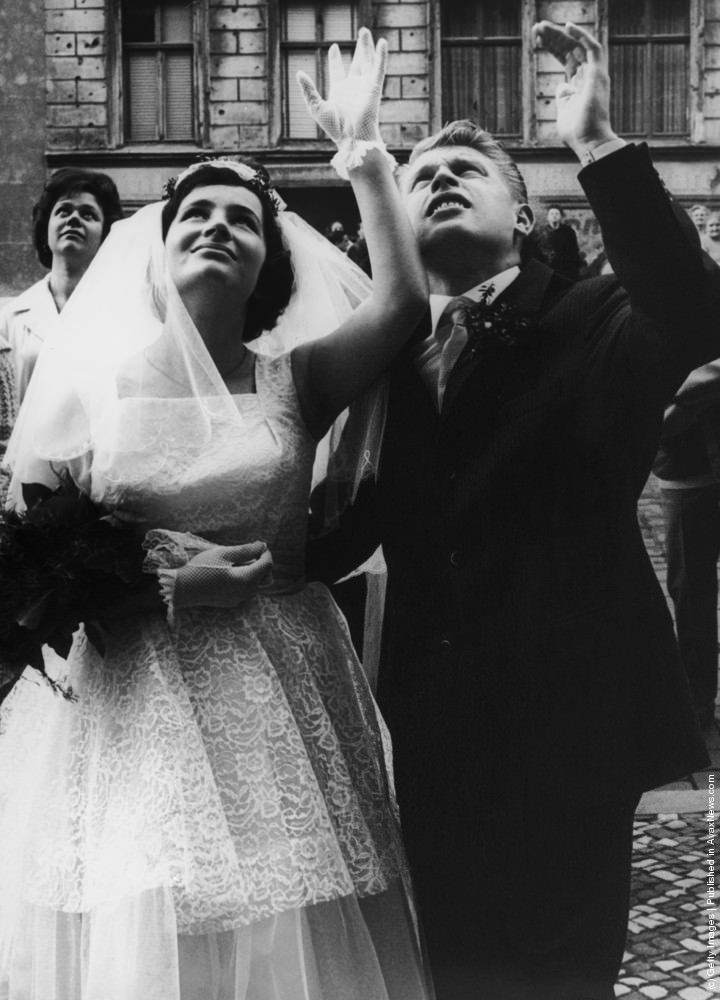
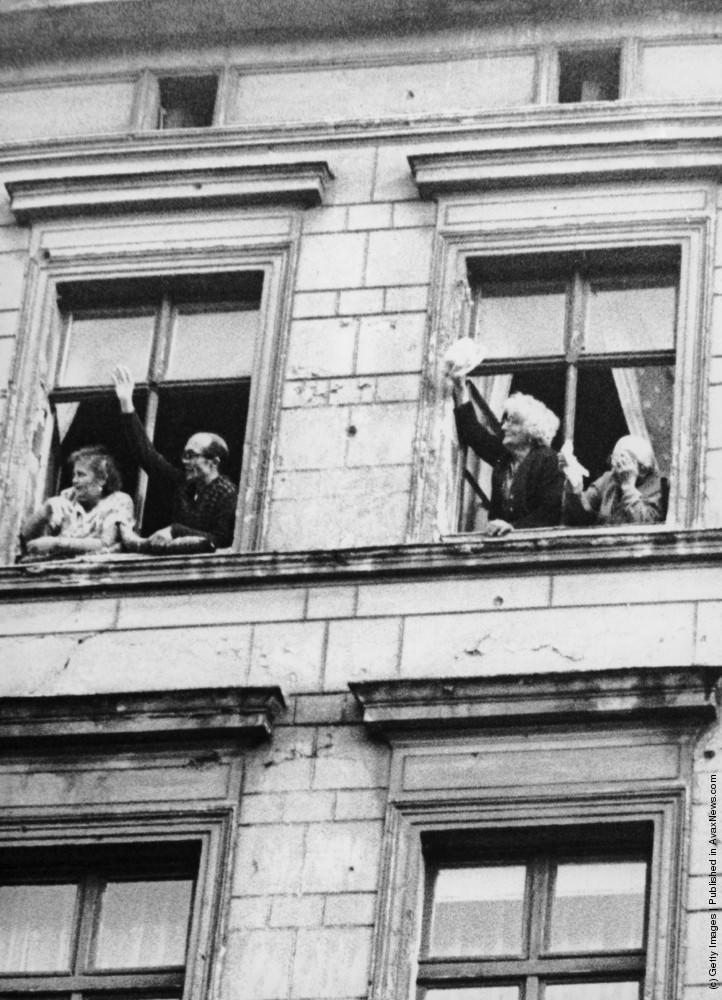
The human cost of the wall was immediate. Families that had been neighbors woke up one morning to find themselves in different countries. Wedding ceremonies were held without half the guest list because relatives were now trapped on the wrong side. On September 8, 1961, newlyweds Dieter and Monika Marotz of Bernauerstrasse stood on the western side of the street and waved to their relatives in the windows of homes just meters away — homes that were now in East Berlin. Those relatives could not cross to attend the ceremony.
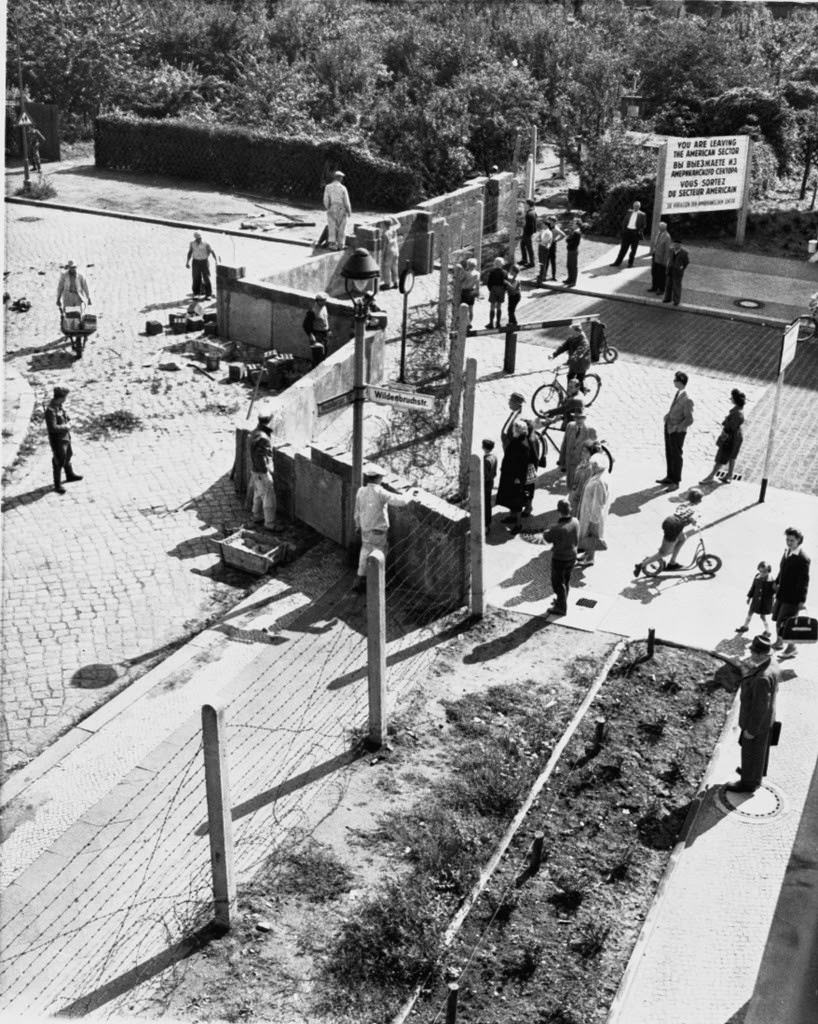
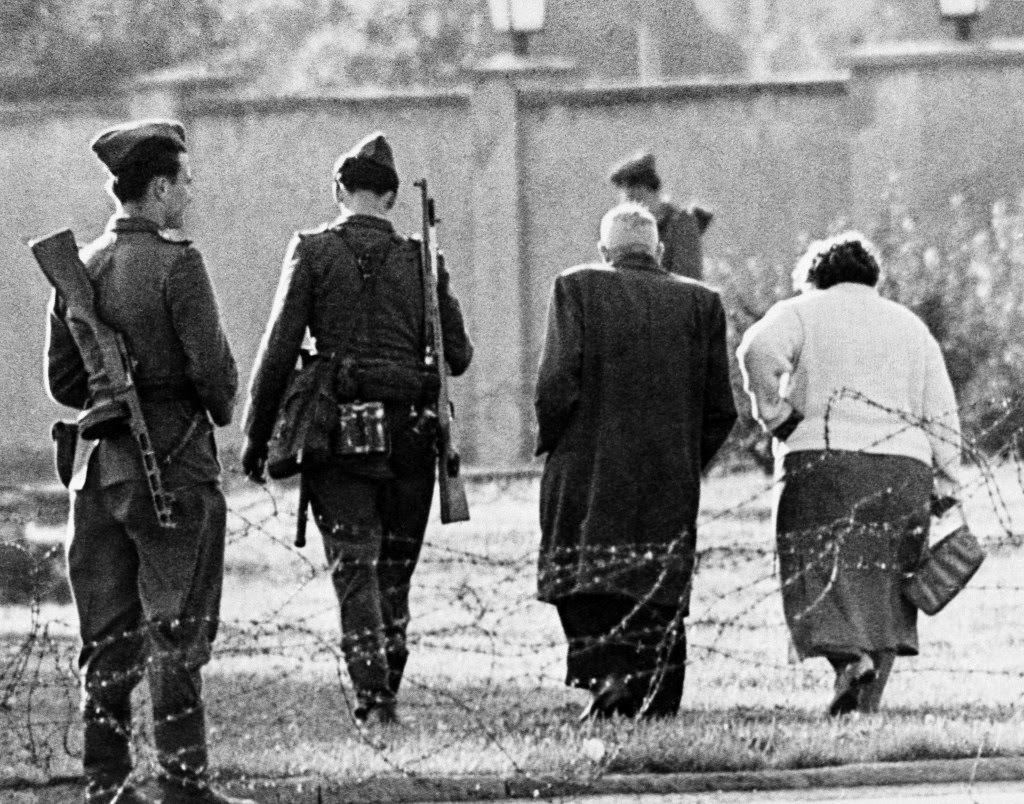
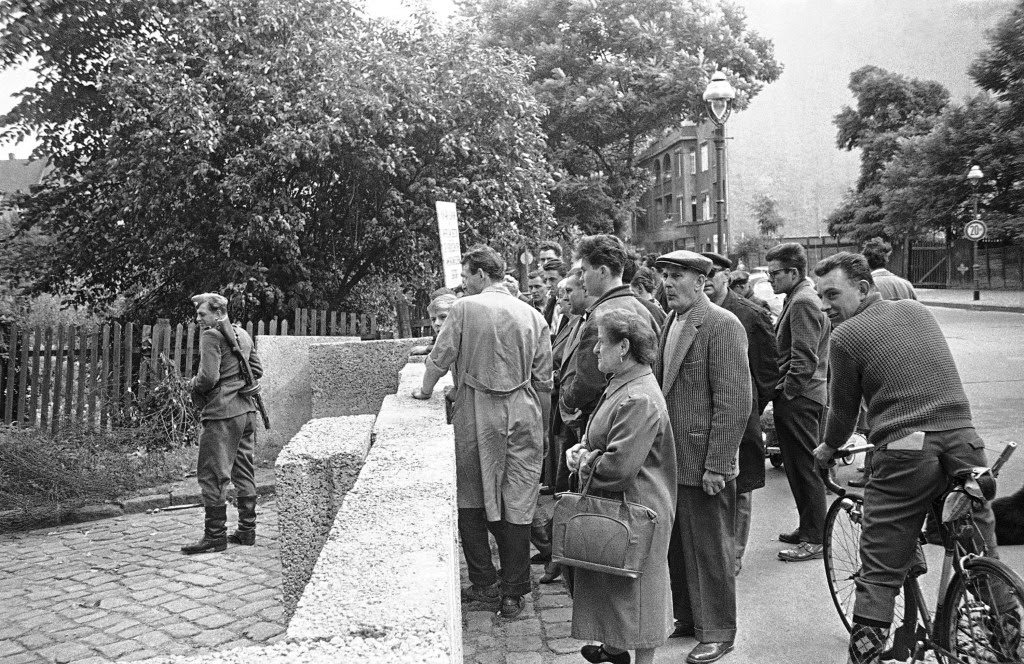
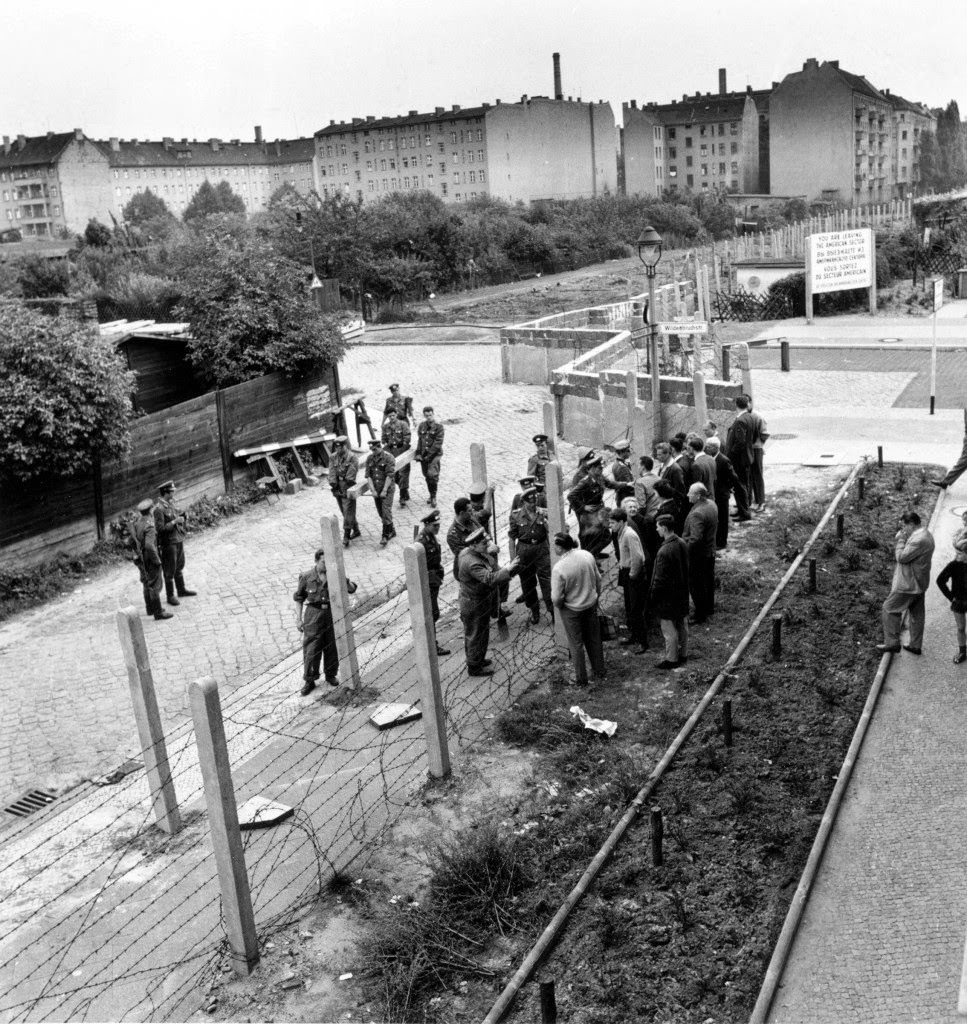
West Berliners at right watch East German construction workers erect a wall across Wildenbruchstrasse and Heidelbergerstrasse in West Berlin in August 1961.East German soldiers, left, set up barbed wire barricades August , 13, 1961.An East German couple is turned away from the border, blocked by East German soldiers and barbed wire, after trying to cross into West Berlin, Aug. 13, 1961.
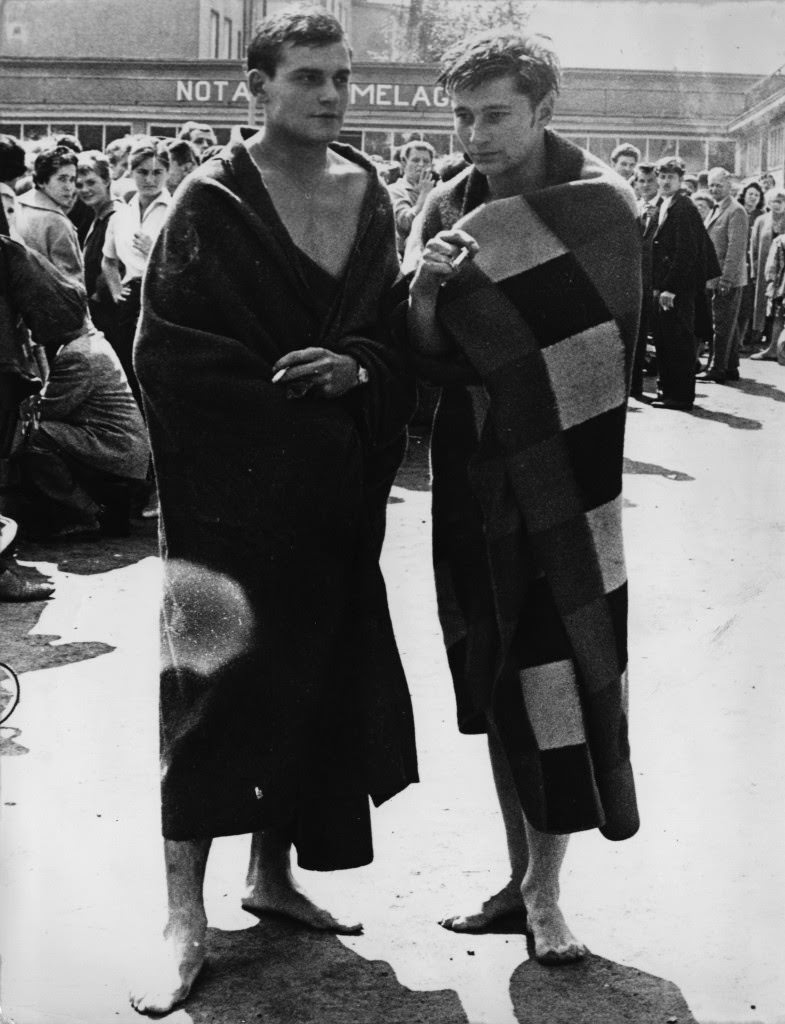
Even on the first day of the wall’s construction, some people managed to cross. Two men made it across the Spree River by swimming, arriving at the Marienfelde refugee camp in West Berlin wearing nothing but their swimming trunks. They were wrapped in blankets at the camp, cigarettes in hand. Their escape was one of the last easy ones. As the wall hardened and guard patrols intensified, crossing became far more dangerous.
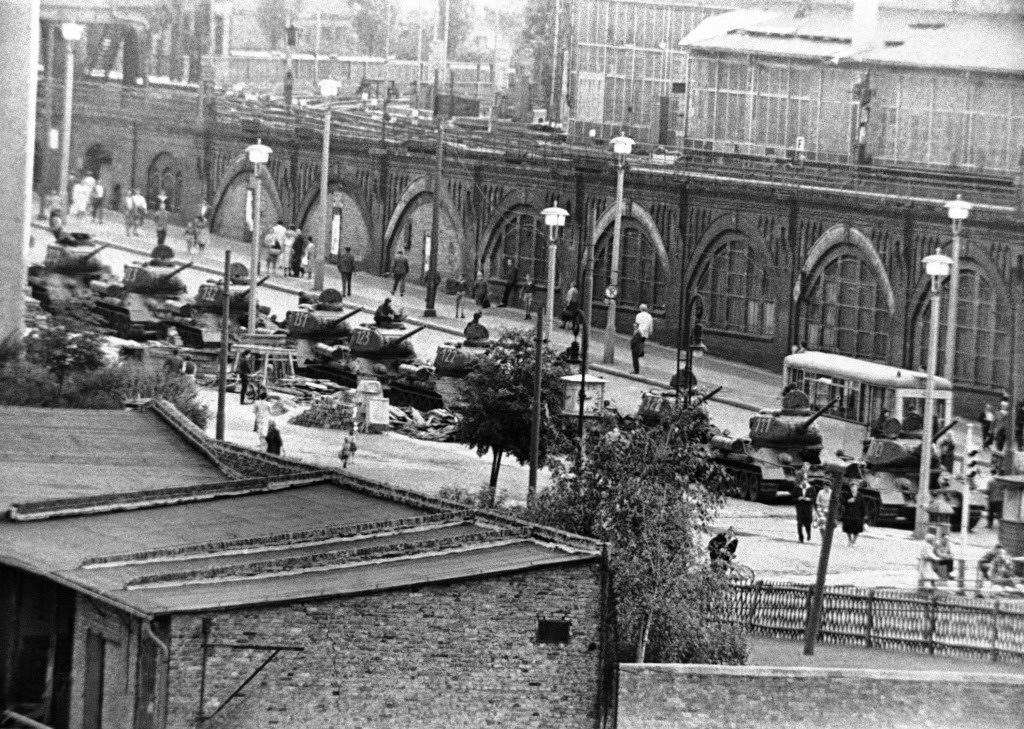
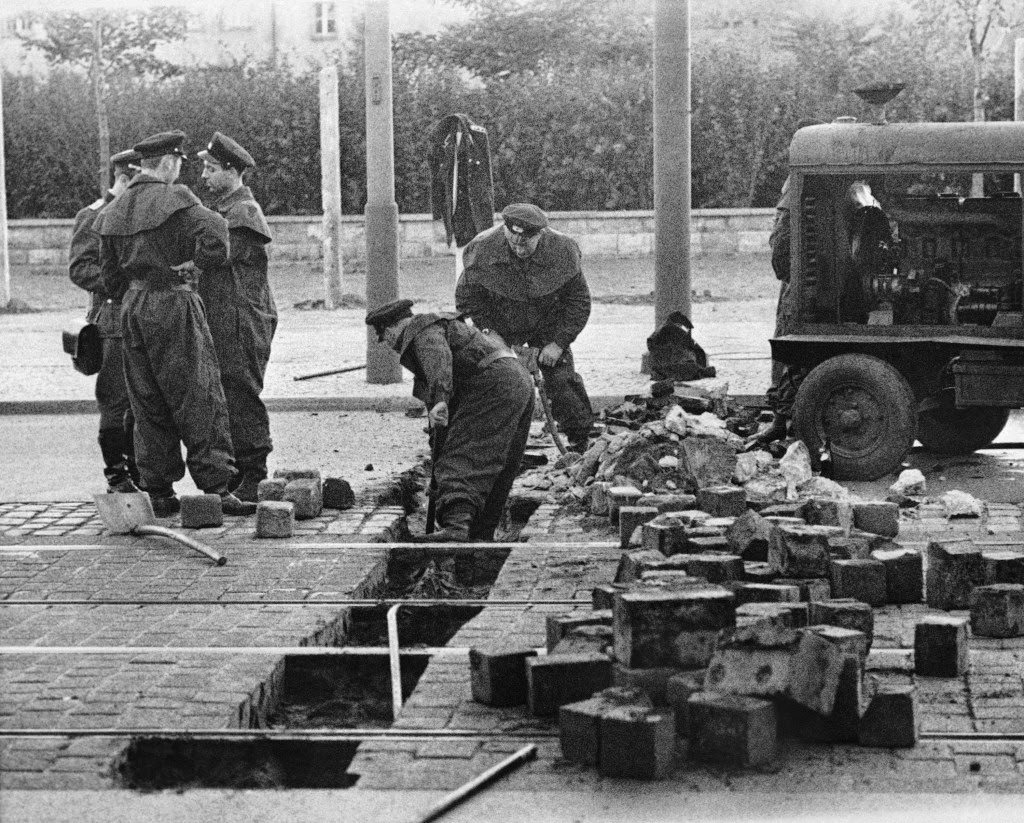
East German tanks are lined up at Warschauer Bridge in Berlin, Germany on August 13, 1961.Members of the East German military remove paving blocks on Friedrich Strasse in East Berlin August 13, 1961.People who managed to flee across the high security border.
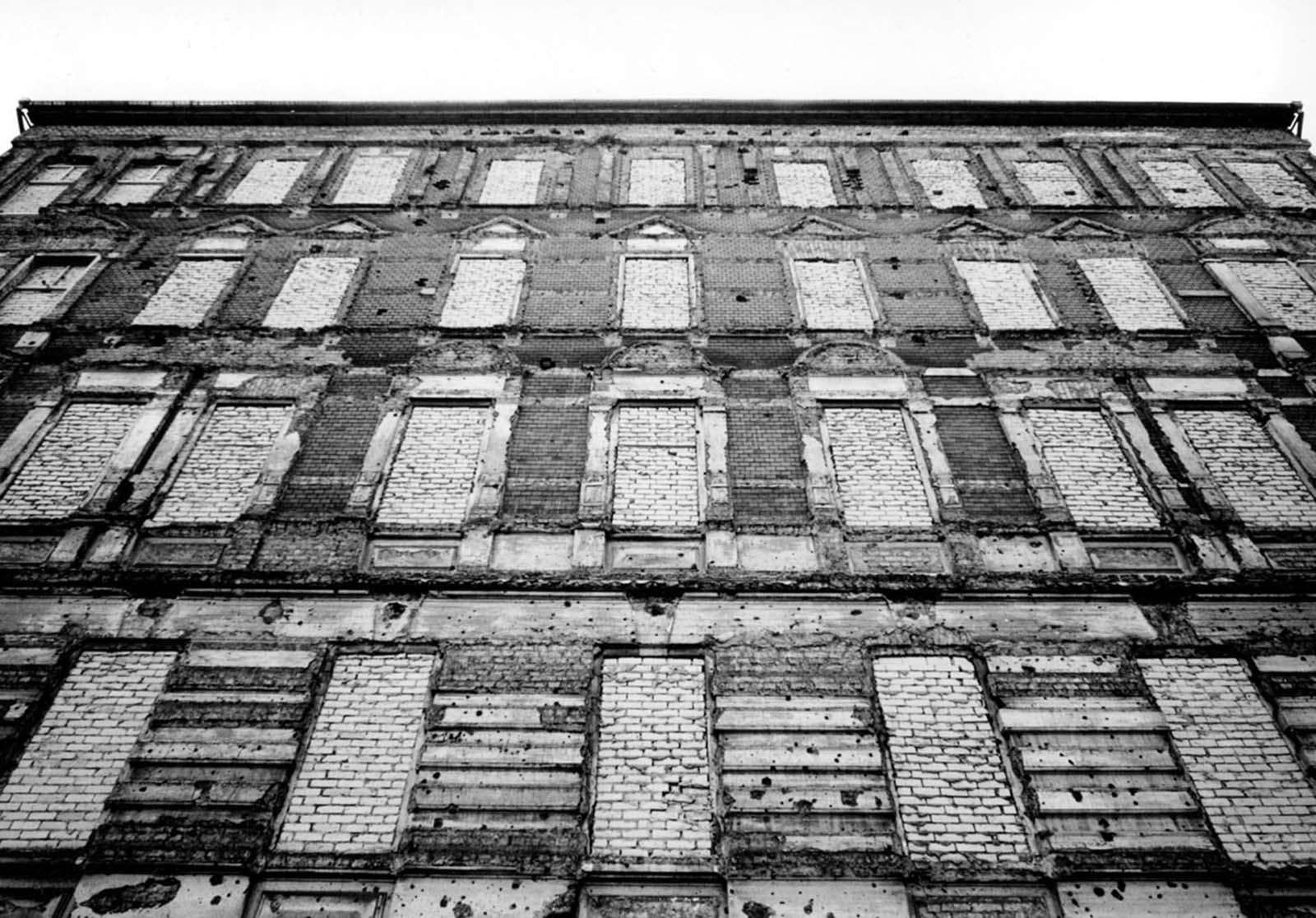
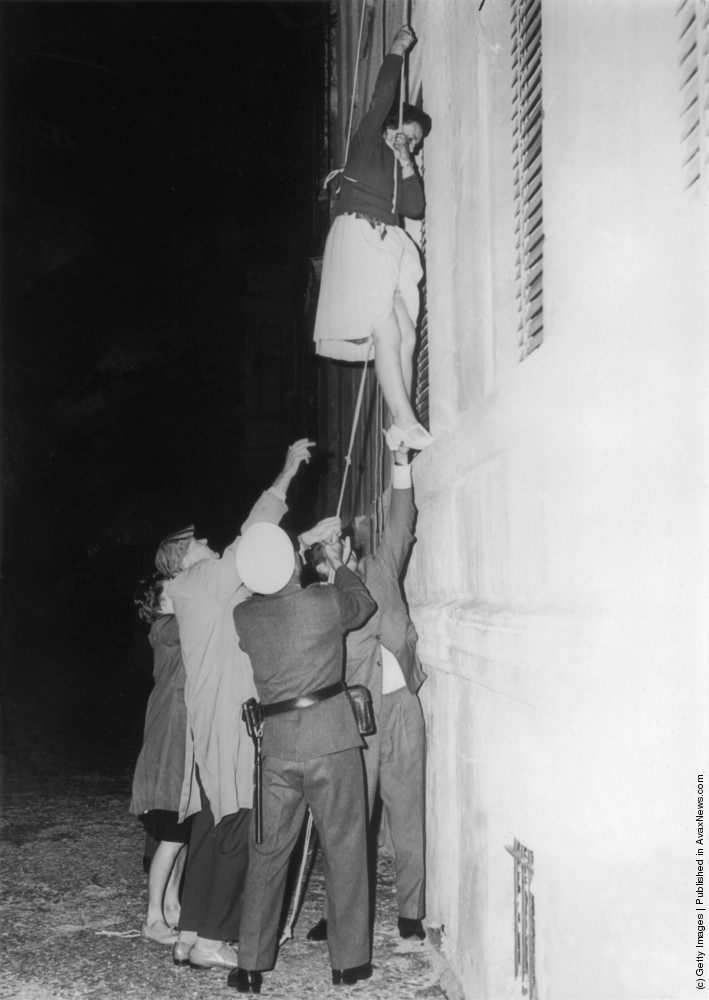
Buildings that stood directly on the border were absorbed into the wall itself. The GDR bricked over their windows and doors, turning entire apartment blocks into sealed extensions of the barrier. Some residents lowered themselves from upper-floor windows using ropes to escape into West Berlin before those windows were sealed. On September 10, 1961, a woman was photographed being lowered down the exterior of a building on Bernauer Strasse by rope, making it to the western side before East German authorities could stop her.
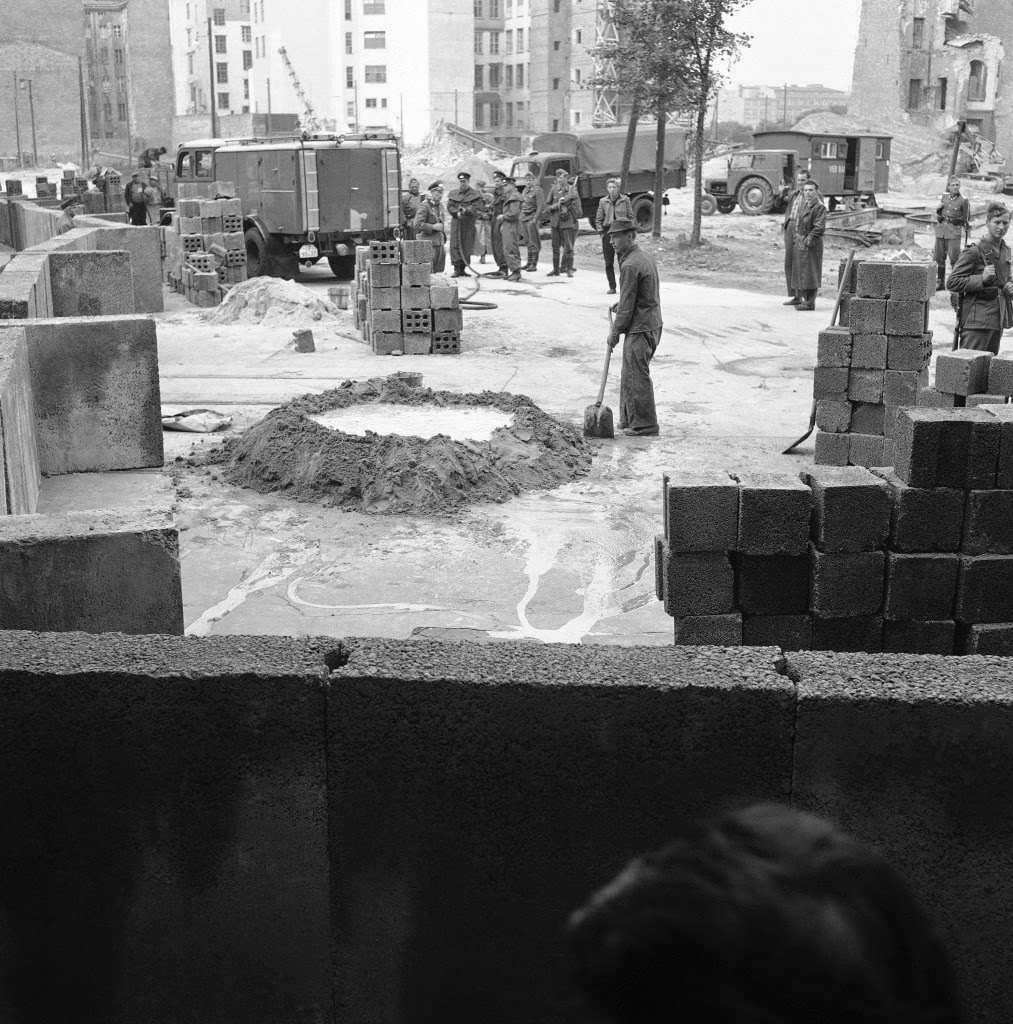
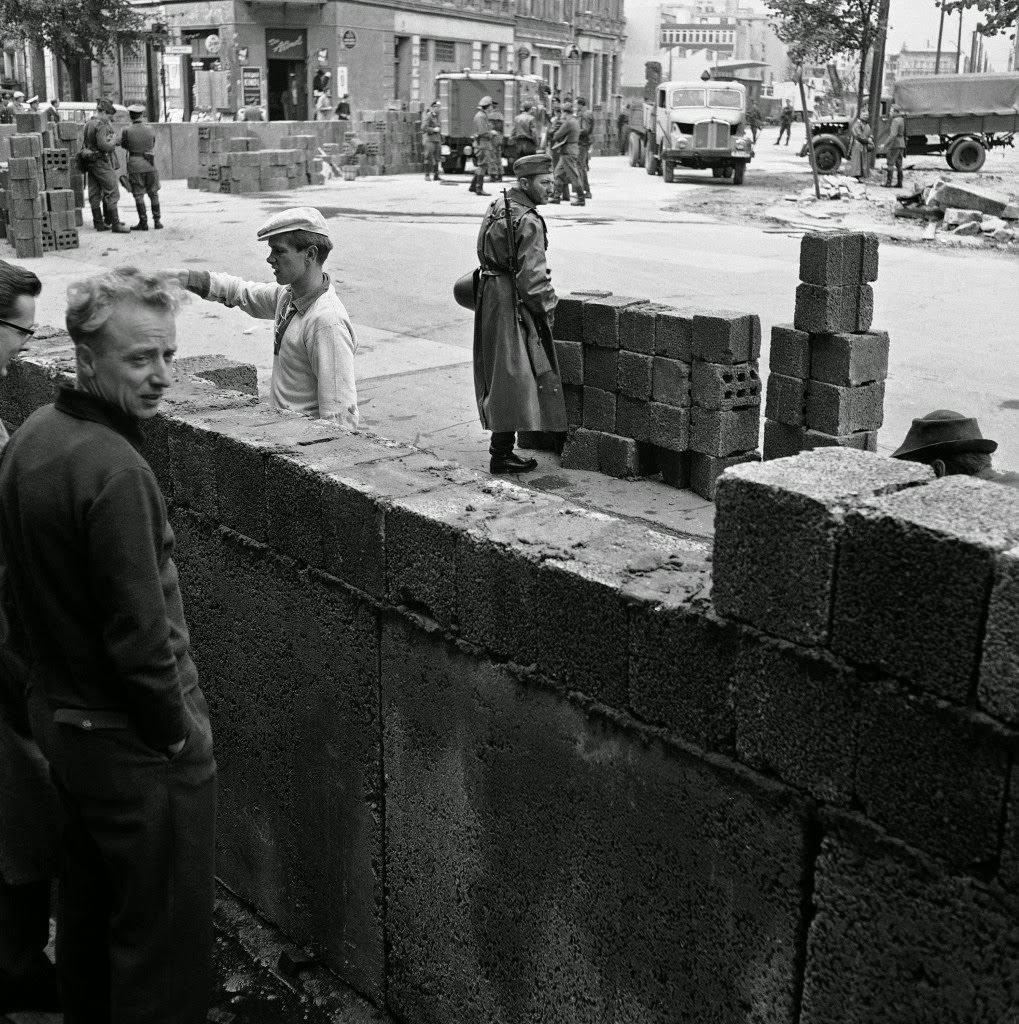
Workers protected by East German police mix concrete to build walls along the sector dividing East and West Berlin August 18, 1961.East German build cinder block wall in East Berlin as the divided city continued in stage of unrest August 18, 1961.West Berliners at right gather at barrier between east and West Berlin August 18, 1961, watching movements of East German Police.East German National People’s Army soldiers man an unfinished part of the Berlin Wall on August 18, 1961 at the town’s sector division in Berlin, Germany.
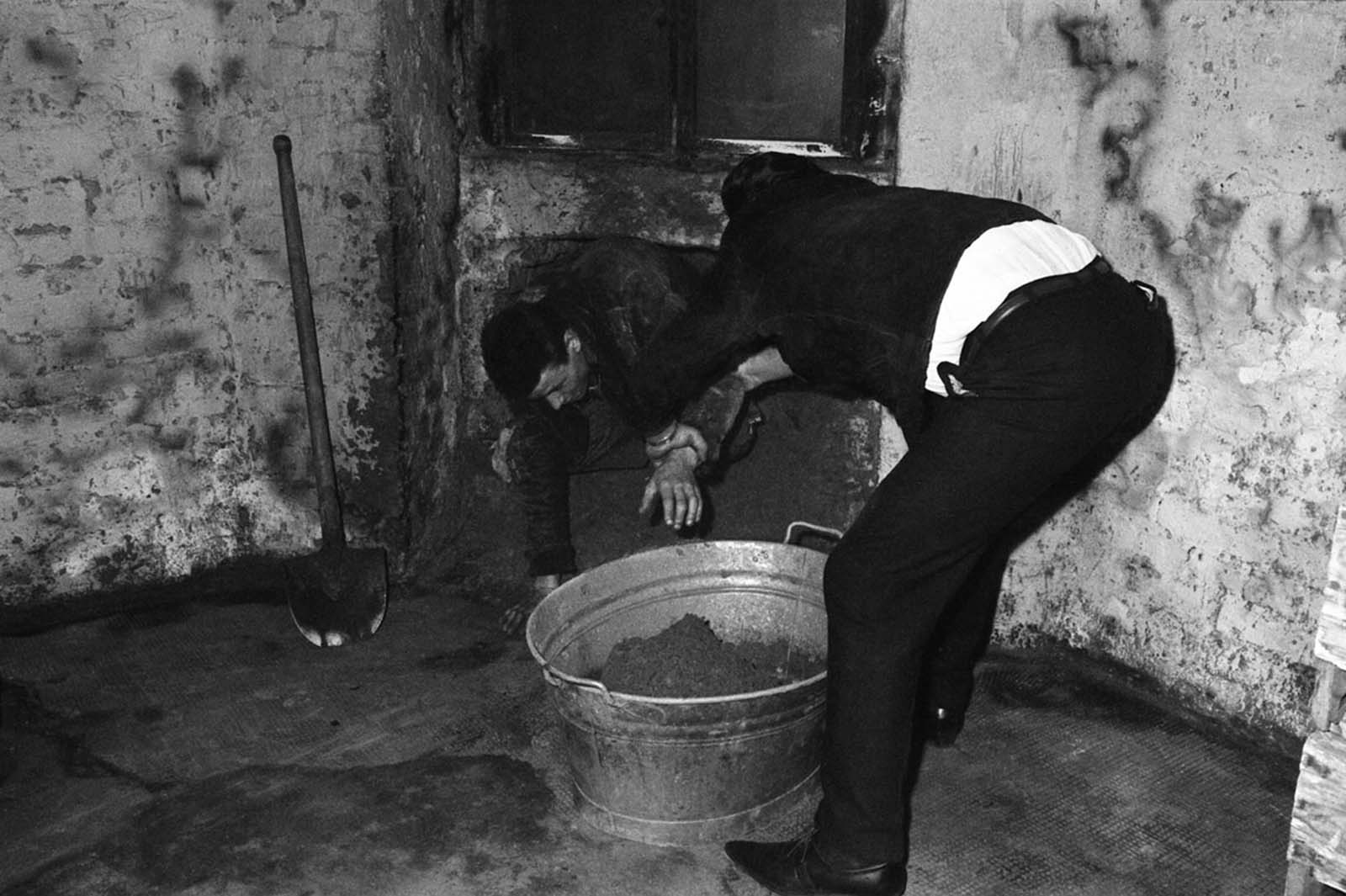
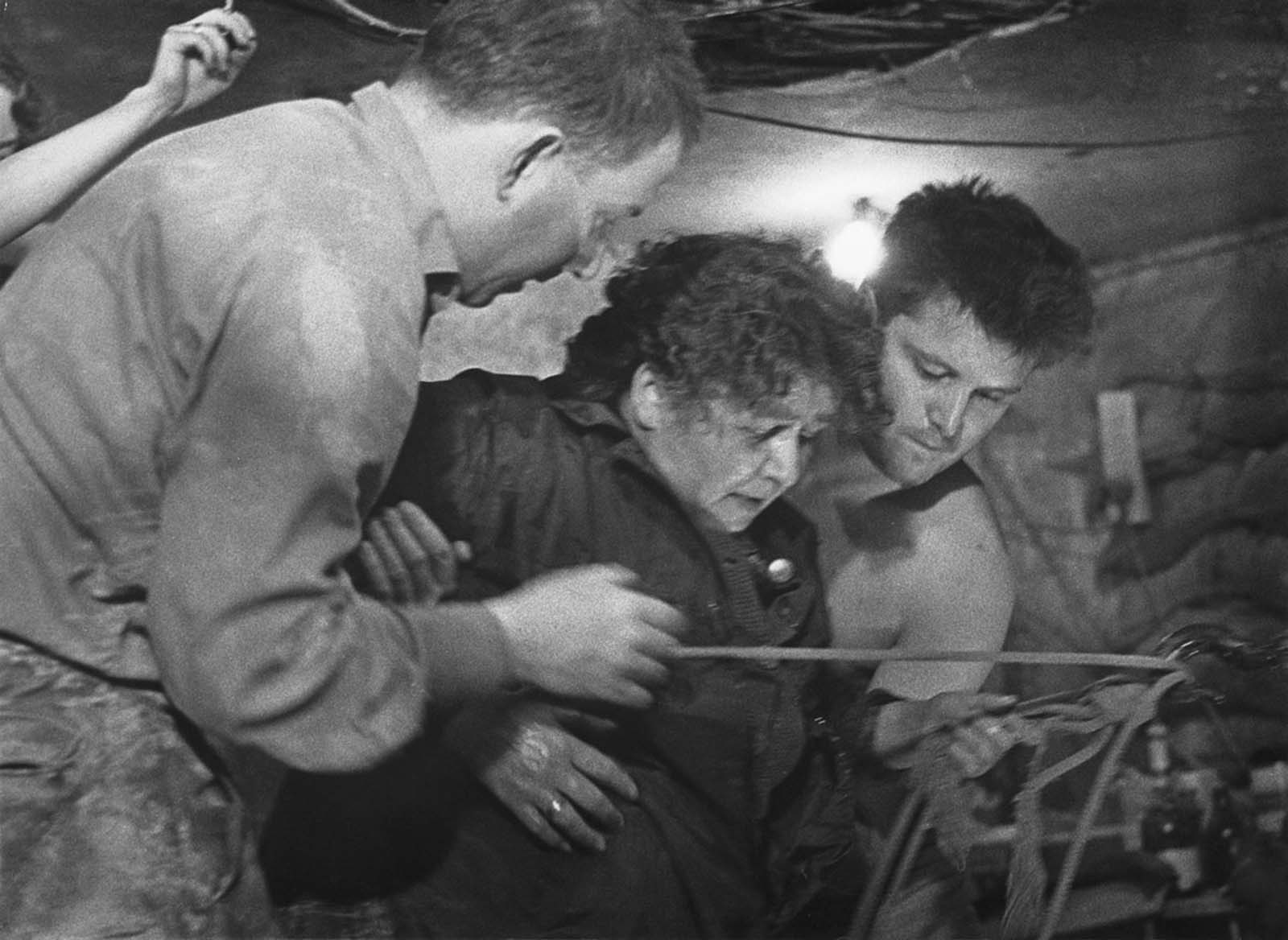
People attempted escapes in creative and desperate ways. Some dug tunnels beneath the wall. In June 1962, six West Berliners dug a tunnel just 20 inches wide under a border street into East Berlin. Sixteen East Berliners — relatives of the diggers — crawled through, dragging an infant in a washbasin. The tunnel was discovered by East German authorities shortly after the group reached the West. Two years later, a group of 20 students led by Joachim Neumann dug a longer tunnel from a disused bakery on Bernauer Strasse, 145 meters into East Berlin. On October 3 and 4, 1964, 57 East Berliners escaped through what became known as Tunnel 57. Even a 75-year-old woman made the crawl to freedom.
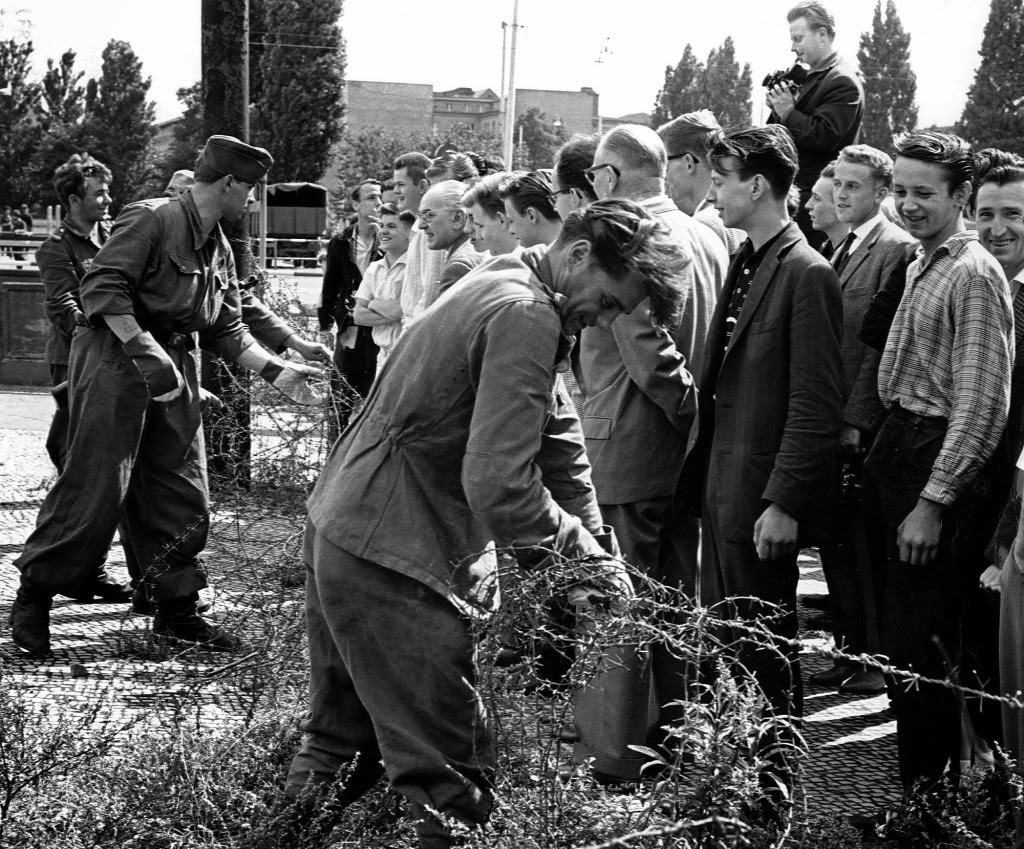
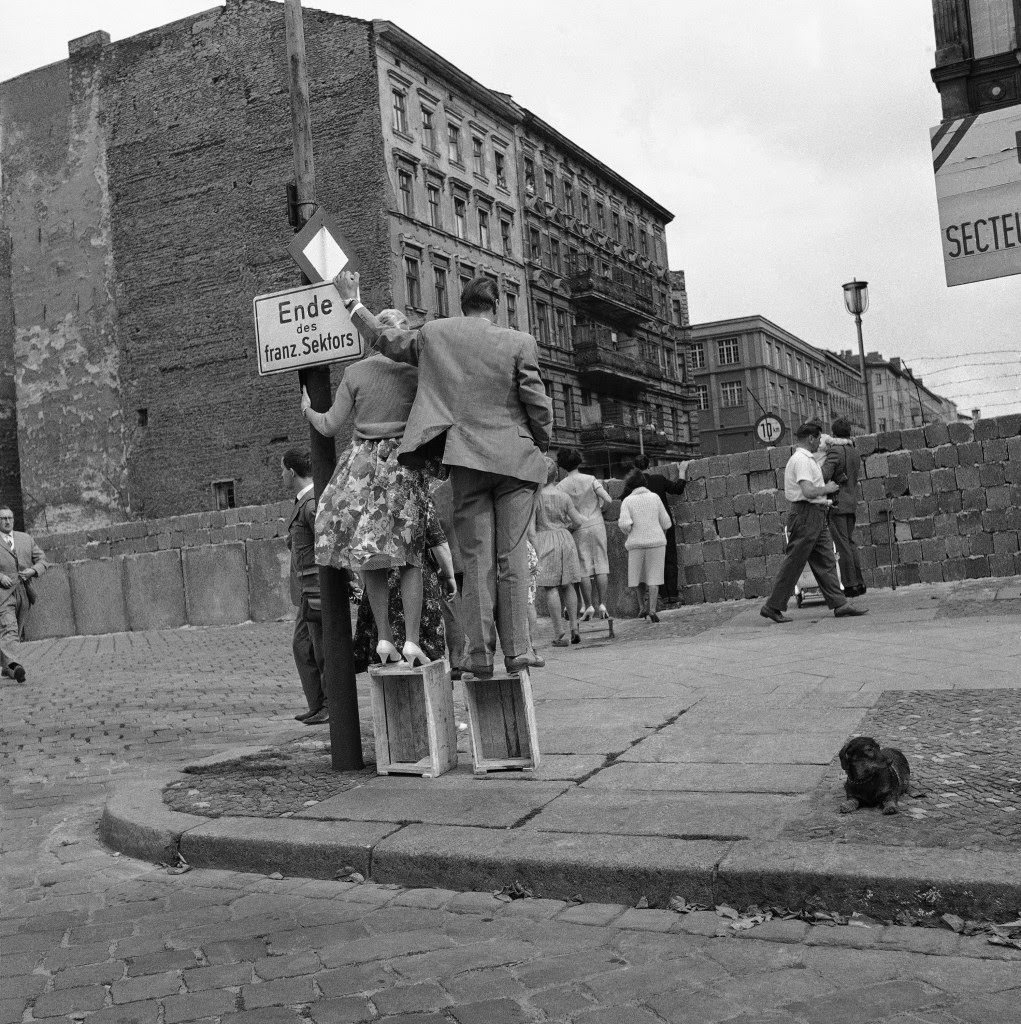
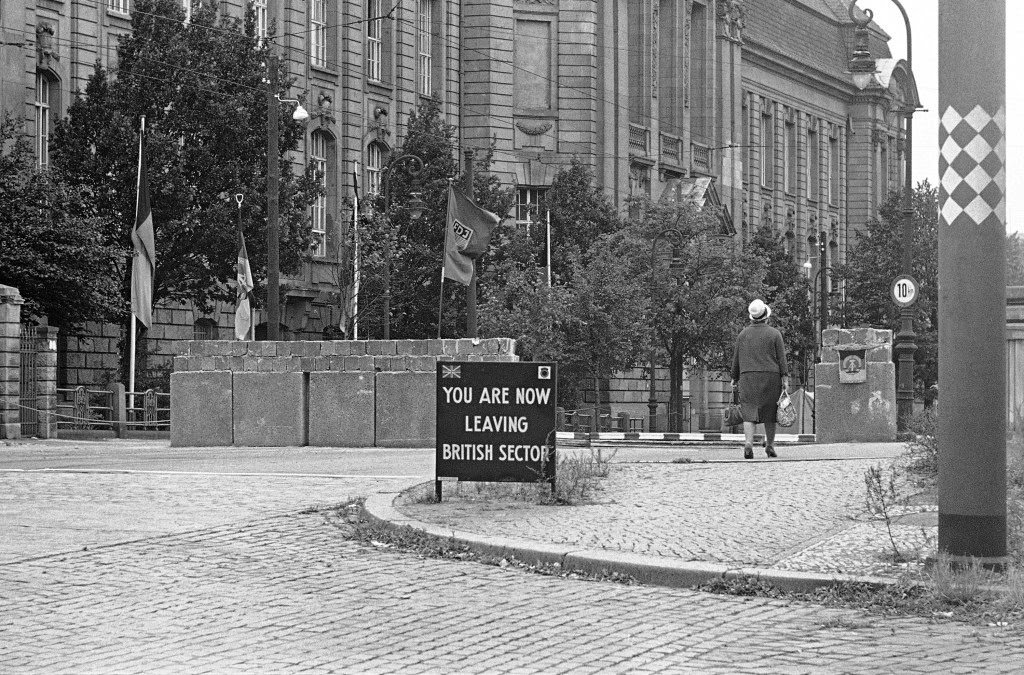
Blocking the church – Two East German workers working on a huge 15 feet hight Wall put pieces of broken glass on the top to prevent East Berliners from escaping.Wooden boxes, used by the couple at left to overcome height of problem in Berlin August 28, 1961.The East Berlin authorities have put their emblems on small flags on the concrete wall at the Invalidenstrasse crossing point between the British and Russian sector border in Berlin on Sept. 9, 1961.West Berliners, at right, talk with East Berlin policemen through the barbed wire fence at the border in Germany in Sept. 1961.
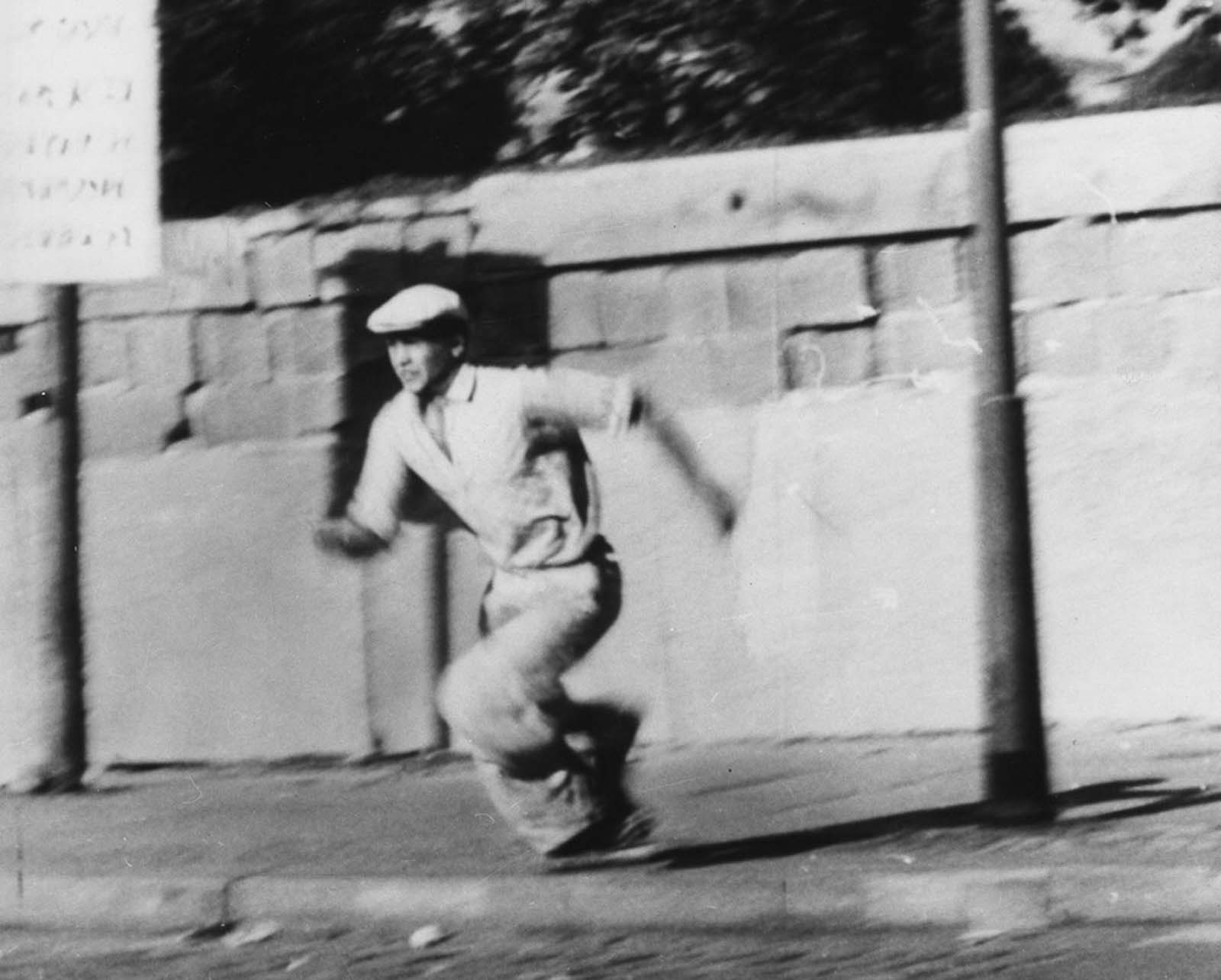
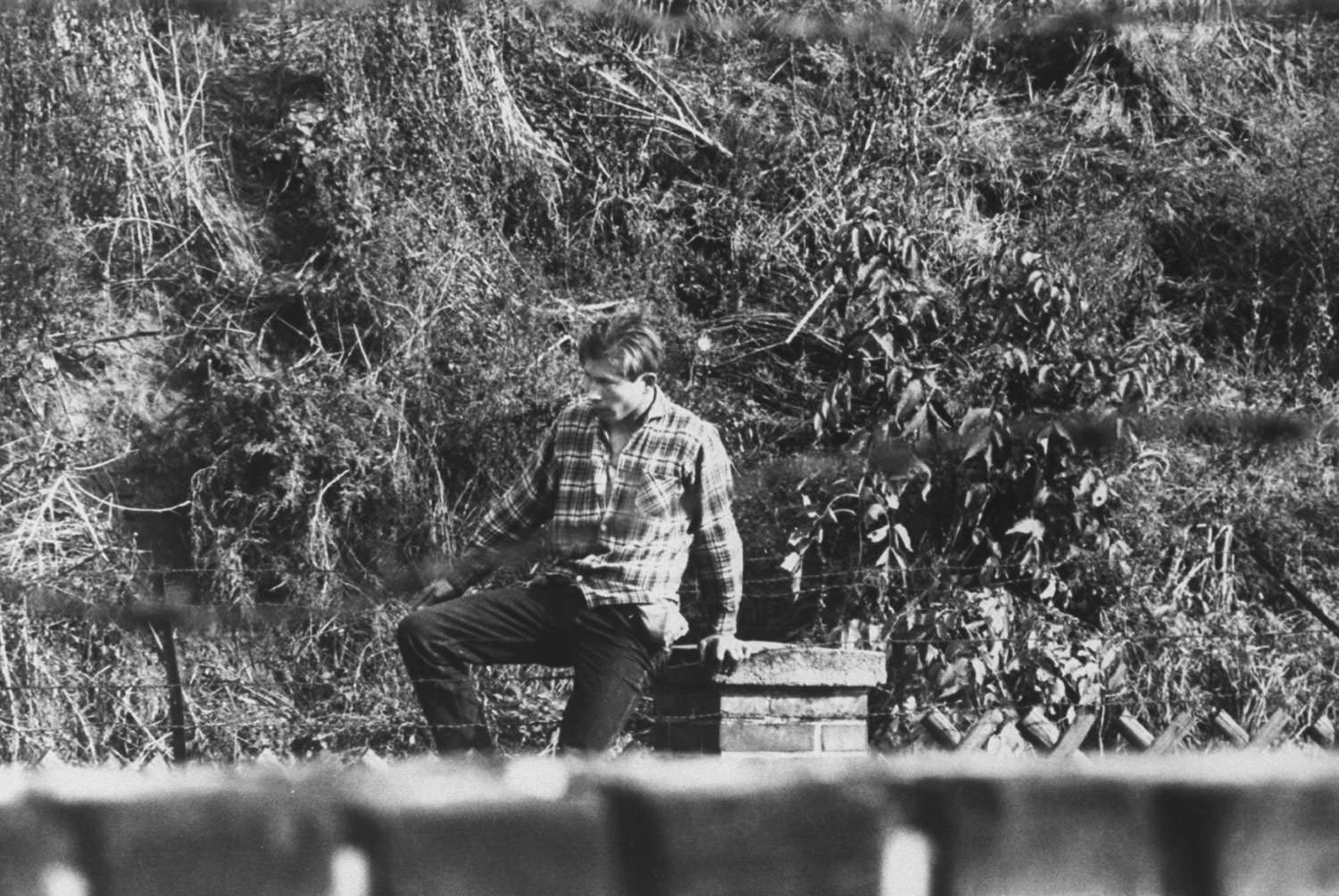
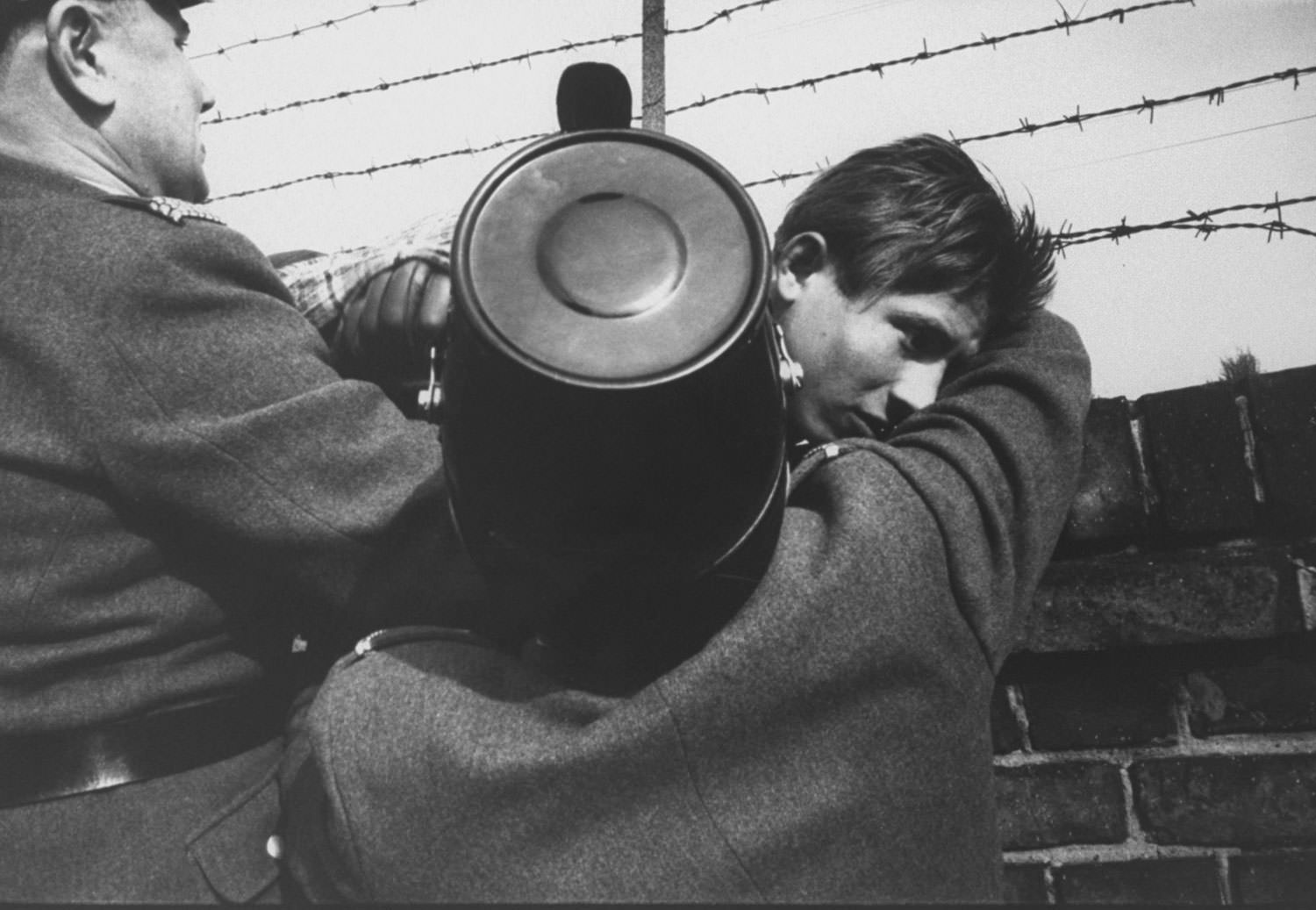
Despite the dangers, escape attempts continued throughout the 1960s. Some succeeded by climbing the wall. In October 1961, a 17-year-old East German orphan was photographed slipping through the barbed wire at the top of the wall, waved on by West Berlin police waiting on the other side. That same month, another teenage boy was caught on film hiding in tall grass in East Berlin, his face barely visible, waiting for a gap in the patrol route before making his run. Nearby Vopos — short for Volkspolizei, the East German people’s police — had orders to shoot to kill.
Near Wiener Brucke in kreuzberg district East Berliners sitting on a warm summer day on benches and others were waving to friends in West Berlin on Sept. 6, 1961.Border situation West Berliners looking and waving to friends living in East Berlin at formerly wiener bridge in Kreuzberg district Sept. 6, 1961.An East Berlin policeman puts bricks in place as the Berlin Wall is heightened to 15 feet, 5 m, separating East and West Berlin, Germany, on Sept. 9, 1961.
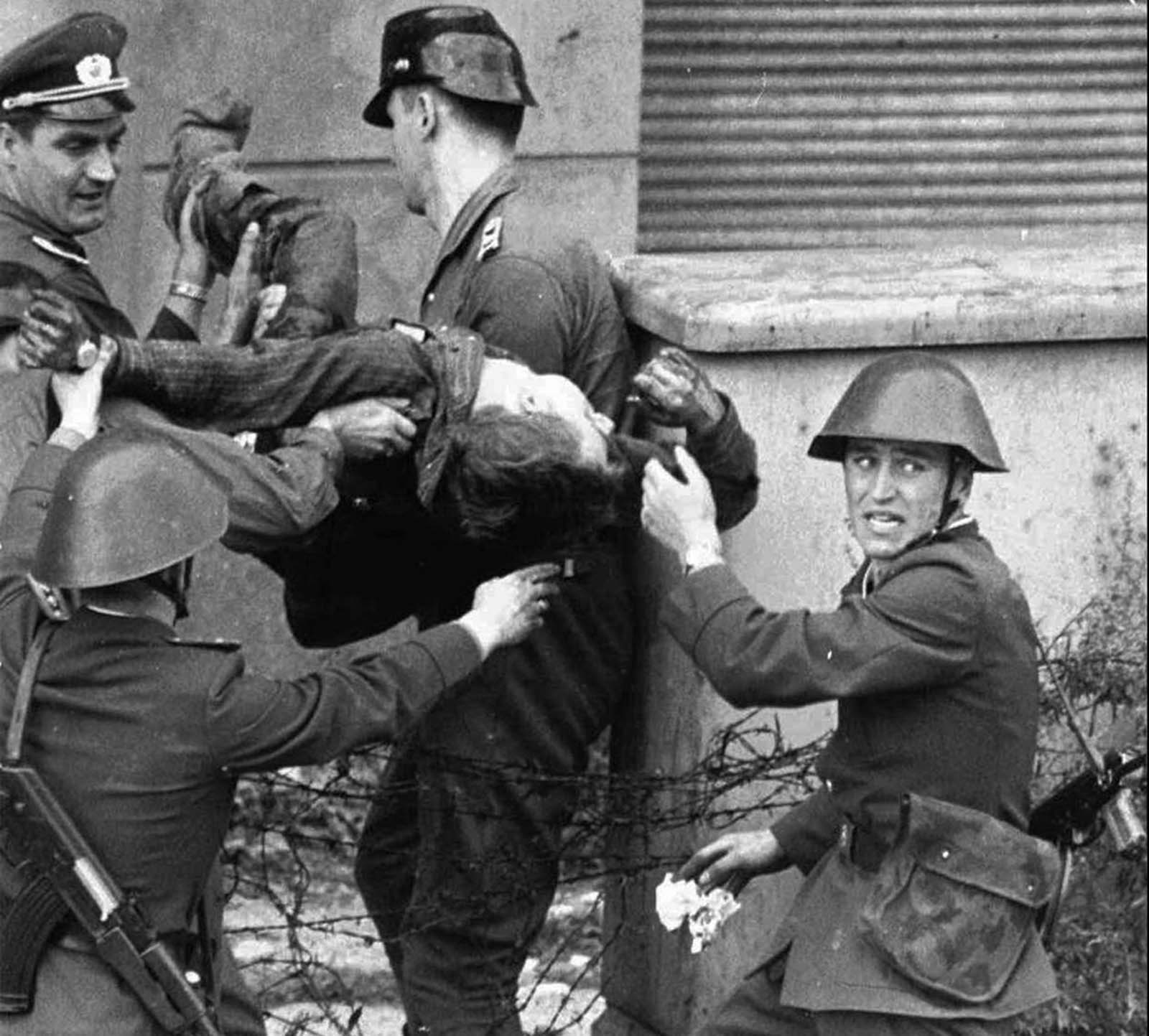
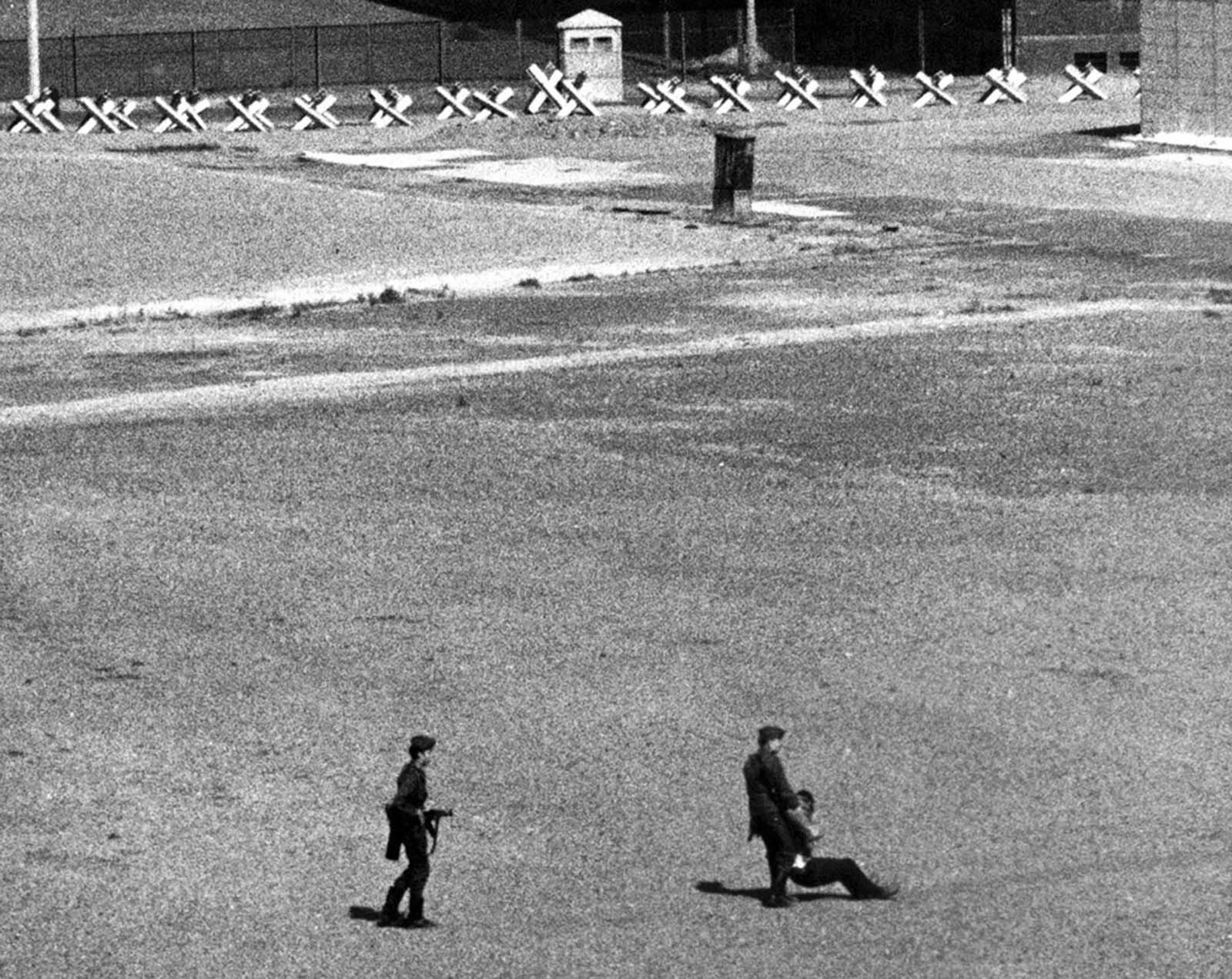
The shooting orders produced documented casualties. On August 17, 1962, 18-year-old Peter Fechter was shot by East German border guards while attempting to cross. He fell on the eastern side of the wall and lay there for nearly an hour, bleeding and crying for help. East German guards eventually carried him away. He died from his wounds. His death was photographed and became one of the most widely published images of the wall’s brutality. Hundreds more were killed attempting to cross in the years that followed.
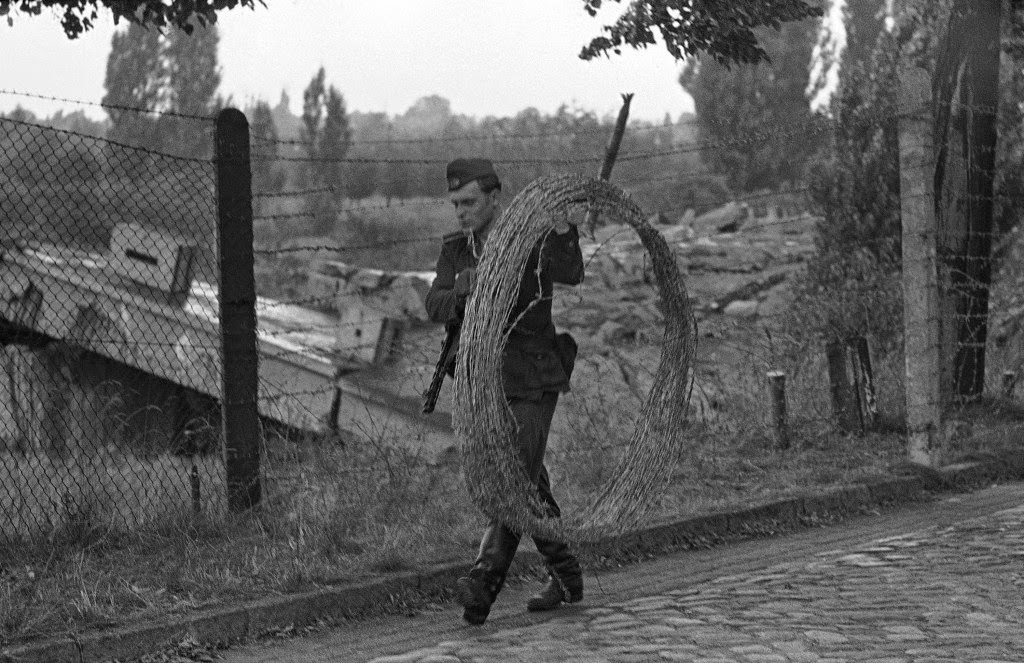
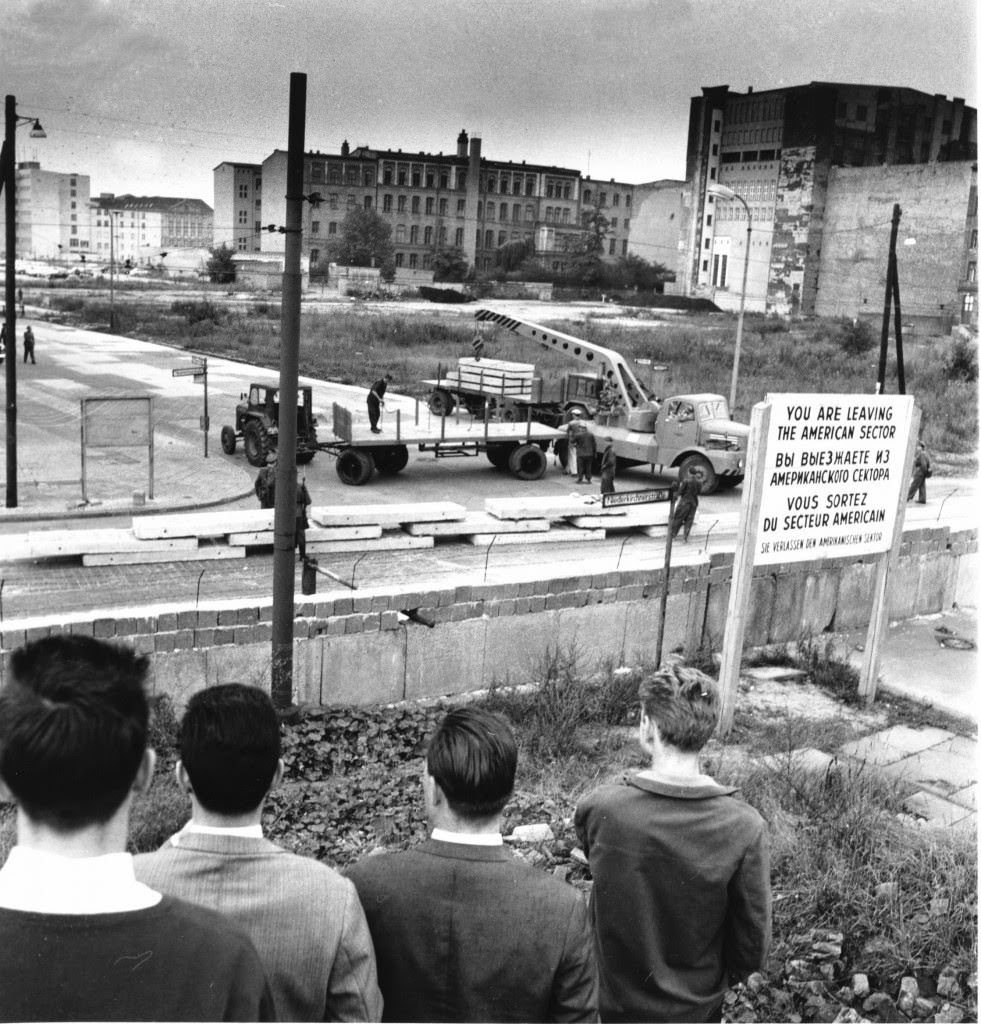
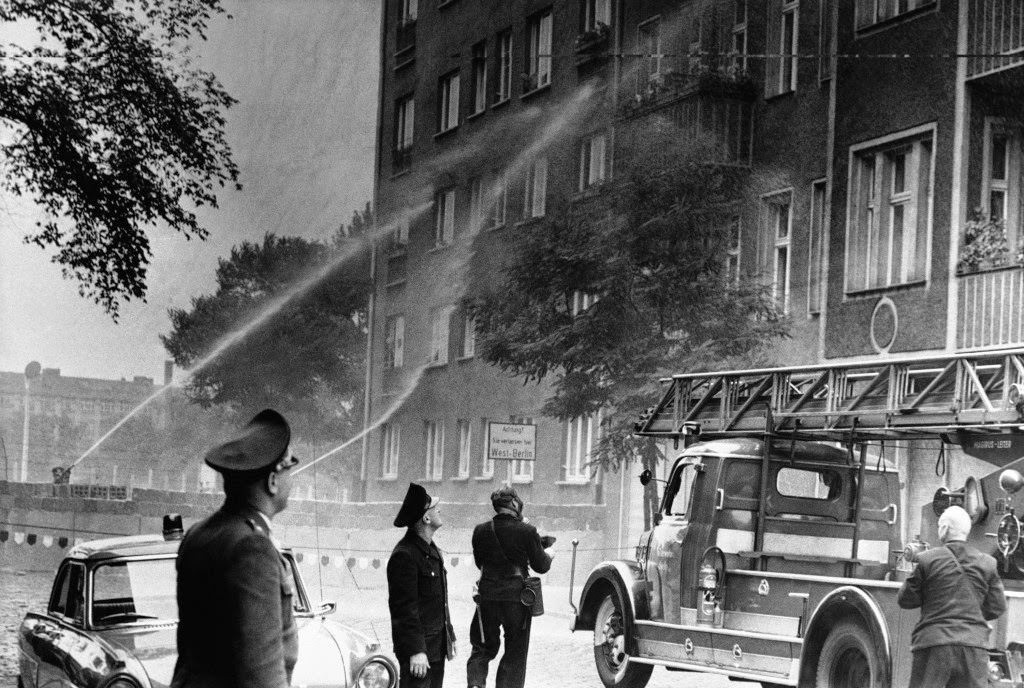
East German soldier carries a big roll of barbed wire along the border separating the British and Soviet sectors of Berlin August 21, 1961.West Berliners, at right, talk with East Berlin policemen through the barbed wire fence at the border in Germany in Sept. 1961.West Berliners, with their backs to camera, watch East Berliners unload prefabricated concrete plates to reinforce the Berlin Wall at Wilhelm St. in Berlin, Germany on Sept. 12, 1961.East Berlin Police, behind concrete wall, spray water on area where East Germans escape into West Berlin on Sept. 14, 1961.At sector border Sebastian Strasse where the American sector borders the Soviet East Berlin workers erecting strong street lights behind the concrete border wall in Berlin Sept. 19, 1961.
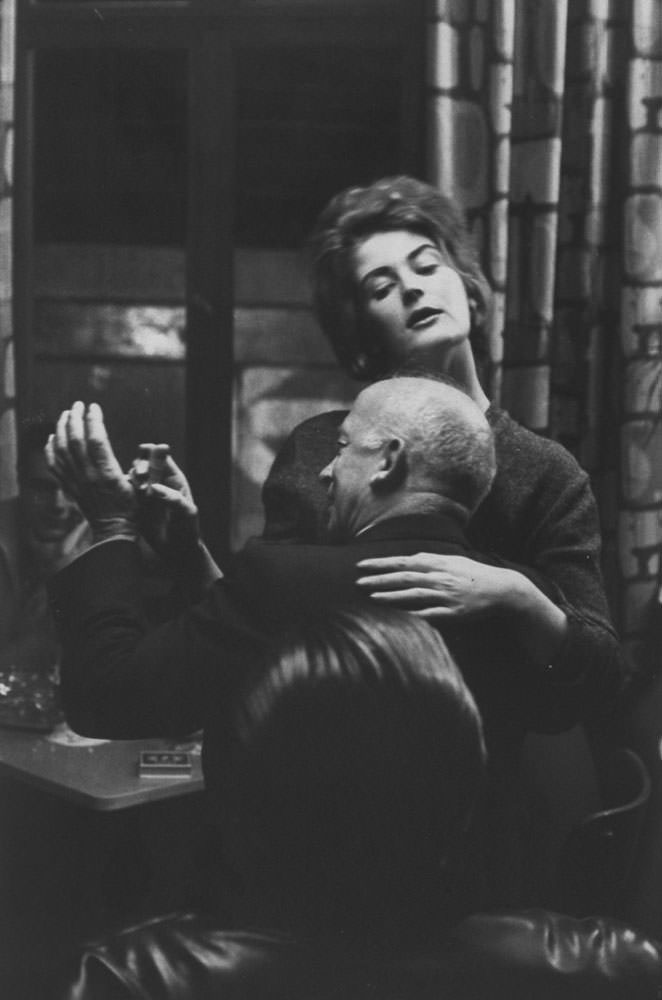
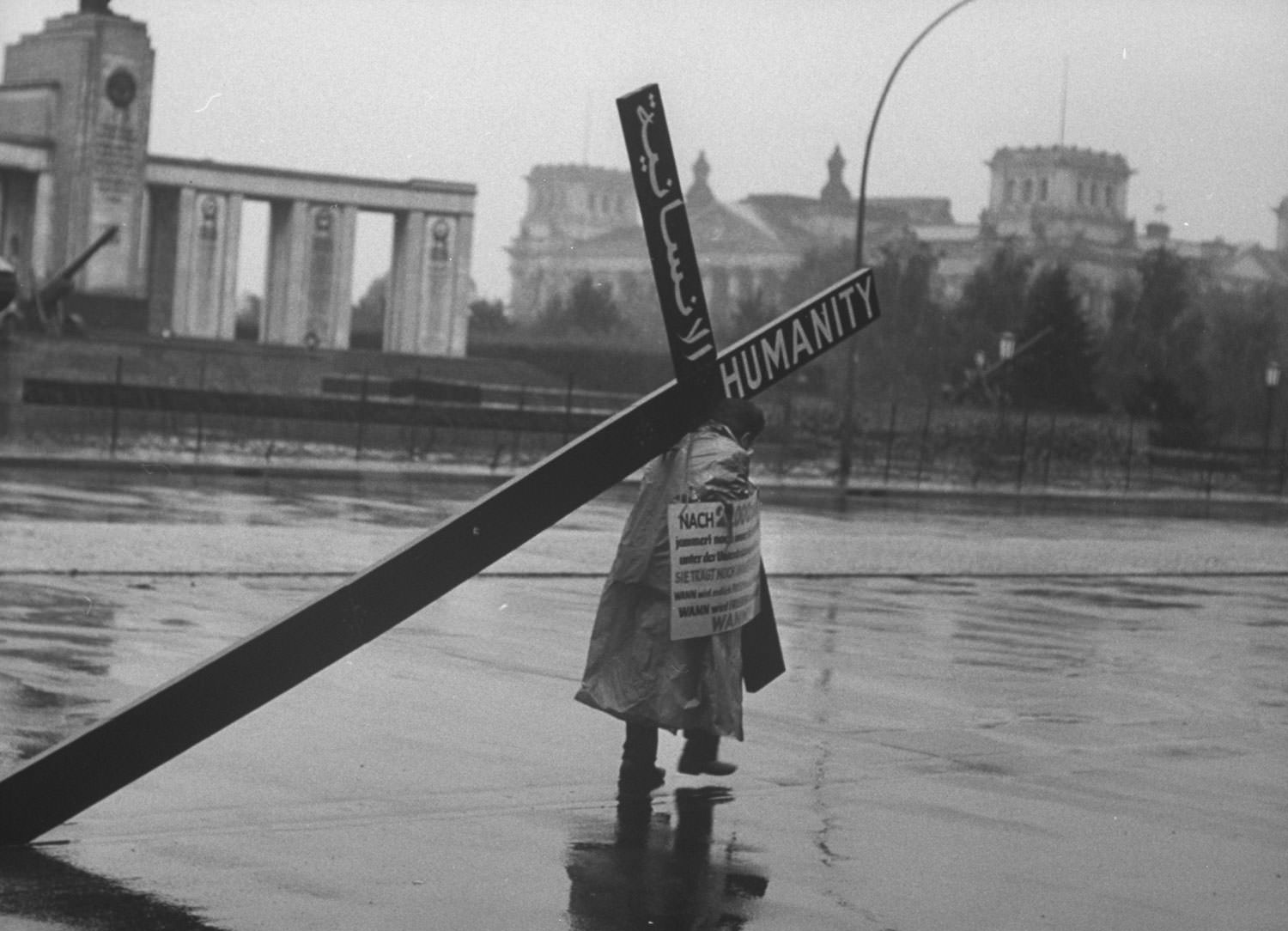
Life along the wall settled into a grim routine on both sides. On the western side, West Berliners adapted their daily lives around the concrete barrier. Children played near it, couples sat in bars with the wall visible through the window, and vendors sold binoculars to tourists. People climbed onto buses, chairs, and wooden boxes just to see over the top. Protest signs appeared, and some individuals made symbolic gestures — like Lebanese businessman Edmond Khayat, who carried an 85-pound wooden cross to the wall in October 1961 as a public act of protest.
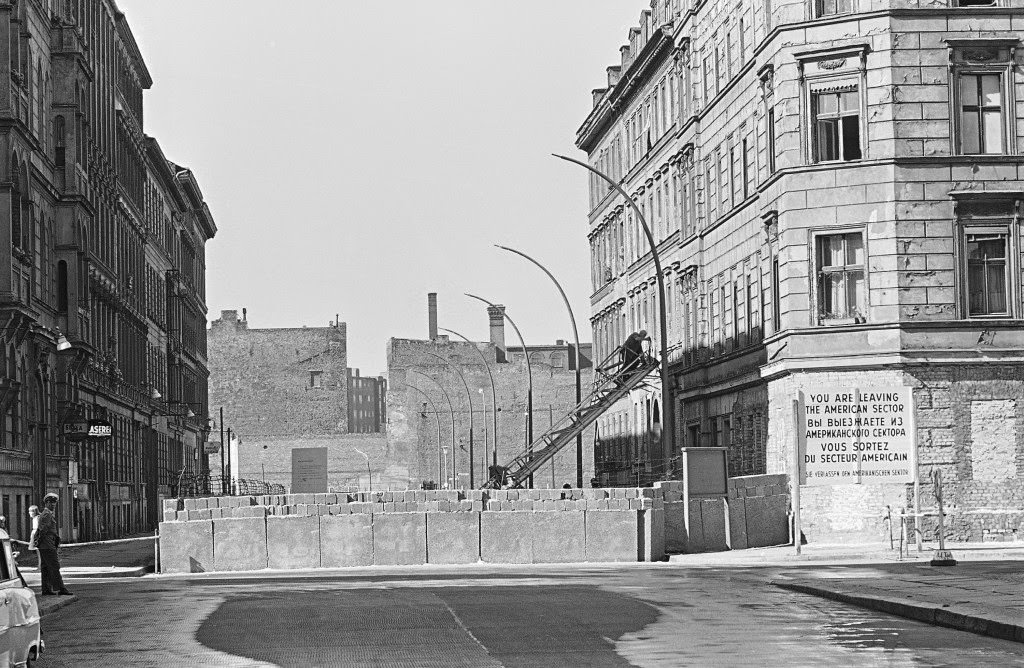
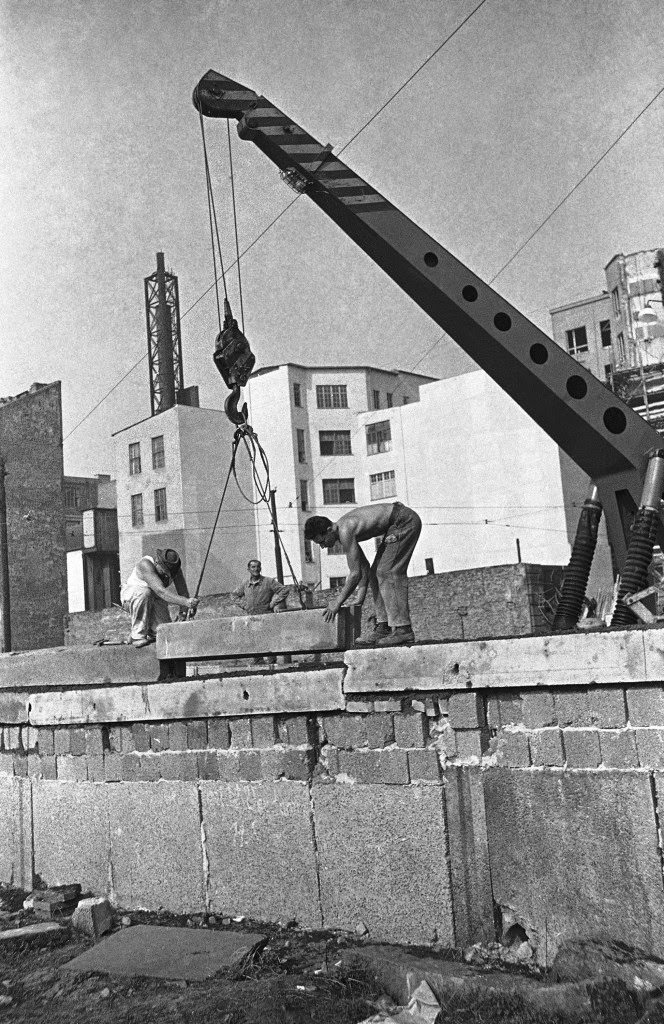
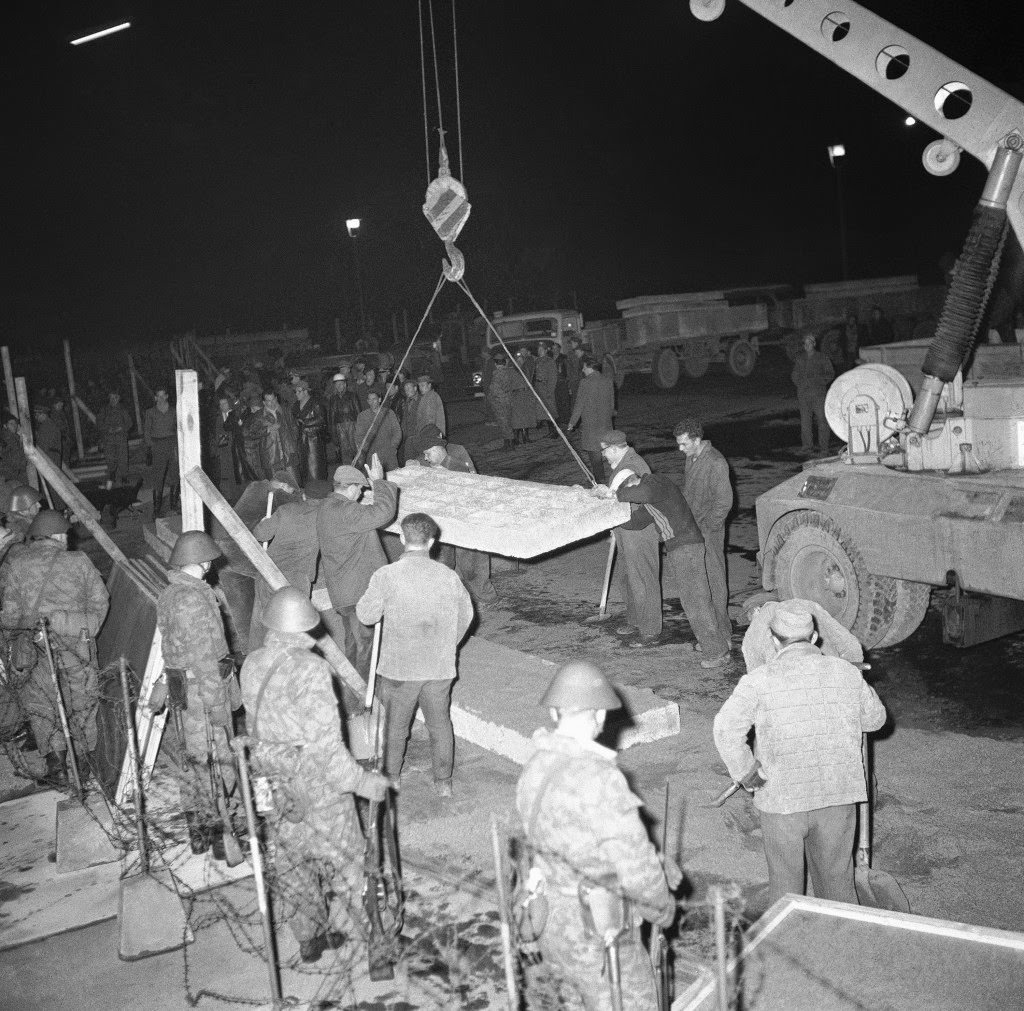
Behind concrete wall with barbed wire east Berliners removing their furnitures in Berlin Sept. 20, 1961.East Berlin workers started to reinforce the concrete walls at sector border in Berlin Sept. 25, 1961.East Berliners working on cable.East Berliners use a crane to place concrete glass on wall along border between East and West Berlin Sept. 28, 1961. View of Zimmerstrasse near the Friedrichstrasse crossing point in the divided city.
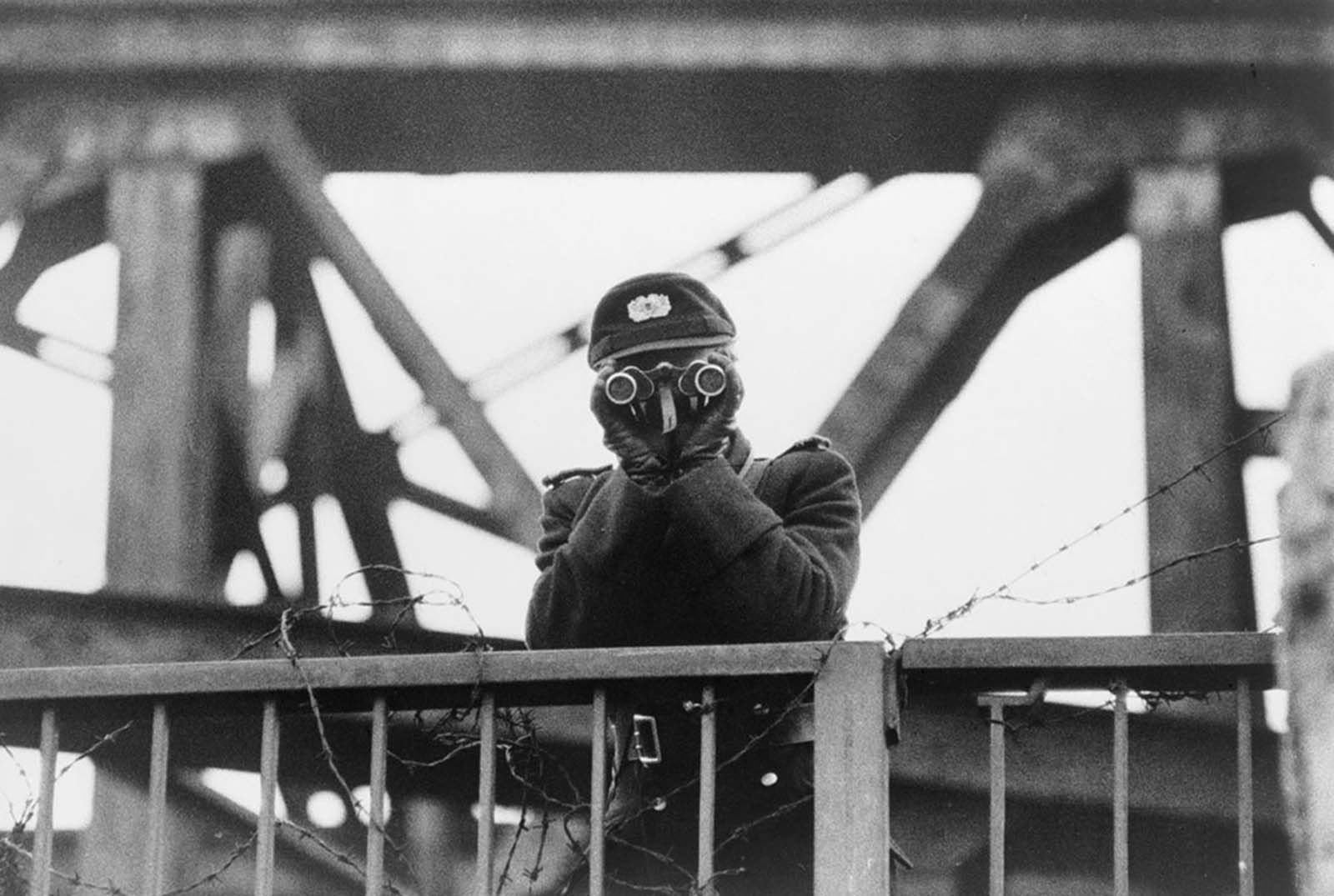
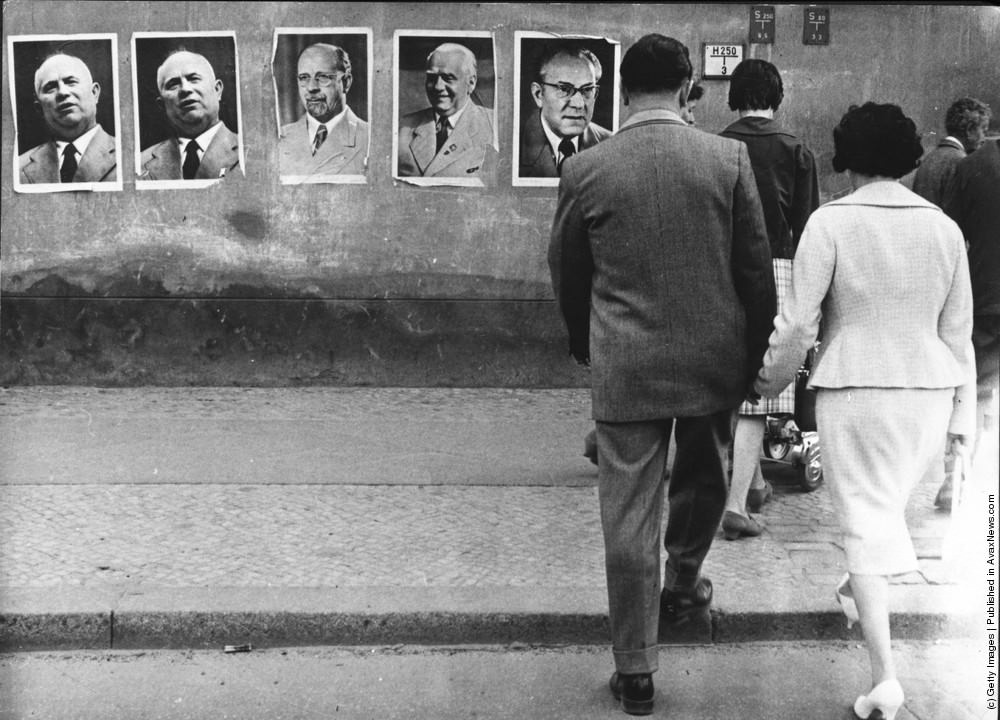
On the eastern side, the GDR worked to project an image of normalcy. Authorities sent children to play at the base of the wall to give the appearance that life was ordinary. Propaganda posters of Communist leaders — Nikita Khrushchev, Walter Ulbricht, Wilhelm Pieck, and East German Premier Otto Grotewohl — were mounted on the wall’s eastern face. Meanwhile, Vopos with binoculars stood watch on bridges and towers, and armed guards patrolled every stretch of the barrier day and night.
East Berliners use a crane to place concrete glass on wall along border between East and West Berlin Sept. 28, 1961.An East Berlin soldier secures a steel bar to hold the barbed wire atop the Berlin Wall on sector border in Berlin near Friedrichstrasse in Germany on Sept. 30, 1961.East Berlin laborers work on “Death Strip” which communist authorities created on their side of the border in the divided city on Oct. 1, 1961.A West Berlin guard stands in front of the concrete wall dividing East and West Berlin at Bernauer Strasse as East Berlin workmen add blocks to the wall to increase the height of the barrier, Oct. 7, 1961.
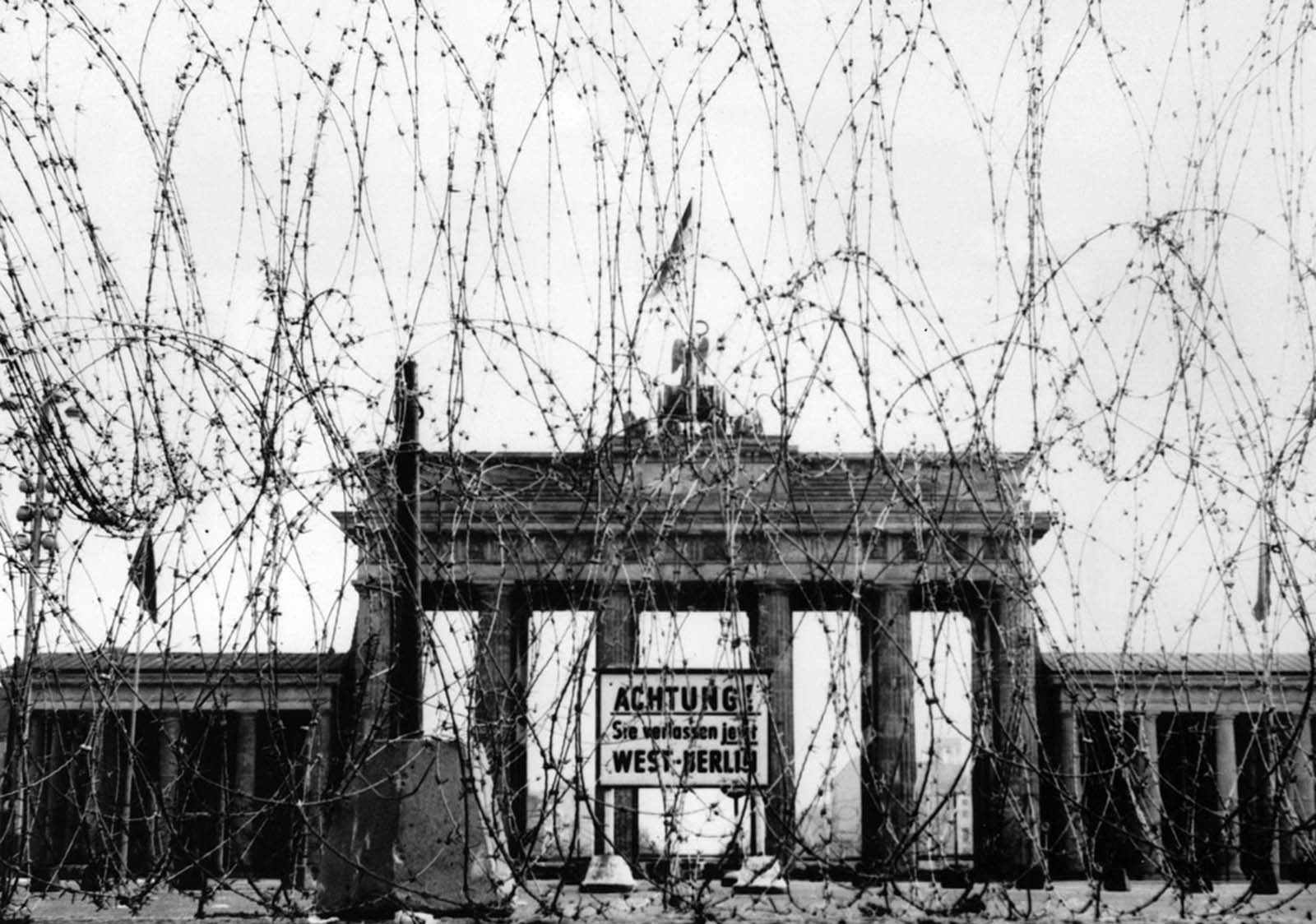
By late 1961, the wall had grown into a serious military fortification. Prefabricated concrete sections were craned into place. Steel bars were bolted across the top and laced with barbed wire. Workers cemented broken glass along the upper edges to prevent handholds. Trenches were dug and reinforced with wooden stakes along sections in the southern part of the city, near Neukoelln-Baumschulenweg. The Brandenburg Gate, once one of Berlin’s most celebrated landmarks, was blocked off with a massive 250-yard concrete wall by November 1961.
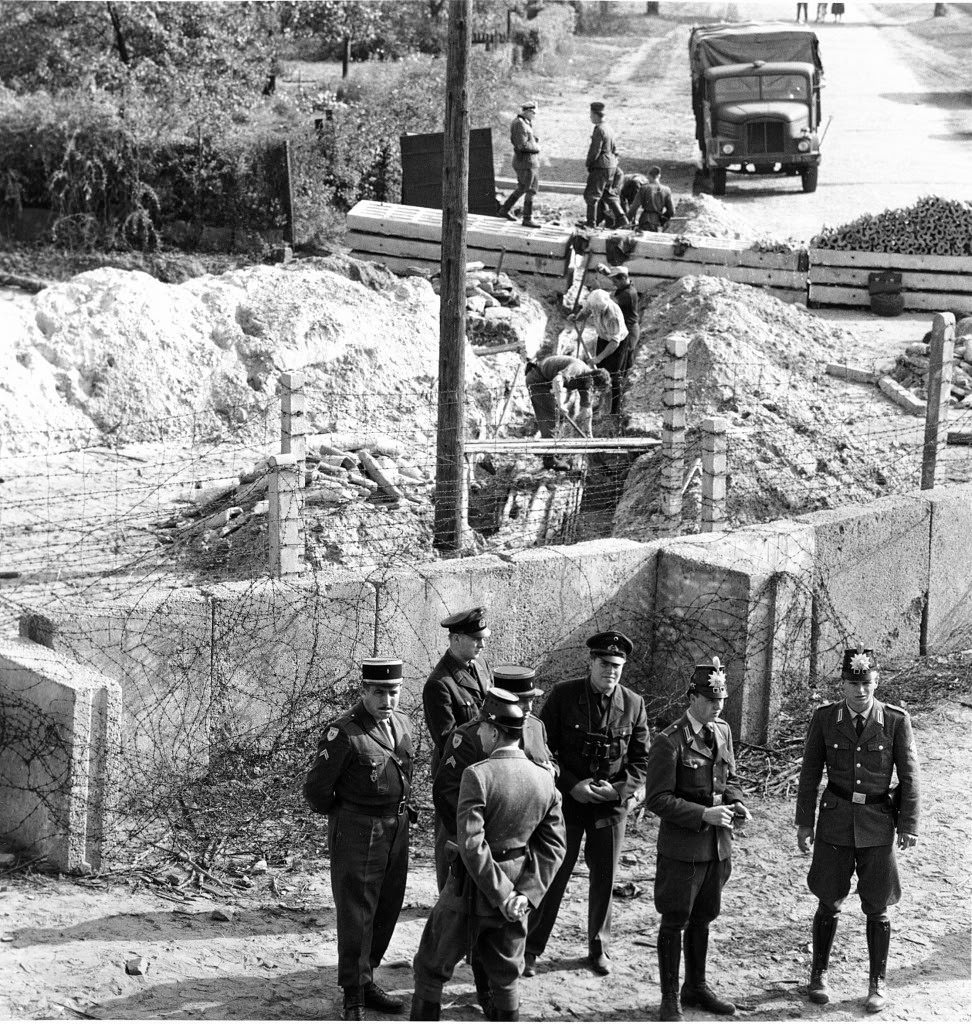
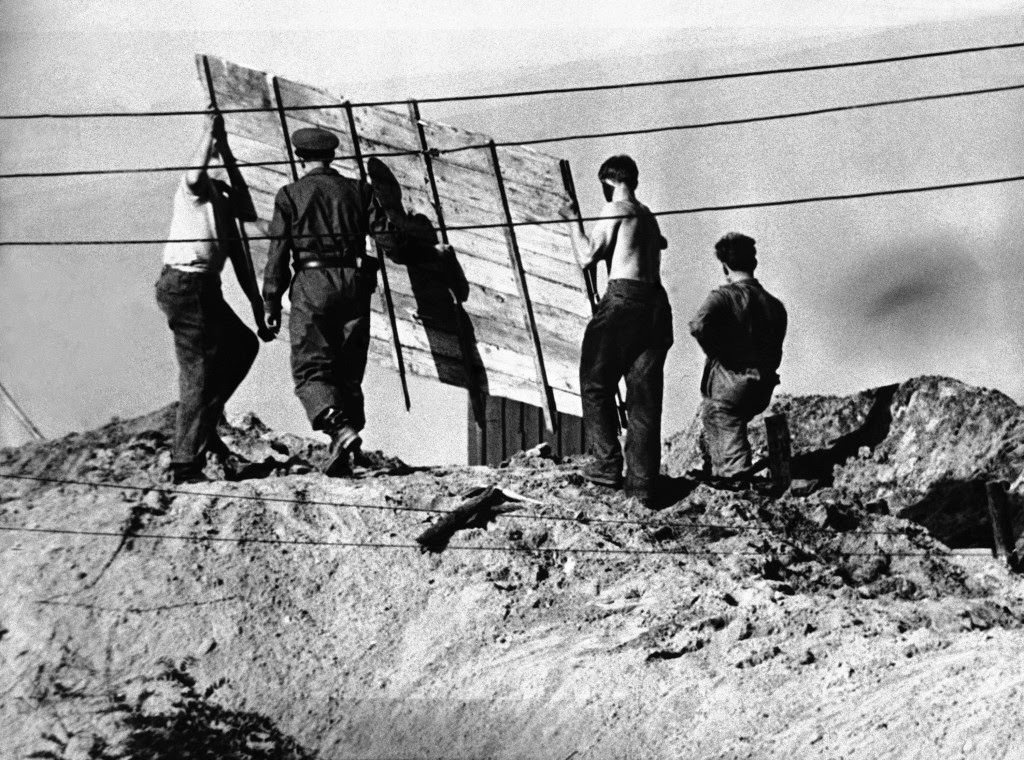
Nailed together planks are placed into position by East Berlin soldiers as they labor to reinforce trench (foreground) along the East-West border of Berlin at Neukoelln-Baumschulenweg in the southern part of the city on Oct.9, 1961.
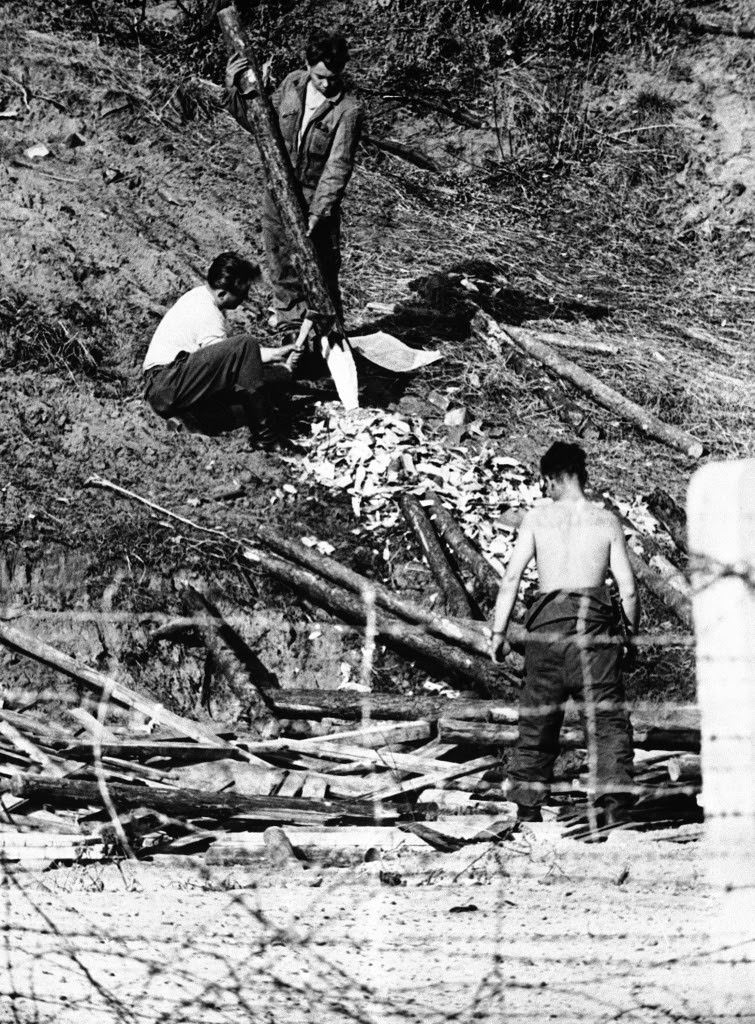
East German soldiers sharpen wooden stakes as they rush work to reinforce trench along Berlin’s East-West border at Neukoelln-Baumschulenweg in the southern part of the city on Oct. 9, 1961.
West Berliners watch the incidents at the U.S. Army checkpoint at the Friedrichstrasse where an American car and two sightseeing buses were barred entry by Communist East Berlin police, in Berlin on Oct. 25, 1961.
East German workmen guide crane lowering concrete block into position to make wall in front of Brandenburg Gate in East Berlin on Nov. 19, 1961.East German workmen guide crane lowering concrete block into position to make wall in front of Brandenburg Gate in East Berlin on Nov. 19, 1961.West Berlin police stand guard behind barbed wire along the new 250-yard massive concrete wall at Berlin’s Brandenburg Gate, Germany, on Nov. 23, 1961.
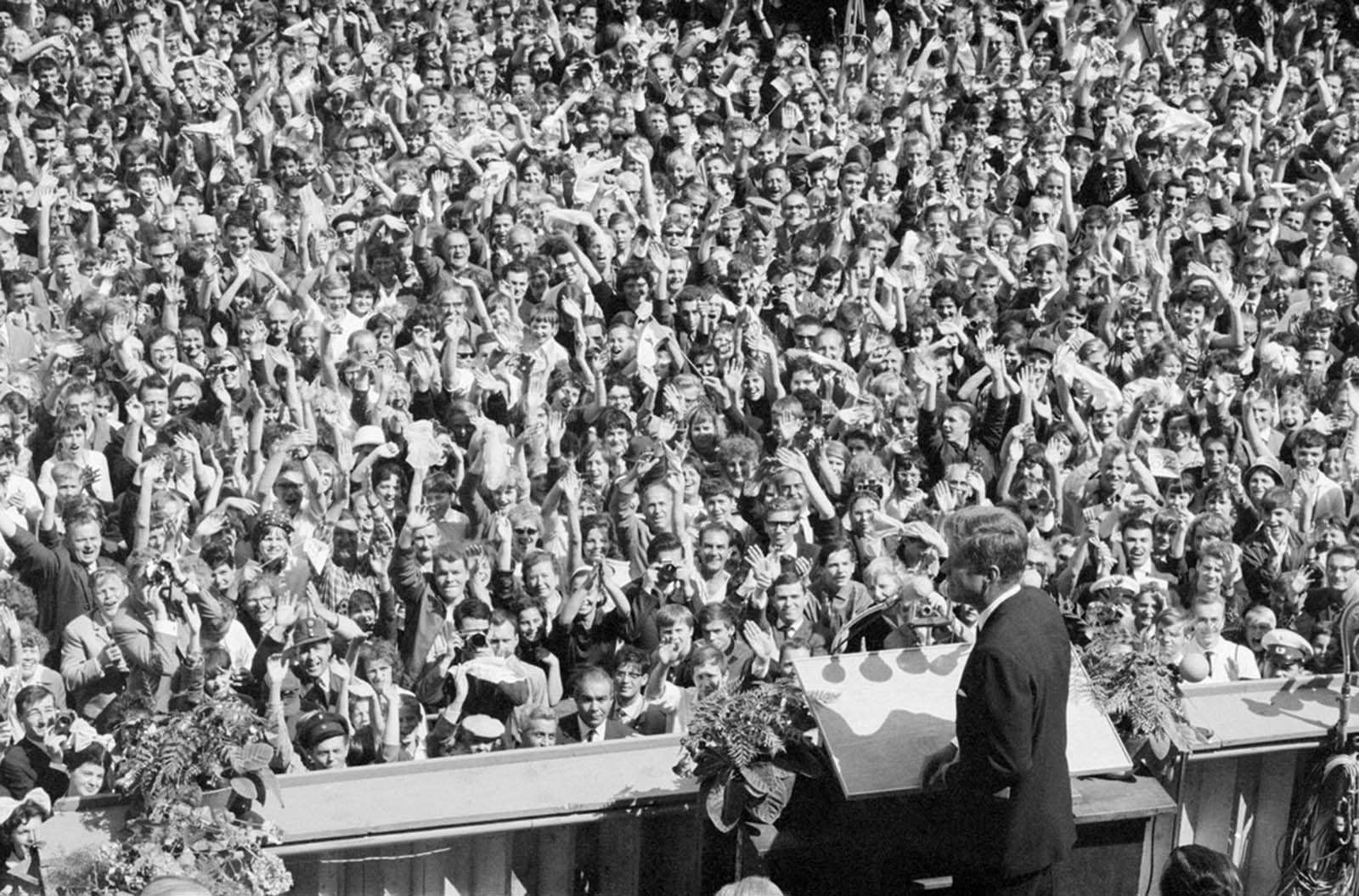
On June 26, 1963, U.S. President John F. Kennedy stood before a massive crowd in West Berlin and delivered one of the most quoted speeches of the Cold War. He declared solidarity with the people of West Berlin, telling the crowd that freedom was indivisible and that an attack on one free city was an attack on all. The crowd’s response was overwhelming. Kennedy’s visit reinforced the American commitment to West Berlin at a moment when many in the city feared the West might abandon them.
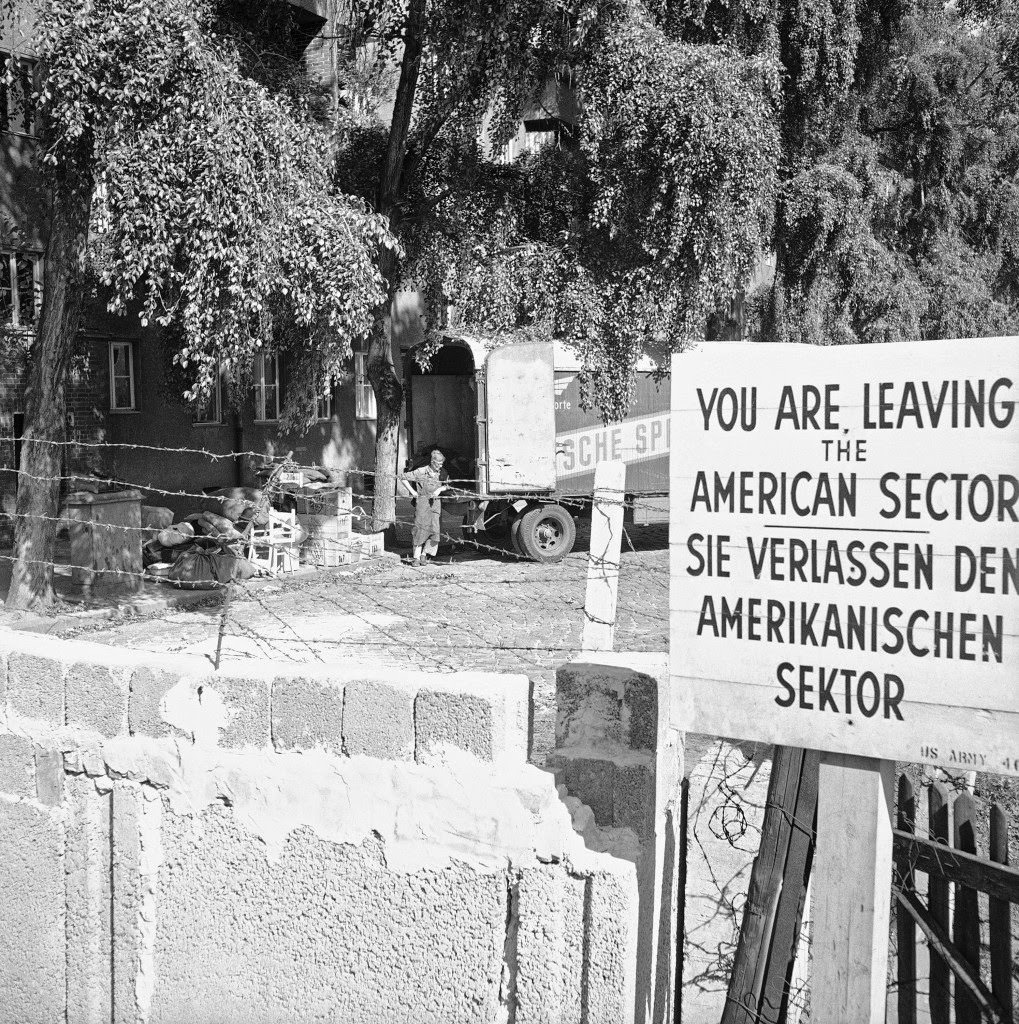
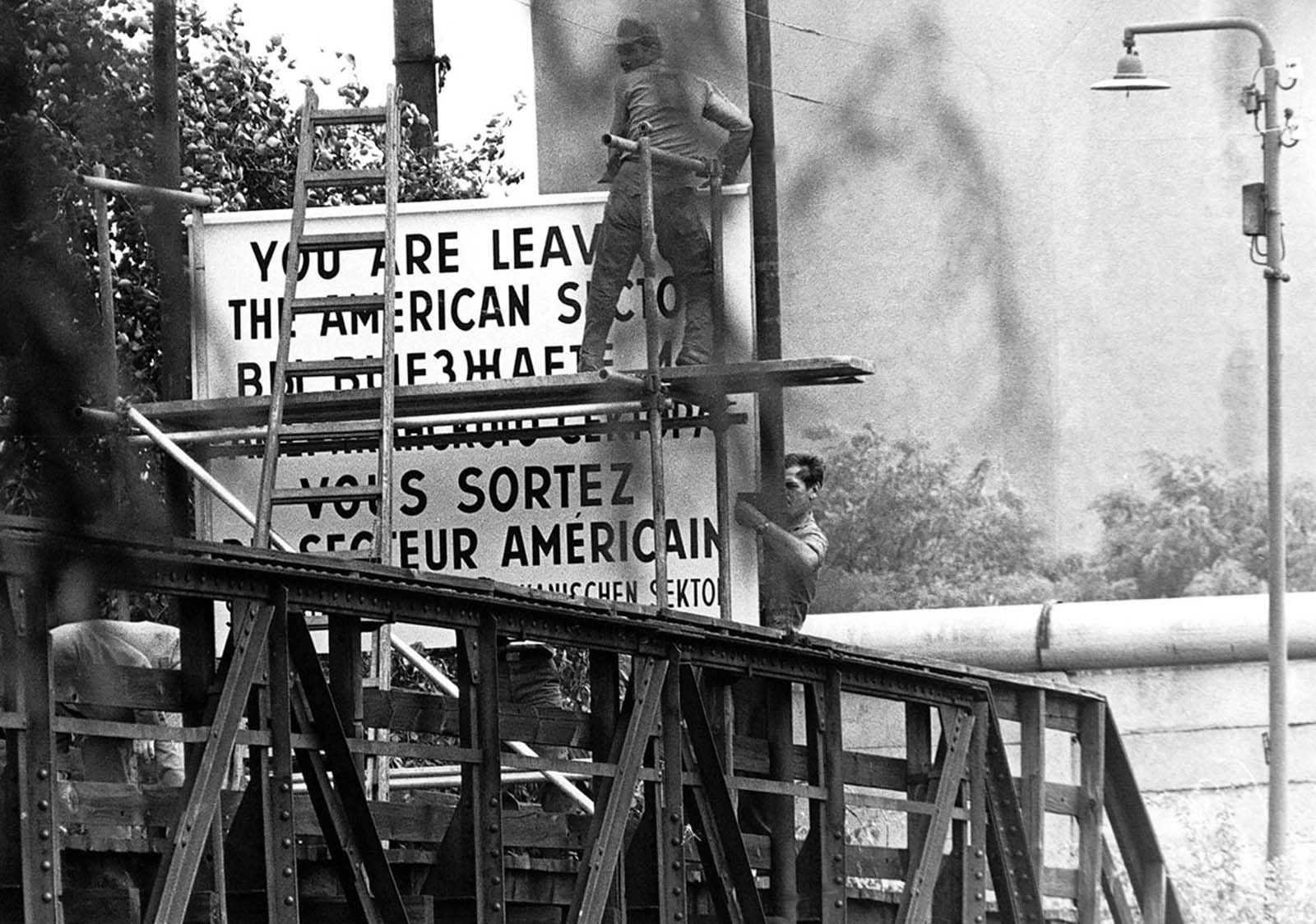
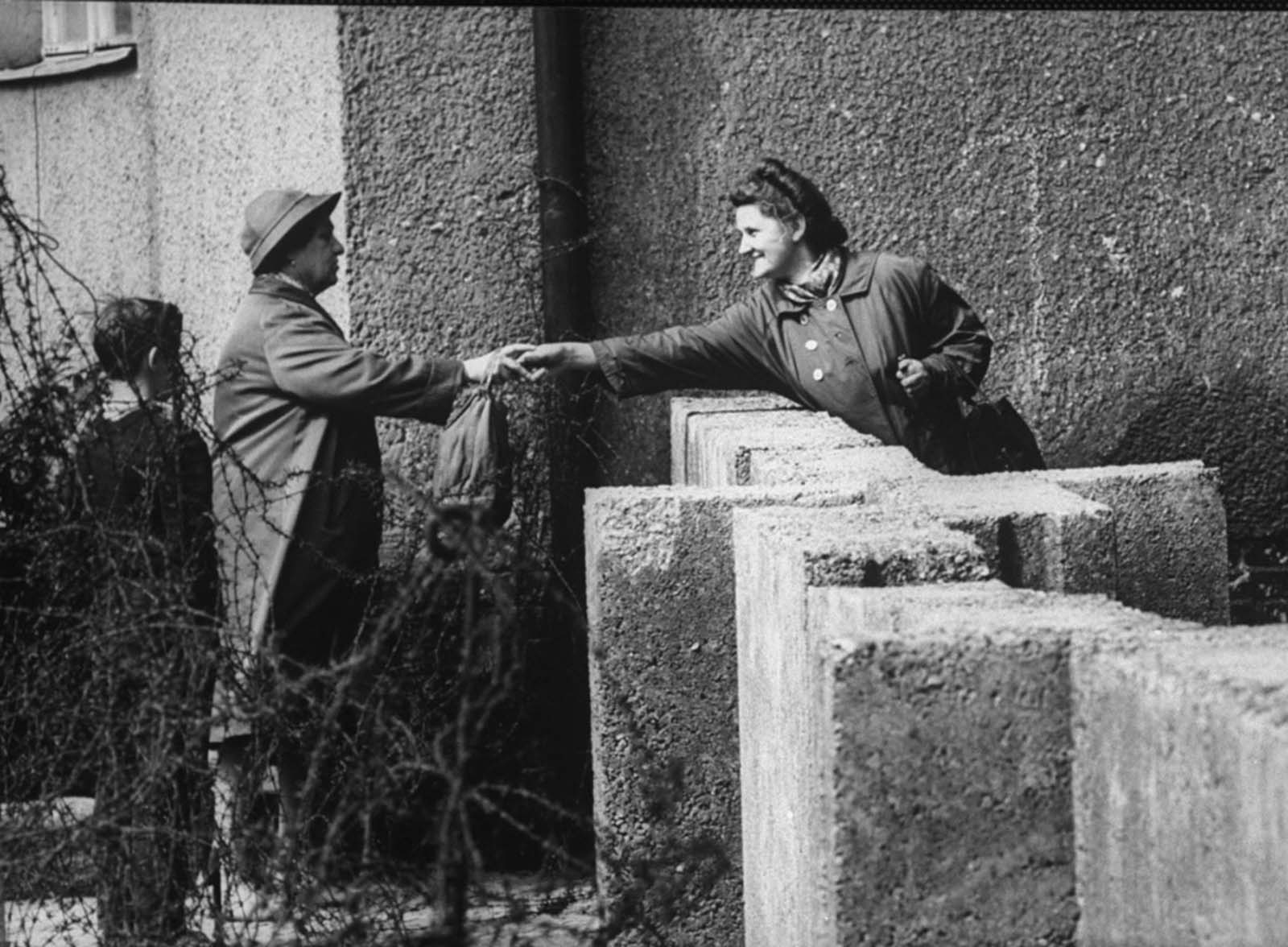
Workers set up a sign warning pedestrians they are leaving the American sector of Berlin, Germany, on Wiener Strasse (Vienna Street) in the district of Kreuzberg in West Berlin, on August 13, 1961.Russian (background) and American (foreground) tanks face each other at the Friedrichstrasse checkpoint in Berlin during the construction of the Berlin Wall on October 28, 1961.Barbed wire on the west side of the Brandenburg gate, put up as a “safety measure” by the British, photographed in November 1961.Friends reach across the barrier to touch each other in August 1961.
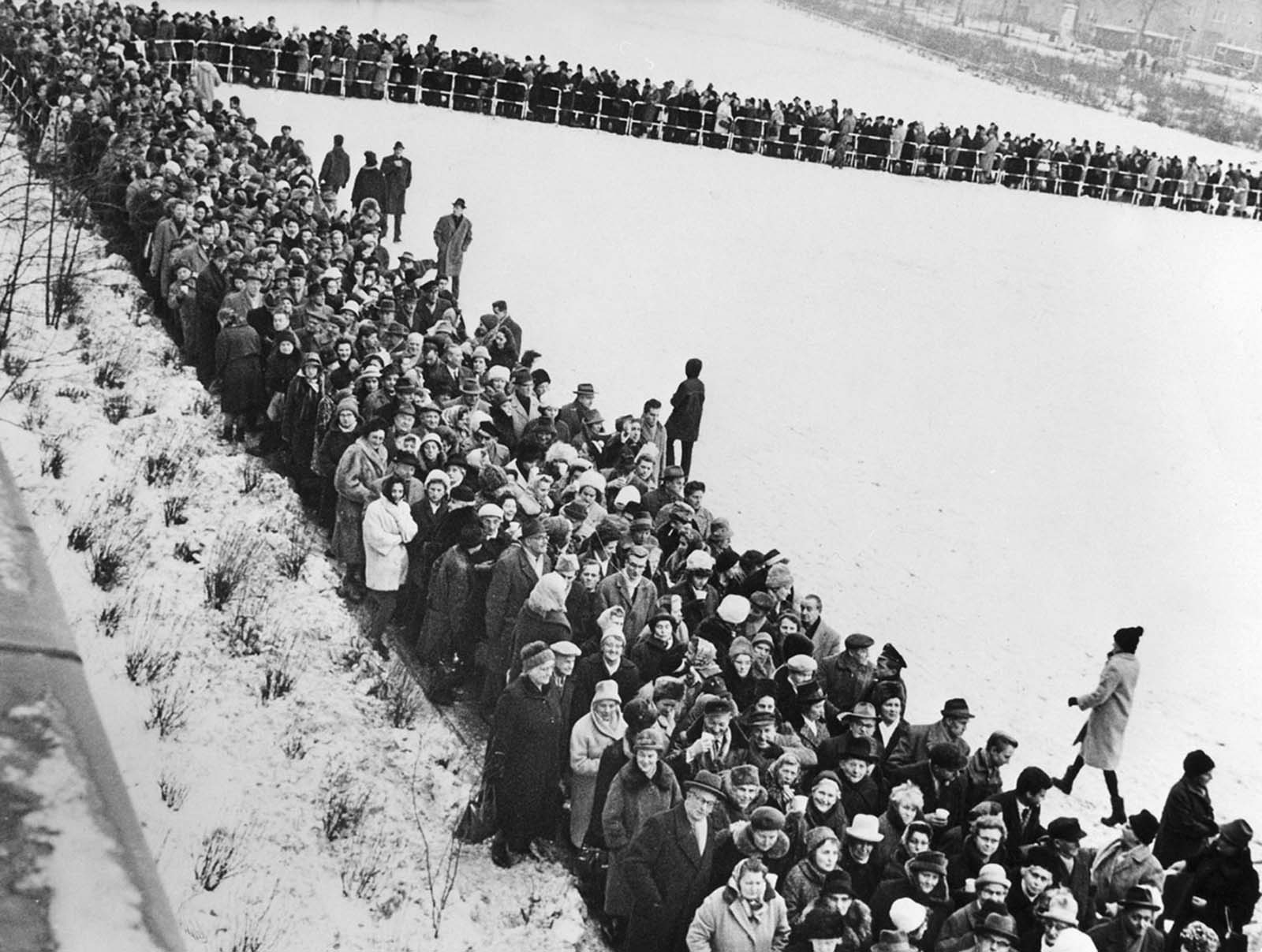
As years passed, crossing rules were occasionally adjusted for West Germans. In December 1963, thousands of people lined up along Schillerstrasse in Charlottenburg to apply for passage slips allowing them to visit relatives in East Berlin. The queue stretched for blocks. Even when the wall was technically open for brief periods, the process was tightly controlled, humiliating, and uncertain. East Germans had no such option — they could not apply to visit the West. The asymmetry was total.
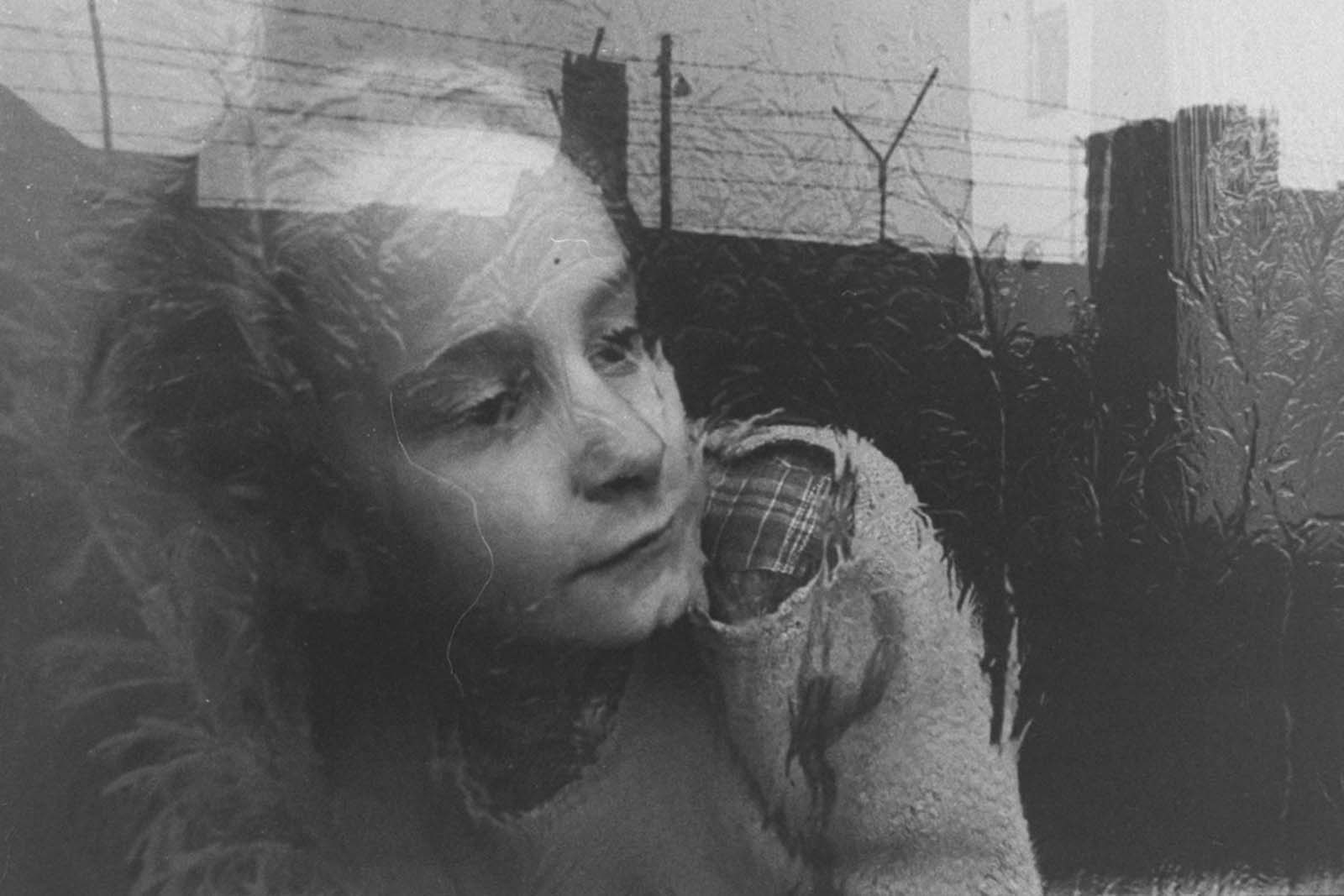
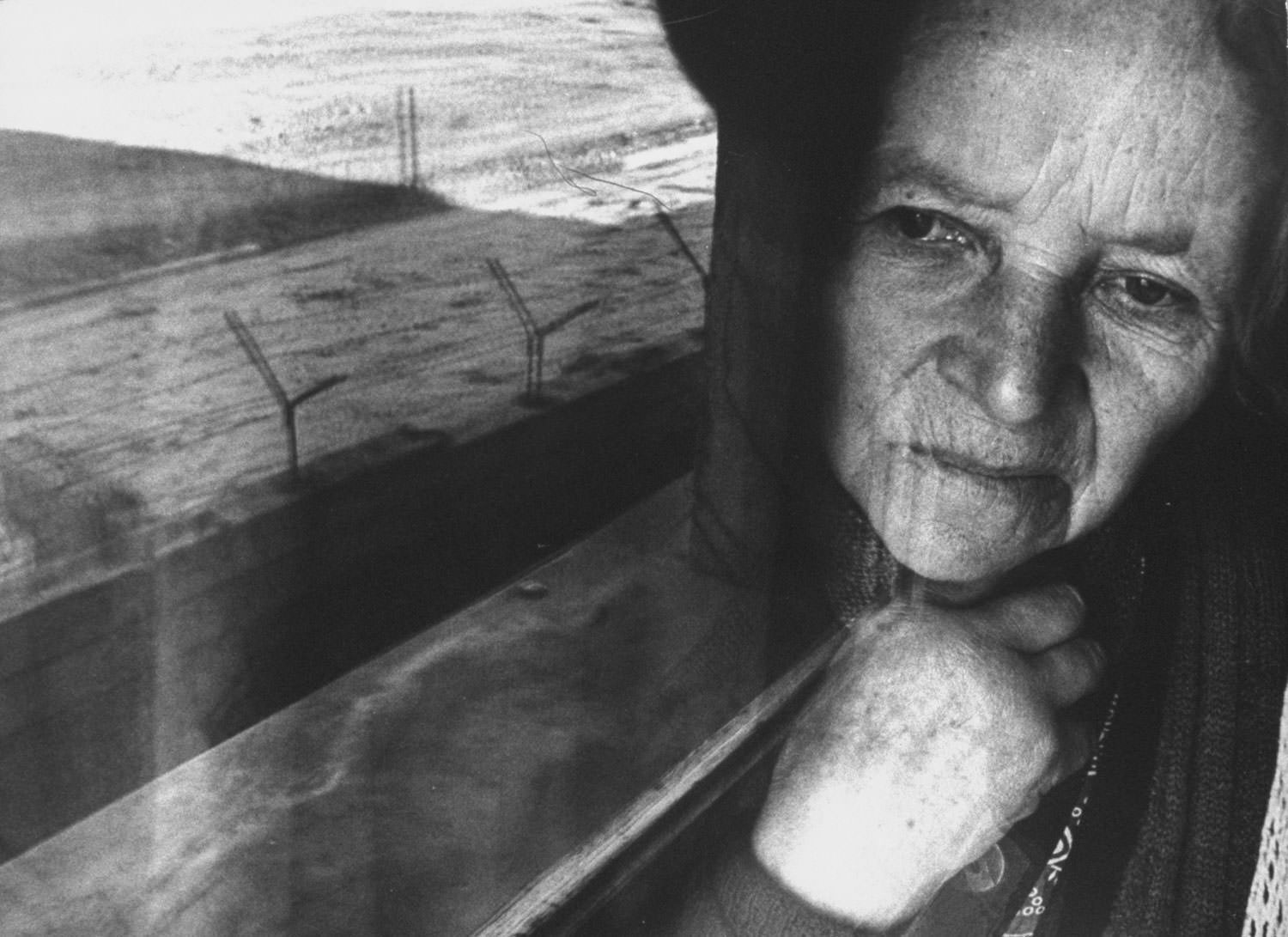
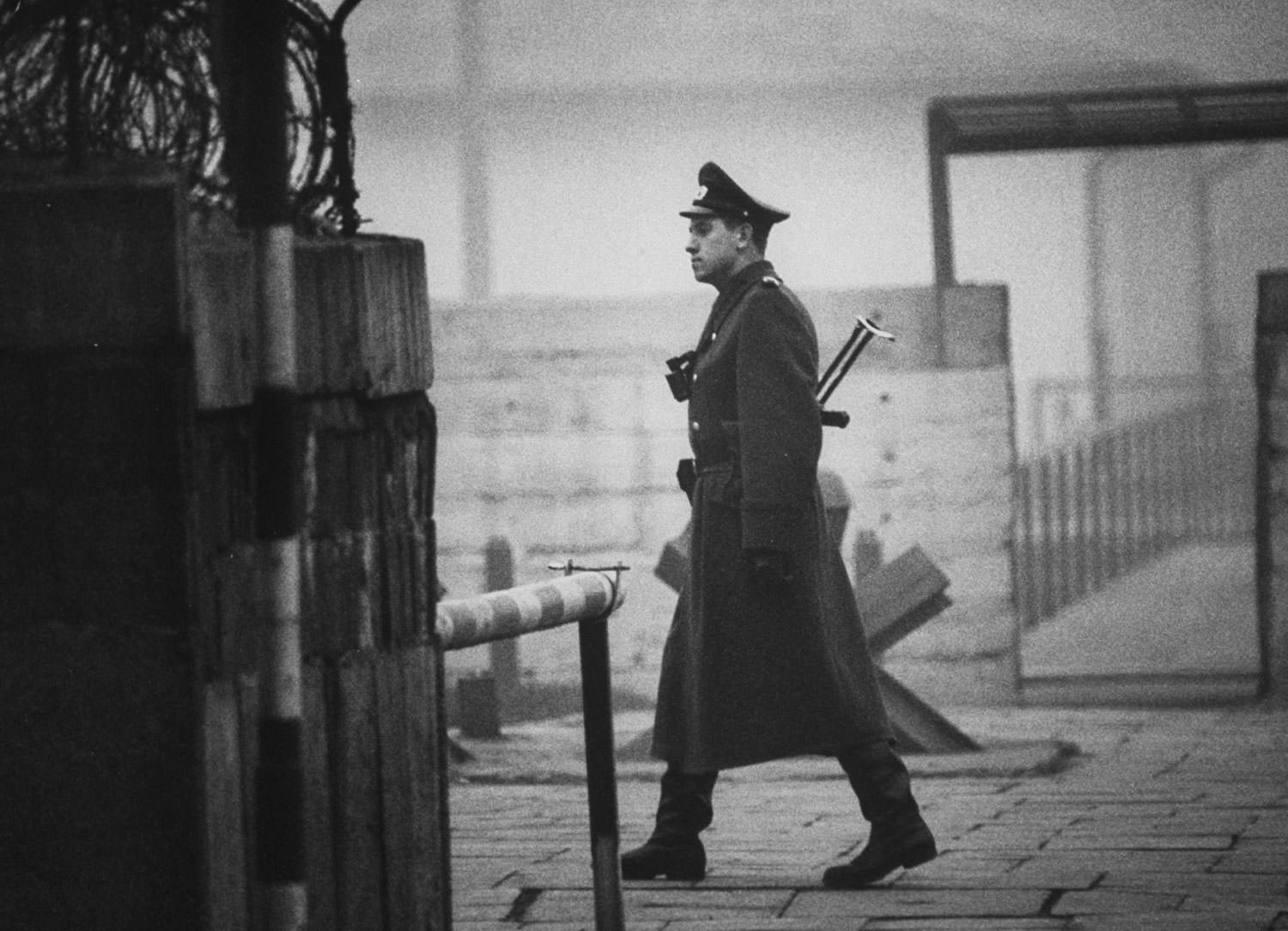
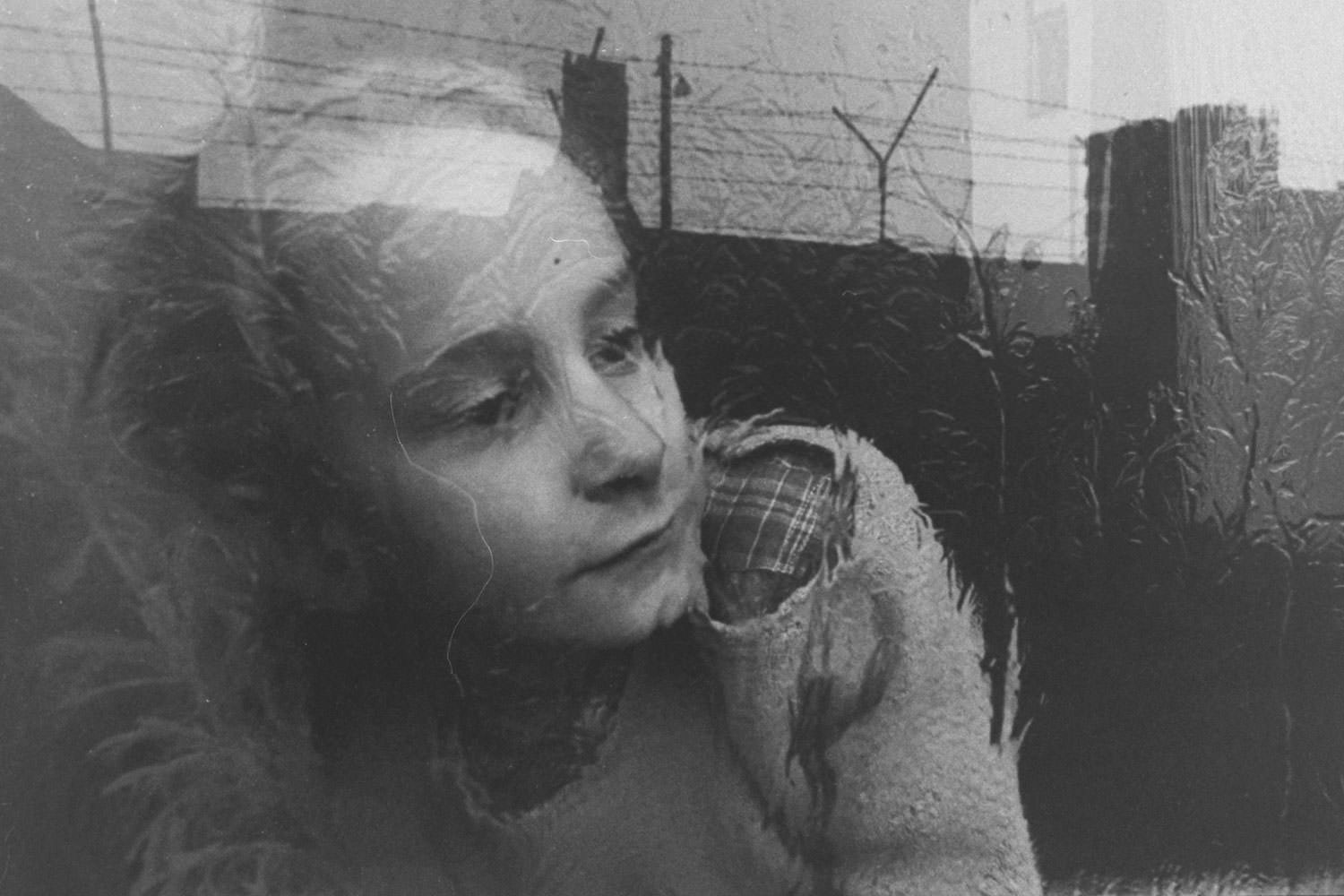
Communist People’s Police officers string barbed wire along a fence between East and West Berlin in September 1961.A young girl gazes pensively through the pane of her apartment window, which reflects the image of barbed wire fencing that tops the nearby Berlin Wall, in December 1962.A refugee runs during an attempt to escape from the East German part of Berlin to West Berlin by climbing over the Berlin Wall on October 16, 1961.An East German VOPO (Volkspolizei) border policeman uses binoculars while standing guard on one of the bridges linking East and West Berlin, in 1961.
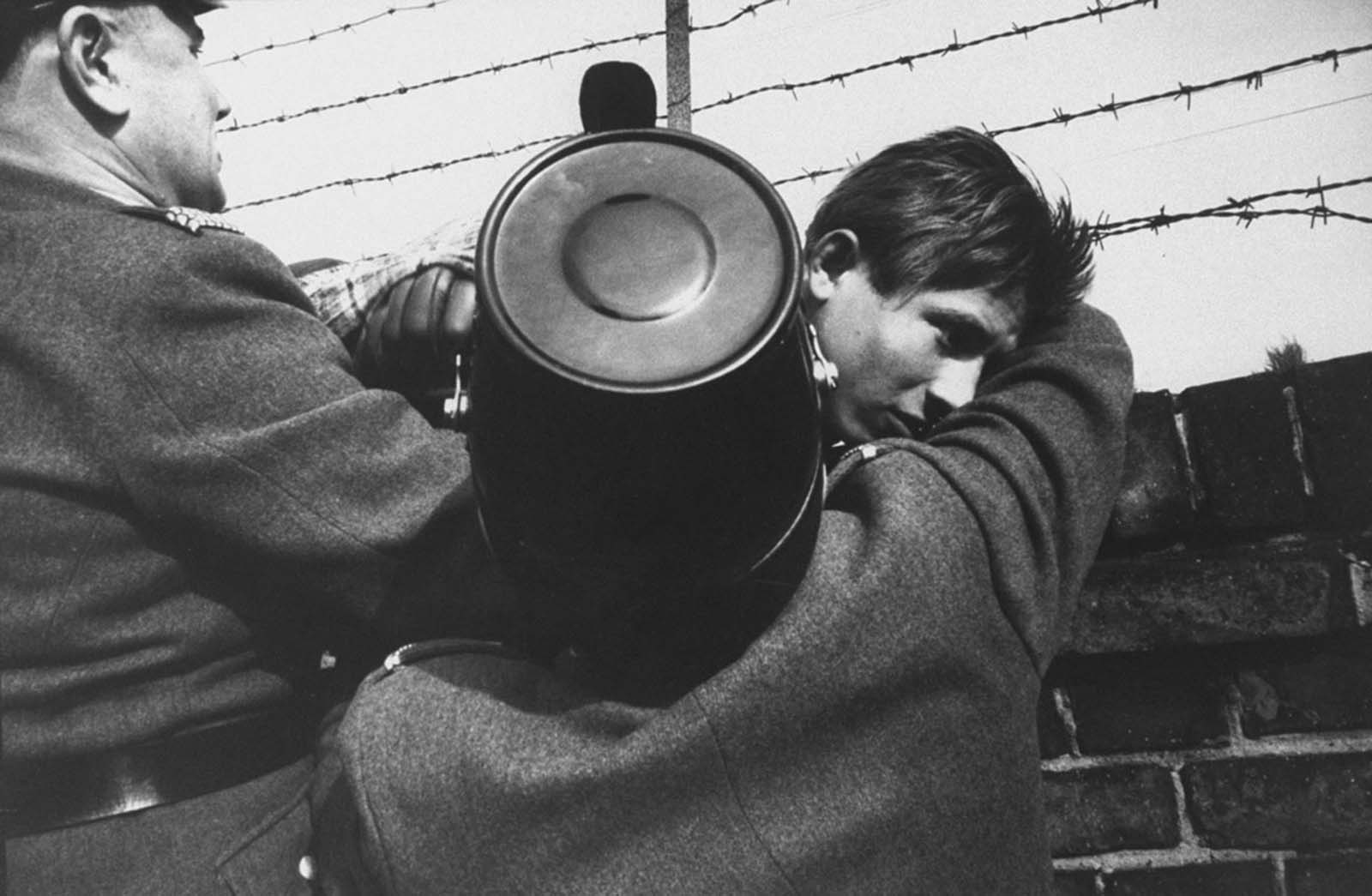
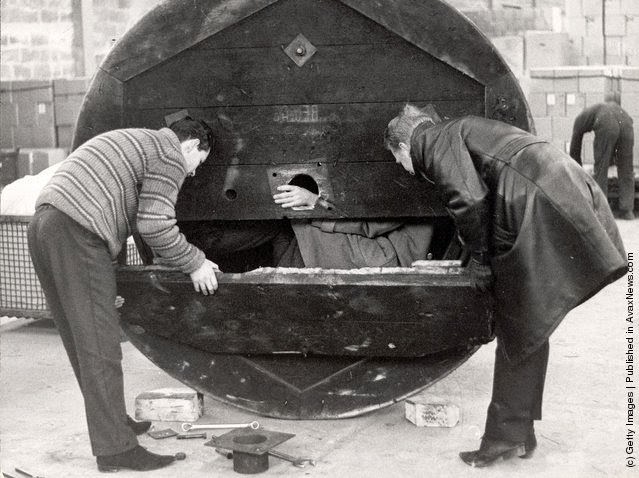
Ingenuity drove some of the most remarkable escape attempts. In 1965, three West German men smuggled their East Berlin girlfriends out of the eastern sector hidden inside hollow metal drums. The scheme worked. In 1963, an East German rammed an army vehicle directly into the wall, creating enough of a breach to escape through. Guards were left to inspect the damage and patch the hole. Each successful escape triggered a new round of reinforcement on the eastern side.
A 17-year-old East Berlin youth is helped down from the Berlin Wall by two friendly West Berlin police officers after he climbed over to freedom in October 1961.After East Germans jumped to freedom in the West, the windows of this building on the eastern side of the wall were bricked over. The building was later demolished, 1962.One of six West Berliners who dug a 20-inch-wide tunnel under a border street to East Berlin crawls out sometime over the weekend of June 8–10, 1962.A 75-year-old woman is helped into Tunnel 57, through which 57 East Berlin citizens escaped to the western sector of the city on October 3 and 4, 1964.To give the impression of normality, East German authorities sent children to the base of the Berlin Wall to act as if they were at play. Berlin, 1962
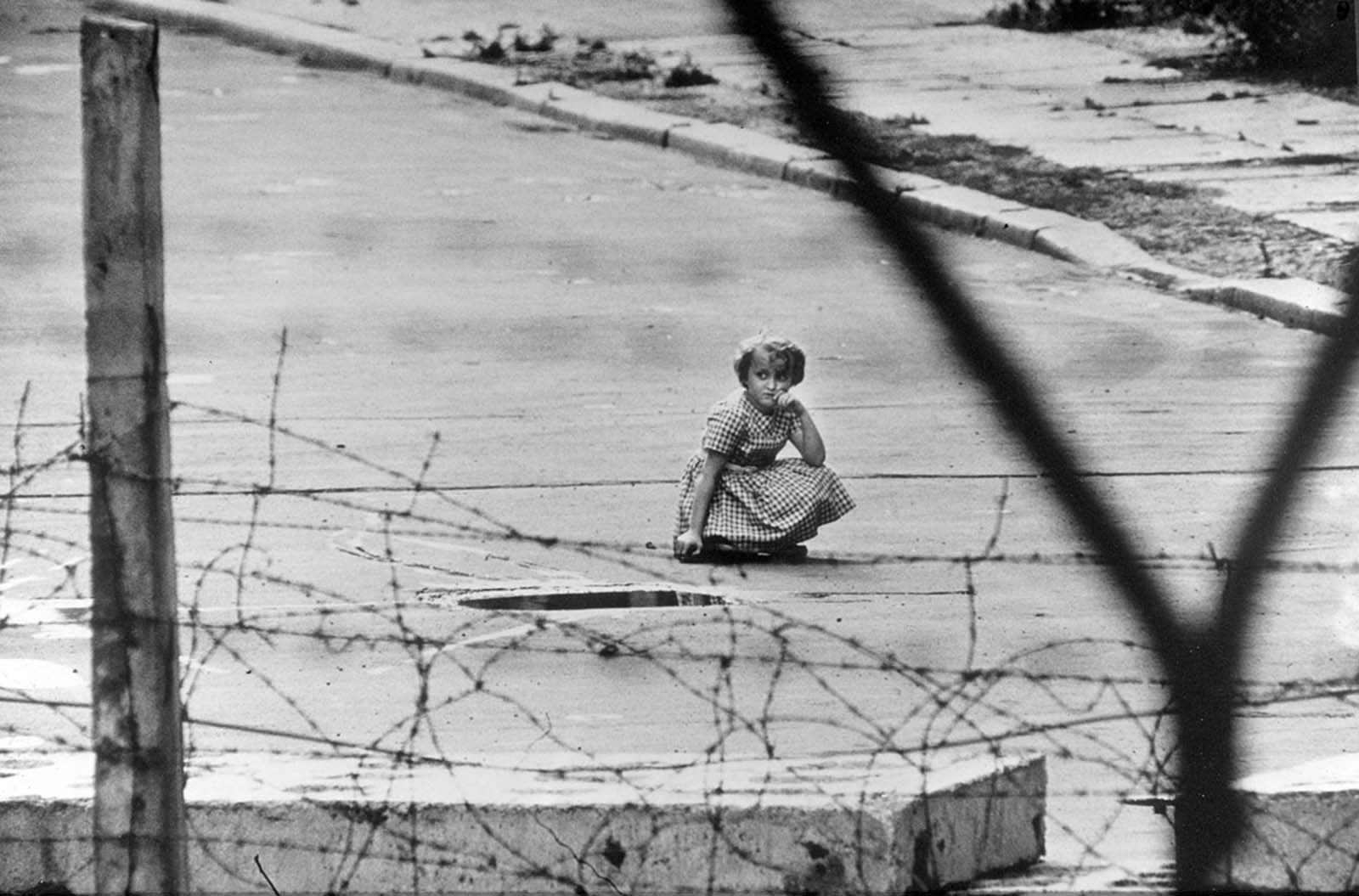
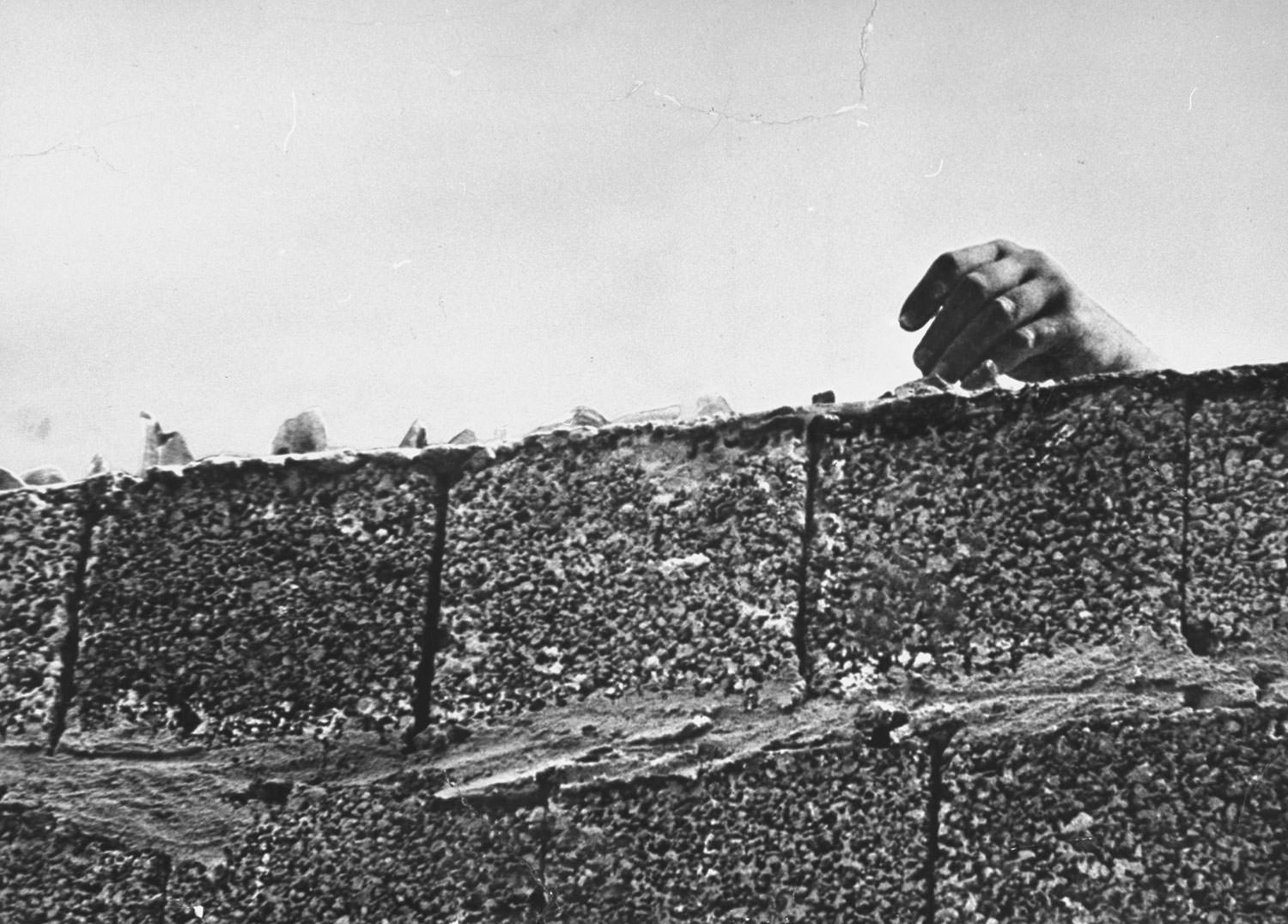
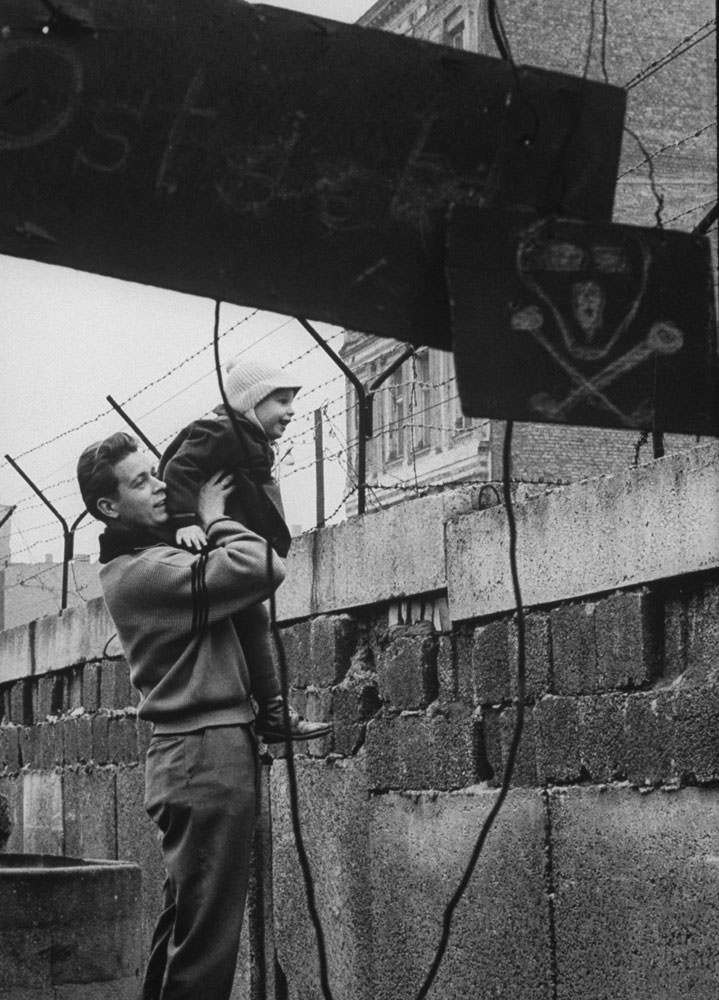
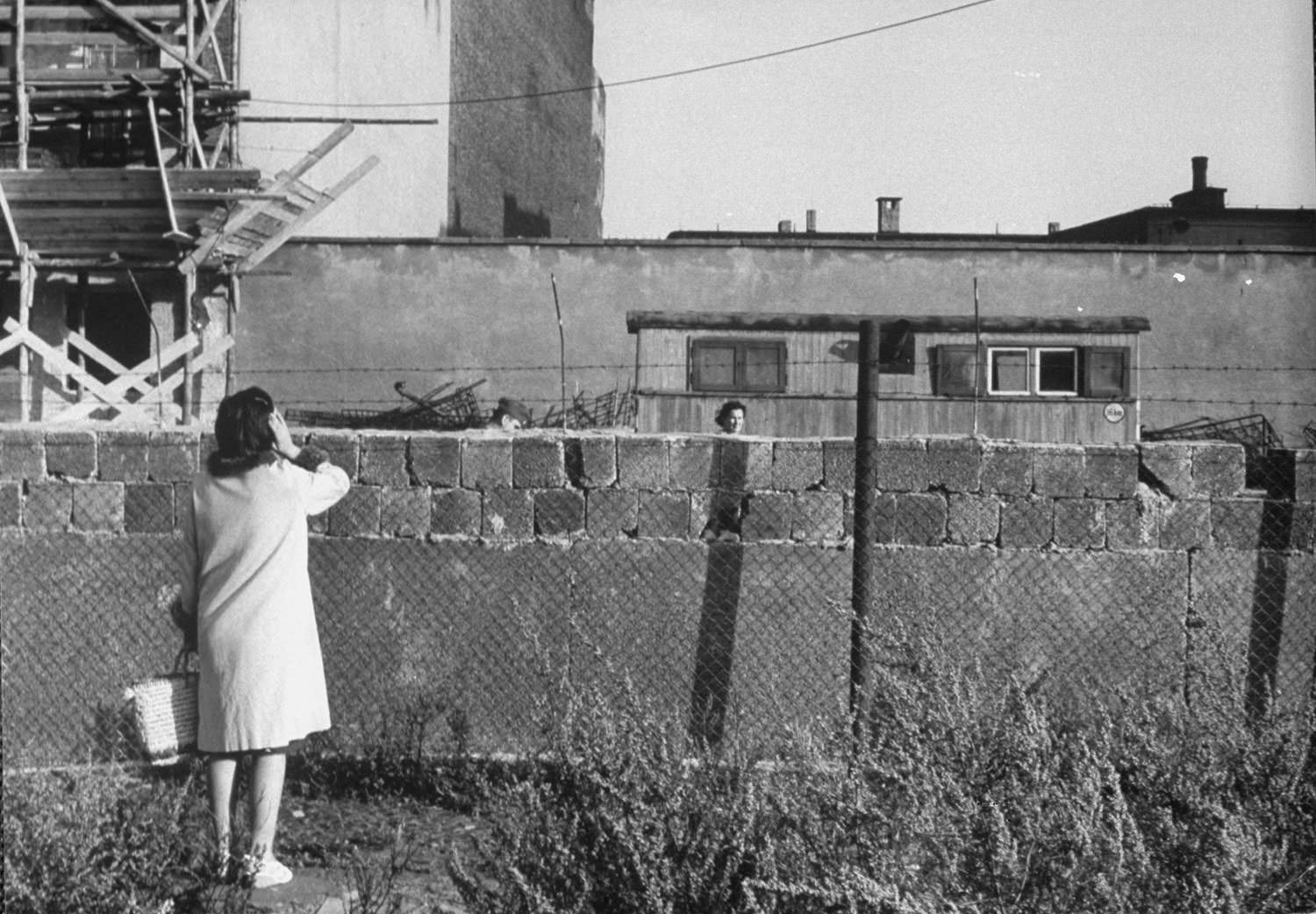
The photographs from these years document what words alone cannot fully convey. A hand reaching above the broken glass cemented along the top of the wall. A father lifting his small son to see over the barrier into the east. A woman who had escaped speaking through the wall to her mother still trapped on the other side. A girl in December 1962 pressing her face against a frosty window, the barbed wire of the wall reflected back at her in the glass. Children playing beside a structure that had the power to kill.
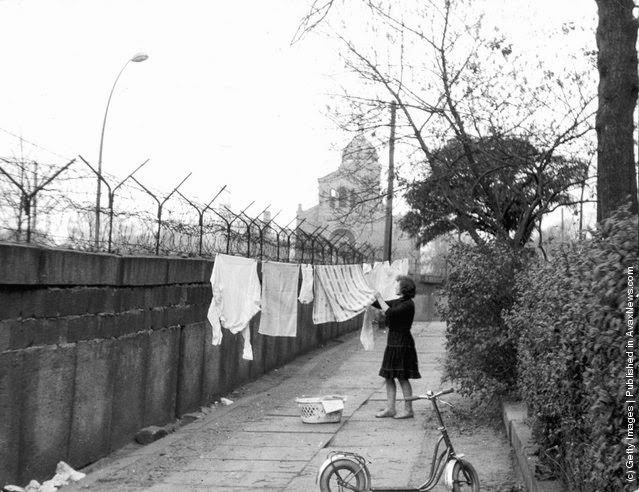
A dying Peter Fechter is carried away by East German border guards who shot him down when he tried to flee to the West in this August 17, 1962President John F. Kennedy stands before a huge crowd in West Berlin on June 26, 1963.Thousands of people line up at the Schillerstrasse in Charlottenburg, Berlin, to apply for a passage slip to get across the border on December 19, 1963.A German women hangs clothing out to dry on a line strung between a tree and the Berlin Wall, Germany, November 13, 1963Two men open a hollow metal drum used by three West German men to bring their girlfriends over the border from East Berlin, Germany, 1965.Officers inspecting the damage to the Berlin Wall, East Germany, and making preparations for its repair, after an East German rammed the Wall with an army car and successfully escaped, 1963.A hand reaches above the broken glass-covered top of the Berlin Wall in August 1961.A West German man lifts his son to give him a view of the other side of the Berlin Wall, 1961.A woman, foreground, who had escaped to West Berlin, speaks to her mother — who is still in East Berlin — in August 1961.A West Berlin woman looks out over the Berlin Wall — reflected in her window — in 1961.American forces, in foreground, face East German forces across the newly built Berlin Wall in 1961.
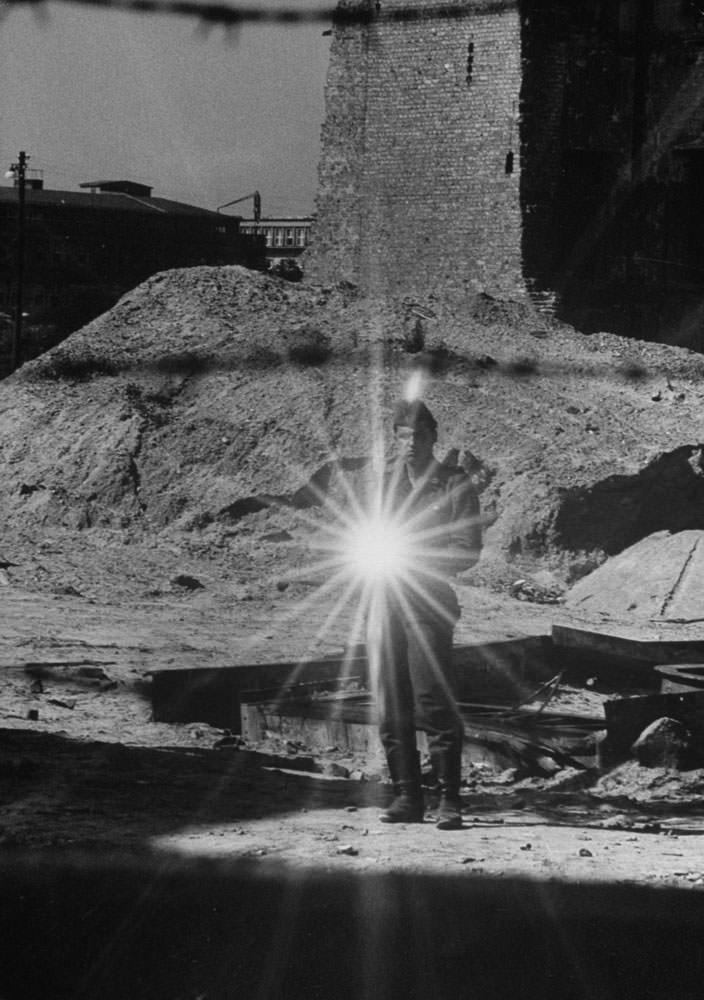
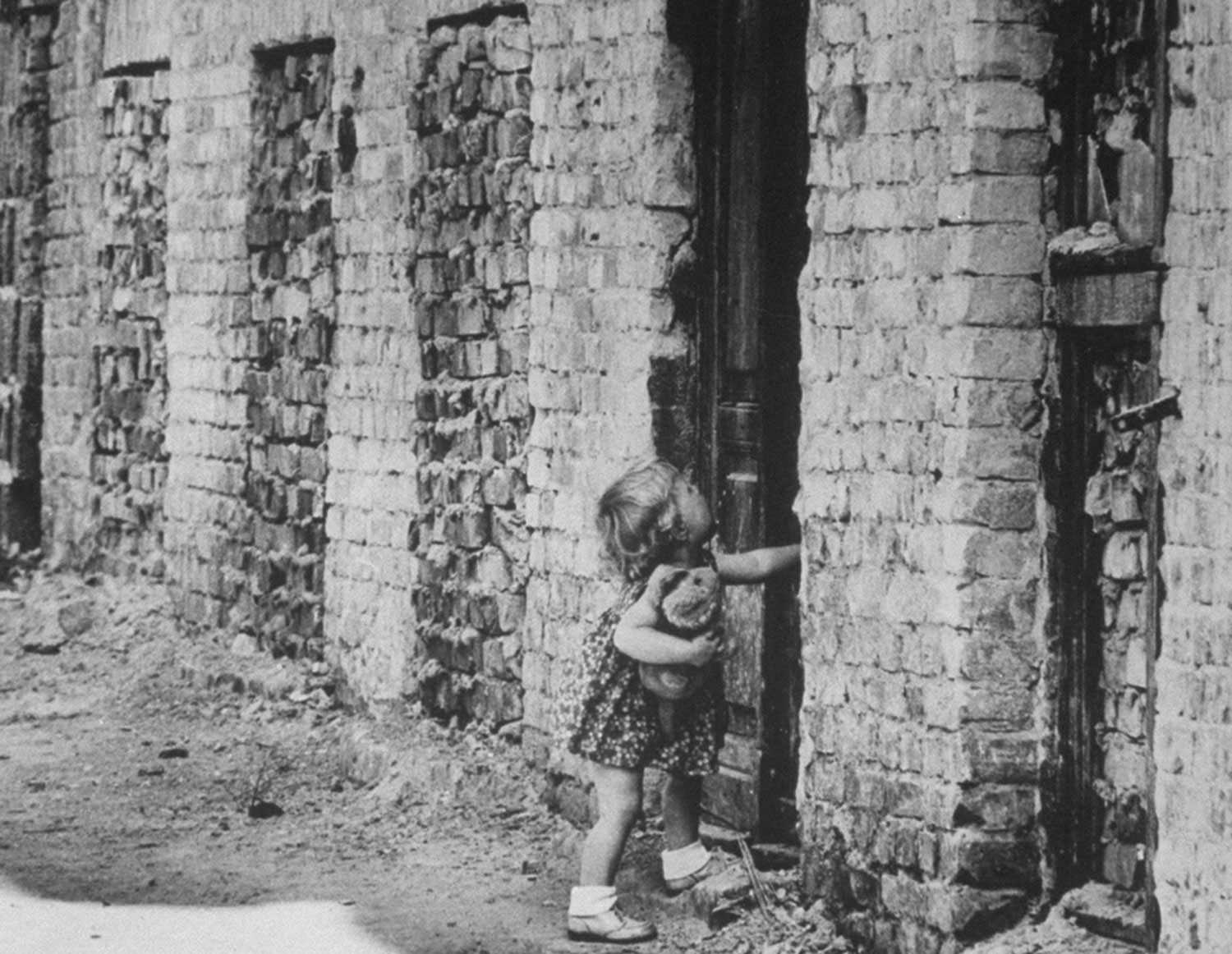
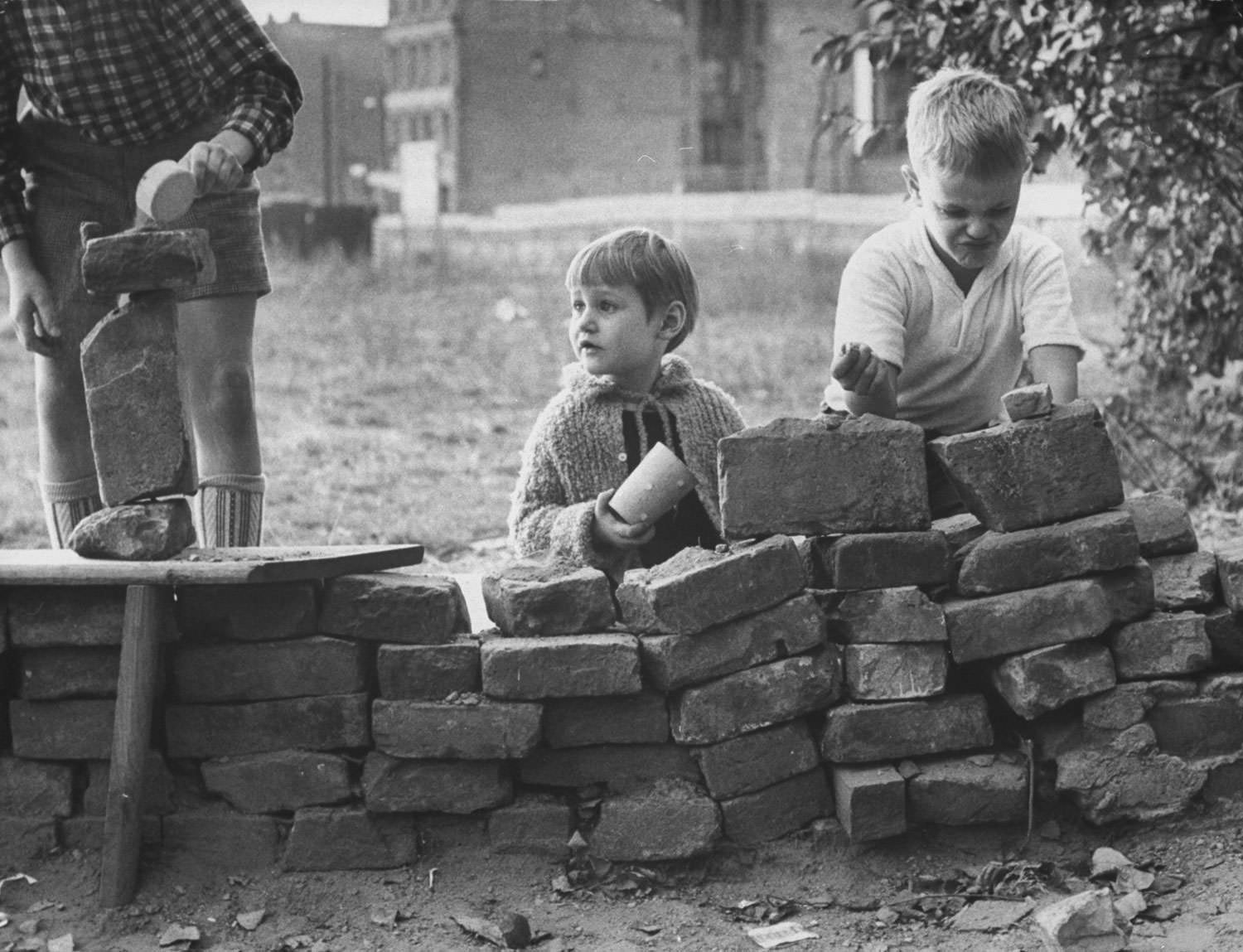
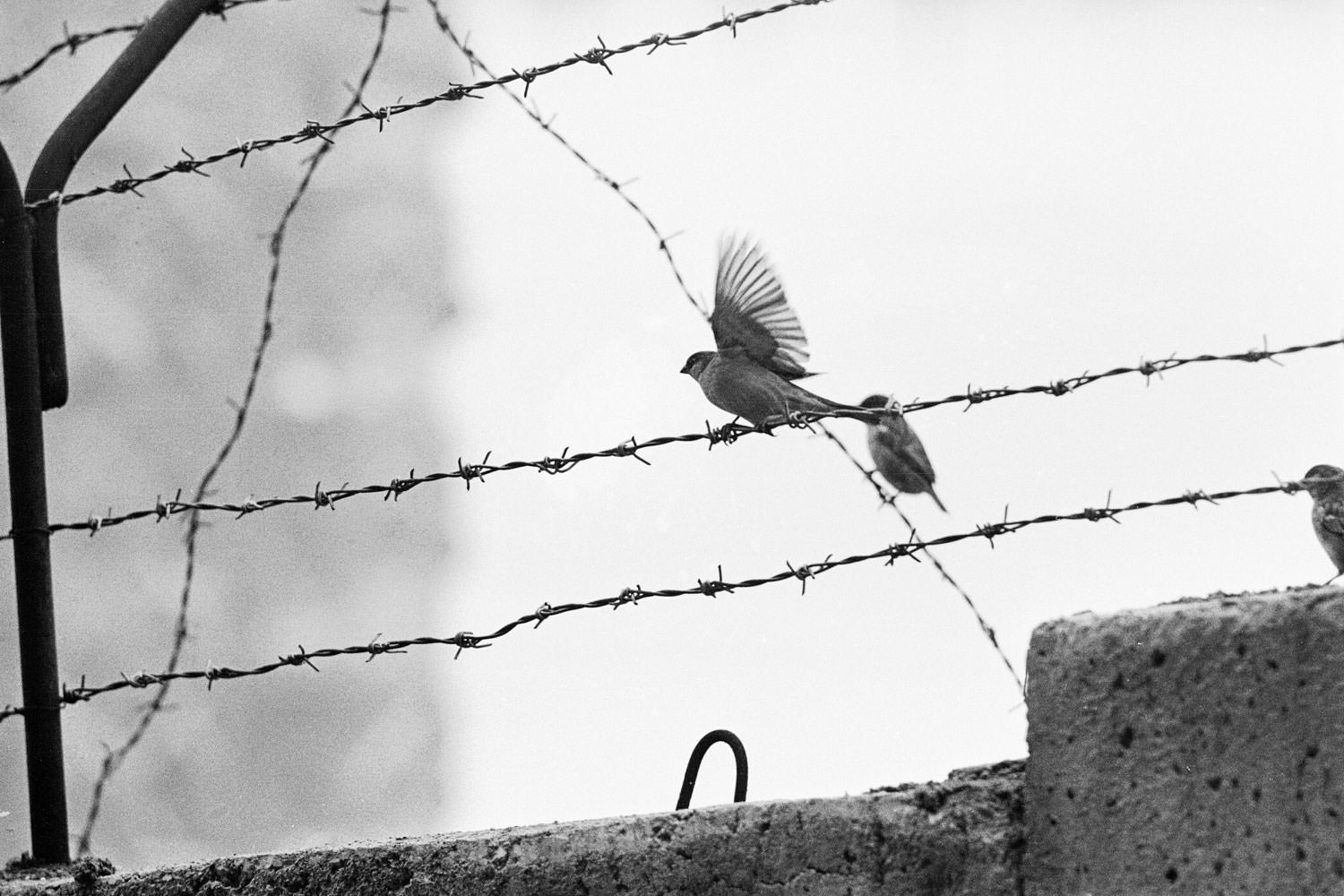
The everyday absurdities of the divided city were everywhere. East German police were caught on film using mirrors to reflect sunlight into photographers’ lenses, trying to prevent documentation of what was happening along the wall. A West Berlin toddler tried to open a door that had been sealed and incorporated into the barrier. West Berlin children built a miniature pretend wall out of rubble in an empty lot — a game that reflected the only reality they had ever known. Birds perched on the barbed wire, indifferent to the boundary beneath them.
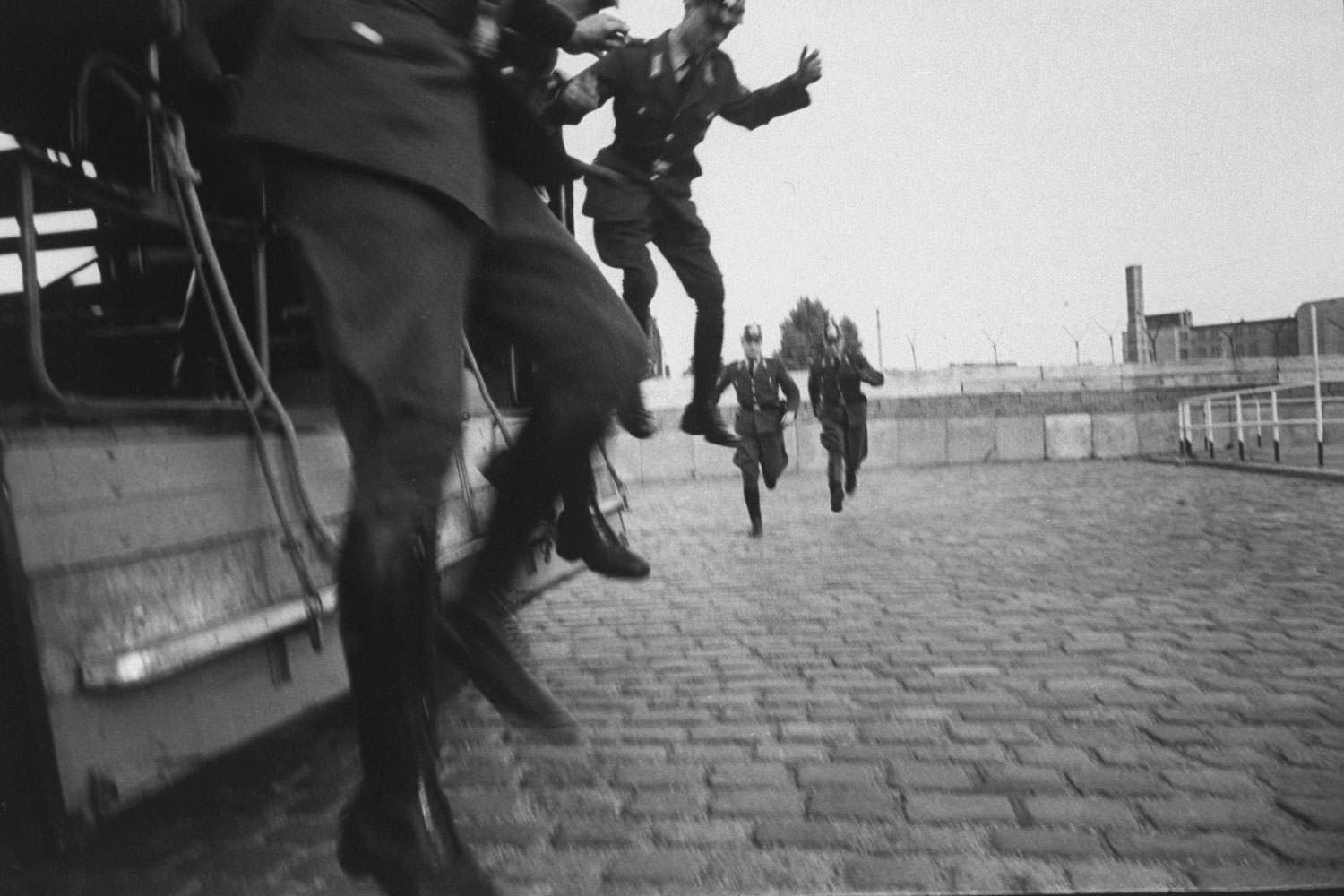
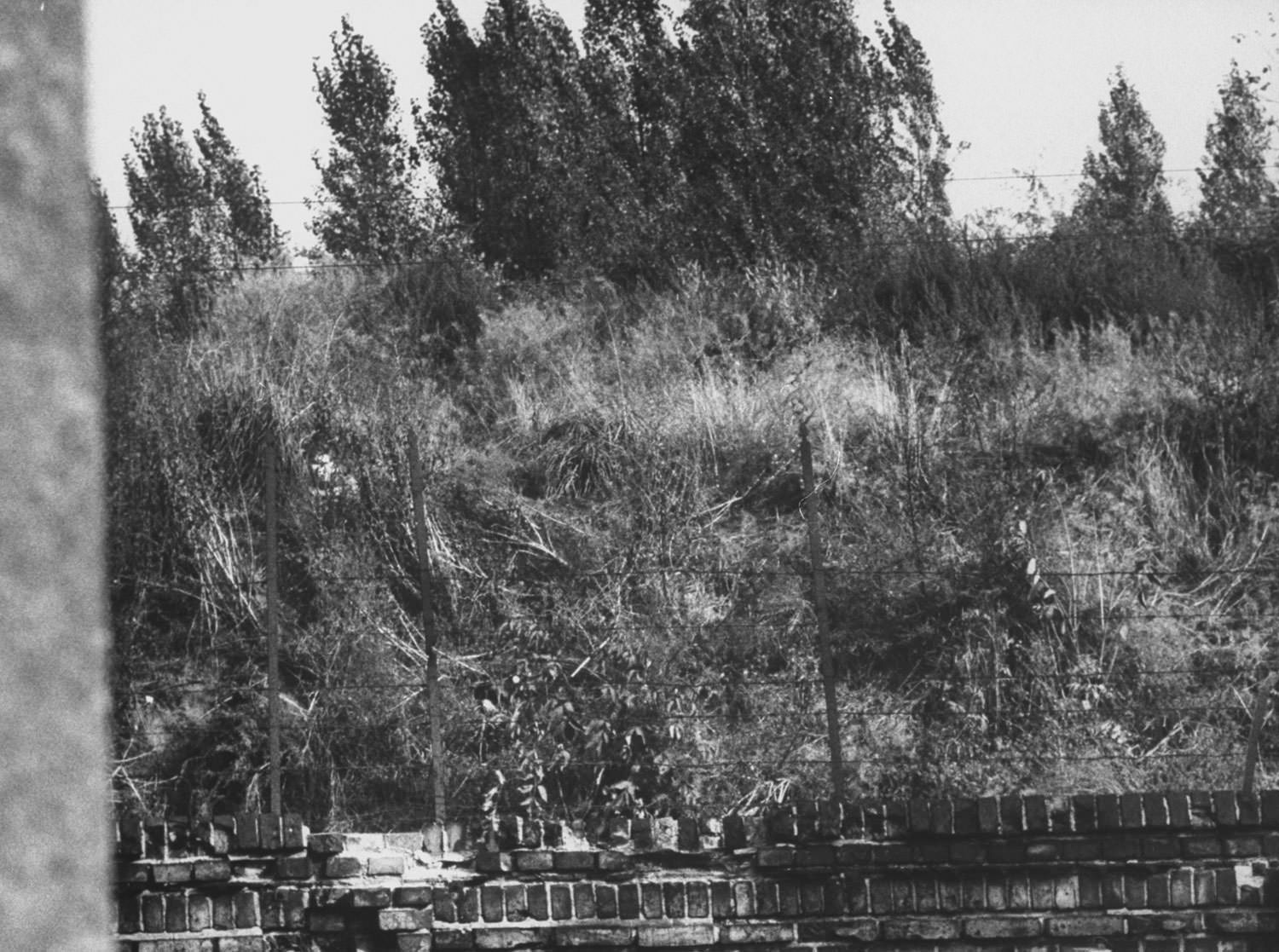
A crowd of West Berlin residents watches as an East German policeman patrols the Berlin Wall in August 1961.A couple enjoys a West Berlin bar as the Wall looms in the near distance in 1961An East German mason builds up a fresh portion of the Berlin Wall in August 1961.A crowd of West Berlin youths gather to protest the construction of the Berlin Wall in August 1961.Sunlight shines on the barbed wire and blocks of the Berlin Wall in August 1961.An East German policeman uses sunlight reflected off a mirror in an attempt to stop photographers from taking pictures in August 1961.A West Berlin toddler attempts to open a sealed door of a house that has become part of the Berlin Wall in August 1961.West Berlin children, from left, Peter Friedrich, 5, Katrin Kuhl, 4, and Jurgen Bottcher, 8, build a pretend Berlin Wall in a vacant lot in October 1961.Three West Berlin police officers jump off a truck as two others run to meet them before starting their shifts on guard duty at the Berlin Wall in October 1961.An East German teen hides in tall grass, far left, awaiting a chance to jump over the Berlin Wall in October 1961.West German police look out over the Berlin Wall in order to offer their help to any potential escapees to the West in October 1961.An East German teen makes his way to the West climbing over the Berlin Wall in October 1961.A 17-year-old East German orphan successfully slips through the barbed wire over the Berlin Wall to the West after being waved on by West Berlin police in October 1961.A Lebanese businessman, Edmond Khayat, carries an 85-pound wooden cross to protest the Berlin Wall in October 1961.Birds on barbed wire strung atop the Berlin Wall in January 1962.
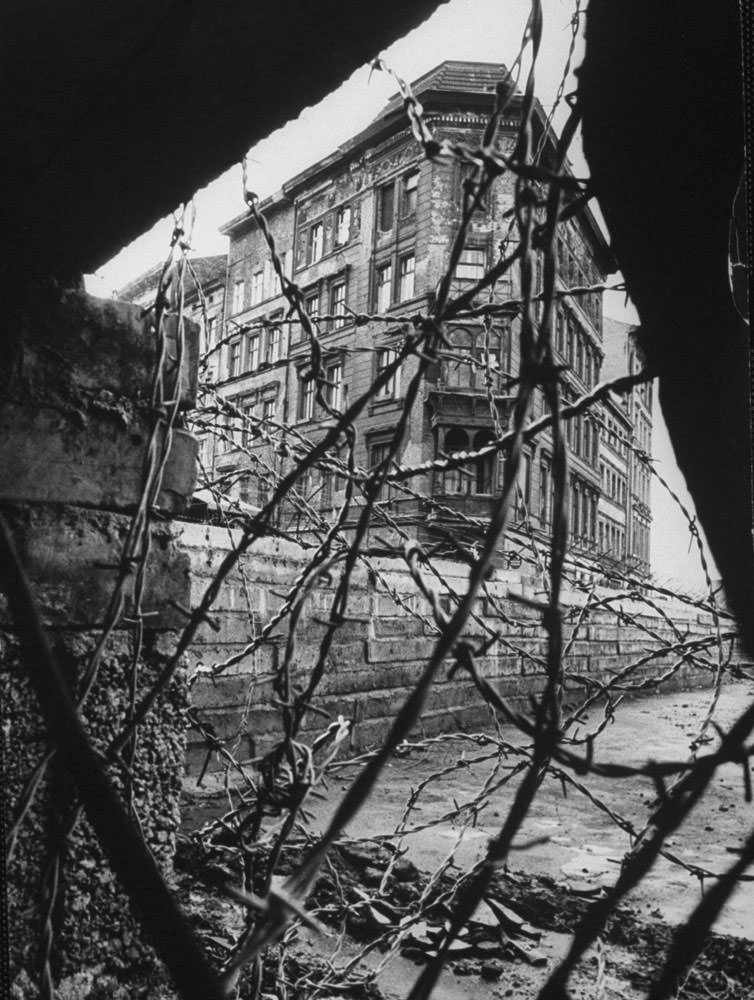
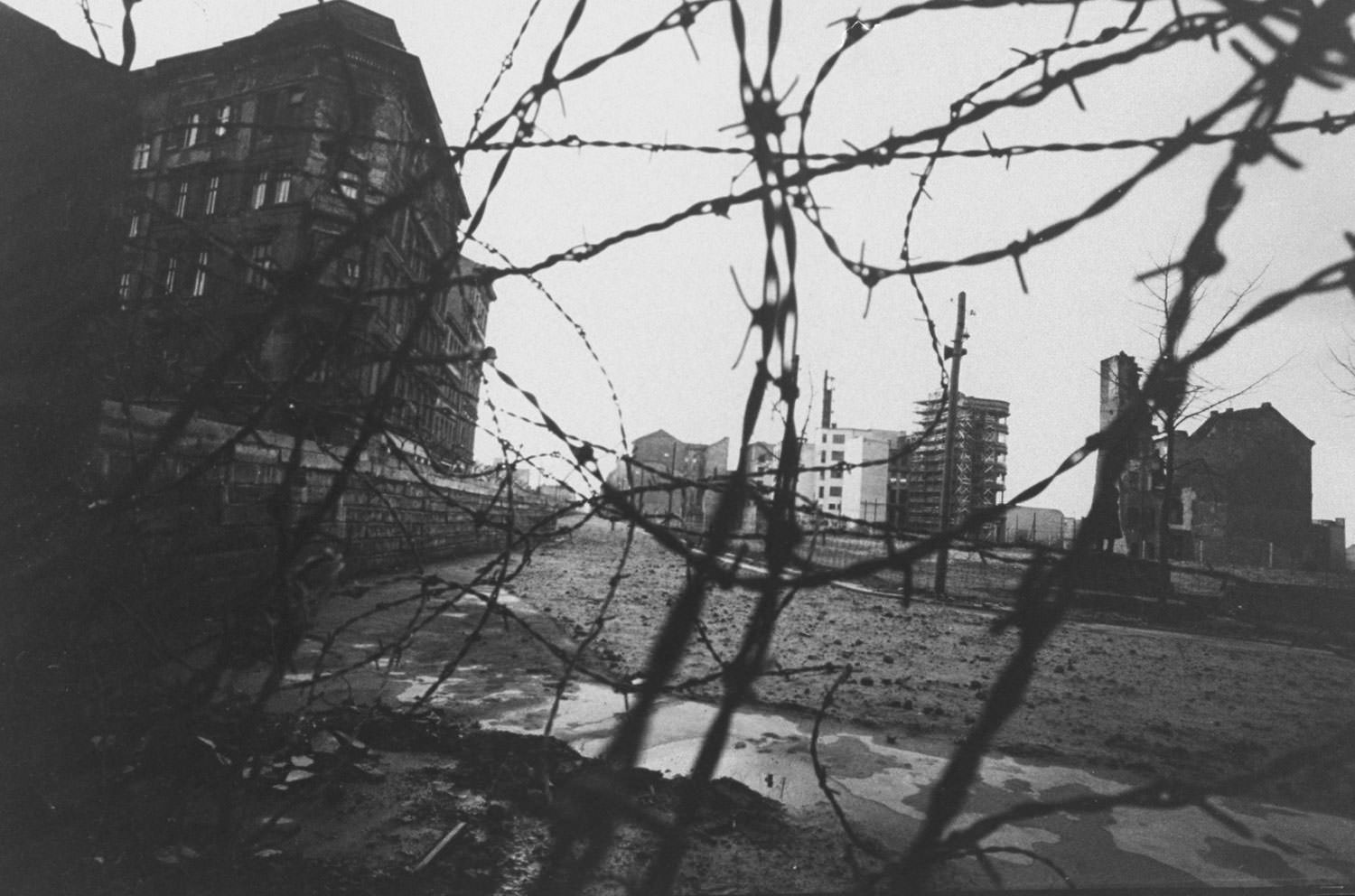
A divided Berlin is seen through barbed wire and rubble in January 1962.
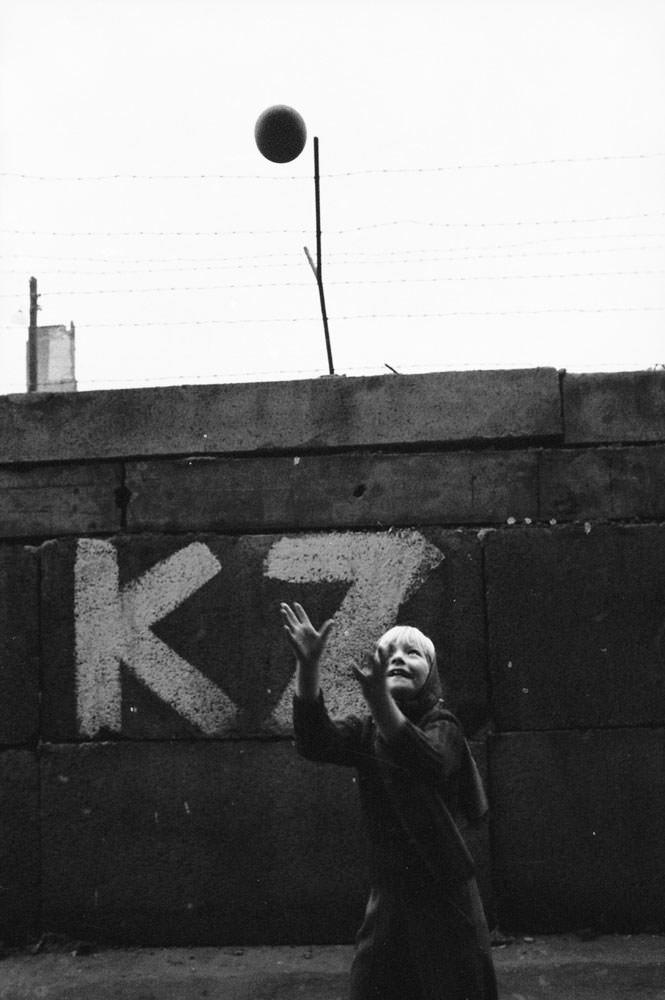
A young West German, Monika Heyne, plays with a ball near the Berlin Wall in January 1962.
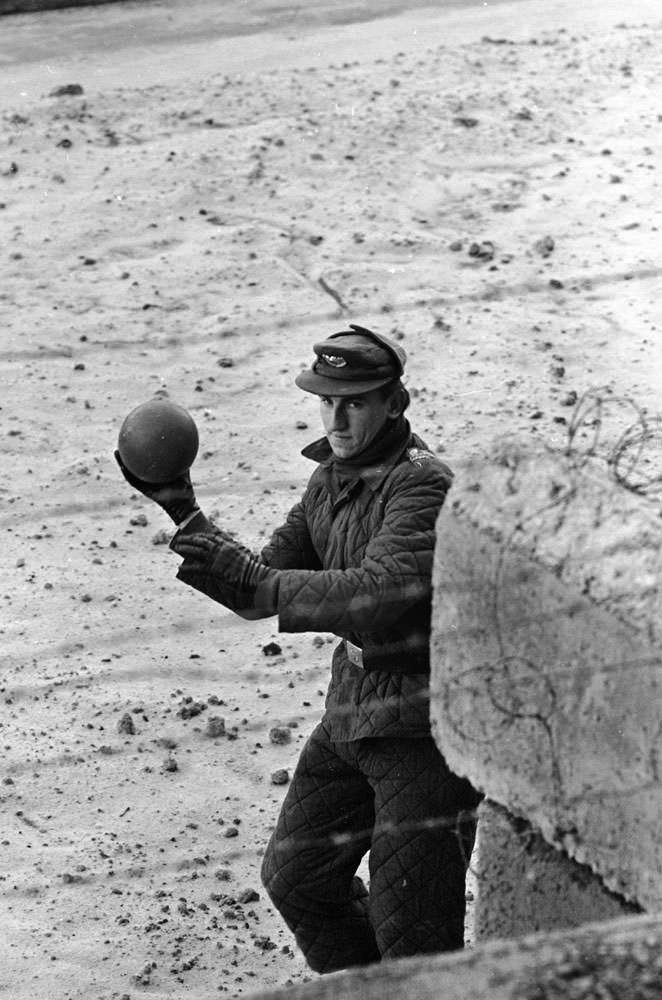
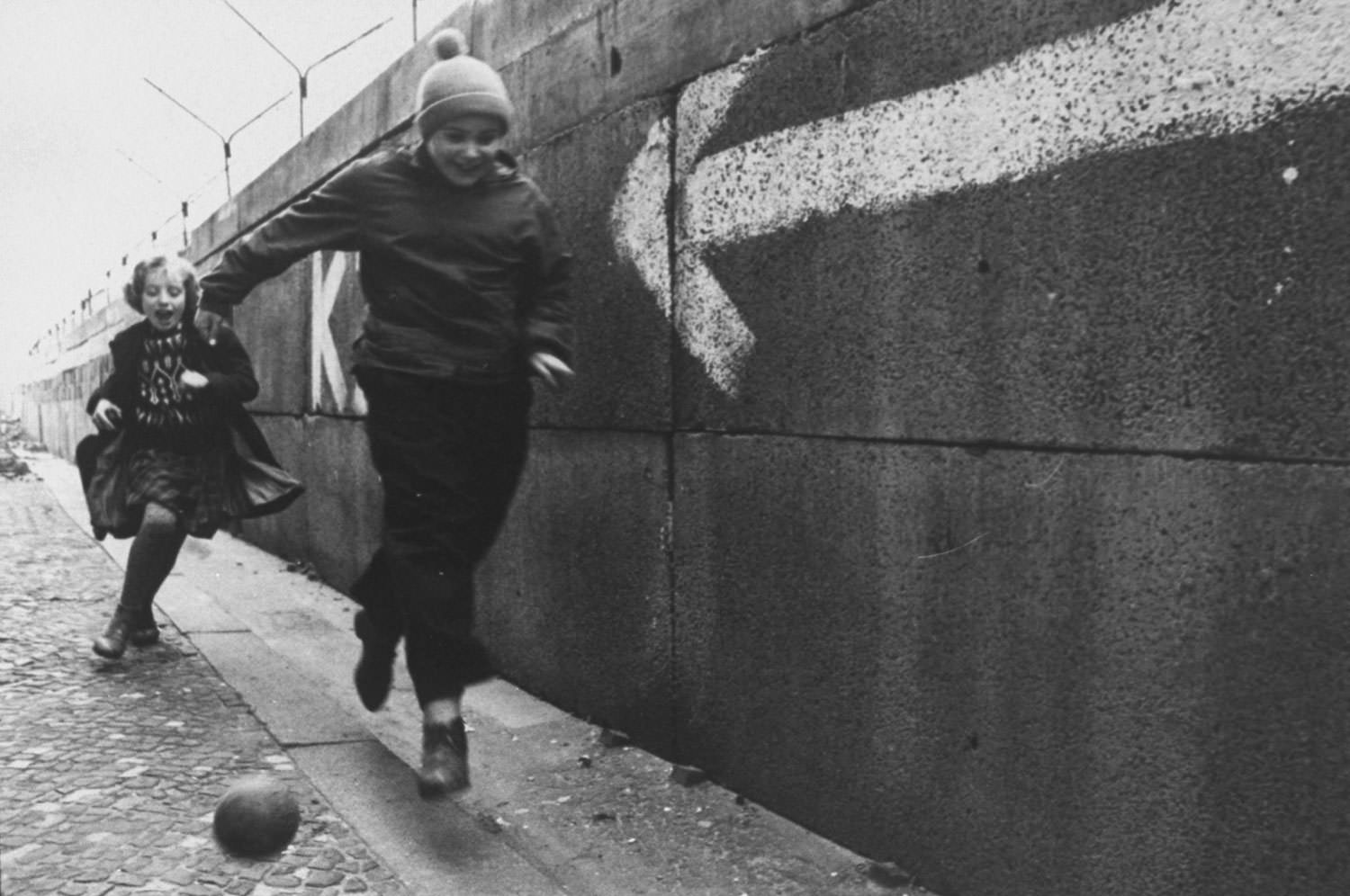
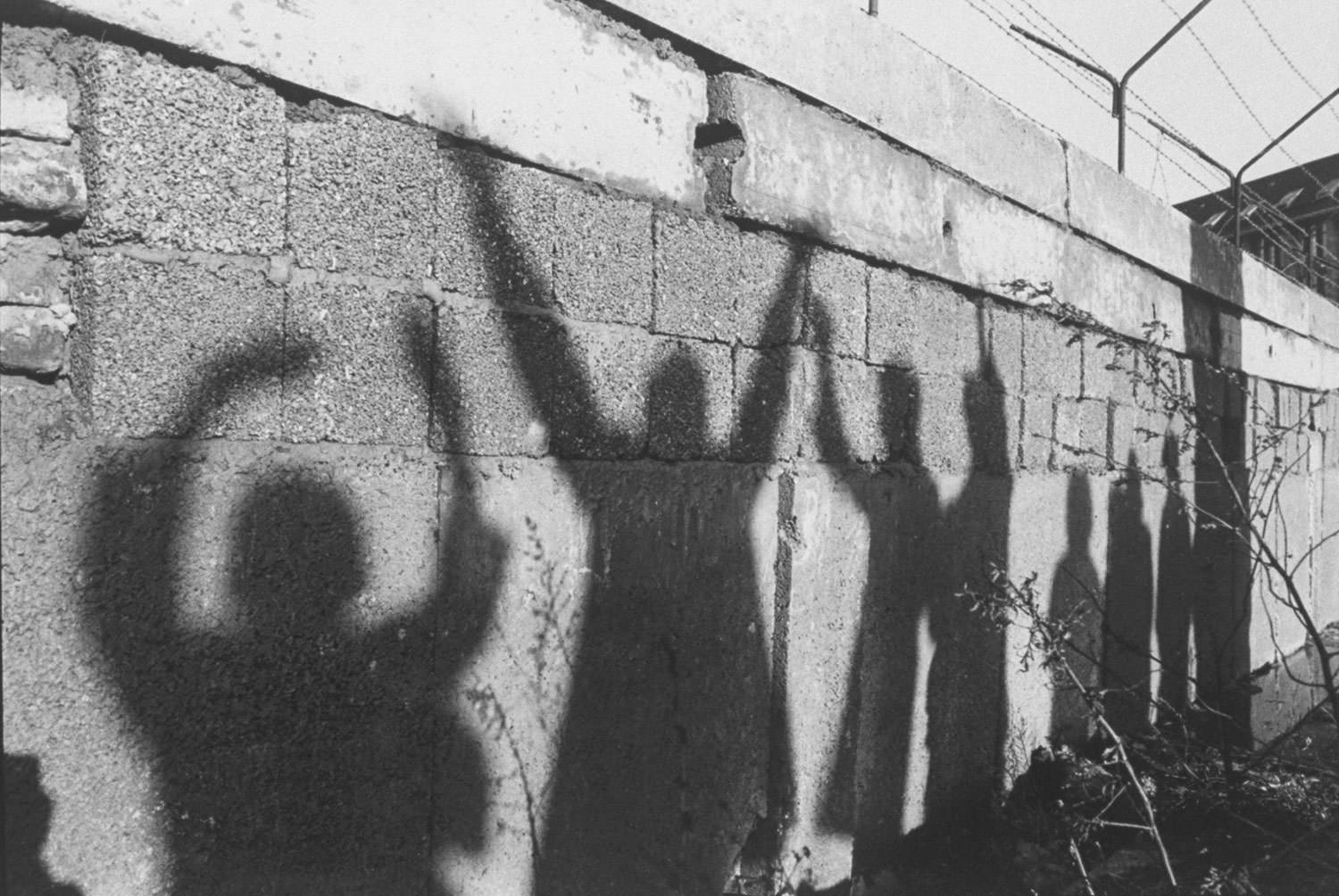
An East German guard throws a ball back to a child on the West German side of the Berlin Wall in June 1962.An East German policeman, known as a Volkspolizei or “people’s police” — Vopo for short — walks at Checkpoint Charlie between East and West Berlin in October 1962.Children chase a ball beside the Berlin Wall in December 1962.A girl looks at the Berlin Wall through a frosty window which reflects the Wall’s silhouetted barbed wire in December 1962.The Berlin Wall bears the shadowy silhouettes of West Berliners waving to their relatives on the unseen, Eastern side of the Wall in December 1962.A divided Berlin, seen through a tangle of barbed wire in December 1962.
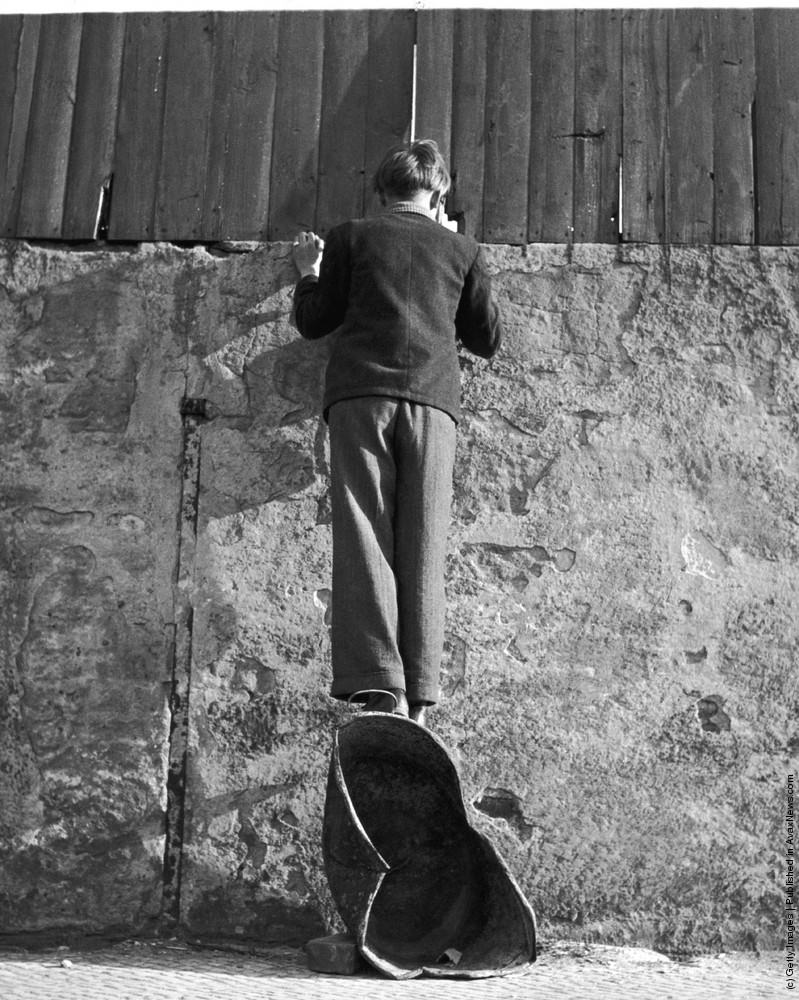
A boy stands on a coal scuttle to peer over the wall of a sports stadium in Berlin, 8th January 1961.
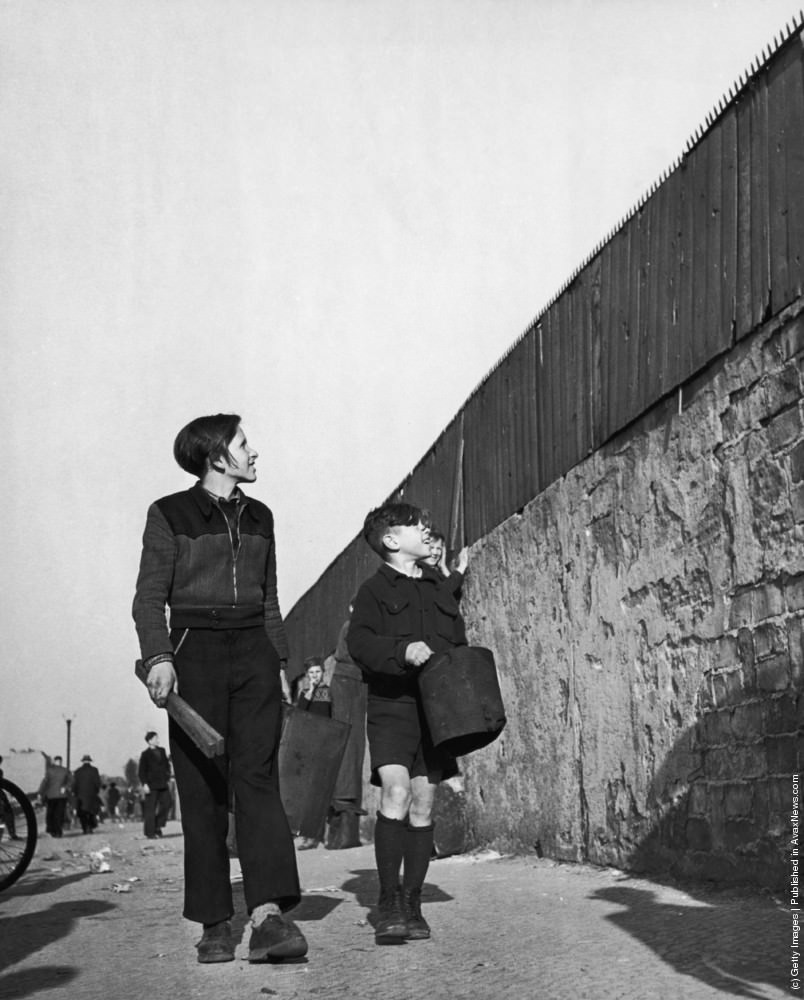
Boys bring buckets to stand on for a view over the wall of a sports stadium in Berlin, 8th January 1961.
West Berlin policemen and East German Volkspolizei face each other across the border in Berlin.Two mothers can only wave to their children and grandchildren in the Soviet sector of Berlin from across the Berlin wall, 1961.On a day when the Berlin Wall is open, throngs of West Germans wait for friends and relatives to arrive from the Eastern sector, 1960.Families and friends, once neighbours, now stand divided and wave across to each other over the Berlin wall, 1960.
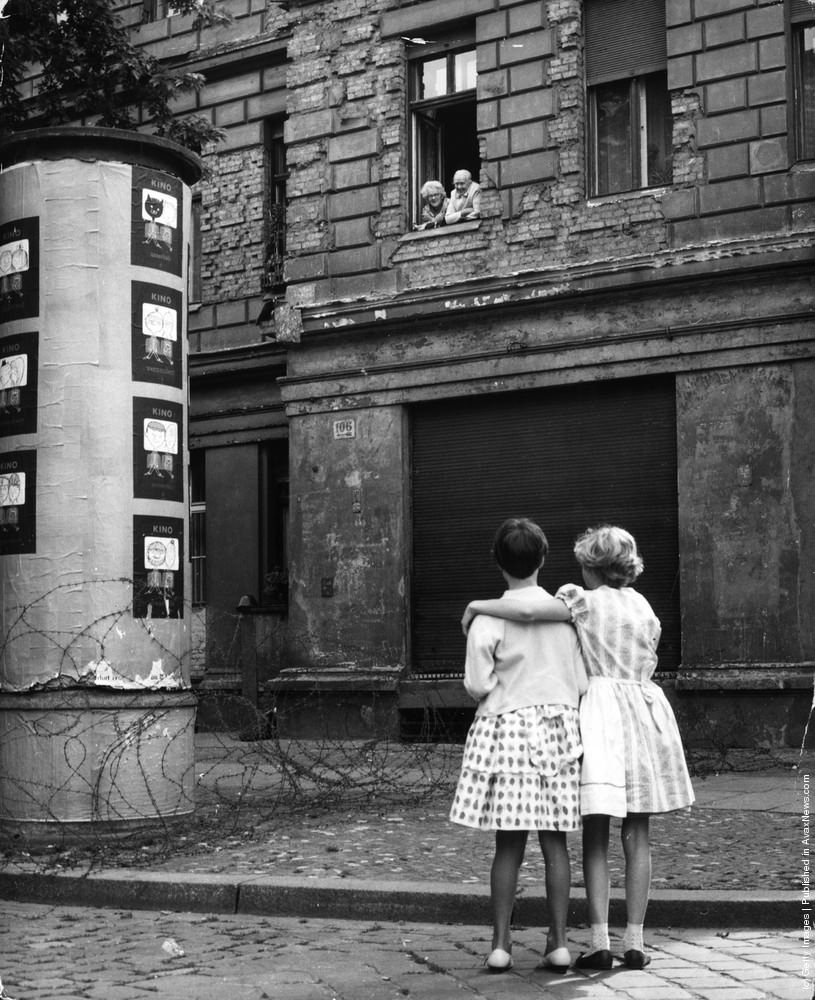
Two little girls in a West German street chat with their grandparents in the window of their home in the eastern zone, separated only by a barbed wire barricade, 14th August 1961.
A citizen of East Berlin peers through barbed wire at a West Berliner over the Berlin Wall, Berlin, Germany, 1960s.
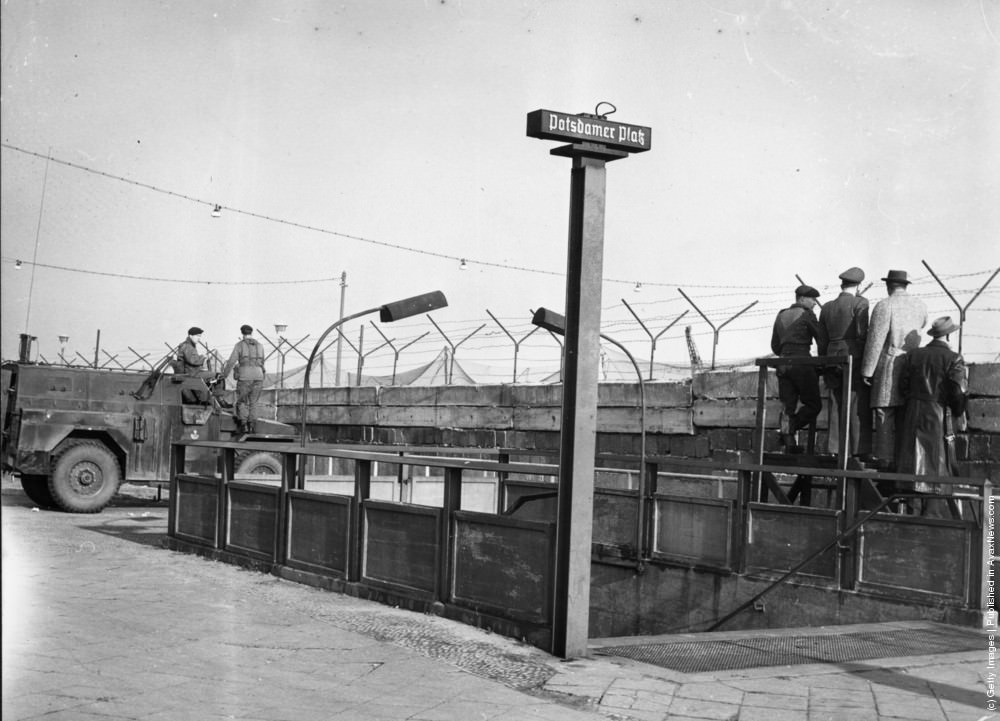
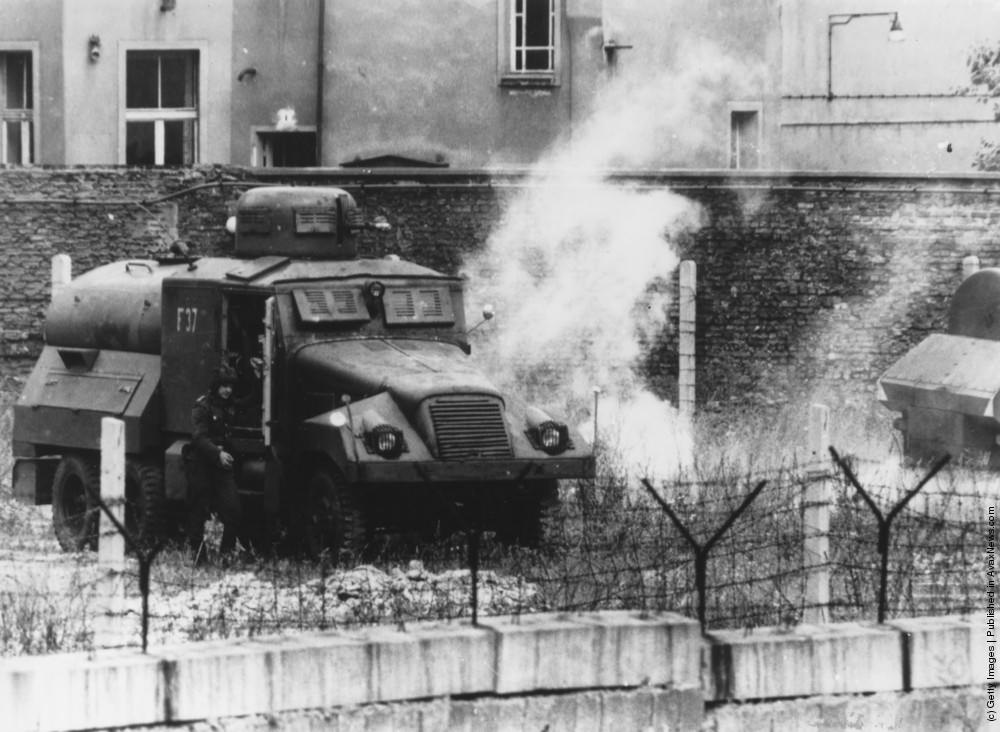
A woman is lowered from a window in Bernauer Strasse on a rope to escape into the western sector of Berlin after the post-war division of the city, 10th September 1961.Posters of Nikita Khrushchev, Walter Ulbricht, Wilhelm Pieck and the East German Premier Otto Grotewohl on an East Berlin Wall, 28th August 1961.Soldiers outside the entrance to Berlin’s Potsdamer Platz underground station next to a section of the Berlin Wall, circa 1961.East German troops and police seal off the frontier between East and West Berlin with barbed-wire to control the flow of refugees, 15th August 1961.East German military personnel supervising construction of the Berlin Wall, August 1961.A tear gas grenade explodes next to an East German armoured car during riots on the first anniversary of the building of the Berlin Wall, circa 1960.
Dieter and Monika Marotz of Bernauerstrasse, Berlin, wave to relatives after their wedding, 8th September 1961.
Relatives of newlyweds Dieter and Monika Marotz of Bernauerstrasse, Berlin, wave to the couple after their wedding, 8th September 1961.
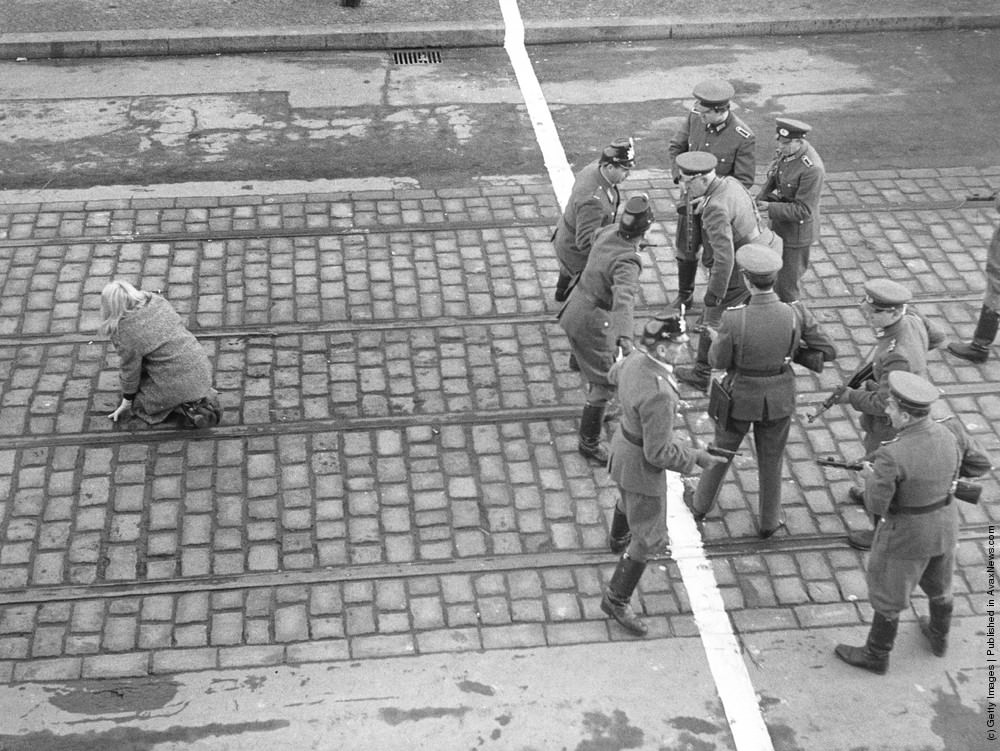
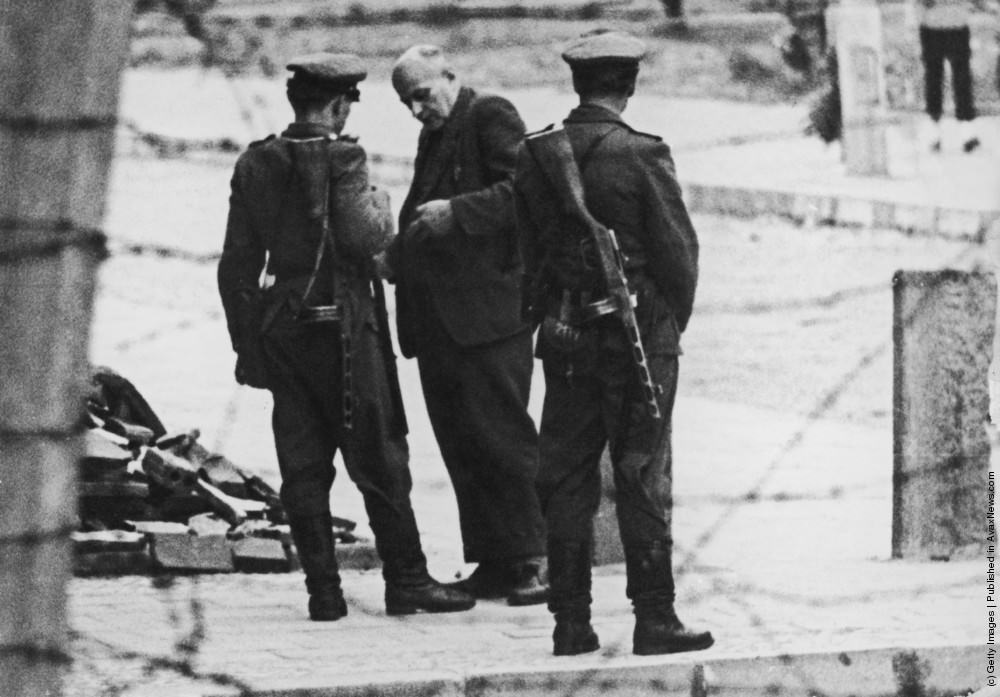
Members of the Volkspolizei, the East German national police, check an elderly man’s papers at the Berlin Wall, 11th September 1961.East German border guards carry away a refugee who was wounded by East German machine-gun fire as he dashed through Communist border installations toward the Berlin Wall in 1971.