In the early 1900s, ghost photographs were everywhere. Photographers and self-proclaimed mediums claimed their cameras had captured proof of life after death — spirits hovering behind the living, translucent hands reaching out from beyond. The public was fascinated, and many believed. But one man made it his mission to show exactly how these images were made, and how easy the deception really was.
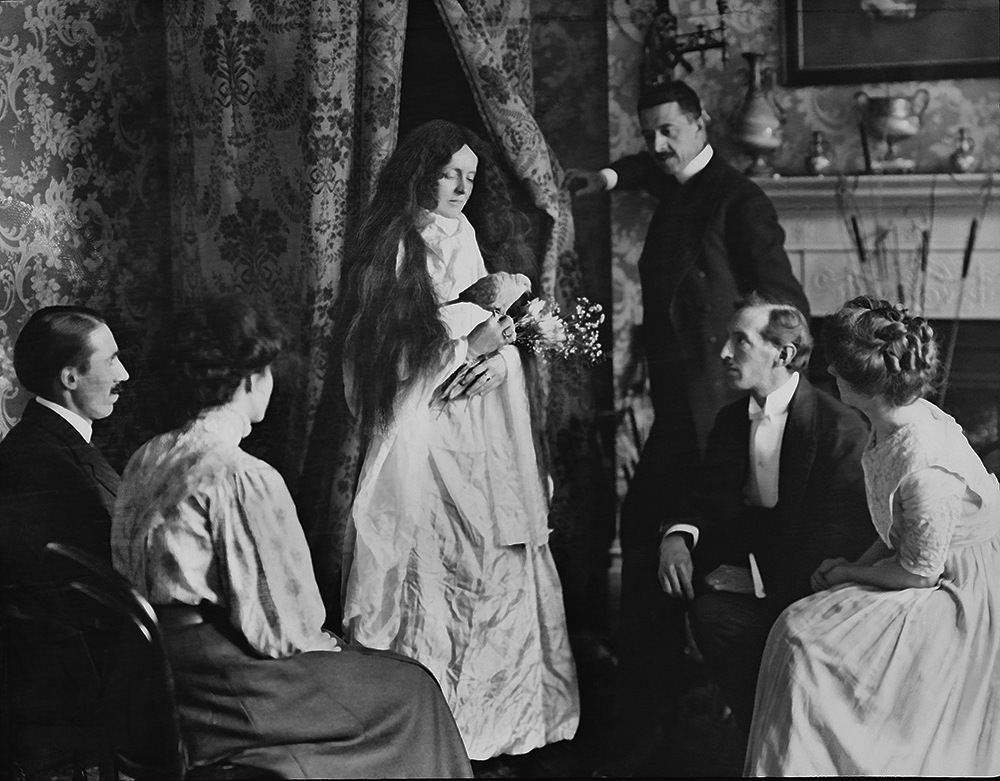
William S. Marriott, known on stage as Dr. William, was a professional magician who had spent years mastering illusions. He understood better than most how a trick could fool an audience, and he turned that knowledge into a public campaign against fraudulent spirit photography. Pearson’s Magazine, known for its speculative and investigative content, published a detailed interview with Marriott along with photographs documenting his demonstrations. In those images, he reproduced one fake spirit effect after another, each one stripped down to its mechanics.
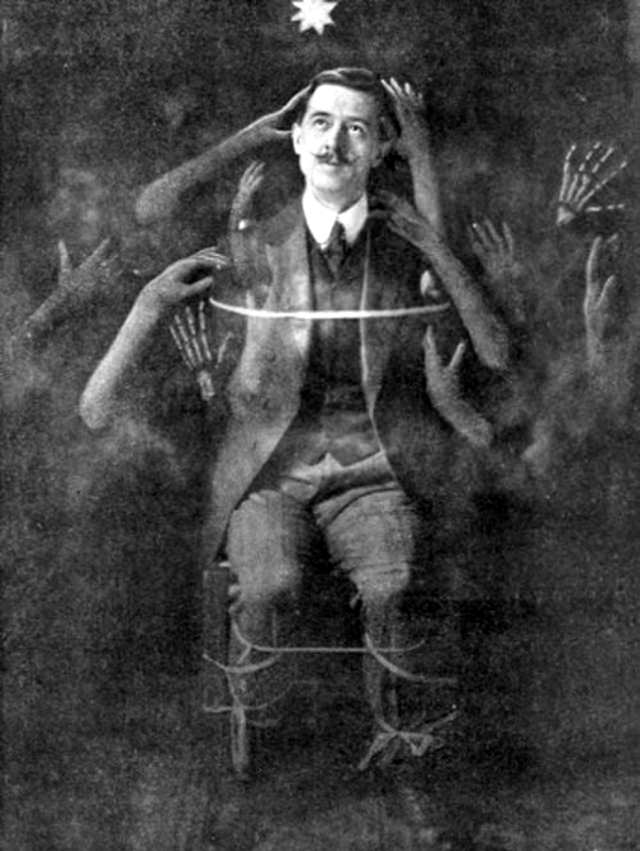
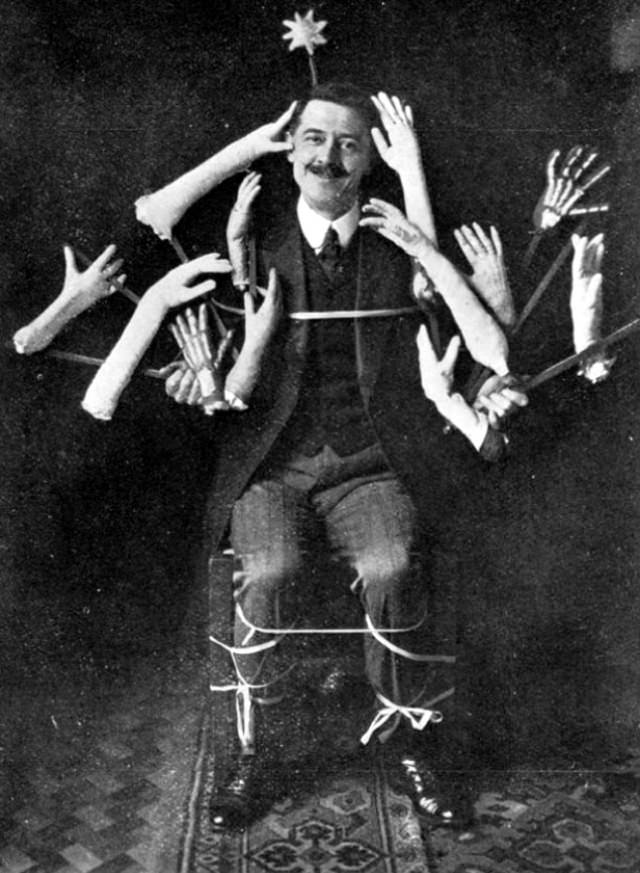
One of the most common tricks involved creating disembodied spirit hands — a staple of séance photography at the time. Marriott showed that producing convincing fake hands required nothing supernatural. Simple props, careful positioning, and controlled lighting did the job. The results, as his demonstration photographs showed, were striking enough to fool a grieving person desperate to believe they were seeing a loved one from beyond.
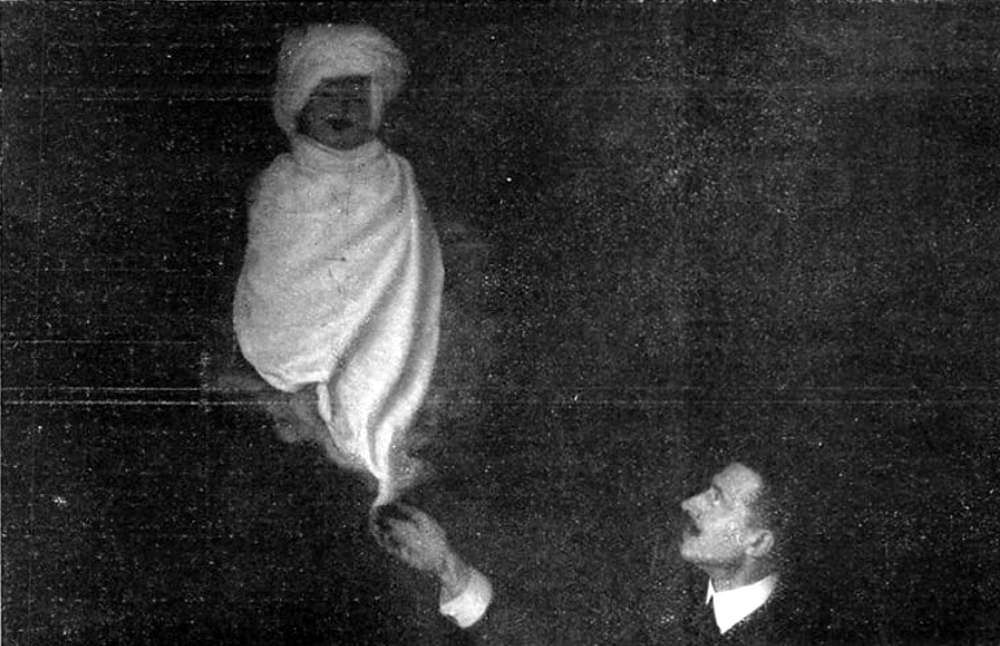
Photography itself made deception easier than most people realized. At the time, cameras used glass plates rather than film. A plate that had already been exposed to one image and was then used again would capture two separate images on top of each other — a double exposure. This created the illusion of a ghostly, semi-transparent figure appearing alongside a real person. Fraudsters exploited this technical quirk deliberately, pre-exposing plates with a costumed figure before using them in an ordinary portrait session.
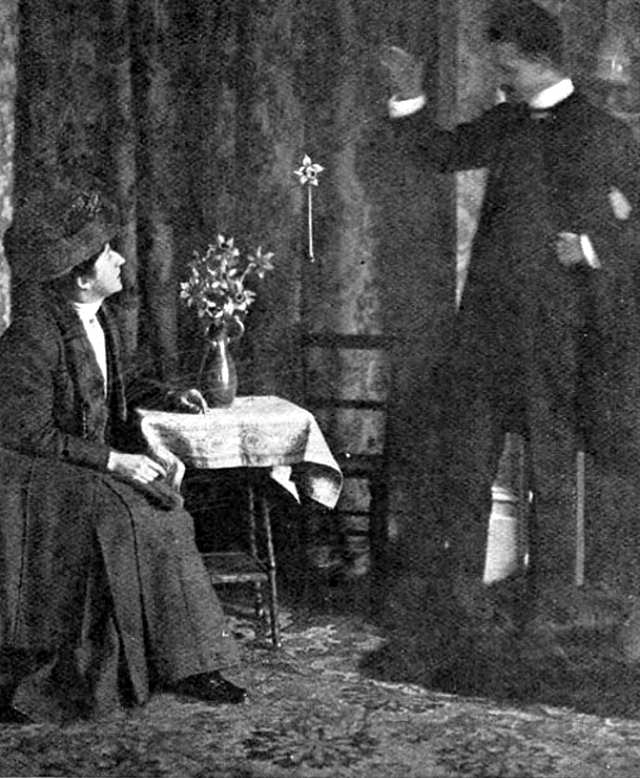
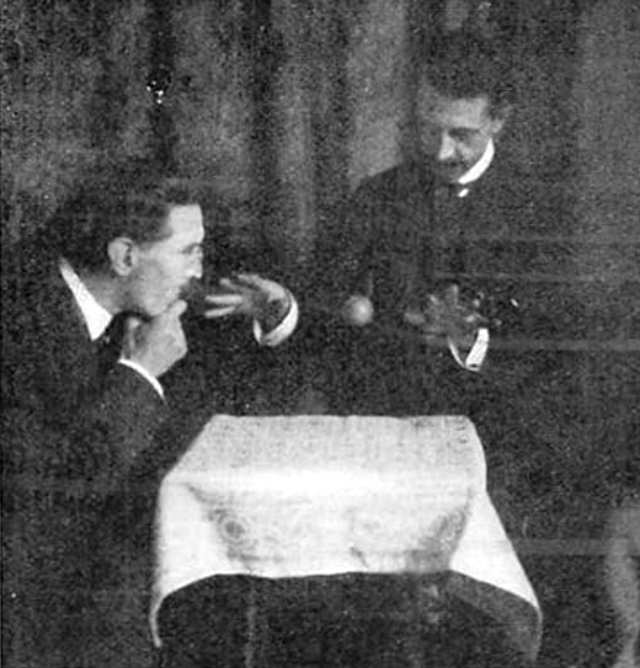
Levitation was another crowd-pleasing effect. Objects that appeared to float during a séance were almost always guided by a length of thread thin enough to be invisible in low light. Marriott demonstrated this method directly, showing how little skill or equipment it actually required. A dark room — the standard setting for most séances — made the thread completely undetectable to any observer.
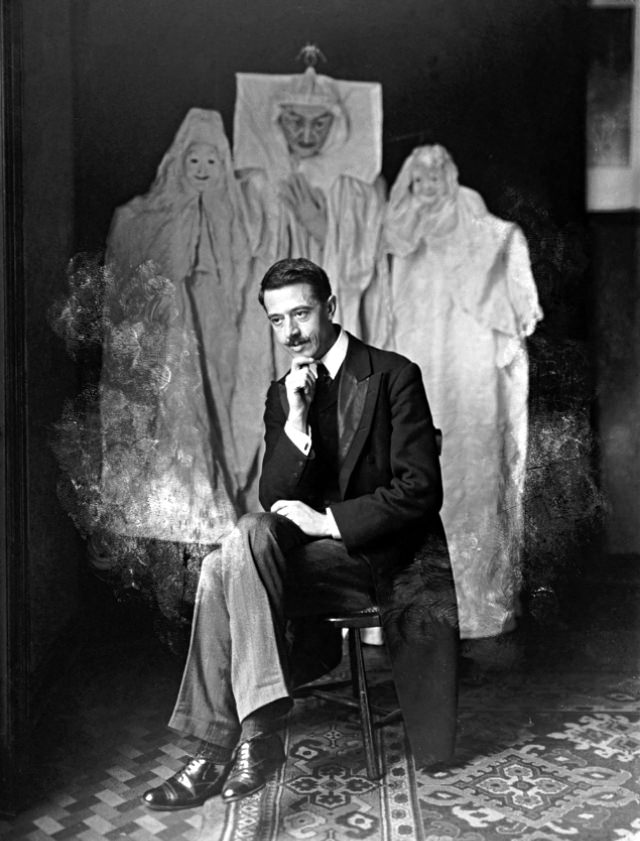
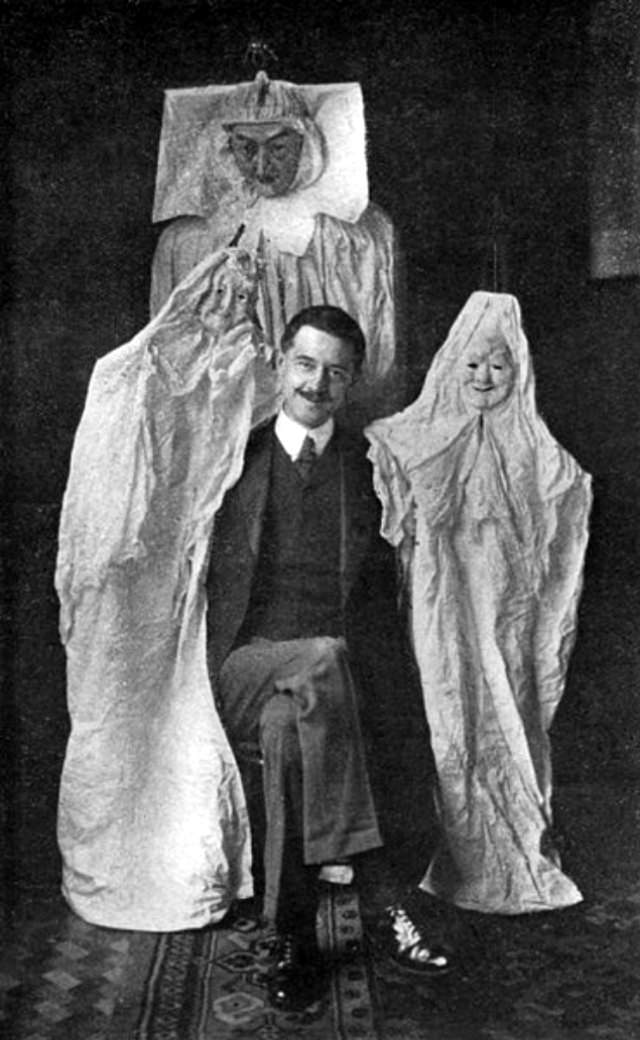
Perhaps the most striking detail Marriott revealed was that fraudulent mediums did not even have to improvise their props. Entire catalogs existed that sold ghost-making equipment specifically for phony spirit sessions. Marriott purchased items from these catalogs and displayed them openly, showing the ready-made “spirits” that mediums ordered and deployed as if they were genuine apparitions. It was a commercial industry built entirely around deceiving the bereaved.
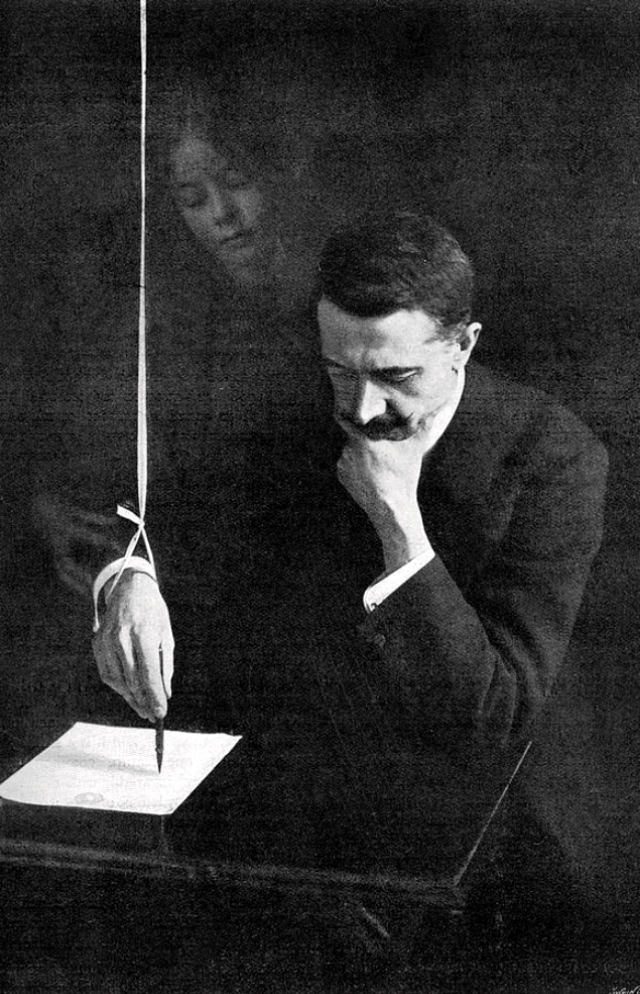
Slate writing was another technique that impressed séance attendees. Mediums would claim that spirits were writing messages on blank slates in real time. Marriott exposed the sleight-of-hand behind this effect in detail, showing exactly how writing could be transferred to a slate without any contact from the spirit world.
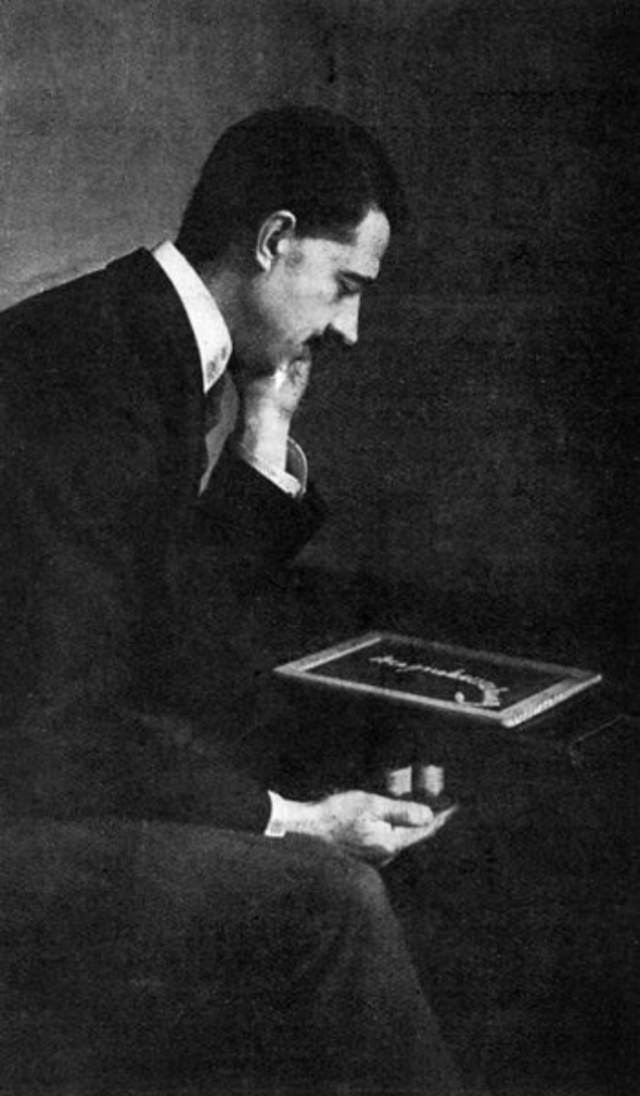
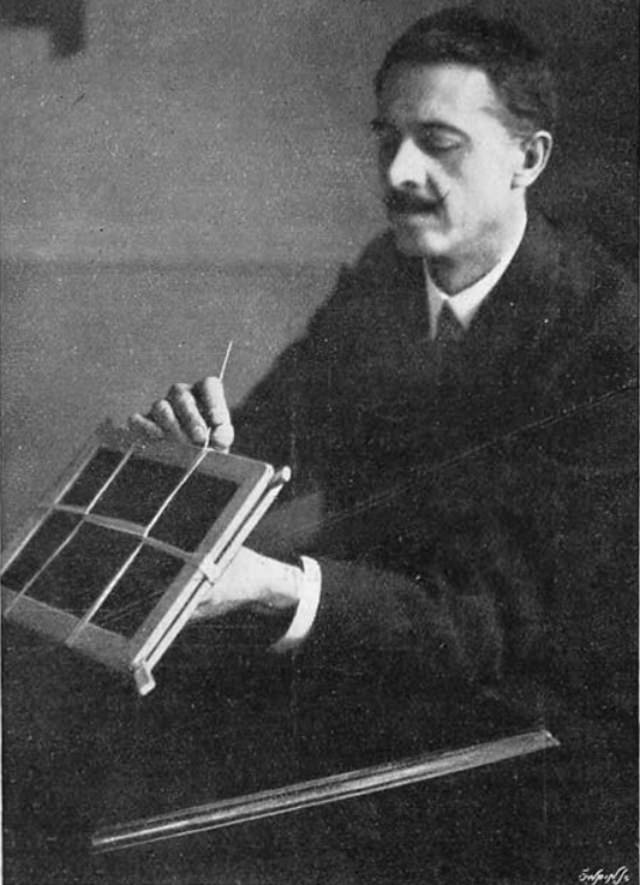
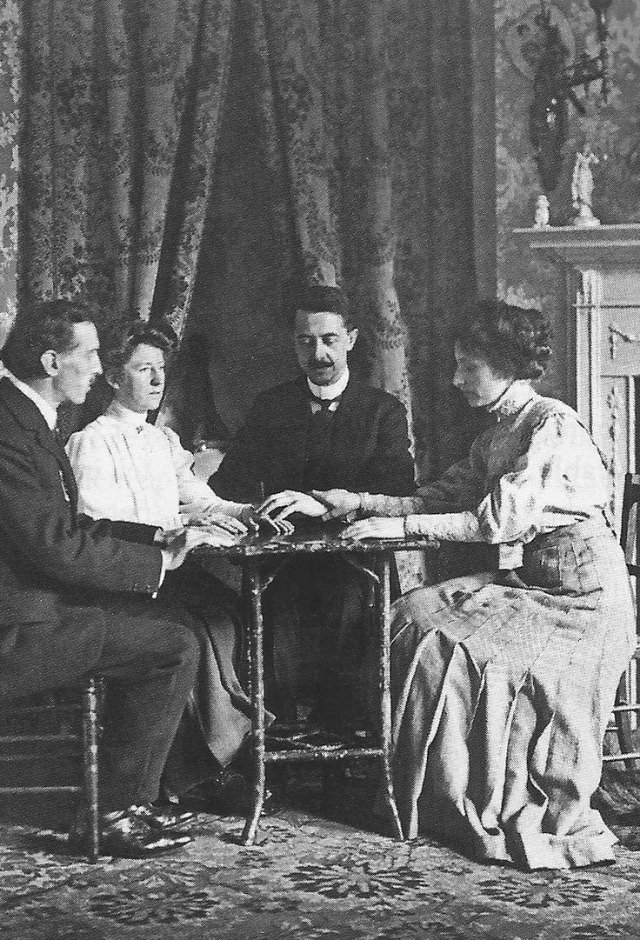
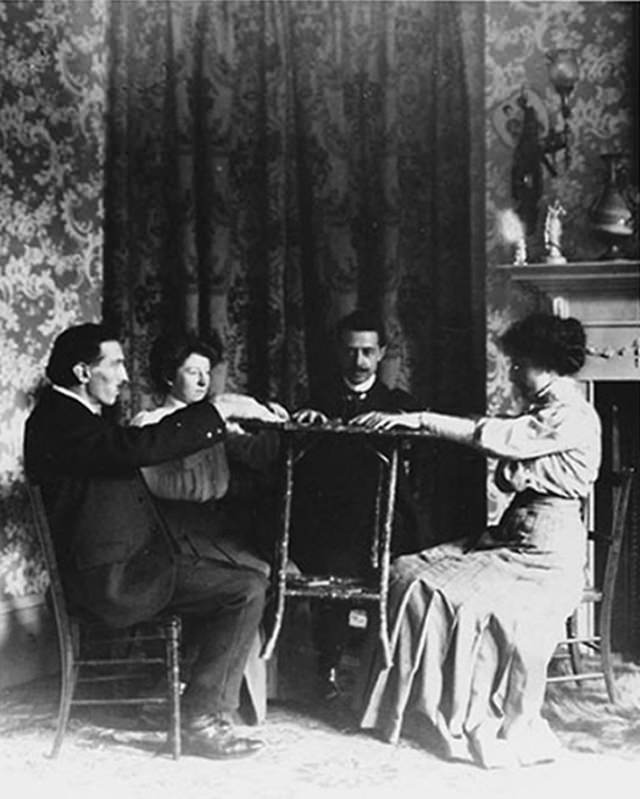
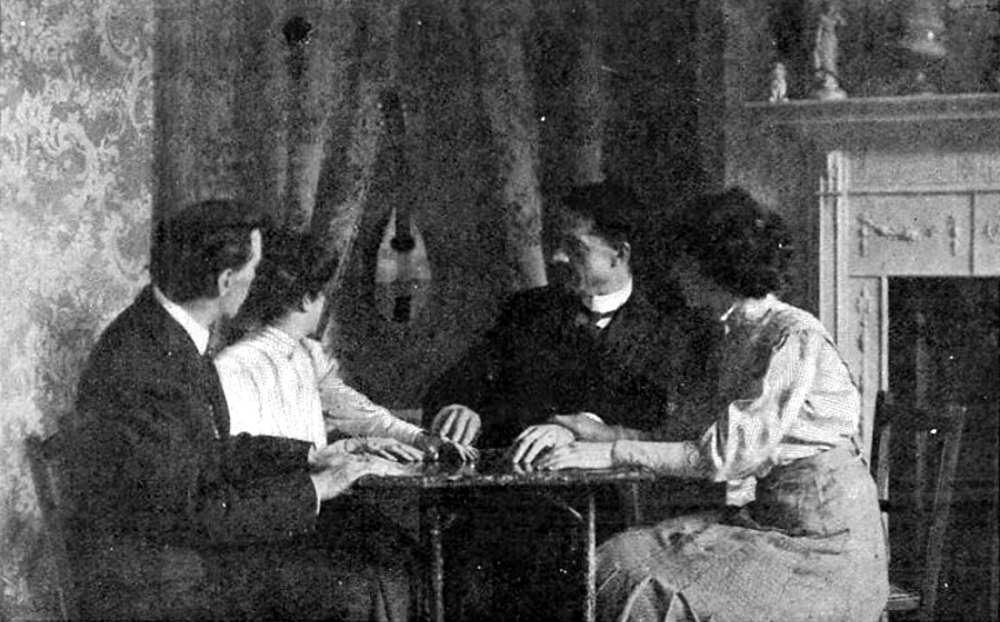
Table levitation was a fixture of Victorian and Edwardian séances. Participants would sit around a table in the dark, hands placed on top, and wait for the spirit to lift it. Marriott demonstrated two separate methods. In one, he used his foot — pressed against the underside of a small table — to raise it cleanly off the floor. In a darkened room, the movement of his leg was entirely invisible.
For larger or more dramatic levitations, invisible thread was again the tool of choice. Marriott showed how even heavier objects — including a banjo — could be lifted convincingly using thread rigged at the right angles. In a séance setting, the audience was primed to believe and unlikely to look for the practical explanation right in front of them.
Marriott’s work attracted serious attention beyond the general public. The Society for Psychical Research, founded in Cambridge to formally investigate paranormal claims, was active during this same period. Among its members was Sir Arthur Conan Doyle — the celebrated author of the Sherlock Holmes stories — who joined the organization in 1893. Doyle witnessed Marriott’s demonstrations firsthand, watching as the magician reproduced one supposedly supernatural effect after another using nothing but stagecraft.
Marriott’s demonstrations were later used as educational material by other investigators. Psychic researcher Harry Price used glass lantern slides — including staged photographs of female apparitions carrying spirit birds and flowers, with Marriott himself visible in the background — during public talks to show audiences the standard methods fraudulent mediums used. The props, the staging, the lighting: all of it was reproducible, documentable, and entirely human in origin.