Tina Louise built one of the most recognizable careers in American entertainment during the 1950s and 1960s. She worked as an actress, singer, model, painter, and author — rarely staying still long enough to be defined by just one title. Most people today know her as Ginger Grant, the glamorous movie star stranded on a desert island in the CBS sitcom Gilligan’s Island. But her story starts well before that role came along.

Louise got her start on the stage in the early 1950s. She trained seriously and worked her way through theater before transitioning to television and film. Her mother had been a fashion model, and Tina followed that path too, appearing in mainstream men’s magazines including Playboy, Adam Sir!, and Modern Men. In those pages, she presented herself as a full-on glamour figure — bold, confident, and striking.


Her modeling work earned her a reputation that spread fast. The National Art Council named her the World’s Most Beautiful Redhead — a title that matched the fiery, eye-catching look she brought to every photo shoot. Her red hair became one of her most famous features, and photographers clearly loved working with her.


In 1957, Louise stepped into the recording studio and released her debut album, It’s Time for Tina. The album showed another side of her talent — one that wasn’t tied to a camera or a script. She had a warm, expressive voice, and the record gave her fans something to connect with beyond her looks.


Then came the film role that changed everything. In 1958, Tina Louise made her big-screen debut in God’s Little Acre, an adaptation of Erskine Caldwell’s novel. Her performance was raw and dramatic — far removed from the polished glamour-girl image she had in magazines. The industry took notice immediately. At the 1958 Golden Globe Awards, she won New Star of the Year, one of the most exciting honors a newcomer could receive at the time.


That contrast — the glamour model versus the serious dramatic actress — defined much of how people saw her throughout her career. On the page, she was a pinup. On screen, she took on complex, grounded roles. It was a gap that frustrated her at times, but it also made her one of the more interesting figures of the era.


The role of Ginger Grant on Gilligan’s Island arrived in 1964 and ran through 1967. Ginger was written as a Hollywood movie star — glamorous, charming, and always impeccably dressed even while stranded on a deserted island. Louise played her with real comedic skill. But Louise herself has spoken openly about how the role overshadowed her serious acting work. She wanted to be seen as more than Ginger, and that tension followed her for years.


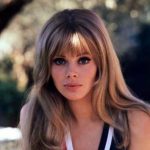
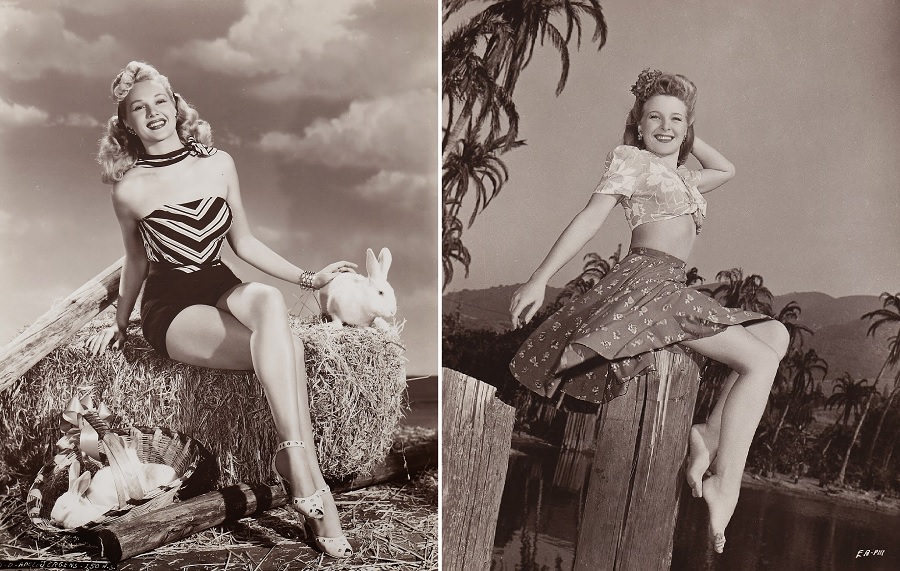
The photos from her 1950s and 1960s modeling sessions capture the height of her glamour-era look. Sharp eyeliner, sculpted hair, and confident poses were her signature. Whether she was dressed in a gown or a casual outfit, the camera responded to her.


Away from the spotlight, Louise quietly committed herself to education. Since 1996, she has volunteered with Learning Leaders, a not-for-profit organization focused on improving educational outcomes for children. She works directly with students in New York City schools, giving her time regularly over the years.


In 1998, she published Sunday, a memoir covering the first eight years of her career in entertainment. The book gave readers a direct look at what it actually took to break into Hollywood during the 1950s — the rejection, the struggle, and the hard work behind the glamorous surface. She donated a significant portion of the proceeds from her children’s book When I Grow Up to literacy programs, putting money behind her belief in education.


The gallery below brings together more than 60 photographs of Tina Louise from the 1950s and 1960s. These images span her modeling career, her early acting days, and the Gilligan’s Island years. Together, they show why she earned that World’s Most Beautiful Redhead title — and why she remained one of the most photographed women of her generation.