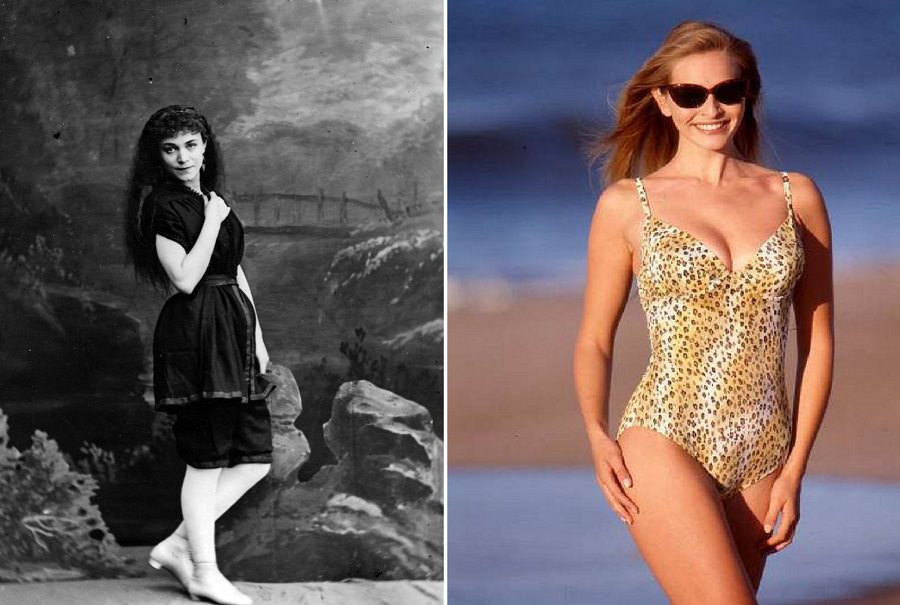
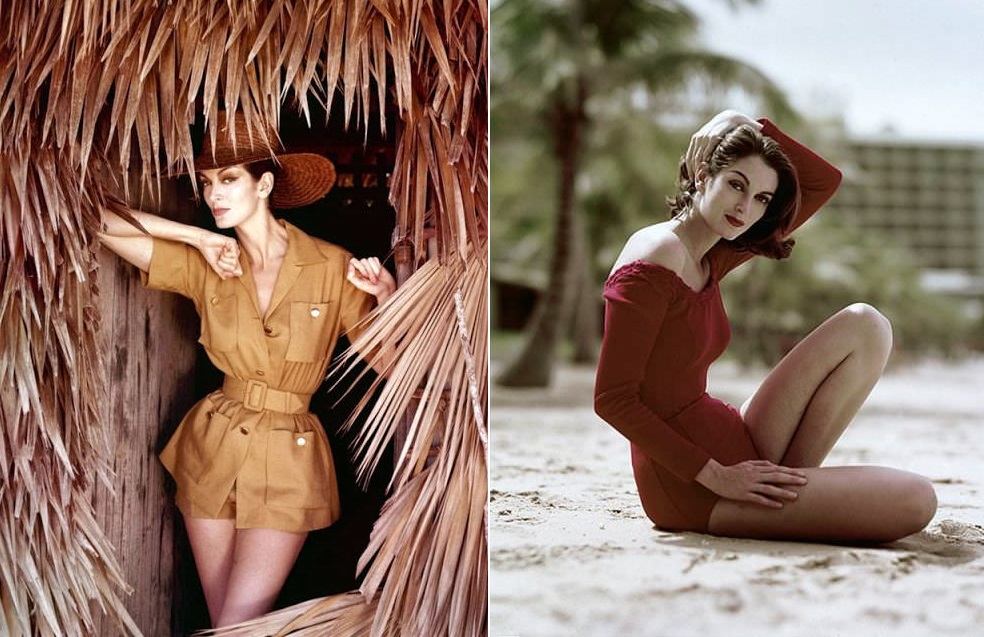
A trip to the beach in 1900 looked nothing like it does today. For women, getting into the water meant putting on layers of heavy fabric — not stripping them off. The swimwear of this era was shaped by strict ideas about modesty, and those ideas show up in every stitch.
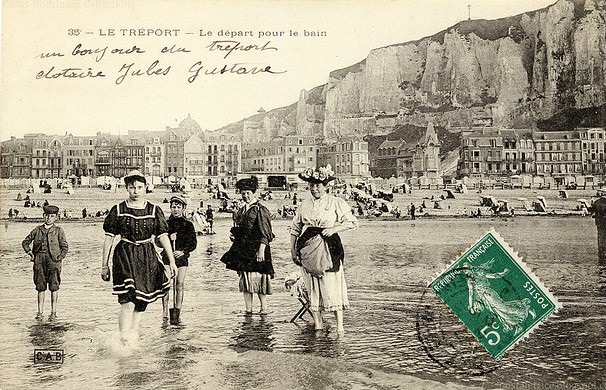
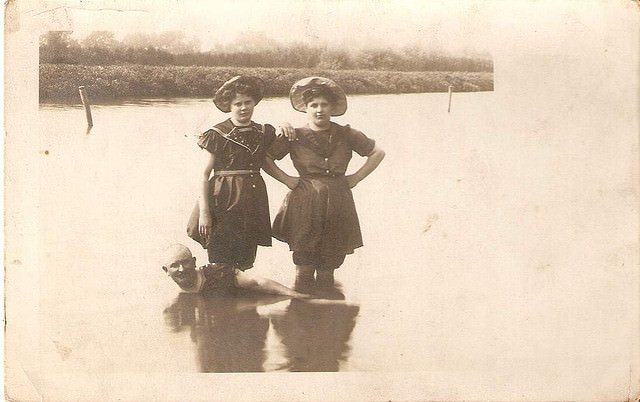
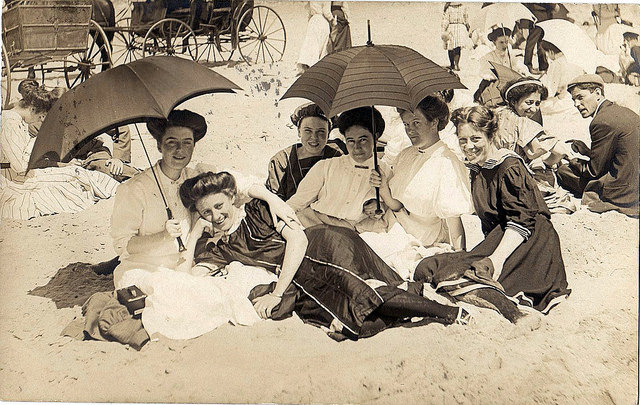
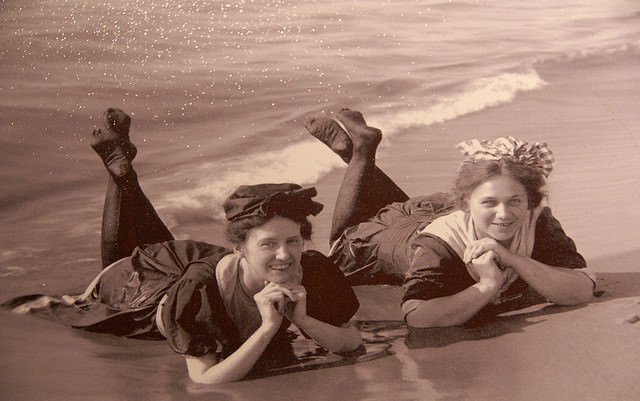
Victorian-era bathing costumes, worn up through 1901, were built to cover as much skin as possible. Wool and flannel were common materials. A full outfit included a long dress, bloomers, stockings, and sometimes shoes worn right into the water. A tan was seen as undesirable, so shielding skin from the sun was just as important as covering it for modesty.
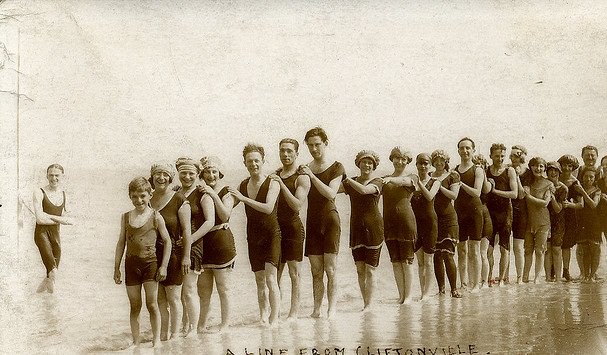
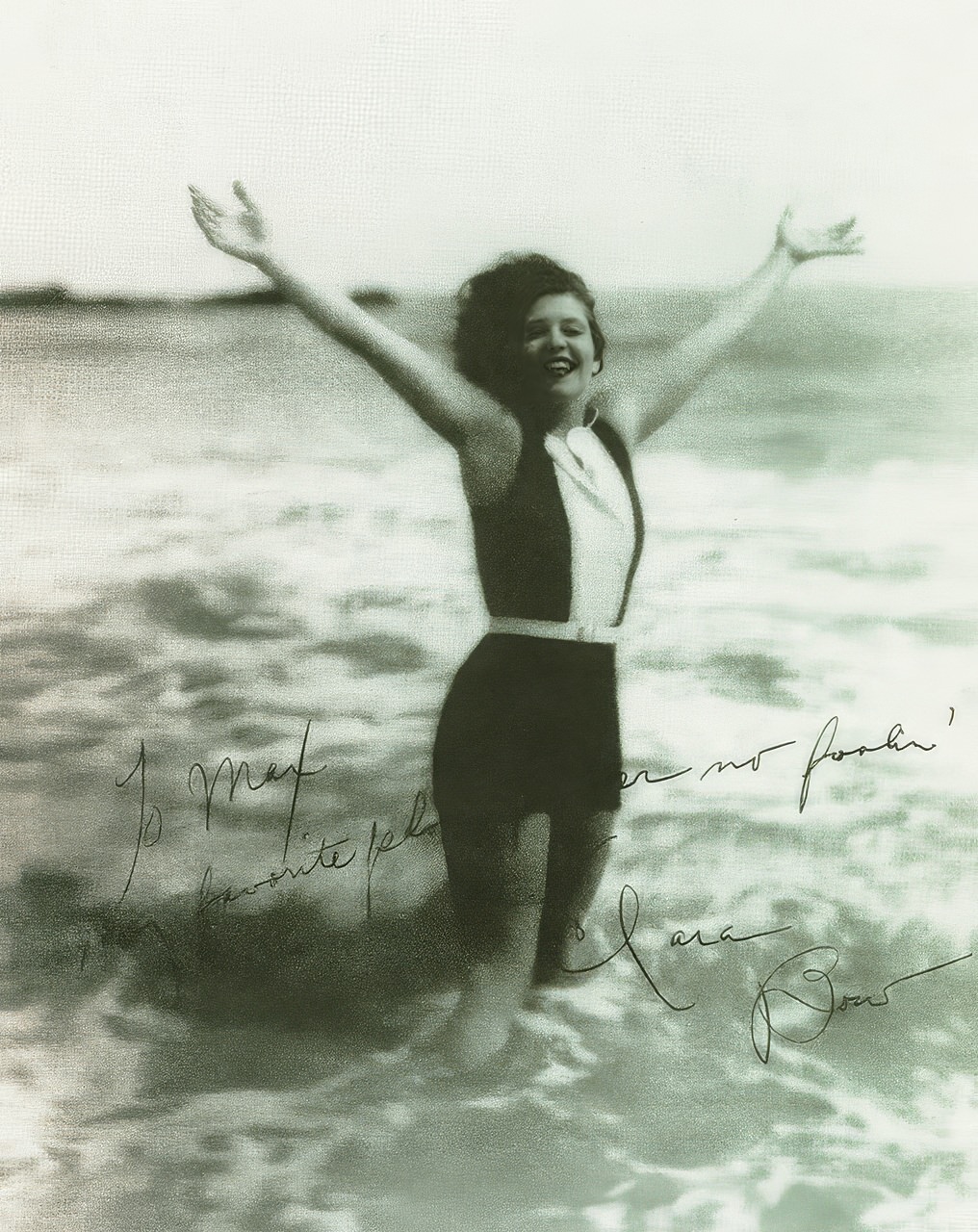
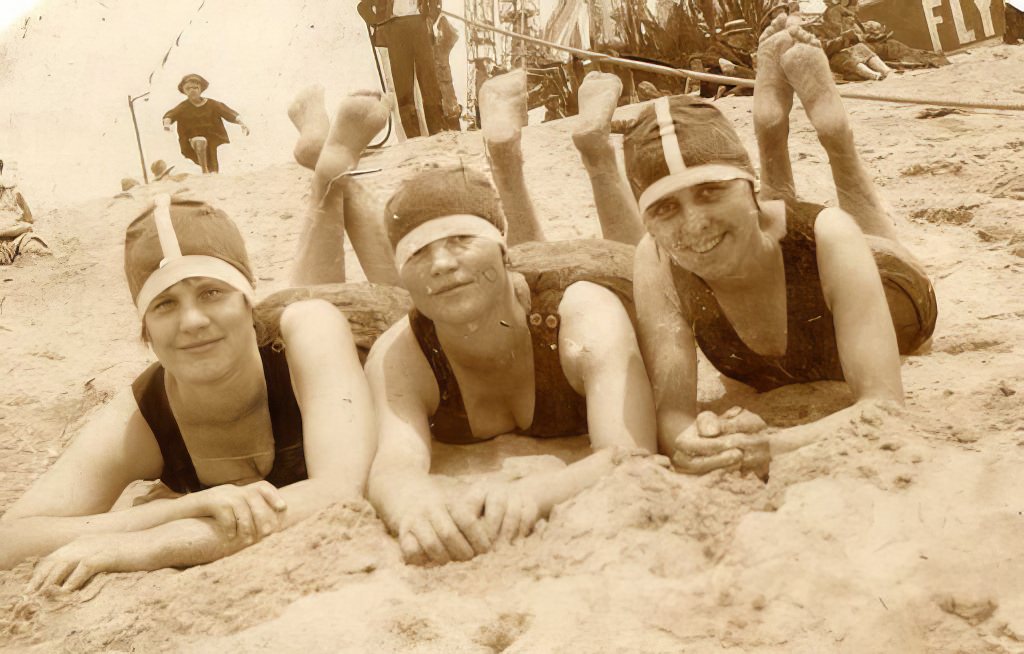
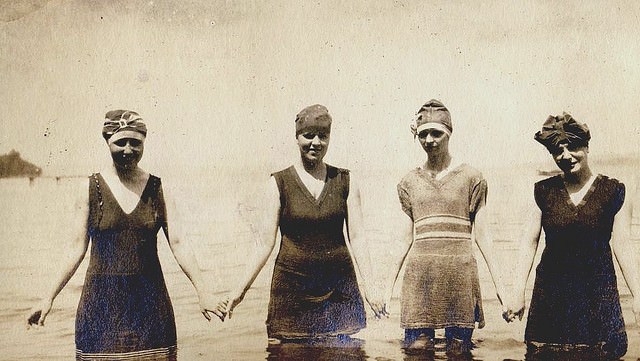
After 1901, the outfits began to shift — slowly. Fabrics got slightly lighter, and the cuts allowed for a bit more movement. Women were still covered from neck to knee, but the heaviest layers started to disappear. The goal moved from pure modesty toward something more wearable, even if swimming was still not the main point.

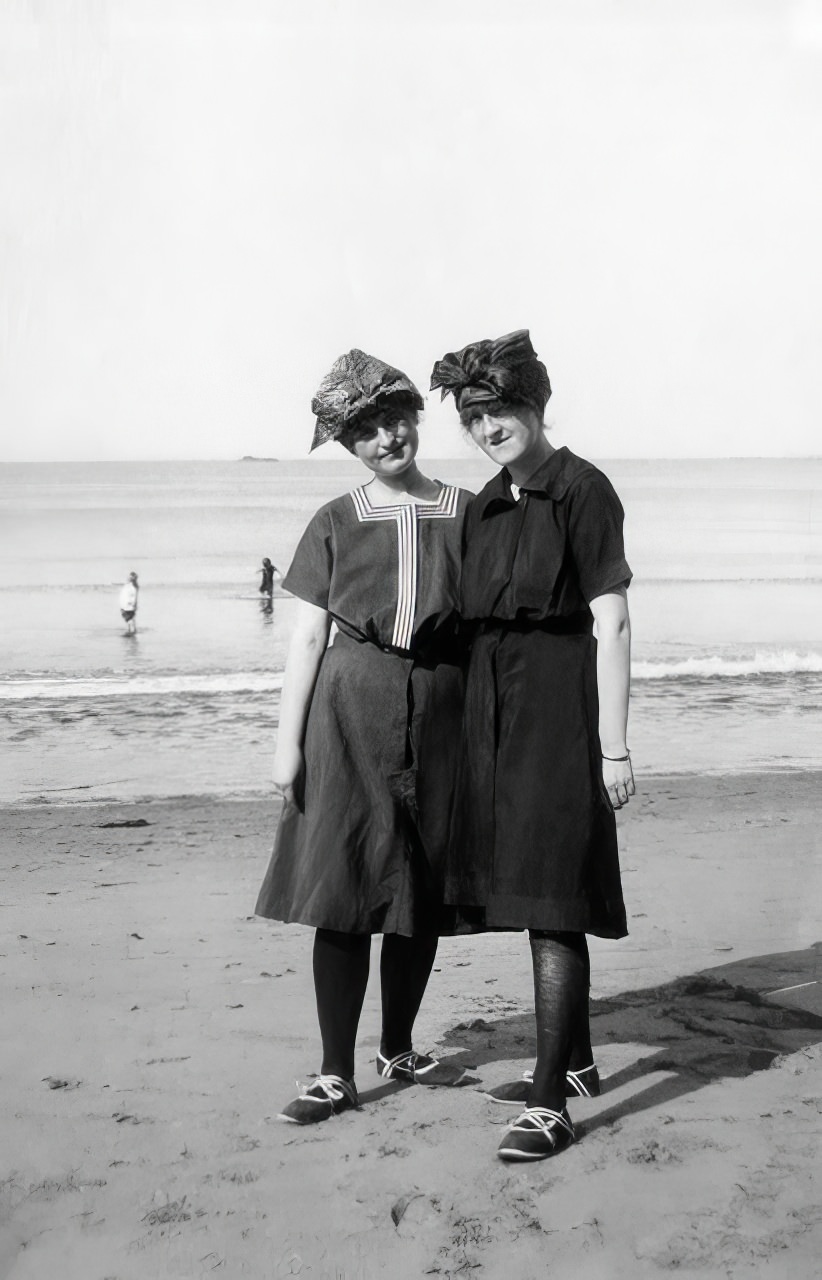
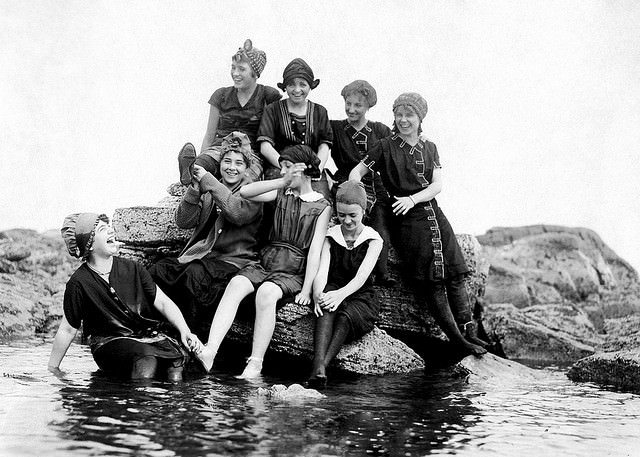
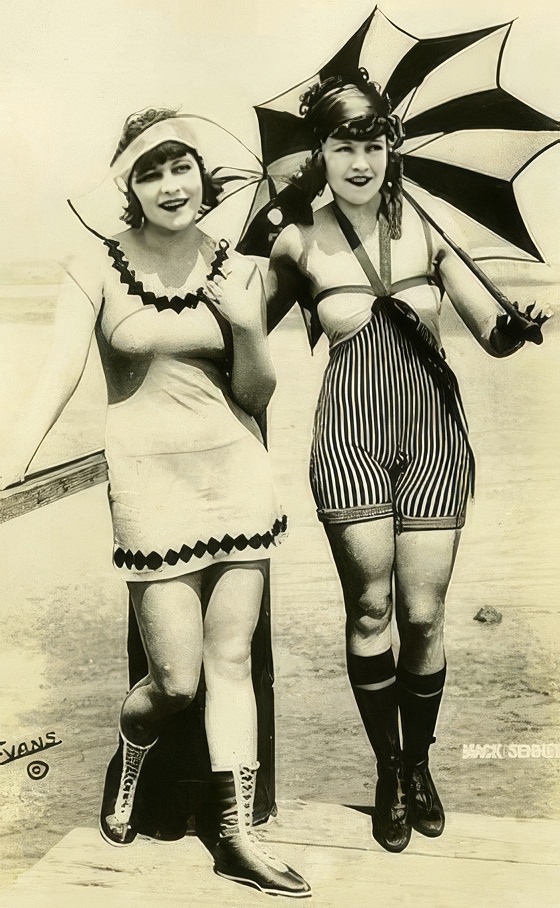
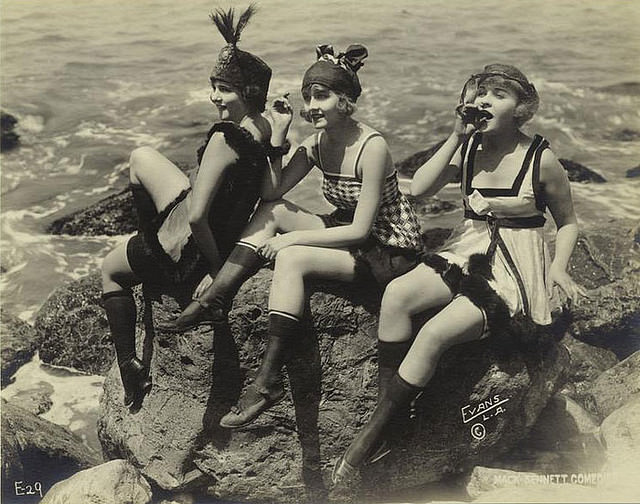
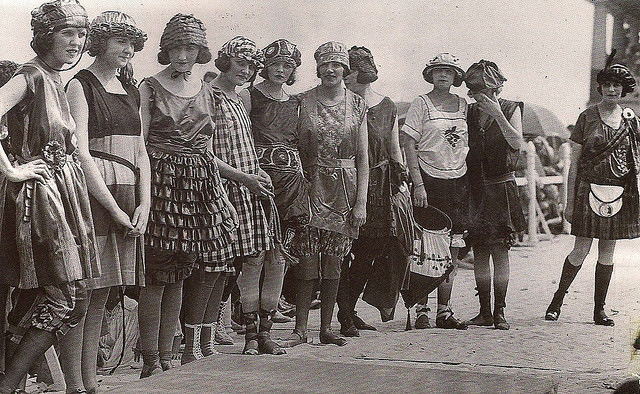
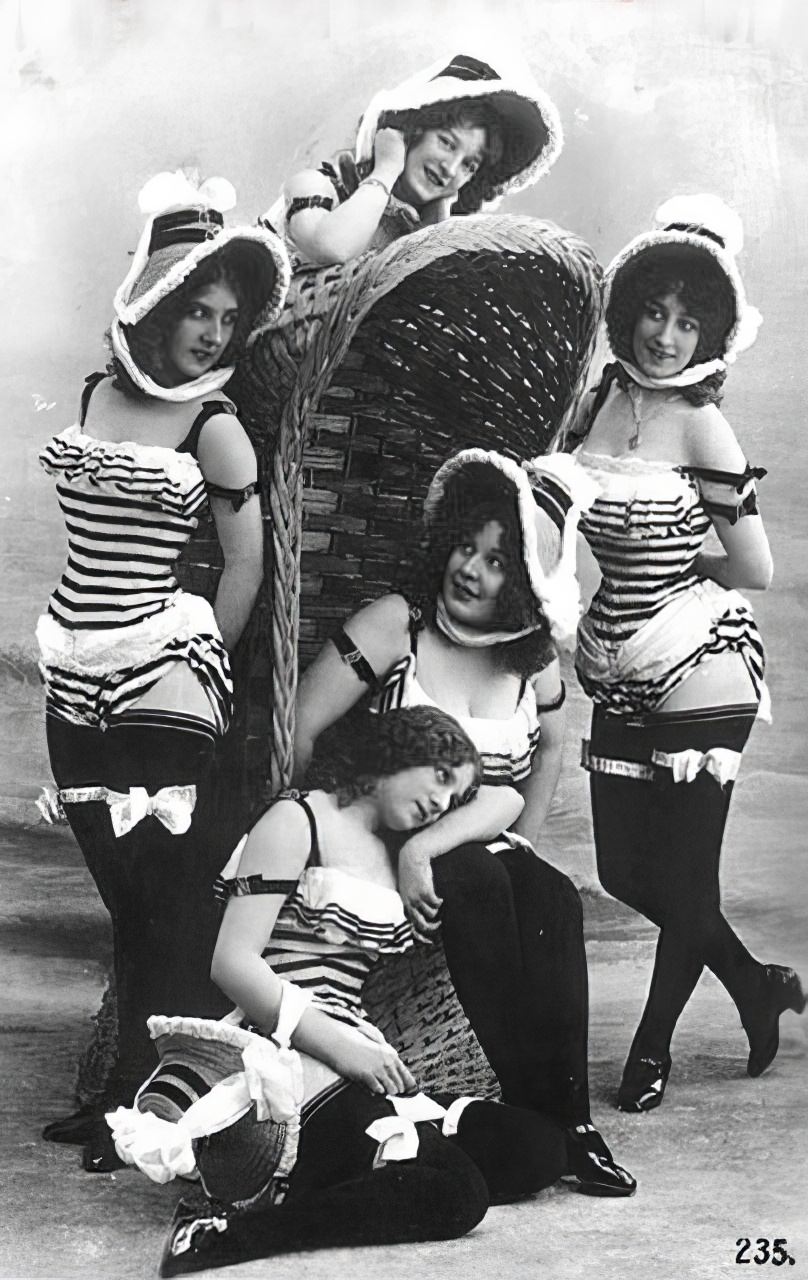
One of the most popular early styles was the “princess” bathing suit. It featured a knee-length tunic worn over bloomers or shorts, usually made from wool or heavy cotton. The neckline sat high, sleeves were short, and details like sailor collars or stripes gave the outfit a fashionable edge. These suits were built for wading, not for actual swimming — they soaked up water quickly and became very heavy when wet.

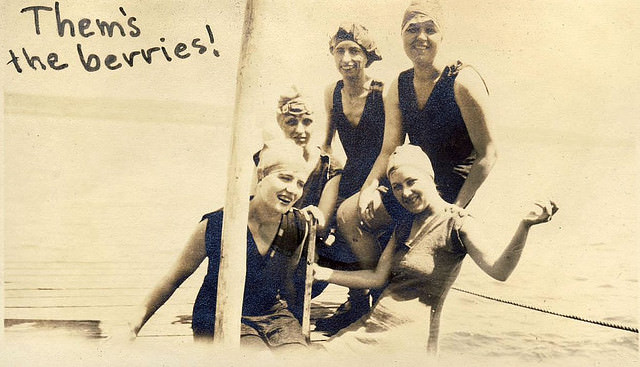
Women’s activities in the water were limited well into the early 1900s. Wading in the shallows or jumping waves while holding a rope tied to a buoy was the typical experience at public beaches. That began to change around 1915, when women started participating in swimming as an actual sport.
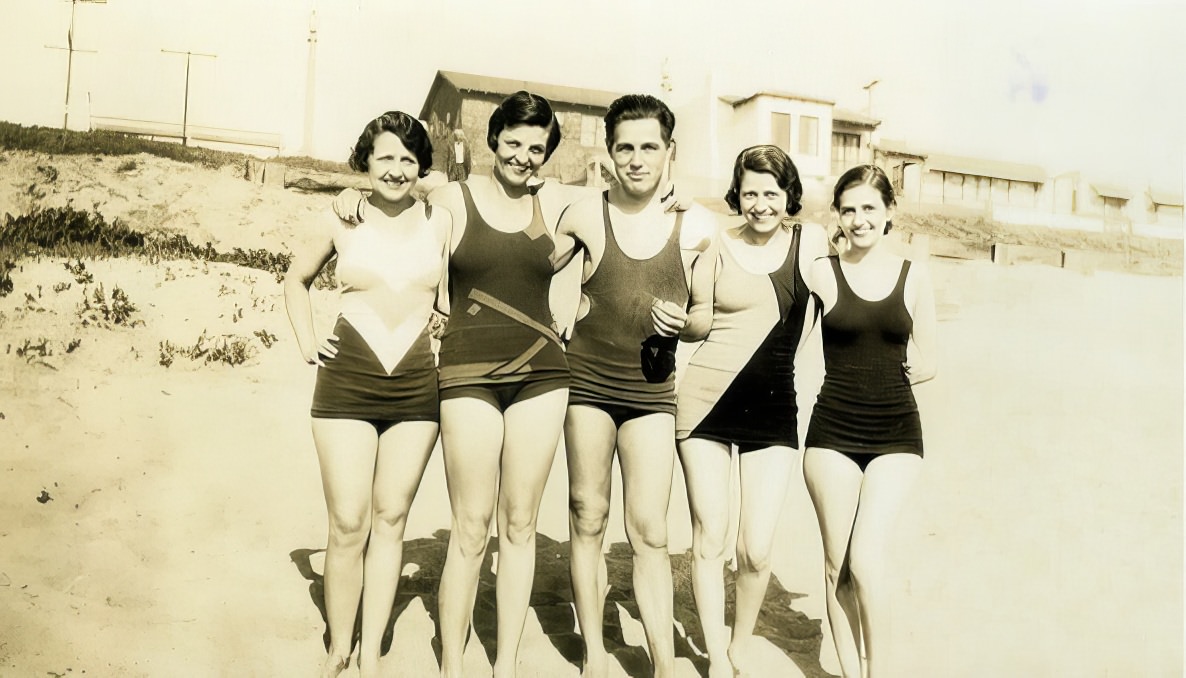

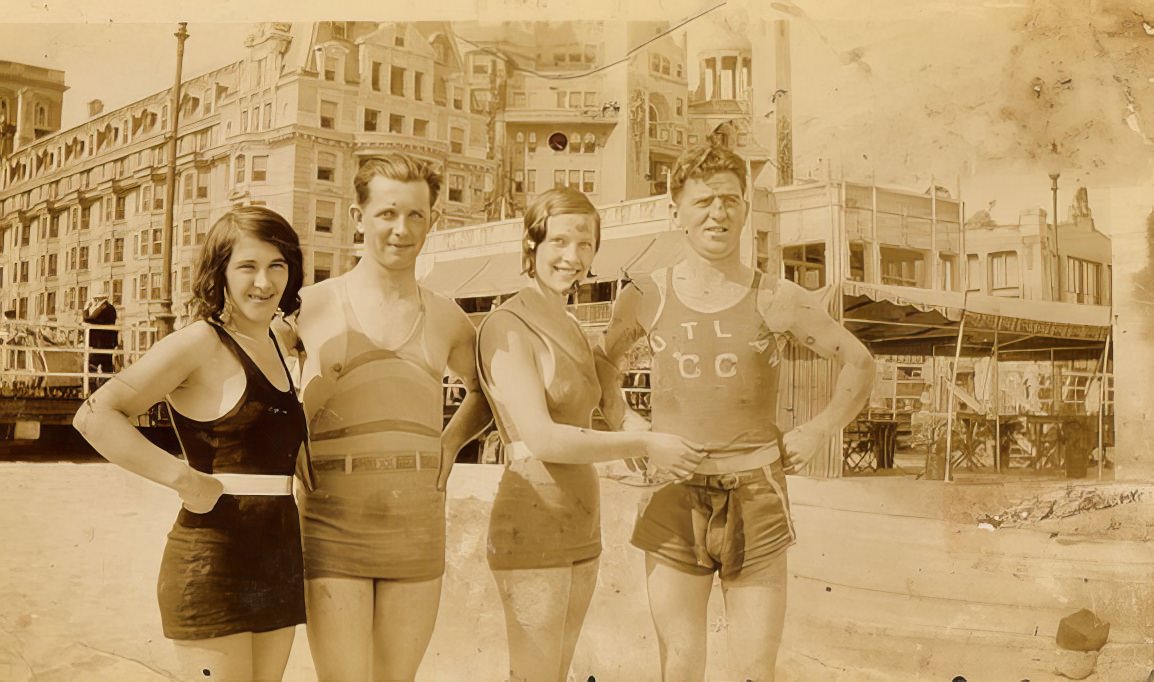
This shift in activity demanded a shift in design. Heavy, multi-piece outfits restricted movement in the water. Swimwear needed to let women actually swim. Designers responded by trimming away extra layers and rethinking the basic structure of what a woman wore to the beach.
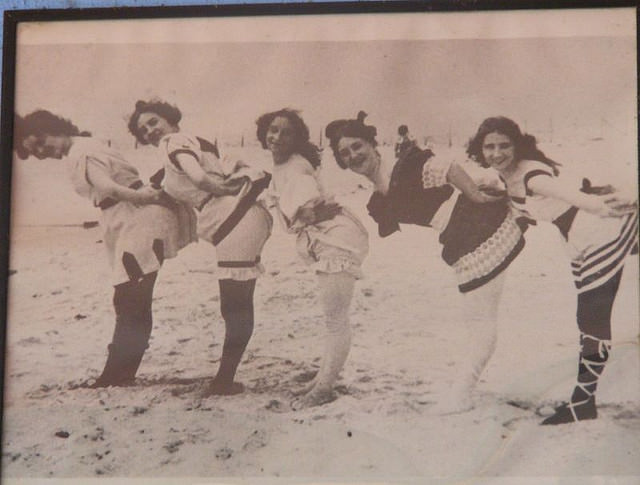
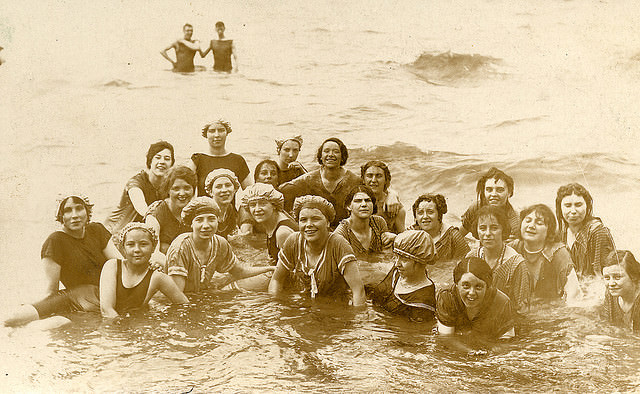
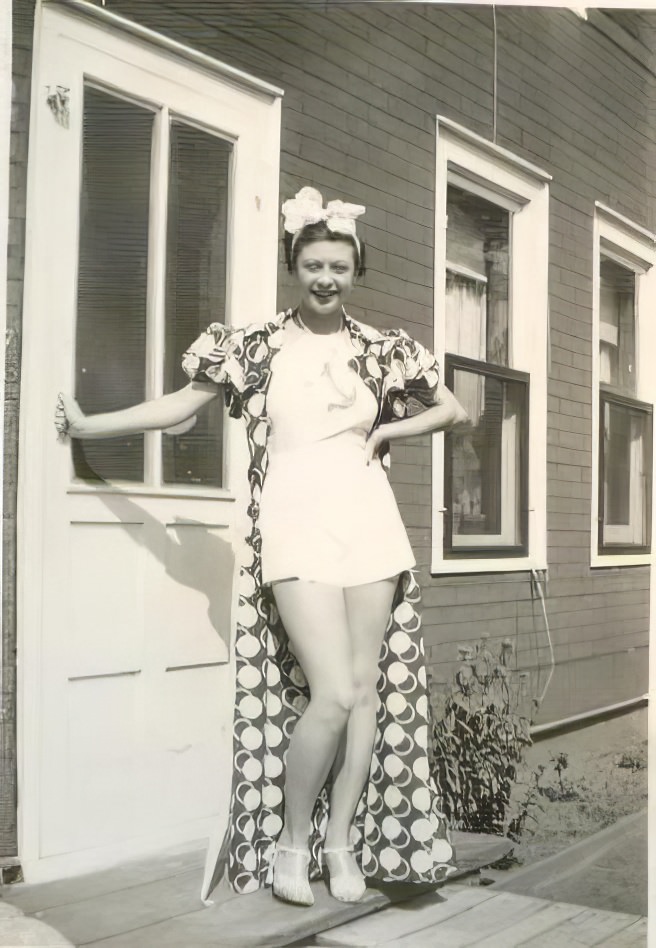
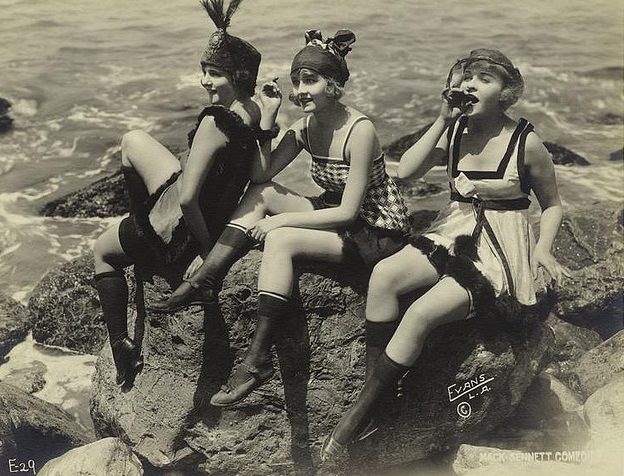
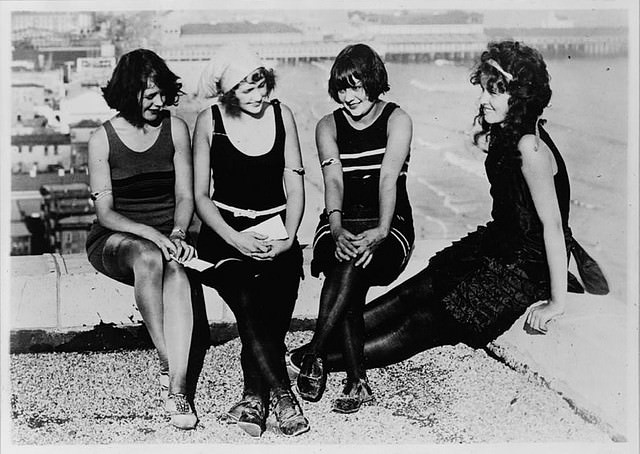
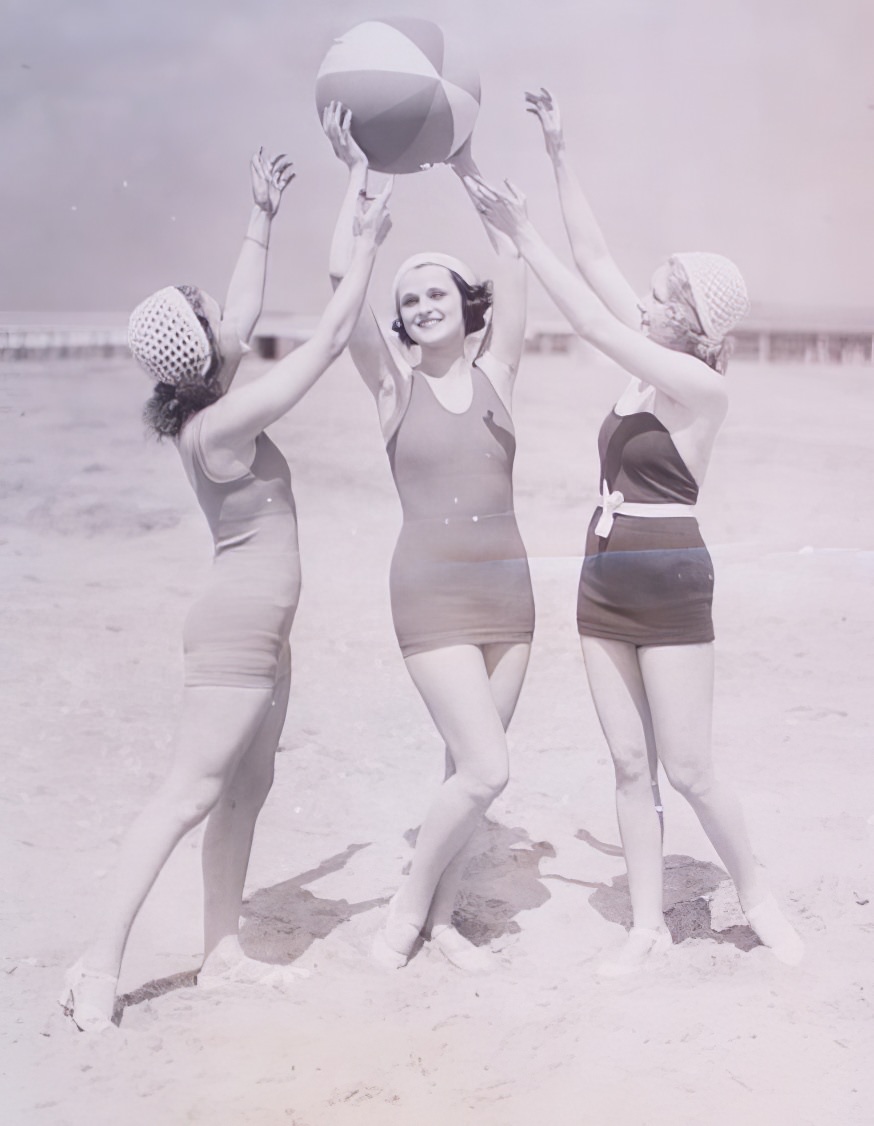
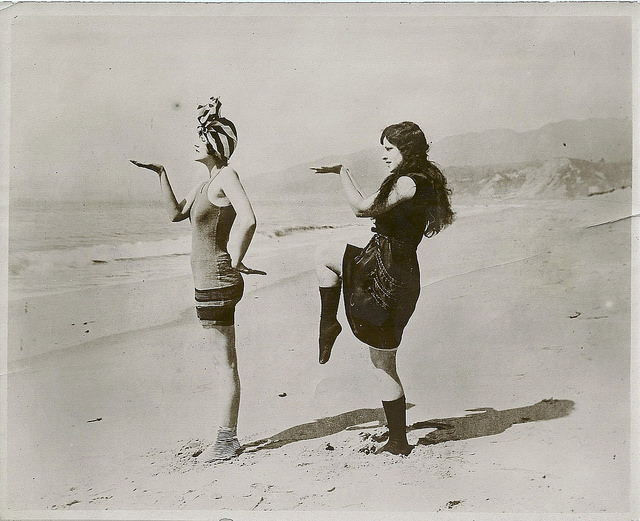
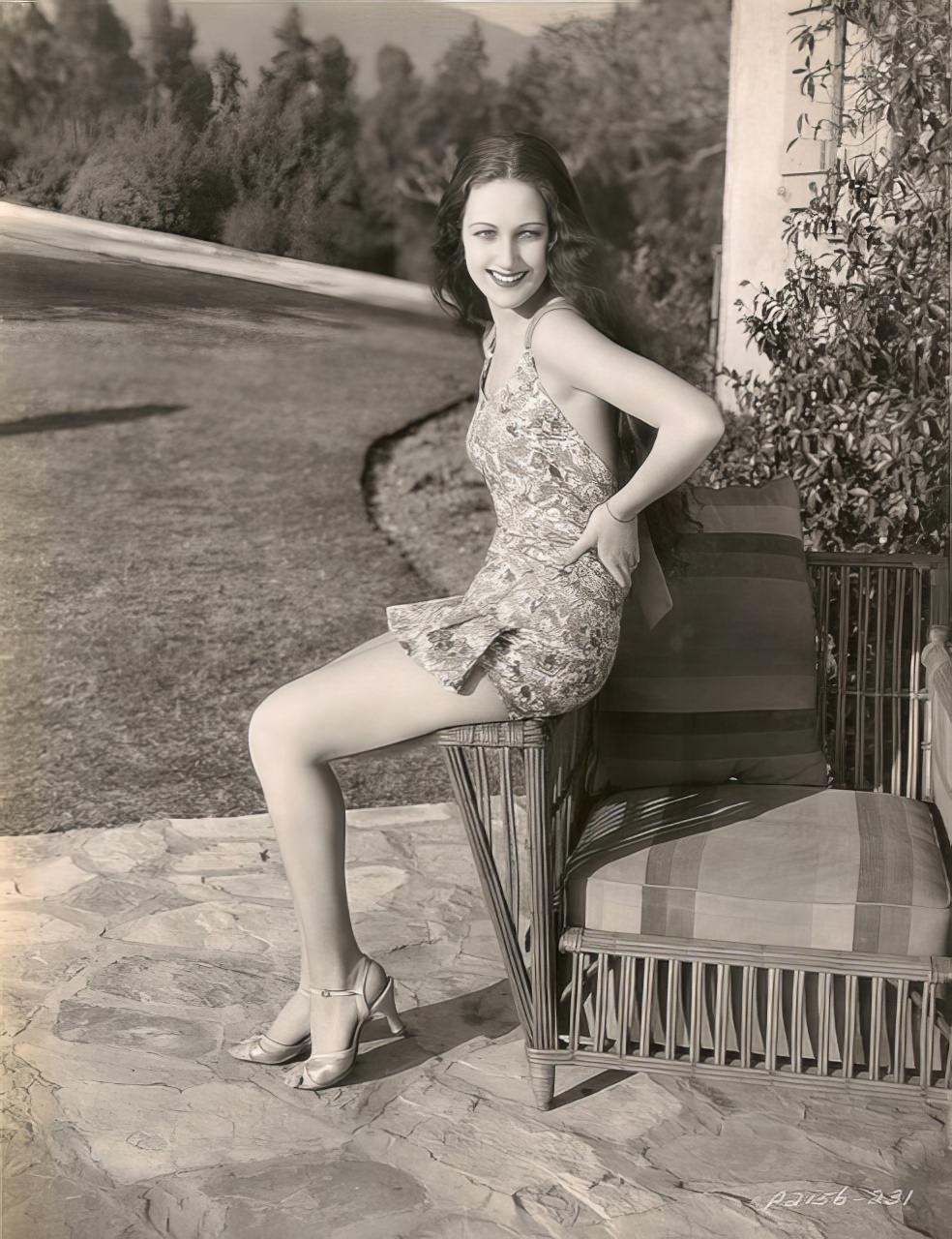
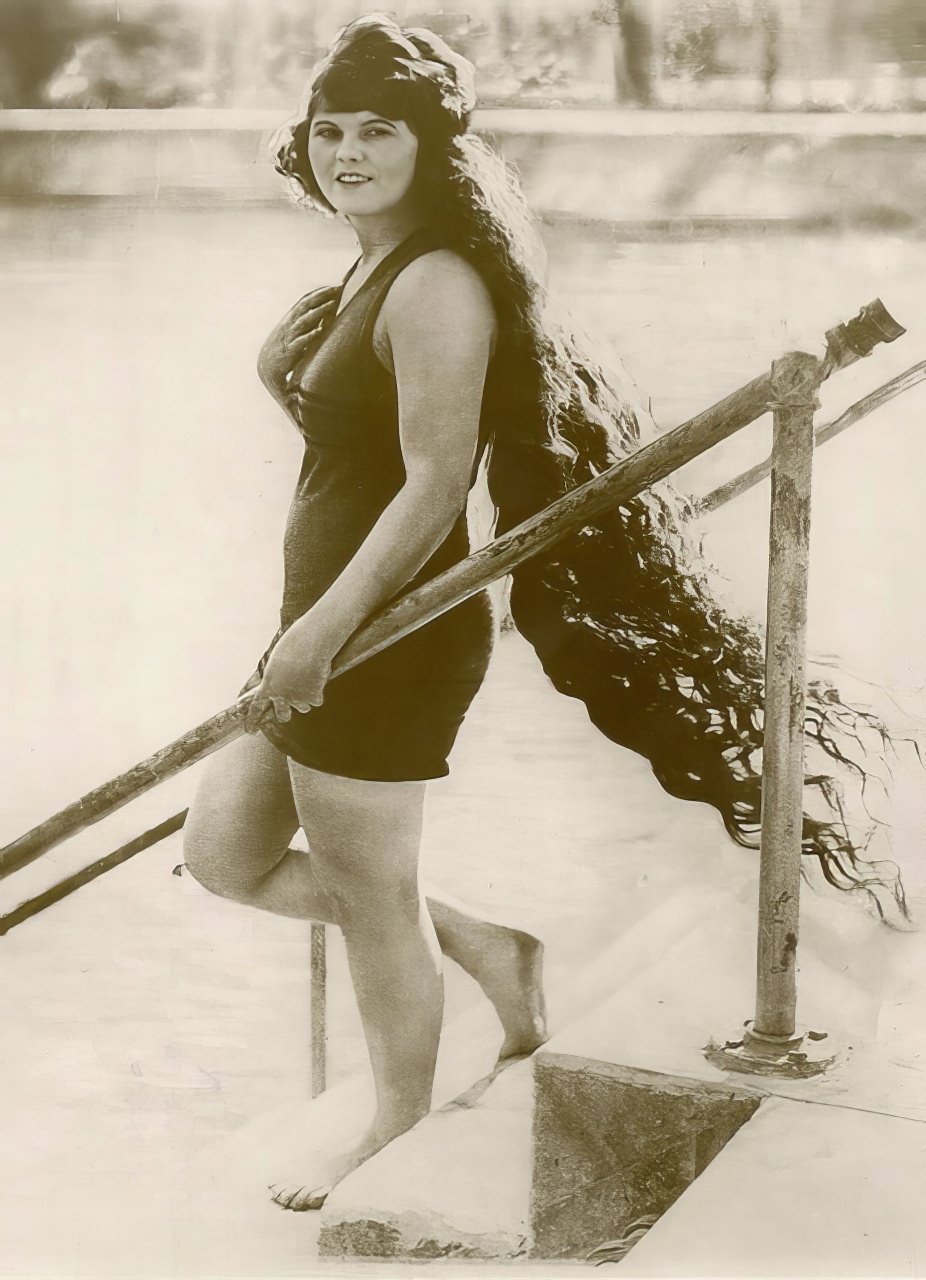
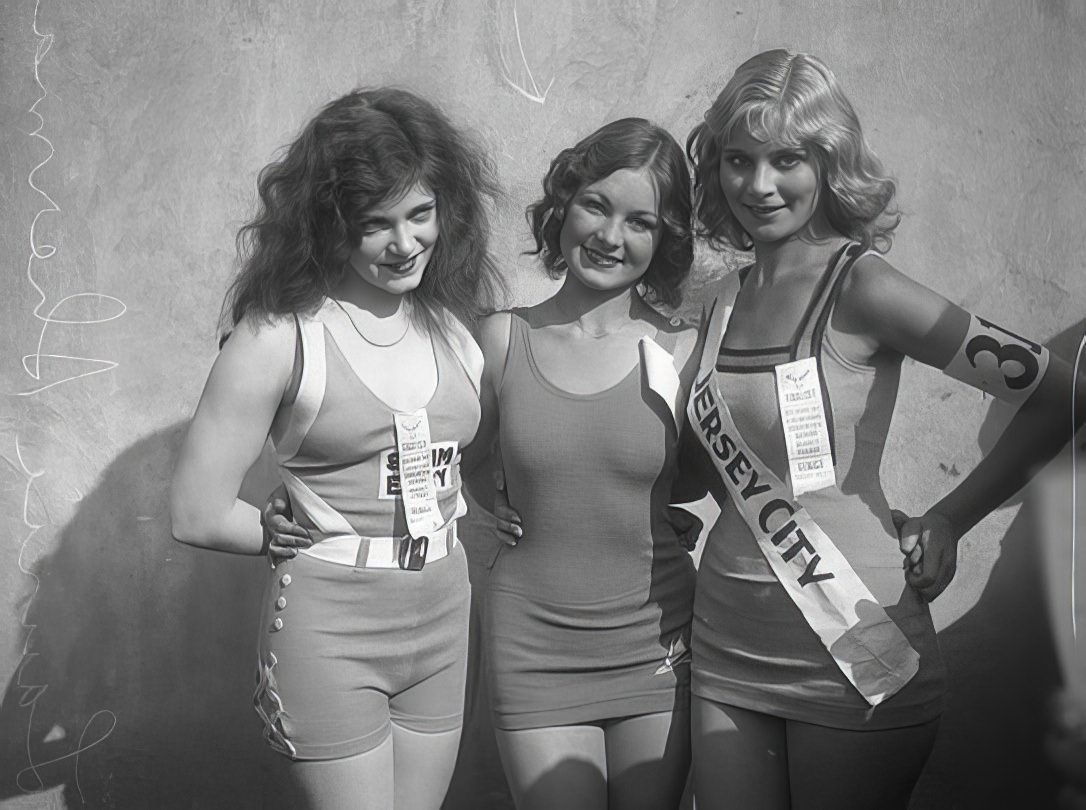
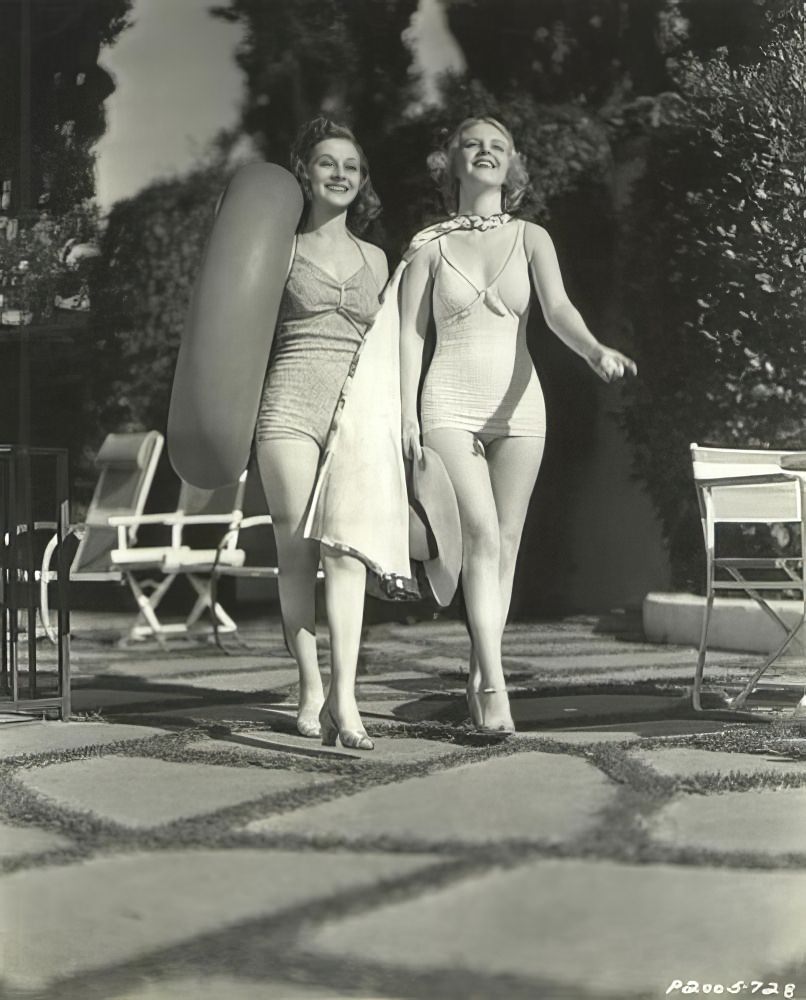
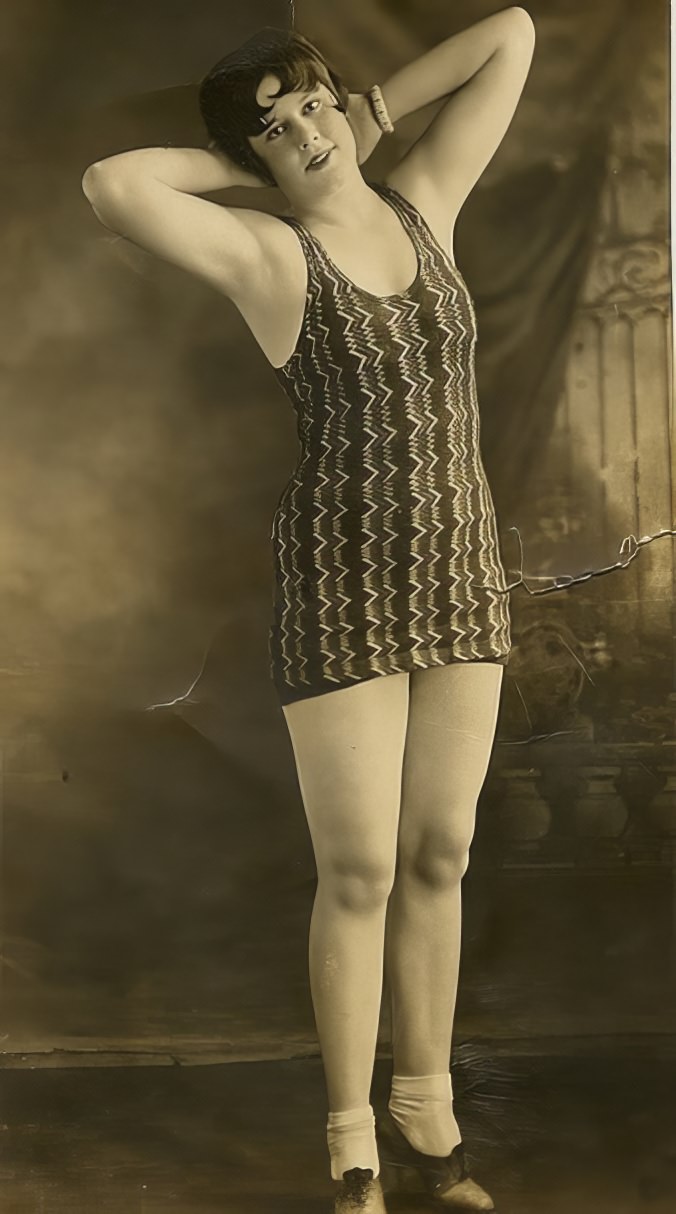
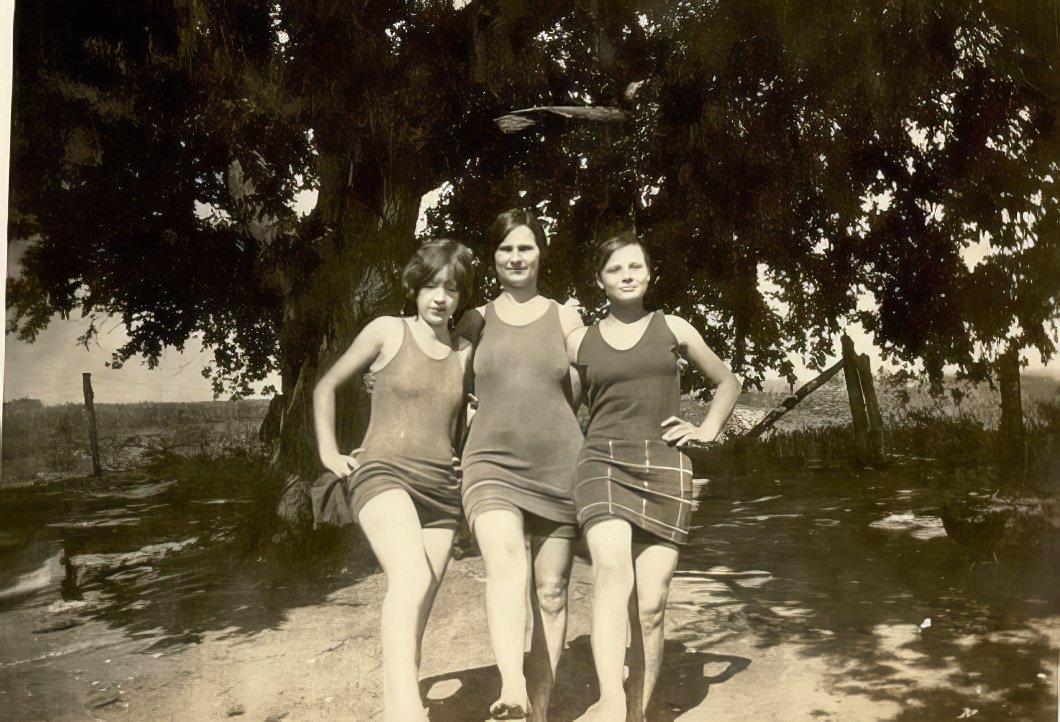
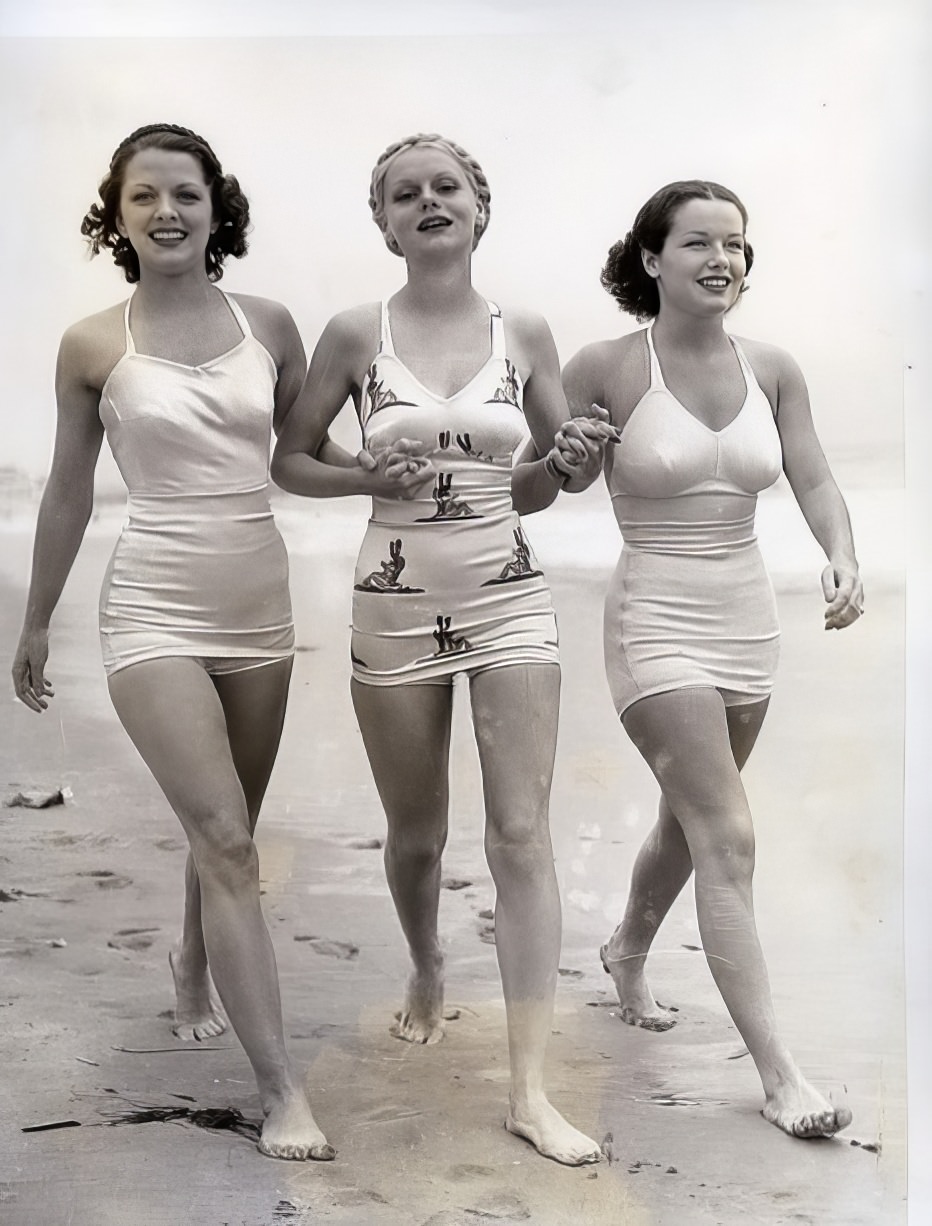
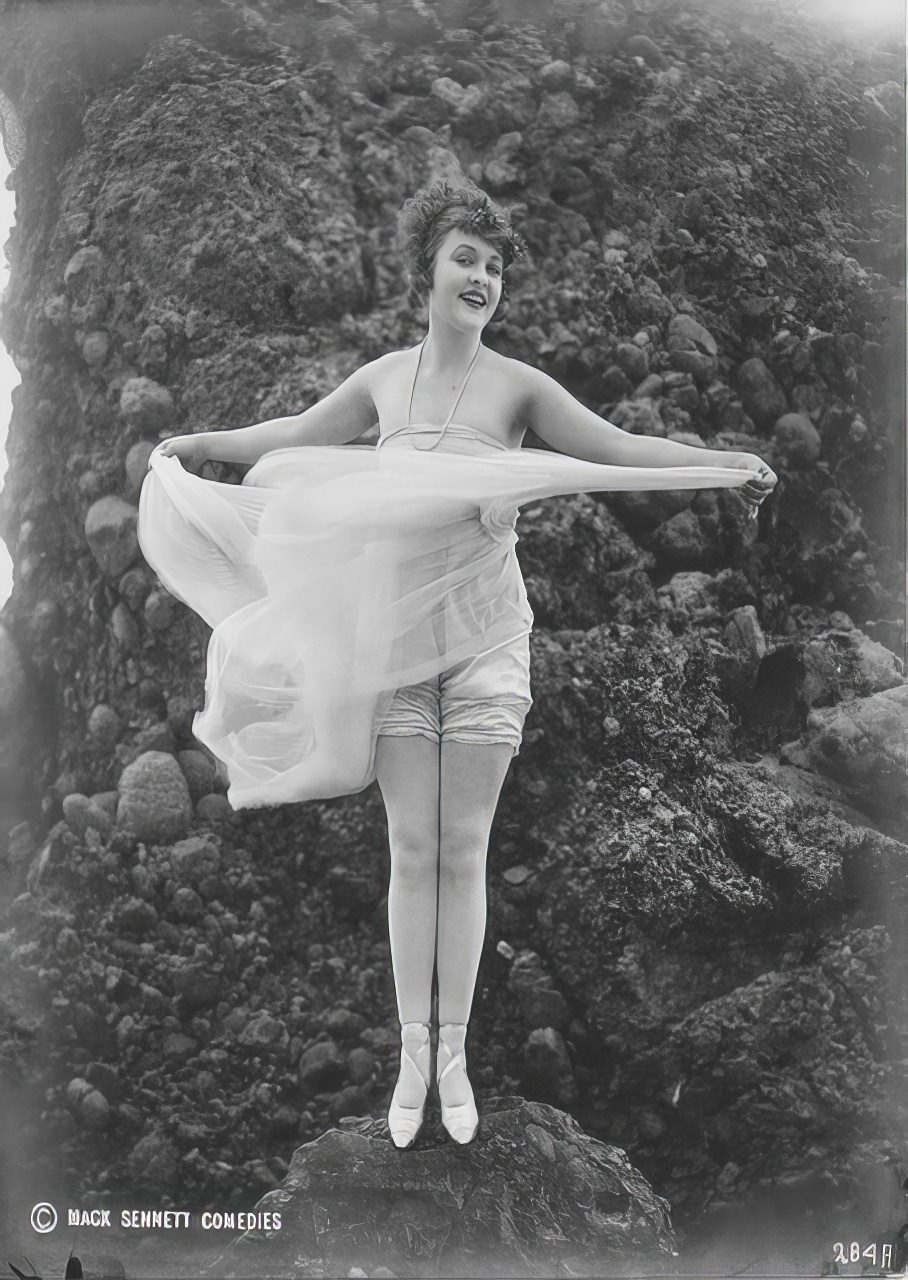
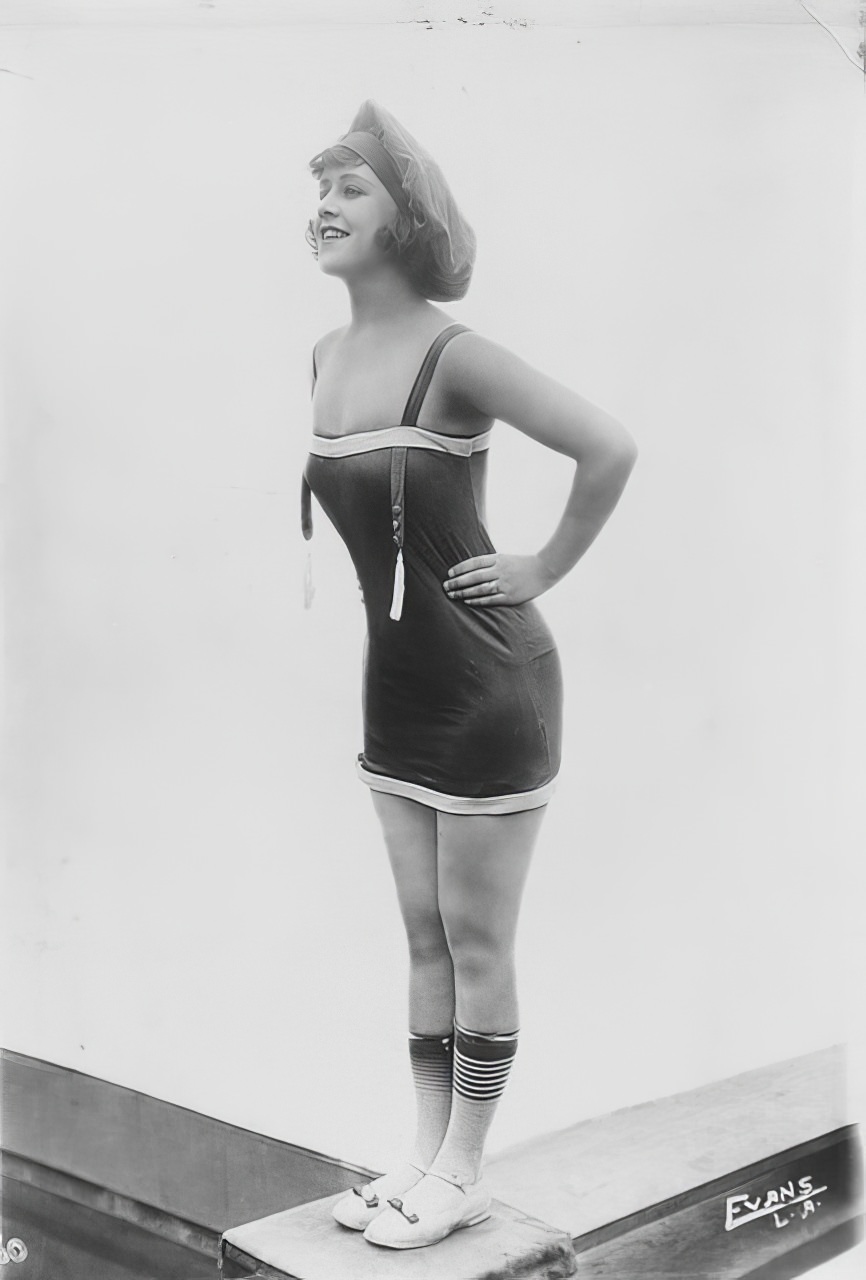
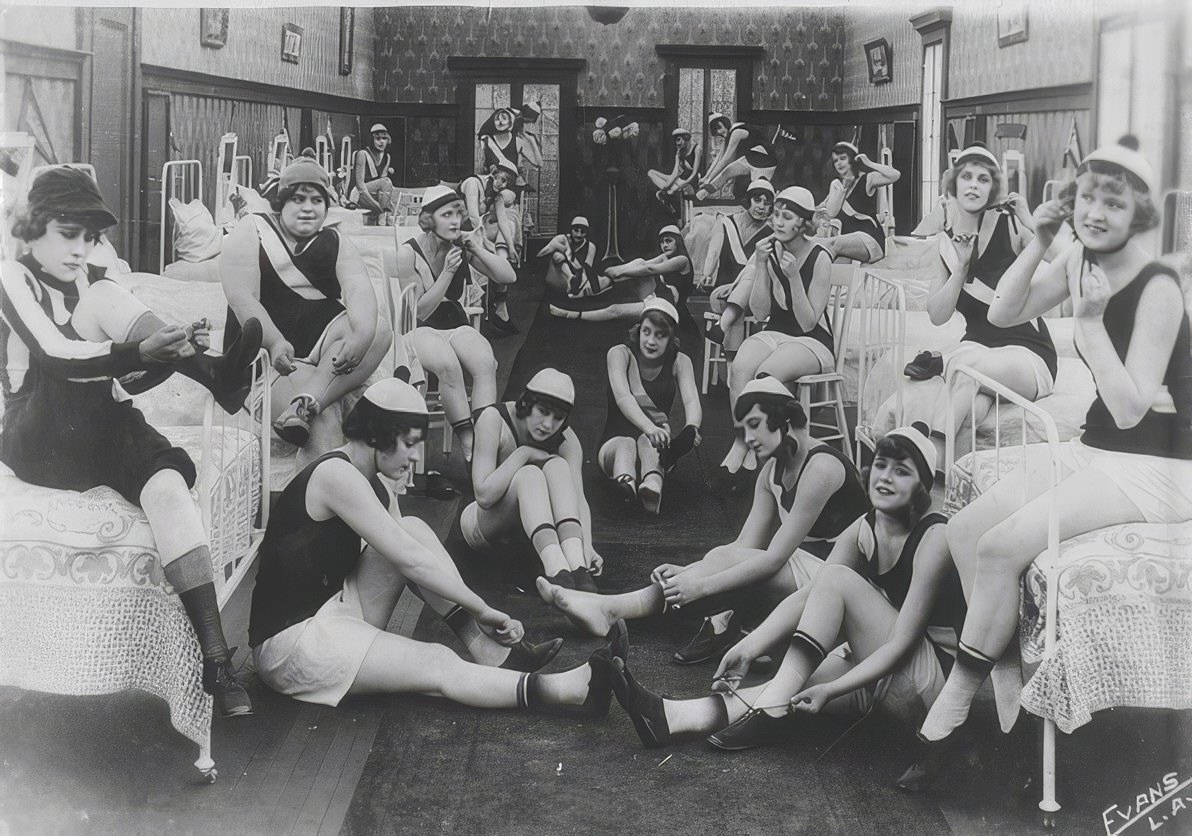
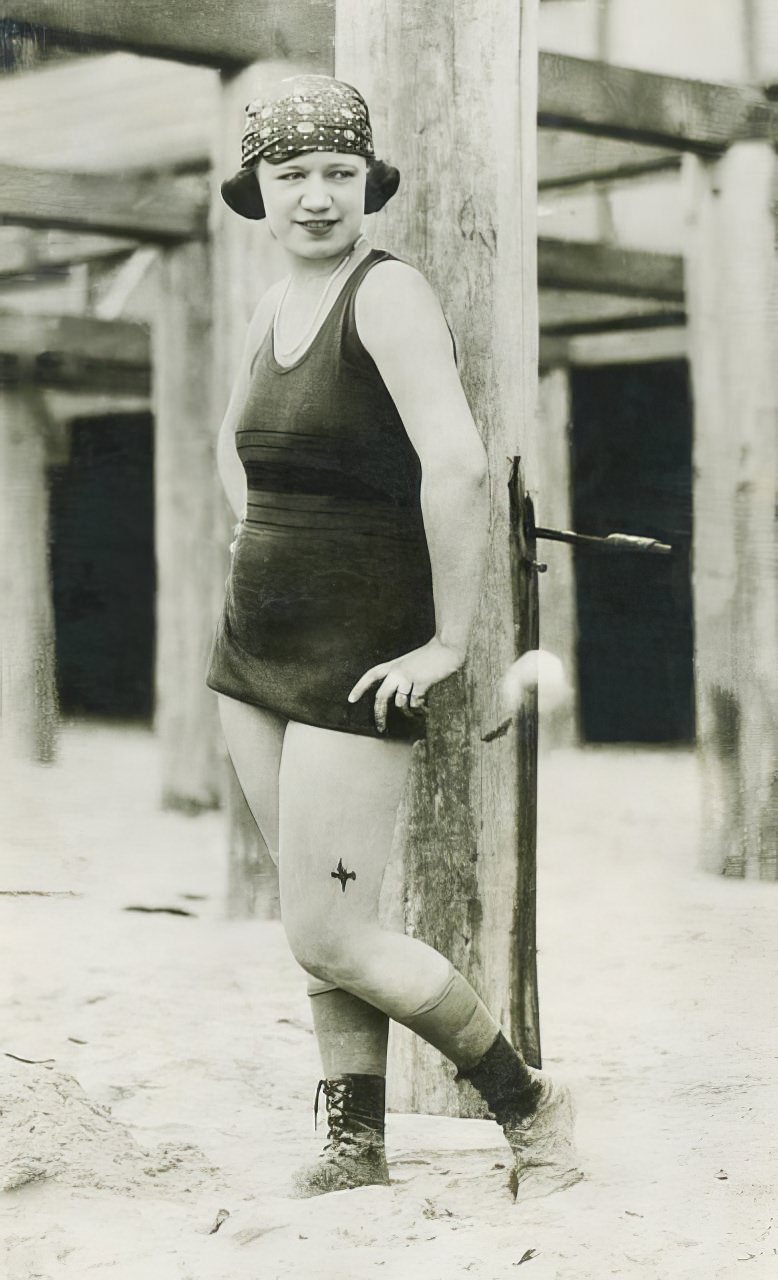
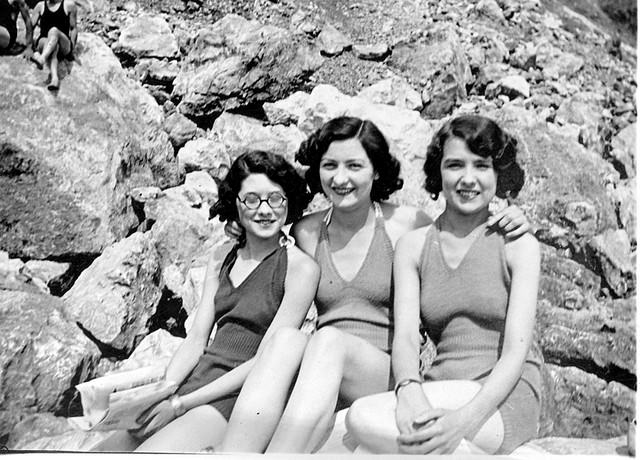
By the early 1920s, the one-piece bathing suit had arrived. It replaced the stacked layers of bloomers, tunics, and skirts with a single garment — a long top extending over built-in shorts. Knitted wool and jersey fabrics made these suits more form-fitting and flexible than anything worn before.

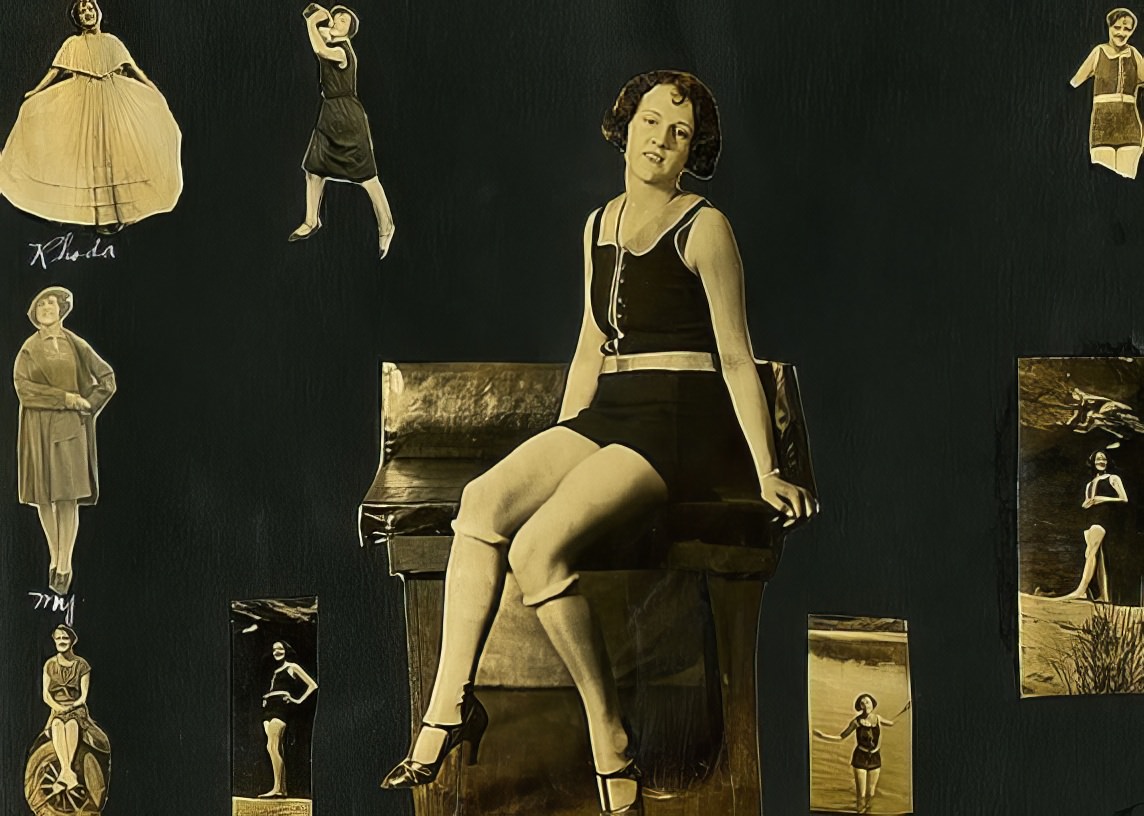
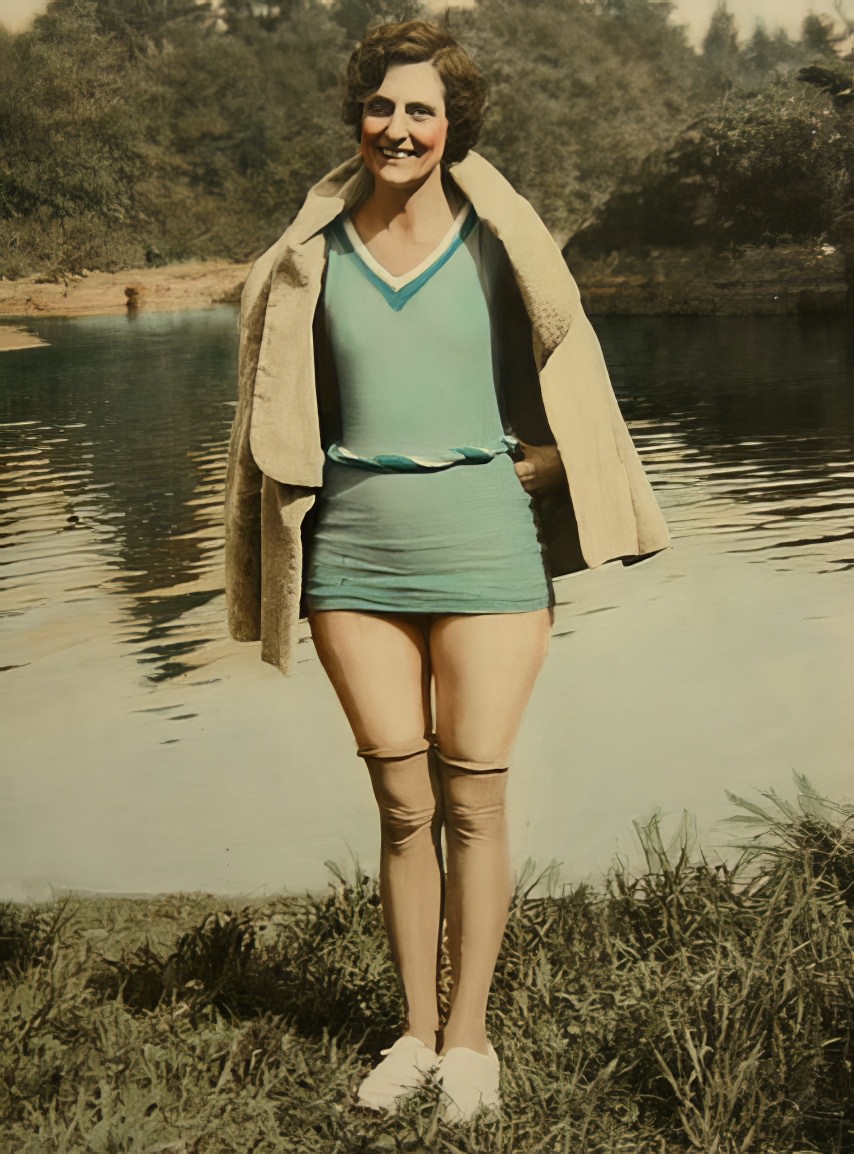
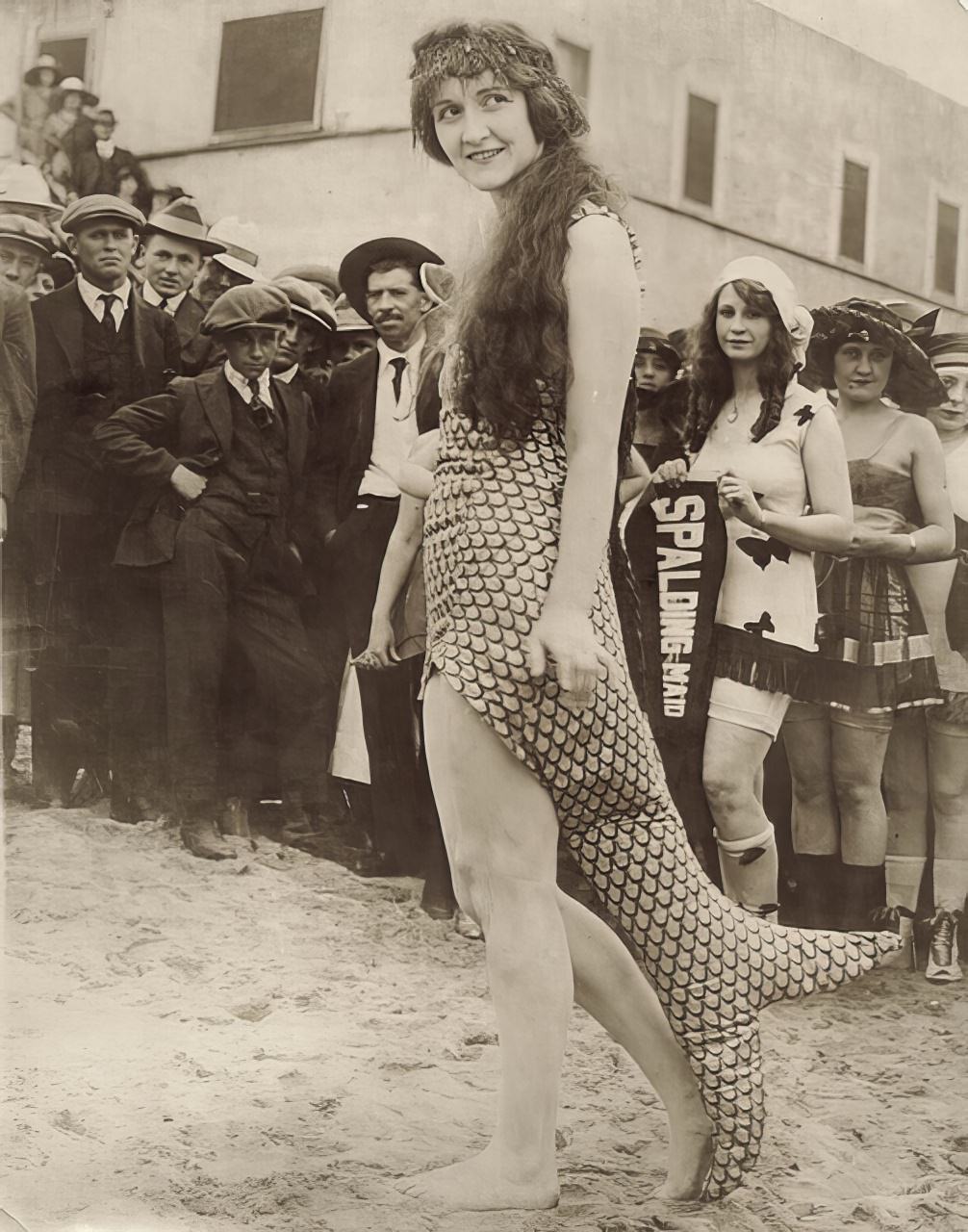
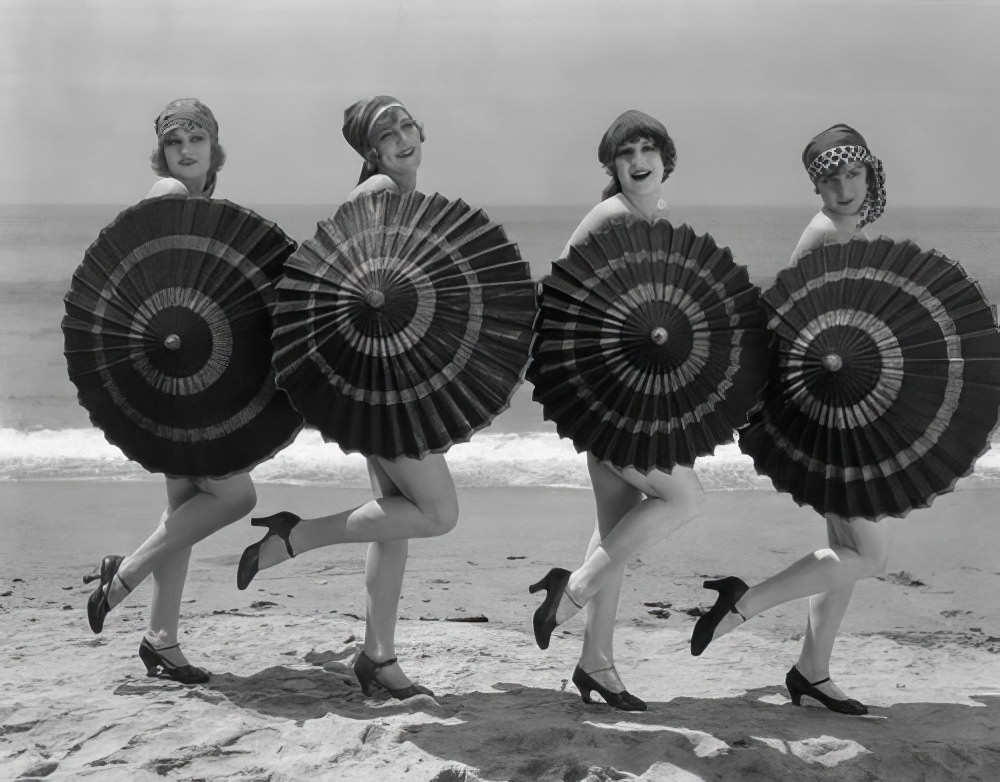
Stockings were still part of the beach outfit in the early 1920s, though they were getting shorter each season. Necklines remained relatively high, and the overall look stayed modest. But the one-piece was a clear break from the past — proof that practicality was finally winning out over tradition.