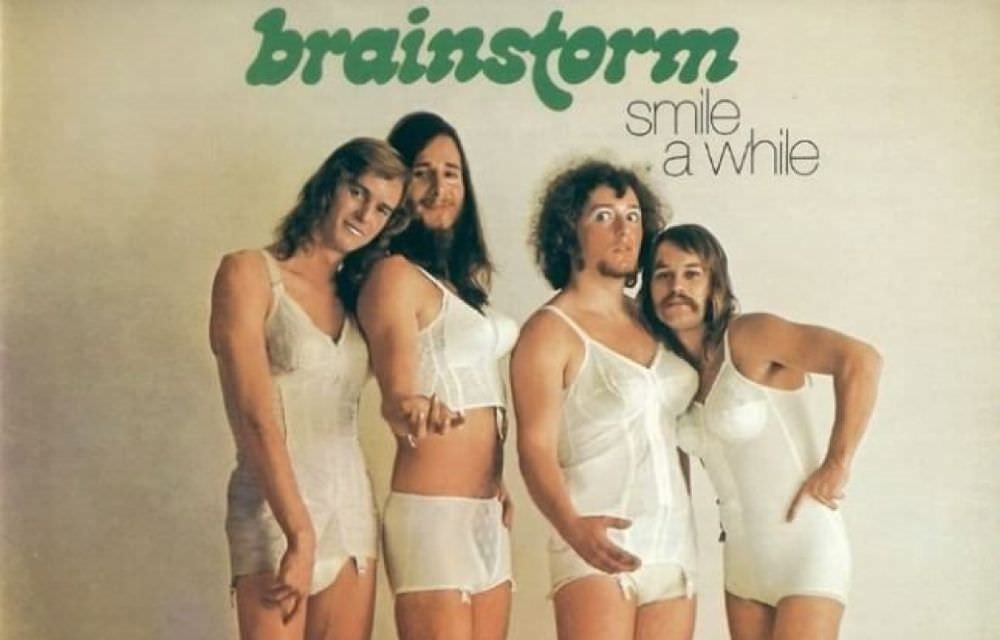
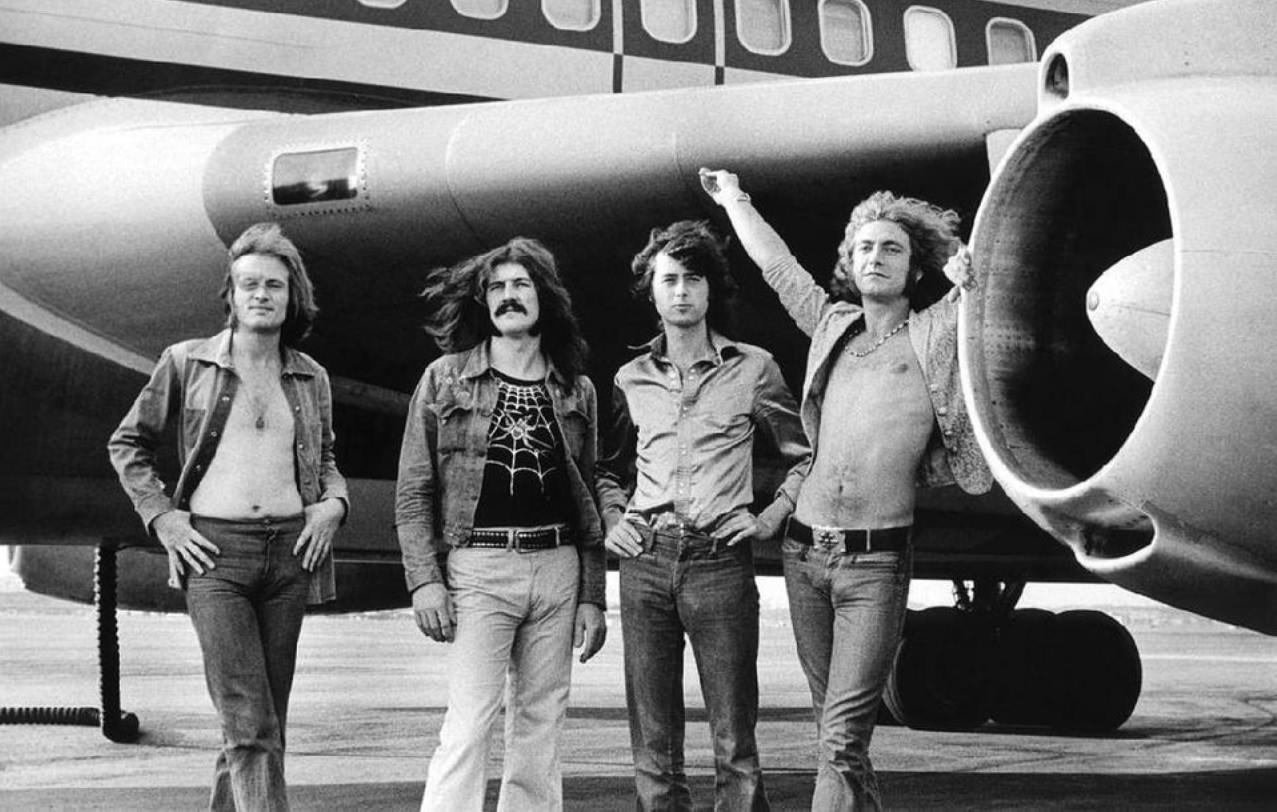
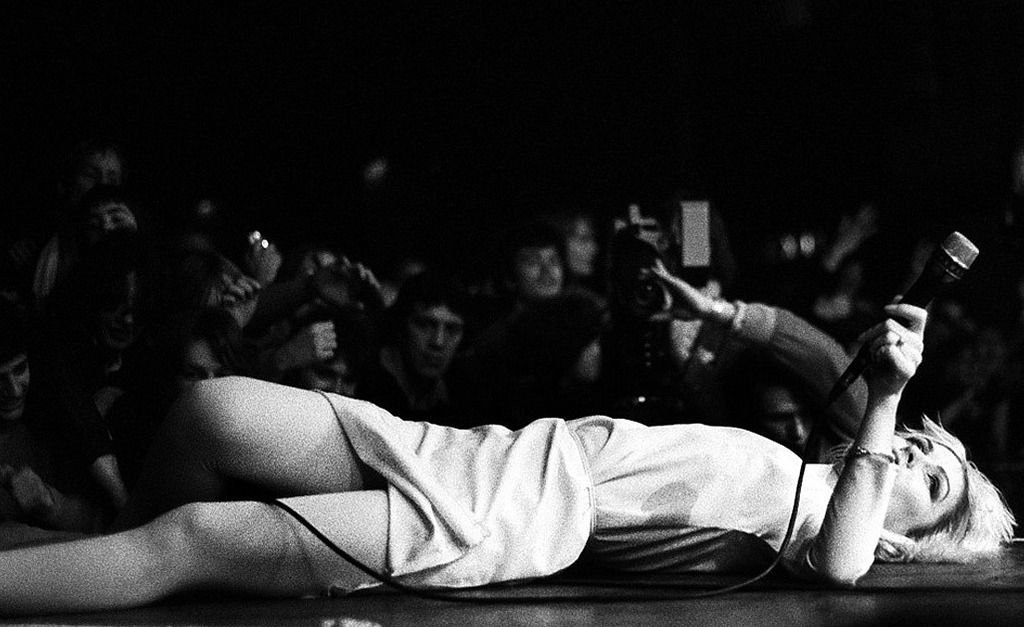
The 1970s was one of the most explosive decades in music history. Rock, funk, soul, jazz, country, and pop all thrived at once. By the late 1970s, hip-hop and disco had joined the mix, reshaping what popular music could sound like. Vinyl records were everywhere — affordable enough for nearly any household, and the format of choice for artists who were pushing boundaries in every direction. Legends like David Bowie, Elton John, Led Zeppelin, and Pink Floyd built careers during this era that would define rock music for generations. What the concert ticket and album cover couldn’t show, though, was what happened behind the curtain. The following photographs offer a rare look at the private, unguarded moments that took place backstage throughout the decade.
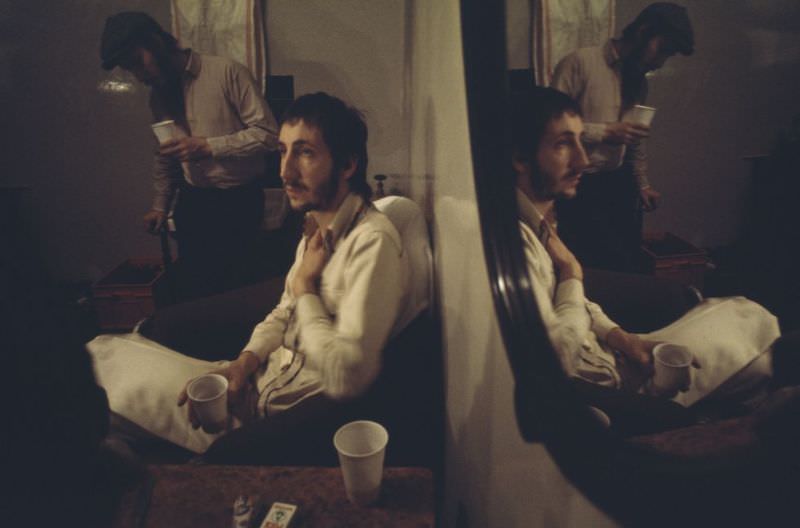
Early in the decade, the backstage world was already packed with iconic figures. Pete Townshend of The Who was a constant presence on the touring circuit as 1970 opened.
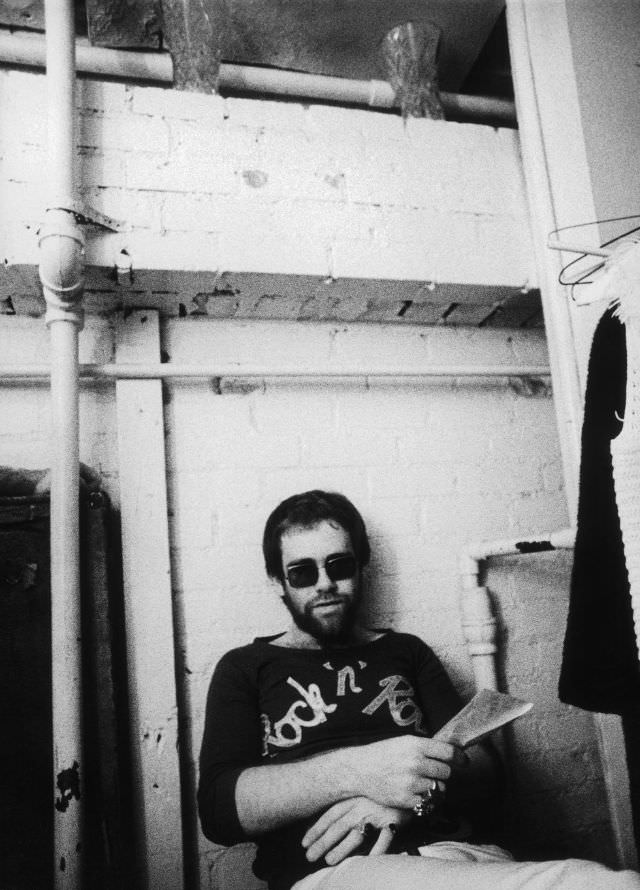
That same year, a young Elton John was still building his American fanbase. In August 1970, he performed a now-legendary residency at the Troubadour in Los Angeles that helped launch his career in the United States.
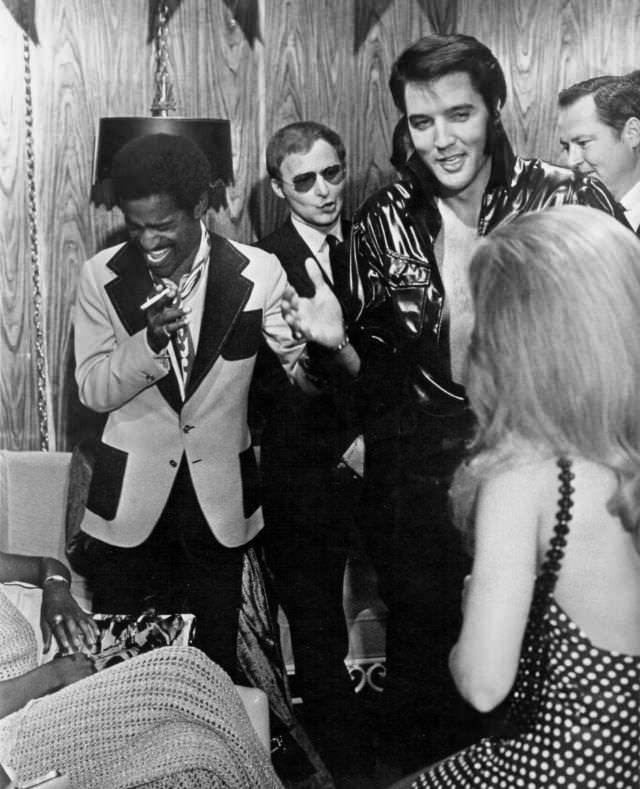
Also in August 1970, Elvis Presley was headlining at the International Hotel in Las Vegas. On opening night, Sammy Davis Jr. came backstage to greet him — two entertainers at the top of their respective worlds sharing a rare moment in private.
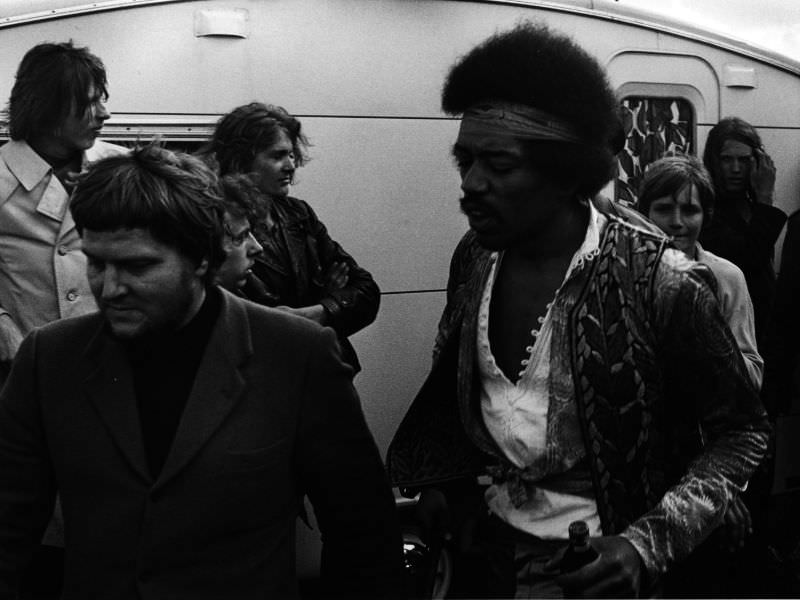
Just weeks later, Jimi Hendrix took the stage at the Love and Peace Festival on the Isle of Fehmarn in Germany. It was September 6, 1970 — his final official concert appearance before his death eighteen days later.
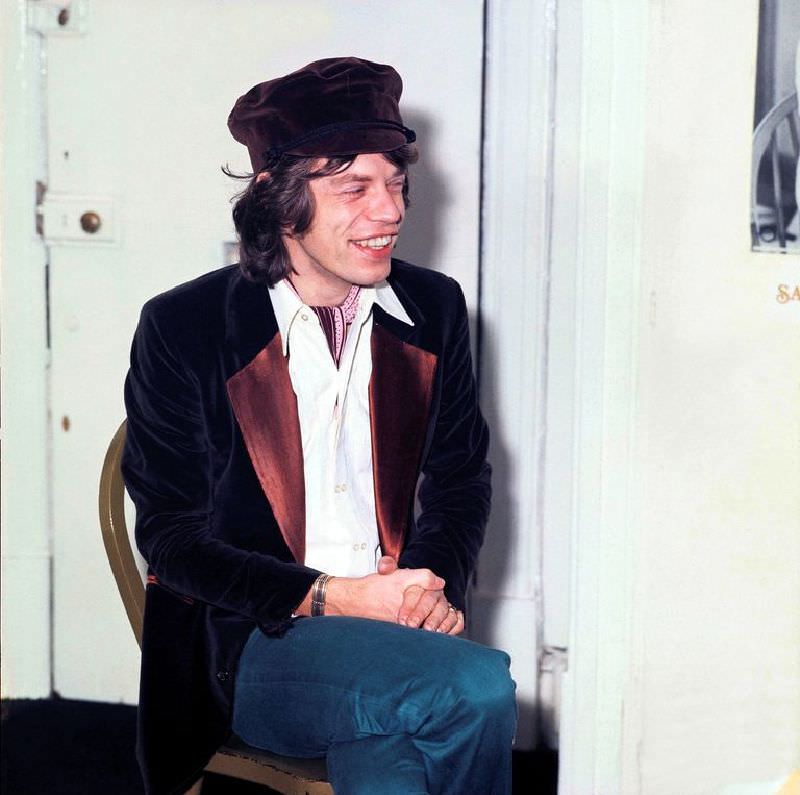
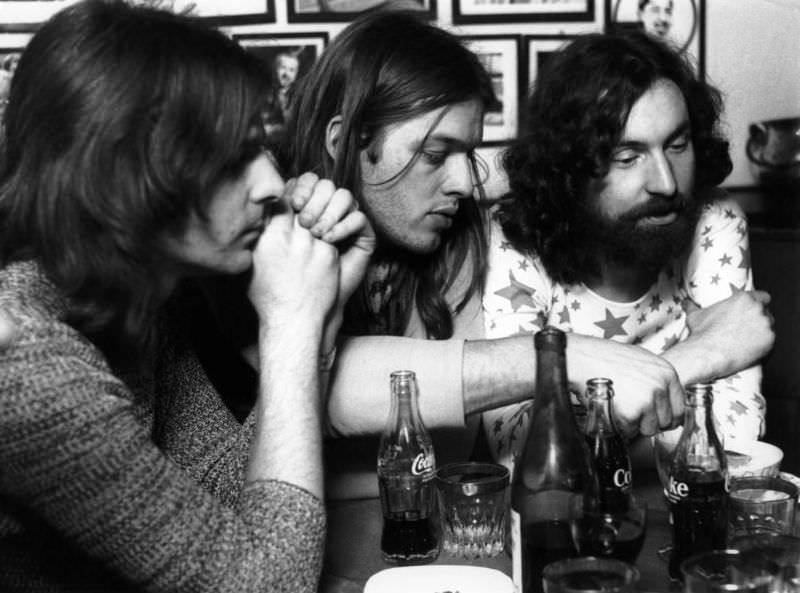
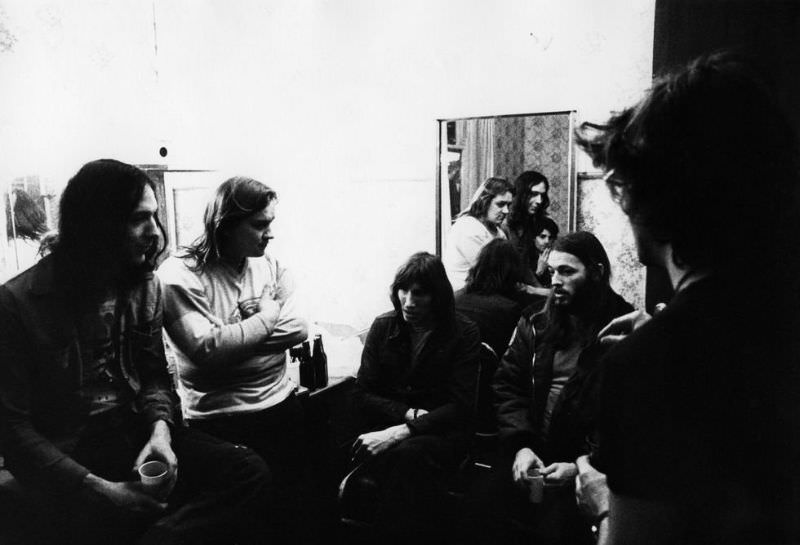
Mick Jagger was photographed in London that same year, while Pink Floyd gave a backstage interview in Germany in November. For a band known for its elaborate stage productions, moments like these were a contrast to the spectacle audiences saw from the front.
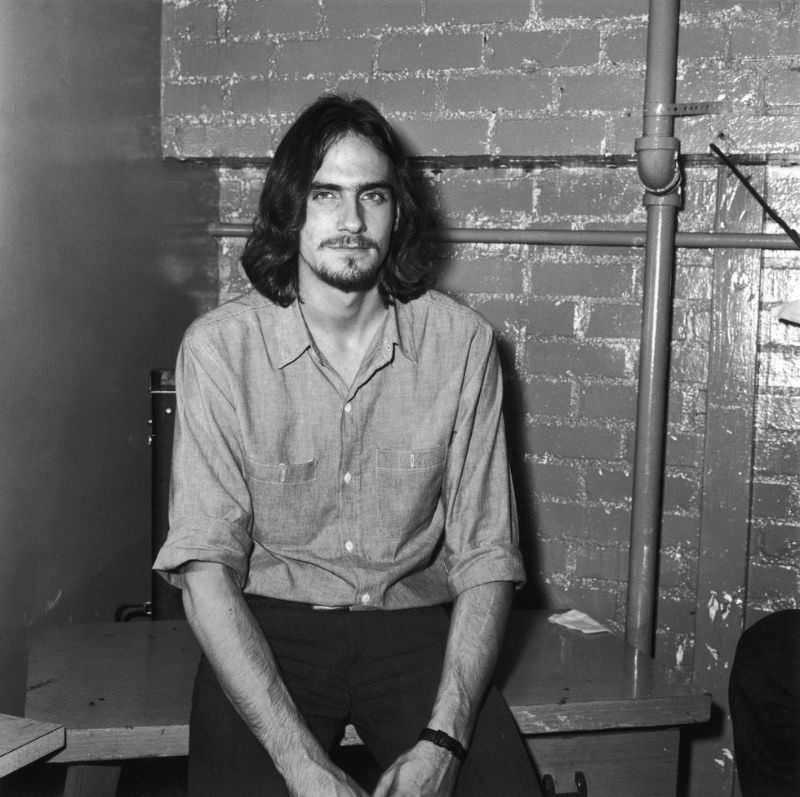
The Troubadour in Los Angeles was a hub for singer-songwriters during this period. James Taylor used the venue as a launching pad, and photographer shots from his pre-show time there capture him at his most relaxed — before the crowd arrived.
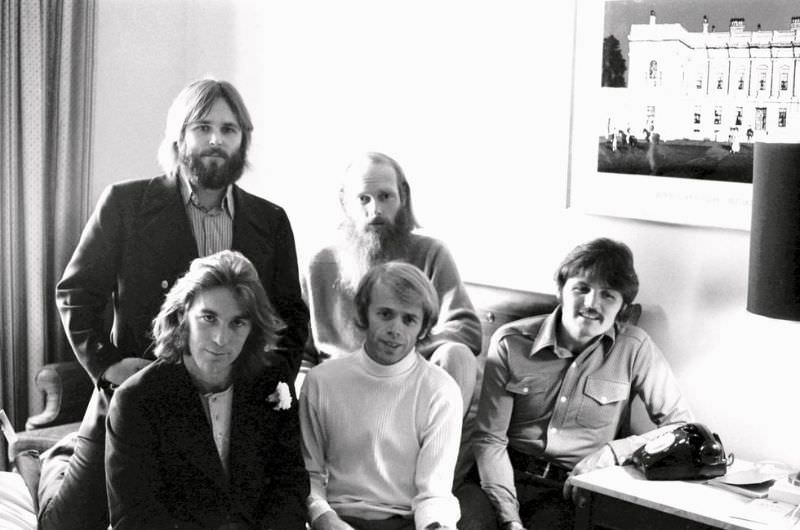
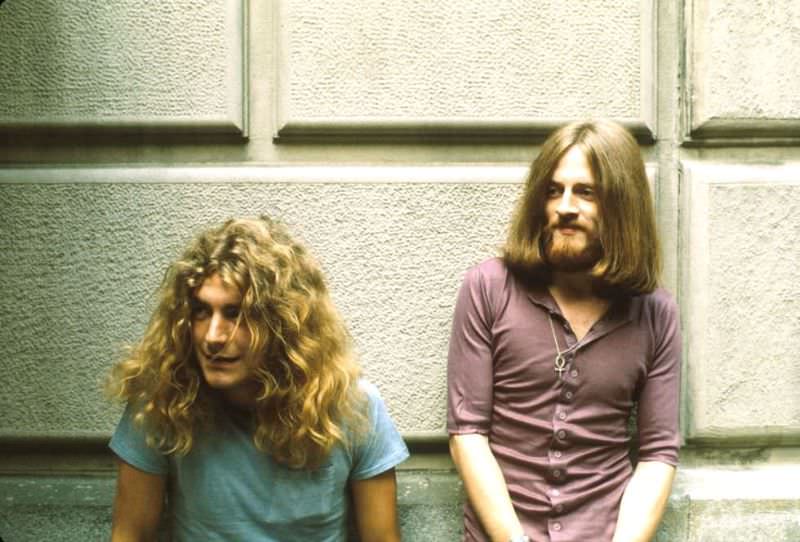
By 1971, Led Zeppelin was in full stride as one of the biggest rock acts on the planet. Robert Plant and John Paul Jones were photographed backstage at the Fillmore East, one of the most storied concert venues in New York City’s history.
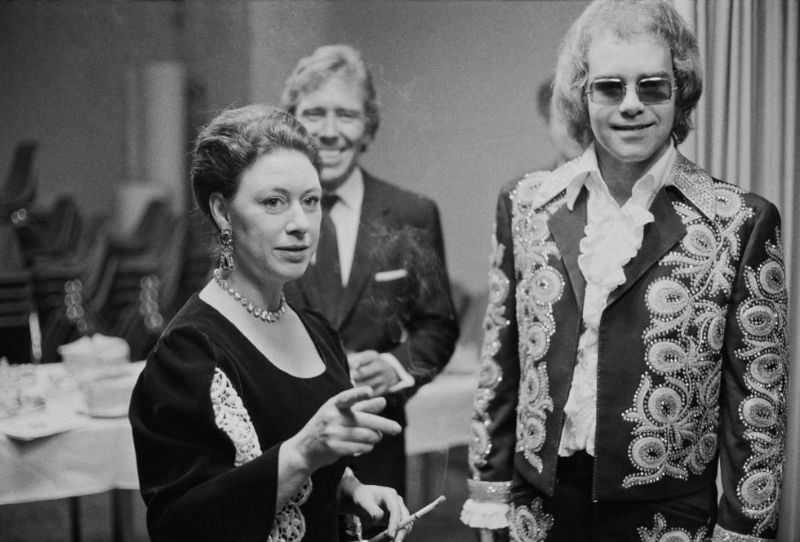
In 1972, Elton John’s fame had grown to a point where British royalty was coming to see him. Princess Margaret and her husband Lord Snowdon joined him backstage at a benefit concert in London — a sign of how far into mainstream culture rock music had traveled.
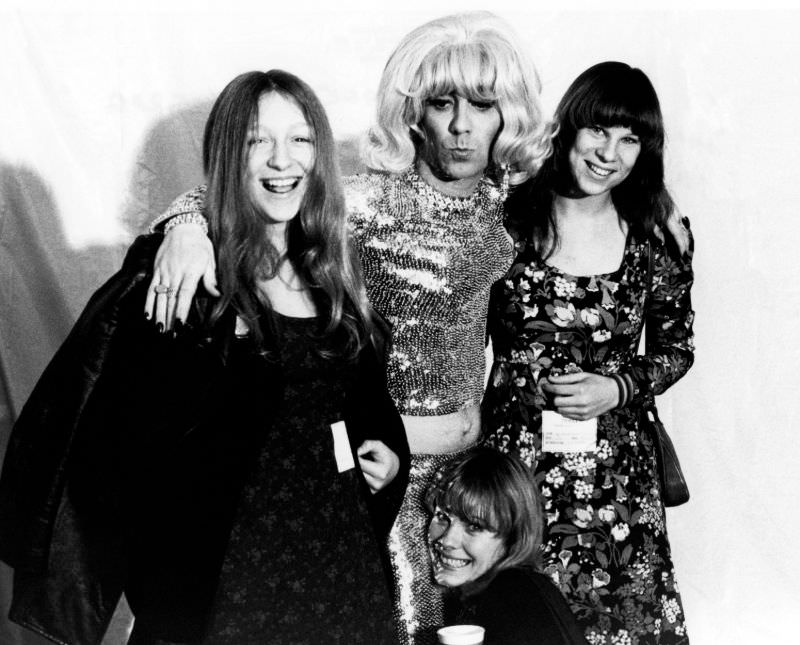
That same year, The Who’s Keith Moon was photographed in a blonde wig and sequined outfit backstage, posing with fans. Moon was known for his theatrical personality offstage just as much as his explosive drumming on it.
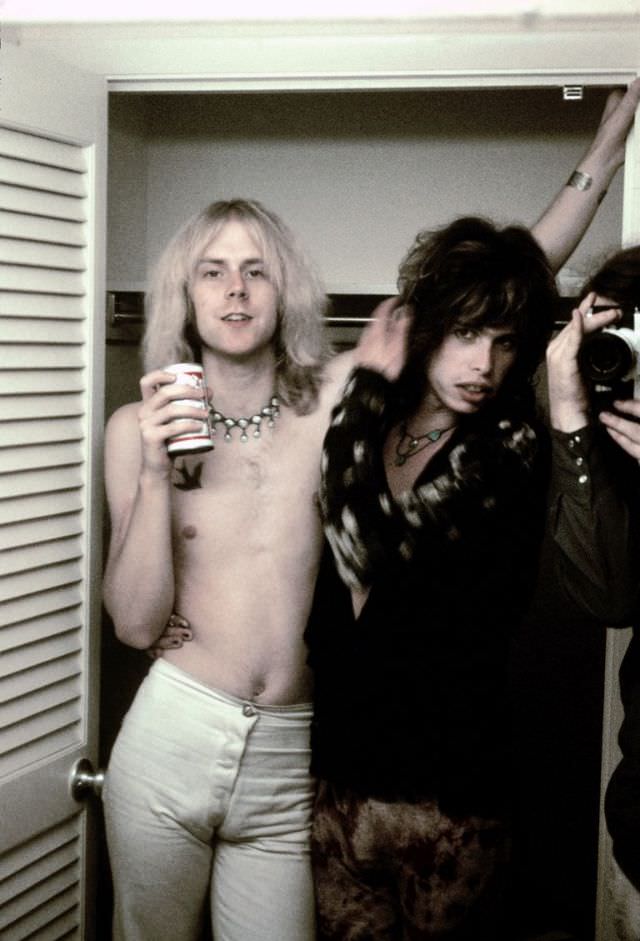
1973 was a year packed with backstage stories. Aerosmith was still a young band from Boston making noise on the East Coast circuit, and Steven Tyler and Tom Hamilton were photographed together in Newport, Rhode Island early in the year.
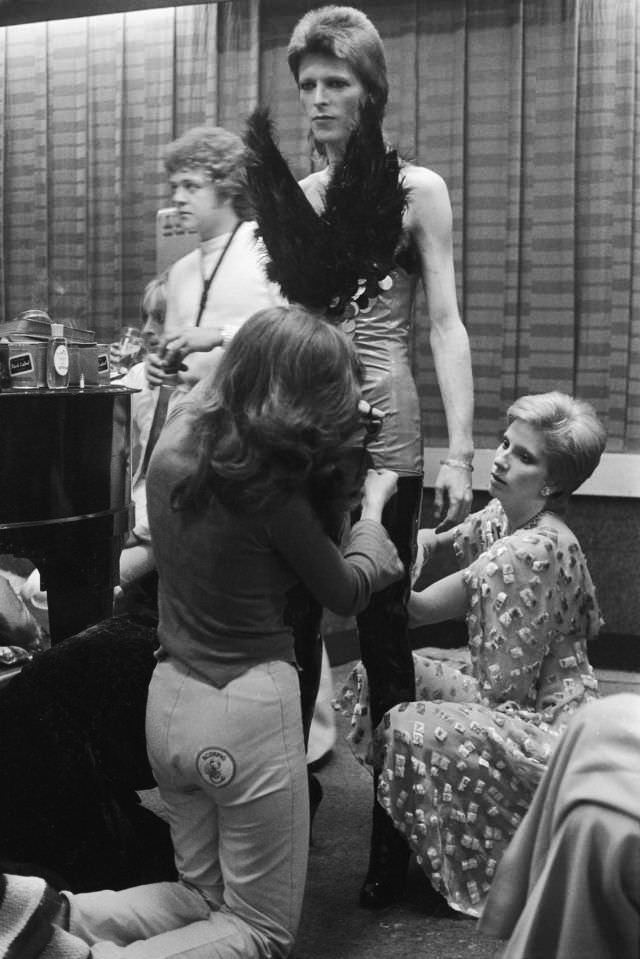
David Bowie’s Ziggy Stardust era brought theatrical costume design into rock like never before. His wife Angie Bowie and an assistant helped dress him in elaborate outfits before every performance — a process captured in detail backstage around 1973.
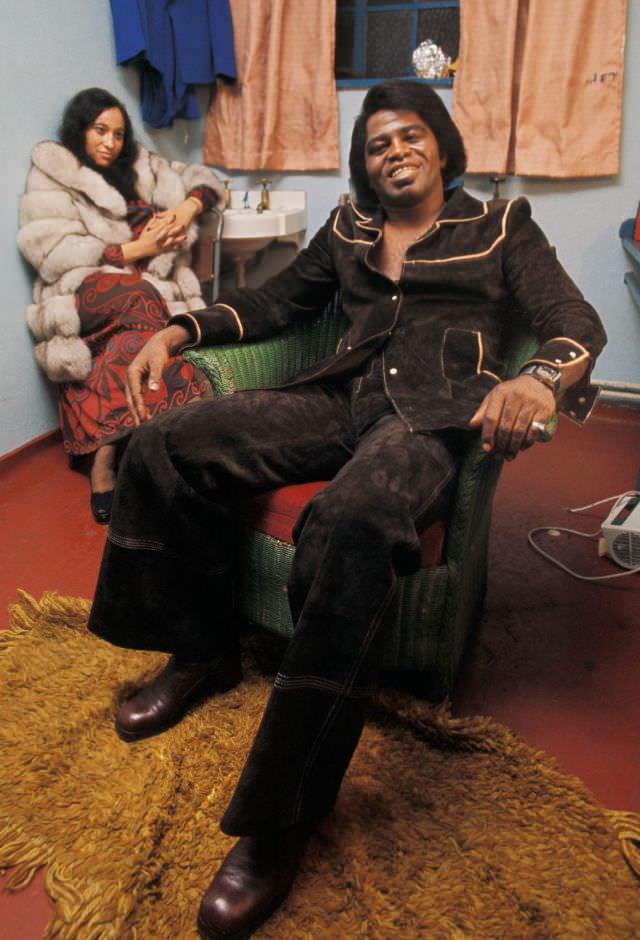
James Brown, known as the Godfather of Soul, brought the same focused energy he had onstage into every corner of his touring life. His 1973 backstage portrait in London reflects the commanding presence he carried everywhere.
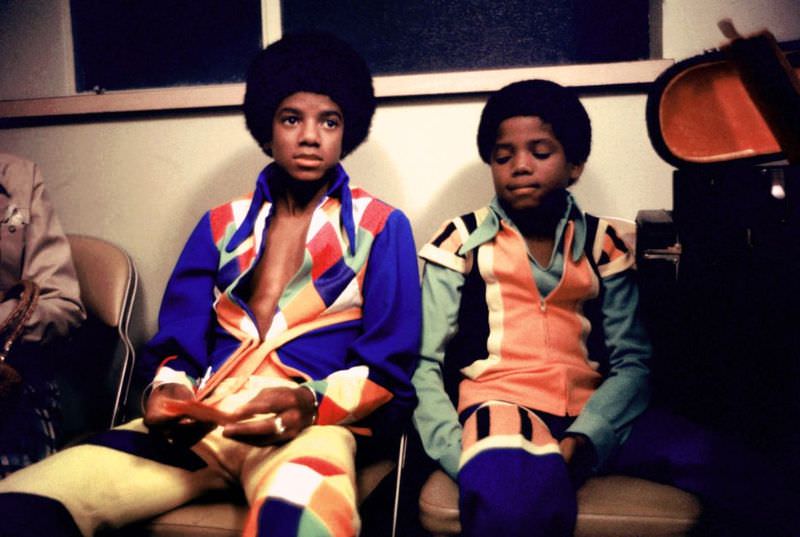
Michael Jackson was just 15 years old when he was photographed with his brother Randy backstage at the Inglewood Forum in August 1973. The Jackson 5 were already a household name, and Michael’s stage instincts were already obvious to everyone around him.
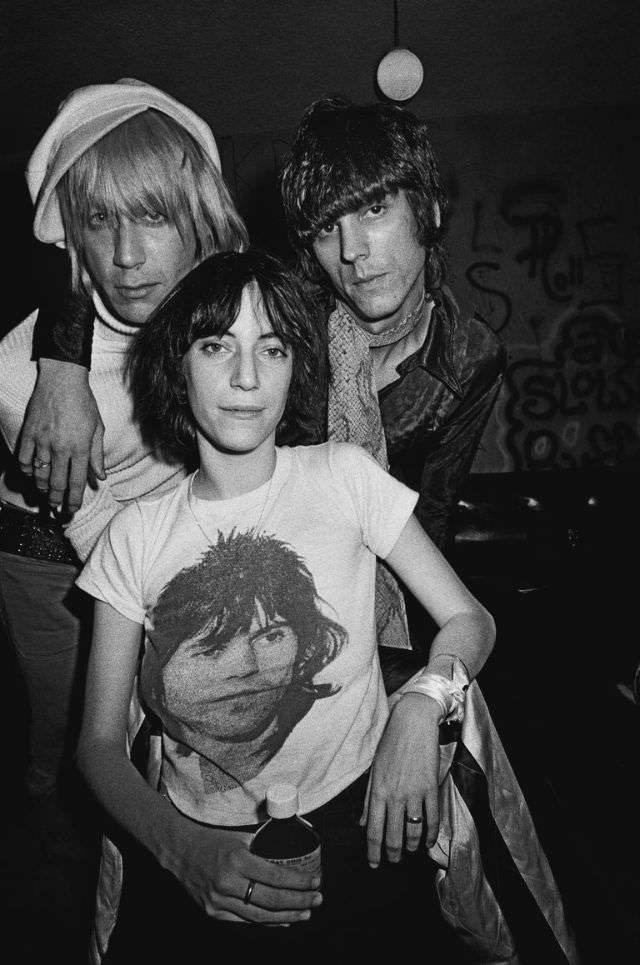
The mid-1970s saw the punk and underground rock scenes gaining momentum. In November 1974, Patti Smith was photographed backstage at the Whisky a Go Go in Los Angeles alongside Iggy Pop and James Williamson of The Stooges — a gathering of artists who were each pushing rock in rawer, more confrontational directions.
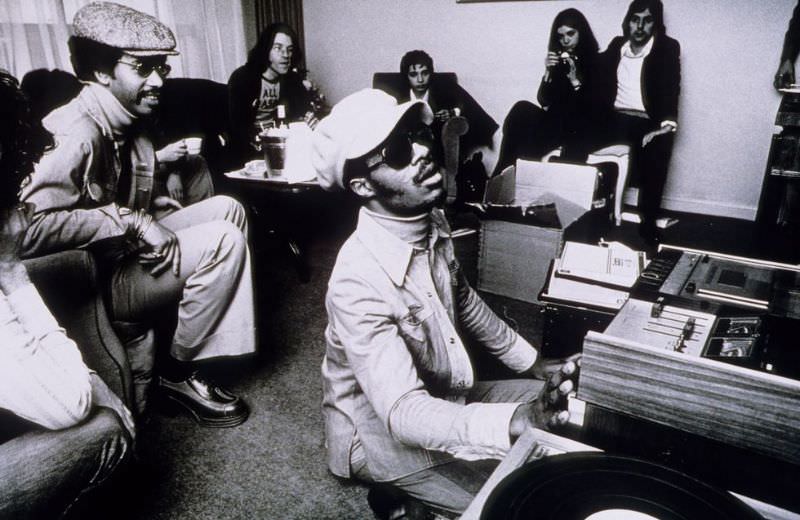
Stevie Wonder visited the Rainbow Theatre in London in January 1974 and was captured backstage listening to a cassette player — a small, personal detail that stood in sharp contrast to the massive scale of his musical output at the time.
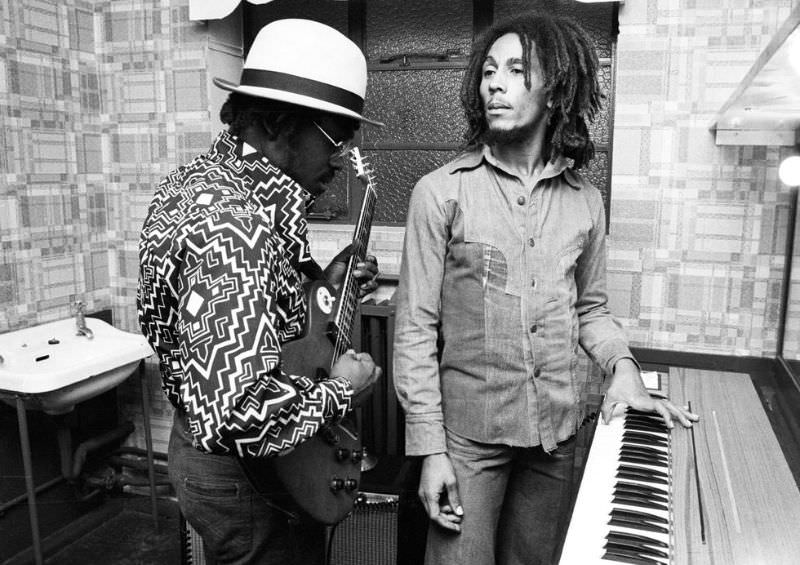
Bob Marley and The Wailers brought reggae to international audiences throughout the 1970s. In July 1975, Marley and bassist Aston ‘Family Man’ Barrett were photographed backstage at the Birmingham Odeon, playing guitar and keyboards before taking the stage.
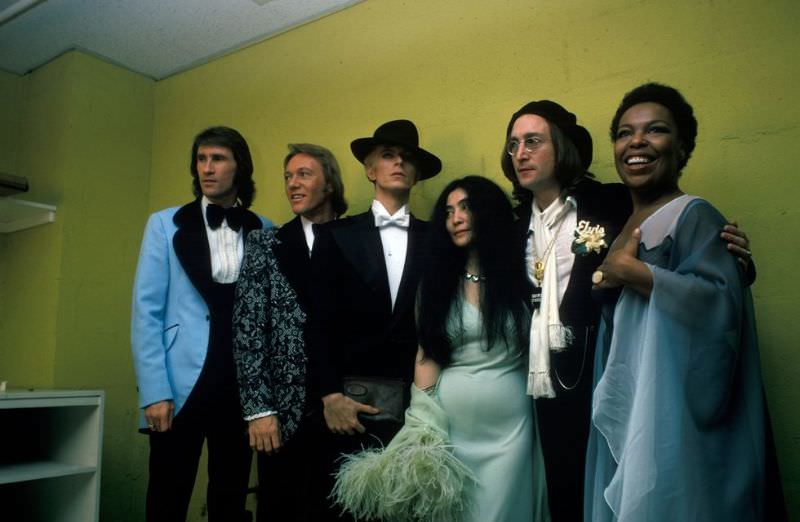
The 1975 Grammy Awards brought together a remarkable collection of musicians. Bill Medley, Bobby Hatfield, David Bowie, Yoko Ono, John Lennon, and Roberta Flack were all photographed together at the ceremony in New York City on March 1st — a single frame holding decades of musical history.
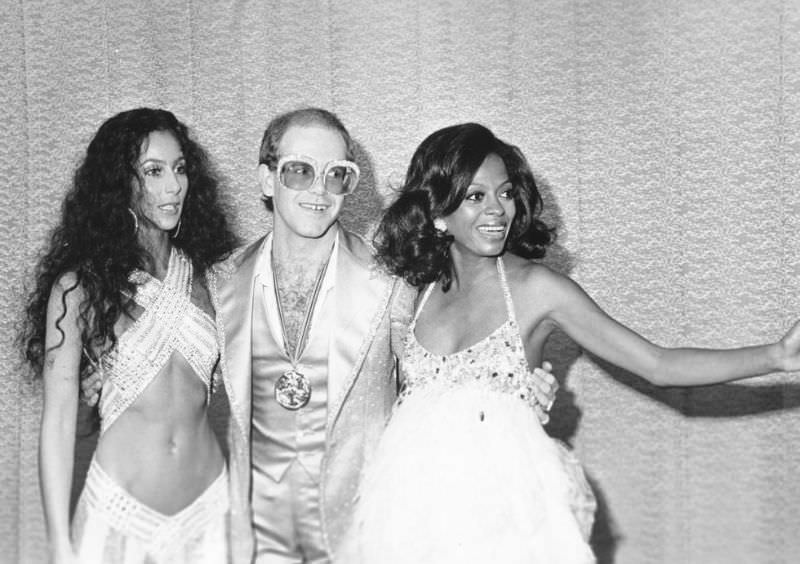
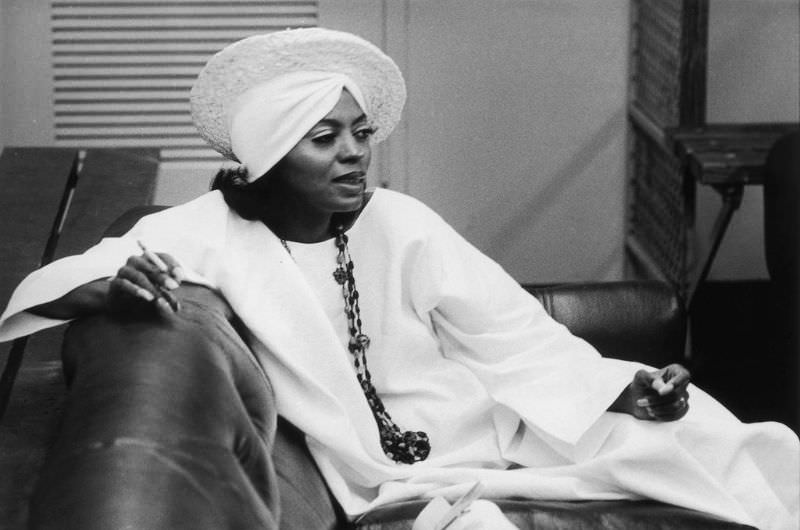
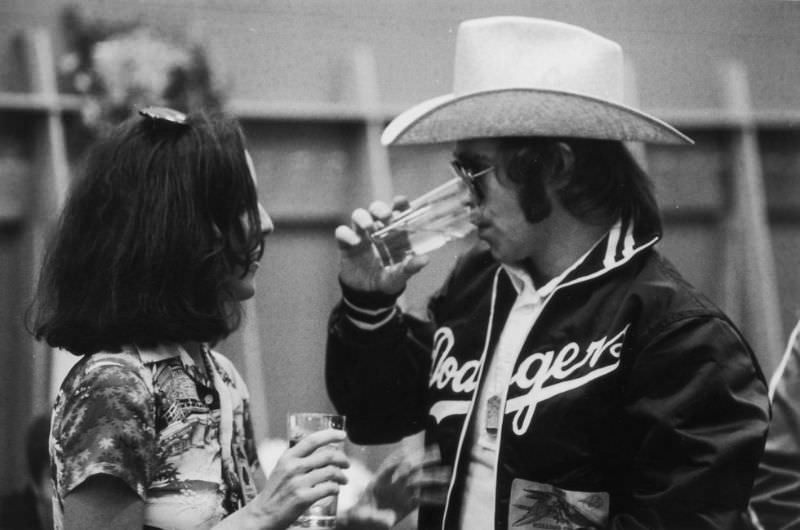
The Rolling Stones’ 1975 Tour of the Americas was one of the decade’s biggest touring events. It generated a remarkable archive of backstage moments — from Diana Ross attending a show, to Elton John chatting with music journalist Lisa Robinson, to Mick Jagger bowling in a corridor.
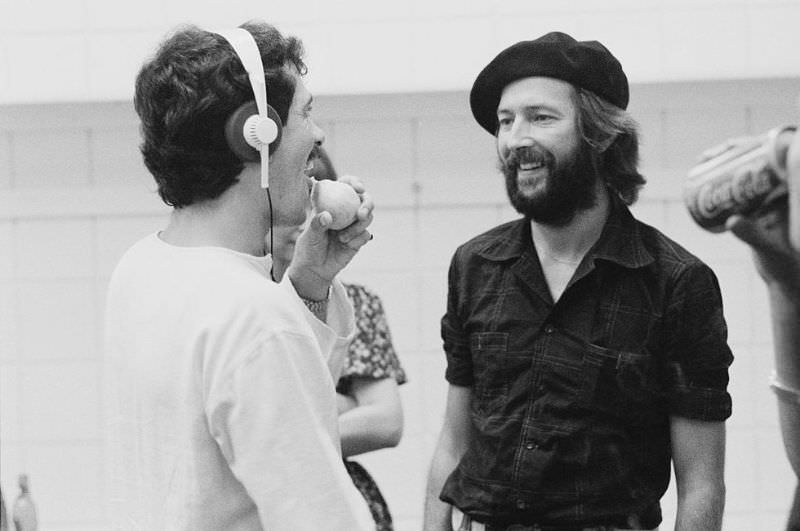
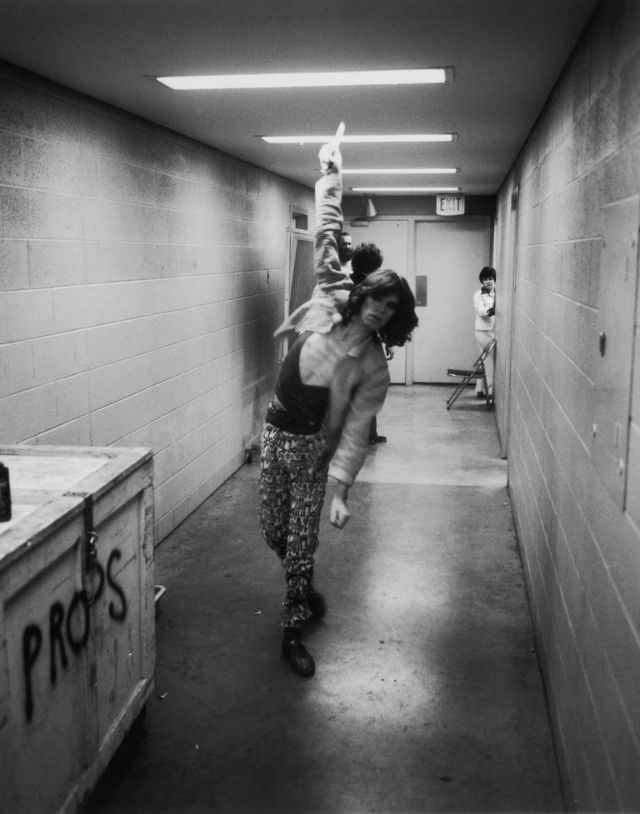
Patti Smith was a fixture of the New York underground scene, but she was also touring actively by 1975. She was photographed backstage at The Boarding House Nightclub in San Francisco and at CBGB’s in New York — the two cities that defined American punk’s early geography.
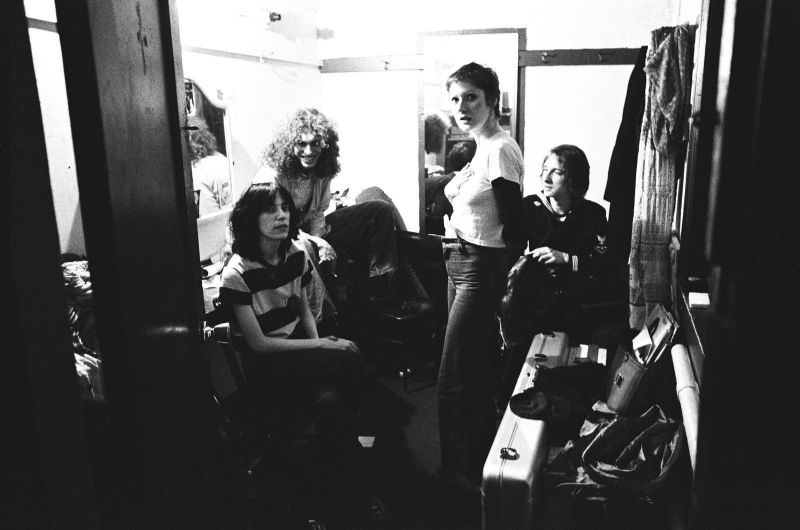
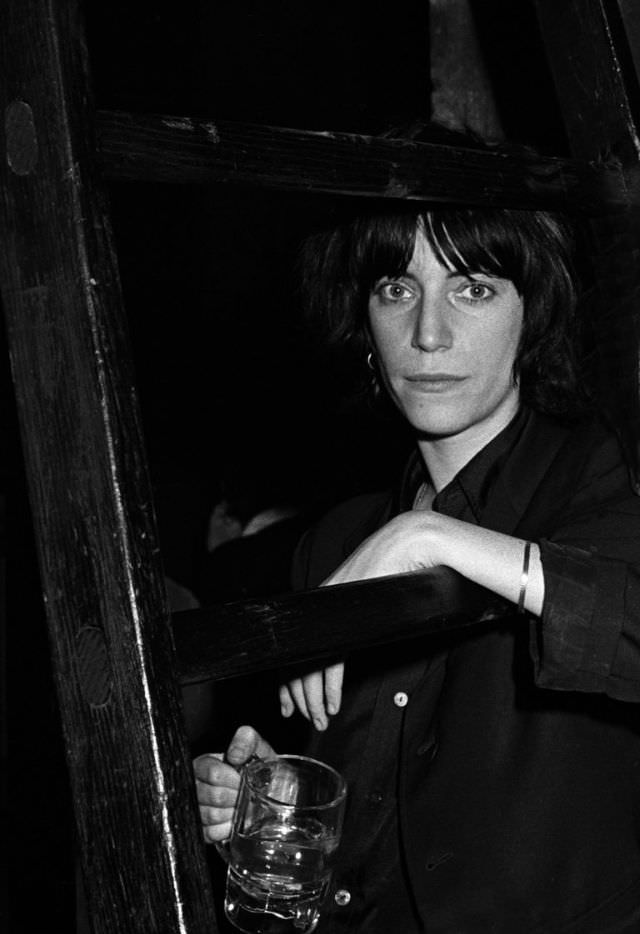
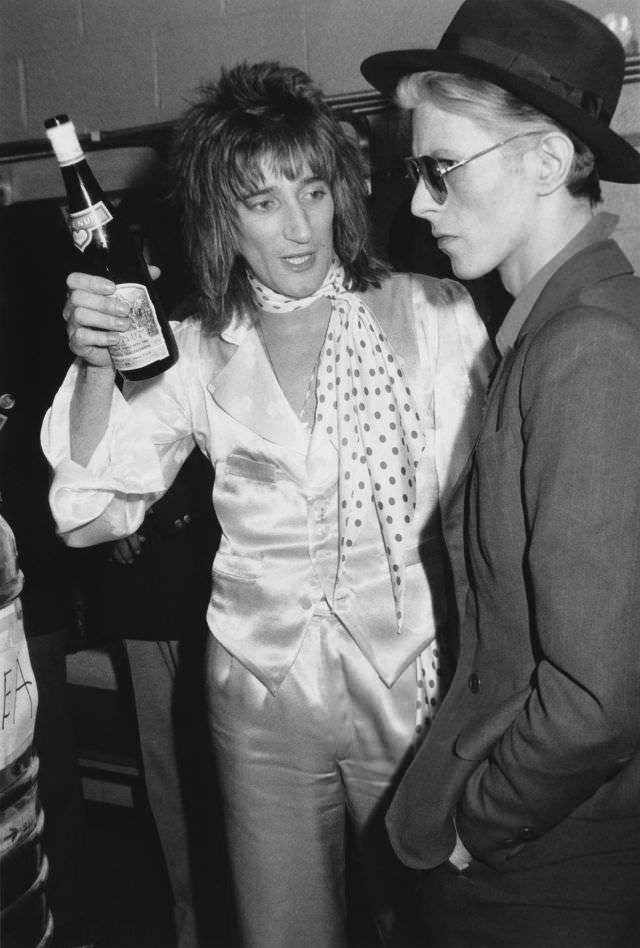
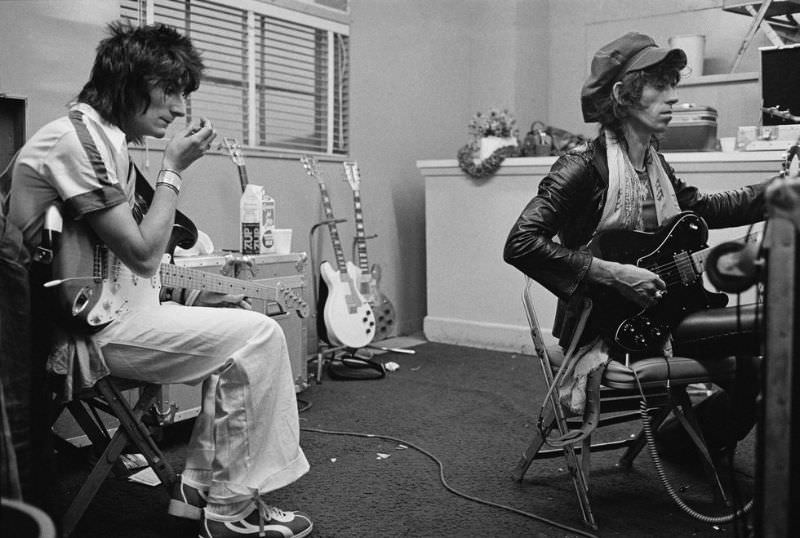
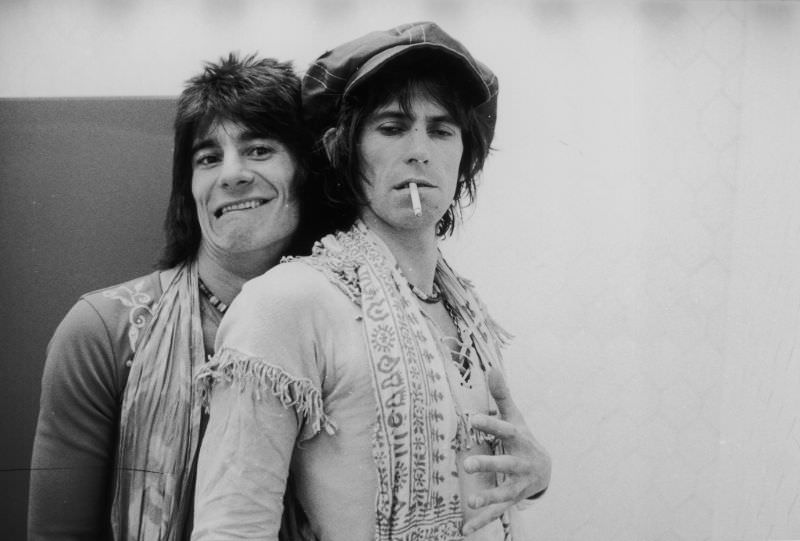
Rod Stewart and David Bowie crossed paths backstage at Madison Square Garden in 1975. Ron Wood and Keith Richards, meanwhile, were inseparable throughout the Tour of the Americas, captured in multiple backstage photos that show the close bond between the two guitarists.
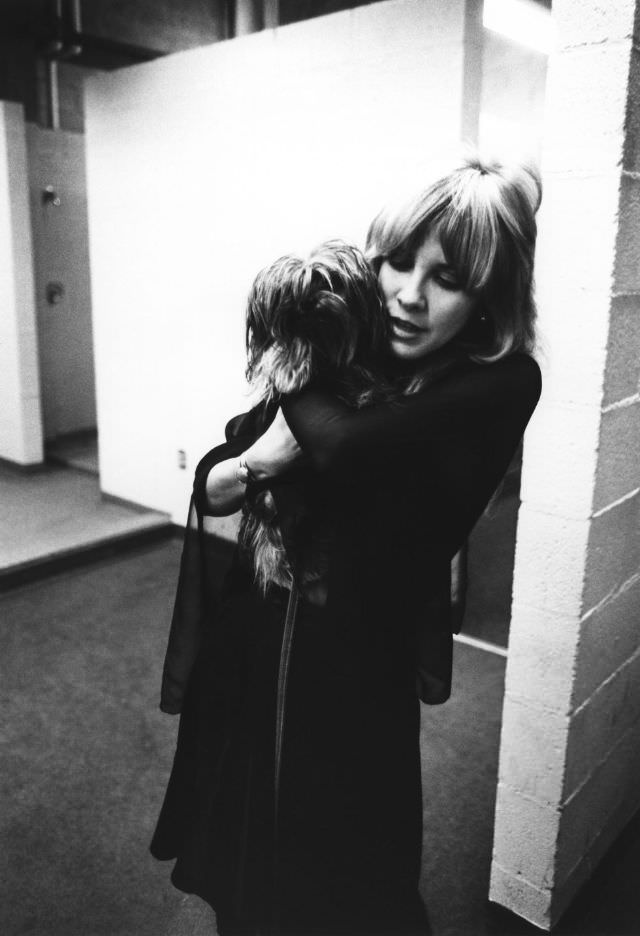
Stevie Nicks joined Fleetwood Mac in 1975, and the band’s profile exploded almost immediately. She was photographed backstage in New Haven in October 1975, holding her dog — a quiet moment before what would soon become one of the most successful tours in rock history.
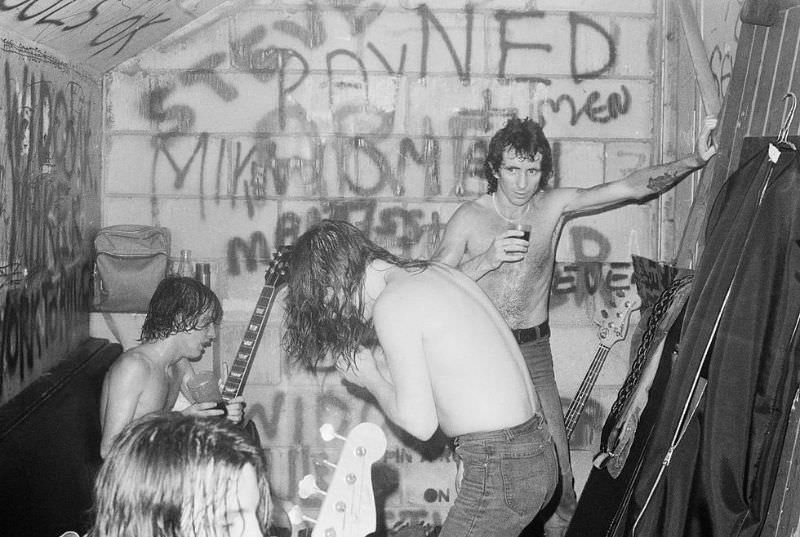
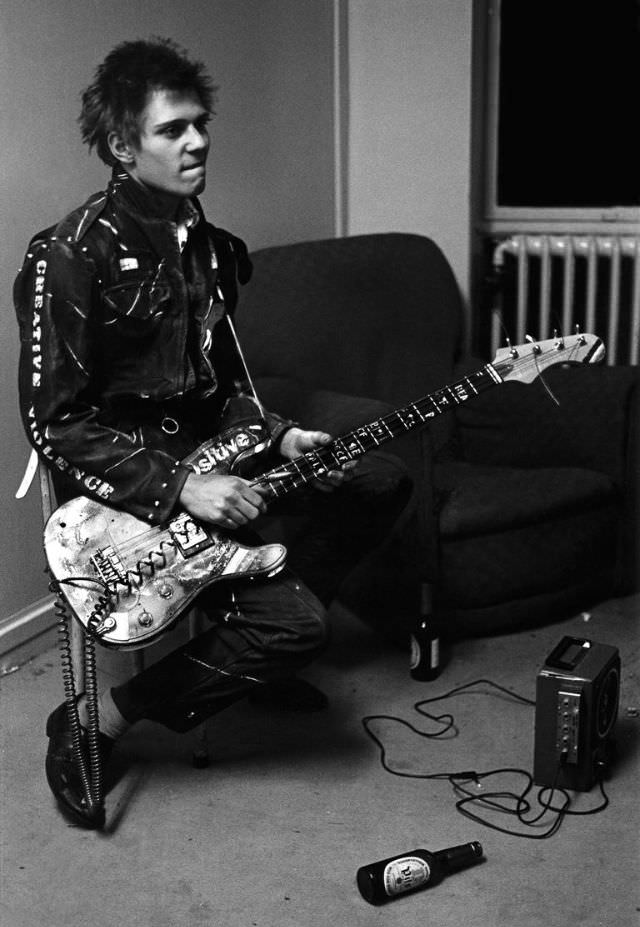
By 1976, hard rock and punk were both hitting their stride. AC/DC was photographed celebrating after a show at the Marquee Club in London, while The Clash’s Paul Simonon was captured backstage at the Royal College of Art in November — just as the British punk scene was igniting.
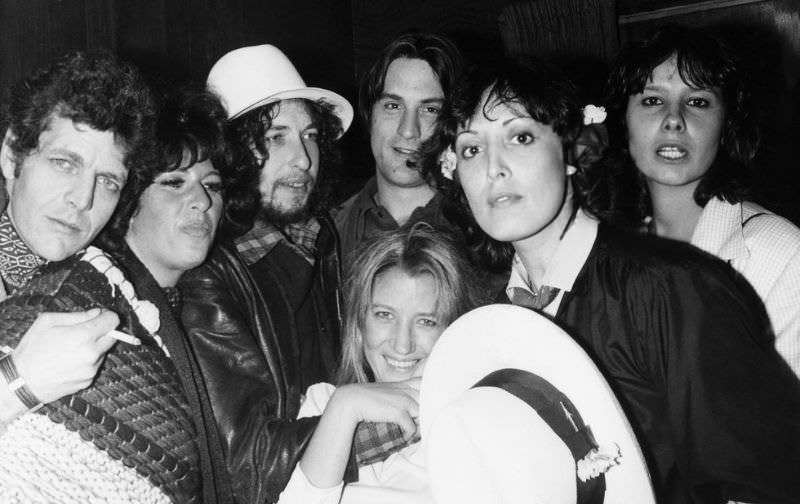
Bob Dylan’s social circle in 1976 was wide and eclectic. At the Roxy in Los Angeles in August, he was photographed with filmmaker Robert De Niro, singer Ronee Blakley, actress Sally Kirkland, and several others — a snapshot of how freely the worlds of music and film overlapped.
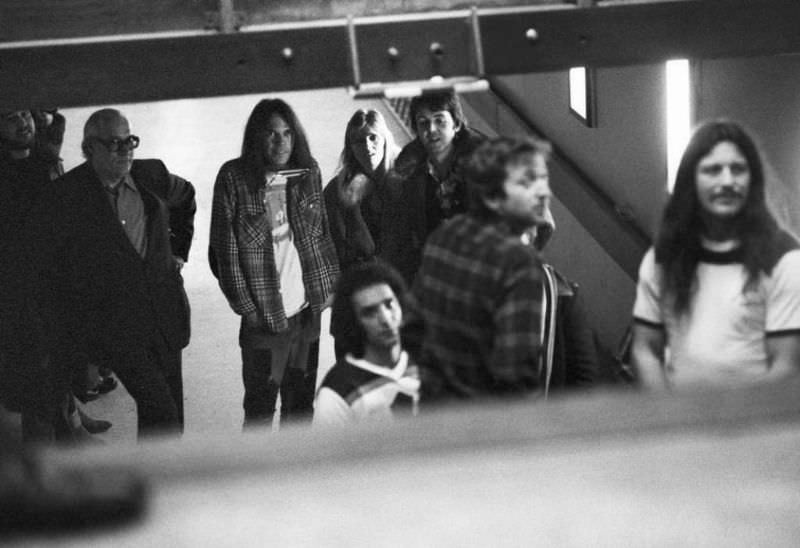
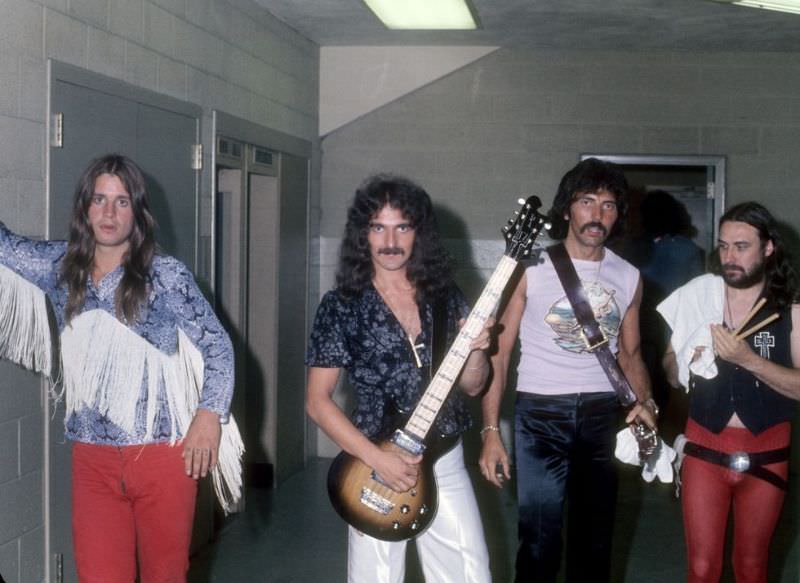
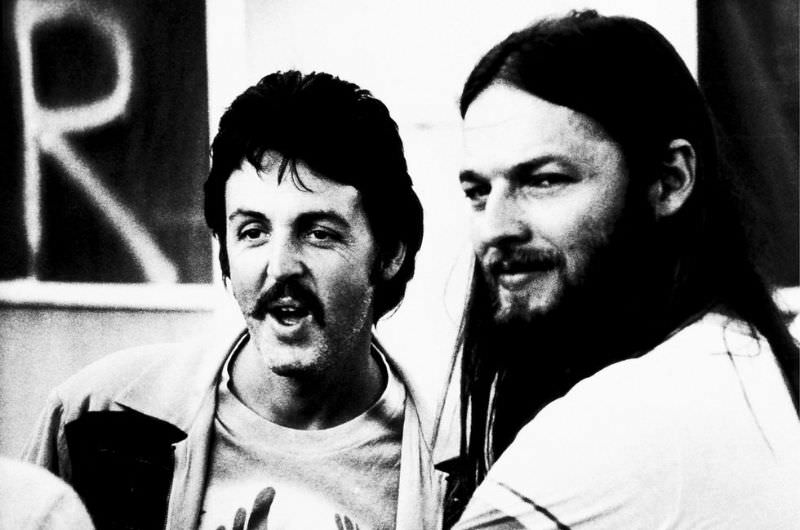
Black Sabbath posed backstage at Cobo Hall in Detroit in November 1976 — Ozzy Osbourne, Tony Iommi, Geezer Butler, and Bill Ward together in a single frame. The same year, Paul McCartney and David Gilmour crossed paths at Knebworth Music Festival.
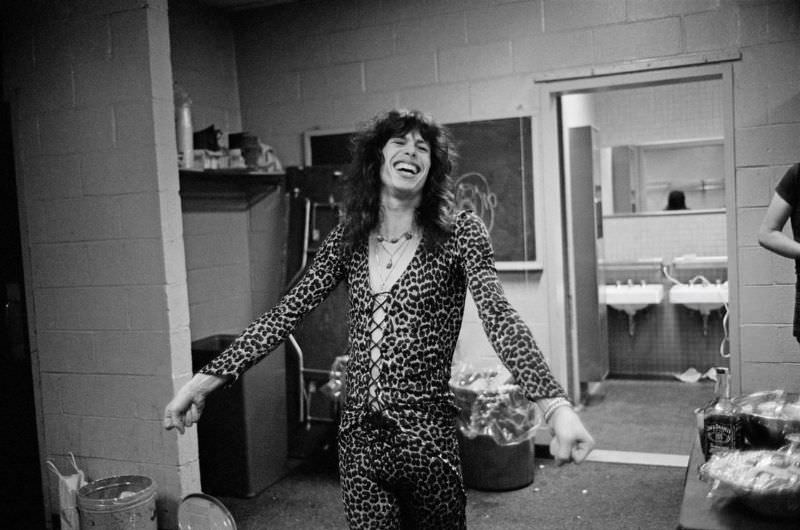
Aerosmith’s Steven Tyler fully committed to his stage persona in 1976. Before a show at Madison Square Garden, he was photographed pulling on a skintight cheetah print suit. The Runaways, one of the first all-female rock bands to achieve wide recognition, were photographed that same year at CBGB’s.
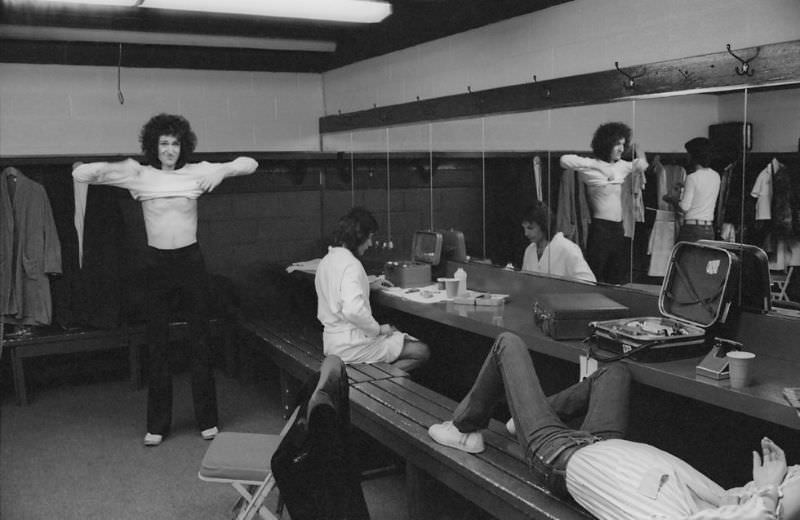
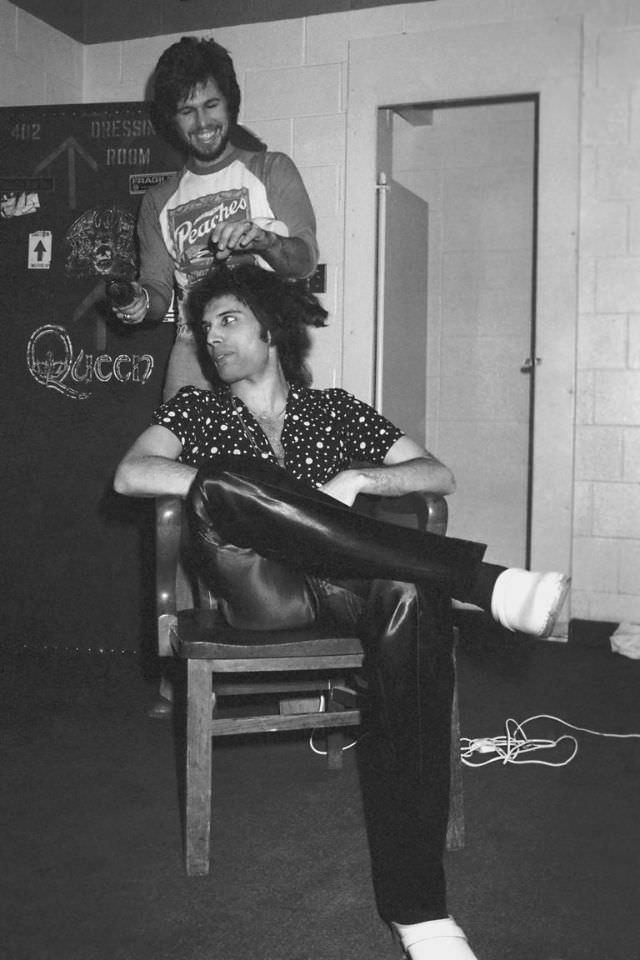
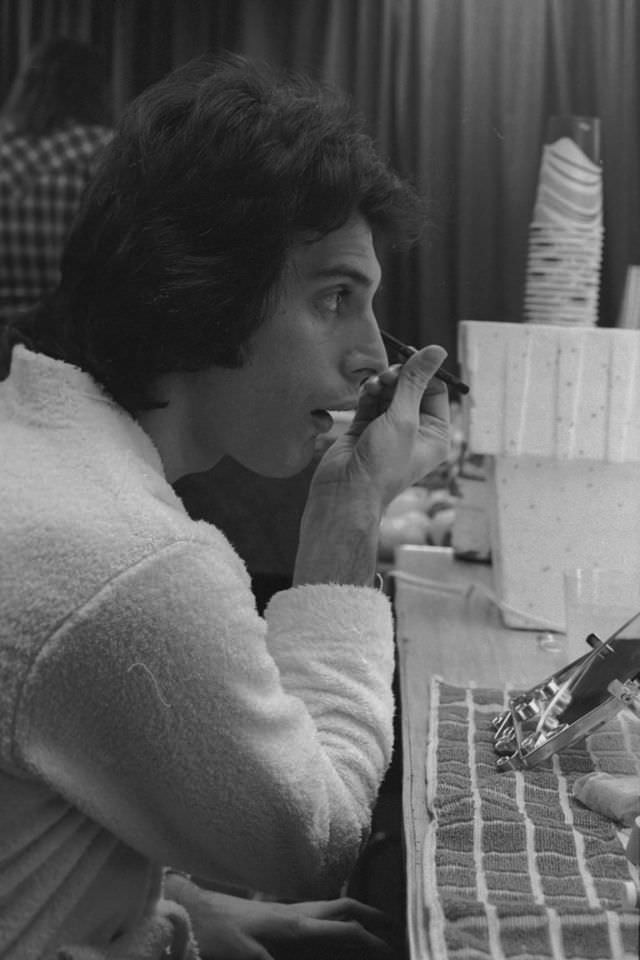
Queen was on a relentless touring schedule in 1977. Freddie Mercury’s pre-show routine included applying makeup and getting his hair done backstage — preparations that matched the theatrical intensity he brought to every performance.
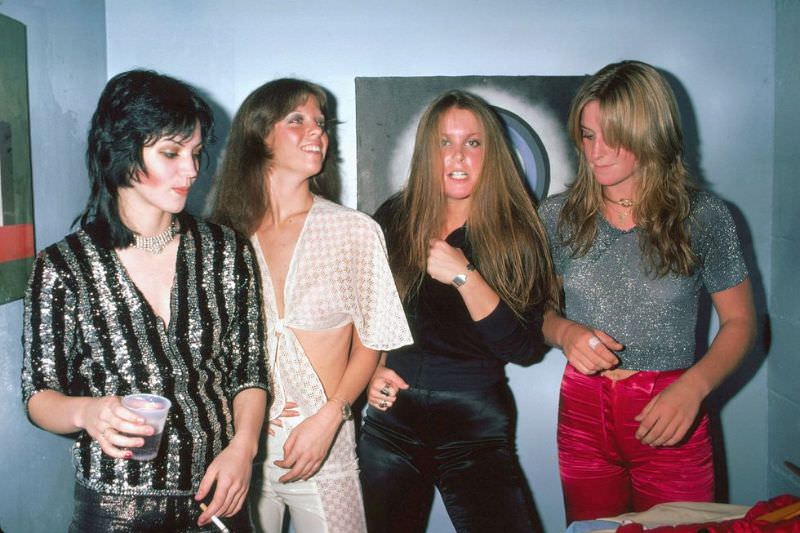
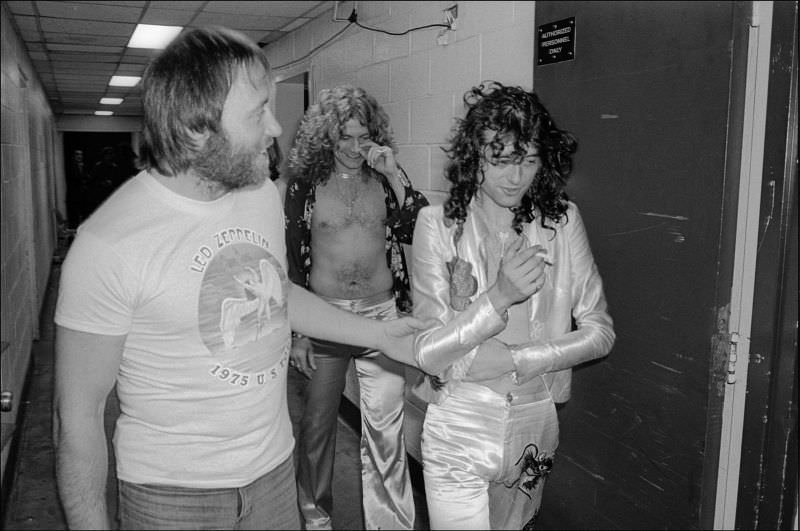
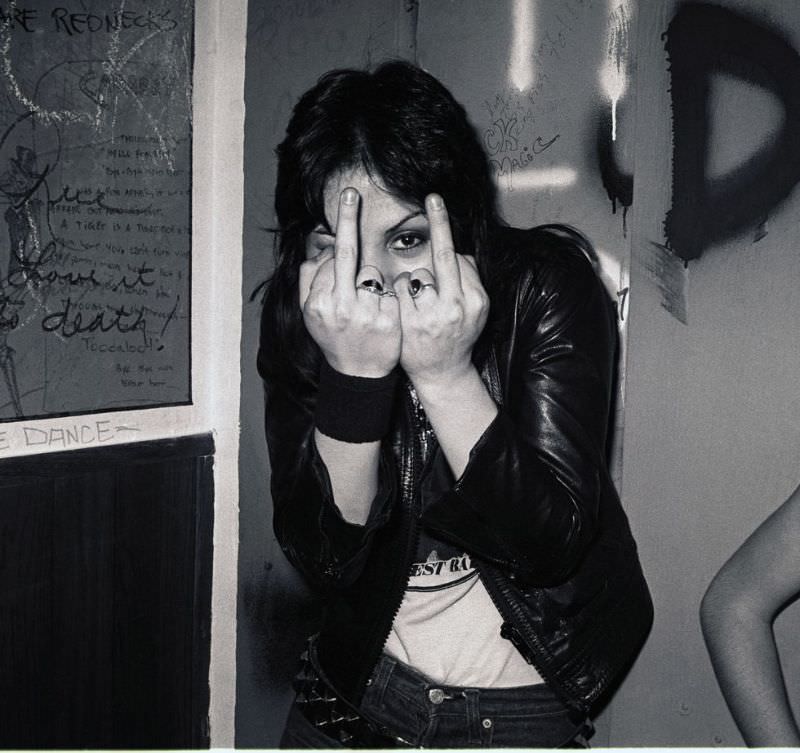
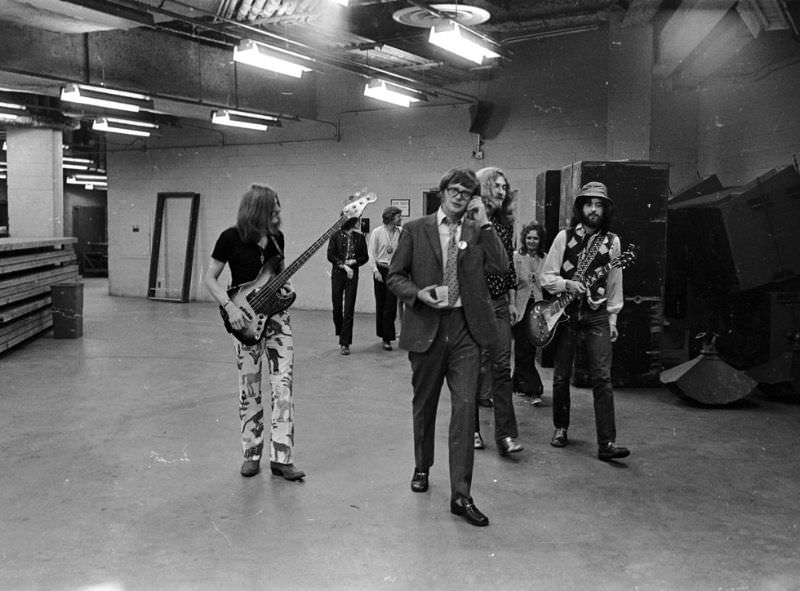
Led Zeppelin played a string of dates at Madison Square Garden in June 1977, and Jimmy Page and Robert Plant were photographed walking backstage at the venue on June 10th. Joan Jett of The Runaways was also active on the West Coast that year, photographed at the Whisky a Go Go in Los Angeles.
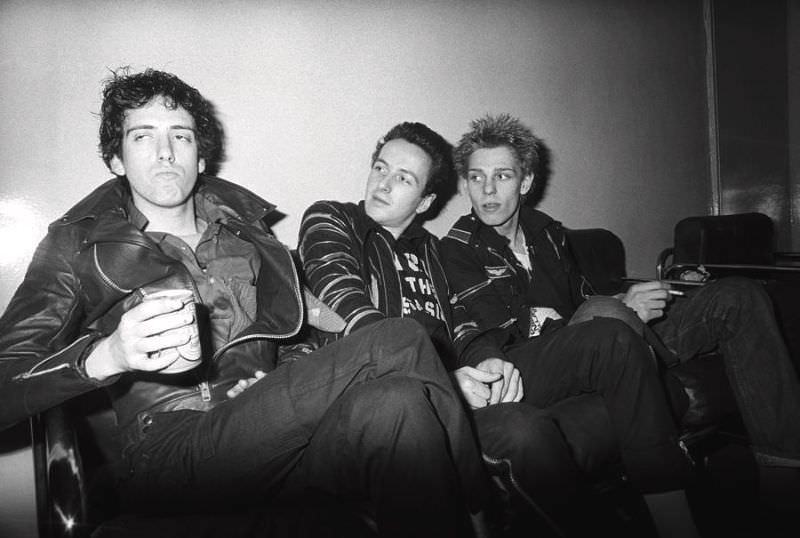
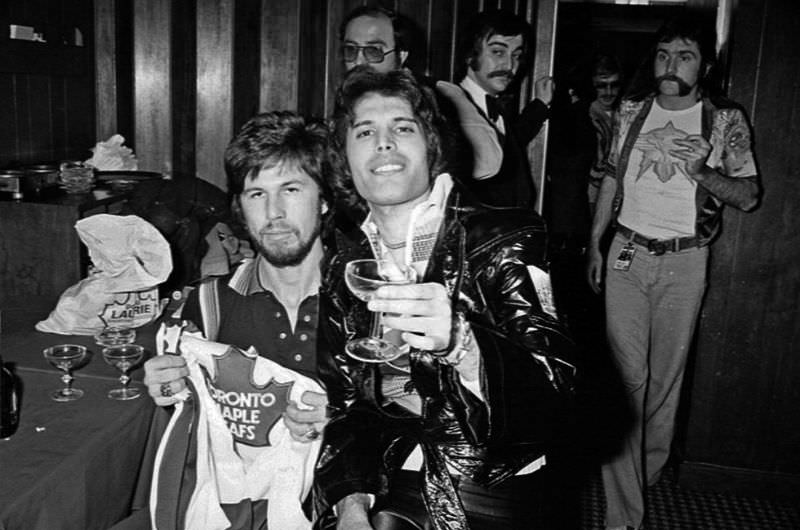
The Clash’s White Riot tour in June 1977 placed Joe Strummer, Paul Simonon, and Mick Jones at the Rainbow Theatre, photographed together backstage. Queen, meanwhile, earned Toronto Maple Leafs jerseys during their Canadian tour stop that year — a gesture of welcome from the city they were playing.
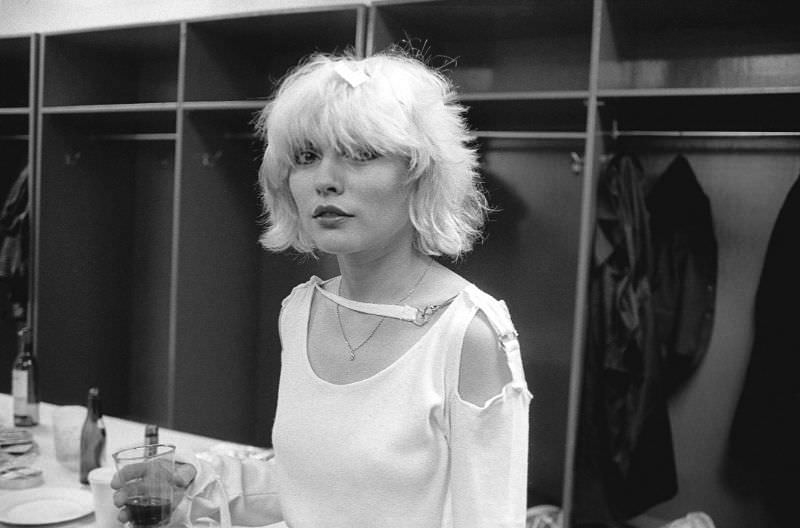
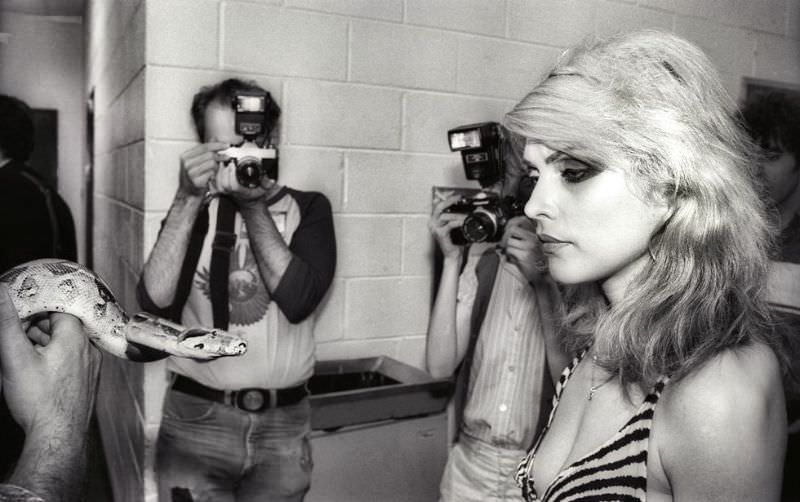
Debbie Harry of Blondie was photographed backstage at the Philadelphia Spectrum on New Year’s Day 1978, and again before a Philadelphia concert where she encountered a snake — one of the more unusual pre-show moments of the decade.
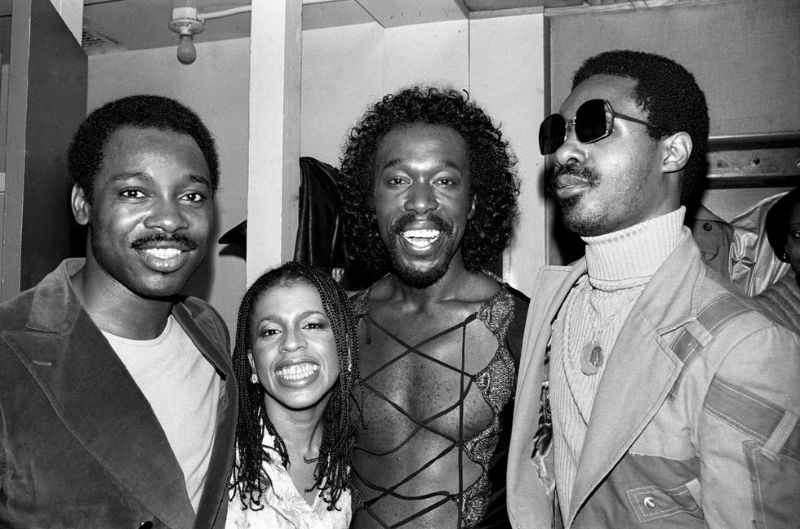
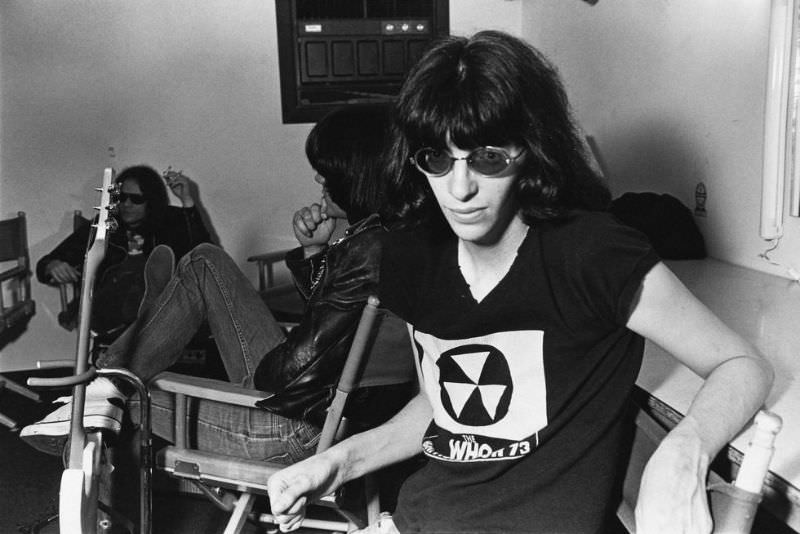
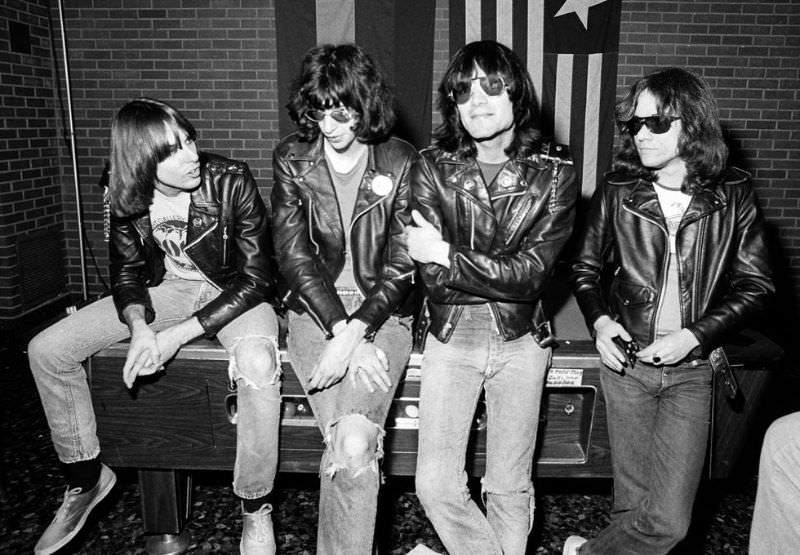
Stevie Wonder continued to draw fellow musicians into his orbit. In 1978, George Benson and Nickolas Ashford and Valerie Simpson of Ashford & Simpson posed with him backstage in New York. That same year, The Ramones were photographed at the Old Waldorf in San Francisco and at the Paradise Theater in Boston.
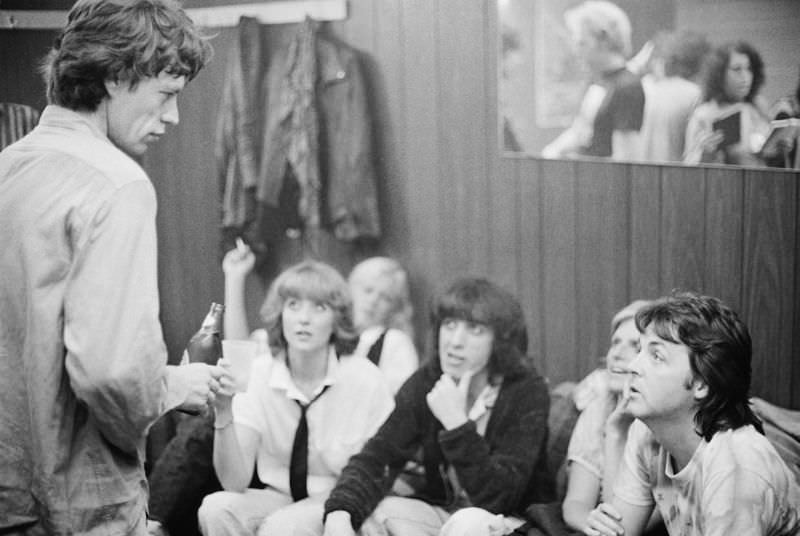
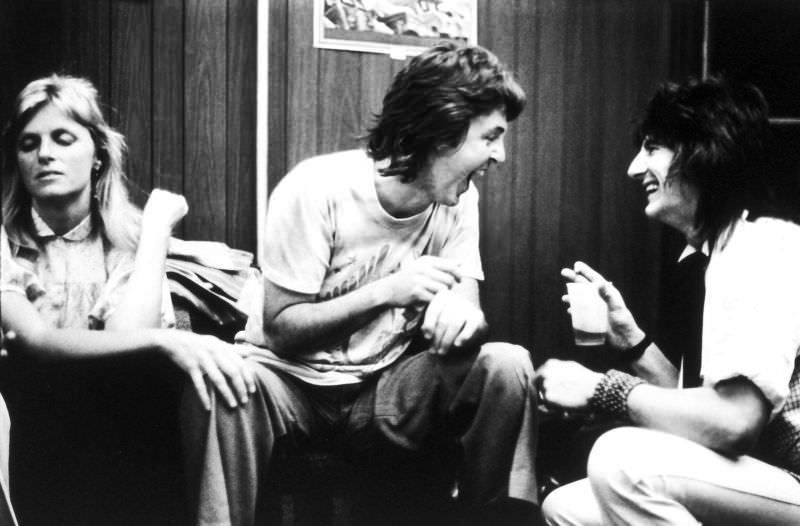
On June 19, 1978, Paul and Linda McCartney attended a Rolling Stones show at the Palladium in New York City. Backstage, they were photographed with Mick Jagger and Bill Wyman, and separately with Ronnie Wood — two images from the same evening that show how naturally rock’s biggest names gathered in the same rooms.
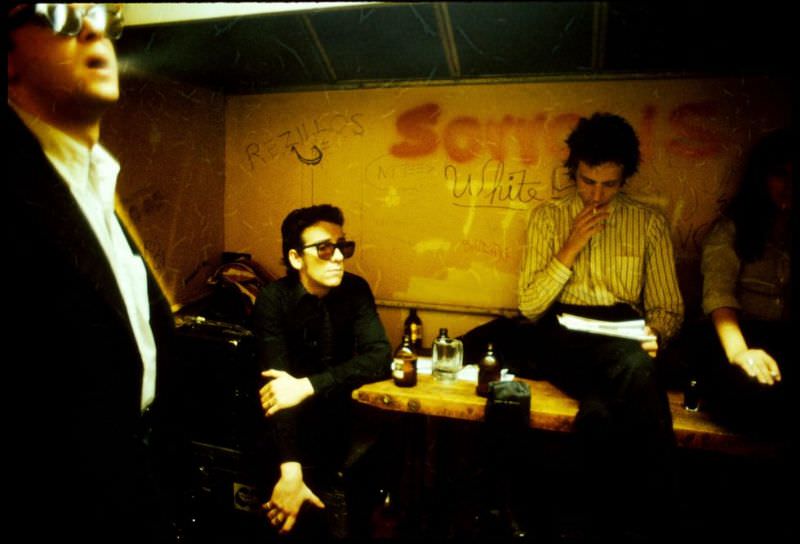
CBGB’s in New York remained central to the underground rock and punk scenes through the late 1970s. In 1978, Robert Quine, Elvis Costello, and Richard Hell were photographed together backstage there, representing three distinct but connected currents running through the era’s alternative music world.
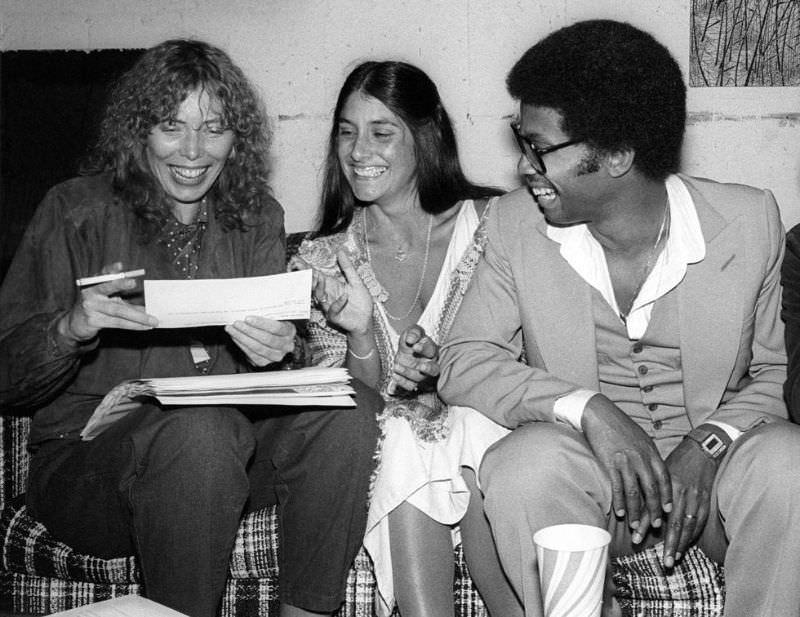
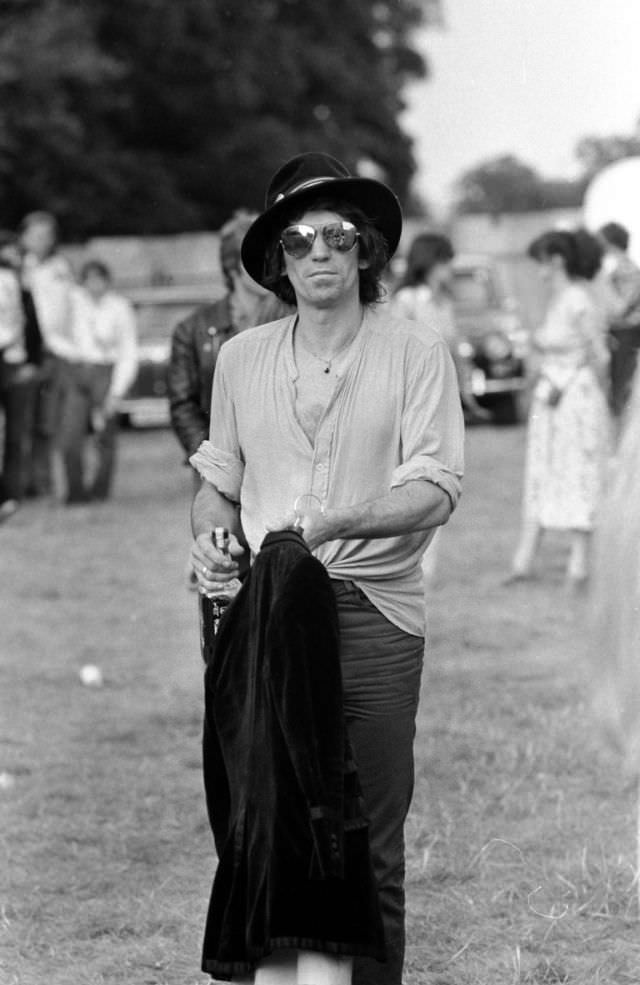
As the decade closed, the Berkeley Jazz Festival in May 1979 brought together Joni Mitchell, Mimi Farina, and Herbie Hancock backstage at the Greek Theatre in Berkeley — a quieter, more intimate setting than the arenas filling the rest of this archive. And in August 1979, Keith Richards made a special appearance at Knebworth Pop Festival alongside Ronnie Wood, closing out the decade with a performance that was entirely in keeping with how it had begun.