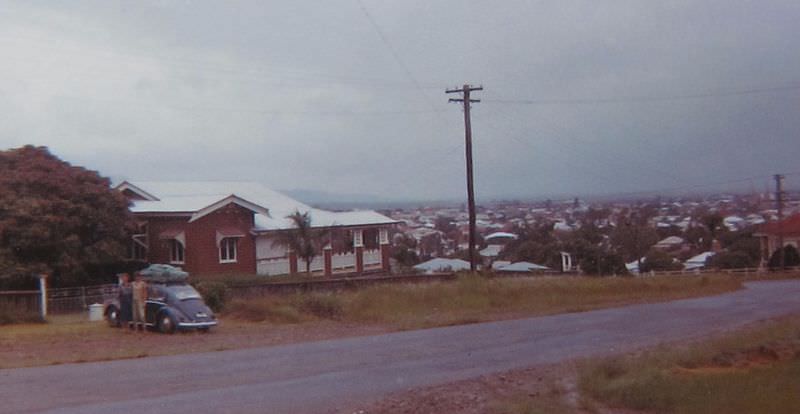
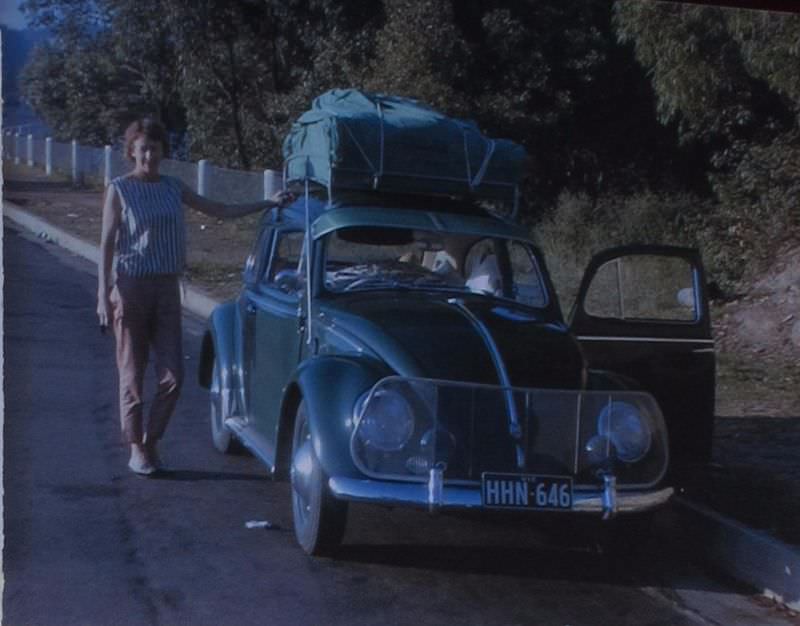
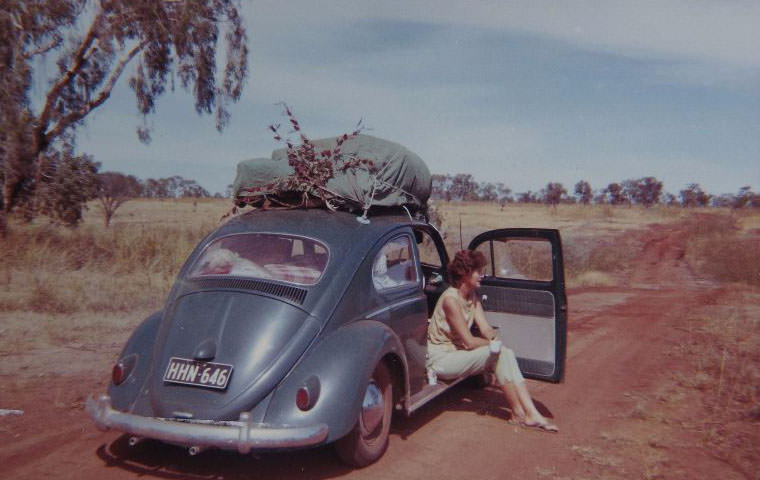
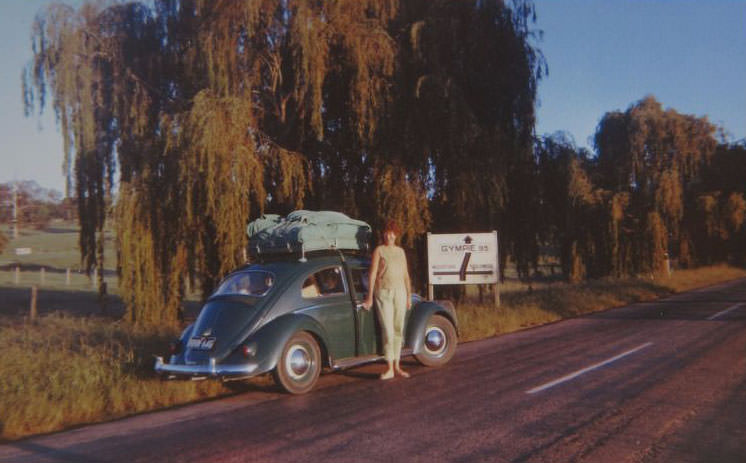
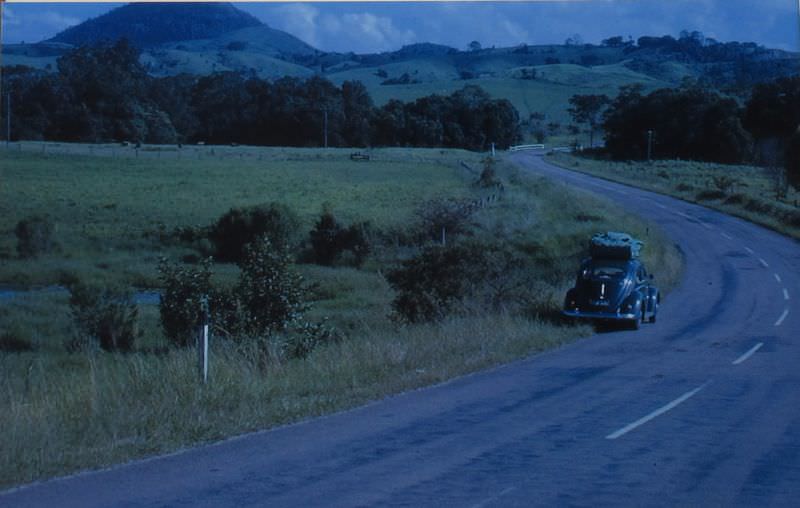
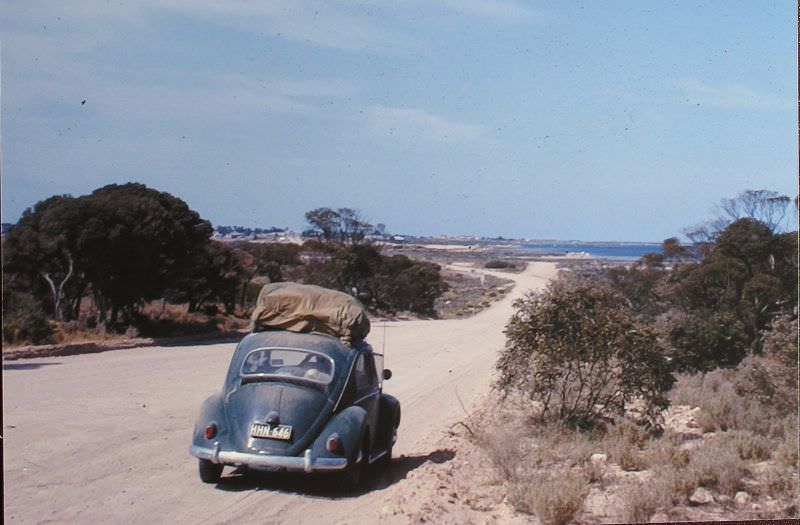
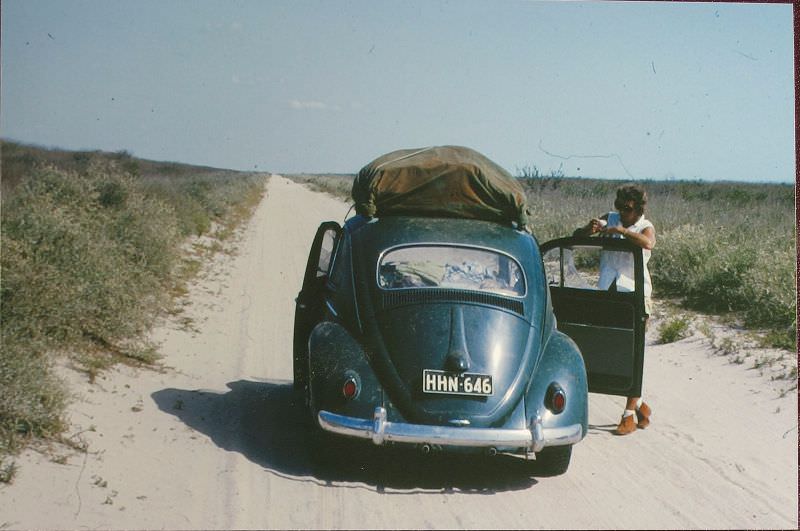
In January 1963, two women named Dorothy and Betty set off on a remarkable journey around Australia in their Volkswagen Beetle, affectionately named Gi-Gi. This was no short holiday. The trip stretched across most of the year, taking them through coastal towns, tropical Queensland, the remote outback, and the vast Nullarbor Plain. Their photo diary captures it all — the landscapes, the challenges, and the small everyday moments that made the adventure real.
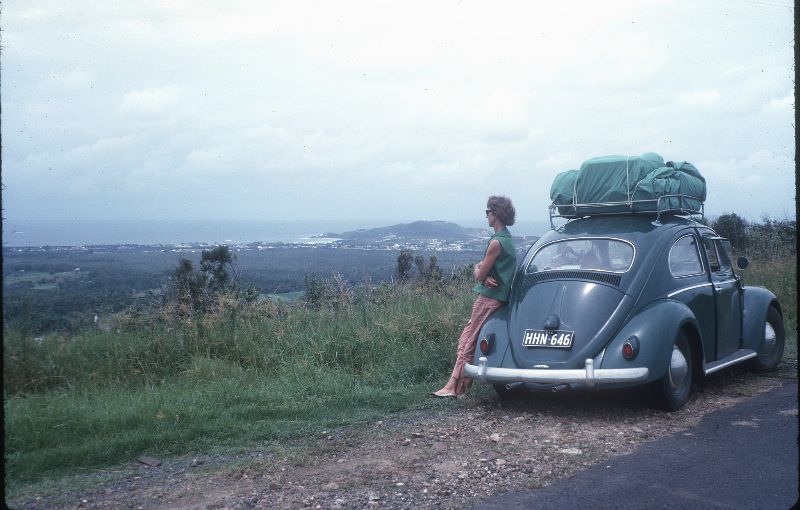
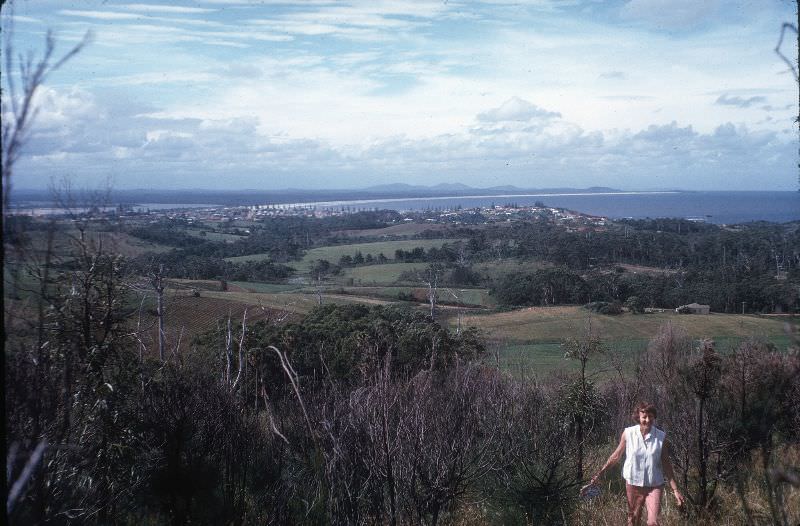
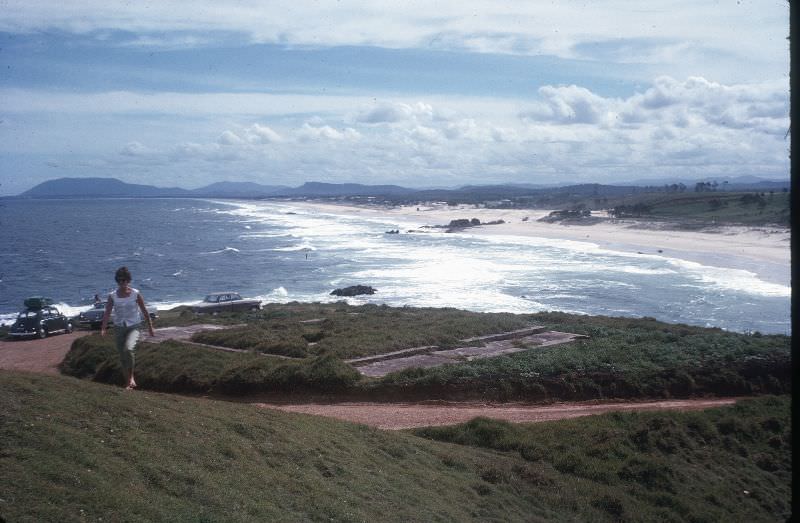
The trip began along the New South Wales coast. Betty and Dorothy stopped at landmarks like Transit Hill in Port Macquarie, where both women made the climb up on foot. From the Razorback Lookout at Coolangatta, Dorothy took in sweeping coastal views. These early stops had a relaxed, exploratory pace — the kind you have when the road ahead is still wide open.
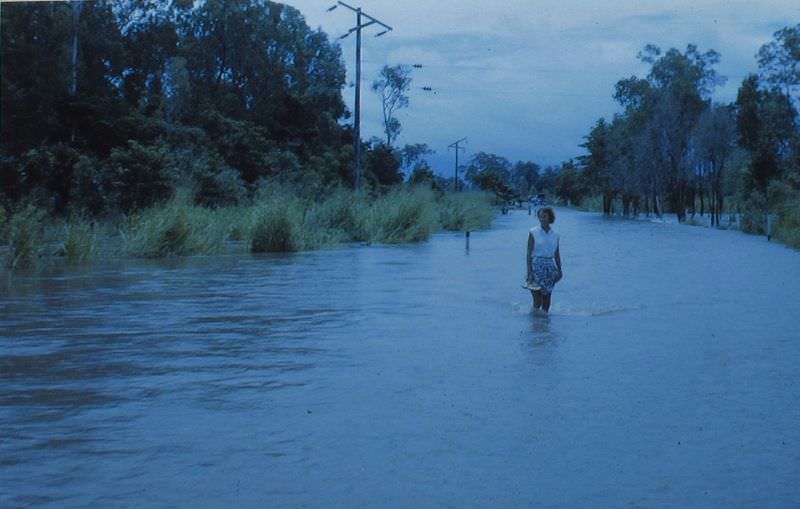
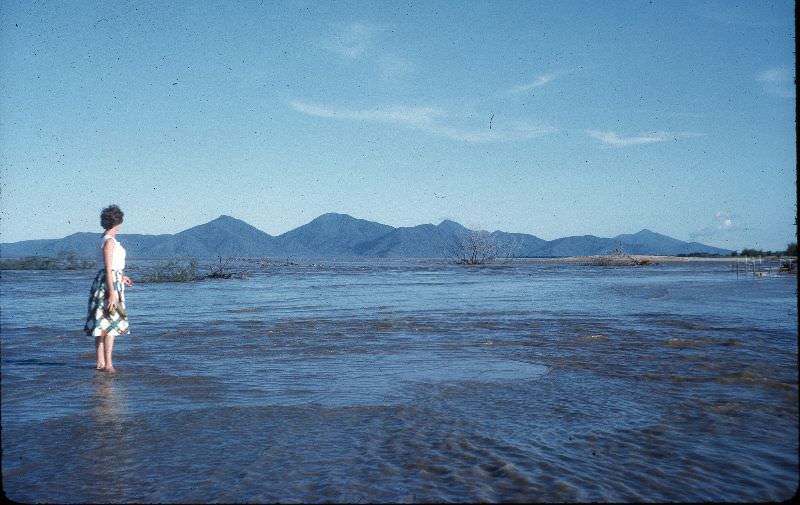
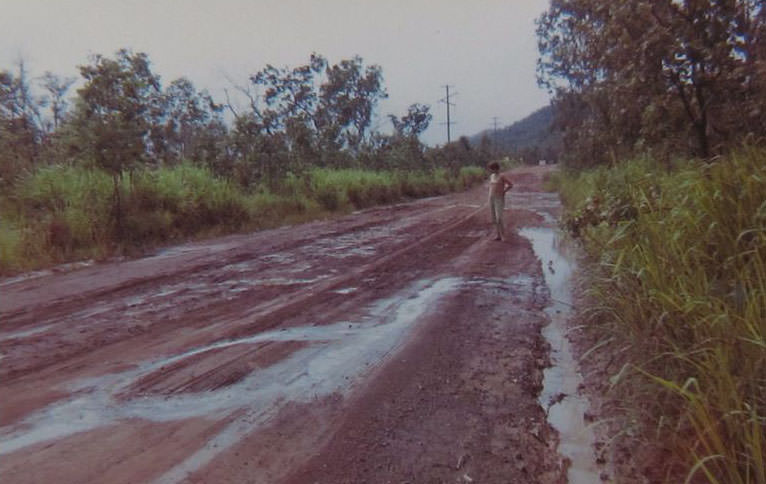
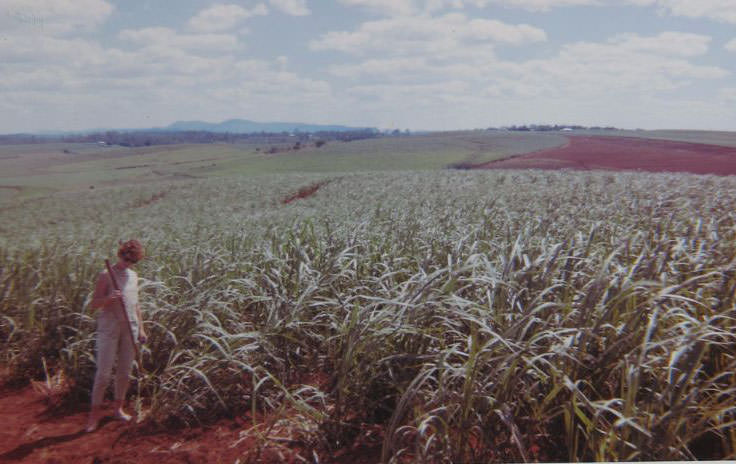
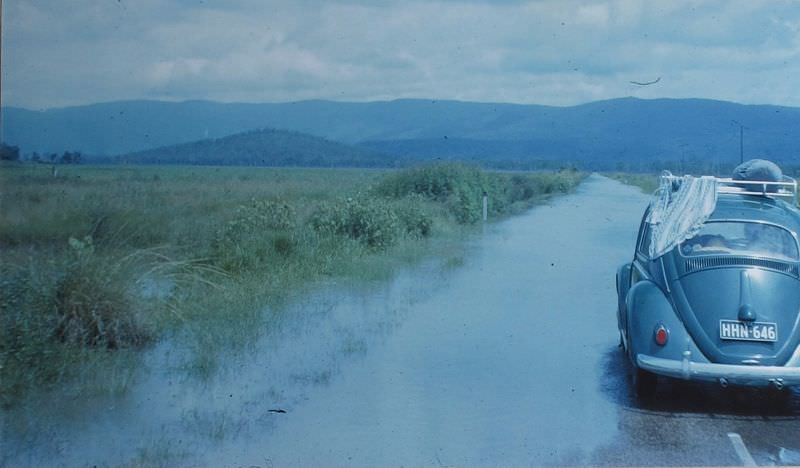
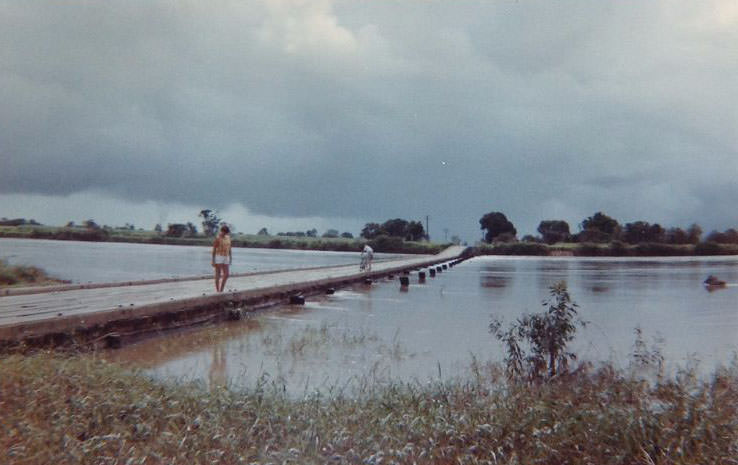
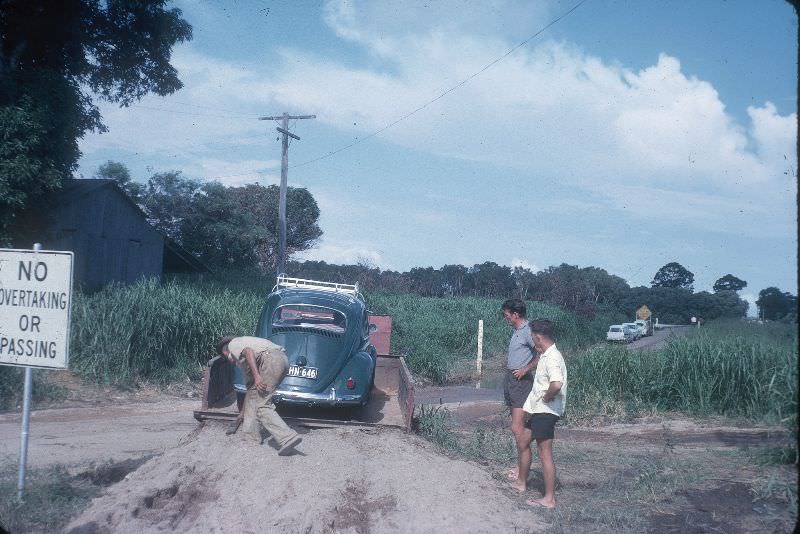
Queensland brought its own challenges. Flooded roads tested both the women and Gi-Gi’s limits. Photos show Betty wading through standing water on a submerged road while the Beetle pushed through elsewhere. The sugarcane fields lining the first Queensland stretch offered a striking contrast — lush, green, and orderly against the chaos of floodwaters.
Floods remained a recurring obstacle in Queensland. In one instance, Gi-Gi had to be driven off a truck after being ferried across the flooded Herbert River — a reminder that some crossings simply couldn’t be driven at all.
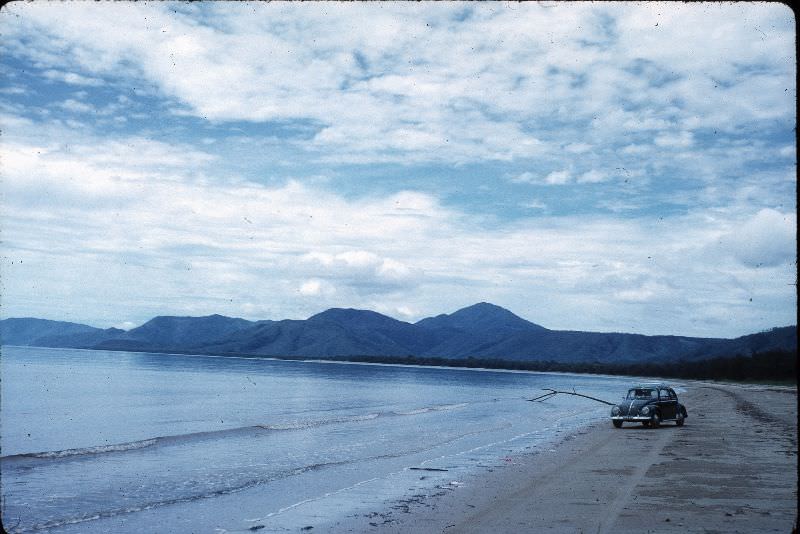
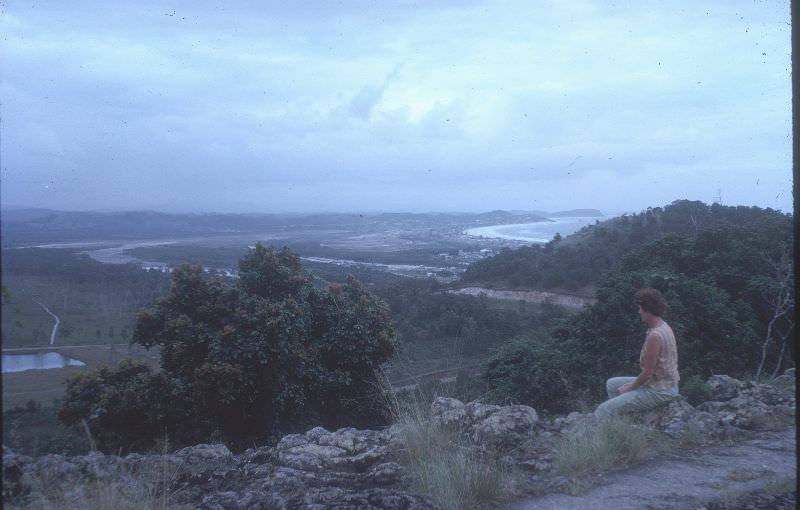
February brought the pair further north into Far North Queensland. At Port Douglas, they drove along four miles of open beach — Gi-Gi’s tyres cutting tracks in the sand. At Ingham, the Halifax Bridge marked another milestone on the route north. In Cooktown, they met a man named Ron and explored Black Mountain, a distinctive rocky landmark on the outskirts of town.
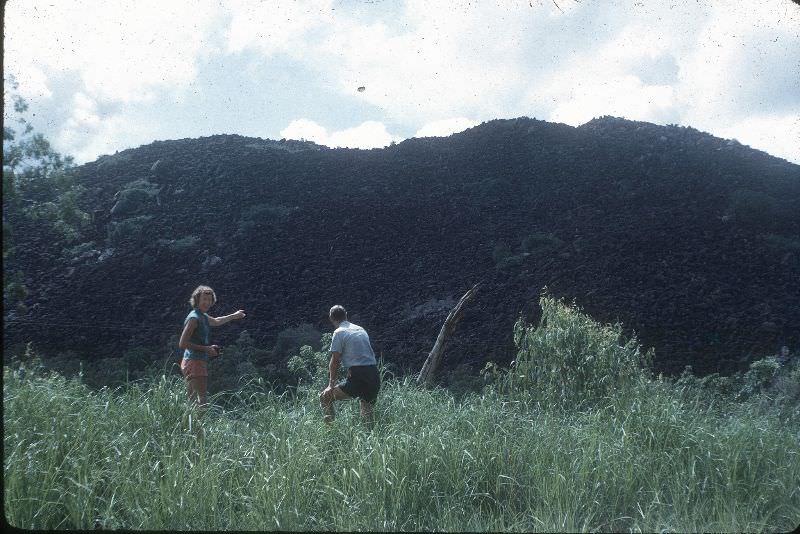
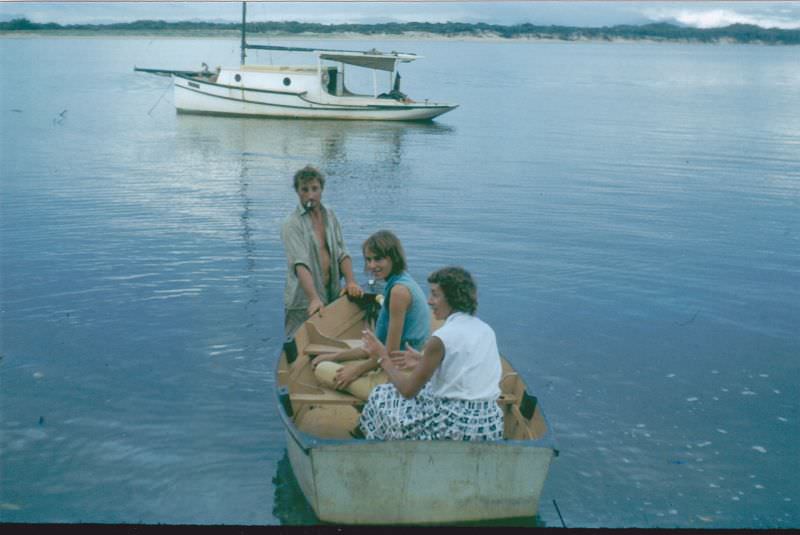
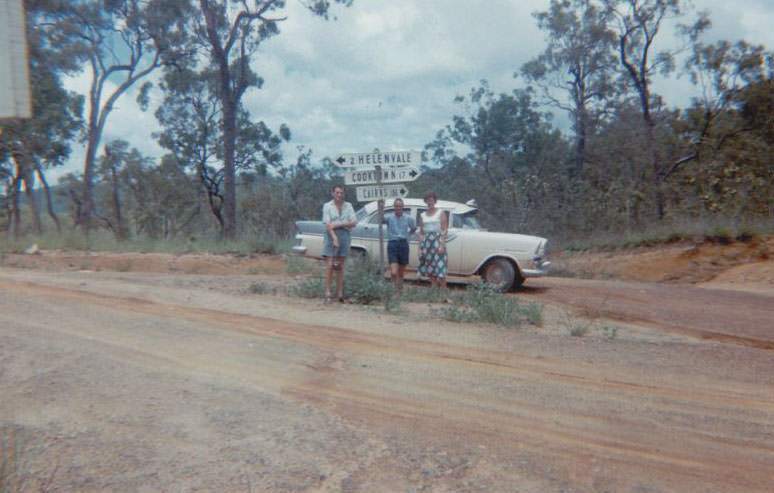
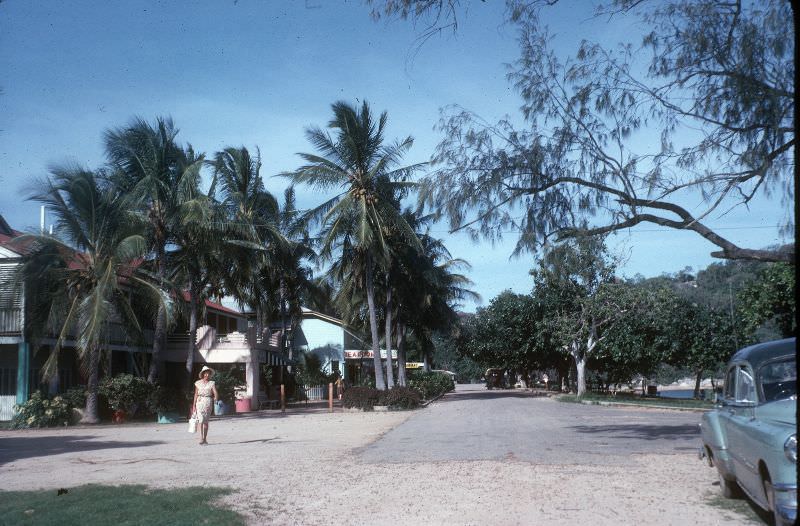
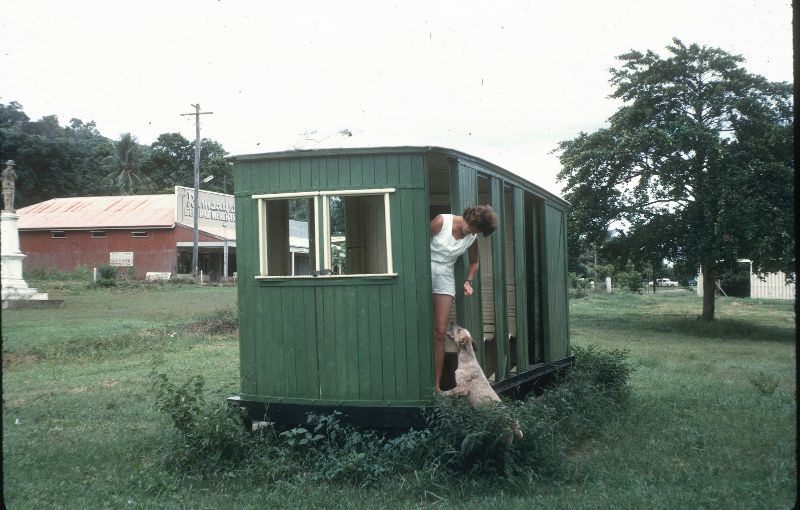
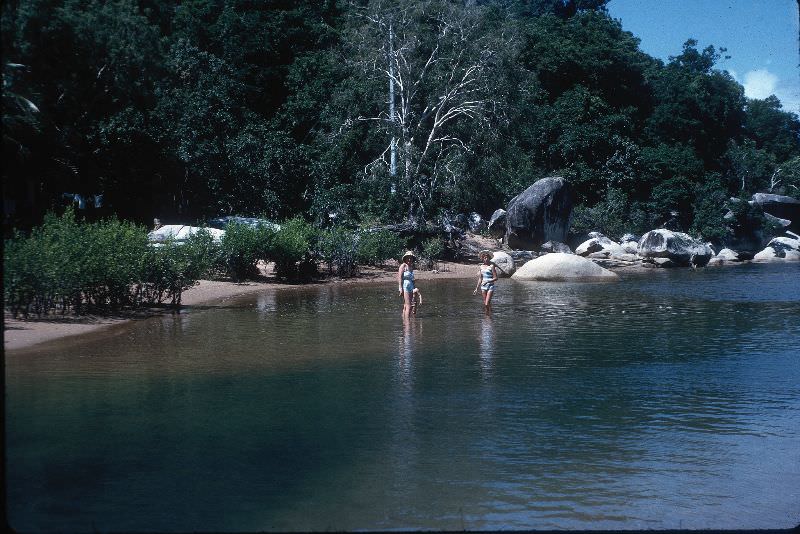
The stretch between Cooktown and Helenvale took them through rugged terrain, and time on Magnetic Island offered a brief change of pace. Dorothy was photographed at the island’s hotel, and by March, a woman named Evelyn had joined them on the island. Dorothy also took time to sit in an old tram at Port Douglas — a relic from the town’s earlier days.
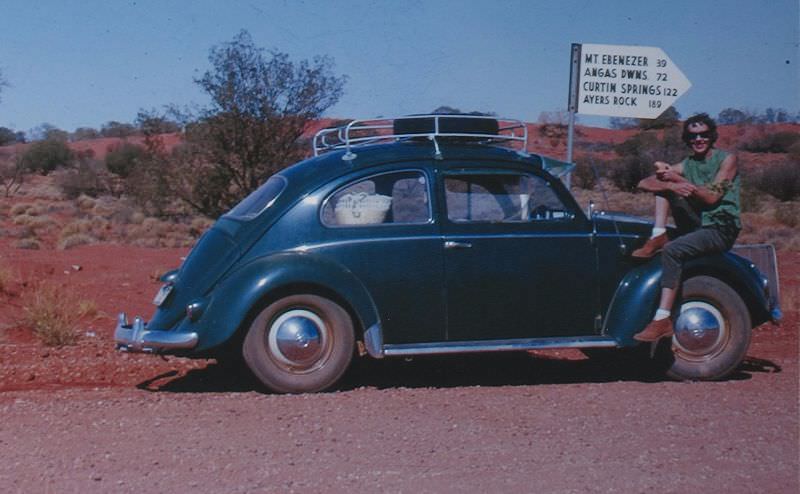
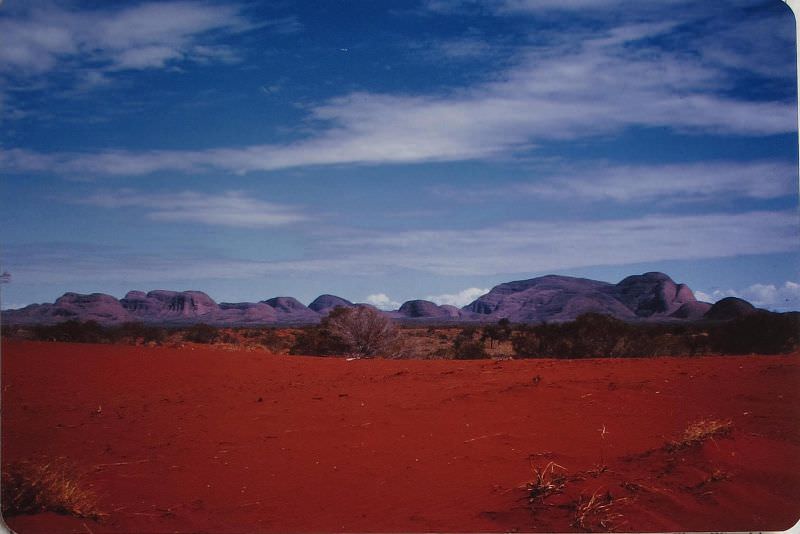
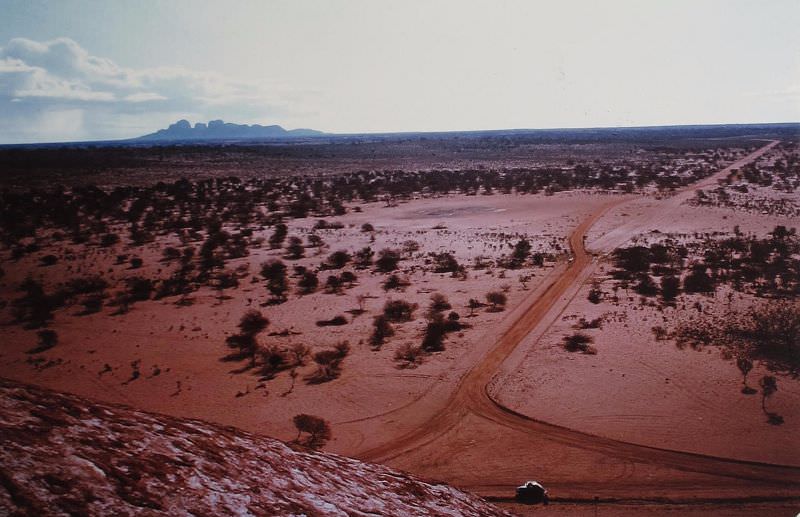
By April, the trip pushed deep into the Northern Territory. Betty was photographed riding on top of Gi-Gi along the Mount Ebenezer Road. The famous rock formations known then as the Olgas — now called Kata Tjuta — were photographed at 1:30 pm on April 6th, the light catching their domed shapes. Later that afternoon, Dorothy and Betty stood at the base of Ayers Rock, now known as Uluru, with Gi-Gi parked nearby.
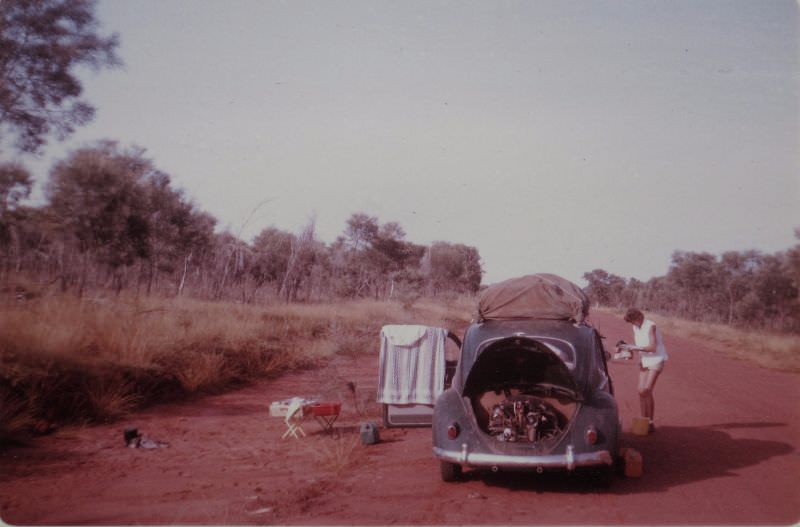
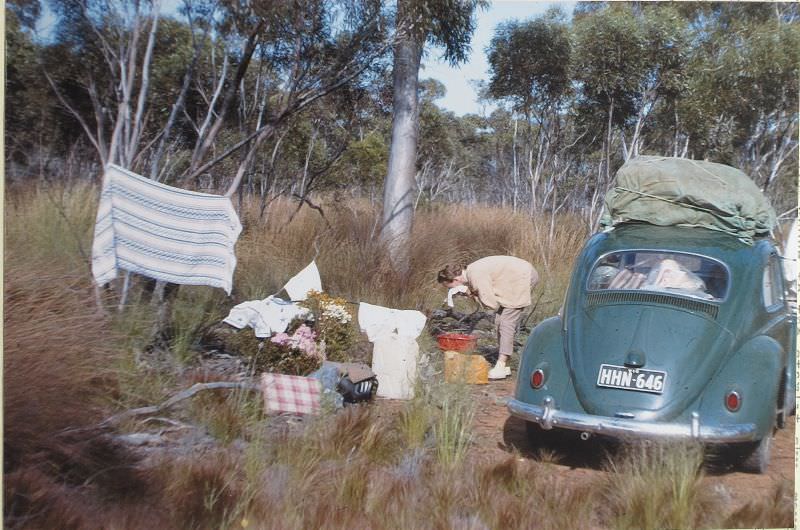
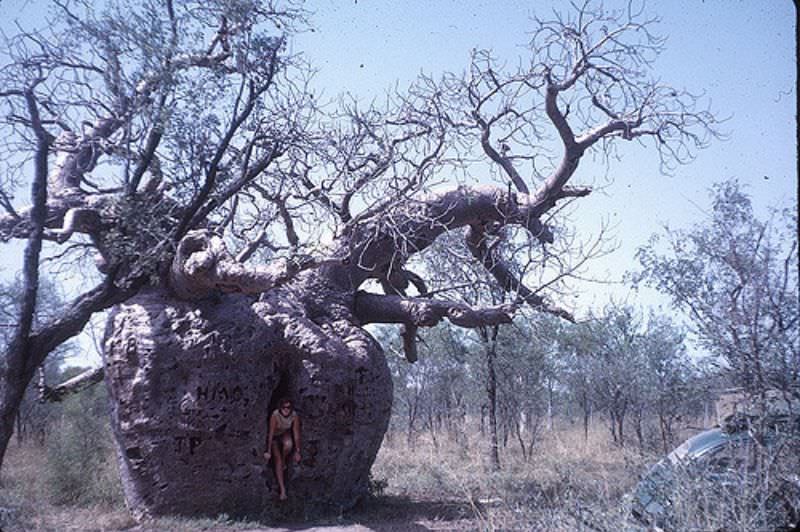
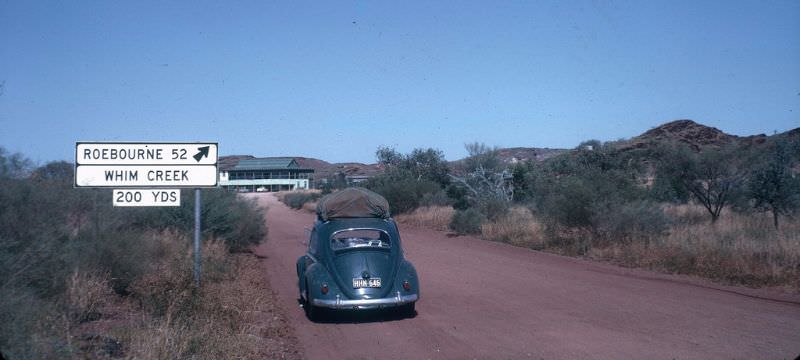
Western Australia consumed the next several months. On May 6th, Betty washed up roadside after cleaning the oil filter — one of many mechanical tasks the women handled themselves. Dorothy did morning chores at the same remote camp. Near Derby, Dorothy stepped inside the famous Boab Prison Tree, a hollow ancient boab used to hold Aboriginal prisoners during the colonial era. On May 17th, the pair stopped for a beer near Whim Creek before pushing on toward Onslow.
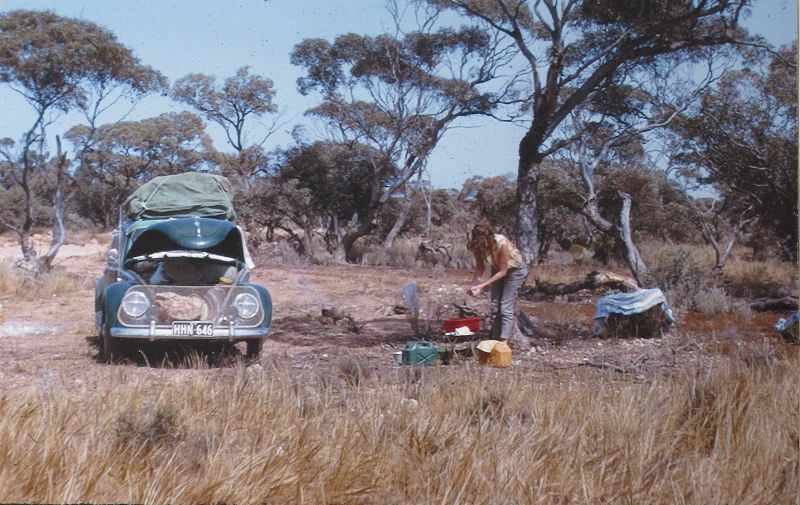
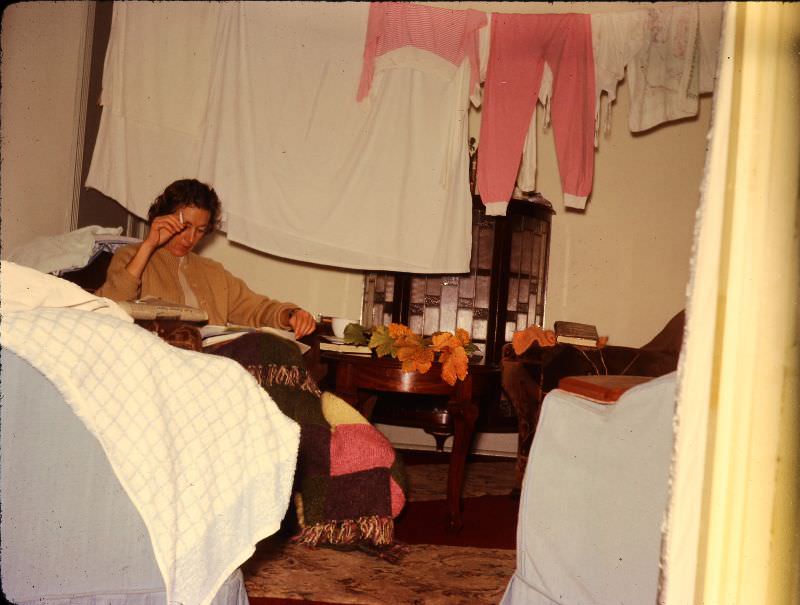
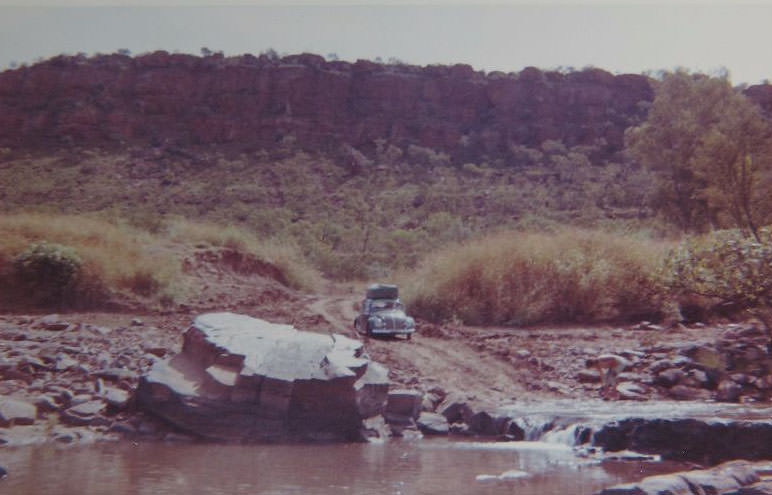
The Kimberley region gave Dorothy a rare moment of rest — photographed relaxed inside Gi-Gi, the rugged landscape visible behind her. The VW crossed outback river crossings, tackled muddy tracks, and required roadside repairs along the way. Betty was also photographed in Perth, taking a quiet smoke — a brief urban pause before the journey continued south.
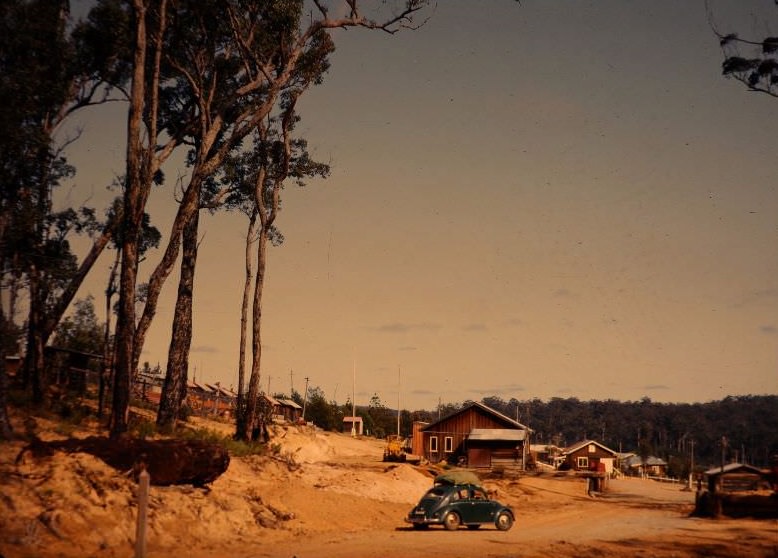
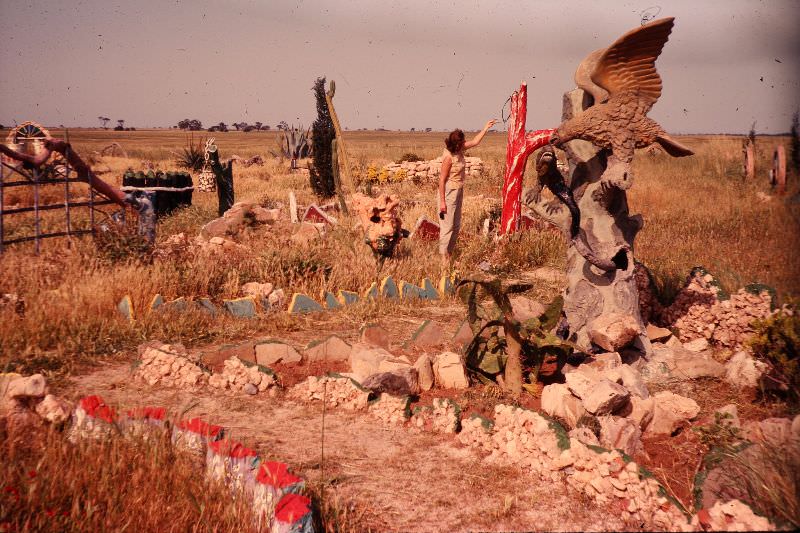
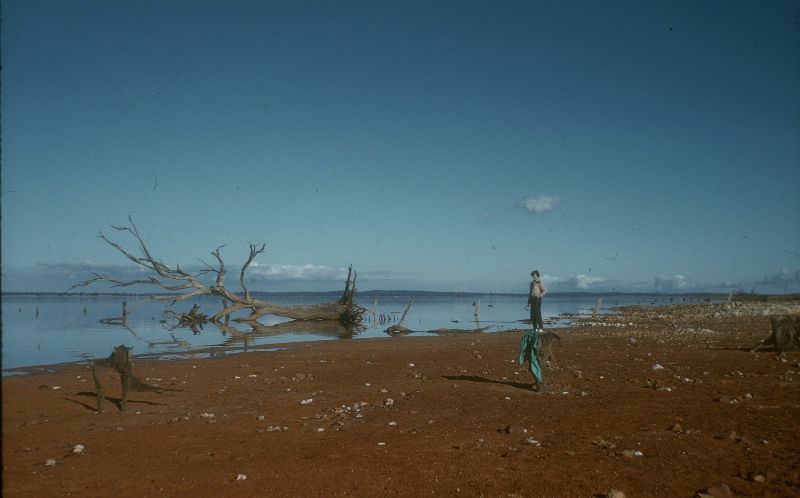
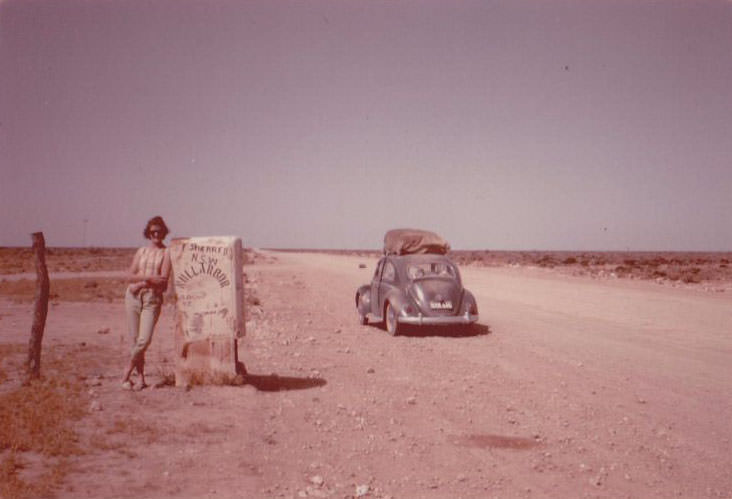
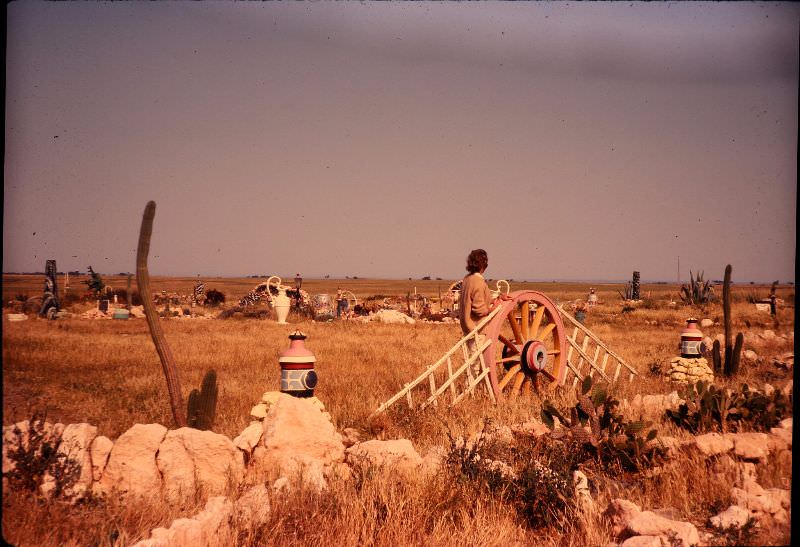
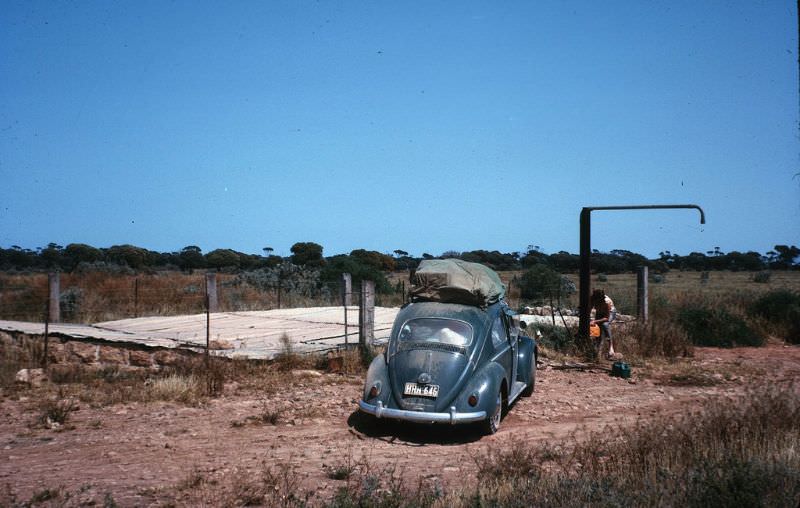
By October, the women were crossing South Australia. They photographed a charity garden on the Port Wakefield Road out of Adelaide, a salt lake on the way to Arno Bay, and the town of Ceduna before tackling the old Eyre Highway. Water became a serious concern on the Nullarbor — the photos show Betty and Dorothy carefully filling water bottles and canisters at tanks near Eucla before the long dry crossing. Dorothy stopped at the Nullarbor homestead mailbox, a solitary landmark in an almost featureless landscape.
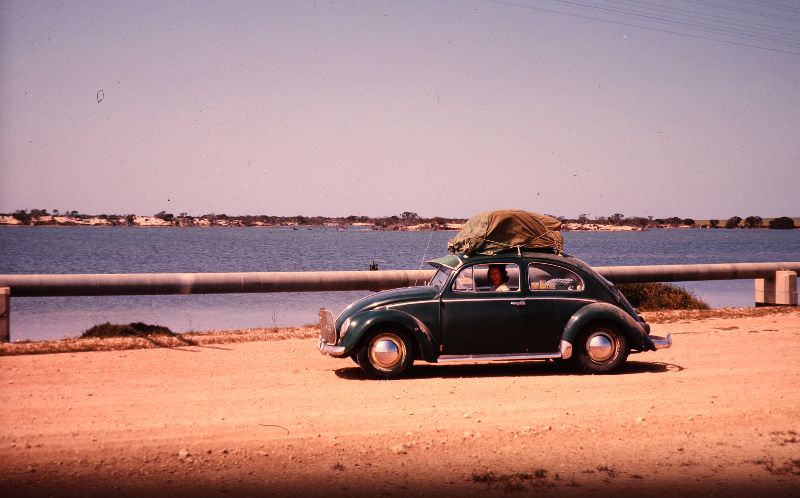
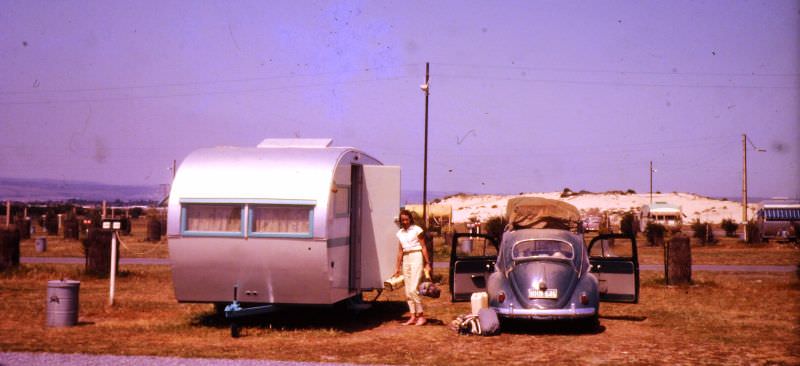
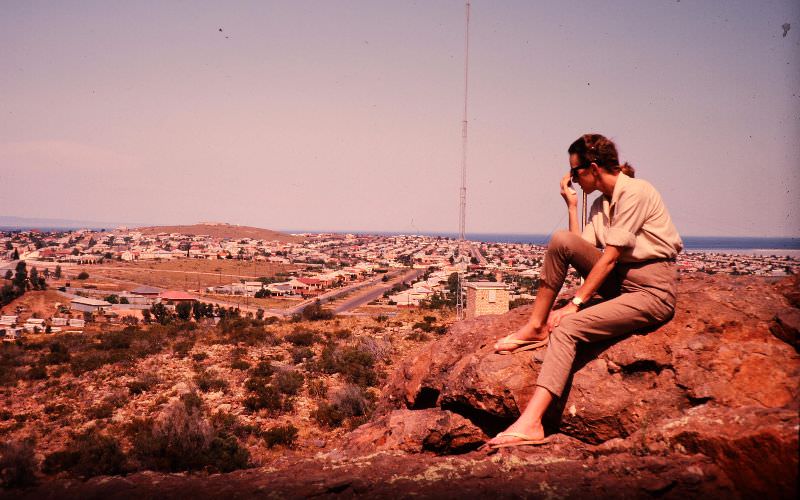
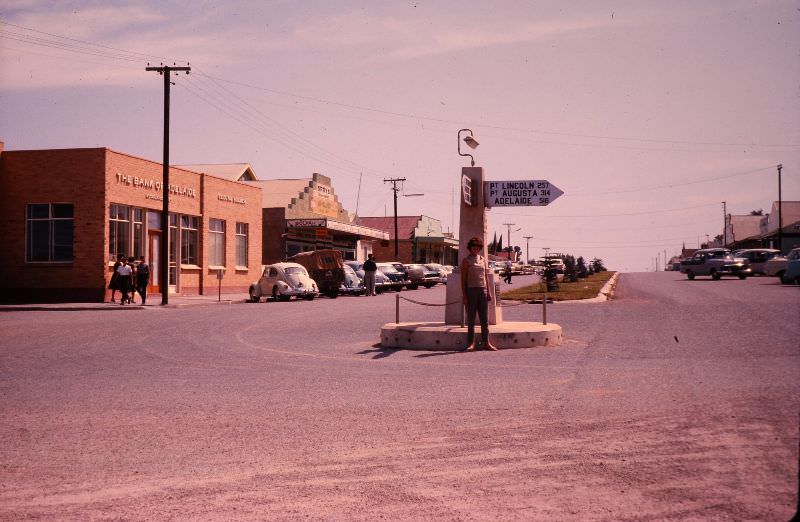
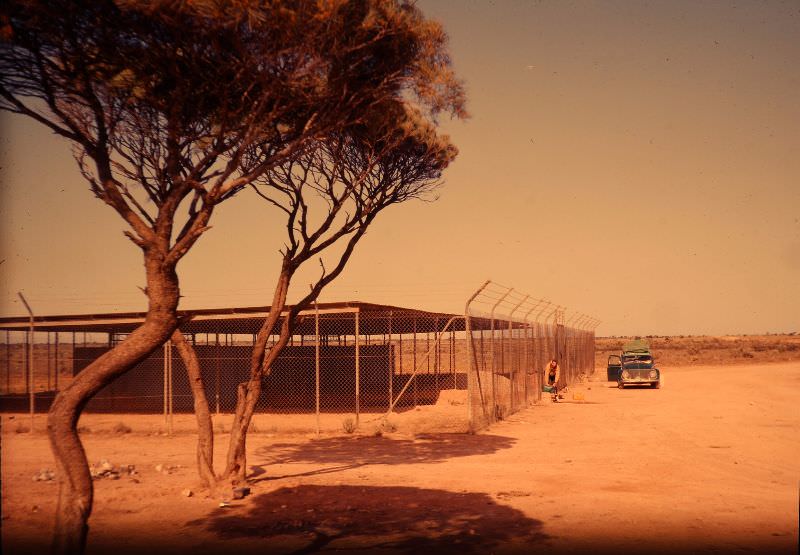
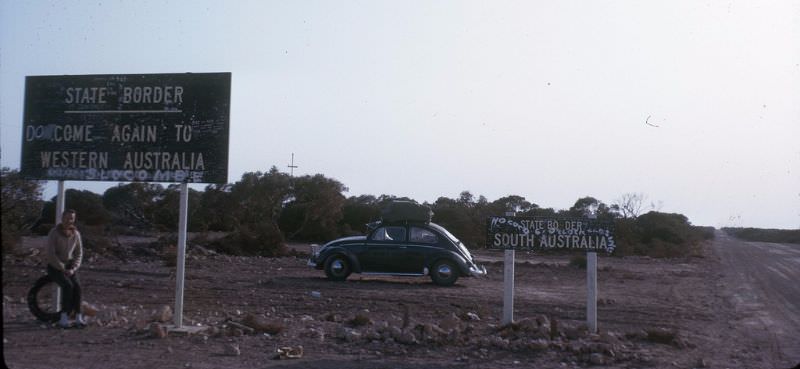
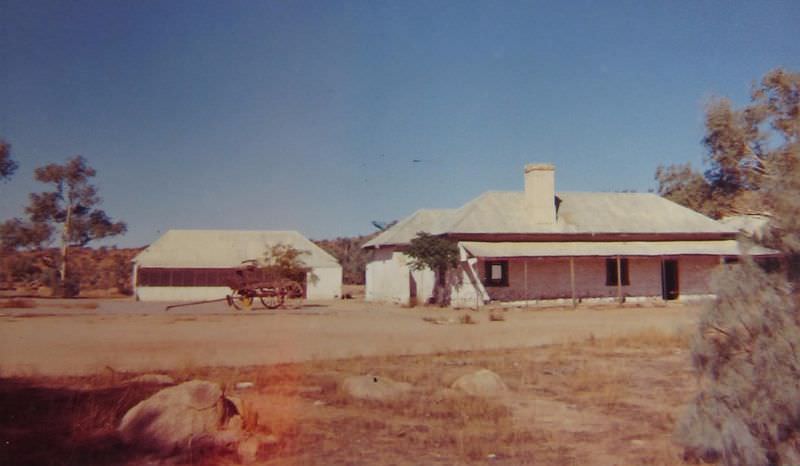
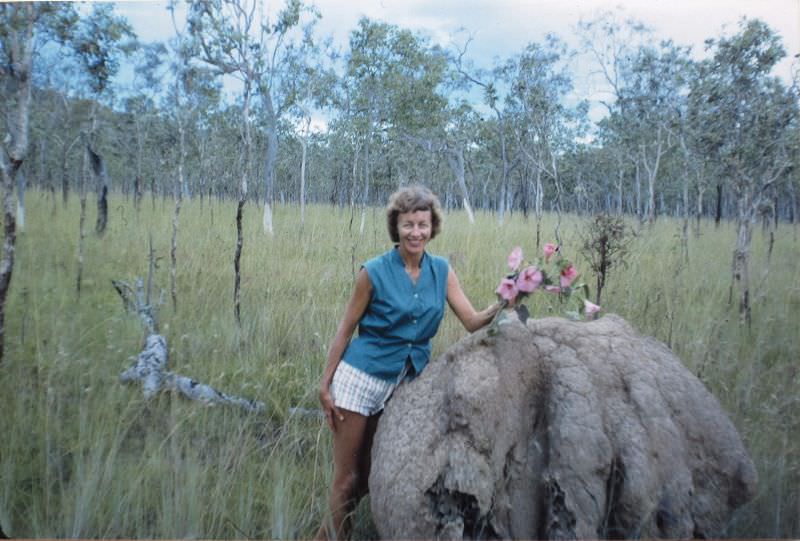
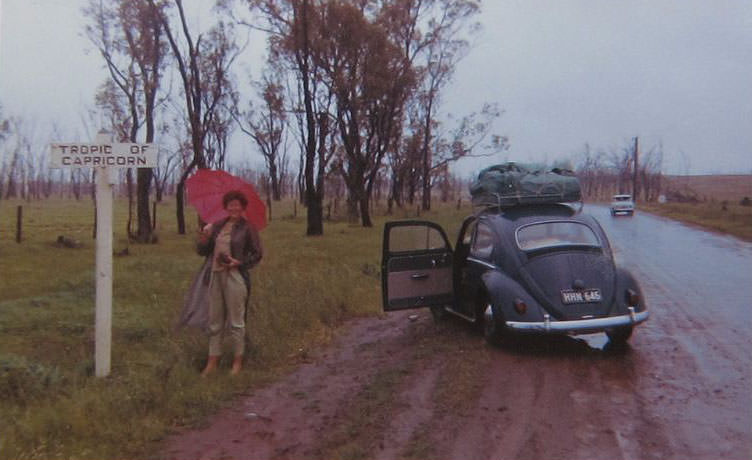
Other undated photos from 1963 fill in the gaps of the journey — the Alice Springs telegraph station, a towering termite mound, campfires, lakeside stops, and Gi-Gi parked on quiet highways and remote dirt roads. The Tropic of Capricorn sign in Queensland, the Cairns mud flats, and the vast open distances of the outback all appear across the collection.