Austin, Texas in the 1950s was a city finding its stride. Its population was climbing, its skyline was changing, and the rhythms of daily life were shifting in ways that would define the city for decades. The twin pillars of government and education kept Austin stable while new businesses, institutions, and infrastructure pushed it forward. These vintage photographs capture that moment — streets full of mid-century cars, buildings going up, communities gathering, and a city very much alive.
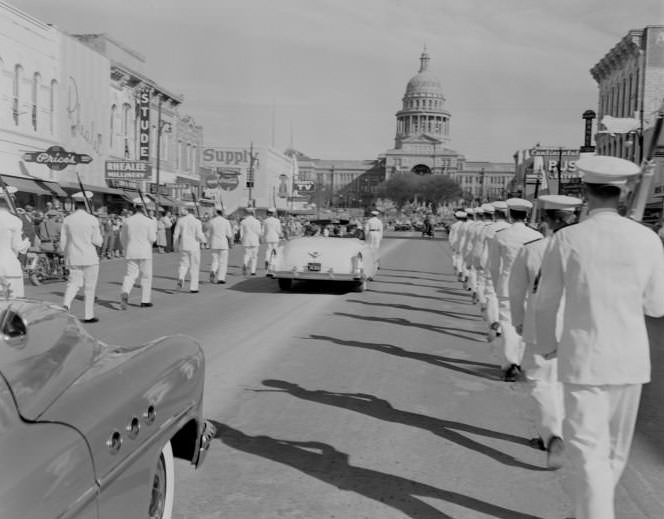
Inauguration Day parade held in front of the Capitol building in Austin, 1953
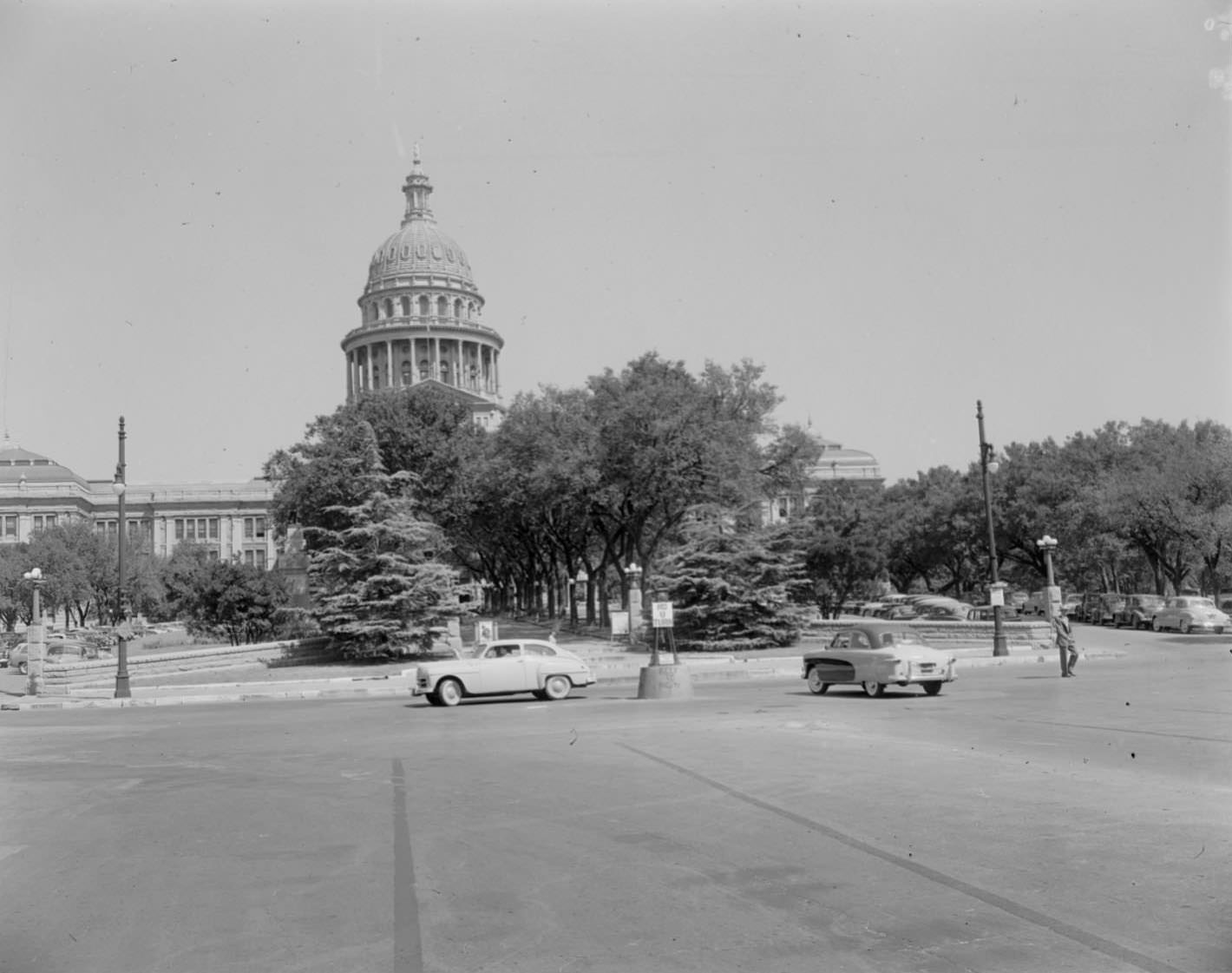
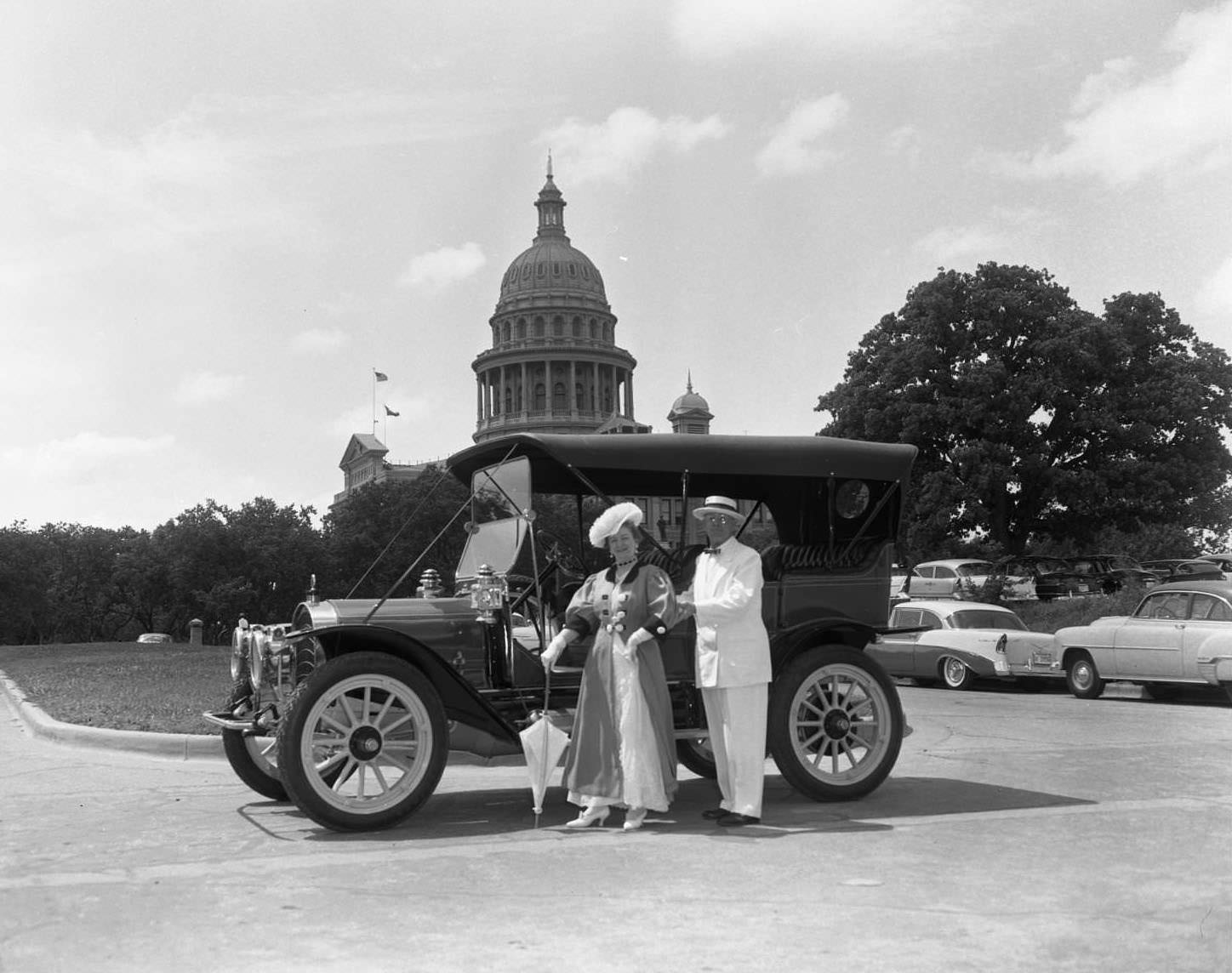
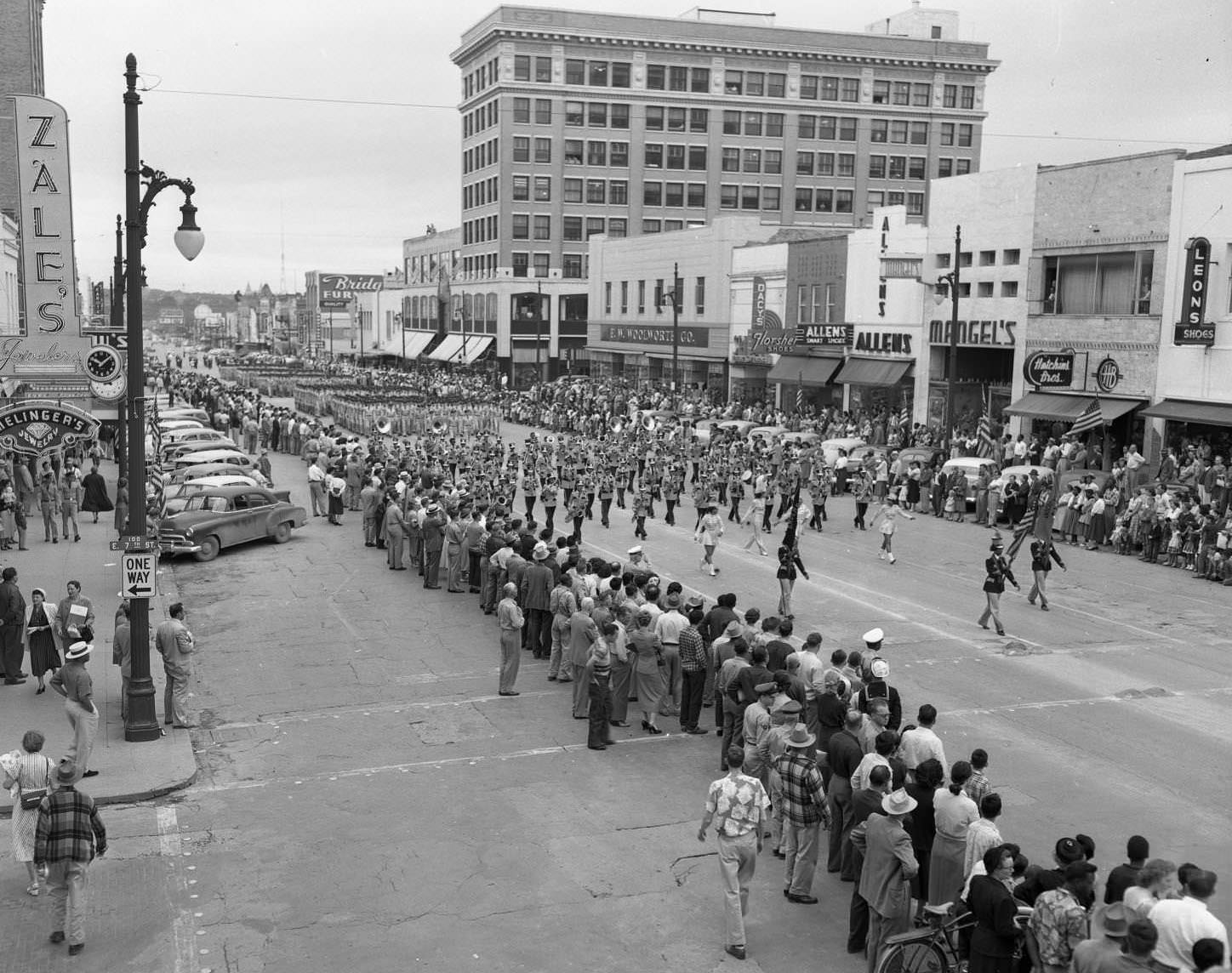
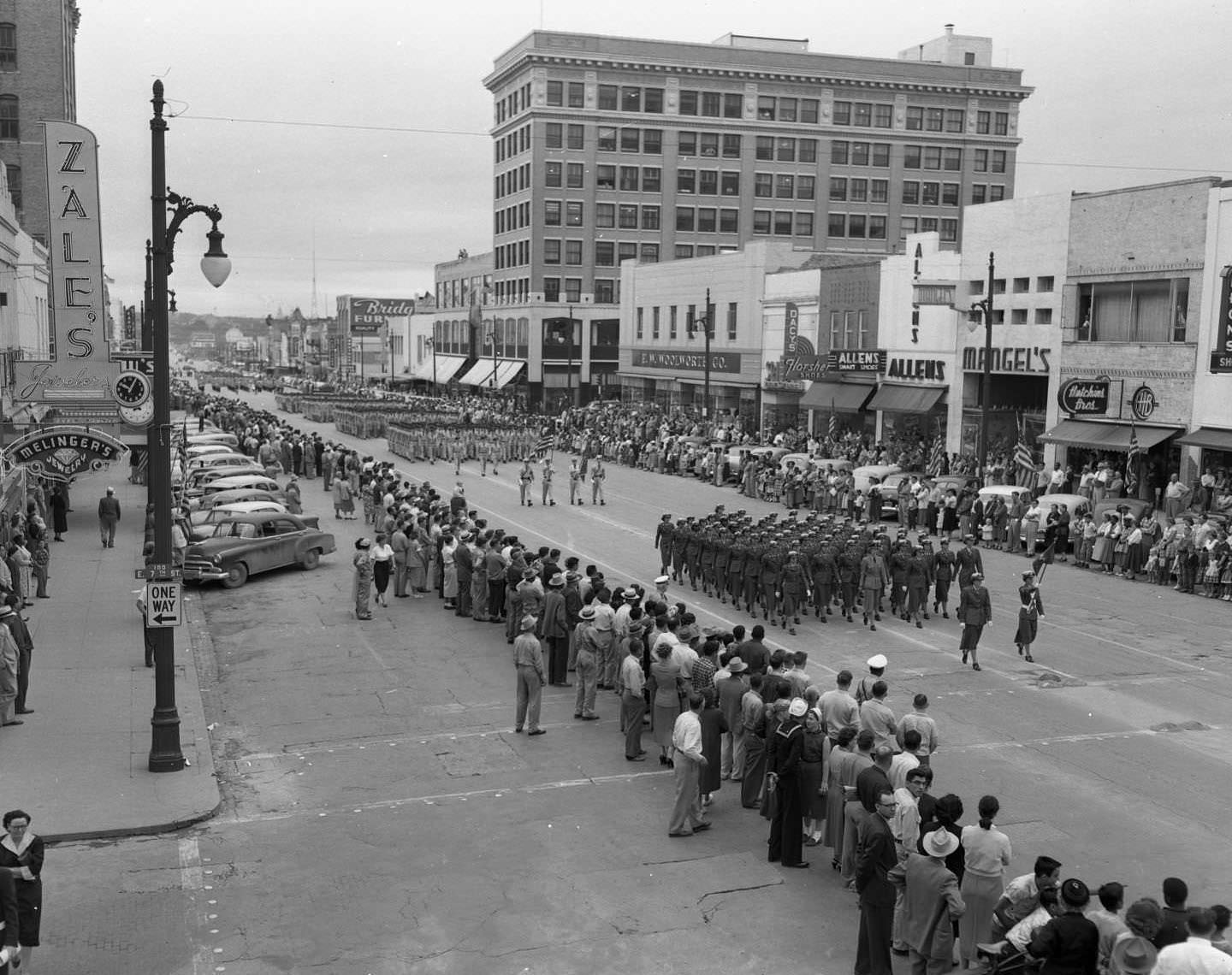
The Texas State Capitol sat at the center of Austin’s identity. State government was one of the city’s largest employers, and the Capitol grounds drew crowds for ceremonies, parades, and public events throughout the decade. Armed Forces Day parades rolled down Congress Avenue, Boy Scout processions filled the streets, and Inauguration Day drew residents from across the region. The Capitol building itself — its distinctive pink granite dome rising above the downtown blocks — appeared in nearly every aerial photograph of the city taken during the 1950s.
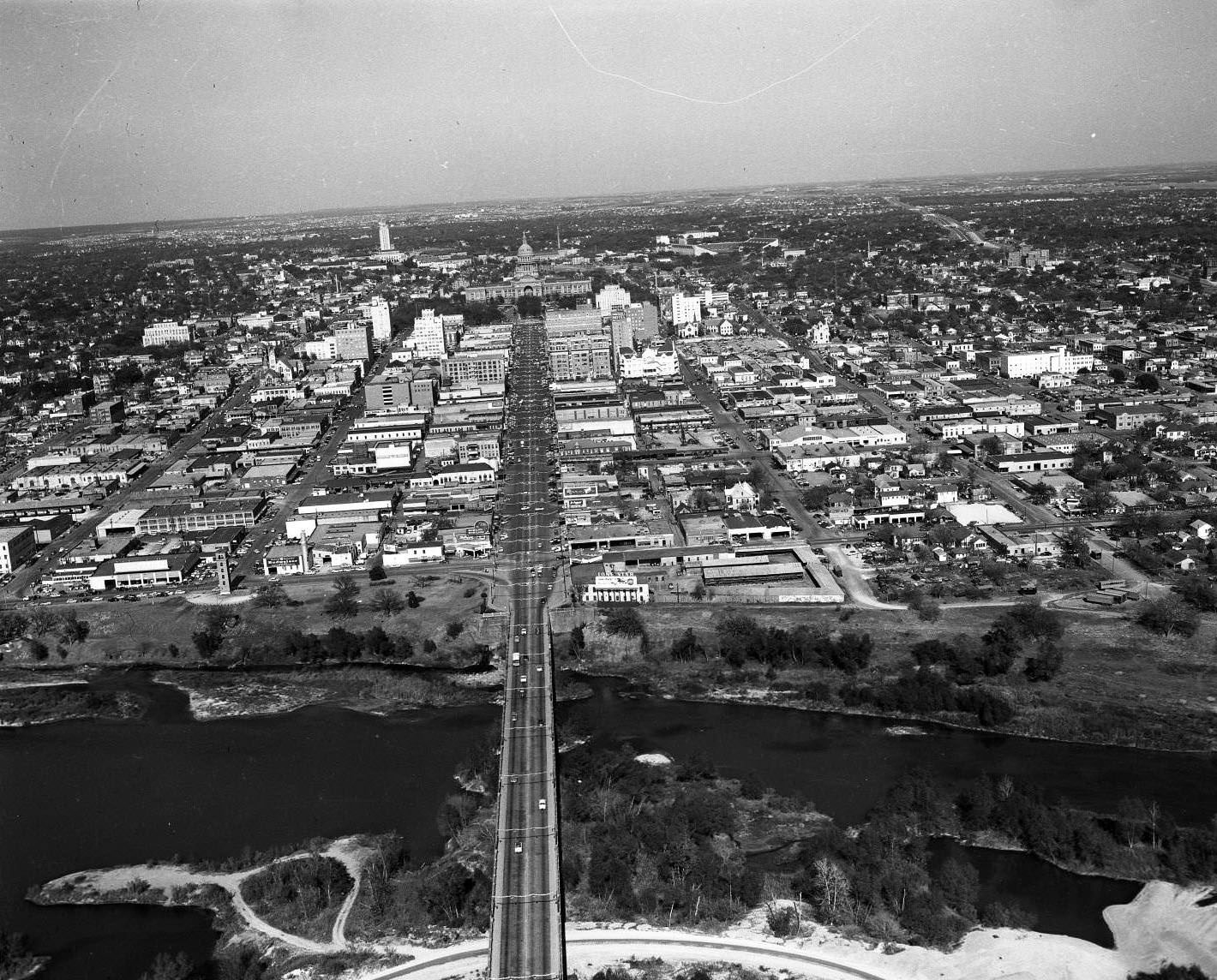
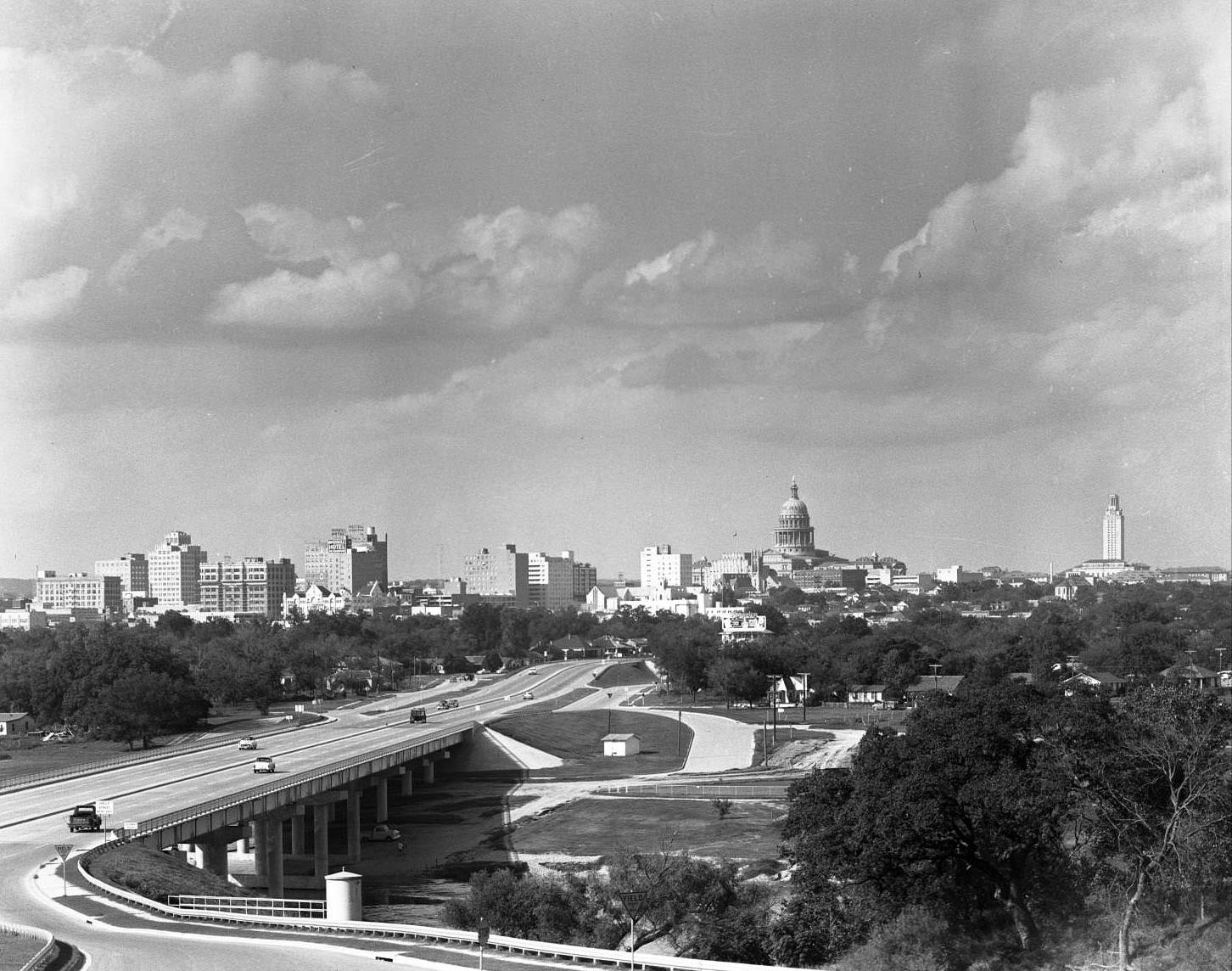
The front of the Capitol building in Austin, 1954Aerial shot above the Congress Ave. Bridge and Colorado River looking directly north to Capitol, UT Tower in distance, 1959
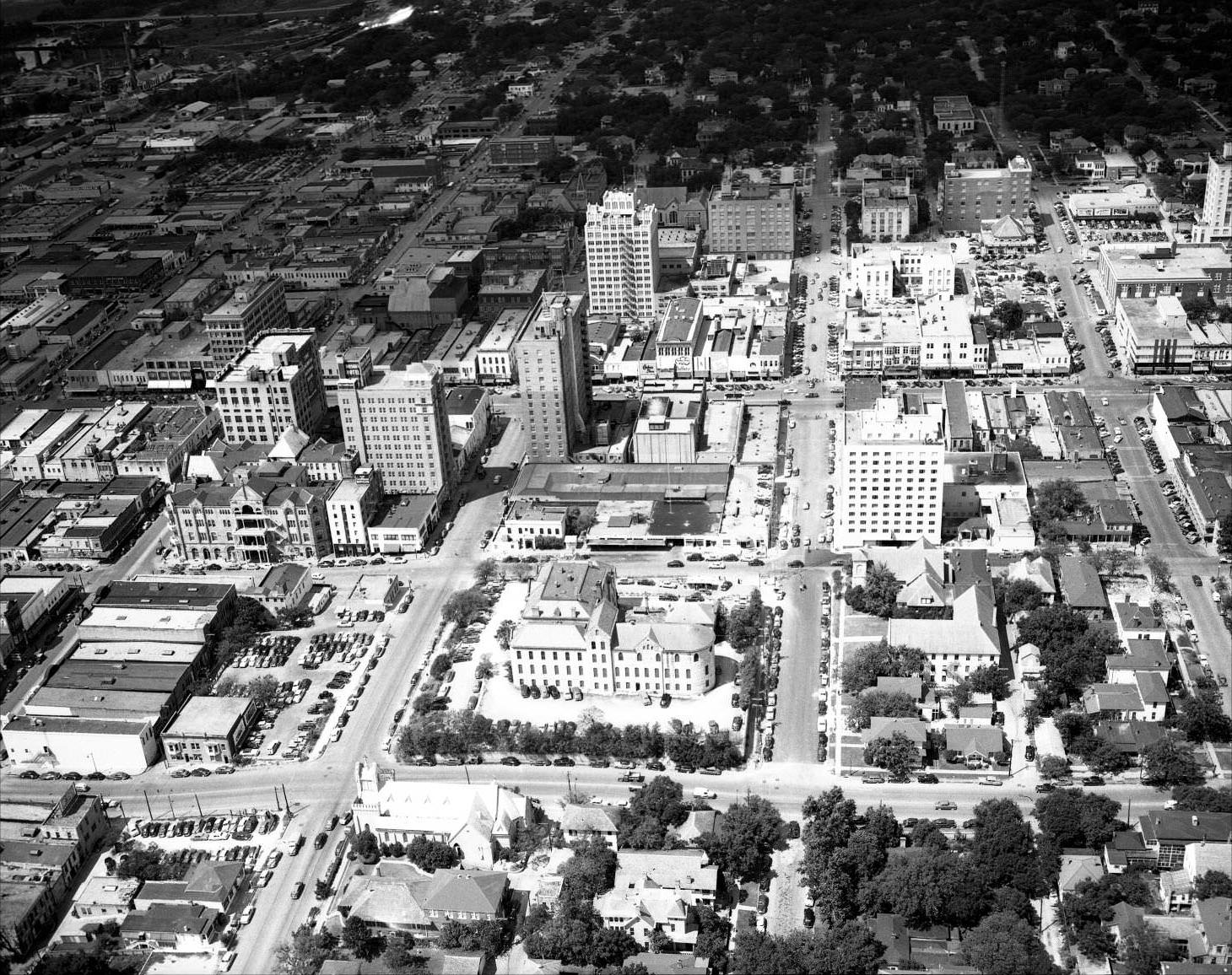
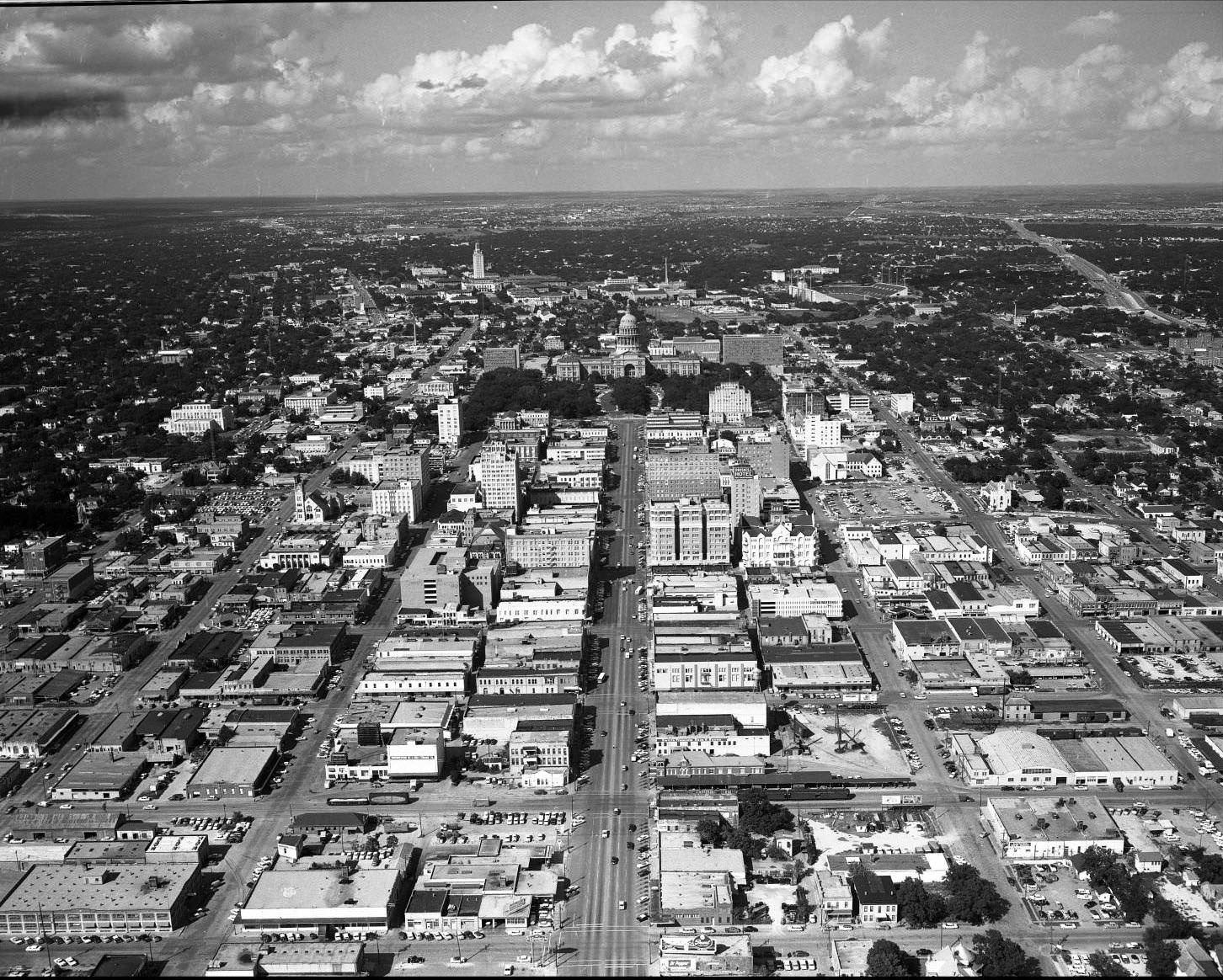
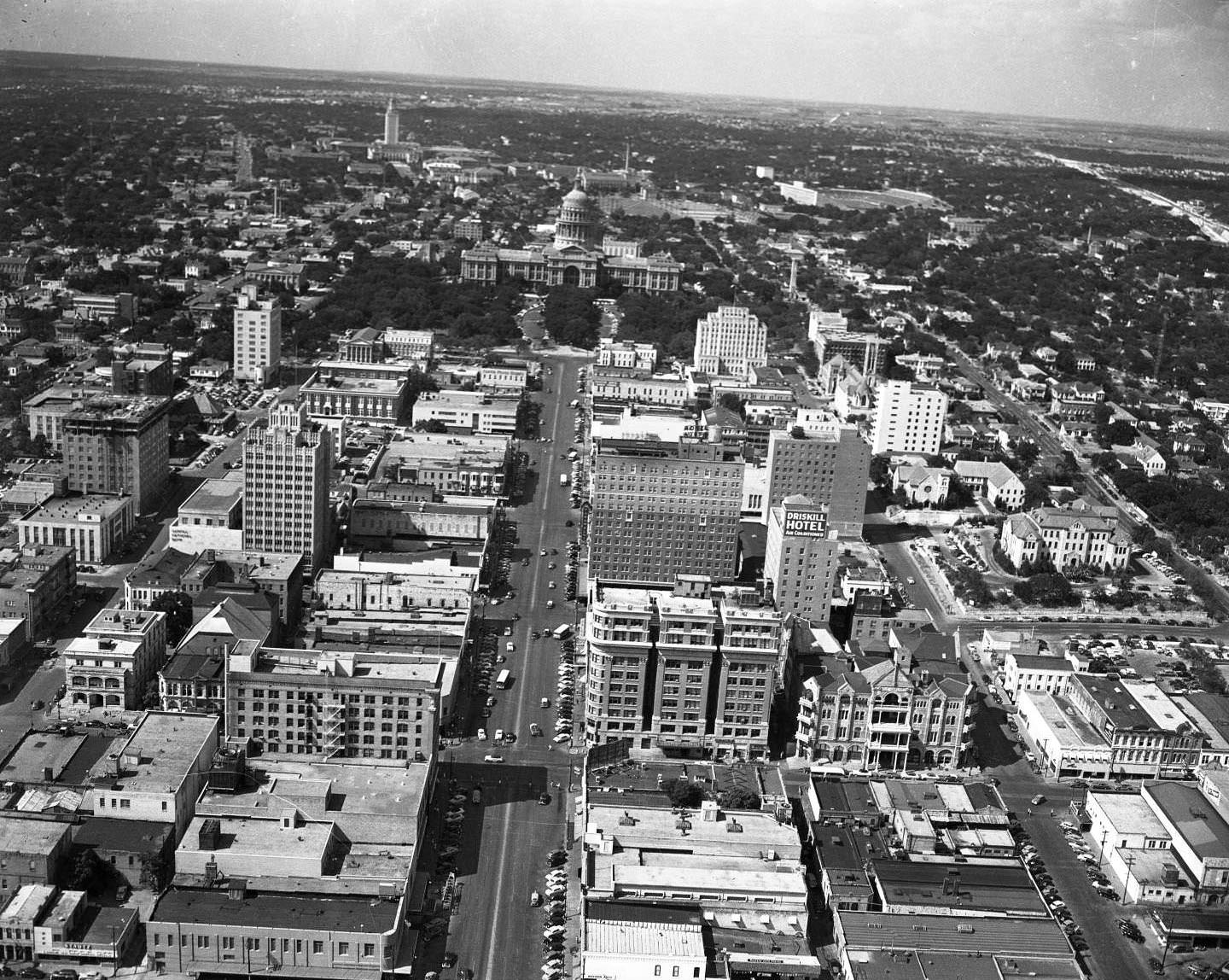
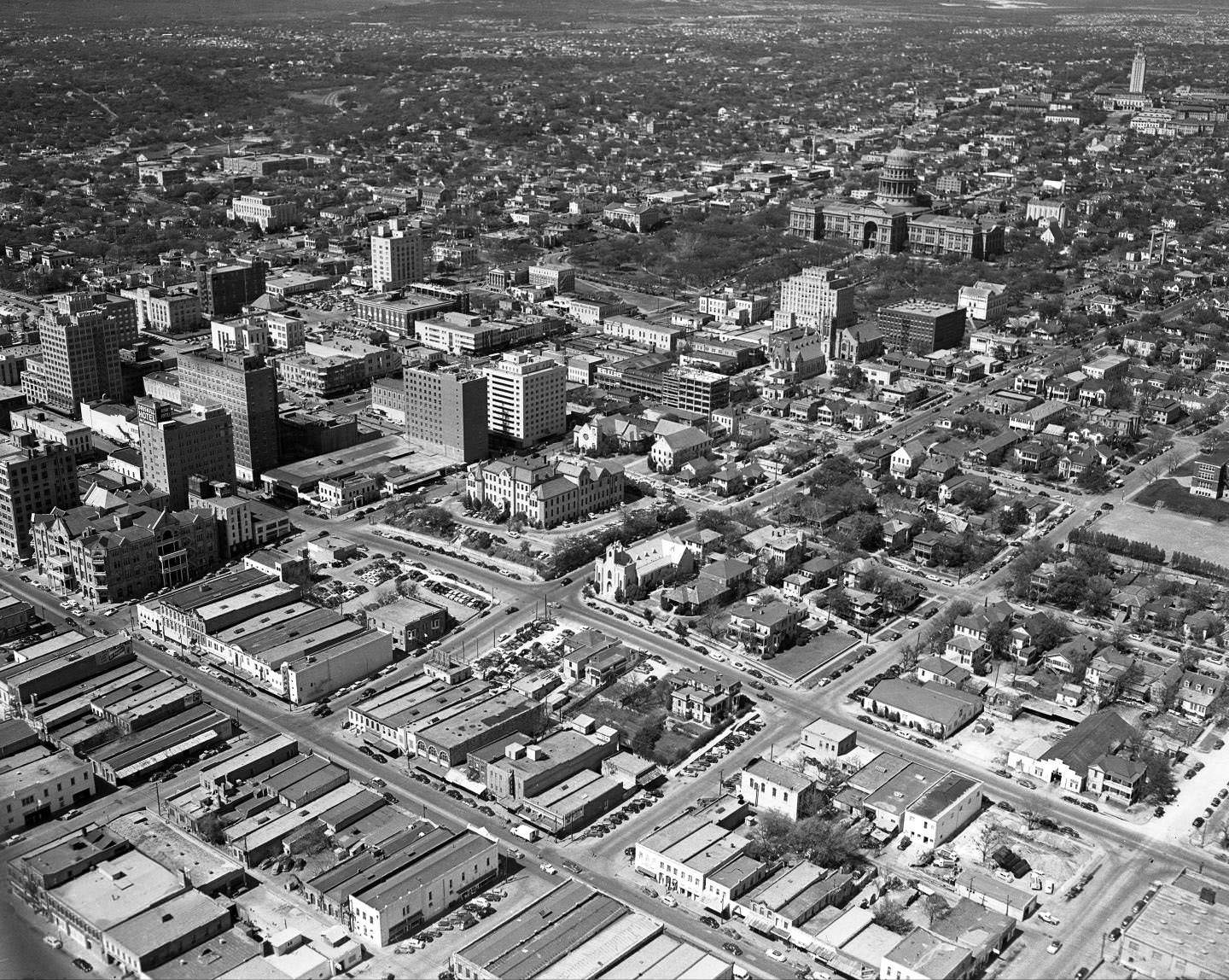
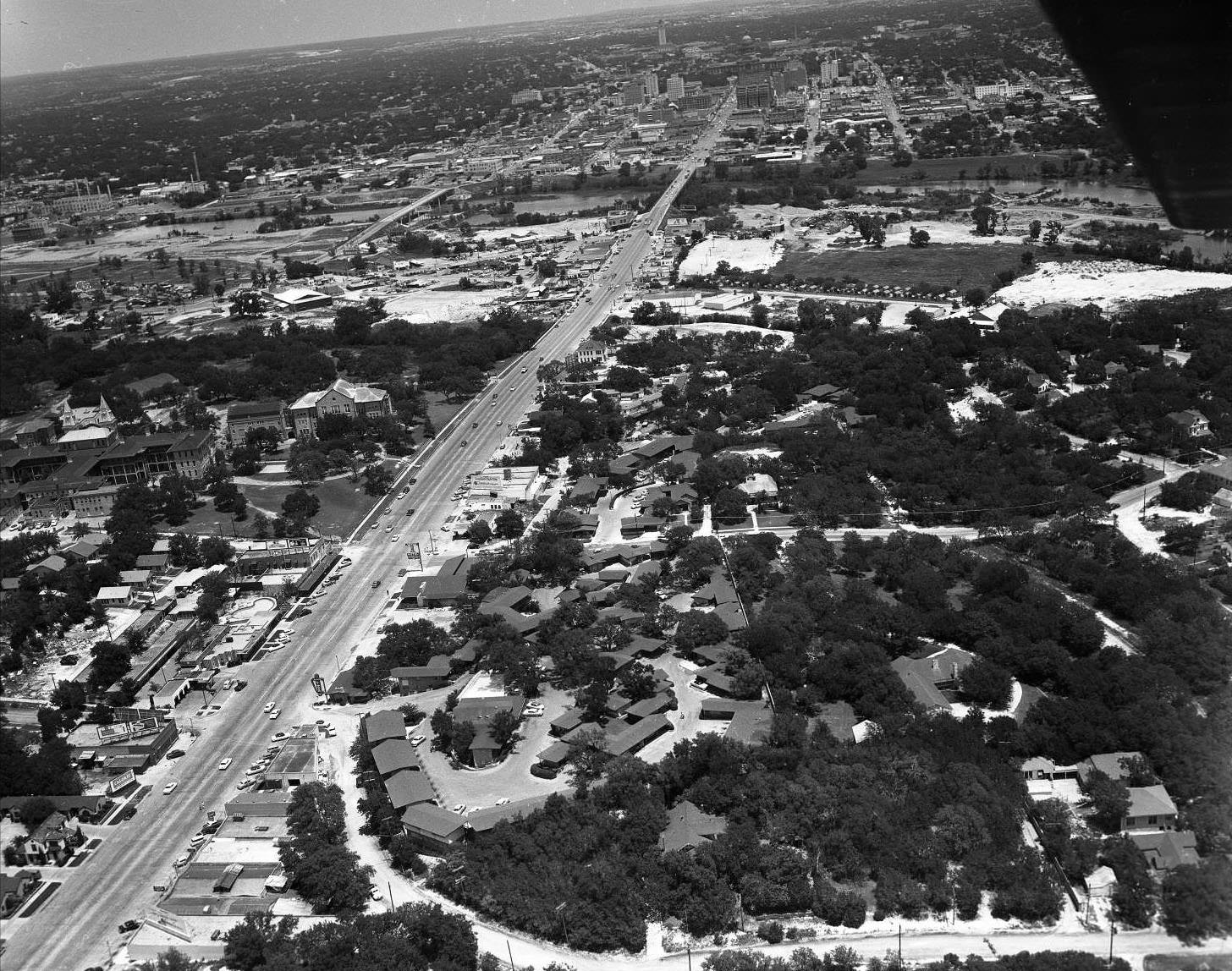
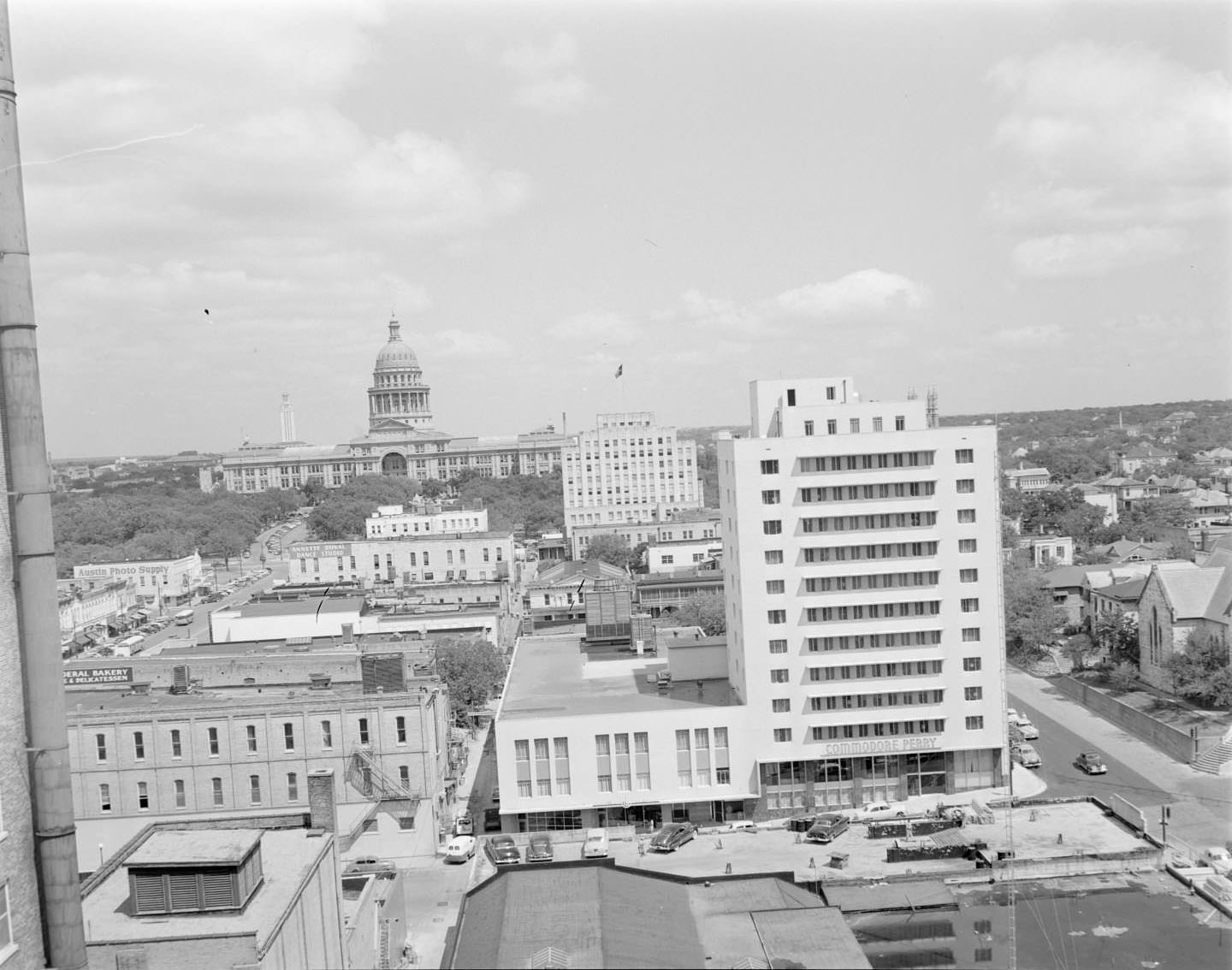
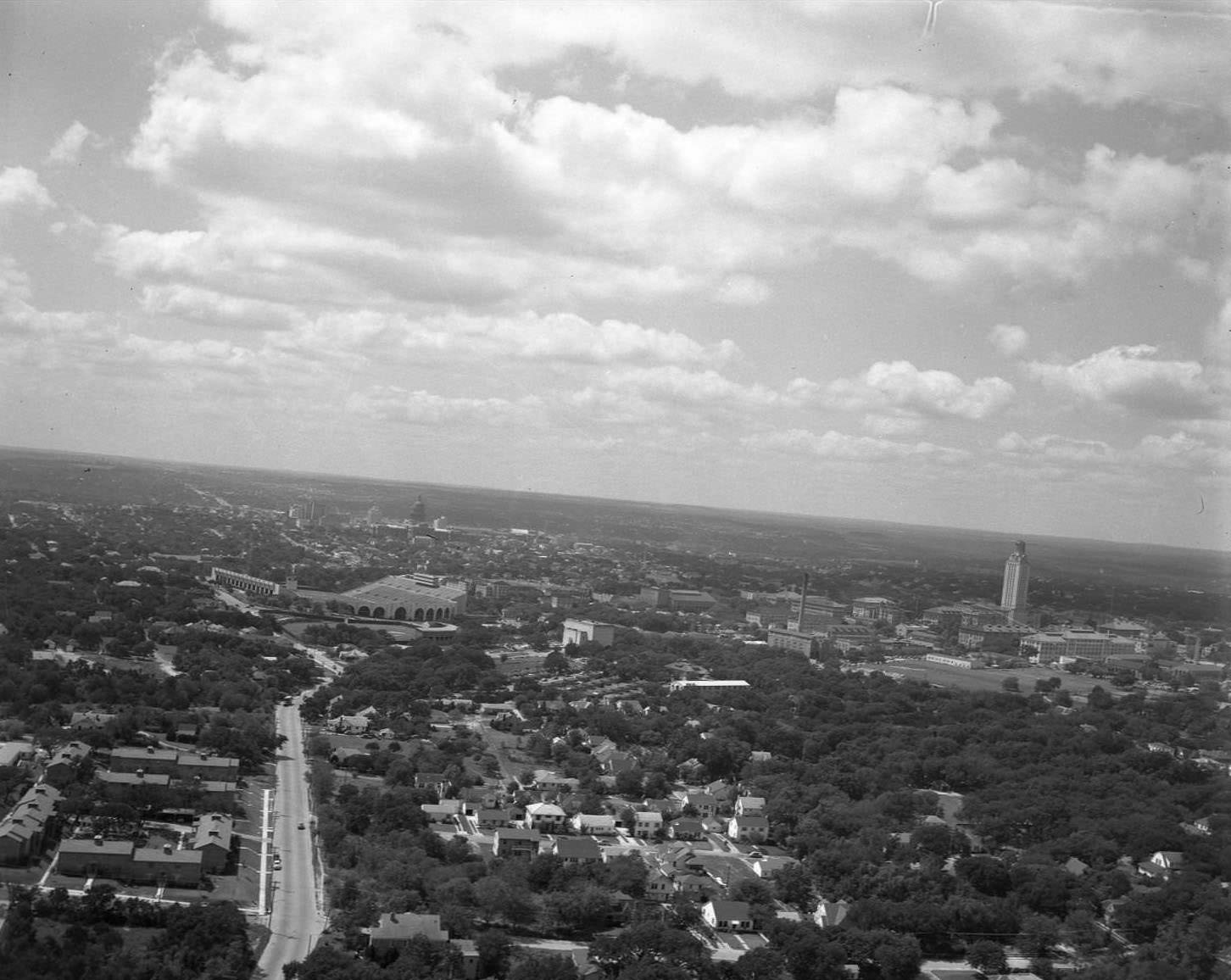
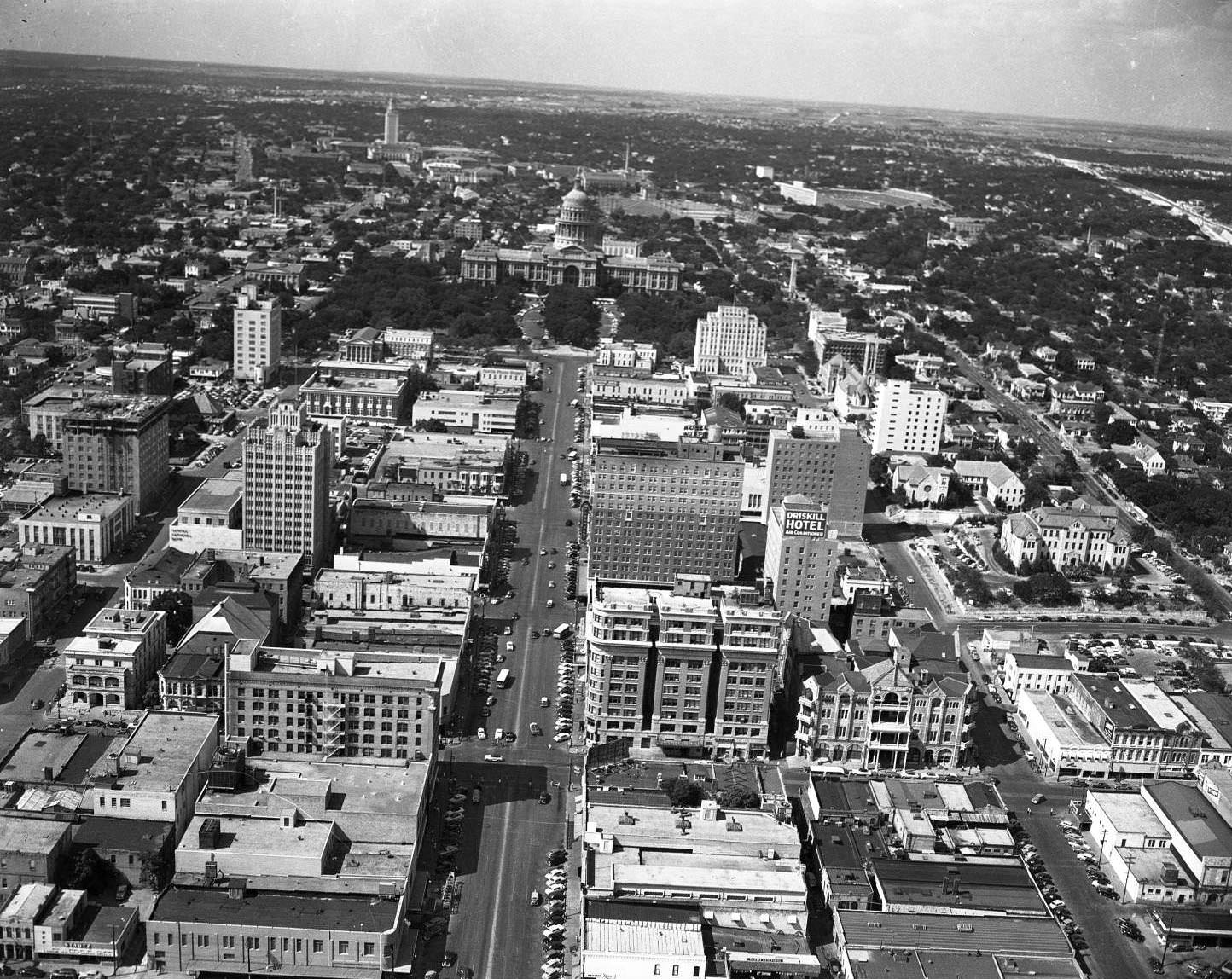
From above, the city’s layout was clear. Congress Avenue ran straight north from the Colorado River to the Capitol steps, with downtown blocks packed tightly on either side. The University of Texas Tower rose to the northwest, visible from nearly every aerial vantage point. By the end of the decade, those aerial shots revealed a denser, busier city than the one that had entered the 1950s.
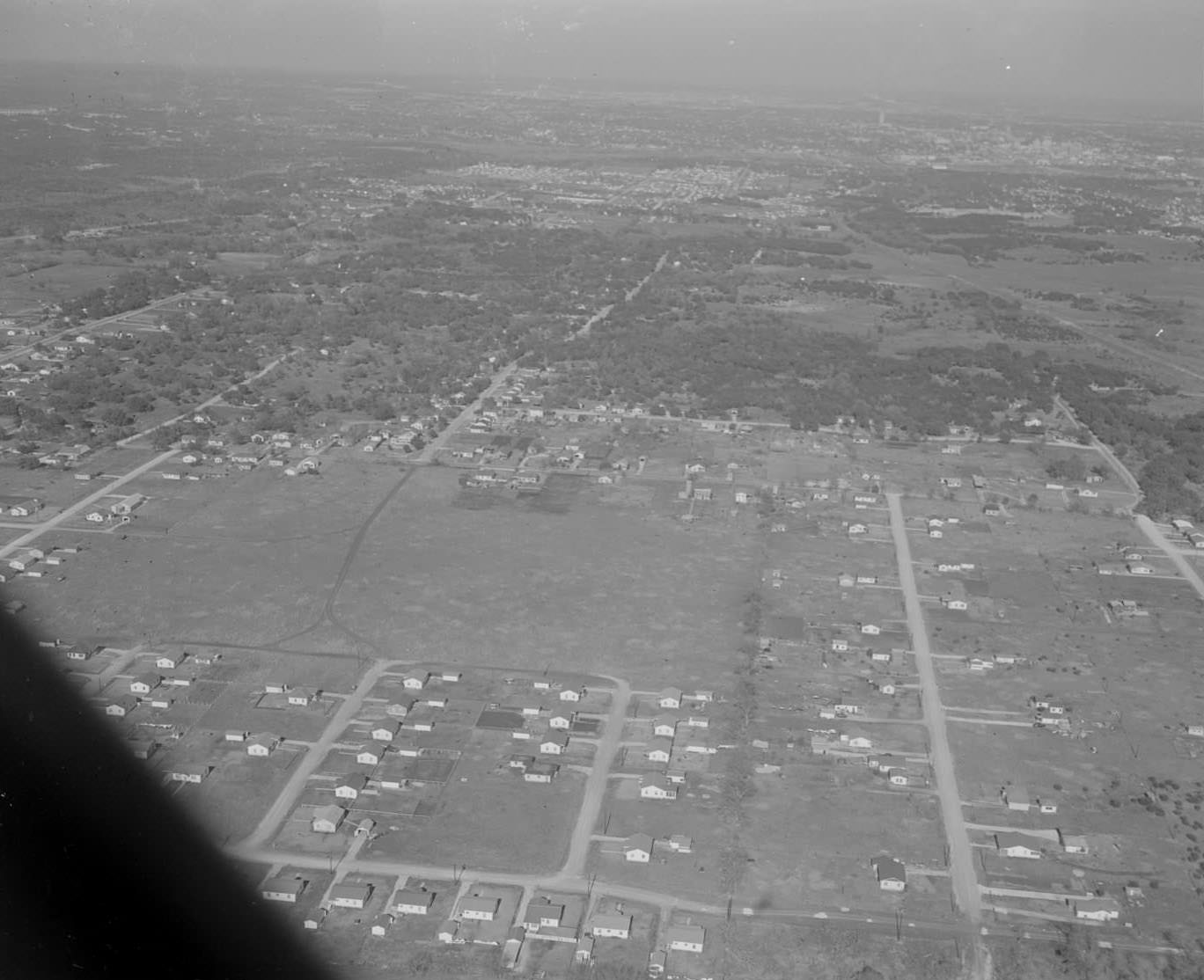
Aerial view of Austin with the Tower and Capitol barely visible in the background, 1953Aerial View of Downtown Austin, 1950
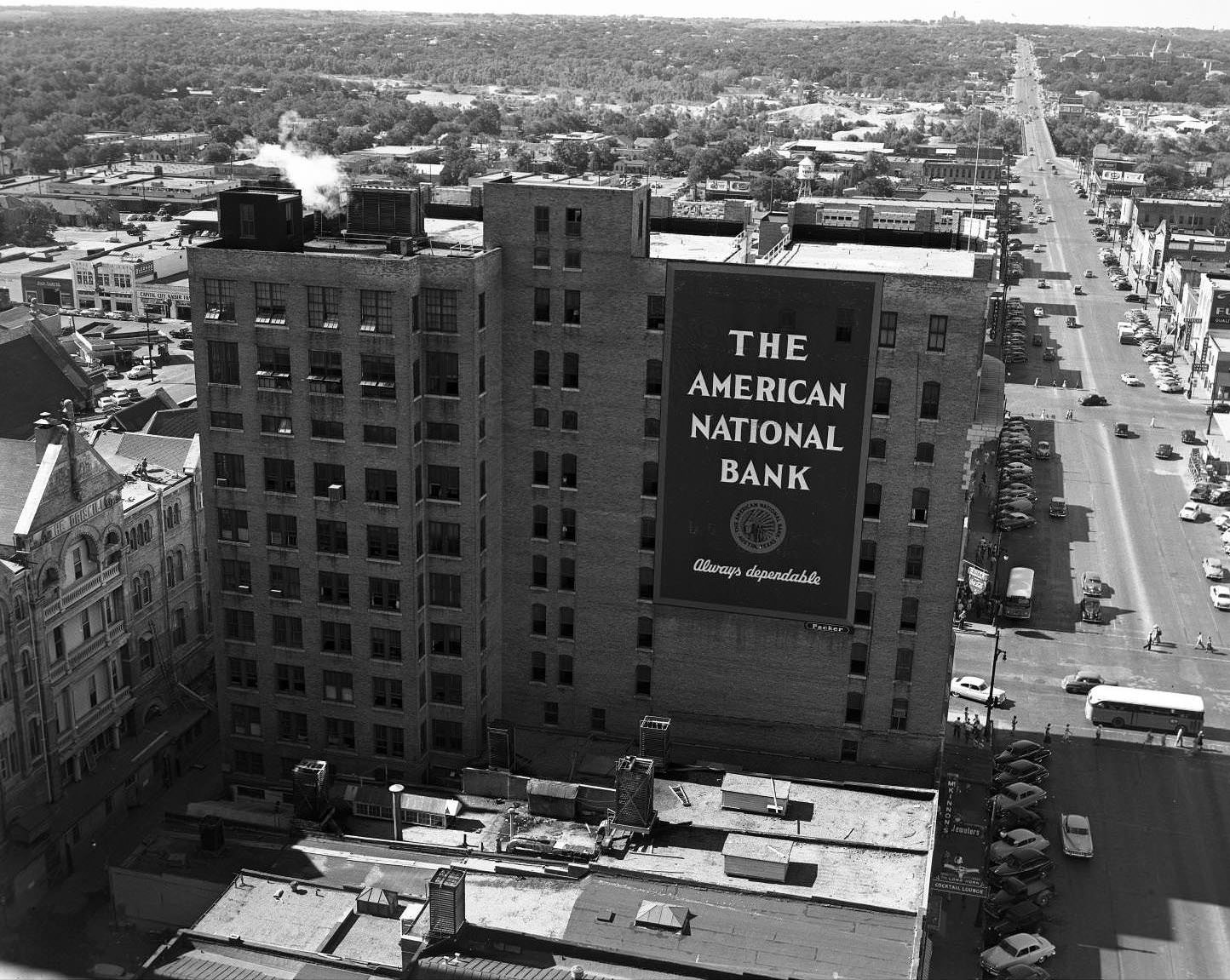
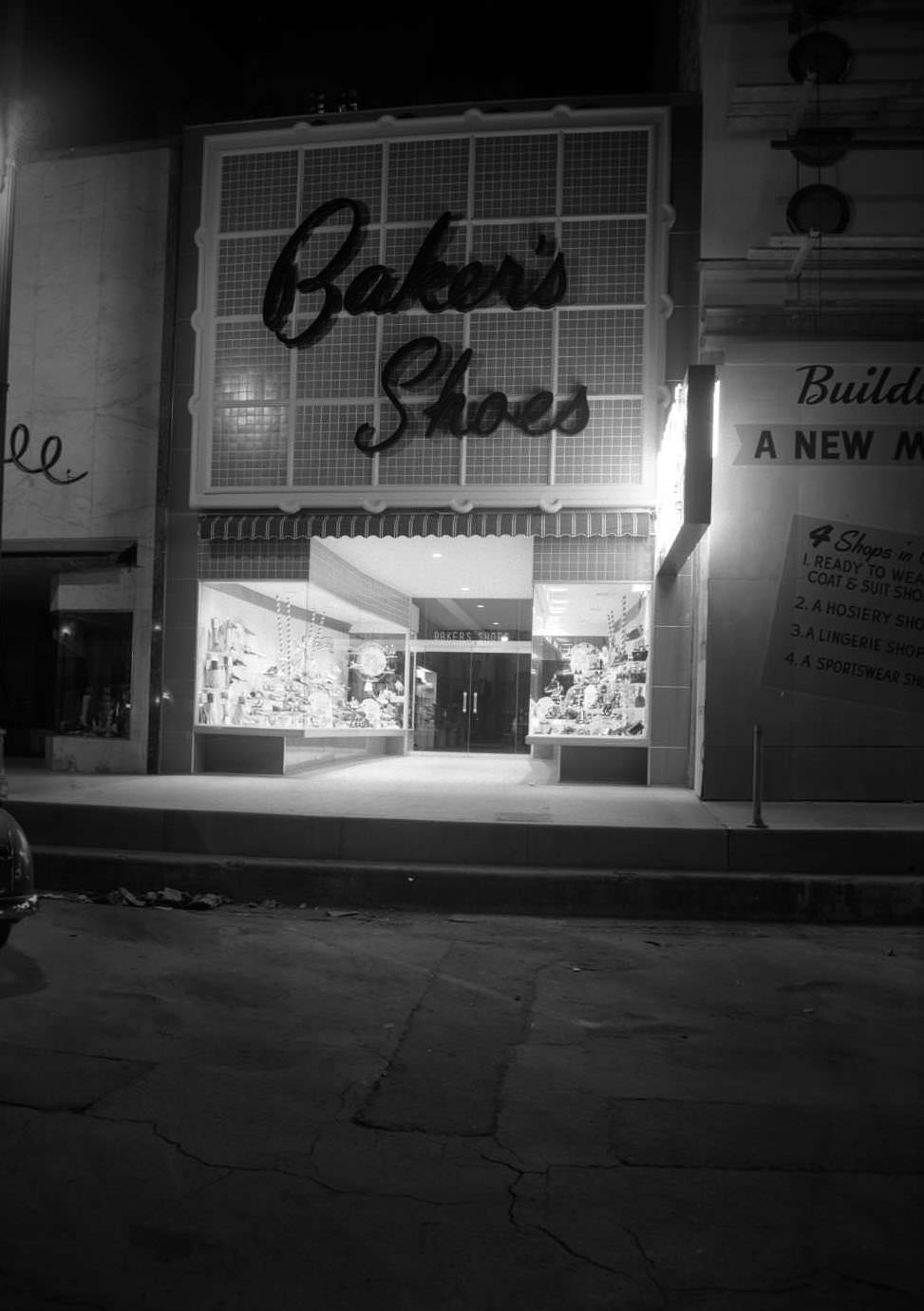
Downtown Austin in the early part of the decade was a compact grid of storefronts, offices, banks, and hotels. Congress Avenue anchored commercial life, with businesses like Baker’s Shoe Store, the American National Bank in the historic Littlefield Building, and the Driskill Hotel drawing steady foot traffic. Residents banked, shopped, dined, and caught movies within a few blocks of each other. The street-level energy of those years shows up clearly in the photographs — rows of parked cars, shop windows dressed with displays, and sidewalks full of people going about their day.
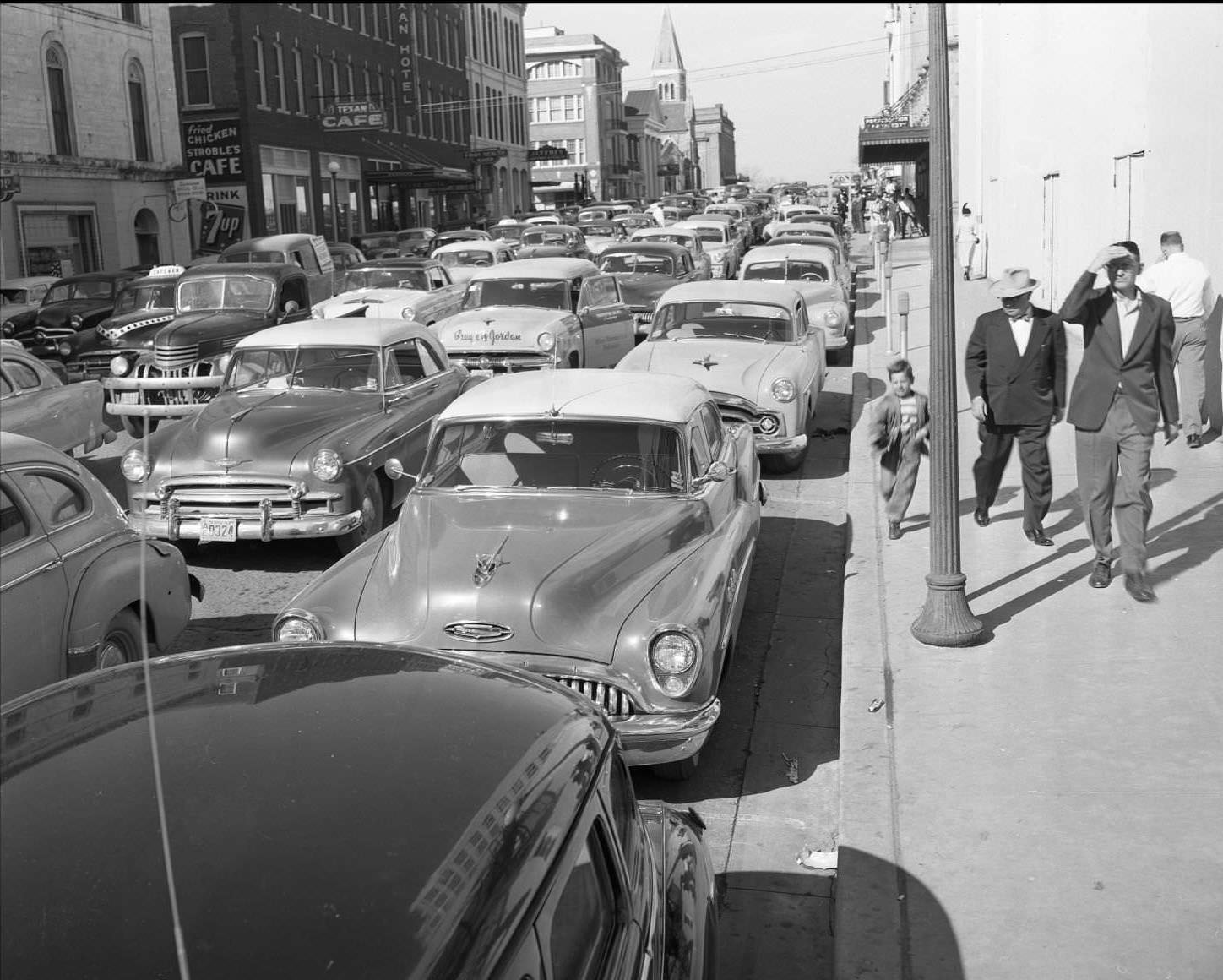
Austin Street Scene, 1951Austin Street Scene, 1951
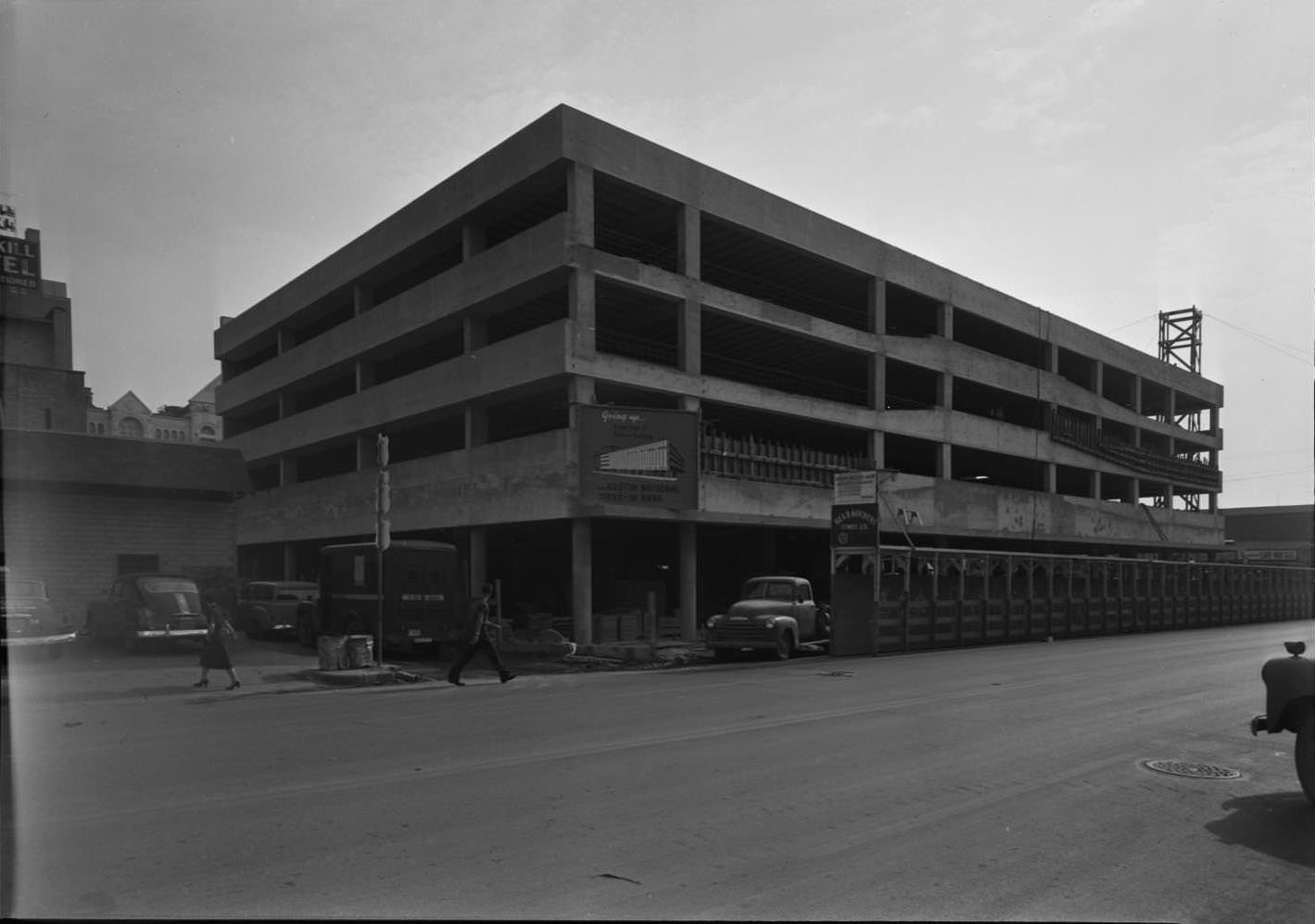
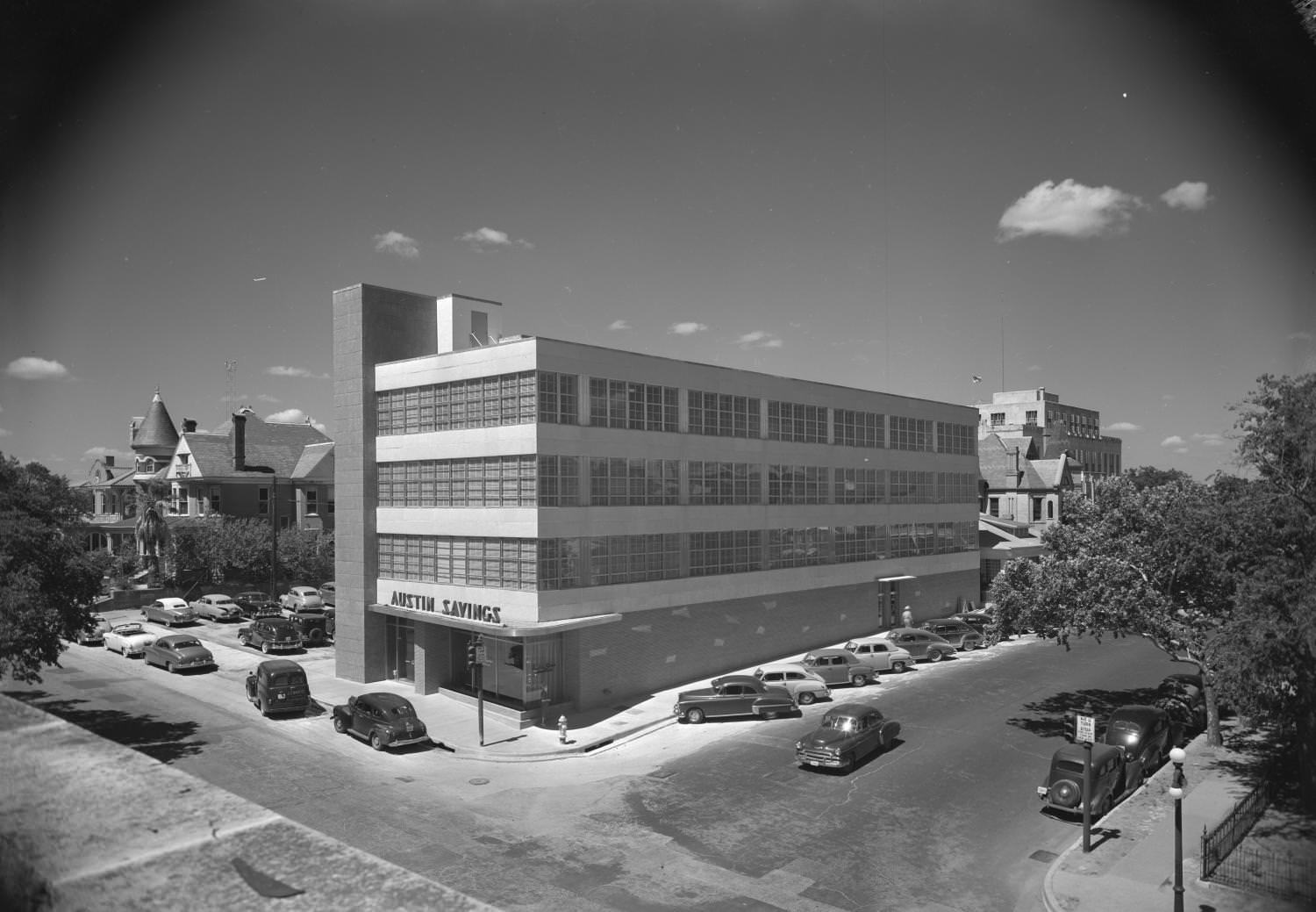
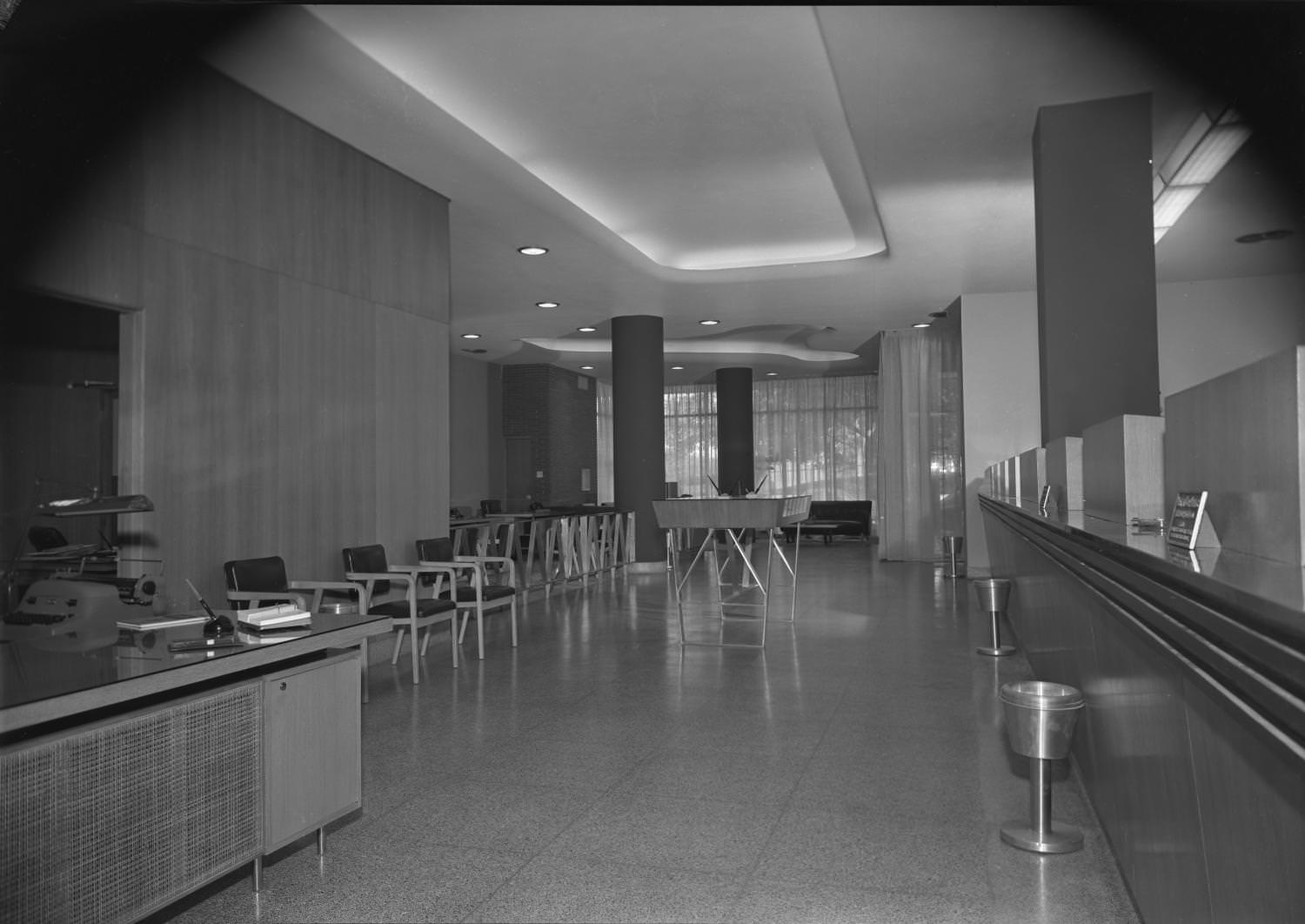
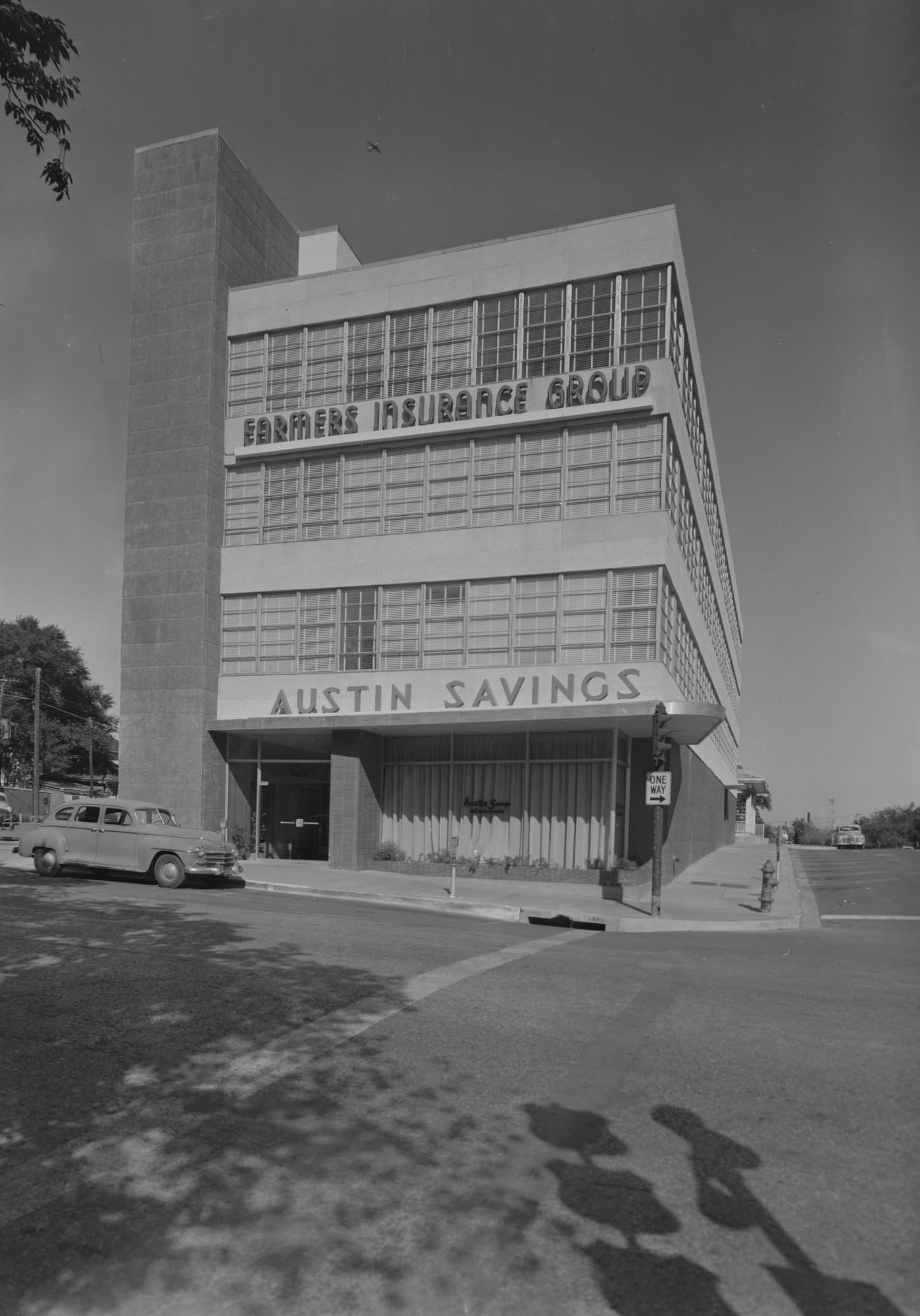
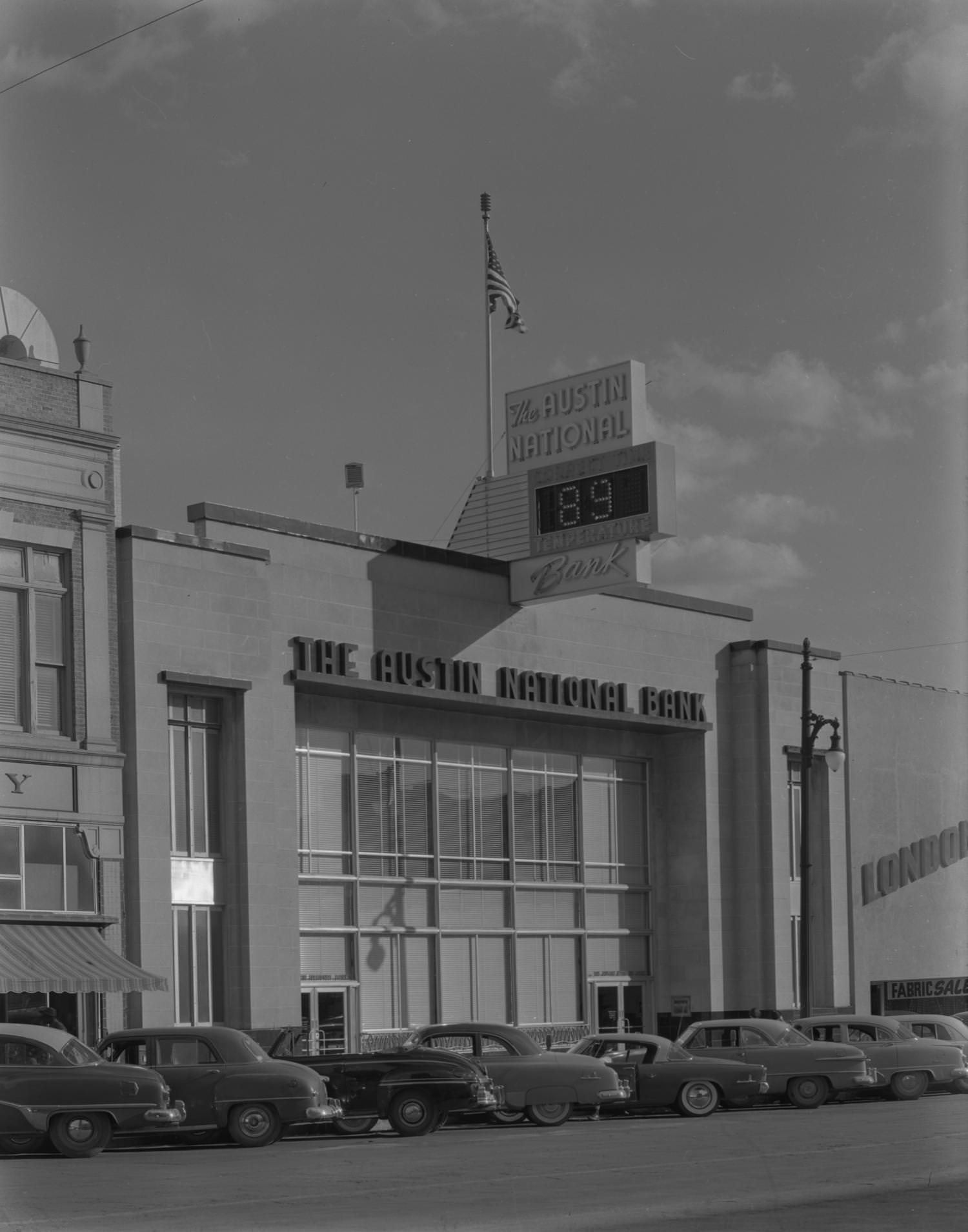
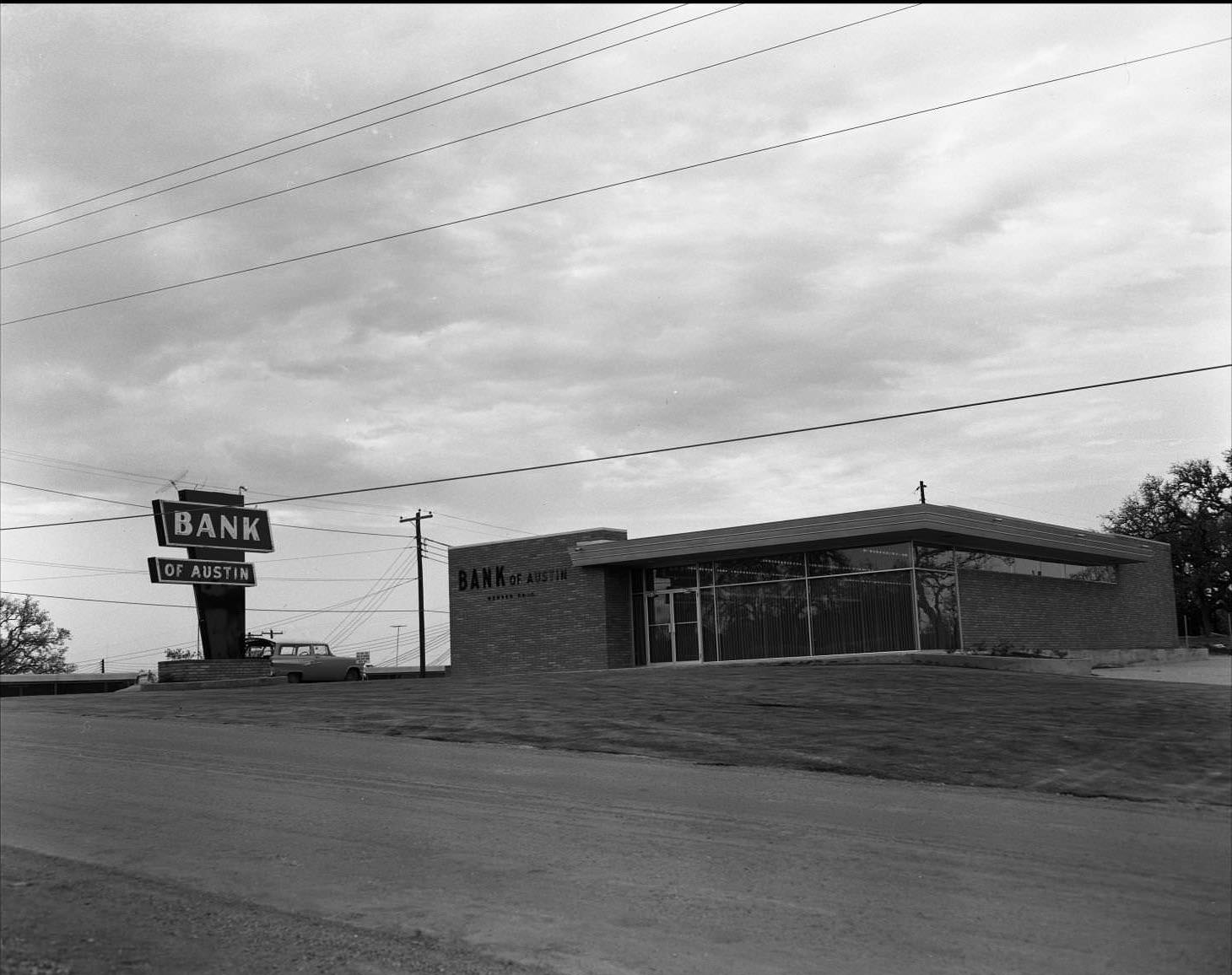
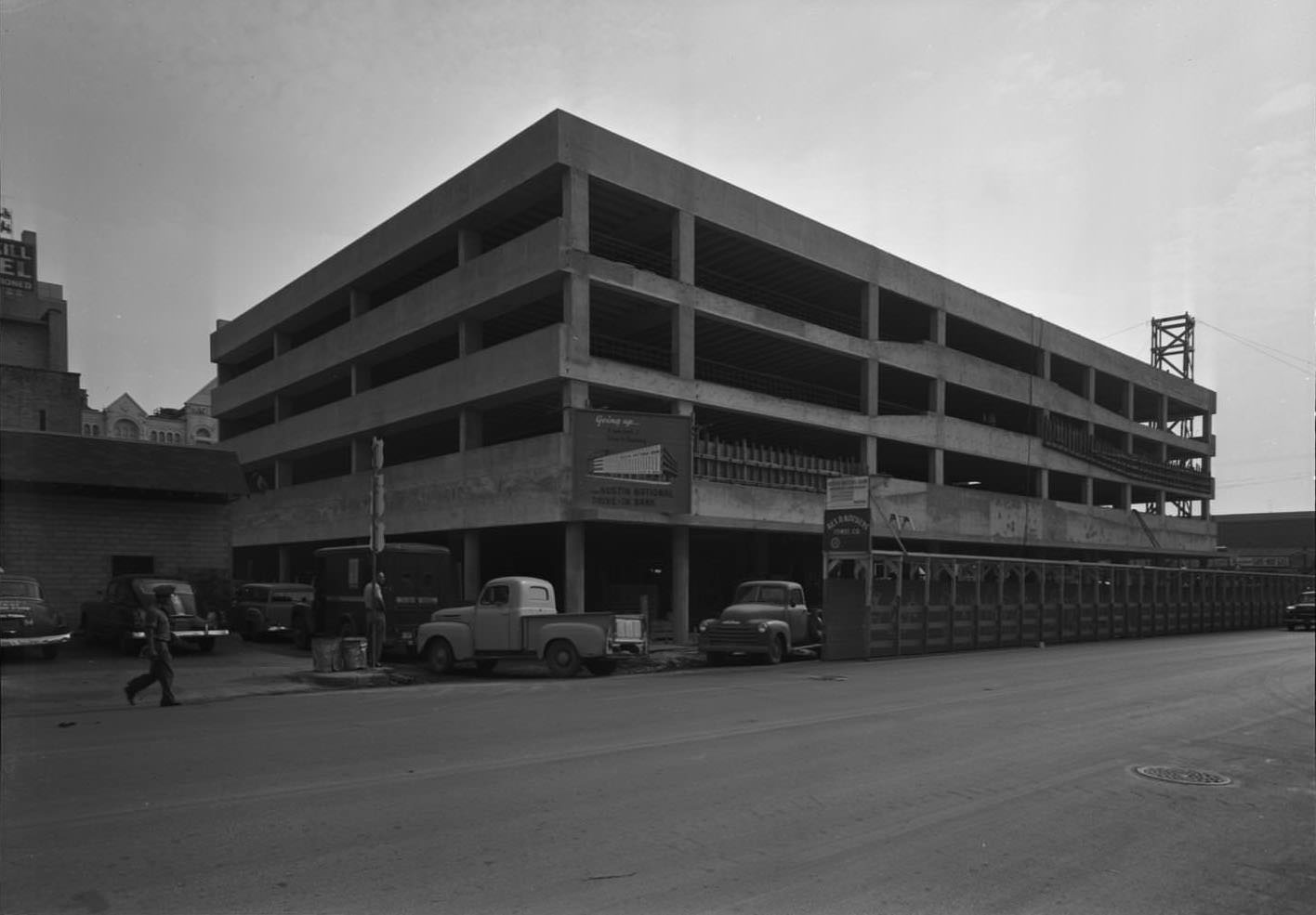
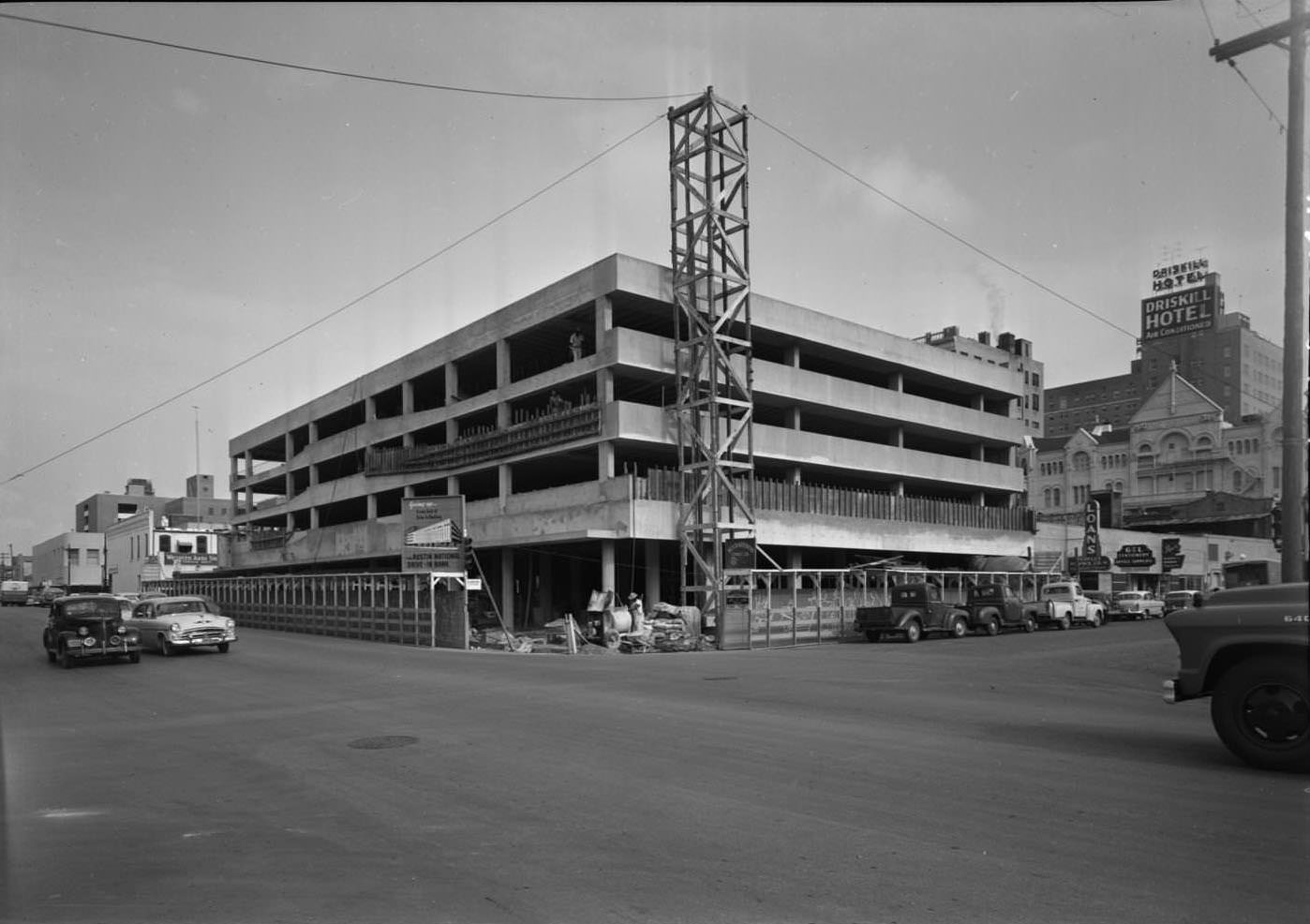
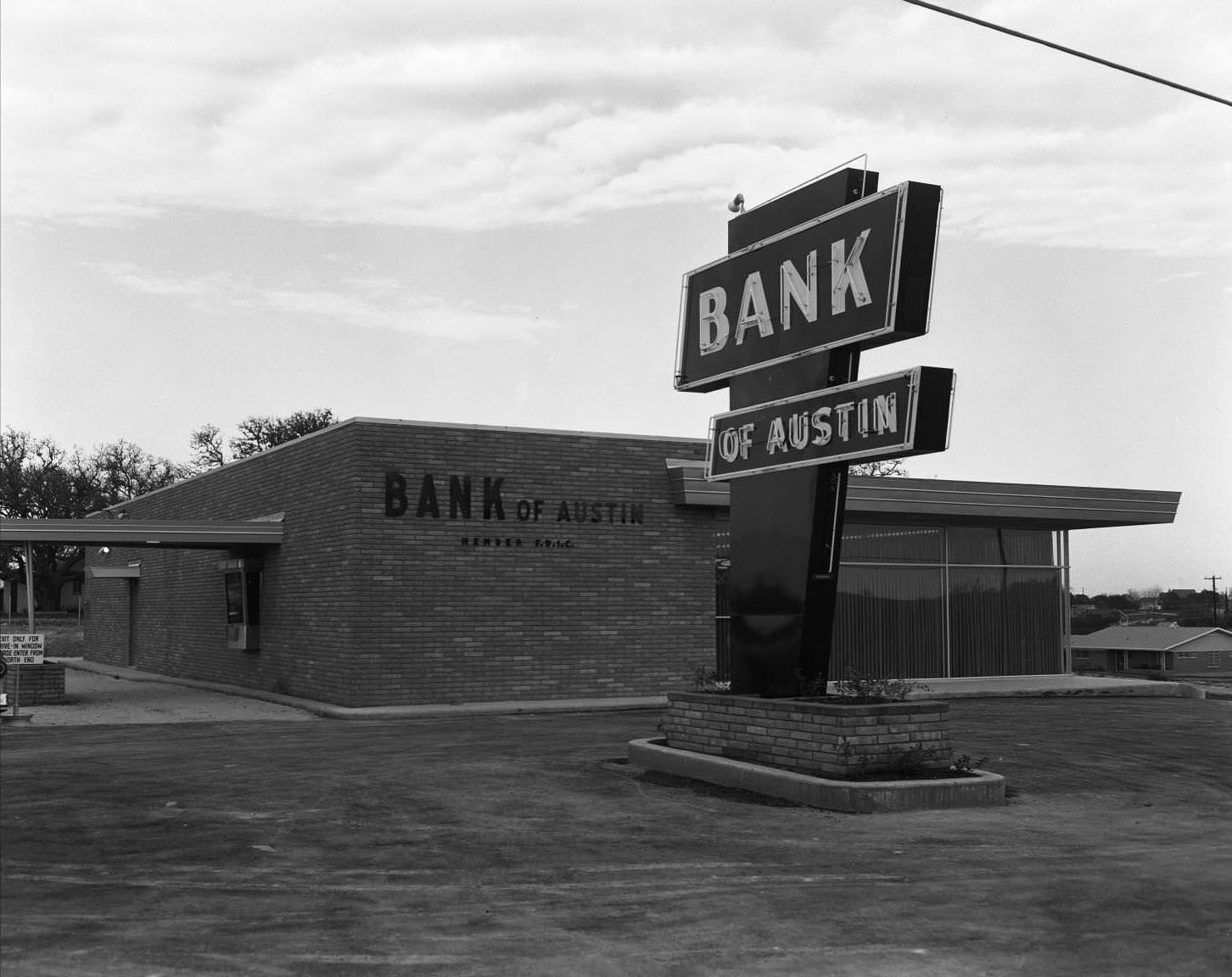
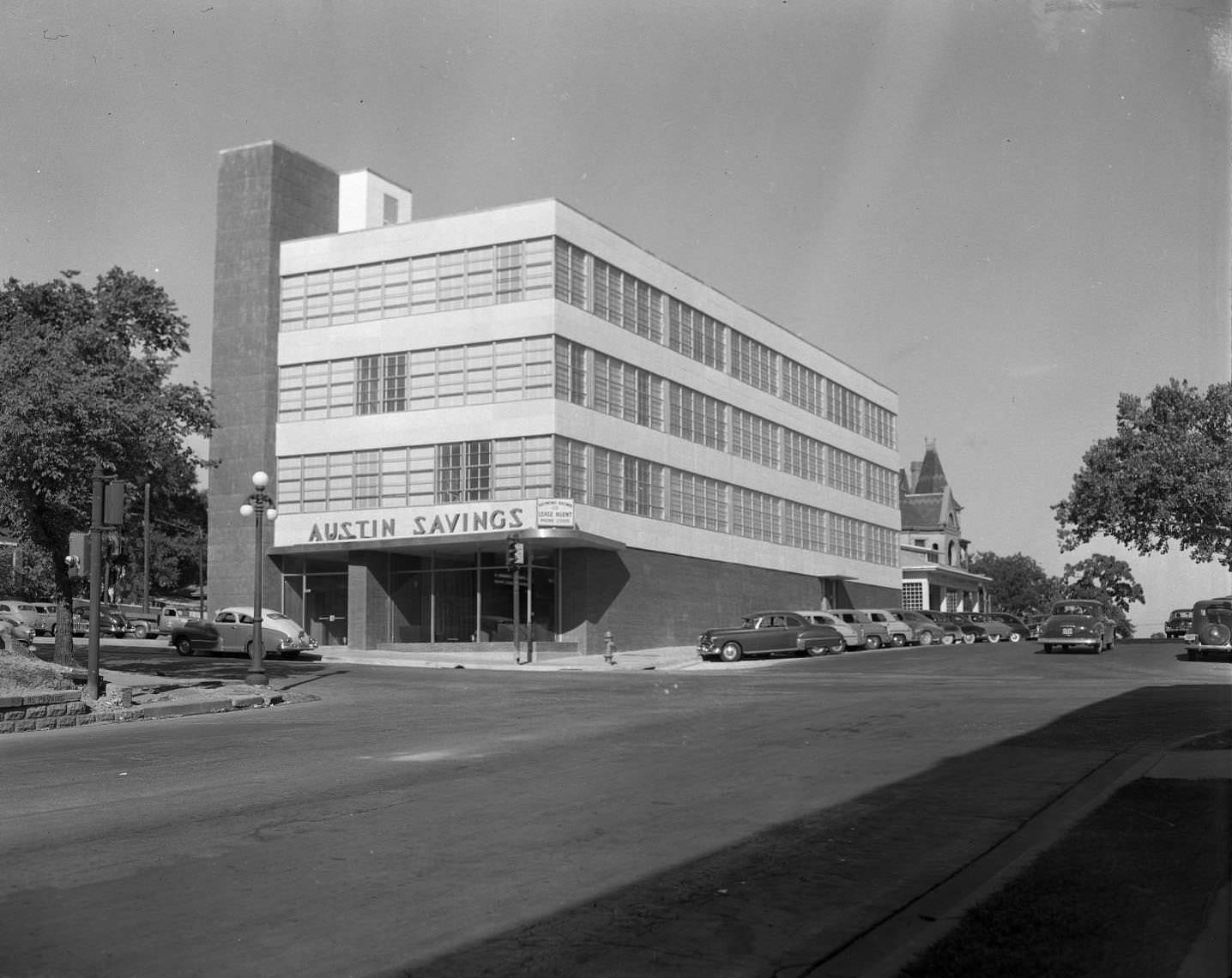
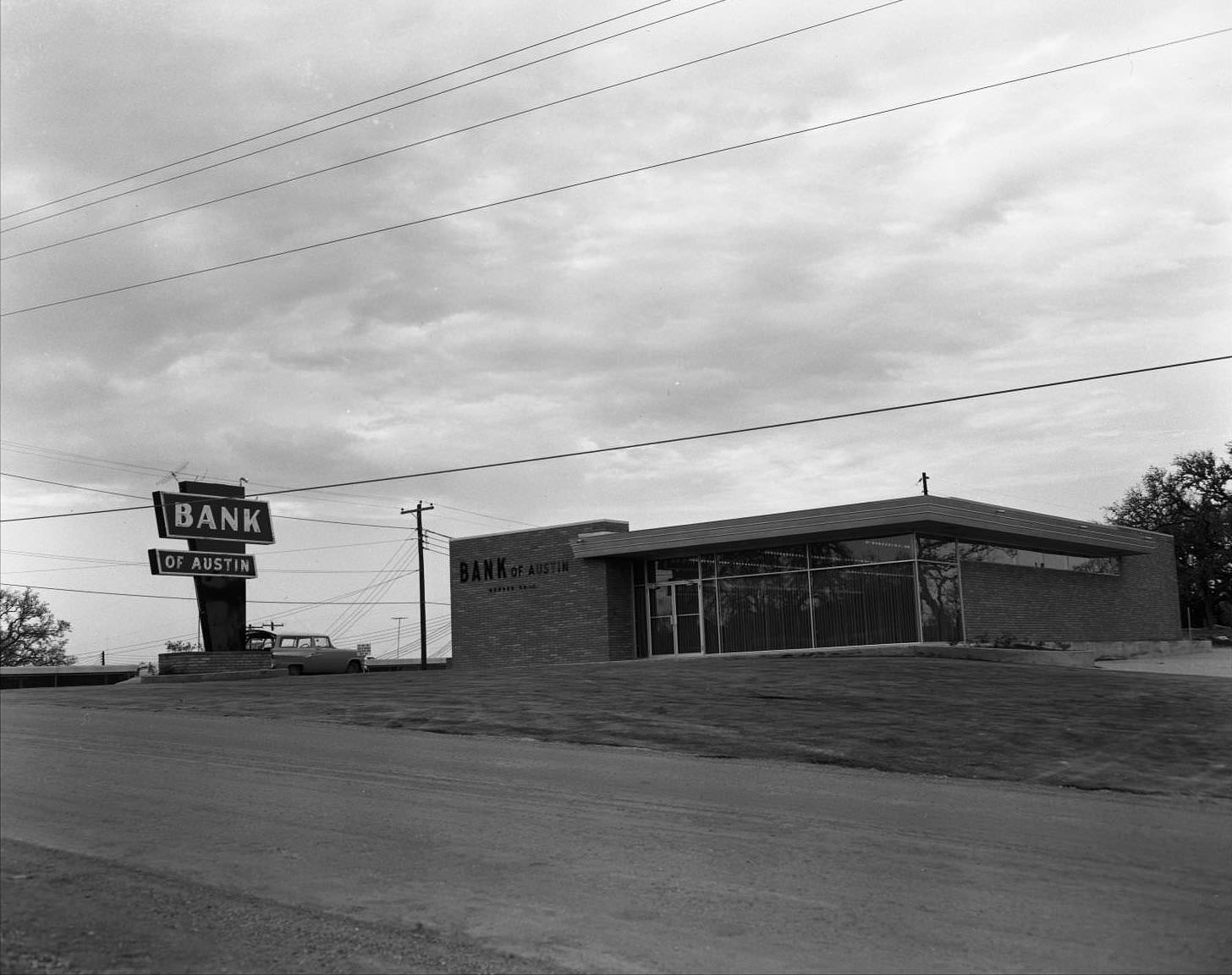
Banking was a serious business in 1950s Austin, and the city had no shortage of financial institutions. The Austin National Bank operated a drive-in branch — an amenity that reflected just how car-centered Austin life had become. Austin Savings and Loan had its own purpose-built office with a polished lobby that projected stability and confidence. The Bank of Austin on East Oltorf Street, with R.M. McKee as president, served the growing south side of the city.
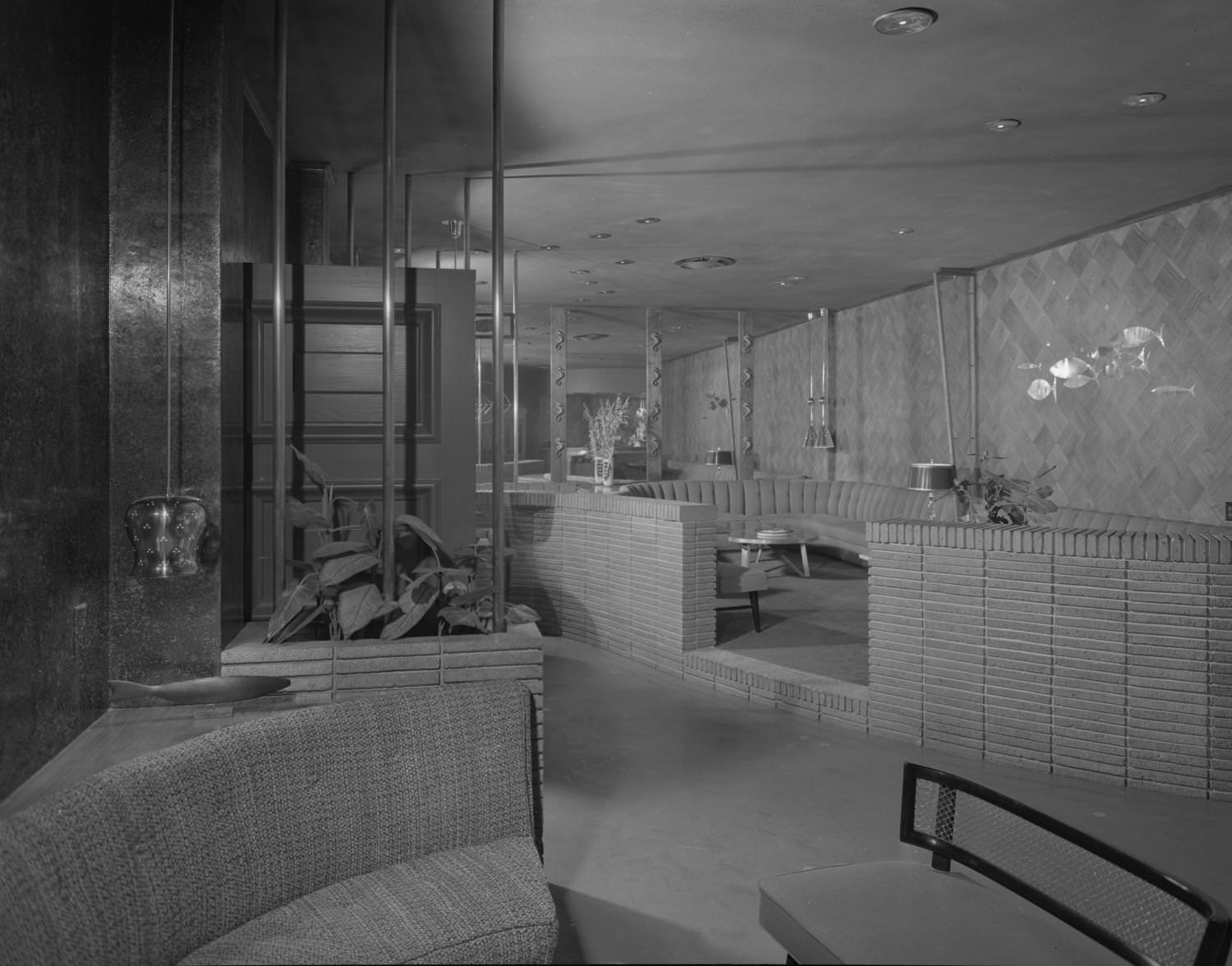
Austin National Bank Drive-In Bank, 1955Austin Savings and Loan Assosciation Building, 1951Interior View of Austin Savings and Loan Association Building Lobby, 1951
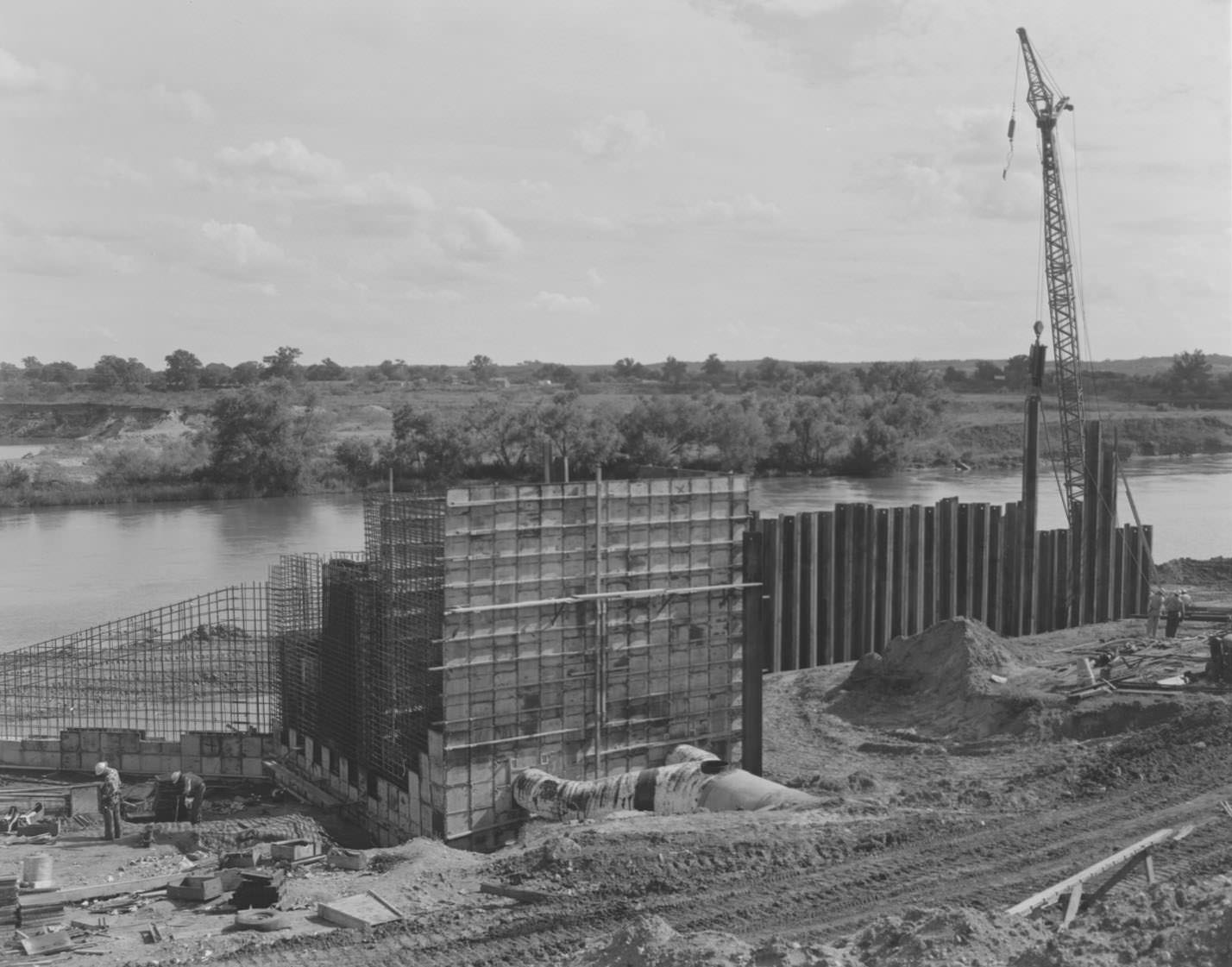
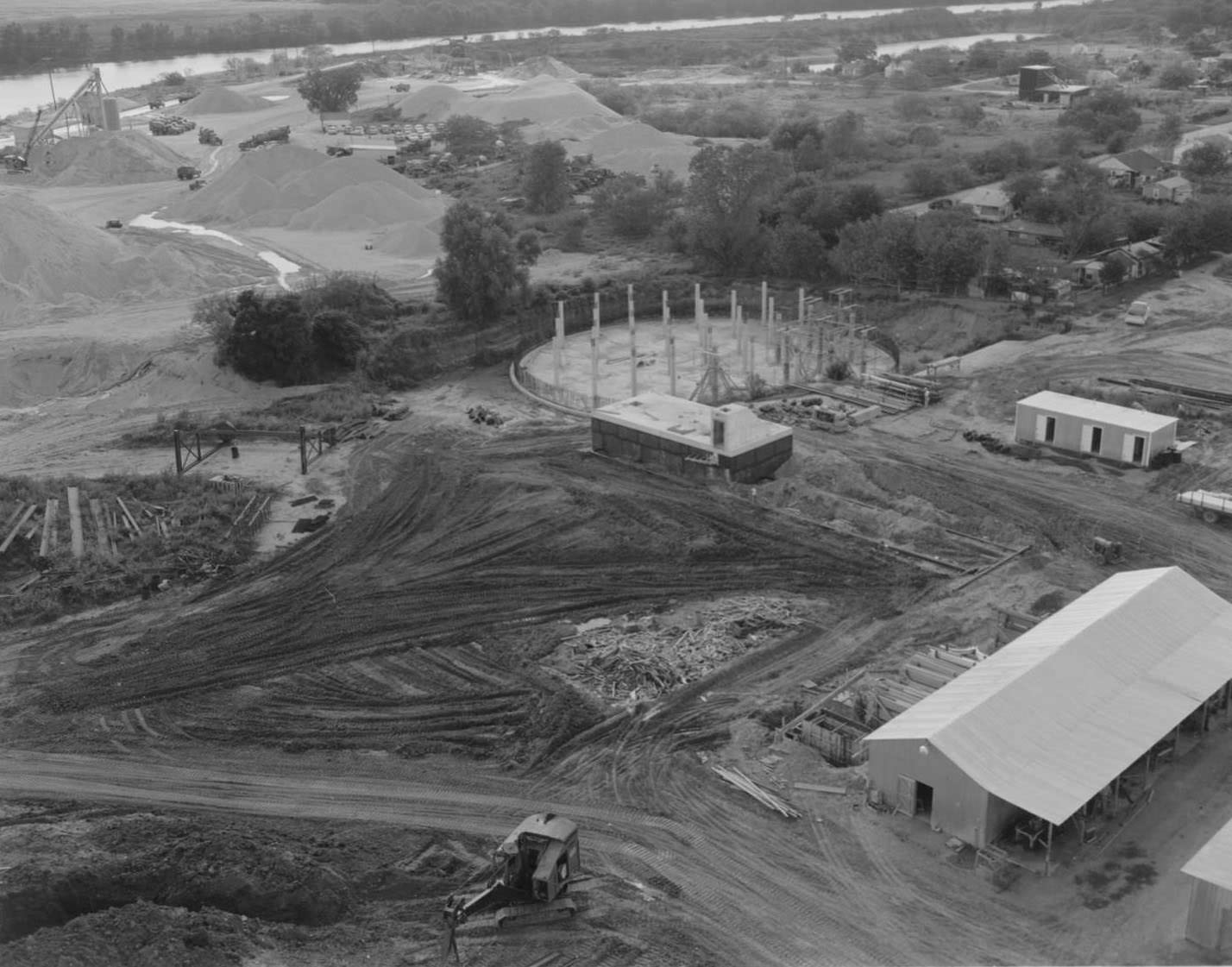
The post-World War II years brought a dramatic surge in electricity demand across Austin. Washing machines, dishwashers, televisions, and air conditioning units were showing up in homes across the city, and the existing power infrastructure couldn’t keep up. Austin had opened the Seaholm Power Plant — officially called Power Plant No. 2 — in 1948, on the north shore of Lady Bird Lake just west of the city’s older steam plant. Through 1950 and 1955, two additional phases of construction expanded the plant’s capacity. The facility’s three main structures — the Turbine Generator Building, the Water Intake Structure, and the Oil Heating Plant — were all built from solid concrete and finished in the Art Deco style.
Austin Power Plant Construction, 1959Aerial view of Austin Power Plant Construction, 1959
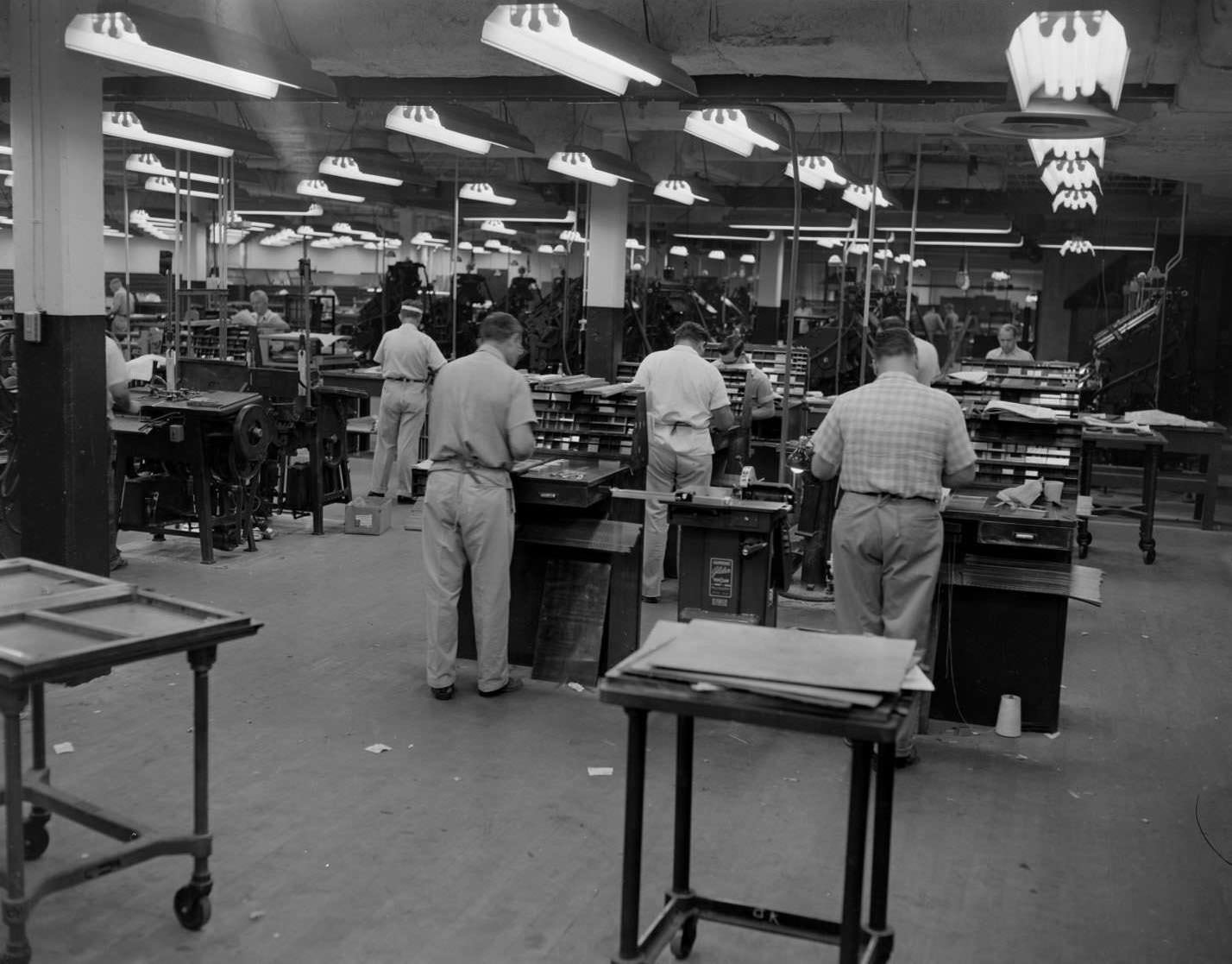
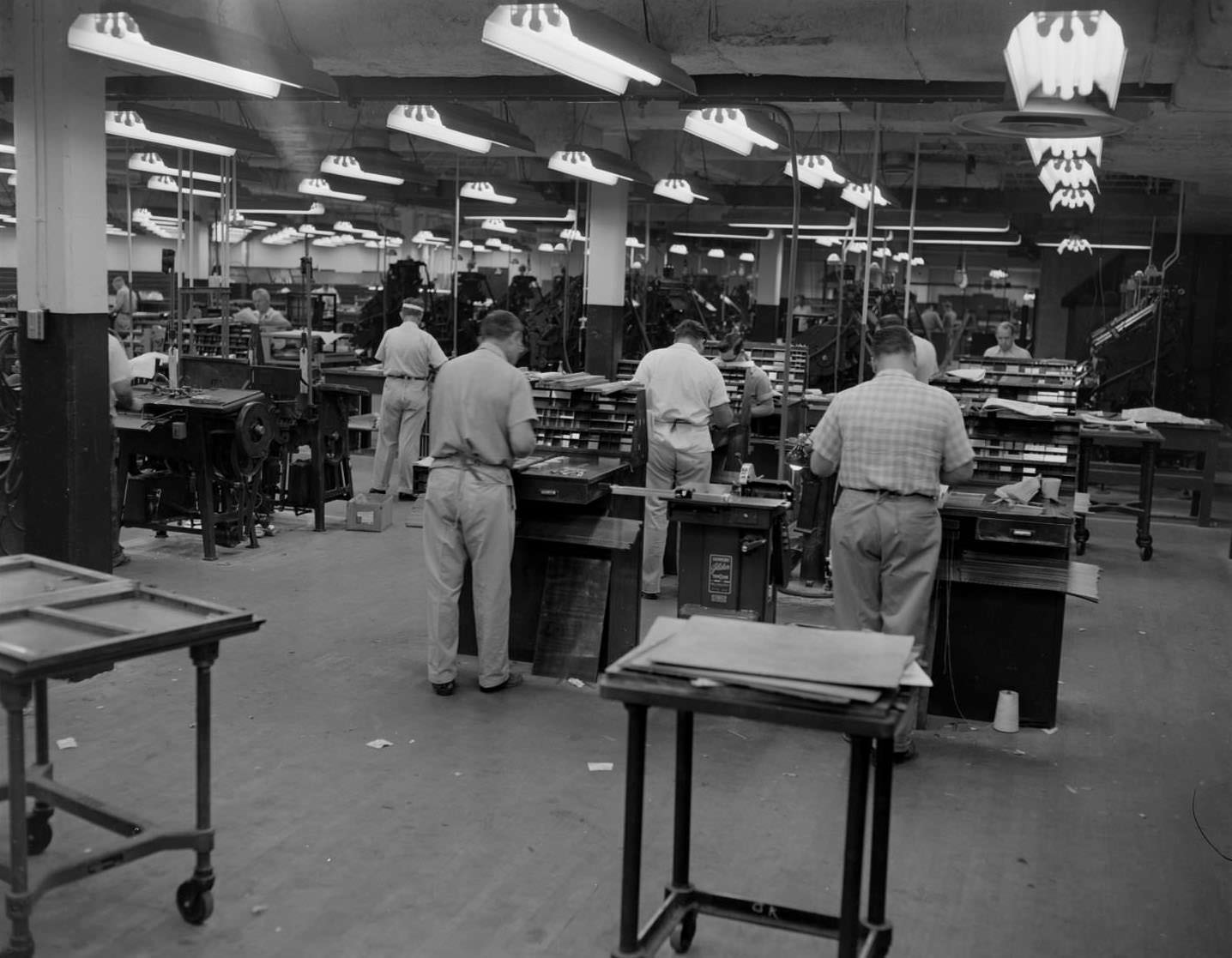
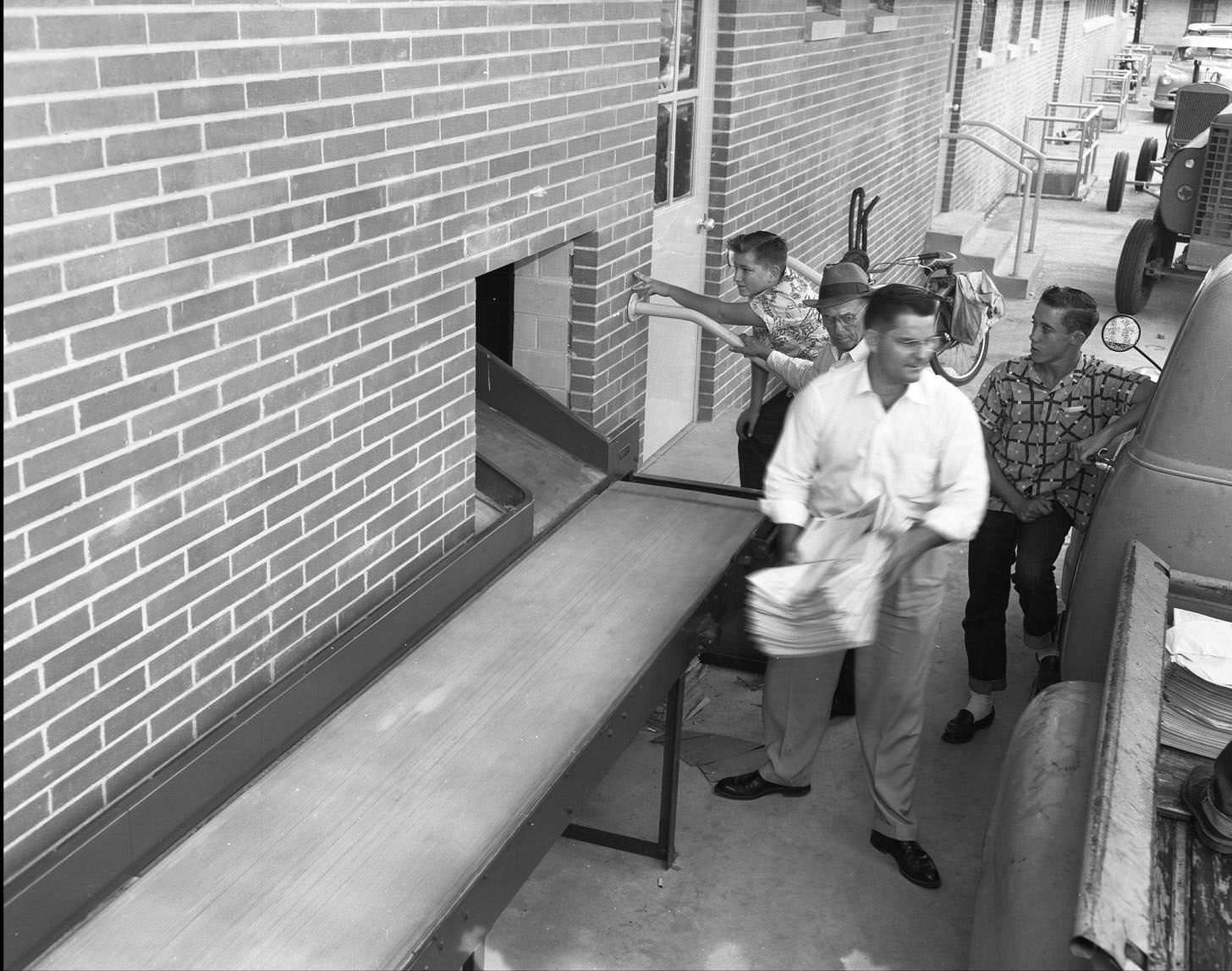
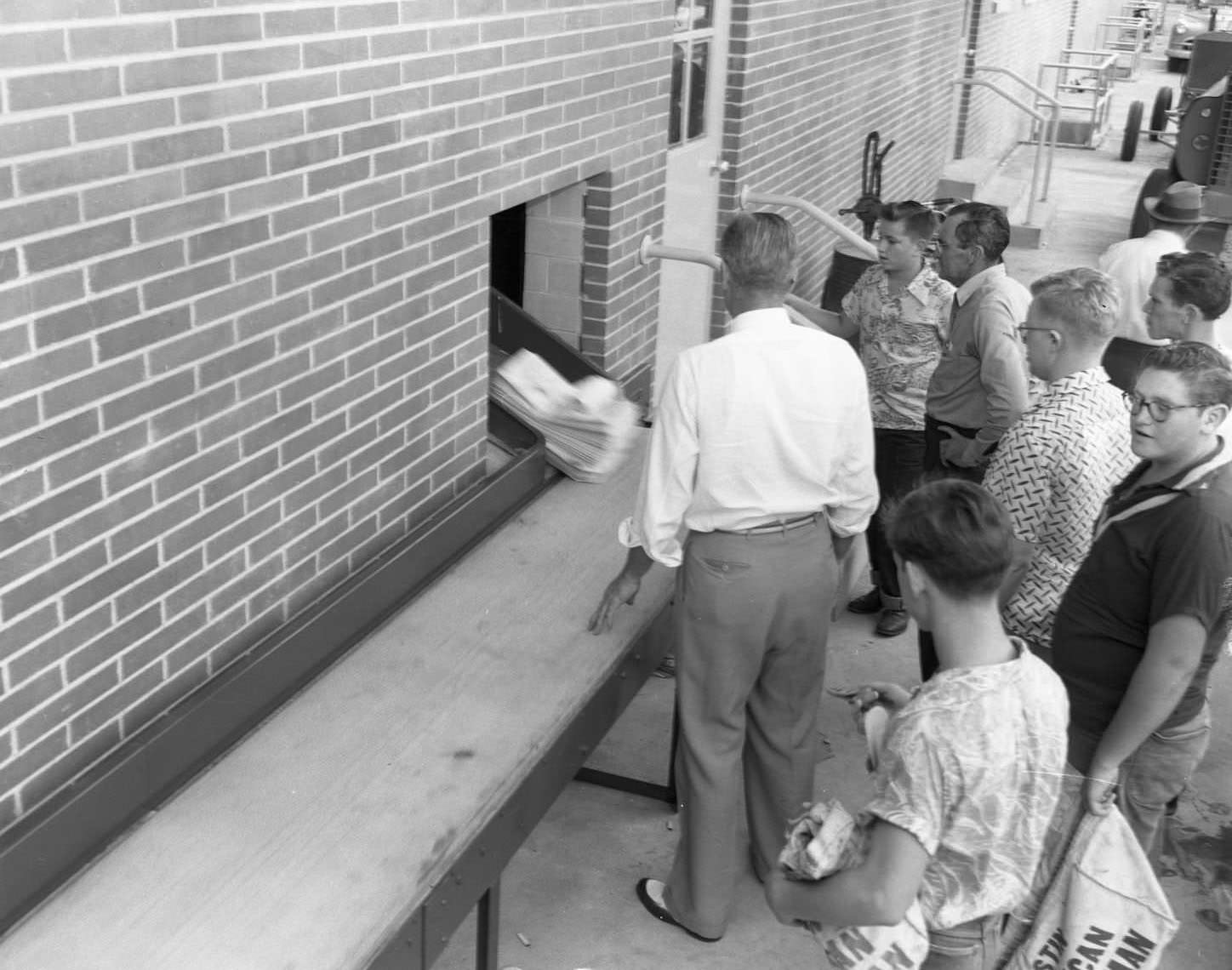
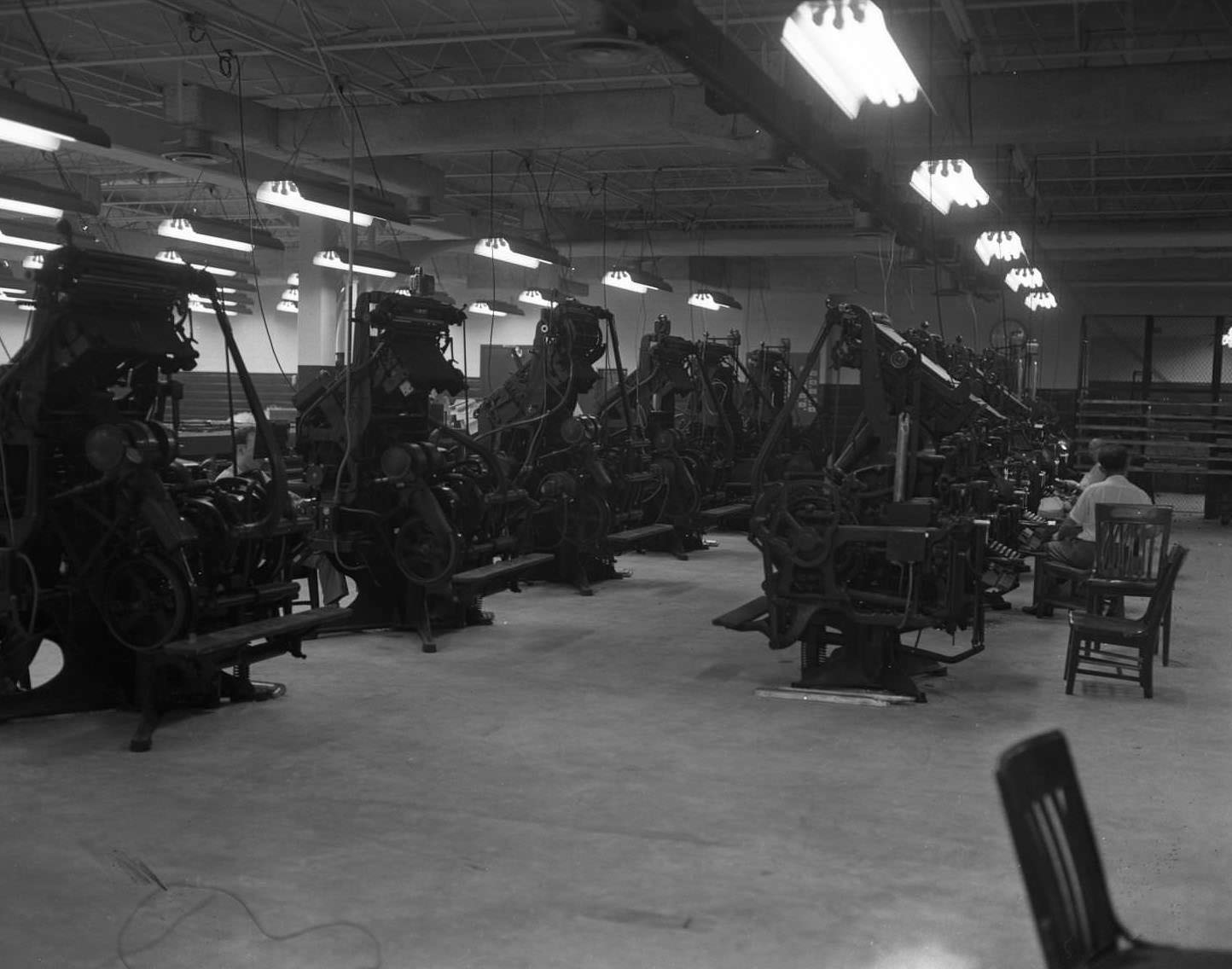
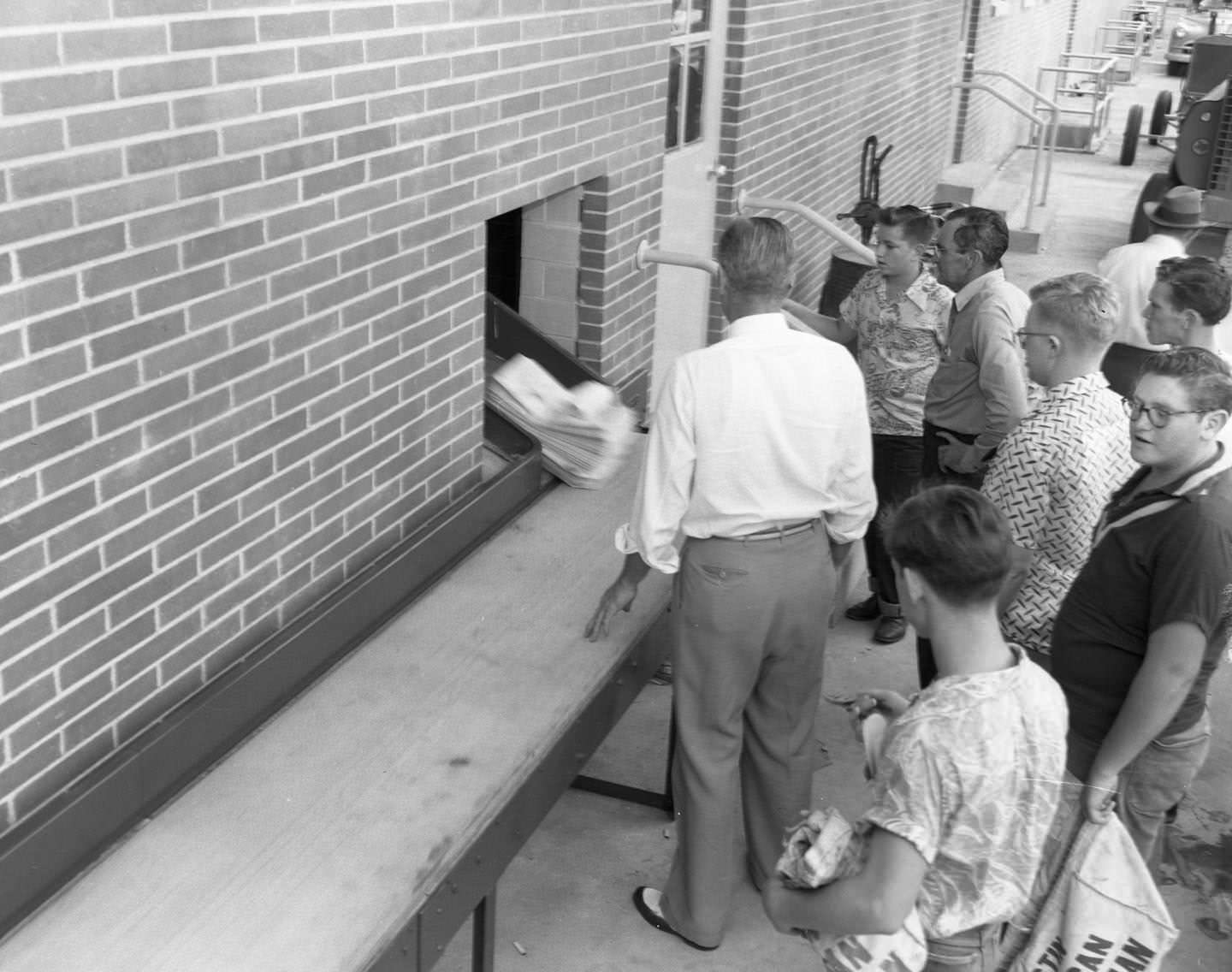
The city’s newspaper of record, the Austin American-Statesman, also underwent major changes during this period. A new building was constructed in 1953, and photographs from that year show workers in the shop, typesetting machines humming, and newspaper chutes moving stacks of printed pages. The Statesman covered Austin’s growth in real time, documenting everything from city government to local events to the occasional train wreck near San Marcos.
Men working in a shop for the construction of the new Austin American-Statesman building. Austin, Texas, 1953Men working in shop at Austin American-Statesman, 1953
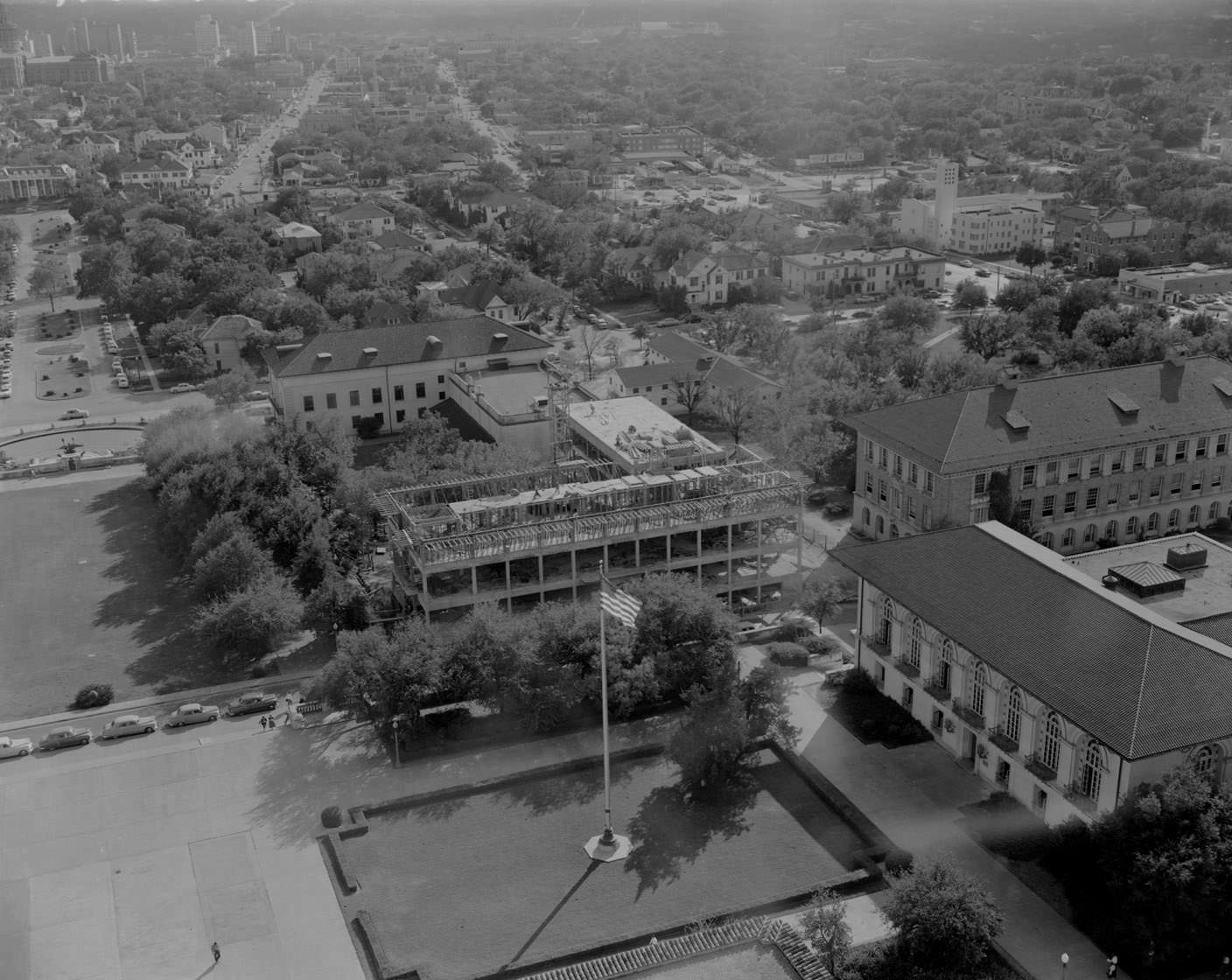
The University of Texas dominated the north end of the city. Construction cranes appeared regularly on and around campus throughout the decade as new buildings went up to accommodate a growing student body. In 1956, the University became the first major southern university to admit Black students — a milestone driven by sustained pressure from local Black leaders and political action groups who had been pushing to end segregation in Austin’s schools and public services.
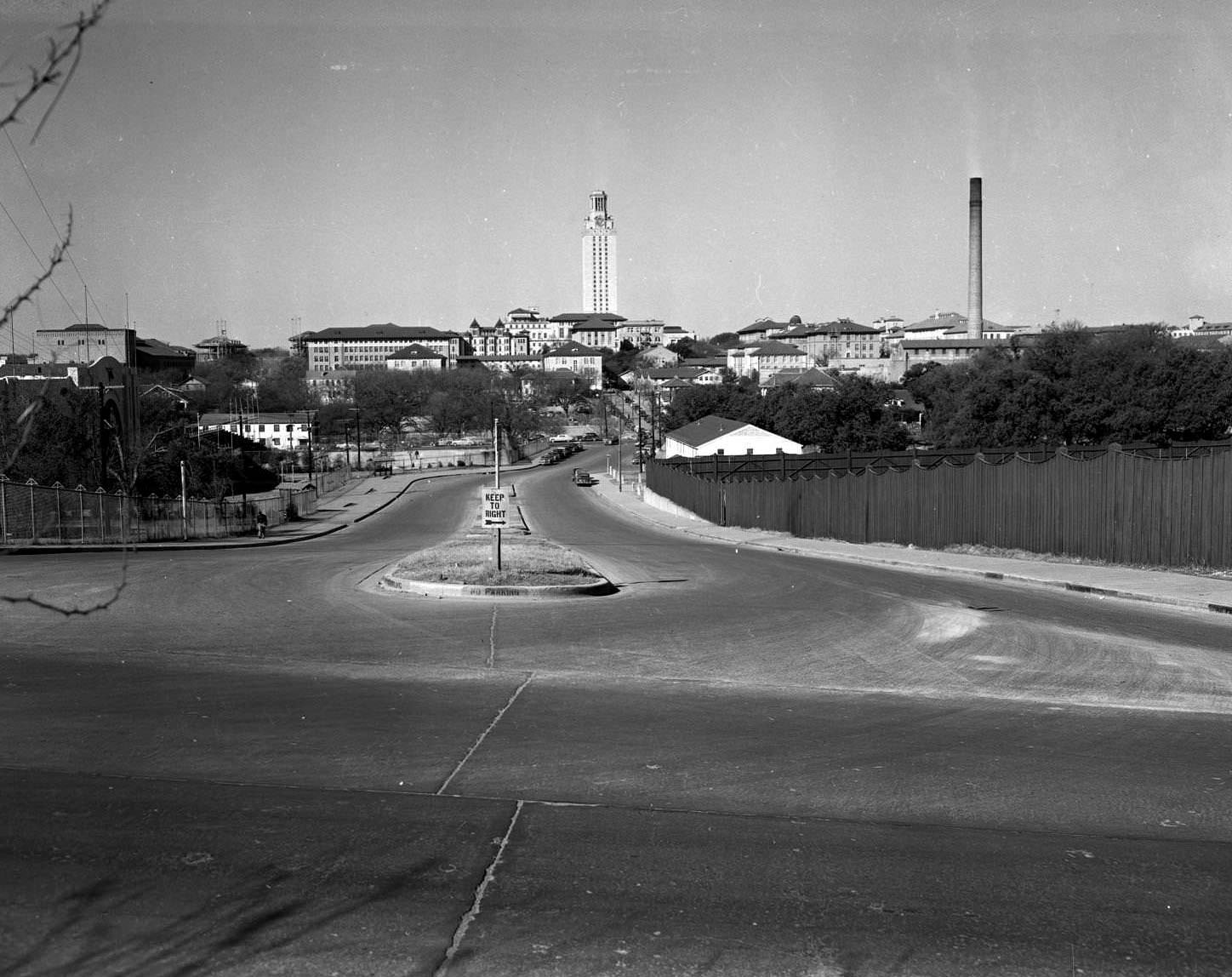
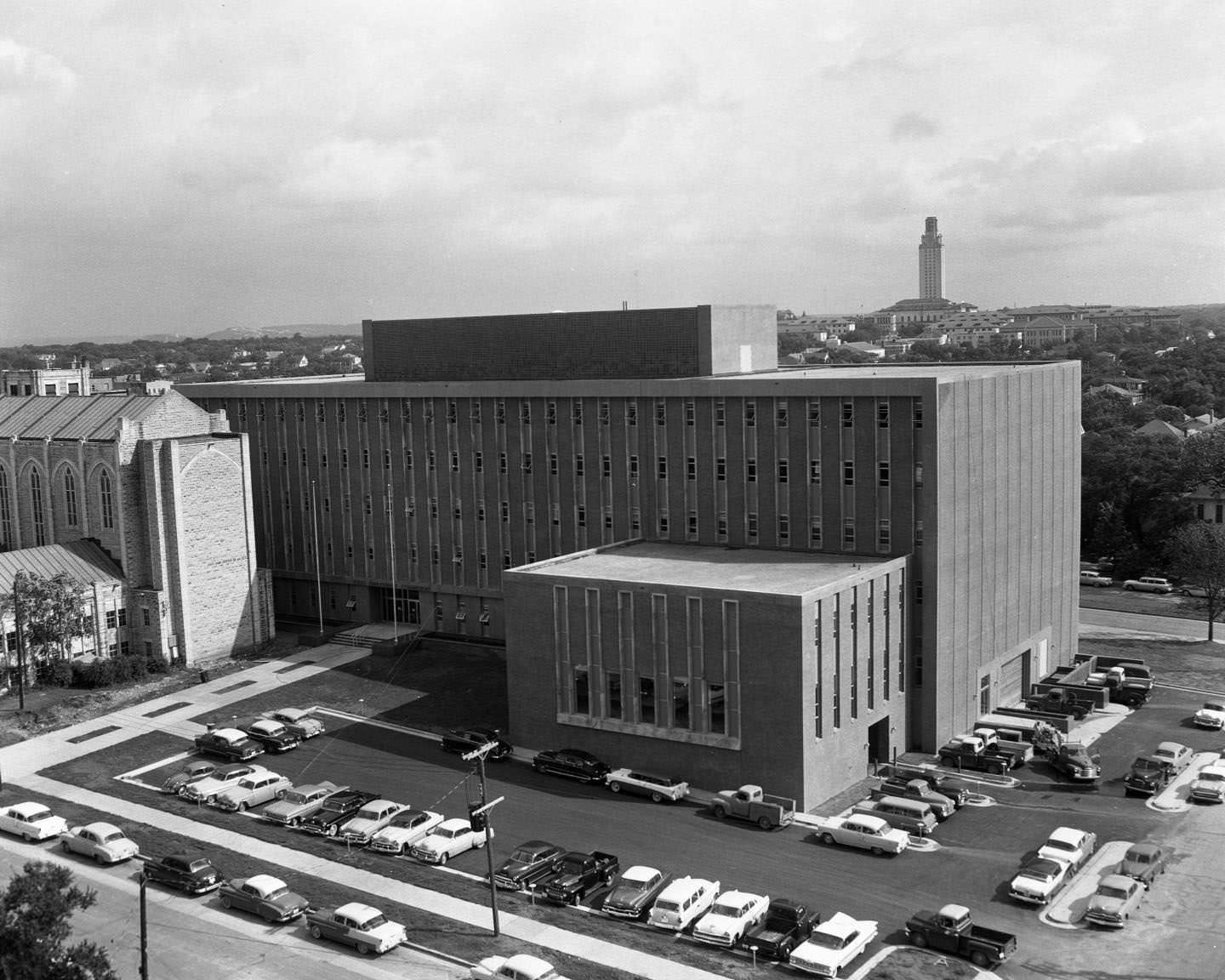
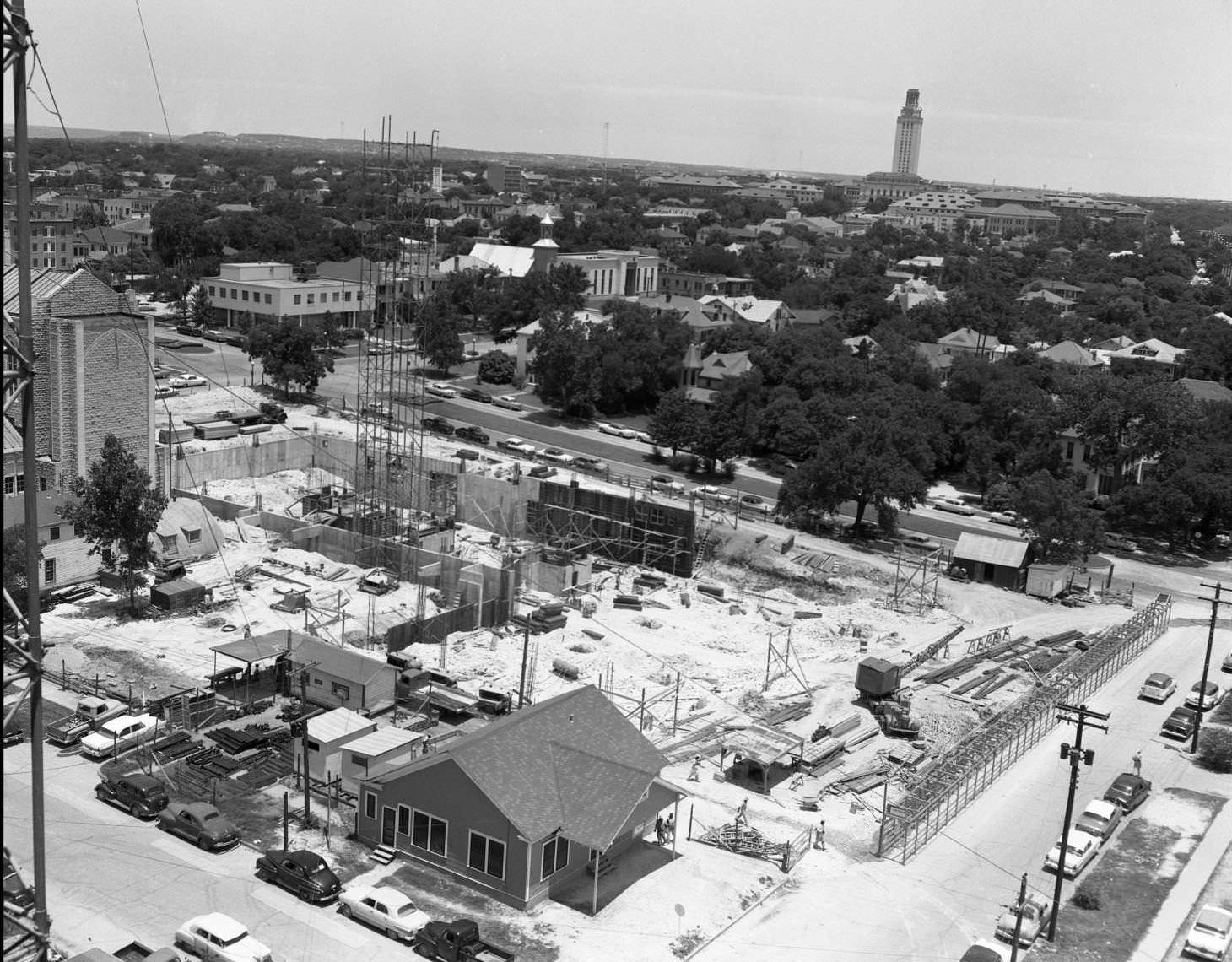
An aerial view of construction at the University of Texas, 1954UT Austin Tower, South Mall, 1958
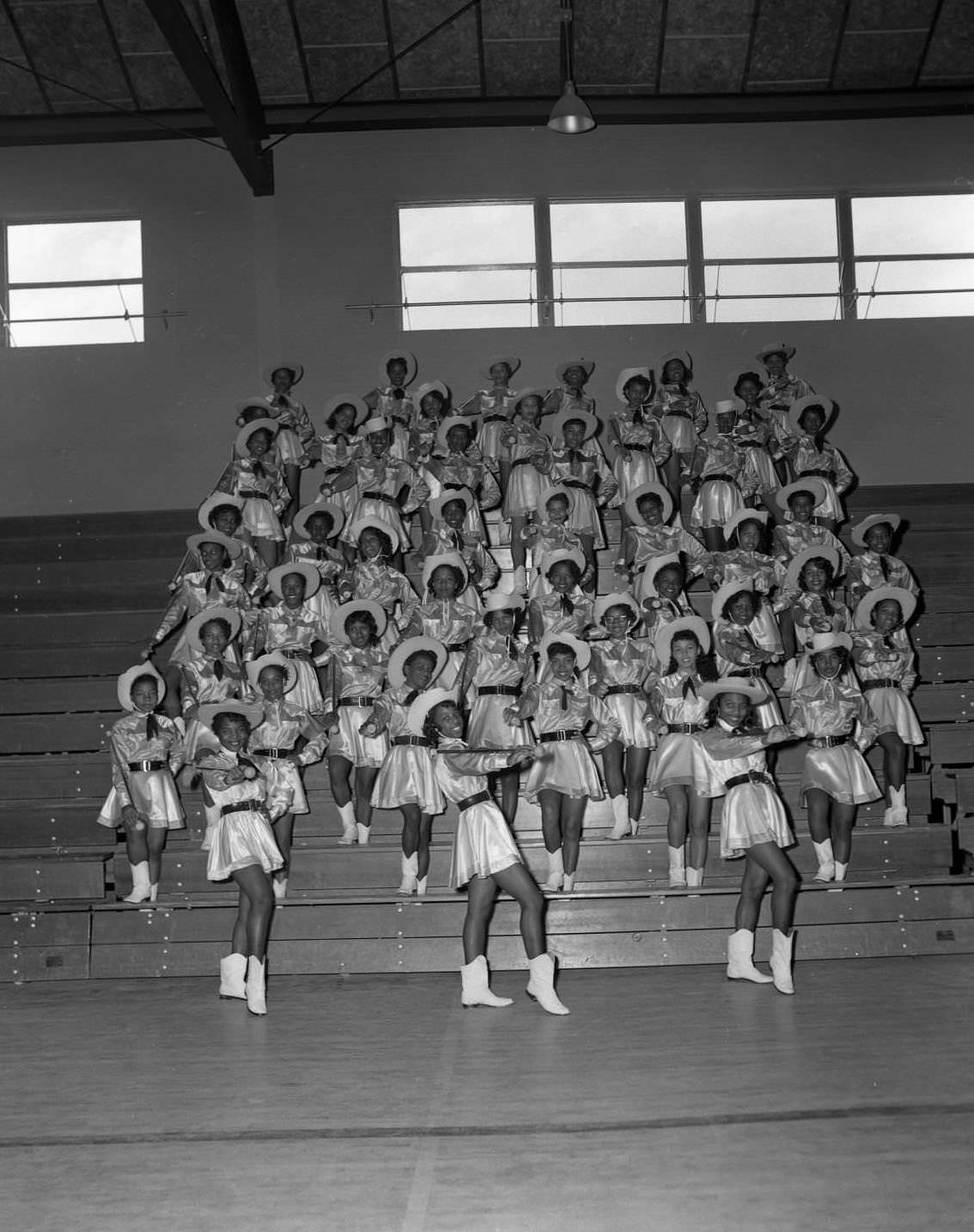
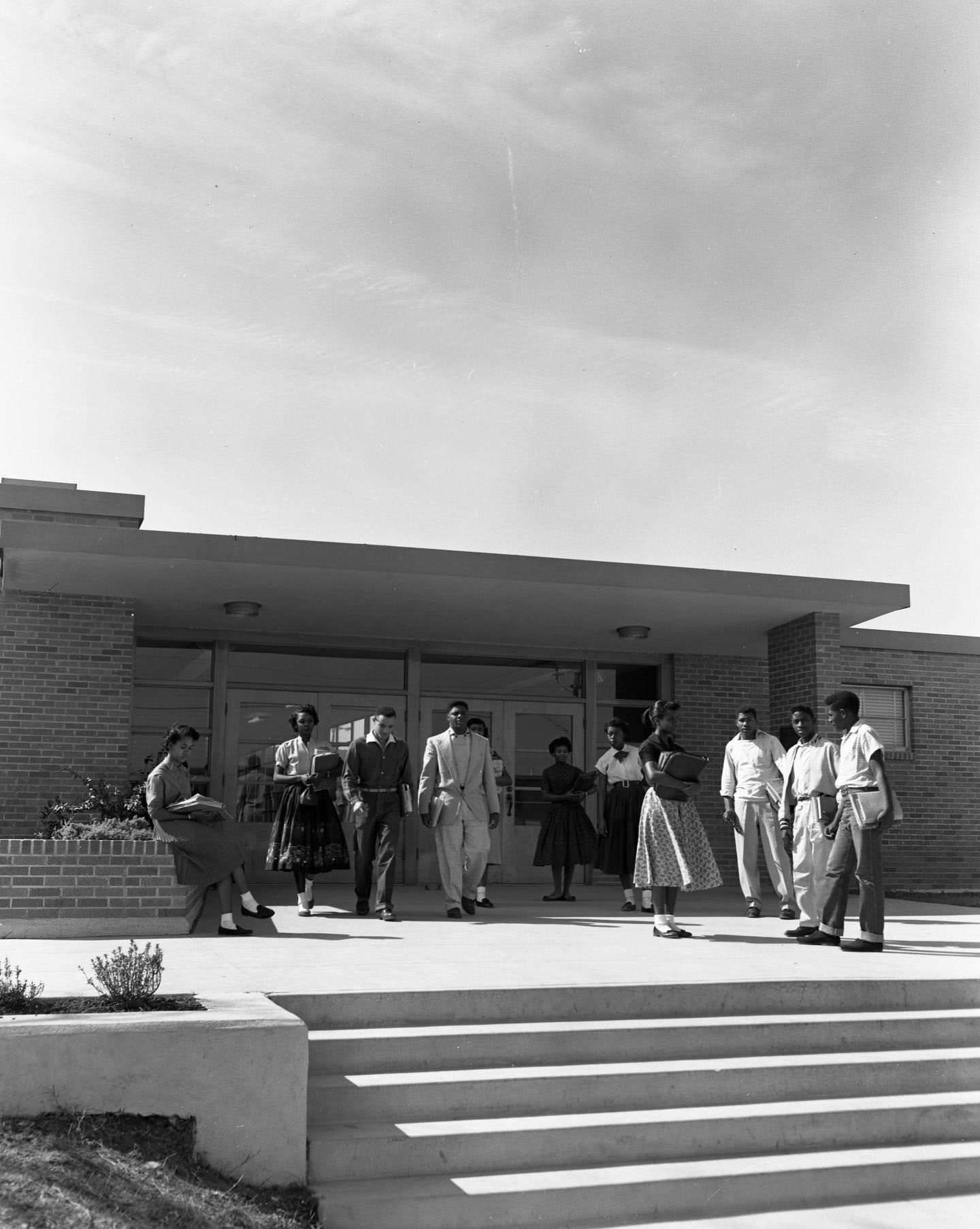
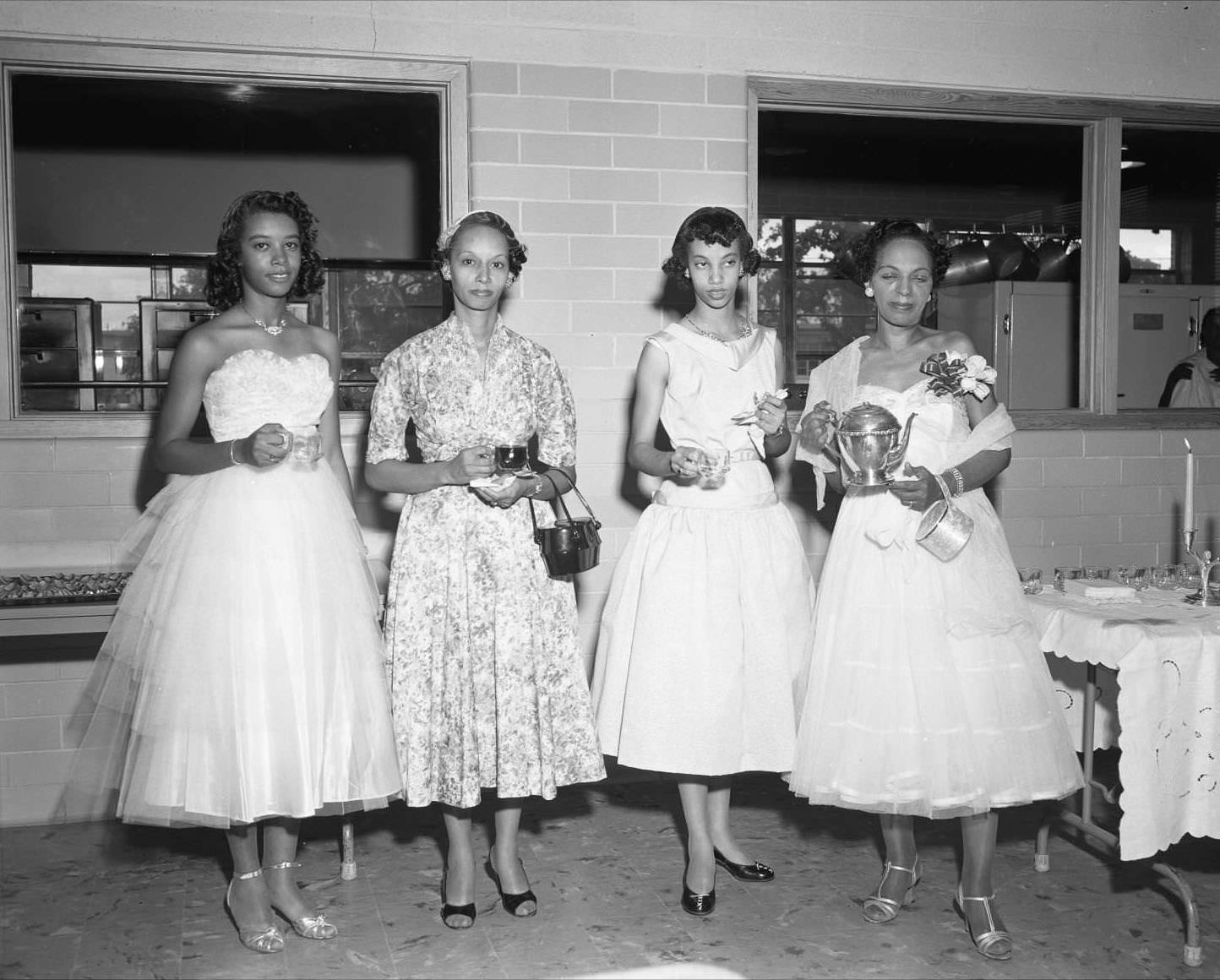
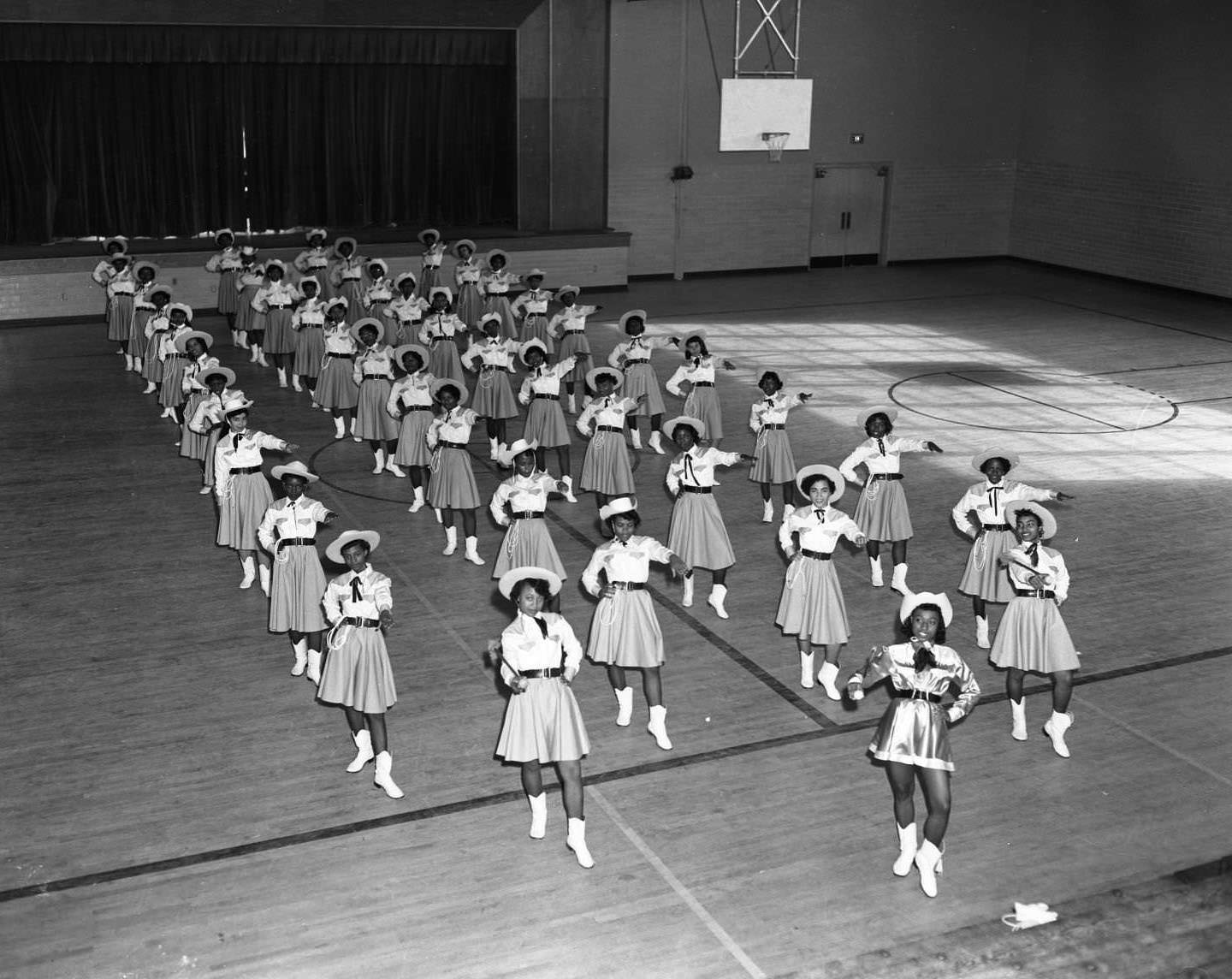
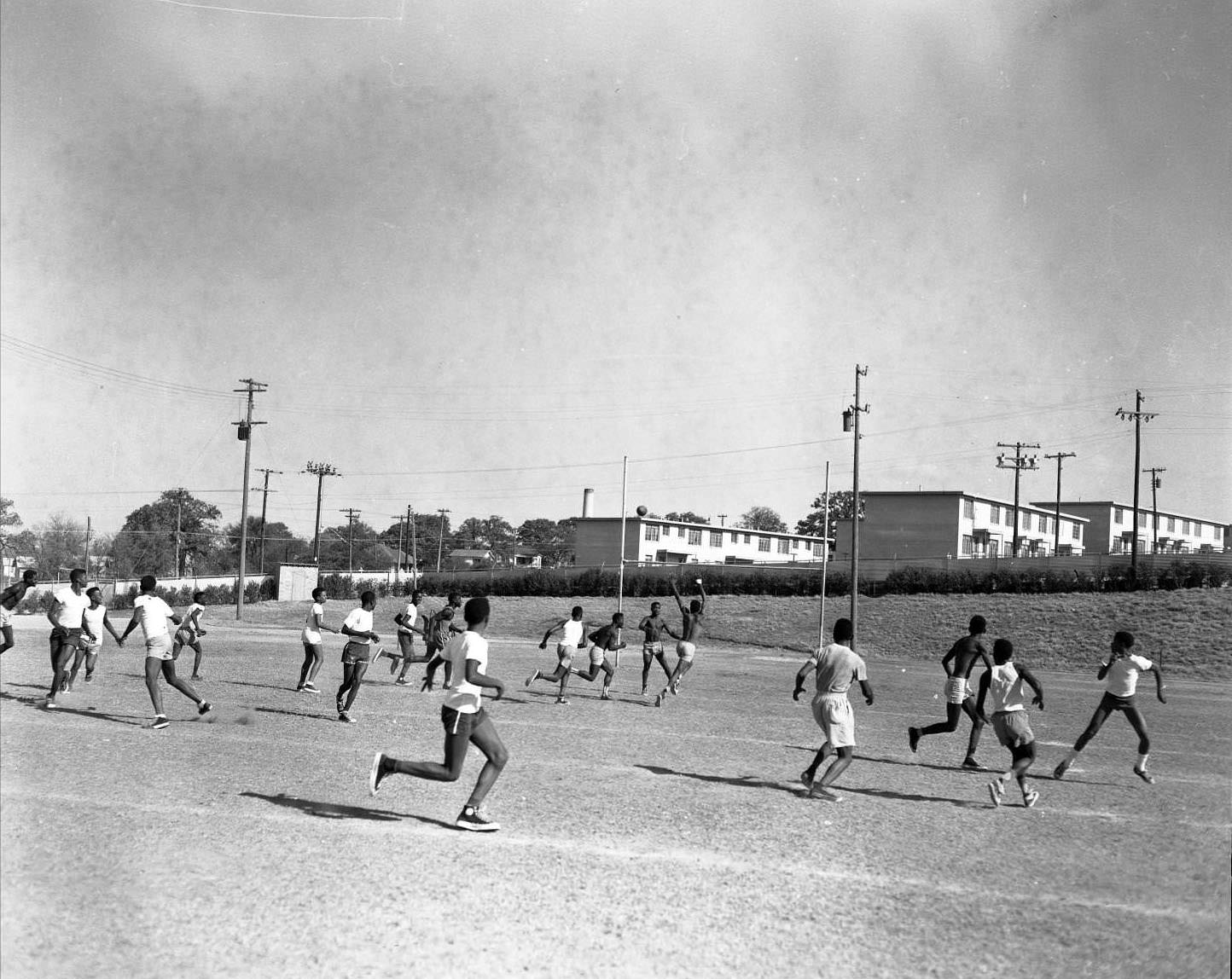
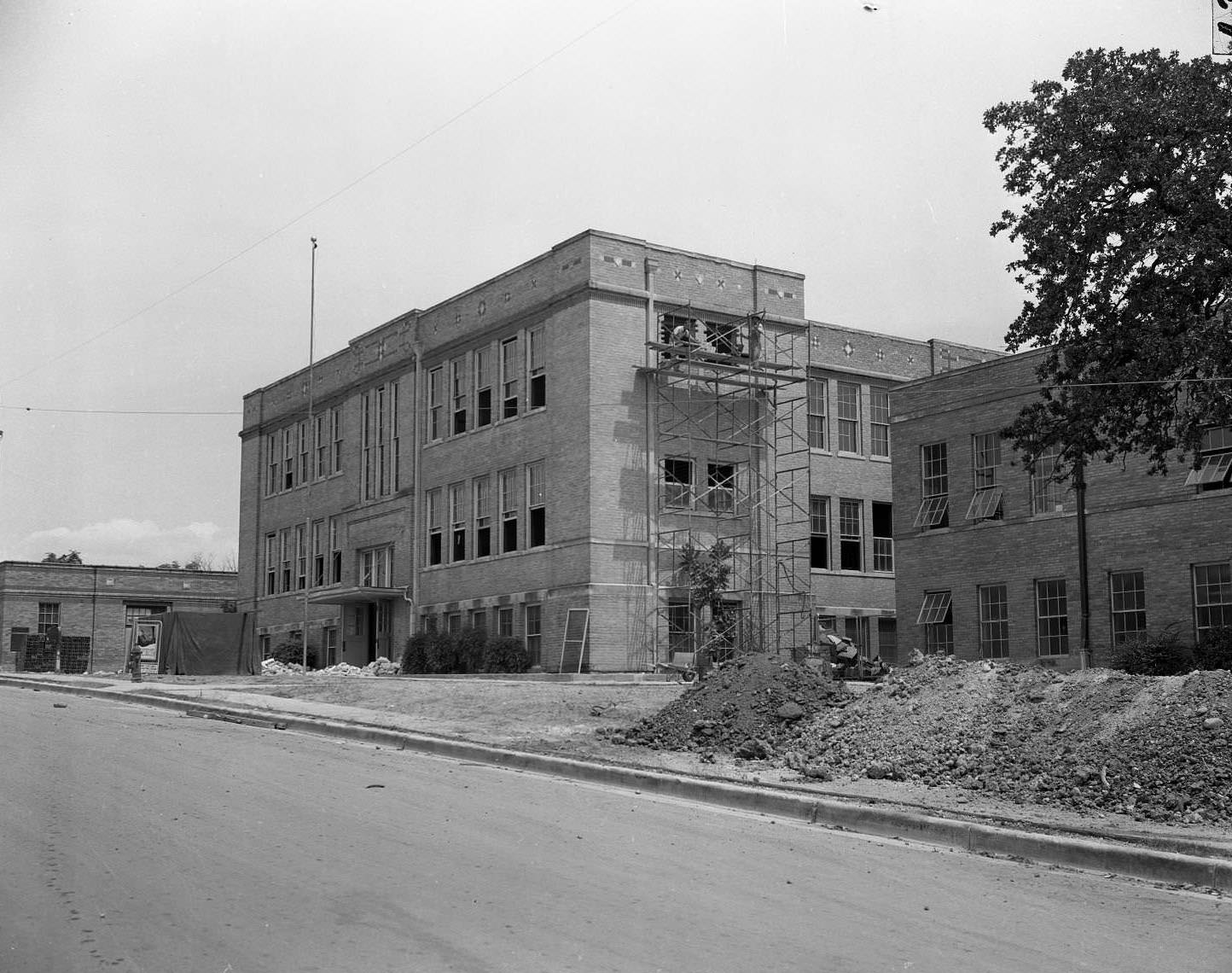
Anderson High School, located on the east side of the city, was the Black community’s main public secondary school during the era of segregation. Life there was full — cheerleaders posed on the bleachers, physical education classes ran in the yard, and ceremonies and receptions marked the school year. The 1912 building that anchored the campus had stood for decades, and the community it served had built a proud tradition within its walls.
Anderson High School, 1955
Anderson High School cheerleaders posing on school bleachers, 1955
A group of students outside the entrance to Anderson High School, 1956
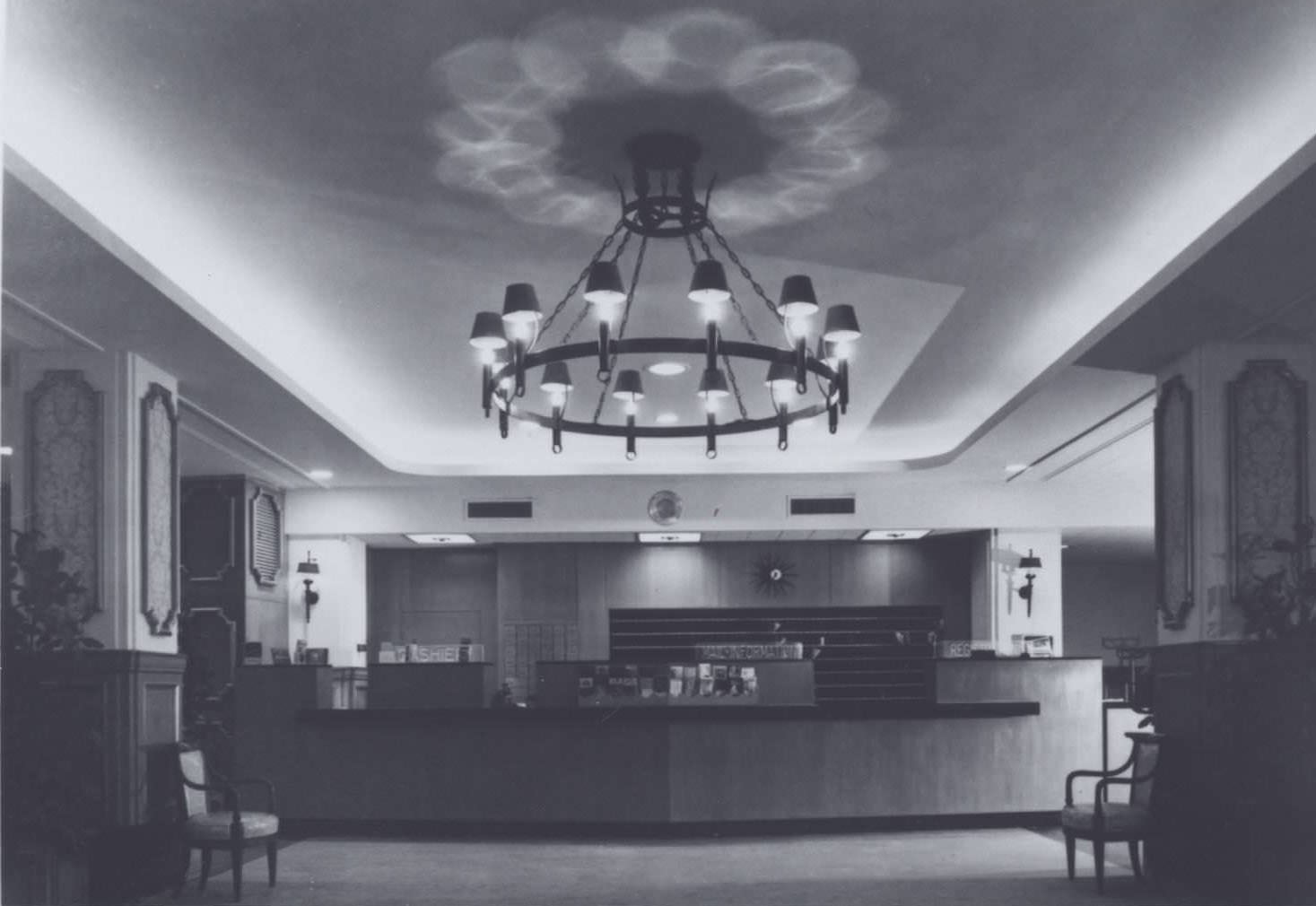
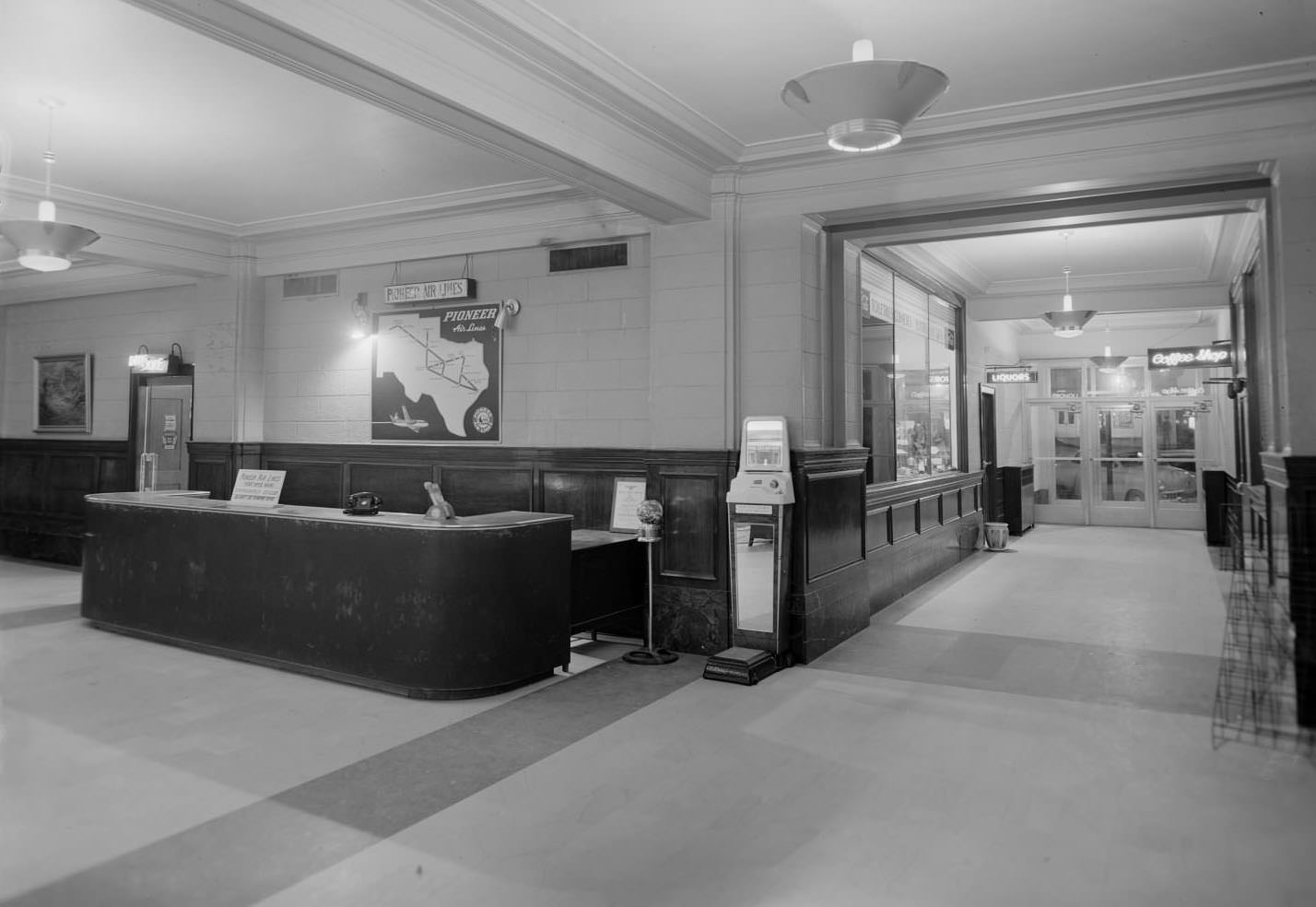
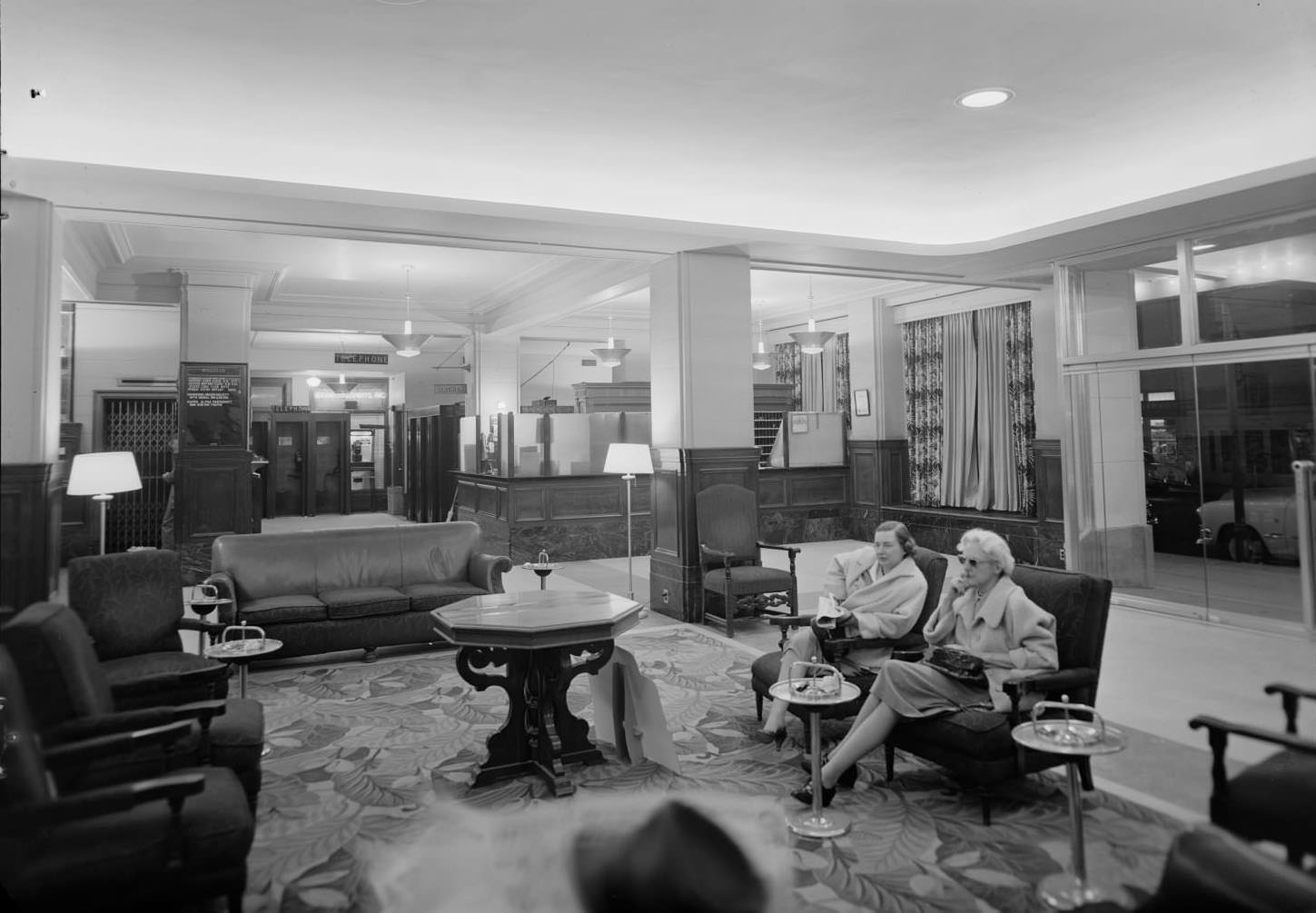
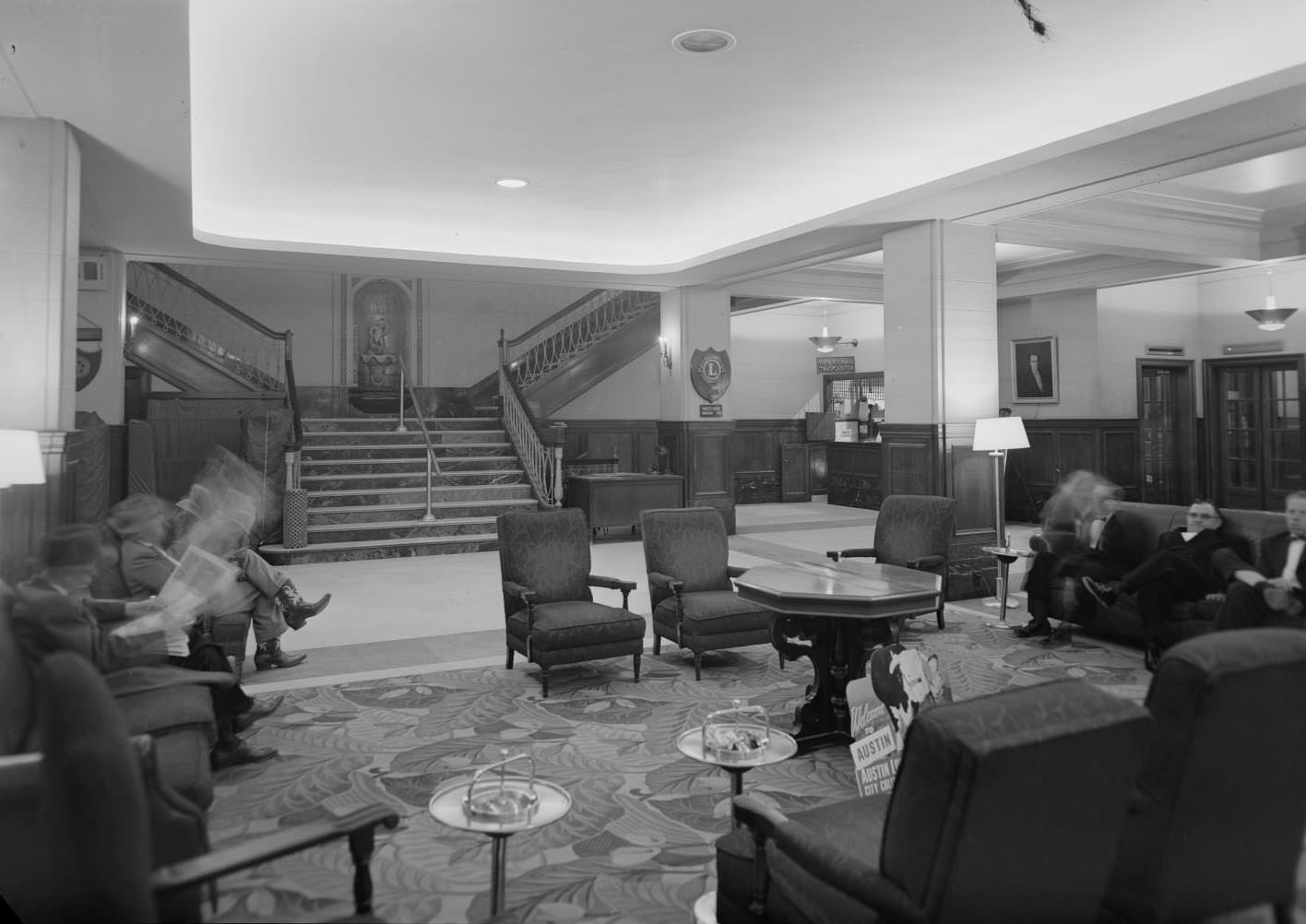
Austin’s hotels and social clubs gave the city’s professional and civic class a place to gather. The Stephen F. Austin Hotel at 701 Congress Avenue had a formal lobby and registration desk that made it one of the premier addresses in the city. The Austin Hotel offered a lounge where guests relaxed in mid-century comfort. The Austin Club on the other hand was a members-only gathering place with a brick-walled lounge and the occasional live entertainment — bandleader Ted Weems and dancers performed there in 1951.
Lobby and registration desk at the Stephen F. Austin Hotel, located at 701 Congress Avenue, 1950Austin Hotel Entrance and Reception Area, 1954Ted Weems and Dancers at the Austin Club, 1951
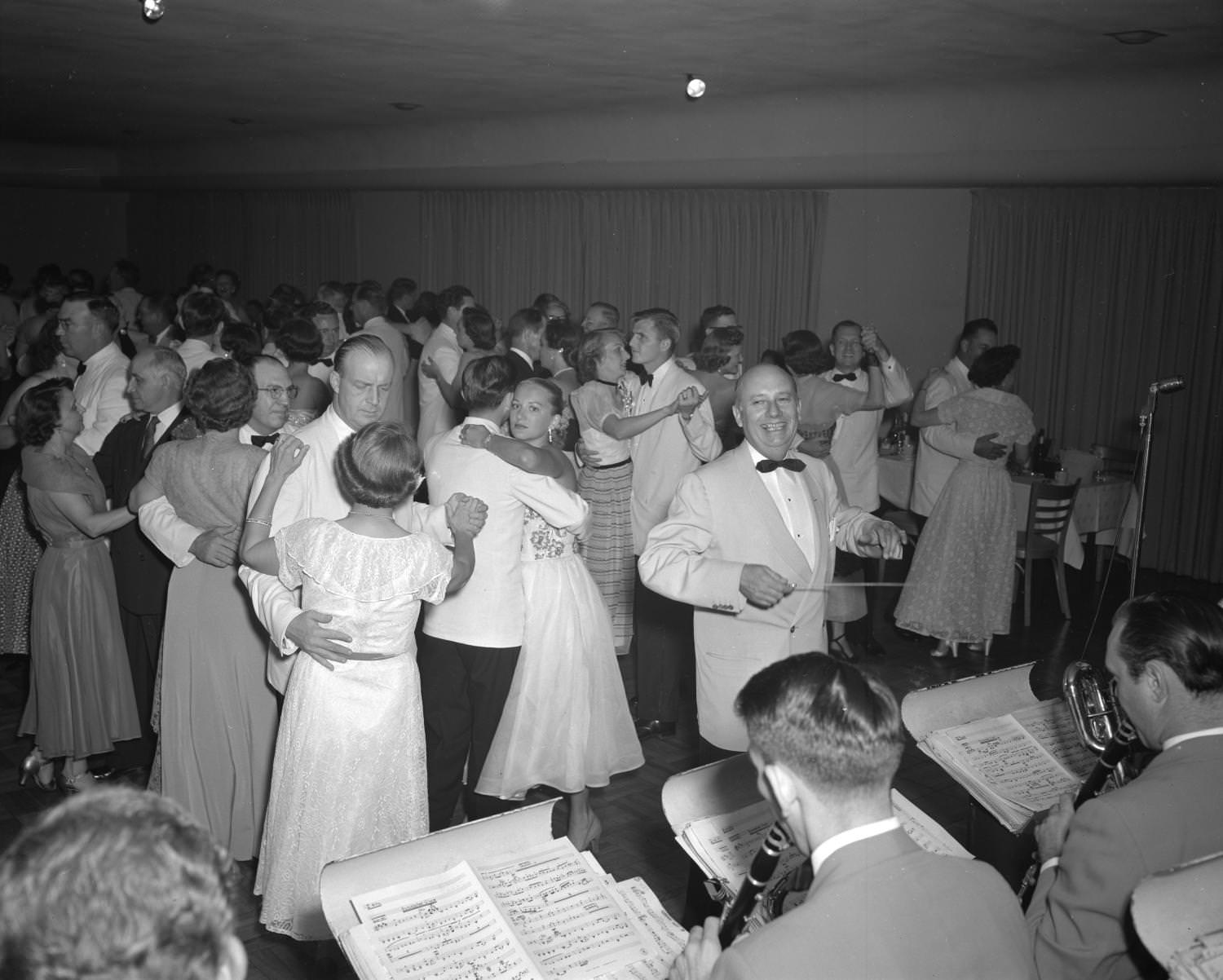
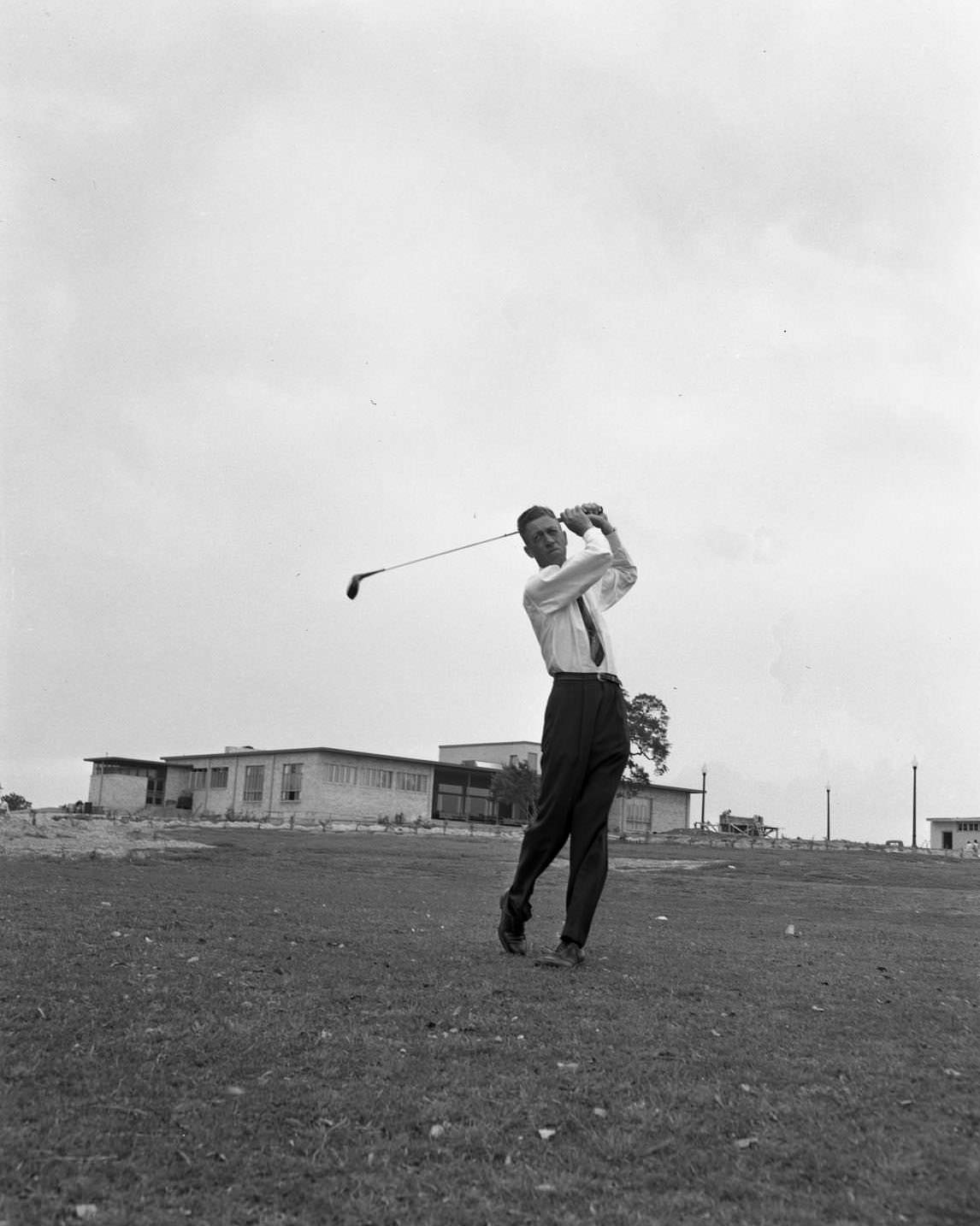
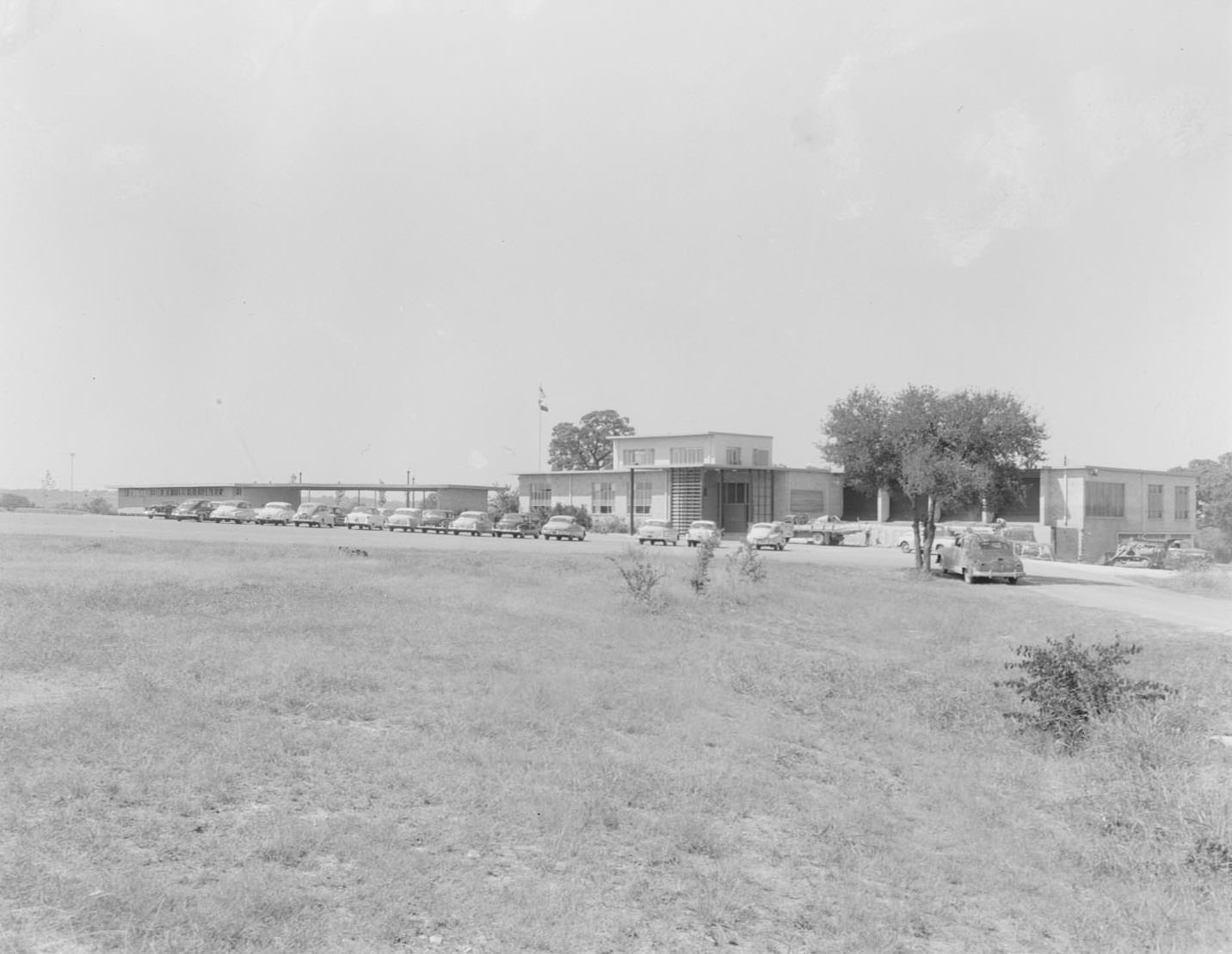
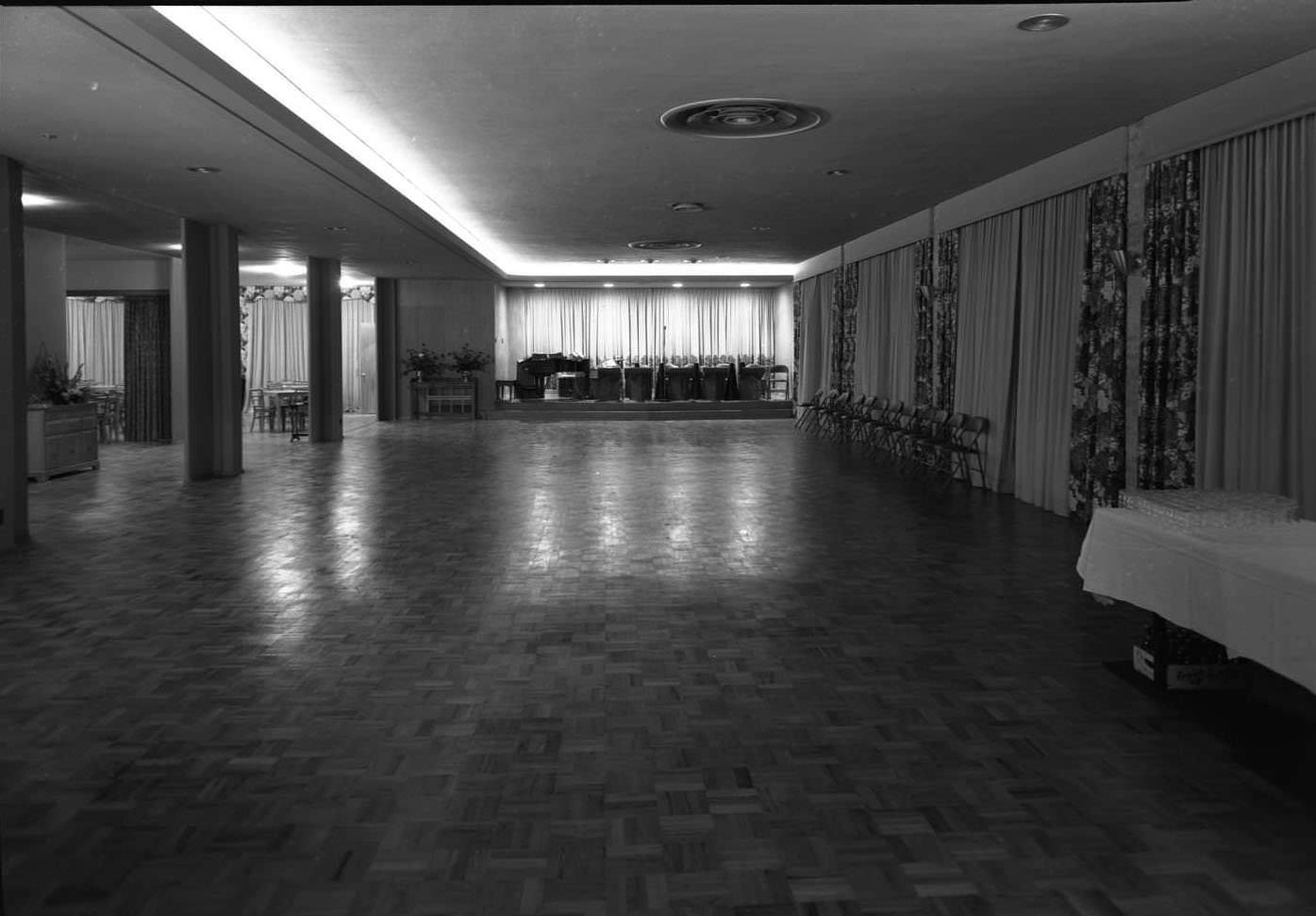
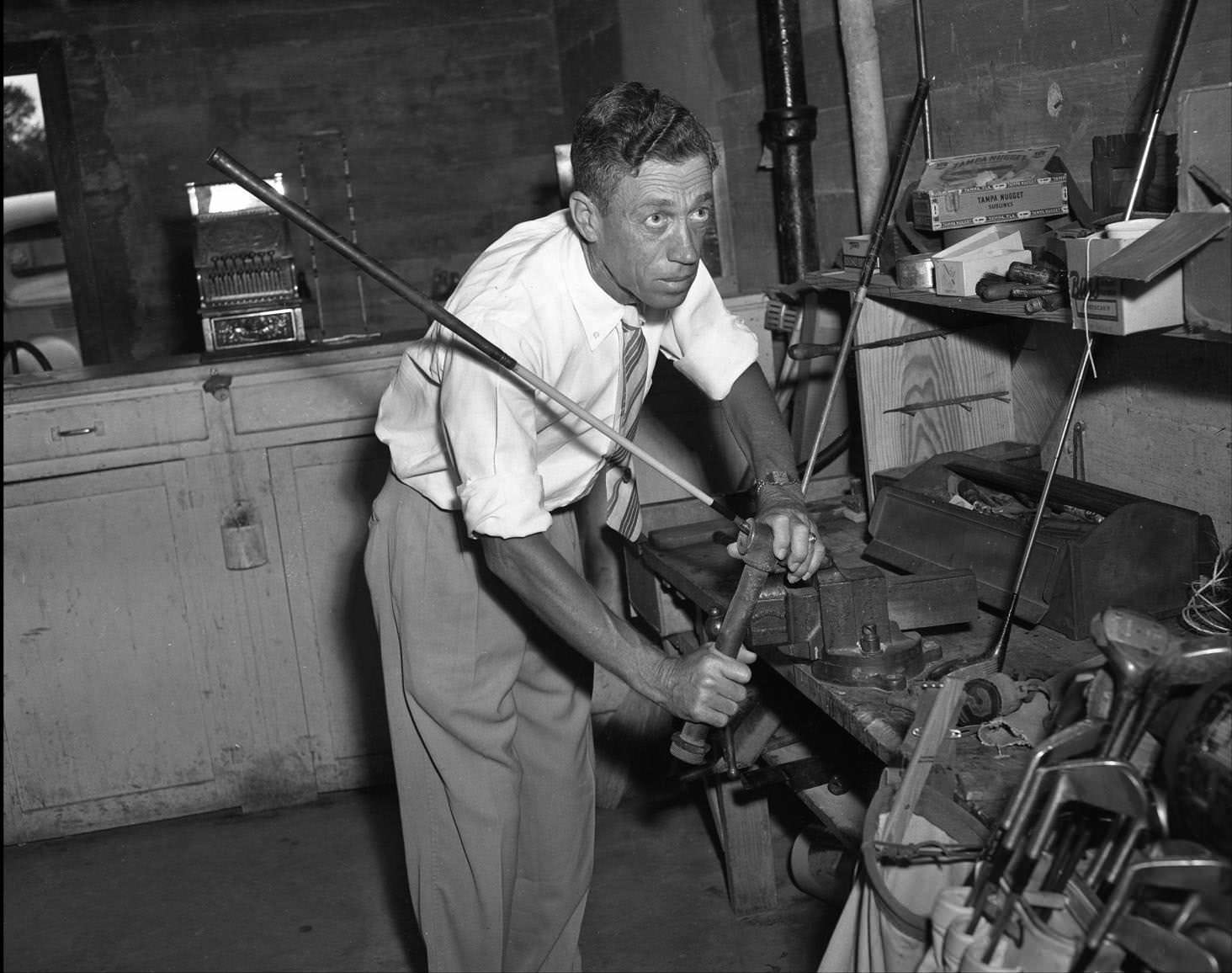
Country clubs were a fixture of Austin’s social life. The Austin Country Club hosted members on its golf course, where legendary instructor Harvey Penick was already a well-known presence. The Country Club of Austin on East Riverside Drive had its own ballroom and dining room, where local organizations held banquets and events. These spaces were central to how Austin’s established families and business community socialized.
Harvey Penick at Austin Country Club, 1950Austin Country Club, 1953View of ballroom and dance floor. The country club was located at 5712 Riverside Dr., 1950
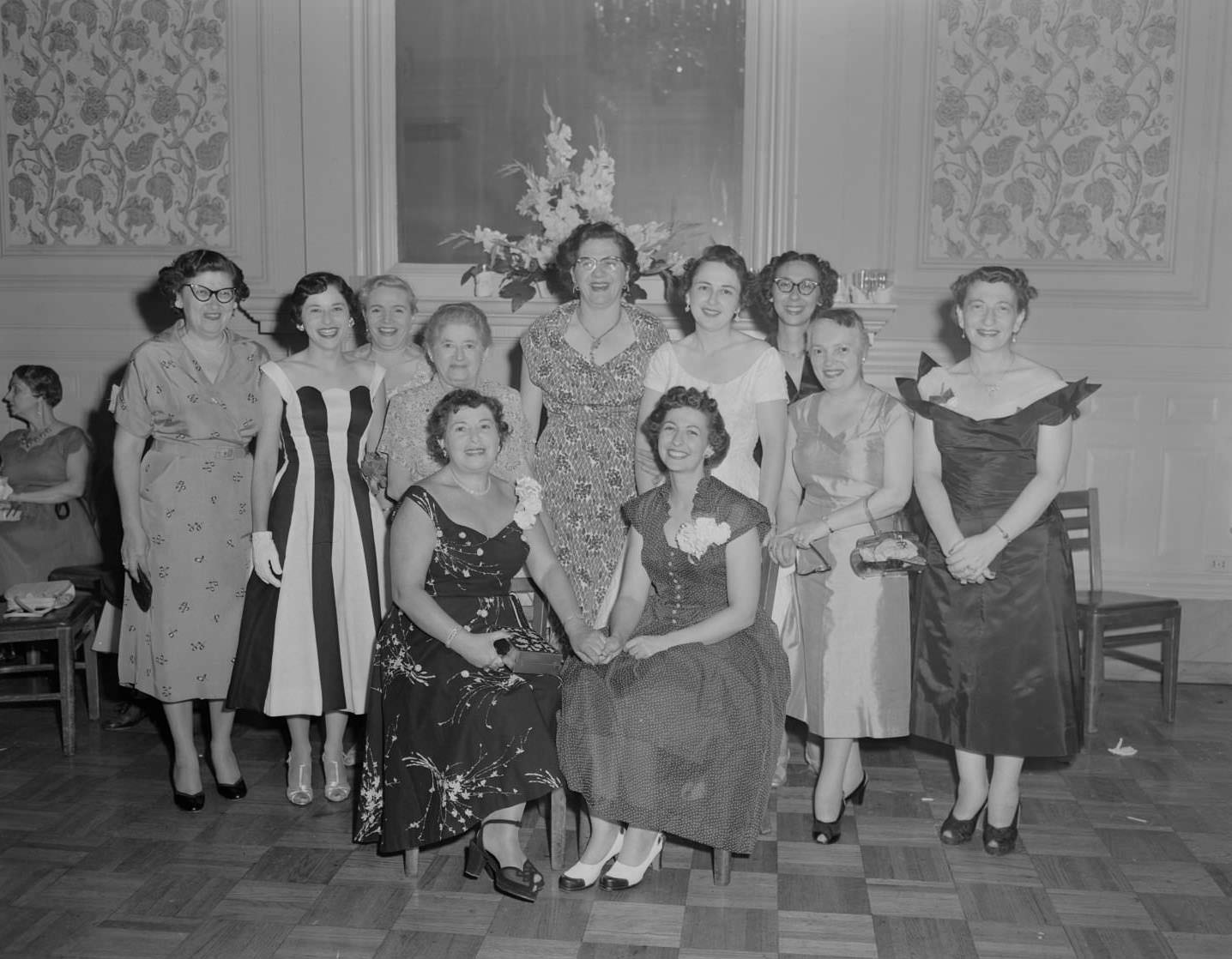
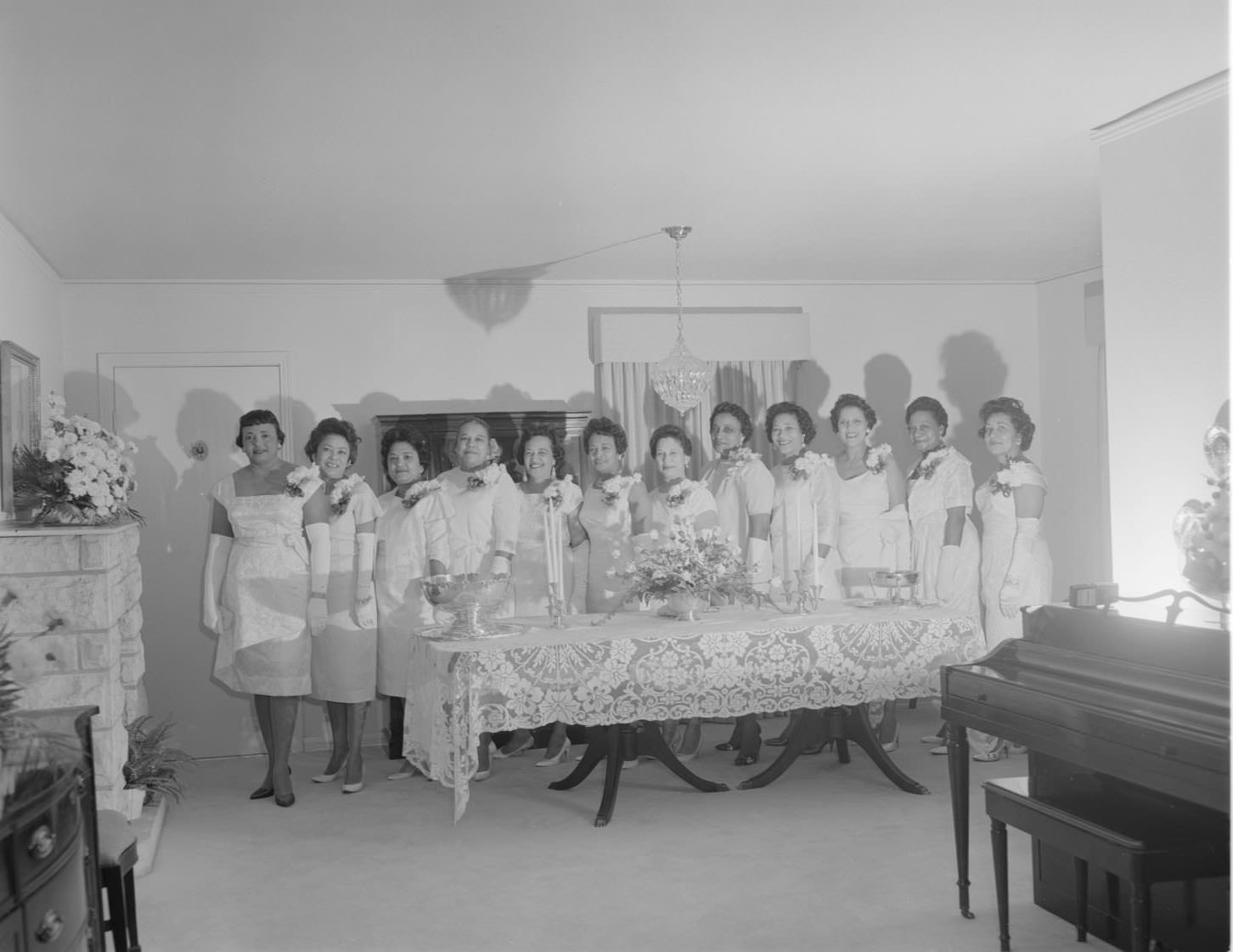
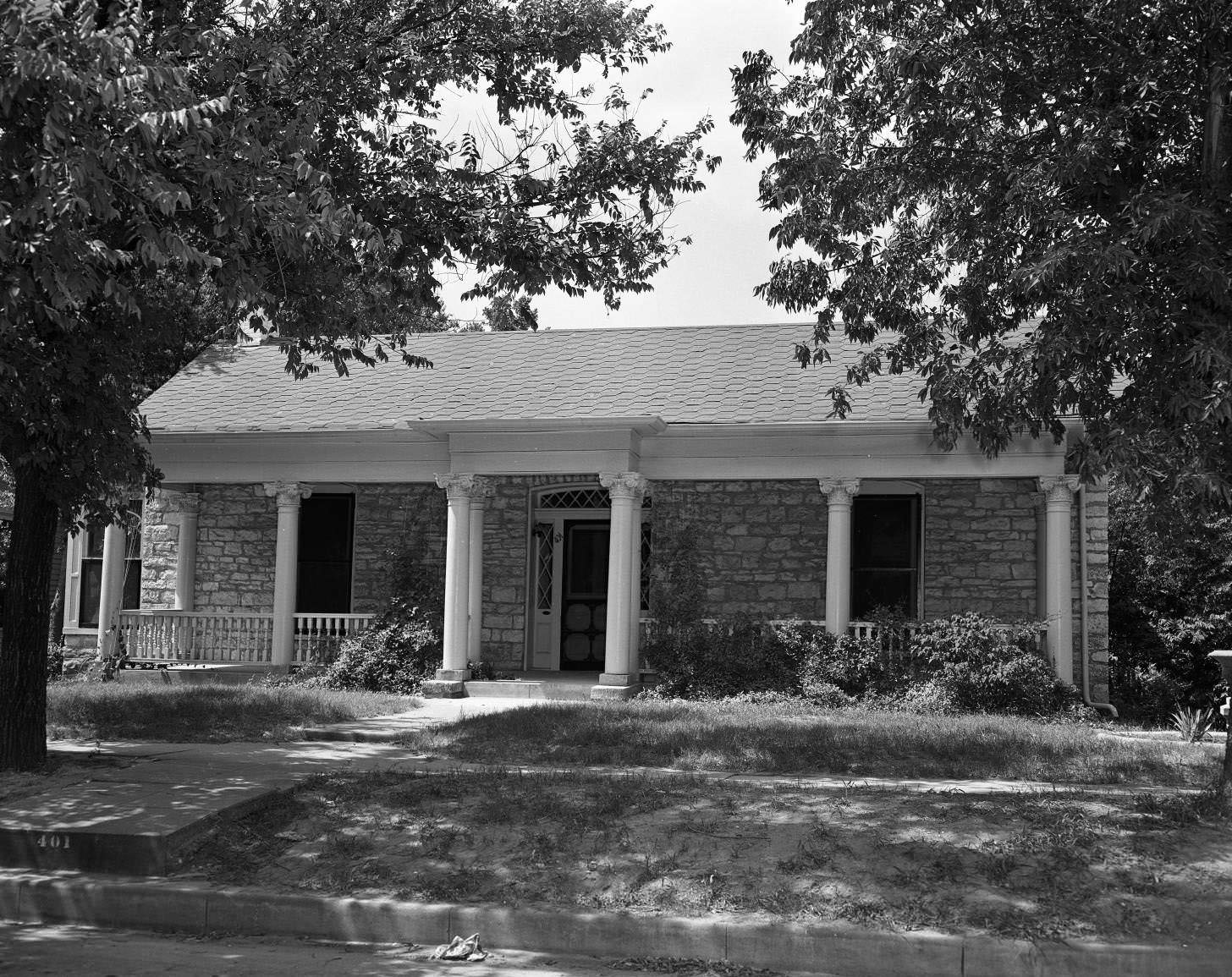
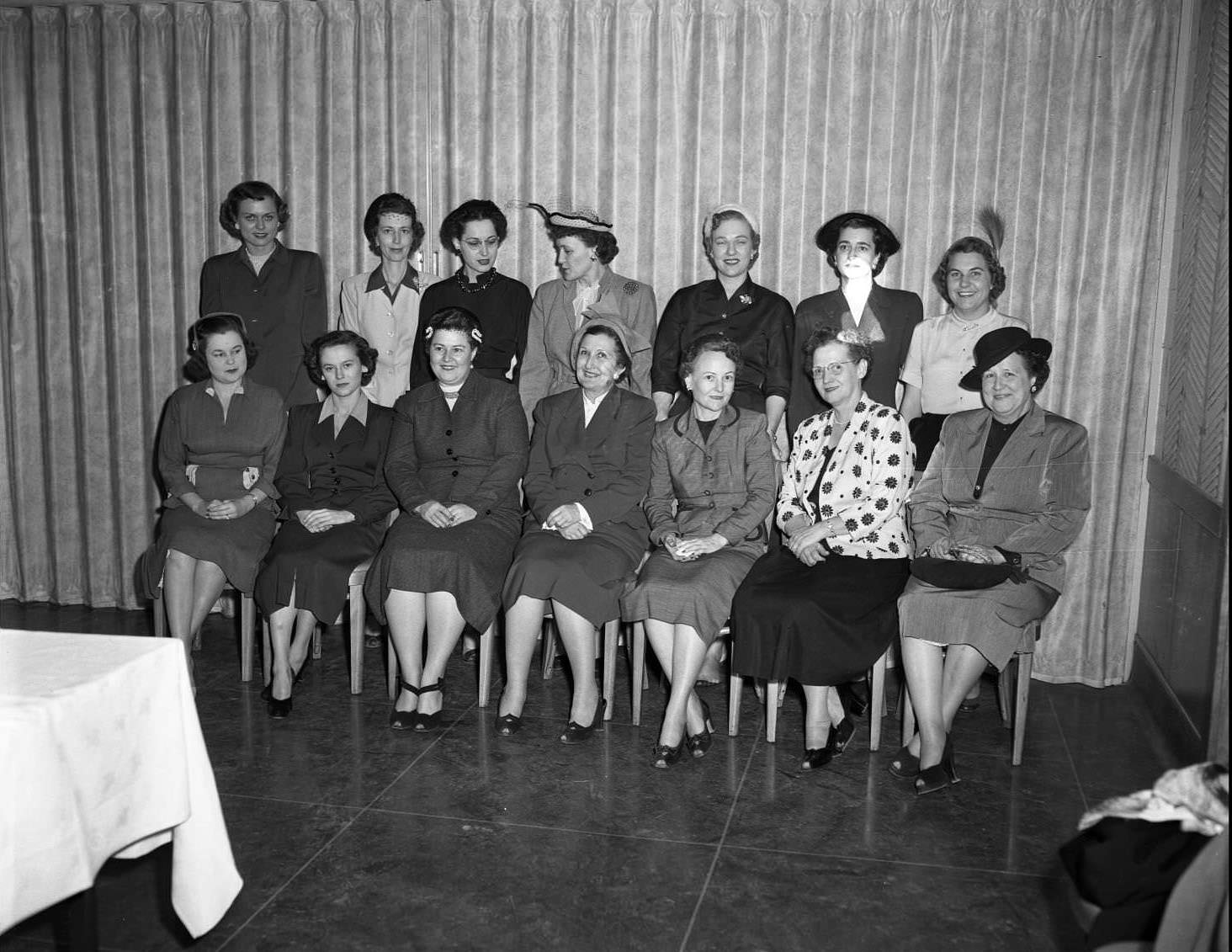
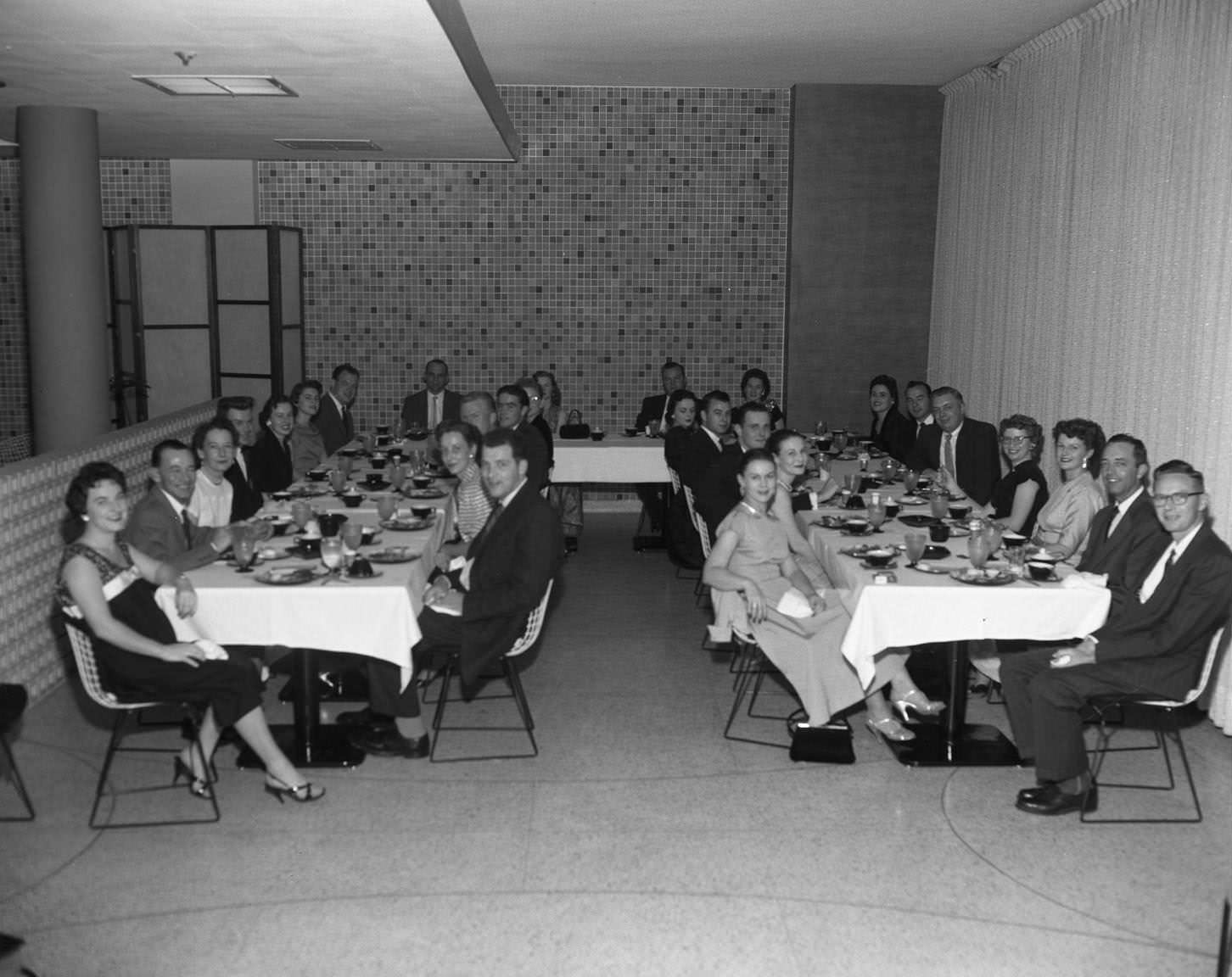
Community organizations were woven into the fabric of Austin life. The South Austin Civic Club met regularly. The Austin Chapter of Hadassah held formal gatherings. The Daughters of the American Revolution had a dedicated headquarters at 708 San Antonio Street. The Austin Chapter of The Links, Inc., a civic organization of Black professional women, was active in the community. The Desk and Derrick Club, serving women in the oil industry, convened in 1952. Austin’s Photographer’s Guild, Organ Club, and other hobby and professional groups all met regularly throughout the decade.
A group of women from the Austin Chapter of Hadassah posing for a photo at a formal gathering, 1954Austin Chapter of The Links, Inc., 1960The Daughters of the American Revolution (Thankful Hubbard Chapter) headquarters at 708 San Antonio Street in Austin, Texas, 1953
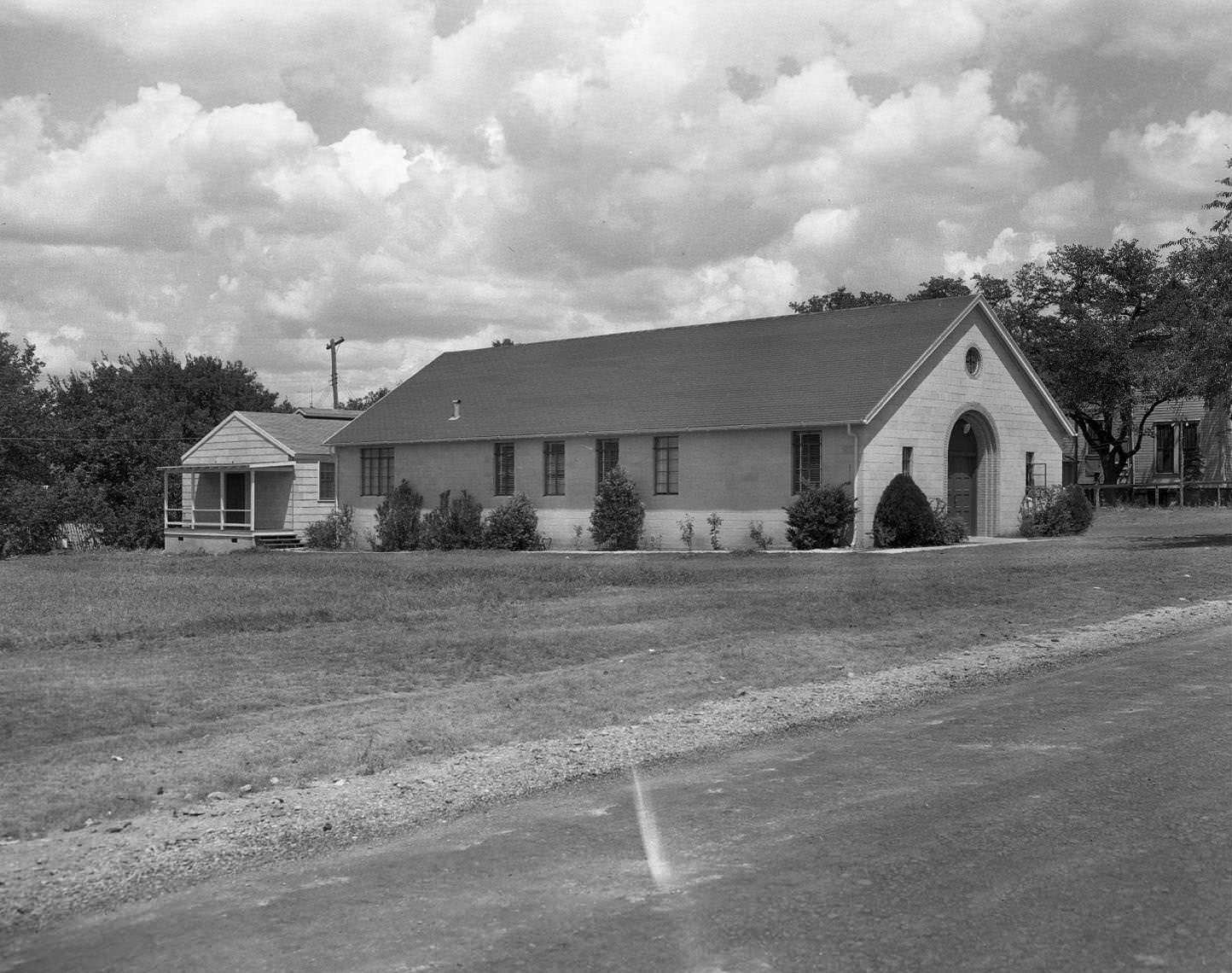
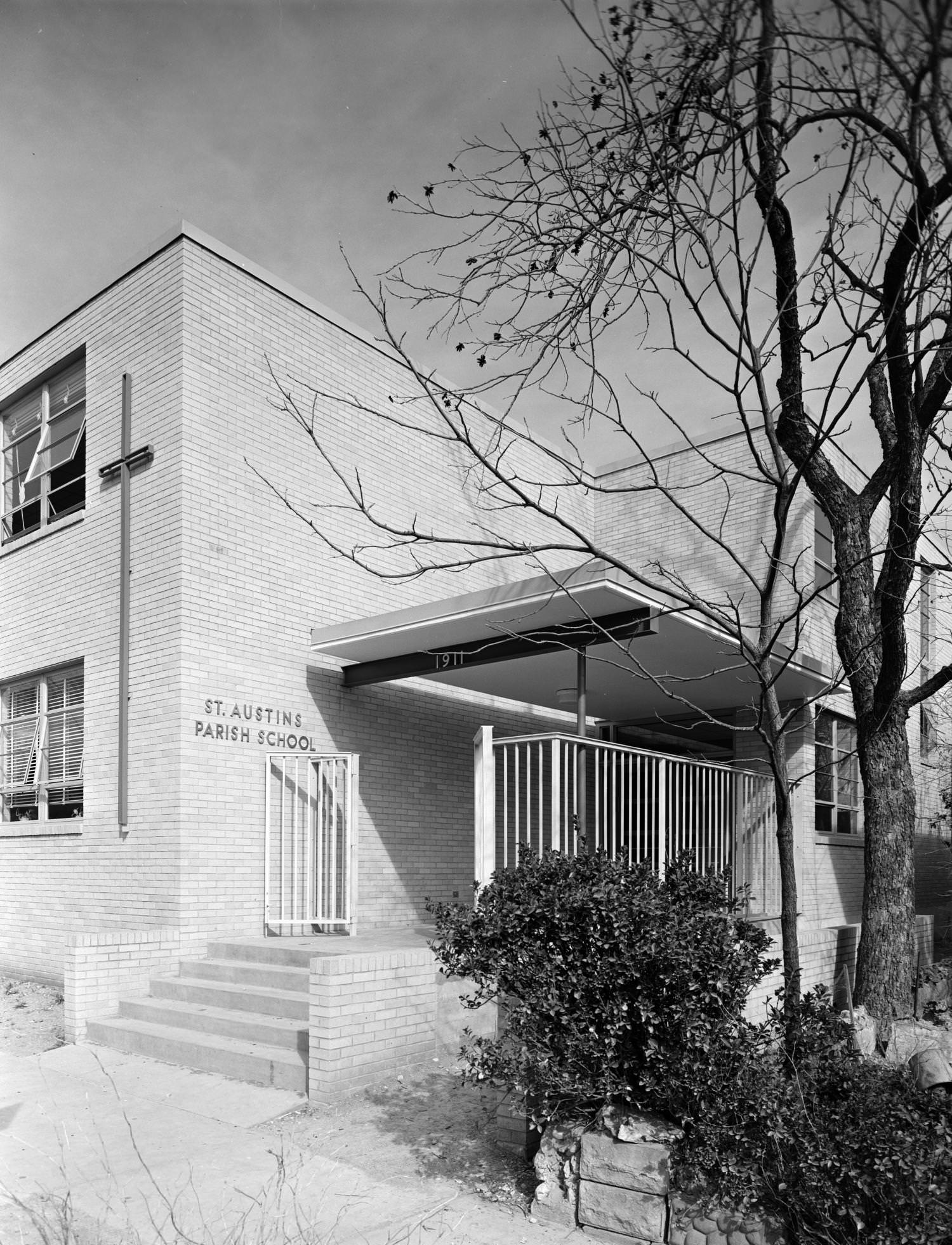
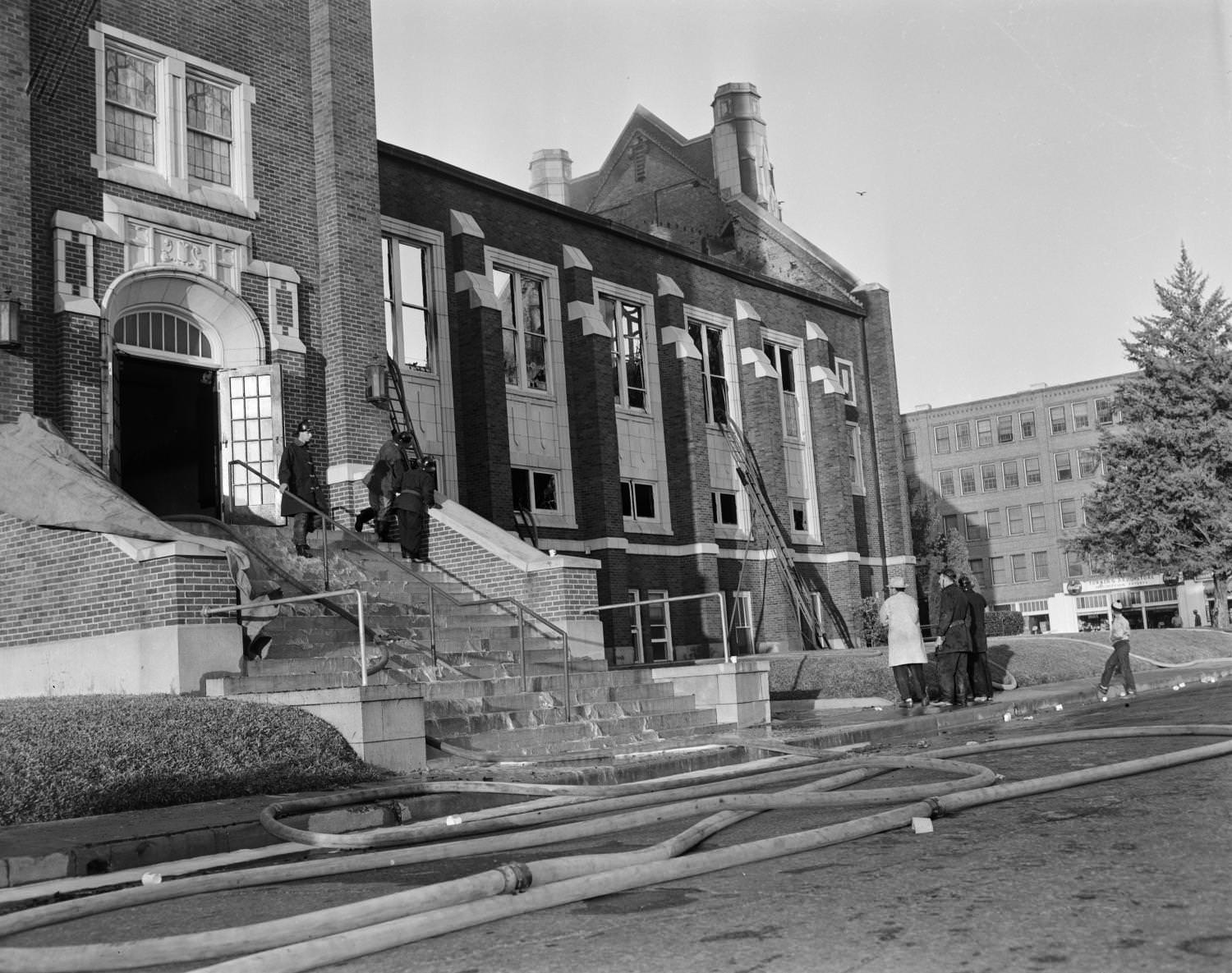
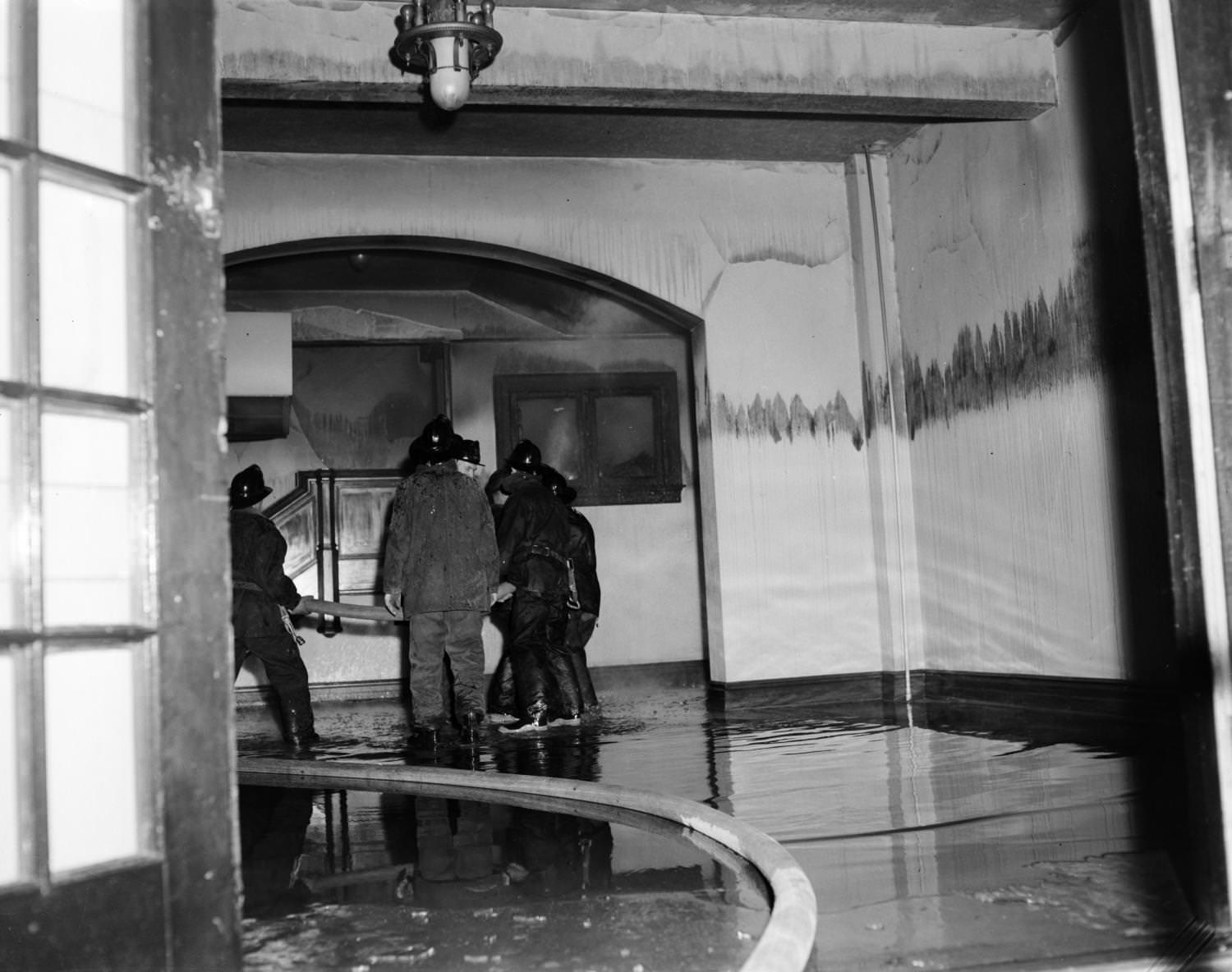
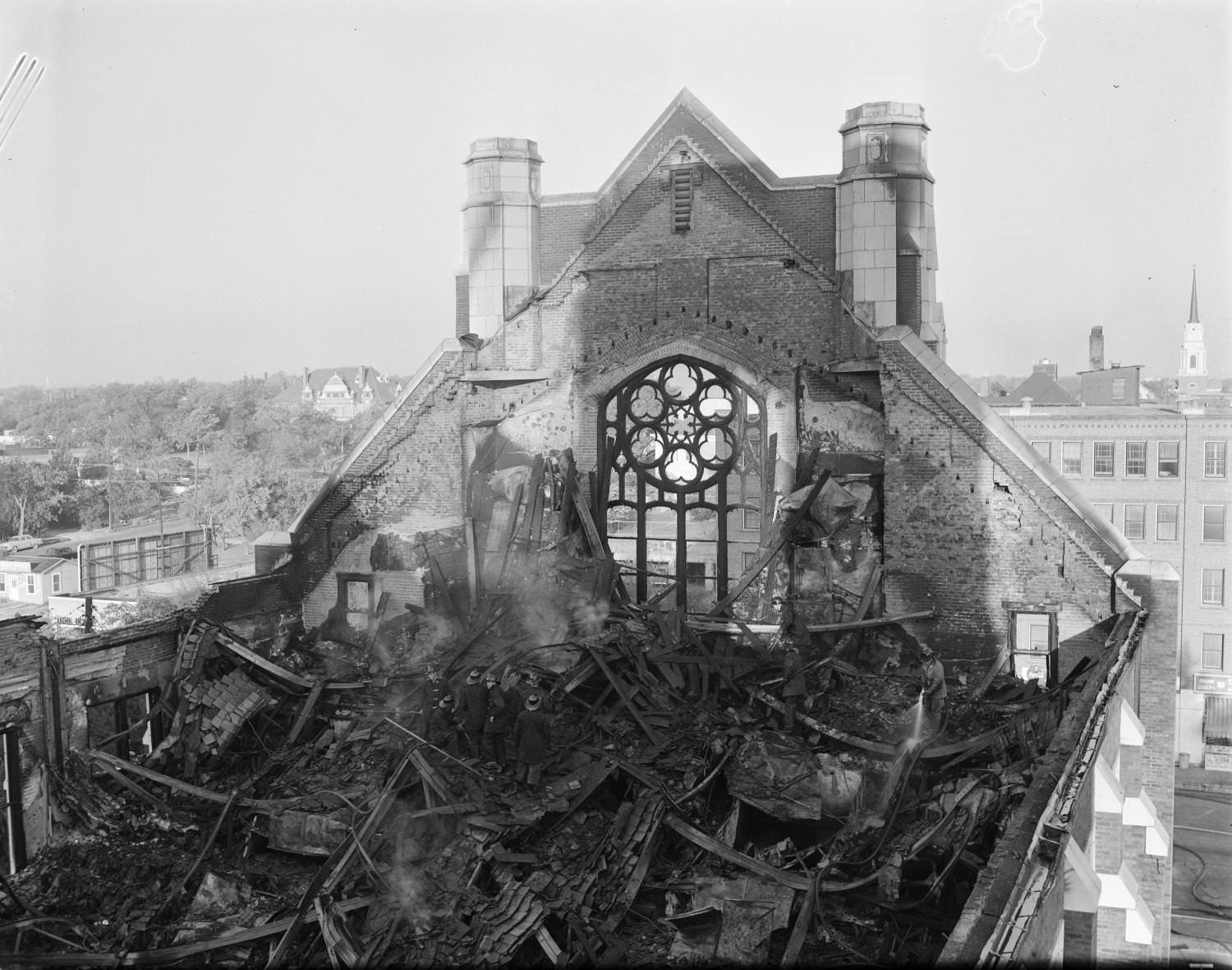
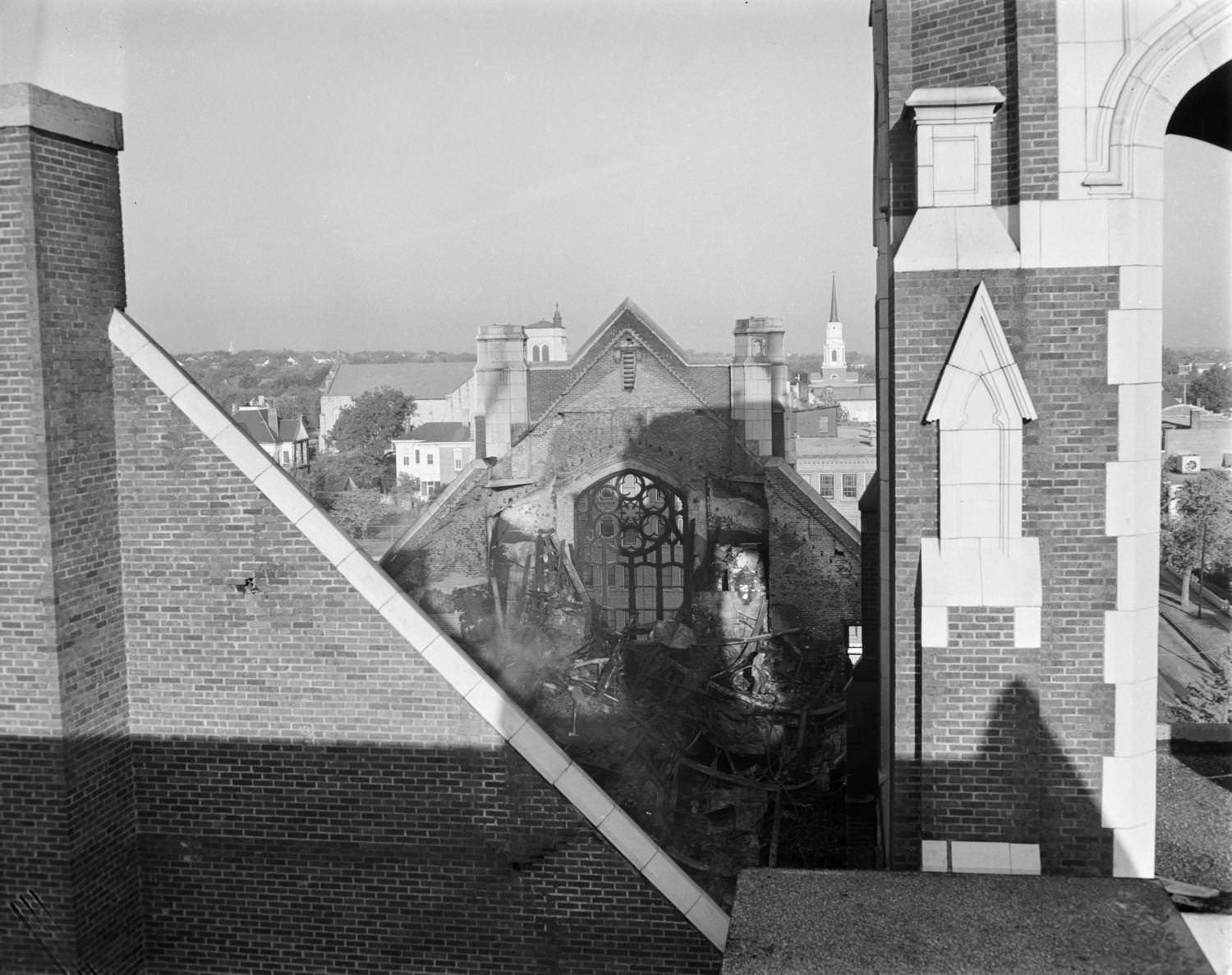
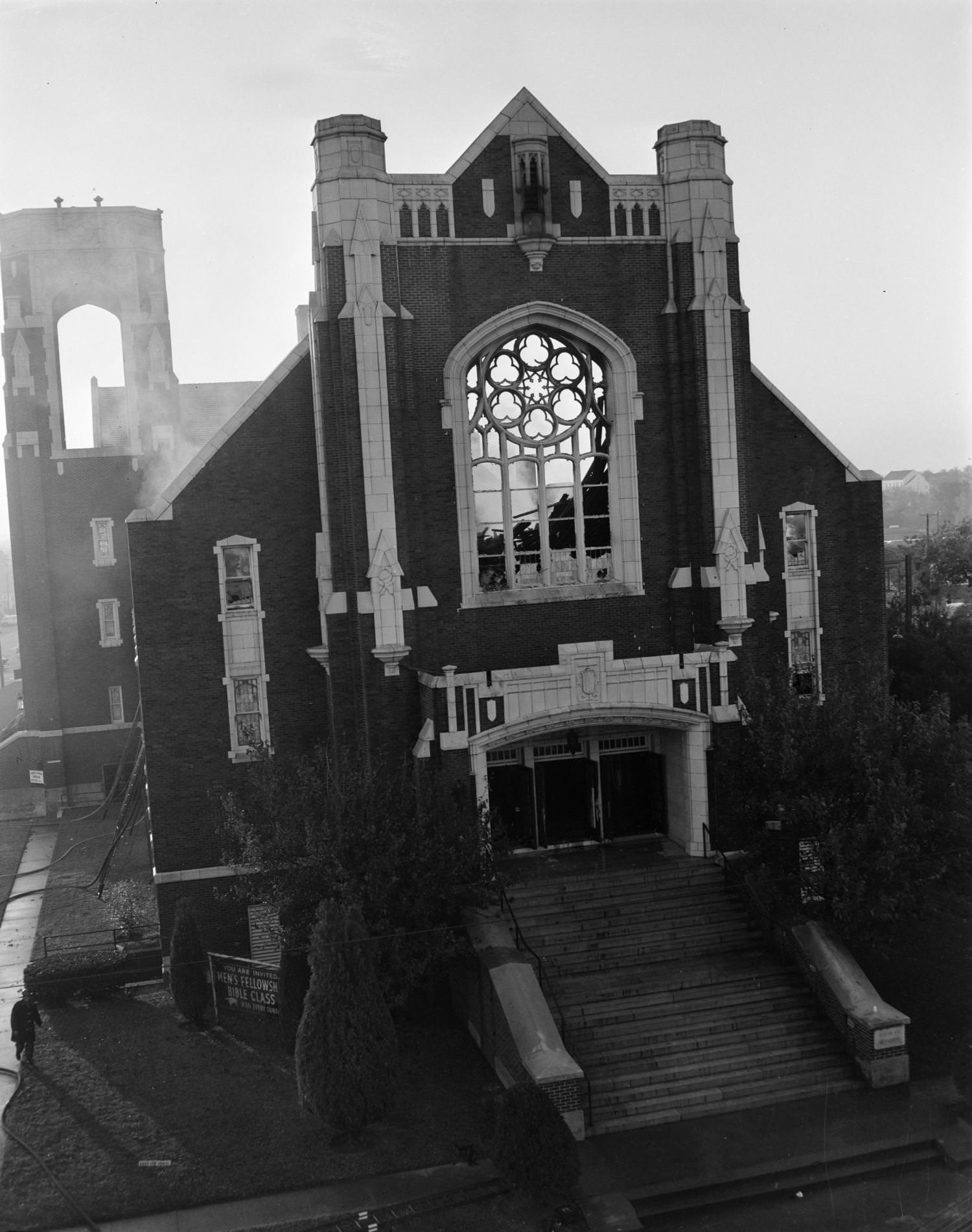
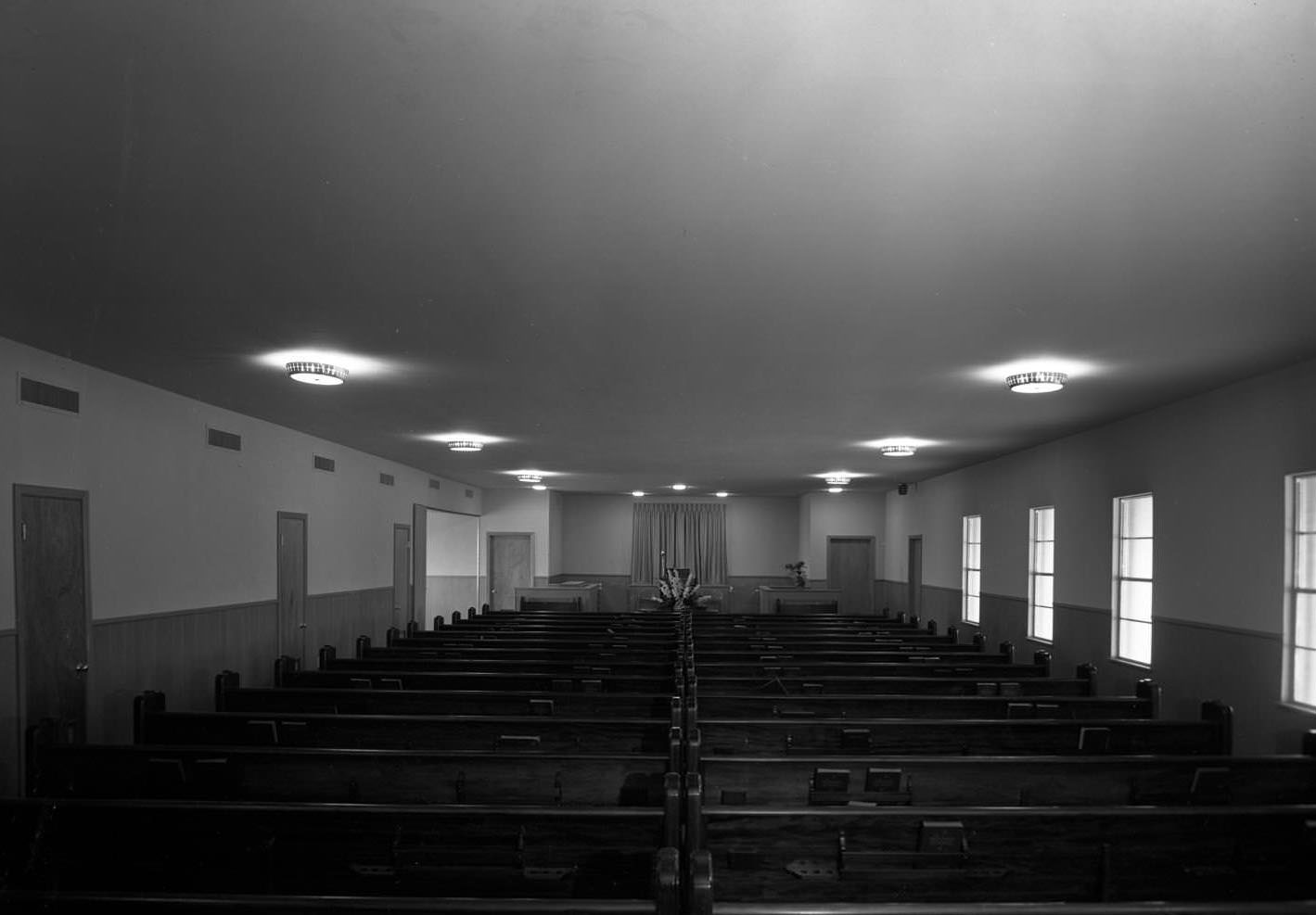
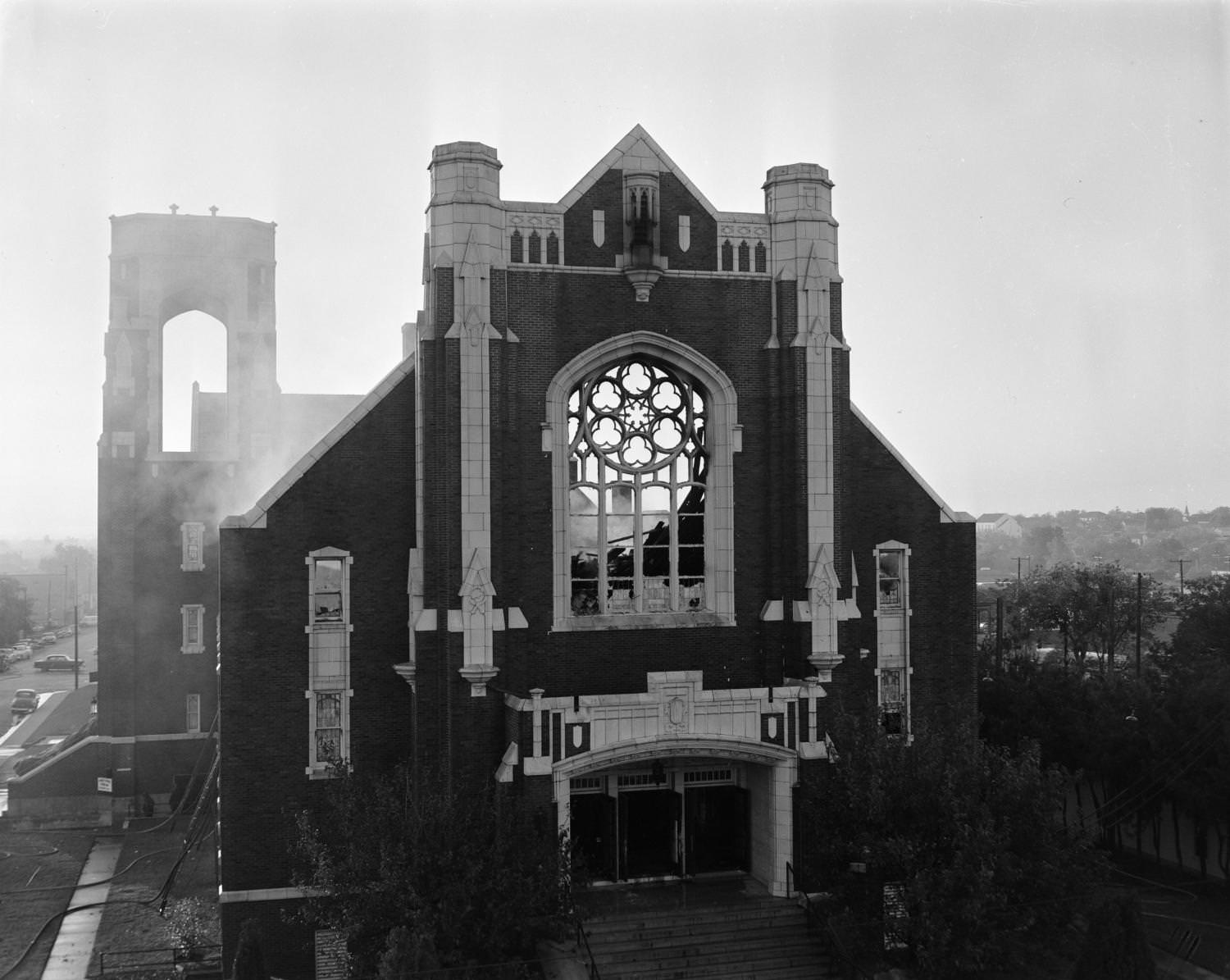
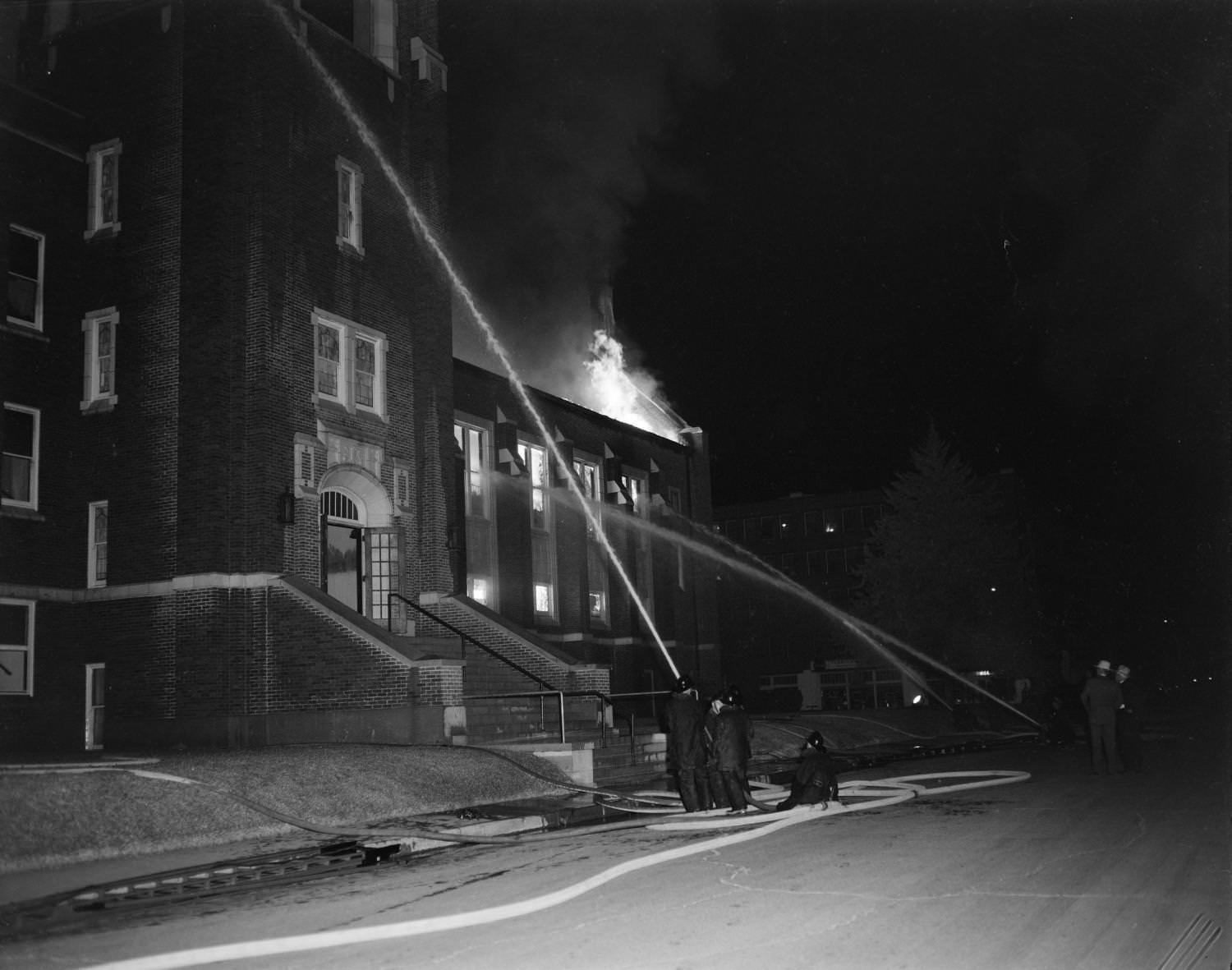
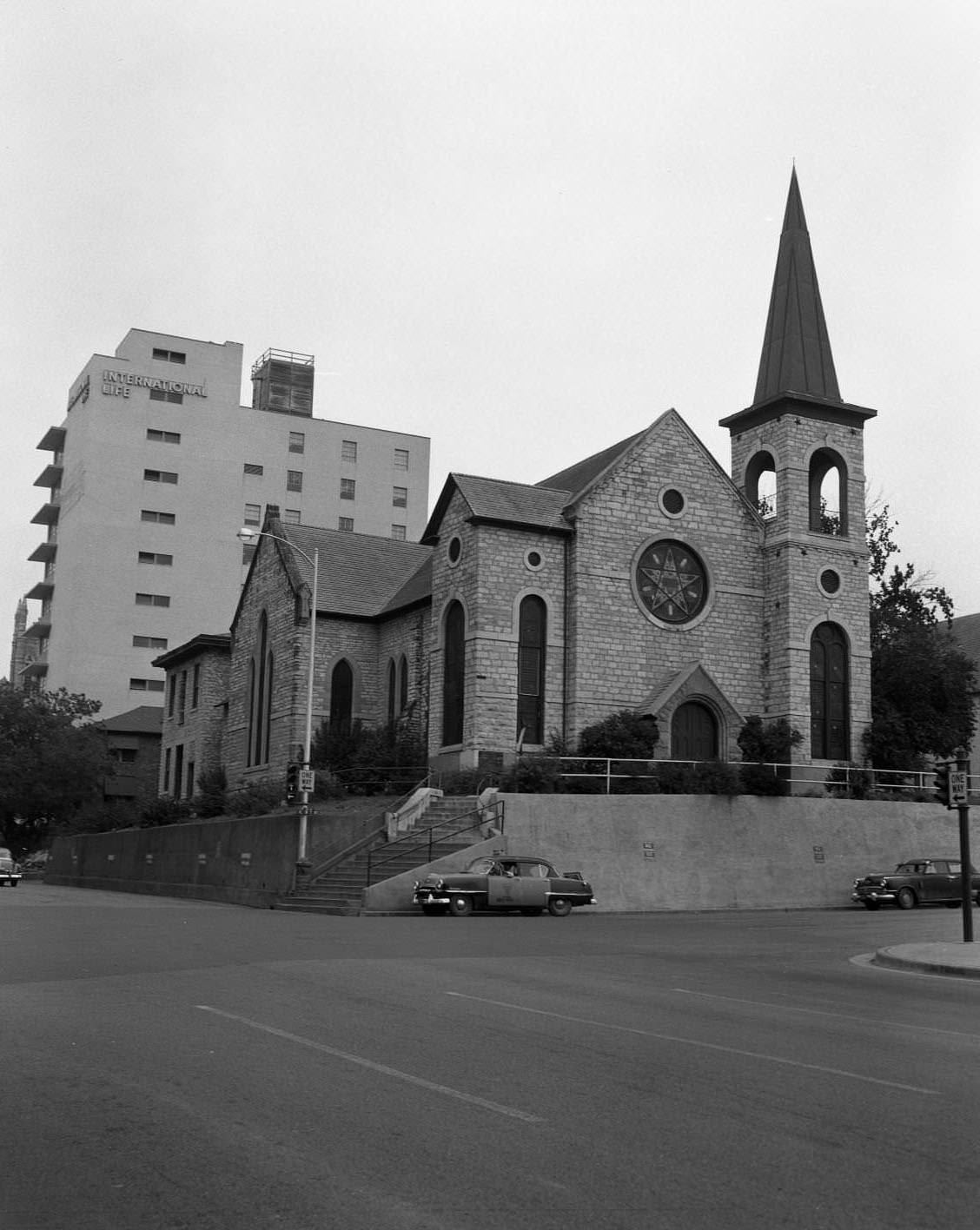
Religion played a central role in the community, and churches anchored neighborhoods across the city. South Austin had both a Christian church and a Baptist congregation. St. Austin’s Catholic Parish School on San Antonio Street educated the children of its parishioners. All Saints Church, the Swedish Central Methodist Church, and the Gethsemane Lutheran Church were all active. In 1954, the Austin Avenue Methodist Church suffered serious roof fire damage — firefighters responded with hoses and ladders, working from the street and inside the building as smoke rose through the damaged structure.
South Austin Christian Church, 1950The porch and entrance to St Austin’s Parish School, now St. Austin Catholic School, at 1911 San Antonio St., Austin, 1955Firefighters outside Austin Avenue Methodist Church, 1954Firefighters Inside Austin Avenue Methodist Church, 1954
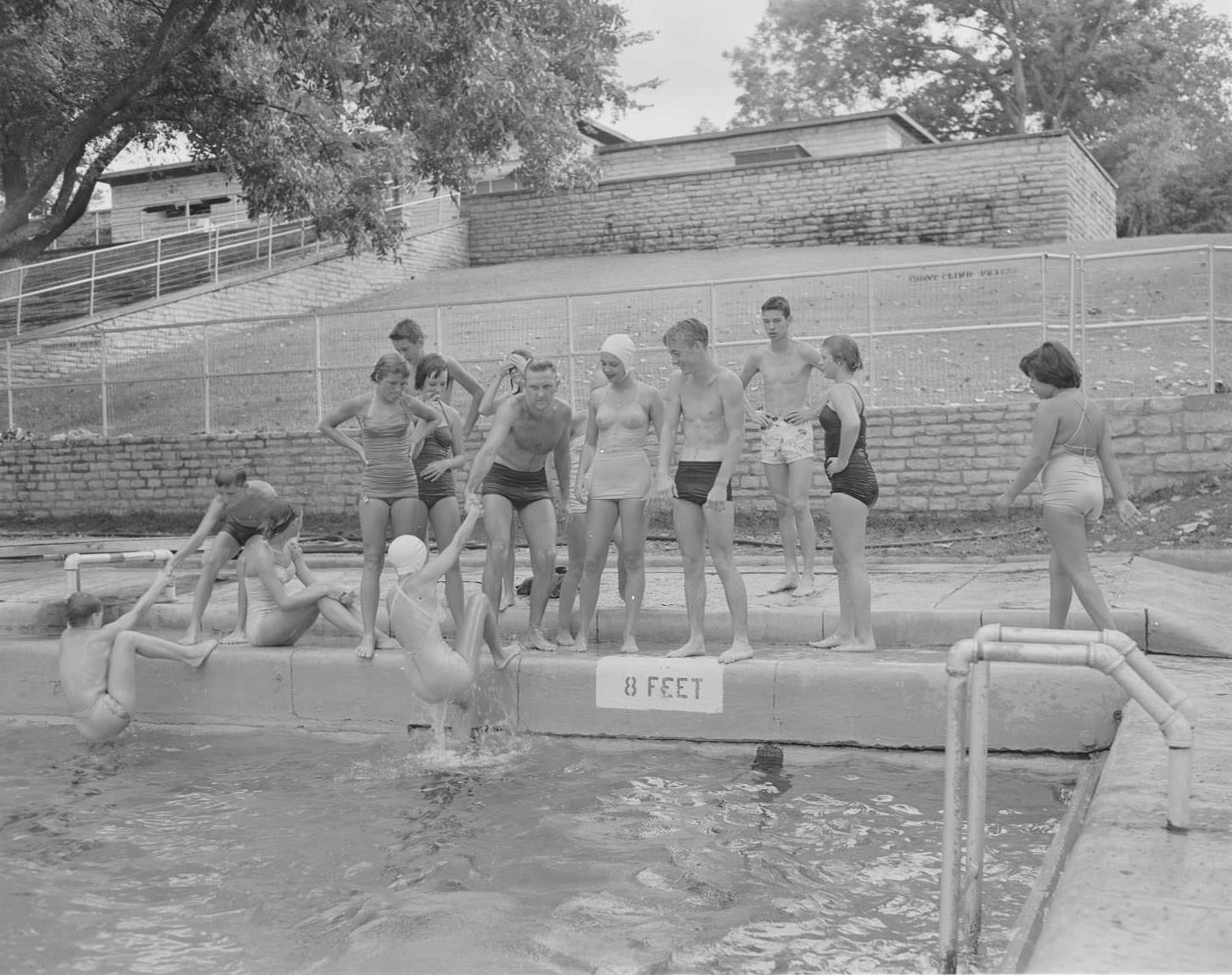
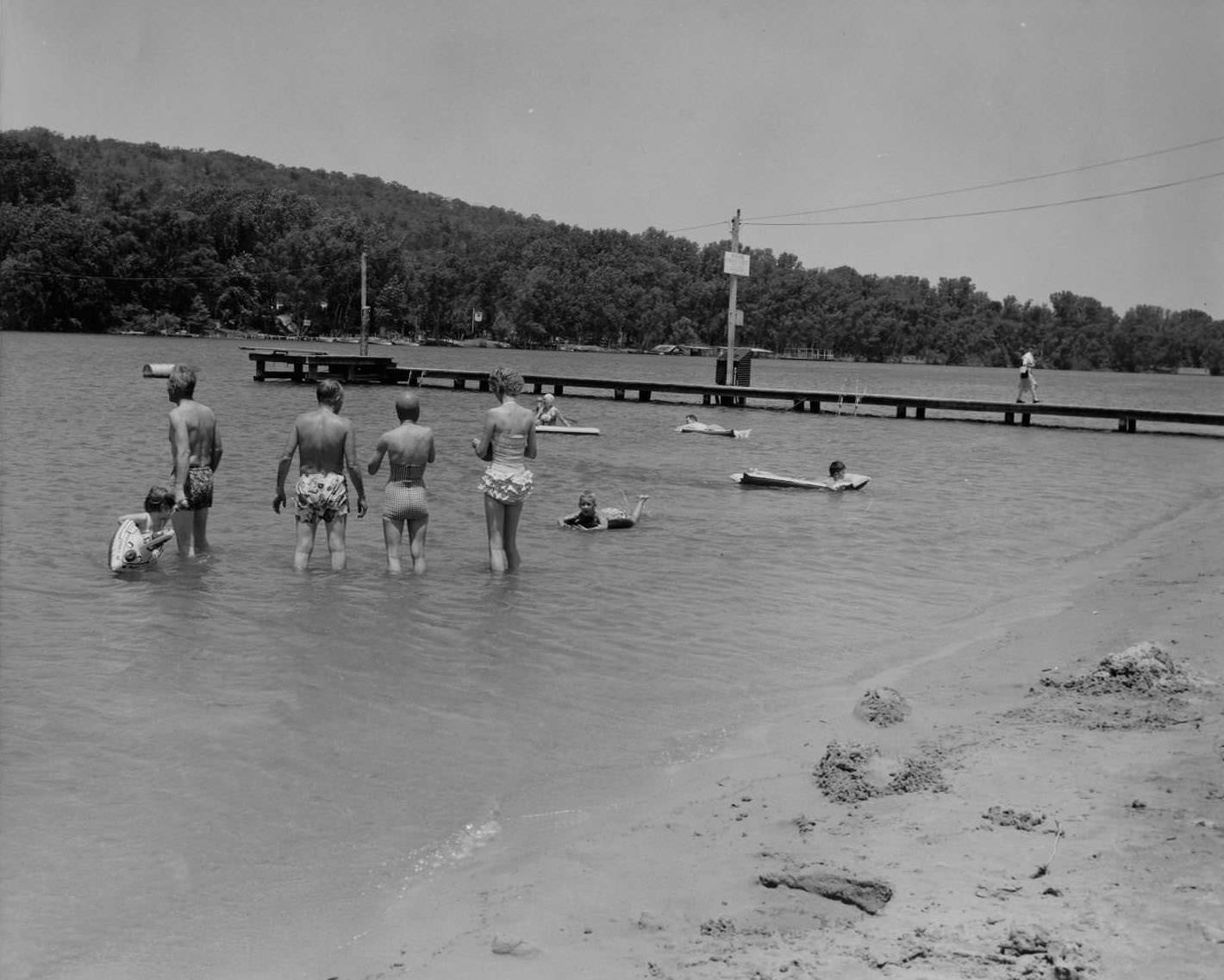
Outdoor recreation was a big part of Austin life, and the city’s lakes and public pools drew crowds throughout the warmer months. Deep Eddy Pool, one of the oldest swimming pools in Texas, had kids lined up along its edge. Lake Austin Beach drew families who waded and floated in the water on summer days. The Austin Recreation Department, under the direction of Beverly Sheffield, worked to expand and maintain these public spaces throughout the decade.
Boys and girls standing at edge of Deep Eddy Pool, 1953People wading and floating in the water at Lake Austin Beach, 1956
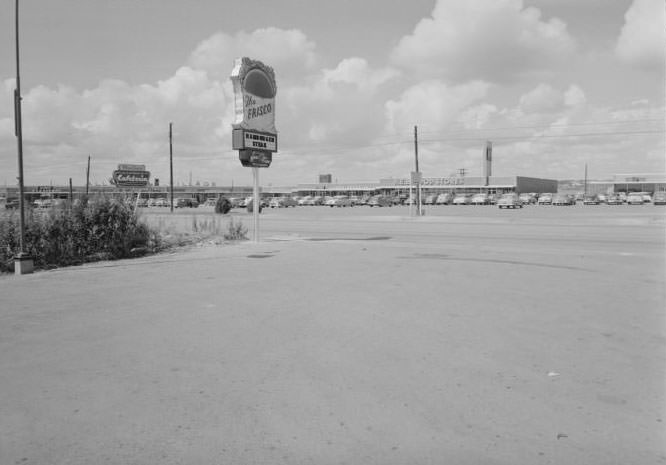
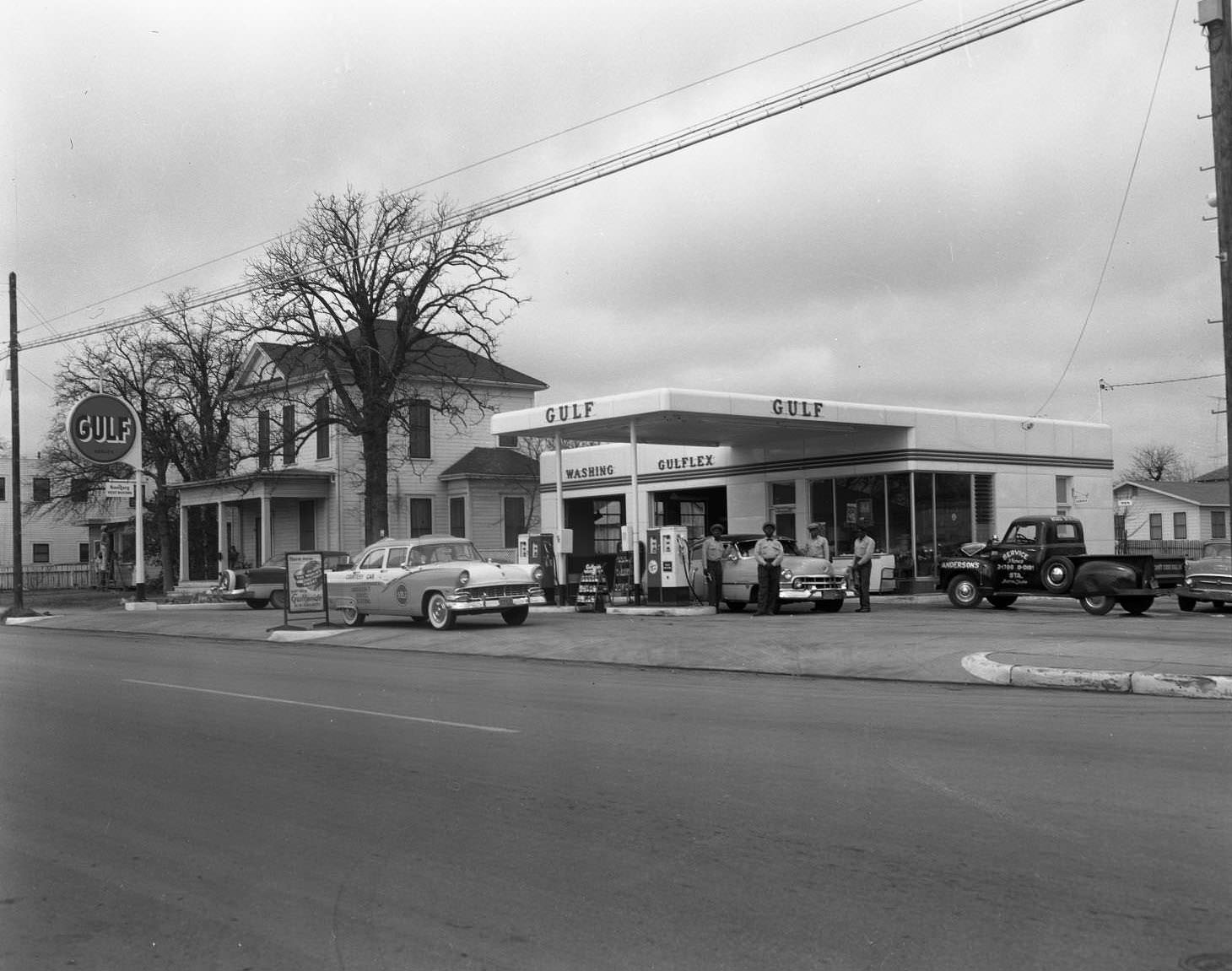
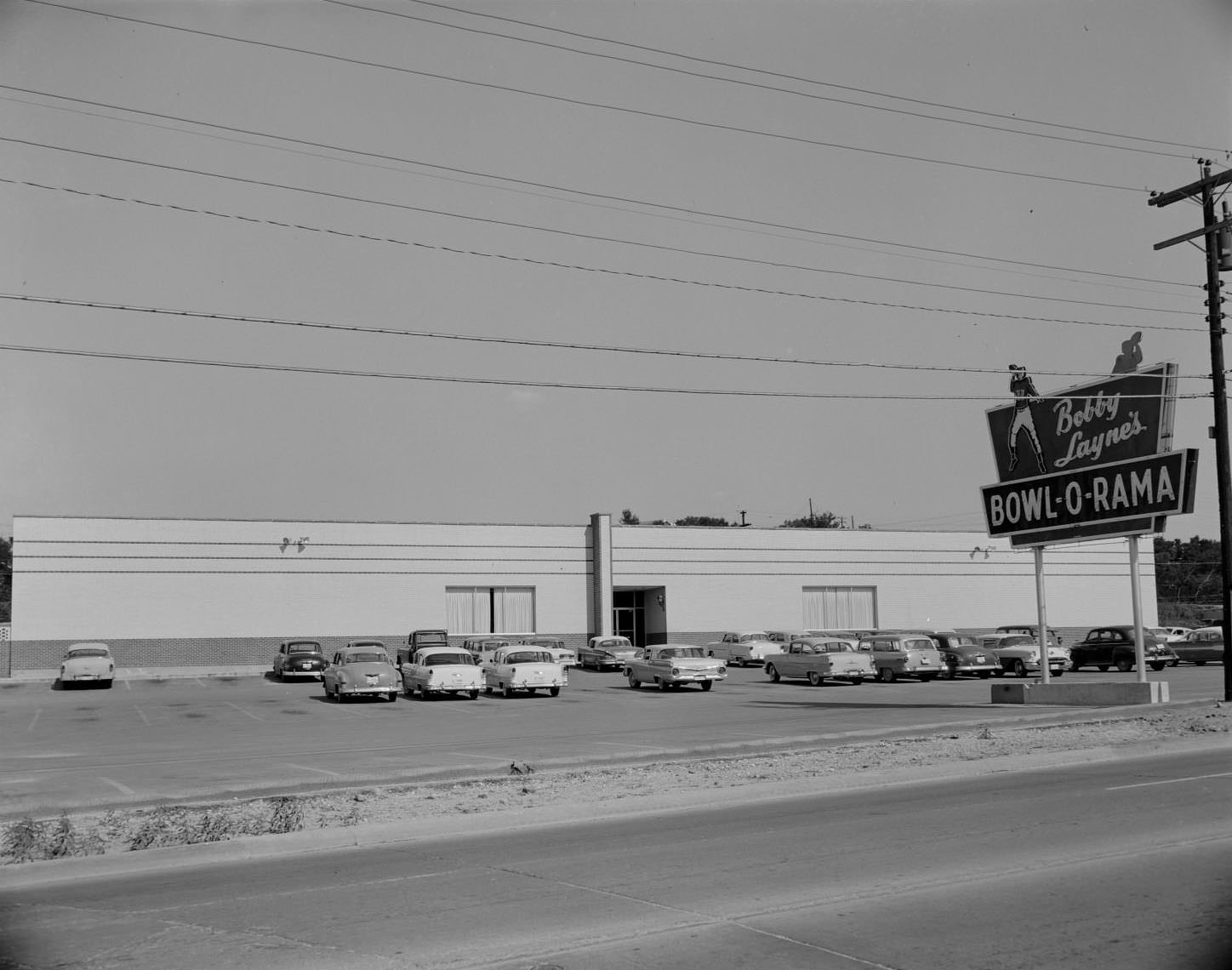
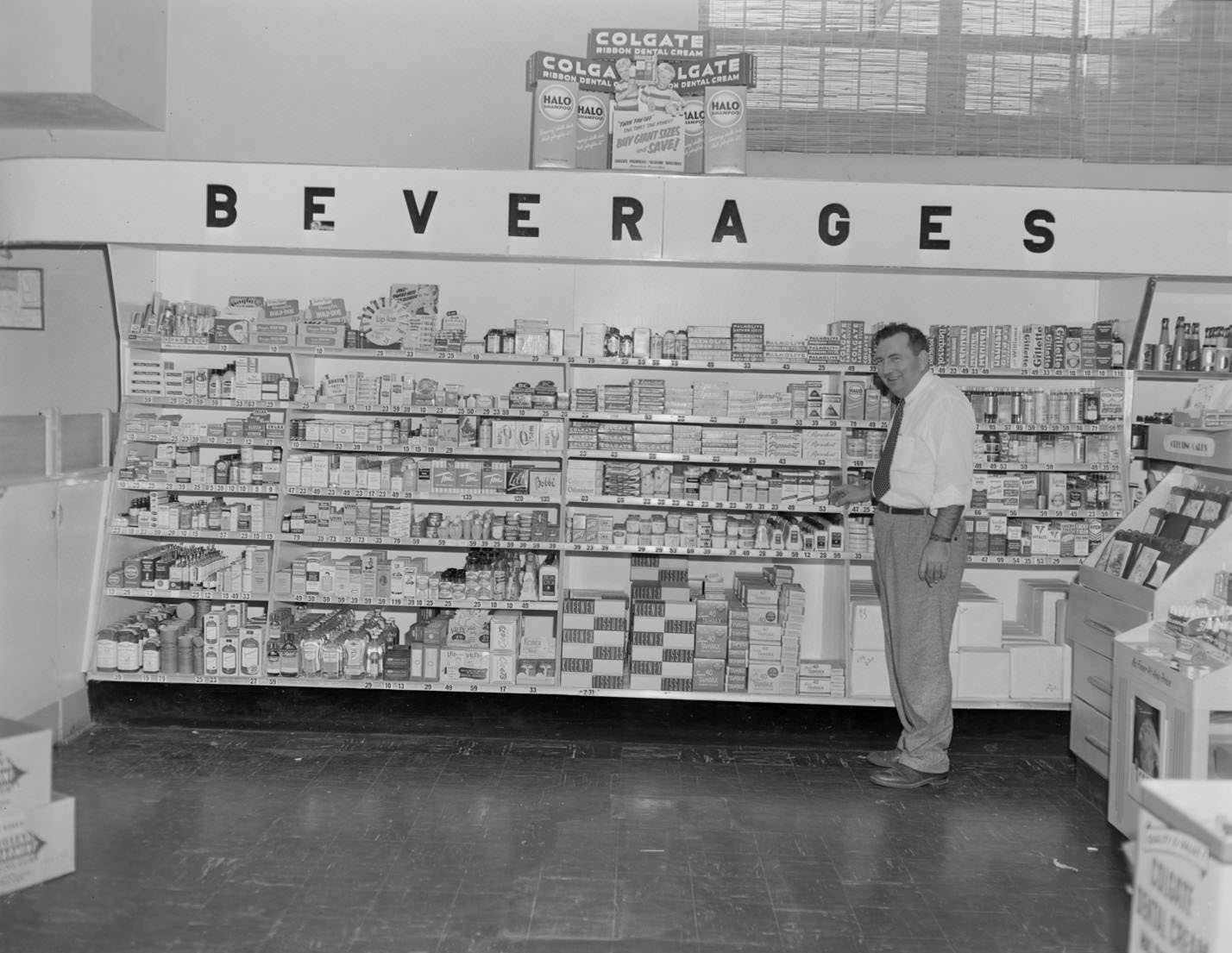
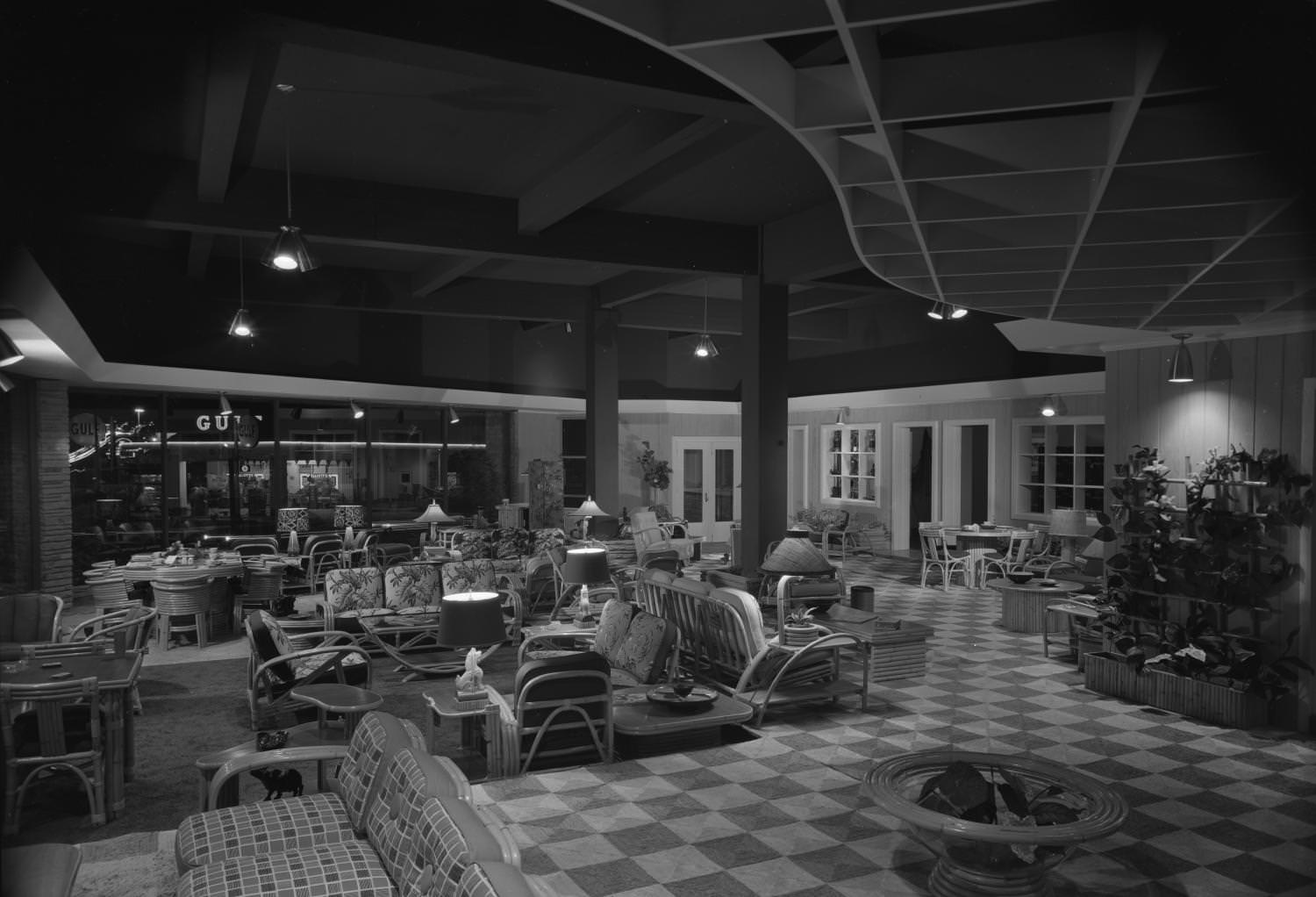
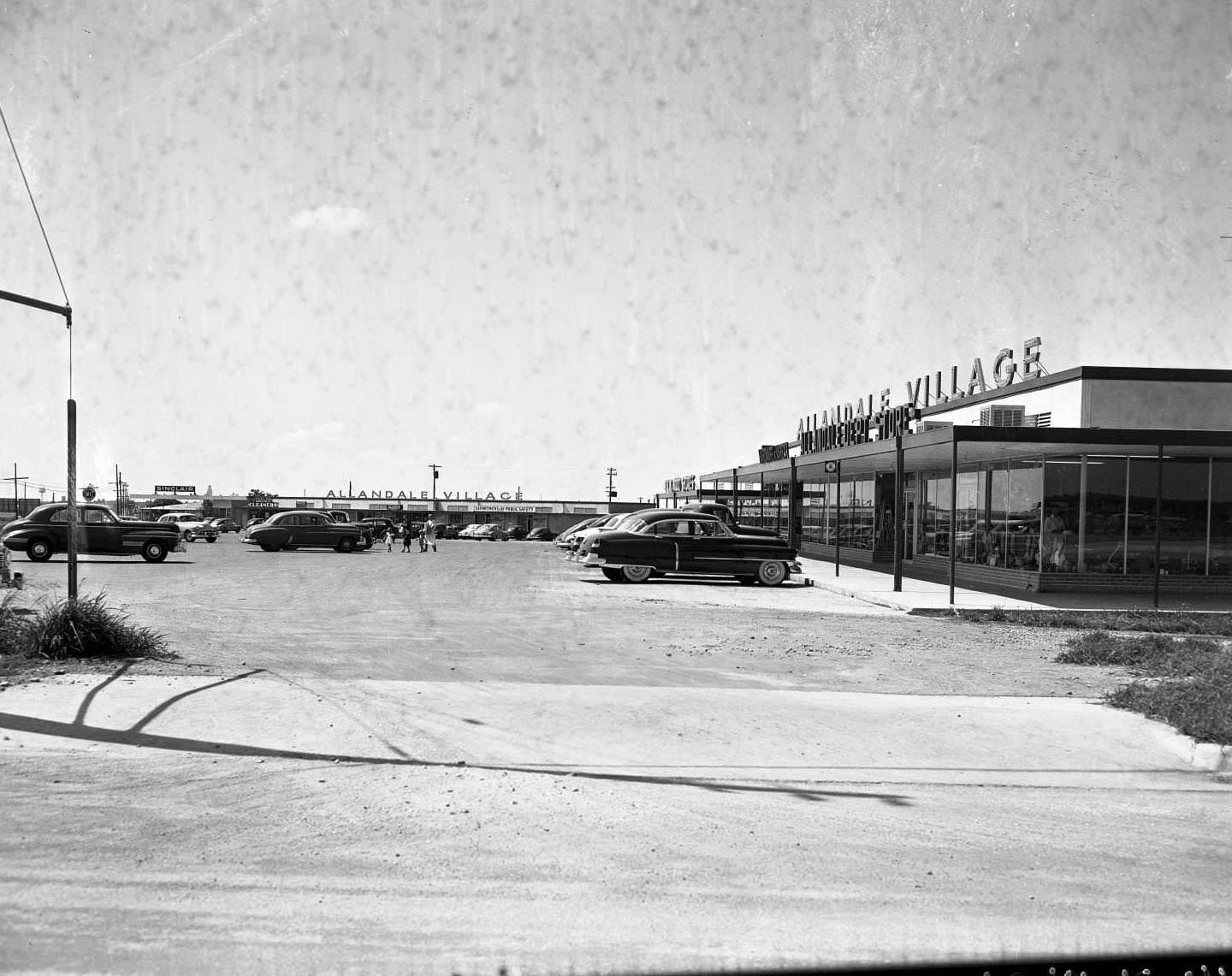
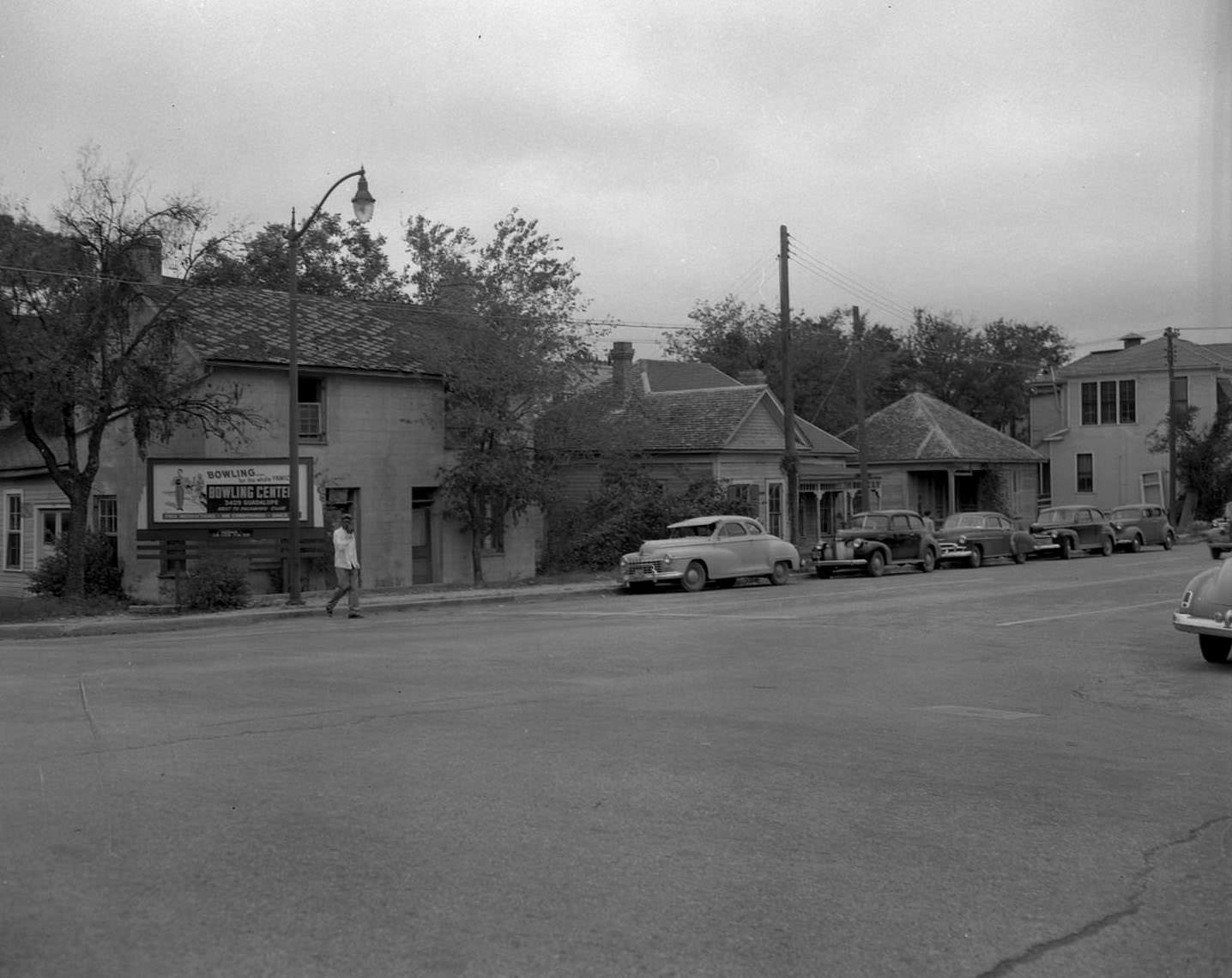
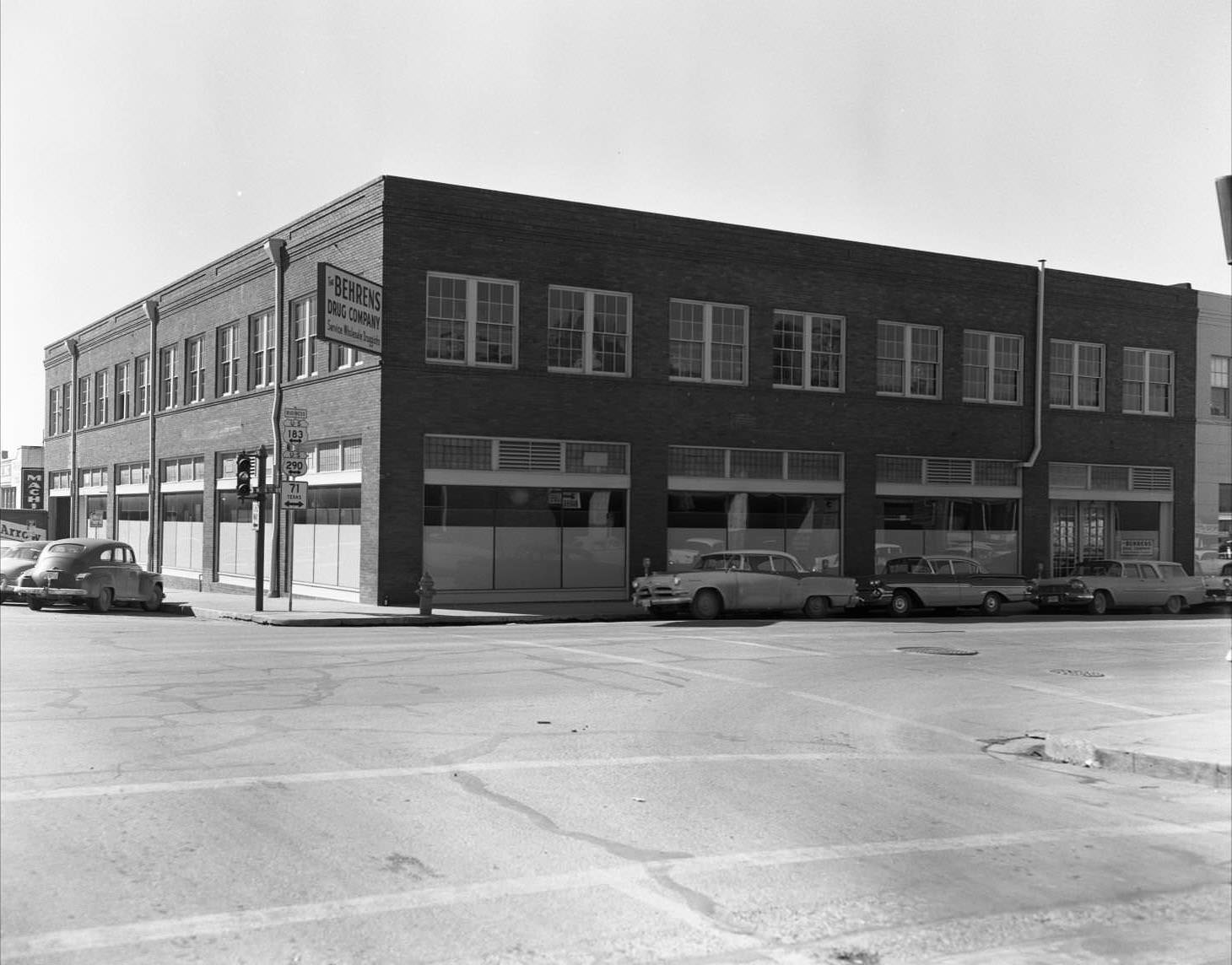
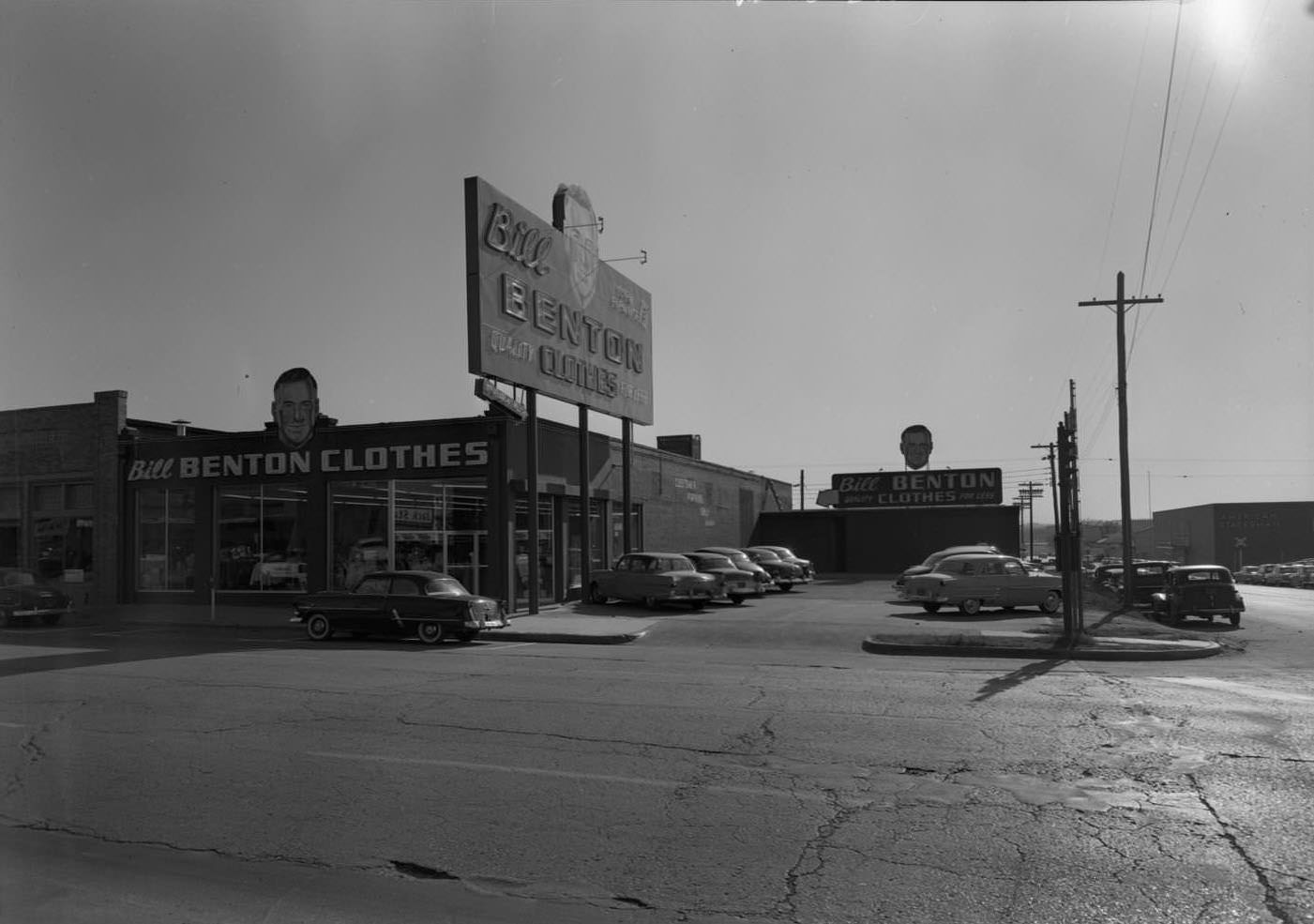
Austin’s commercial landscape in the 1950s was diverse and busy. The Allandale Village Shopping Center on the north side served a growing suburban population. On Congress Avenue, stores like Baker’s Shoe Store and Bill Benton’s Men’s Clothing drew steady shoppers. Gas stations like Anderson’s Gulf Service on East 12th Street kept the city’s cars fueled. Bowling alleys like Bowl-O-Rama at 517 South Lamar offered entertainment. Drive-in restaurants, furniture stores stocked with rattan, and drugstores like Behrens Drug Co. at 5th and Colorado all contributed to the texture of everyday commercial life.
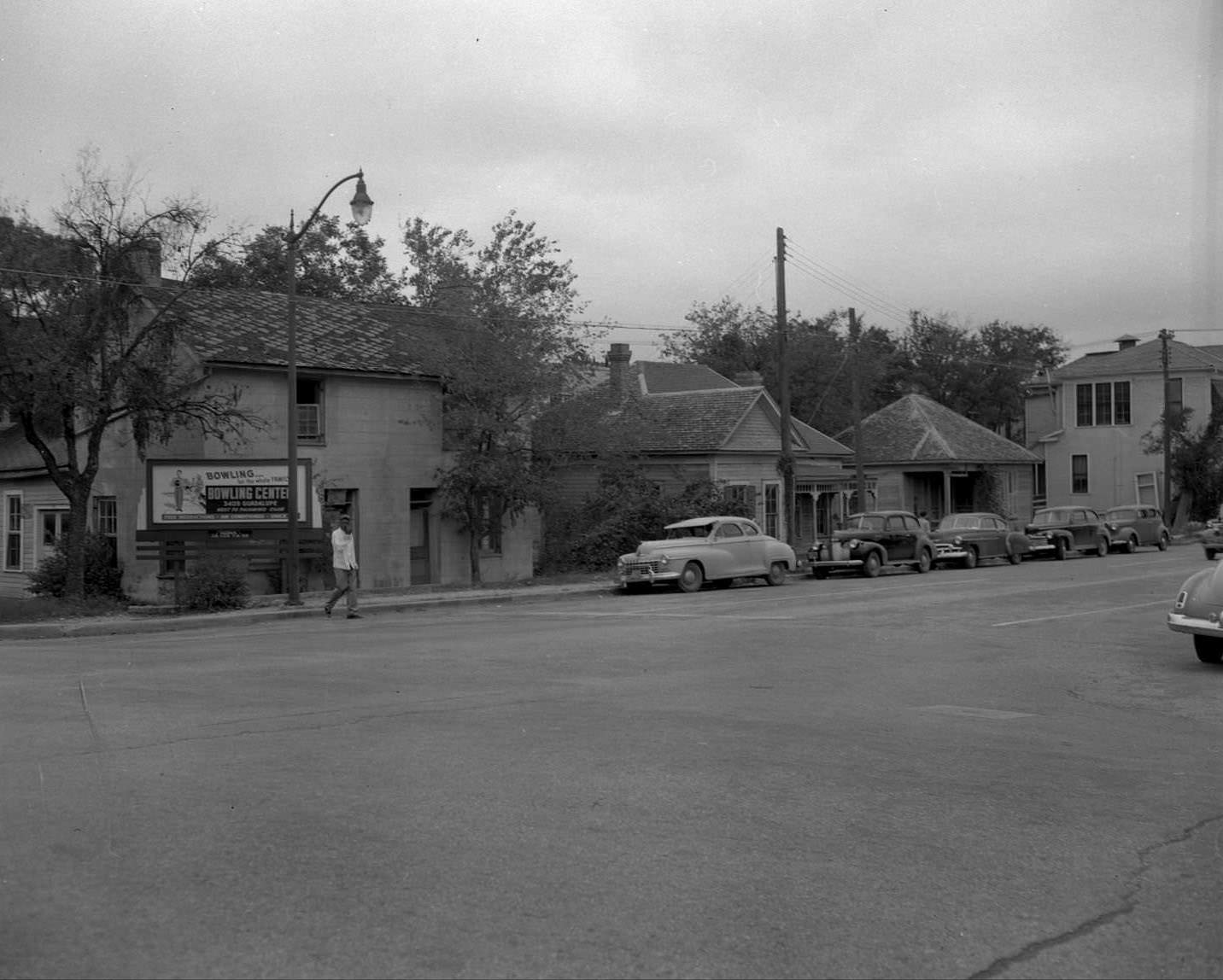
Allandale Village Shopping Center, 1954Anderson’s Gulf Service Station and crew located on the 1700 block of East 12th Street, 1956Bowl-O-Rama parking lot. Austin, Texas. Located at 517 South Lamar, 1959
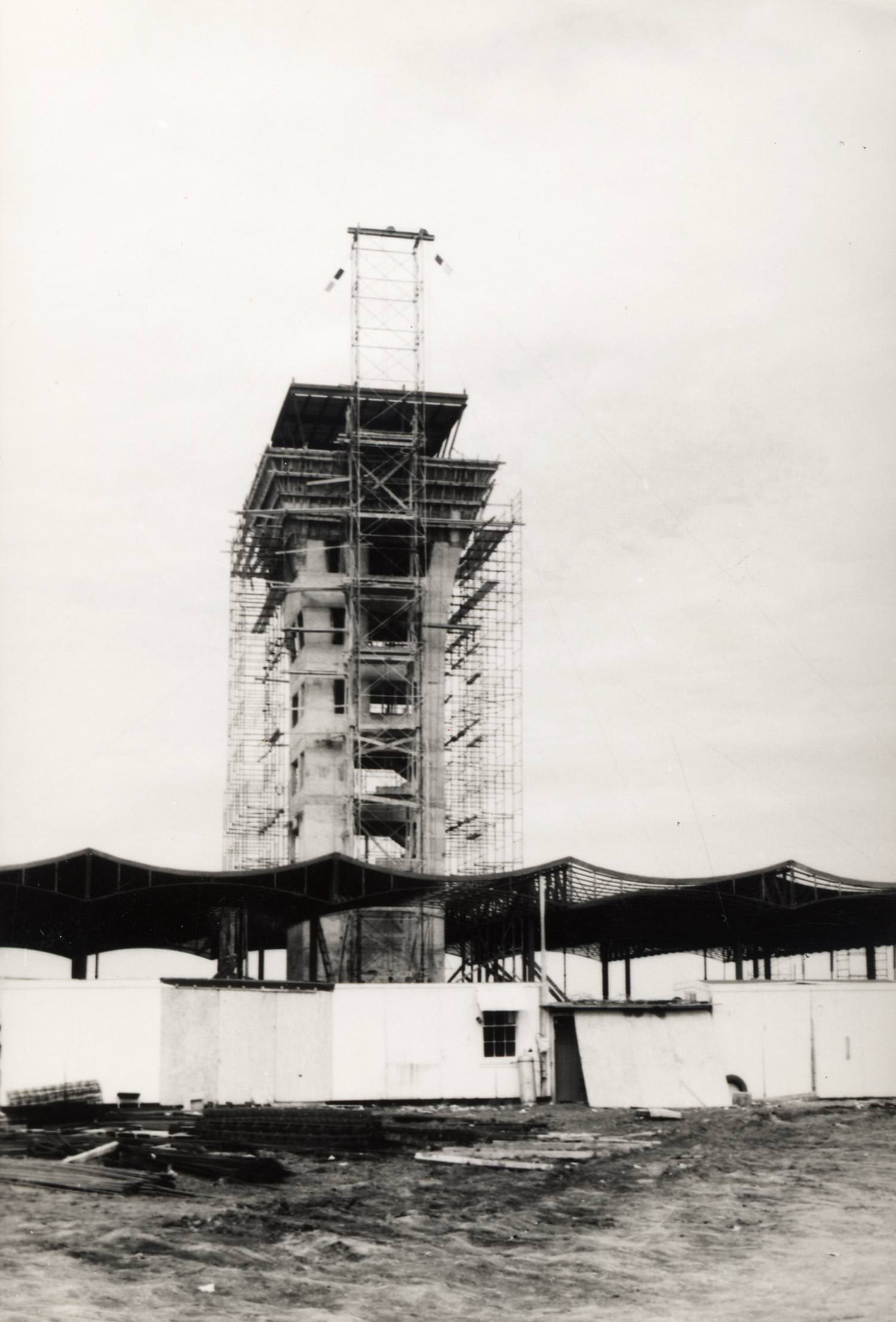
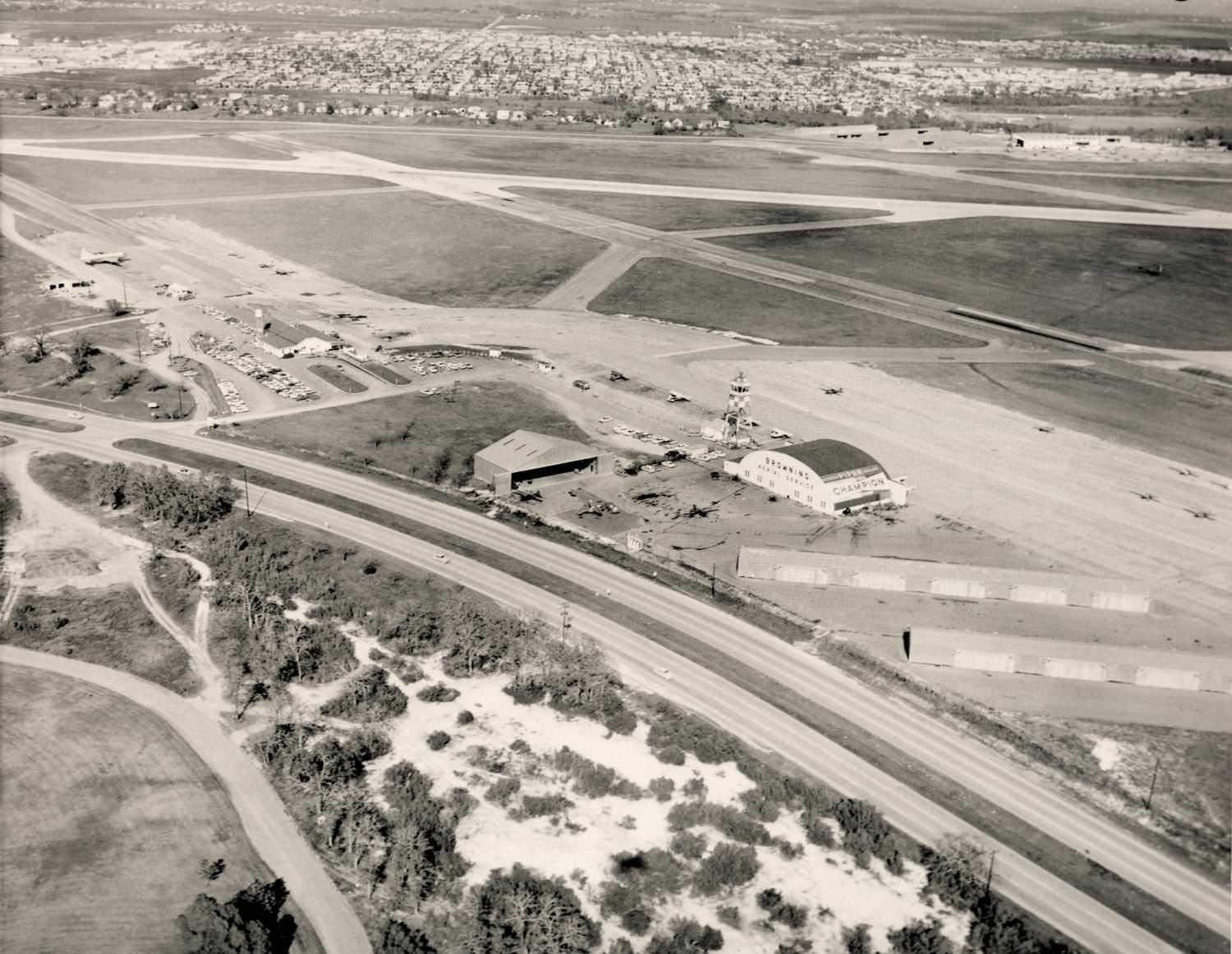
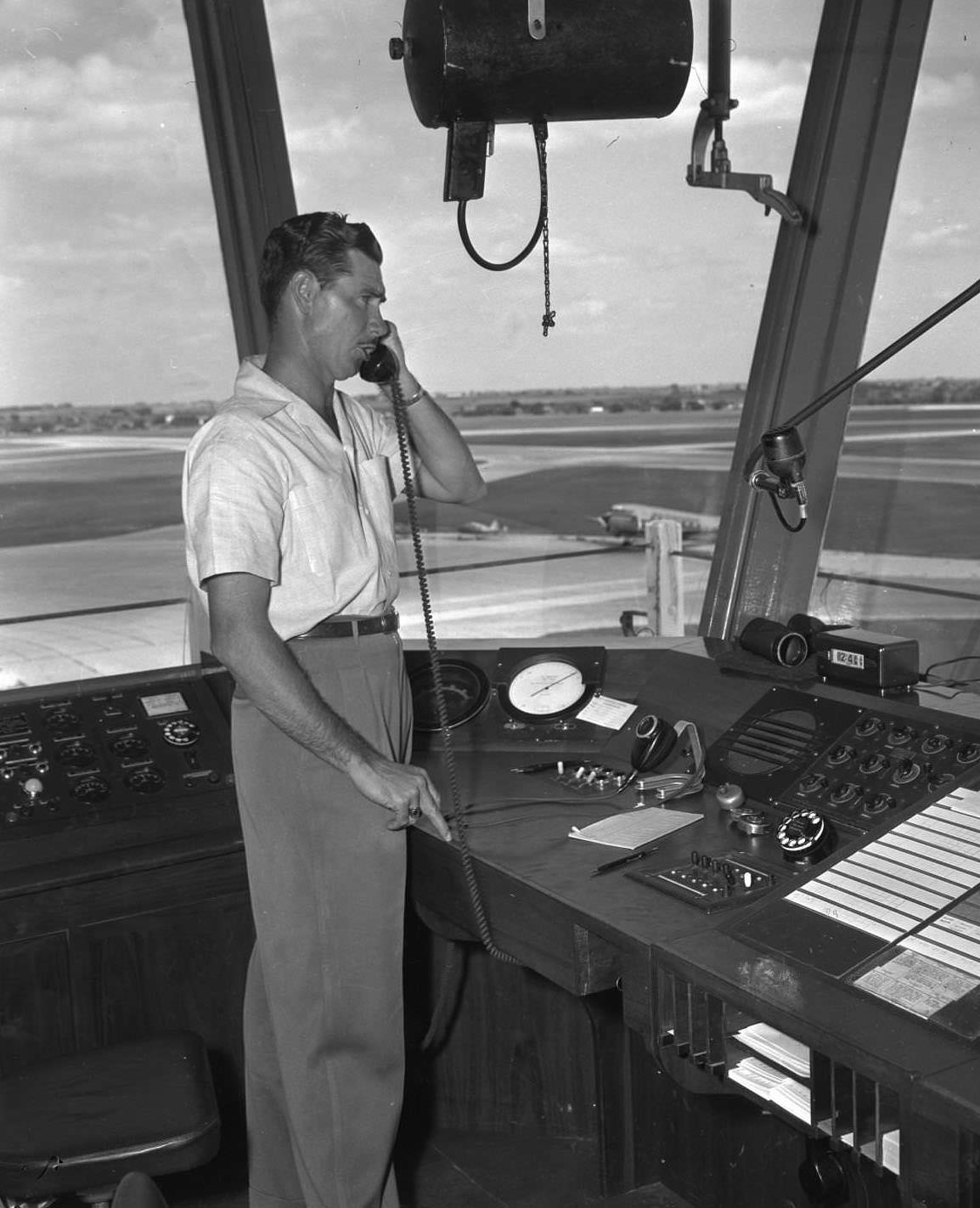
Mueller Municipal Airport served Austin’s air travel needs throughout the decade. In 1960, construction crews were busy building a new control tower, with scaffolding wrapped around the concrete support structure and board formwork in place for a flared level near the top. The terminal building was also under construction, signaling that Austin’s air traffic had grown enough to demand serious infrastructure investment.
Construction of the control tower at Mueller Municipal Airport in Austin, Texas, 1960Construction of Austin Municipal Airport, 1960
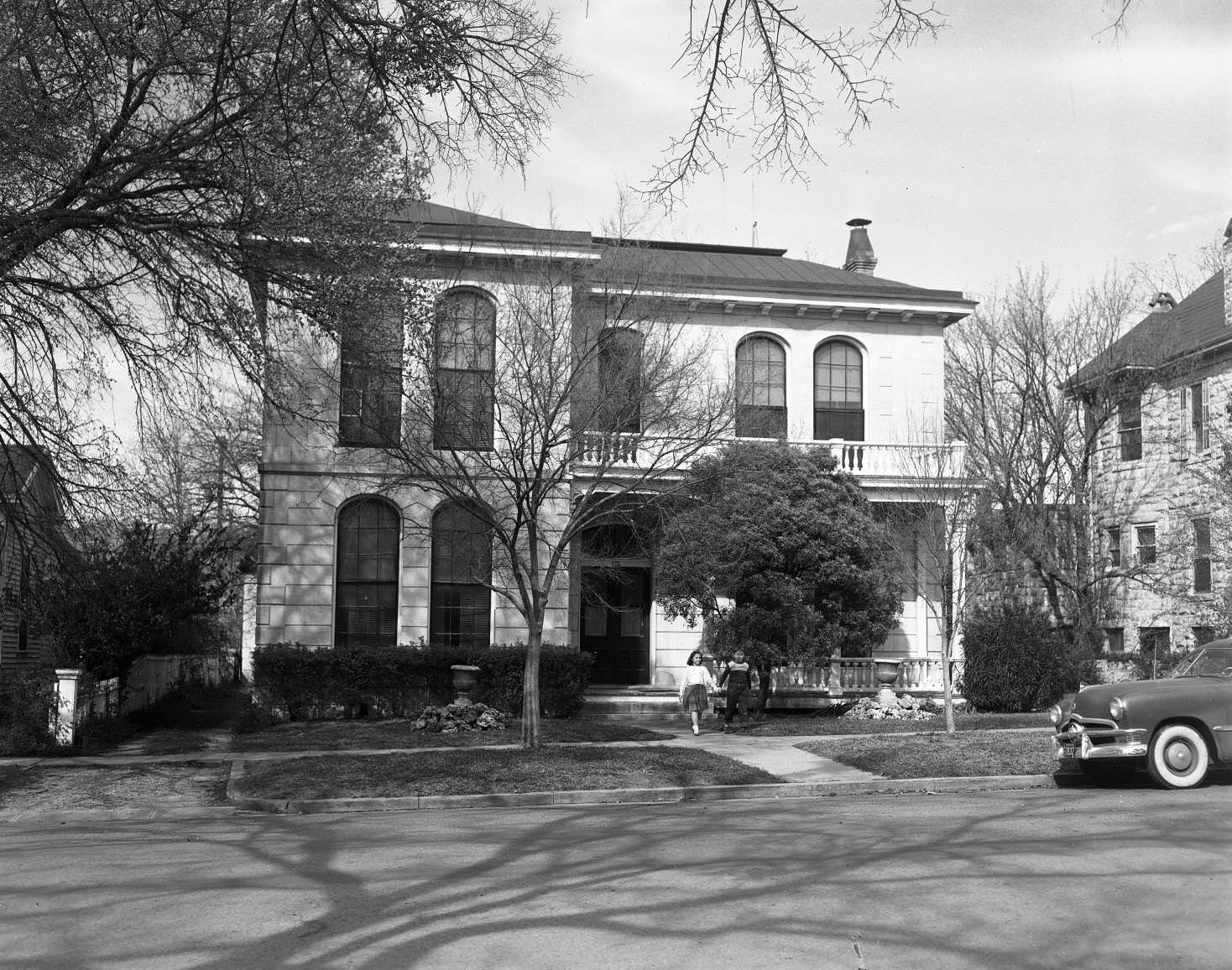
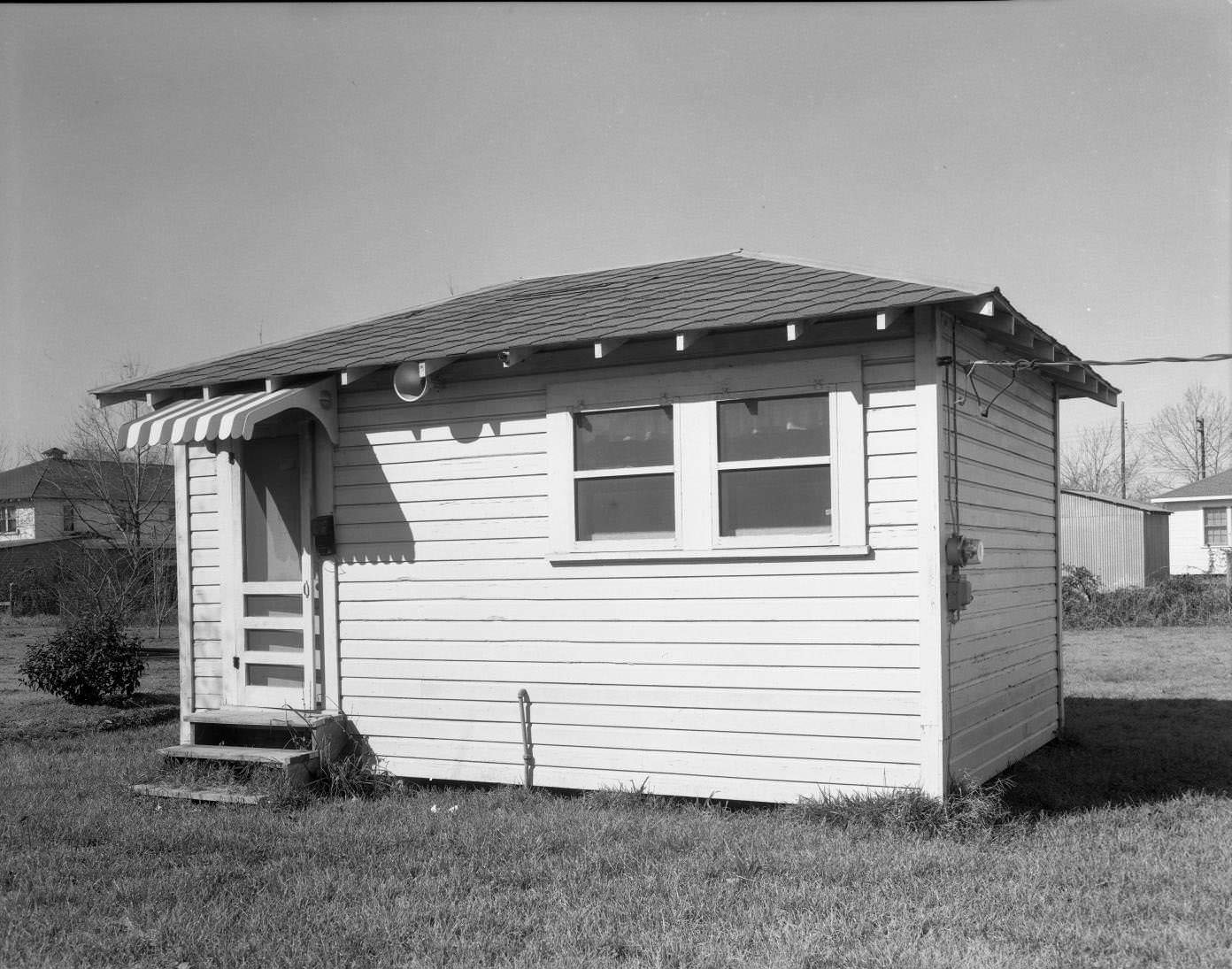
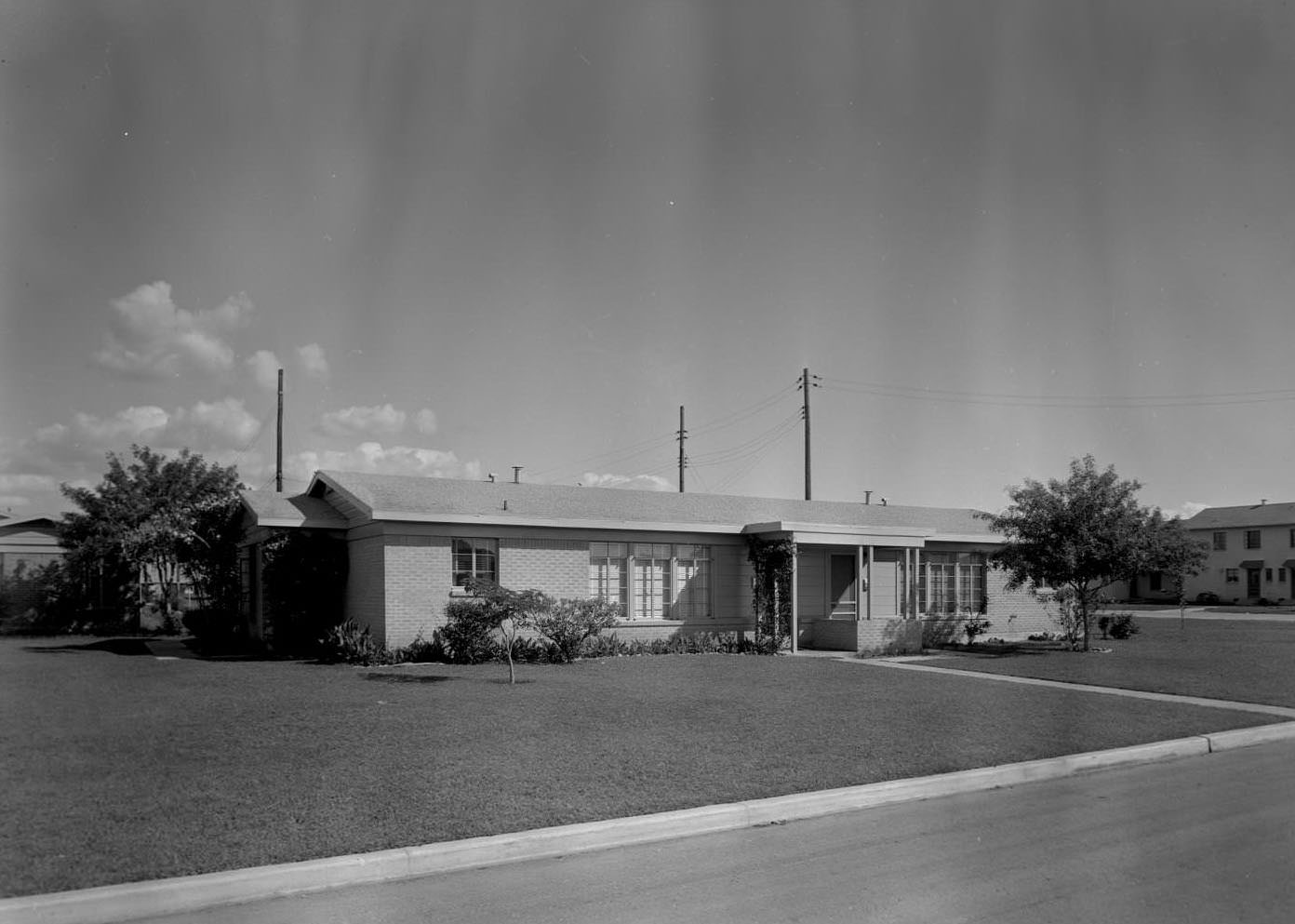
Austin’s growth in the 1950s also showed up in its newer residential neighborhoods. The Bergstrom Corporation was active in housing development. Neighborhoods northwest of downtown were filling in with new homes. The Athol Estes home, photographed in 1953, showed the kind of modest, well-kept two-story white house that was typical of Austin’s residential streets — a front lawn with trees, a birdbath, and children on the front walk.
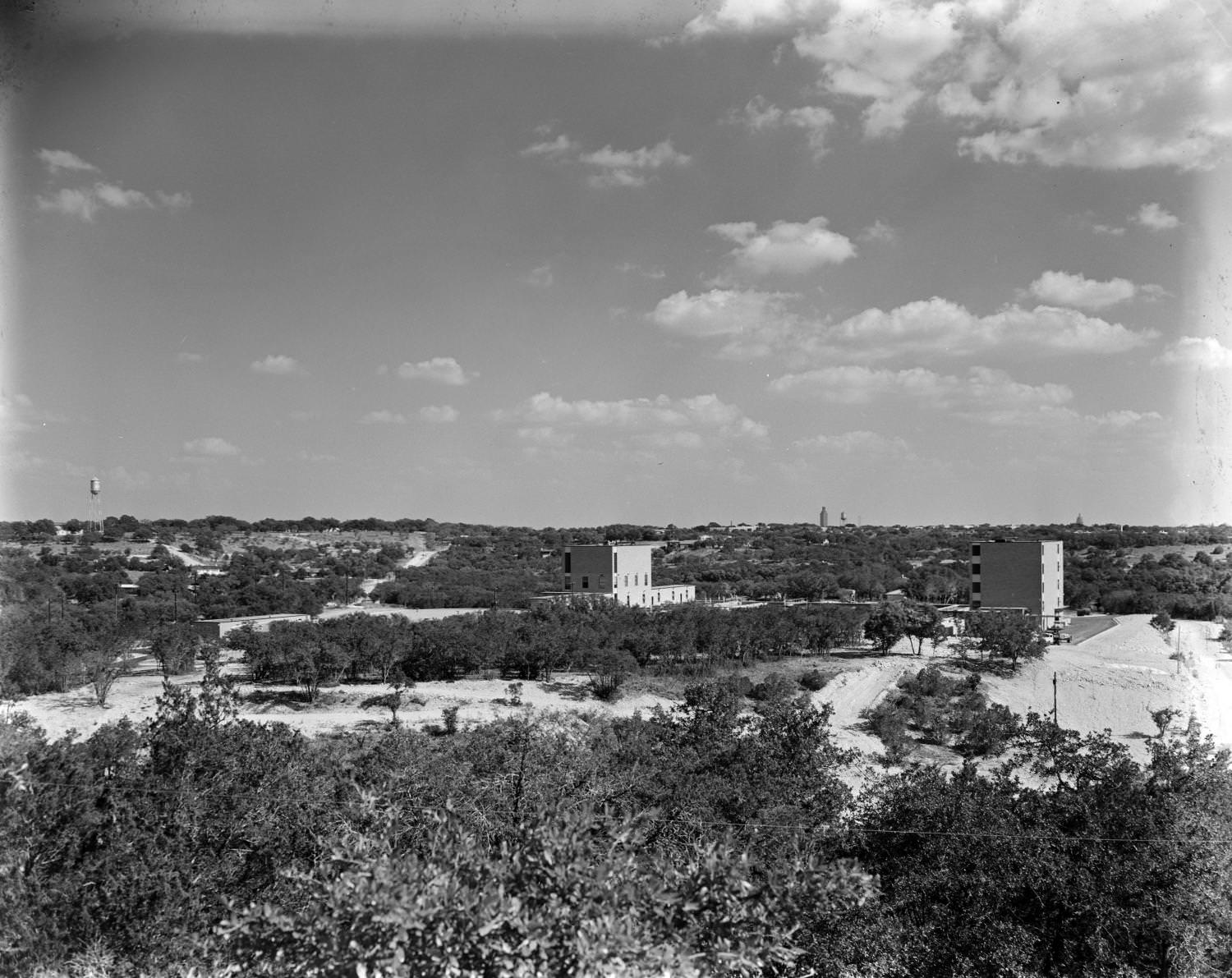
Buildings on a hill northwest of downtown Austin, Texas, 1955Athol Estes home, 1953
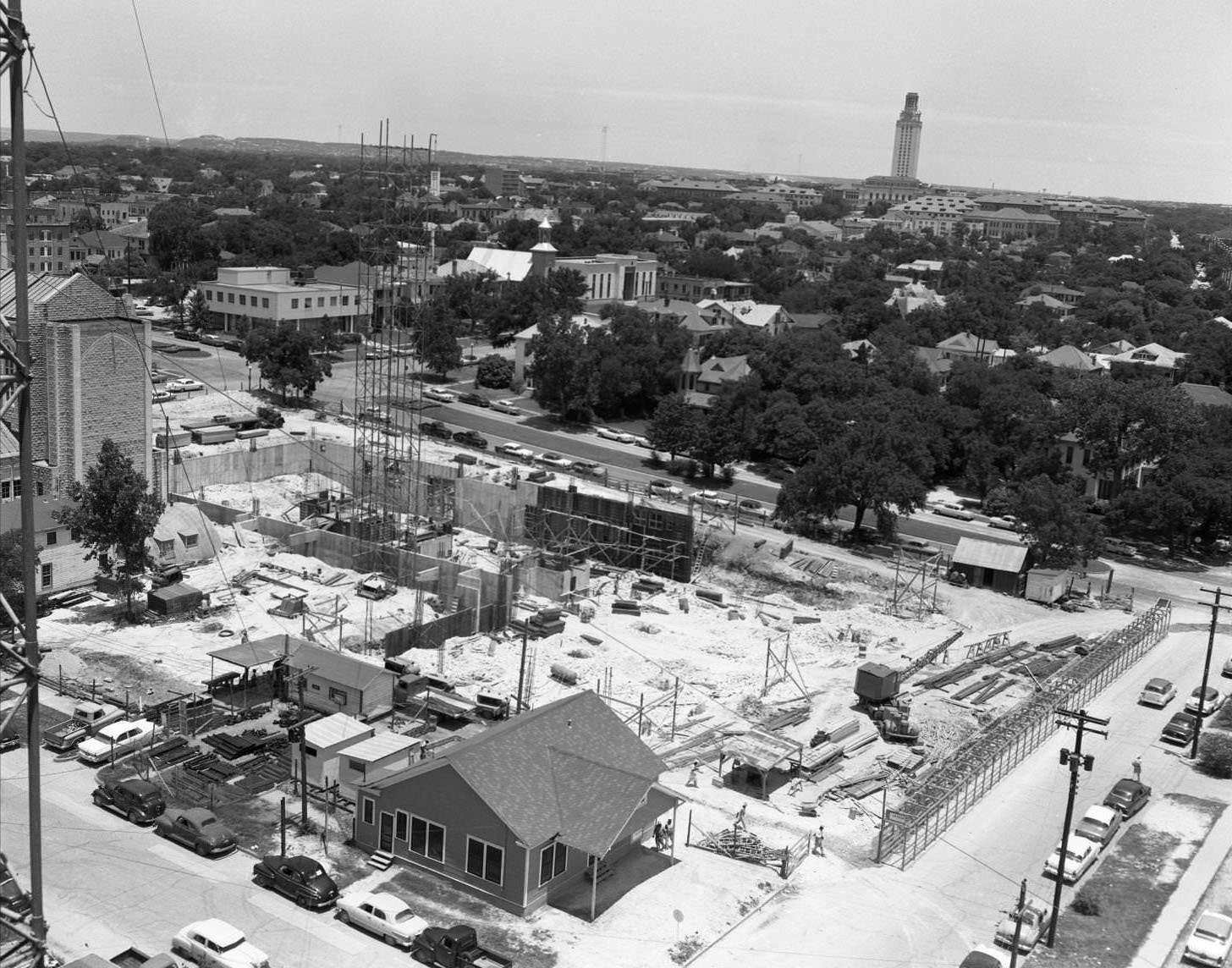
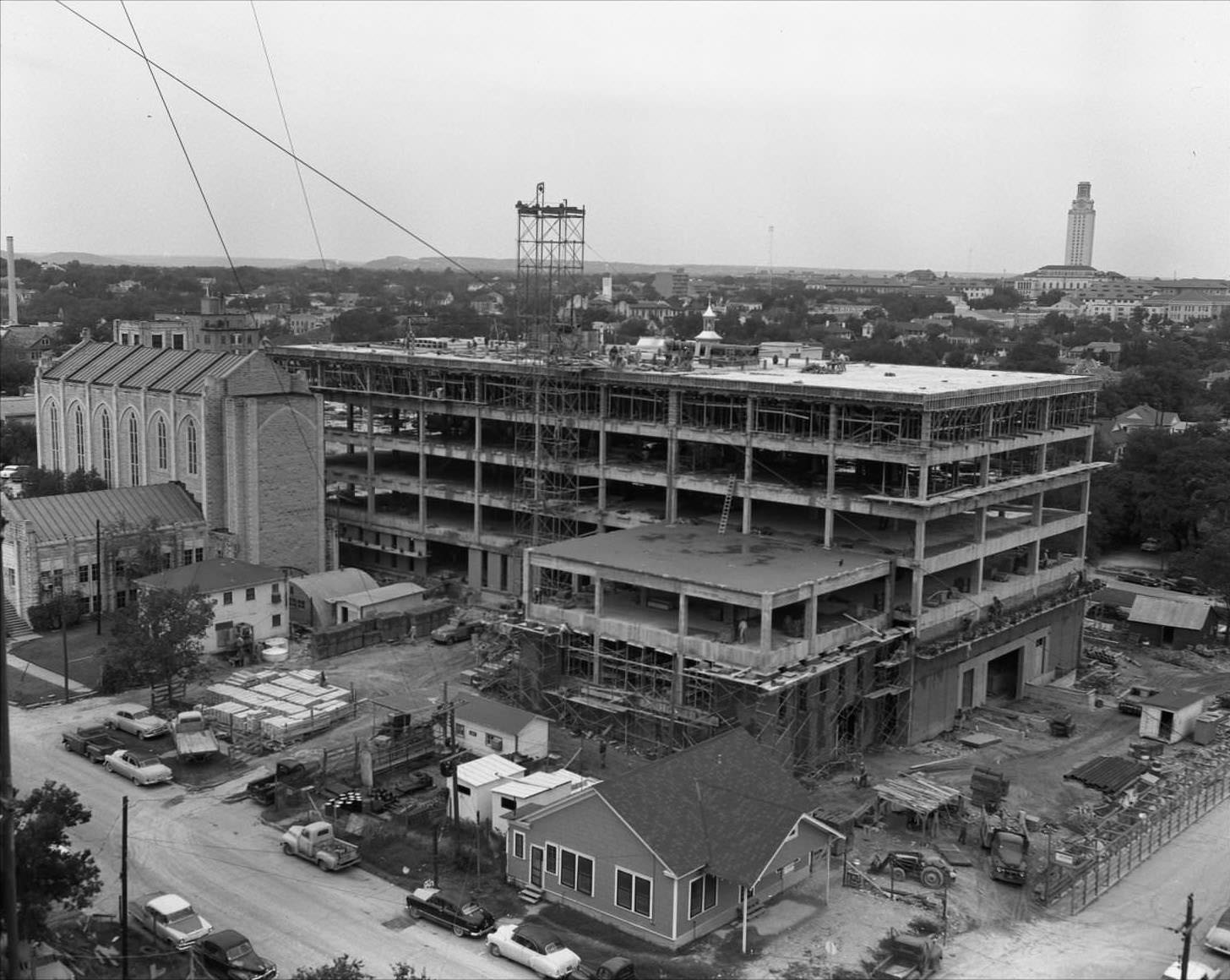
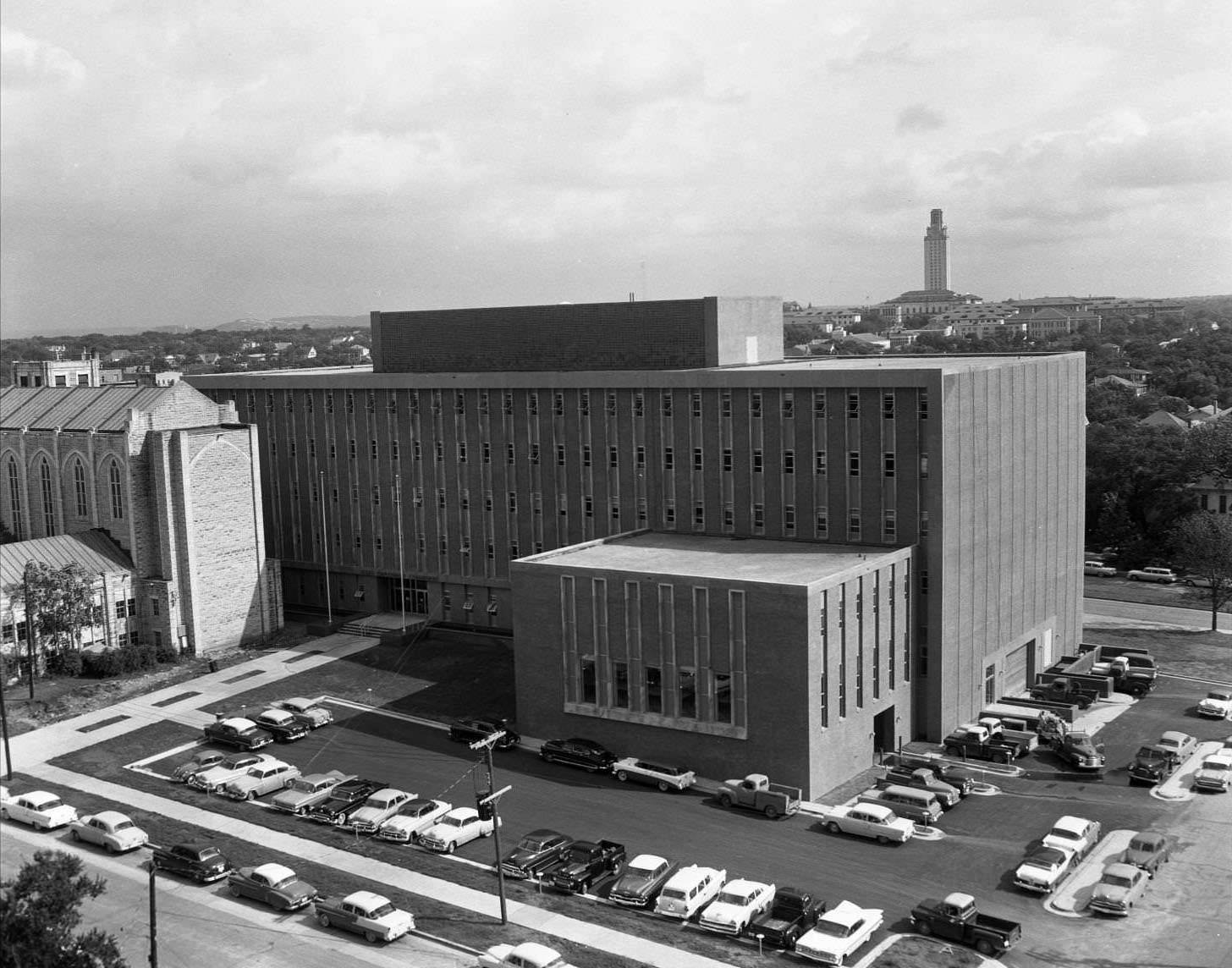
The Texas Employment Commission — known as TEC — built a major new office building near 15th and Brazos streets in 1958. Construction photographs show steel frames rising from the lot, cranes overhead, and scaffolding covering the site. The finished building changed the look of that block permanently. Nearby, the steeples of Gethsemane Lutheran Church and St. Austin’s Catholic Church were still visible above the roofline — landmarks that survived the decade even as the blocks around them were rebuilt.
Aerial shot of cranes and scaffolding at TEC construction site. 15th Street, 1958Aerial shot of steel frame structure of TEC building. Brazos St is on the lower right and 14th on the lower left, 1958Aerial shot of finished TEC Building. Brazos St on the lower right and 14th on the lower left, 1958
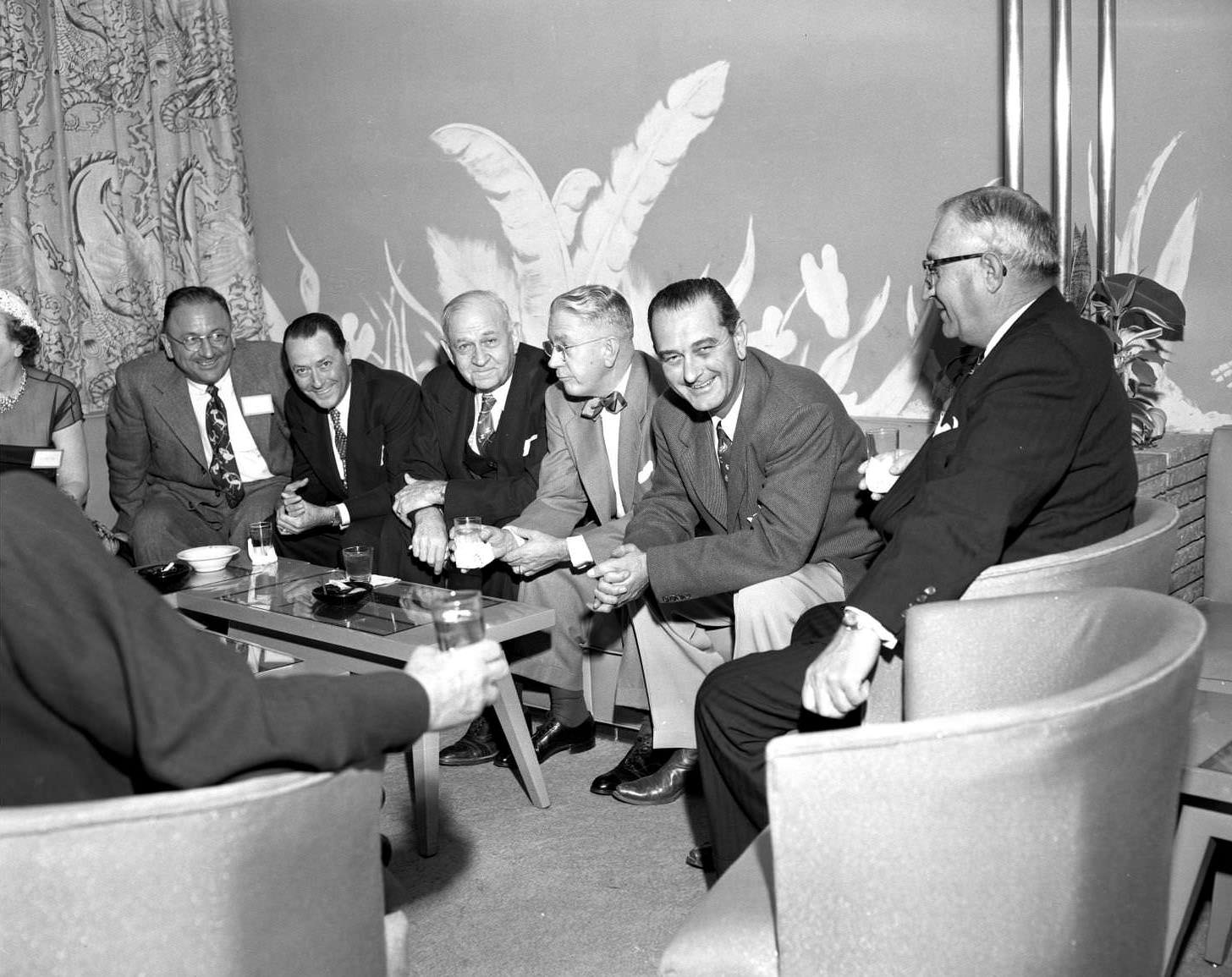
Senator Lyndon Johnson was photographed seated at a small table with five men in Austin in 1953, a reminder that the city was never far from the center of Texas political power. Chief Justice Tom C. Clark was photographed in Austin in 1950. The Governor’s Mansion on Colorado Street stood as a symbol of state authority. Austin was where decisions were made, and the city’s calendar was shaped by the rhythms of the legislature, elections, and the annual march of state government.
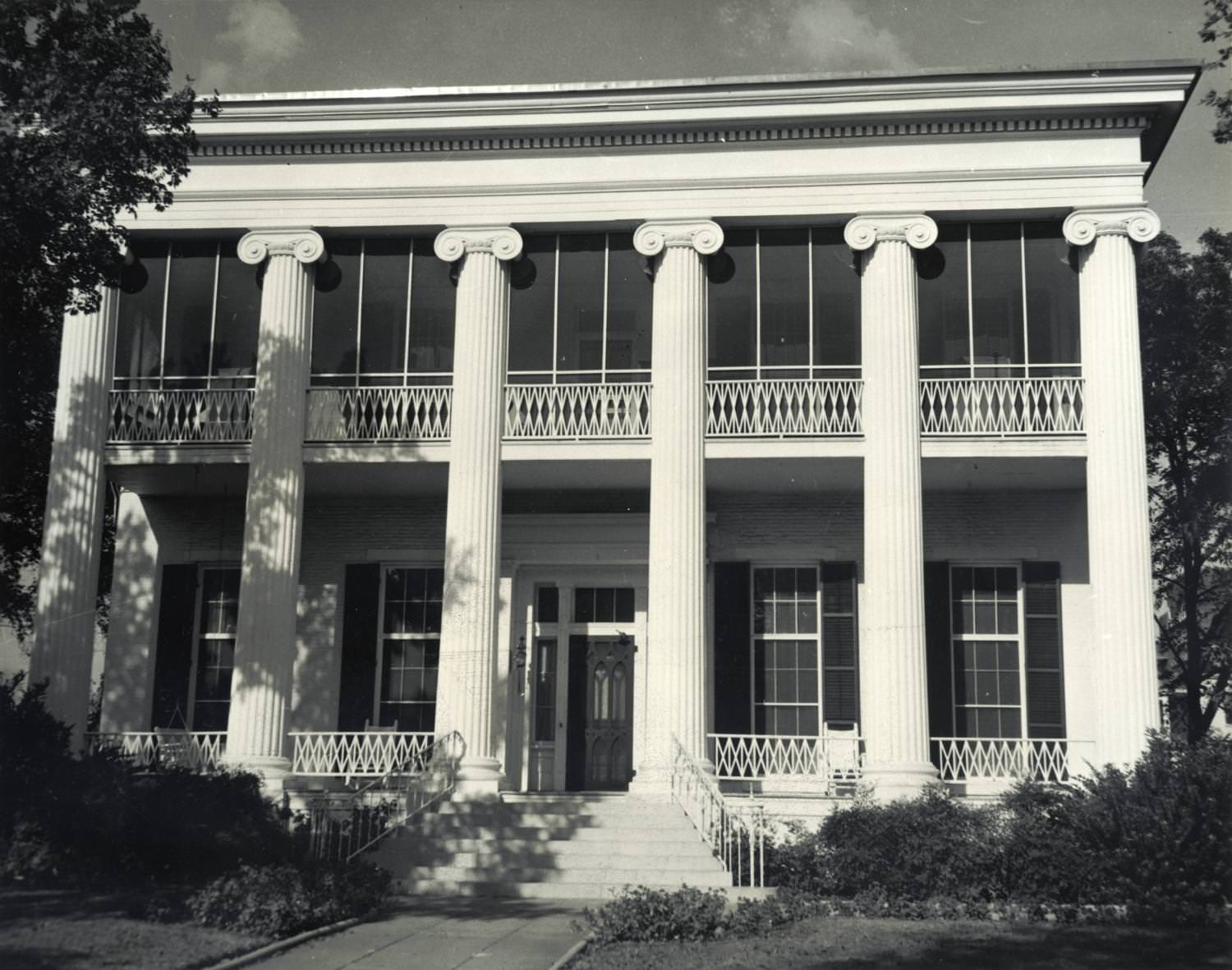
Six men seated around a small table. 5th from left is then Senator Lyndon Johnson, 1953Scene of Governor’s Mansion, Austin, 1954
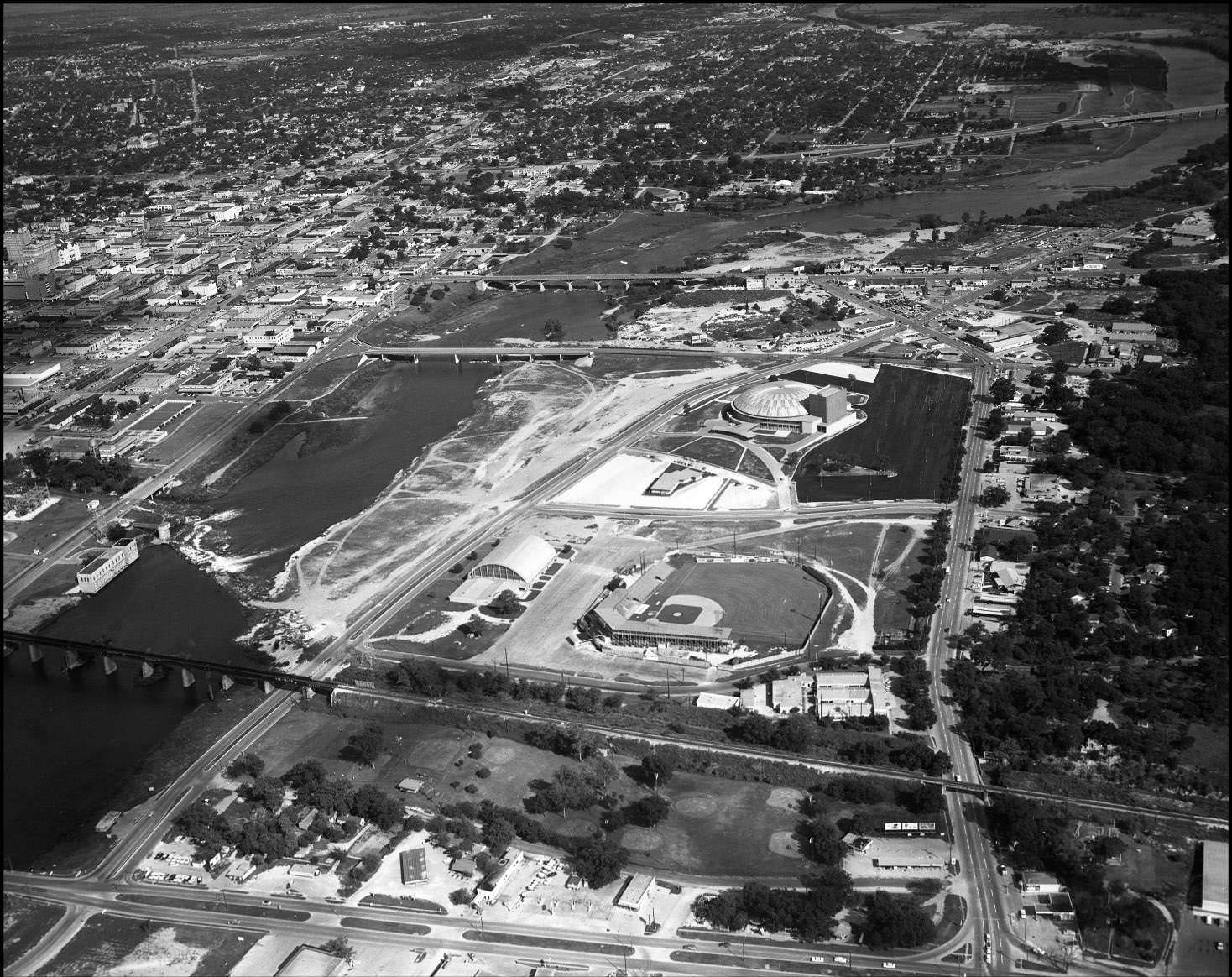
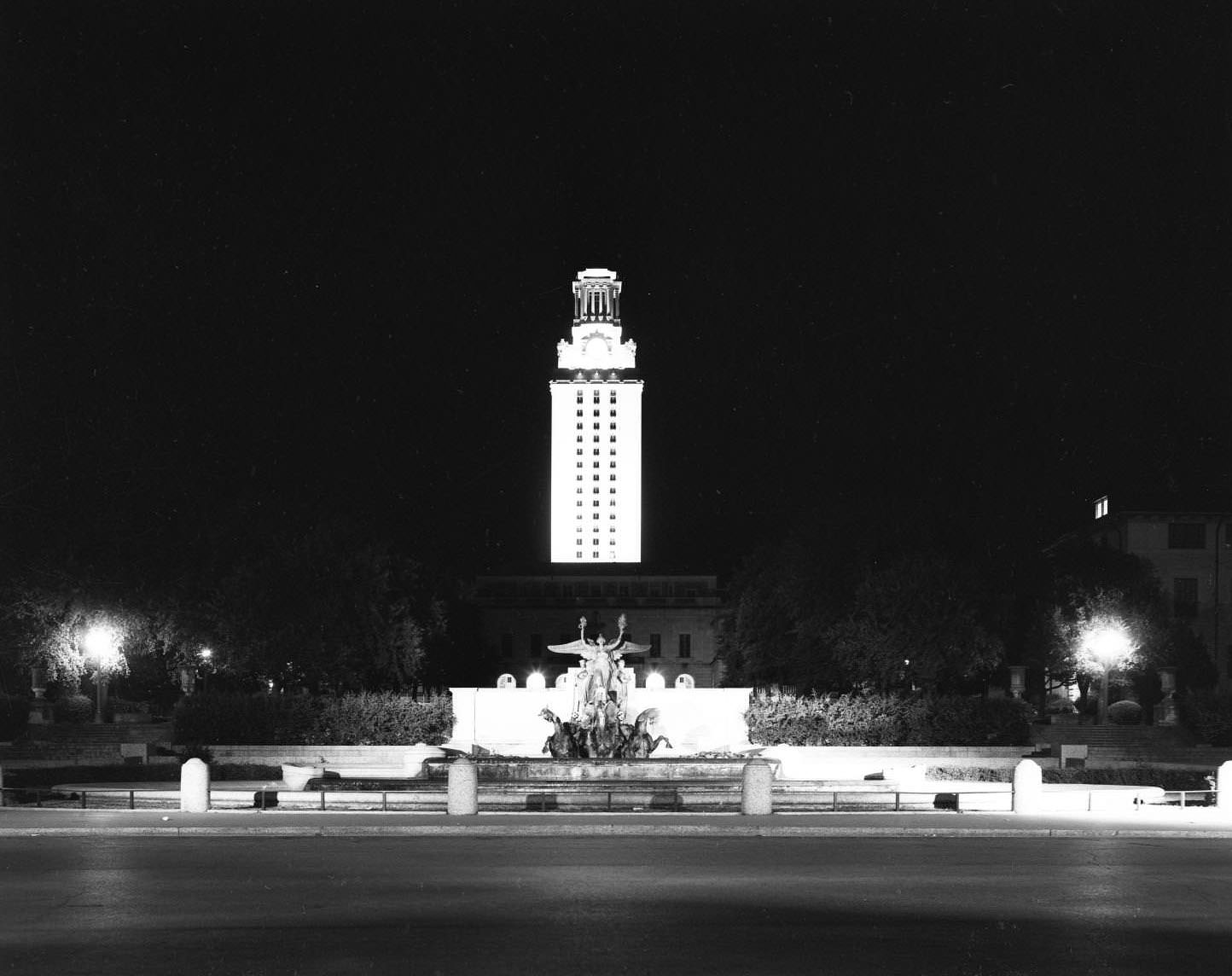
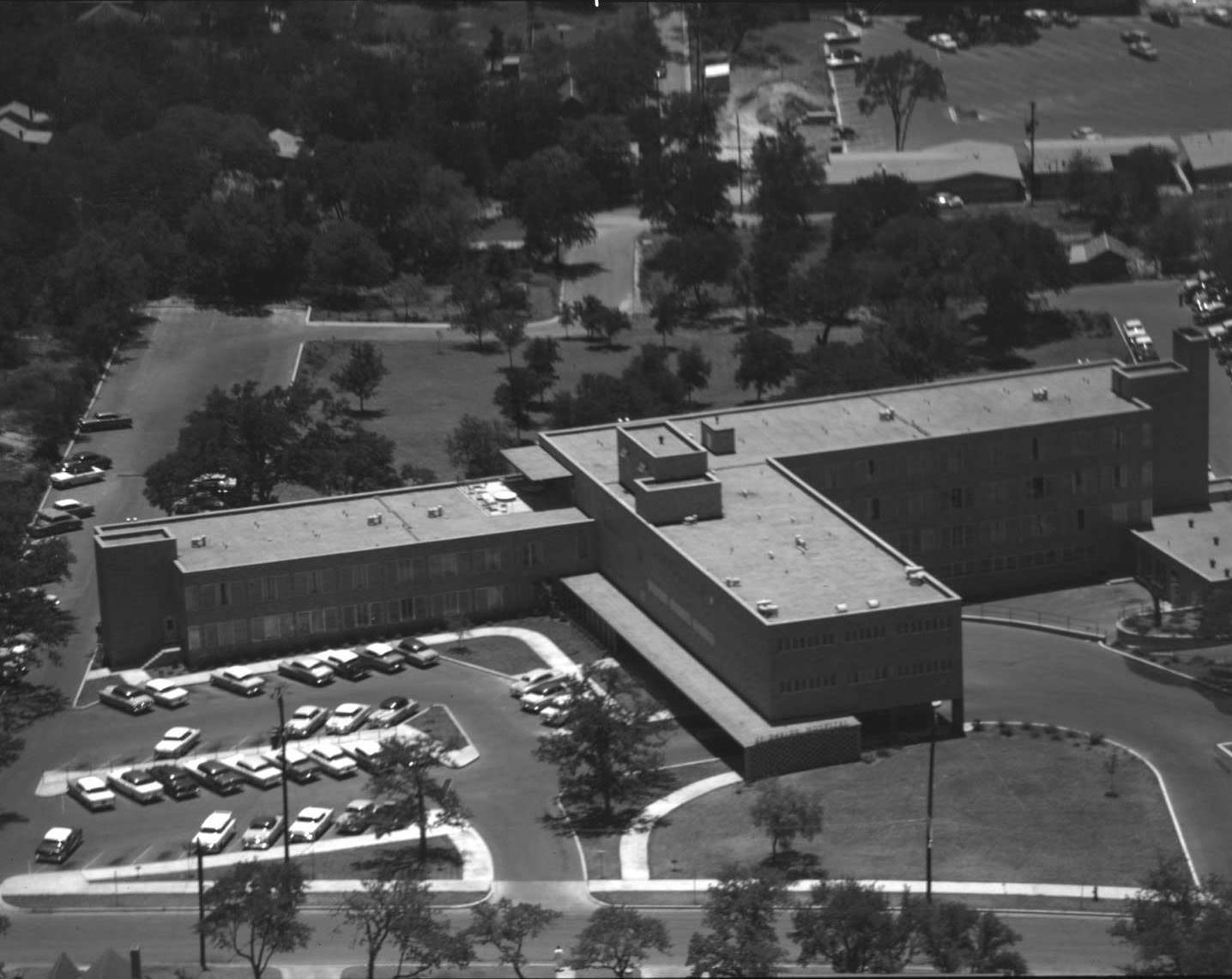
By the late 1950s, Austin’s skyline told a clear story. Aerial photographs looking north from the Colorado River showed a city that had grown denser and taller since the start of the decade. Research labs, new schools, expanding hospitals like St. David’s on East 32nd Street, and a broadening commercial sector all pointed to a city that was building something larger than what it had inherited. The UT Tower, lit up at night on 21st Street, had become the city’s most recognizable landmark — a beacon visible from miles away, standing watch over a city in full motion.
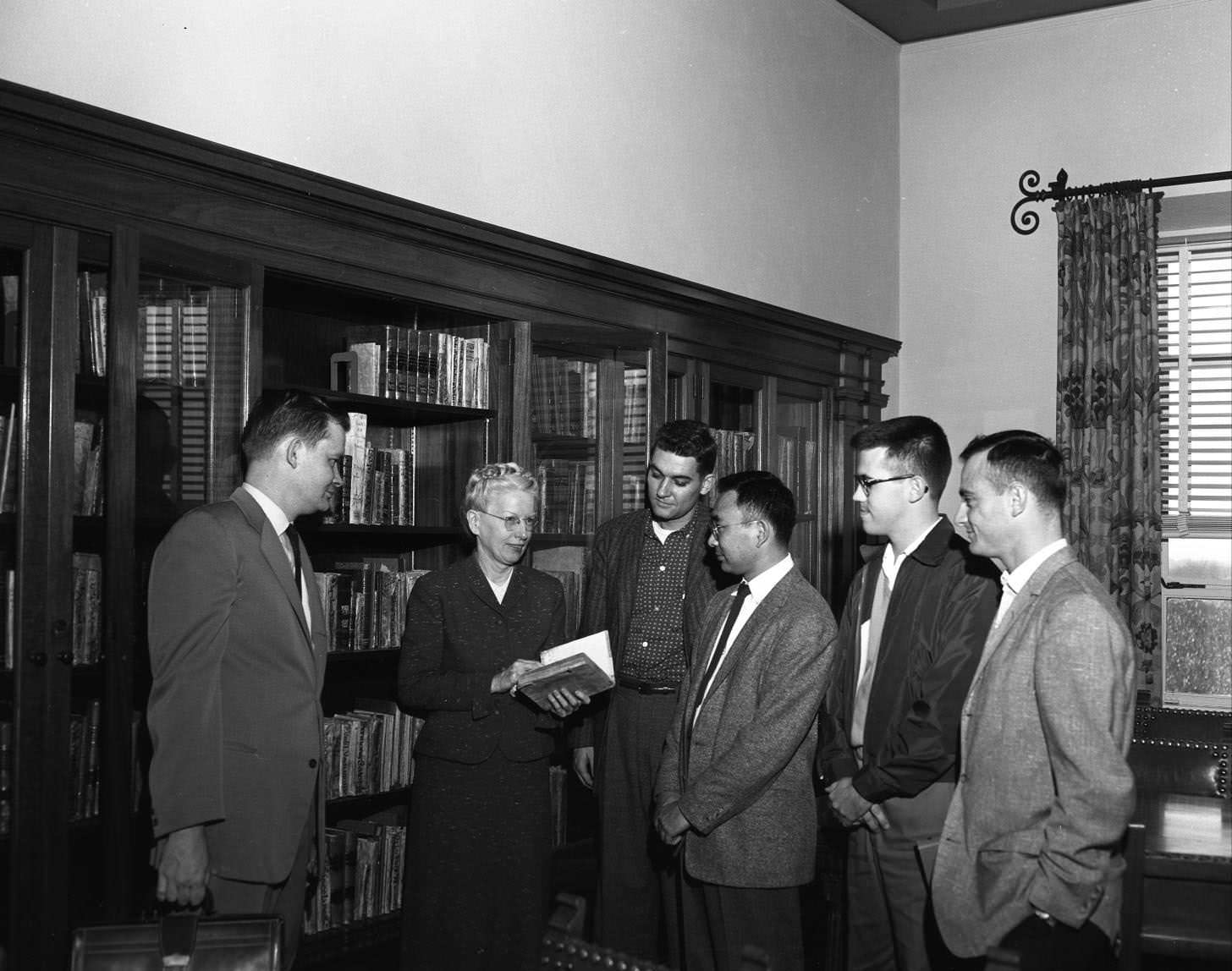
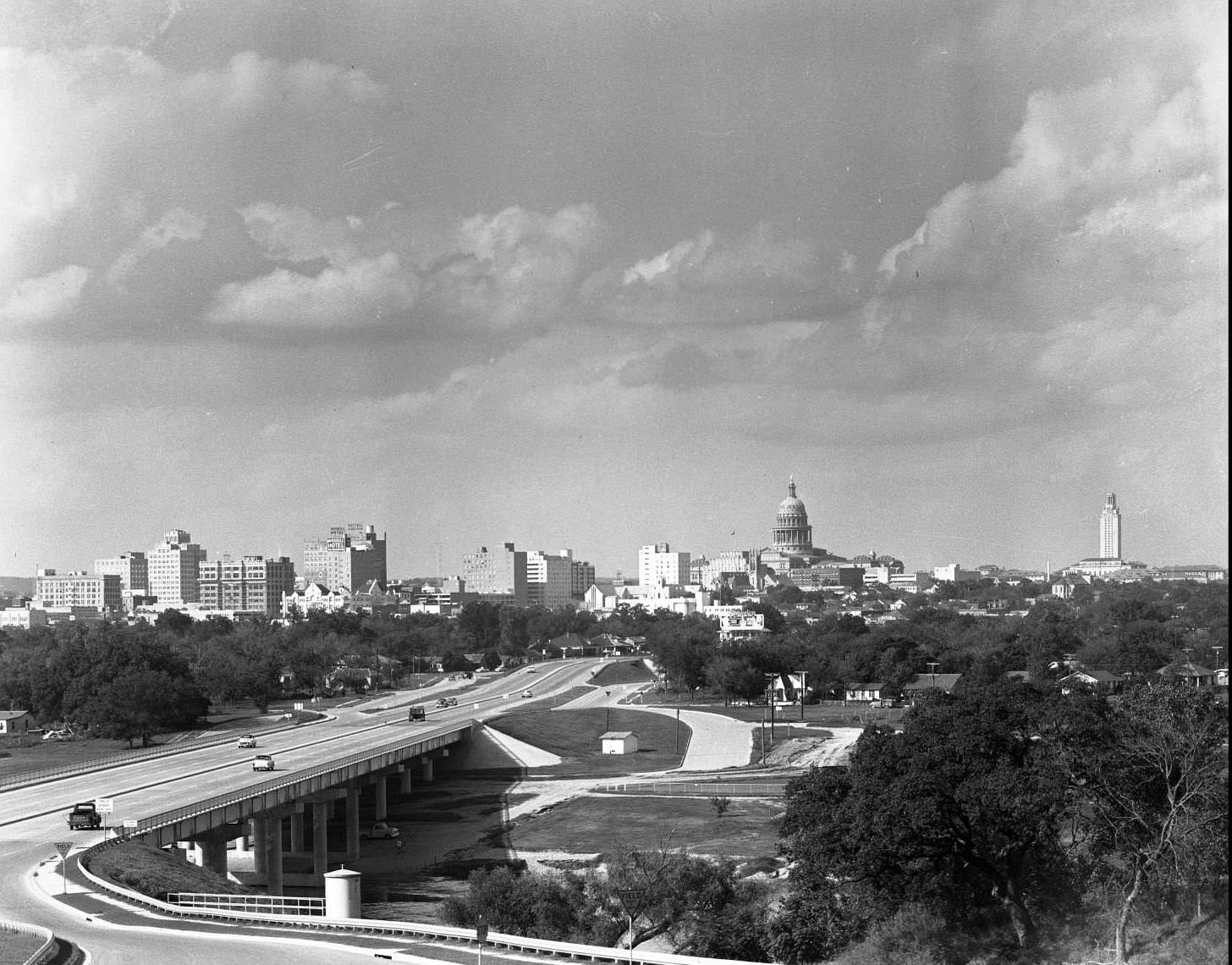
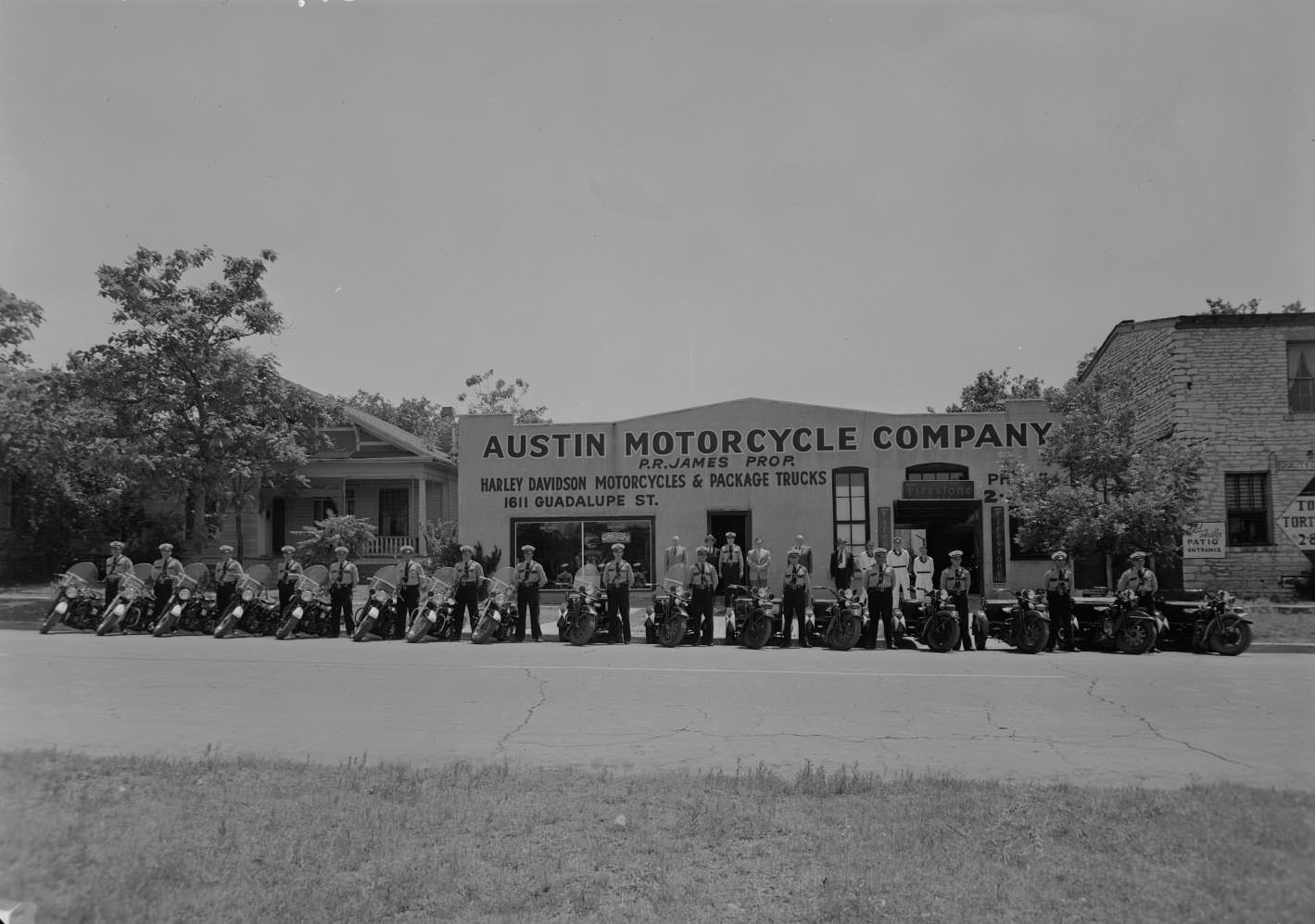
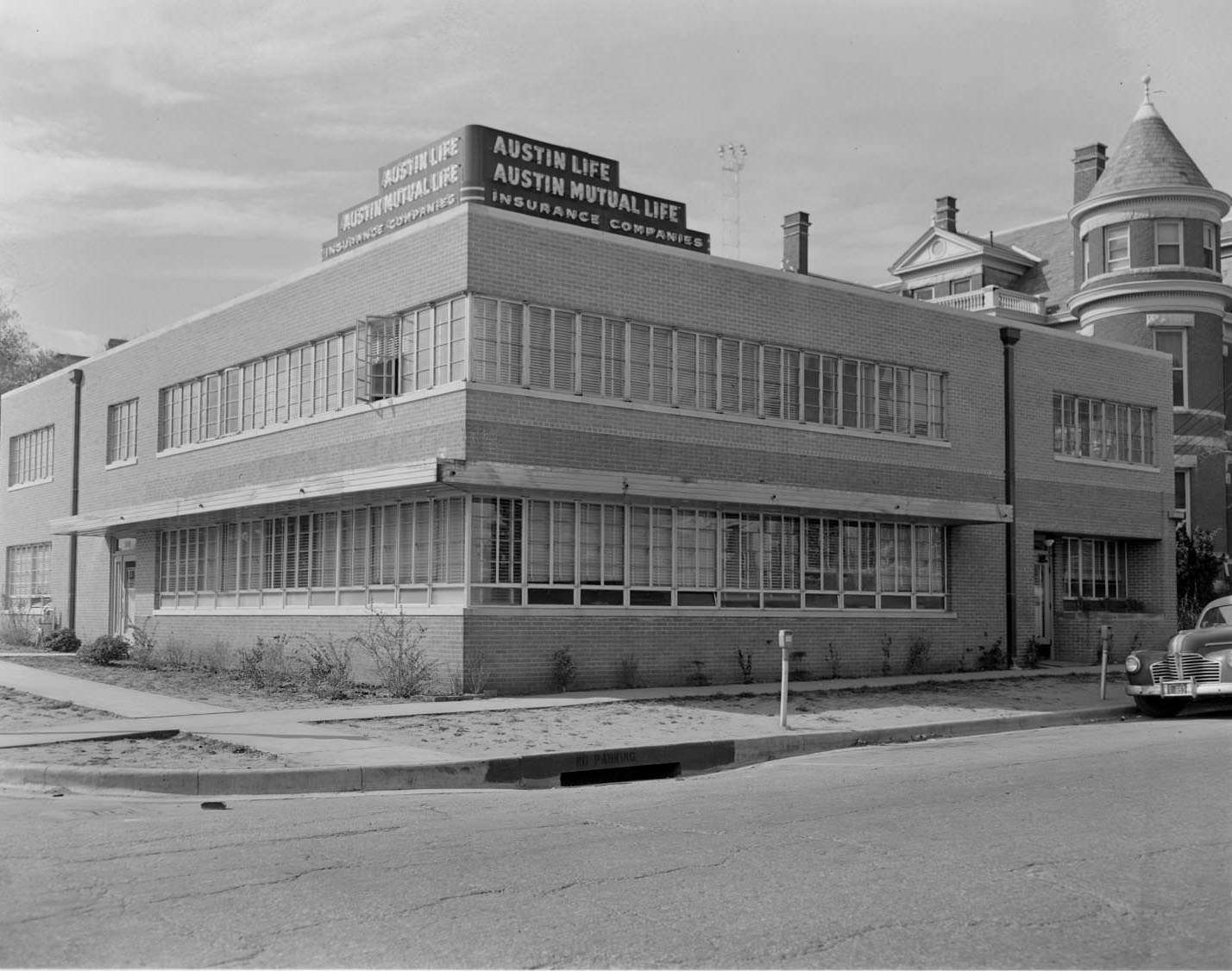
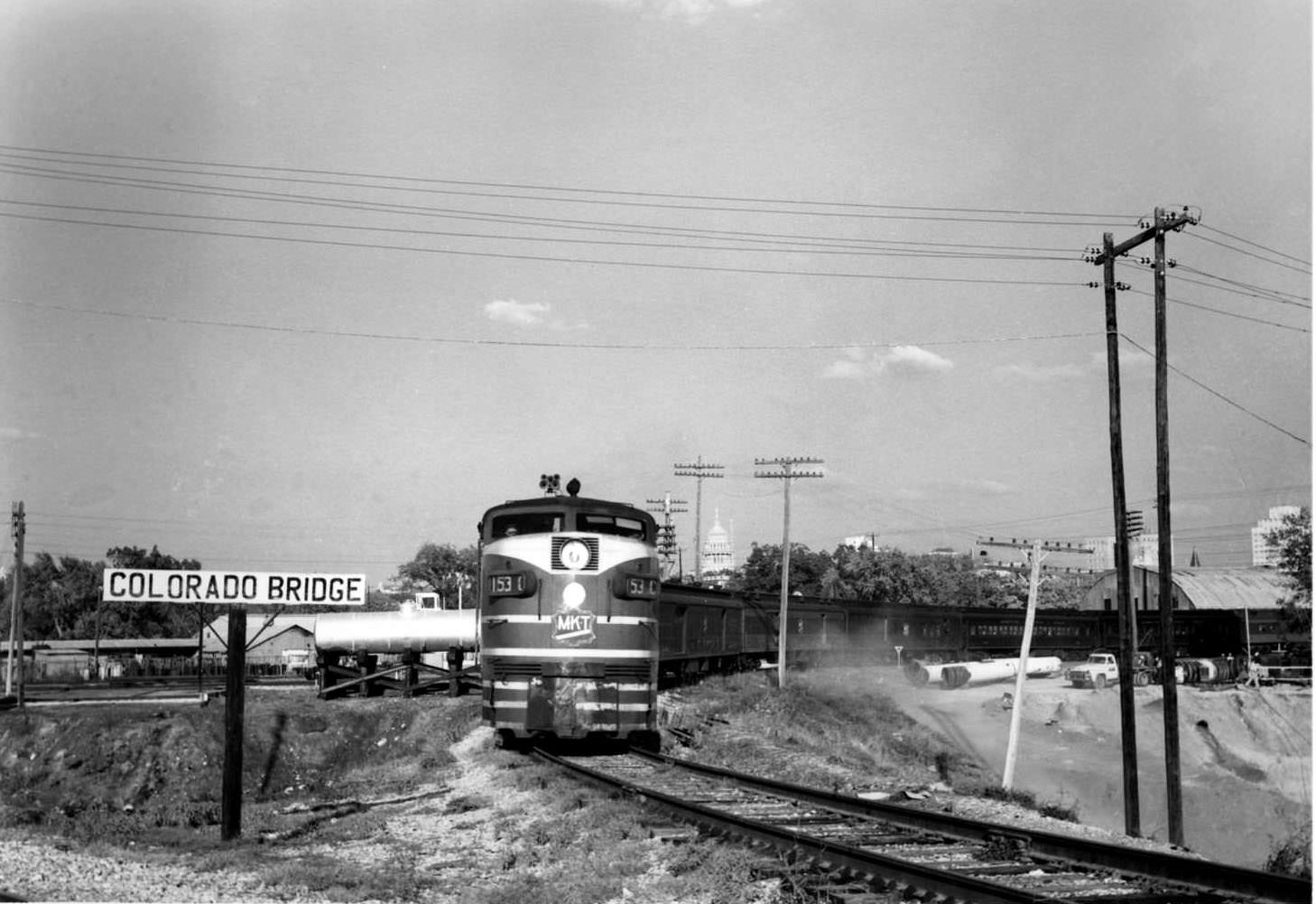
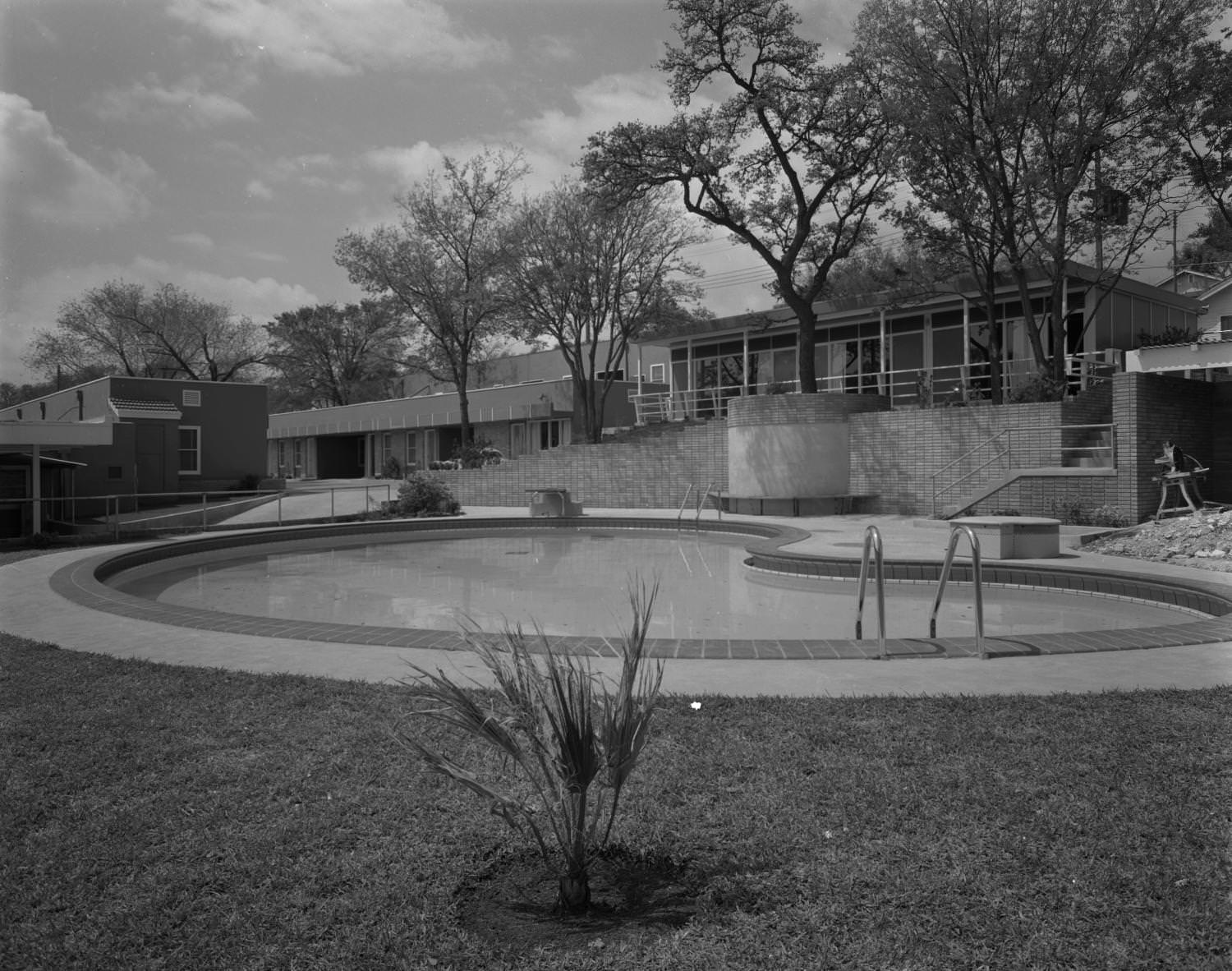
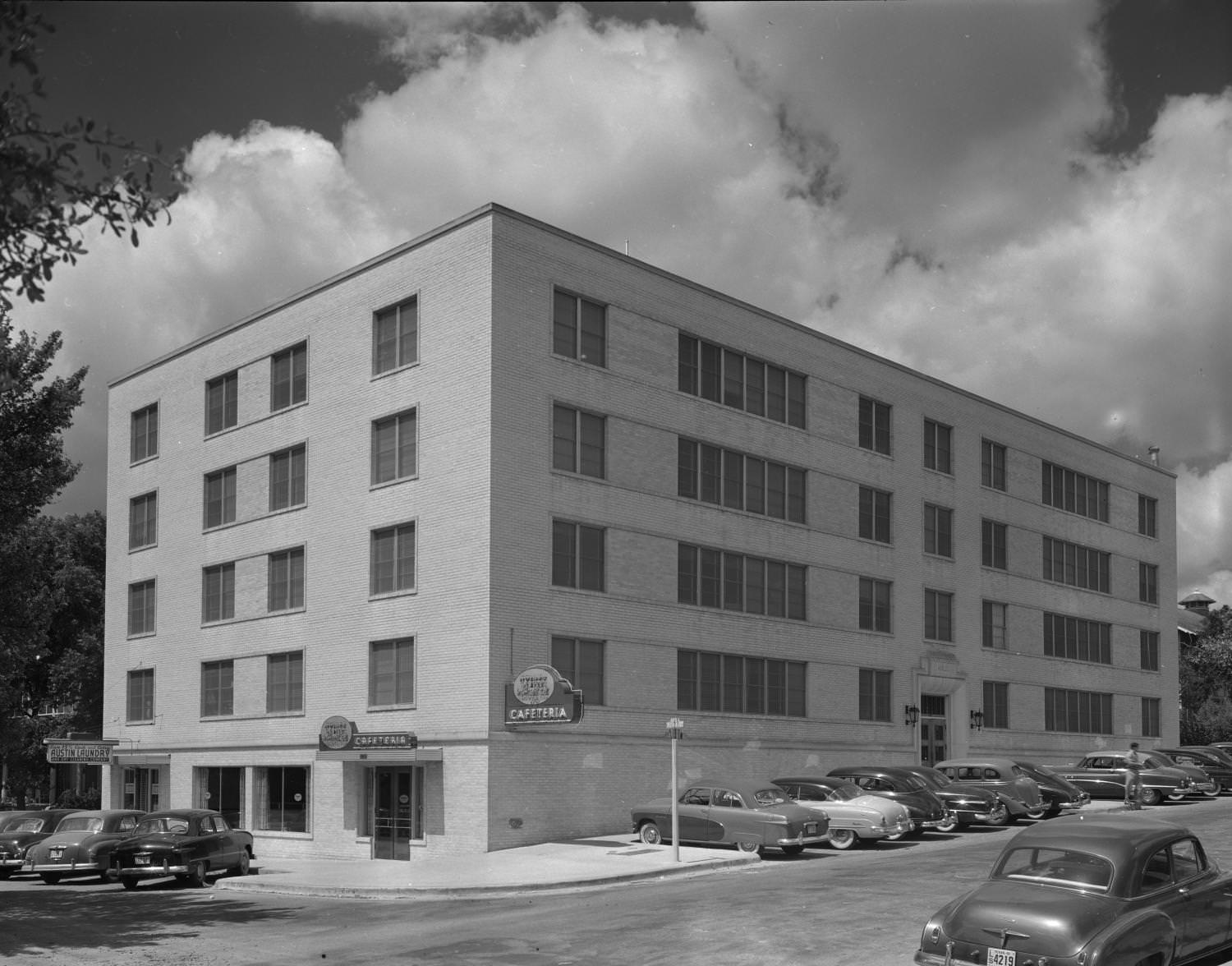
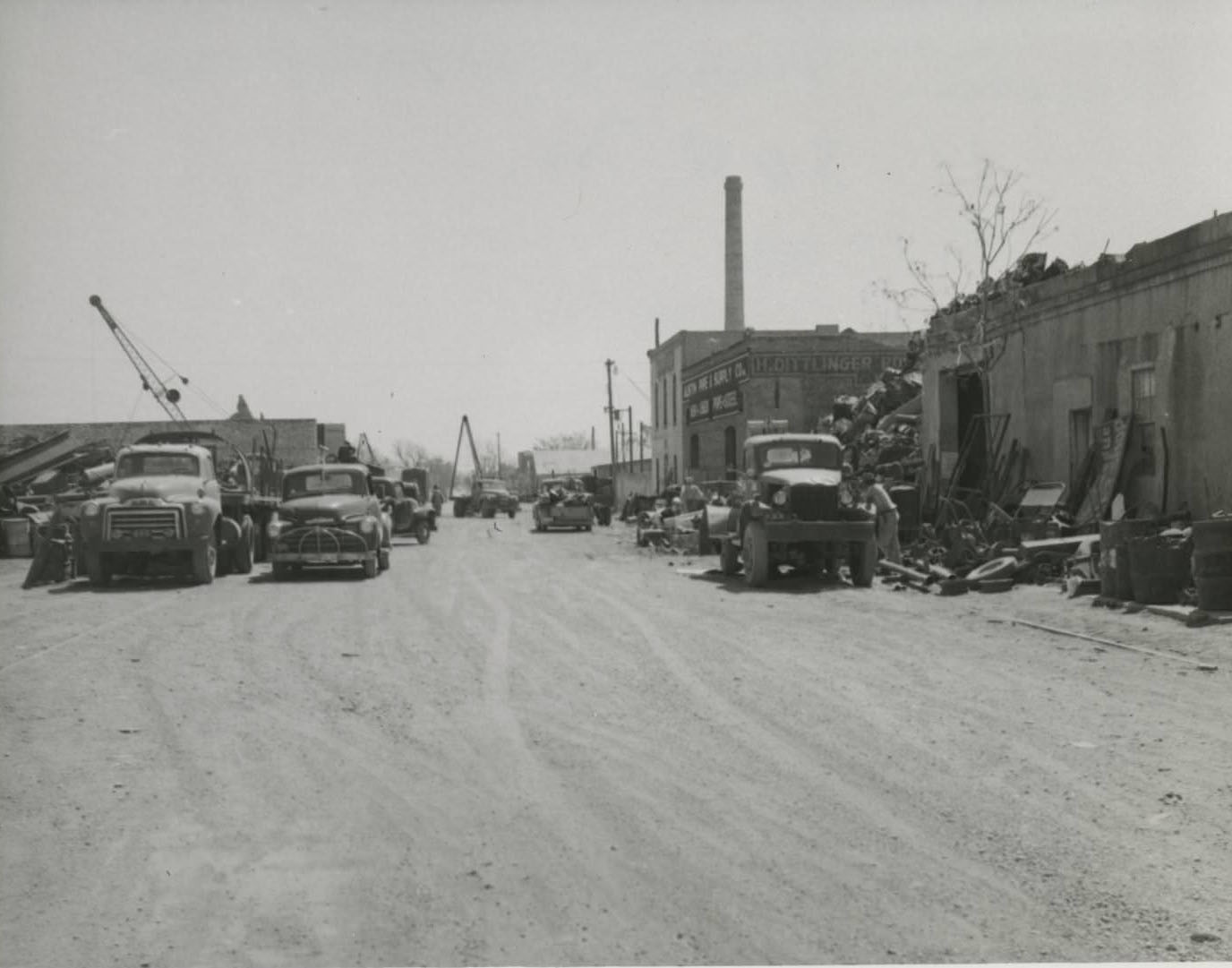
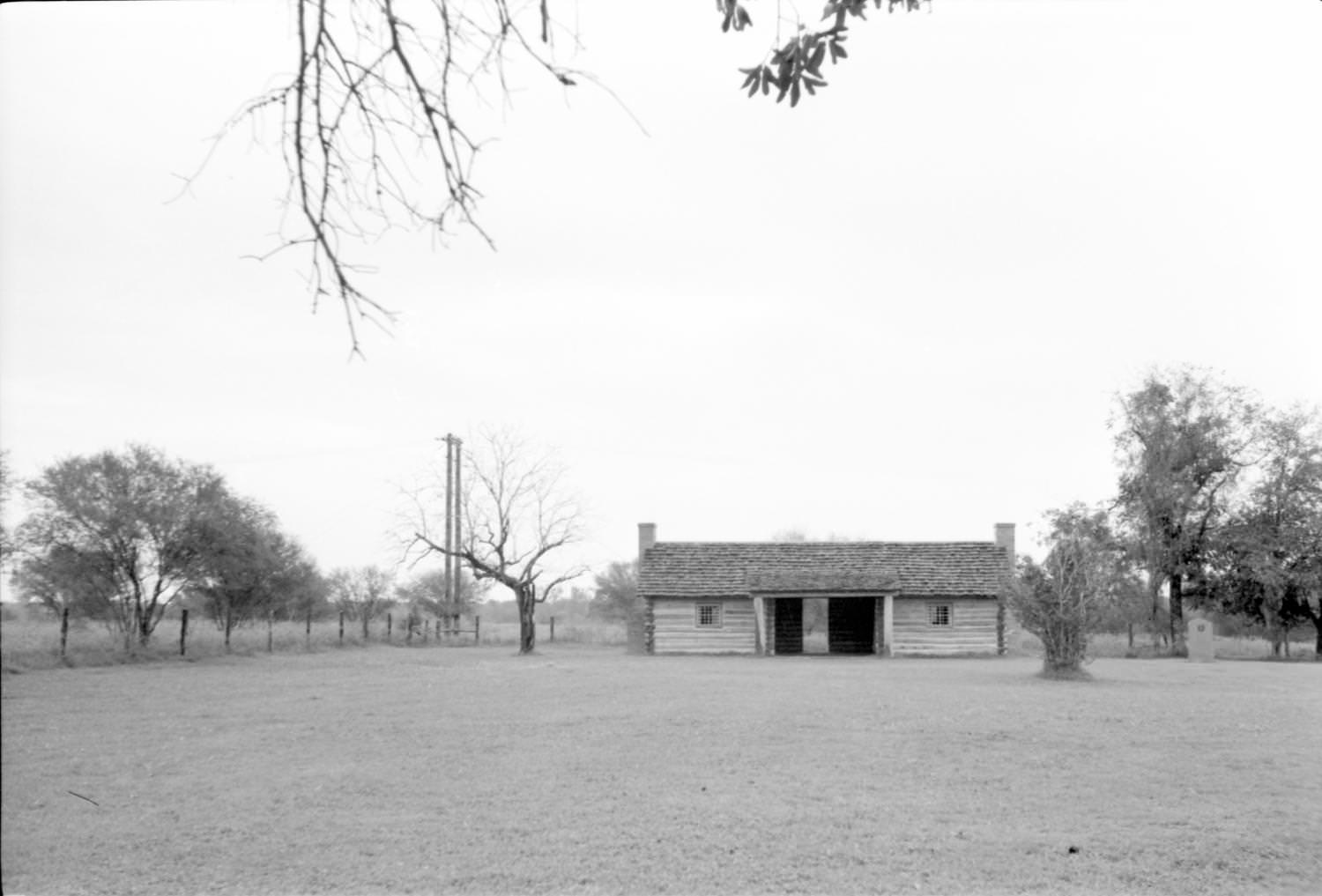
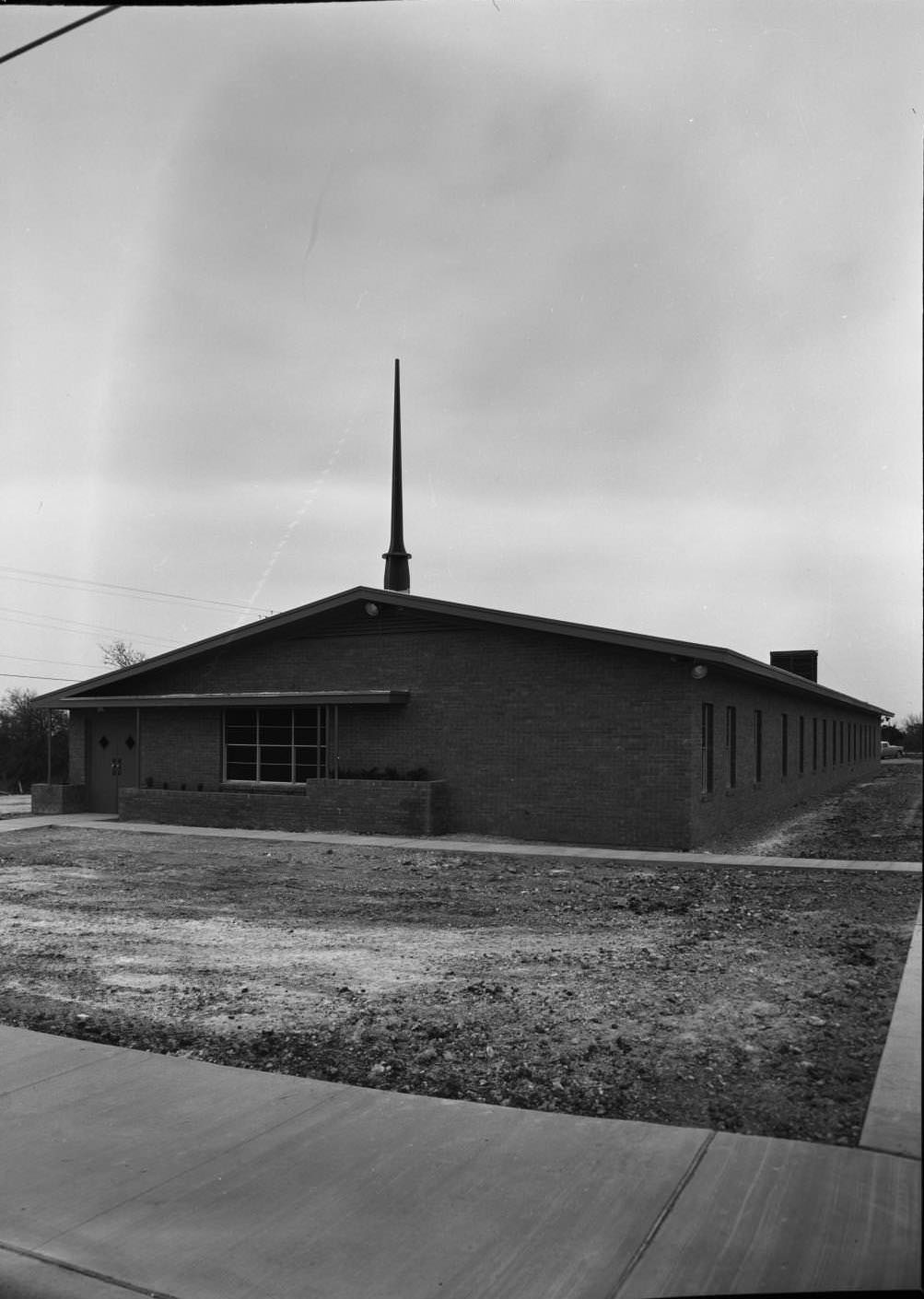
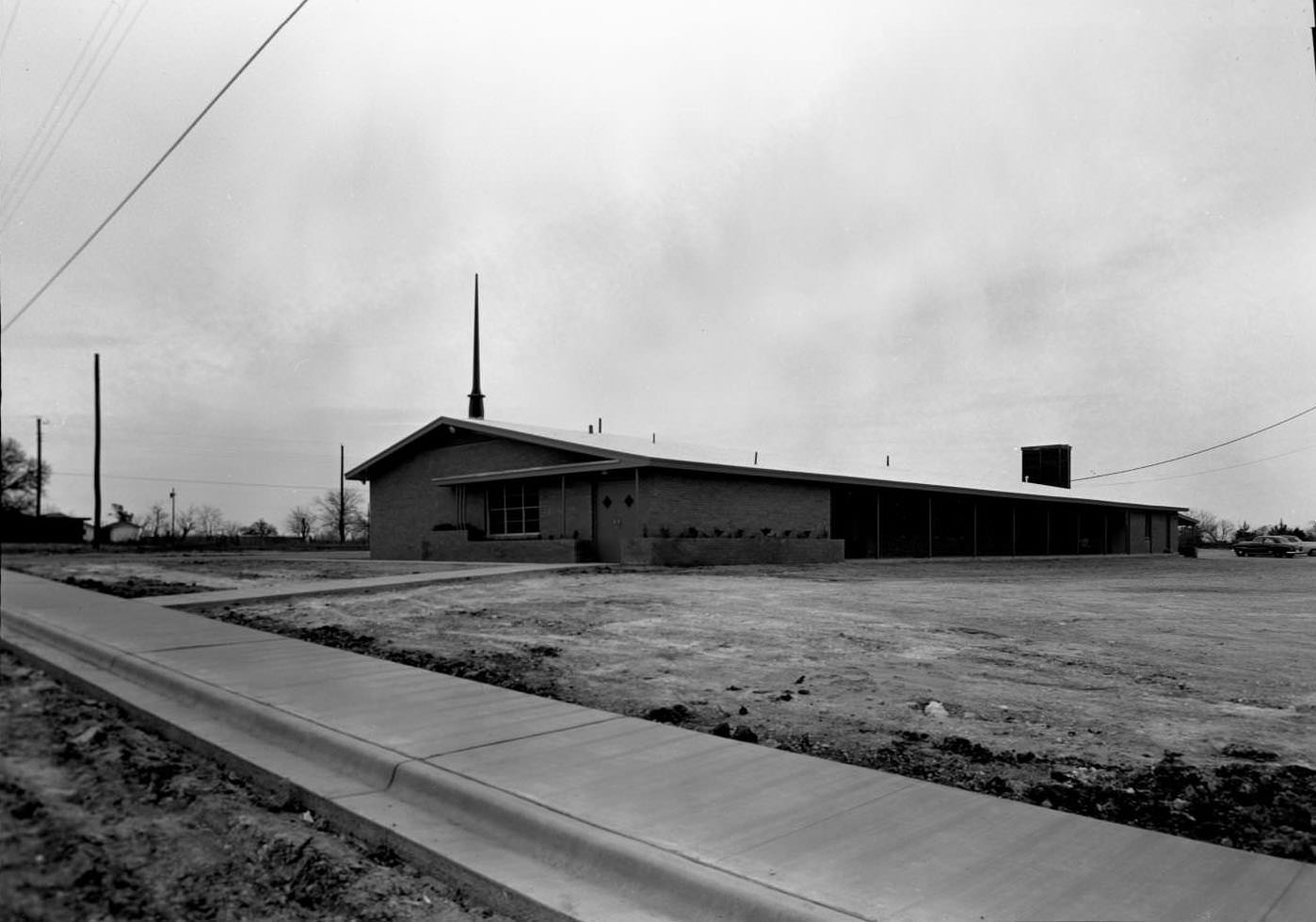
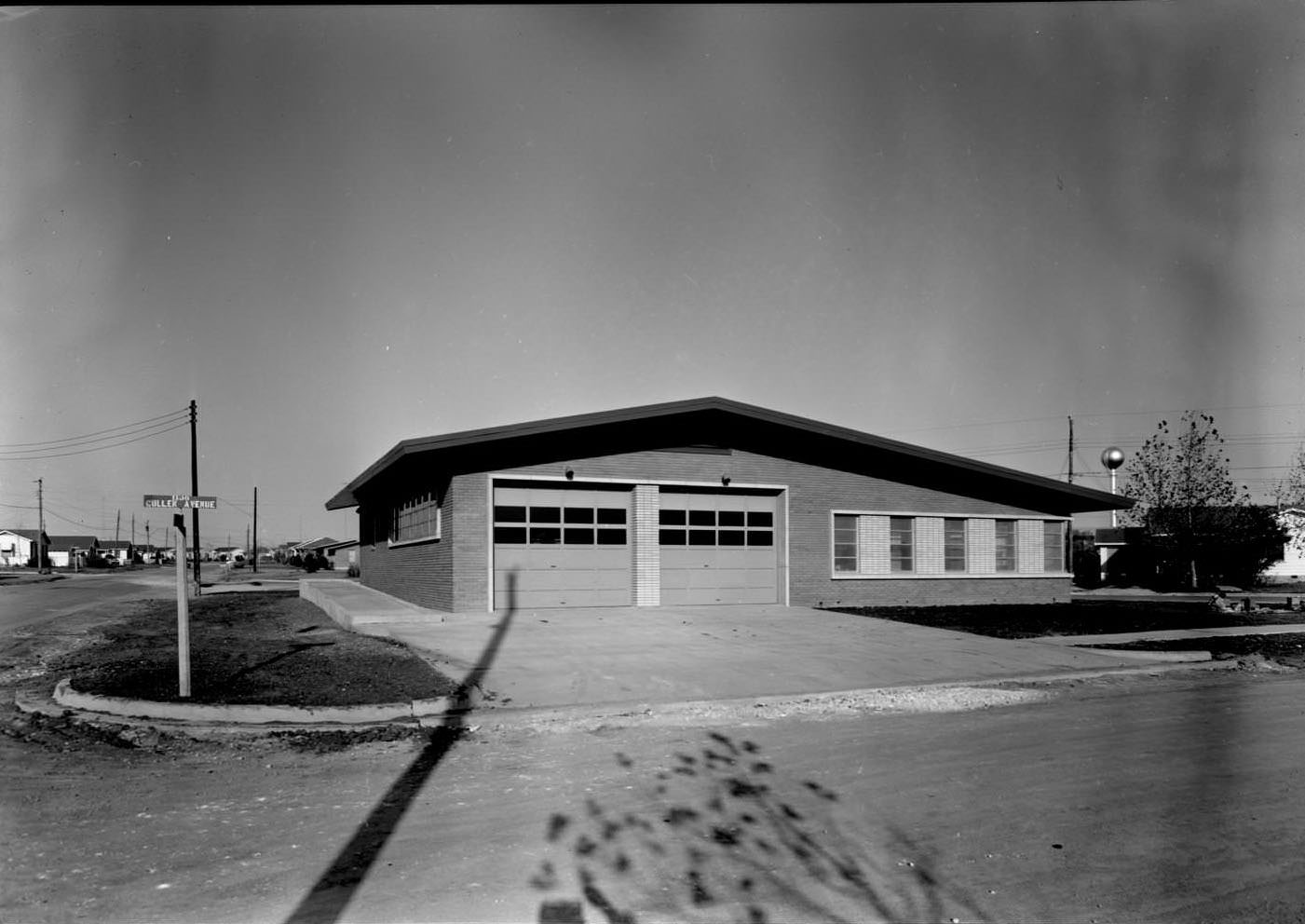
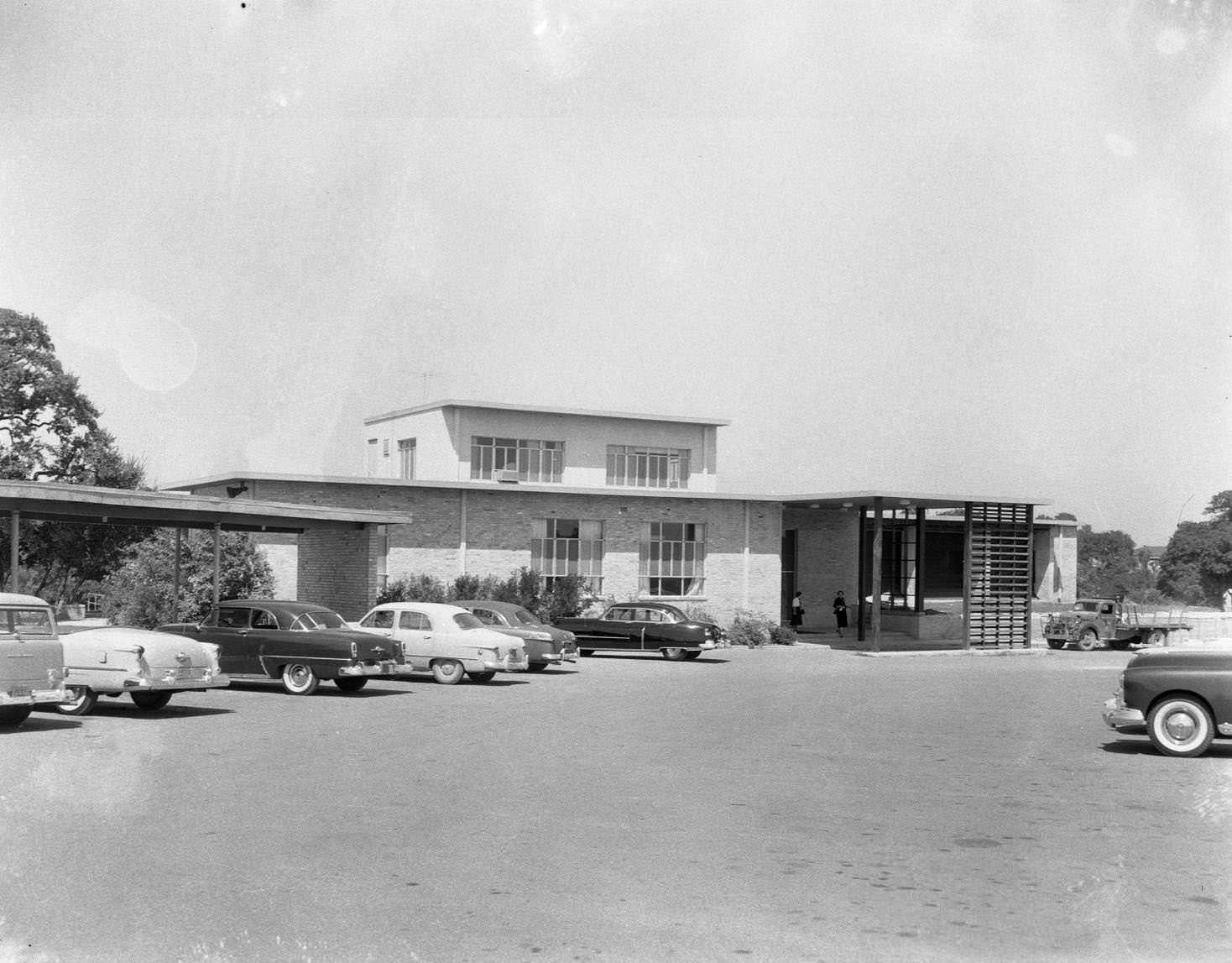
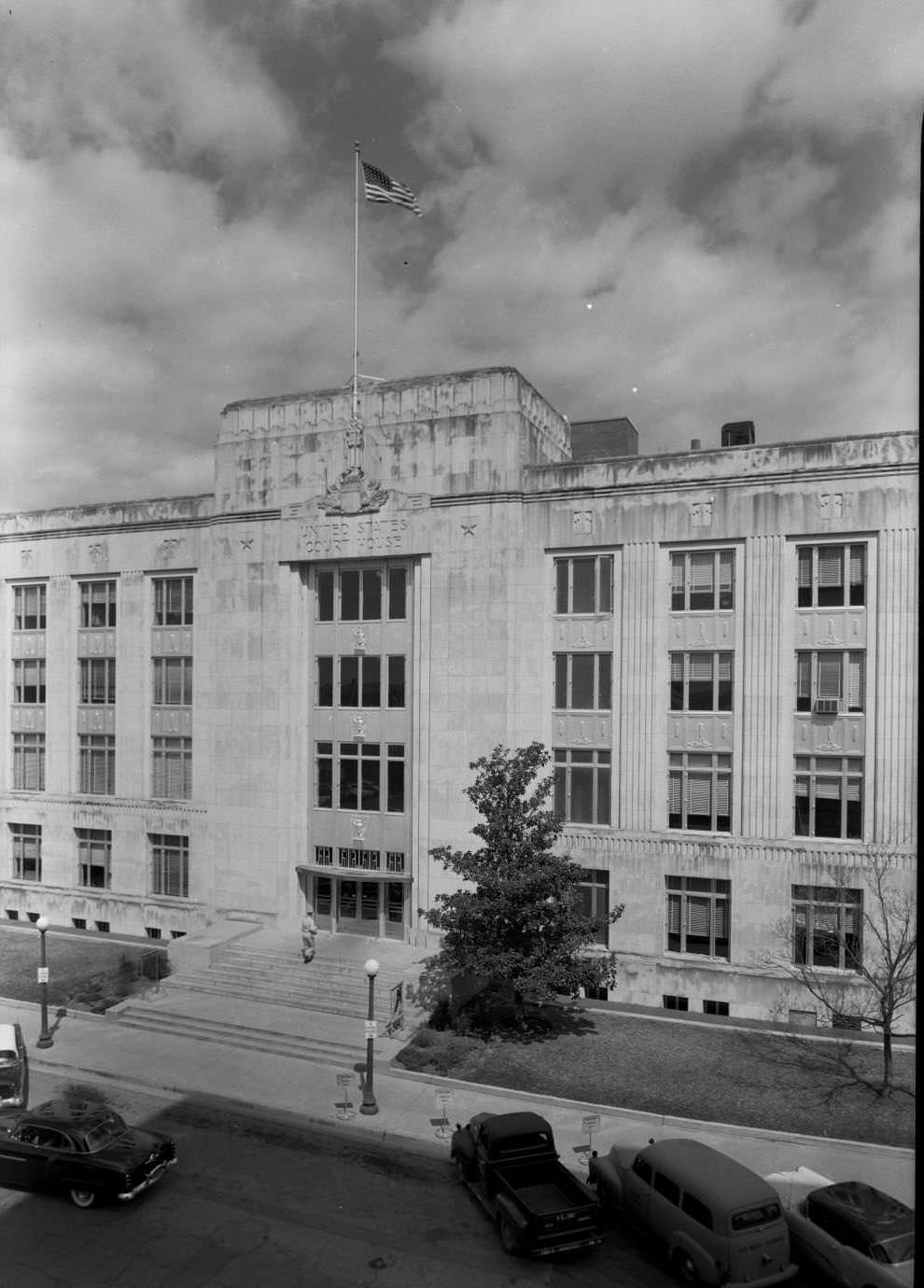
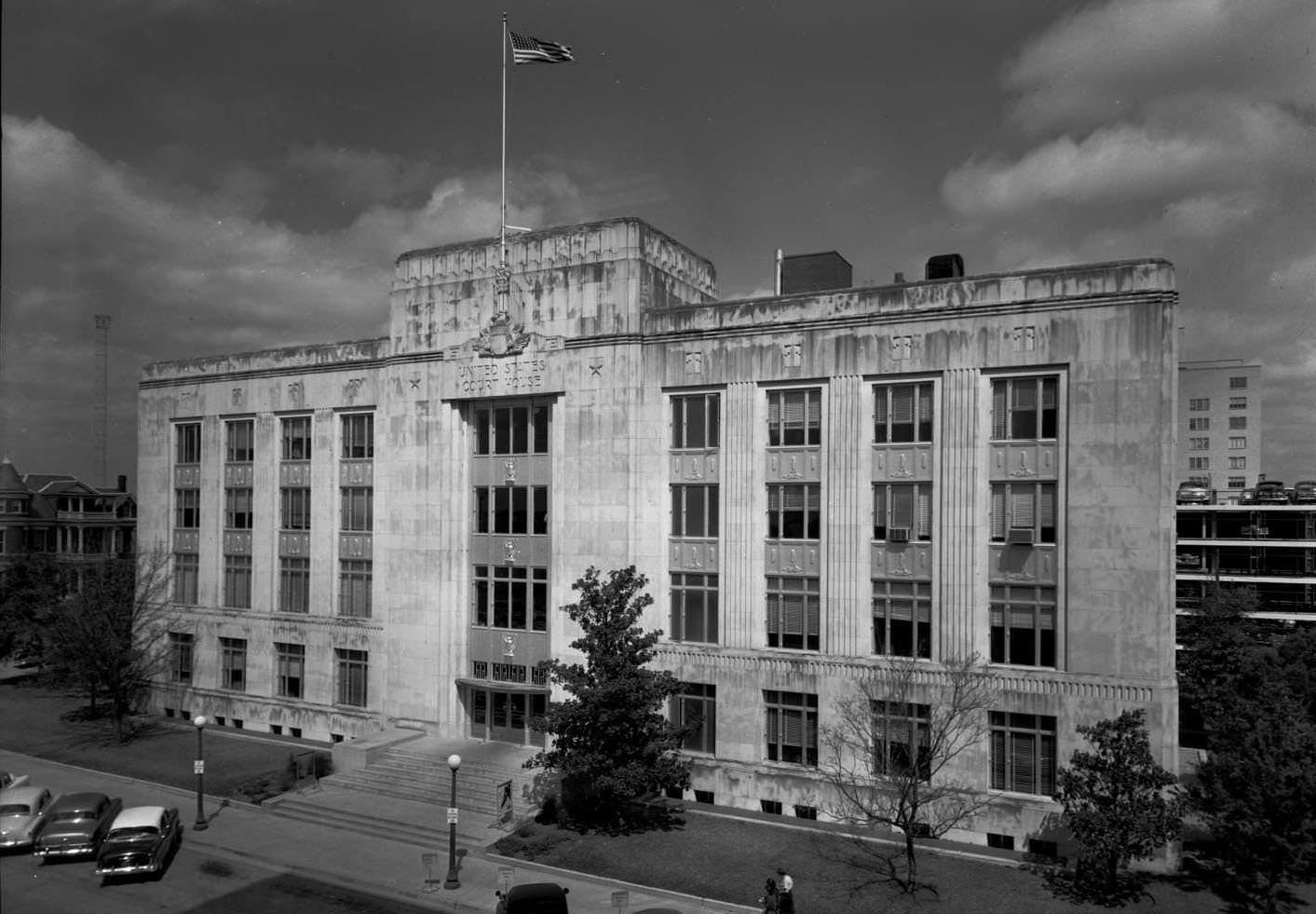
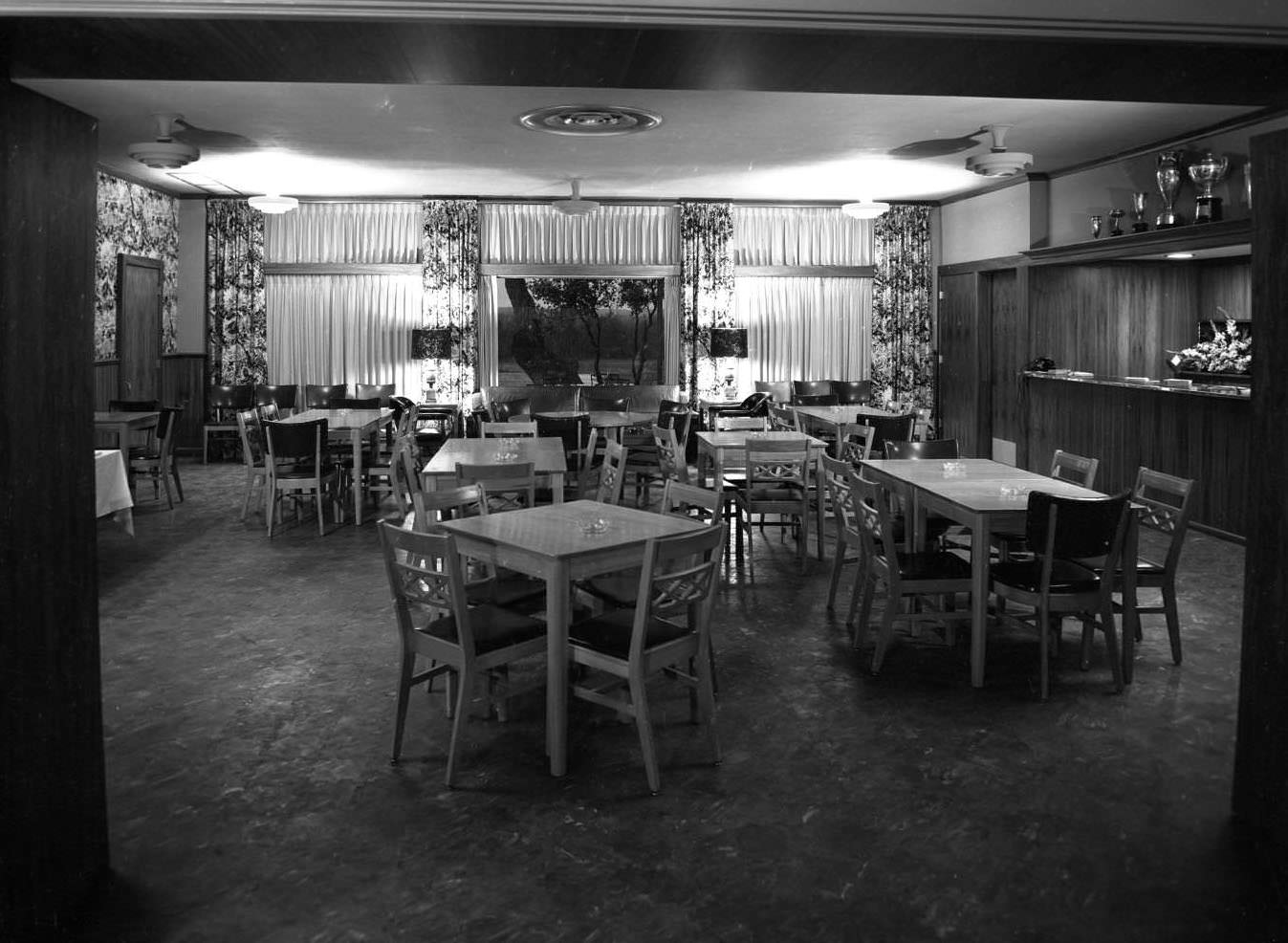
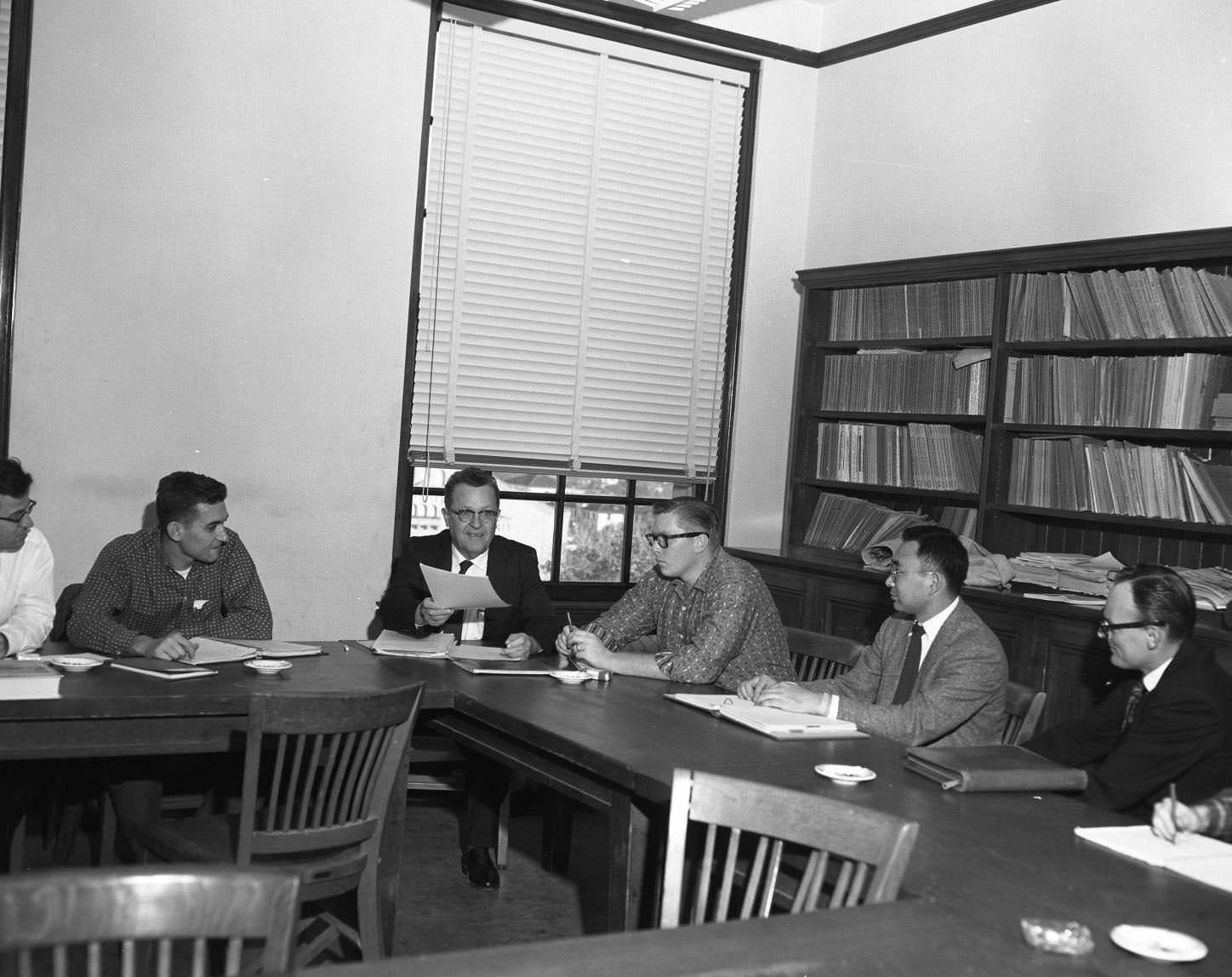
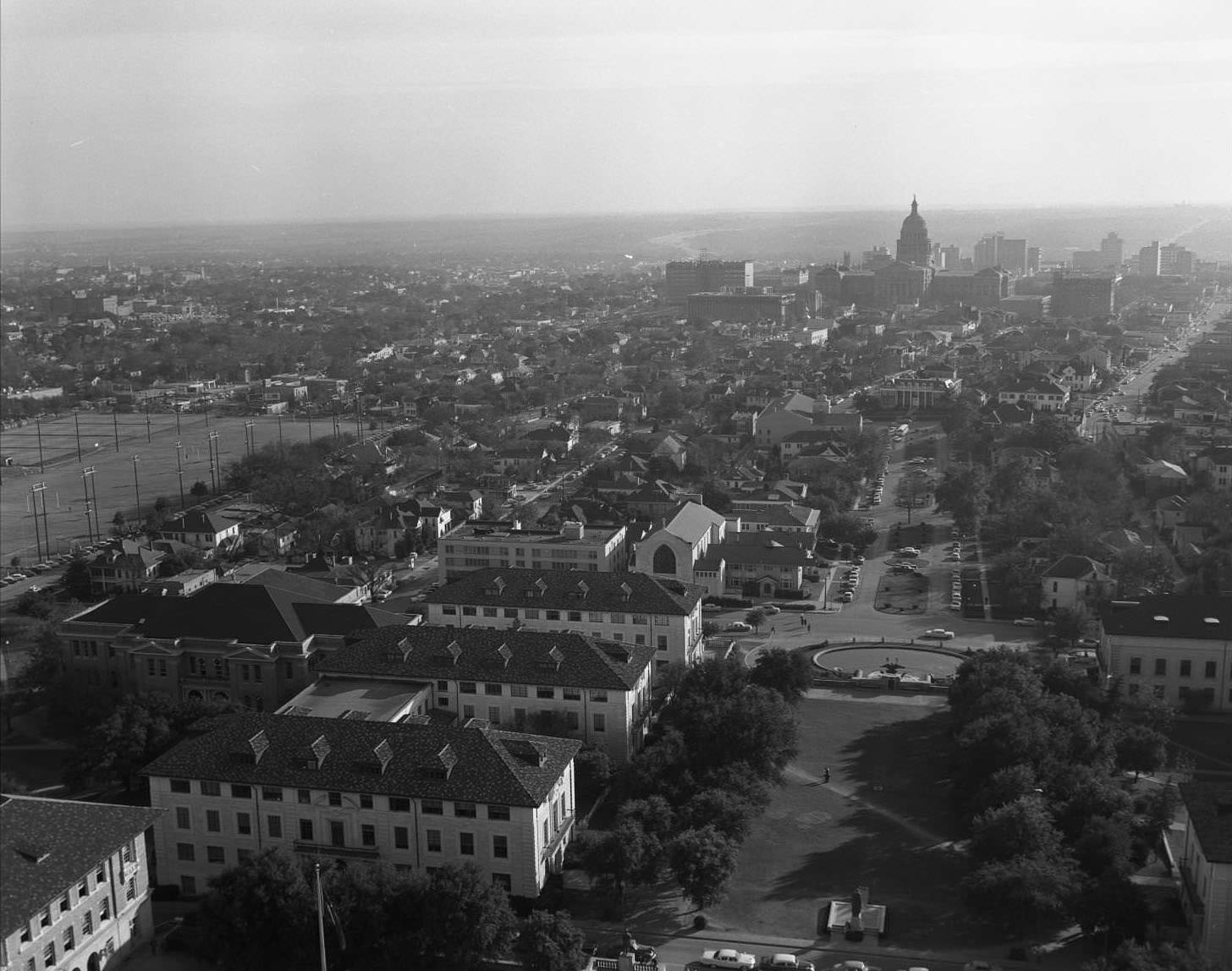
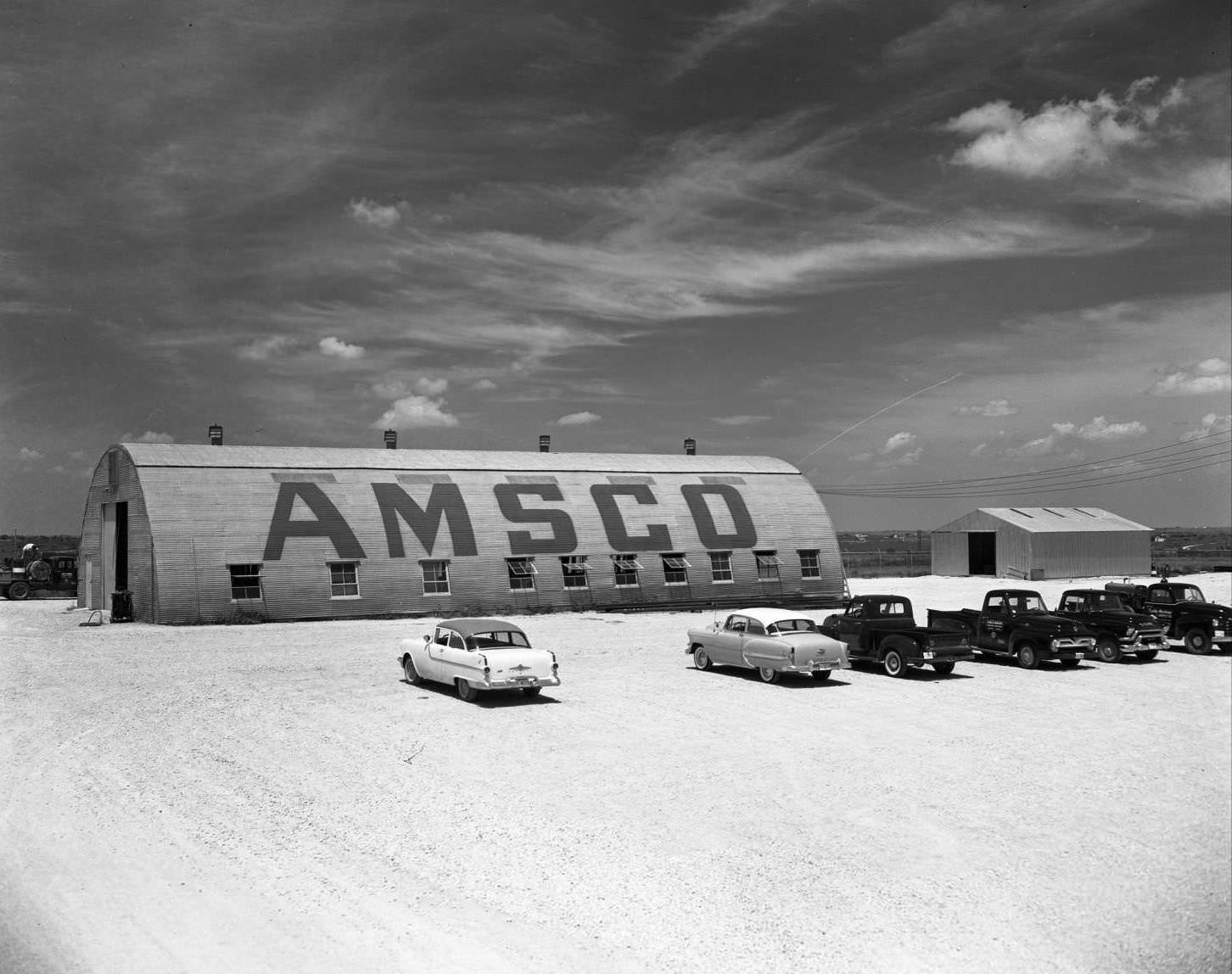
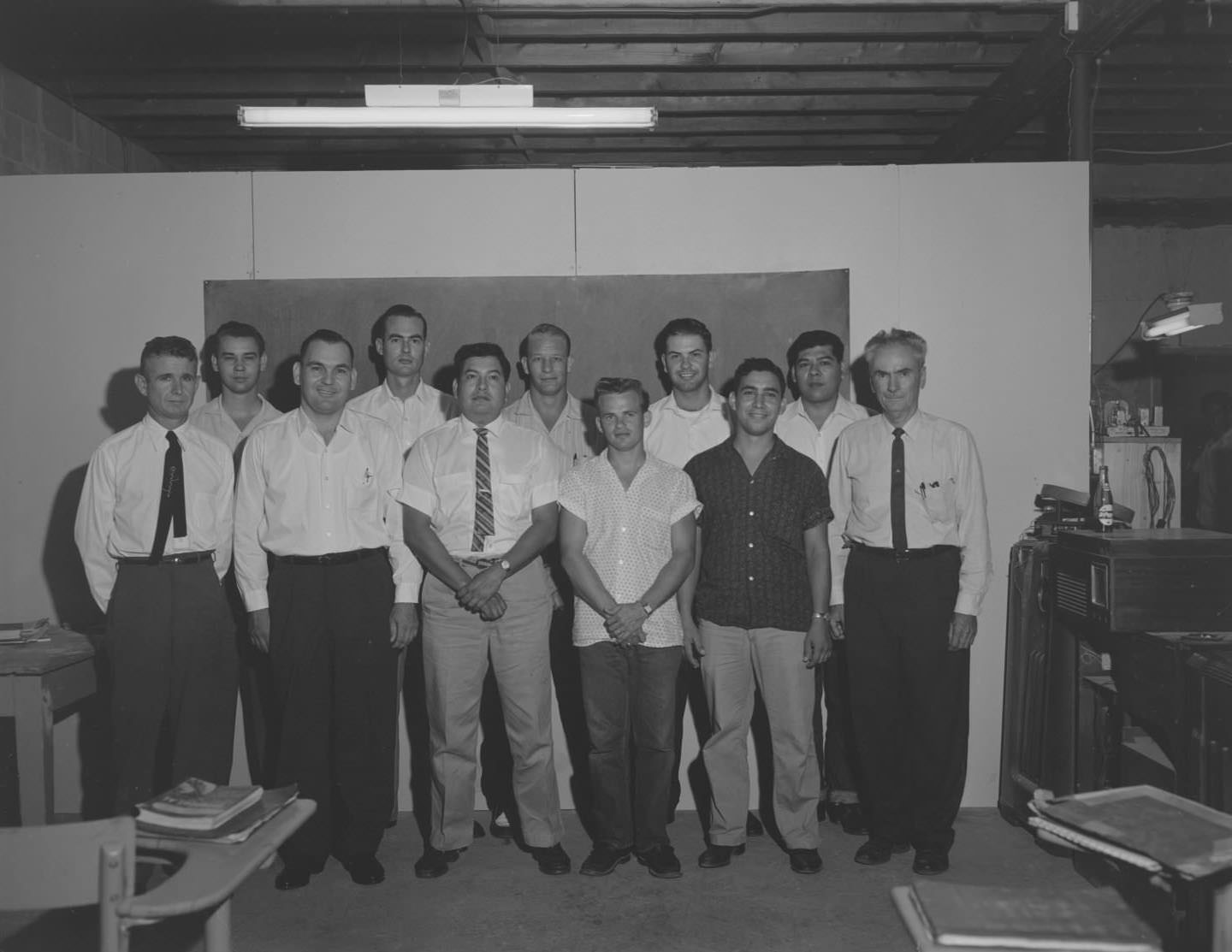
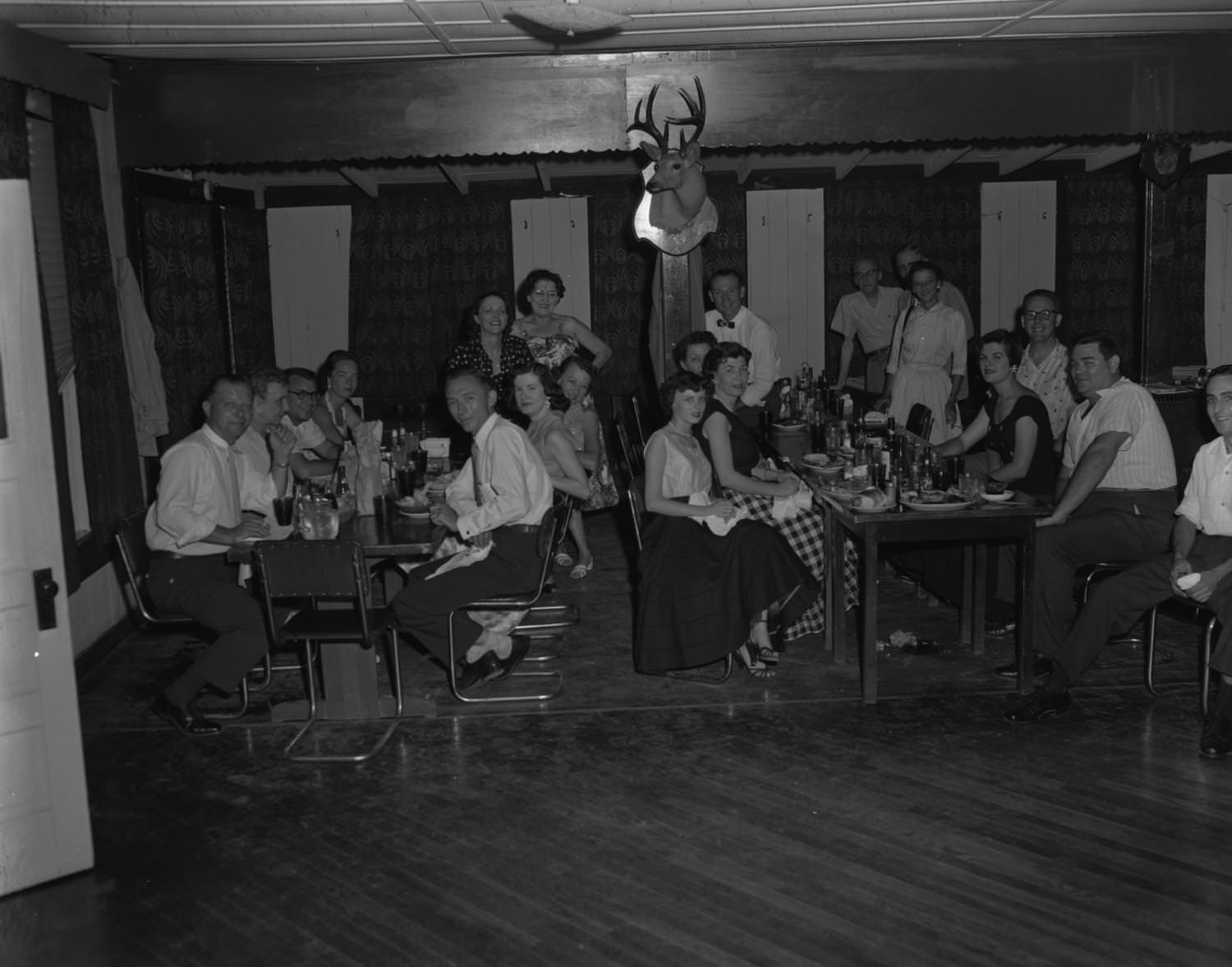
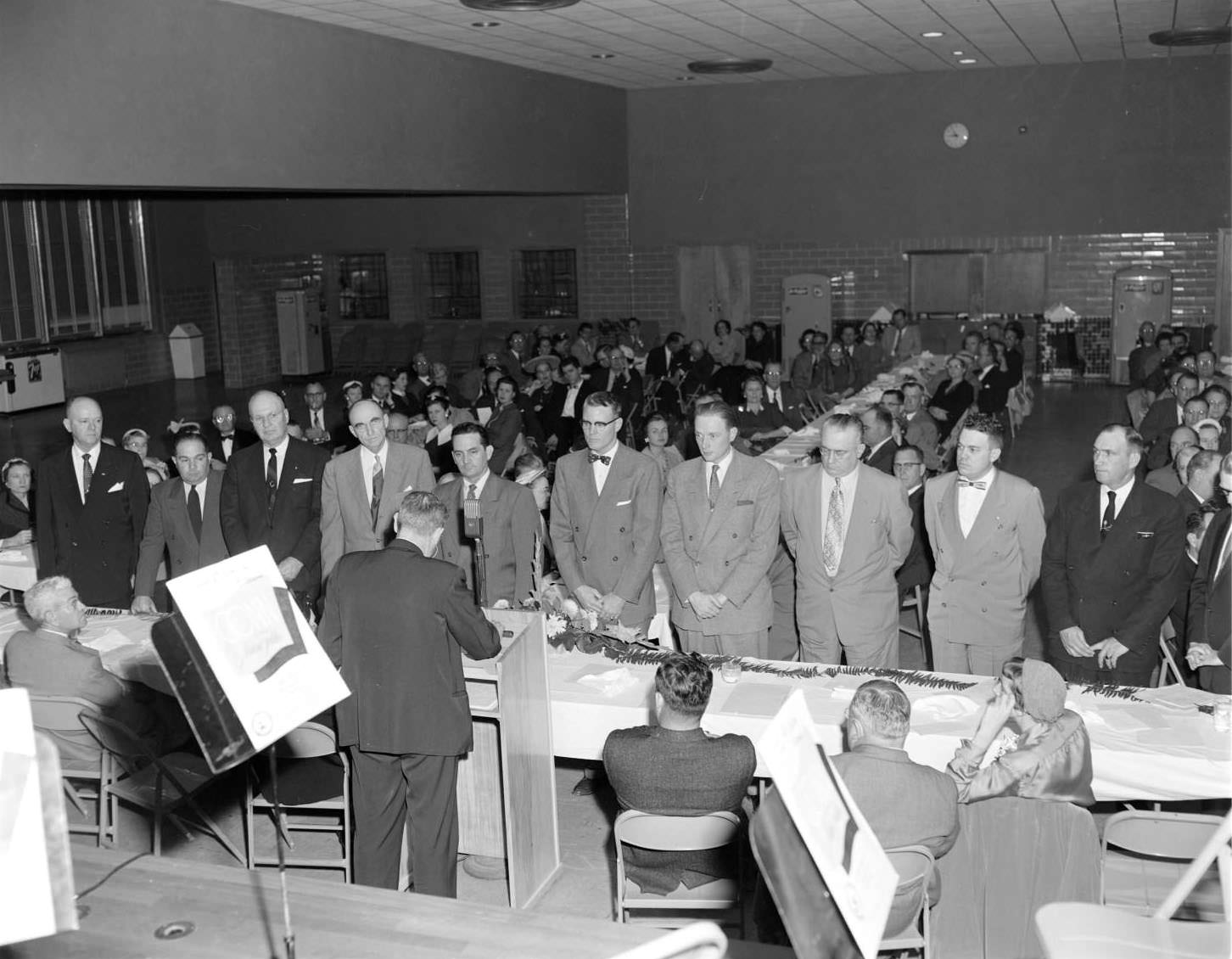
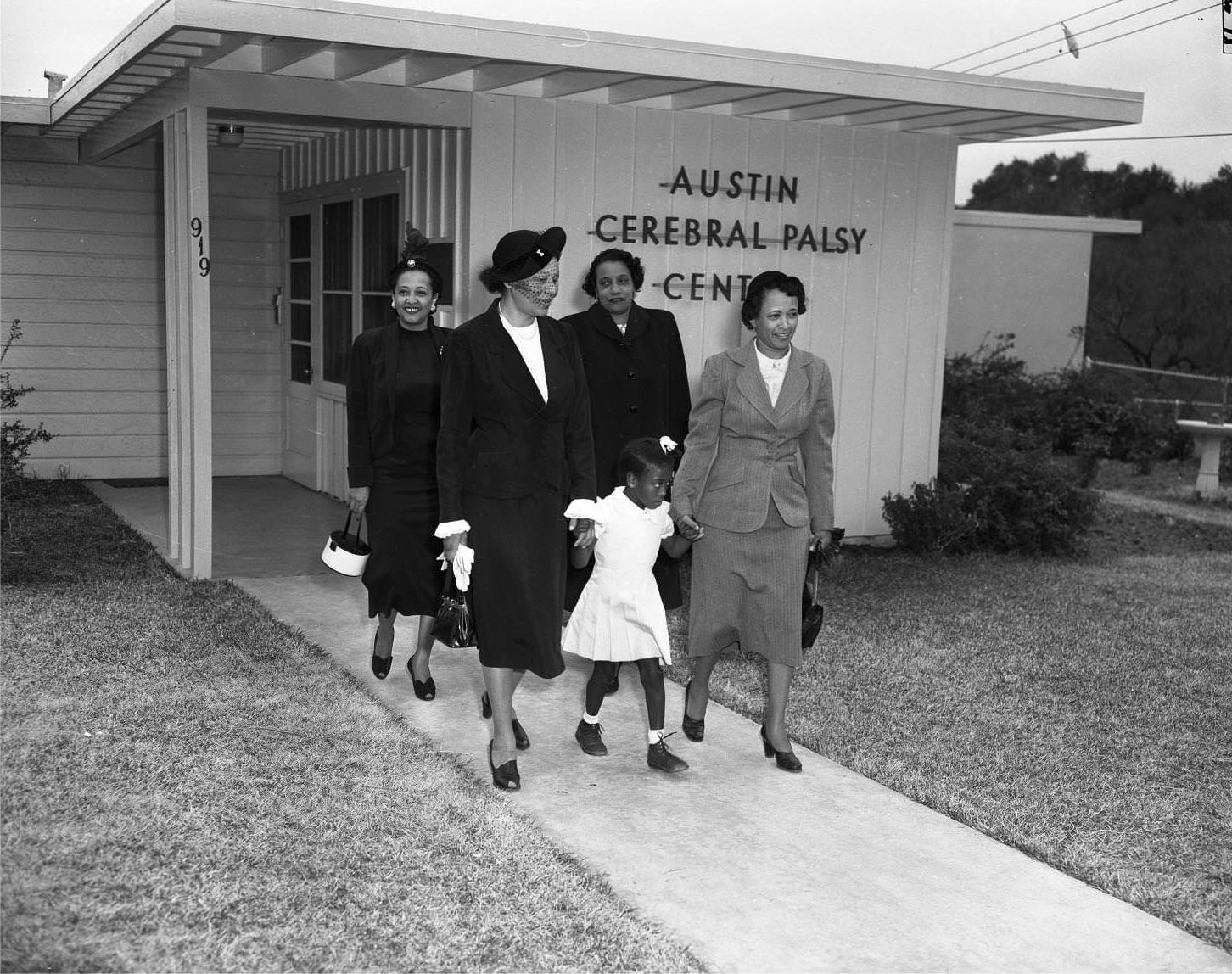
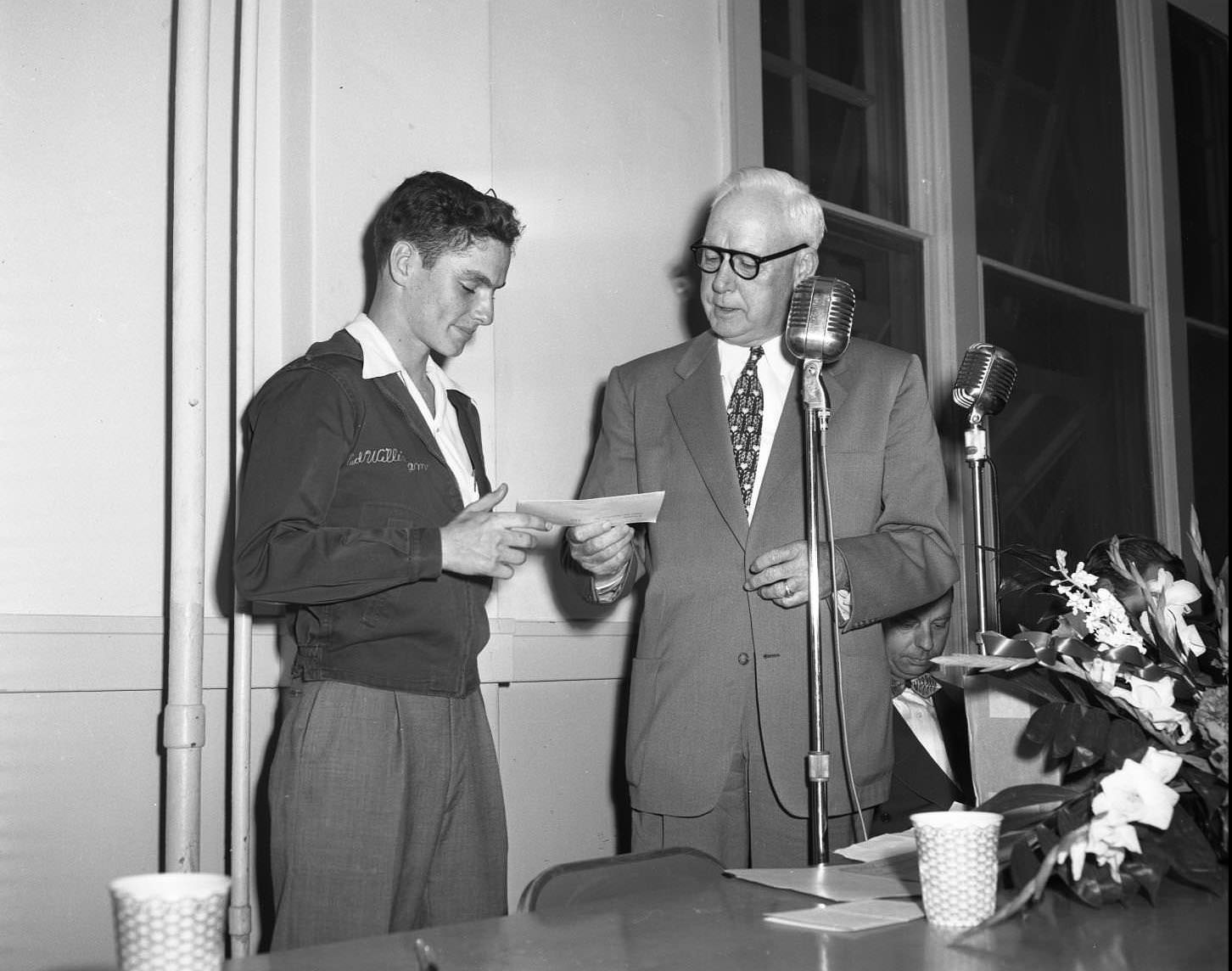
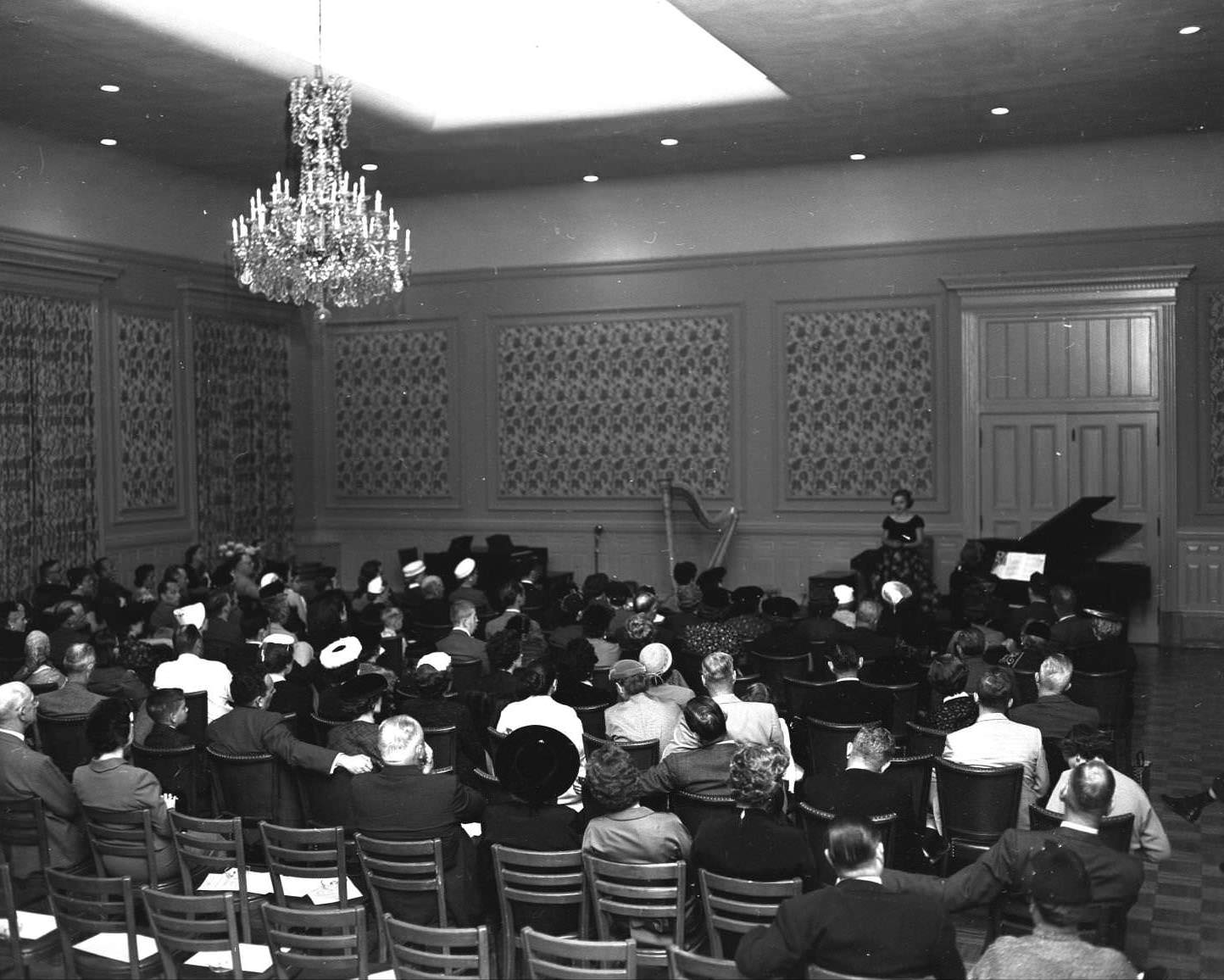
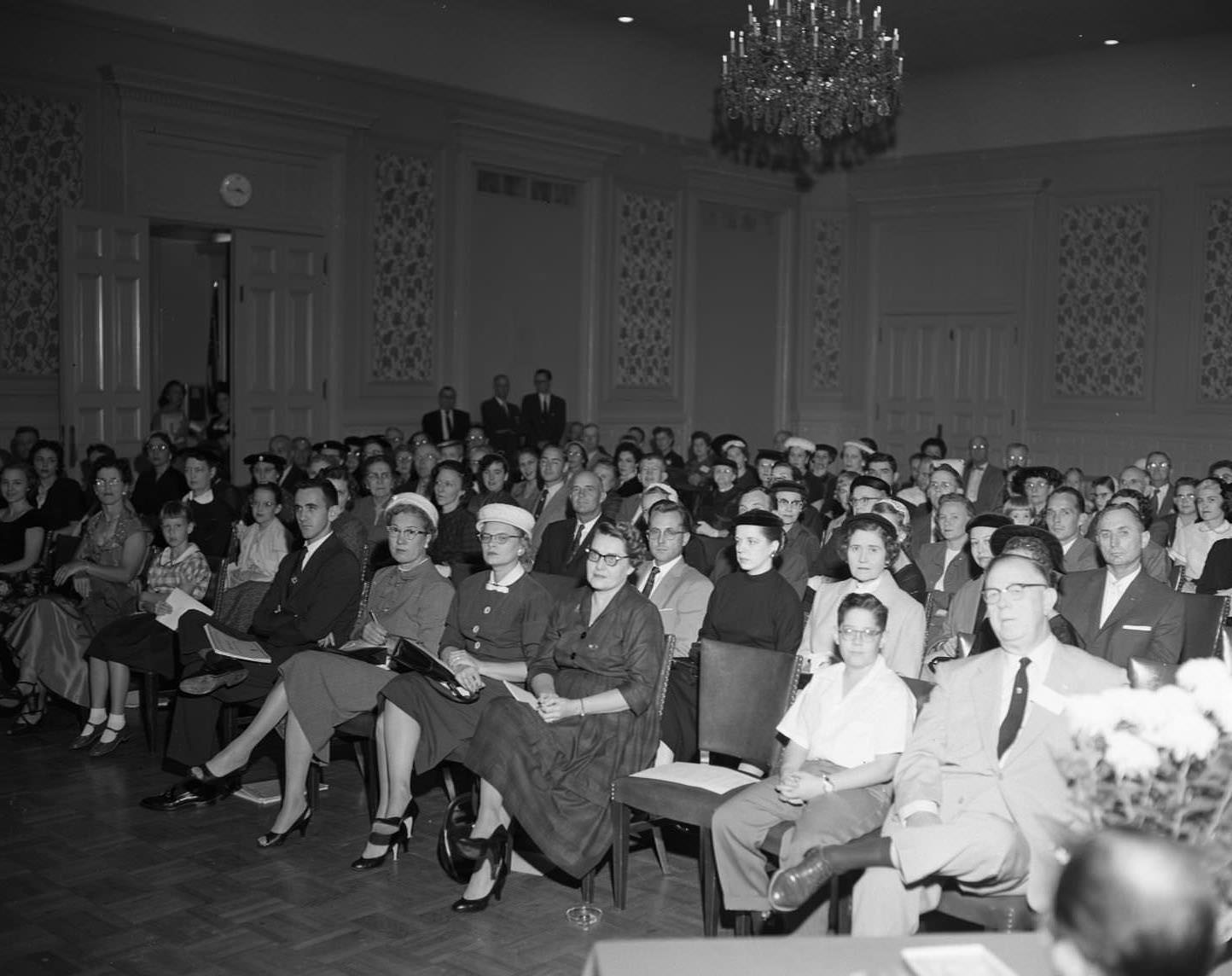
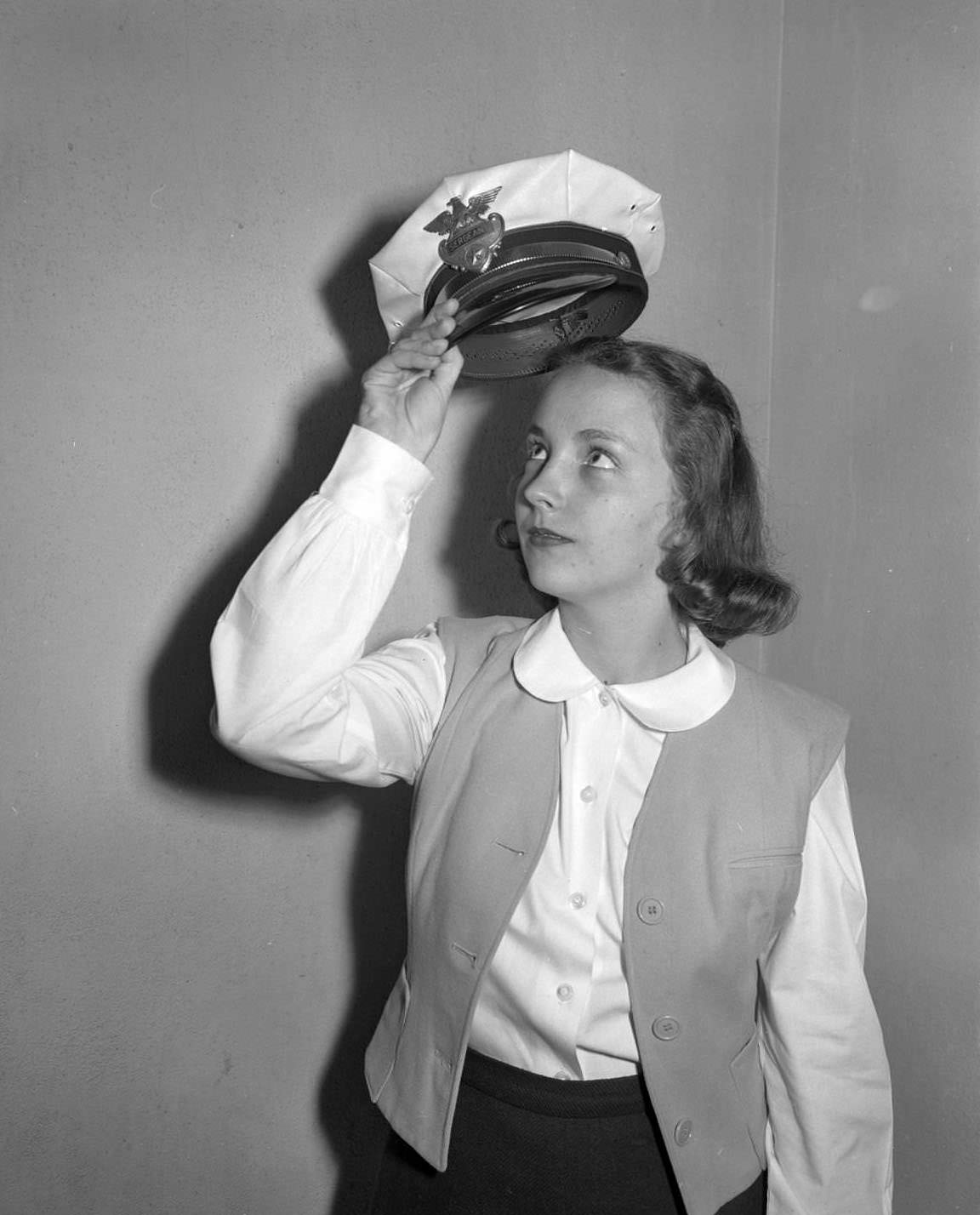
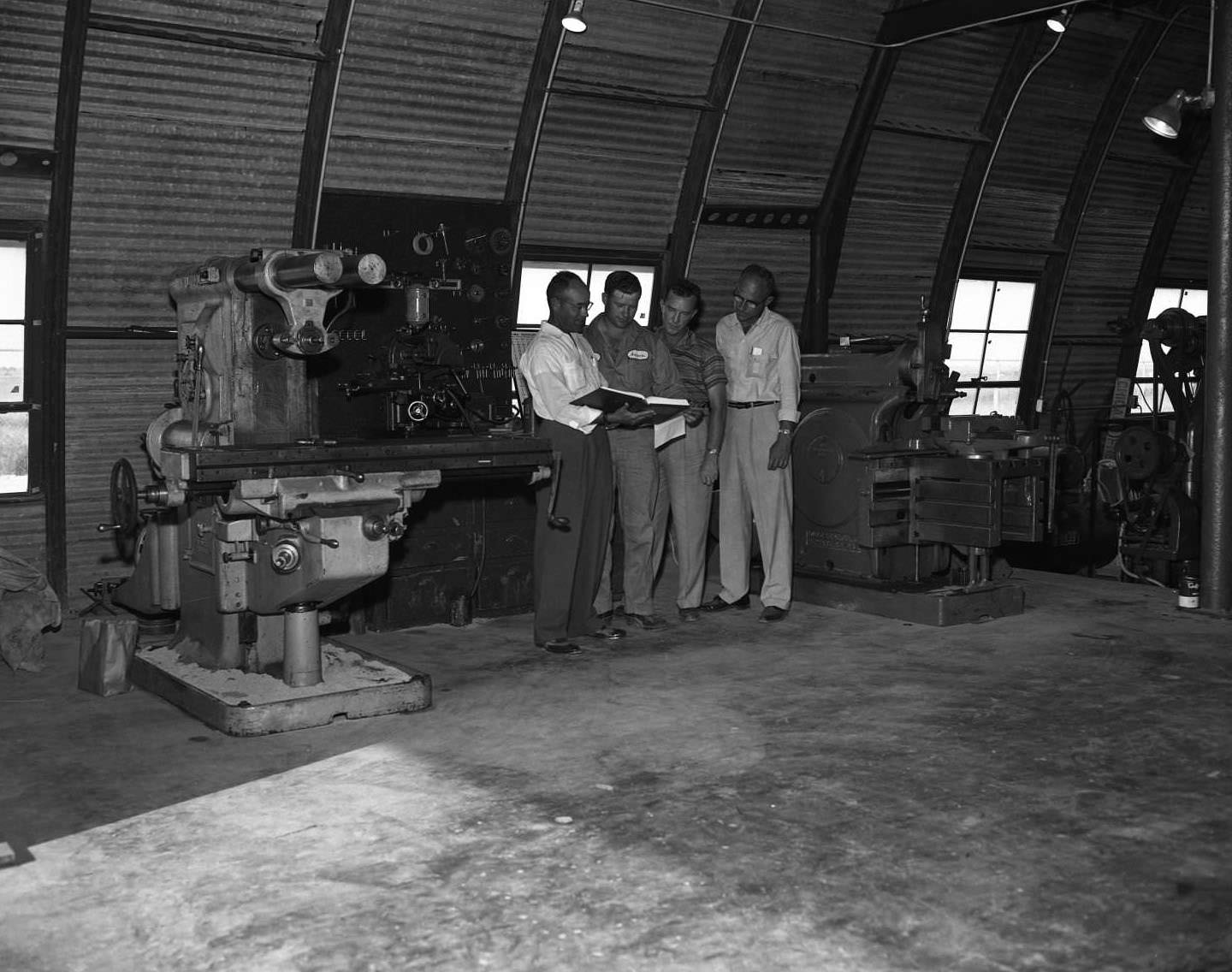
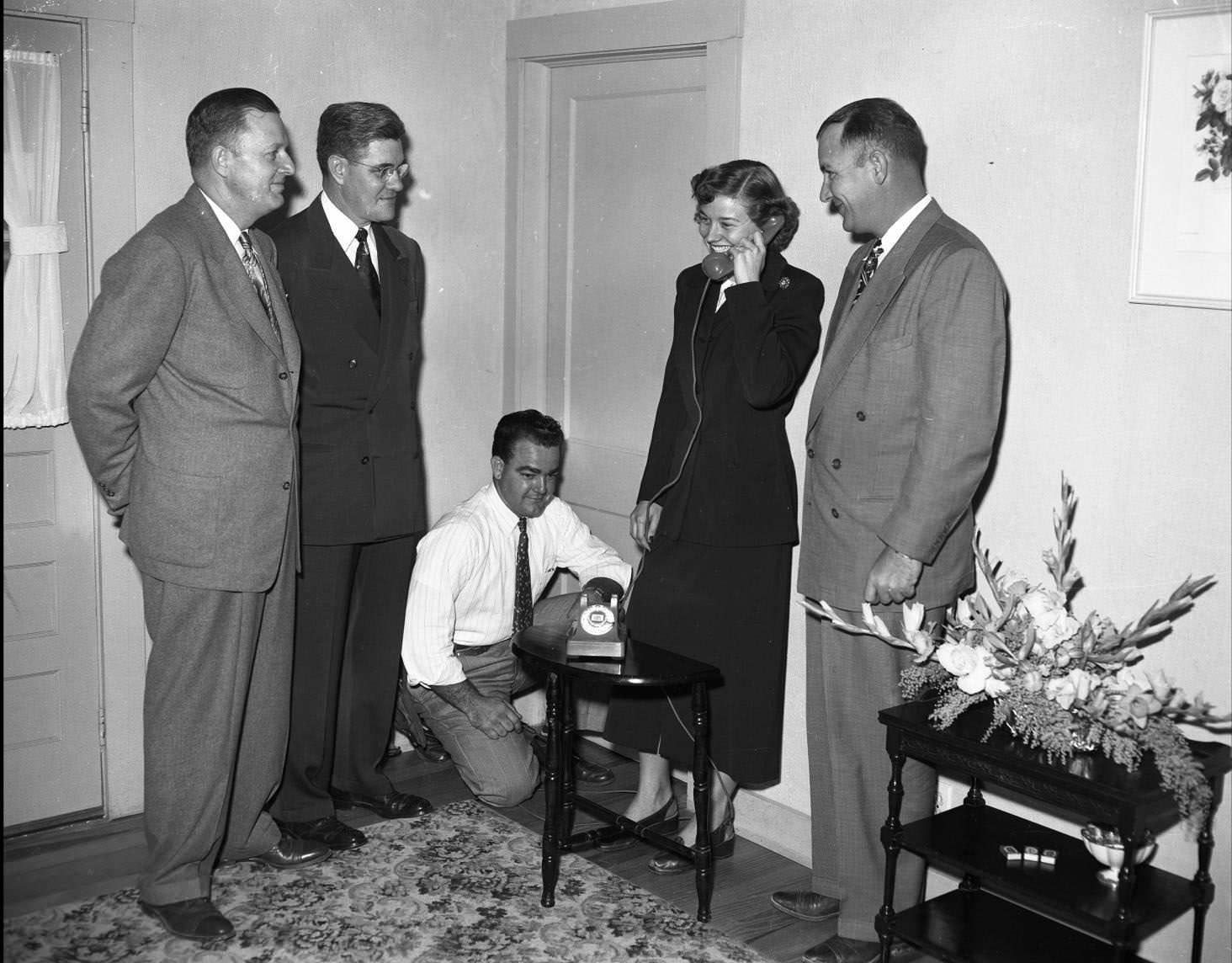
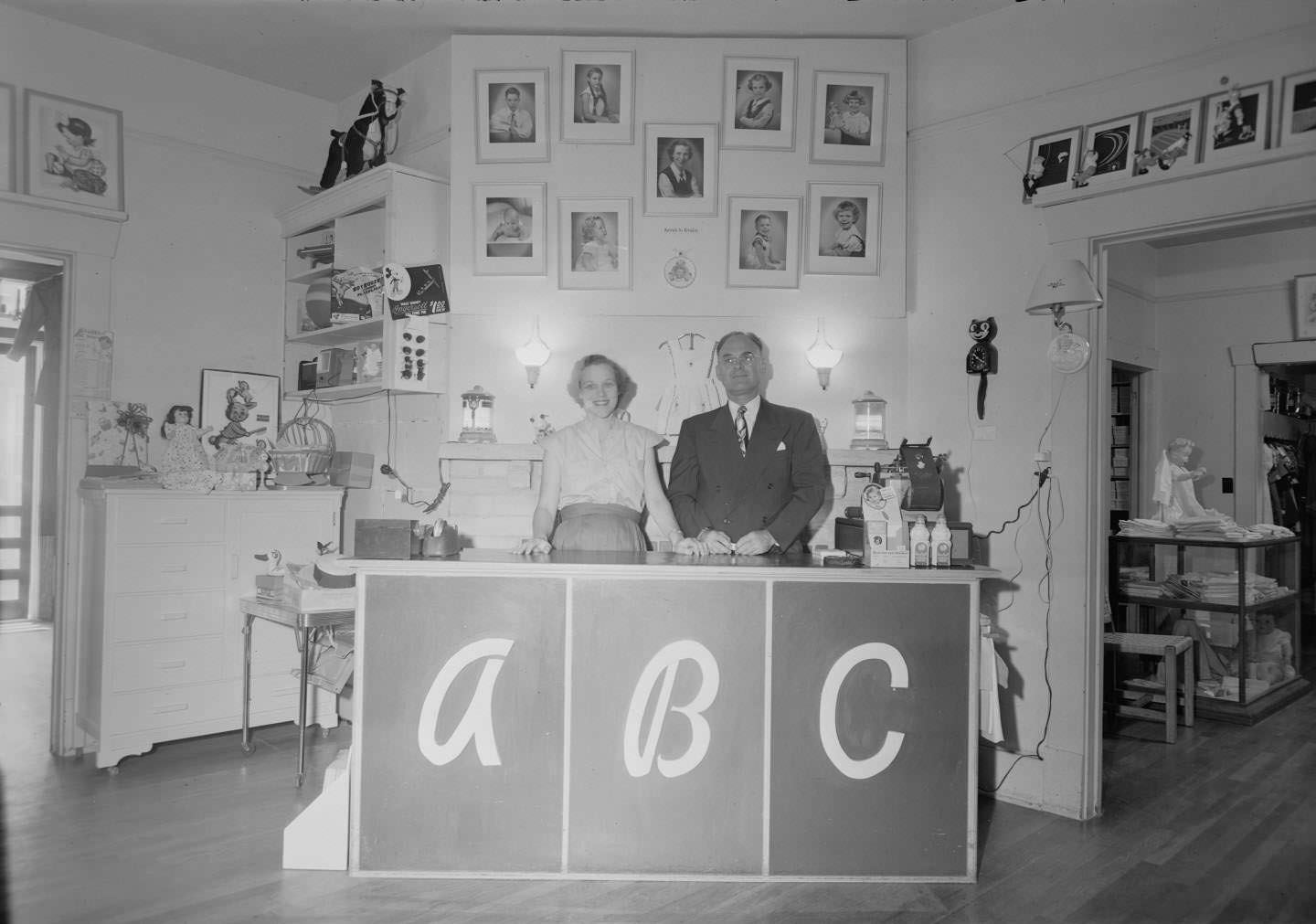
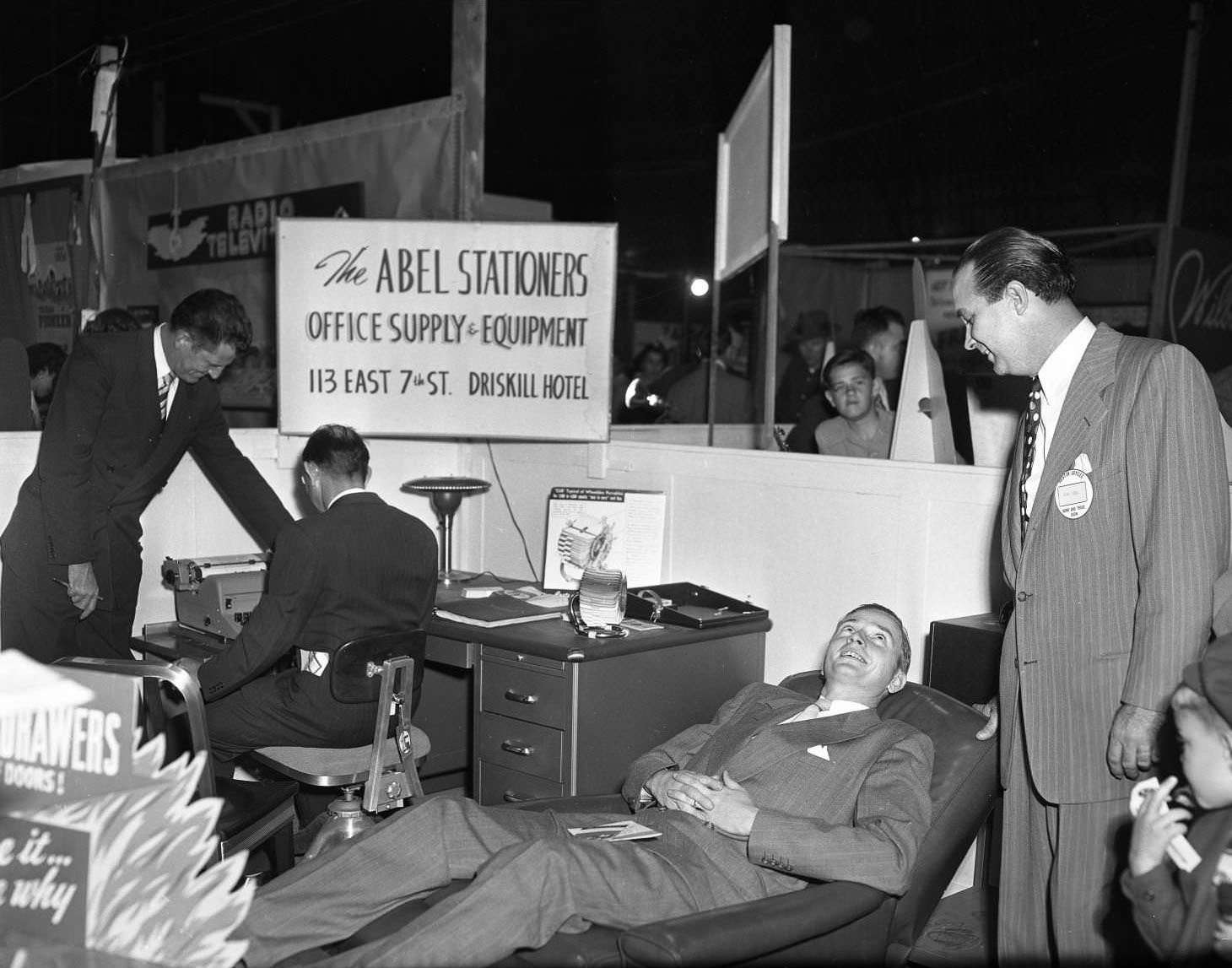
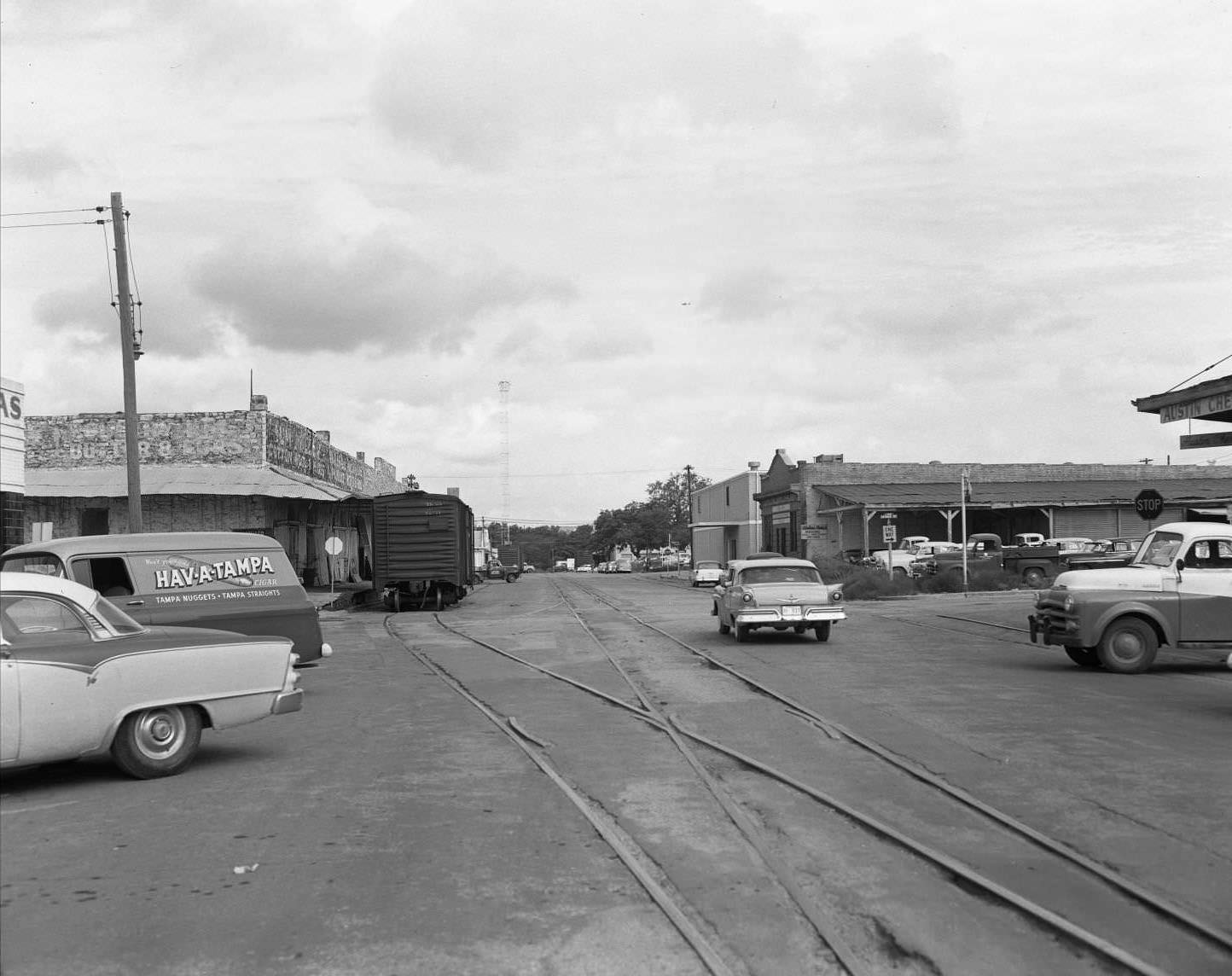
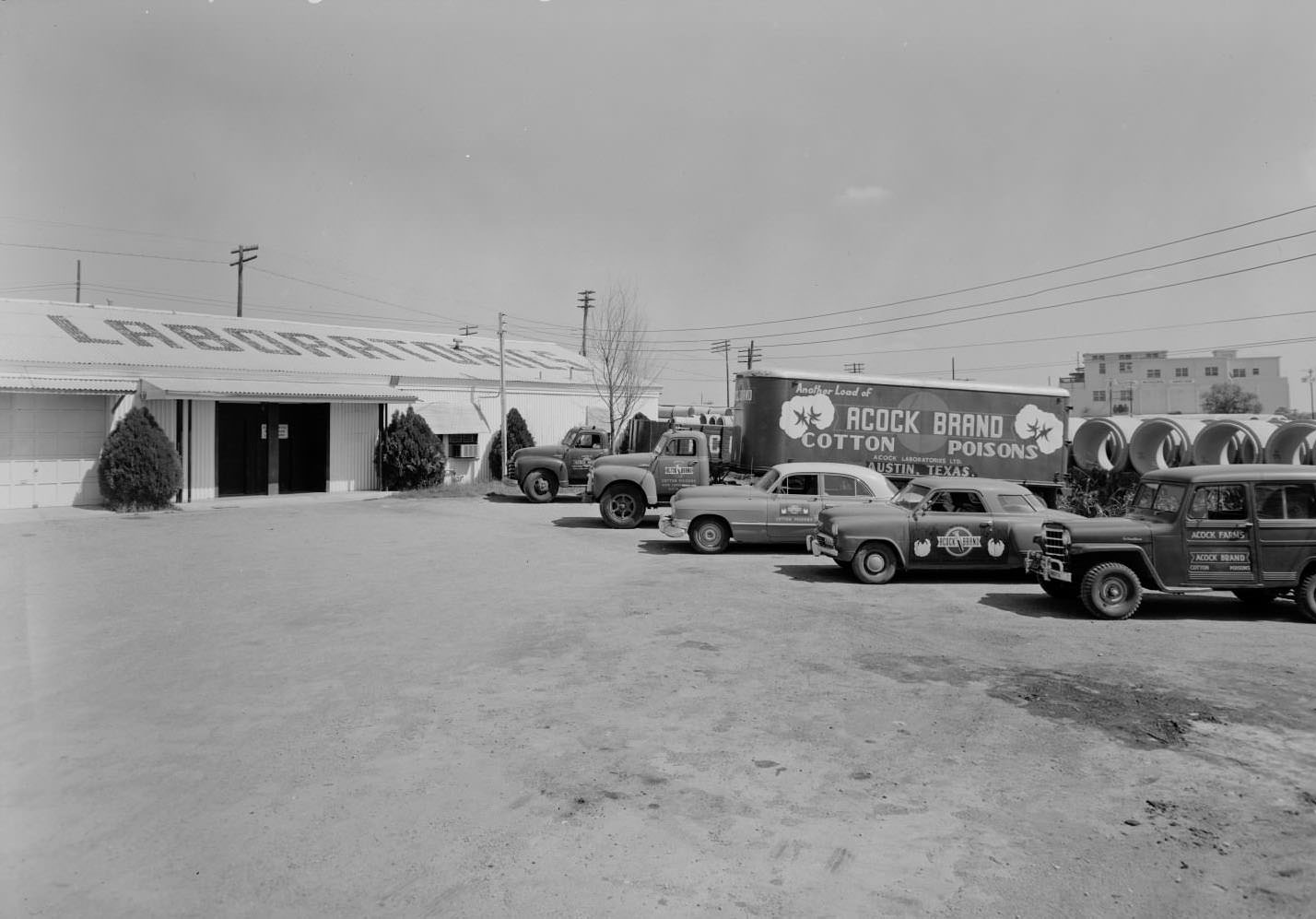
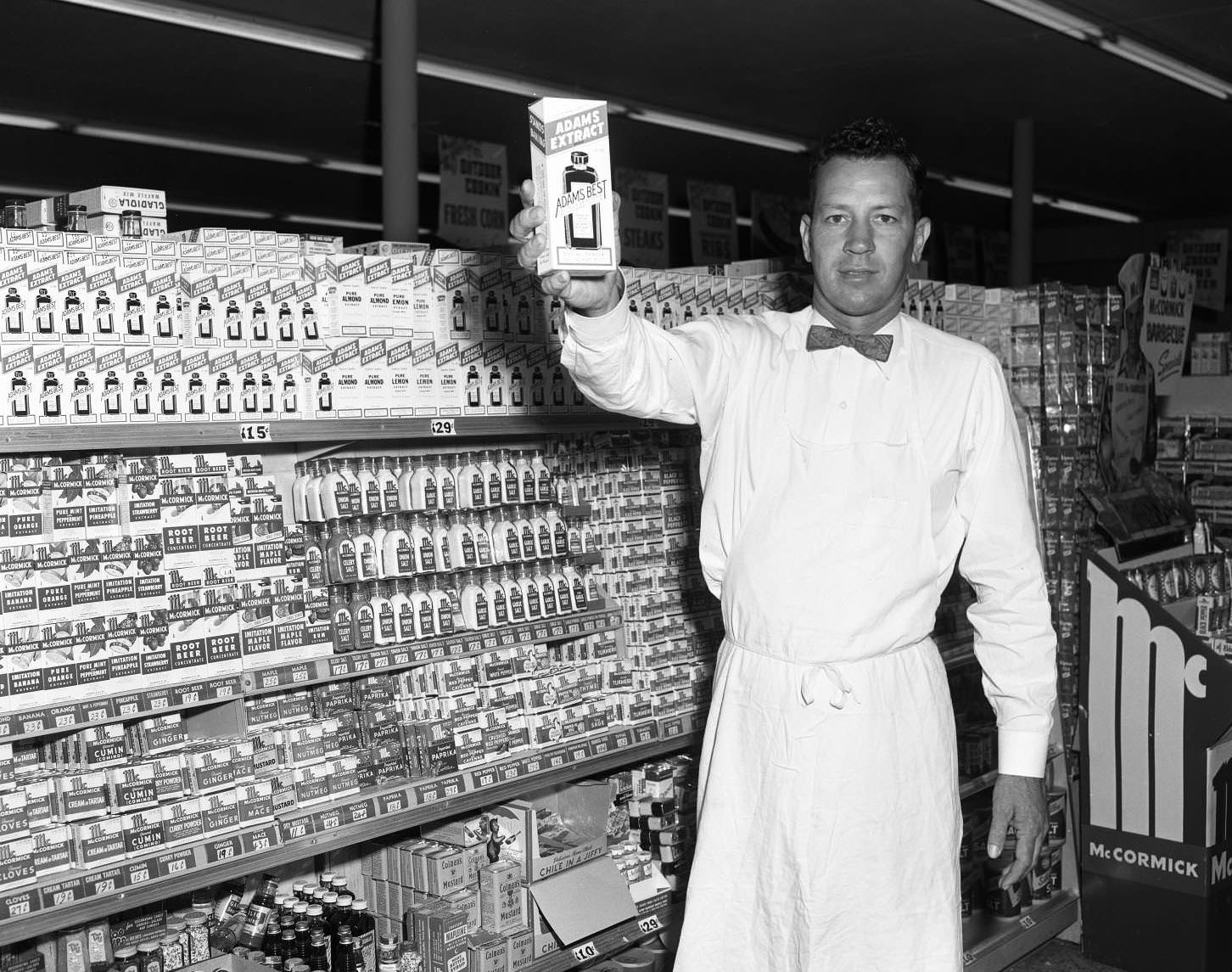
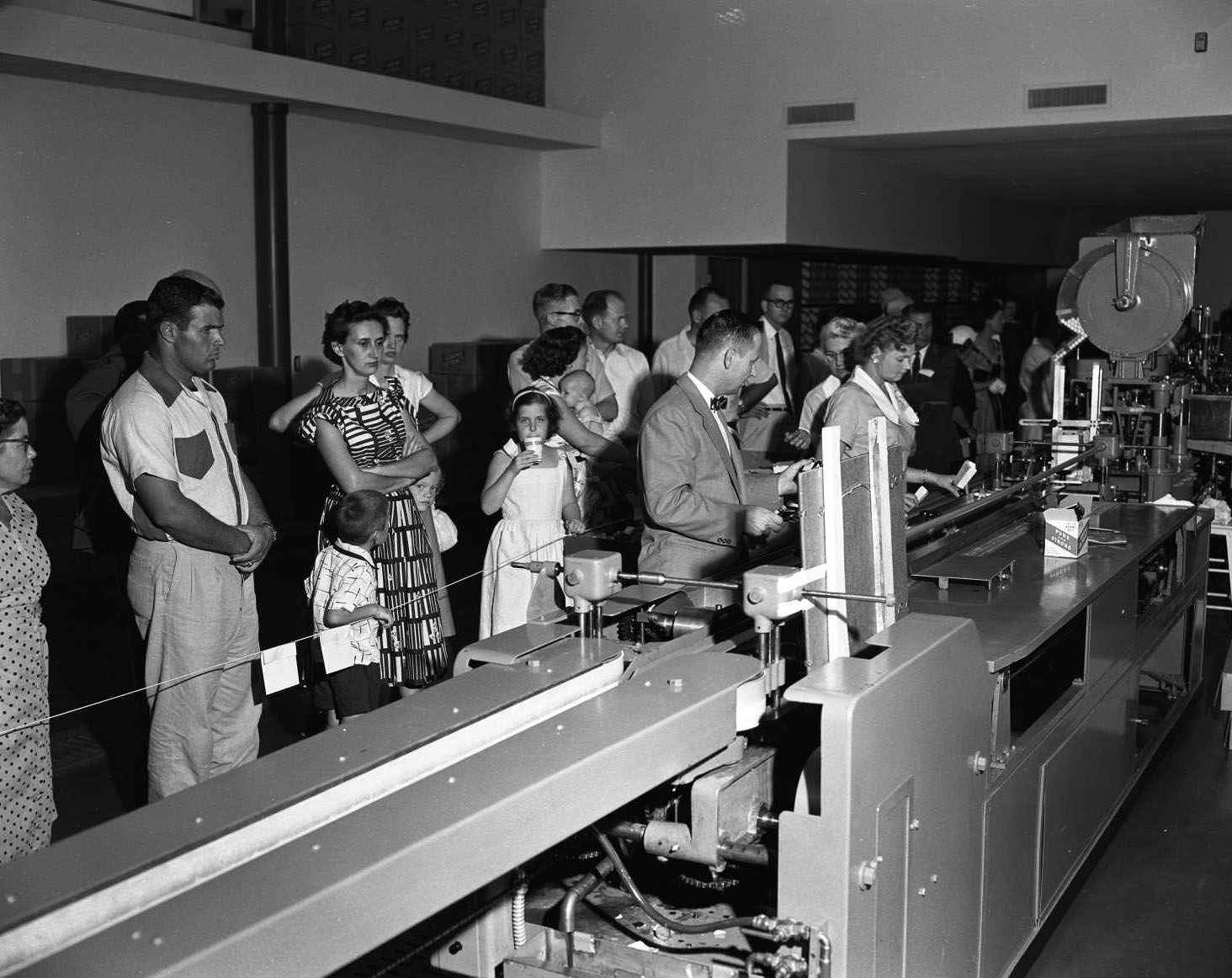
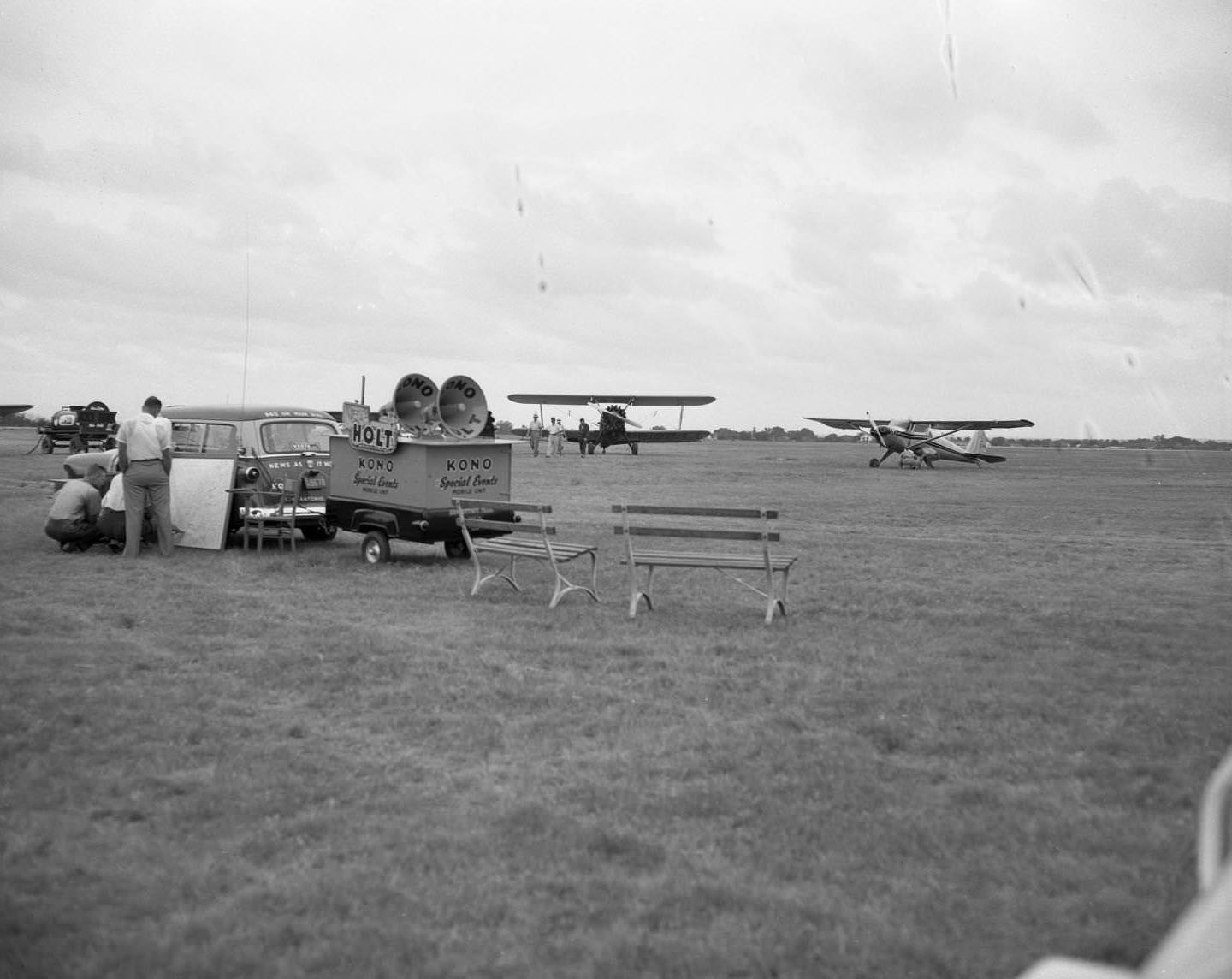
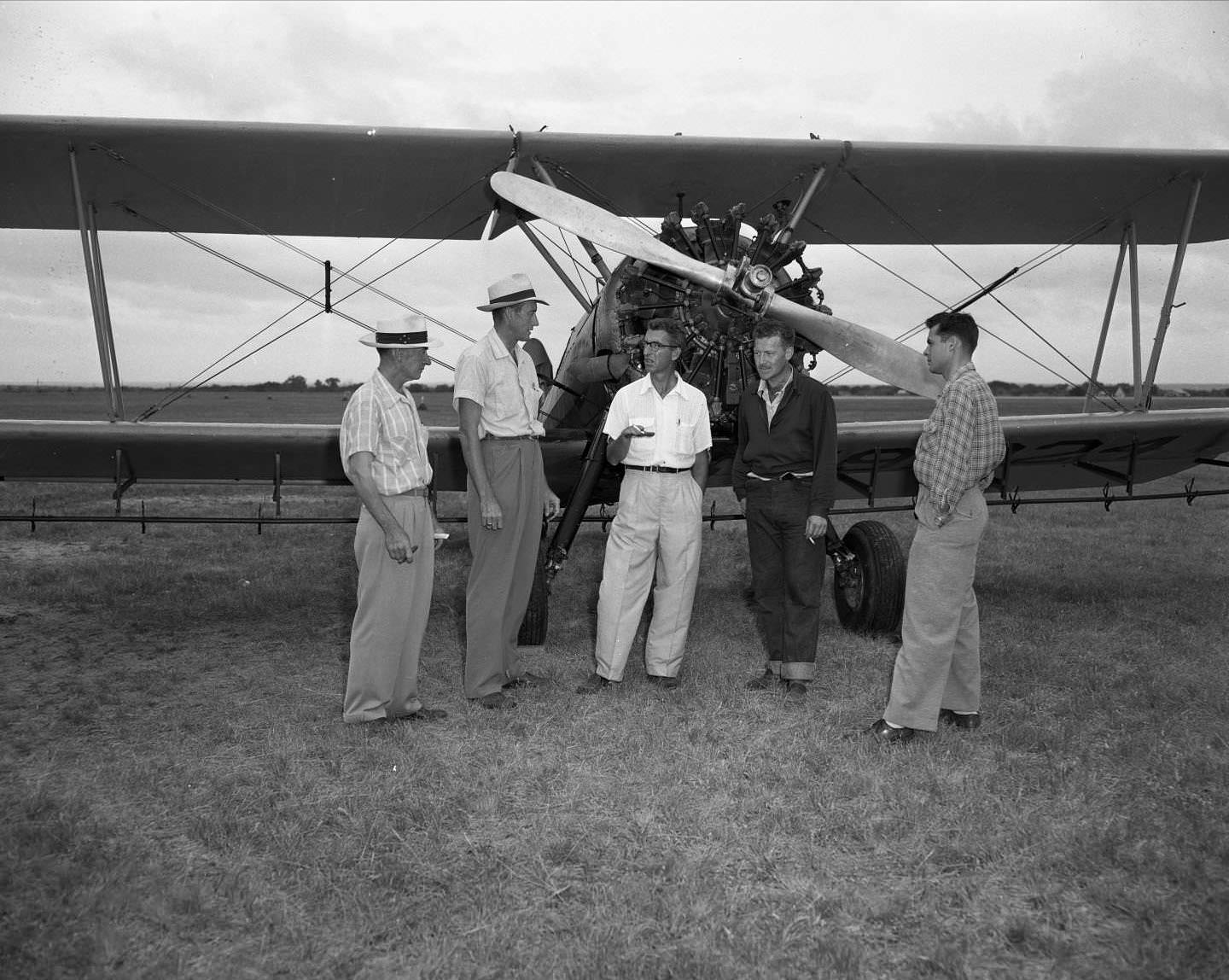
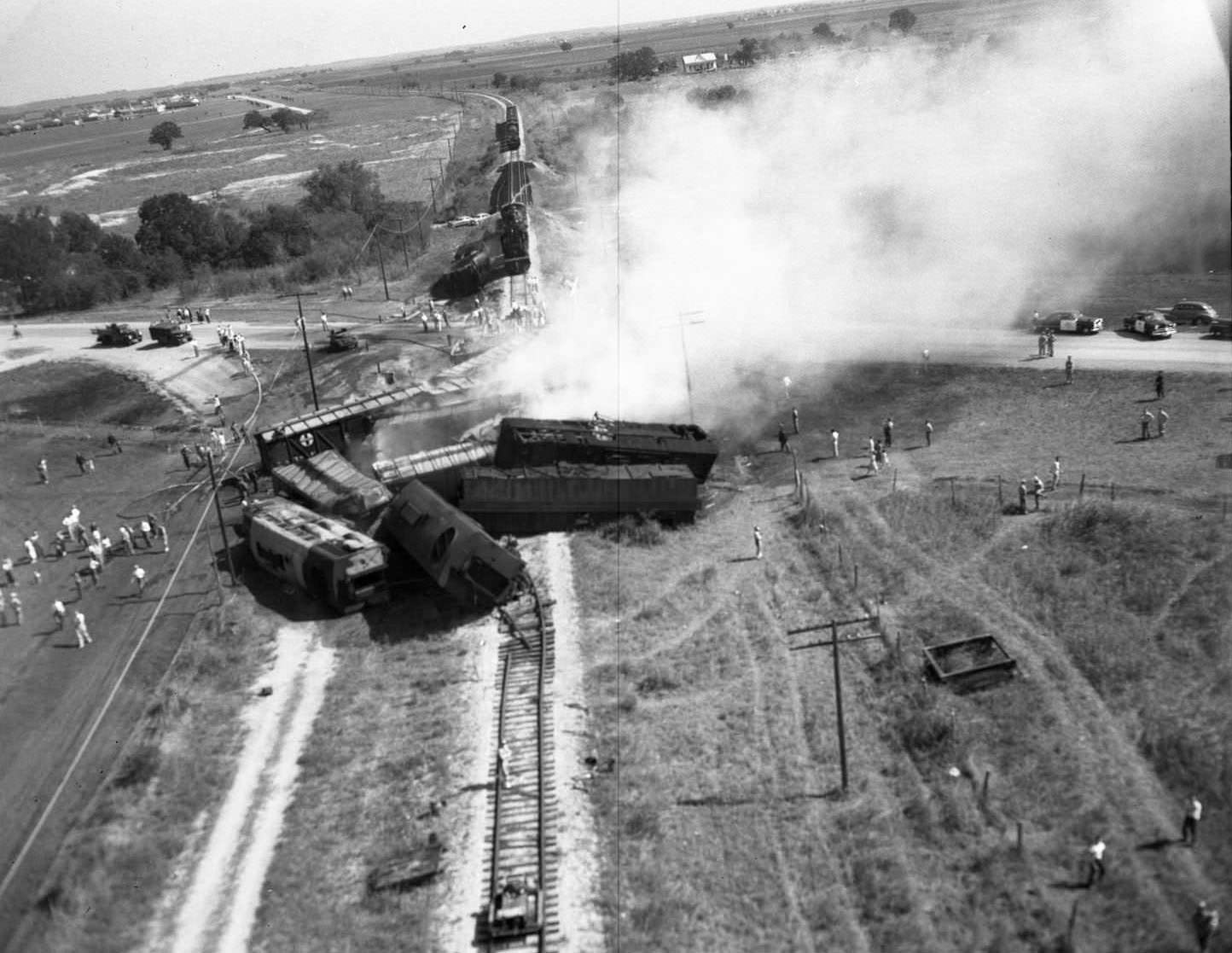
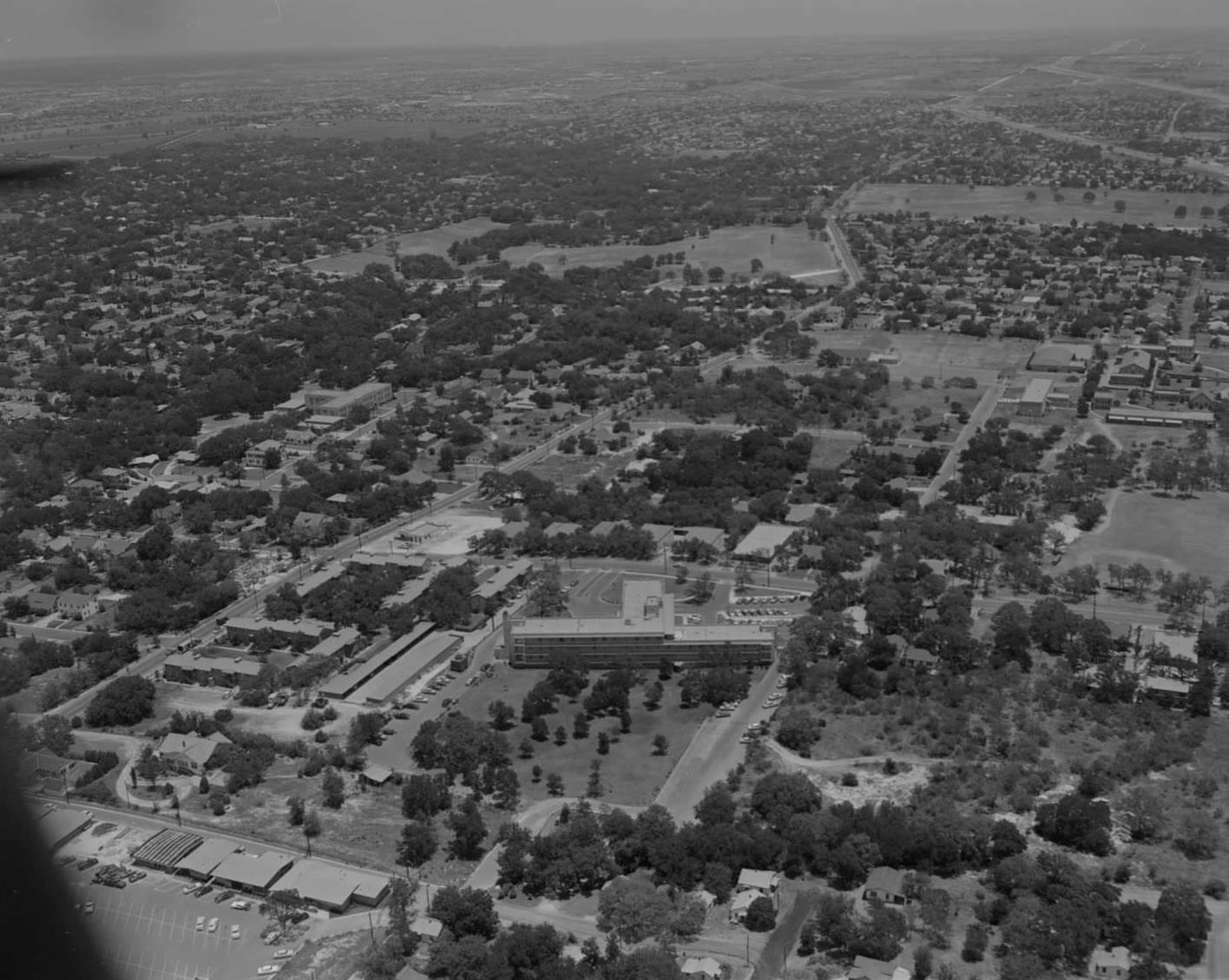
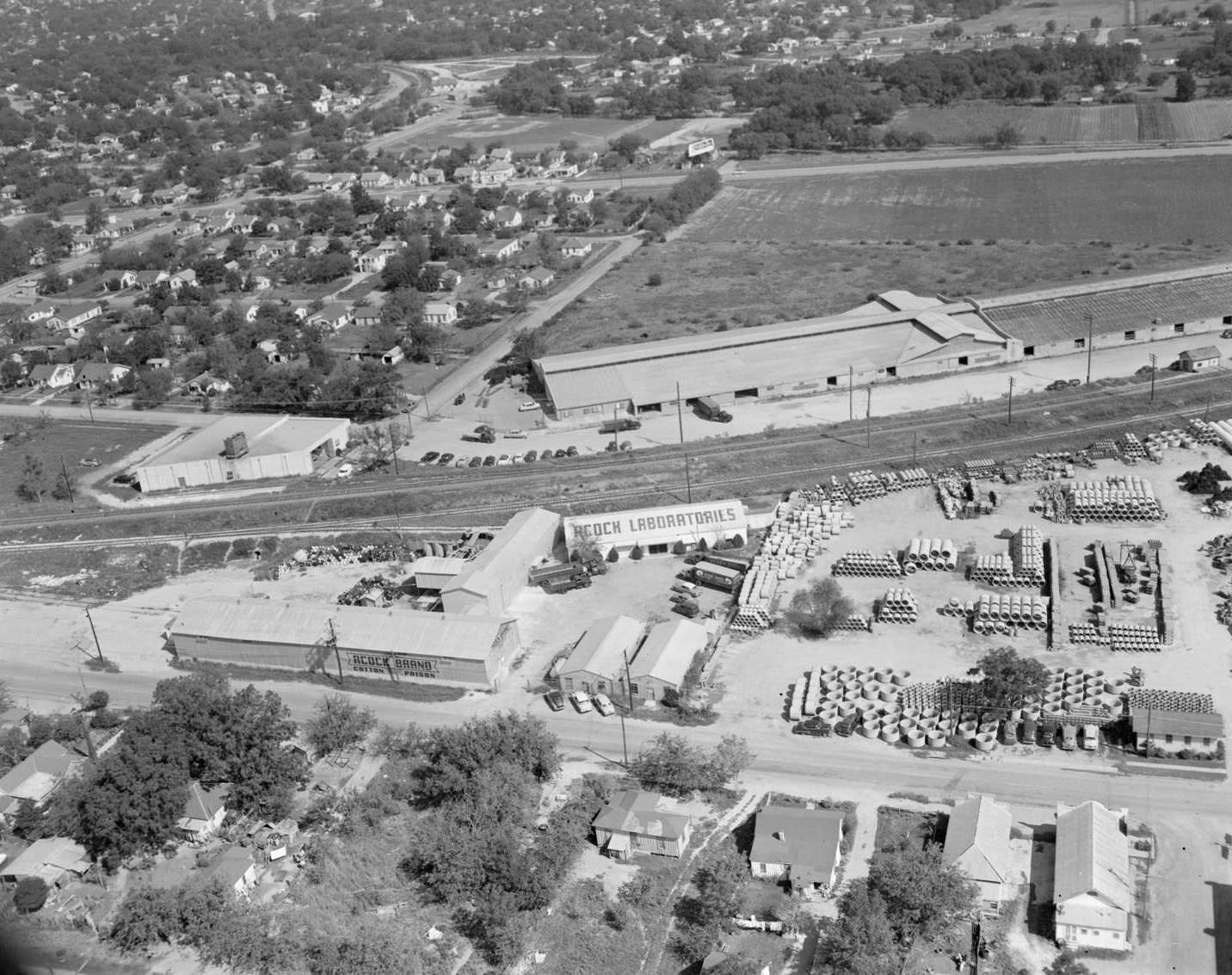
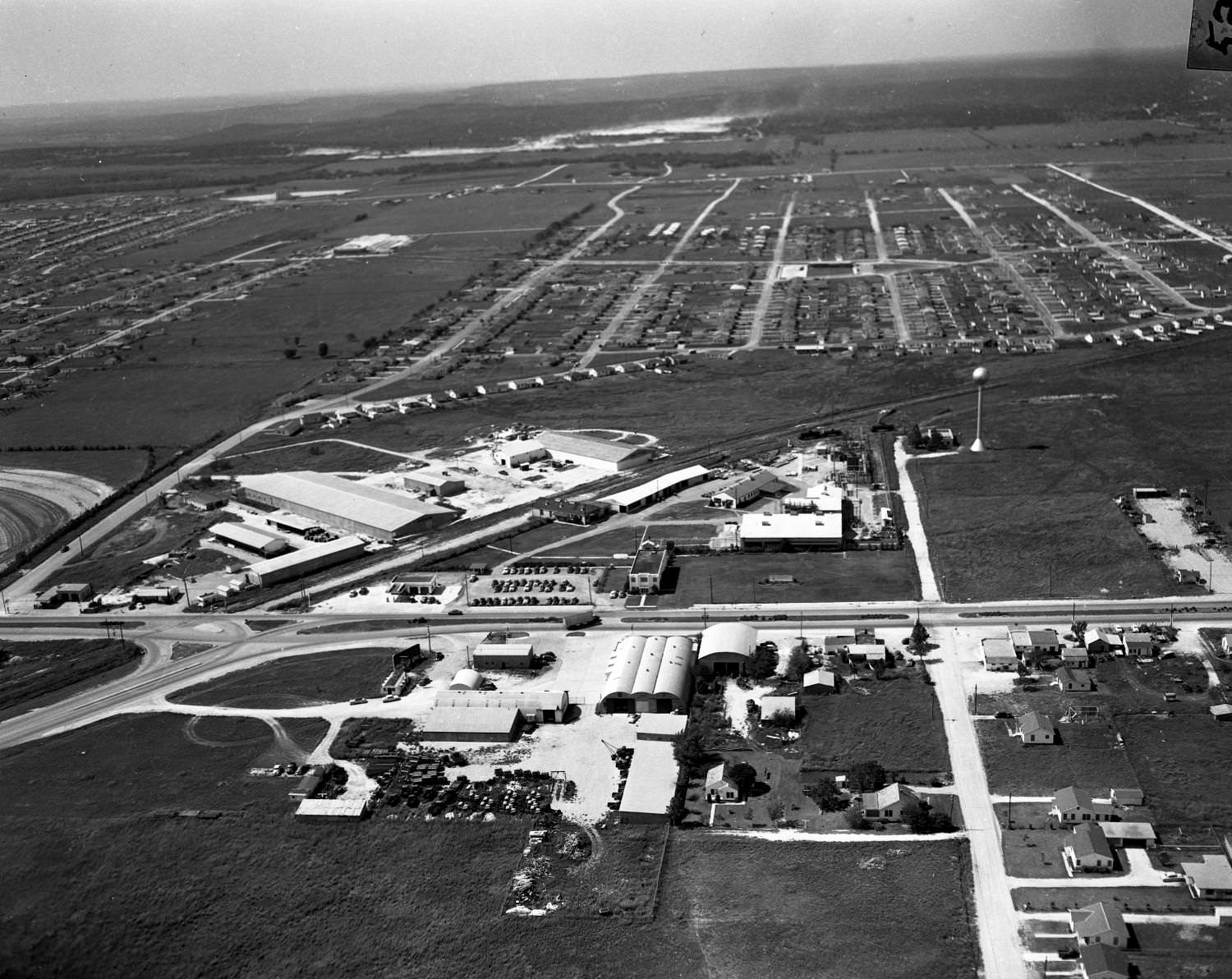
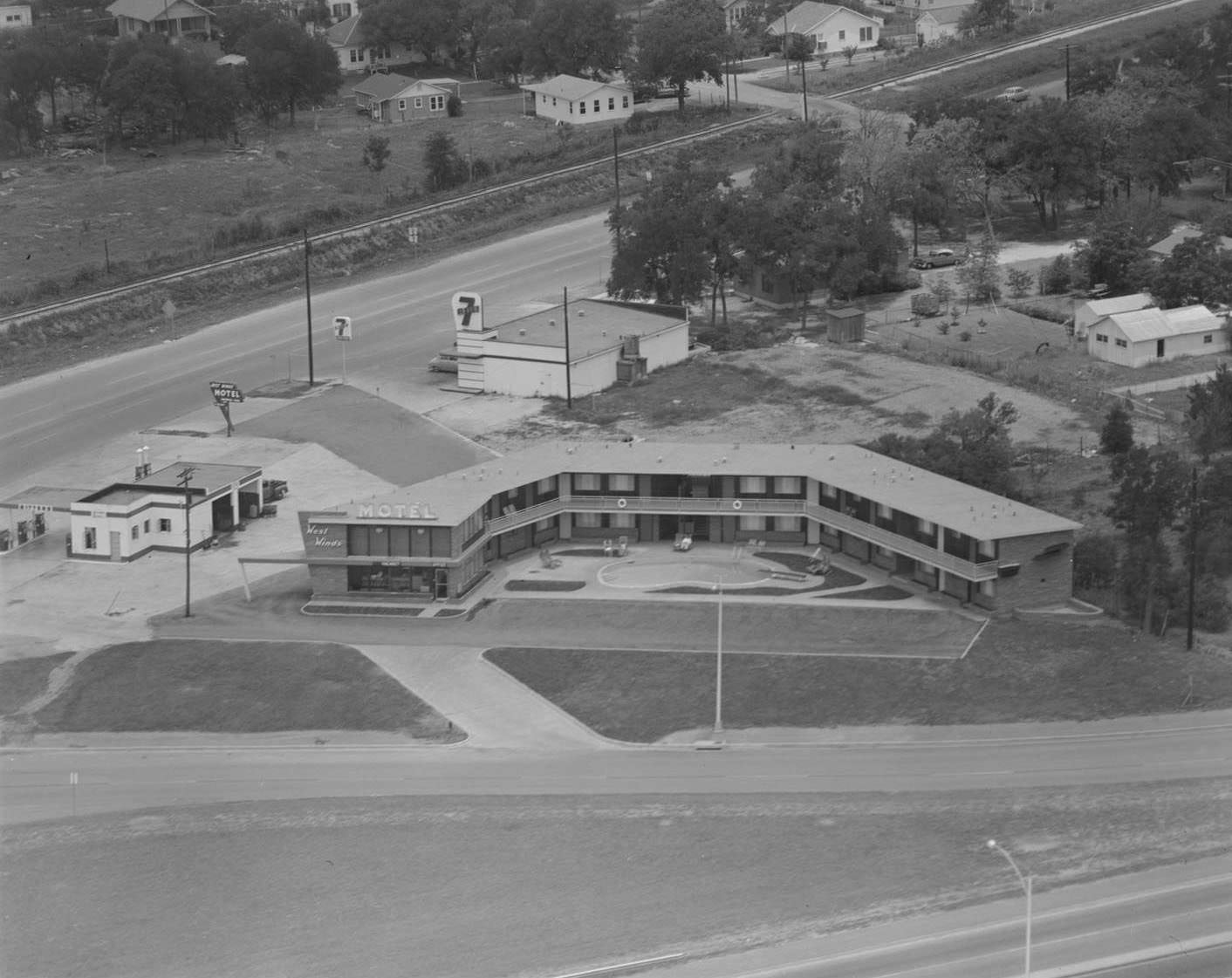
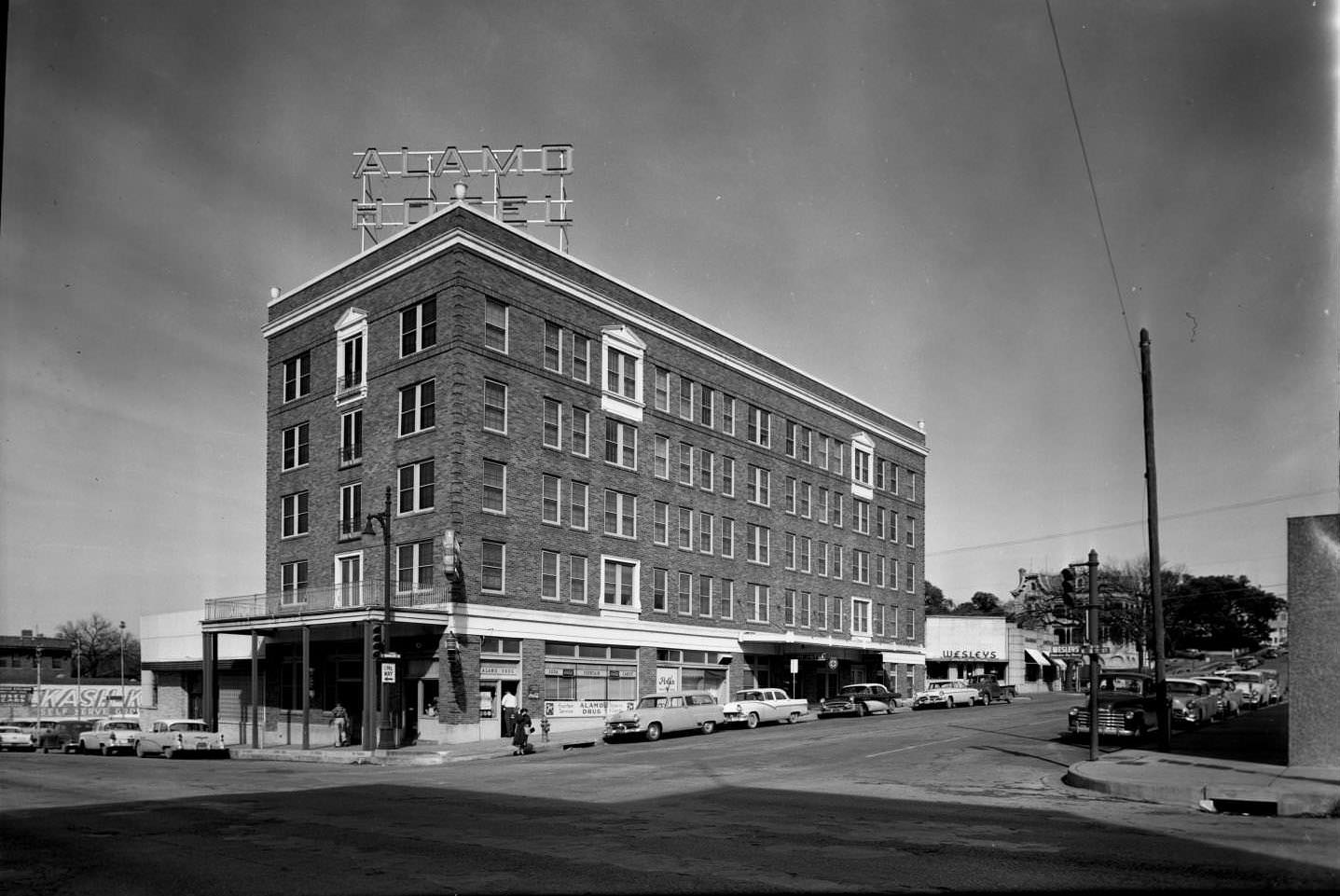
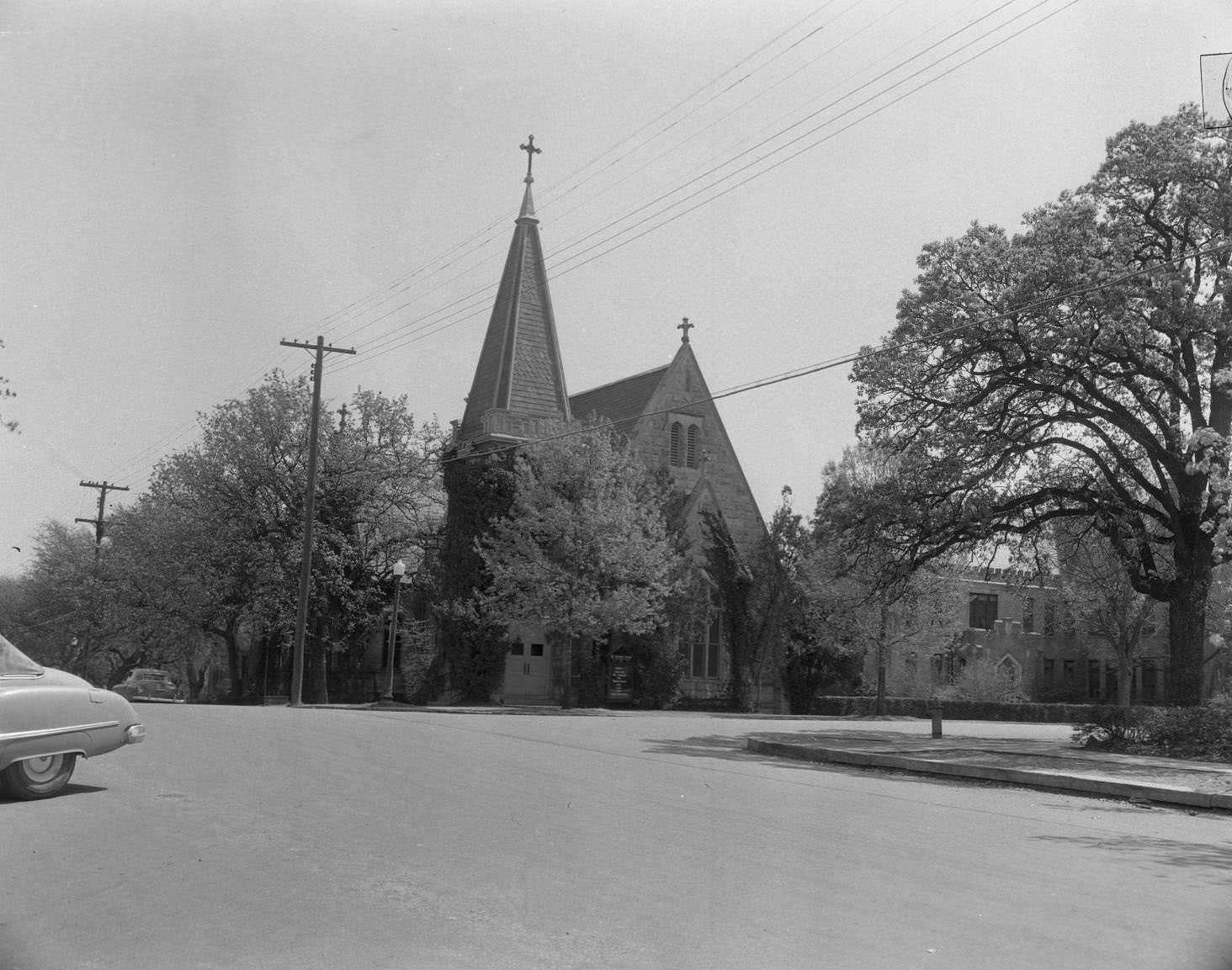
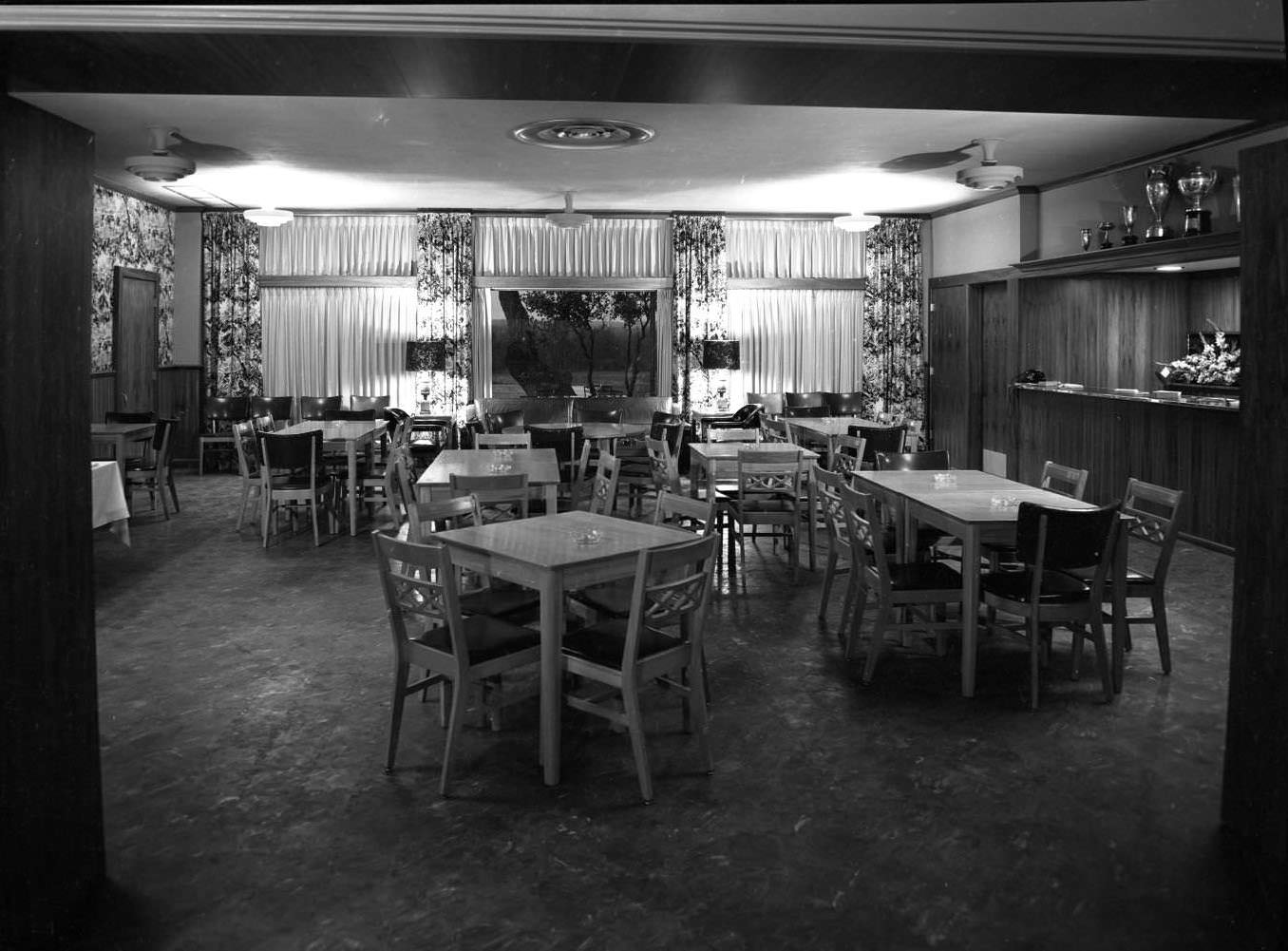
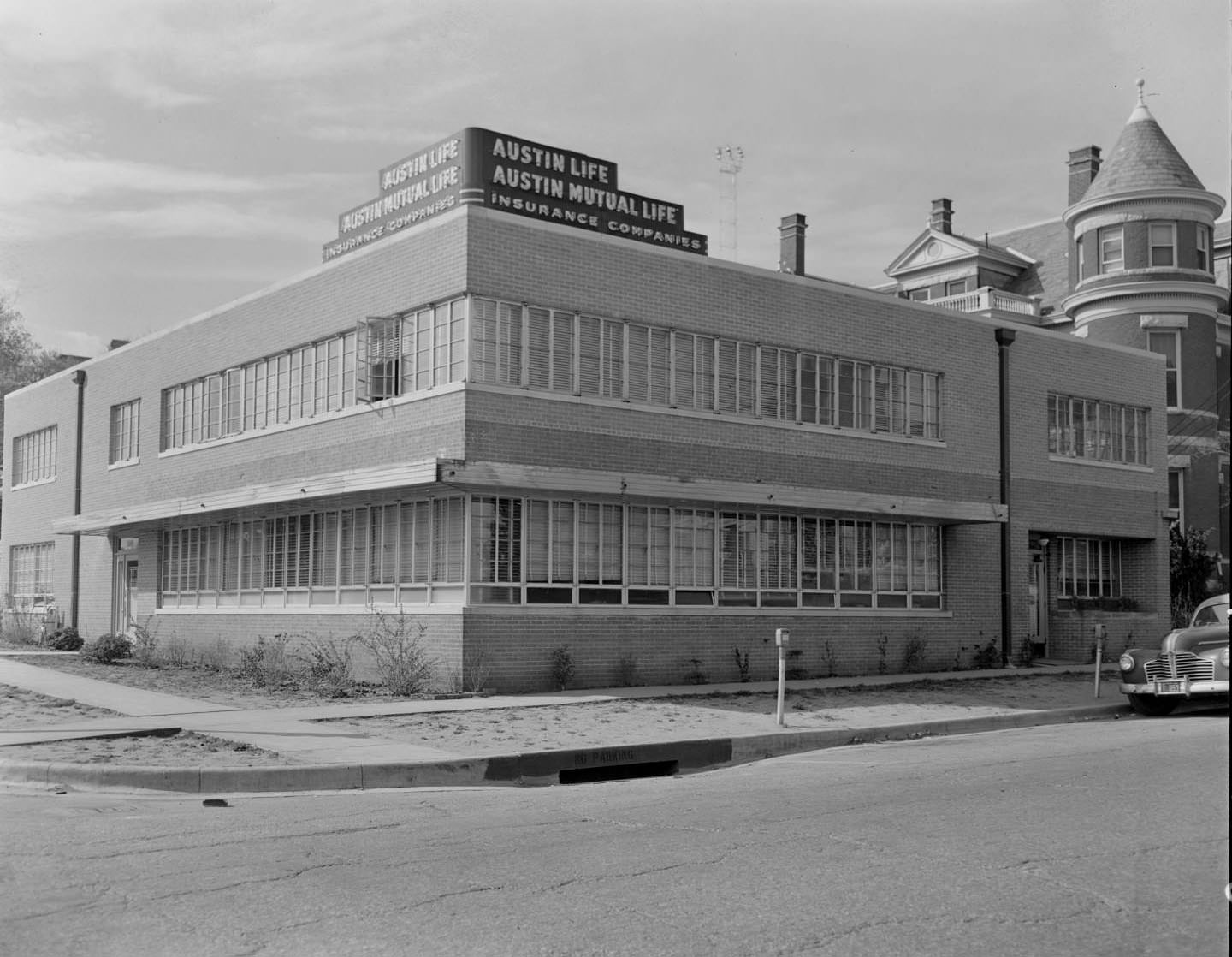
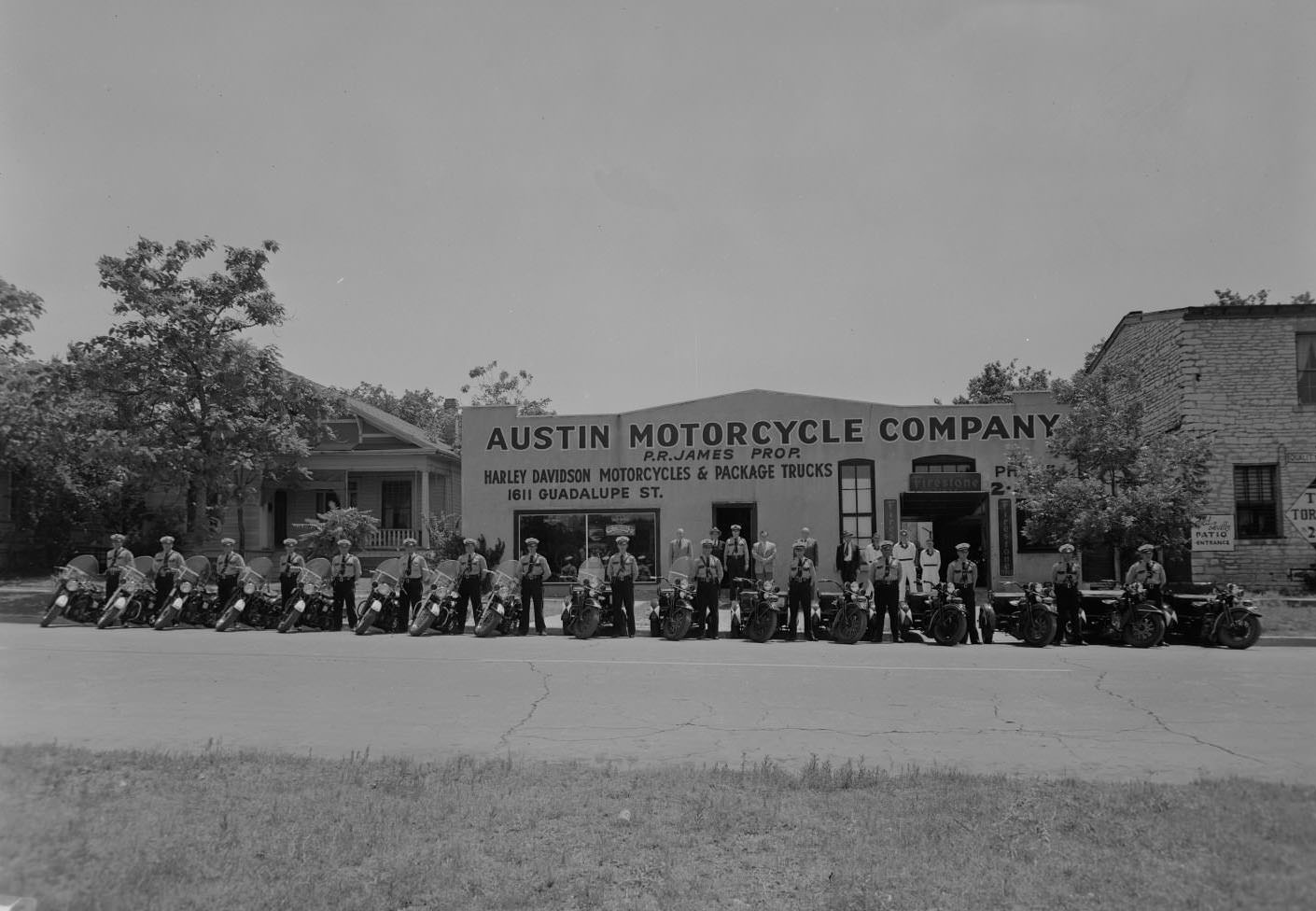
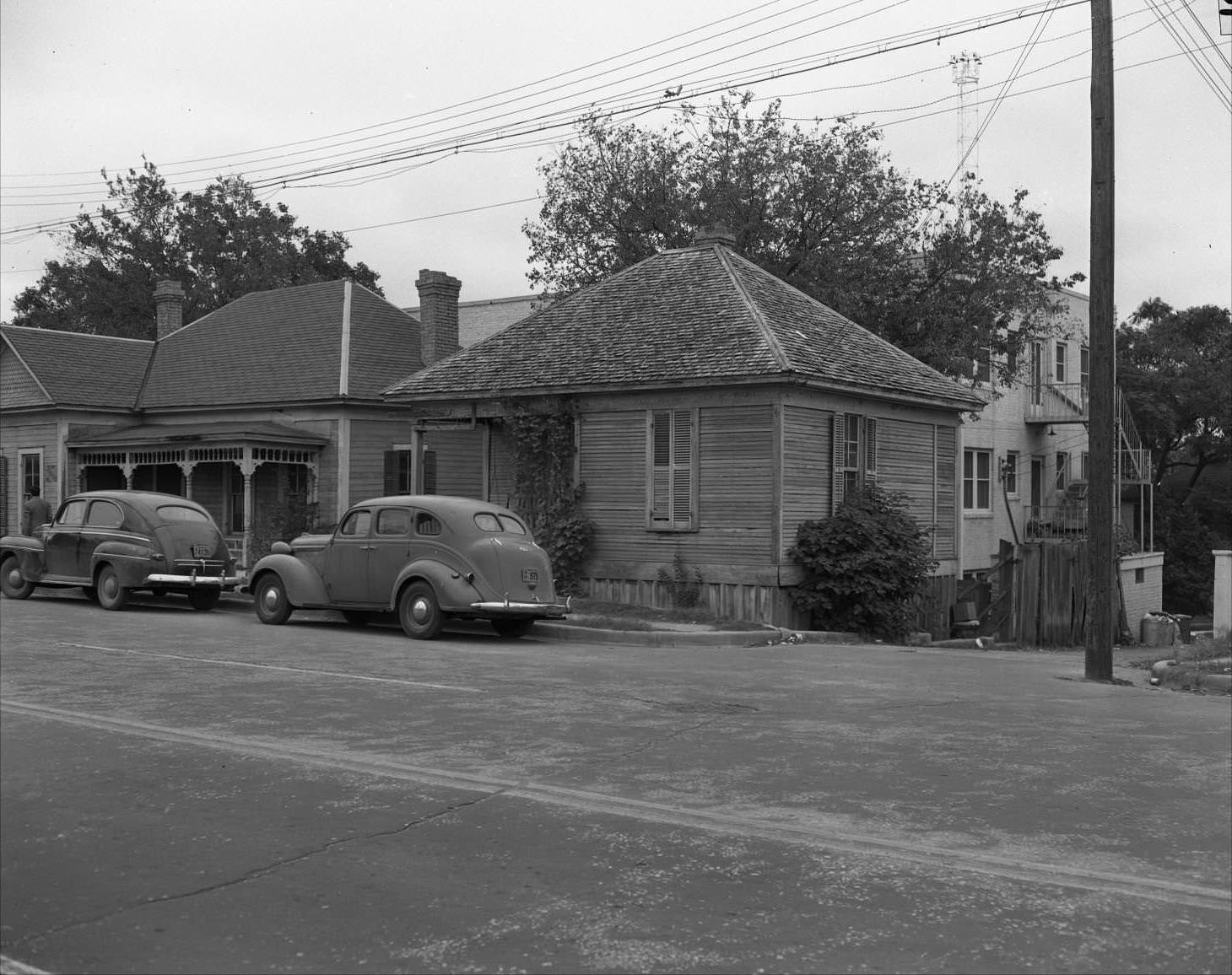
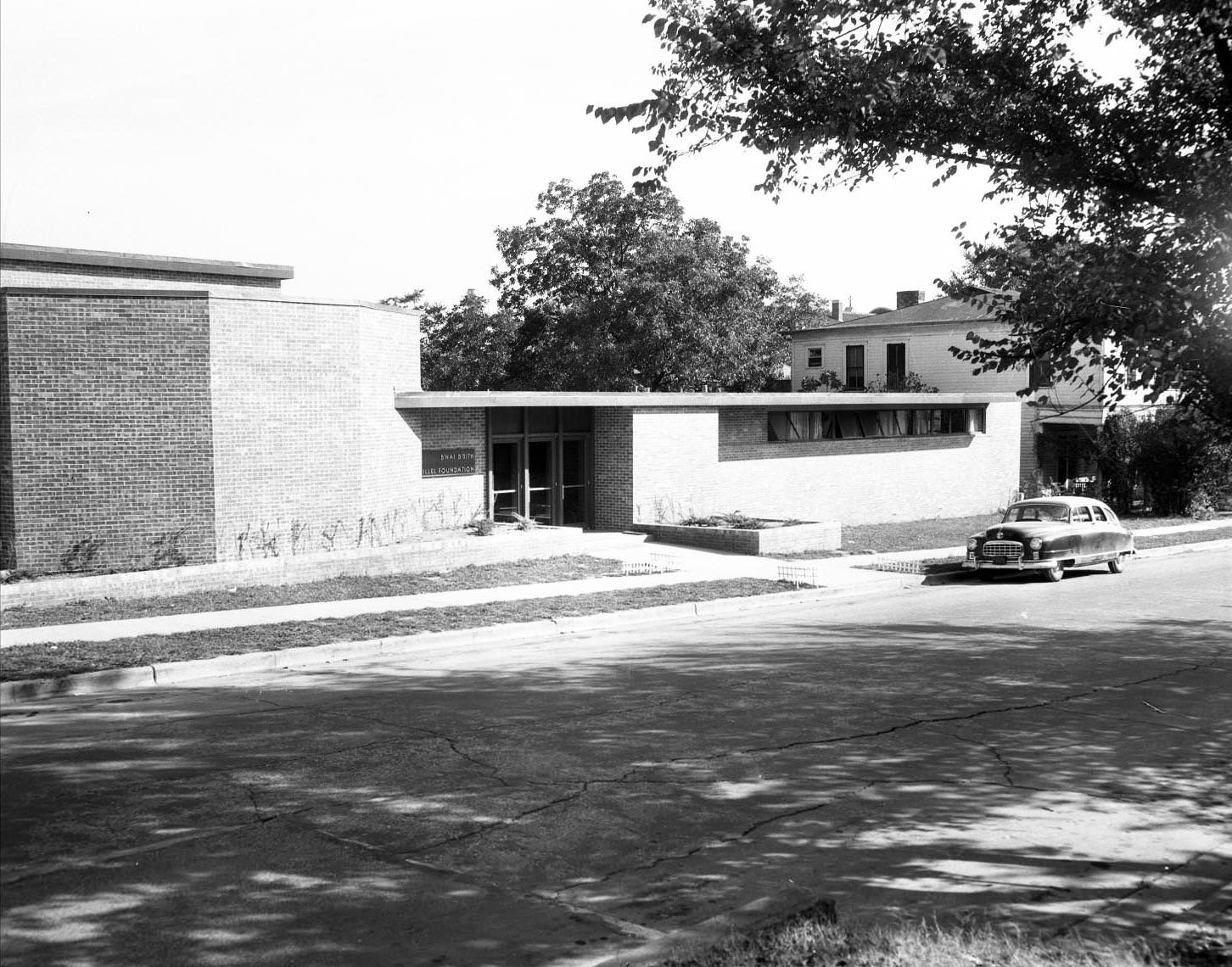
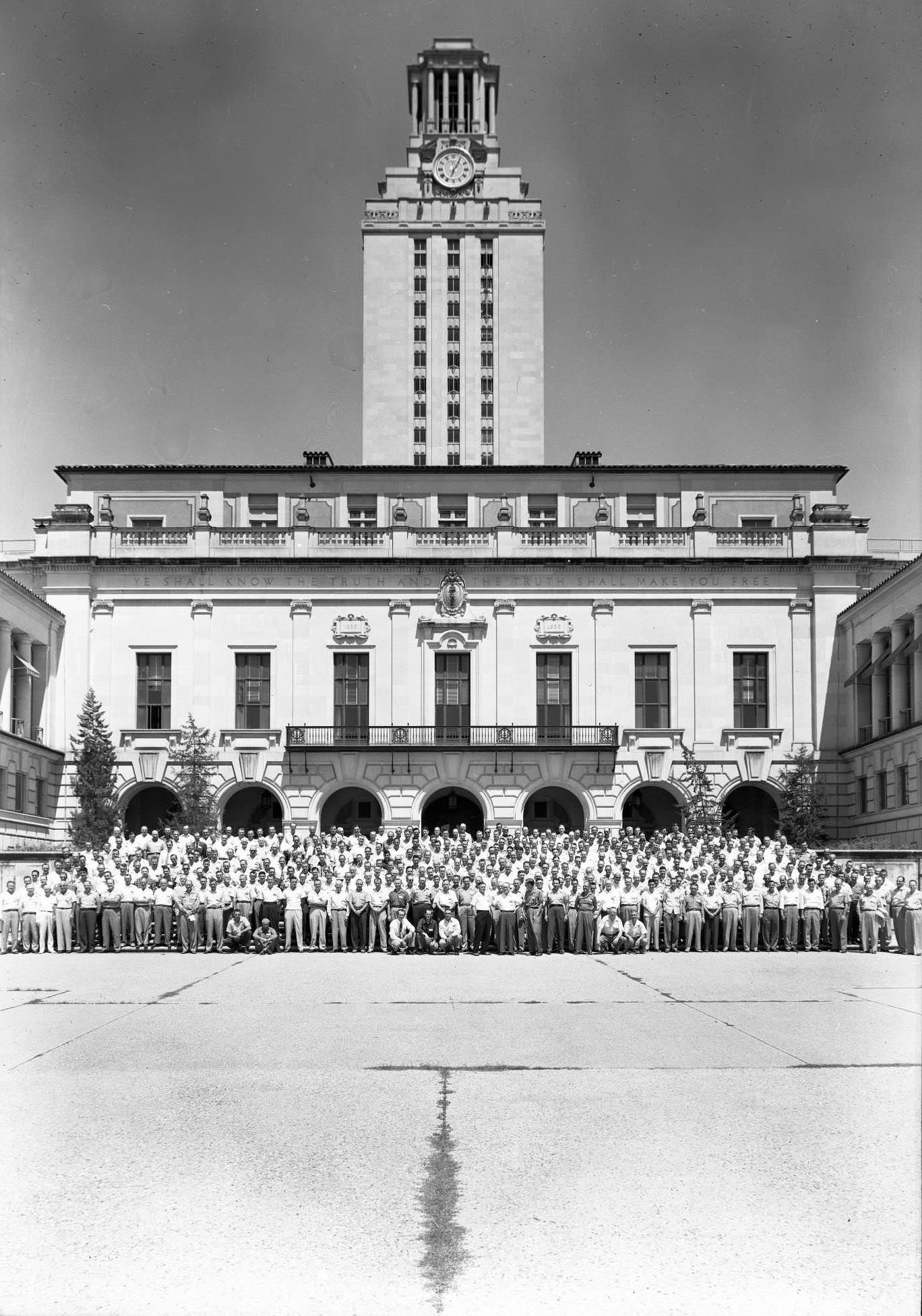
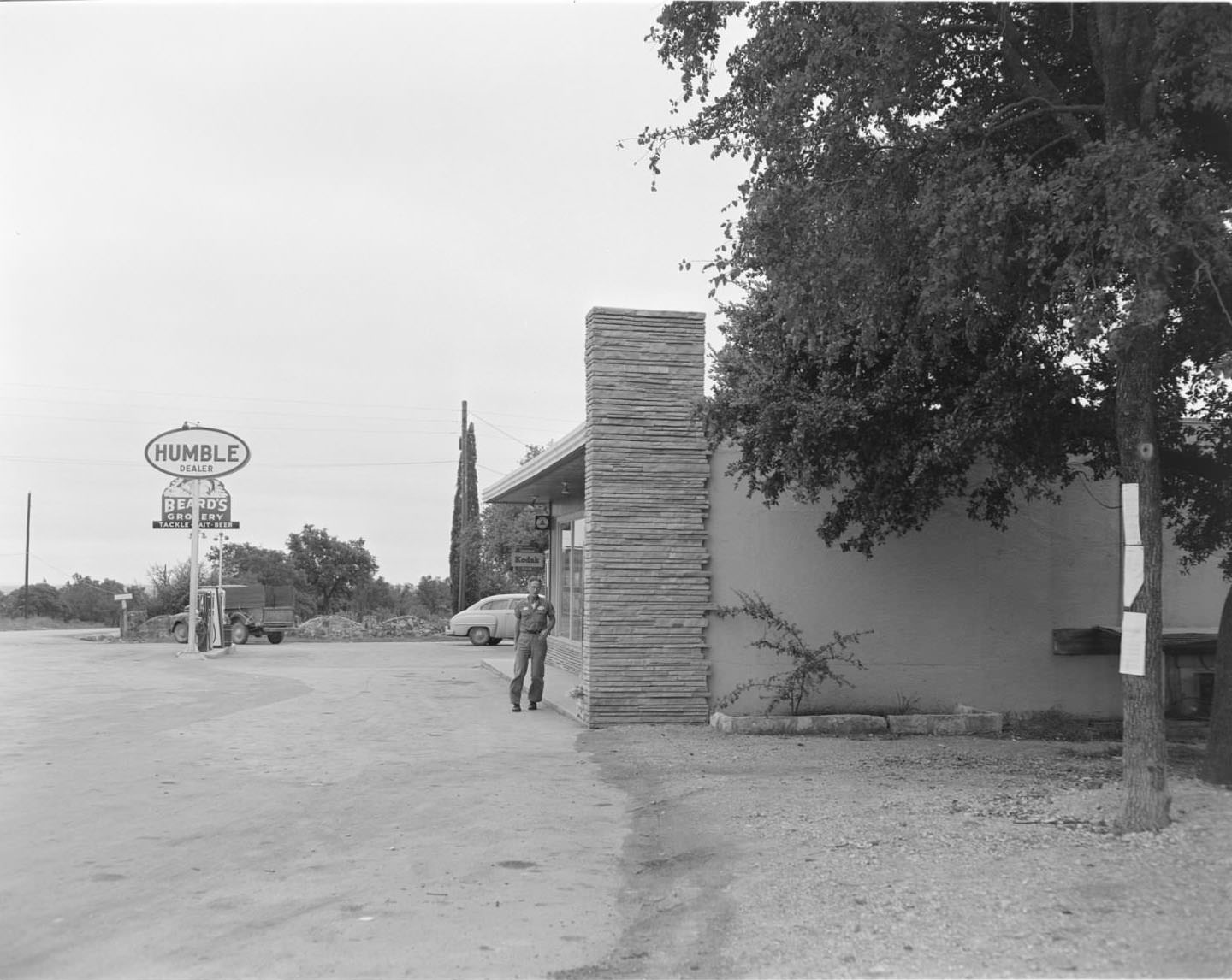
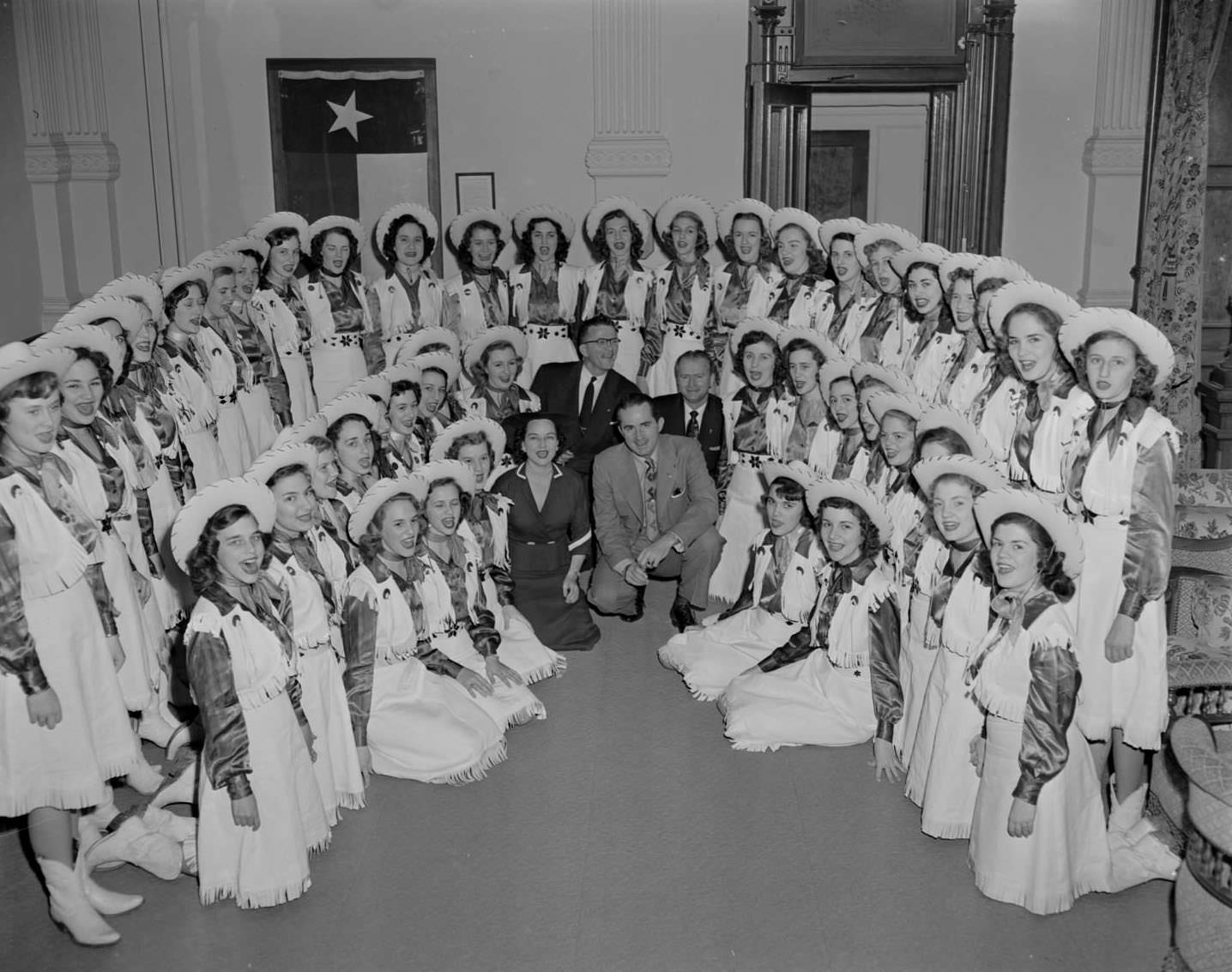
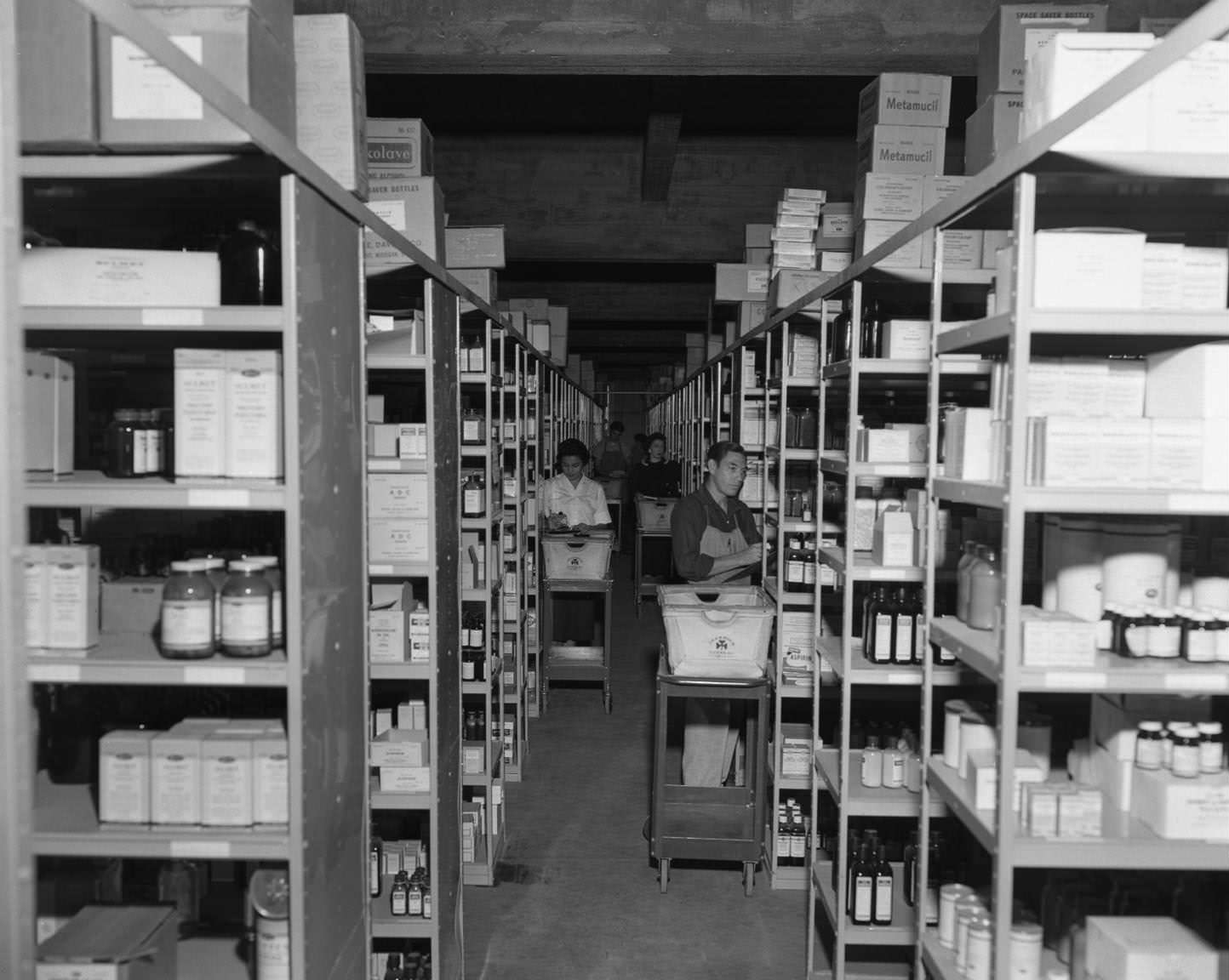
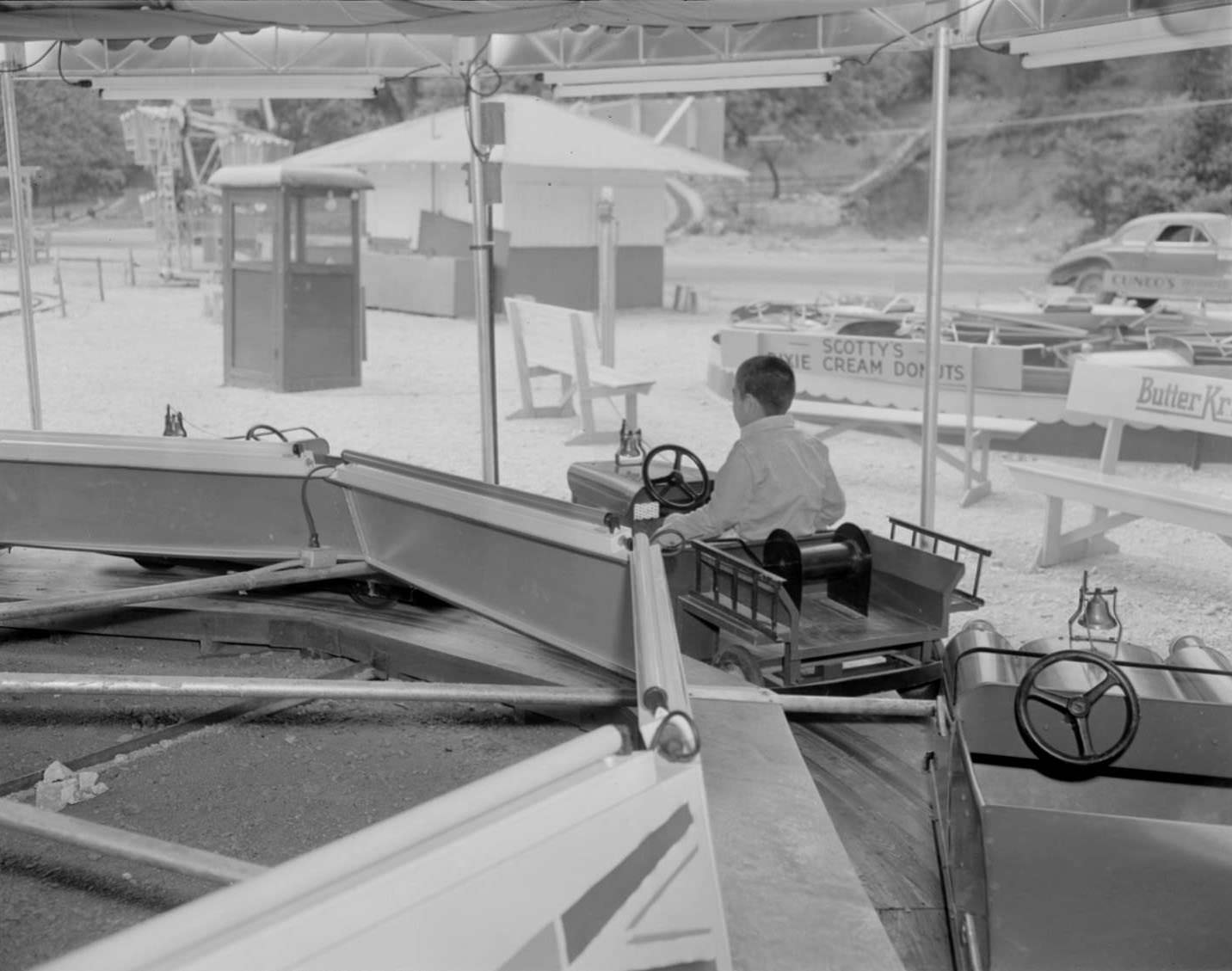
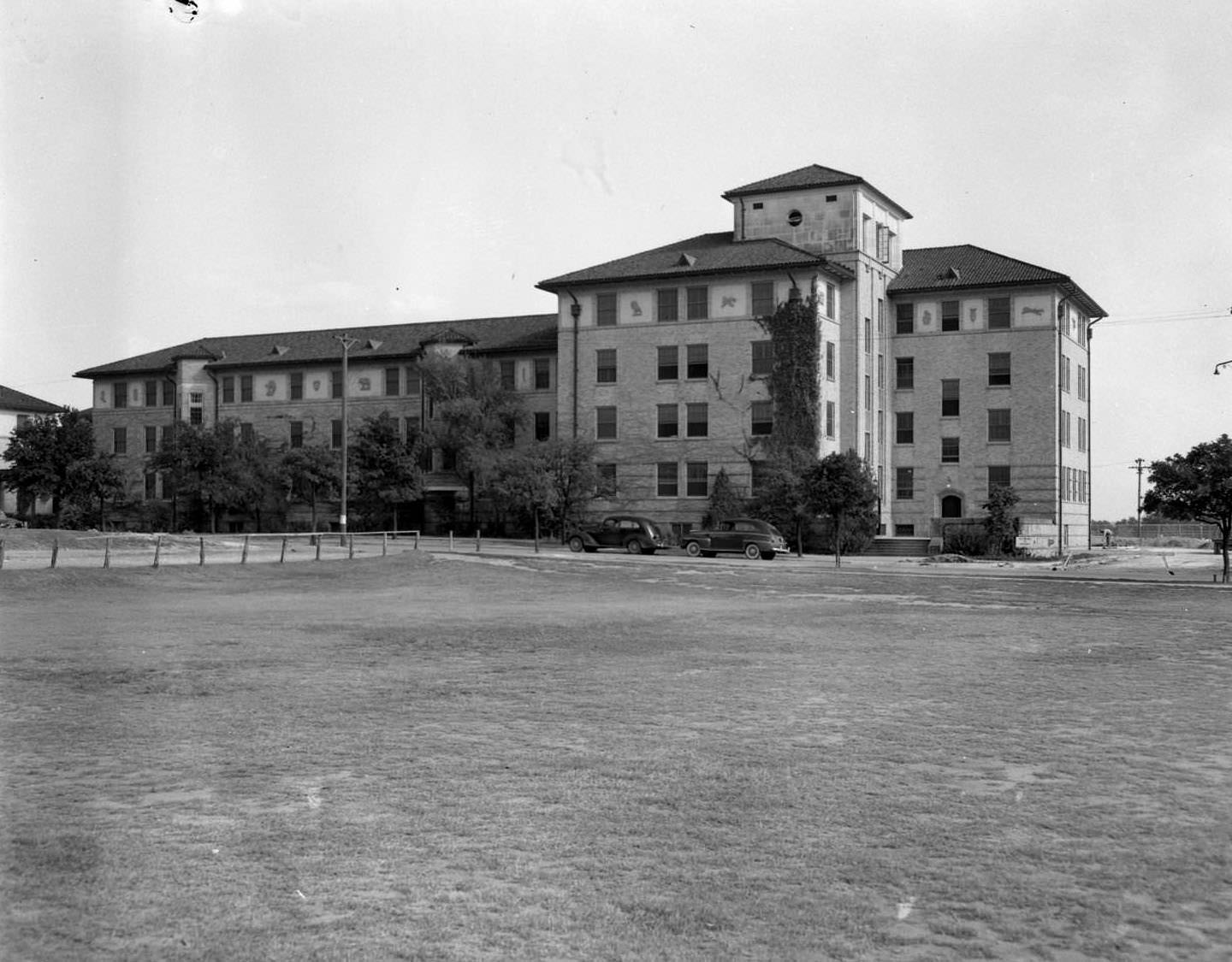
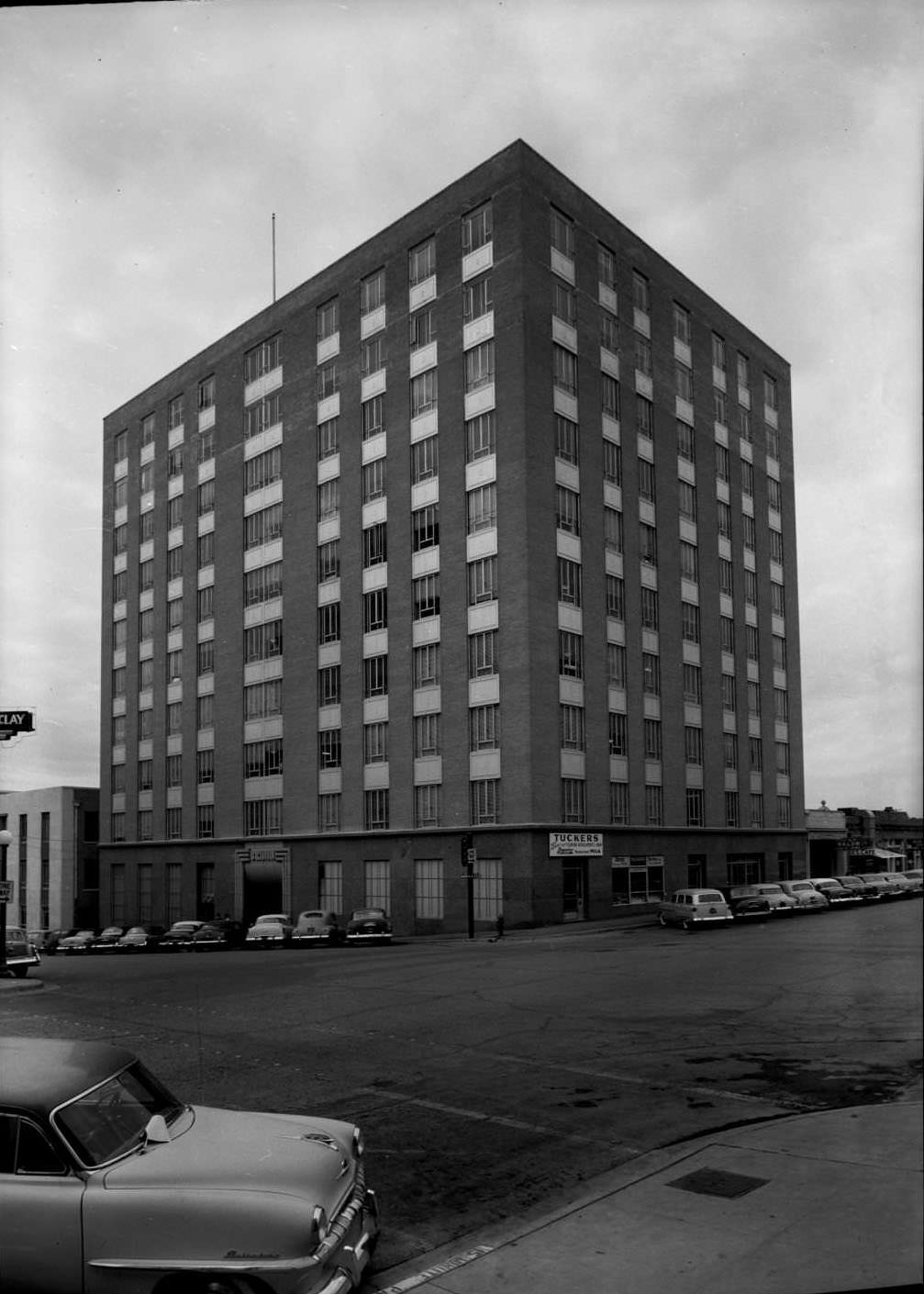
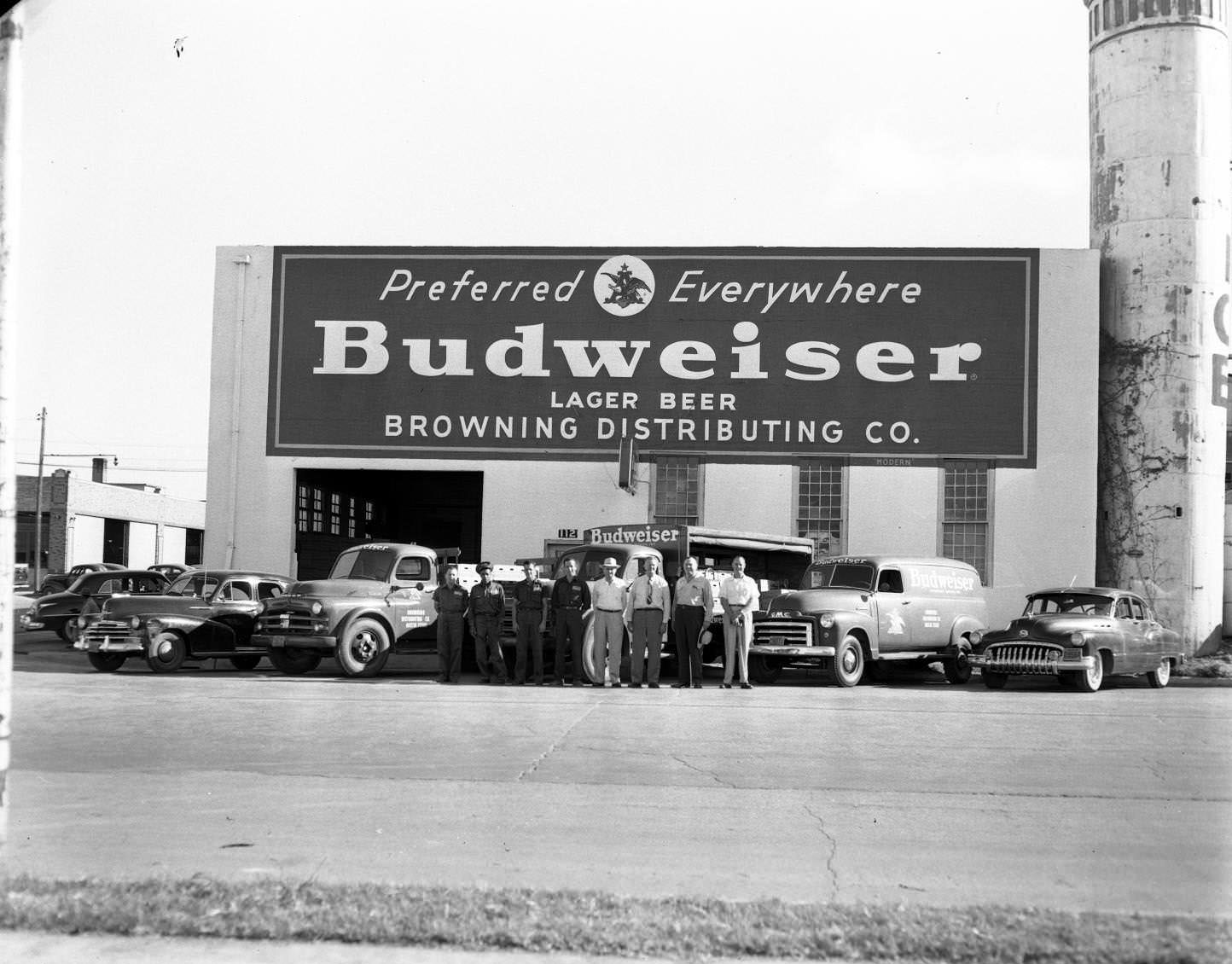
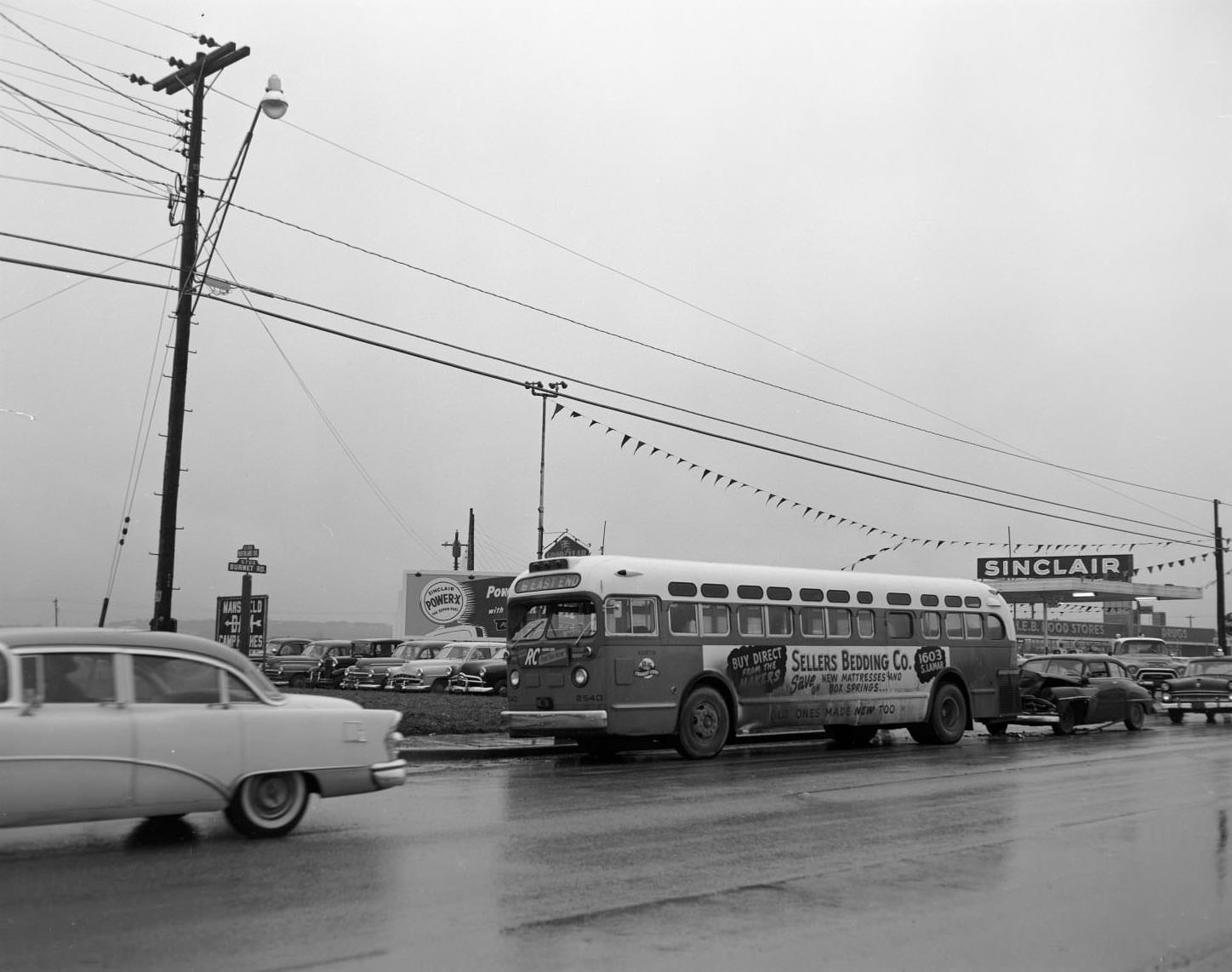
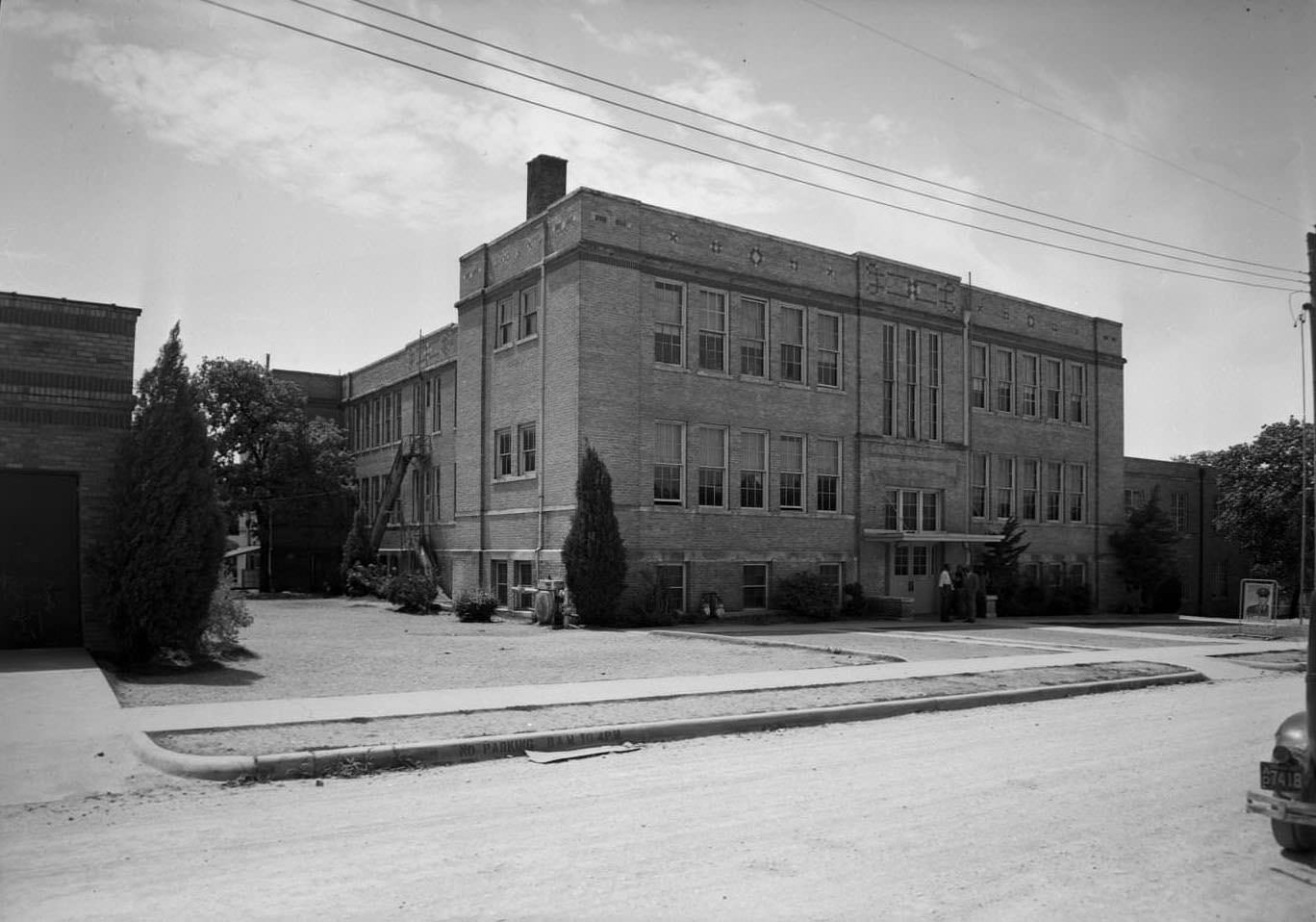
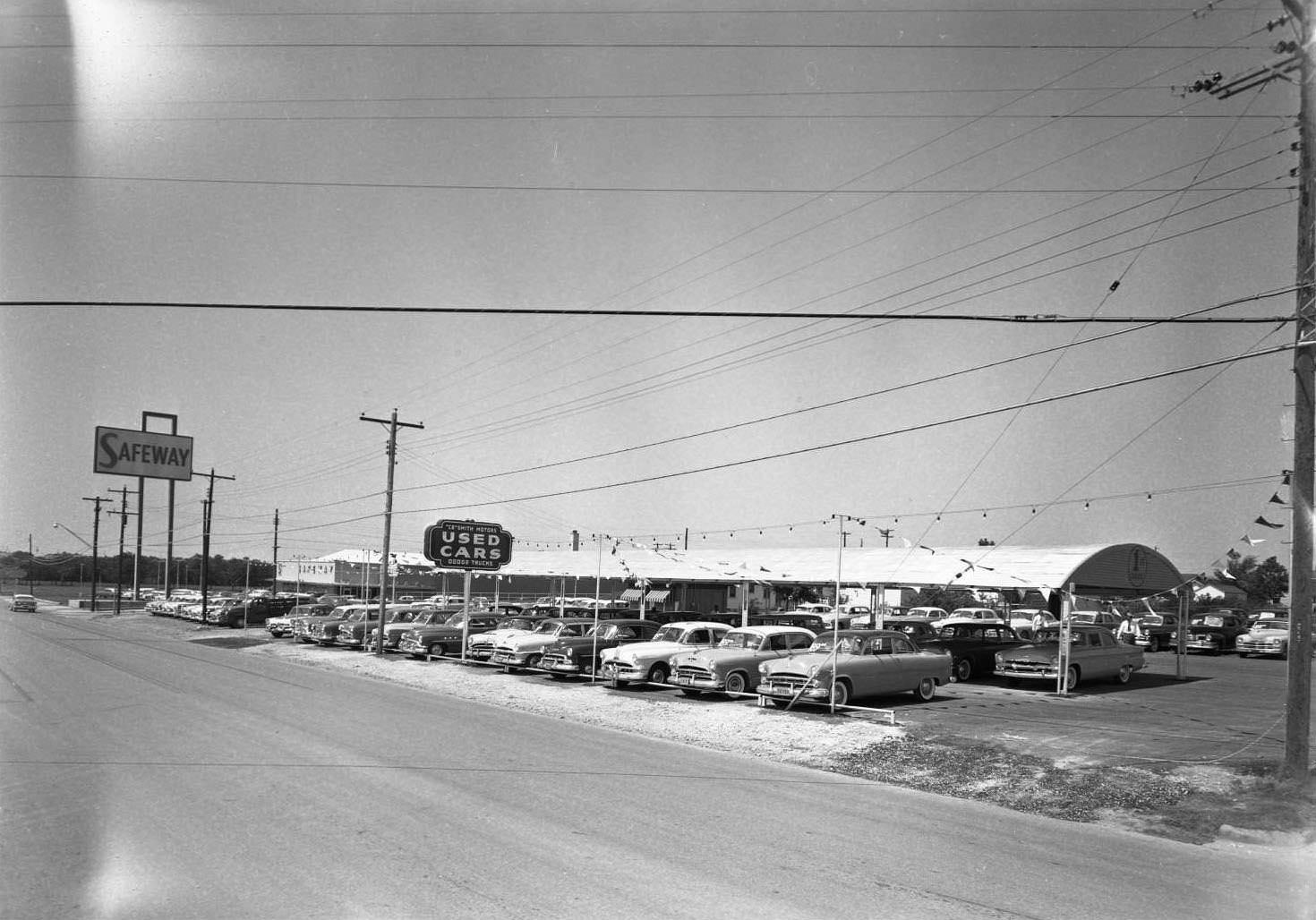
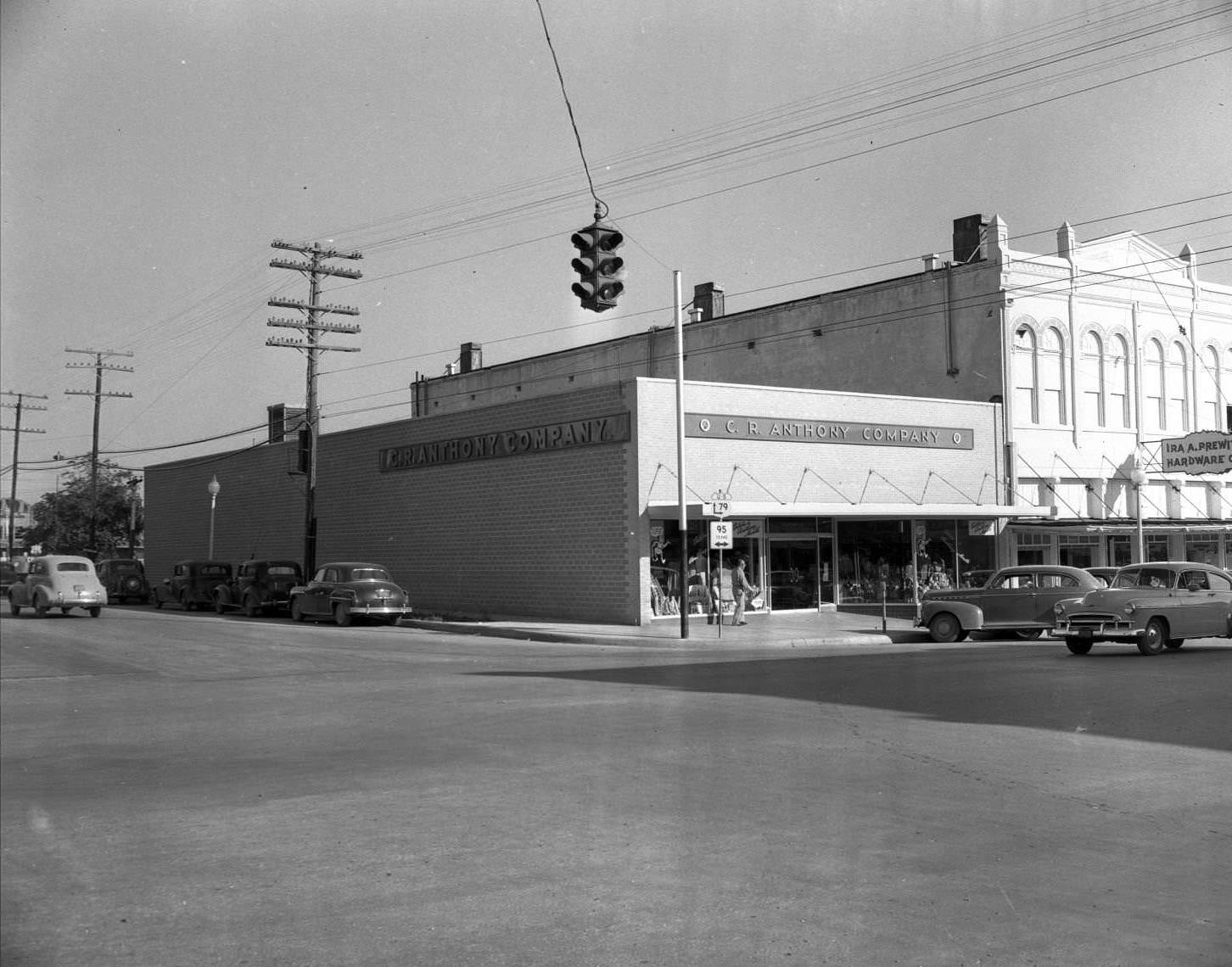
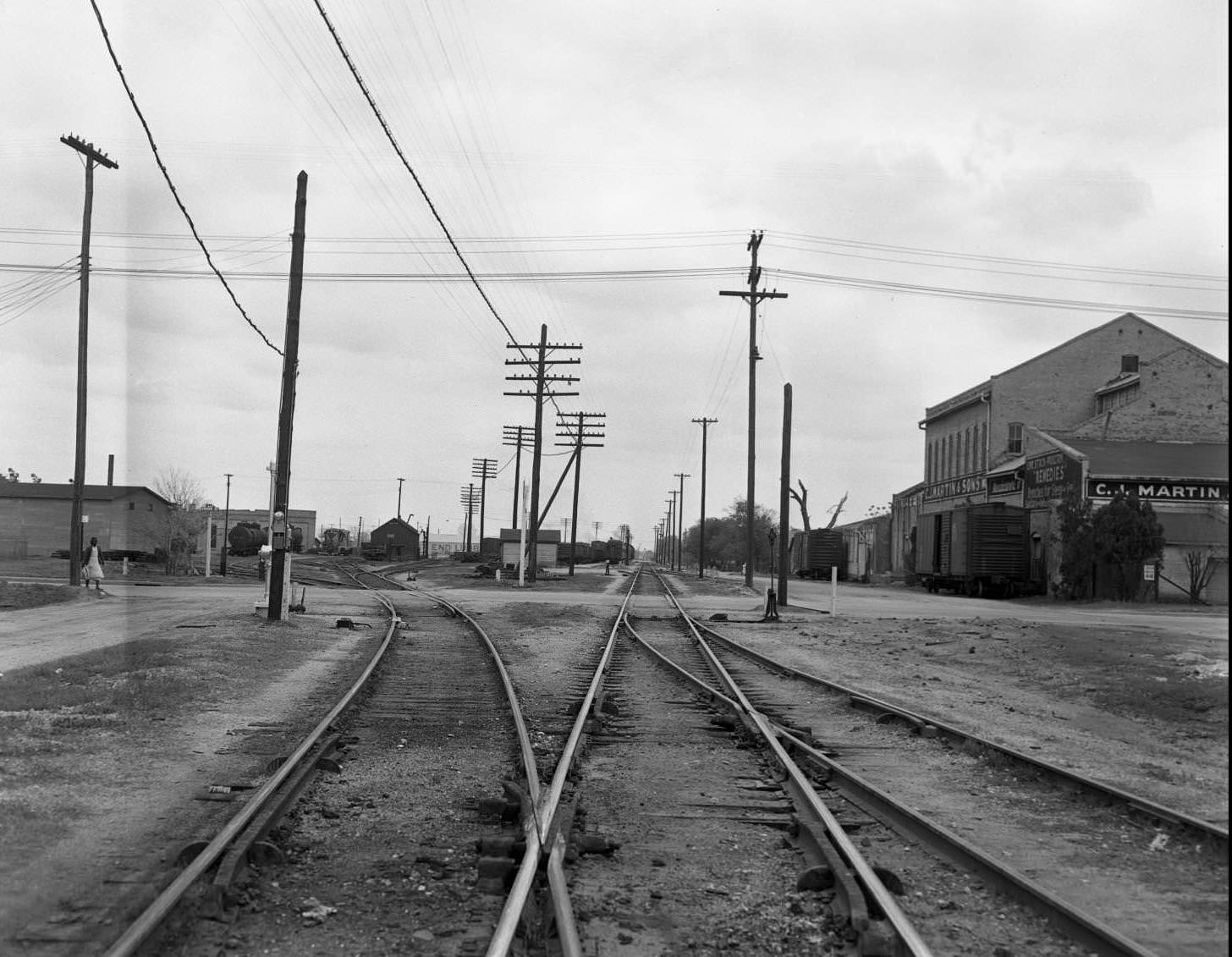
Aerial shot over Colorado River, looking east past Congress Ave. Bridge and Auditorium Shores, 1959Stark shot of the UT Tower lit up at night on 21st street, 1957Austin Skyline (closer view) from south of the Colorado River on I-35, 1957Aerial shot directly south of Capitol, (farther back) and Austin north of the Colorado River, 1959Austin Motorcycle Company with Police Men, 1953Austin Candy Company Drug Store, 1953Austin Life, Ausin Mutual Life Building, 1951The Bluebonnet departing from Austin, 1954Directly south of the State Capitol and above Congress Ave., Shot of downtown Austin with The Driskill, Captiol, and UT Tower in view, 1959From the southeast of the State Capitol, an aerial shot of downtown Austin, The Driskill, Captiol and UT Tower all in view, 1959The Austin Tropic Shop furniture store. There are numerous types of rattan furniture on display, 1950The exterior of Austin Motel, located at 1220 South Congress Avenue. There is a large swimming pool in front of the building, 1955View of Austin Laundry & Dry Cleaning Company, 1951Austin Library (First Public Library), 1950The 800 blocks of E. 4th Street looking east. Austin Pipe & Supply Co. is on the south side of the street, 1959Scene of Governor’s Mansion, Austin, 1954Men and women of the South Austin Civic Club meet for an unknown event, 1955View of one building which houses both the Farmers Insurance Group and Austin Savings, 1952The Austin Club lounge with a seating area enclosed in a low brick wall, 1955A street-side view of the Austin National Bank with a row of cars parked on the street in front of the building, 1954Stephen F. Austin State Park (Restored Home of Stephen F. Austin, 1958Roof Fire Damage of Austin Avenue Methodist Church, 1954Top View of Fire Damage on Austin Avenue Methodist Church, 1954Front View of Fire Damage to Austin Avenue Methodist Church, 1954Austin American-Statesman newspaper chute, 1953Bank of Austin (more distant), President R M McKee, East Oltorf St., 1957South Austin Baptist Church, 1957South Austin Baptist Church, 1957Exterior view of a Baptist Church in South Austin, 1957North Austin Fire Station No. 16 at 7000 Reese Lane at its intersection with Cullen Avenue, 1957Entrance and parking lot of the Country Club of Austin, located on East Riverside Drive on the east end of Felix Avenue, 1953Austin National Bank Drive-In Bank, 1955Austin National Bank Drive-In Bank, 1955United States Courthouse at Austin, 1955United States Courthouse at Austin, 1955Interior view of room with tables and chairs. The County Club was on Montopolis Rd. (Riverside Drive), 1950Men in discussion at table, probably administrators, 1958View looking south of UT Tower on South Mall, facing further on to Downtown Austin, 1958Exterior of Austin Machine & Supply Co. building, 1957Exterior Bank of Austin, close up, President R M McKee, East Oltorf St., 1957Aerial shot facing north of South and Downtown Austin, 1955The exterior of the Austin Savings and Loan building, 1951View of construction fencing to the north of the intersection of E. Campus Dr. and 23rd Street, 1951Fire Damage on Austin Avenue Methodist Church, 1954Firefighters outside Austin Avenue Methodist Church No. 3, 1954Students of Austin School of Electronics, 1960Austin Recreation Department, Beverly Sheffield, 1953Austin Hotel Lounge, 1954Future Homemakers, Austin High School, 1953Product displays at Austin’s Drive In, 1957Two Men in Austin Industries Warehouse, 1957Austin Photographer’s Guild Meeting, 1955South Austin Civic Club, 1955Child with adults at the Austin Cerebral Palsy Center, 1951Austin American-Statesman newspaper chute, 1953Presentation of awards Austin H.S. 4-H Clubs, 1951Harvey Penick at Austin Country Club, 1950Austin Organ Club Recital, 1956Austin Organ Club Recital, 1956Mrs Brinklehoff – First Austin Policewoman, 1950Chief Justice Tom C. Clark in Austin, 1950Austin Machine & Supply Co., 1957Austin Country Club, 1950sDesk and Derrick Club of Austin, 1952Auto with Capitol Building, 1959The crowning of the 1959 Mid-Texas Milk Producers Association Dairy Princess, 1957Exterior of Church, Brazos and 8th St. looking north, 1950s50000th Telephone in Austin, 1950Eve Marie Martin and George Martin stand behind the counter in the ABC shop, located at 809 W. 12th St. in Austin, 1951Abel Stationers at retail fair, 1950Looking down train tracks for insurance claim for Tom Davis, 1957Accident Scene at East 32nd & Red River Streets, 1951Acock Laboratory, 1954Adams Extract display, 1956A line of men, women, and children at the Adams Extract factory open house, 1956News coverage, KONO Special events, 1954Five men standing in front of prop plane, 1954Train Wreck at San Marcos, 1950Aerial View-North towards Capitol, Austin, 1950Aerial view of 919 E. 32nd St. – St. David’s Hospital, 1956An aerial view of Acock Laboratories, 1954Aerial view of Jefferson Chemical Plant, Austin, Texas, looking west, 1956An aerial view of the West Winds Motel, 1956Looking NW from about the north approach from Lamar bridge, 1950Aerial view of neighborhood south of the University of Texas in foreground, 1950Aerial views – East Avenue Highway, 1950Aerial view of St. David’s Hospital showing building, parking lot and part of the grounds, 1956The Alamo Hotel at 400 W. 6th Street, 1957Airport scenes: control tower, planes, 1950All Saints Church, 1952Allandale Department Store at Allandale Village, 1951Allred Finance Banquet, 1956American Legion Building, 1953The American National Bank/Littlefield Building at 601-605 Congress Avenue, 1951American-Statesman typesetting machines, 1953Anderson High – Ceremony & Reception, 1955Anderson High School, 1955An Anderson High School physical education class, 1955Anderson High School, 1953Anderson High School, 1953Armed Forces Day Parade down Congress Avenue, 1953Armed Forces Day Parade down Congress Avenue, 1953Armed Forces Day Parade down Congress Avenue, 1953Austin Aerials – misc. downtown, auditorium, 1959Aerial shot of finished TEC Building. Brazos St on the lower right and 14th on the lower left, 1958Aerial shot of cranes and scaffolding at TEC construction site. 15th Street running left to right in center of photograph, 1958Austin American-Statesman newspaper chute, 1953Austin Country Club, Austin, 1953Austin Country Club, 1950Interior of the Austin Hotel showing the lounge with unidentified guests of the hotel, 1954Austin Life, Ausin Mutual Life Building, 1951Austin Machine & Supply Co., 1957Austin Motorcycle Company with Police Men, 1953Austin National Bank Drive-In Bank, 1955Austin Power Plant Construction, 1959Austin Skyline from I-35, 1957Austin State School — students on playground, 1954Austin Street Scene, 1951Austin Street Scene, 1951B’nai B’rith Hillel Foundation building, 1950View of Baker’s Shoe Store with show windows. Baker’s Shoe Store was located at 708 Congress, 1950Bank of Austin, 1957Bankers Convention on UT Campus, 1953Beard’s Grocery 7 exterior building, 1958The Beaumont Melody Girls posing around three men and a woman, 1953Employees loading shelves of medicine at Behrens Drug Co., 5th and Colorado, 1957Behrens Drug Co., 1957Bergstrom Corporation – Housing Development, 1956Exterior view of Bill Benton’s Men’s Clothing Store which was located at 309 W. 5th Street, 1955Buildings in the 1300 block of Lavaca Street, 1956Exterior view of The Bolm Building at 308 W. 15th Street, 1956Boy riding on amusement park ride, Austin, 1950Boy Scout Parade, 1954Brackenridge Dorm, 1950Bradford’s Paint Company, 1954View of The Brown Building at 708 Colorado, 1954Browning Distributing Company, 1951Bus collision on Burnet Rd/Northland, 1957L.C. Anderson High School — 1912 Building, 1950C.B. Smith Motors Used Car lot at 5408 Burnett Road, 1955C.R. Anthony Co. and Ira A. Prewitt Hardware buildings on street corner, 1950Looking East from the 1700 block of E. 5th at the railroad tracks at Chicon. C. J. Martin & Sons on the right, 1951Looking northeast at the building at 114-120 W. 7th St from the intersection of 7th and Colorado St, 1951
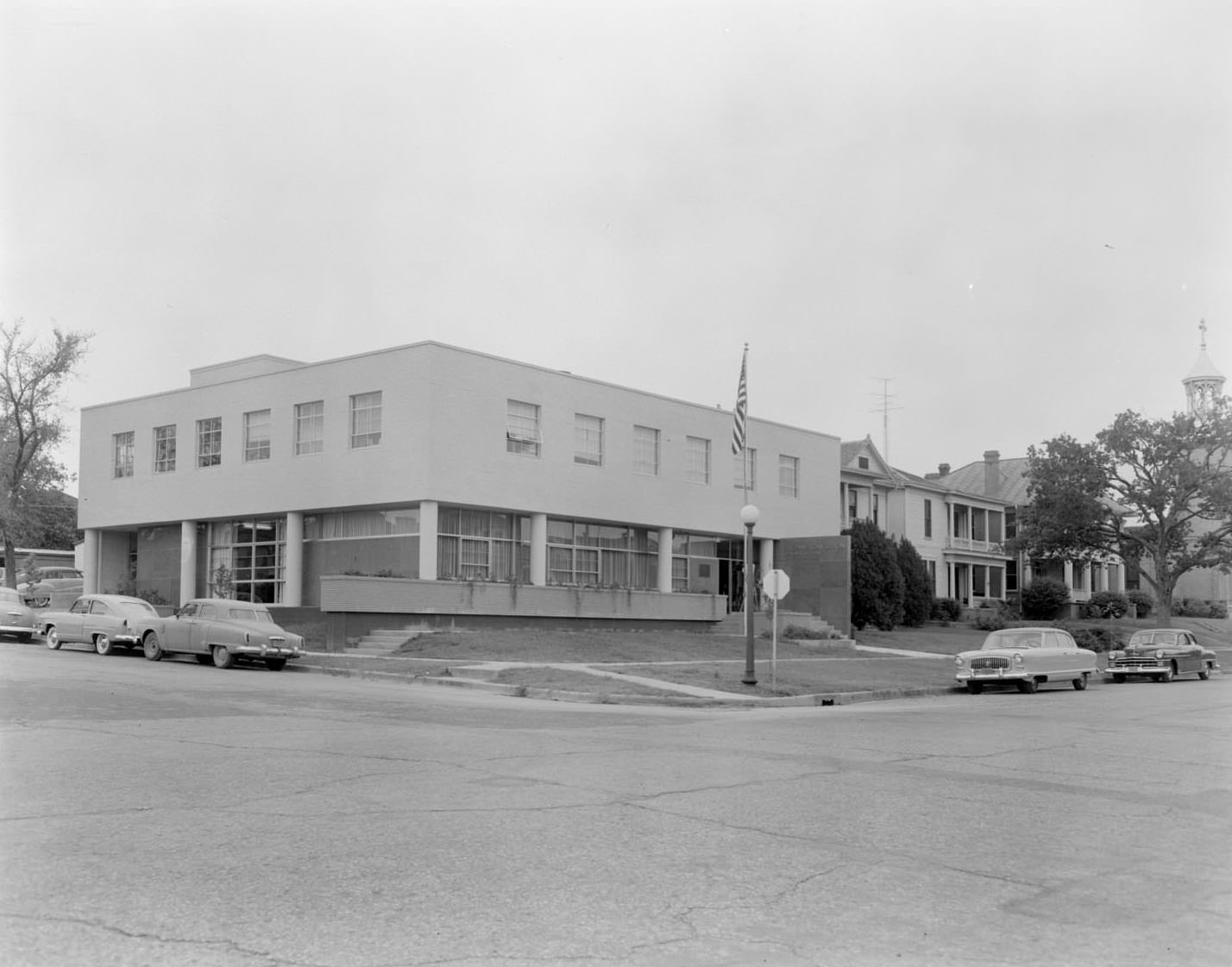
Looking northeast at the building at 114-120 W. 7th St from the intersection of 7th and Colorado St. Still under construction. Norwood Tower in view, 1951
Interiors of building at 114-120 W. 7th St, 1952
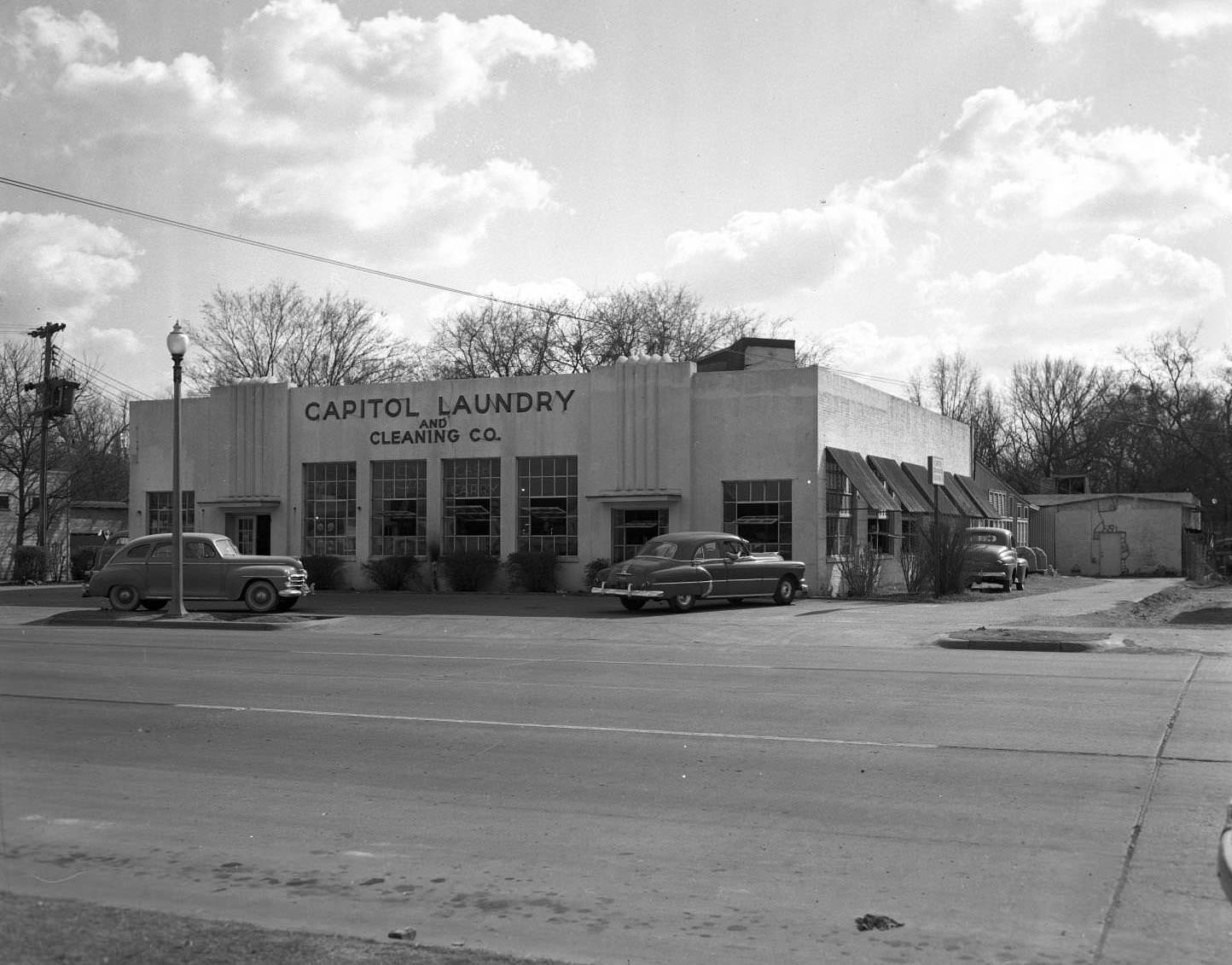
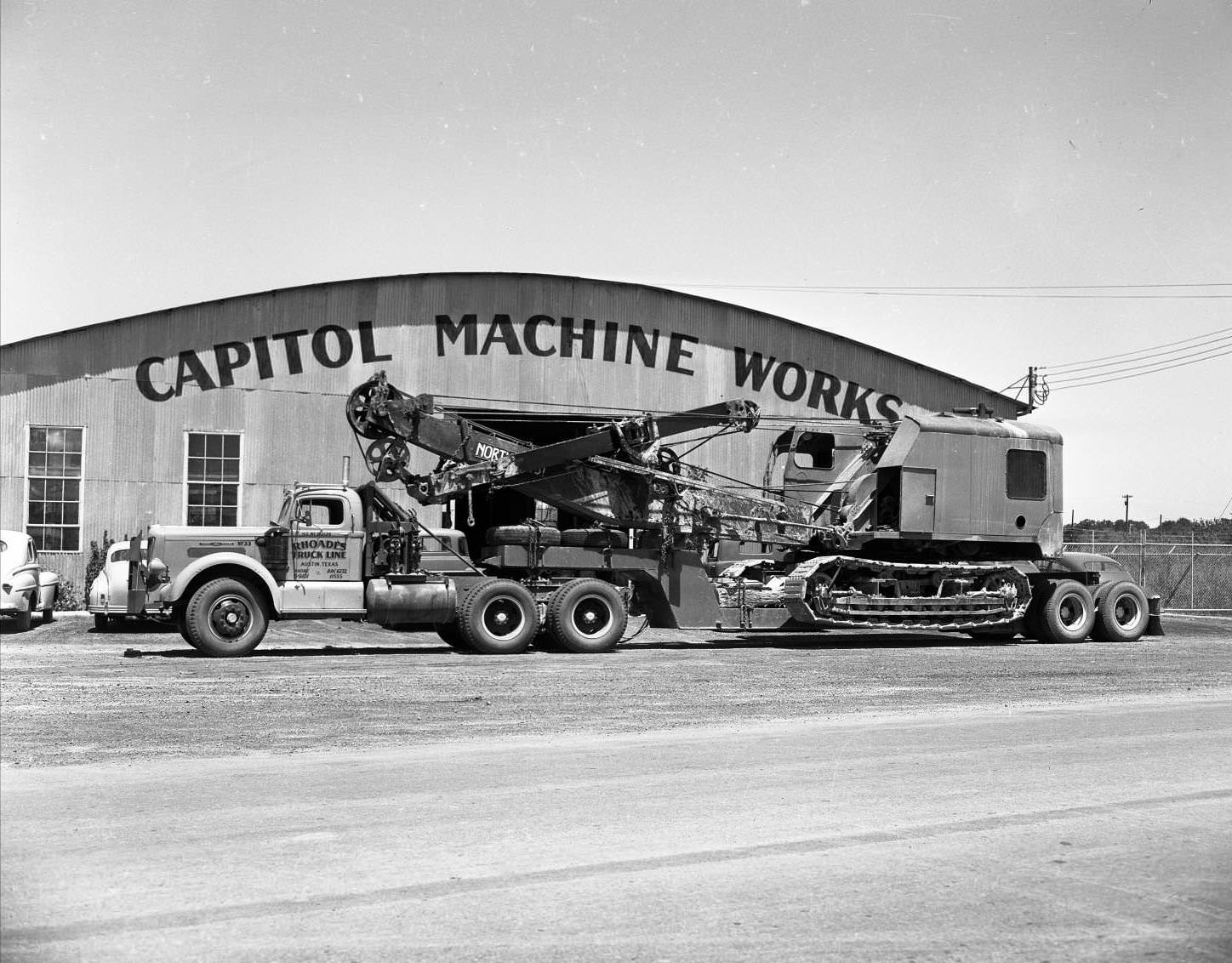
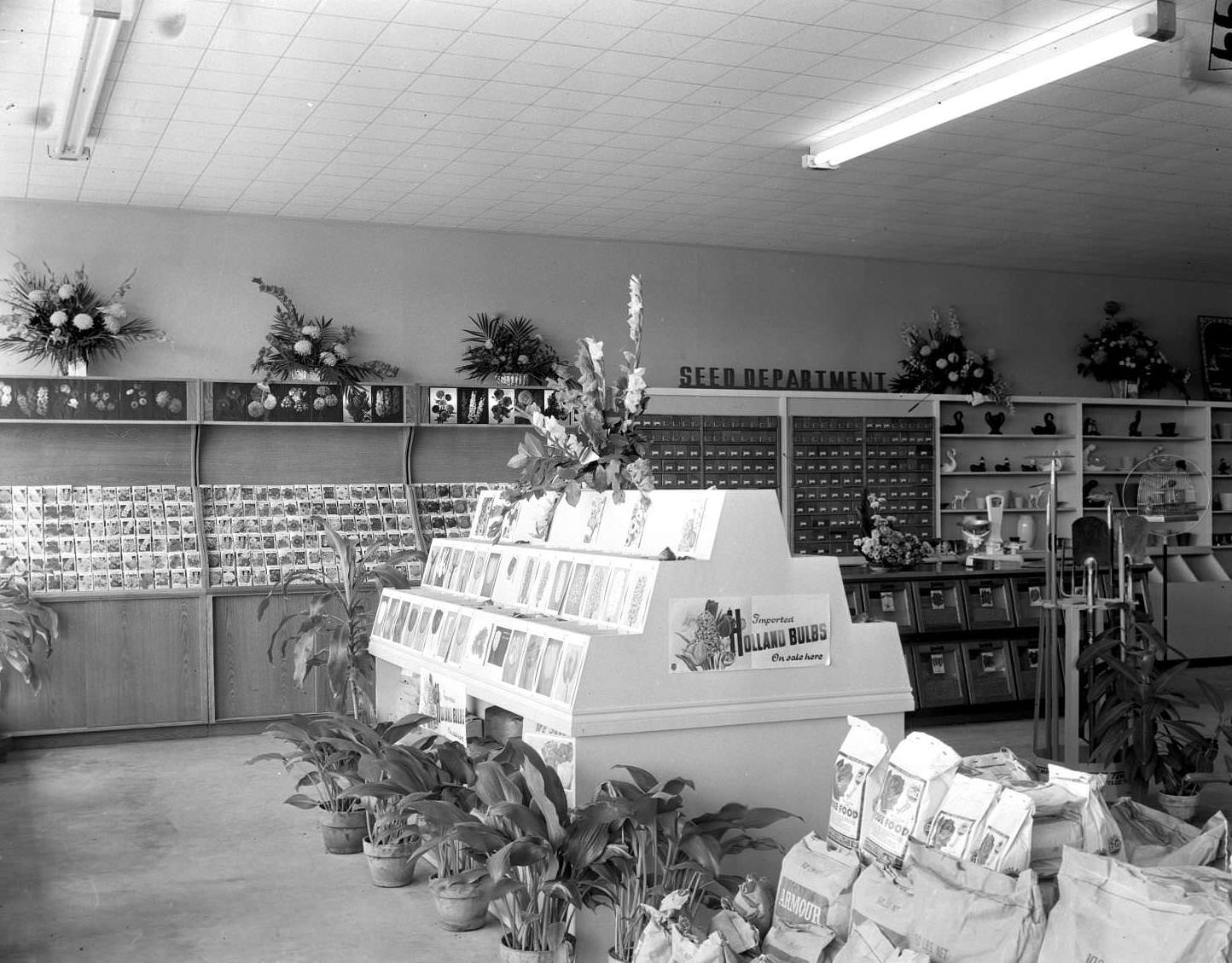
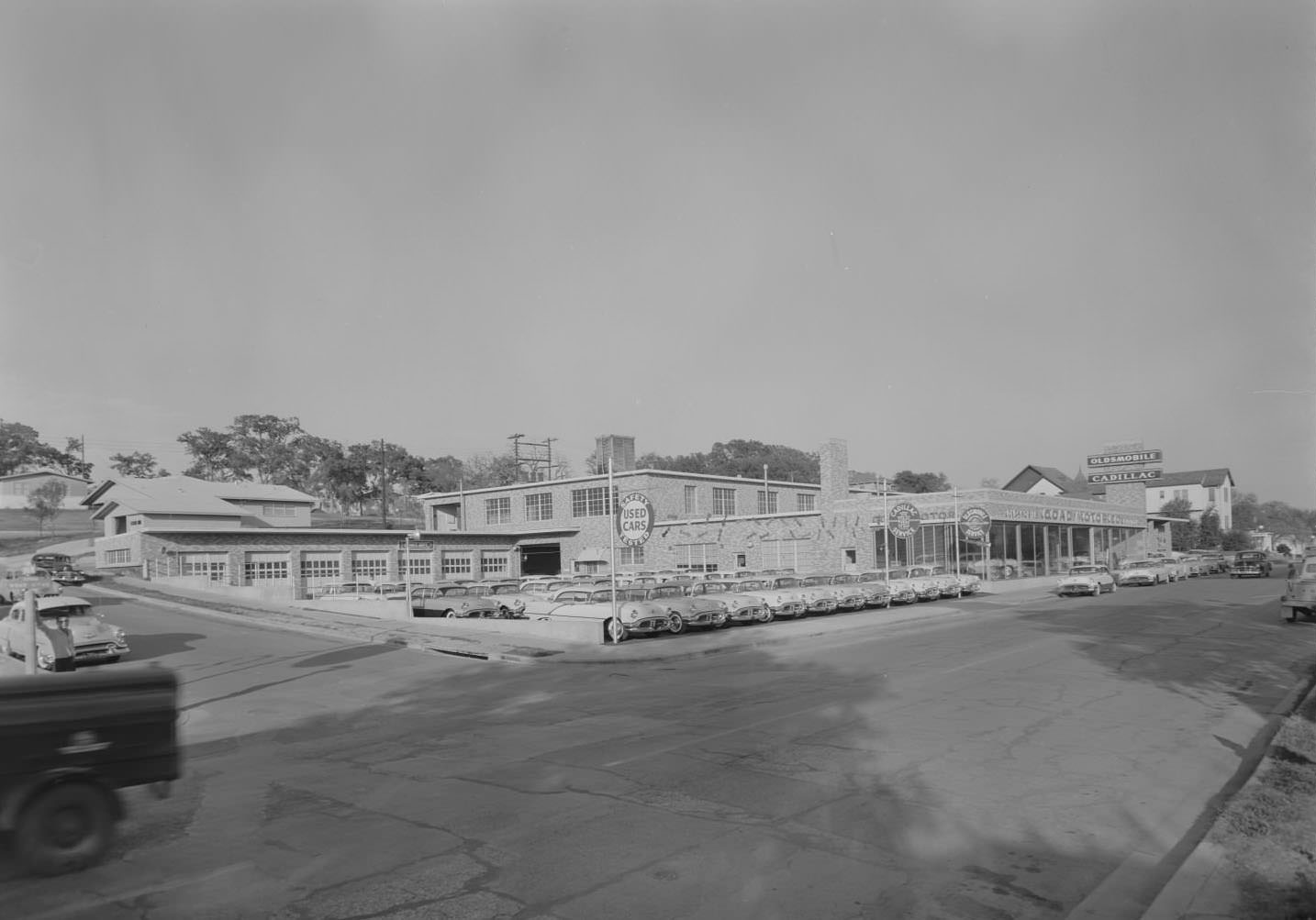
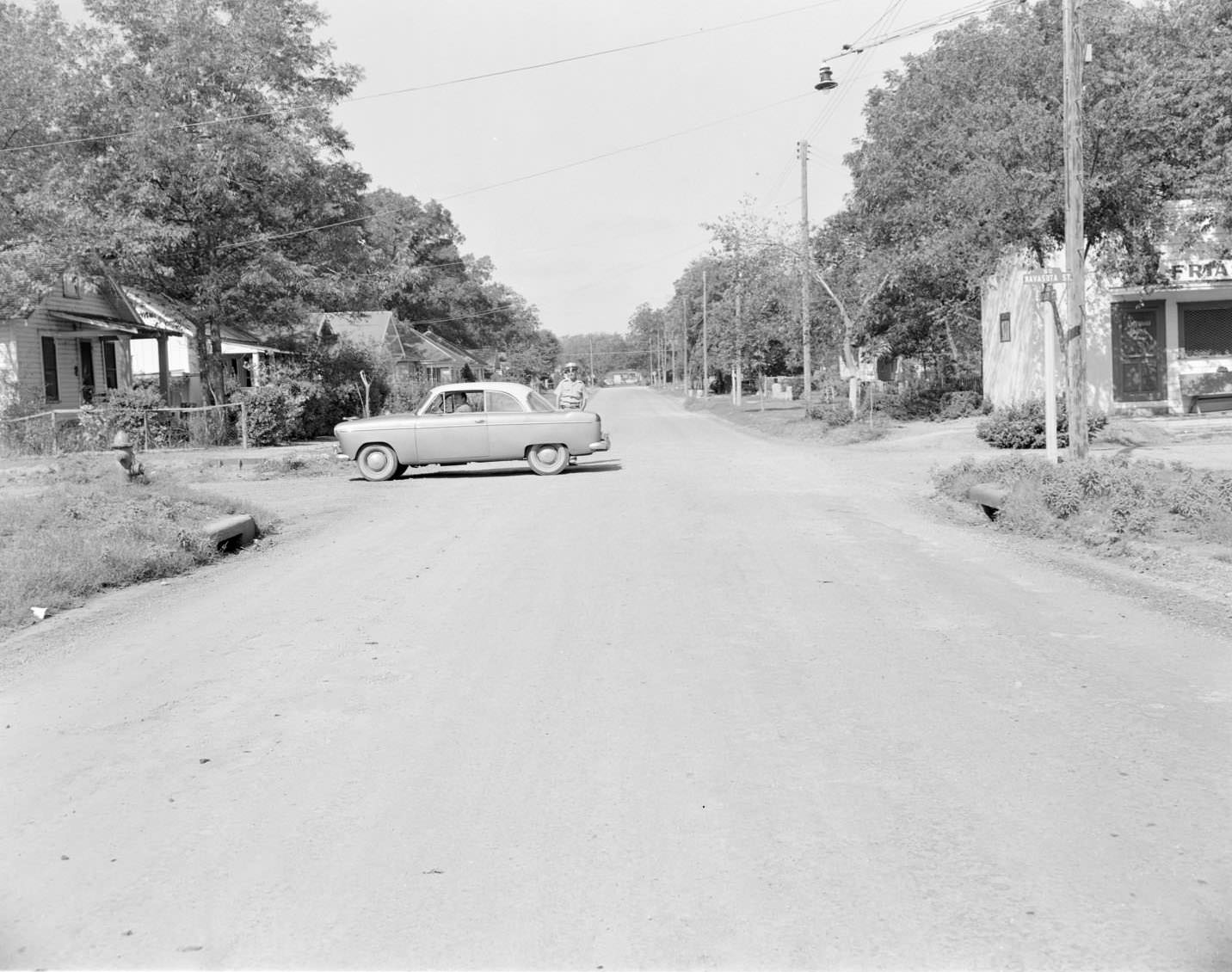
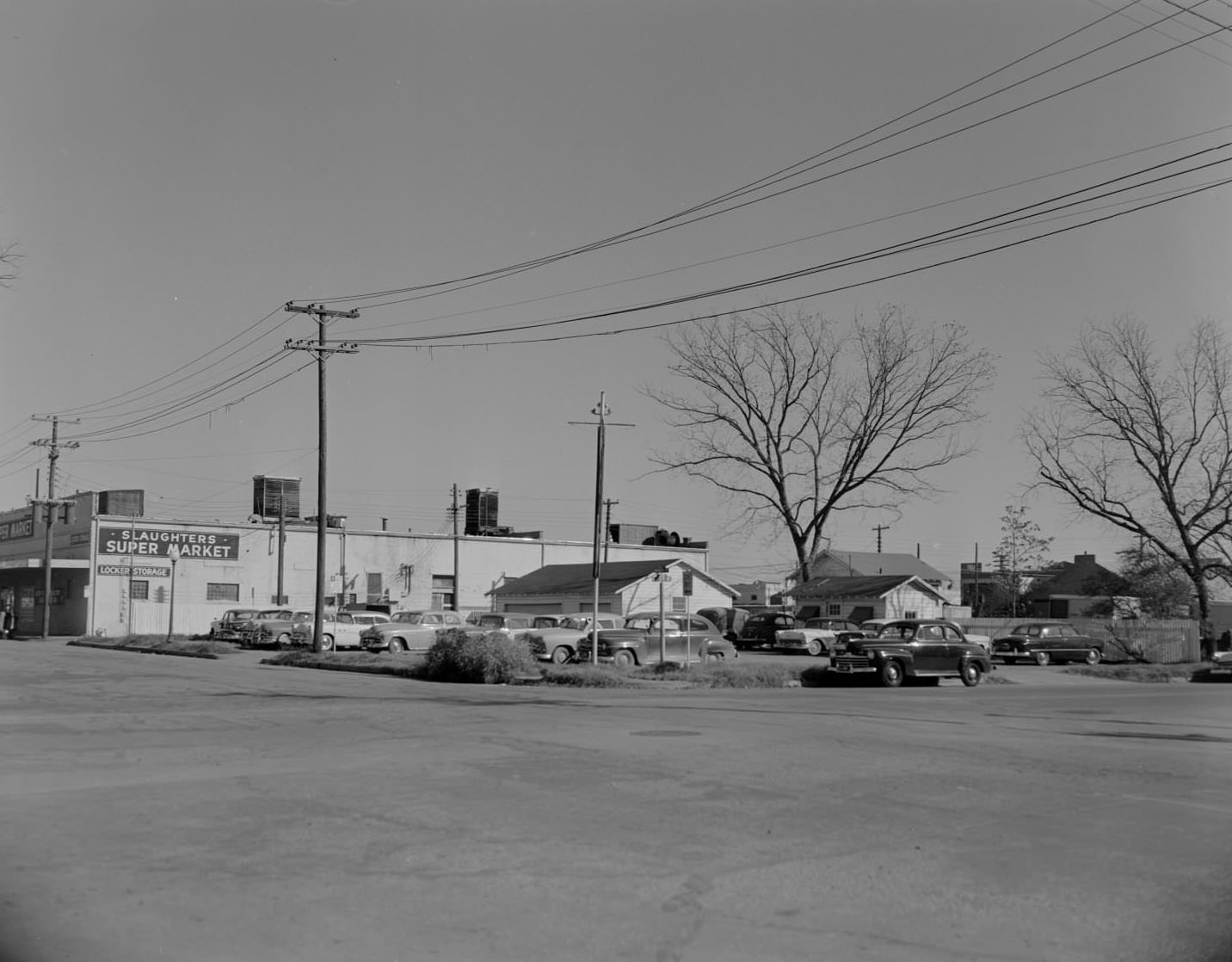
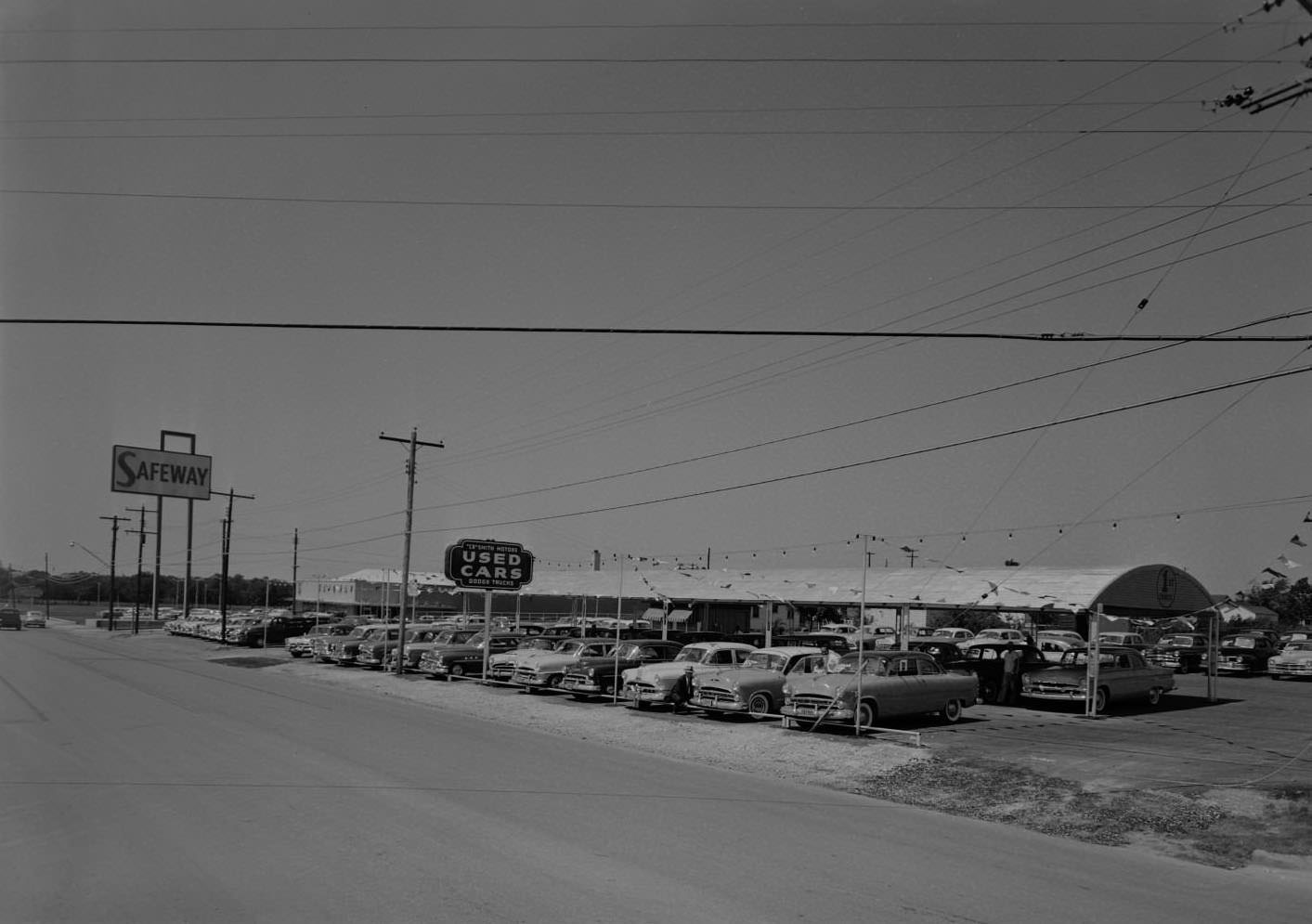
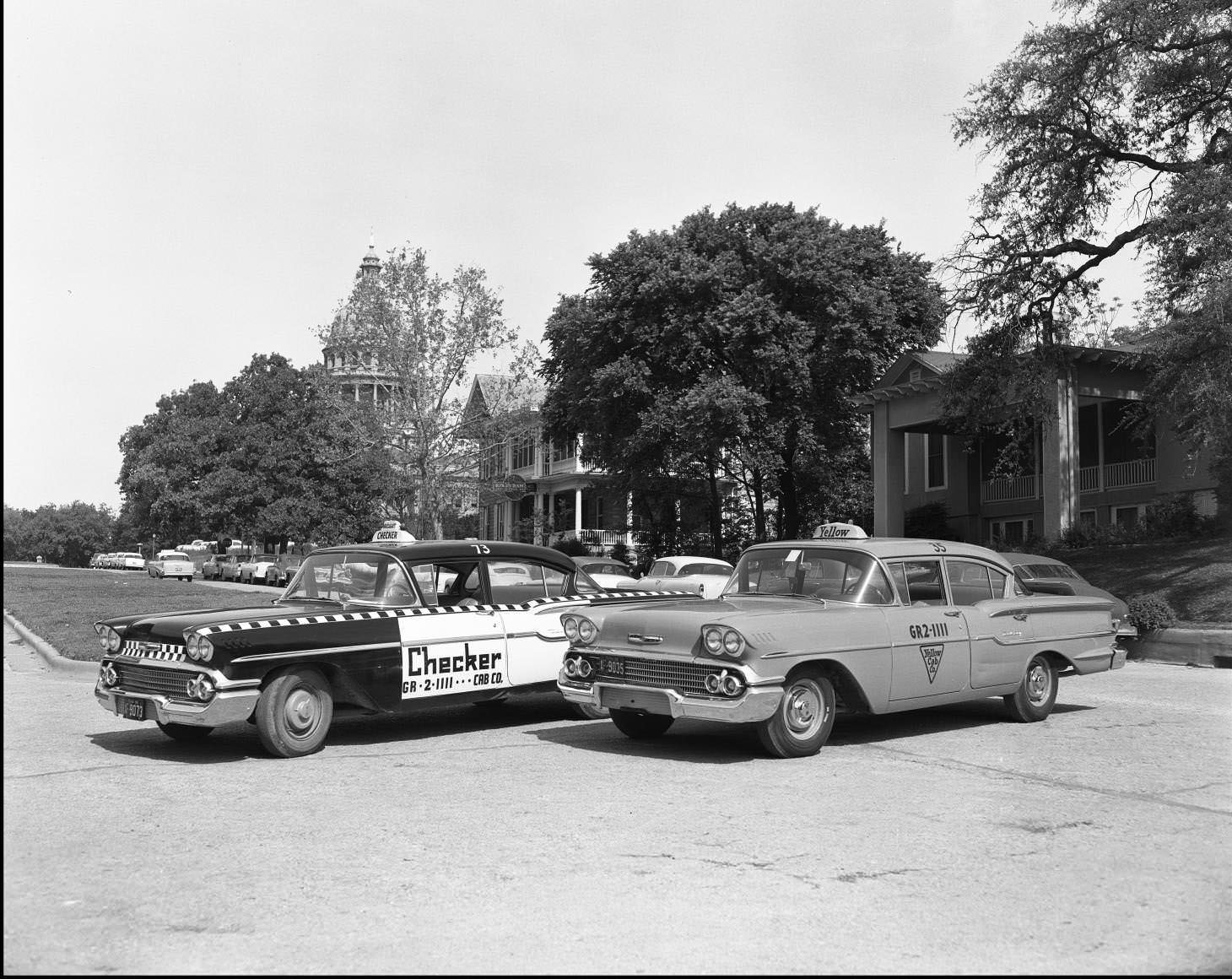
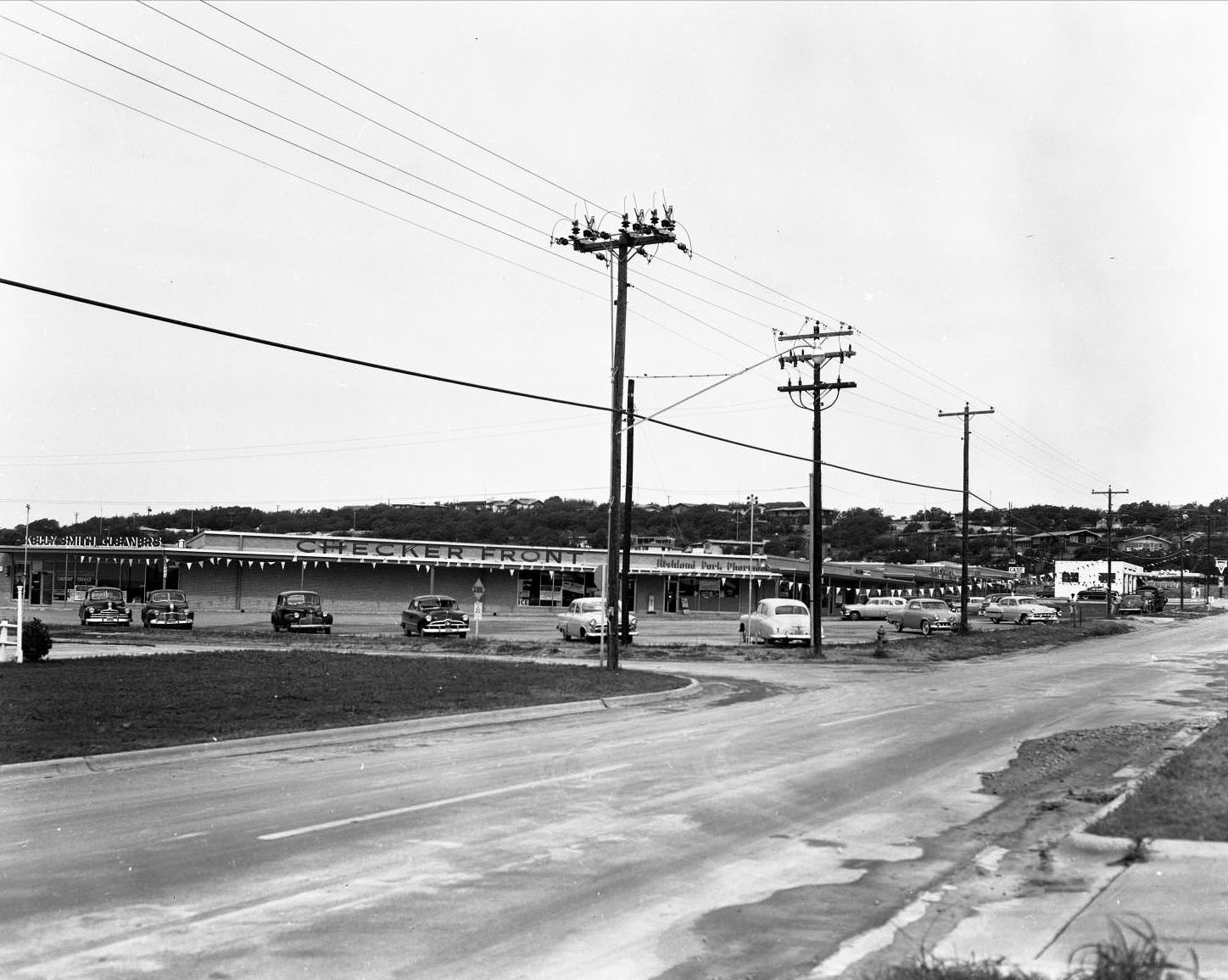
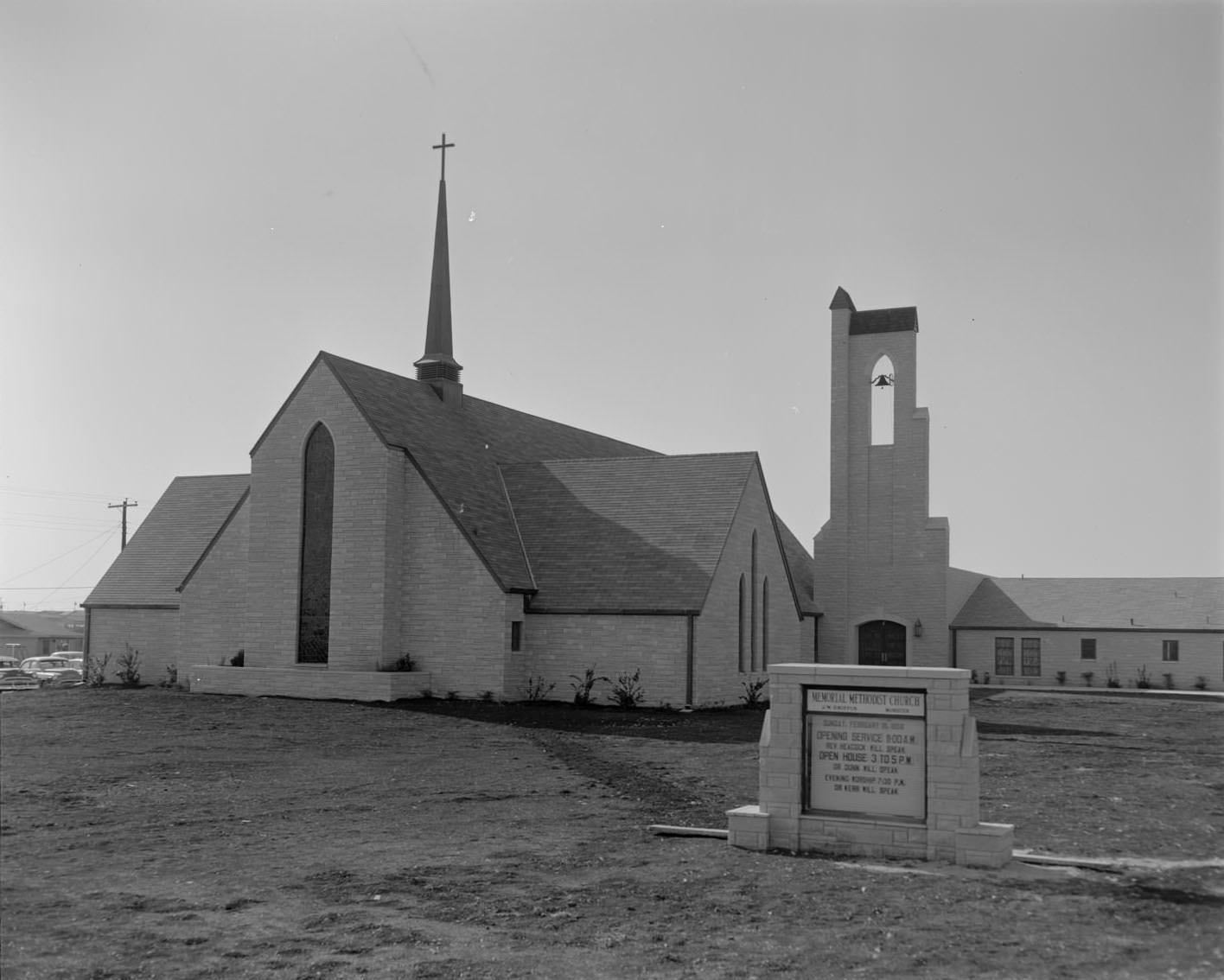
Exterior of Capitol Laundry & Cleaning Company, at 801 Barton Springs Road, 1951Flatbed truck loaded with crane parked in front of Capitol Machine Works building, on 4824 East 1st Street in Austin, 1951Capitol Seed House No. 2, 1951View of Goad Motor Company showroom and lot with cars, 1956A car parked in the middle of the intersection of Navasota and Holly, 1954Cars in lot next to Slaughters Supermarket, 1958“CB” Smith Motors used cars, 1955Checker Cab & Yellow Cab, 1958Checker Front Grocery Store #20 which was located at 5028 Fairview Drive in Highland Park. Kelly Smith Cleaners and Highland Park Pharmacy, 1955Exterior of Memorial Methodist Church and grounds, 1958
This is a remarkable collection of photographs, featuring several images I have not seen before. I am curious to know the source of these photographs. Additionally, it appears that the photographer had a particular fascination for the Austin Savings building.
I would like to thank whoever planted so many trees after these pictures were taken, so that we can enjoy them today. Let’s plant more trees all over town.
Lady Bird Johnson has mostly been attributed with planting trees around Town Lake and led the state effort of planting the wildflowers along the highways.
Bank of Austin building is still there at least in Google Street View at 500 E Oltorf, it was a Sherwin Williams store not too long ago. The sign is long gone.
I mean this website is not journalism, and I have no idea how anyone could think that. It’s an unknown website with a non-bylined story. We need media literacy as a requirement in high school.
Sorry, just my catchall term for fact based articles, which of course is an oxymoron since so many are sloppy. Just pointing out an error for the sake of the readers, no need to get all riled up.
Sorry again, geez. I really do know the difference, I was raised by journalists and started my college career as a journalism major. I bailed on the profession because I saw the integrity slipping away. So rest assured, I was just popping off on Reddit and apologize for hitting your buttons, I also care about the state of reporting on all levels, professional and amateur and won’t make that mistake again.
My grandmother moved here in the late 50’s and still talks about how much sleepier Austin used to be then. For a long time we used to sort of dismiss that as more “past is always greener” discourse until we looked up the census records… ~150k people living here at that time, so she’s seen almost a 10x increase in her lifetime! It’s sort of boggling to imagine until I think about the differences in my own ~30 year history in Austin, although my own childhood memories of the 90s are probably fuzzier than her adult ones of the 50s/60s…
This set of photos is very cool, and I’m surprised to see that Anderson HS was a Black high school back in the day. By the time my dad went there, it was almost entirely white. In 1968, after the feds came and admonished Austin for not conforming to Brown v Board better, they started bussing in Black & Brown kids to the all-white Anderson High from the closed-down east-side high schools. I wonder if Anderson being a Black school is a relic of the previously-more-integrated Austin? Does anyone know?
The downtown looks weirdly the same/similar to Austin in the 80’s and 90’s. I came back from college in the early 2000’s and didn’t recognize the city I had left. The exponential growth of business friendly laws is wild.
Didn’t have time to get through them all. Anyone find people of color? I always like to see if I can find any in photos back when shit was super racist “nostalgic” photos.






ATX was better in the ‘40s.
Ask any black person.
Thanks for sharing. These are really awesome.
So cool thanks for sharing.
This is a remarkable collection of photographs, featuring several images I have not seen before. I am curious to know the source of these photographs. Additionally, it appears that the photographer had a particular fascination for the Austin Savings building.
it’s funny to know Bicycle Sport Shop on South Lamar used to be a bowling alley.
I would like to thank whoever planted so many trees after these pictures were taken, so that we can enjoy them today. Let’s plant more trees all over town.
Lady Bird Johnson has mostly been attributed with planting trees around Town Lake and led the state effort of planting the wildflowers along the highways.
Some great mid century modern architecture and culture in these photos.
Is this the old austin y’all bitch and complain about missing? Lol
Bank of Austin building is still there at least in Google Street View at 500 E Oltorf, it was a Sherwin Williams store not too long ago. The sign is long gone.
Looks real shitty ngl
Thanks so much for this, love to see old austin history!
The fire at the Austin Avenue Methodist church happened in Waco, not Austin. Sloppy journalism.
I mean this website is not journalism, and I have no idea how anyone could think that. It’s an unknown website with a non-bylined story. We need media literacy as a requirement in high school.
Sorry, just my catchall term for fact based articles, which of course is an oxymoron since so many are sloppy. Just pointing out an error for the sake of the readers, no need to get all riled up.
People don’t know the difference, and the difference is important. Im not sure you know. I’m riled up because I actually care about journalism?
Sorry again, geez. I really do know the difference, I was raised by journalists and started my college career as a journalism major. I bailed on the profession because I saw the integrity slipping away. So rest assured, I was just popping off on Reddit and apologize for hitting your buttons, I also care about the state of reporting on all levels, professional and amateur and won’t make that mistake again.
Who is all riled up again?
What can I say, your user name says it all!
Maybe if I called myself “RFKJrConspiracyTheorist” you’d like me more?
probably not.
But what if I was also anti-vax and pretended the media was the problem?
this guy lmao
Yeah, I got on a bit of a tear there. Going outside to touch grass
Anyone who moved in after the 1930’s is a transplant /s
Ugh! Take me back! I miss the old Austin so much.
Jk, very cool collection of Austin in the 50’s!
Looks pretty nice. Except everything was so black and white those days
My grandmother moved here in the late 50’s and still talks about how much sleepier Austin used to be then. For a long time we used to sort of dismiss that as more “past is always greener” discourse until we looked up the census records… ~150k people living here at that time, so she’s seen almost a 10x increase in her lifetime! It’s sort of boggling to imagine until I think about the differences in my own ~30 year history in Austin, although my own childhood memories of the 90s are probably fuzzier than her adult ones of the 50s/60s…
This set of photos is very cool, and I’m surprised to see that Anderson HS was a Black high school back in the day. By the time my dad went there, it was almost entirely white. In 1968, after the feds came and admonished Austin for not conforming to Brown v Board better, they started bussing in Black & Brown kids to the all-white Anderson High from the closed-down east-side high schools. I wonder if Anderson being a Black school is a relic of the previously-more-integrated Austin? Does anyone know?
And people then no doubt were saying “You should have been here in the 40’s, so much better!”
Boomtown!
Is there a book of these photographs available?
The downtown looks weirdly the same/similar to Austin in the 80’s and 90’s. I came back from college in the early 2000’s and didn’t recognize the city I had left. The exponential growth of business friendly laws is wild.
I heard Austin was cooler in the 40s before Californians started moving in
Didn’t have time to get through them all. Anyone find people of color? I always like to see if I can find any in photos back when shit was super racist “nostalgic” photos.
Much cleaner
the Austin I remember
Fun to see the Texas A&M Ross Volunteers in the Inauguration parade.