Hey There! Before You Go. 😧
Get the best vintage content straight into your inbox!

Don't worry, we don't spam

What Atlanta, Georgia looked like in the 1960s

In the 1960s, Atlanta carried a nickname that said a lot about its character: “The City Too Busy To Hate.” At a time when racial tension was tearing through much of the American South, Atlanta positioned itself as a place where business, progress, and a degree of racial integration could coexist. It wasn’t a perfect city — far from it — but it was seen as more open than many of its neighbors. That reputation drew people, investment, and attention from across the country.

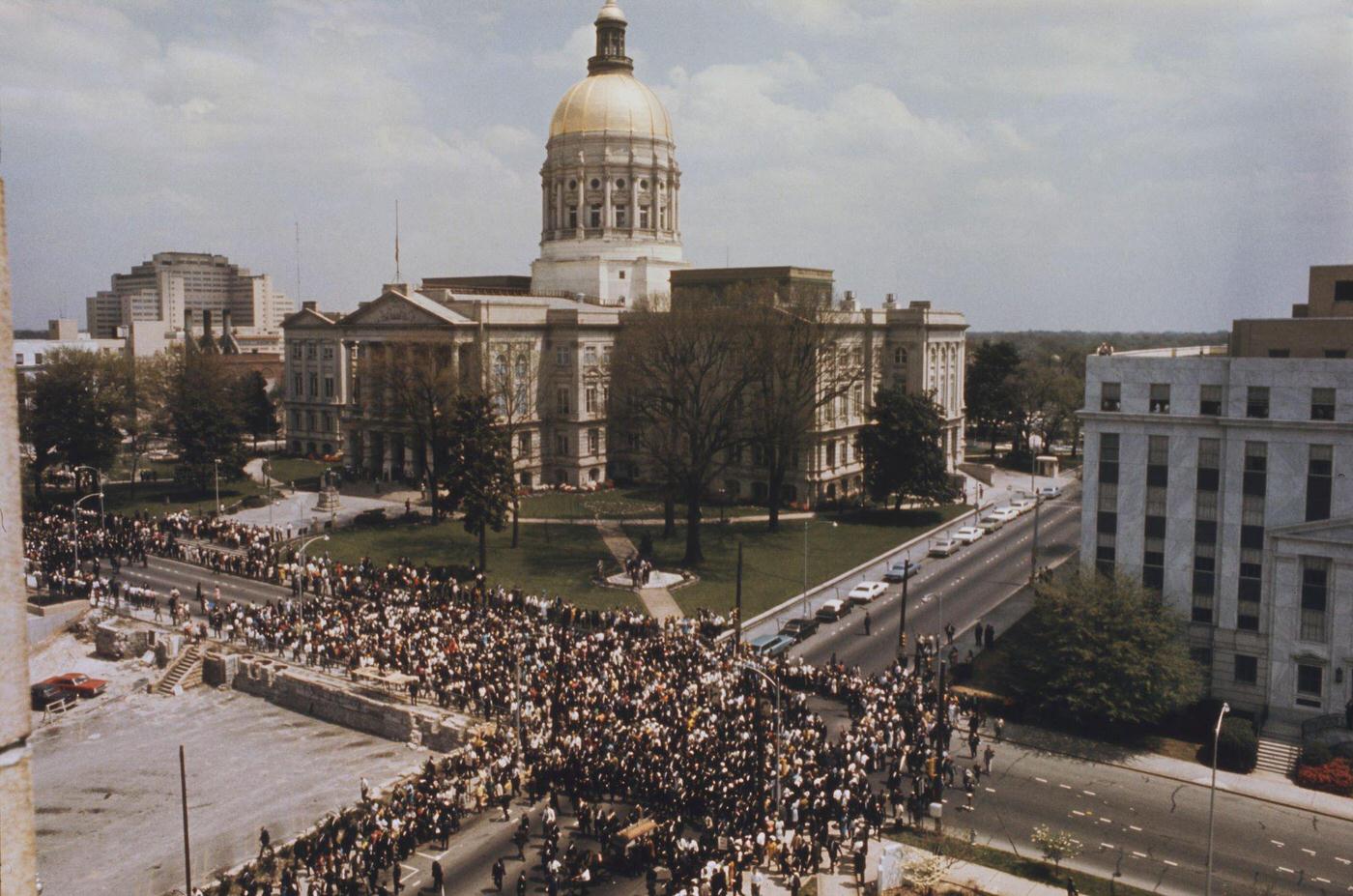
Atlanta was the birthplace and home of Dr. Martin Luther King Jr., making it the natural center of the Civil Rights Movement. The city’s streets saw peaceful marches, sit-ins at segregated lunch counters, and large public rallies throughout the decade. Ebenezer Baptist Church, where King preached, stood as a gathering point for the movement. When King was assassinated on April 4, 1968, in Memphis, Tennessee, his body was returned to Atlanta, and tens of thousands of mourners lined the streets to pay their respects.

Funeral of assasinated American minister and civil rights leader, Martin Luther King with mourners following the funeral wagon carrying the casket past the state capitol building in Atlanta, Georgia on 9th April 1968.

King’s funeral on April 9, 1968 drew an enormous crowd to Atlanta. Mourners traveled from across the United States to be present, and the procession through the city streets drew massive crowds of grieving supporters.

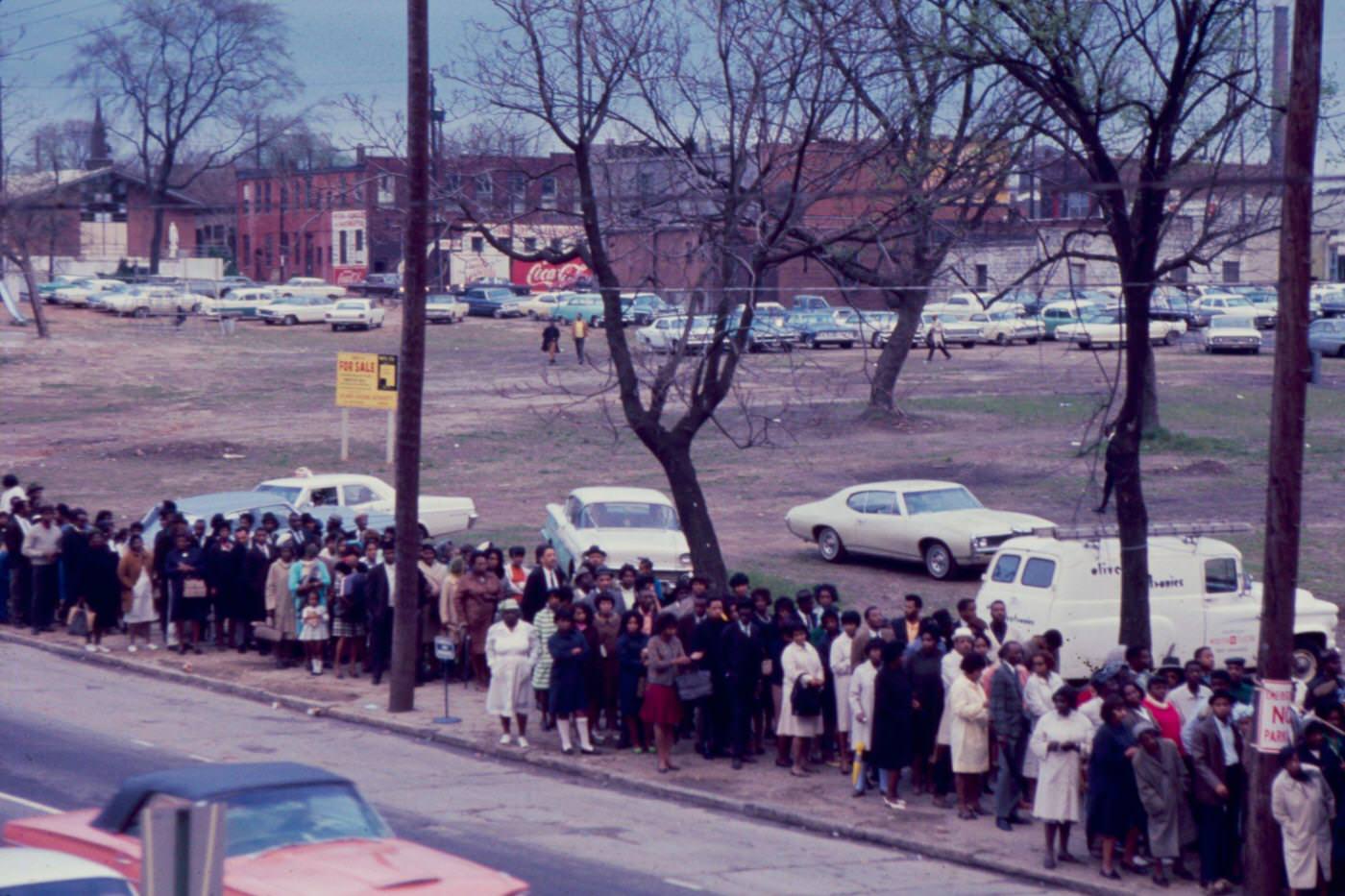
Mourners as they wait in line for Dr Martin Luther King Jr's funeral (at Ebenezer Baptist Church), Atlanta, Georgia, April 9, 1968.
Mourners as they wait in line for Dr Martin Luther King Jr’s funeral (at Ebenezer Baptist Church), Atlanta, Georgia, April 9, 1968.

Away from the political arena, Atlanta’s economy was growing fast. Major corporations had already planted their roots there — Coca-Cola had long called the city home, and Delta Air Lines operated out of Atlanta as a key hub. The city was becoming a serious player in American commerce, and that shift showed in its changing skyline. New buildings rose throughout the decade, and the downtown district took on a more modern, metropolitan look.

Downtown district of Atlanta, Atlanta, Georgia, 1966.

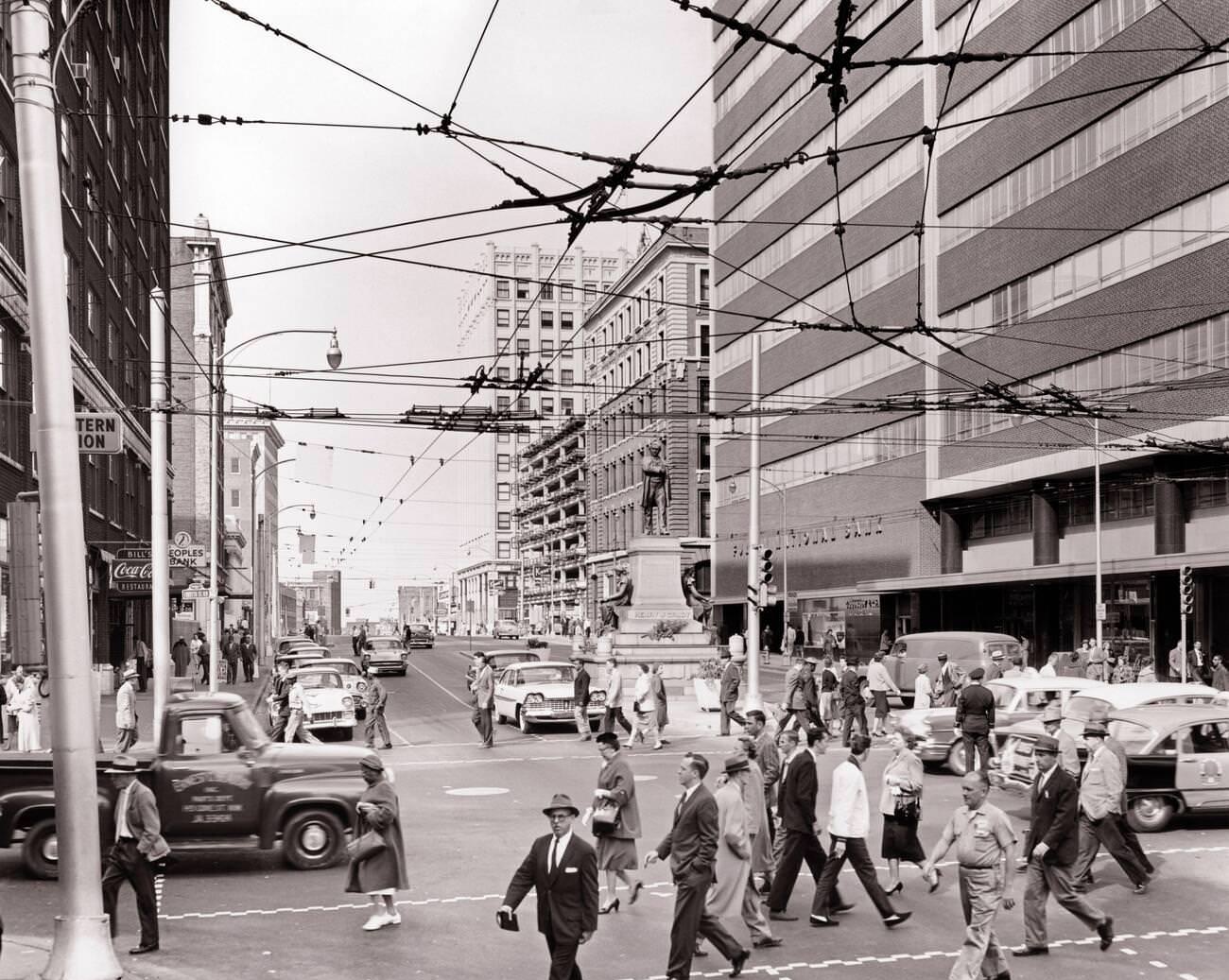
Visitors and residents moving through the city in the early part of the decade would have seen a downtown built for foot traffic and public transit. Atlanta’s streets were busy with shoppers, workers, and commuters. The city’s trolley bus system — powered by overhead electric wires — was still a familiar sight along major corridors like Marietta and Forsyth Streets.

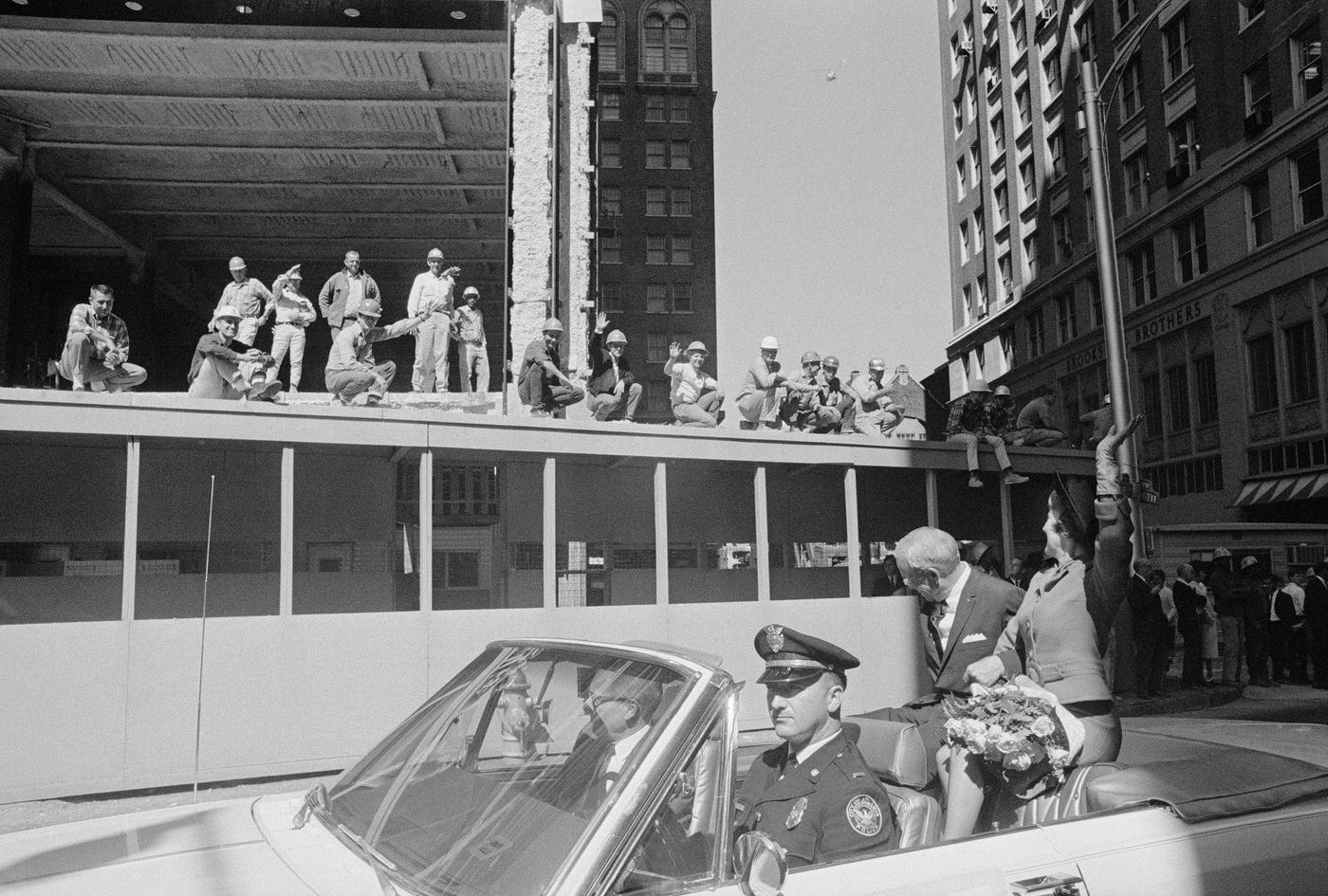
A group of construction workers takes time off to wave to actress Olivia de Havilland (far right) passing in an open car with Atlanta Mayor Ivan Allen, 1960s
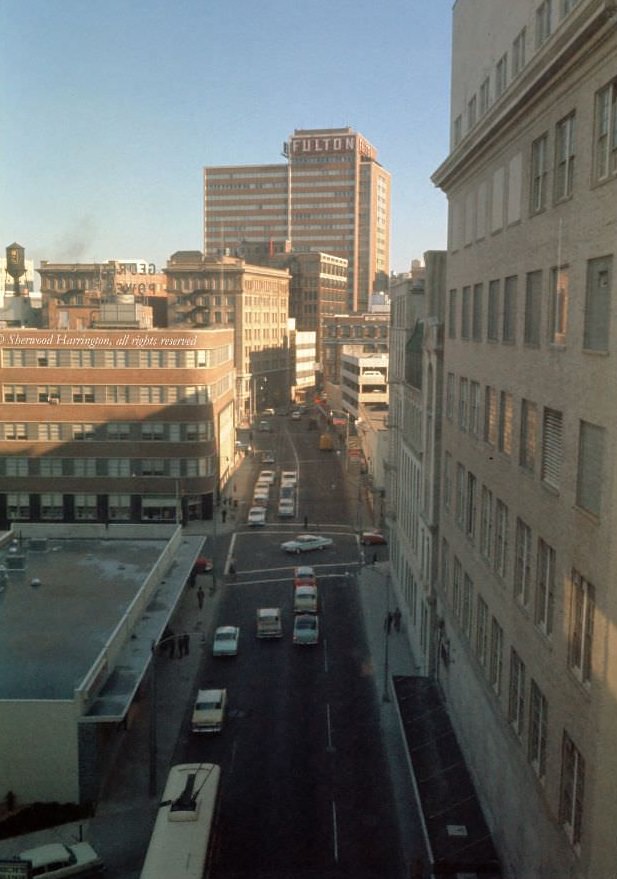
Cityscape Marietta and Forsythia Streets, overhead wires powering trackless trolley electric bus system, Atlanta, 1960s

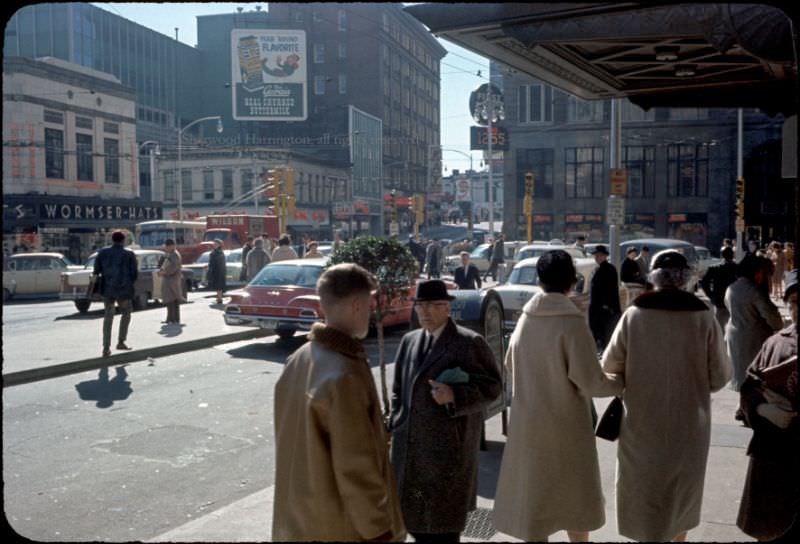
Five Points, Atlanta’s central commercial intersection, was a hub of activity. In December 1961, the area was packed with storefronts, signage, and the kind of street-level energy that defined mid-century American downtowns. Peachtree Street, Atlanta’s most iconic road, ran through the heart of it all.

Five Points, Atlanta, December 1961
Atlanta, December 1961
From Rich's Bridge, Atlanta, December 1961
From Rich’s Bridge, Atlanta, December 1961

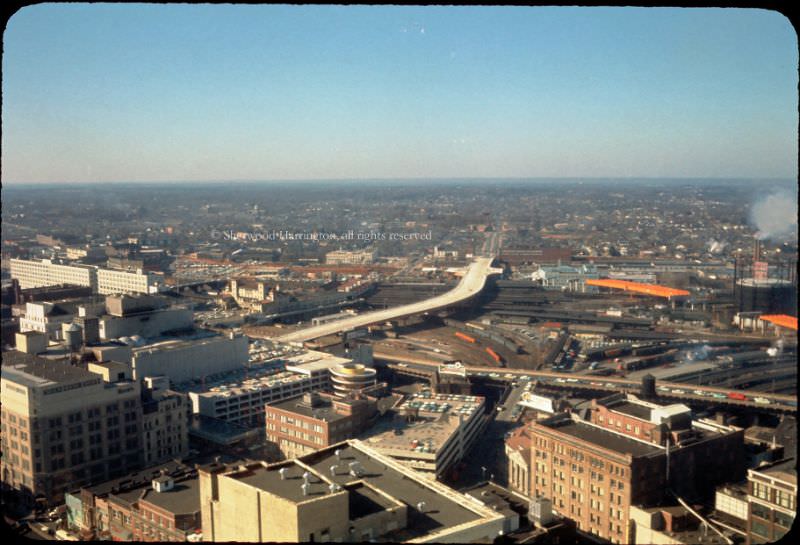
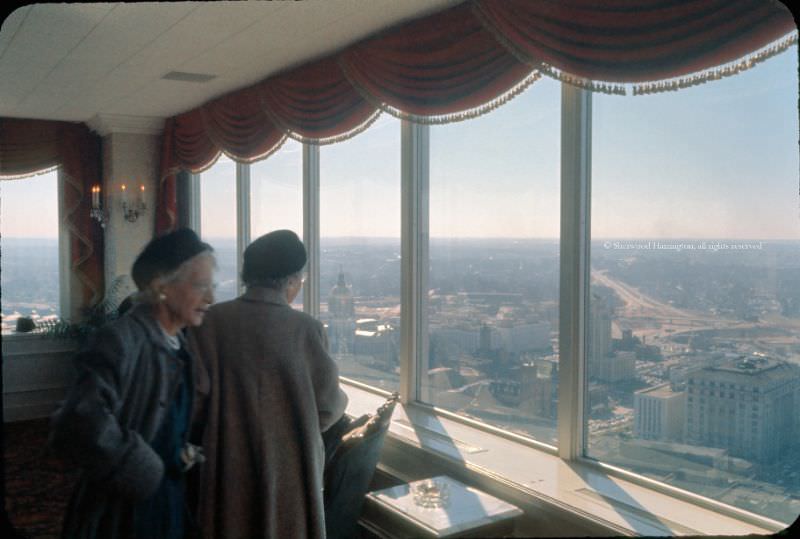
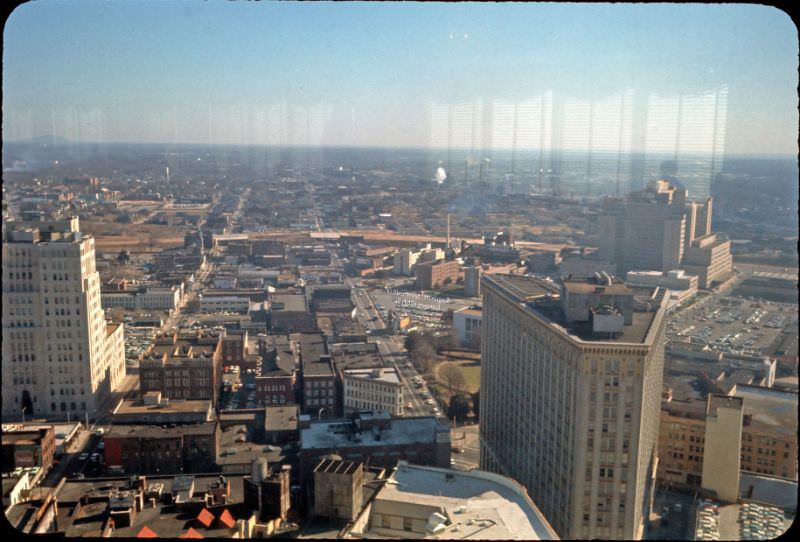
Peachtree Street offered some of the best views of what Atlanta was becoming. Looking out from the upper floors of the buildings along that stretch, the city spread out in every direction — a mix of older brick structures and newer commercial buildings that hinted at where Atlanta was headed.

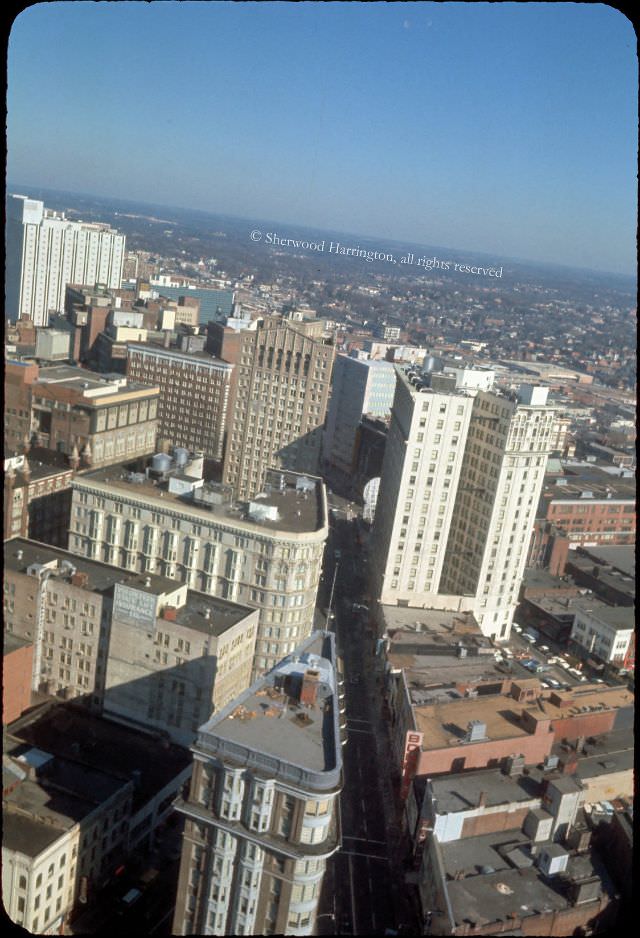
Top of Peachtree, Atlanta, December 1961
View from the top of Peachtree, Atlanta, December 1961

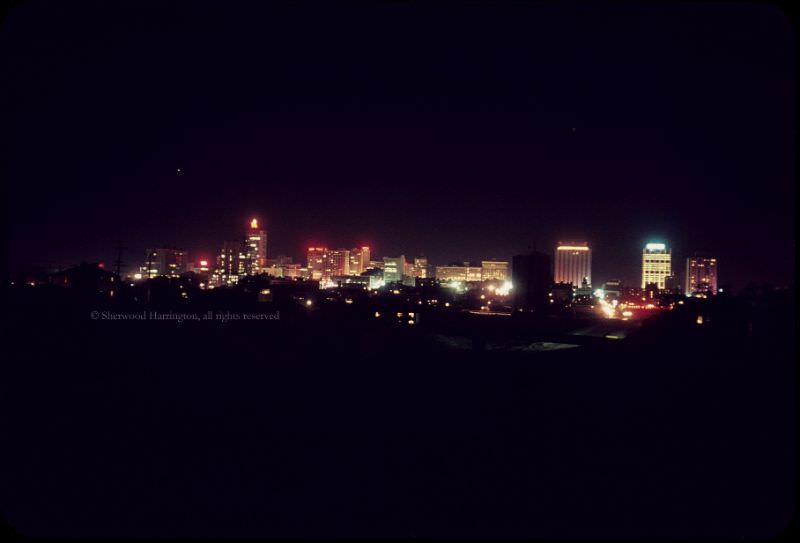
By 1963, Atlanta’s skyline was modest but growing. Photographed both by day and at night, the city’s cluster of downtown buildings reflected its ambitions. Grant Park, one of the city’s oldest green spaces, offered a contrast to the urban core — open lawns and tree-lined paths just a short distance from the business district.

Atlanta skyline at night, 1963
Atlanta skyline, 1963

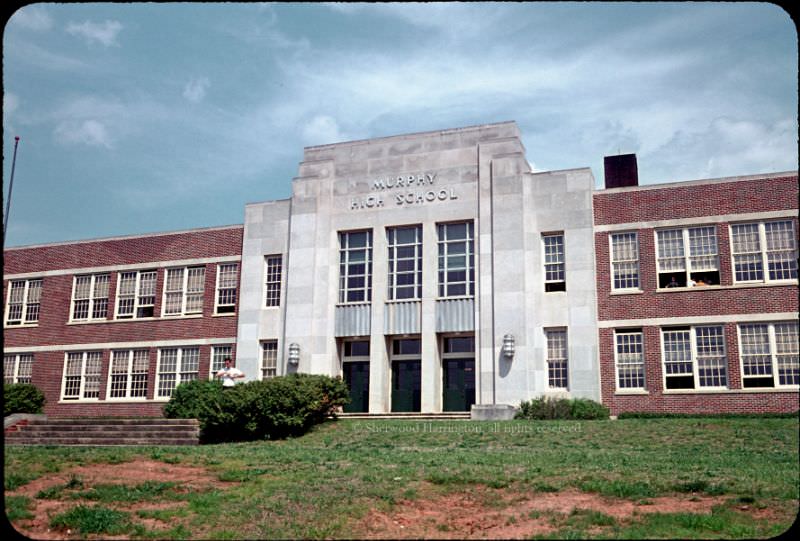
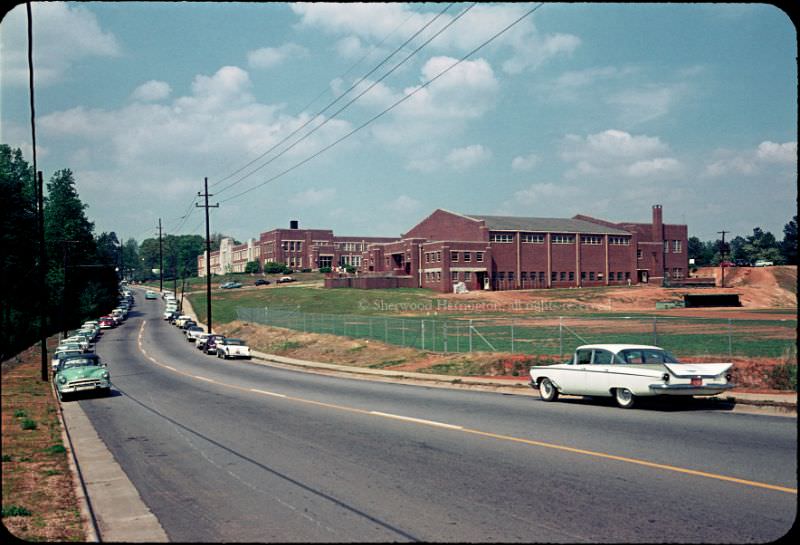
Schools like Murphy High School were part of the city’s fabric during this period. April 1963 — the same month and year that King wrote his famous “Letter from Birmingham Jail” — was a charged moment in the South, and Atlanta’s educational institutions existed within that broader social context.

Murphy High School, Atlanta, April 1963

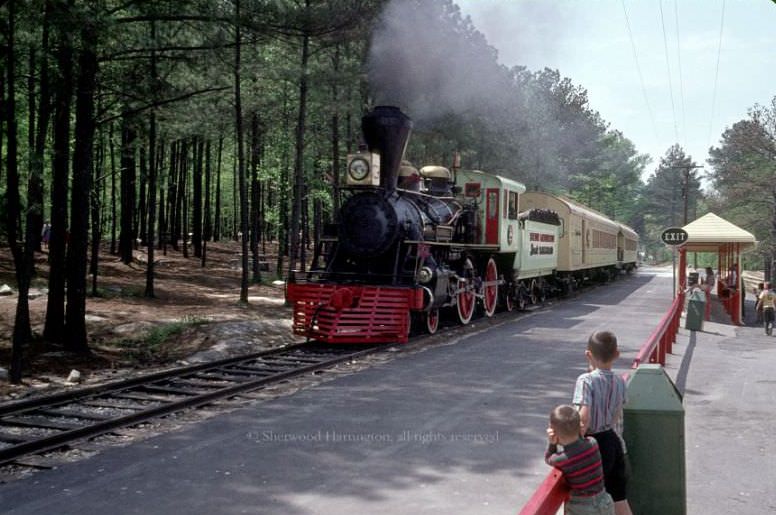
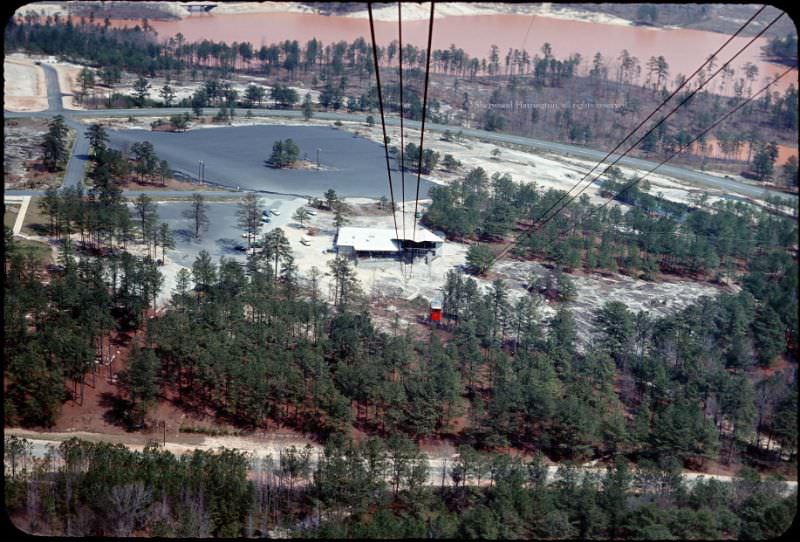
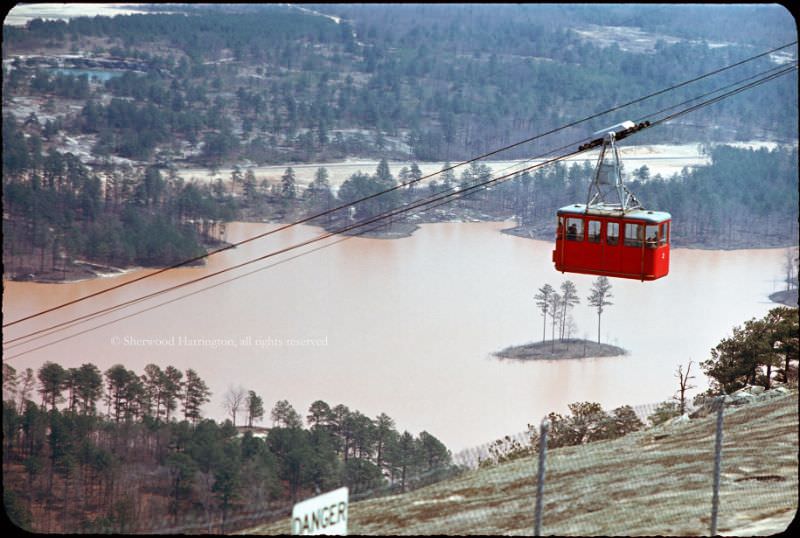
Outside the city, Stone Mountain drew visitors who took a scenic railroad around the base of the massive granite dome. By 1964, a cable car system had been added, allowing riders to ascend to the top and look out over the surrounding landscape. These attractions gave Atlanta’s residents a recreational outlet just outside the urban core.

Stone Mountain railroad, Atlanta, 1963
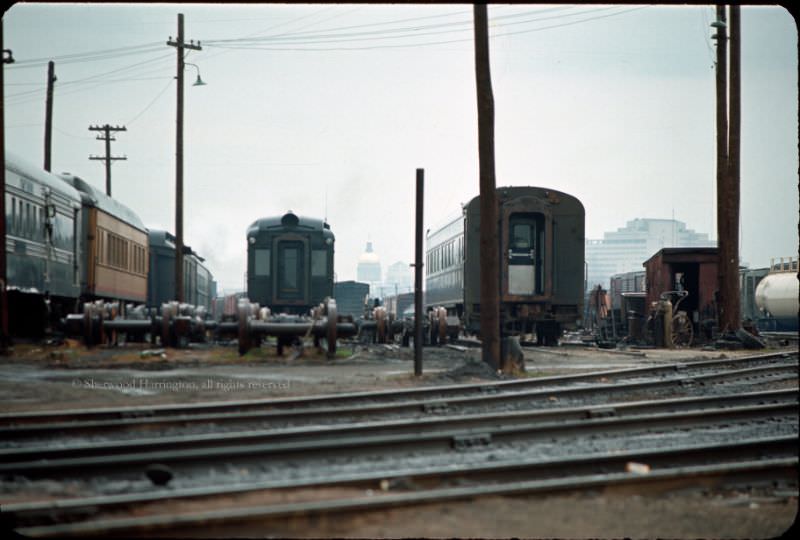
Atlanta yards, 1964
Atlanta yards, 1964
Stone Mountain cable car (view down the cables), Atlanta, 1964
Stone Mountain cable car, Atlanta, 1964

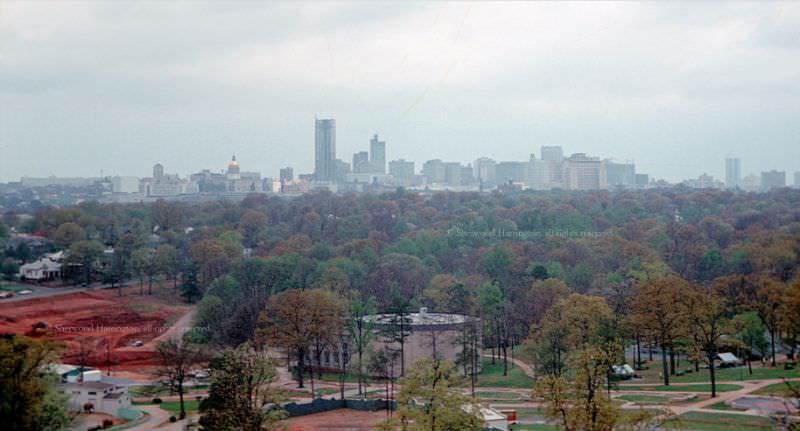
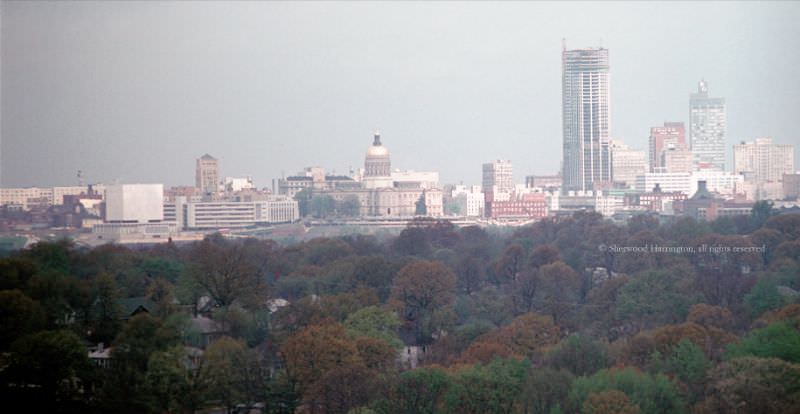
By the mid-1960s, the skyline had continued to fill out. Views from Grant Park showed a city with increasing vertical ambition, as new construction pushed Atlanta’s profile higher against the Georgia sky. The combination of green parkland and a growing downtown defined the city’s visual character in this period.

Atlanta skyline and Grant Park, 1966
Atlanta skyline from Grant Park, 1966

Sports arrived in a big way in 1966, when the Milwaukee Braves relocated to Atlanta and became the Atlanta Braves. The city built Atlanta-Fulton County Stadium to house the team. That same decade, the Atlanta Falcons joined the NFL, giving the city a football team. These additions signaled that Atlanta was being recognized as a major American city, not just a regional one. Meanwhile, the city’s music scene was thriving, with soul, blues, gospel, and country all finding audiences in its clubs and venues. The High Museum of Art, founded in 1905, continued to grow as a cultural institution through the decade.

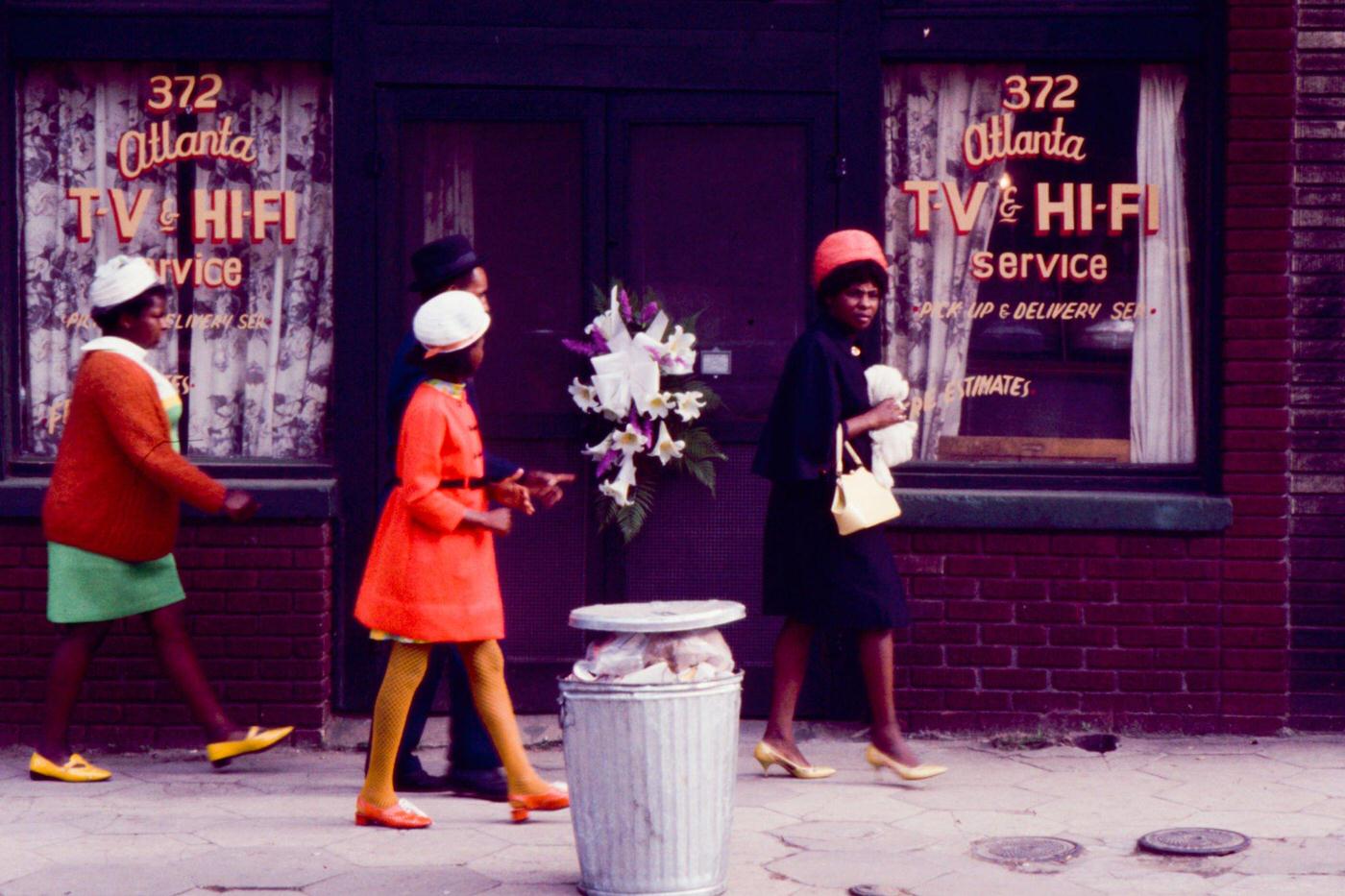
A television repair shop on Edgewood Avenue, Atlanta, Georgia, 1968

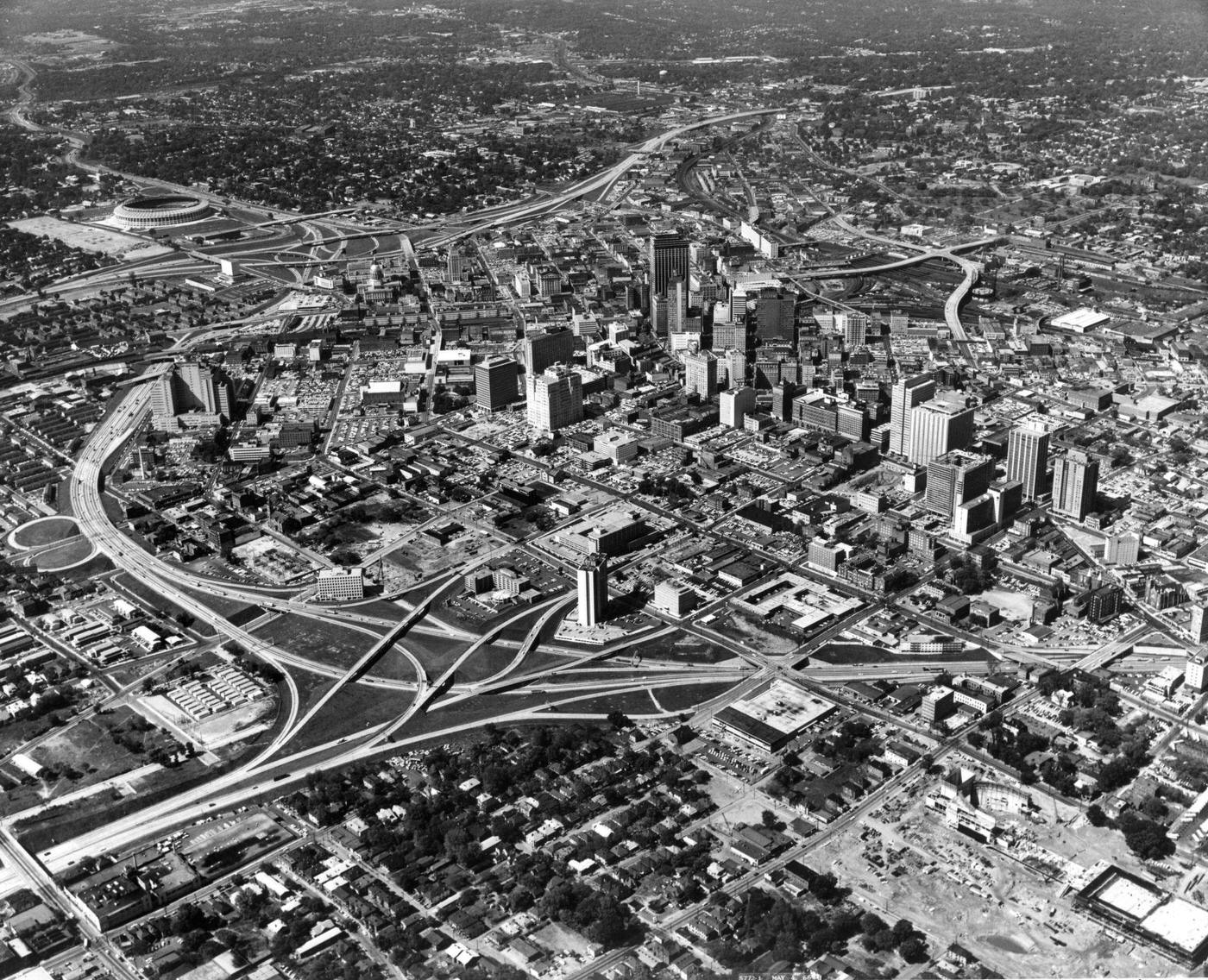
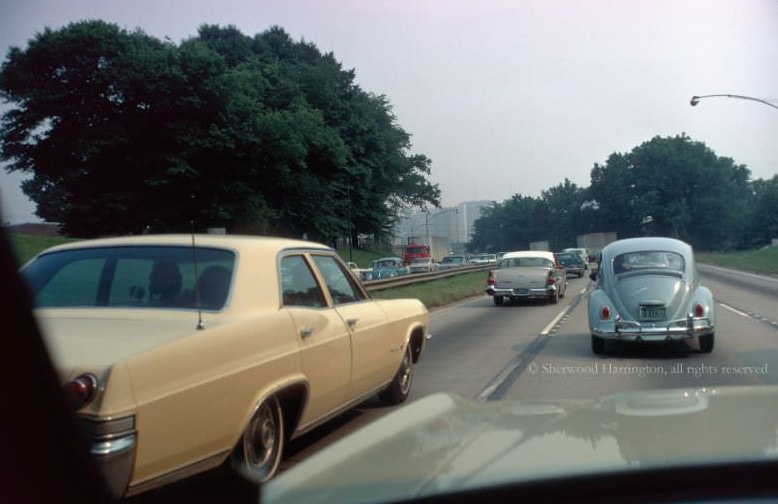
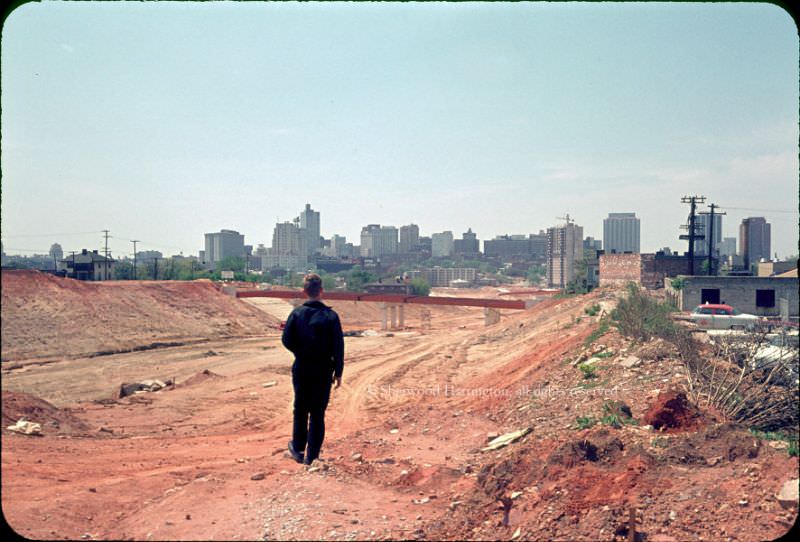
By 1968, the city’s expressway system was expanding to keep pace with a growing population and increased car traffic. The new highways cut through and around Atlanta, connecting neighborhoods to the downtown core and the city to the wider region.

Atlanta expressway, 1968
Enjoyed this post? Get new ones in your inbox.

Leave a Comment

Your email address will not be published. Required fields are marked *

Share this Post 🥺

Please take a moment to share this content. Your support is greatly appreciated! 🙌🙏

Share this Post 🥺

Please take a moment to share this content. Your support is greatly appreciated! 🙌🙏
Scroll to Top
 
Hey Friend, Before You Go.. Please like & follow for more interesting content