
The Netherlands had tried to stay out of World War II by declaring neutrality in 1939. That neutrality was shattered on May 10, 1940, when German forces invaded as part of a military operation called Fall Gelb. The Dutch army held on briefly, but the bombing of Rotterdam broke the country’s resistance. The attack leveled the city’s center, killed over 900 people, and left 85,000 without homes. Amsterdam was hit next. German bombers struck Schiphol Airport and other parts of the city, and the occupation that followed would last for years.
The south of the Netherlands was liberated in the second half of 1944, but northern cities — including Amsterdam — remained under German control. In the winter of 1944–1945, the occupied north faced a catastrophic famine known as the Hunger Winter. Thousands starved. Relief came in March 1945, when Allied forces liberated the western Netherlands and food supplies were restored. By the time peace arrived, Amsterdam had been worn down by five years of occupation, rationing, and loss. What followed was a city slowly stitching itself back together.
Photographer Ben van Meerendonk documented that recovery. Between 1946 and 1949, he walked Amsterdam’s streets and captured its people going about their daily lives — working, protesting, shopping, playing, and rebuilding. His photographs are a ground-level record of a city in transition. The images below move through those four years, showing what Amsterdam looked, felt, and functioned like in the immediate aftermath of war.
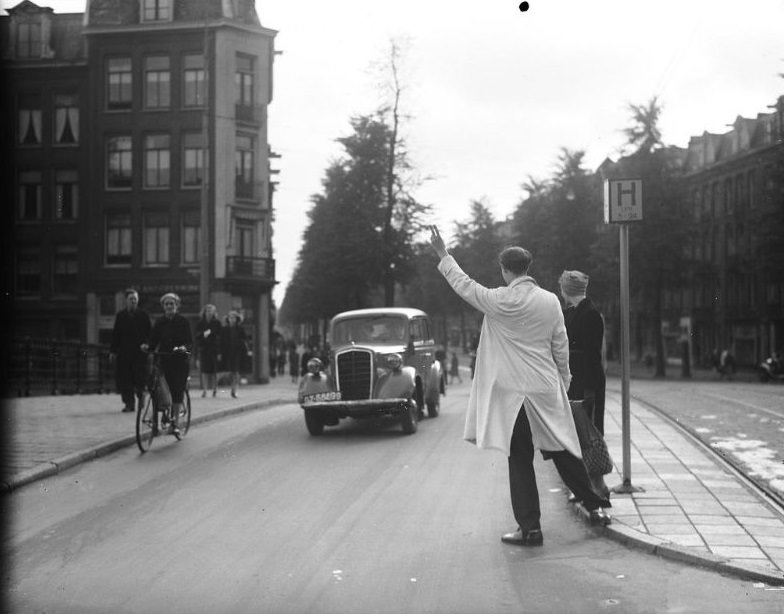
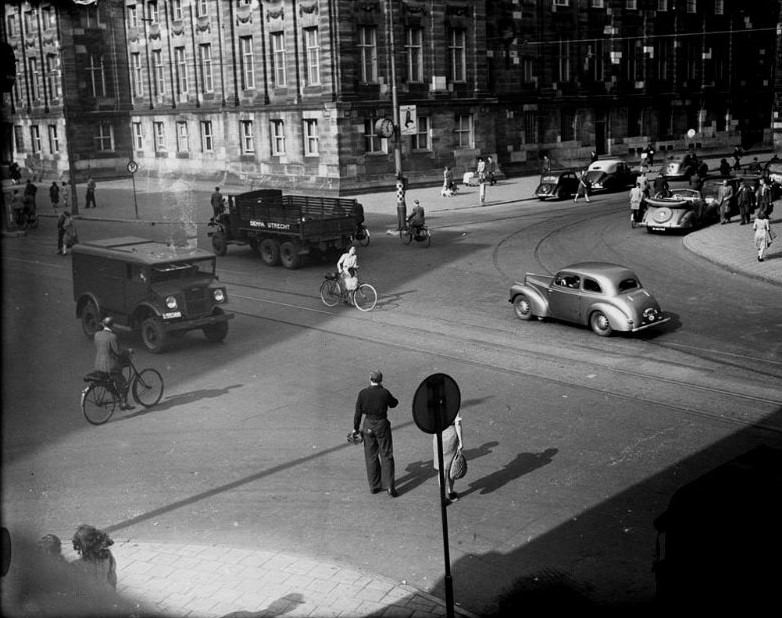
By 1946, Amsterdam’s streets were coming back to life. Residents moved through the city on foot, by bicycle, and by tram — the same rhythms that had defined urban life before the war. The Ceintuurbaan, one of the main ring roads cutting through the city’s southern neighborhoods, shows the steady return of ordinary movement. But not everything was running smoothly. That same day in September 1946, public workers walked off the job.
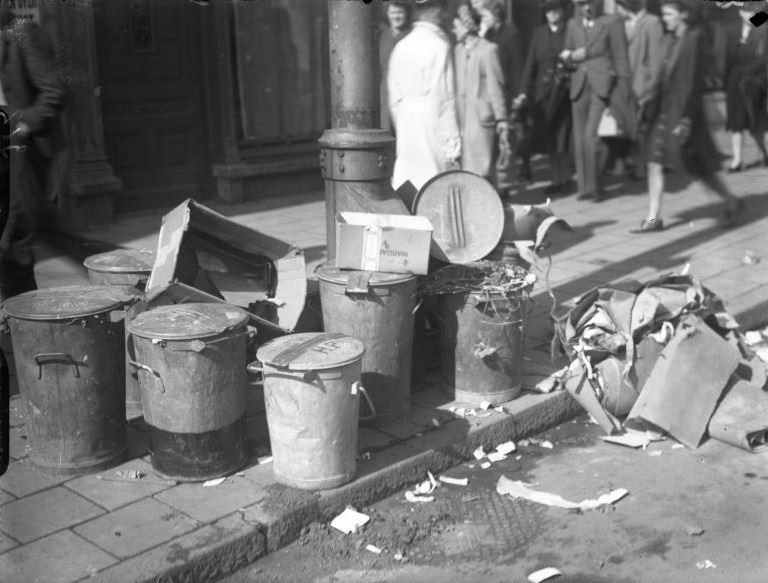
A wildcat strike hit both the municipal tram service and the city’s sanitation department on September 24, 1946. Garbage went uncollected, and trams sat idle. The strike was a sign that post-war Amsterdam was not simply a grateful, quiet city. Workers had grievances, and they were willing to act on them. Labor tensions were common across Europe during this period, as people who had endured years of occupation and hardship pushed back against poor conditions and low wages.
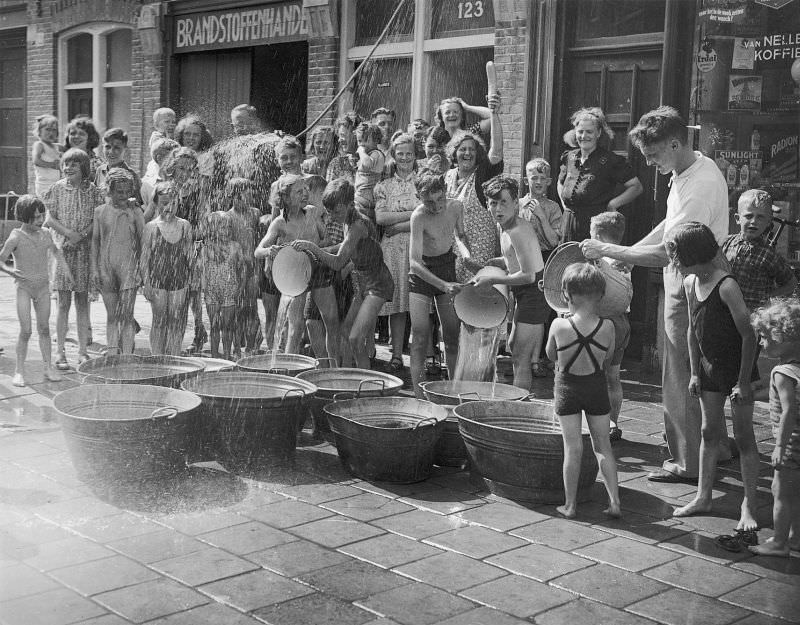
The summer of 1946 brought people out of their homes and into the city’s open spaces. Amsterdam’s canal-lined streets and public squares offered places to breathe after years of fear and restriction. Reconstruction was underway in many parts of the city, but life moved alongside the repairs. Near Central Station, workers were already addressing structural damage left by the war years.
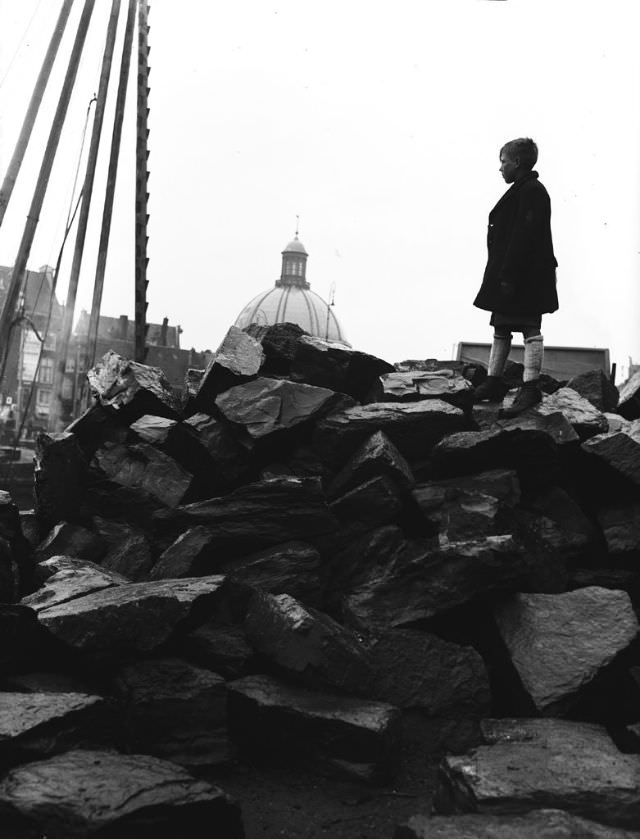
A boy perches on basalt blocks piled near Central Station, where repair work on the station’s sheeting was underway in April 1946. Infrastructure across the city needed attention after years of wartime neglect and damage. While workers handled the heavy labor, children wove in and out of the city’s reconstruction as if it were simply another part of the urban landscape. Social life was also resuming in more formal settings — Amsterdam’s cafés were reopening and drawing their usual crowds.
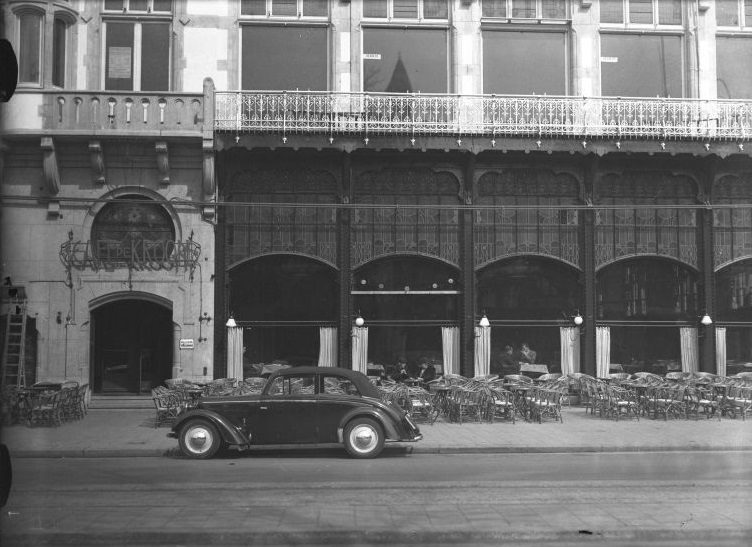
Café de Kroon on the Rembrandtplein had long been a fixture of Amsterdam’s social scene, and by 1946 it was again a place where people gathered, talked, and spent time away from the difficulties of the post-war adjustment. The Rembrandtplein was one of the city’s central squares, and its restaurants and cafés served as barometers of the city’s recovery. Not far away, children found their own entertainments in the city’s parks and open spaces.
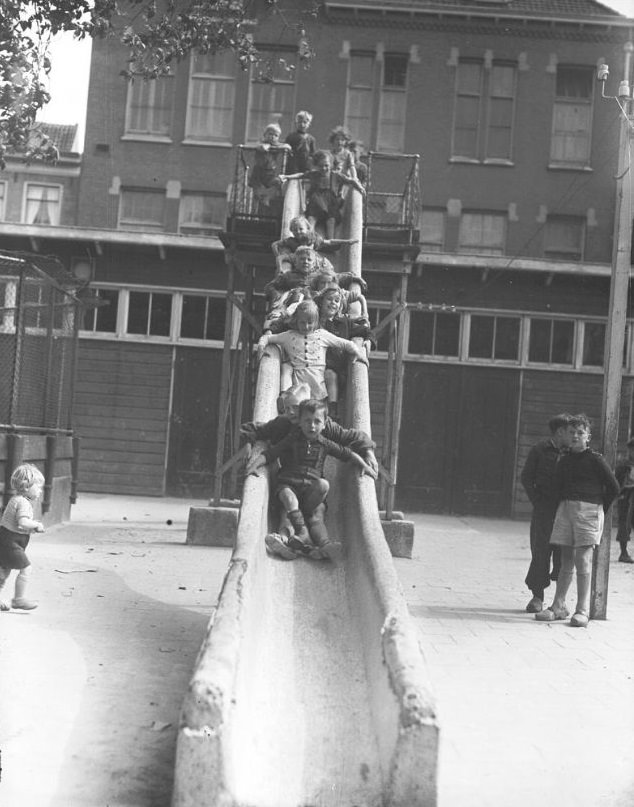
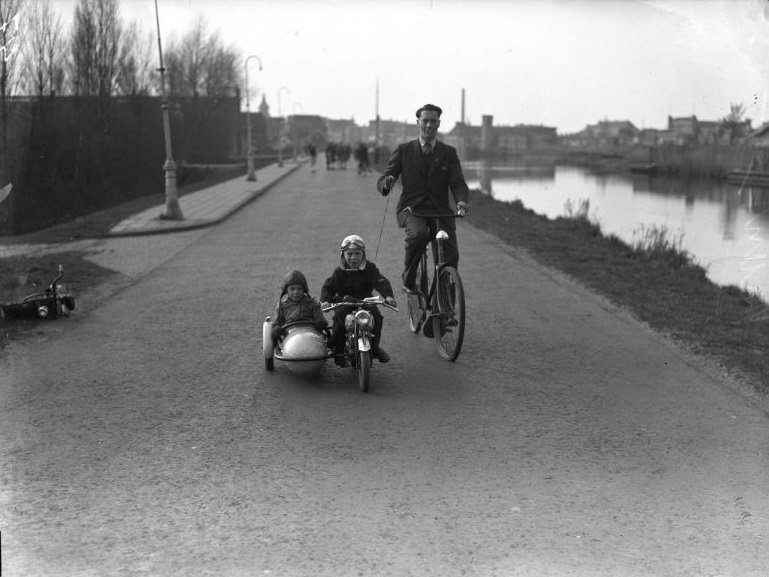
Children were a constant presence in Van Meerendonk’s photographs. Whether playing on a hard granite slide or riding a miniature motorcycle with a sidecar under a parent’s watchful eye, they fill the images with energy. For many of these children, the war had been the defining backdrop of their early years. Now, with peace restored, ordinary childhood experiences were becoming possible again. As the year moved into December, the city dressed itself for the holidays.
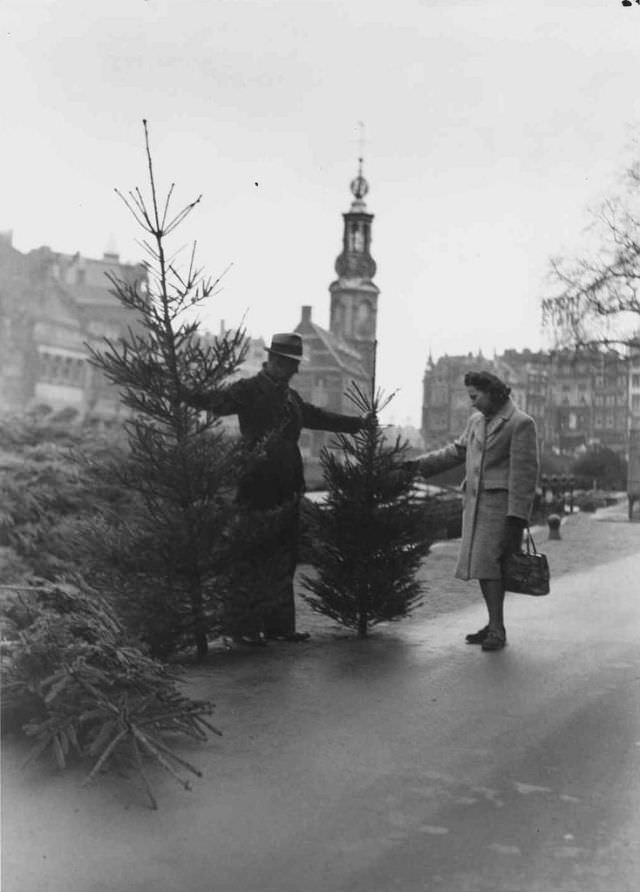
Christmas tree vendors lined the Singel canal in early December 1946. The scene was familiar and seasonal, but it also carried weight — it was one of the first peacetime Christmases Amsterdam had seen in years. Entertainment was also returning. Movie theaters, which had operated under German censorship during the occupation, were now free to screen what they chose, and audiences turned out in numbers.
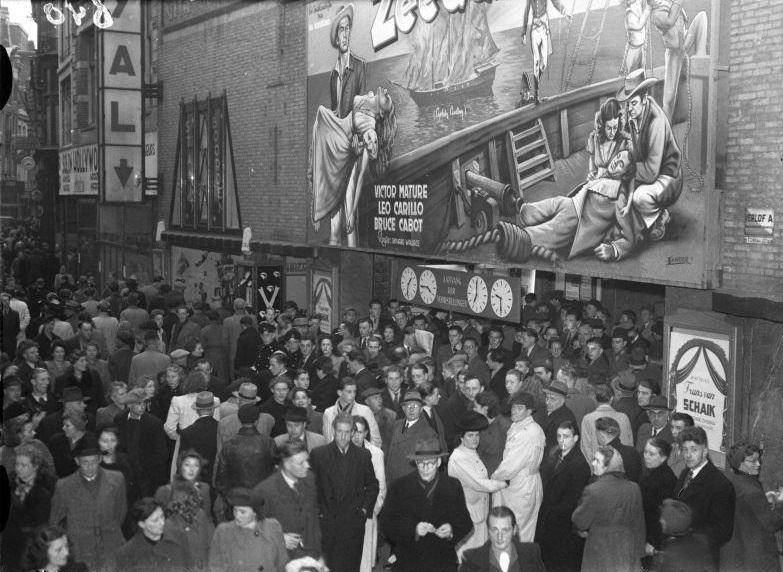
Crowds gathered outside Cinema Royal on the Nieuwendijk in November 1946 to see the film Monkfish, with singer Frans van Schaik performing as a support act. Cinema attendance surged across Europe after the war, and Amsterdam was no different. But not everything in 1946 was about leisure. Some residents took to the streets to challenge government policy directly.
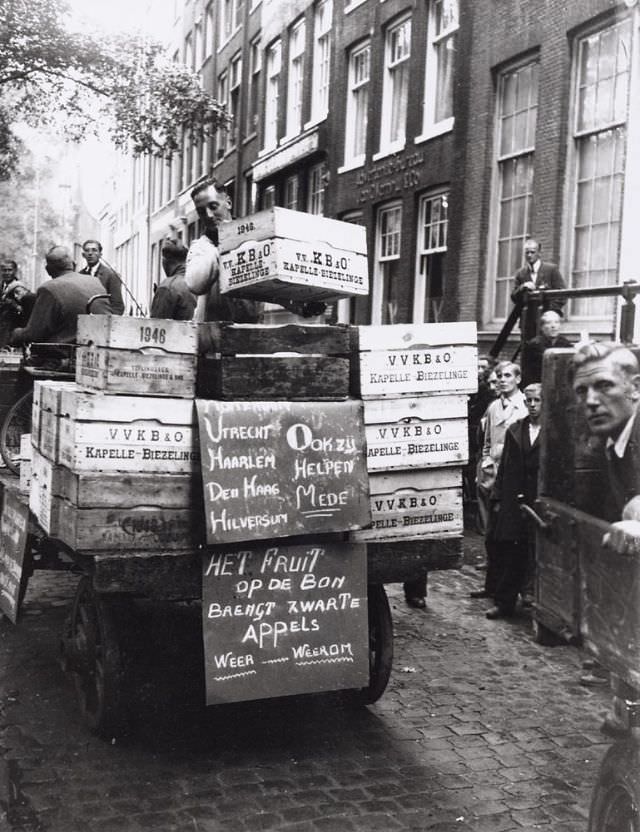
Fruit farmers marched on the Nieuwezijds Voorburgwal in September 1946, protesting a government rationing policy they claimed was driving black market sales. Their banner declared that rationing fruit vouchers was only bringing back the black market. Food rationing in the Netherlands continued well after the war ended, and those who produced food often felt the policies worked against them as much as they helped consumers. Retail life, too, was slowly being rebuilt in the city’s commercial streets.
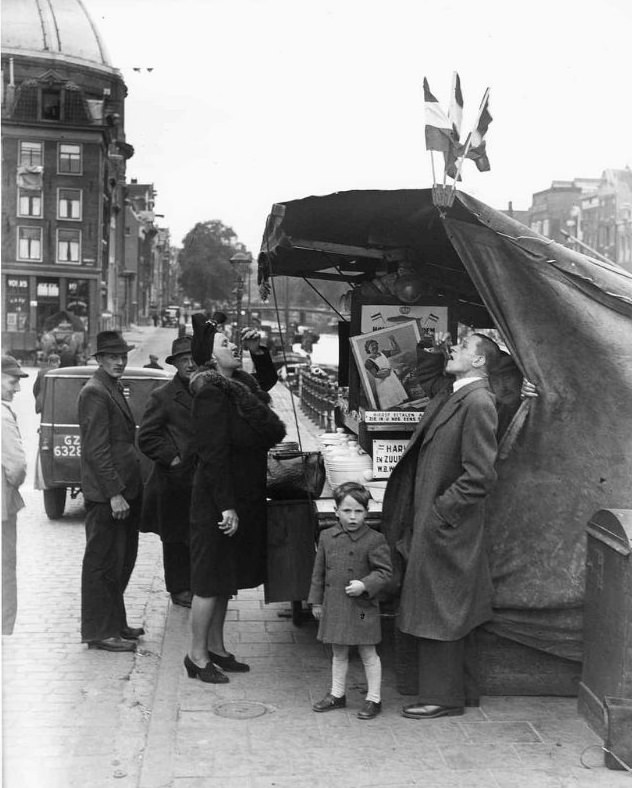
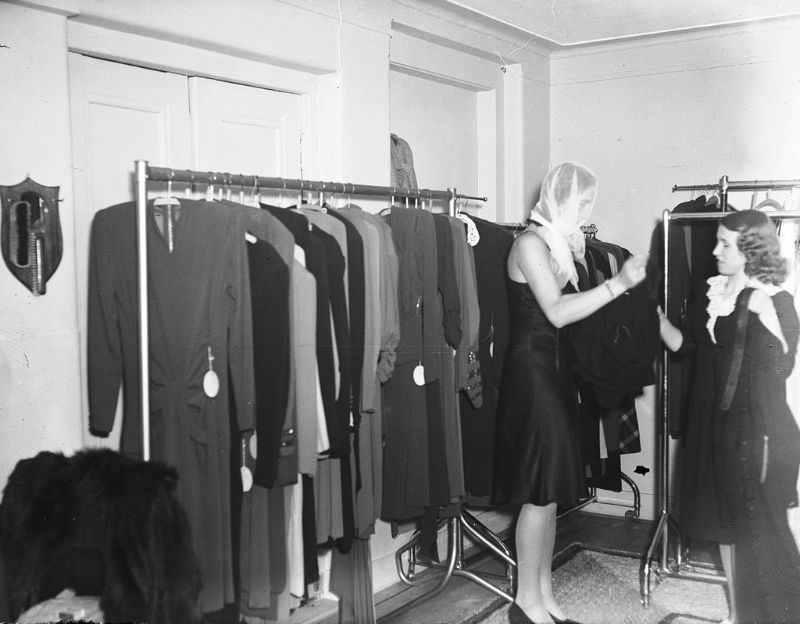
Fashion was making a quiet comeback in 1946. The Jenny Models shop on the Korte Leidsedwarsstraat offered women’s clothing at a time when fabric and finished goods had been scarce for years. Meanwhile, in residential neighborhoods, traditional trades continued their daily rounds.
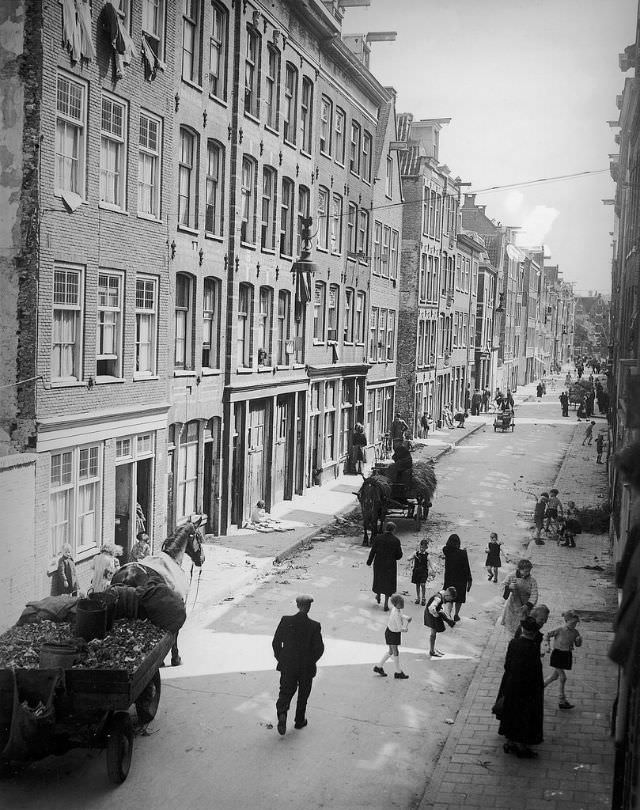
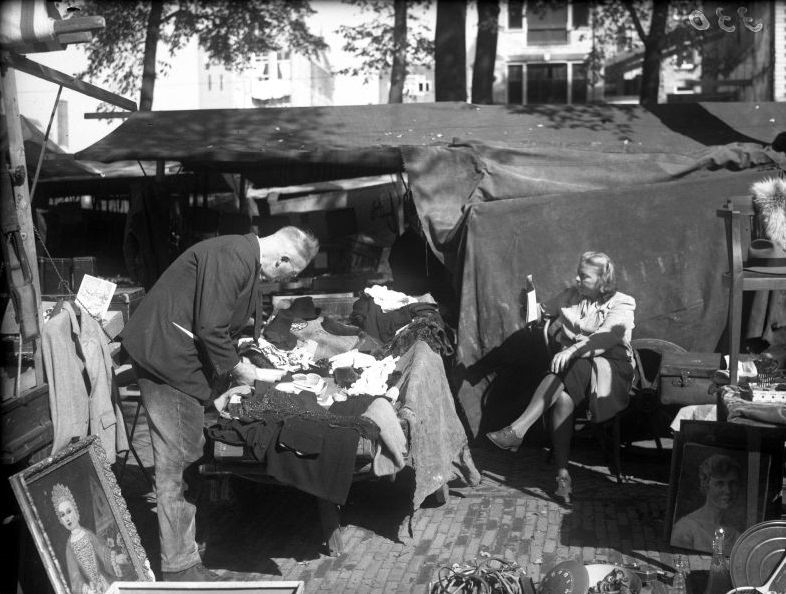
A milk cart makes its way along the Goudsbloemstraat, while at the Waterlooplein market — one of Amsterdam’s oldest and most well-known open-air markets — a stallholder reads the newspaper between customers. The Waterlooplein had been a Jewish market before the war, and its post-war resumption carried the silent absence of the thousands of Amsterdam Jews who had been deported and murdered during the occupation. The market continued, but the community that had animated it was largely gone. Other parts of city commerce were more straightforwardly routine.
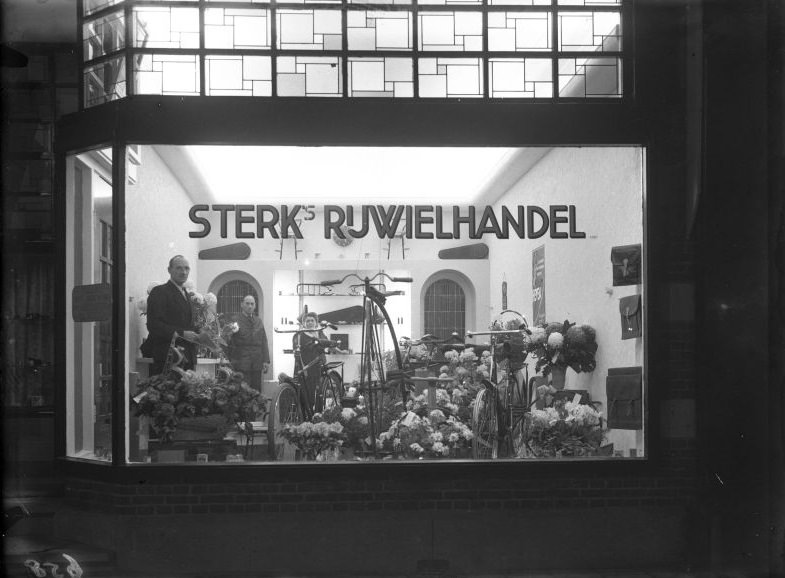
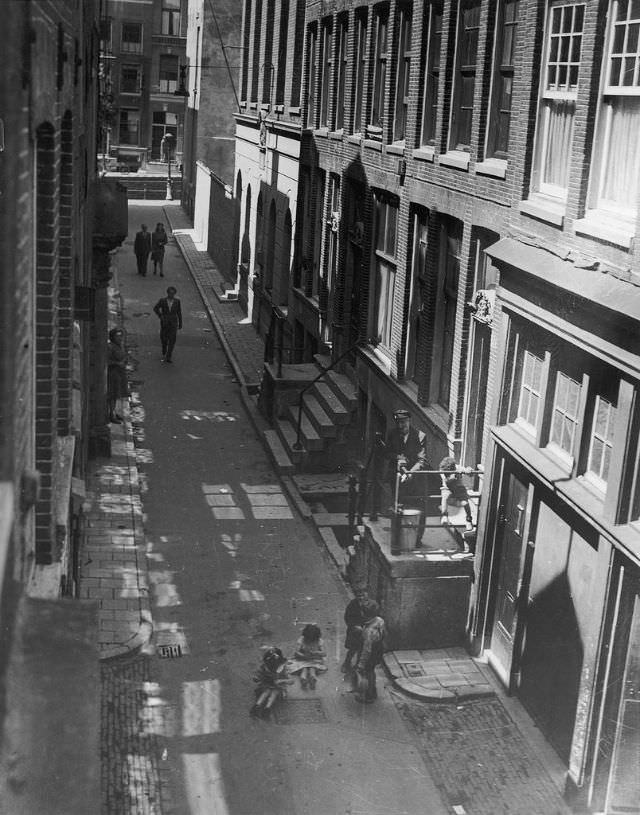
Sterk’s bicycle shop window in December 1946 shows the demand for two-wheeled transport — bicycles had been a lifeline during the occupation, and many had been confiscated by the Germans. Getting them back, or replacing them, was a practical priority for many Amsterdam residents. The city’s canals also needed attention after years of wartime neglect.
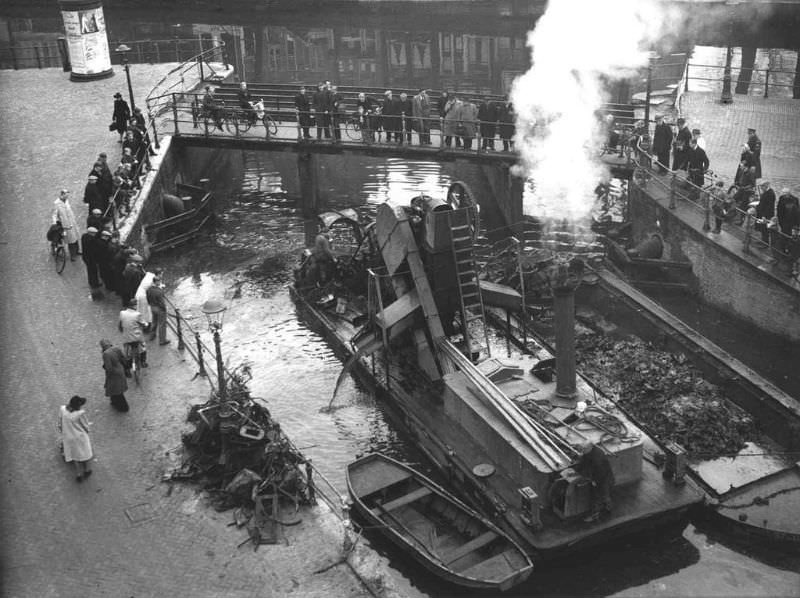
Dredging crews worked the Bloemgracht near the Prinsengracht in December 1946, clearing silt and debris that had built up in the canal system. Amsterdam’s canals were central to both the city’s identity and its practical function, and keeping them clear was an ongoing municipal task. In summer, those same waterways and the city’s pools drew crowds looking to cool off.
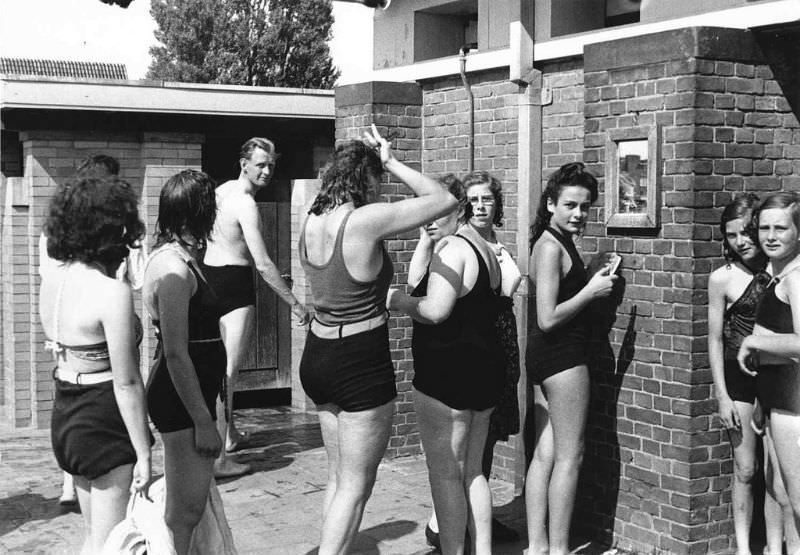
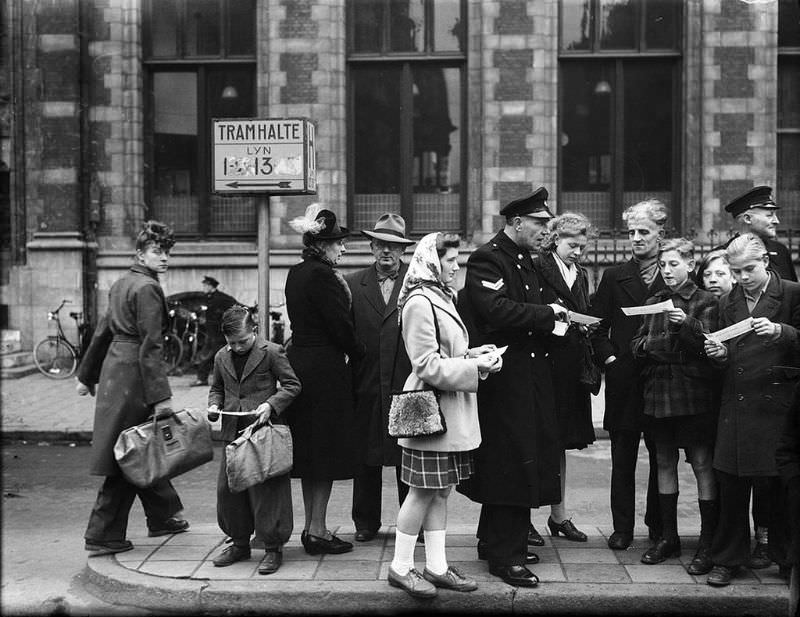
The De Mirandabad outdoor swimming pool attracted summer visitors in July 1946. By December, police were out on the streets for a very different reason — distributing pamphlets to young people as part of an anti-tram-bunching campaign, warning against the dangerous habit of hanging off the backs and sides of moving trams. The city was managing the small frictions of urban life alongside the larger work of post-war recovery. As 1946 gave way to 1947, new stories unfolded on Amsterdam’s streets.
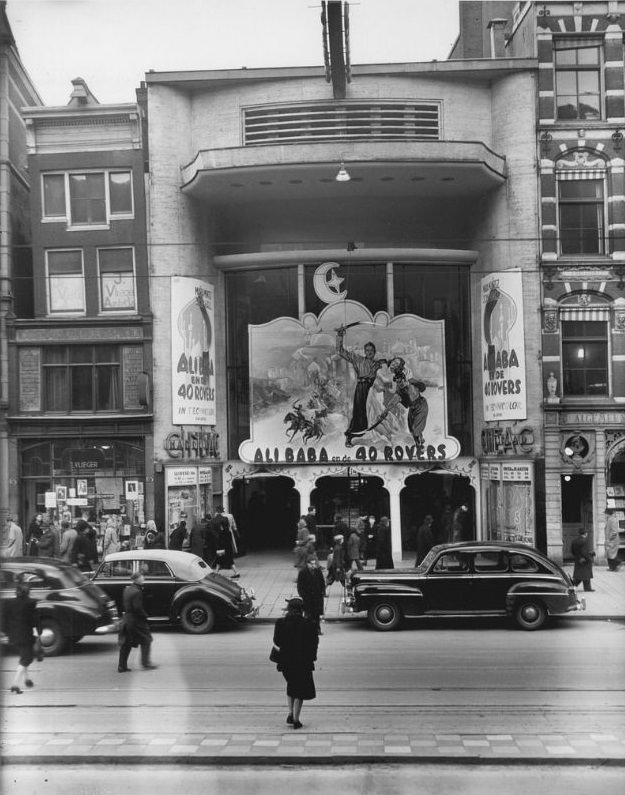
The Cineac newsreel cinema on the Damrak advertised Ali Baba and the 40 Robbers in December 1947. Cineac theaters were a fixture of Dutch city life, screening short films and newsreels throughout the day. They were accessible and cheap, which made them popular with working-class audiences. Across the city in 1947, children were making their own entertainment wherever they could find space.
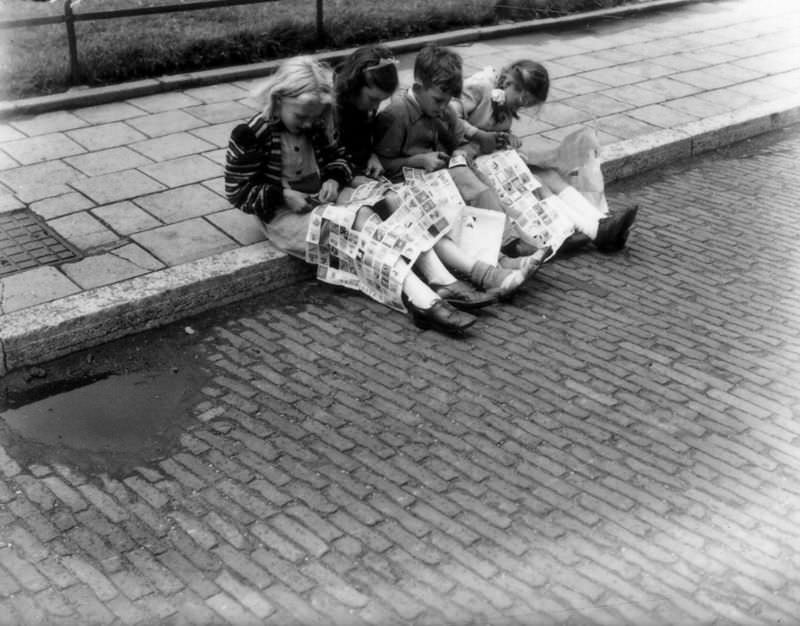
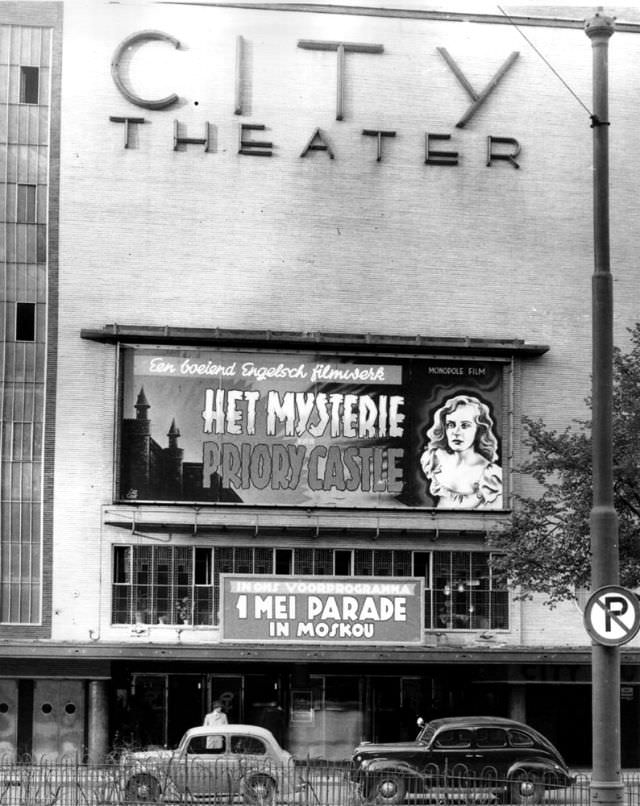
Children played with large advertising stamp sheets on the pavement in July 1947 — a small, improvised game made from the printed materials of commerce. Nearby, the City Theater continued to draw audiences. Amsterdam’s live performance venues, like its cinemas, had resumed programming and were an important part of the city’s cultural reawakening. Late September 1947 brought another notable street-level moment in the city’s commercial districts.
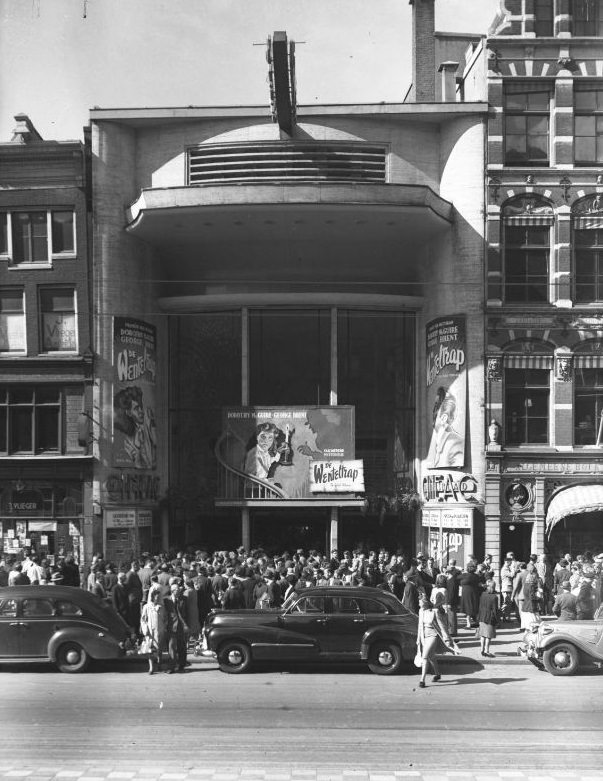
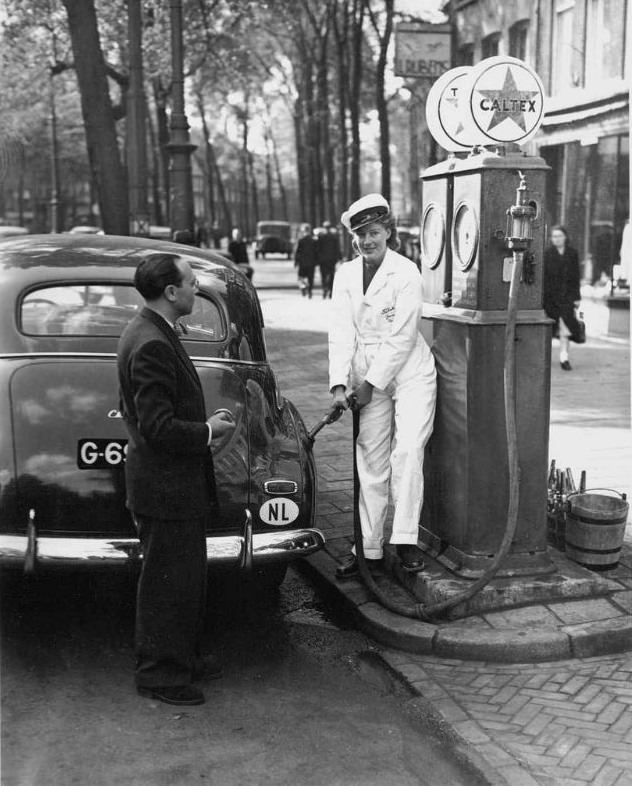
The film The Spiral Staircase played at the Nöggerath cinema on the Reguliersbreestraat in September 1947. That same day, a woman was on duty at the garage Tobacco petrol station on the Nieuwezijds Voorburgwal — a notable sight in an era when fuel service was almost exclusively done by men. Women had taken on many roles during the war years, and some of those shifts were persisting into peacetime. Spring in Amsterdam carried its own customs.
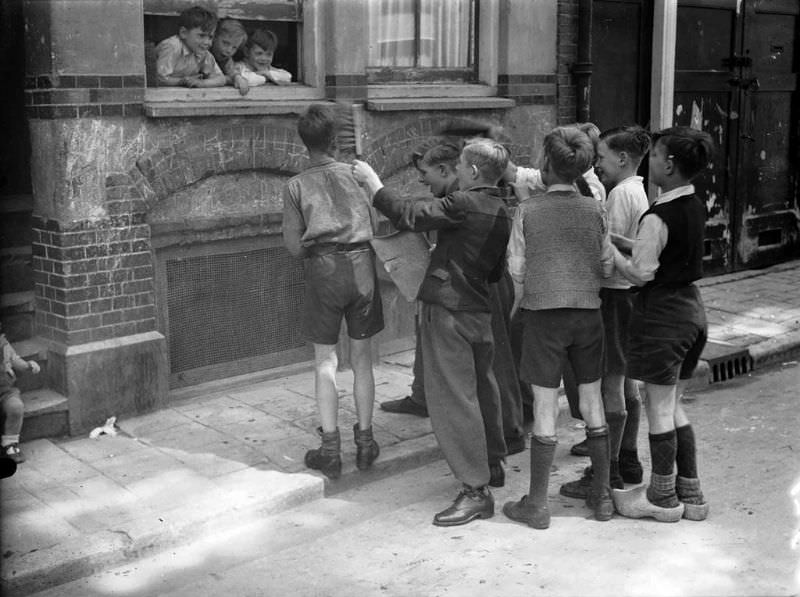
Luilak — a traditional Dutch spring celebration held on the Saturday before Whitsun — was marked in Amsterdam on May 22, 1947. The custom involves making as much noise as possible early in the morning to wake up sleepyheads. It was a lighthearted, distinctly Dutch tradition, and its continuation in the post-war years was one of many signs of cultural life reasserting itself. Alongside celebration, physical labor was shaping the city’s public spaces.
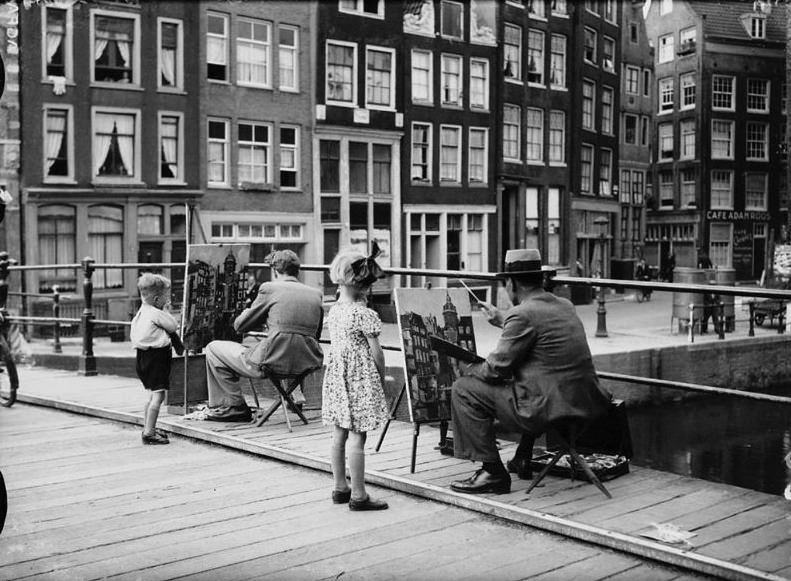
Painters worked on the bridge at the Oudezijds Kolk while children stood and watched — the kind of everyday scene that Van Meerendonk captured repeatedly. Maintenance and repair were constant features of Amsterdam in the late 1940s. The city’s bridges, buildings, and waterways all needed work. Winter brought its own challenges to the streets and waterways.
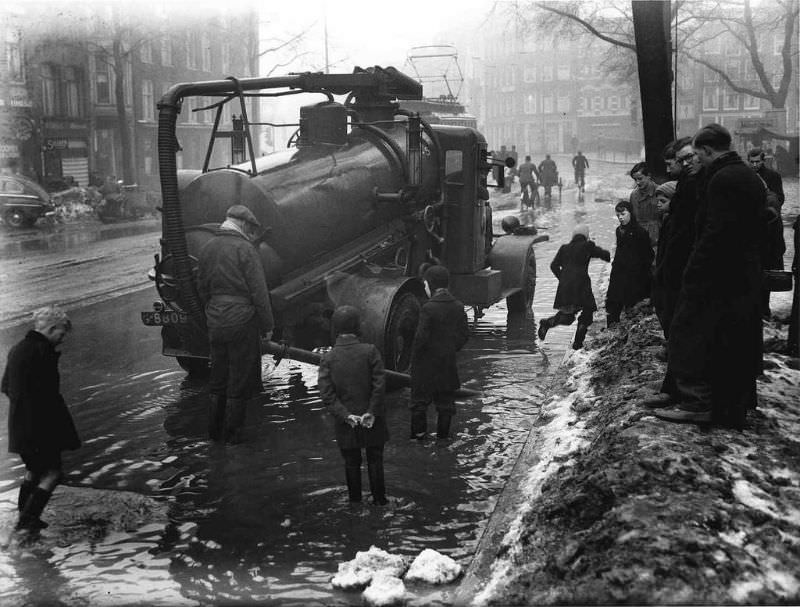
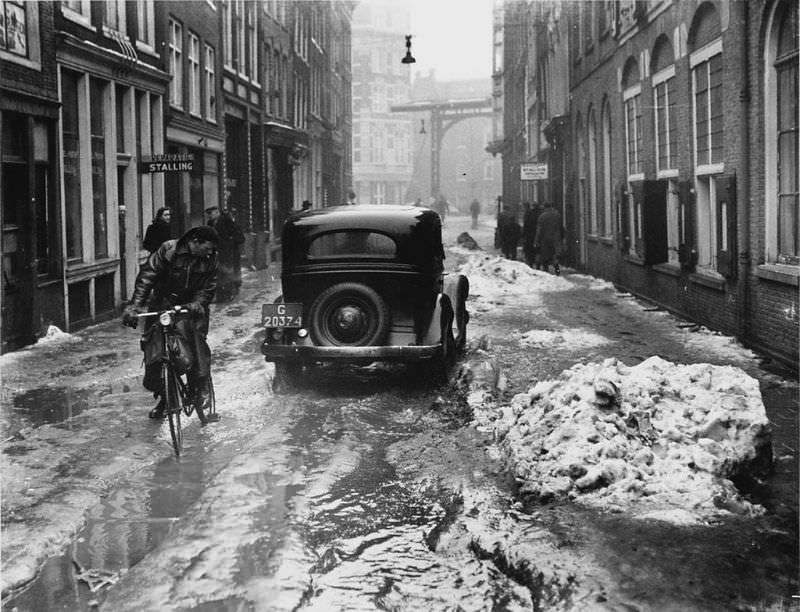
On March 11, 1947, a thaw hit Amsterdam and brought flooding to low-lying areas. A suction dredger worked the Westermarkt to clear the floodwater, while on the Staalstraat, a car edged past a cyclist navigating the wet, icy streets. The same day captured both the machinery of flood response and the resilience of ordinary Amsterdammers getting on with their journeys regardless. When summer came again, the city’s outdoor spaces filled up.
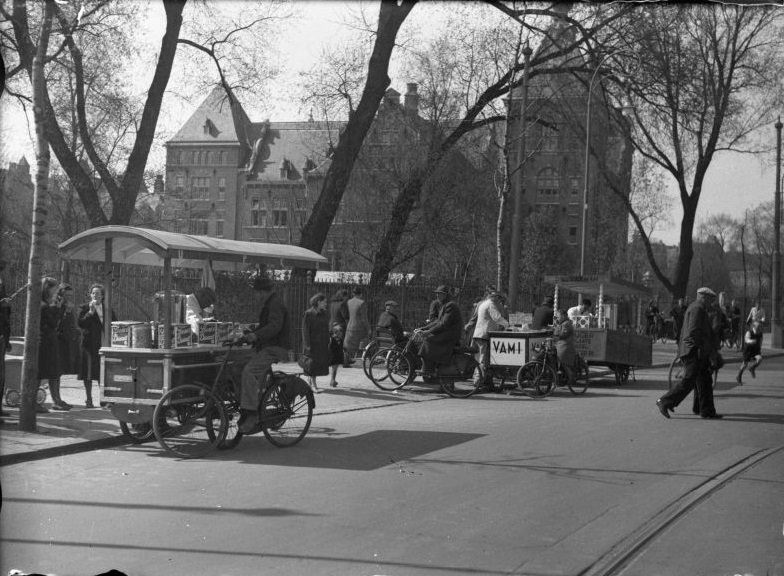
Three ice cream carts lined up outside the Oosterpark near the Tropenmuseum in the summer of 1947. The sight of vendors competing for the same spot on a warm day was a small but telling sign of commercial life returning to normal. Industry was also moving through the city’s streets in larger and more deliberate ways.
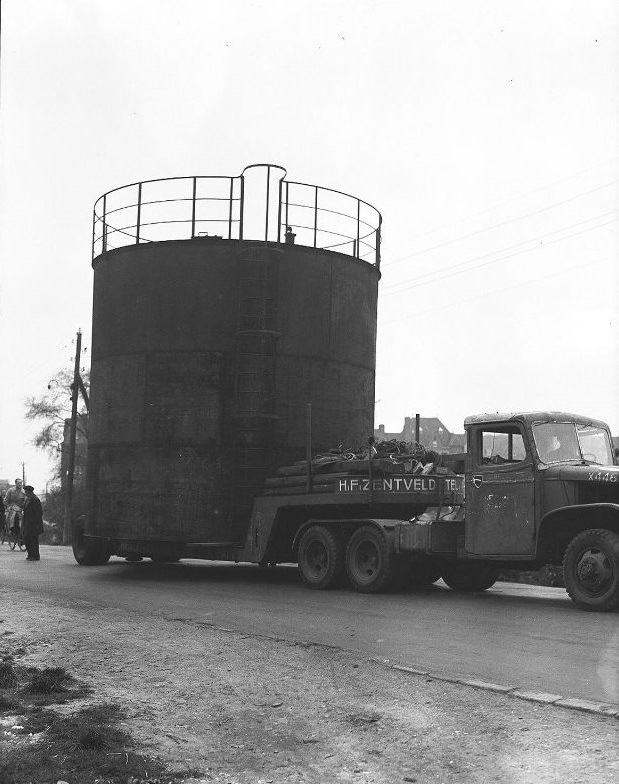
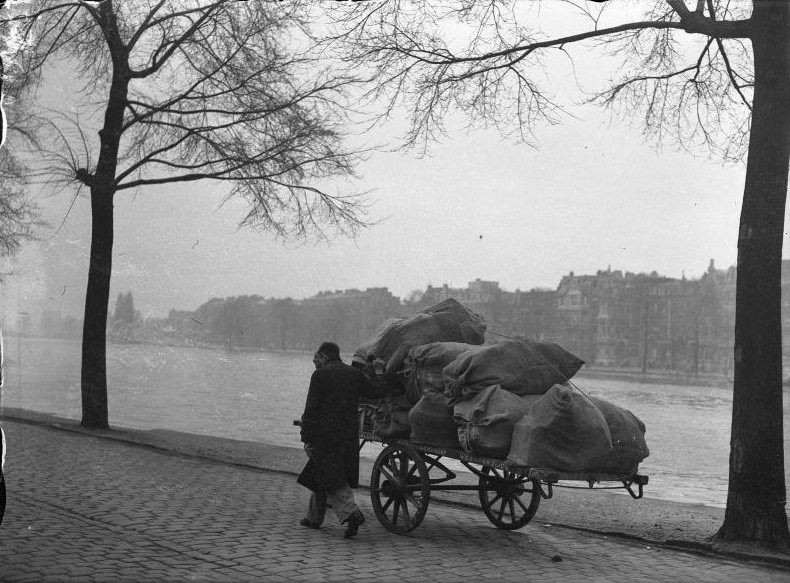
A large oil tank was transported through the Spaarndammerdijk in October 1947, a visible sign of industrial logistics resuming at scale. A month later, two men pushed a handcart loaded with old paper along the Weesperzijde on behalf of Hulp voor Onbehuisden — an organization that helped people without housing. Paper collection drives were a practical way to fund charitable work, and the homeless remained a real problem in a city still absorbing the human costs of occupation. By 1948, Amsterdam’s commercial streets were drawing steady foot traffic.
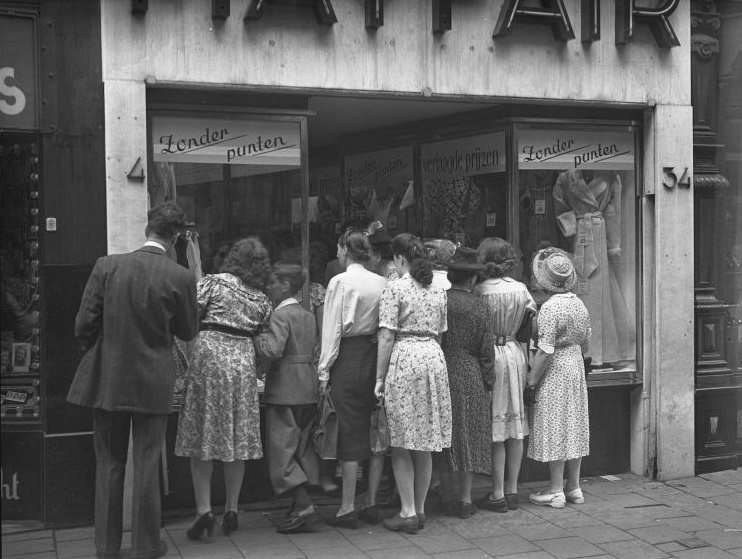
Shoppers paused at the window of Mayfair on the Kalverstraat in July 1948. The Kalverstraat was — and remains — Amsterdam’s main shopping street, and by 1948 its storefronts were stocked and attracting customers again. For children, the summer also meant organized trips out of the city.
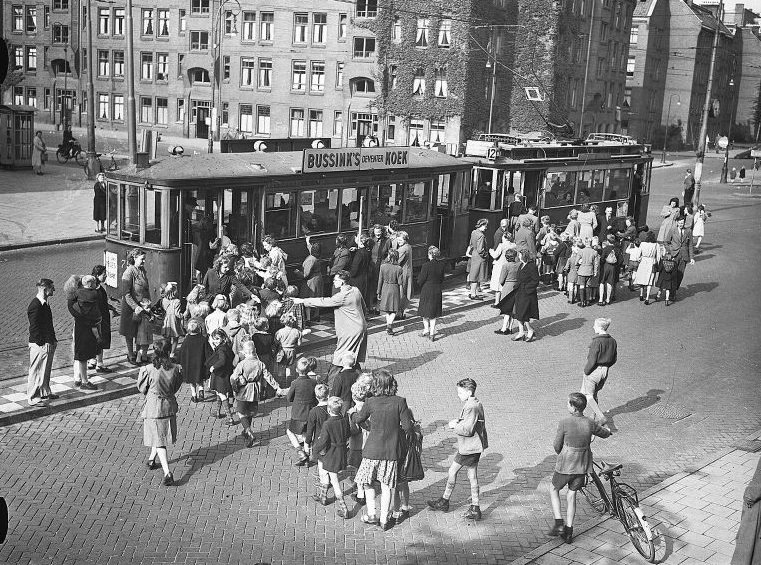
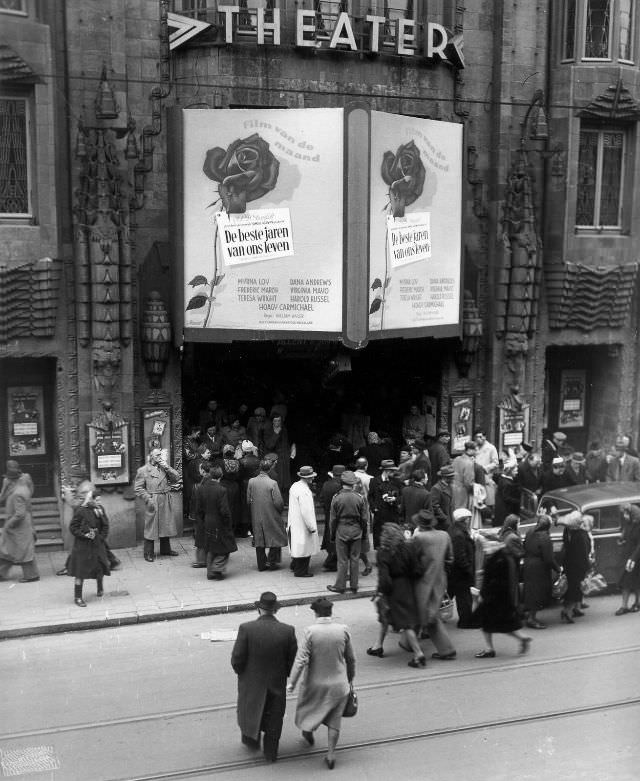
In July 1948, children boarded tram 12 at the corner of Javastraat and Javaplein, heading to the S.I.V.A. children’s holiday school at Westeroord — a break from the city organized for urban youth. That February, William Wyler’s The Best Years of Our Lives had been the film of the month on the Reguliersbreestraat. The American film, about soldiers returning home from war and adjusting to civilian life, resonated strongly with European audiences still processing their own versions of that experience. The press was also active in the city.
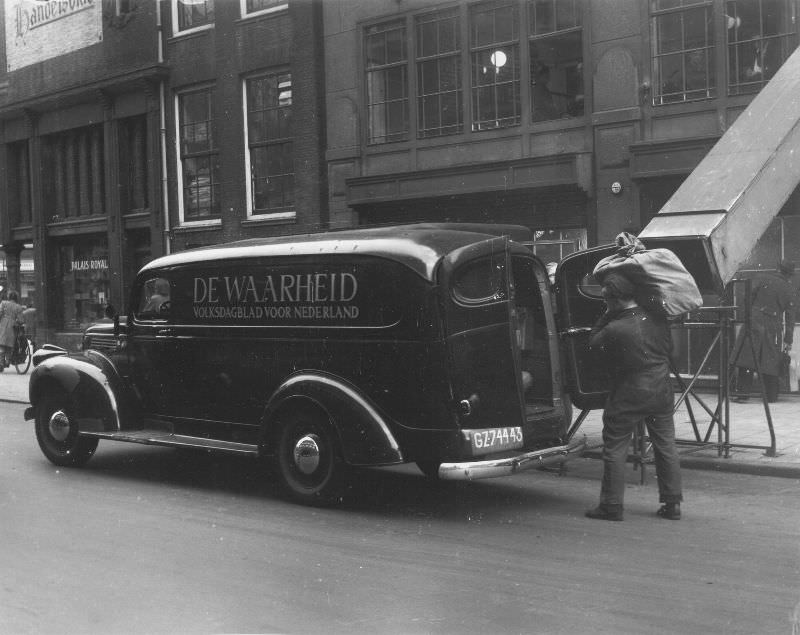
A delivery van from De Waarheid, the Dutch communist newspaper, sat outside the printing office at the corner of Paleisstraat and Nieuwezijds Voorburgwal in November 1948. De Waarheid had been a Resistance paper during the occupation and continued publication after the war. Its presence in the city’s press landscape reflected the ideological diversity of post-war Dutch politics. On the city’s commercial streets, food supplies were steadily improving.
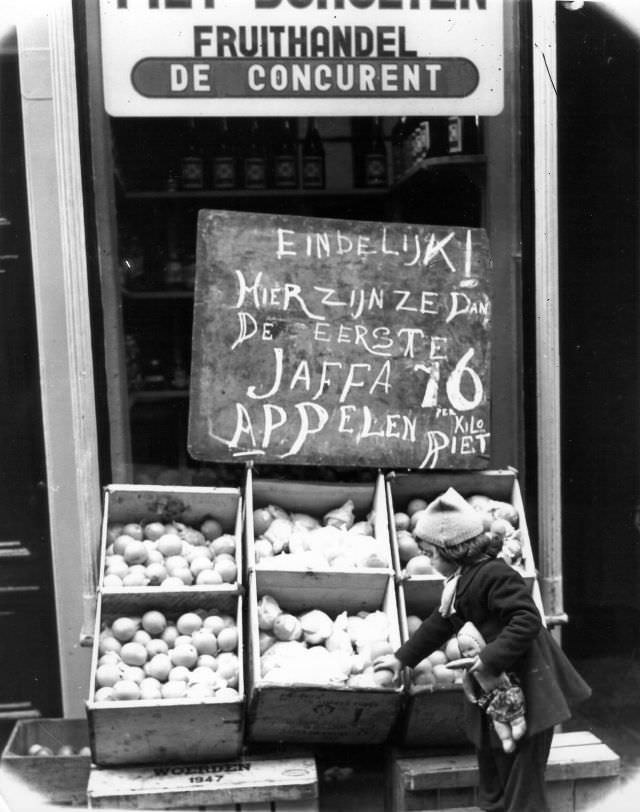
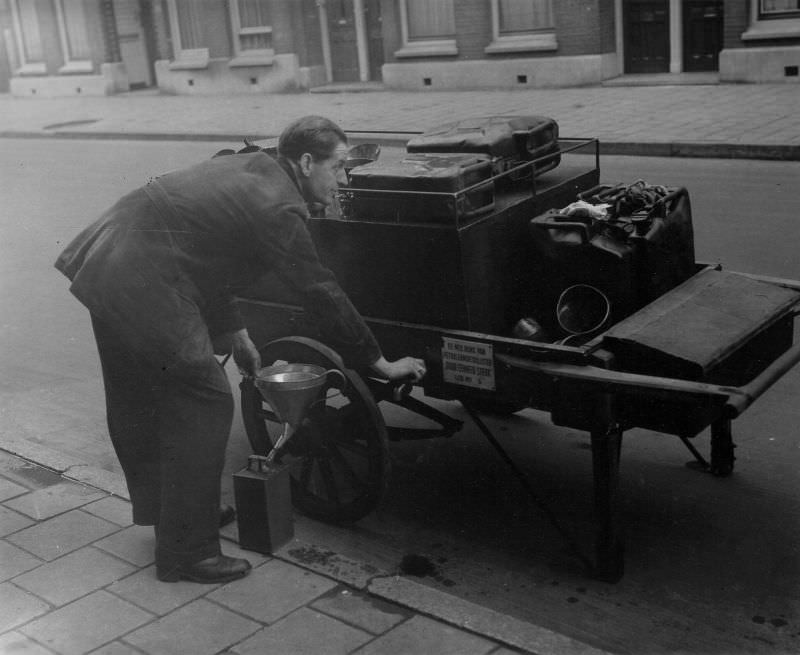
Piet Scholten’s fruit shop De Concurrent advertised the arrival of the first Jaffa apples at 16 cents per kilo in January 1948. The sign’s tone — “Finally, here they are” — spoke to years of rationing and scarcity. That same month, a member of the Dutch Association of Petroleum Dieticians filled an oil can on the street, part of a network distributing fuel for domestic heating and cooking. Municipal tree management was also underway across the city.
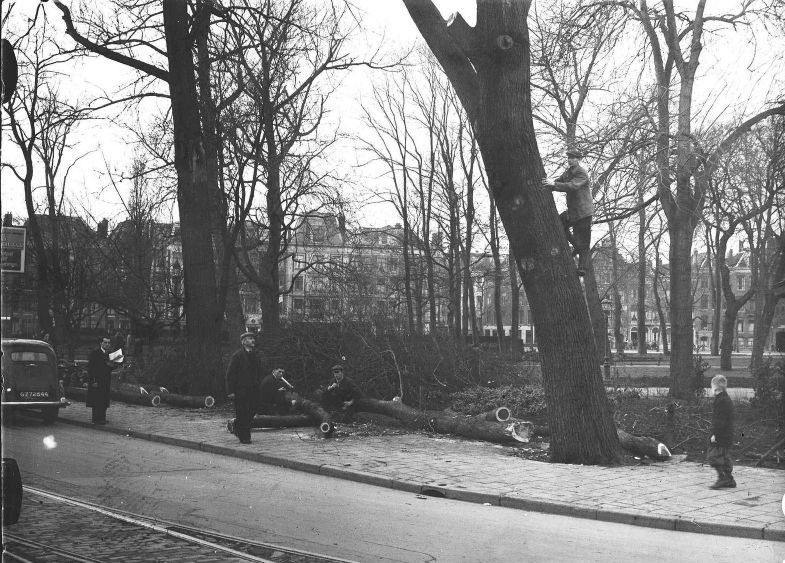
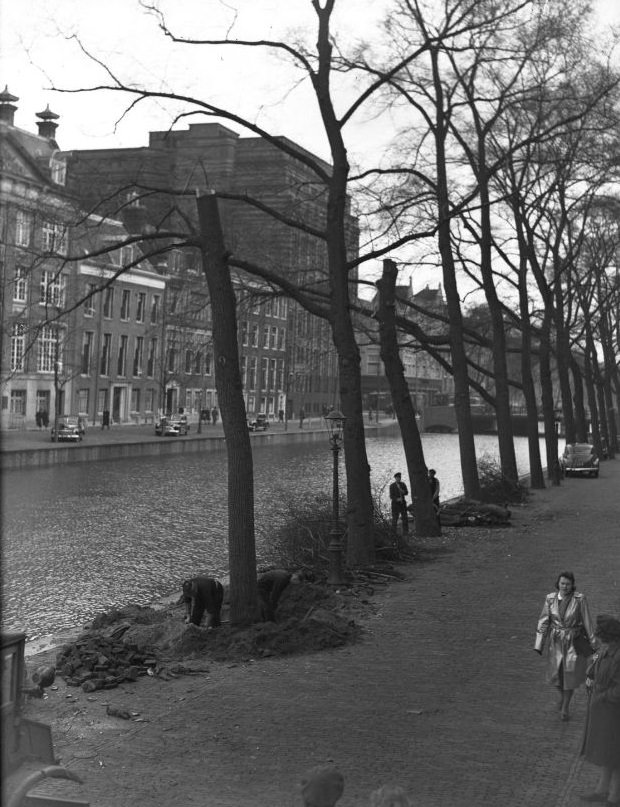
City workers pruned a monumental elm at the Weteringplantsoen in January 1948, and the following month, elm trees along the Keizersgracht were felled entirely and replaced with 21-year-old linden trees transplanted from the Bach district. Amsterdam’s canal-side trees were an important part of the city’s character, and the municipality invested in maintaining them even in lean post-war years. Not all city business was so routine.
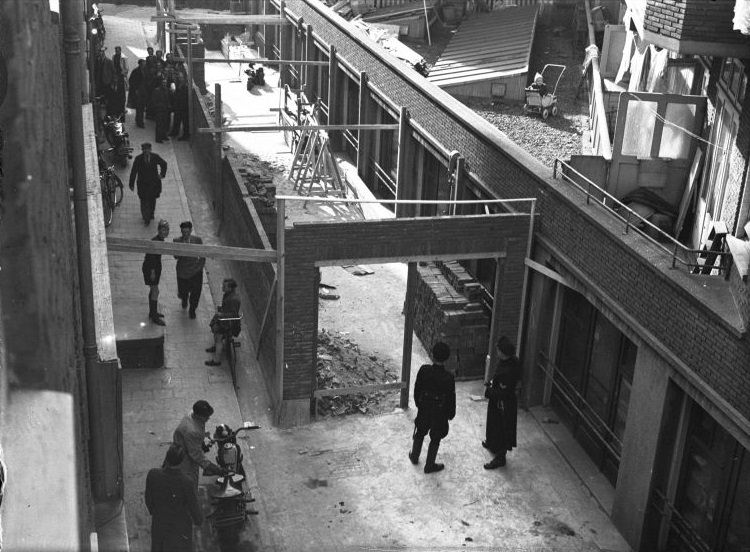
Police halted construction at the printing firm Cloeck & Moedigh on the 2e Passeerdersdwarsstraat in March 1948 after the company renovated without the required permits from the city council — referred to in Dutch documents as B&W (Burgemeester en Wethouders). Post-war construction was tightly regulated as the city managed a shortage of materials and labor. Public messaging was also finding new channels.
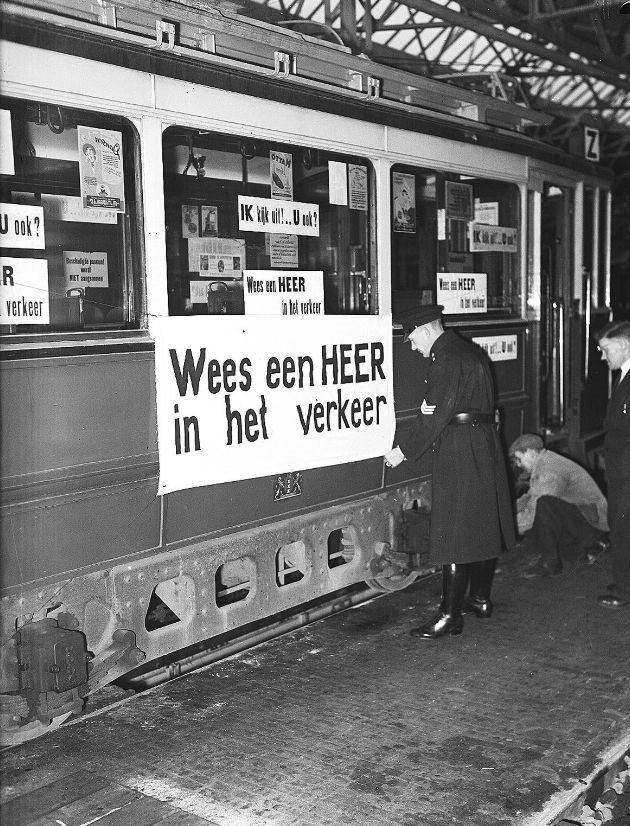
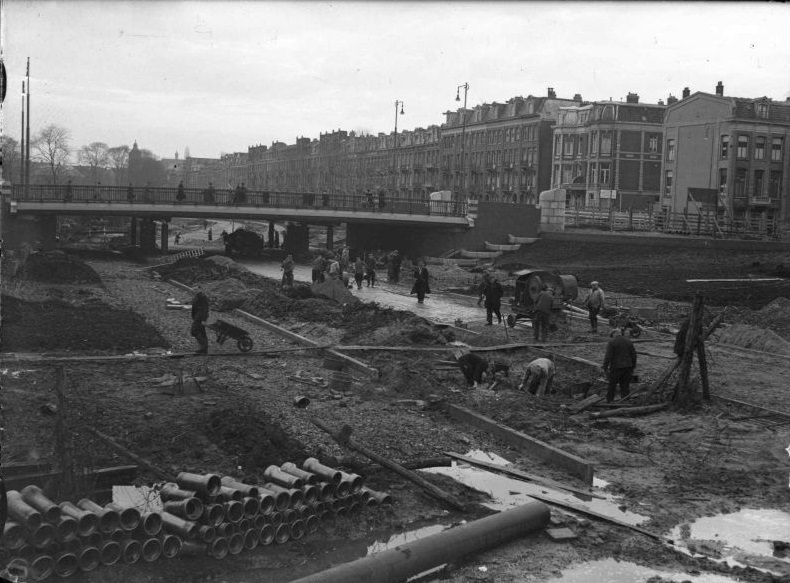
A silver tram at the Tollensstraat depot in December 1948 carried public safety messages — “Be a gentleman in traffic” and “I’m looking forward! You too?” — painted across its sides. Using trams as moving billboards for civic campaigns was a practical way to reach the entire city. Infrastructure progress was uneven: the Vondel bridge had been completed by January 1948, but the park roads connecting to it were still unfinished. Charitable transport work also continued.
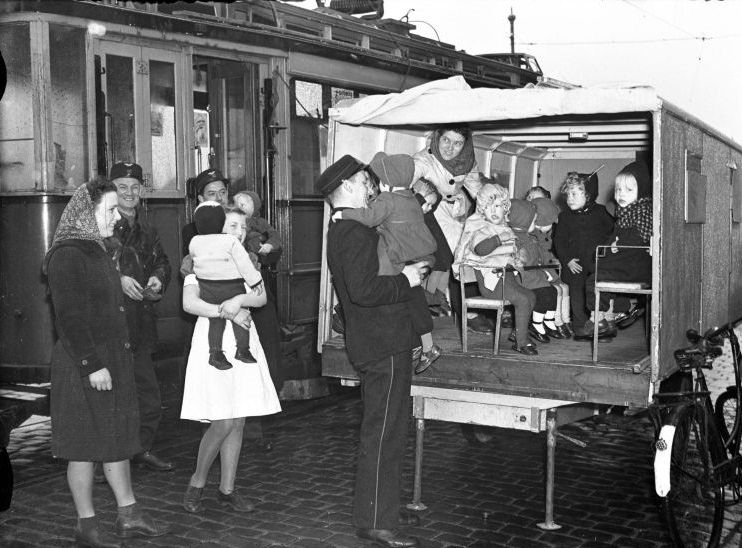
In April 1948, goods were transported by cart from the Lekstraat depot to ‘t Kabouterhuis on the Amsteldijk — a children’s charity home. The use of a hand-pulled cart for this kind of delivery was typical of the era; motor vehicles were still relatively scarce and expensive. By 1949, the final year of Van Meerendonk’s documented series, the city’s institutions and daily life had found a firmer footing.
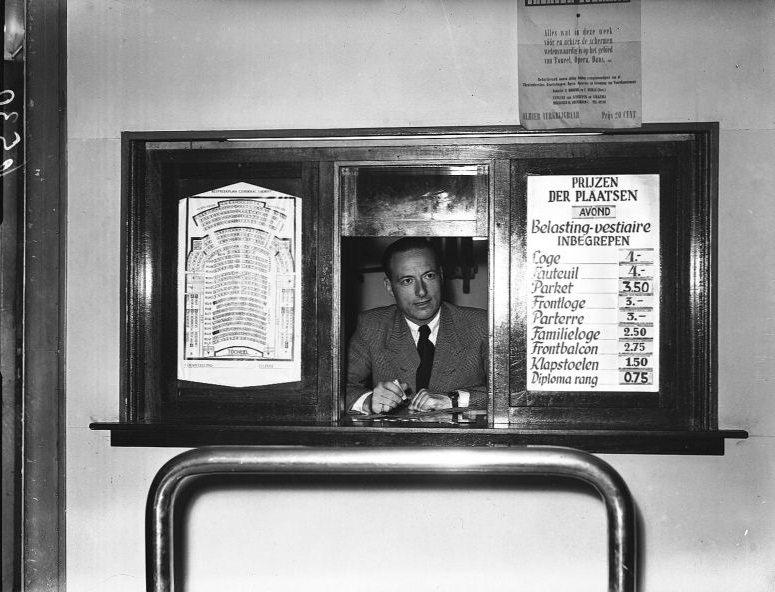
Ab Hock was photographed at the Centraal Theater on the Amstelstraat in September 1949, marking 25 years of employment there. Such anniversaries were being celebrated again — a sign that the city’s institutions had roots worth honoring. Fuel costs were also shifting in ways that affected public transport operators.
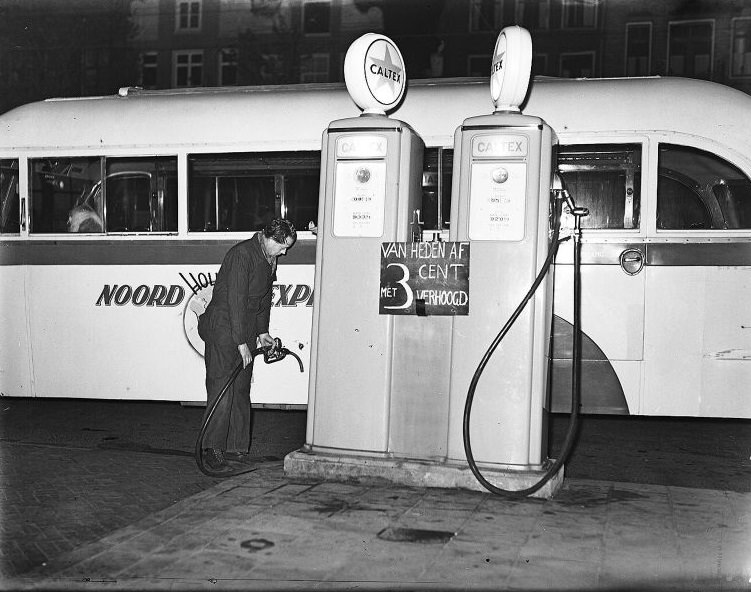
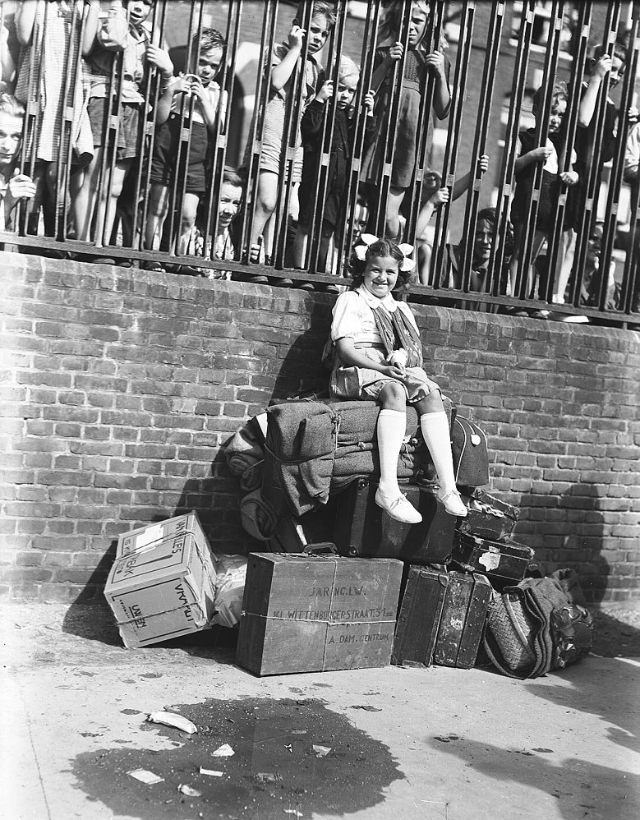
A Noord-Holland Express bus pulled up to a petrol station in November 1949 beside a sign announcing a 3-cent increase in the price of gasoline. Earlier that summer, children from the Kattenburg neighborhood departed for a countryside camping trip at farmer Zander’s property in Schoorl, organized by the Stichting Kinderuitzending Eilanden — a foundation that sent city children to rural and coastal areas for fresh air and recuperation. Such programs had particular meaning in neighborhoods still feeling the weight of wartime poverty. Emergencies, too, were part of the city’s daily reality.
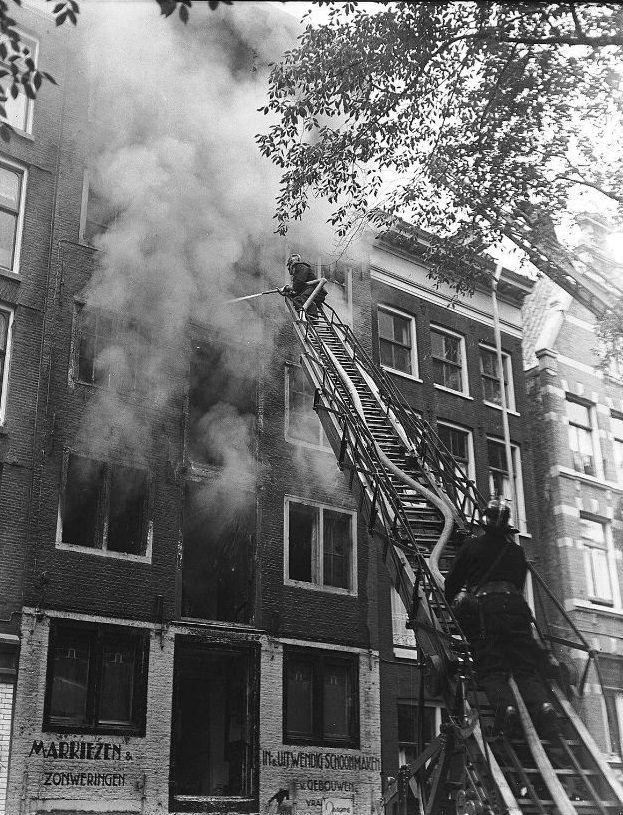
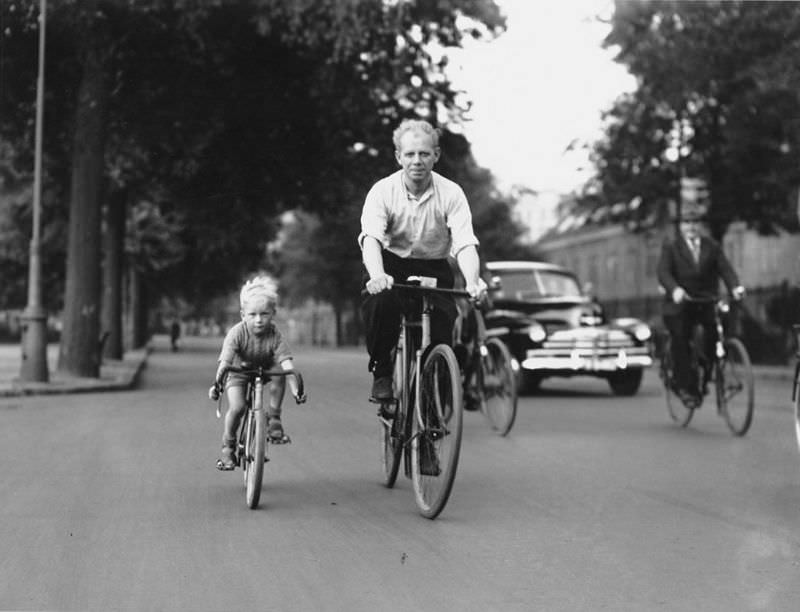
A fire broke out at a glassworks in an old warehouse on the Elandsgracht in October 1949, drawing firefighters and onlookers. Three months earlier, a small boy rode a mini-road bike along the Sarphatistraat with his father walking alongside. The contrast between these two images captures the range of Van Meerendonk’s work — disaster and domesticity, crisis and quiet. Political life was also generating public gatherings in the city.
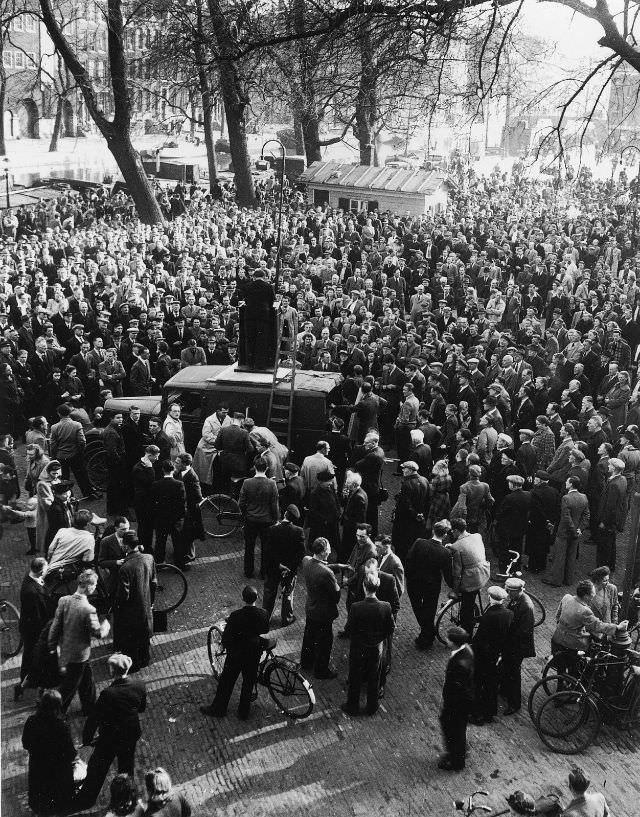
On April 2, 1949, the Communist Party of the Netherlands (CPN) held its first peace rally at the Noordermarkt, in direct opposition to NATO — which had just been founded that same month. The crowd at the Noordermarkt was large. Amsterdam’s working-class neighborhoods had a history of left-wing politics, and the CPN’s anti-NATO position drew genuine support. The broader city, however, was navigating its own day-to-day demands.
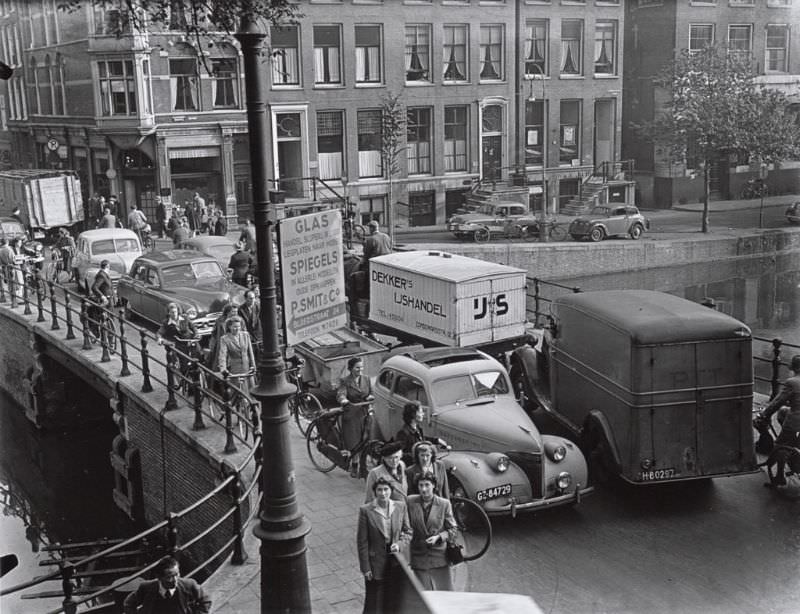
By October 1949, the bridge between the Oude and Nieuwe Hoogstraat over the Kloveniersburgwal carried its usual mix of pedestrians, cyclists, and vehicles. The scene is unremarkable by design — that was the point. Amsterdam in the late 1940s was a city that had survived occupation, famine, and loss, and was now, street by street and canal by canal, working its way back to the ordinary rhythms of urban life. Ben van Meerendonk was there to record every step of it.




