Hey There! Before You Go. 😧
Get the best vintage content straight into your inbox!

Don't worry, we don't spam

The Real Alice: Exploring Lewis Carroll’s Photographs of Alice Liddell and Early Wonderland Visions

Charles Lutwidge Dodgson published ‘Alice’s Adventures in Wonderland’ in 1865 under the pen name Lewis Carroll. The story follows a girl named Alice who falls down a rabbit hole into a world of talking animals and bizarre characters. It became one of the most recognized works in English literature. But before the book existed, before John Tenniel drew a single illustration, there was a real child — and a camera.

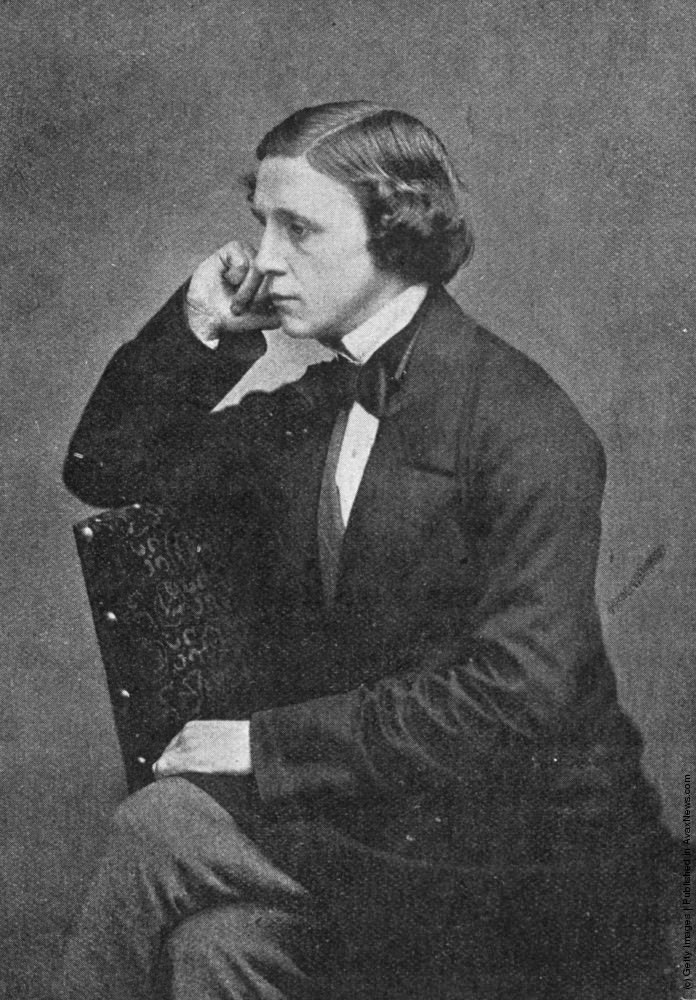
Charles Lutwidge Dodgson, author of "Alice's Adventures in Wonderland," 1857
Charles Lutwidge Dodgson, author of “Alice’s Adventures in Wonderland,” 1857

Dodgson was a mathematician at Christ Church, Oxford, but photography was a serious pursuit for him. In the 1850s and 1860s, photography was still a young and technically demanding art. Dodgson embraced it fully. He built a darkroom, learned the wet collodion process, and photographed a wide range of subjects — but he was especially drawn to portraits of children.

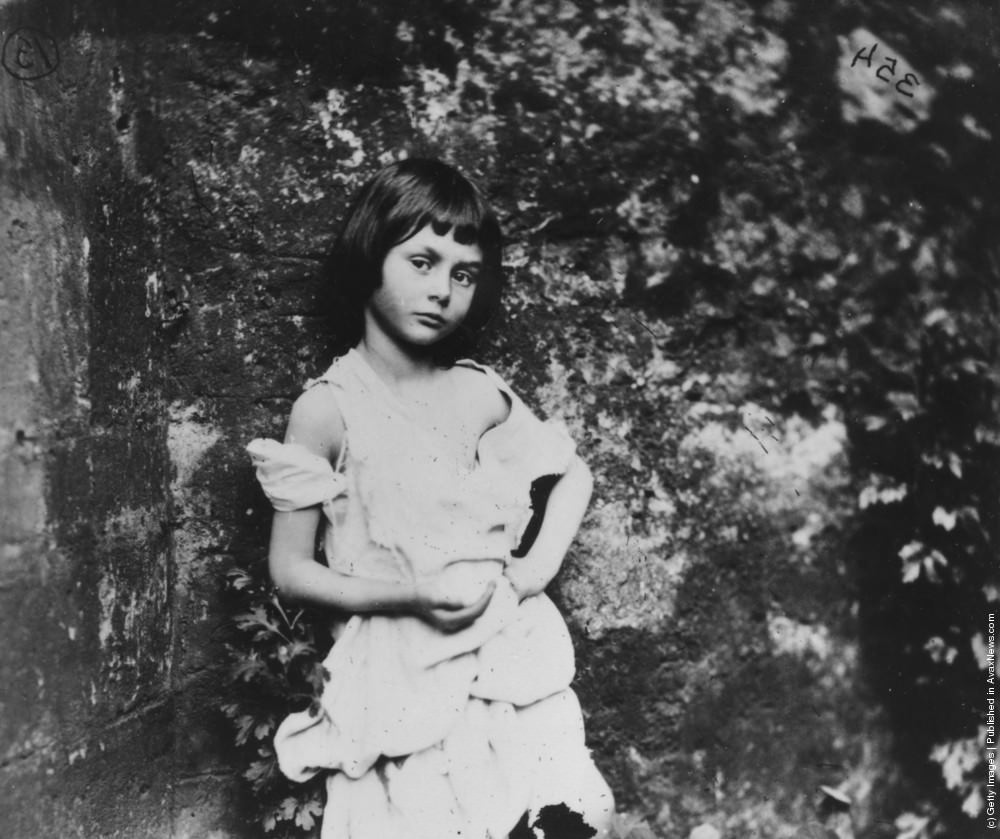
Alice Liddell, inspiration for Alice in "Alice in Wonderland," 1858
Alice Liddell, inspiration for Alice in “Alice in Wonderland,” 1858

Alice Liddell was the daughter of Henry Liddell, Dean of Christ Church and a close acquaintance of Dodgson. Born in 1852, Alice was around six years old when Dodgson first photographed her in 1858. The image above is one of the earliest known portraits of her. Her direct gaze and composed expression give the photograph an unusual intensity for a child of her age. Dodgson photographed Alice repeatedly over the following years, often alongside her sisters Lorina and Edith.

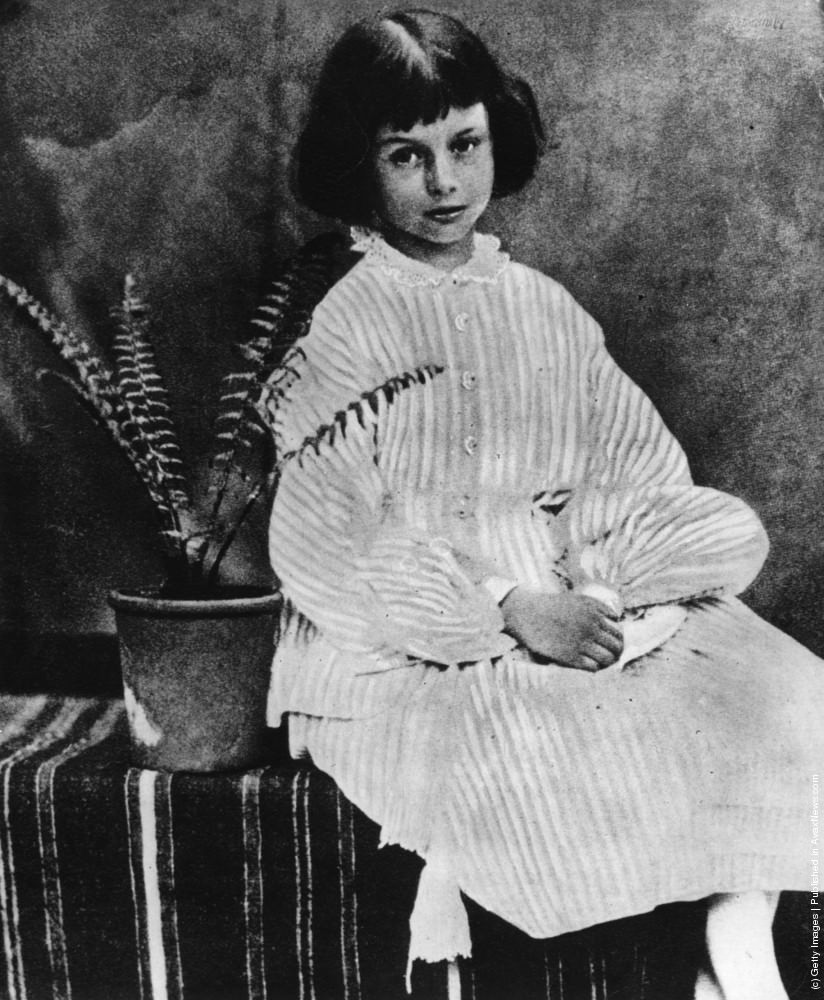
Alice Liddell sitting by a potted fern, 1860

By 1860, Dodgson was capturing Alice in more relaxed, natural settings. In this photograph, she sits beside a potted fern — a quiet domestic scene that reflects the portrait style of the Victorian middle class. These images are not illustrations of Wonderland. They are records of a real girl whose personality and imagination clearly made an impression on Dodgson during their time together.

On July 4, 1862, Dodgson rowed with Alice and her sisters along the Thames and told them an improvised story about a girl named Alice who fell underground into a strange land. Alice Liddell asked him to write it down. He did, eventually expanding it into the published novel. Alice Liddell continued to be photographed into her teenage years and beyond.

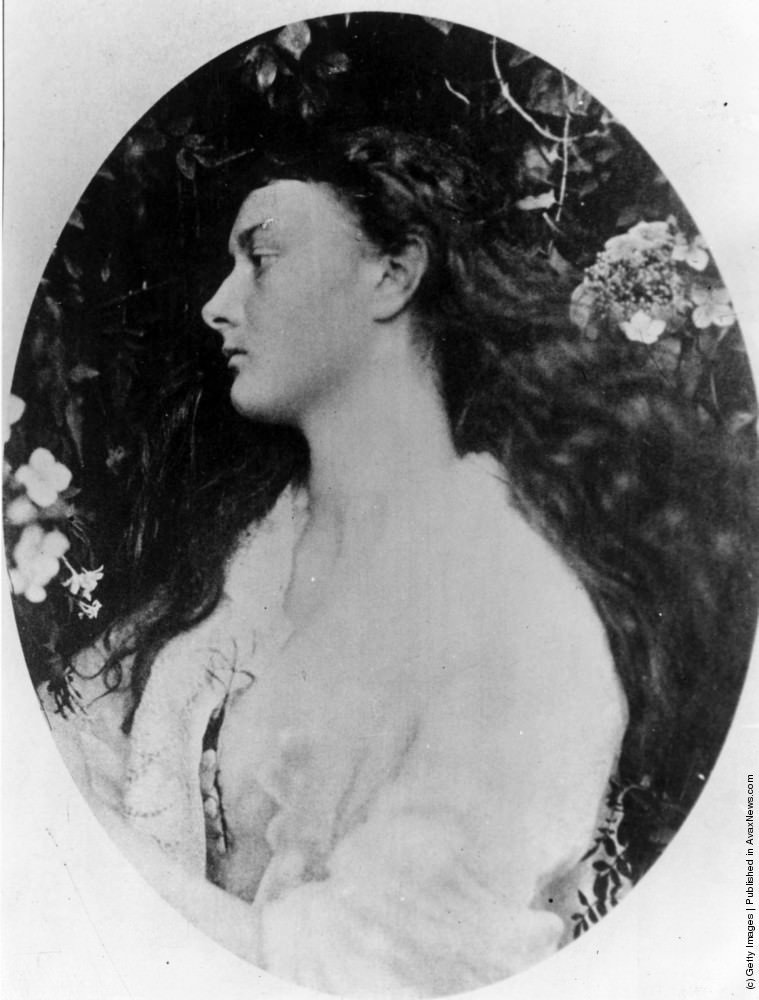
Alice Pleasance Hargreaves, posing as Pomona, 1872

This 1872 photograph, taken when Alice was twenty years old, shows her posing as Pomona, the Roman goddess of fruit and orchards. By this point she had grown far beyond the child Dodgson had first photographed fourteen years earlier. She would later marry Reginald Hargreaves in 1880, taking his surname for the rest of her life. The photograph was not taken by Dodgson — his photographic relationship with Alice had effectively ended years before.

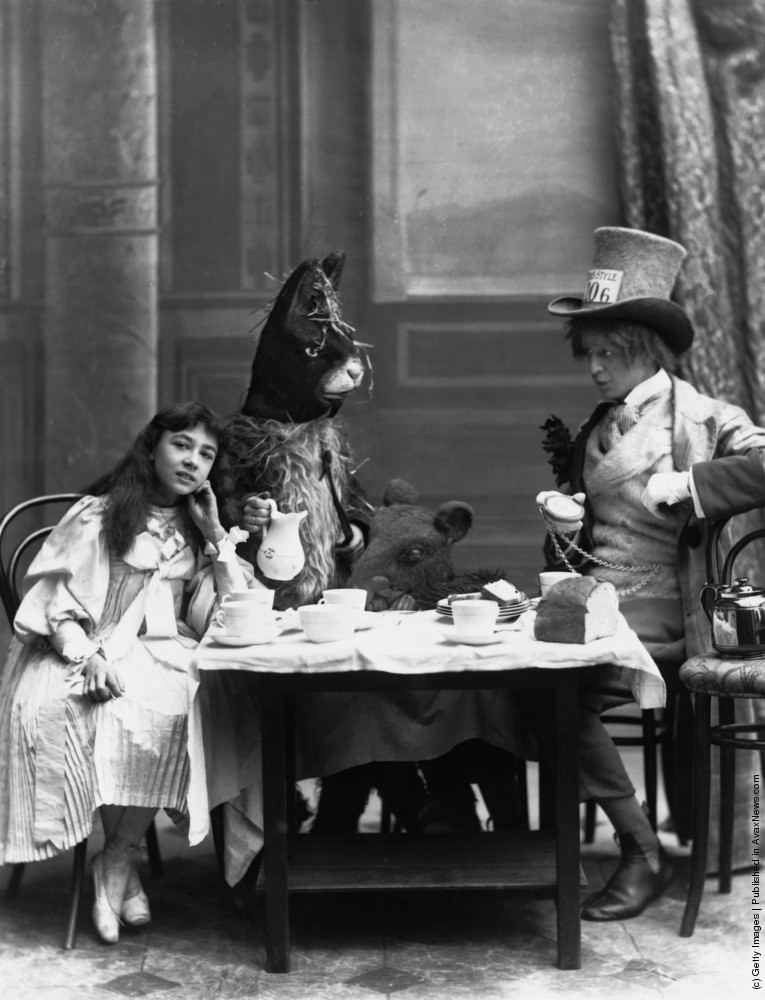
When ‘Alice’s Adventures in Wonderland’ was published in 1865, its visual identity came from John Tenniel’s pen-and-ink illustrations. Those drawings defined how readers pictured the Queen of Hearts, the Cheshire Cat, and the Mad Hatter for decades. But as the book’s popularity grew, stage adaptations emerged, and photographers began documenting their productions. One of the earliest visual records of Wonderland brought to life on stage dates to 1898.

The Mad Hatter's Tea Party from "Alice in Wonderland," 1898
The Mad Hatter’s Tea Party from “Alice in Wonderland,” 1898

This 1898 production photograph shows the Mad Hatter’s tea party — one of the book’s most iconic scenes — staged for the first time. The costumes draw directly from Tenniel’s illustrations, which had become the accepted standard for how these characters should look. Stage productions like this one were the first attempts to translate the flat, printed world of Wonderland into three dimensions.

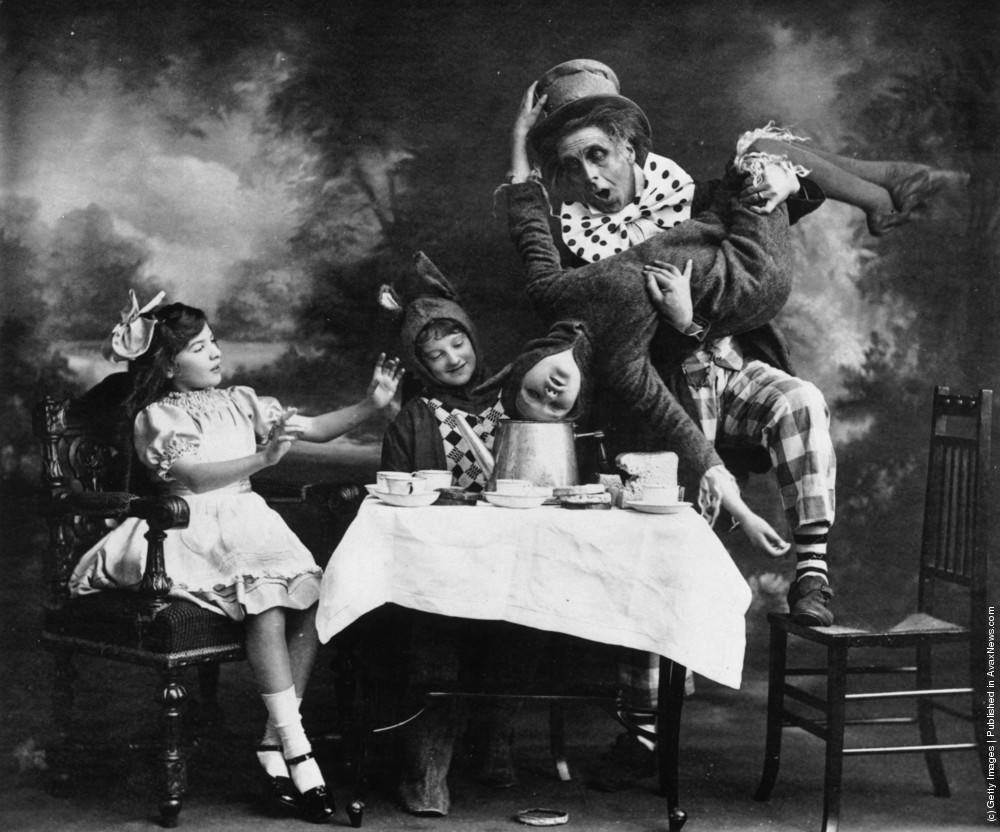
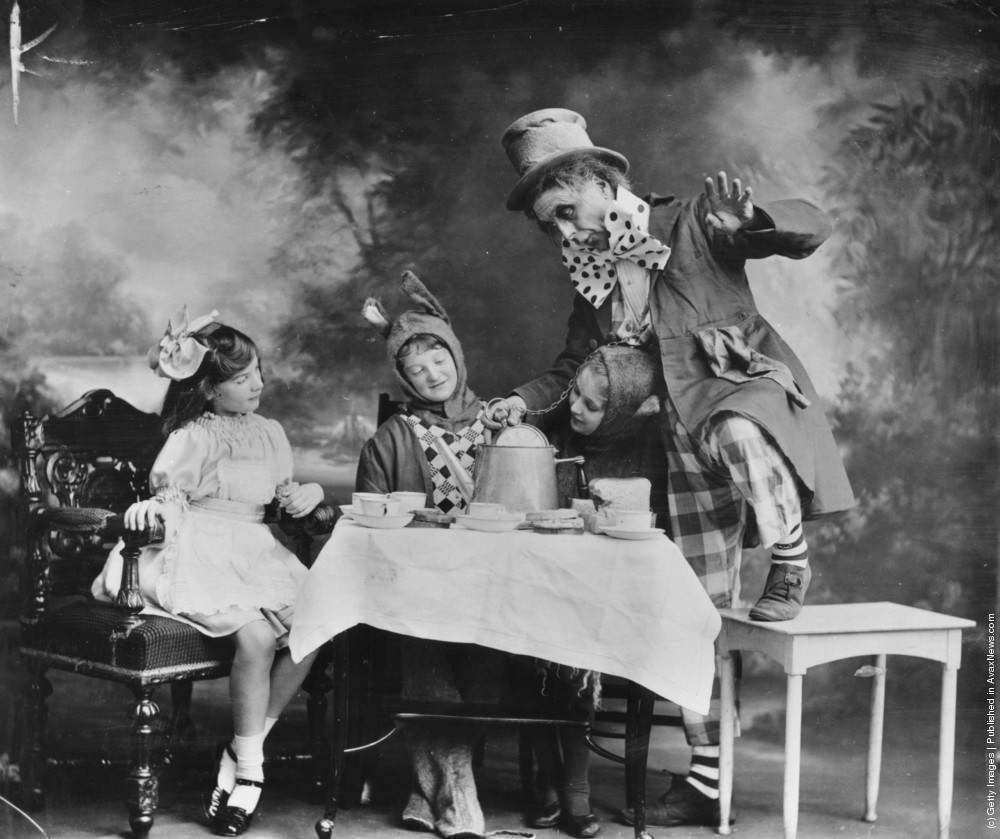
The Mad Hatter's tea party from a theatre production of "Alice in Wonderland," 1910
The Mad Hatter’s tea party from a theatre production of “Alice in Wonderland,” 1910
The Mad Hatter's tea party from a theatre production of "Alice in Wonderland," 1910
The Mad Hatter’s tea party from a theatre production of “Alice in Wonderland,” 1910

By 1910, theatrical productions of ‘Alice in Wonderland’ had become more elaborate. These two photographs from the same 1910 production show the tea party scene from different angles, reflecting how stage designers were becoming more ambitious in their staging of Wonderland. One of the very first film adaptations had already been made by this point — a short silent film produced in 1903 in Britain — meaning photographic interpretations of the story were spreading across multiple media simultaneously.

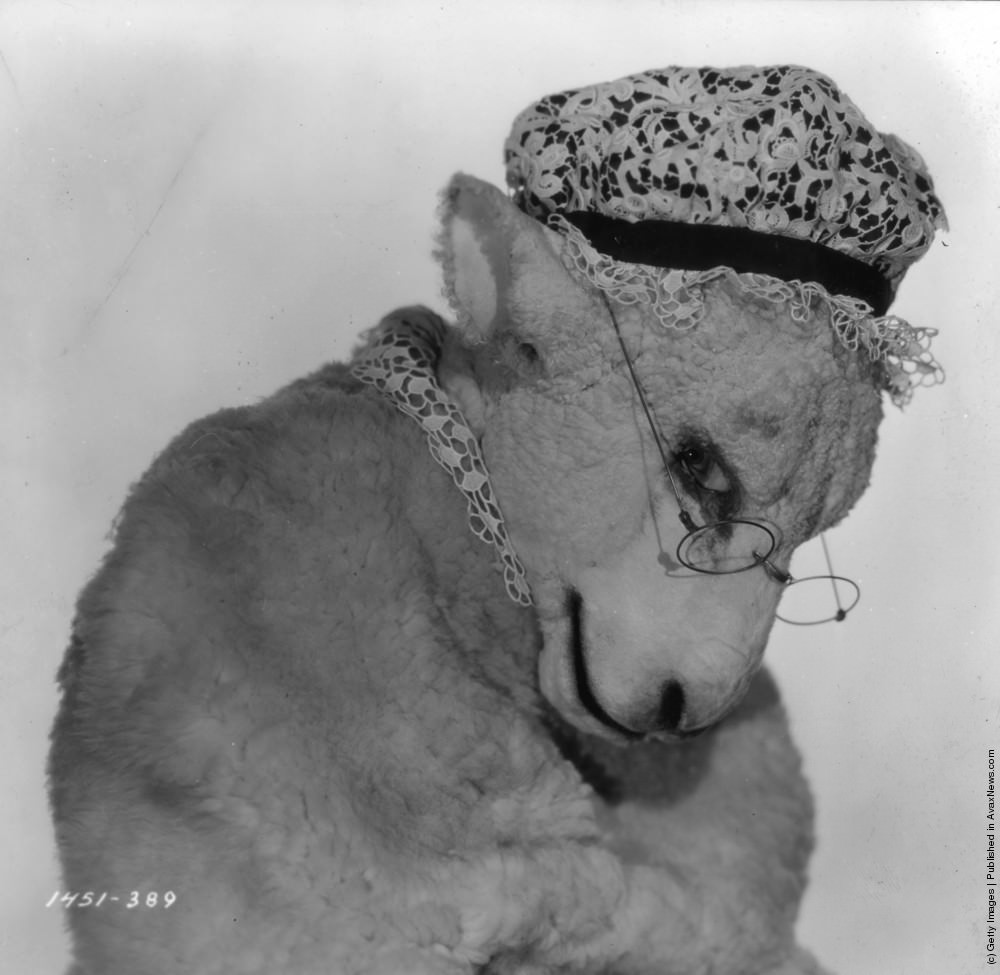
The most star-studded early film adaptation came from Paramount Pictures in 1933. The studio cast a roster of well-known Hollywood actors in the various Wonderland roles, resulting in a production filled with elaborate costumes and recognizable faces hidden beneath heavy makeup and masks.

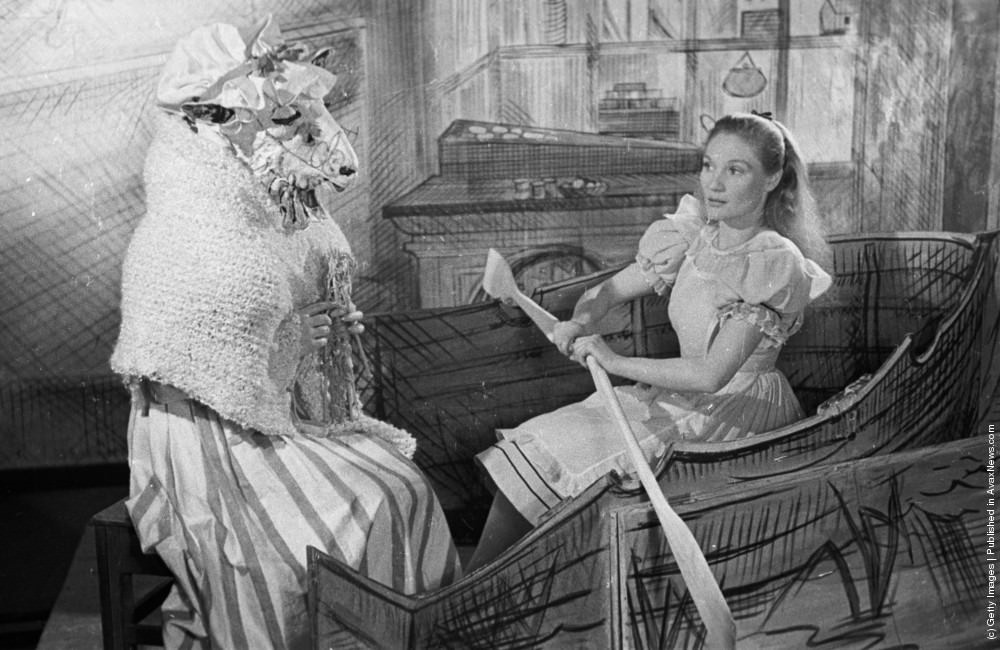
Mae Marsh as The Sheep in Paramount's "Alice in Wonderland," 1933
Mae Marsh as The Sheep in Paramount’s “Alice in Wonderland,” 1933
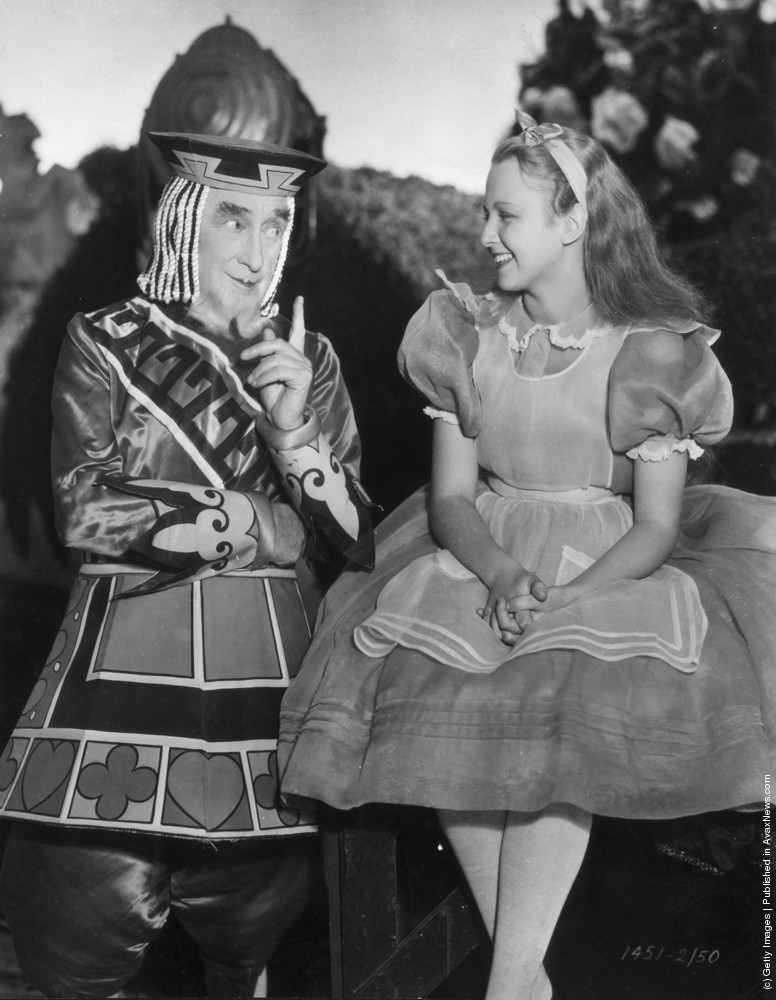
Charlotte Henry as Alice and Alec B Francis as the King of Hearts in Paramount's "Alice in Wonderland," 1933
Charlotte Henry as Alice and Alec B Francis as the King of Hearts in Paramount’s “Alice in Wonderland,” 1933

Charlotte Henry played Alice in the 1933 Paramount film. The production cast Alec B. Francis as the King of Hearts and filled out the rest of the Wonderland ensemble with a remarkable number of notable actors, many of them unrecognizable beneath their costumes. Polly Moran, W.C. Fields, Baby Leroy, and Alison Skipworth all appeared in the film.

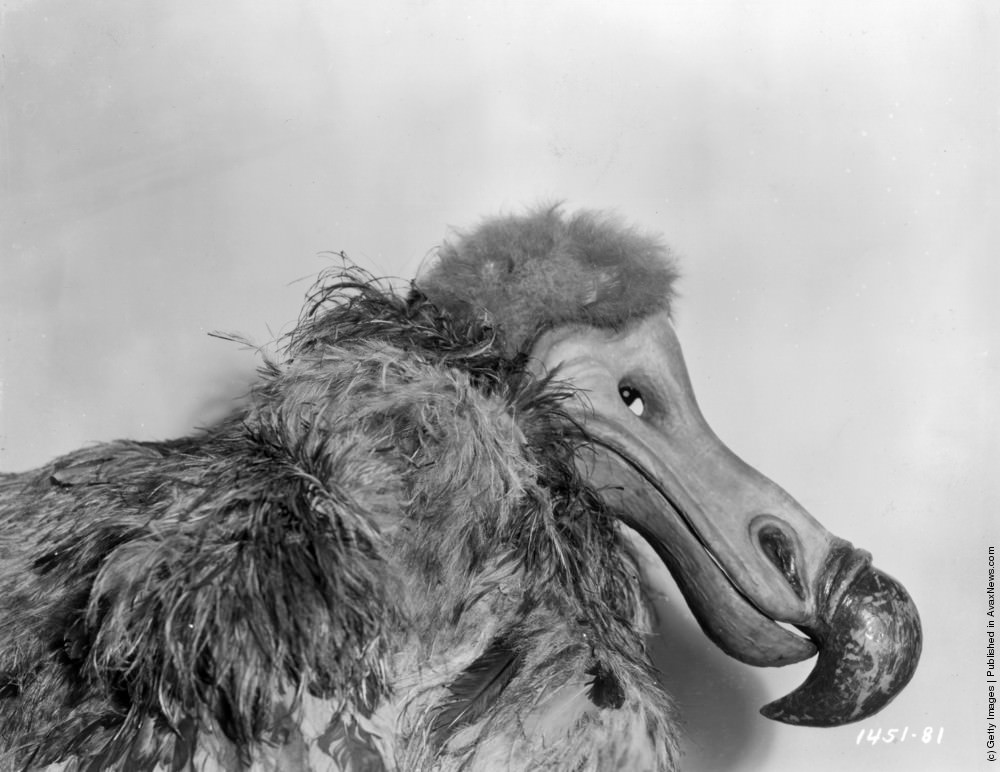
Polly Moran as the Dodo Bird in Paramount's "Alice in Wonderland," 1933
Polly Moran as the Dodo Bird in Paramount’s “Alice in Wonderland,” 1933
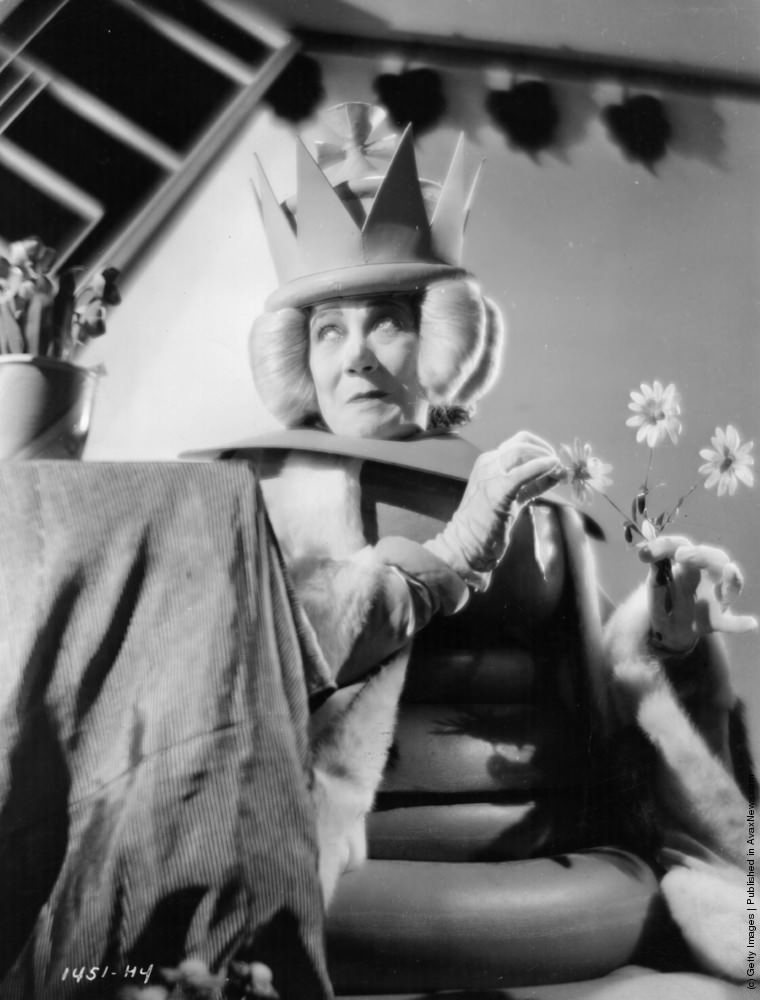
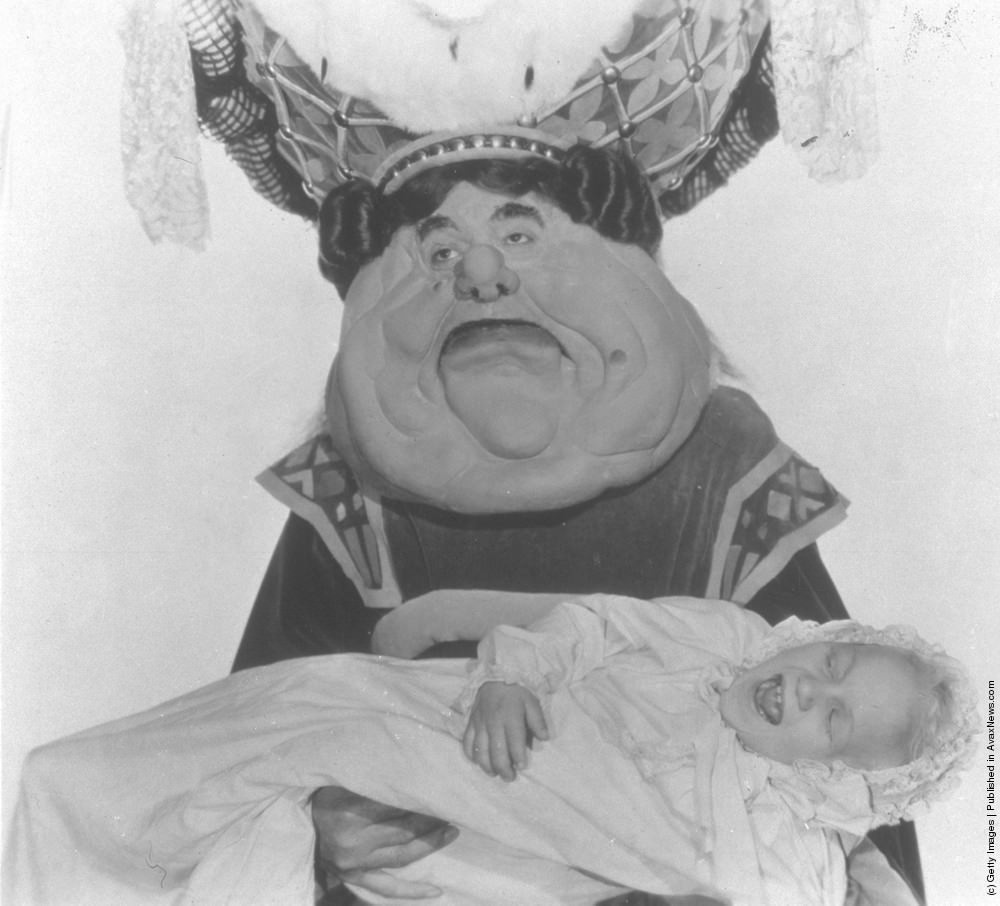
A chess queen in Paramount's "Alice in Wonderland," 1933
A chess queen in Paramount’s “Alice in Wonderland,” 1933
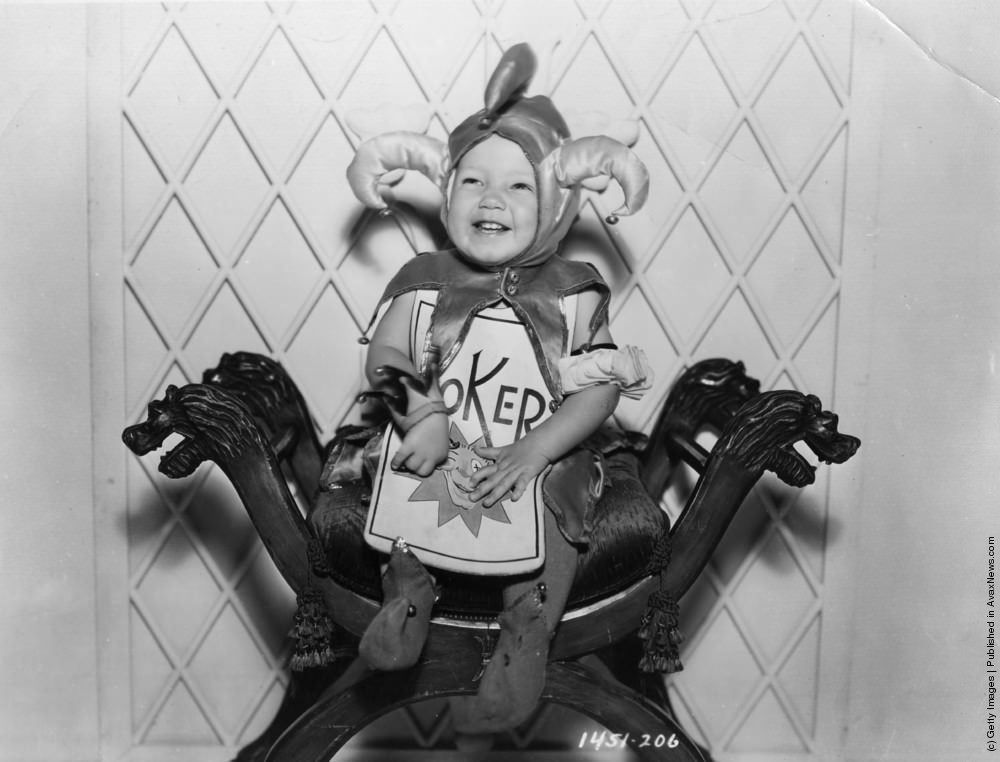
Baby Leroy as the Joker in Paramount's "Alice in Wonderland," 1933
Baby Leroy as the Joker in Paramount’s “Alice in Wonderland,” 1933
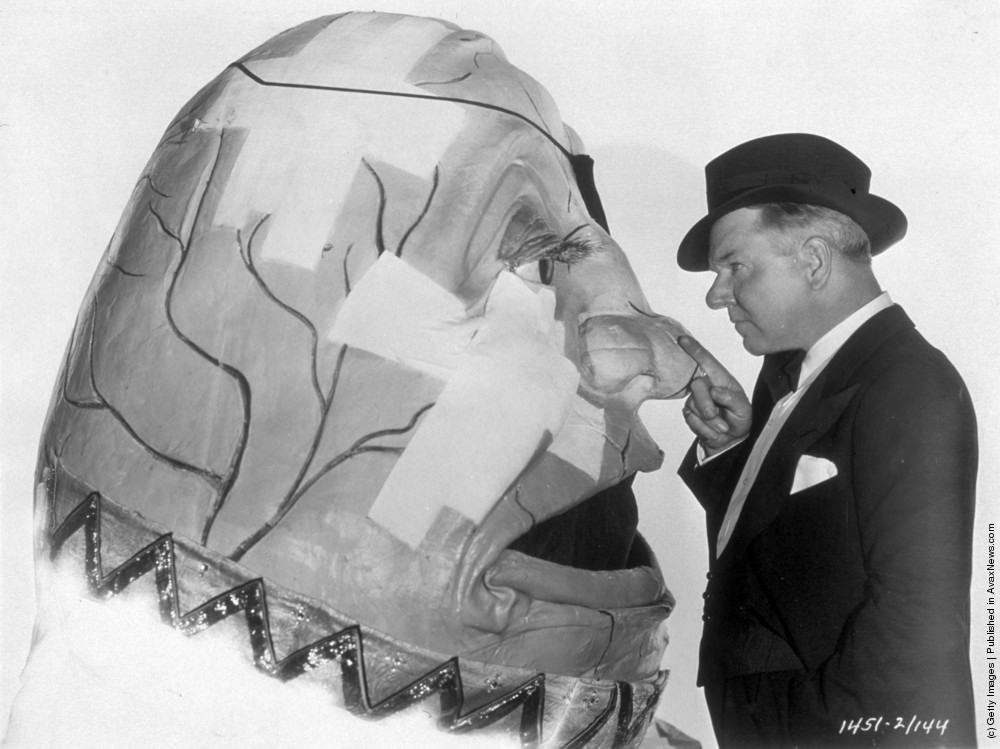
W. C. Fields inspecting his Humpty Dumpty costume from Paramount's "Alice in Wonderland," 1933
W. C. Fields inspecting his Humpty Dumpty costume from Paramount’s “Alice in Wonderland,” 1933

W.C. Fields played Humpty Dumpty in the film. Here he is photographed inspecting his costume before filming — a rare behind-the-scenes glimpse of the production process. The costume design for the 1933 film relied heavily on Tenniel’s original illustrations, just as stage productions had done for decades. Alison Skipworth took on the role of the Duchess.

Alison Skipworth as the Duchess kidnapping Alice in Paramount's "Alice in Wonderland," 1933
Alison Skipworth as the Duchess kidnapping Alice in Paramount’s “Alice in Wonderland,” 1933

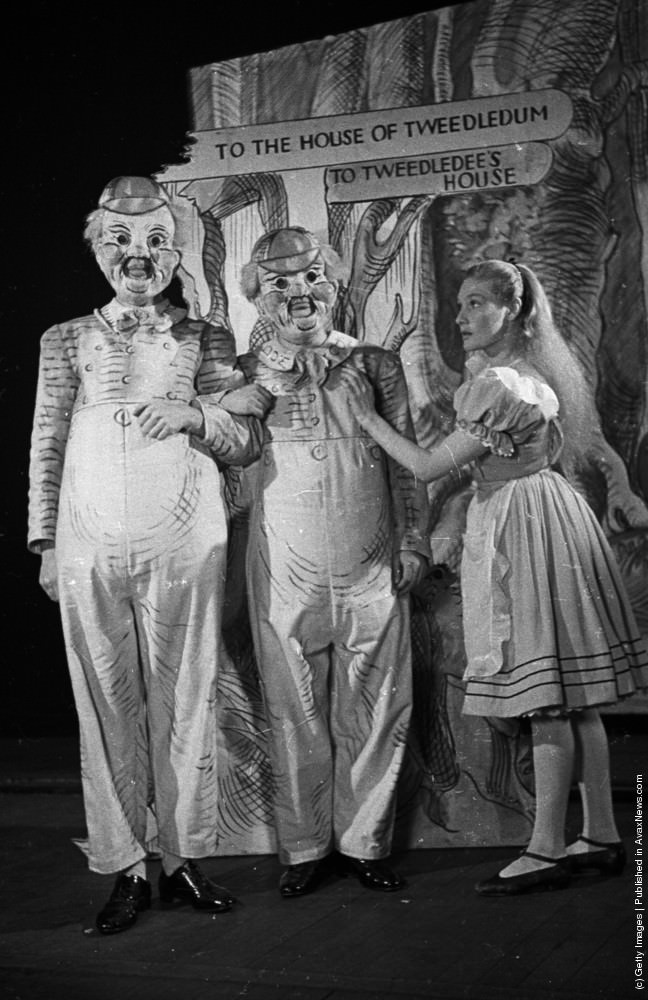
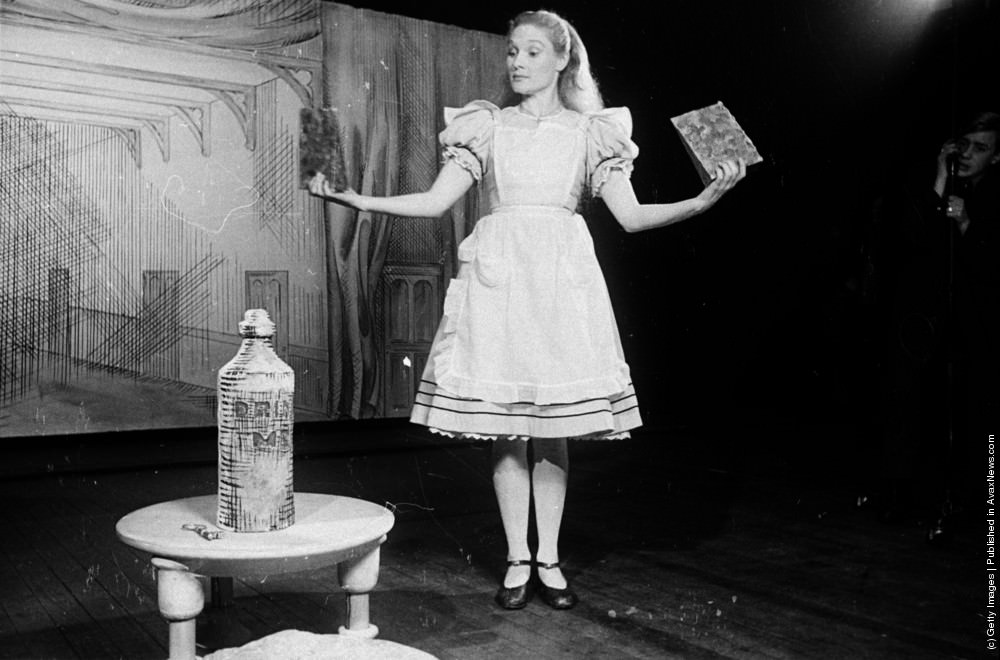
By the 1940s, live stage productions of Wonderland were still drawing audiences. A 1944 British stage production featured Roma Beaumont in the role of Alice across multiple performances. Production photographs from that run document several key scenes from both ‘Alice’s Adventures in Wonderland’ and its sequel, ‘Through the Looking-Glass.’

Roma Beaumont as Alice in a stage production of "Through the Looking-Glass," 1944
Roma Beaumont as Alice in a stage production of “Through the Looking-Glass,” 1944
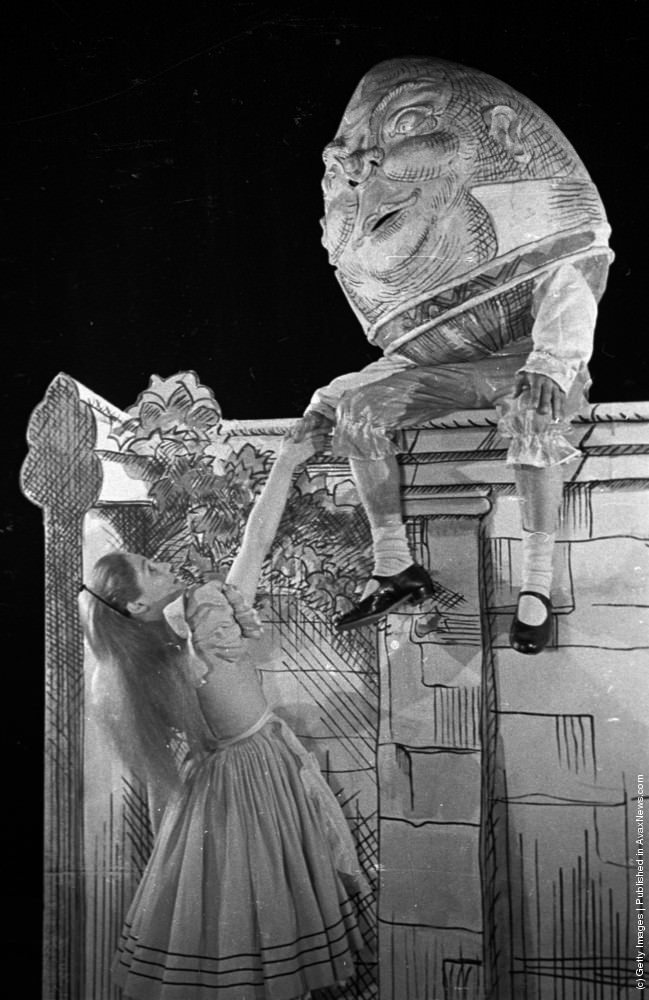
Roma Beaumont as Alice with Humpty Dumpty in a stage production of "Alice in Wonderland," 1944
Roma Beaumont as Alice with Humpty Dumpty in a stage production of “Alice in Wonderland,” 1944
Roma Beaumont as Alice with Tweedledum and Tweedledee in a stage production of "Alice in Wonderland," 1944
Roma Beaumont as Alice with Tweedledum and Tweedledee in a stage production of “Alice in Wonderland,” 1944
Roma Beaumont as Alice after eating the "Eat Me" cake, 1944
Roma Beaumont as Alice after eating the “Eat Me” cake, 1944

These 1944 photographs span some of the story’s most memorable moments — Alice alongside Humpty Dumpty, Tweedledum and Tweedledee, and the scene where she eats the ‘Eat Me’ cake and begins to grow. Taken together, the photographs in this collection span nearly a century of visual history, from Dodgson’s quiet portraits of a real Oxford child in the 1850s to fully staged theatrical productions of the fantasy world she inspired.

Enjoyed this post? Get new ones in your inbox.

Leave a Comment

Your email address will not be published. Required fields are marked *

Share this Post 🥺

Please take a moment to share this content. Your support is greatly appreciated! 🙌🙏

Share this Post 🥺

Please take a moment to share this content. Your support is greatly appreciated! 🙌🙏
Scroll to Top
 
Hey Friend, Before You Go.. Please like & follow for more interesting content