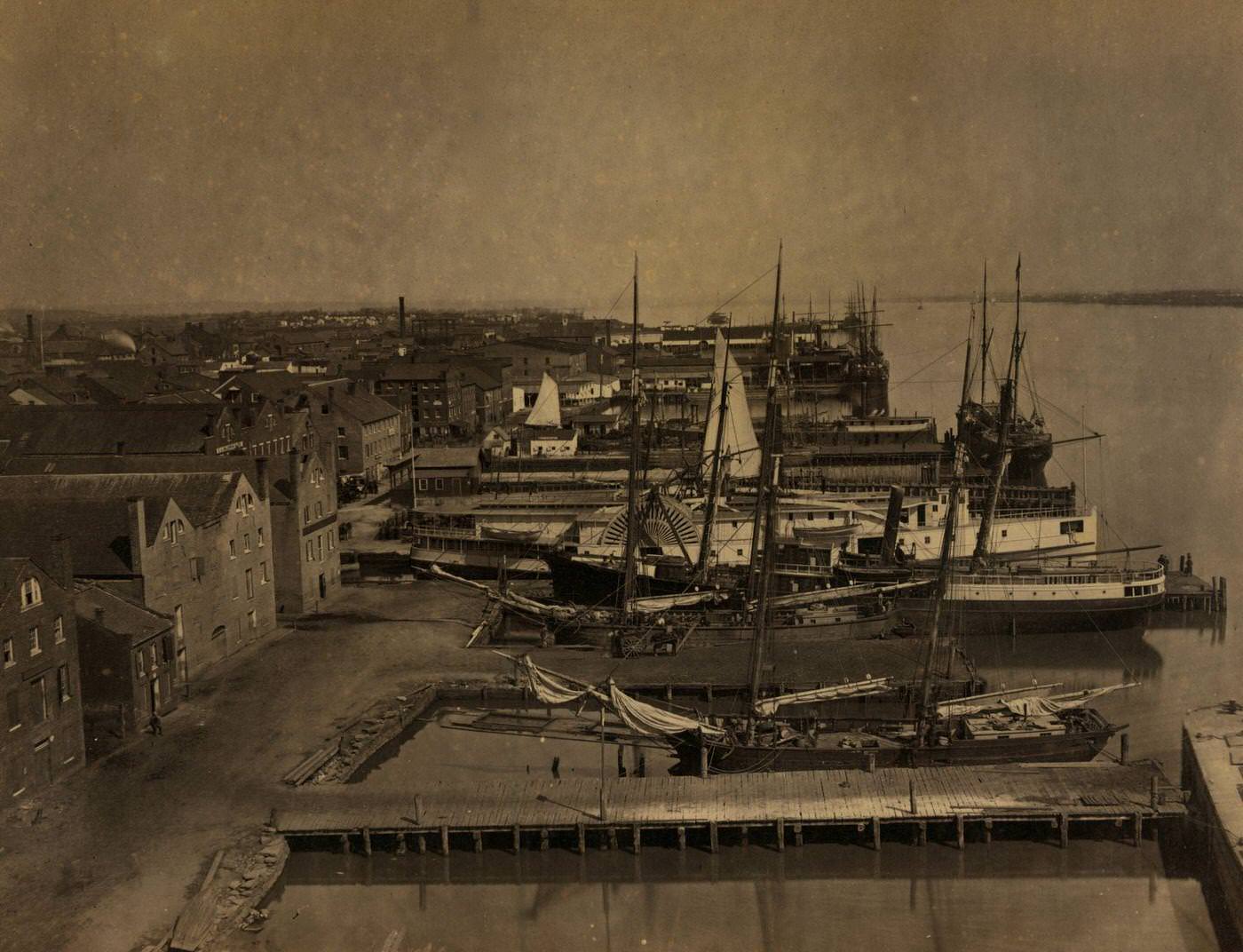
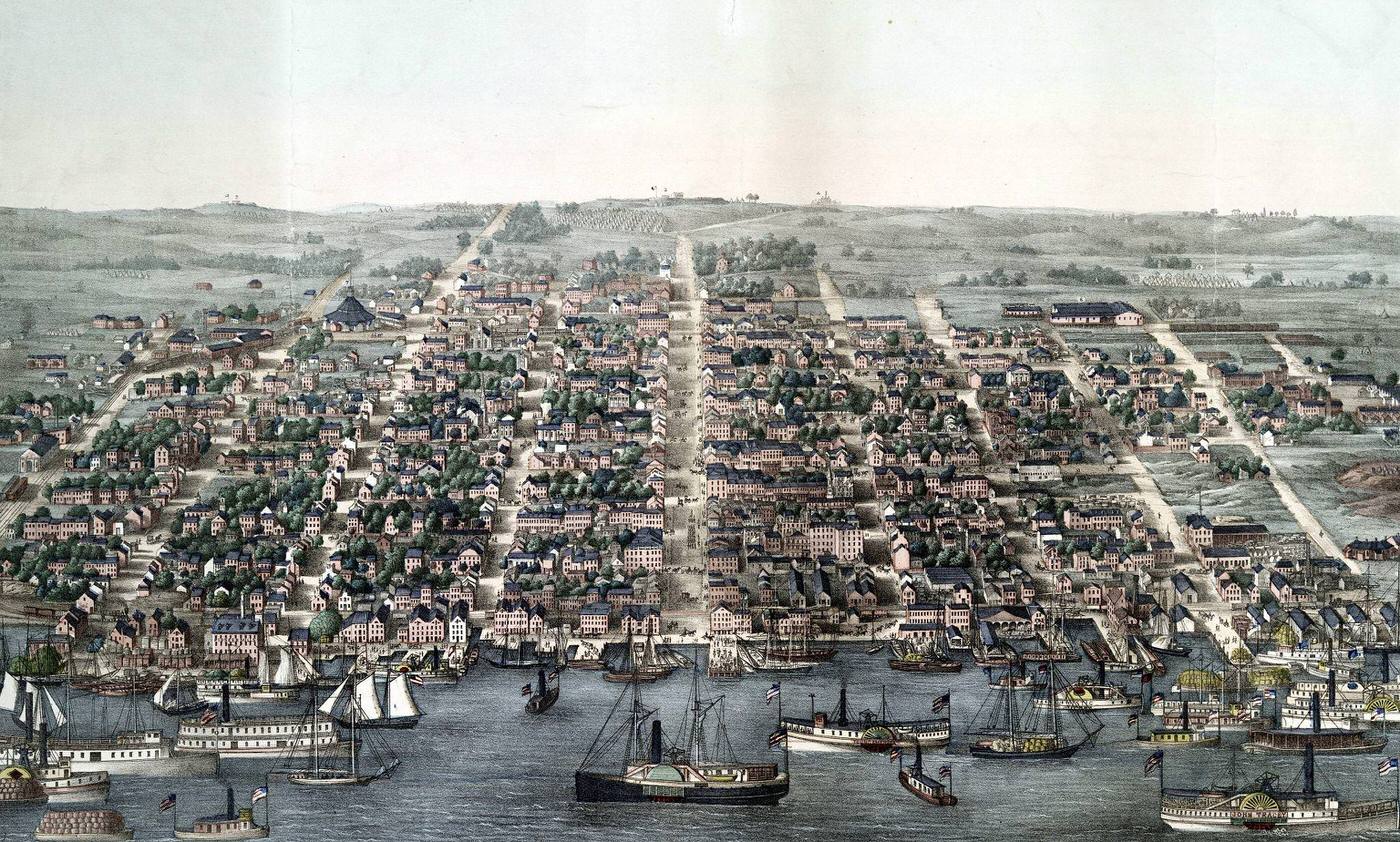
Alexandria, Virginia, was founded in 1749, and by the mid-19th century it had lived several distinct lives. It began as a tobacco trading post, grew into one of the busiest ports in the country, was folded into the District of Columbia for a time, and became home to both the largest slave-trading firm in the nation and a sizable free Black community. When the Civil War broke out, the city transformed again — this time into a critical Union supply base, a sprawling hospital town, and a city under military occupation. The photographs taken here during the 1860s document all of it in striking detail.
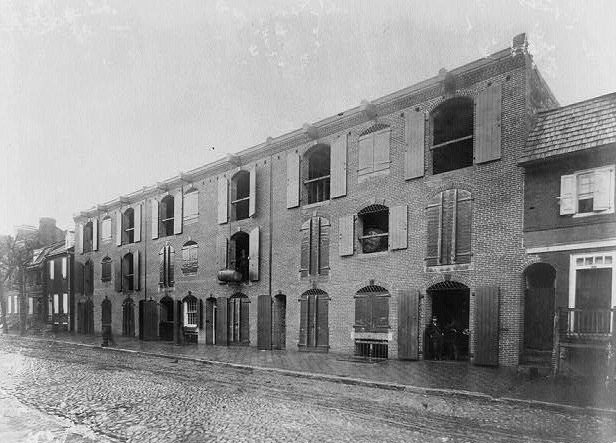
Queen Street warehouse, Alexandria, 1860
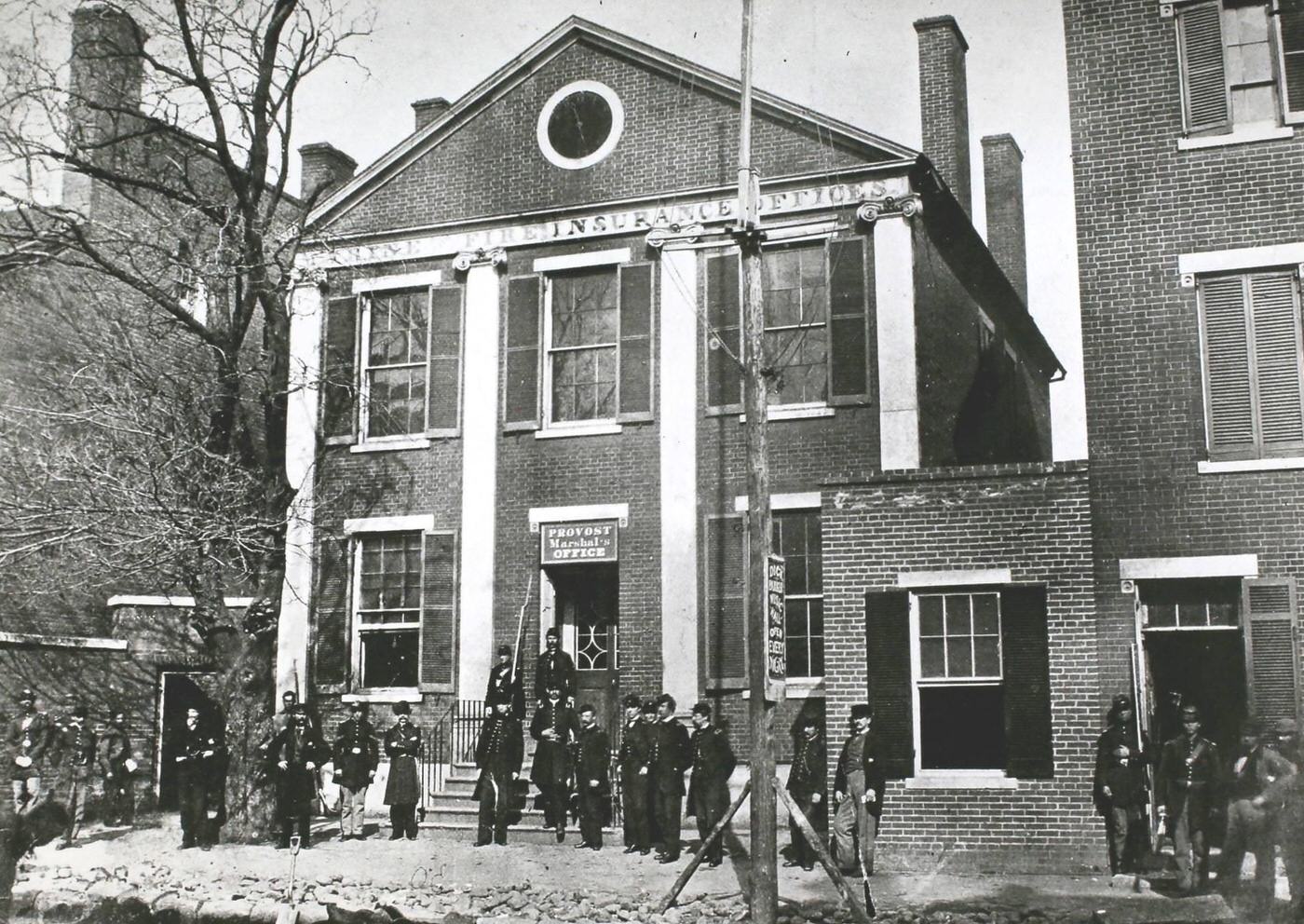
Virginia seceded from the Union in the spring of 1861. Federal troops moved into Alexandria on May 24, 1861, and the city never returned to Confederate hands. Its port and railroad connections made it the ideal staging ground for the Union army’s operations in northern Virginia. Supplies flooded in by ship and by rail, then fanned out to armies in the field. The Orange & Alexandria Railroad became a critical artery for moving men, equipment, and food toward the front lines.
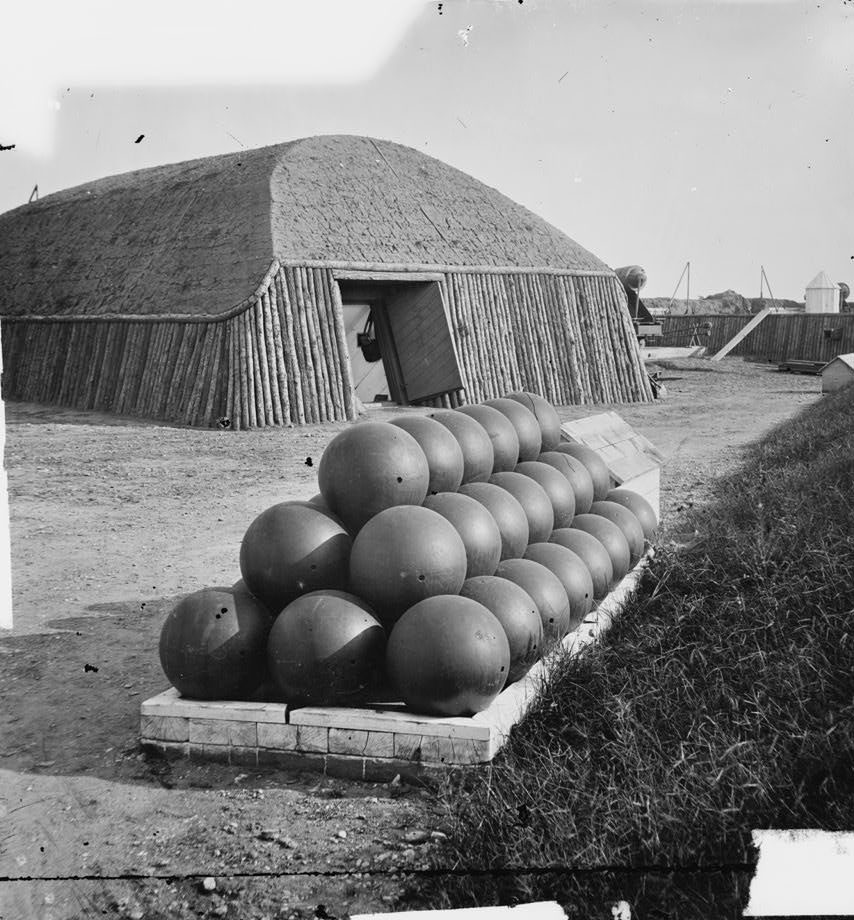
Alexandria, Va. Magazine in Battery Rodgers, Alexandria, 1860
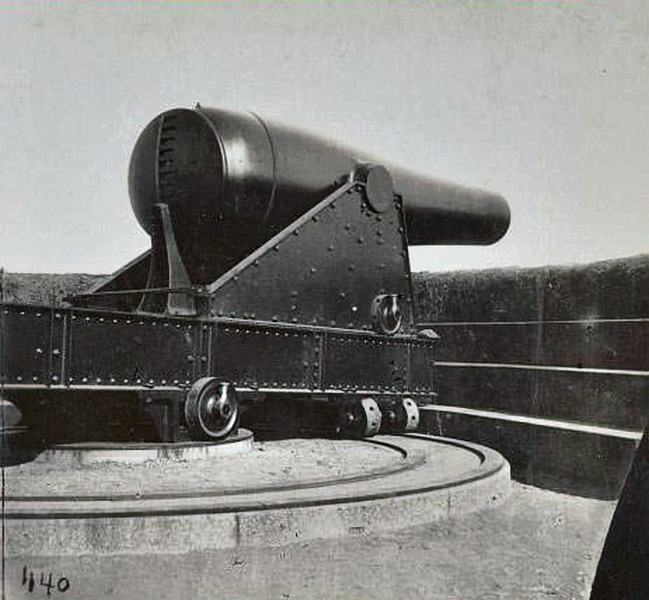
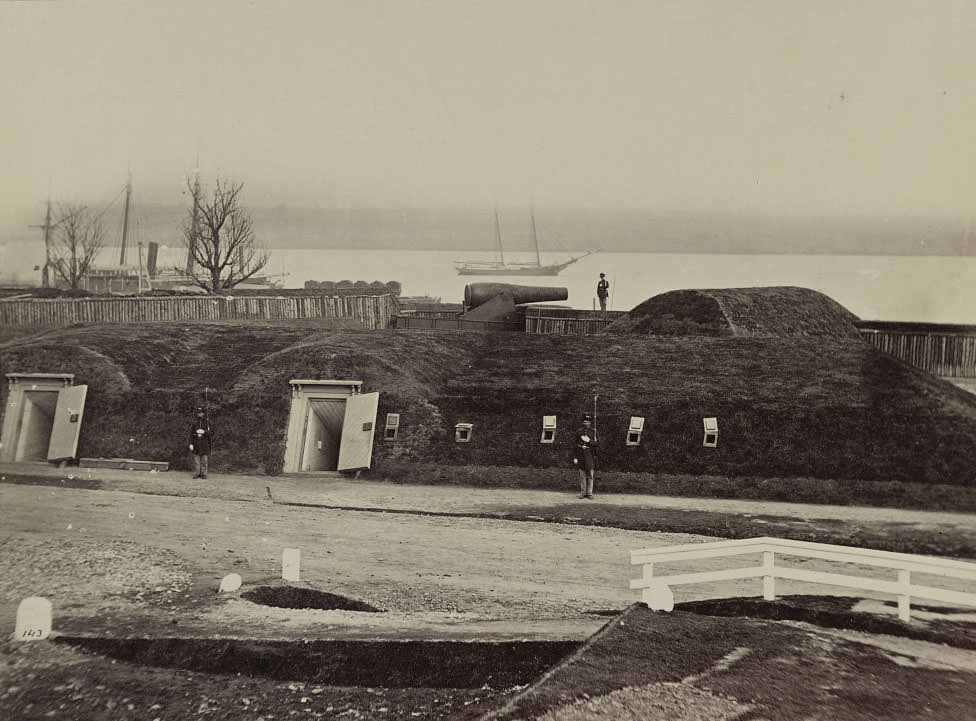
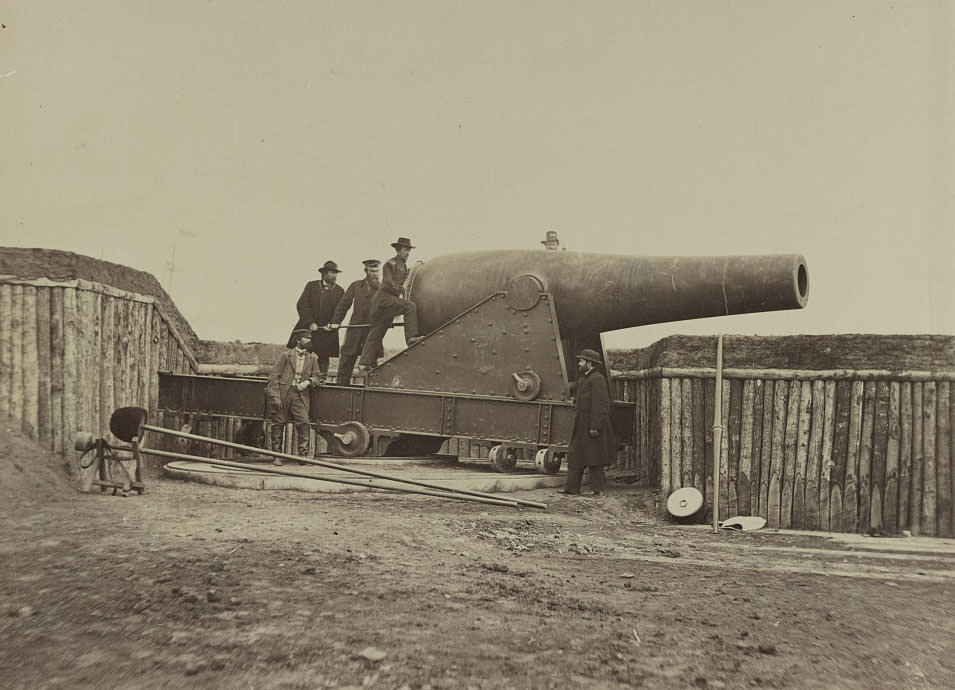
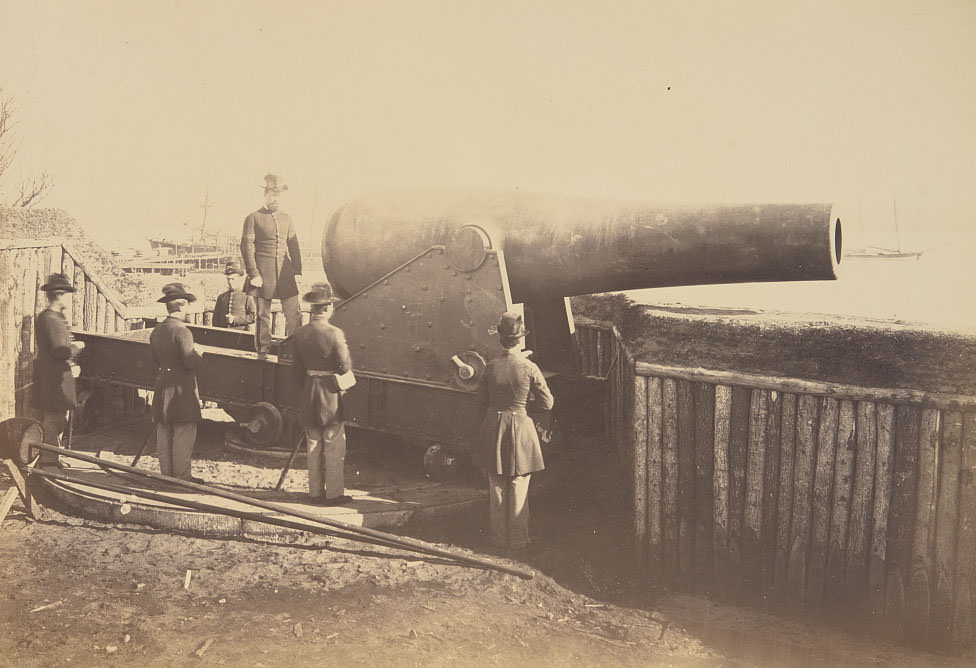
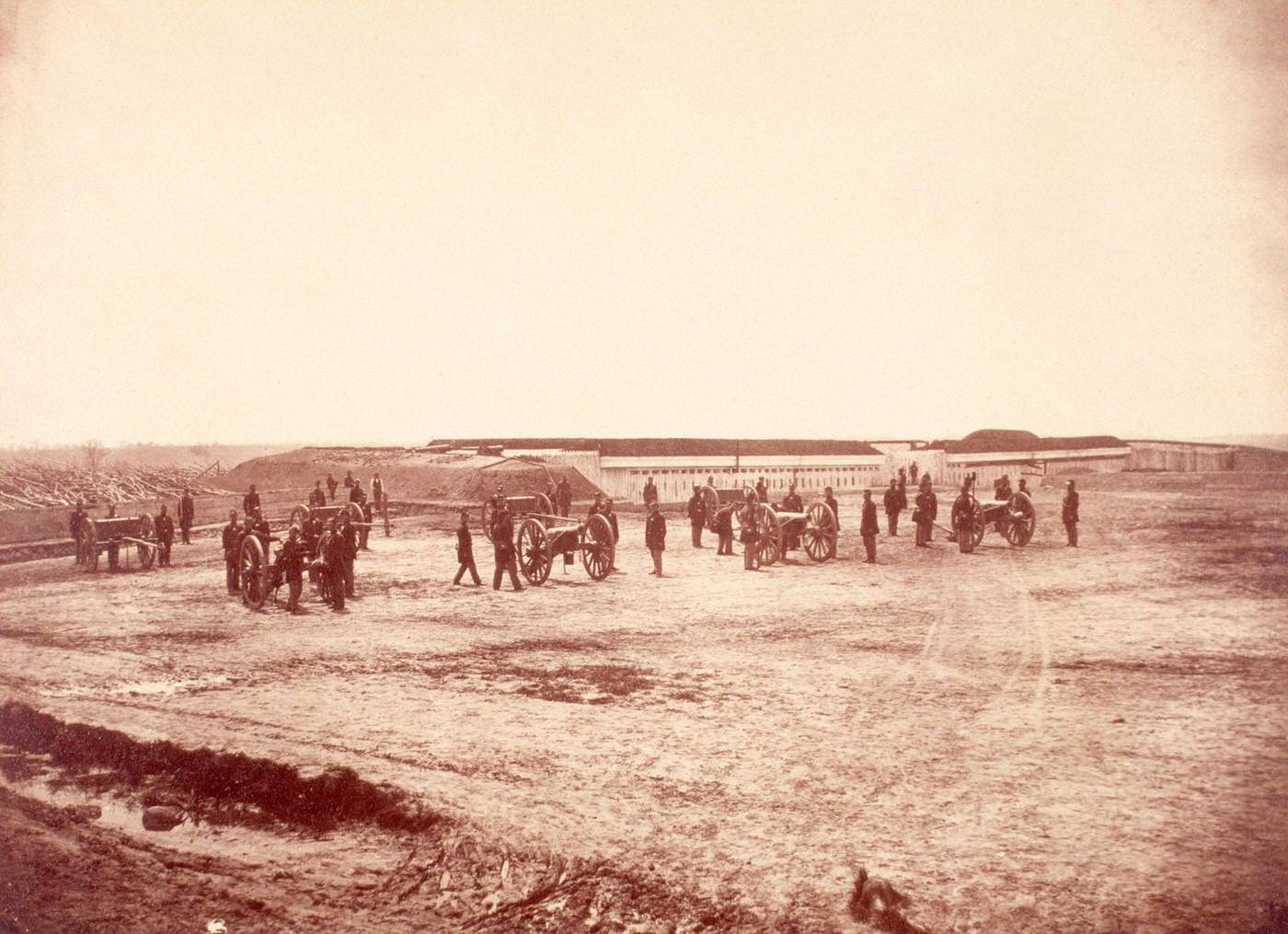
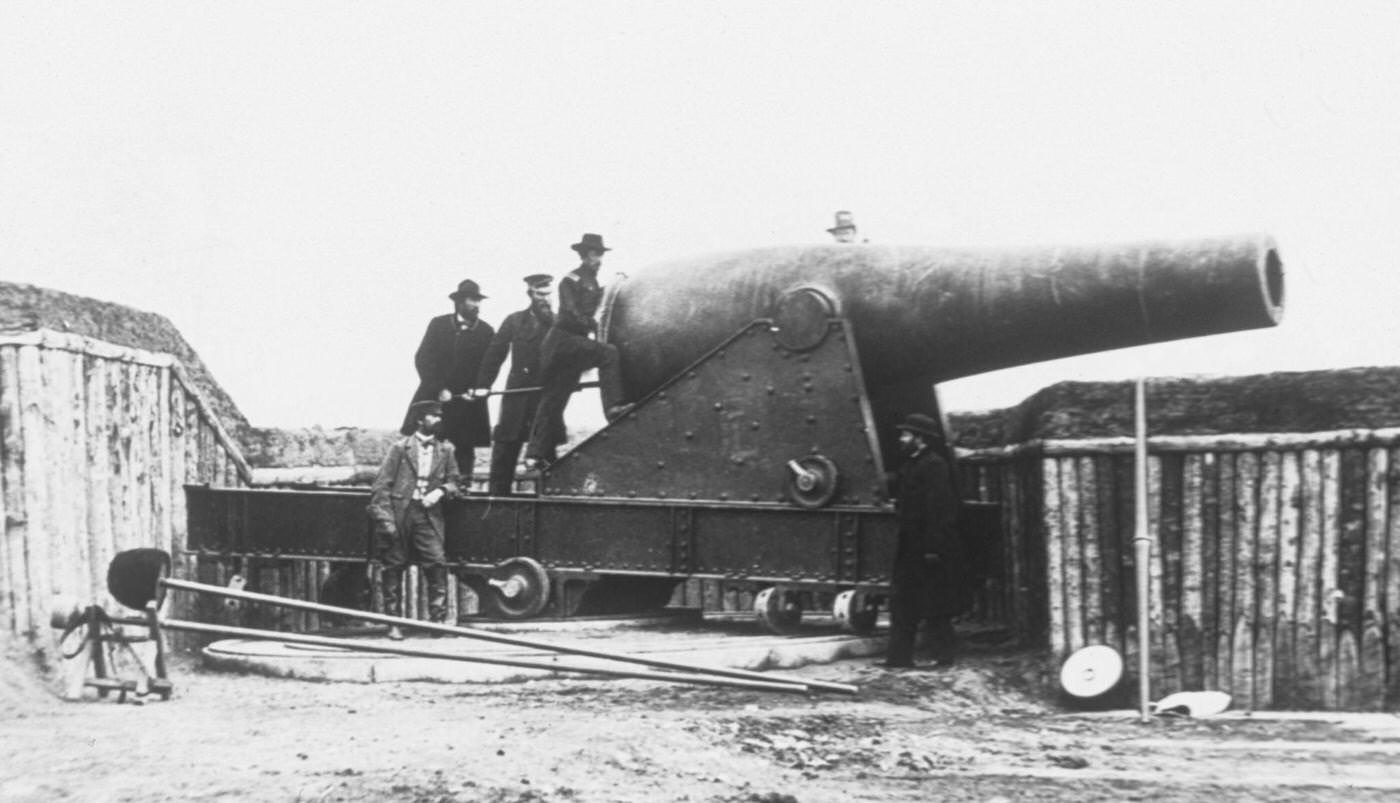
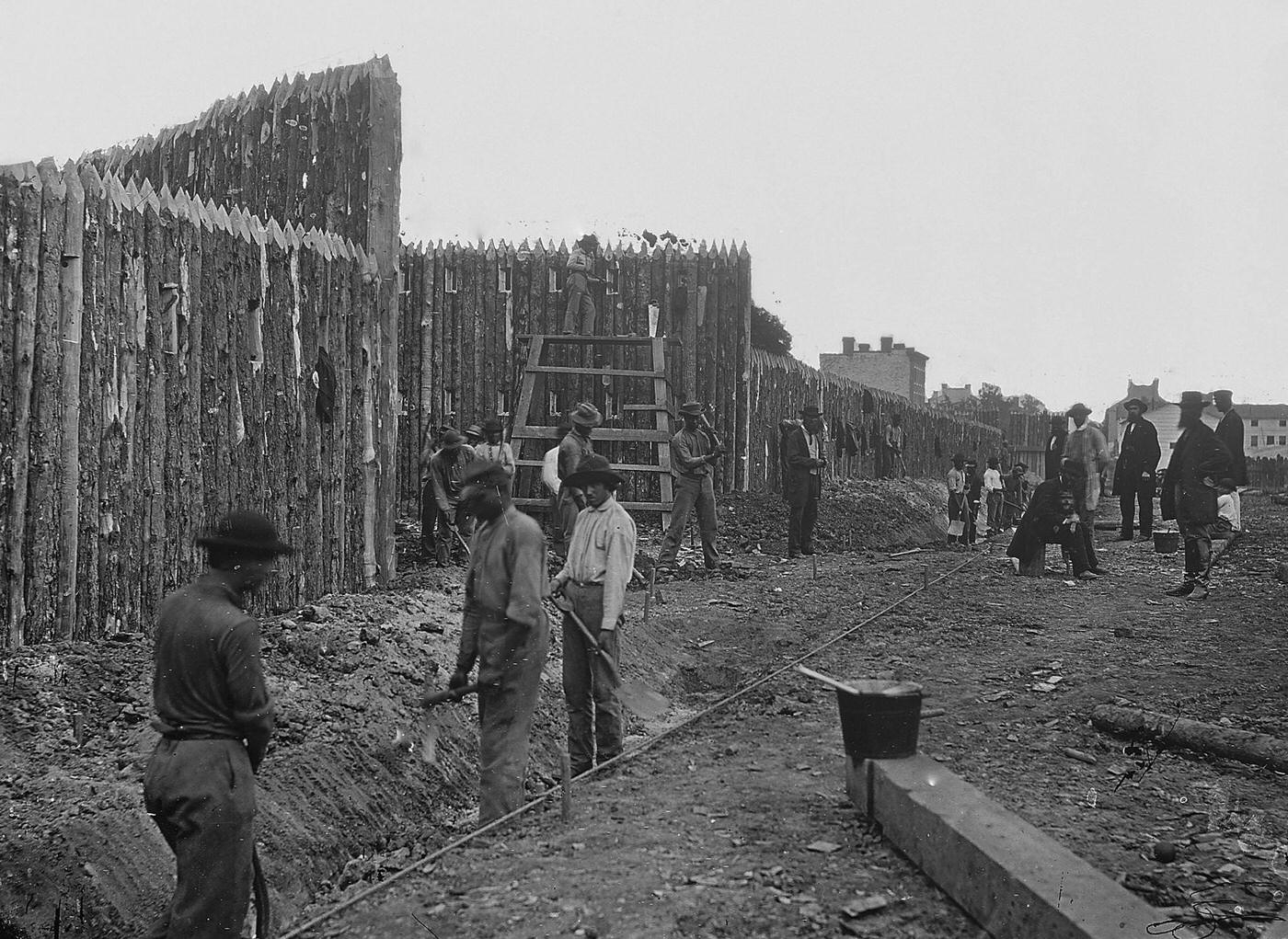
To protect Washington, D.C., and the supply lines running through Alexandria, the Union army constructed a ring of forts around the city. Battery Rodgers sat along the Potomac River and was armed with some of the largest artillery pieces of the war, including massive 15-inch Rodman guns capable of firing 440-pound projectiles. These guns were not show pieces — they were placed there to stop any Confederate naval vessel that might try to move up the river.
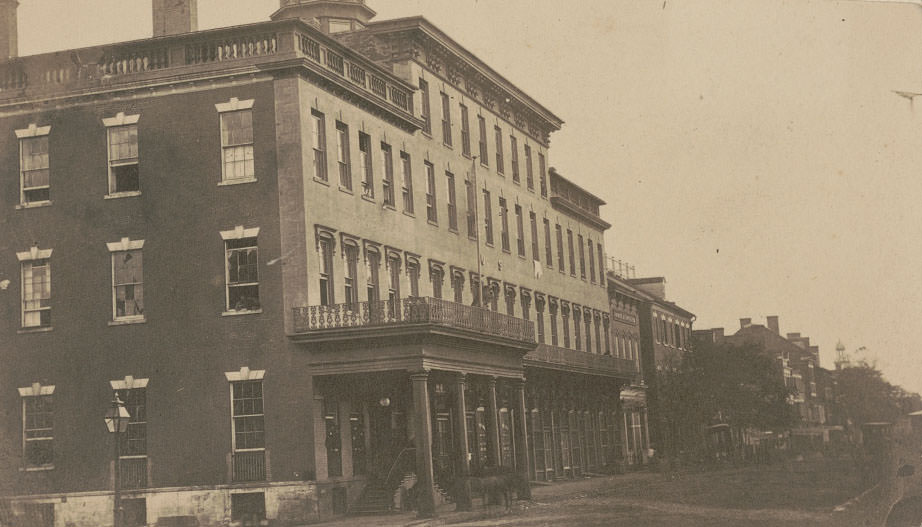
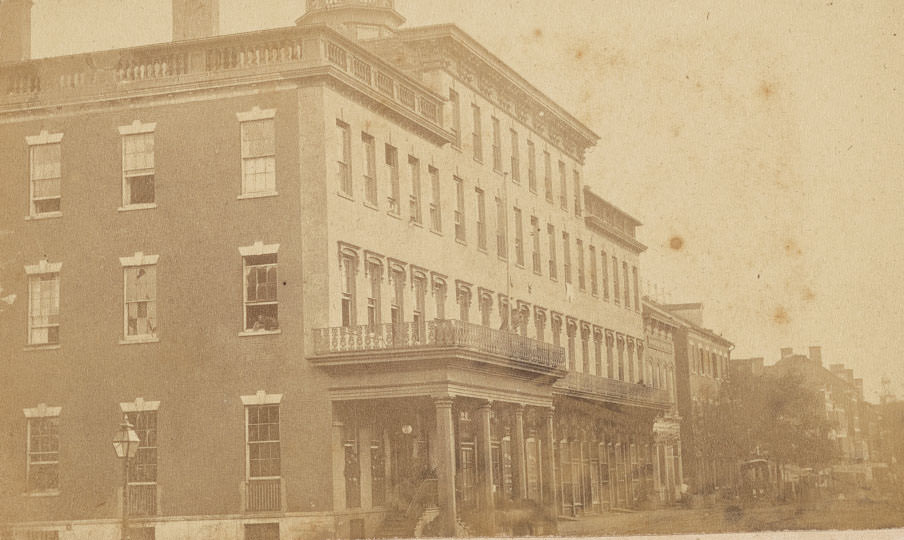
Fifteen-inch gun in Battery Rodgers on the Potomac, 1861Mansion House Hospital, Mansion House Hotel before and after the Civil War, Alexandria, Virginia, 1861
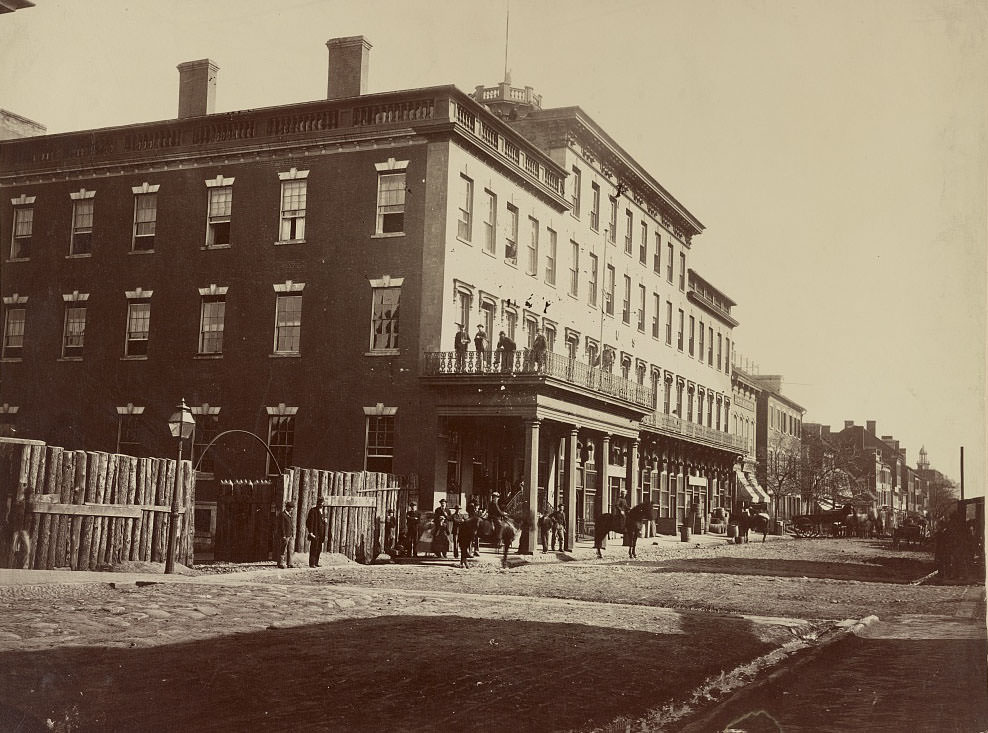
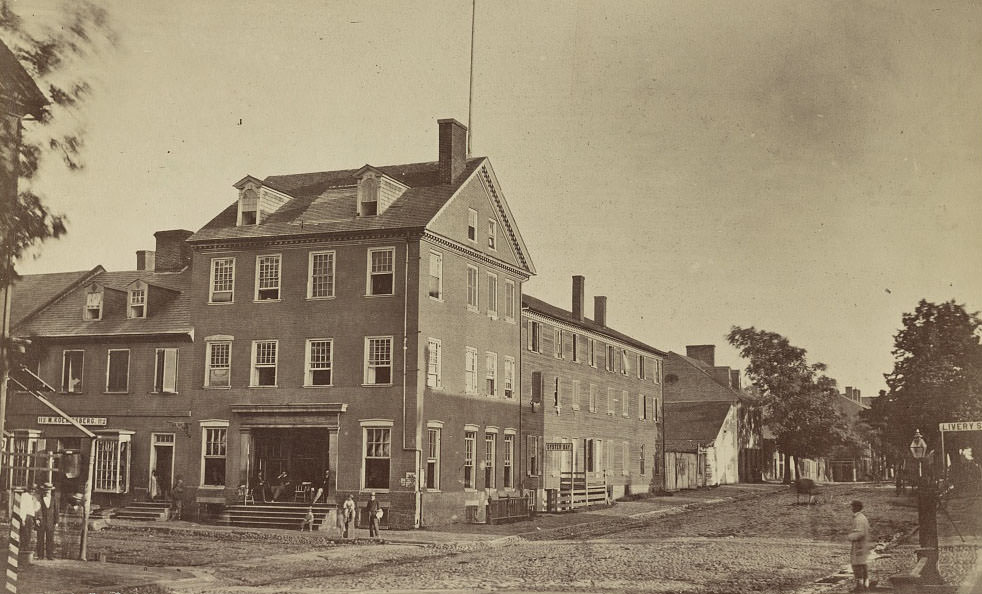
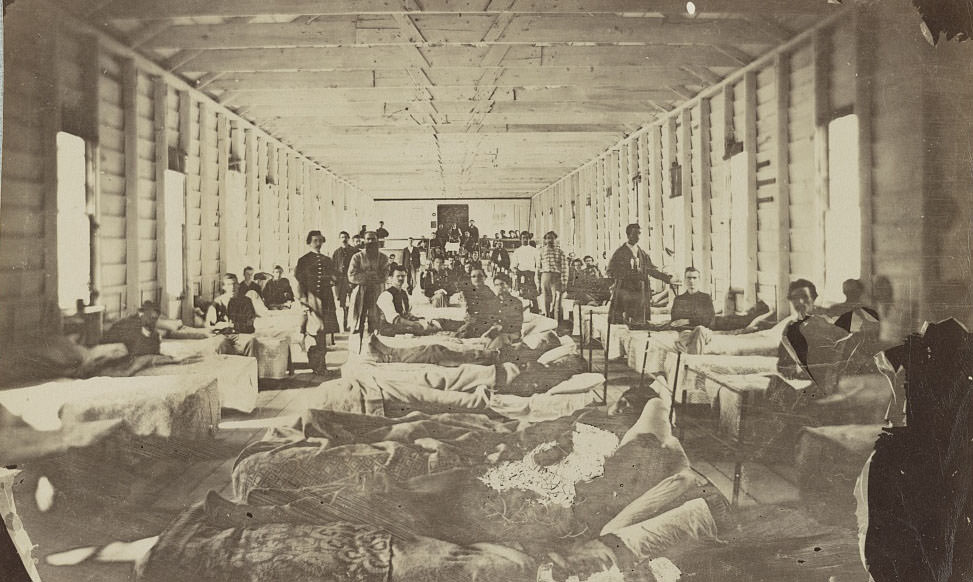
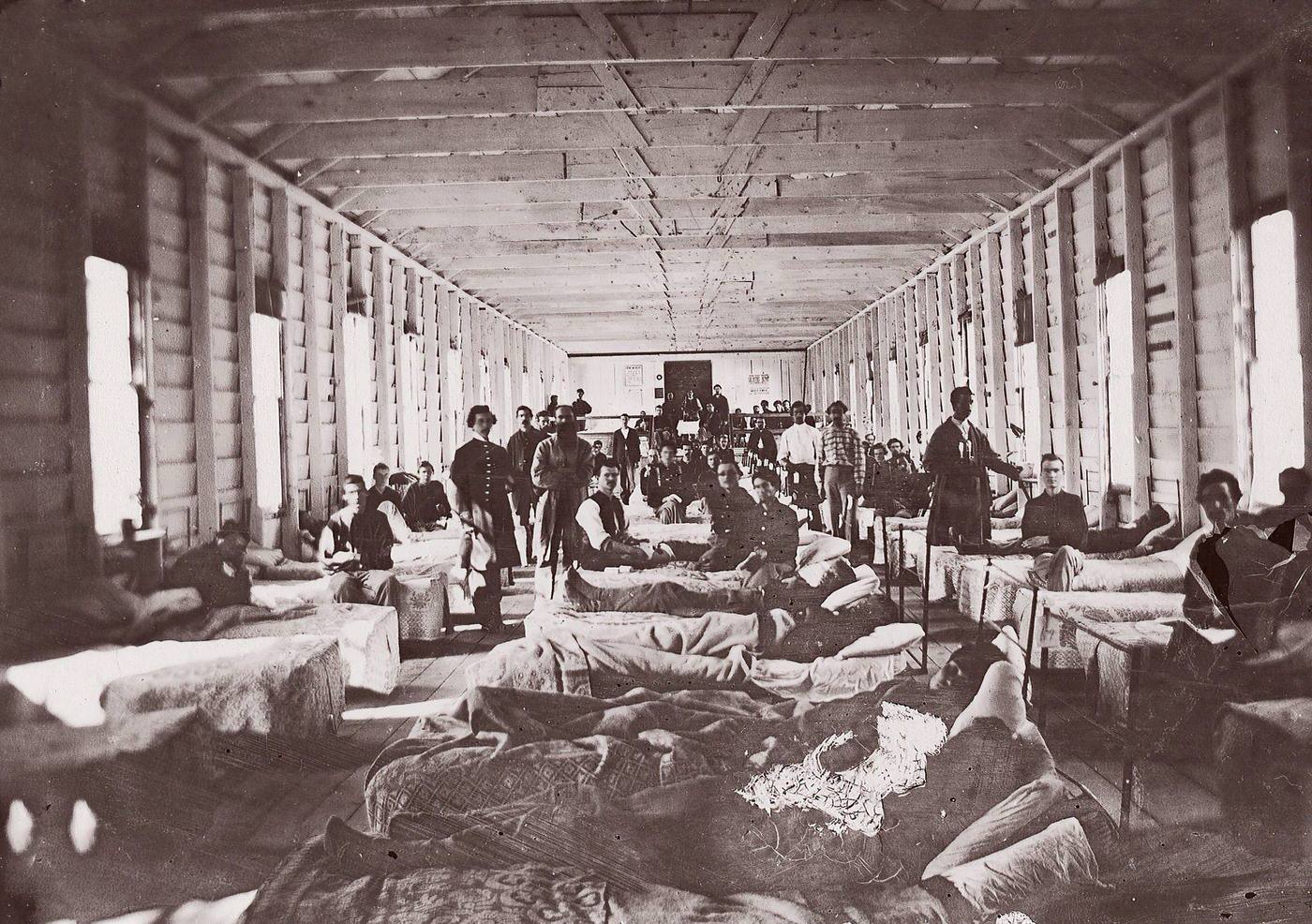
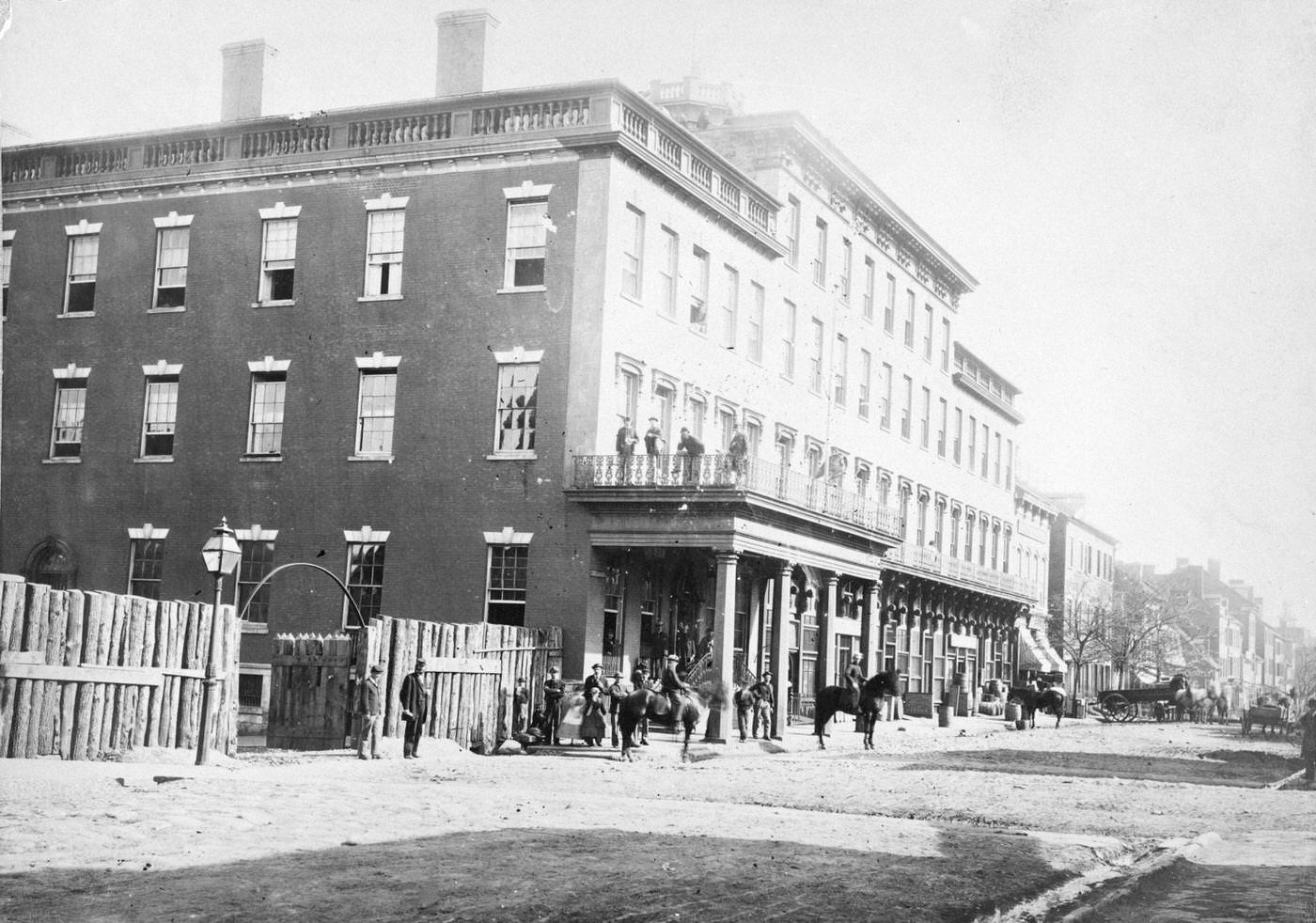
As the war churned out casualties, Alexandria became a city of hospitals. Large hotels, churches, and private buildings were seized by Union authorities and converted into medical facilities. The Mansion House Hotel became Mansion House Hospital. Grace Church, the Downtown Baptist Church, and the Lyceum all took in wounded and sick soldiers. When those buildings filled up, new facilities like Sickel Hospital and Slough Hospital were built on the outskirts of the city. Trains rolled back into Alexandria loaded with men pulled from battlefields at Bull Run, Antietam, and Fredericksburg.
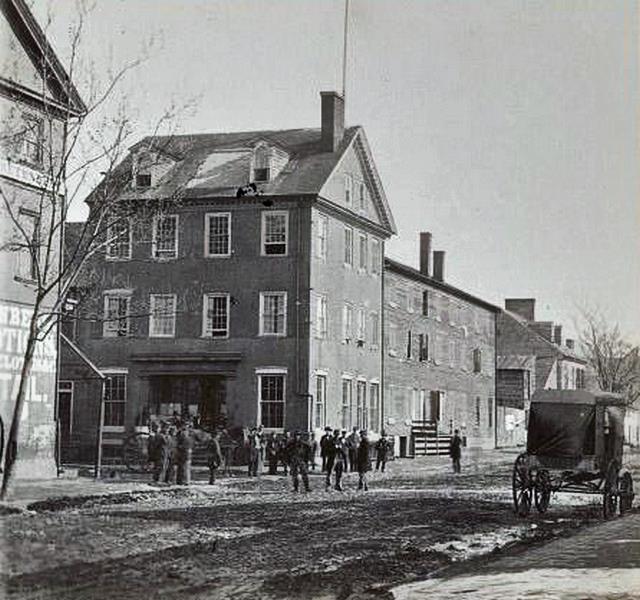
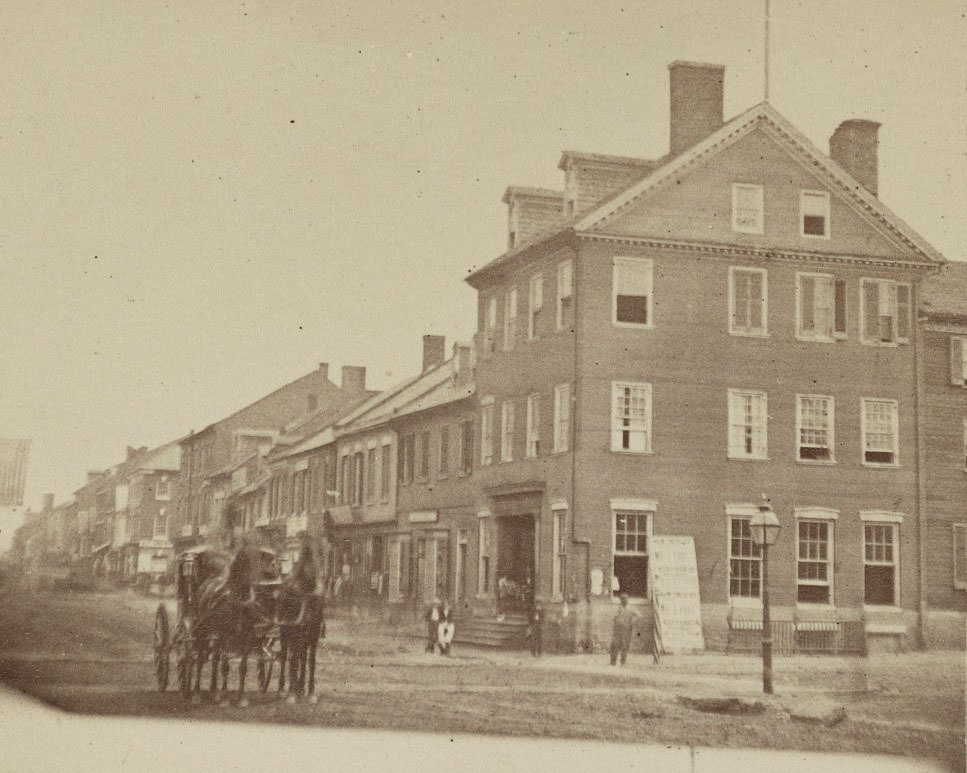
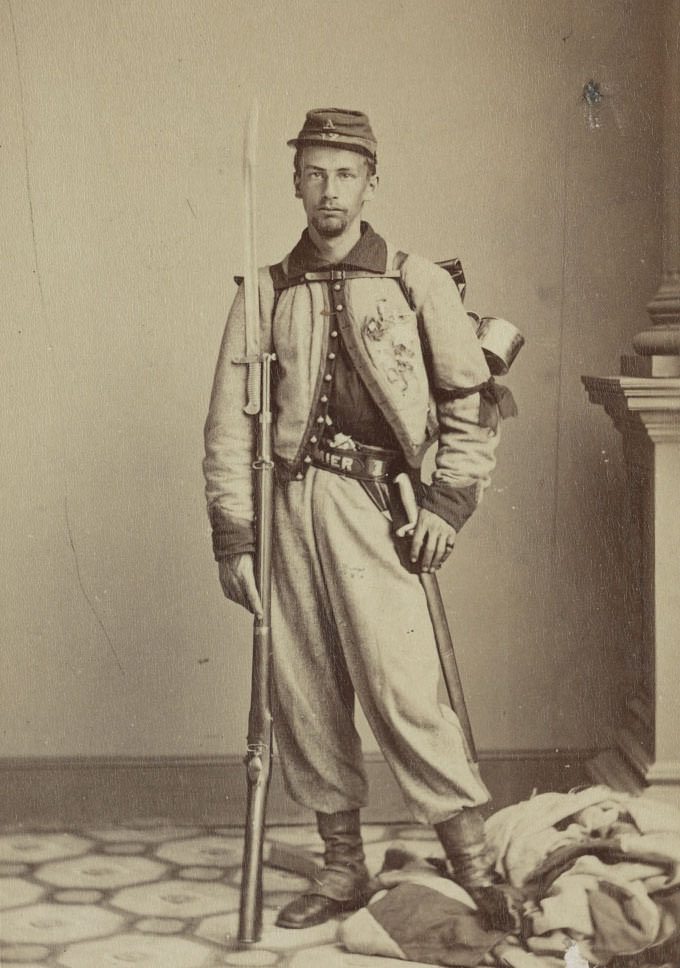
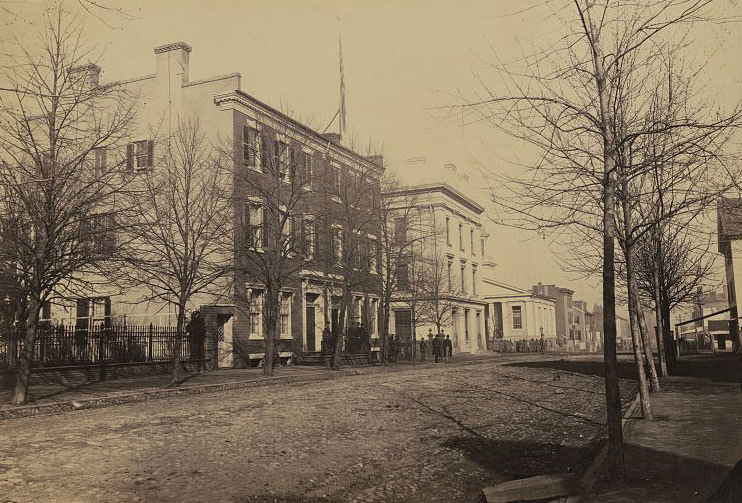
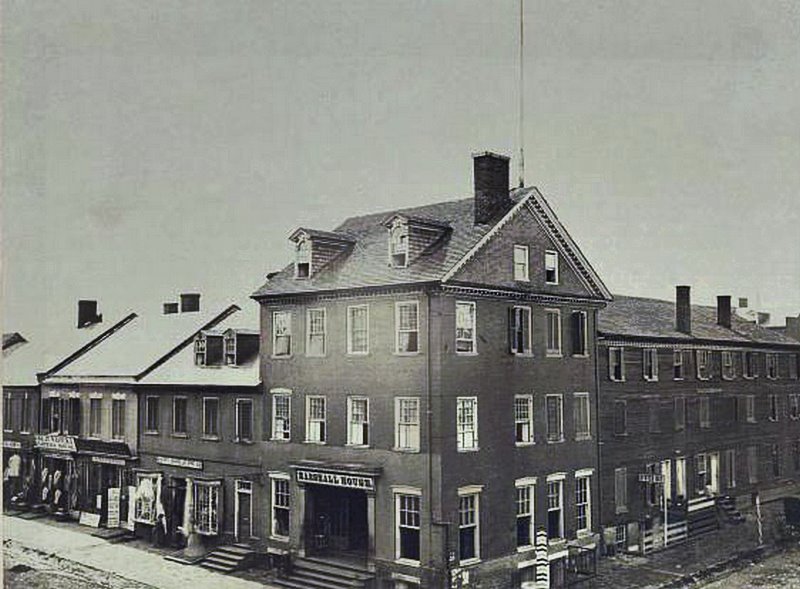
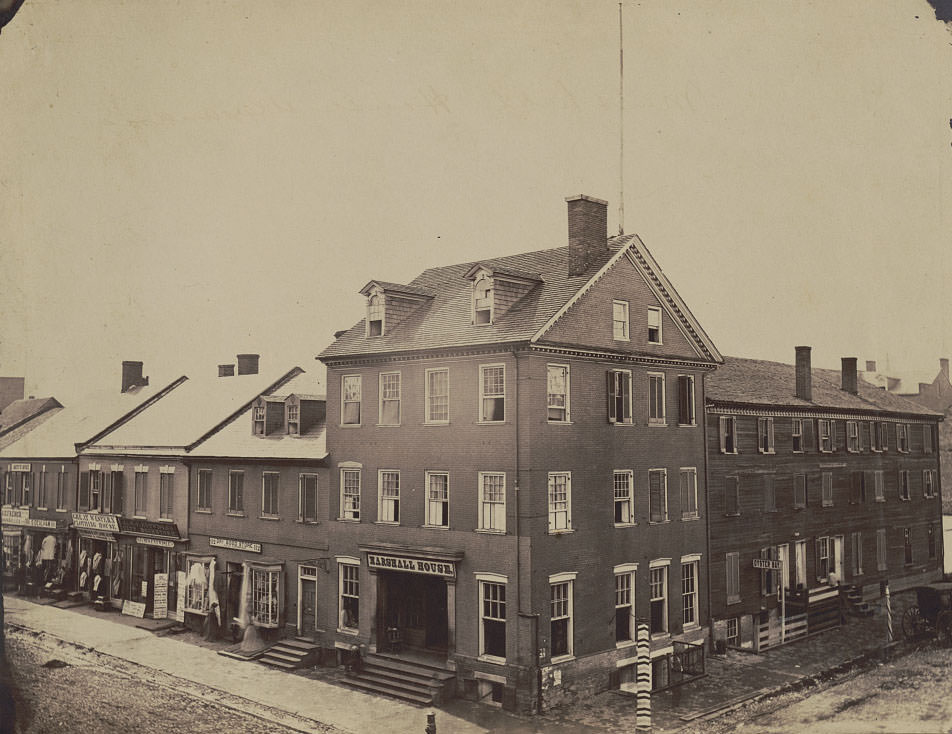
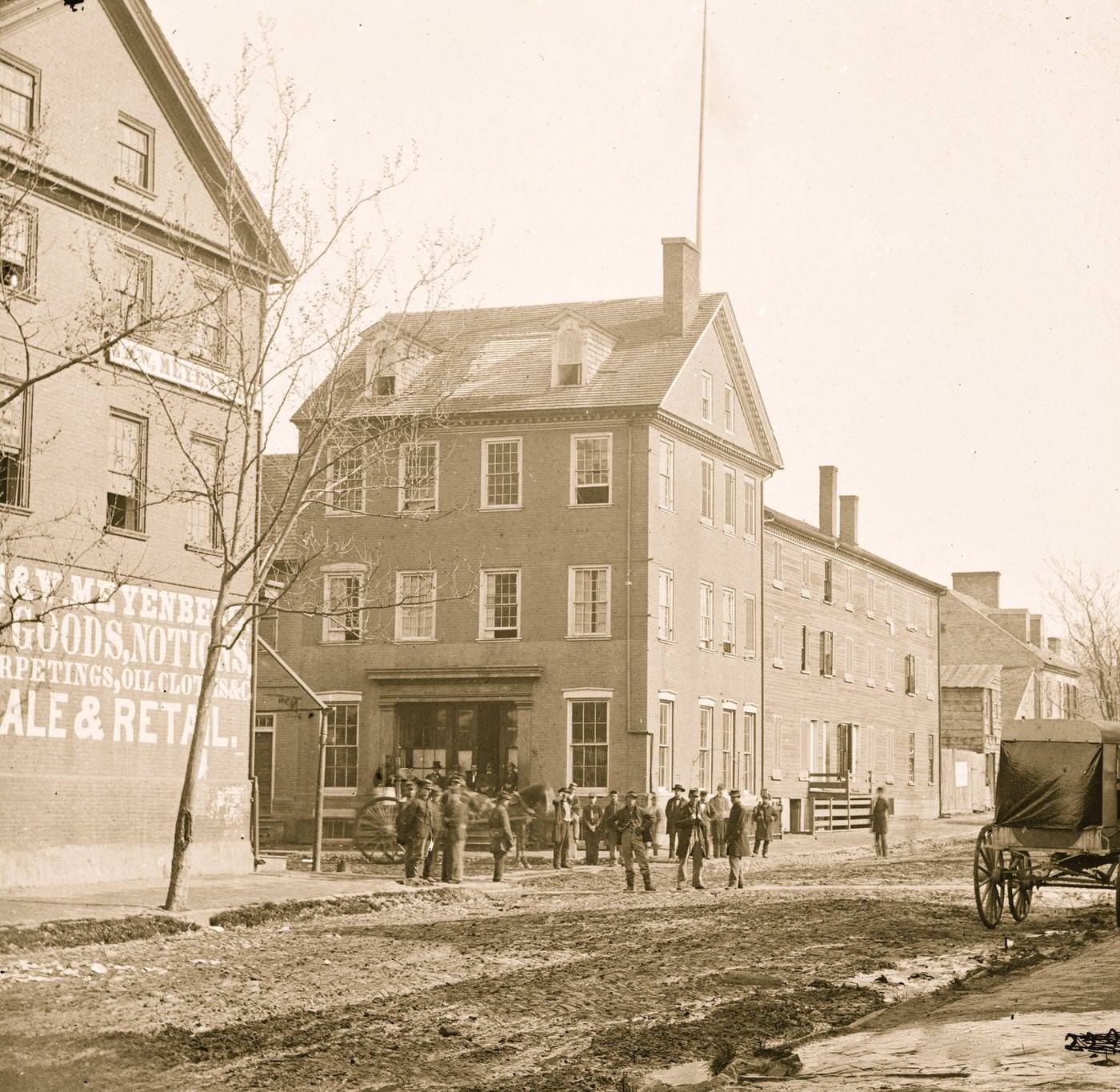
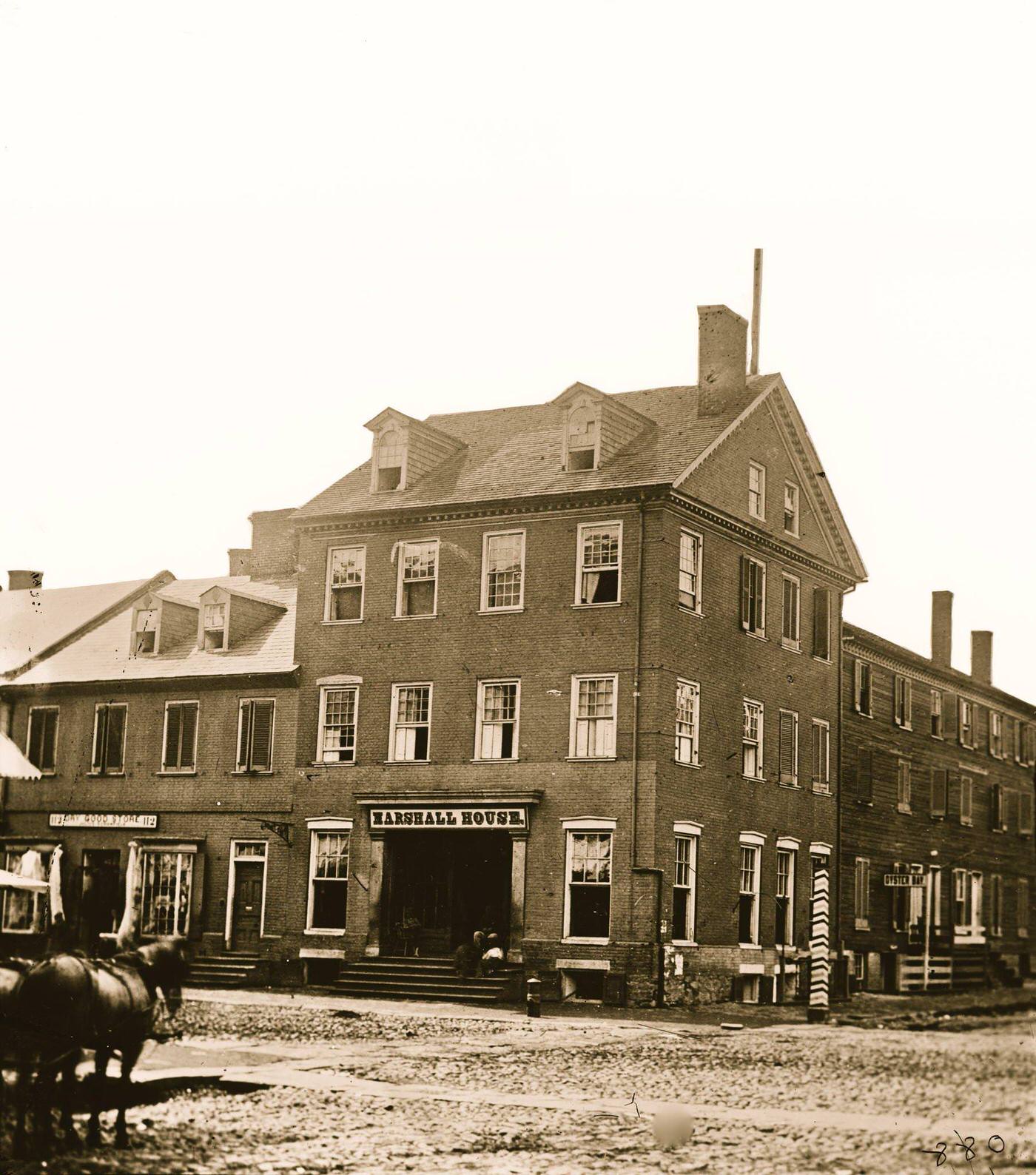
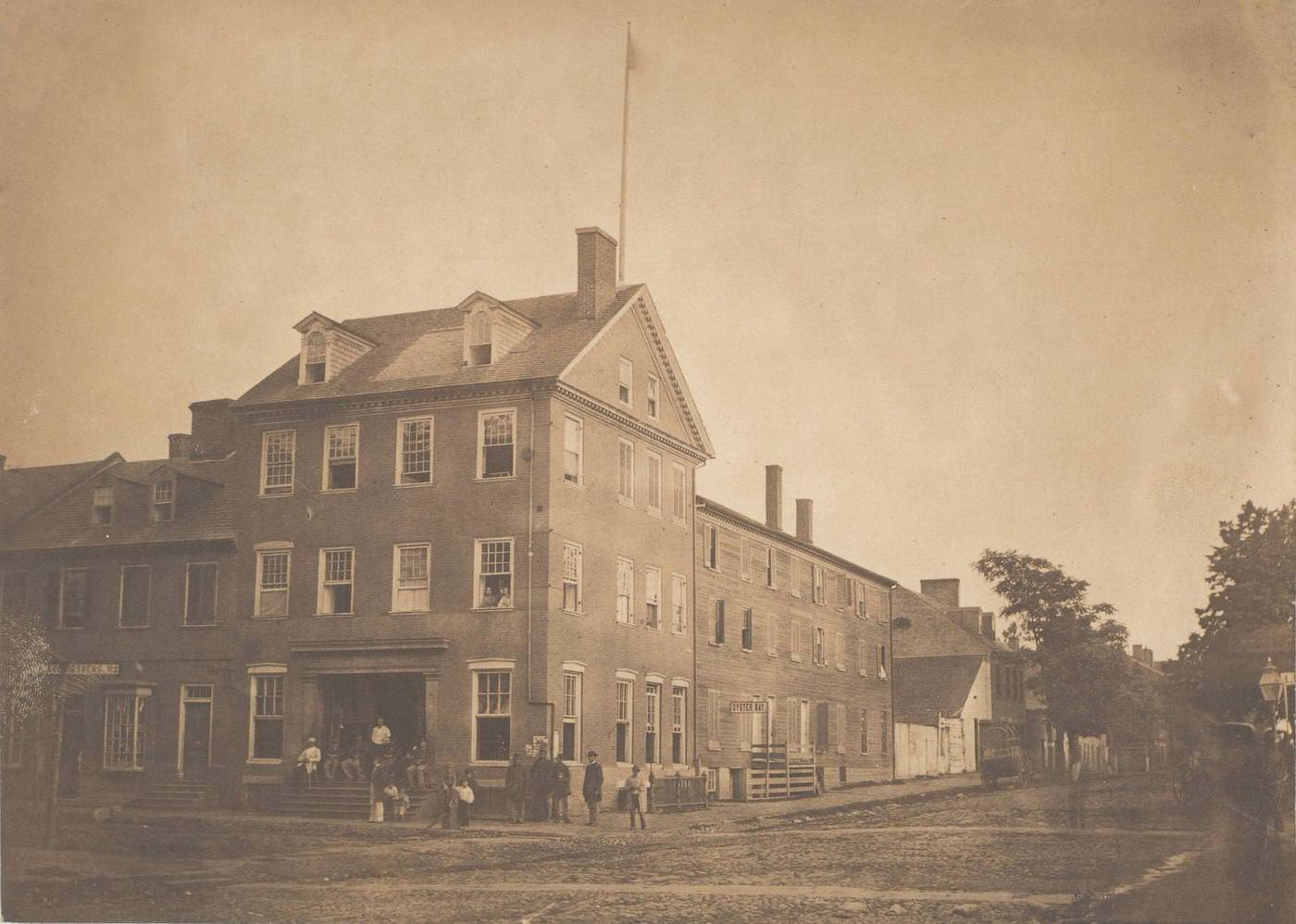
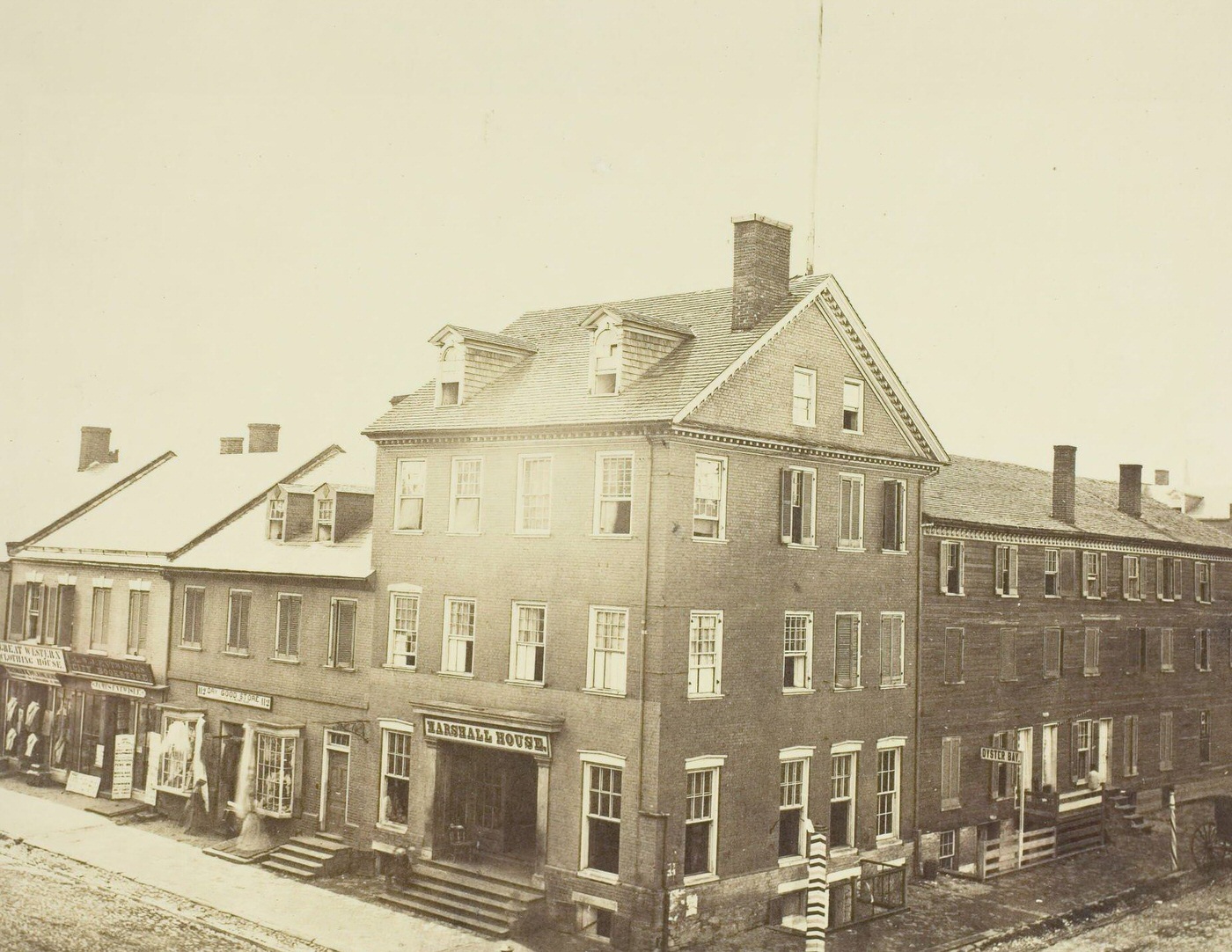
The Marshall House hotel became one of the most talked-about locations in Alexandria at the very start of the occupation. On May 24, 1861 — the same morning Union troops crossed into the city — Col. Elmer Ellsworth of the 11th New York Infantry climbed to the roof of the Marshall House to tear down a large Confederate flag that had been visible from Washington. The hotel’s owner, James Jackson, shot Ellsworth dead on the spot. Pvt. Francis Brownell then shot and killed Jackson. Ellsworth became one of the first Union officer casualties of the war, and his death was used as a rallying cry in the North.
Marshall House, Alexandria. Scene of death of Col. Ellsworth, 1864Private F. E. Brownell, 11th New York Infantry, “Ellsworth’s Avenger”, 1860s
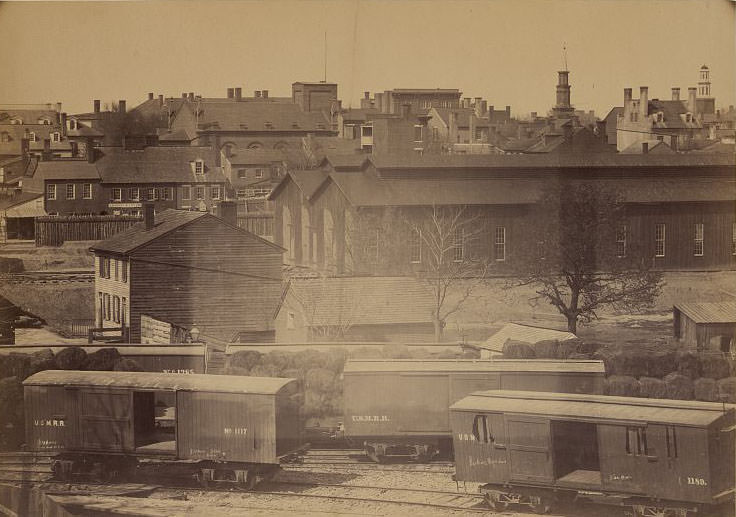
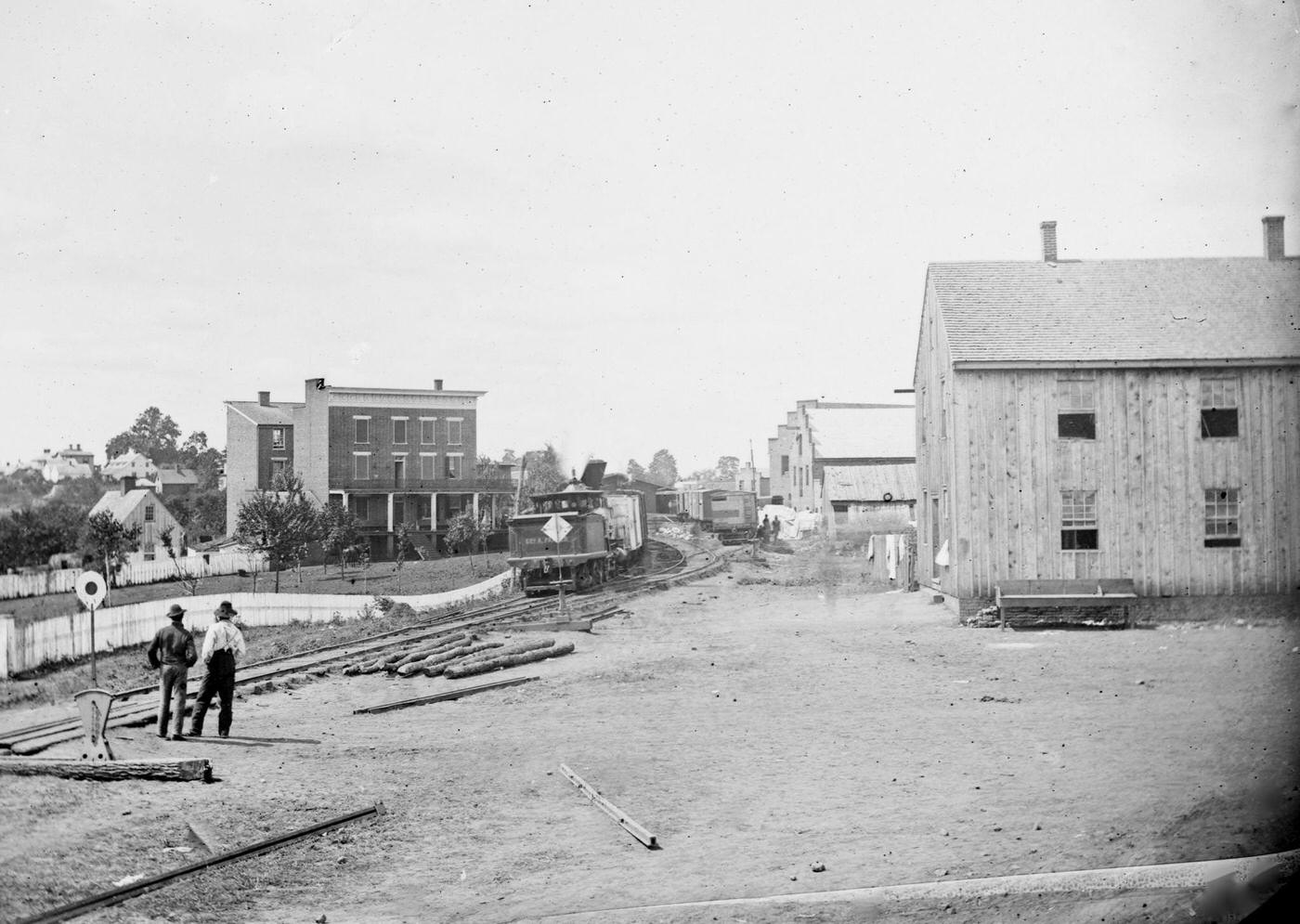
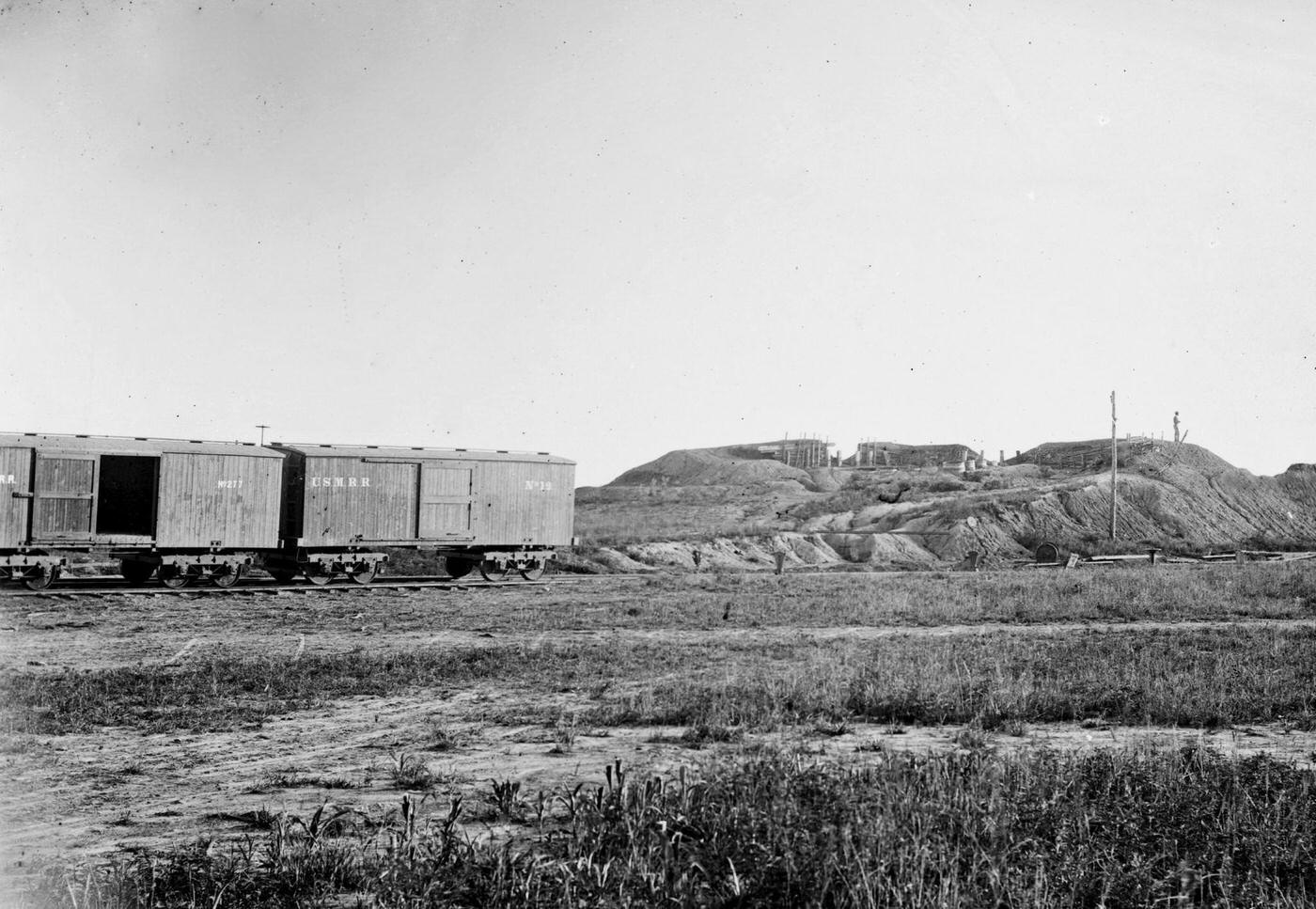
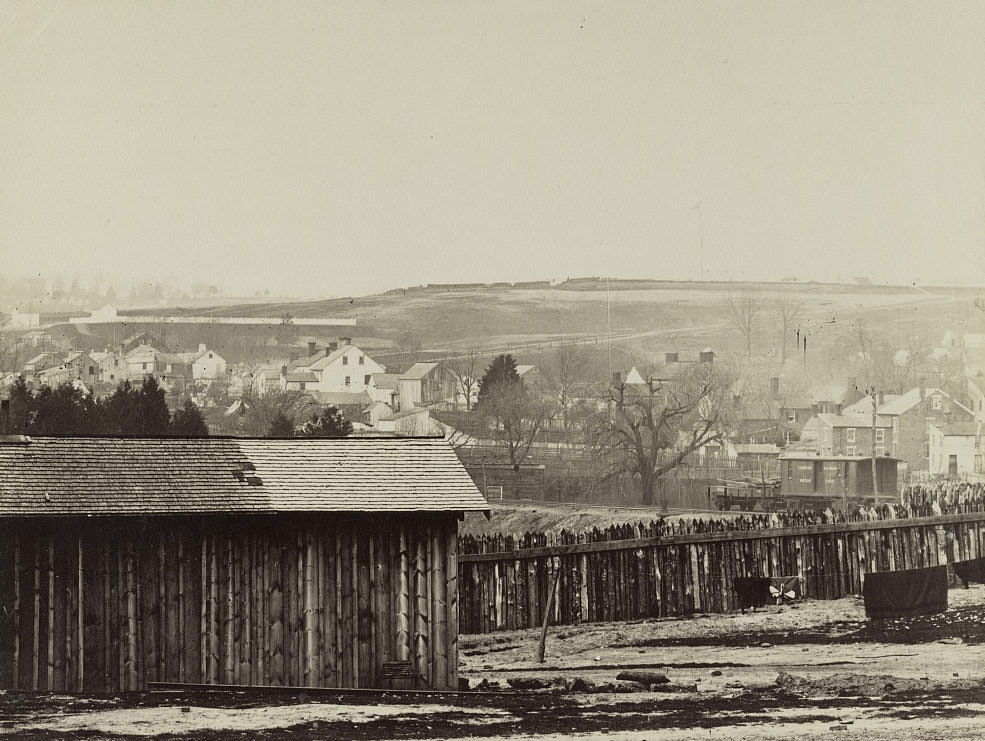
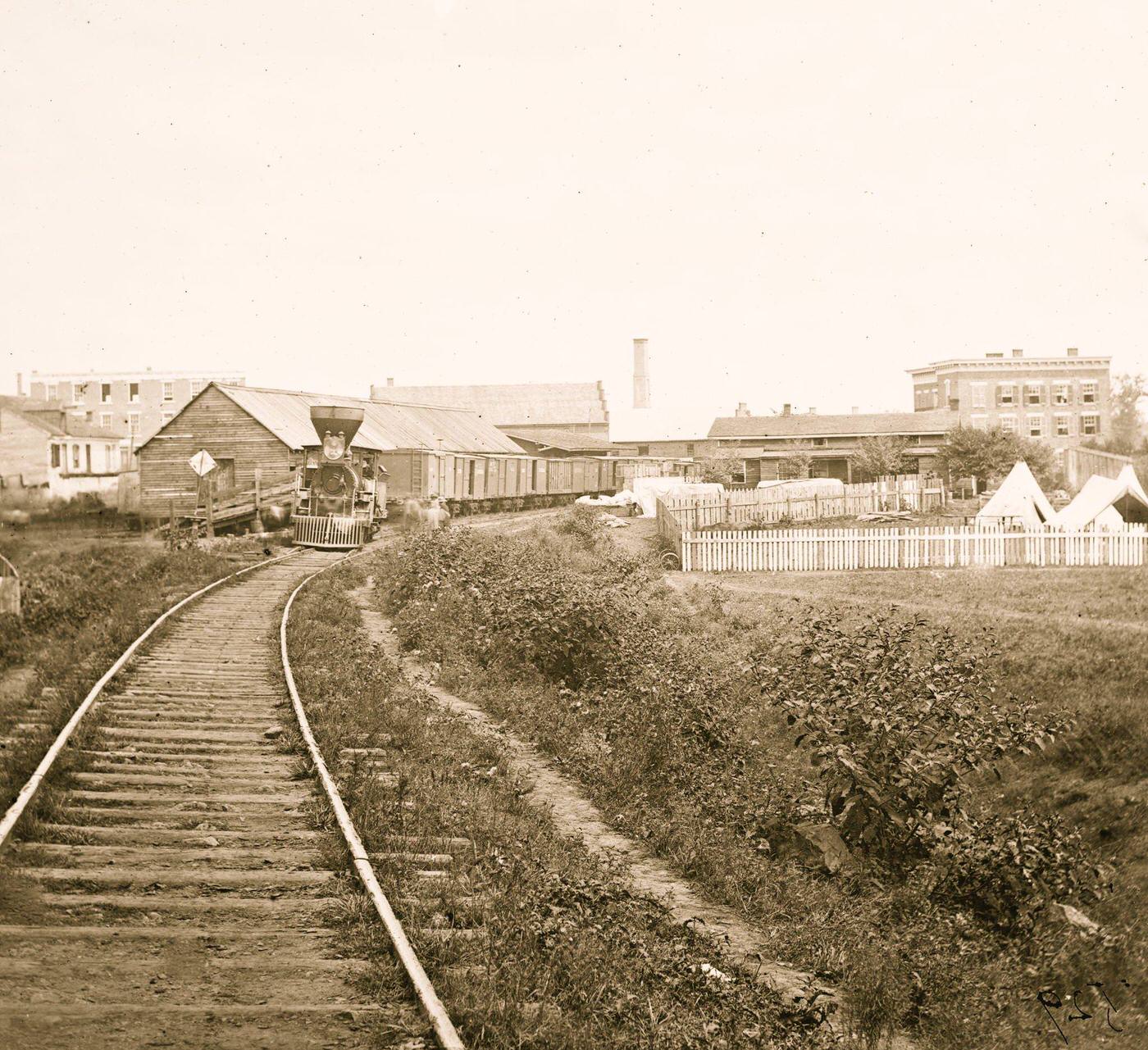
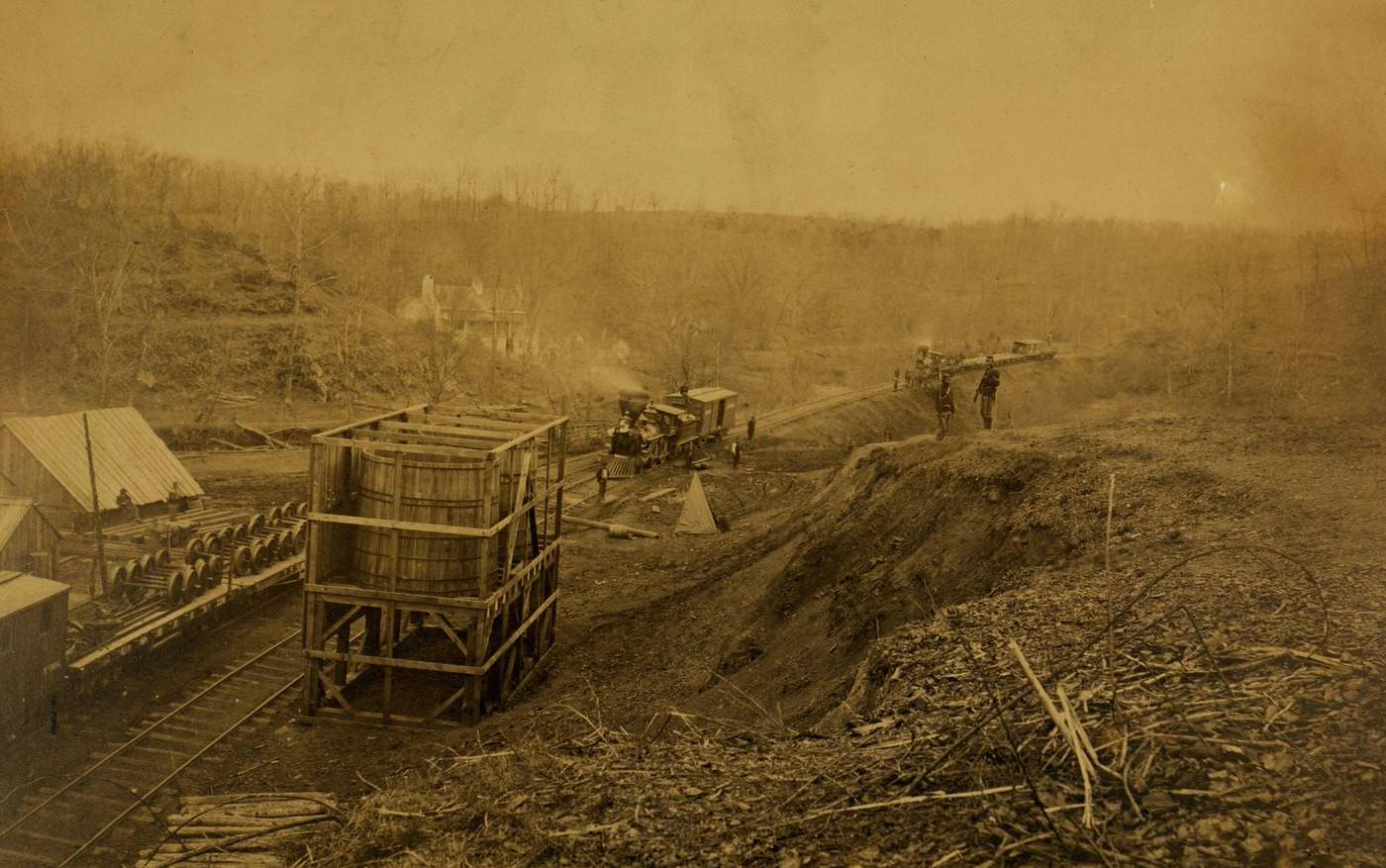
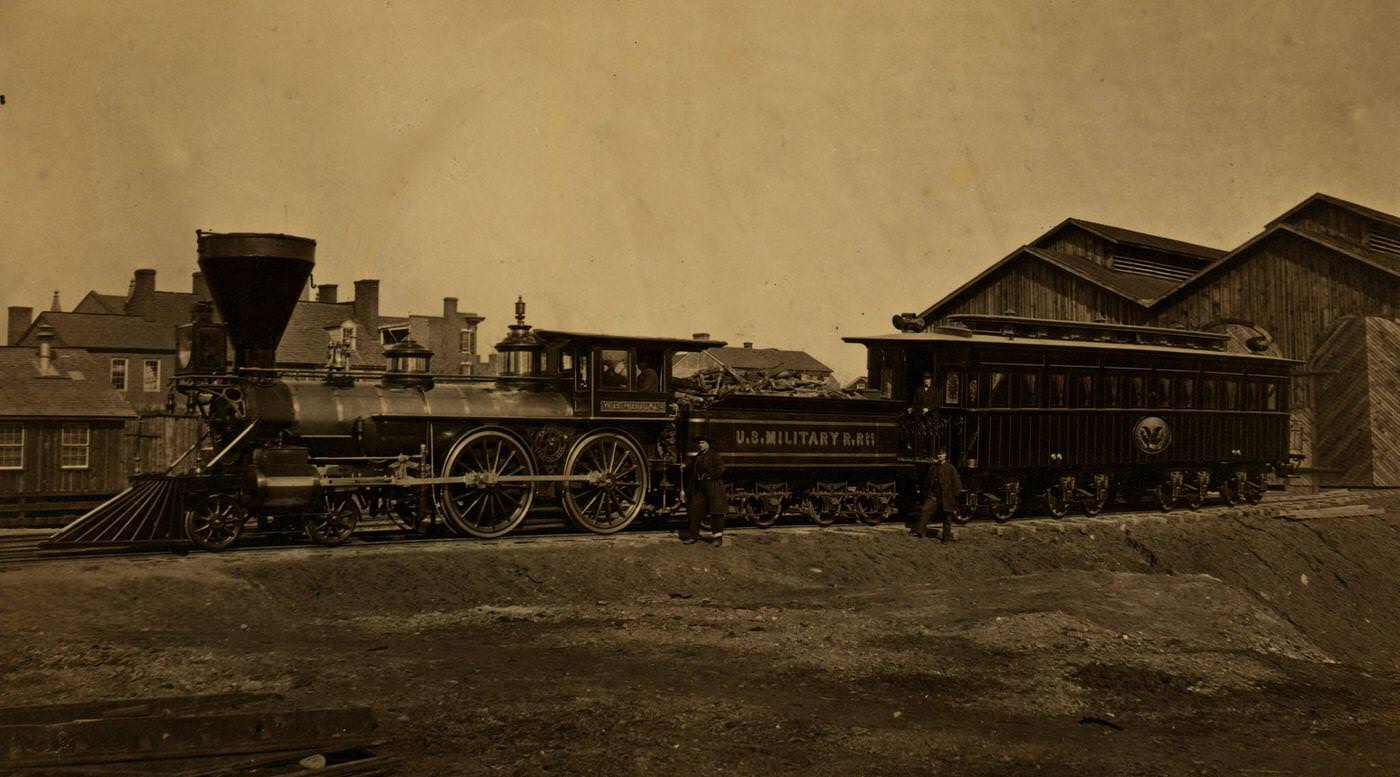
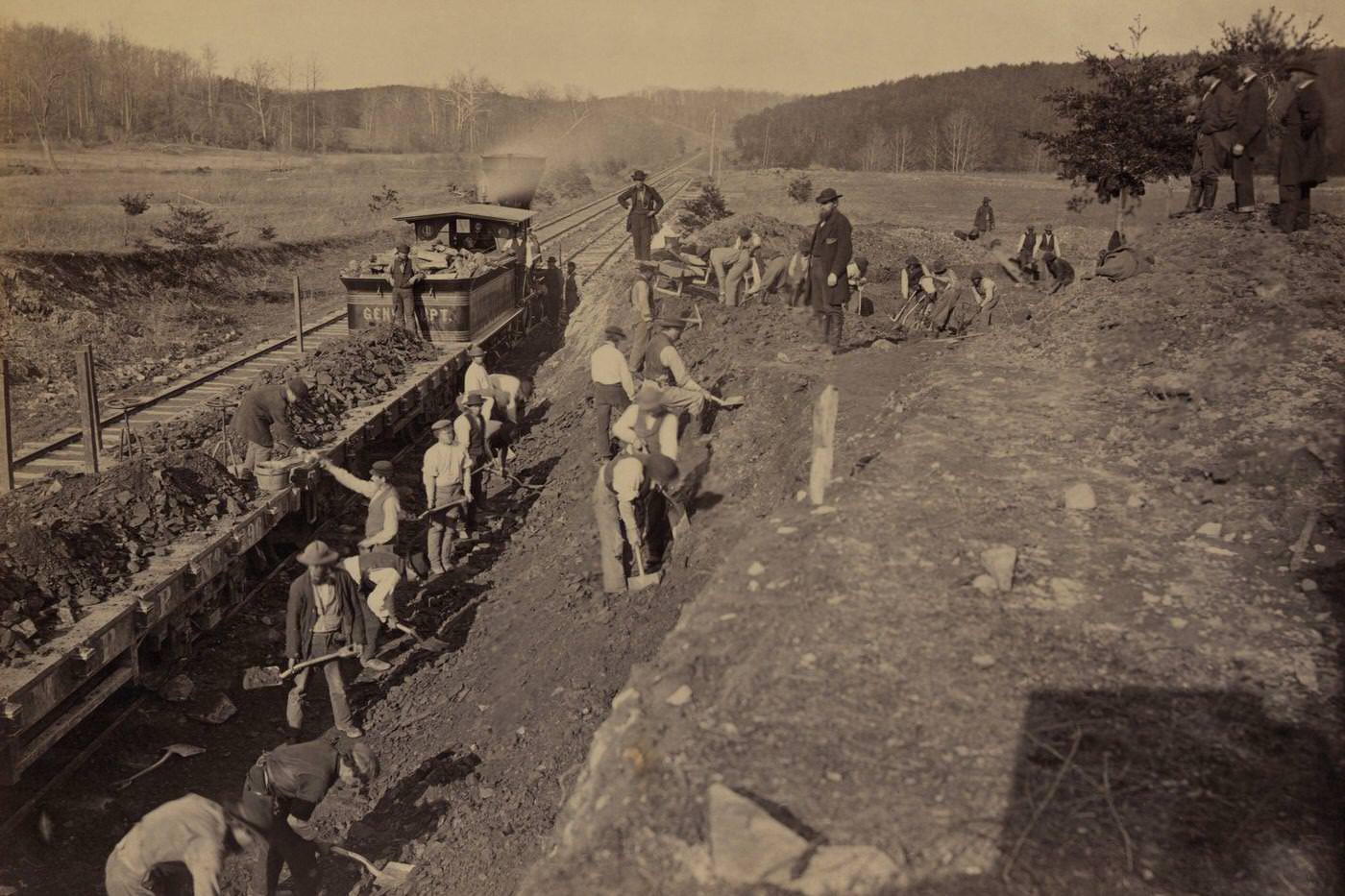
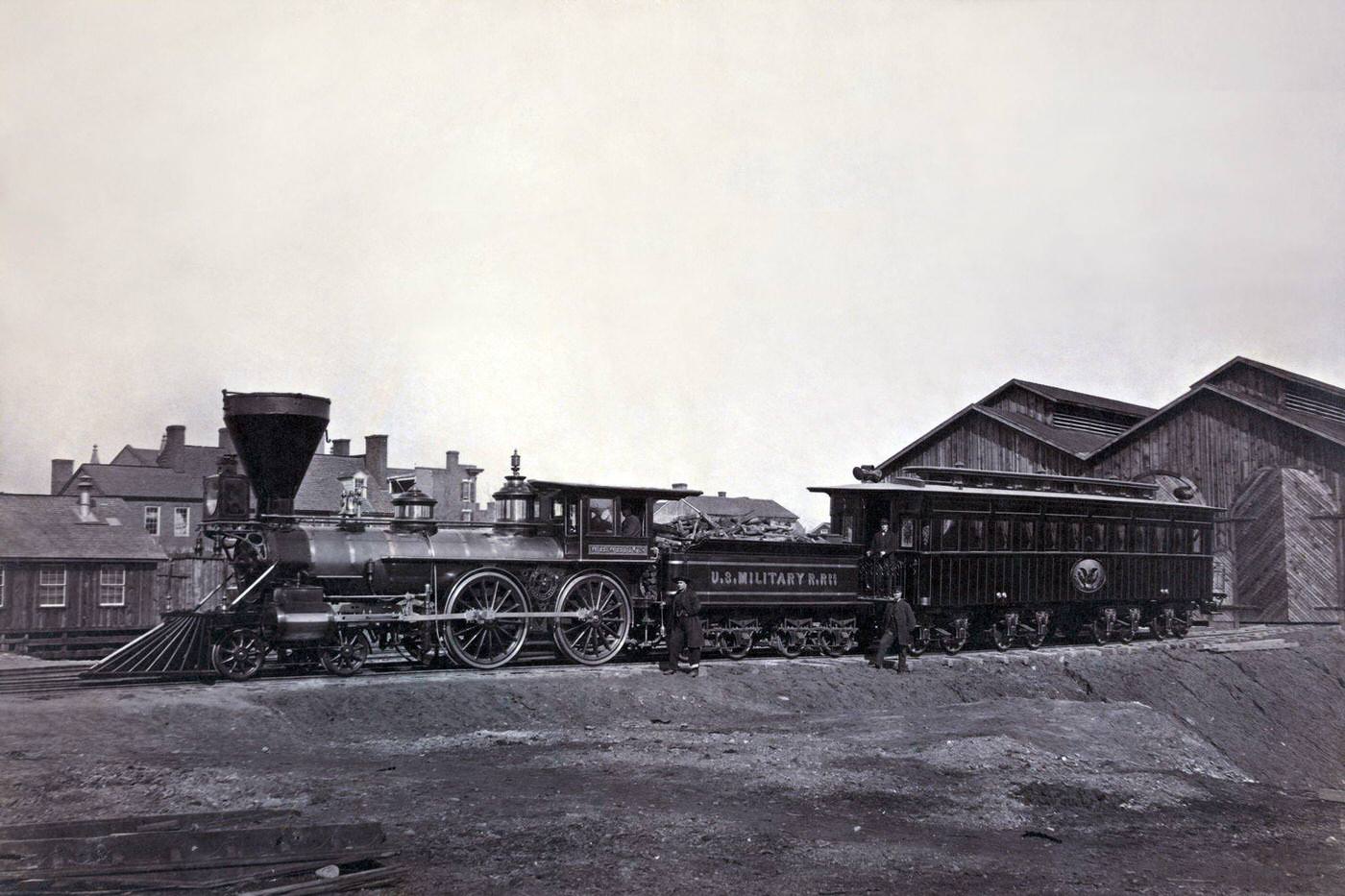
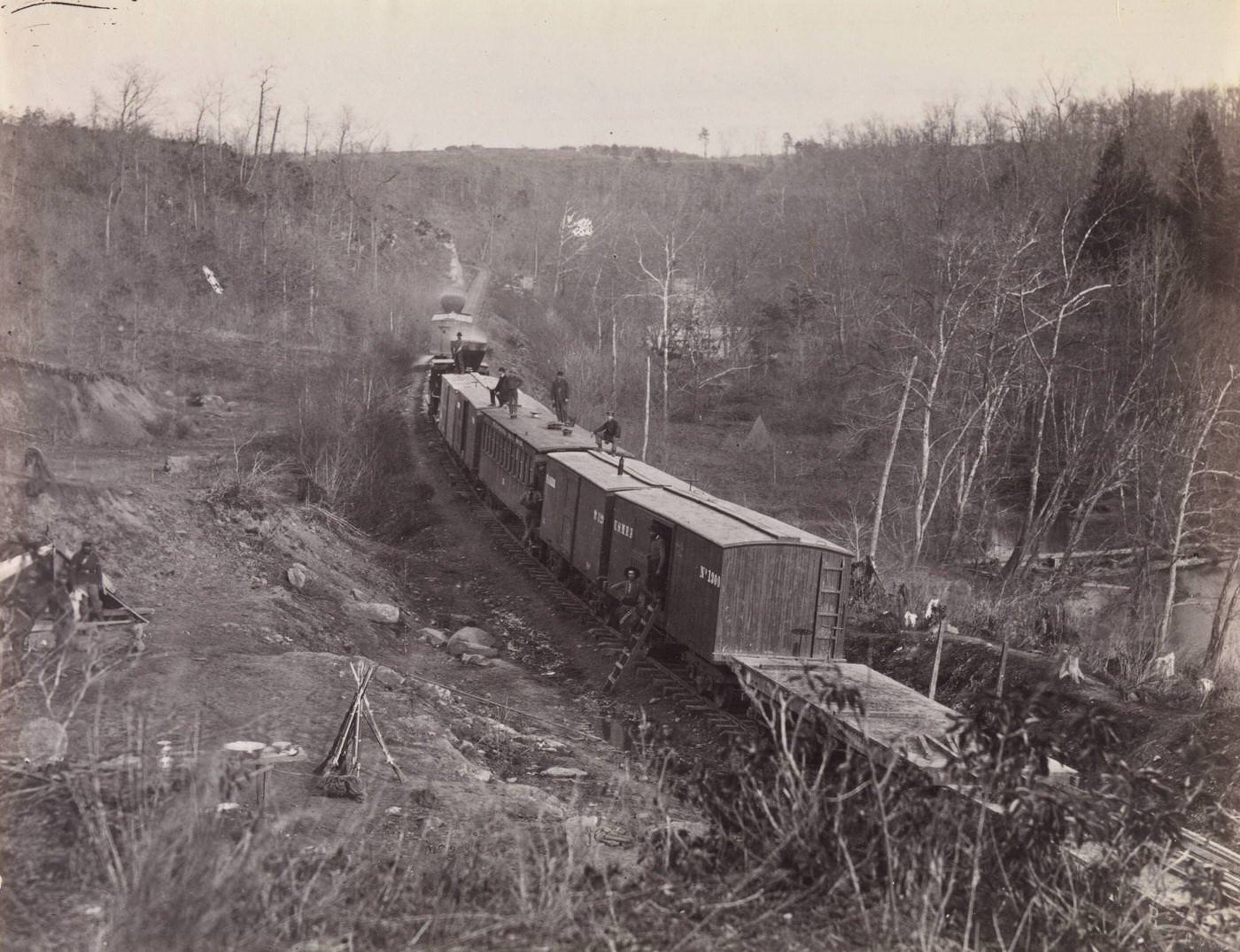
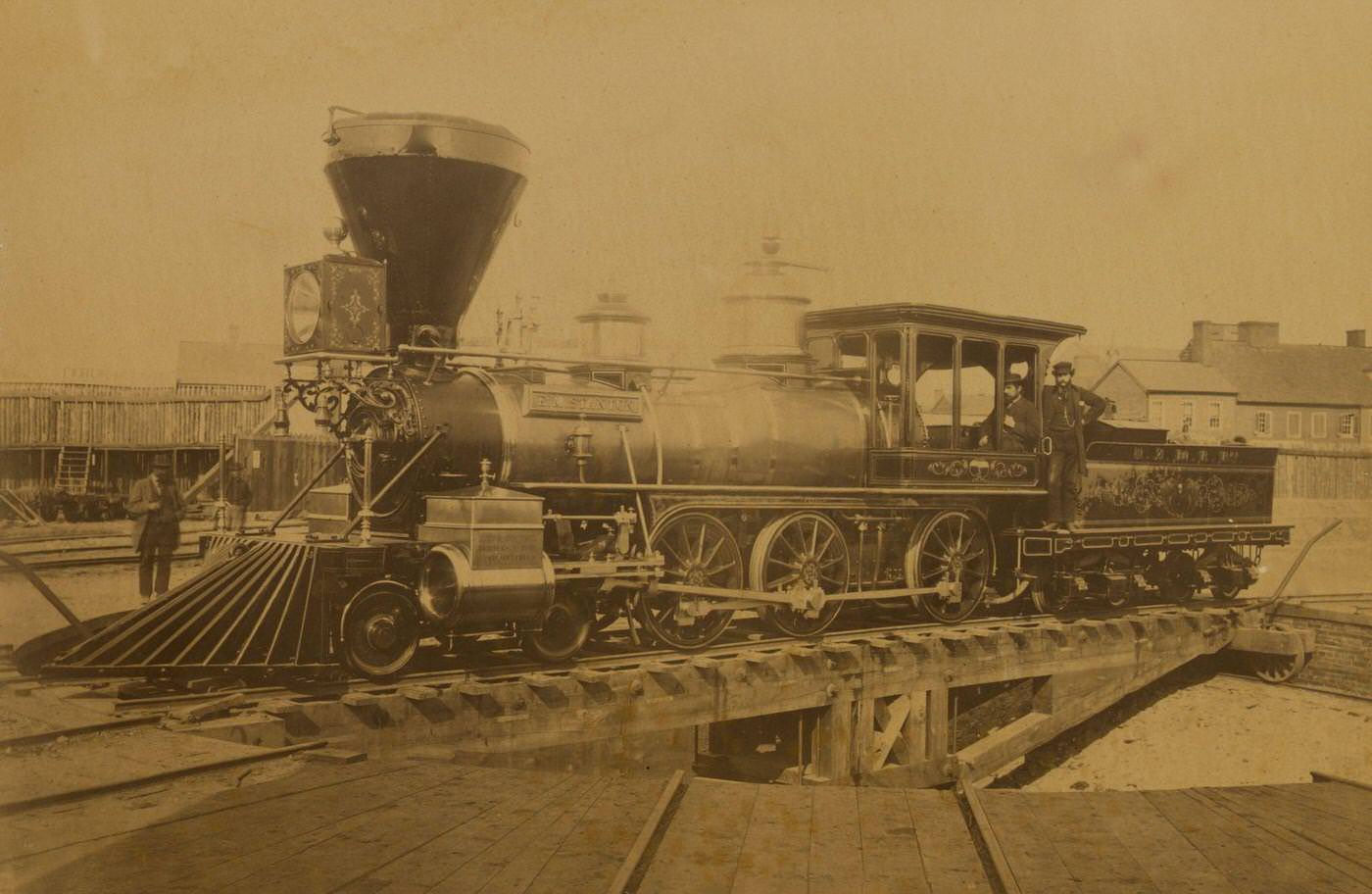
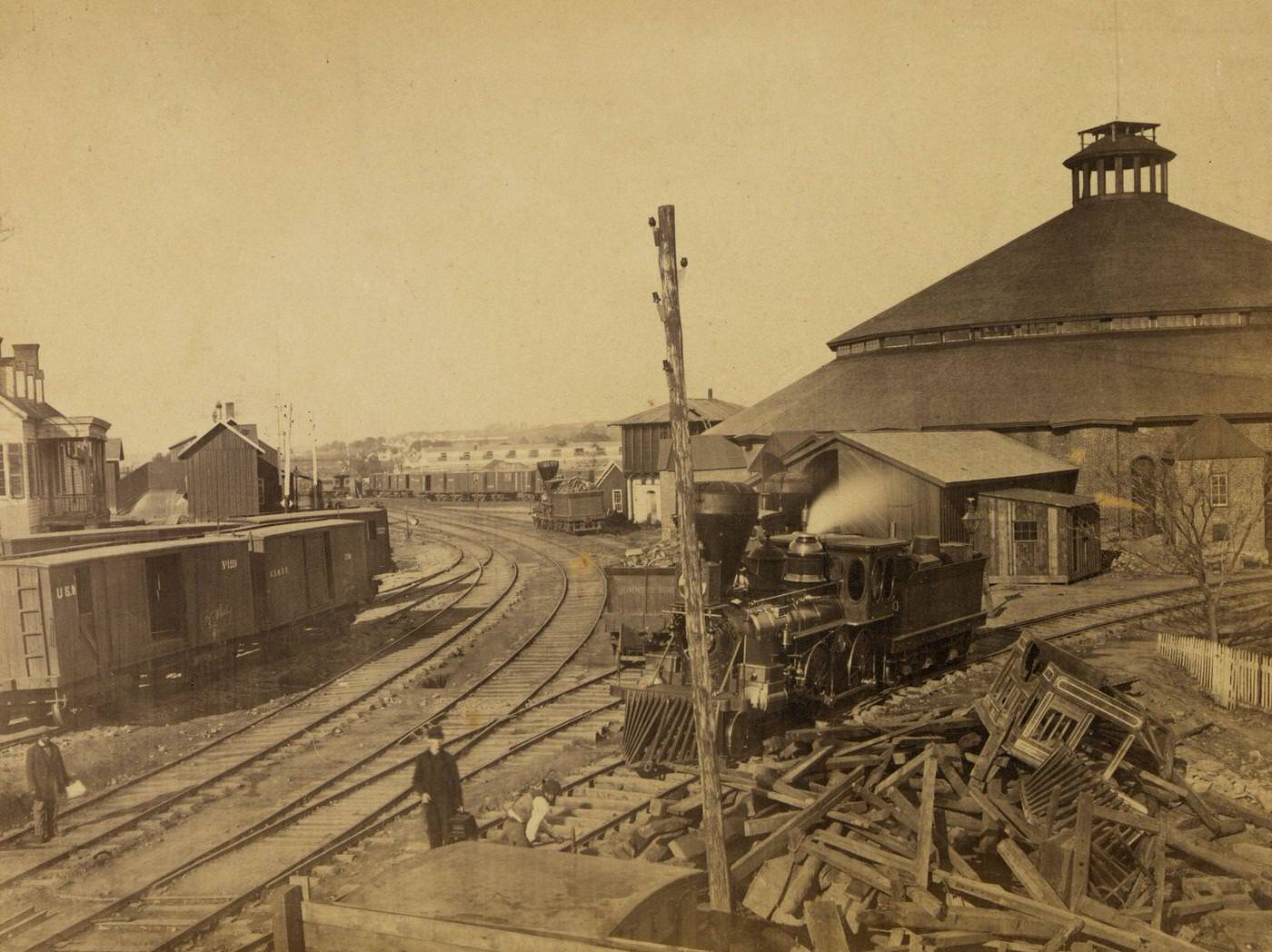
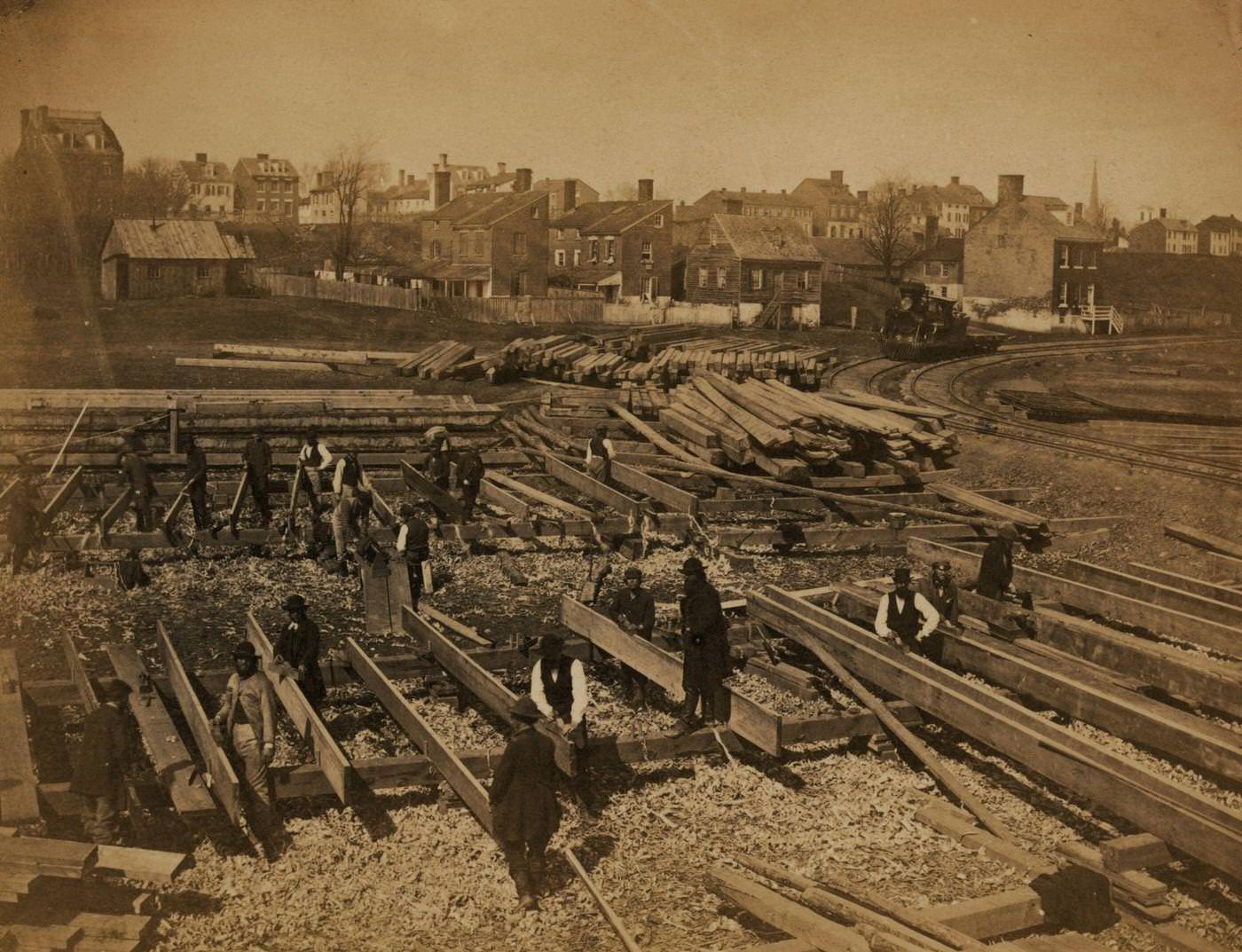
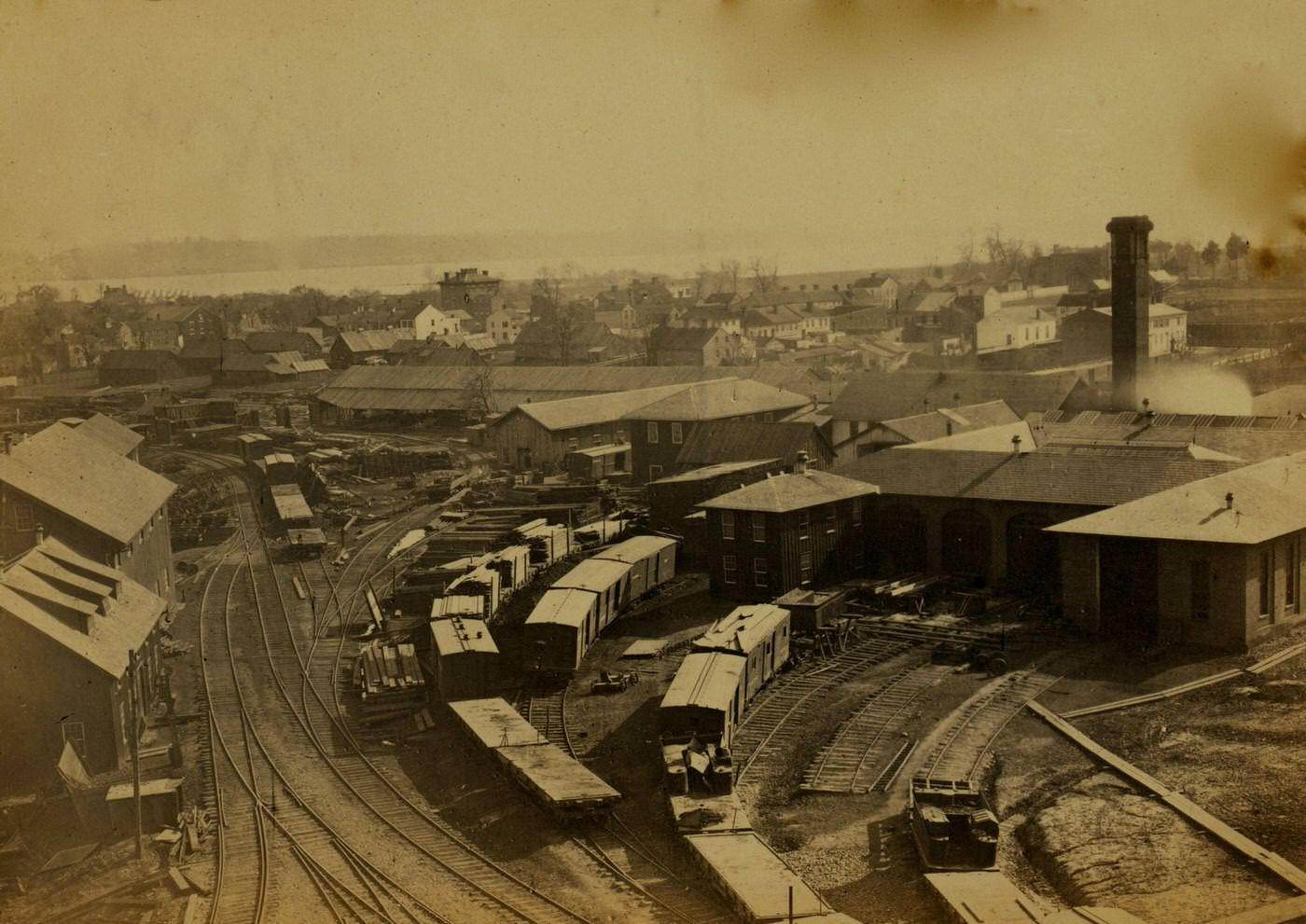
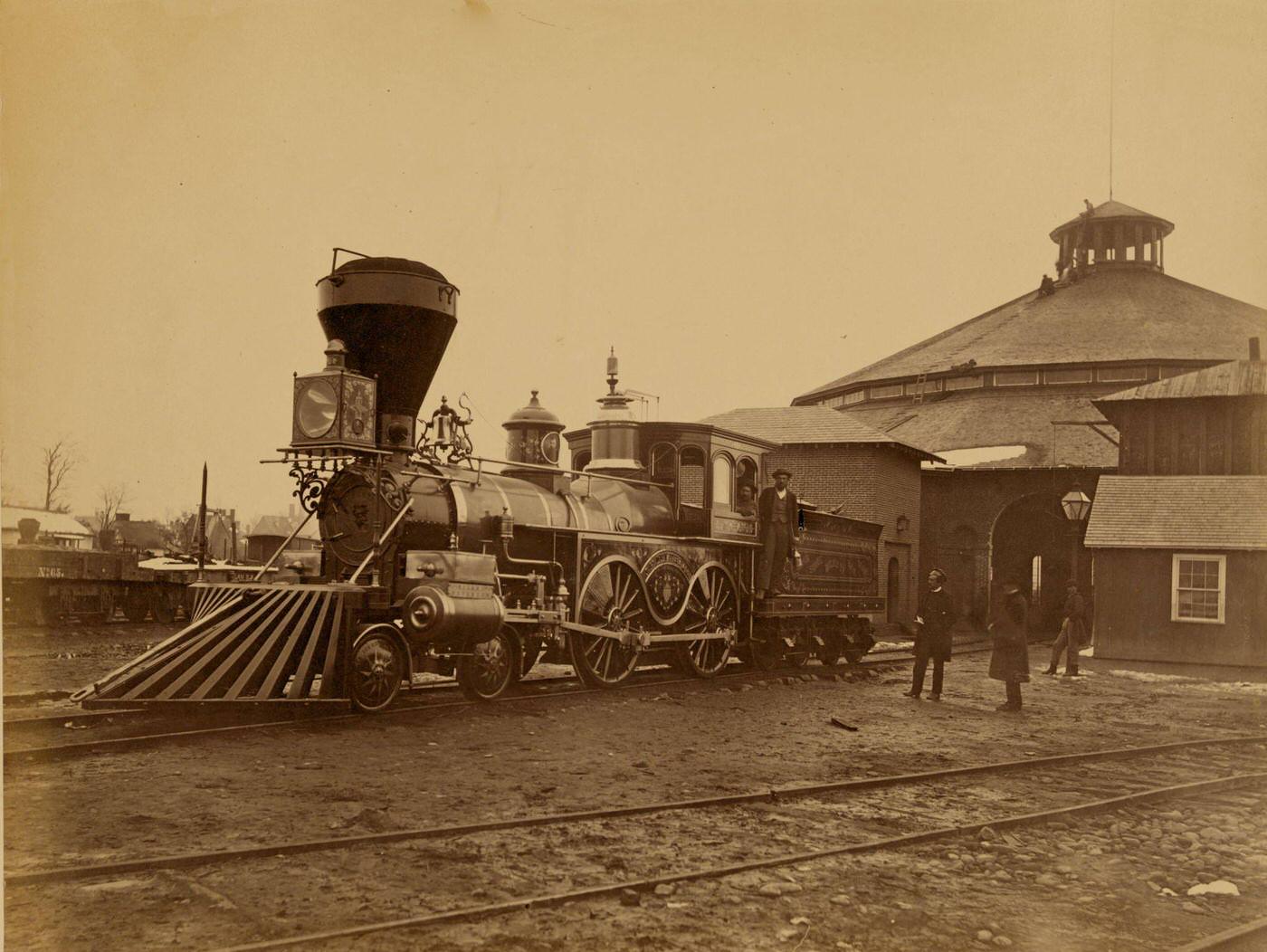
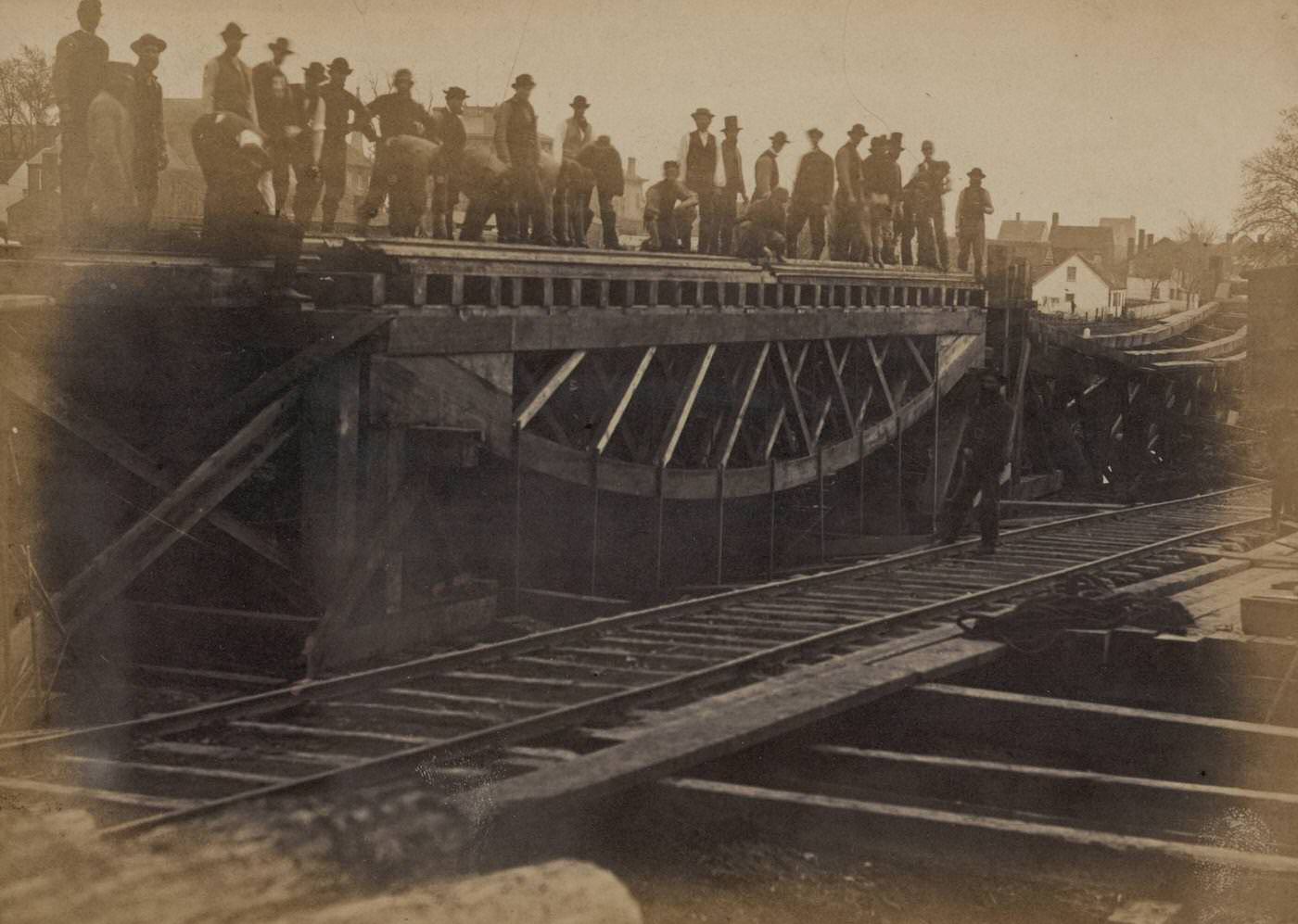
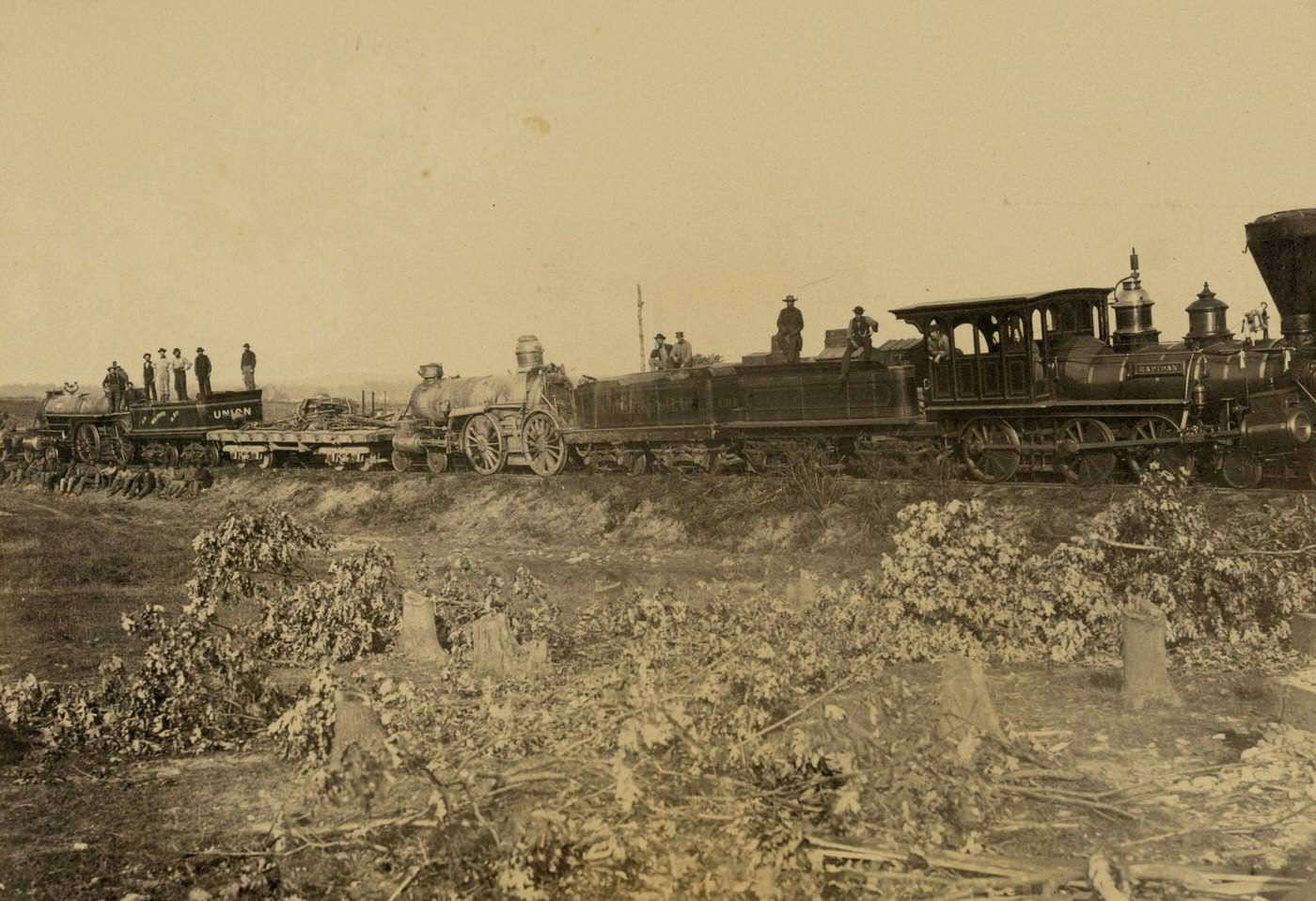
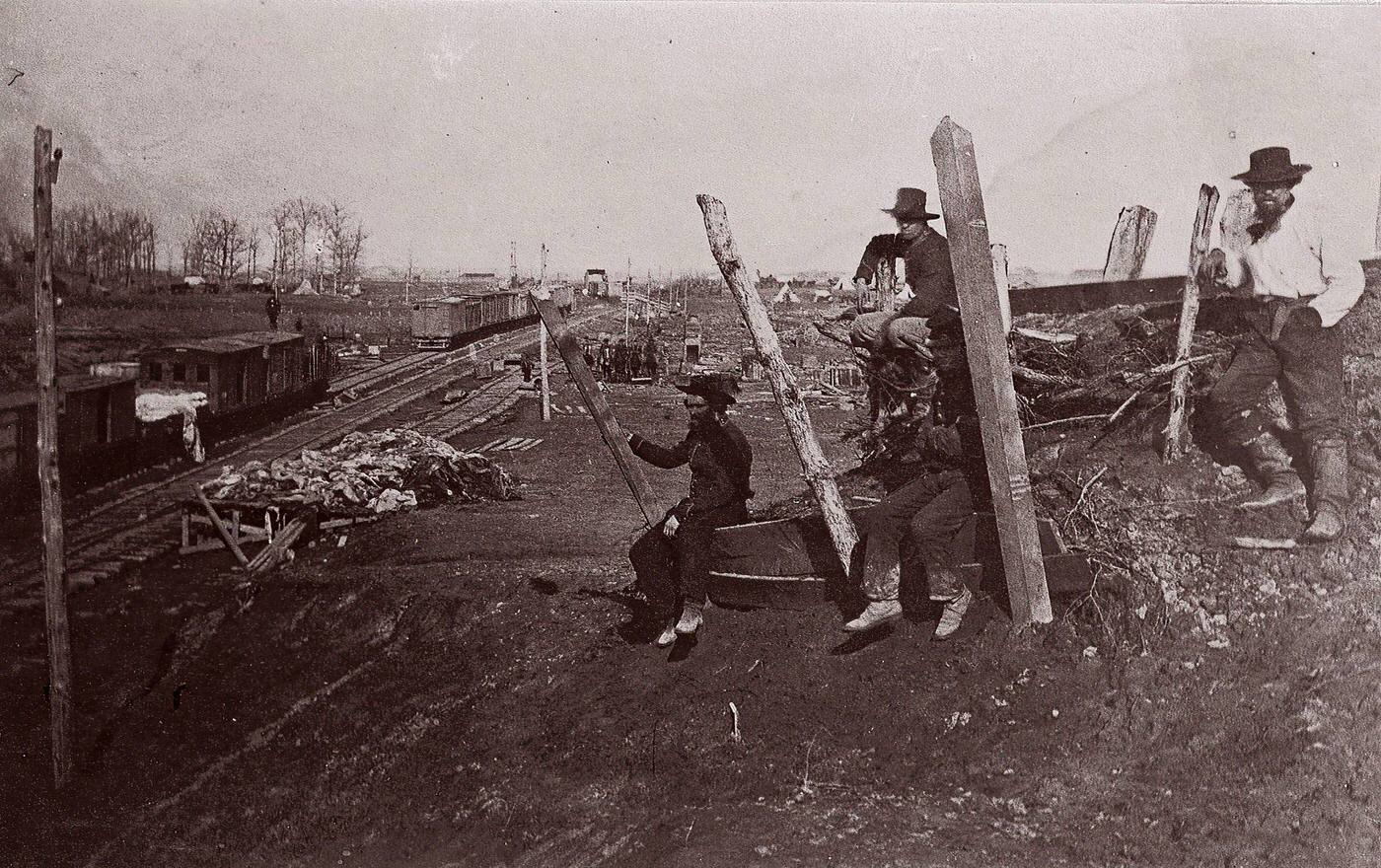
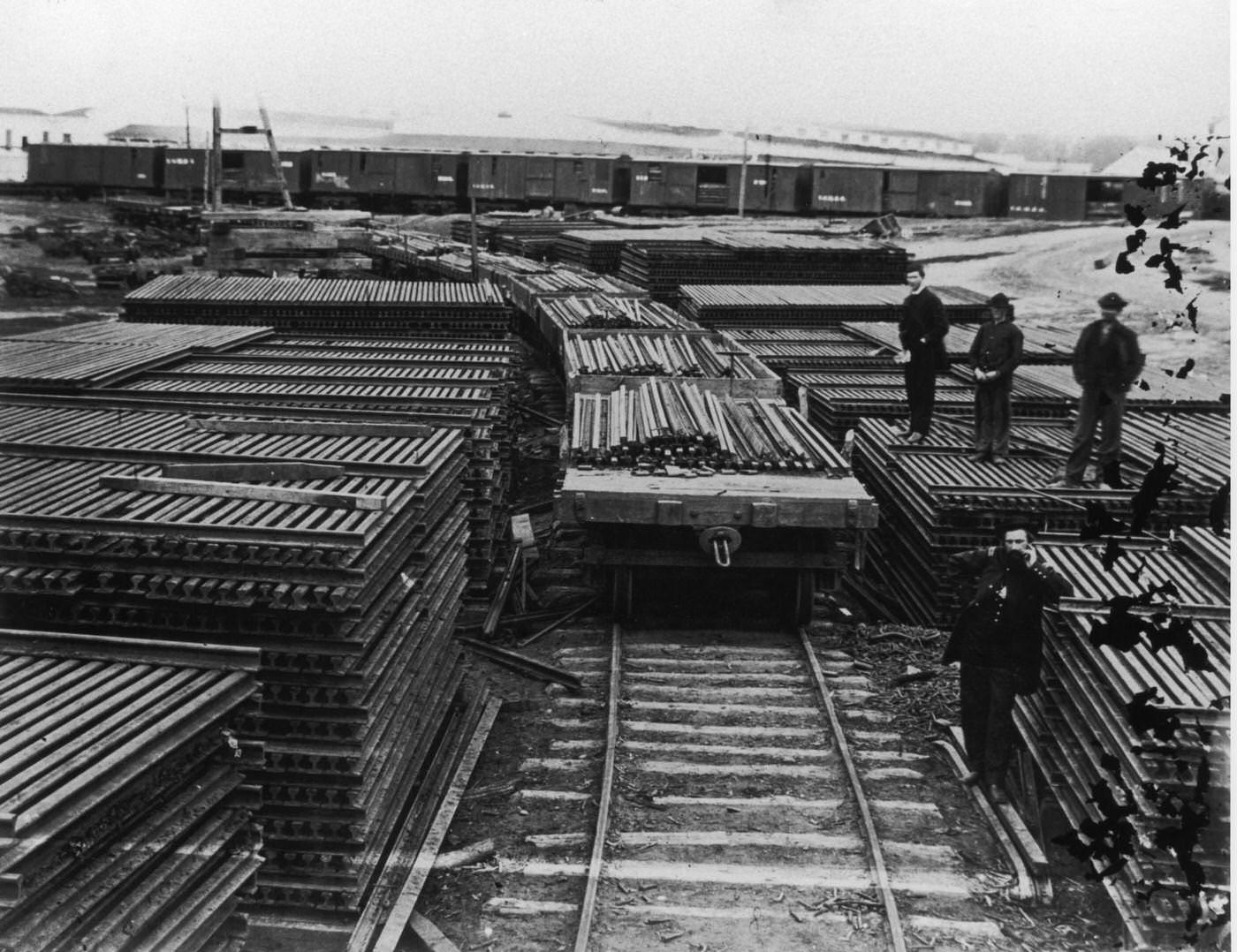
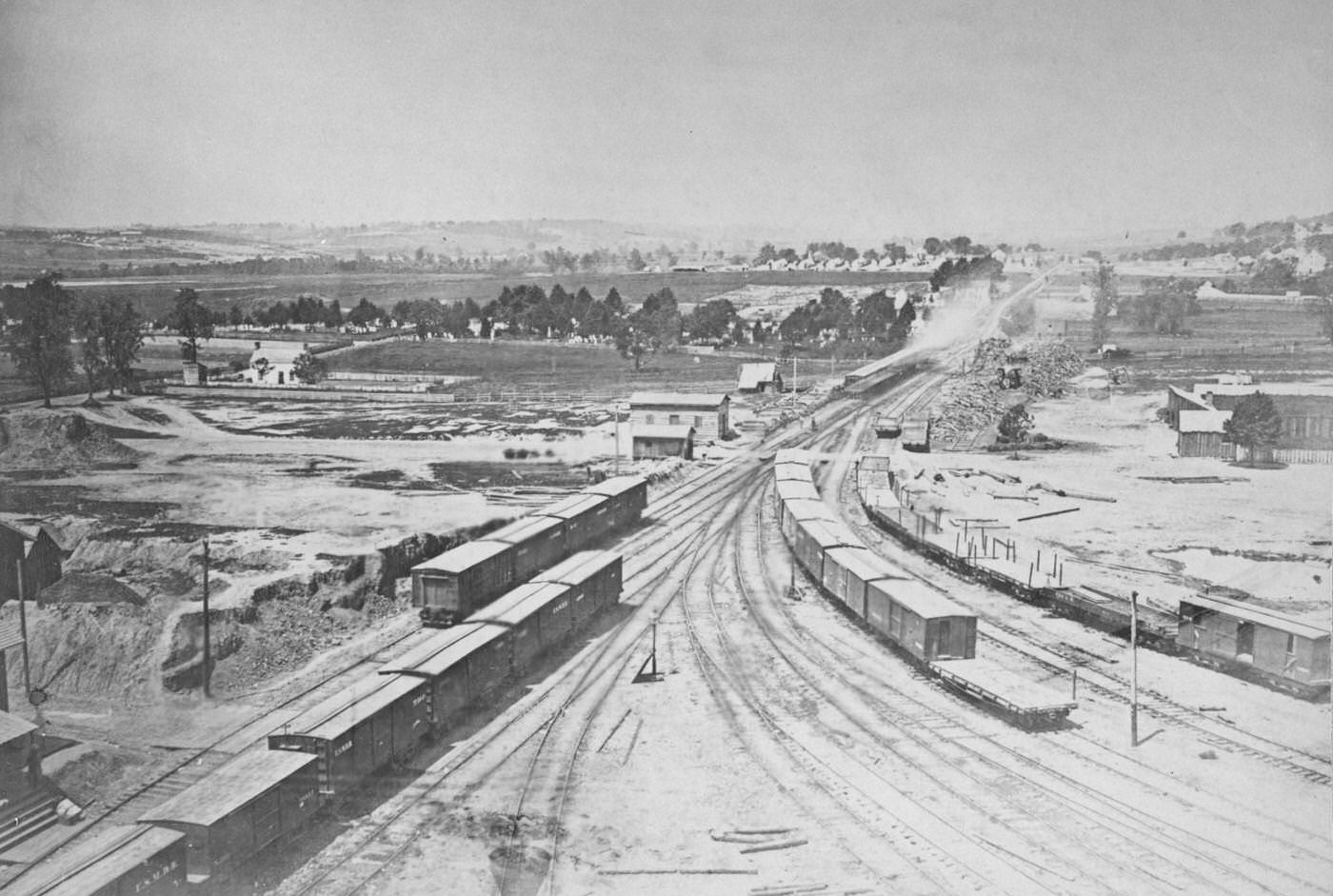
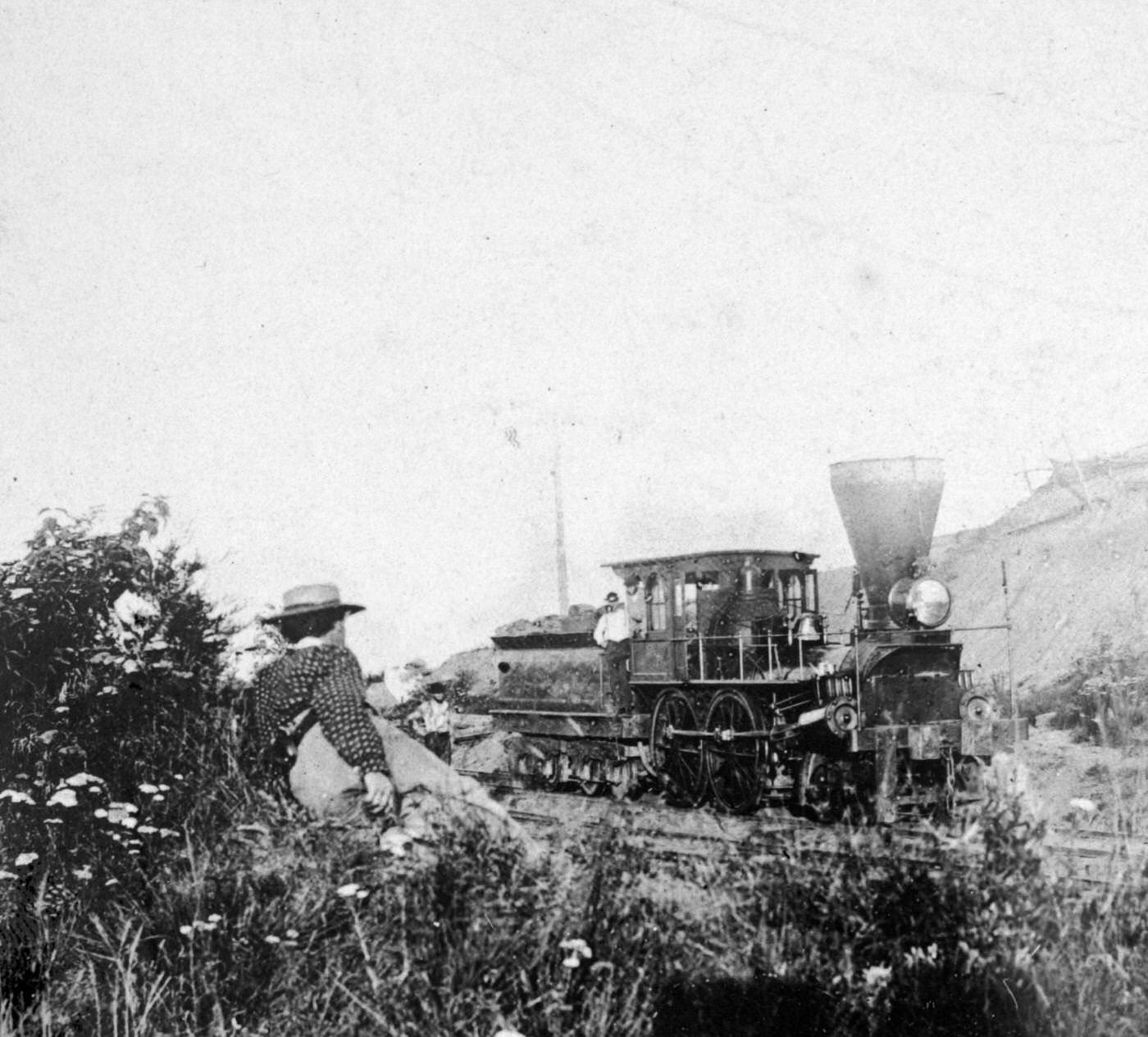
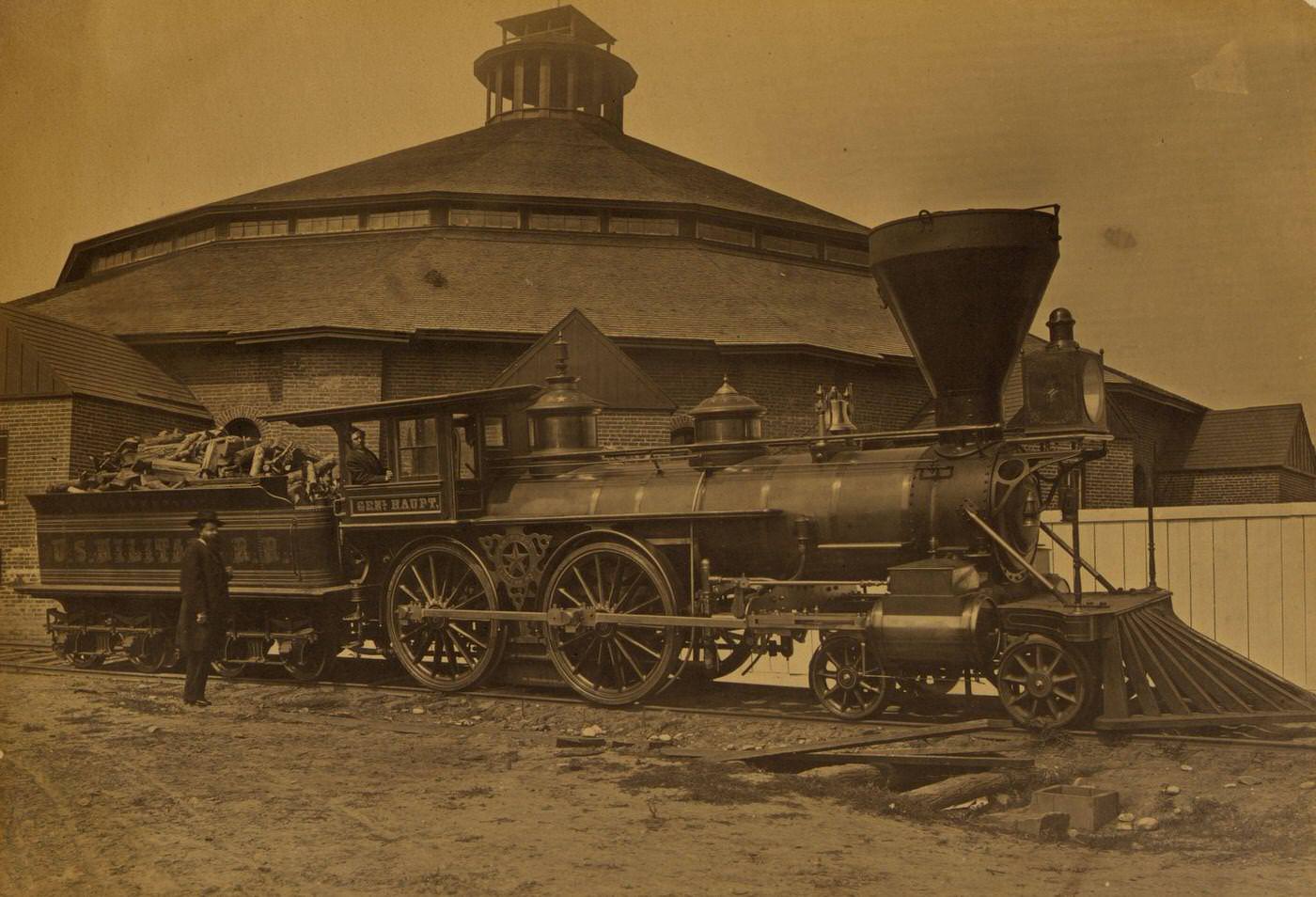
The railroad infrastructure in and around Alexandria was among the most photographed industrial scenes of the Civil War. The U.S. Military Railroads operation based here managed a vast network of locomotives, repair shops, roundhouses, and supply cars. Photographers documented engine barns, machine shops, loaded freight trains, and the workers who kept everything running. The Orange & Alexandria Railroad was especially important — and especially vulnerable. Confederate forces regularly destroyed its bridges and track, and Union engineers rebuilt them just as quickly.
An aerial view of the U.S. Military Railroad engine barn in Alexandria, Virginia, 1862View near train depot showing a locomotive on the Orange & Alexandria Railroad, Culpeper Court House, VA, 1862.US military railroad boxcars travel along the Orange & Alexandria railroad line, Confederate fortifications are visible on the right, 1862.
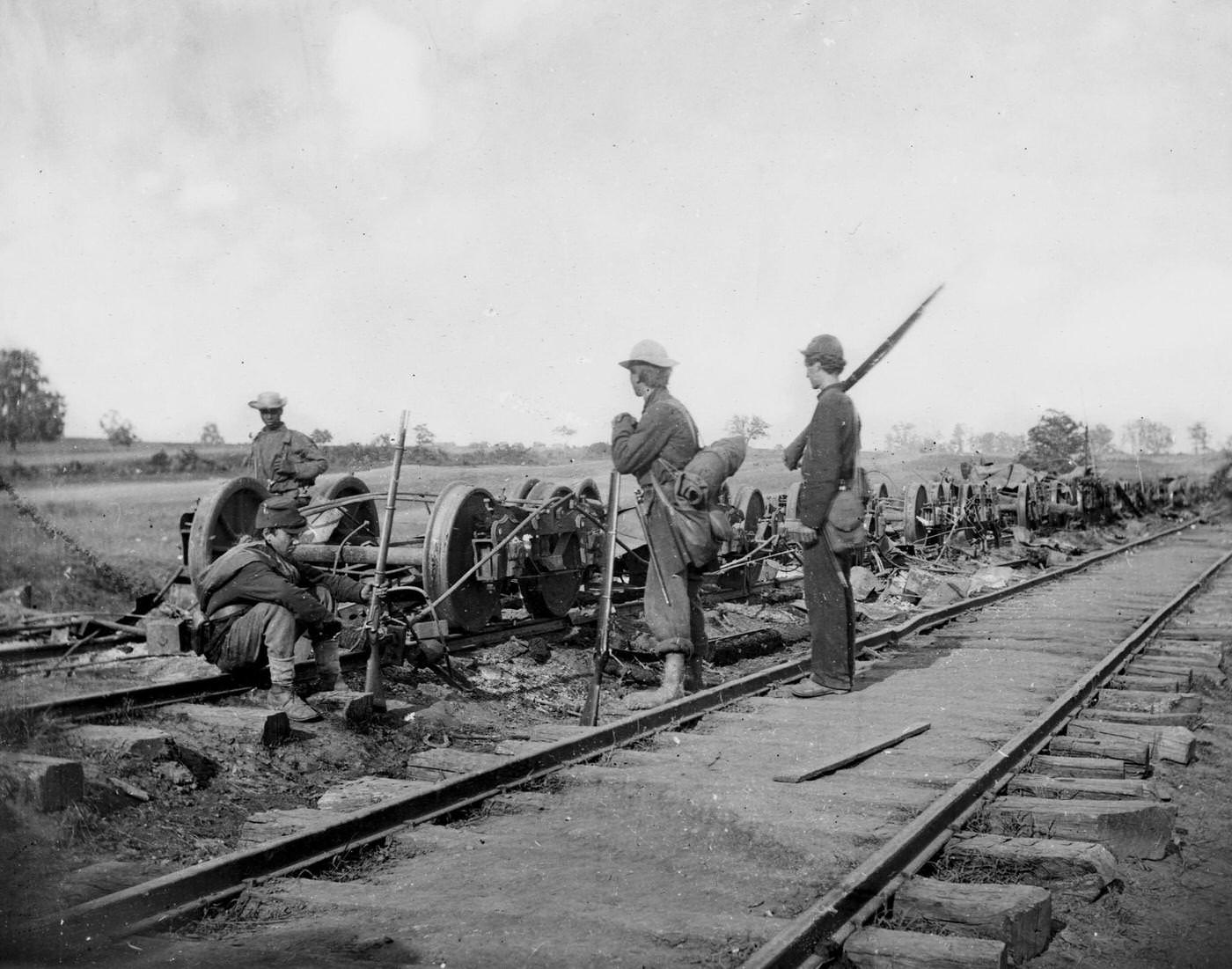
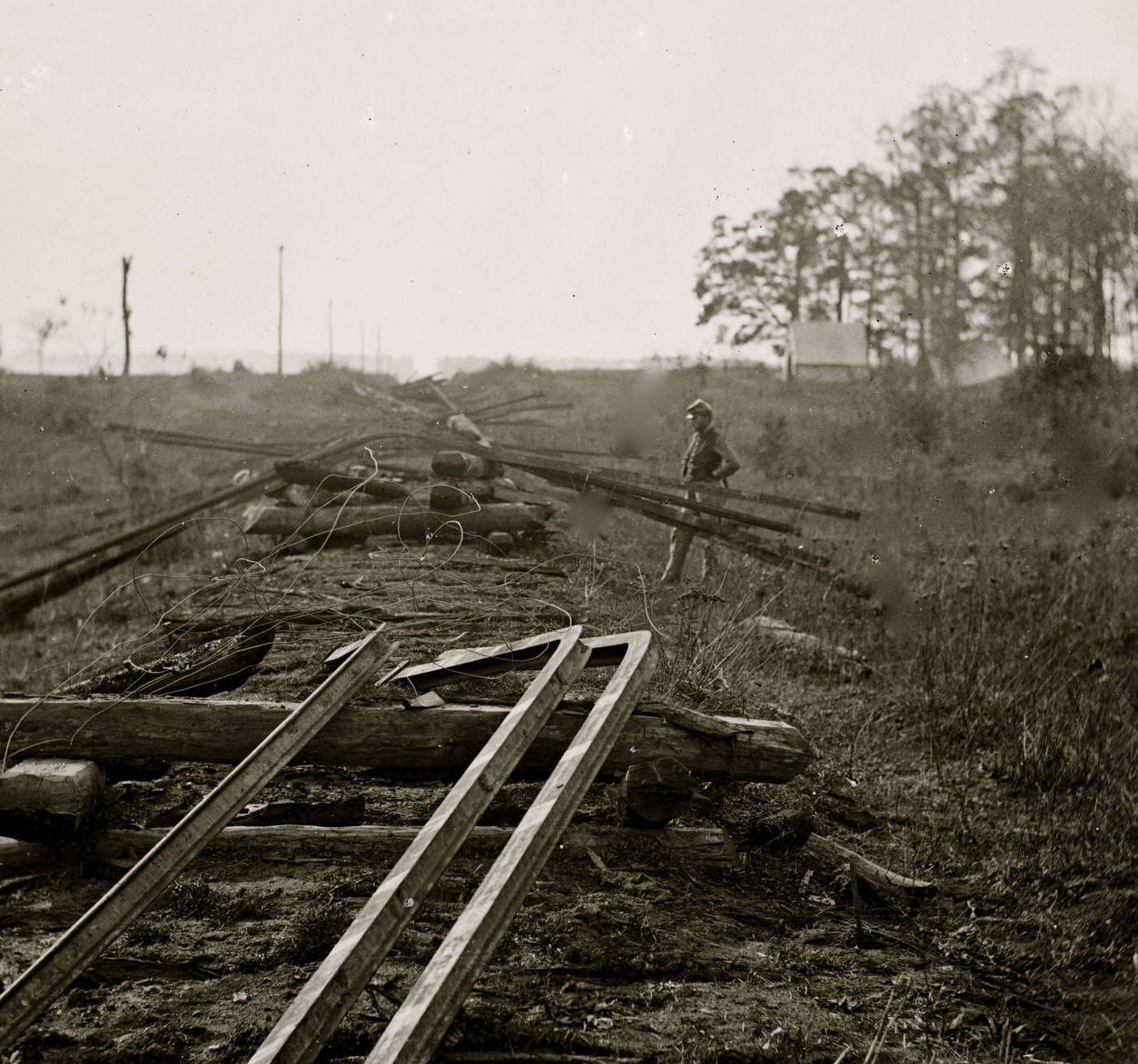
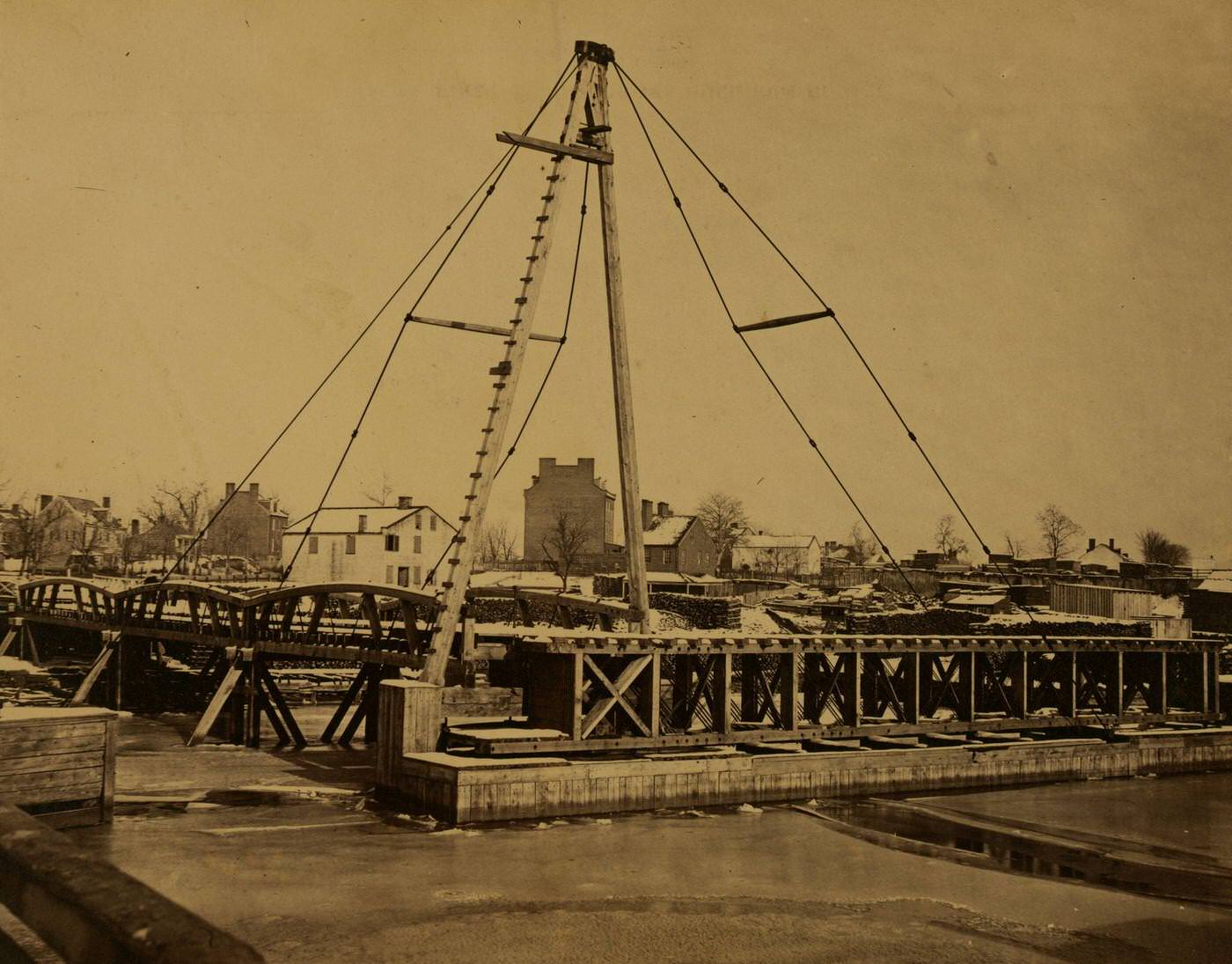
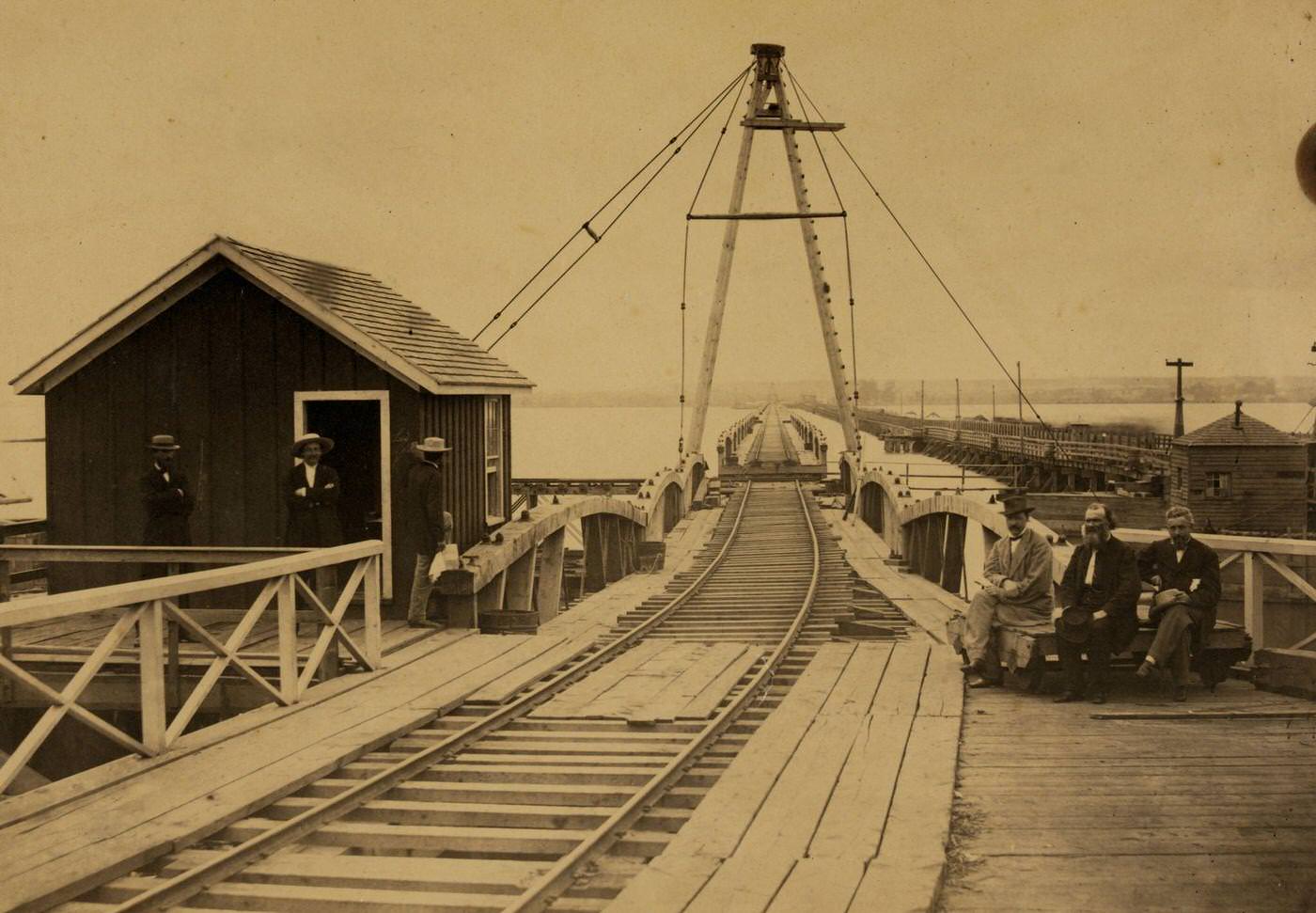
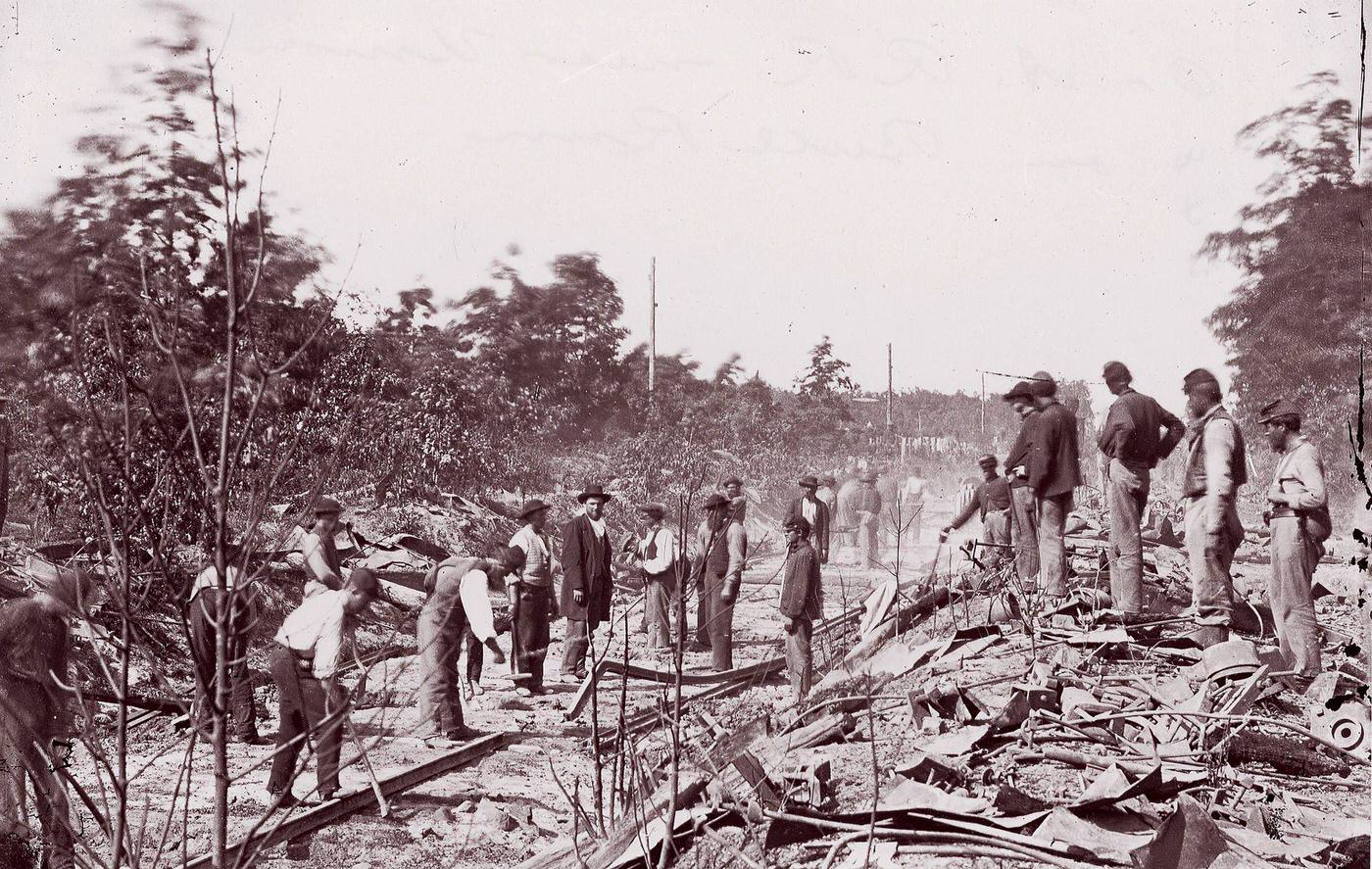
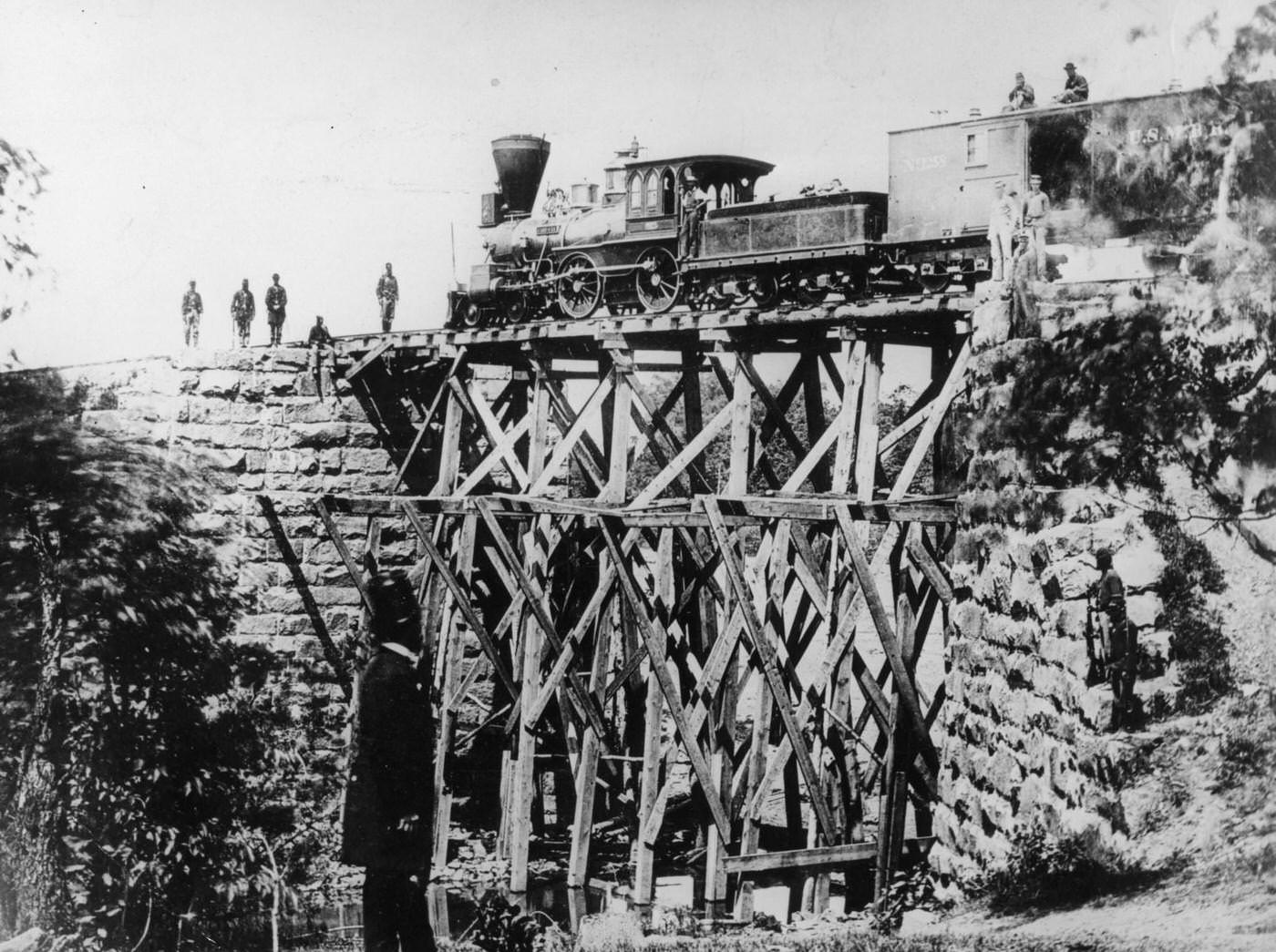
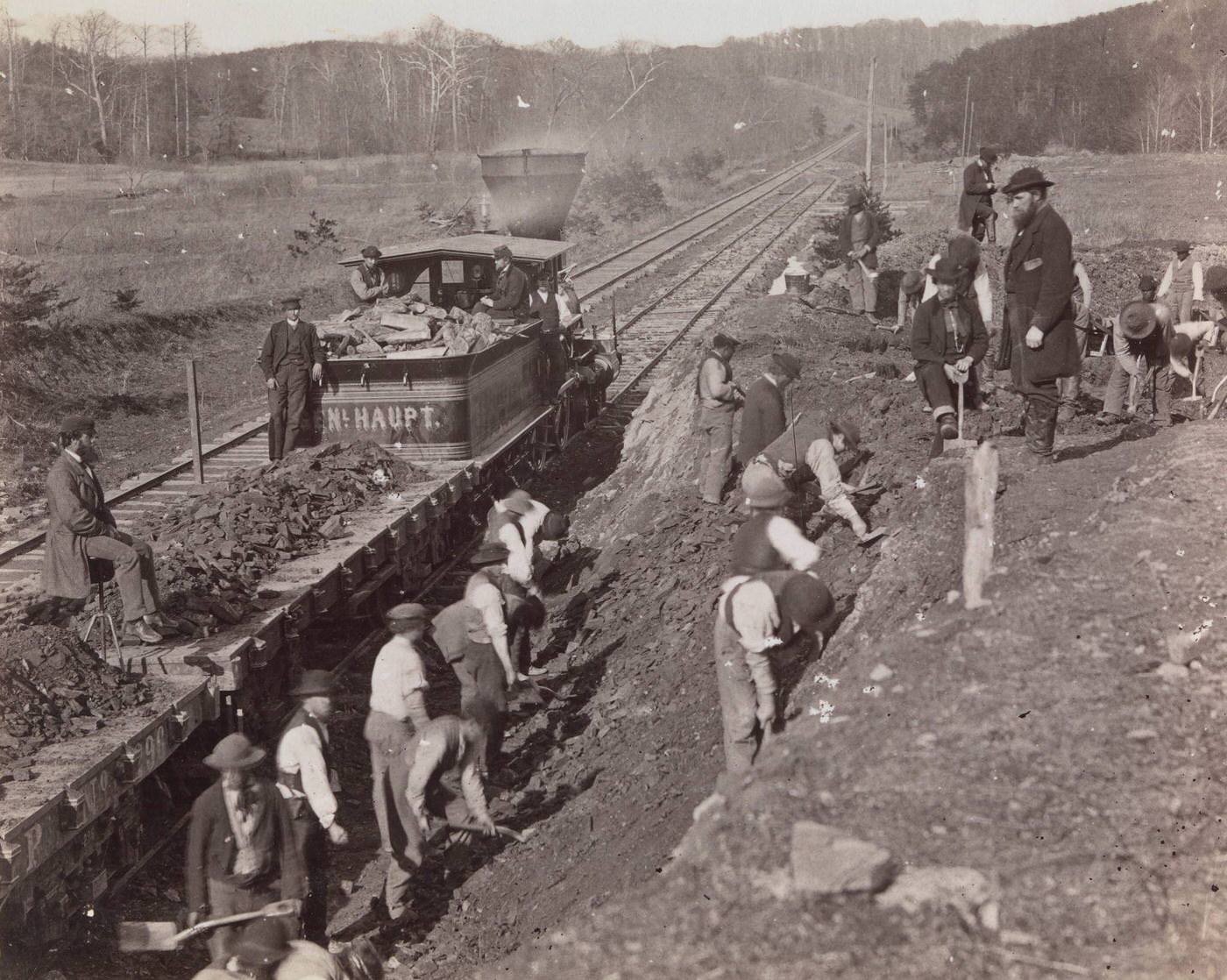
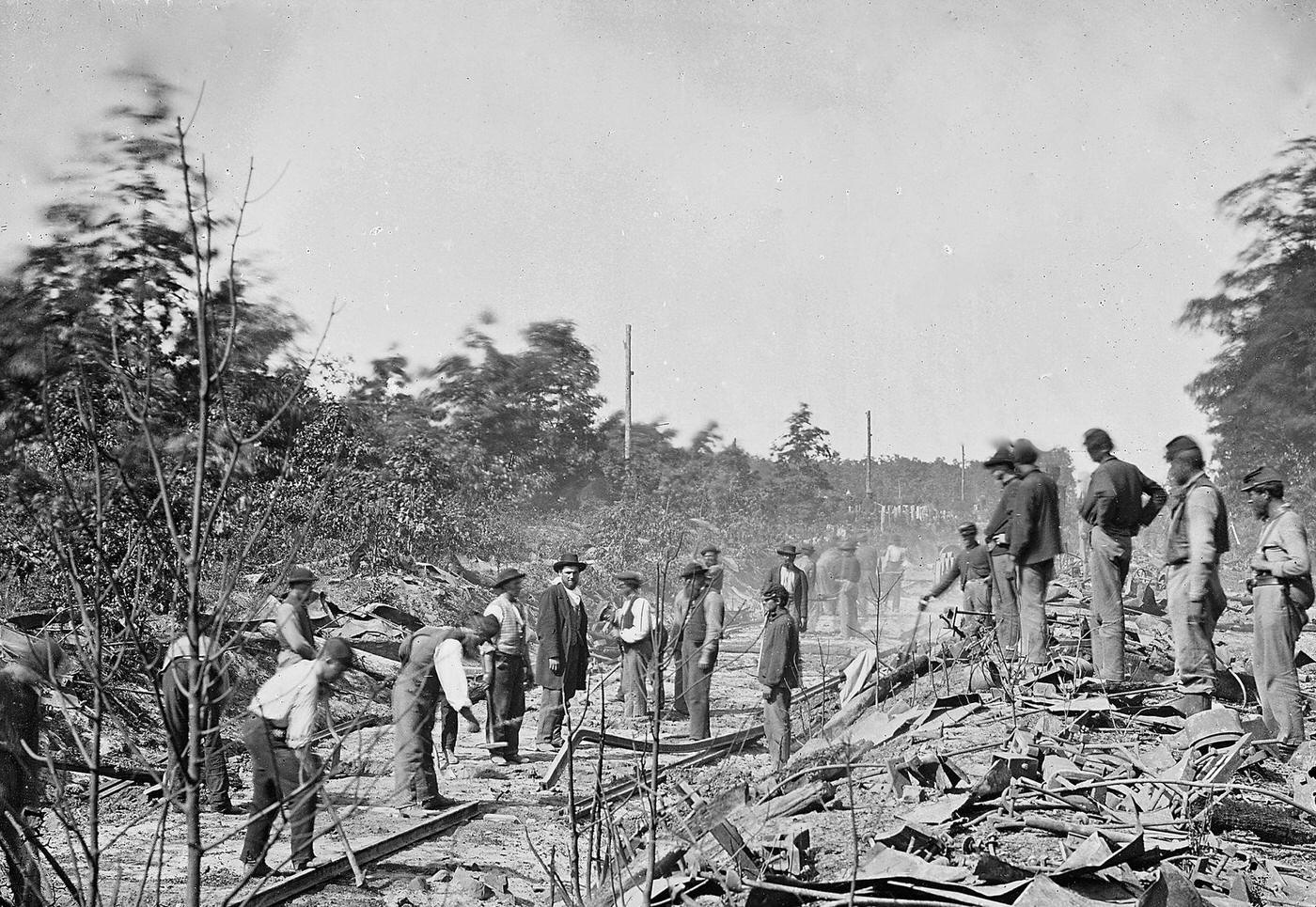
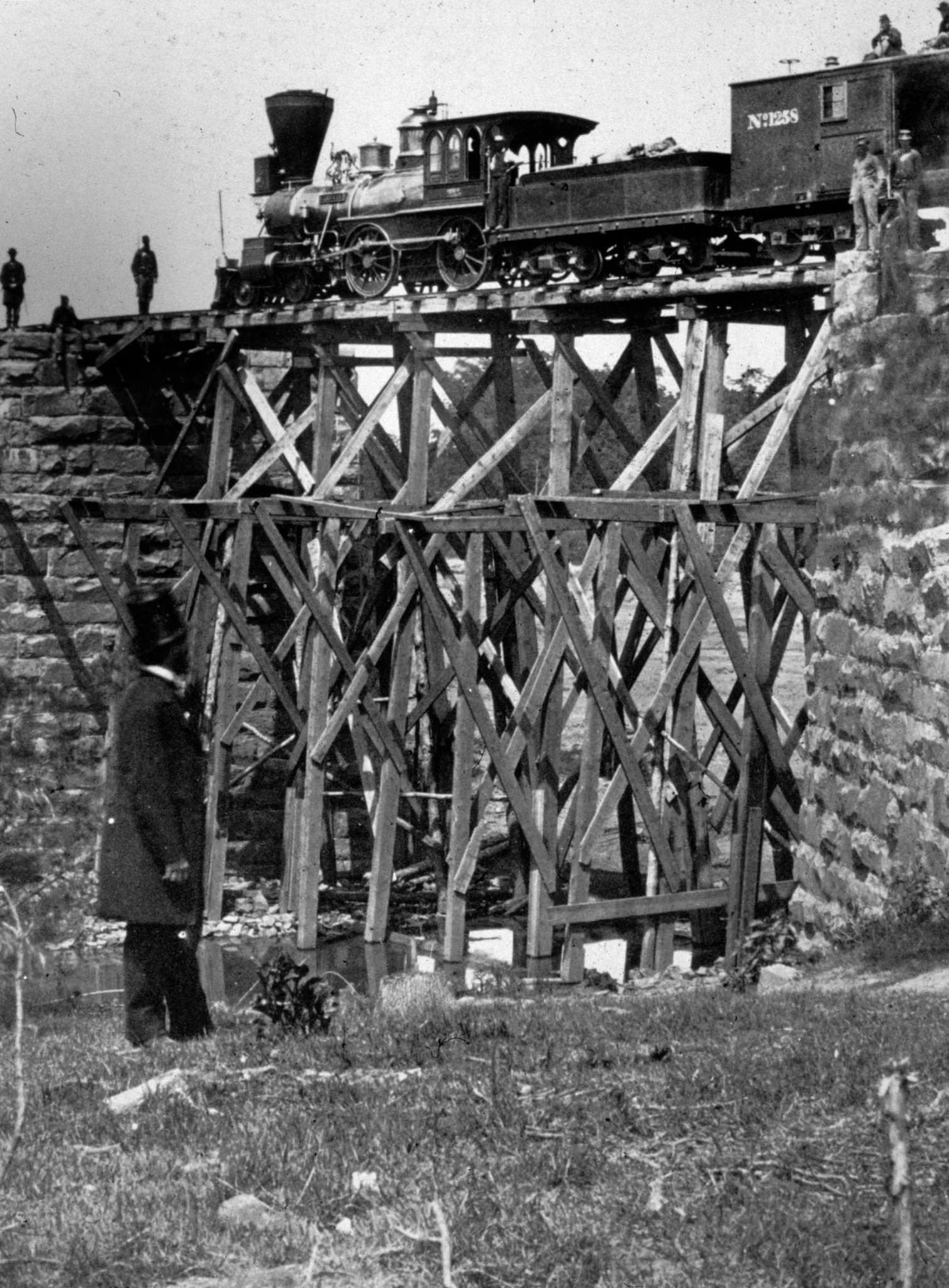
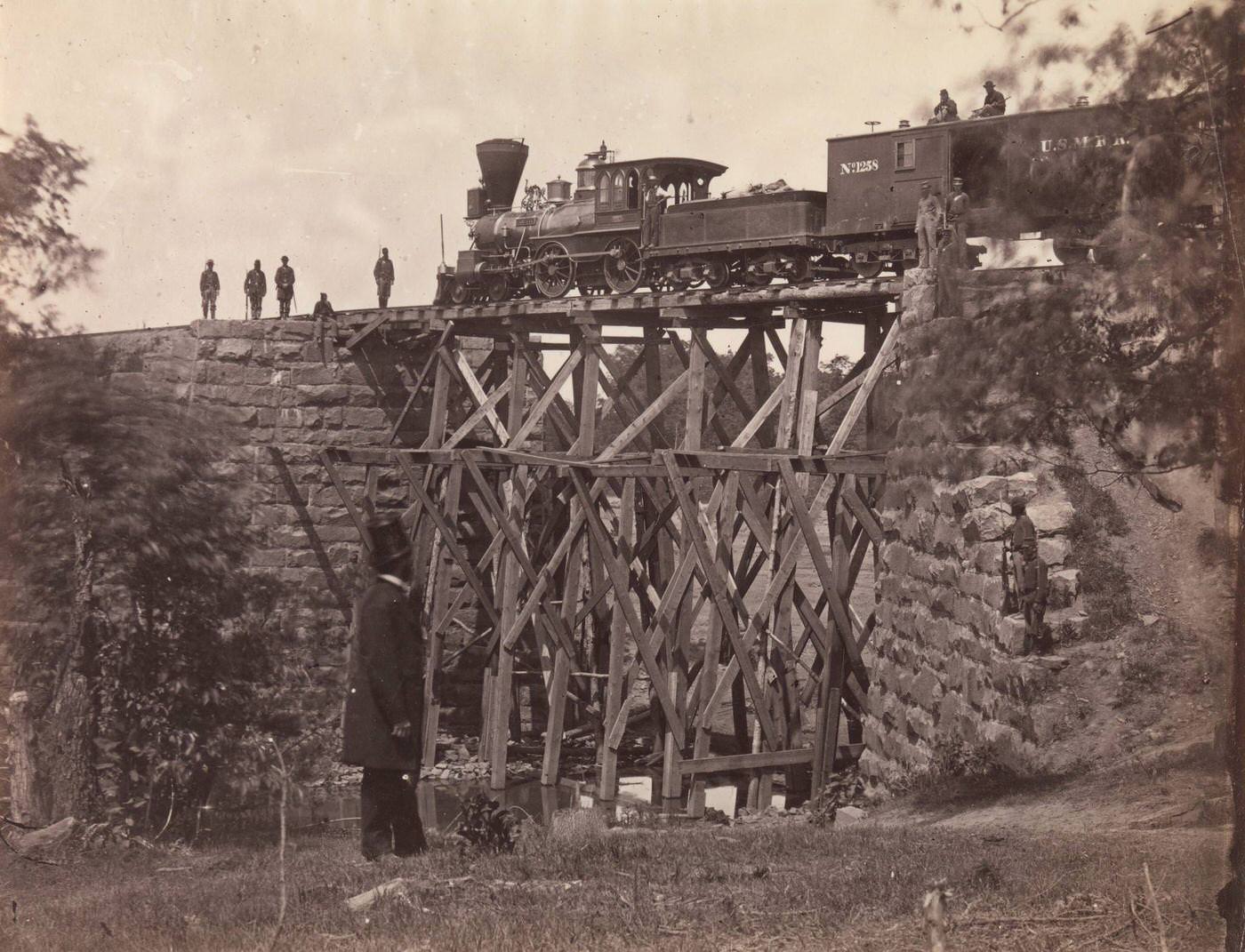
Confederate sabotage of the railroad was constant. Tracks were ripped up, bridges burned, and rolling stock wrecked whenever Rebel forces got close enough to do damage. Union photographers documented the destruction — twisted rails, smashed locomotives, and collapsed trestles — and the repair crews who followed close behind the fighting armies. Col. Herman Haupt oversaw much of this construction and repair work, and locomotives were even named in his honor.
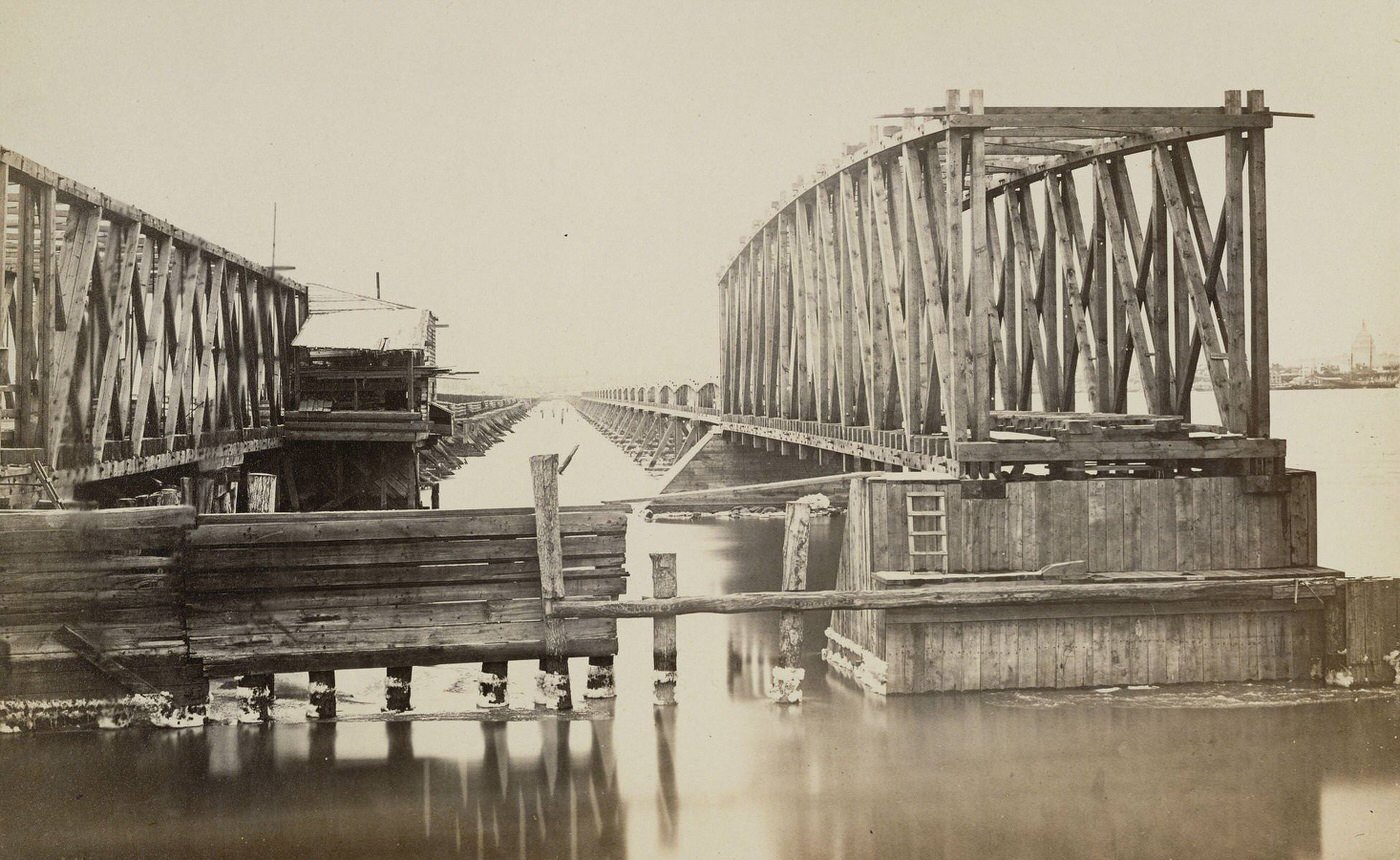
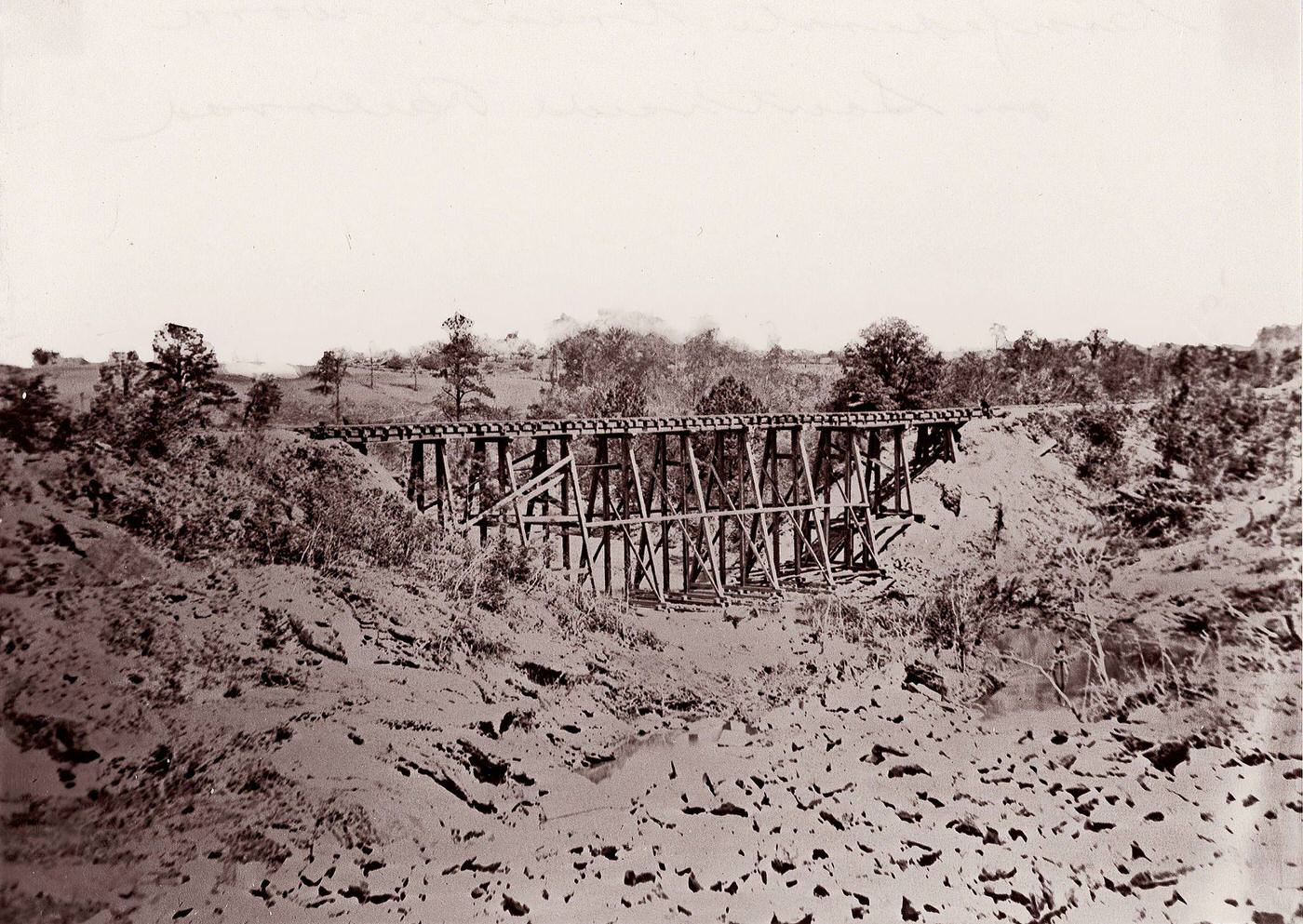
Soldiers stand beside damaged rolling stock of the Orange & Alexandria Railroad, 1862View of the tracks of the Orange & Alexandria Railroad, destroyed by the Confederates between Bristow Station and the Rappahannock, 1862.Bridge on Orange & Alexandria [Virginia] Railroad, as repaired by army engineers under Colonel Herman Haupt, 1863
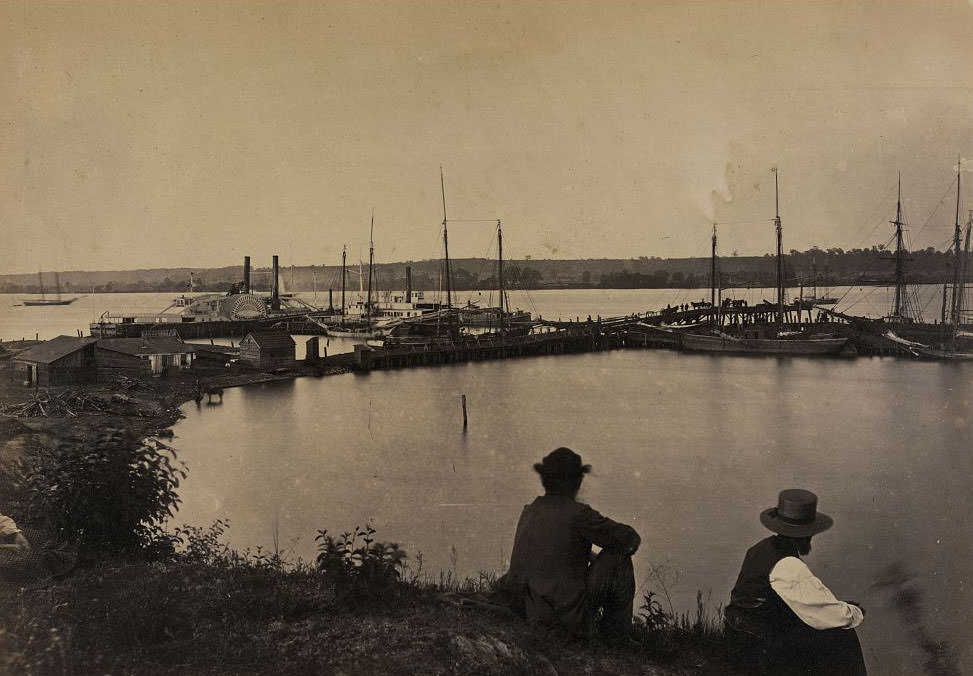
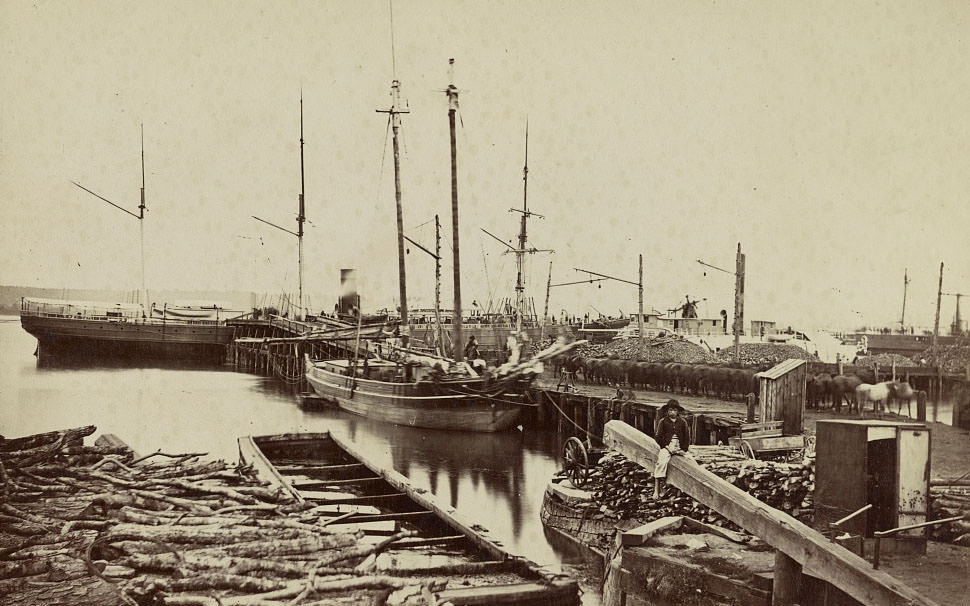
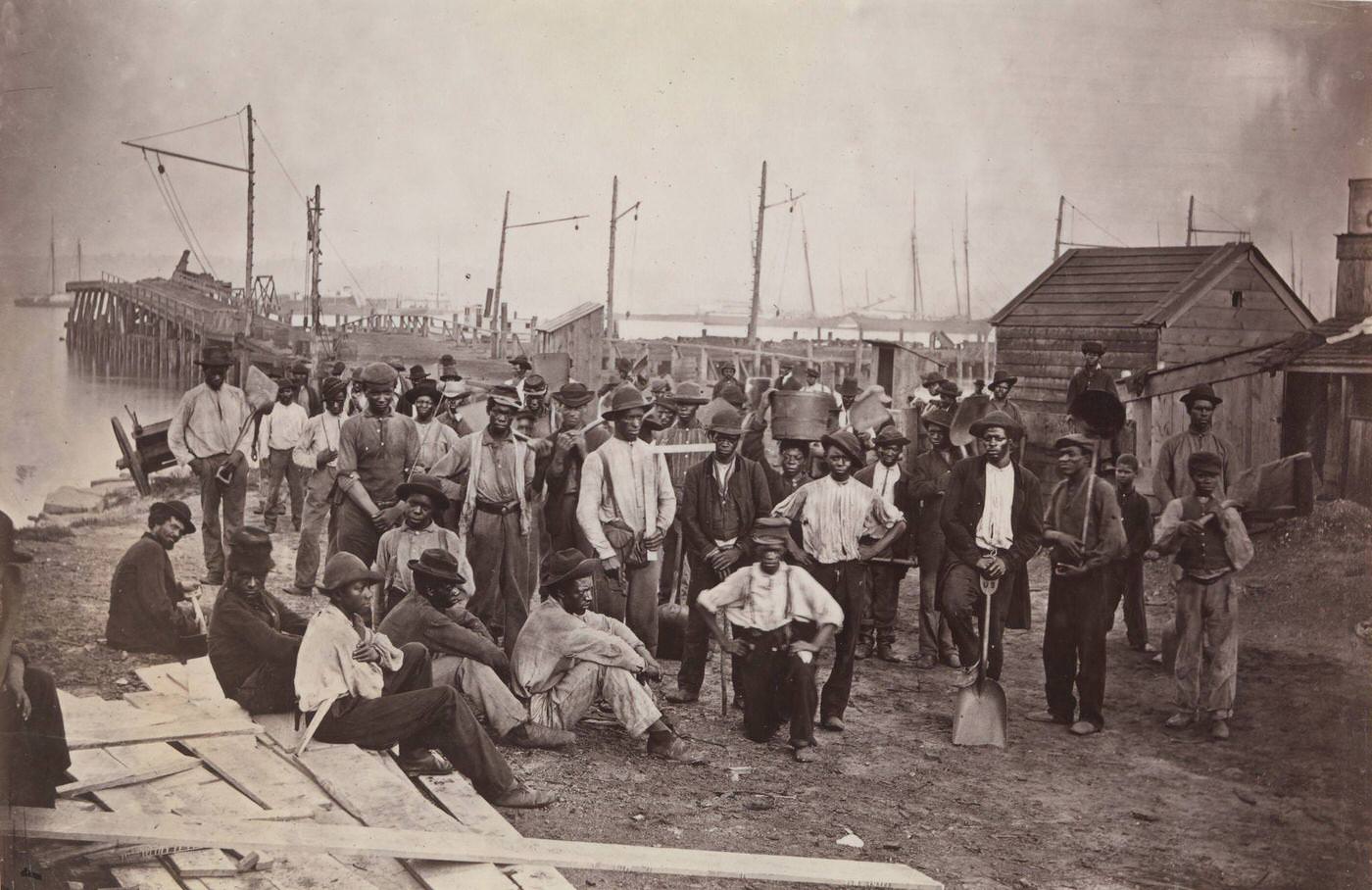
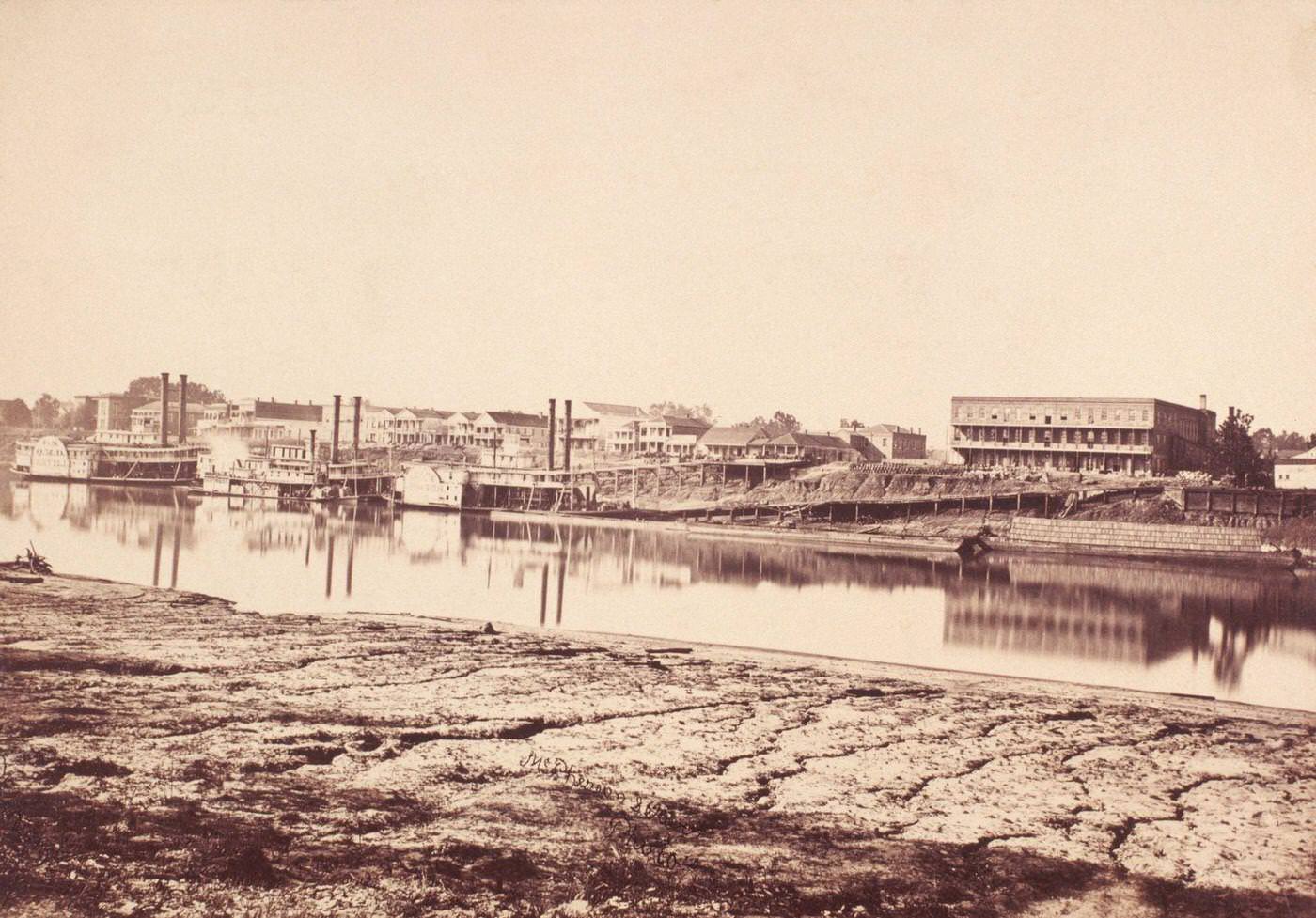
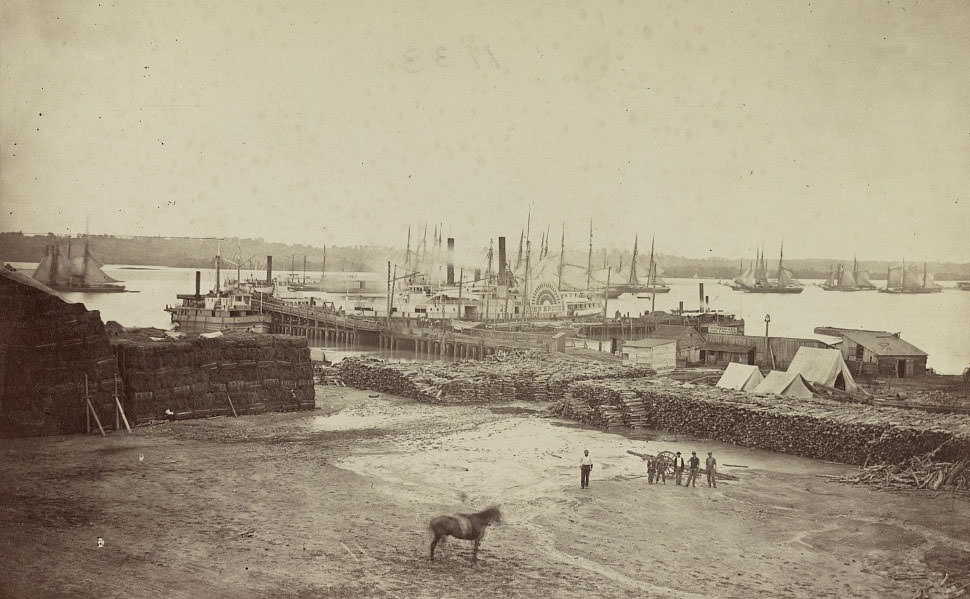
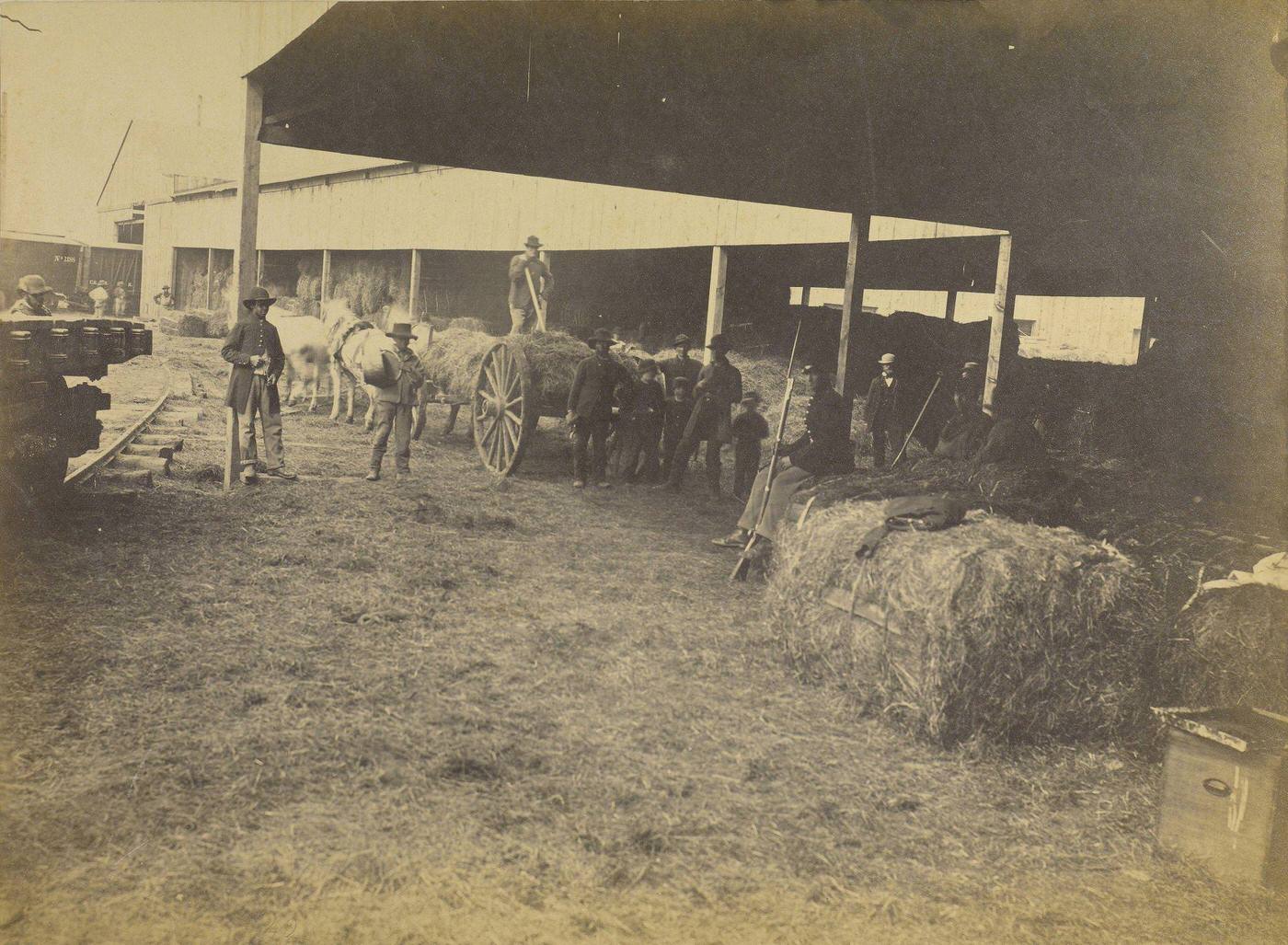
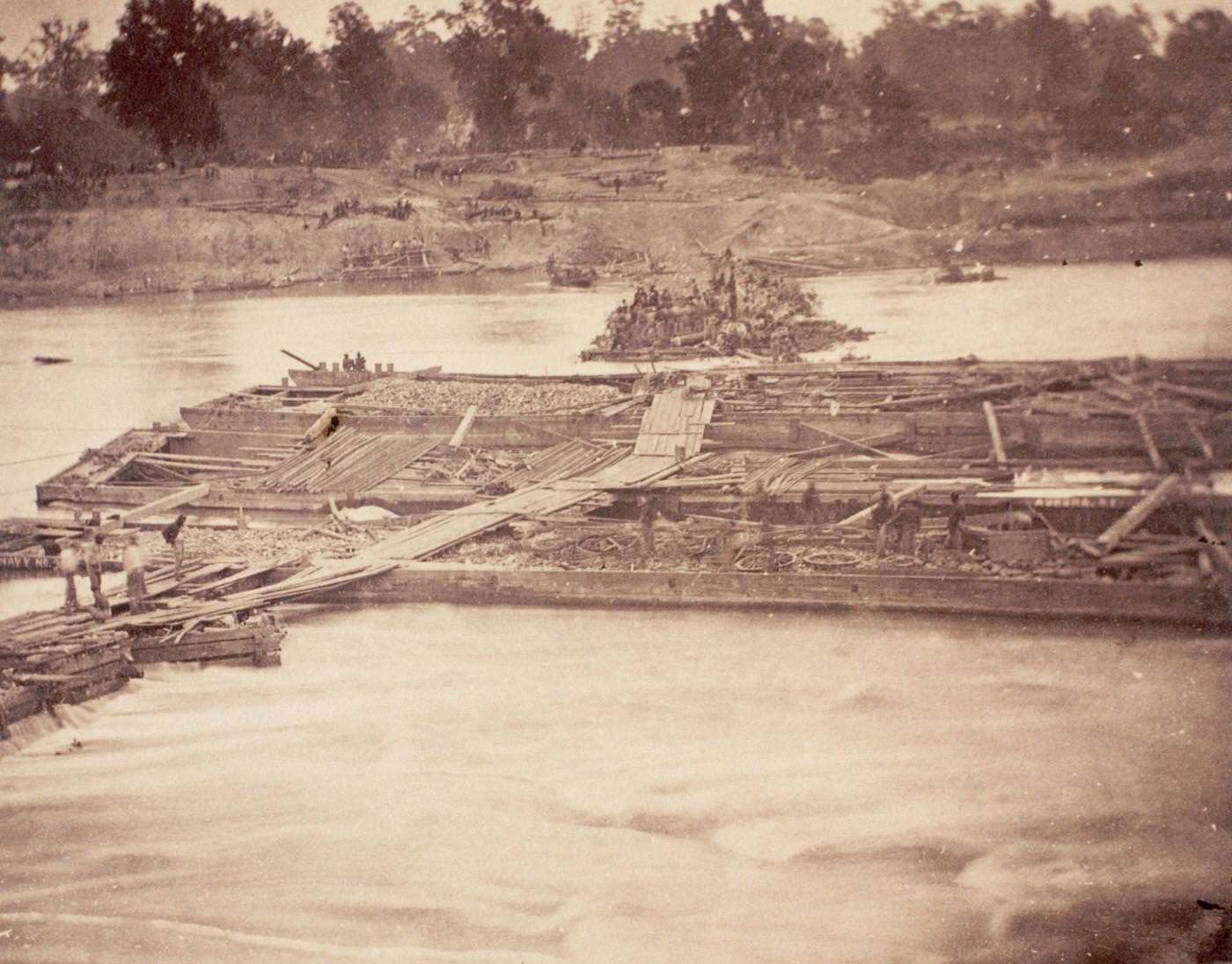
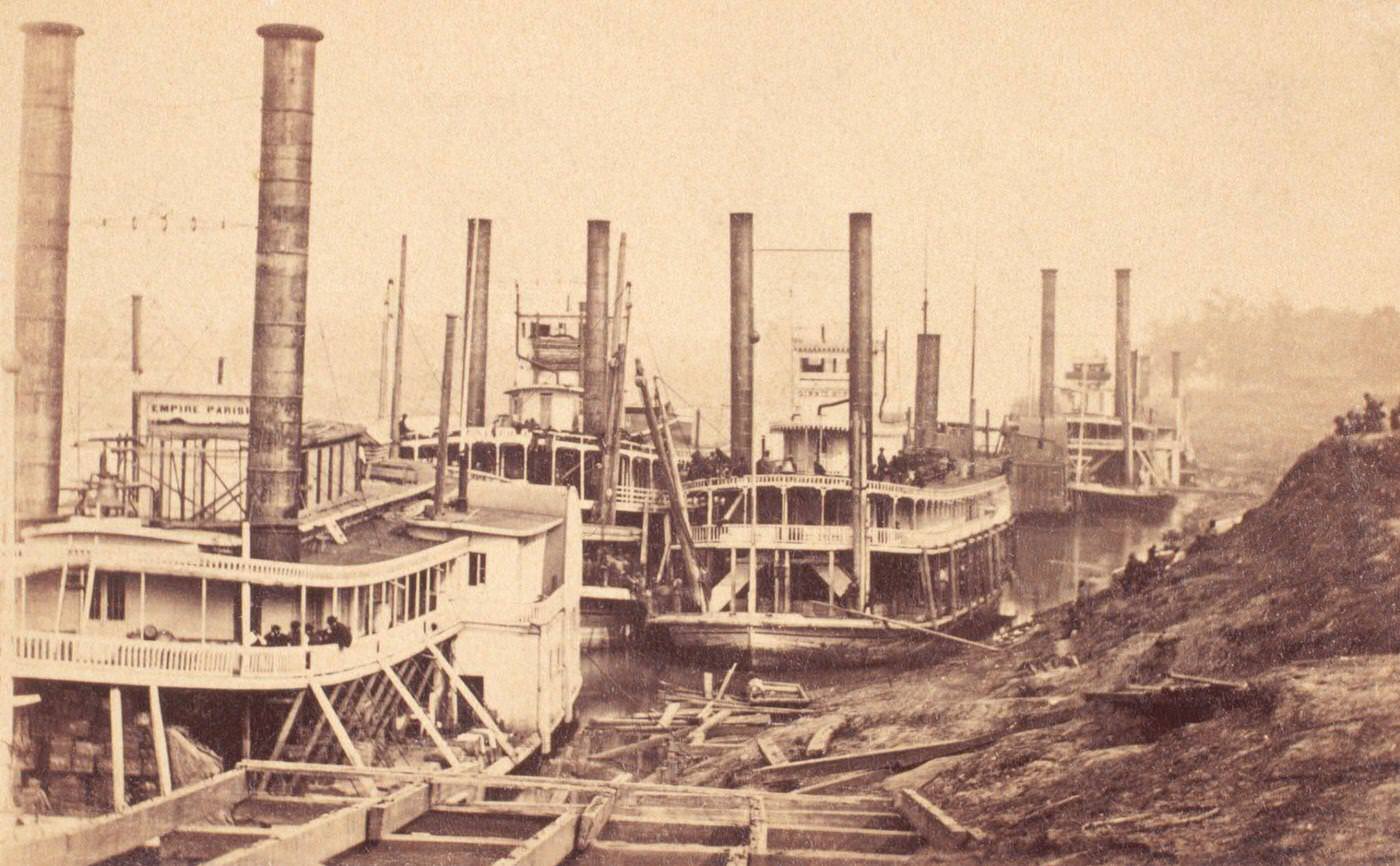
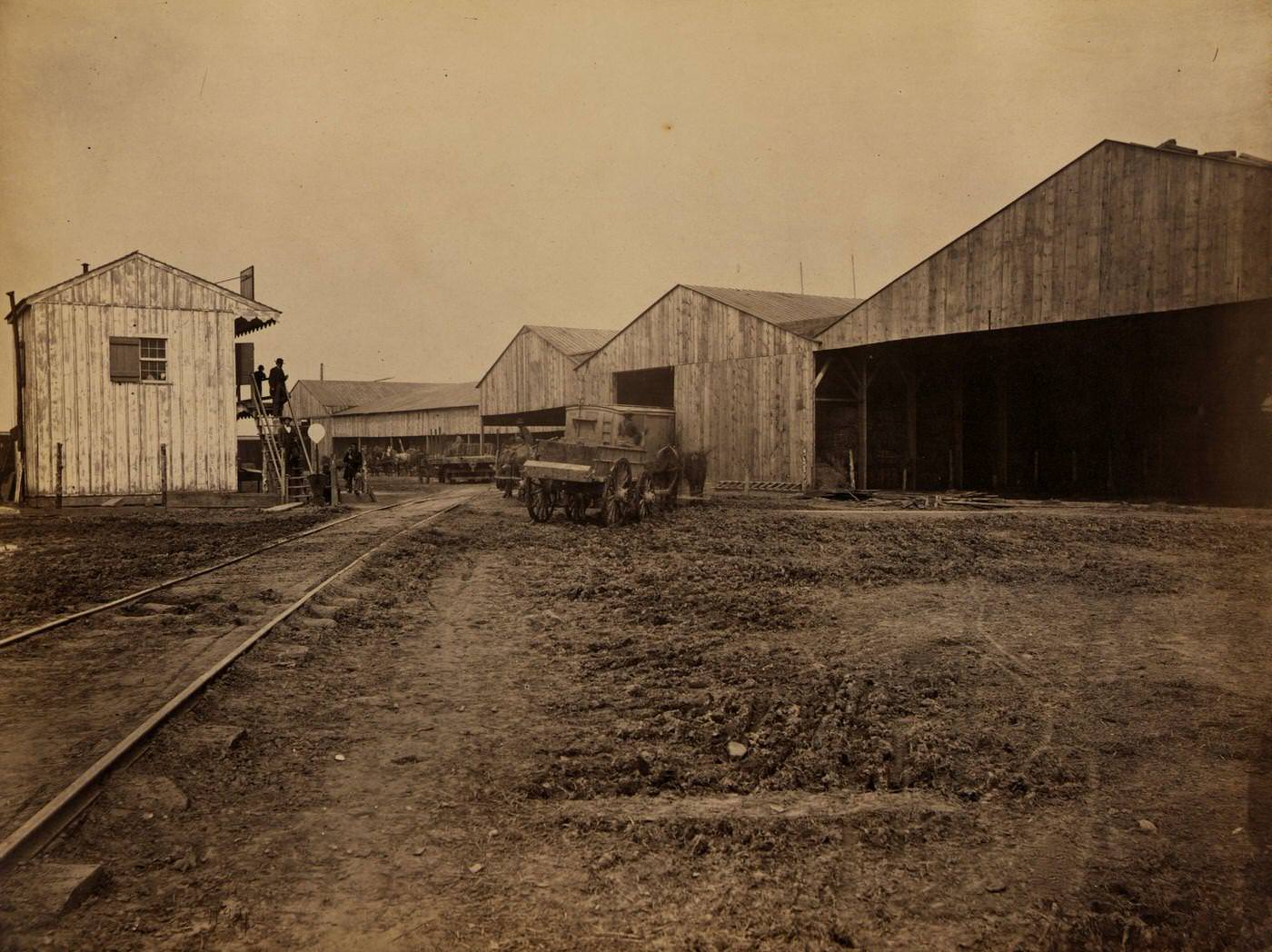
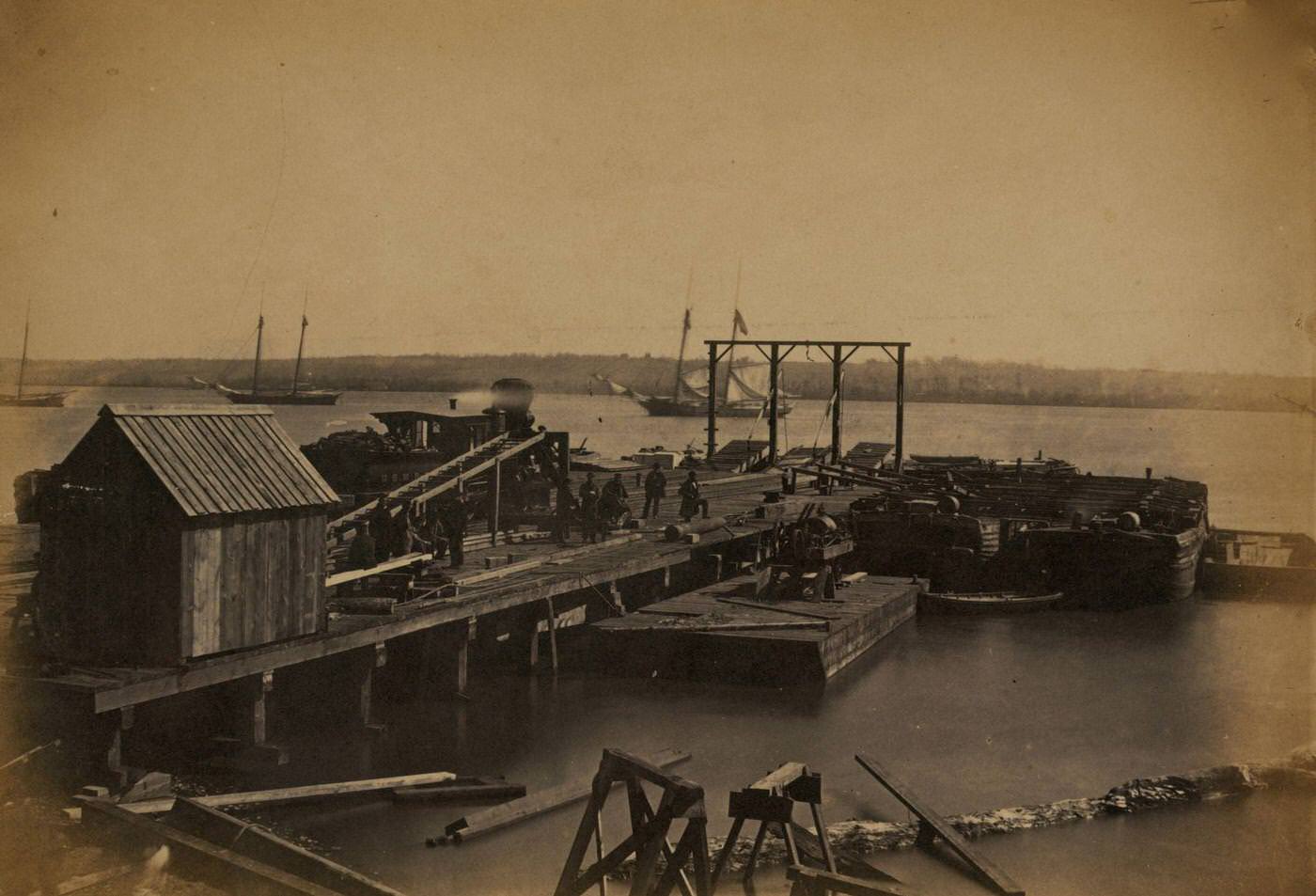
Alexandria’s waterfront was equally busy. The port served as the main entry point for enormous quantities of military supplies — coal, hay, lumber, food, and hardware all arrived by barge and steamship. Government wharves lined the waterfront, and warehouses stretched back from the docks. Laborers, many of them Black men, worked the wharves loading and unloading cargo. The city’s old commercial identity as a port town was fully absorbed into the Union war machine.
Government coal wharf, Alexandria, 1863Quartermaster’s Wharf, Alexandria, 1865Laborers At Quartermasters Wharf, 1863
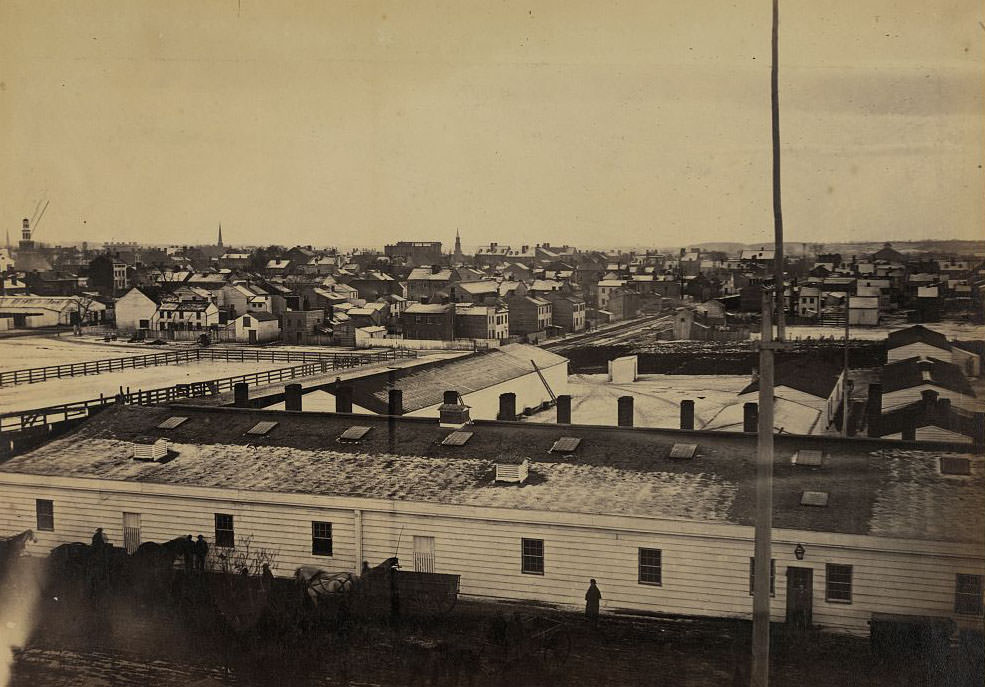
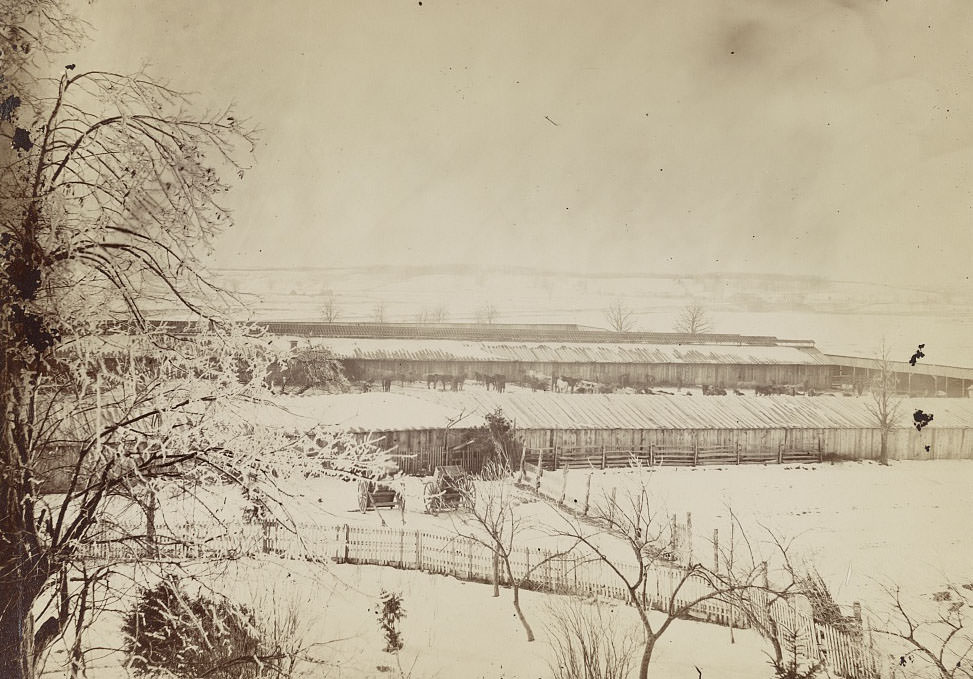
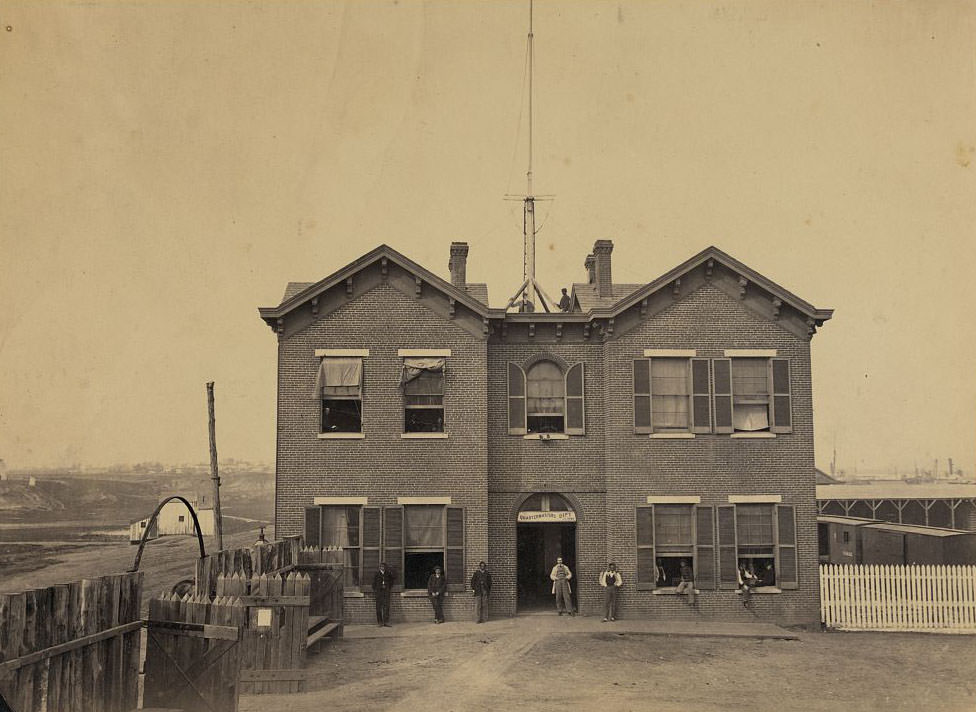
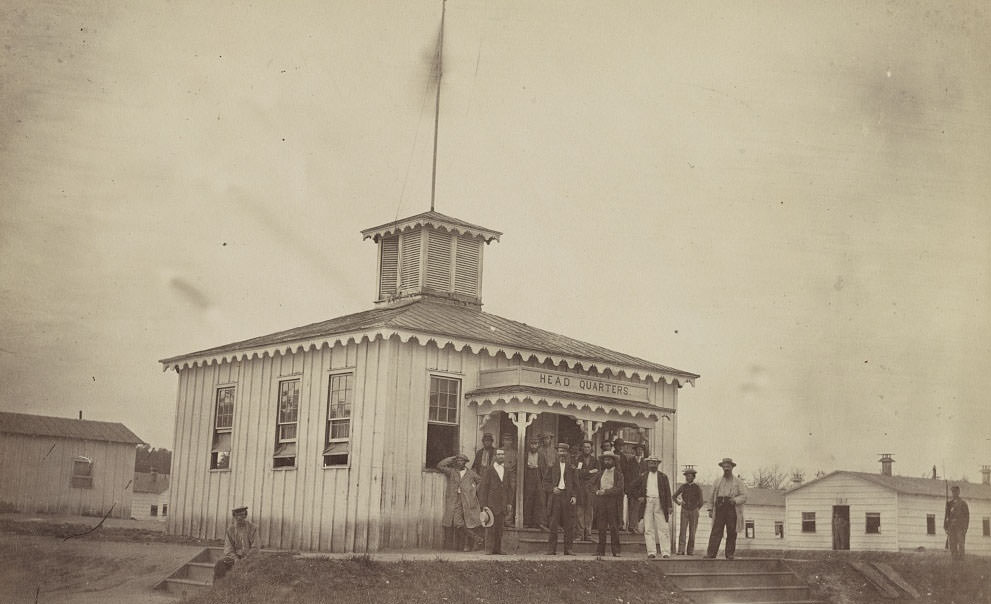
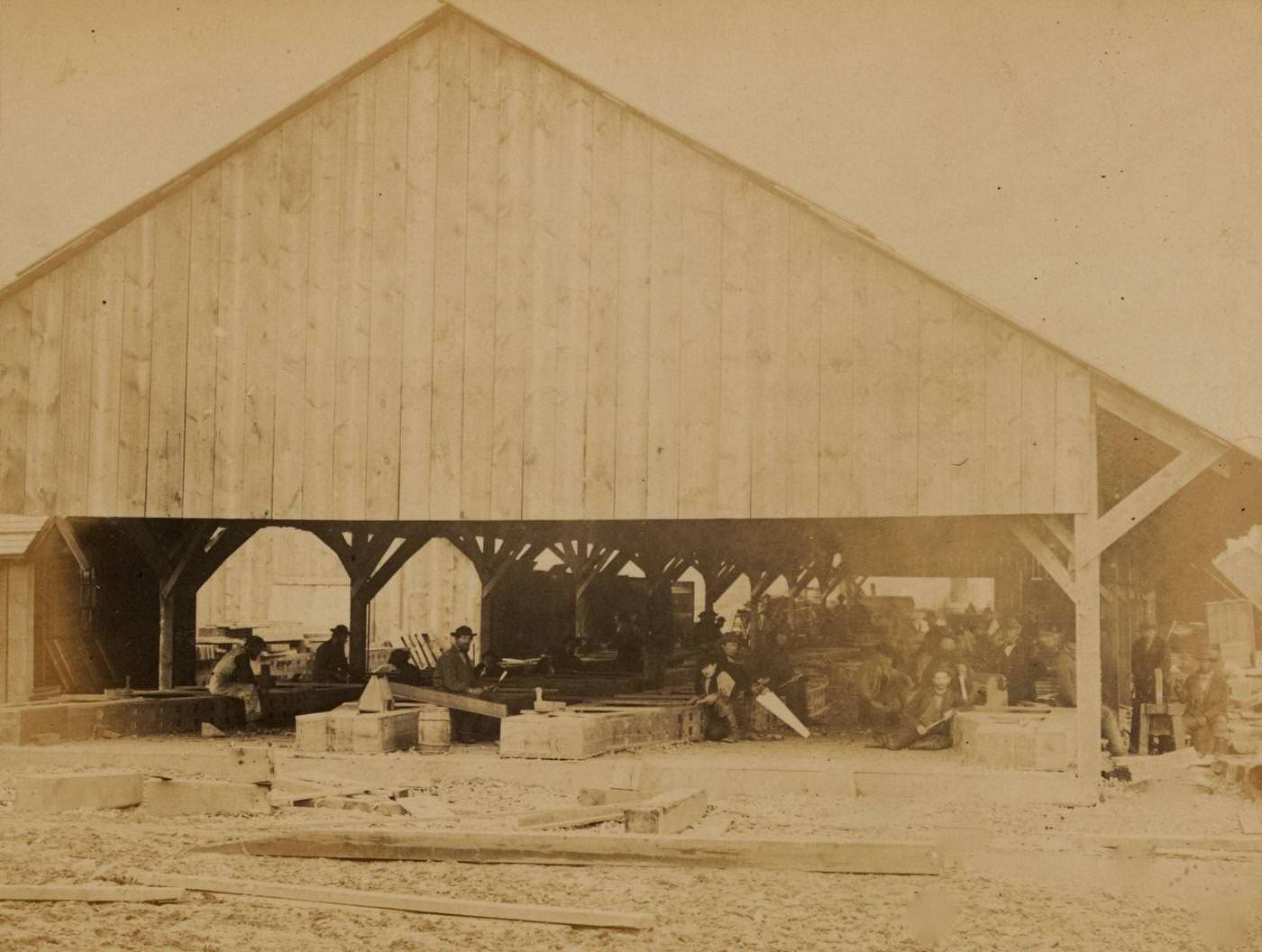
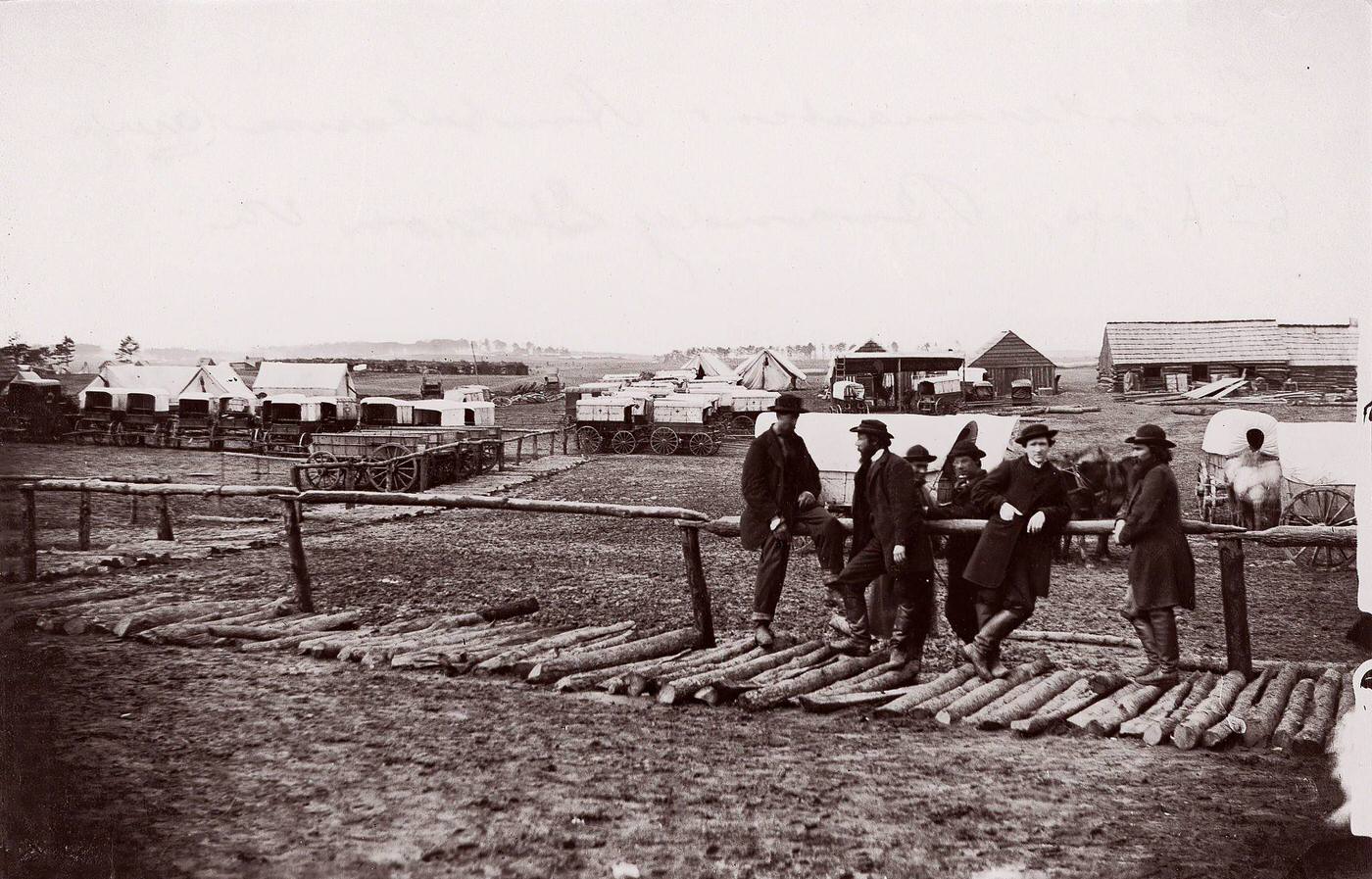
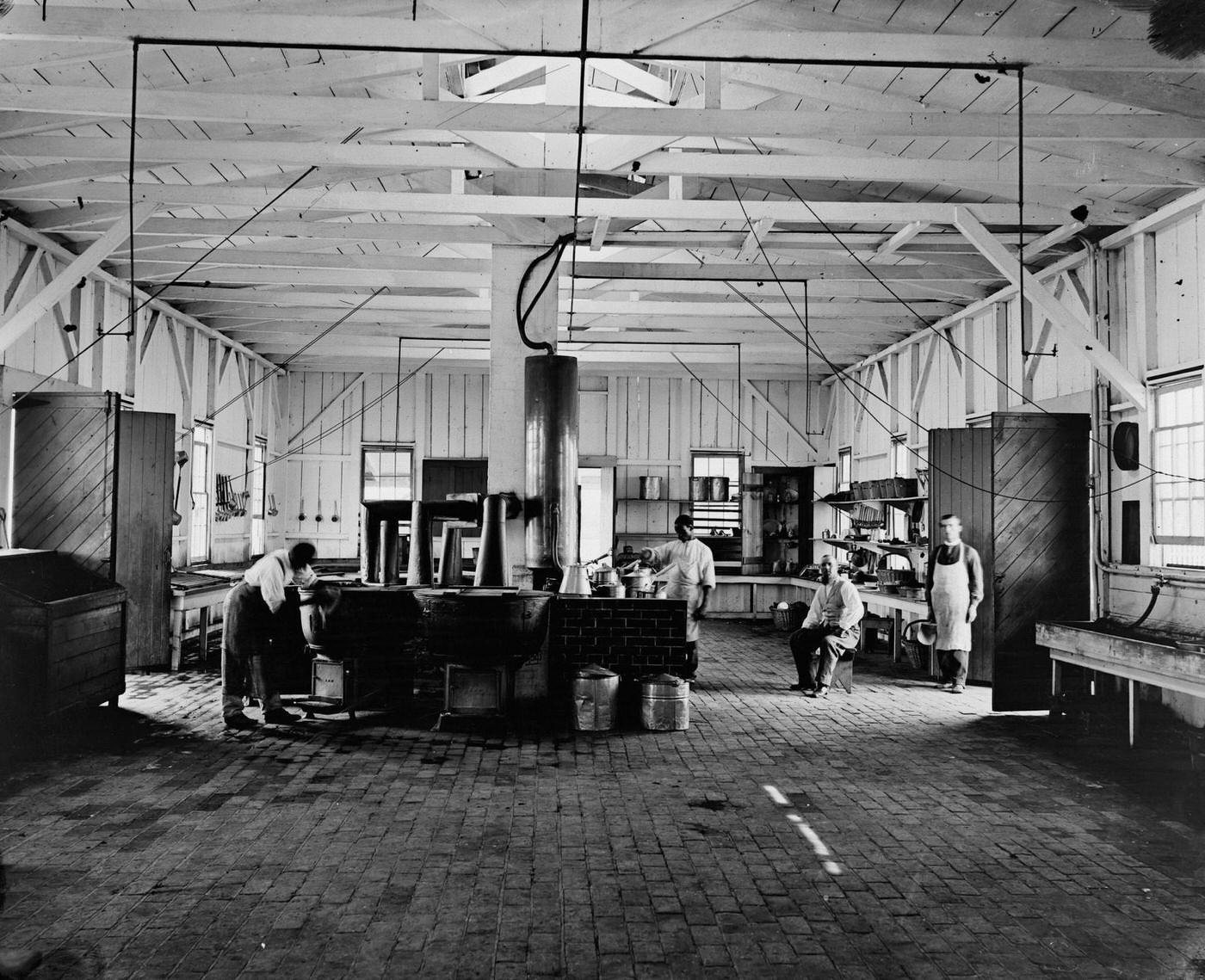
While Union generals set up headquarters in commandeered buildings across the city, the military also ran bakeries, corrals, hay barns, and carpenter shops. The government bakery in Alexandria produced bread for troops across the region. The quartermaster’s corral held hundreds of horses and mules needed to haul artillery and supply wagons. These photographs show a city that was less a battlefield and more a factory — a place designed to feed, arm, and move an army of hundreds of thousands.
Gen. Slough’s headquarters, St. Asaph Street, Alexandria. Post office and veteran’s reserve headquarters in middle distance, 1862Government Bakery, Alexandria, 1863Quartermaster’s corrall (i.e. corral), near Alexandria, 1864
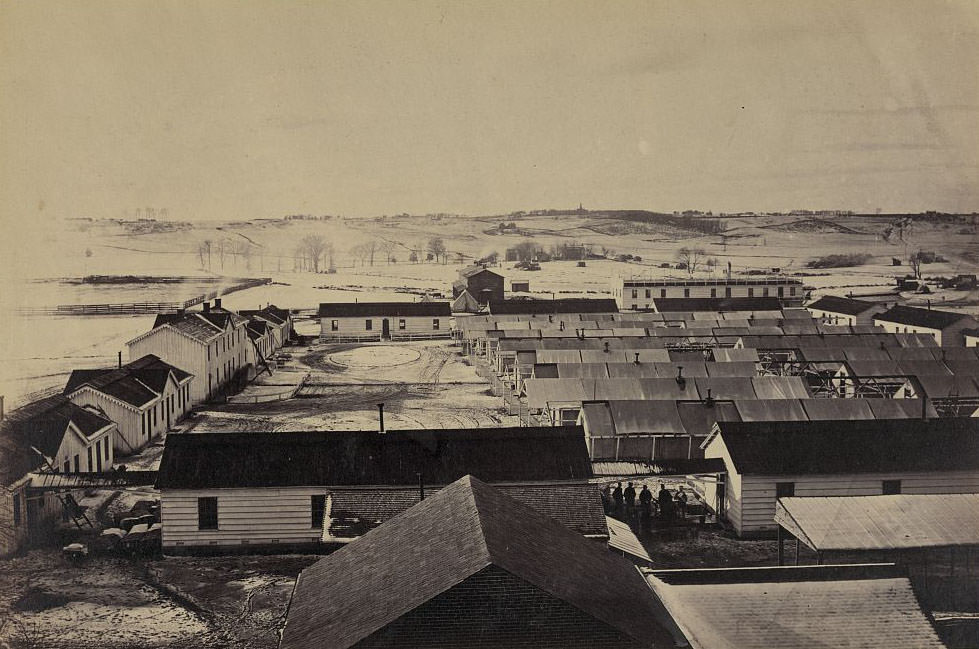
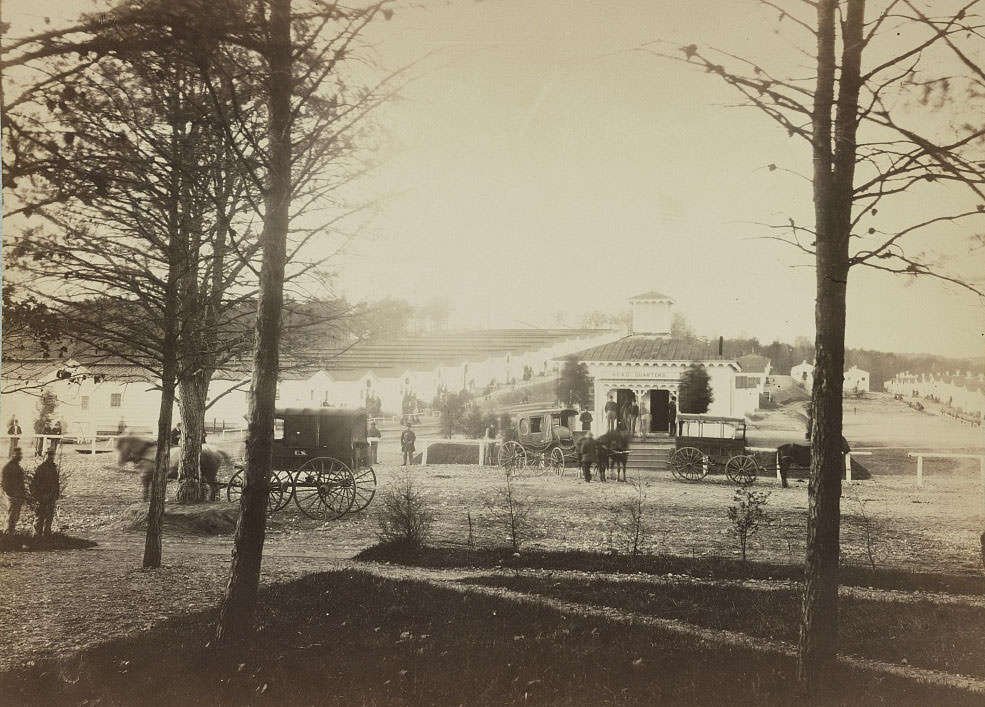
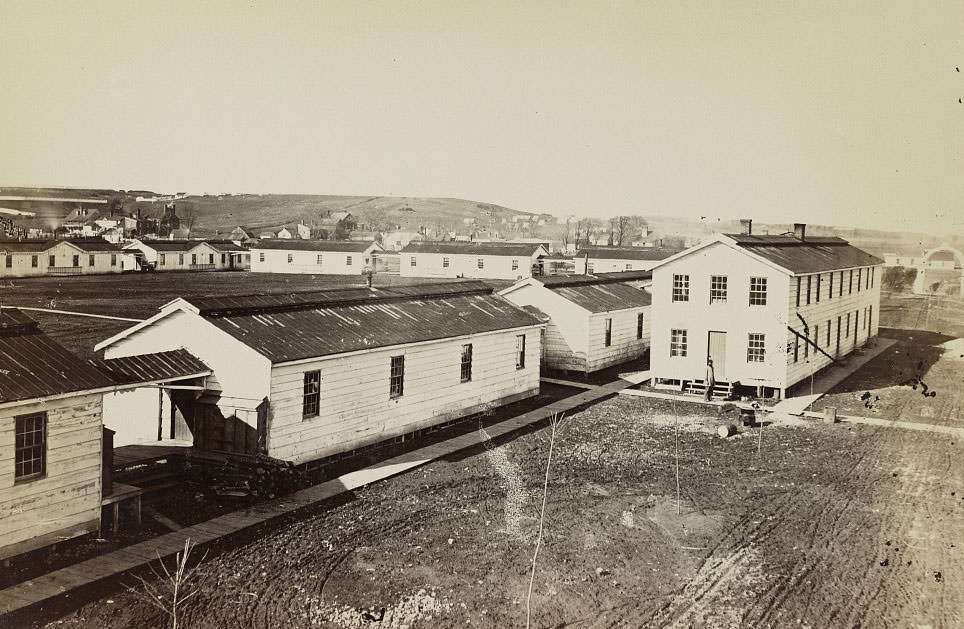
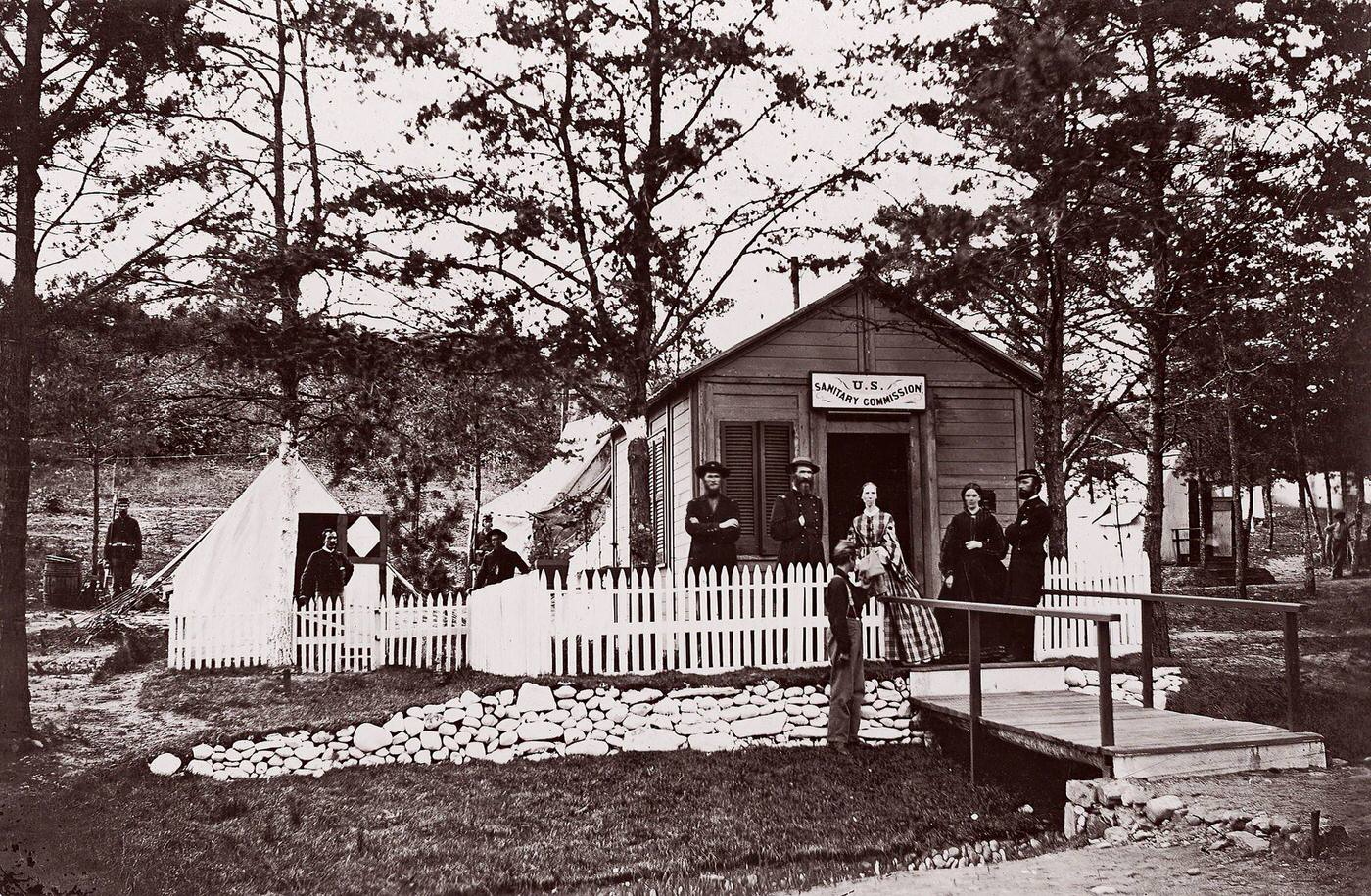
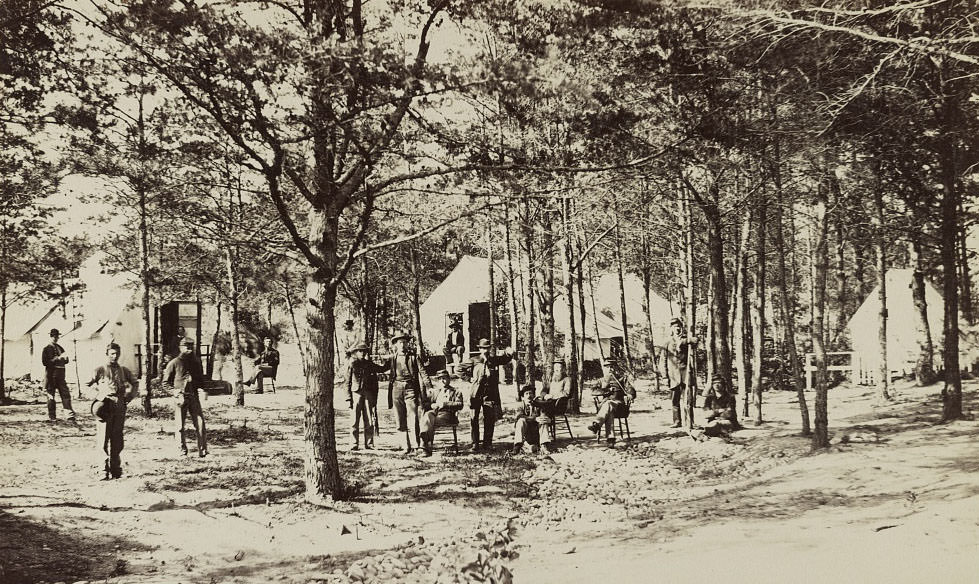
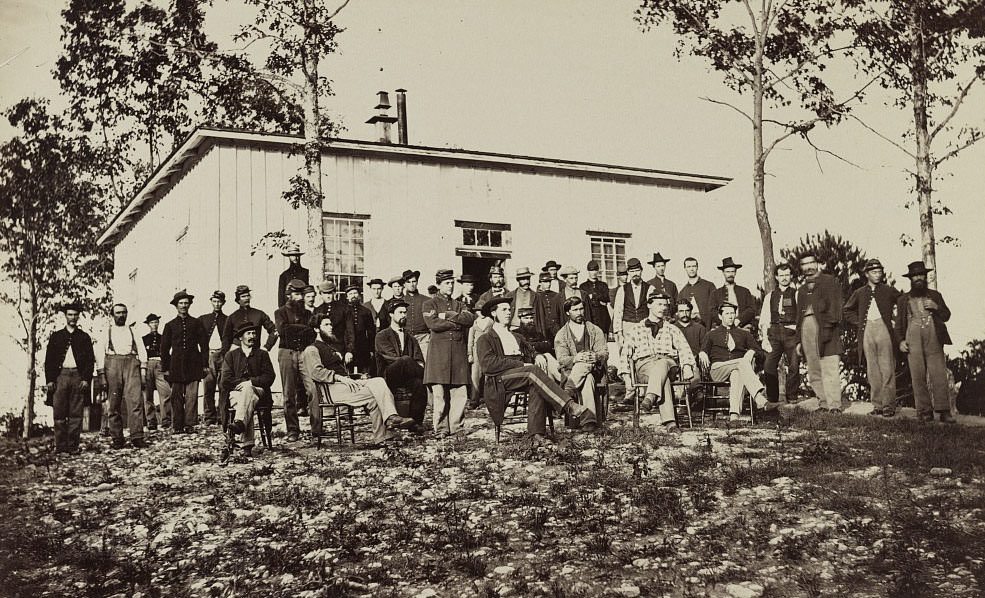
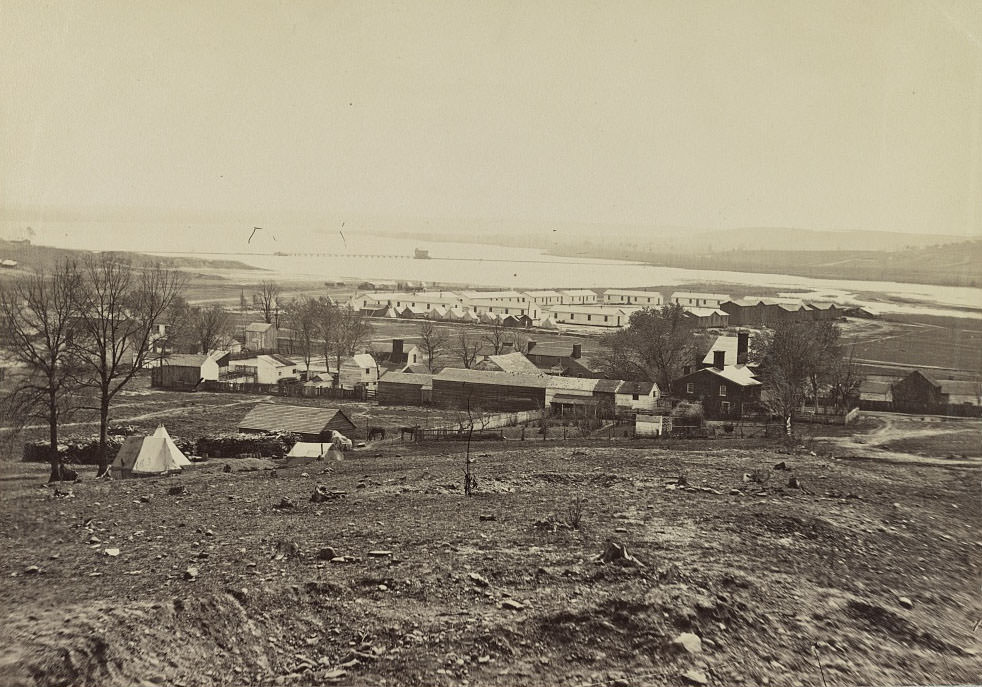
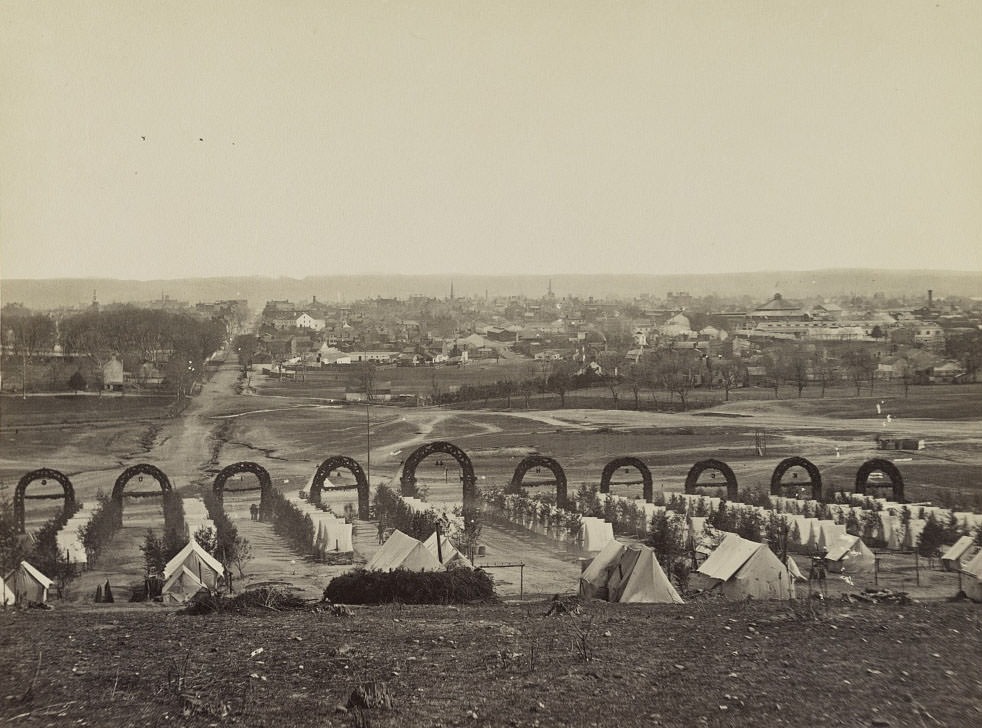
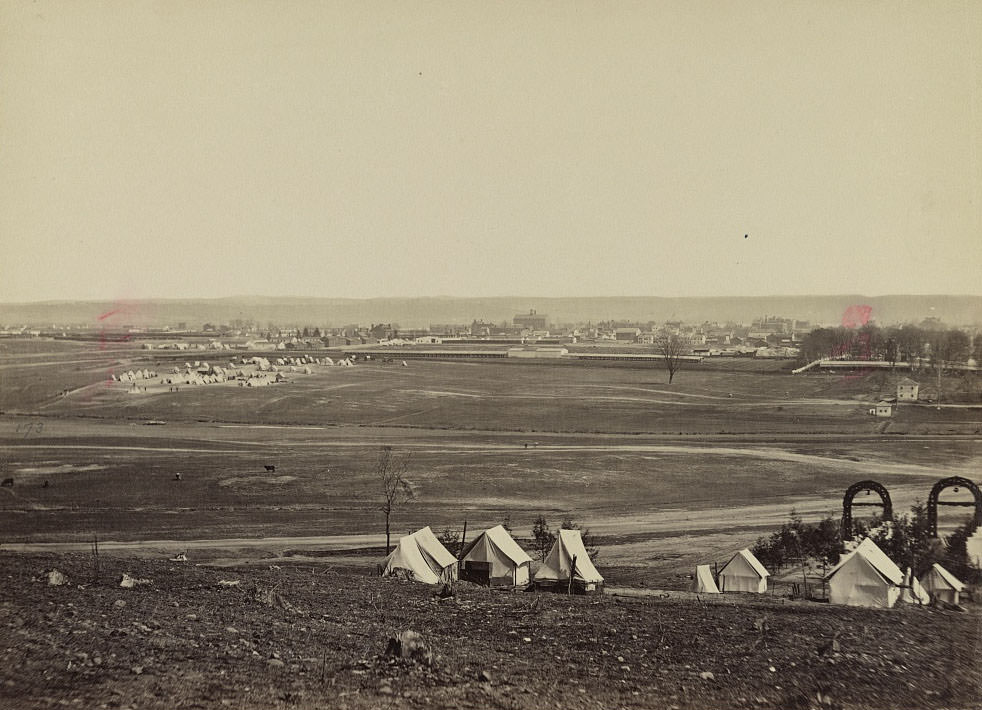
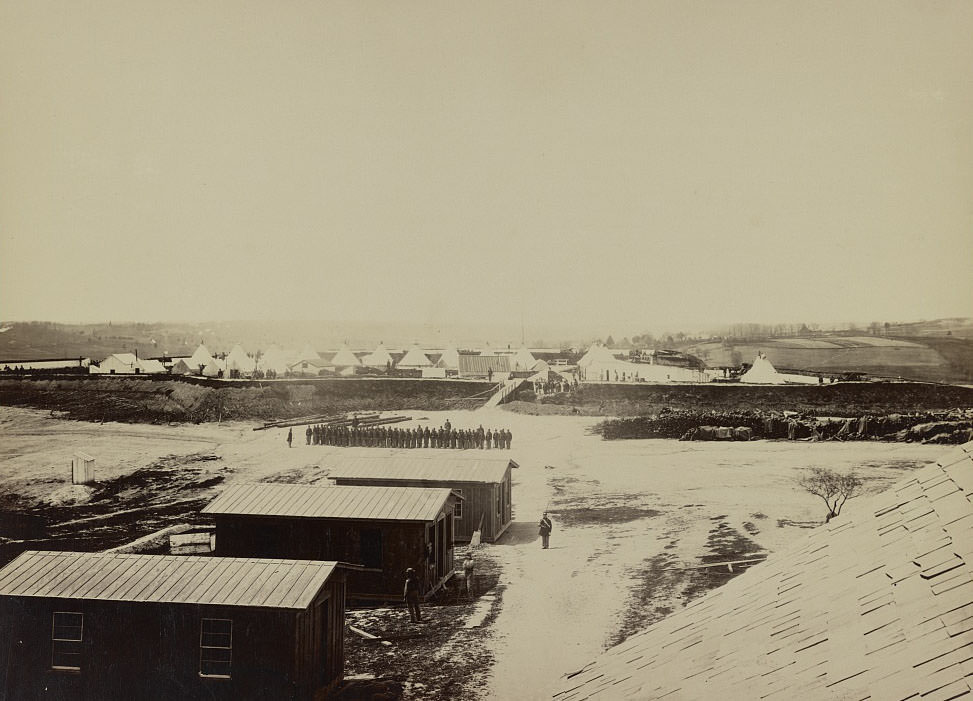
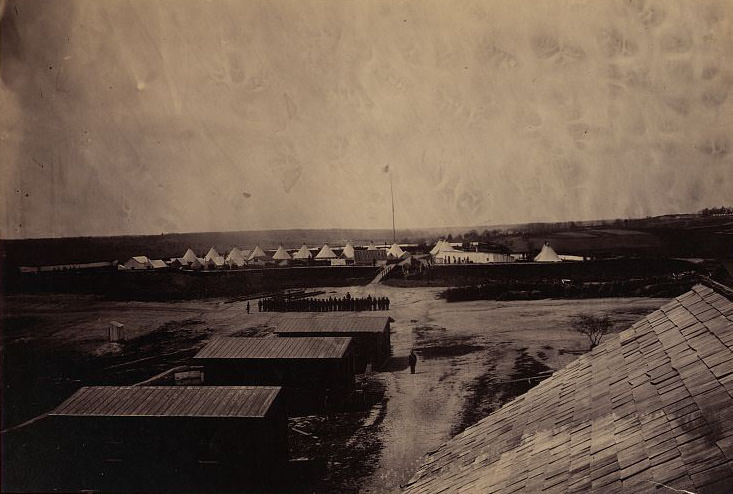
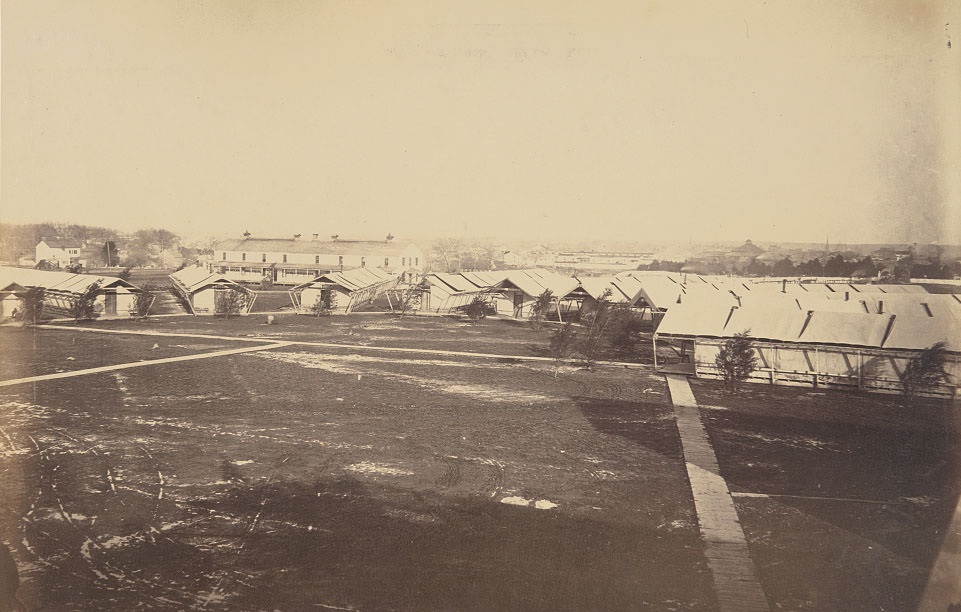
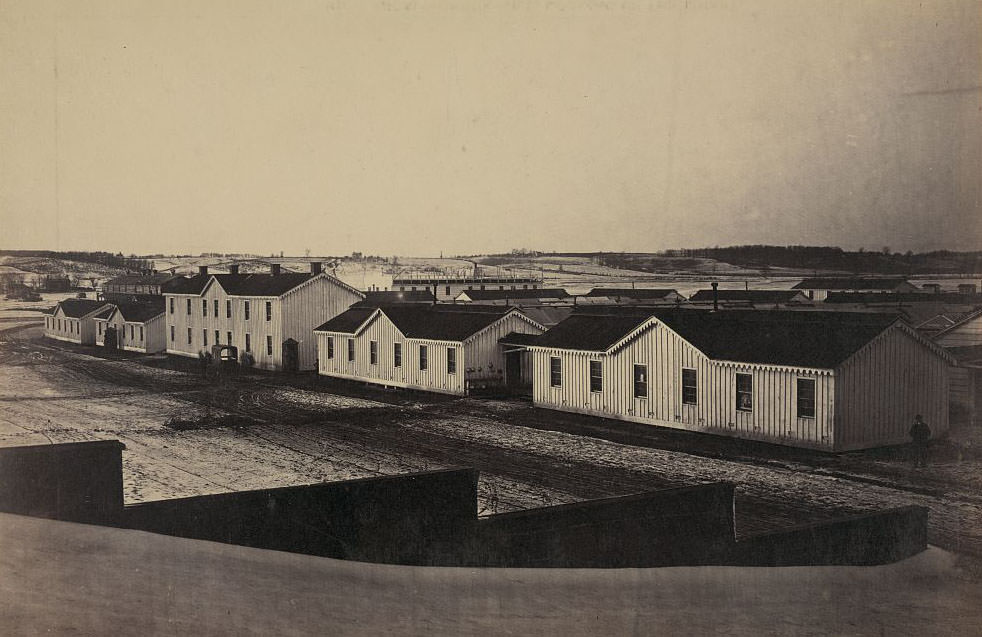
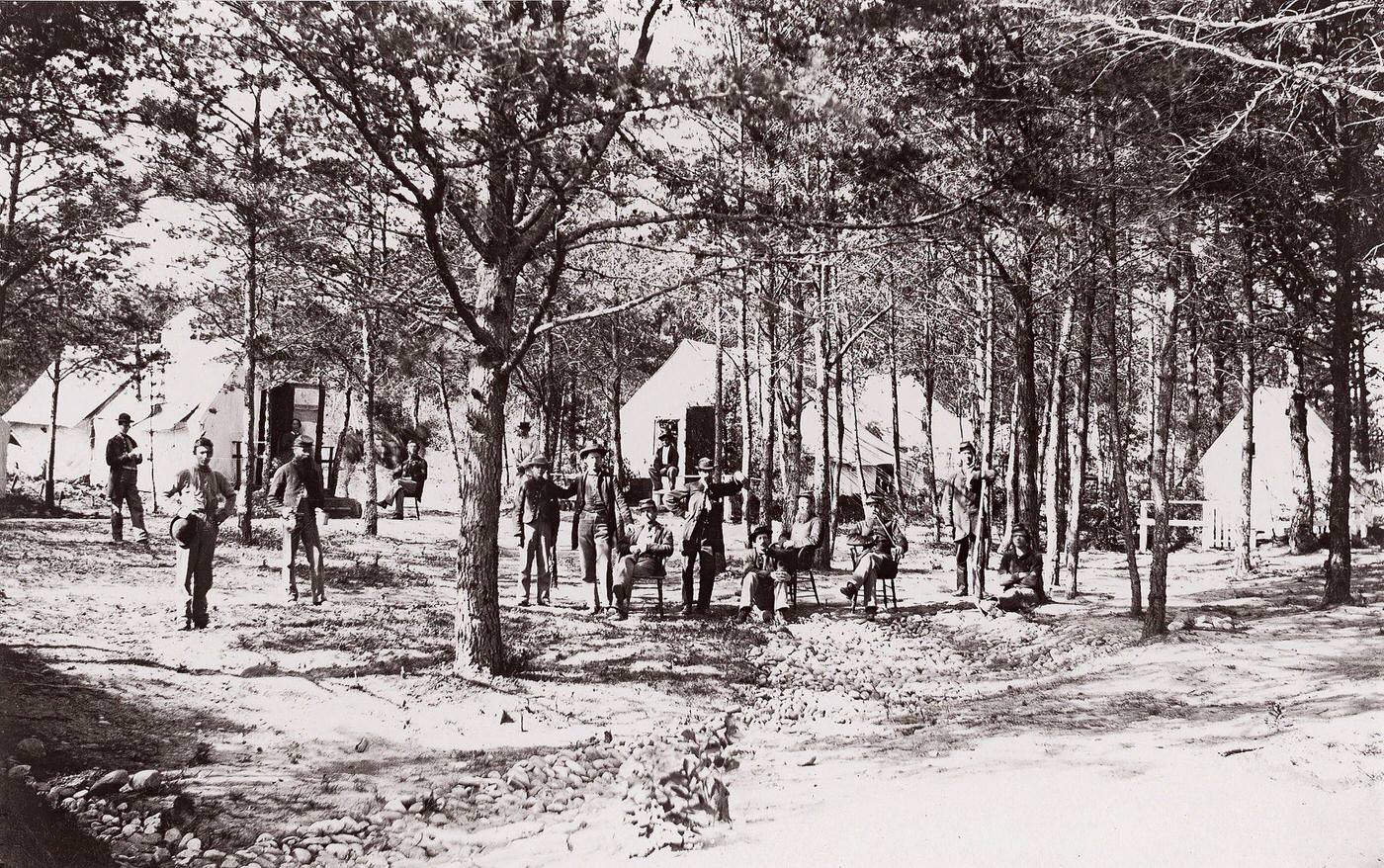
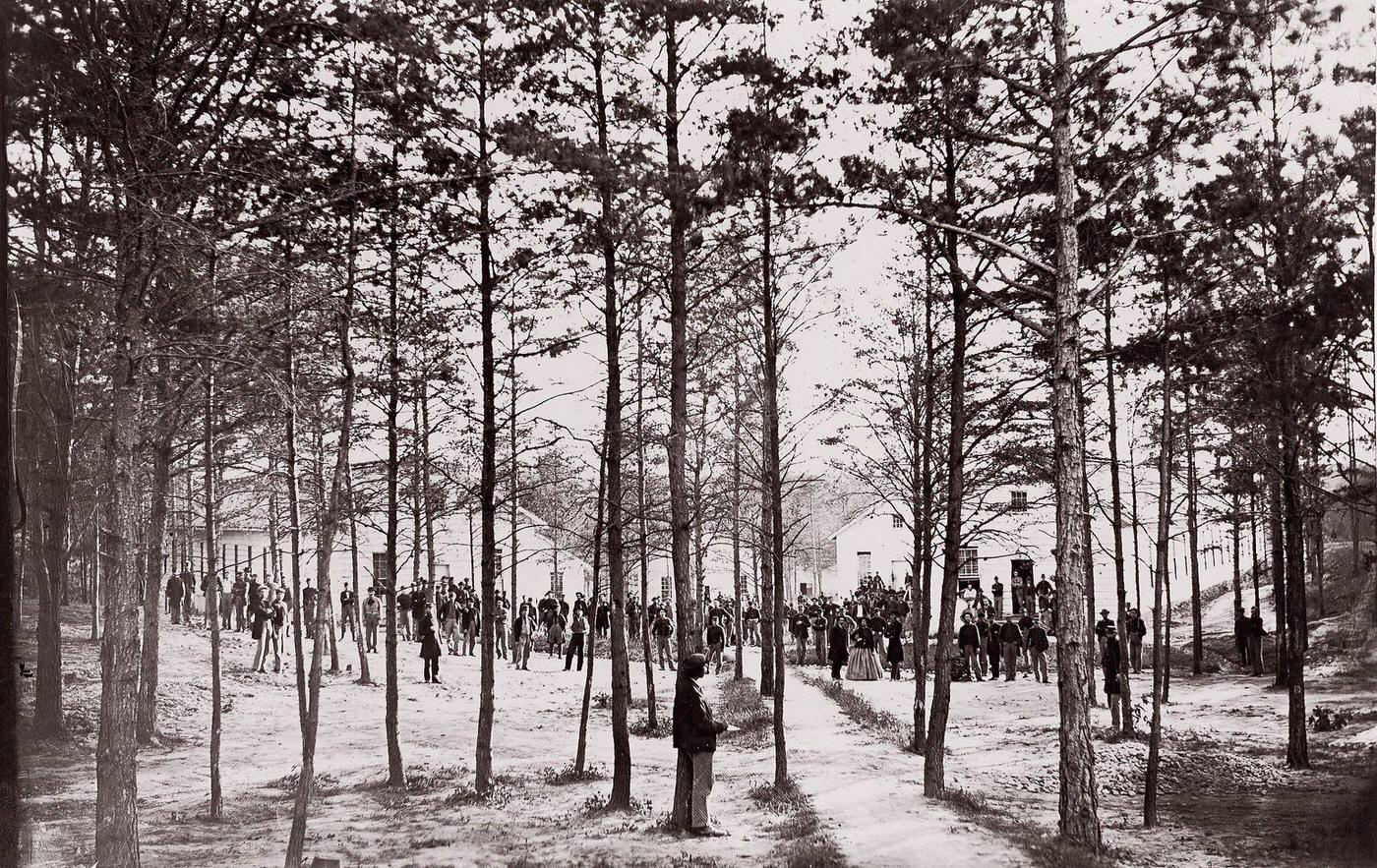
The Union army established convalescent camps on the outskirts of Alexandria to handle the overflow of sick and wounded soldiers. These camps held thousands of men at a time, housed in rows of tents and wood-frame barracks. When the barracks at Camp Slough were converted into medical wards for Slough Hospital, soldiers were moved back into tents. A Sanitary Commission office operated at the convalescent camp, working to improve conditions and reduce the death rate from disease.
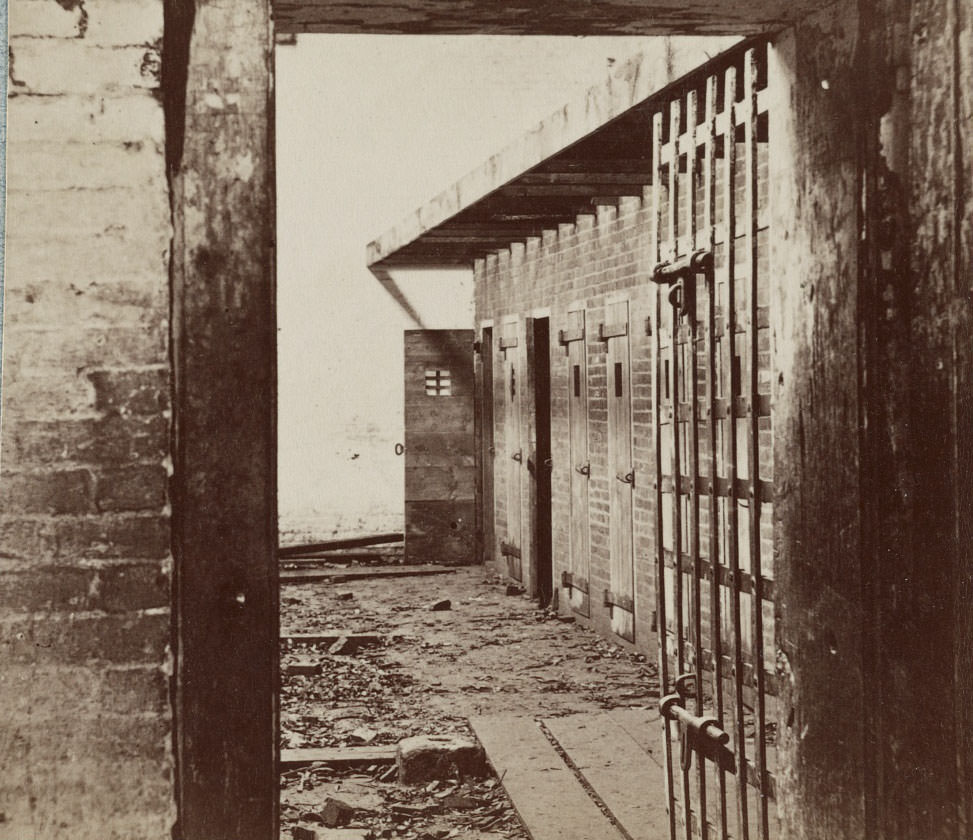
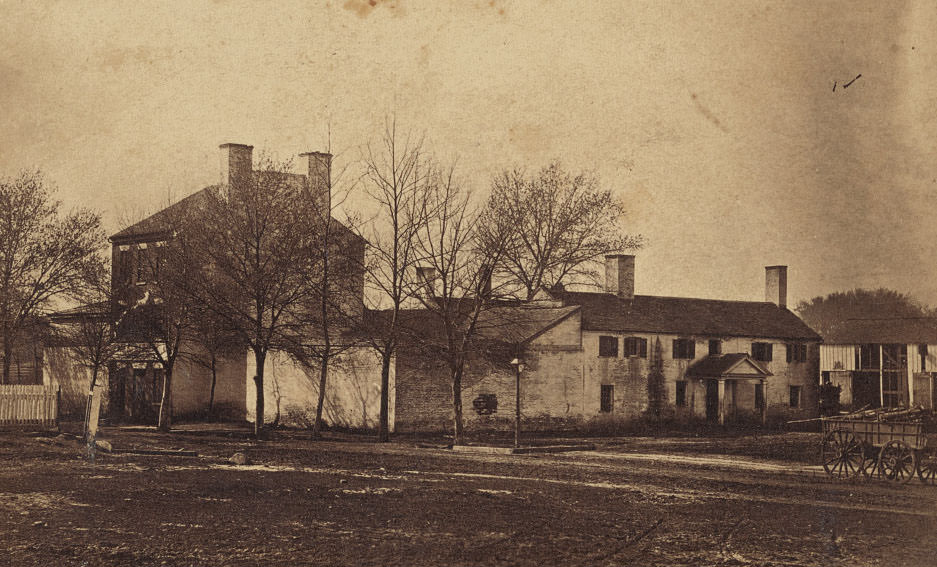
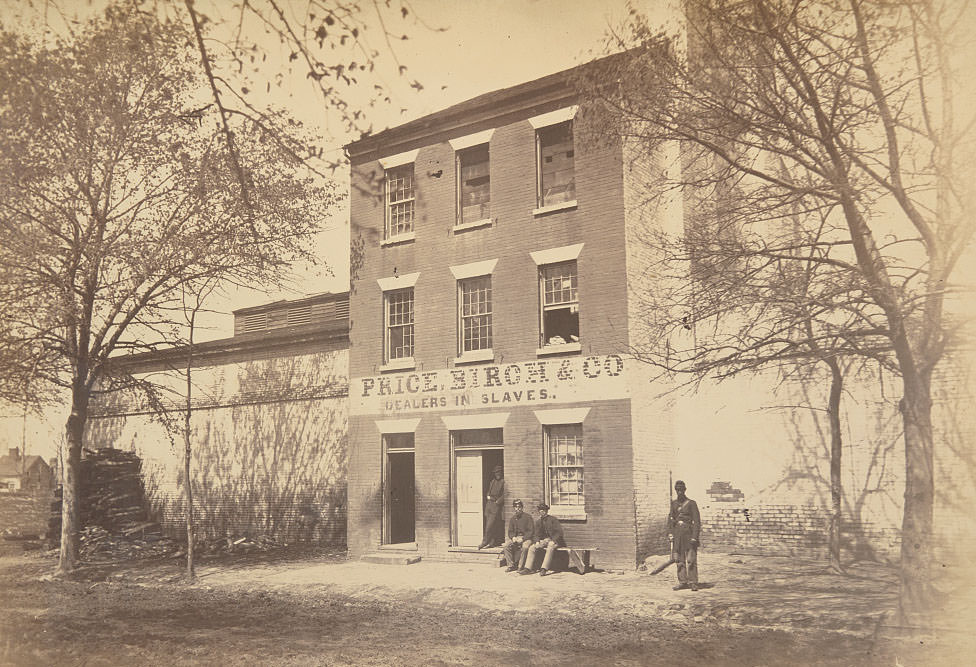
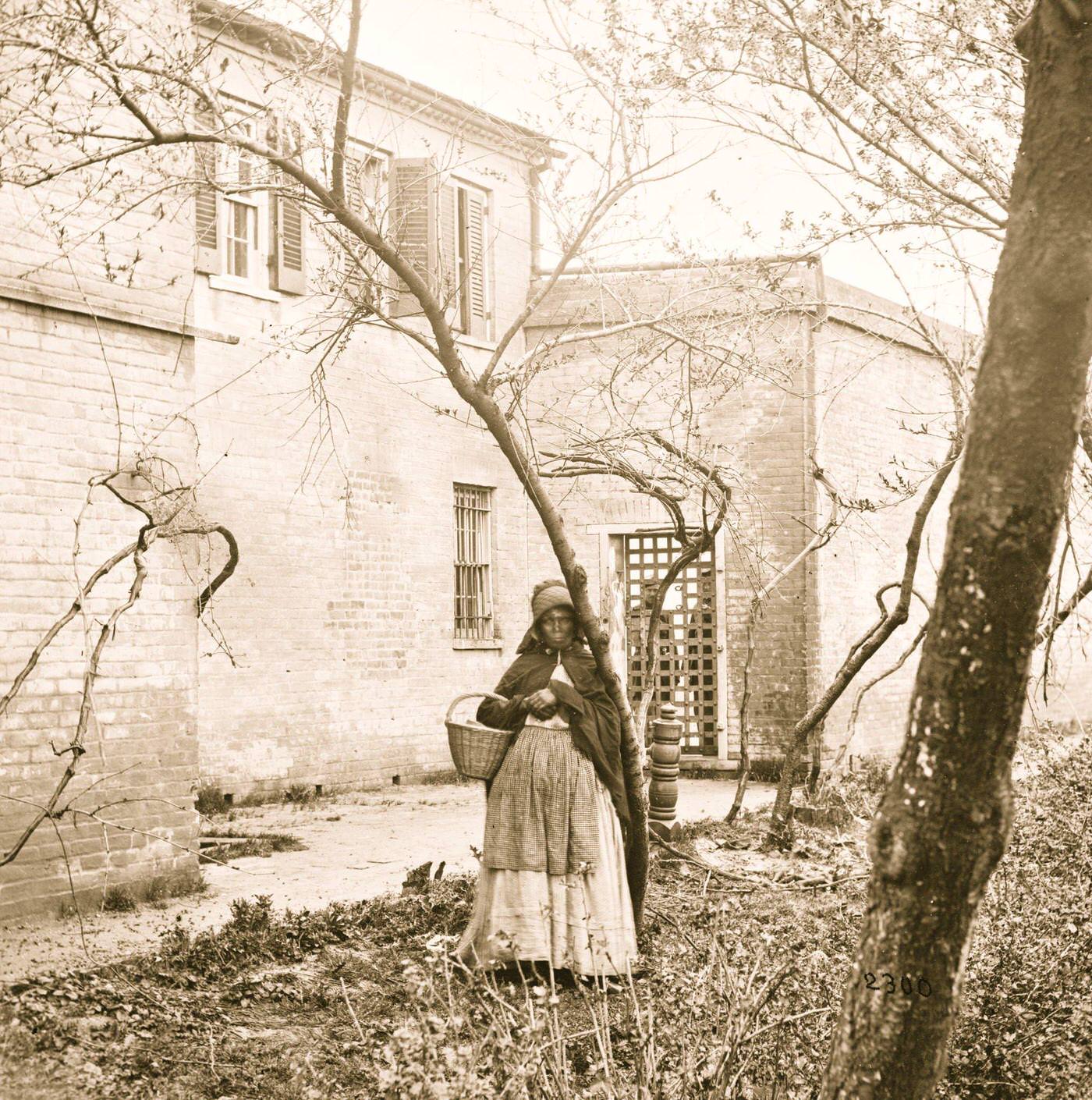
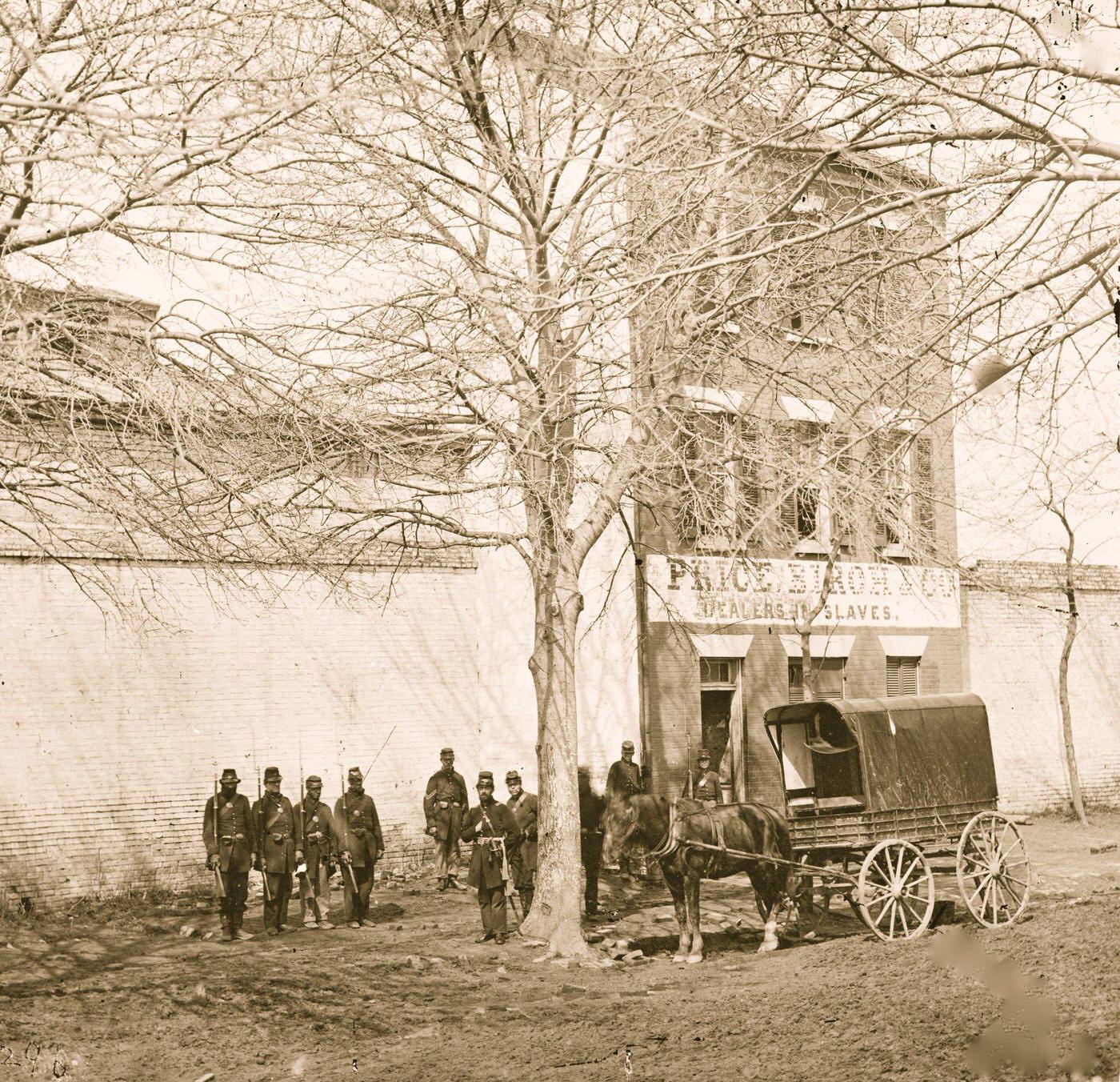
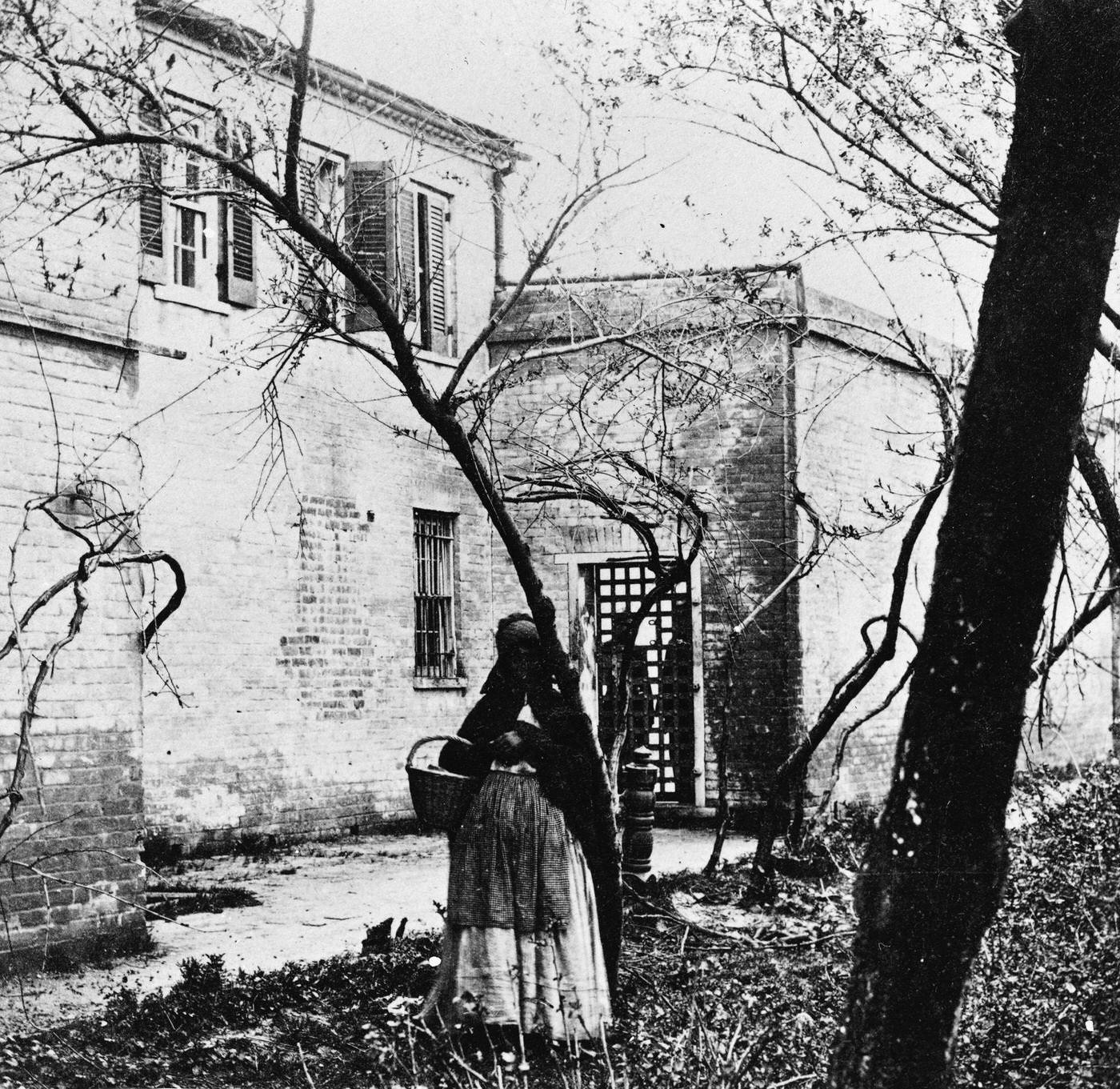
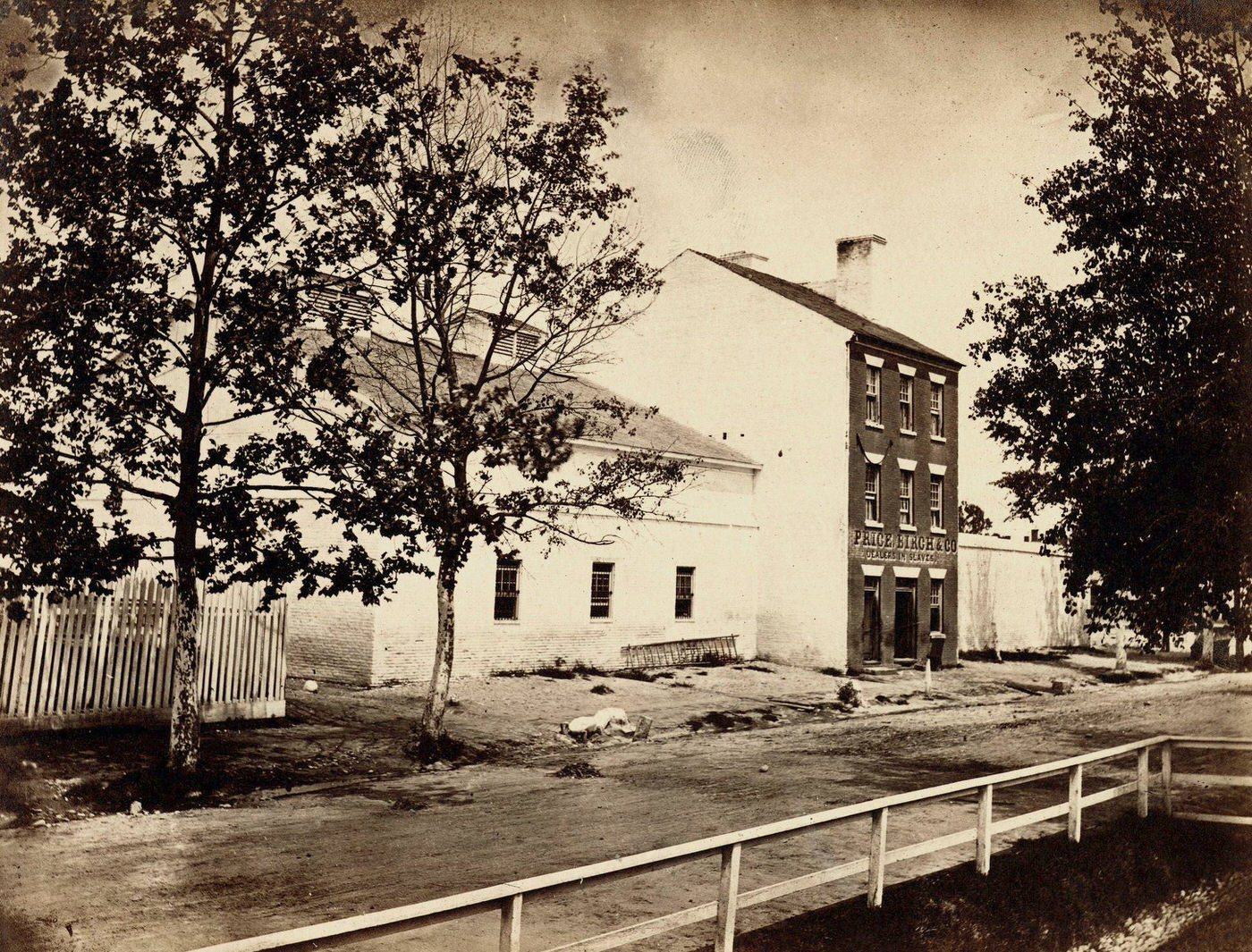
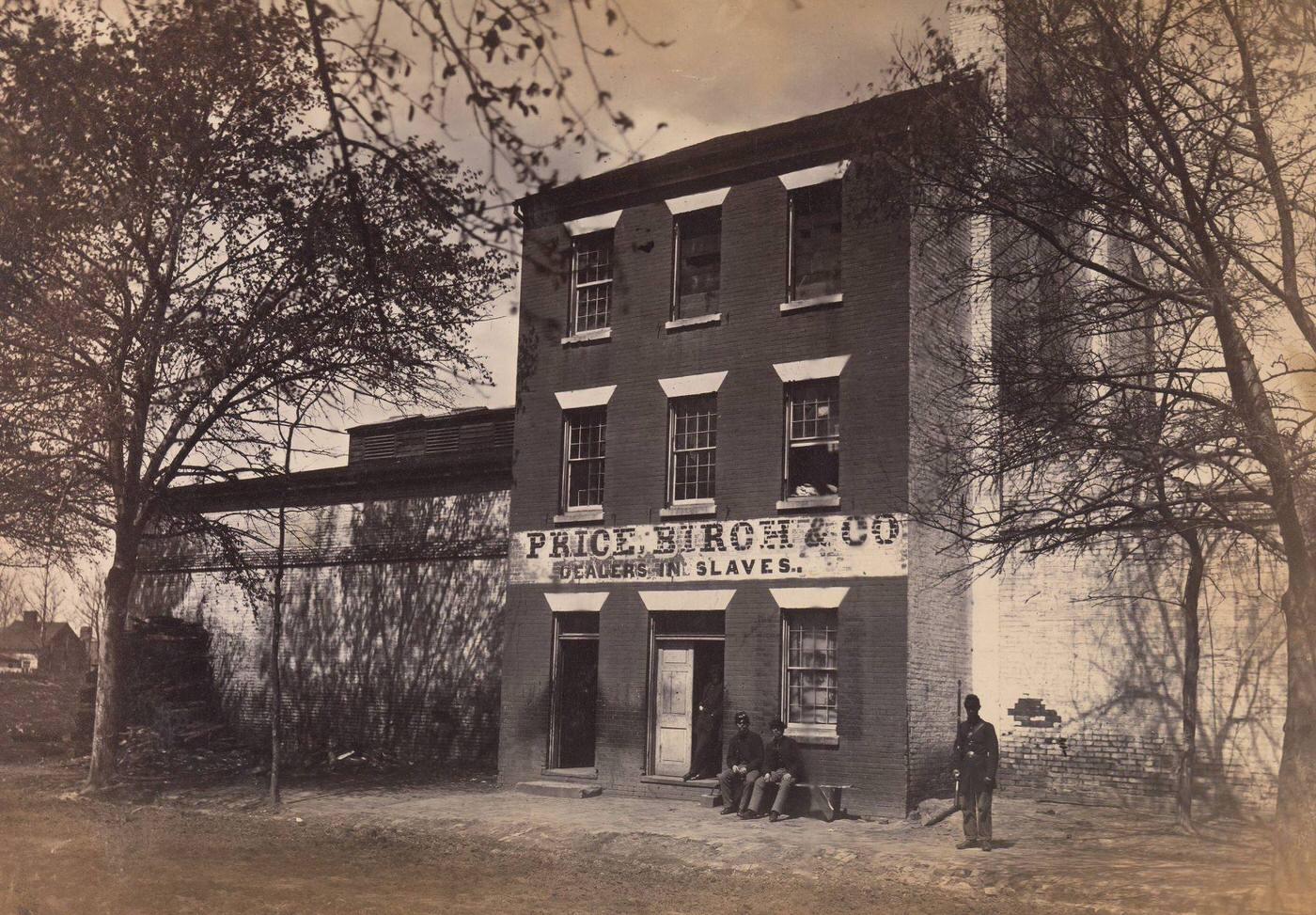
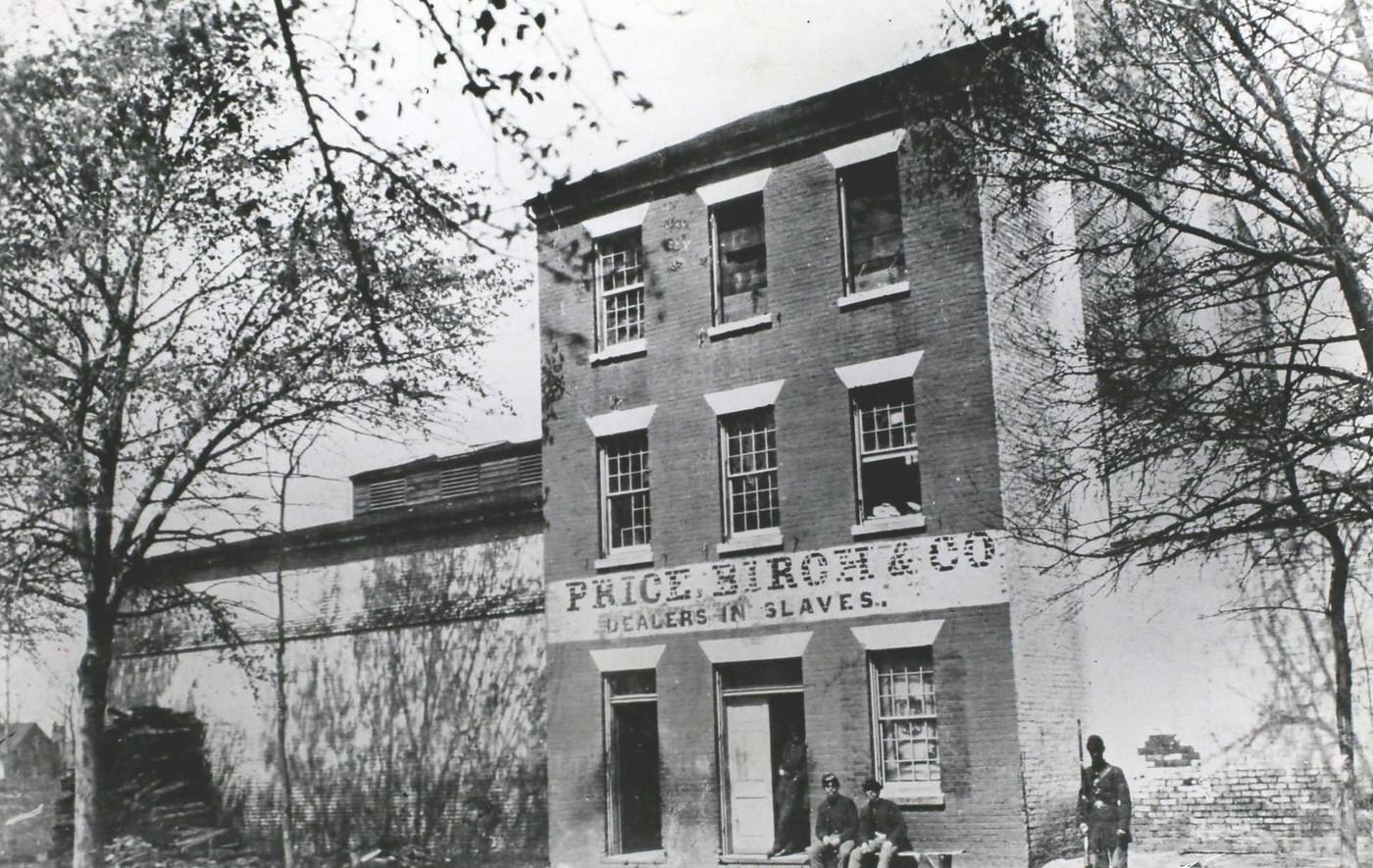
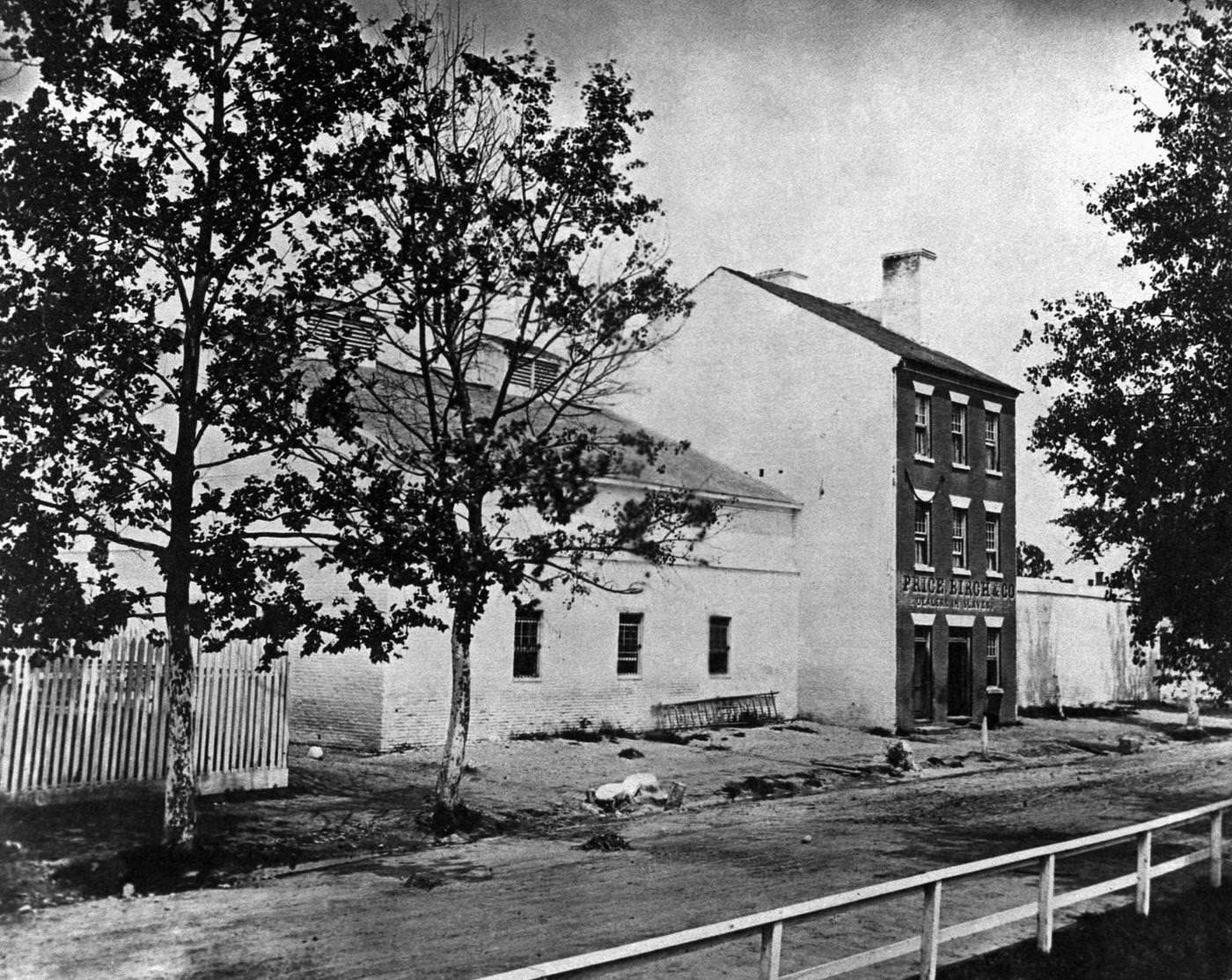
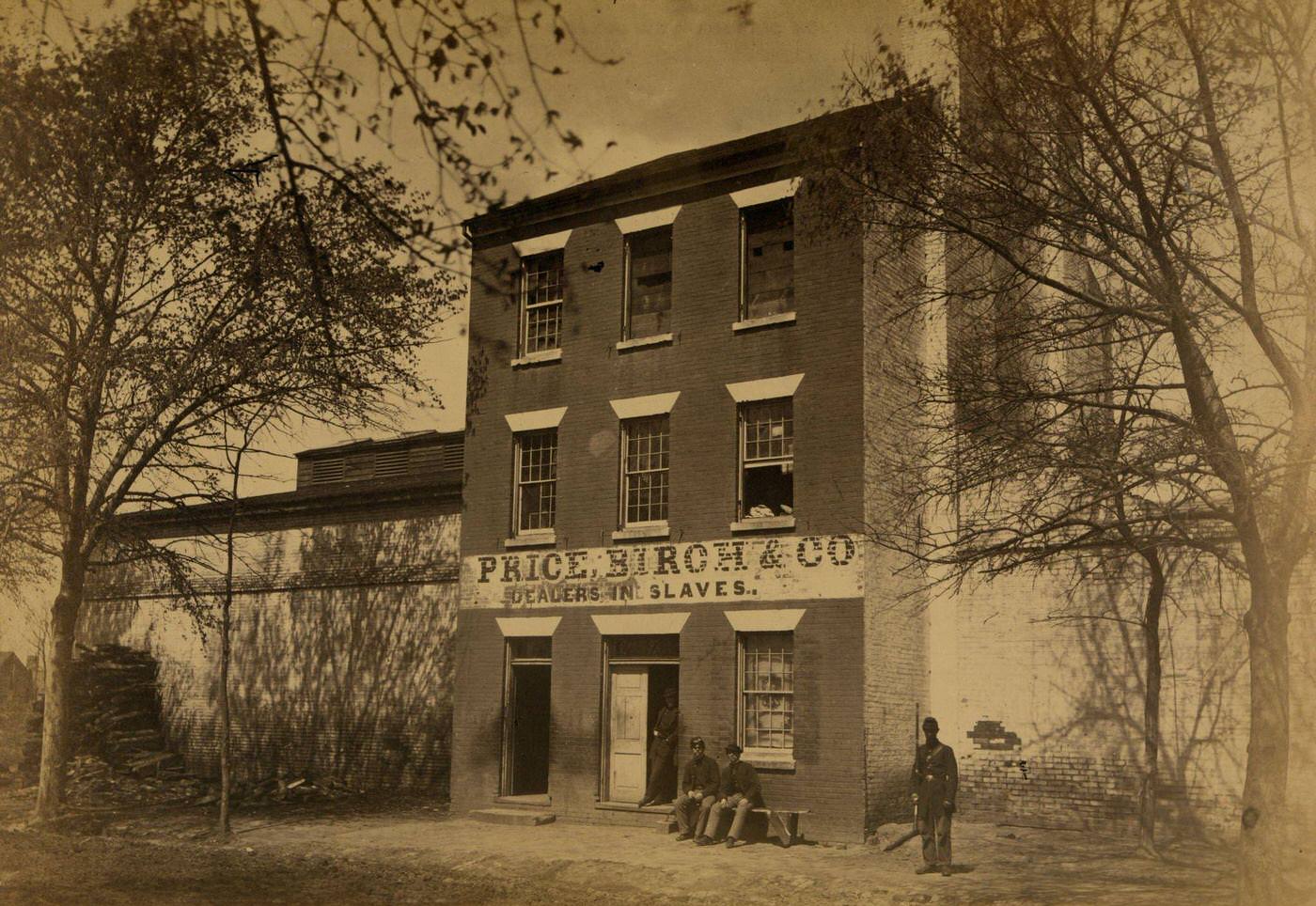
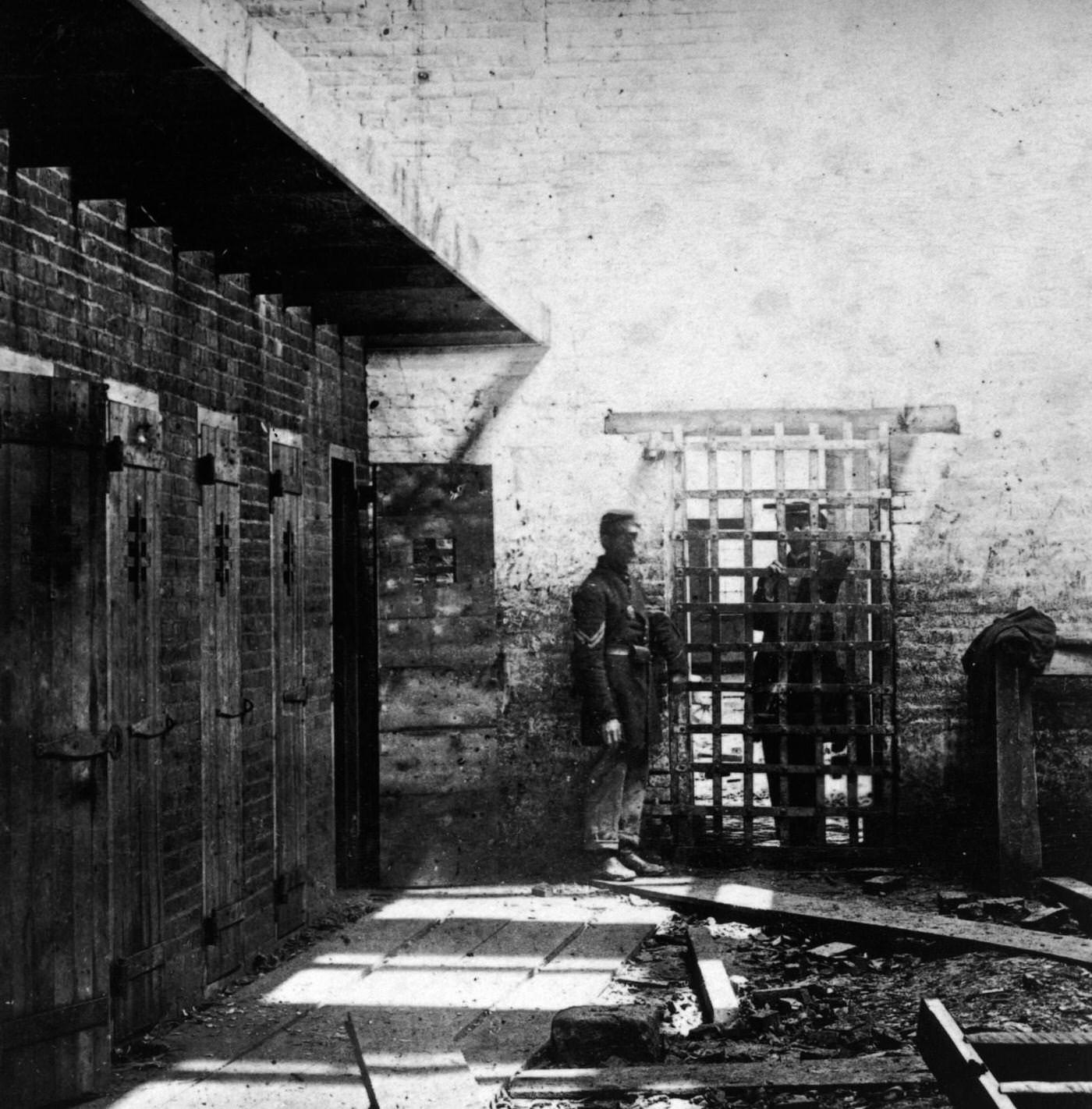
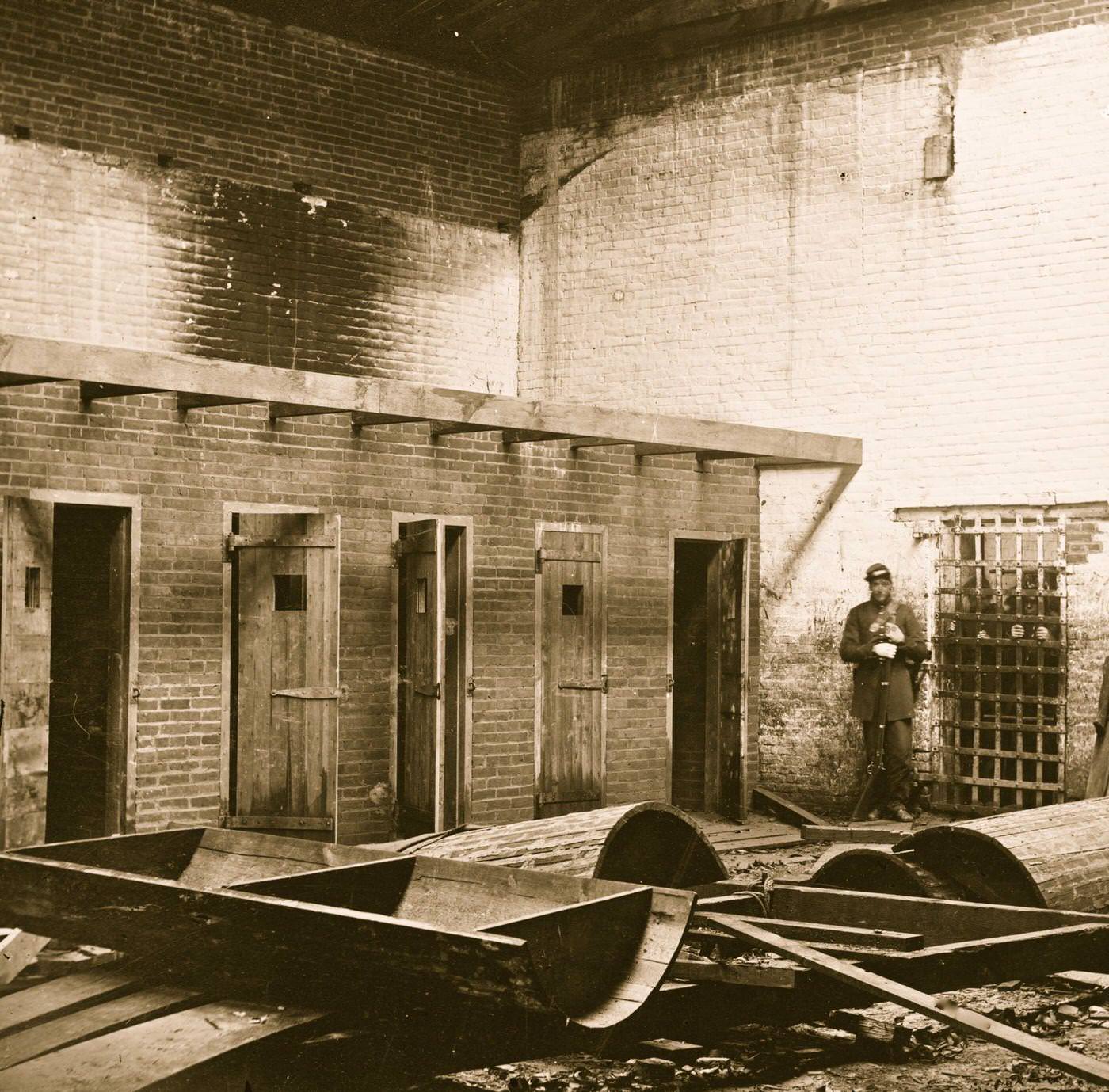
Before the war, Alexandria was not only a commercial port — it was a center of the domestic slave trade. Price, Birch & Co., operating out of 1315 Duke Street, was one of the largest slave-trading firms in the country. The building at that address included holding cells where enslaved people were locked up before being sold and shipped further south. After Union forces occupied Alexandria, photographers documented the facility in detail, capturing the iron-doored cells, the exterior of the compound, and the people connected to it.
Interior view of a slave pen, showing the doors of cells where the slaves were held before being sold. Building address: 1315 Duke Street, Alexandria, 1862Exterior of the Price, Birch & Co. slave pen, Alexandria, 1865A Union army guard and other men in front of a building designated Price, Birch & Co., dealers in slaves, at 1315 Duke St., Alexandria, 1865
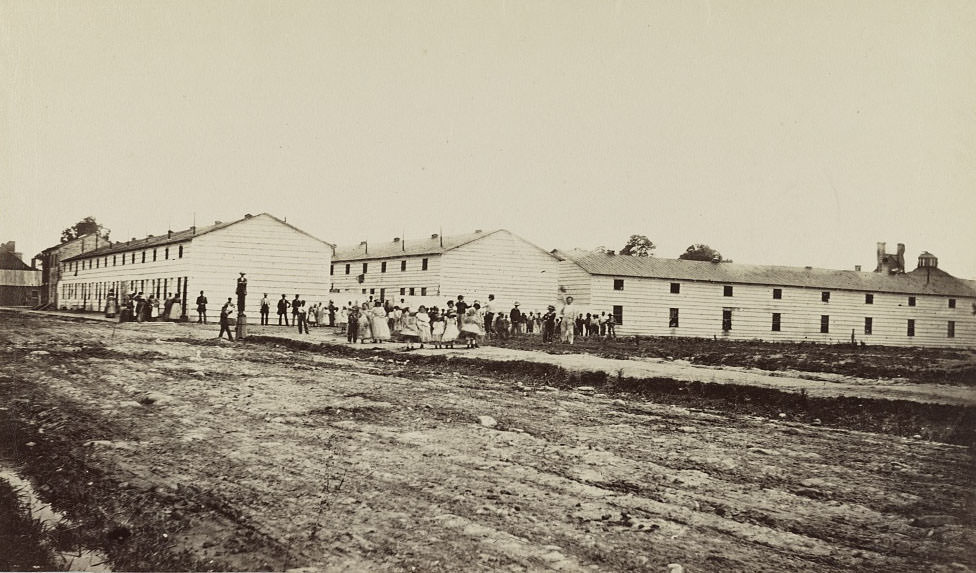
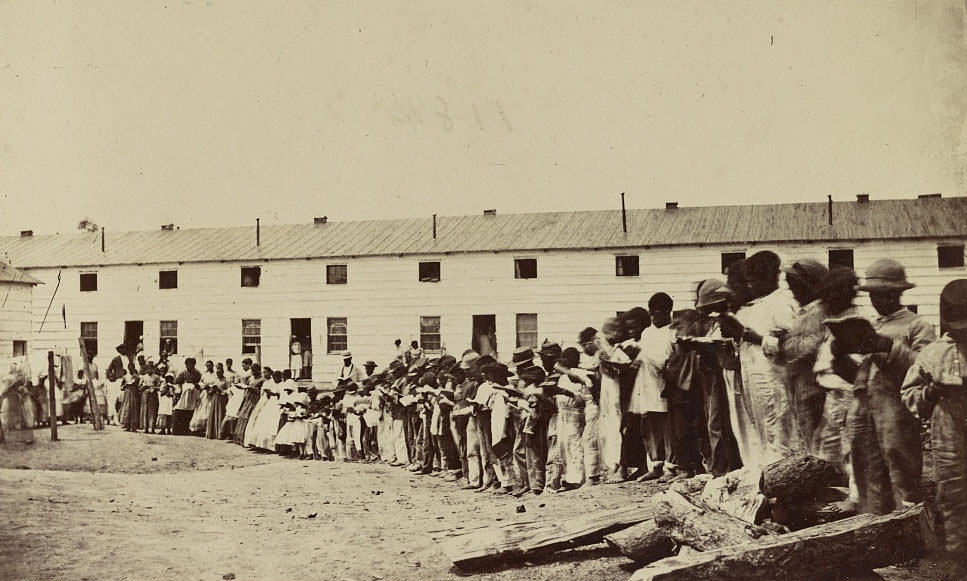
Alongside the slave trade, Alexandria had a well-established free Black community before the war. African American residents had built churches, businesses, and fraternal organizations, and many were skilled tradespeople. When the war began and Union forces took control, Alexandria became a destination for thousands of enslaved people escaping Confederate-held territory. These refugees — called contrabands under Union policy — arrived in enormous numbers, many of them sick, starving, and with no resources. The army set up Freedman’s Barracks to shelter them.
Freedman’s Barracks, Alexandria, 1860sAfrican-American adults and children reading books while lined up in front of a barracks-like building. The same building is shown in “Freedman’s Barracks, Alexandria, 1860s
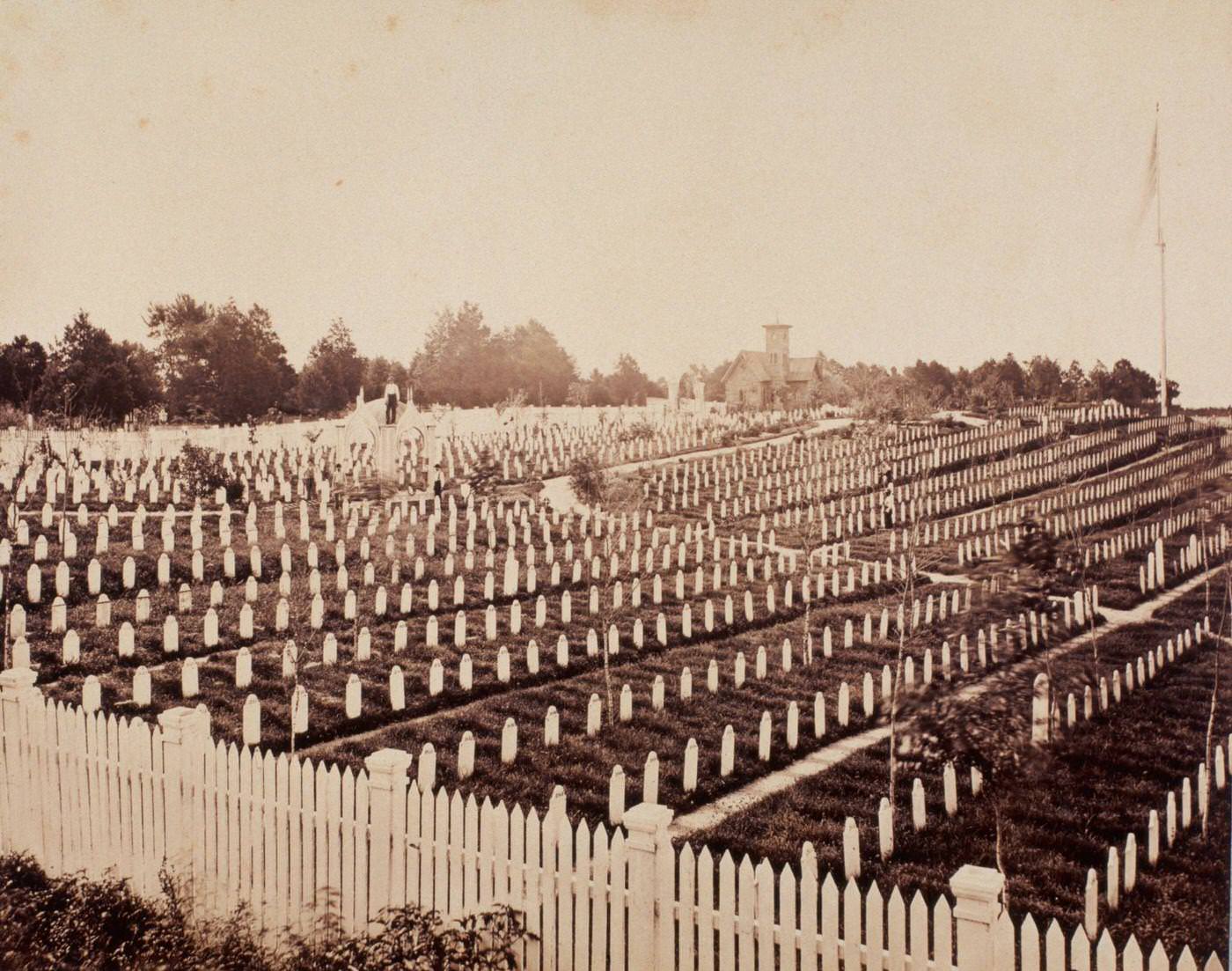
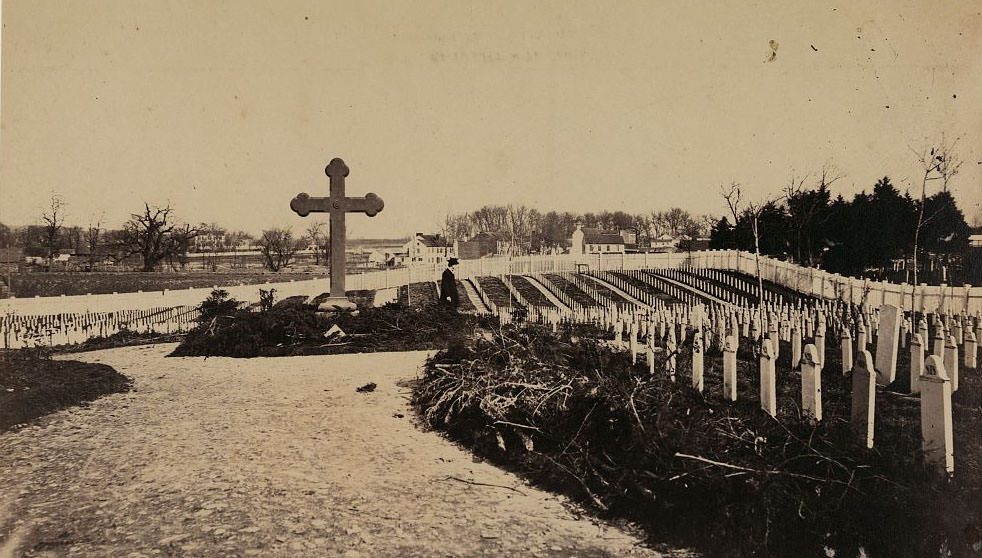
The death toll among the refugee population was severe. Disease spread through the crowded barracks, and hundreds of freedpeople died in Alexandria during the war years. A pro-Confederate landowner was compelled to turn over his property for use as a burial ground. The Contrabands and Freedmen’s Cemetery operated for five years, taking in approximately 1,800 burials. After the Freedmen’s Bureau closed in 1868, the property was returned to its original owners. Over time, as grave markers rotted and ownership changed hands, the site was developed for commercial use, and the cemetery was largely forgotten.
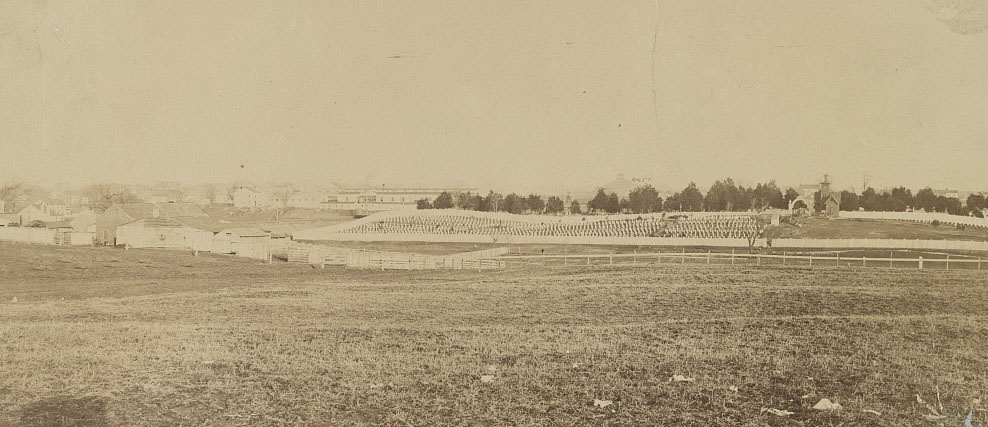
Rows of white grave markers fill a large Civil War cemetery in Alexandria, Virginia, 1860sSoldiers’ Cemetery, Alexandria, 1862
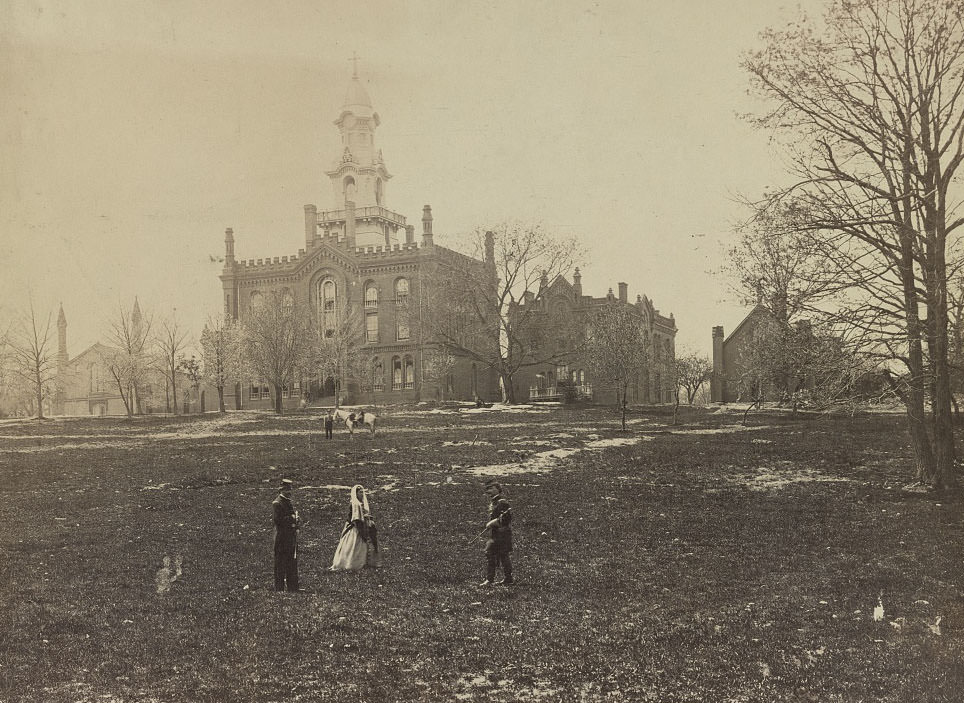
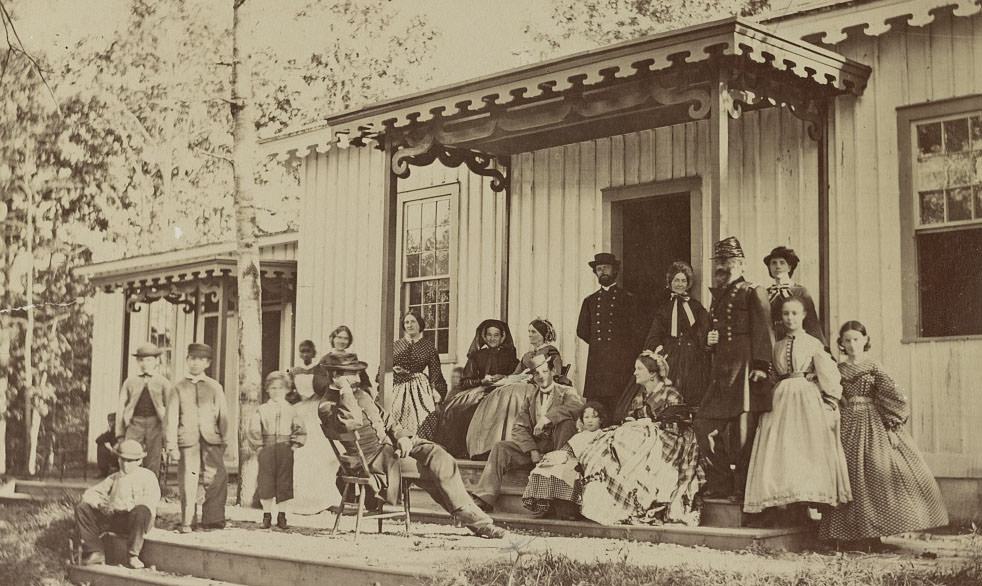
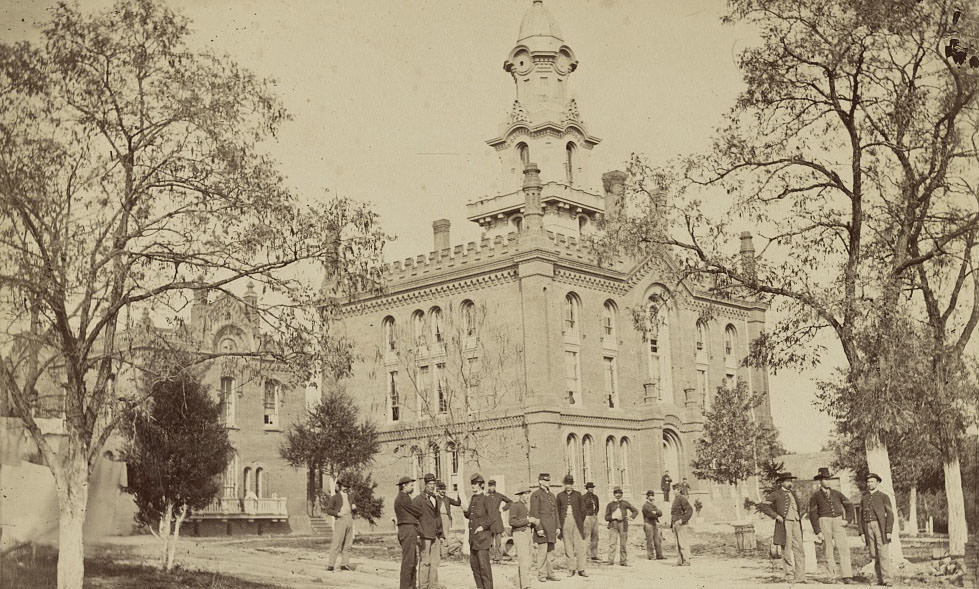
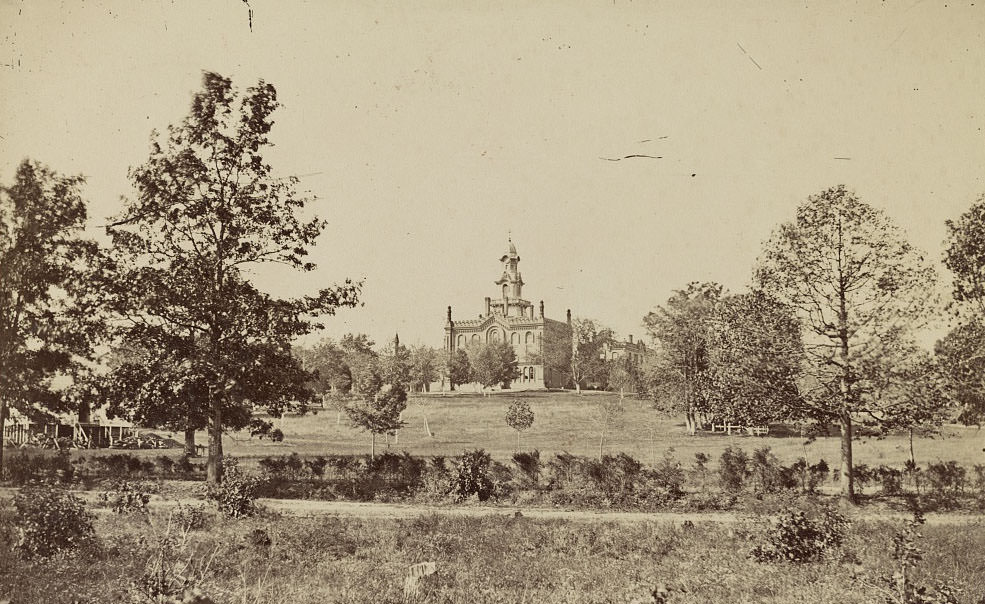
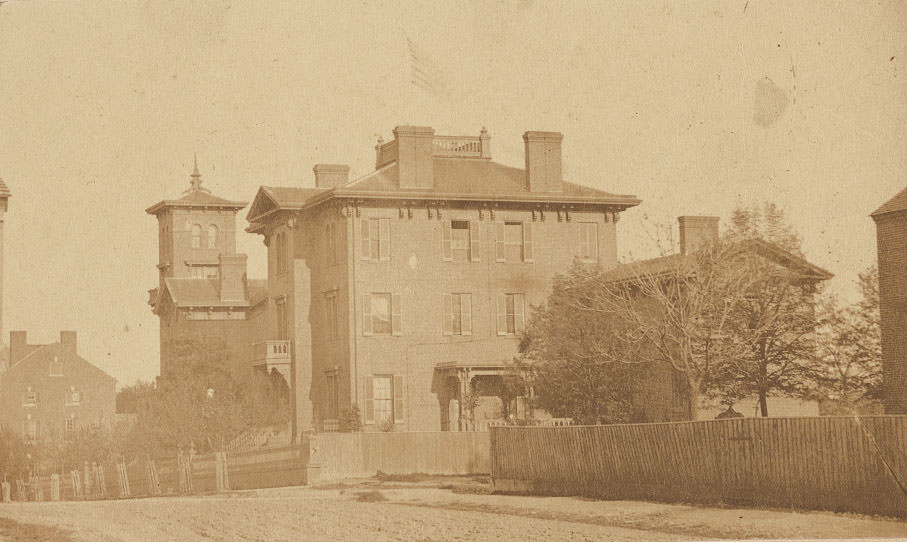
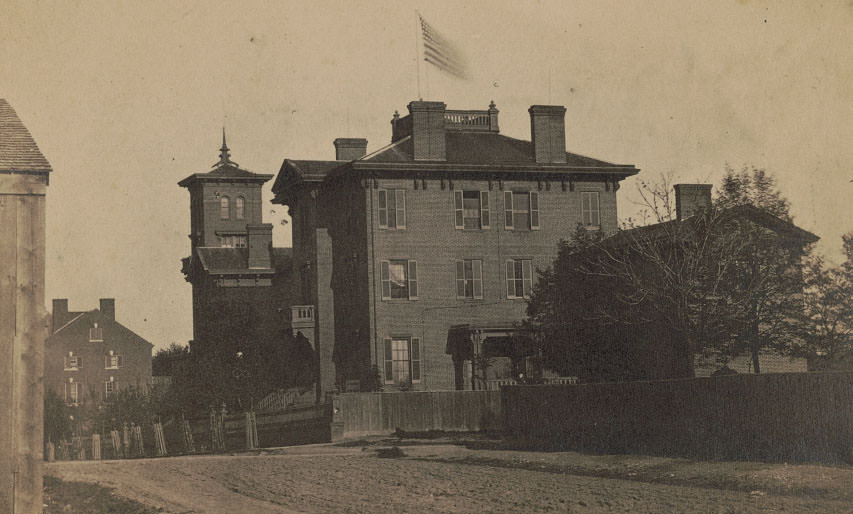
Alexandria also served as the seat of the Restored Government of Virginia during the war — a Union-recognized government representing the seven Virginia counties that remained under federal control after secession. This gave the city an unusual dual role: a military base and an official state capital at the same time. Union officers held meetings in commandeered mansions, church buildings housed hospital wards, and seminary campuses were turned into military headquarters and medical facilities.
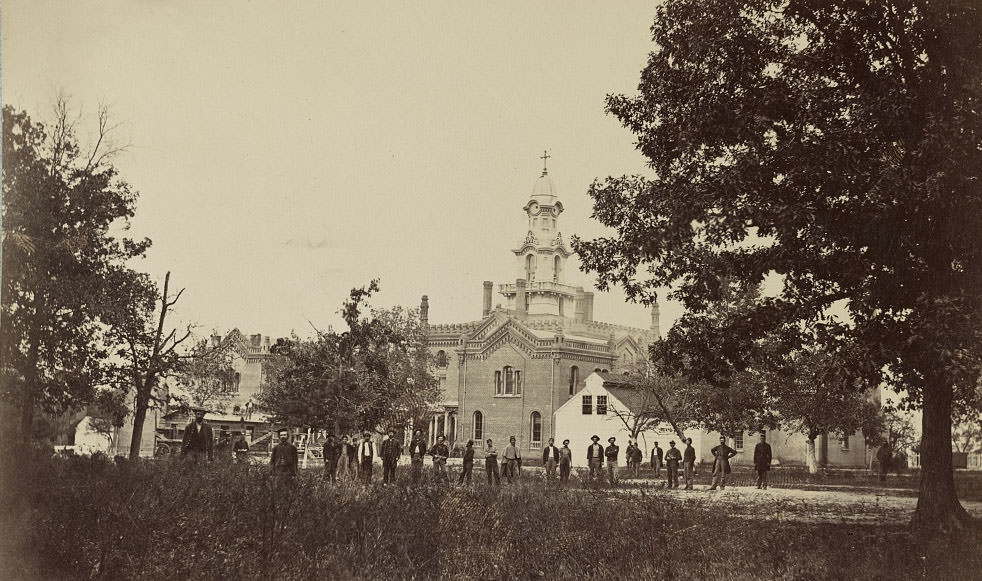
A woman with two Union soldiers in front of the seminary which was headquarters for the Army of the Potomac, 1862Fairfax Seminary, near Alexandria, 1860sThe military took over the Protestant Episcopal Theological Seminary for a hospital.
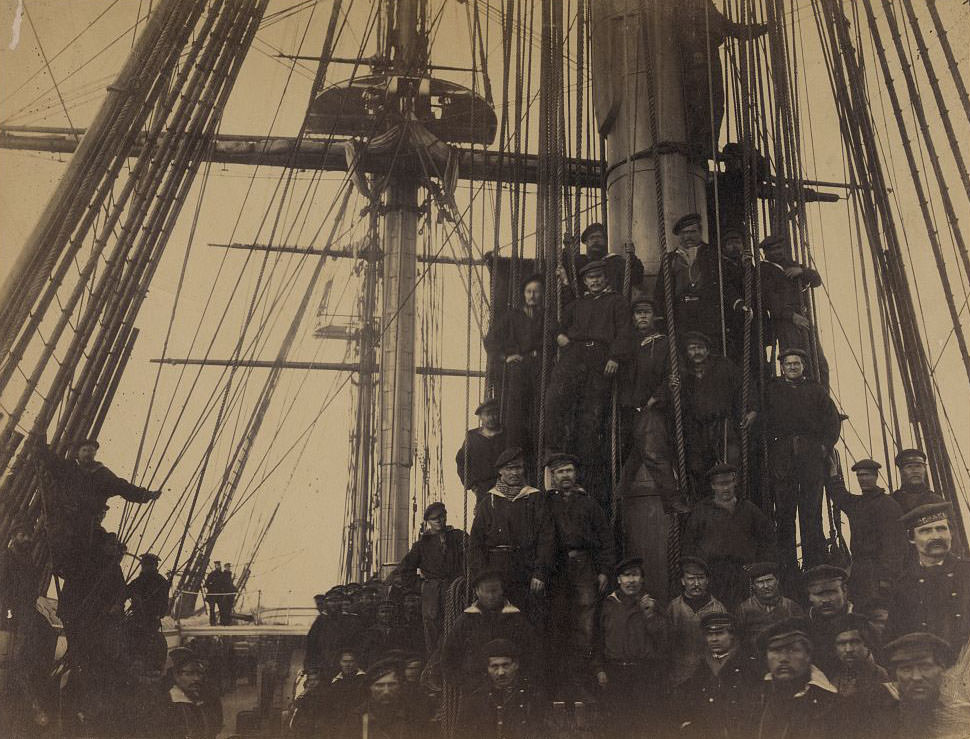
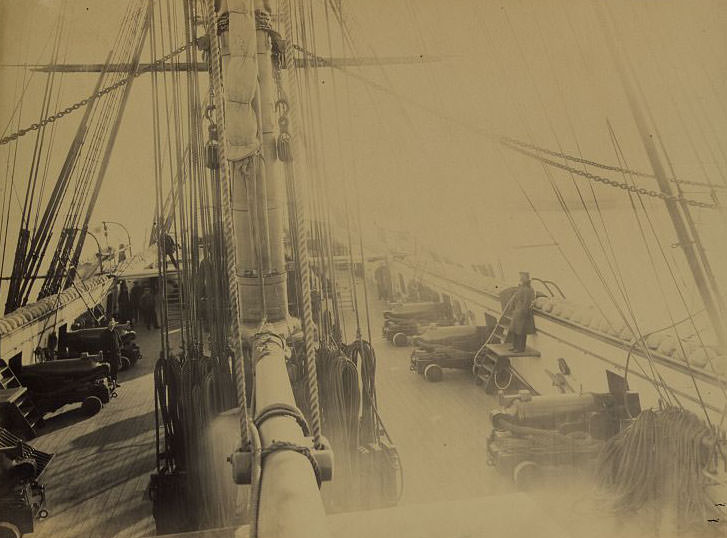
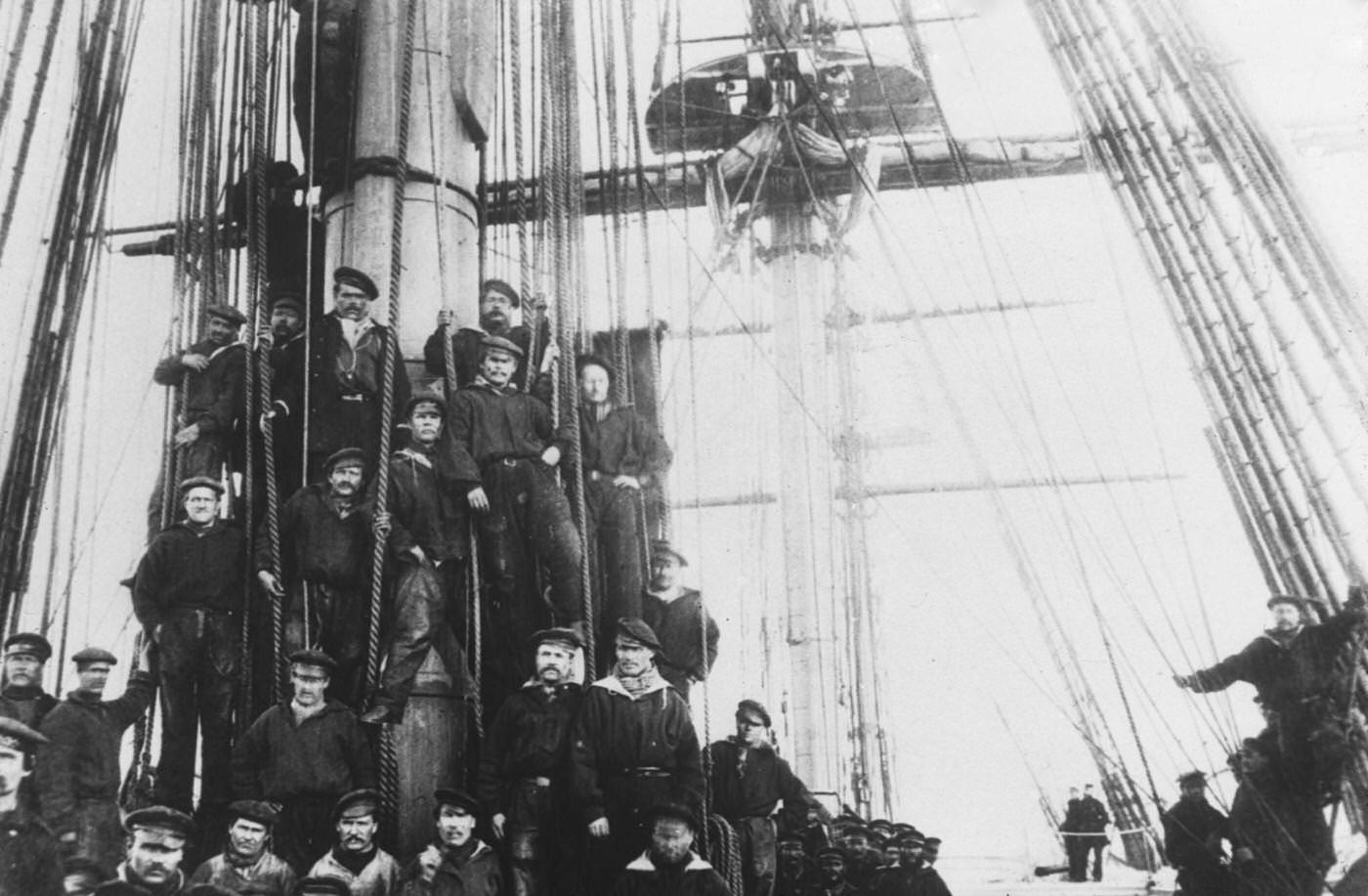
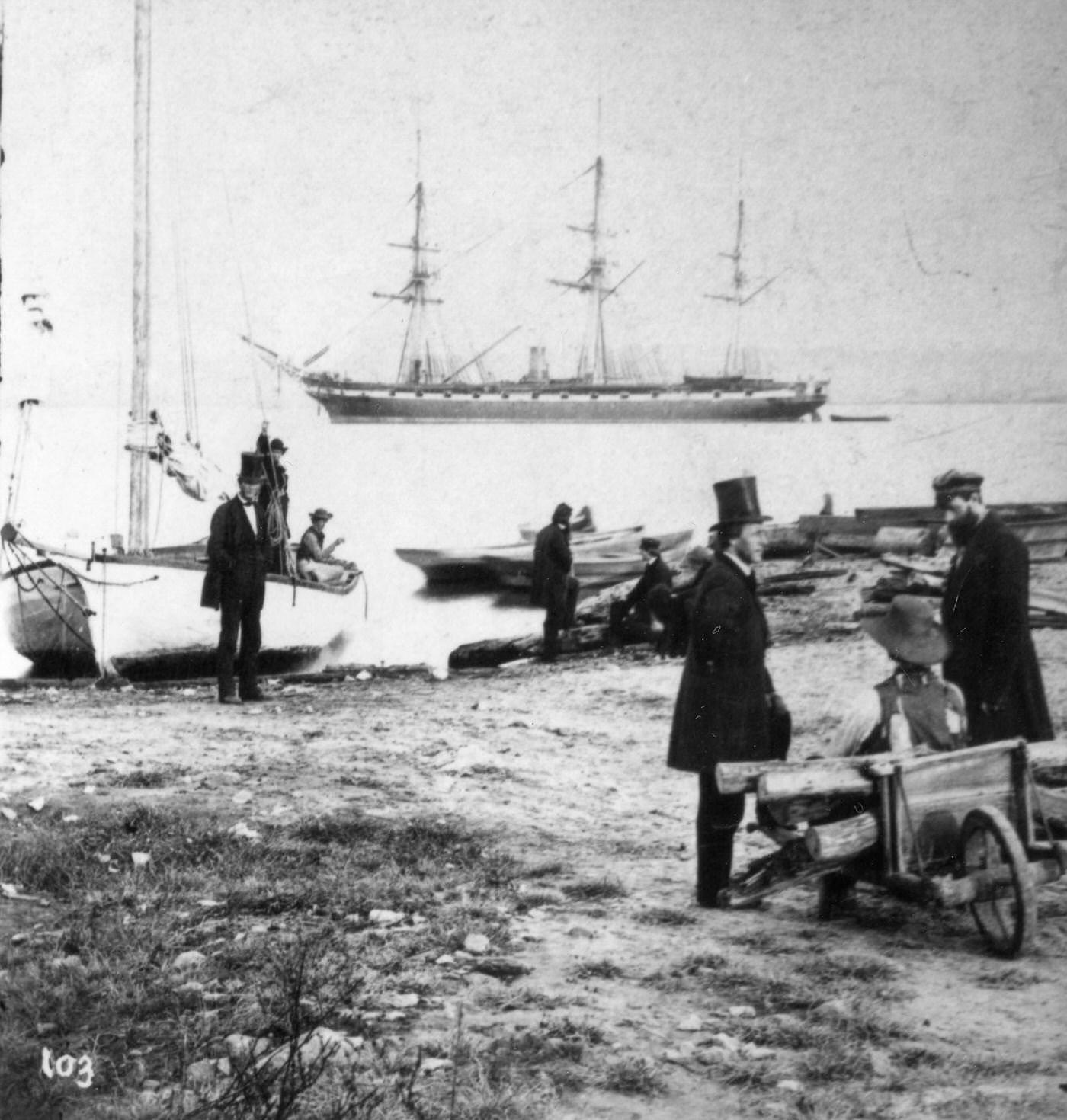
The Potomac River brought more than just supply ships. In the fall of 1863, a squadron of Russian warships arrived in American waters as a show of diplomatic support for the Union. The Russian frigate Osliaba anchored in the harbor of Alexandria, and photographers took the opportunity to document both the sailors on deck and the vessel itself. Russia’s presence was intended to signal that it would not support any European intervention on behalf of the Confederacy.
Sailors on Russian frigate “Osliaba,” harbor of Alexandria, 1862Deck view of Russian frigate “Osliaba,” harbor of Alexandria, 1863The crew of the Russian frigate Osliaba during the American Civil War in Alexandria, Virginia, 1863.
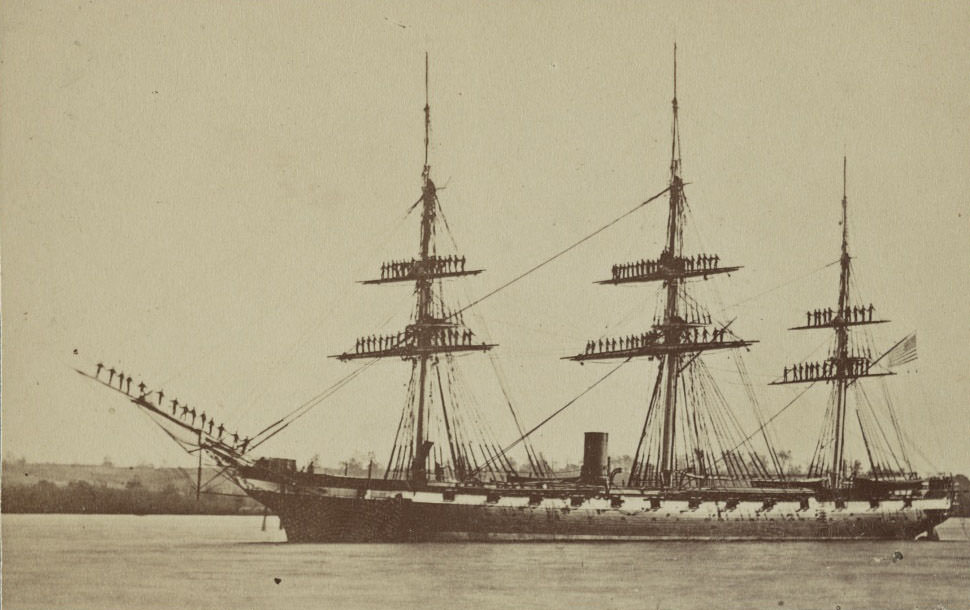
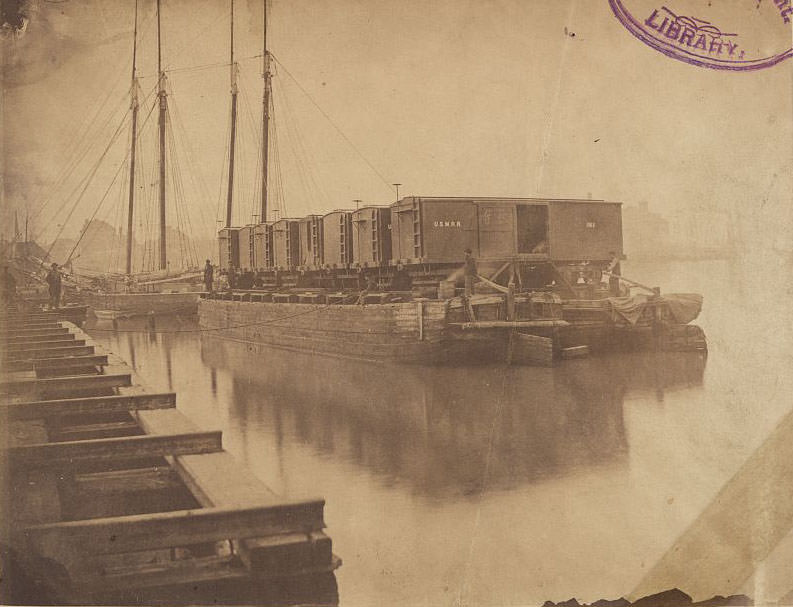
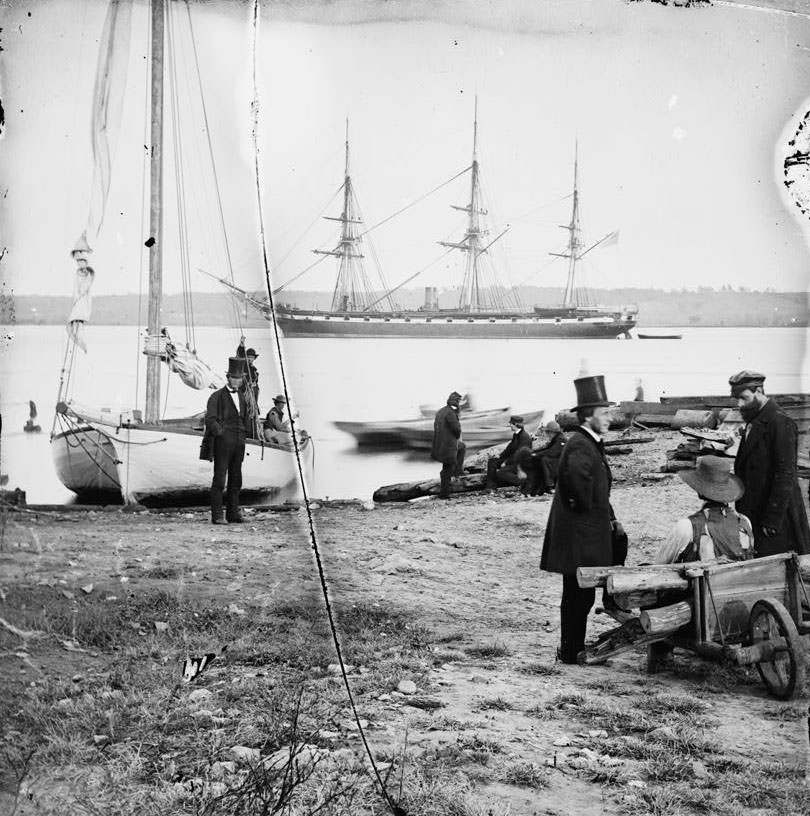
The Union Navy maintained a strong presence at Alexandria throughout the war. The USS Pensacola, a screw sloop-of-war, was photographed off the Alexandria waterfront. Guard boats patrolled the port. The river itself became a highway for military logistics — railroad cars loaded at Alexandria could be placed onto barges and floated down to Aquia Creek, then transferred back to rail lines supplying the Army of the Potomac in the field.
U.S. frigate Pensacola off Alexandria, Virginia, 1860sTransportation on the Potomac. Cars loaded at Alexandria can be carried on barges or arks to Aquia Creek, and sent to stations where the Army of the Potomac is supplied, 1862Guard boat of the Port of Alexandria, VA, 1860s
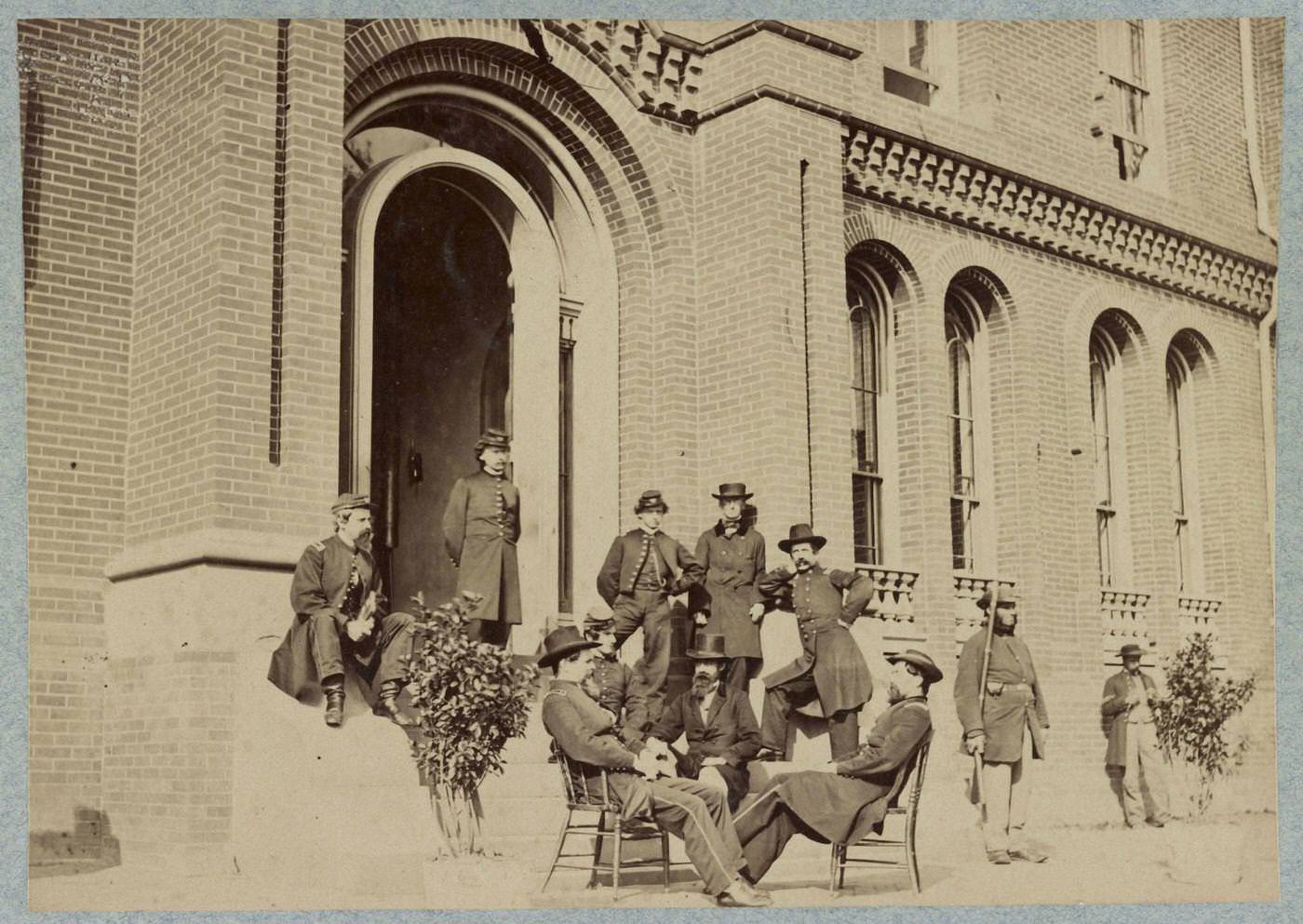
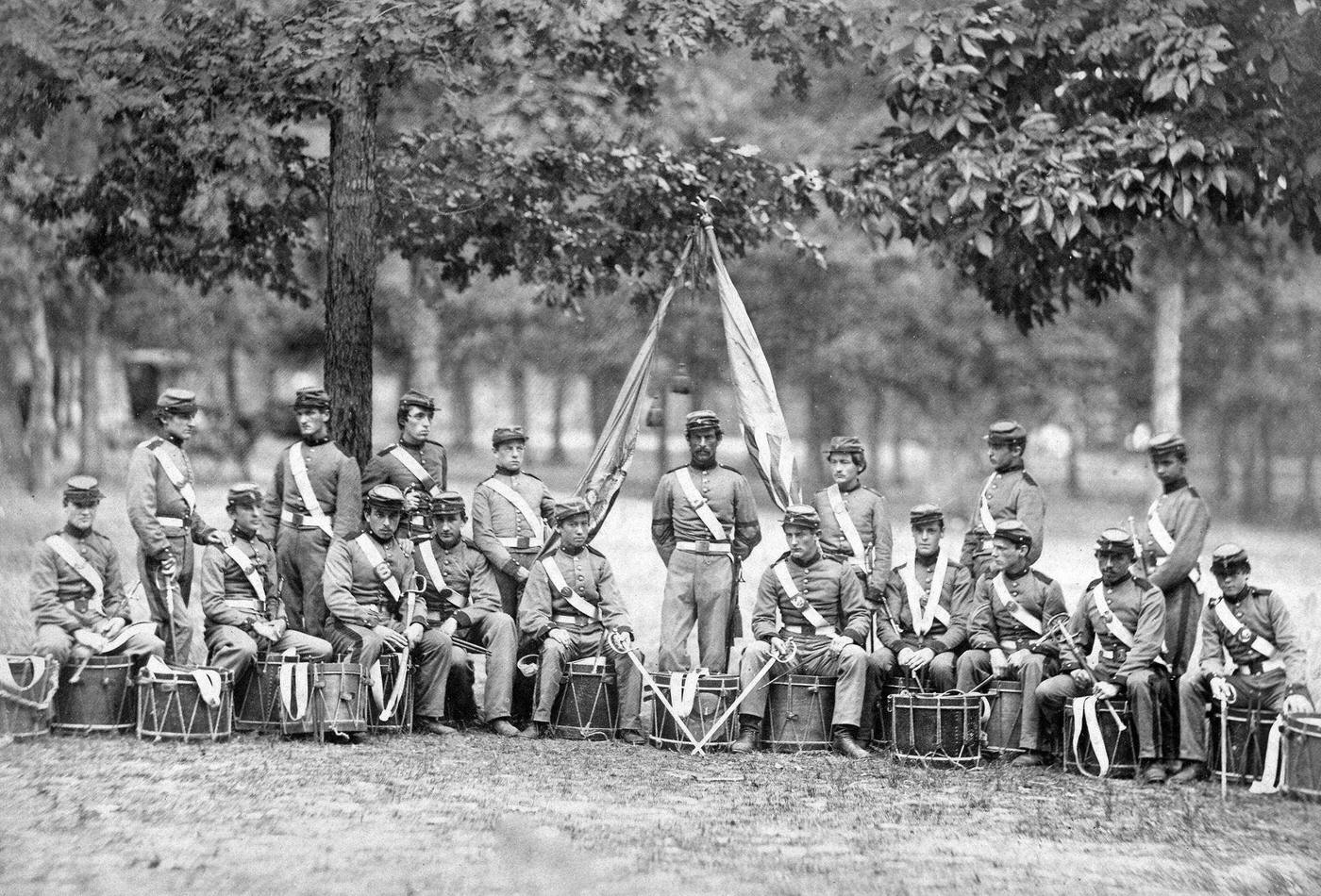
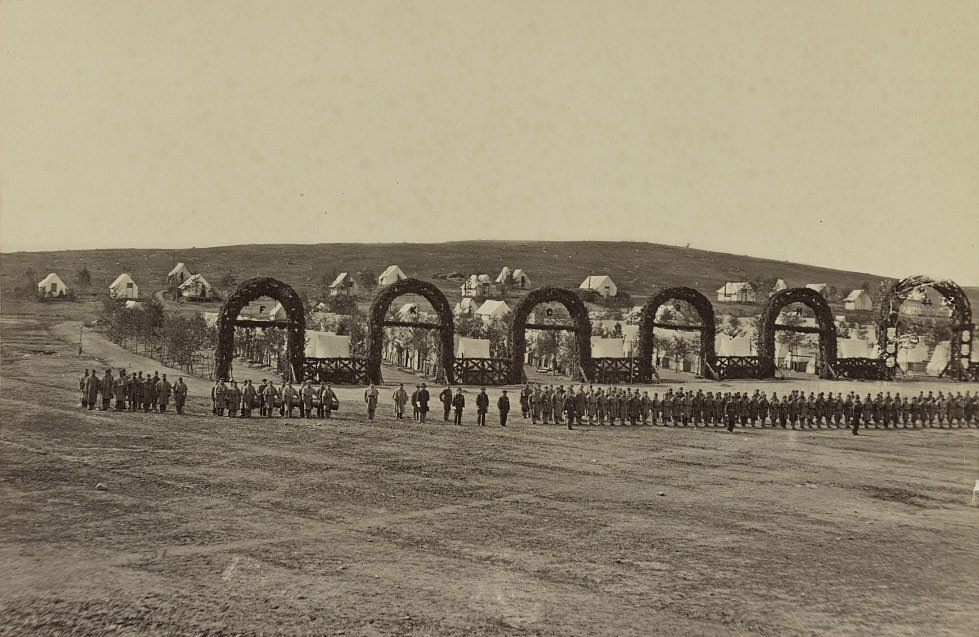
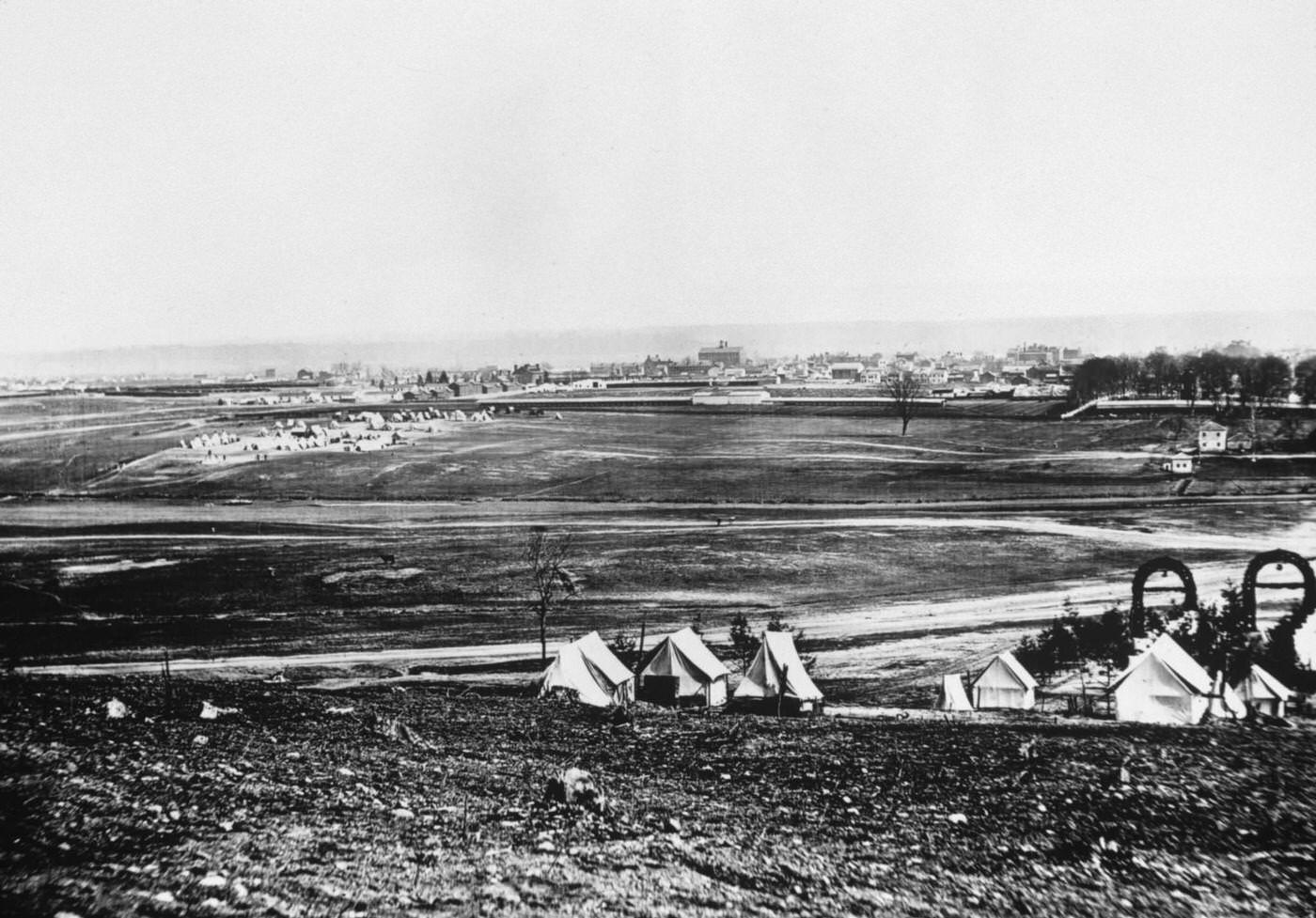
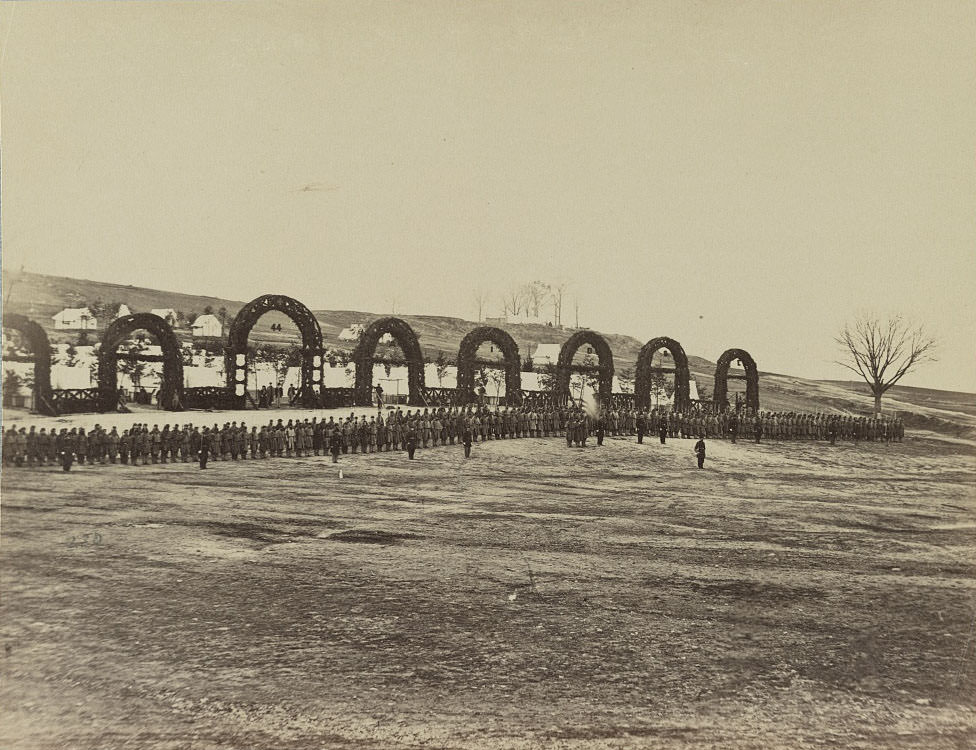
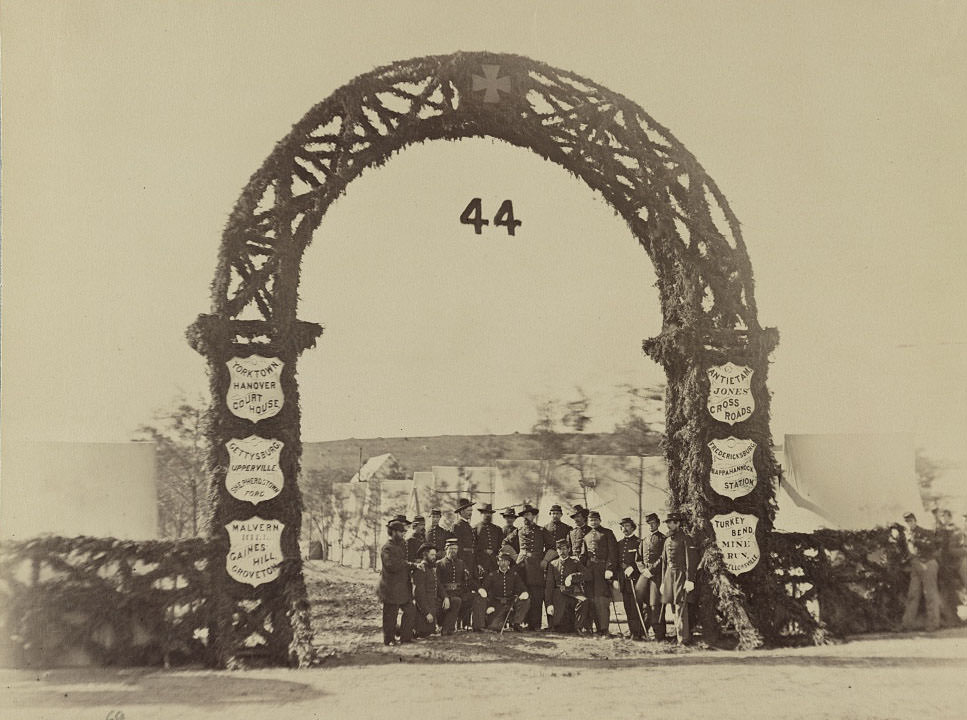
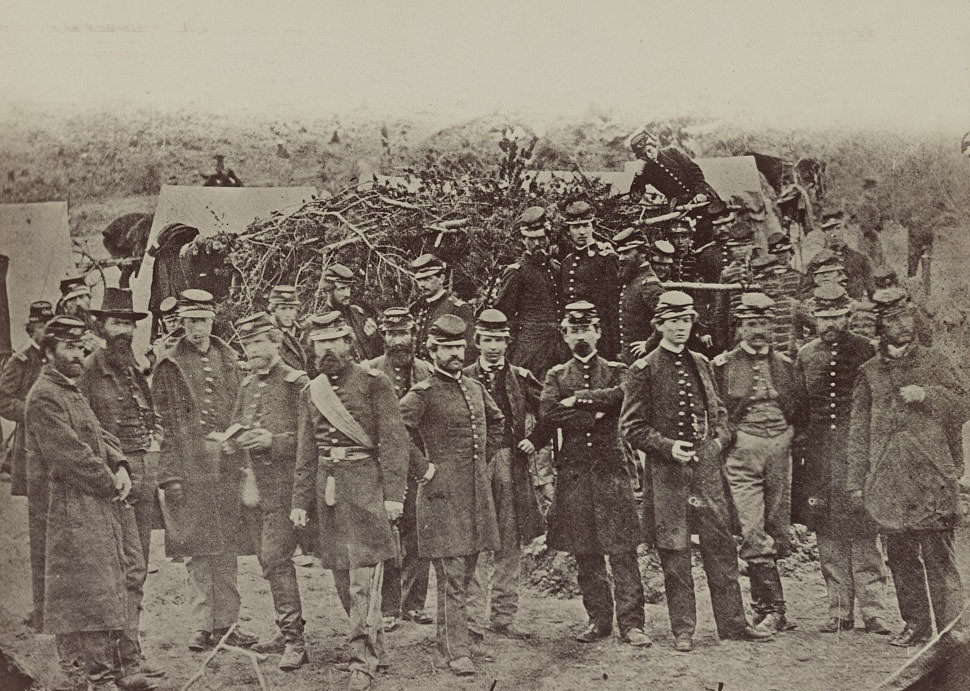
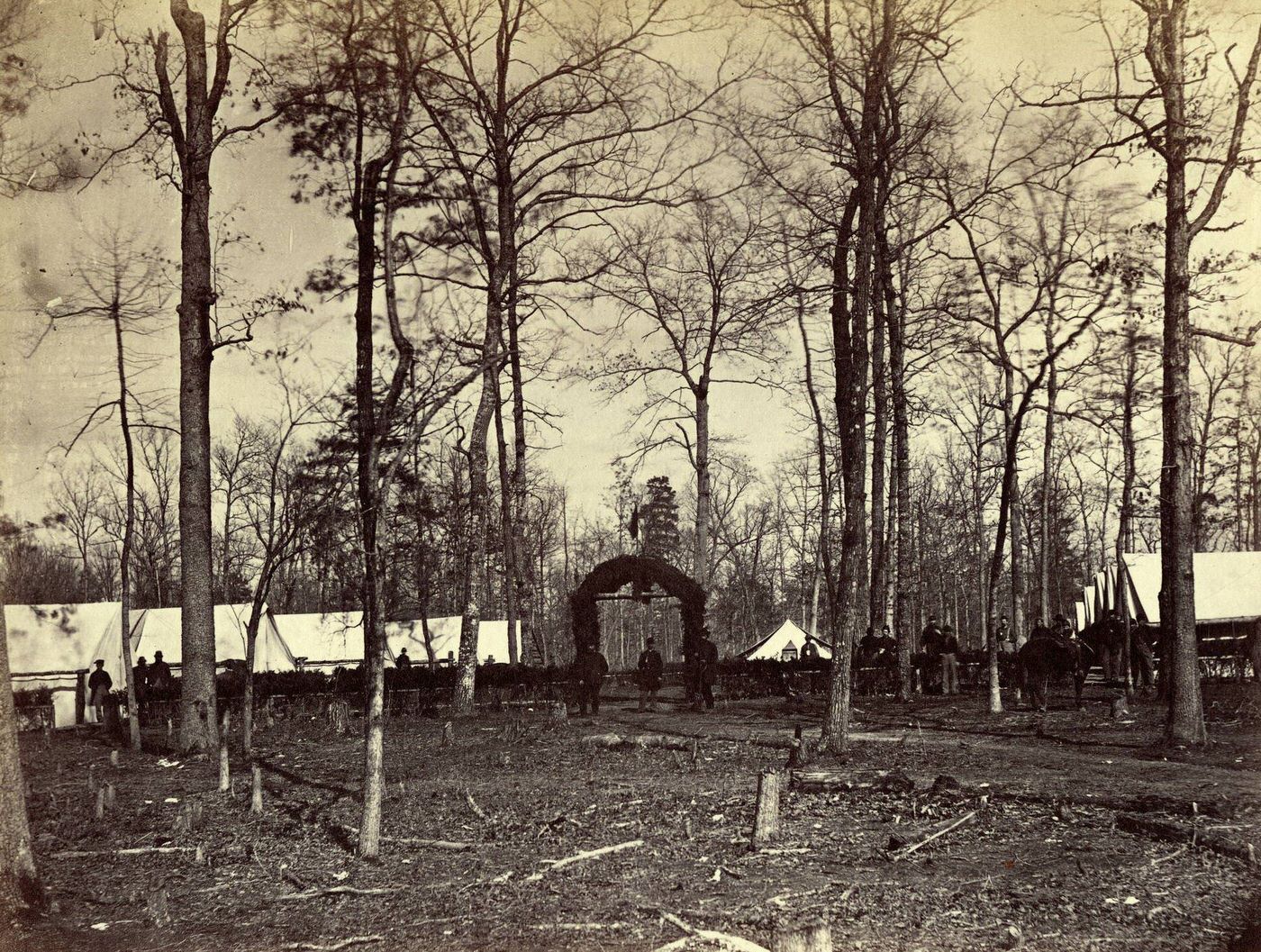
Infantry regiments encamped near Alexandria left behind some of the most vivid photographs of military life during the war. The 44th New York Infantry, the 8th New York State Militia, and other units were photographed at their camps — rows of tents, stacked muskets, cook fires, and men in various states of rest and preparation. Drum corps posed for portraits. Officers gathered on hotel steps. These images capture the enormous scale of the Union military presence in and around the city.
Drum corps, 8th New York State Militia, Alexandria, Virginia, 1861.Camp of 44th New York Infantry near Alexandria, 1864View of Alexandria, Virginia, tents of the 44th New York Infantry in foreground during the US civil war. Alexandria was captured by the Union in 1861.
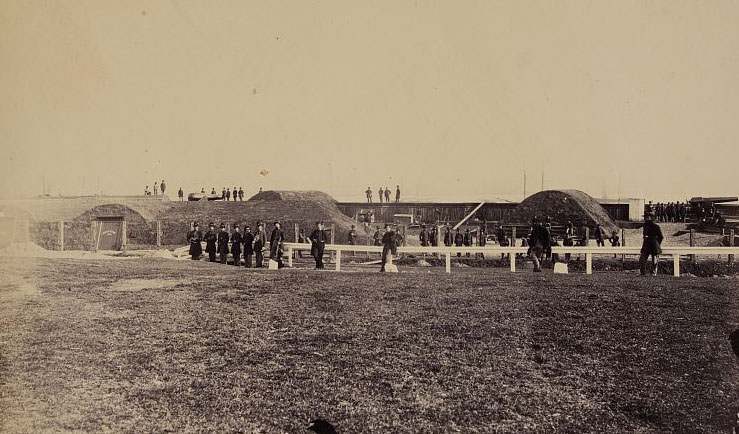
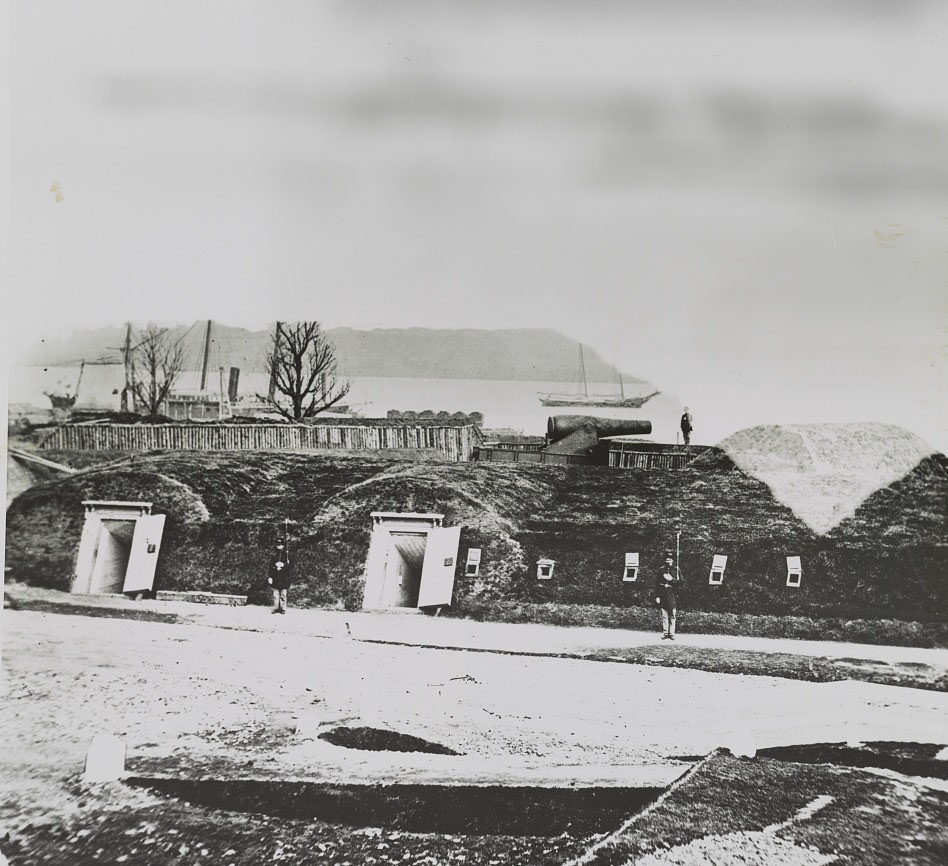
Fort Ellsworth, named after the slain colonel, was one of several defensive works constructed around Alexandria. It sat on Shuter’s Hill and provided commanding views of the surrounding terrain. Battery Rodgers guarded the river approach. Together, these fortifications formed part of the broader ring of defenses protecting Washington from Confederate attack throughout the war.
Fort Ellsworth, Alexandria, 1864Battery Rodgers, Potomac River, near Alexandria, 1860sBattery Rodgers, Alexandria, 1864
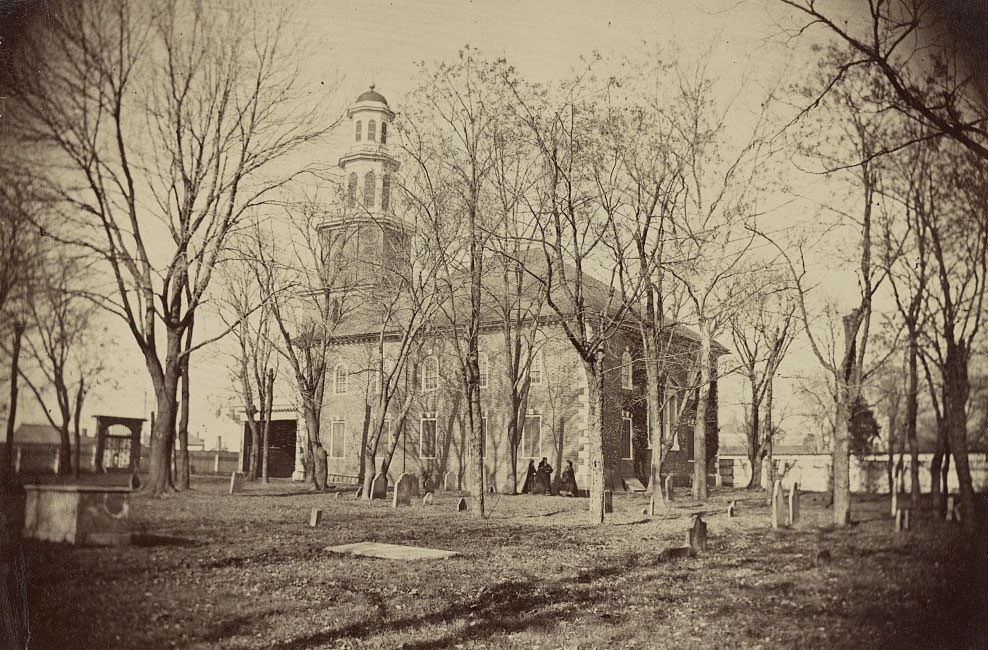
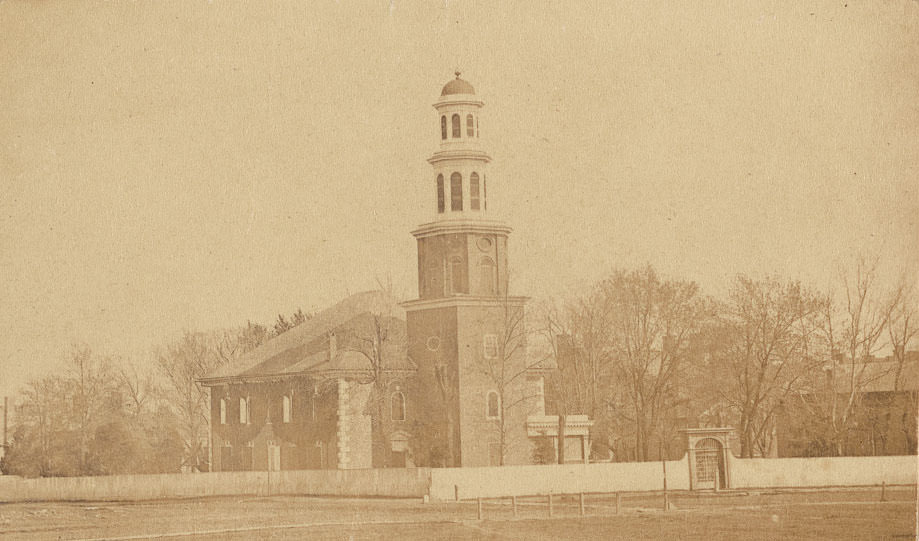
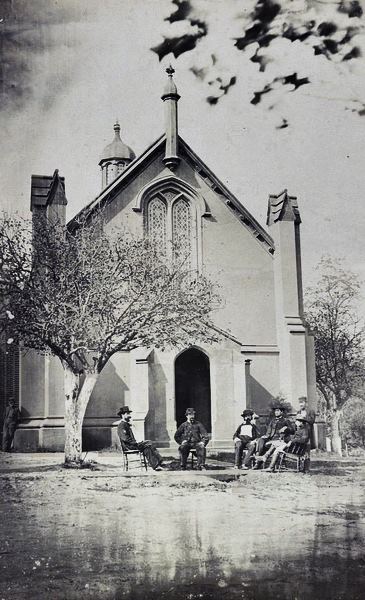
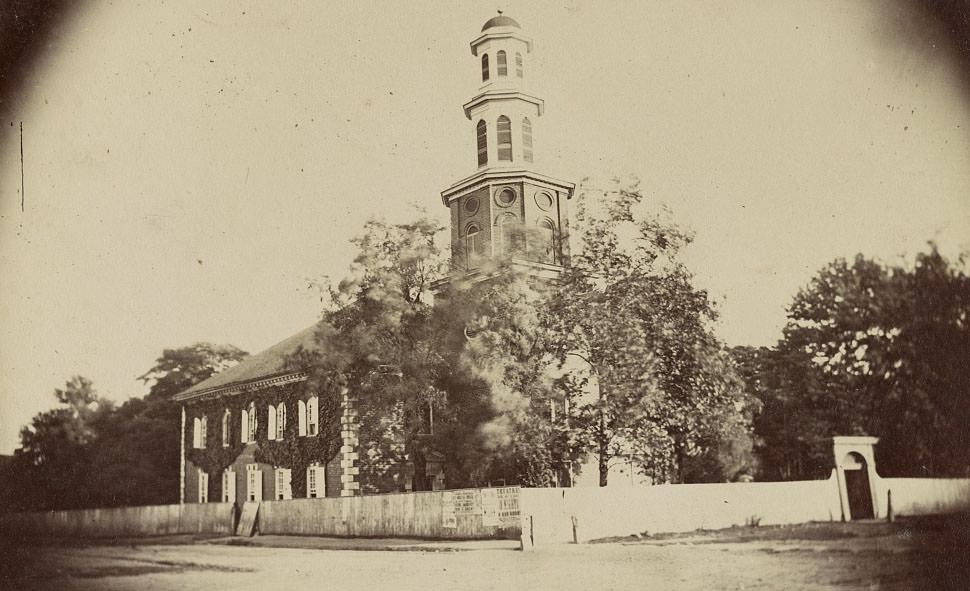
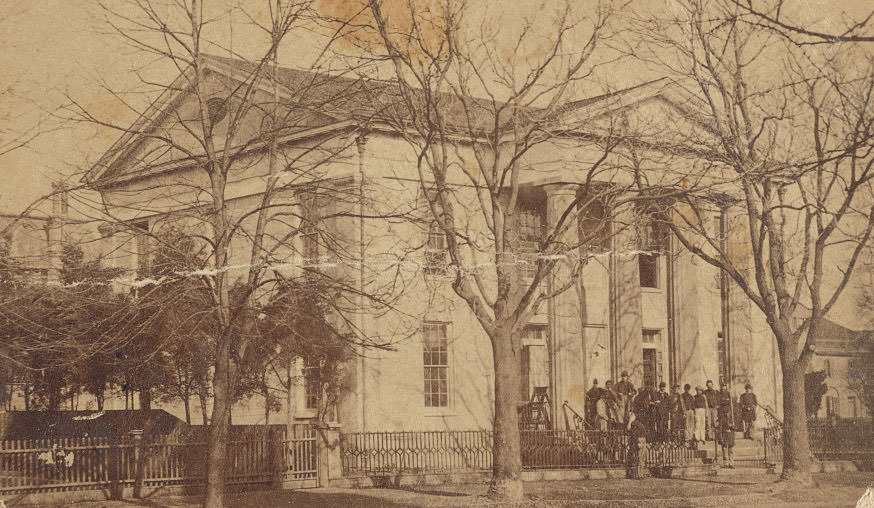
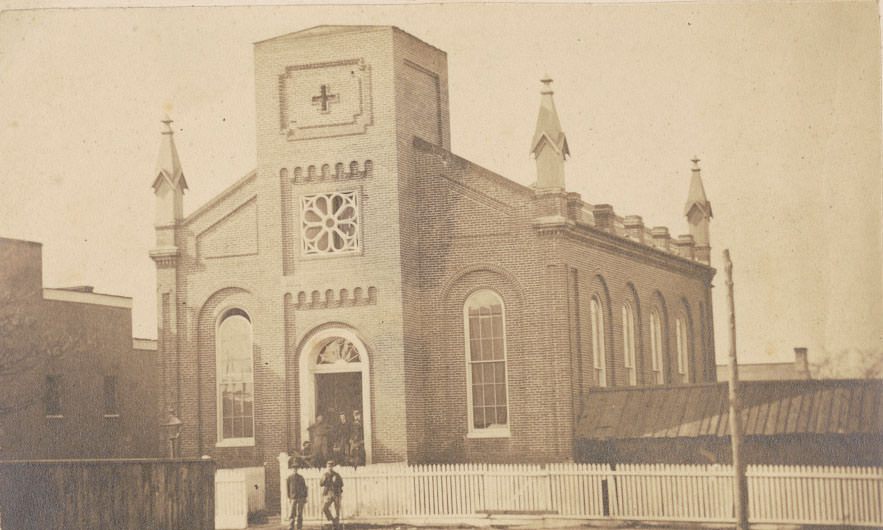
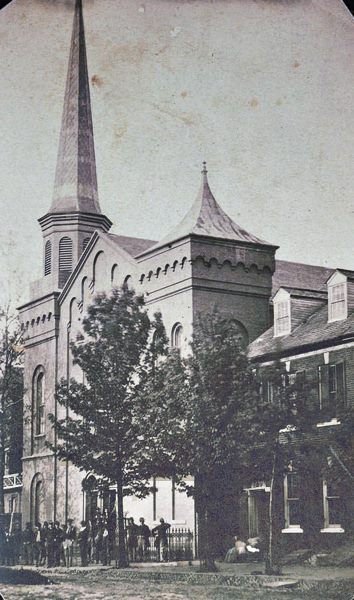
The city’s churches survived the occupation largely intact, though several were repurposed for military use. Christ Church, where both George Washington and Robert E. Lee had worshipped, continued to stand on its original site. The Virginia Theological Seminary and Fairfax Seminary were both converted into military hospitals, their chapels and classrooms filling with cots and medical supplies.
Christ’s Church, Alexandria, 1860sChrist Church Alexandria, Virginia, 1861Practice Chapel Virginia Theological Seminary, Alexandria, 1864
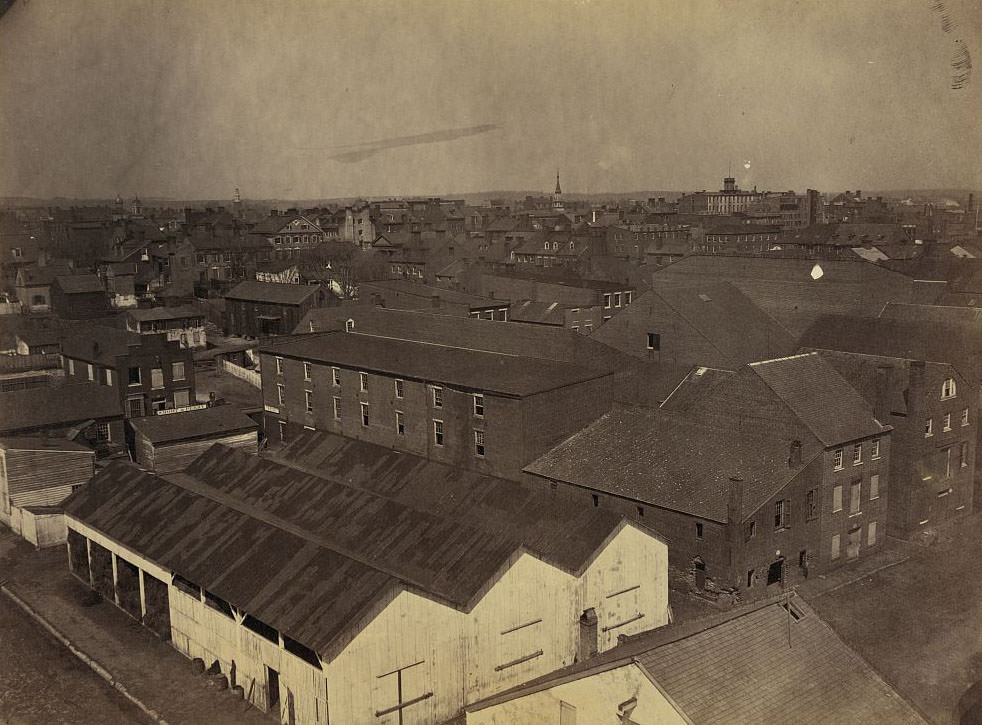
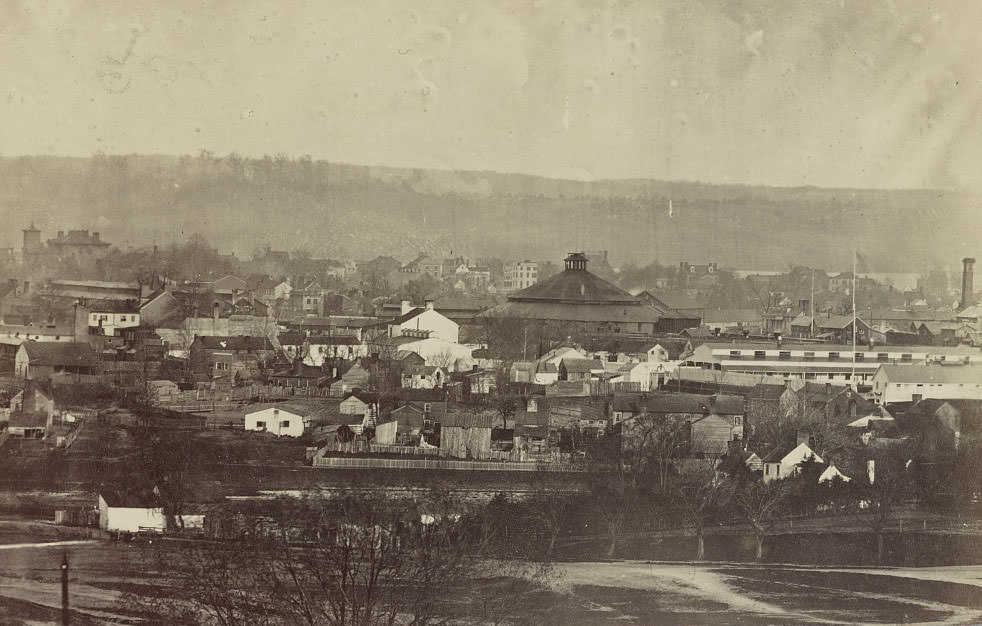
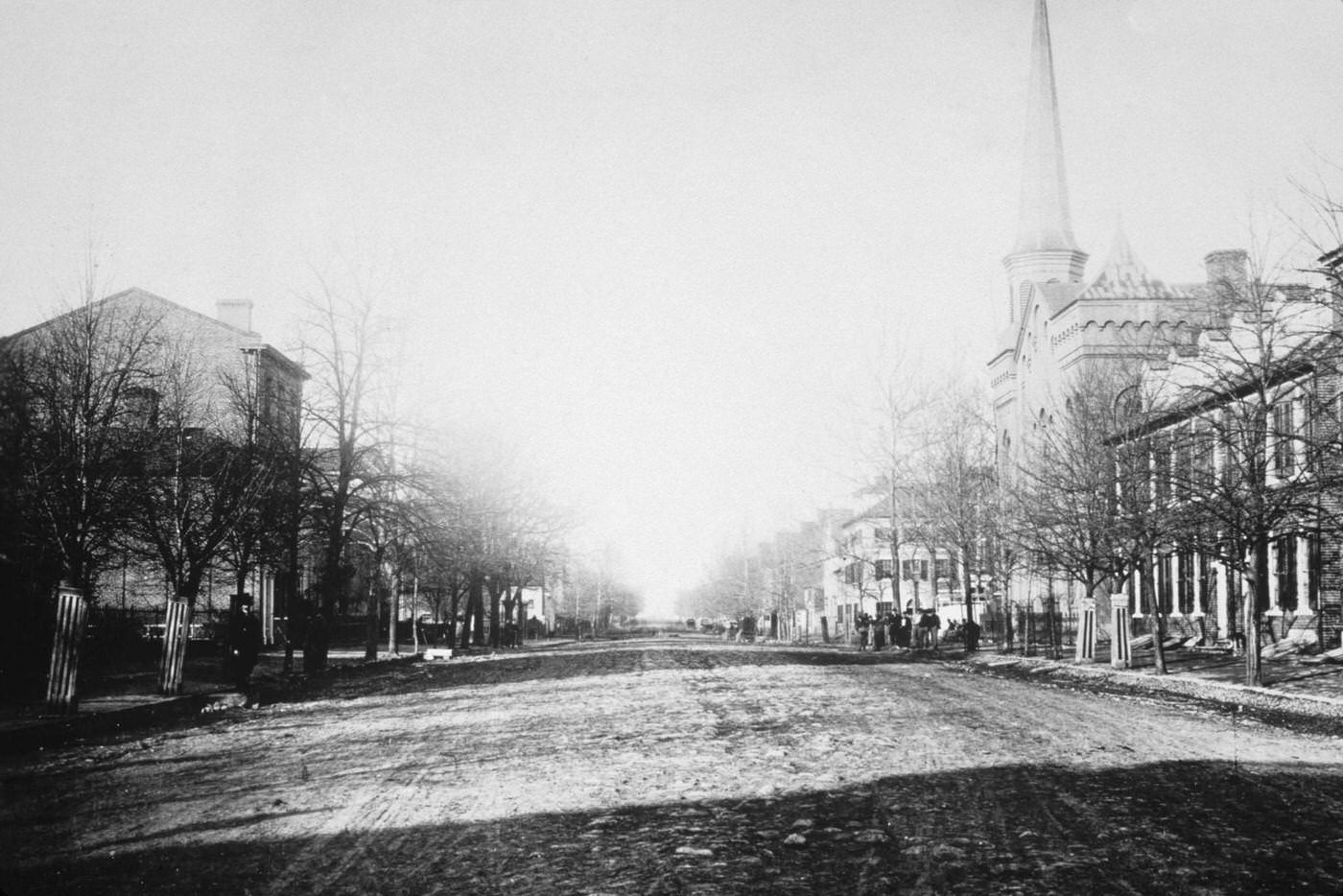
By the end of the war, Alexandria had been physically spared the destruction that leveled much of Richmond and Fredericksburg. Its buildings stood, its streets were intact, and its railroad yards were operational. The photographs taken here across the 1860s form one of the most complete visual records of any American city during the Civil War — documenting its role as a military engine, a refugee haven, a hospital city, and a place where the brutal history of American slavery was still very much visible in brick and iron.
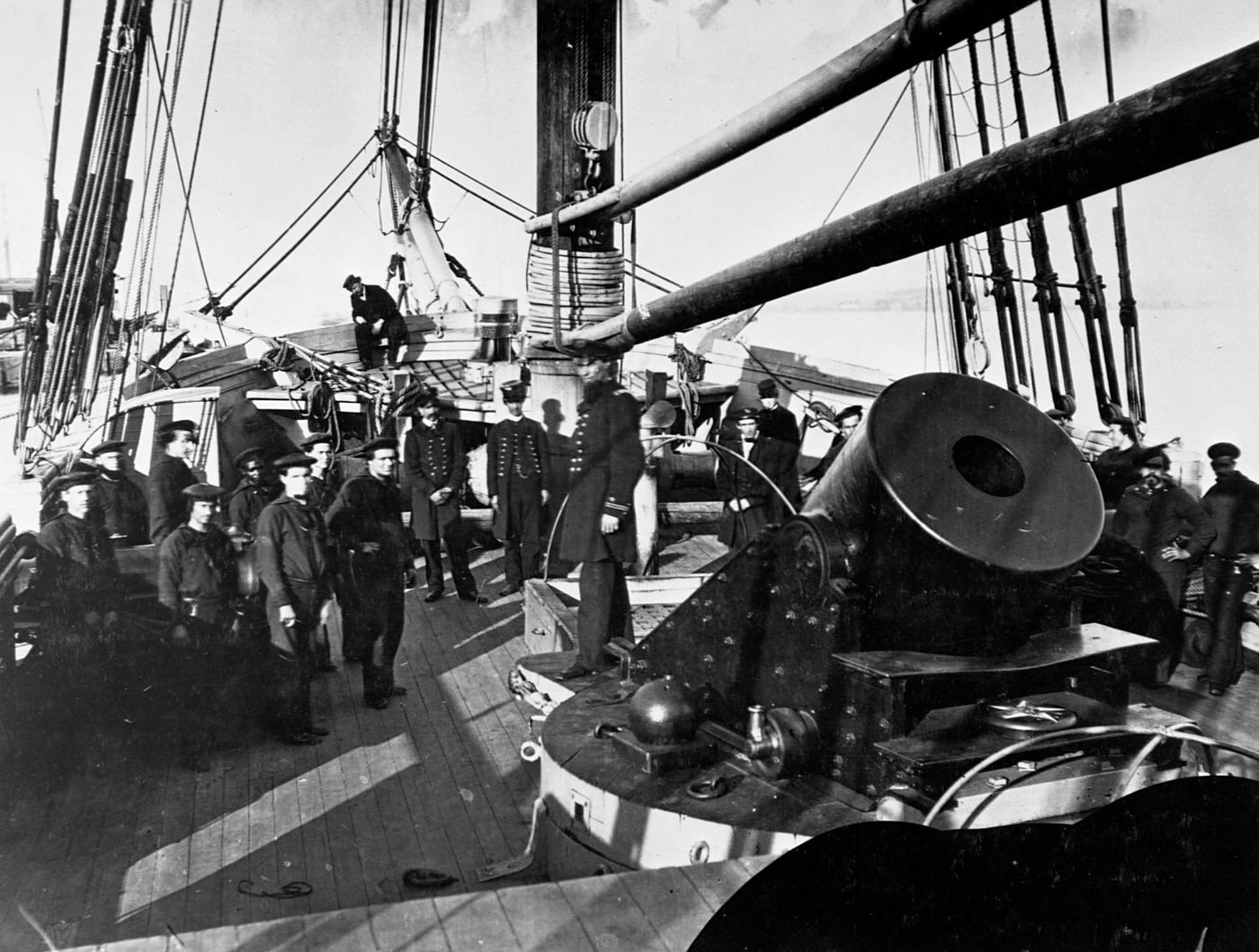
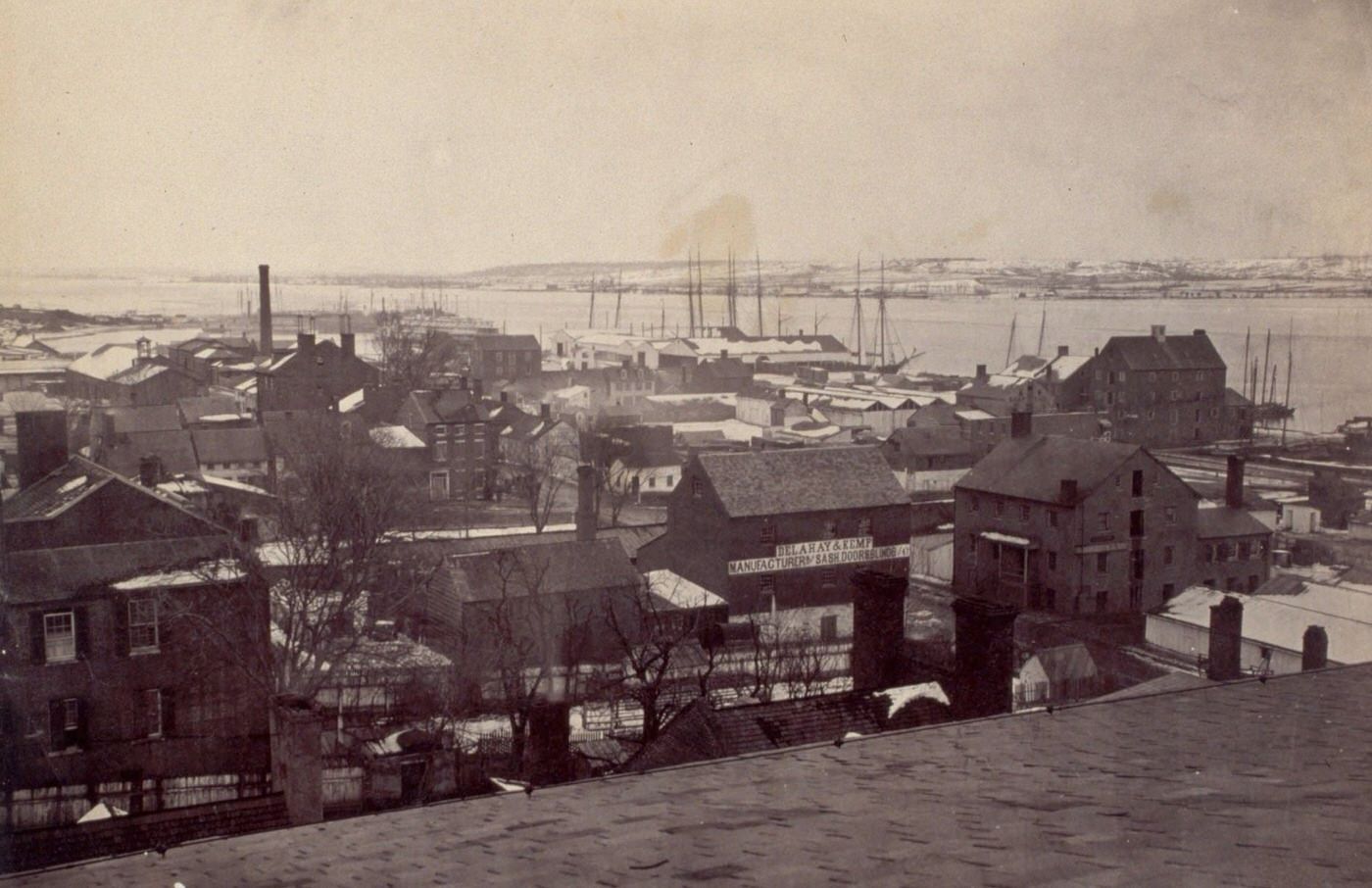
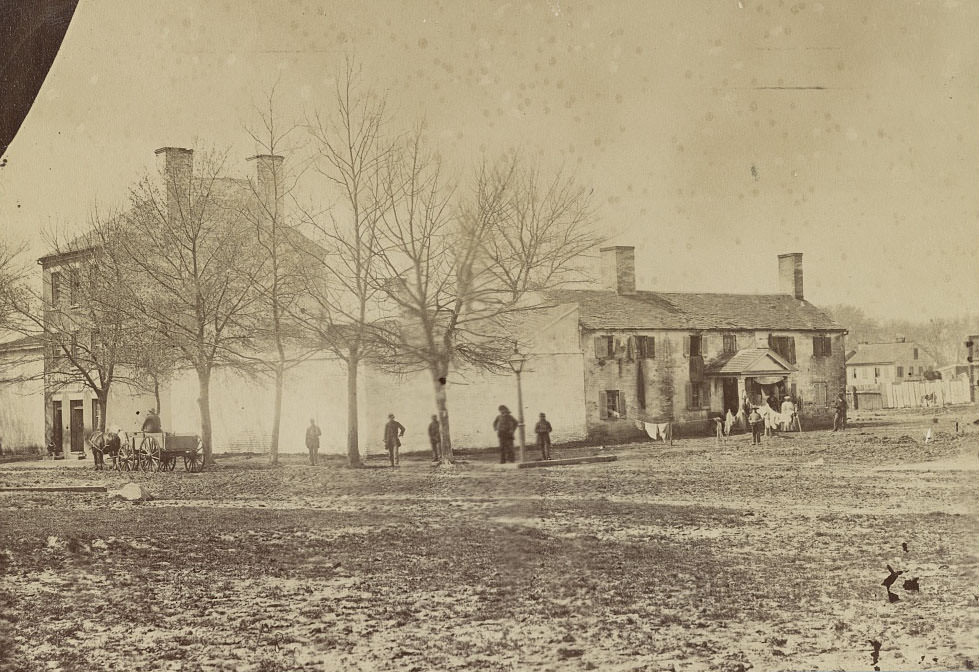
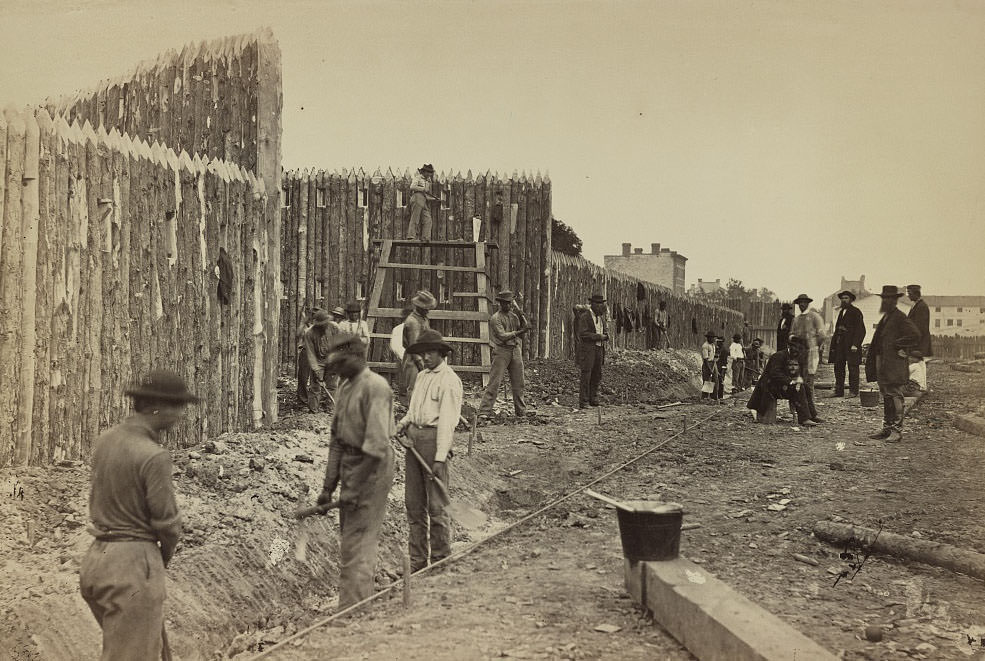
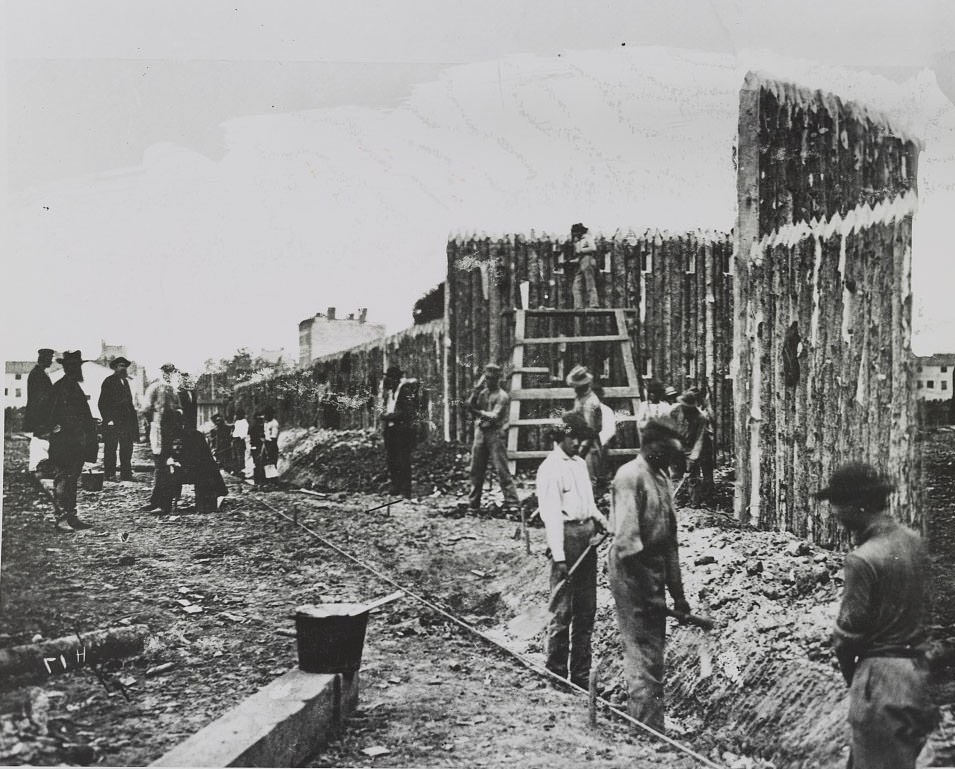
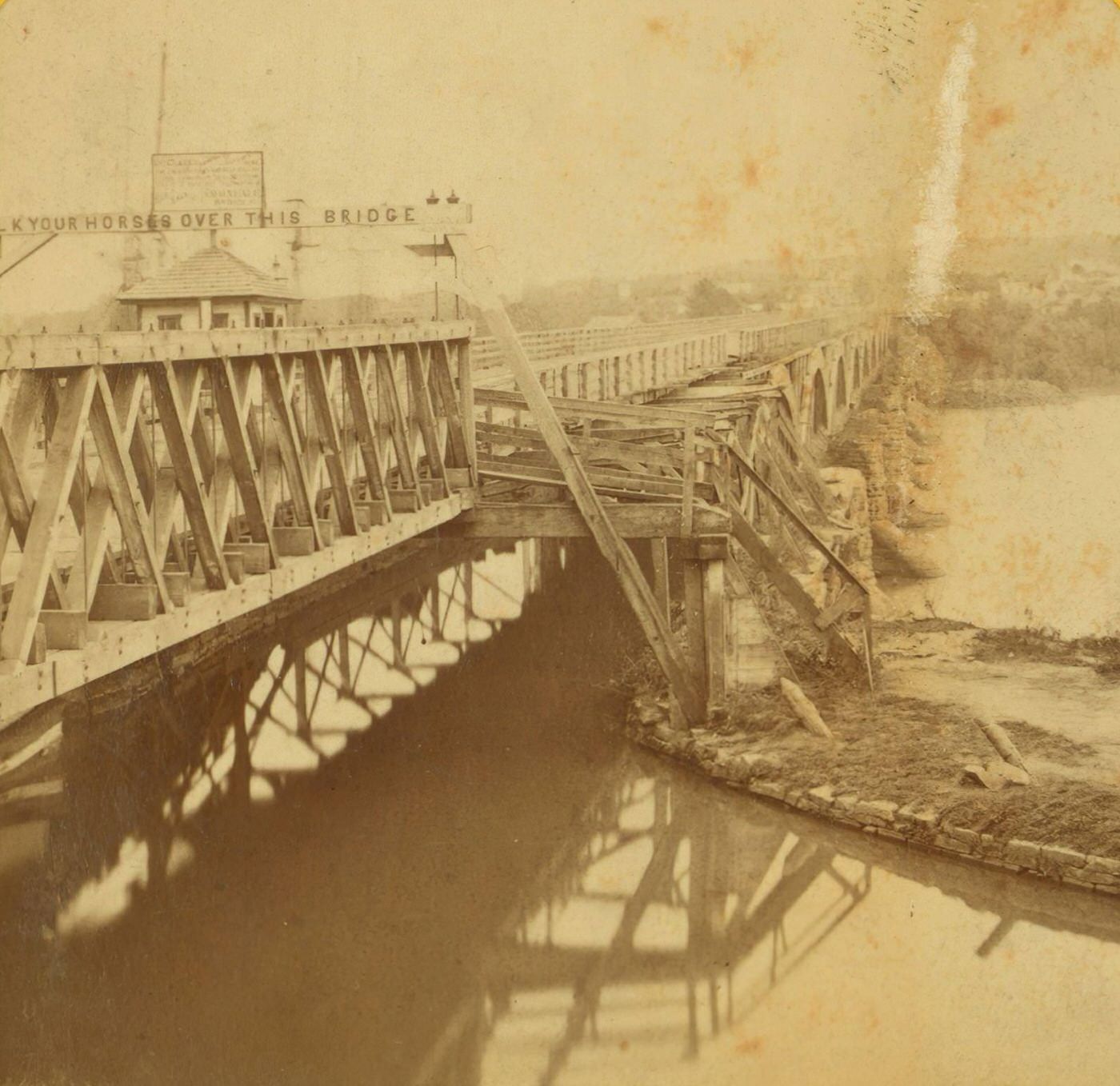
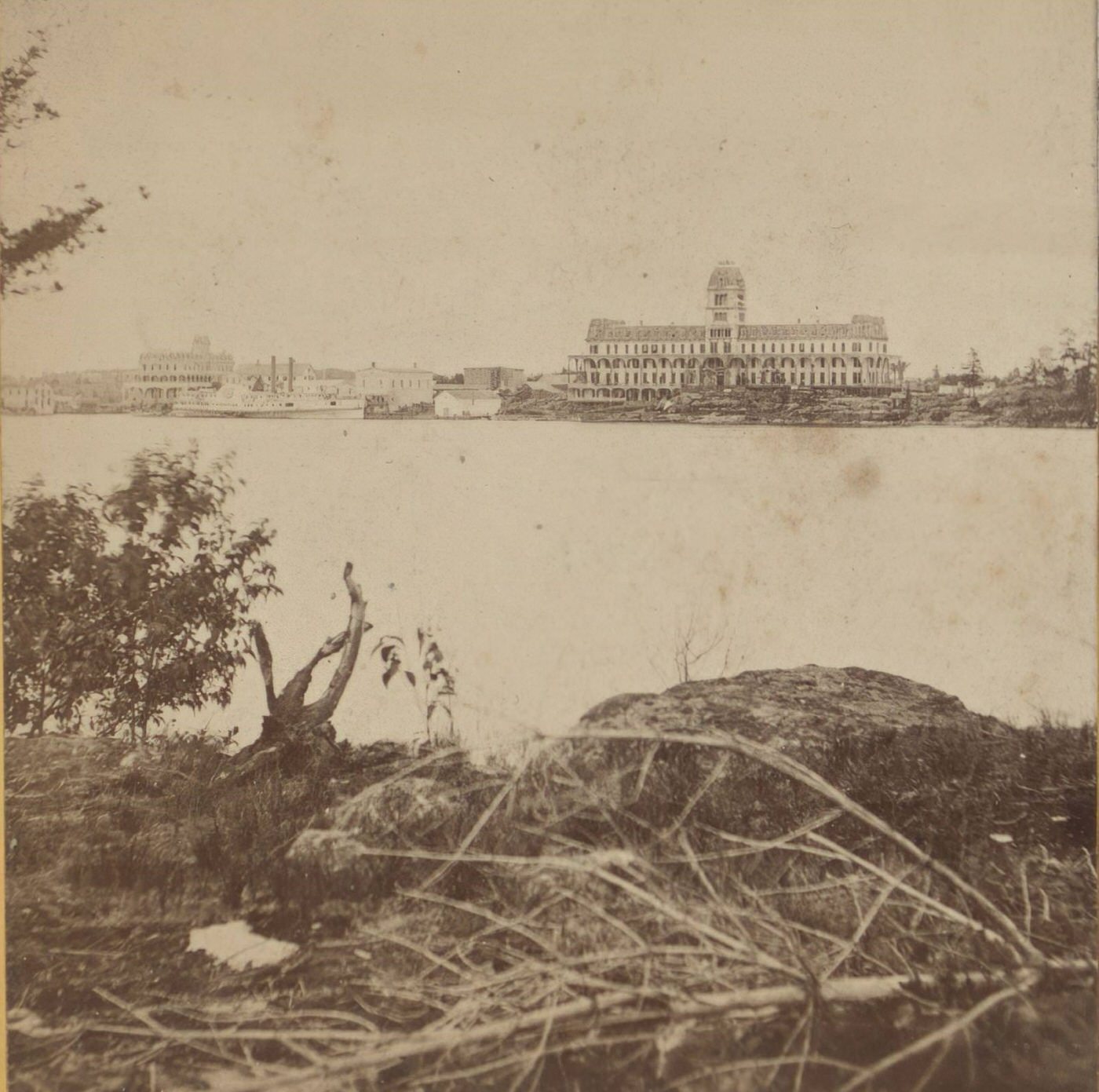
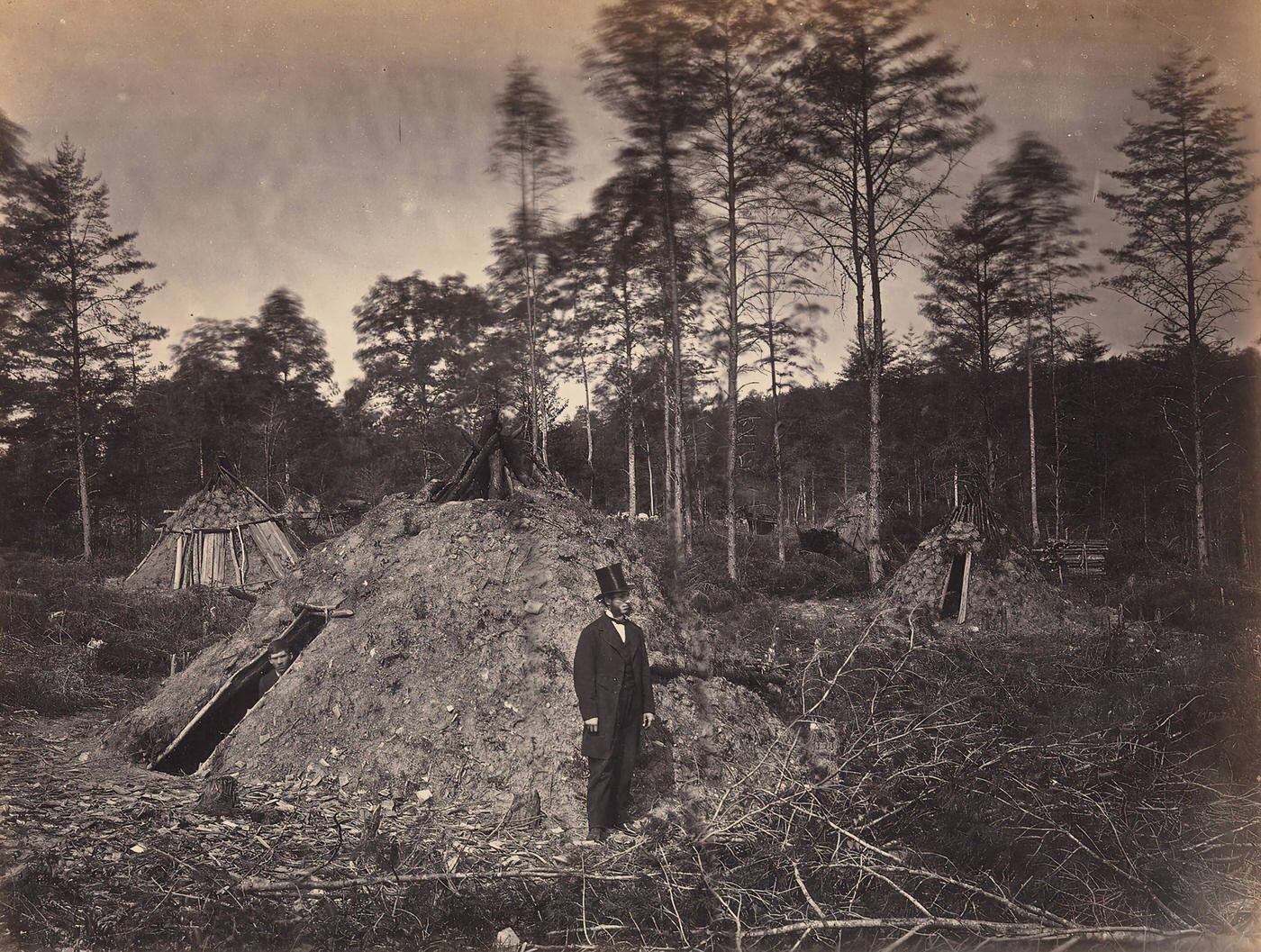
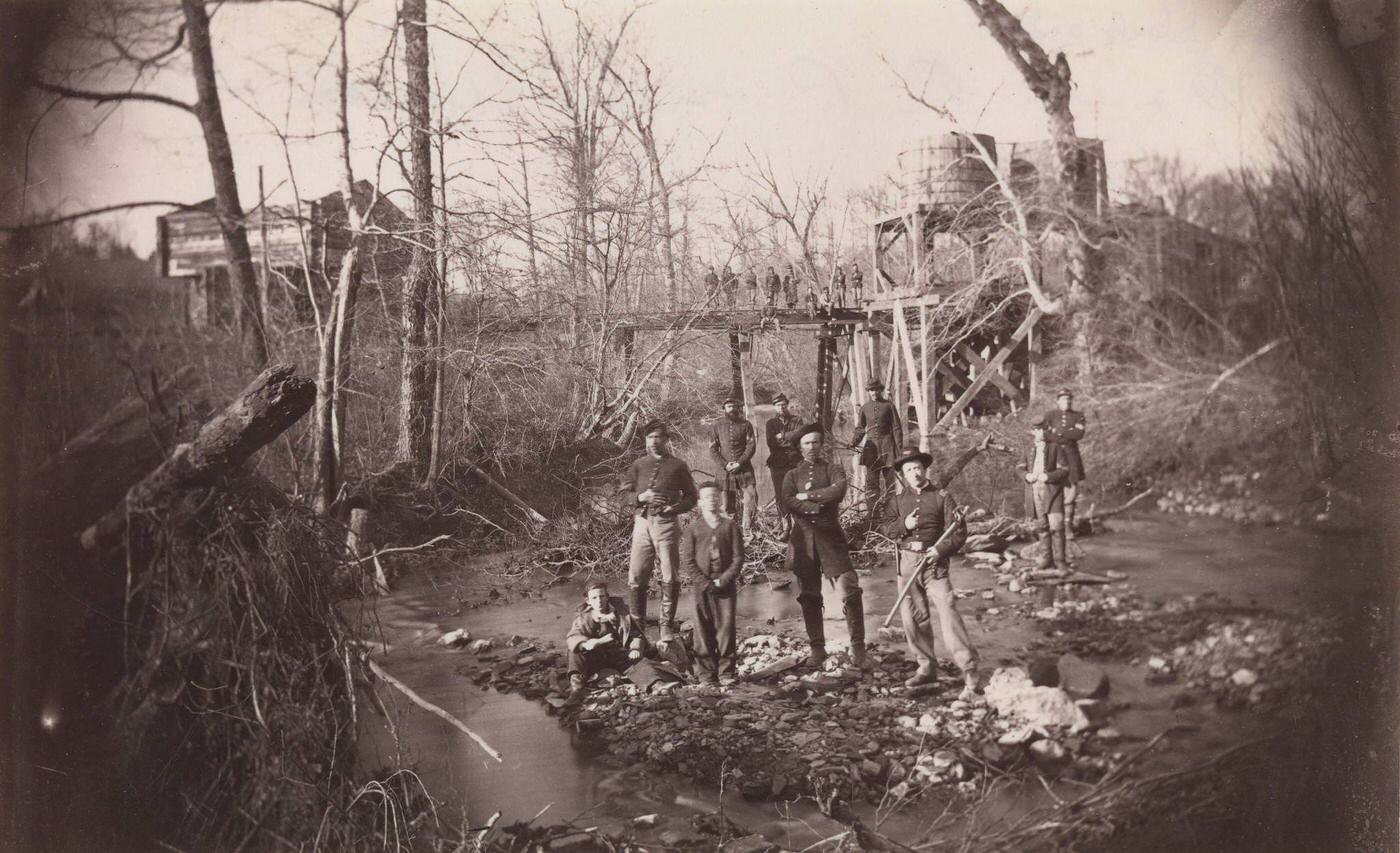
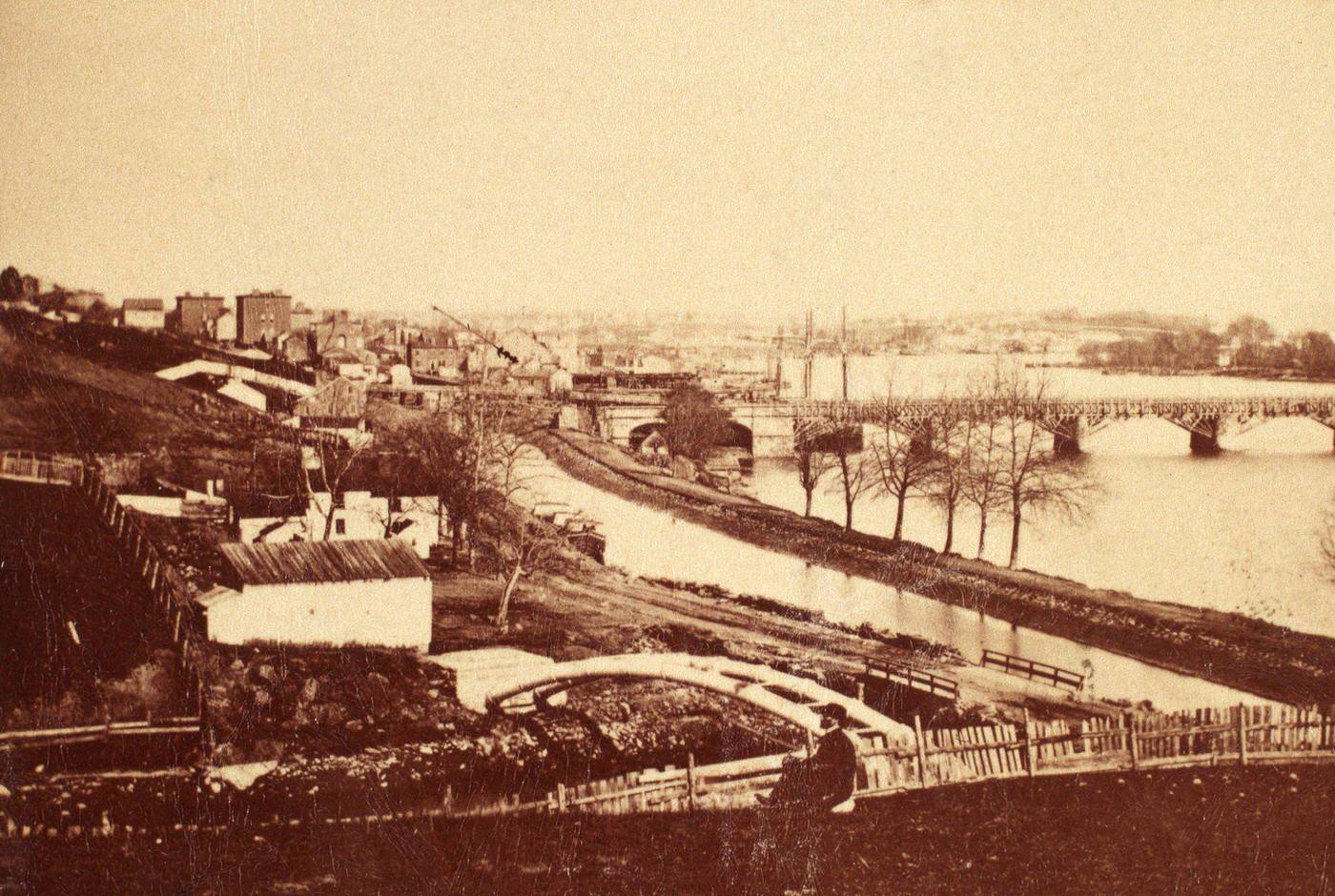
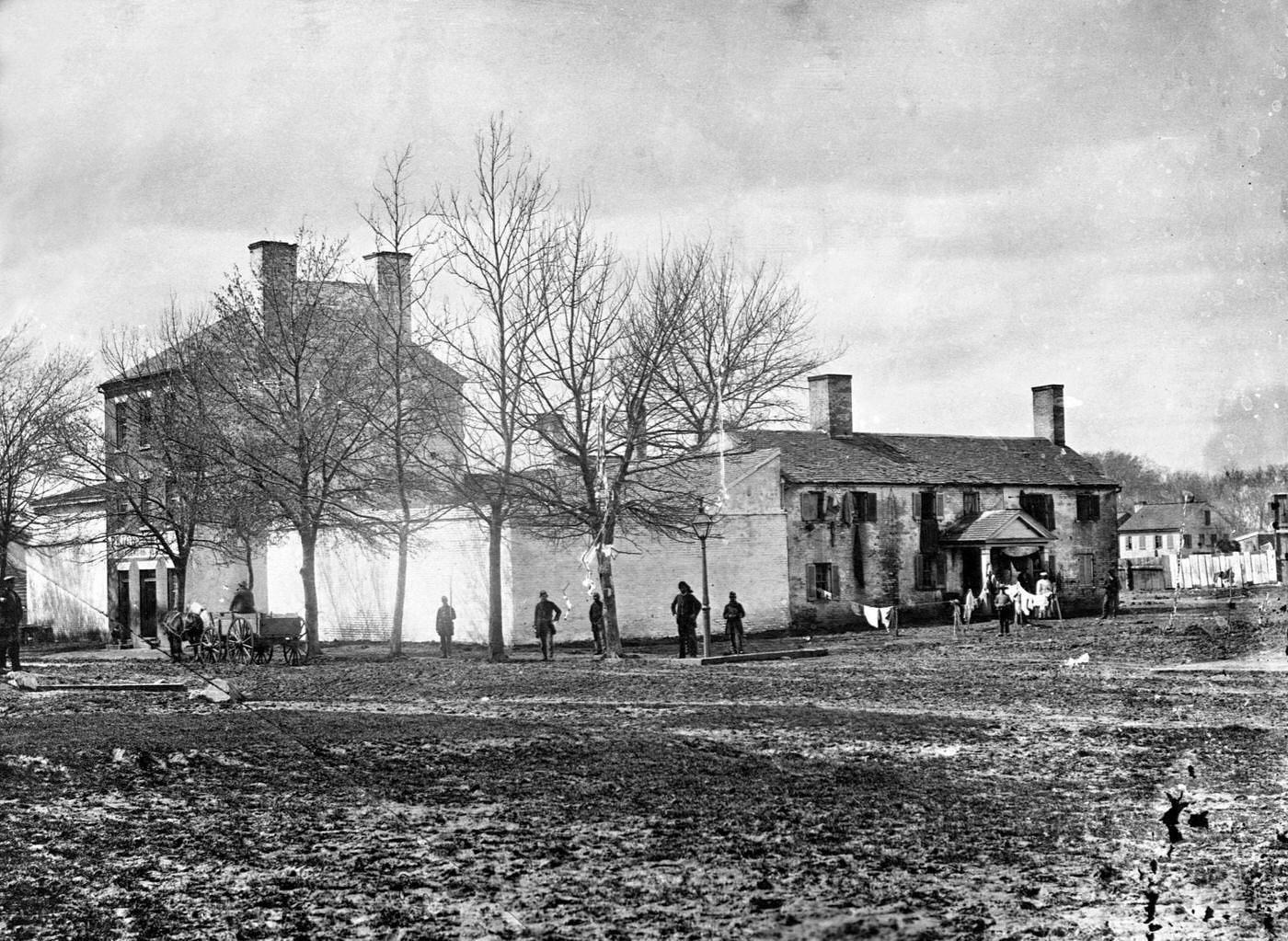
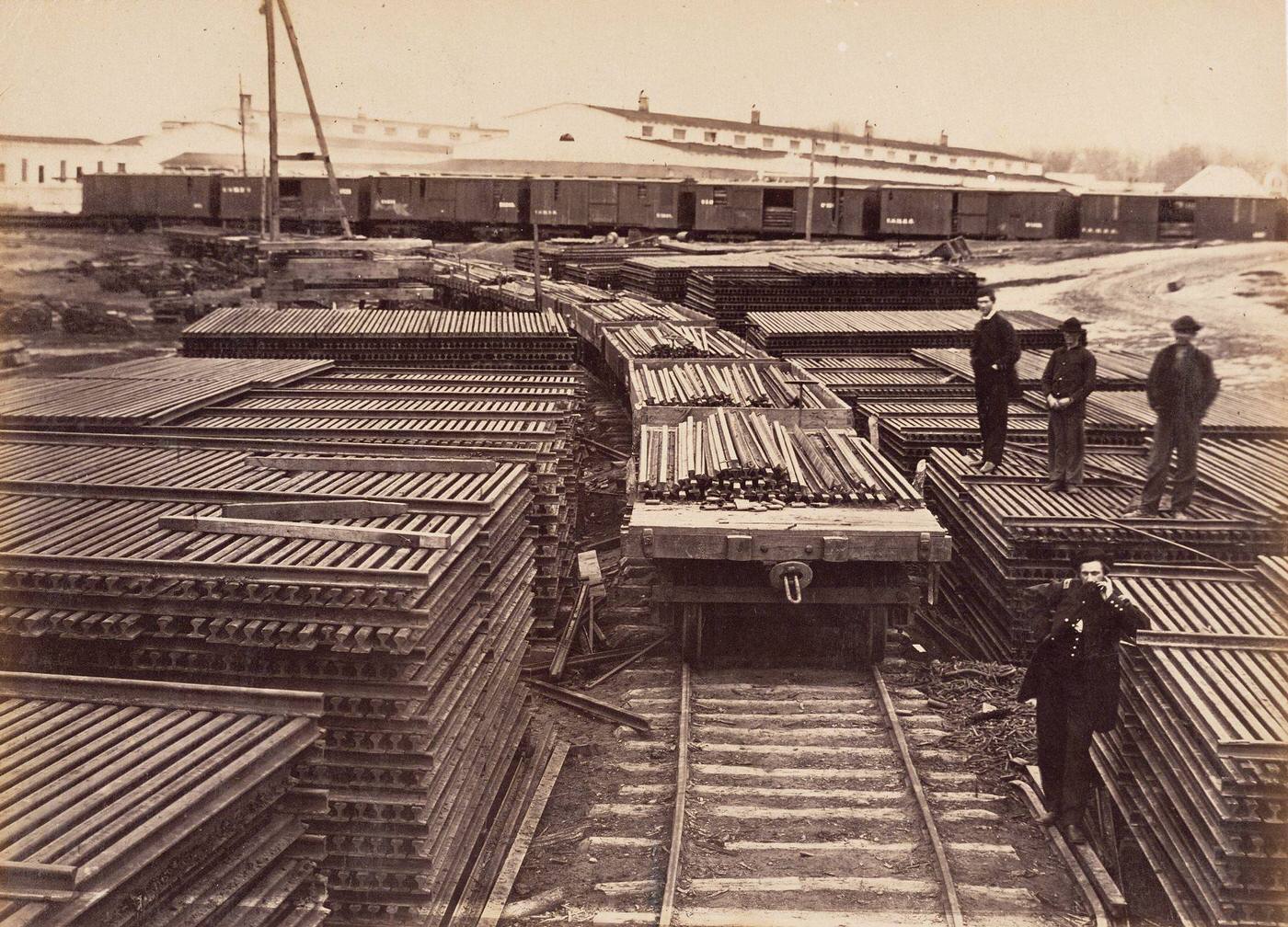
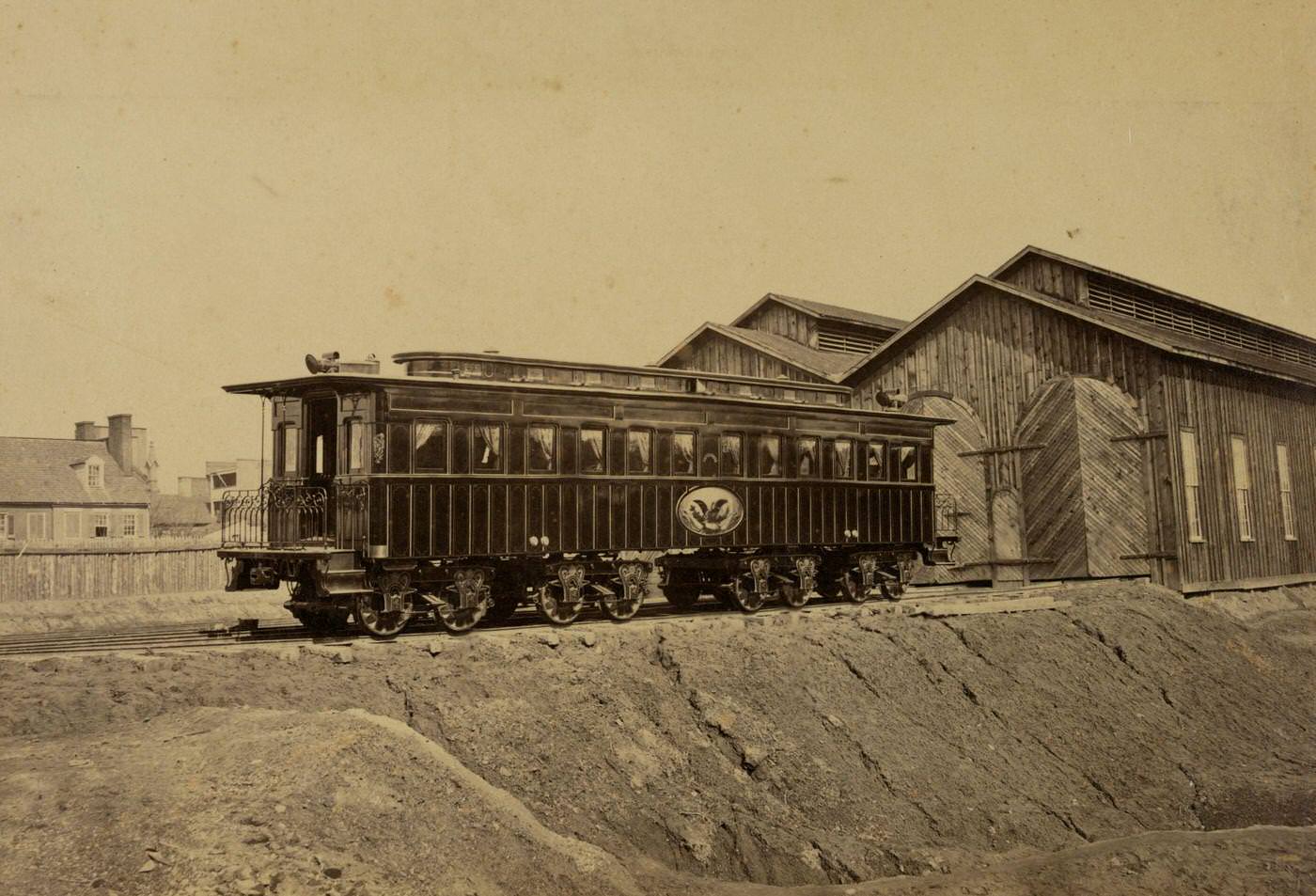
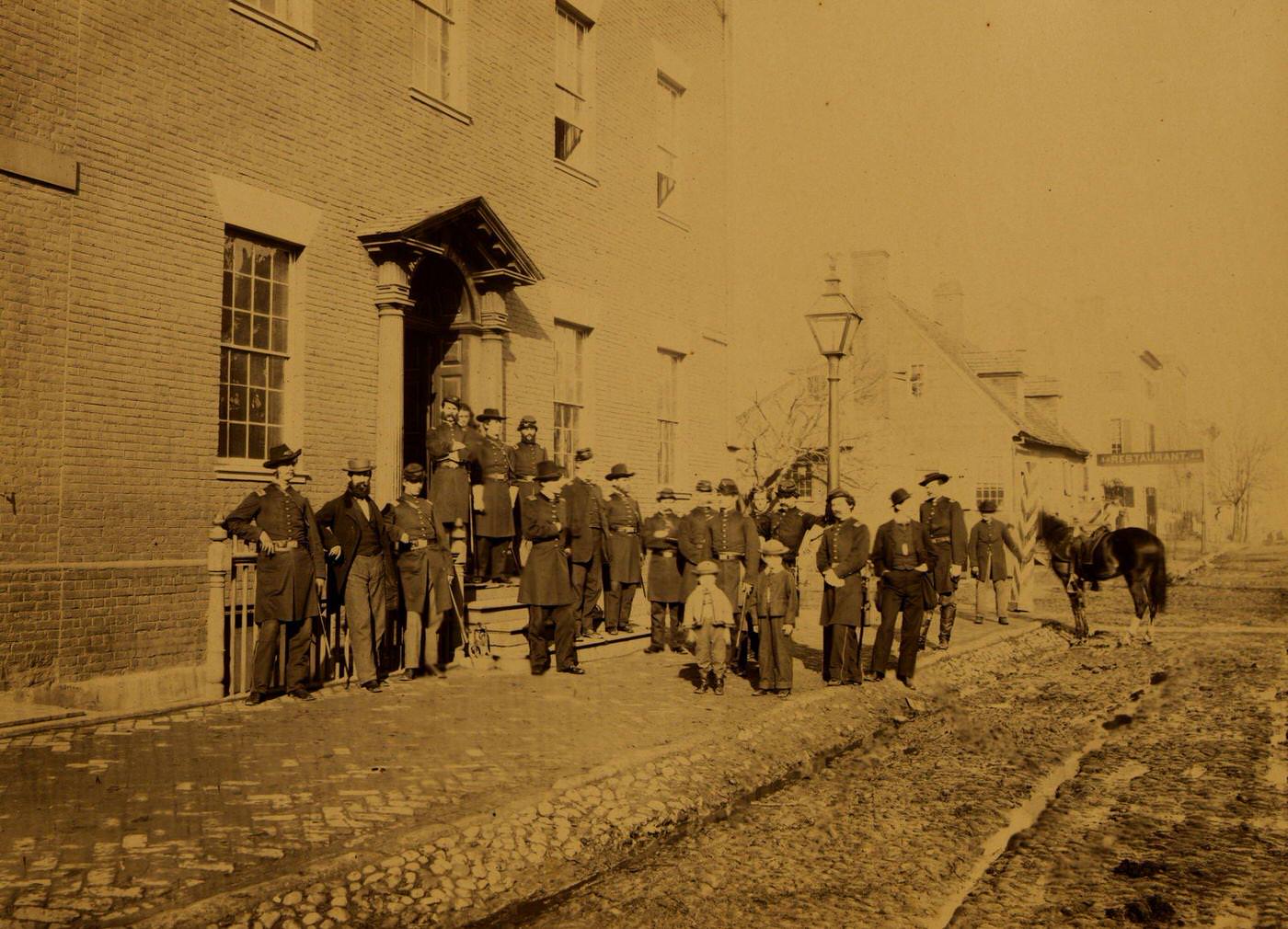
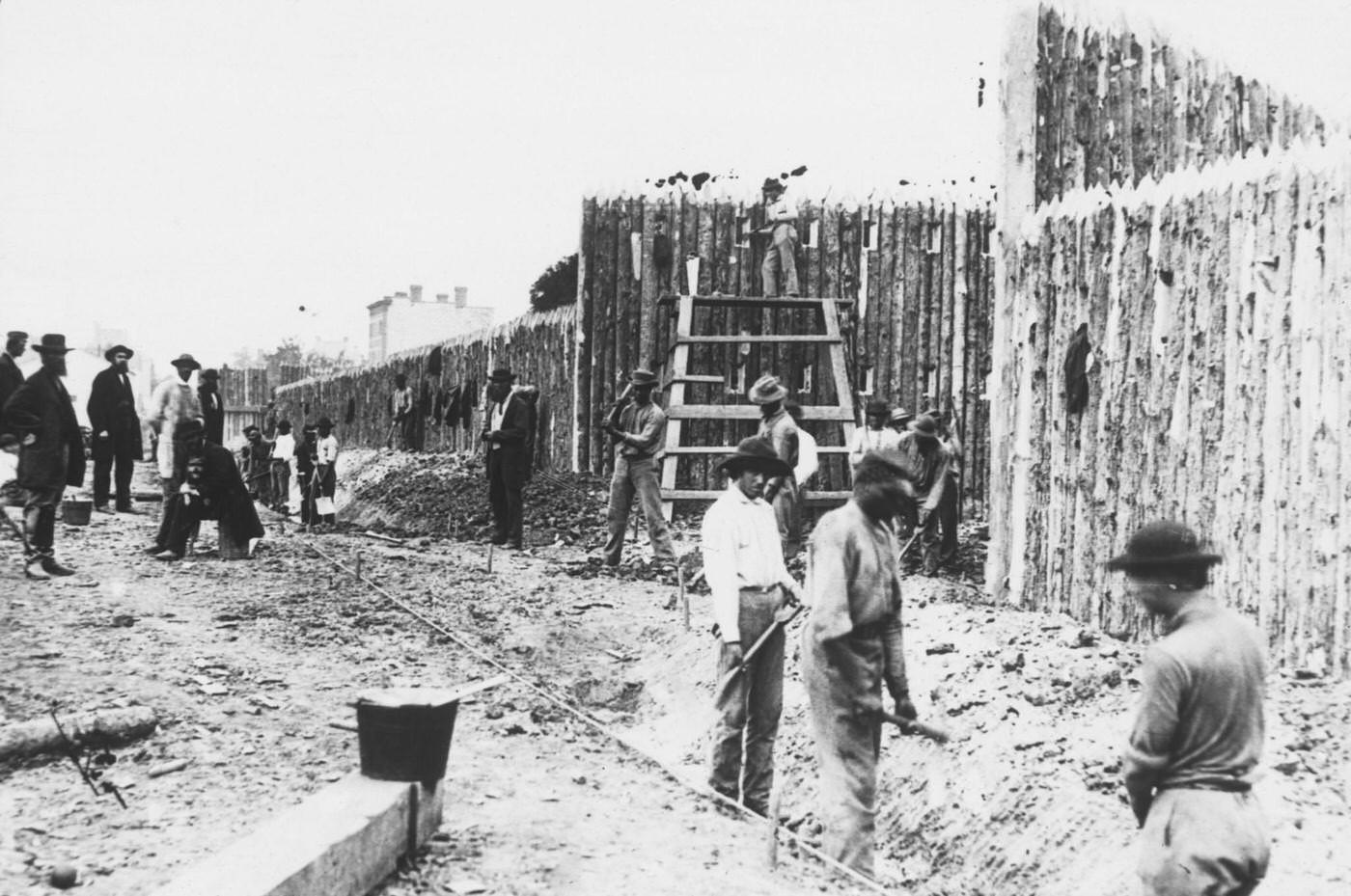
Alexandria from Pioneer Mill, looking north-west, 1865A winter view of Alexandria, Virginia, with Washington visible across the Potomac River, 1864Union forces occupied Alexandria, 1864Headquarters Capt. J.G.C. Lee, A.Q.M, Alexandria, 1863Federal Navy, and seaborne expeditions against the Atlantic Coast of the Confederacy — the Federal Navy, 1864Gen. S. P. Heintzelman and group, convalescent camp, near Alexandria, 1864Convalescent camp, near Alexandria, 1863Convalescent camp near Alexandria, 1863Headquarters of convalescent camp, near Alexandria, 1860sSoldier’s Cemetery, Alexandria, 1864Hunting Creek Bridge, near Alexandria, 1864Camp of 44th New York Infantry near Alexandria, 1864Camp of 44th New York Infantry near Alexandria, 1864Mansion House, Alexandria, 1860sA group of people in front of the Marshall House at the corner of King and St. Asaph Streets, Alexandria, 1863Christ’s Church, Alexandria, 1860sSlave pen, at 1315 Duke St., Alexandria, 1860sFairfax Seminary, near Alexandria, 1864Fairfax Seminary, near Alexandria, 1864Alexandria, Va, 1860sBuilding stockade, Alexandria, 1864Quartermaster’s Wharf, Alexandria, 1860sBattery Rodgers, Potomac River, near Alexandria, 1860sFort Ellsworth, near Alexandria, 1860sBattery Rodgers, (interior), vicinity, Alexandria, 1860sBuilding stockade, Alexandria, 1860sCamp of the 44th New York Infantry near Alexandria, 1864Camp of 44th New York Infantry near Alexandria, 1864Union soldiers on the steps of Lyceum Hospital, Alexandria, Virginia, 1865Wolfe Street Hospital, Alexandria, Virginia, 1865Mansion House Hospital, Alexandria, Virginia, 1865Wolfe Street Hospital, Alexandria, Virginia, with Tuscan Villa Hospital in the distance, 1862Marshall House, Alexandria, 1866An exterior view of Marshall House and adjoining buildings, 1862Officers of 14th U.S. Infantry, March, 1862Grace Church General Hospital, 207-209 South Patrick Street, Alexandria, Virginia, 1863Downtown Baptist Church Hospital, 212 South Washington Street, Alexandria, 1863Fort Ellsworth, near Alexandria, Va., interior view, April 3, 1864A ward in hospital at convalescent camp near Alexandria, 1866Fifteen inch gun at Battery Rodgers, Alexandria, 1864Tents used as barracks after the wood-frame barracks at Camp Slough were converted to medical buildings at Slough Hospital, 1864Sickel Hospital, looking toward Fairfax Seminary, January 5, 1865New Bridge over Potomac River. On the Washington, Alexandria and Georgetown Railroad, 1864The Aqueduct Bridge., Jarvis, J. F. (John F.), 1865View of Alexandria Bay, 1865Court House, Va. Freight train on Orange and Alexandria Railroad, Alexandria, 1862Pope’s Head, near burnt bridge, Orange & Alexandria Railroad, 1863New bridge over Potomac River on the Washington, Alexandria and Georgetown Railroad. Total length 5,104 feet, 1863New bridge over Potomac River on the Washington, Alexandria and Georgetown Railroad, 1863Engine W. H. Whiton, and President’s car, Alexandria, January,1865Excavating for “Y” at Devereux Station, Orange & Alexandria Railroad, 1863Engine W. H. Whiton, and President’s car, Alexandria, 1865Hay Wharf, Alexandria, 1863Woodchoppers’ Huts in a Virginia Forest. On the Orange & Alexandria Railroad. Wood Supplied U.S.M.R. Railroads under Supervision of Major Brayton, June 1863.Confederate Trestle Work on Alexandria Railroad, 1861Orange and Alexandria Railroad Bridge, near Union Mills, Virginia, 1863Bull Run Orange And Alexandria RR Near Union Mills, 1865Steam locomotive ‘Fire Fly’, used by Union troops, on a narrow field bridge of the Orange and Alexandria US Military Railroad, 1865During the fighting on the Red River, Louisiana, a Union fleet of 33 vessels was trapped at Alexandria by low water, 1860sAbatis surrounds the perimeter of Fort Lyon, Virginia, near where Union gunners pose with their cannons, 1860sA number of Union warships and transports were trapped by shallow water near Alexandria, 1864During the American Civil War, Georgetown, D.C., served as an auxiliary port to the larger facilities at Alexandria, Virginia.The slave pen and auction house at Alexandria, Virginia, in 1863.The Field Hospital for the Second Army Corps, established at Brandy Station, VA, February 1864.Rails of the Manassas Gap Railroad, Alexandria, 1863Excavating for “Y” at Devereaux Station, Orange & Alexandria Railroad, 1863.Bull Run. Orange and Alexandria R.R. near Union Mills, 1861Railroad Repair At Catlett’S Station, 1860sGovernment hay barns, Alexandria, Va., July, 1863Engine “E.M. Stanton,” Alexandria, July 1864View on Pope’s Head, near burnt bridge, Orange & Alexandria Railroad, 1860Slave pen, Alexandria, Virginia, 1860sThe Marshall house, King & Pitt Streets, Alexandria, Virginia, 1860sPresident’s rail car at the Alexandria station. Photograph probably taken in Jan. The car was later used as Lincoln’s funeral car, 1863Officers of First District volunteers, City Hotel, Alexandria, 1863Locomotive moving away from the roundhouse at the Orange & Alexandria railroad yard in Alexandria, Virginia, 1863Marshall house, Alexandria, Virginia, 1862Shed at carpenter shop at Alexandria, 1863Track near the Potomac River, in Alexandria, 1863Bird’s eye view of machine shops, with east yard of Orange & Alexandria Railroad, 1863Ornately decorated locomotive J.H. Devereux, of the United States Military Railroad with two crew members on board outside the roundhouse at the Alexandria station, 1863A construction corps loads a bridge to test its strength, in the third of a series of experiments with board trusses, Virginia, 1863.The ‘Firefly’ railroad engine crossing a river on a trestle, a narrow field bridge of the Orange and Alexandria US Military Railroad, 1863Slave pen, Alexandria, 1863U.S. Fire Department, Alexandria, Va., 1863Wreck on the track, ready for transportation to Alexandria, 1863Wharf at Alexandria, Va., used by U.S. Military Railroad Department, 1863Wharf in Alexandria, Virginia from Pioneer Mill, 1863U.S. Provost Marshal ‘s Office at Alexandria, 1862Marshall House, Alexandria, Virginia, 1861Convalescent Camp Near Alexandria, 1865Ward in Hospital Convalescent Camp, 1861Fort Ellsworth, Alexandria, Virginia, 1865Convalescent Camp Near Alexandria, 1861Marshall House, Alexandria, Virginia, August 1862.A black woman holds a basket and stands among bare trees in a slave pen, Alexandria, Virginia, 1860sSlave Pen, Alexandria, Virginia, 1862Slave Pen, Alexandria, Virginia, 1863.Bridge On Orange And Alexandria Rail Road, 1865Hunting Creek, near Alexandria, Virginia, 1861The premises of Price, Birch & Co, Dealers in Slaves, at a slave market in Alexandria, Virginia, 1860.A 15 inch Rodman gun in Battery Rodgers, Alexandria in Virginia, 1865Mansion House Hospital, Alexandria, Virginia, 1864.Cooks in the Kitchen of a Soldier’s Rest Home.Group portrait of the crew, and a mortar gun, of an unidentified Union gunboat in port, Alexandria, Virginia, 1860s.Workers build fortifications and barricades, Alexandria, Virginia, 1860s.Slavery Business of Price, Birch and Company, Alexandria, VA, 1860sUSS Pensacola In Alexandria, VA, 1860sBirch & Company, Dealers in Slaves, 1863A US Military Rail Road (USMRR) yard full of rails to maintain Federal rail lines during the American Civil War, at Alexandria, Virginia, 1860Two soldiers stand beside slave pen cells in Alexandria, Virginia, 1861.View of the trains yards, Alexandria, Virginia, 1862.View of a man as he watches a locomotive pass on the Orange and Alexandria Railroad, Alexandria, Virginia, 1862.Birds eye of Alexandria, Virginia, 1863.Wood burning locomotive “Gen. Haupt” named for Herman Haupt, chief of Construction and Transportation, in front of the roundhouse at the Alexandria station, 1863Slave pen, Alexandria, Virginia, 1863Barricades on Duke Street, Alexandria, Virginia during the US civil war, 1861Washington Street, Alexandria, Virginia during the US civil war, 1861.

![Bridge on Orange & Alexandria [Virginia] Railroad, as repaired by army engineers under Colonel Herman Haupt, 1863](https://www.bygonely.com/wp-content/uploads/2022/11/Aalexandria_1860s_165.jpg)





Seminary tower looks the same.
Is ‘Fairfax Seminary’ the Episcopal seminary?